
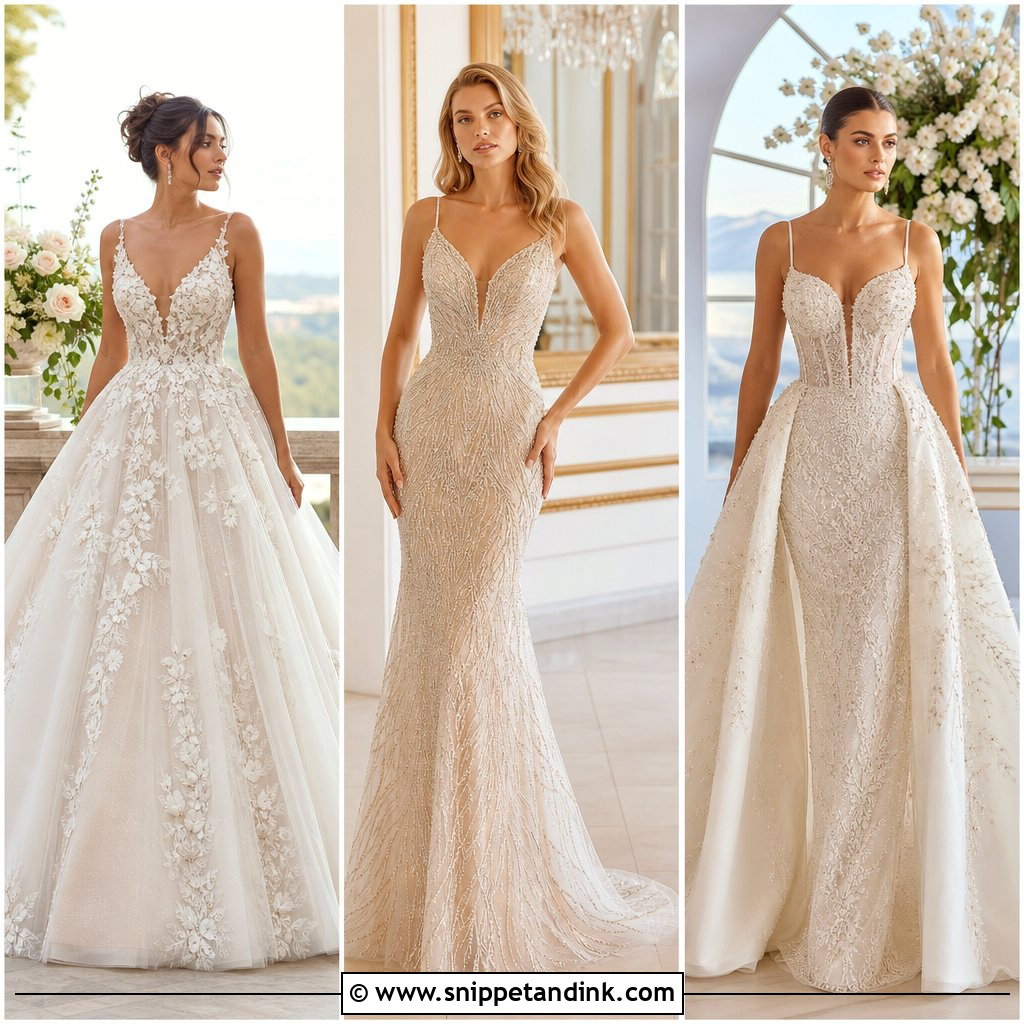
Brides keep asking me for a waistline that isn’t at the waist. A dropped seam lengthens the bodice, holds the torso close a few inches lower than usual, and then hands over to the skirt, and that one change makes a familiar gown look new. It turns up everywhere now, on plain satin, lace ball gowns, corset bodices, basque waists and soft tulle. What decides whether it works for you is proportion: how long your torso is, where your hip sits, and how much skirt your frame can carry. I’ve grouped 25 versions below by fabric, neckline and setting, with the fitting notes I’d give at each one.
Shop Samples Make a Drop Waist Look Wrong
Most bridal shops order one sample in each style, usually a single size, and clip it onto everyone who tries it. That’s fine for an empire waist or an A-line. It’s a problem for a dropped seam, because the whole point of the style is where the seam lands, and on a sample cut for a different body it will be in the wrong place.
When I take a bride to try these on, I ignore the hem and the back and look at three things:
- Where the seam sits against your high hip. If it’s sitting on the waist or sliding toward the thigh, ask the consultant to hold it where it would actually fall in your size.
- Whether the bodice is too long or too short through the torso. That’s a structural fix, and not every gown can be altered there.
- How the skirt hangs when you sit on the edge of the fitting room bench. A good drop waist lets the skirt fold forward neatly.
If you’re between sizes, I’d go with the size that fits the widest part of you; taking a bodice in is far easier than letting one out.
1. Drop Waist Satin Wedding Gown
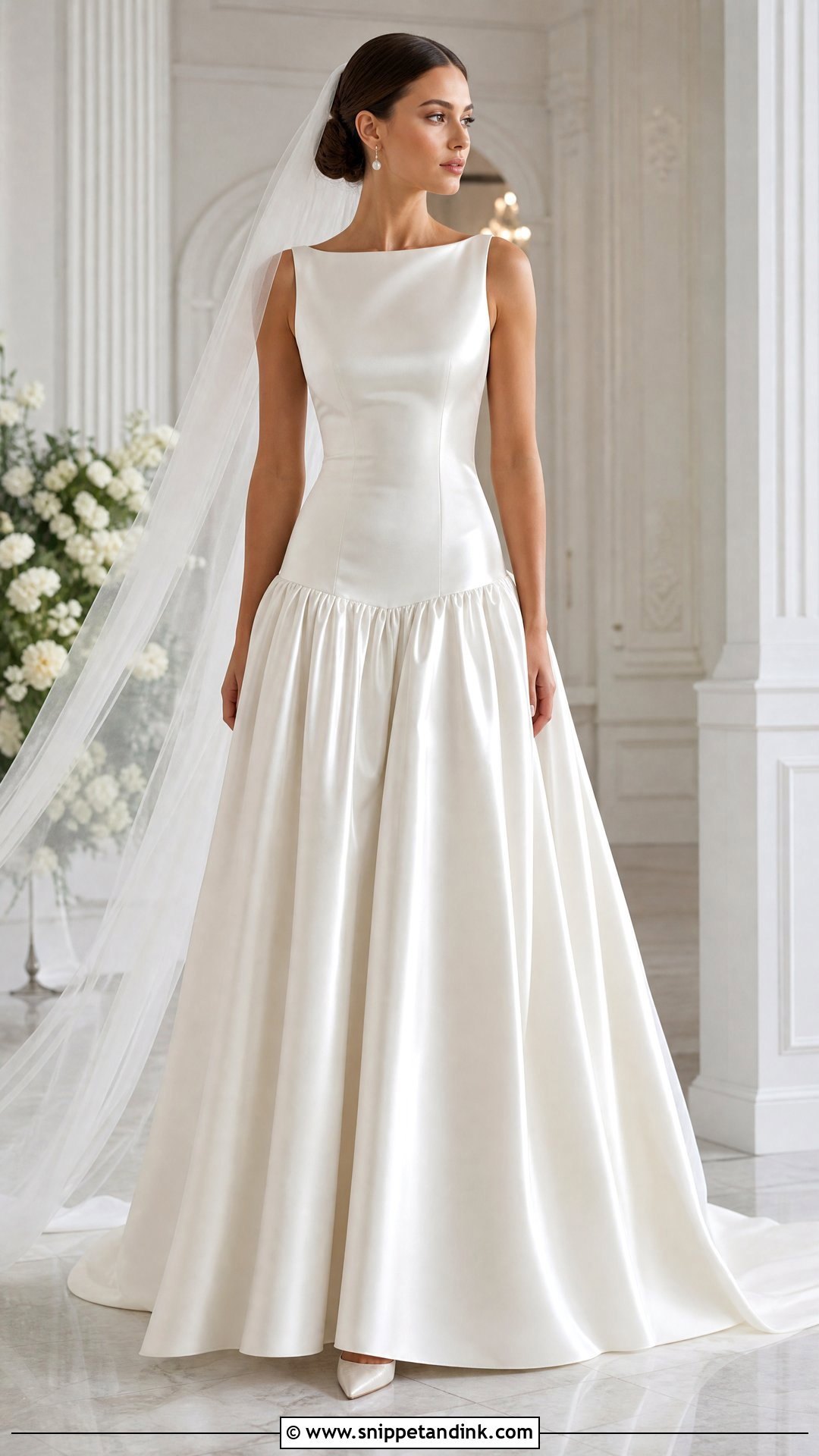
Start here if you’re not sure the silhouette is for you. Smooth satin shows the long bodice plainly, with no lace or beading to blur the line, so you’ll know in one try-on whether your proportions suit a dropped seam. A strapless or scoop neckline keeps it classic. I’d finish it with pearl earrings, a sleek bun and pointed ivory heels, plus a plain cathedral or fingertip veil. It sits naturally in a hotel ballroom or a formal garden. One caution: satin shows every crease from sitting, so pick a heavier weight if you can.
2. Drop Waist Lace Wedding Gown
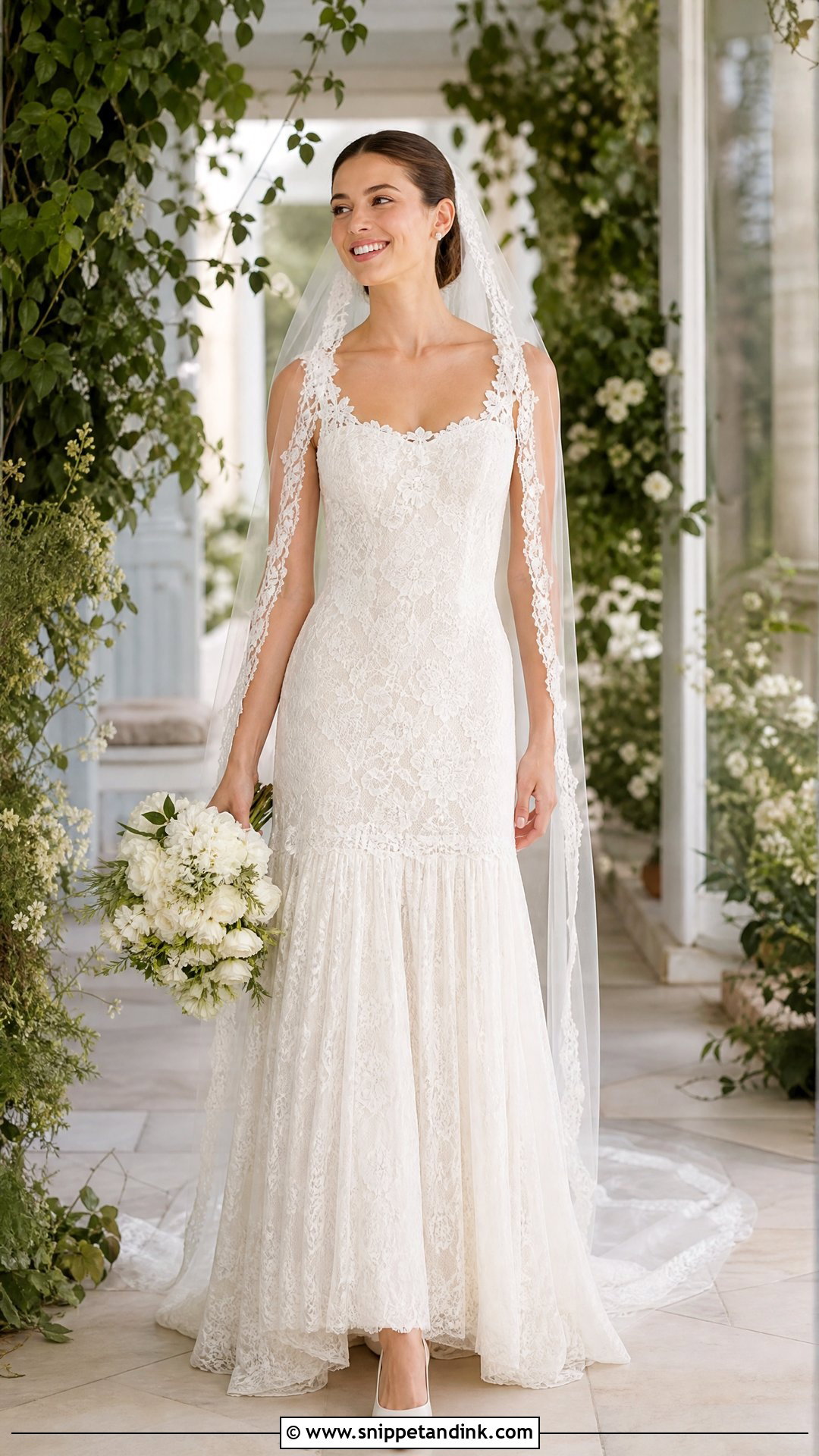
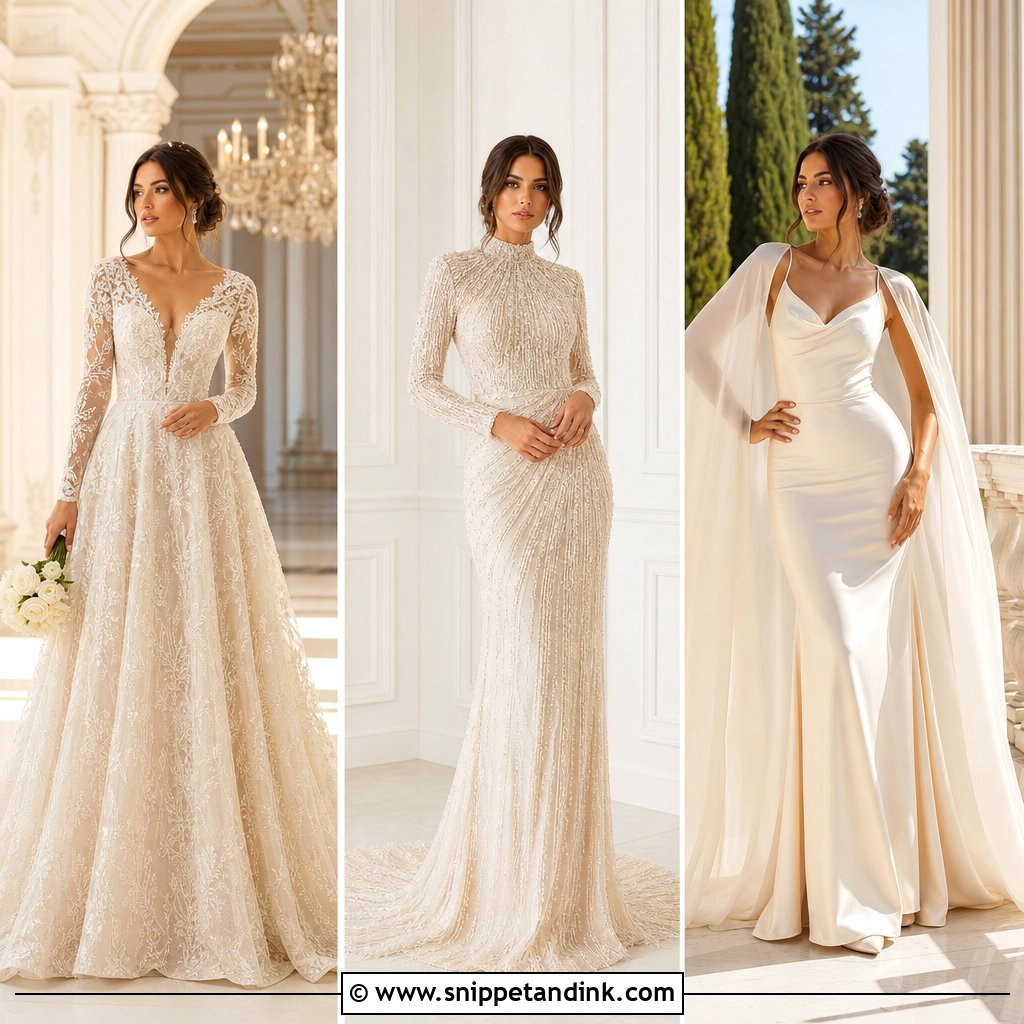
Lace on a drop waist lace wedding gown has more bodice to cover, so the pattern can travel down over the hip before the skirt starts. Fine floral lace reads sweet; heavier corded or guipure lace stands up better to a formal room. When I look at a lace gown, I check the side seams. Motifs should be matched or overlapped by hand there, not sliced in half. A lace-trimmed veil, pearl studs and ivory pumps are enough, and keep the bouquet to white flowers and greenery so it doesn’t compete with the texture.
3. Drop Waist Ball Gown Wedding Gown
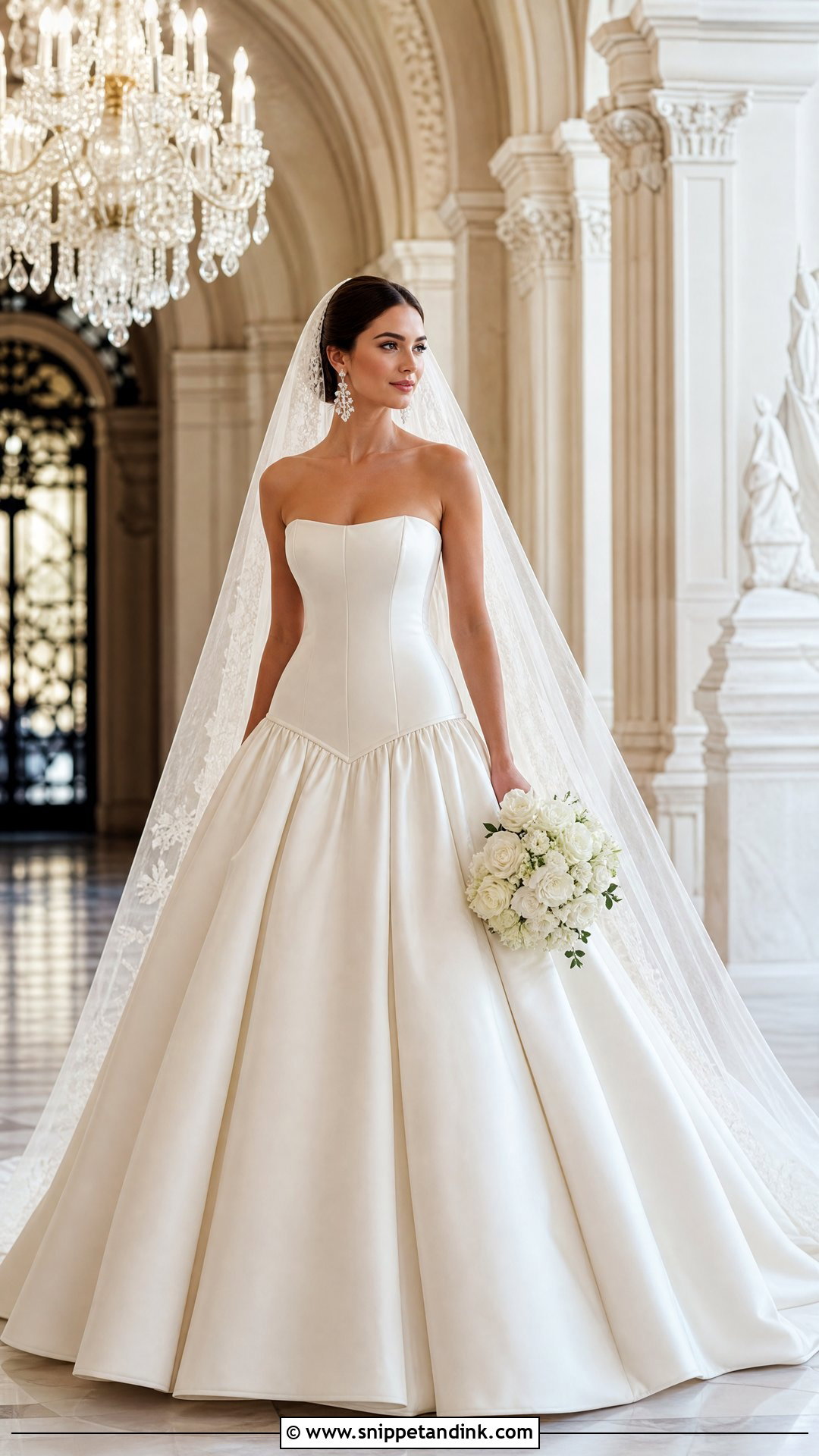
Nothing says bride faster than a full skirt, and a drop waist ball gown wedding gown gives you that skirt with a more modern torso. The fitted bodice defines the body, then the volume arrives lower, which keeps the princess shape from swallowing a shorter frame. A basque or curved seam makes the hand-off into the skirt softer. Plan your shoes knowing nobody will see them; comfort wins. Grand venues and historic estates give the skirt the floor space it needs, and a cathedral veil matches its scale.
4. Drop Waist Corset Wedding Gown
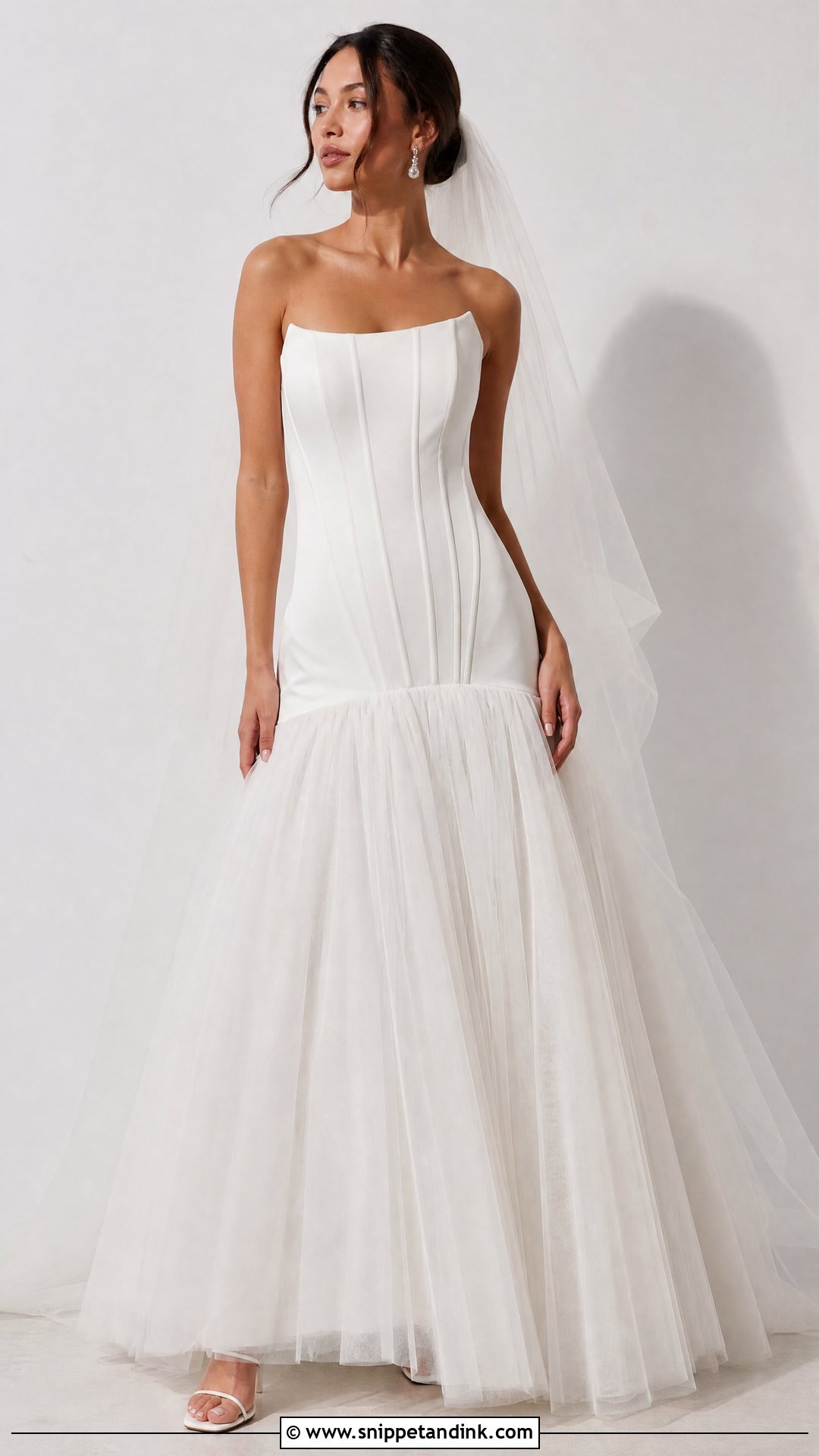
I fit a lot of corset bodices, and the drop waist version is one of the most supportive. The boning shapes bust and waist and then keeps going, so the structure reaches lower on the torso before meeting the skirt. Tulle makes it romantic, satin makes it glamorous, exposed boning makes it bold. Lace-up backs are worth having: they let a seamstress fine-tune the fit right up to the week of the wedding. With visible seams or lacing, skip the necklace. A soft veil, delicate earrings and simple strappy heels balance all that structure.
5. Drop Waist Tulle Wedding Gown
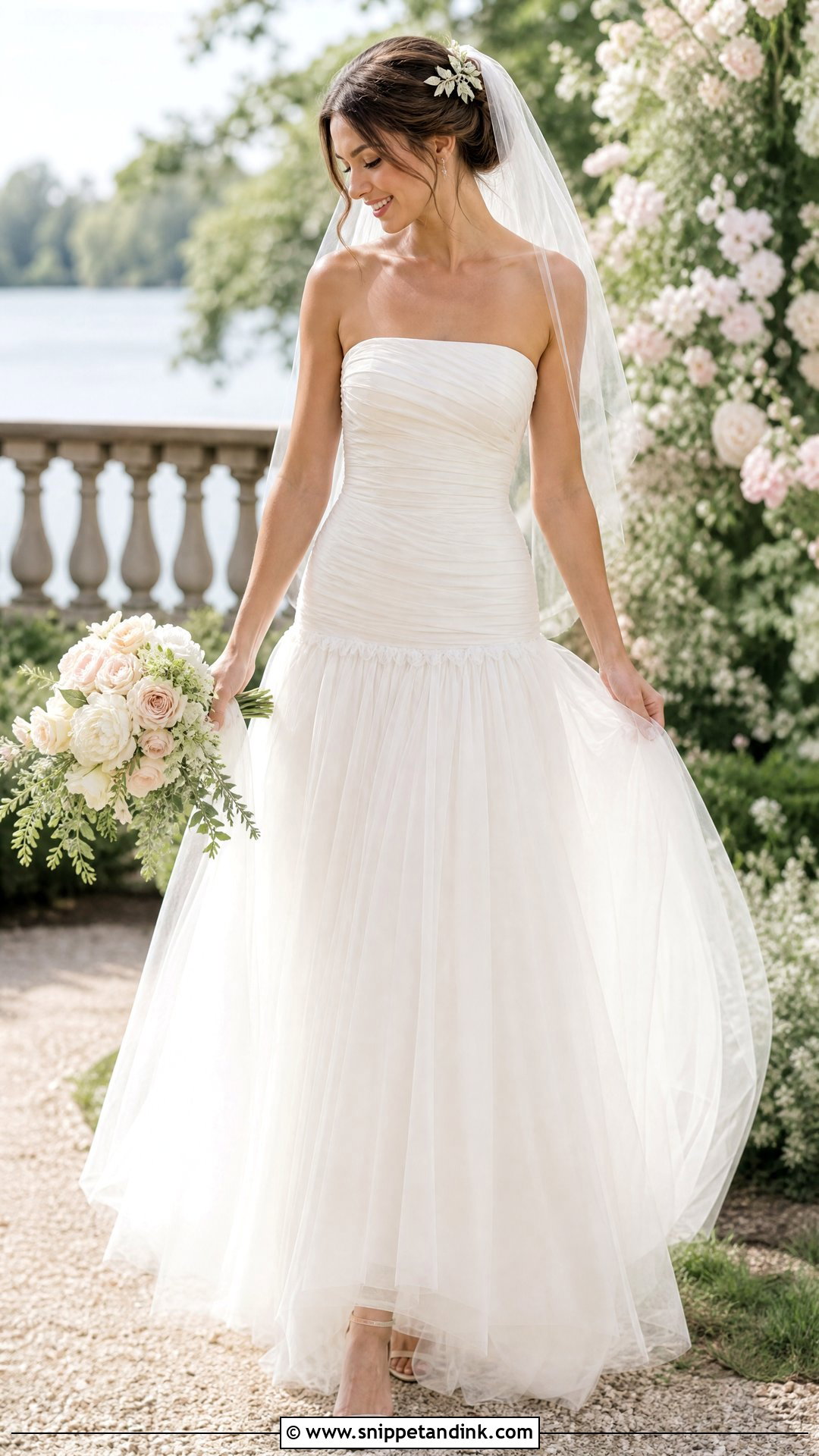
Light is the point of a tulle skirt. The fitted bodice anchors the look while the layers float, which is why I suggest tulle for spring, summer and outdoor weddings, when a heavy satin would leave you overheated. If the skirt looks limp in the shop, ask about a structured lining or an extra petticoat layer; that gives it presence without weight. A sheer veil, floral hair pins and dainty heels keep the mood gentle, and a soft pink or all-white bouquet suits the airy texture. Watch out for bracelets and beaded shoes, which snag fine tulle.
6. Drop Waist Mikado Wedding Gown
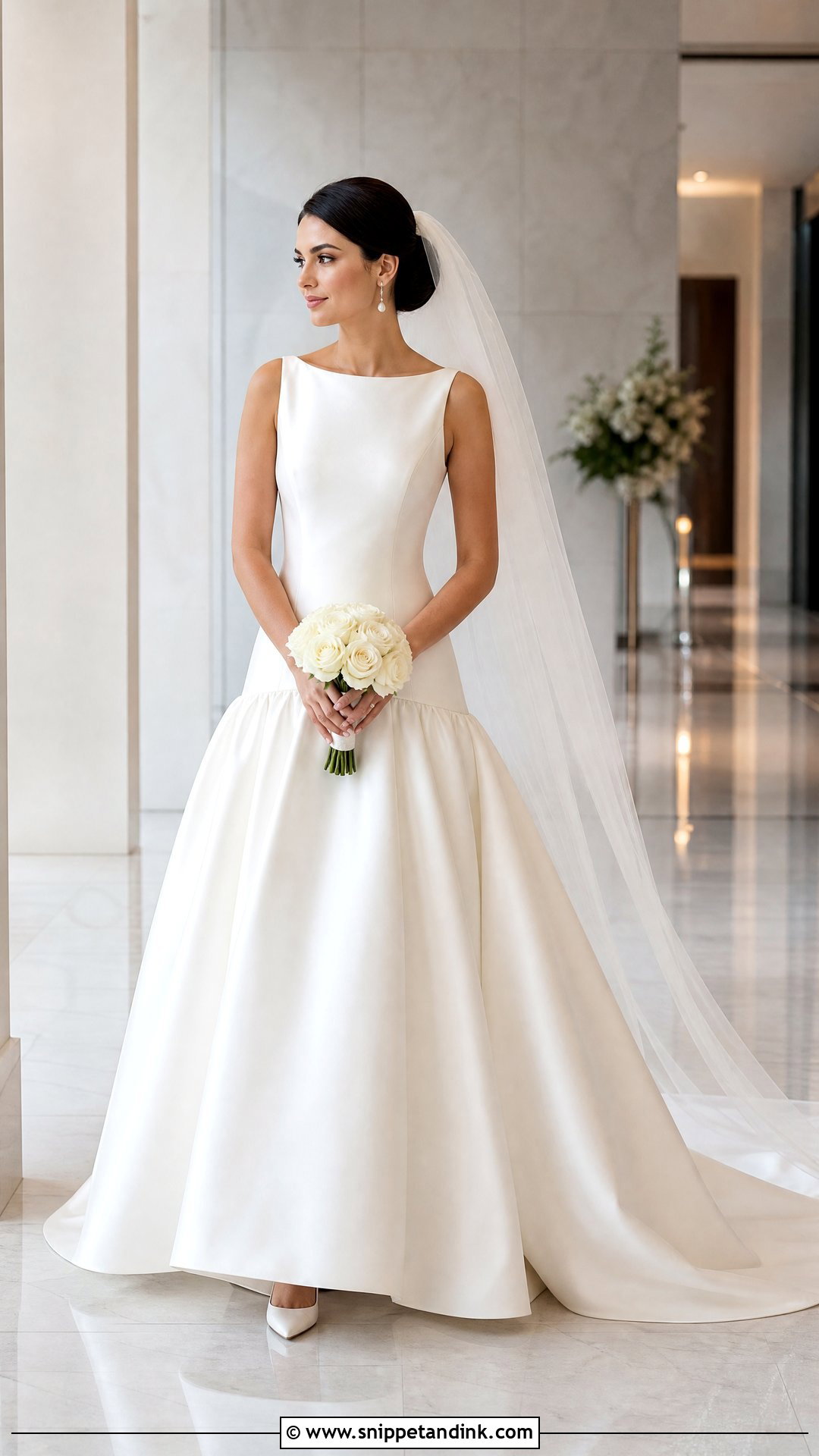
Mikado has body. A drop waist mikado wedding gown holds a strong skirt shape without layers of underskirt, so it suits brides who want drama with little sparkle or lace. The long bodice stays sleek because the dense weave doesn’t wrinkle much across the torso. Its skirt can be A-line, ball gown or softly pleated. The fabric’s natural sheen means accessories can be very plain: a smooth veil, pearl drop earrings, satin pumps. I’d point a bride toward this for a formal city venue or an evening ceremony.
7. Drop Waist Mermaid Wedding Gown
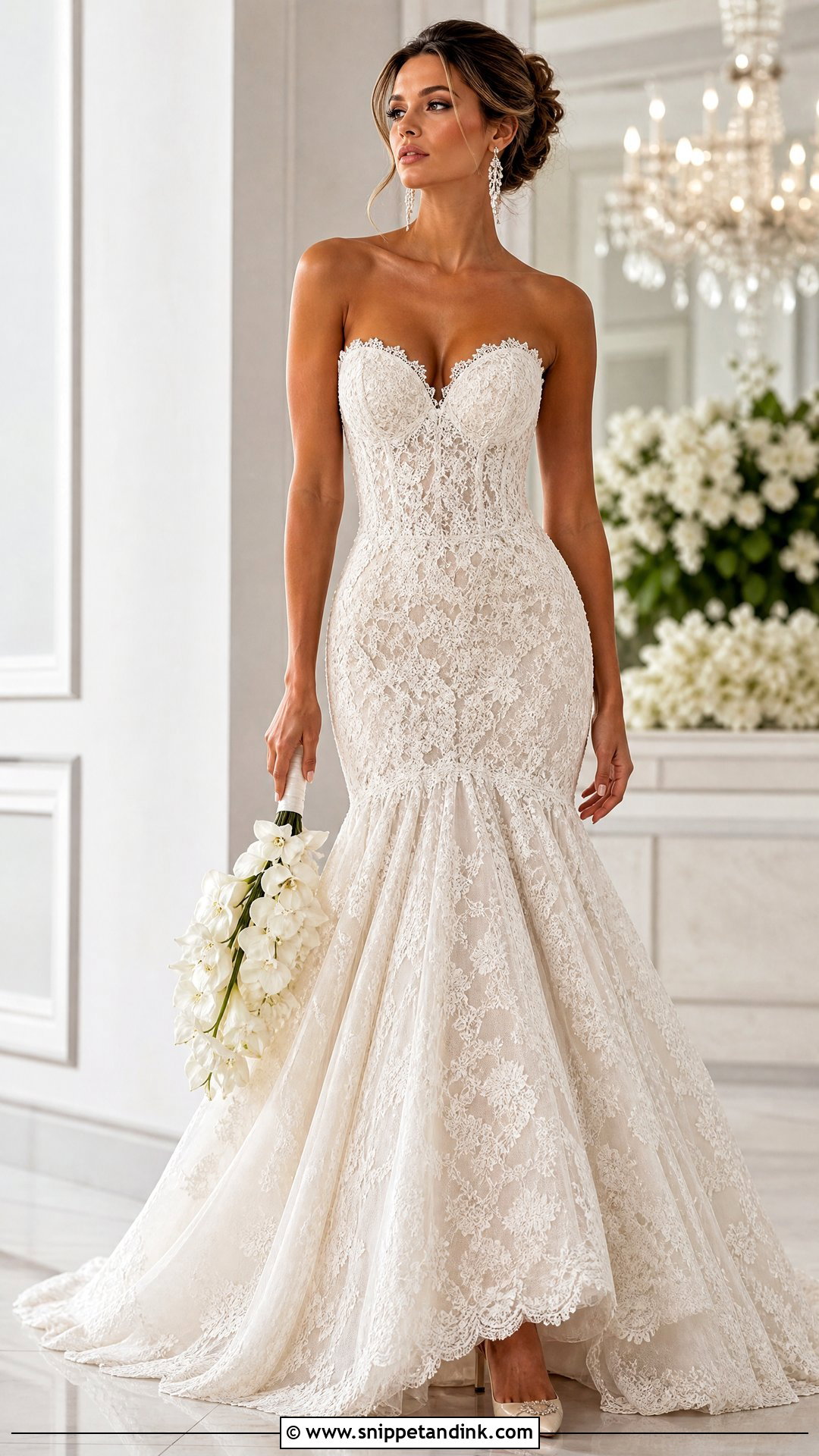
Here the seam does a different job. On a mermaid, the dropped waist lengthens the torso before the flare opens around the hips or thighs, so the body-skimming part runs even longer. That’s honest about what it asks of you: you need to be comfortable in a close fit, and you’ll take smaller steps. I always have mermaid brides try the stairs and a slow dance turn in the shop. Lace looks romantic, satin sleek, crepe modern. Long earrings, a smooth veil and higher heels help the vertical line, and a narrow bouquet won’t hide the shape.
8. Drop Waist A Line Wedding Gown
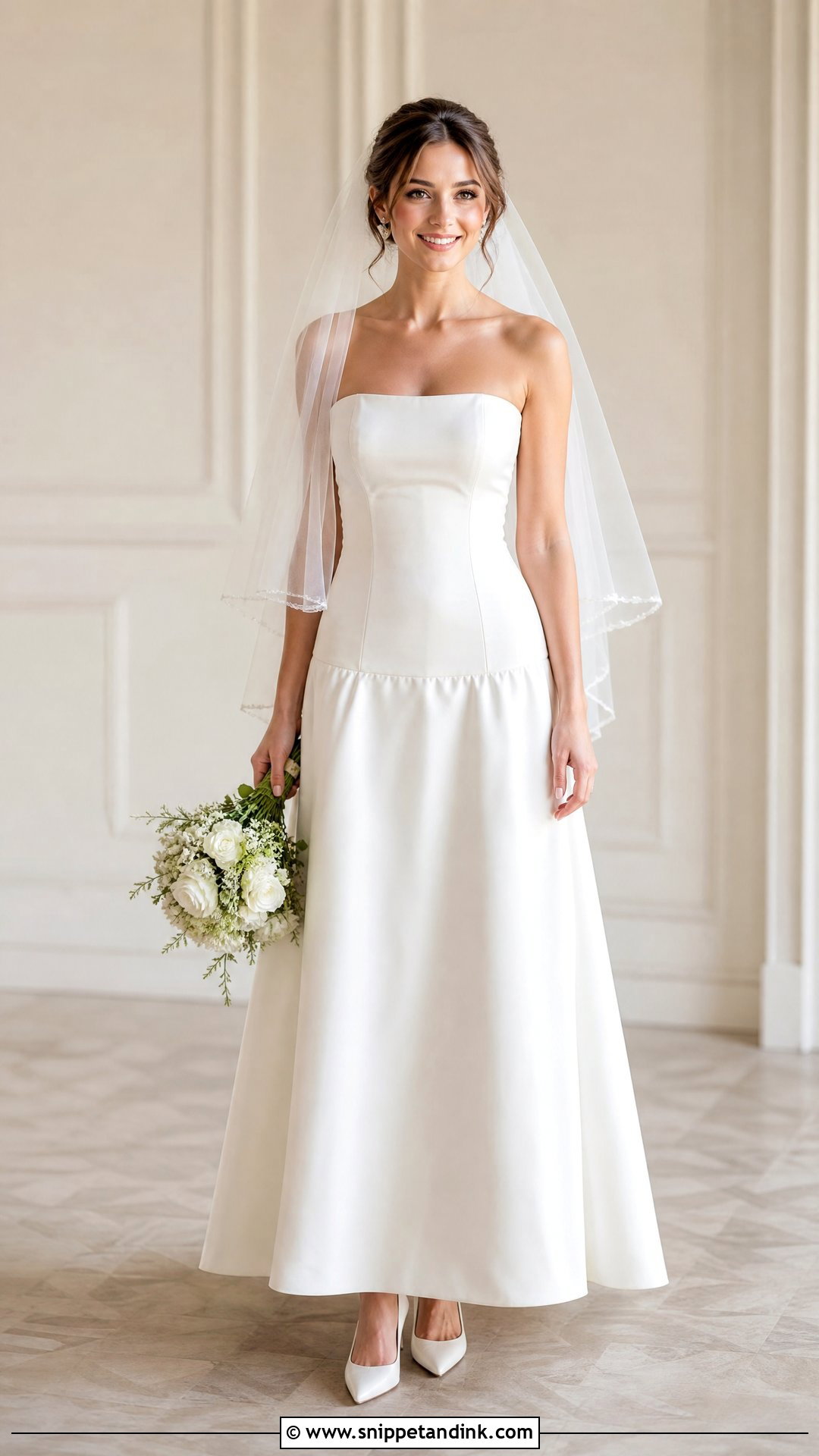
Of all 25, the A-line is the one I’d call easiest to wear. The bodice gives definition, and the skirt moves gently away from the hips instead of flaring hard, so it’s comfortable to sit, walk and dance in. Satin, lace, organza or tulle all work, which means it fits almost any season. A fingertip veil, soft waves and closed-toe heels keep it polished. For one extra detail, consider a gown with a subtle bow, floral appliqué or a pleated skirt. It’s the safe middle ground between minimal and romantic, and safe isn’t an insult here.
9. Drop Waist Basque Wedding Gown
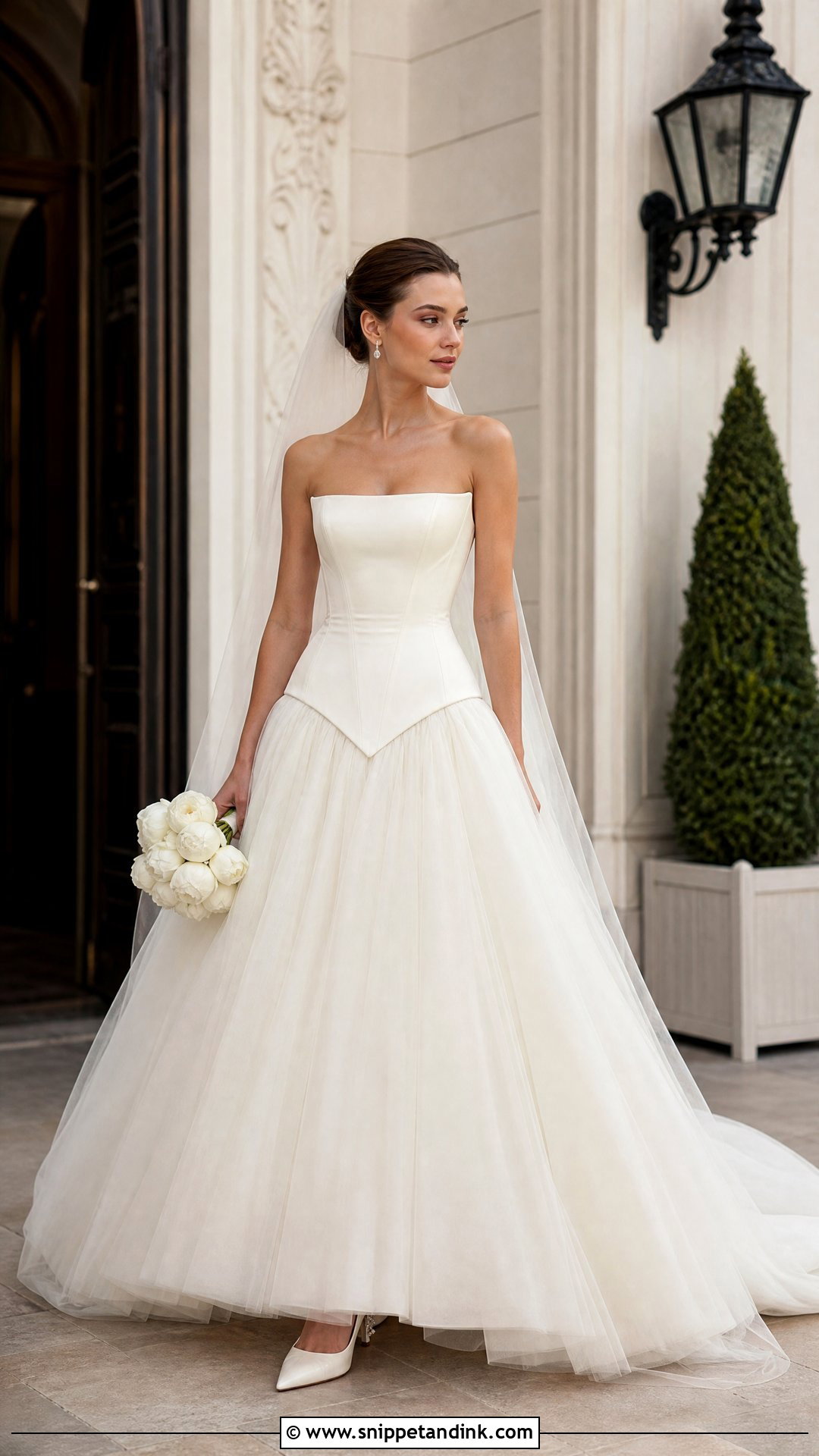
The basque waist is the dropped seam with a point. It dips into a V at the front, which lengthens the torso and gives a slightly regal, vintage feel, especially over a full lace or tulle skirt. Proportion matters most here. On a petite bride a deep point can reach too far down the front, so I’d try a softer V that ends higher. Show the waistline off with a soft updo and a plain veil, plus pearl earrings. Sit down at every fitting; the point should not press into your lap.
10. Drop Waist Strapless Wedding Gown
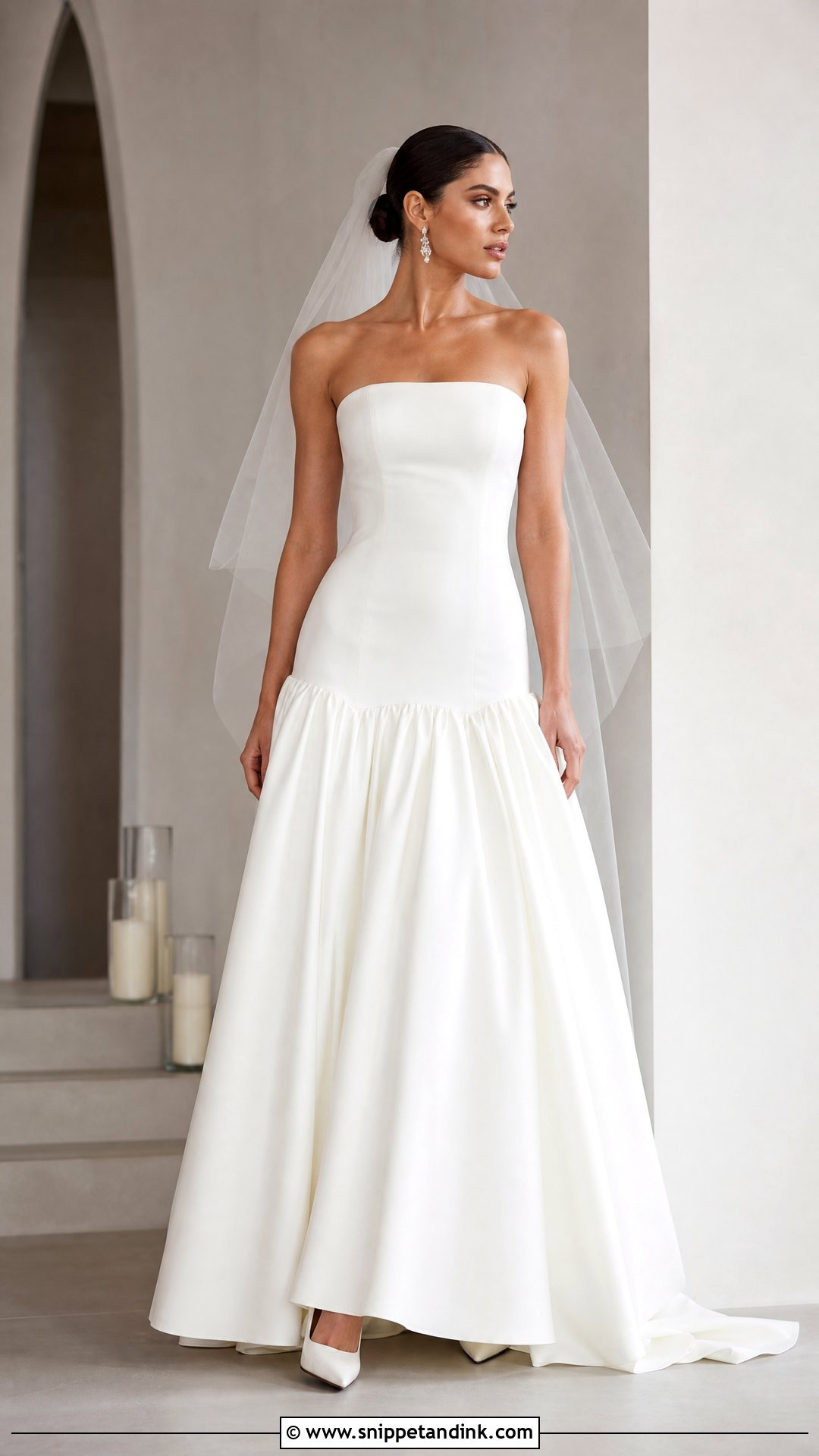
Strapless puts all the attention on the shoulders, collarbone and veil, and all the work on the bodice. Look for internal boning and a waist stay, the inner band that anchors the gown to your body so the neckline doesn’t slip. A good fitter will tell you to stop hitching it up; if you need to, it’s not fitted yet. Skirt volume is up to you. Add a necklace only when the bodice is very plain; otherwise earrings carry it. A smooth bun, soft glam makeup and pointed heels complete it.
11. Drop Waist Off Shoulder Wedding Gown
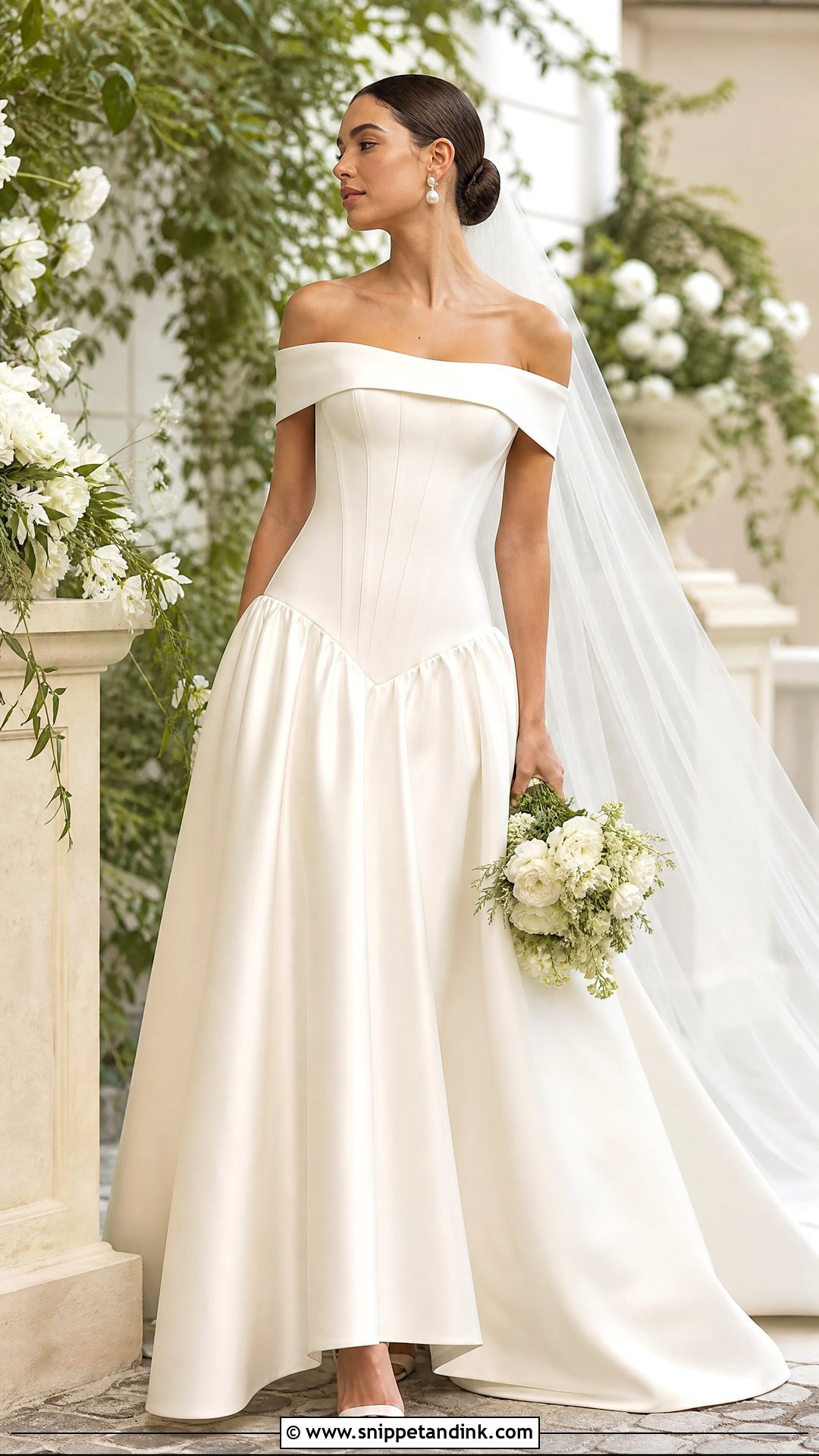
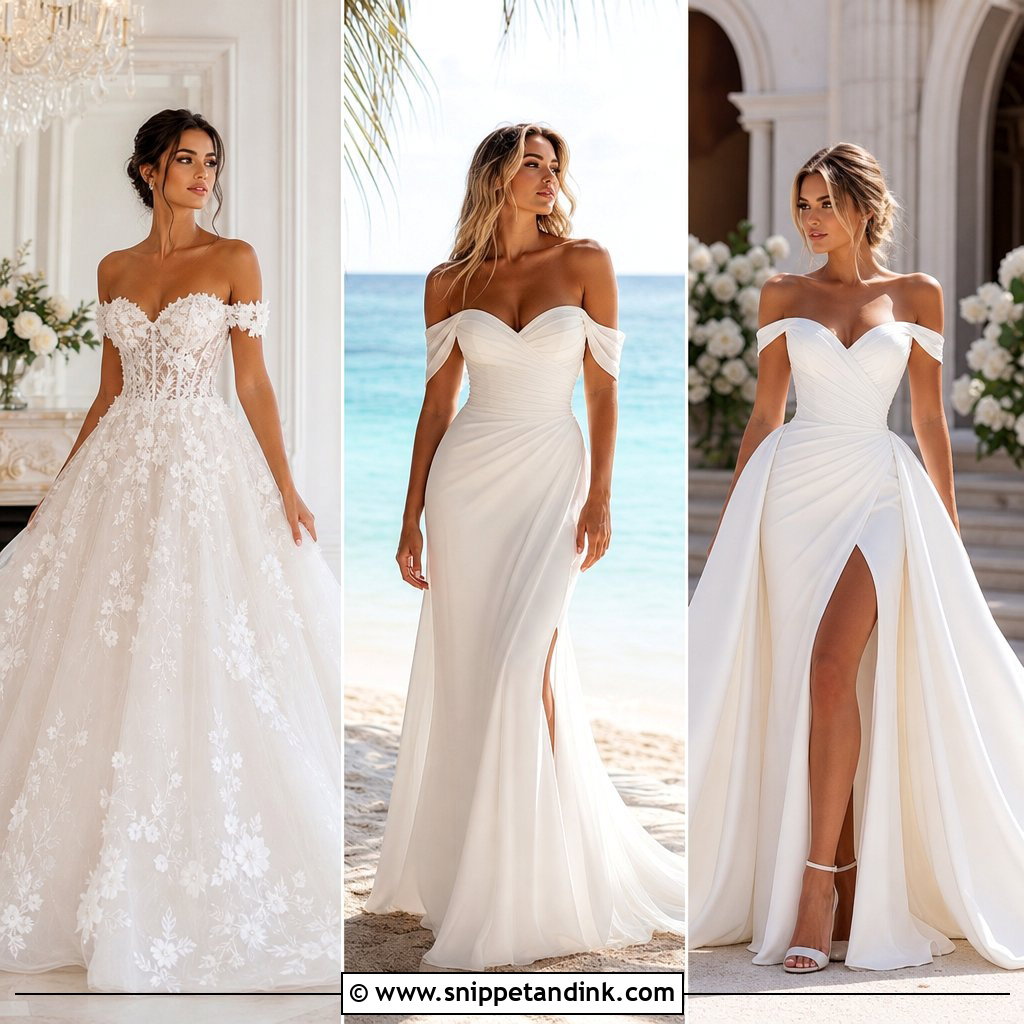
An off-shoulder band frames the collarbone, and the lowered waist adds length below, so the whole gown reads long and graceful. It’s lovely in satin, lace or structured taffeta. The thing I warn brides about is arm movement: a band across the upper arms limits how high you can lift them, which you’ll notice when you dance or throw the bouquet. A band with a little stretch, or detachable straps, solves that for the reception. Wear a low bun, pearl earrings and a long veil falling behind the shoulders, and skip bulky necklaces.
12. Drop Waist Long Sleeve Wedding Gown
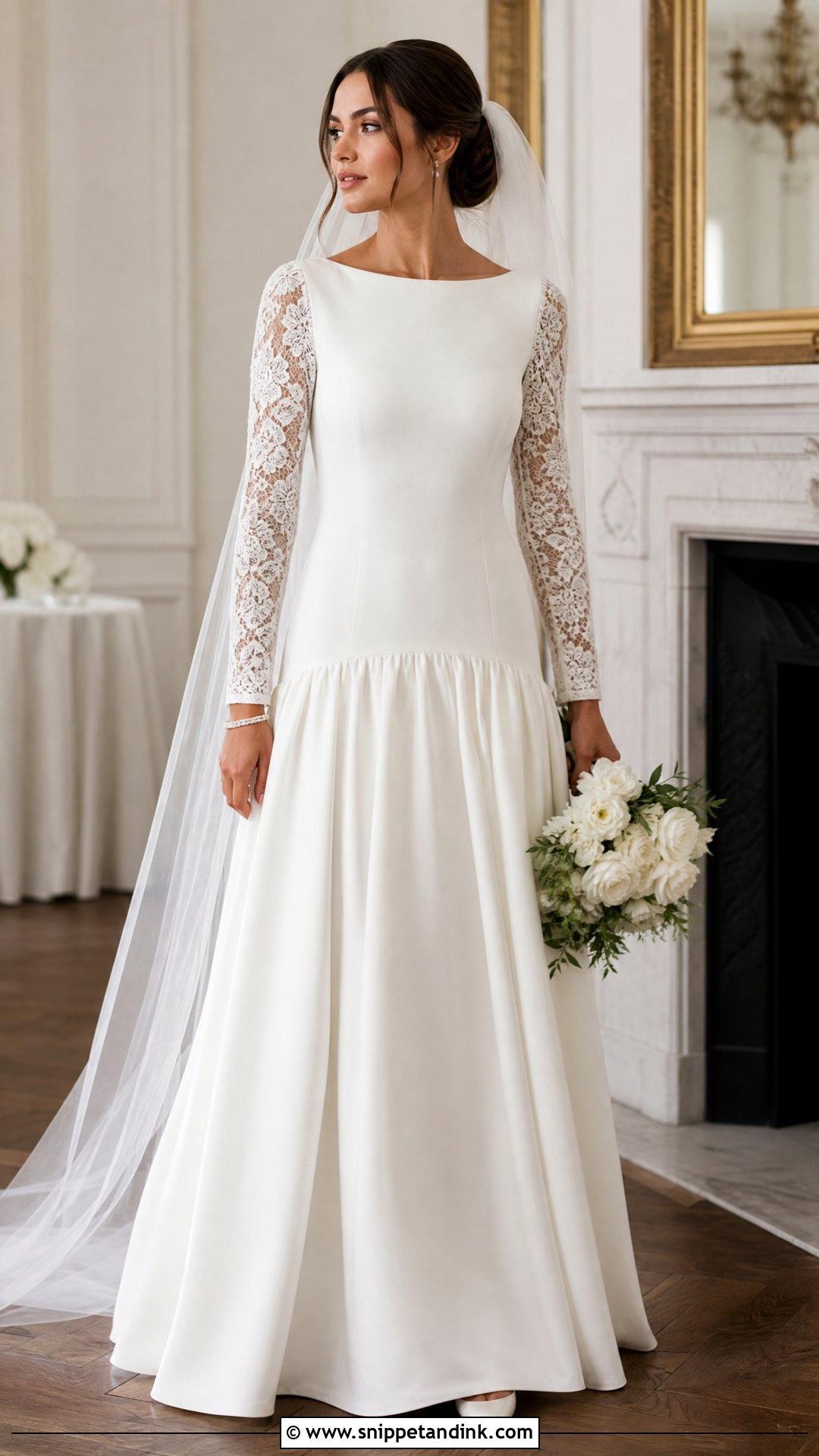
Coverage doesn’t have to mean shapeless, and the dropped seam proves it by adding definition where a long-sleeve gown can look boxy. Sleeves can be sheer lace, fitted crepe or smooth satin. I check two things with sleeved gowns: that you can lift your arms to shoulder height, and that the cuff ends at the wrist bone rather than creeping over your hand. Fall and winter suit heavier sleeves, while light lace sleeves work in spring. Keep hair pulled back or softly waved so the sleeve and bodice detail show.
13. Drop Waist Square Neck Wedding Gown
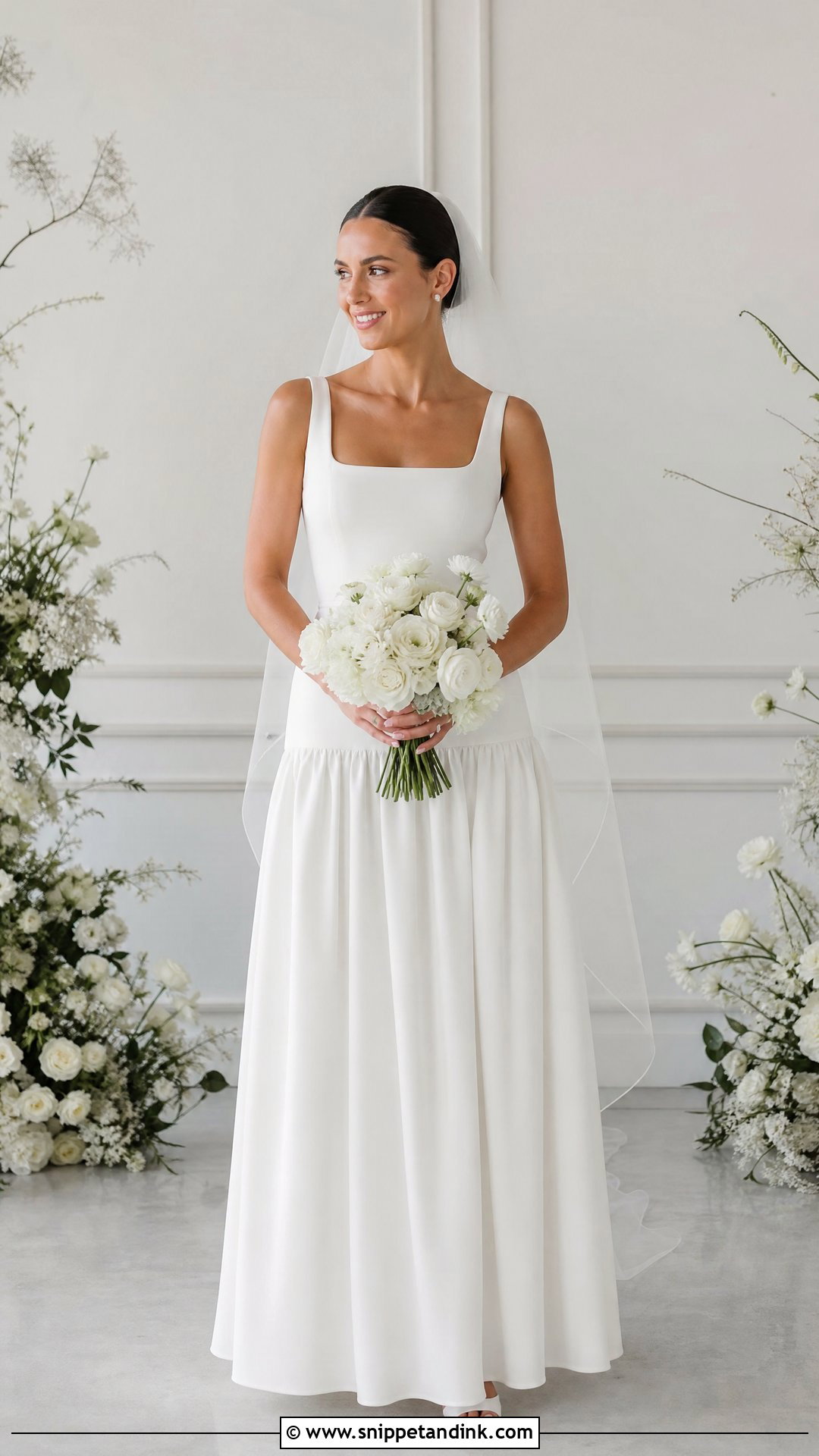
Square necklines suit brides who like simple gowns with a distinct shape. The neckline adds structure up top, the dropped waist adds length below. Satin or crepe keeps it minimal; lace makes it more traditional. If you want movement, a pleated A-line skirt adds it without crowding the clean bodice. I’d pair it with pearl studs, a slim veil and block heels, which are kinder on grass than stilettos. Both a neat bun and a half-up style sit well with the square line.
14. Drop Waist Sweetheart Wedding Gown
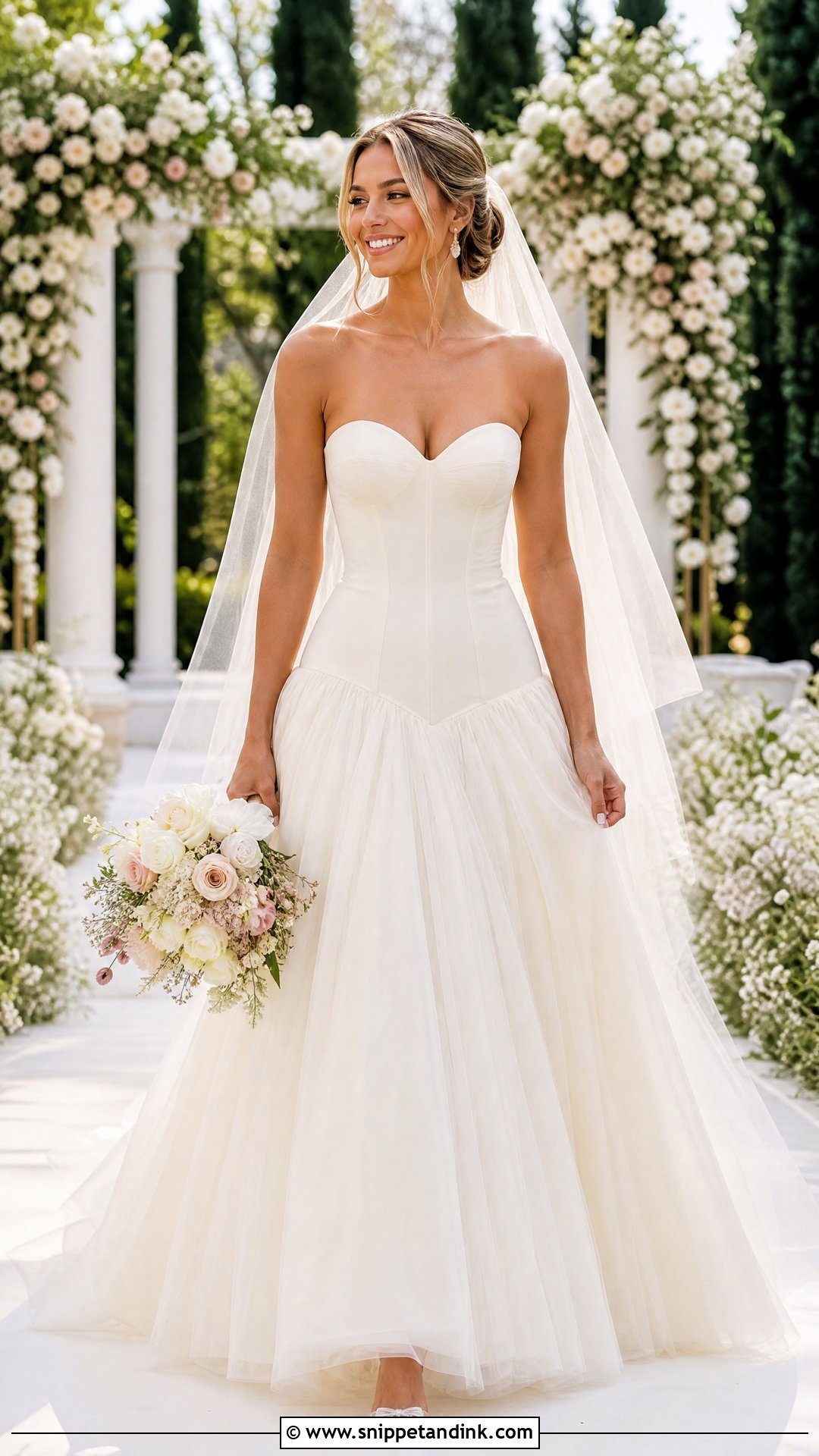
A sweetheart curve flatters the bust and offsets the longer bodice, so the gown feels soft rather than ornate. Over a corset bodice the shape gets more defined; over a plain bodice it stays gentle. It works in tulle, satin, organza or lace. My fitting check is the dip at the centre of the curve, which should sit against the skin, not stand away from it when you bend forward. Drop earrings, a soft veil and ivory heels finish it, with natural makeup and a bouquet that mirrors the gown’s mood.
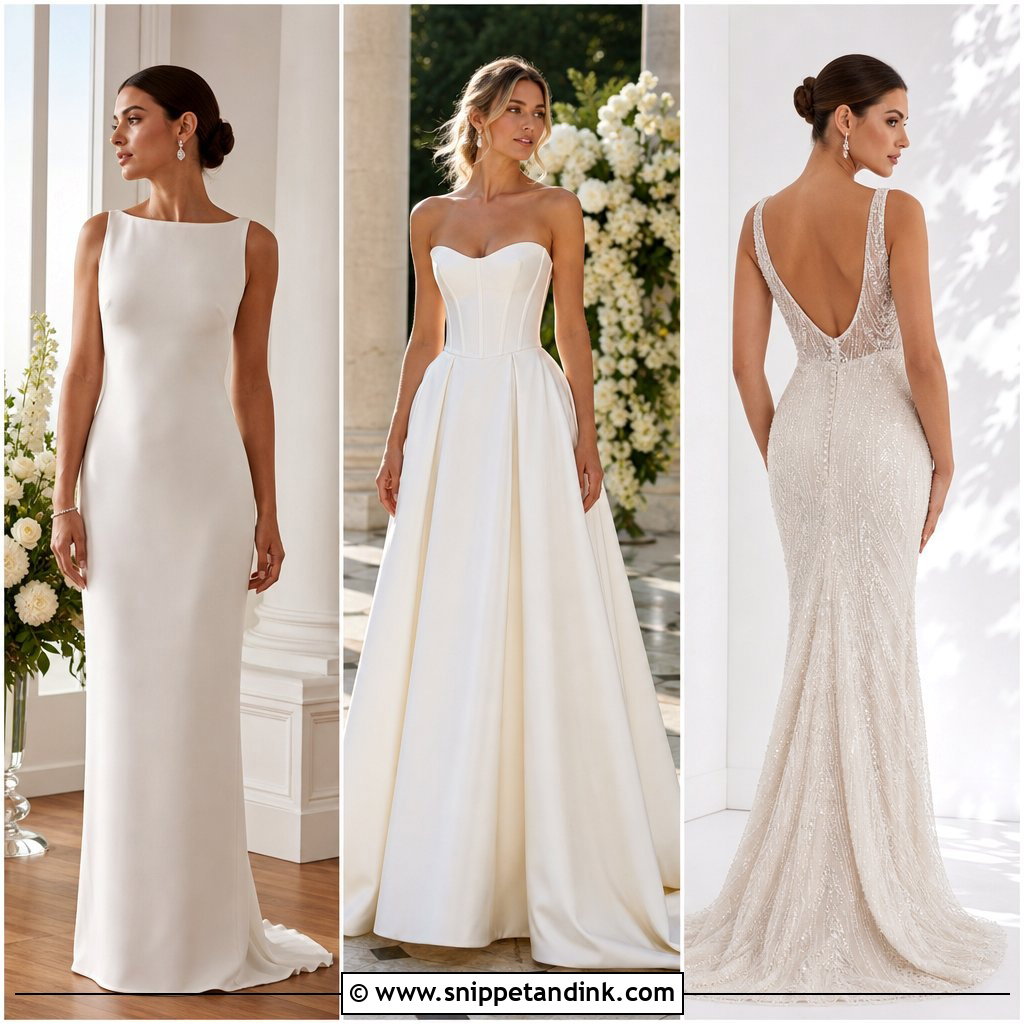
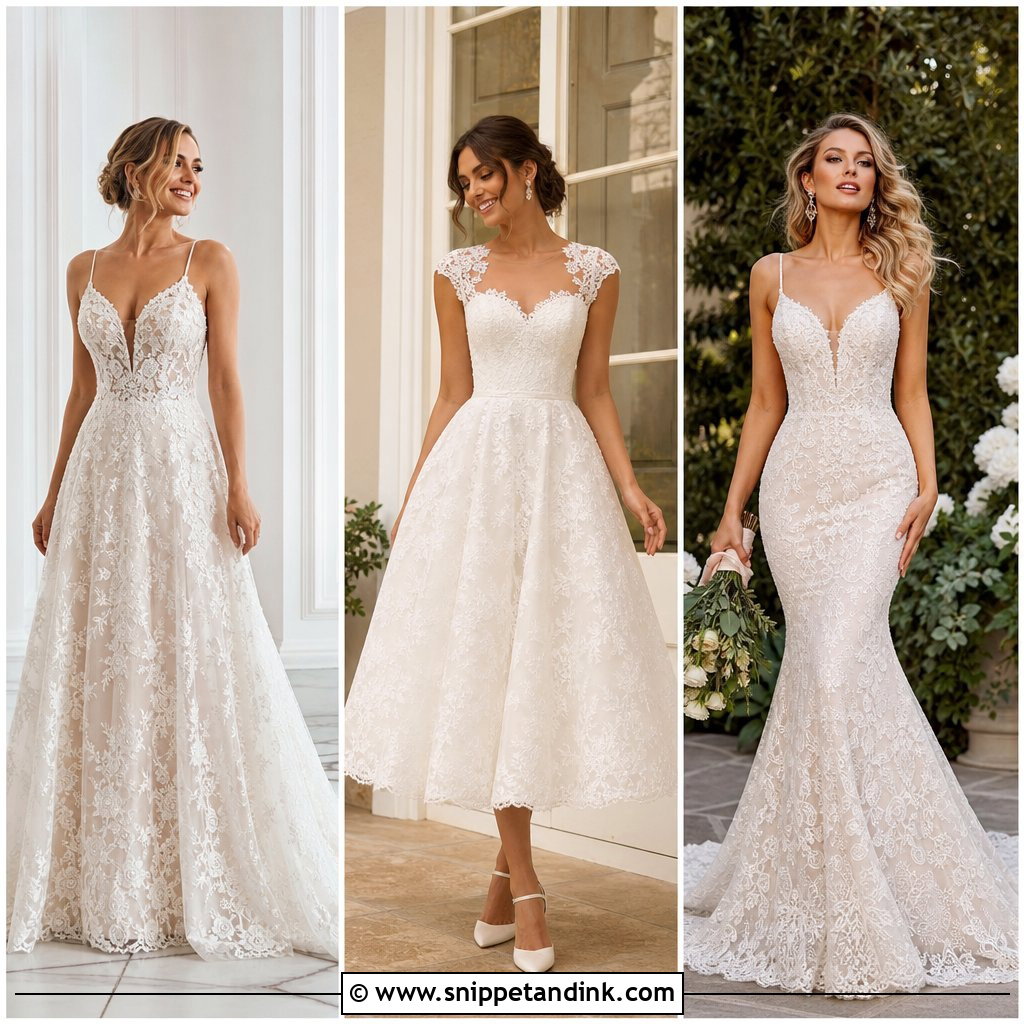
15. Drop Waist V Neck Wedding Gown
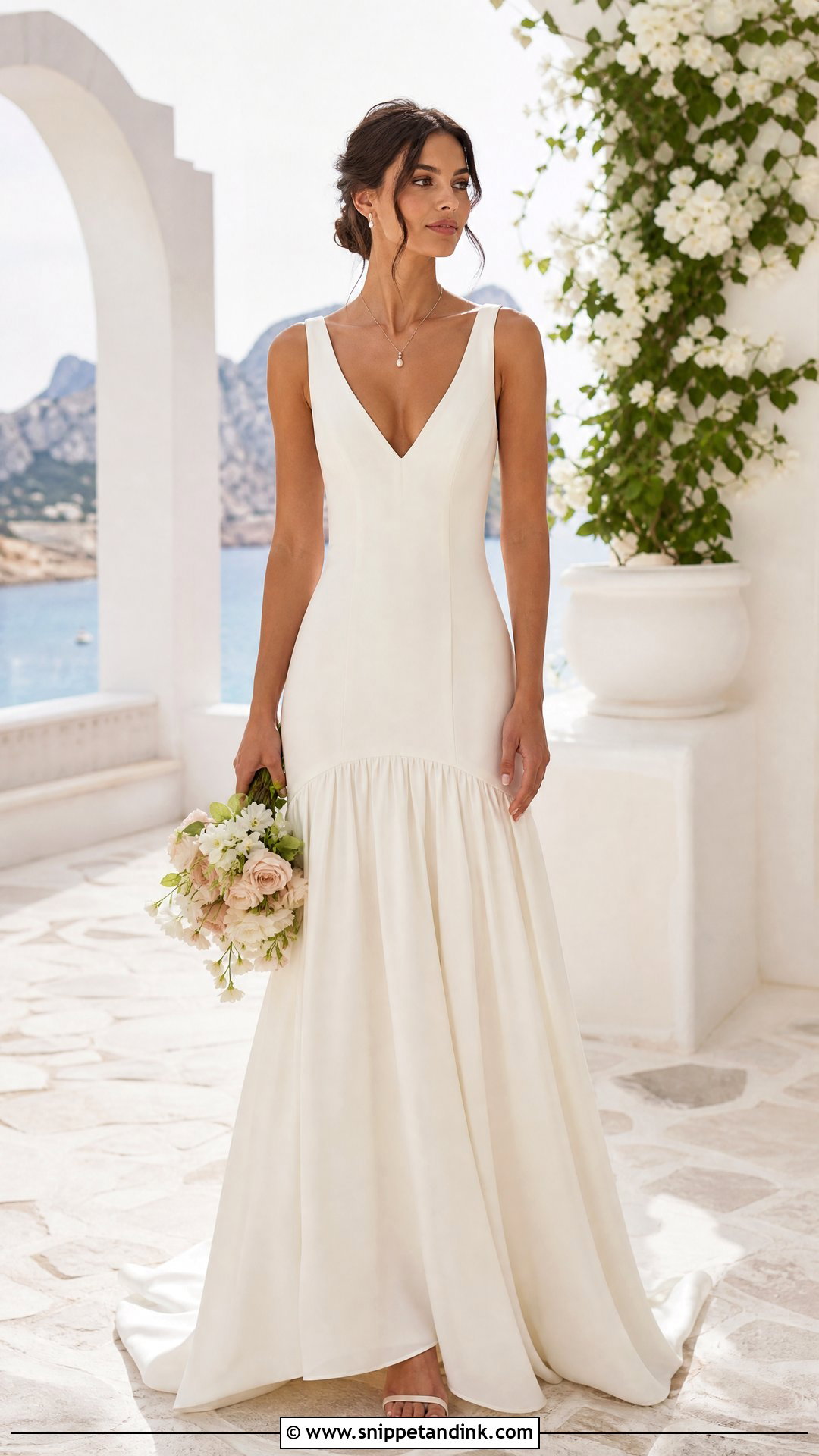
A V neckline pulls the eye up while the extended waist pulls it down, so the whole body reads as one vertical line. Lace makes it romantic, crepe makes it sleek. A deep V is where I’d ask for illusion mesh across the gap; it holds the sides in place and lets you hug people without adjusting. A thin pendant can sit in the opening if the V is shallow. Keep the veil off the neckline, wear strappy heels, and it suits destination ceremonies and relaxed formal events.
16. Drop Waist Halter Wedding Gown
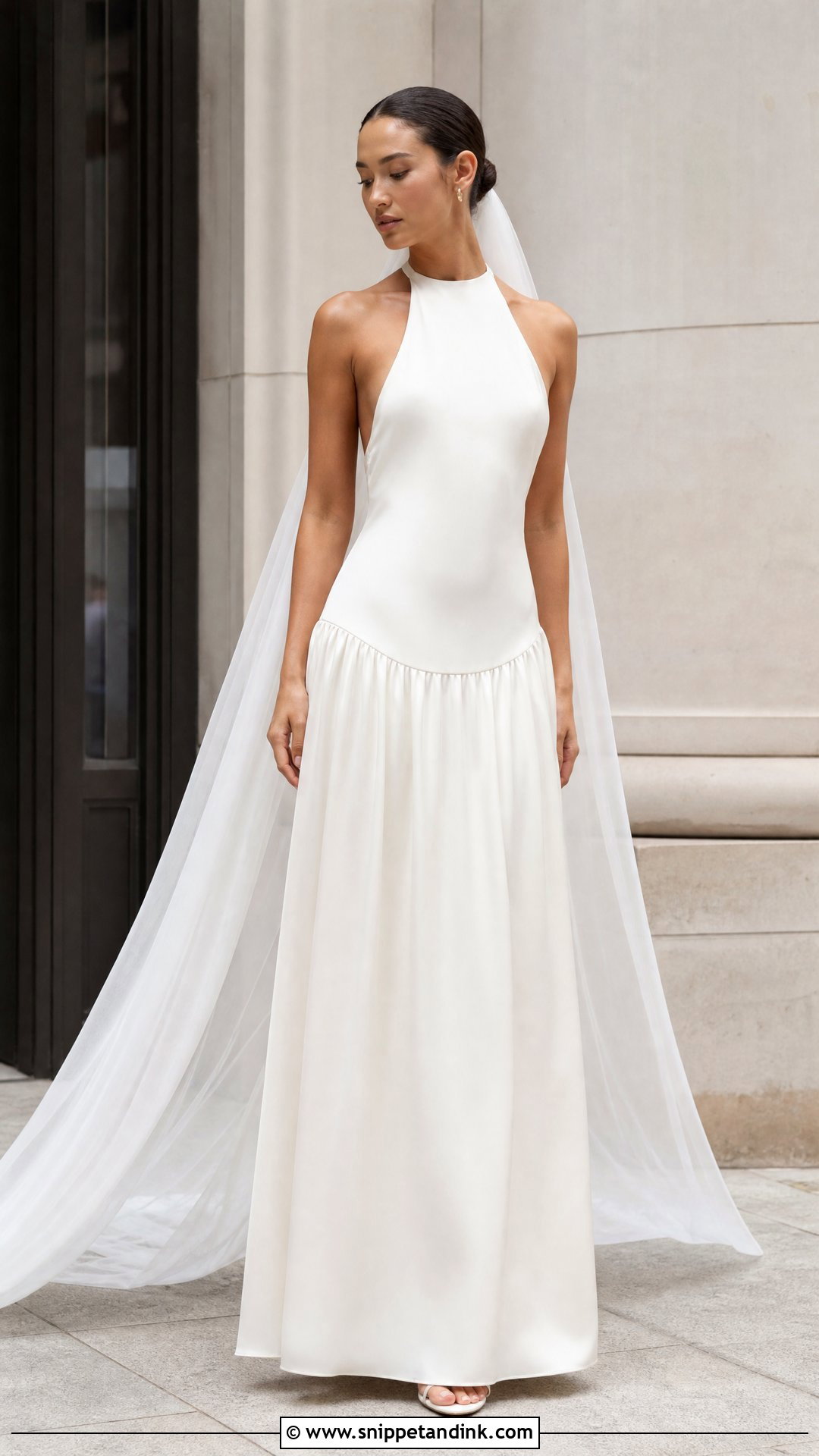
Clean and slightly unexpected, the halter highlights the shoulders and turns the attention upward, while the dropped seam makes a long lower line. It’s strongest in satin, crepe or a minimal mikado. Alterations need care here, because the halter strap and the waistline both have to be exactly right: a strap that’s too short drags the bodice up and moves the seam with it. I fit the strap last. Sleek bun, small earrings, no necklace. A cape veil adds drama without clutter at a coastal ceremony or a city wedding.
17. Drop Waist Beaded Wedding Gown
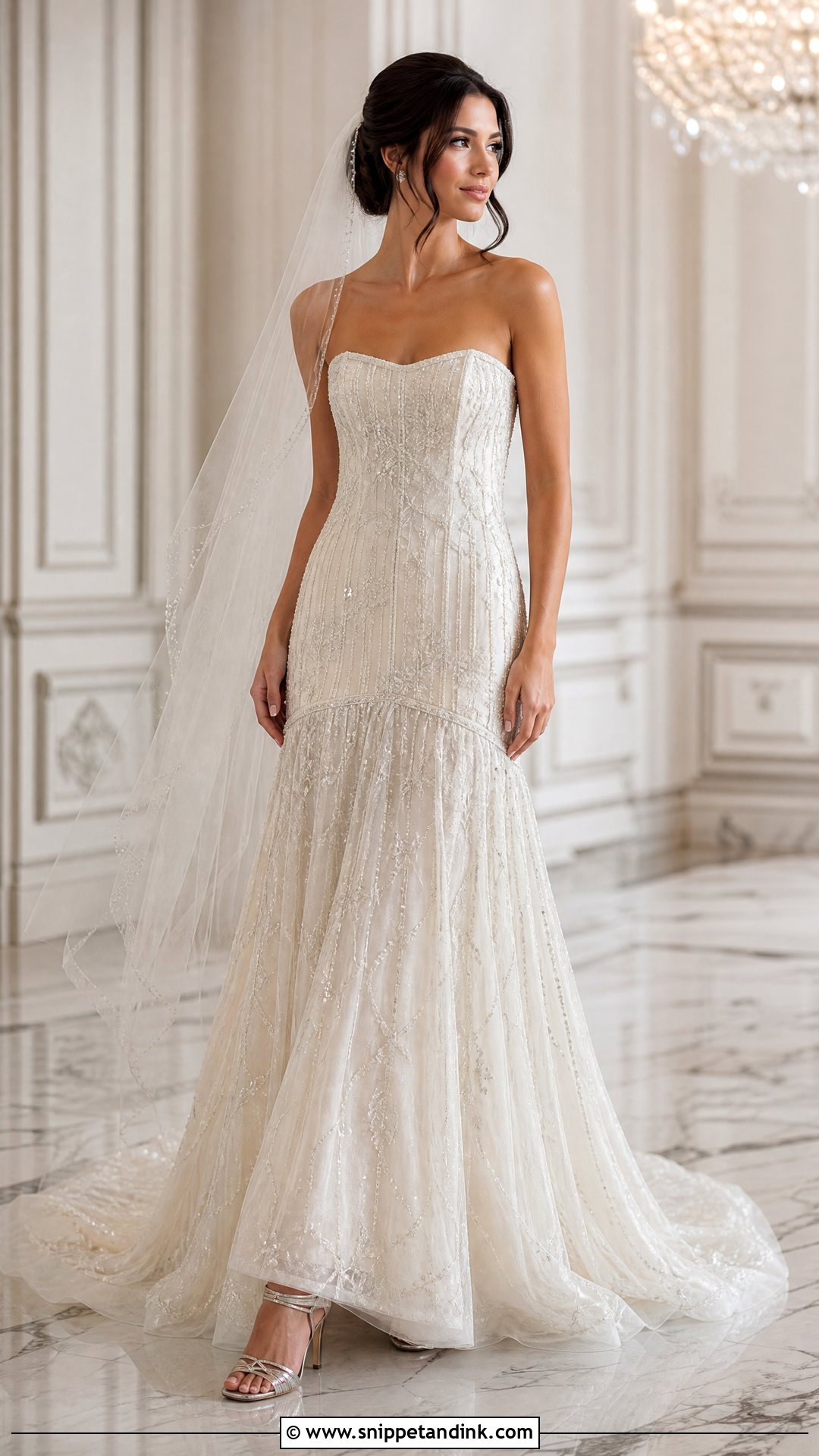
Shimmer needs a frame, and the dropped waist gives beading one. Beads can trace the bodice, outline the seam or scatter into the skirt, and when they follow the waistline the sparkle looks planned. Beading adds real weight, though. I ask brides to walk and sit in a heavily beaded gown for ten minutes in the shop, because some feel like armour by the reception. Keep accessories refined: crystal studs, metallic heels, a clean veil, no necklace. It suits evening weddings and indoor rooms with warm light.
18. Drop Waist Floral Wedding Gown
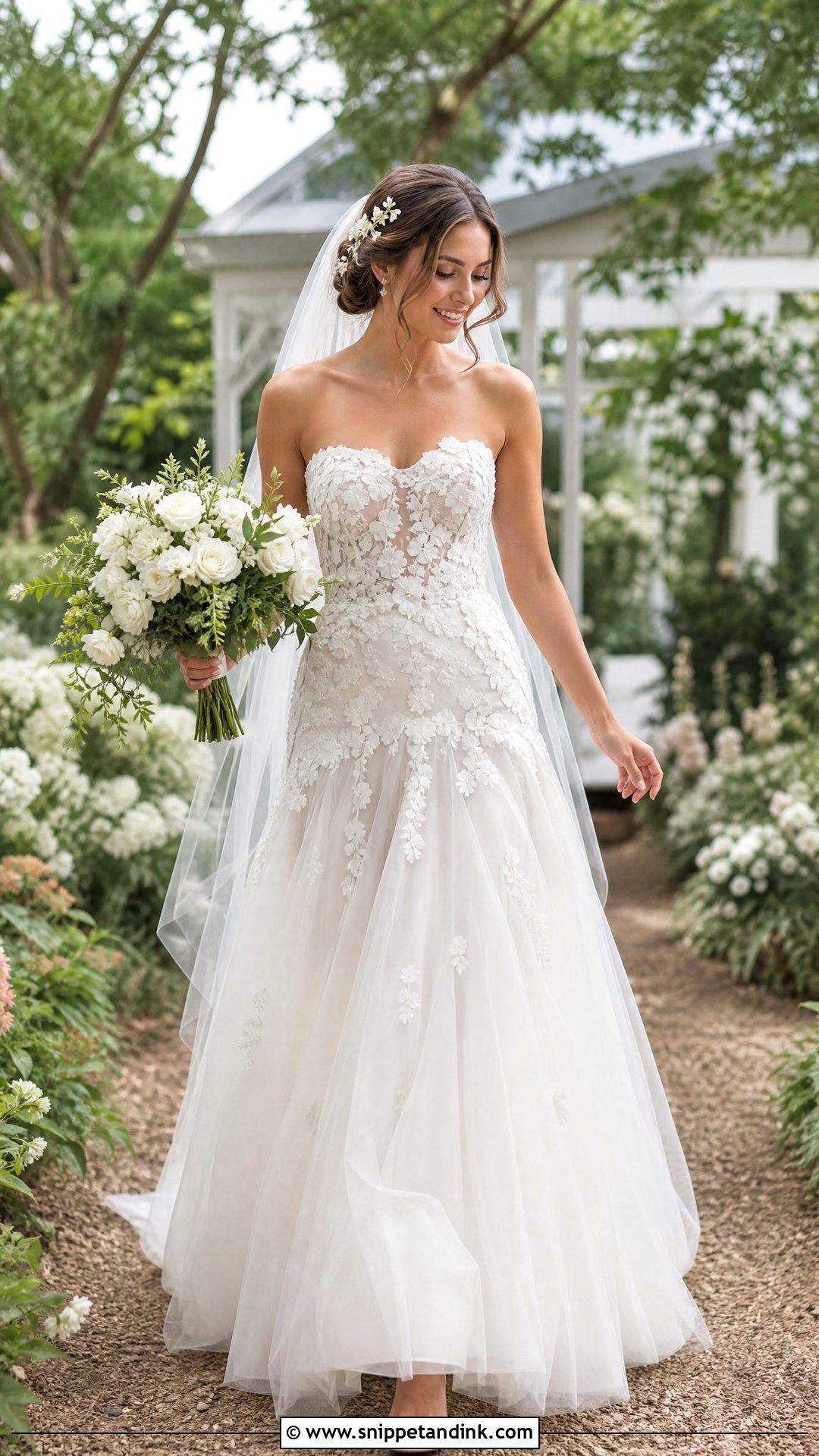
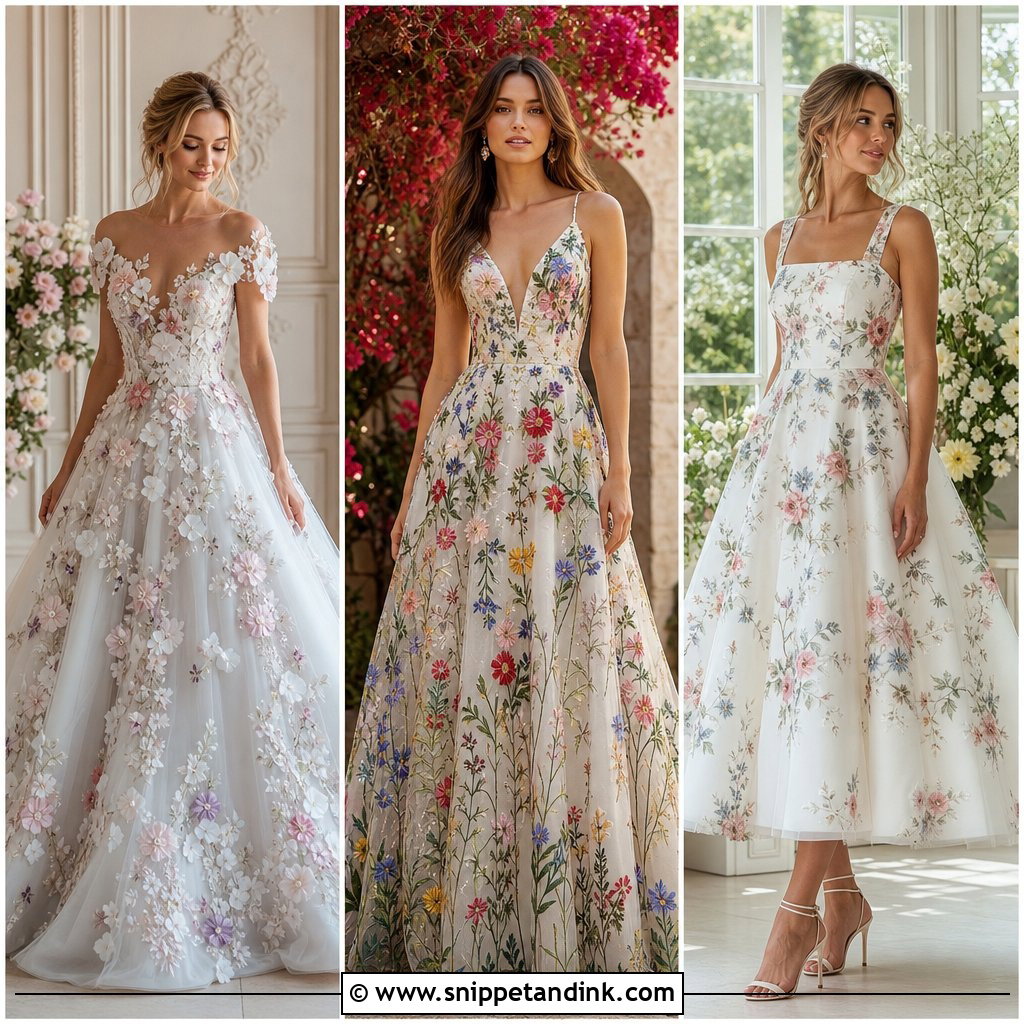
Florals can be lace appliqué, embroidered vines, soft 3D petals or tonal patterns on tulle, and the longer bodice gives them room to flow before the skirt opens. Three-dimensional petals are the ones to inspect closely; they crush when you’re hugged and can flatten in a car, so ask how they’re backed. Floral hair pins, a sheer veil and simple heels keep the look cohesive. With a bold pattern I’d hold a bouquet in just one or two colours so the dress stays the main thing. Garden and spring weddings suit it.
19. Drop Waist Pearl Wedding Gown
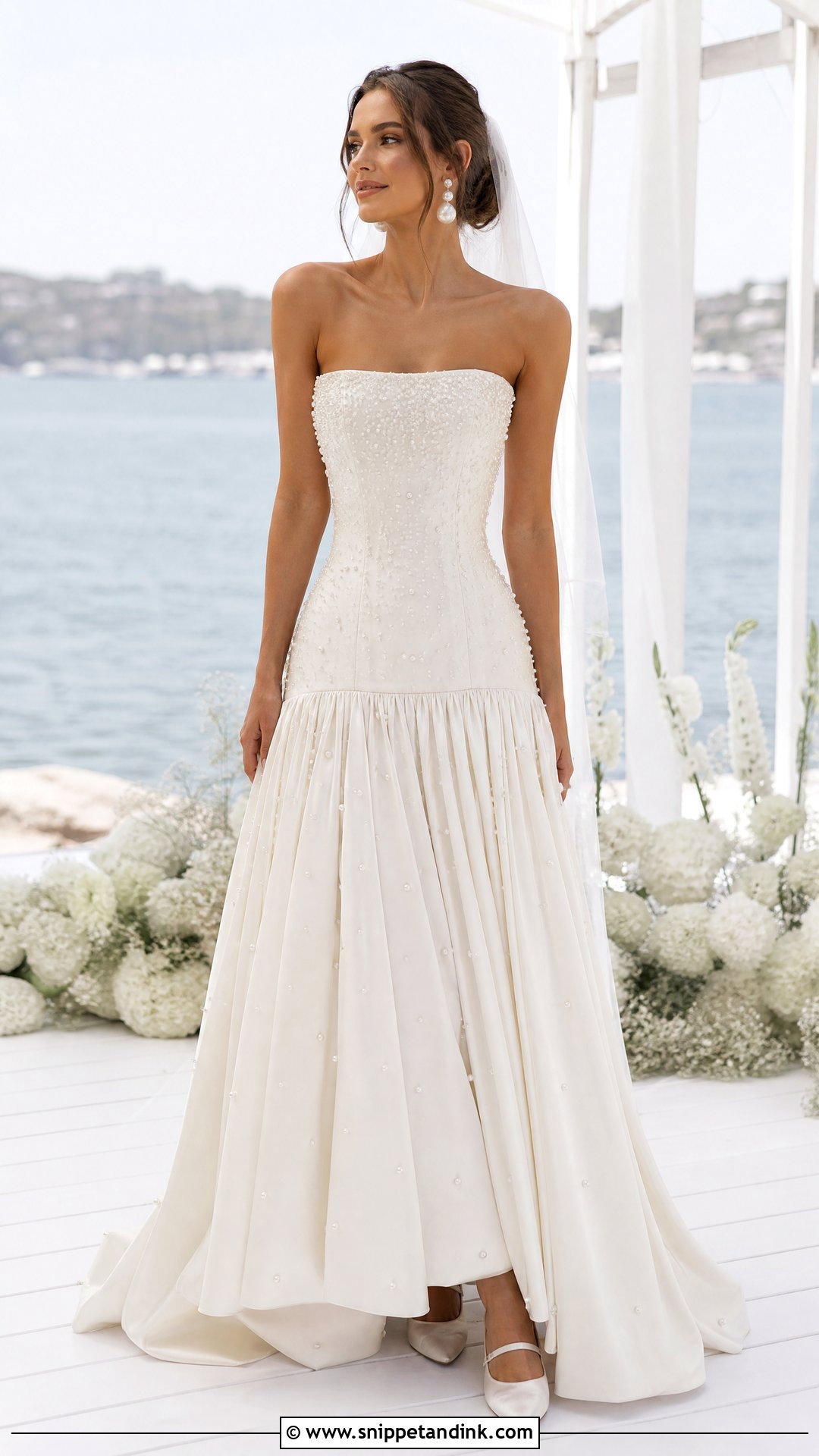
Pearls give a glow rather than a sparkle. They can trim the bodice, scatter over the skirt or outline the neckline, and the dropped waist gives them a shape to follow so the gown doesn’t turn sugary. One or two matching pearl accessories are plenty; I’d stop at earrings and maybe a hair pin. Sewn pearls do come loose over a long day, so keep spares from the shop. Satin shoes and a simple veil finish it, with luminous skin and soft blush to echo the sheen.
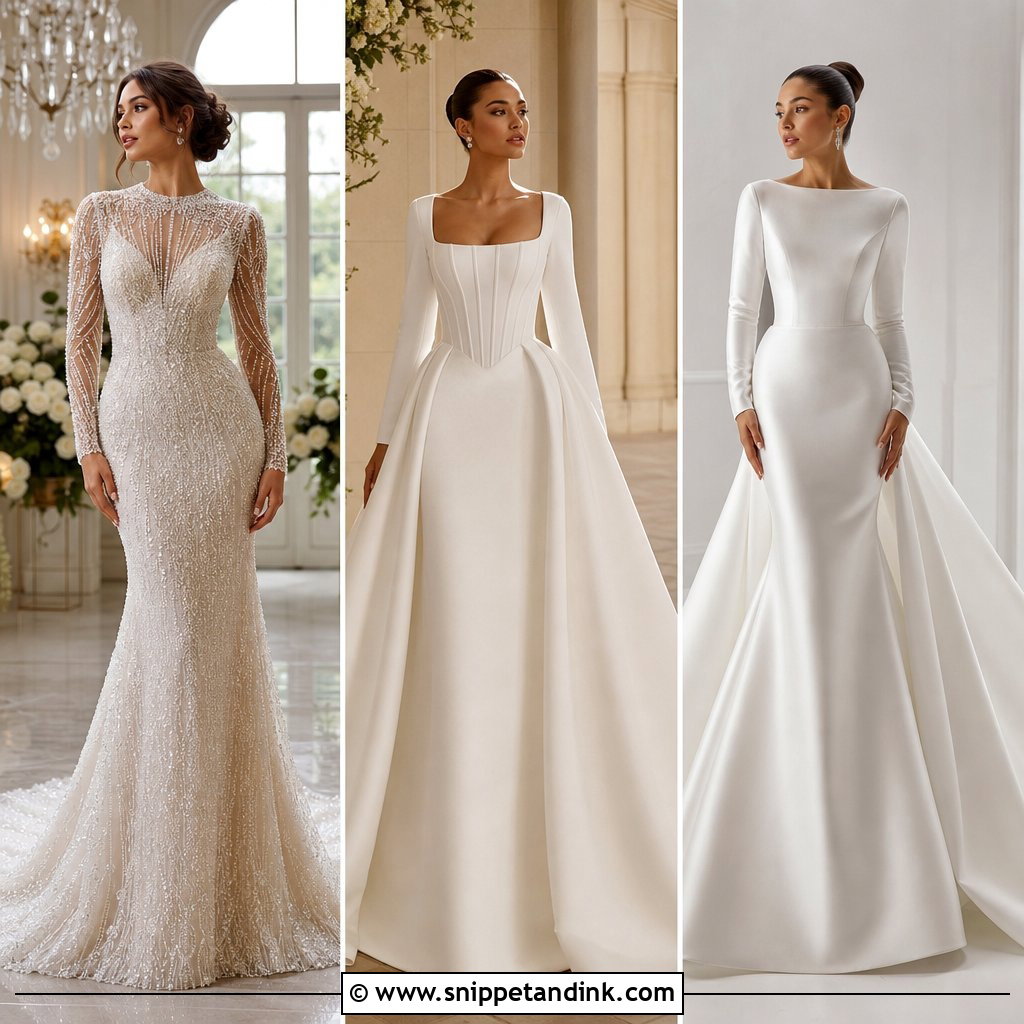
20. Drop Waist Organza Wedding Gown
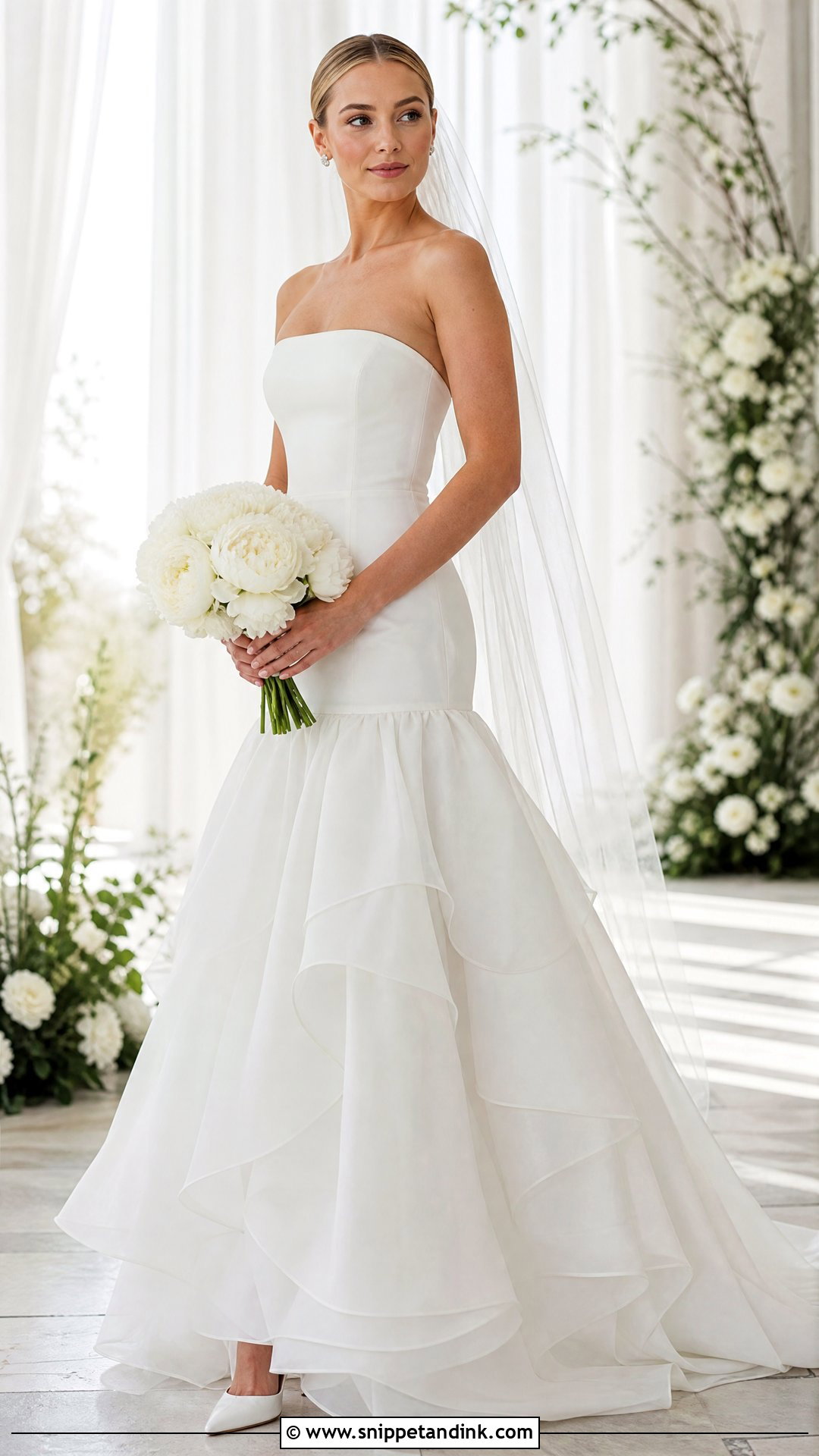
Organza sits between tulle and satin. It holds shape better than tulle but still looks airy, which suits skirts with volume or layers. The fitted bodice keeps all that fullness polished. Spring and summer are its seasons, since it moves without feeling heavy. For a more fashion-led version, look for subtle pleats or a soft bubble effect in the skirt. I’d mention one drawback: organza creases where you sit and those marks show in daylight, so a morning steam is worth booking. Delicate earrings, a sheer veil, pointed heels.
21. Drop Waist Minimalist Wedding Gown
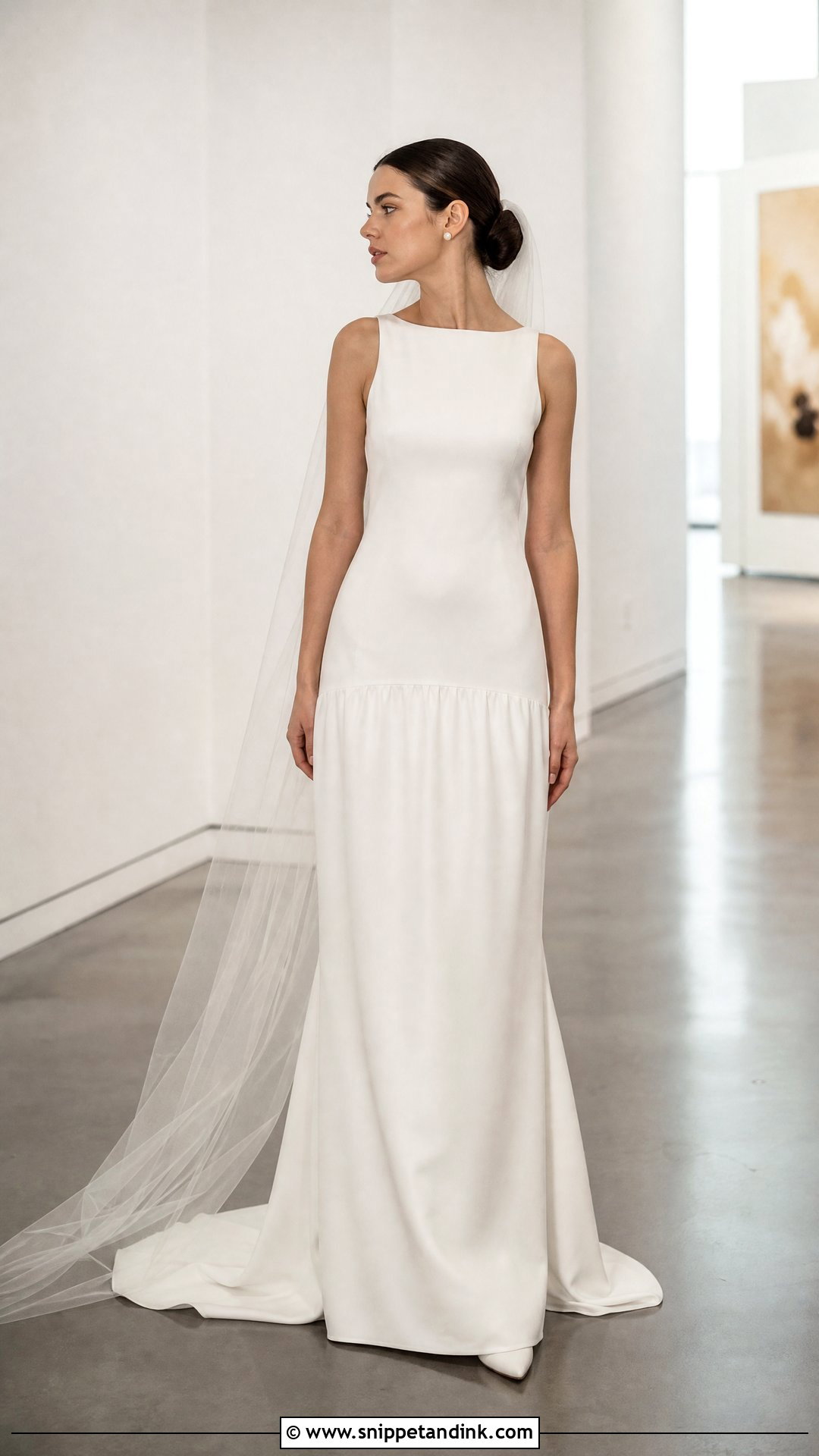
When there’s no detail, fit is the detail. A minimalist drop waist gown is all clean line and smooth fabric, so satin, crepe or mikado carry it best, and every pull or ripple shows. I’d spend the alteration budget here before spending it on accessories. The bodice, the seam and the hem all have to be exact. Pearl studs, a sleek veil and closed-toe heels, with a low bun or smooth ponytail, keep it modern. City venues and galleries suit its restraint.
22. Drop Waist Vintage Wedding Gown
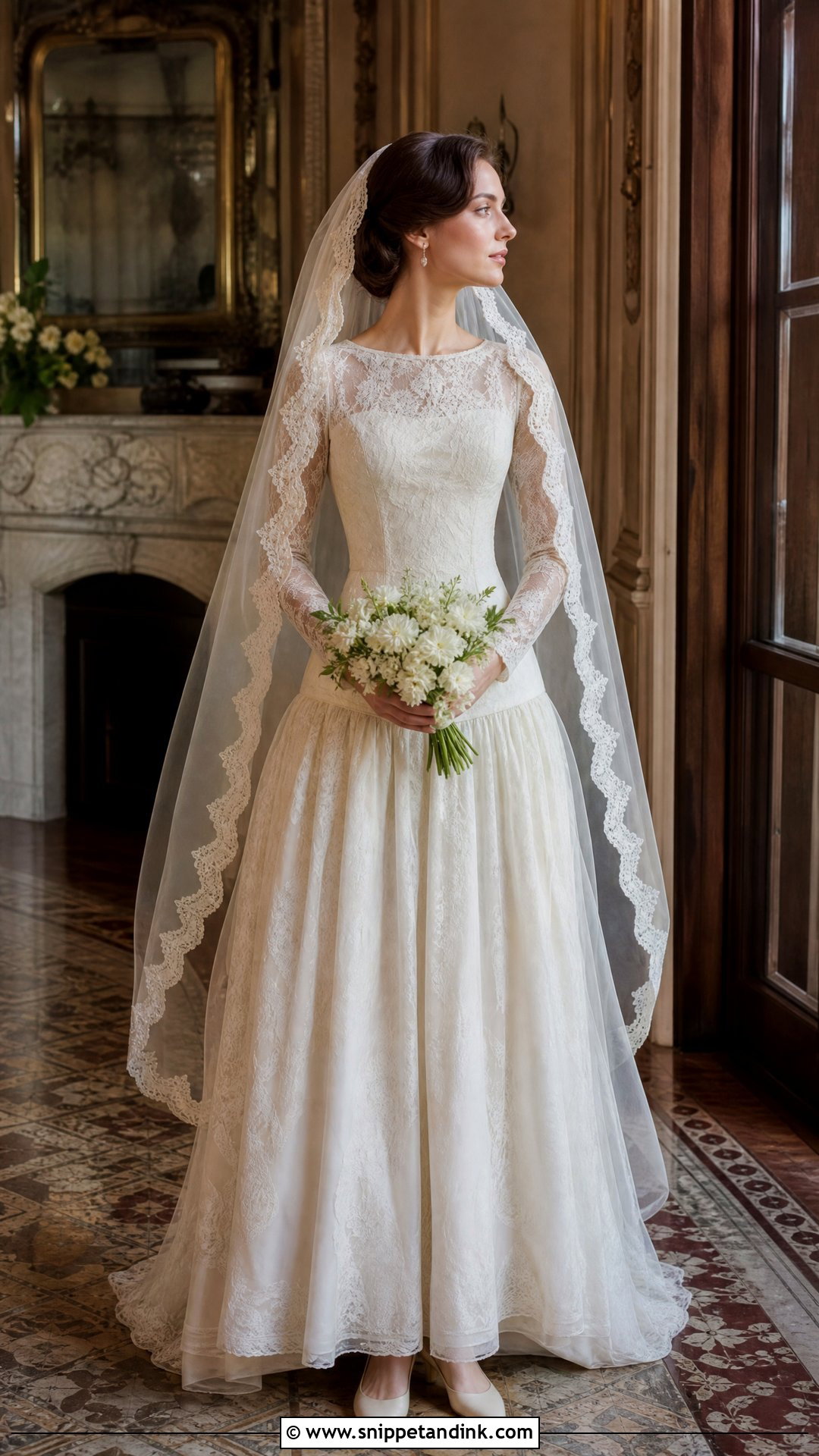
Dropped waists have a long history in bridal wear, so this shape slips easily into a vintage look. Watch for lace sleeves, basque shaping, satin buttons, high necklines or fine embroidery. A lace veil, pearl earrings and ivory pumps finish it, and a soft updo or brushed waves keeps it from looking like costume. If you’re buying a true vintage gown, plan the alterations early and find a seamstress who handles old fabric; aged silk can split along seams when it’s let out. Historic venues and intimate formal weddings fit it best.
23. Drop Waist Modern Wedding Gown
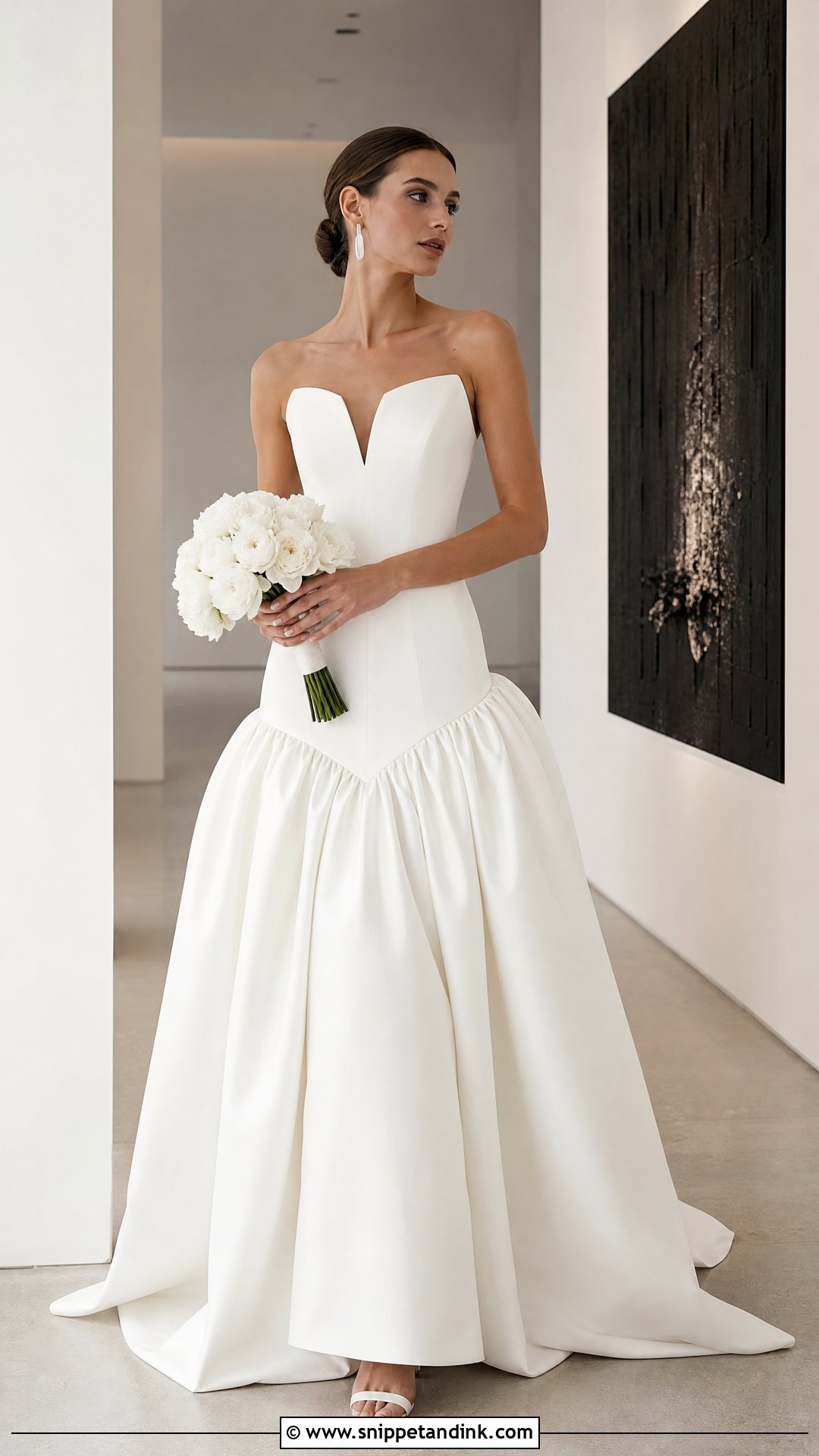
Modern here means structured bodices, sharp necklines and smooth skirts, often with one unexpected element such as a sculptural bow or a detachable overskirt. Moving the waist lower is itself a modern move, because it breaks the proportion most wedding dresses follow. I’d keep everything around it pared back: sleek earrings, minimal heels, a smooth veil or none. Flowers should be architectural, white roses or calla lilies. Rooftops, galleries and modern hotels suit it.
24. Drop Waist Beach Wedding Gown
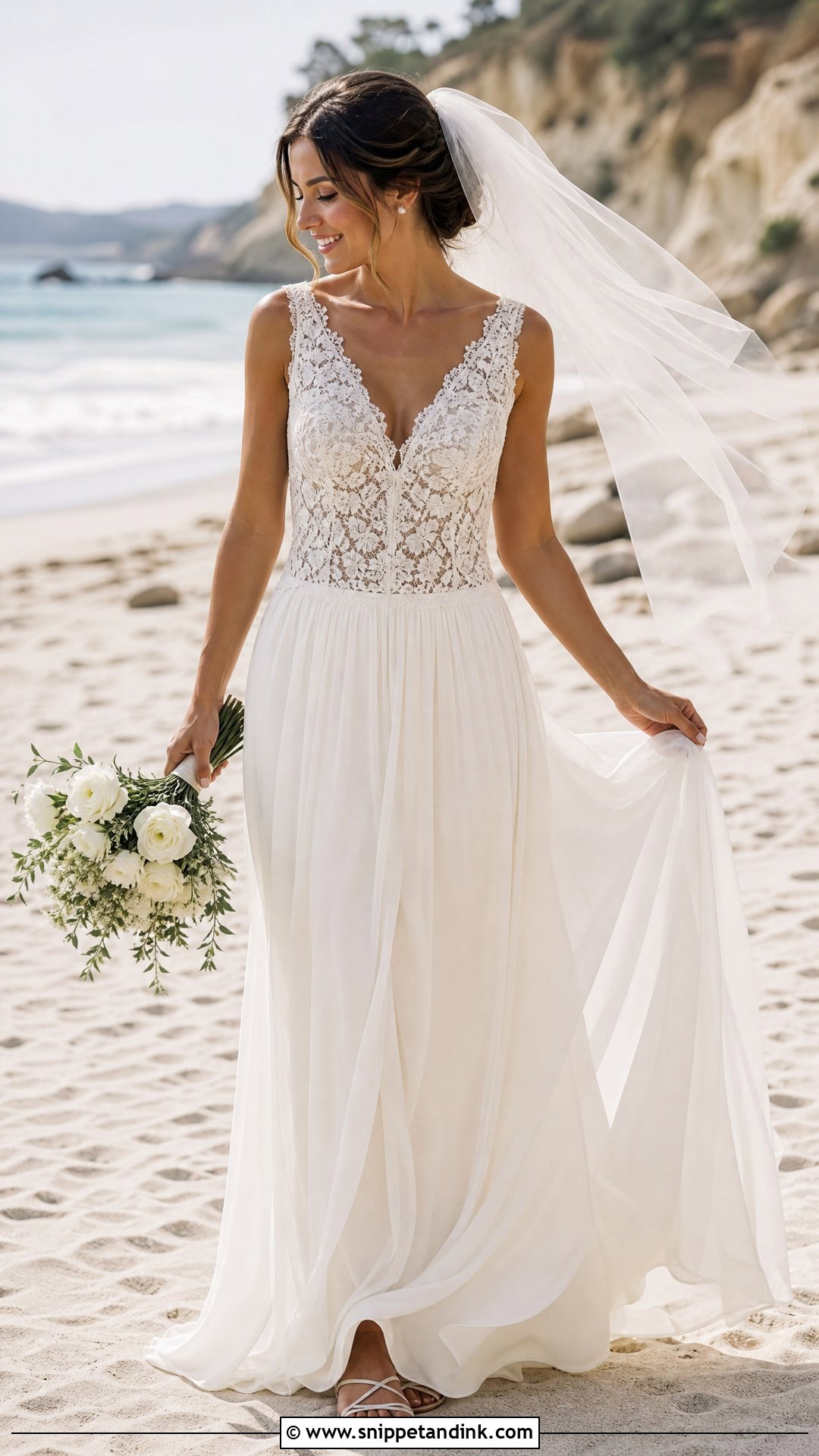
Sand and heat rule out half of this list. For a beach ceremony I’d choose chiffon, light lace or airy tulle, never heavy satin or dense beading, with a gentle drop that shapes the torso without looking formal. Keep the train short or bustle it before the walk, because sand clings to any hem that drags. Flat sandals, pearl studs and a short soft veil, or simply a hair comb if the wind is strong. Ask for a hem length taken in the shoes you’ll actually wear on sand.

25. Drop Waist Reception Wedding Gown
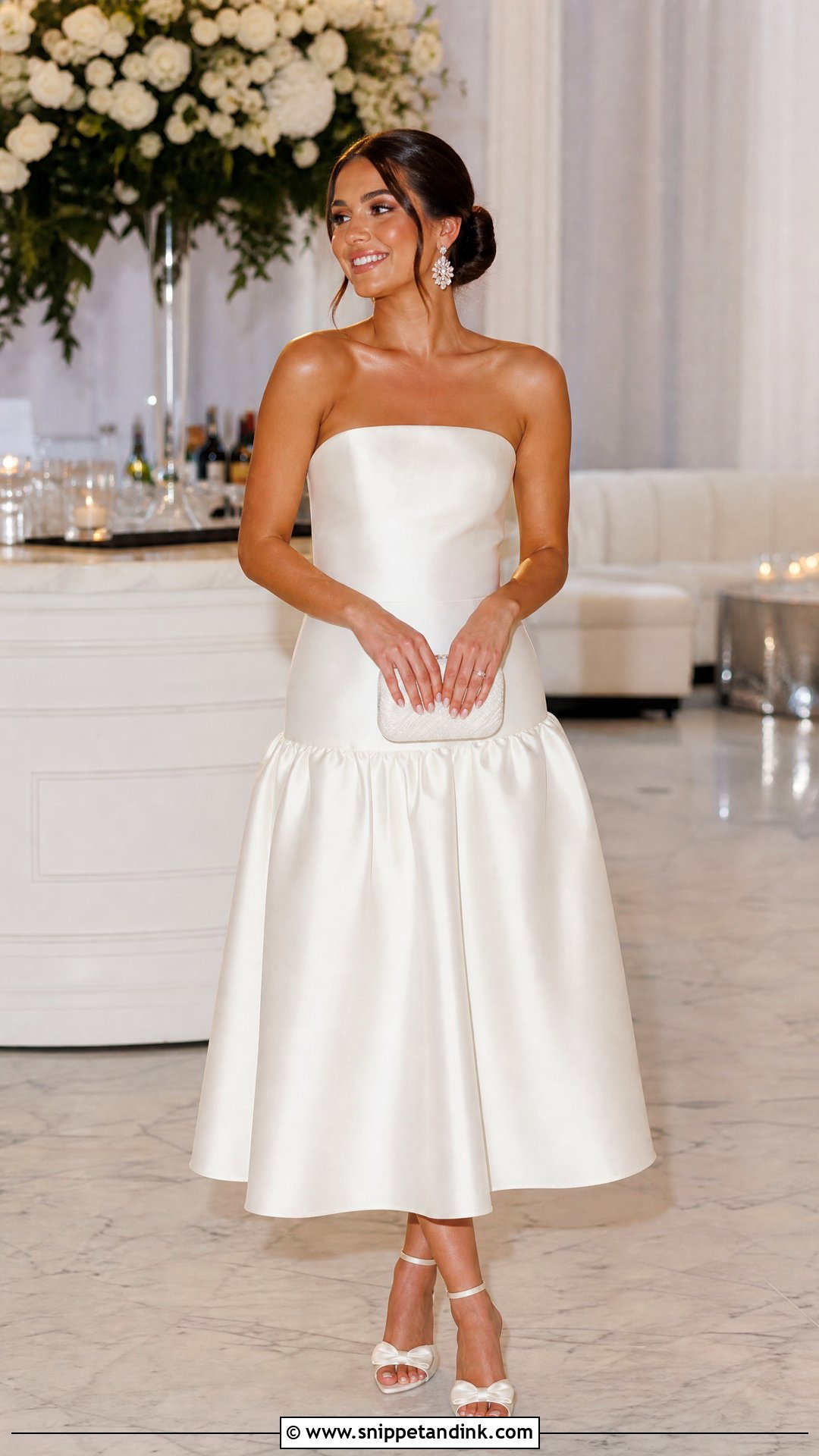
A second dress makes sense when your ceremony gown is heavy or has a long train. Keeping the same dropped waistline ties the two looks together, even if the reception version is shorter or lighter. A tea-length drop waist dress, a sleek satin midi or a soft tulle mini all work with bridal heels. I tell brides to plan the change: about fifteen minutes, a private room and one helper who knows the fastenings. Add statement earrings and a small clutch for dancing and mingling.
What Goes Under a Bodice That Hugs the Hip
A regular waist seam forgives a lot underneath. A dropped one doesn’t. The fitted part of the gown now runs over the lower stomach and the top of the hip, exactly where most underwear and shapewear leaves a line, so I’d plan your foundations before the first fitting, not after.
For a boned bodice
Many corseted gowns have enough support that you need nothing on top at all, or only sewn-in cups. Ask the seamstress to add cups to the lining rather than wearing a strapless bra under a boned bodice; two layers of structure fight each other and add bulk.
For a soft or unlined bodice
A longline bra or a smoothing bodysuit with a flat bonded edge does the job. Choose one that ends either well above or well below the dropped seam, never right at it, because the two edges sitting together will show through satin and crepe in side photos. Nude to your own skin tone disappears under white better than white underwear does.
Whatever you choose, wear it, along with your actual shoes, to every fitting. The gown is altered around it, and swapping it the week before the wedding can move the seam enough to undo that work.
Sit Down in It Before You Say Yes
Comfort matters more with this silhouette than most, because the seam sits exactly where your body bends. Pay attention to where the waist lands, how firm the bodice support feels, how much skirt you’re carrying, and how the dress moves when you walk and sit. Then let the accessories stay quiet, especially when the waistline or fabric is already the feature. Satin, lace, tulle or pearls, each of these 25 gowns can be built into a complete look once that fit is right.
You'll Like These Ideas:









Leave a Reply