
Nothing changes a bride’s posture in the fitting room like a full skirt. The bodice goes on, the volume settles, and she stands differently. Big gowns are back in a serious way: clean satin ball gowns, floral tulle, structured corsetry, drop waists, raised textures and detachable pieces that let you shrink the skirt for the party. Volume comes with practical questions, though. How heavy is the skirt? What’s holding it out? How long is the train, and will it fit the venue? Below are the full-skirted gowns I’d show you, with how I’d style each and what I’d check before you say yes.
Hoops, Petticoats or Sewn-In Net Under the Skirt
Every full skirt has something underneath doing the work, and brides rarely ask what it is until the gown arrives. It affects weight, comfort and how you sit, so I explain it at the first appointment.
Built-in layers
Many ball gowns get their shape from stiff net or tulle layers sewn into the lining, sometimes with horsehair braid at the hem to hold the edge out. Nothing extra to put on, and the volume moves with you. The downside is that you can’t remove it if the skirt feels too big on the day.
Separate petticoats
A layered net petticoat worn under the gown adds fullness and can be swapped for a lighter one later. Make sure the one you’re fitted in is the one you’ll wear, since a different petticoat changes the hem length.
Hoops
A hoop gives the widest, most even shape and is often lighter than layers of net. It’s also the hardest to sit in: the front can lift when you sit, and you need to learn to gather it. If you choose one, practise sitting and climbing stairs in it before the day.
Ask your consultant to weigh the gown or let you hold the skirt on a hanger. A heavy skirt pulls on the bodice all day, and knowing the weight early tells your seamstress how much support the waist needs.
1. Satin Poofy Wedding Dress
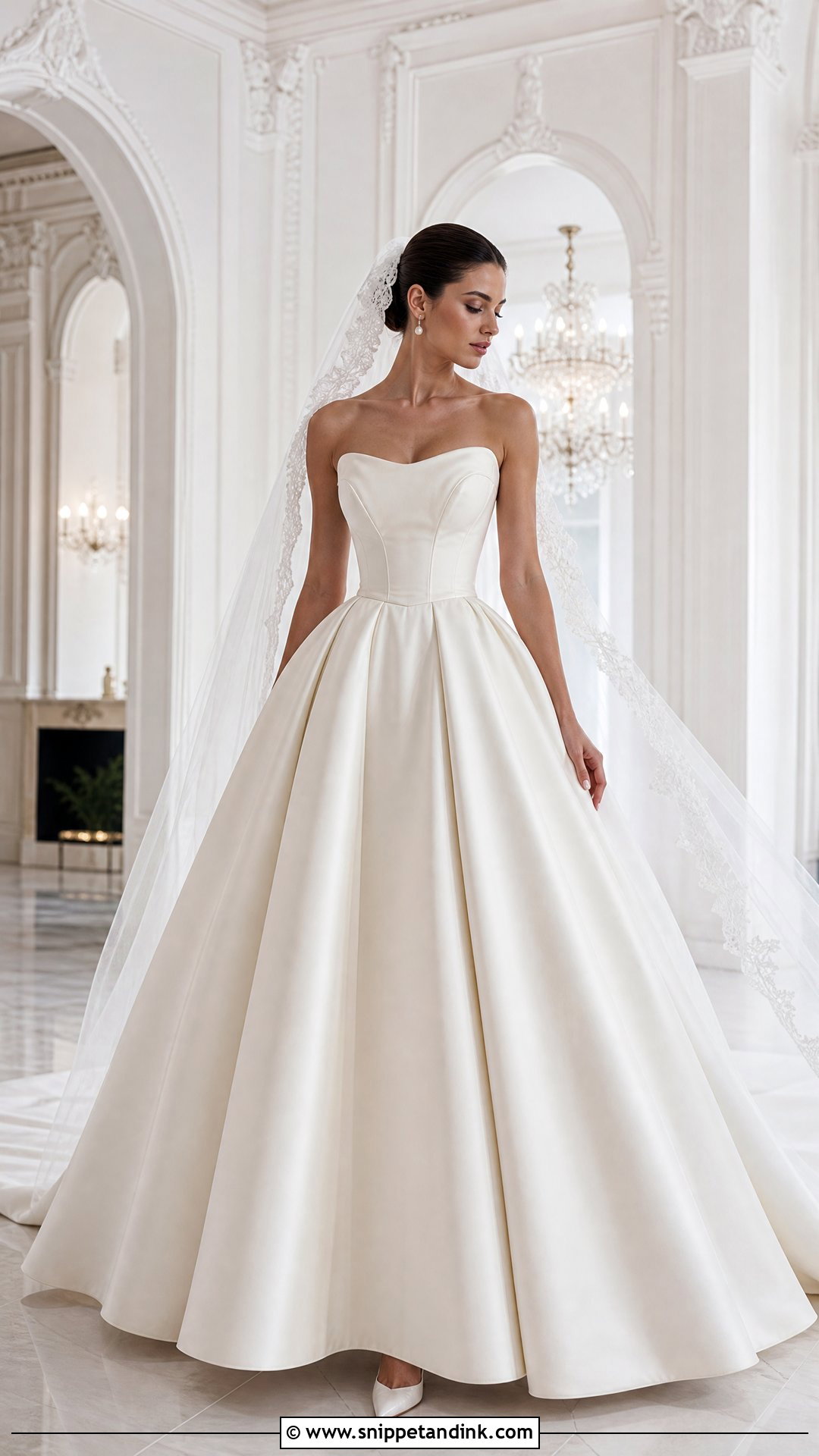
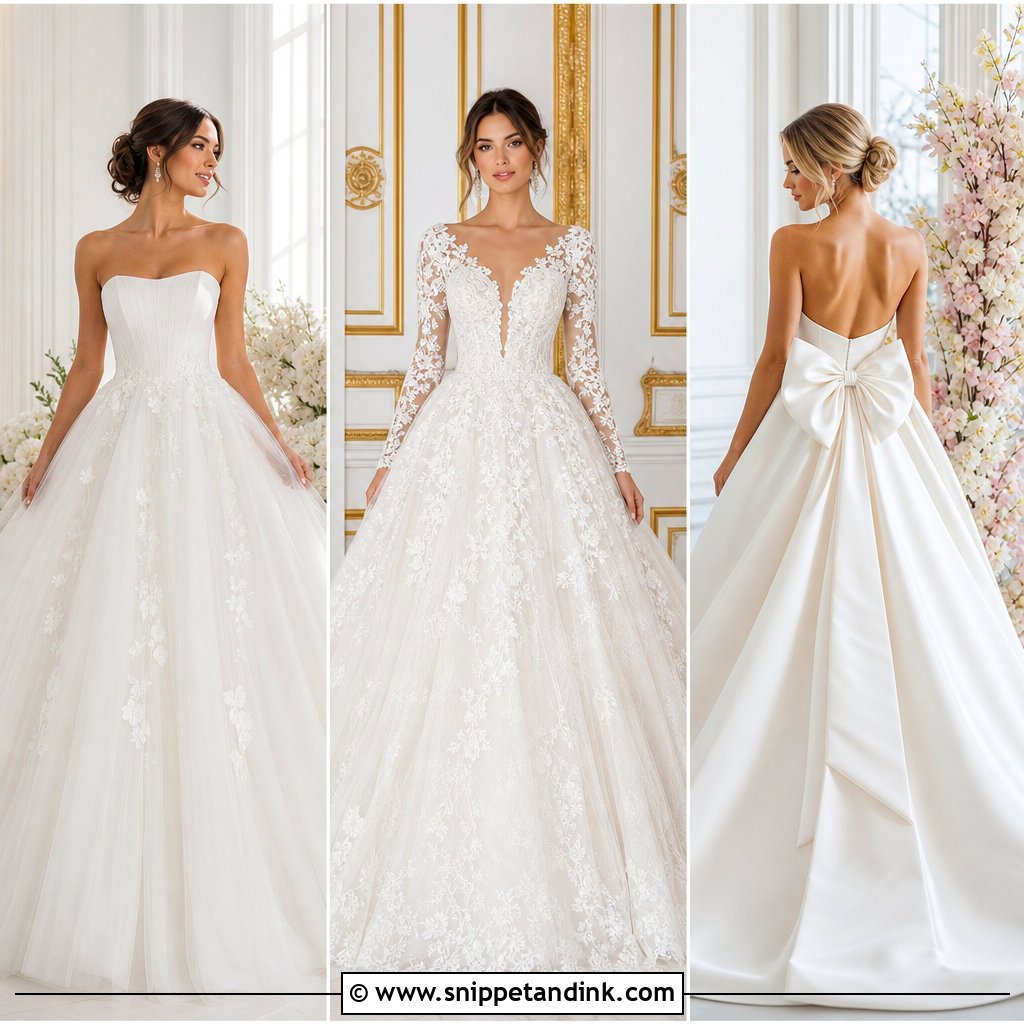
Satin does the work here, with no embellishment needed. Duchess satin has enough body to hold a wide, sculptural skirt, which is why I reach for it before lighter satins that collapse at the hem. A structured bodice with a softly curved neckline and a defined waist is all it needs. Pointed ivory pumps, pearl studs and a smooth cathedral veil for a ballroom or hotel. My first question in the salon: is the volume built in, or does it need a separate petticoat? The answer changes the weight, the movement and how much it costs to get the shape right.
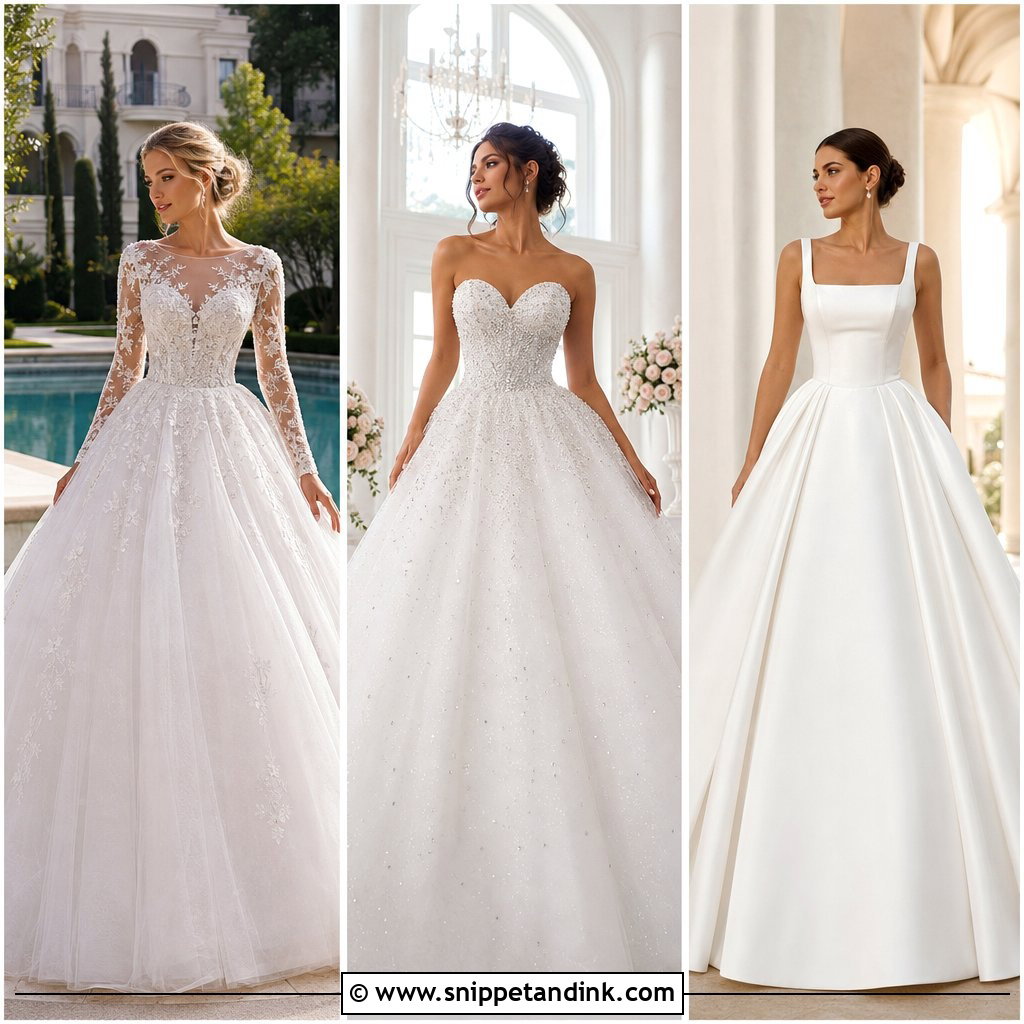
2. Lace Poofy Wedding Dress
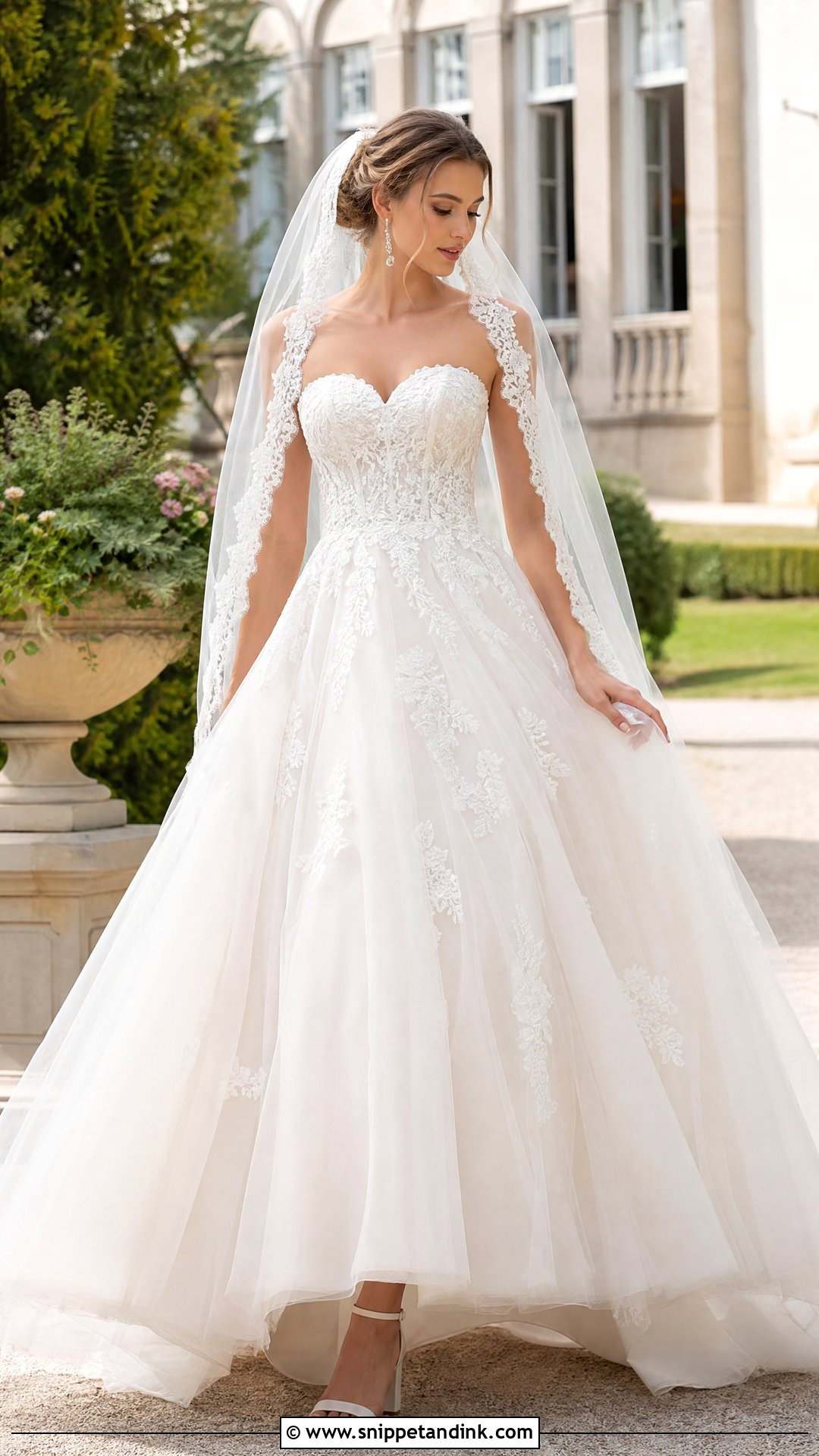
On a full skirt, lace works best where it thins out. A fitted lace bodice running into layered tulle with appliques scattered lower down keeps the eye moving without making the whole gown busy. A sweetheart or subtle V-neckline keeps the bodice open. Ivory block heels, delicate drops, a fingertip veil edged in matching lace and a loose low bun. Stand back across the room when you try it on: large motifs read boldly from a distance, fine patterns almost disappear, and that’s how your guests will see it.
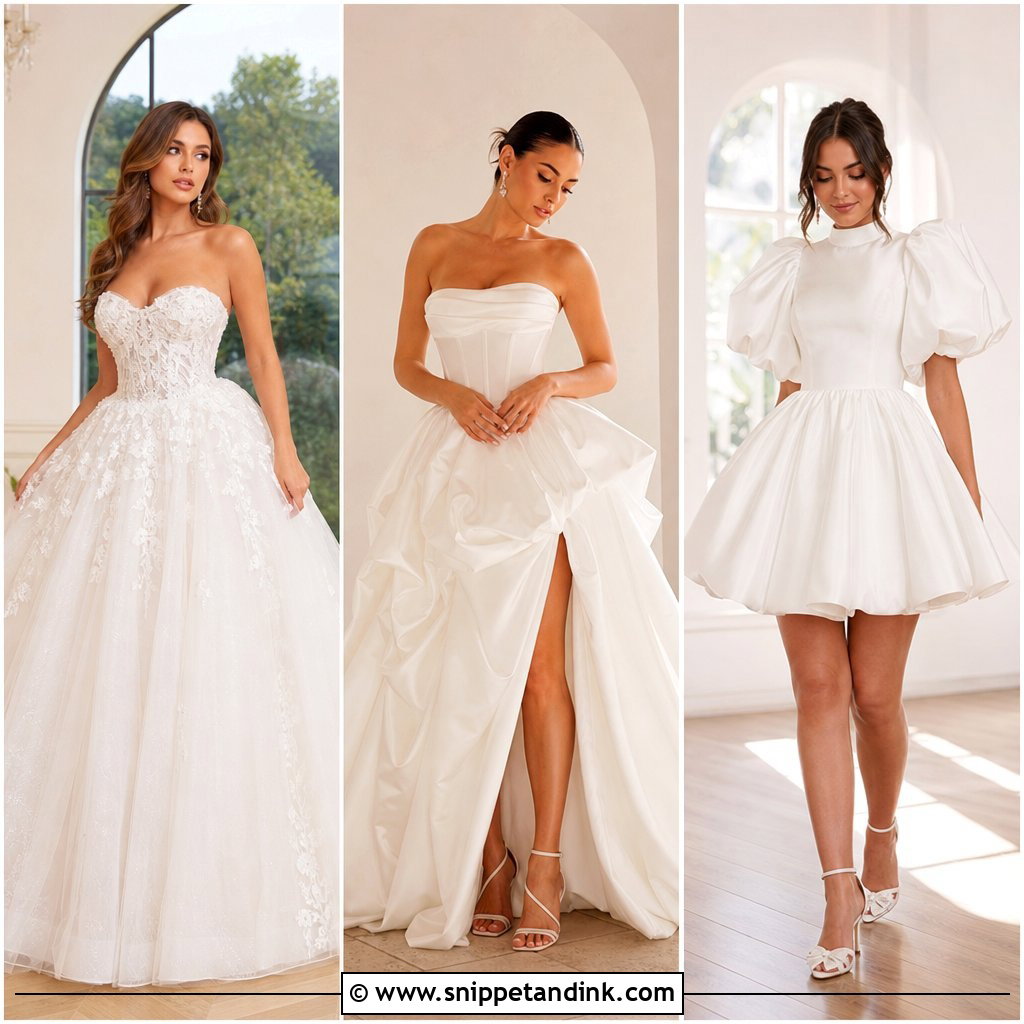
3. Corset Poofy Wedding Dress
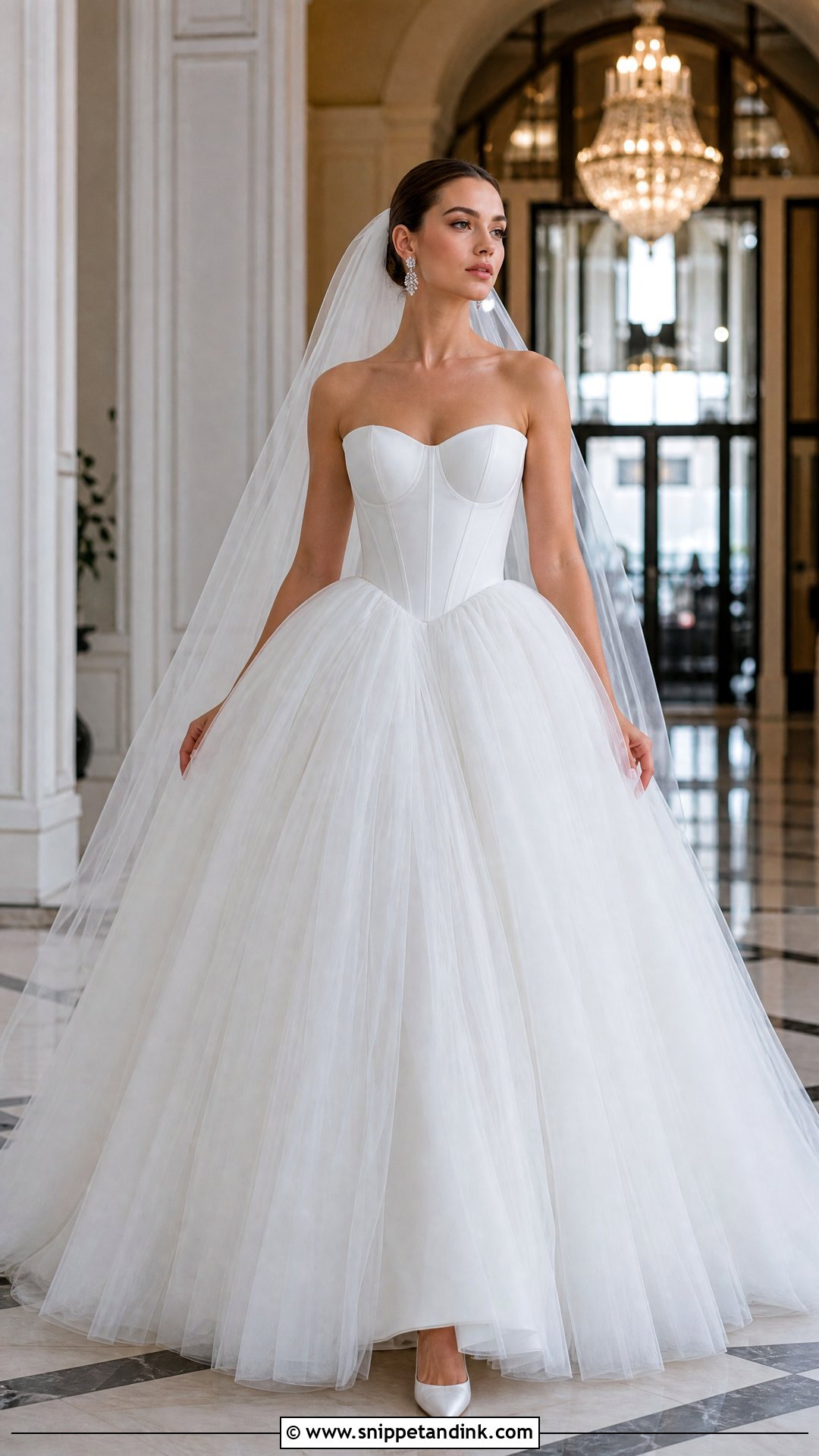
A corset bodice is what lets a big tulle or organza skirt sit properly, because the boning holds the waist while the layers pull downward. For a refined finish, I want an opaque lining, carefully placed seams and a lace-up or covered-button back. Crystal earrings, satin pumps, a simple cathedral veil and a polished bun. Fit decides everything. A corset should hold you, not stop you breathing, so walk, raise your arms, turn and sit for a few minutes before you approve the final adjustments.
4. Long Sleeve Poofy Wedding Dress
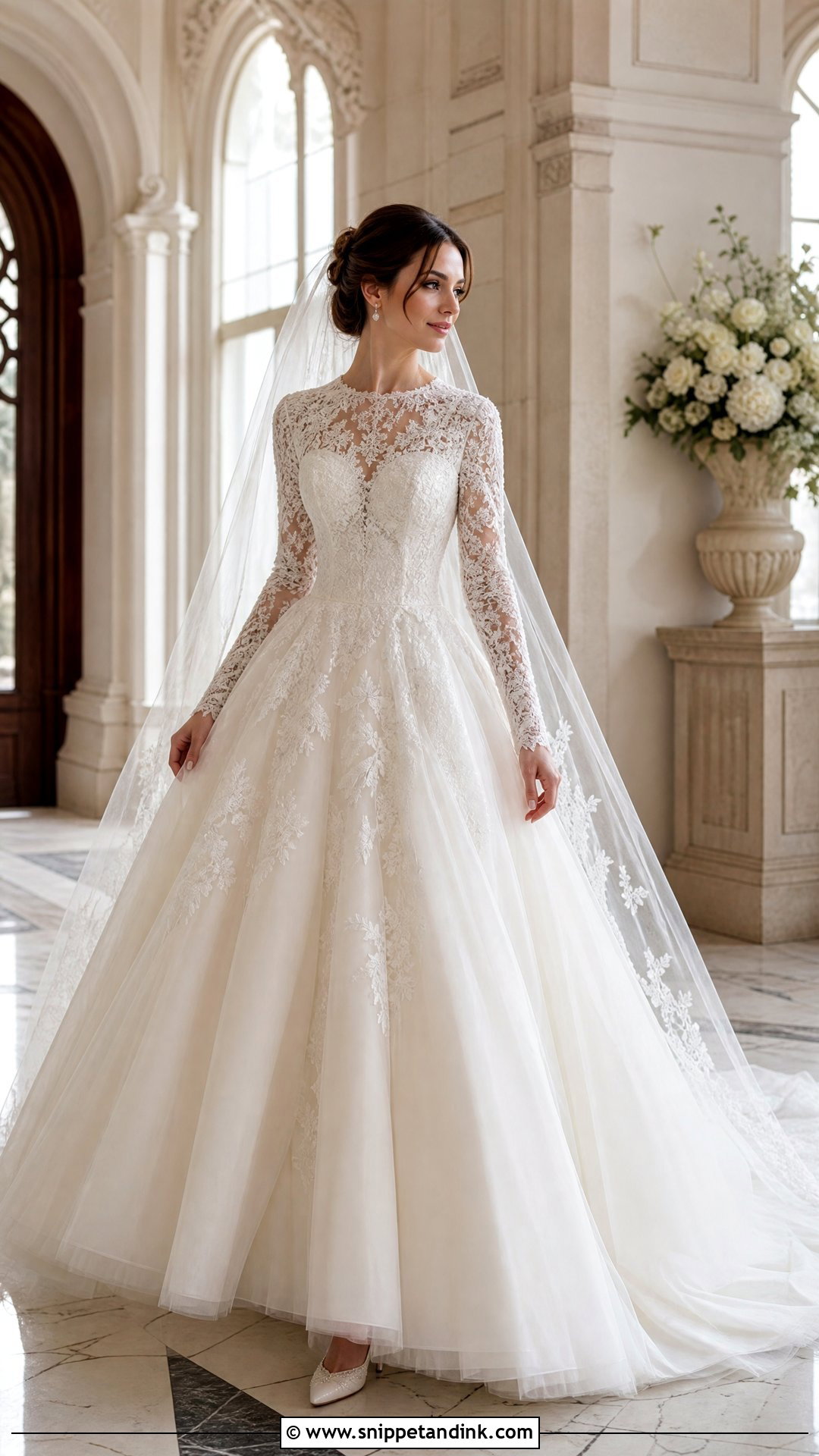
Sleeves calm down the width of a ball gown by giving the top half some weight of its own. Fitted lace or illusion sleeves suit a structured bodice and layered tulle; smooth crepe sleeves on a satin or Mikado skirt look cleaner. Closed-toe heels, pearl earrings, a chapel veil and a chignon or soft half-up style. Sleeves on a heavy gown restrict more than people expect, because the bodice is fixed in place by the skirt’s weight. Bend your elbows and lift your arms at every fitting; a stretch lining and well-placed underarm seams make hours of difference.
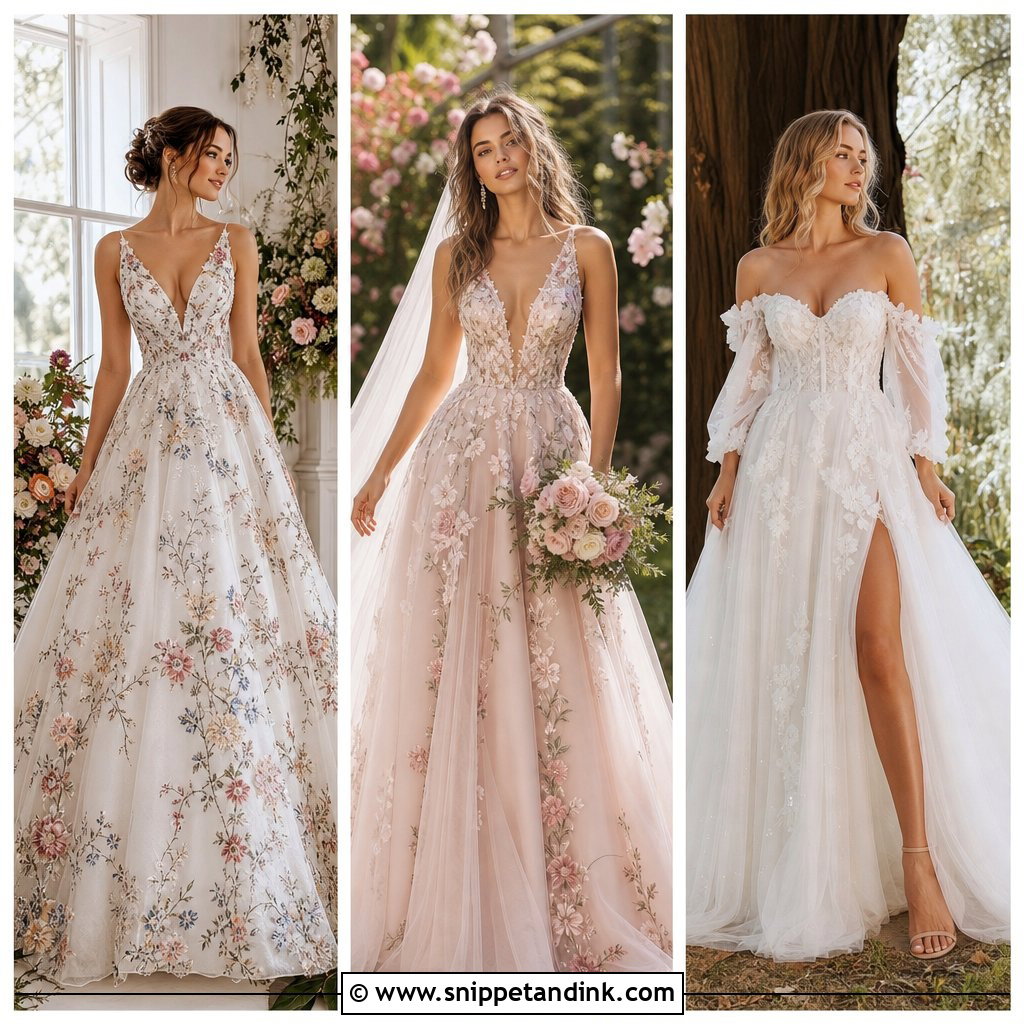
5. Off The Shoulder Poofy Wedding Dress
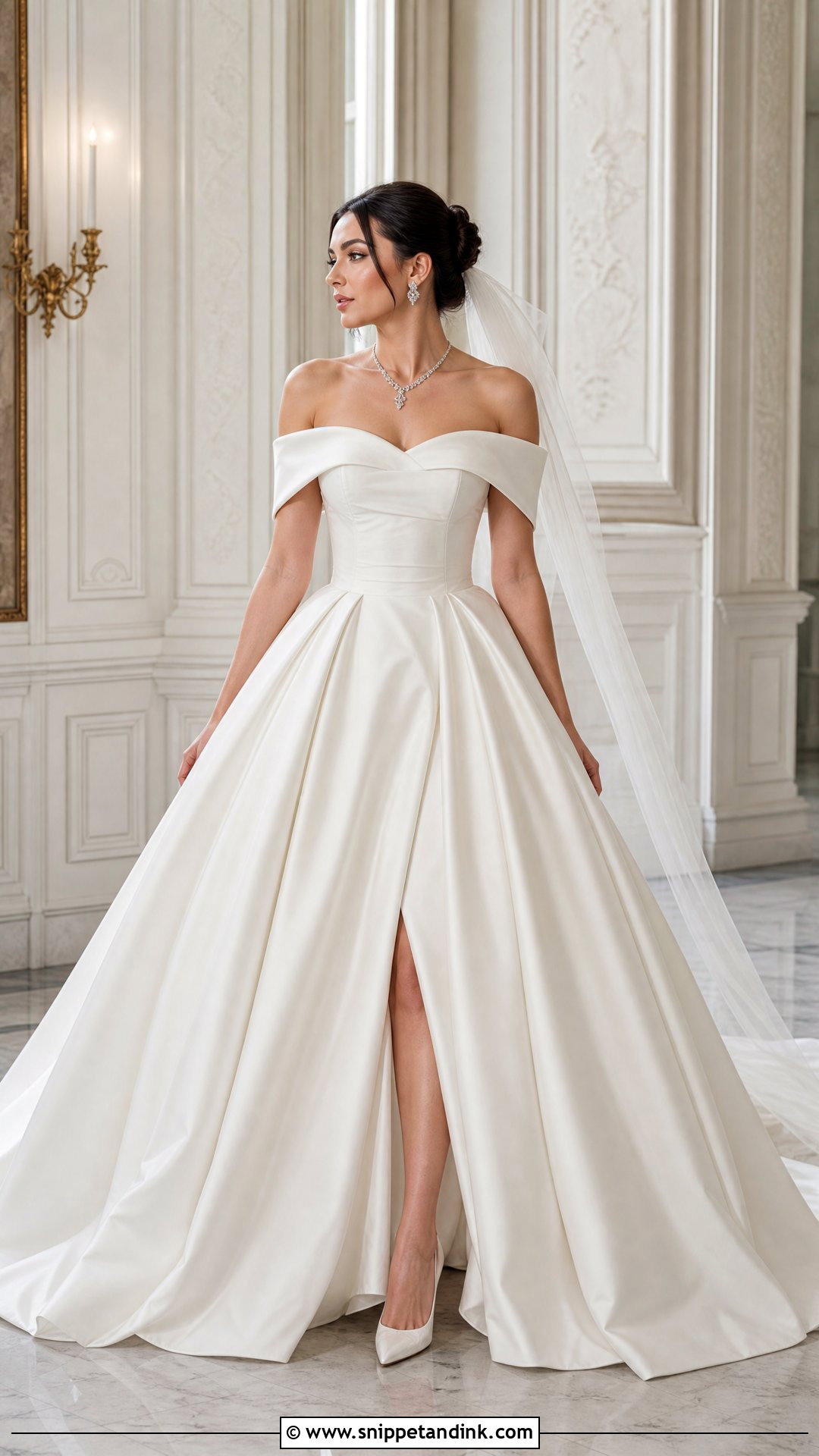
Bare shoulders balance a wide skirt by drawing the eye up to the collarbone. A folded satin band looks modern; lace-covered straps look softer. Either way, the bodice structure keeps it in place, not the band itself. A short crystal necklace, matching earrings, pointed pumps and a long sheer veil set under a low bun. At alterations, hug someone, sit and raise your arms. If the band digs in, ask about hidden elastic, detachable straps or setting the band slightly higher on the arm.
6. Strapless Poofy Wedding Dress
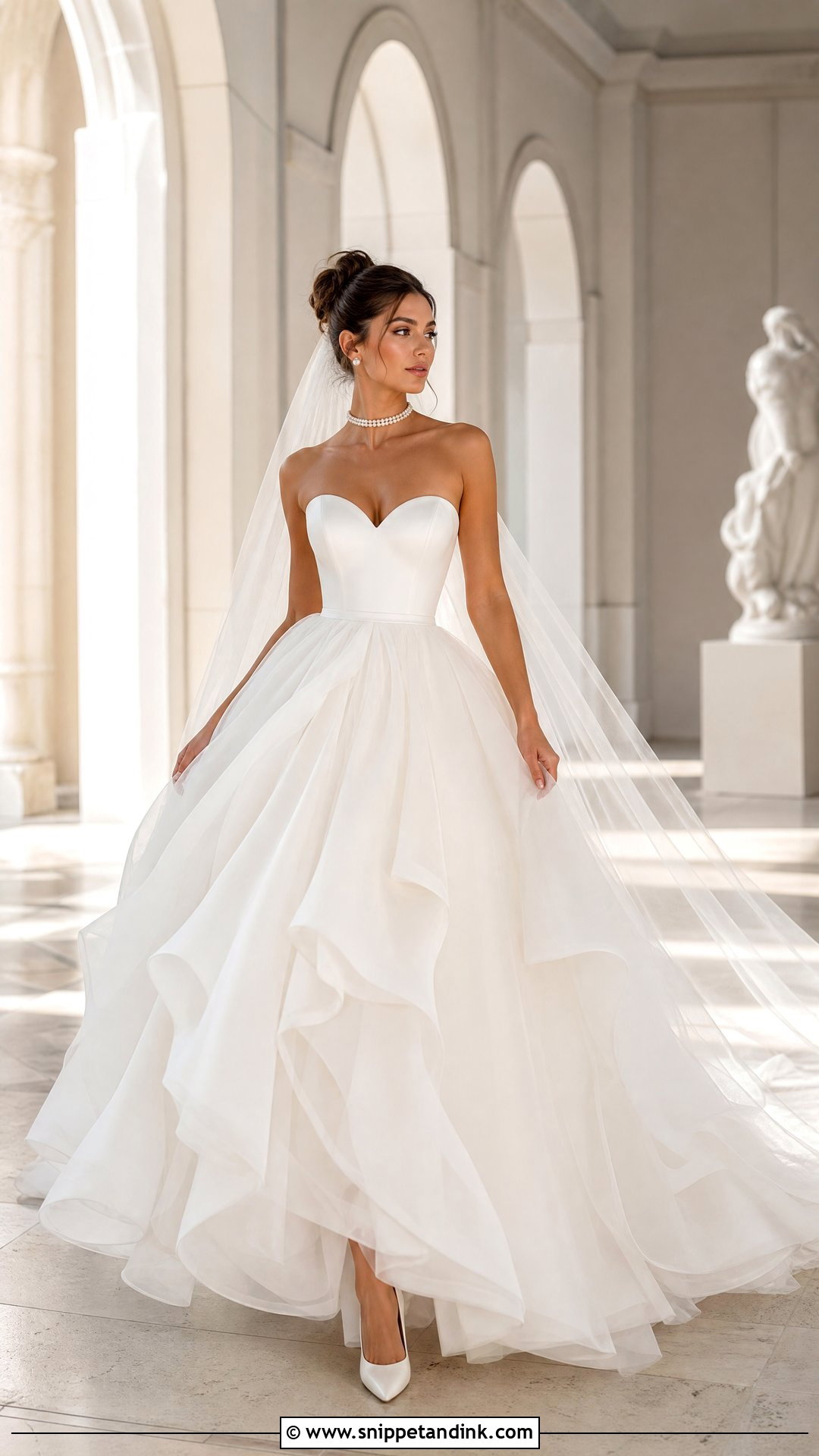
Strapless over a full skirt is the classic bridal outline. A straight neckline looks sharp; a sweetheart adds curve. Satin gives architectural volume, tulle airy softness, organza a crisp lightness. A pearl choker, small earrings, ivory heels, a cathedral veil and a sleek updo so loose hair doesn’t compete with the neckline. Here’s the mistake I see most: brides ask for the bodice to be taken in tighter to stop it slipping. Tight doesn’t hold up a heavy skirt. Boning, secure cups and a correctly fitted waist do. Dance a little in the fitting room to check.
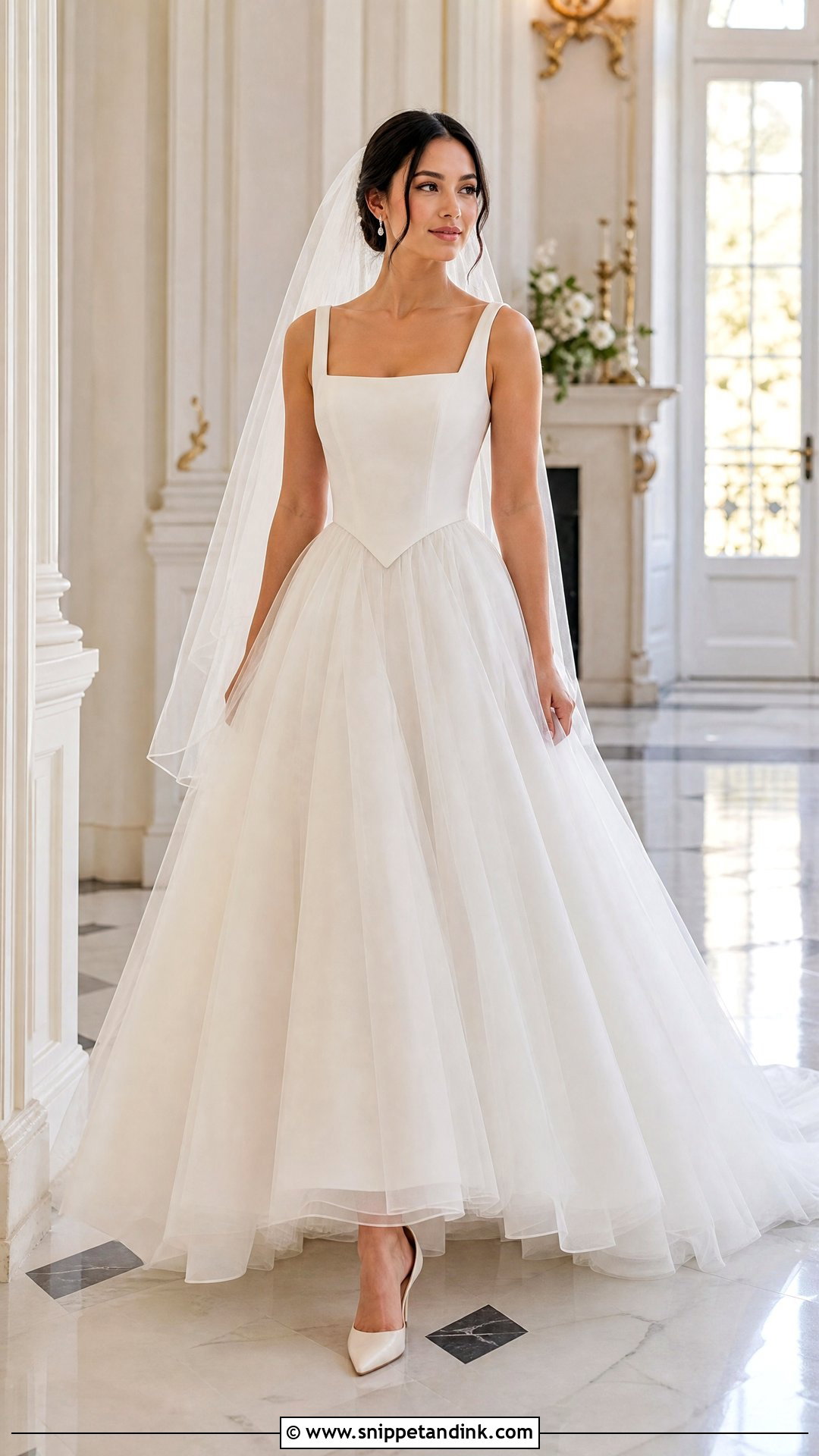
7. Square Neck Poofy Wedding Dress
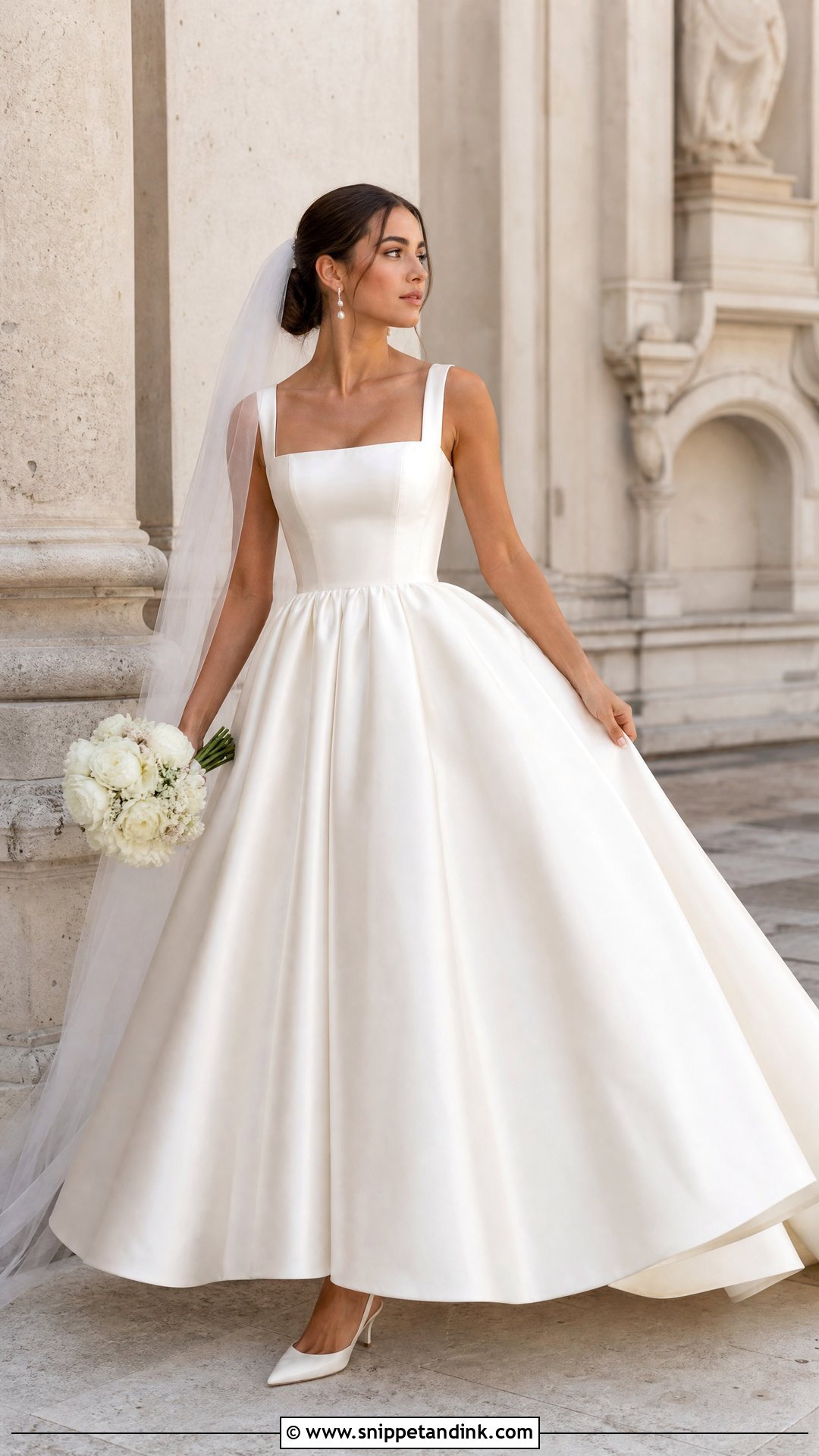
The straight line of a square neck sets off the round volume of a ball gown, and it covers more than most strapless cuts. Wide straps, a seamed fitted bodice and a smooth satin skirt suit it best. Pearl drops, pointed slingbacks, a chapel veil and a low bun with a center part. Watch the neckline at alterations: it must lie flat without gaping when you lean forward, and the straps shouldn’t creep toward your shoulders when you raise your arms.
8. High Neck Poofy Wedding Dress
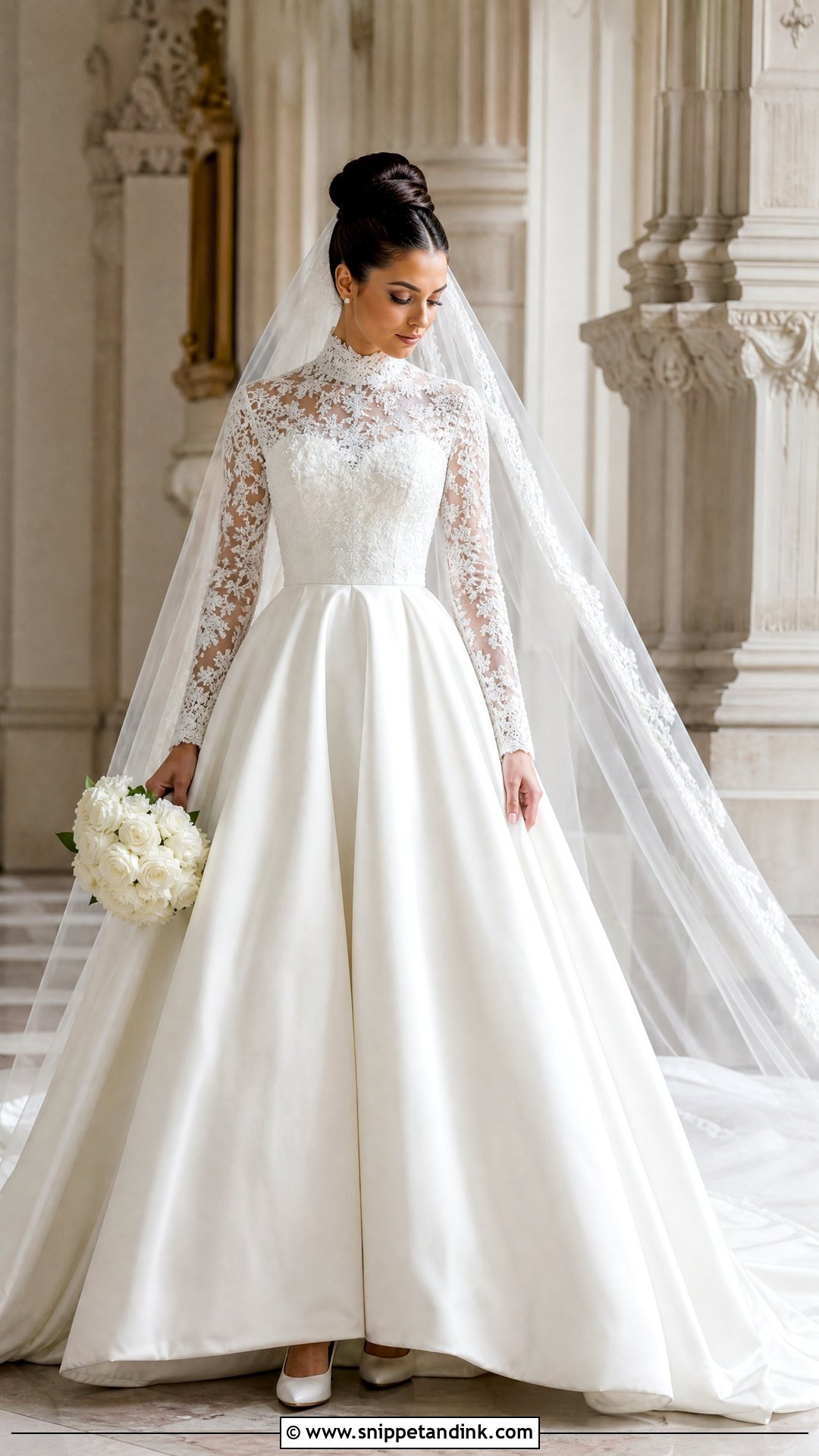
High necks turn a big gown stately. Sheer lace is soft; an opaque mock neck is sharper and more editorial. A fitted bodice and defined waist stop all that fabric at the top from swamping you. Pearl studs, satin pumps and a long veil set beneath a polished bun, no necklace. Comfort is all in the collar. Turn your head and look down during fittings, and ask for a soft backing along the neckline if the lace or beading scratches.
9. Basque Waist Poofy Wedding Dress
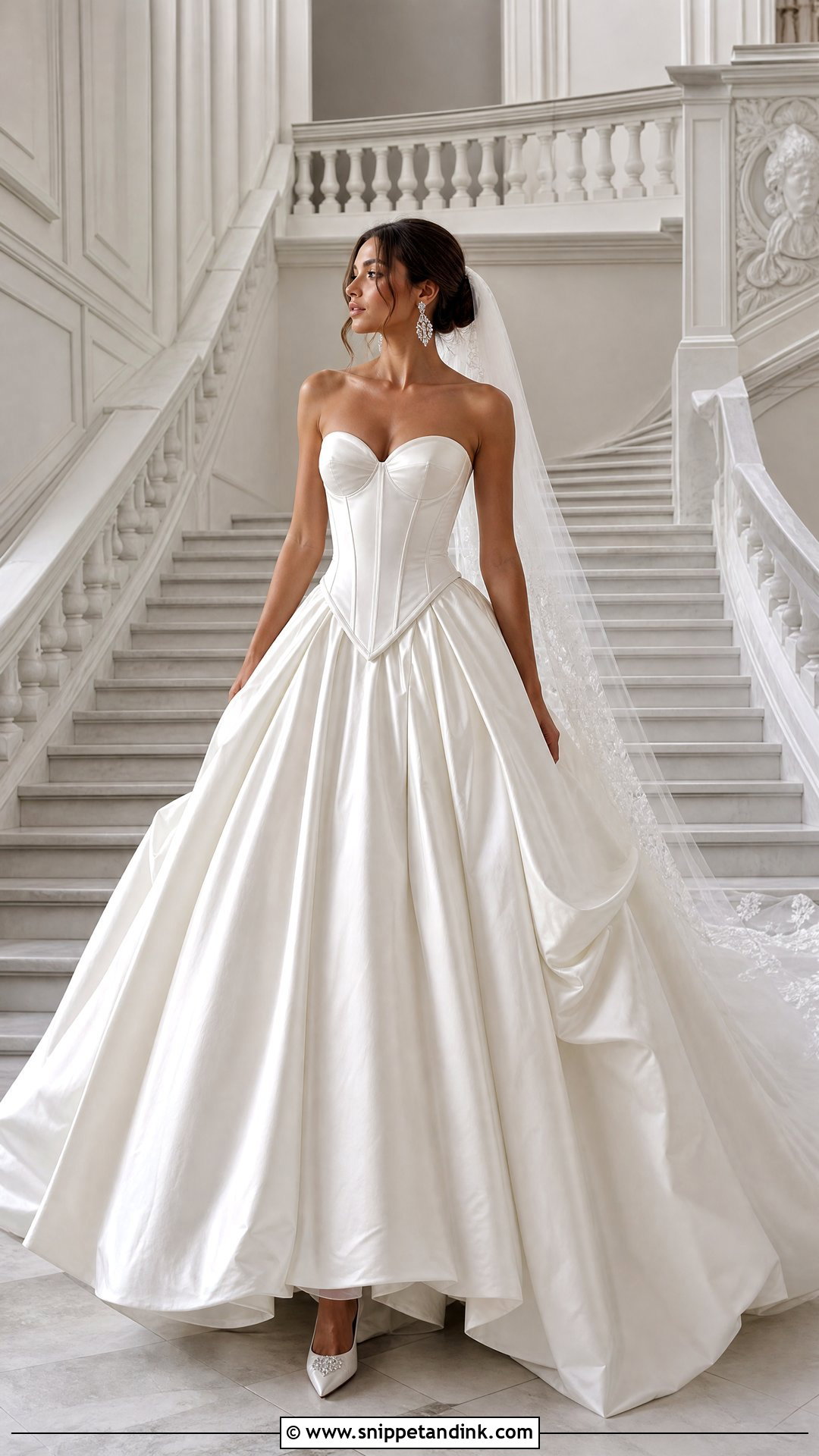
A basque waist dips to a soft point below the natural waist, which makes a dramatic hinge between bodice and skirt. Structured satin, visible corset seams and a layered skirt show it best. Crystal drops, pointed heels, a cathedral veil and a smooth updo. I check where the point lands in two positions, standing and seated, because a sharp basque can press into the stomach when you sit. If it does, a softer curve gives the same line with more comfort.
10. Drop Waist Poofy Wedding Dress
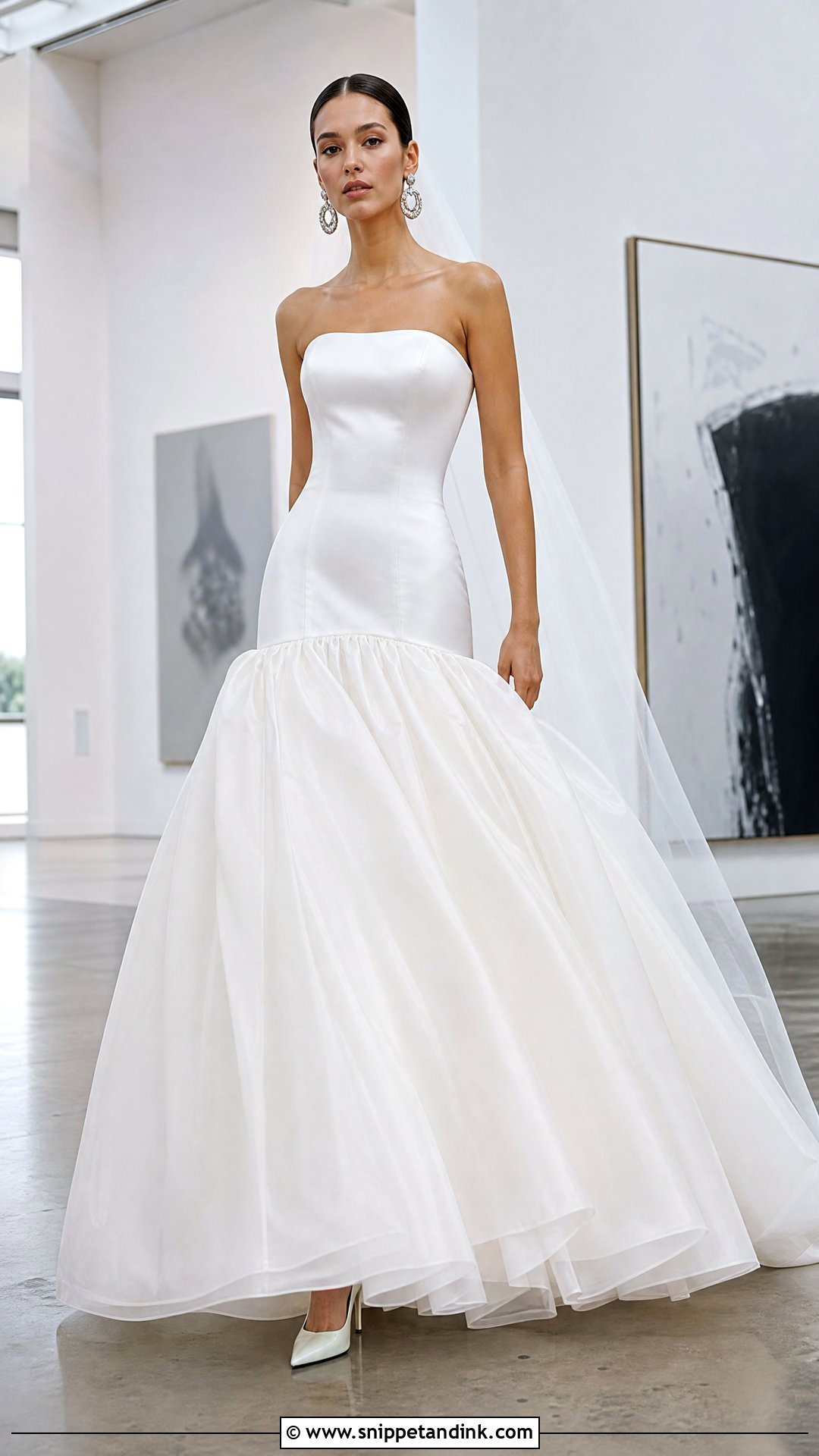
A drop waist carries the fitted bodice below the natural waist before the skirt opens, so the upper body looks long. Smooth satin is clean; a ruched bodice with organza layers is softer. Sculptural earrings, sleek pumps, a light cathedral veil and a simple bun. On a petite bride the proportions can tip quickly, since the skirt starts lower and the legs look shorter. I always ask the tailor to judge bodice length with the wedding shoes on.
11. Princess Poofy Wedding Dress
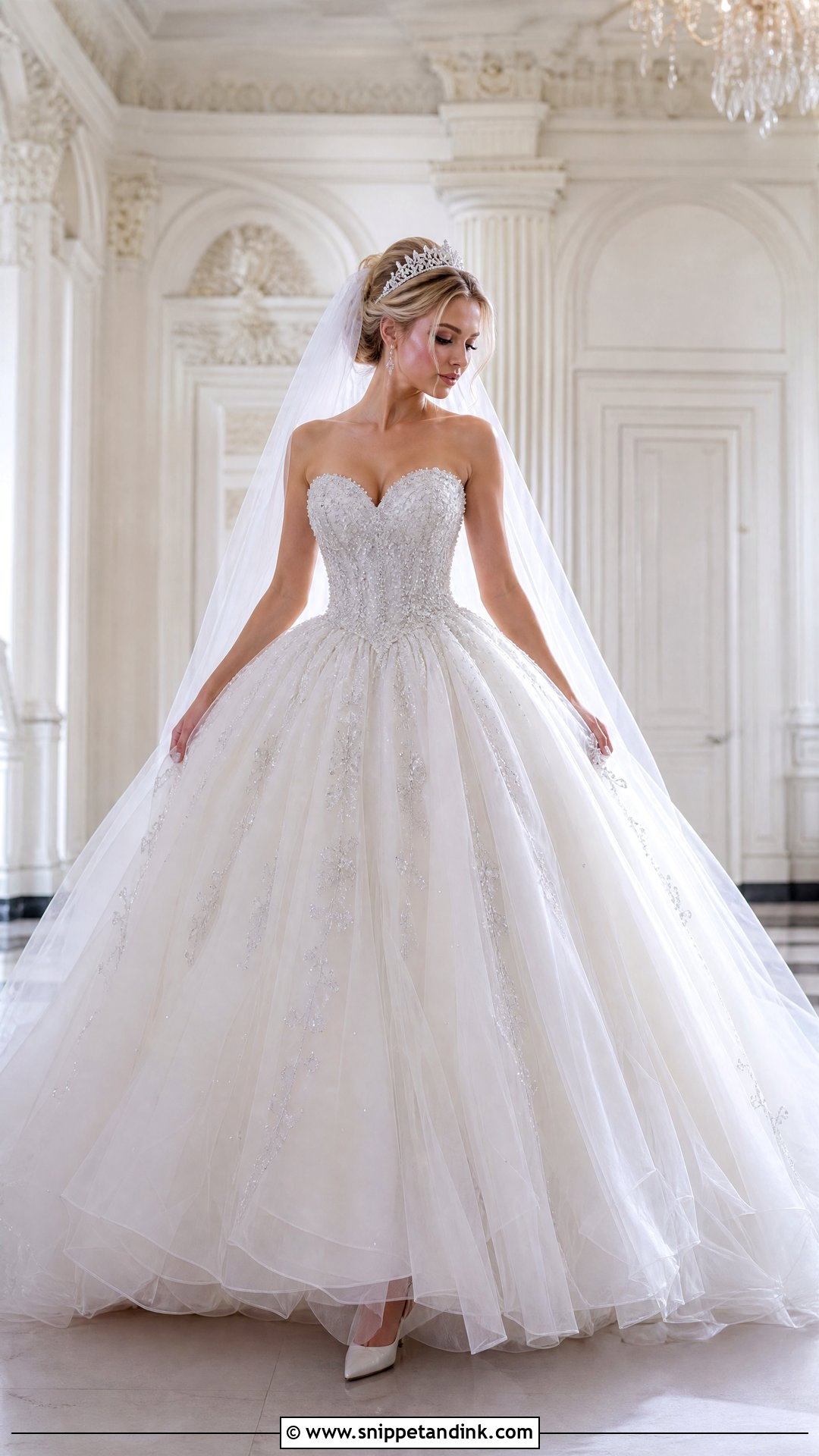
Restraint is what keeps a princess poofy wedding dress from tipping into costume. One or two statement details, not all of them. A crystal bodice with a plain tulle skirt is balanced; a clean satin bodice lets appliques on the skirt take the lead. A subtle tiara, delicate earrings, pointed pumps and a long veil. Keep the bouquet slim so it doesn’t hide the waist. Measure the venue’s doorways and aisle width. A princess skirt can be wider than you think.
12. Sparkly Poofy Wedding Dress
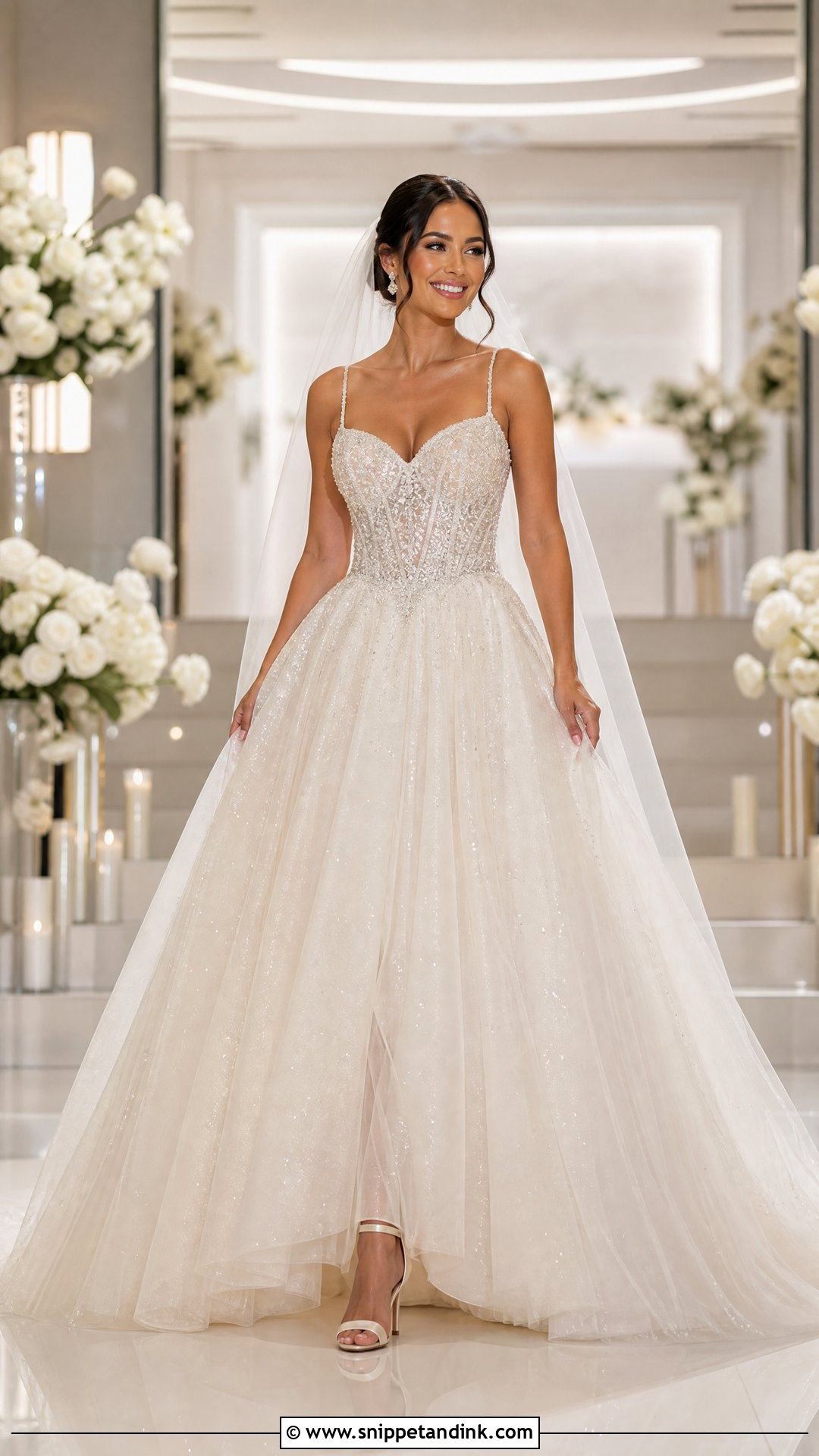
Sparkle on a full skirt moves with every step. I prefer fine shimmer woven into tulle or small crystals gathered around the bodice and waist, thinning toward the hem, over a skirt heavy with stones from top to bottom. Crystal studs, metallic ivory heels, a plain sheer veil and a low bun or smooth waves. Look at it in daylight, indoor light and with flash; each changes how strong it reads. Then turn the bodice inside out and check for rough stitching, because exposed crystal backs scratch skin and snag veil tulle.
13. Floral Poofy Wedding Dress
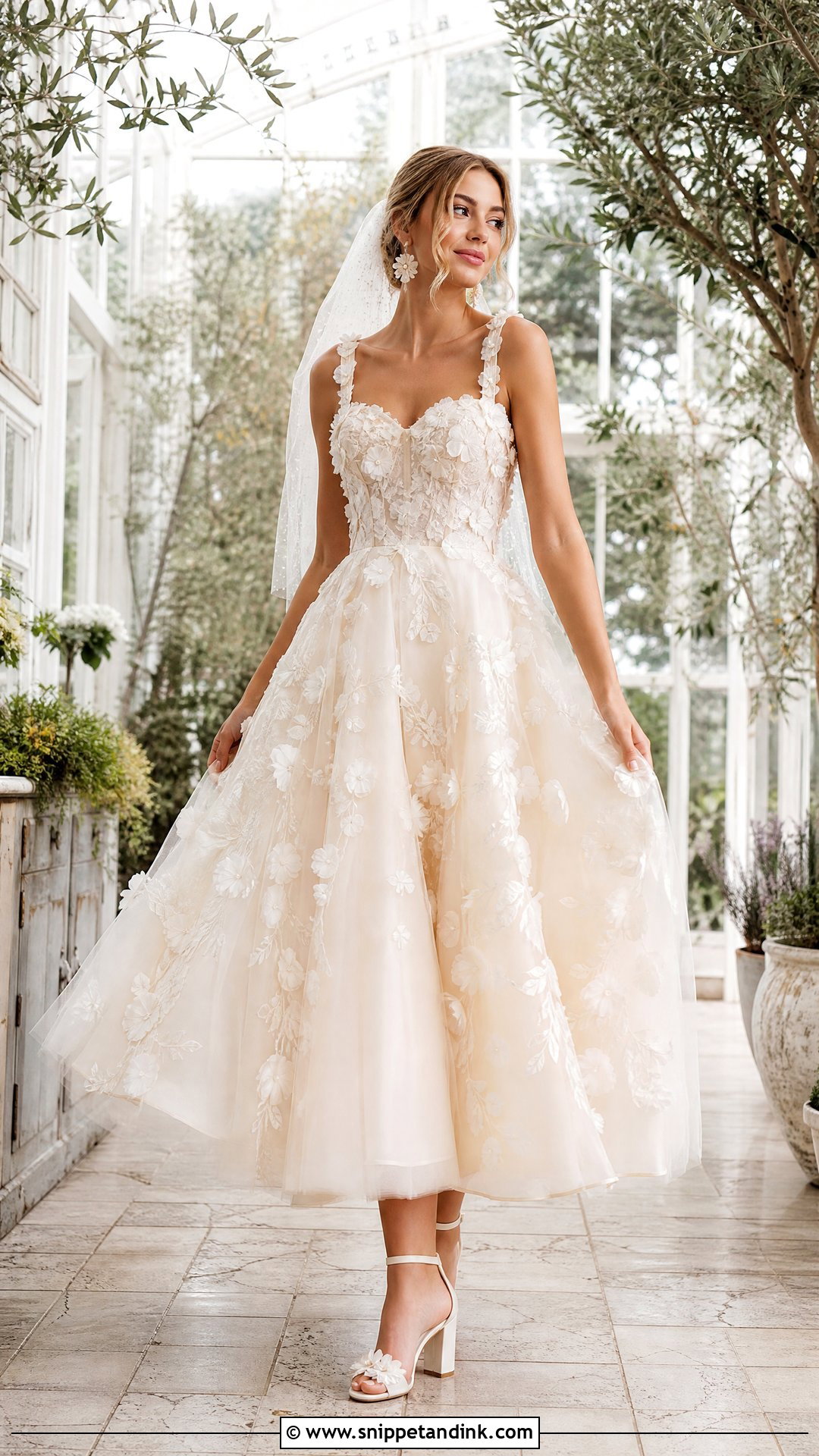
Raised flowers break up a big skirt and give it texture up close. The placement I like best clusters them around the bodice and upper skirt, scattering toward the hem so the tulle stays airy. Floral earrings, ivory block heels, a plain fingertip veil and a loose bun with a few face-framing pieces. Hold your bouquet against the gown at a fitting. A bouquet held at the waist crushes three-dimensional petals, so keep it small and carry it slightly forward.
14. Ruffle Poofy Wedding Dress
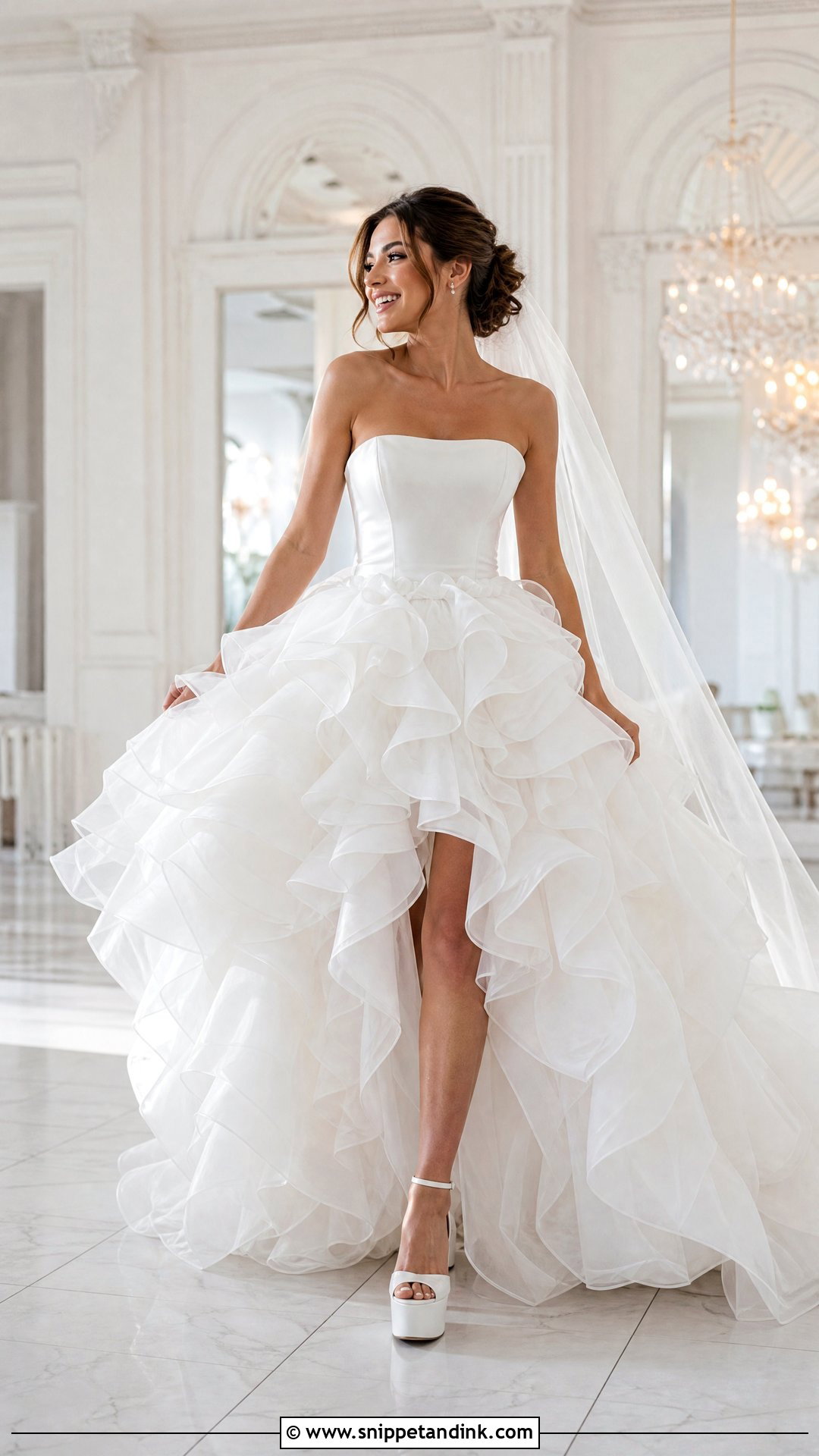
A ruffle poofy wedding dress makes the skirt the whole event. Tiered organza, curled tulle or soft cascades give volume and constant movement. Balance it with a clean satin bodice and a strapless or one-shoulder neckline, small earrings, platform heels, a plain veil and a high bun. Ruffles add a surprising amount of fabric and weight, so ask how heavy the finished gown is and where the bustle will sit. The bottom ruffle should clear your shoes; it’s the one that catches heels on stairs.
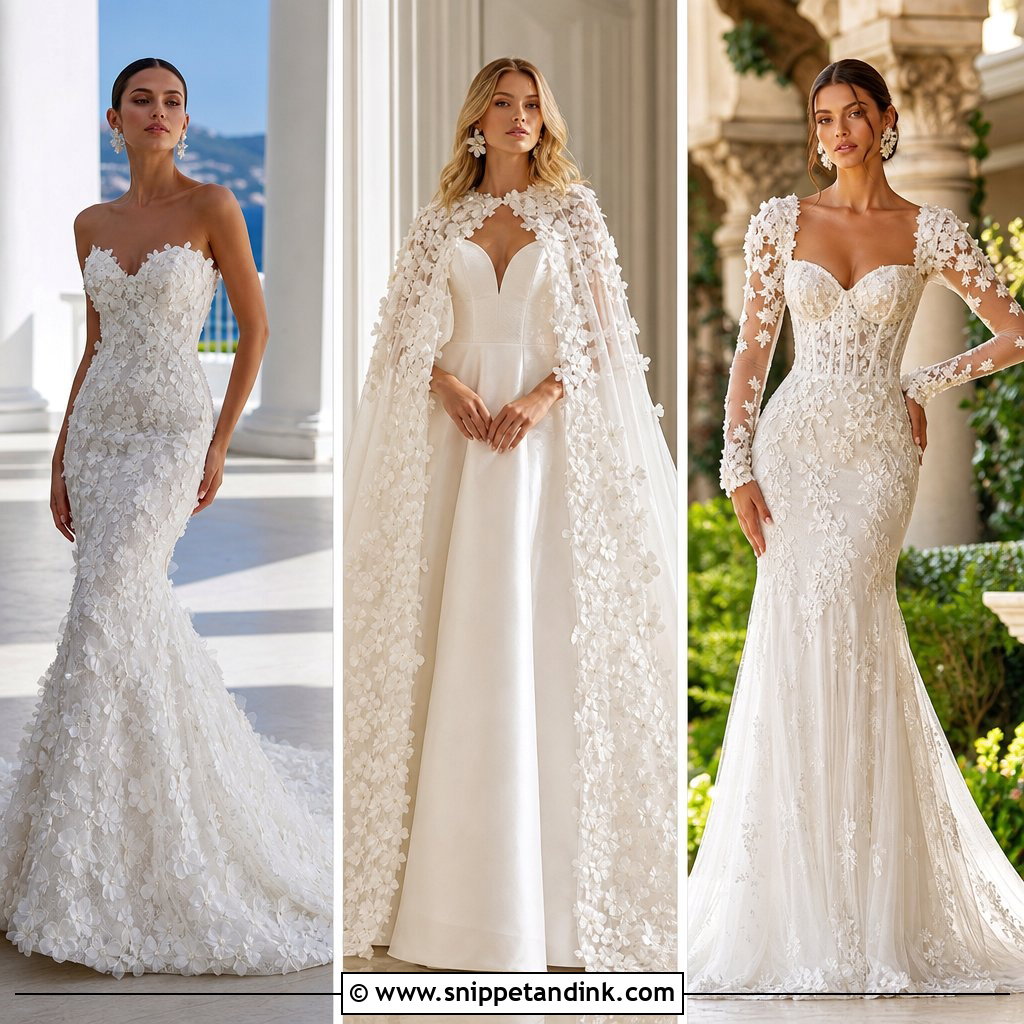


15. Tiered Tulle Poofy Wedding Dress
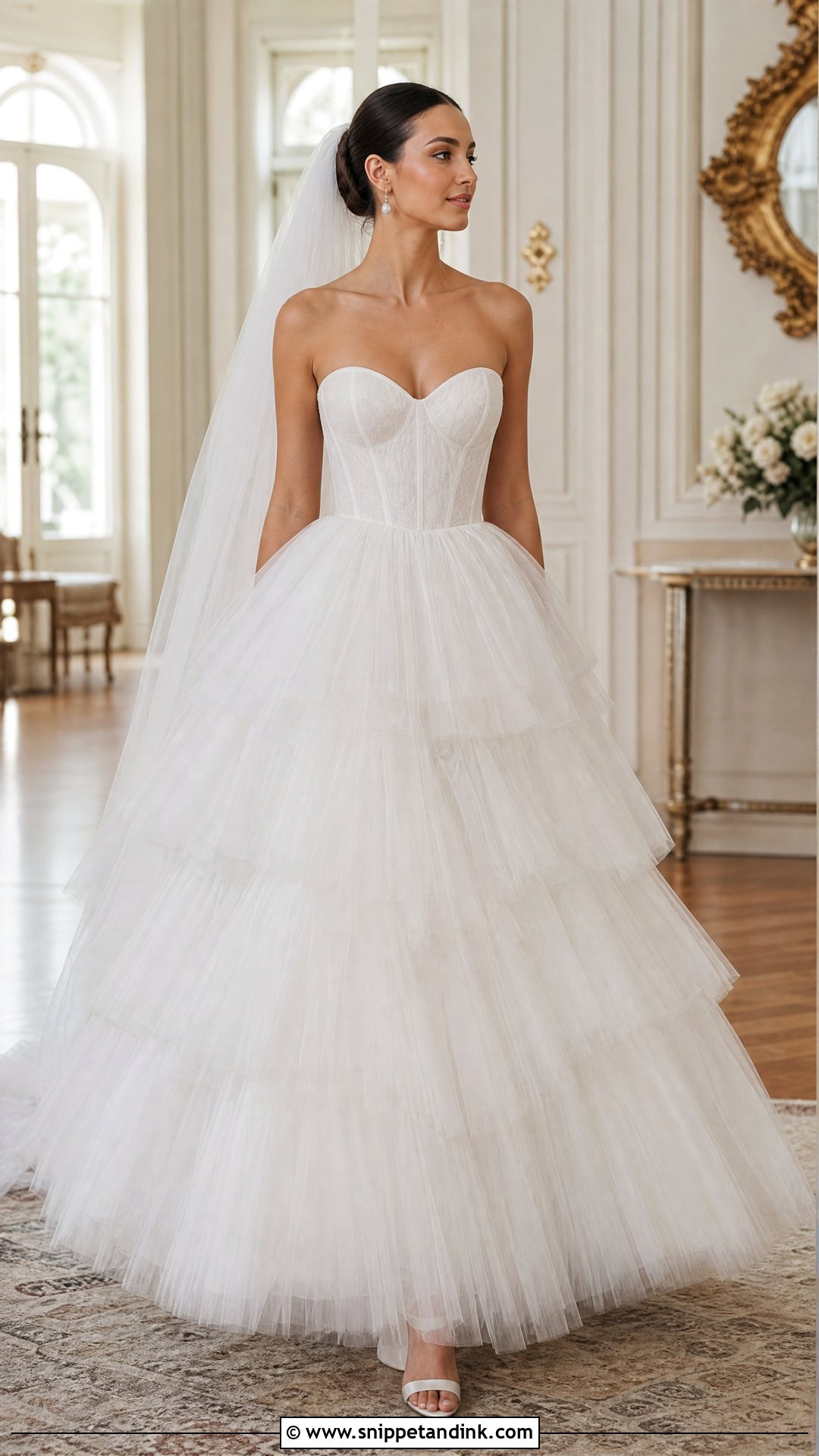
Layers of tiered tulle give soft, cloudlike volume. The tiers already add movement, so the bodice stays simple: a lightly structured sweetheart or a wide-strap corset. Pearl earrings, comfortable satin heels, a plain chapel veil and a low bun or half-up style. Two things to ask before buying. Can each layer be steamed safely, since some tulle melts under direct heat? And how will the hem be shortened? Taking up a tiered skirt means adjusting at the waist or every tier, which is slower and costs more than a single hem.
16. Organza Poofy Wedding Dress
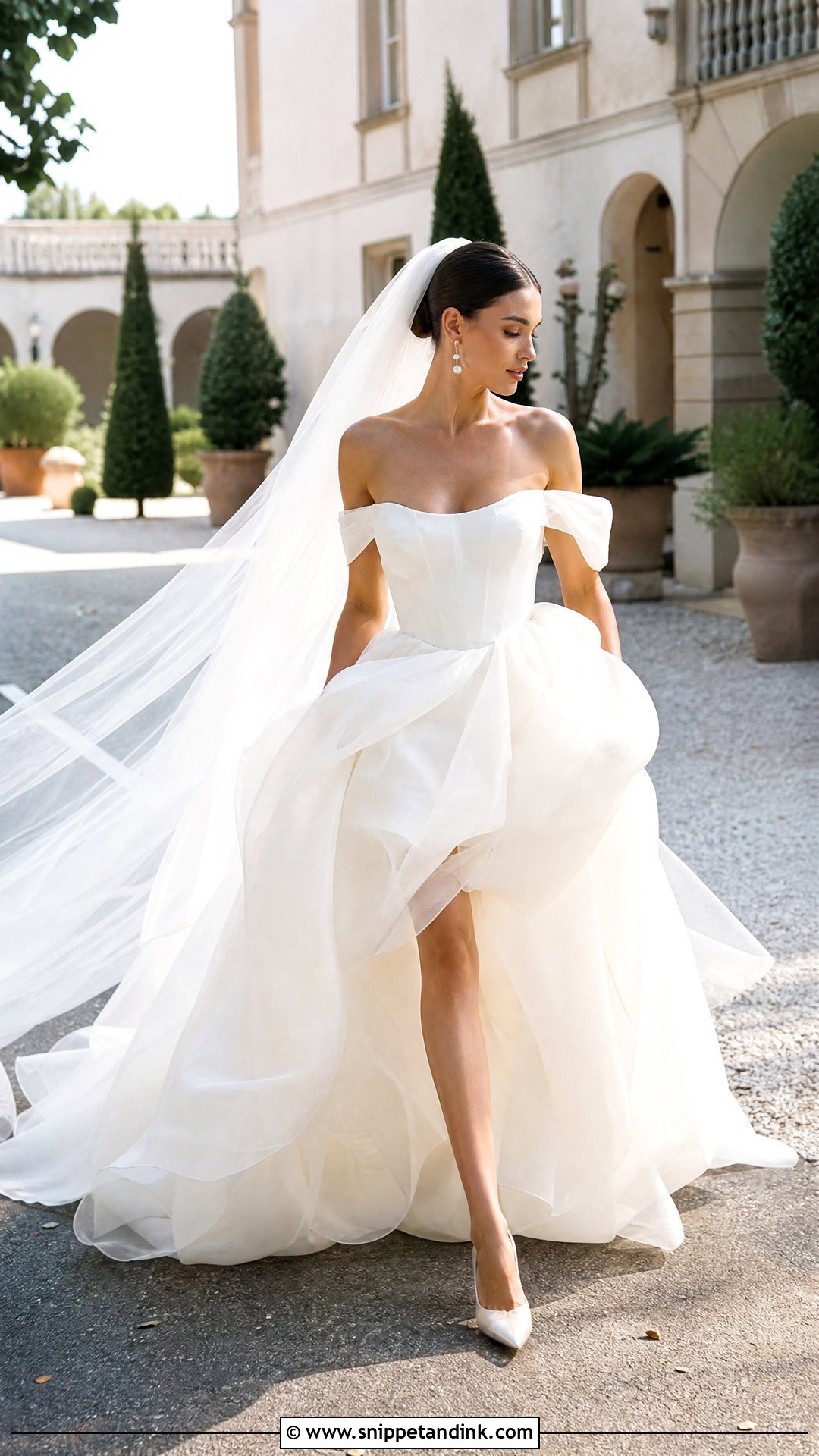
Organza is crisp but slightly see-through, so layered skirts look full without looking dense. A fitted bodice with curved seams and a defined waist, then wide organza panels that swing as you walk. Pearl drops, pointed ivory heels, a sheer cathedral veil and a sleek ponytail or low bun. The trade-off is fragility: organza creases sharply and catches on rough stone, brick and wooden benches. Ask how to store and steam it, and make sure the lining underneath is long and opaque enough to read as smooth.
17. Mikado Poofy Wedding Dress
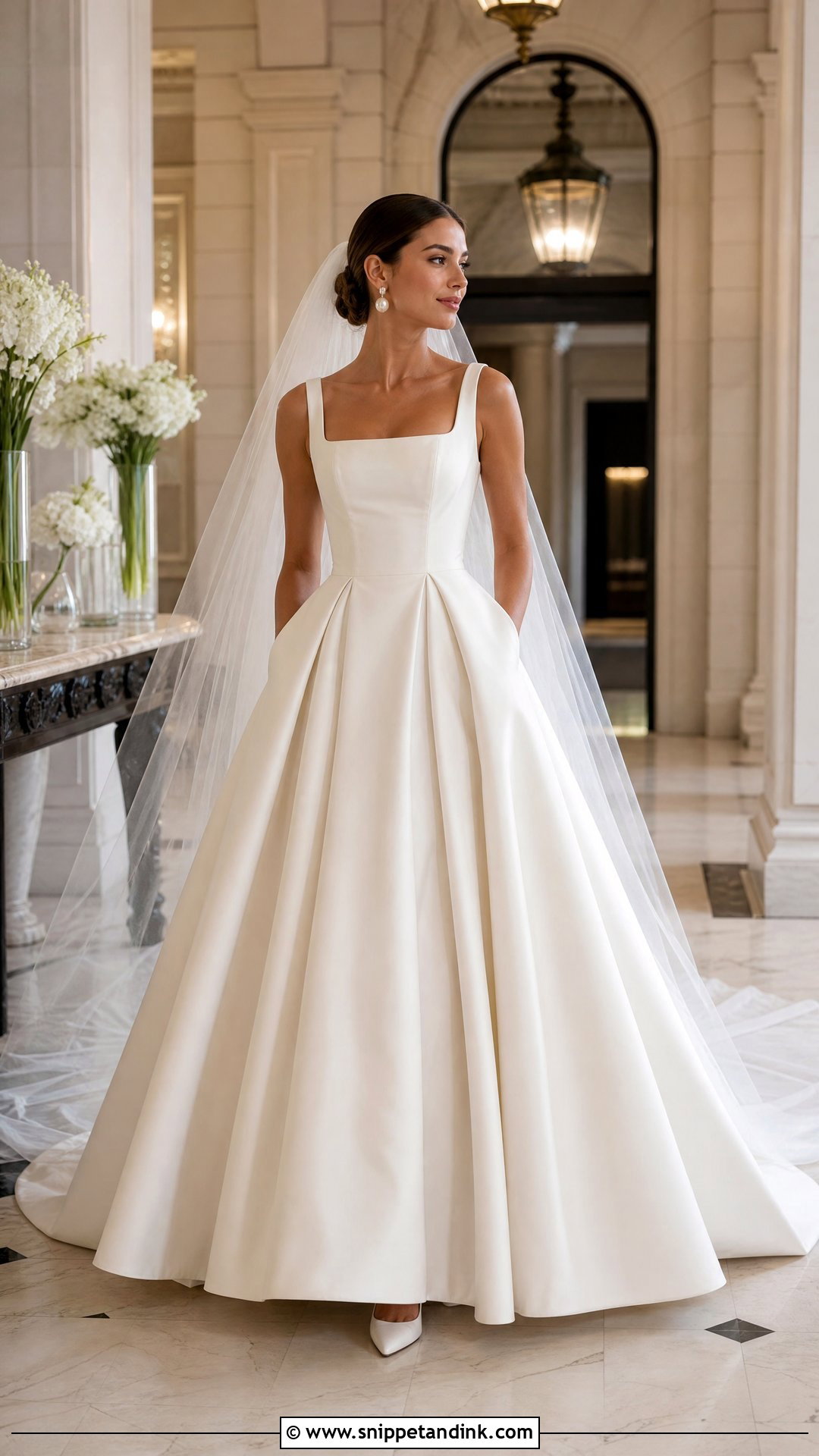
Mikado is the most structured fabric on this list. It holds crisp pleats and a sculpted skirt with a soft sheen, so square, strapless or off-shoulder necklines keep it balanced. Bold pearl earrings, closed-toe pumps, a clean cathedral veil and a sleek chignon. It’s also heavy. Sit for several minutes and walk up a few steps at your appointment. Well-planned pleats, the right hem length and a sturdy bustle make it far easier to live in.
18. Minimalist Poofy Wedding Dress
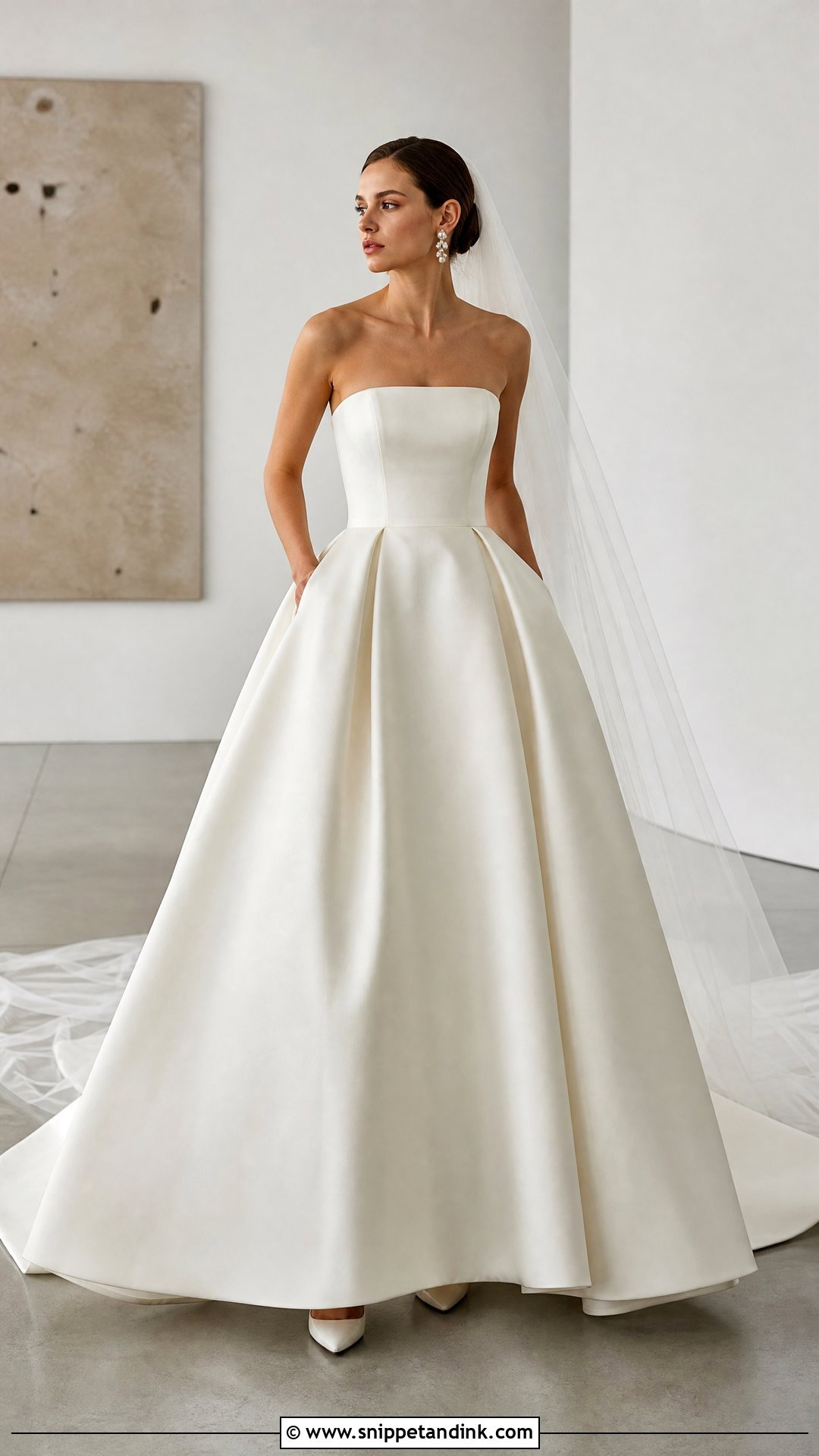
No lace, no crystals, just volume. A minimal ball gown in smooth ivory satin depends entirely on precise seaming and an unbroken skirt, with a straight strapless or clean square neckline. Sculptural pearl earrings, pointed pumps, a long untrimmed veil and a compact single-flower bouquet. With nothing to hide behind, every seam, zip and hem shows, so inspect them from every angle. Steam it on the morning, because creases stand out on plain satin. Pockets are a discreet addition worth asking for.
19. Bow Poofy Wedding Dress
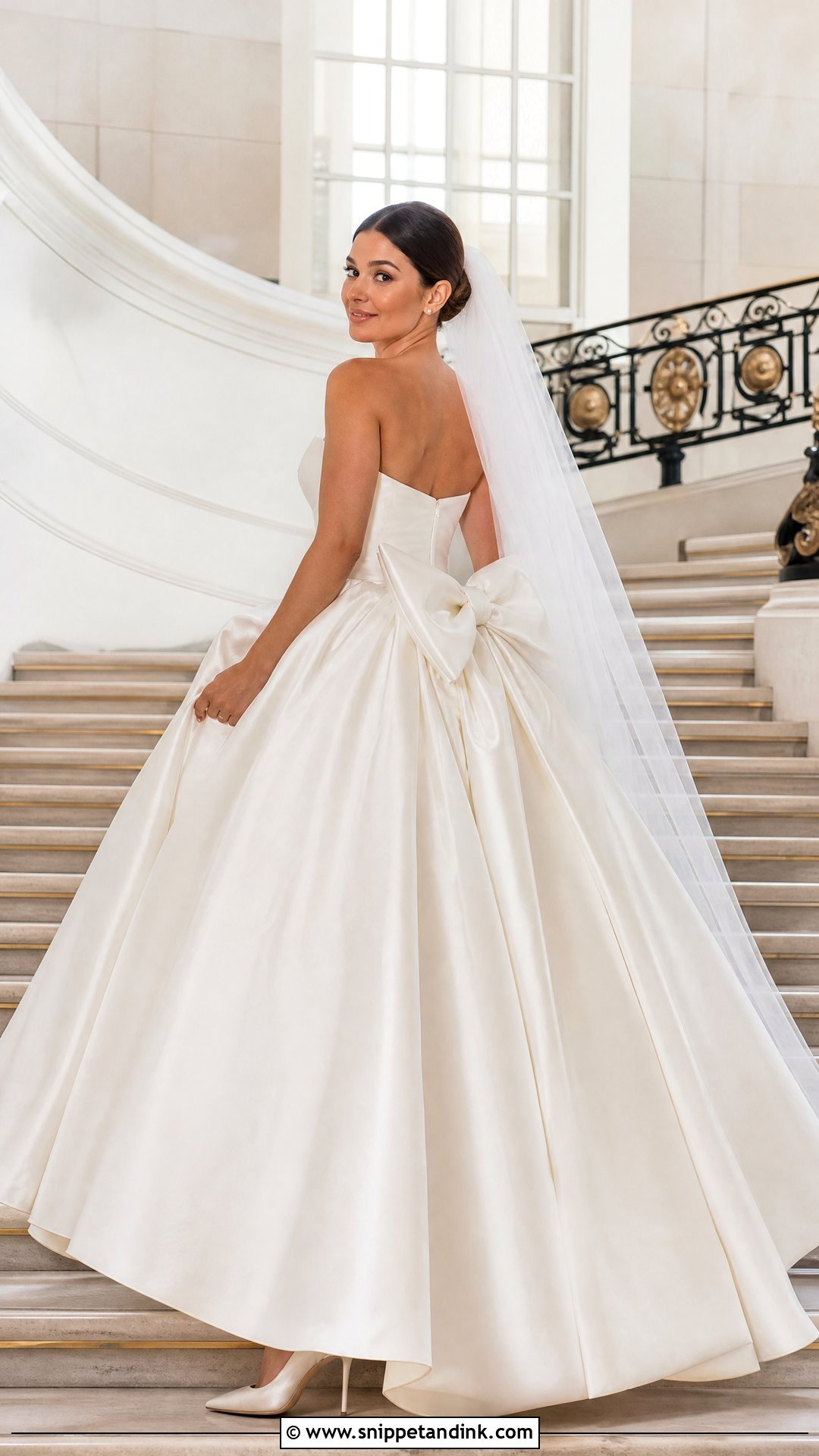
A bow gives a formal gown a bit of personality. At the back waist, it makes your exit; on one shoulder, it reads asymmetric; across the bodice, it’s modern. Everything else stays simple, and smooth satin suits it best. Pearl studs, classic pumps, a plain veil that doesn’t cover the bow, and hair up if the bow sits near the neckline or back. Back bows often clash with the bustle, so ask whether it’s detachable and where the bustle points will go.
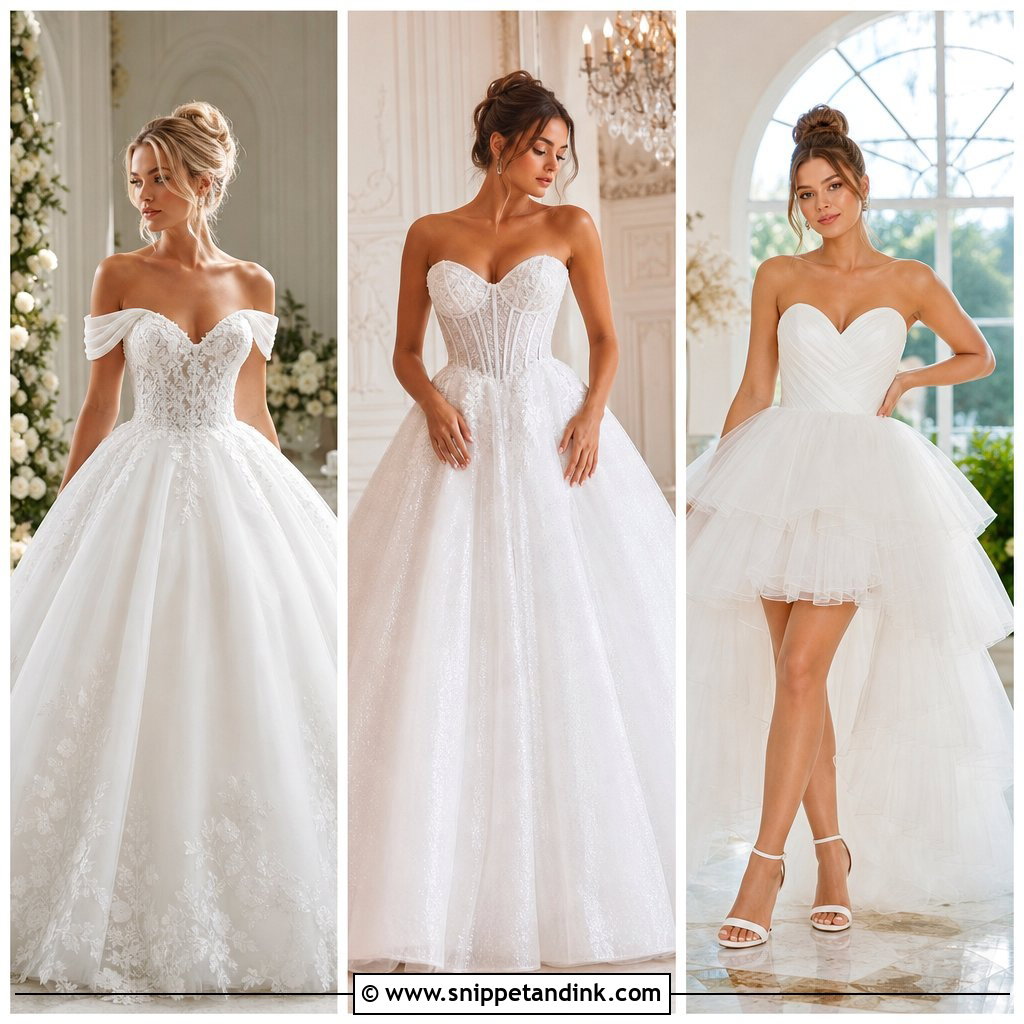

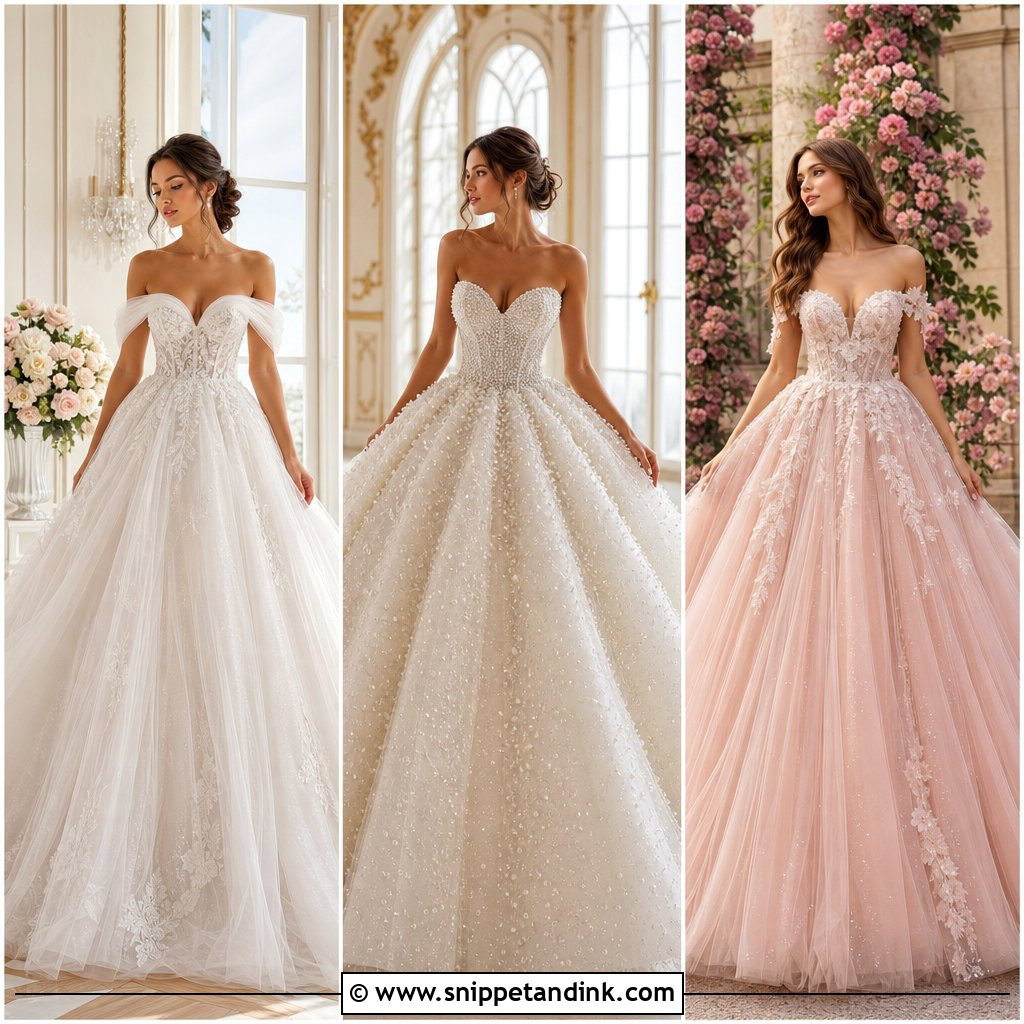


20. Puff Sleeve Poofy Wedding Dress
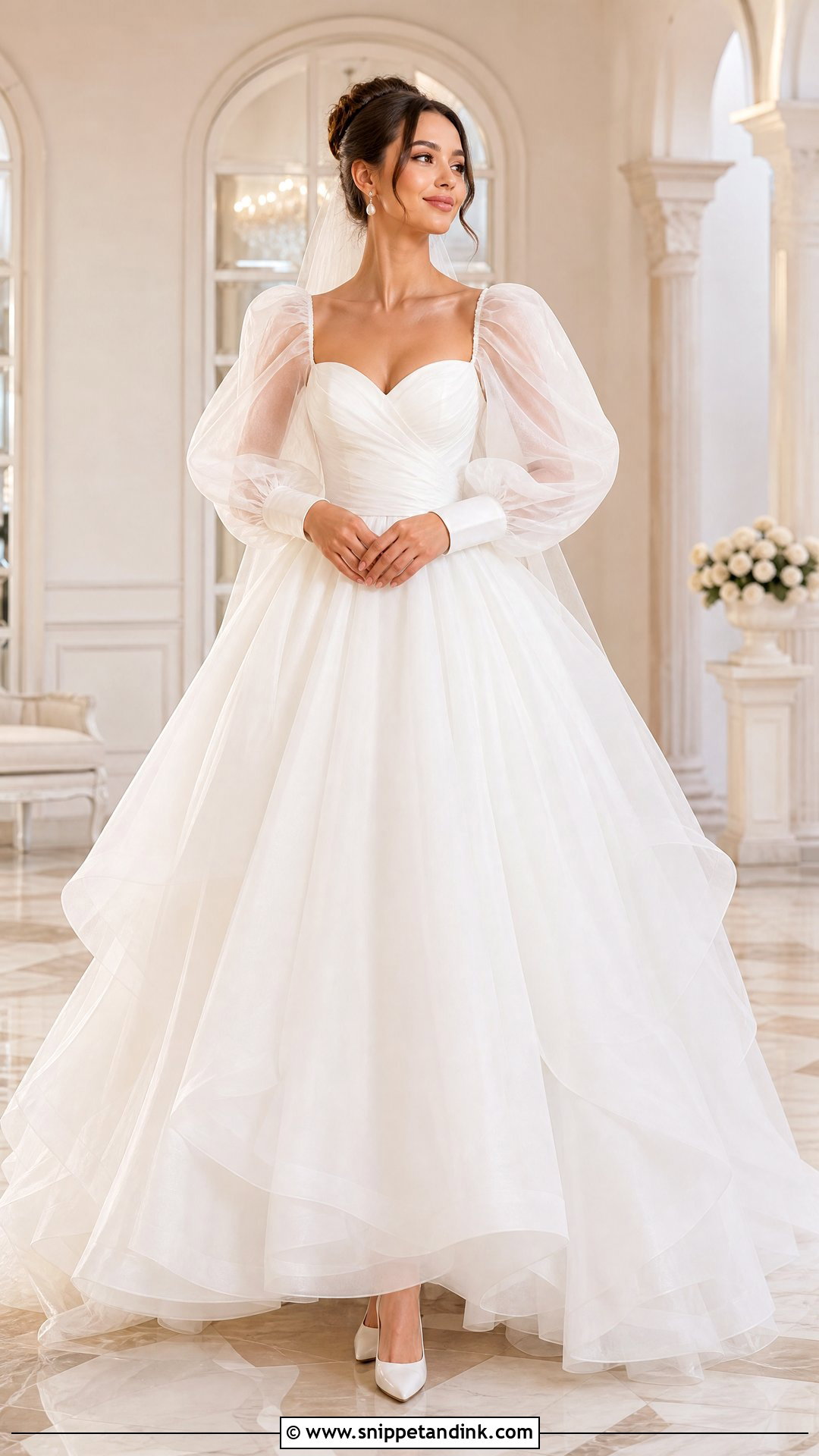
Puff sleeves extend the romance of a full skirt up to the shoulders. Proportion is the risk: big sleeves plus a big skirt can overwhelm, so I choose soft rounded sleeves with fitted cuffs and a clearly defined waist. Sheer organza looks airy; satin looks regal. Pearl earrings, closed-toe heels, a simple veil set behind the sleeves and a neat updo. Try it with and without the veil, since tulle catches on puffed organza. Detachable puffs let you simplify for the reception.
21. Detachable Sleeve Poofy Wedding Dress
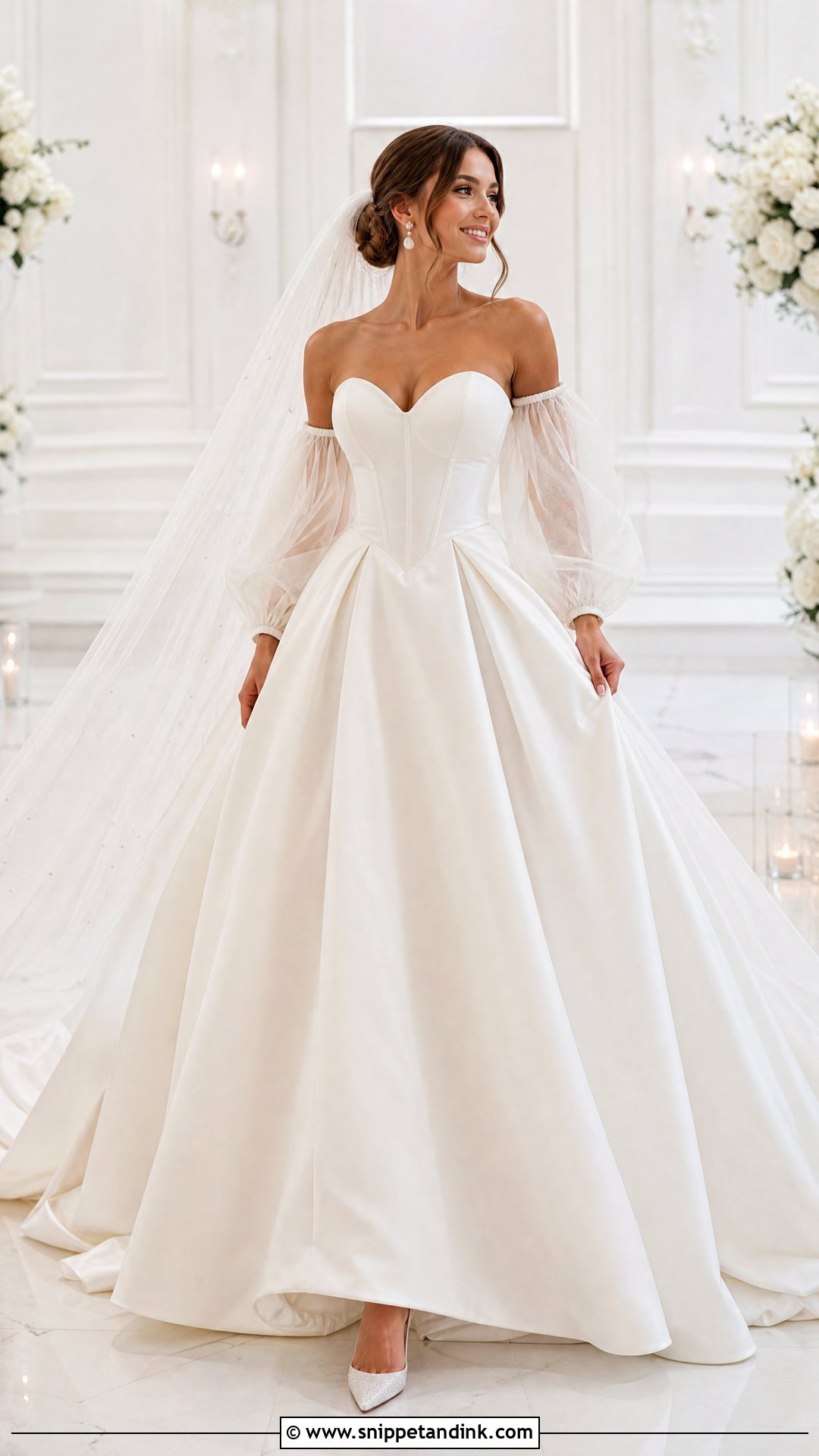
Two looks, one gown. Fitted lace, draped tulle or off-shoulder sleeves for the ceremony, then off they come to show a strapless or sleeveless bodice for dancing. A full satin or layered tulle skirt keeps the drama in both versions. Cathedral veil, pearl earrings and pointed pumps first; statement earrings or a shorter veil after. Test every hook, snap and hidden button: they should lie flat and not scratch. Hand the removed sleeves to someone with a labeled garment bag, or they end up on a chair under someone’s coat.
22. Detachable Overskirt Wedding Dress
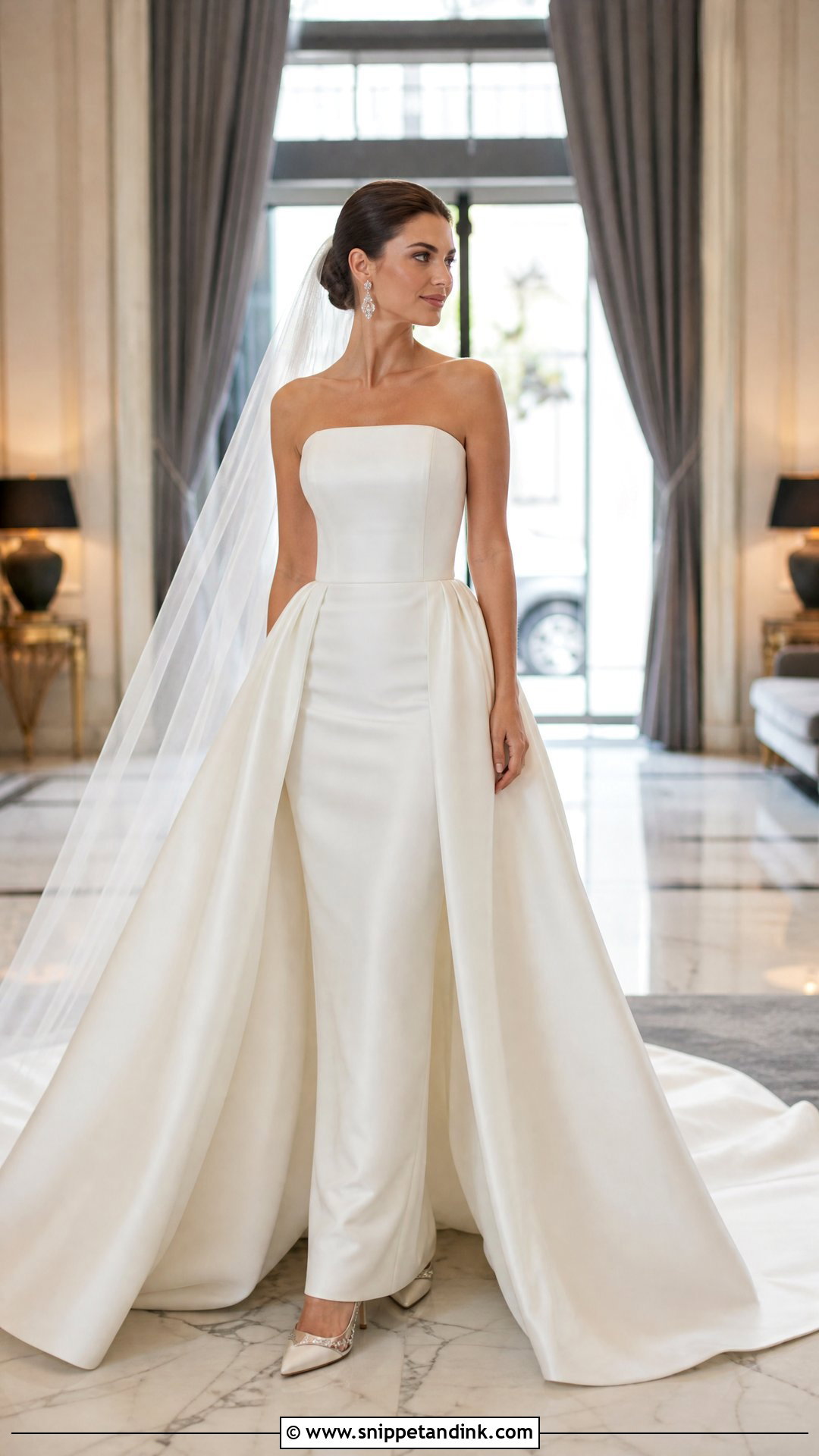
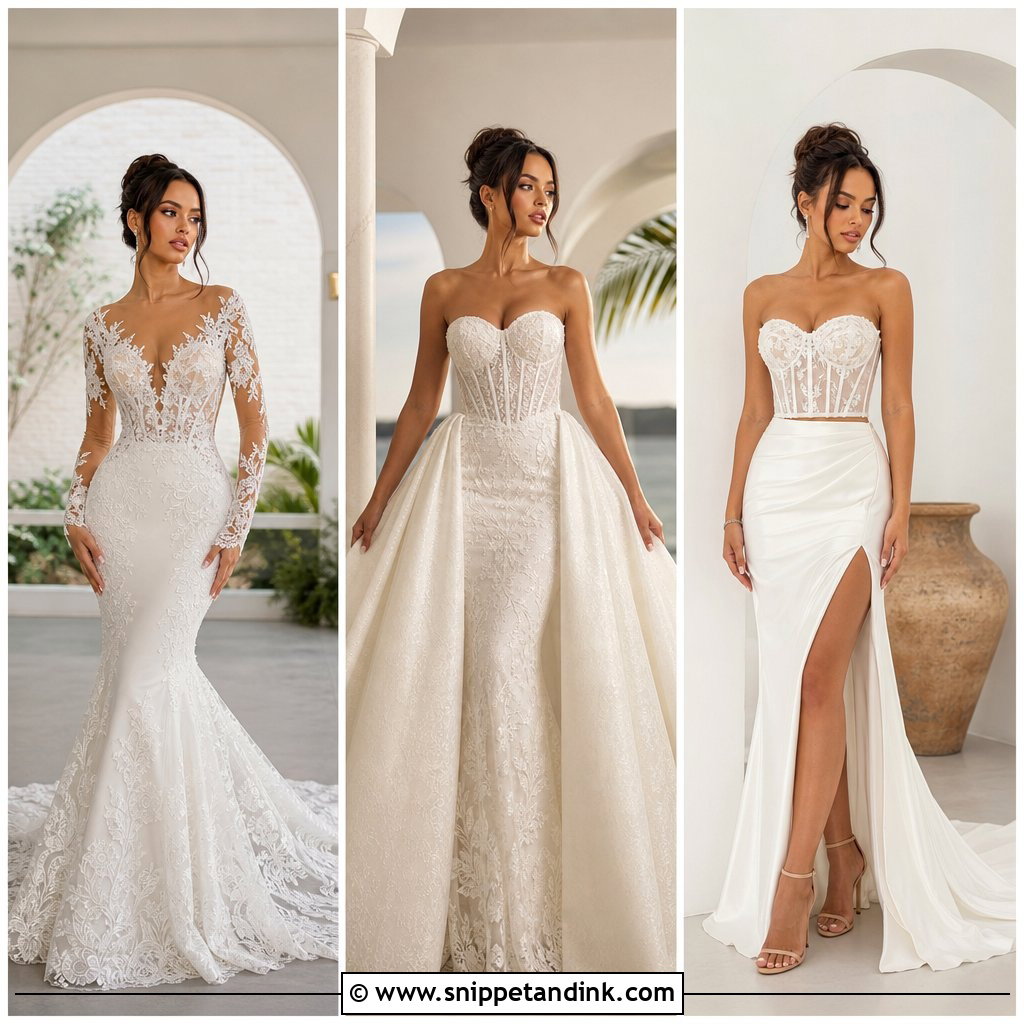
A detachable overskirt gives you the ball gown for the aisle and a slim dress for the party. Start with a fitted column, sheath or soft fit-and-flare, then fasten a full satin, tulle or organza overskirt at the waist. A long veil, drop earrings and elegant heels for the ceremony; add a bracelet or bolder earrings once it’s off. The attachment must be hidden and secure while you walk. Have the tailor teach a trusted helper to remove it, and look at the base dress alone from every side. It has to look finished on its own.
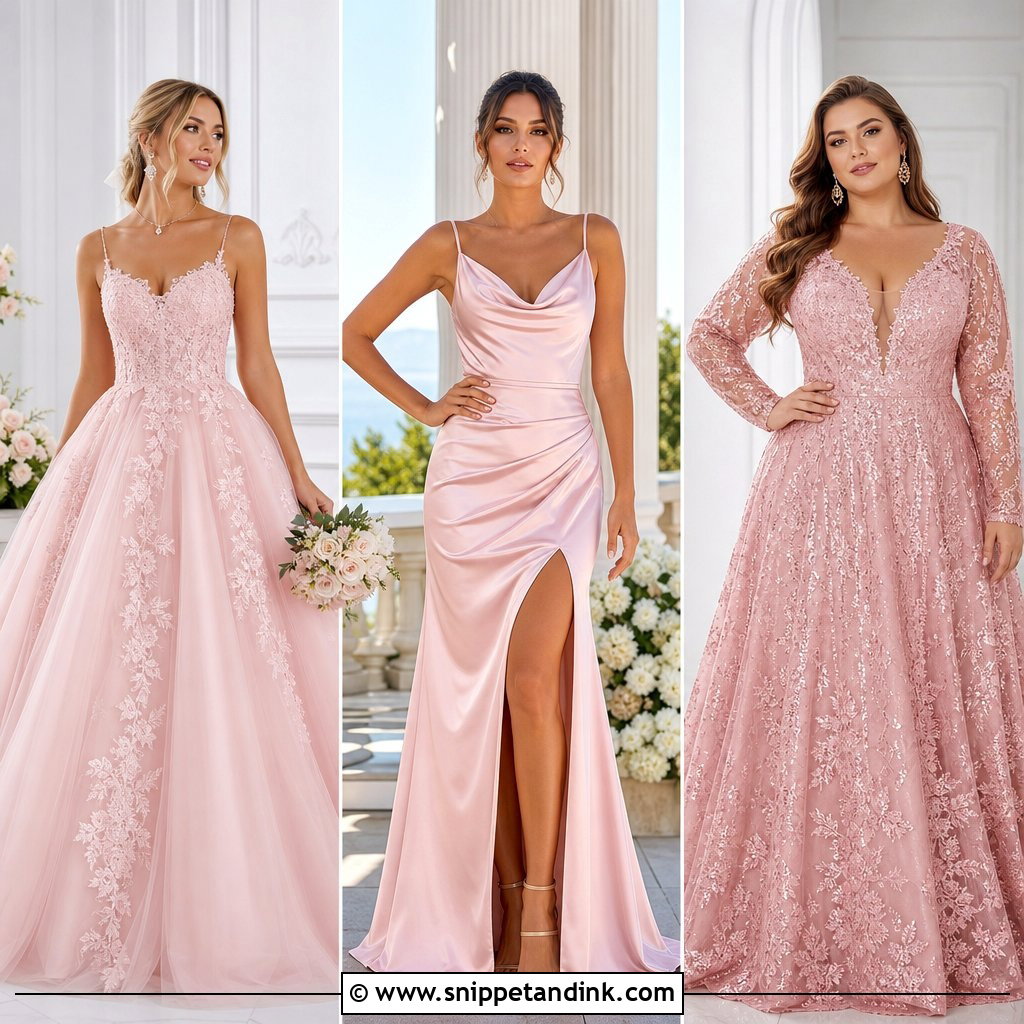
23. Colored Poofy Wedding Dress
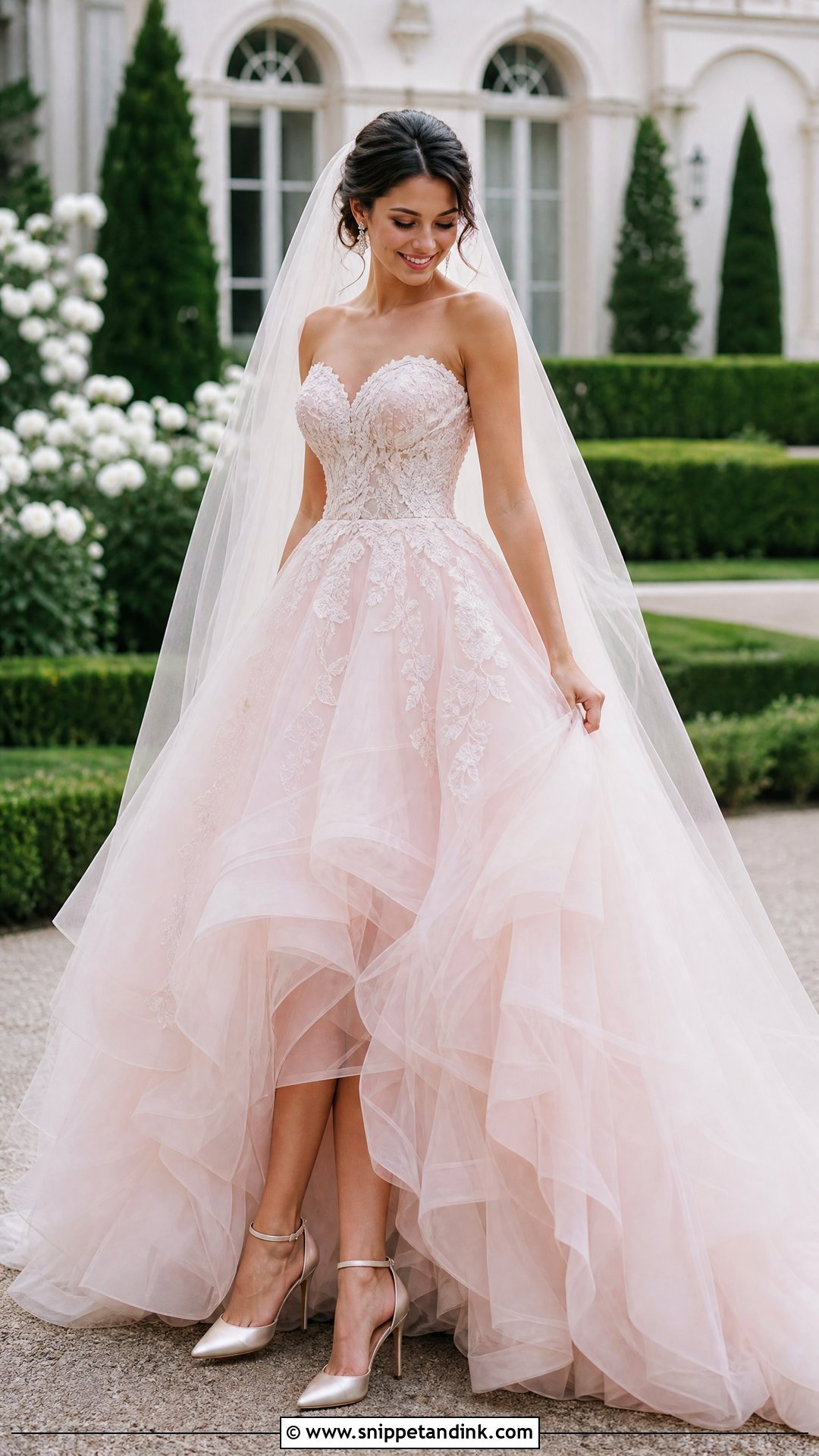
A colored poofy wedding dress steps away from bright white without losing the bridal feel. Blush, pale blue, champagne and soft silver all work with a fitted bodice and sweeping skirt. One shade throughout, or colored tulle over a neutral lining for depth. Metallic ivory heels, crystal earrings and a sheer veil matched to the undertone. Color shifts between daylight and indoor light, often noticeably, so look at it in both before ordering. Ask for a swatch too; it saves you from clashing ivories when you shop for shoes and a veil.
24. Plus Size Poofy Wedding Dress
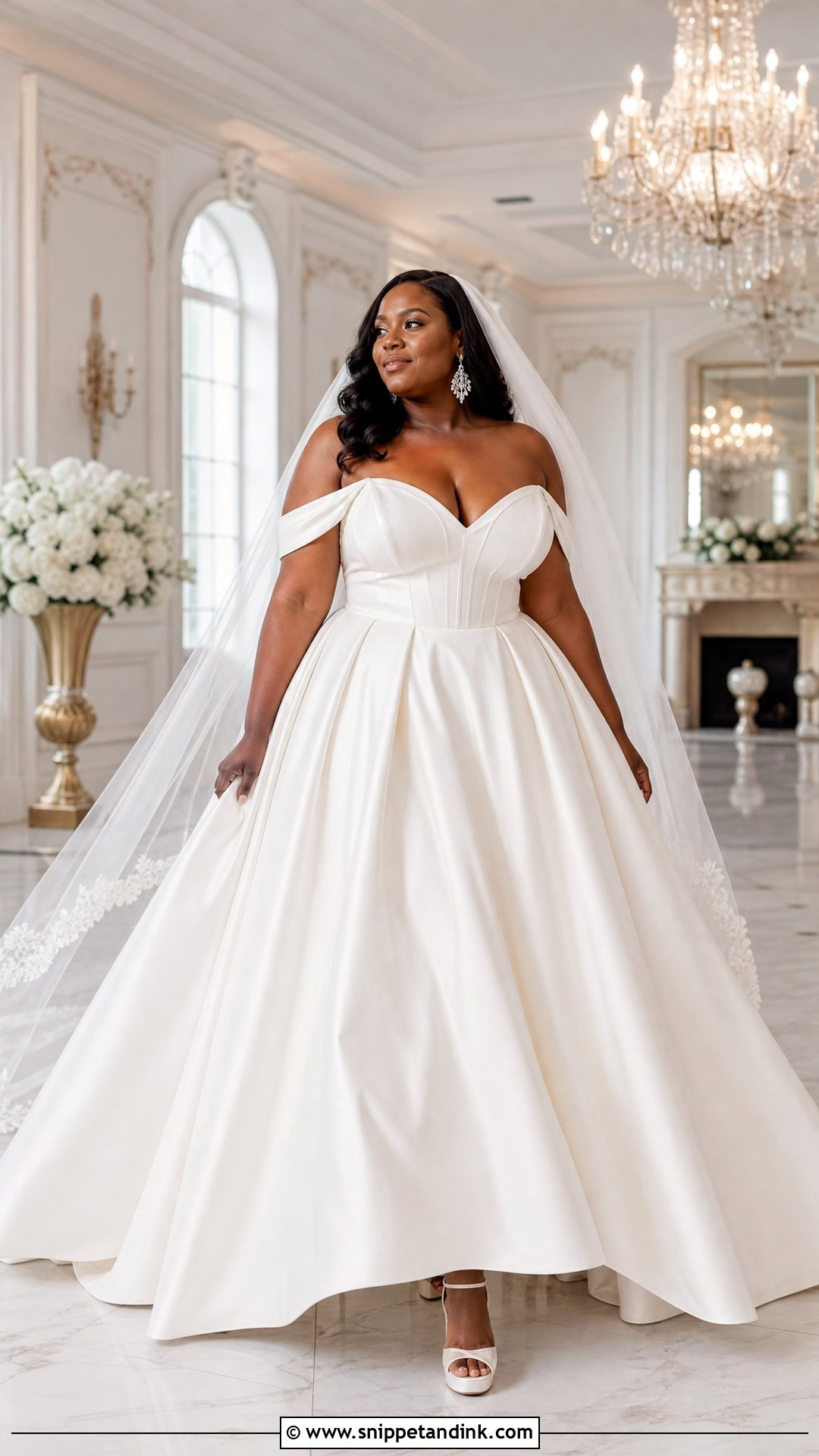
Support first, then the shape you love. For a plus-size bride I’d look at a structured corset, square neck or off-shoulder bodice with a full satin or layered tulle skirt. Let the waistline sit where it feels right: natural, basque or slightly raised. A big skirt also balances a fuller bust and hips, which is one reason I see so many curvy brides fall for this silhouette. Stable block heels, statement earrings and a veil suited to the venue. Ask the salon for samples close to your measurements, and at alterations sit, walk, turn and raise your arms before you approve the fit.



25. Petite Poofy Wedding Dress
Petite brides can wear real volume if the proportions are controlled. A bodice ending at the natural waist or a subtle basque adds length. Lighter tulle and fewer horizontal tiers keep the skirt from swallowing you. A V-neck, square neck or narrow strapless top makes a clean vertical line. Pointed heels, small drops and a chapel veil rather than a very wide one. Order the right hollow-to-hem length if the designer offers it; shortening a detailed skirt can be complicated. At the last fitting, step back across the room and check you’re still the first thing anyone sees.
Cars, Bathrooms and Doorways in a Full Skirt
The logistics of a big gown are where weddings run late. A few minutes of planning saves a lot of panic.
- Transport: ask for a car with a wide rear door and a bench seat. Get in bottom first, then lift the skirt in after you, and have someone tuck the train onto your lap rather than the floor.
- Bathroom: wear the gown once at home with a helper. The easiest way is usually facing the cistern, with the skirt gathered up in front of you, or stepping into a large laundry bag pulled up to the waist to hold the layers together.
- Doorways and aisles: measure the skirt at its widest and compare it with the narrowest point you’ll walk through, including any church pews or aisle decor.
- Rain or wet grass: carry a clean sheet in the car to stand on for outdoor portraits, and keep the bustle up between locations.
Ask your seamstress to teach two people the bustle, not one. On the day, the person who learned it is always busy at the exact moment the dancing starts.
How Much Volume Feels Like You?
Start by deciding what kind of volume feels like you. Satin and Mikado give structured drama; tulle and organza move lightly. Corsets, basque waists, sleeves, bows and appliques shape it further. Then weigh the practical side: venue, season, skirt weight, train, shoes and alterations. Move at every fitting instead of judging the gown standing still. A full skirt done right lets you walk, sit, hug and dance without once tugging it back into place.
You'll Like These Ideas:







Leave a Reply