
Big skirts are filling my fitting rooms again, and the new ones are smarter than the stiff, heavy gowns many of us remember. Full-skirted dresses now include sculpted Mikado ball gowns, light tulle layers, puff sleeves, basque waists, floral appliqué, pearl work, detachable overskirts and soft trains. You can lean regal, minimal, vintage or playful. What I care about most is that the volume suits your venue, your frame and how you plan to spend the day. Here are 25 full-skirted gowns, and what I’d tell you about each one if you were standing on my fitting platform.
Where All That Volume Comes From
A full skirt doesn’t hold itself up. Underneath, the fullness is built in one of a few ways, and knowing which one a gown uses tells you how it will feel by the end of the night.
- Layers of tulle or net sewn into the skirt. Light and soft, but they flatten a little over the day.
- A separate petticoat or crinoline worn underneath. Adjustable, but it adds bulk when you sit.
- A hoop with rigid rings. It gives a perfect bell shape, though it swings when you climb stairs and flips up if you sit carelessly.
- Stiff fabric like Mikado or heavy satin that stands out with little help, plus horsehair braid in the hem to keep the edge round.
One thing to know when shopping: shop samples are often worn with an extra petticoat or clipped at the back to look fuller and fit better. Ask what the gown looks like on its own, so the dress you order matches the one you fell for.
1. Strapless Puffy Wedding Dress
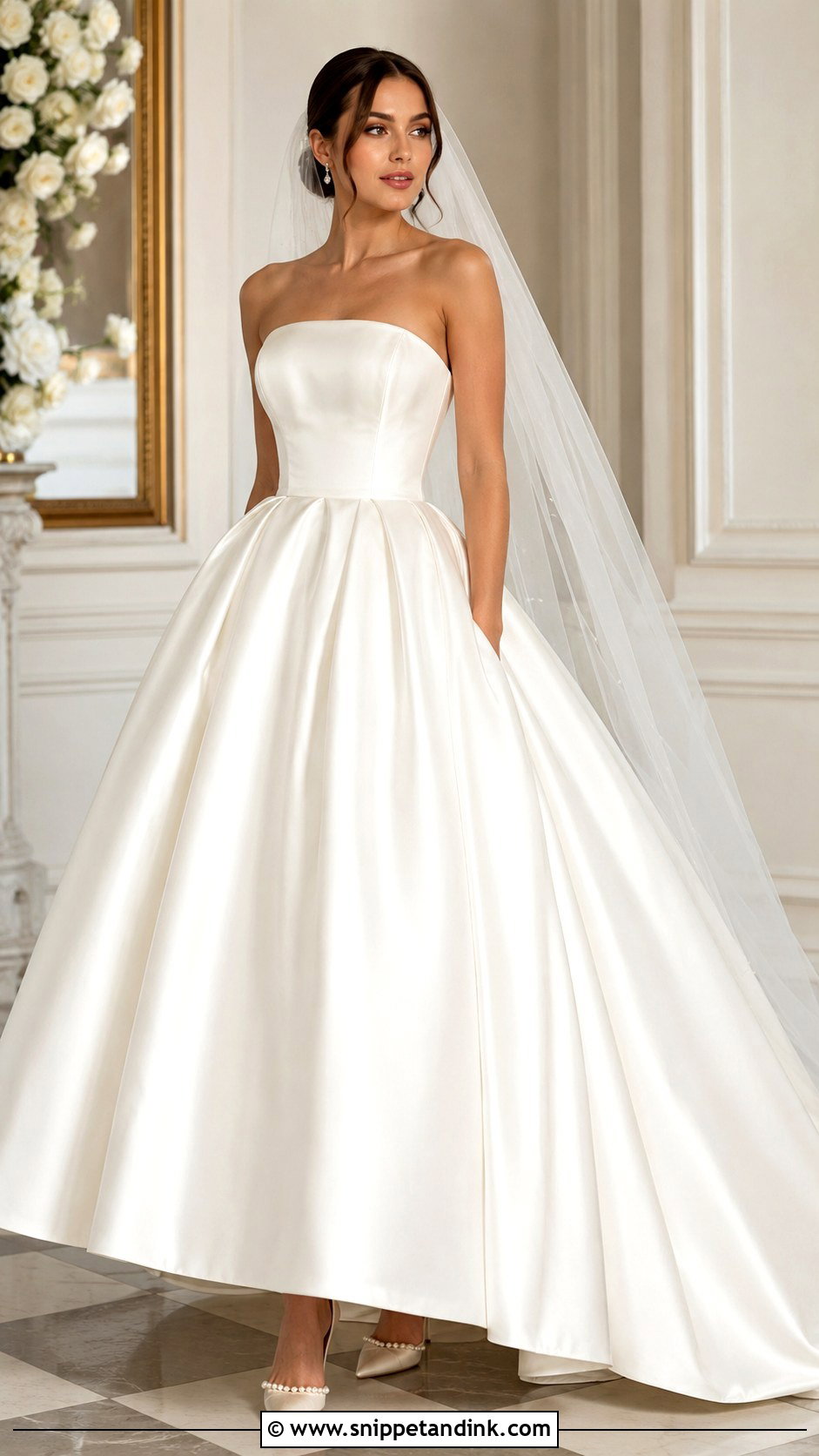
Strapless with a full skirt is the pairing I fit most often, since the bare neckline offsets a dramatic skirt and keeps the gown from feeling heavy. Everything depends on what’s inside the bodice. I look for proper boning, a waist stay and a skirt joined firmly enough that its weight doesn’t drag the top down by evening. Tulle, organza, Mikado and satin skirts all suit it. A sweetheart edge reads softer, a straight one more editorial. A simple veil, pearl studs and pointed heels are enough, and hidden straps can be added during alterations if you want insurance.
2. Long Sleeve Puffy Wedding Dress
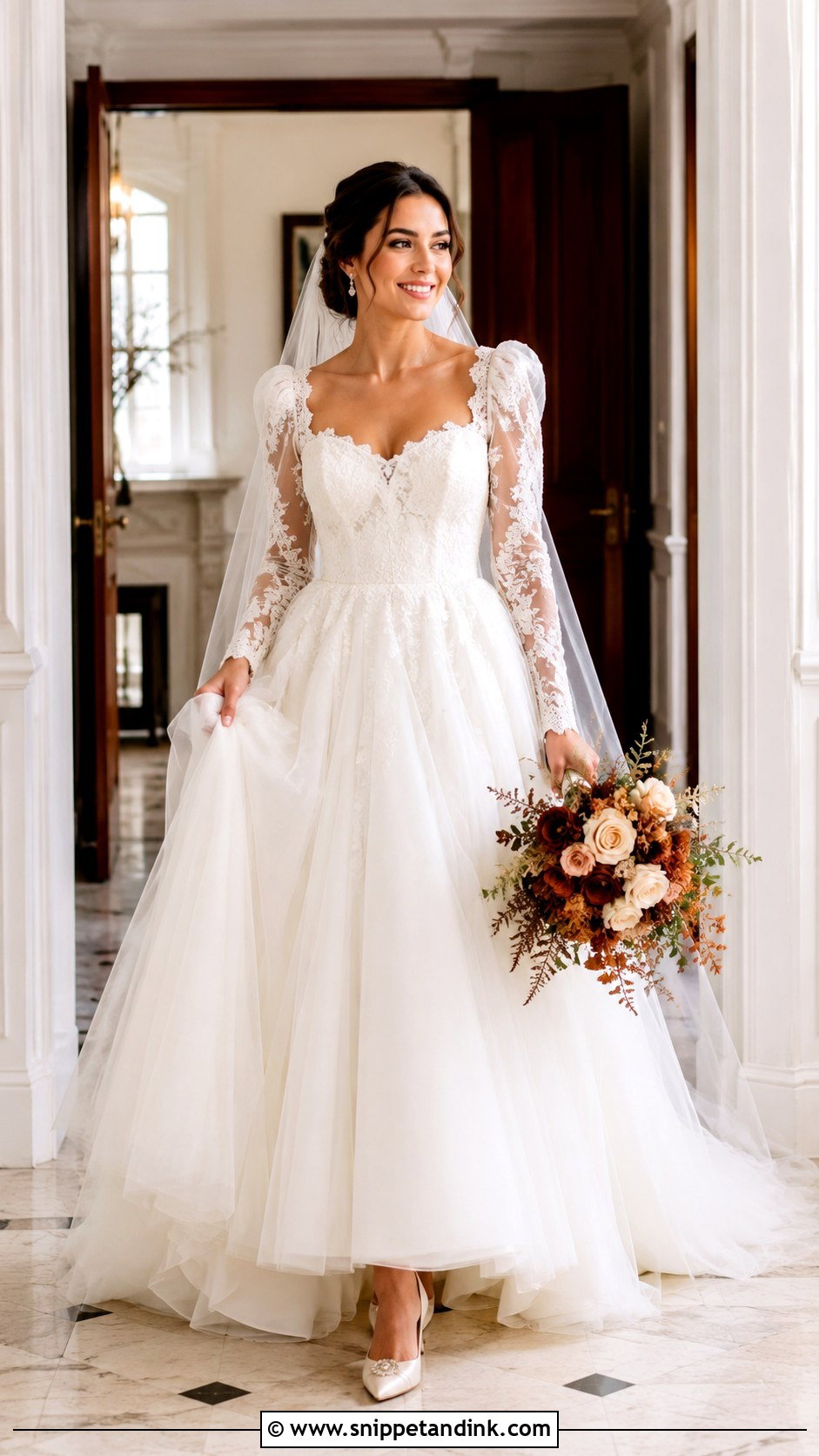
Sleeves change a full skirt more than people expect: suddenly the gown looks covered and composed rather than sweet. Sheer lace sleeves stay delicate; satin or crepe looks royal. Balance is the rule I follow. Detailed sleeves call for a quieter skirt, and a dramatic skirt calls for clean sleeves with small buttons or light embroidery. Fall and winter suit it. Set the veil comb below the crown so the sleeves stay visible from behind, and add a low bun with drop earrings.
3. Puff Sleeve Puffy Wedding Dress
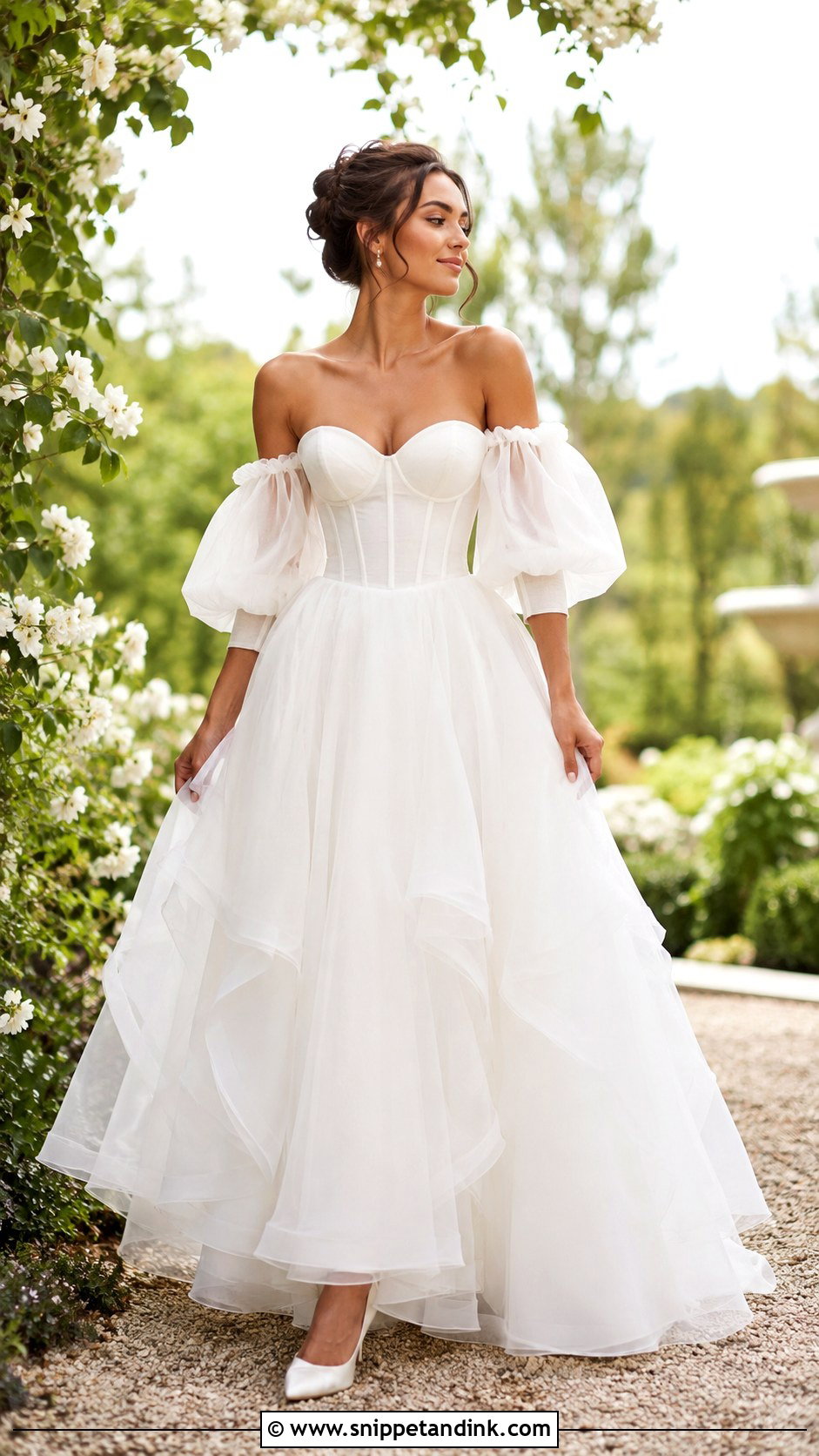
Puff sleeves give a full skirt a vintage tilt without needing beads. Organza puffs stay airy and translucent; structured satin puffs are bolder and hold their shape all day. It’s worth asking about detachable puff sleeves, so you can wear them for the ceremony and remove them for dancing. I check that the shoulder seam sits exactly on the shoulder point, because a puff placed even slightly too wide makes the upper body look broad. Keep jewelry minimal, since the sleeves already pull the eye up.
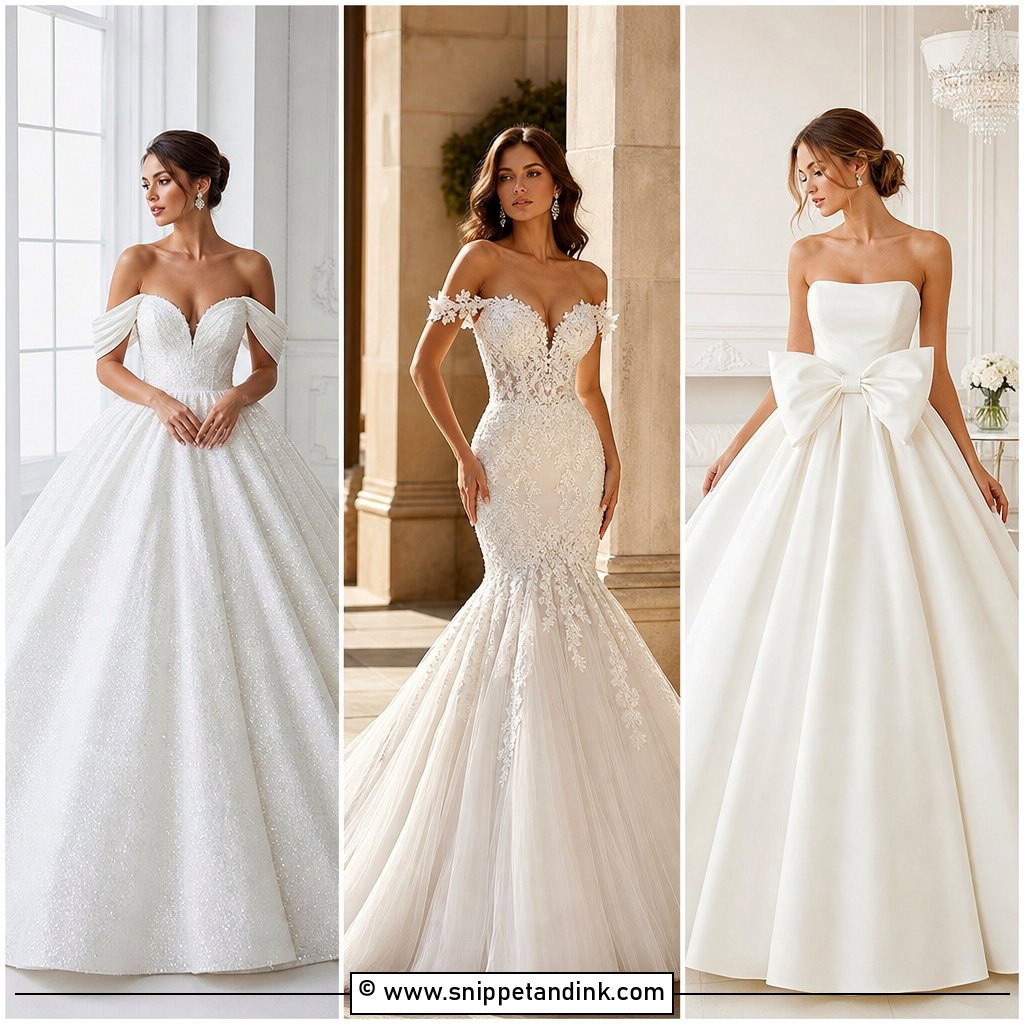
4. Off Shoulder Puffy Wedding Dress
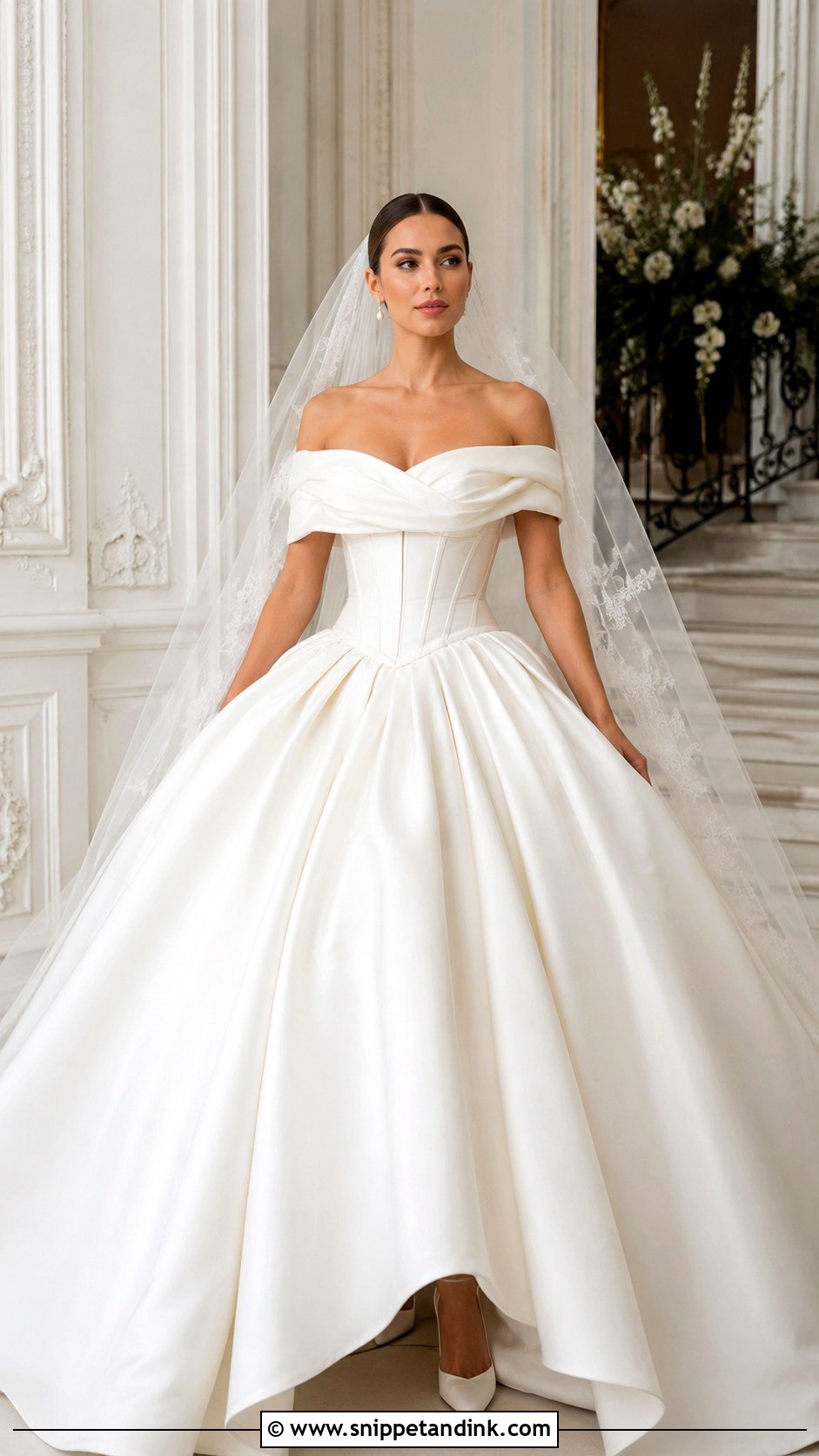
Off-the-shoulder necklines frame the collarbones while the skirt builds the grand shape below. Draped satin looks classic; lace or tulle feels softer. It pairs best with a basque or corset bodice, which defines the torso before the skirt opens. The common problem is a band that grips the upper arm too tightly, so I have brides lift a glass and hug at the fitting. A necklace only suits a plain neckline; otherwise, earrings and a bracelet. A cathedral veil gives it a polished finish.
5. Sweetheart Puffy Wedding Dress
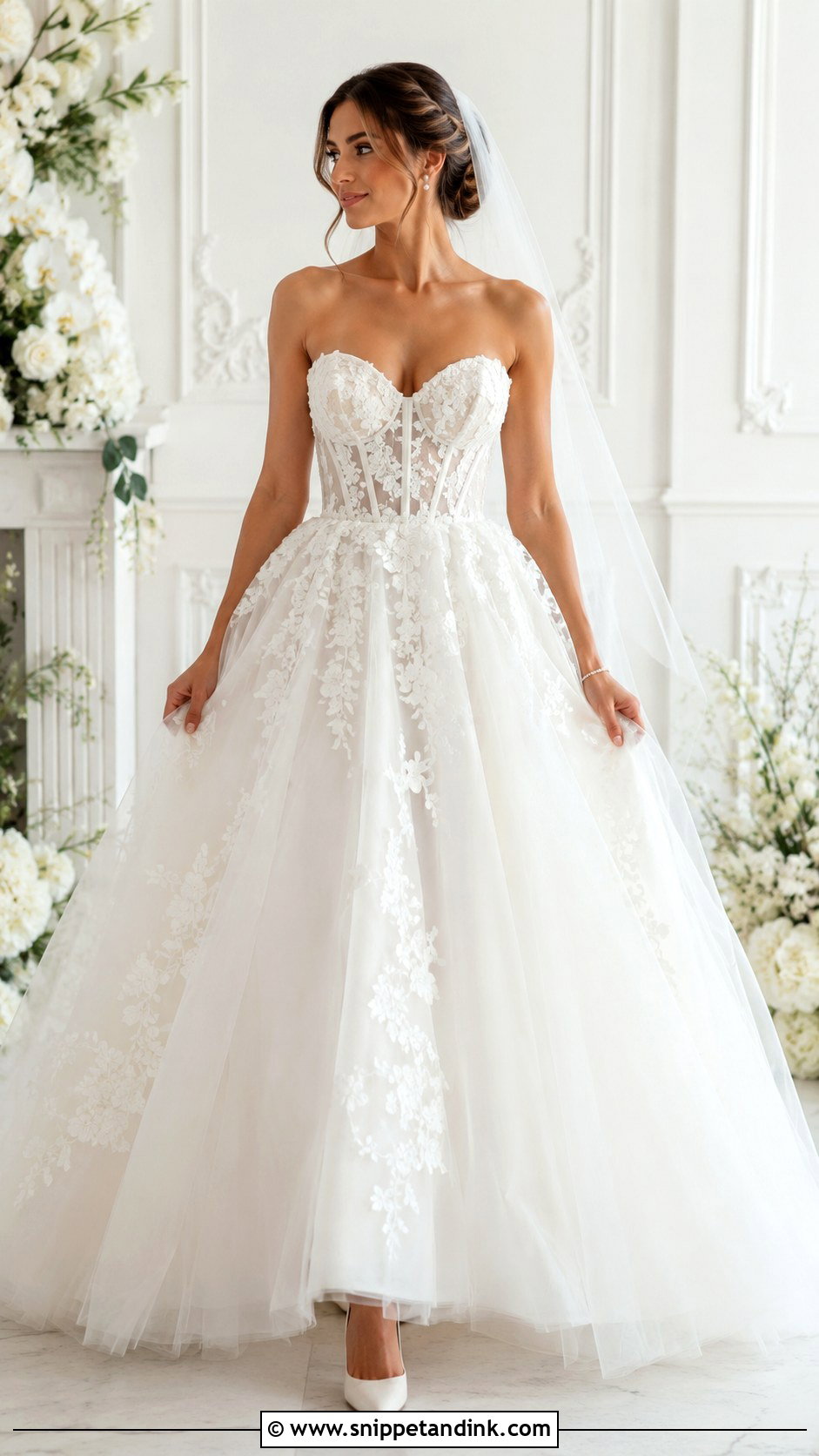
Sweetheart necklines suit an enormous range of figures, which is why they’re everywhere. The curve softens the chest and sits naturally above a fitted bodice and full skirt. Smooth satin or Mikado keeps it modern; lace appliqués or layered tulle make it romantic. Fuller-busted brides should ask for internal cups and a slightly higher curve, which stays in place better when dancing. Detachable sleeves, a pearl veil or a short necklace all suit it.
6. Basque Waist Puffy Wedding Dress
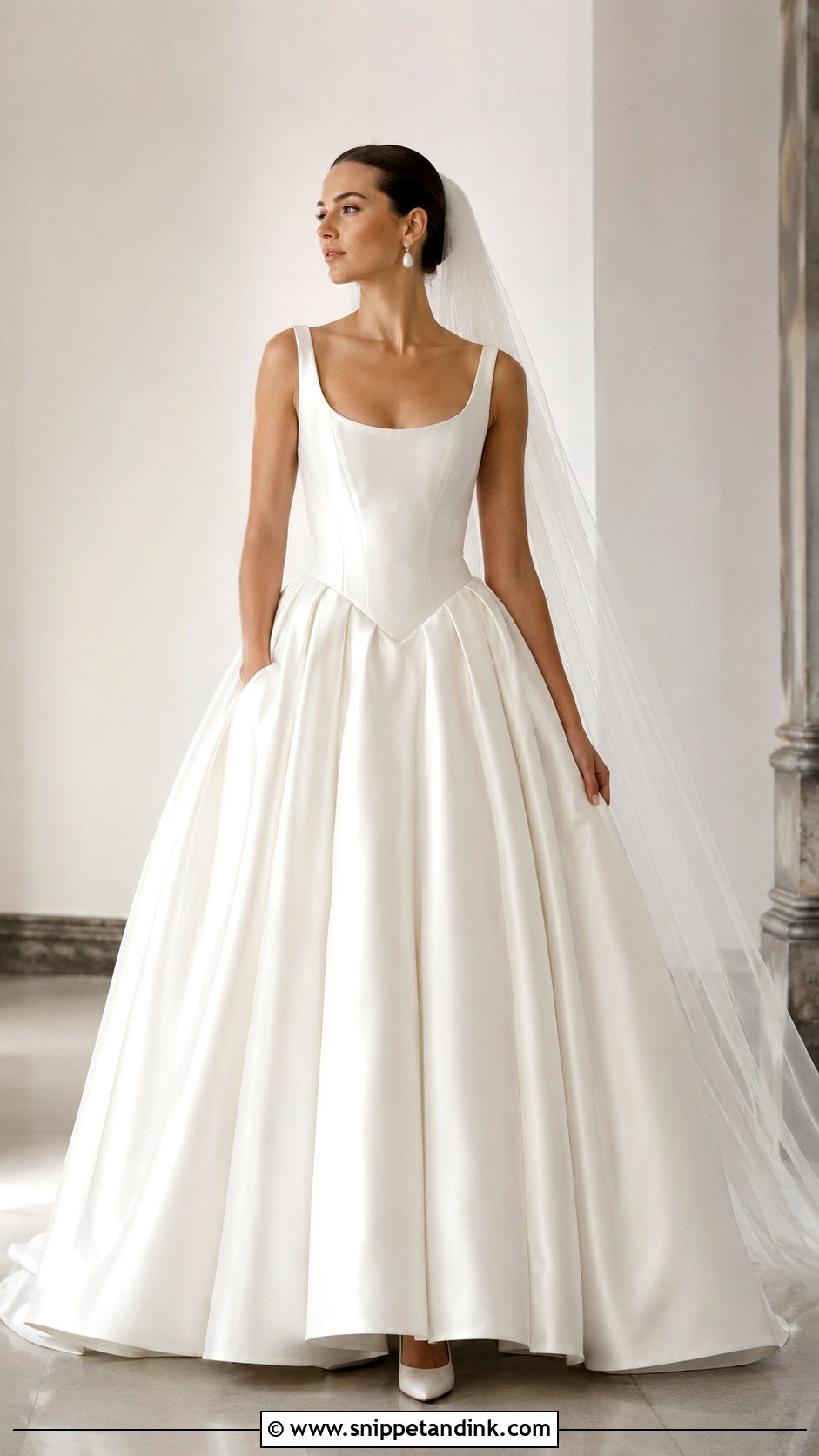
Basque waists dip into a soft V at the front, lengthening the torso before the skirt flares. It feels historical yet current, and it suits satin, Mikado, lace and tulle. Depth matters. On petite brides I check where the point lands, since a deep V on a short torso can visually shorten the legs. The waist is the statement, so accessories stay clean: a sleek bun, oval earrings and a veil with some structure.
7. Drop Waist Puffy Wedding Dress
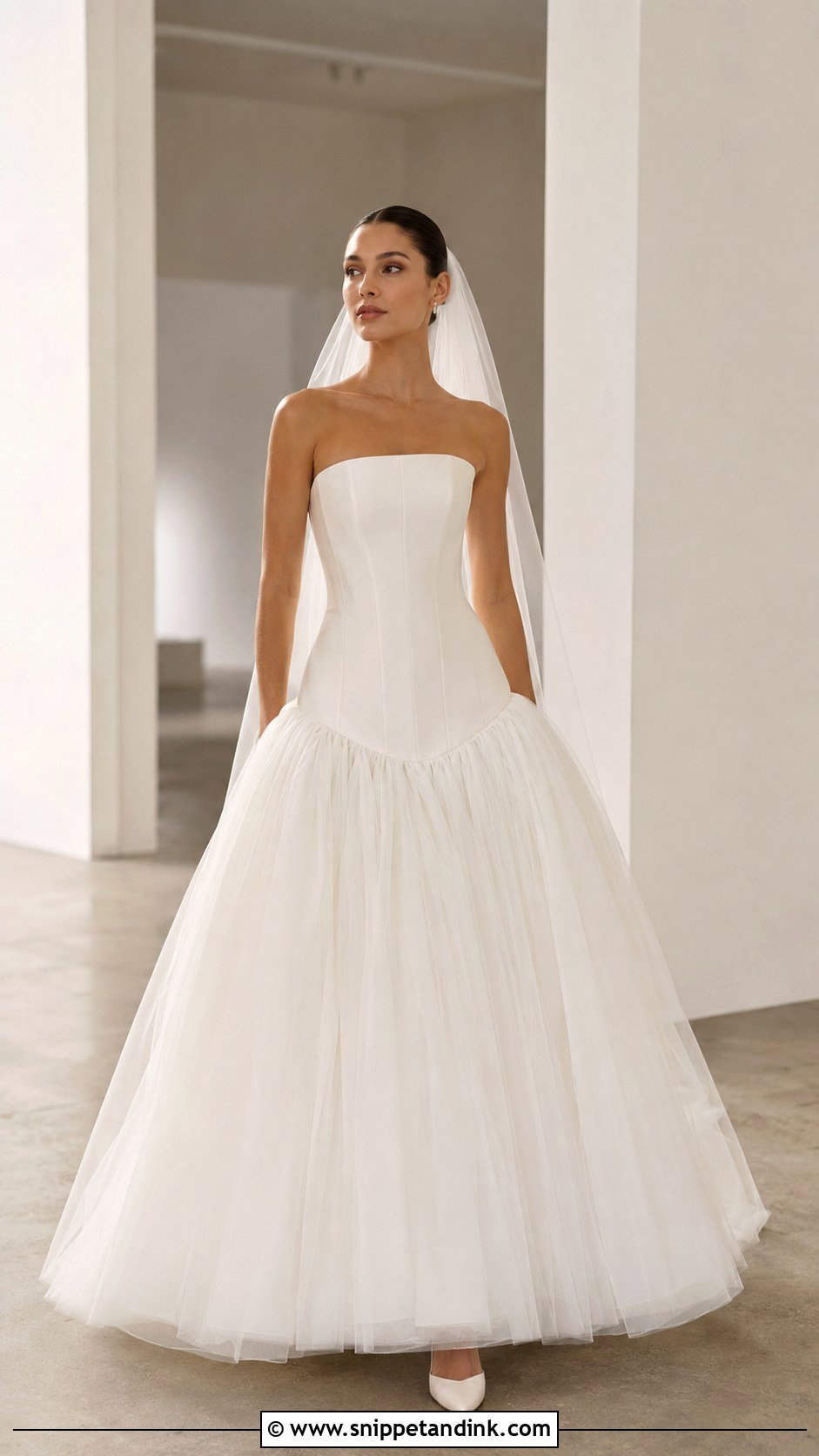
A drop waist moves the skirt’s start down to the hips, giving a long, smooth torso before the volume begins. In plain satin or Mikado the seams become part of the design. Tulle over a drop-waist corset feels softer. I’d budget more for alterations here than for most shapes, because if the drop sits even an inch off your hip line, the whole gown looks borrowed. Simple heels, clean jewelry and a veil that doesn’t cover the waist detail suit it.
8. Tulle Puffy Wedding Dress
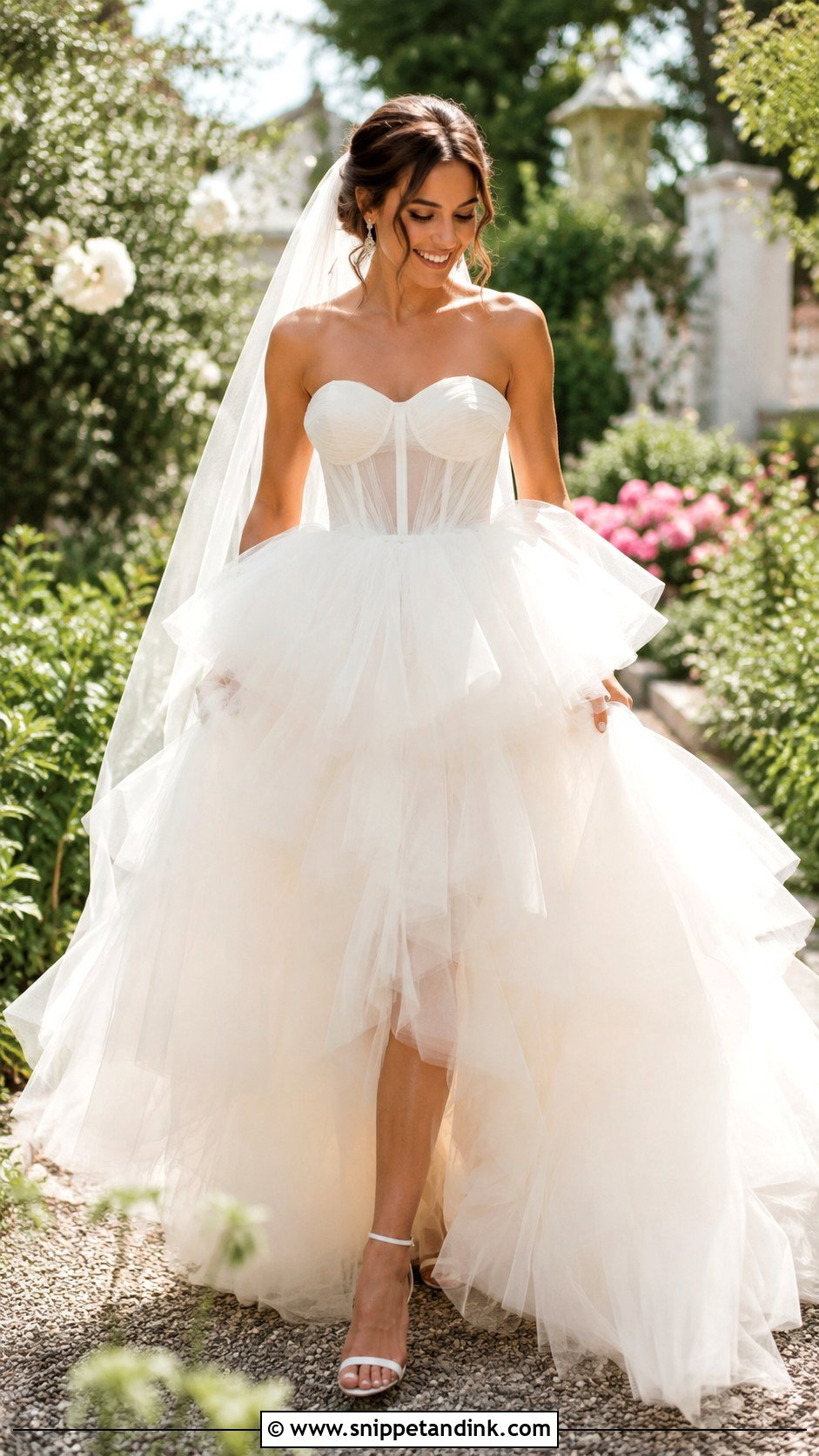
Tulle gives volume with very little weight, which is why it’s the fabric I suggest to brides who want to dance for hours. Several layers make a cloud; a fitted bodice keeps it anchored. Plain tulle stays clean and romantic, while tulle with tiny florals, pearls or shimmer adds depth. The fabric snags easily, so avoid shoes with sharp buckles or crystal ornaments that can hook the inner layers. It suits gardens, bright ballrooms and spring, finished with a soft veil and small earrings.
9. Satin Puffy Wedding Dress
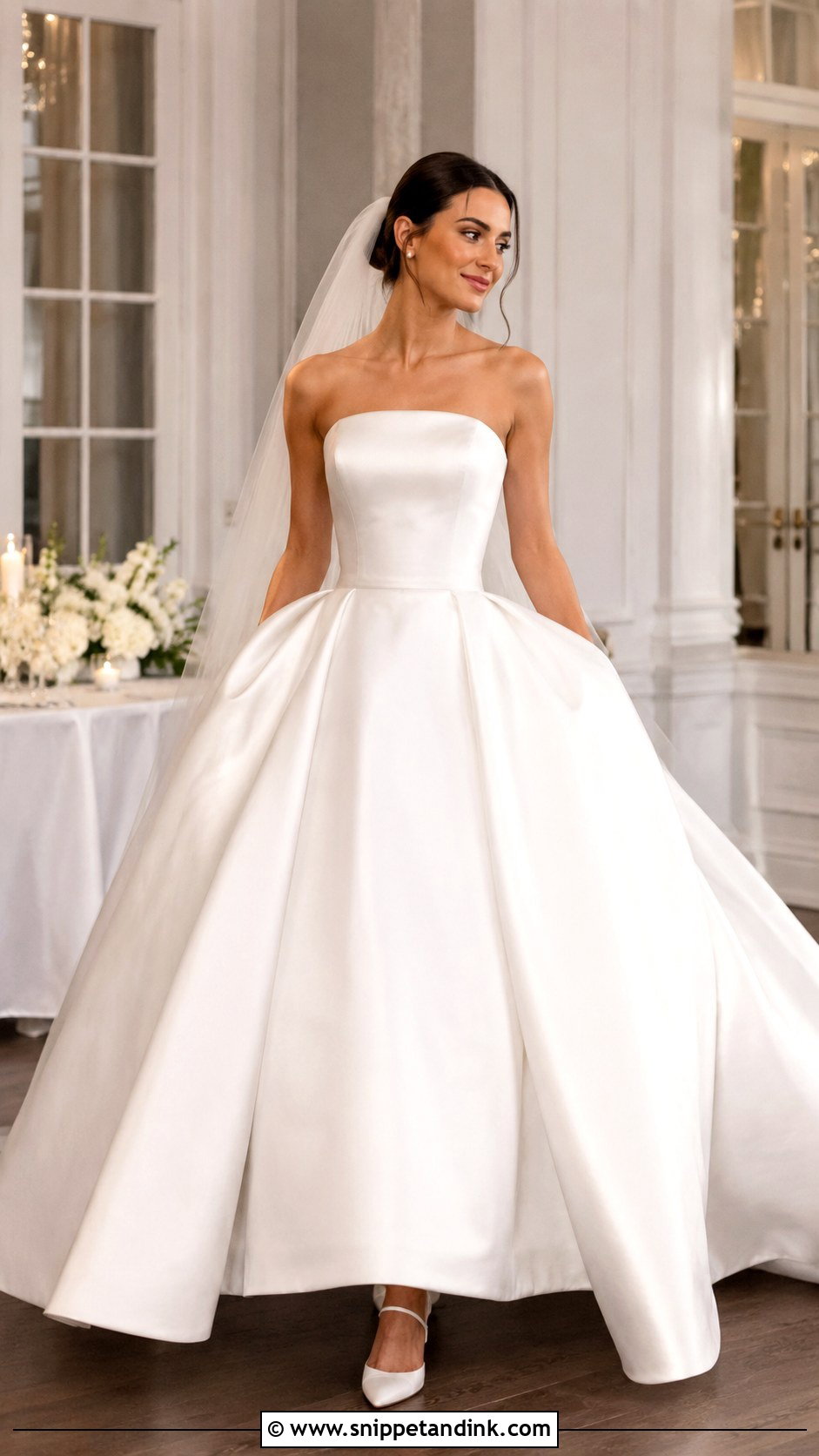
Satin reflects light across a full skirt and makes it look sculpted in photos. It suits brides who want drama without lace or beading. A clean satin ball gown with a square or strapless neckline looks modern. The honest downside is creasing: satin marks where you sit and where the skirt was folded in transit, so plan for a steam on the morning and a careful car ride. A bow, pearl veil or subtle gloves soften it for formal and evening venues.
10. Mikado Puffy Wedding Dress
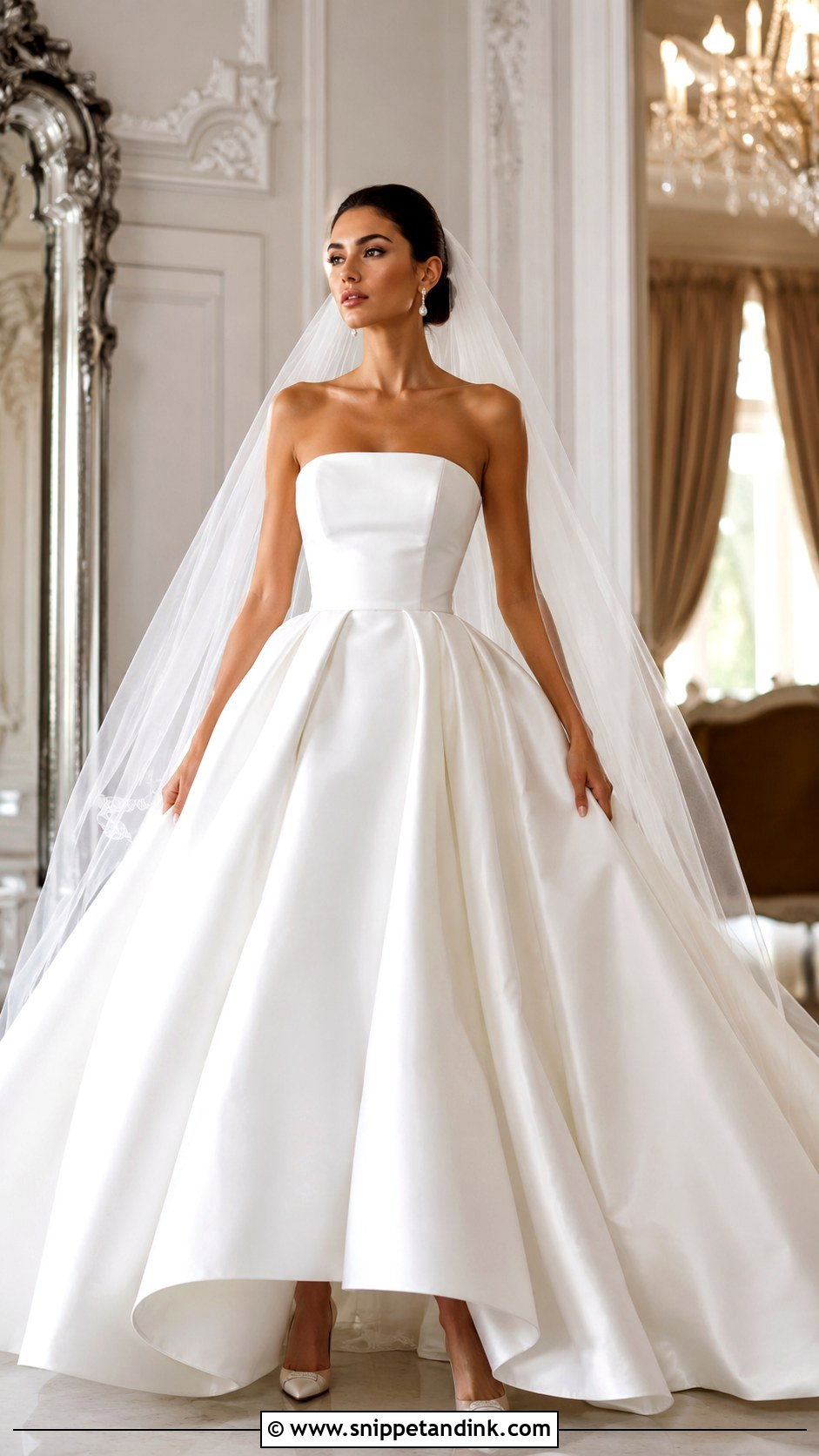
Mikado is the fabric I reach for when a bride wants a skirt that stands on its own. It has body, a subtle sheen and enough weight to keep pleats and box folds crisp without extra petticoats. Architectural ball gowns, basque waists and sharp trains are where it does its best work. Keep the design simple and let the cloth carry it: a sleek veil, pearl earrings and satin pumps. It’s warmer than tulle, which suits cooler seasons and can feel heavy at a summer outdoor ceremony.
11. Lace Puffy Wedding Dress
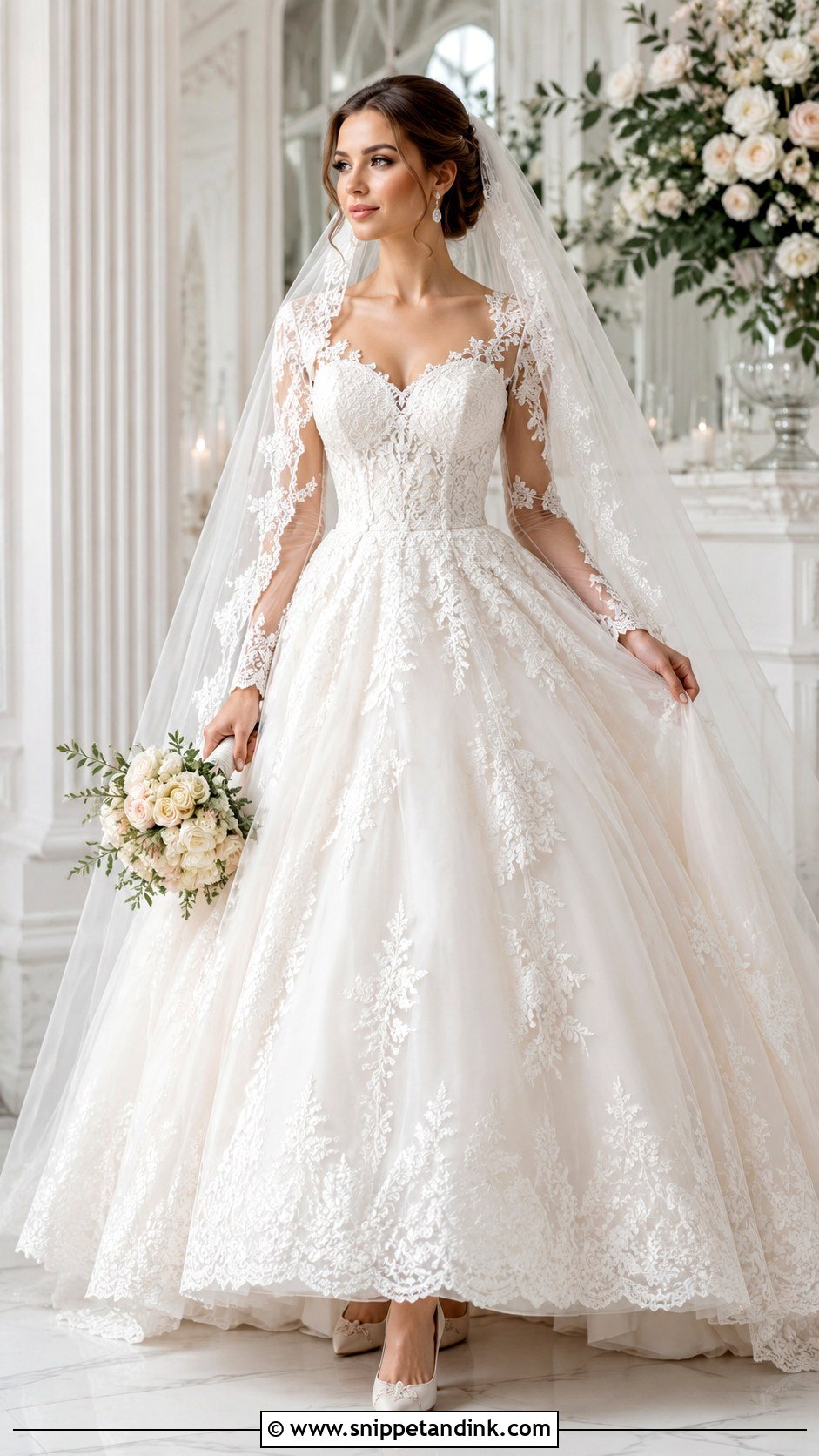
Lace adds romance to a big silhouette. It can cover the bodice, trail down the skirt or appear as scattered appliqués. Long lace sleeves and a high neck give a vintage mood; a lace corset bodice over a plain tulle or satin skirt feels fresher and keeps the gown from looking busy. If you’re adding a lace-edged veil, bring it to a fitting and hold it against the gown, because two different lace patterns can clash. Keep jewelry delicate.
12. Floral Puffy Wedding Dress
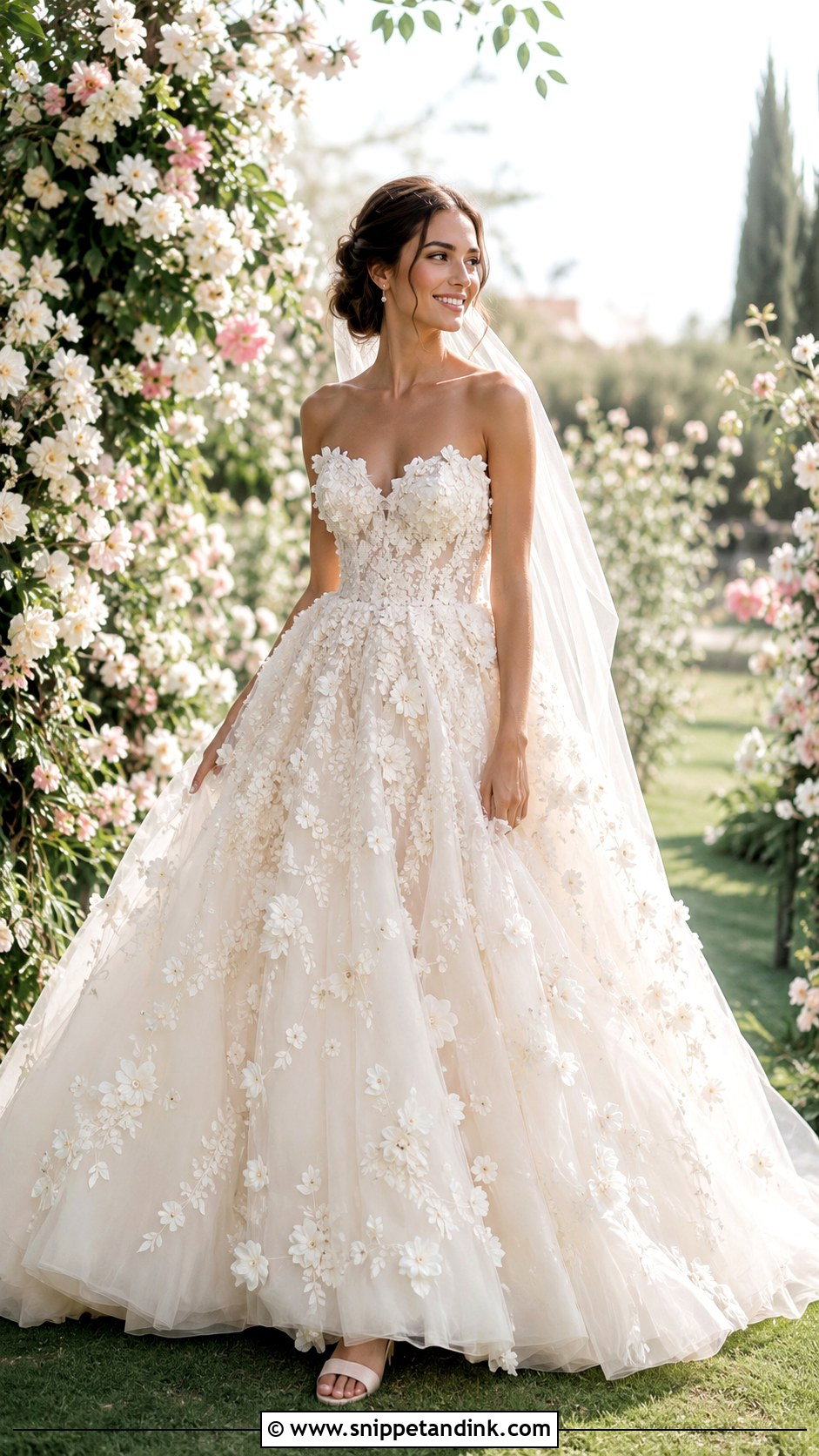
Floral appliqués, embroidery or 3D petals turn a full skirt into something with a garden mood. Ivory-on-ivory flowers stay subtle; blush, champagne or pale blue flowers make a bigger statement. Three-dimensional petals near the hem crush easily when you sit or walk through a crowded room, so I suggest keeping the heaviest flowers higher on the skirt. Simple earrings, a clean veil and comfortable shoes let the dress lead in spring and summer.
13. Pearl Puffy Wedding Dress
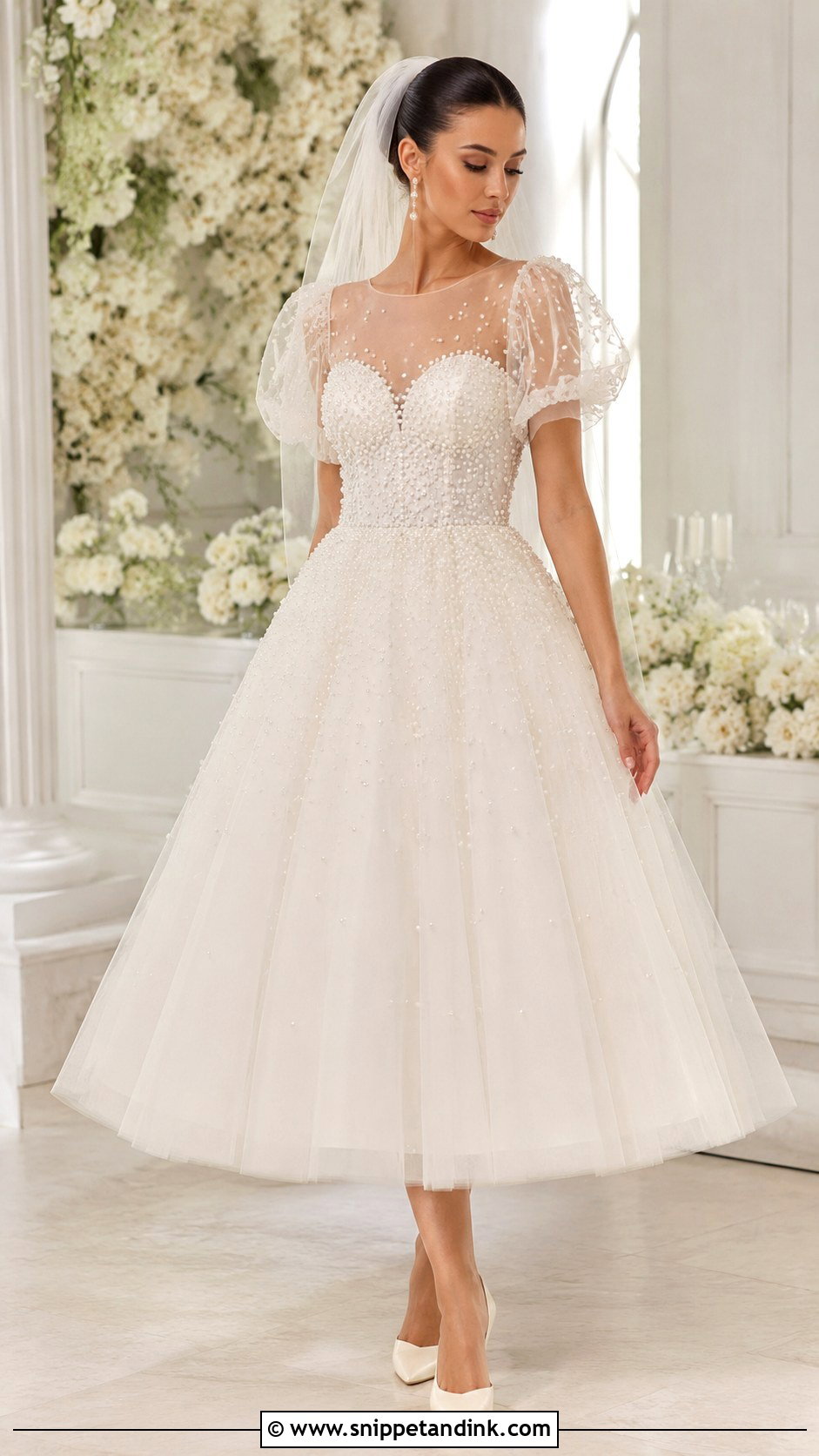
Pearls give a soft glow rather than sparkle. They can be scattered over tulle, placed along the bodice or used on sleeves and veils. A pearl-covered bodice with a plain skirt looks balanced; allover pearl tulle feels whimsical. I’d keep matching jewelry to one piece, usually earrings, because a pearled gown with pearl necklace, bracelet and earrings starts to look themed. Nude or ivory heels suit it best.
14. Beaded Puffy Wedding Dress
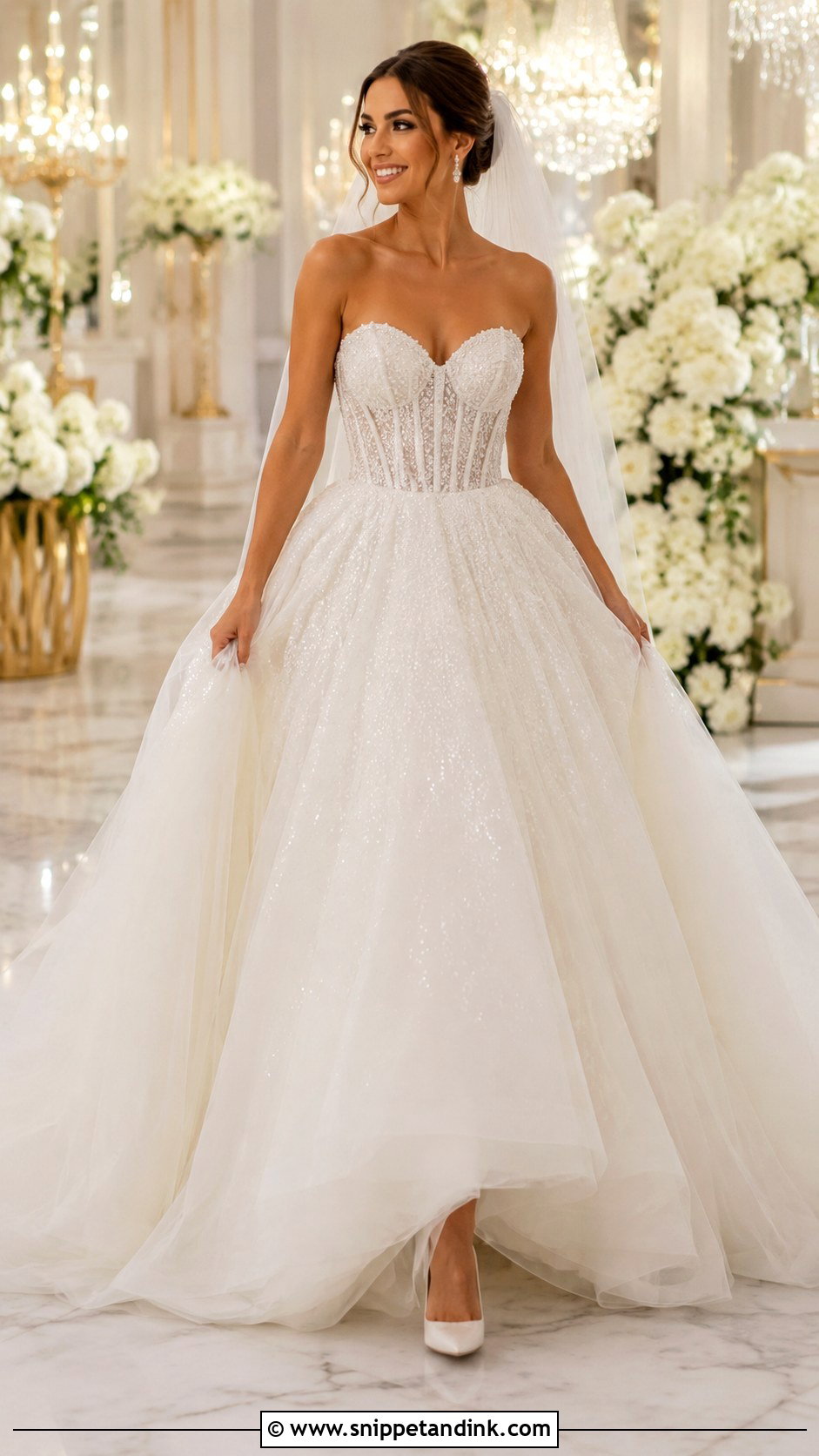
Beading brings sparkle and catches reception lighting as you move. It looks best on corset bodices, illusion sleeves and scattered tulle skirts. Placement matters: vertical lines of beading lengthen the body, while a sparkling skirt adds movement. Weight is the issue no one mentions in photos. A heavily beaded gown can feel tiring after several hours, so walk, sit and turn in it at the shop before deciding. Simple earrings and a clean hairstyle let the beadwork lead at formal venues.


15. Minimal Puffy Wedding Dress
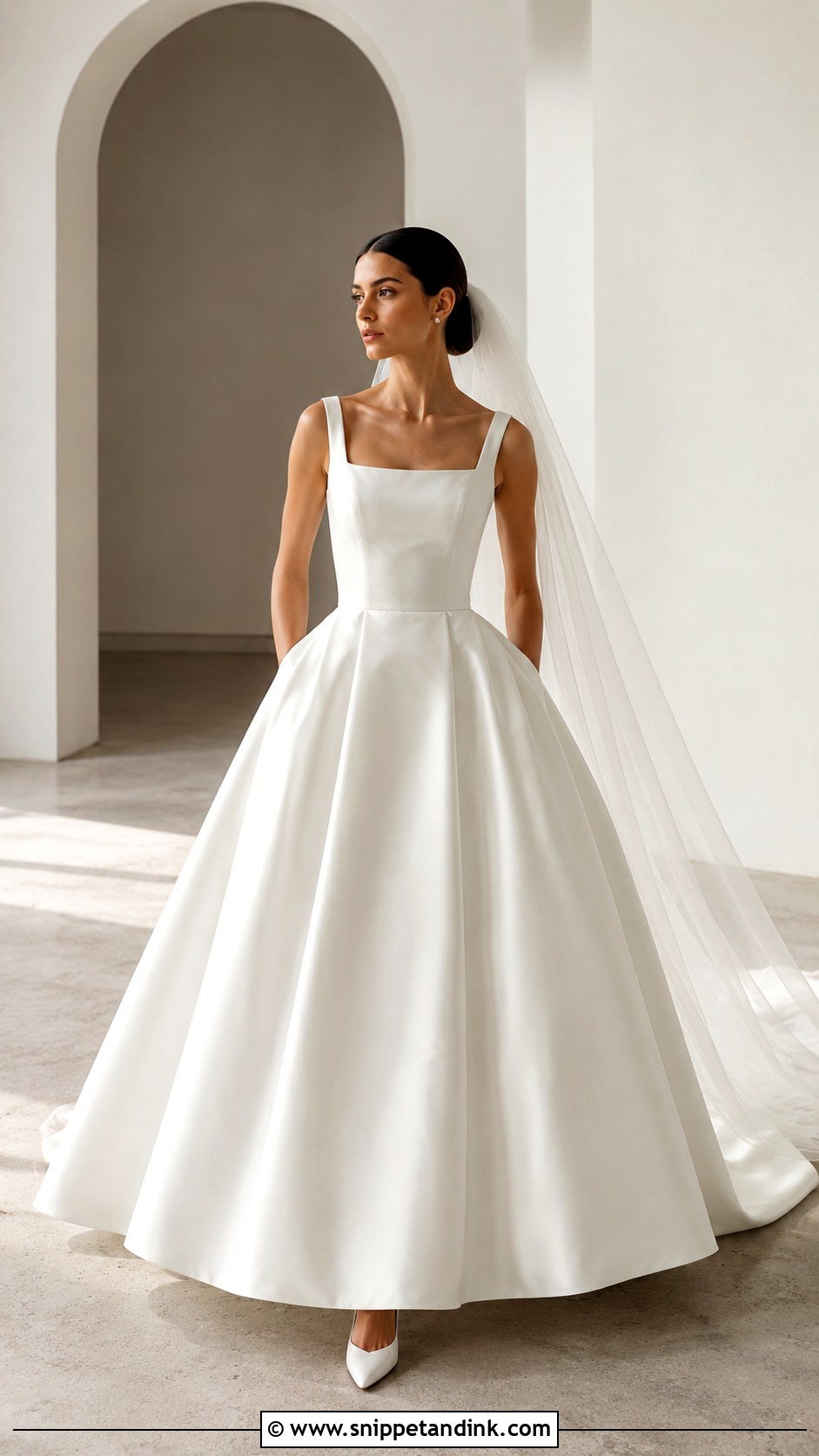
A minimal full skirt relies on clean lines, smooth fabric and a strong silhouette. A structured bodice, defined waist and skirt in satin, Mikado or organza, with a square, straight or bateau neckline, keeps it modern. Without lace or beading, fit has nowhere to hide, so I’m stricter about smoothing every seam. One accessory is enough, such as a long veil, pearl earrings or sculptural heels, with a simple bouquet so the shape stays the focus.
16. Princess Puffy Wedding Dress
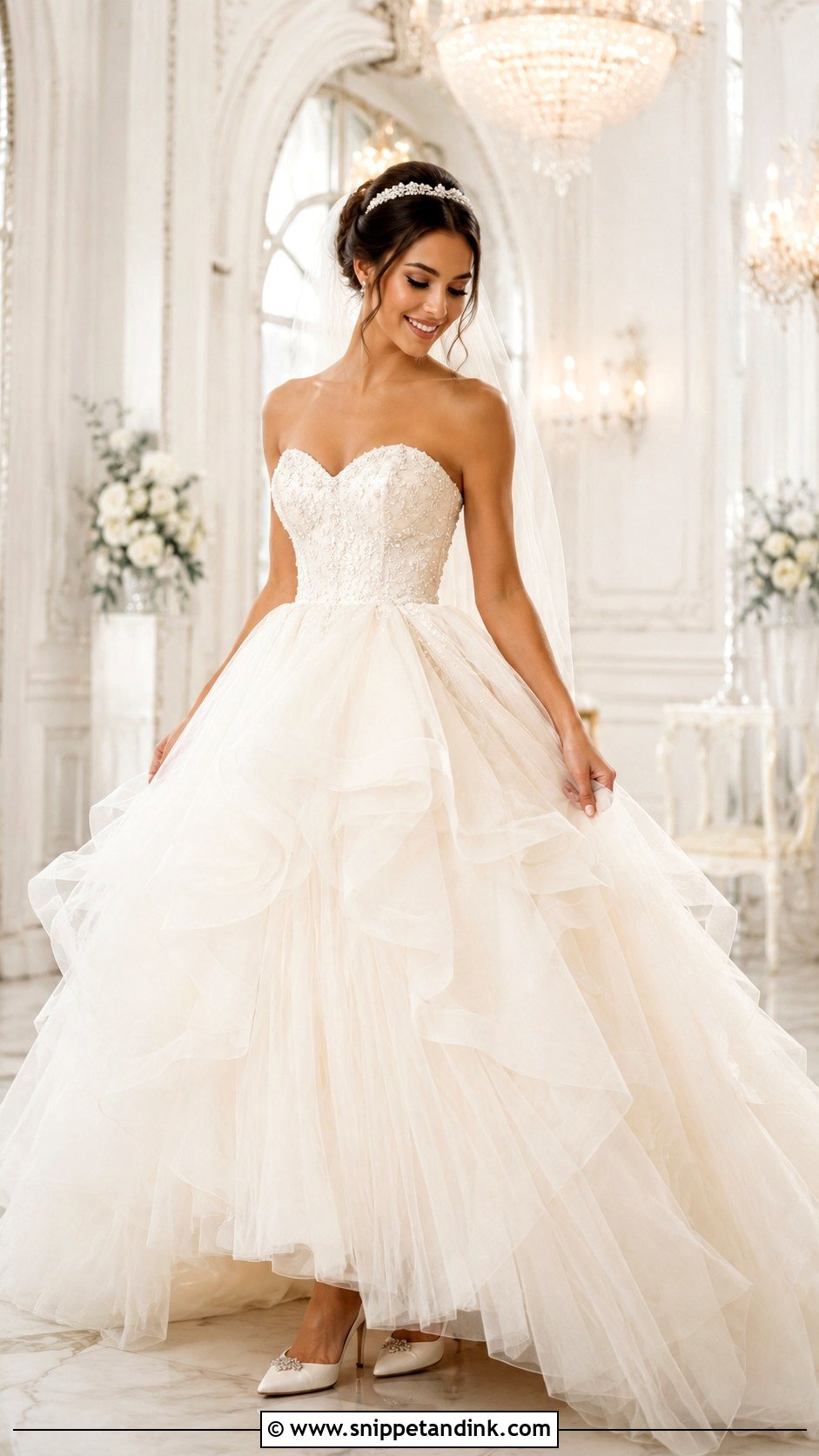
A princess puffy wedding dress is the classic fairytale shape: fitted bodice, defined waist, full skirt. Modern versions are lighter than the heavily layered gowns of past decades, often using fewer petticoats and softer tulle. Satin gives a royal mood; lace feels romantic. Sweetheart and off-shoulder bodices sit well with it. If you want the look to feel grown-up, hold back on sparkle: a simple headband, small earrings and elegant heels.
17. Corset Puffy Wedding Dress
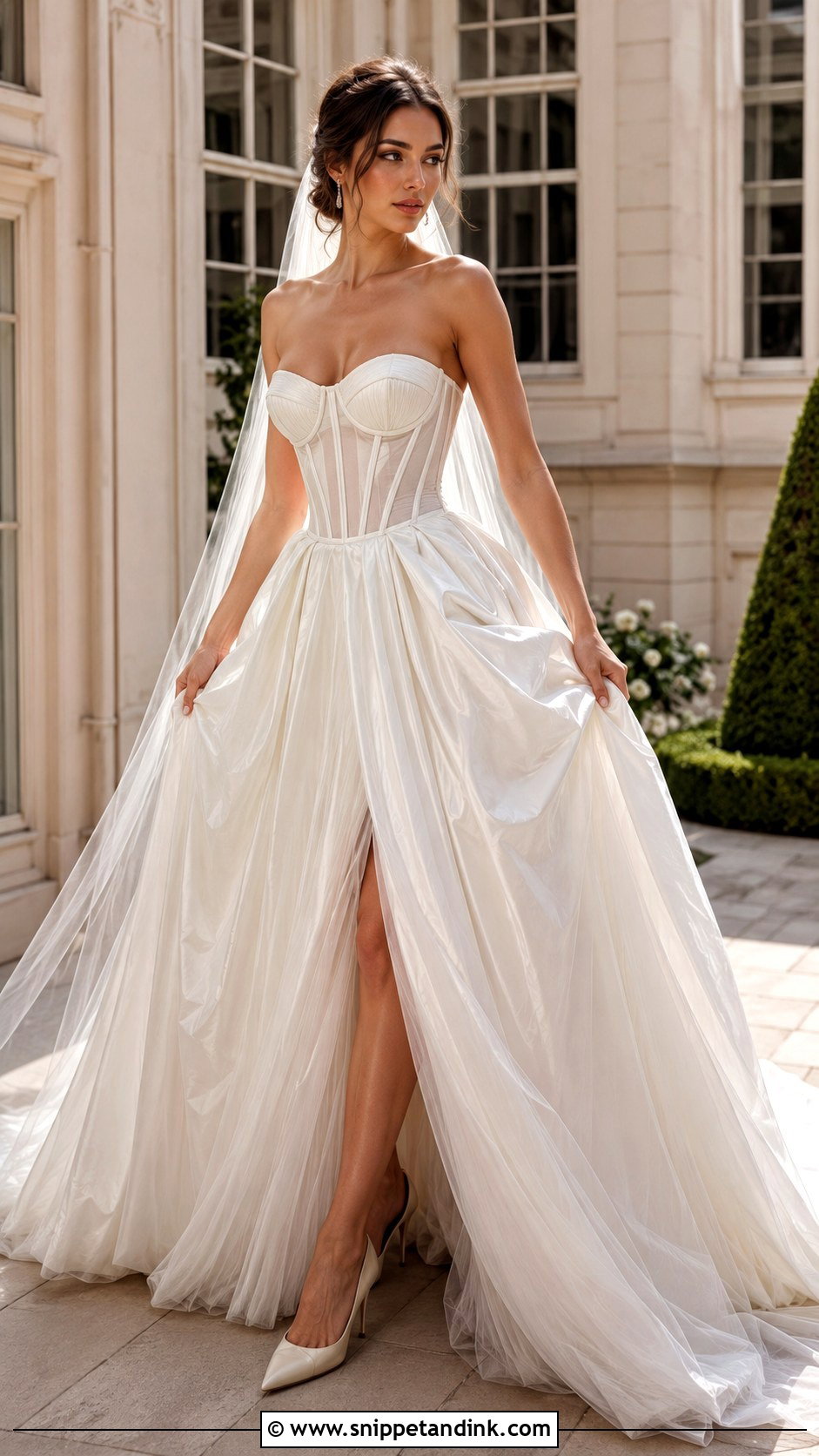
Corsets give a full skirt the strongest support and create a clear hourglass. The boning can show as a design feature or hide under smooth fabric. They pair well with strapless, off-shoulder and basque waist designs. The fit should be snug but leave room to breathe, eat and sit, so I fit corsets with the bride seated as well as standing. Ask your seamstress about cups, lining and waist support. A soft veil, sleek earrings and a romantic updo finish it.
18. Square Neck Puffy Wedding Dress
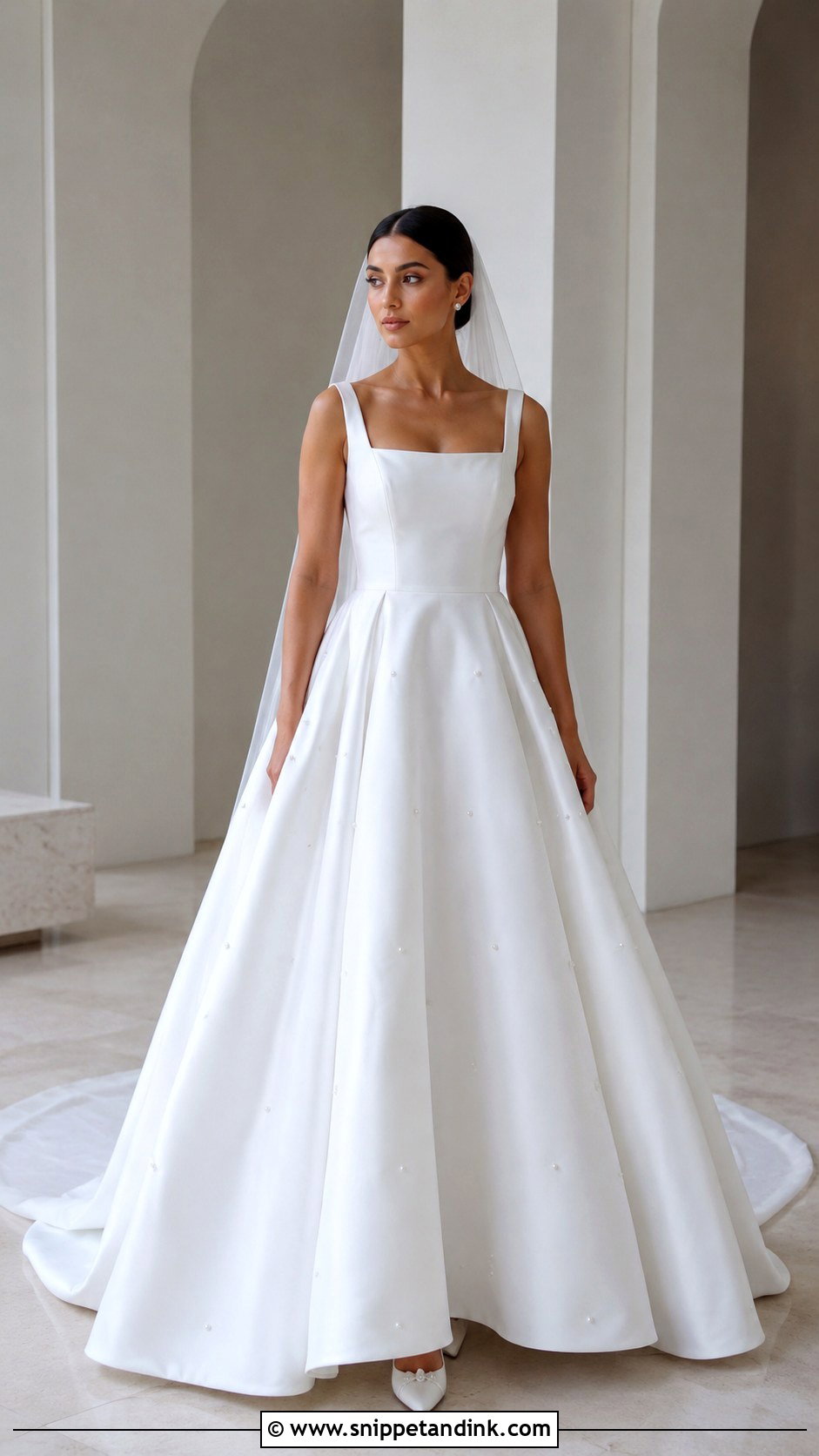
Square necklines frame the collarbone and give more coverage than a sweetheart or plunge. They work with wide straps, cap sleeves or long sleeves. The straight top line pairs well with a structured skirt, giving the gown a balanced, architectural feel. Satin or Mikado keeps it classic; lace or tulle softens it. I check that the corners lie flat and don’t lift when the arms move. A short necklace, pearl studs or drop earrings all suit it.
19. High Neck Puffy Wedding Dress
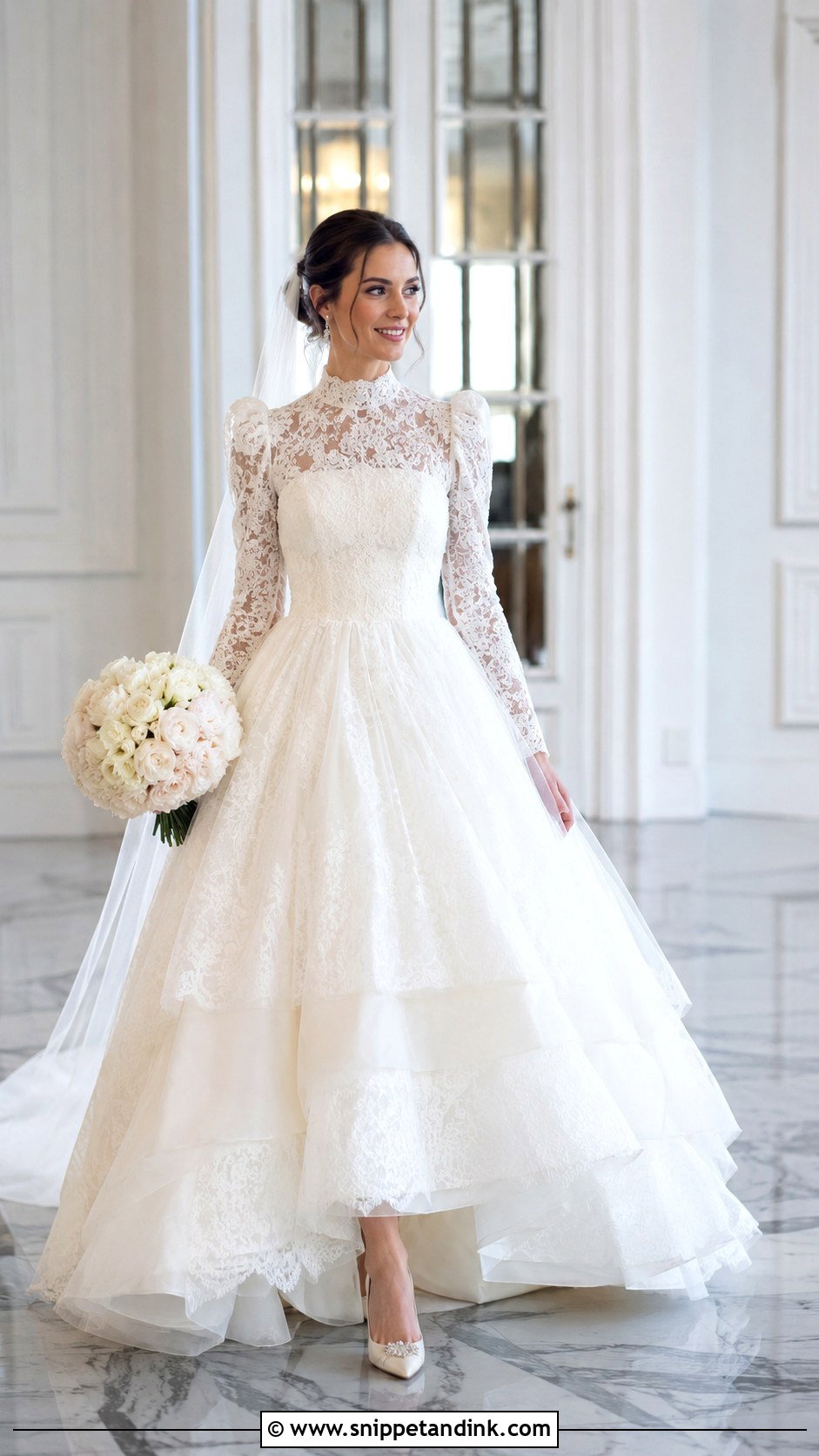
High necklines draw the eye to the face while the skirt builds the grand shape below. Lace feels vintage; smooth satin or crepe looks sleek. Long sleeves, illusion panels or buttons down the back suit it. Skip necklaces and choose earrings, and wear your hair up in a low bun or polished ponytail so the collar shows. Brides with a short neck should try an illusion high neck first, since a solid collar can feel restrictive after a few hours.
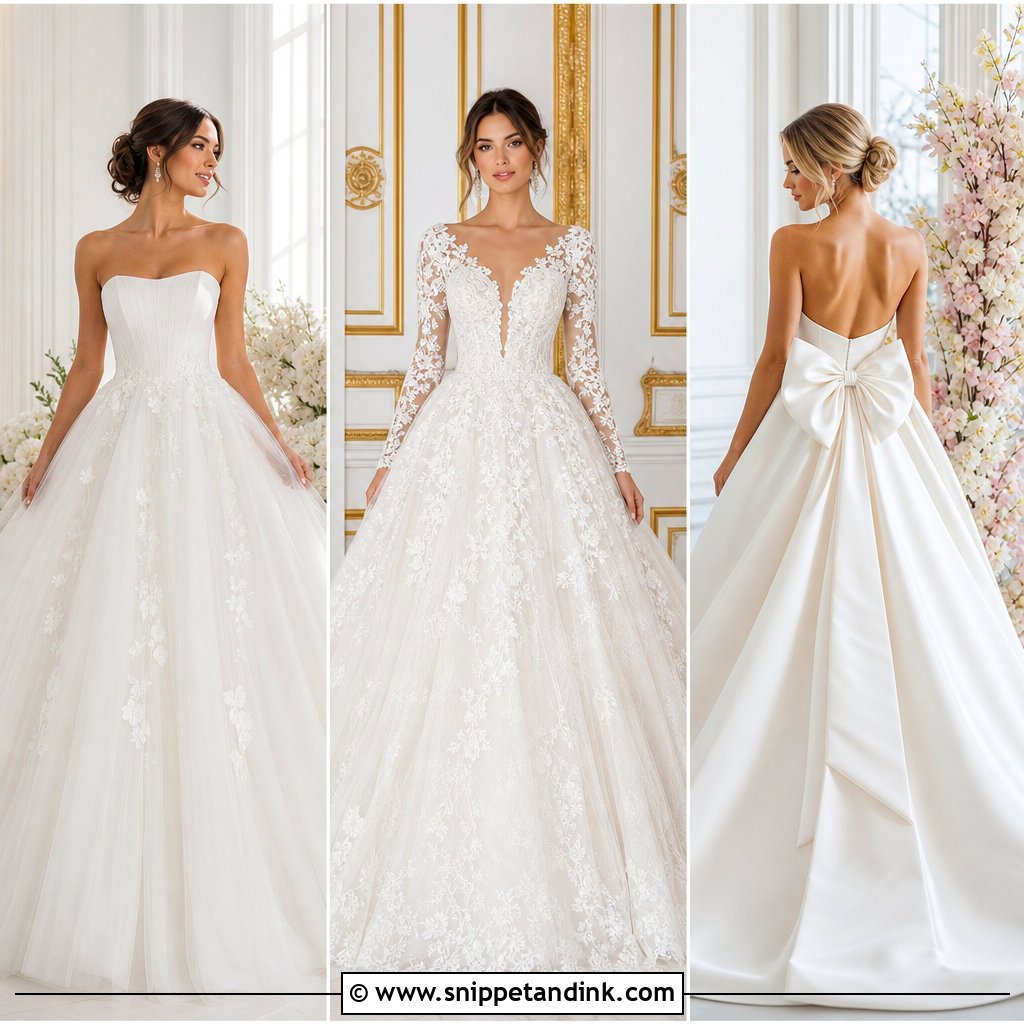
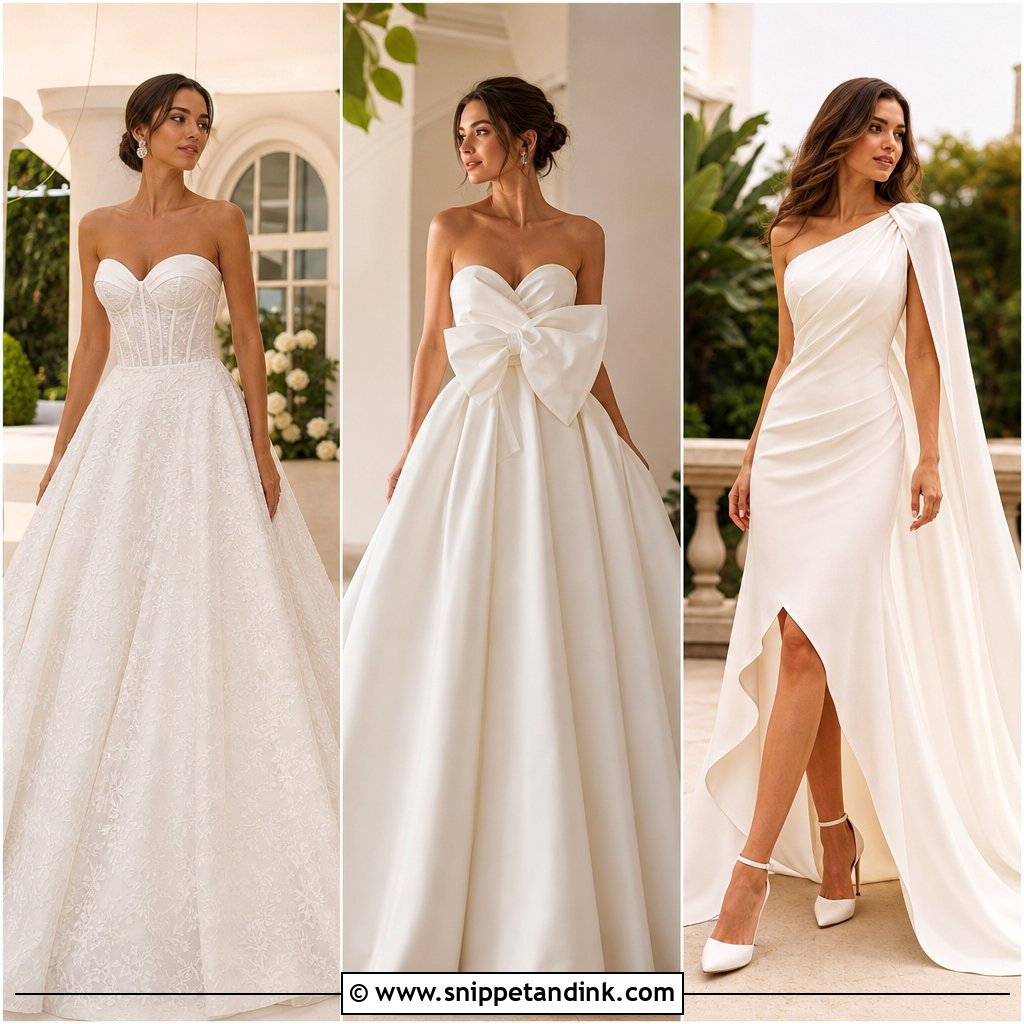
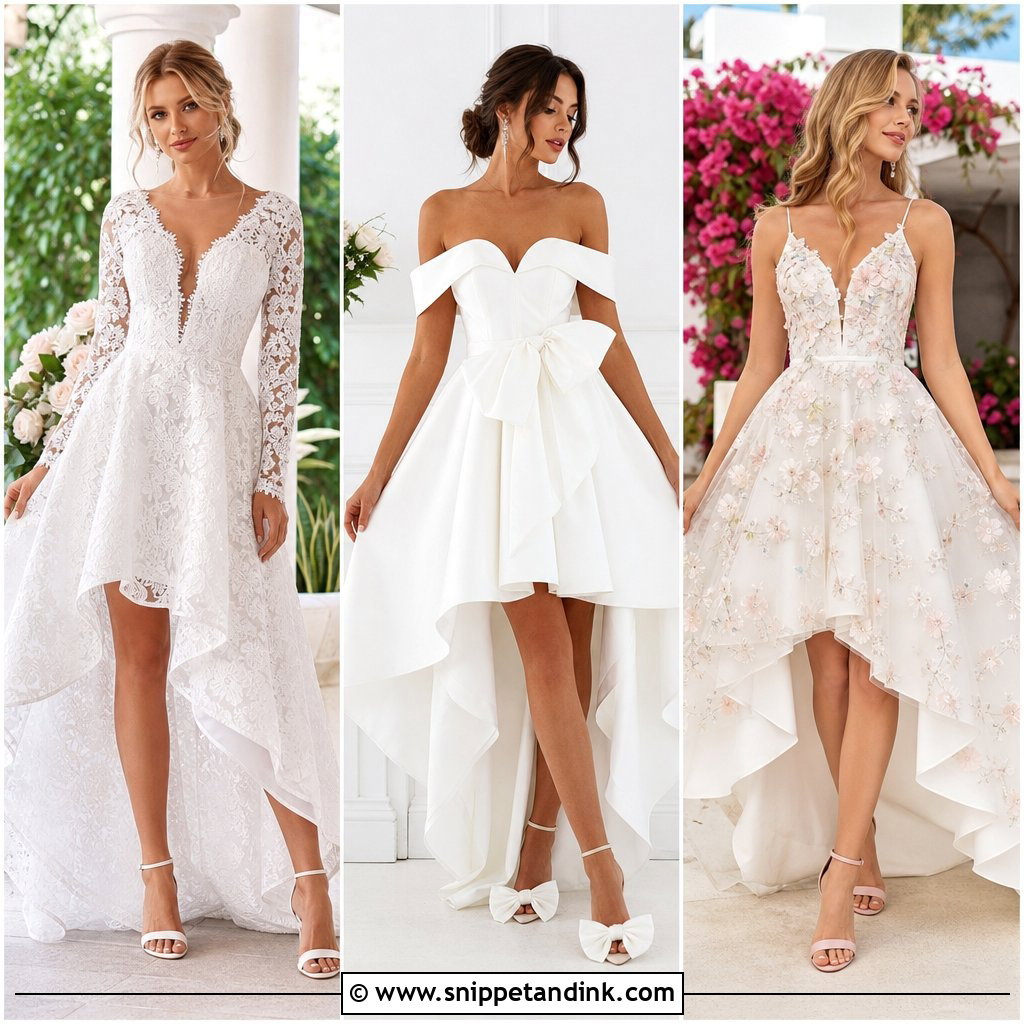
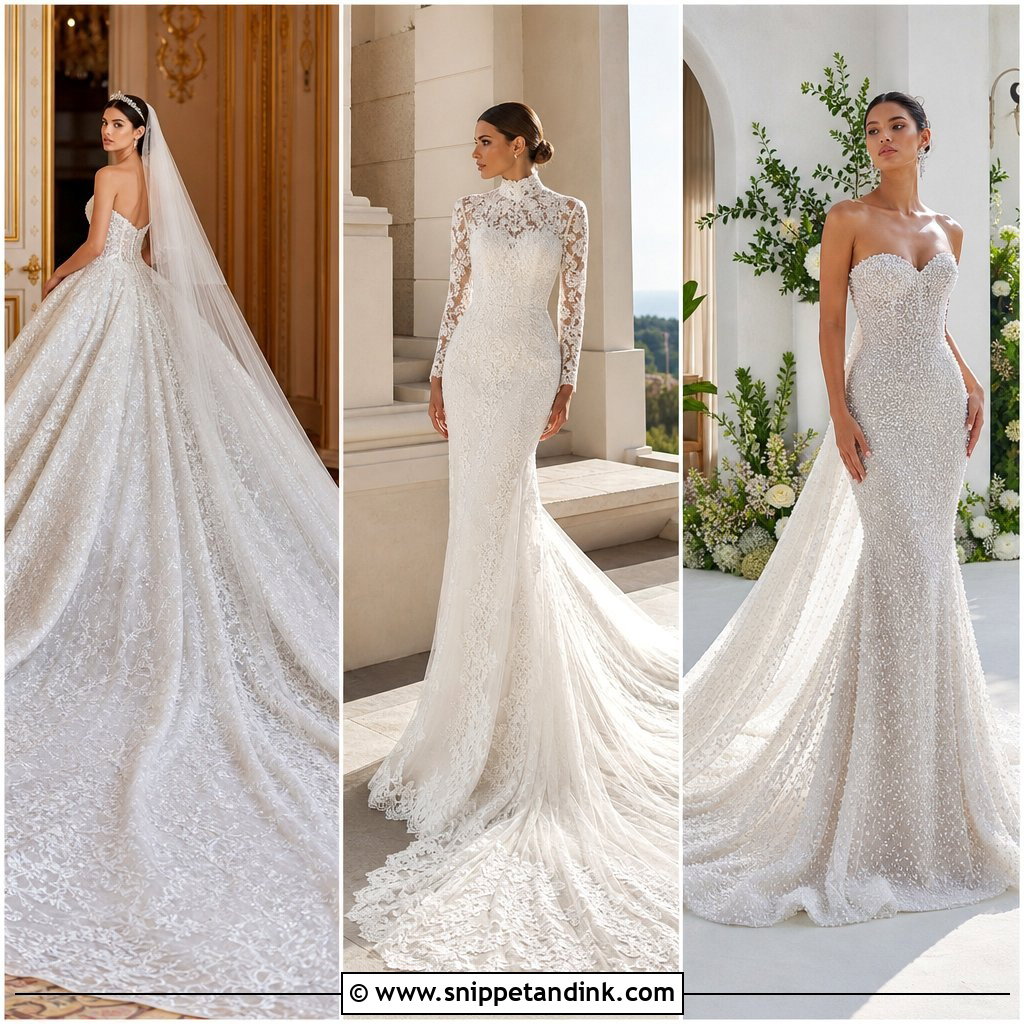
20. Bow Puffy Wedding Dress
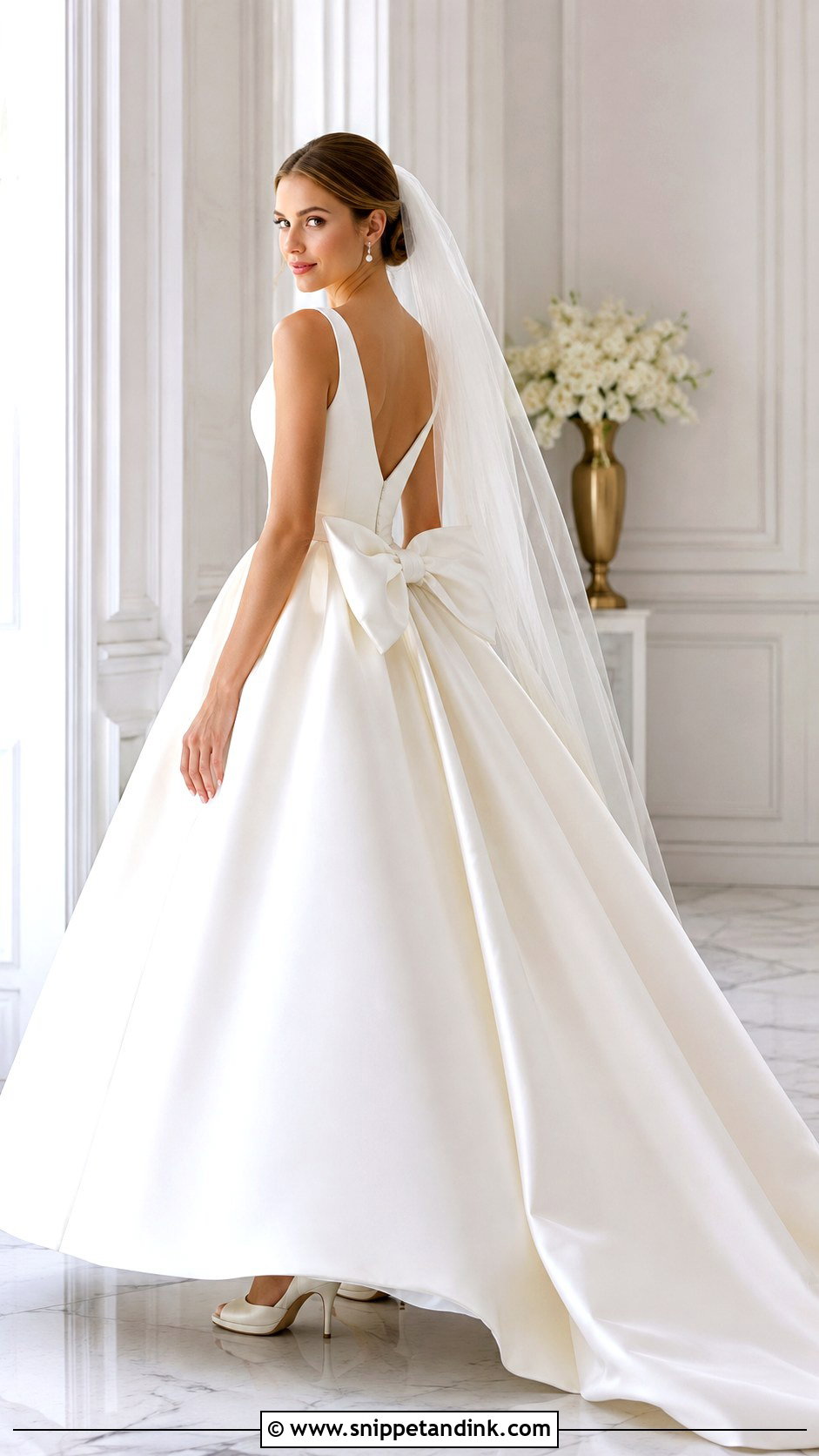
A bow puffy wedding dress adds structure and a playful finish. The bow can sit at the back waist, on the shoulder, on the bodice or along the train. One large satin bow on a clean gown looks refined; small bows on straps or sleeves feel sweeter. A big back bow is often the first thing to get crushed against a car seat or chair, so ask whether it’s interfaced or removable. Keep accessories simple so the gown doesn’t feel crowded.
21. Detachable Overskirt Puffy Wedding Dress
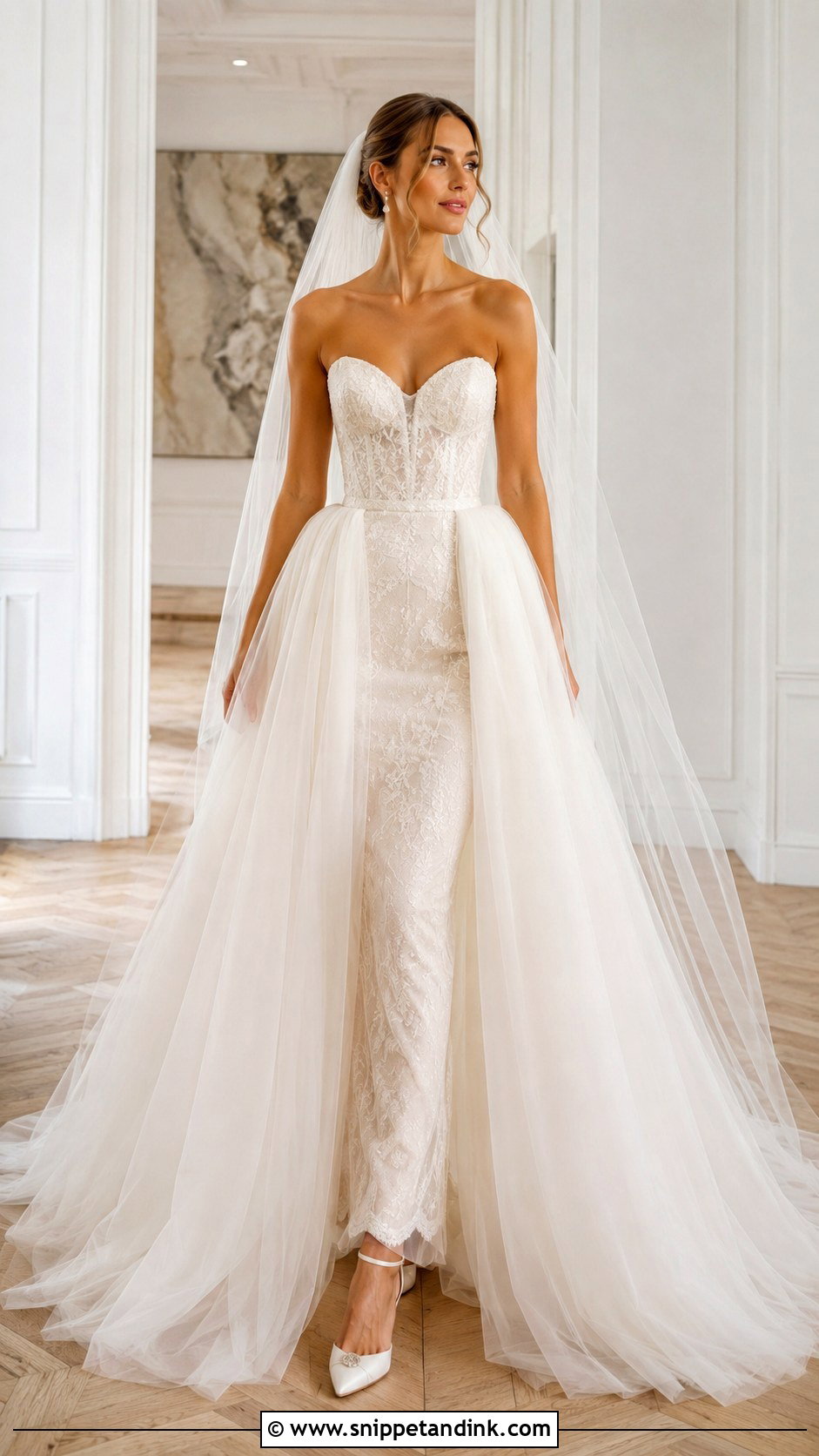
A detachable overskirt puffy wedding dress gives you the full entrance and then a slimmer dress for the party. The base is usually a fitted sheath, mermaid or A-line, with a removable tulle, organza or satin overskirt. It answers the worry many brides have about dancing in volume. Ask who will remove it and practice once; hooks at the back waist are hard to find in a hurry. Wear a long veil for the ceremony and remove both veil and overskirt together later.
22. Short Puffy Wedding Dress
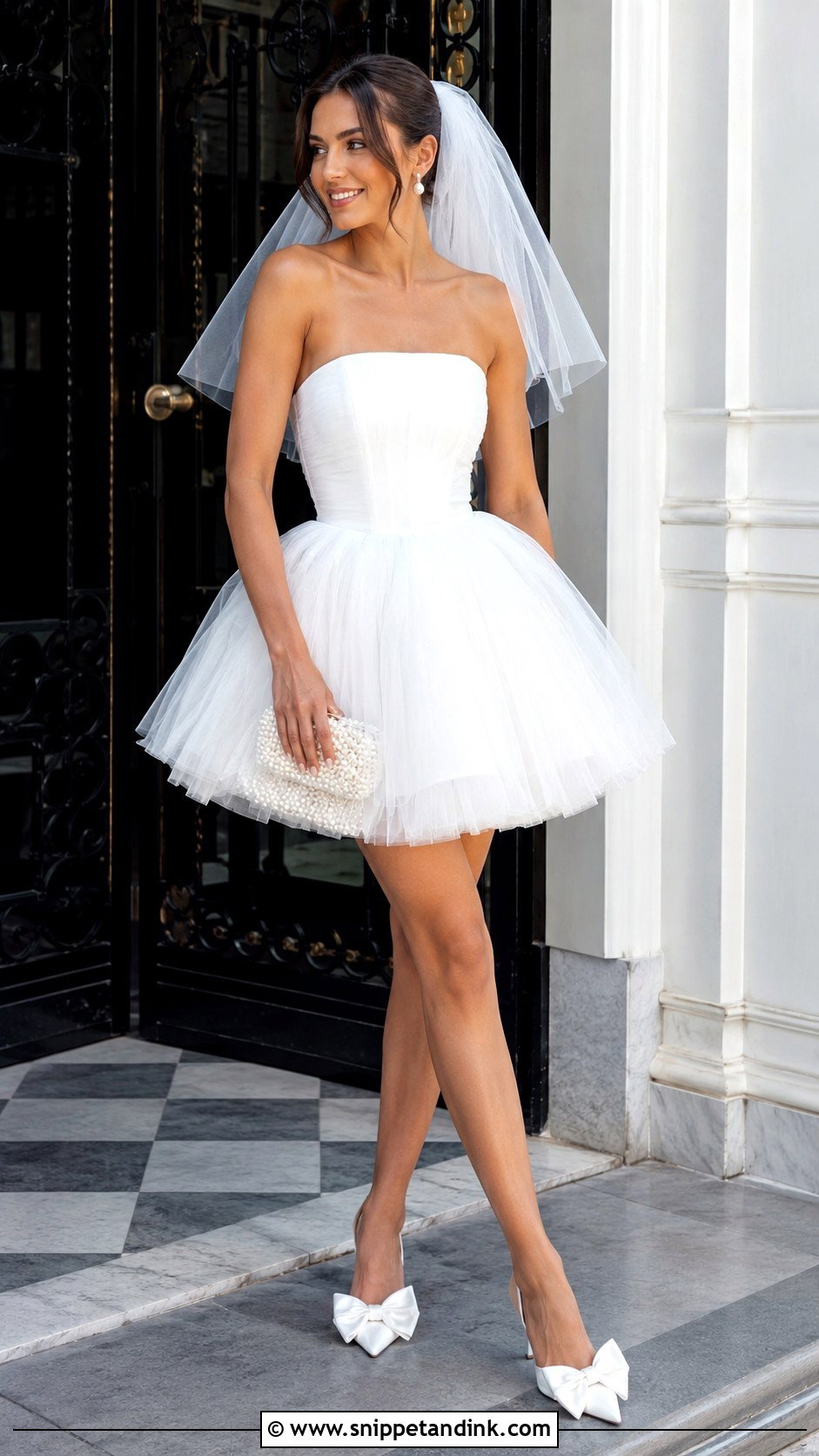
Short full skirts suit civil ceremonies, a reception change, an after-party or a hot-weather wedding. You get the feel of volume and can still move freely. A structured mini or tea-length shape in tulle, organza, satin or a bubble hem works with a fitted bodice. The volume has to be stiffer than on a long gown, or the skirt collapses at short length, so check for a built-in petticoat. Pointed heels, bow pumps or slingbacks, plus a short veil or hair bow, finish it.
23. Tea Length Puffy Wedding Dress
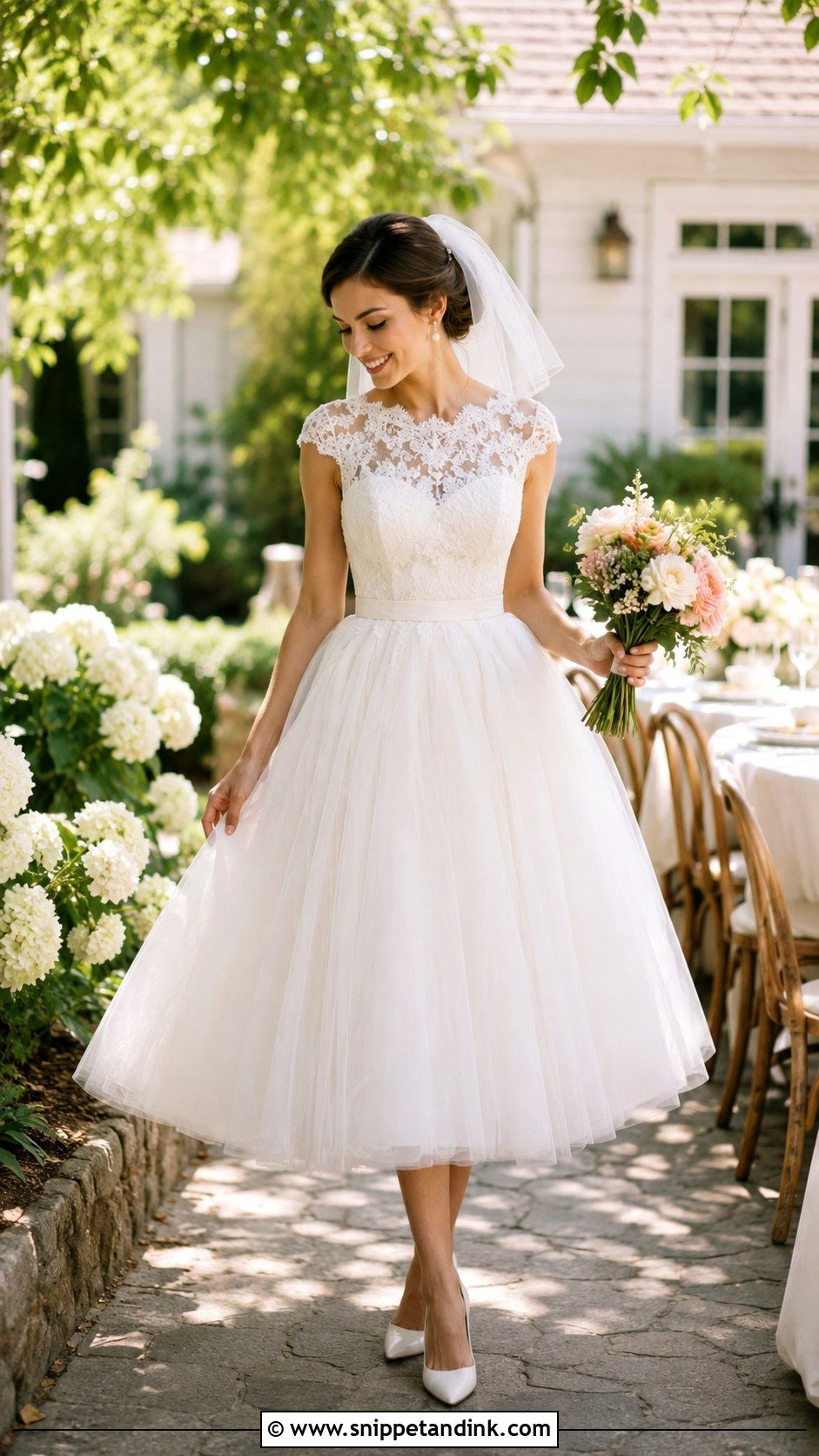
Tea length falls between knee and ankle, so your shoes become part of the outfit. Tulle layers, lace bodices, square necklines and satin belts all suit it. It works for courthouse weddings, garden receptions and retro-themed days. Proportion is everything at this length; a defined waist and fitted bodice keep it polished, and I usually hem it to hit the narrowest point of the calf, where it flatters most legs. Pointed heels, pearl earrings and a short veil complete it.
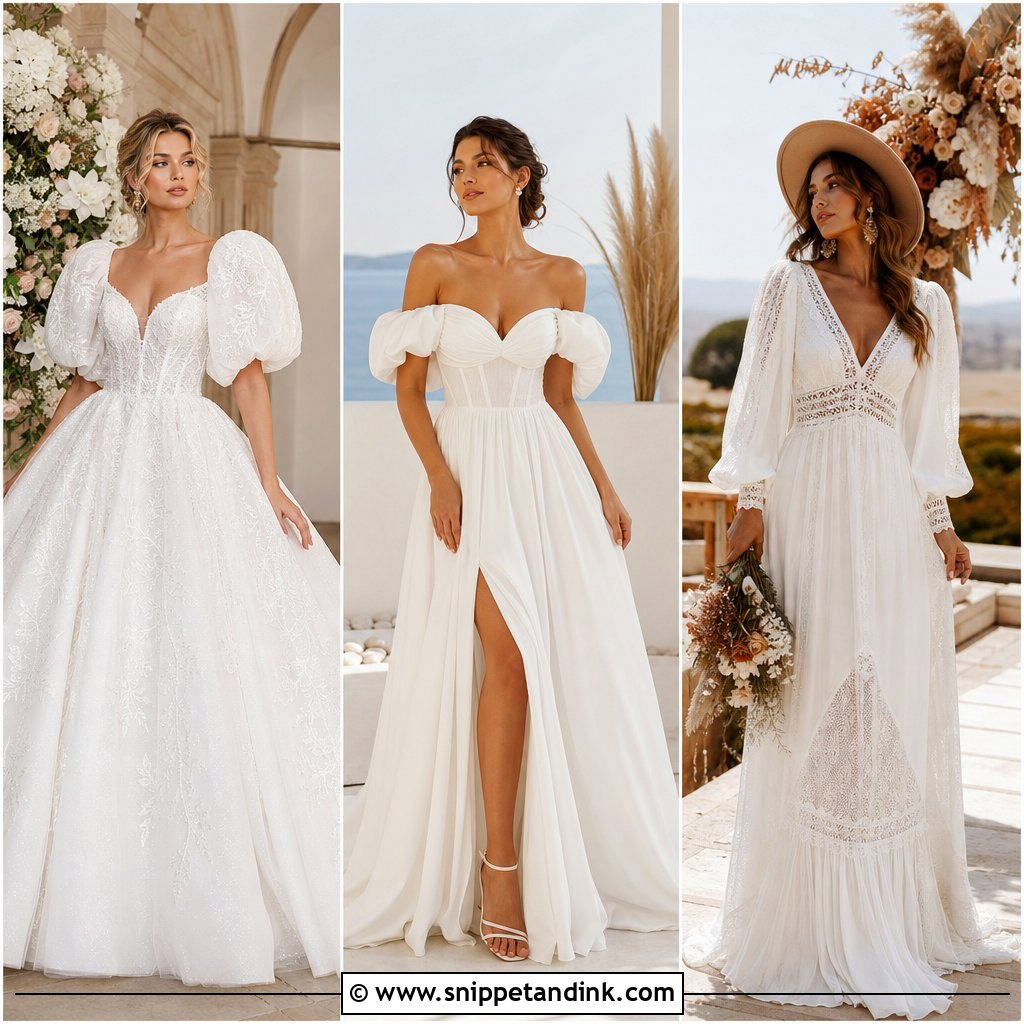
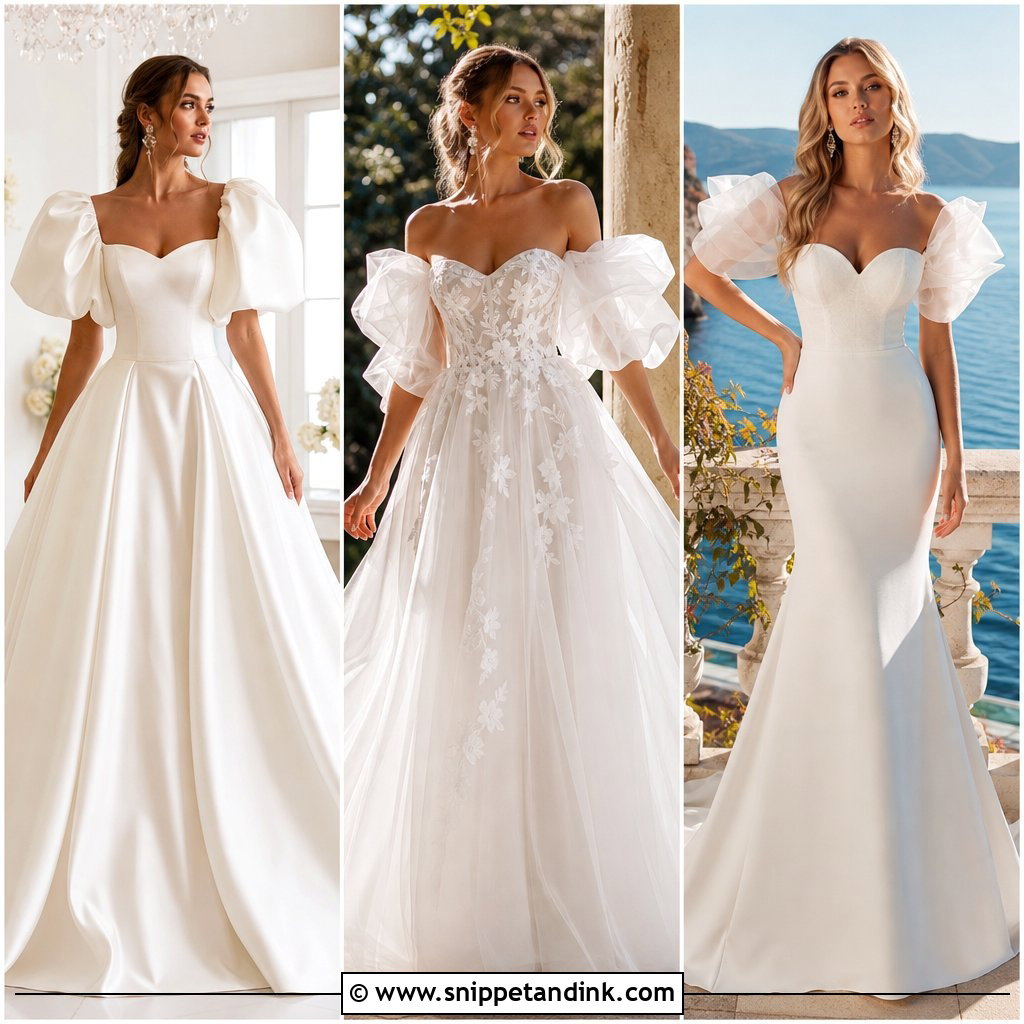
24. Colored Puffy Wedding Dress
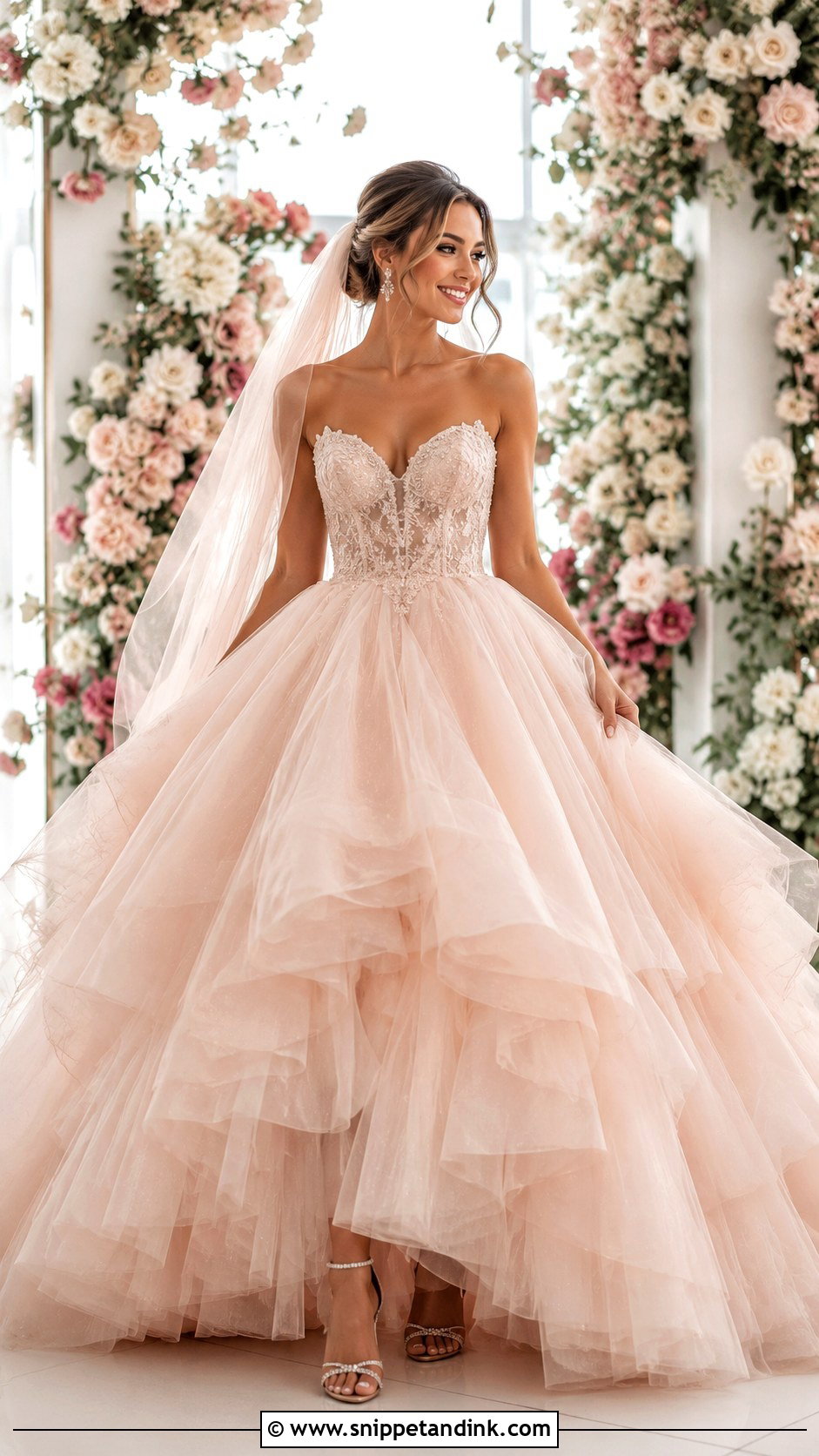
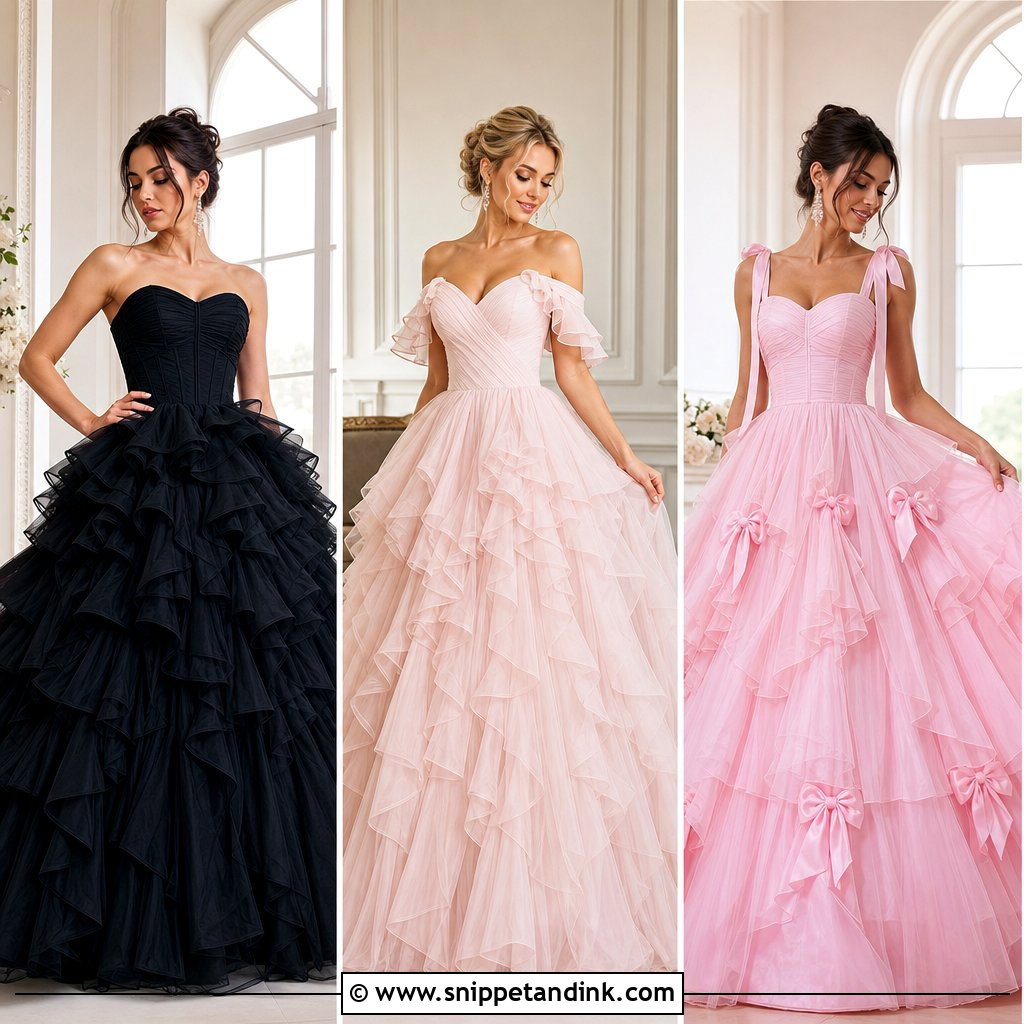
Colored full skirts keep the bridal shape and add something personal. Blush, champagne, pale blue, silver and ivory over a nude lining feel romantic; black, burgundy and deeper tones make a bolder point. The full skirt keeps color looking ceremonial rather than casual. I’d see a colored gown in daylight before buying, since pale tints can look almost white indoors and noticeably colored outside. Keep accessories tonal: metallic heels, sheer gloves or a matching veil.

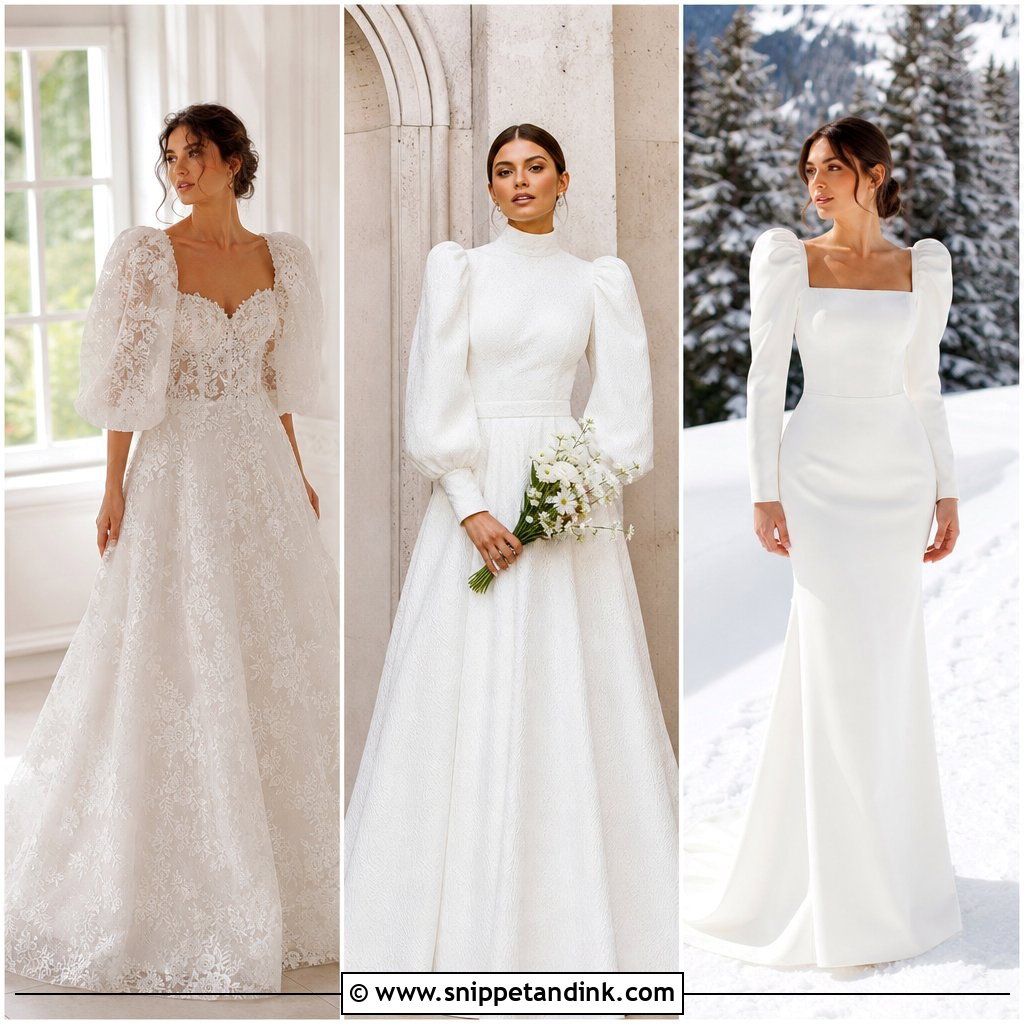
25. Black Puffy Wedding Dress
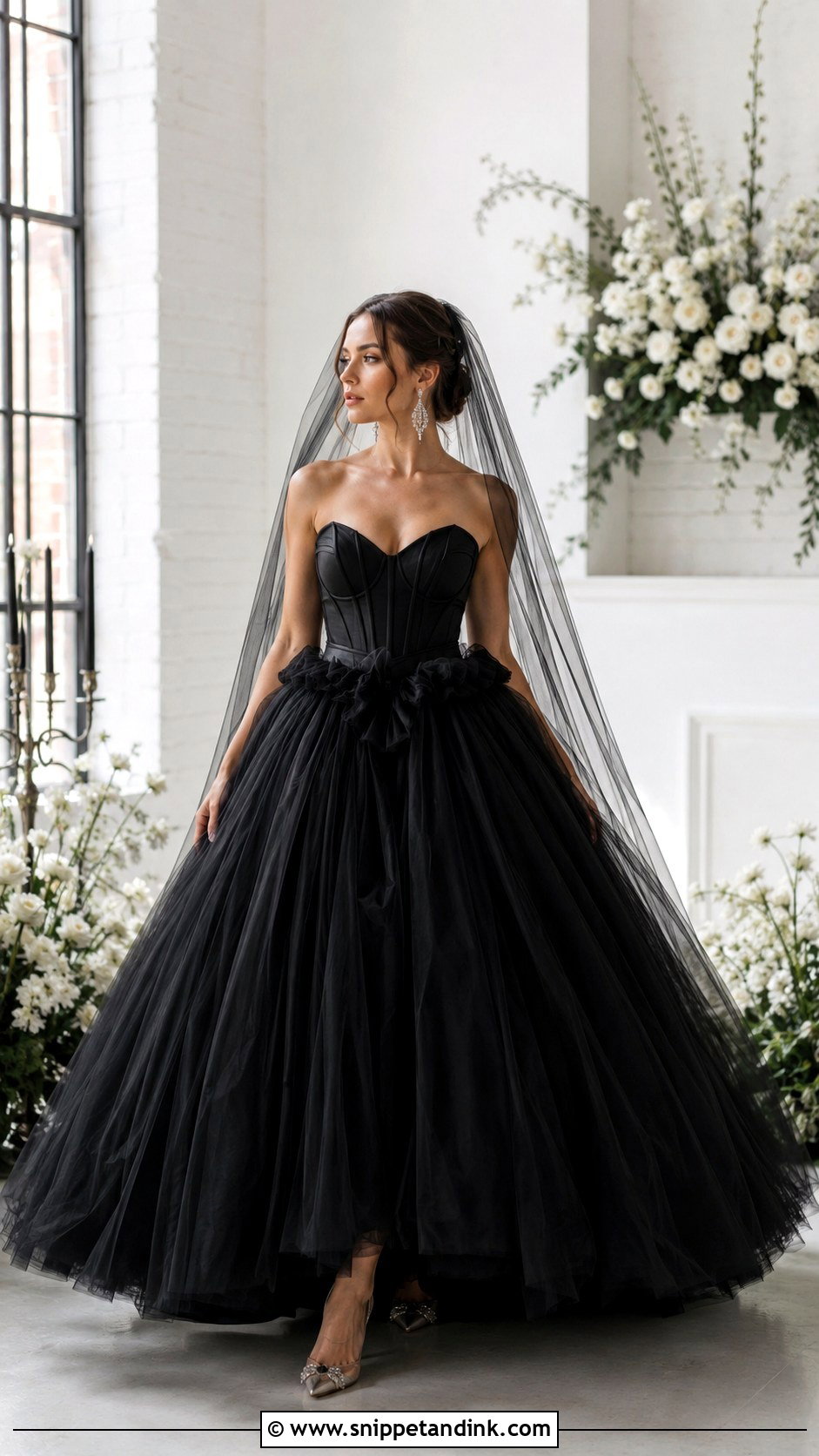
Black full skirts are dramatic and nontraditional. Black tulle feels moody and romantic; black satin or Mikado looks sculptural. To keep it bridal, the construction has to be excellent, because black shows every pucker and uneven seam under flash. Crystal earrings, ivory flowers or metallic heels add contrast. A sheer black veil can look striking, or skip the veil for a modern feel. It suits evening celebrations and art-led venues for a bride who’s at home in bold fashion.
How Big Is Too Big for Your Venue?
Before I let a bride order the fullest skirt in the shop, I ask about her rooms. A wide ball gown fills a cathedral aisle well but can brush both sides of a narrow chapel aisle, knock over aisle candles and leave no space for the person walking you. Registry offices and small restaurants have the same problem: the skirt takes up a chair and a half and fights with every table.
Measure the skirt at its widest point and compare it with the aisle, the doorway into the reception and the gap between tables. If the numbers are tight, there are good middle paths. Ask for one petticoat layer to be removed, choose a gown with a detachable overskirt, or go for a softer A-line with a full back so you keep the drama behind you, where photos and processionals see it most.
Your own proportions matter too. Very petite brides can vanish into a huge skirt, so I usually suggest a slightly narrower hem and a defined waist, which reads as full without the gown wearing you.
Volume Should Carry You, Not the Other Way Around
There’s more range in full skirts than most brides expect: a classic princess shape, a clean minimal ball gown, floral tulle, structured Mikado or a short reception dress. Watch four things at every try-on: where the waist sits, how heavy the fabric is, what the neckline does when you move and how easily you can walk and sit. If the volume suits your venue and still lets you enjoy the day, the skirt has done its job.
You'll Like These Ideas:






Leave a Reply