
More brides now walk into a fitting asking for color than I would ever have predicted, and almost every shade can work if the dress still reads as bridal. Blush, champagne, blue, lavender, sage, black, red, gold and florals all have a place. What makes a colored gown look like a wedding dress rather than a gala dress is the construction: tulle, satin, lace, embroidery, pearls, a train, a veil. The harder part is the color itself, because a shade that looks wonderful on the hanger can drain one bride and light up another. Below are thirty colors and styles, from the barely-there to the dramatic, with my notes on what each one asks of the bride wearing it.
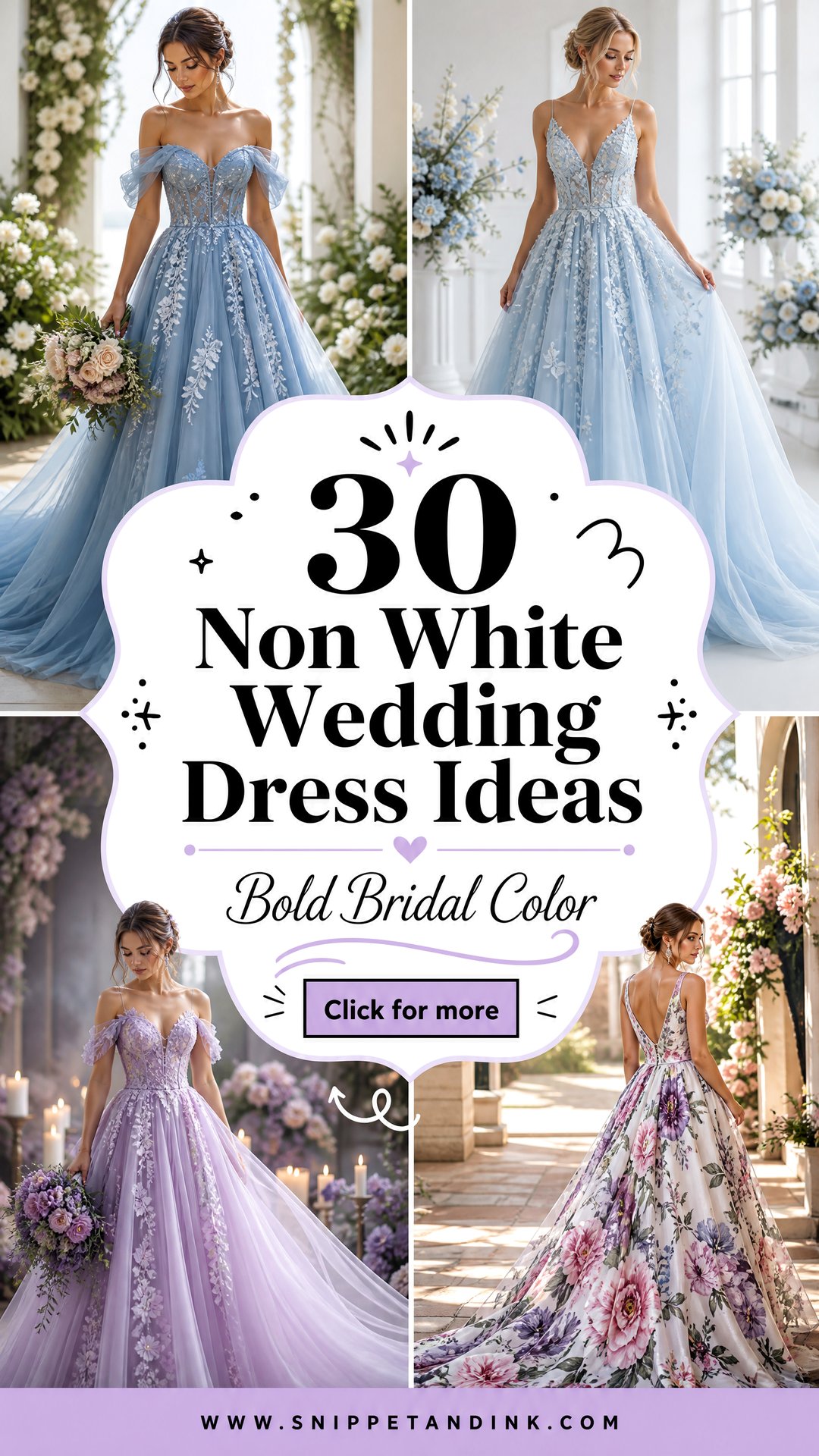
Testing a Color Against Your Skin Before You Fall for the Gown
With white, the question is mostly which white. With color, the question is whether the shade lifts your face or drains it, and the gown won’t tell you that on a hanger. I run the same quick test with every bride before we look at silhouettes.
- Stand by a window in daylight with no makeup or very little.
- Hold a large piece of the fabric directly under your chin, then swap to a white sample.
- Watch your eyes and the shadows under them. A good color makes them look clearer; a poor one deepens shadows and makes the skin look gray or sallow.
- Take a phone photo of each with the flash on. Some shades look fine in the mirror and wash out under flash.
As a loose guide, warm skin often glows in peach, coral, gold, terracotta and champagne, while cool skin often suits powder blue, lavender, silver and true pinks. Plenty of brides break that rule happily, which is why the test matters more than the theory.
1. Blush Pink Wedding Dress
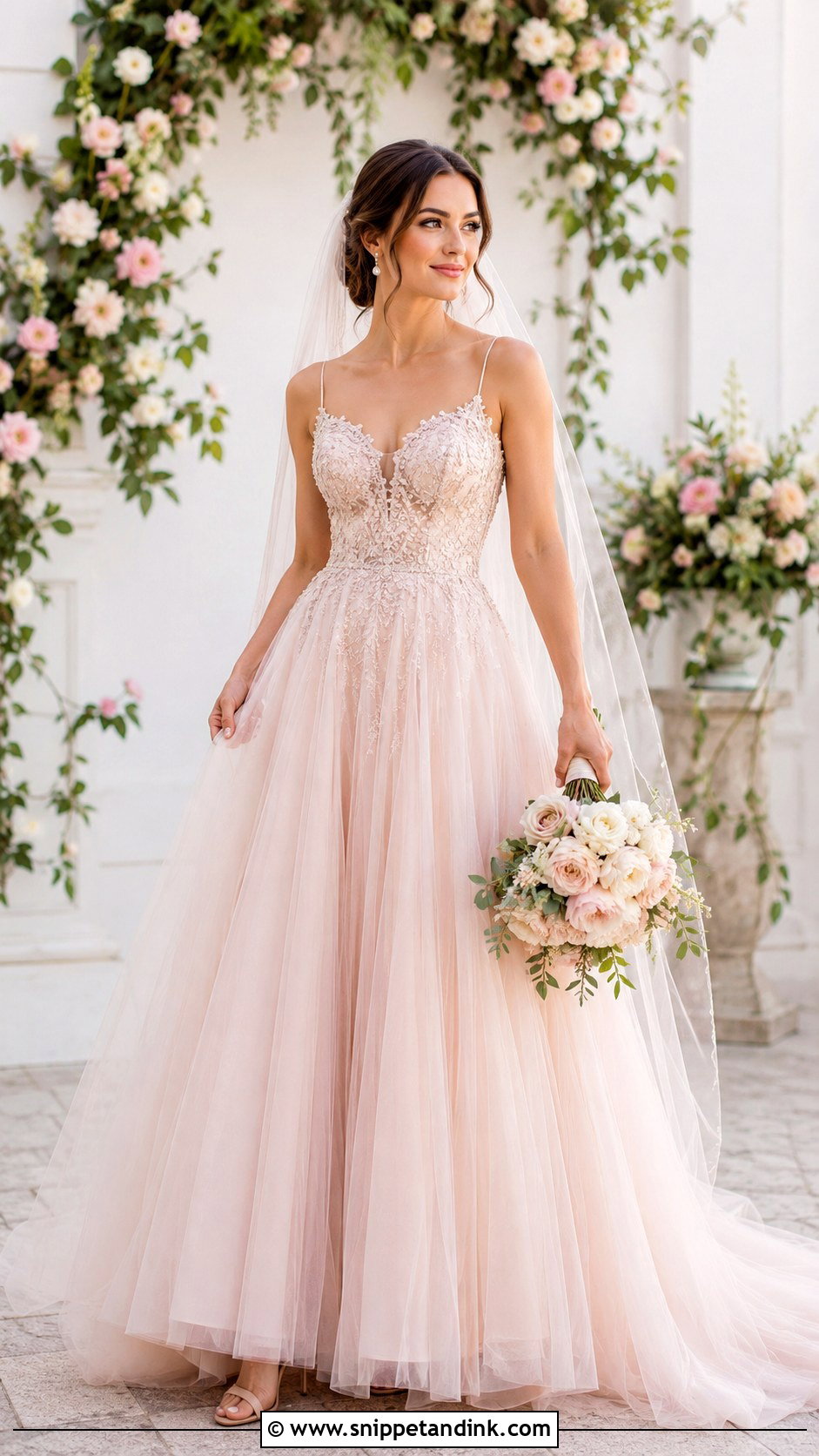
Blush is the gentlest step away from white, so it’s where many brides begin. It sits well in tulle, satin, organza and lace, and a classic A-line with a fitted bodice keeps it bridal. The risk with blush is sweetness. Very pale pink plus ruffles plus a pink bouquet tips into a christening look. I keep the styling clean: a polished bun, simple pearl or rose-gold jewelry, nude or champagne heels, a sheer veil. On very fair skin, choose a blush with a touch of beige so it doesn’t merge with your skin tone in photos.
2. Champagne Wedding Dress
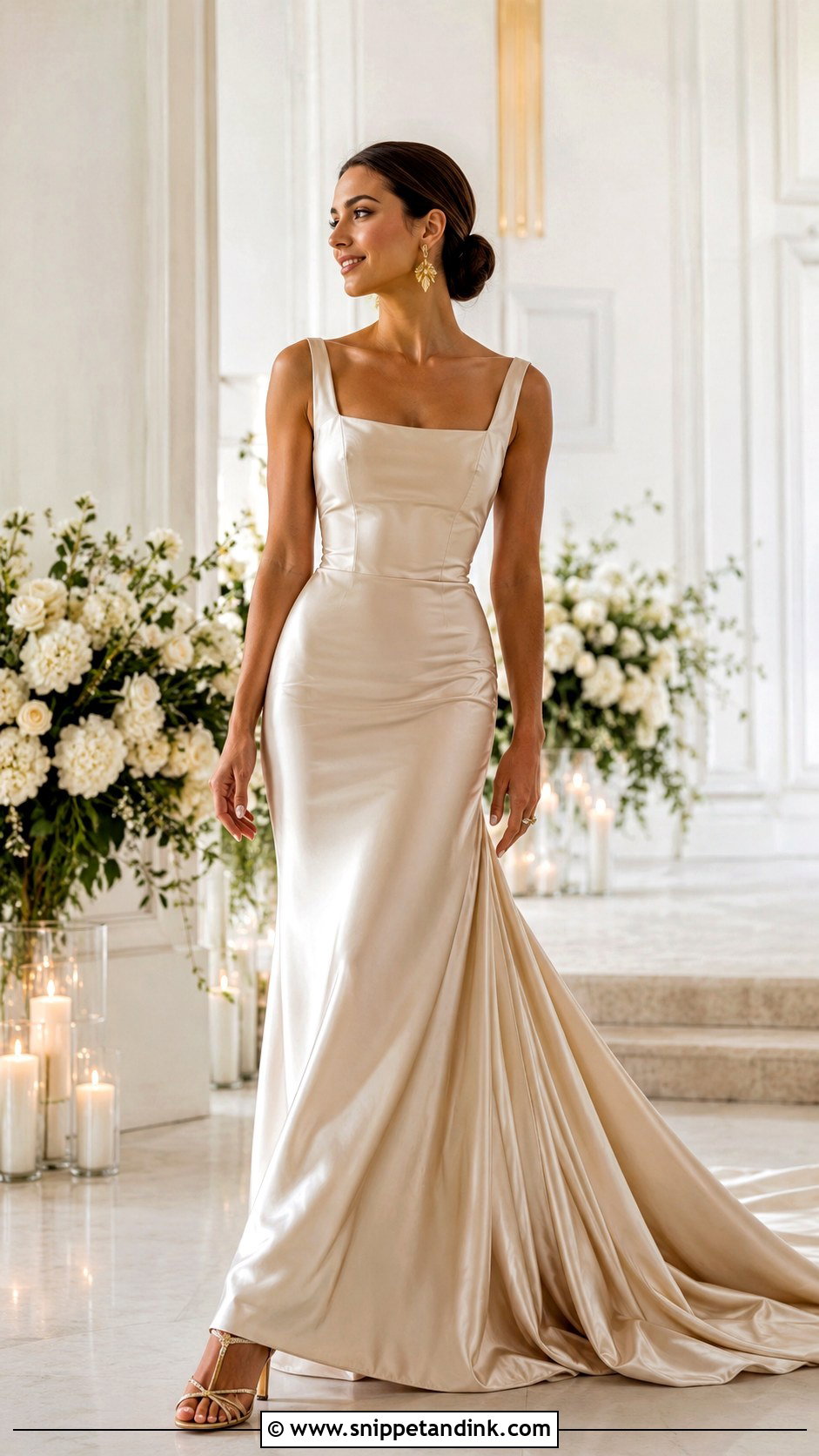
Champagne is the color I’d suggest if you want something that photographs almost like a classic gown but warmer. It’s especially good on satin, mikado, crepe and beading because it catches light softly. A fitted champagne gown with a square neckline and long train, gold earrings and strappy heels suits a formal ceremony; a champagne tulle ball gown with light shimmer is the softer version. Ask to see the gown under daylight and warm bulbs; some champagnes go pinkish indoors and some go yellow.
3. Dusty Blue Wedding Dress
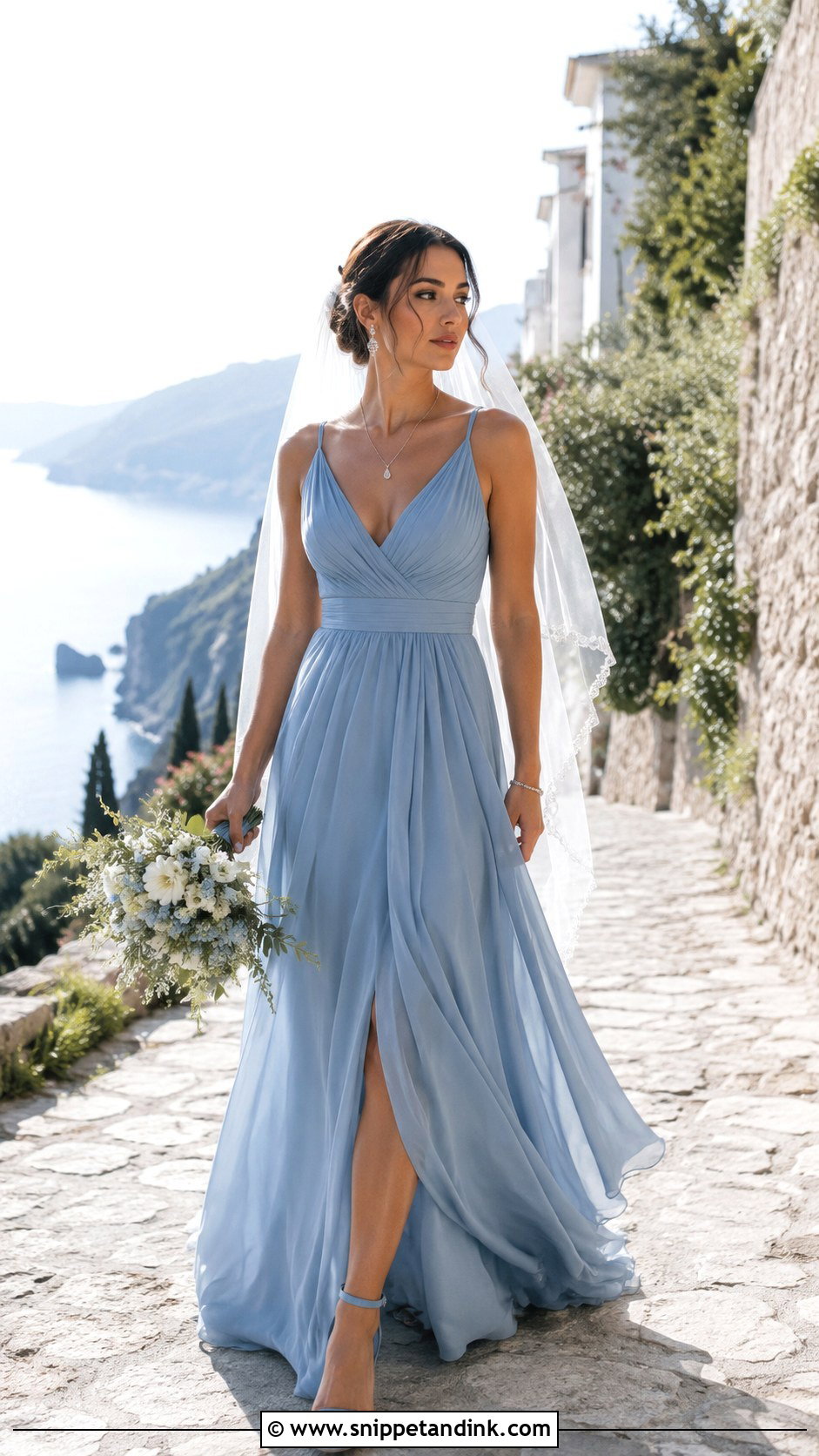
Dusty blue turns the old ‘something blue’ into the whole dress. Chiffon or tulle with a fitted bodice and soft skirt, silver jewelry, pale blue heels, a sheer veil and soft waves. It looks fresh in natural light, which suits coastal and garden ceremonies. Blue gowns can look gray in shade and bright under flash, so if your photographer shoots a lot of flash at the reception, look at a phone photo of the fabric with the flash on. Keep the bouquet in whites, blues and greens.
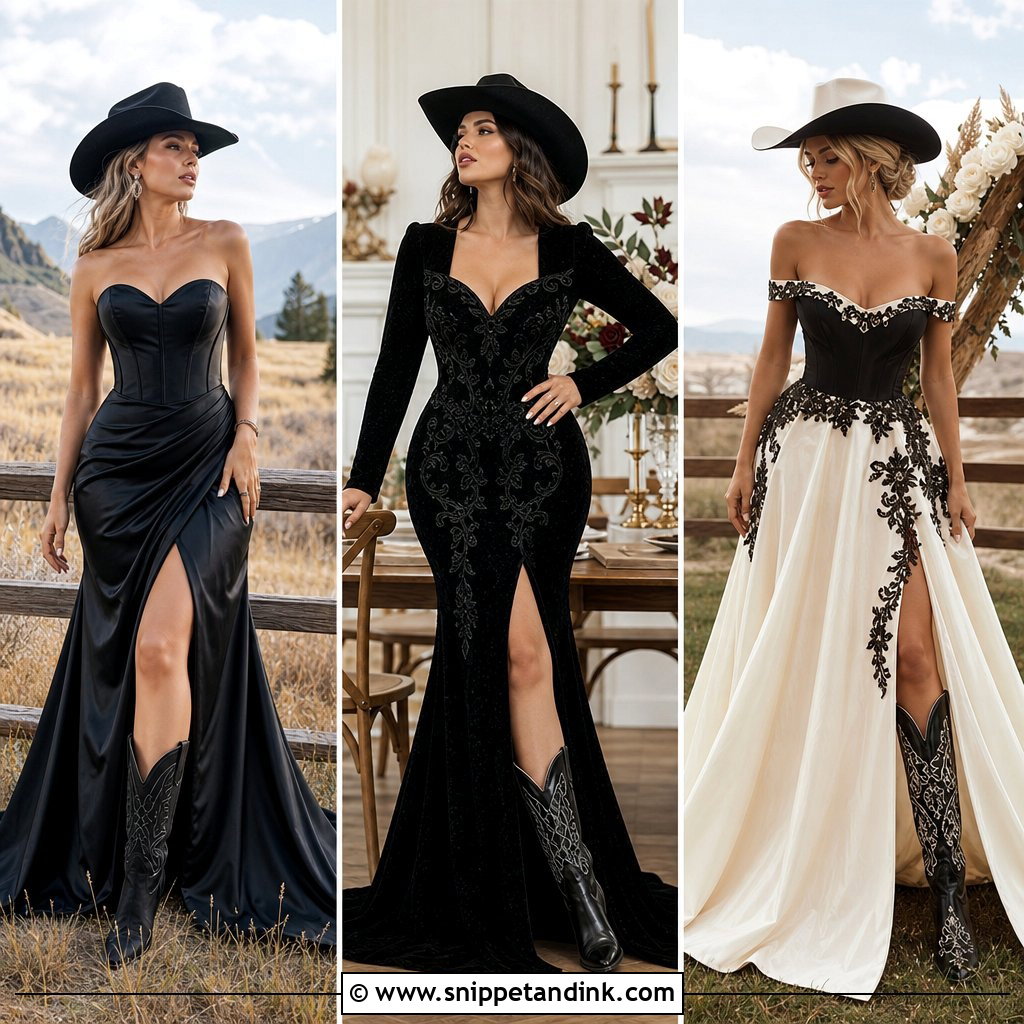
4. Black Wedding Dress
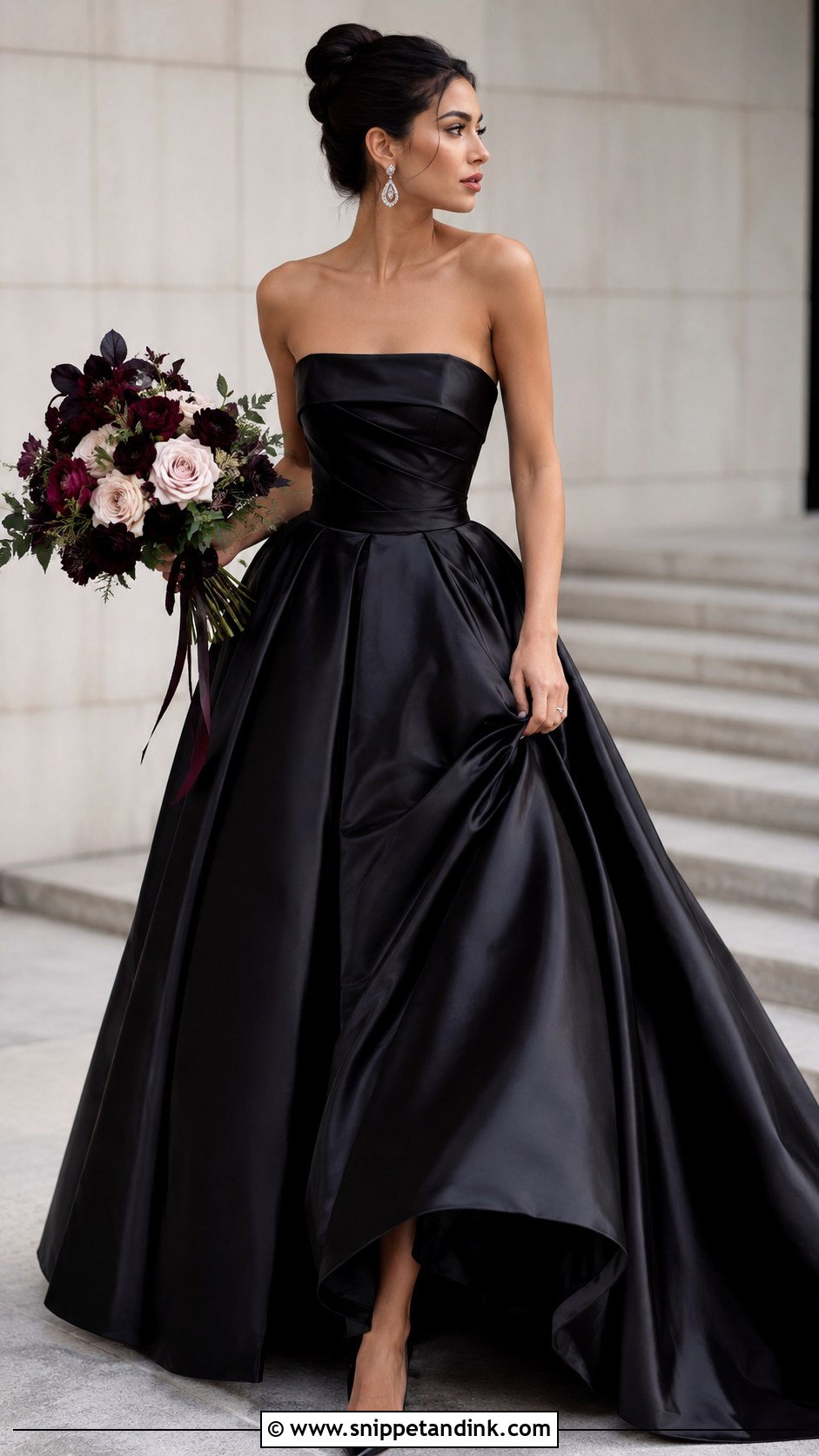
Black takes nerve and rewards it. Clean shapes work best: a satin ball gown, a sleek column, long-sleeved lace, a structured corset. With a black satin full skirt, pointed heels, crystal earrings and a smooth updo, you need almost nothing else. The practical issue with black is detail. Dark fabric hides seams, lace and folds in photos, so tell your photographer early; they’ll light you differently. A sheer black veil or a white-and-green bouquet softens it. It suits city weddings and evening receptions.
5. Red Wedding Dress
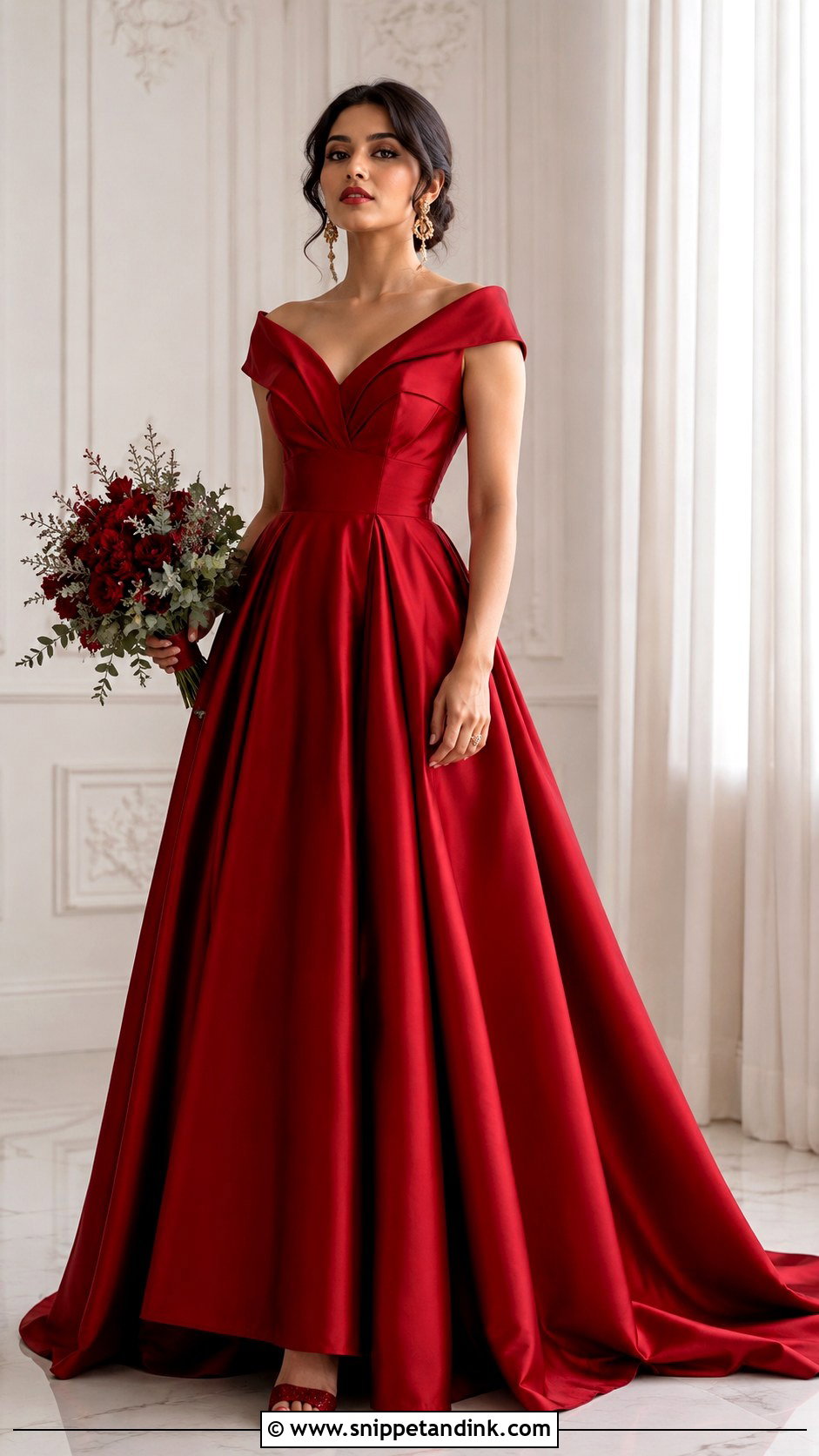
Red is bridal in many cultures and confident in all of them. Satin reads classic, velvet regal, lace and tulle romantic. A deep red A-line with a structured bodice, gold jewelry, soft curls and matching heels has real presence. Bright red suits brides who love color; burgundy or ruby looks more formal. What keeps it from looking like a party dress is construction, a train, draping, embroidery, a sculpted neckline. Choose your lipstick at the fitting against the actual fabric, because two reds that almost match look worse than two that clearly differ.
6. Sage Green Wedding Dress
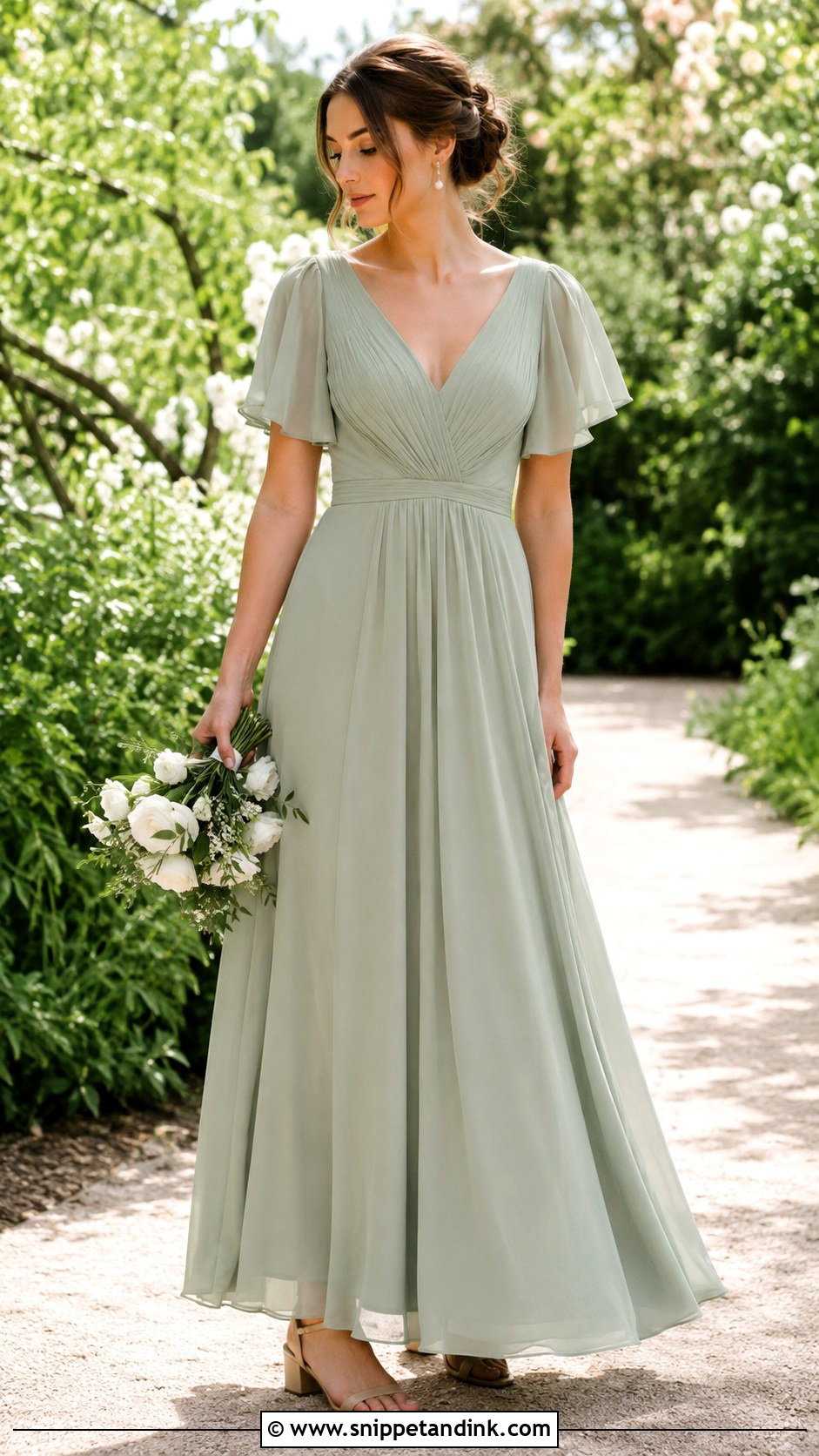
A sage green wedding dress looks at home outdoors because it’s essentially the color of leaves in soft light. Chiffon, tulle, crepe and satin all suit it. Flutter sleeves, an A-line skirt, pearl earrings, low block heels and a loose updo. Sage is muted enough to keep a palette calm, and it pairs with ivory flowers and olive leaves. To make it bridal rather than bridesmaid, add something they won’t have: lace appliqué, a flowing train or a sheer cape.
7. Lavender Wedding Dress
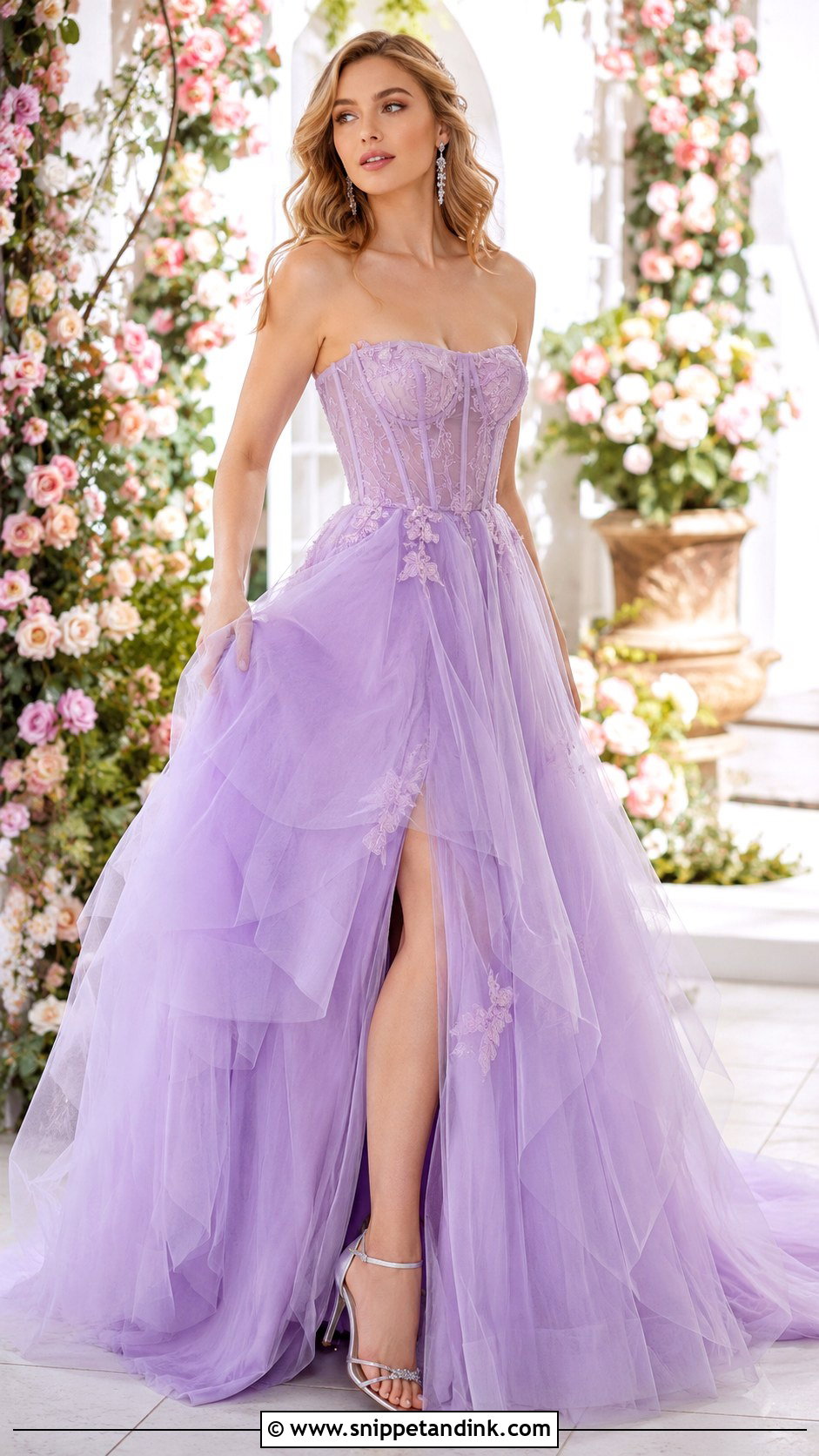
Lavender feels whimsical in tulle and grown-up in satin. A tulle gown with a corset bodice, layered skirt, silver heels and crystal drops is the fairytale version; a lavender satin slip or A-line with minimal accessories is the modern one. Lavender is one of the colors I watch most under different light. It can turn grayish in shade and almost blue under cool LEDs, so check the fabric in conditions close to your venue. Soft pink, white, lilac and green florals suit it, with rosy cheeks and a soft lip.
8. Gold Wedding Dress
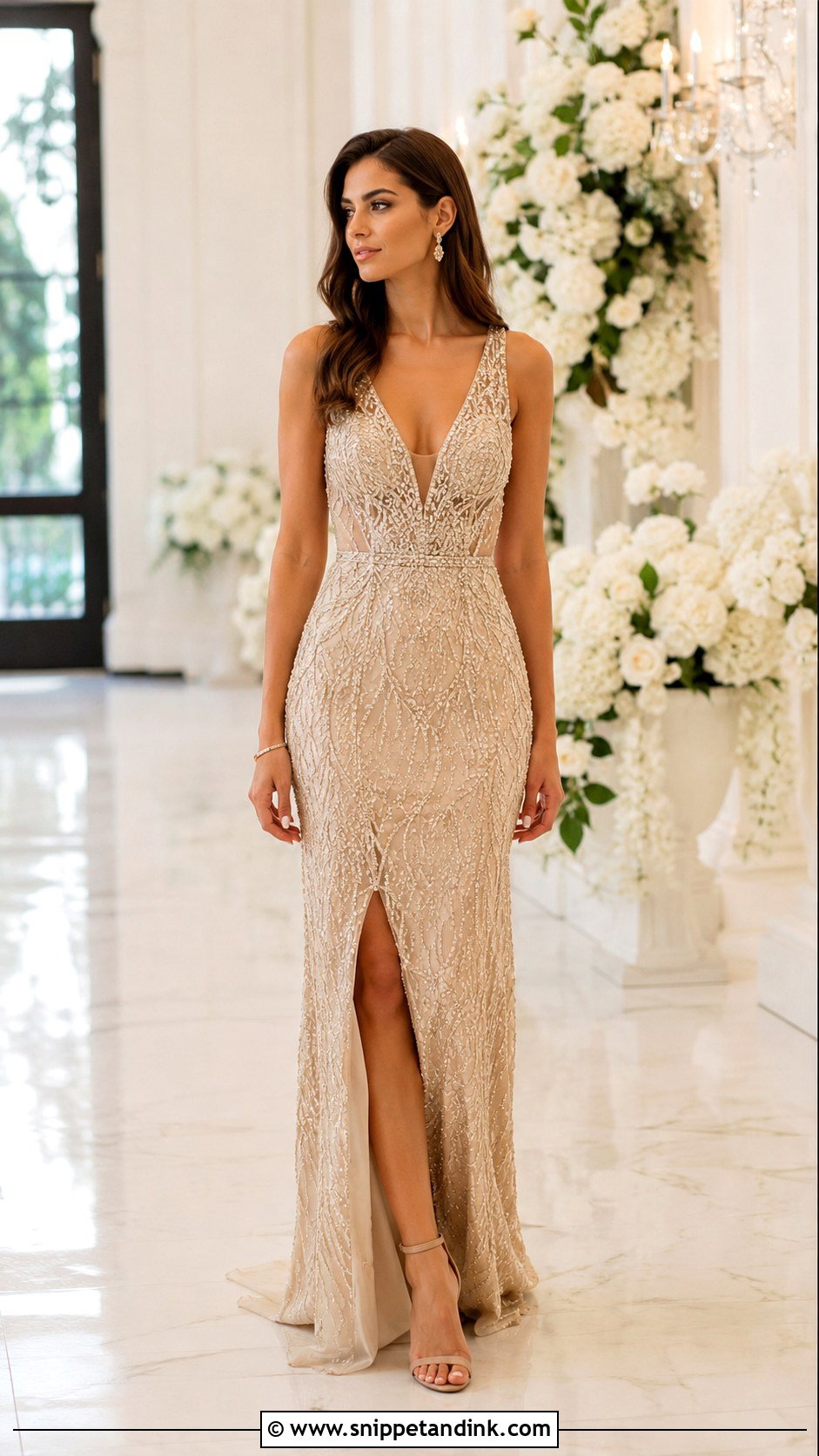
Gold ranges from pale satin to full sequins and metallic embroidery. A fitted beaded gold gown with nude heels, smooth hair and delicate earrings suits a formal venue; pale gold tulle with floral appliqué and a light veil is the softer version. Gold flatters warm skin especially. Because it already shines, heavy jewelry competes; keep earrings small and let the dress glow. Bronzed makeup and champagne accessories complete it.
9. Floral Wedding Dress
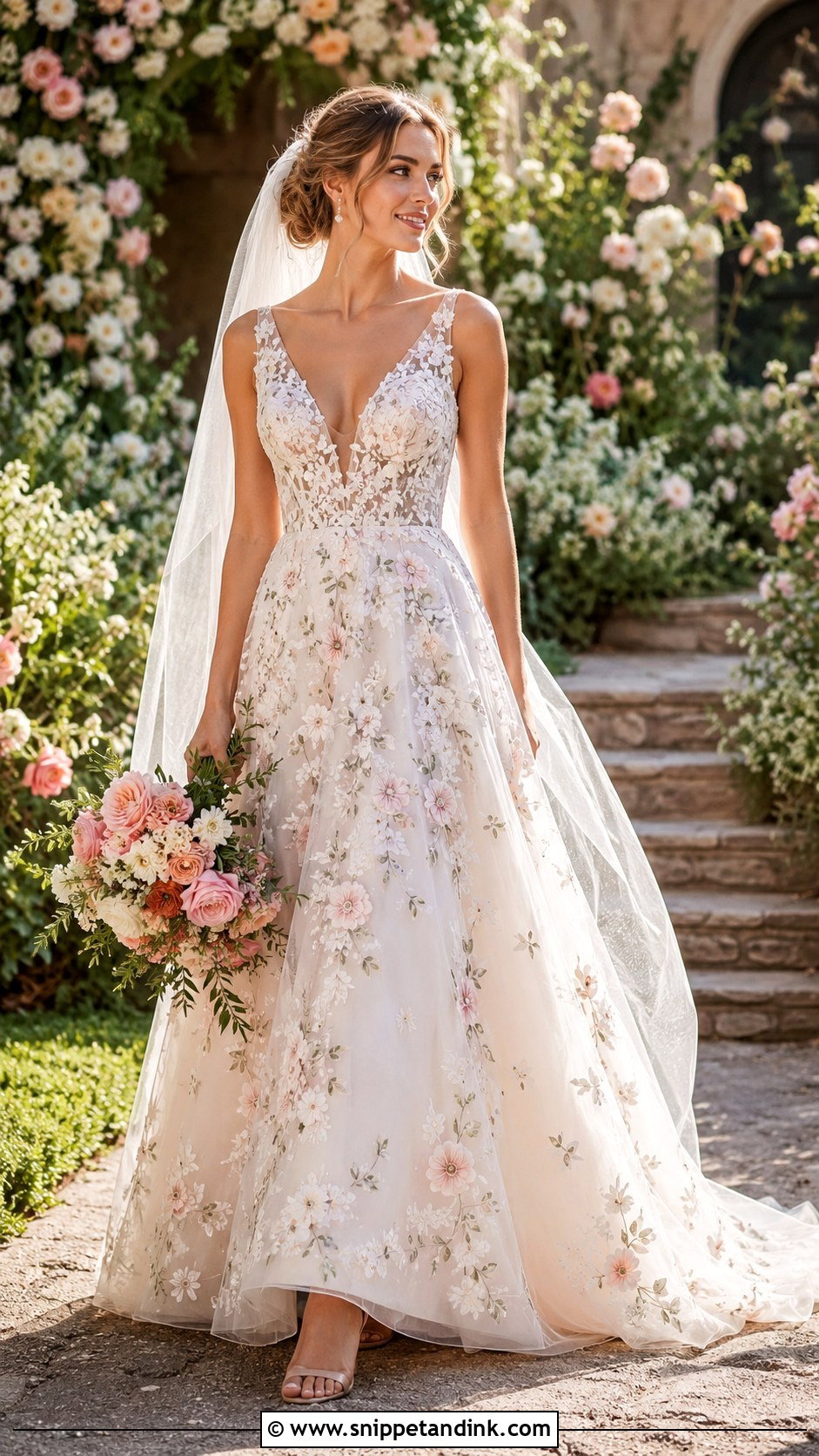
Floral gowns can be printed, embroidered, appliquéd or even hand-painted on tulle, organza or lace. A soft floral A-line with a sheer overlay, nude heels, pearl earrings and a simple veil reads bridal and artistic at once. Small motifs are subtle; large blooms are an entrance. The bouquet is where most brides go wrong: if it repeats the dress’s flowers, the two blend into one. Choose a smaller, simpler bouquet in one or two of the print’s colors.
10. Silver Wedding Dress
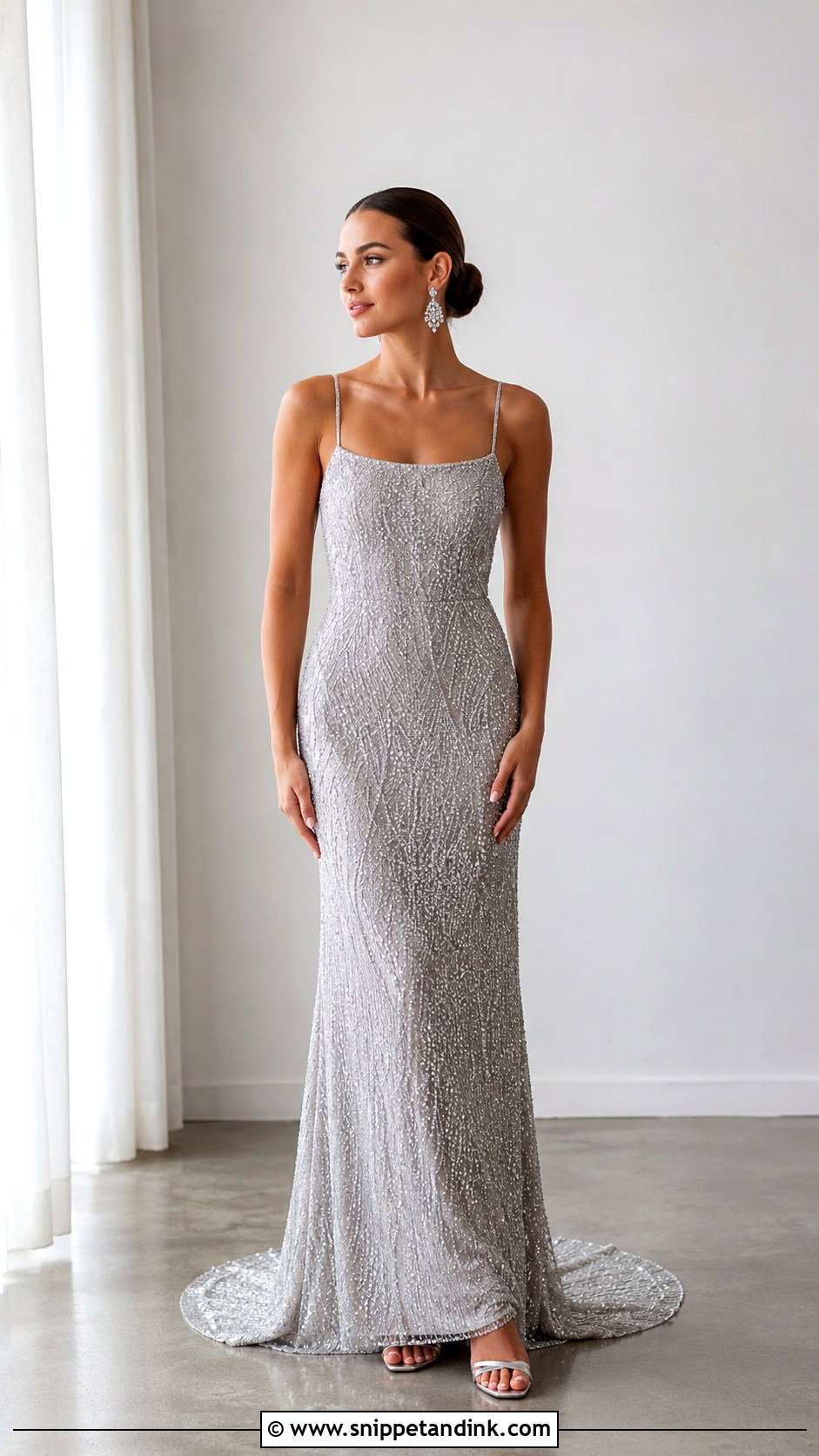
Silver gives a cool, luminous look and is softer than bright metallics. A silver beaded column gown with a low bun, crystal earrings and silver heels suits a formal evening; a silver-gray tulle with light shimmer and a soft train is more romantic. Silver can tip into costume if everything sparkles, so keep the bouquet minimal and the makeup polished. Bright, clean venues show it at its best.
11. Pale Yellow Wedding Dress
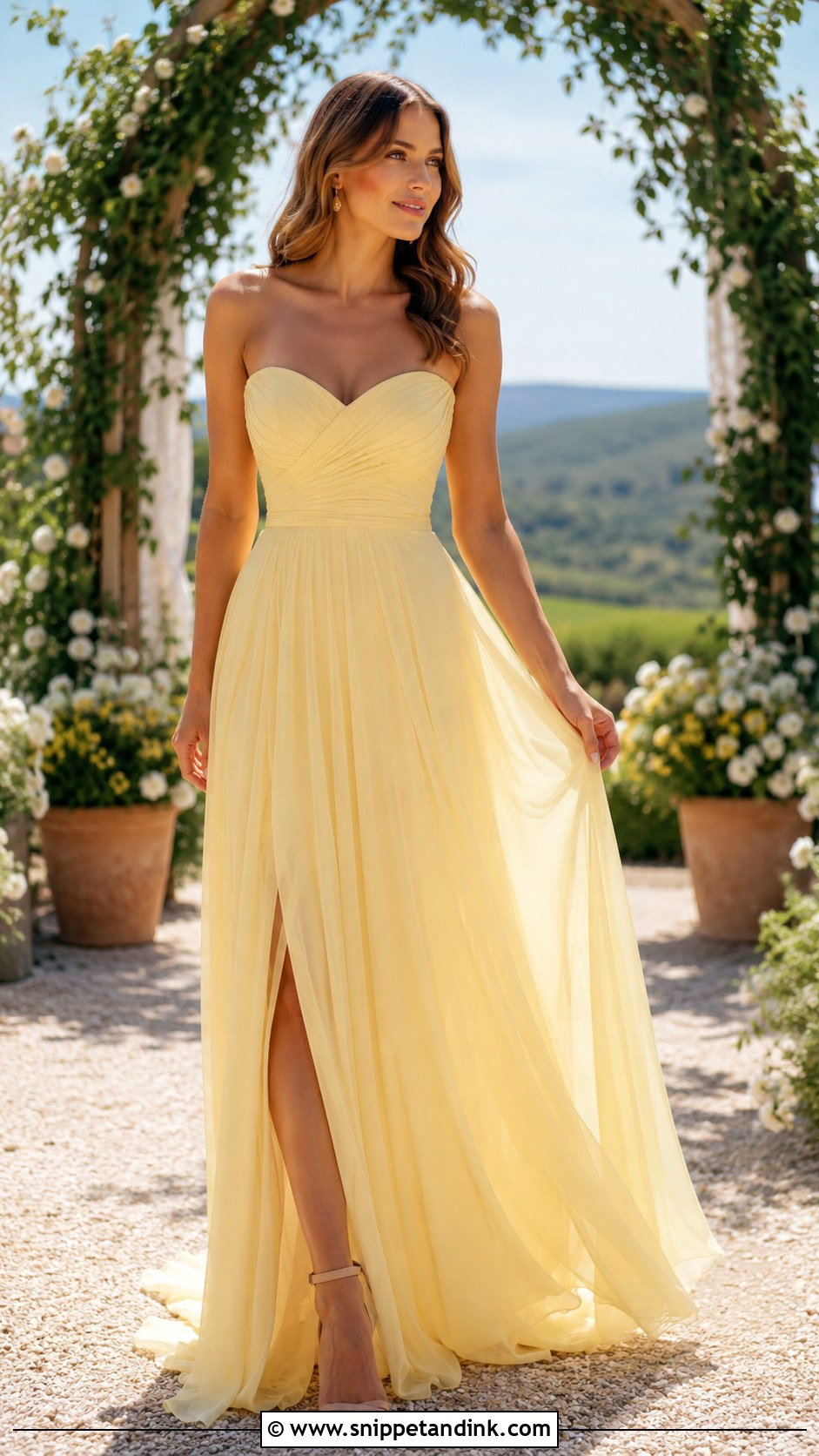
Pale yellow is sunny and gentle, and I find brides either love it at first sight or not at all. Butter-yellow chiffon with a sweetheart neckline, a flowing skirt, nude sandals and small gold earrings looks fresh at a spring or summer wedding. The worry with yellow is that it looks casual. Better fabric fixes that: silk, satin, organza or embroidered tulle. A veil, a structured bodice or a train does the rest. Yellow can sallow some skin tones, so test it against your face in daylight before ordering.
12. Emerald Green Wedding Dress
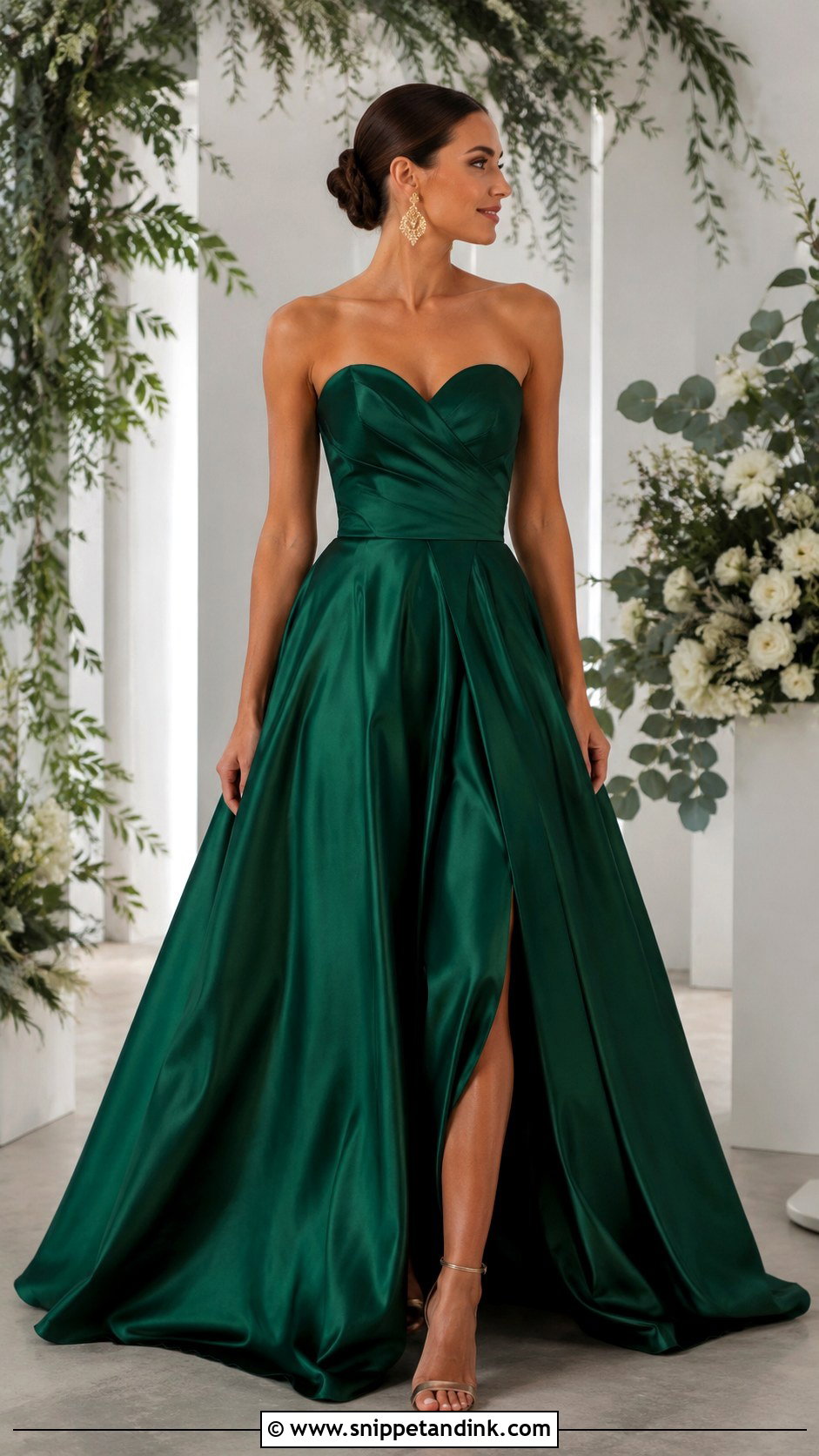
Emerald is a jewel tone with real weight, so it shines at formal, winter and evening weddings. A satin emerald gown with a fitted bodice, full skirt, gold earrings and sleek heels is a sophisticated bridal outfit; lace sleeves, velvet or a dramatic train make it more romantic. Ivory flowers and gold accessories suit it. Because the color is so strong, I keep everything else simple, and I’d brief the makeup artist to warm the face slightly, since deep green can reflect a cool cast onto the skin.
13. Powder Blue Wedding Dress
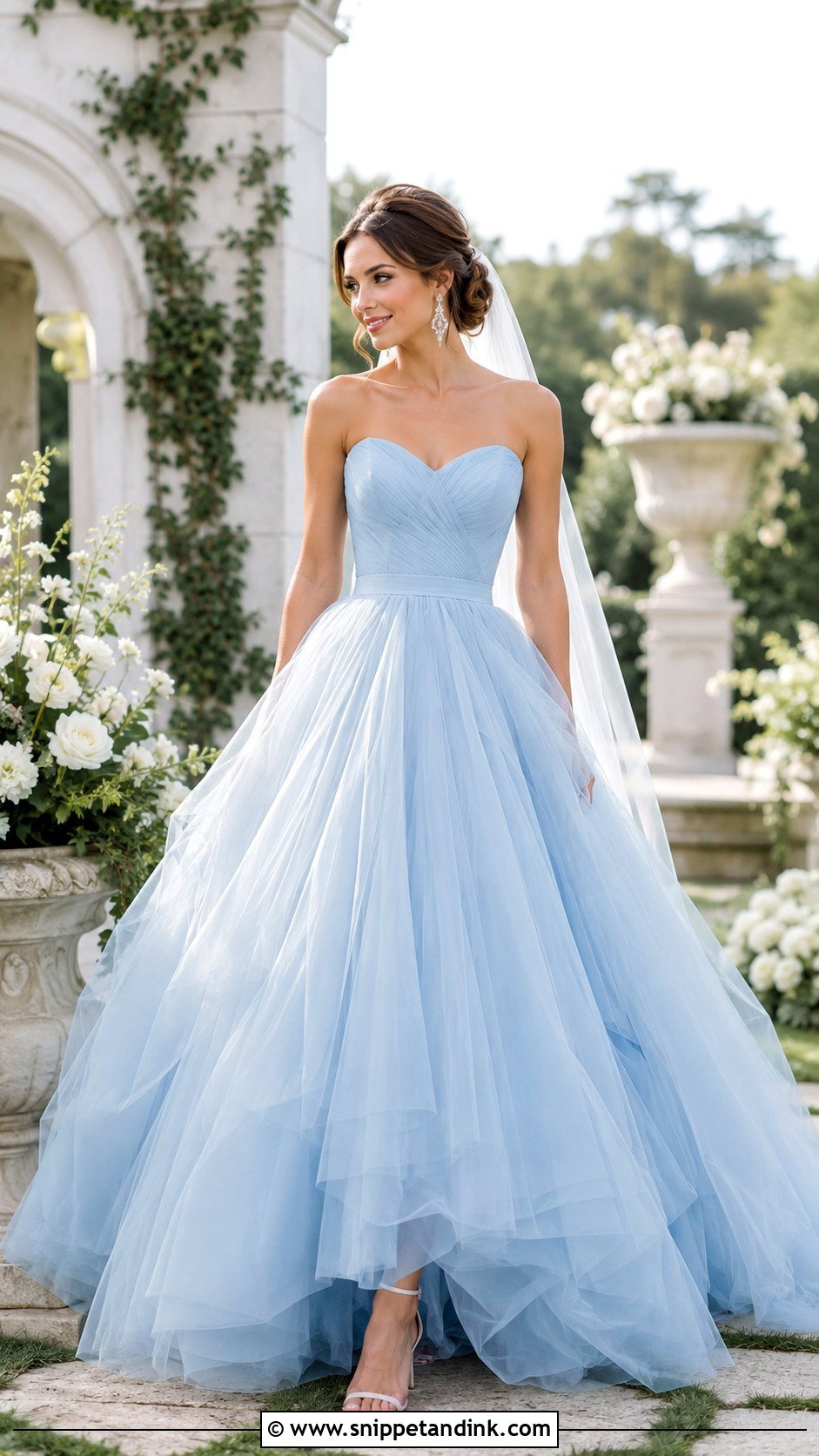
Powder blue is lighter and airier than dusty blue. A powder blue ball gown in layered tulle with a fitted bodice, silver earrings and pale heels has a fairytale mood; a sleek satin version looks more modern. It suits daytime and outdoor weddings, and coastal ones especially. A sheer veil keeps it bridal, or a delicate hair bow if you want something softer. Pale blue tulle can look almost white in strong sun, which some brides love and some don’t, so see it outdoors first.
14. Mauve Wedding Dress
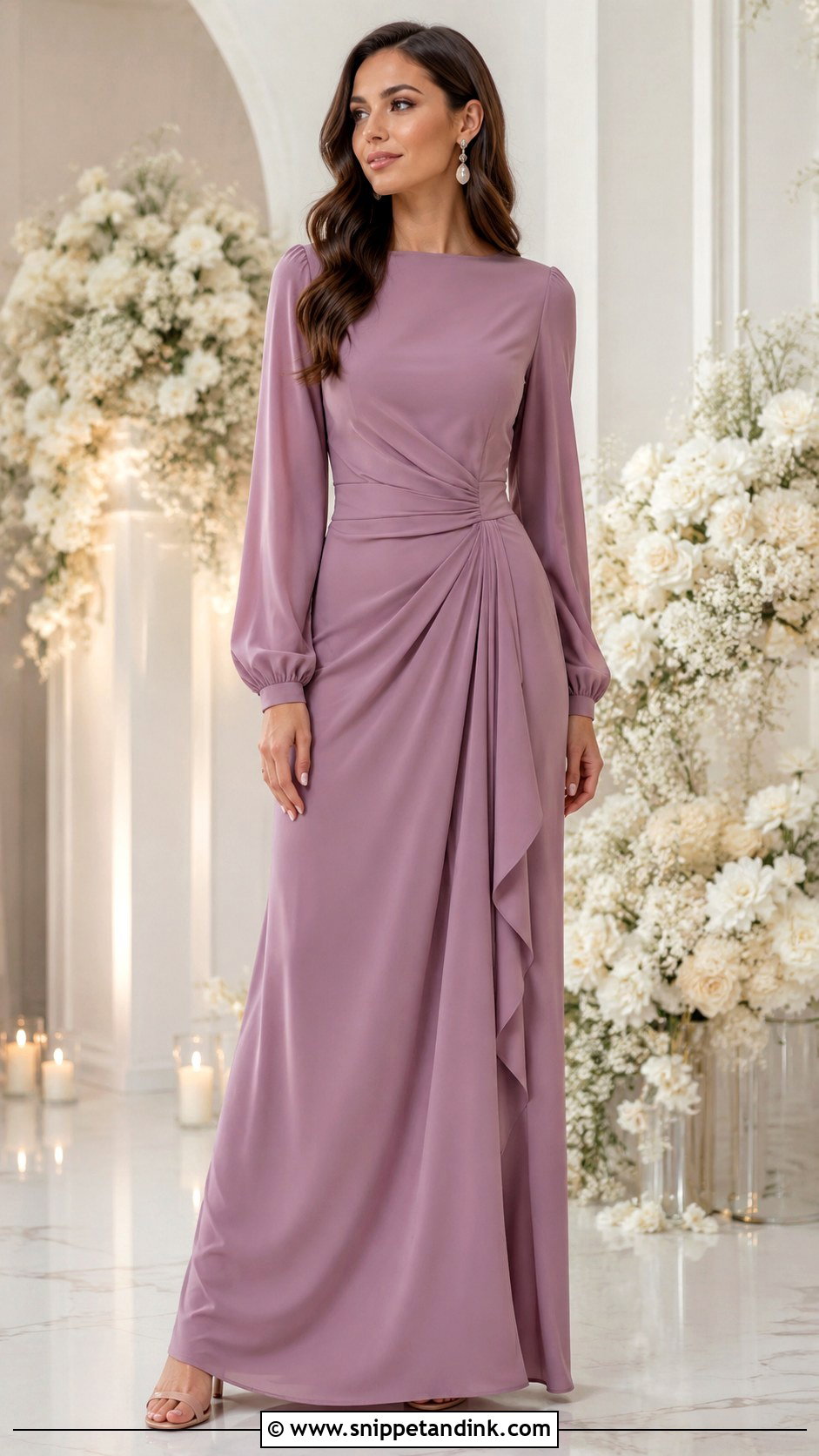
Mauve sits between pink, purple and neutral, so it reads romantic without being pastel. That’s why I suggest it to brides who find blush too young. A mauve crepe gown with long sleeves, a fitted waist and soft draping, nude heels and rose-gold earrings is refined; mauve tulle or organza with a structured bodice gives more volume. It pairs with dusty rose, cream and taupe and is very flattering at autumn and indoor weddings. Soft rosy makeup and smooth hair keep it balanced.

15. Navy Blue Wedding Dress
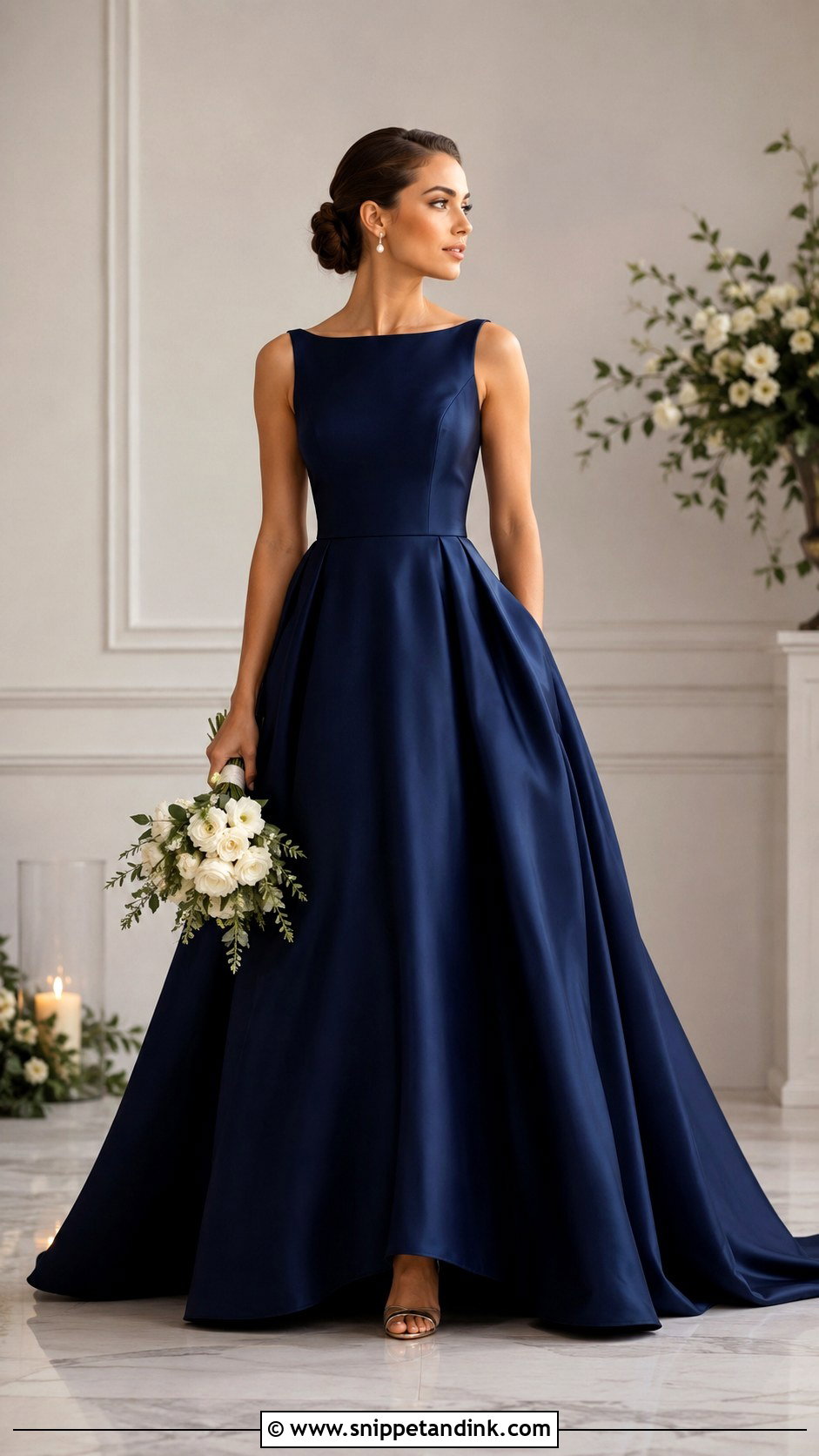
Navy gives drama in a more classic way than black. Satin, crepe, velvet or lace, with a bateau neckline, a full skirt, pearl earrings and metallic heels. A navy slip with a cape veil is the modern take. Dark fabrics photograph flat if the gown has no movement or sheen, so choose a silhouette that catches light, a full skirt, satin, beading. White flowers and silver accents brighten it. It’s a strong option for evening weddings.
16. Rose Gold Wedding Dress
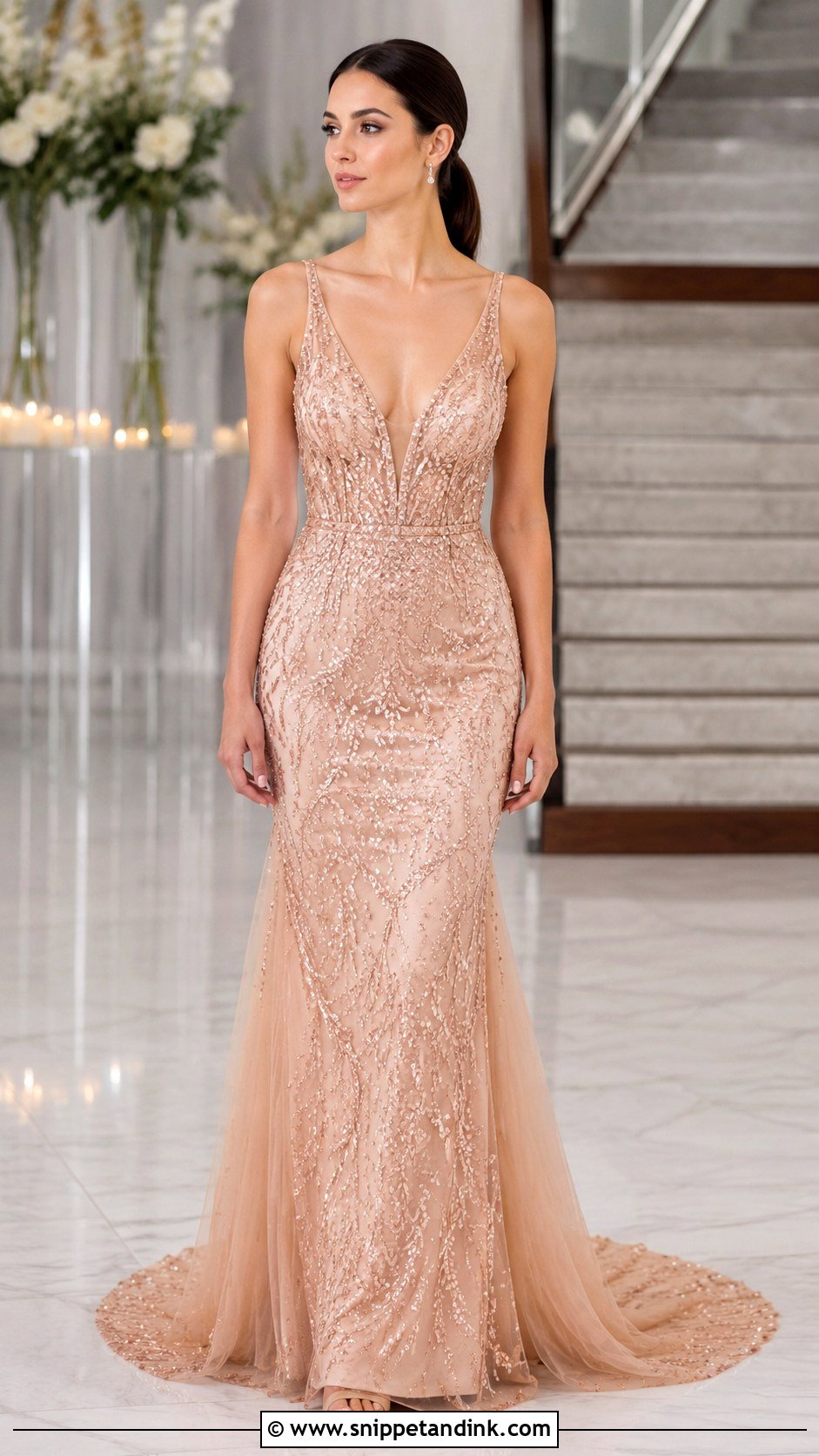
Rose gold combines the warmth of pink with a metallic sheen, which suits beading, sequins, satin and embroidered tulle. A fitted rose gold gown with a soft train, nude heels, delicate earrings and sleek hair glows without flash. For a gentler style, rose gold appliqué on a nude lining. Heavily sequined gowns are heavier and scratchier than they look; check the inside of the arms and underarm seams for rough edges at the fitting. Keep accessories light.
17. Gray Wedding Dress
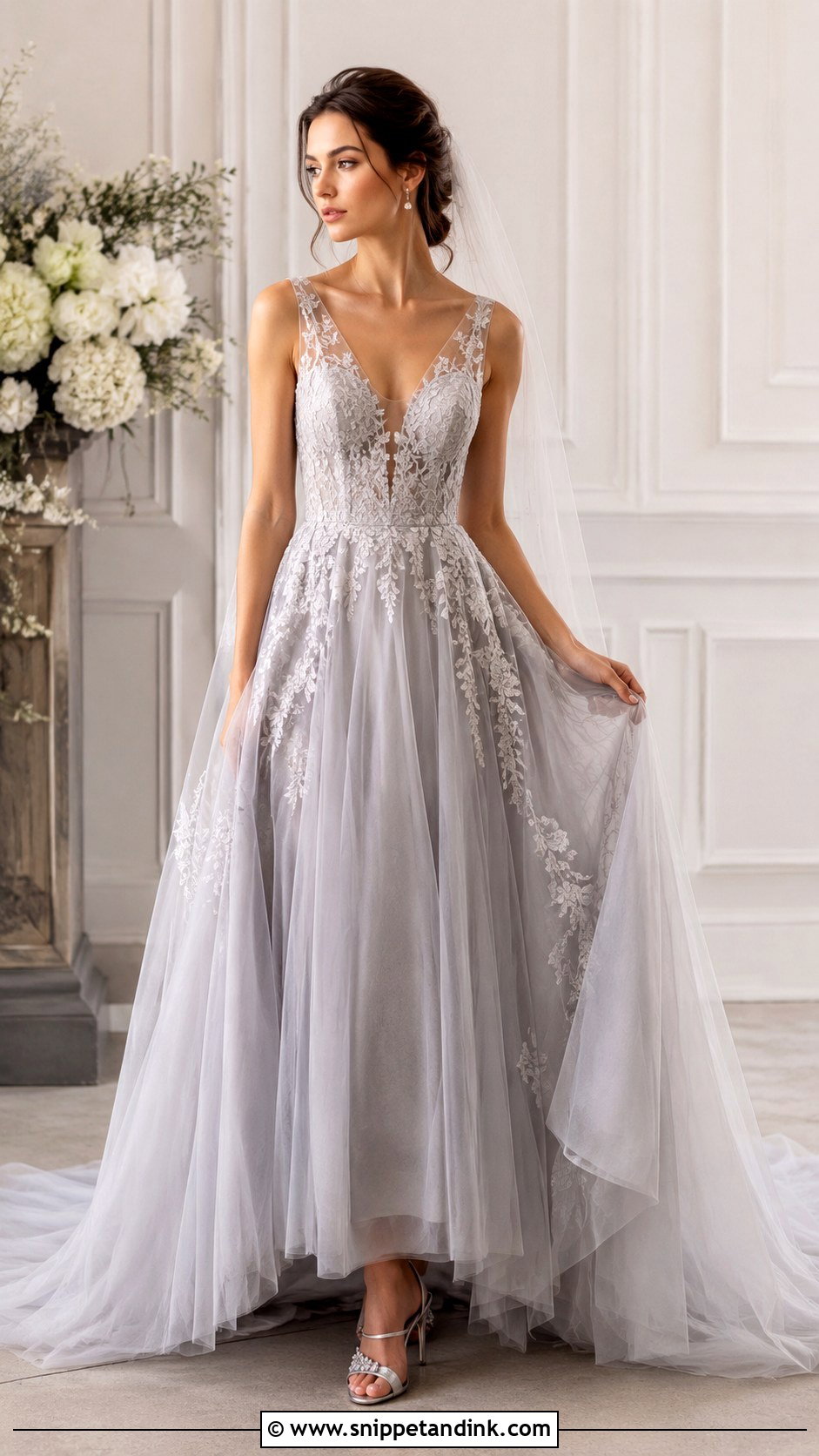
Gray needs bridal fabric and shape to look intentional. Dove gray is romantic; charcoal is dramatic and modern. A dove-gray tulle gown with lace appliqué, silver heels, pearl earrings and a sheer veil has a quiet elegance; a charcoal satin gown with a clean neckline suits a city wedding. Gray can drain the face, so warmth in the makeup matters: rosy cheeks and a soft pink lip. White flowers and soft greenery suit it.
18. Teal Wedding Dress
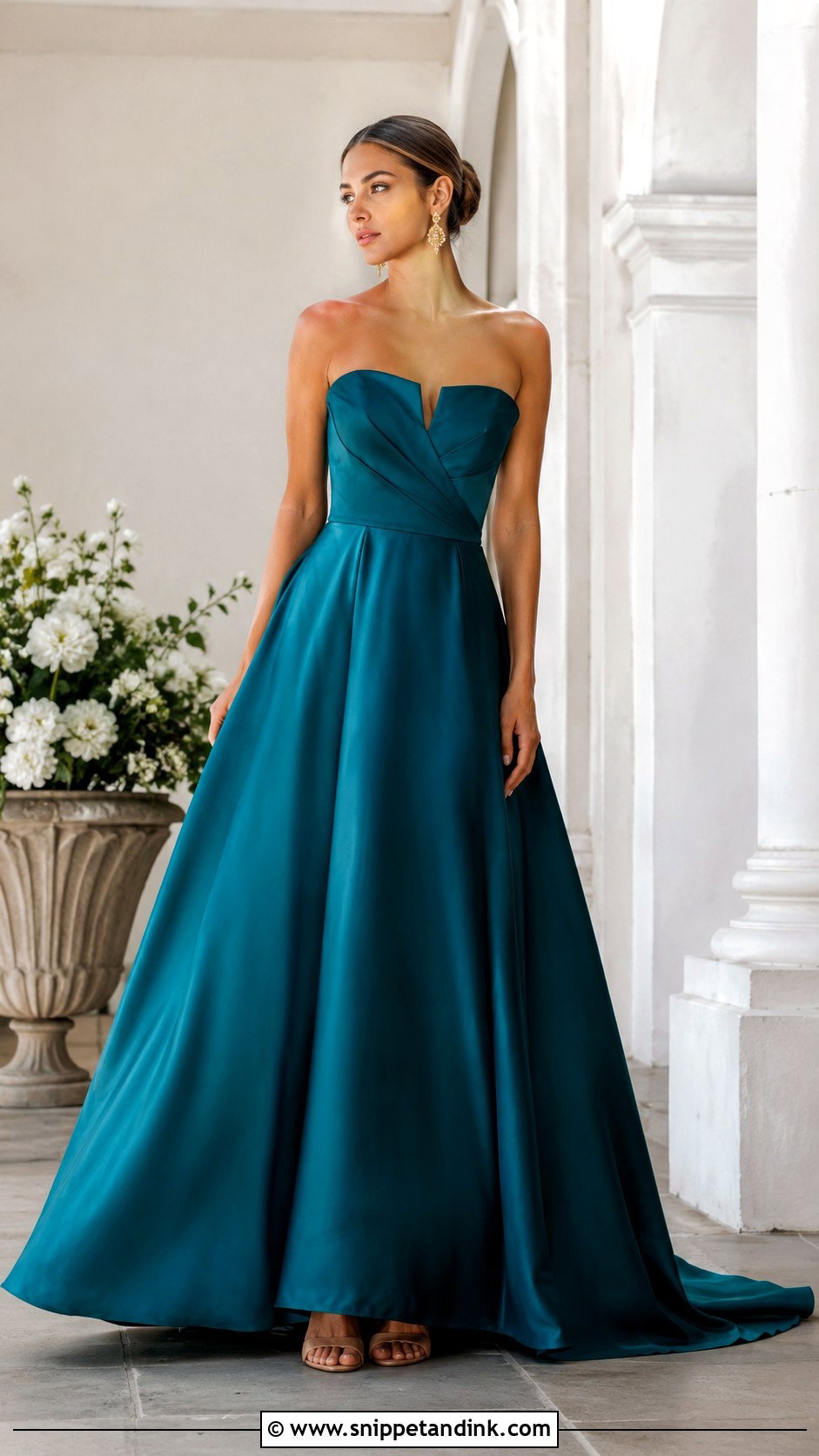
Teal sits between blue and green and is bold without being loud. A teal satin A-line with a structured bodice, gold earrings, nude heels and a smooth updo looks polished; teal chiffon gives more movement. Teal suits modern venues and jewel-tone décor. Keep the bouquet to white flowers and greenery so the gown stays the focus. Teal dye can vary between fabric batches, so order any matching veil or sash from the same maker at the same time.
19. Peach Wedding Dress
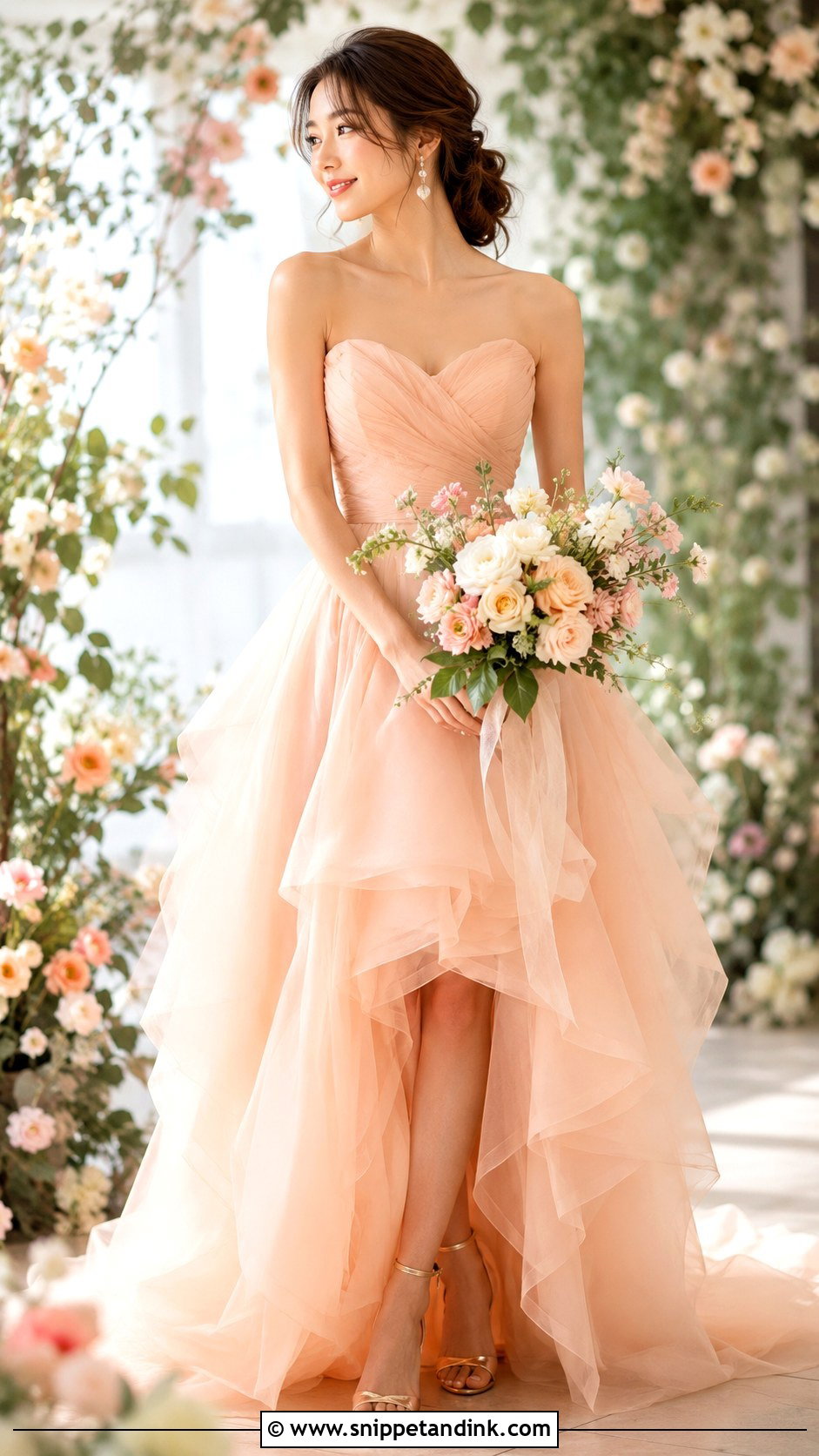
Peach is blush’s sunnier cousin. A peach organza gown with a fitted bodice, layered skirt, gold sandals and delicate pearl earrings is sweet but grown-up. It looks warm in spring and summer, and outdoors in bright natural light. Cream flowers, coral accents and greenery suit it. For a more formal version, silk satin or embroidered tulle. Peach flatters warm and olive skin especially; on very cool, pink-toned skin it can look orange in photos, so test it first.
20. Burgundy Wedding Dress
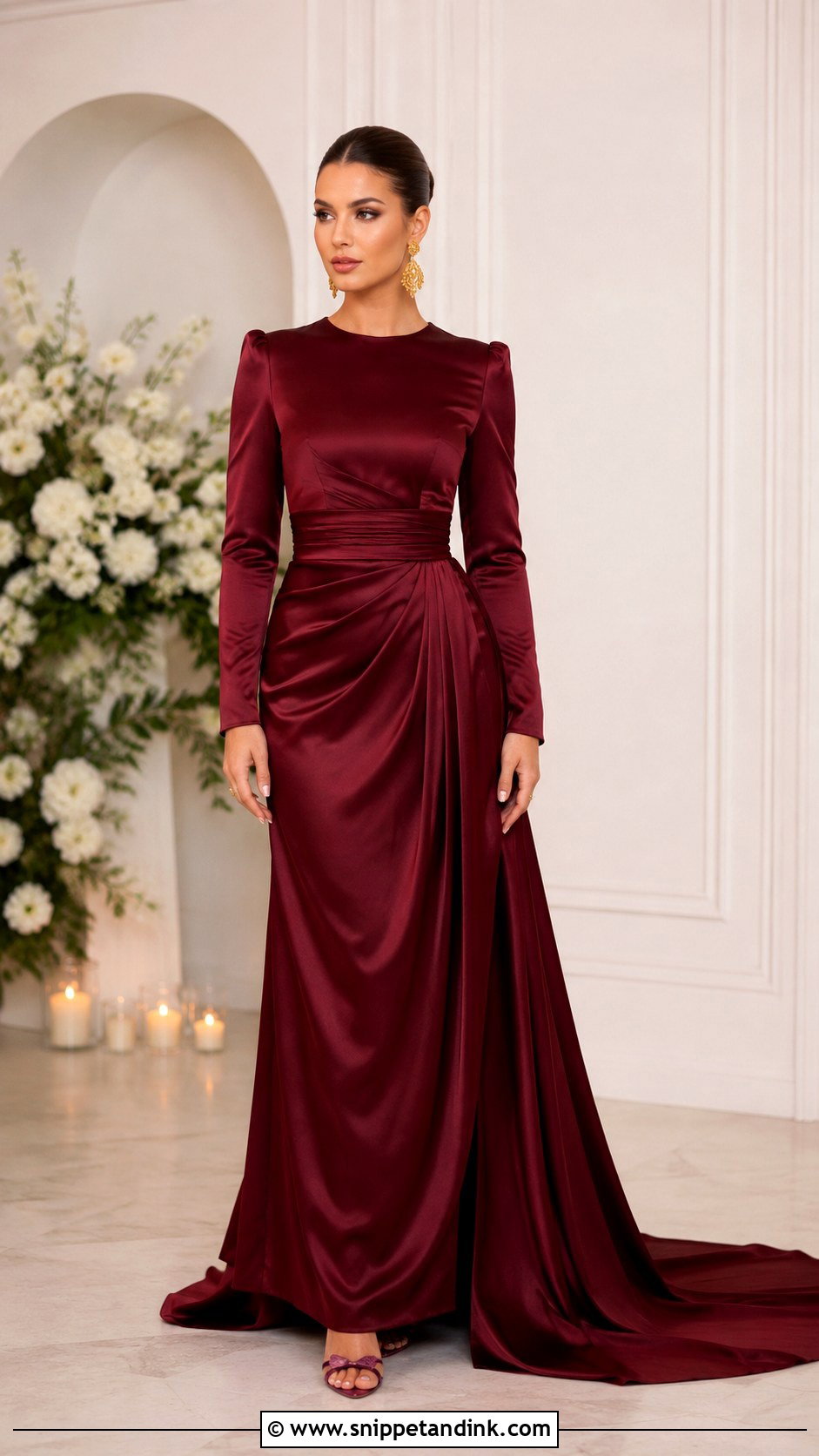
Burgundy is deep and romantic, with richness that bright red doesn’t have. Velvet or satin with long sleeves, a fitted waist, gold earrings and matching heels makes a formal, warm bridal outfit. For something lighter, burgundy lace over a nude lining or a flowing chiffon skirt. The silhouette needs to be clean and deliberate because the color is strong. A simple veil or cape adds bridal softness. Ivory flowers, deep greenery and soft gold suit it at autumn and winter weddings.
21. Mint Green Wedding Dress
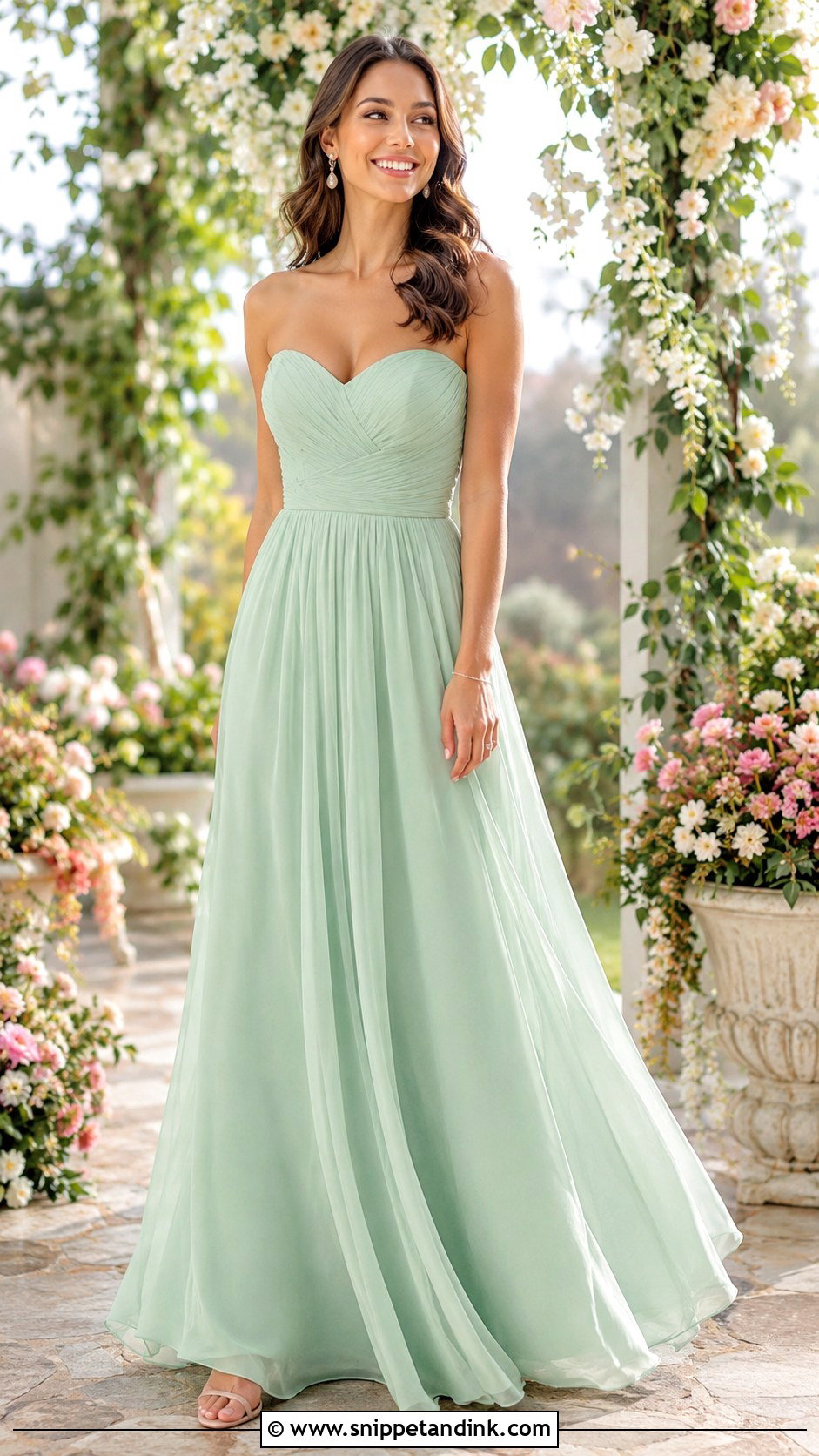
Mint is fresh and a little playful, and it needs light, airy fabrics: chiffon, tulle, organza, soft satin. A mint A-line with a sweetheart neckline, nude heels, small pearl earrings and loose waves suits spring and bright daytime ceremonies. White flowers, pale pink and greenery keep it delicate. If it looks too casual, a corset bodice or a defined waist adds structure. Mint is a color that often looks better in person than on a screen, so try it on before deciding.
22. Ivory And Black Wedding Dress
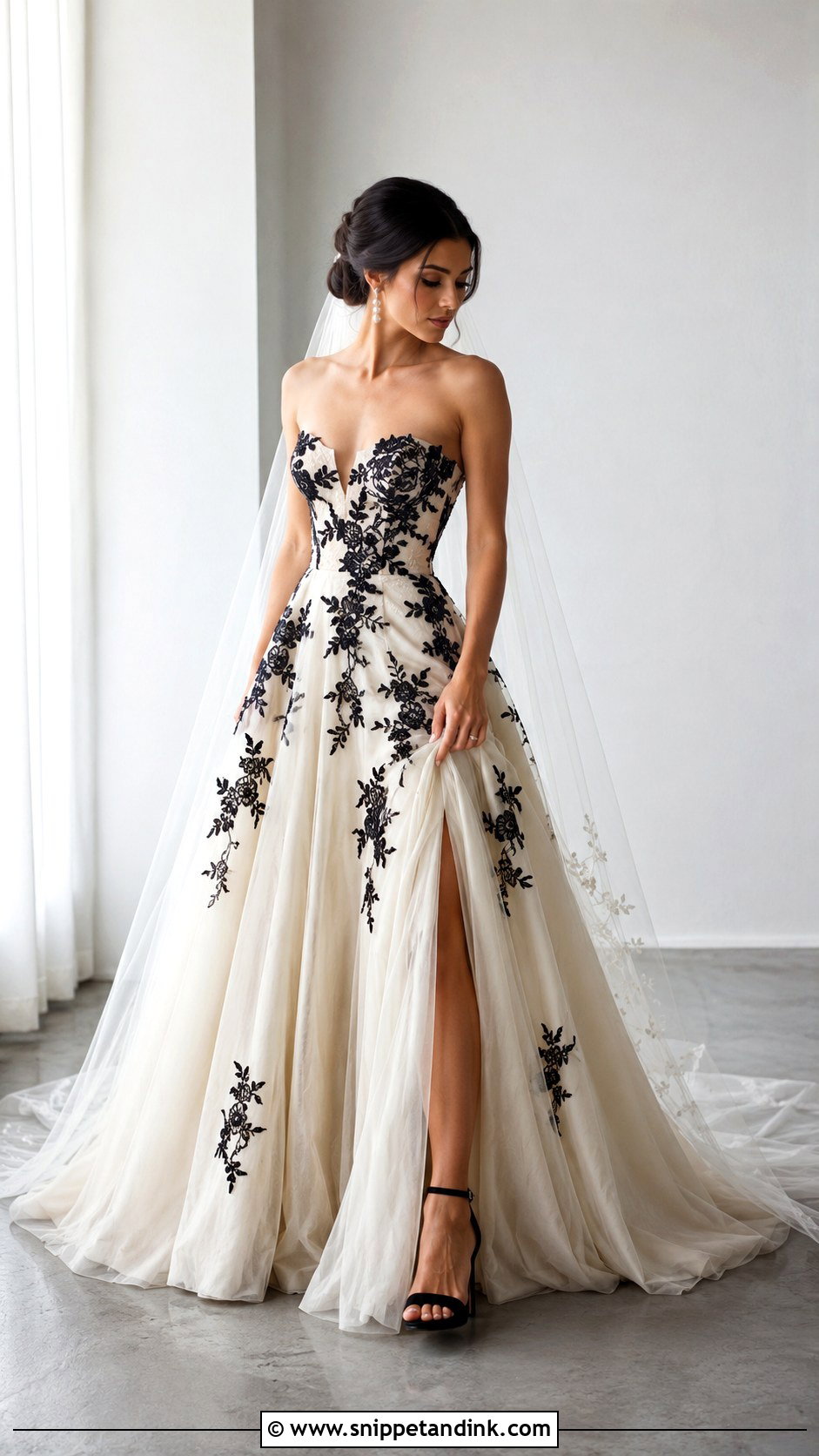
Ivory with black details gives contrast without going fully dark. Black floral embroidery, a black bow or a black lace overlay on an ivory base looks modern and artistic. Black heels, pearl earrings, a soft veil and a simple bouquet balance it. Structured silhouettes, ball gowns and fitted lace all suit it. My one rule: pick one black feature, not several. A bow, a sash and black lace together look busy rather than bold.
23. Ombre Wedding Dress
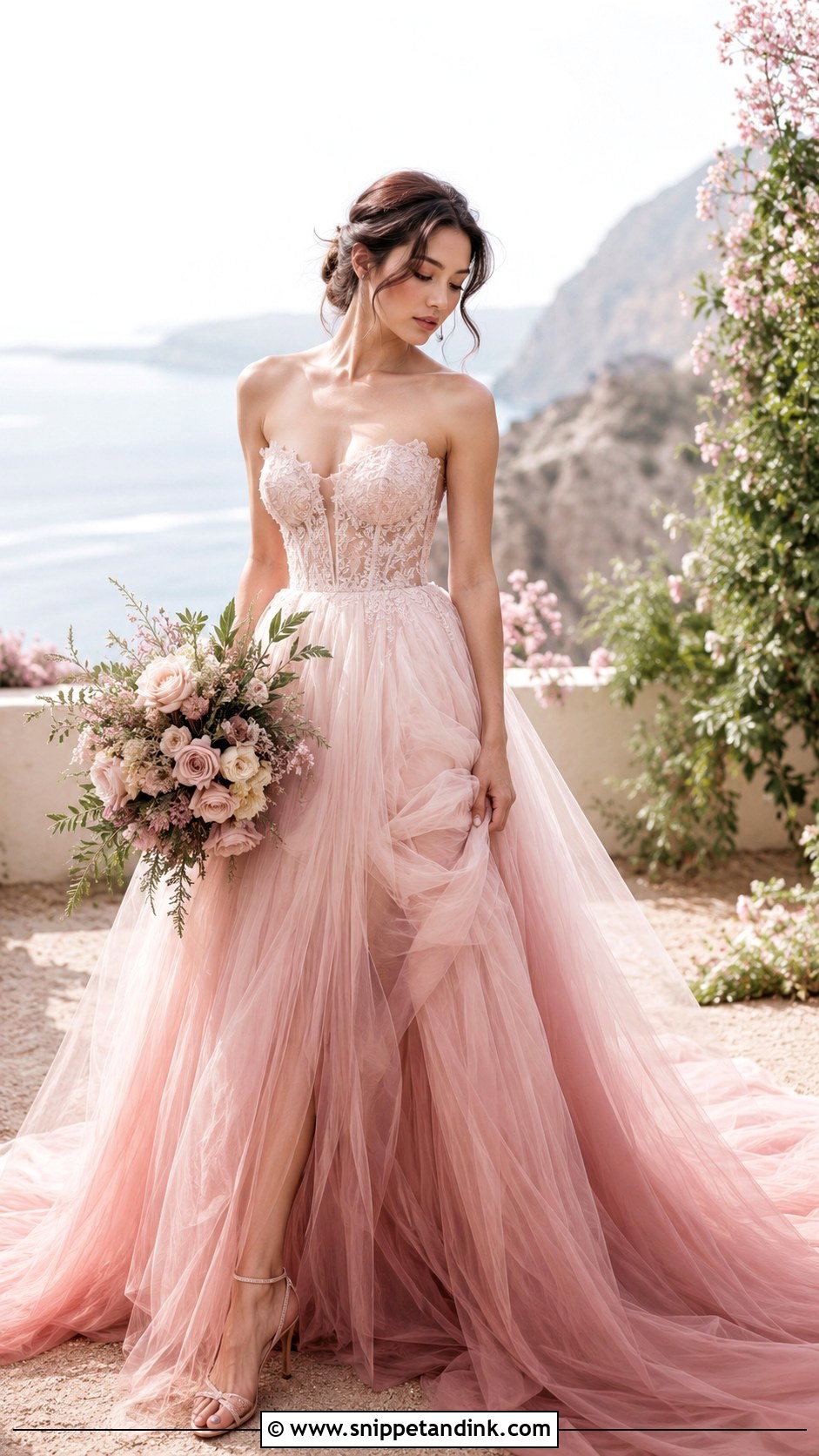
Ombre gives movement through color: blush to rose, ivory to blue, champagne to gold, lavender to lilac. A tulle ombre gown with a fitted bodice, flowing skirt, delicate heels and minimal jewelry looks painterly. Outdoors, the gradient shows clearly in natural light. The quality test is the transition: good ombre dyeing is gradual, without a visible line where one tone stops. Look closely at the skirt in daylight before buying, and keep accessories simple.
24. Floral Embroidered Wedding Dress
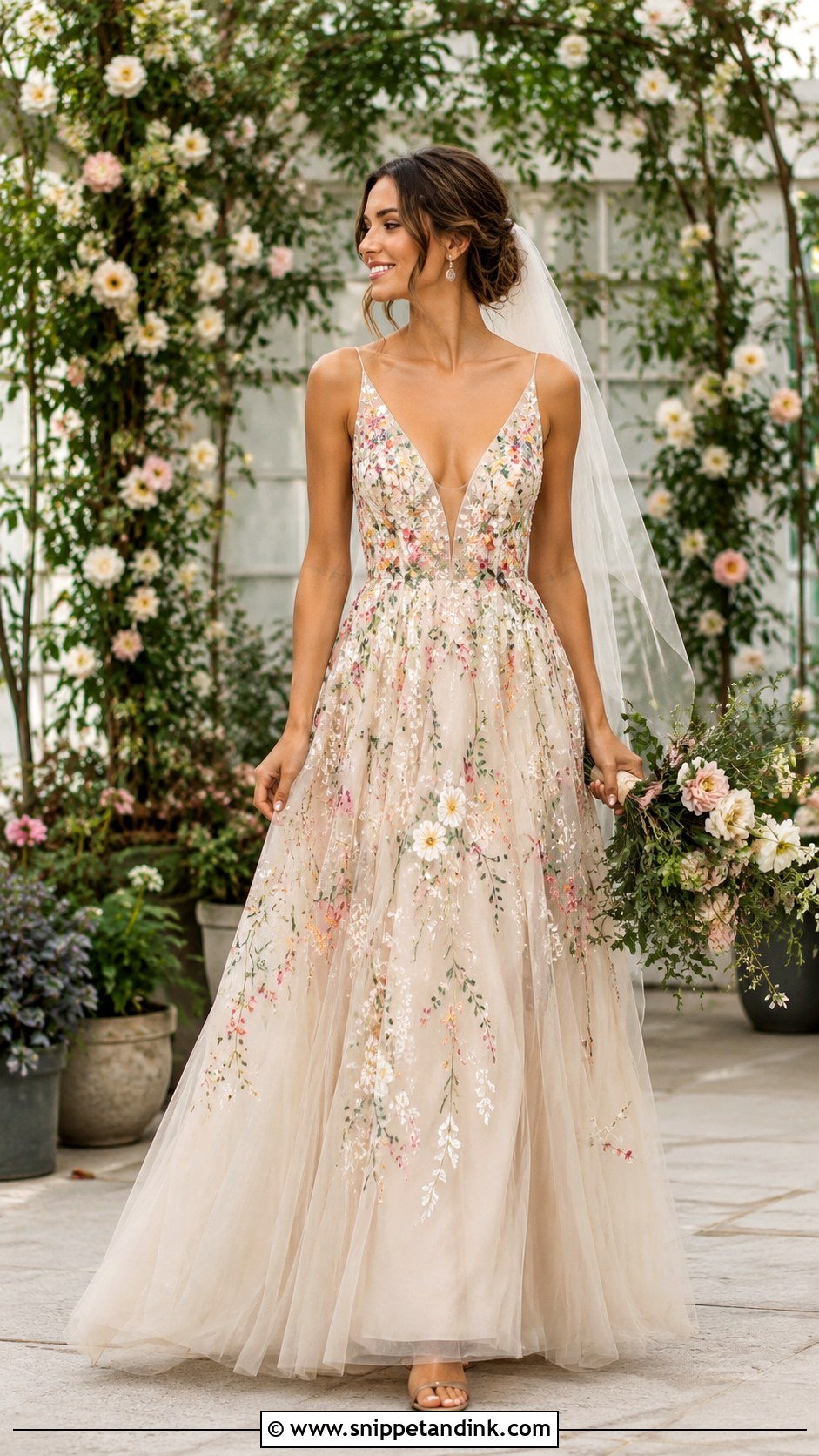
Embroidery gives florals dimension in a way prints can’t. It can sit on the bodice, skirt, sleeves or train. A nude, blush, champagne or pale blue base with colorful floral embroidery is romantic and modern. Nude heels, delicate earrings, a soft veil and a simple bouquet complete it. Heavy embroidery adds weight and stiffness, especially on a train, so ask how much the gown weighs and walk the length of the shop in it. With bold embroidery, keep the hair and accessories clean.
25. Bronze Wedding Dress
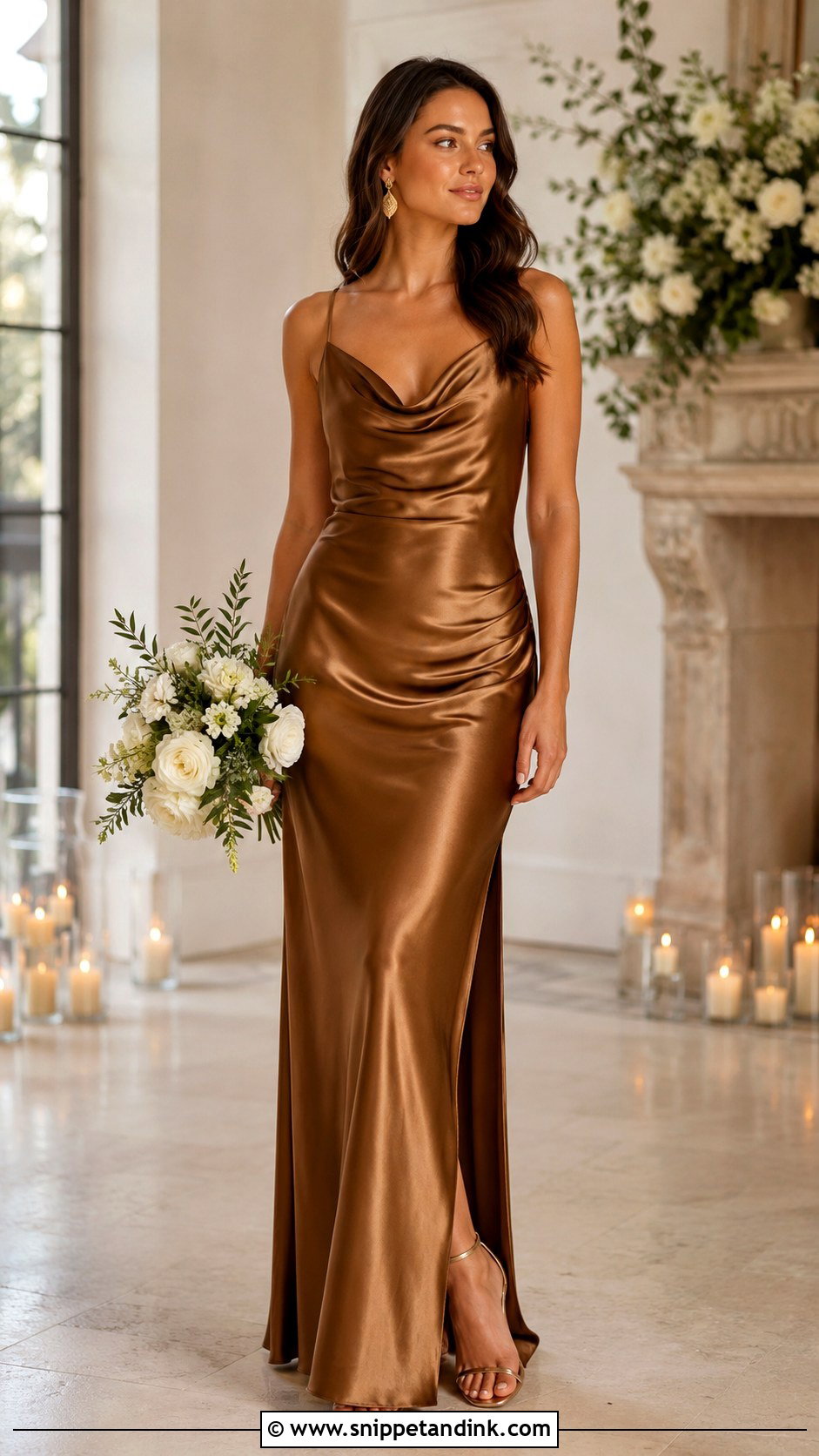
Bronze is warm and earthy, deeper than champagne and softer than gold. Satin, sequins, pleats and beading all suit it. A bronze slip gown with a draped neckline, gold earrings, strappy heels and smooth waves is sleek; a bronze ball gown with a structured bodice and full skirt gives more drama. Cream flowers, tan accents and greenery suit it. Bronze already shines, so heavy accessories compete. It works especially well on deeper skin tones.
26. Lilac Wedding Dress
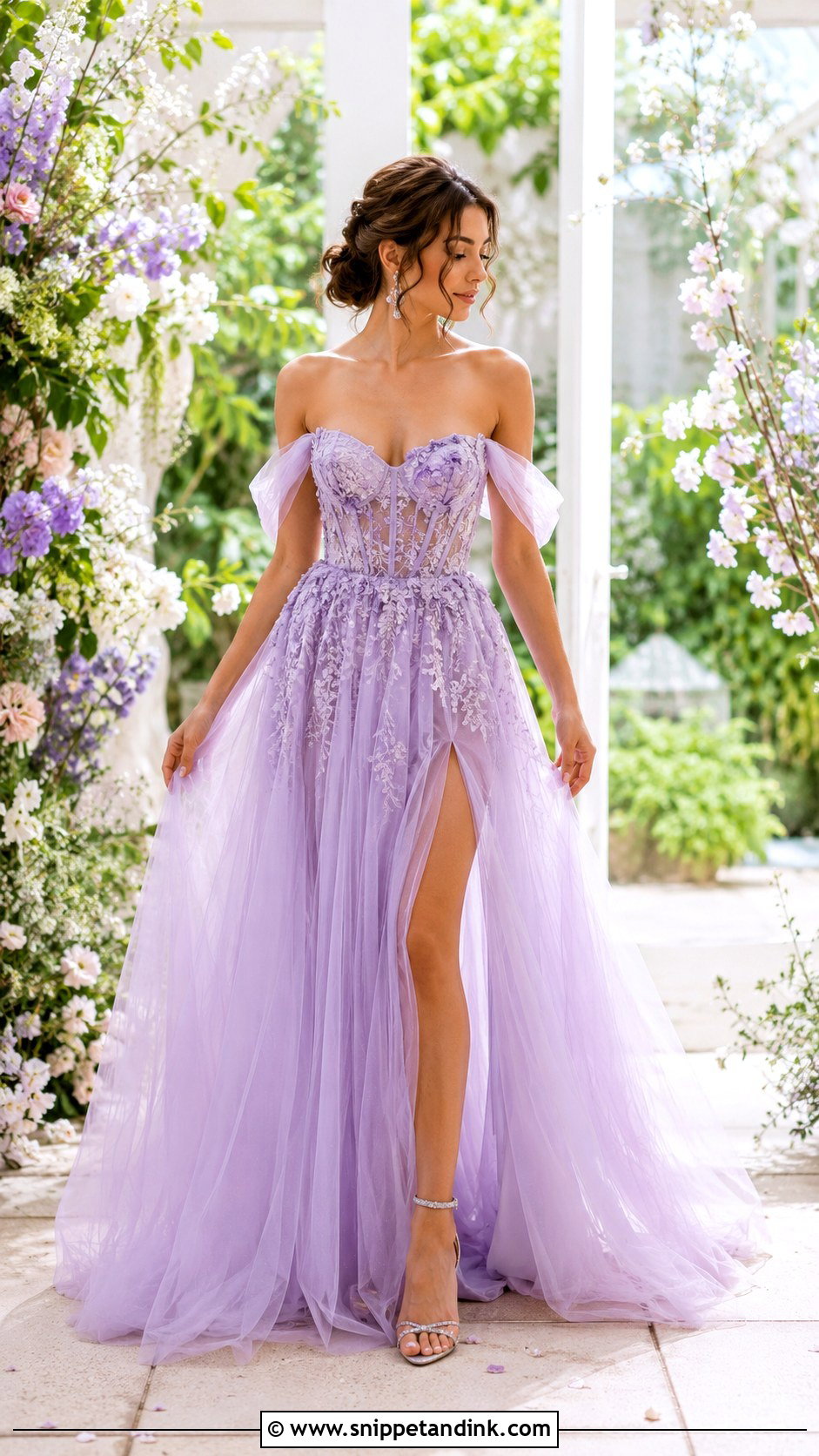
A lilac wedding dress is a little brighter and pinker than lavender, so it feels cheerful. A lilac tulle gown with a corset bodice, off-shoulder sleeves, silver heels and small crystal earrings is the romantic version; lilac satin in an A-line or column is cleaner. White flowers, pale purple details and soft greenery suit it. Keep makeup fresh and light. Lilac silk can fade if left by a sunny window for weeks, so store it in its bag until the day.
27. Coral Wedding Dress
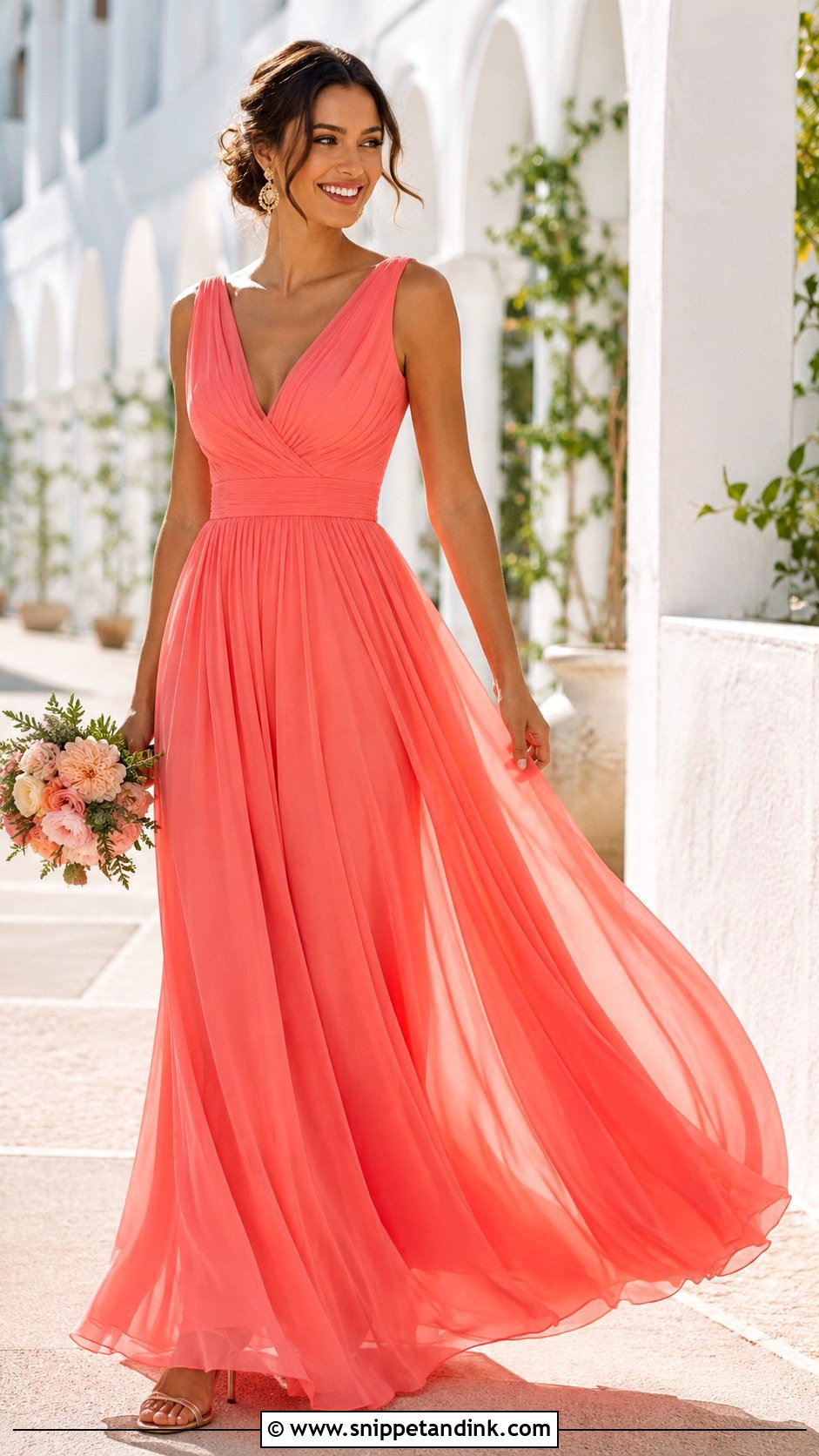
Coral is bright and warm and feels happy. A coral chiffon gown with a flowing skirt, fitted bodice, nude sandals, gold earrings and a simple updo is easy to wear at summer and destination weddings. For a formal version, coral satin or subtle embroidery. Cream flowers and greenery keep the color balanced. Coral can clash with very pink-toned lipsticks, so plan your lip color with the dress in hand.
28. Brown Wedding Dress
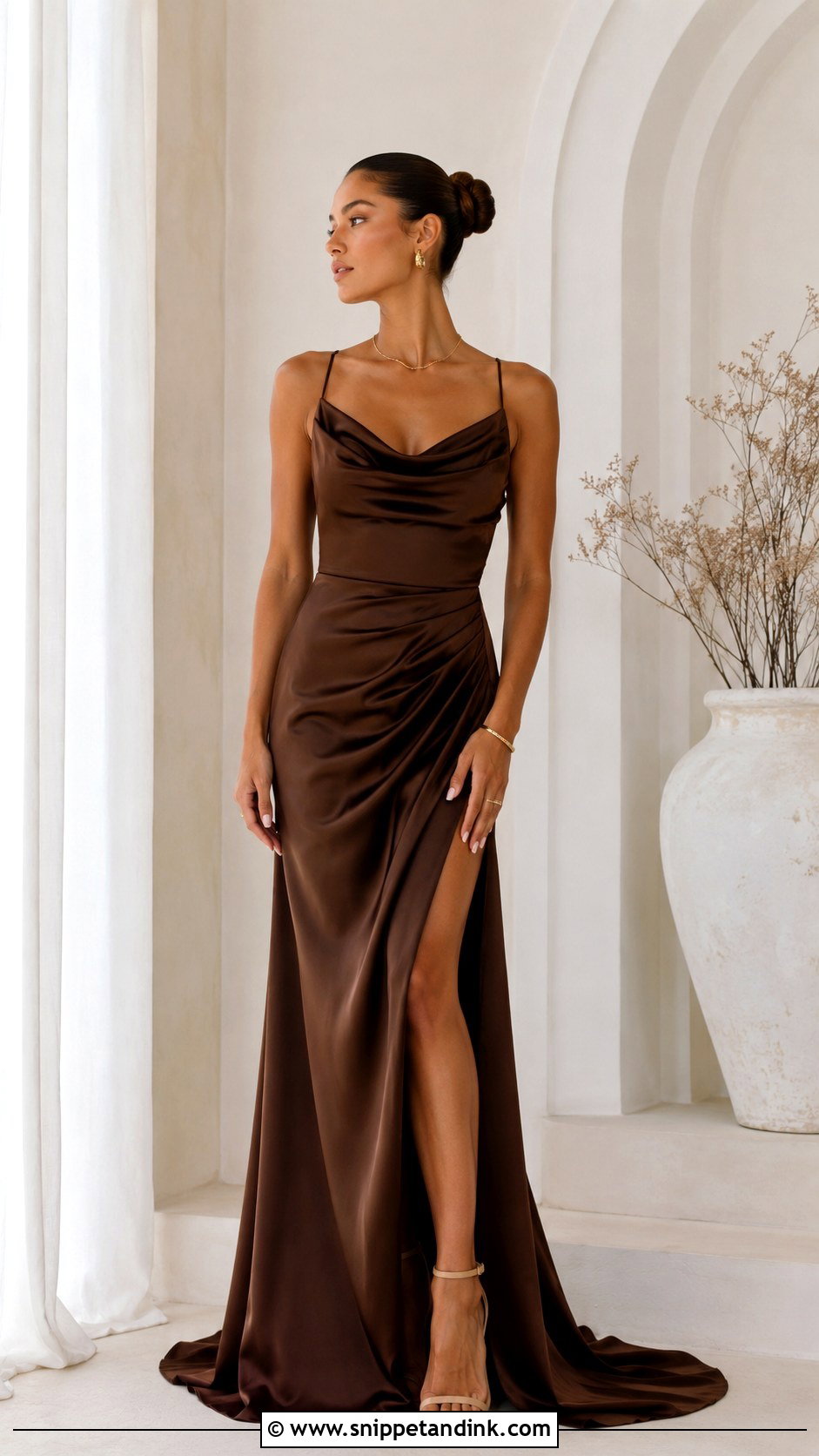
Brown surprises people. Cocoa, mocha, taupe-brown and espresso each have a different mood, and a good brown can look rich and modern. A chocolate satin gown with a draped neckline, gold jewelry, nude heels and a sleek bun is sophisticated; mocha tulle with lace appliqué and a light veil feels more bridal. Fabric quality matters more with brown than with almost any other color, because cheap fabric reads dull. Cream flowers, tan accessories and greenery suit it.
29. Orange Wedding Dress
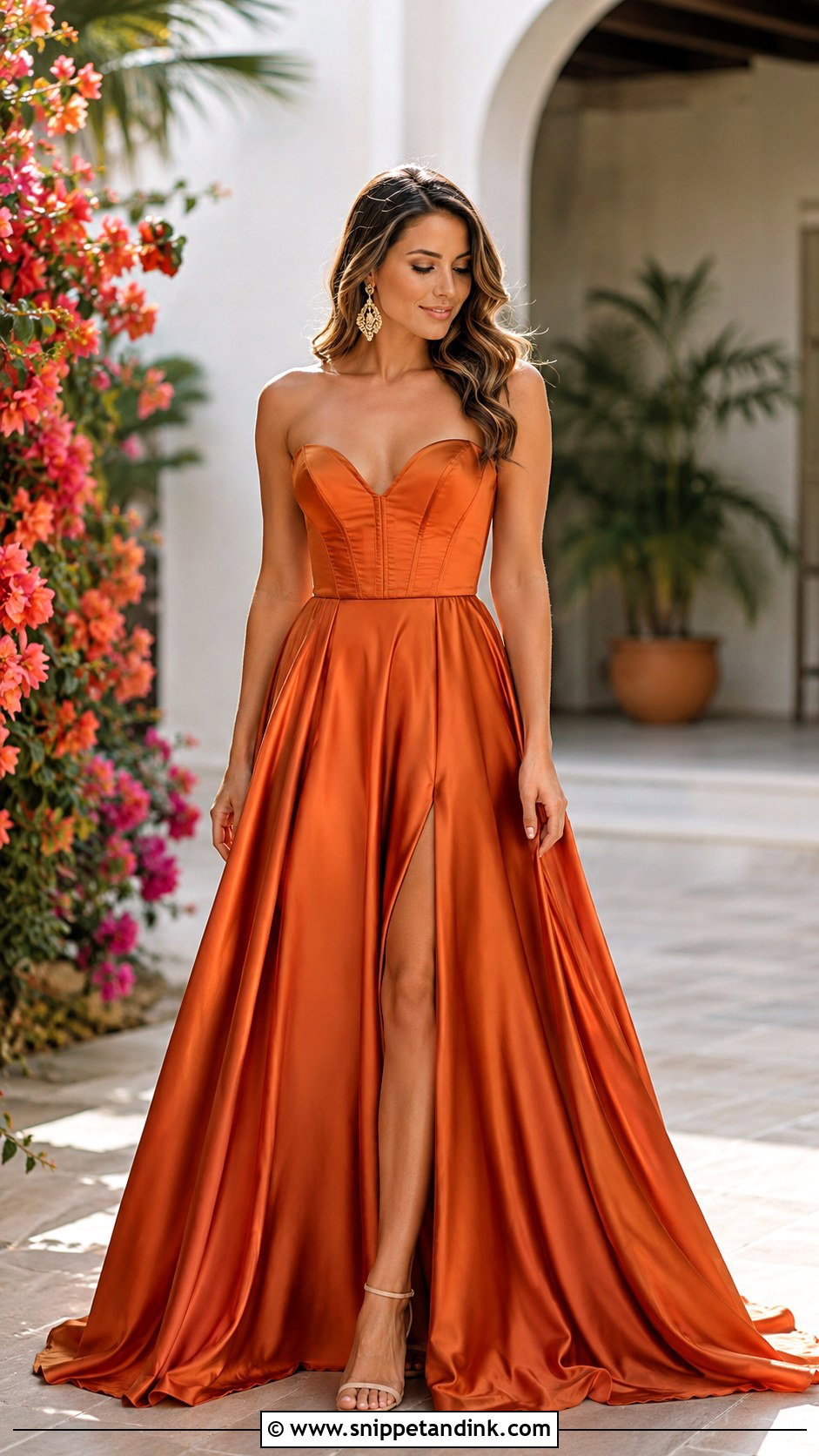
An orange wedding dress covers everything from soft apricot to deep terracotta to true bright orange. A terracotta satin gown with a fitted bodice, flowing skirt, gold earrings and neutral heels looks warm and elegant; apricot chiffon or organza is lighter. Orange is powerful, so the silhouette should be clean and the accessories minimal. Cream flowers and soft greenery suit it. Terracotta is the shade I’d start with for most brides, since it flatters a wider range of skin tones than bright orange.
30. Printed Wedding Dress
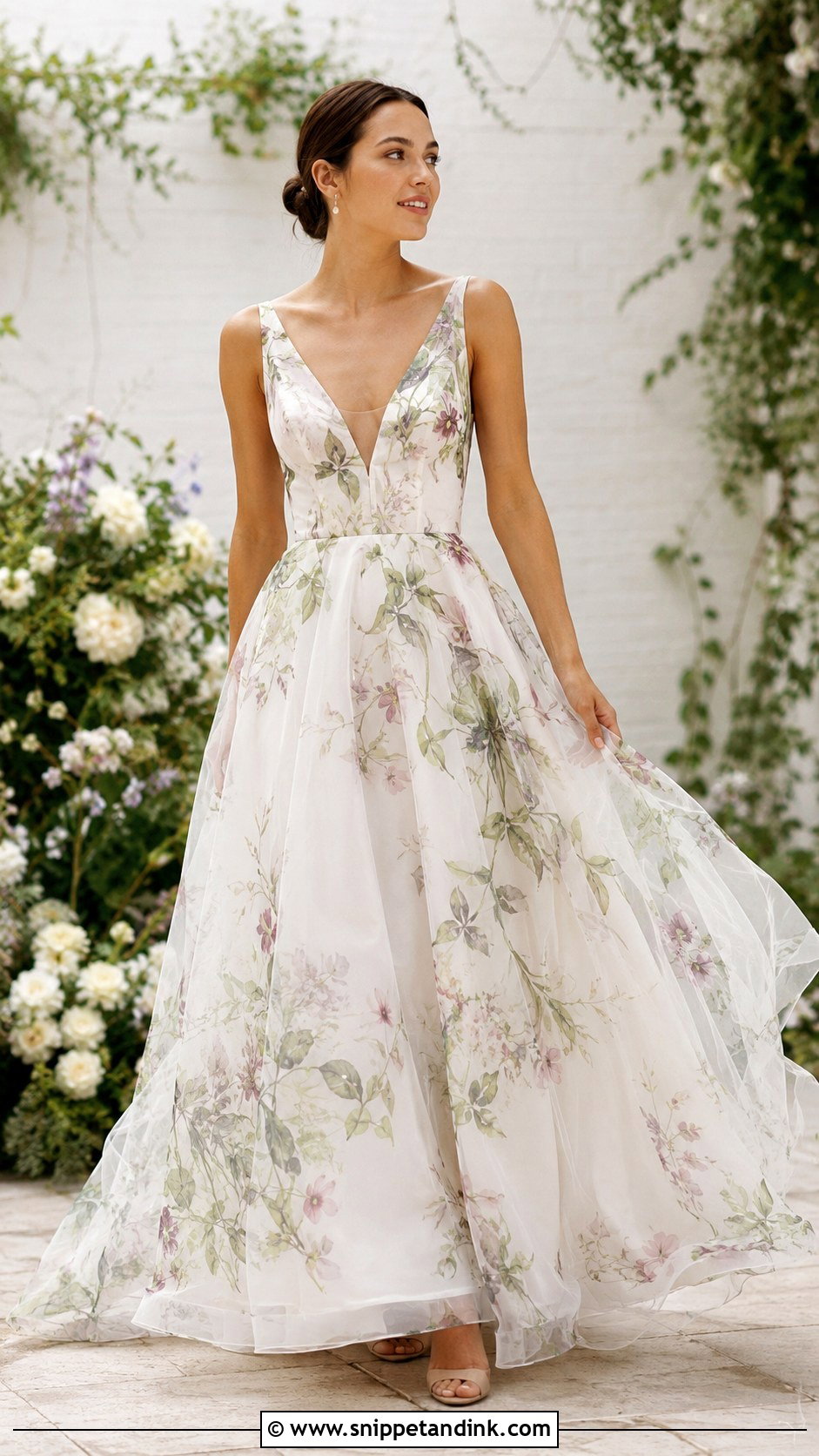
Prints are the most fashion-led choice here: watercolor florals, soft botanicals, abstract designs or vintage-style motifs. A printed organza gown with a fitted waist, full skirt, nude heels, simple earrings and clean hair looks balanced. Choose a print that looks refined rather than like a summer day dress. Soft colors and careful placement photograph best, and the scale of the print should suit your height. Keep the bouquet small and accessories minimal so the print doesn’t fight them.
Ordering and Altering a Gown That Isn’t White
Colored gowns are less often stocked in sample sizes, so many are ordered or made to order, and that adds time. Leave room in your schedule for a gown ordered several months ahead, plus a round of alterations. Some practical points that come up again and again in fittings:
- Order the veil, sash or any matching pieces from the same maker at the same time. Separate dye lots rarely match exactly.
- Ask your seamstress to use thread matched to the gown, not a near enough shade; it shows on dark and saturated colors.
- Pale silks and satins can show water marks and sweat, while black and navy show deodorant marks. Apply deodorant well before dressing and let it dry.
- Keep colored fabrics away from direct sunlight while they wait for the day. Some dyes fade surprisingly quickly near a window.
When Family Expected White
Some parents and grandparents feel strongly about white, and some cultures have their own bridal color, often red, with white carrying different meanings. If you’re worried about reactions, show close family the dress, or at least the color, before the day so nobody is caught off guard in the aisle. Explaining why the color matters to you usually does more than any photo.
If you’re a guest, the old rule still holds: avoid white and ivory, and if the bride has told everyone she’s wearing a color, don’t wear that color yourself.
A Colored Gown Still Needs a Bridal Finish
A colored gown isn’t a rejection of tradition; it’s another way to find the dress that feels like you. A good non-white bridal look needs the same care as any wedding dress: fit, quality fabric, balanced accessories and a mood that suits the venue. Blush, champagne, powder blue and sage are gentle. Black, red, emerald and burgundy are bold. Florals, ombre, embroidery and prints bring personality through pattern and texture. Whatever you choose, test it against your skin in real light before you commit.
You'll Like These Ideas:







Leave a Reply