
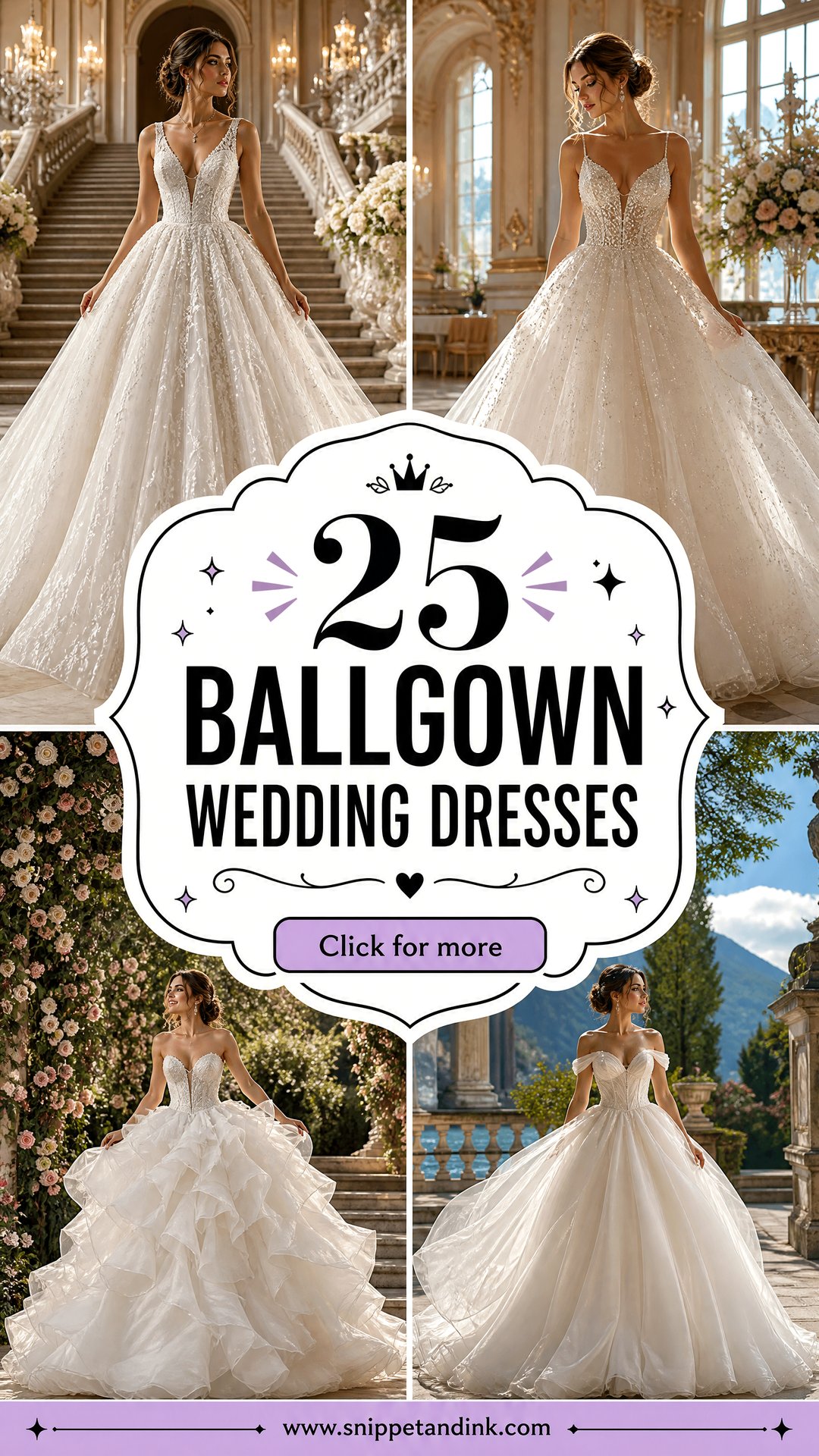
A ballgown is the one silhouette where the skirt does half the talking, so the fabric and the bodice underneath matter more than anything sewn on top. Not every full skirt is a classic princess shape, either. Crisp satin holds a clean dome, tulle floats and sways, and a basque or corseted waist changes where the volume starts. When I pull gowns for a bride, I ask about her venue and how long she’ll be on her feet before I ask about lace, because a ballgown that’s wrong for the room is exhausting by the first dance. The 25 gowns below each come with notes on how they actually wear.
How Much Skirt Your Venue, Car and Aisle Can Take
Ballgowns photograph like nothing else, but they take up real space, and I’d rather a bride plans for that now than discovers it on the morning. Before you fall for the fullest skirt in the shop, run through the practical side.
- Walk the aisle. A full skirt can easily spread a metre or more across at the hem, and a narrow chapel aisle with pew ends will catch it on every row.
- Think about the car. A small sedan is a squeeze, so a larger vehicle with a wide rear door saves crushing the skirt. Someone should gather the layers in beside you, not sit on them.
- Check doorways and stairs at both venues, including the bathroom stall you’ll actually use.
- Ask what creates the volume. A hooped petticoat gives a perfect bell but can tip up when you sit, while layered tulle crinolines are easier to sit in but flatten slightly through the day.
Weight is the question to ask out loud
Satin and Mikado ballgowns are heavier than tulle, and beading adds more. In the shop you wear a sample for twenty minutes; on the day you’ll wear yours for ten hours or longer. Ask the consultant to let you walk the length of the salon a few times and sit down twice. If your shoulders or waist ache after that, the gown will feel harder by evening, and the same shape usually exists in a lighter fabric.
1. Strapless Satin Ballgown Wedding Dress
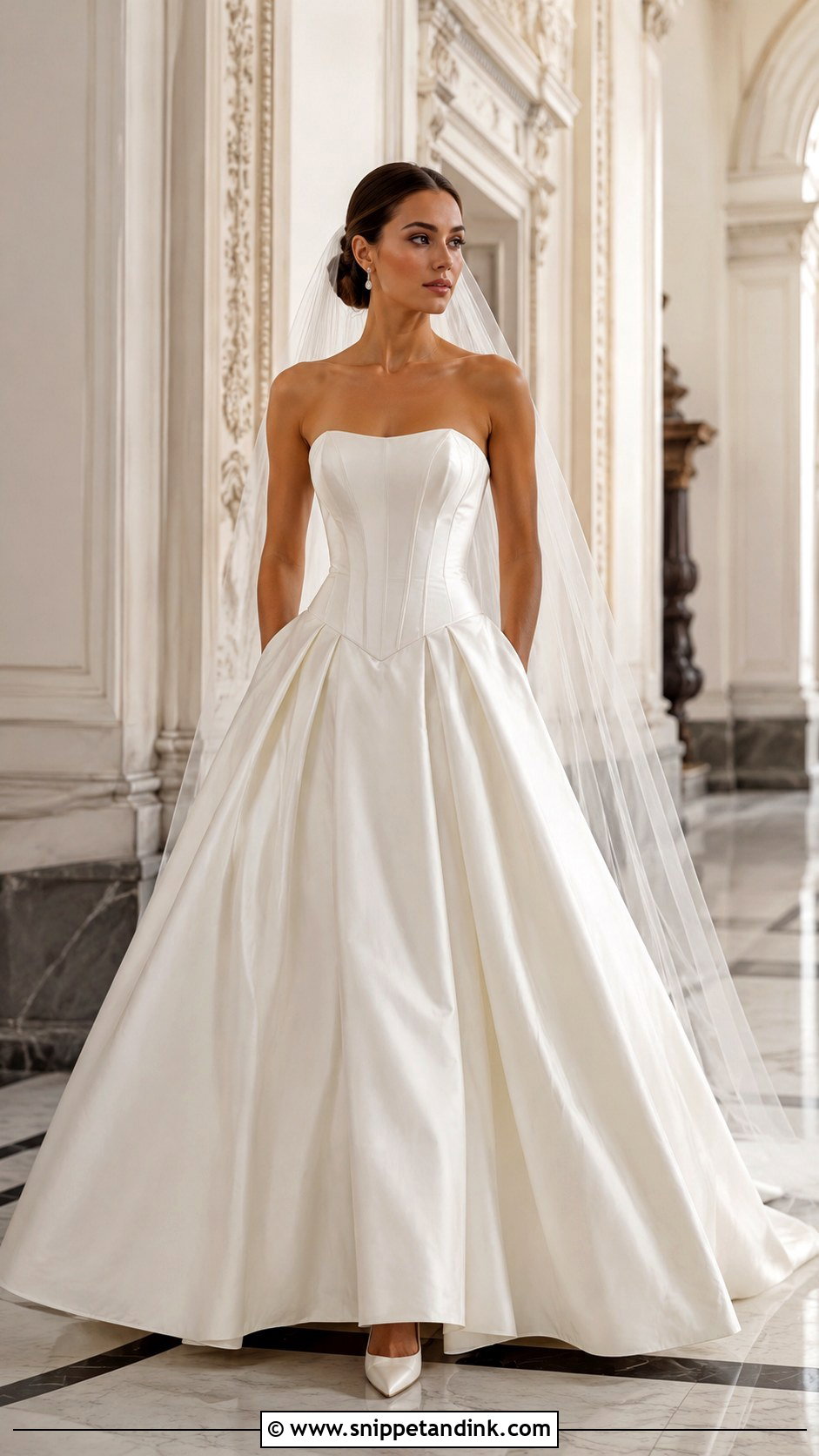
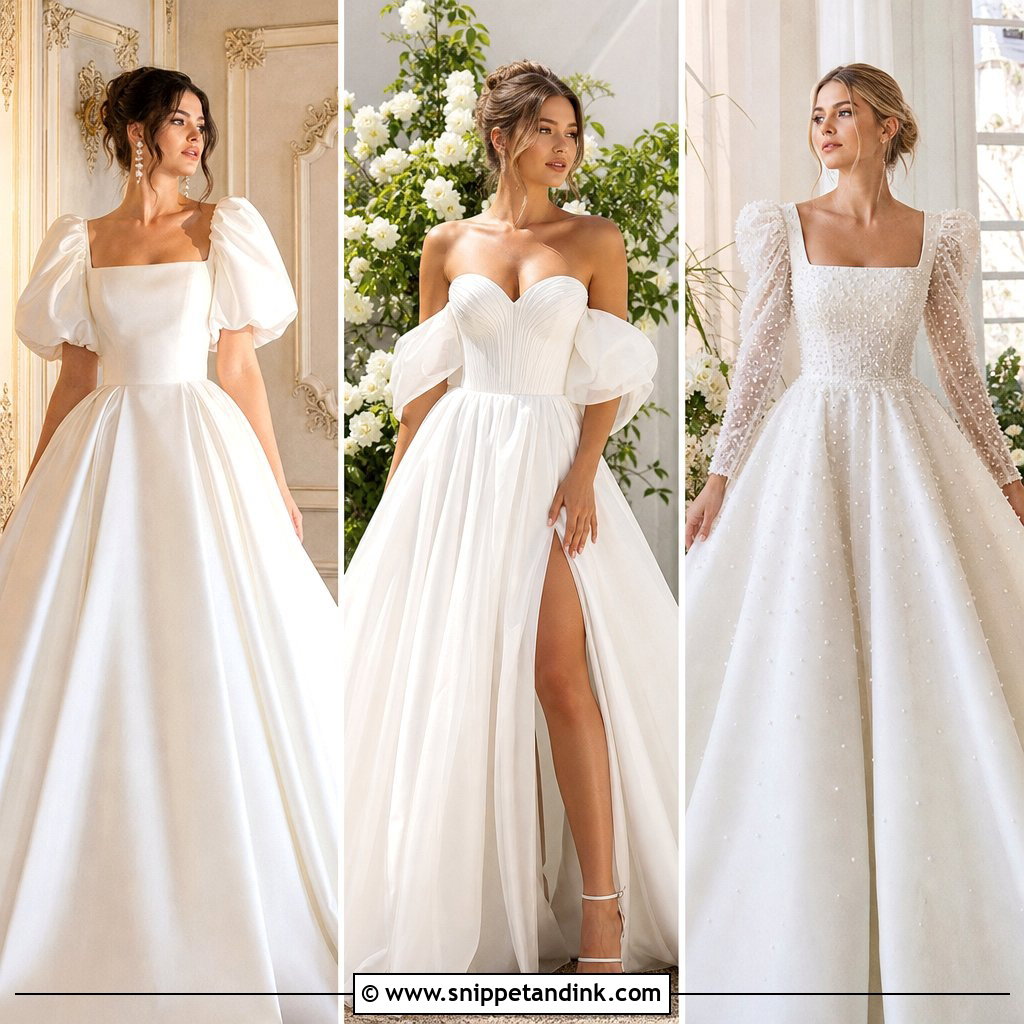
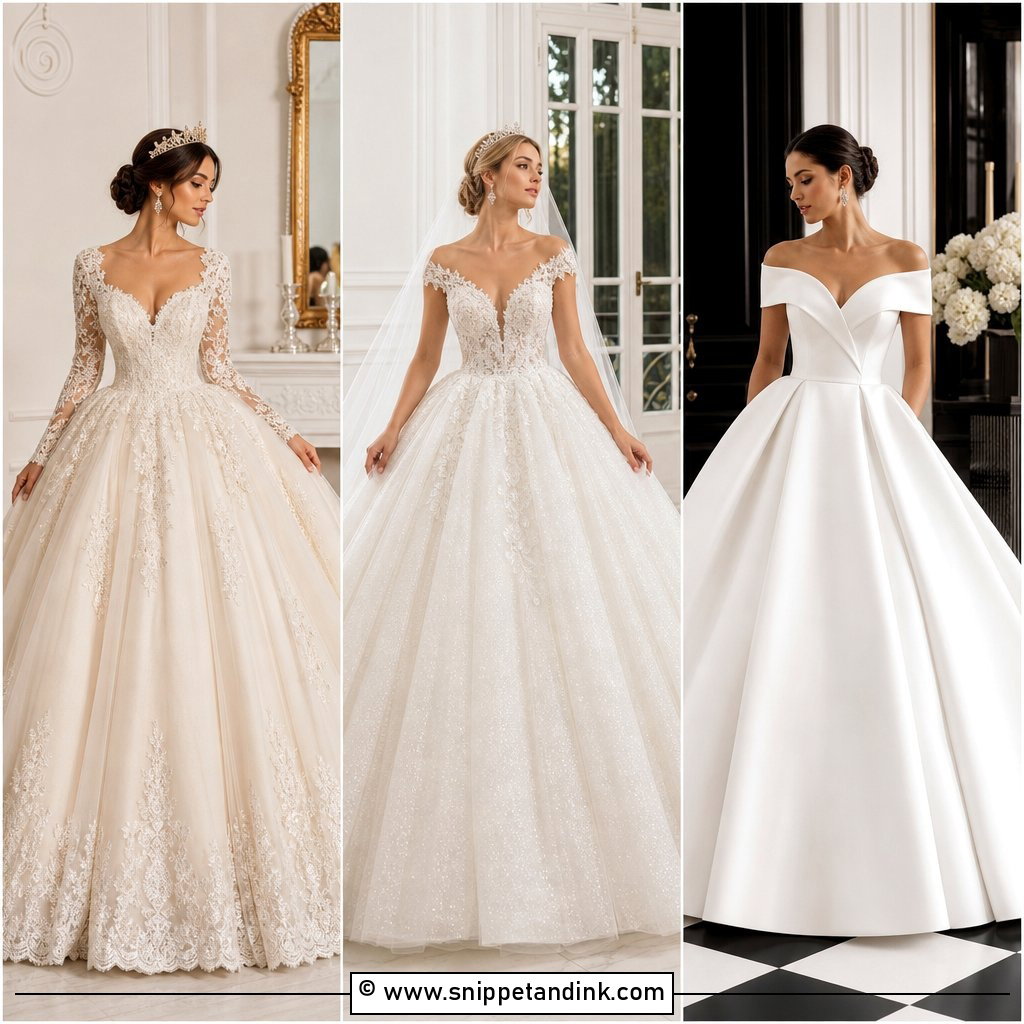
Satin is the honest test of a ballgown. With no lace or beading to hide behind, every seam and every bit of fit shows. A strapless satin bodice has to be fitted snugly at the ribcage so it stays put without you tugging at the top edge, and that work happens at fittings, not in the shop. Waist pleating helps by giving the skirt a defined starting point. I keep accessories to a fine necklace or drops, a sleek low bun and a long veil, and I ask brides to sit down in it once before saying yes, since heavy satin creases across the lap. Formal ballrooms and estate venues suit it best.
2. Off Shoulder Ballgown Wedding Dress
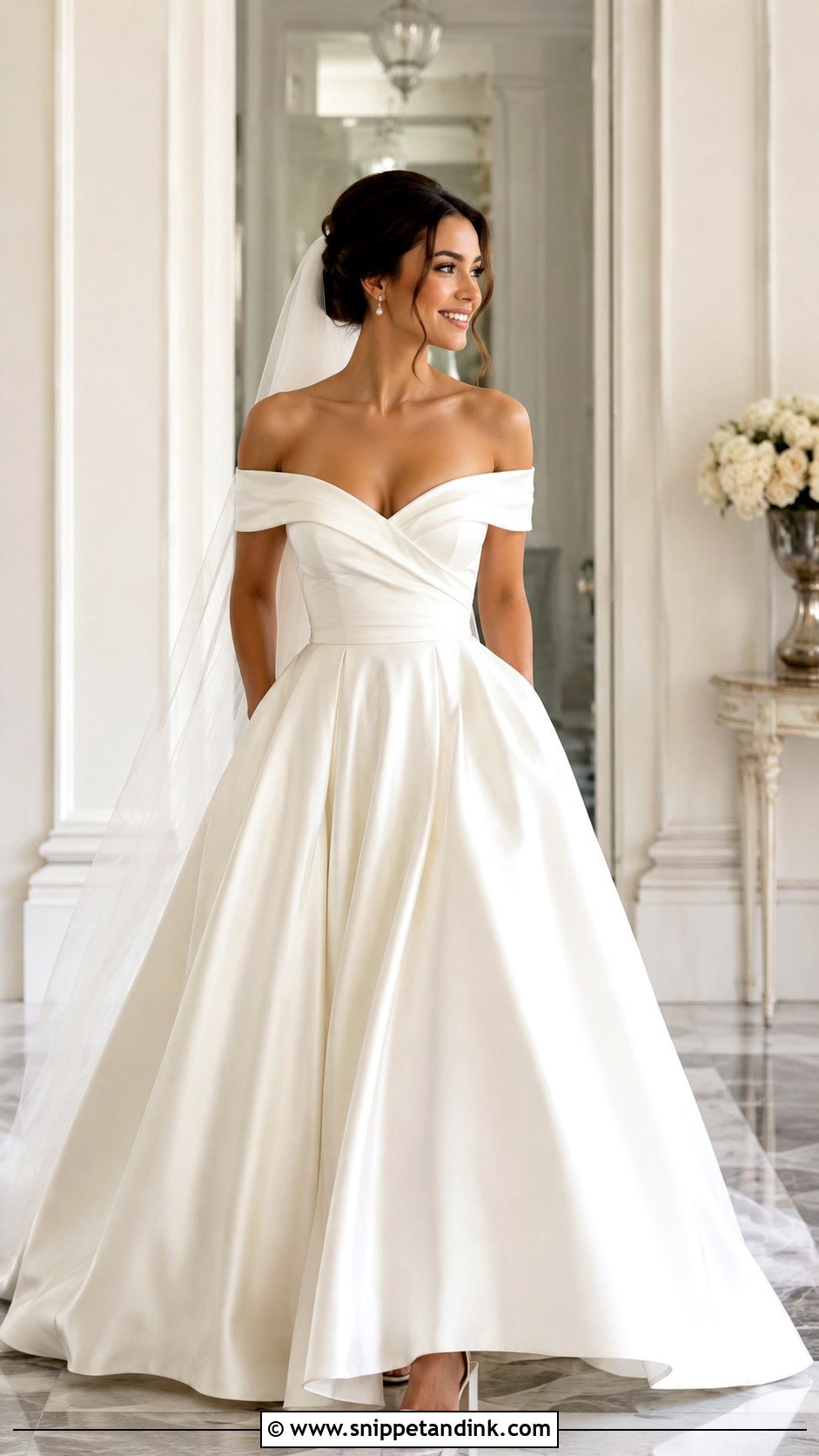
The off-shoulder band is the part I watch at fittings. It has to sit on the upper arm without sliding down, and without cutting in when you lift your arms to hug someone. The fitted bodice beneath it carries the real support. Satin reads the most formal, while tulle feels lighter against that wide neckline. Pearl earrings and a curled updo keep the shoulders clear, block heels disappear under the skirt, and a cape veil adds movement, as long as it doesn’t drag the band down at the back.
3. Long Sleeve Lace Ballgown Wedding Dress
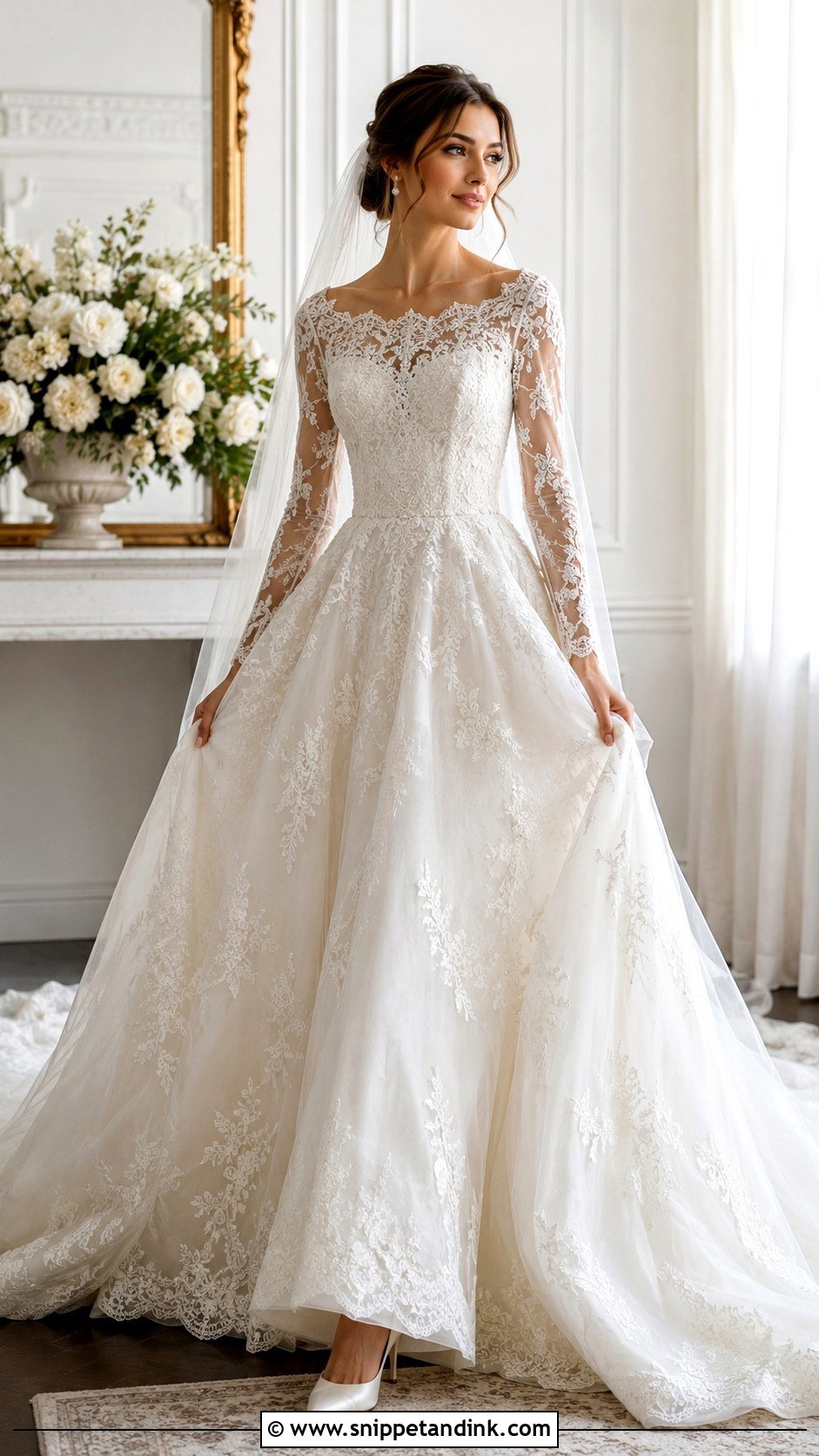
Long lace sleeves come down to the armhole. Cut too low, it stops you raising your arms past your shoulders, which matters for hugging and dancing, so I always ask brides to reach up during a fitting. Lace that continues lightly onto the bodice and fades into the skirt looks balanced; a hard line where the lace stops can cut you in half visually. Cooler seasons and formal venues suit this gown. Pearl studs, satin heels and a smooth chignon or half-up style are plenty. Anything more crowds the lace.
4. Tulle Ballgown Wedding Dress
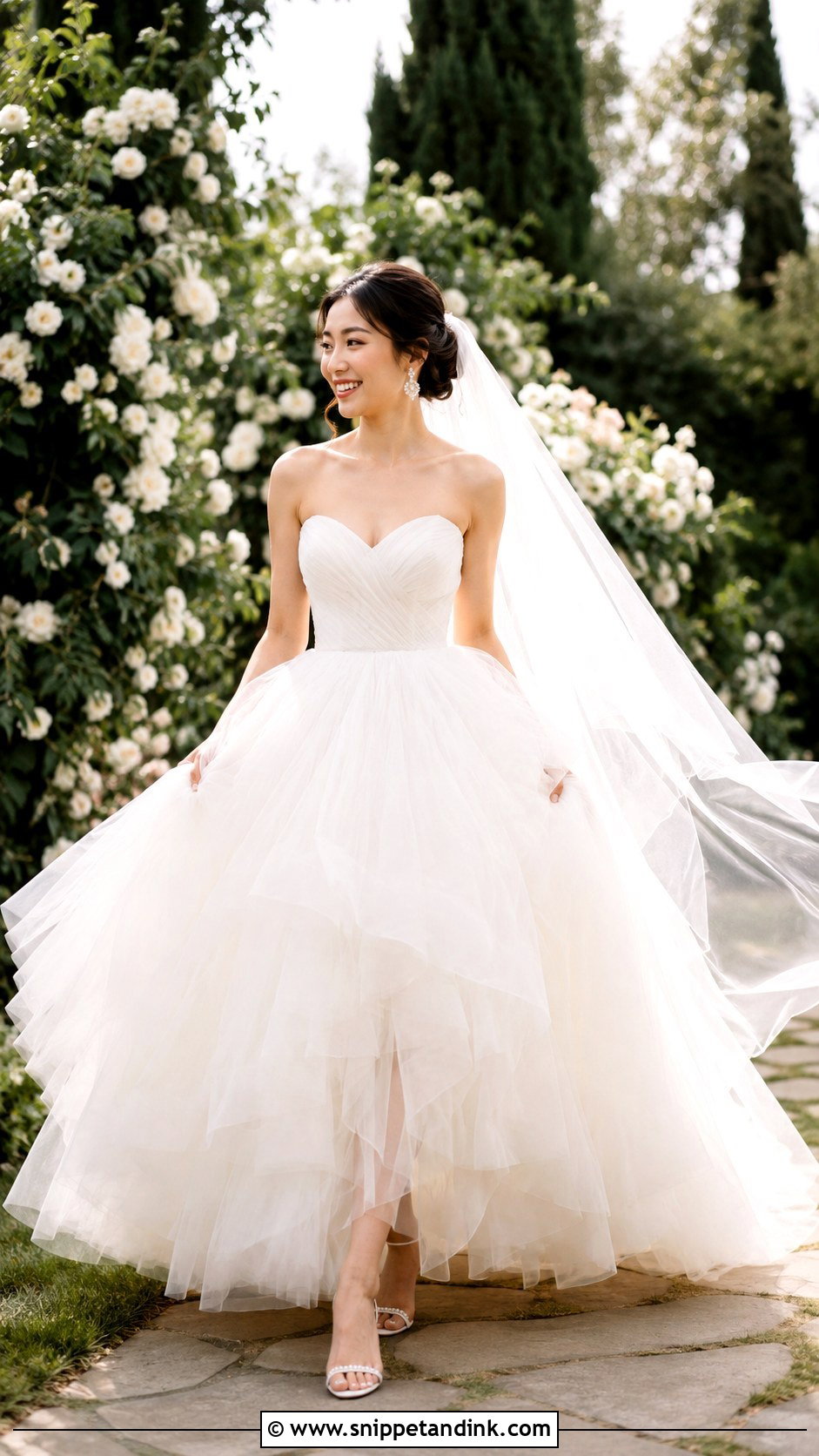
Tulle gives you volume without the weight of satin, which is why it’s the ballgown I suggest for long days on your feet. The trade-off is that it snags on stone floors, heel buckles and bouquet wire, so a few pulled threads by evening are normal. A fitted bodice, a sweetheart neckline or thin straps keep the top from disappearing under all that skirt. If the gown has no sparkle, crystal earrings or a small comb add it. Gardens and grand halls both work, though I’d avoid long gravel paths.
5. Mikado Ballgown Wedding Dress
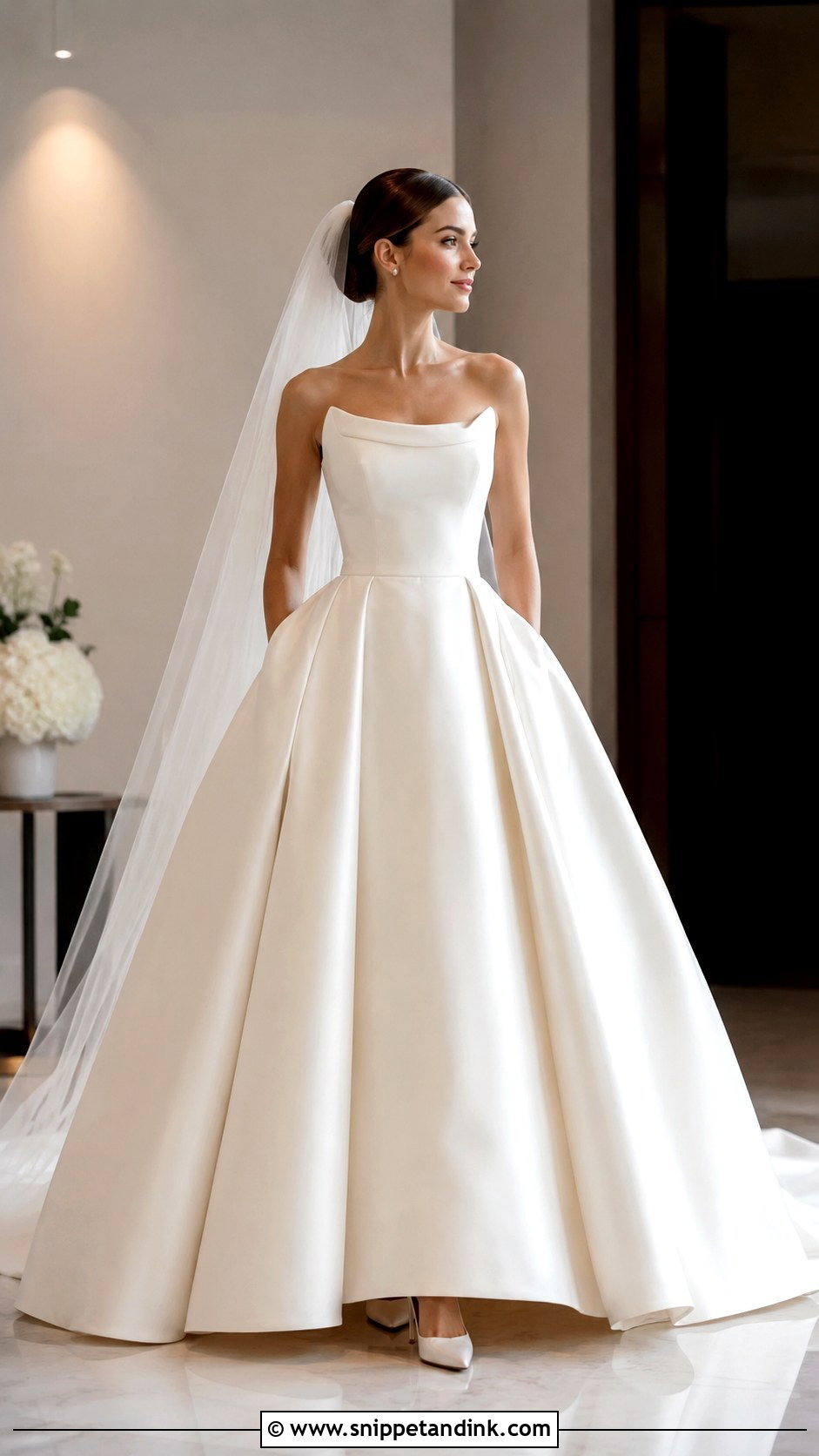
A Mikado ballgown wedding dress relies on the fabric itself, a heavy weave with a low sheen that holds a pleat almost like paper. That body is its strength and its catch. Mikado is warm, fairly heavy and shows every crease from a car ride, so I plan a steam at the venue before the ceremony. Sleek ivory pumps, a structured bun and a clean-edged veil are all it needs. Black-tie and hotel weddings suit it, and the waist must be tailored precisely, because there’s no soft fabric to forgive a loose seam.
6. Basque Waist Ballgown Wedding Dress
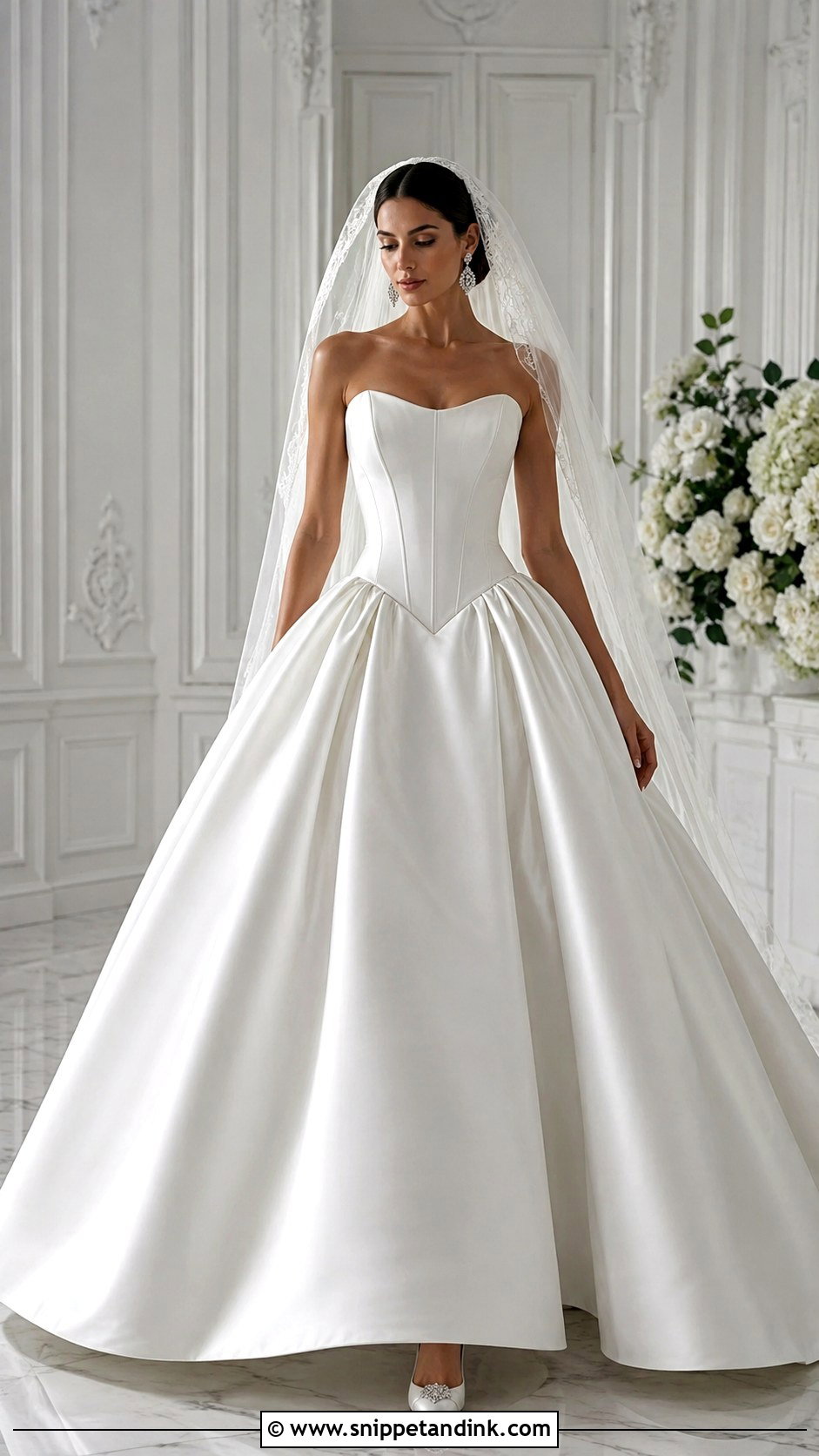
The point of a basque waist dips below the natural waist, which lengthens the bodice and makes the skirt look even fuller. I measure where that point lands carefully. Too low on a short torso, and sitting down pushes it into your lap. On a longer torso it’s one of the most flattering shapes in bridal. Keep the veil soft and the earrings small so nothing hides the waistline, and choose satin or embroidered tulle, which show the shape most clearly in formal portraits.
7. Corset Ballgown Wedding Dress
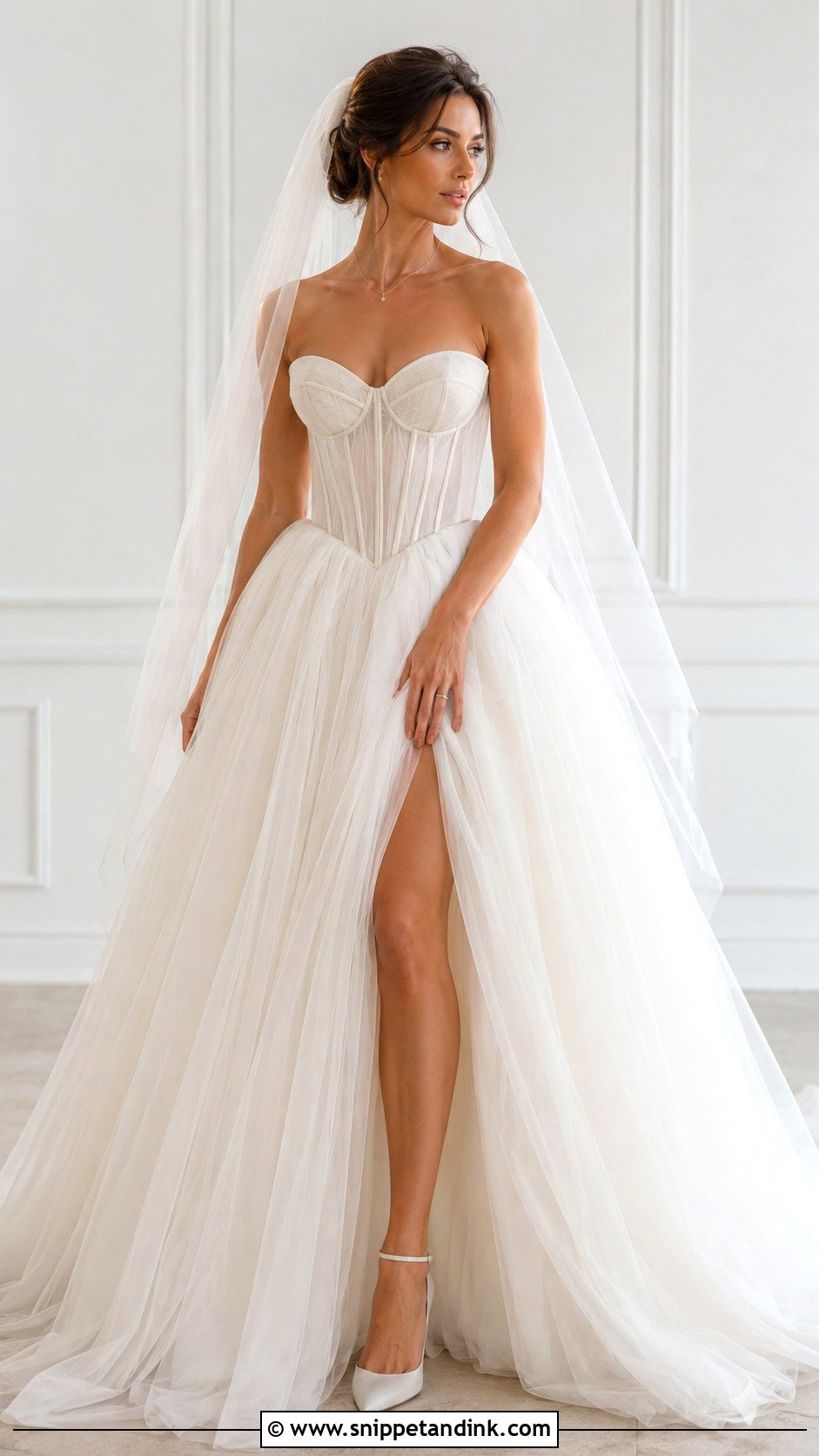
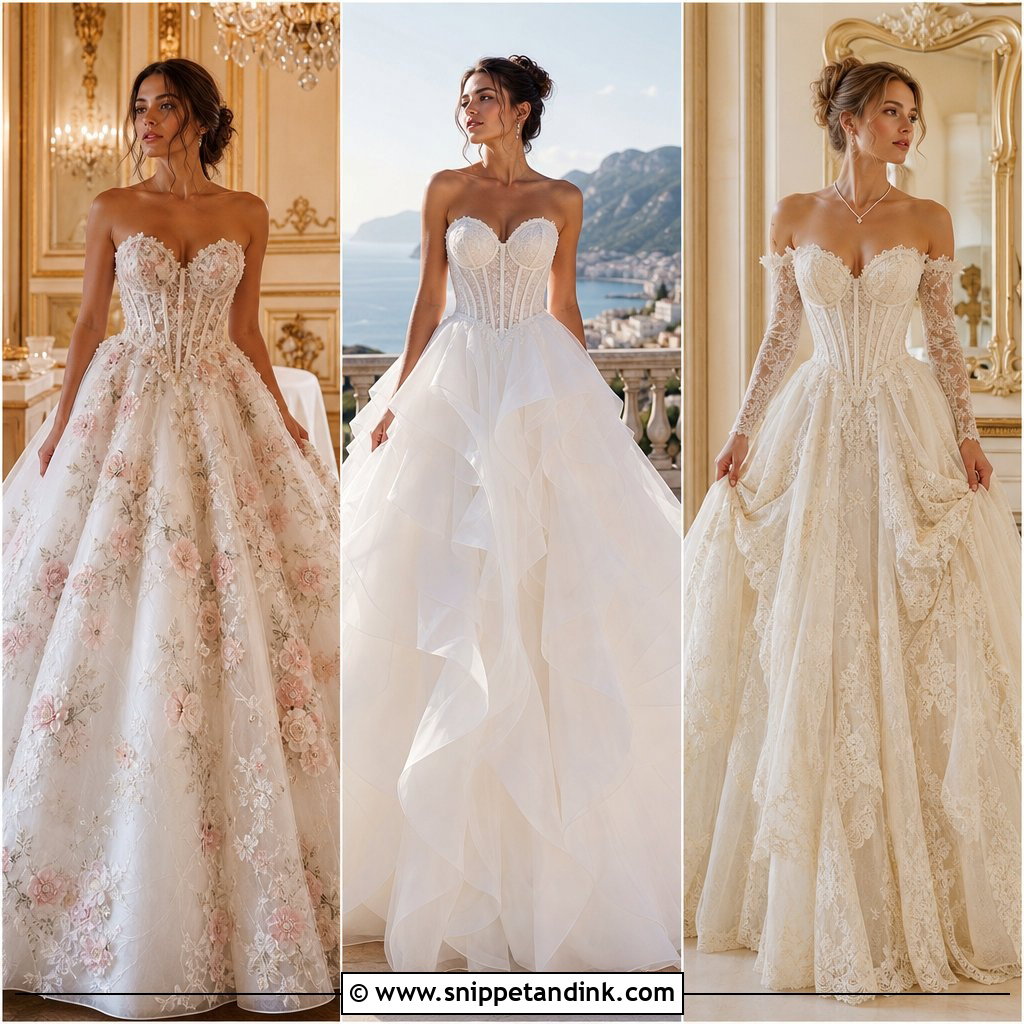
Corset gowns come in two kinds: visible boning that’s part of the design, and hidden structure under a smooth bodice. Both should feel snug, never tight. My test at fittings is simple. You should be able to take a full breath and imagine eating dinner without the bones digging into your hips. Satin, organza or lace skirts all balance the fitted top, and a sweetheart neckline softens the corset where a straight one sharpens it. Budget for alterations, because a corset that isn’t taken in to your measurements is the uncomfortable one people warn you about.
8. Floral Applique Ballgown Wedding Dress
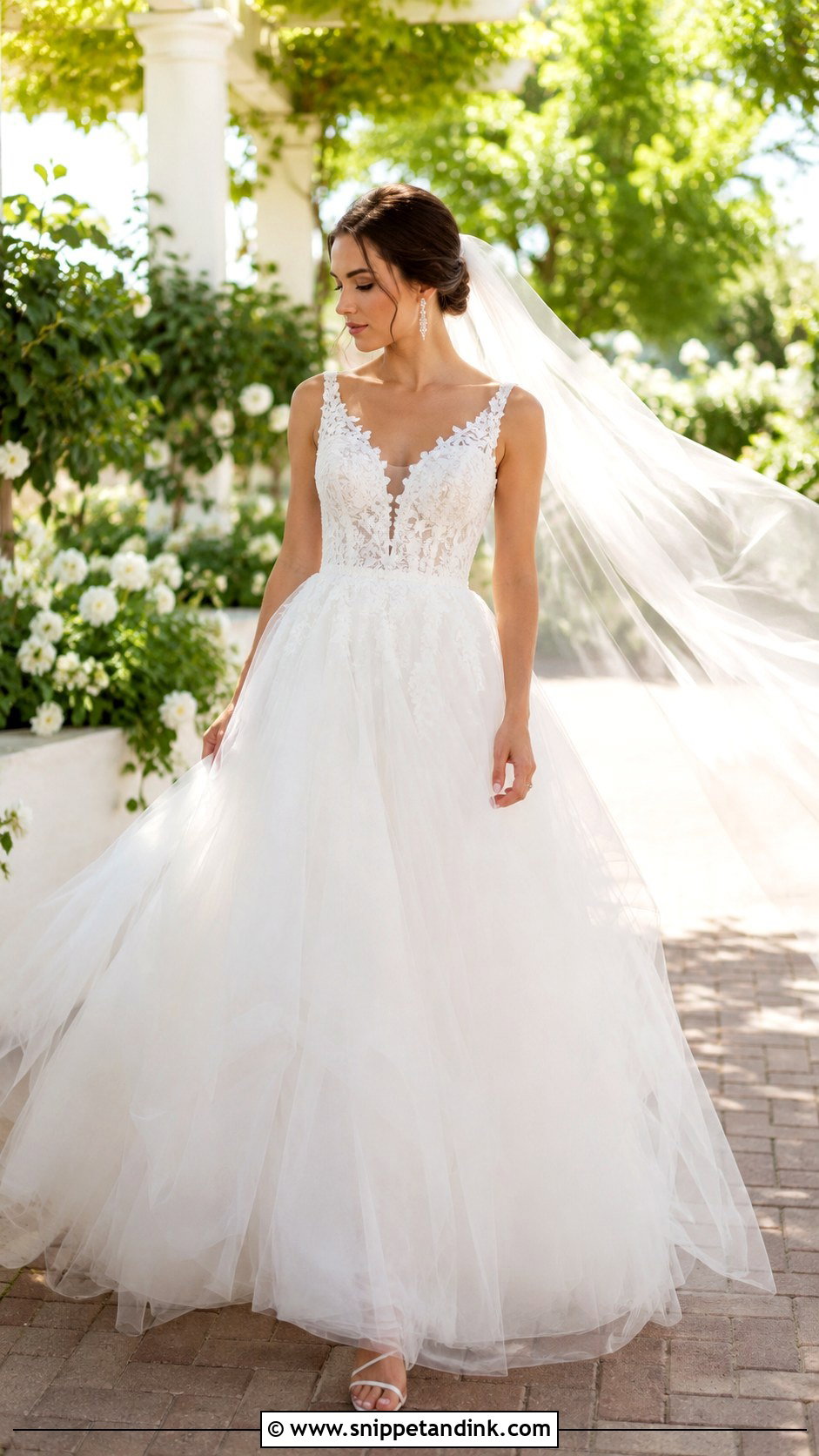
Appliqué flowers are stitched on by hand, so they’re the first thing I inspect on a sample that’s been tried on a lot. Loose petals and dangling threads tell you how carefully the gown was made. Placement changes the whole dress, from a covered bodice to a scatter across the skirt or a trail down the train. Heavy appliqué means delicate jewelry, with soft waves and pearl pins to finish. Spring and summer feel natural for it, though deeper ivory with textured florals sits well in fall too.
9. Square Neck Ballgown Wedding Dress
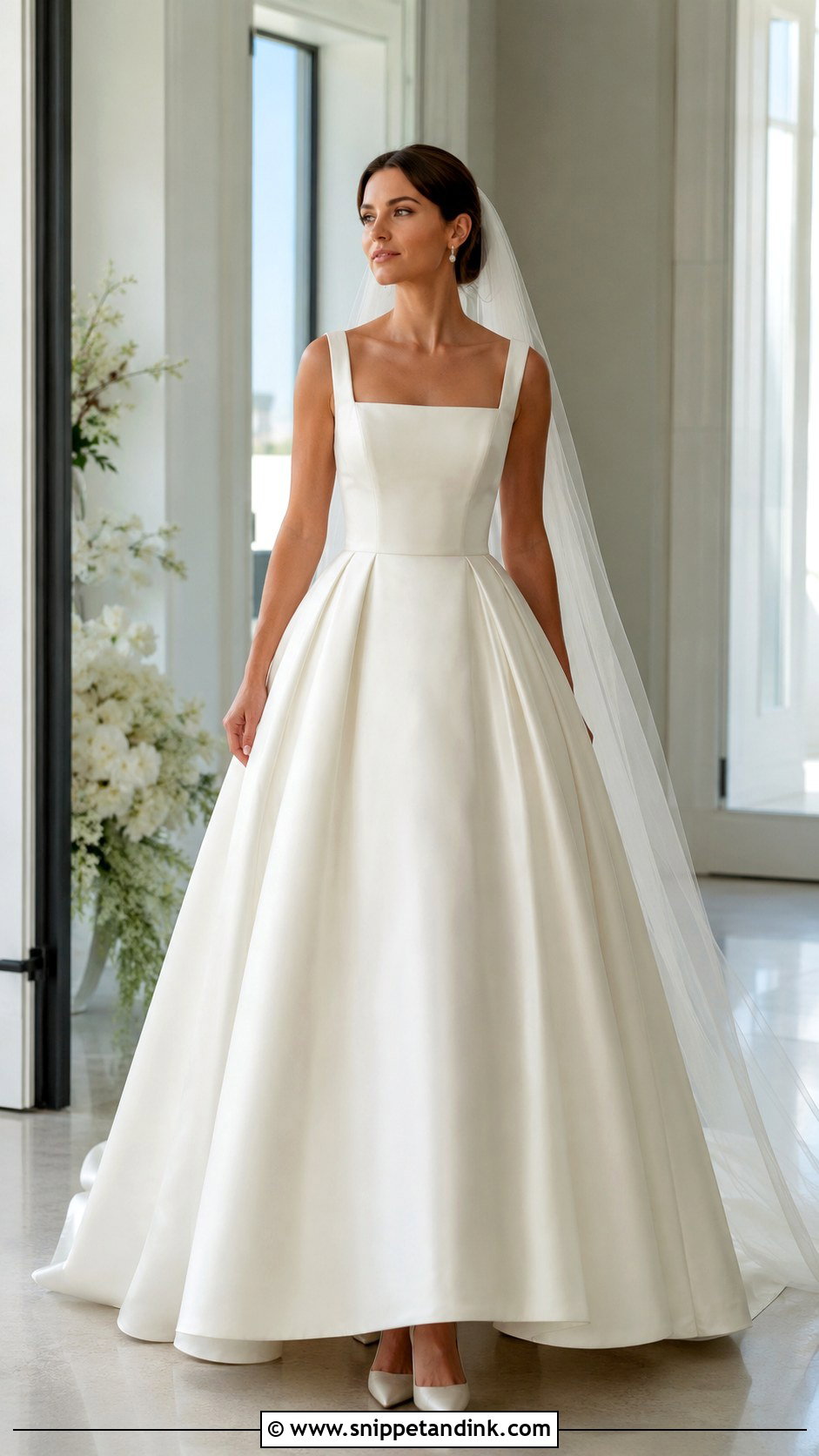
A square neck ballgown wedding dress gives the top half straight lines to balance a round skirt, and it frames the collarbone cleanly. The straps are where I spend my time. Wider ones carry a fuller bust comfortably; slimmer ones look lighter but need a well-built bodice underneath. Satin keeps it classic, while crepe or Mikado pushes it modern. A sleek bun and a veil tucked low at the back keep the neckline unbroken, and opera gloves suit this cut better than almost any other.
10. Sweetheart Ballgown Wedding Dress
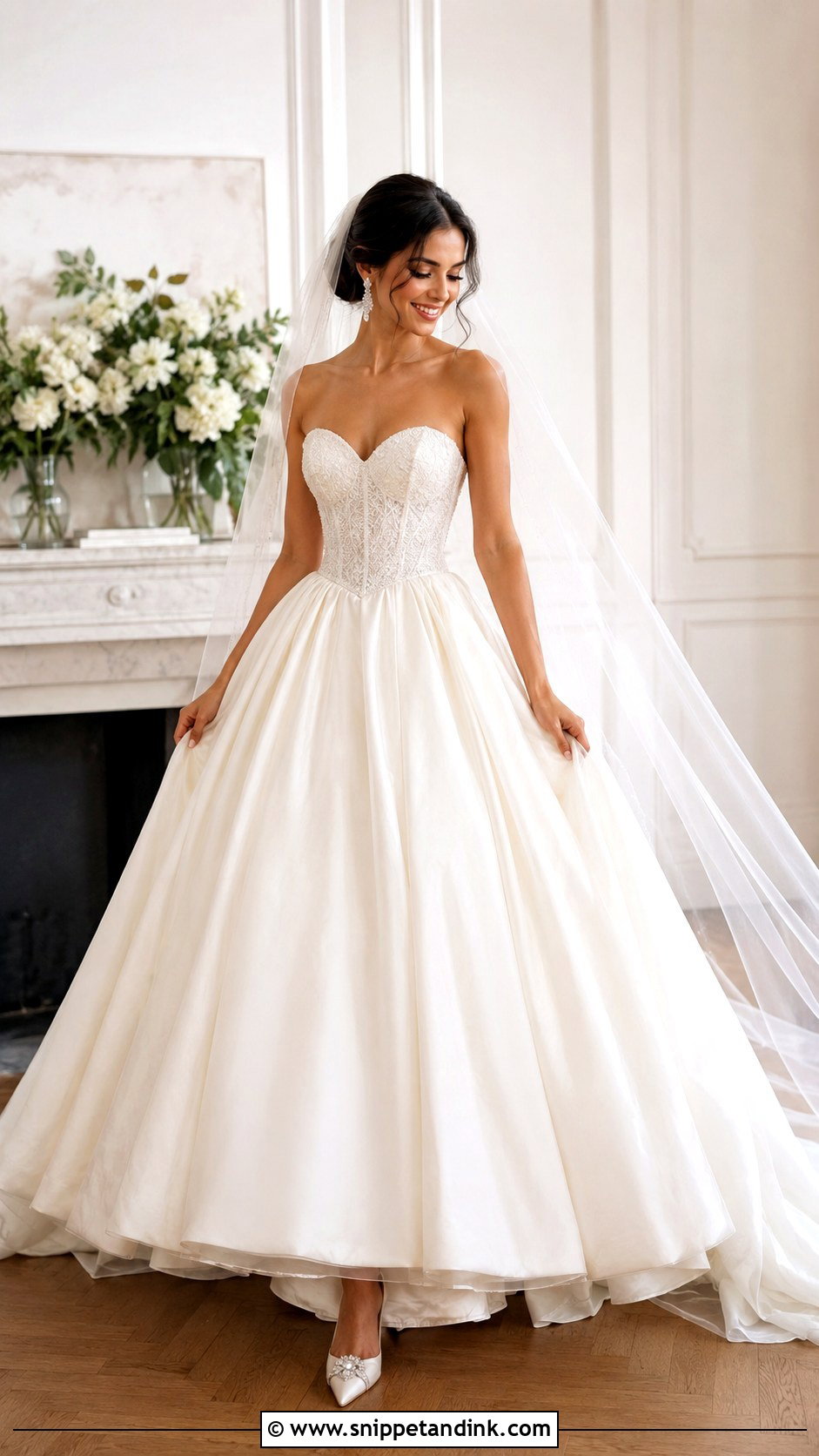
Sweetheart necklines soften the chest line and suit a wide range of figures, which is why they never leave bridal. Strapless versions need proper inner construction, a waist stay or built-in cups, so the gown is carried by your waist rather than gripping at the top edge. That’s the first question I’d ask a salon before ordering. Minimal satin, beaded lace and layered tulle all suit the curve. A fingertip veil ends right at the hand line, so it won’t tangle with the skirt as you walk.
11. Simple Ballgown Wedding Dress
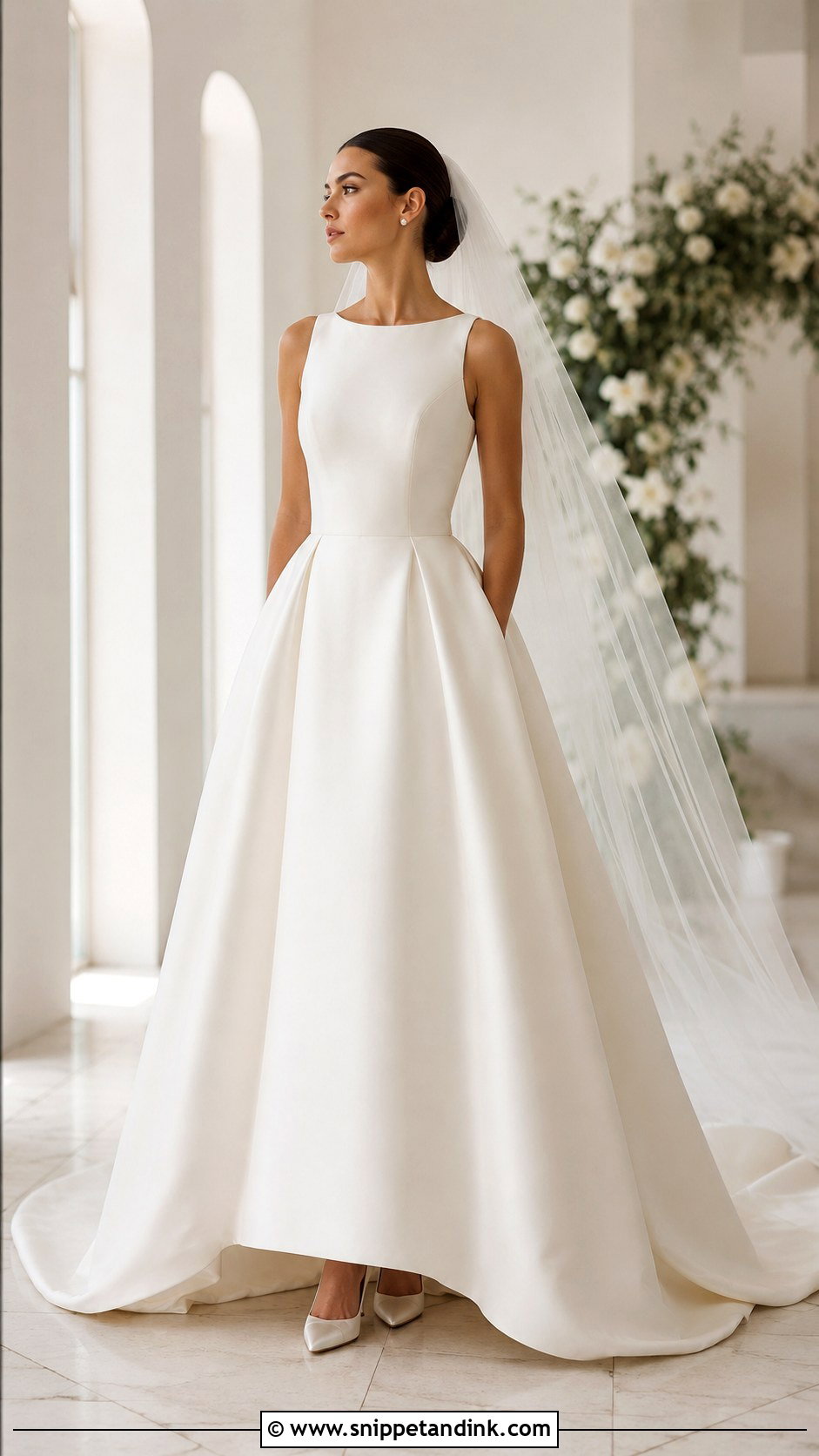
A plain ballgown hides nothing, and that’s exactly why I like it on brides with strong personal style. With no beading to distract, the cut has to be right: a crisp waist seam, a smooth bodice and a skirt falling without dents from the petticoat. Look for quiet details like covered buttons or hidden pockets. Pearl studs, satin pumps and a sleek veil leave room for a big bouquet or a sculpted hairstyle. Of every gown here, this is the one I find ages best in an album.
12. Beaded Ballgown Wedding Dress
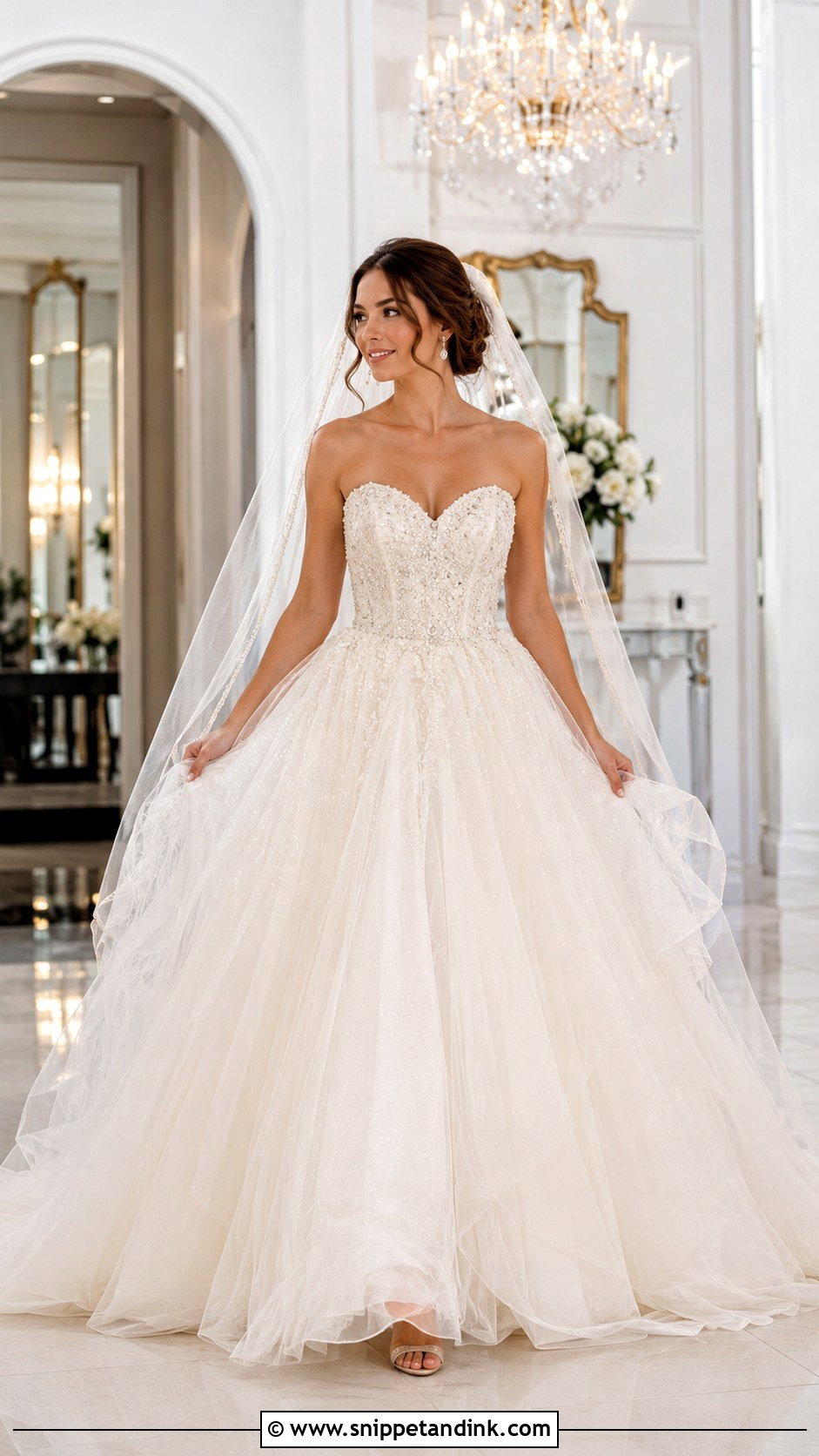
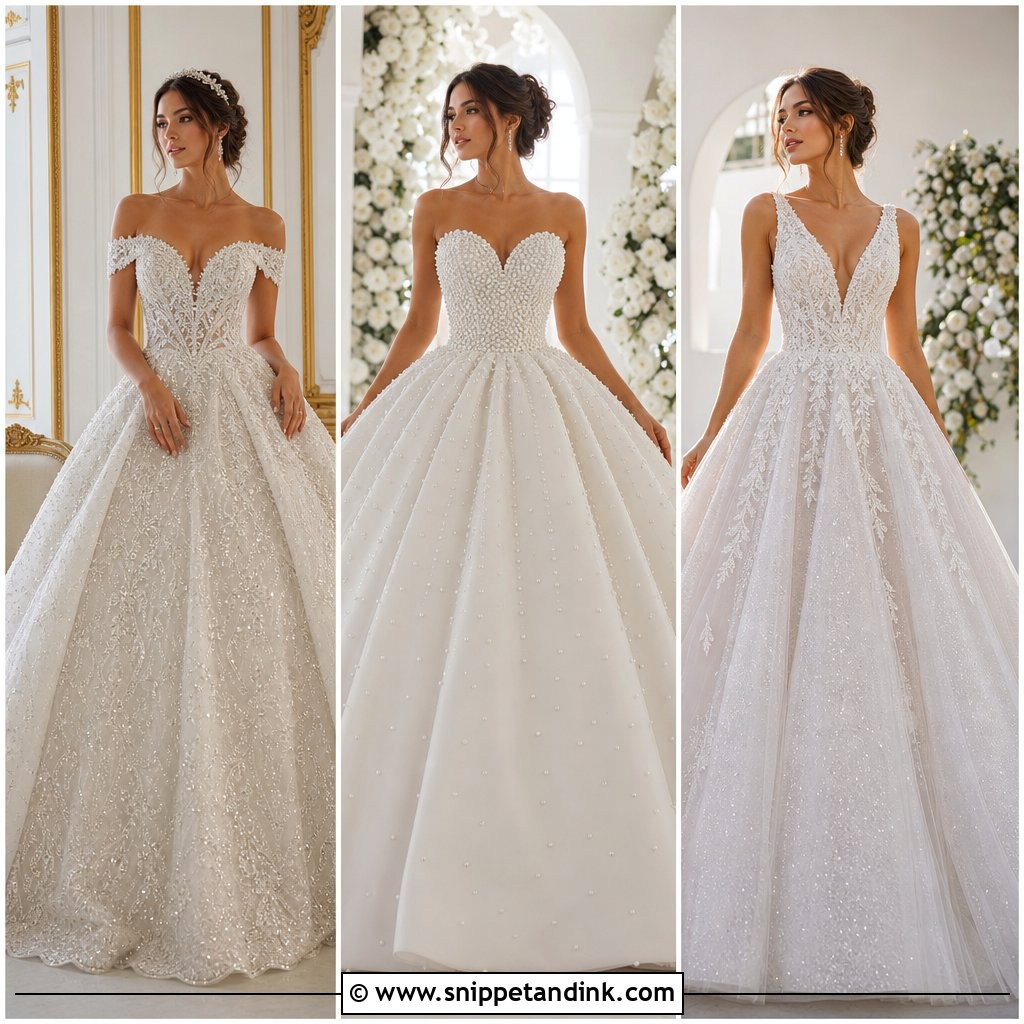
Beading adds weight fast, especially when it runs down tulle layers, and that weight pulls on the shoulders and waist by evening. When a bride tries a heavily beaded gown, I ask her to stand in it for ten minutes before deciding. Done well, beading traces lace patterns or sits lightly on the bodice so the dress catches candlelight rather than glaring under a flash. Simple earrings and a smooth updo are enough. Comfortable heels aren’t optional with this one, and it shows best at evening receptions.
13. Drop Waist Ballgown Wedding Dress
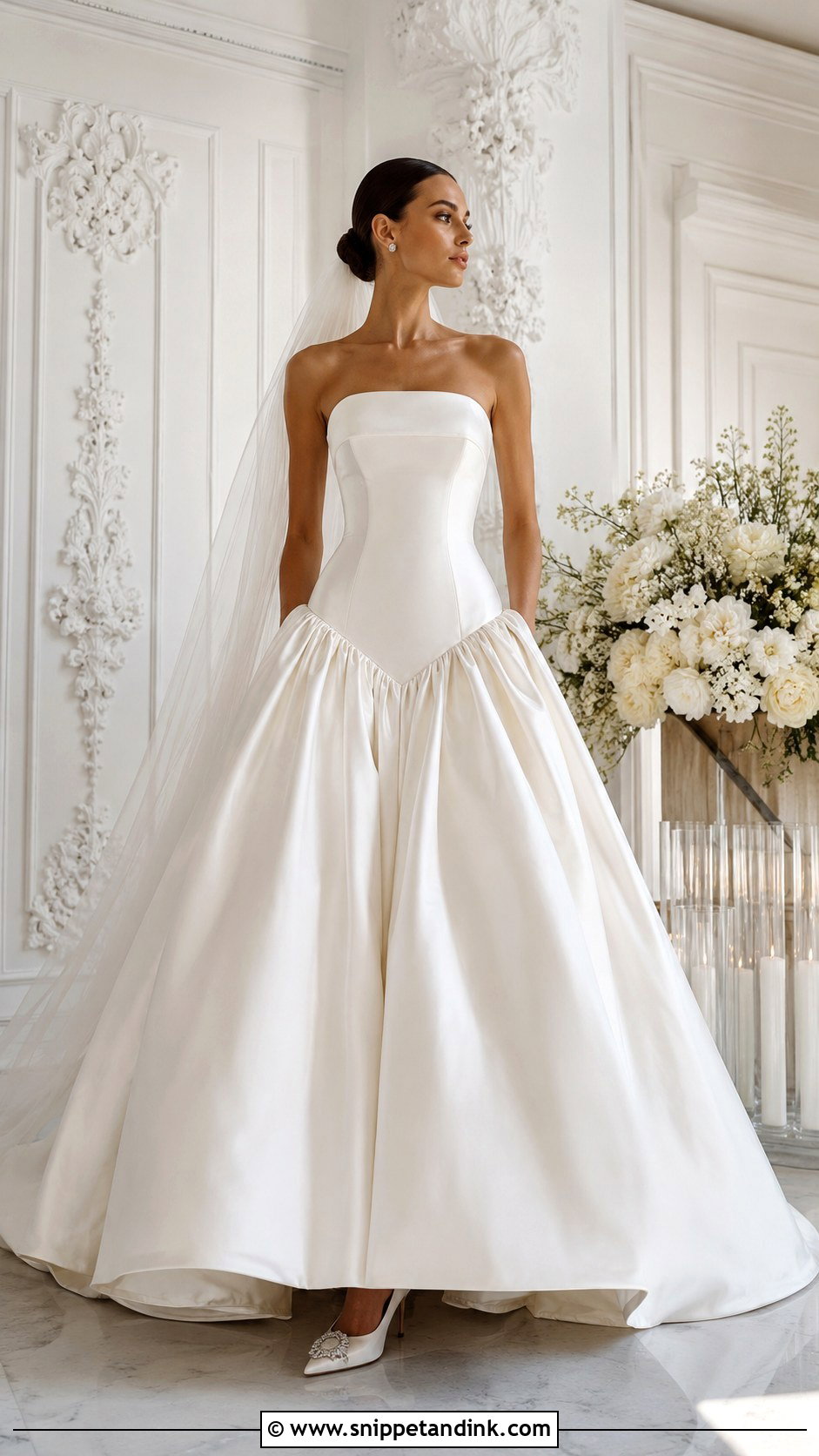
Drop waist and basque gowns get confused, but a drop waist runs straight across below the natural waist instead of dipping to a point. In satin, Mikado or structured lace it makes a strong, graphic outline. It suits tall brides and long torsos far more than petite frames, where it can shorten the legs. Keep the styling neat with a smooth bun, a clean veil and pointed heels. Side-on photos show the seam best, and the fit through the hips has to be precise, because that’s where this gown bears its weight.
14. High Neck Ballgown Wedding Dress
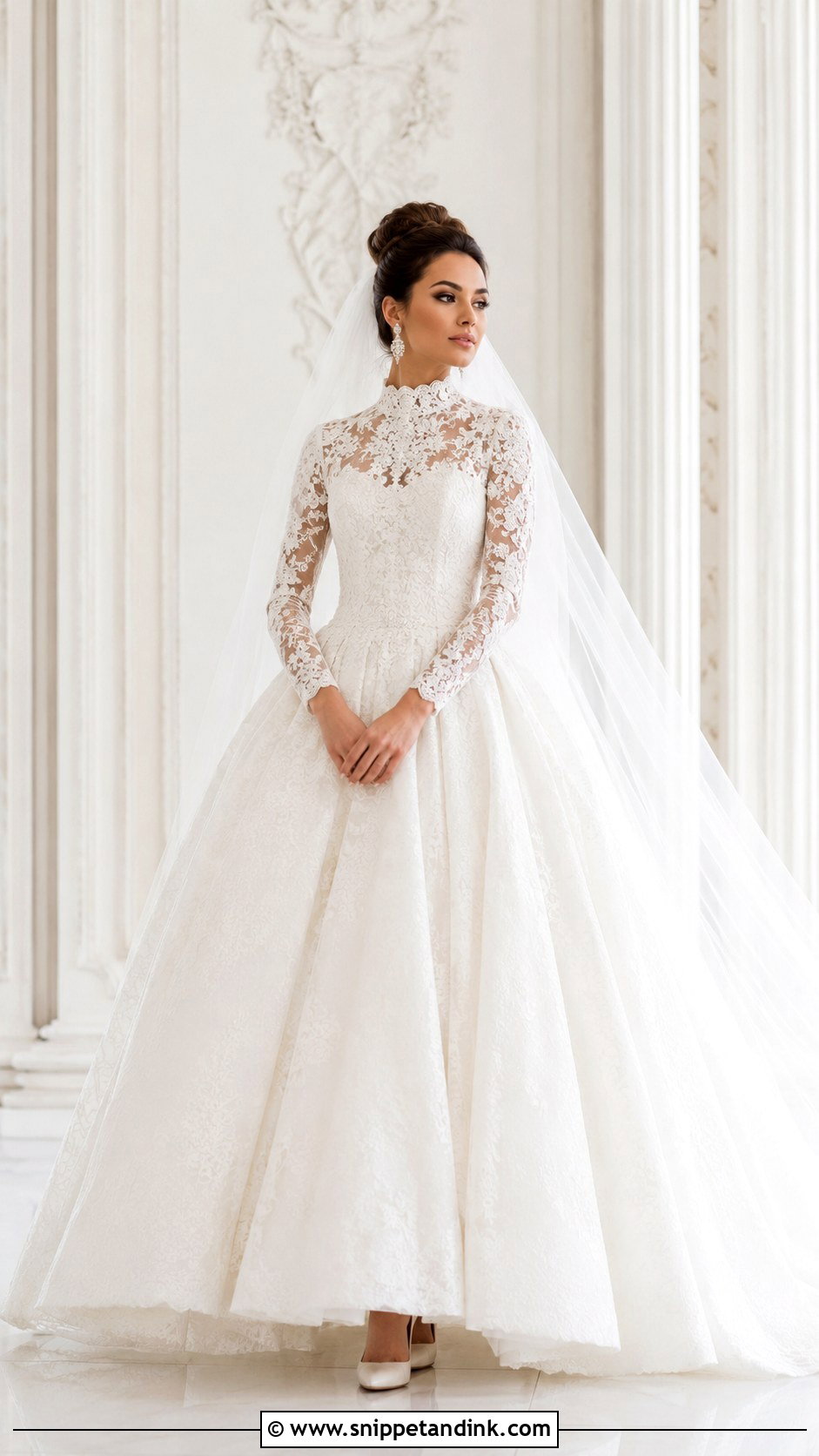
High necklines pull attention straight to your face, and they make posture very visible, so stand tall at the fitting and see how it reads. Lace versions lean vintage; satin or crepe looks sleek and modern. I always put the hair up with this one and swap the necklace for earrings. Check the closure at the nape too. A row of tiny buttons looks lovely but needs a patient helper and a few extra minutes when dressing. Cool weather and formal rooms suit it, and it gives coverage without losing any drama.
15. V Neck Ballgown Wedding Dress
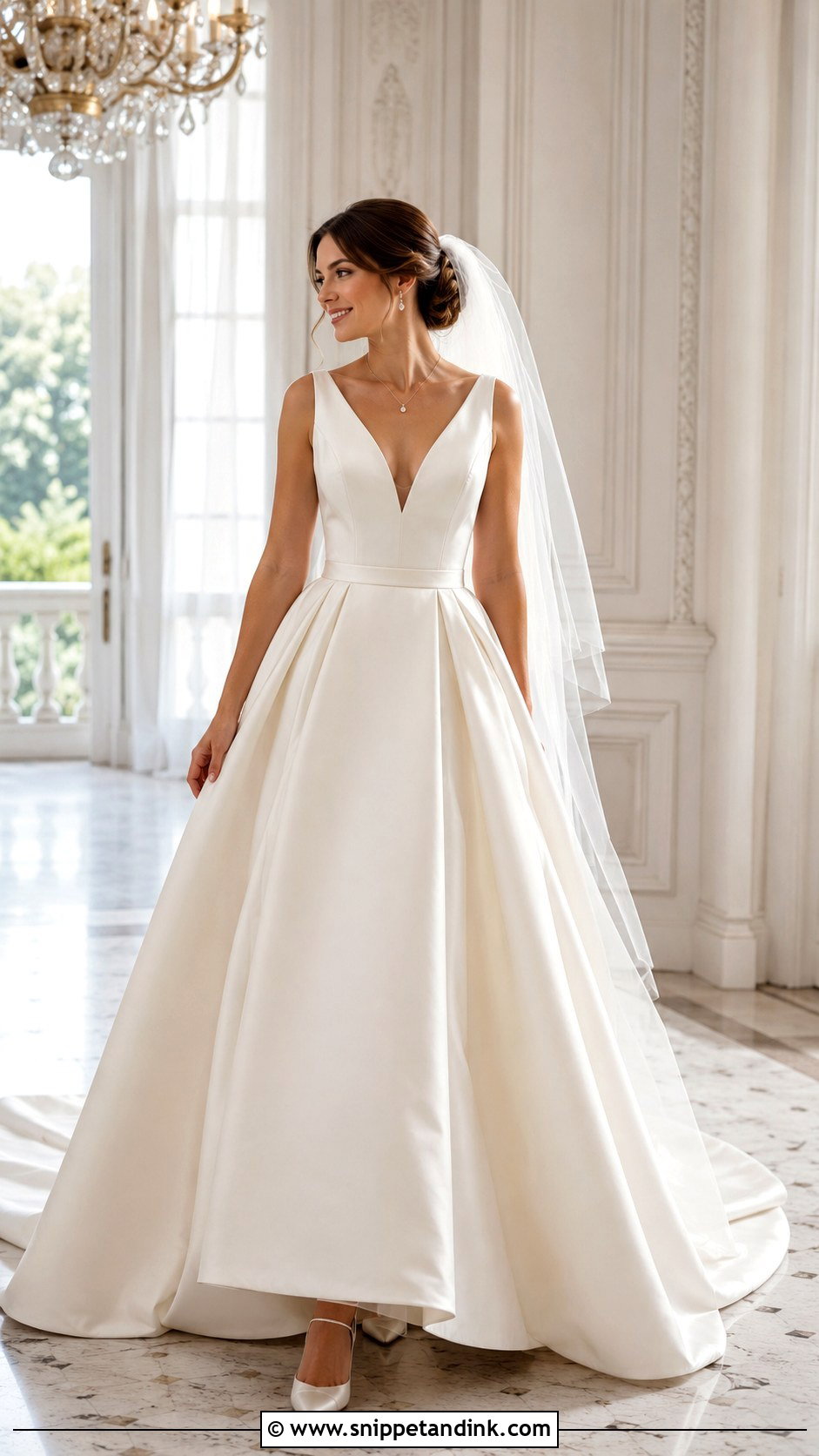
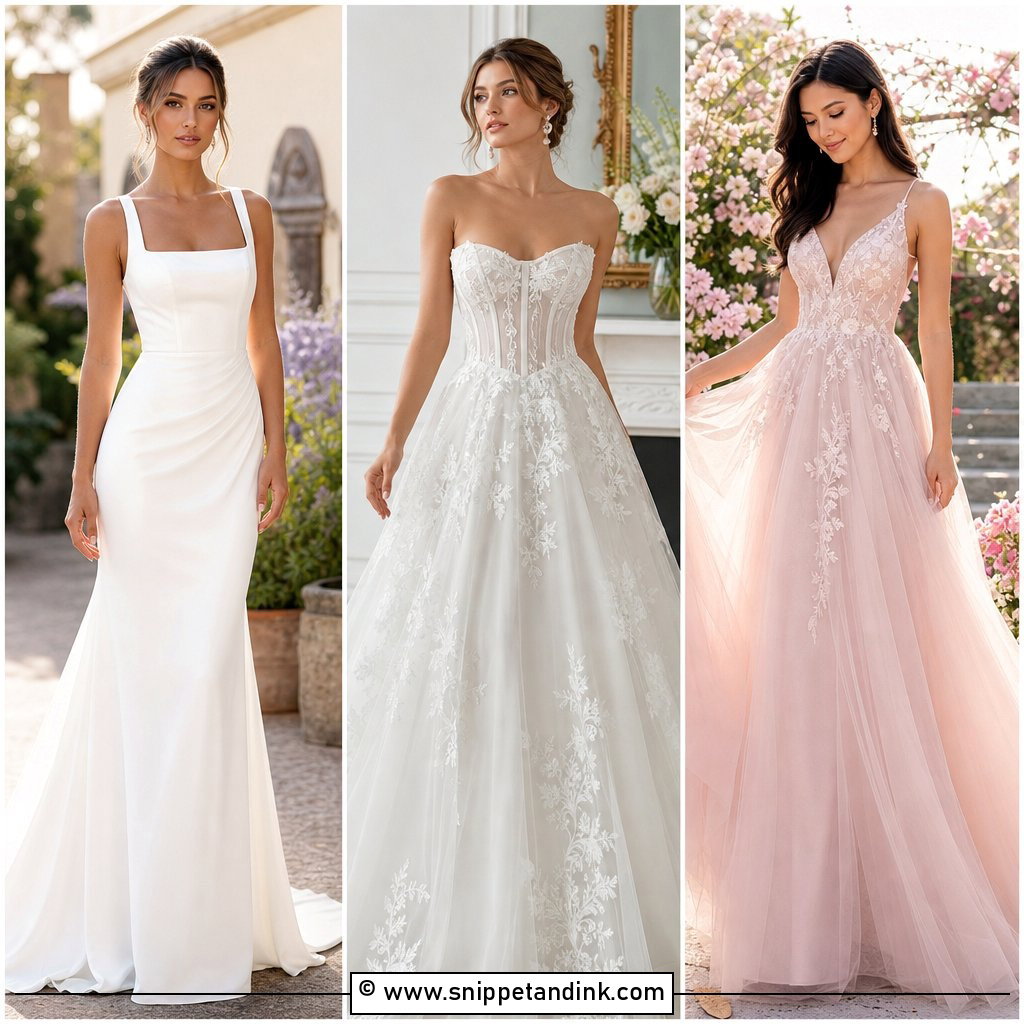
Depth is the whole conversation with a V neck. I’d rather see a bride in a moderate V she forgets about than a plunge she adjusts all night. Illusion mesh or wider straps add security without changing the line, and fashion tape belongs in the emergency kit regardless. A clearly defined waist makes the V look longer. Wear a pendant only if the bodice is plain, then finish with soft waves and classic heels.
16. Spaghetti Strap Ballgown Wedding Dress
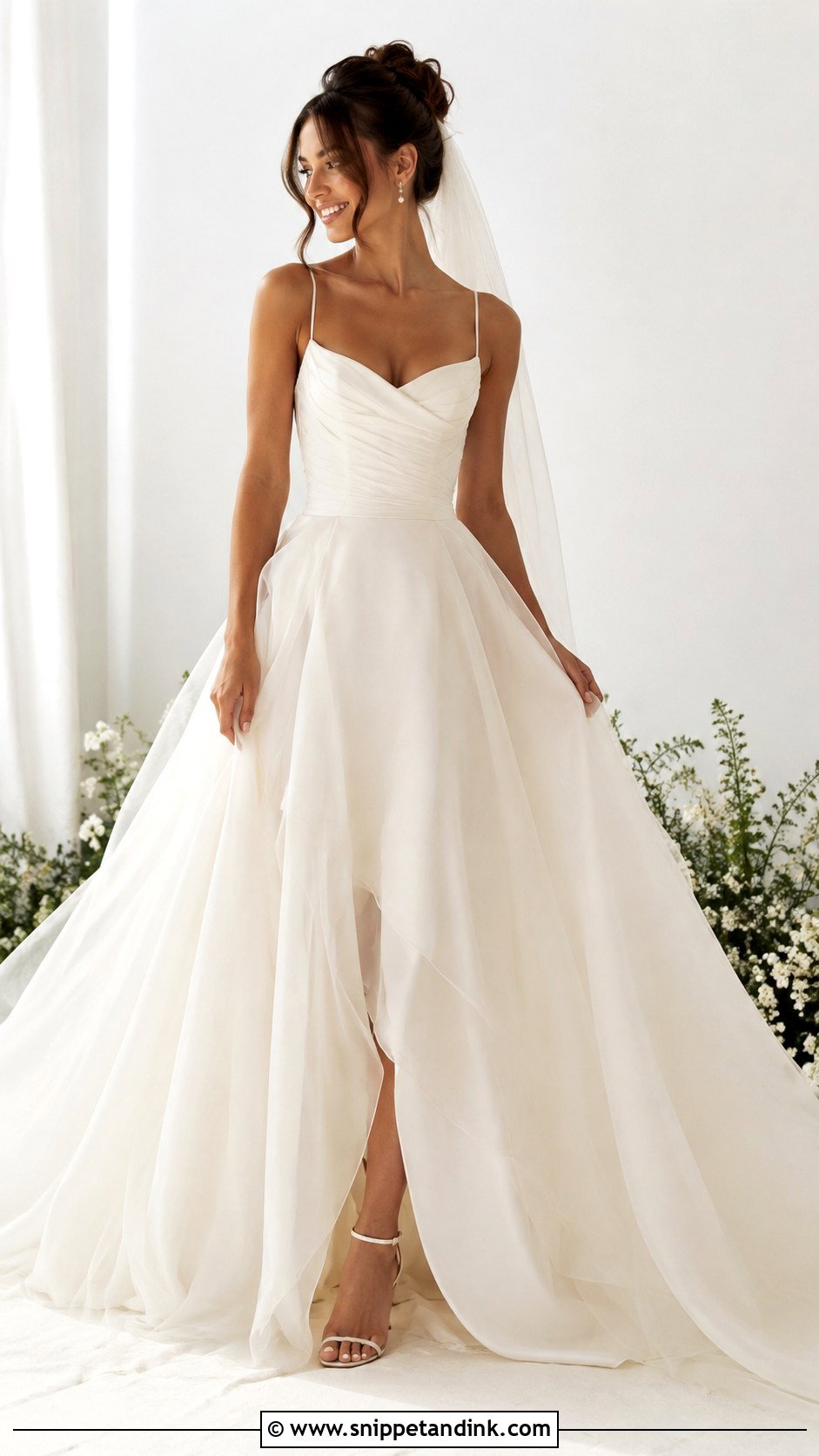
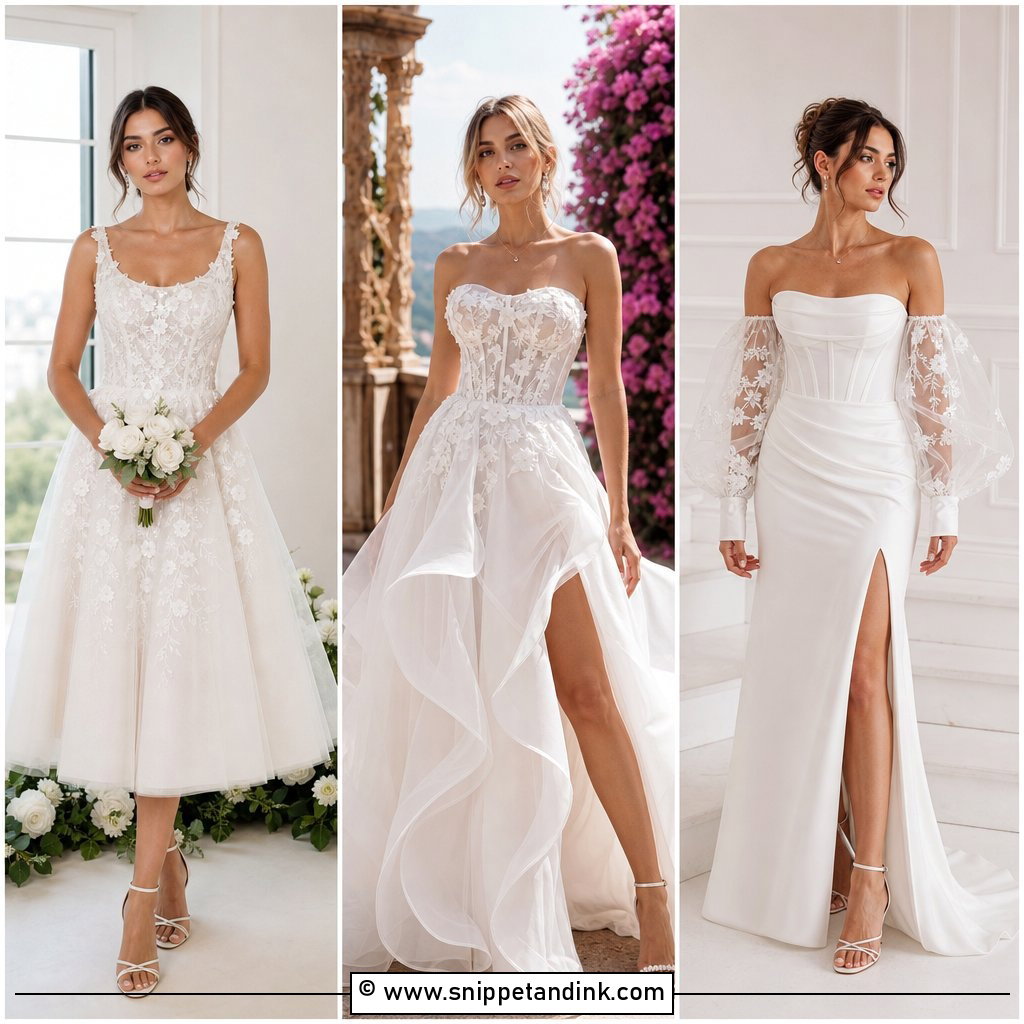
Thin straps are mostly decoration. The bodice underneath does the holding, so ask how it’s built before falling for the airy look, especially with a full skirt pulling down on it all day. Tulle, organza, satin or lace all work here. For a ceremony that asks for covered shoulders, a sheer wrap or capelet can come off for the reception. Dainty earrings and strappy heels keep it light, which is why warm-weather weddings suit it.
17. Ruffle Ballgown Wedding Dress
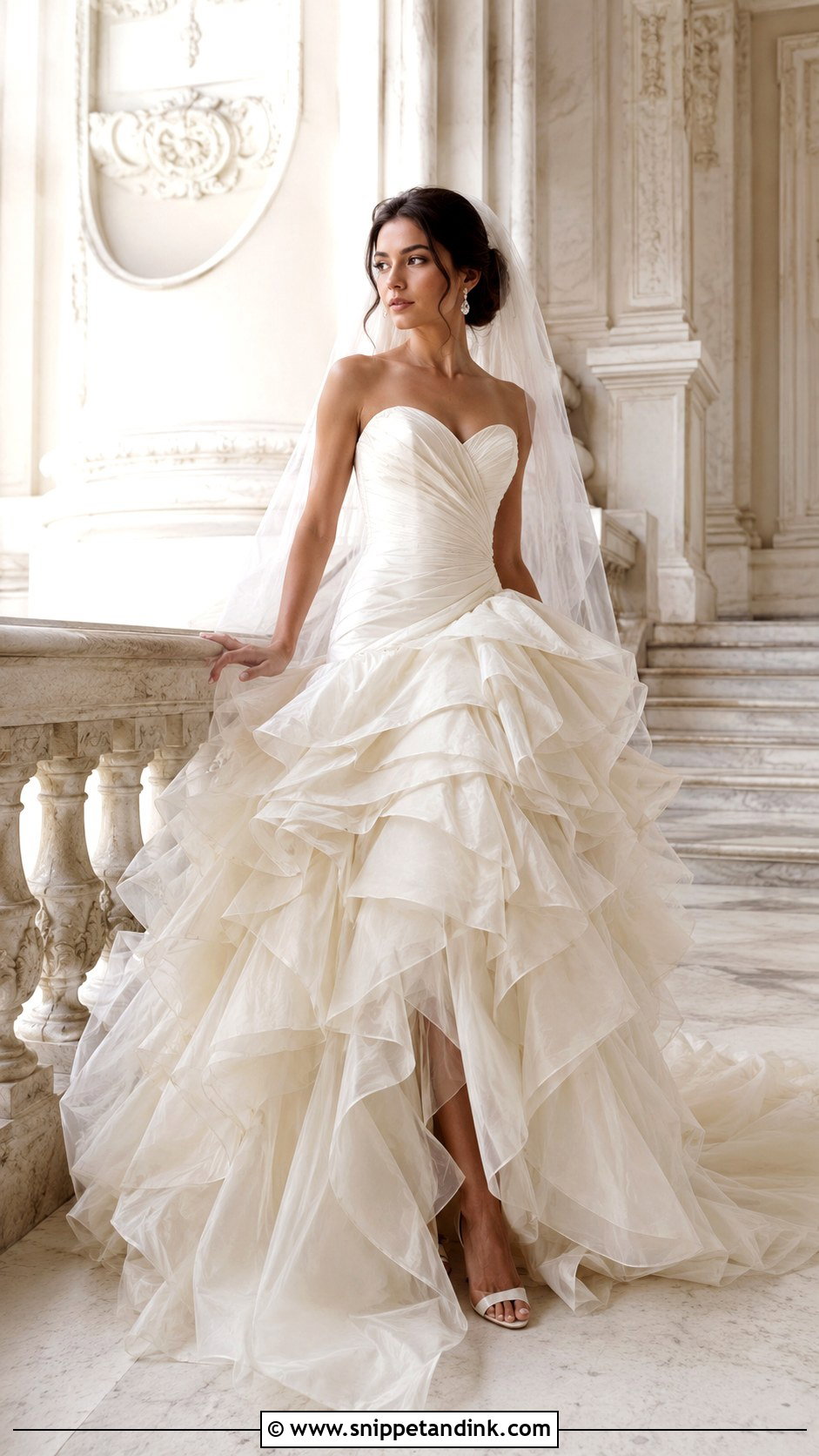
A ruffle ballgown wedding dress is all about scale. Small cascading ruffles in organza read soft; large tulle tiers read high fashion and add serious width. I match the size of the ruffle to the bride and the room, because big tiers in a small chapel can block the aisle. Keep the bodice fitted so you don’t disappear inside the skirt, and keep the veil plain so the outfit isn’t competing with itself. Ruffles come alive in motion, so ask your photographer for a few walking shots.
18. Organza Ballgown Wedding Dress
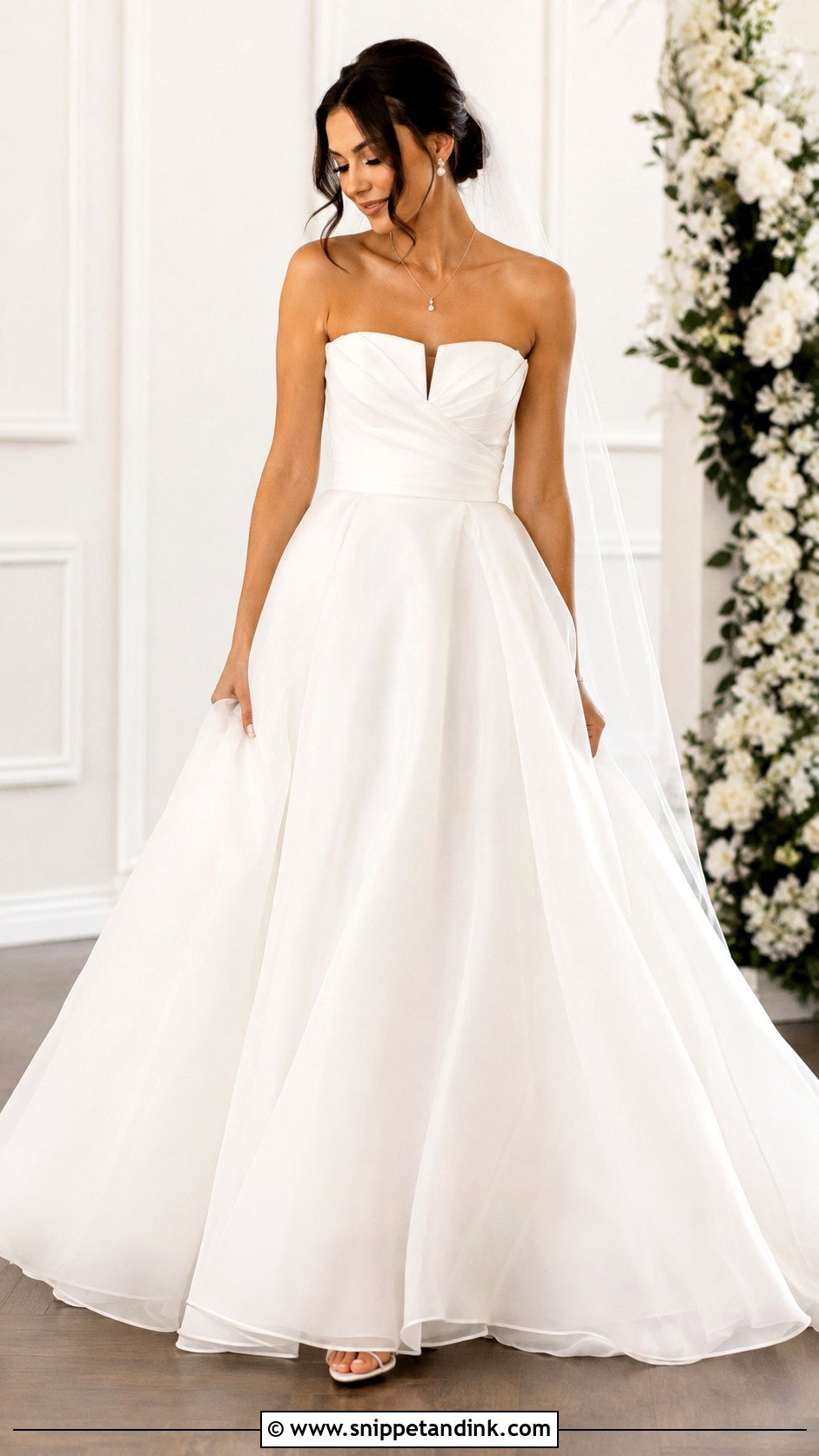
Organza is crisper than tulle and holds its shape better, so the skirt looks full without the heaviness. I suggest it to brides who want volume but dread the weight. It wrinkles more easily than tulle, though, and those creases show in close-ups, so a steam on the day matters. Pleats and appliqué both sit well on it, and because the layers are slightly sheer, the skirt picks up depth in photos. Keep the hair polished and the veil simple.
19. Pearl Ballgown Wedding Dress
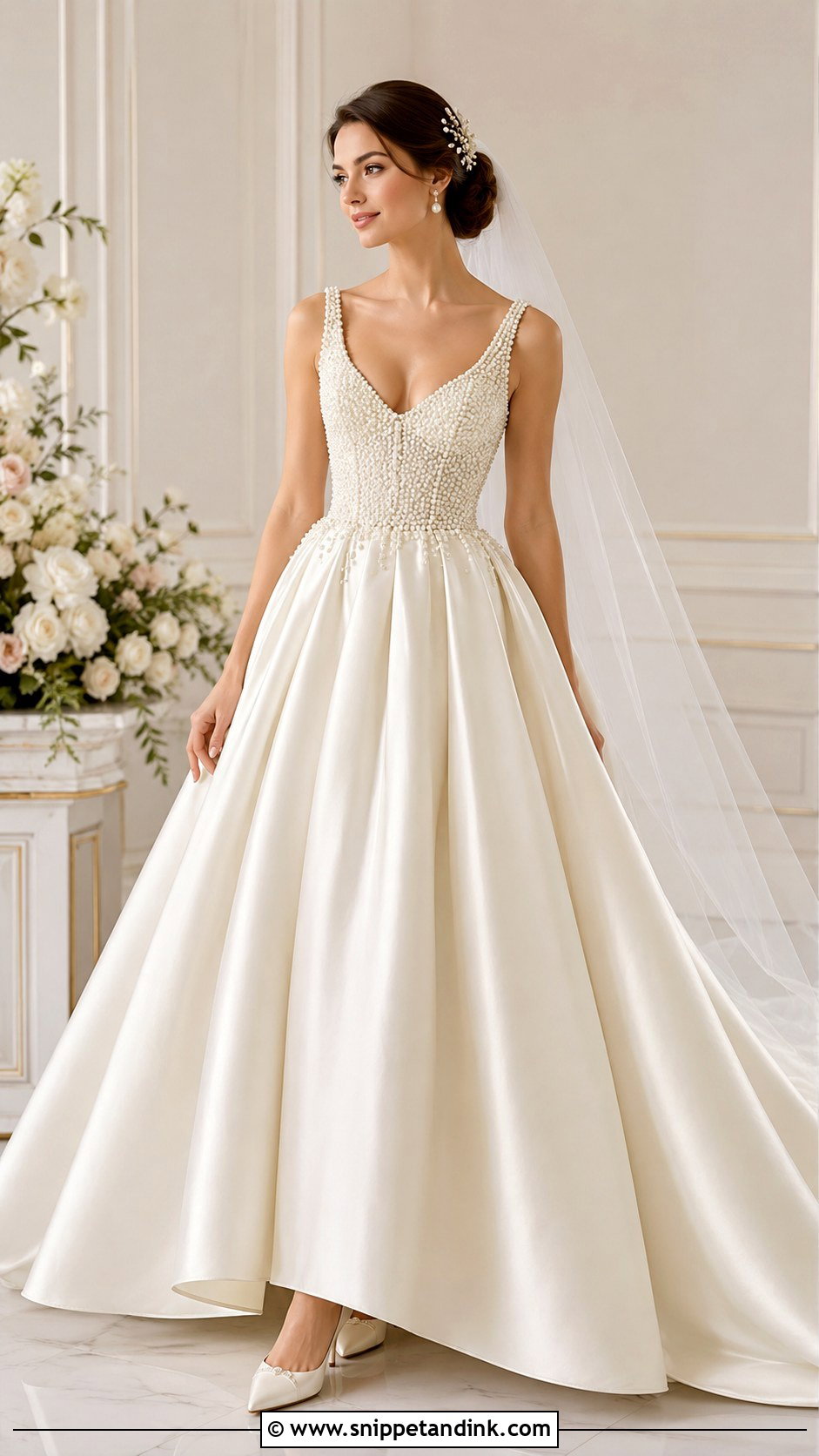
Pearl accents give a softer texture than crystals and stay quieter under flash. Before buying, I check how they’re attached: sewn pearls hold up through a long day, while glued ones can pop off on a dance floor. Pick one pearl accessory to echo the dress, maybe earrings or a comb, rather than all of them at once. Too many pearl pieces together start to look like a costume. A clean veil and smooth hair let the gown carry the detail.


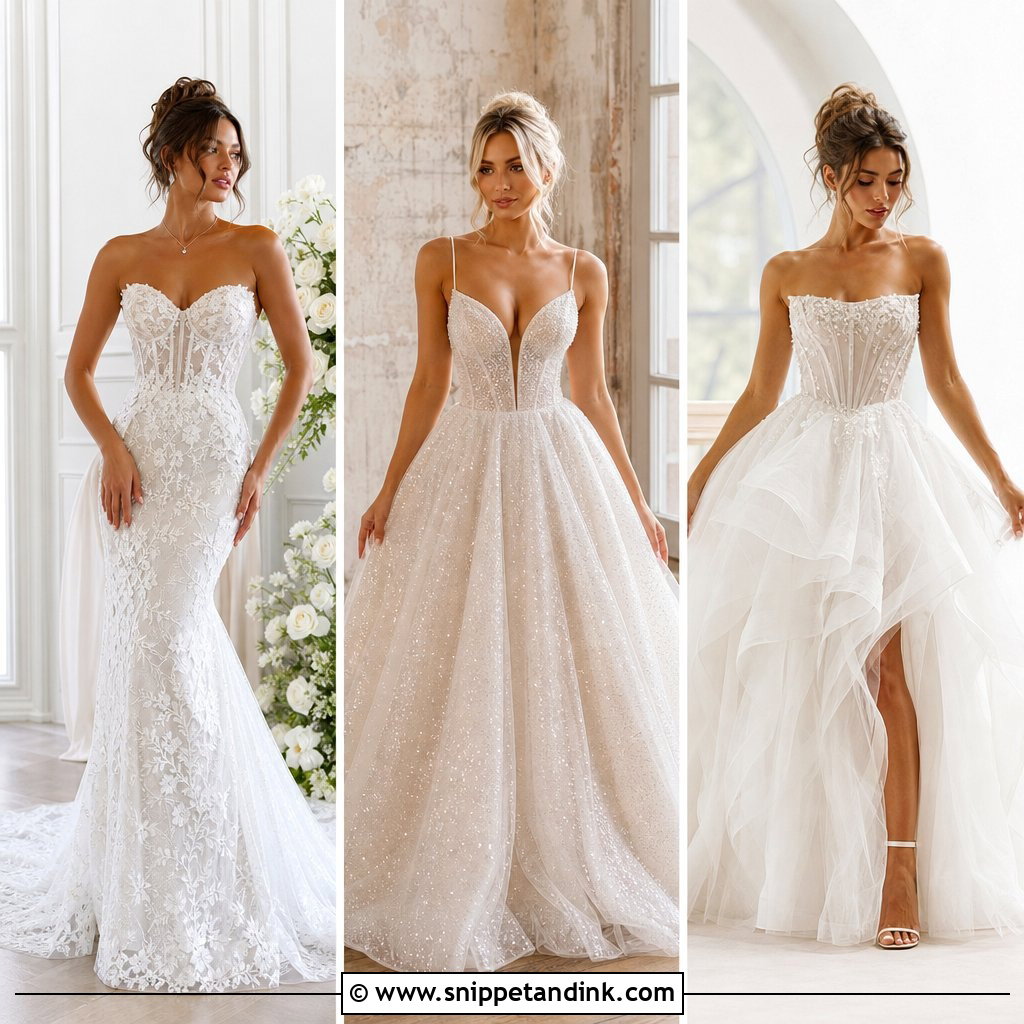

20. Bow Ballgown Wedding Dress
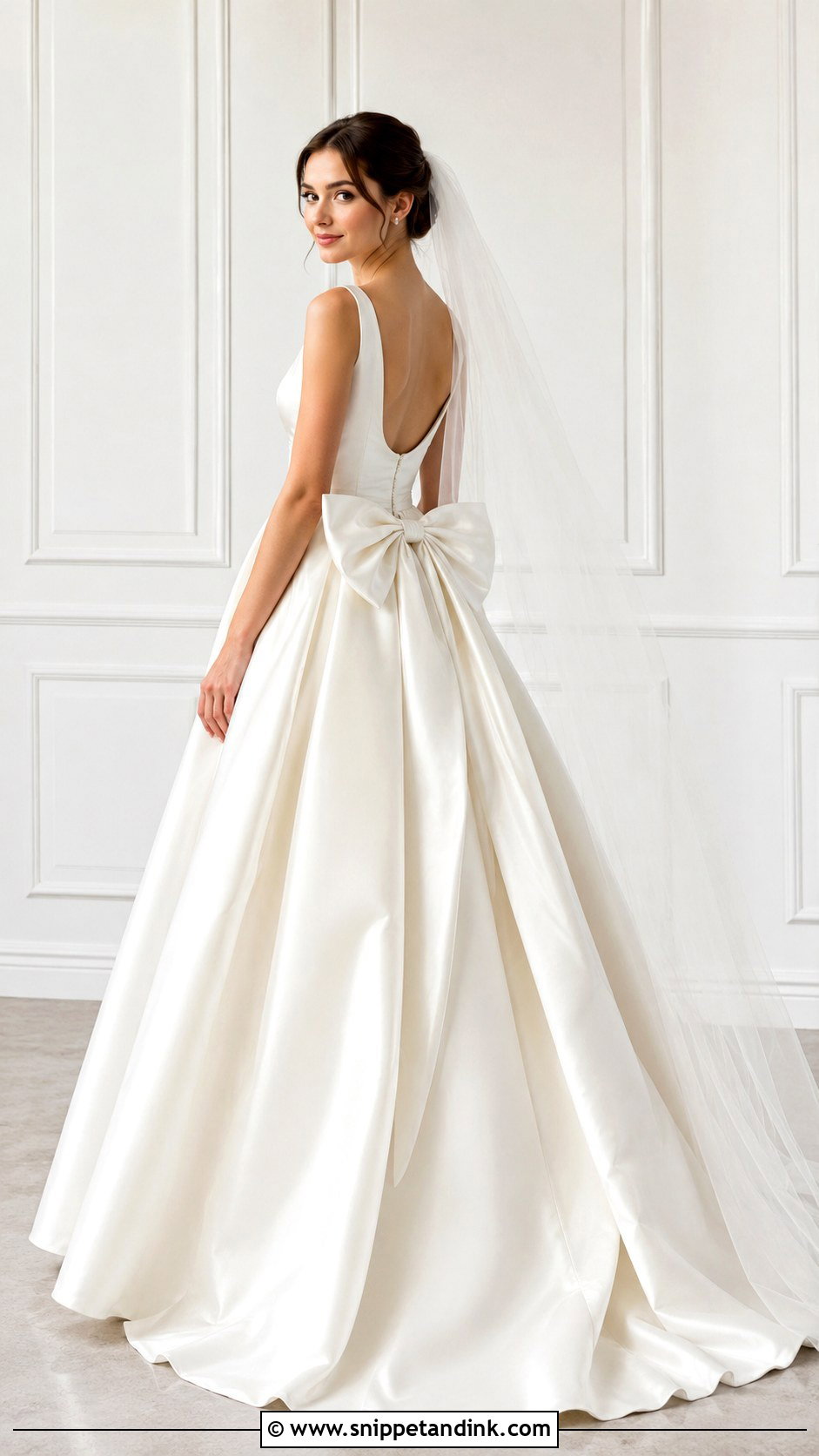
A bow is a focal point, so decide where you want eyes to land: back waist, shoulder, across the bodice, or trailing as a train accent. The back bow is the one I like most, since the aisle walk and many portraits are seen from behind more than people expect. Structured satin holds the loops crisp, while organza droops a little and looks softer. Just check that a big back bow survives sitting, because it crushes in a dinner chair. Keep everything else simple.
21. Sleeveless Ballgown Wedding Dress
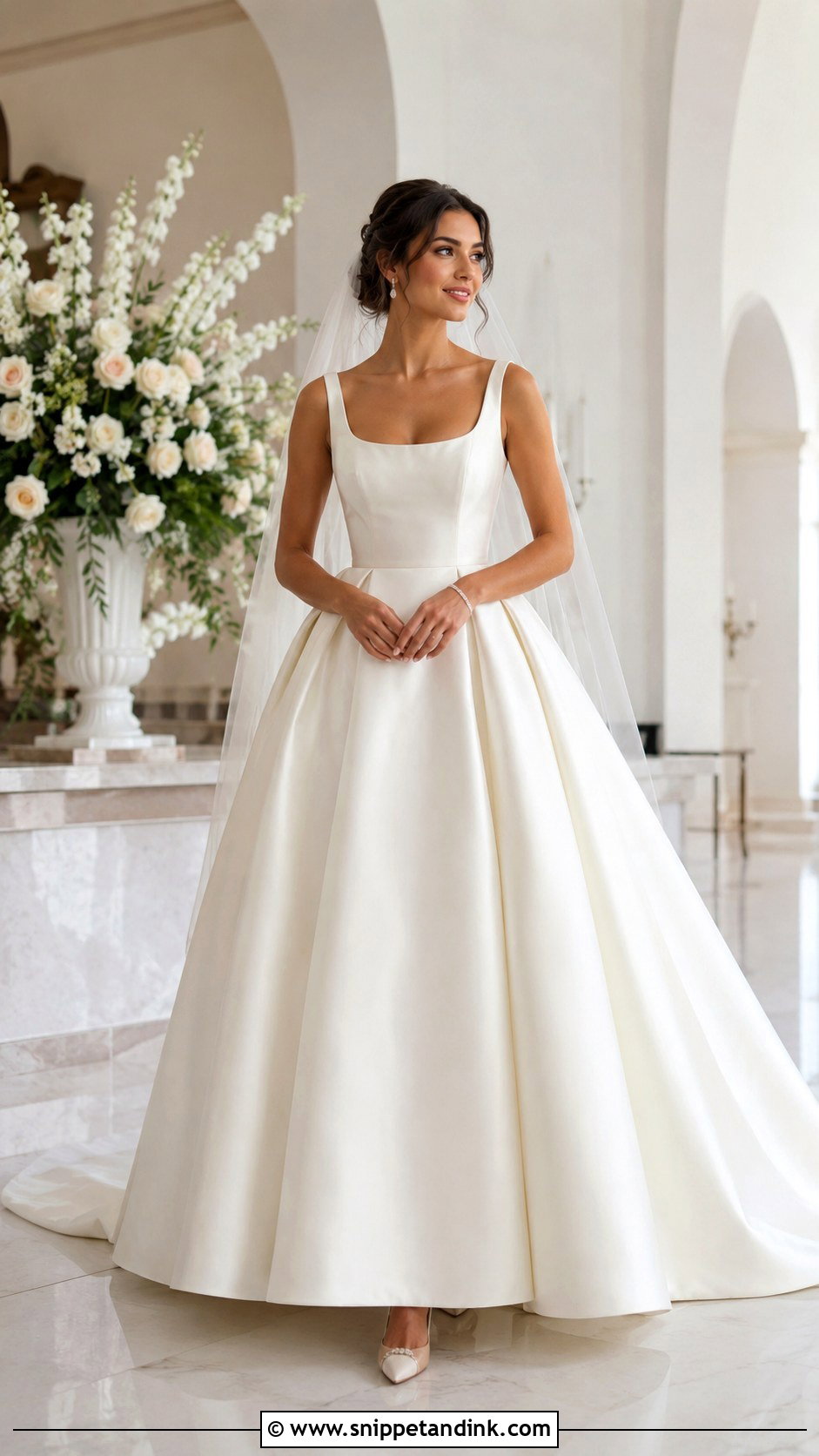
Sleeveless gowns with wider straps are the practical choice in this list. They feel secure, let you raise your arms freely and stay cooler on the dance floor. Square, V, scoop and high necklines all work with them. If you plan to dance a lot, ask the seamstress to check the strap anchors at the back, since they take the strain. A bracelet and earrings suit bare arms, and satin, lace or structured crepe each shift the mood.
22. Embroidered Ballgown Wedding Dress
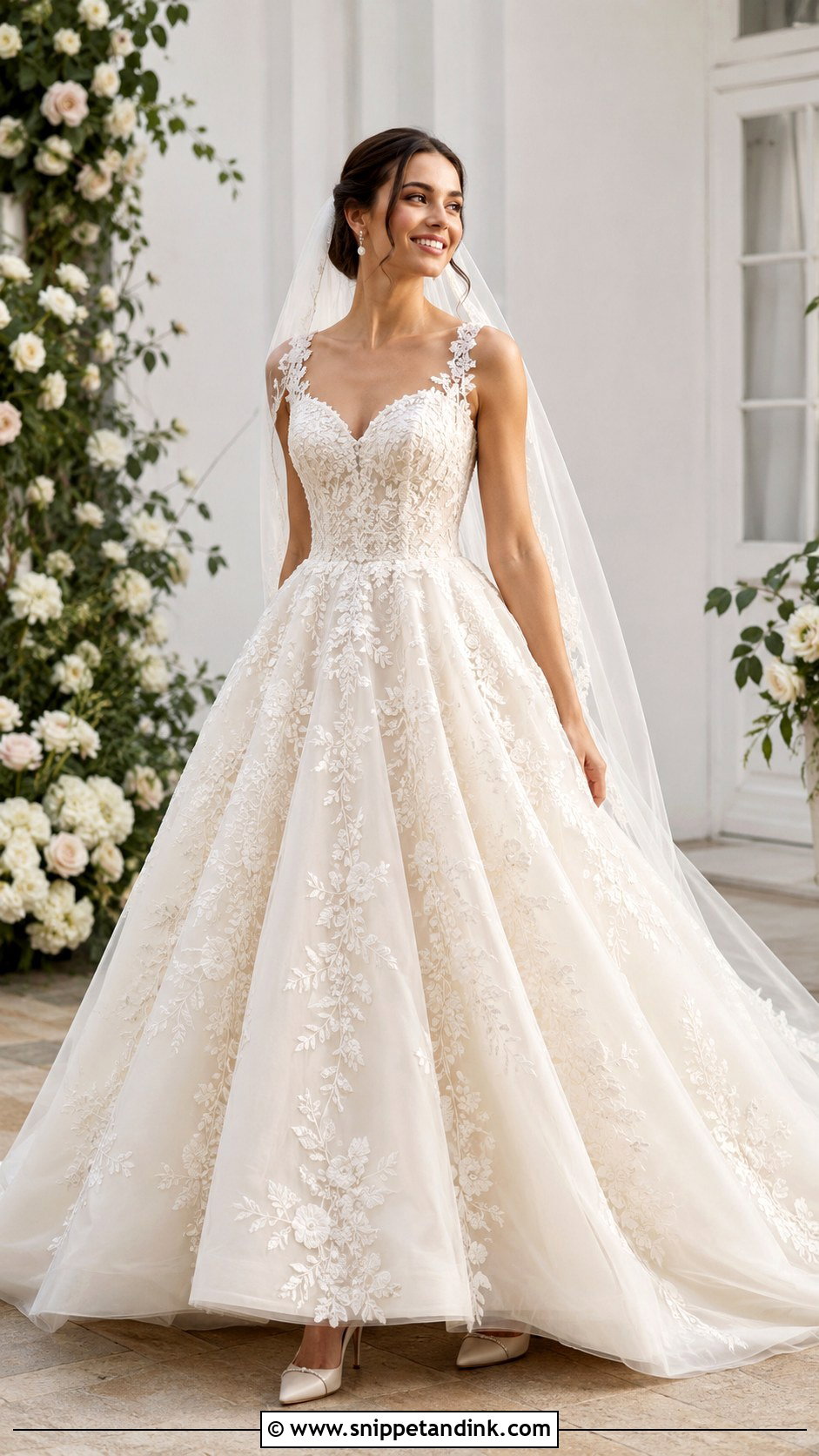
Embroidery is stitched into the fabric rather than laid on top, so it adds depth without the weight of beading. Tone-on-tone ivory looks classic, and blush or champagne thread gives gentle contrast. Look at the back of the work where you can. Tidy stitching means it won’t snag or pucker after alterations. A gown this detailed wants a sheer veil, pearl earrings and very little else. It reads well from the back of the room and in close-up portraits, which is rarer than you’d think.
23. Blush Ballgown Wedding Dress
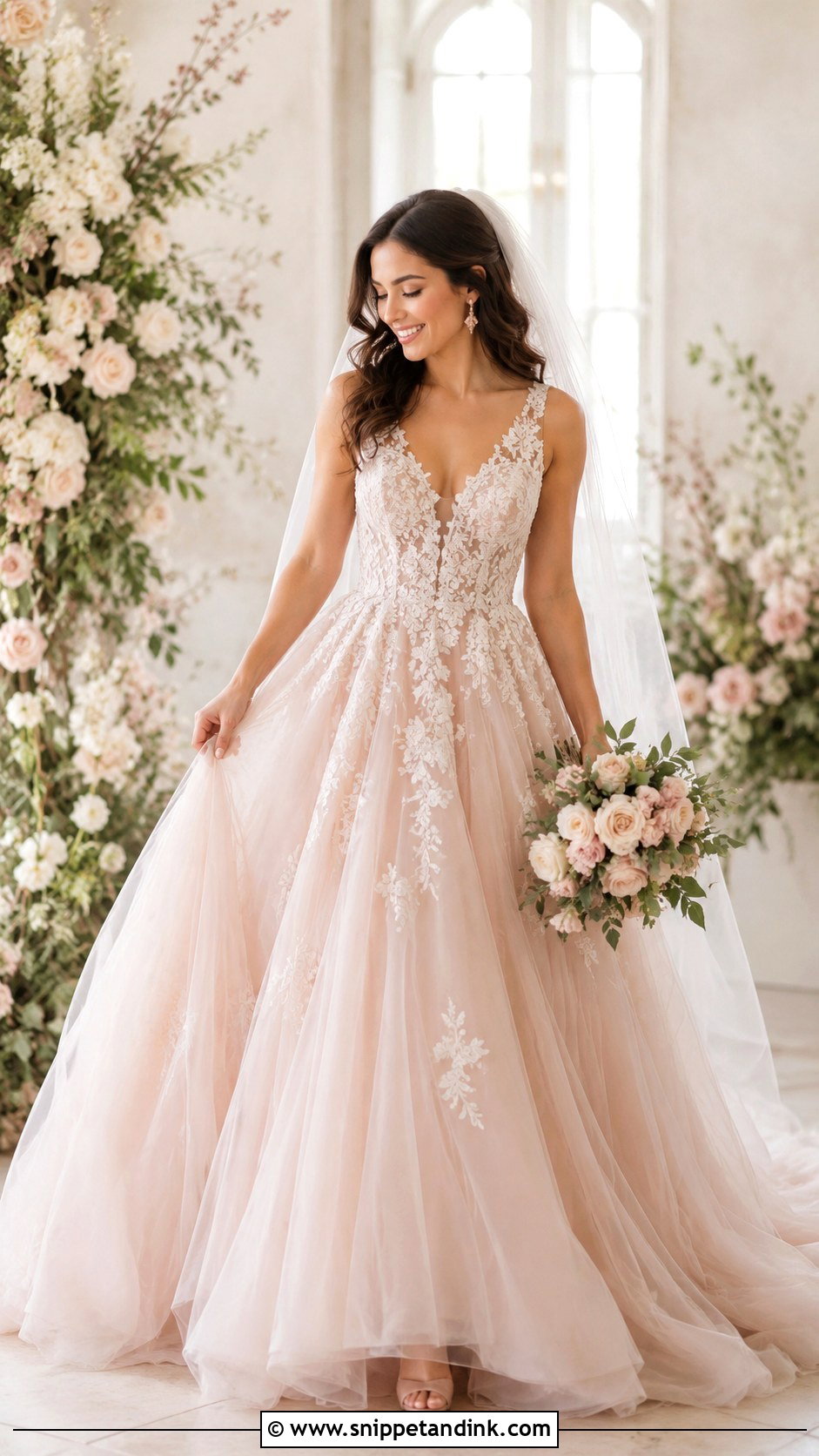
Blush is hard to judge in a shop. Salon lighting is warm, and the same gown can turn peachy or almost white in daylight, so I always carry a blush dress to a window before a bride decides. Under tulle or organza the pink softens; on satin it reads stronger. It’s a good answer when stark white washes out your skin. Rose-toned earrings, neutral heels and a sheer ivory veil tie it together, and fresh, light makeup keeps the color as the focus.
24. Detachable Train Ballgown Wedding Dress
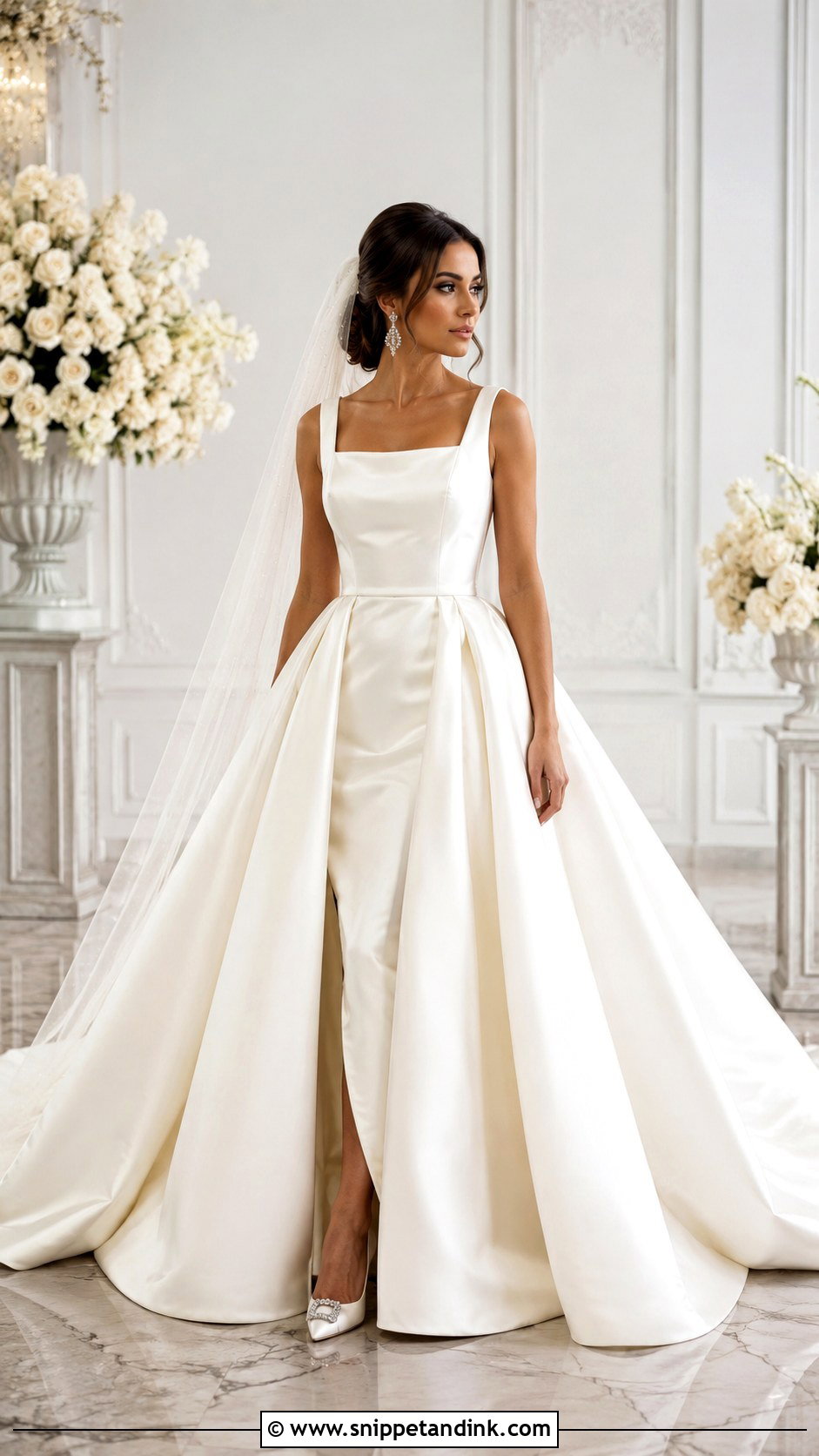
A detachable train gives you the dramatic aisle look, then comes off for the reception, which is far easier than bustling a heavy ballgown train. It’s usually made in satin, tulle, lace or organza to match the base gown. Test the attachment points at fittings: hooks or buttons should stay hidden through photos, then release in a minute or two. Switch the long veil for a comb or statement earrings in the evening and the look changes completely.
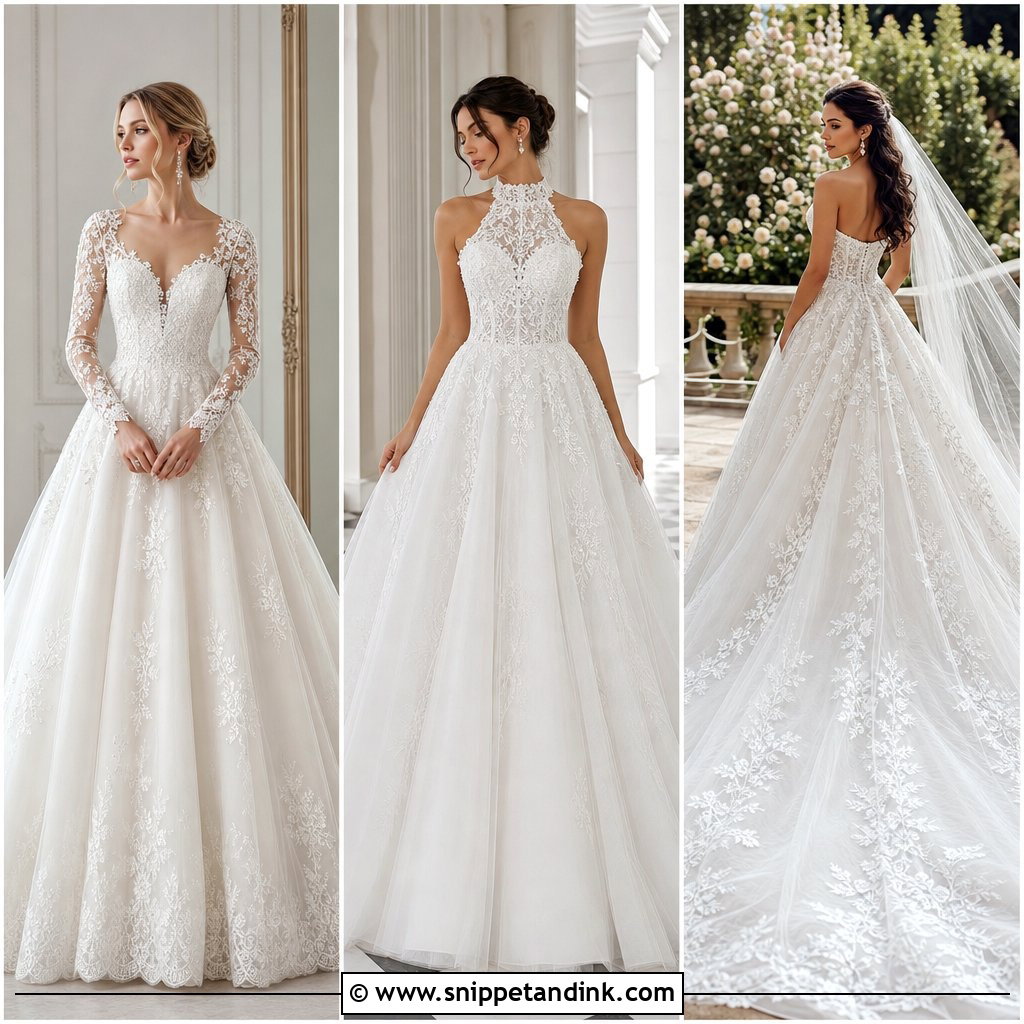
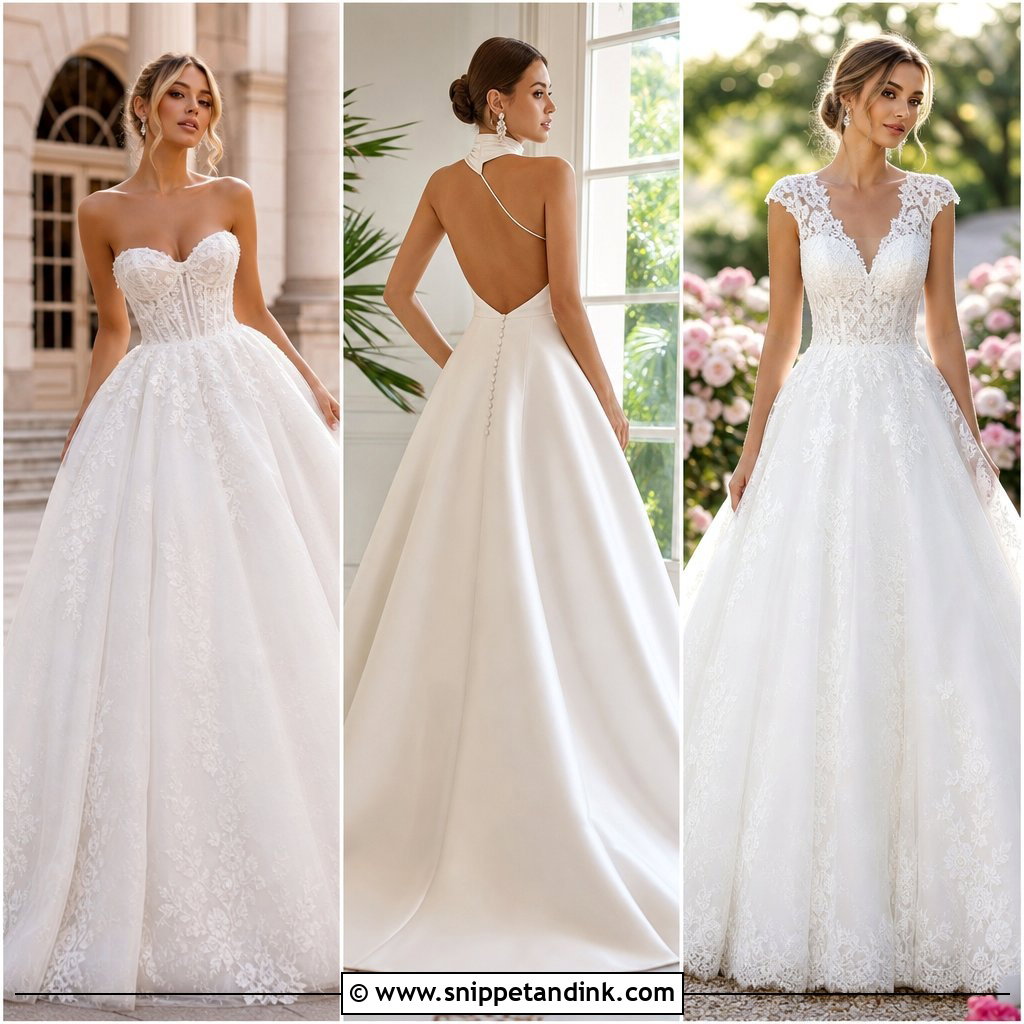

25. Vintage Ballgown Wedding Dress
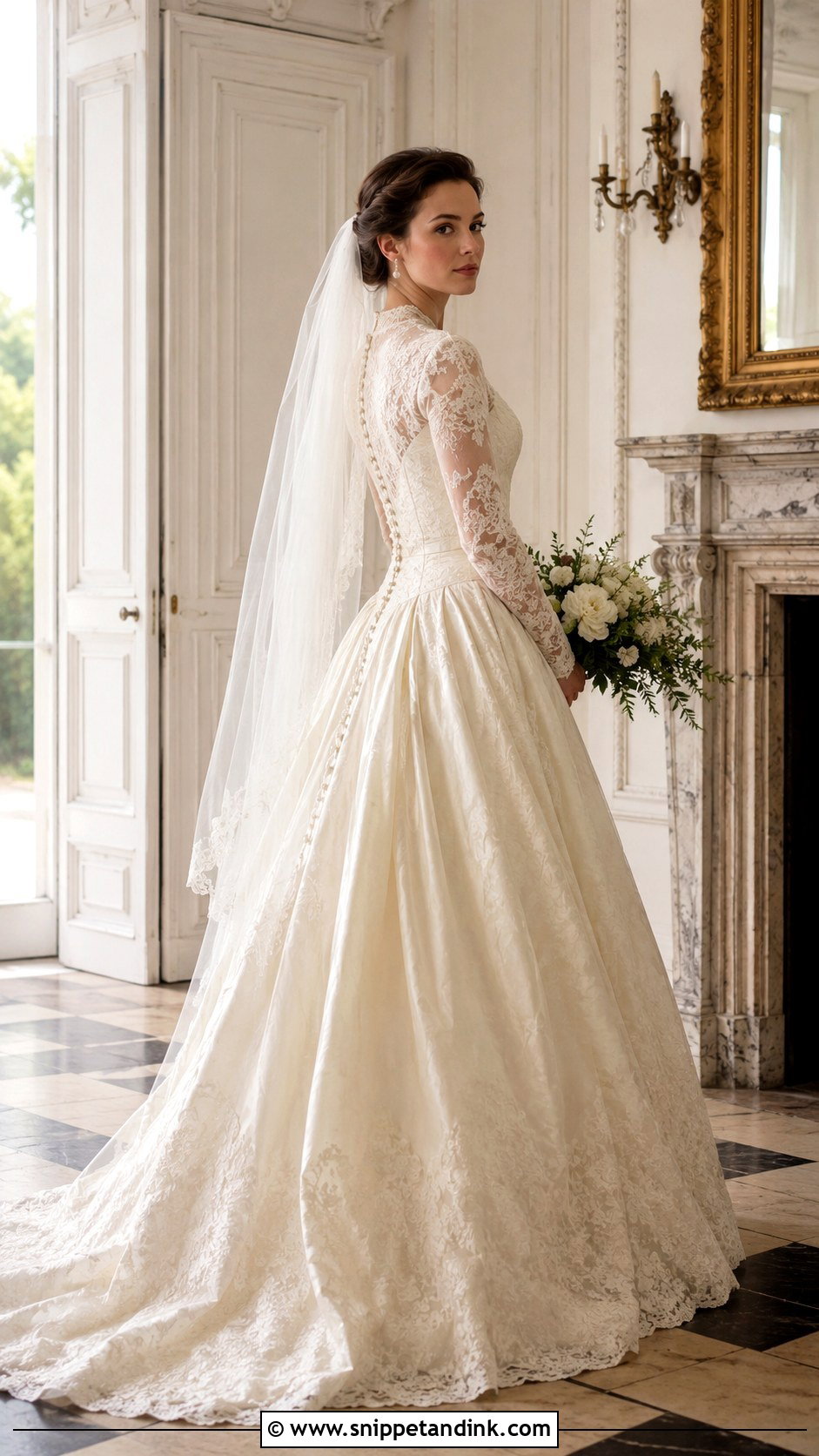
Basque waists, covered buttons, brocade and heirloom embroidery give a gown history without looking like a costume, as long as the fit feels modern. If you’re wearing a true vintage or pre-loved gown, have a specialist check the fabric before alterations begin. Old silk can be brittle at the seams and under the arms. Good alterations make a huge difference to comfort, and pearl earrings, classic heels and a soft veil are all the styling it needs.
Bustles, Bathroom Trips and Dinner in a Full Skirt
Most of the questions brides ask me afterwards are about the small logistics nobody mentioned in the shop. These are worth sorting out at your final fitting.
Teach your helper the bustle
A ballgown train is usually bustled after the ceremony, with hooks, buttons or ribbon ties that lift it off the floor. A heavy satin train often needs more points than a tulle one. Bring the person who’ll do it to your last fitting, let them practise twice, and ask the seamstress to mark the ties with coloured thread if there are several. Do it straight after photos, before the dancing starts.
Sitting down and the bathroom
Sit toward the front of the chair with a straight back, and lift the back of the skirt as you lower yourself so you aren’t crushing the petticoat. For the bathroom, the easiest method I know is facing the toilet backwards, so the skirt gathers in front of you, with one bridesmaid holding the layers. It feels silly, but it saves a lot of crumpled tulle. Try it once in the dress at your final fitting.
Give the fittings room on the calendar
Many ballgowns are made to order and can take several months to arrive. Alterations usually run over two or three fittings, starting roughly two months before the wedding, and a structured bodice takes the most work, so don’t squeeze the schedule. Bring your actual shoes and undergarments to every fitting, because even a small heel change alters the hem.
Satin or Tulle? Start With the Fabric
That’s a lot of gowns to take in, so narrow them by fabric first. Satin and Mikado give structure and polish; tulle, organza, lace and embroidery bring softness. Then think about your venue, the season, how much you’ll move and which neckline you’d wear comfortably for ten hours. Details like corsets, basque waists, bows, pearls and detachable trains personalize the dress after that. Fit matters more than any of them. A ballgown that’s built properly carries its own weight, and you get to enjoy the whole day in it.
You'll Like These Ideas:






Leave a Reply