
A ballgown is the one silhouette that sets the pace of your whole day: how you walk, sit, dance and even get into the car. I love dressing brides in them, but I want you to see the full picture, so each idea below covers the gown along with the veil, shoes, jewelry and hair that suit it. Current shapes lean on basque waists, corset bodices, sculptural satin, floral lace and soft tulle, with the odd hint of color. My test for any of them is simple. It should feel dramatic in the mirror and still let you breathe after dinner. Read these with your venue in mind, because a skirt that fills a ballroom can swamp a small chapel.
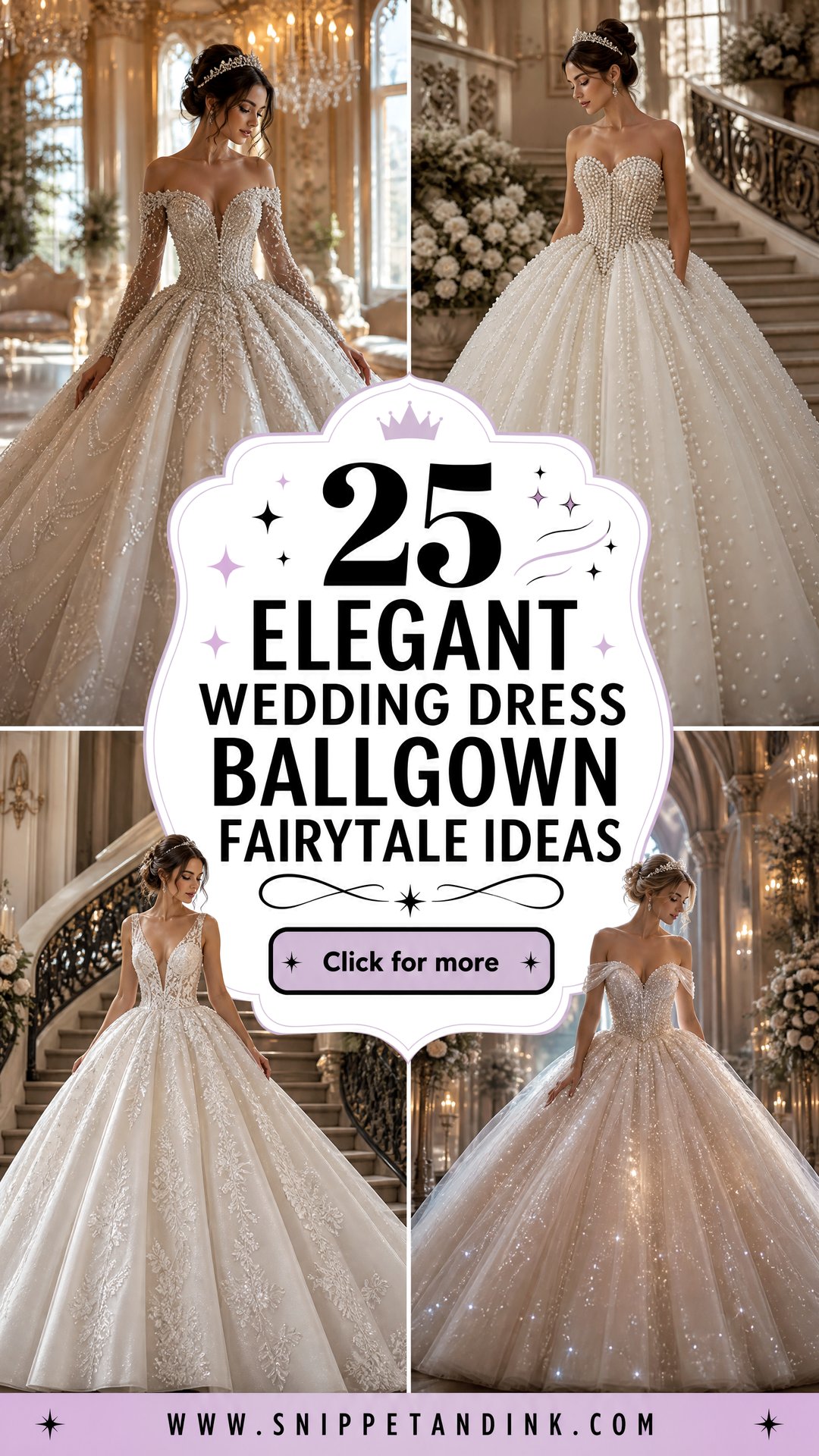
Sizing the Skirt to Your Frame and Your Venue
Volume is the first thing I settle with a ballgown bride, before fabric or neckline, because it’s the decision that causes trouble later.
- Height: on a petite frame, a very wide skirt swallows the torso. A slightly narrower skirt with a defined waist keeps the proportion.
- Aisle and doorways: measure the aisle and any doors or staircases you’ll pass through. A full petticoat can take up most of a narrow aisle.
- Transport: a big skirt needs a roomy back seat or a van, plus someone to gather it in and out.
- Ceremony details: if you’ll kneel, sit on a low chair or stand under a small canopy, make sure the skirt fits that space.
None of this means going small. It means knowing what you’re signing up for before you fall for the widest gown in the shop.
1. Satin Ballgown Wedding Dress
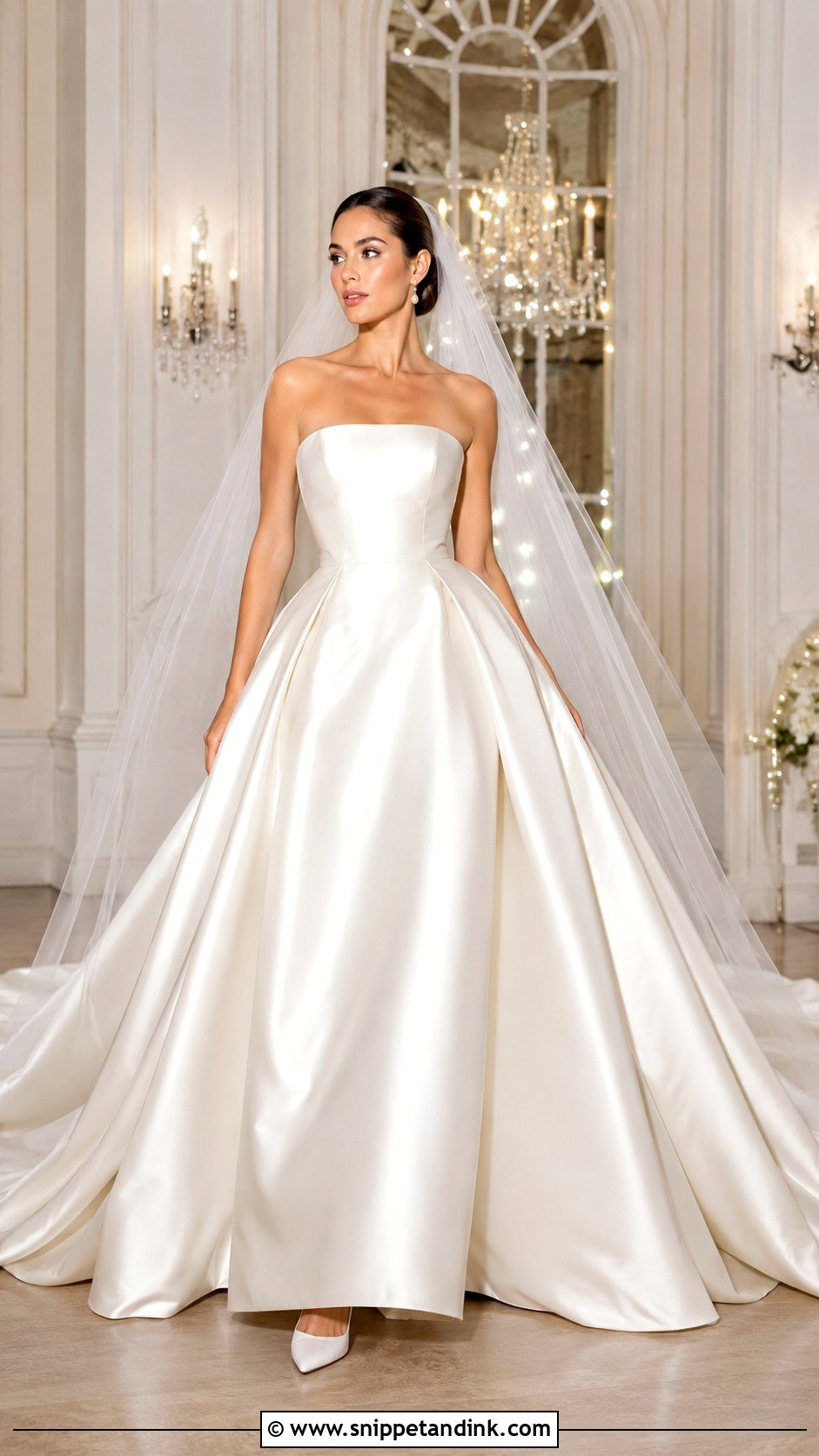
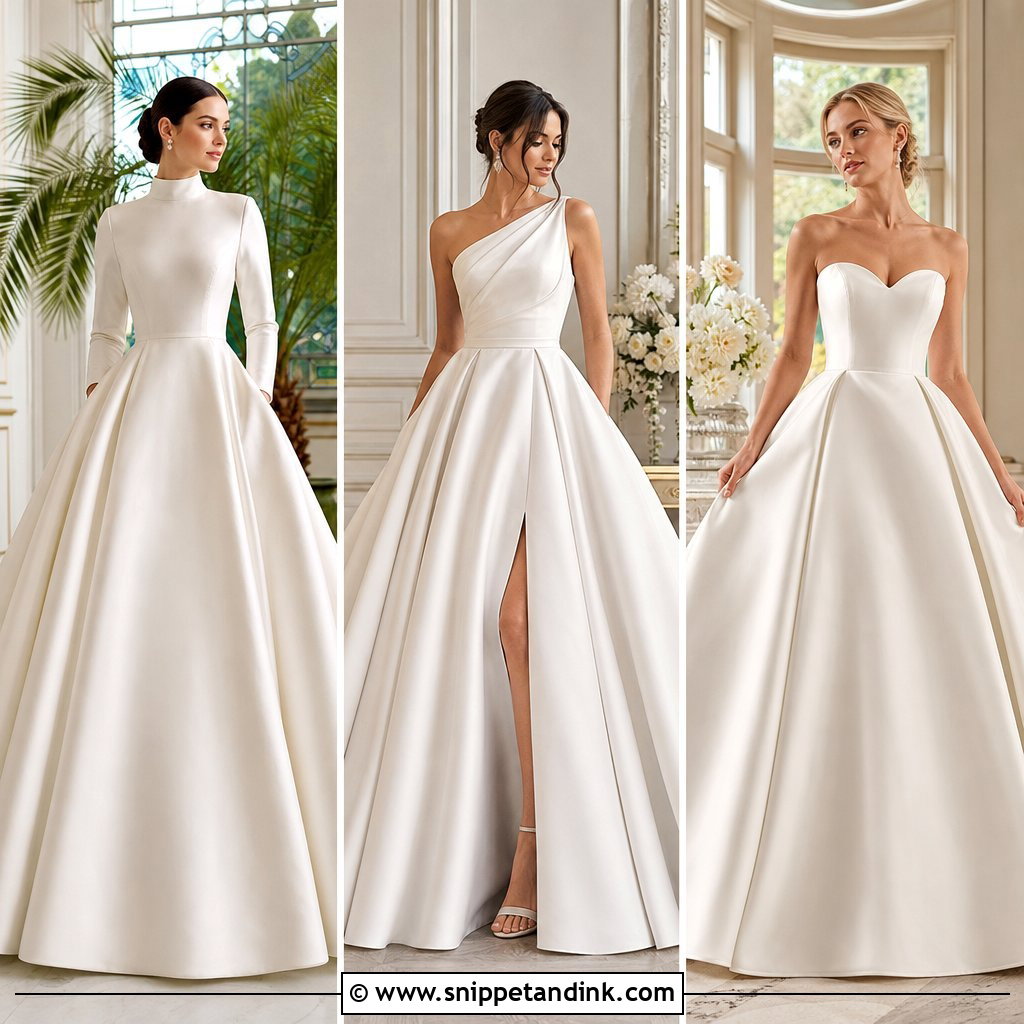
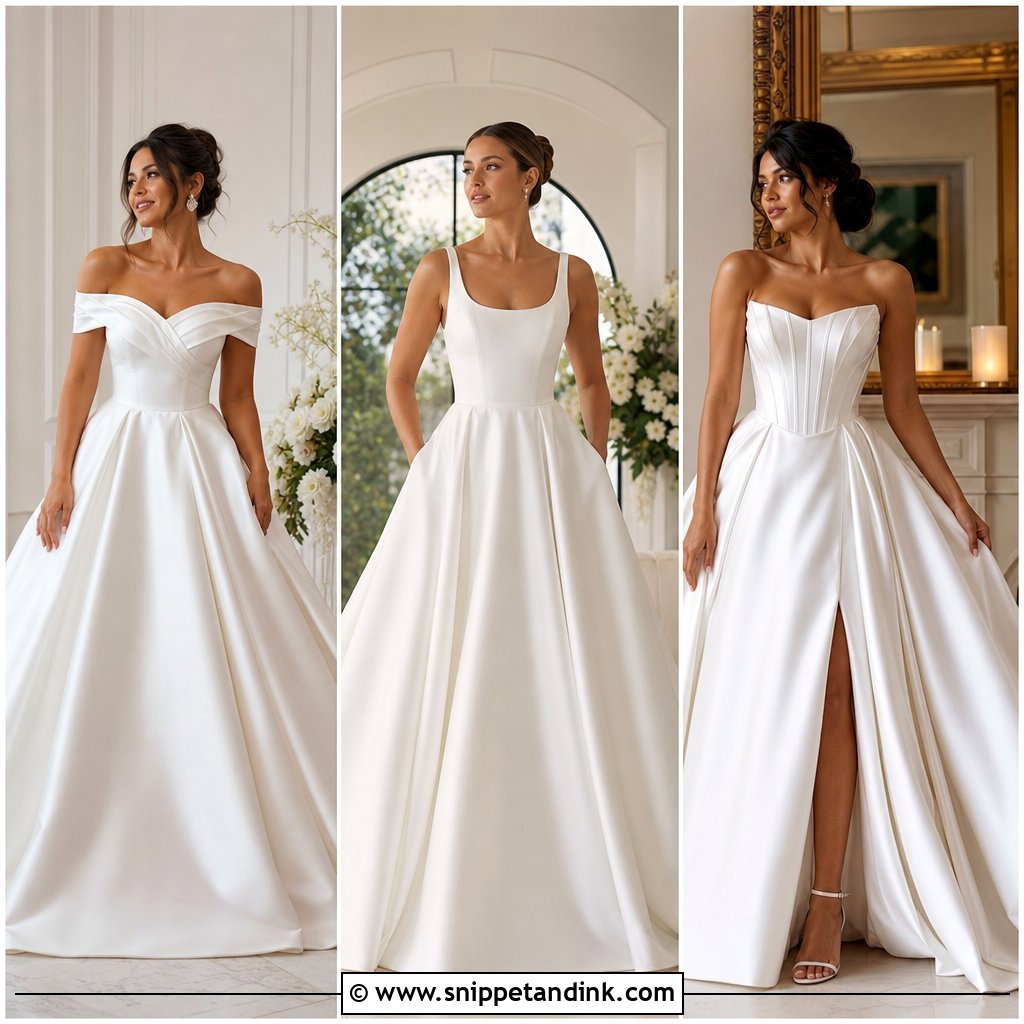
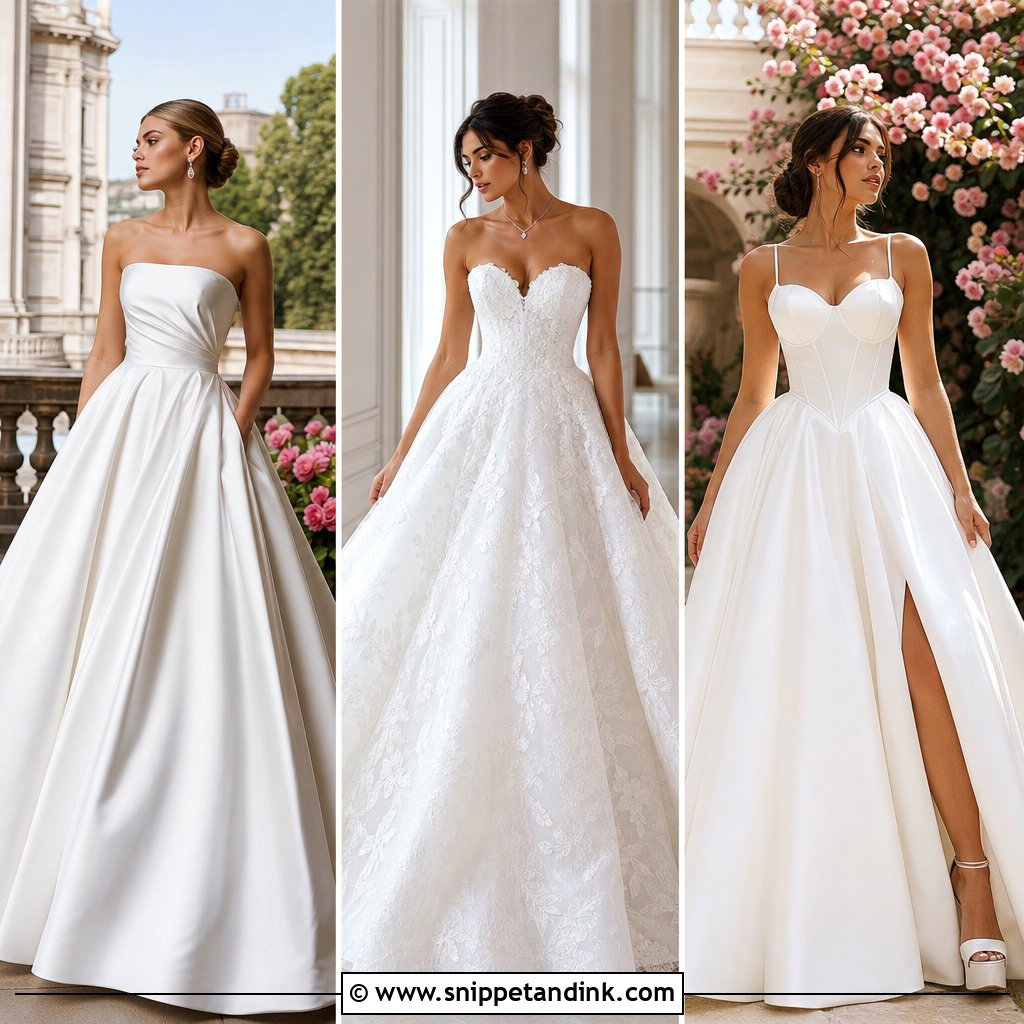
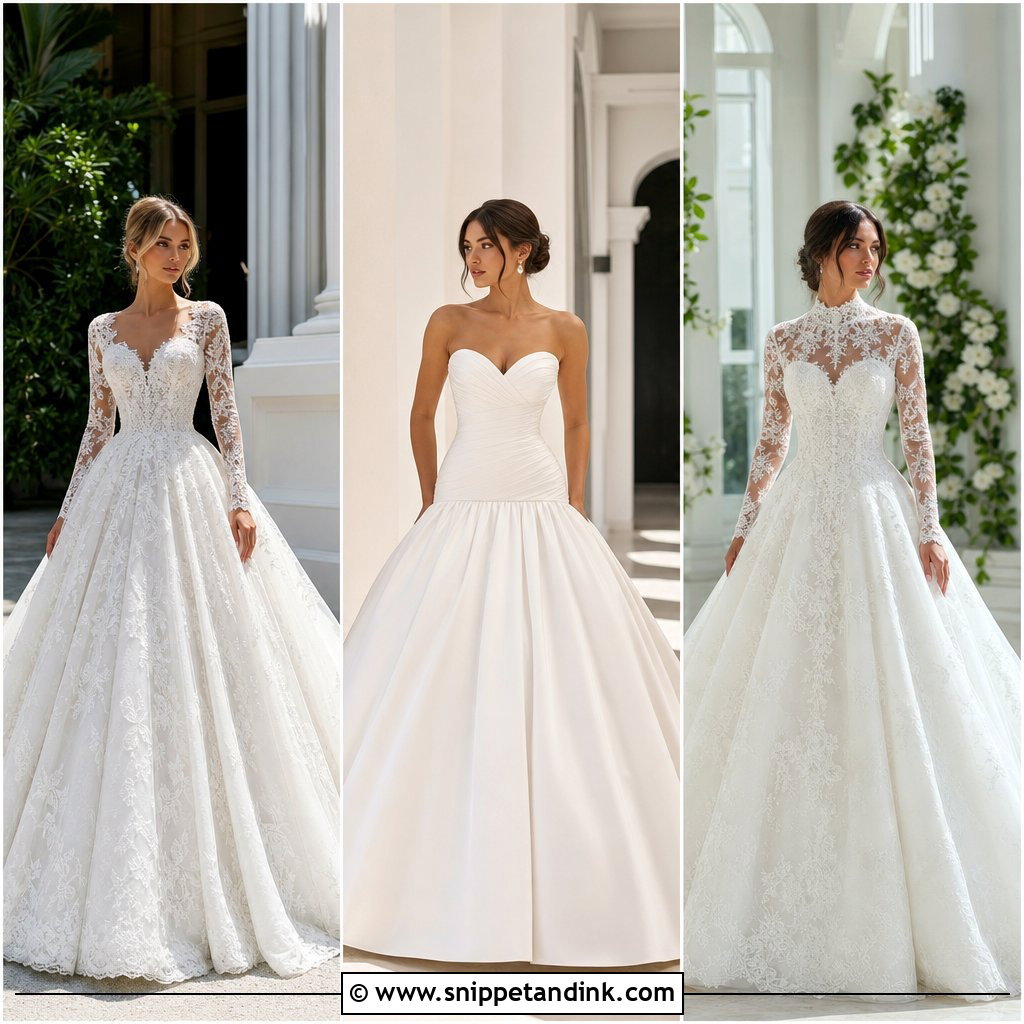
Satin is the cleanest way into a ballgown, and the one I recommend when the room itself is grand. A strapless ivory or soft white satin gown with a defined waist and long train gets its drama from the fabric, which catches light with no embellishment at all. Satin also shows everything: a crease from the car, a drop of water, a bodice that’s half a size off. I ask brides to sit in it at a fitting and see where it wrinkles. Pointed satin pumps, pearl drops and a cathedral veil finish it, with white roses or calla lilies kept neat, in ballrooms, historic estates and hotel venues.
2. Lace Ballgown Wedding Dress
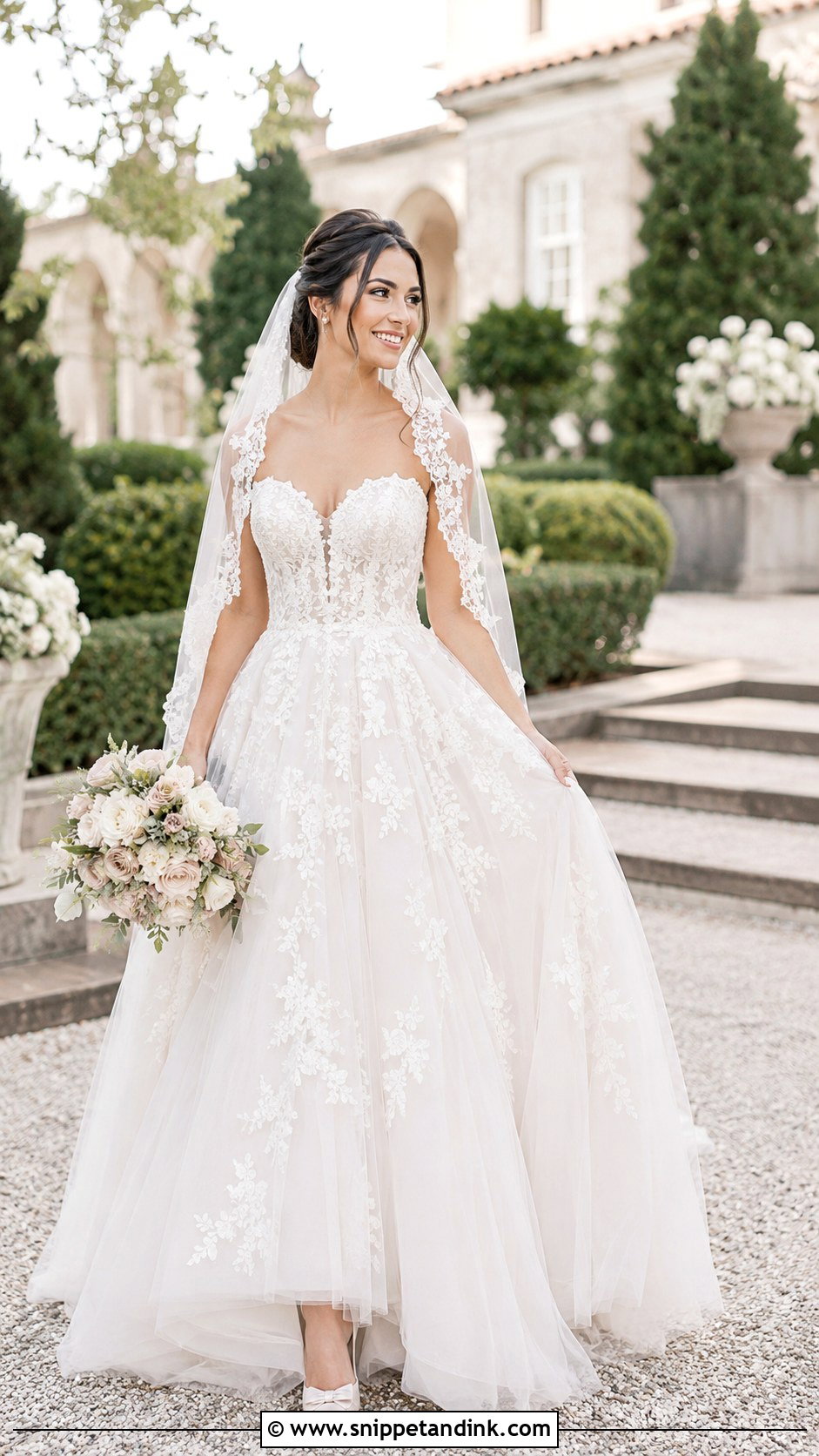
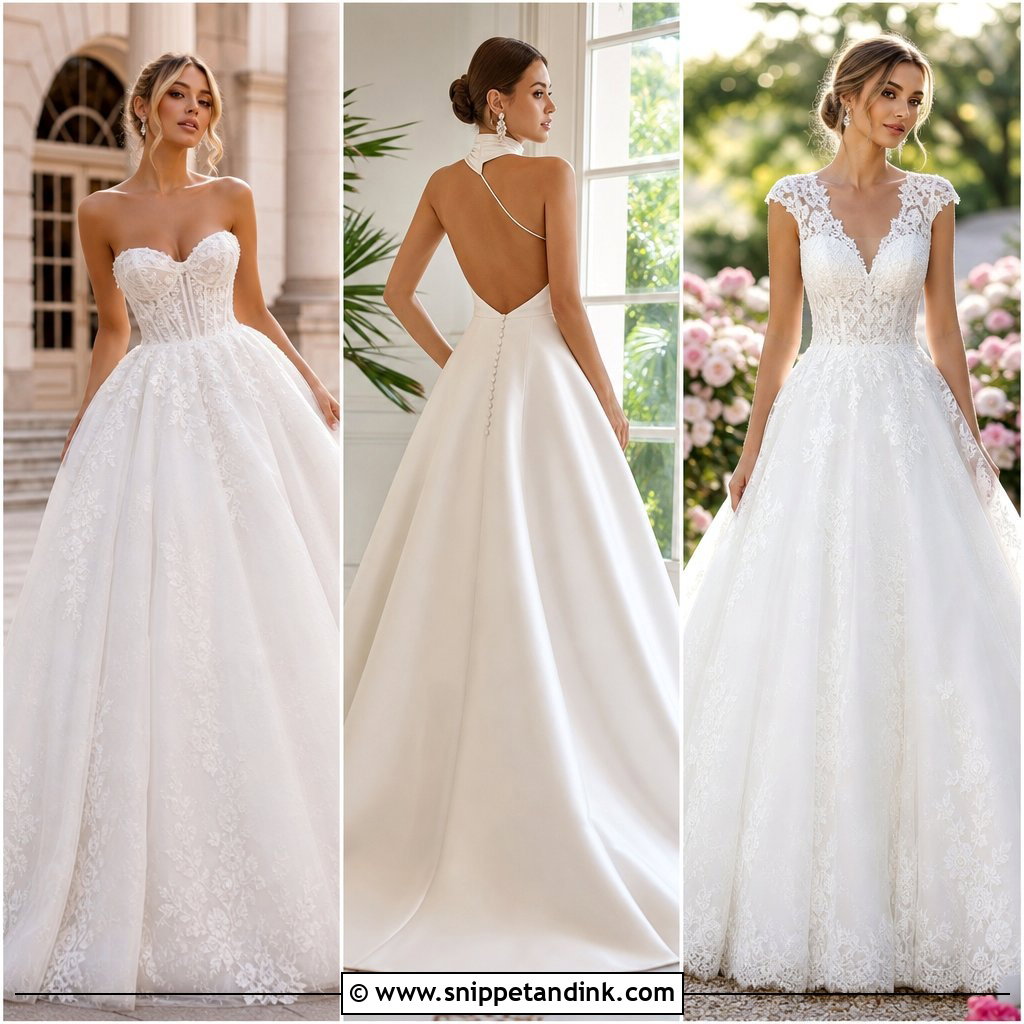
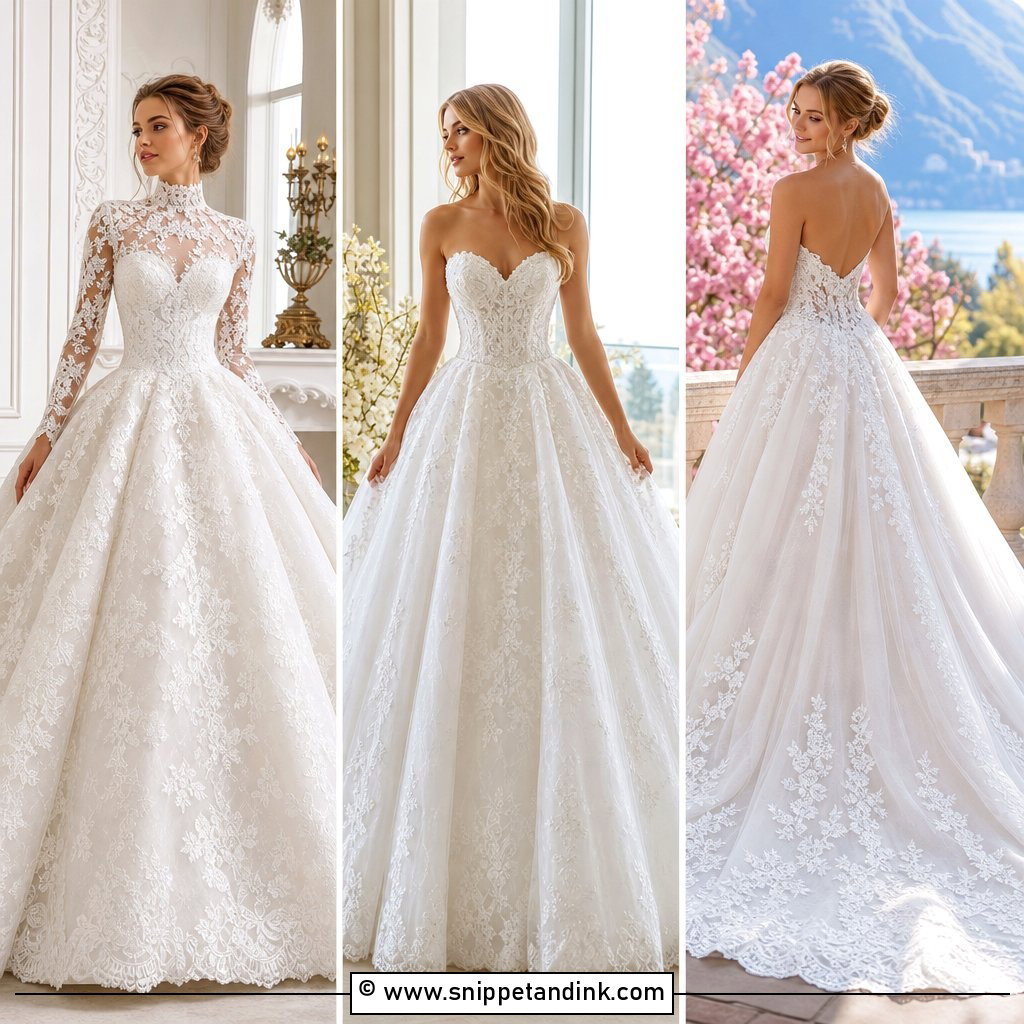
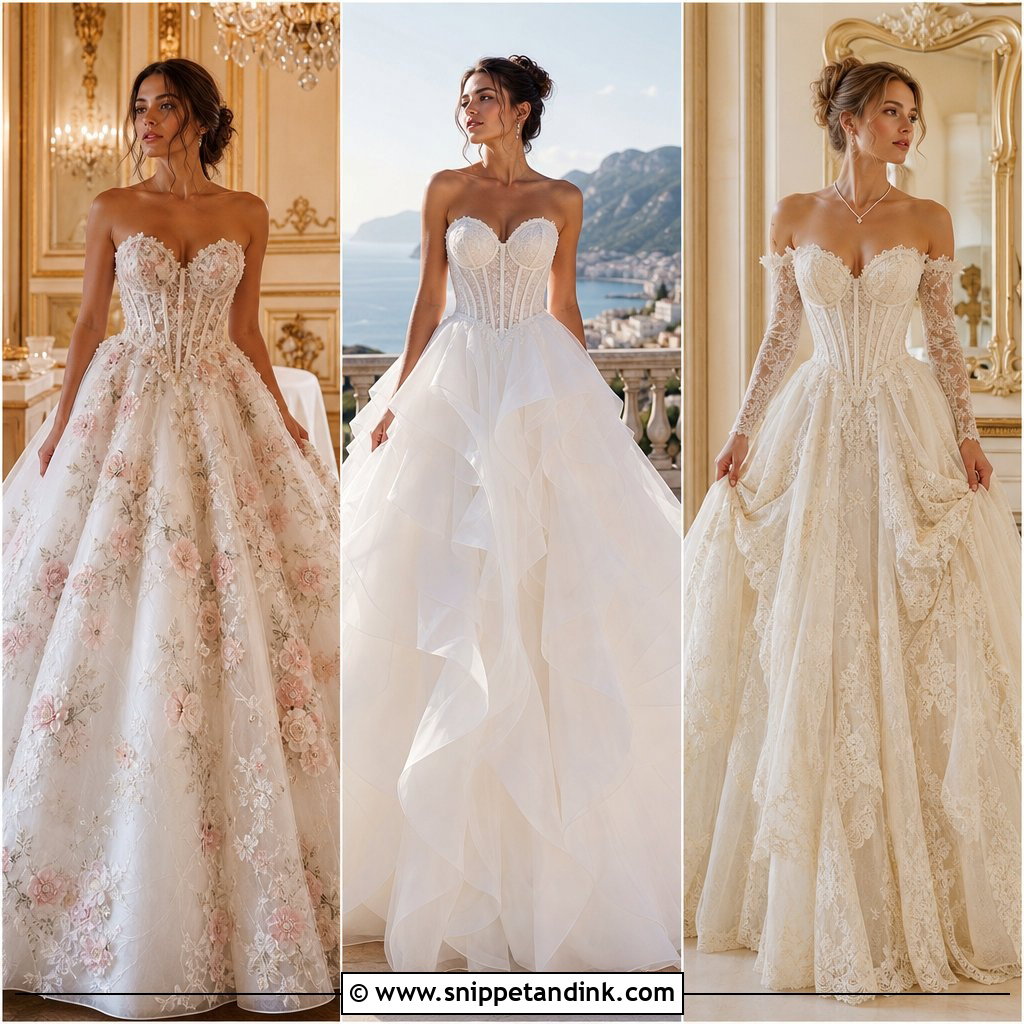
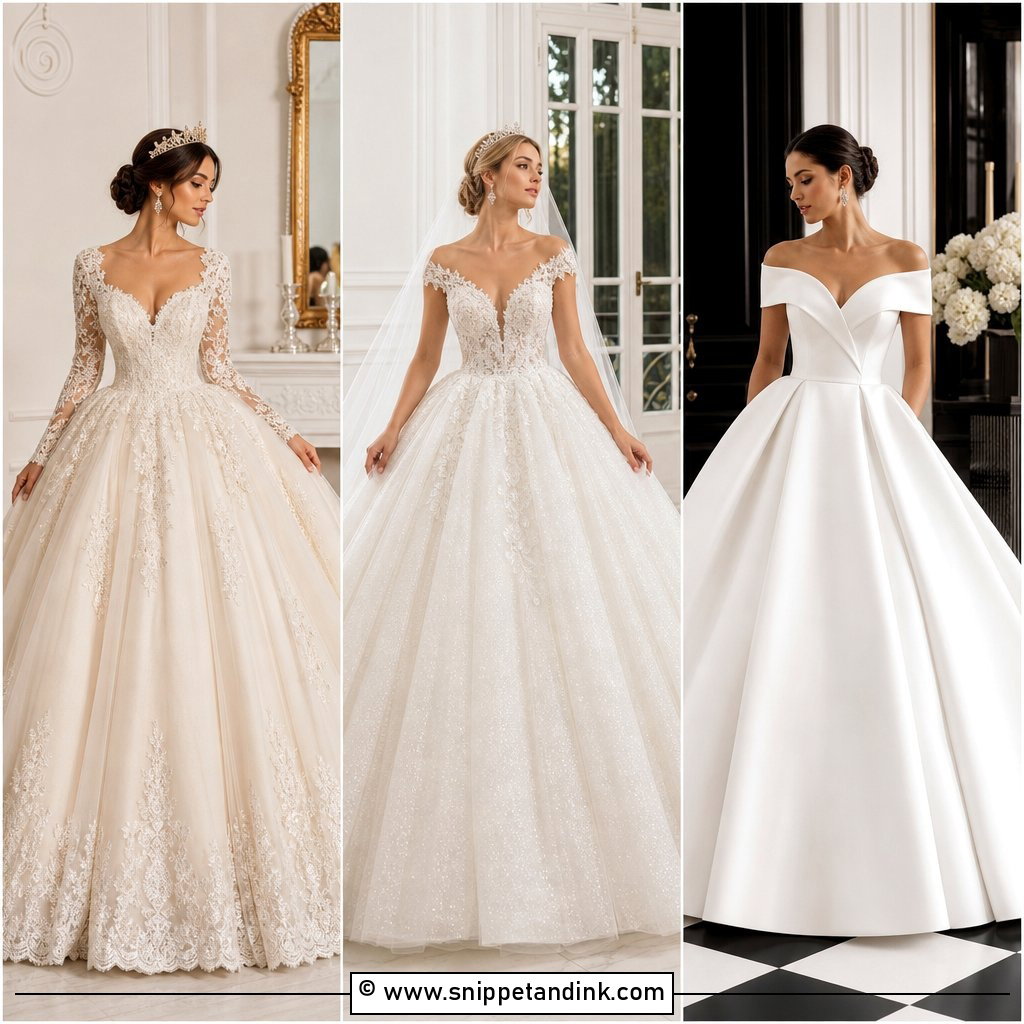
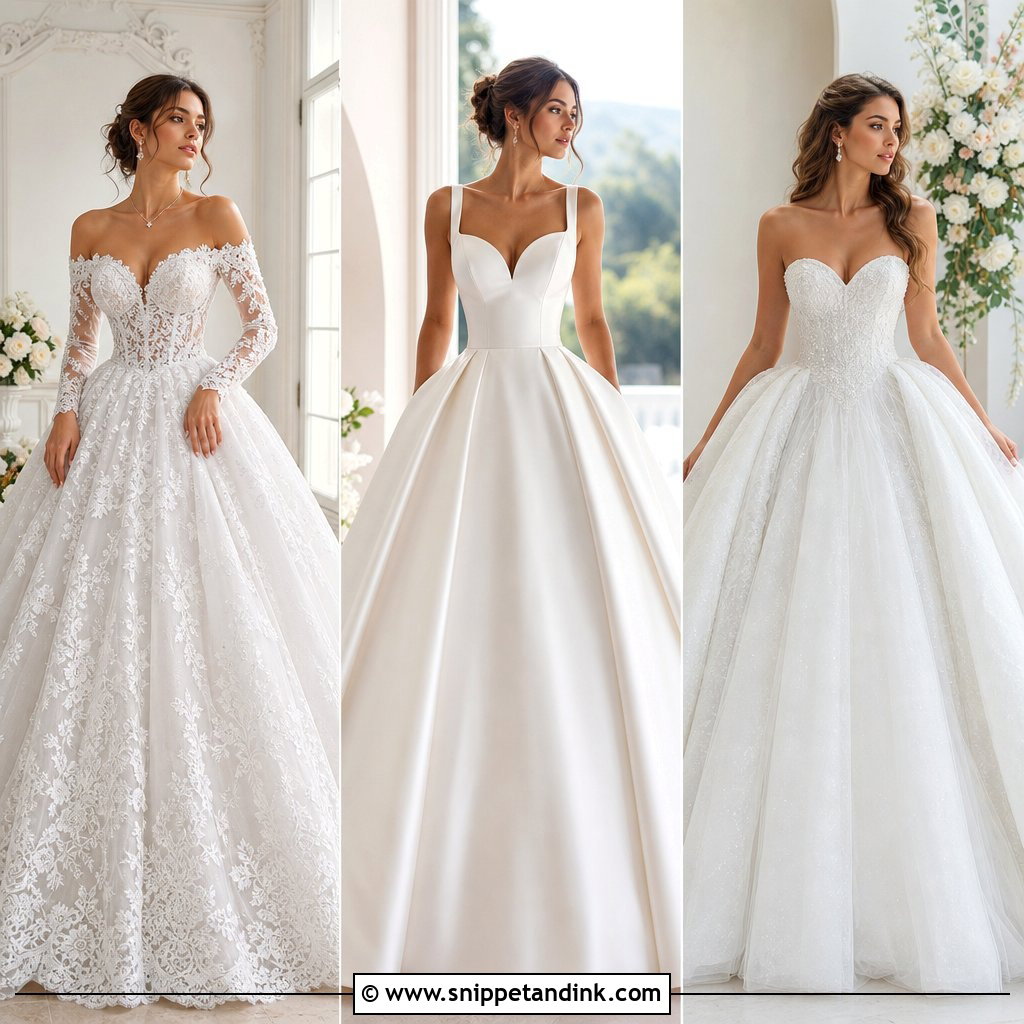
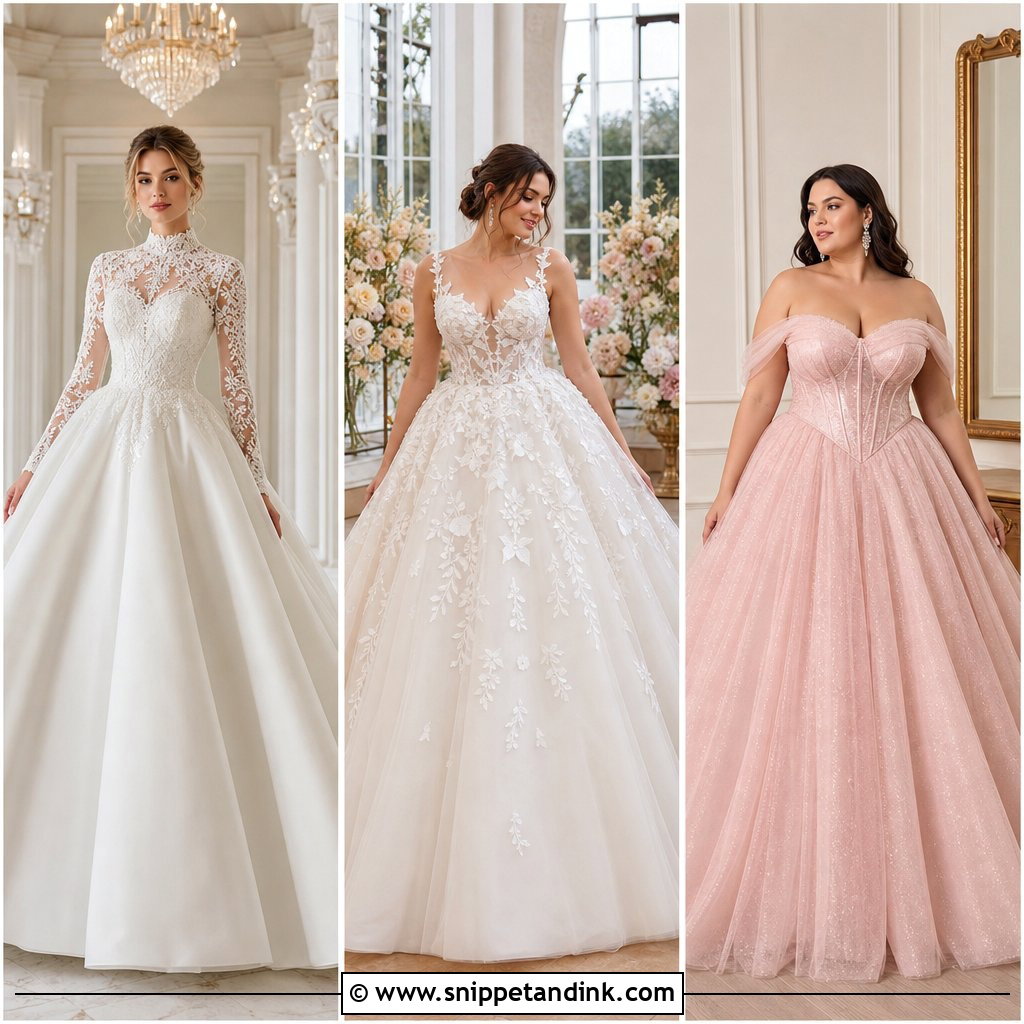
A lace ballgown wedding dress softens the whole silhouette. The version that wears well has floral lace laid over a structured bodice, so the shape comes from the corsetry underneath and the lace only adds surface. Unlined lace on a full skirt can catch on heels and rough ground, which matters at a garden wedding. A sweetheart or gentle V-neck balances the volume, and pearl studs, lace-trimmed heels and a fingertip veil edged in matching lace keep everything in one language. Finish with a loose updo or soft waves for estate and garden venues.
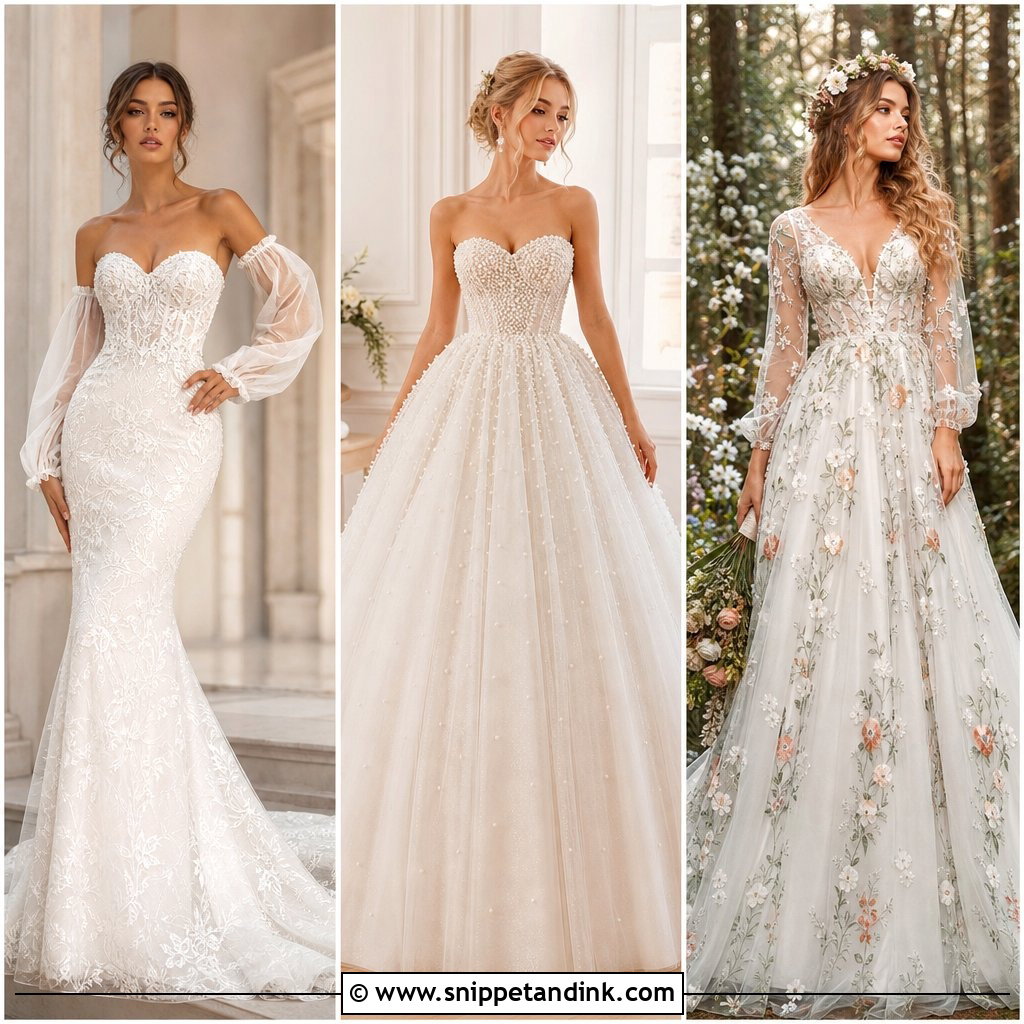
3. Off Shoulder Ballgown Wedding Dress
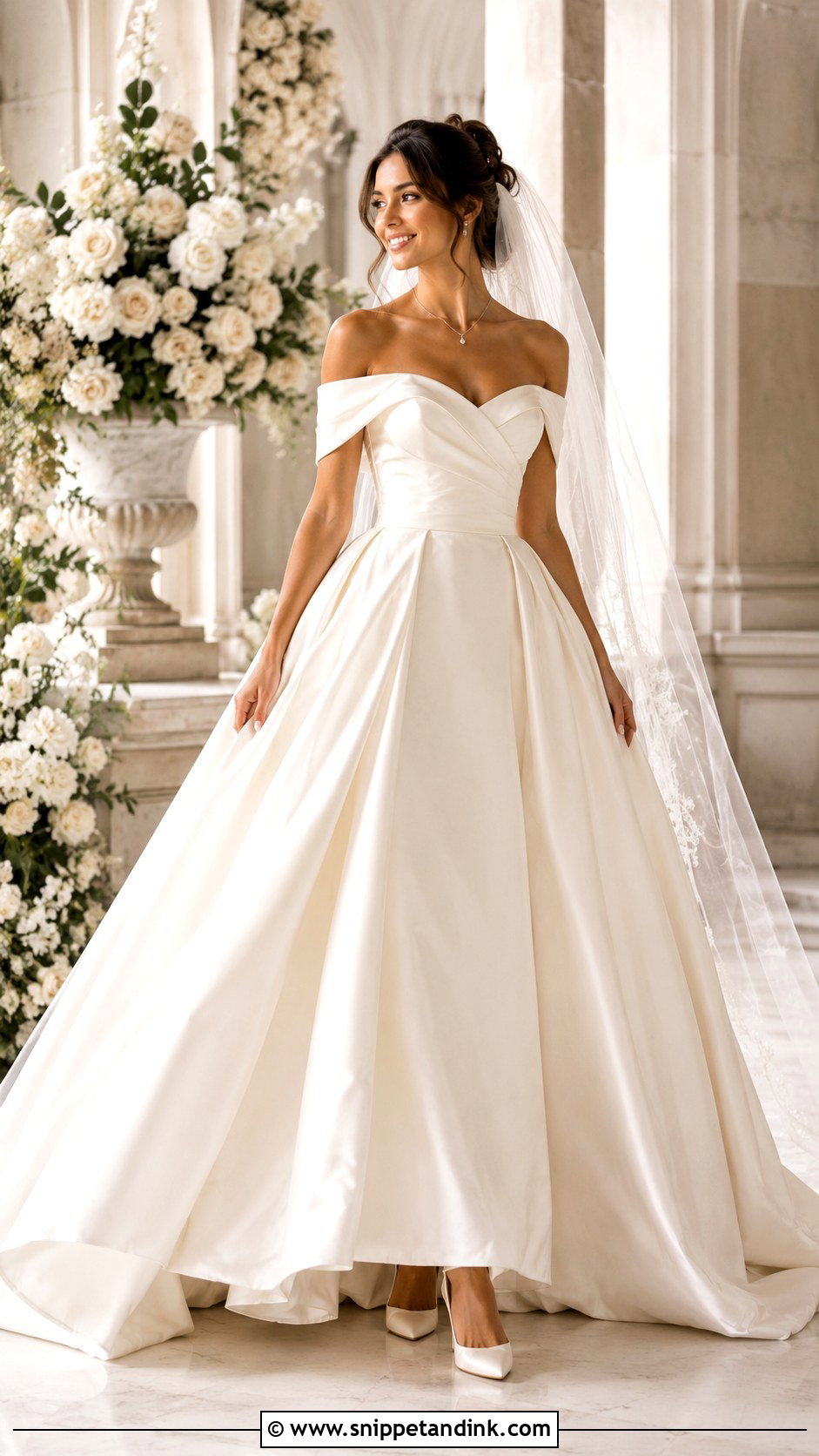
Off-shoulder bodices balance a big skirt by widening the line at the top, so the shape reads as an hourglass instead of a bell. Folded satin, lace appliqué or draped tulle sleeves all work. The trade-off is arm movement. With the band resting on your upper arms, hugging and raising a glass take some planning, and I make every bride do a full hug at the fitting. A long veil frames the shoulders well, especially anchored below the crown. Add a delicate necklace, small crystal earrings and satin heels for drama in the skirt and softness around the face.
4. Strapless Ballgown Wedding Dress
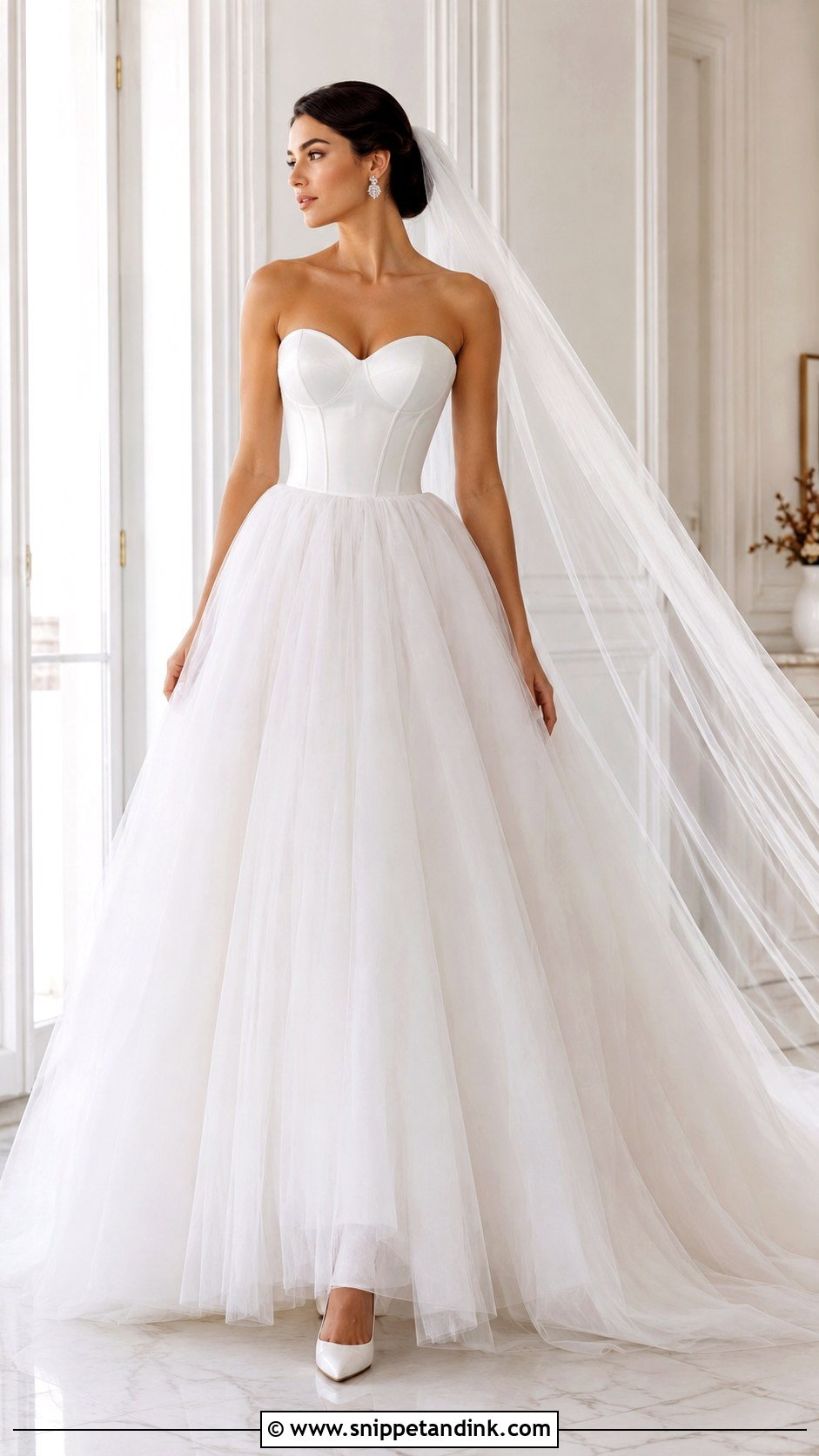
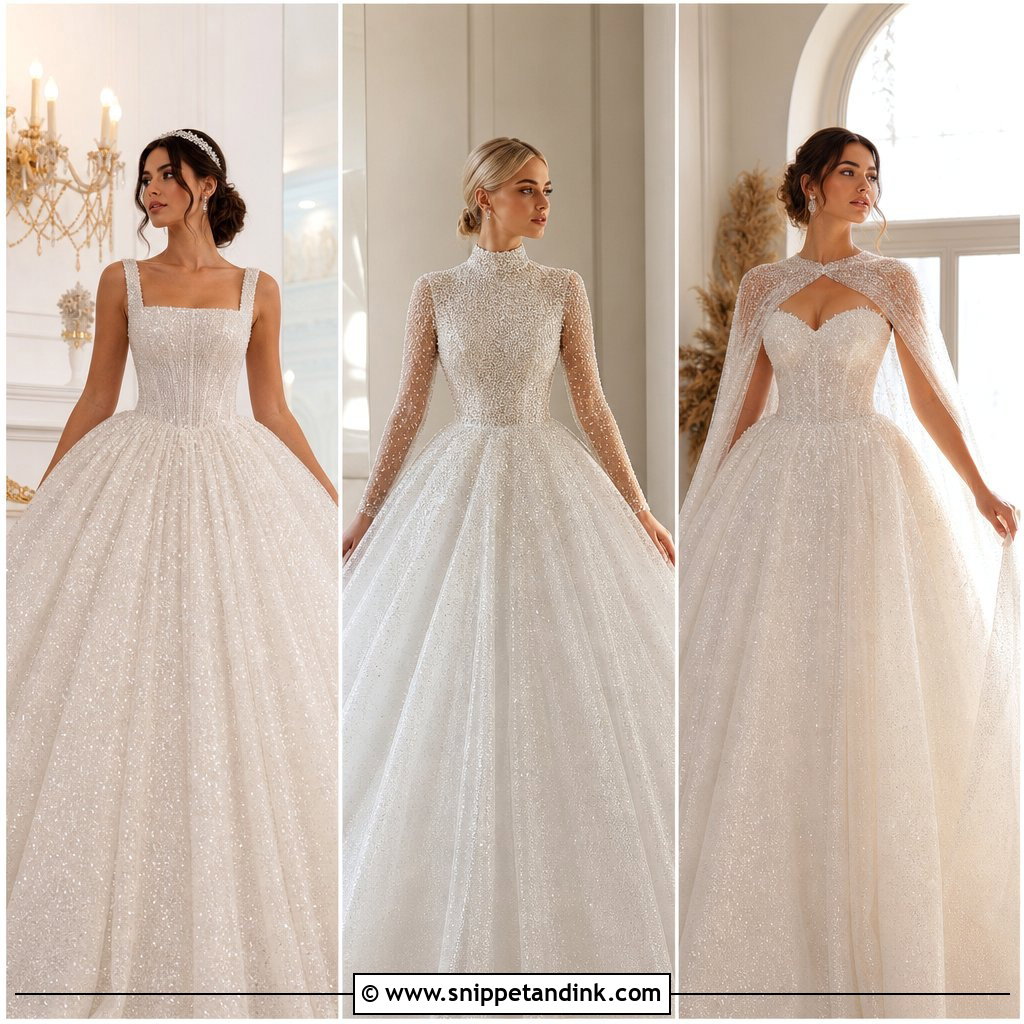
Strapless is the base most ballgowns are built on, and the reason is support: a well-made corset bodice carries the weight of a full skirt from the waist, not the shoulders. The top edge is what I check hardest, because a bodice that’s slightly loose gets hitched up all night and shows in every candid. Satin reads modern, lace romantic, tulle soft. A statement veil, crystal earrings and closed-toe pumps complete it, and detachable gloves or a sheer wrap add coverage for a religious ceremony. It’s the most adaptable base on this list.
5. Long Sleeve Ballgown Wedding Dress
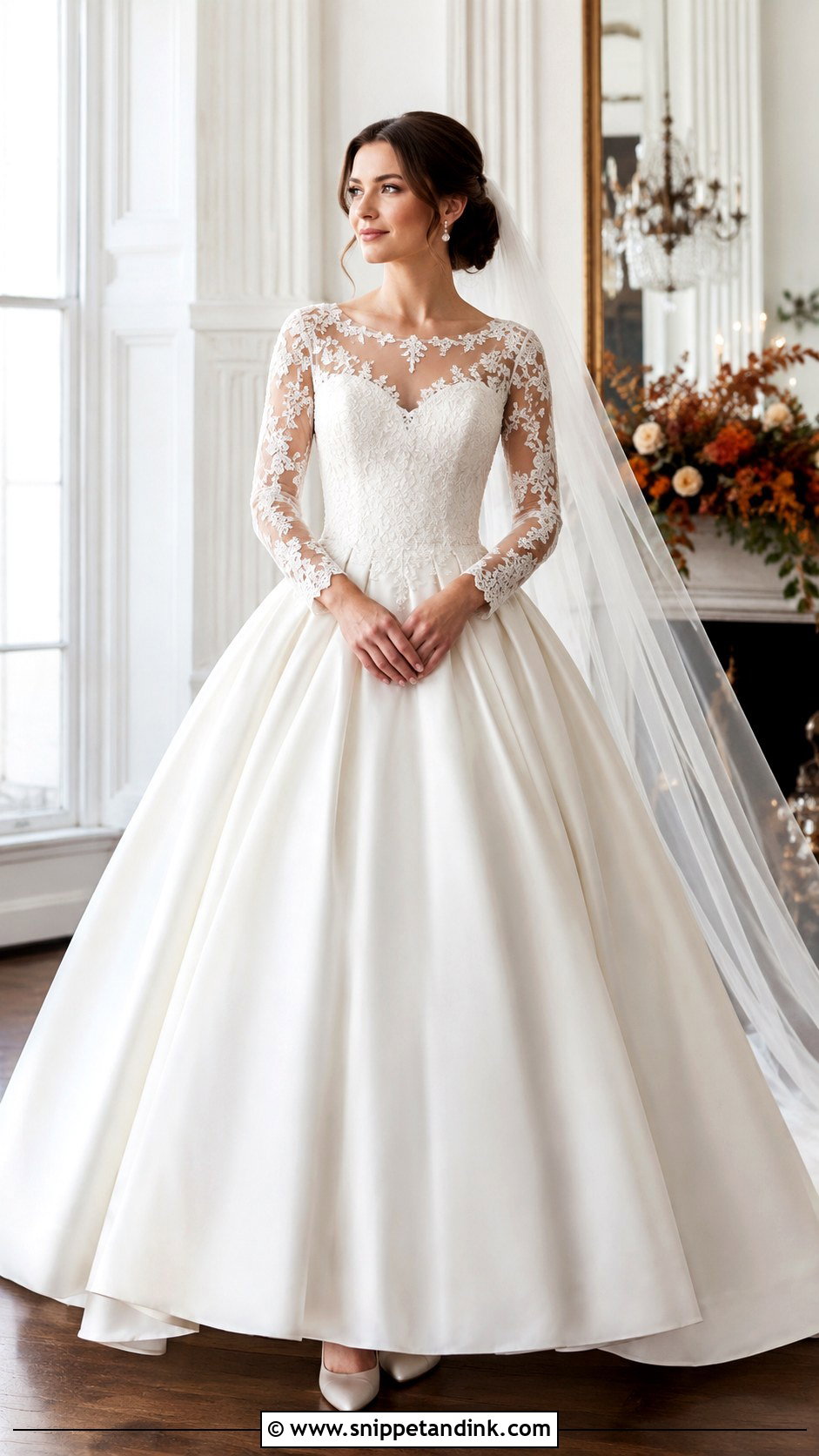
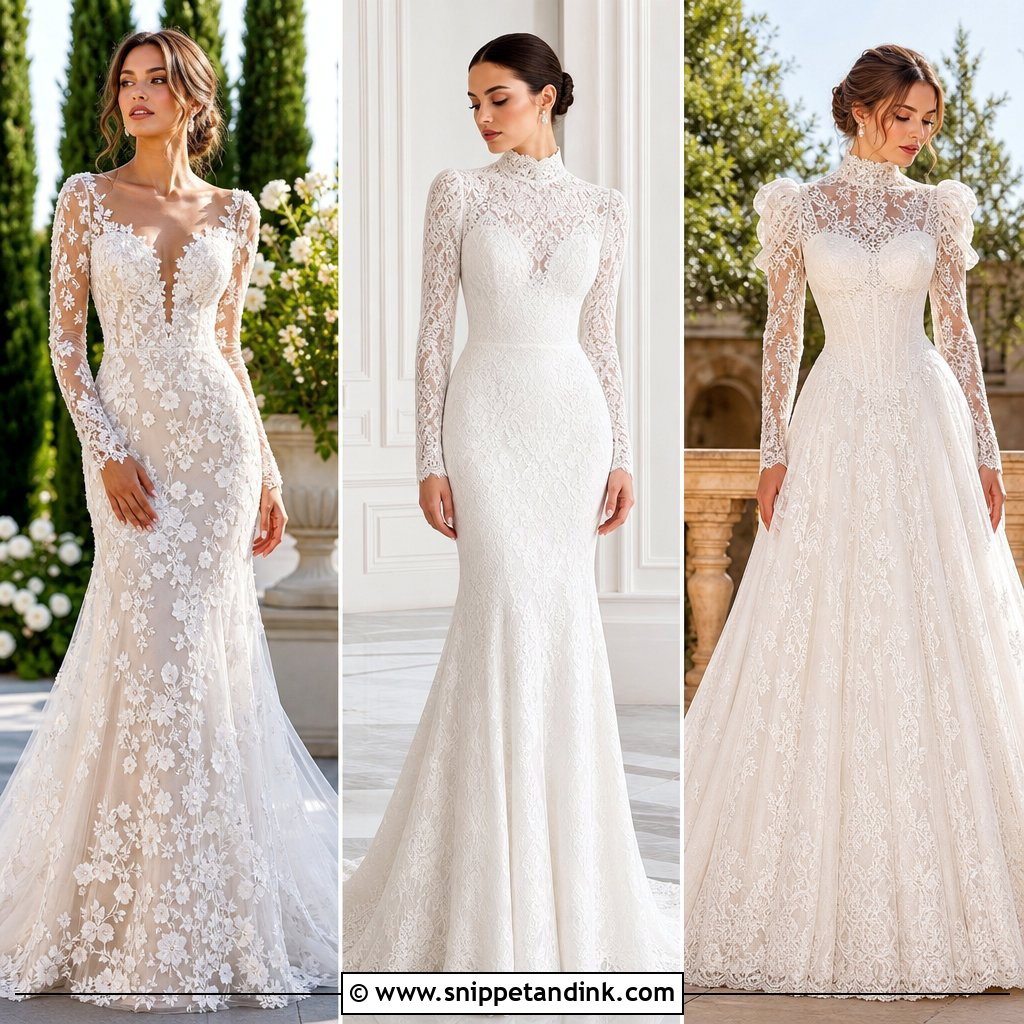
Long sleeves bring coverage without losing romance, especially when the sleeves are made from lace, illusion tulle or soft crepe. Sheer floral sleeves stop a full gown from feeling heavy. My fitting point is the armhole. A high, close armhole lets you raise your arms; a low one lifts the whole bodice when you do. Pearl earrings, a smooth bun and heels that peek out as you walk suit it, with a plain veil so the sleeves stay the focus at fall and winter weddings and classic indoor venues.
6. Tulle Ballgown Wedding Dress
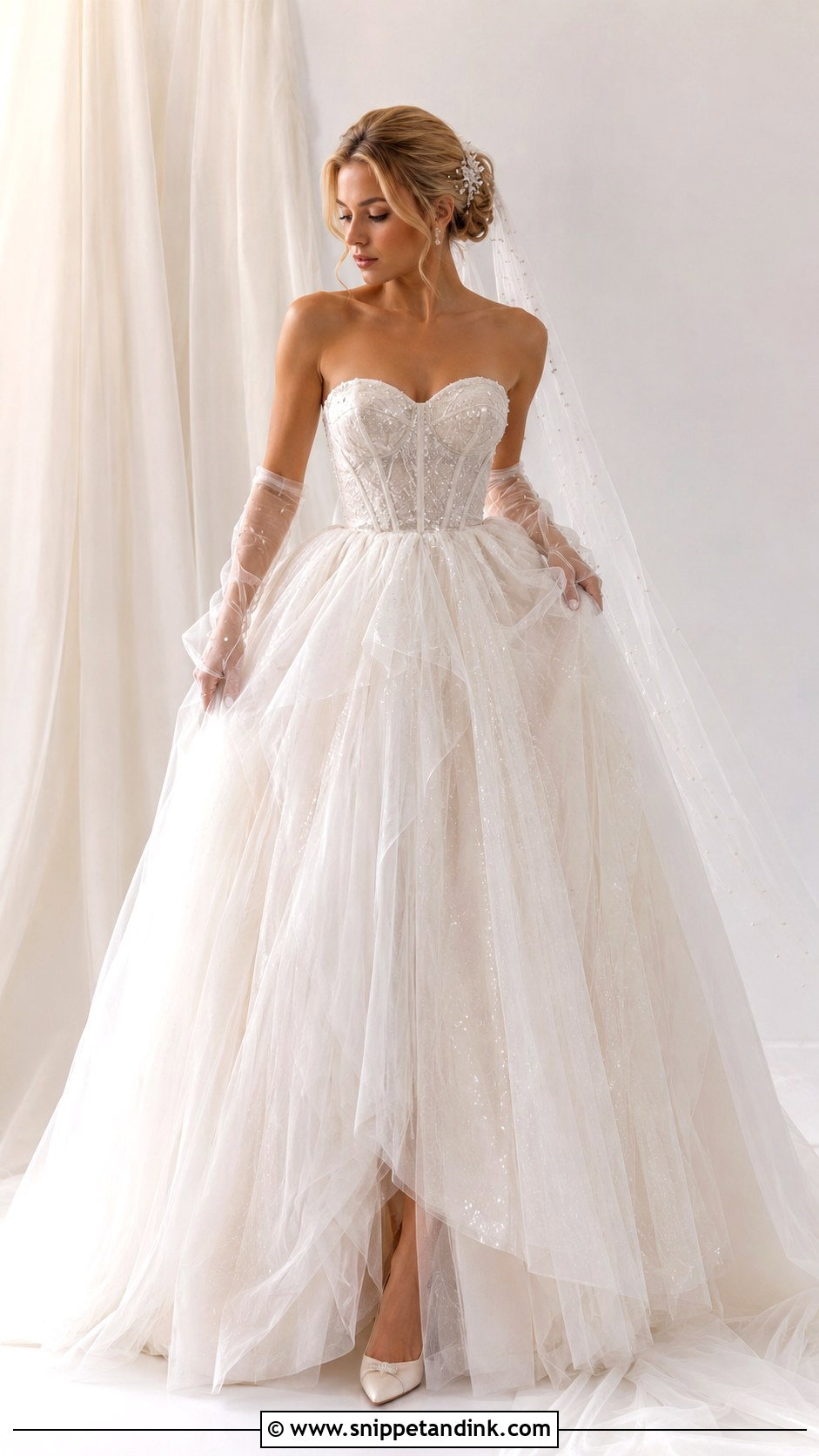
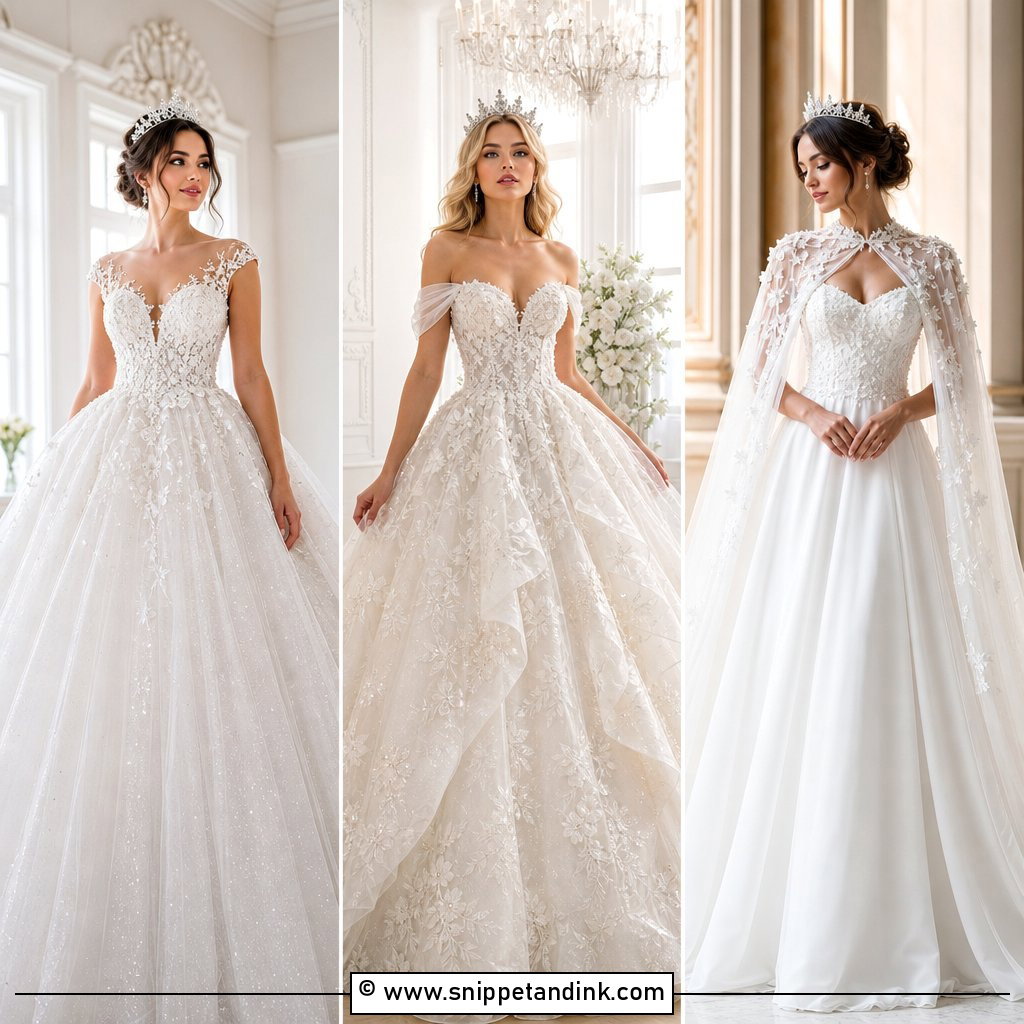
Tulle gives the lightest skirt you can get at full volume. Layered tulle moves as you walk, and that float is exactly what brides picture when they say fairytale. It’s also delicate. Tulle snags on heels, chair legs and anything with velcro, and the hem picks up grass stains outdoors, so I suggest a firmer underlayer for garden days. A fitted corset bodice with subtle sparkle or floral appliqué adds dimension, and crystal hair pins, sheer gloves, ivory heels and a veil with scattered pearls keep the whole look airy.
7. Beaded Ballgown Wedding Dress
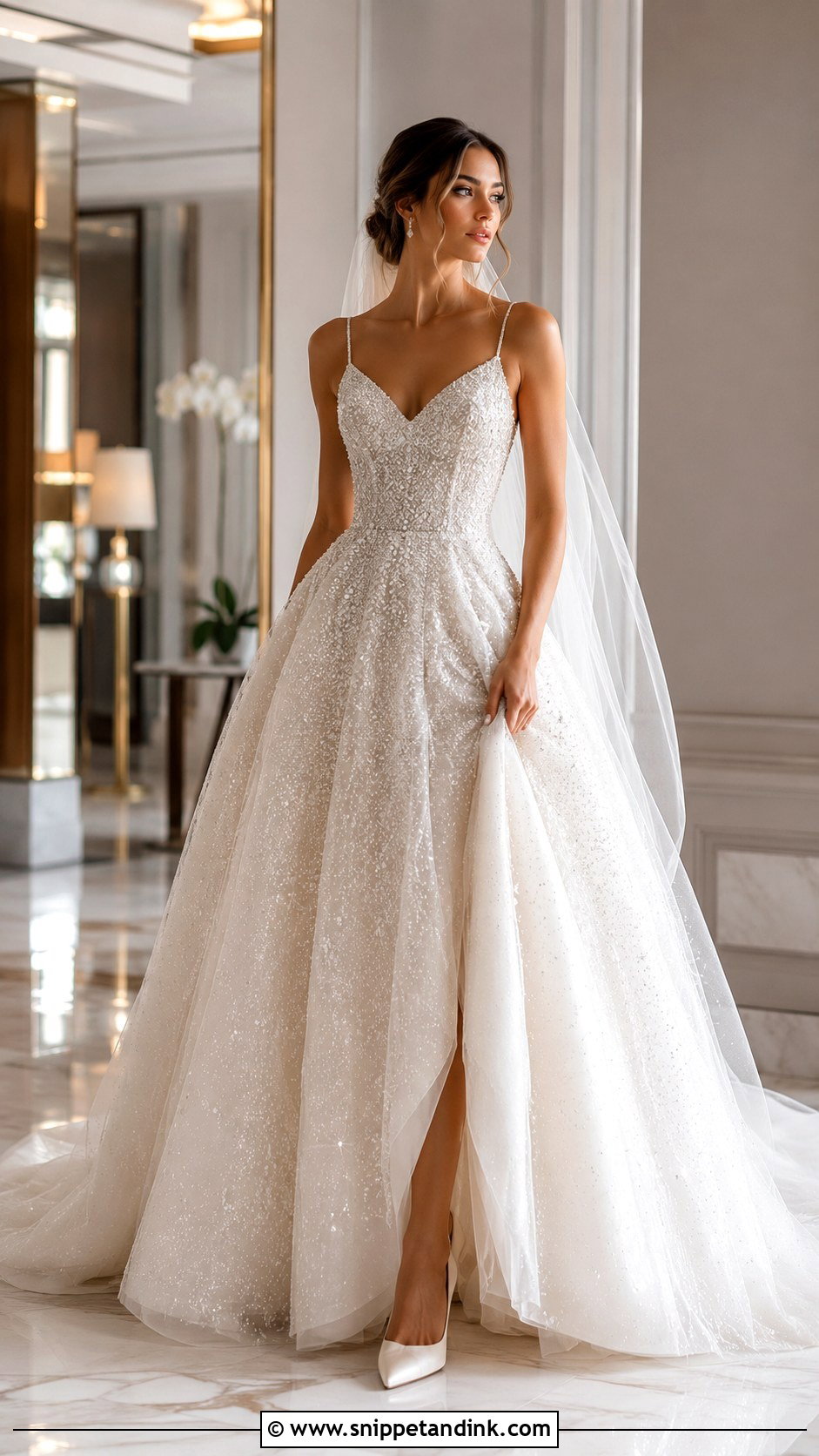
Beading is heavy, more than most brides expect, and that weight changes how a ballgown hangs. Fine beadwork on the bodice with light shimmer through the skirt keeps the sparkle rich and the gown wearable. Before anything else, I check the inside of a beaded bodice for scratchy thread knots at the underarm. Simple earrings, a clean veil, sleek satin heels and a low bun let the beads lead. Choose beadwork that follows the gown’s seams rather than a scatter that blurs its structure, and save it for evening, black-tie and hotel weddings.
8. Basque Waist Ballgown Wedding Dress
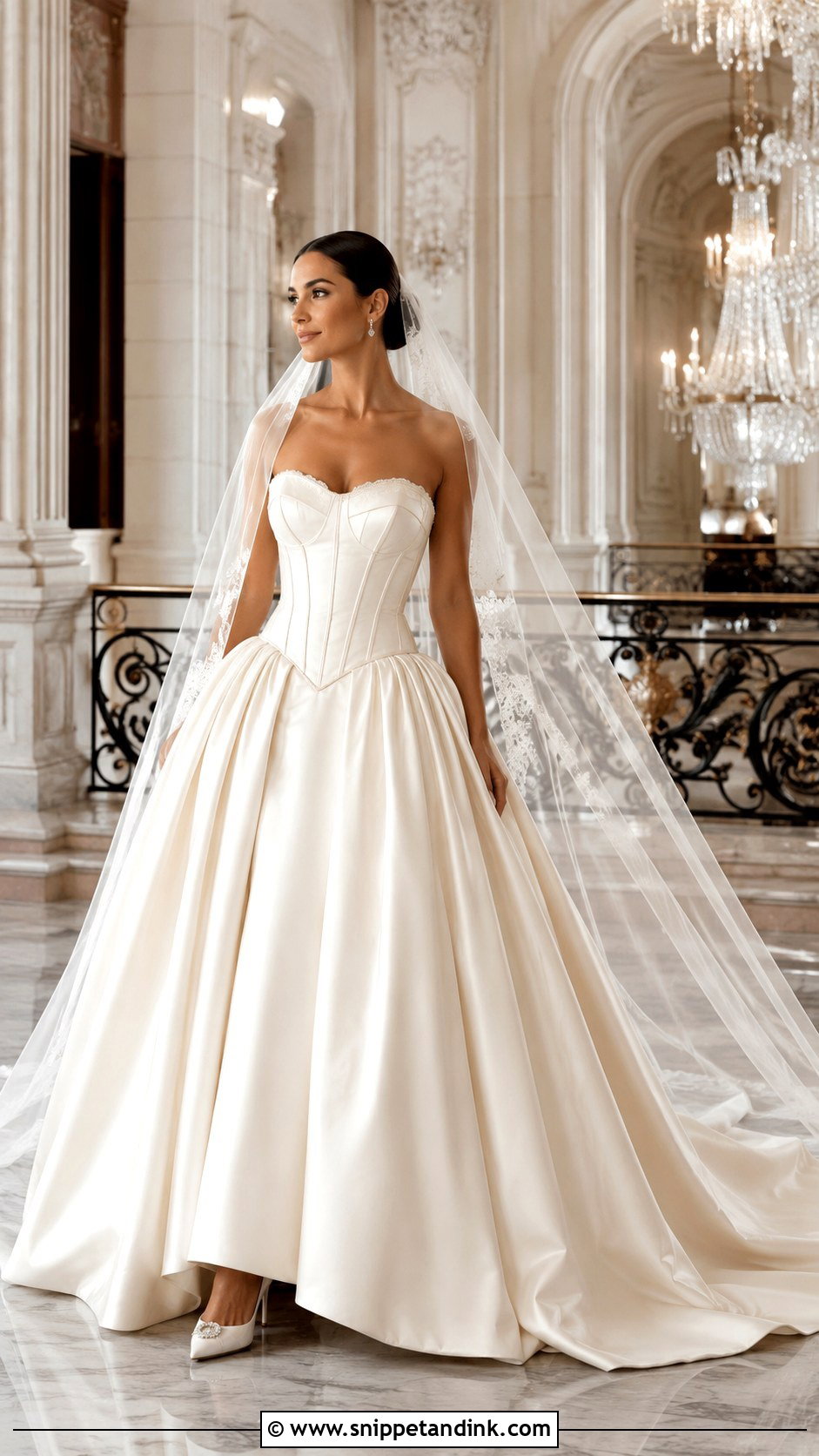
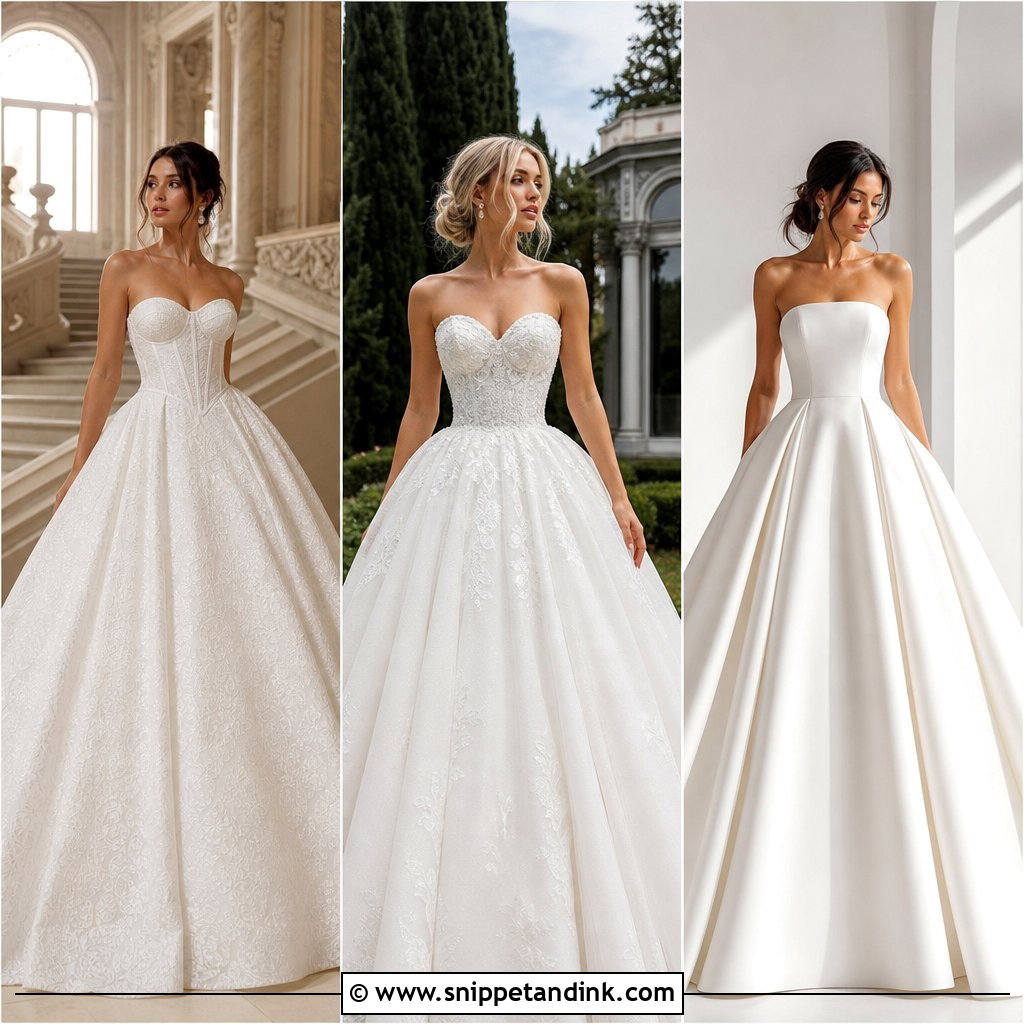
A basque waist ballgown wedding dress is the shape brides fall for fastest right now. The V or U dip at the front lengthens the torso and makes the skirt look even fuller. It’s less forgiving on a short torso, though: if the point sits too low, the bodice buckles when you sit. Satin, lace or brocade give it a regal finish, especially with a corset bodice and clean neckline. Pointed heels, a long veil and small drop earrings keep it current rather than costume.
9. Corset Ballgown Wedding Dress
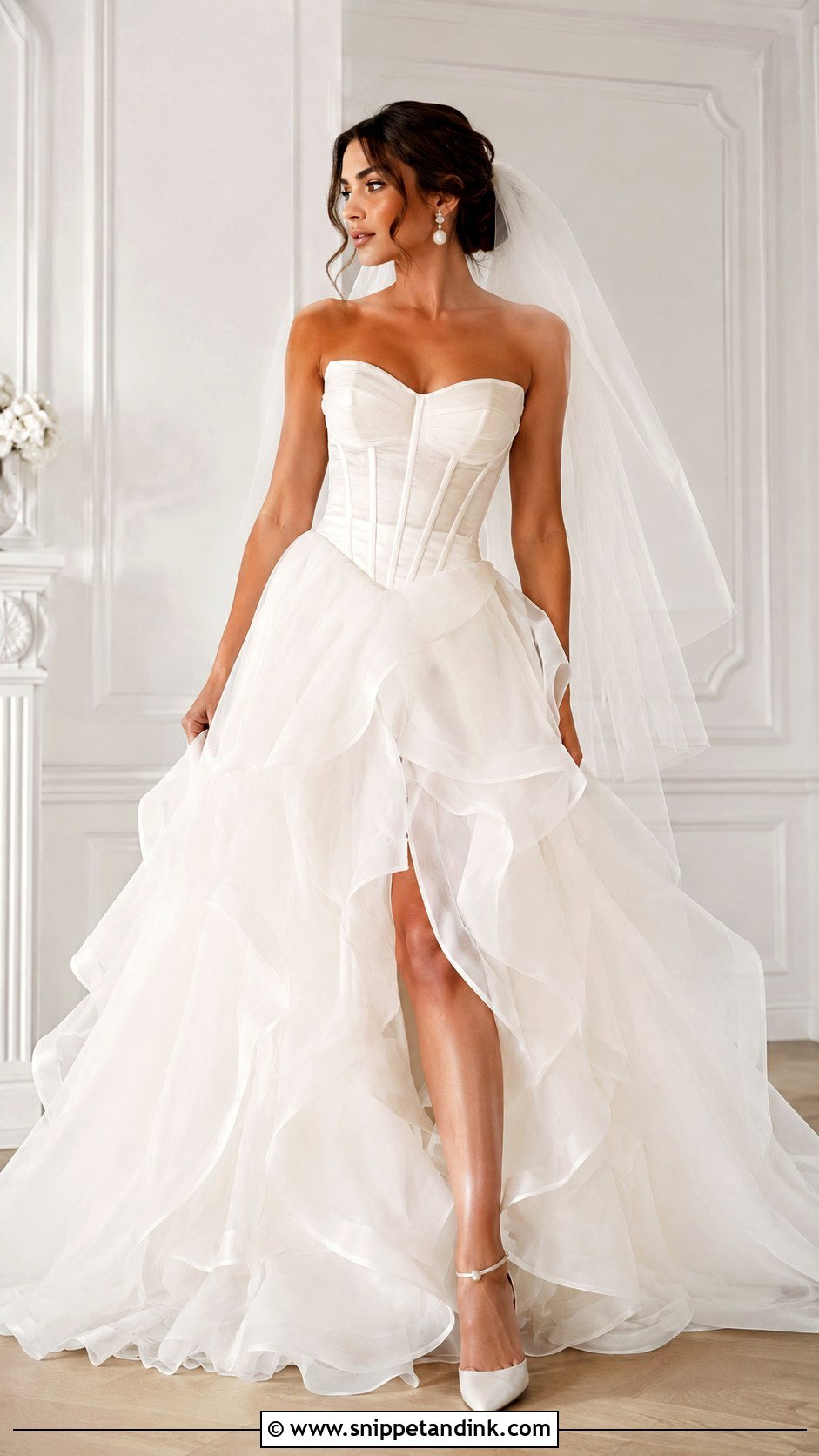
Good boning, not tight lacing, is what makes a corset comfortable. A properly fitted corset bodice spreads pressure around the ribs, and at the final fitting I ask the bride to eat something and sit for a while to see how it feels after a meal. The bodice can be lace, smooth satin or visible boning, balanced by a full skirt in tulle, organza or mikado. When the construction is on show, keep the veil simple. Soft waves, pearl earrings and heels you can stand in finish it, and the shape holds from the ceremony through the last dance.
10. Floral Ballgown Wedding Dress
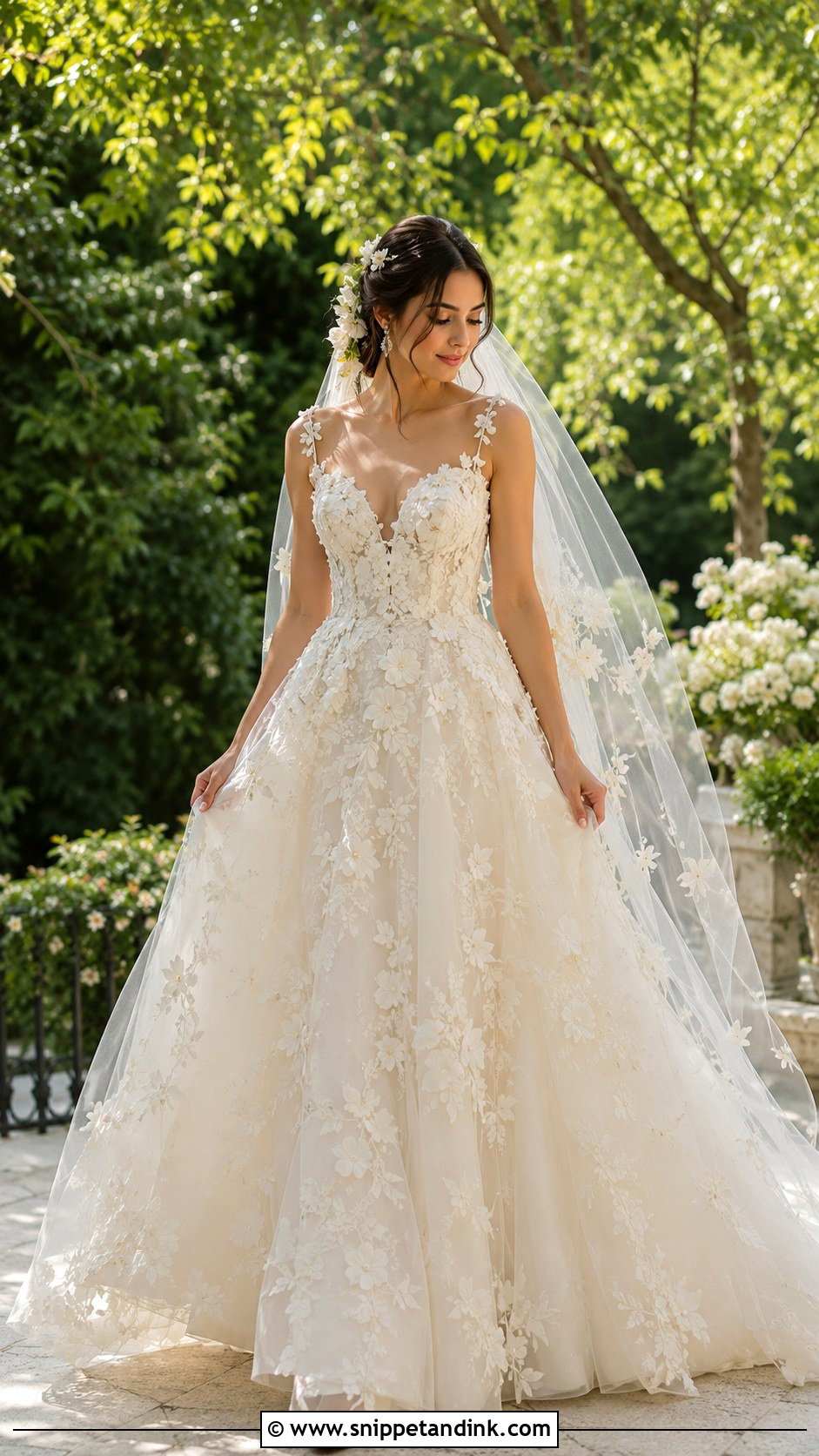
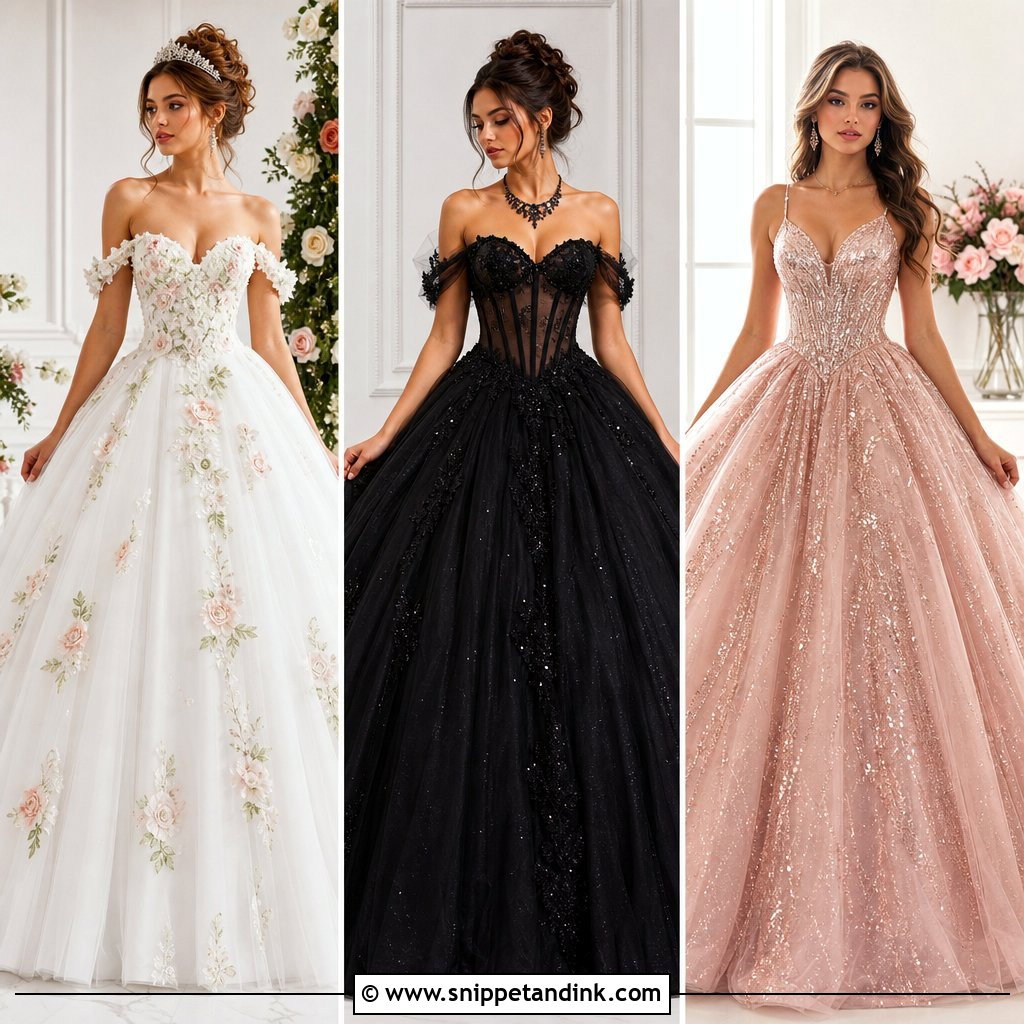
Floral appliqué is where I suggest restraint with color. Ivory, blush, champagne or soft white blooms keep a garden mood refined; brighter flowers start to look theatrical once the skirt is this big. 3D flowers also crush in transit, so ask how they’re attached and whether a seamstress can re-fluff them before the day. Embroidered or lace blooms flatten less. Small floral hair pins, barely-there earrings, simple heels and a sheer veil with tiny flowers tie it together for gardens and spring or summer weddings.
11. Minimalist Ballgown Wedding Dress
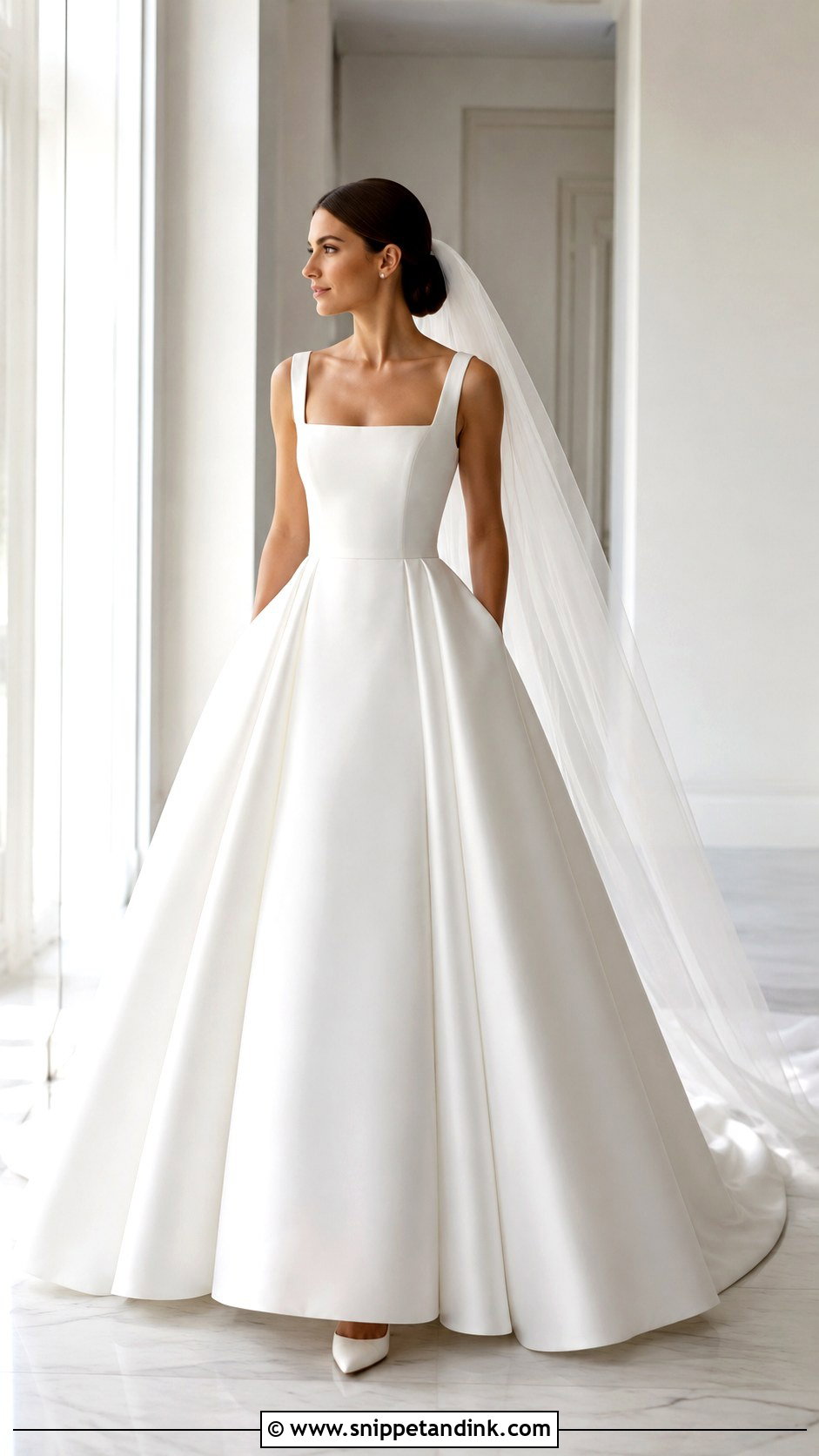
A minimal ballgown has nowhere to hide. With a clean satin or mikado gown, the drama comes from the silhouette, the fabric quality and the fit, so I spend more fitting time on this style than on any beaded one. A square or strapless neckline, crisp seams and a smooth bodice read modern. Pearl studs, a plain veil, classic pumps and a sleek bun keep it intentional. Brides drawn to quiet luxury and clean, bright photography tend to land here.
12. Pearl Ballgown Wedding Dress
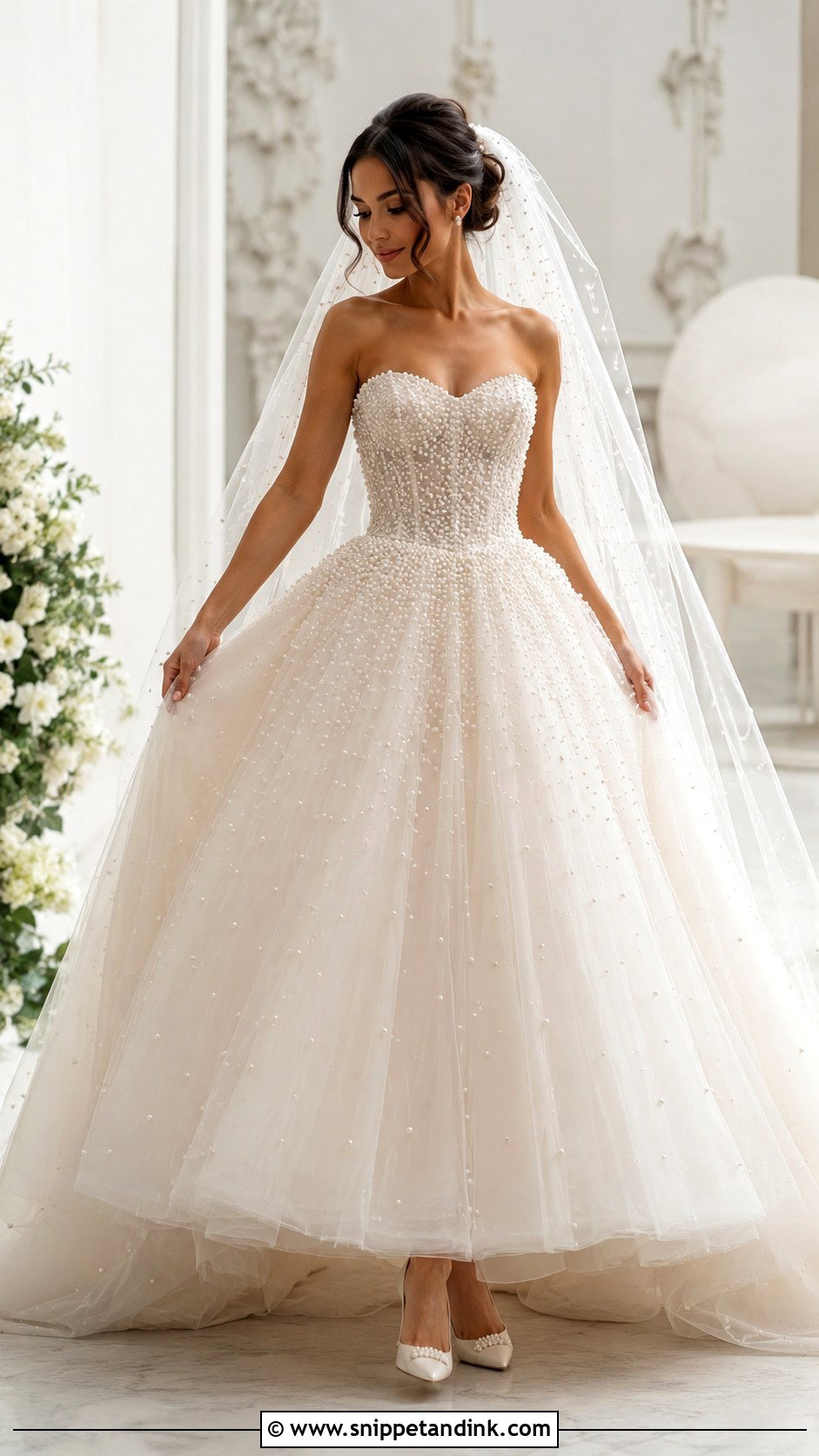
Pearls add texture without glare, which makes them gentler on camera than crystals. They can be scattered over tulle, trimmed along the neckline or worked into a corset bodice. They’re also heavy, so a skirt covered in them needs a firm underlayer or it drags. Match everything else to the gown: pearl earrings, ivory heels, a veil with a few pearls of the same size, and nothing bold. A soft updo or half-up style suits it in bright, formal rooms.
13. Champagne Ballgown Wedding Dress
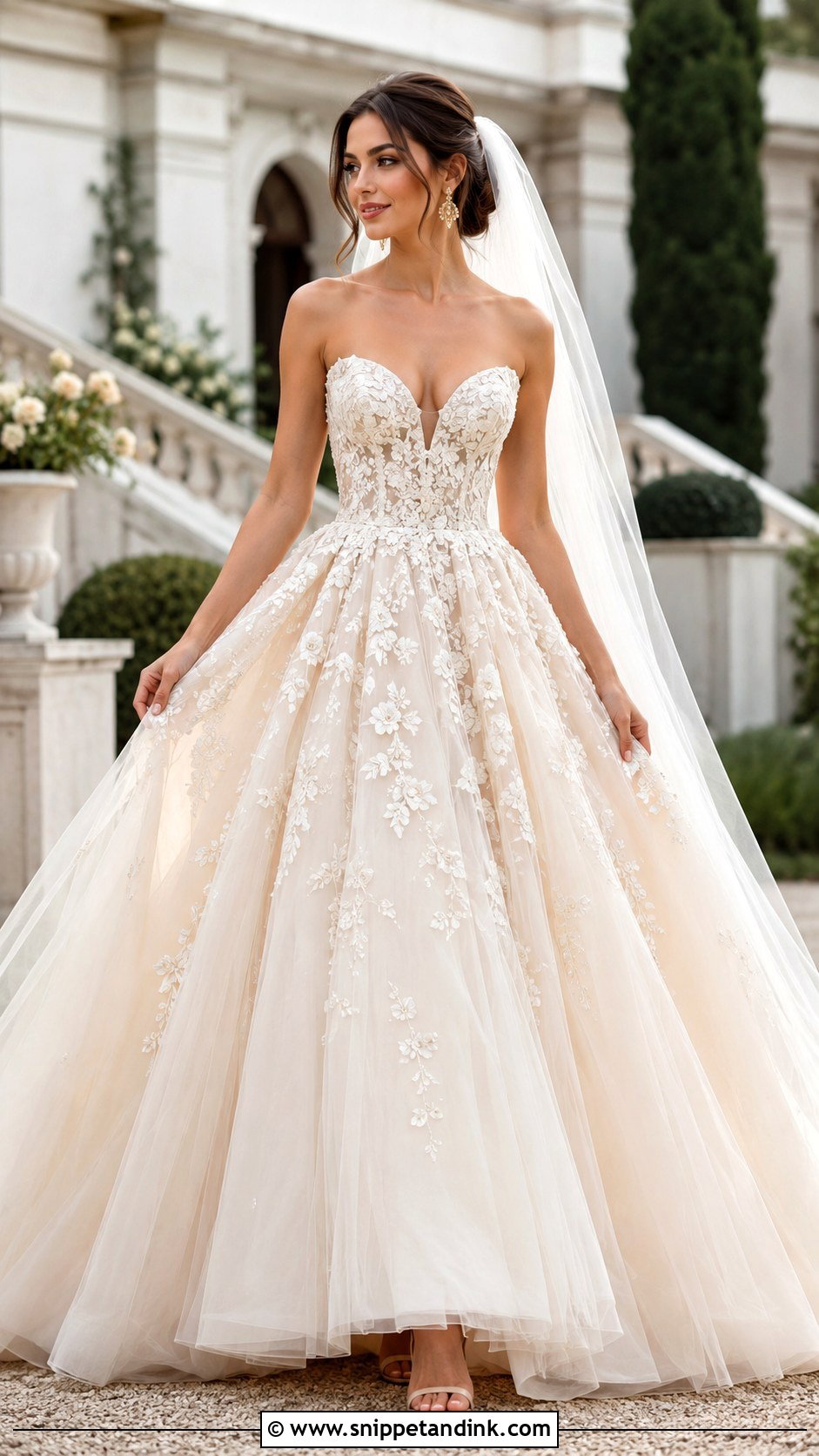
Champagne is the color I suggest to brides who find bright white harsh against their skin. The golden undertone warms the face in photos and still reads bridal, and tulle, satin or lace in champagne with ivory overlays gives depth. Watch the veil. A pure white veil over champagne makes the gown look dingy, so match it to the ivory overlay instead. Nude heels, gold-toned jewelry and white and cream flowers balance it for evening weddings, historic venues and outdoor ceremonies.
14. Blush Ballgown Wedding Dress
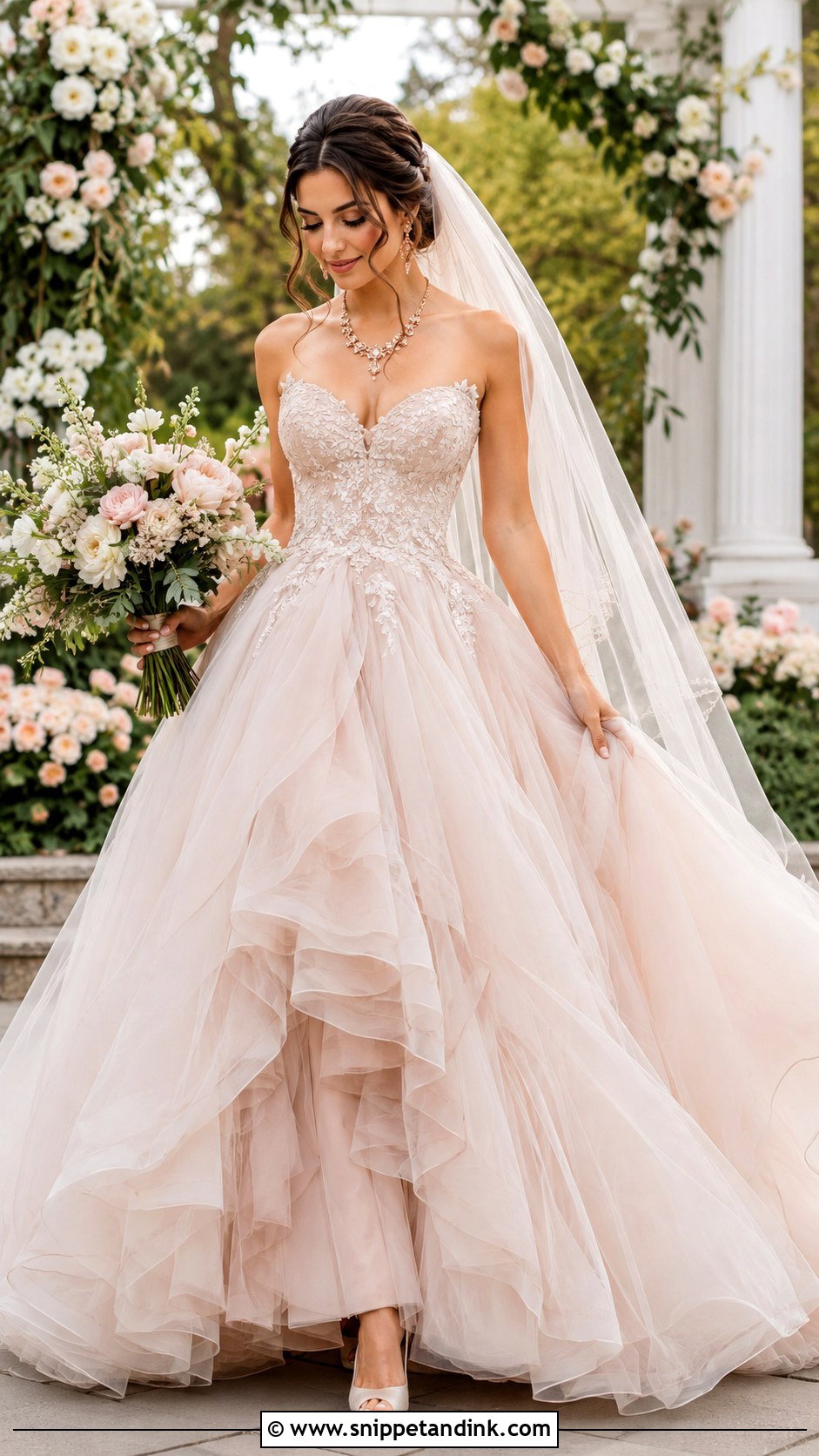
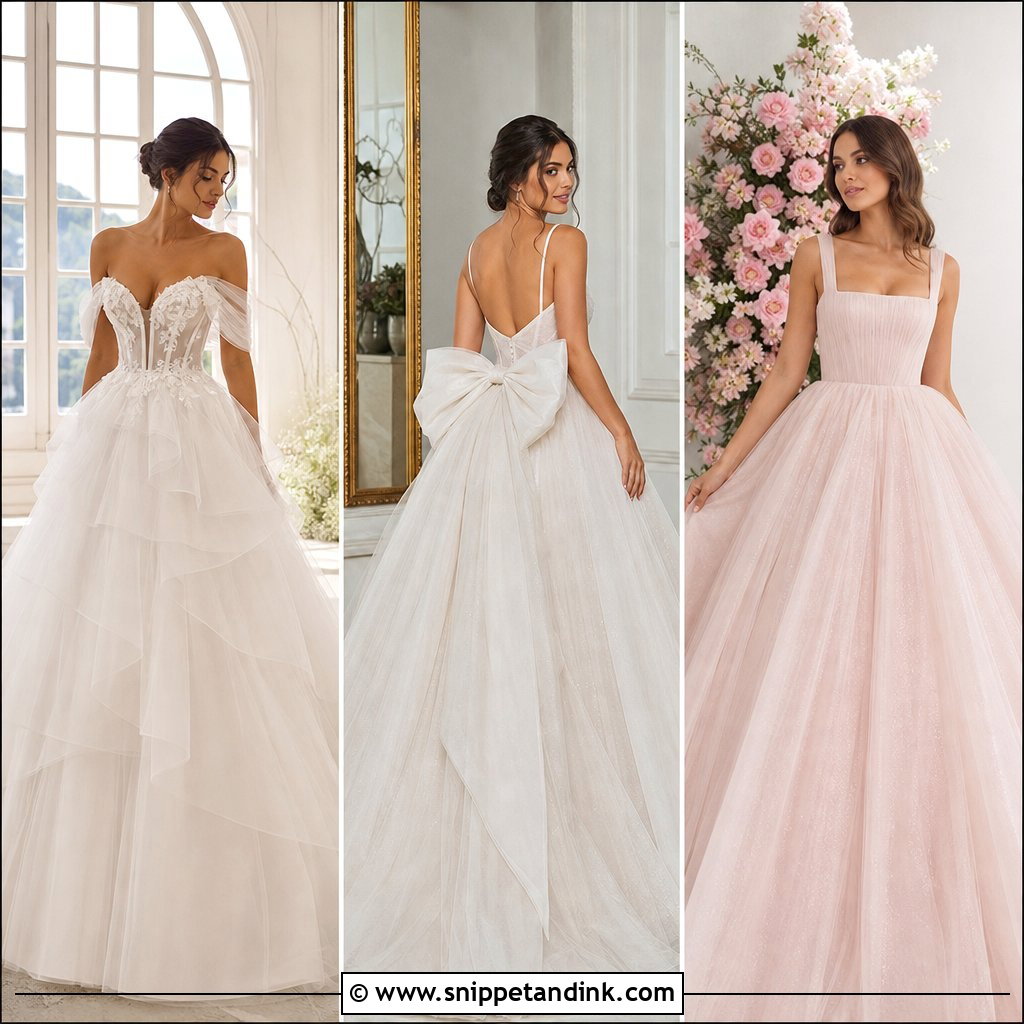
Keep the pink faint. Pale pink tulle, blush underlayers or blush floral embroidery add warmth and still feel bridal, but anything stronger tips into costume once there’s this much skirt. I check the shade outdoors before ordering, because blush under tulle looks pinker in shade than in full sun. Ivory heels, rose gold jewelry, a sheer veil and a bouquet of cream, blush and pale peach complete it for garden and spring weddings.

15. Square Neck Ballgown Wedding Dress
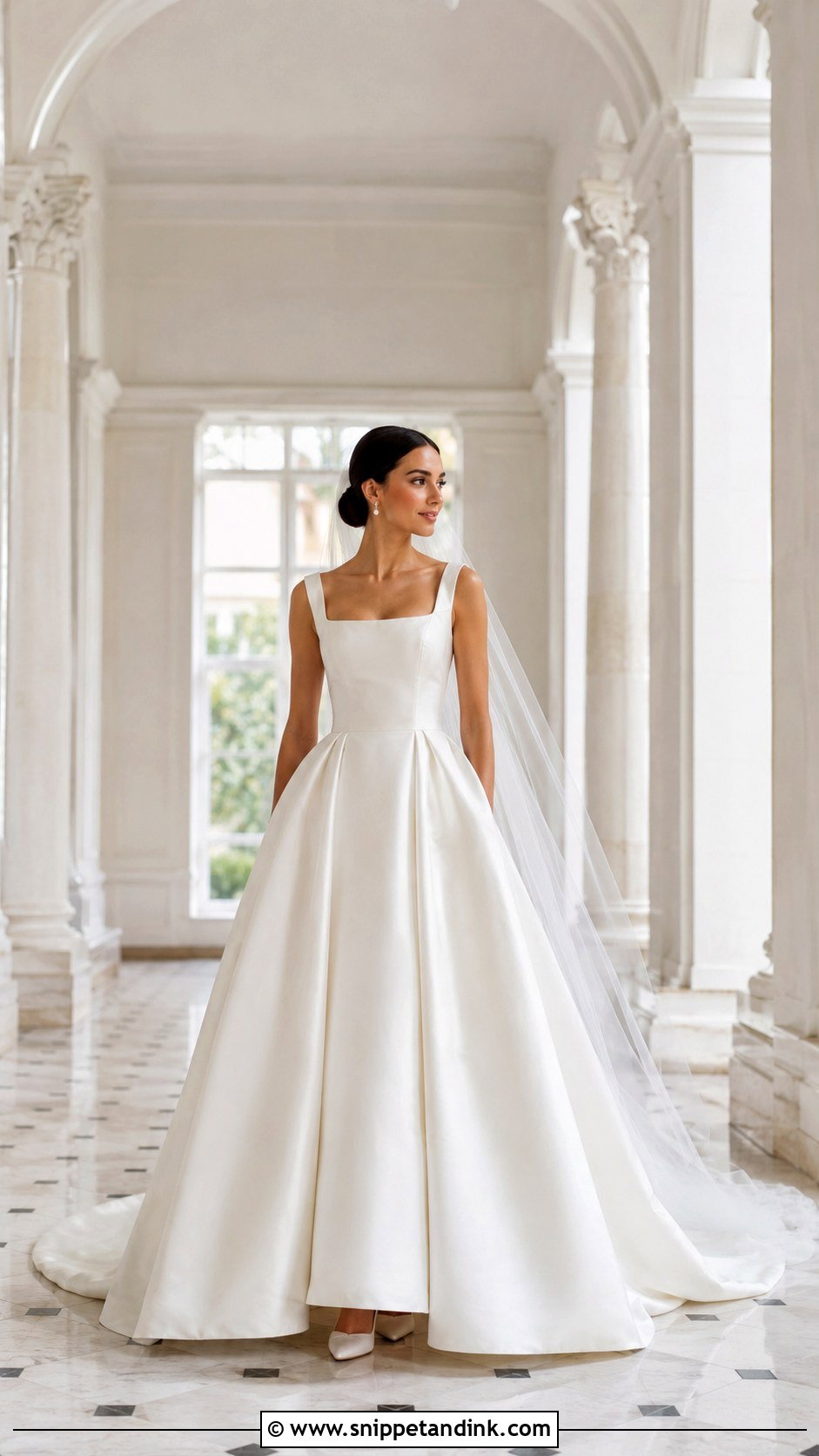
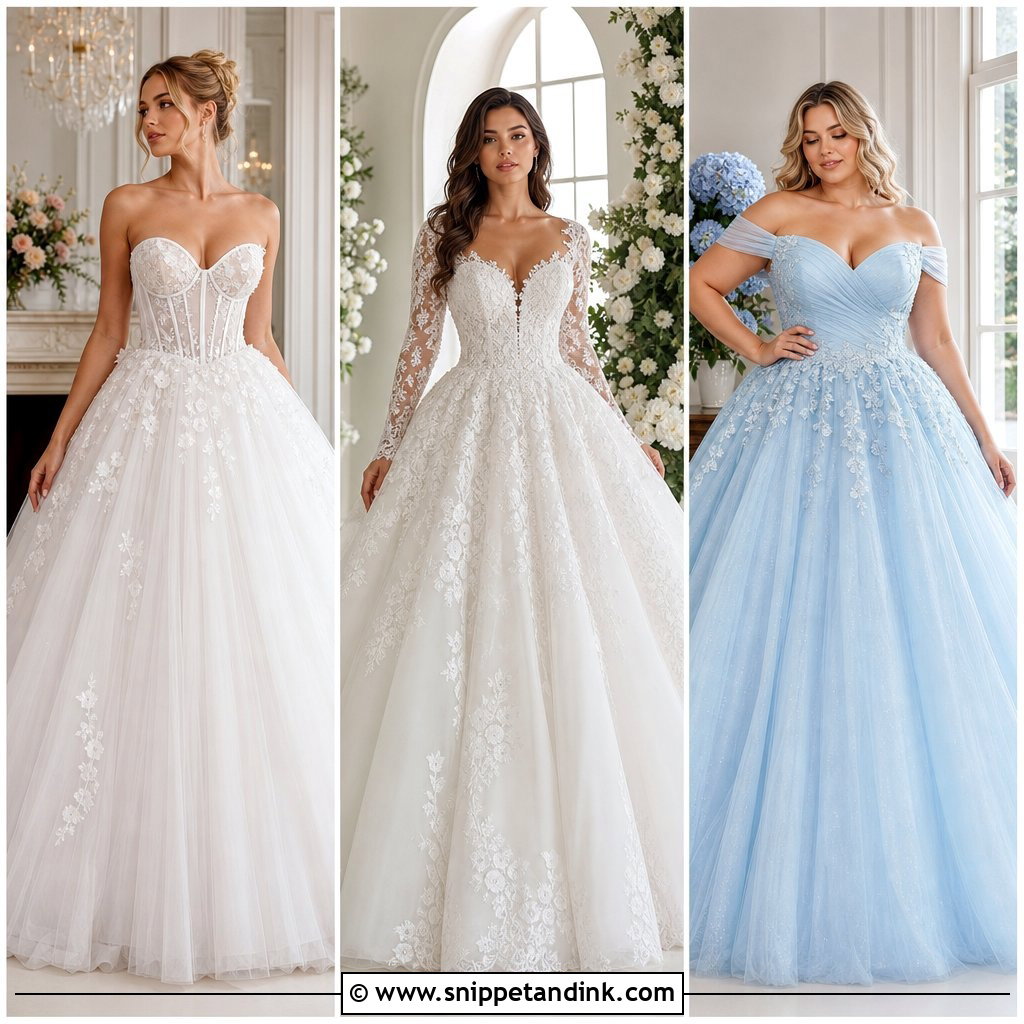
A square neckline gives a ballgown a crisp frame and opens the chest without much exposure, and it flatters a wide range of figures. The straps decide whether it works. Set too wide, they slide off the shoulder every time you move, so I check them with the bride’s arms raised. Satin is crisp, lace romantic, mikado architectural. Pearl earrings, a smooth veil and low or mid-height pumps suit it, and a sleek bun or polished waves keep the neckline visible.
16. Sweetheart Ballgown Wedding Dress
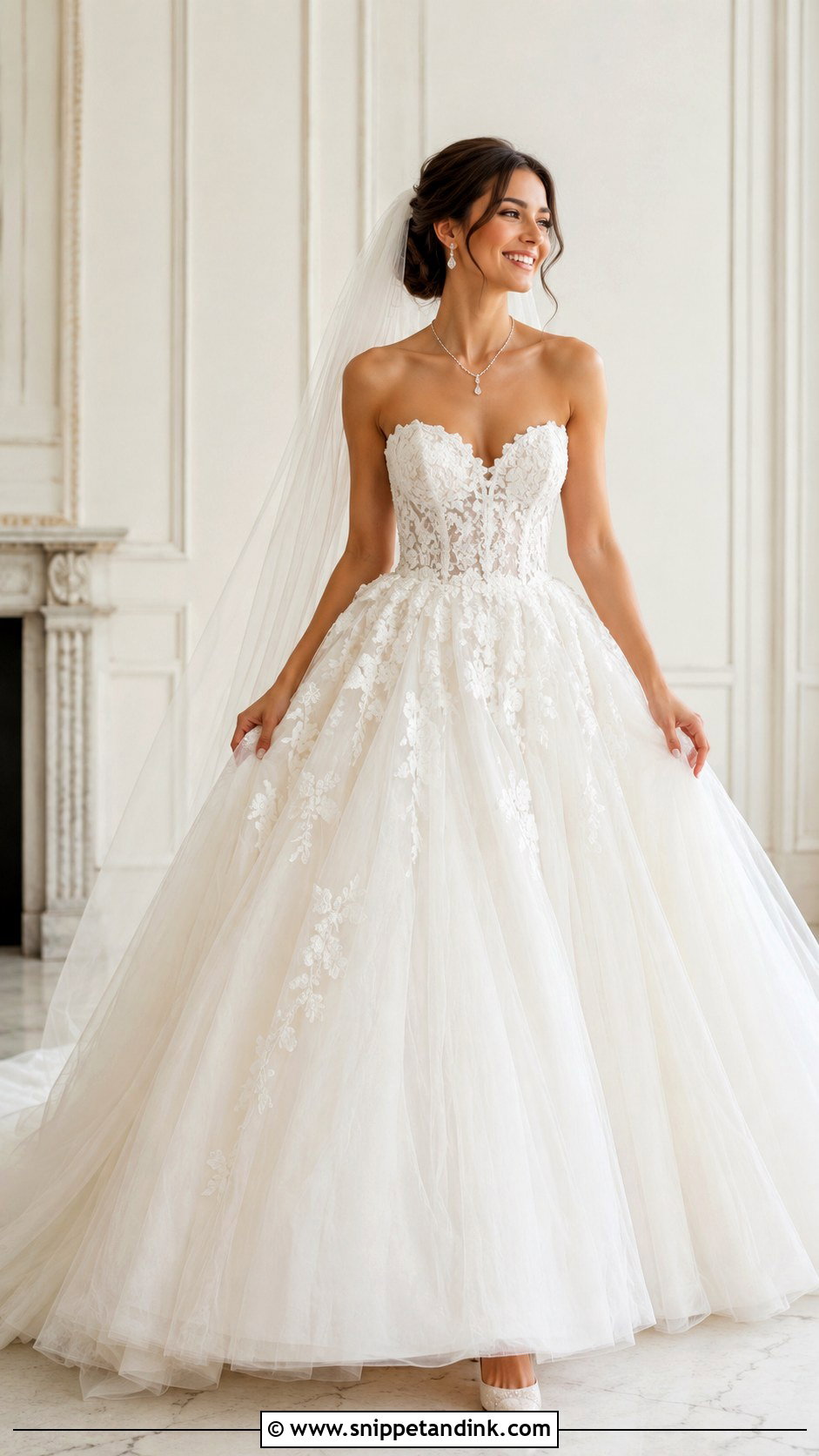
The sweetheart curve softens a bodice and pairs naturally with a full skirt, which is why it has stayed a bridal staple for so long. It suits most figures because it draws the eye up while the skirt balances below. Fit at the center dip matters: if it gapes when you lean forward, have it taken in there rather than at the side seams. Lace, tulle or satin all work. A delicate necklace, drop earrings, ivory heels and a veil with a clean edge finish the classic version.
17. High Neck Ballgown Wedding Dress
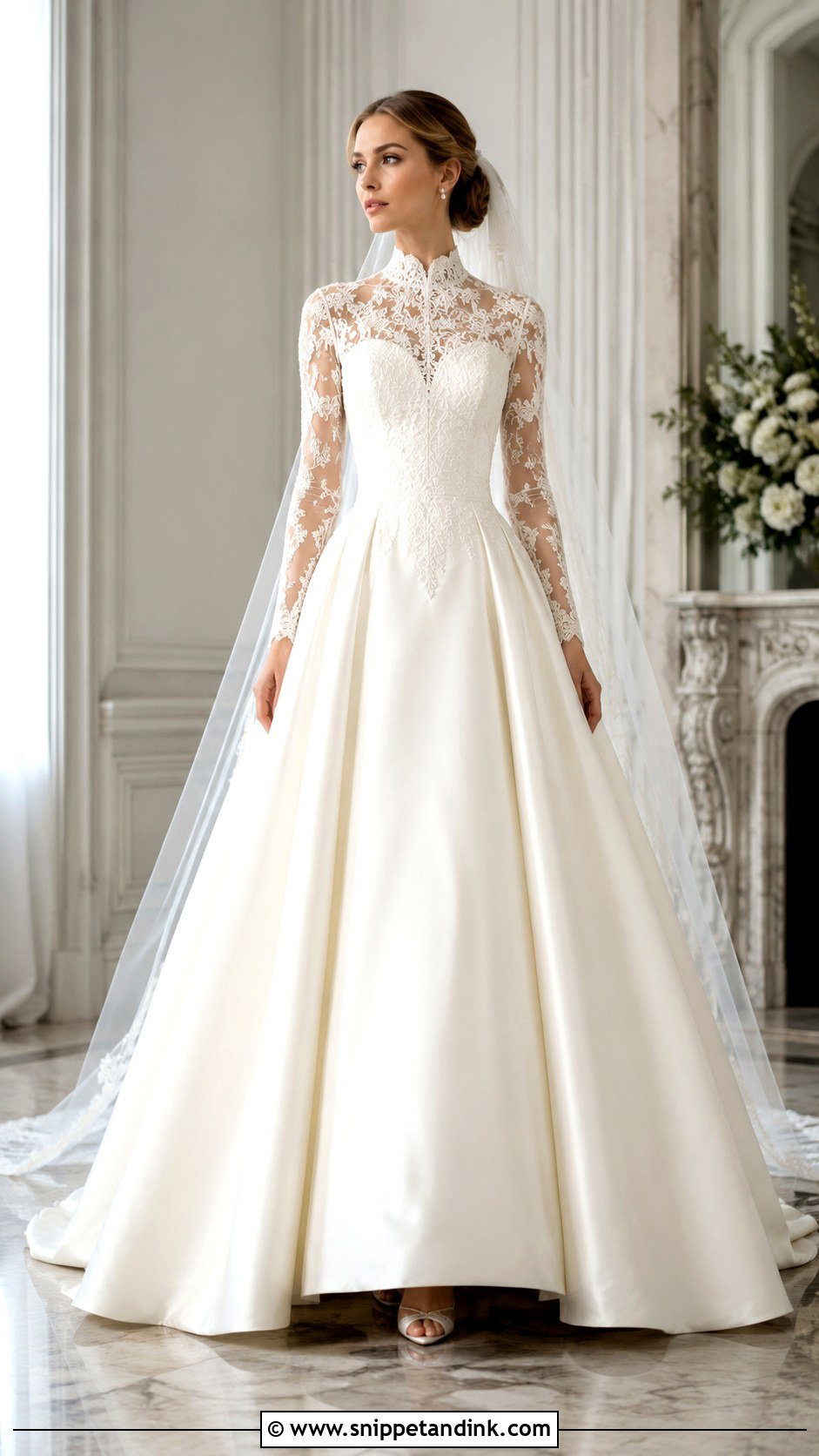
A high neckline gives a ballgown a regal, slightly vintage look, and it depends on lightness: illusion lace, fine embroidery or smooth satin keep it from feeling heavy. I ask high-neck brides to try their hair up and down at the fitting. Nearly every time, a sleek updo is the only style that doesn’t crowd the neck. Small earrings and simple heels avoid clutter, and a long veil adds drama without fighting the bodice. In formal venues it gives the whole gown a strong outline.
18. V Neck Ballgown Wedding Dress
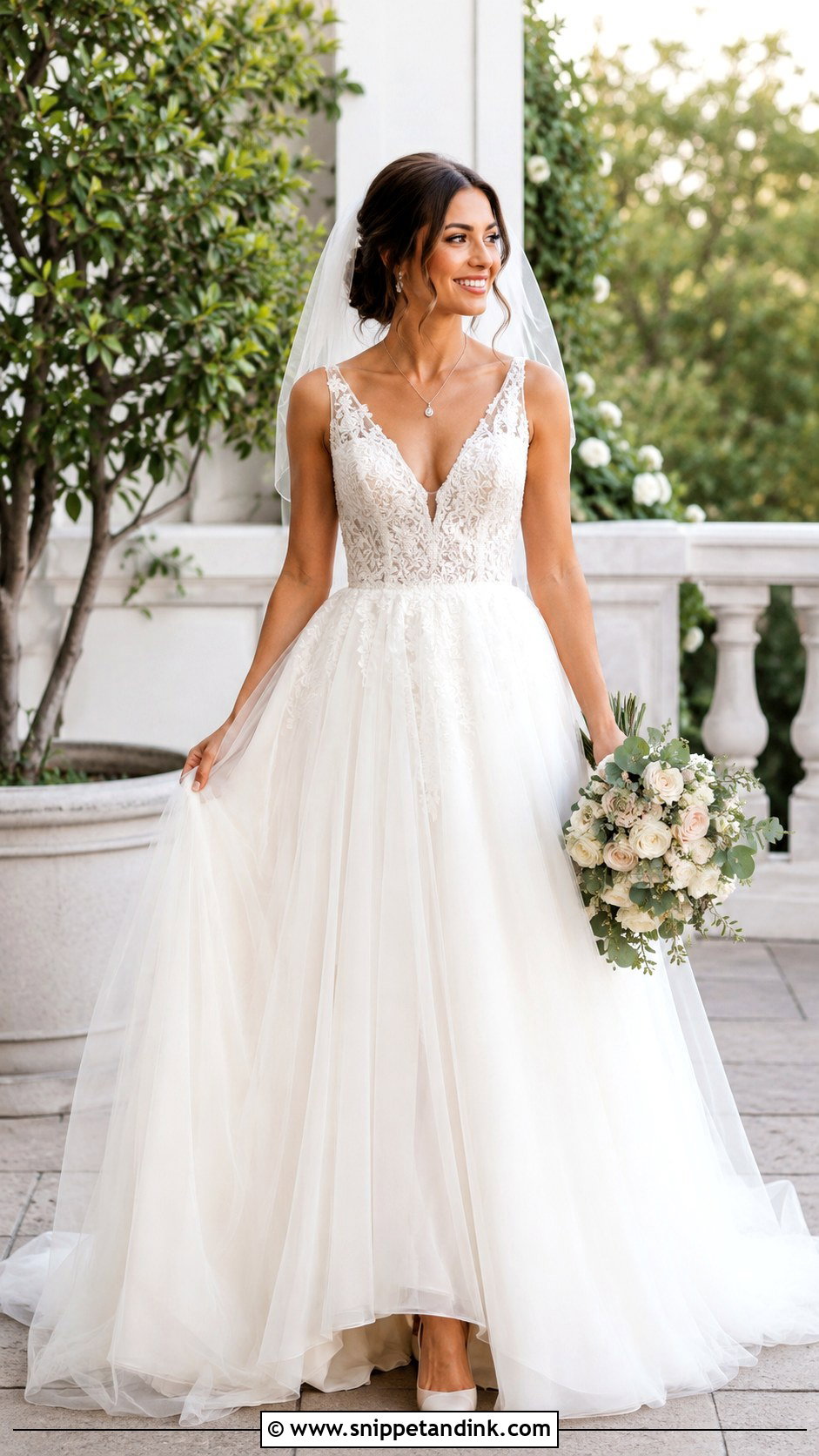
A V-neck opens and lengthens the bodice, so a big skirt feels less top-heavy. A shallow V reads classic and a deeper plunge more modern; the deeper versions need mesh or tape support, which I test by having the bride bend forward. Lace appliqué, satin or tulle all suit it. Wear a pendant or statement earrings, not both, and balance the rest with pointed heels and a lightweight veil. The open bodice is the easiest on this list to personalize.
19. Organza Ballgown Wedding Dress
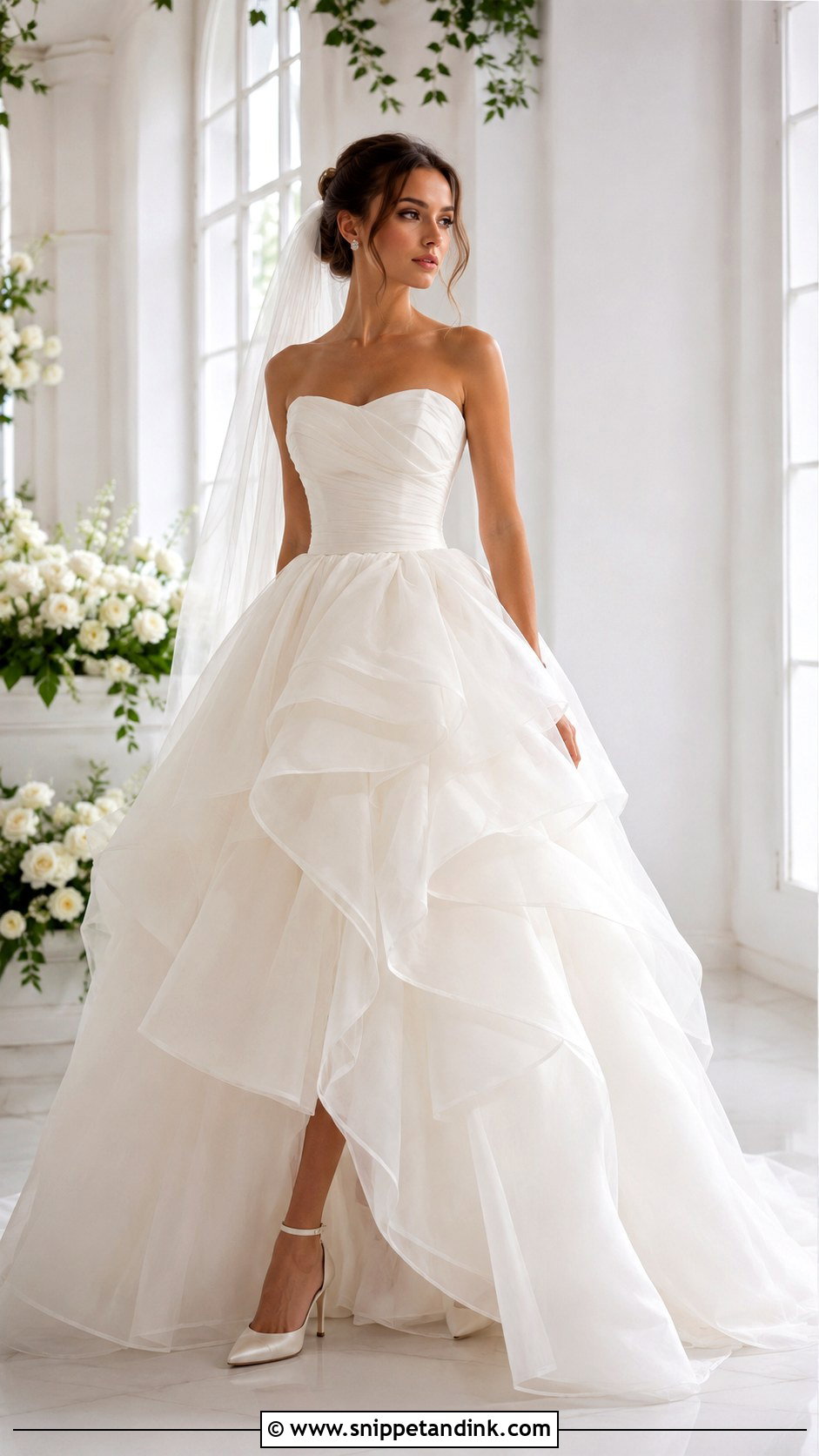
Organza is crisp where tulle is soft. It holds a dramatic skirt without the weight of satin and catches light with a gentle sheen. That crispness also means it wrinkles and keeps crush marks, so steaming before the ceremony isn’t optional. Layered organza with a structured bodice and clean neckline is the version I’d pick. Satin heels, crystal studs and a simple veil let the texture show, especially in spring and summer or in bright indoor rooms.
20. Mikado Ballgown Wedding Dress
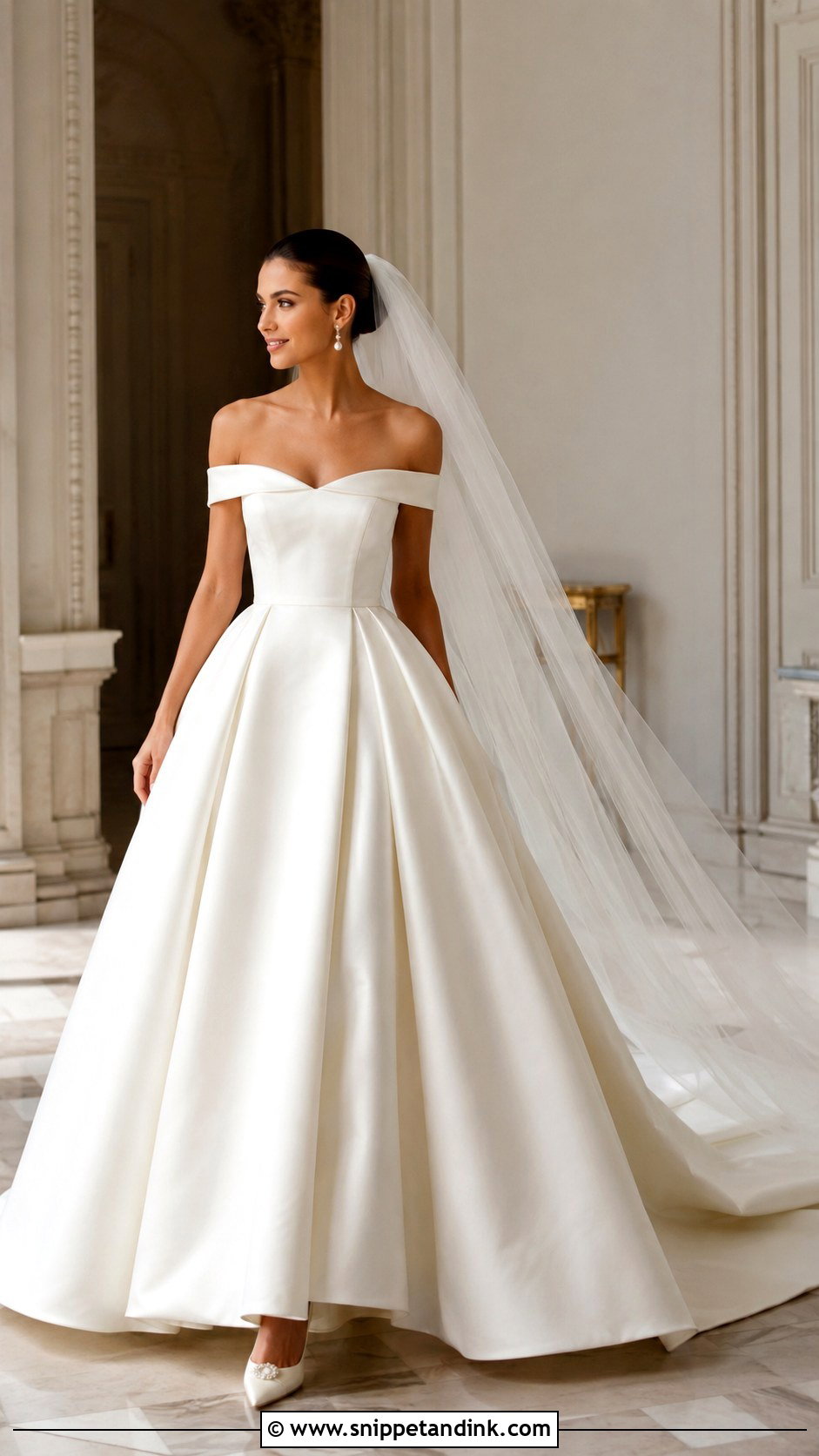
Mikado is heavier than satin with a faint texture, and that weight is what holds a sculpted skirt shape all day. It’s my favorite fabric for a structured ballgown because it creases less than satin and sits smoothly over the hips. Expect a heavier gown, and make sure the bustle is built strong enough to carry it. Strapless, square or off-shoulder bodices suit it. Pearl earrings, polished heels, a dramatic veil and a sculptural white bouquet suit formal and black-tie venues.
21. Ruffle Ballgown Wedding Dress
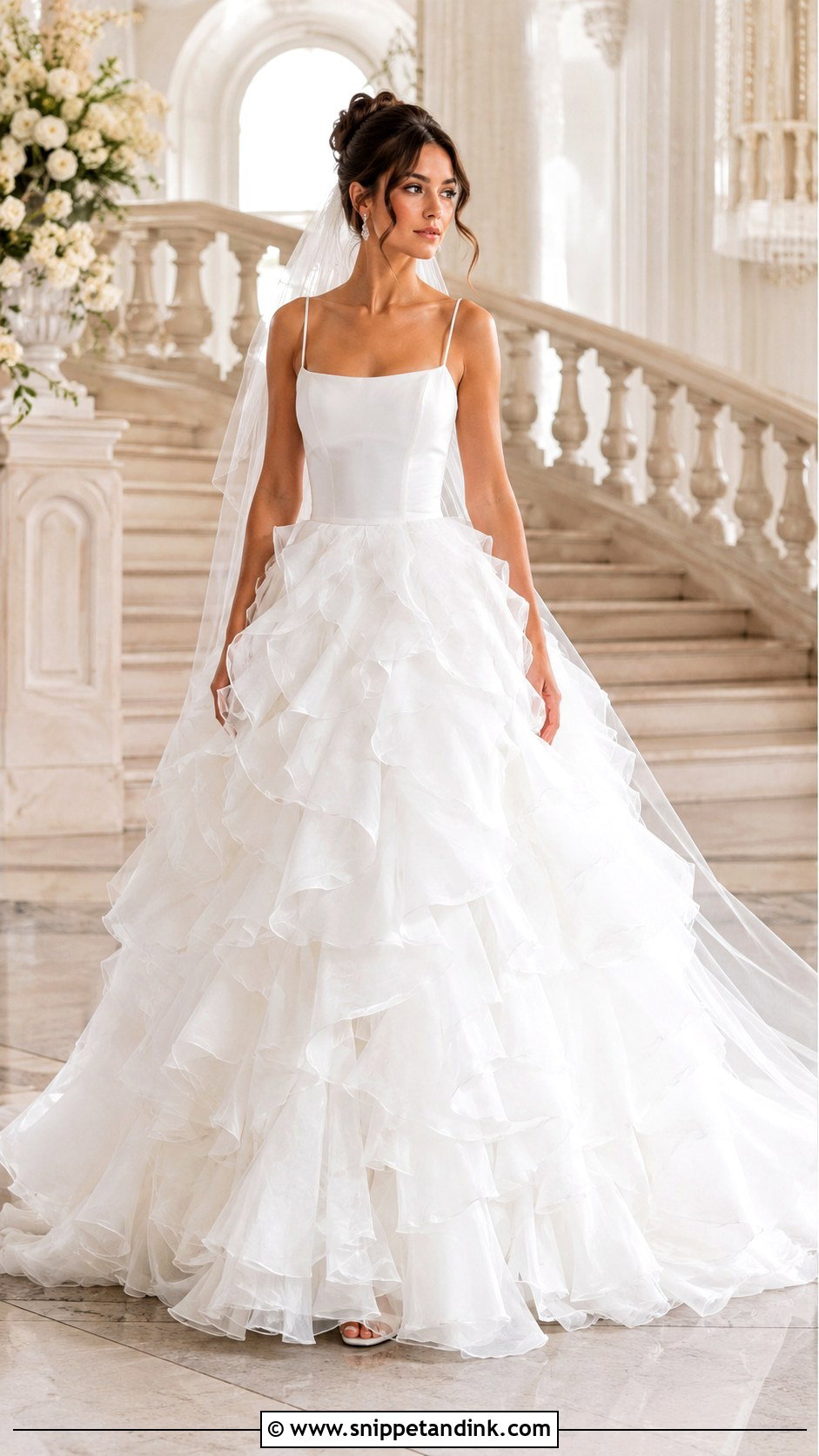
A ruffle ballgown wedding dress has more movement than anything else here. Soft cascading ruffles look cloud-like; structured ruffles look editorial. Ruffles add bulk at the hip, so I keep the bodice clean and ask brides to check doorways, staircases and car seats at the venue before committing. Simple earrings, sleek heels, a veil that doesn’t compete and polished hair keep it from turning busy. Give it a spacious room so the skirt can be seen.
22. Bow Ballgown Wedding Dress
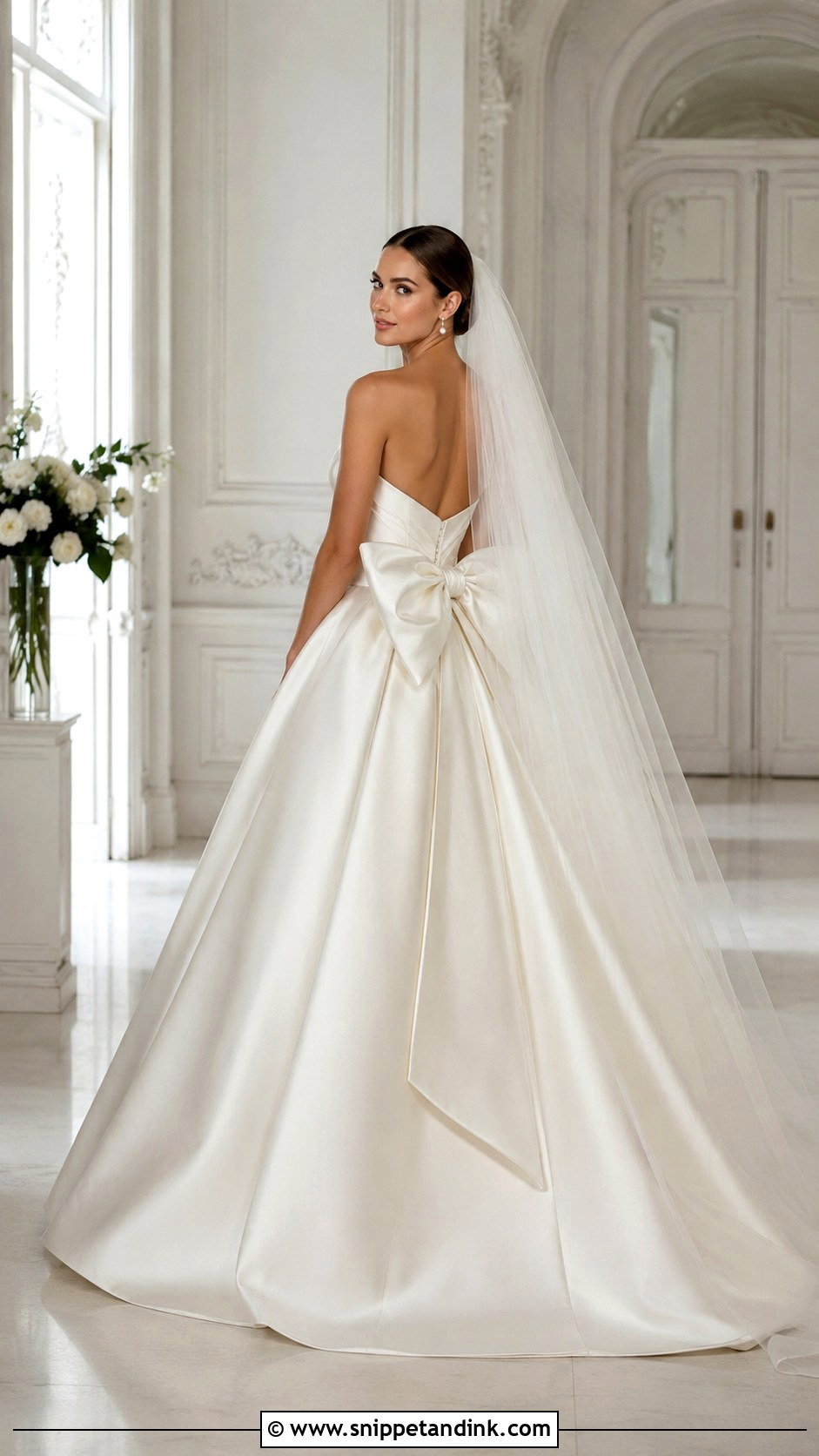
A bow can sit at the back waist, on one shoulder or as a detachable piece for the ceremony. Large back bows get sat on and flattened, so I prefer detachable ones or bows placed above where the chair back meets you. A clean satin or mikado base keeps the bow crisp. Pearl earrings, simple heels and a smooth veil let it read as one deliberate detail. It shows best from behind and in profile, so mention it to your photographer.
23. Sparkle Tulle Ballgown Wedding Dress
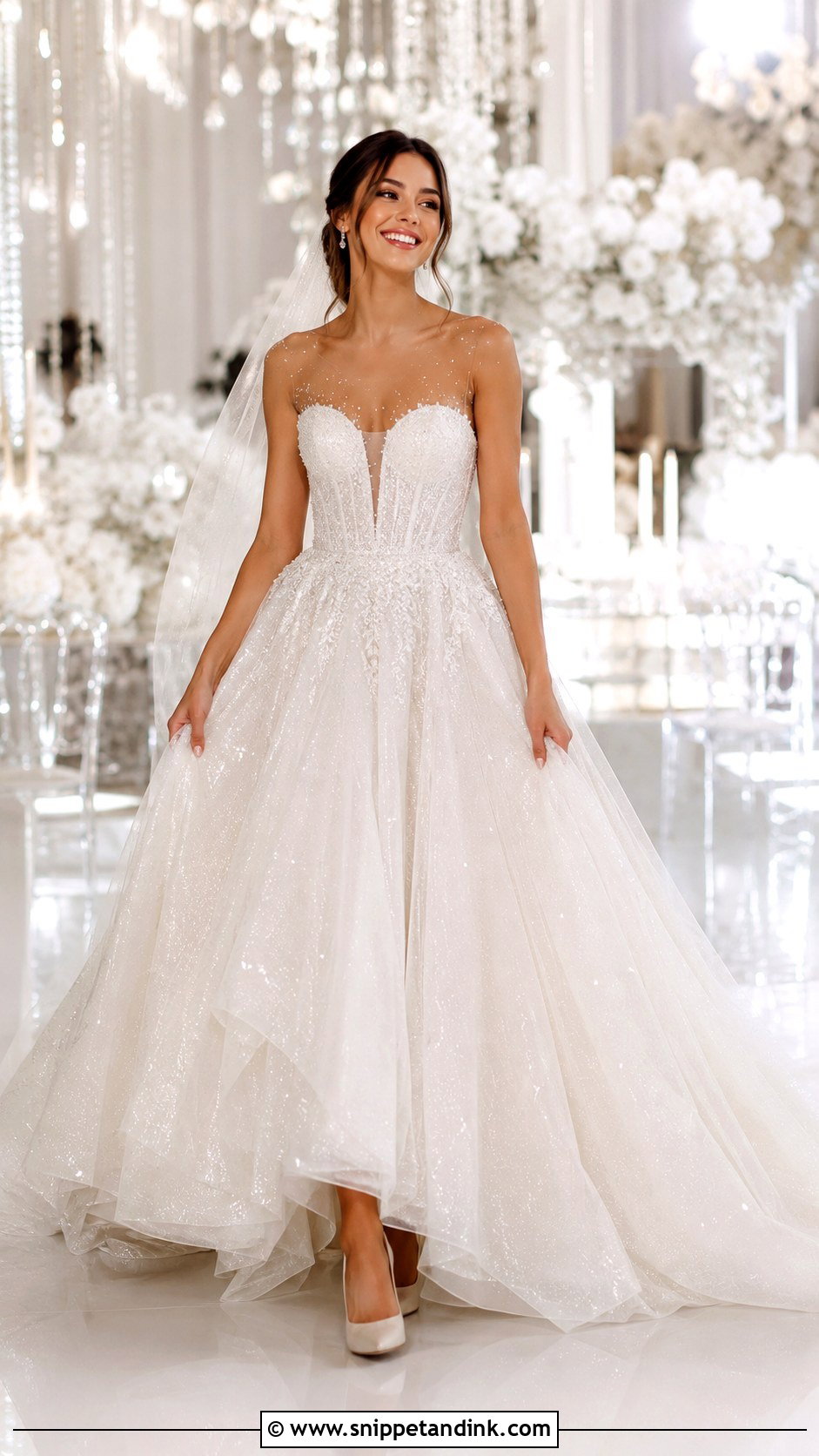
A sparkle tulle ballgown wedding dress should glimmer, not glitter. Scattered crystals or small sequins through a layered tulle skirt over a fitted bodice give that soft glow as you move. Glitter tulle can shed onto a dark suit, so I tuck a lint roller into the emergency kit. Delicate earrings, clear or ivory heels, a plain veil and soft curls or a half-up style suit evening weddings and bright reception rooms.
24. Detachable Sleeve Ballgown Wedding Dress
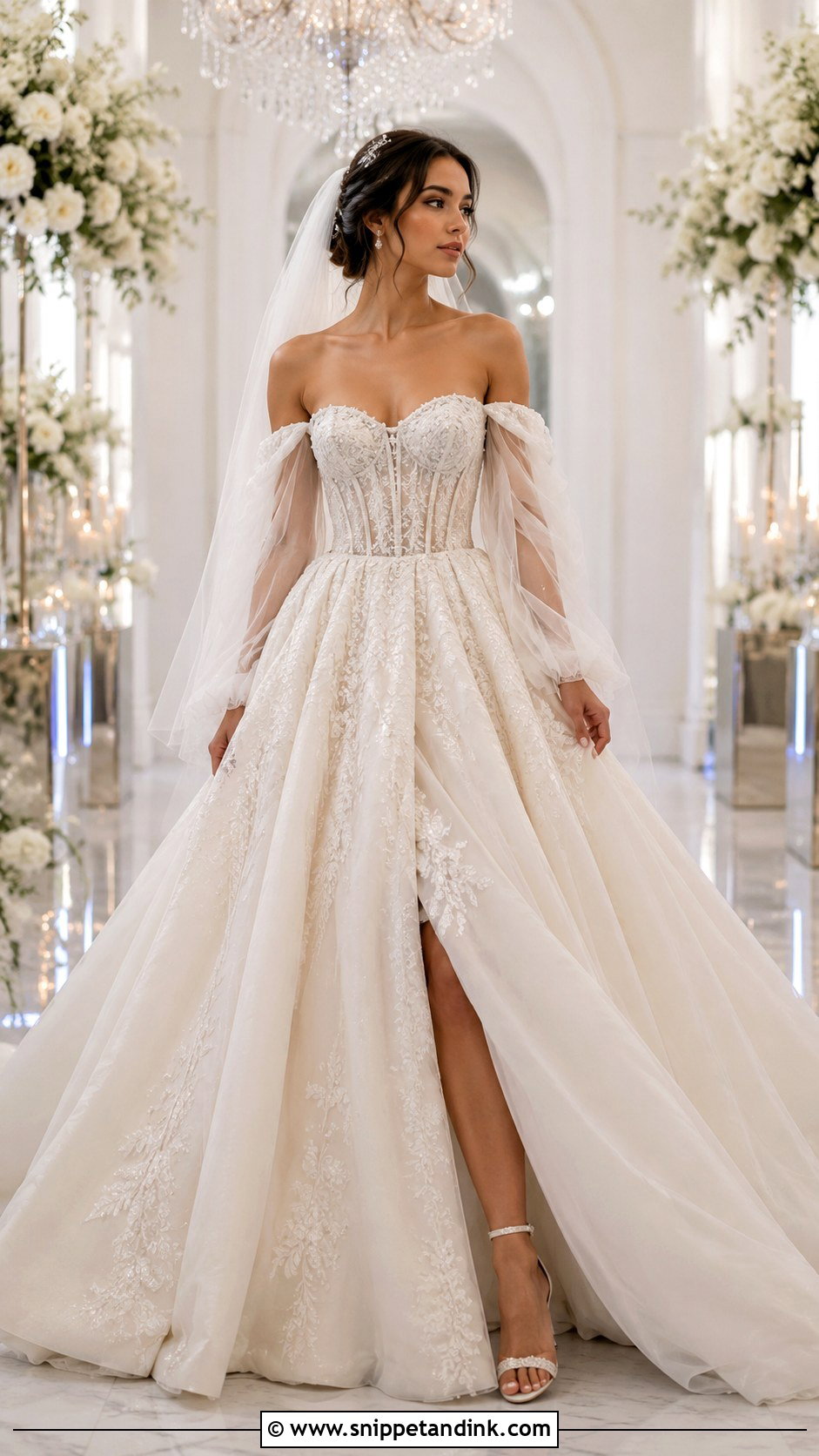
Detachable sleeves give you a ceremony look and a lighter reception look without a second gown. Puff tulle, lace or off-shoulder draped sleeves are the usual options, matched to the dress fabric. Ask how they attach. Hooks and snaps need a bridesmaid who has practiced the swap, while slip-on sleeves you can remove yourself. Heels, small earrings and a veil that suits both versions keep it cohesive, and your photos end up with two distinct looks.

25. Floral Embroidered Ballgown Wedding Dress
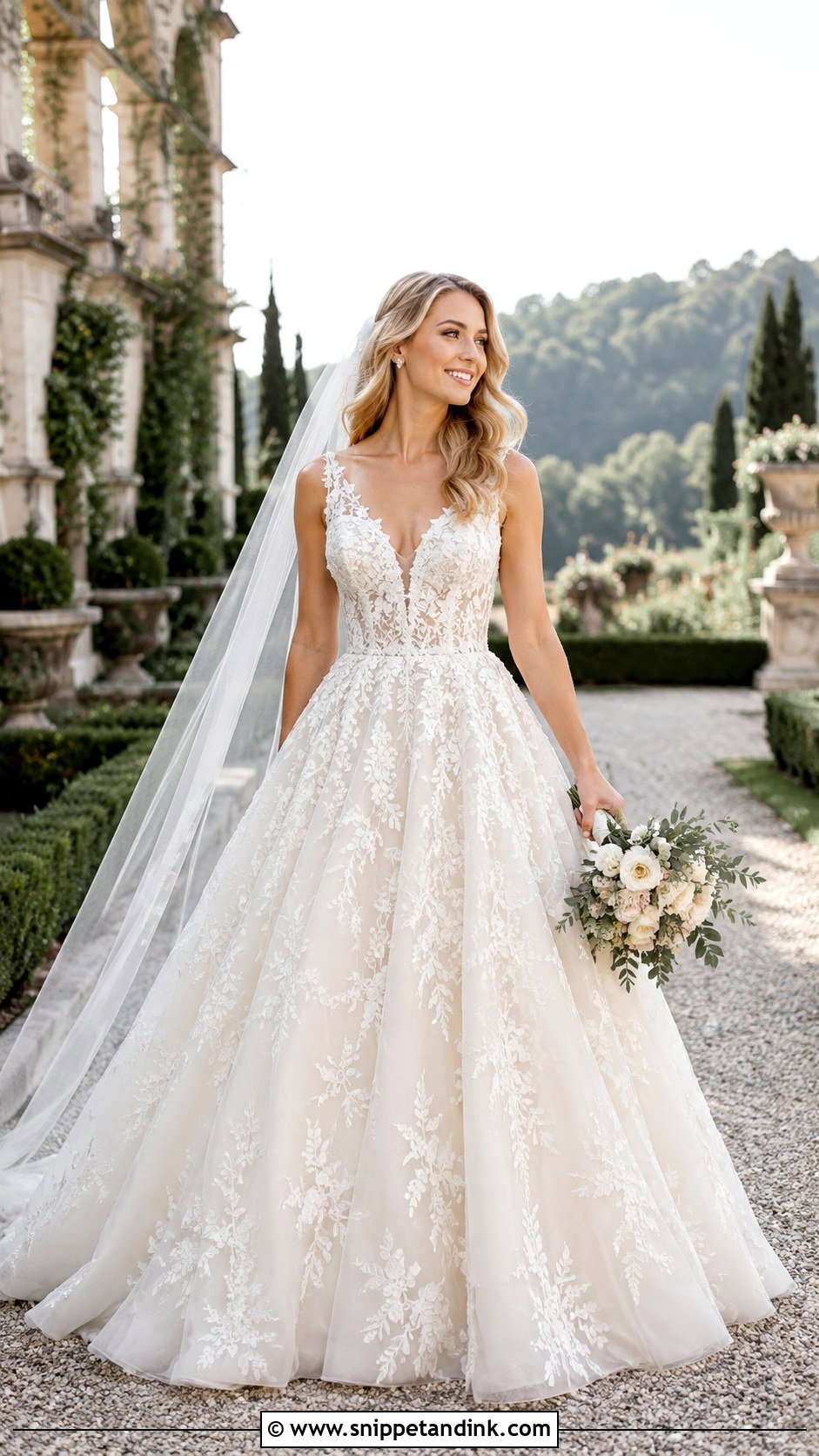
Embroidery makes a ballgown feel personal. Tonal thread gives subtle texture, while soft color feels more whimsical. When brides pick thread colors, I ask them to bring a bouquet photo so the flowers on the gown and the flowers in their hands agree. Simple heels, delicate earrings and a veil with clean edging let the embroidery lead, and a soft updo or loose waves keep it natural for garden weddings and estates.
Bustles, Bathroom Trips and Dancing in a Full Skirt
The ceremony is the easy part. The reception is where a ballgown either works with you or gets in the way.
Have the bustle sewn in and practiced. A train on a full skirt usually needs a sturdy bustle with several attachment points, and whoever does it on the day should rehearse it at the final fitting, twice if possible. Color-coded ribbon loops are far easier to match in a dim room than tiny hooks.
For the bathroom, step in backwards so you’re facing the cistern while a friend gathers the layers from behind; a couple of loops sewn inside the petticoat make gathering easier. For dancing, have the hem checked in your actual shoes. A hem that’s even slightly long catches under your toes on the first spin.
When I’d Talk a Bride Out of a Ballgown
A full ballgown isn’t the right answer for every wedding. I’ll suggest something lighter for a hot outdoor ceremony with no shade, a small registry office or tiny chapel, a day with long travel between venues, or a bride who tells me she dreads feeling restricted. A softer A-line with a detachable overskirt keeps the drama for the aisle and the portraits, then comes off for the party. That’s often kinder than forcing a big skirt into a day that can’t hold it.
A Fairytale Gown That Still Lets You Breathe
The ballgown that’s right for you is the one you feel graceful and fully yourself in, not simply the fullest skirt. Neckline, fabric, waistline, veil, shoes, jewelry, hair and bouquet shape the mood together. Satin reads regal, tulle dreamy, lace romantic and mikado modern, and color shifts the feel from classic ivory to warmer champagne or blush. Use these ideas as a starting point, then test each one against your venue, your season and how you want to move through the day.
You'll Like These Ideas:



Leave a Reply