
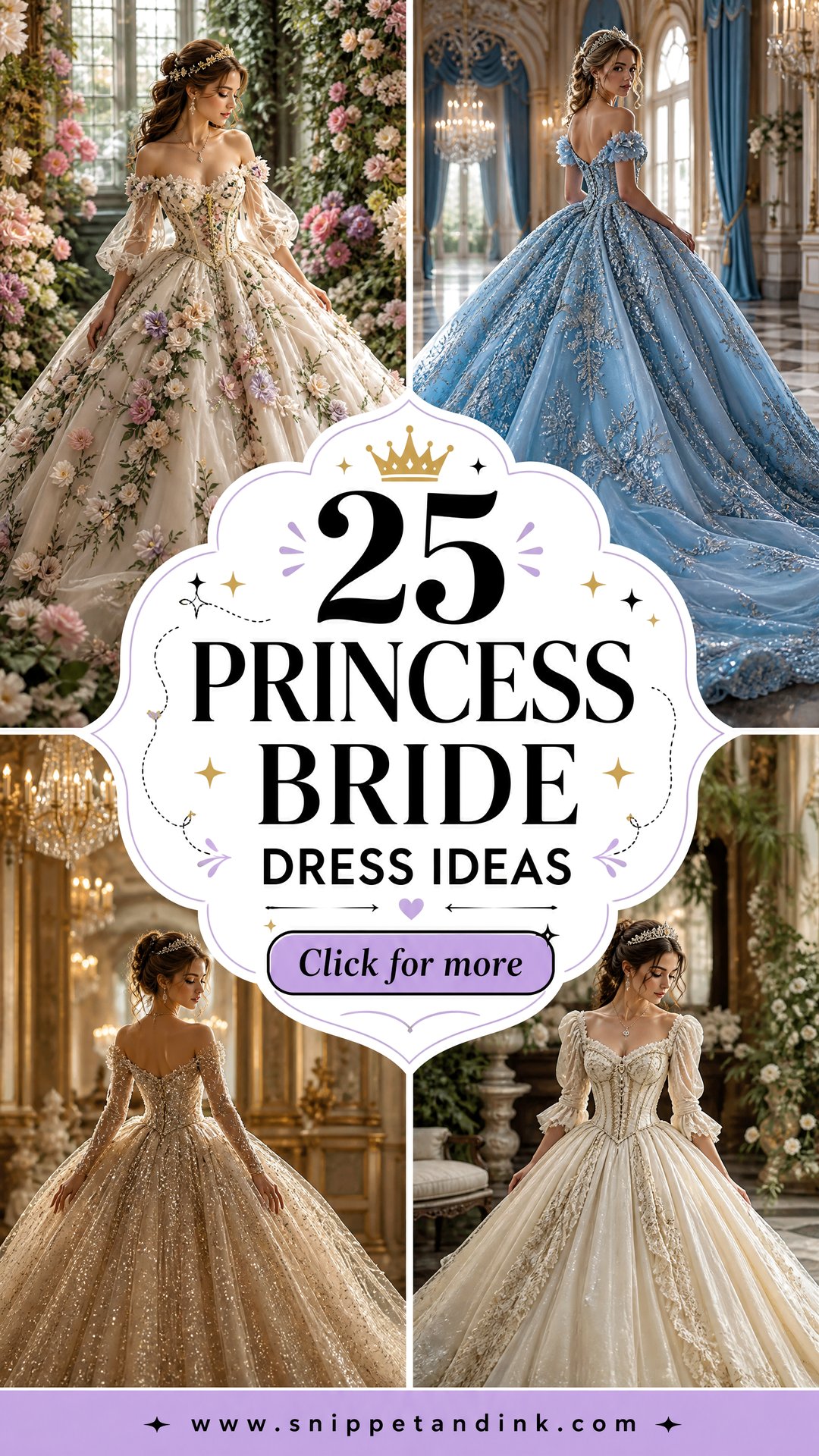
A princess dress is built for the entrance, but the ones I’d actually send a bride home in are the gowns she can also sit, hug and dance in. Current fairytale bridal fashion covers full ball gowns, soft tulle skirts, lace sleeves, pearl work, pastel underlays, corset bodices, detachable trains and pared-back minimal versions. In a fitting, I look at three things before the sparkle: where the waist sits on your body, how much the skirt weighs, and whether your venue has room for it. Below are 25 versions, each with the veil, shoes and styling I’d pair with it.
A Ball Gown Calendar From First Appointment to Final Fitting
Full gowns take longer than most brides expect. Many made-to-order dresses need several months of production after you order, and alterations on a big skirt usually run to two or three fittings, so I suggest starting appointments nine to twelve months ahead. Timelines vary by designer, so ask each shop for theirs in writing.
- Nine to twelve months out: try on shapes, including one you think you won’t like, in shoes close to your wedding heel height.
- Around eight months out: place the order, leaving room for production and shipping delays.
- Two to three months out: first fitting, with the hem set against your actual wedding shoes.
- Two to three weeks out: final fitting. Bring whoever will bustle you so they learn it there.
At the first appointment I also ask what’s underneath the skirt: a hoop, a crinoline petticoat or tulle built into the lining. That one detail decides how the gown moves, how you sit and whether it fits through a car door.
1. Classic Princess Bride Ball Gown
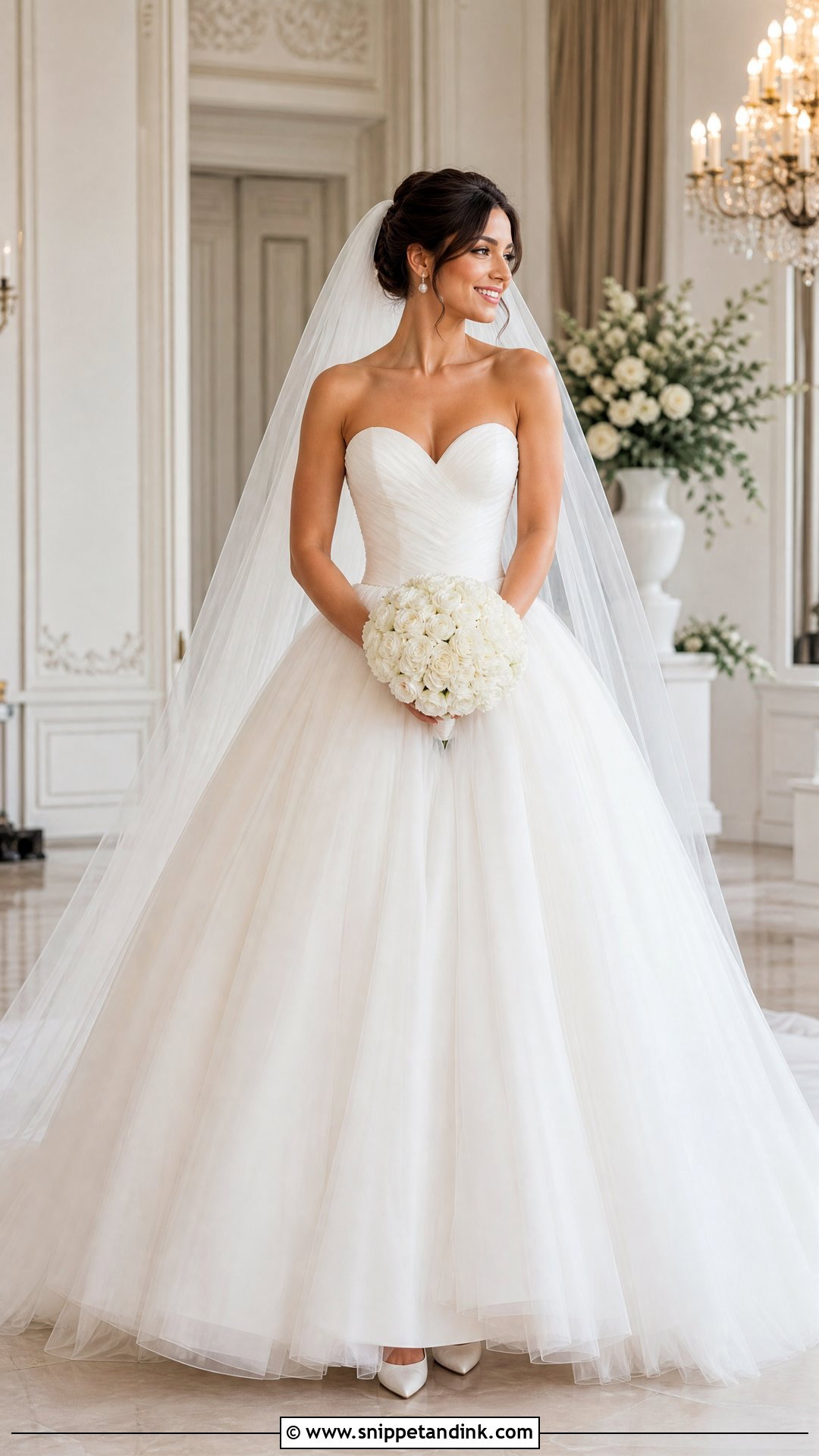
A classic princess bride ball gown is the shape most people picture: fitted bodice, natural waist and a wide skirt of tulle, satin or organza. What holds that skirt out is usually a hoop or a stiff petticoat underneath, and I always ask which one before a bride falls in love, because a hoop changes how you sit and climb stairs. A sweetheart neckline softens the bodice, and a cathedral veil carries the ceremony. Pearl earrings, a smooth low bun and satin pointed heels finish it. Save this one for ballrooms and grand halls where the skirt has room to move.
2. Lace Princess Bride Dress
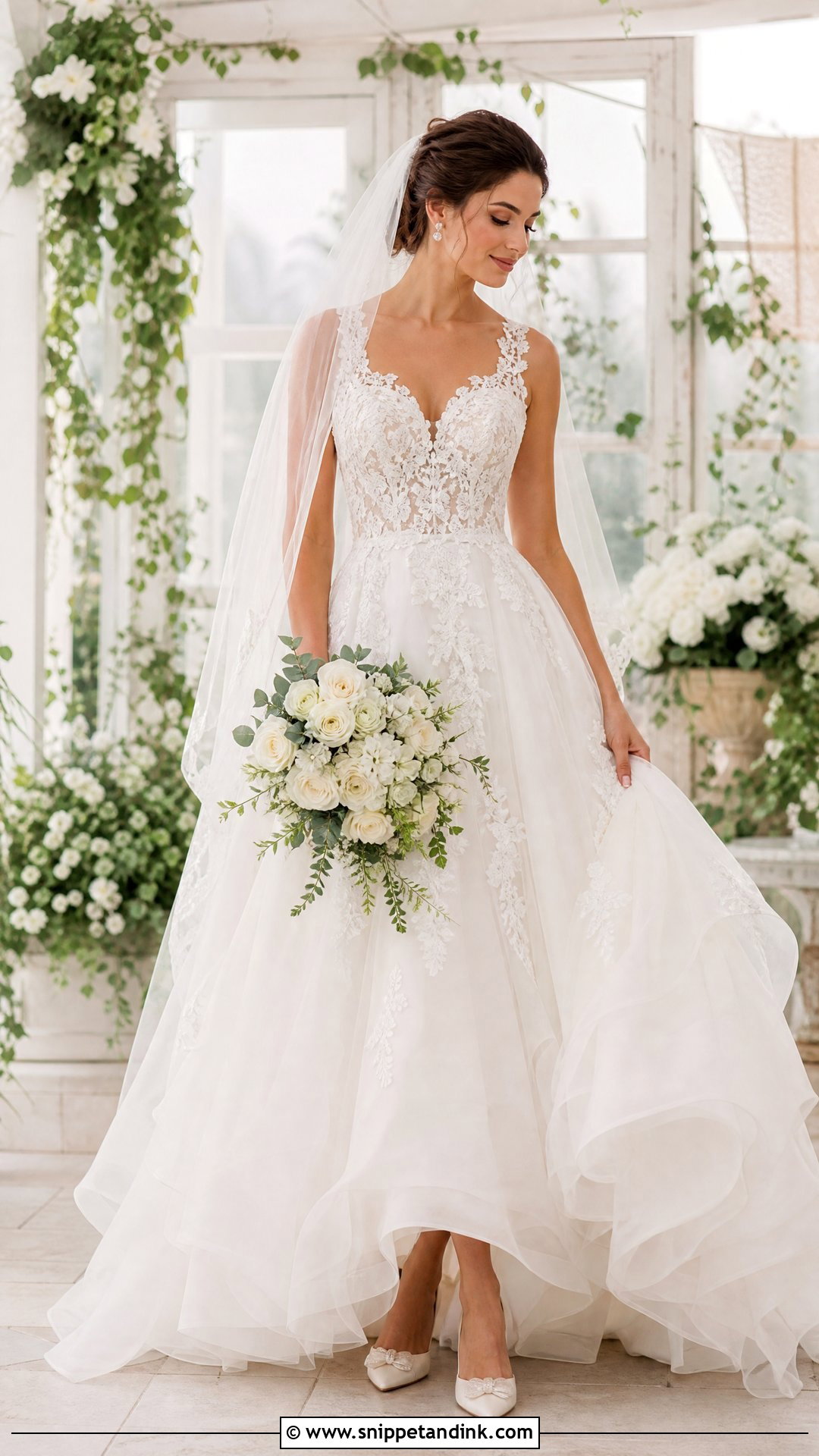
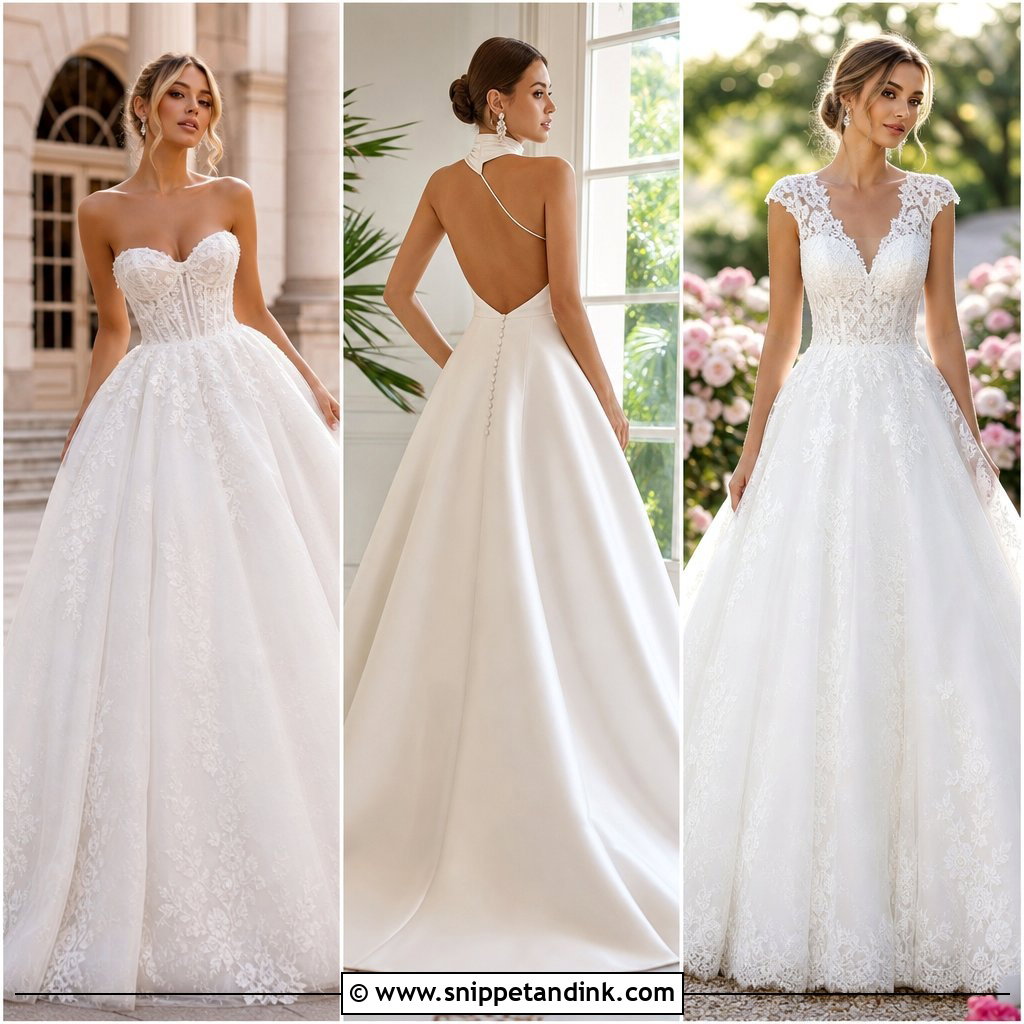
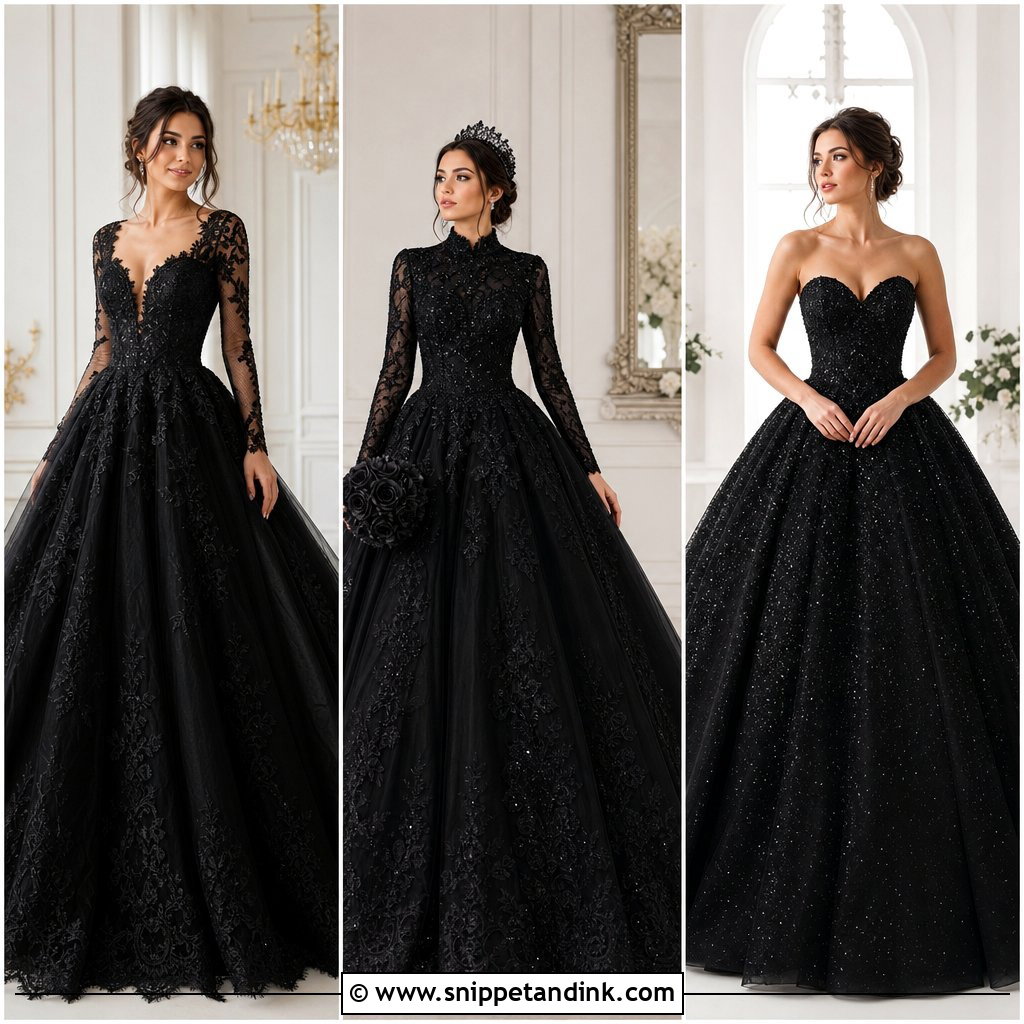
Lace keeps the fairytale shape but adds detail you notice up close. My favorite pairing is a fitted lace bodice over a soft tulle or organza skirt, because heavy lace all the way down can weigh the skirt flat. Light floral lace suits warm months; heavier corded lace looks richer in fall and winter. Long lace sleeves feel royal but run warm, so I check the venue temperature first. Pearl drop earrings, a fingertip veil and closed-toe heels suit it, and lightly beaded lace gives sparkle without crystal weight.
3. Off Shoulder Princess Bride Dress
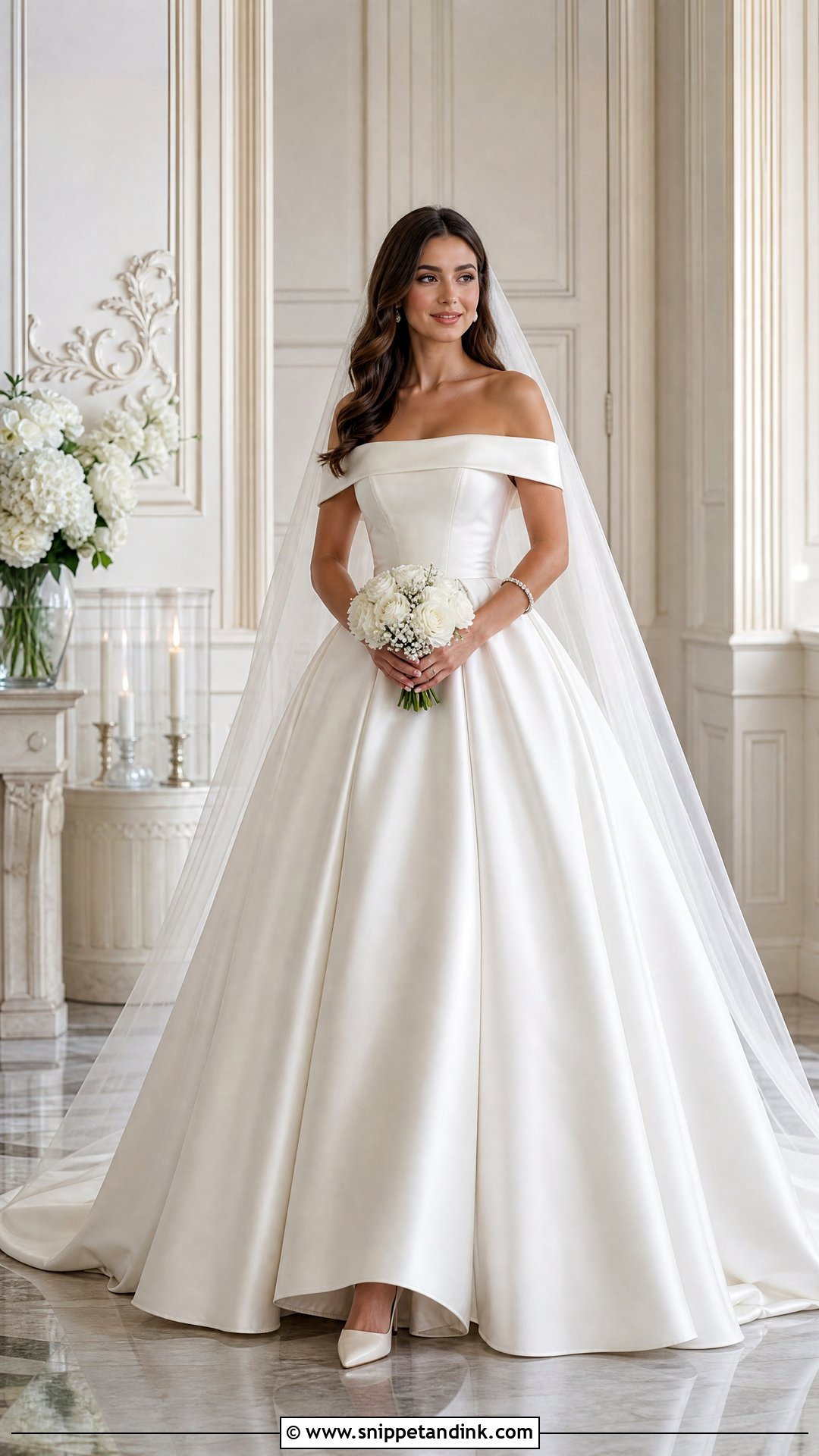
The off-shoulder band is the detail I test hardest in a fitting. It should sit on the upper arm without sliding, and you should be able to lift your arms for a hug without the bodice moving. Done well, it frames the collarbones and keeps a full satin or tulle skirt from looking top-heavy. Folded bands, lace straps or detachable sleeves each change the mood. Earrings are usually enough here; a necklace only works if the neckline is very clean. A loose updo, ivory heels and a sheer veil finish it.
4. Strapless Princess Bride Dress
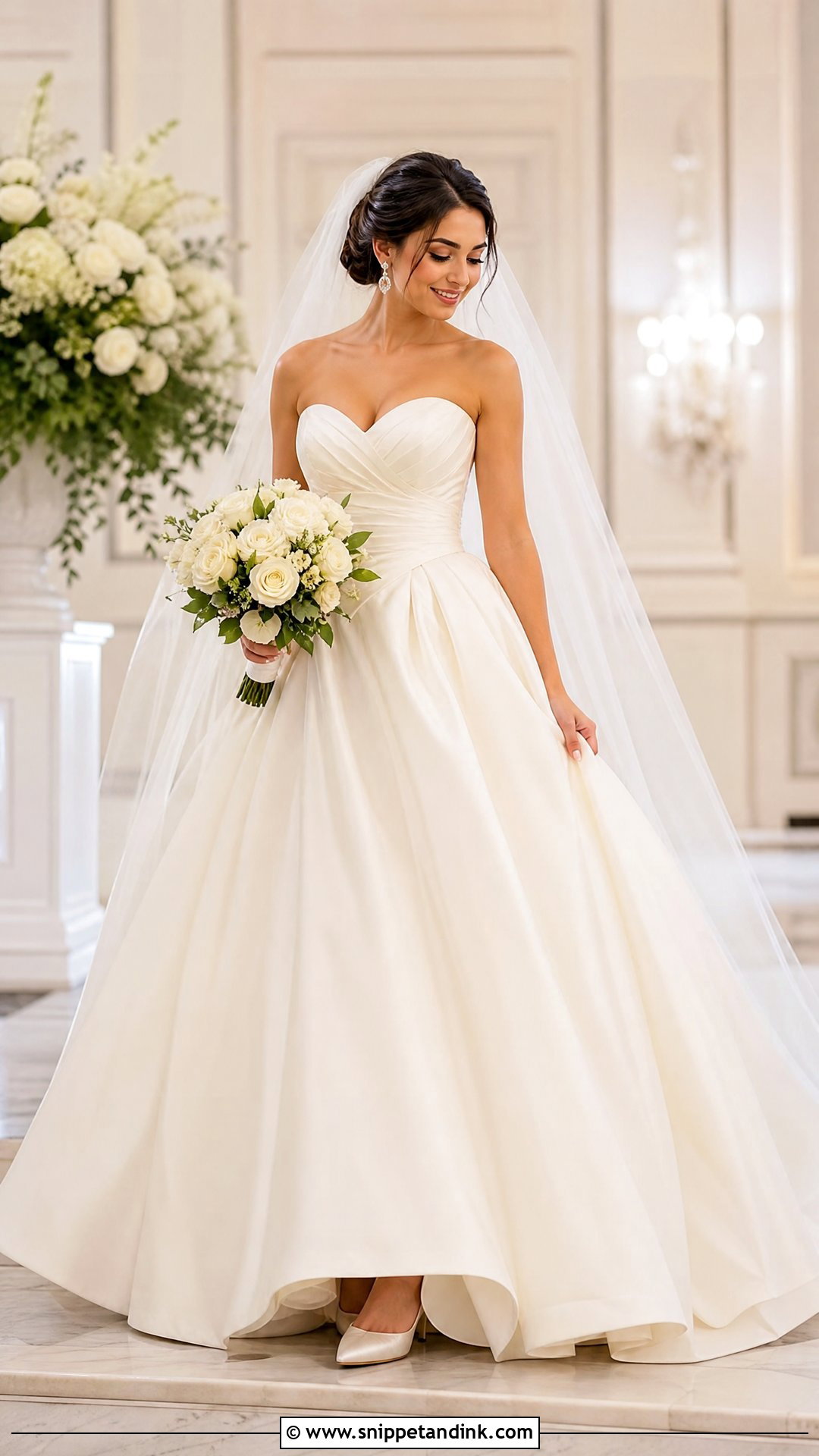
Strapless bodices are only as good as their internal structure. A well-built one has boning and a waist stay, so the weight of a heavy skirt pulls on your waist rather than your chest, and I’ll have a bride walk and sit before I trust it. A sweetheart edge feels romantic; a straight-across line looks more modern. Open shoulders also give you the most freedom with accessories, from pearl studs to opera gloves. A chapel veil and satin pumps complete it, and the defined waist suits a wide range of body shapes.
5. Tulle Princess Bride Dress
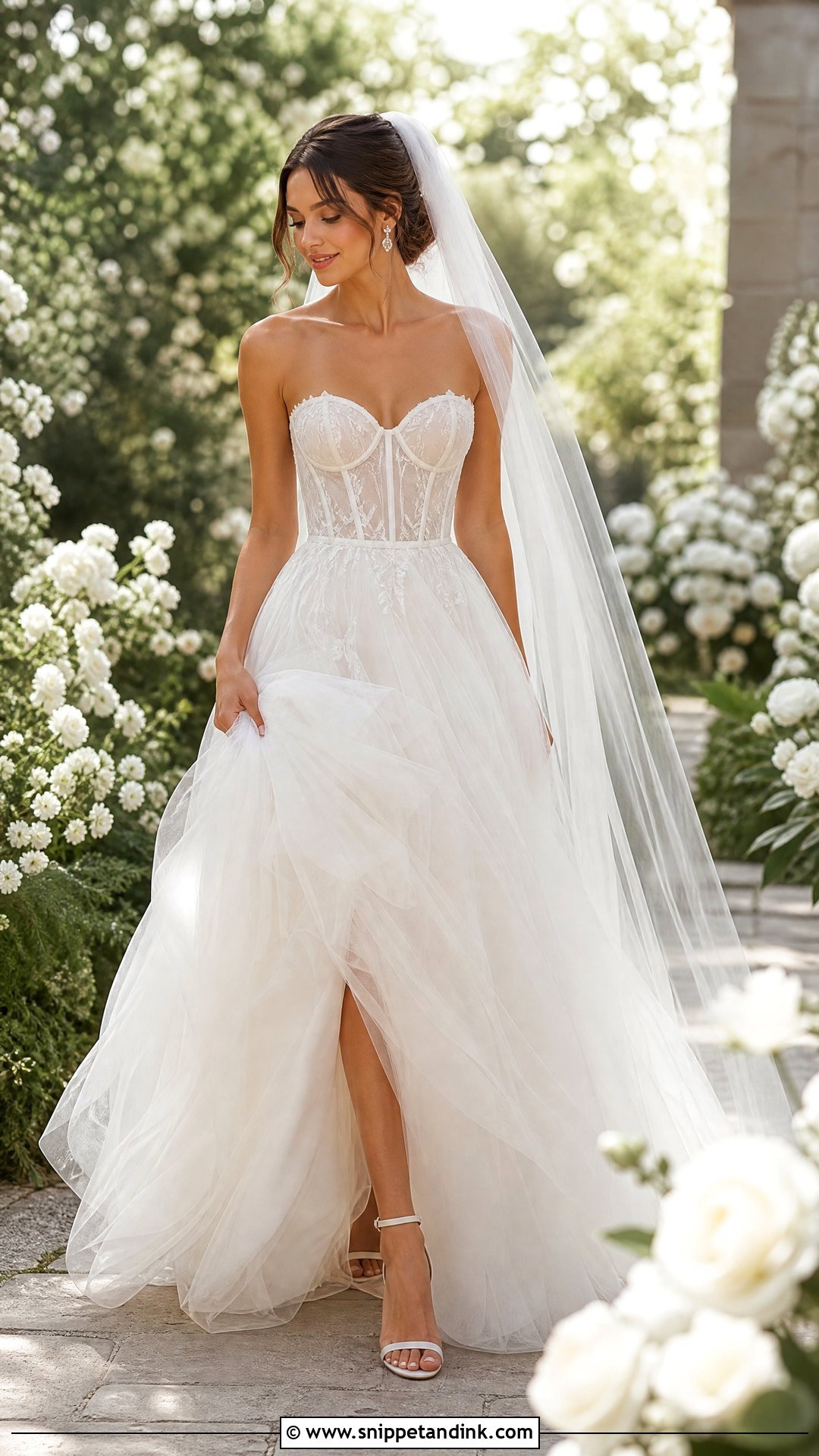
A tulle princess bride dress floats rather than stands, because soft tulle layers create volume with very little weight. A corset bodice gives it structure; a sheer bodice keeps it delicate, and fine glitter tulle adds a gentle shimmer. What I warn about is snagging: tulle catches on rough stone, bracelet clasps and beaded bags, so keep anything near the skirt smooth. A long veil, a loose bun and dainty heels match its softness in gardens and bright rooms.
6. Satin Princess Bride Dress
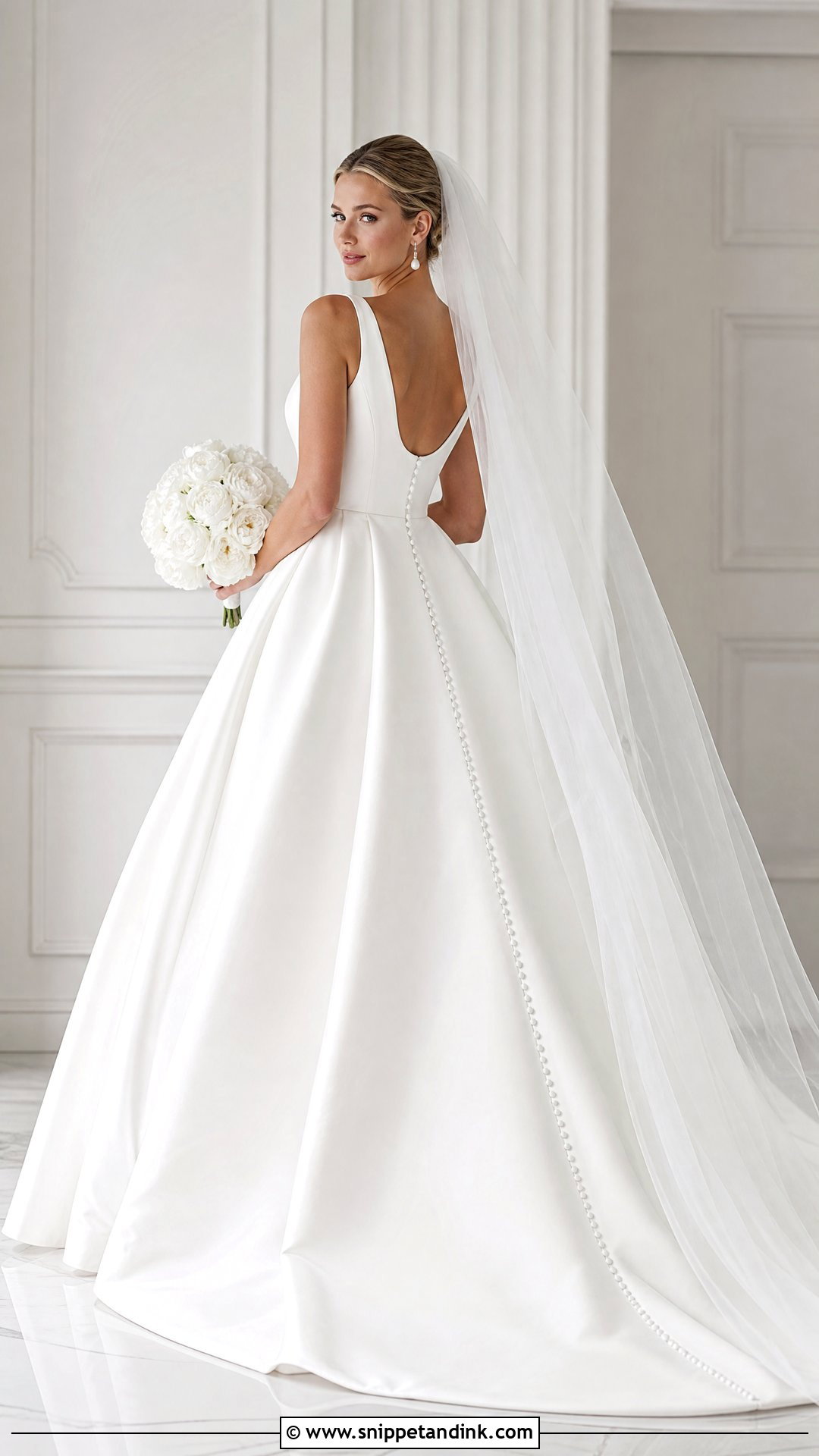
Satin’s sheen does the work that beading does on other gowns, so a structured satin ball gown with a basque or fitted waist needs very little added. Covered buttons and a long train suit it. The trade-off is that satin shows everything: creases from the car, water spots and any seam that’s slightly off, so I’d plan a steam on the wedding morning. Pearl earrings, a sleek veil and a smooth bun suit its clean finish in formal ceremonies and hotel ballrooms.
7. Long Sleeve Princess Bride Dress
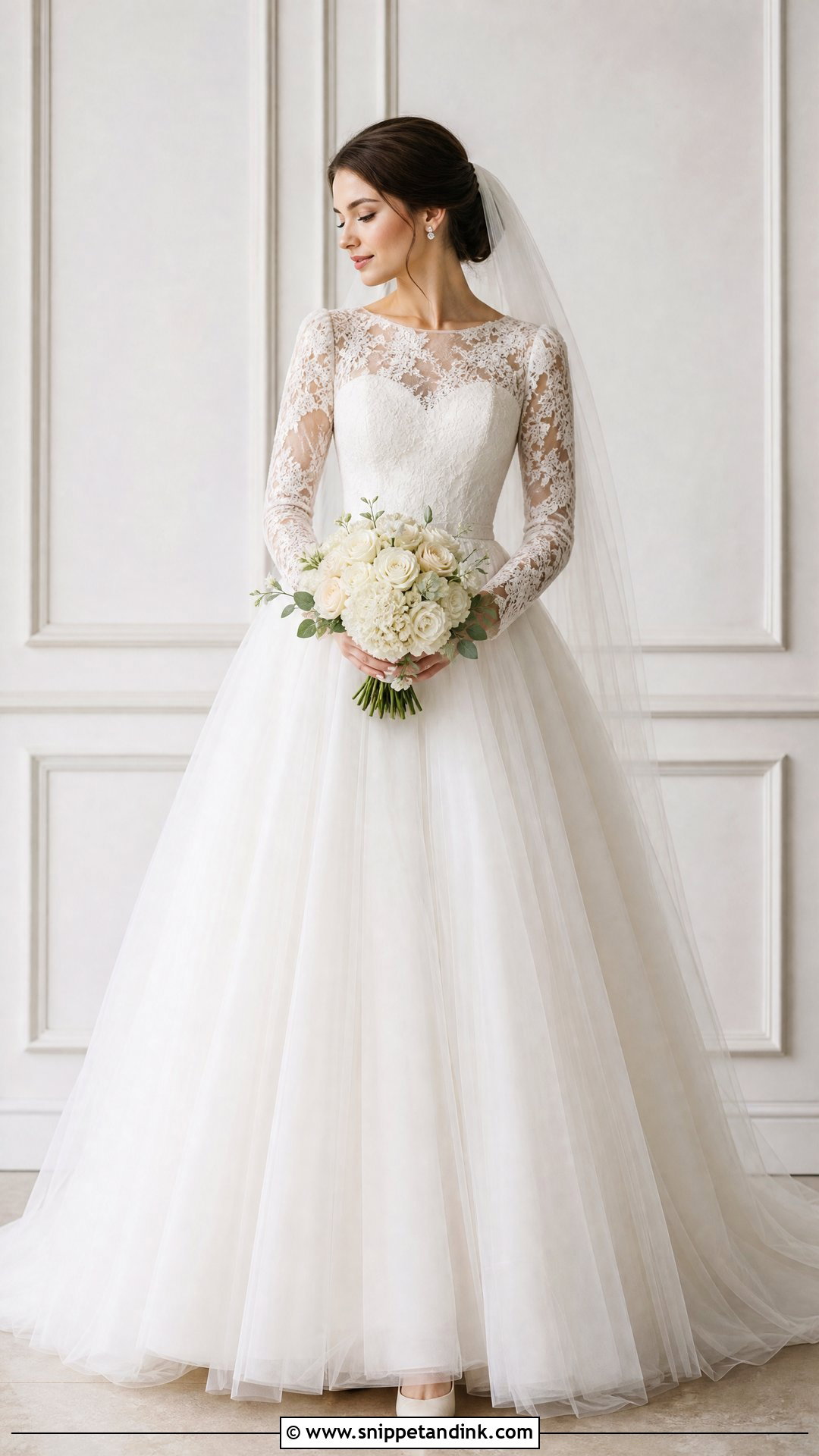
Long sleeves give coverage and suit cooler months, but they change your proportions. A fitted waist keeps the full skirt and sleeves from overwhelming a petite frame. Lace sleeves read romantic, sheer ones delicate, satin more formal. I always check that a bride can raise her arms to hold a bouquet and to hug, because sleeves set too low in the armhole pull the whole bodice up. Skip bracelets if the sleeves are detailed, and wear a low chignon so the neckline shows.
8. Corset Princess Bride Dress
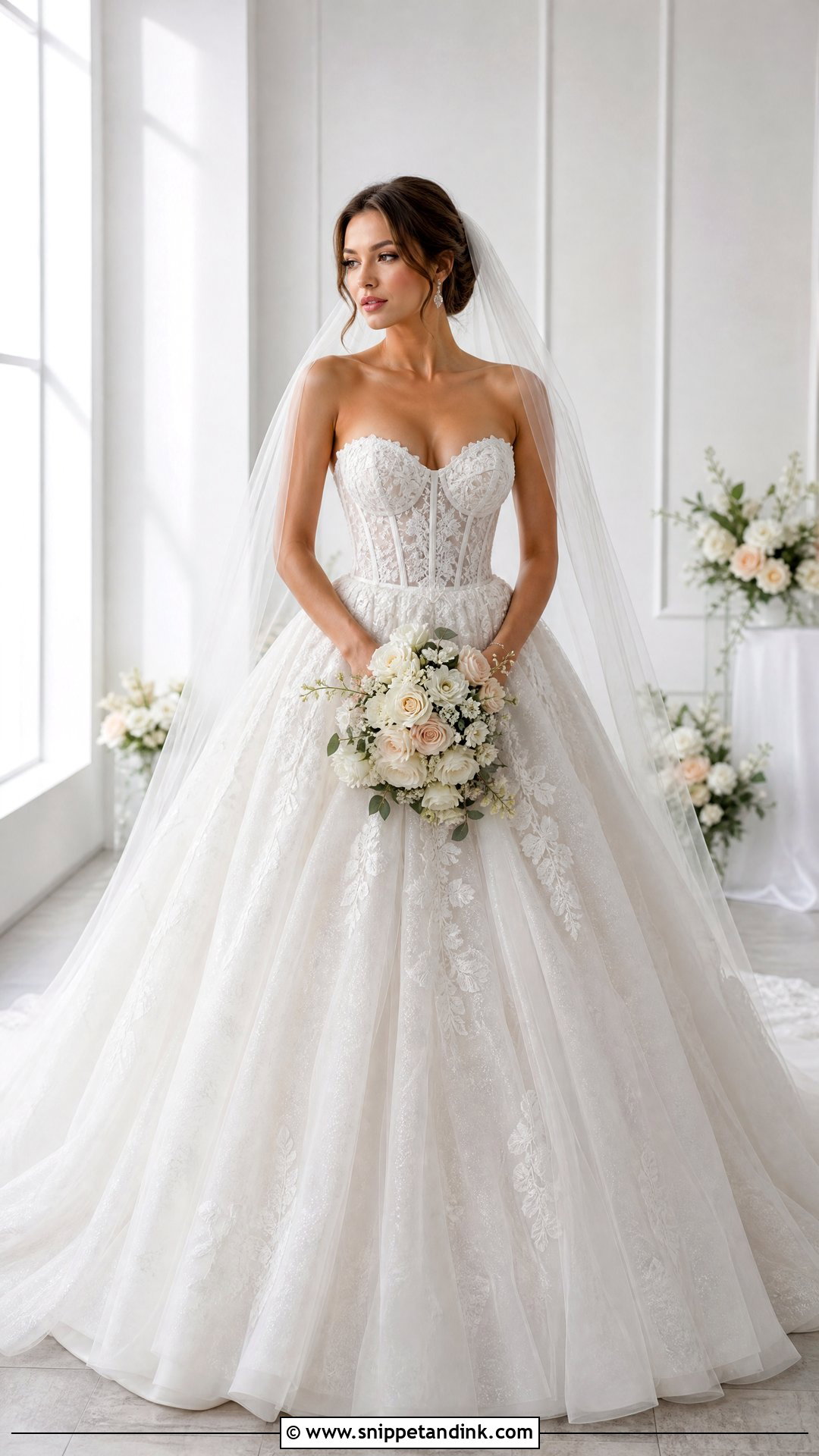
Corset bodices hold you up, which is why many brides find them more comfortable than they expected. The boning can show for a fashion-led look or sit under lace for something softer. A lace-up back adjusts if your weight changes between fittings; a zip with buttons looks cleaner but needs a precise final fit. Block heels hidden under the skirt will save your feet. Practice sitting in it before the day, since a long-line corset limits how far you can bend.
9. Beaded Princess Bride Dress
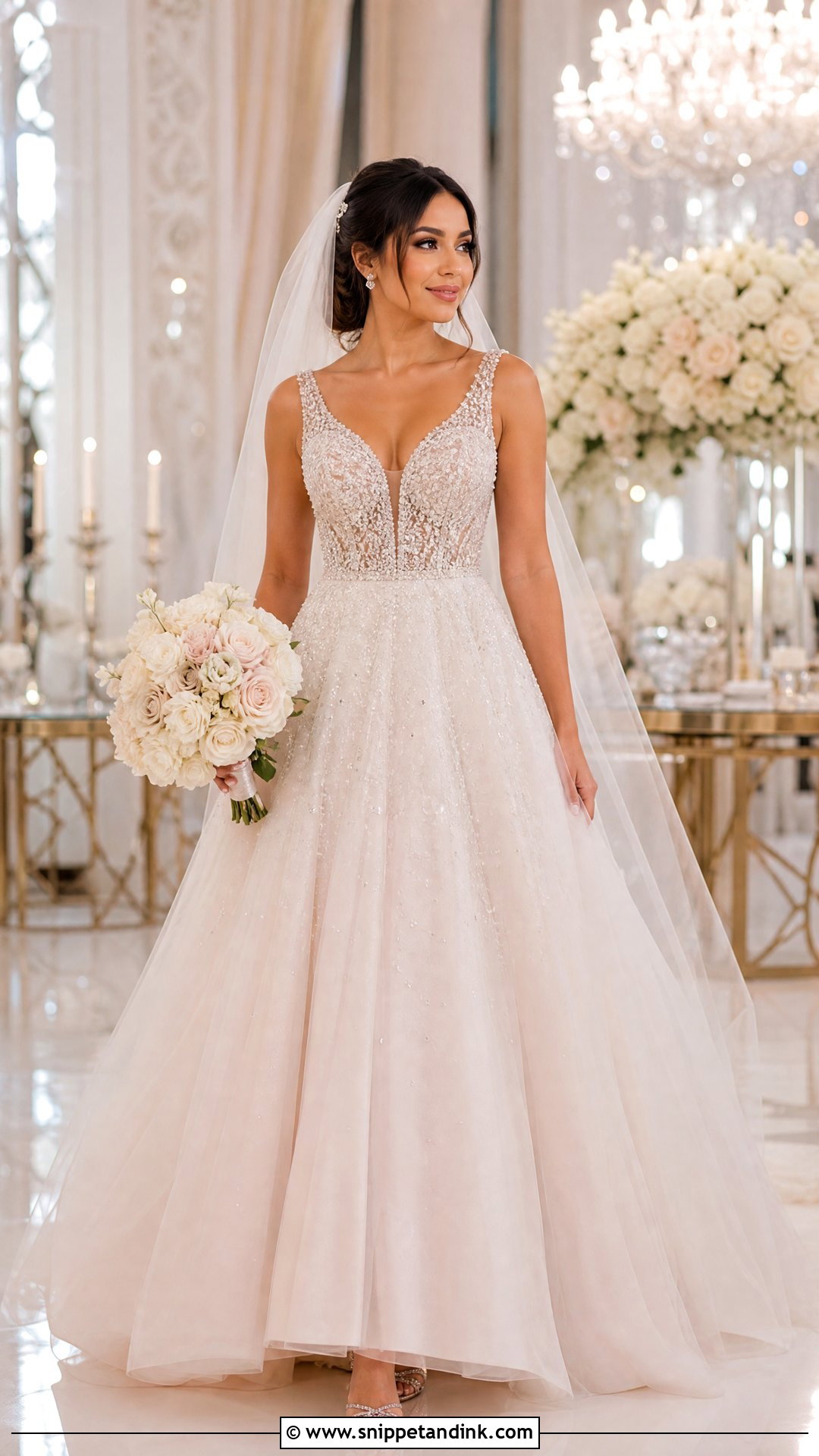
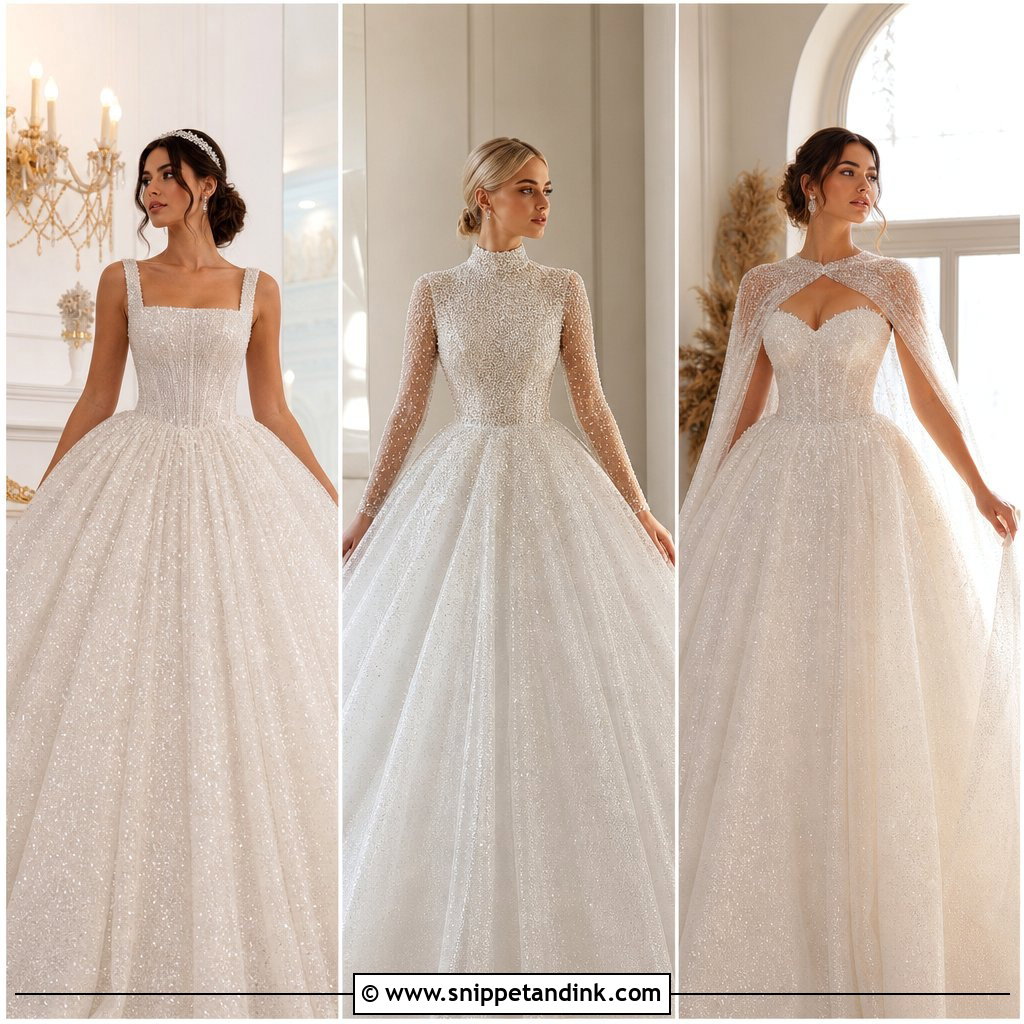
Beading gets heavy quickly, so the first thing I do with a beaded gown is lift the skirt. Scattered beads on tulle stay light; dense crystal work across a satin skirt adds real weight to a long day. The beads catch light as you move, which is why this gown shines under indoor lighting at evening receptions. Choose a simple veil so the two don’t compete, and keep earrings to crystal studs. A soft bouquet in ivory, blush or pale green keeps it fresh.
10. Floral Princess Bride Dress
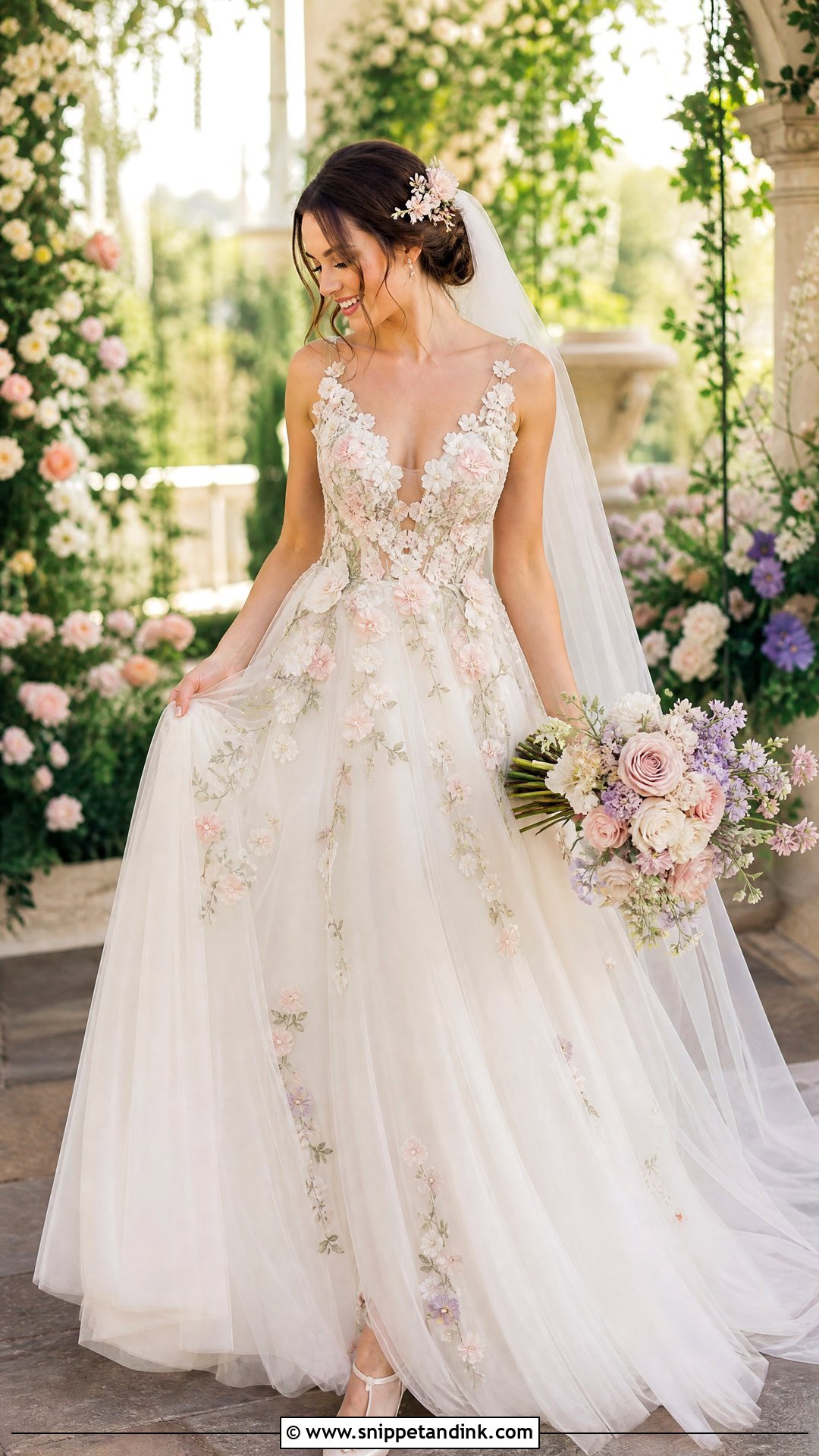
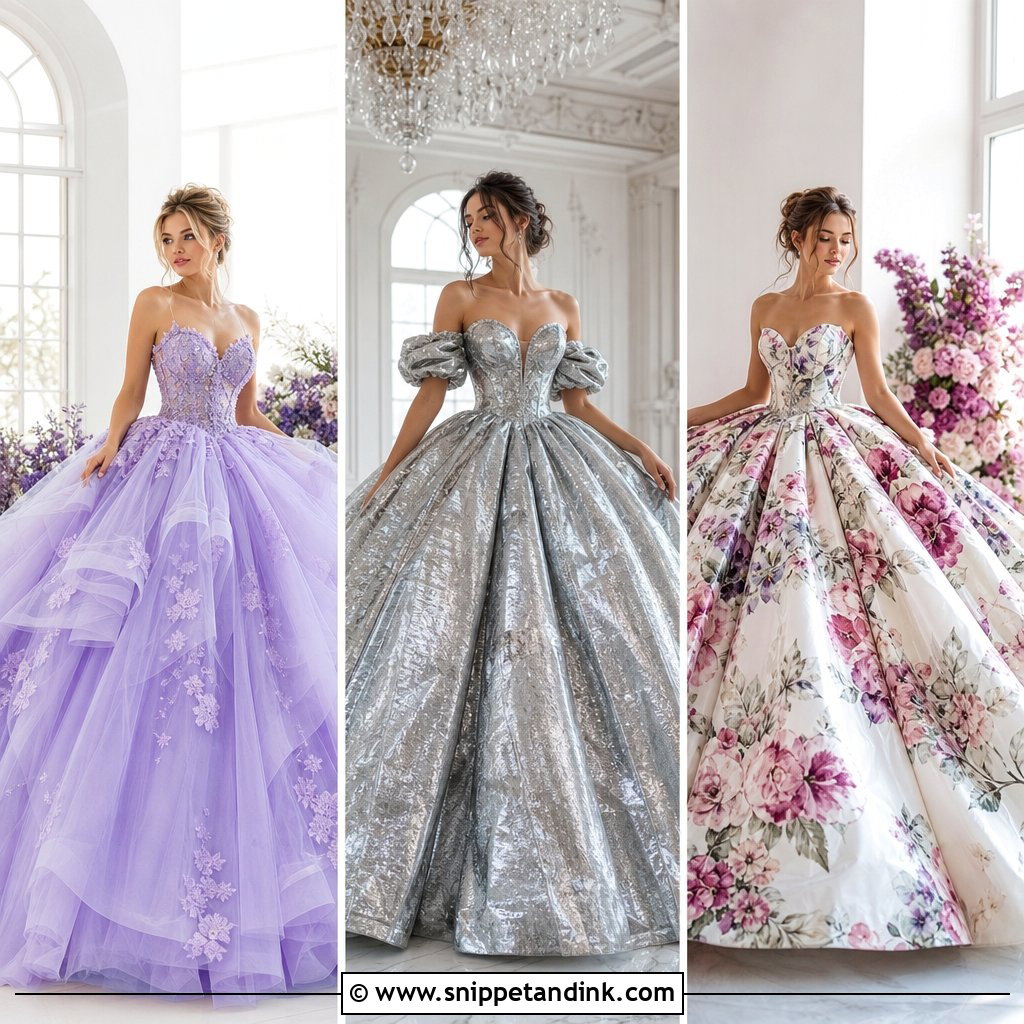
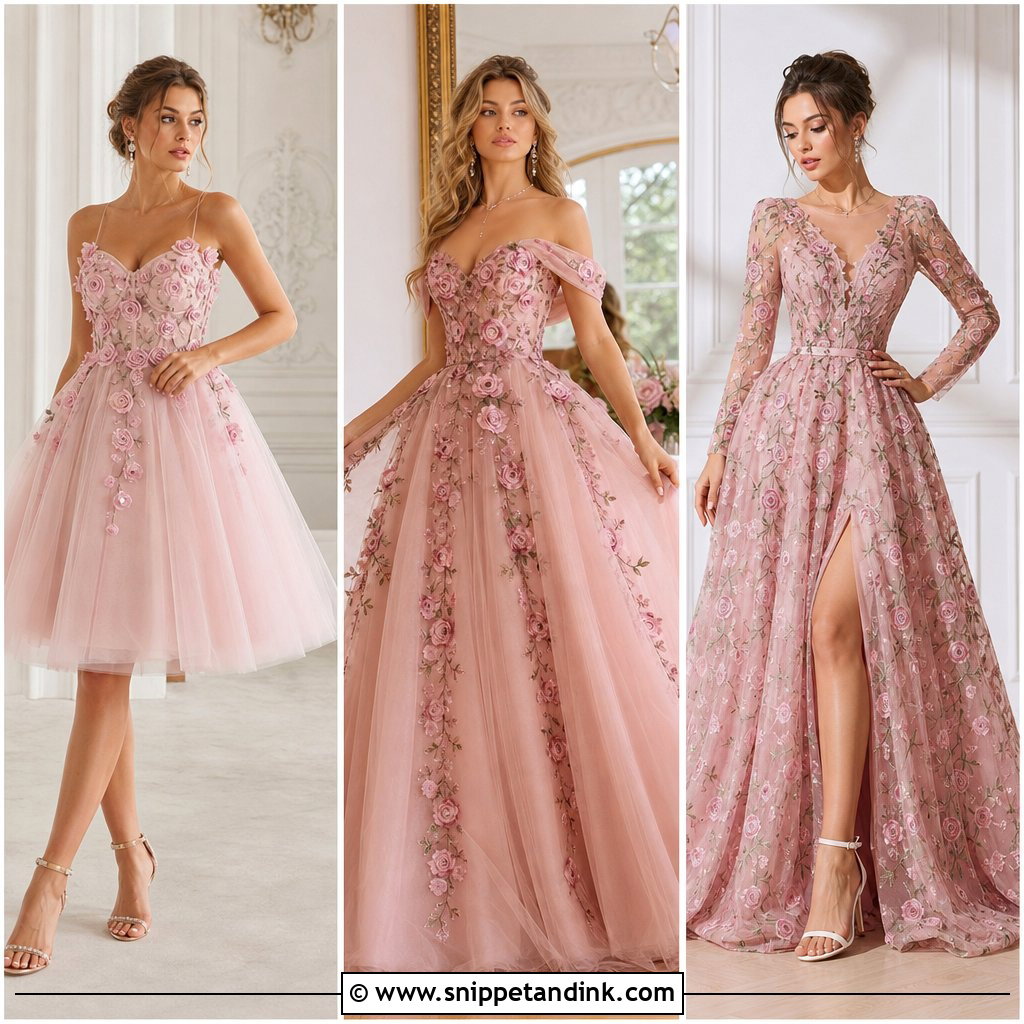
Floral gowns bring the garden onto the dress through lace appliqués, embroidered vines, 3D petals or pastel accents. Over a fitted bodice and tulle skirt, they stay bridal, and they sit naturally in spring and summer ceremonies outdoors. One practical point: raised 3D petals crush under a bustle and in a car, so ask the seamstress where they sit before planning the bustle points. Add a floral comb and a soft veil, keep other accessories quiet, and echo one bloom from the dress in your bouquet.
11. Simple Princess Bride Dress
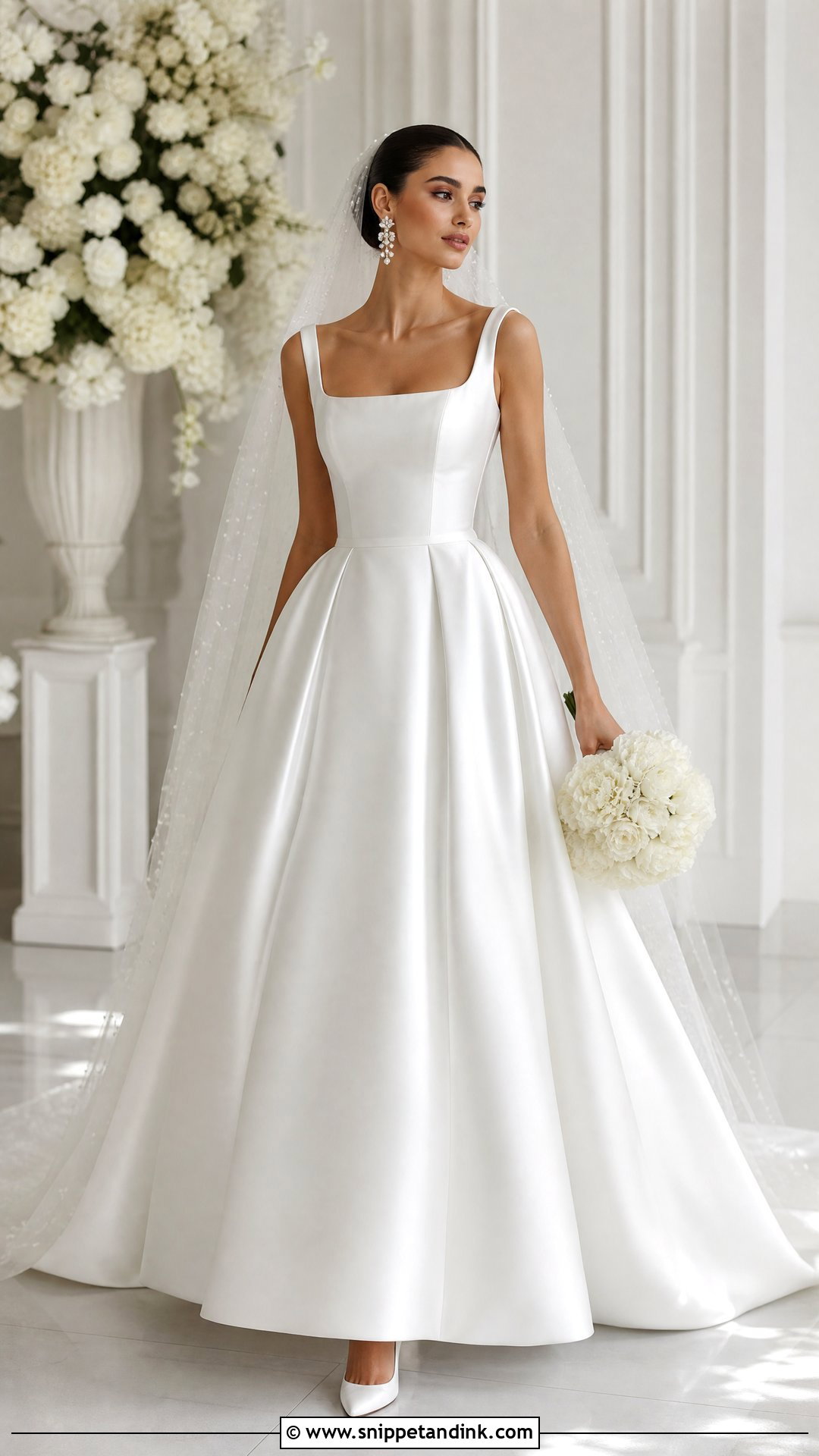
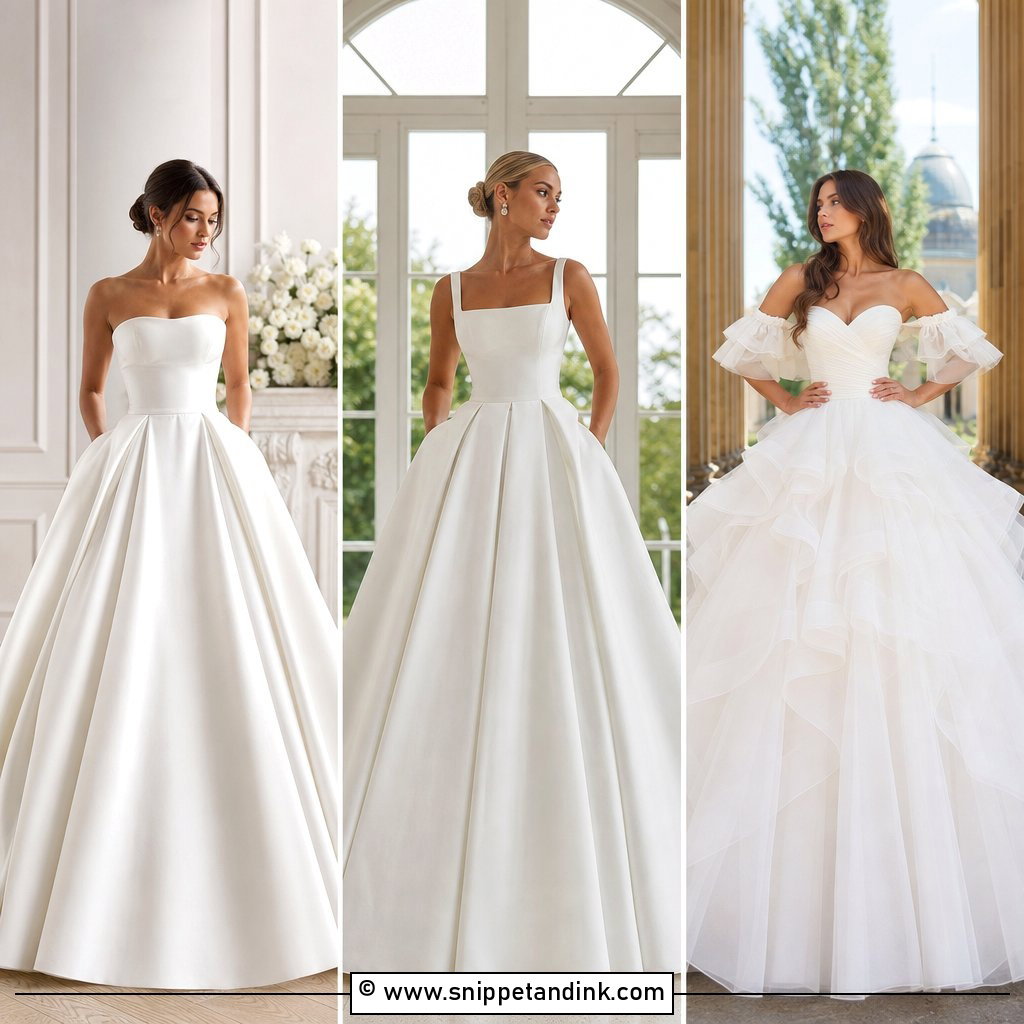
A simple ball gown relies on cut. A clean satin or mikado skirt with a defined waist can feel just as grand as a beaded one, because the shape is doing the work. Mikado is stiffer than satin and holds a crisp fold, which suits this style well. The plain canvas lets one accessory lead: a pearl veil, a bow, statement earrings or gloves. Classic ivory pumps and a sleek bun finish it, and the clean lines read sharply in photos.
12. Blush Princess Bride Dress
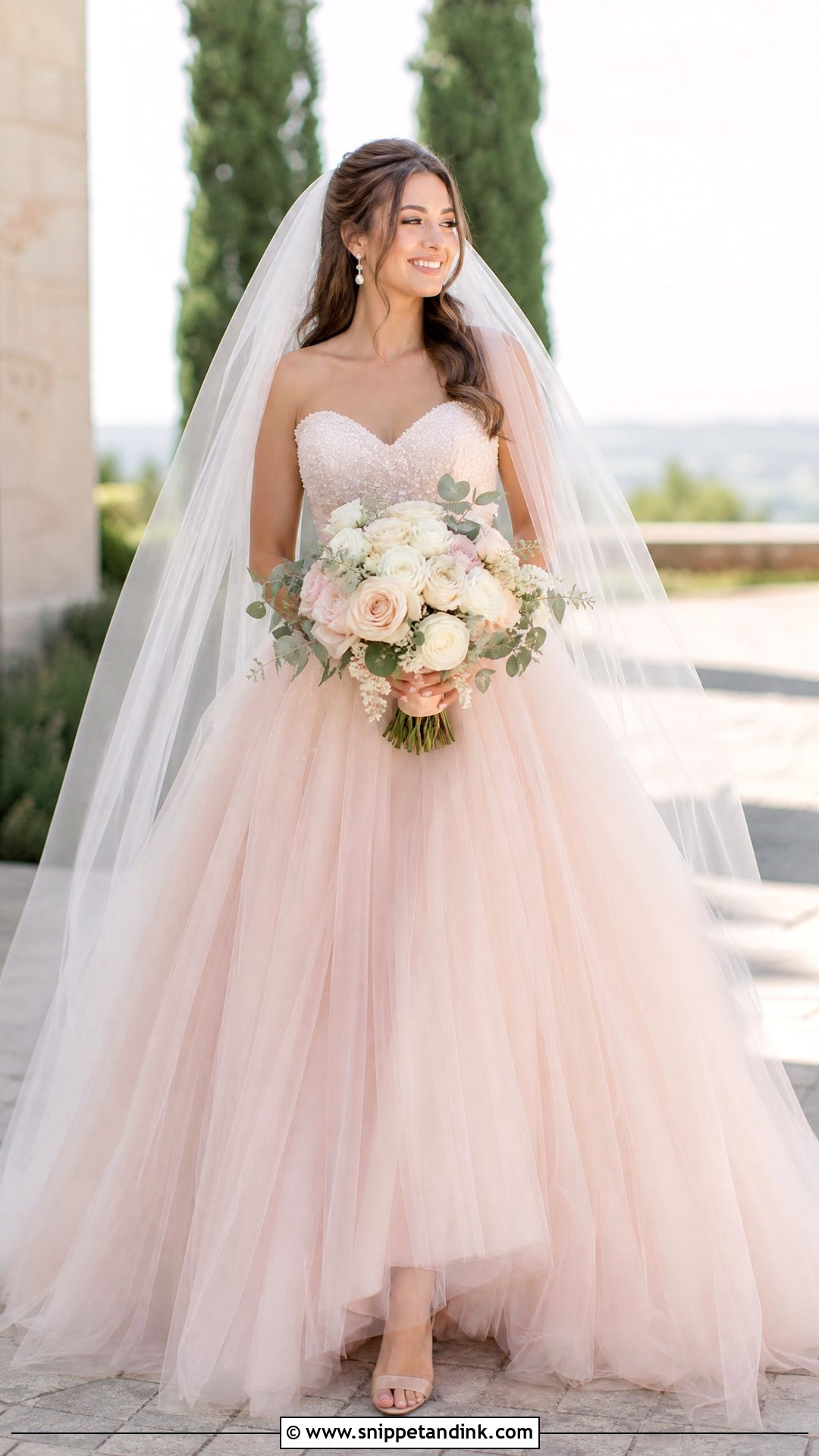
Blush is the gentlest step away from white. The color can be almost ivory or a clearly rosy underlay beneath tulle, lace or organza. I hold blush samples near the bride’s face in daylight, because some pinks warm the skin and others make it look sallow. Keep accessories ivory so the outfit stays bridal, and carry blush, cream and greenery in the bouquet. Outdoor light flatters it most, especially at a garden ceremony.
13. Blue Princess Bride Dress
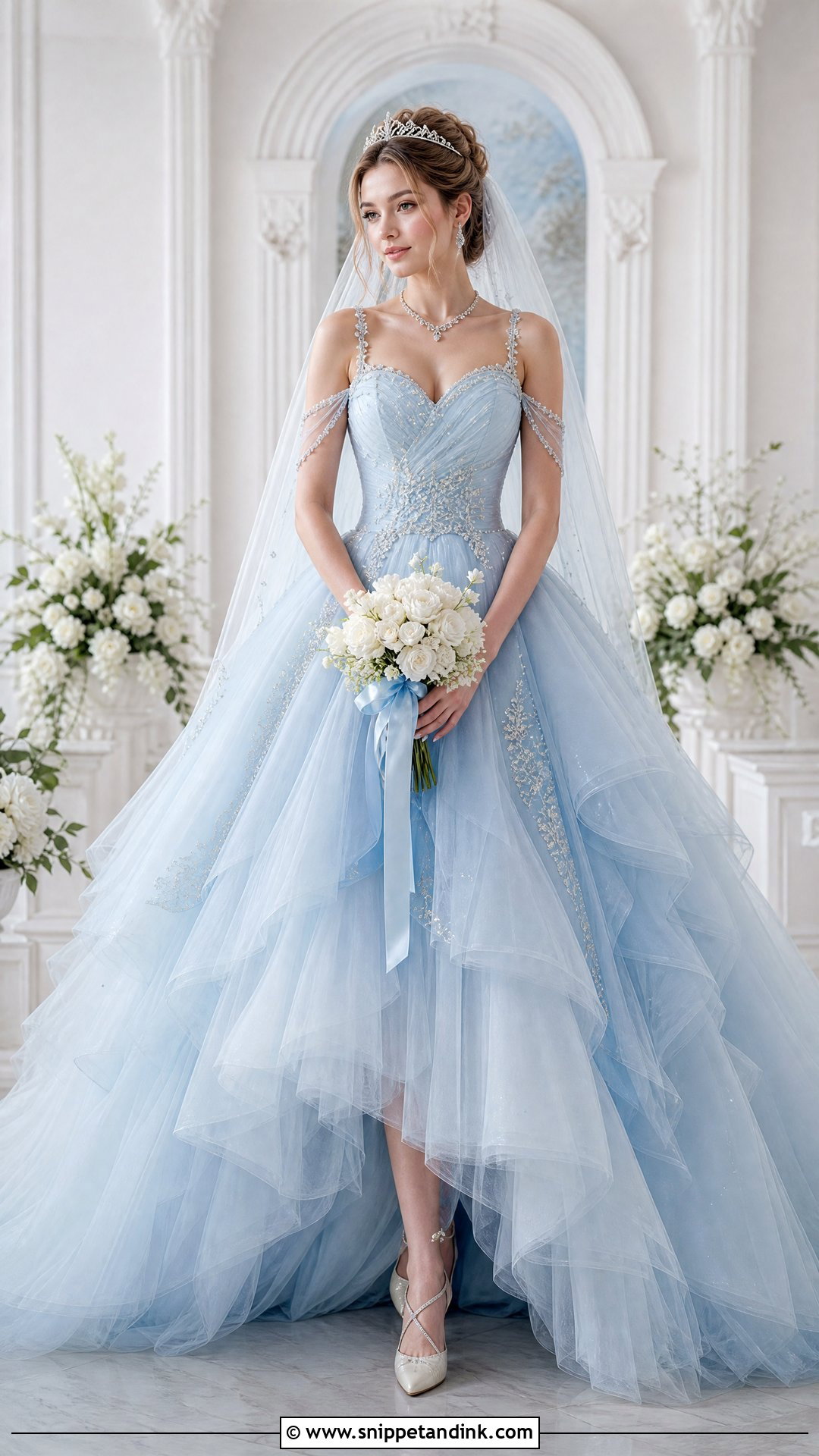
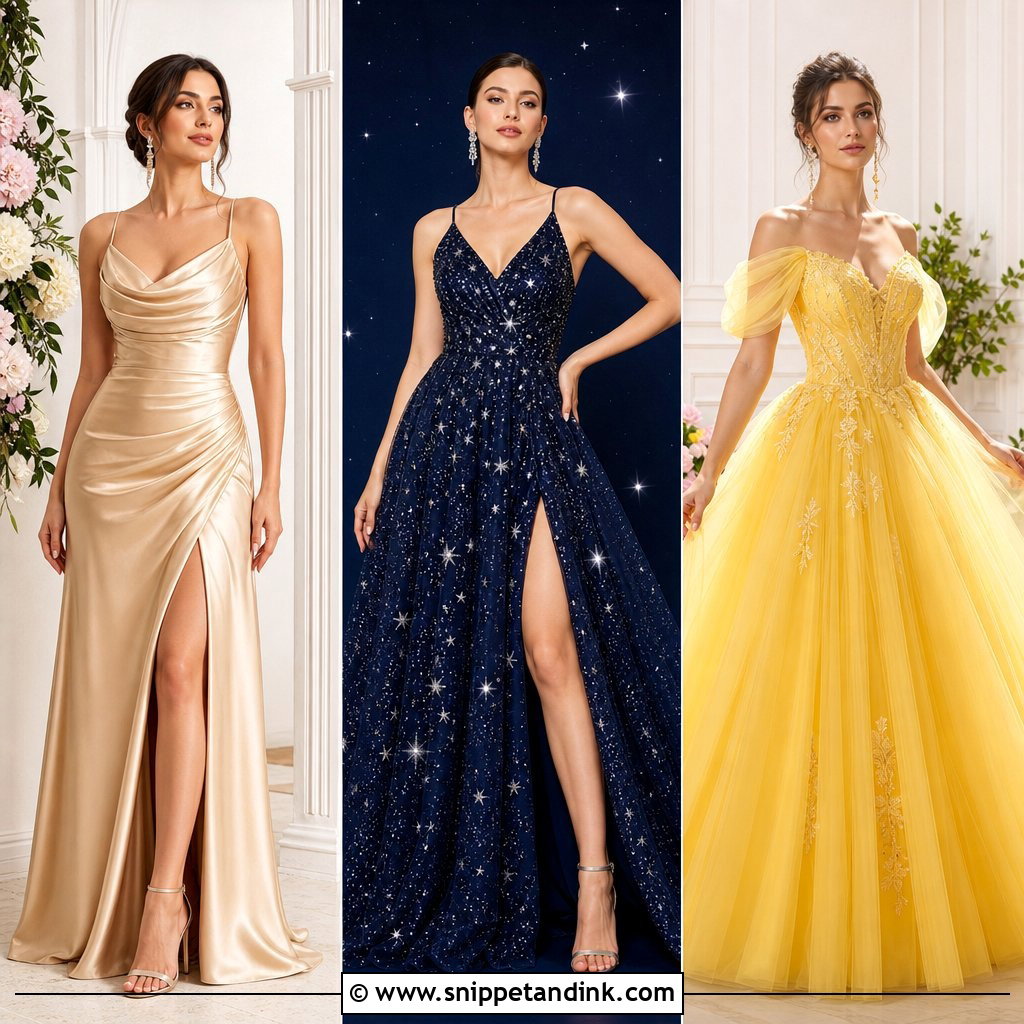
Pale blue tulle or an icy underlay gives a ball gown a storybook look while still feeling bridal. Keep the silhouette classic, with a fitted bodice and full skirt, so the color doesn’t tip into costume. Silver or pearl accessories suit blue, along with clear or ivory heels and a sheer veil. I’d ask to see the fabric by a window as well as under the shop lights, because pale blue can shift toward grey in cool daylight. A white bouquet tied with blue ribbon connects it all.
14. Champagne Princess Bride Dress
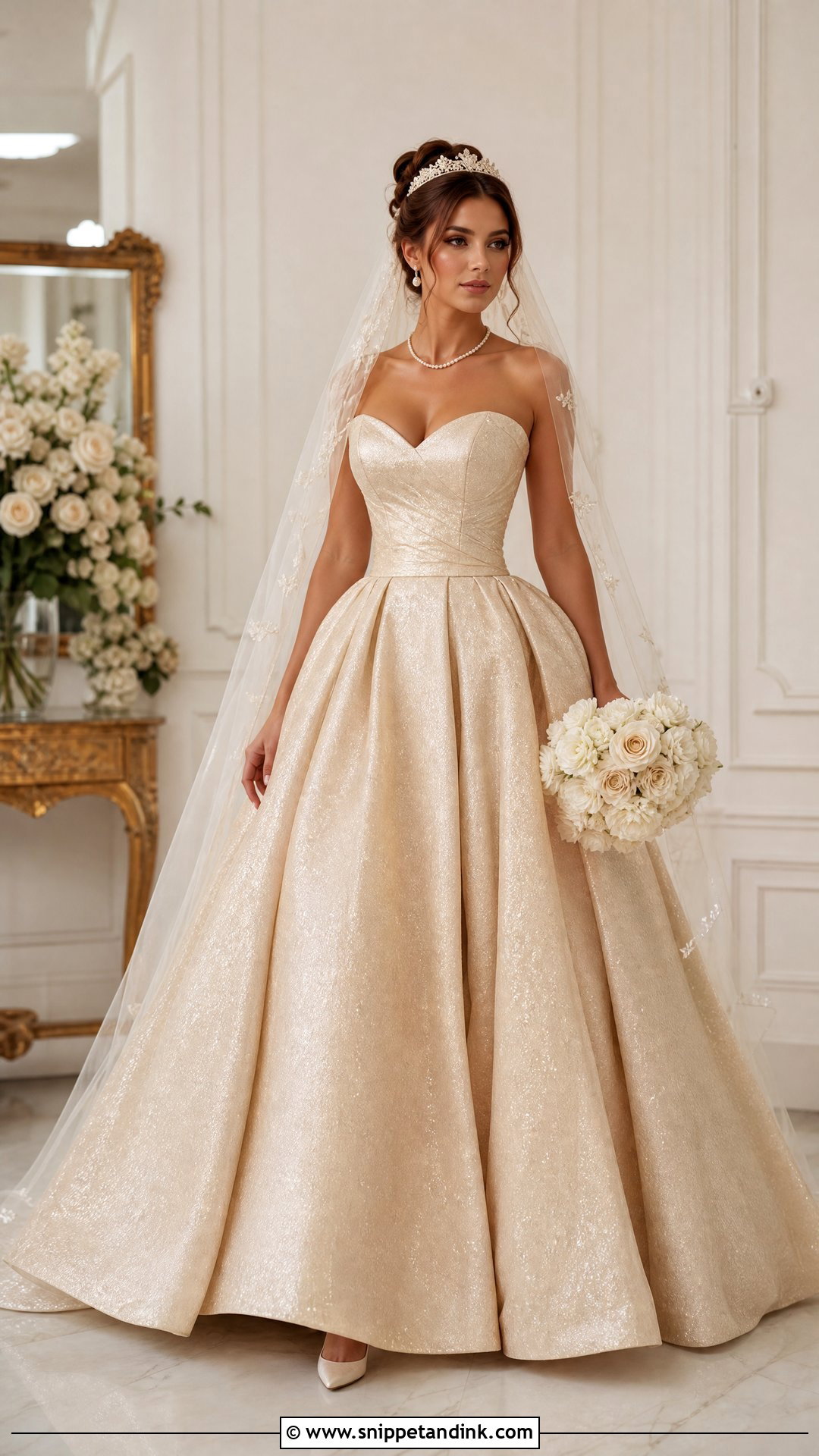
Champagne carries a soft golden undertone that warms satin, tulle, lace and beading. It suits many skin tones, though I still compare it beside the bride’s skin in a mirror, because on very fair skin some champagnes read as nude from a distance. A fitted bodice and full skirt keep the classic shape. Gold jewelry, pearls and ivory heels pair naturally, and a veil in matching champagne keeps it cohesive. If there’s shimmer, keep the bouquet to cream flowers and greenery.
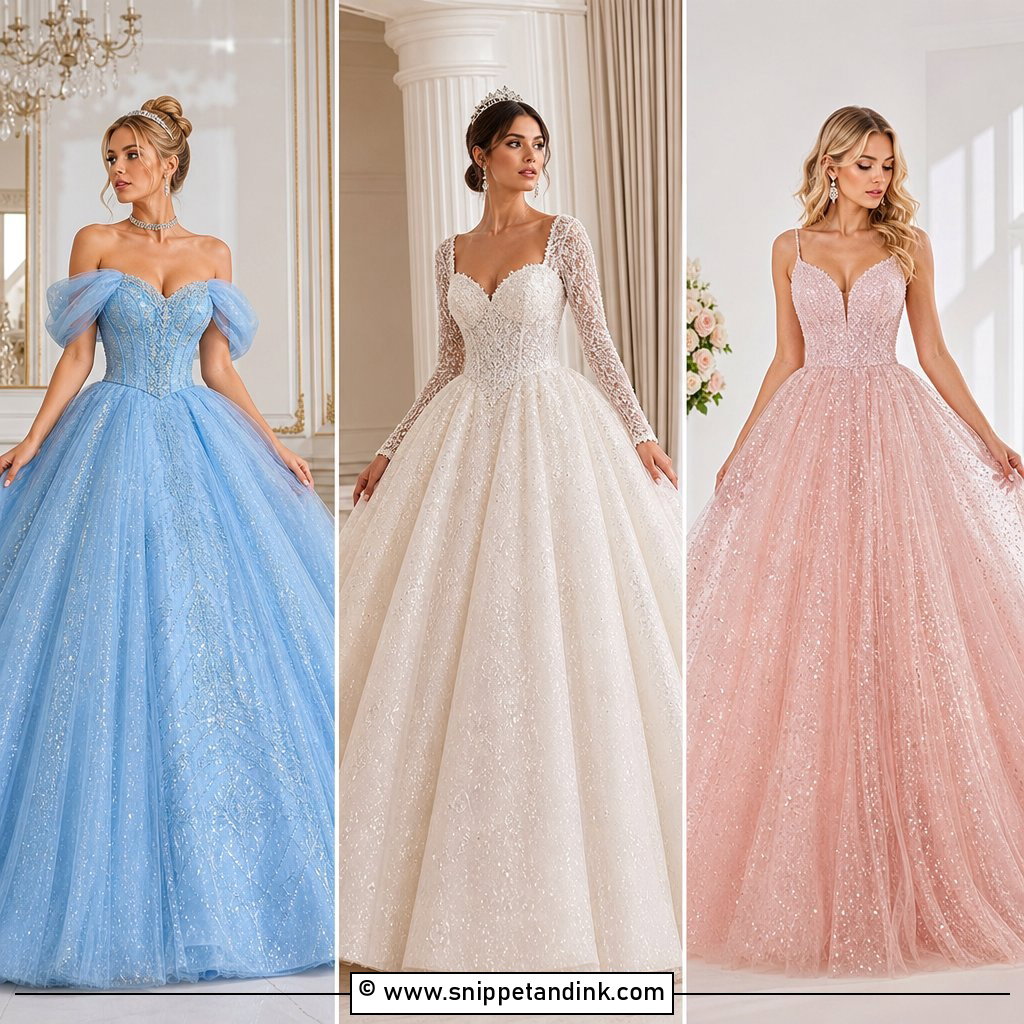
15. High Neck Princess Bride Dress
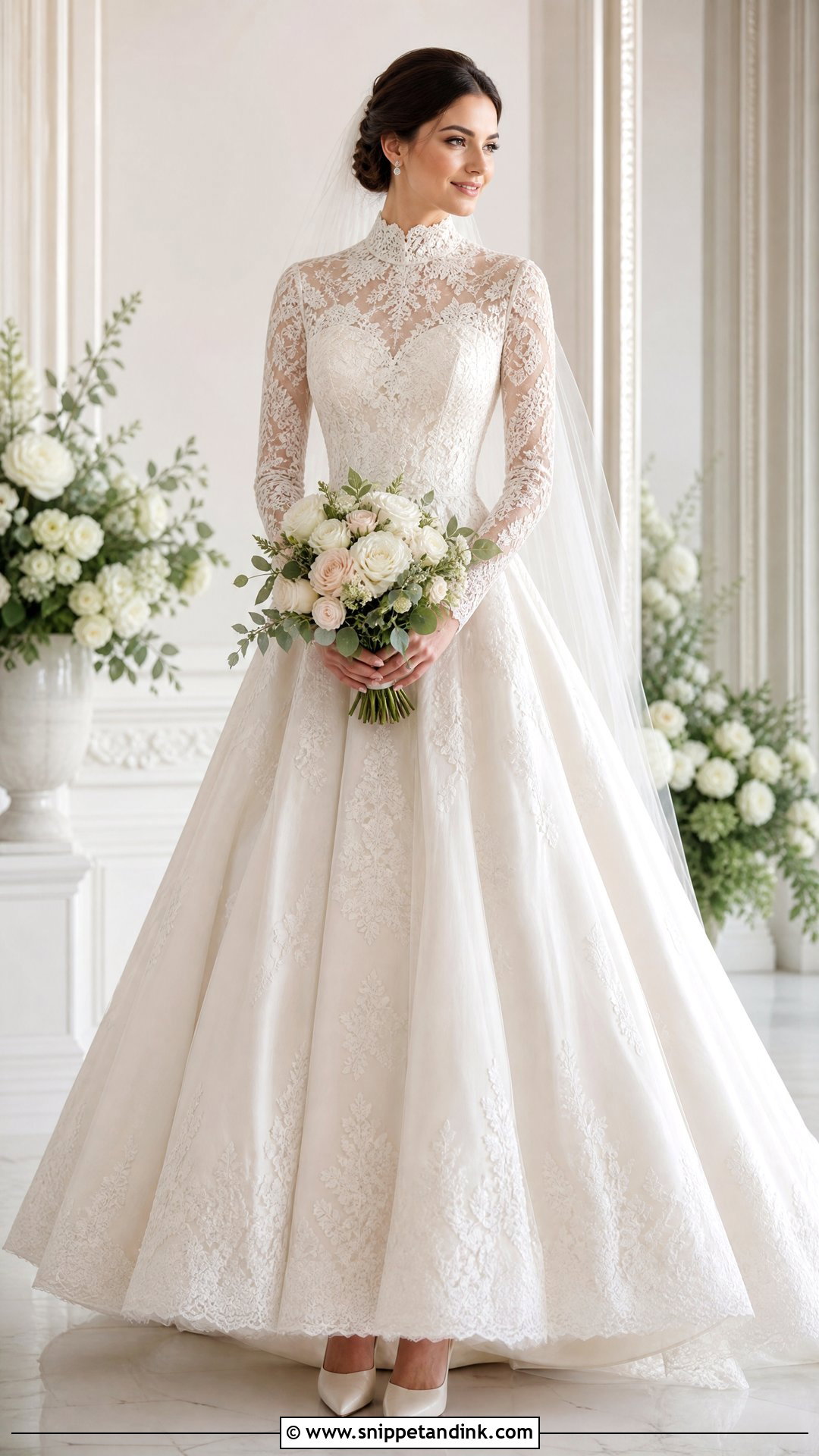
High necklines give coverage and a refined line, in lace, illusion mesh, satin or beading. Because the bodice covers so much, the neck needs room: a sleek updo shows the neckline, while long loose hair hides it. Keep jewelry to small earrings and maybe a bracelet, and choose a soft veil that doesn’t compete with the bodice. High necks run warm, so I steer brides toward this style for formal ceremonies and cooler seasons rather than outdoor summer weddings.
16. Square Neck Princess Bride Dress
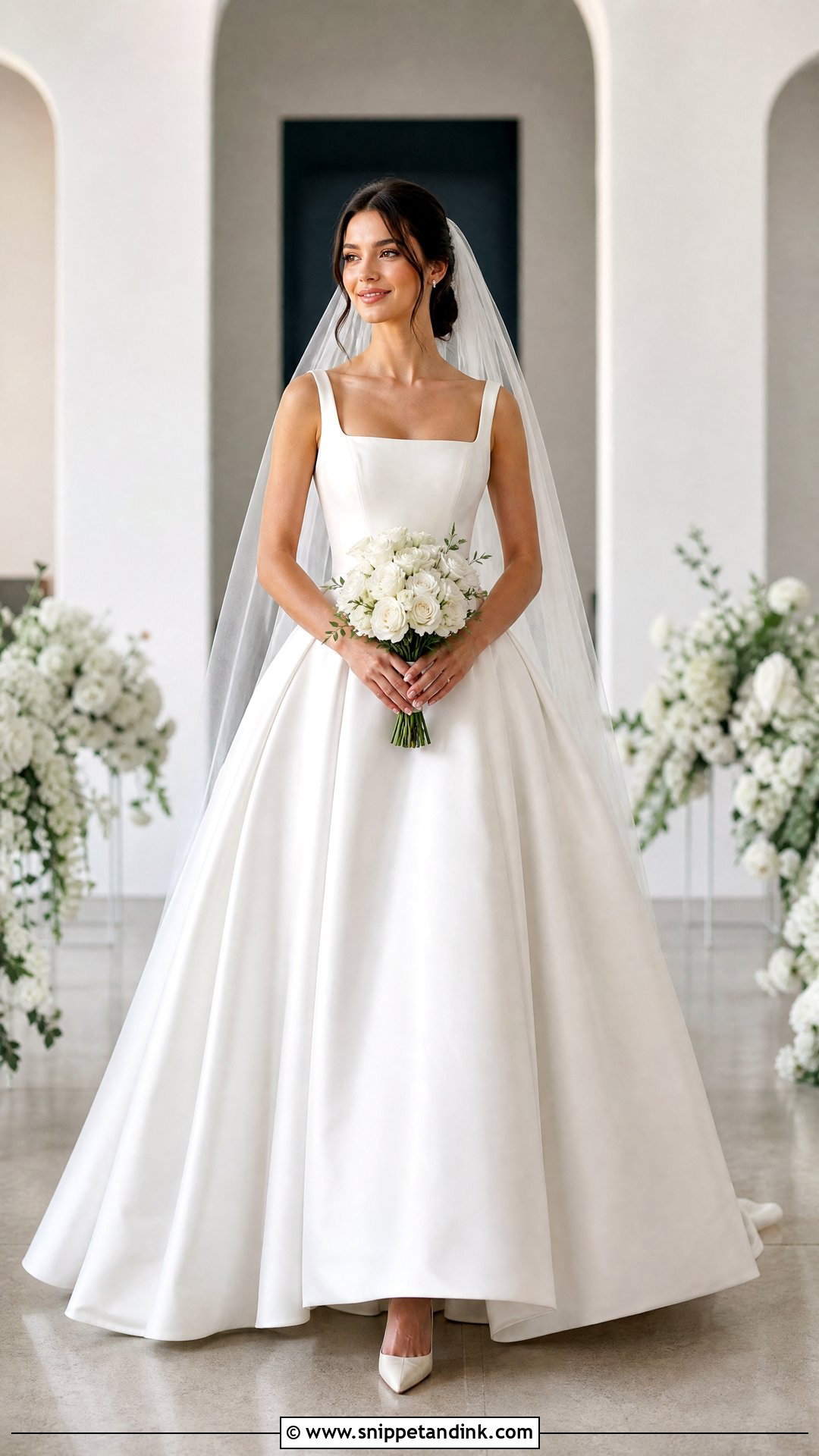
Square necklines frame the collarbone in a structured line, a fresh alternative to sweetheart or strapless. The corners need to sit flat; if the bodice is even slightly loose, they gape when you lean forward, so I check it with the bride bending as if signing the register. Pair it with a full satin, mikado or tulle skirt. Pearl studs are often enough, with a long veil and pointed heels. A low bun or soft waves suit its clean shape.
17. Sweetheart Princess Bride Dress
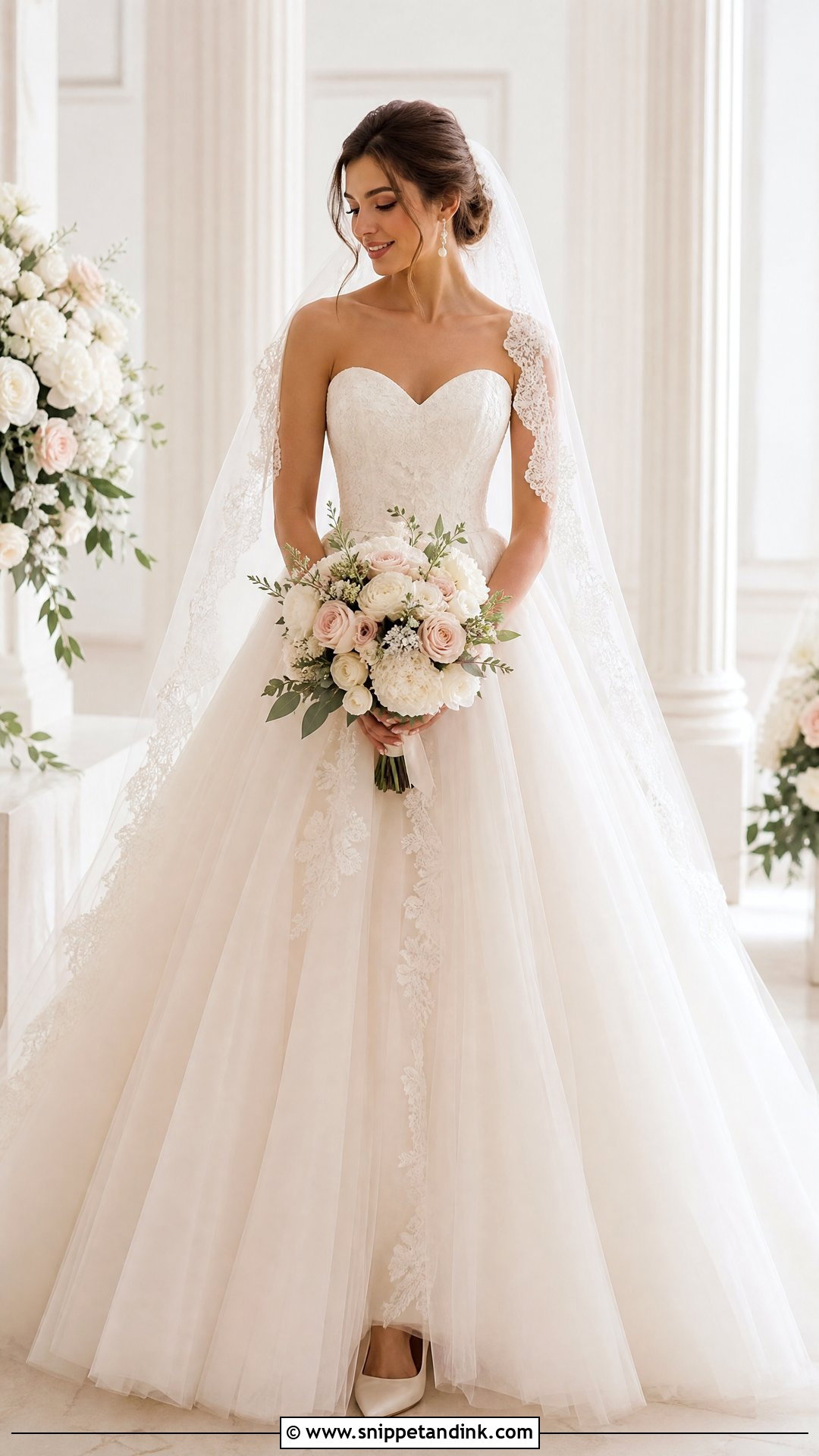
The sweetheart neckline is popular for a reason: the curve softens the bodice and flatters a wide range of busts. It works strapless, with off-shoulder sleeves or with thin straps. A tulle skirt gives movement; satin gives structure. I match the veil to the dress detail, lace trim for a lace gown and plain tulle for a beaded bodice, so the two read as one outfit. Pearl earrings, soft makeup and elegant heels finish a classic look that’s easy to accessorize.
18. Basque Waist Princess Bride Dress
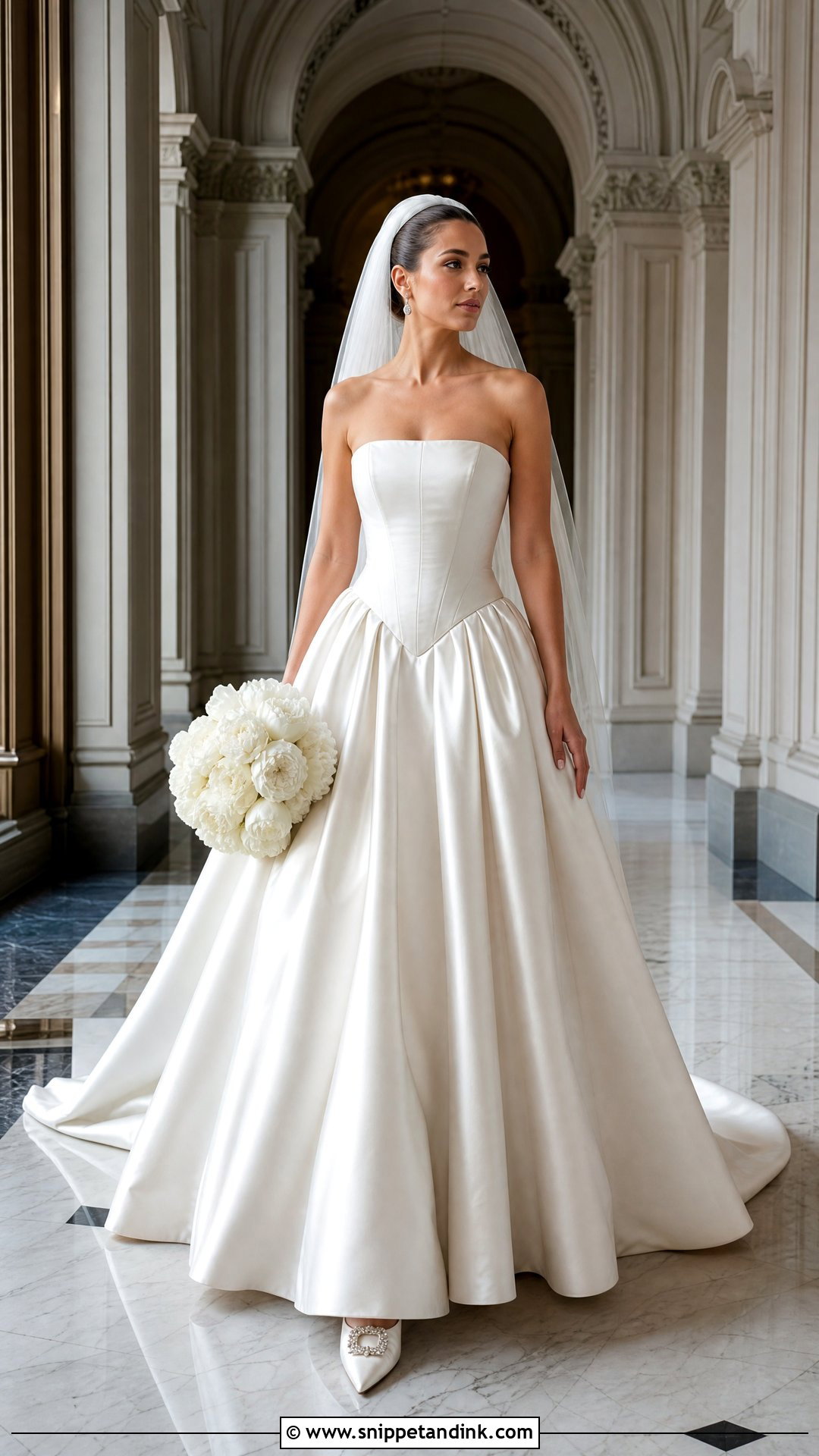
A basque waist dips into a V below the natural waistline, which lengthens the torso and suits voluminous skirts. Where the point lands matters: it should sit a little below your natural waist, not down on the hip bone, or it shortens your legs instead. Satin gives a clean edge, lace adds romance and tulle softens it. A simple veil, classic earrings and satin heels are enough, and the outline reads clearly in full-length photos.
19. Detachable Train Princess Bride Dress
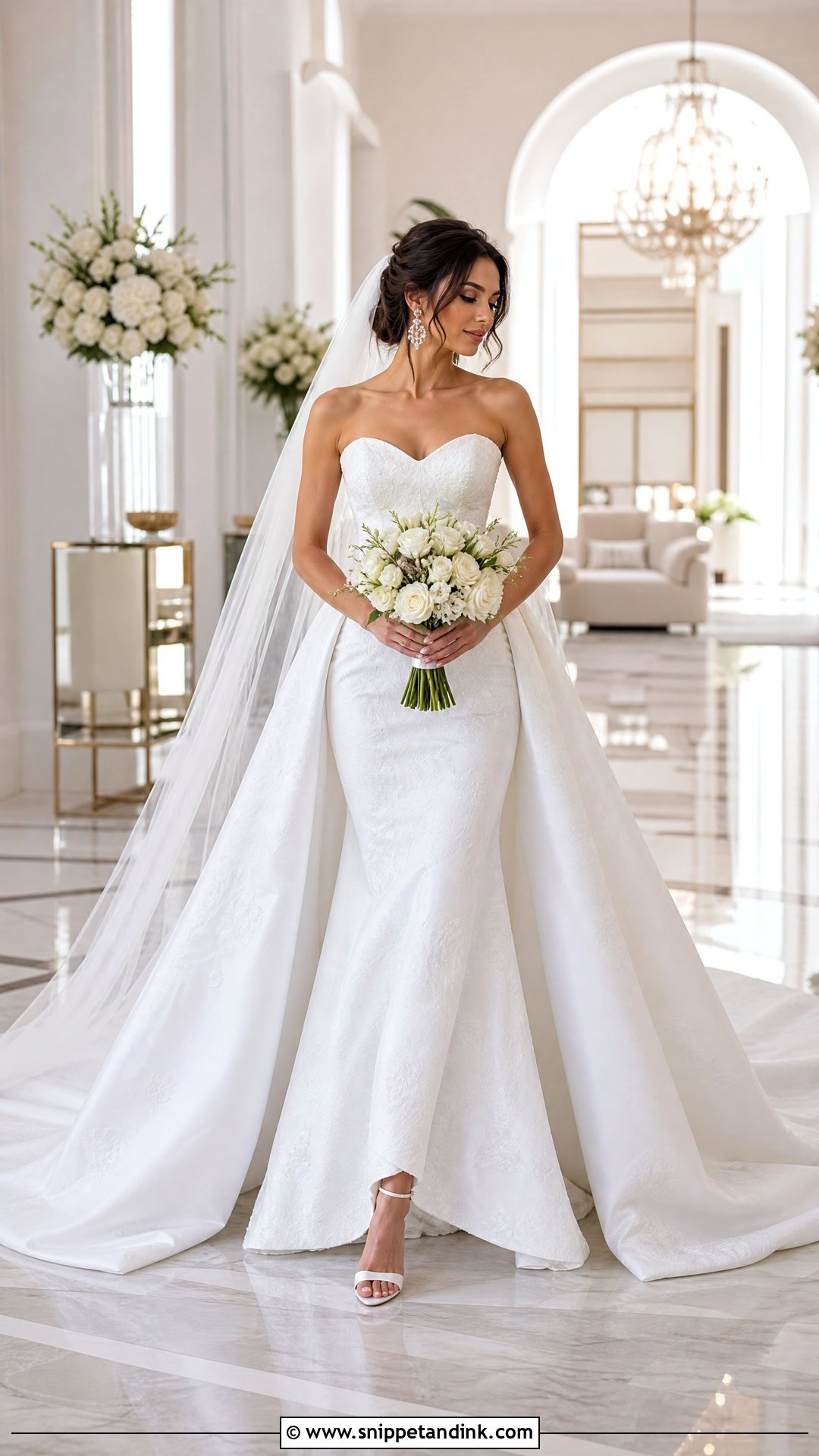
A detachable train gives you a long ceremony entrance and a shorter, easier skirt for dancing. It attaches at the waist or back with hooks, buttons or snaps, and I’d ask the shop who will remove it on the day, then have that person practice once at the final fitting. Keep the veil simple if the train is detailed. Supportive heels and a structured bouquet suit it, and venues with long aisles get the most from it.

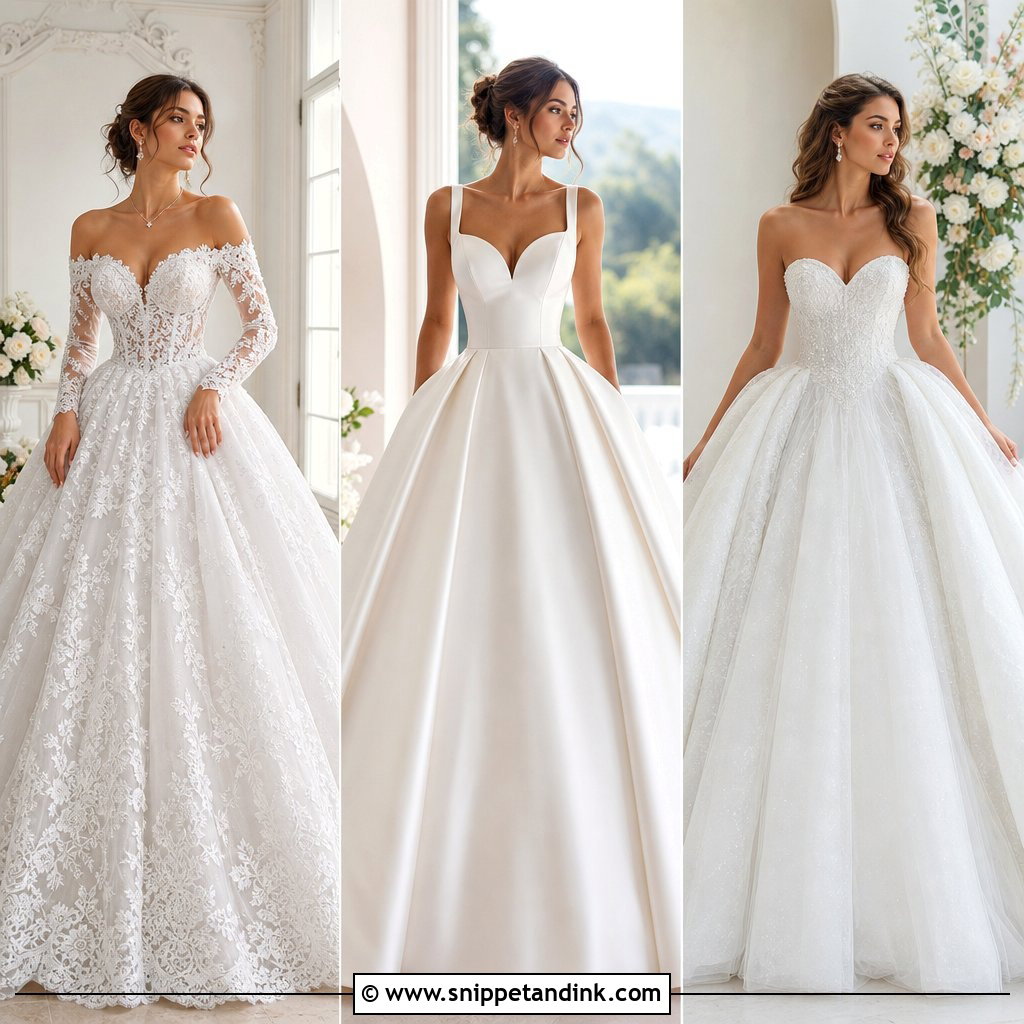


20. Bow Princess Bride Dress
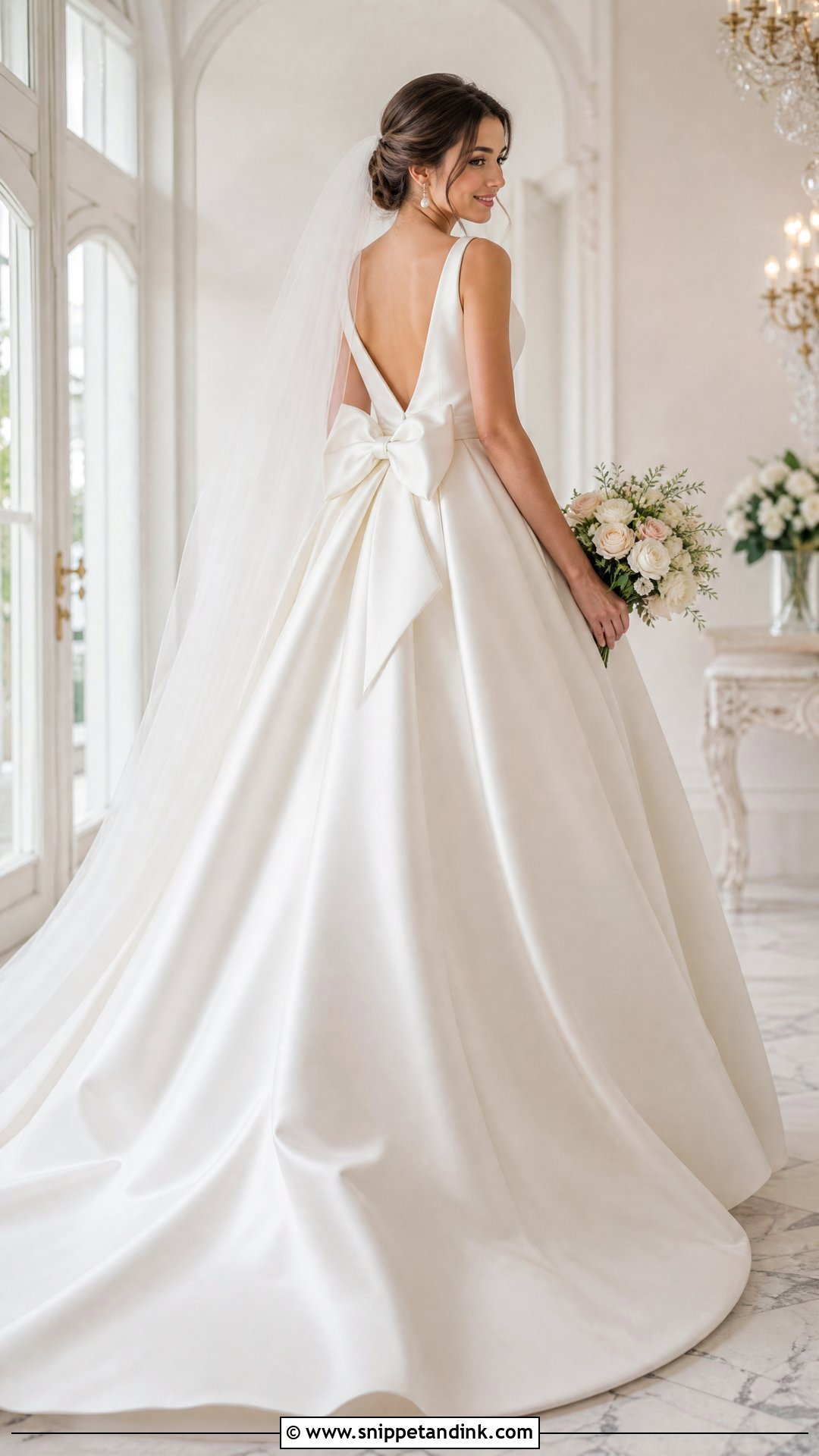
Bows can sit at the back waist, on a shoulder, along the neckline or on a detachable train. A large back bow suits a smooth satin ball gown; smaller bows look delicate on tulle or lace. Big back bows do get crushed when you sit, so I check that the bow is stiffened inside and ask whether it can come off for the reception. Keep the rest of the outfit plain so the bow reads as intentional, and wear a soft updo to leave the back on show.
21. Pearl Princess Bride Dress
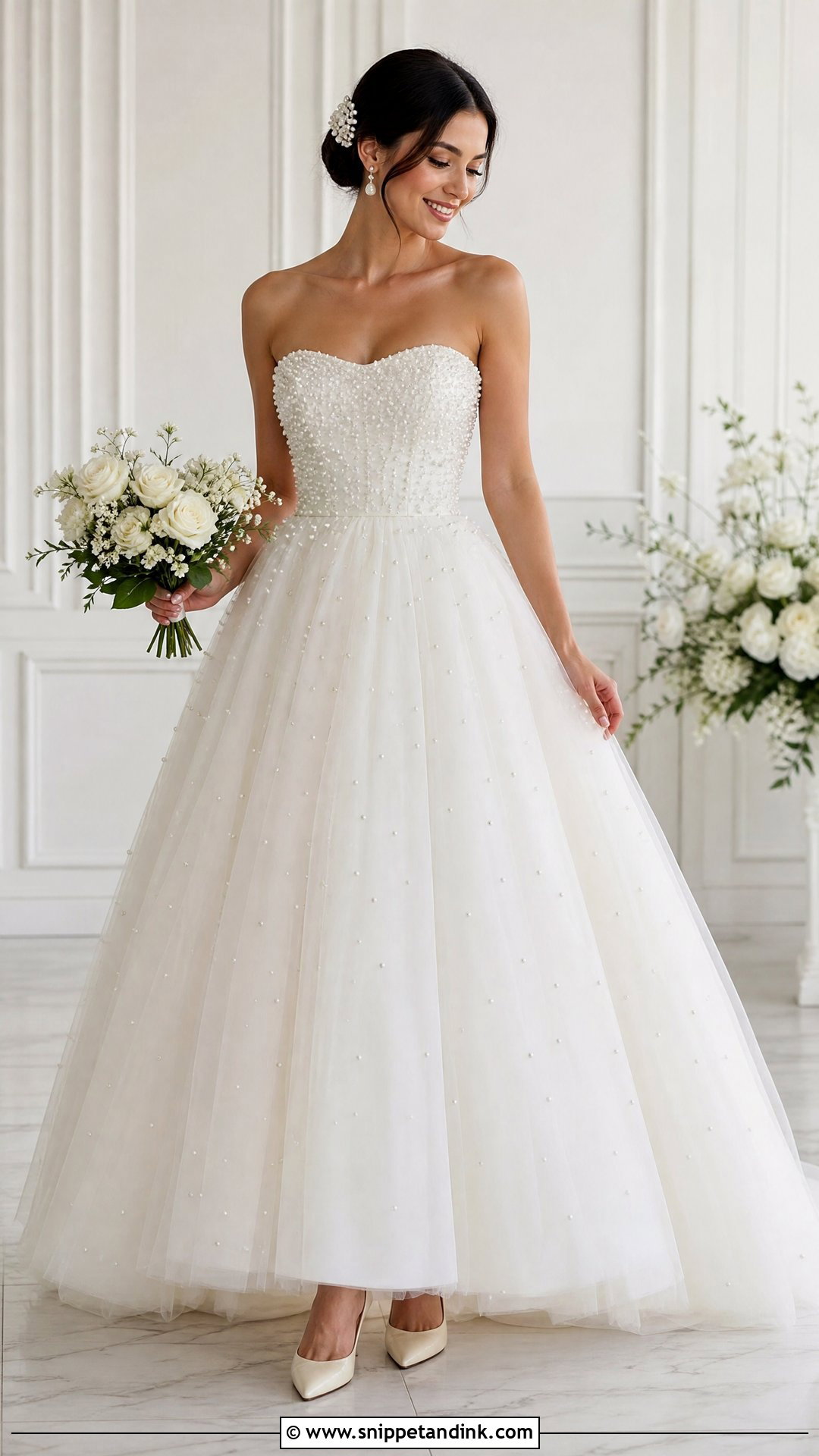
Pearls give texture without shine. They can be scattered over tulle, lined along sleeves and bodice, or stitched onto the veil. Hand-sewn pearls on tulle can work loose with wear, so I ask the shop for spares and tuck them into the emergency kit. If the dress is heavily pearled, step back from extra accessories; a pearl comb and simple ivory heels are enough. The detail shows up well in close-up photos.
22. Glitter Princess Bride Dress
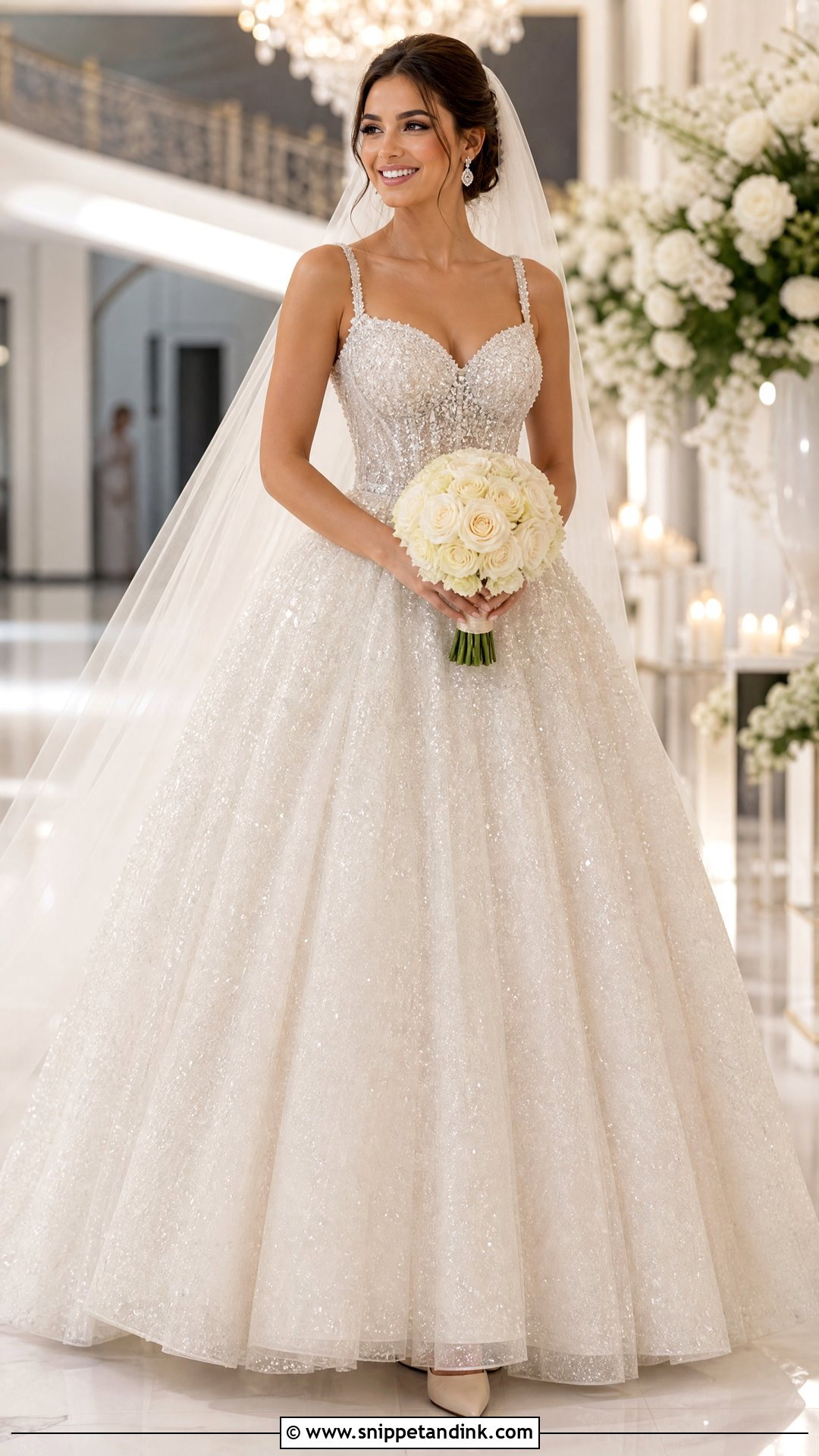
Glitter tulle gives shimmer that moves with you, softer than the hard sparkle of crystals. Fine glitter or light sequin layers over a full skirt glow in bright venues. Glitter does shed onto suits, sofas and everyone you hug, so check how firmly it’s bonded before buying. Keep jewelry simple, the veil plain and heels neutral. A polished hairstyle stops the look feeling busy at a ballroom reception.
23. Vintage Princess Bride Dress
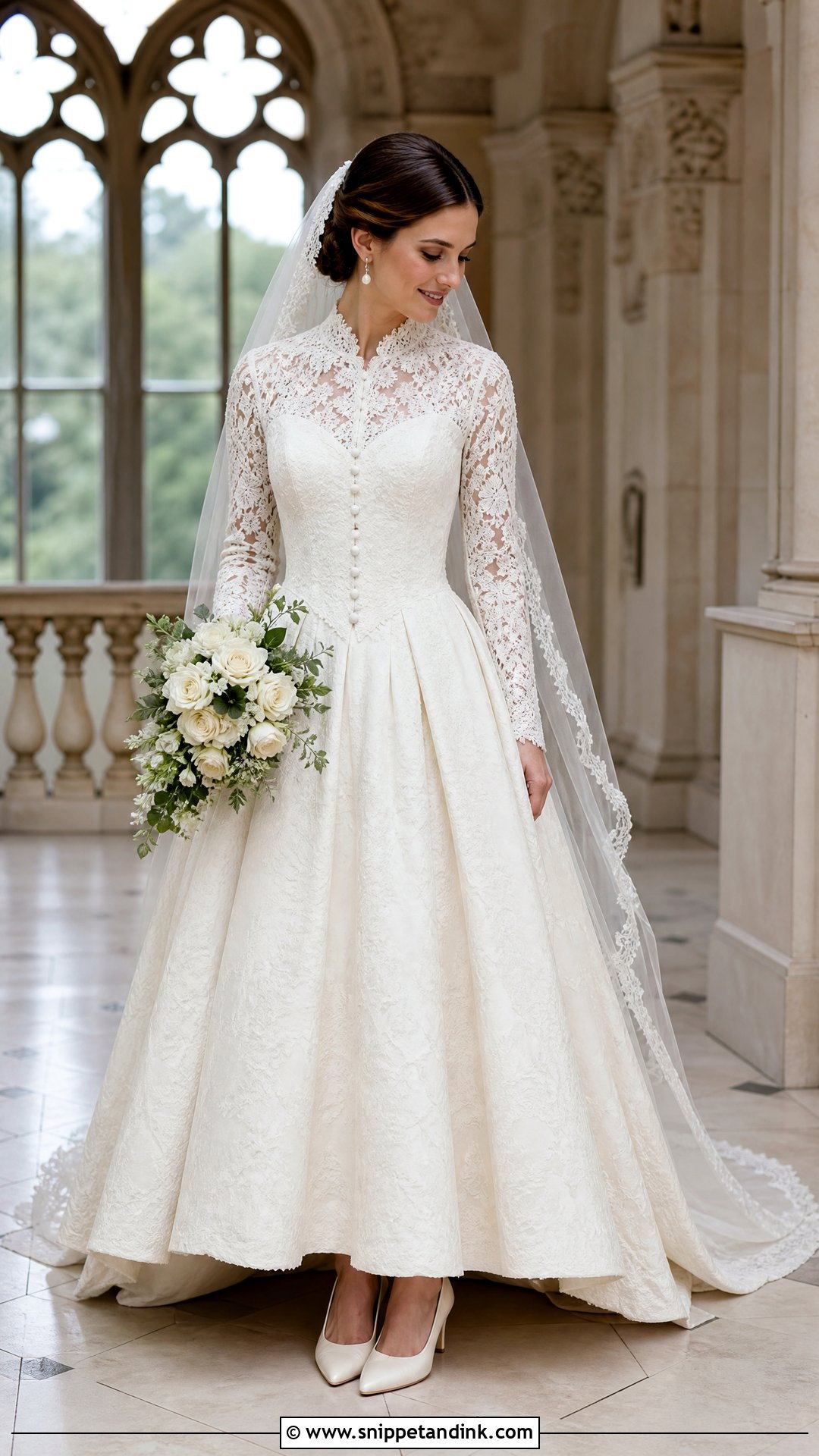
Vintage princess gowns borrow from older bridal fashion: lace sleeves, covered buttons, high necklines, basque waists, brocade or soft puff sleeves. The trick is picking one or two of those, not all of them, so it feels classic and not theatrical. A lace-trim veil, pearl earrings, ivory heels and a low bun or soft finger waves add to the mood. A long row of covered buttons takes time to fasten, so I assign someone with steady hands and a crochet hook. Historic venues, estates and museums suit it.
24. Modern Princess Bride Dress
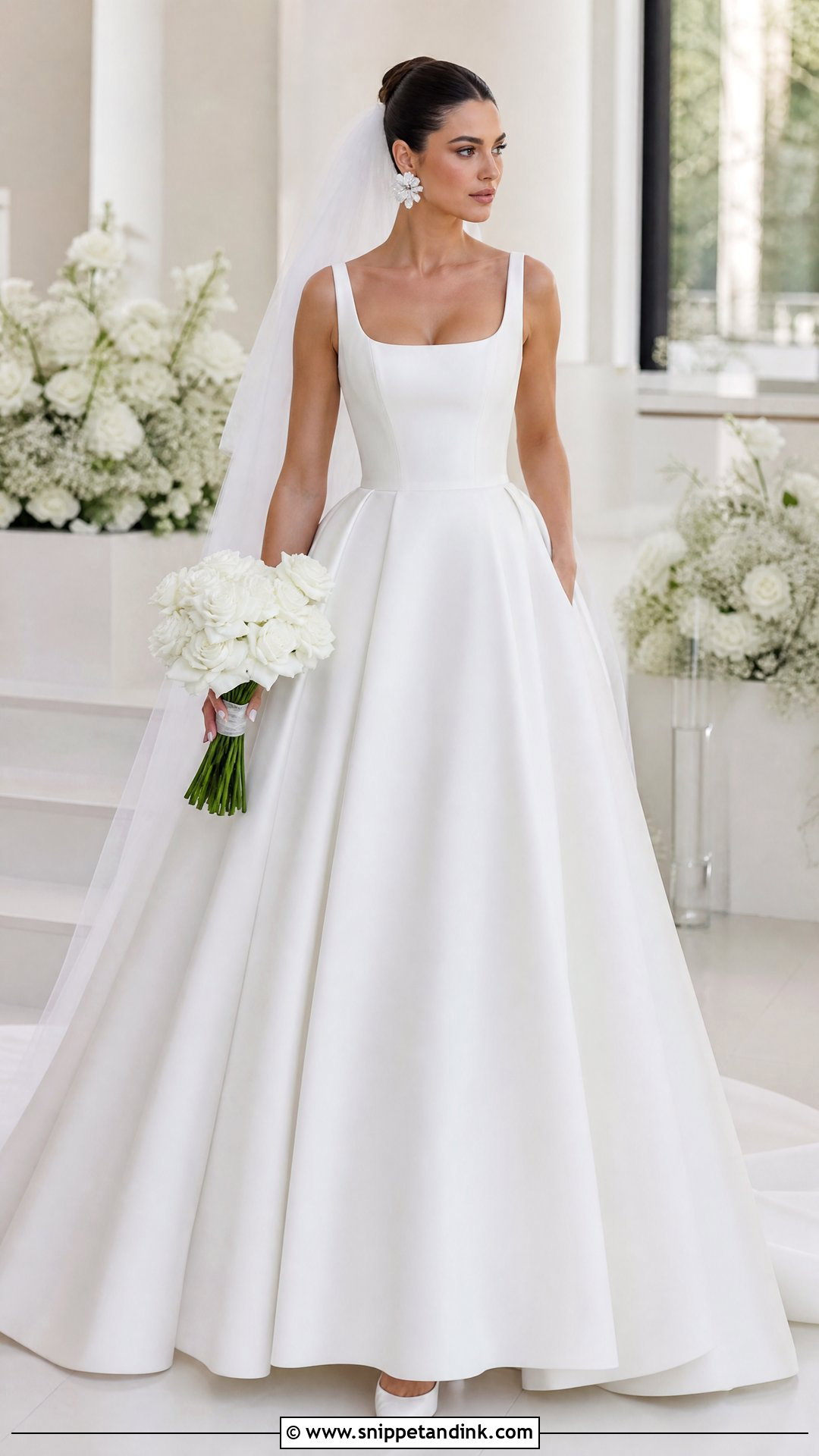
A modern princess gown keeps the big skirt and strips out everything else: clean fabric, sharp seams, an architectural bodice, a square neckline, maybe pockets or a single bow. Satin, mikado and structured organza hold a crisp shape. Without beading or lace to distract the eye, every pull line at the waist shows, so this is the style where I’m strictest about fitting. Sculptural earrings, sleek heels, a smooth veil, a polished bun and an all-white bouquet complete it.
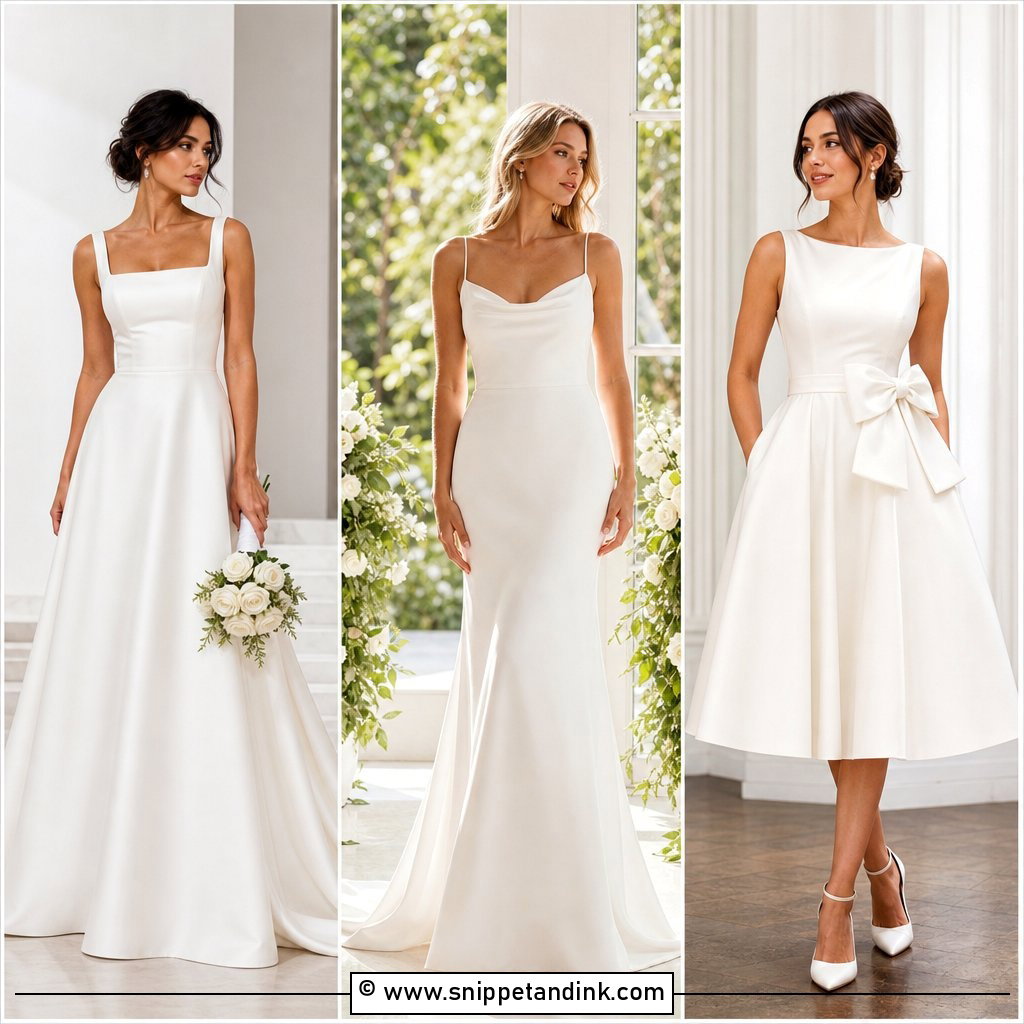

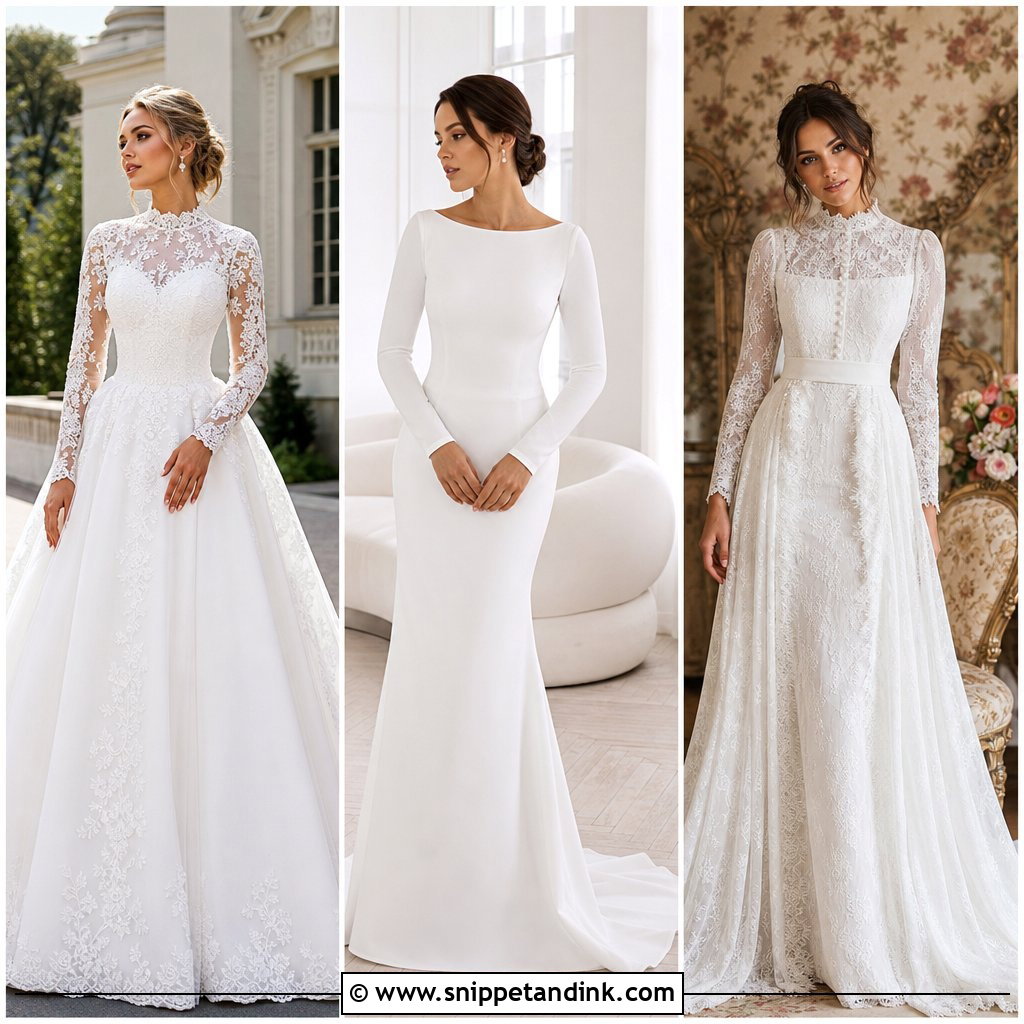

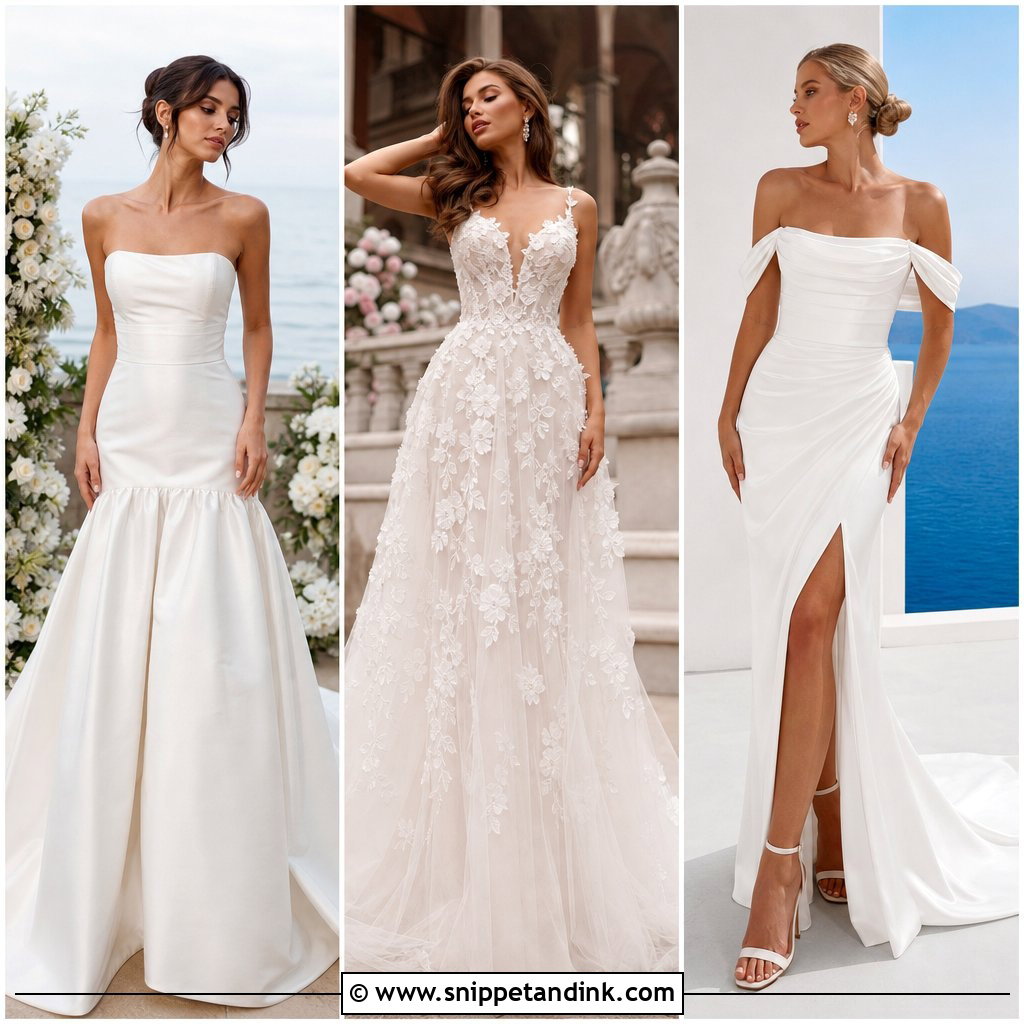
25. Plus Size Princess Bride Dress
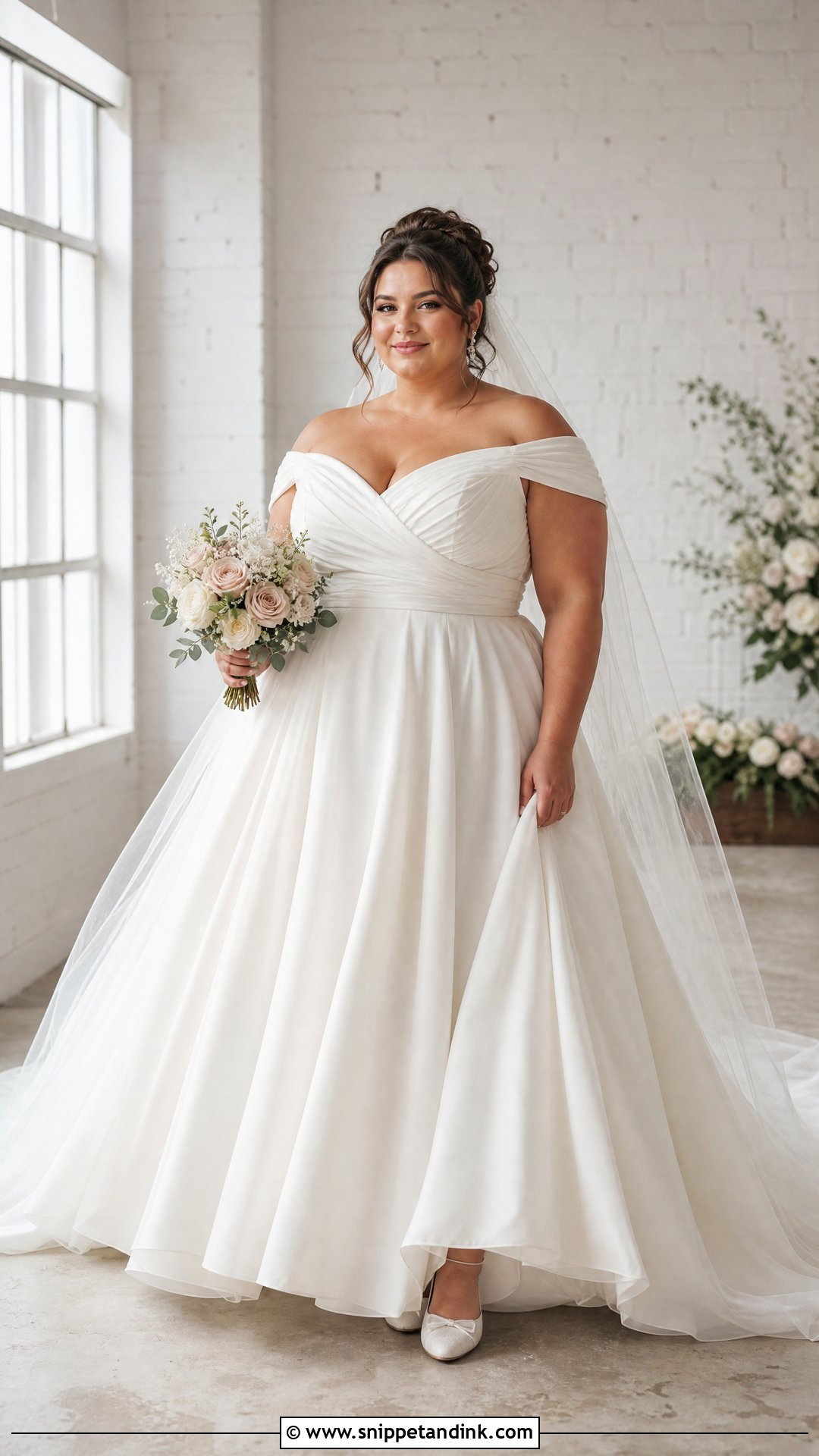
For plus-size brides, support is the starting point of the fitting, not an afterthought. Look for a structured bodice with internal boning, strong waist definition and a skirt that flares from the waist without extra bulk at the hip. Corset backs, wide straps and off-shoulder necklines all work, depending on comfort. I always have a bride sit, walk and hug in the gown, because a bodice that’s fine standing can dig in when seated. Stable heels or elegant flats, a veil matched to the dress weight and jewelry near the face complete it.
Sitting, Bustling and Dancing in All That Volume
Settle the bustle at your last fitting
A long train has to go somewhere after the ceremony. An over bustle hooks the train up to the back of the waist; an under bustle, often called a French bustle, tucks it underneath with ribbon ties. Satin and heavy lace often suit an over bustle, while tulle usually looks neater tucked under. Ask the seamstress to color-code or number the ties, and have your helper practice in the shop.
The restroom and the car
With a hooped or very full skirt, plan on help in the restroom. The easiest method is sitting facing the cistern and gathering the skirt to the front. For the car, sit first, then lift the skirt in after you, and book a vehicle with a wide rear door.
Heat across a long day
Several layers of tulle and lining trap warmth. For a summer wedding I’d keep a hand fan and cold water nearby, plan shade for portraits, and choose block heels so your feet last until the first dance.
Try the Shape You Didn’t Expect to Like
The gown is only part of the picture. Neckline, fabric, veil, shoes, jewelry, bouquet and setting all work together: satin reads regal, tulle dreamy, lace romantic, and color adds personality. Try at least one silhouette you assumed wasn’t for you, because princess gowns range from very plain to very dramatic. Then give comfort equal weight with looks, especially with a full skirt or long train. If you can sit, walk and dance in it at the last fitting, you’ll enjoy wearing it all day.
You'll Like These Ideas:





Leave a Reply