
A good wedding frock has to look right at the ceremony, survive a three-course dinner and still let you dance. That’s a narrower target than it sounds. This season’s wedding guest racks are full of satin, soft florals, drape, cobalt, linen, drop waists and scarf necklines, so there’s plenty to work with. I dress guests by starting with the venue and the hour, then the fabric, and only then the color. The frocks below follow that order, and with each one I’ve added what I’d check before you buy it.
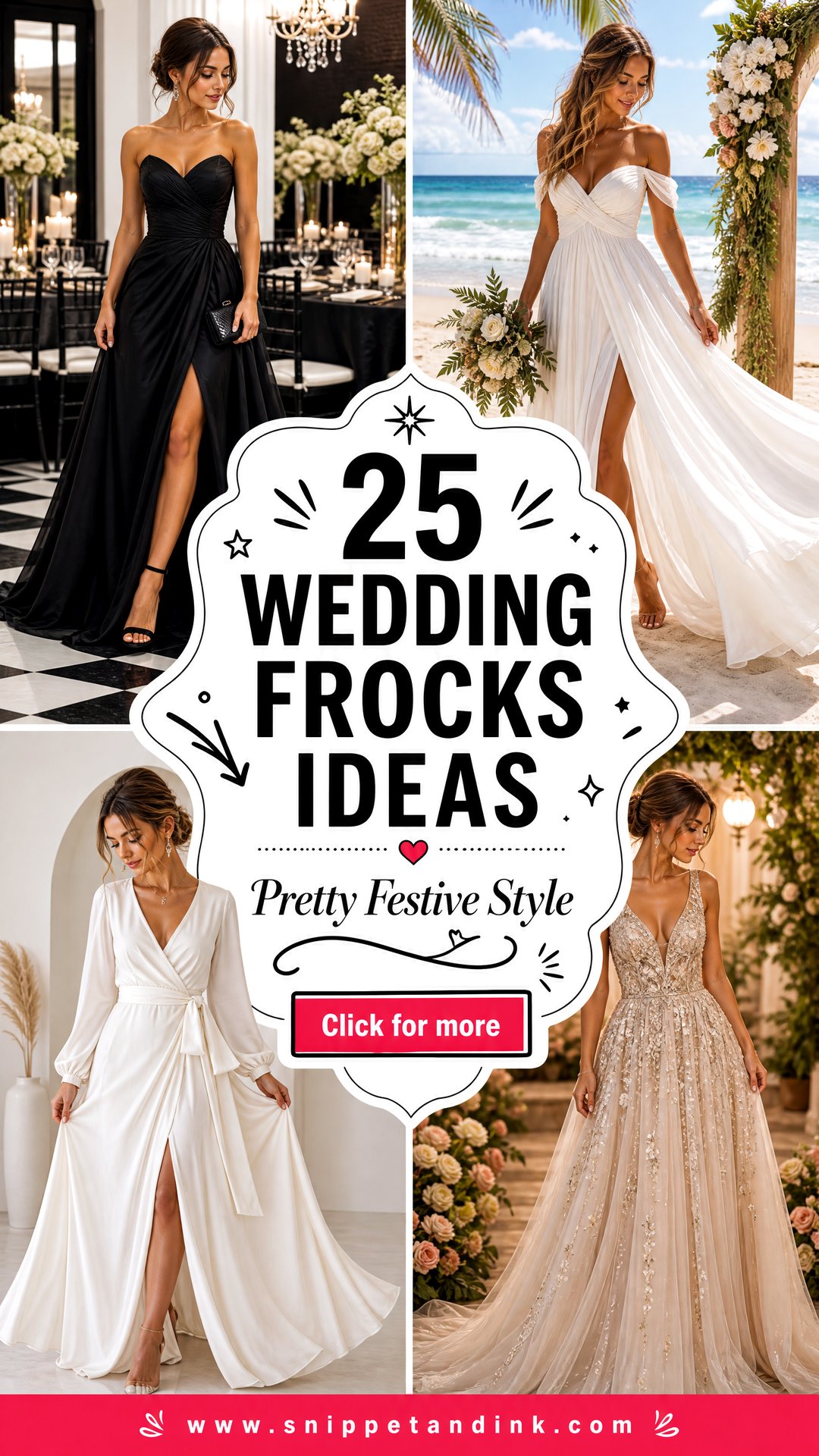
The Changing Room Test I Run on Every Guest Dress
Most wedding outfits look fine standing still in front of a mirror. The problems show up at hour four. Before you buy, I’d run these quick checks in the fitting room, because they catch most of the dresses that end up regretted.
- Scrunch a handful of the skirt in your fist for ten seconds, then let go. If it stays creased, it will look that way after the drive and the ceremony.
- Sit down on a hard chair. Watch the neckline, the side seams and how high the hem rides.
- Raise both arms as if hugging someone taller. Tight armholes and gaping wraps show immediately.
- Turn your back to a bright window. Thin or unlined skirts reveal more than you’d guess.
- Look under the arms. Pale satin and silk show sweat; darker colors and prints hide it.
A dress that passes all five is almost always one you’ll be happy in. If it fails one, decide whether that’s fixable with a slip, tape or tailoring, or whether it’s a dress for another occasion.
1. Floral Midi Wedding Frock
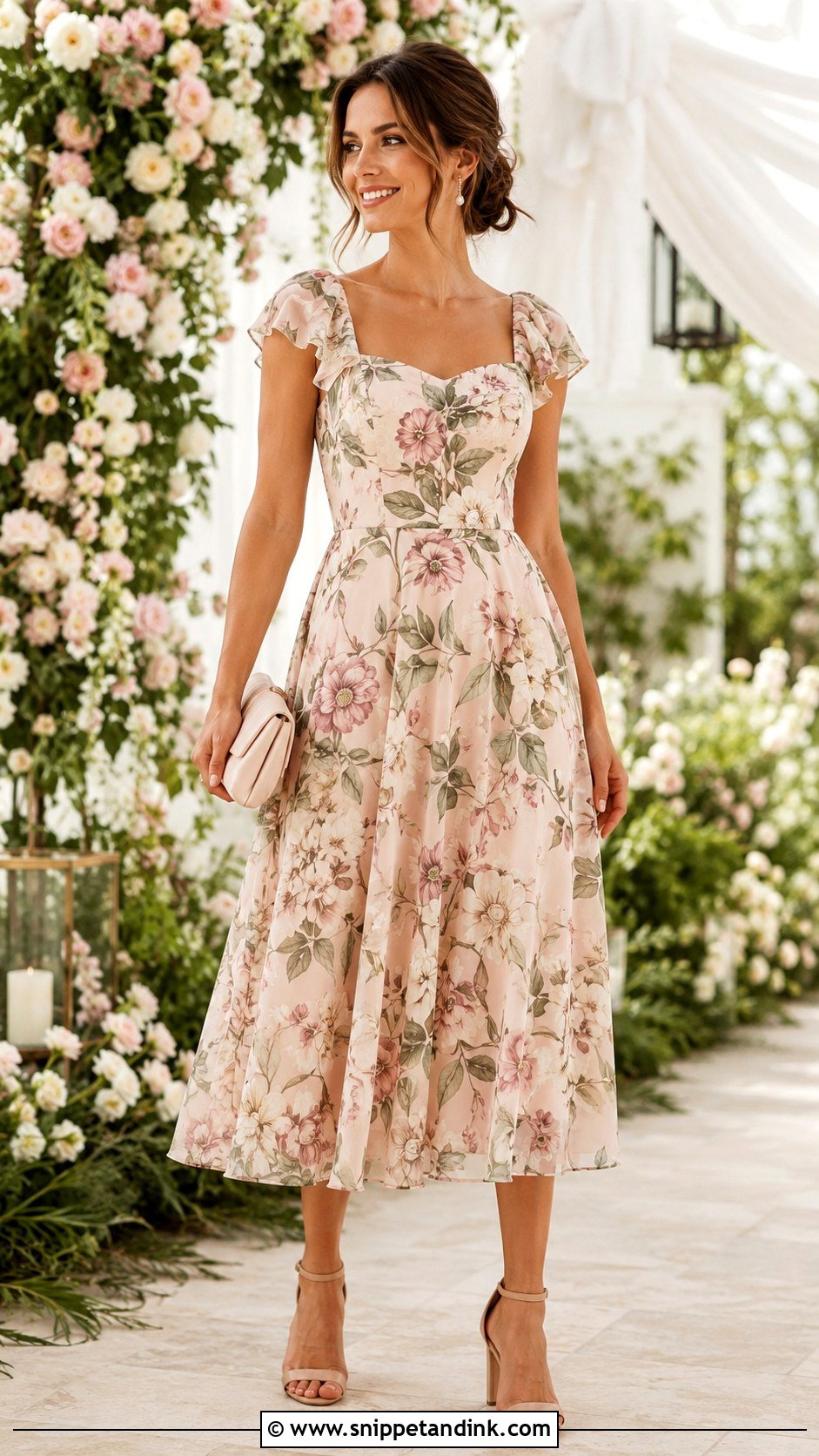
For a daytime garden wedding, a floral midi is the first thing I pull. Keep the print soft and fairly small; big, high-contrast florals get loud in group photos. A wrap or fitted waist with a floaty skirt suits most figures. On grass, thin stilettos sink, so I’d put you in a nude block heel. Pearl drops and a clutch picking up one color from the print are plenty, with a cropped cardigan for when the sun goes down.
2. Satin Slip Wedding Frock
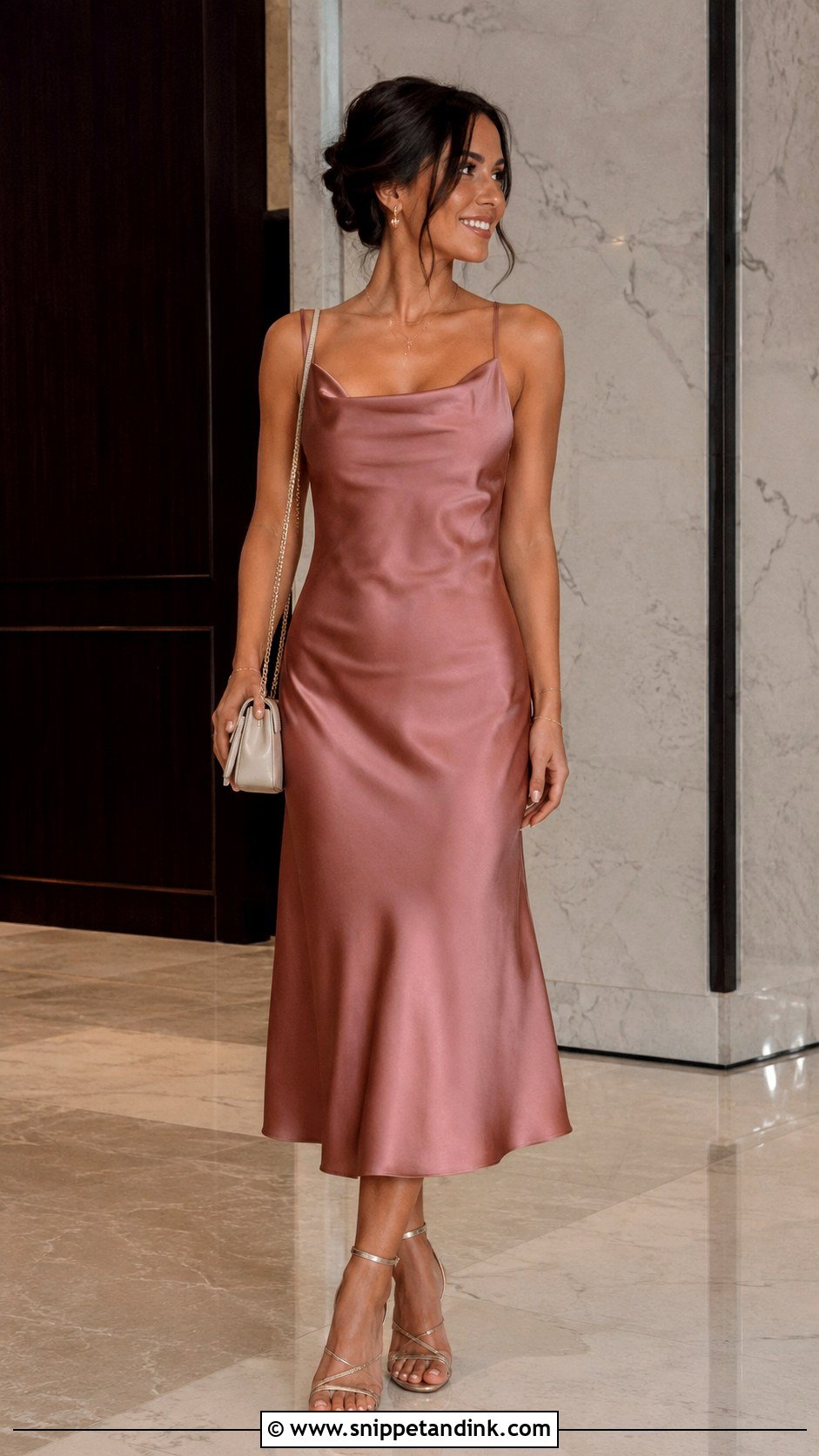
Satin slips look sleek in the evening and need almost nothing added. The honest downside: satin shows everything, from a visible bra line to a water mark from a spilled drink. Bias cut drapes over the body far more kindly than a straight cut, and a heavier satin skims where a thin one clings. Champagne, emerald, navy or chocolate brown read rich in low light. Strappy heels and a small shoulder bag, with a blazer or sheer scarf if you want cover.
3. Pastel A Line Wedding Frock
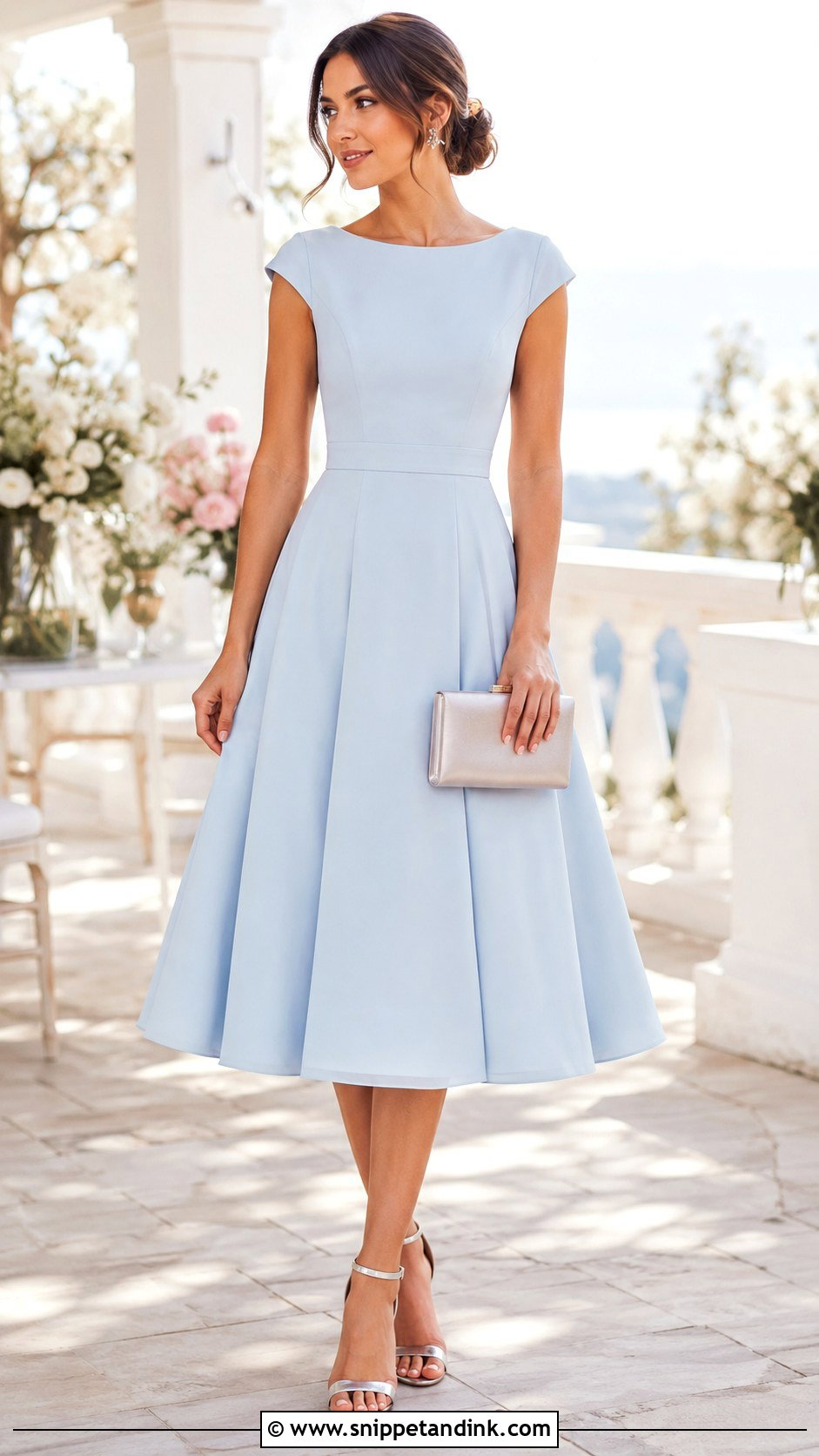
Pastels are easy for spring, and an A-line is the most forgiving cut to wear them in. Powder blue, mint, lilac, butter yellow and peach all photograph well outdoors. The one pastel I’d question is the palest cream or blush: under a flash these can read as white beside the bride. Hold it next to a white sheet if you’re unsure. Metallic sandals and small pearl or crystal earrings finish a daytime or shower look.
4. Black Tie Wedding Frock
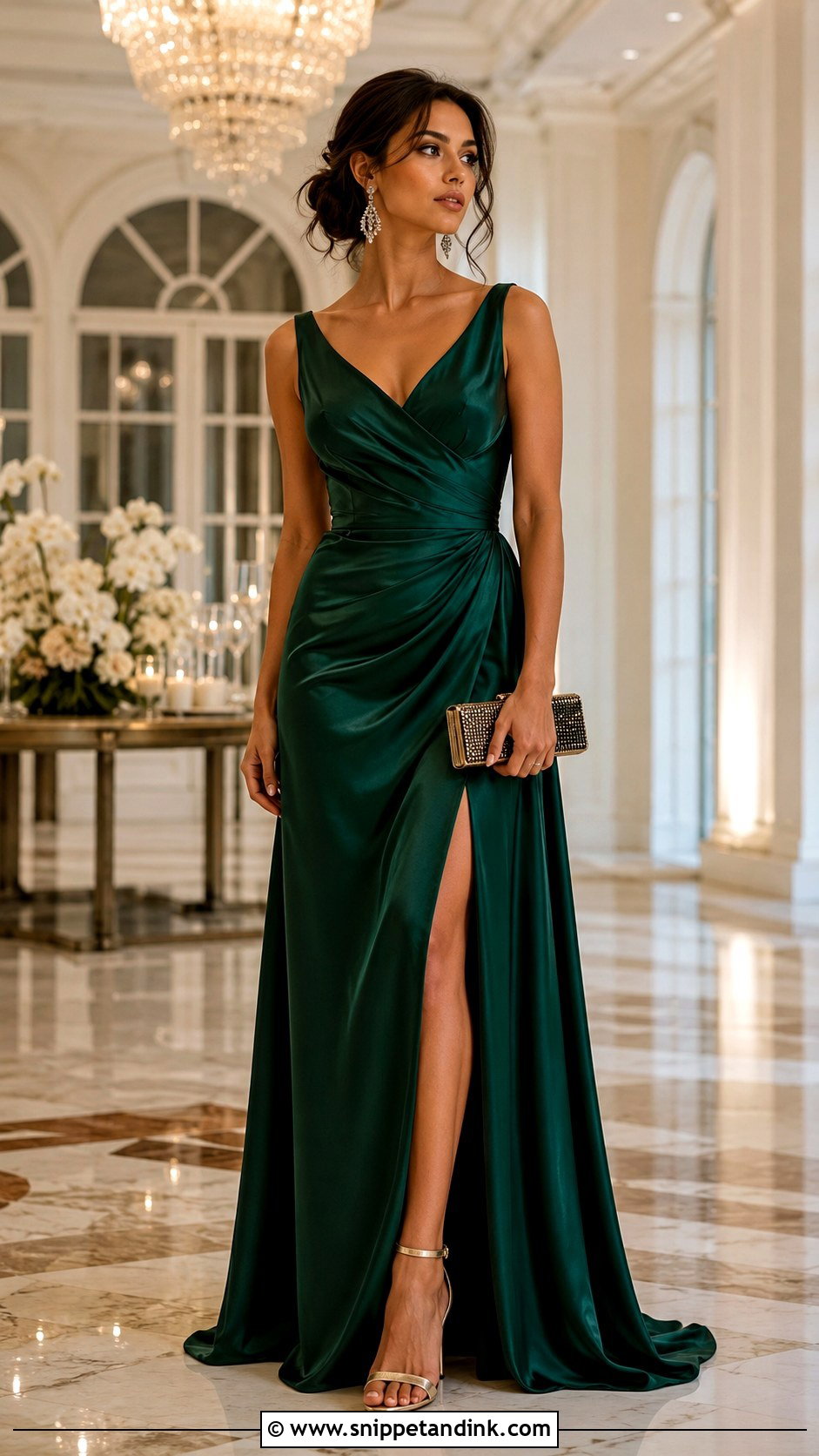
Black tie means floor length for most guests, and fabric matters more than detail. Crepe, satin, chiffon or velvet in sapphire, burgundy, emerald or plum all hold up under evening lighting. If you want sleeves, sheer or cape sleeves keep the look formal without heat. I’d keep jewelry to one strong piece, a drop earring or a cuff. Have the hem taken up to the height of the shoes you’ll actually wear, not barefoot length, or you’ll trip on the stairs.
5. Beach Wedding Frock
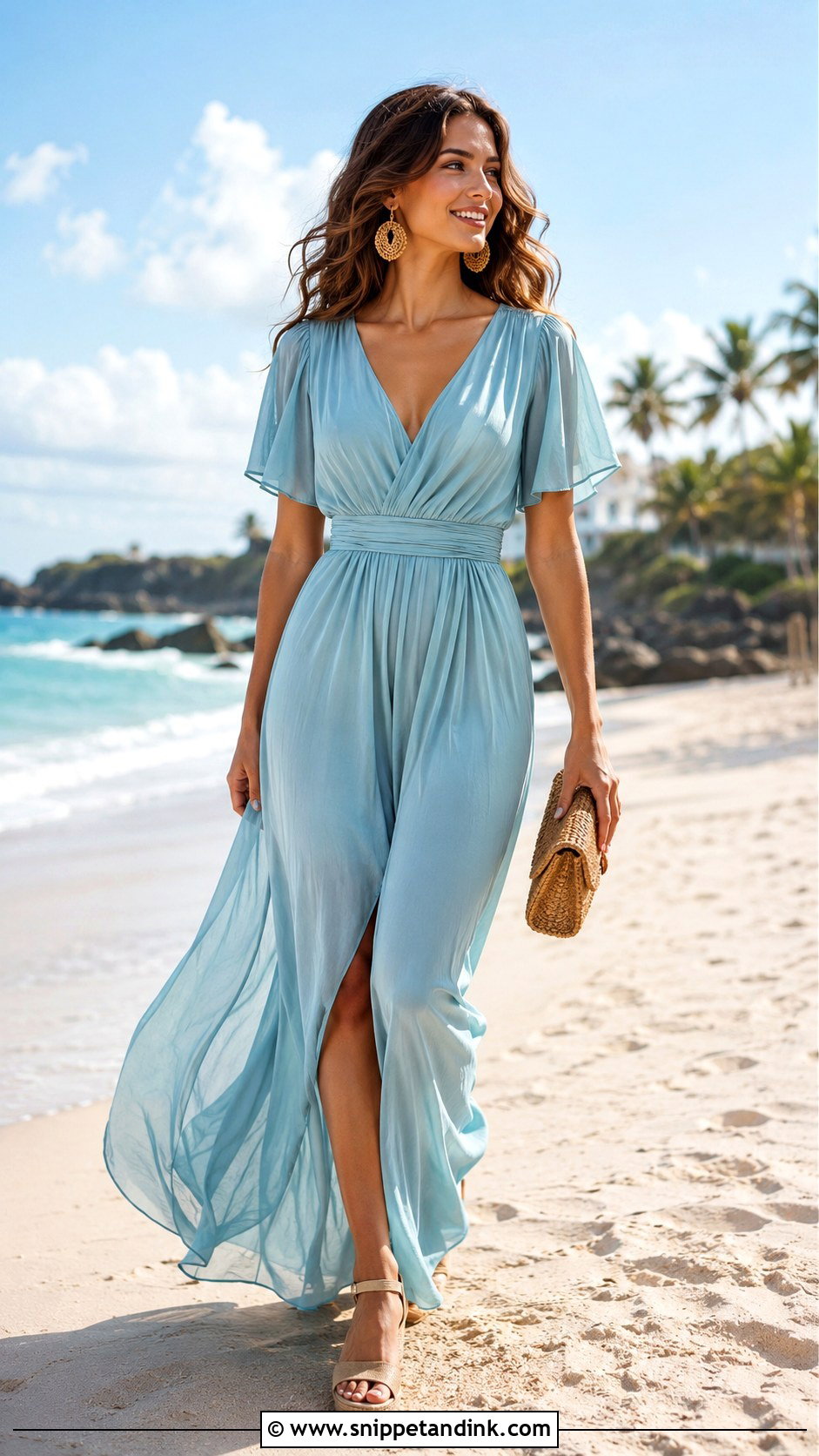
Sand changes everything about a beach frock. Linen blends, cotton voile, chiffon and georgette breathe and move in wind; satin shows sweat marks in the sun. I’d keep the hem at ankle or above, since a maxi that drags collects wet sand and darkens at the edge. Flat sandals or low wedges, a raffia clutch and soft waves or a low bun suit the setting. Coral, sea blue and soft prints sit naturally against the water.
6. Long Sleeve Wedding Frock
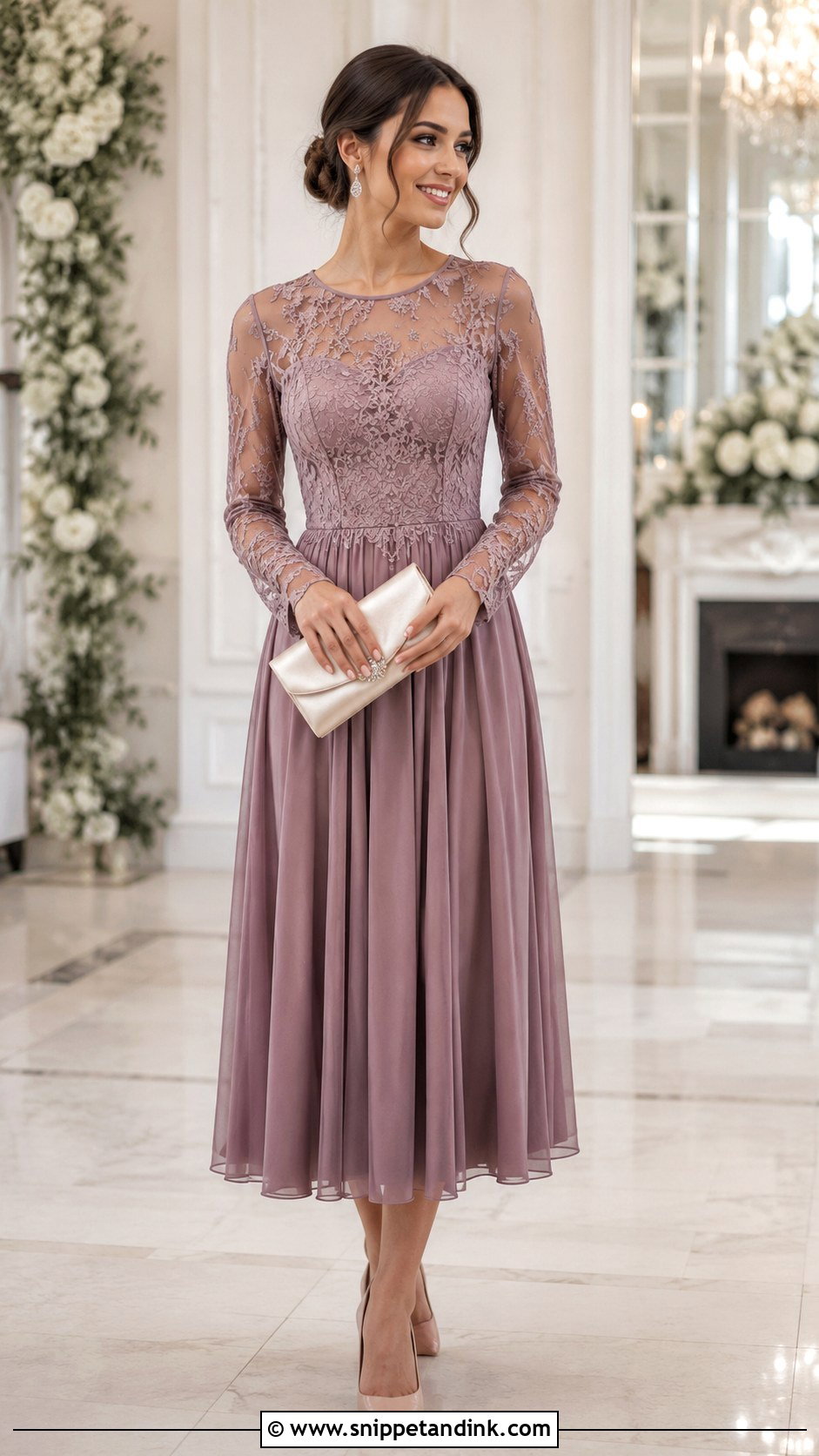
Long sleeves are my answer for autumn ceremonies, churches with cold stone and venues with heavy air conditioning. Check the armhole before anything else: a tight sleeve set high under the arm feels fine standing and pinches the second you raise a glass. Sheer, lace, puff or fitted crepe sleeves all work in a midi or maxi. When the sleeves are detailed, keep the jewelry small. It’s also one of the easiest starting points for modest wedding outfits.
7. Lace Wedding Frock
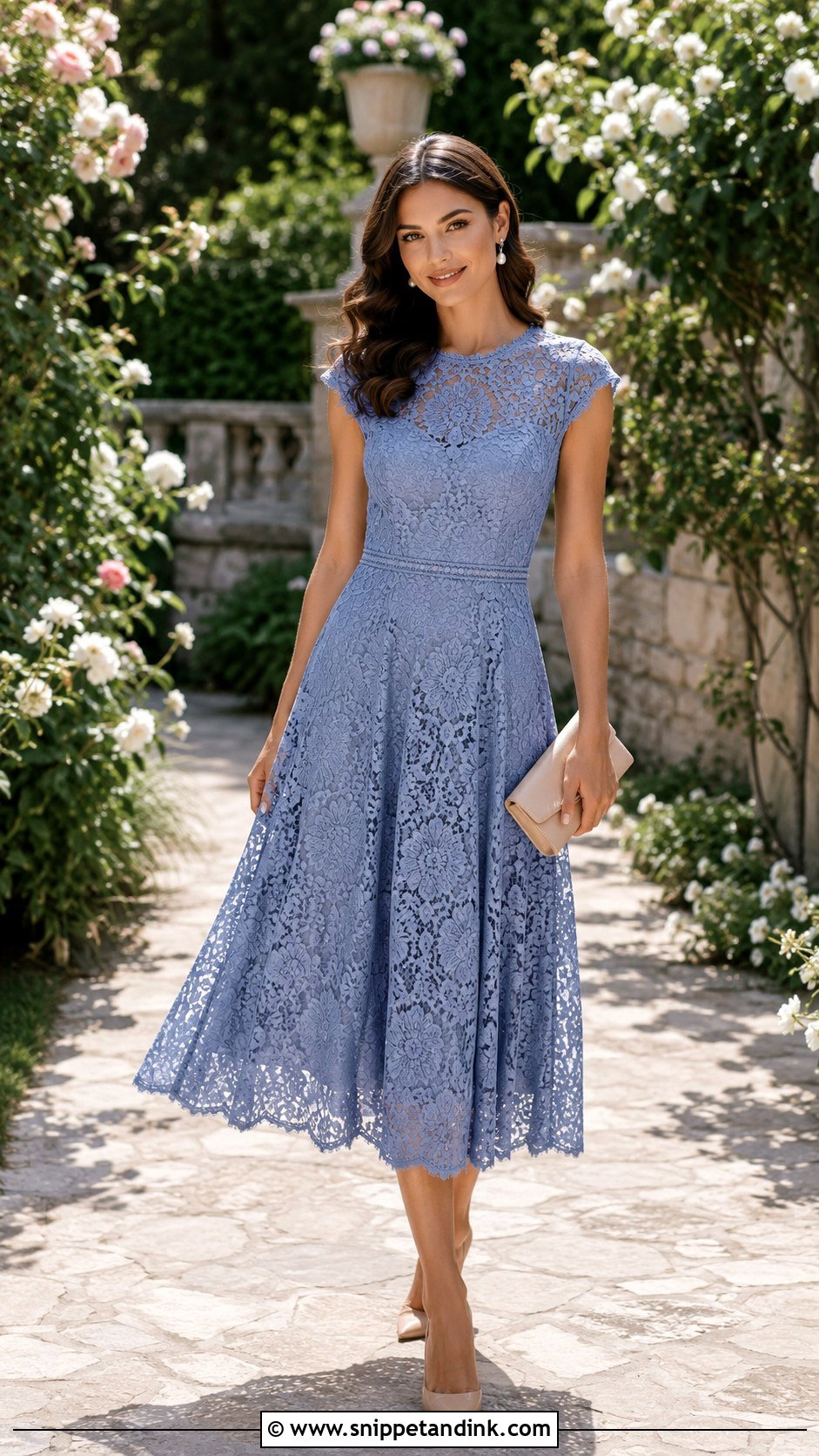
Lace reads bridal in white, so the color is what makes it a guest dress. Navy, mauve, forest green, dusty blue or burgundy lace all look polished. Look for a full lining in the bodice and skirt; unlined lace over skin can look cheap and catches on jewelry. With a high neck, skip the necklace and wear earrings. Short or flutter sleeves keep it light for daytime, darker lace takes it into evening.
8. Ruffle Wedding Frock
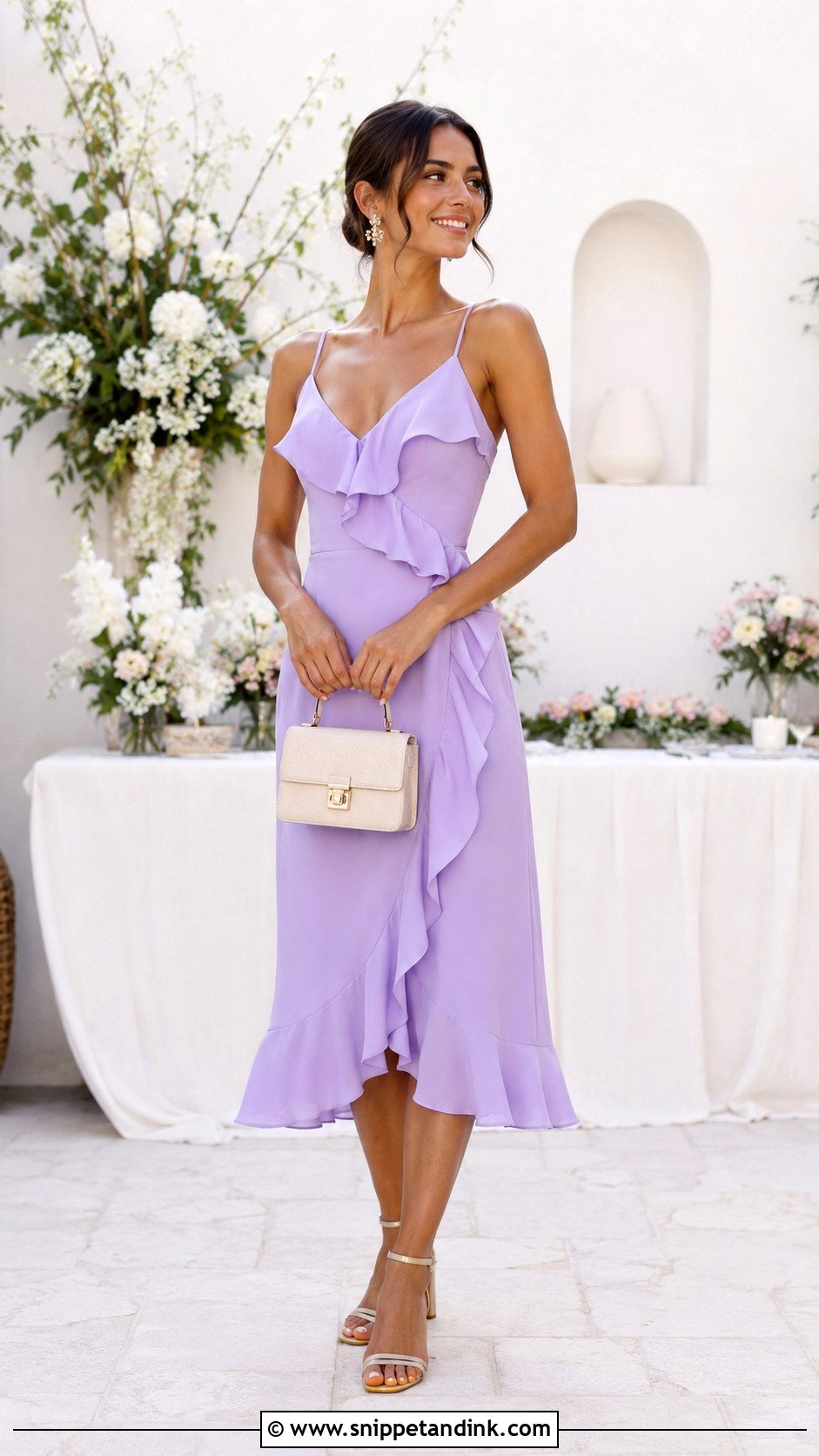
Ruffles bring movement, but placement decides whether they look playful or overdone. One zone is enough, around the hem, the neckline or the sleeves. A ruffle everywhere adds bulk exactly where most of us don’t want it. A midi length with block heels lasts through a long ceremony. Keep the bag small and structured to steady the volume, and choose a solid or soft print rather than a busy one.
9. Wrap Wedding Frock
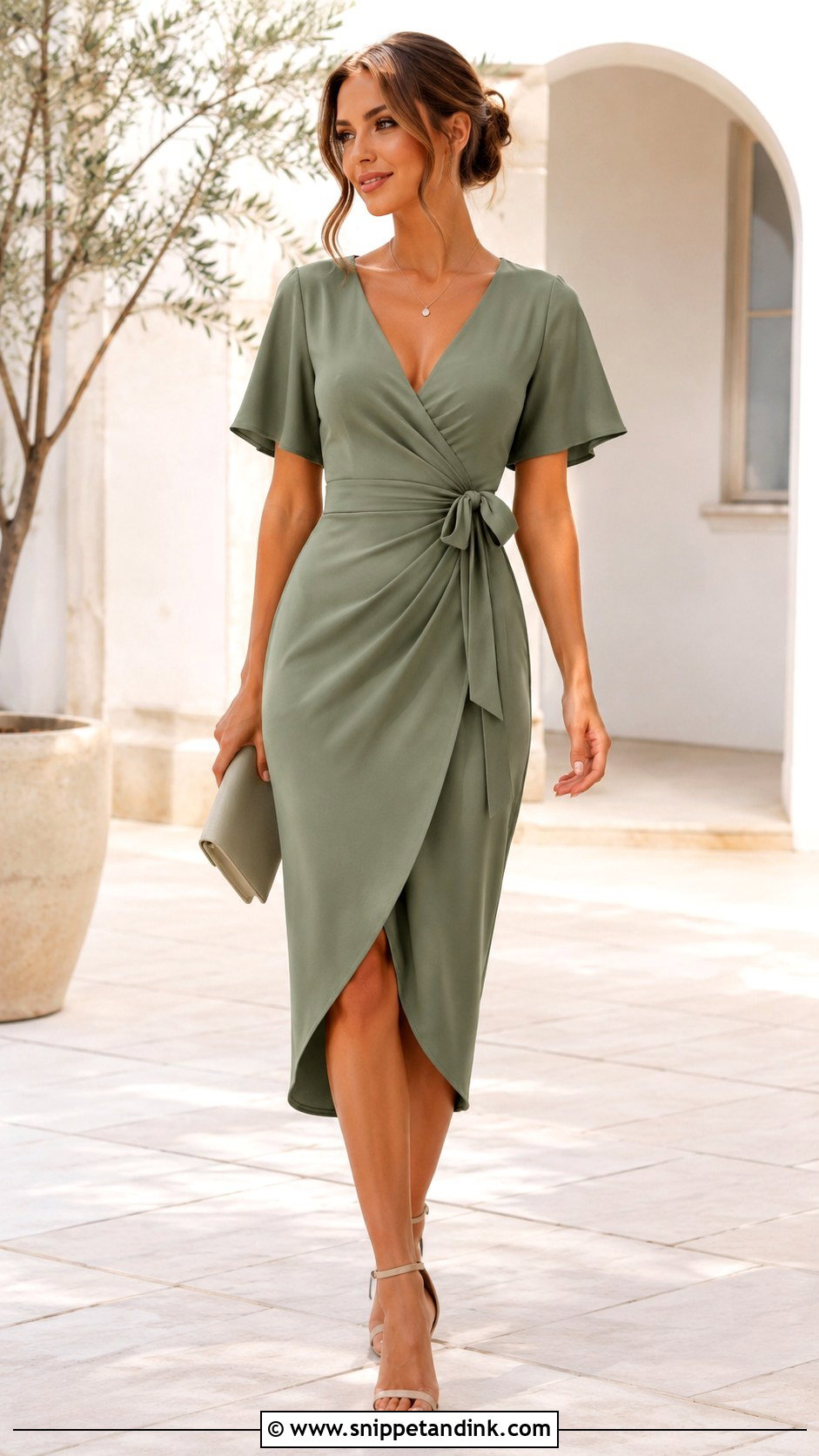
The wrap is the frock I recommend most to guests who’ll be sitting through a long dinner, because the tie loosens a little after the main course without anyone noticing. It suits a wide range of figures. The weak point is the neckline, which opens when you lean forward to hug someone, so I’d use fashion tape or a fine camisole. Jersey for a relaxed day, satin for evening, chiffon outdoors. Heeled sandals and a pendant finish it.
10. Pleated Wedding Frock
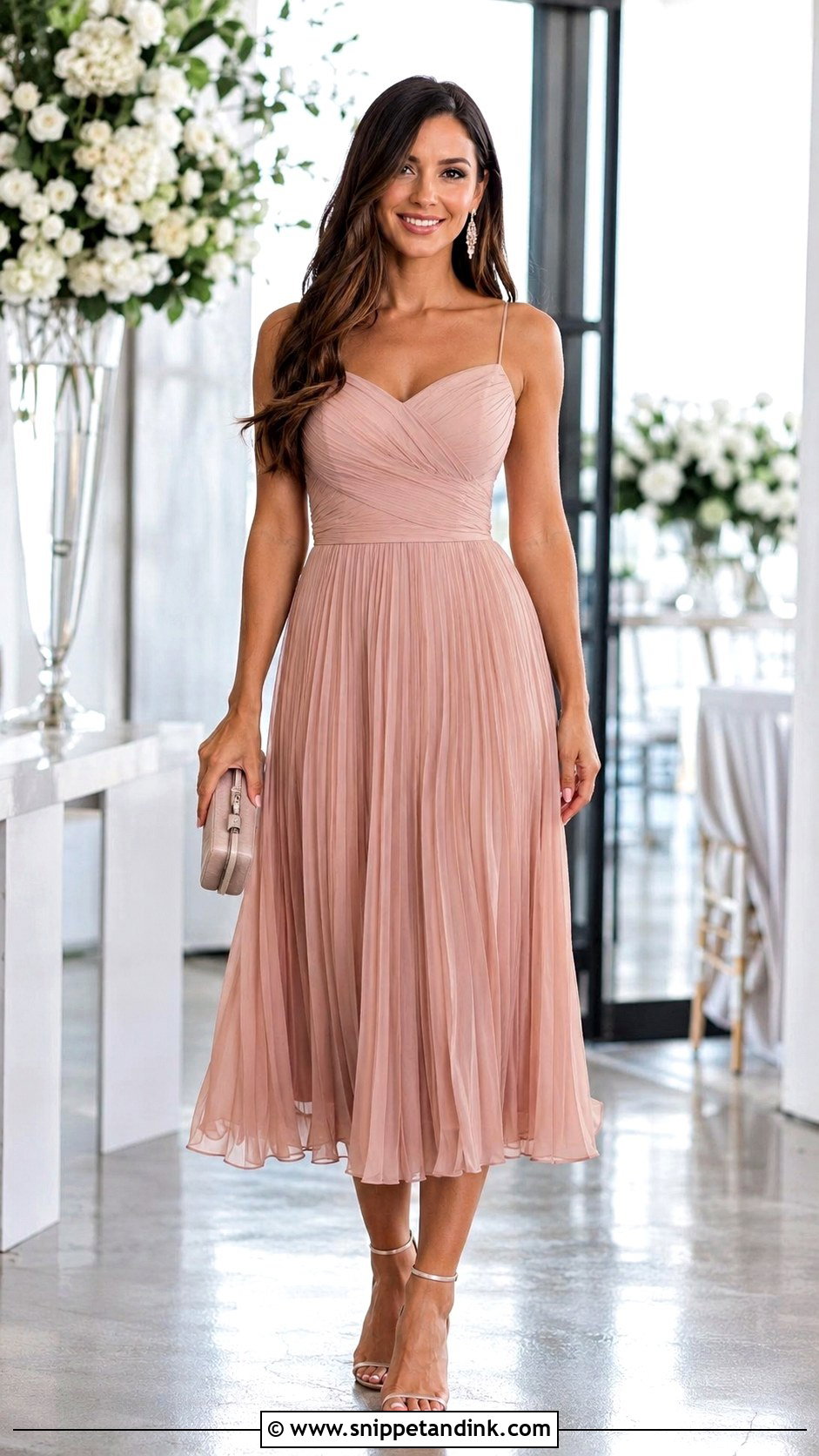
Pleats give a vertical line that moves as you walk, which is why a pleated wedding frock looks so good in motion. Sunray and knife pleats in chiffon or satin are the dressiest versions. Pack it rolled, not folded, or hang it in the car; pleats that get crushed flat in a suitcase can be hard to bring back without proper pressing. A halter or belted waist keeps the shape, and sage, navy, copper or lavender carry the texture well for a semi-formal day.
11. High Low Wedding Frock
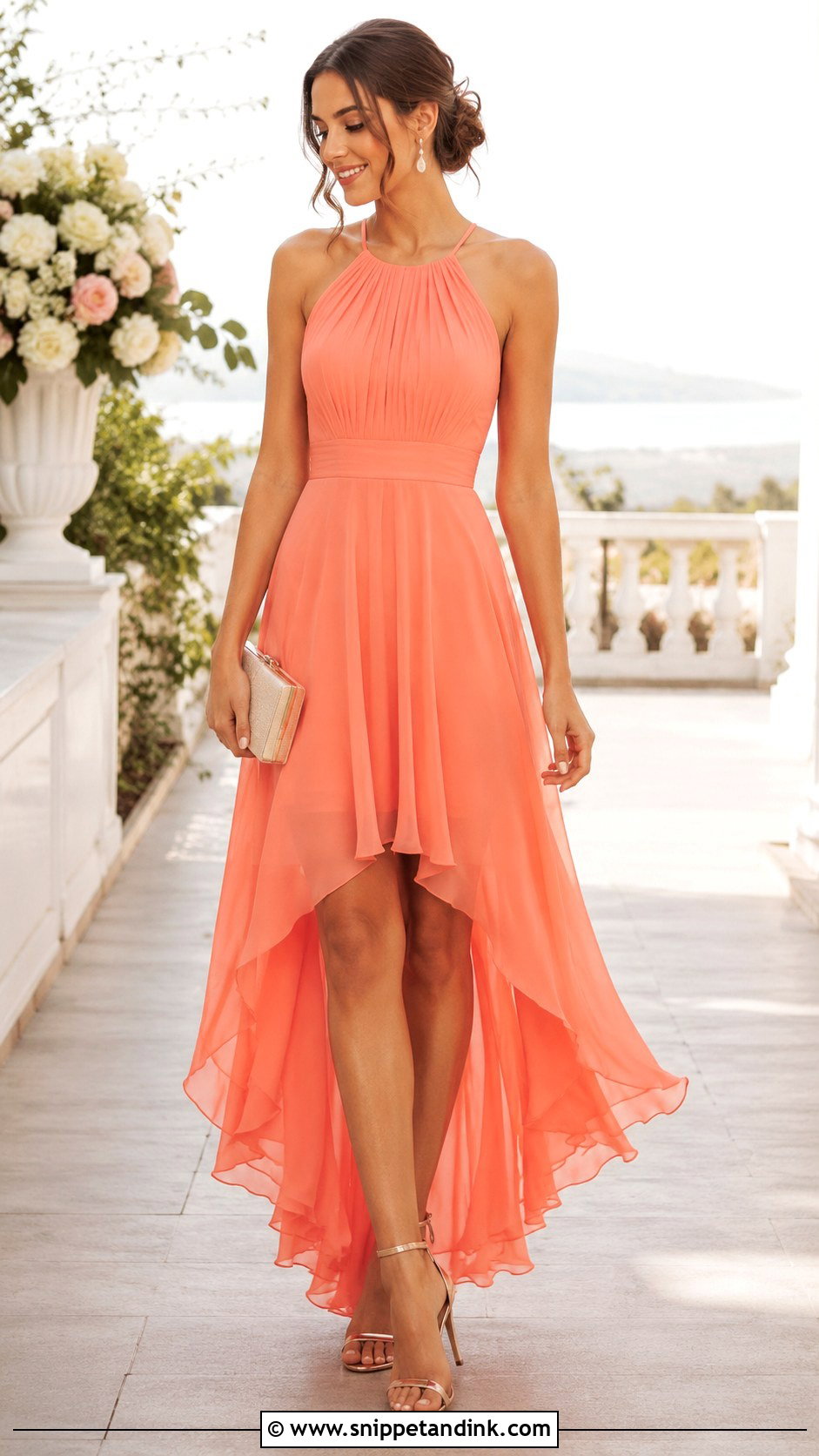
The high-low hem gives you a shorter front for dancing and a longer back for drama. Soft chiffon, tulle or fluid satin are essential; stiff fabric makes the dip at the back stick out like a tail. The shoes will be on show all evening, so treat them as part of the look. A sleek clutch and simple earrings keep it balanced at a cocktail or destination reception.
12. Off Shoulder Wedding Frock
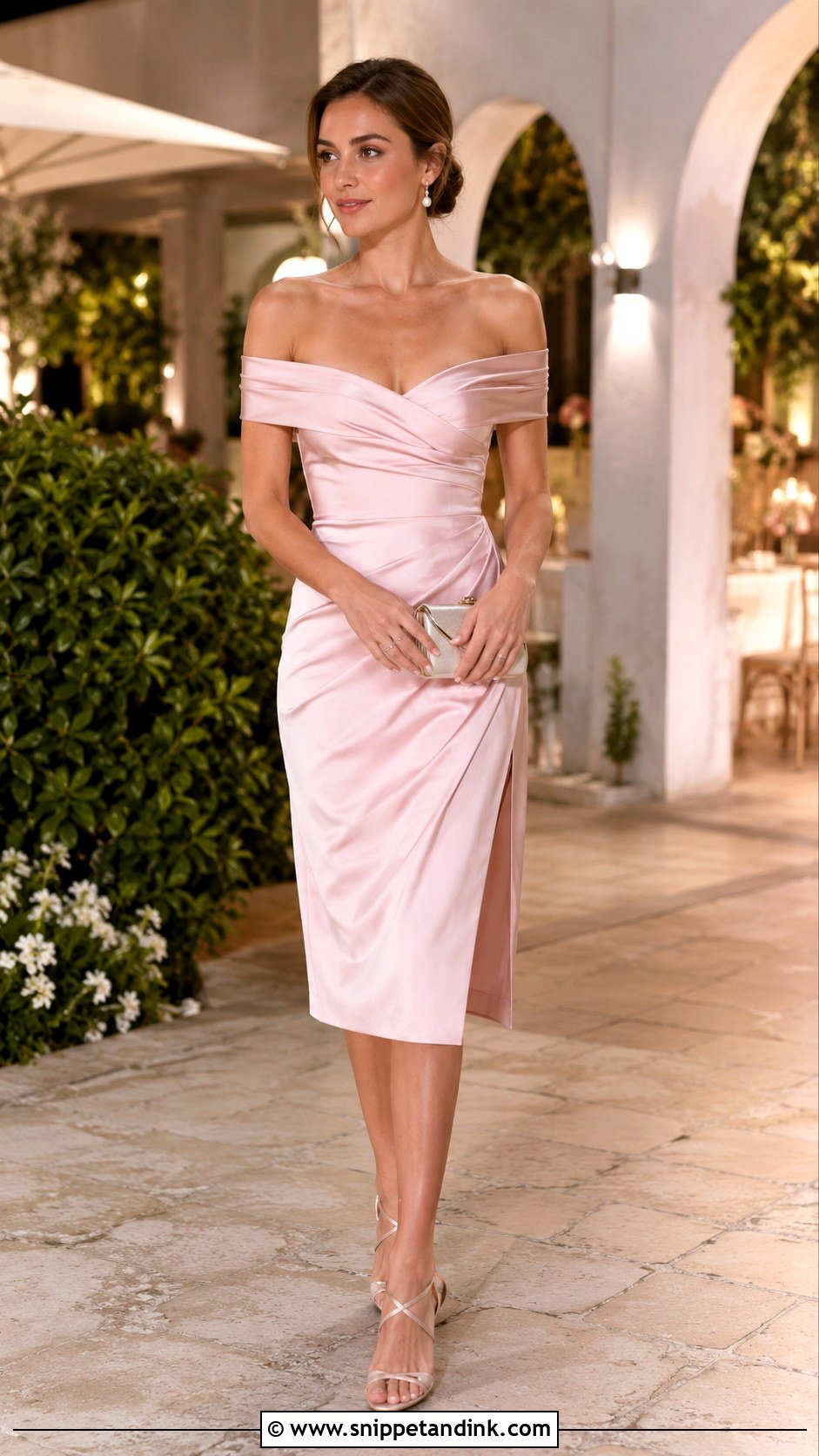
Off-shoulder necklines rely on a bodice that stays put, so I’d check for an elastic or silicone grip band inside before buying. Without one, you spend the night hitching it up. The neckline frames the collarbones, so a drop earring and bracelet are enough, no necklace. A fitted bodice with a flowing skirt or a sleek column both suit evening. Bring a wrap; bare shoulders get cold in a ceremony space fast.
13. Halter Neck Wedding Frock
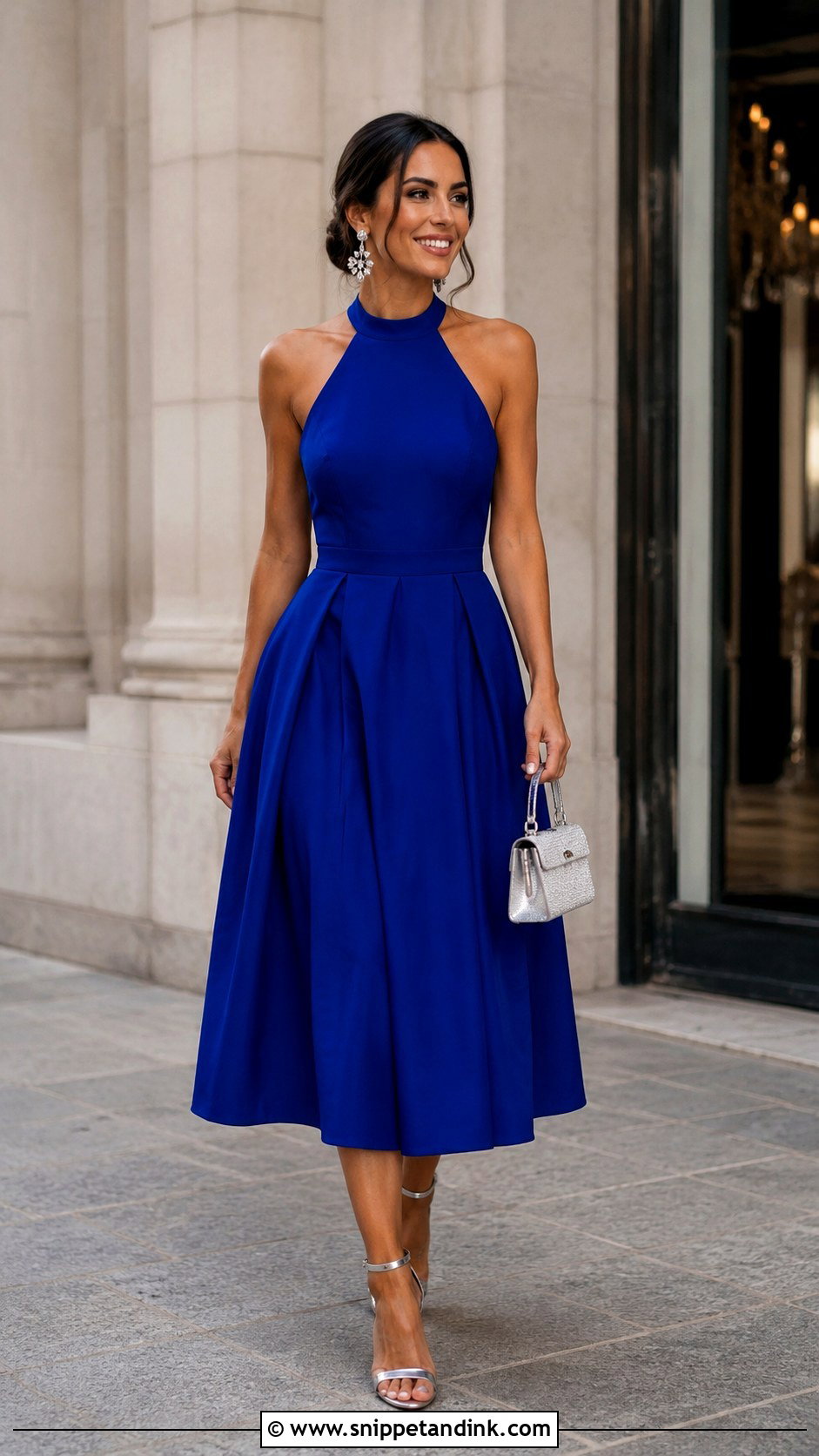
A halter pulls the eye up, which makes it a clean, modern guest choice. It suits a sleek bun or low ponytail that leaves the neck clear. A halter midi in cobalt, emerald, blush or black is simple and strong. A halter that ties behind the neck can pull after a few hours, so if you have a heavier bust, I’d look for one with a wide band or hidden support. Slim heels and bold earrings, no necklace.
14. Velvet Wedding Frock
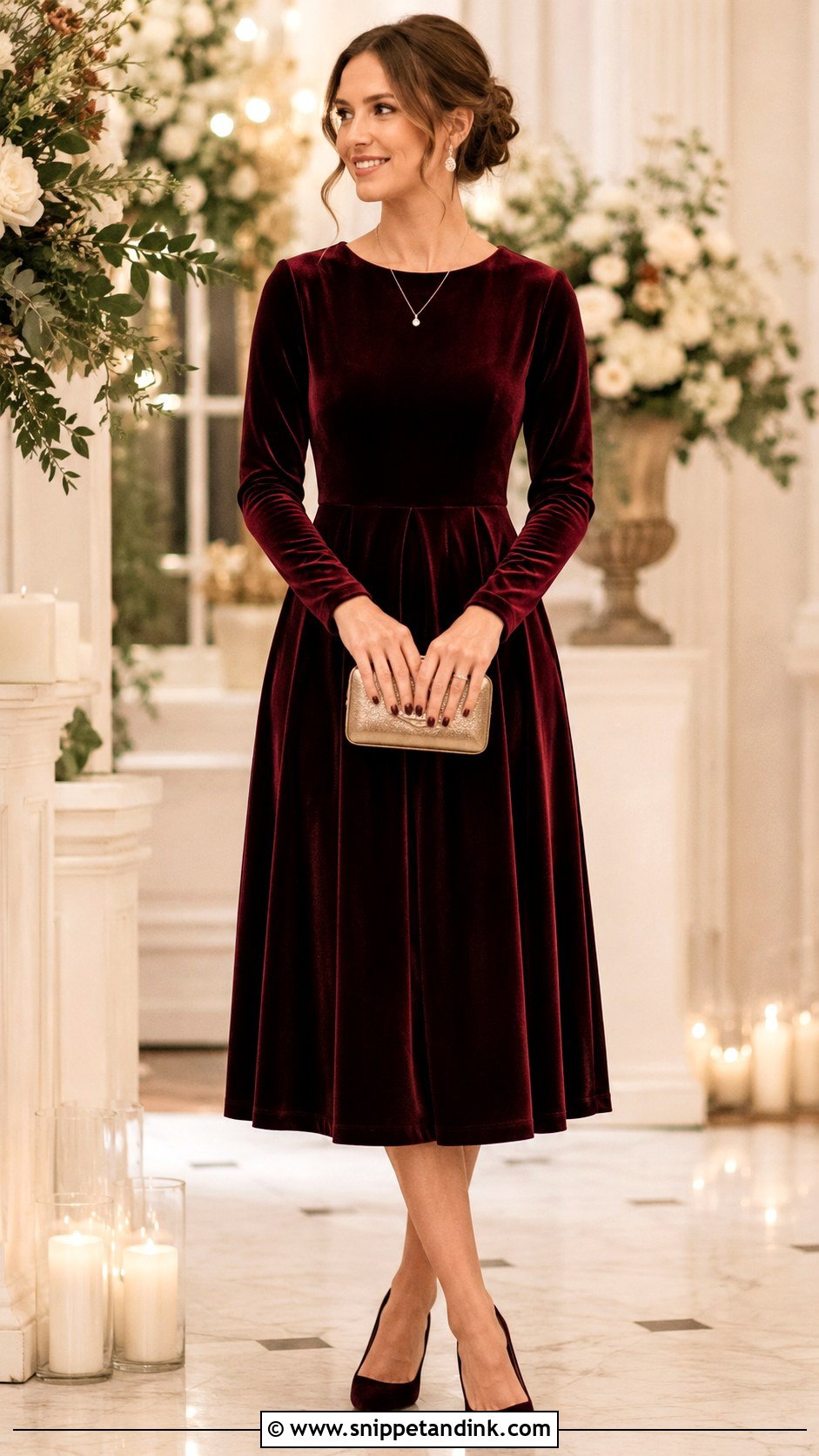
Velvet is the warmest frock on this list and needs the least styling. Burgundy, navy, emerald, plum and espresso look rich in it. Long sleeves, wrap shapes and drapes all suit the fabric. Two practical notes: velvet crushes where you sit, and it should never meet a hot iron. Hang it in a steamy bathroom the night before. Closed-toe heels and a metallic clutch, with jewelry kept quiet.

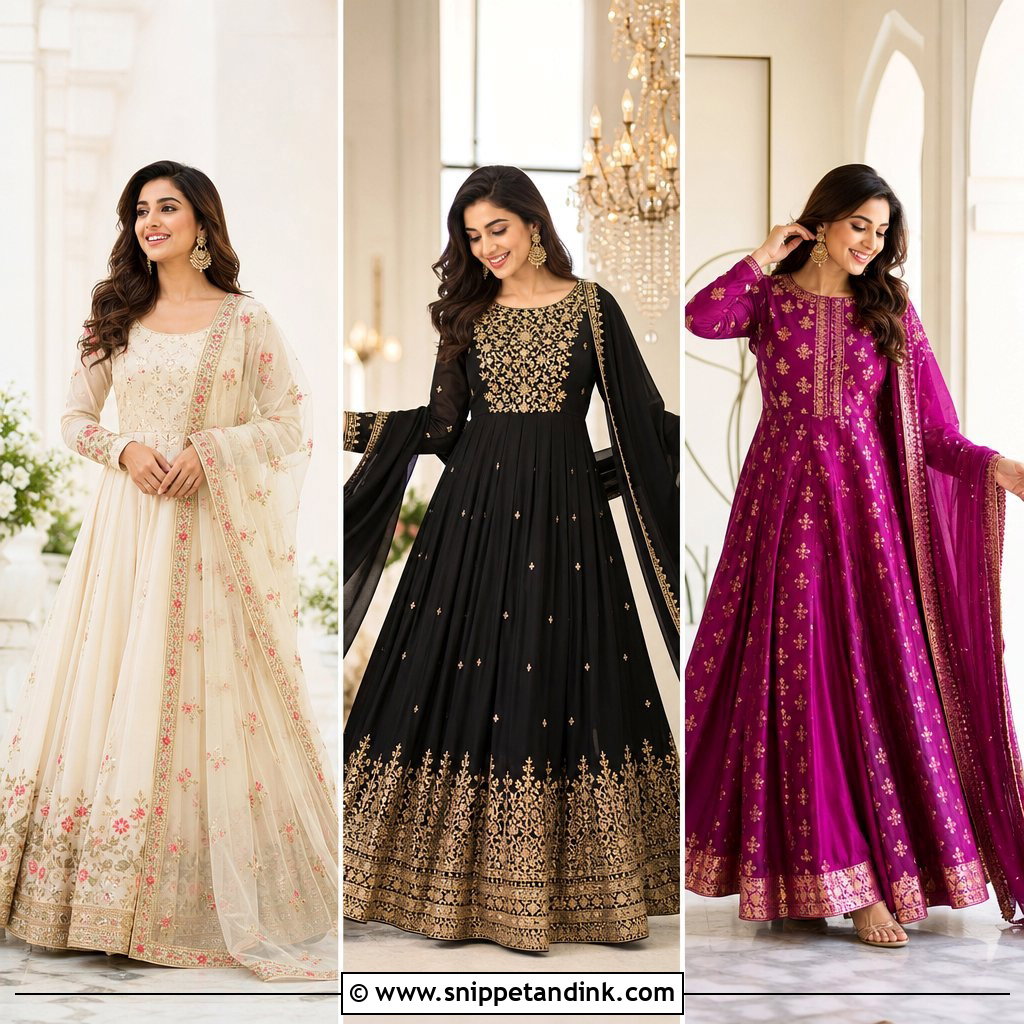
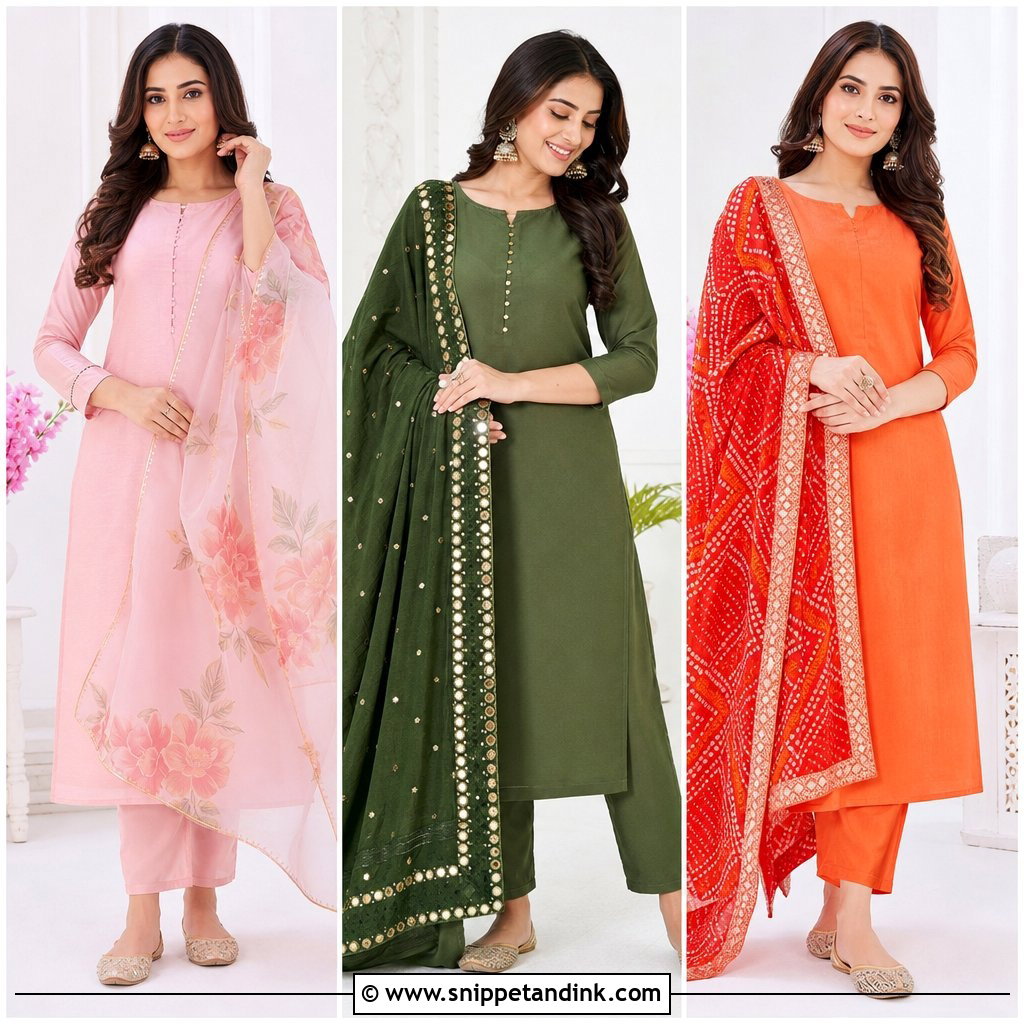
15. Chiffon Maxi Wedding Frock
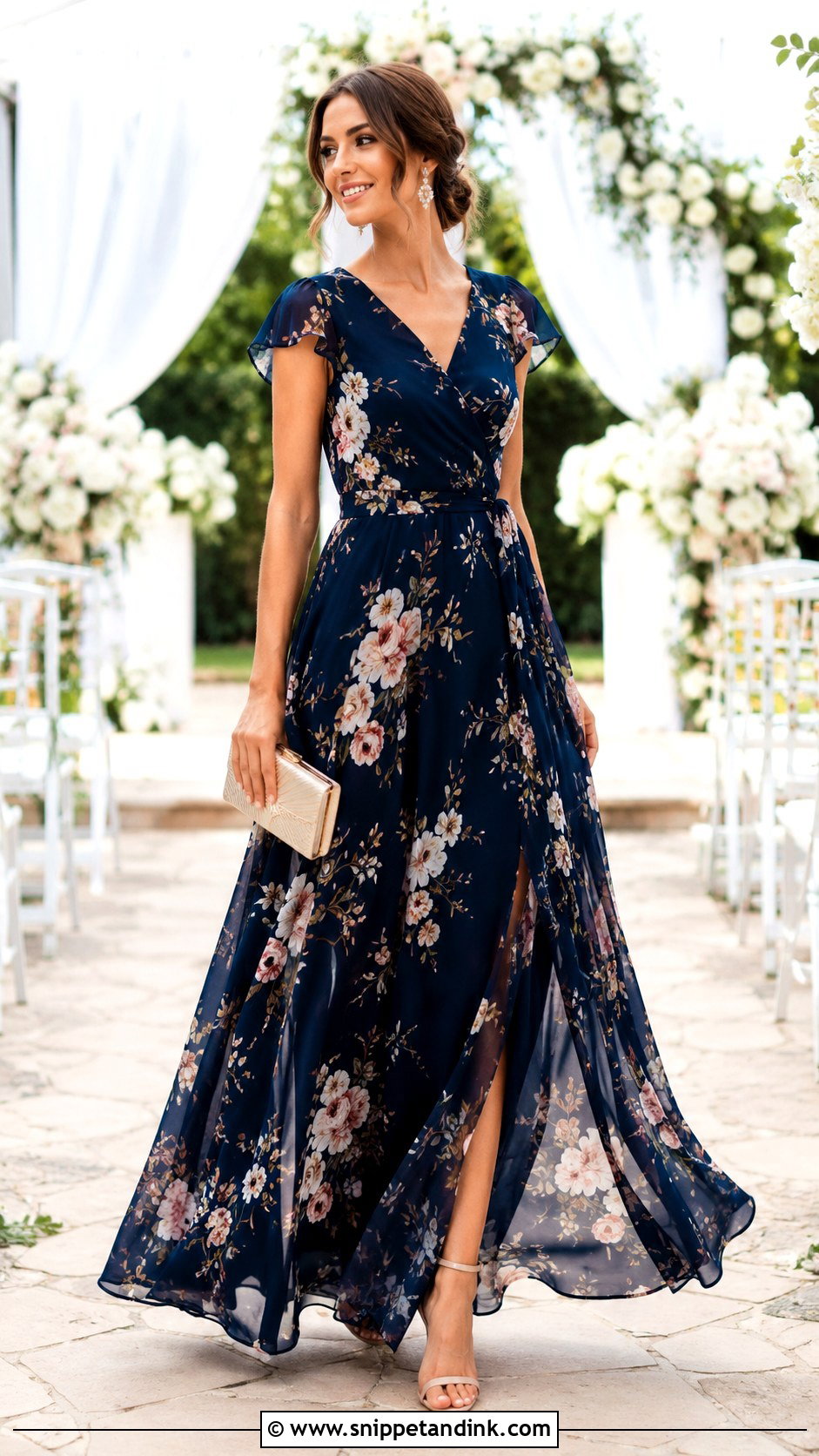
Chiffon maxis are among the most adaptable guest dresses. Light enough for heat, they still read formal in a solid jewel tone. Make sure it’s lined to the hem; single-layer chiffon goes sheer in afternoon sun. A defined waist gives shape without squeezing. Chiffon snags on rough clutch chains and beaded bags, so I’d choose smooth accessories and heeled sandals.
16. Embellished Wedding Frock
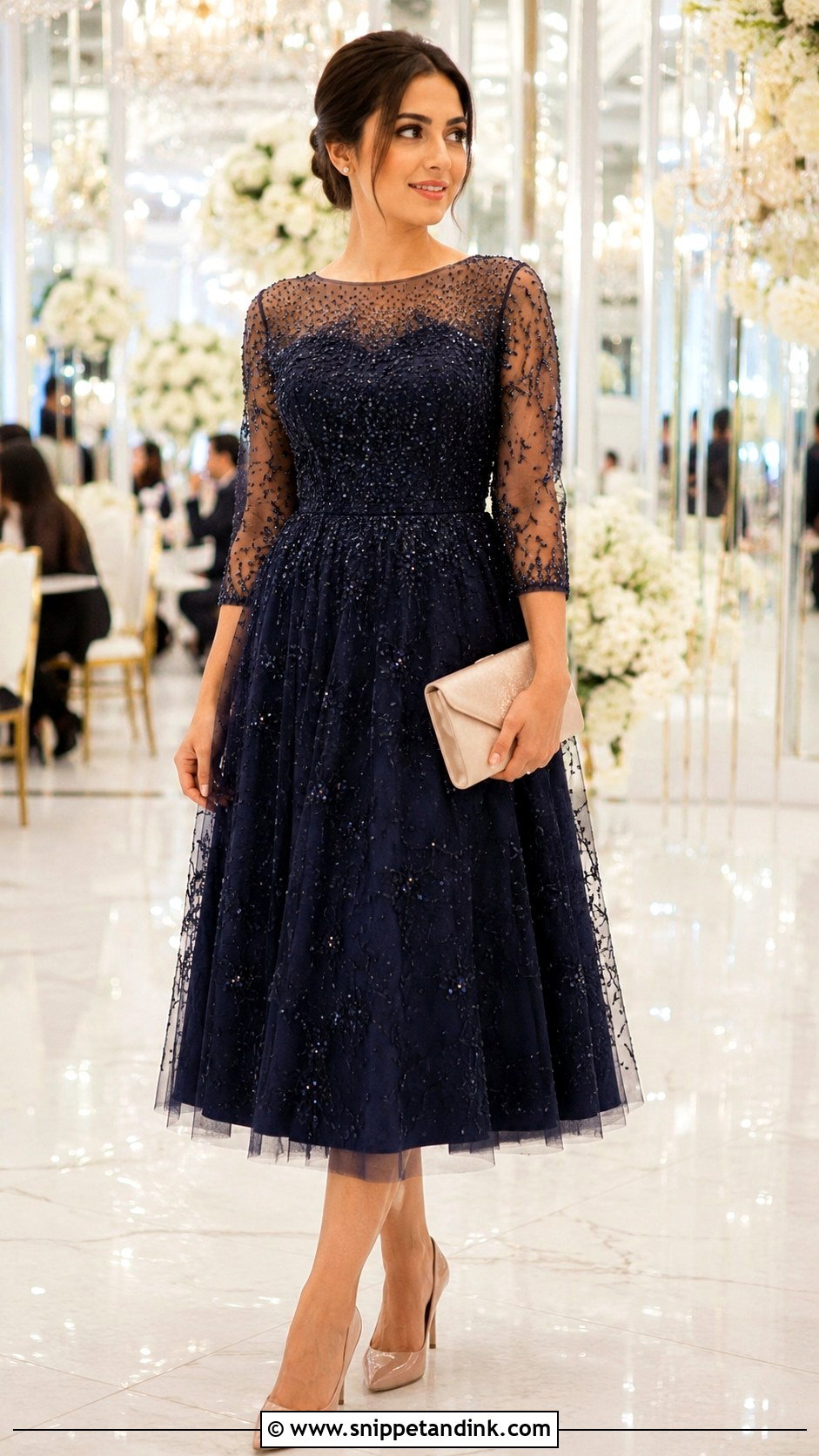
Embellishment suits formal evening weddings, as long as it’s fine beading or tonal embroidery rather than a full sequin dress. Pull the gown on and sit down in the shop; sequins and beads on the seat and inner arm scratch and catch. Keep the rest of the outfit plain: neutral heels, a simple clutch, studs if the sparkle is near the neckline. Navy, champagne, charcoal and deep green keep the shine refined.
17. Tiered Wedding Frock
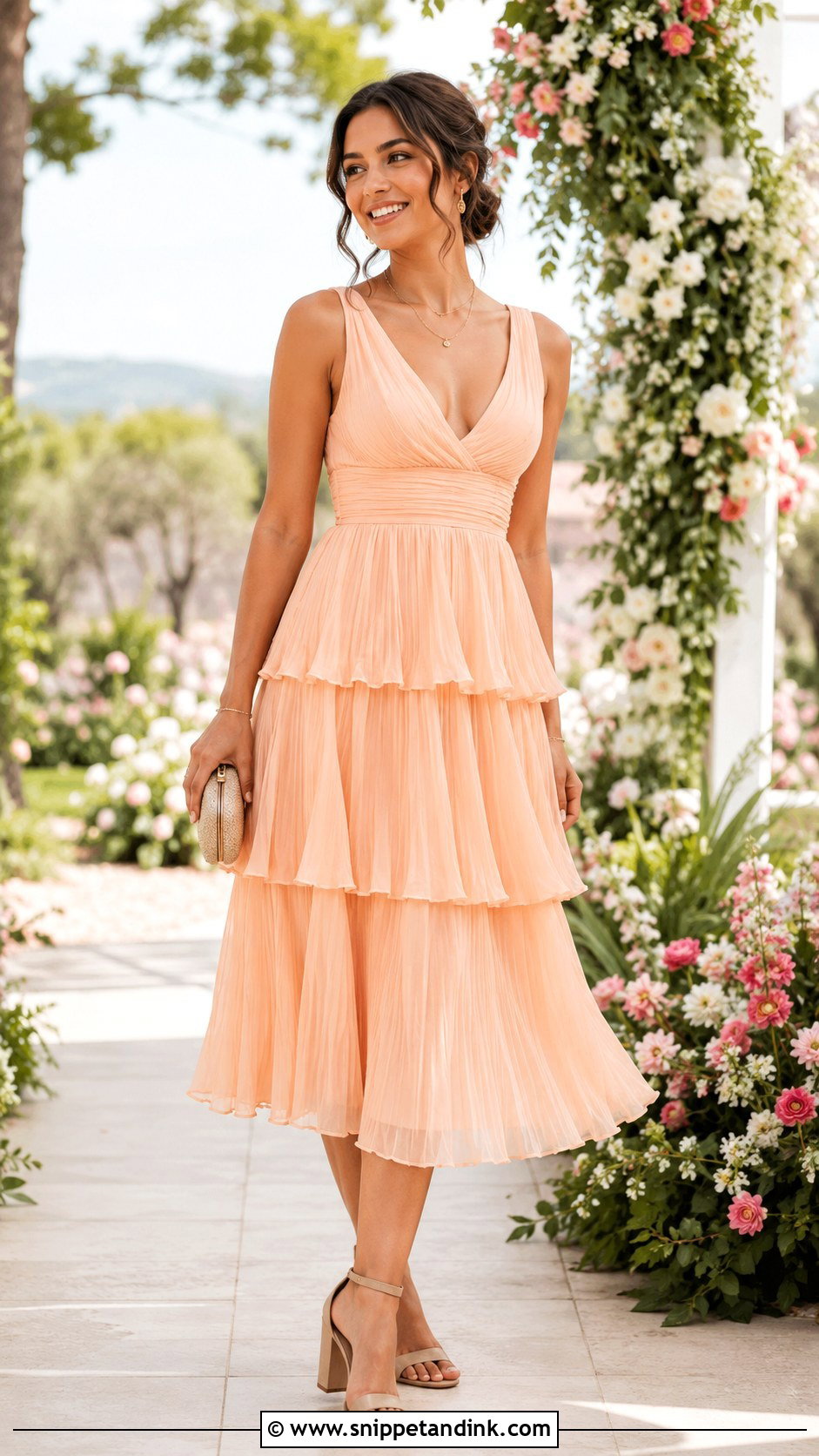
Tiers give volume without structure, which is why a tiered wedding frock feels so easy on a hot day. Cotton, chiffon or georgette keep it moving. Proportion is the thing to watch: on a petite frame, large tiers swamp you, so choose smaller tiers at midi length; taller guests can carry a tiered maxi. A defined waist stops it looking like a nightdress. Block heels and delicate jewelry are enough.
18. Cobalt Blue Wedding Frock
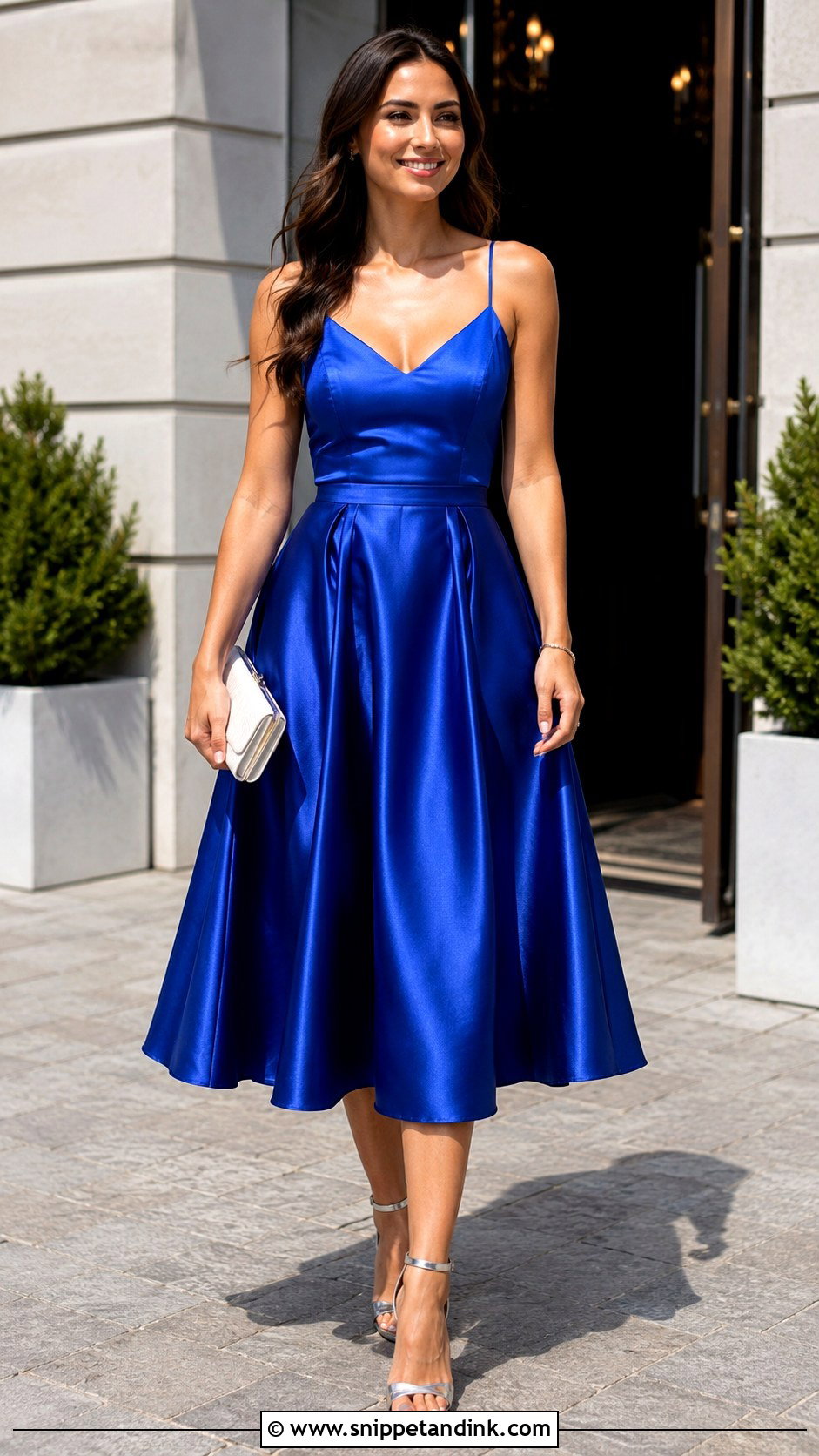
Cobalt is a confident color, and it gives a guest one clear statement without needing pattern. In a satin slip, structured midi, wrap or halter, it does all the work. Silver jewelry cools it down, gold warms it up; choose based on your skin. Check whether the bridesmaids are in blue before you commit, since bright blue is a common bridal-party color. Clean heels and a simple clutch, nothing printed.
19. Drop Waist Wedding Frock
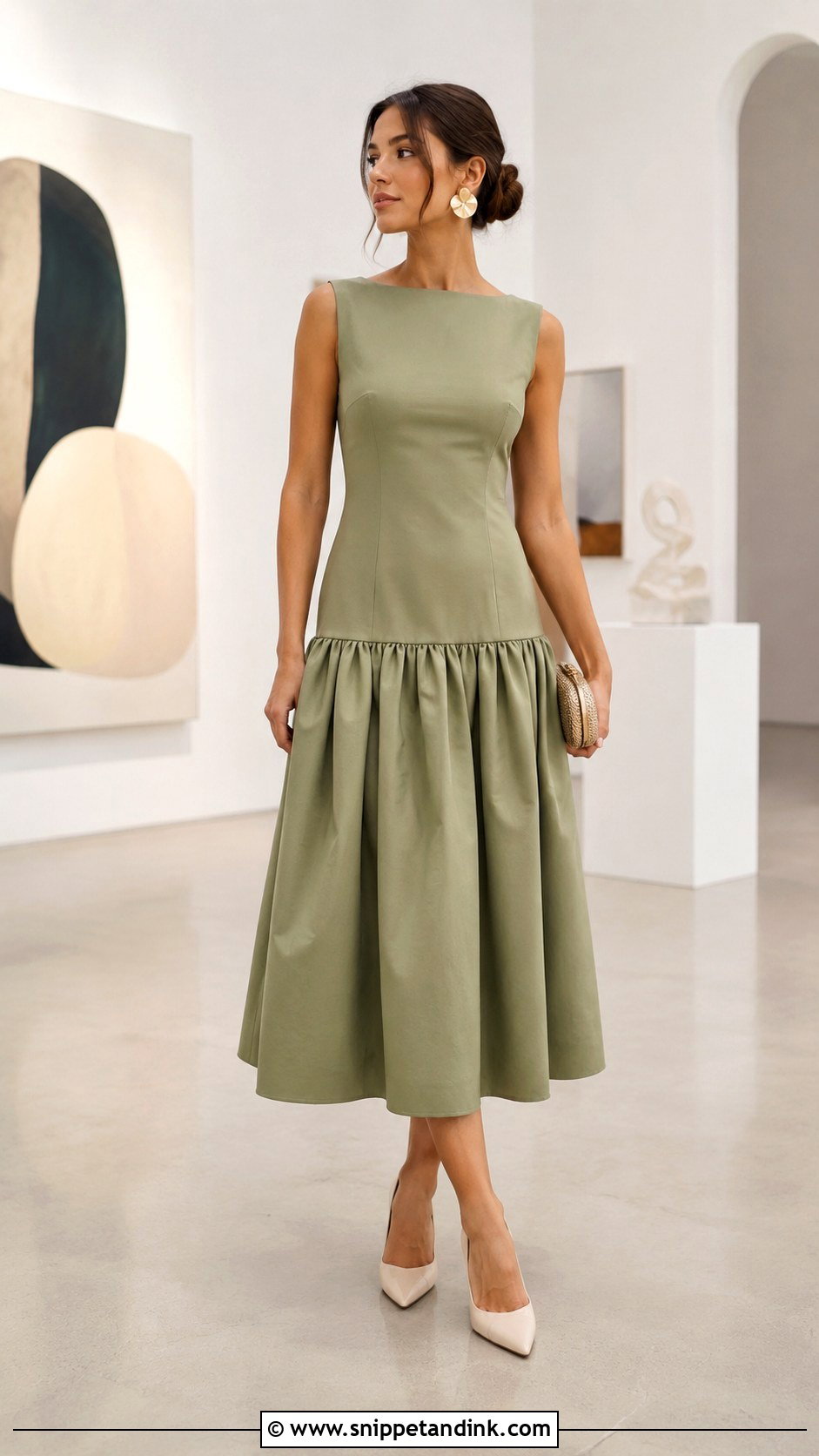
A drop waist lowers the seam to the hip and lengthens the torso. It’s a fashion-forward shape and not universally easy. Satin, taffeta, crepe or structured cotton keep it crisp. On a petite frame, a low waist can shorten the legs, so I’d raise the hemline slightly or add a heel. Pointed heels, a mini clutch and sculptural earrings suit it, and you’ll get plenty of rewear from it.
20. Scarf Detail Wedding Frock
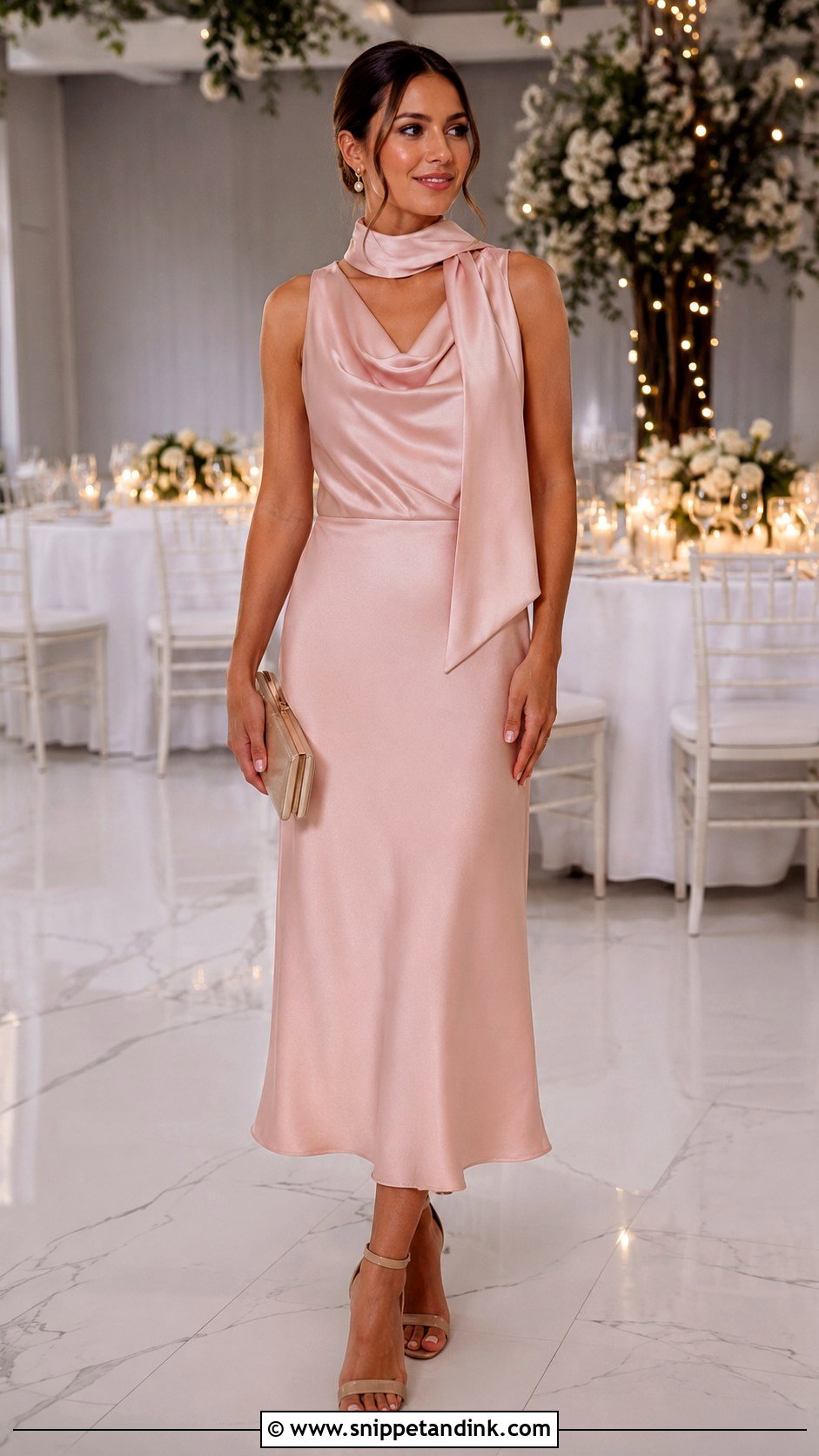
Scarf details drape from the neck or over one shoulder and add movement without jewelry. Satin, chiffon or crepe give the best fall. In practice, a loose scarf end dips into soup and gets caught in a car door, so I’d ask whether it’s stitched in place or free-floating. Small earrings, simple heels and a sleek clutch let the drape lead. Navy, burgundy and champagne look polished at a city dinner.
21. Linen Wedding Frock
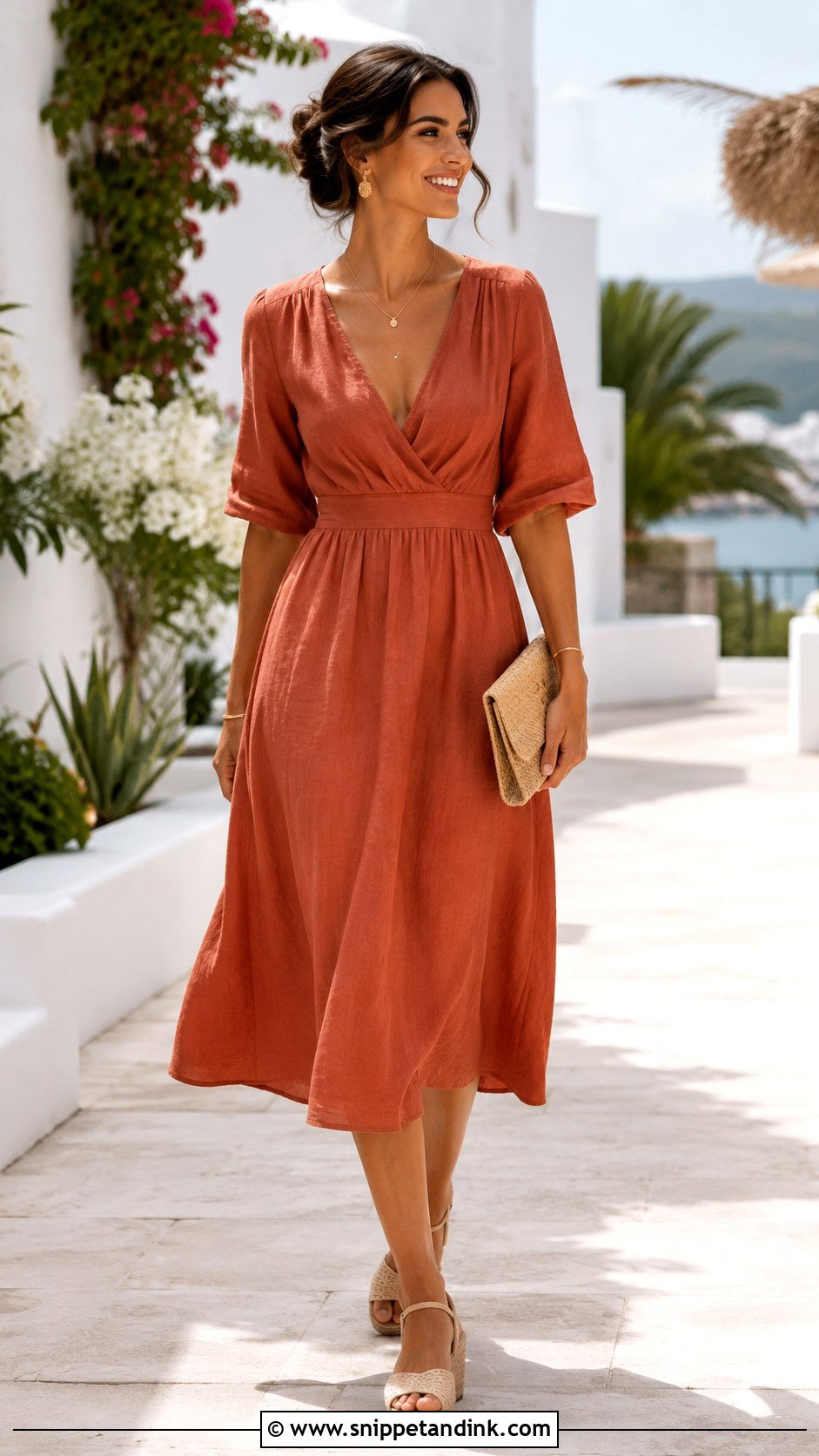
Linen is the right fabric for a summer garden, resort or backyard. It also wrinkles, and you need to accept that. A linen and viscose blend creases far less than pure linen, so I’d choose that if you’re driving to the venue. A tailored midi or square-neck shape keeps it from looking casual. Sand, olive, sky blue or terracotta suit the fabric, with low wedges and a woven clutch.
22. Modest Wedding Frock
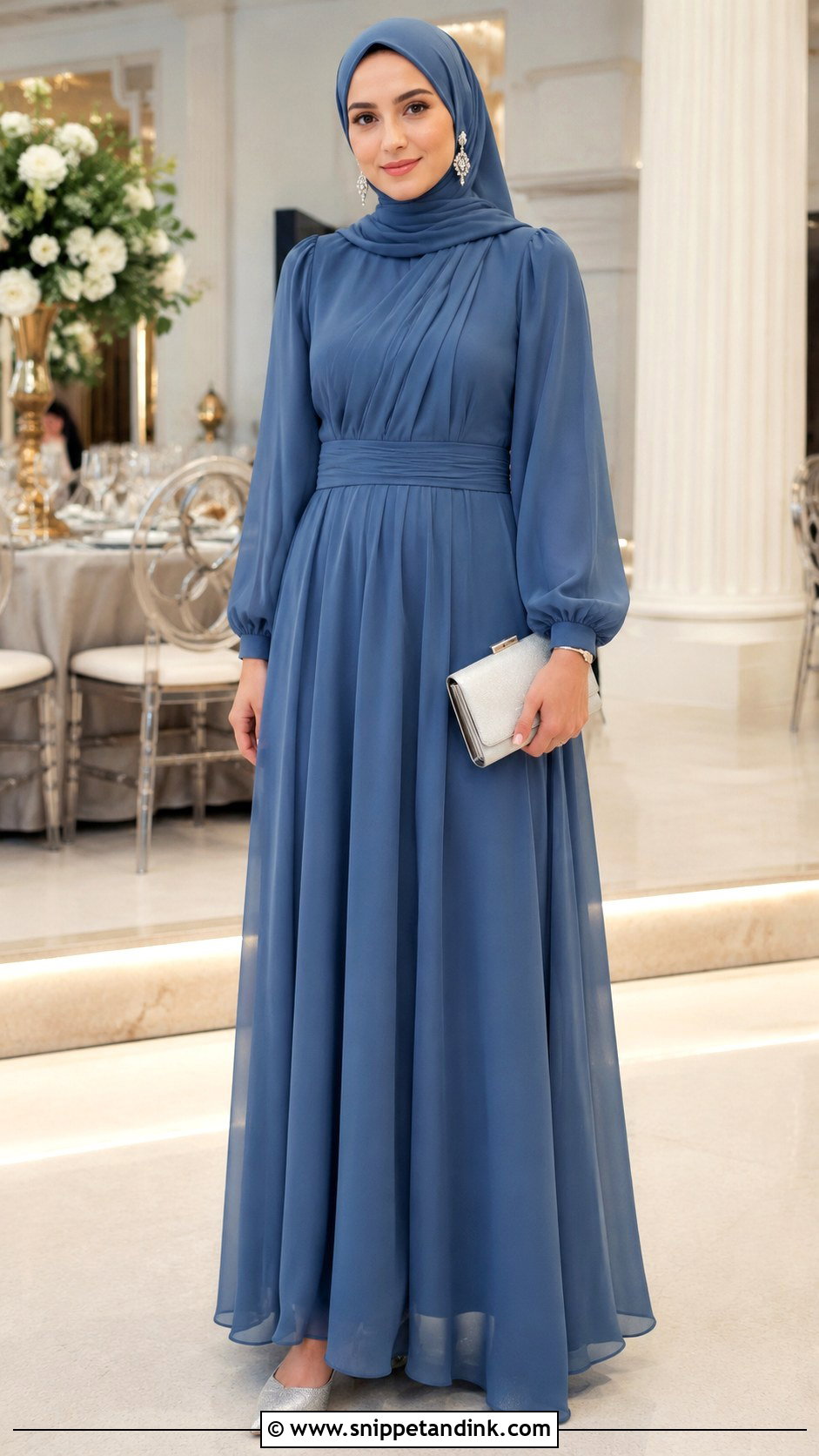
Modest dressing at a wedding comes down to cut and fabric more than covering up. Look for higher necklines, longer sleeves and hems at midi or maxi in chiffon, crepe, satin or soft jersey that move well. A belted or pleated waist gives shape without tightness. Check the sleeve and neckline in a seated position, since some wraps gape when you sit. A matching shawl or longline jacket adds cover for a religious ceremony.
23. Plus Size Wedding Frock
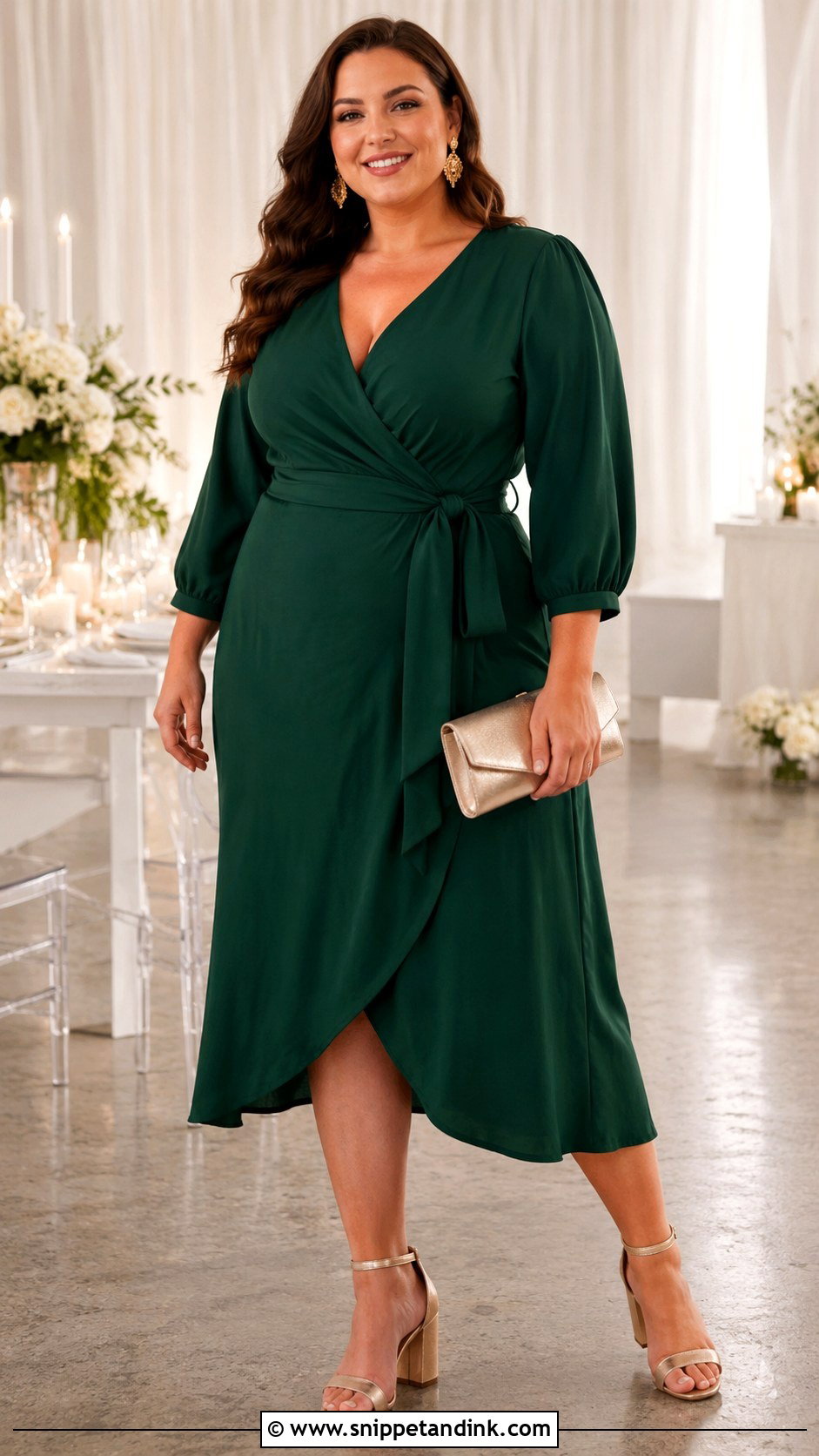
Plus-size guests deserve frocks built to support, not just cut larger. Wrap shapes, empire waists, ruched bodices and fit-and-flare skirts are the shapes I’d try first. Fabric matters: chiffon, jersey, crepe and heavier satin hang well, while thin, clingy satin highlights every seam. Look for wide straps or built-in support so you’re not adjusting all night. A V or square neck and block heels keep it comfortable through dancing.
24. Petite Wedding Frock
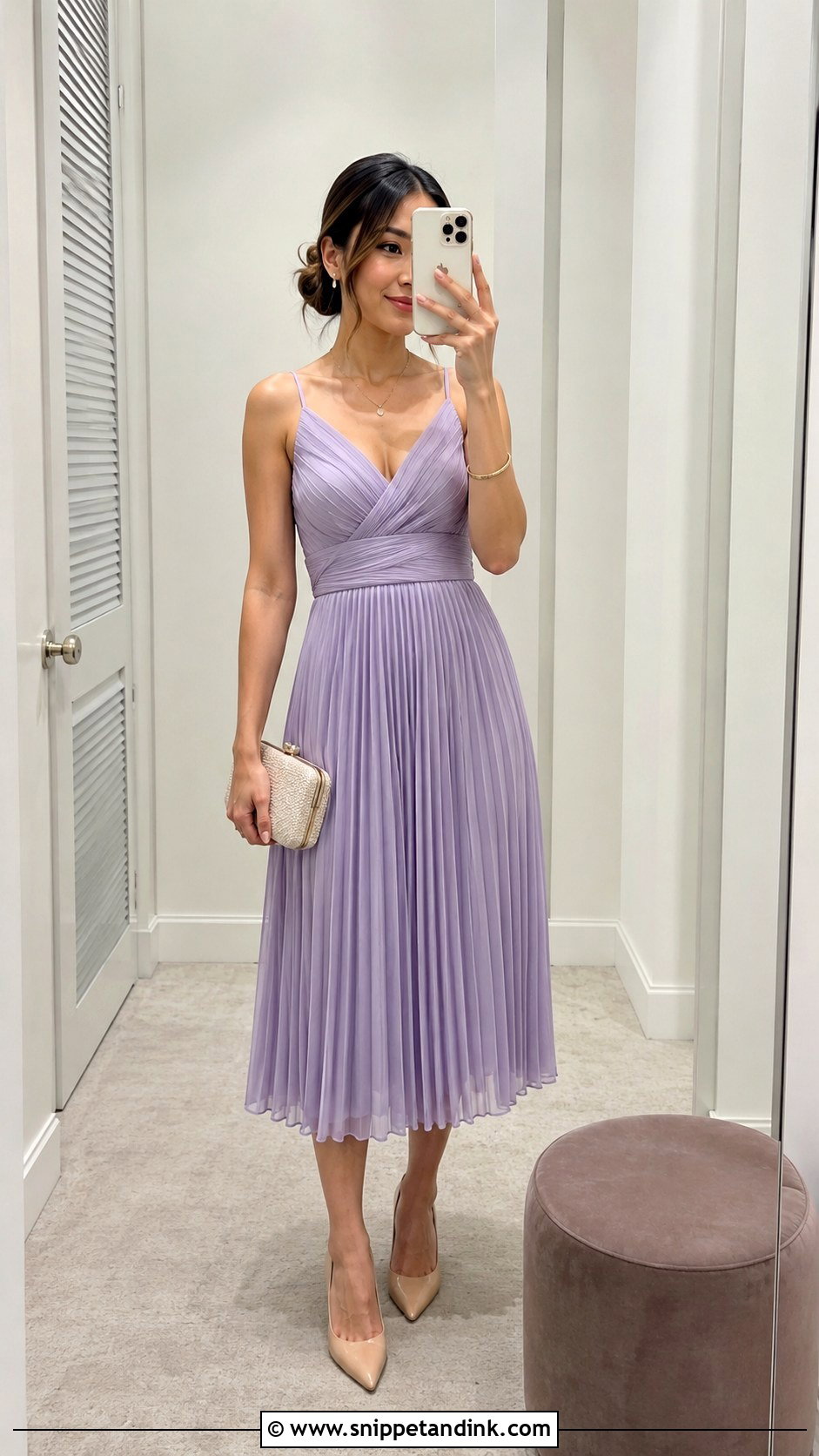
For petite guests, length and proportion are everything. A midi that hits just below the knee usually beats an untailored maxi that drowns you. Vertical lines like pleats, wrap seams and column shapes add height, and small prints sit better than oversized ones. Nude or pointed shoes lengthen the leg. If you love a maxi, choose a light fabric and get the hem taken up properly to your shoes.
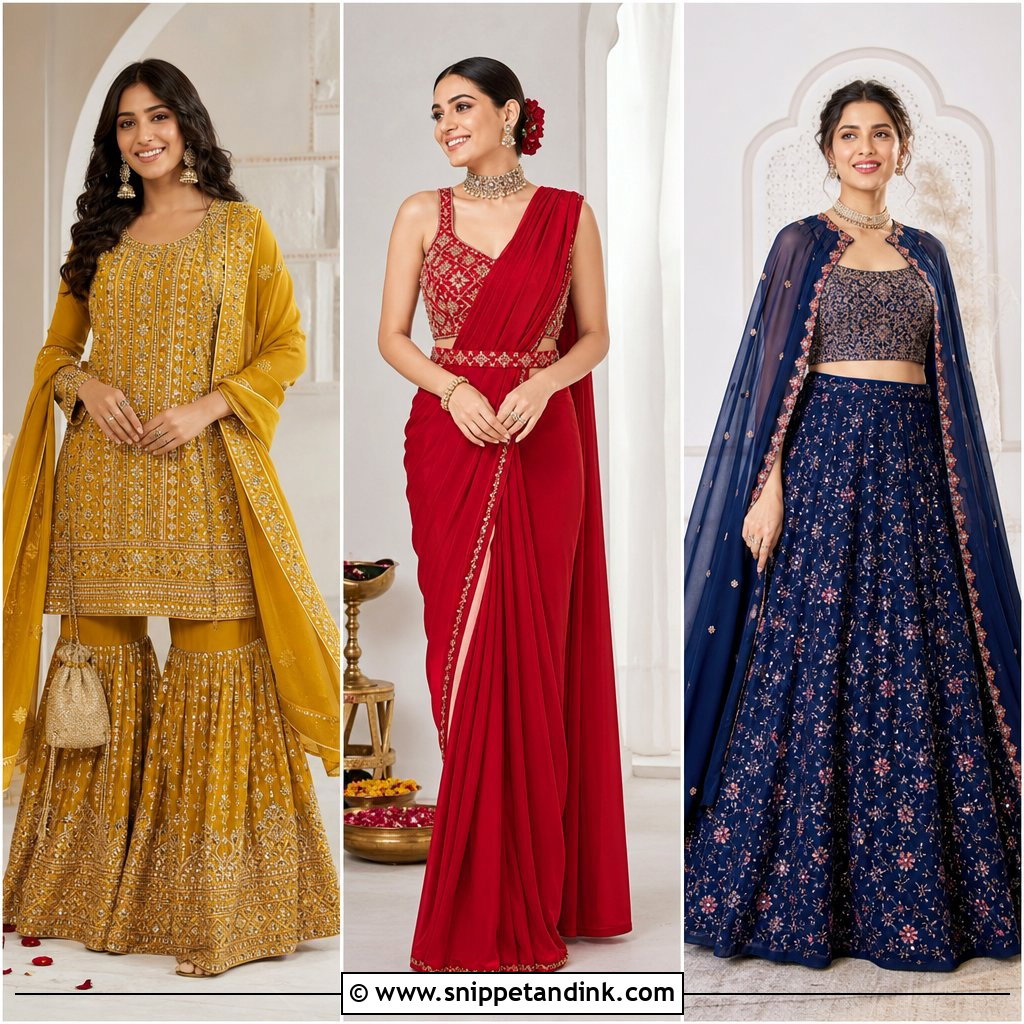
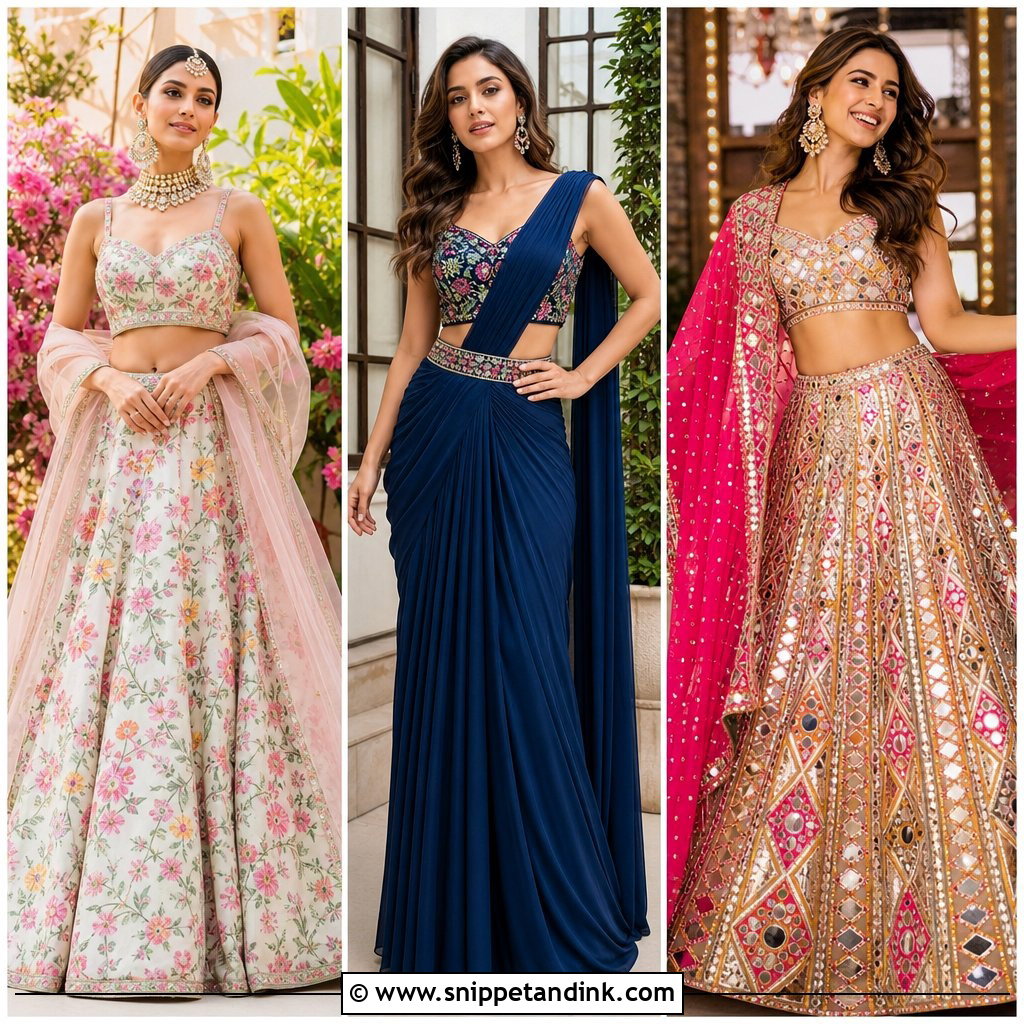
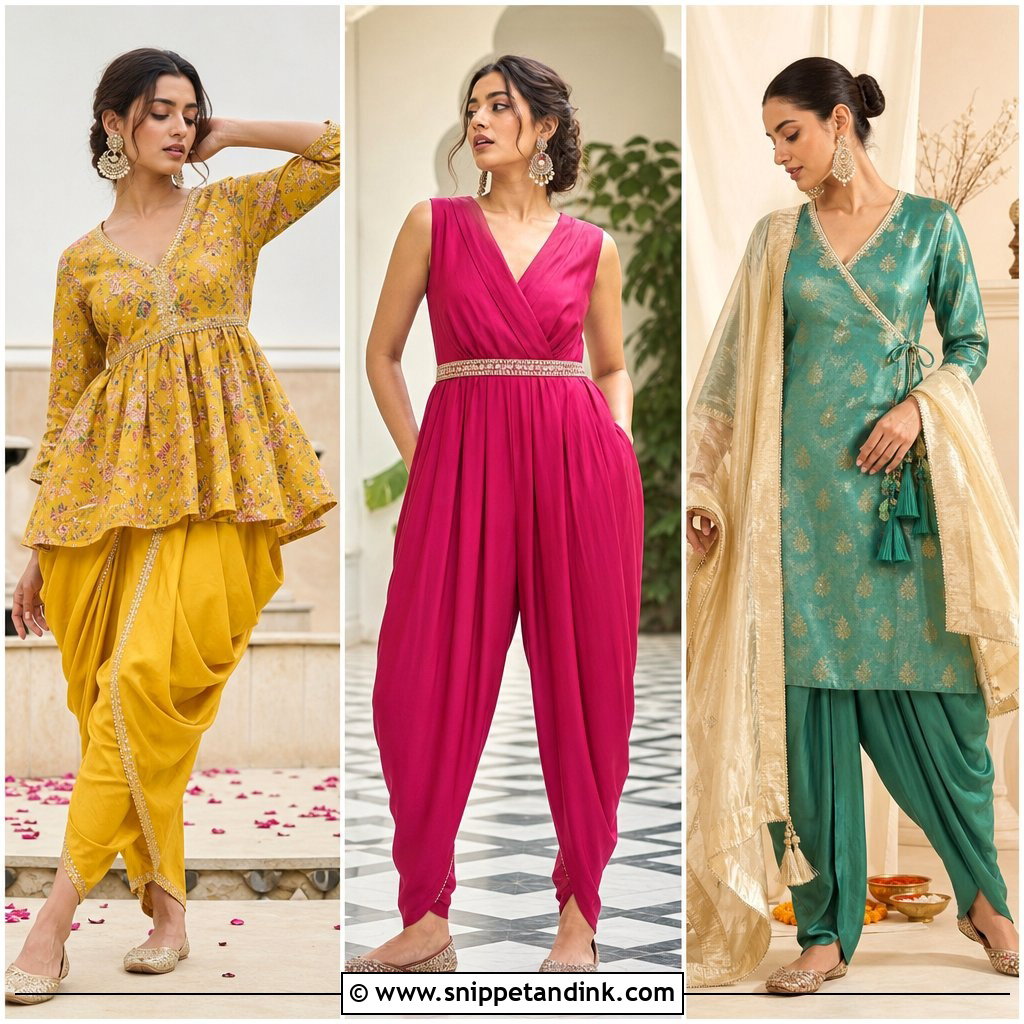
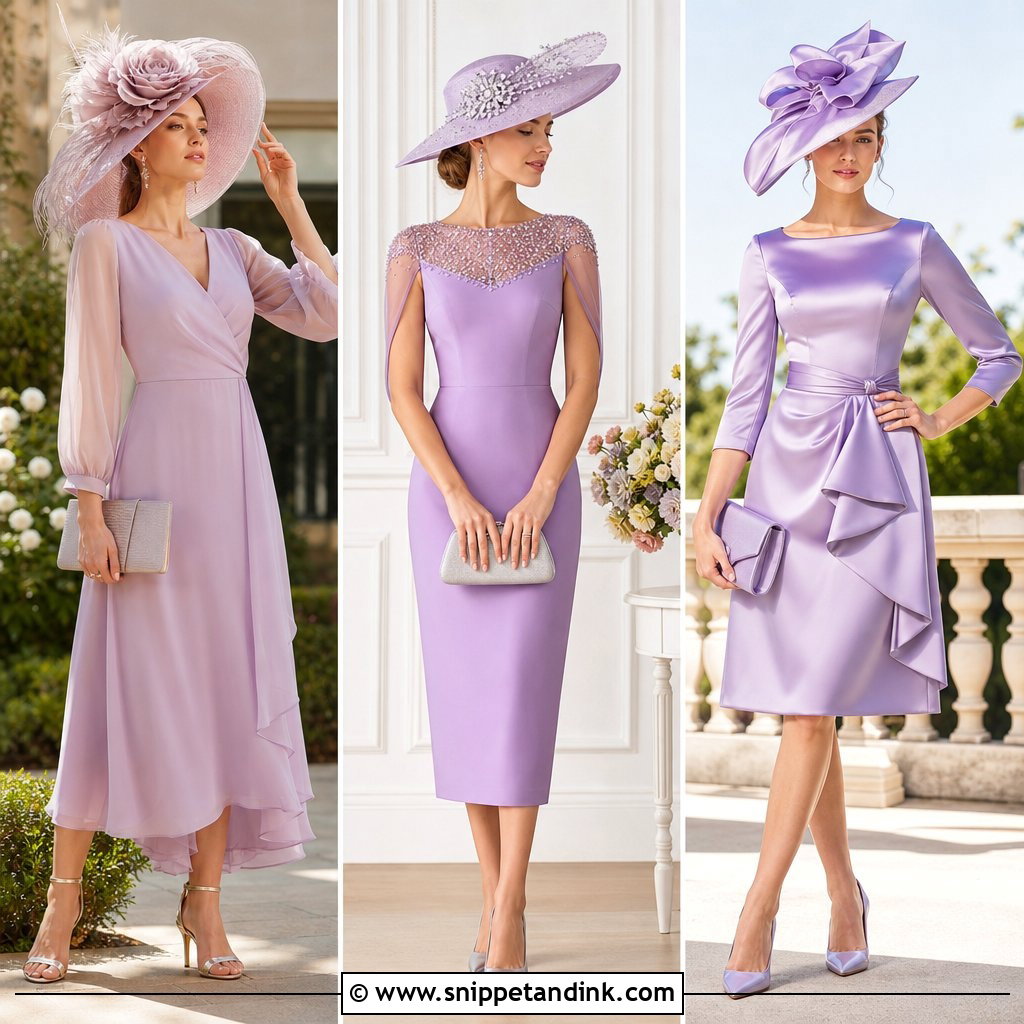
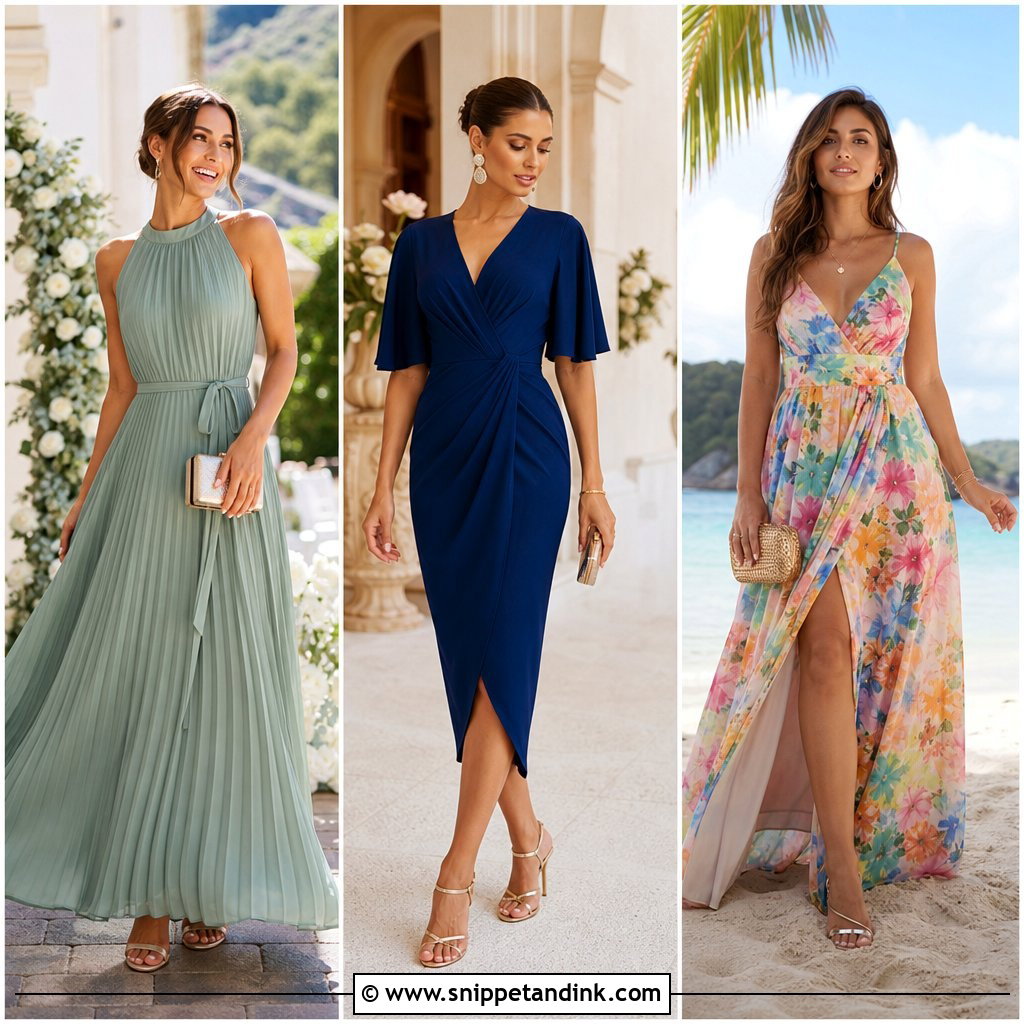
25. Mother Of The Bride Wedding Frock
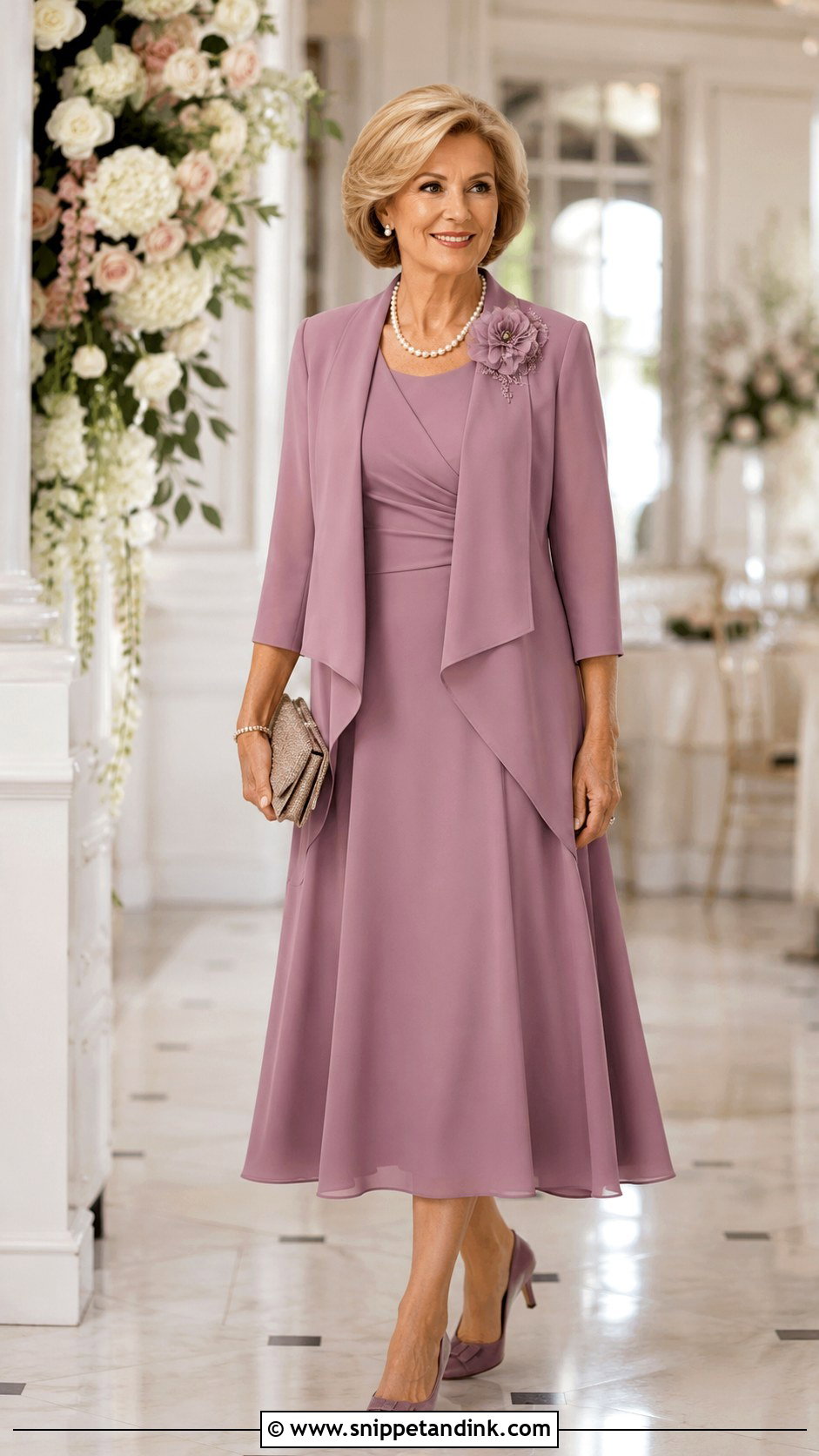
A mother of the bride wedding frock will be in the family photos for decades, so I aim for something she’s comfortable standing in for an hour of portraits. Midi or tea length in soft crepe, lace, chiffon or satin looks polished and moves well. Ask the couple about the palette; navy, mauve, champagne, slate blue or sage sit alongside most of them. A jacket or capelet gives cover for the ceremony, with low heels and classic jewelry.
Colors a Guest Should Clear With the Couple
White and ivory are the obvious ones to avoid, but they’re not the only colors that can cause friction. I always suggest asking the couple, or a close family member, when you’re unsure.
- Very pale blush, champagne and cream can read as white under camera flash.
- The bridesmaids’ exact color makes you look like an extra member of the party in photos.
- Red is the traditional bridal color at many South Asian and Chinese weddings, so guests often steer clear of it there.
- Head-to-toe black is fine at many evening weddings but frowned on at some traditional ceremonies.
- All-white is sometimes worn by guests at certain cultural or themed weddings, but only when the invitation asks for it.
If the wedding has more than one event, such as a mehndi or rehearsal dinner, ask about each one. The color guidance often changes from one celebration to the next, and a quick message to the couple is easier than arriving in the wrong shade.
Linen for the Beach, Velvet for December
Match the frock to the venue and the clock first: linen and sandals for sand, satin, velvet or lace for an evening room. Trends like cobalt, scarf necks and drop waists are fun, while wraps, A-lines and chiffon maxis carry over from one wedding to the next. Sit, walk and lift your arms in it before you decide, and plan the shoes and the layer with the dress, not after.
You'll Like These Ideas:




Leave a Reply