
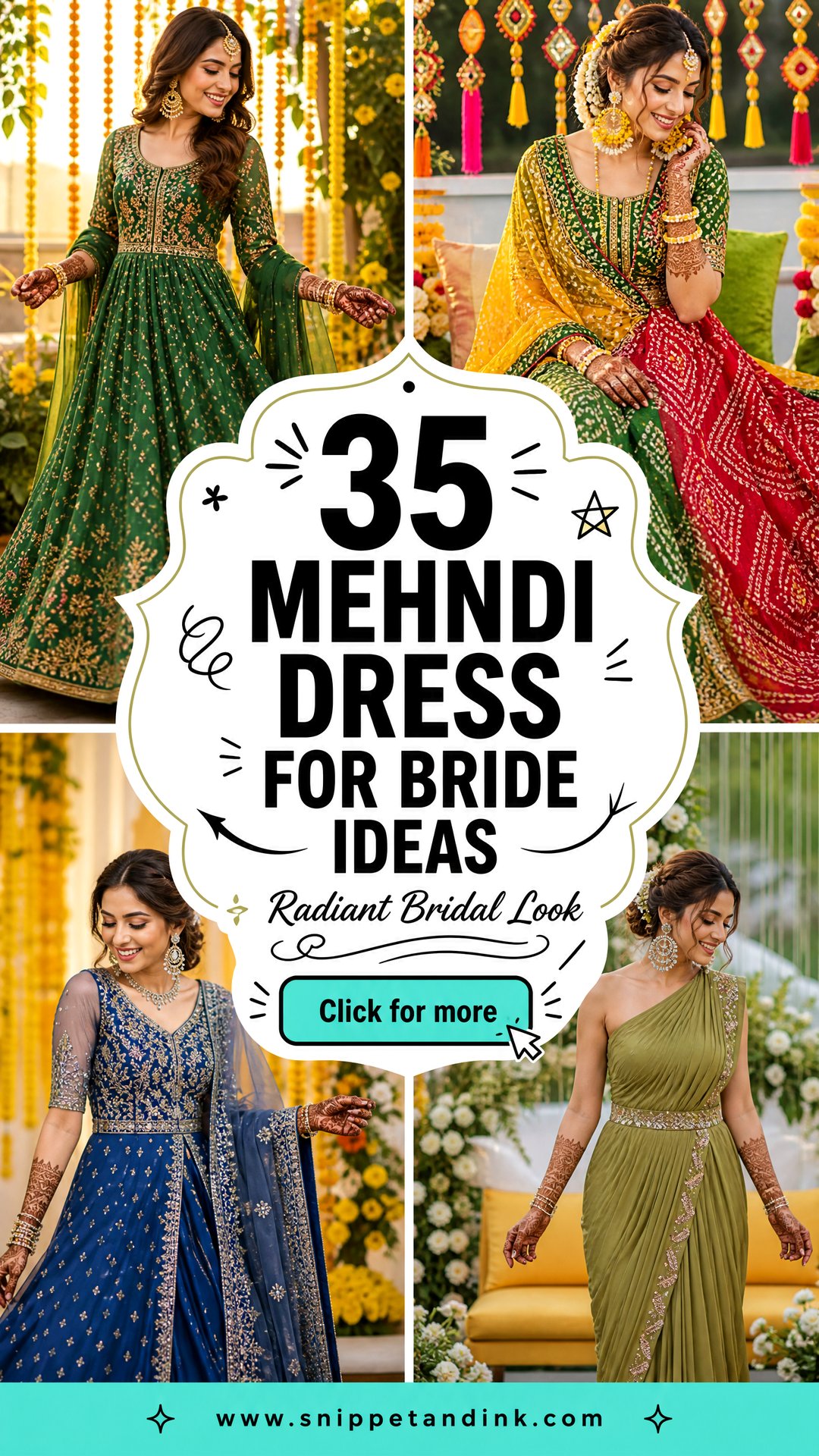
A mehndi outfit has a harder job than most bridal clothes. You sit low for hours while an artist works on your hands and feet, then you get up and dance, and the camera is close the whole time. When I style a bride for this function, I start with three practical questions: where the henna will go, how she will sit, and how warm the room will be. Color comes after that. The ideas below run from yellow lehengas with classic gota patti and Bandhani designs to shararas, cape sets, dhoti sets and quiet chikankari, and for each one I’ve noted what it does well and where it can let you down.
Dressing Around the Henna Instead of the Other Way Round
Before anyone talks color, I ask where the henna is going. A full bridal design can run from the fingertips past the elbow and from the toes up the calves, and the application takes hours, followed by more time for the paste to dry. The outfit has to let all of that happen without fabric touching wet paste.
Get fully dressed before the artist sits down
Once the paste is on, you can’t fasten hooks, pull anything over your head or rescue a slipping dupatta. I dress the bride completely first: jewelry on, dupatta pinned, hair finished. Anything that might need adjusting later should open at the side or back so someone else can help.
- Sleeves: sleeveless, cap or elbow length if the design reaches the elbow. Three-quarter sleeves only work for wrist-length designs.
- Hems: a lehenga or sharara should clear the ankle when you sit, or the artist ends up holding fabric off your feet the whole time.
- Seating: a floor cushion or low divan brings your knees up, so check the skirt still covers you in that position at the fitting.
- Fabric: matte cotton, chanderi and georgette forgive far more than satin, which shows every drop of oil.
I also keep a plain cotton cloth across the bride’s lap for the whole application. It costs nothing and has saved more outfits than any fabric choice.
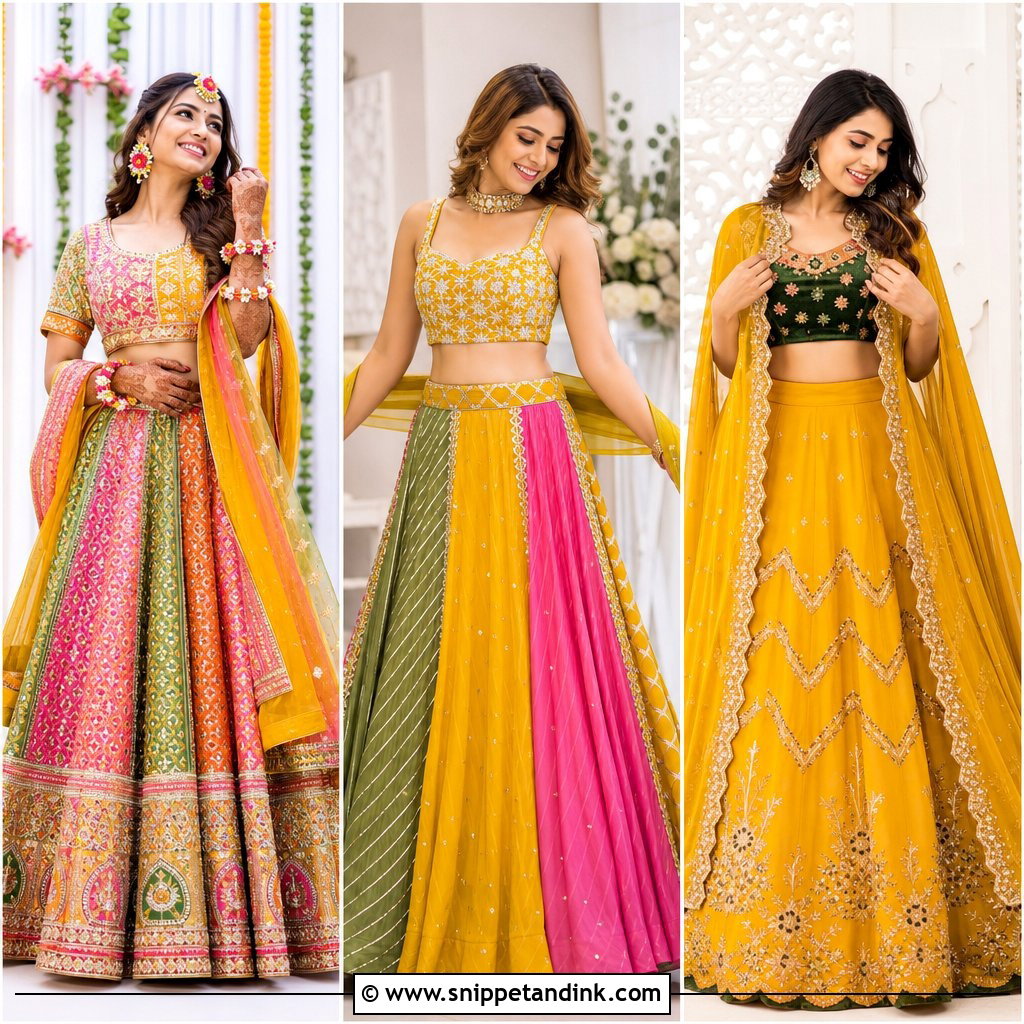
1. Yellow Mehndi Lehenga For Bride
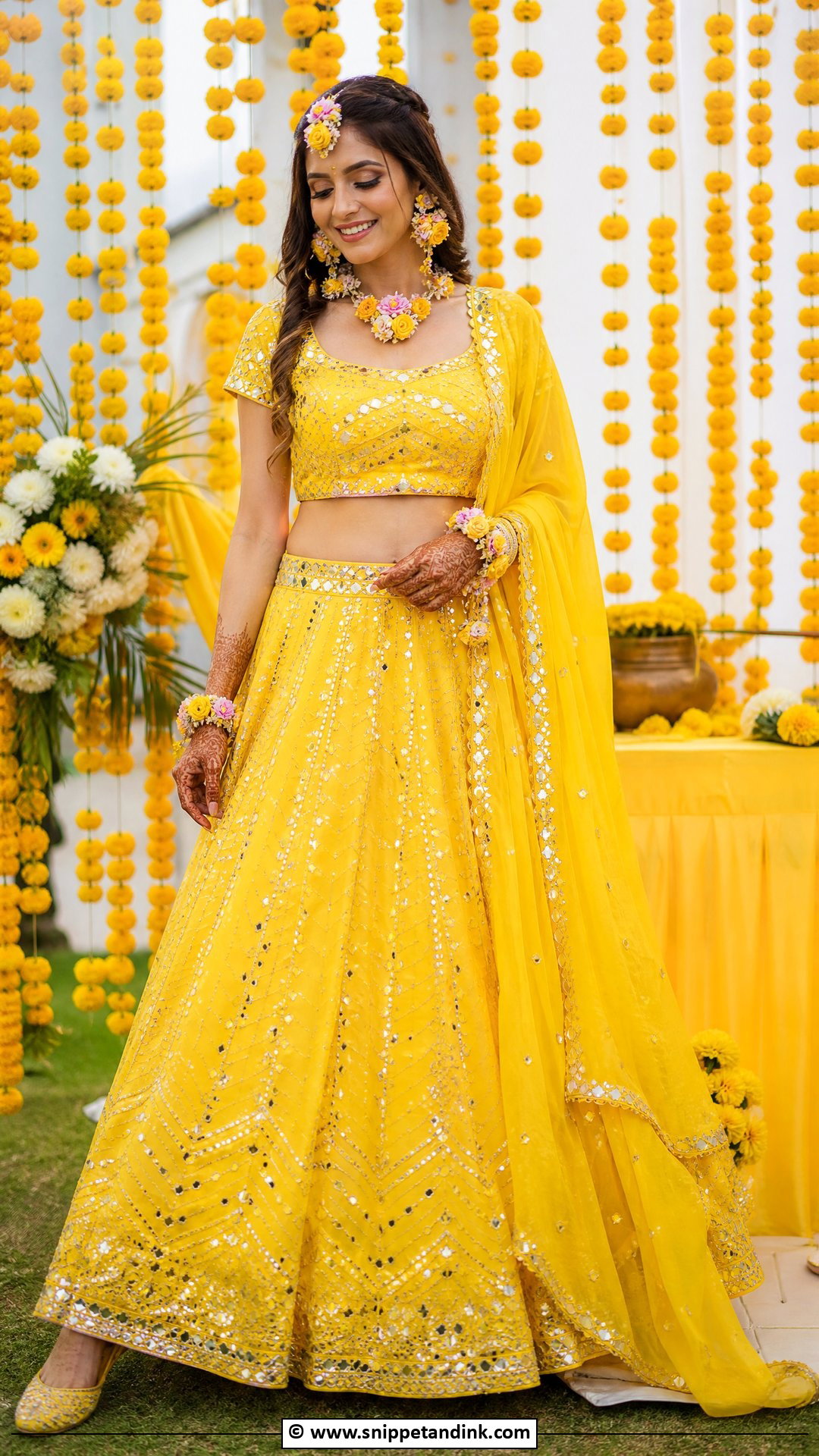
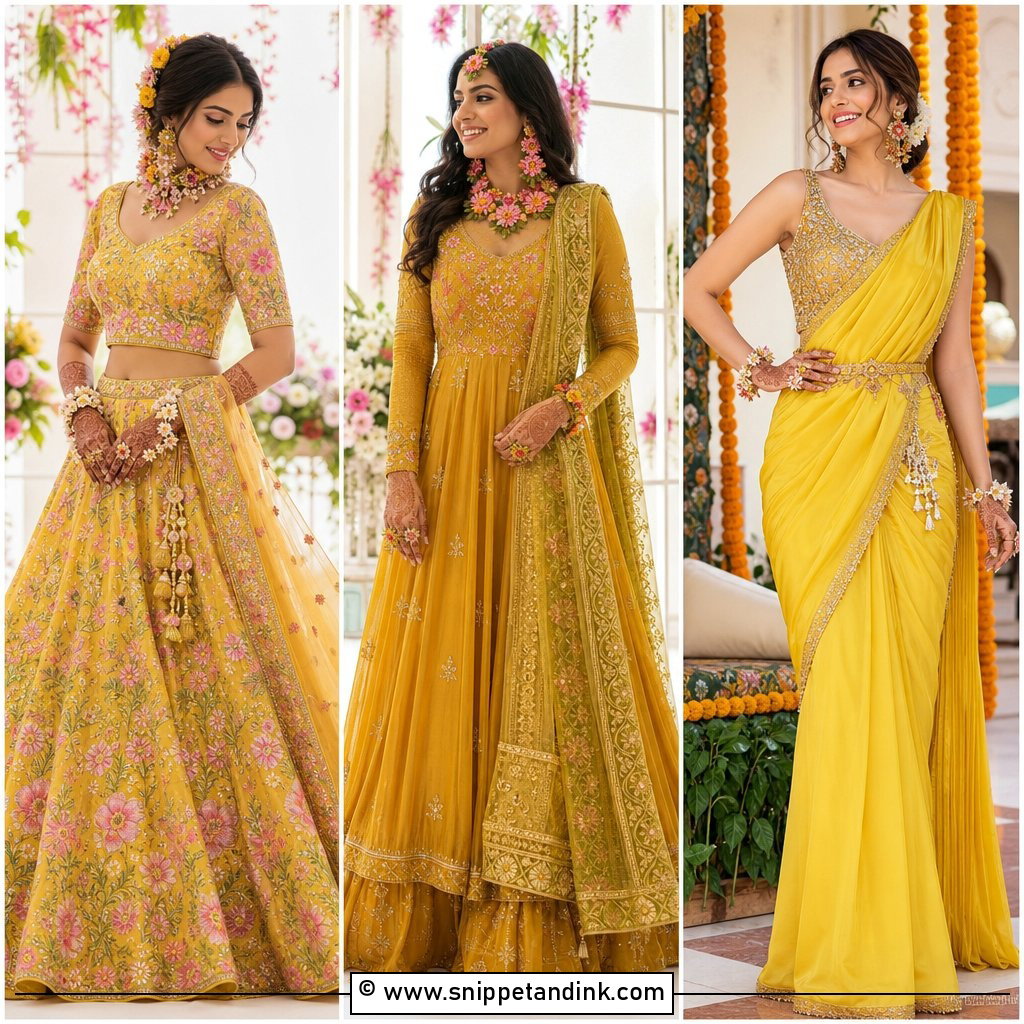
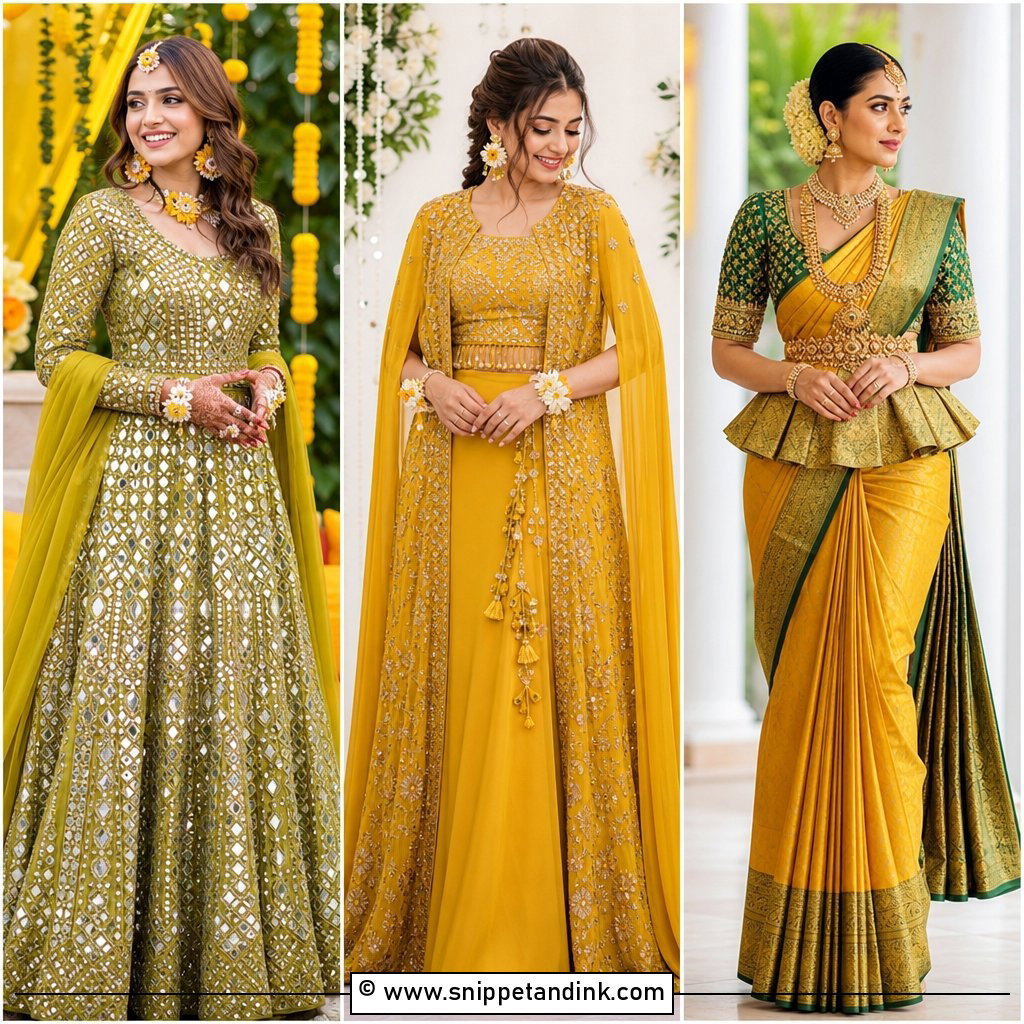
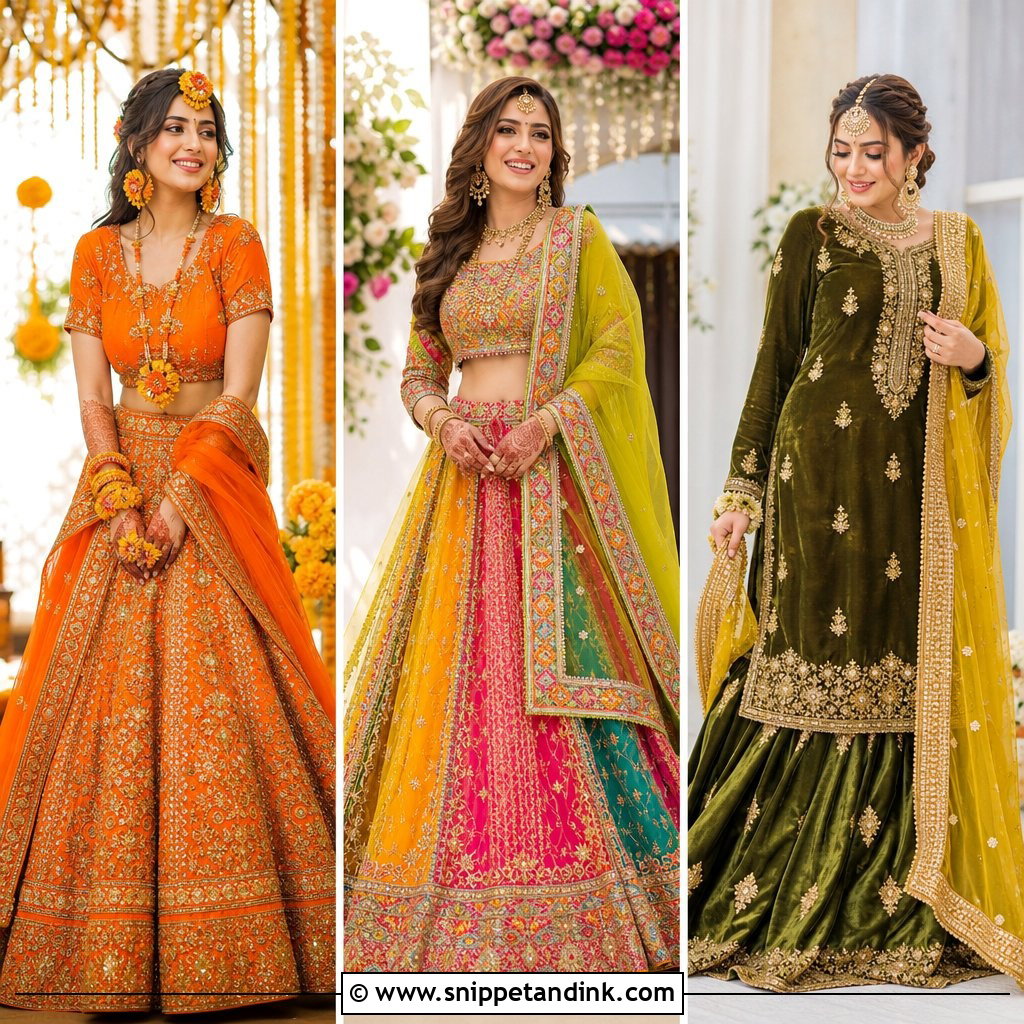
Yellow is the default for a reason: it sits happily next to marigolds and turmeric, and it flatters most skin tones in daylight. What I watch is the fabric. Georgette, chanderi and cotton silk let you sit cross-legged for two hours without the skirt trapping heat against your legs, while a heavy raw silk will have you sweating by the second hand. Keep the choli short-sleeved or sleeveless, because full sleeves have to be pushed up and they slide straight back onto wet paste. I pin the dupatta to one shoulder only so the other arm stays clear for the artist. Mirror work or small gota details are plenty here; save the heavy zardozi for the wedding itself.
2. Green Mehndi Anarkali Dress For Bride
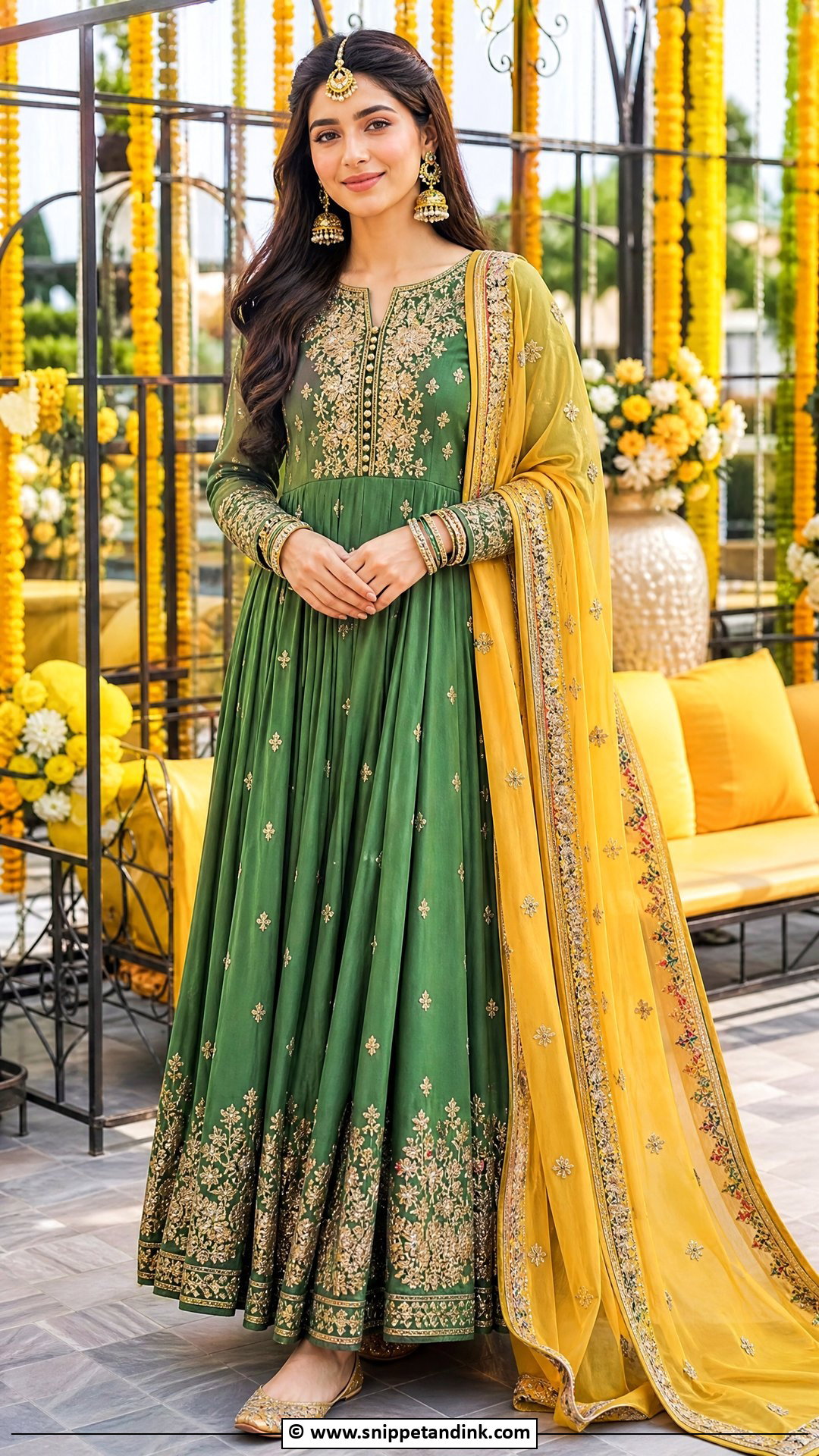
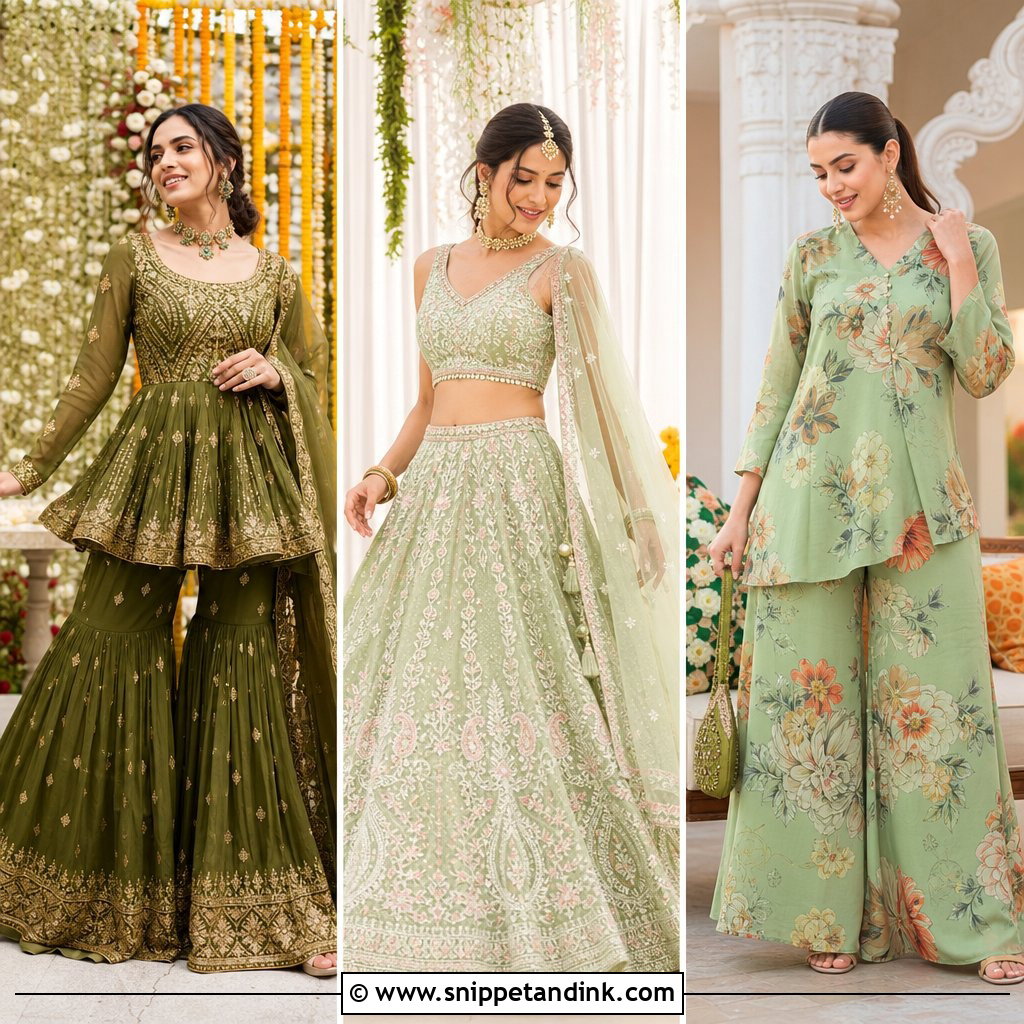
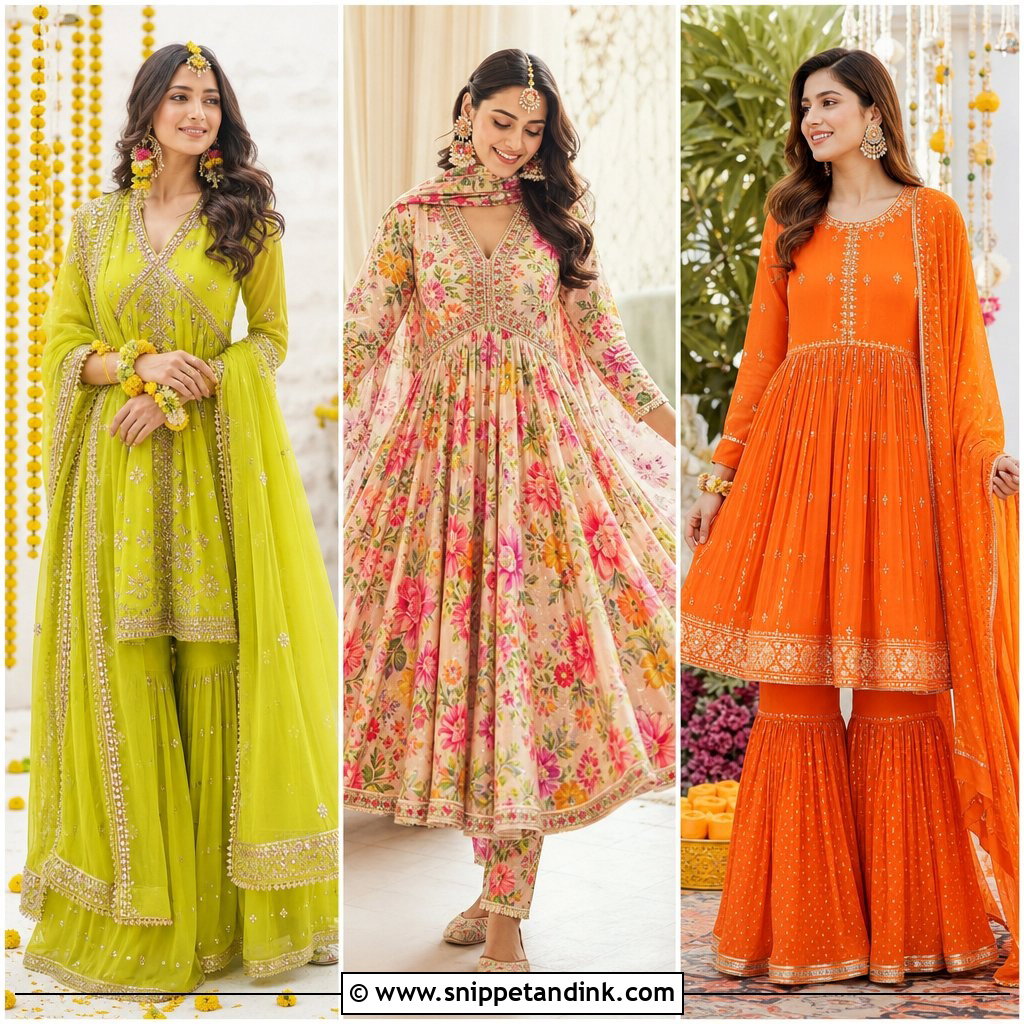
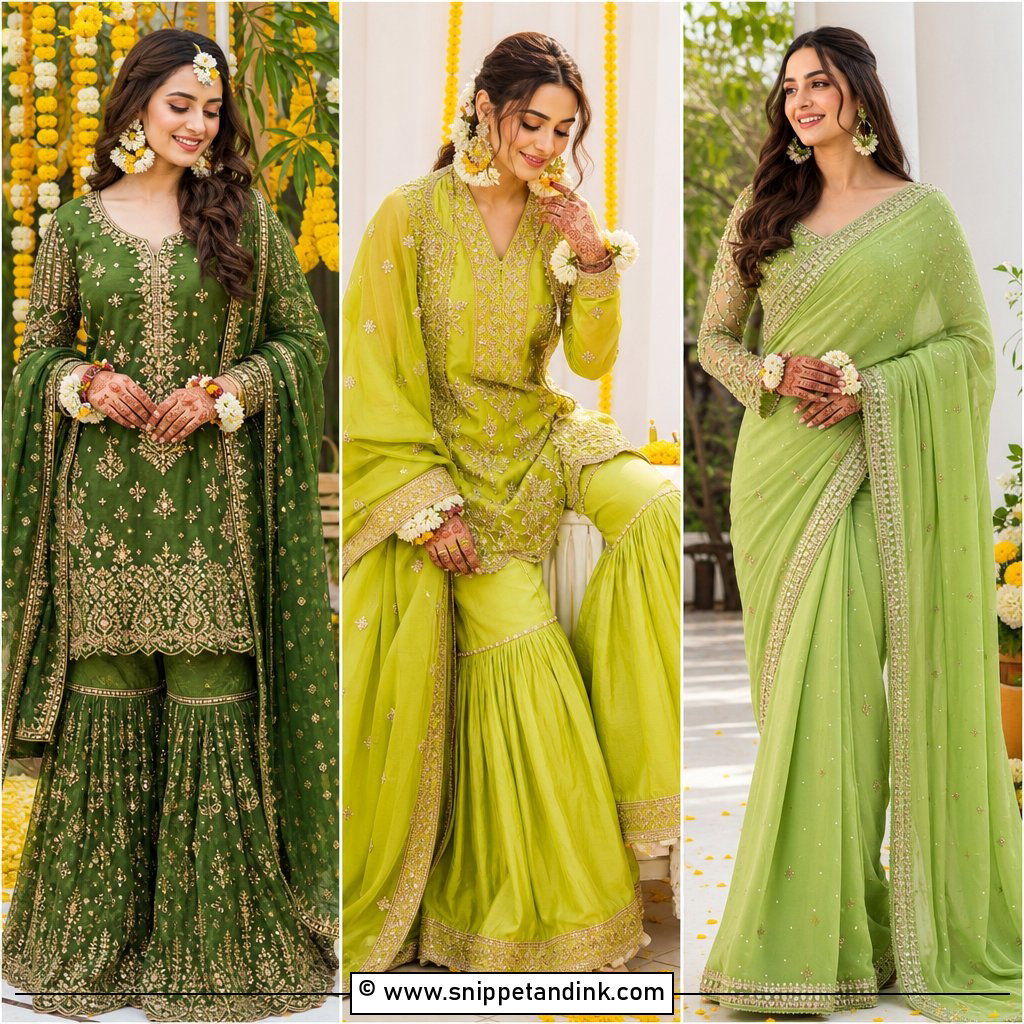
Green ties the outfit to the henna itself, which is why so many families favor it for this function. An Anarkali is one garment, so dressing is quick, but check how it fastens before you buy. A side or back zip is fine. A style that pulls over the head becomes a real problem once your hands are covered and you need to change for the evening. I’d pick a floor-length cut with a little weight in the hem so it drops straight when you stand, then lift it with a yellow, pink or gold dupatta. Cap or three-quarter sleeves keep the forearms free if your design runs past the wrist. Deep greens can go flat under warm evening bulbs, so this one is at its best at a daytime function.
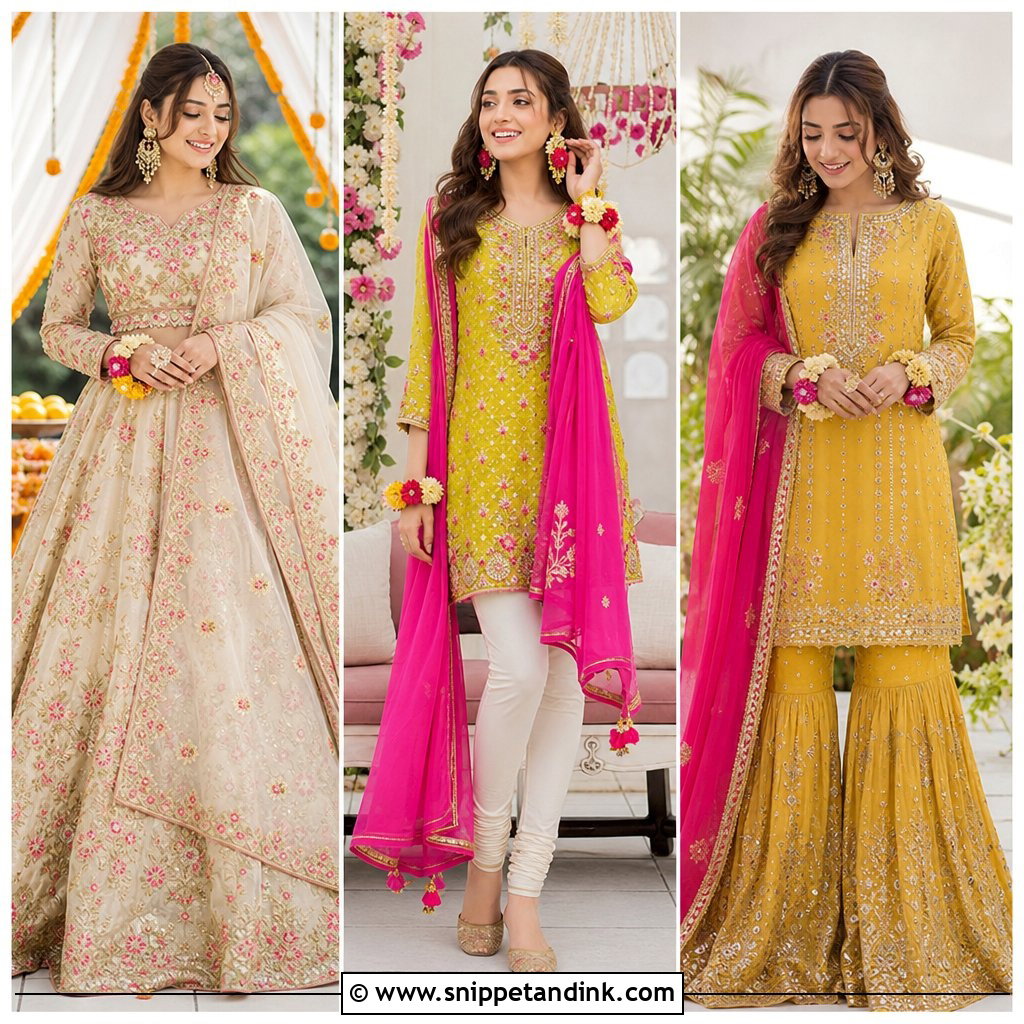
3. Floral Sharara Mehndi Dress For Bride
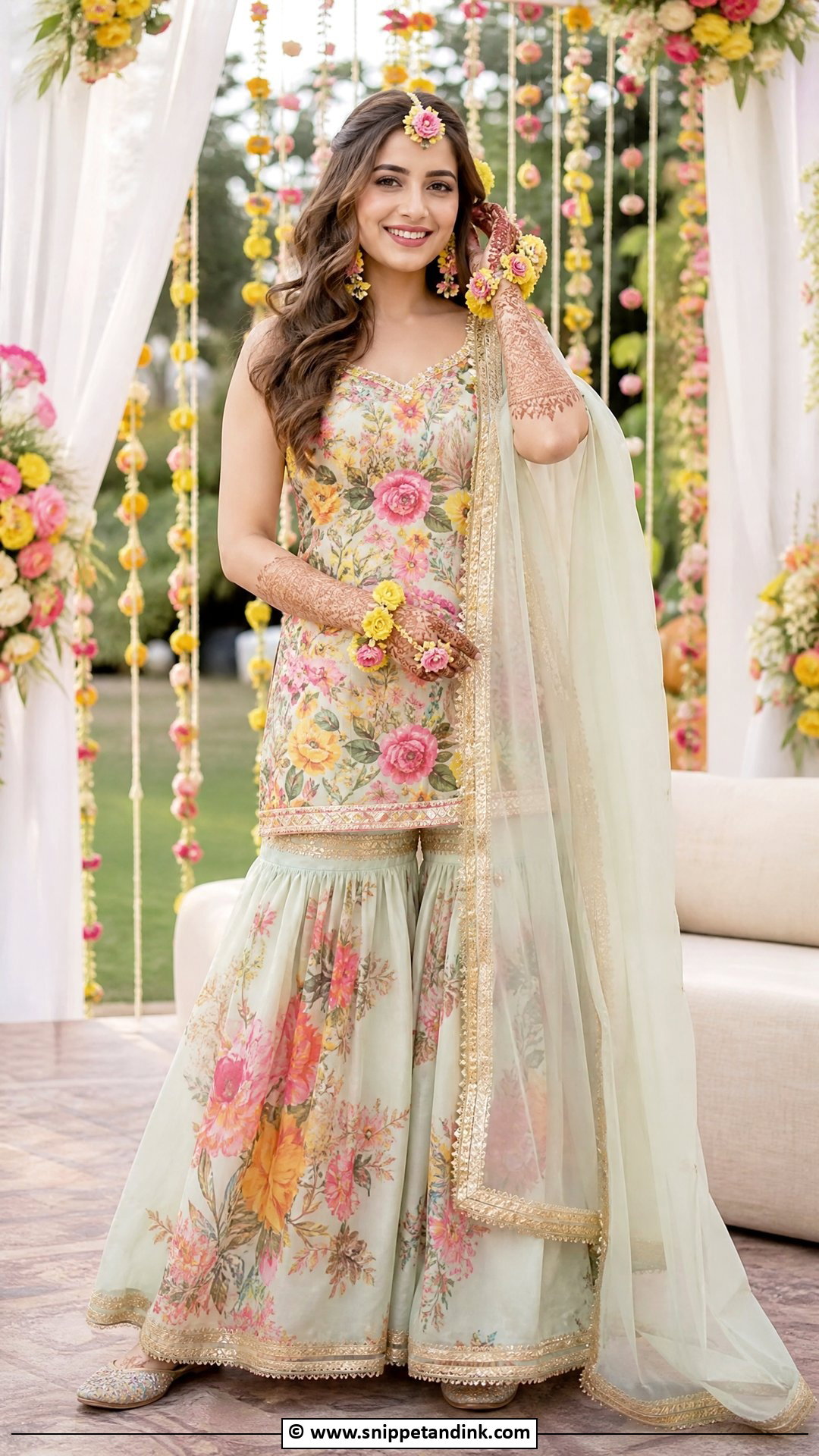
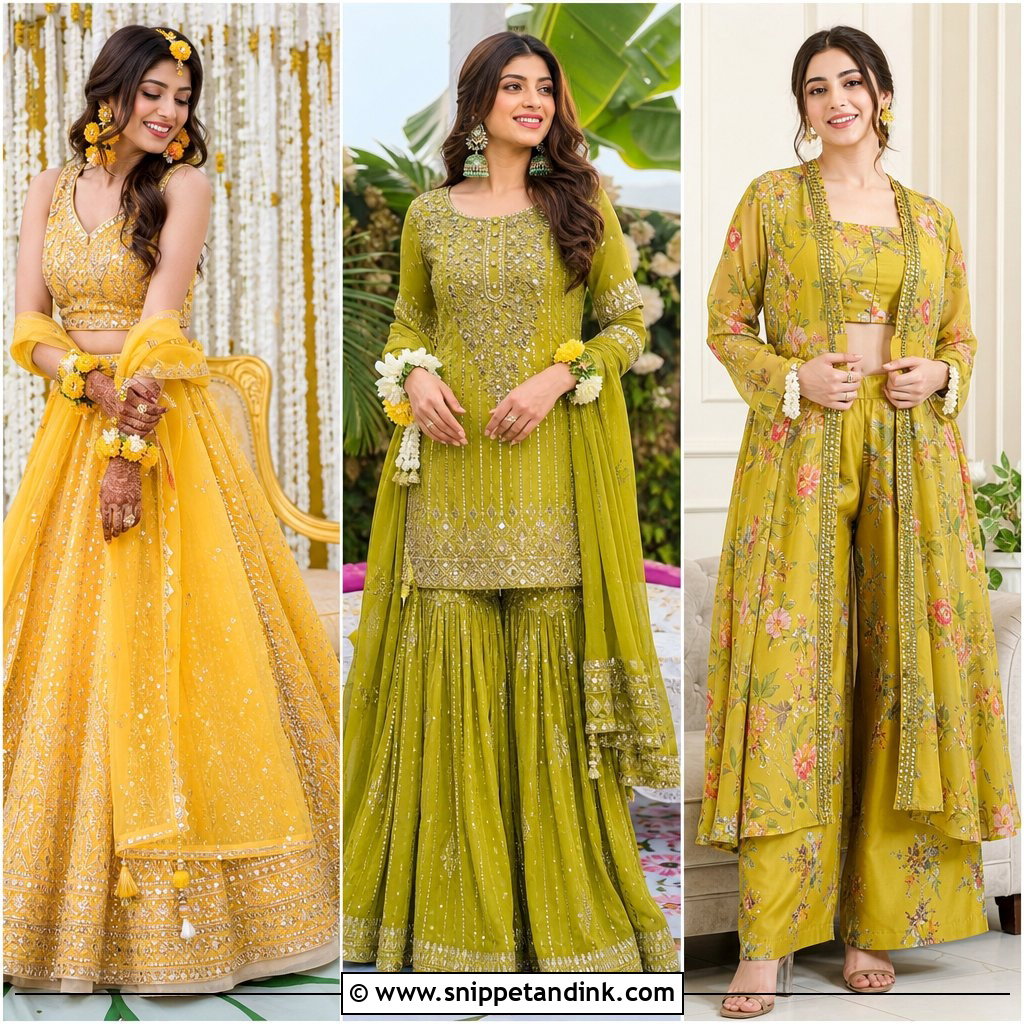
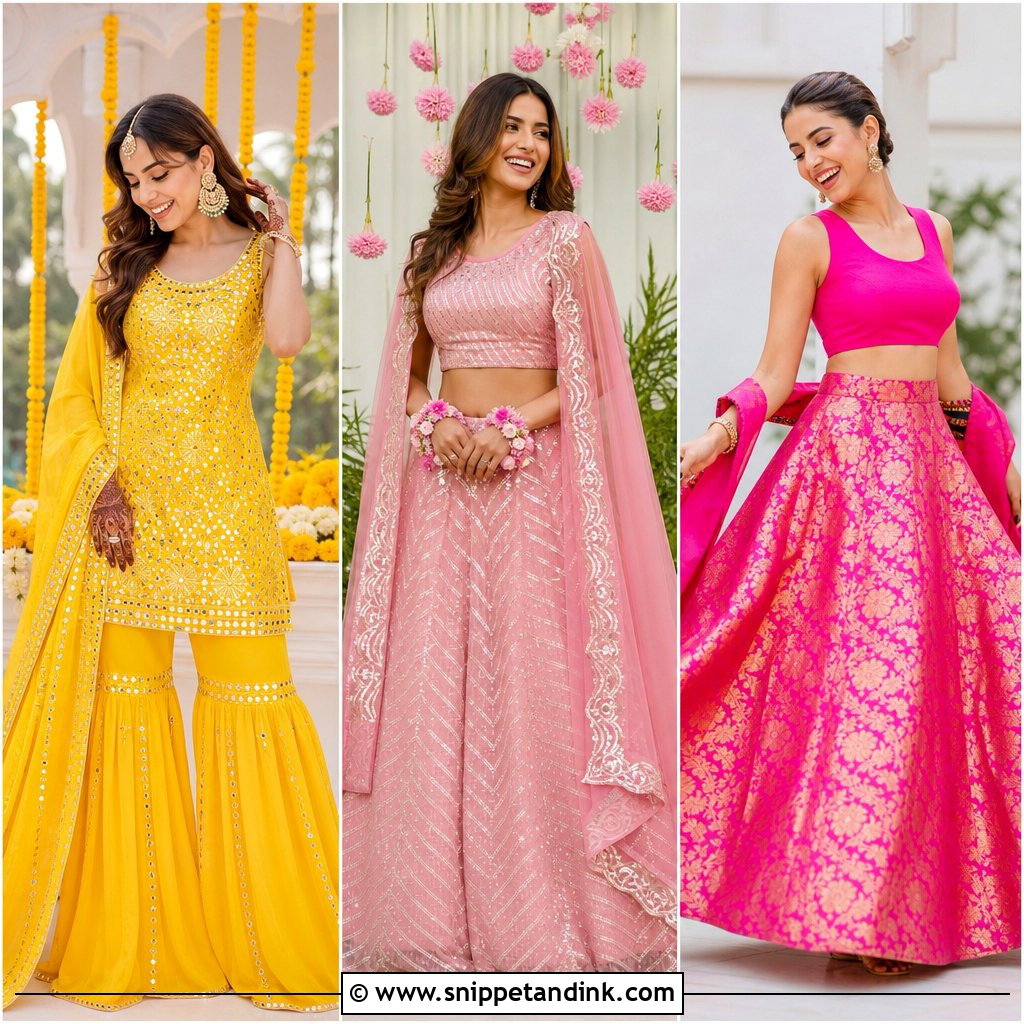
Shararas give volume from the knee down without the weight of a full lehenga skirt, and that is the main reason I suggest them to brides who plan to dance. The wide legs pool around you on a floor cushion, so they hide awkward sitting positions better than a fitted skirt does. Pair a short kurti in yellow, mint, blush or lime with a print scaled to the venue: small florals read as texture from across a courtyard, big tropical ones read as pattern. A light dupatta with gota or mirror edging is enough, and fresh flower jewelry keeps it from feeling formal.
4. Orange Mehndi Lehenga For Bride
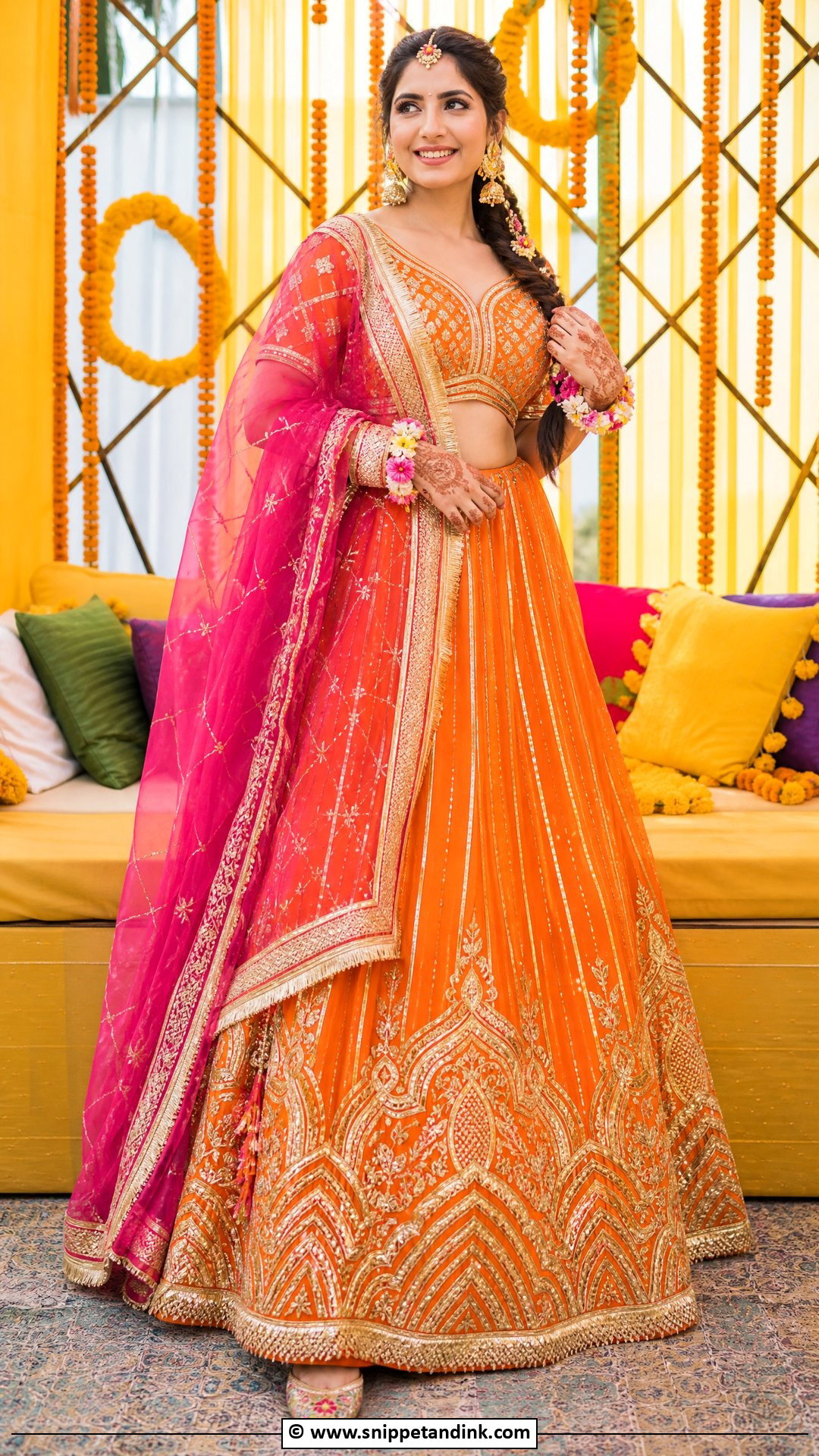
Orange is warmer than yellow and a little more grown-up. A lightweight orange lehenga with gold gota and a few mirror accents glows in daylight, but under tungsten lighting a deep marigold can tip toward red, so I always ask about the lights before I recommend the exact shade. Peach-orange or tangerine is the safer version if the function runs into the night. A contrasting pink, yellow or green dupatta stops it reading as one block of color. Gold jhumkas, floral bangles and embroidered juttis are all it needs, and brass decor makes the whole palette look intentional rather than loud.
5. Pink Mehndi Dress For Bride
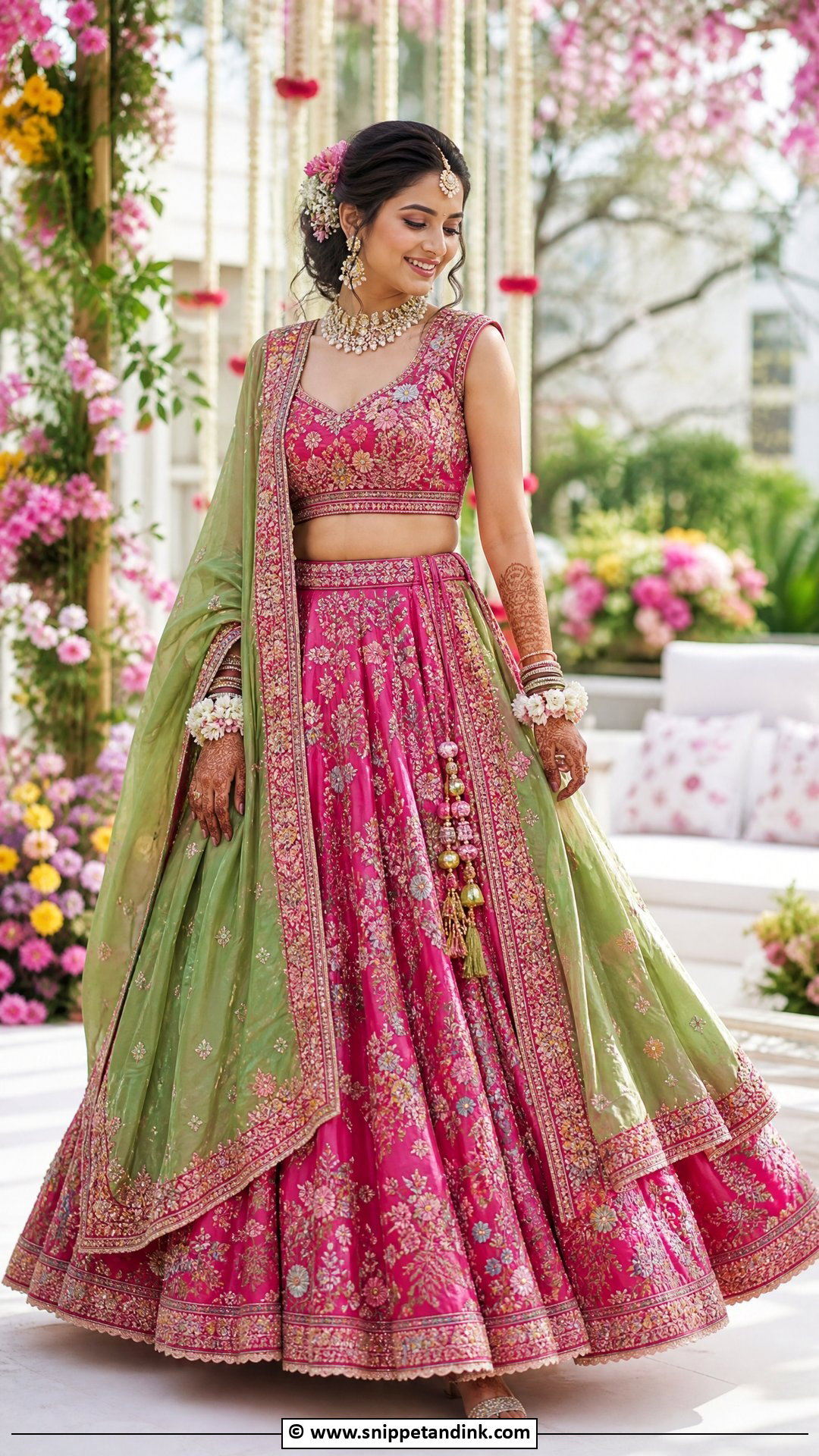
Pink takes you away from yellow and green without leaving the festive palette. Rani pink holds its depth on camera. Blush can wash out next to freshly stained hands in harsh midday sun, so I’d look at a blush swatch by a window before committing to it. The silhouette is wide open: lehenga, sharara, gharara or Anarkali, and the decision really comes down to how you like to sit. Zari borders or floral embroidery give it a bridal edge, and a green or yellow dupatta adds the contrast mehndi photos love. Pearls keep the jewelry from fighting the color.
6. Multicolor Mehndi Lehenga For Bride
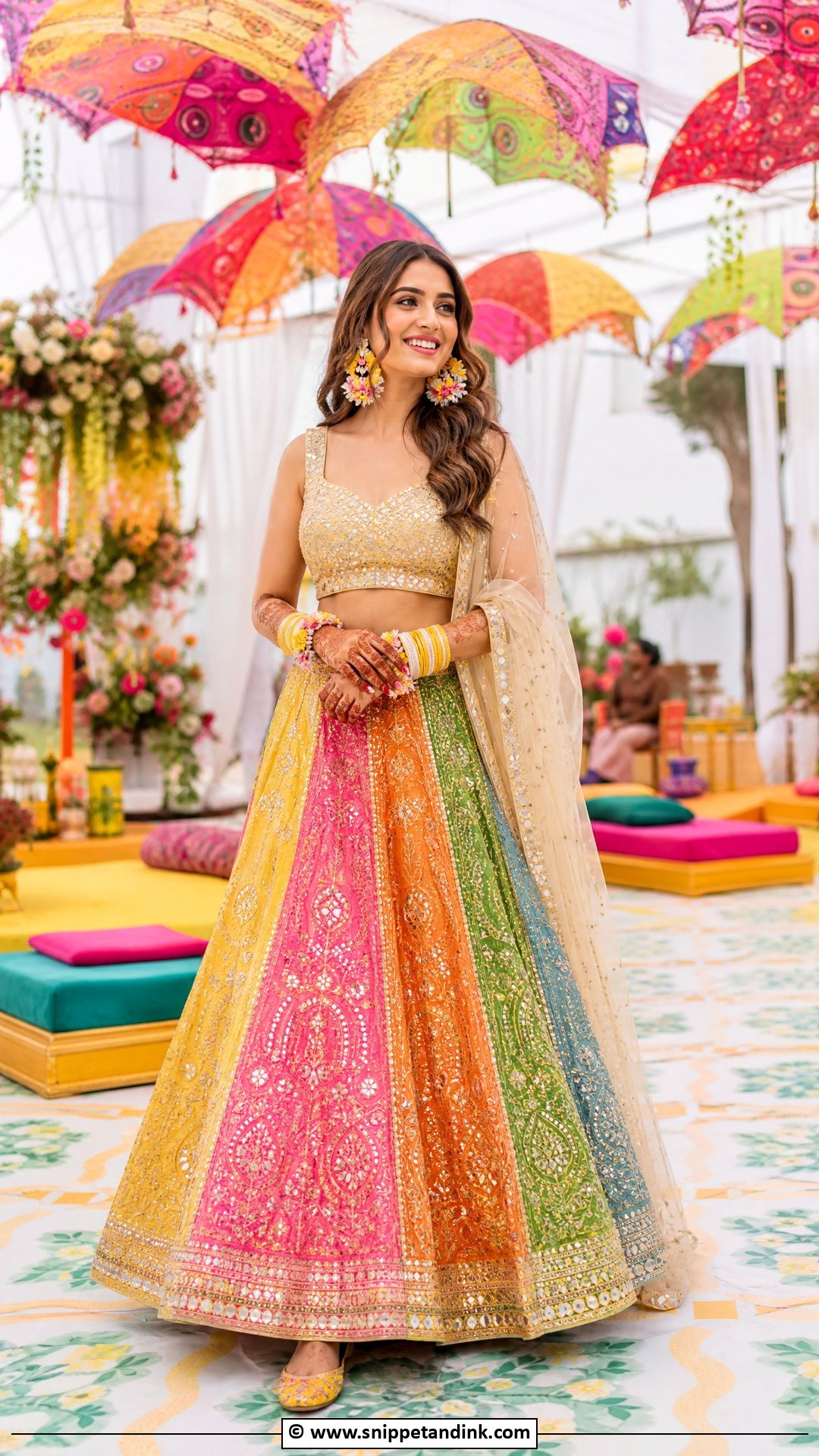
A multicolor mehndi lehenga carries the whole festive palette in one garment, through color-blocked panels, patchwork, printed florals or embroidered motifs in yellow, pink, orange, green and blue. The risk is noise. When I style one, the blouse and dupatta go solid, taken from one of the skirt’s quieter colors, and the jewelry gets smaller, usually floral earrings or a single maang tikka. A busy skirt in front of busy decor can blur together in photos, so ask your decorator what the backdrop will look like before you settle on this.
7. Cape Lehenga Mehndi Dress For Bride
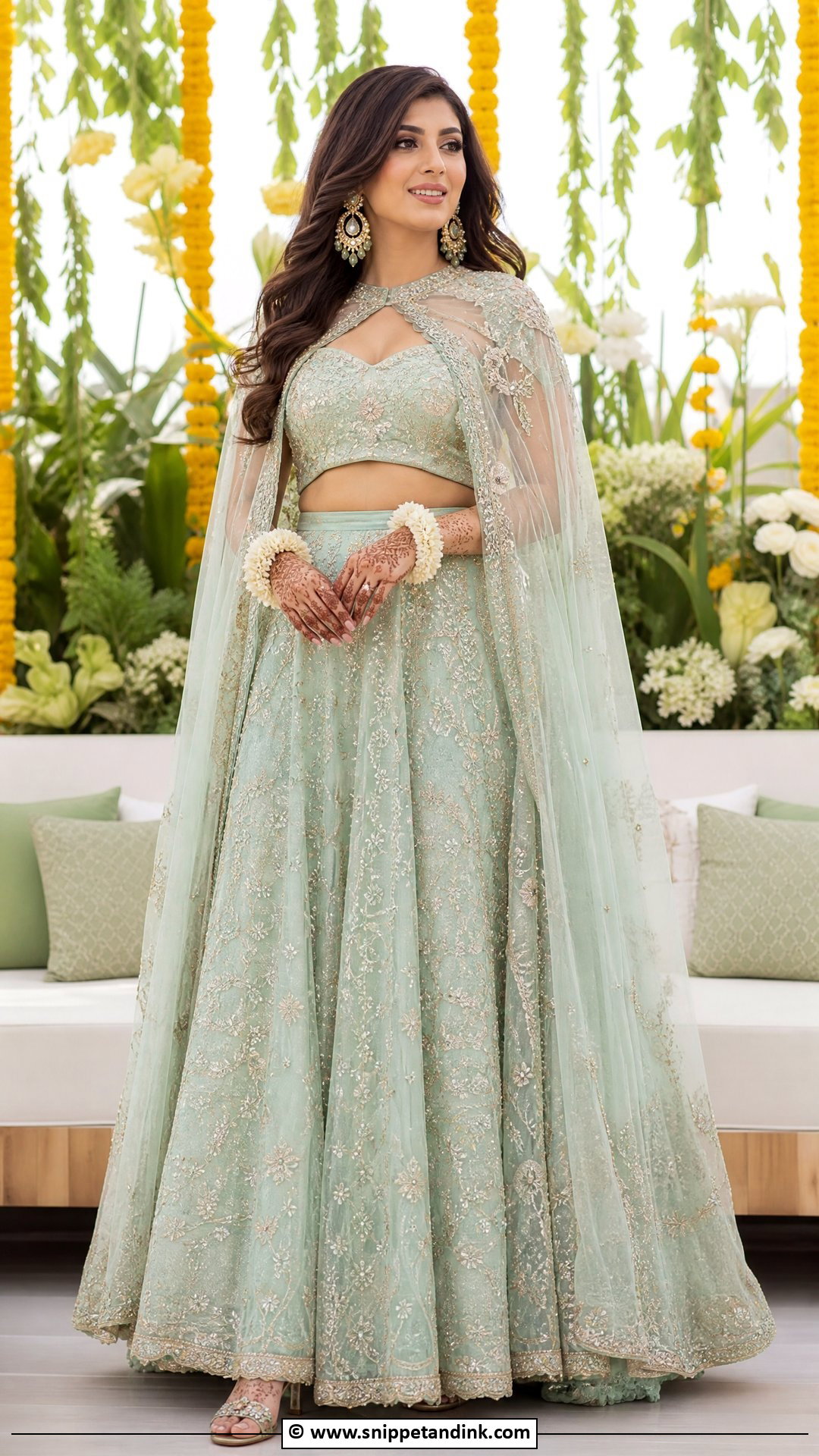
A cape replaces the dupatta, which solves the most annoying mehndi problem of all: fabric sliding off your shoulder and onto wet hands. Organza and chiffon capes are light and move well when you walk. Net can snag on sharp kundan bangles, so I keep heavy stone jewelry away from it. Make sure the cape is open at the arms, or short enough that it never drapes across your wrists while you hold your hands out. Yellow, mint green, coral and ivory with colorful thread work suit the shape, and soft waves with embellished sandals keep it contemporary.
8. Gota Patti Mehndi Dress For Bride
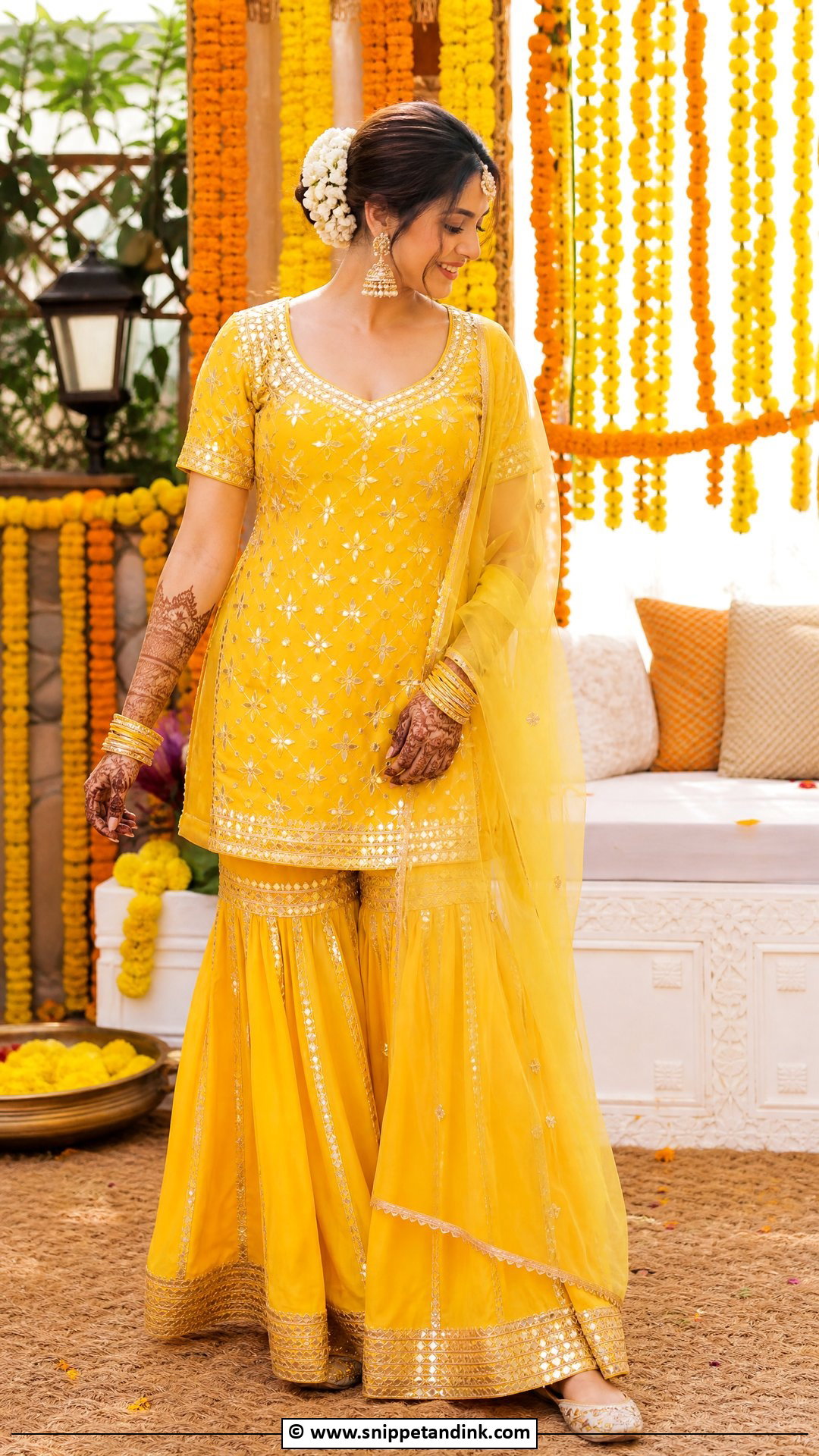
Gota patti is an appliqué of metallic ribbon, and it catches event lighting in a properly festive way while weighing far less than dense zari embroidery. That matters on a day you mostly spend sitting. You’ll find it as borders, scattered motifs or all-over work on lehengas, shararas and Anarkalis. My rule is simple: the more gota on the outfit, the softer the hair, so a braid or bun with fresh flowers balances the shine. Gold jewelry and classic juttis finish it. Cheaper gota can tarnish if it’s put away damp, so air it out after the function.
9. Mirror Work Mehndi Lehenga For Bride
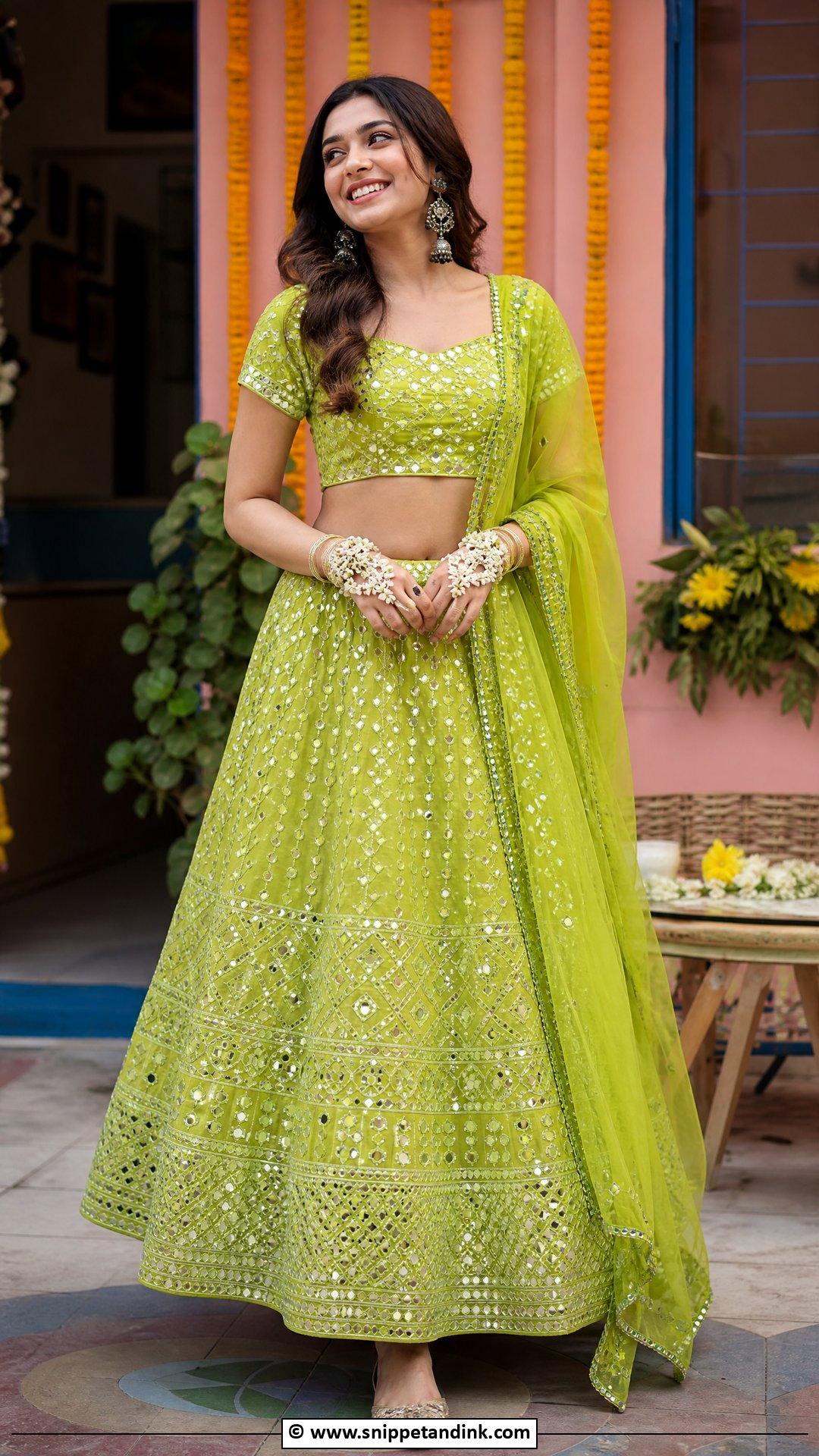
Small mirrors scatter light the way sequins do, but with a handmade look that suits a mehndi far better than reception sparkle. Pick a bright base such as lime, mustard, hot pink, turquoise or orange so the mirrors have something to shine against. I always check where the mirrors sit on the blouse, because dense mirror work on the inner arm or under the bust rubs during a long sit. A sleeveless or square-neck choli is the comfortable choice. Oxidized silver jewelry suits this one better than polished gold, and a dupatta with only mirror edging keeps the weight down.
10. Bandhani Mehndi Dress For Bride
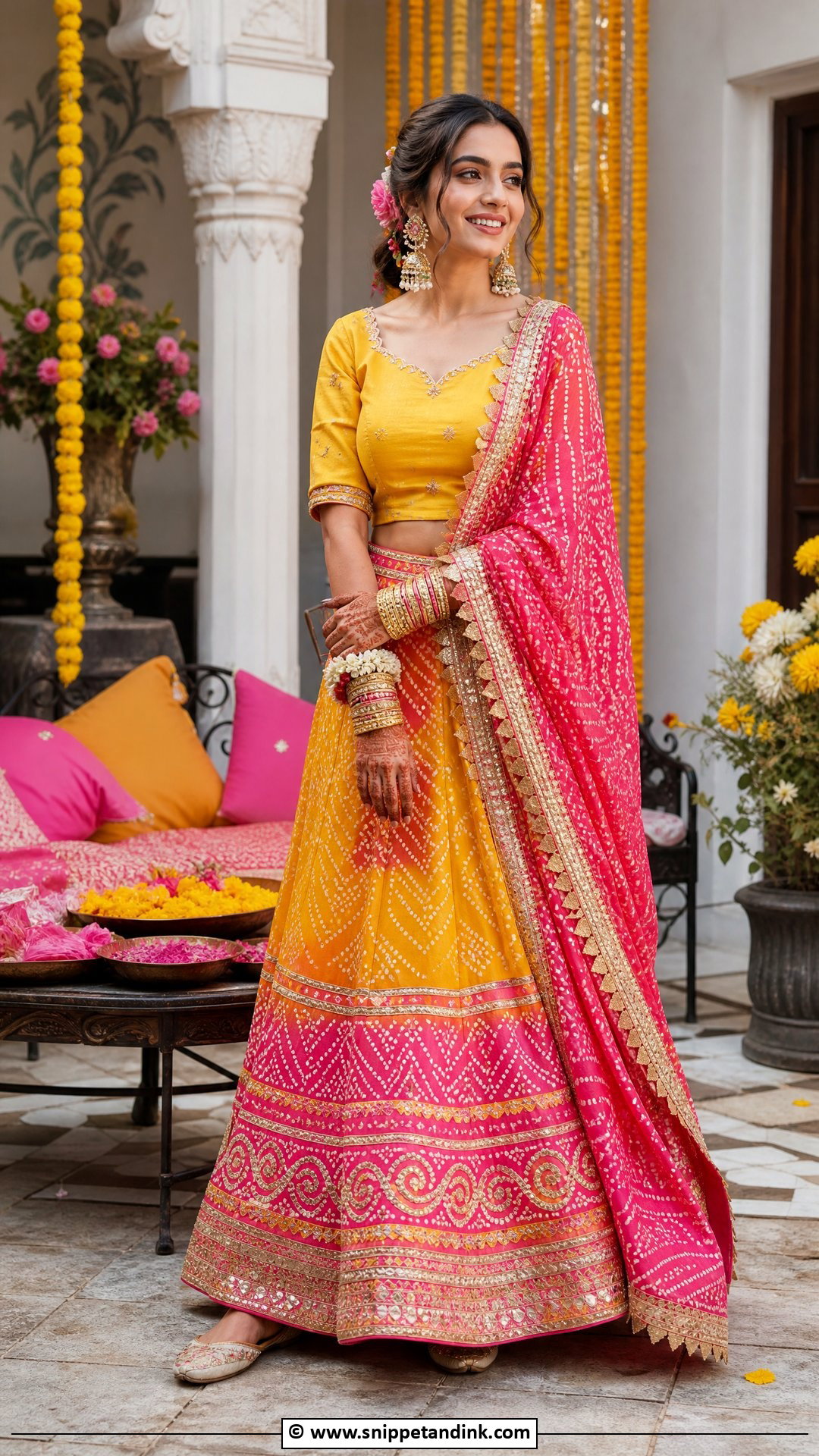
Bandhani is made by tying thousands of tiny knots before dyeing, and the irregular dots give the cloth movement even while you sit still. It reads clearly as traditional yet wears lighter than heavy embroidery. I like a bandhani skirt with a plain or lightly embroidered blouse so the print has room, and a gota patti dupatta is its classic partner. Hand-dyed bandhani can bleed when it gets wet, so treat it as dry-clean only and keep it clear of the lemon-sugar the artist dabs onto drying henna. Jhumkas, bangles and mojari flats finish it.
11. Peplum Sharara Mehndi Dress For Bride
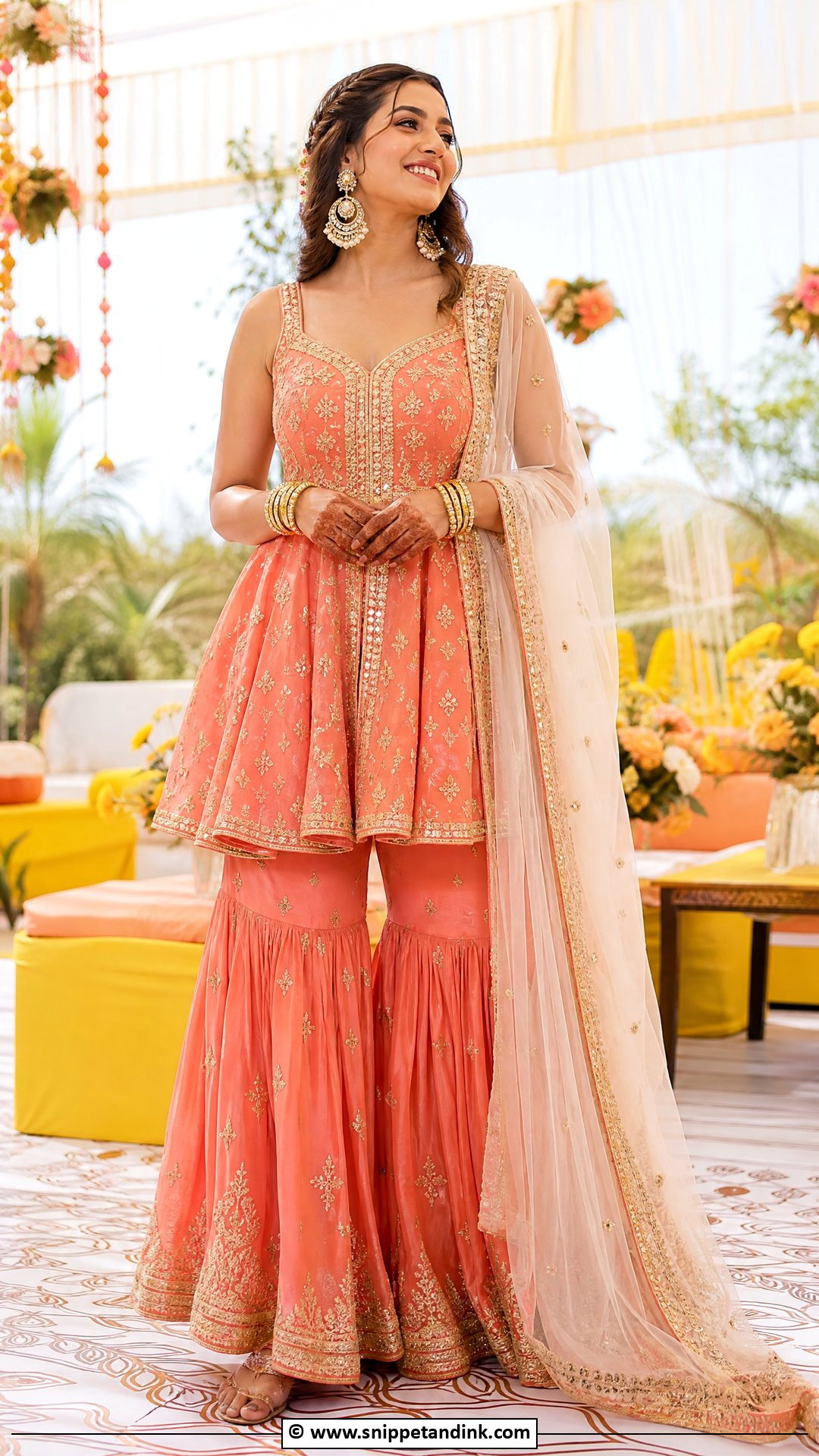
The peplum defines the waist in a way a loose kurti doesn’t, and the sharara underneath keeps the bottom half easy. Watch the peplum’s length. One that ends at the high hip sits flat when you’re seated; a longer one folds across your lap in every sitting photo. Yellow, lime, coral or fuchsia keeps the mood festive. If the neckline and sleeves are embroidered, I usually drop the dupatta altogether. Chandbalis and stacked bangles finish it, though the bangles should go on after the henna has dried.
12. Palazzo Suit Mehndi Dress For Bride
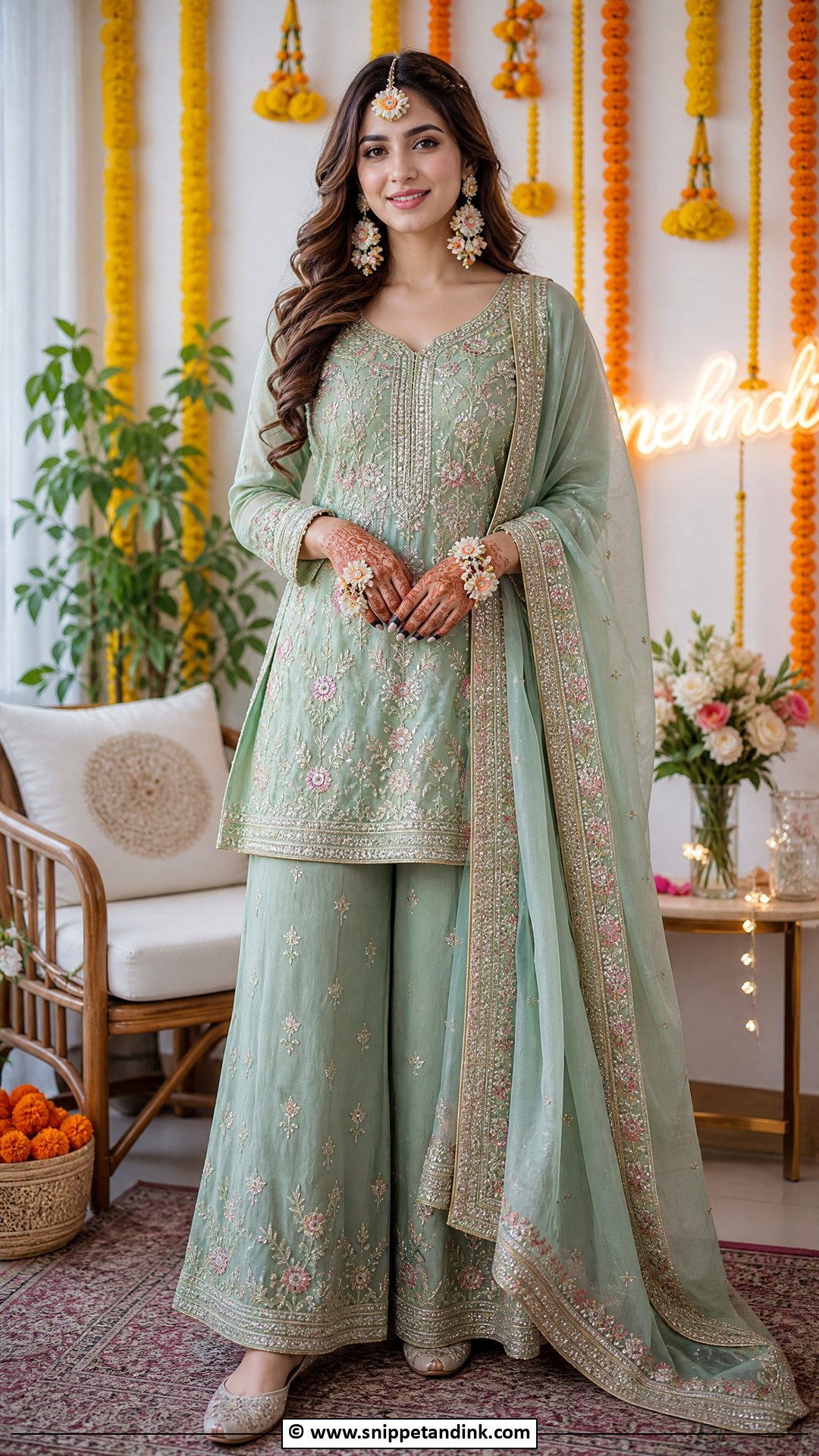
Palazzo sets are what I suggest when a bride tells me comfort comes first. Wide-leg pants let you sit cross-legged or tuck your feet under you without fighting a skirt, which makes a real difference during a long application. A short kurta or asymmetric tunic with embroidery, mirror work or a floral print keeps it festive, in yellow, sea green, peach or pink. A soft bordered dupatta adds the bridal note. The trade-off is drama. A palazzo set reads relaxed, so it suits intimate home functions and morning ceremonies better than a large evening event.
13. Short Kurti Lehenga Mehndi Dress For Bride
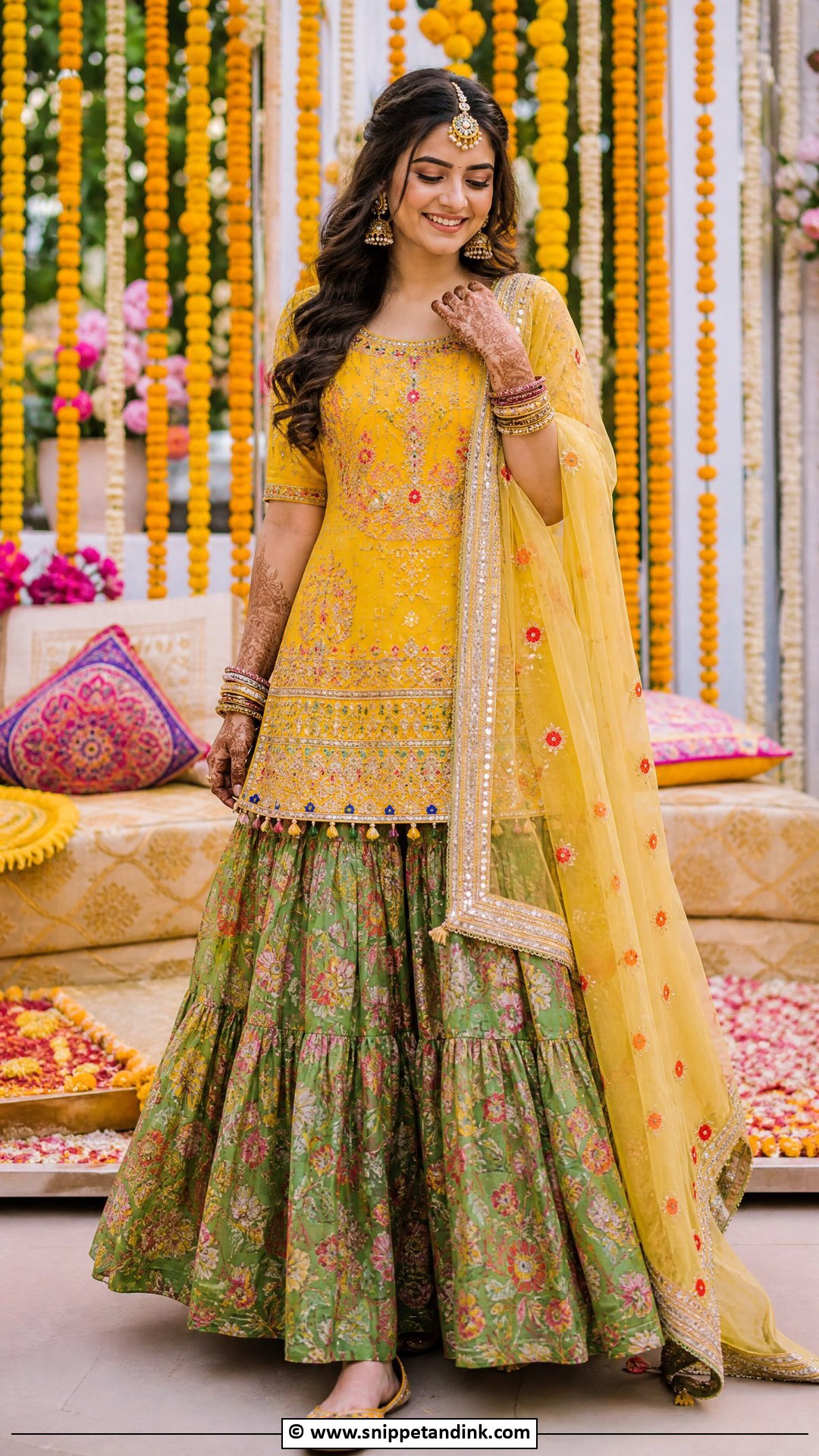
A short kurti lehenga gives more coverage than a choli while keeping the swing of a lehenga skirt. I reach for it when a bride feels exposed in a cropped blouse, or when elders will be sitting close all afternoon. Look for a kurti with mirror work, thread embroidery or gota accents over a printed or solid skirt in yellow, green, orange or pink. Drape the dupatta to one side so both hands stay free. Juttis, bangles and a maang tikka complete it.
14. Jacket Lehenga Mehndi Dress For Bride
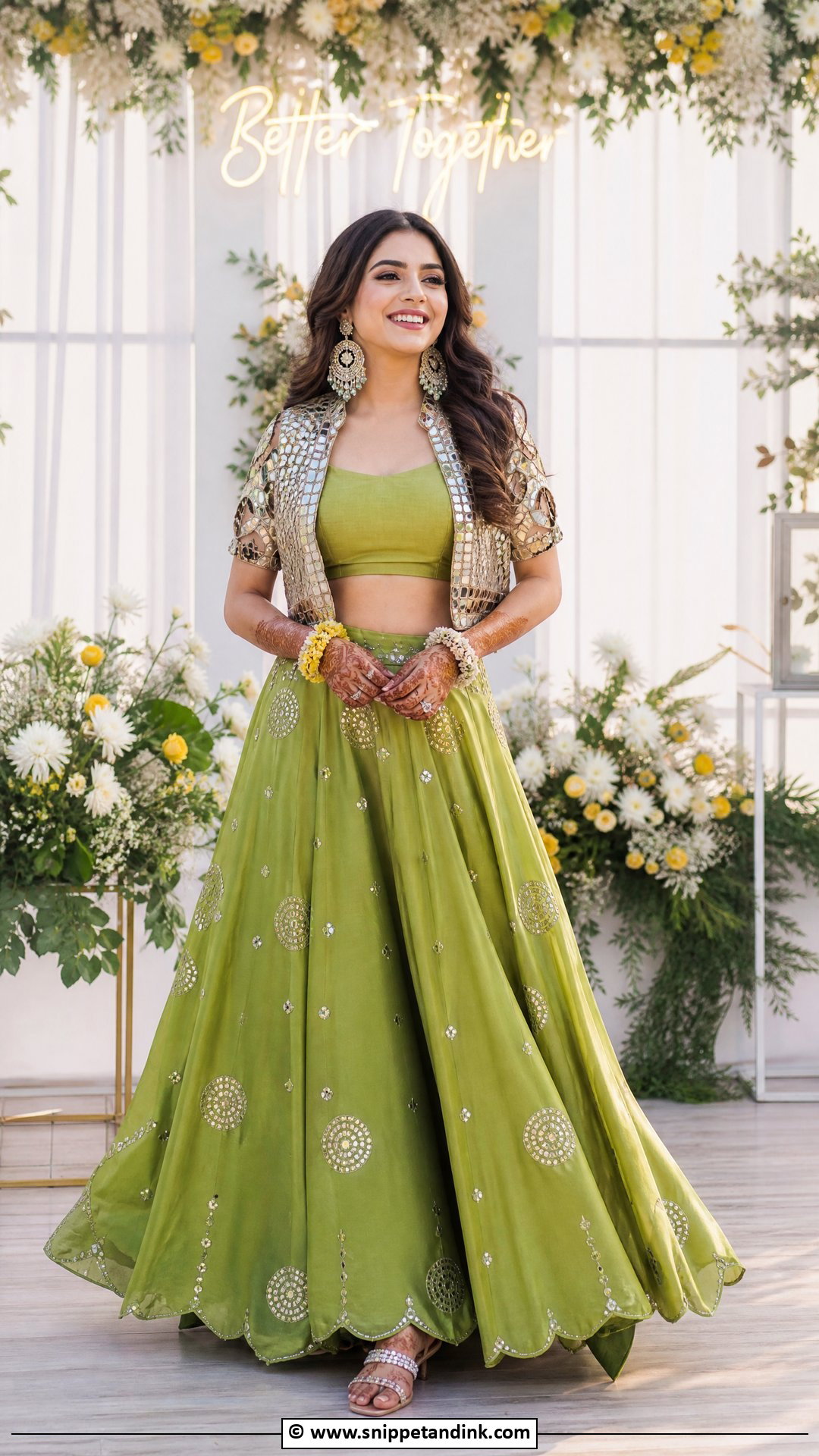
A jacket does the dupatta’s job and stays put, so I suggest it to brides who are worried about fabric sliding into their henna. Short jackets read playful and long open ones read formal. Layers get warm, though, so the jacket should be organza, georgette or a light silk blend, never lined brocade. Contrast is where it gets fun: a yellow lehenga under a pink jacket, or a green skirt with a mirror-work jacket. Keep the jewelry clean because the jacket already supplies the detail, and check that its sleeves finish above the wrist bone.
15. Pastel Mehndi Dress For Bride
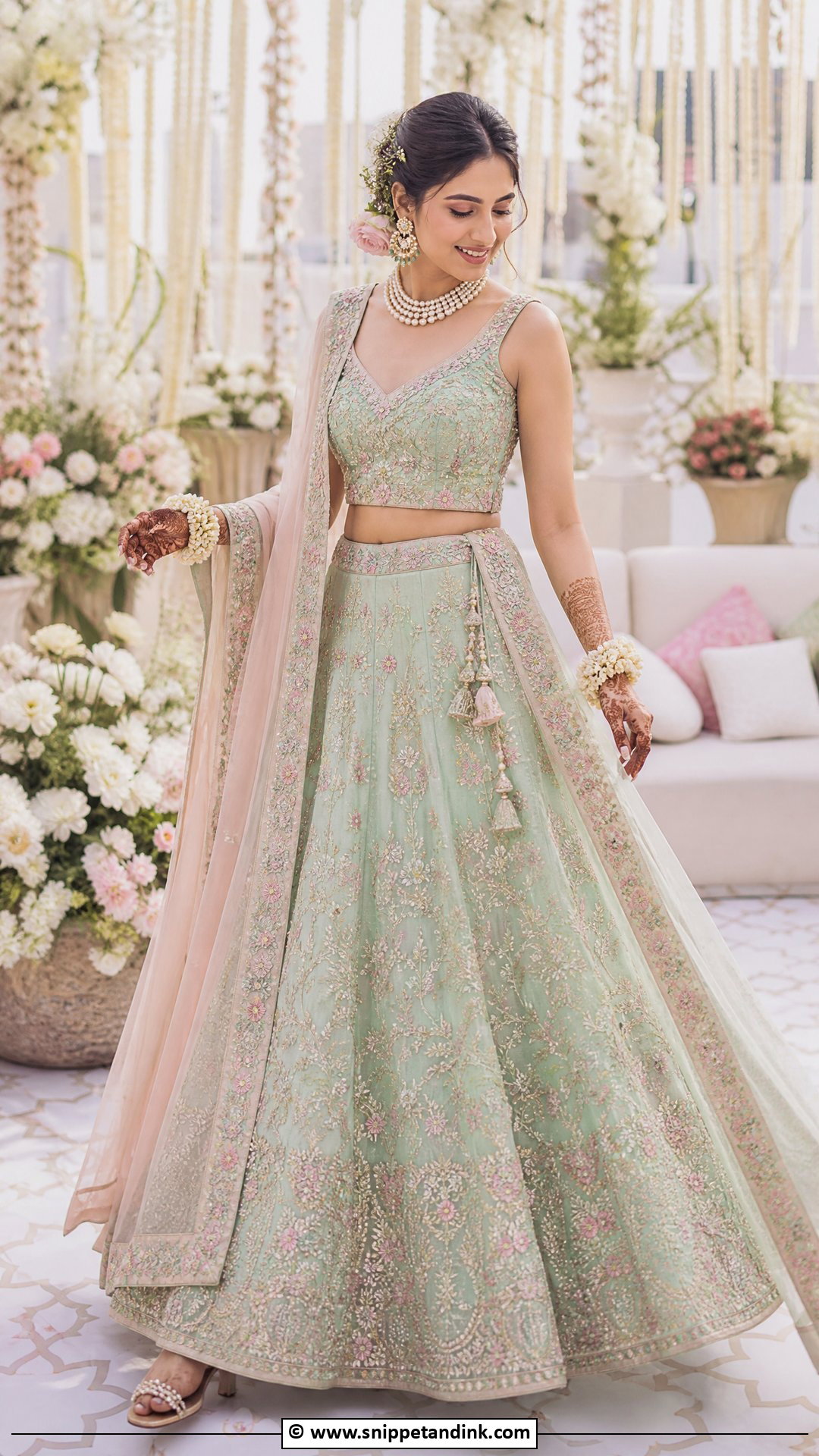
Pastels can look washed out beside marigold decor unless something gives them definition. I ask for at least one of these on a pastel outfit: contrasting embroidery thread, mirror work, or a brighter dupatta. Mint, lavender, blush, powder blue, peach and lemon all suit daytime garden events, with pearls, fresh flowers and soft makeup. Pale fabric shows paste and oil the moment they touch it, so this is the outfit where I’m strictest about short sleeves and a cotton cloth over the lap.
16. Lime Green Mehndi Lehenga For Bride
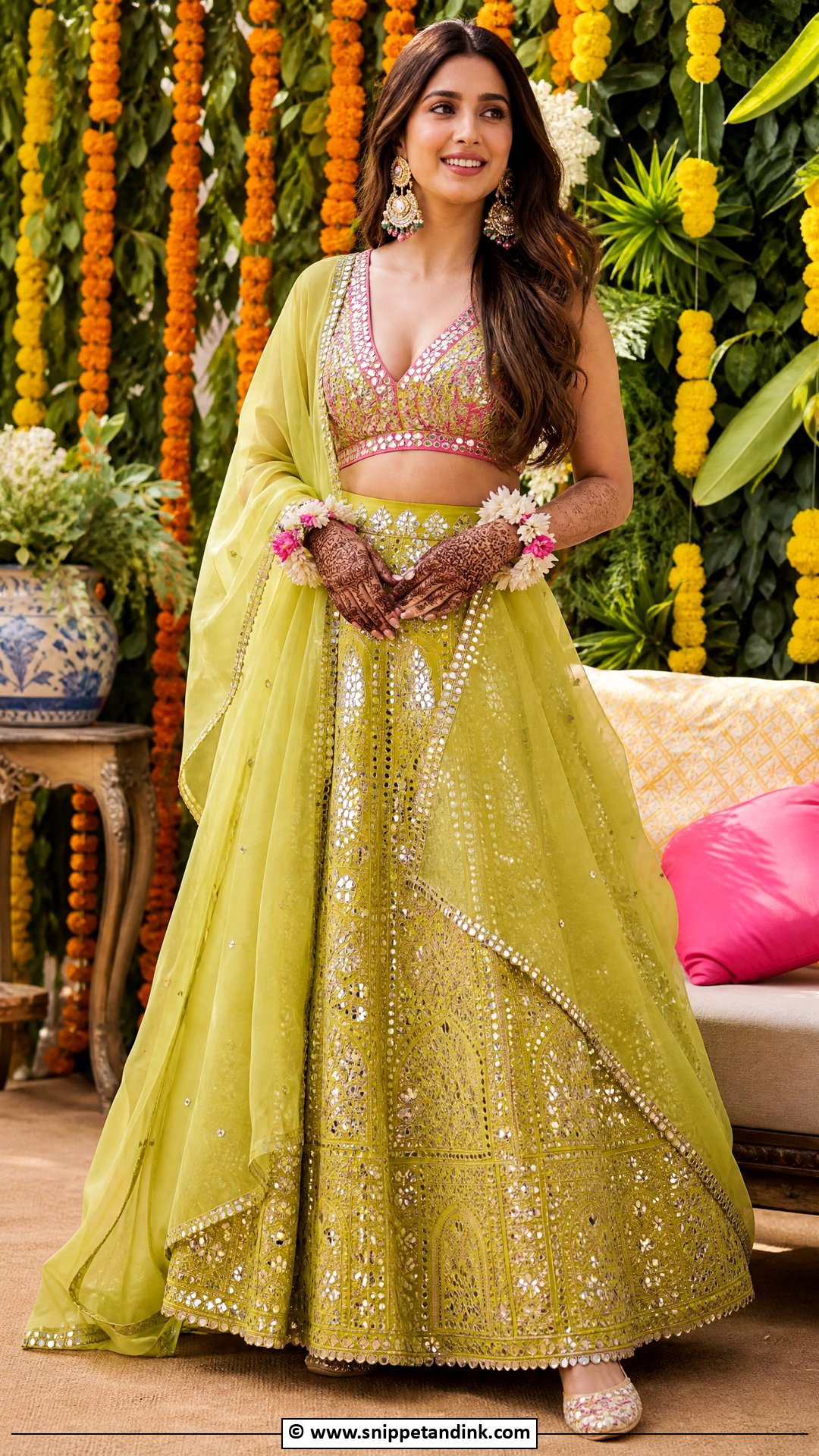
Lime green is bright without being yellow, and its slightly sharp tone makes an orange henna stain look richer beside it. It needs texture, so mirror work, sequins or colorful threadwork keep it lively. A matching blouse creates one long column of color, which lengthens the figure; a pink, orange or ivory blouse breaks it up for more contrast. Keep the dupatta light if you’ll be seated a long time. Lime looks crisp outdoors against greenery, but under yellow indoor bulbs it can turn muddy, so check it in your venue’s light first.
17. Mustard Mehndi Dress For Bride
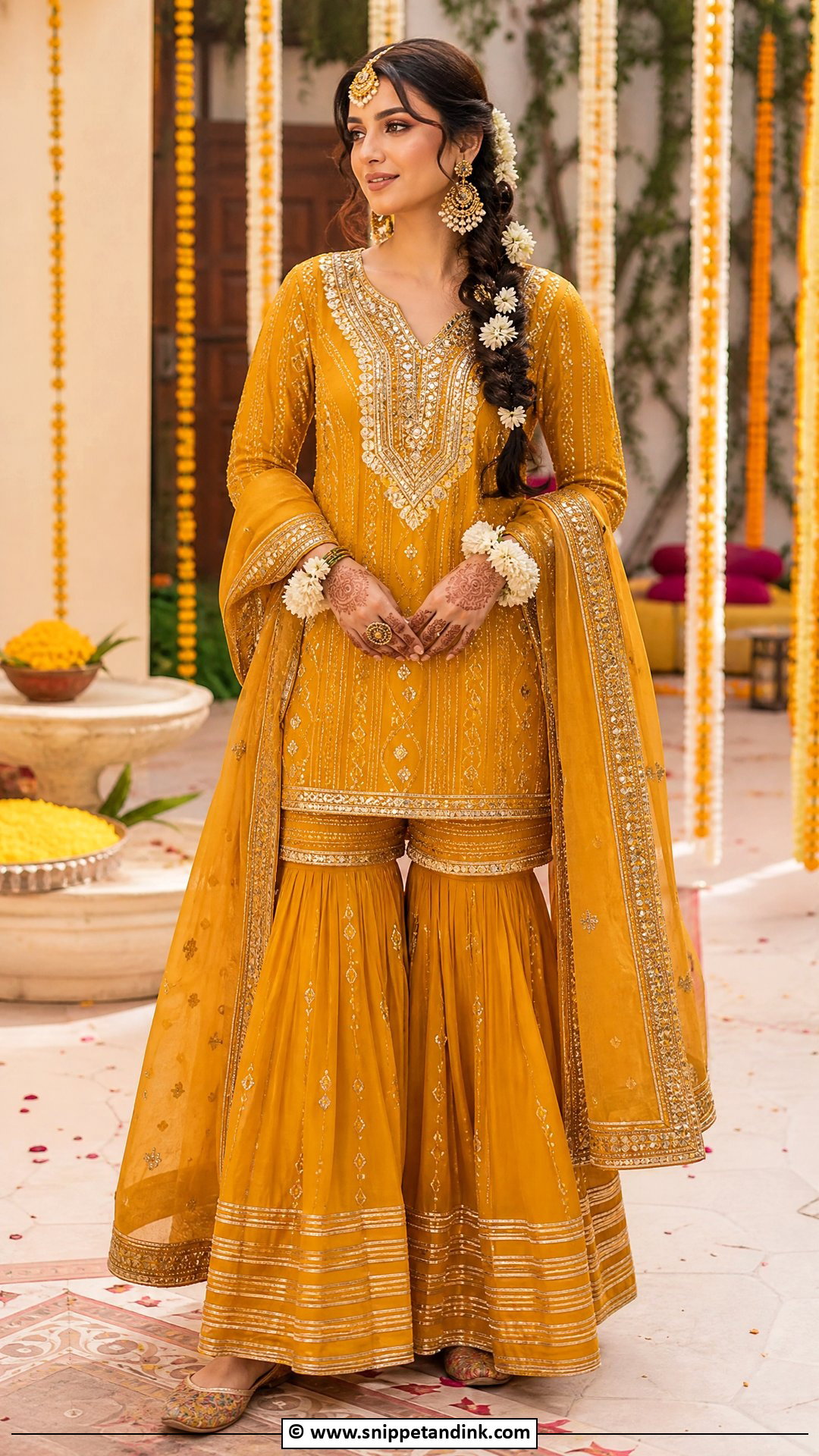
Mustard is the yellow for a bride who doesn’t want neon. It sits at the earthy end, so it pairs with antique gold, deep green, rust and magenta in a way bright lemon never does. It works in a lehenga, sharara, Anarkali or gharara with gota patti, zari borders or mirror work. I find it kinder to warm and olive skin than pale yellow, and it hides a stray turmeric mark if the haldi falls on the same day. A floral braid and embroidered flats finish it, indoors at night or in a courtyard by day.
18. White And Yellow Mehndi Dress For Bride
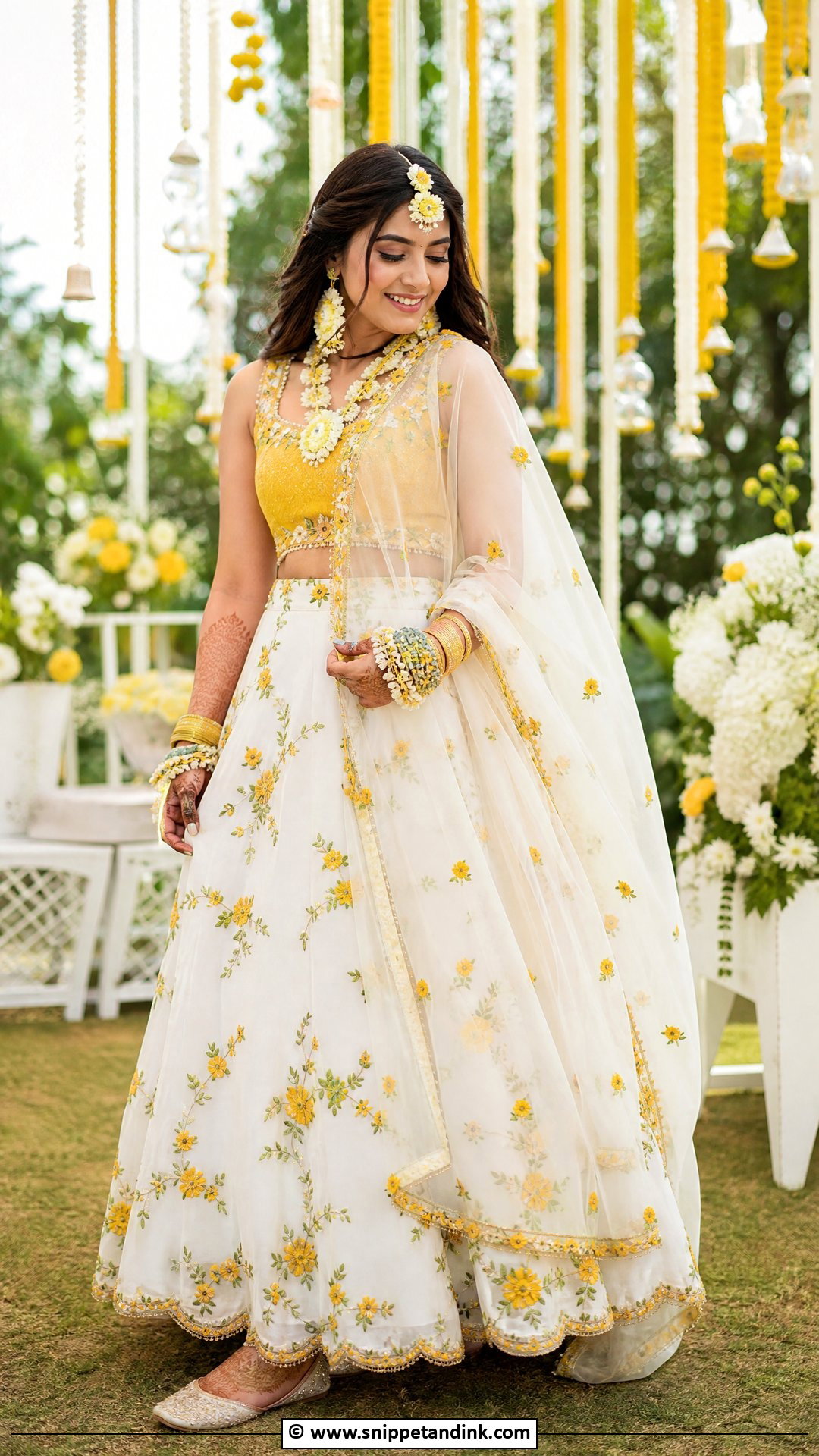
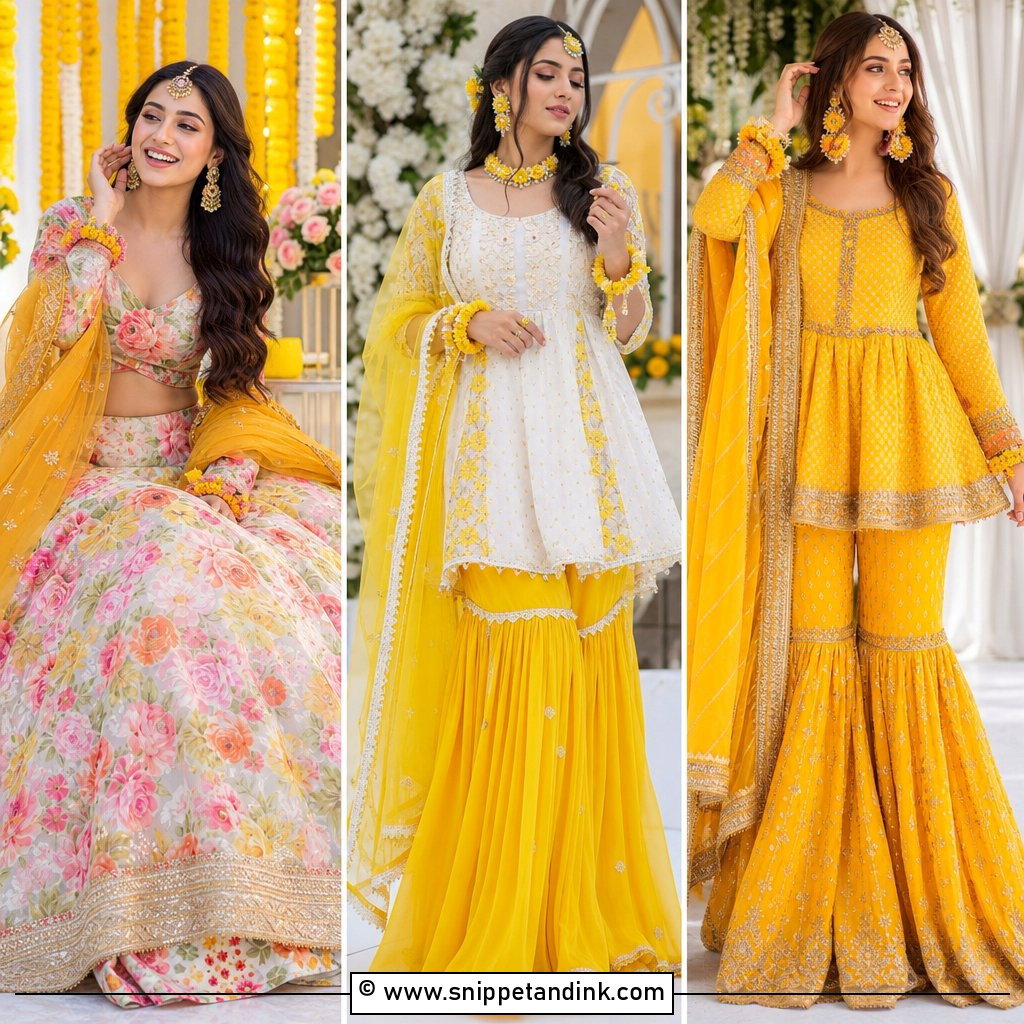
A white base keeps the outfit light and the yellow keeps it clearly mehndi. You might wear yellow floral embroidery on a white lehenga, a yellow blouse over a white skirt, or a white sharara with a yellow dupatta. My honest warning: white is the least forgiving color at a henna function. Paste, oil and lemon-sugar all mark it, so I’d only choose this if the artist works over a covered lap and you change before the dancing starts. In morning light outdoors, though, nothing looks fresher. Yellow and white flower jewelry ties it together.
19. Red And Yellow Mehndi Dress For Bride
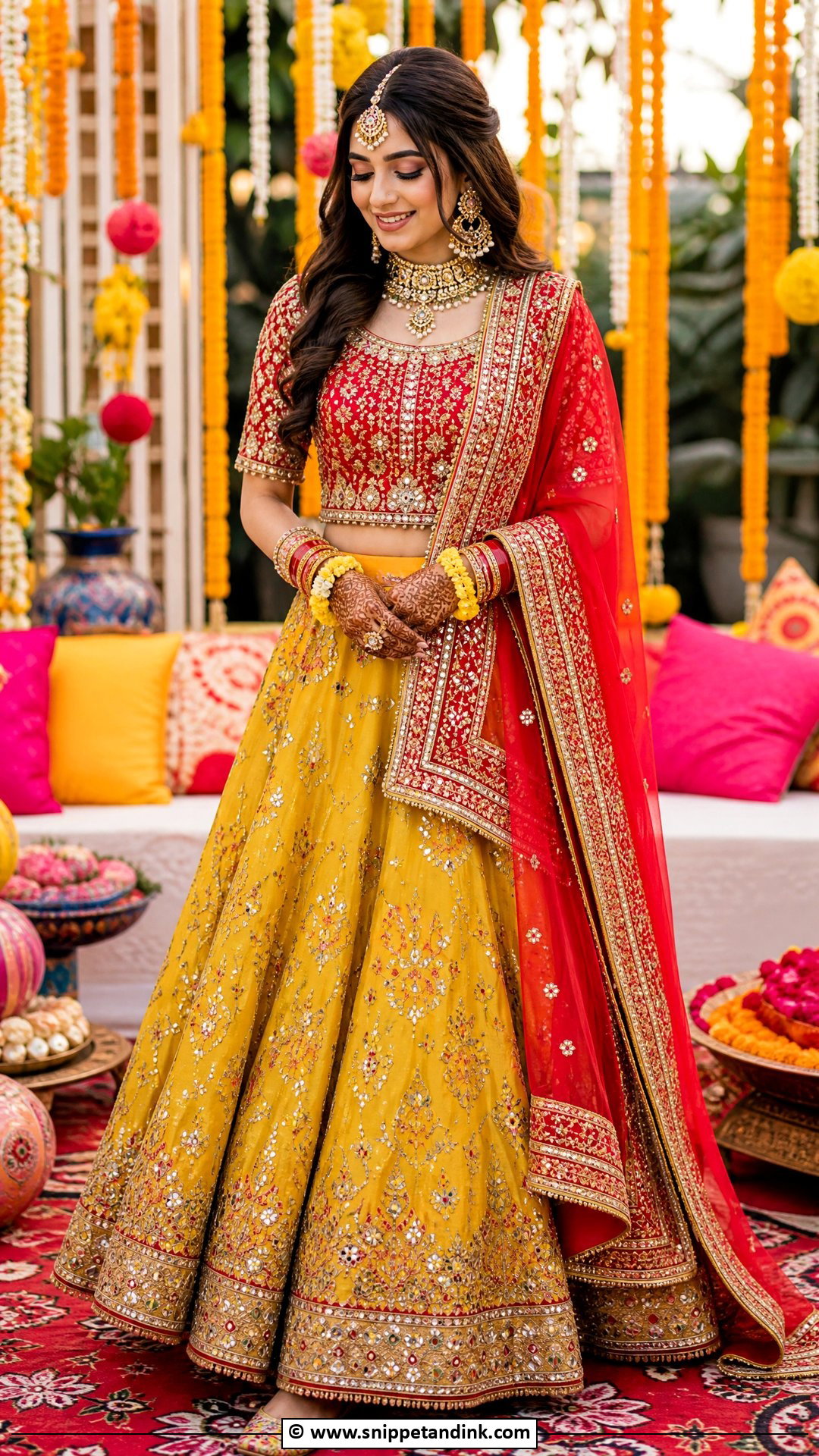
Red and yellow are the classic wedding pairing, and at a mehndi they carry tradition without needing heavy embellishment. A yellow lehenga with a red dupatta, a red blouse over a yellow skirt, or a two-tone sharara all work. Because both colors are strong, I keep the embroidery to gota, zari or a scattering of mirrors and hold back on extra accessories. Gold or kundan jewelry ties the two together. Expect a fresh orange stain to look a little pale next to red in the first photos; henna keeps darkening for a day or two.
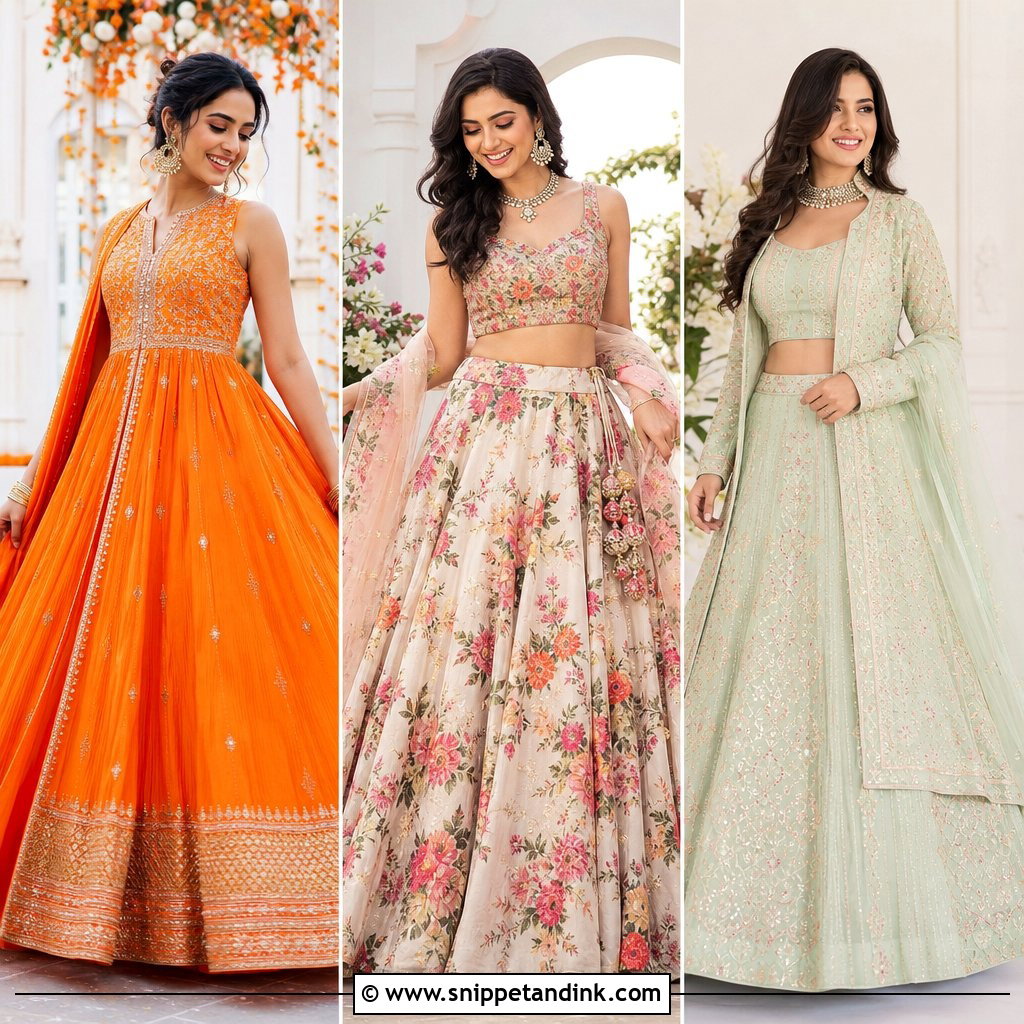
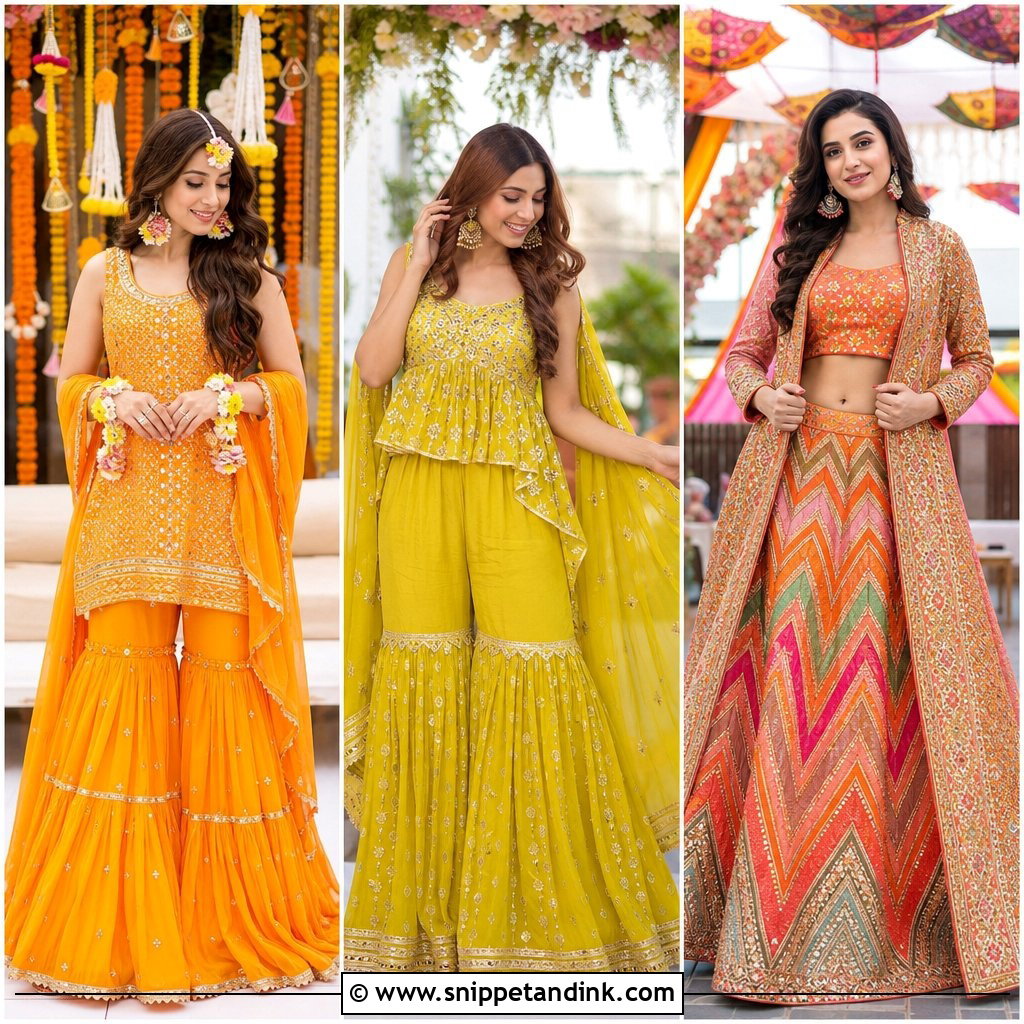
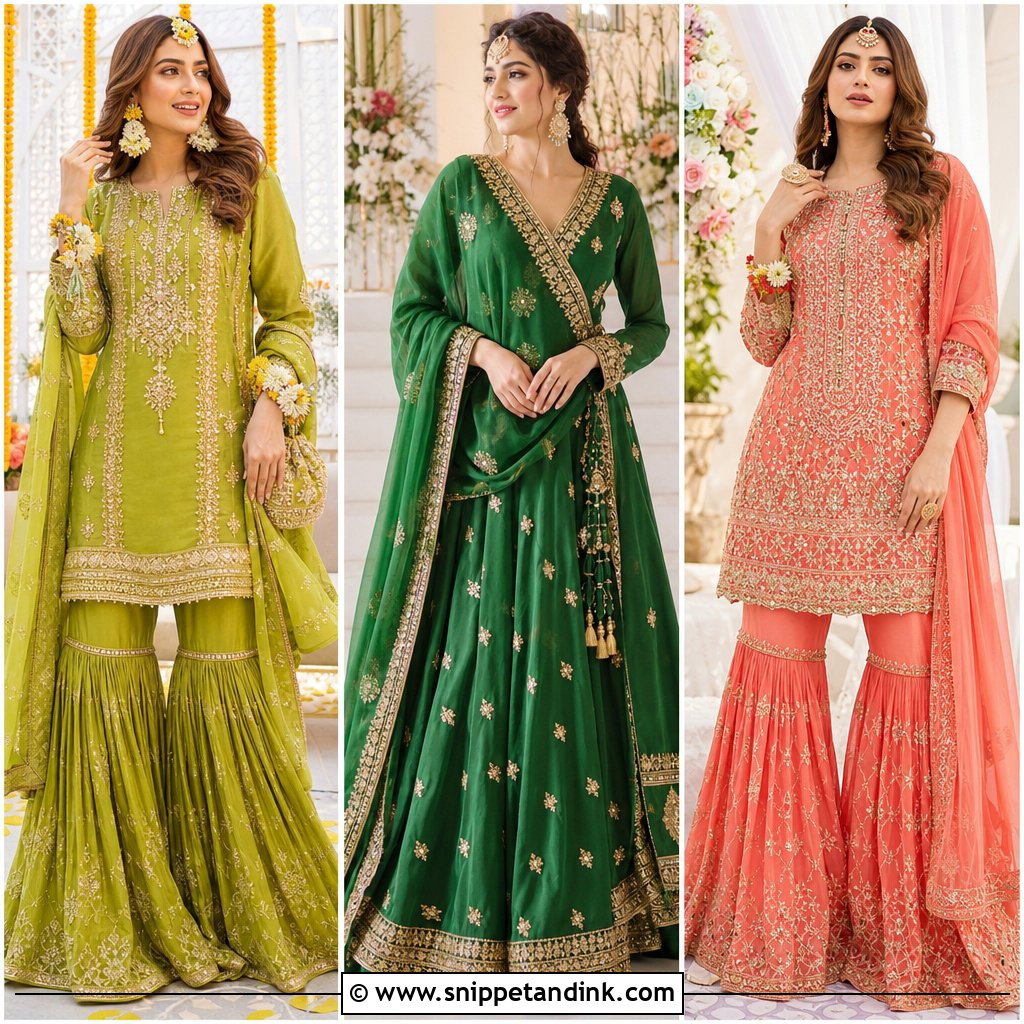
20. Blue Mehndi Dress For Bride
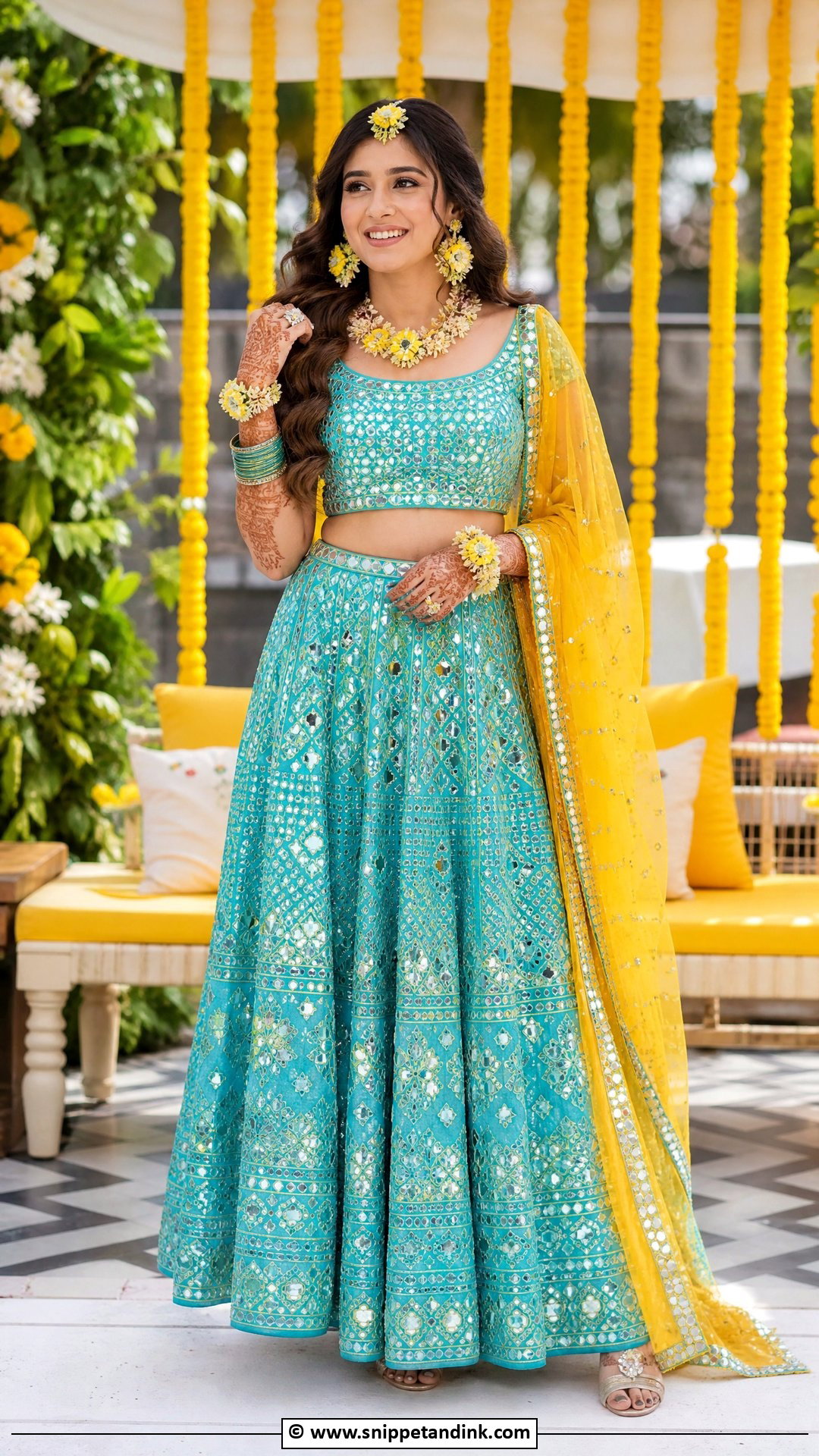
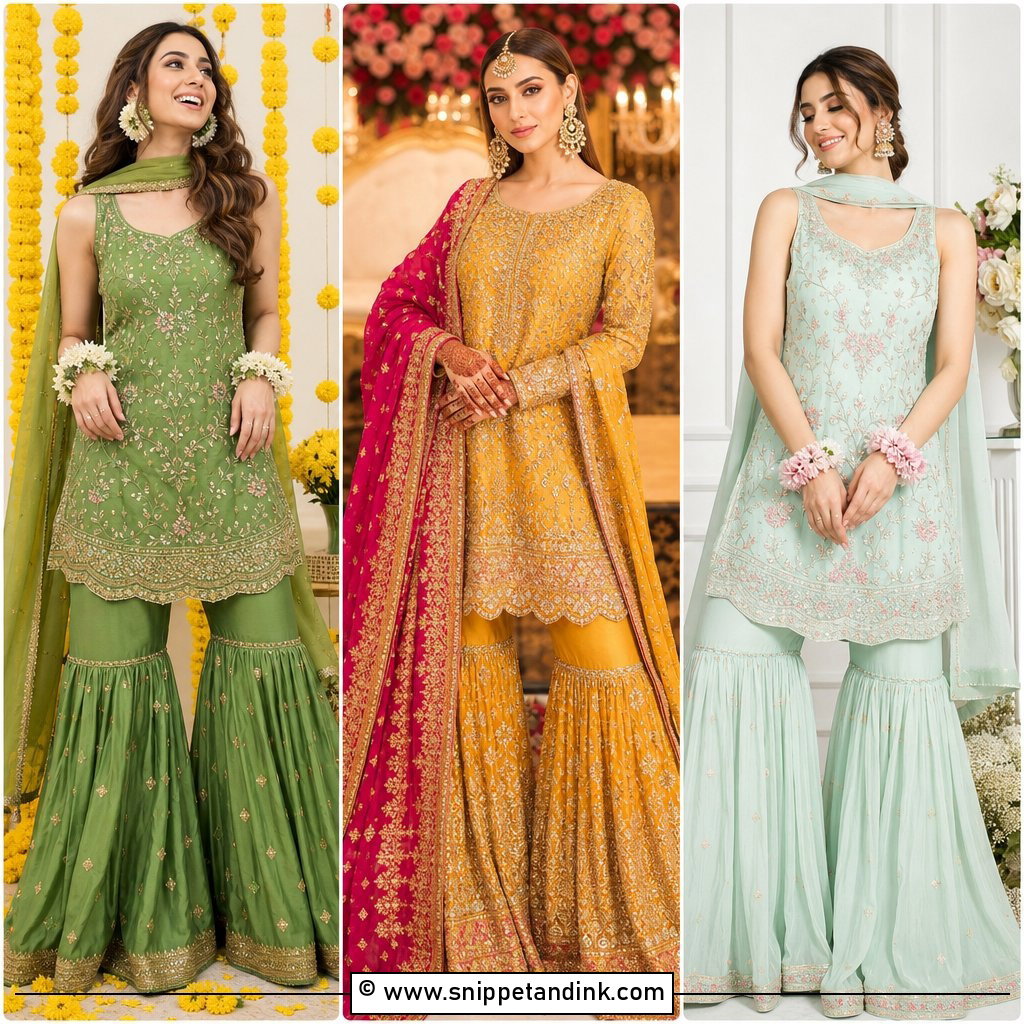
Blue breaks from the warm palette and gives real contrast against marigolds and greenery. I match the shade to the hour. Turquoise or powder blue with mirror work suits a daytime function. Teal or royal blue with gold work suits the evening, when deeper colors hold up better under artificial light. A lehenga, sharara or Anarkali all carry it. Yellow or pink accessories warm it up, which helps if your family feels blue is too cool for a festive function.
21. Lavender Mehndi Dress For Bride
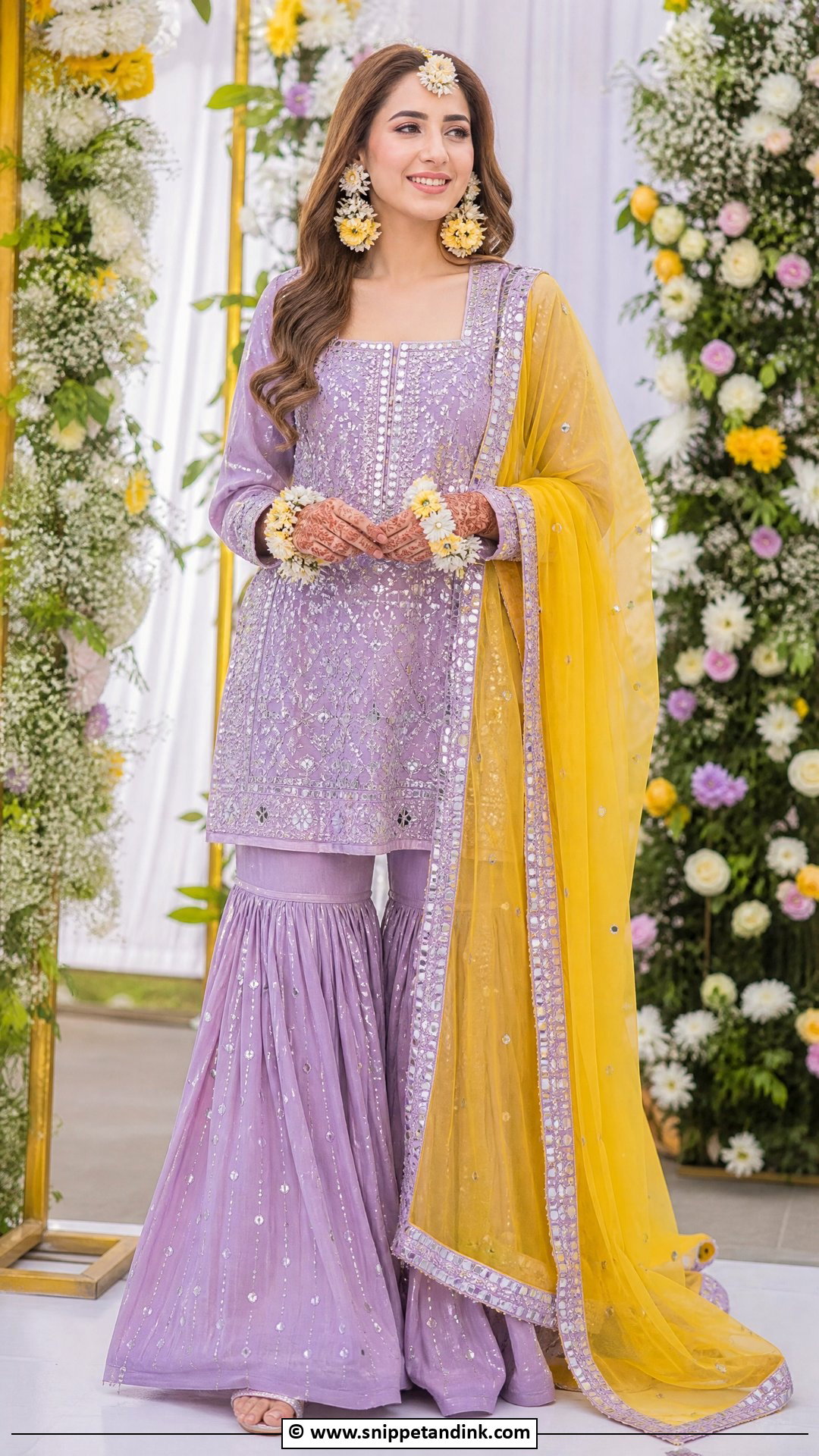
Lavender is soft and still uncommon at a mehndi, which is half its appeal. It sits better with silver, pearl and mirror details than with yellow gold, so I usually steer the jewelry that way. Floral embroidery keeps it festive, and a yellow, mint or pink dupatta adds warmth. Be aware that lavender shifts with light: in shade it can go grey, in full sun it turns pinkish lilac. Spring and summer garden functions show it at its best.
22. Rajasthani Mehndi Lehenga For Bride
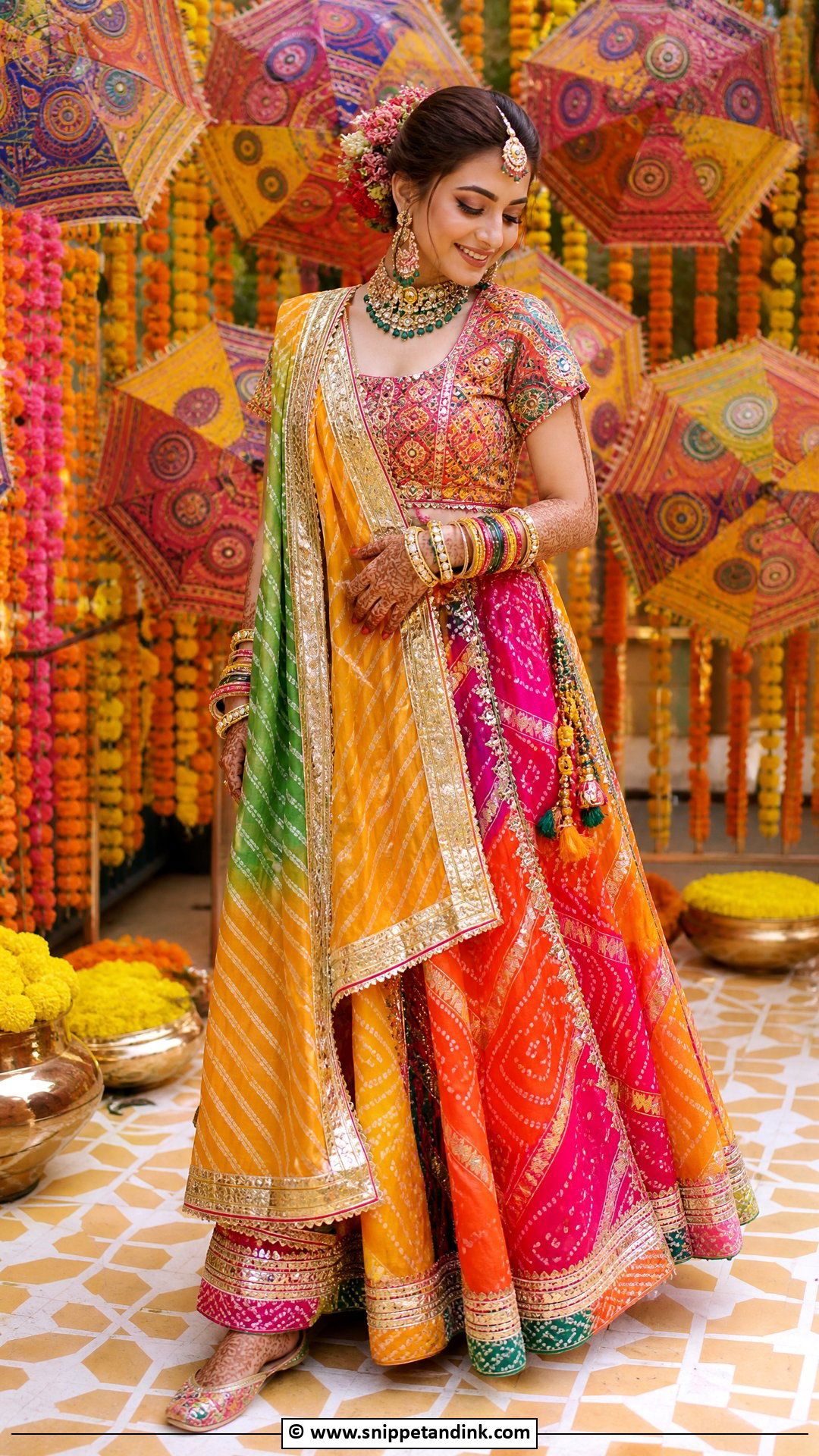
A Rajasthani lehenga layers pattern on pattern: bandhani, leheriya, gota patti, mirror work and tassels in yellow, orange, pink and green. It is the most culturally rooted look here, and it needs a bride who enjoys being the brightest thing in the room. My main concern is weight, since traditional pieces can get heavy, so I look for a lighter base fabric that still carries the detail. A short choli, a colorful dupatta, juttis and bangles finish it, and folk decor, umbrellas and floor seating make it feel completely at home.
23. Pakistani Mehndi Gharara For Bride
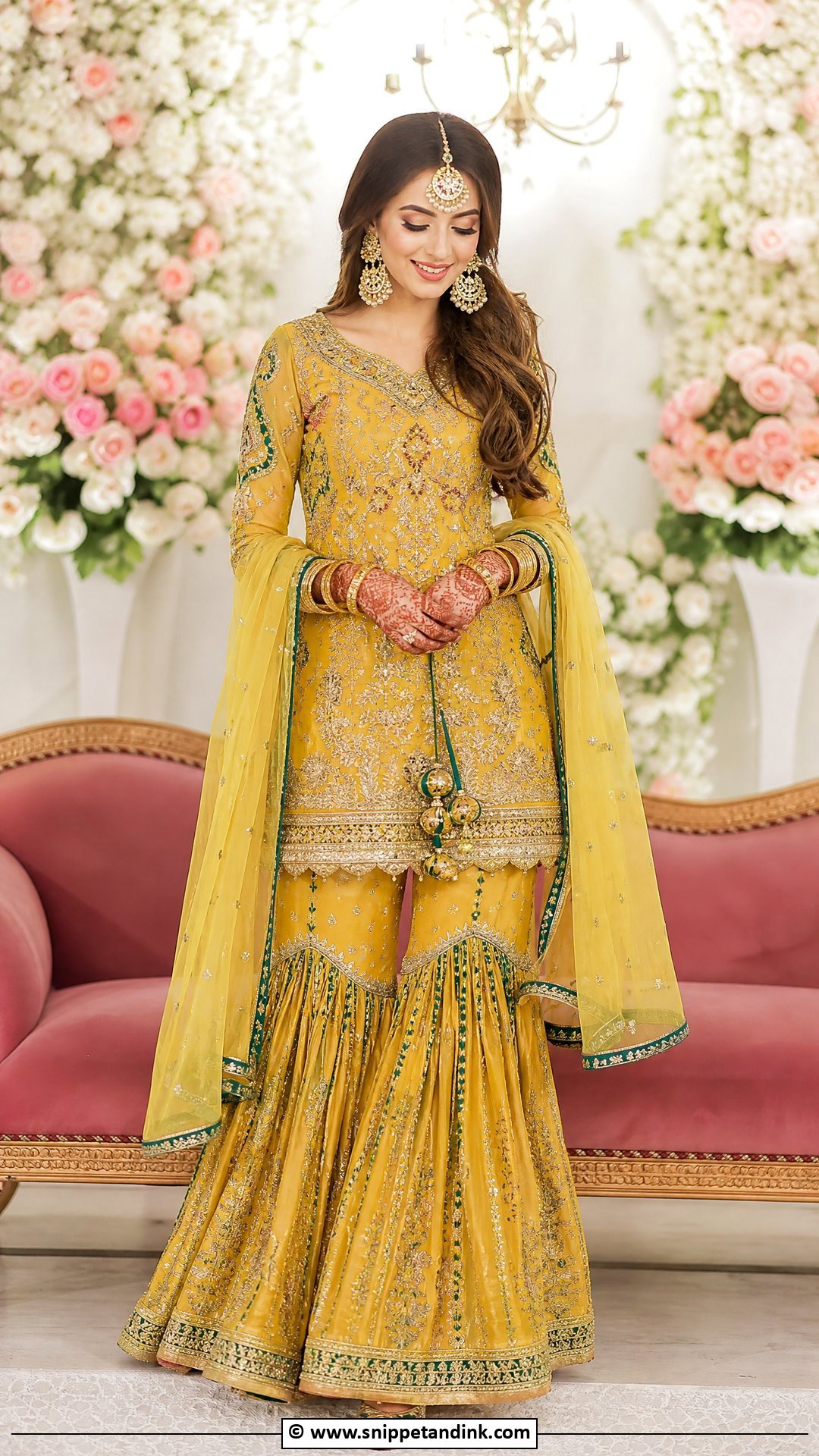
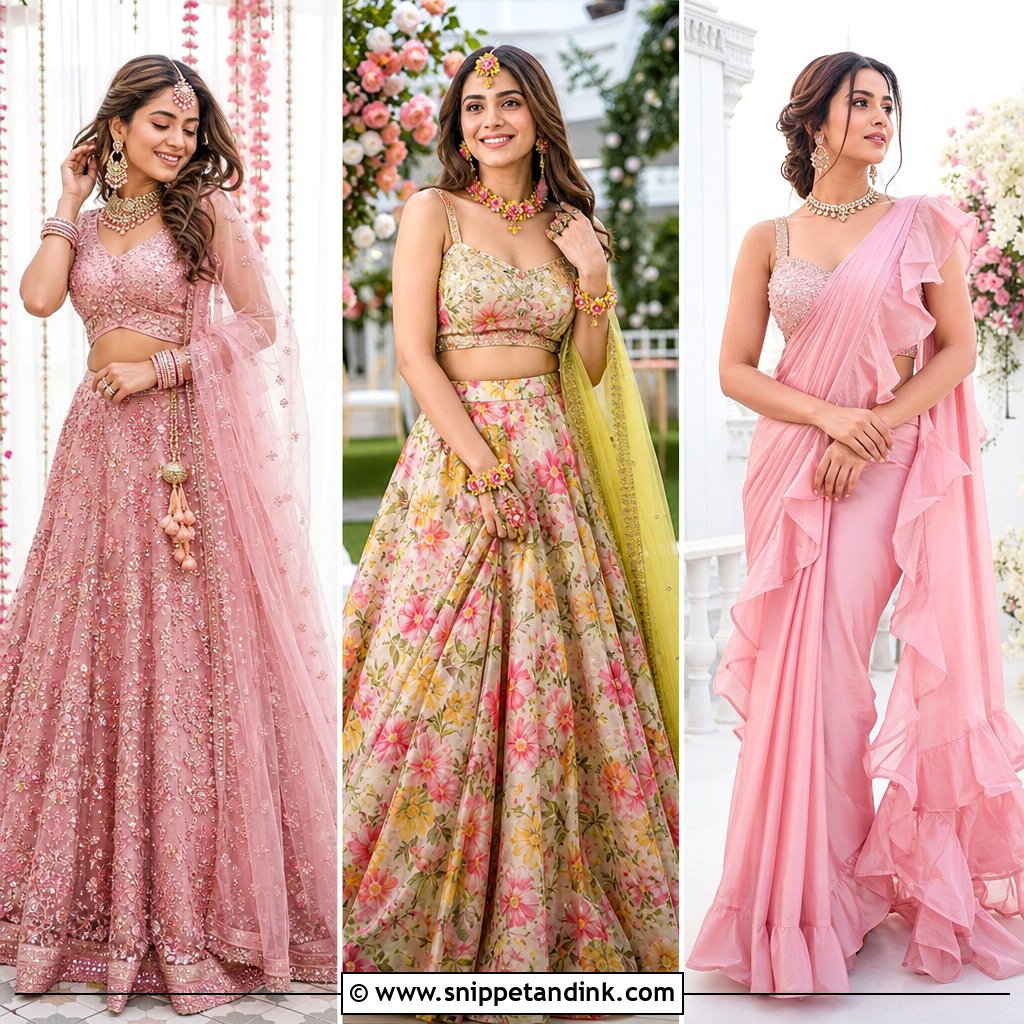
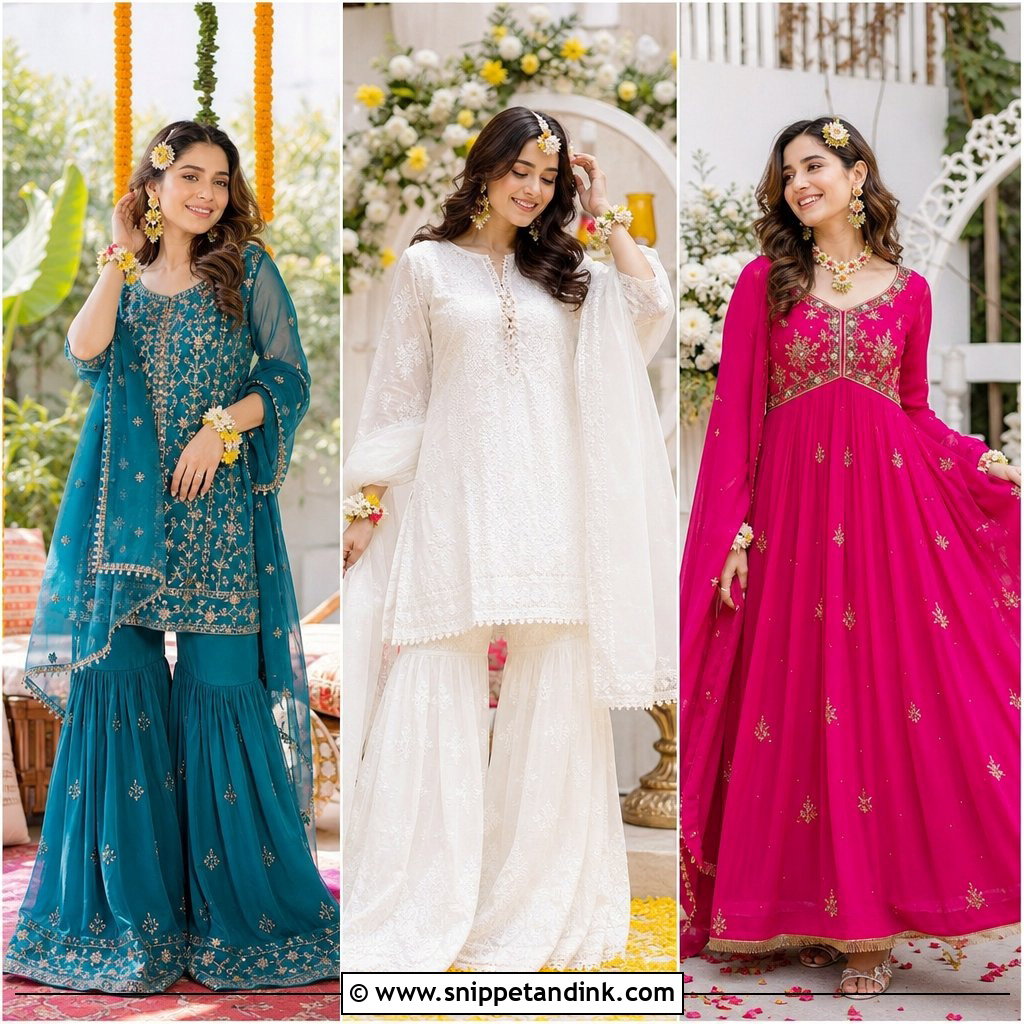
A gharara is joined just below the knee, often with a gota band, and flares out underneath. That seam is what gives it the swing when you walk, and it is comfortable seated. Yellow, green, orange, gold and pink keep the mehndi mood. A short kameez with gota, dabka, mirror or thread embroidery suits the silhouette. Pin the dupatta firmly over one shoulder, because a loose gharara dupatta always ends up trailing toward the henna. Jhumar, chandbalis, bangles and embellished khussas complete the South Asian look.
24. Indo Western Mehndi Dress For Bride
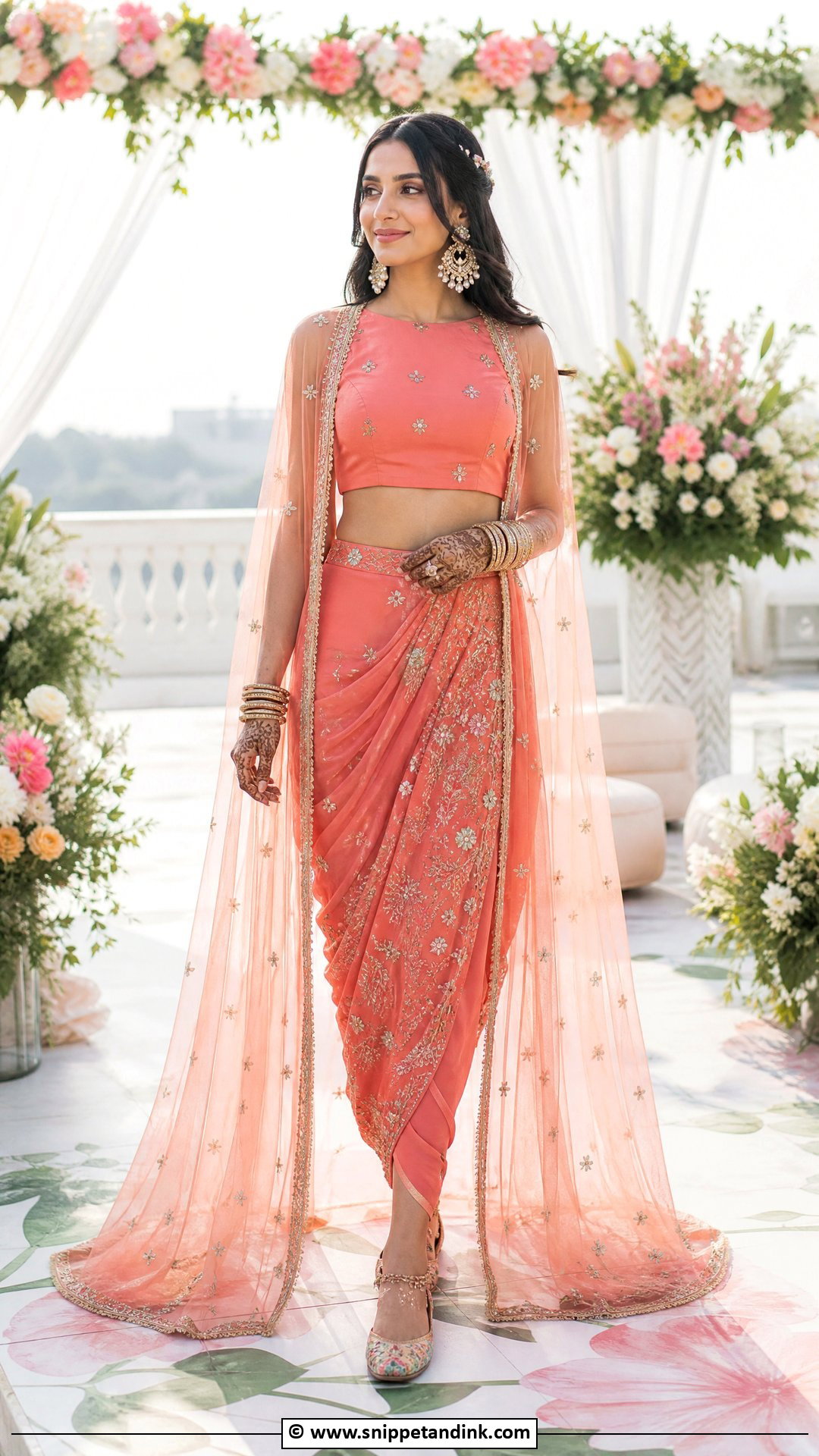
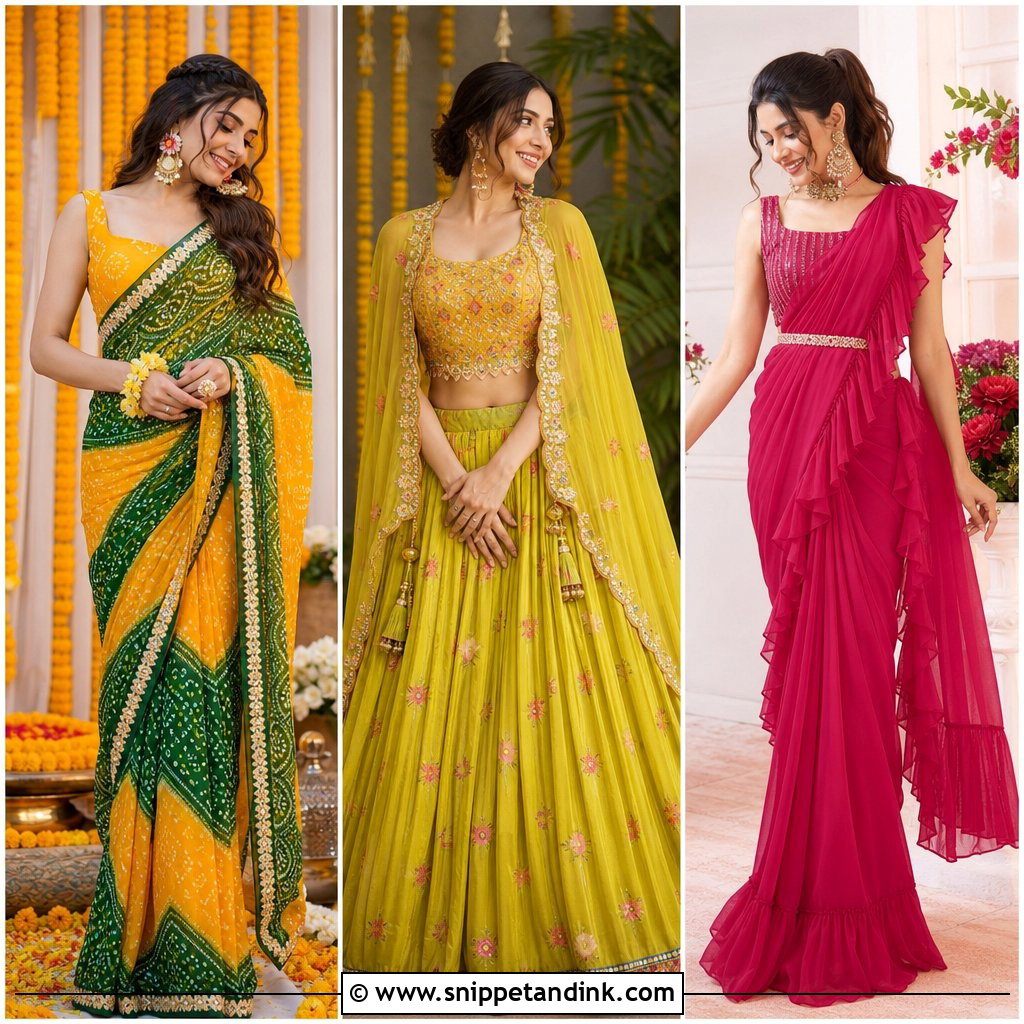
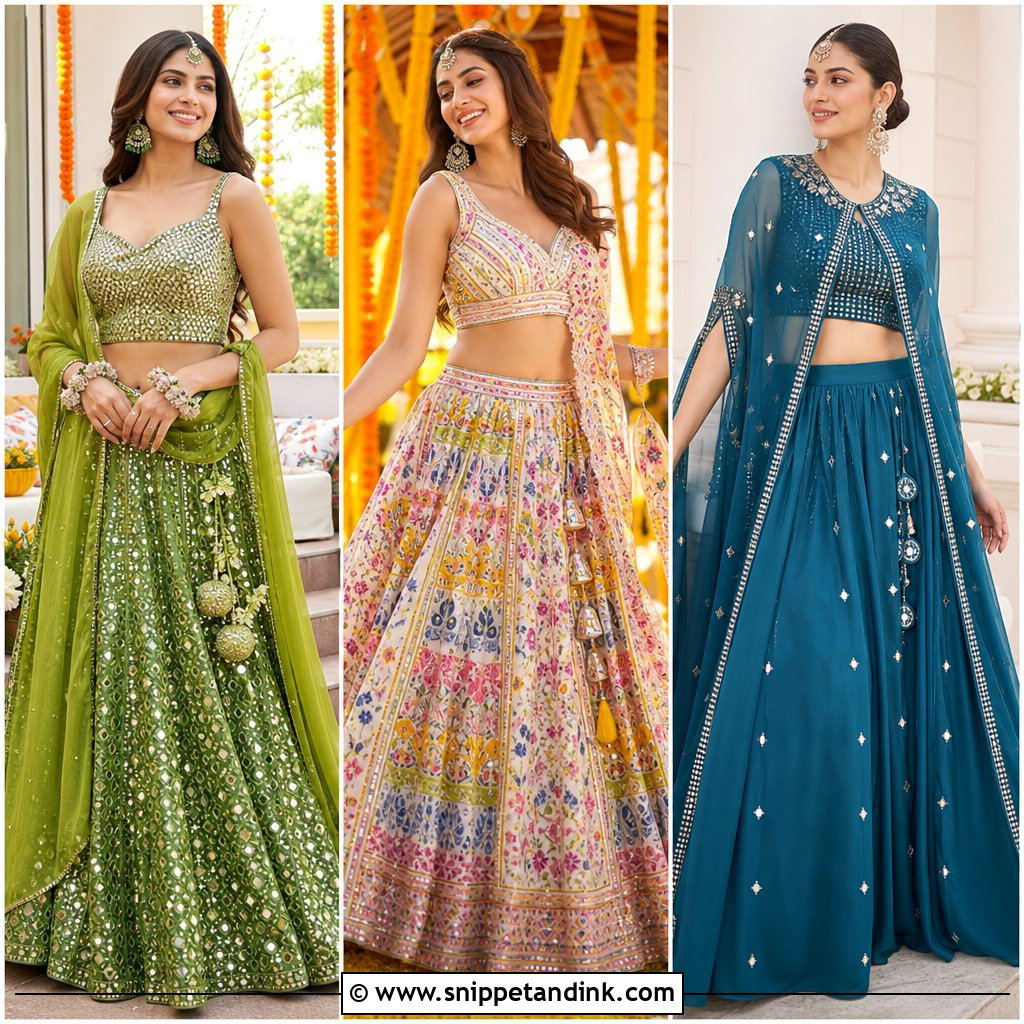
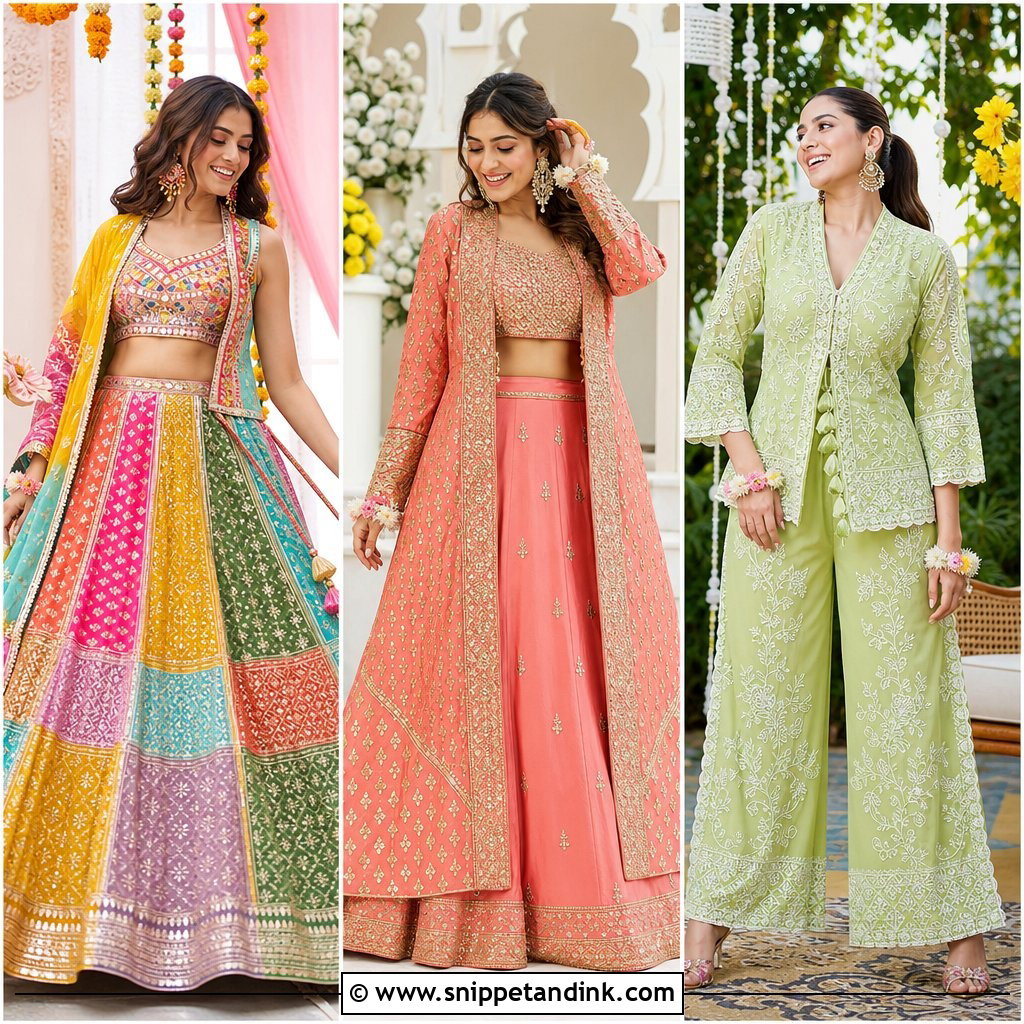
Indo Western sets mix shapes: a crop top with a lehenga skirt, a dhoti set with a cape, a peplum top with pants, or a draped skirt with an embroidered blouse. Bright yellow, pink, green or coral keeps them festive, and Indian jewelry is what makes them read as bridal rather than party wear. Draped pieces need testing. At the final fitting I have the bride sit on the floor and dance a little, and we add hidden hooks anywhere the drape shifts. Breathable fabric matters more here because fusion sets are cut closer to the body.
25. Dhoti Set Mehndi Dress For Bride
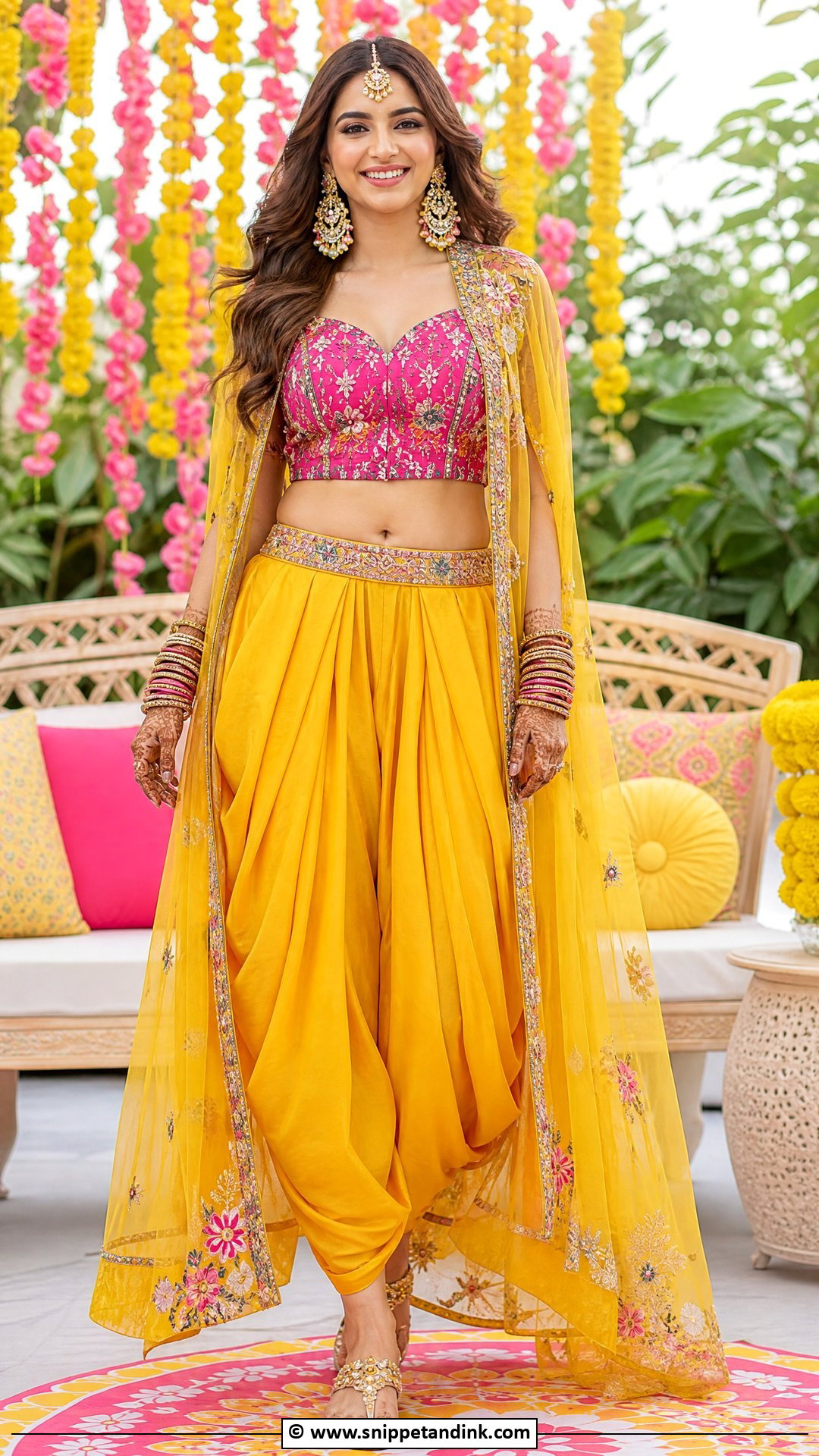
A dhoti set gives you a playful shape and complete freedom to move. The drape sits between the legs, so you can sit cross-legged or dance without thinking about a hem at all. Pair it with a crop top, short kurti or peplum blouse and a light cape or dupatta, in yellow, mint, fuchsia or orange. It weighs far less than a lehenga. It is also more informal, so if the function is traditional, check with family first. Statement earrings, stacked bangles and embroidered sandals finish it.
26. Organza Mehndi Lehenga For Bride
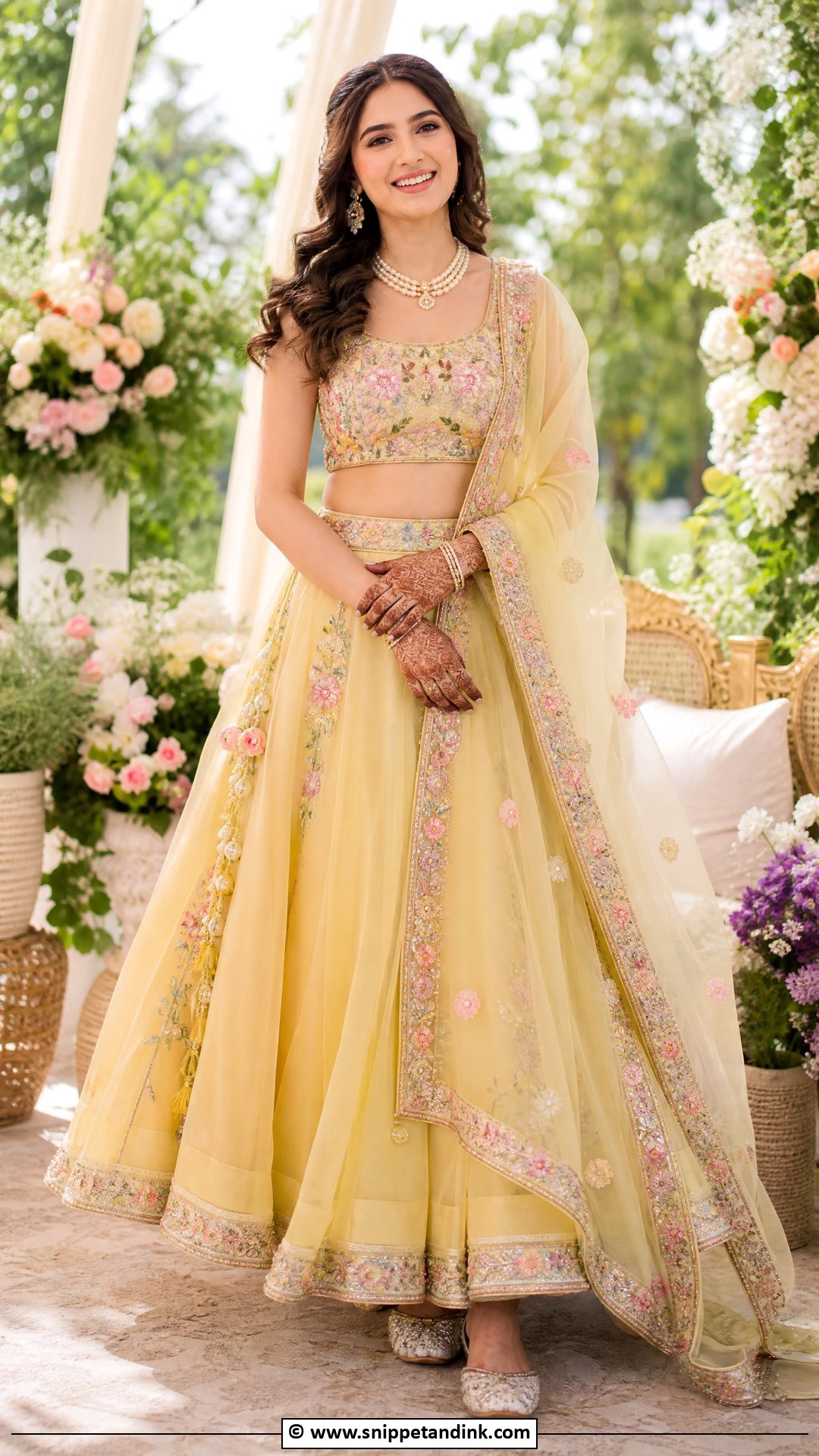
Organza holds volume without weight, so a lehenga in it looks full and still moves easily. The catch is that organza creases sharply when you sit, and those creases show up in close photos. I steam it on site and ask the bride to stand gently between hands and feet so the skirt can drop. Pastel yellow, mint, peach, blush or lavender suit it, with floral embroidery, mirror detail or gota borders for festive weight. Keep the dupatta sheer and off your arms during application.
27. Silk Mehndi Dress For Bride
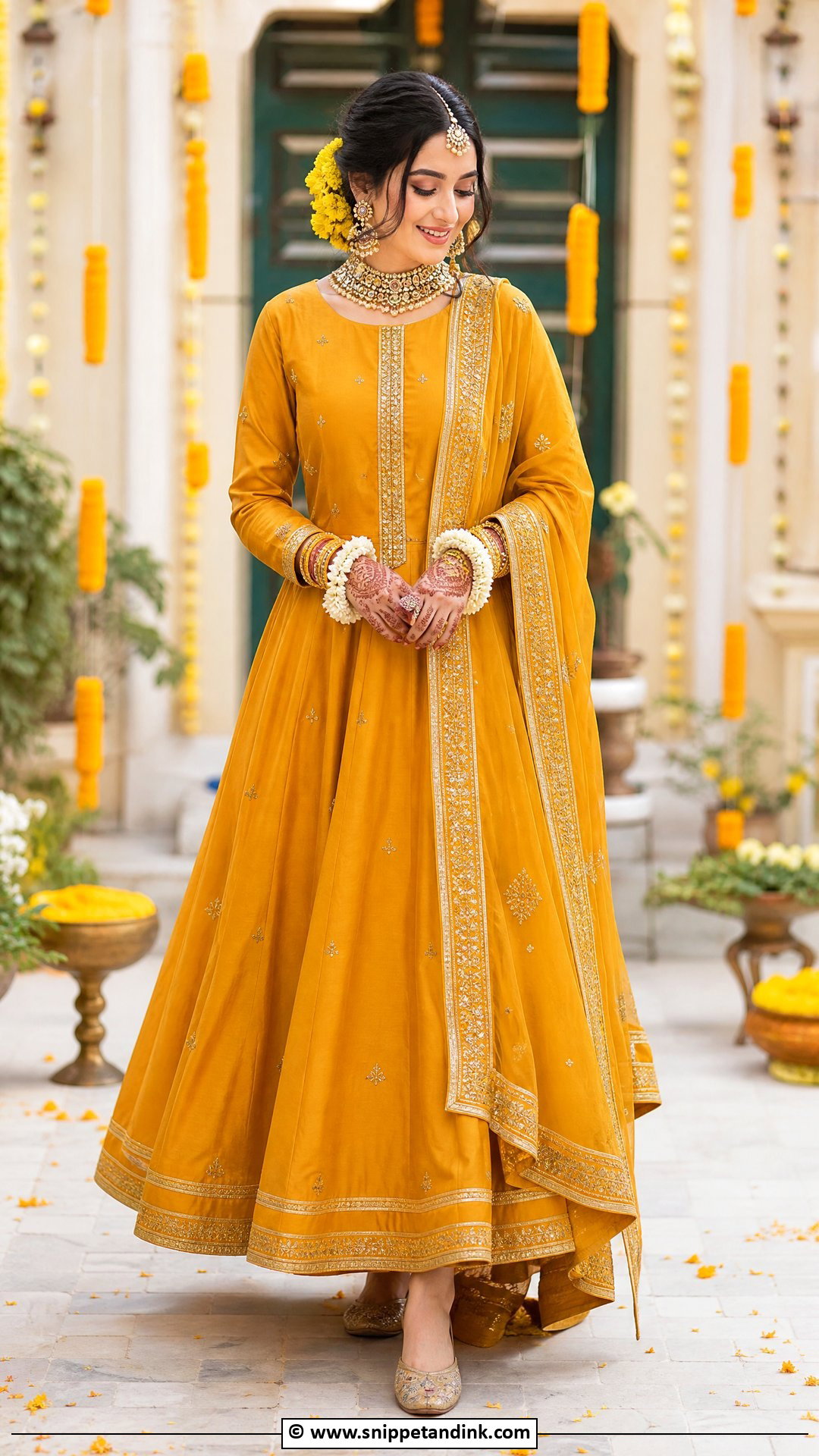
Heavy pure silk is warm and stiff, which is the opposite of what a long seated function needs, so I steer brides toward silk blends, raw silk or cotton silk. A silk lehenga, Anarkali or sharara in mustard, green, pink or orange with a gold border looks rich without much effort. Woven zari details suit it better than heavy appliqué. Silk also water-spots, so keep lemon-sugar and damp paste well away from it. Kundan, temple-style pieces or gold jhumkas match its formality, and soft-soled footwear keeps you dancing.
28. Printed Mehndi Lehenga For Bride
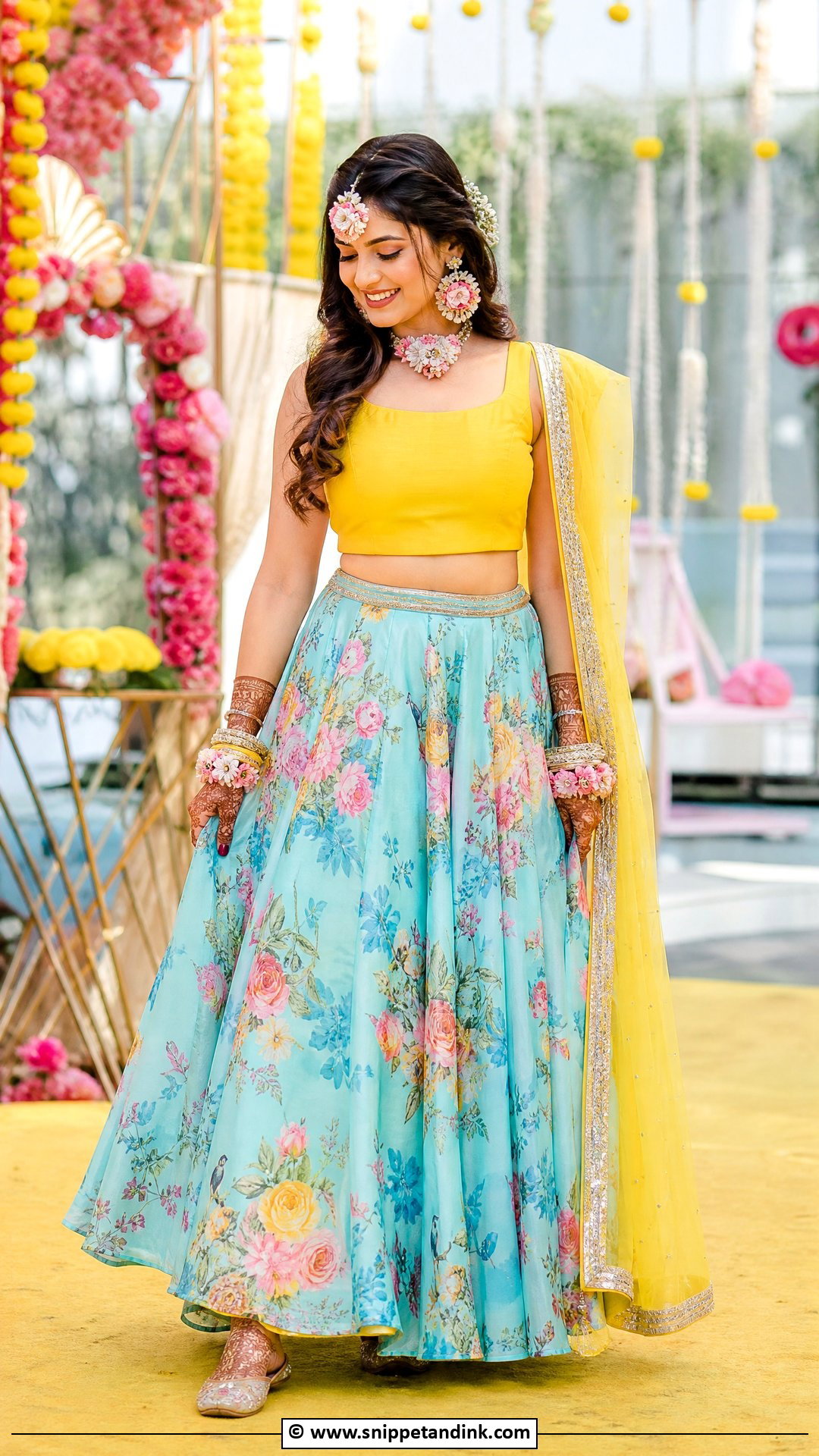
Prints give you color and detail for a fraction of the weight of embroidery. Florals, tropical motifs, paisleys and geometrics all sit well on a bright base like yellow, lime, pink or aqua. When I put a printed skirt together, I match the blouse to the quietest color in the print rather than the loudest. A dupatta with a simple border keeps it polished, and floral jewelry with juttis completes it. Prints are also forgiving: a small henna smudge vanishes into the pattern.
29. Chikankari Mehndi Dress For Bride
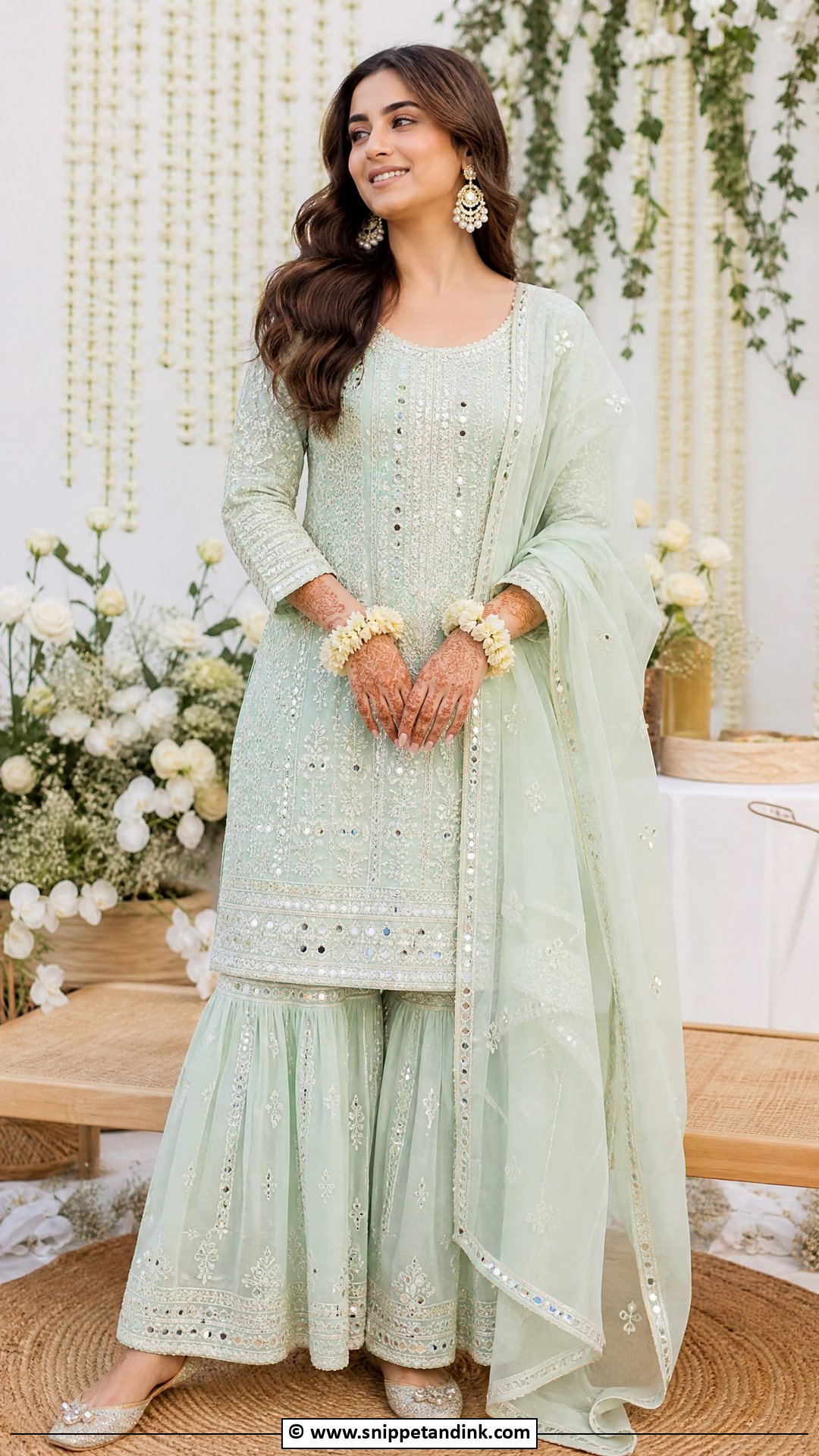
Chikankari is fine hand embroidery from Lucknow, traditionally light thread on sheer fabric, and it is delicate. On its own it can look too quiet for a bride, so I bring in color through the base, such as pastel yellow, mint or blush, or through a bright dupatta, and some brides add a little mirror work or sequins. Pearl jewelry and a soft hairstyle suit it. The thin cotton or georgette breathes well in daytime heat, but the threads snag easily on bangles, so take them off before you sit for application.
30. Embroidered Co Ord Mehndi Dress For Bride
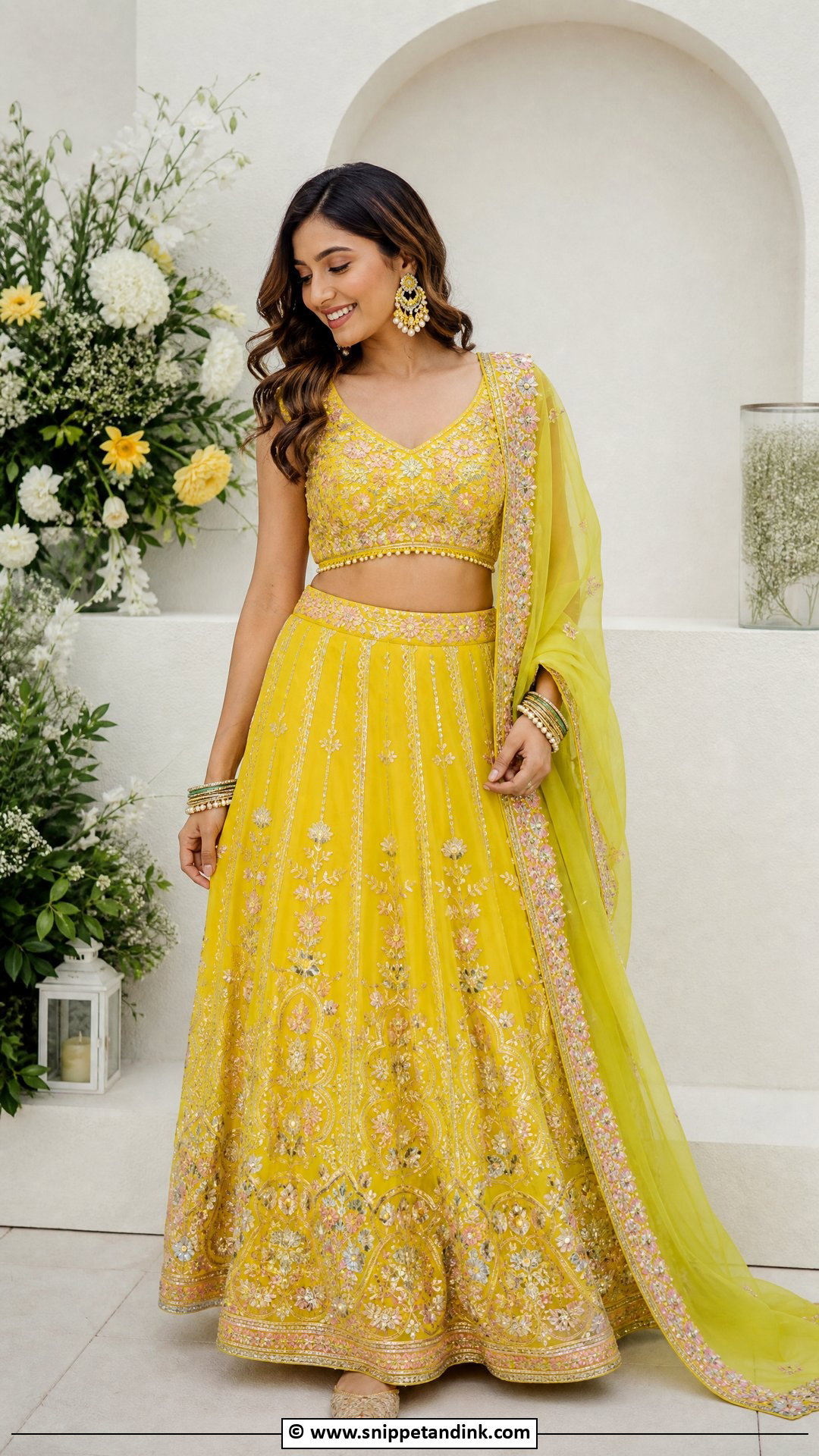
An embroidered co ord mehndi dress gives you matching separates: a crop top and skirt, a kurta and pants, or a short jacket with palazzo trousers. The match makes it look planned even when the pieces are simple. Yellow, green, coral and pink are festive; mint and peach are softer. I like co-ords because the pieces can be worn separately long after the wedding, which is rare for bridal clothing. Add a light dupatta if the family expects a traditional finish, then statement earrings, bangles and flats.
31. High Low Kurta Mehndi Dress For Bride
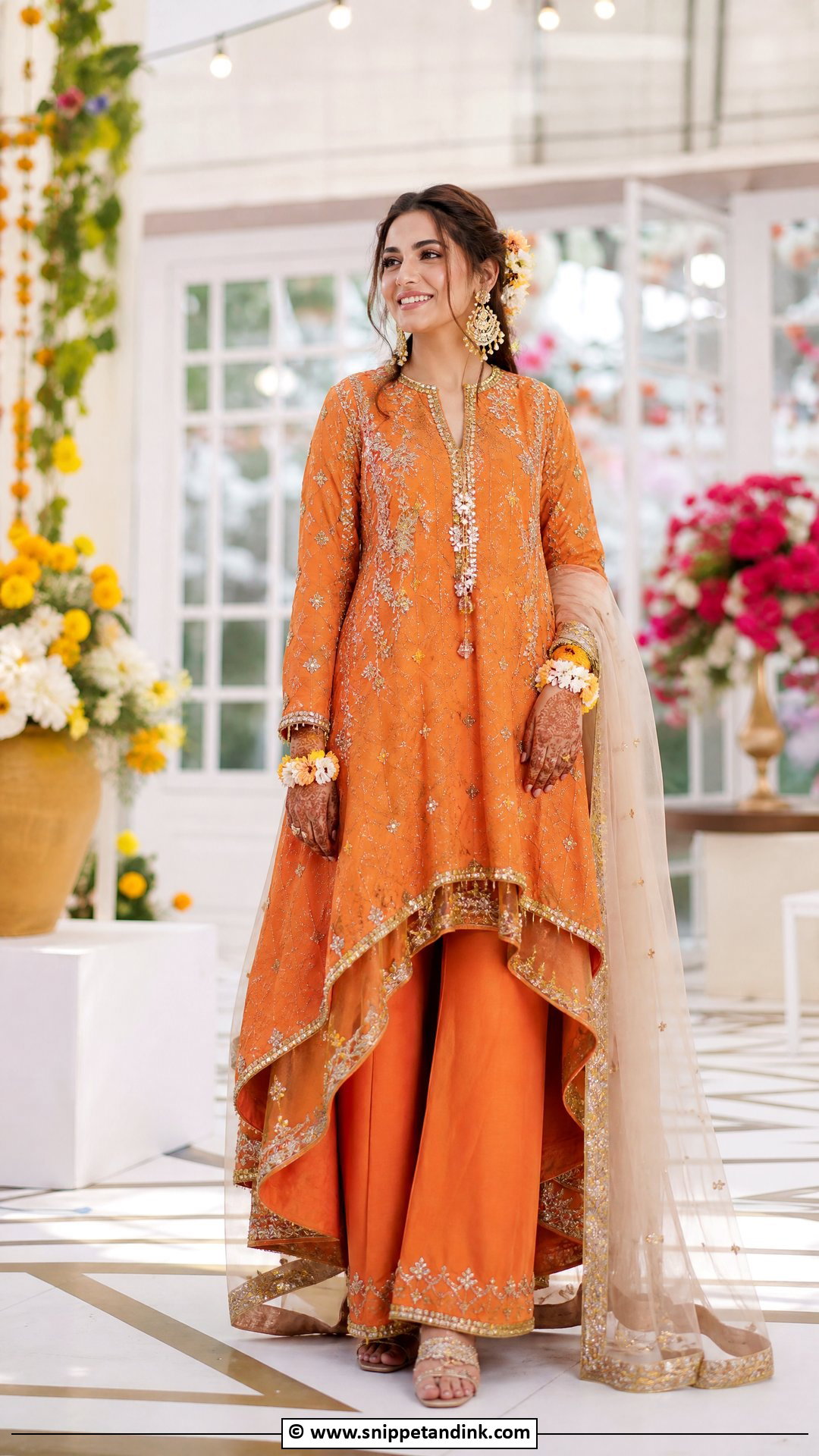
A high low kurta is shorter in front and longer behind, so the hem moves when you walk and never bunches under you when you sit. Over flared pants, a sharara or a light lehenga skirt it reads festive, with embroidery, mirror work or a print in yellow, green, pink or orange. I often skip the dupatta if the kurta is detailed enough. Check the front length on a low cushion: if it is cut too short it rides up toward the waist when you’re seated. Statement earrings and floral hair accessories finish it.
32. One Shoulder Mehndi Dress For Bride
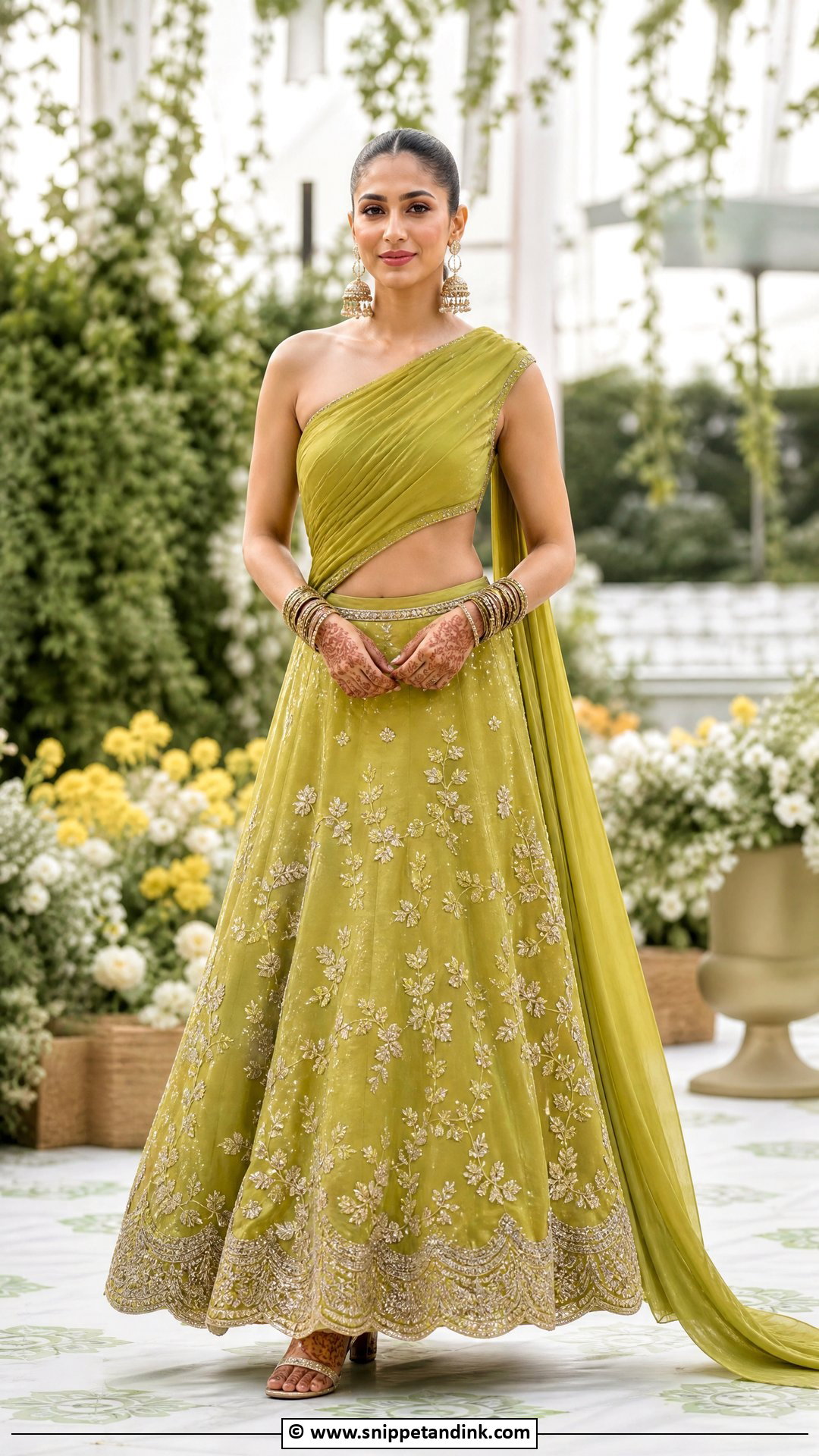
One shoulder cuts read fashion-forward, whether as a one shoulder blouse with a lehenga, a draped crop top with sharara pants, or a gown-style fusion set. The practical issue is the covered arm. An artist can work around fabric, but if you want both arms done to the elbow, this isn’t the cut for you. Lime, pink, yellow and coral keep it festive. Sweep your hair sleek or to one side, wear statement earrings and leave the neck mostly bare so the line of the shoulder shows.
33. Off Shoulder Mehndi Lehenga For Bride
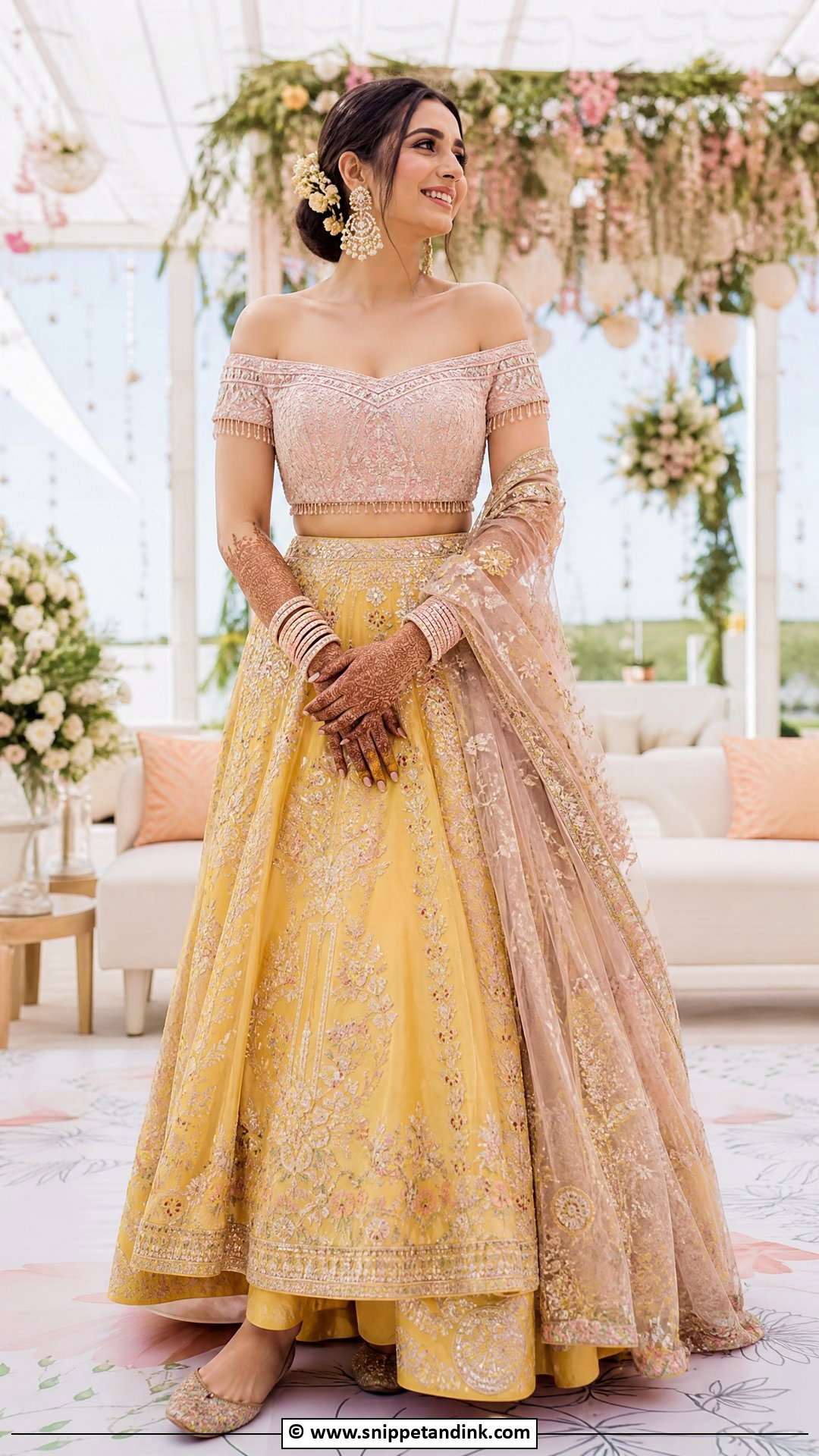
An off shoulder blouse shows the collarbones, which gives jewelry and fresh flower accessories room to breathe. Pair it with a light lehenga skirt in yellow, pink, mint or orange. Fit decides everything: these necklines creep down when you raise your arms, so I ask the tailor for silicone gripper tape along the edge and do the final fitting with the bride’s arms held out in the henna position. Pin the dupatta low on one side so it stays off your arms. Chandbalis, a floral hairpiece and bangles balance the bare shoulders.
34. Floral Jewelry Mehndi Dress For Bride
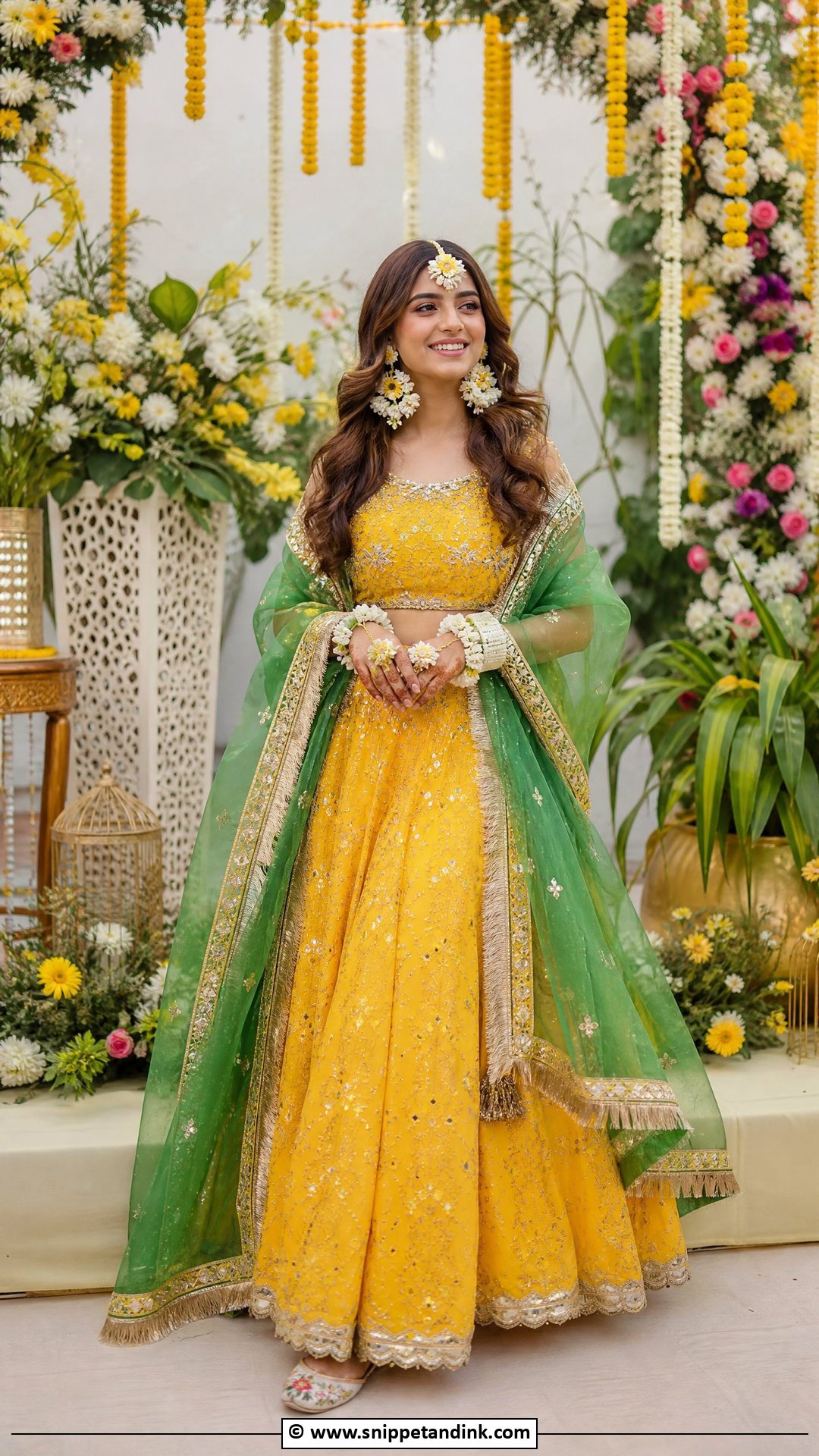
This look is built from the accessories outward: floral earrings, a floral maang tikka, haath phool, bangles and perhaps a flower braid, over a simple lehenga, sharara or Anarkali in yellow, green, peach or white. The outfit should stay plain enough for the flowers to stand out. Fresh blooms wilt in heat and can mark fabric with pollen and sap, so on a hot day I’d choose good silk or fabric flowers instead. If you do go fresh, have the pieces delivered that morning and put them on last.
35. Minimal Mehndi Dress For Bride
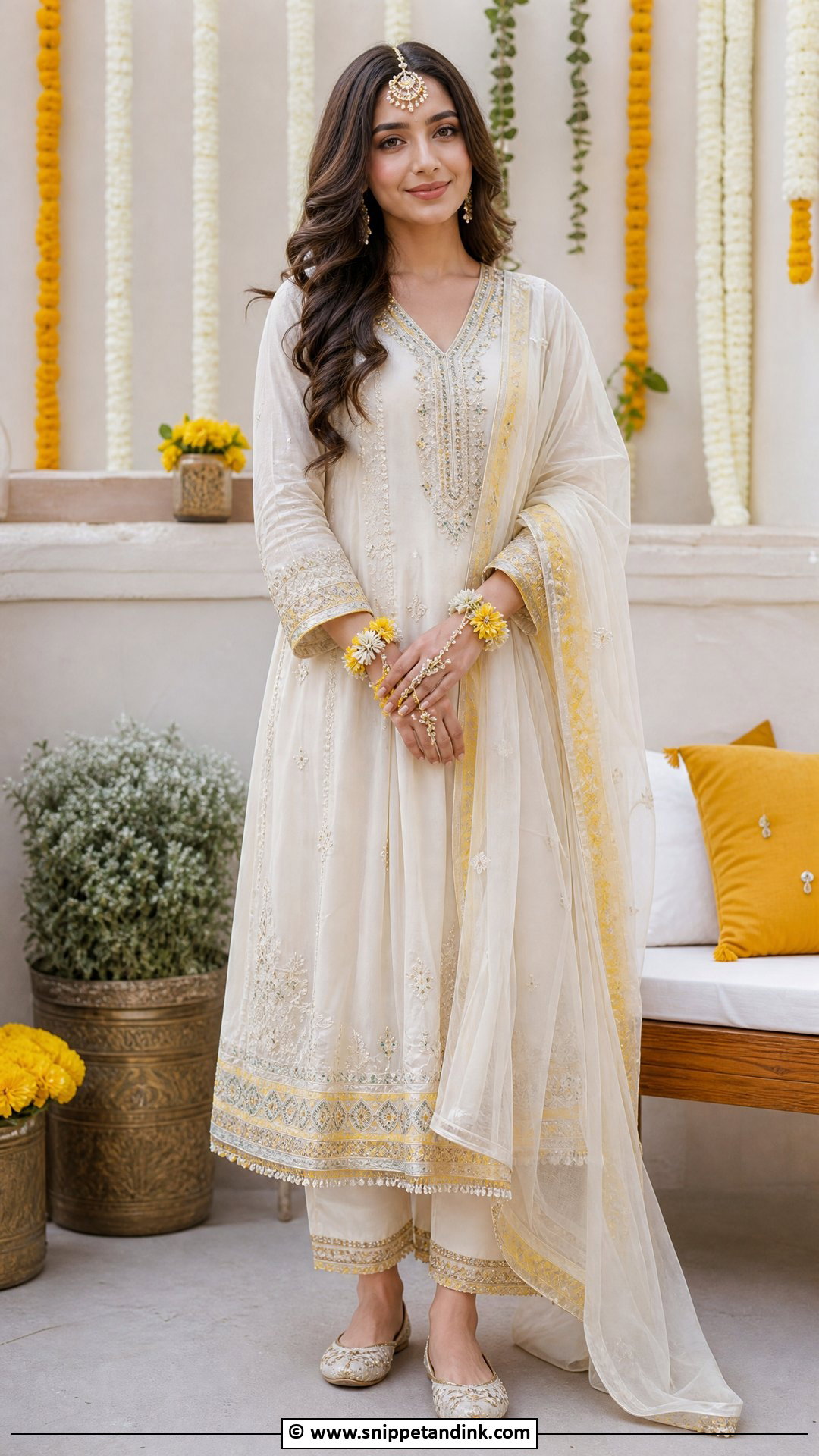
Minimal doesn’t mean plain. It means fit and color carry the outfit, so the tailoring has to be excellent because nothing hides it. A yellow, green, blush or ivory lehenga, sharara or kurta set with a neat border or a little embroidery is the starting point. I choose one statement piece, a maang tikka, earrings or a floral haath phool, and stop there. A sleek bun or loose waves and comfortable juttis finish it. It suits intimate functions and brides who would rather look like themselves than wear a costume.
Getting Henna, Oil and Turmeric Out of Mehndi Clothes
Every mehndi outfit picks up something: a smear of paste, a drop of the oil the artist uses, sticky lemon-sugar, or a turmeric fingerprint from an enthusiastic aunt. Fresh marks are far easier to treat than set ones, so deal with them that night rather than next week.
- Let wet paste dry, then lift it off with a blunt edge. Rubbing wet paste pushes the dye deeper into the weave.
- Rinse from the back of the stain with cold water only. Hot water sets both henna and turmeric.
- Cover an oil spot with talc or cornflour, leave it overnight, then brush it away.
- Anything with silk, zari, gota or heavy mirror work goes to a dry cleaner who handles bridal wear. Tell them exactly what the stain is.
Storing it so the shine lasts
Metallic gota and zari dull when they sit damp or sealed in plastic. I air the outfit for a day, then wrap it in cotton or muslin and store it flat or loosely rolled; hanging drags a heavy skirt out of shape over months. Tissue between folds of mirror work stops the mirrors scratching or cracking against each other. Refold it along different lines every few months so the creases don’t wear through the fabric.
The Mehndi Outfit You Forget You’re Wearing
The outfit that works is the one you forget you’re wearing once the artist starts. Comfort counts as much as color, from a yellow lehenga or green Anarkali to a printed sharara, a Pakistani gharara or a modern Indo Western set. Breathable fabric, sleeves that stay off your wrists, a dupatta pinned rather than draped, and shoes you can stand in for hours are what I check first. Let jewelry and flowers support the outfit rather than compete with it, and you’ll enjoy the function instead of managing your clothes.
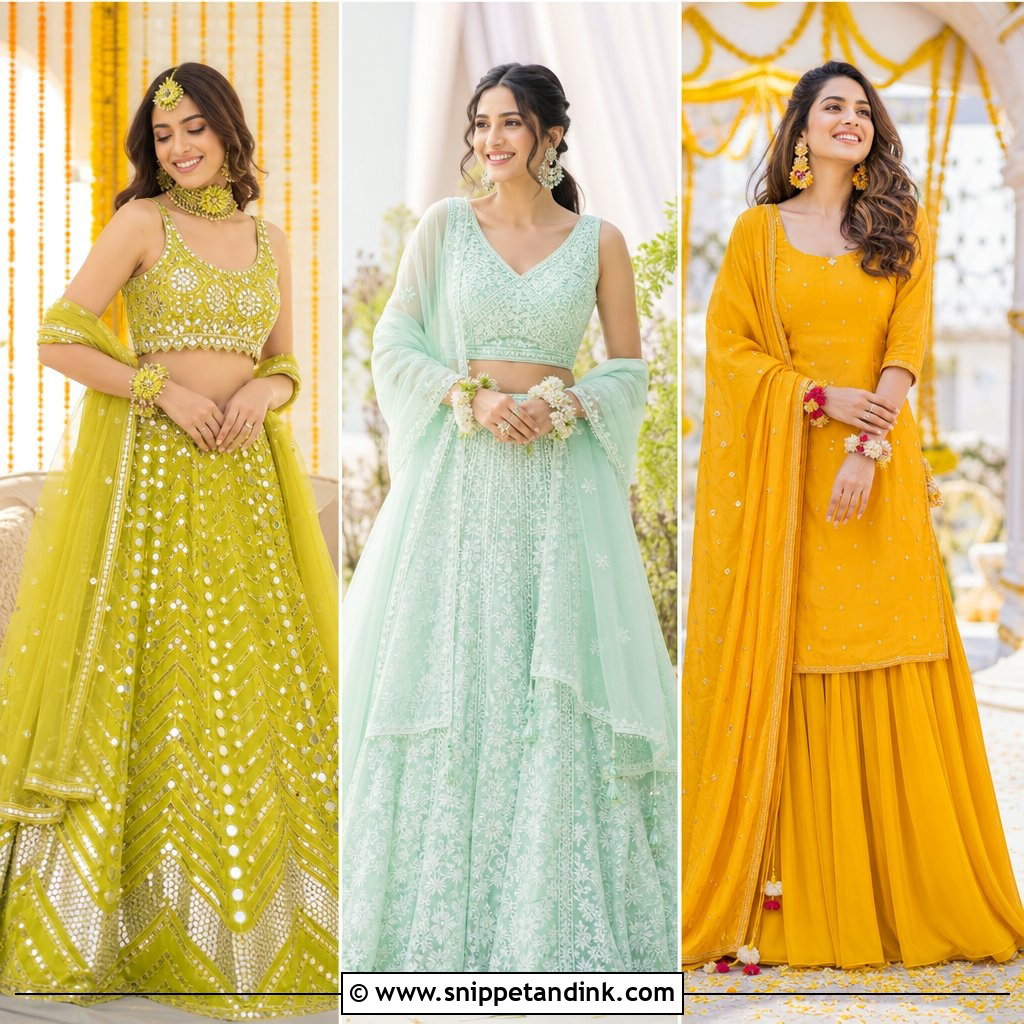
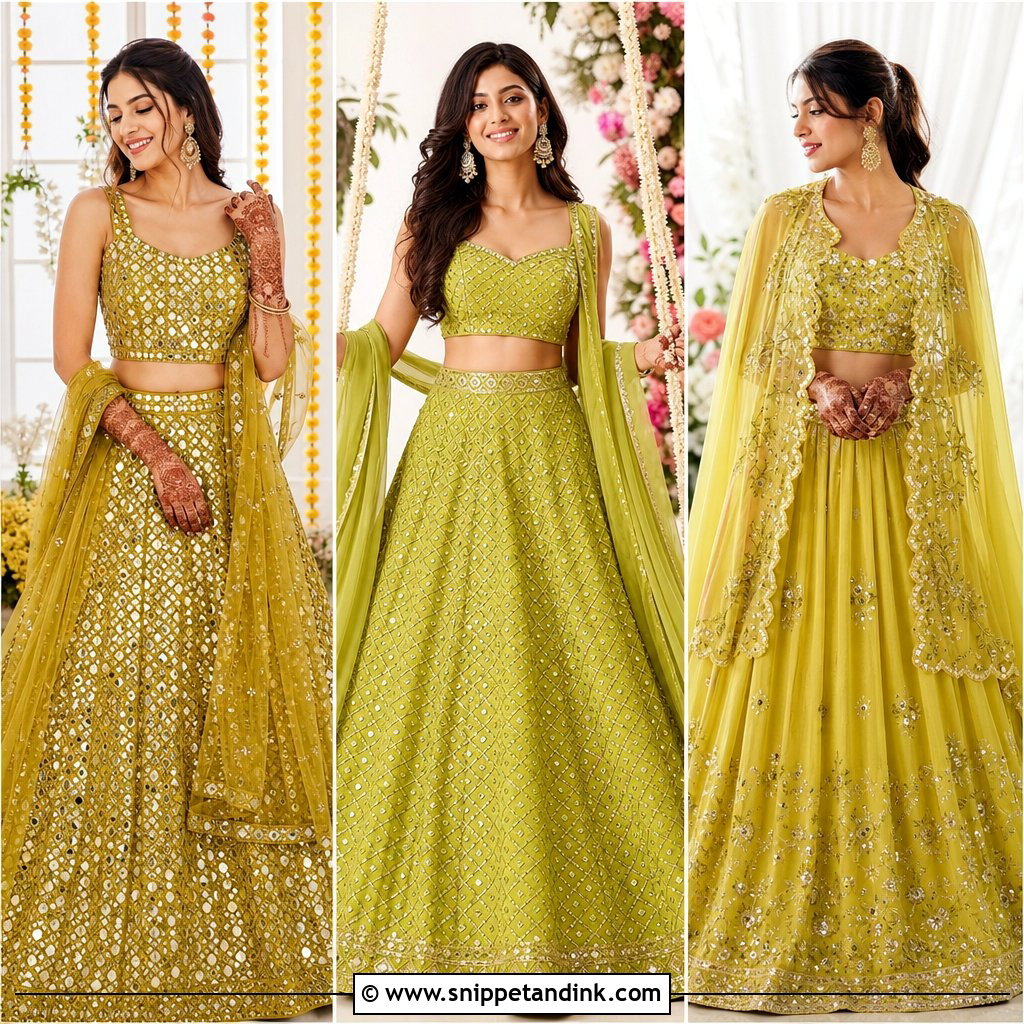
You'll Like These Ideas:


Leave a Reply