
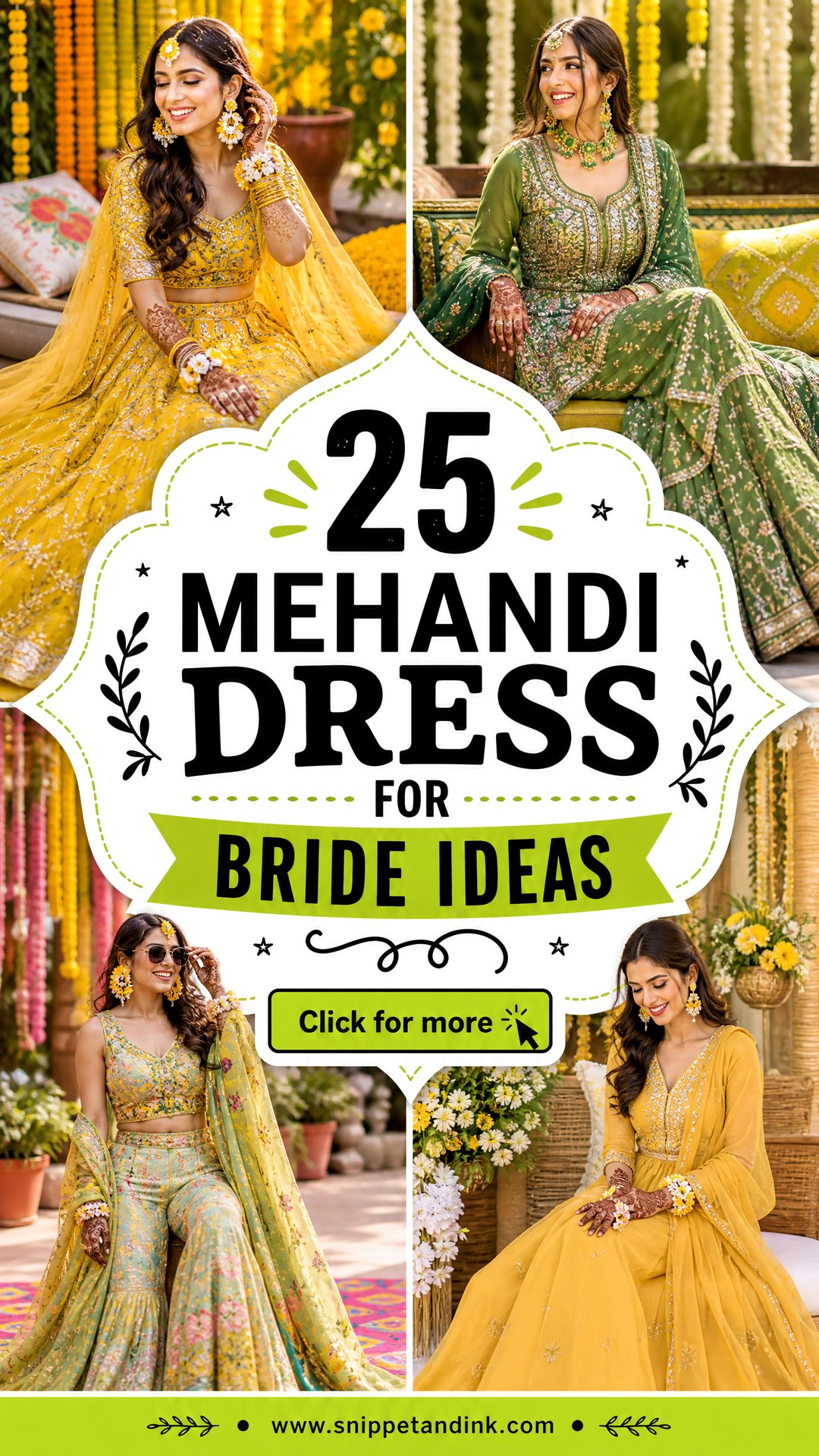
The mehandi is the one wedding event where the bride spends hours sitting still with her palms turned up, then gets pulled onto the floor to dance once the paste is on. That double life is what I dress for. Below are the 25 outfits I’d put in front of a bride for this ceremony, from yellow lehengas and mirror work shararas to floral sarees, cape sets and Indo-western pieces, and with each one I’ve noted how it behaves once the artist starts on your arms. Sleeve length, fabric weight and where the dupatta sits matter more here than at any other function, so I keep coming back to them.
Dressing Around the Hours Your Arms Are Held Out
Bridal henna can take anywhere from a couple of hours to most of an afternoon, depending on how far up the arms and legs the design runs, and then the paste stays on for hours more while the stain develops. Every outfit decision for this event should start there. These are the checks I run at the fitting:
- Sleeves end at or above the elbow if your design goes past the wrist. A sleeve pushed up for hours creases, and when it slides back down it smears fresh lines.
- Leg henna needs a skirt or sharara you can lift to the knee without unpinning anything.
- The dupatta is pinned at two points, shoulder and waist, so it can’t fall forward onto your palms.
- Bangles, rings and hand chains wait until the dried paste has been scraped off.
- The blouse closes with hooks someone else can do up, because you won’t be able to touch anything.
Plenty of brides wear a simpler outfit for the application and change into the heavier one for the dancing. If you plan that, choose a second outfit that opens at the back or side, so it goes on without you pulling a sleeve over your hands.
1. Yellow Lehenga Mehandi Dress for Bride
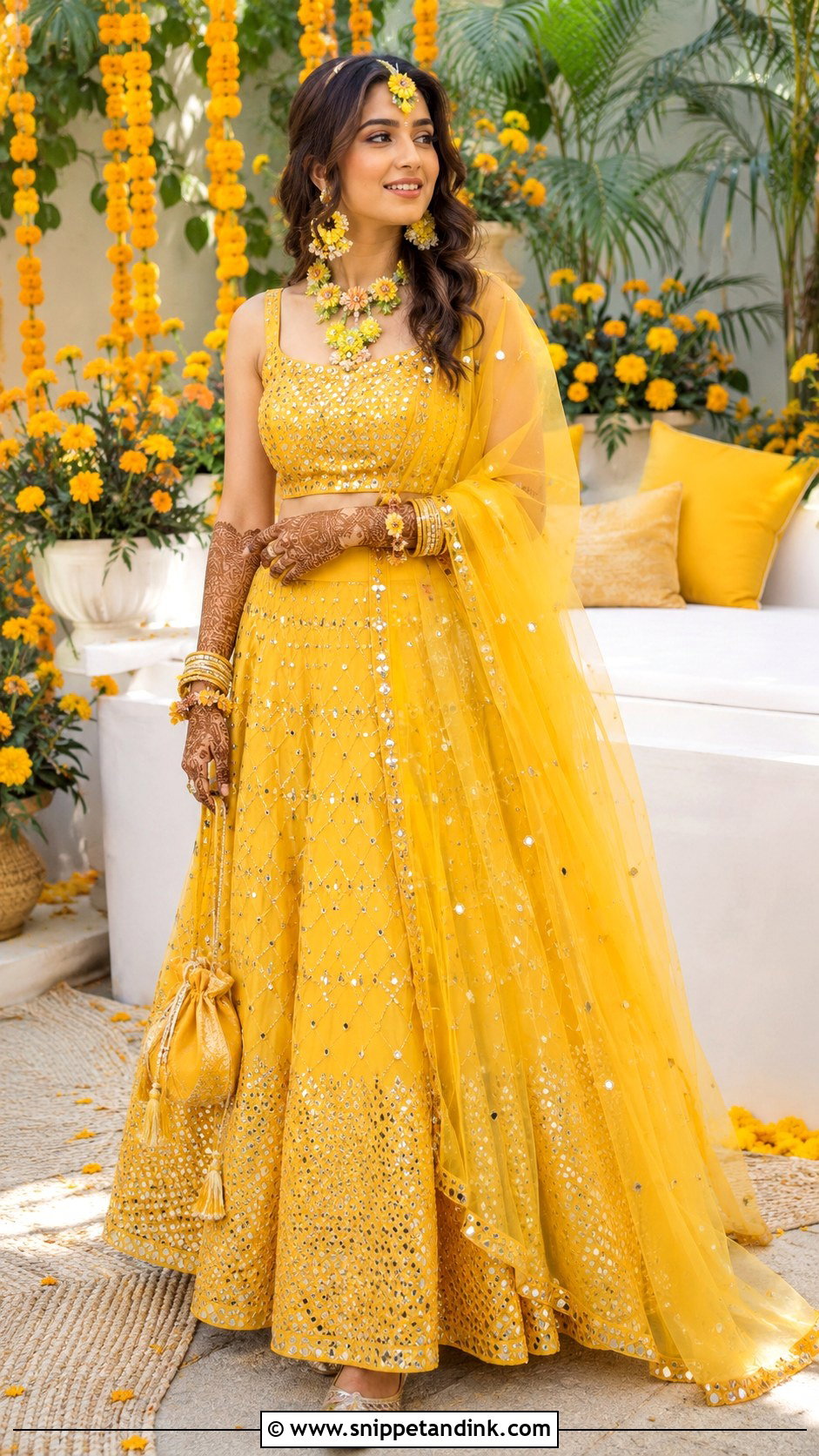
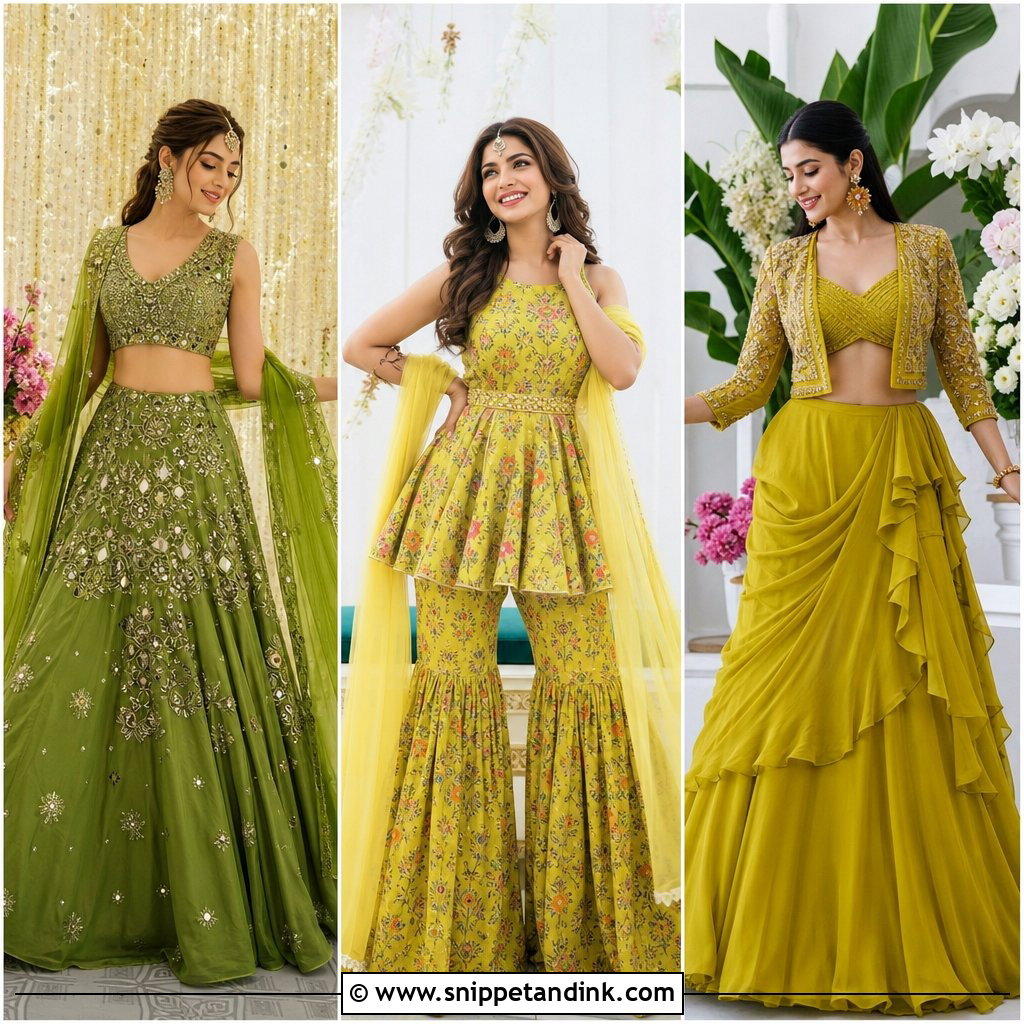
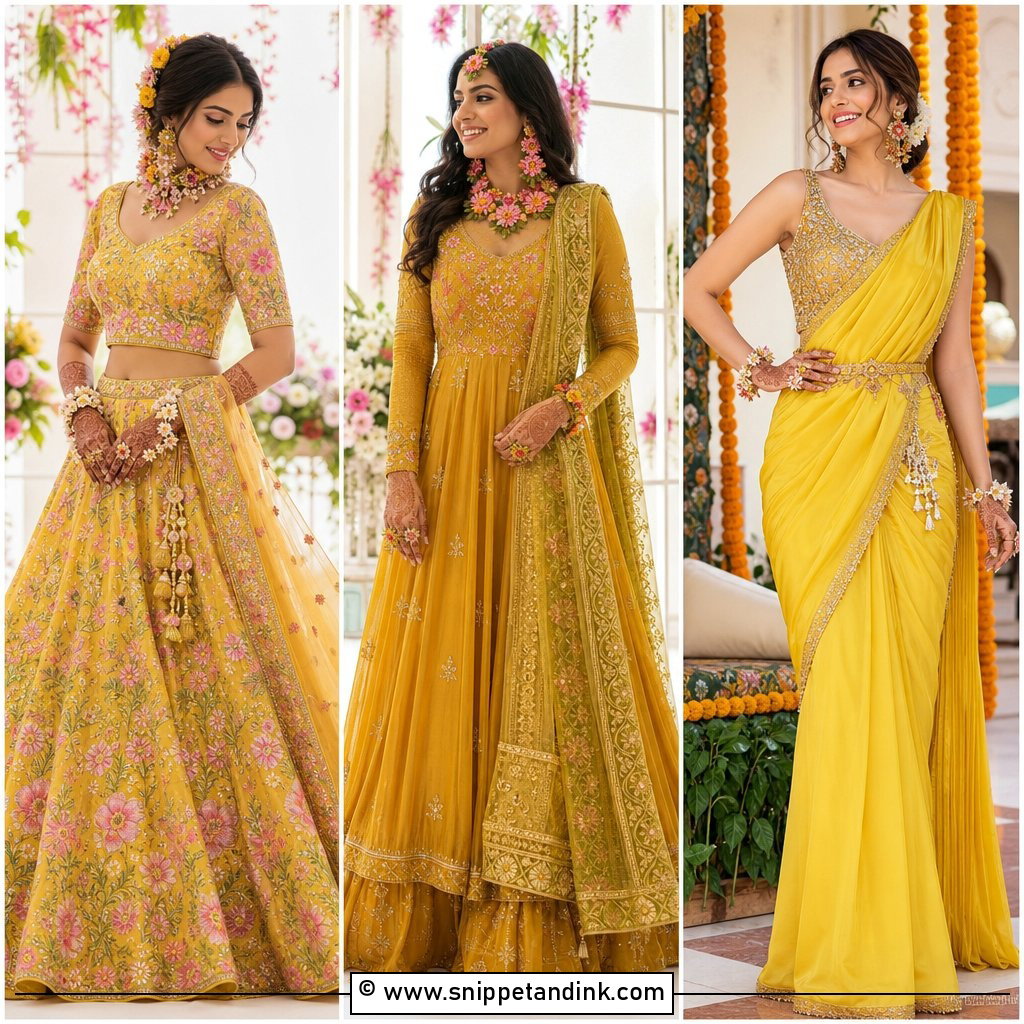
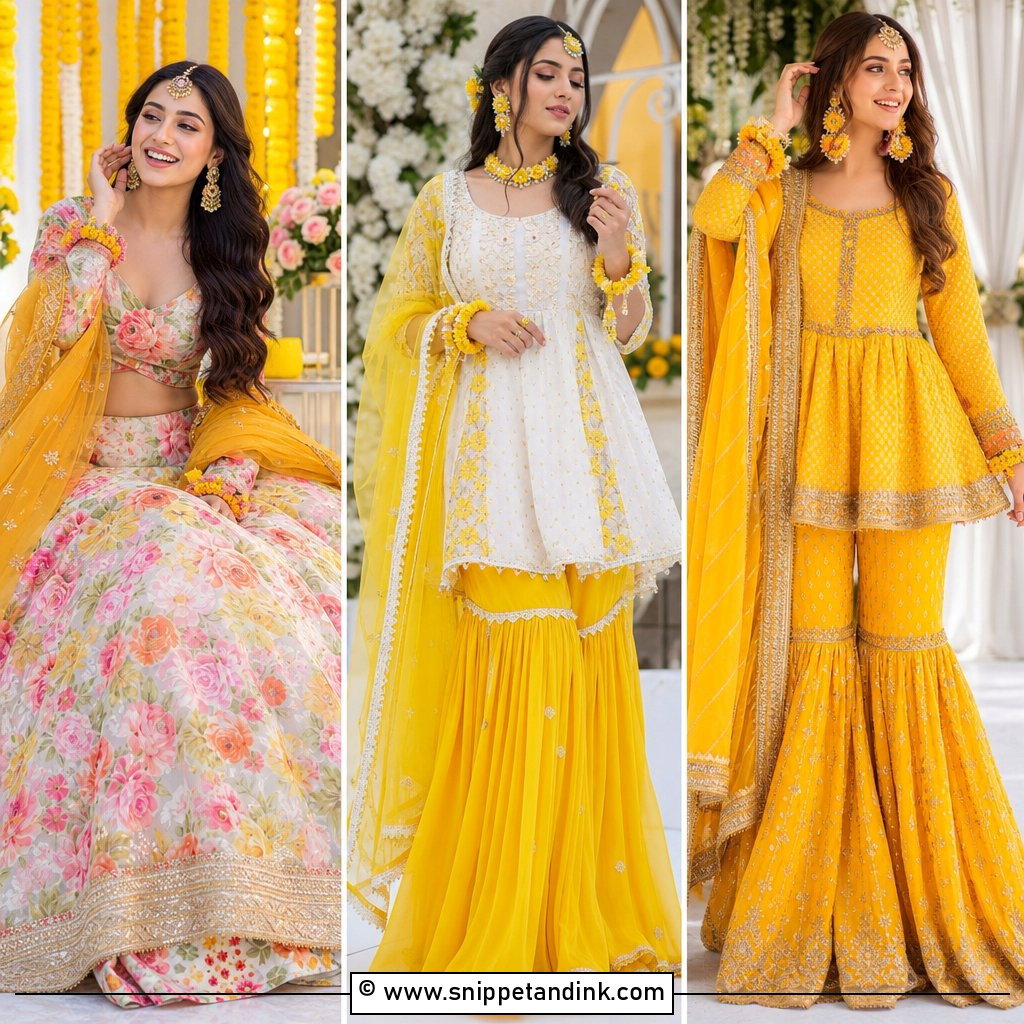
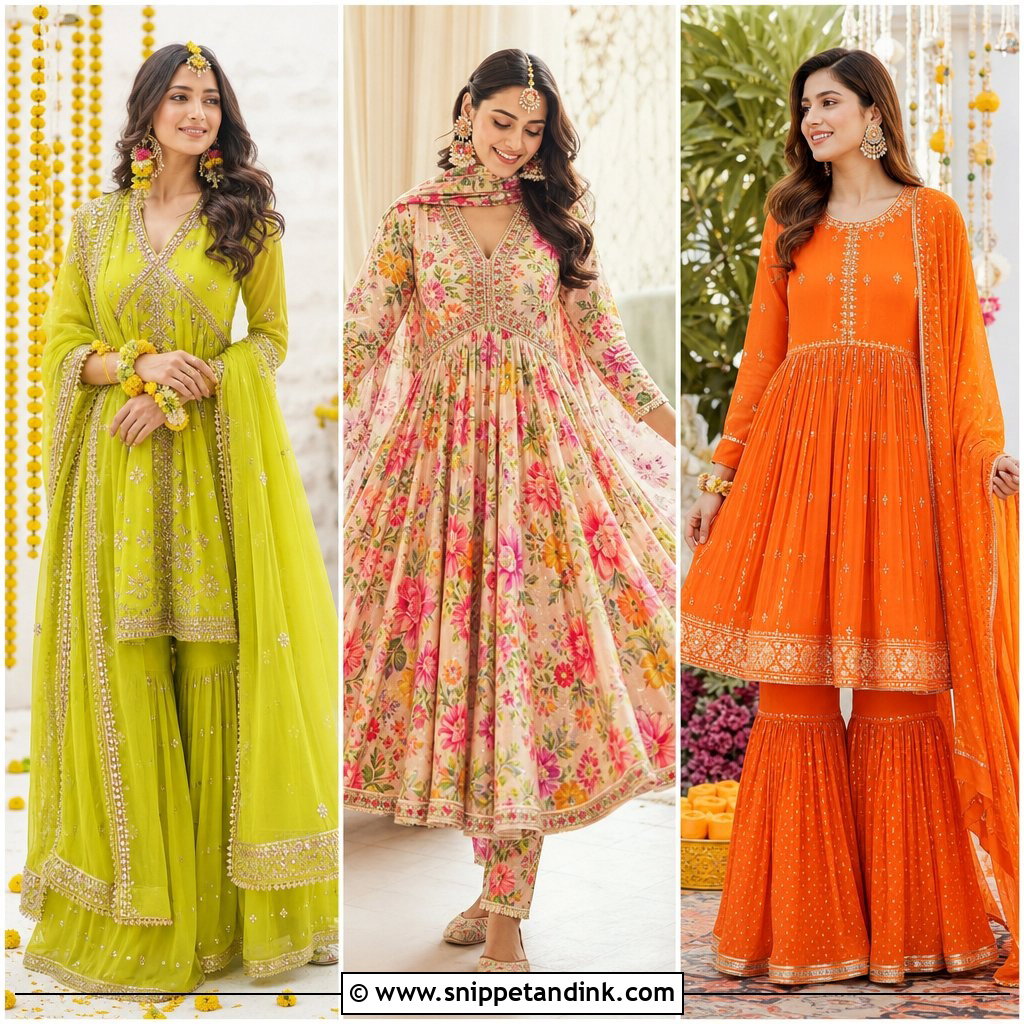
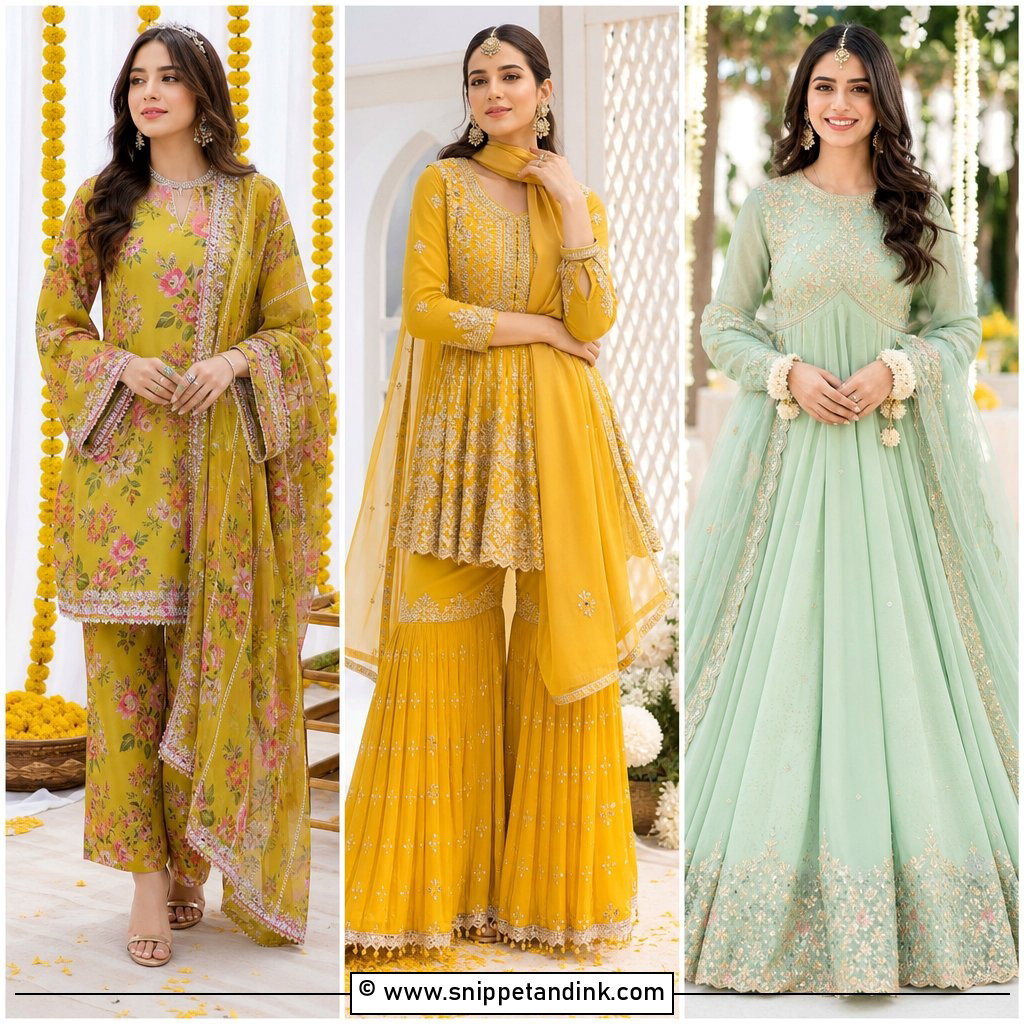
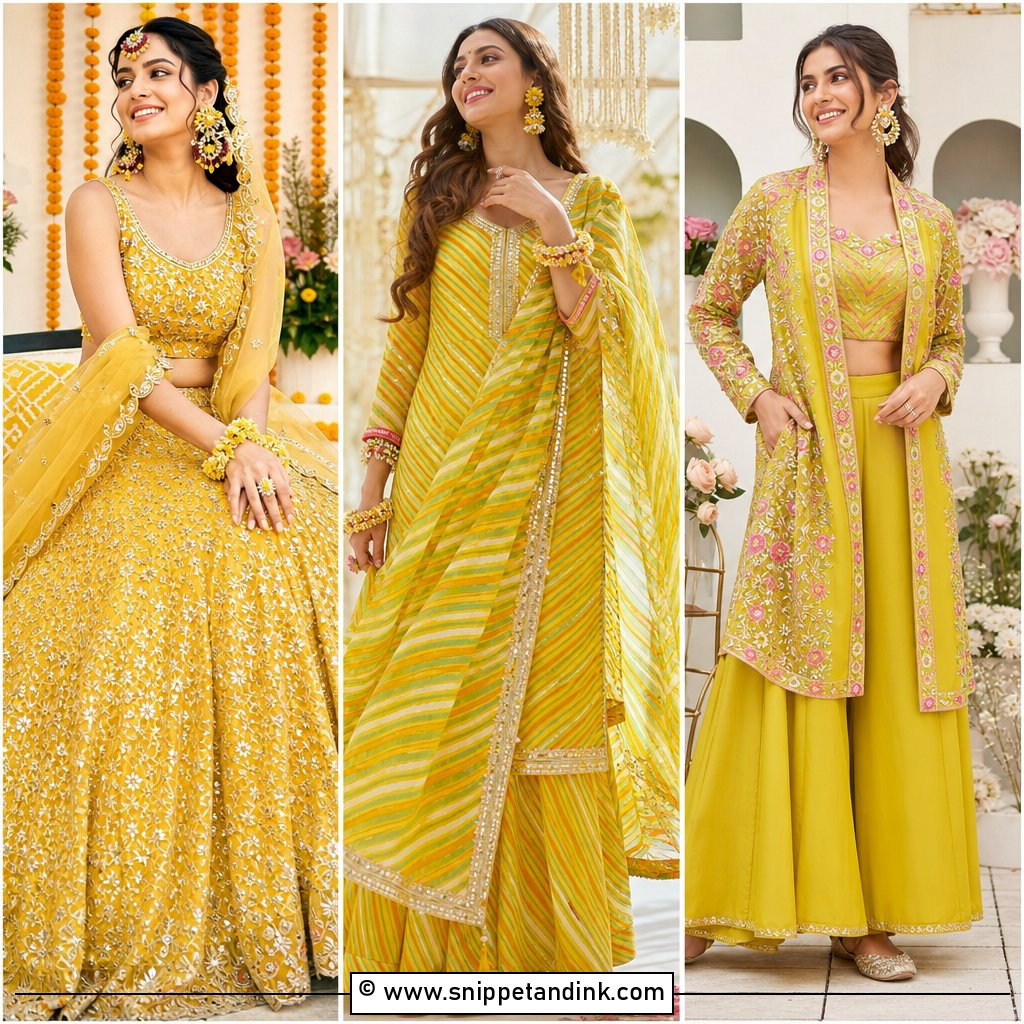
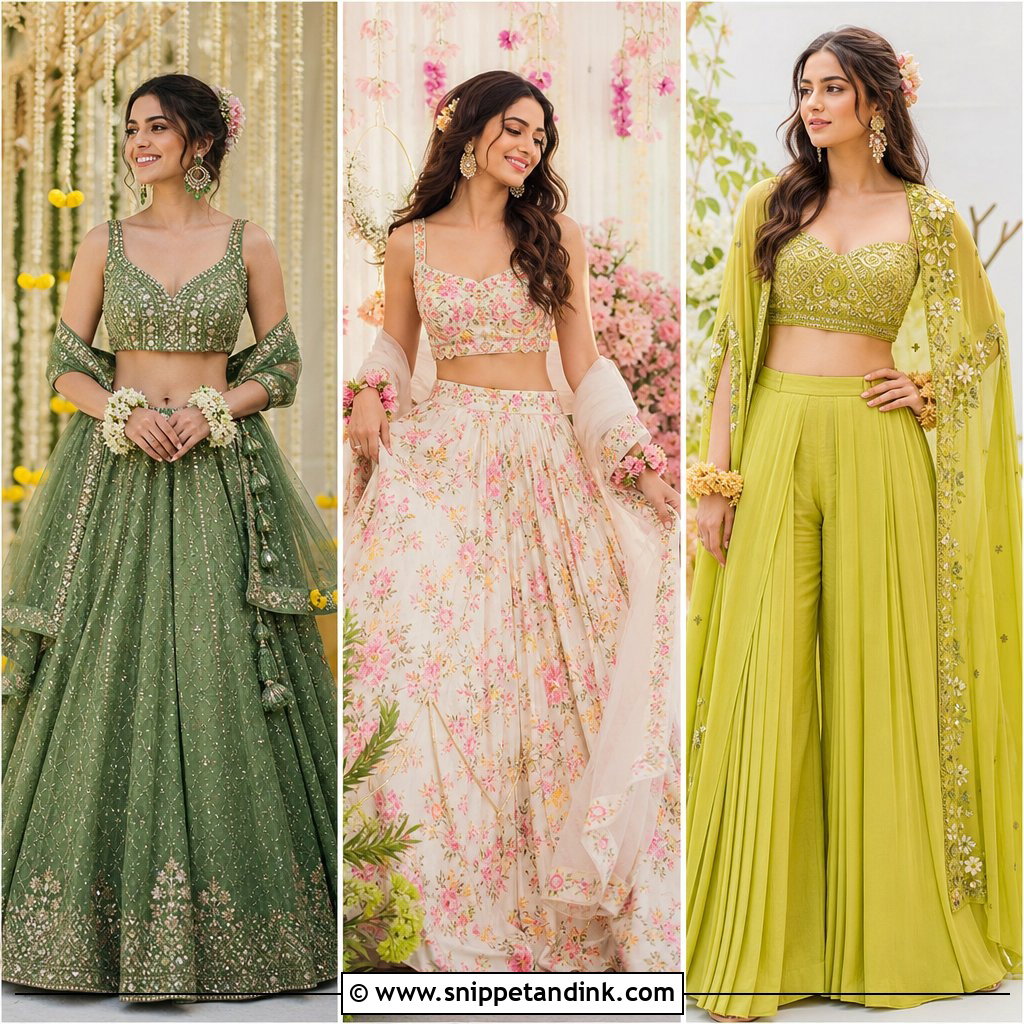
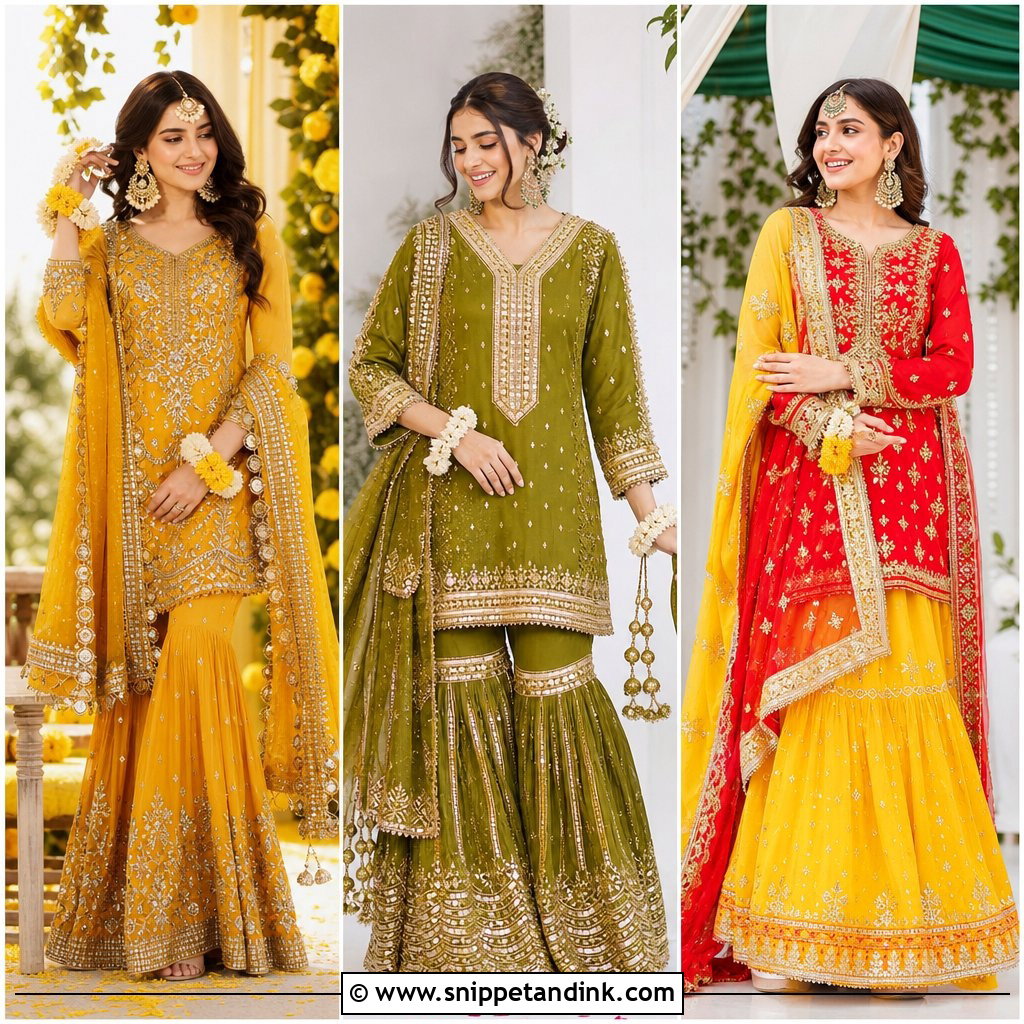
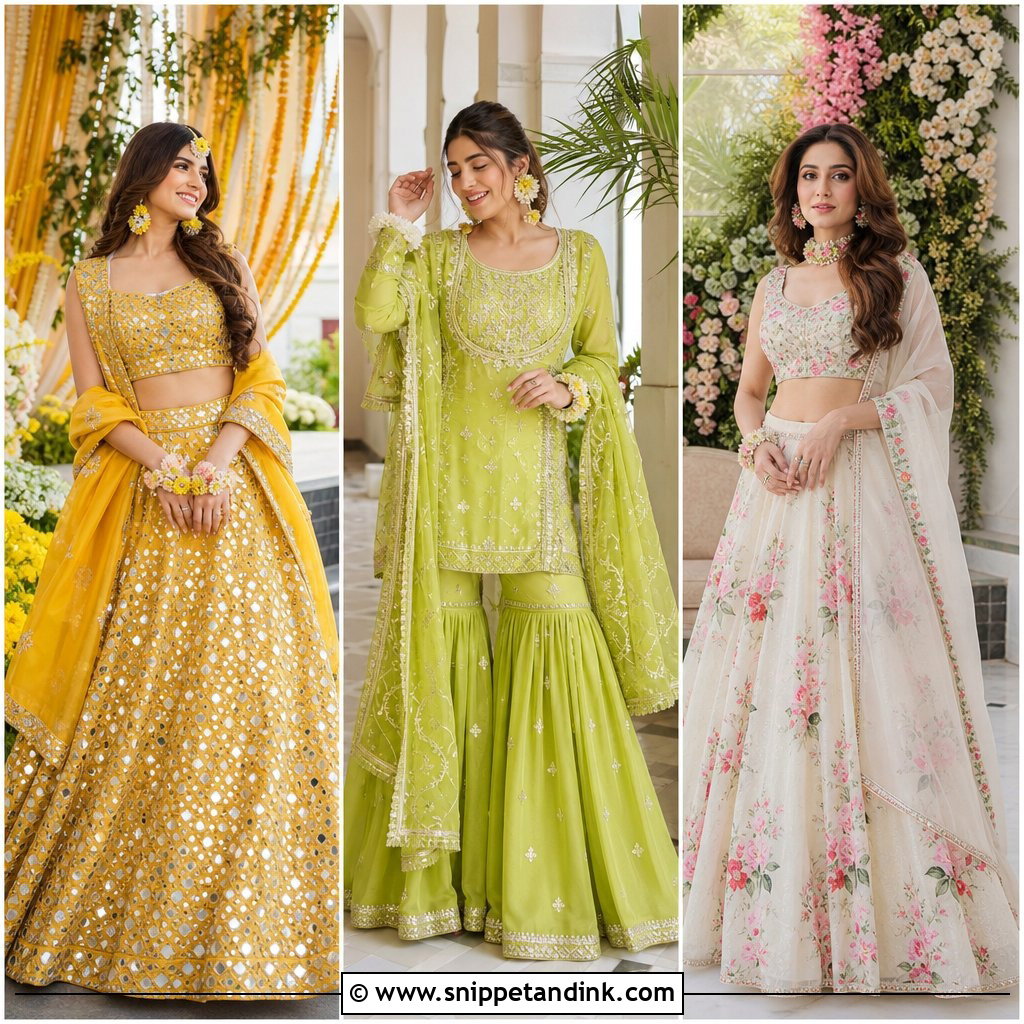
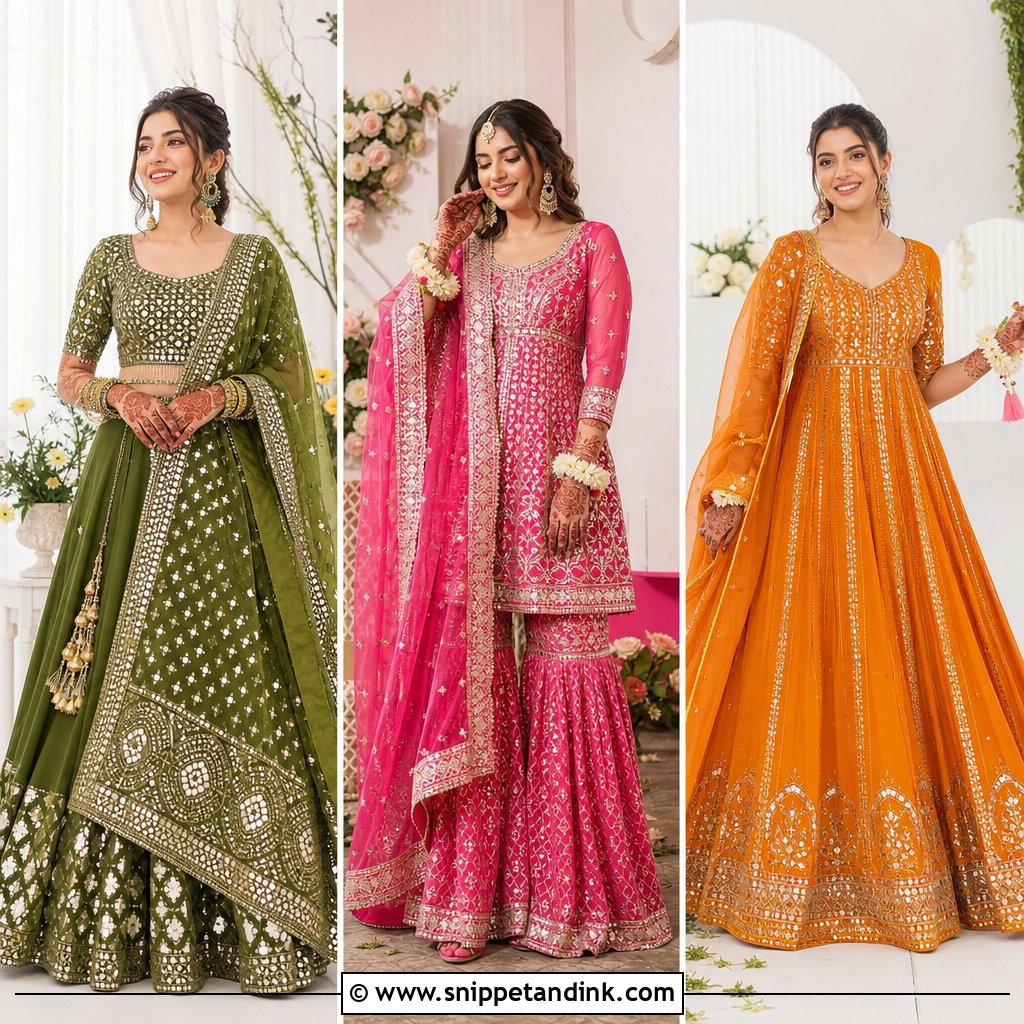
Yellow is the traditional colour for this event, and the reason I still reach for it is practical: fresh paste and a deep stain both read clearly against it. Pick georgette or organza over heavy silk, with mirror work, gota patti or thread embroidery, and keep the blouse short-sleeved or sleeveless so the artist can reach your forearms. I pin the dupatta on one shoulder with two safety pins hidden under the fold, because a dupatta sliding into wet henna is the accident I see most. Floral jewelry, kundan earrings, embroidered juttis and a small potli finish it. Save the bangles for after the paste comes off.
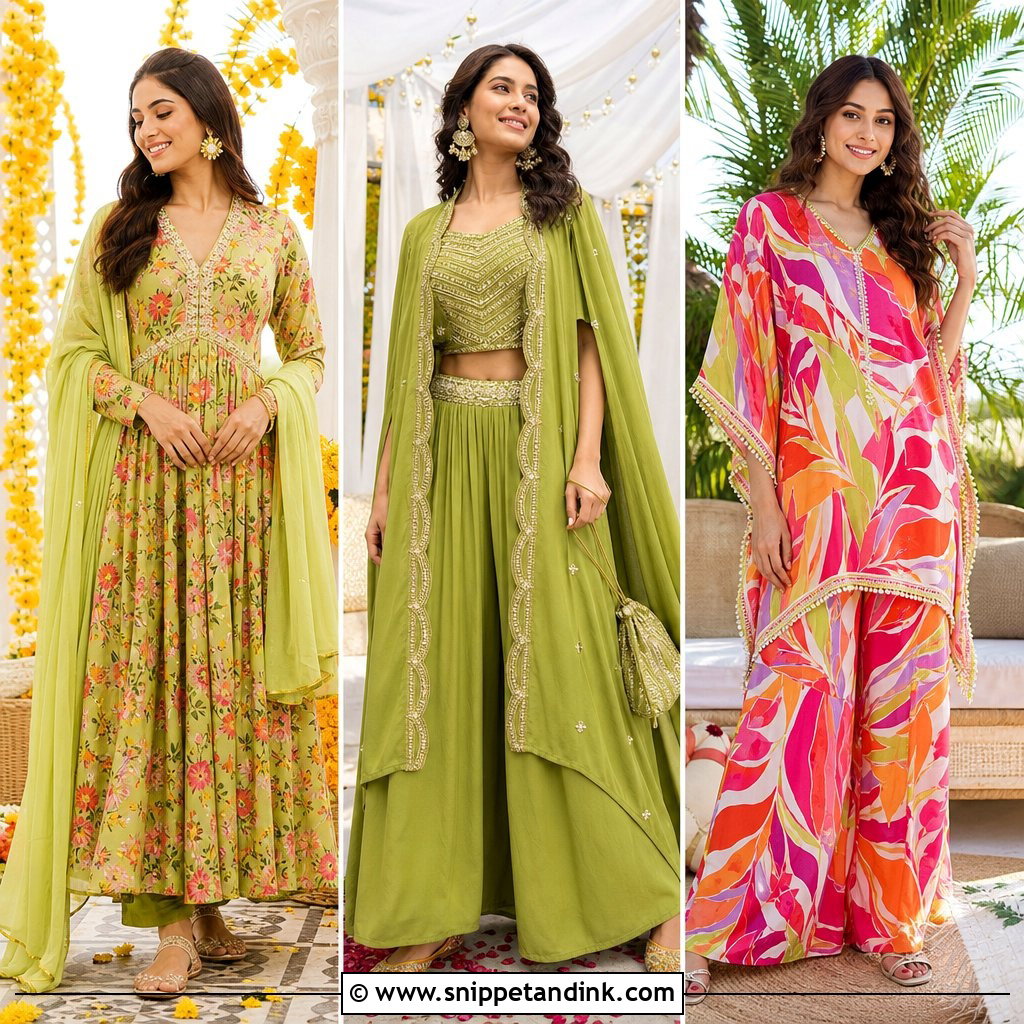
2. Green Sharara Mehandi Dress for Bride
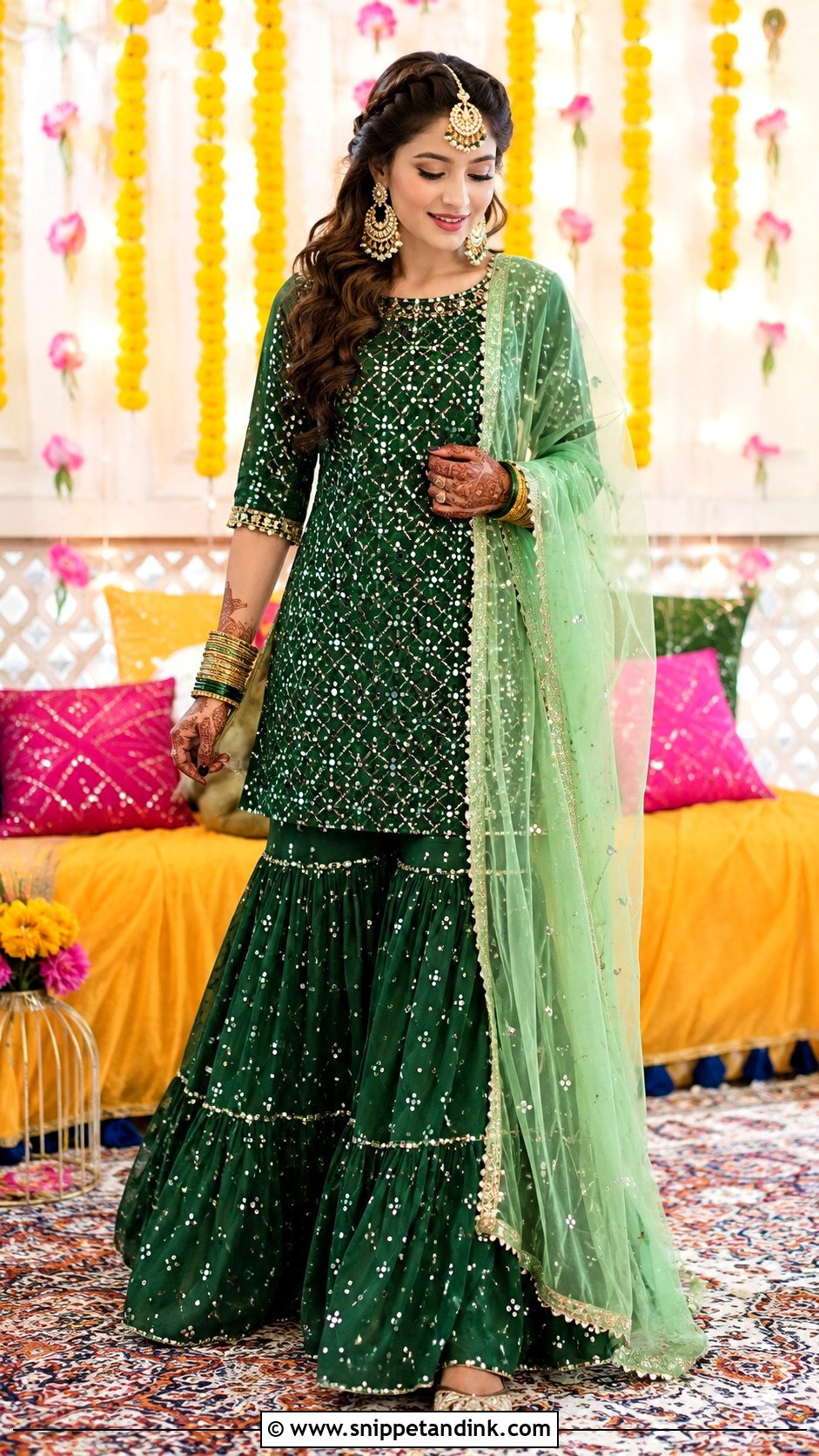
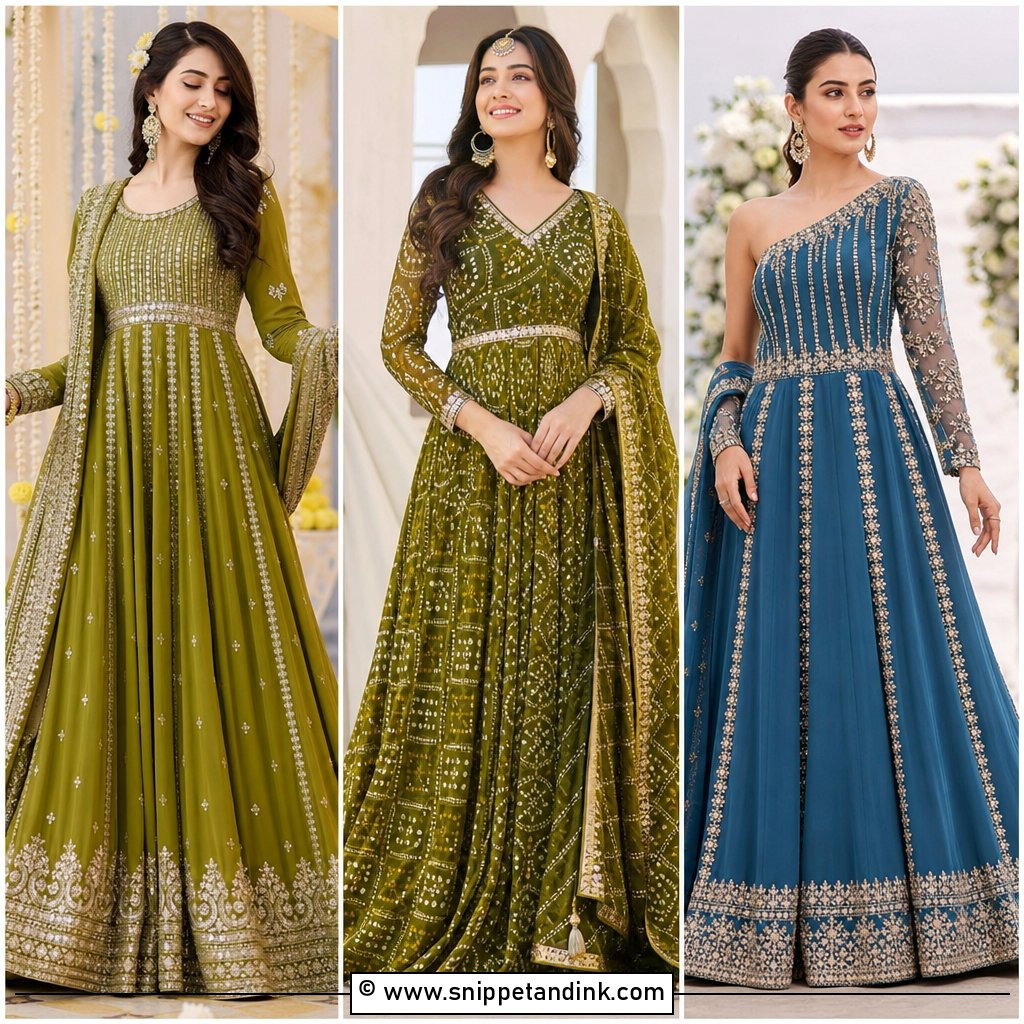
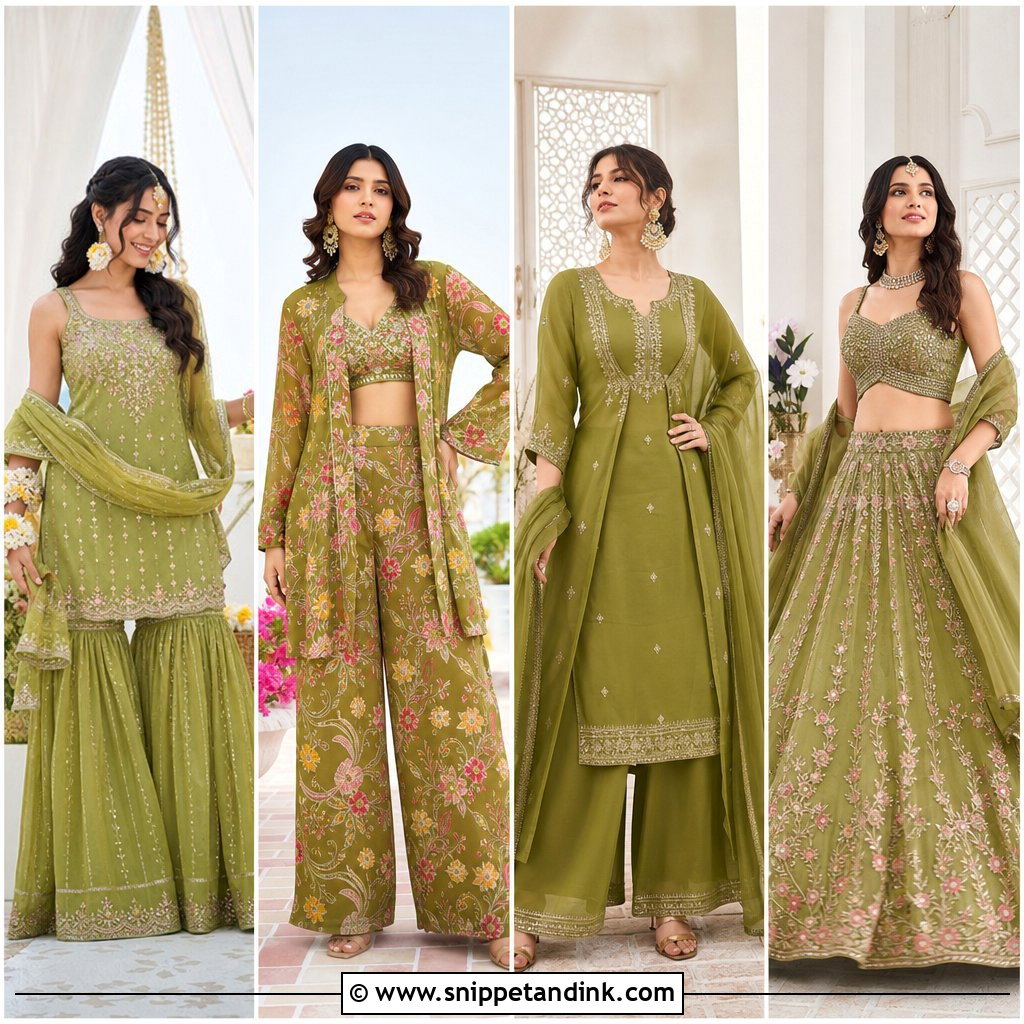
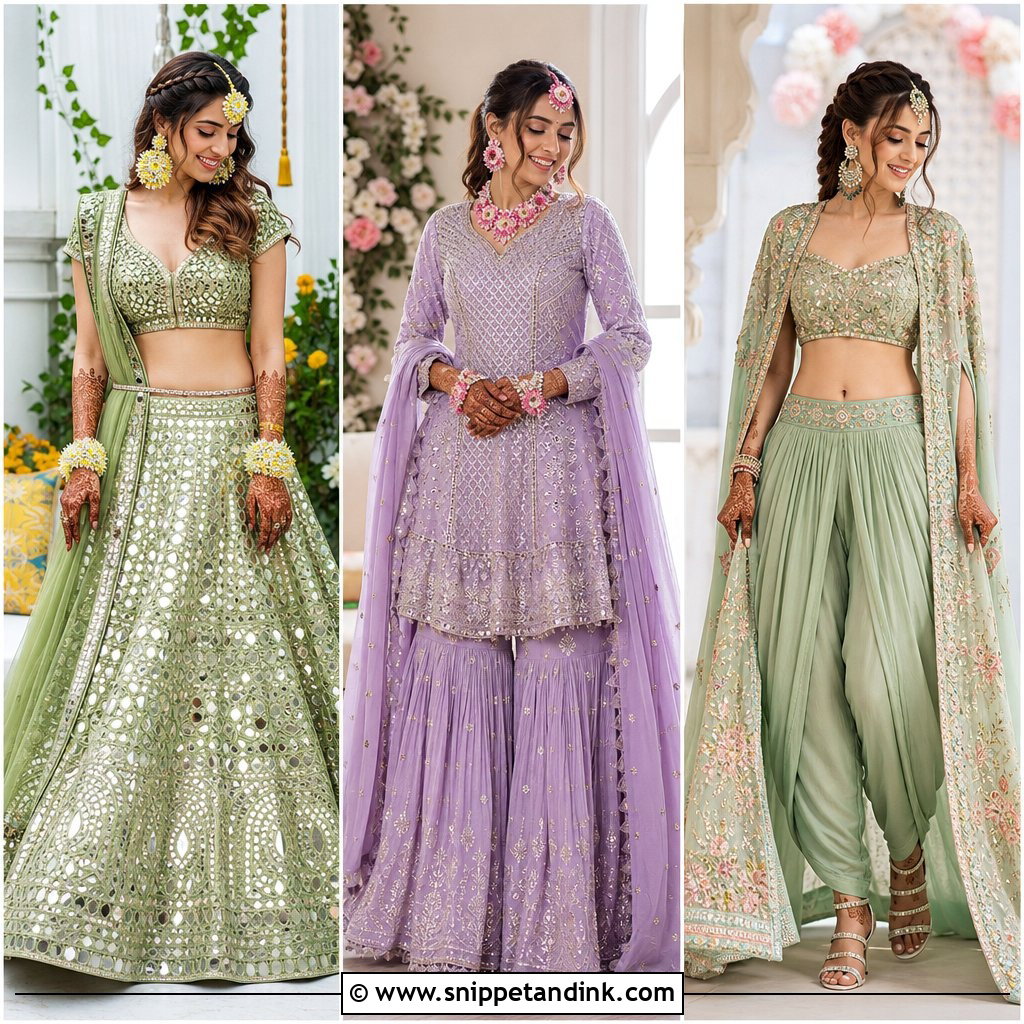
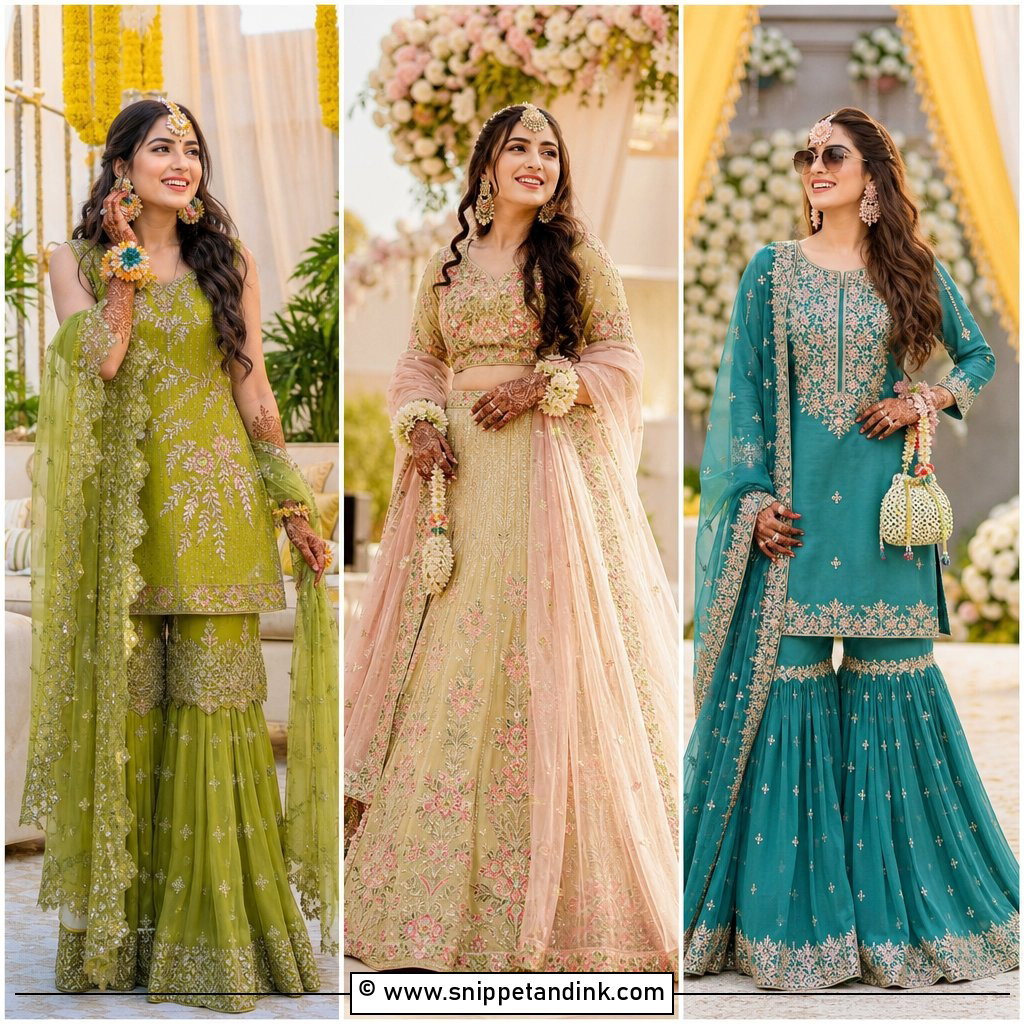
Shararas are the easiest thing to sit cross-legged in for hours, which is why I suggest them to brides who dread the stiffness of a lehenga. A short kurti with mirror work, zari borders or tassels over a flared bottom still gives you room to dance later. Lime, emerald and parrot green all sit well beside orange paste. My one warning: a very wide sharara pools on the floor when you sit and the hem collects dust and drips, so ask your tailor to stop the length at the ankle bone. Statement earrings, a maang tikka and embroidered flats are enough.
3. Pink Lehenga Mehandi Dress for Bride
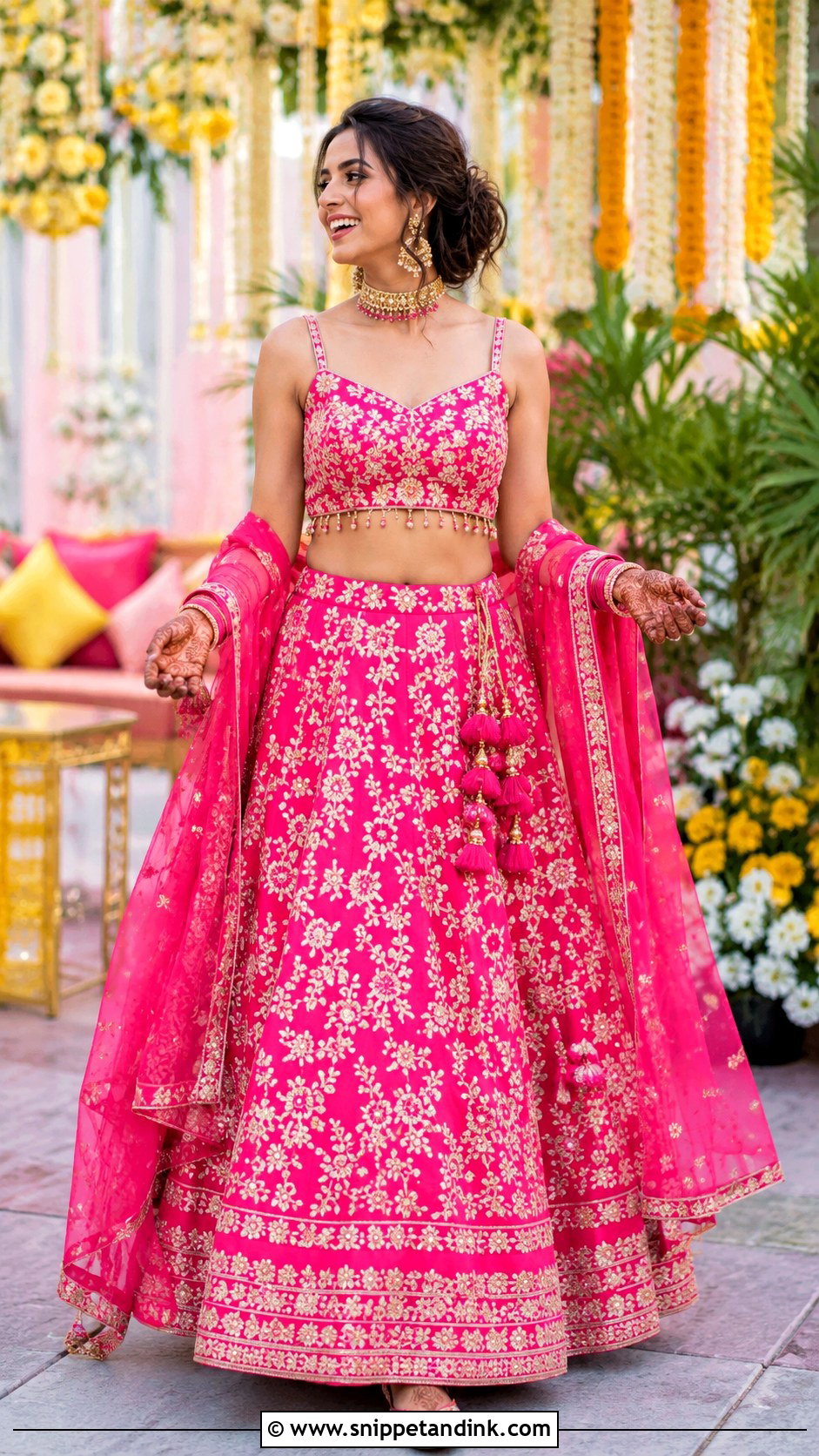
Rani pink and fuchsia hold their colour under warm tent lighting better than most shades, so they’re my safe bet when the event runs into the evening. Mix them with gold or mirror embroidery, a cropped blouse and a sheer dupatta to keep the weight down. Tassels, shells or floral appliqué add play, though tassels on a blouse sleeve dangle straight into wet paste, so I move them to the back tie. Gold jhumkas, a choker and decorated juttis complete it. I’d skip very pale pink here, since it can look flat beside the bright orange of fresh henna.
4. Orange Anarkali Mehandi Dress for Bride
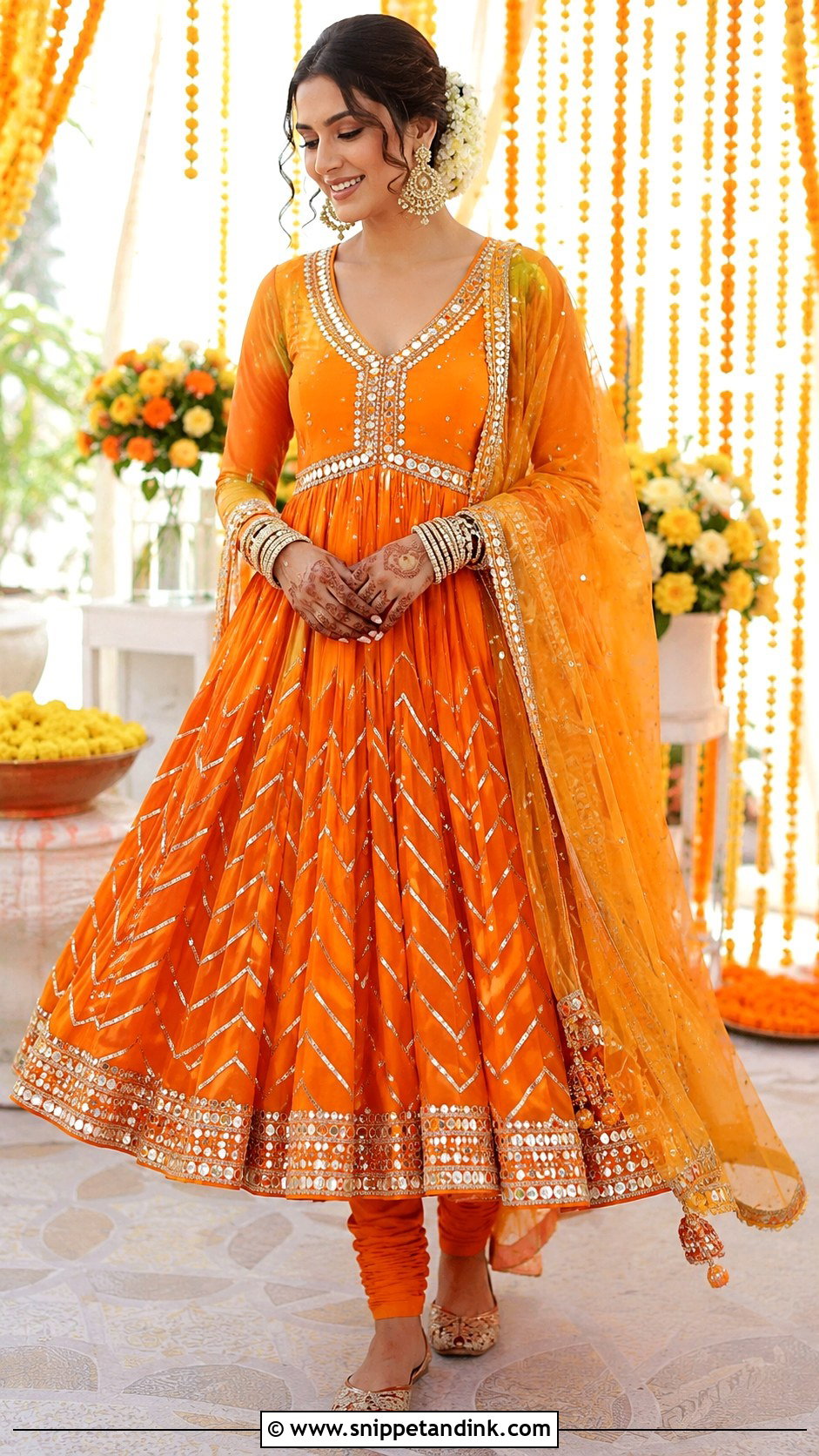
An Anarkali covers more than a lehenga but still breathes, and the flare gives photographers their twirling shots. Keep the sleeves sleeveless, cap or elbow length; anything longer has to be pushed up for the artist and creases badly at the inner elbow. Gota patti, mirror or fine embroidery all suit it, with churidar or slim trousers underneath and a light dupatta over one shoulder. Marigold, tangerine and rust work with floral décor. Check the shade against your expected stain, though. Orange next to orange can blur together in photos, so I lean toward a deeper rust or add a contrasting border.
5. Floral Lehenga Mehandi Dress for Bride
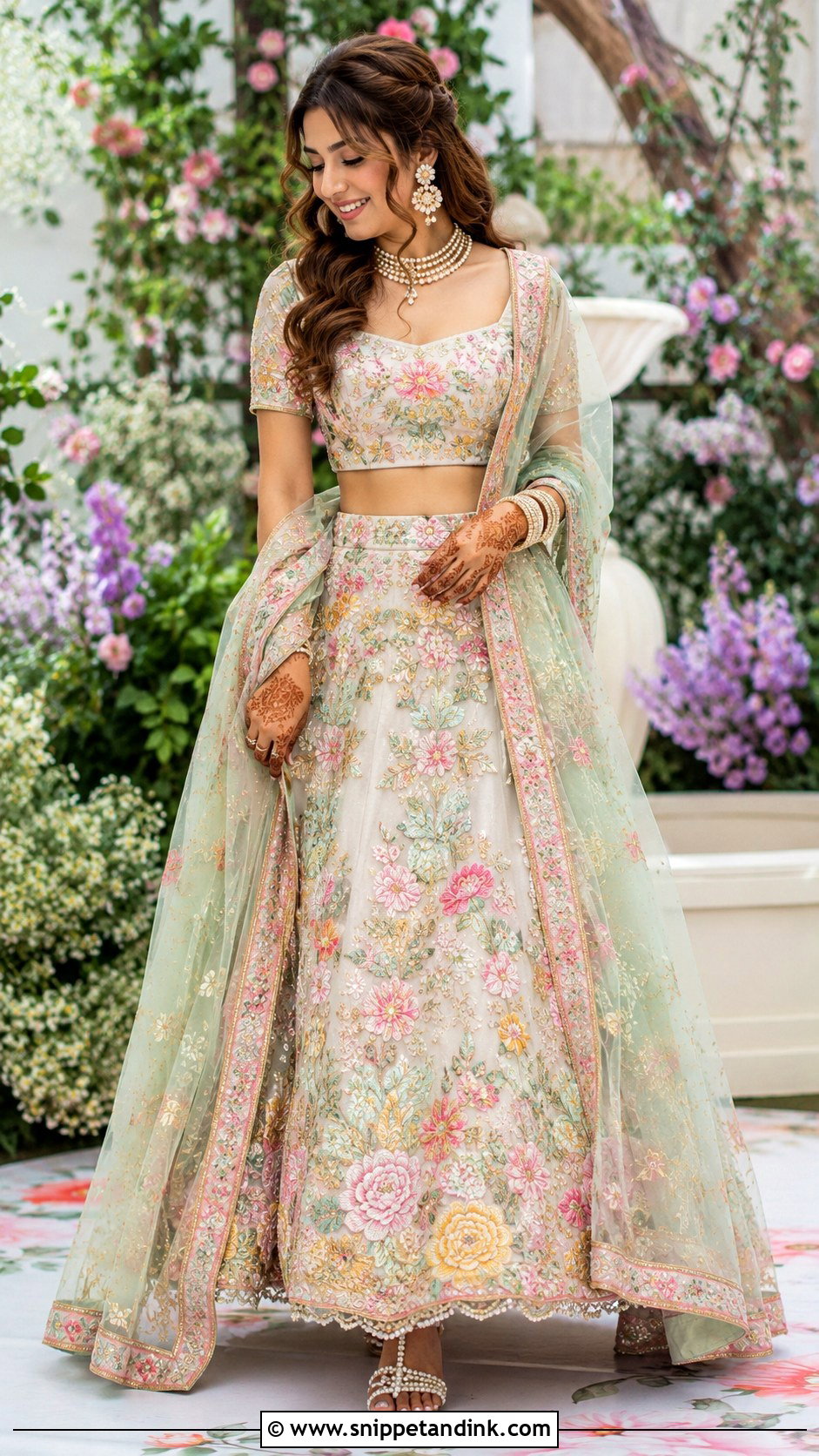
Floral lehengas run from printed cotton to heavy 3D appliqué, and that choice sets how dressy the whole look feels. On a peach, mint, ivory or blush base, bright flowers keep it festive. I’m cautious with raised flowers on the skirt front: when you rest your palms on your knees during application, wet hands land right on them. Put the dimensional work on the blouse or hem instead. Thin straps or short sleeves, pearl jewelry, soft curls and juttis finish it, and it sits naturally at outdoor and resort functions.
6. Mirror Work Lehenga Mehandi Dress for Bride
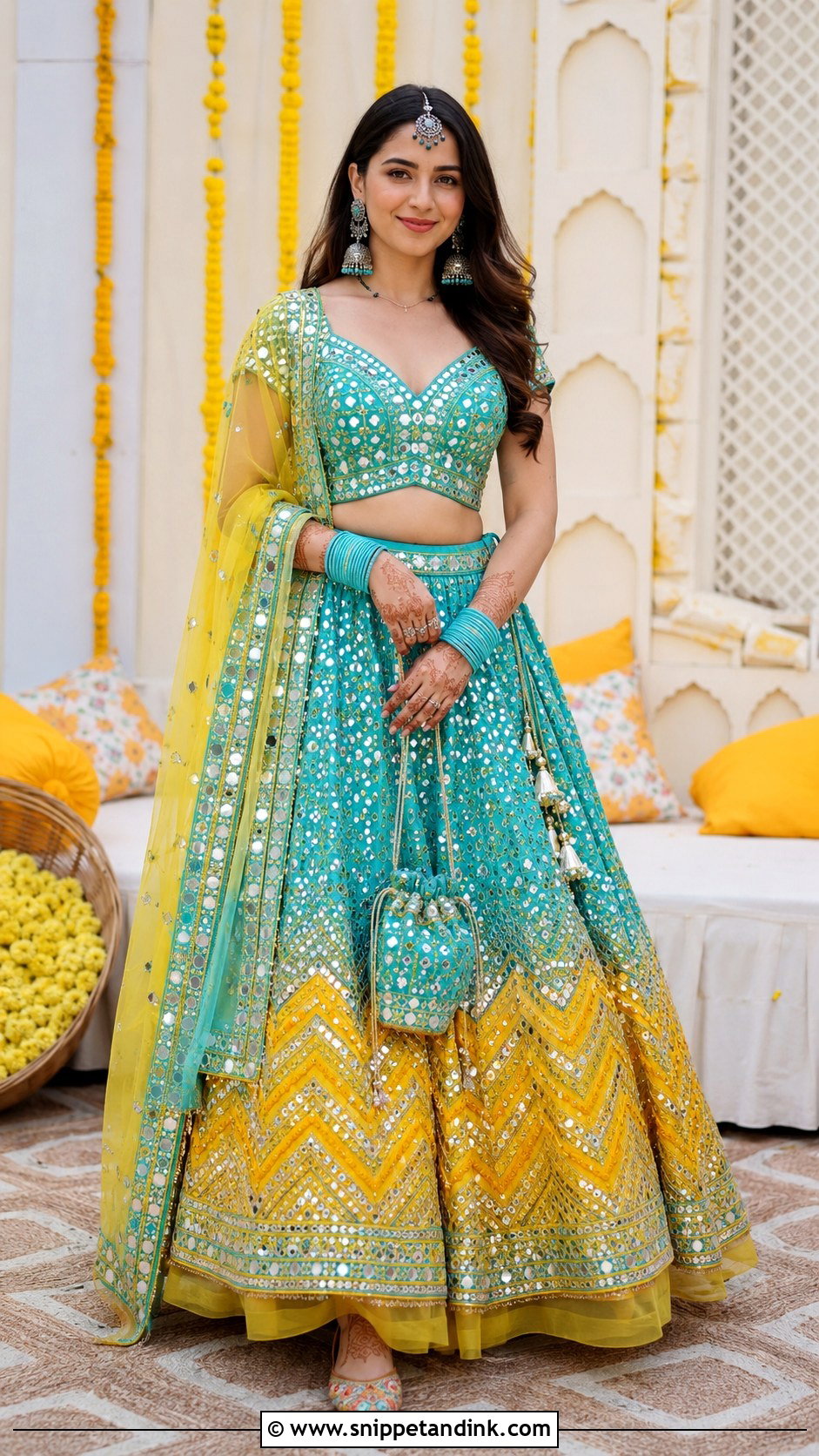
Mirrors give sparkle without the weight of zardozi, and they catch daylight and stage lights equally well. The catch is that real glass mirrors add up quickly across a full skirt. At fittings I ask brides to sit in the lehenga for ten minutes before deciding, and often the better split is a lighter skirt with a mirror-heavy blouse. A short-sleeved or tie-back blouse and a sheer dupatta keep the mirrors in focus. Oxidized jewelry and glass bangles suit this folk-leaning style better than polished gold.
7. Gota Patti Lehenga Mehandi Dress for Bride
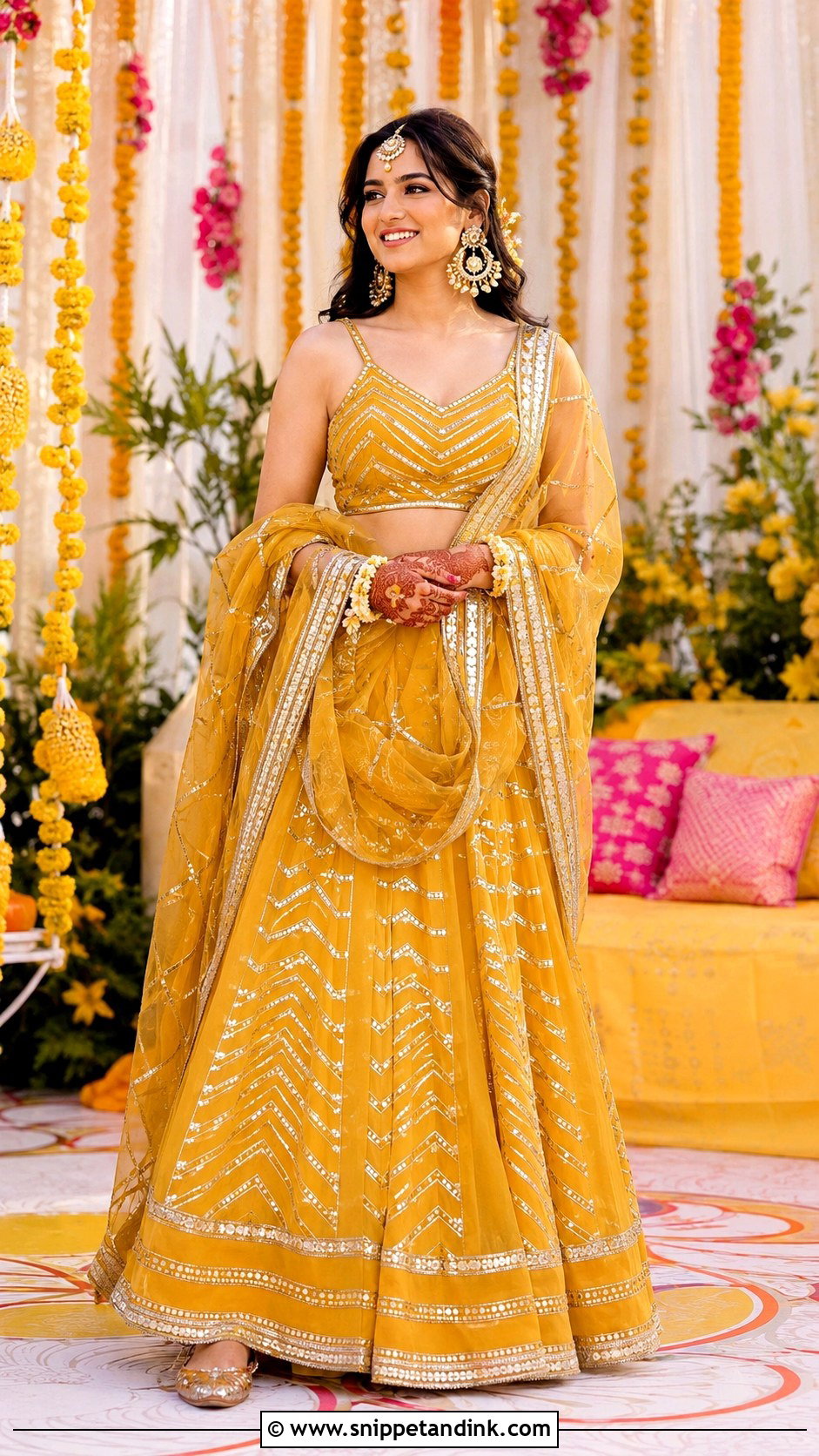
Gota patti is the simplest route to a royal yet playful mehandi outfit, because the metallic ribbon lies flat and weighs very little compared with dense embroidery. Yellow, mustard, peach, green and rani pink are the classic grounds for it. Metallic gota can tarnish when it stays damp, so I keep a gota-edged dupatta pinned well away from your hands. A plain blouse, kundan earrings, a delicate maang tikka and embroidered flats balance the shine.
8. Cape Lehenga Mehandi Dress for Bride
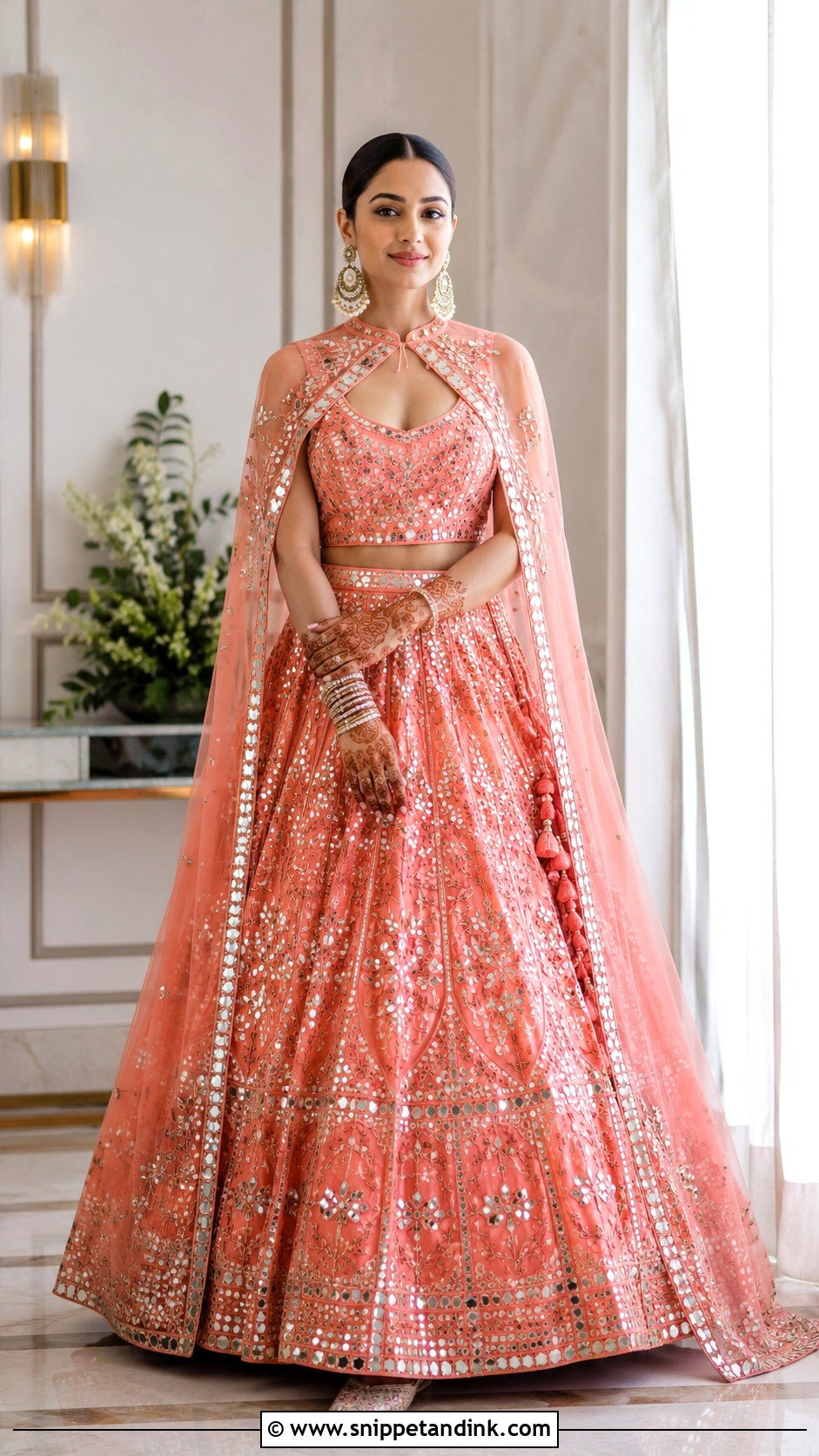
A cape replaces the dupatta, and at a mehandi that’s a real advantage: nothing slides down your arm while the artist works. Put a sheer embroidered cape in mirror, sequin or floral work over a lime, coral, pink or yellow lehenga. Go sleeveless underneath for full arm henna, and ask for the cape to hook onto the blouse at the shoulder seam. Worn loose, it slips forward every time you lean in to watch. Statement earrings, a sleek hairstyle and block heels or juttis suit hotel and cocktail-style functions.
9. Dhoti Kurta Mehandi Dress for Bride
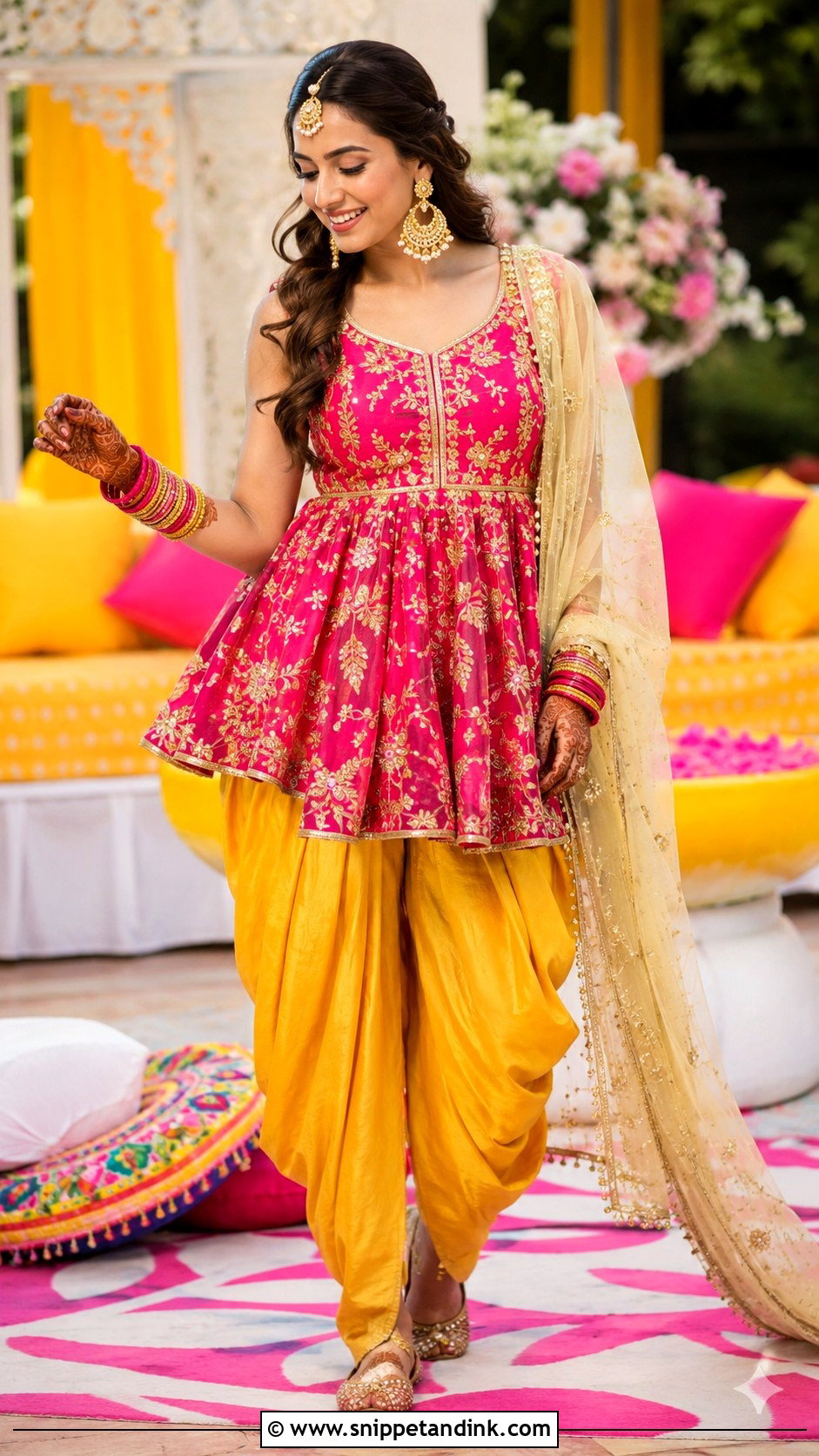
A dhoti kurta outfit is my pick for the bride who plans to dance more than she sits. The draped bottom lets you fold your legs under you during application, while a peplum kurta, crop top or short tunic keeps the top half festive. Silk and crepe drape better than stiff georgette here, since the whole shape depends on soft folds. Add a light cape for movement, then big earrings, a maang tikka and embellished flats. Yellow, magenta, turquoise and green all hold up.
10. Palazzo Suit Mehandi Dress for Bride
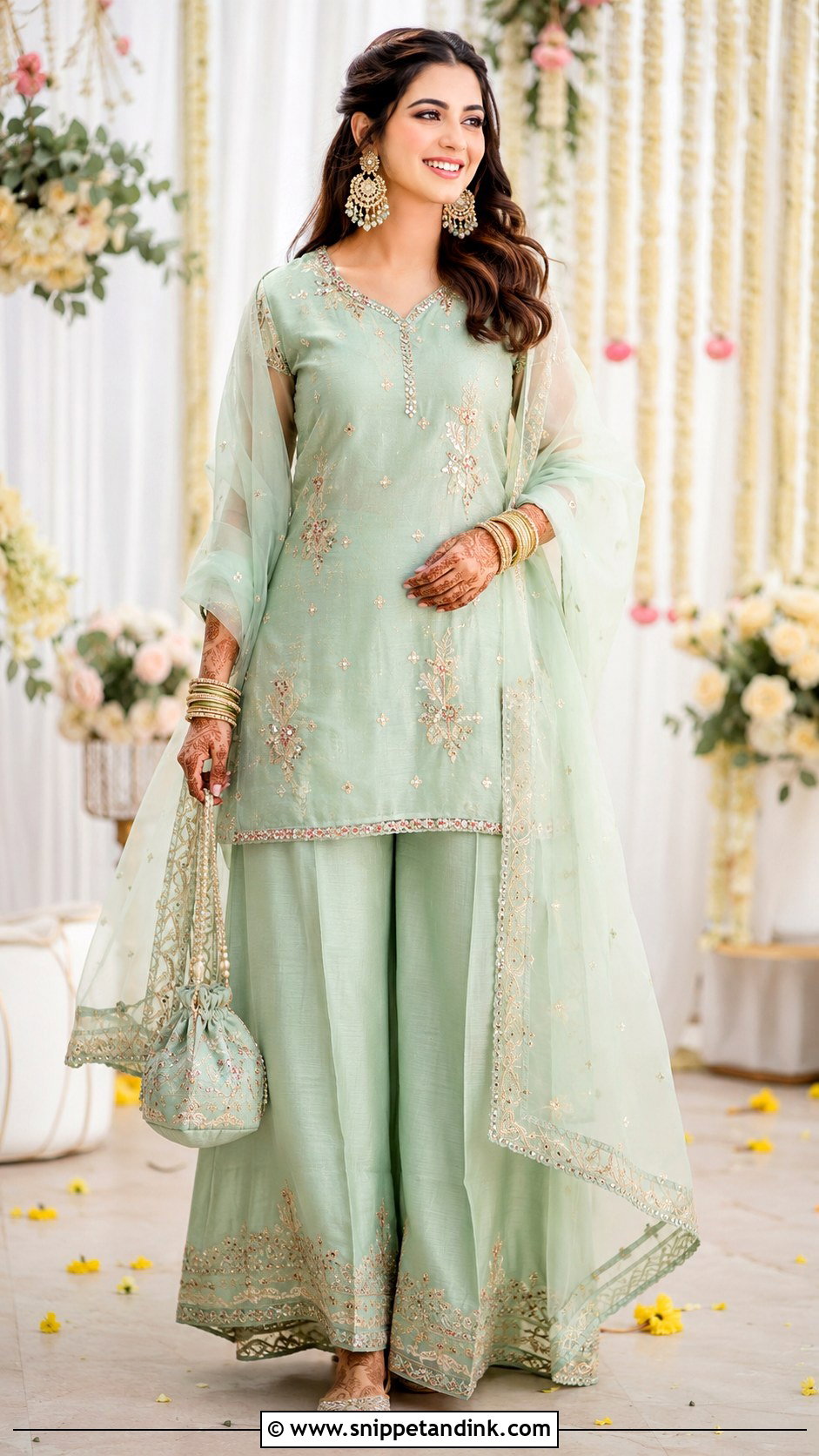
Palazzos are wide enough to sit in comfortably yet look neater than a sharara, so I suggest them for smaller, semi-formal gatherings. Pair them with a short embroidered kurti, an A-line tunic or a crop top and jacket. Brocade looks rich but gets heavy and warm across both legs; I’d use it on the top only and keep the pants in georgette or silk. Yellow, peach, mint or pink with mirror or gota details, chandbalis, a small bindi and juttis round it out. Soft makeup suits this quieter look.
11. Indo Western Mehandi Dress for Bride
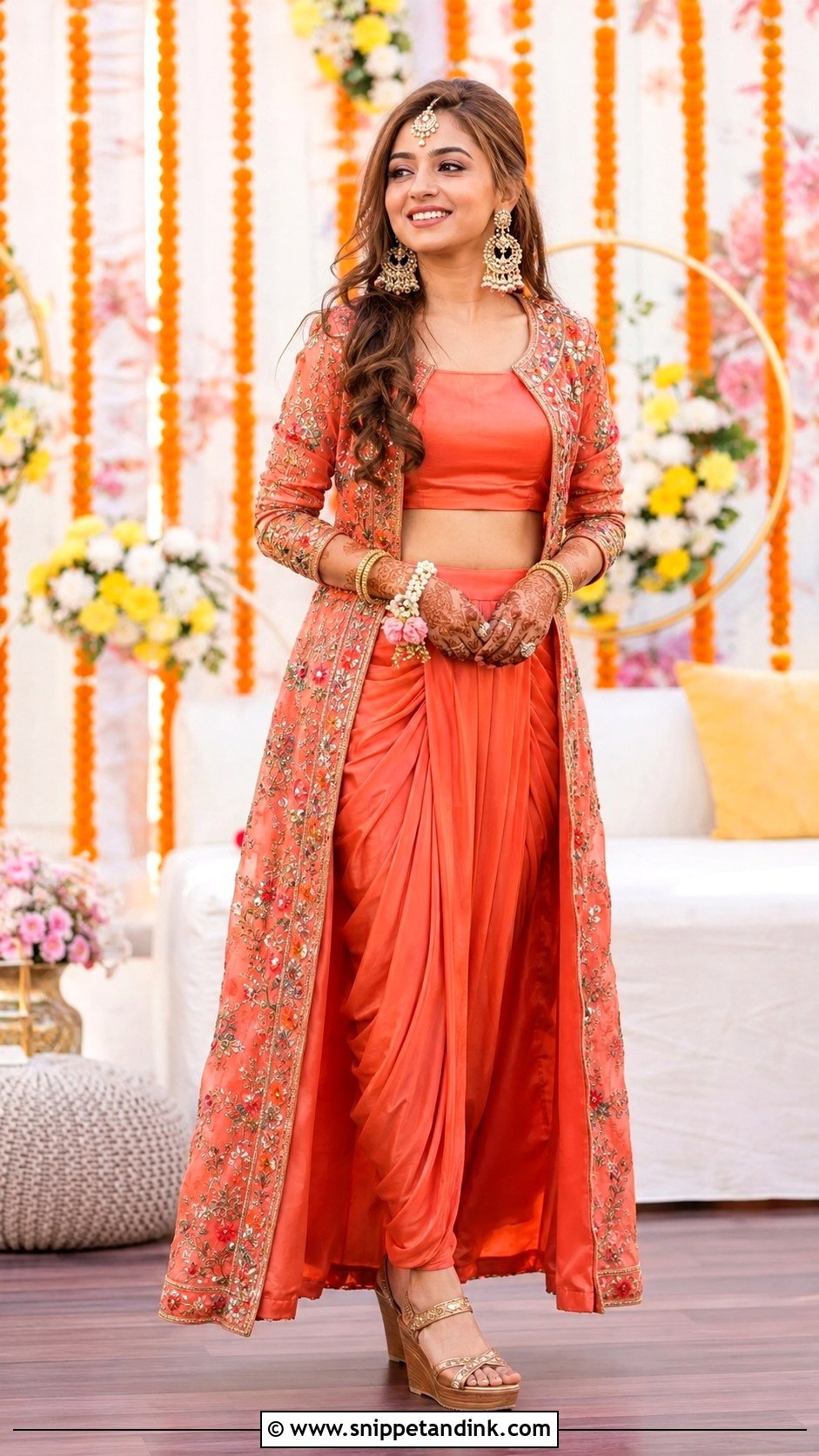
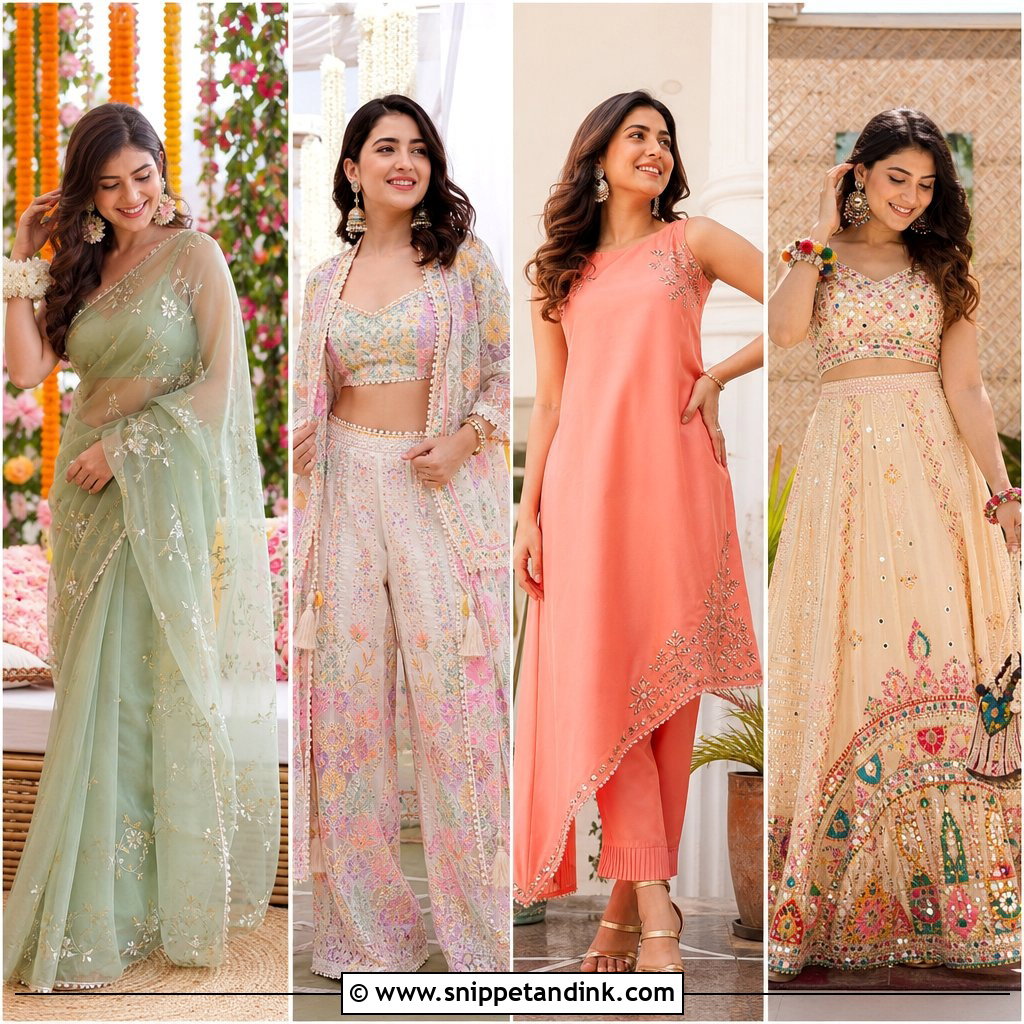
Fusion outfits are where brides most often forget the henna. A long-sleeved jacket or fitted top looks great on the hanger and then has to come off before the artist can start. Build it from a crop top and draped skirt, a jacket over trousers, or a pre-draped dupatta on a lehenga-style bottom, and keep your arms bare to the elbow at least. Coral, lime, fuchsia, teal and yellow suit the event. One traditional piece, like kundan earrings or a maang tikka, keeps it bridal. Block heels or wedges are steadier than stilettos on rugs and floor cushions.
12. Short Kurti Lehenga Mehandi Dress for Bride
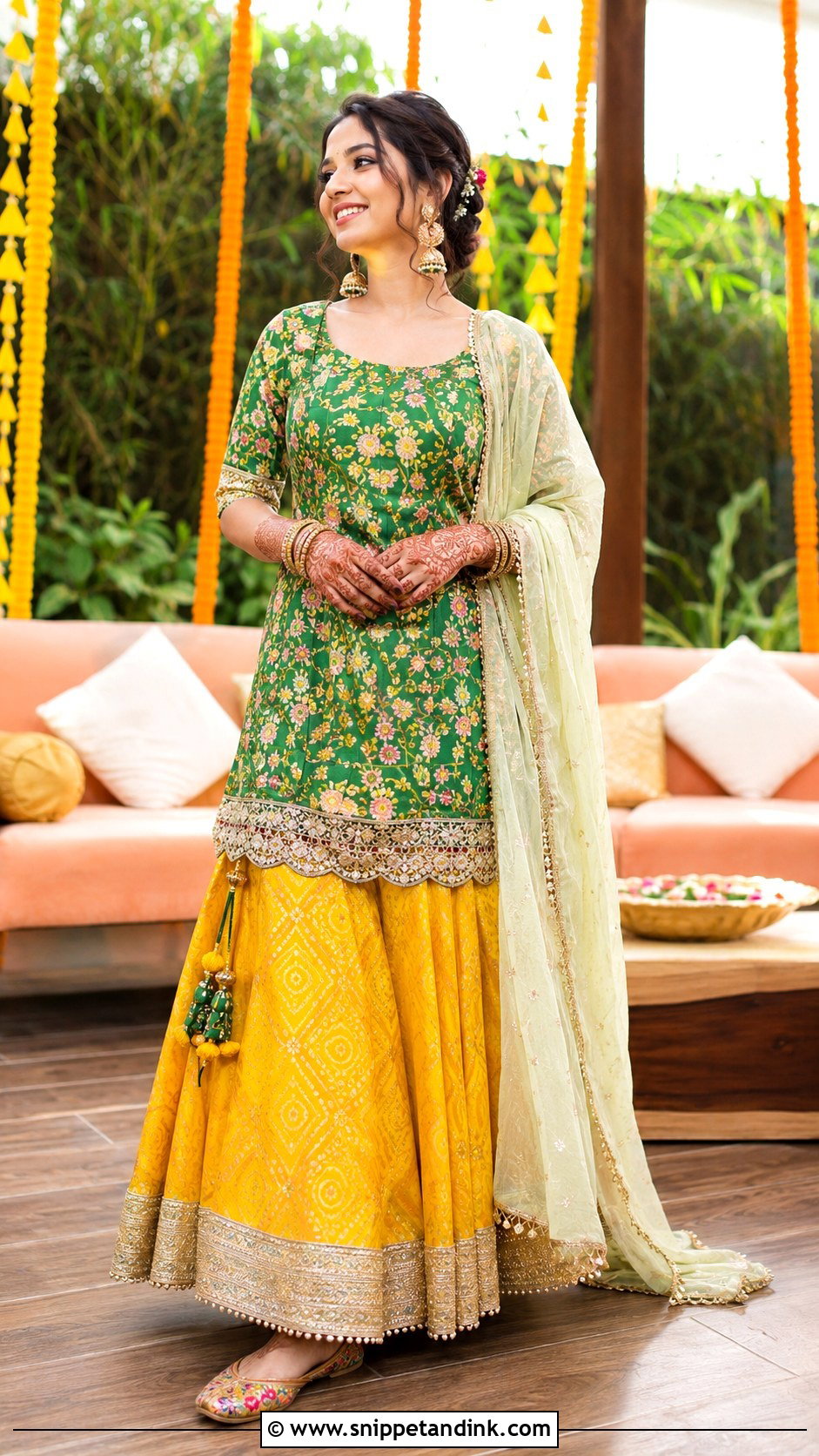
This is the outfit I suggest to brides whose older relatives expect more coverage. The kurti covers the midriff and the lehenga keeps it bridal. Try a flared skirt under a printed or embroidered short kurti in yellow, green, pink or orange, with a minimal dupatta or none. Check the kurti’s side slits at the fitting: if they sit too high, the fabric bunches at the hip when you’re seated. Jhumkas, floral hair pins and colourful juttis finish it.
13. Peplum Sharara Mehandi Dress for Bride
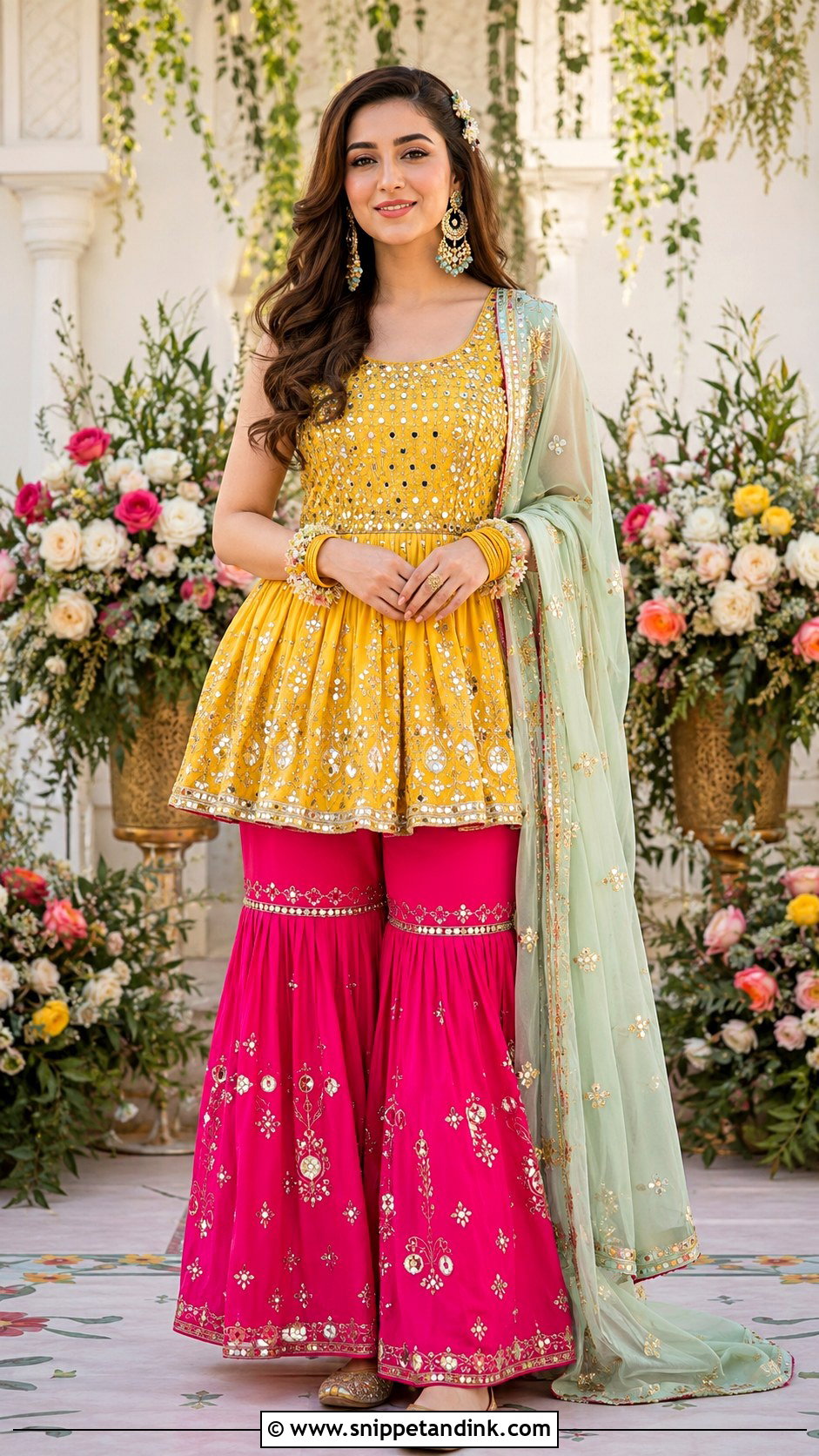
A peplum sharara outfit defines the waist in a way a straight kurti can’t, and the sharara adds volume without a lehenga’s weight. I put the mirror, gota or thread work on the peplum and keep the sharara plainer. Contrast pairings I like are yellow with pink, green with ivory and orange with gold. The peplum flare should end at the high hip; any lower and it crushes into creases while you sit for application. Wear the dupatta across one shoulder with statement earrings, soft waves and flats.
14. Ruffle Saree Mehandi Dress for Bride
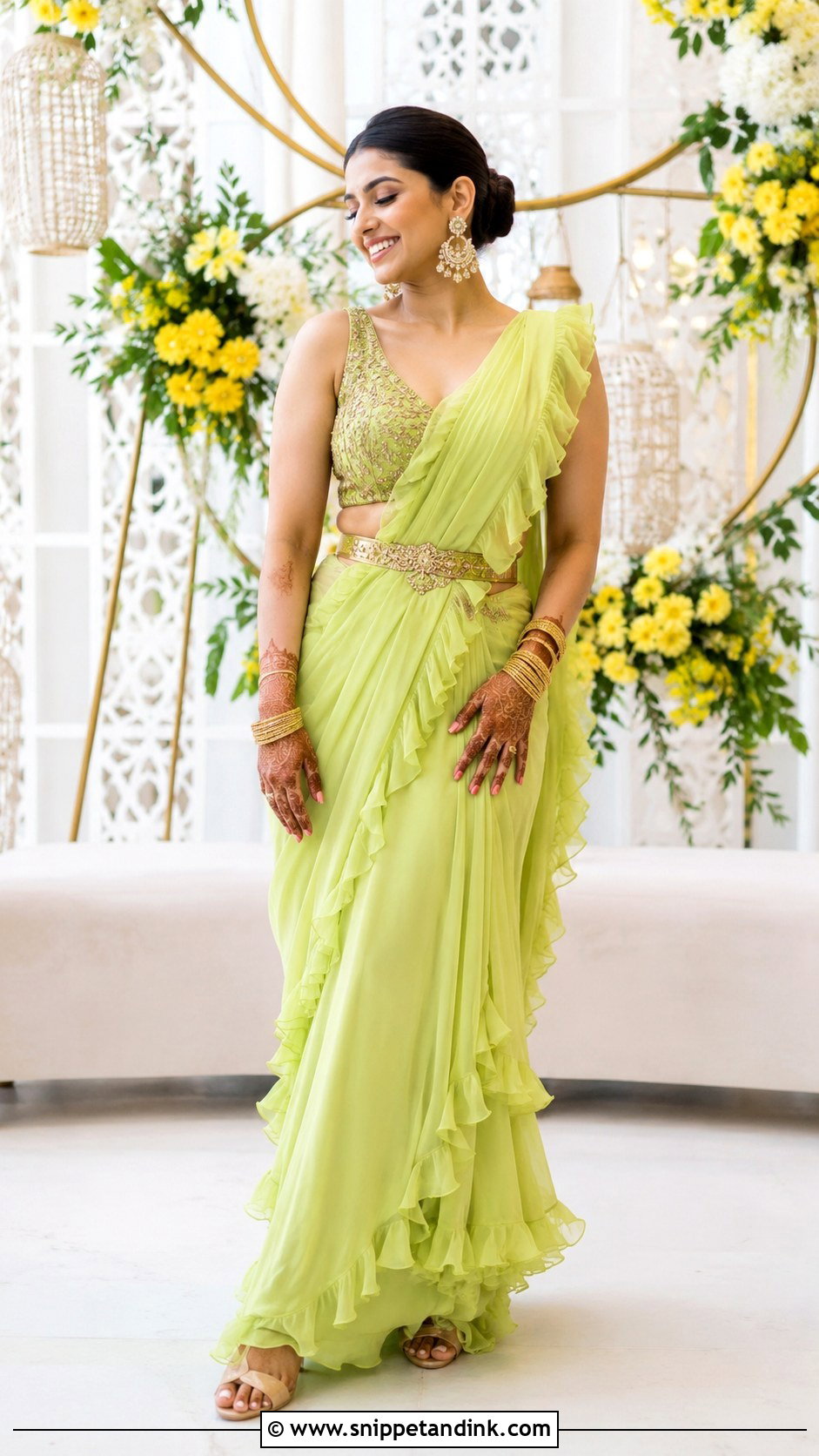
Ruffle sarees are lighter than a classic drape, and bought pre-stitched they won’t come undone while you’re perched on a low stool. Yellow, coral, pink or lime green with an embroidered sleeveless or short-sleeved blouse is the combination I start from. For a mehandi I always add a belt at the waist, because you can’t reach down to fix pleats with wet hands. Chandbalis, a sleek bun or soft curls, and heels you’ve already walked in finish it.
15. Printed Saree Mehandi Dress for Bride
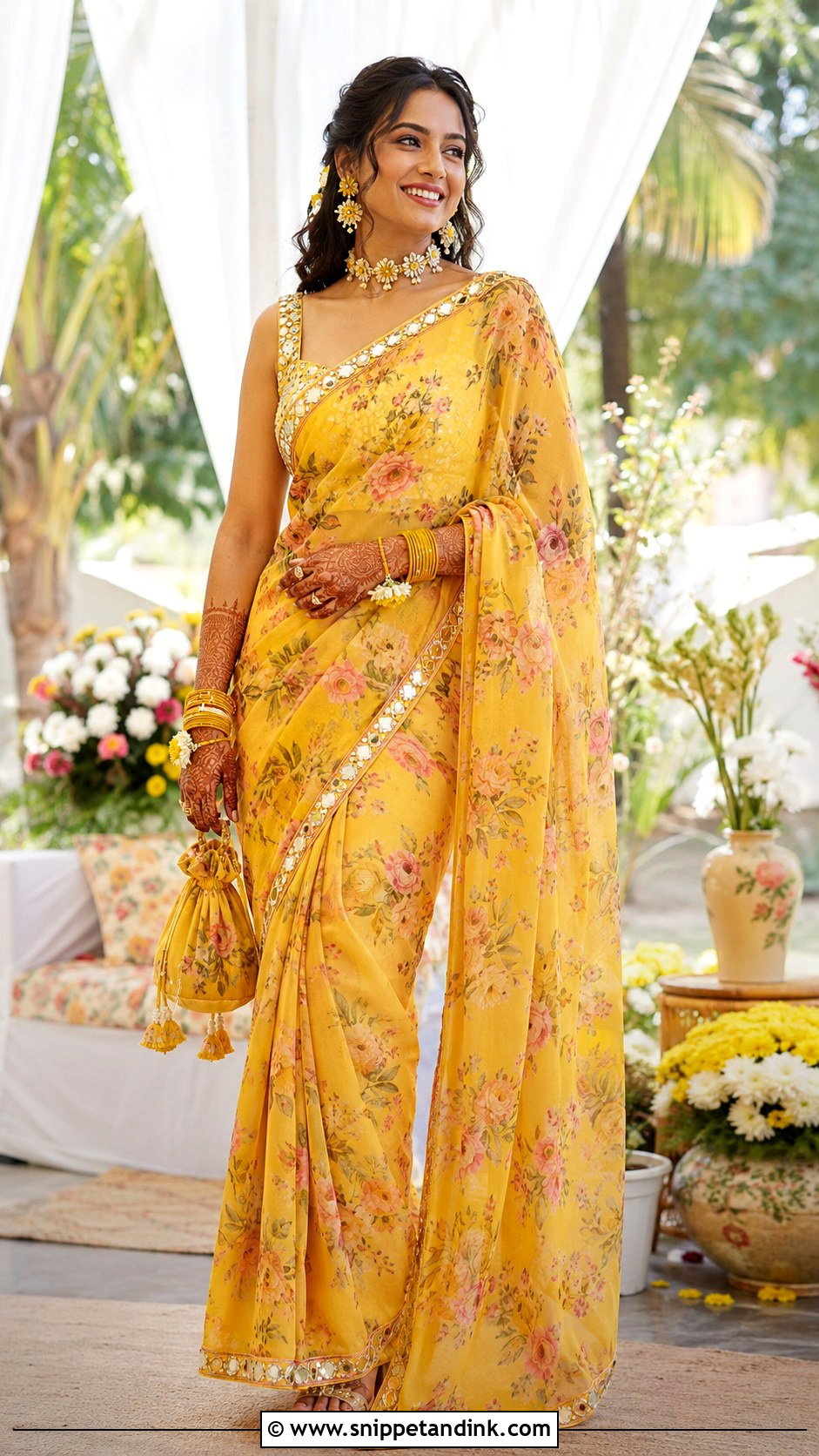
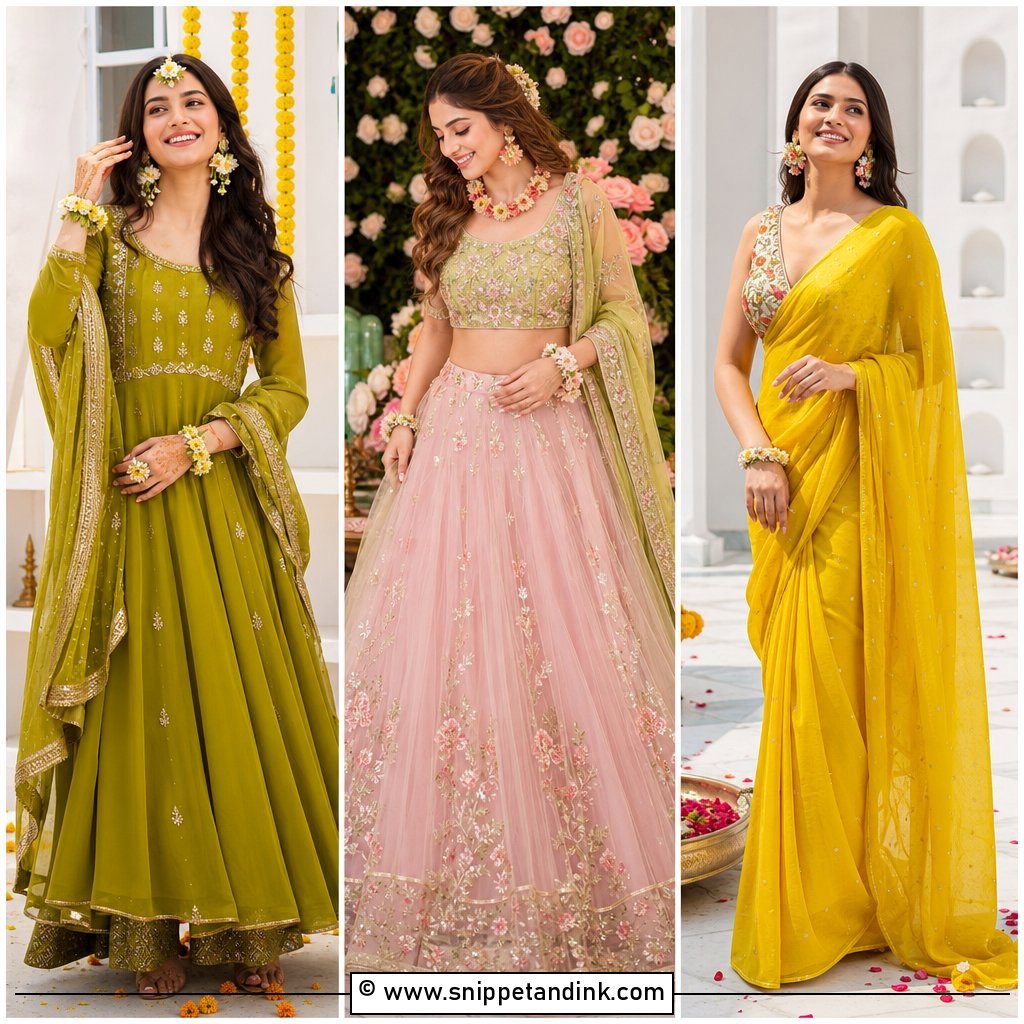
Printed sarees in floral, leheriya, bandhani or block print work best for intimate daytime ceremonies at home. Here the blouse carries the dressiness, so choose a mirror work, tie-back or embroidered crop style. Cotton and mulmul prints are cool to sit in but crush fast; I steam the pallu on the morning of the event and pin the pleats at two points. Lightweight jewelry, a small potli and sandals or wedges keep it easy to wear, and the prints still feel cultural, colorful, and special for the ceremony.
16. Bandhani Lehenga Mehandi Dress for Bride
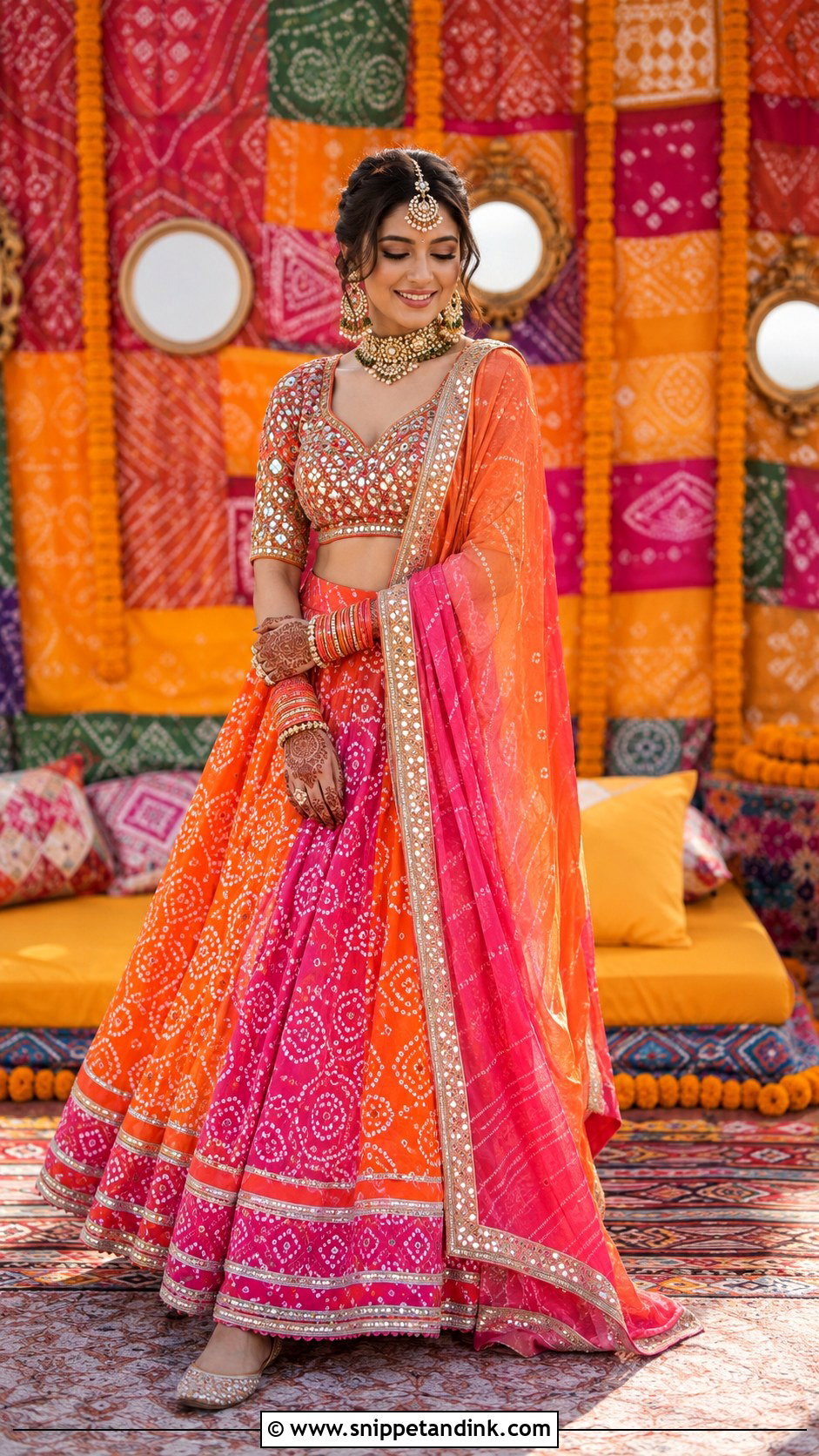
Bandhani is made by pinching and binding tiny points of cloth before dyeing, and that heritage is why it feels so right at a mehandi. Yellow, red, orange, green or pink skirts take a contrasting blouse well, and a mirror or gota patti blouse lifts it for a bride. Brightly dyed bandhani can bleed when damp, so don’t let a henna-covered hand rest on it, and send it for dry cleaning afterwards. A bandhani dupatta with a simple border, kundan jewelry and juttis complete the set.
17. Leheriya Lehenga Mehandi Dress for Bride
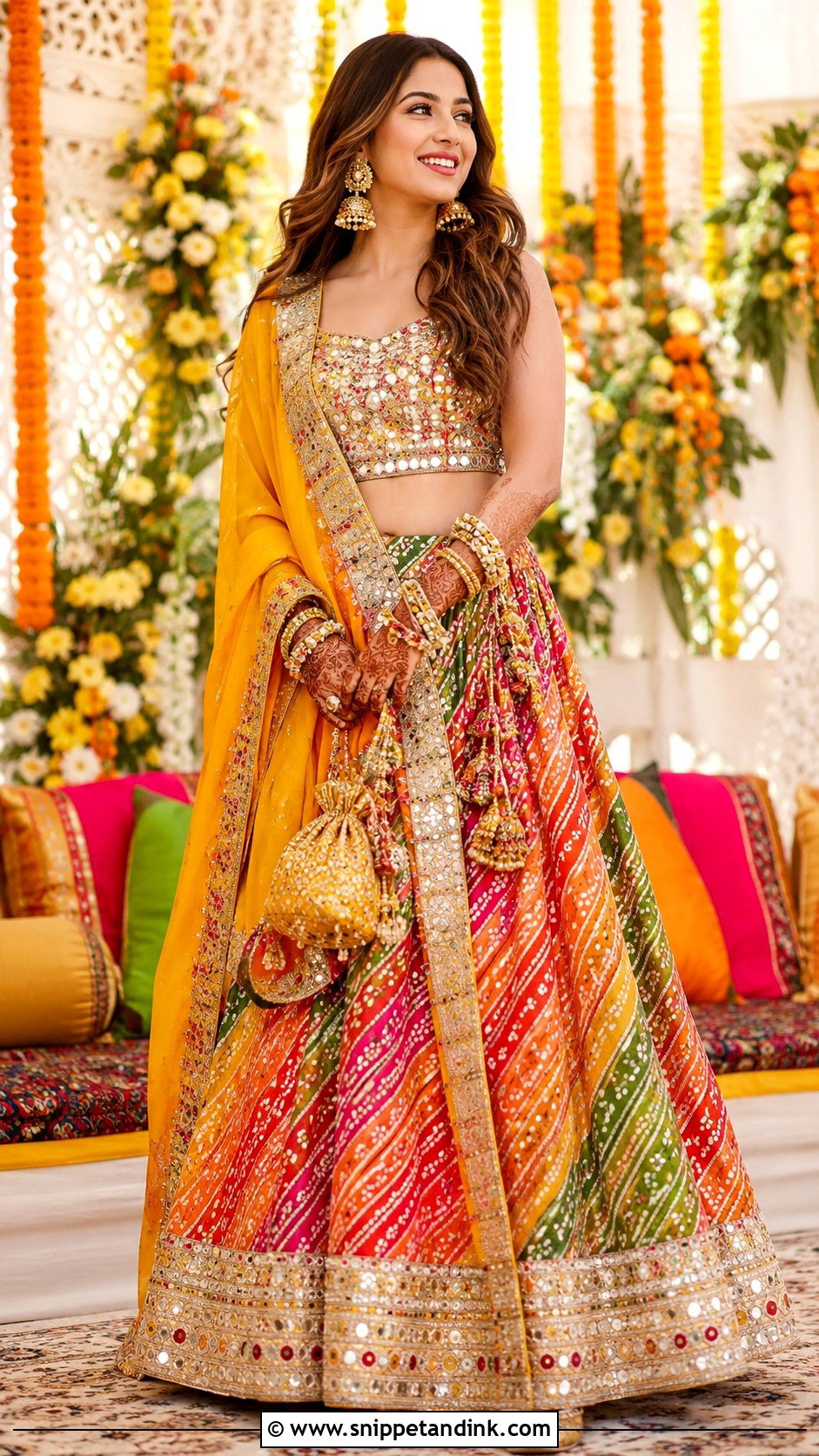
A leheriya lehenga carries a diagonal wave pattern that moves in photos, especially in dancing shots. Go multicolour, or two-tone in yellow and pink, green and blue, or orange and coral. The print is busy enough that I keep the blouse plain or mirrored and let a bordered dupatta do the rest. Jhumkas, a potli and juttis are plenty. It fits Rajasthani-inspired décor and outdoor functions naturally.
18. White And Yellow Mehandi Dress for Bride
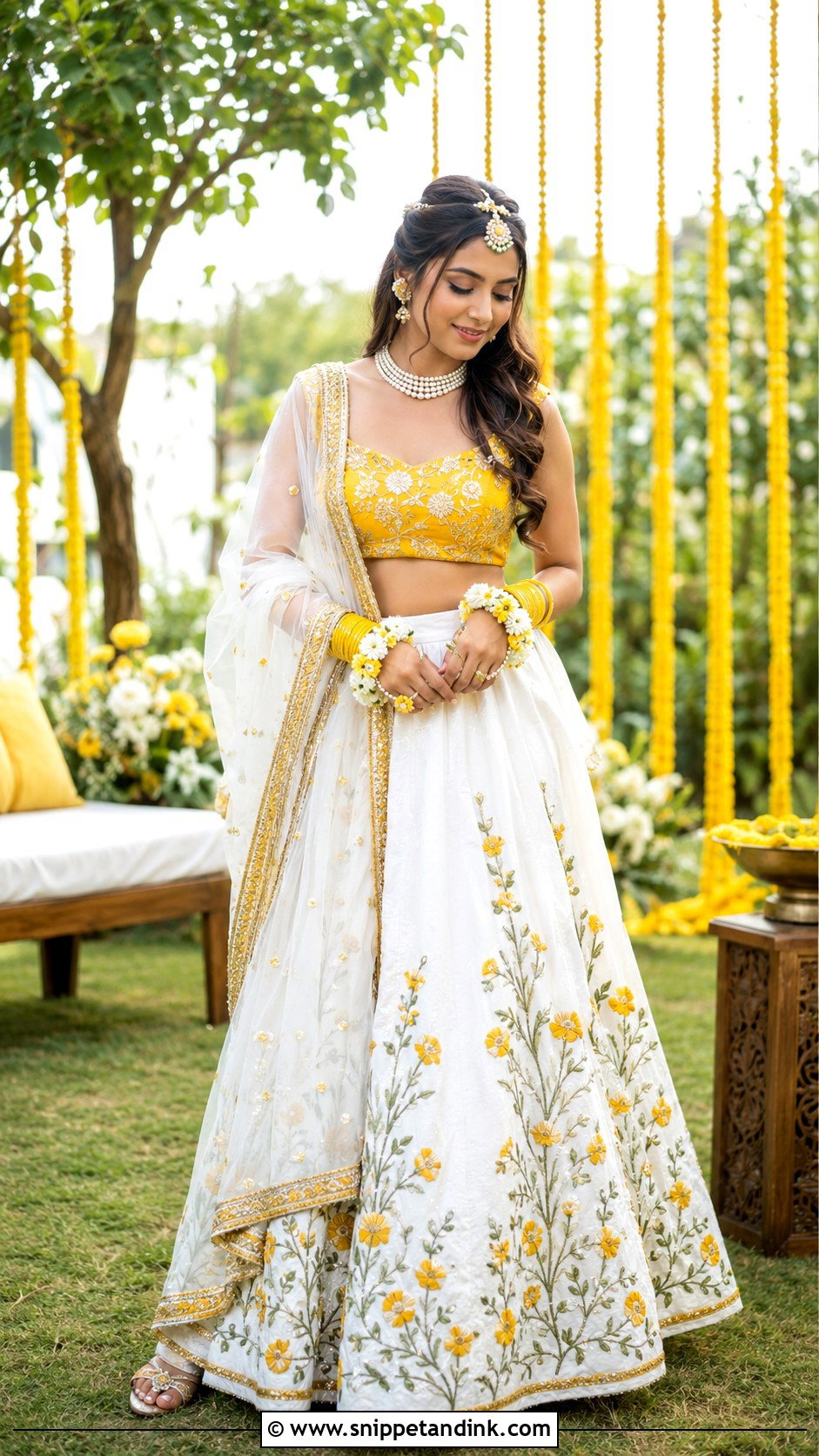
White and yellow looks fresh by day, but white is the one base where a henna mark is both obvious and very hard to lift. I only put a bride in it if she’ll sit on a covered seat and the artist works over a protective sheet. Yellow embroidery, mirror work or a yellow blouse over a white skirt adds the contrast, and the pairing sits well with marigold décor. Pearl jewelry, floral bracelets and juttis suit its softness. Cream or off-white forgives small marks far better than optic white.
19. Pastel Lehenga Mehandi Dress for Bride
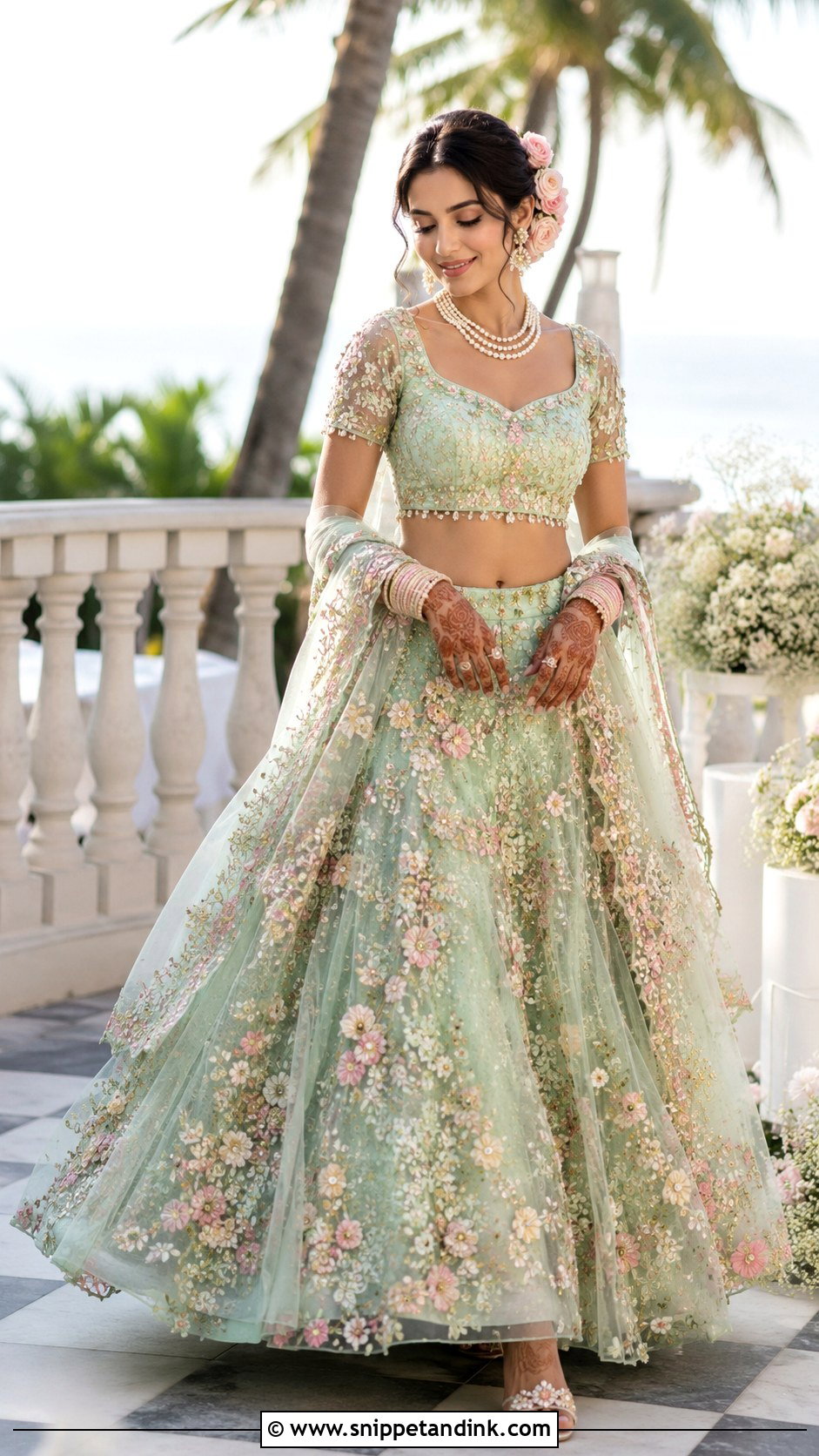
Pastels need embellishment to feel bridal. Without it, mint or powder blue reads like a guest outfit. Mirror work, sequins or floral appliqué fix that quickly. Lavender, peach, blush and pale yellow sit well with fresh flowers and daylight, so resort and daytime venues suit them. Under yellow tent bulbs some pastels go muddy, and I always check the swatch under warm light before a bride commits. A short-sleeved blouse, a dupatta that clears your hands, pearl jewelry and embellished sandals finish the look.
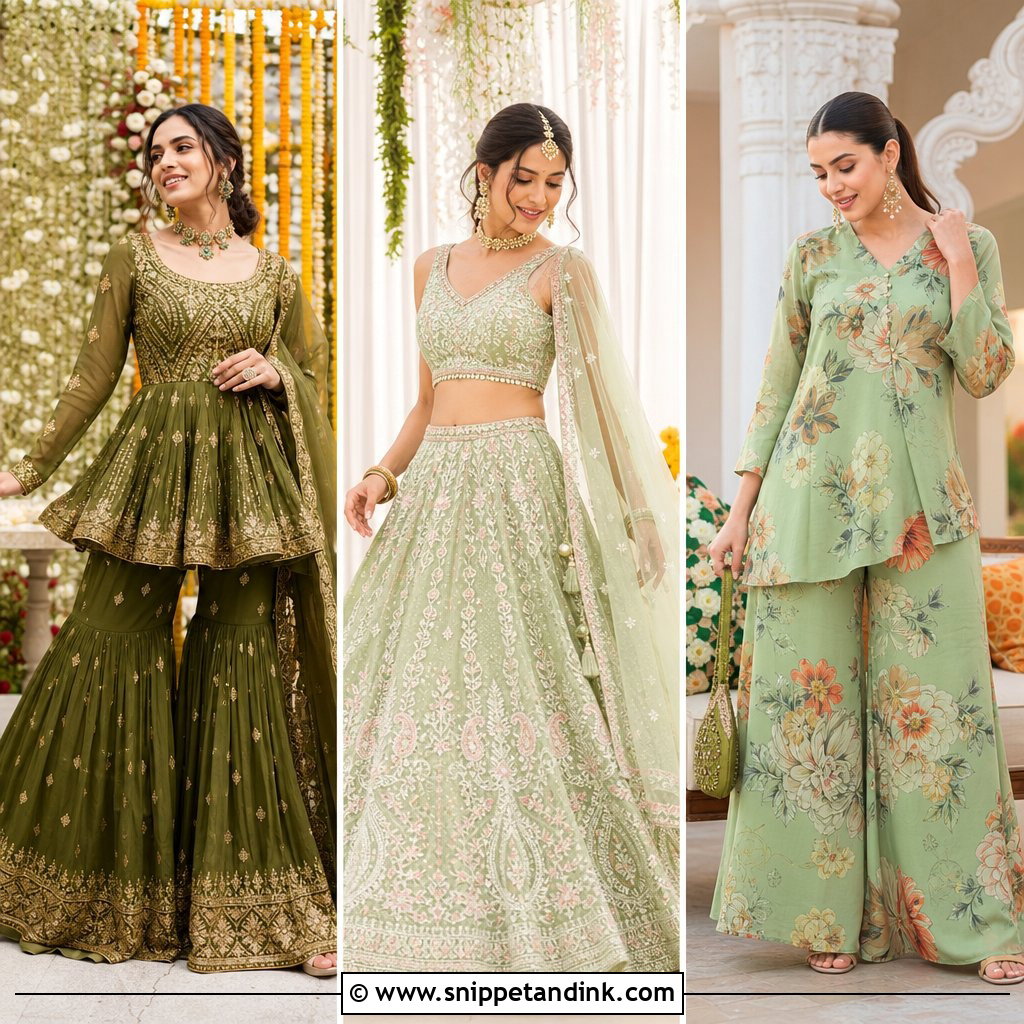
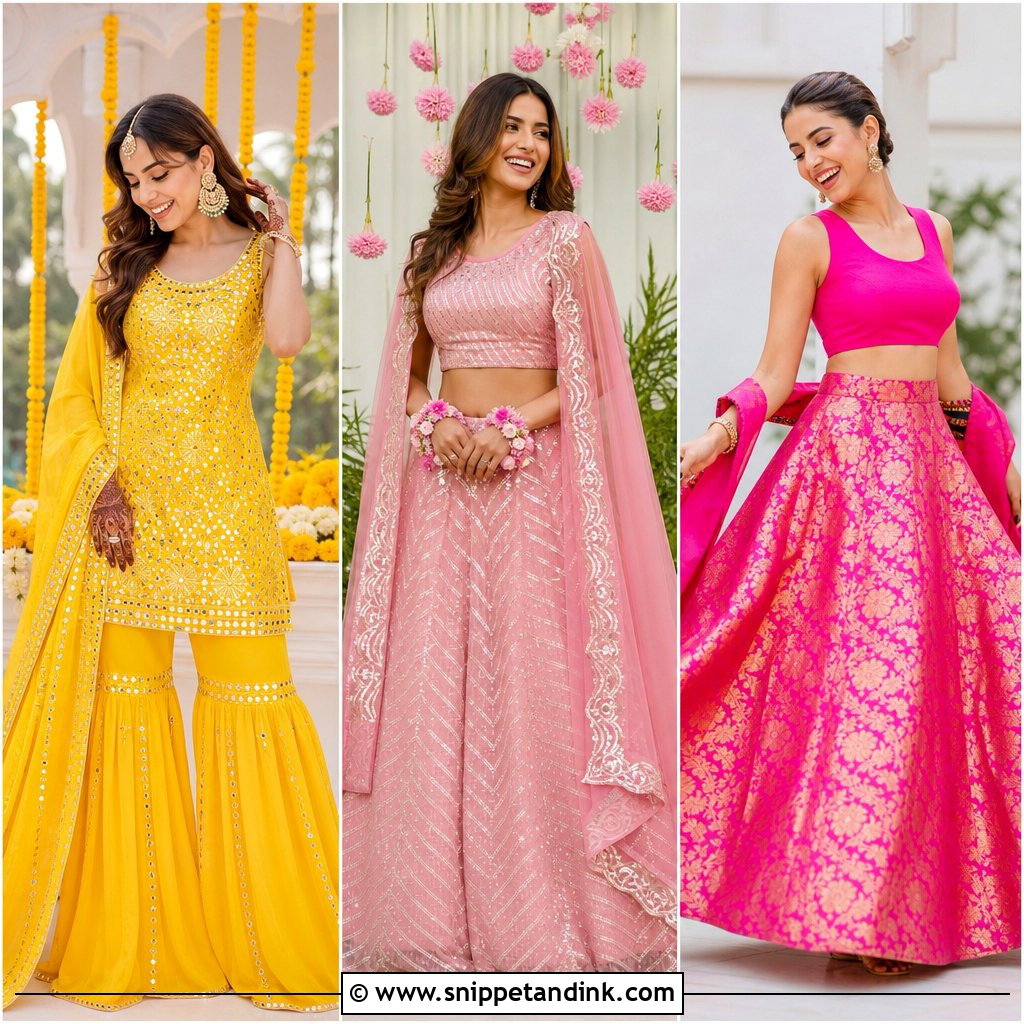
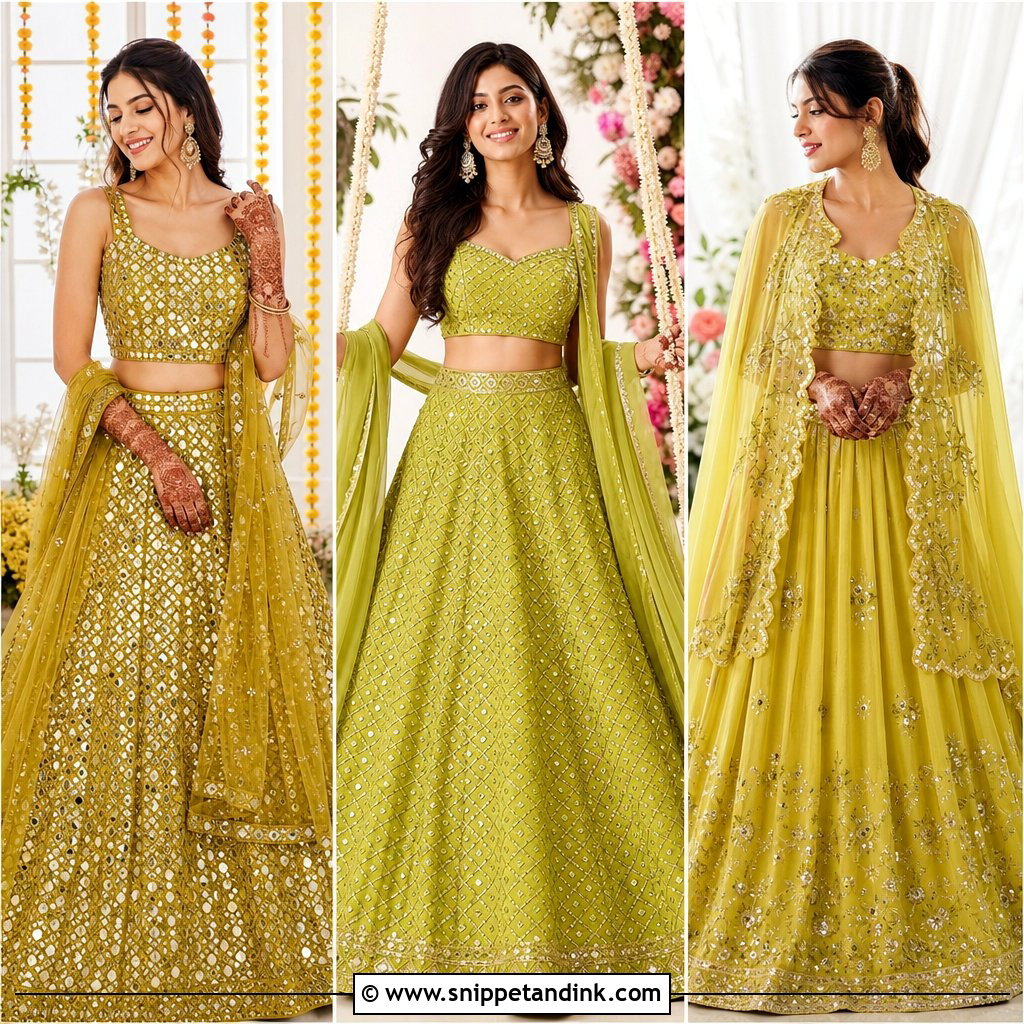
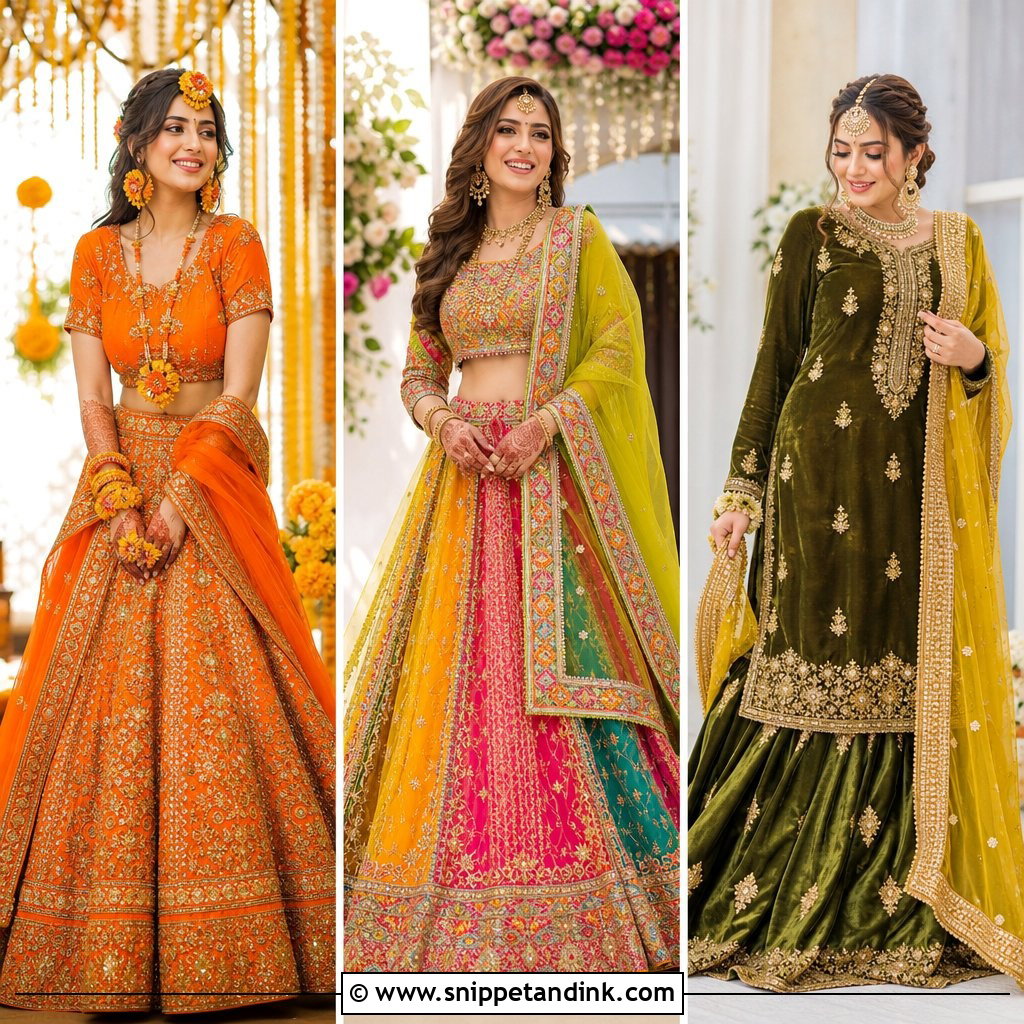
20. Multicolor Lehenga Mehandi Dress for Bride
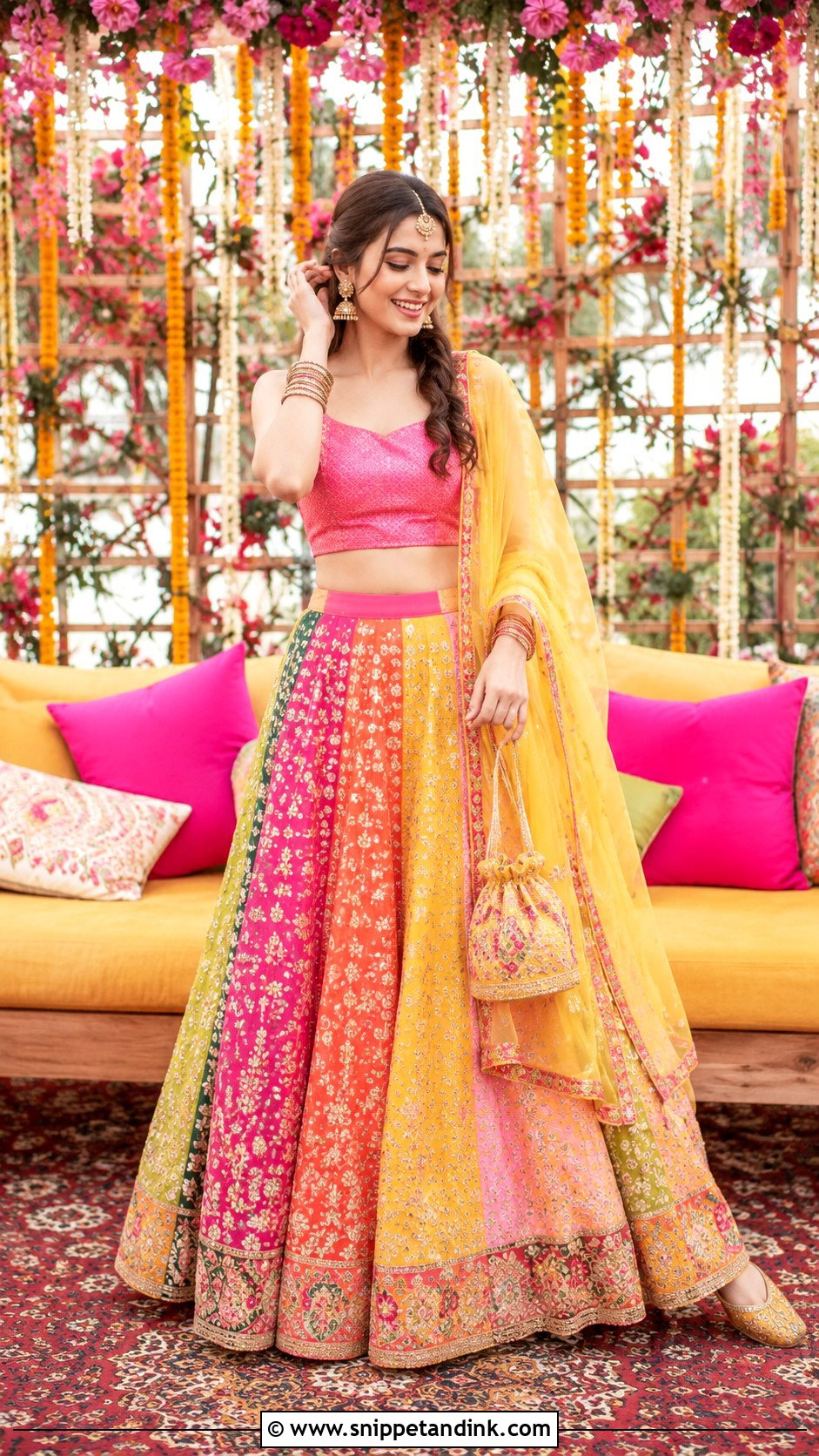
A patchwork or panelled lehenga matches the energy of the event. My rule is to anchor it with a solid blouse taken from one of the skirt’s colours and a dupatta in a second one, so the eye has somewhere to rest. Gold jhumkas, bangles and a simple maang tikka are enough; busy jewelry fights the print. A practical bonus: a skirt this busy hides a stray henna drip far better than a solid one.
21. Jacket Lehenga Mehandi Dress for Bride
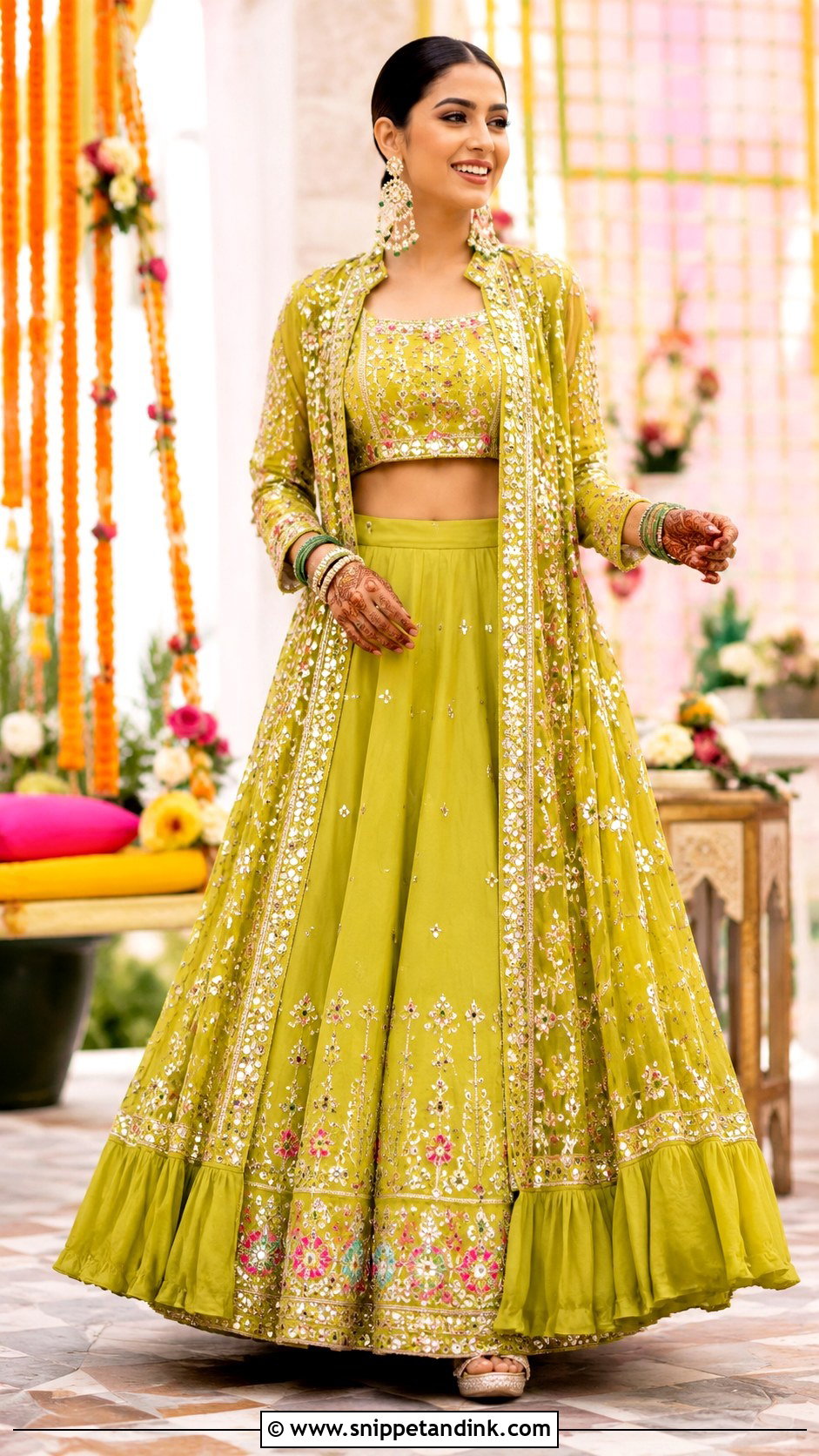
A jacket lehenga swaps the dupatta for structure, so there’s nothing to slip during application. Choose a crop top and skirt with a sleeveless or short-sleeved embroidered jacket in a light fabric, and have the armholes cut generously. A tight armhole drags the jacket up your arm while you hold it out for the artist. Mirror work, thread work and gota borders all suit it, in lime, mustard, pink or teal. Statement earrings, a sleek hairstyle and flats or wedges keep the line clean.
22. Co Ord Set Mehandi Dress for Bride
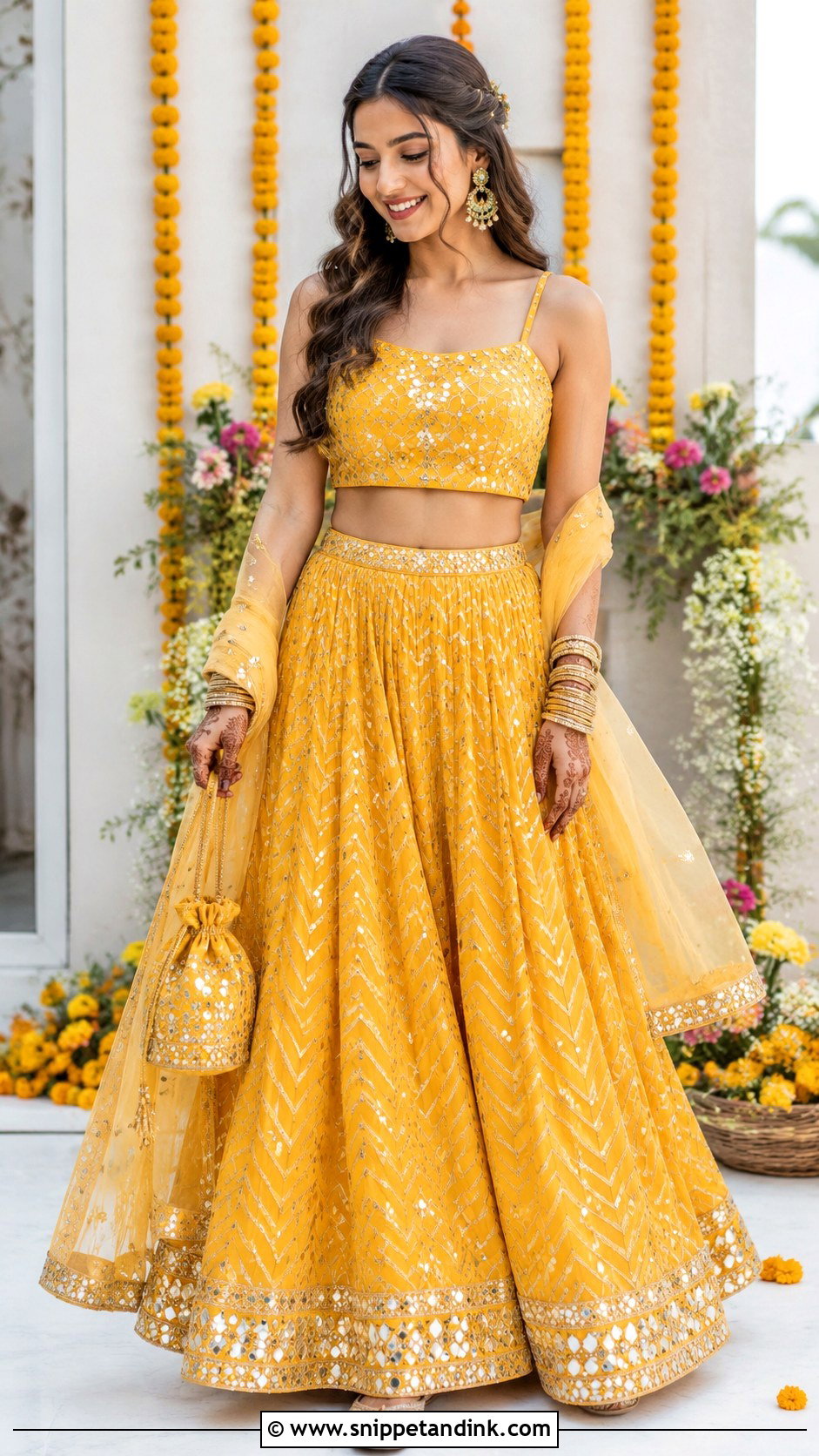
Co-ord sets are the least fussy option, which is why I suggest them for small gatherings at home. Think a matching crop top with a skirt, palazzo or sharara bottom, finished with embroidery, mirror accents or prints. Geometric prints feel newer than florals in yellow, pink, green or orange. Add a light dupatta for tradition or a cape jacket for a trendier finish. The risk is looking too casual next to a dressed-up family, so pick a set with real handwork on it.
23. Silk Lehenga Mehandi Dress for Bride
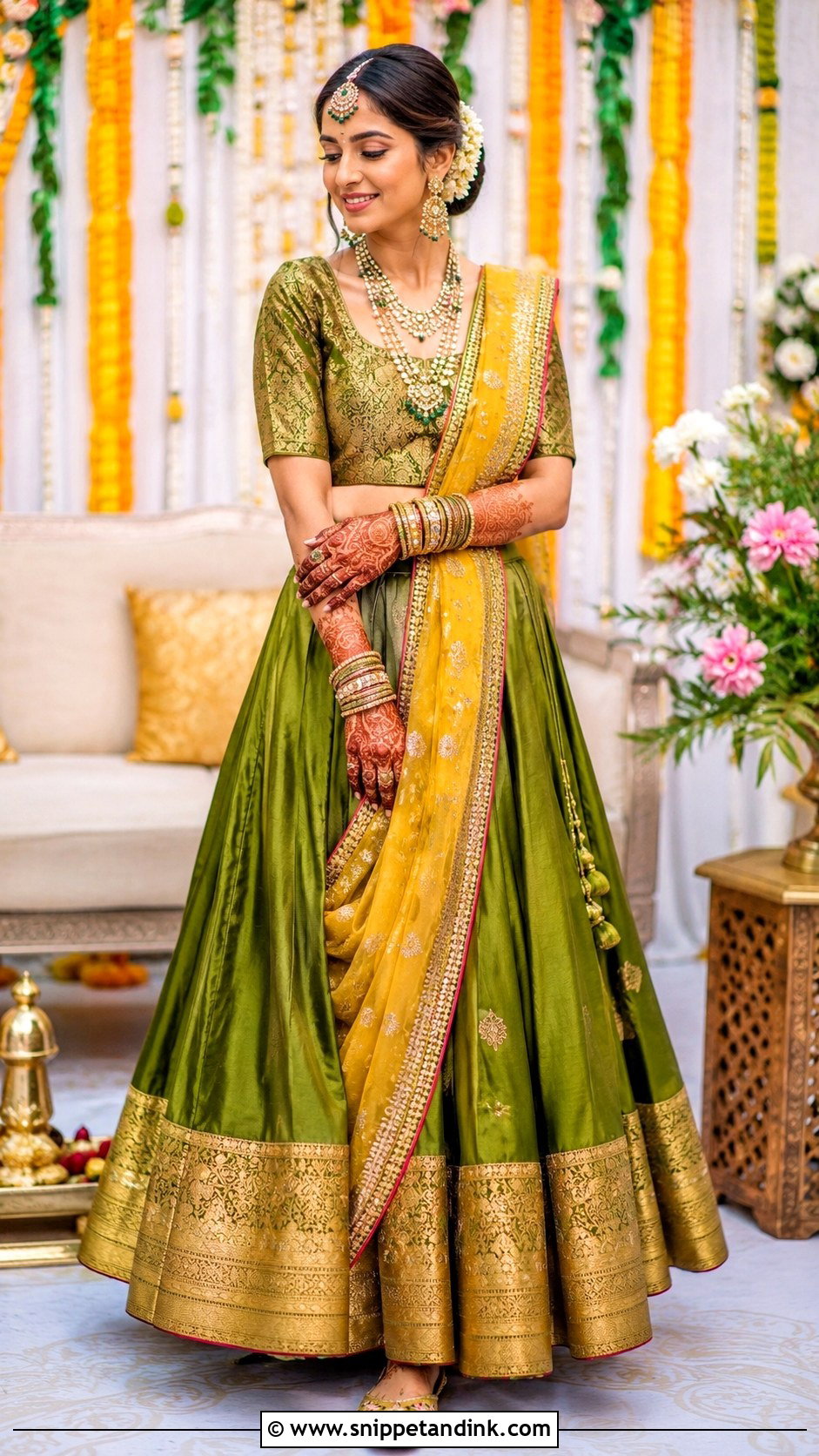
Silk has its own body, so a lehenga in raw silk or light Banarasi needs very little added detail. Yellow, green, orange or pink with a woven border, brocade blouse or contrast dupatta is enough. What I watch with silk at a mehandi is moisture: it water-spots, and a room full of dancing guests gets warm, so I’d avoid it for a summer outdoor event. Temple jewelry or kundan, embroidered juttis and a low bun with flowers suit its traditional mood.
24. Sequin Lehenga Mehandi Dress for Bride
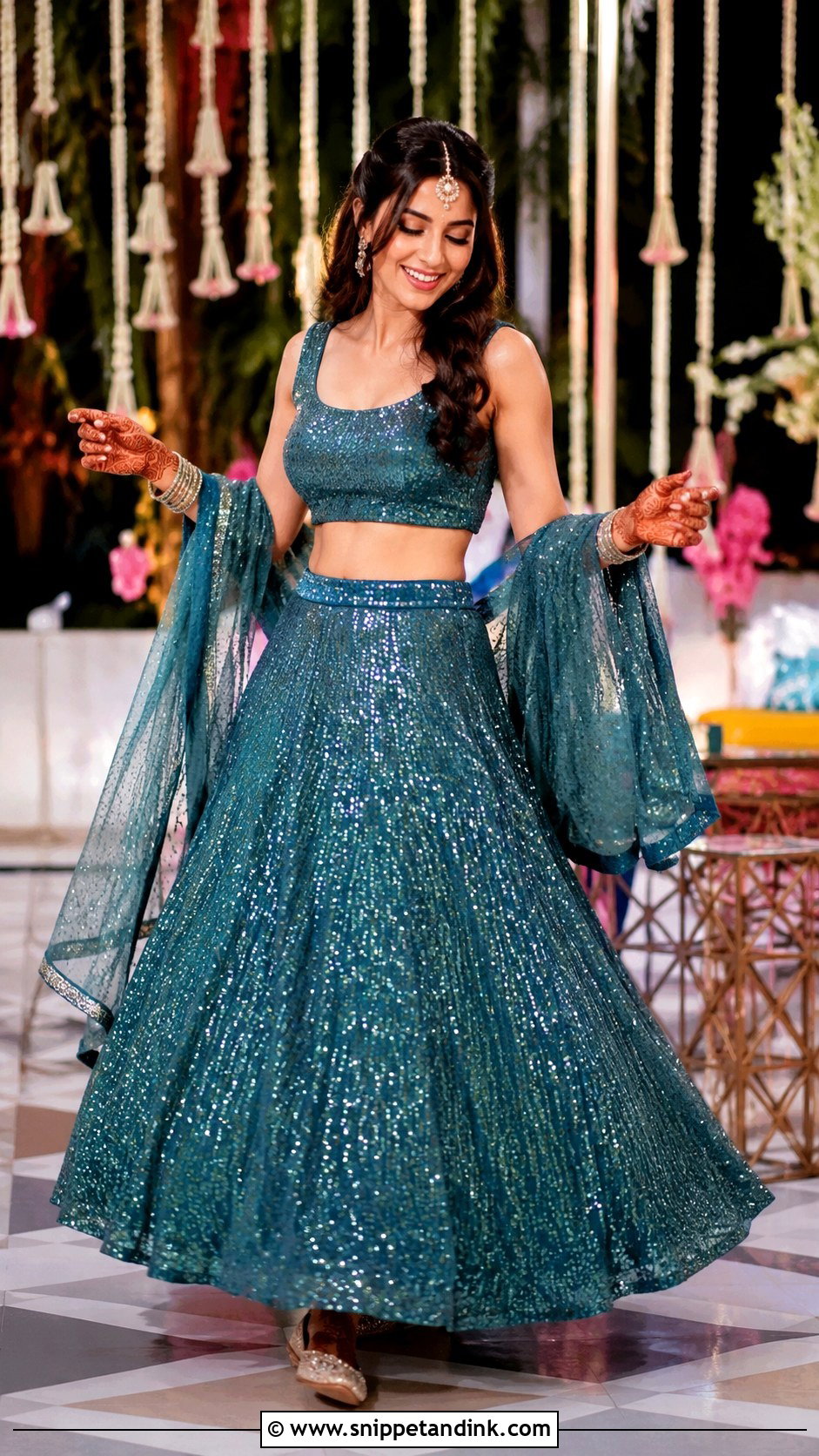
Sequins belong at evening mehandis with stage lighting. Pick a lightly sequinned skirt over a fully covered one, since dense sequins are heavy and scratch the inside of your arms when you dance. Lime, champagne yellow, coral, pink or teal with a simple blouse and a sheer dupatta keeps it balanced. Sequins also snag on lace, so I pair them with plain net or chiffon. Drop earrings, a delicate maang tikka and block heels or embellished flats are all it needs.
25. Simple Mehandi Dress for Bride
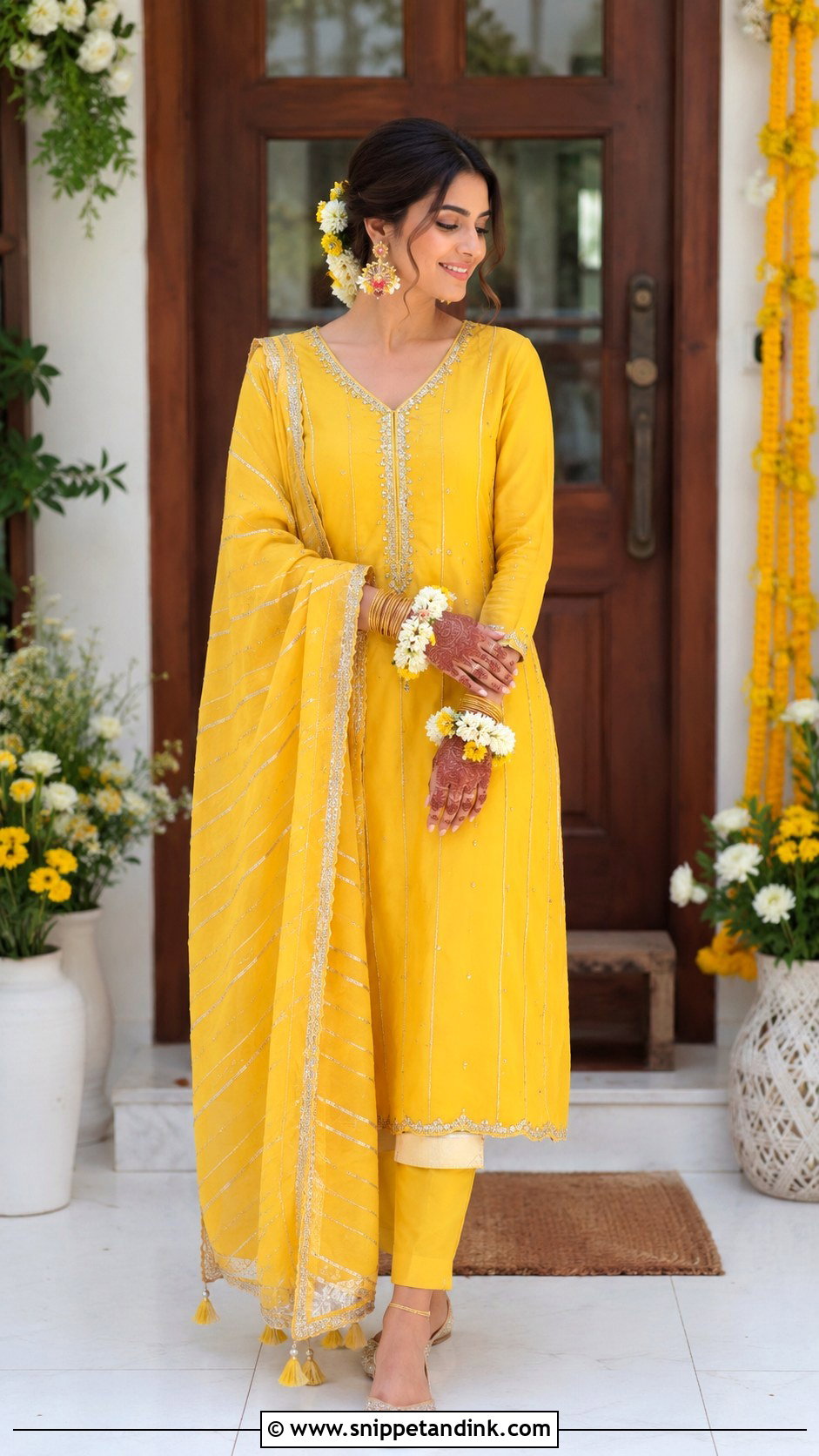
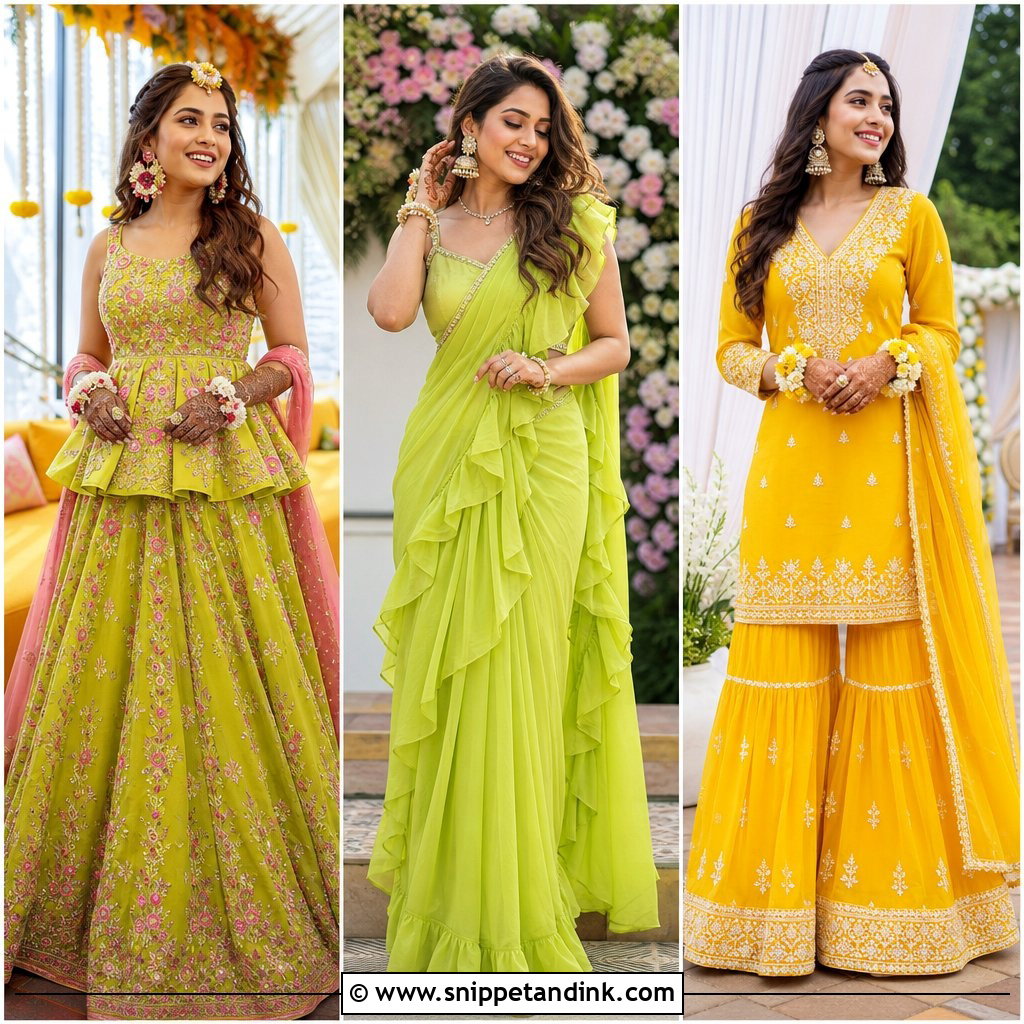
A simple outfit only looks deliberate when one detail is clearly chosen: a mirror work blouse, a gota dupatta, floral jewelry or statement earrings. The base can be a light lehenga, kurta set, sharara or saree in yellow, green, pink or orange, cut loosely enough for long sitting. For home ceremonies and small family gatherings this is often what I recommend, and it leaves room for your wedding-day outfit to feel bigger by contrast.
What Henna Paste Does to Silk, Gota and Mirror Work
Henna dye binds to fabric much as it binds to skin, so a smear on silk or georgette leaves an orange-brown mark that rarely comes out fully. The sugar and lemon sealant most artists dab on is sticky and slightly acidic, which is hard on metallic gota and zari. As the paste dries it also cracks and drops crumbs into your lap. I lay an old dupatta or cotton cloth over the skirt for the whole sitting and only remove it once your hands are wrapped or clean.
If a drip lands on the outfit
- Lift the wet paste off with the edge of a card or spoon. Don’t wipe, since wiping pushes it into the weave.
- Blot the spot from the back with cold water. Skip hot water and never iron over it, because heat sets the stain.
- Tell your dry cleaner it’s henna, and point out any embroidery or mirrors near the mark.
Packing it away after the function
Air the outfit overnight before you fold it, since trapped sweat and sealant cause both odour and tarnish. Store embellished pieces in a cotton or muslin bag rather than plastic, with tissue between the folds so mirrors don’t scratch the fabric beside them and gota doesn’t press a crease into the skirt.
Sleeves, Dupatta and Fabric Decide It More Than Colour
Colour gets the attention, but in my fittings the decision usually comes down to practical checks. Can the artist reach your arms without pushing anything up? Will the dupatta stay put when you lean forward? Can you sit on a low seat for three or four hours and still dance afterwards? Get those right and any look here will work, from a yellow lehenga to a pastel floral or a cape set. Pick the shade after that, and choose footwear you can slip on without using your hands.
You'll Like These Ideas:


Leave a Reply