
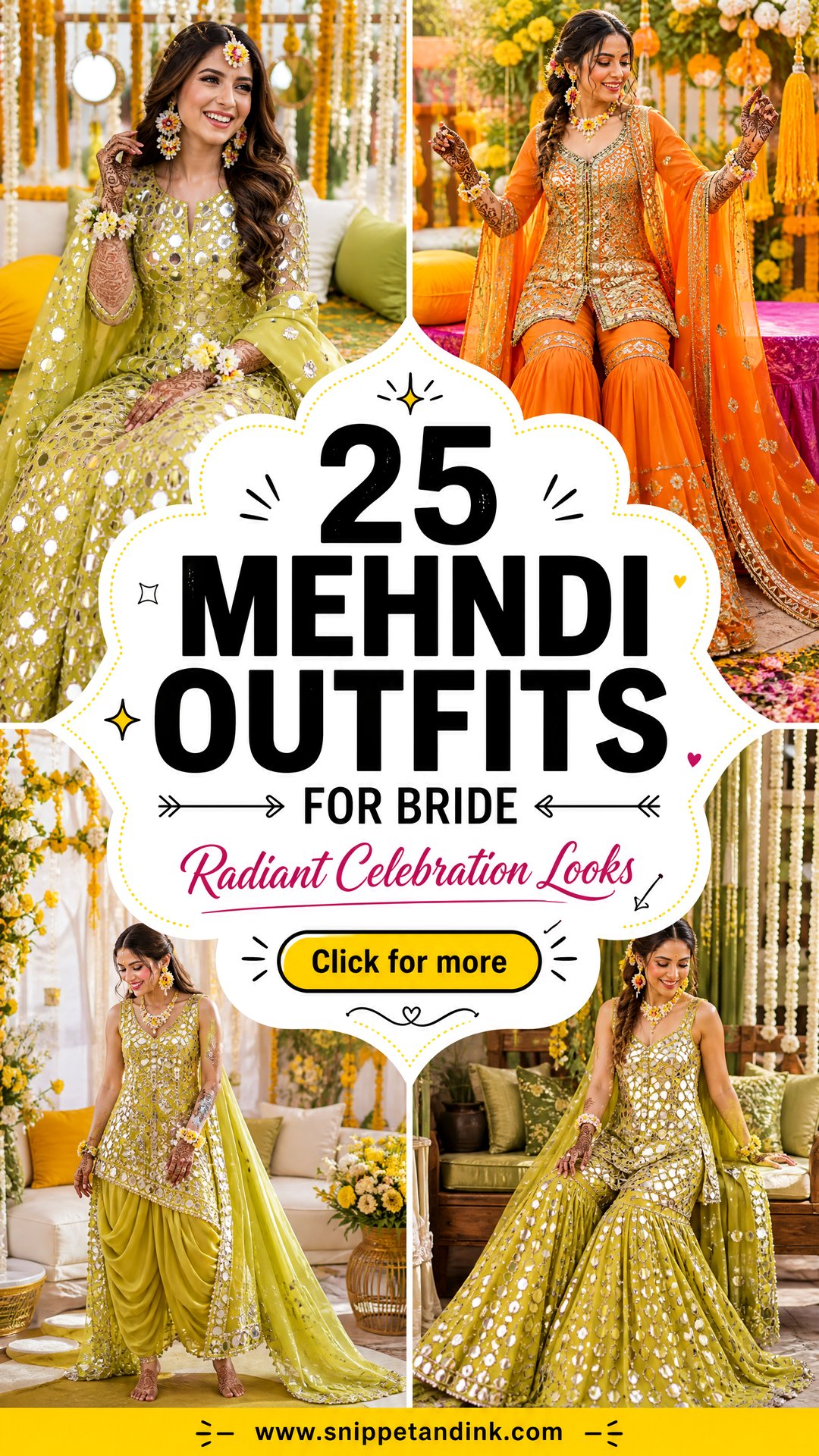
A mehndi outfit has a stranger brief than any other piece in a bridal wardrobe. You’ll spend hours sitting still with wet paste on both hands and feet, then get up and dance, then pose for close-ups of those same hands. So when I style a bride for this night, I start with sleeves, hemlines and how the dupatta stays put, and only then talk colour. Brides right now are wearing bright yellow and lime, mirror work, fresh floral jewellery, shararas, ghararas, light lehengas and fusion drapes. The 25 looks below cover all of those, each with the practical detail that decides whether it actually works on the night.
Dressing for Hours With Wet Henna on Your Hands
Bridal henna usually covers hands to the elbow and feet to the shin, and the paste then needs to stay on for as long as you can manage for a deep stain. That means a long stretch where you can’t adjust a dupatta, open a zip or lift a skirt. I fit every mehndi outfit with that stretch in mind.
- Get fully dressed, jewellery included, before the artist starts. Bangles and rings go on after the stain develops, not before.
- Sleeves should end above the elbow, or be loose enough to push well above it without cutting into the wet design.
- Choose front or side fastenings that a sister or friend can open for you; back hooks under a heavy dupatta are hard for helpers too.
- Pin everything that can slip: dupatta at both shoulders, saree pleats at the waist, cape to the blouse.
- For feet henna, the hem has to sit above the ankle while you’re seated, or it smudges the paste and stains the fabric.
Plan a bathroom trip just before application begins and keep a straw handy for drinks. These sound small, but they’re the things brides tell me they wish they’d thought about.
1. Yellow Mehndi Lehenga Outfit
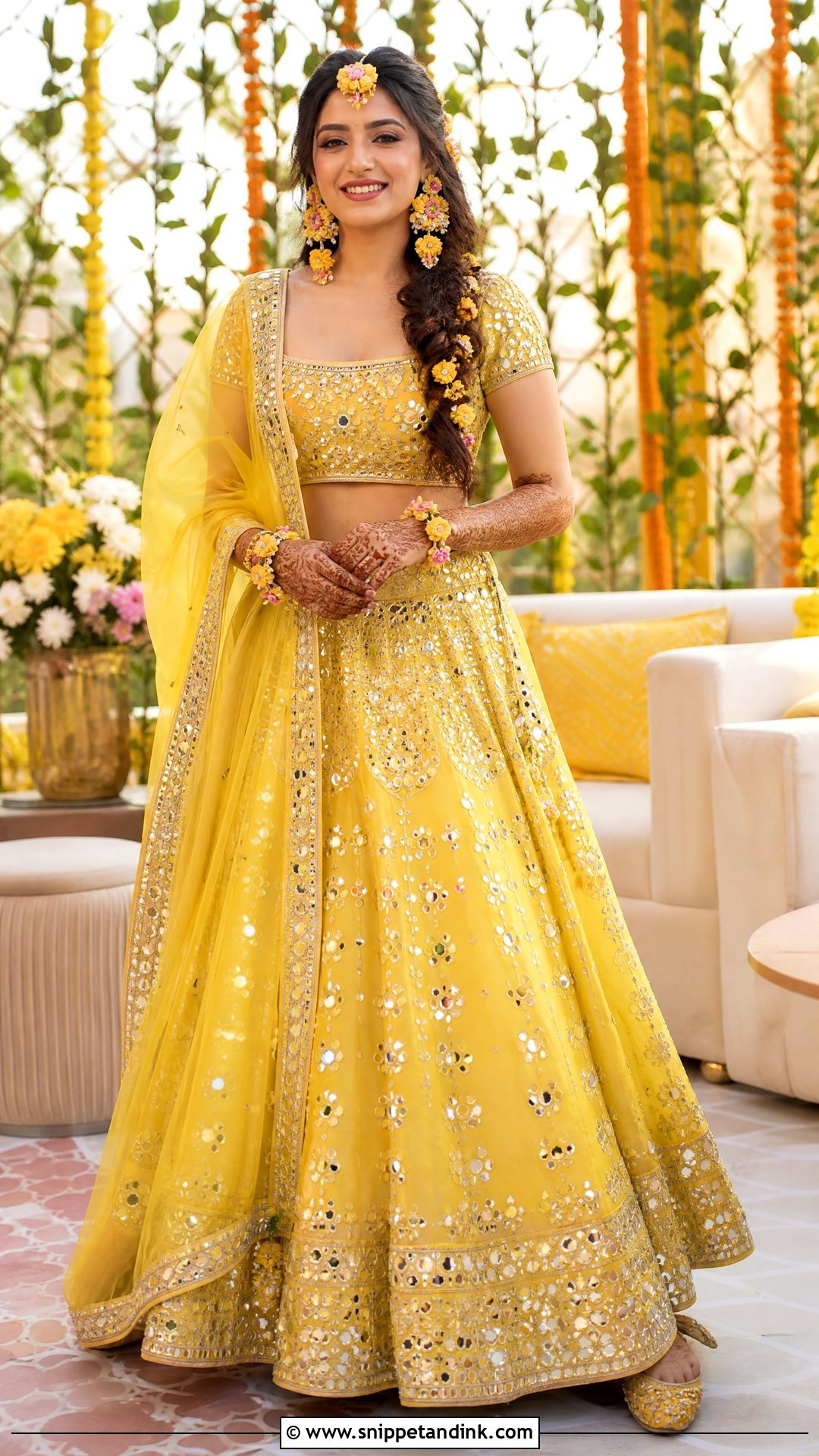
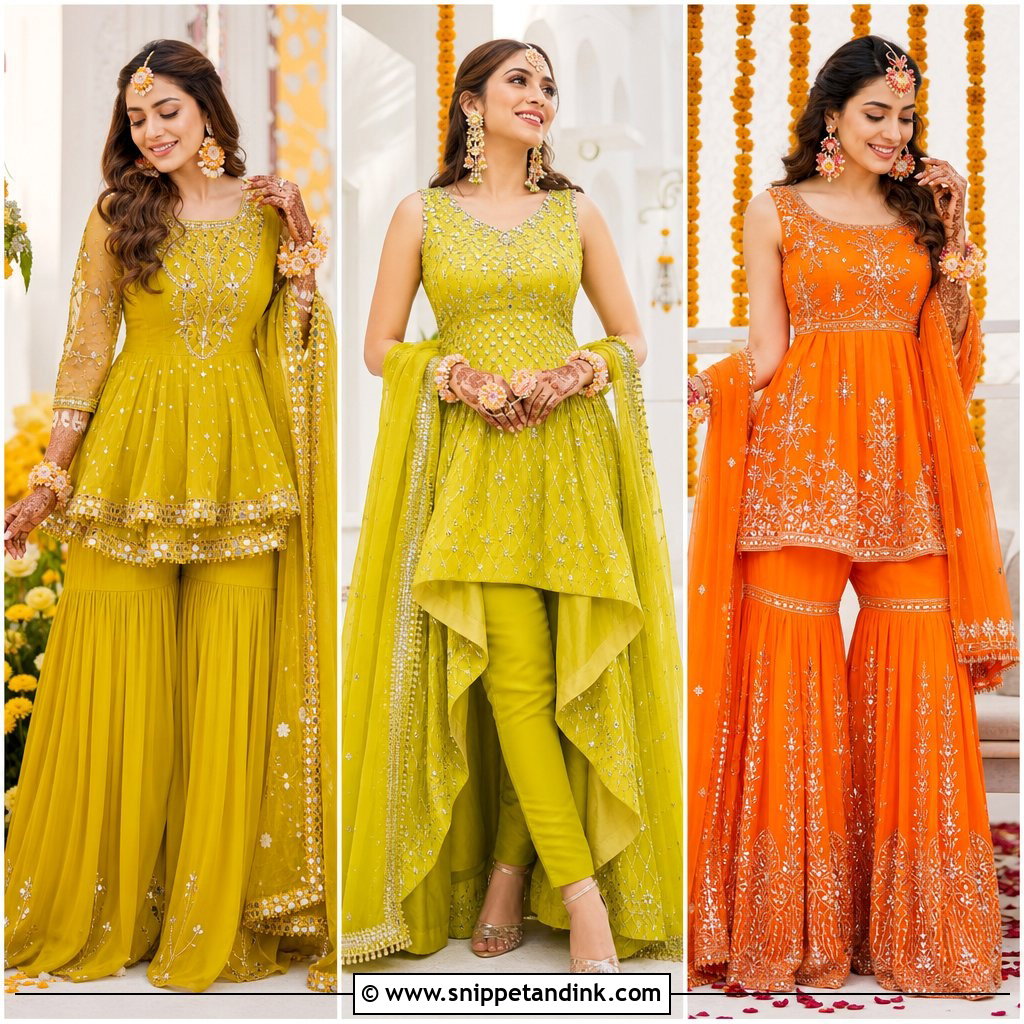
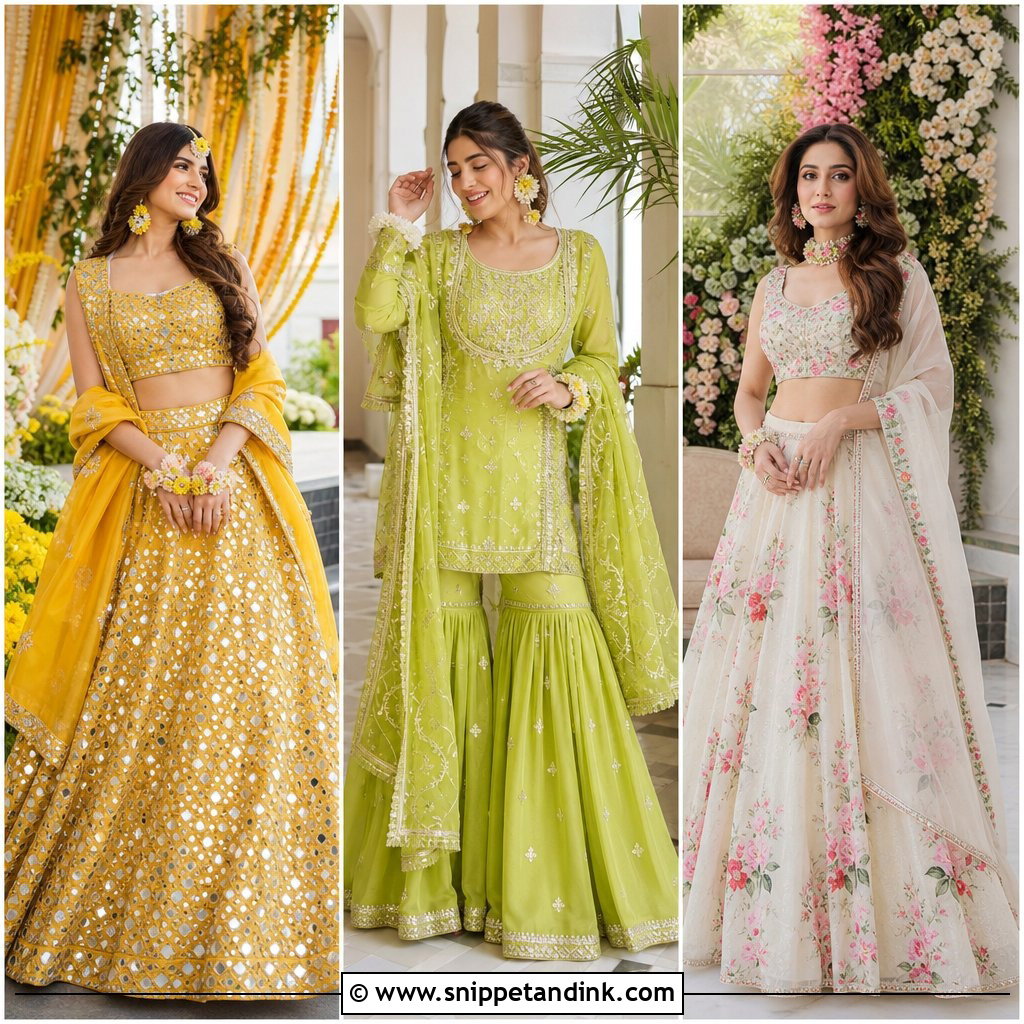
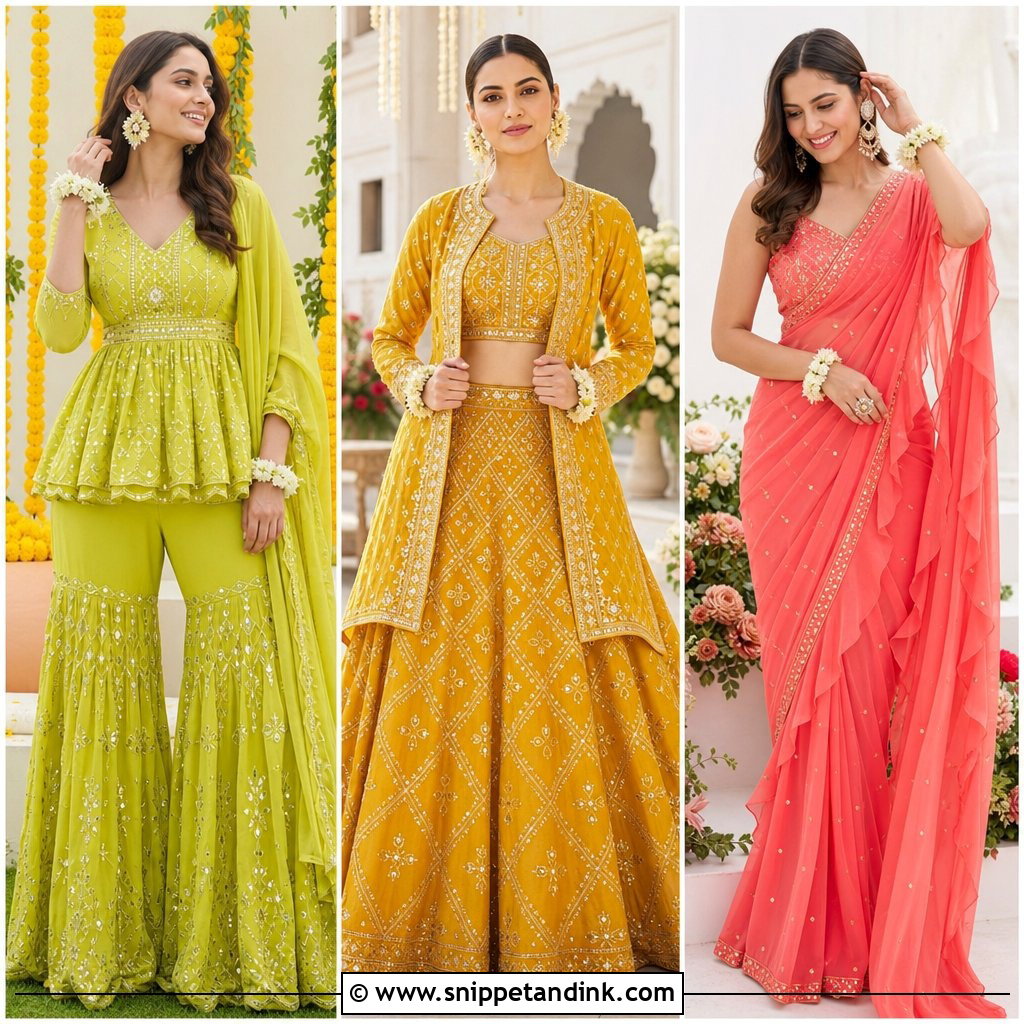
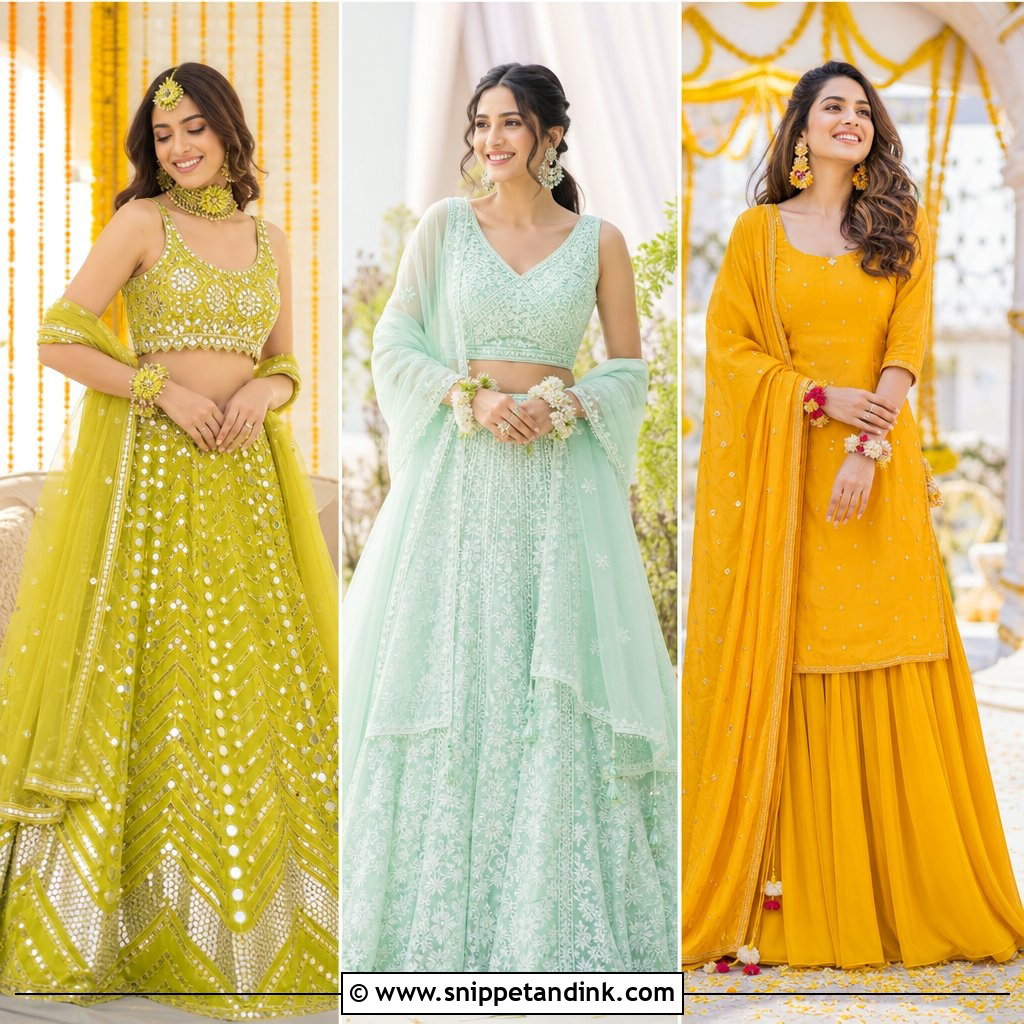
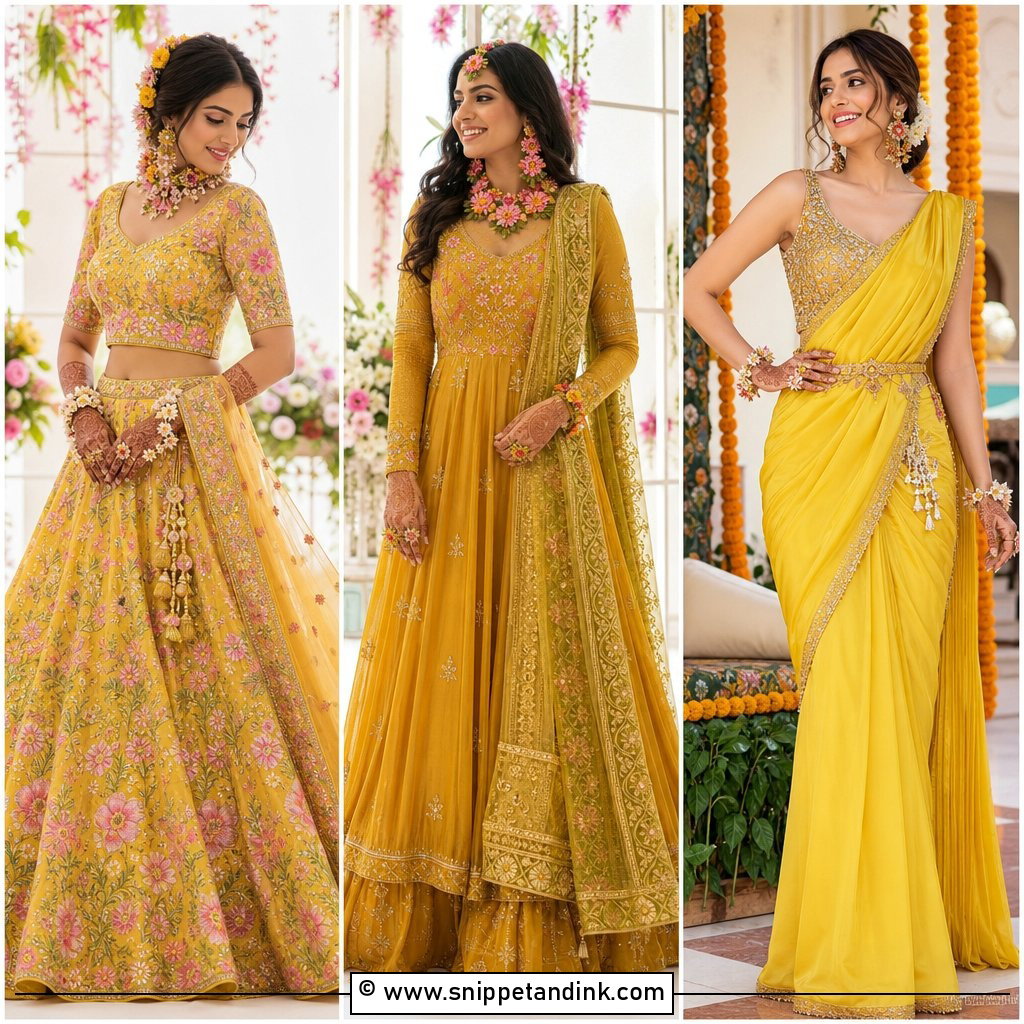
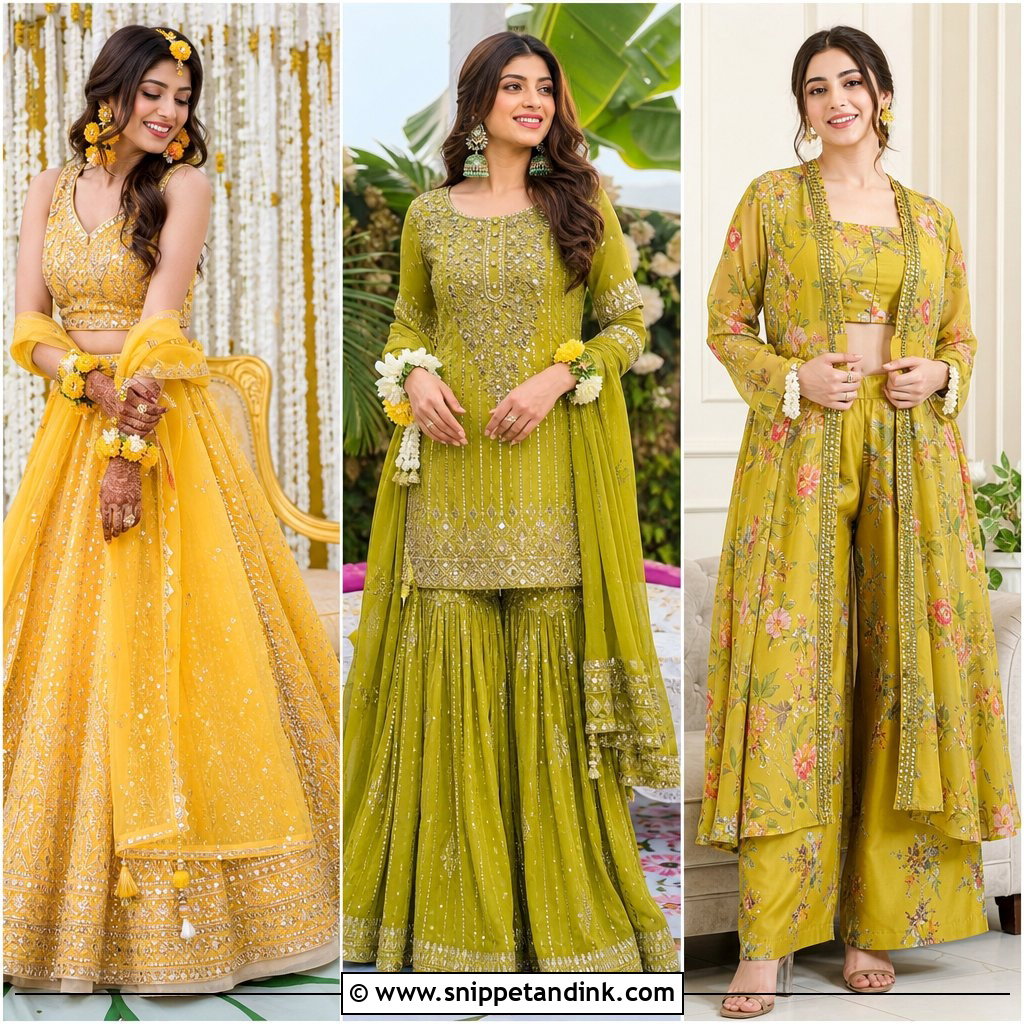
Yellow is the colour most families expect at a mehndi, and it earns that place: it glows in daylight and makes the bride easy to pick out in a crowd. The lehenga needs to be light, though. Mirror work, gota patti or small thread motifs give festivity without the heft of zardozi. Choose a short-sleeved or sleeveless blouse so the henna artist can reach your forearms. I’d finish with a sheer dupatta, floral jewellery, jhumkas and juttis you can stand in for an hour, and let the hair be a flower braid or low bun that doesn’t need touching while your hands are drying.
2. Green Mehndi Sharara Outfit
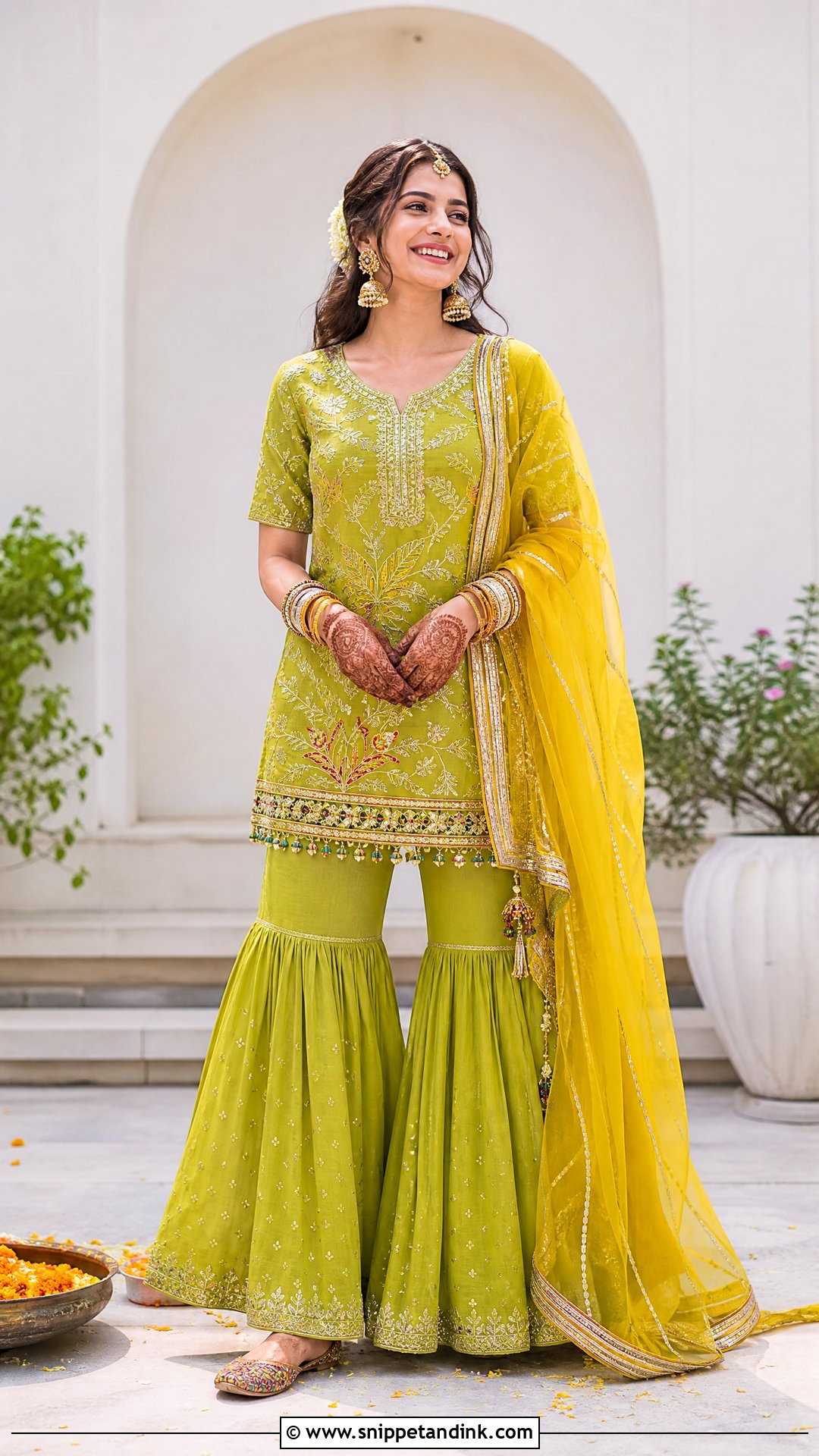
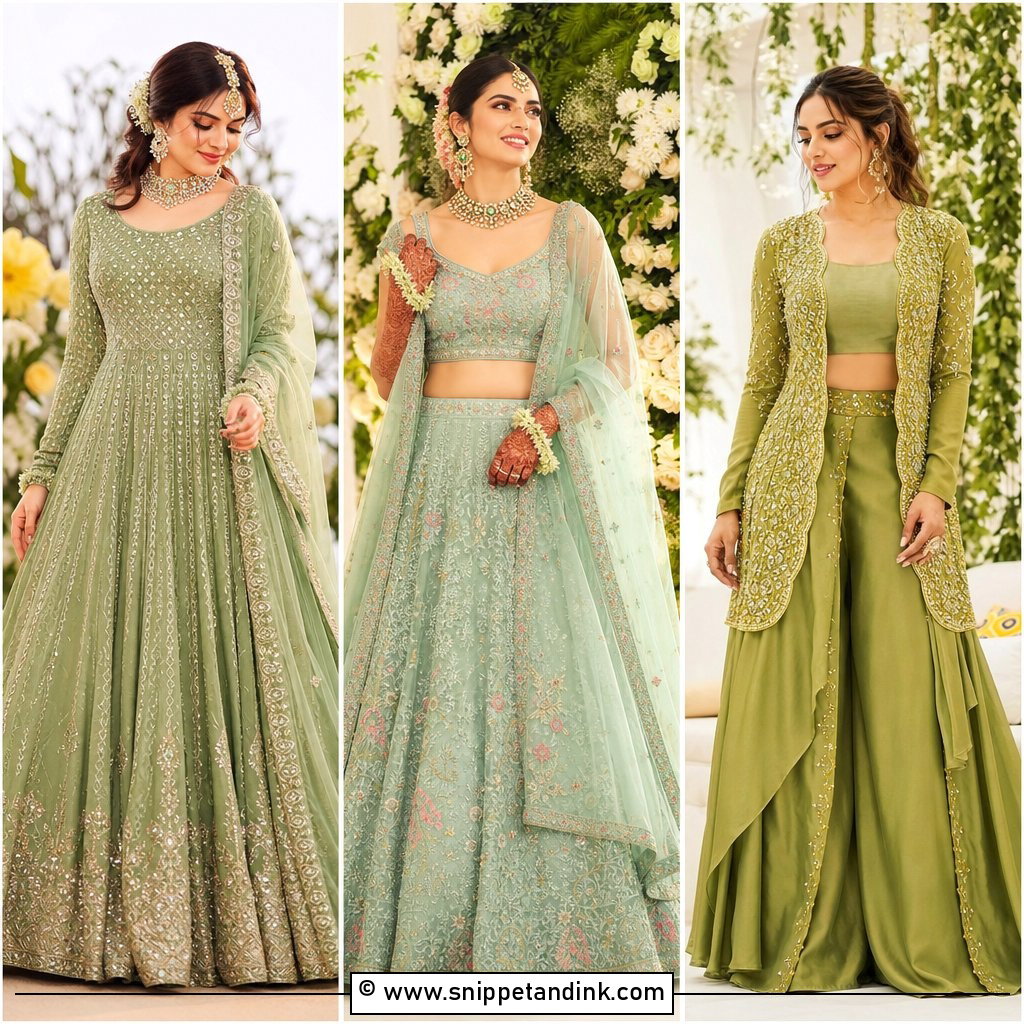
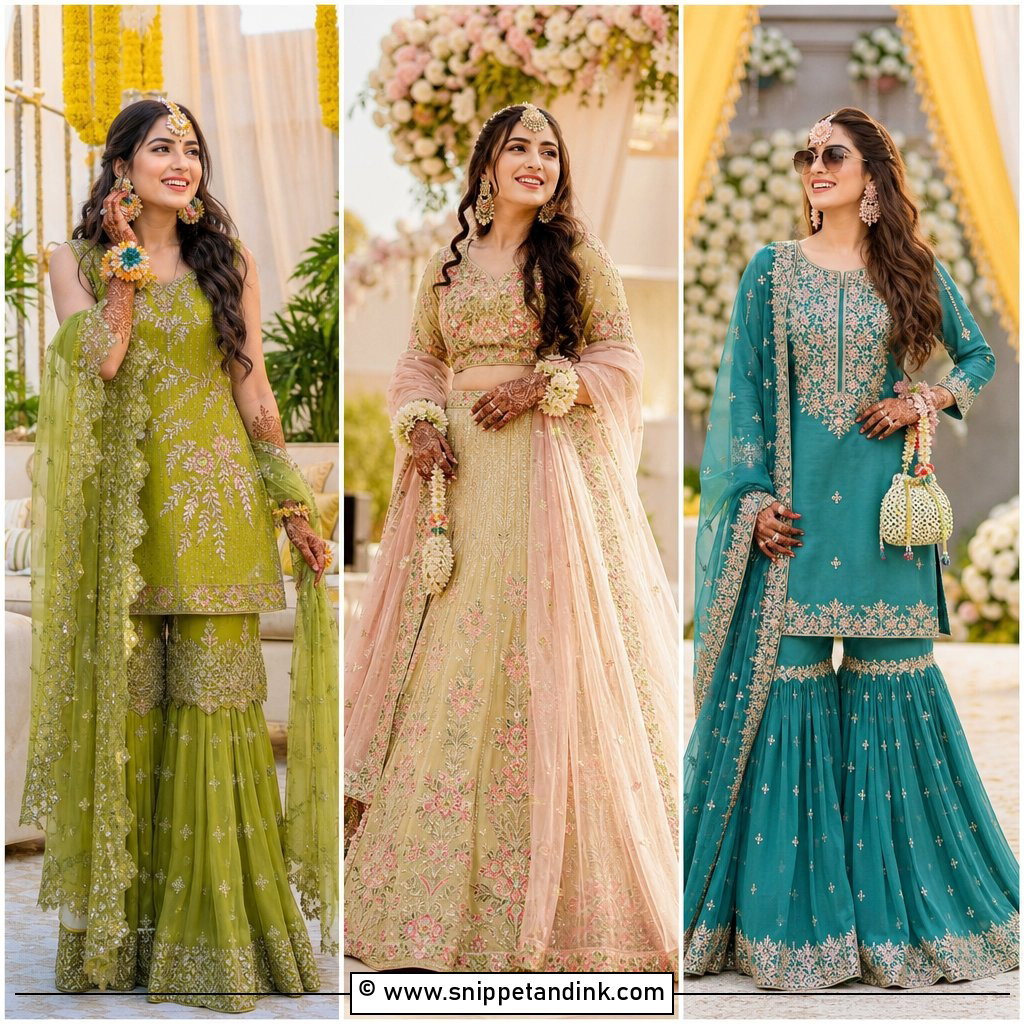
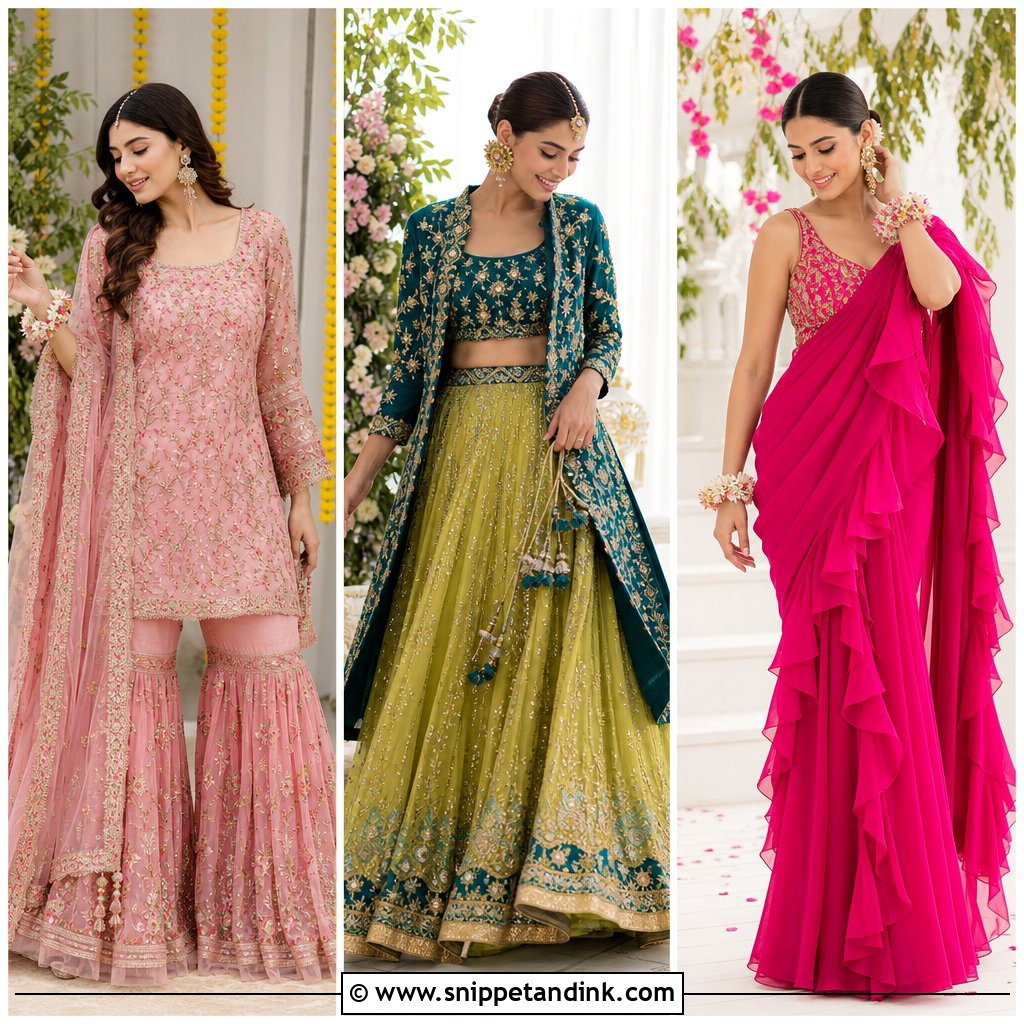
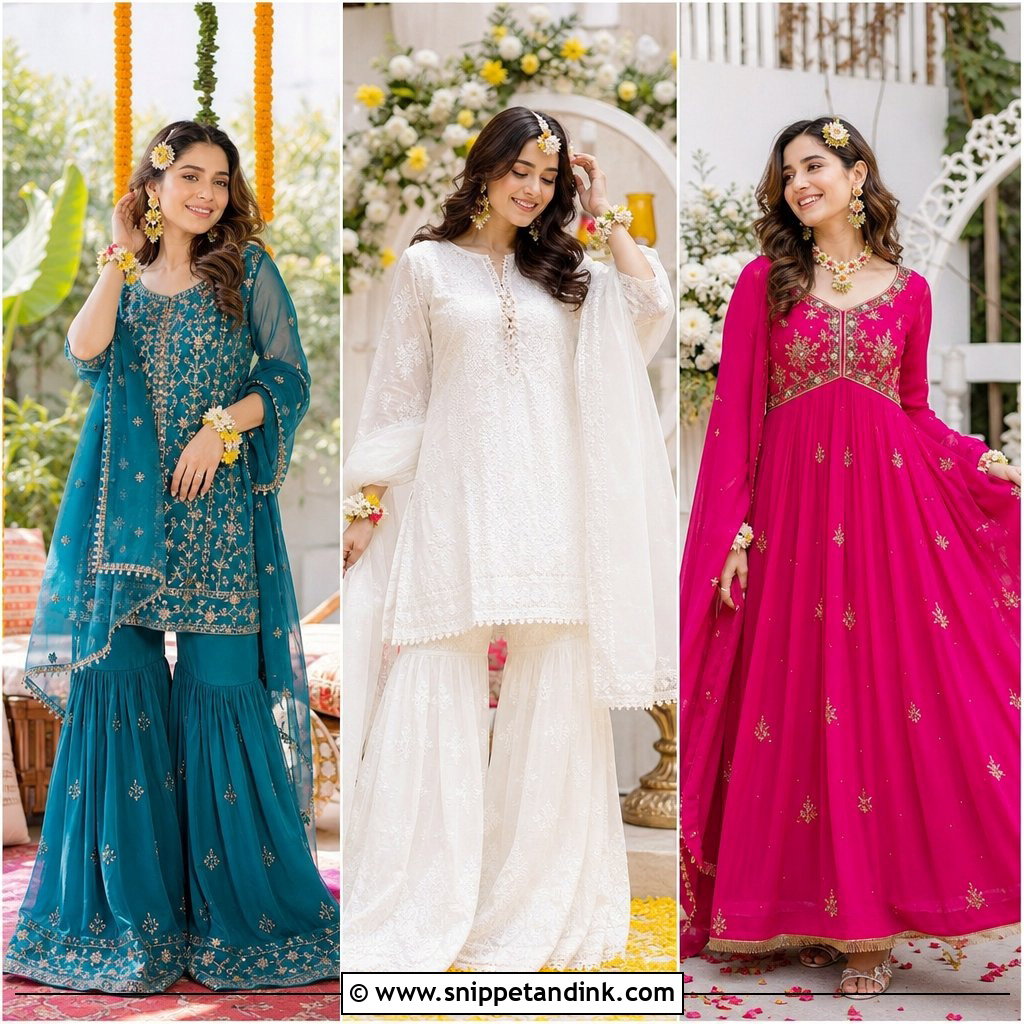
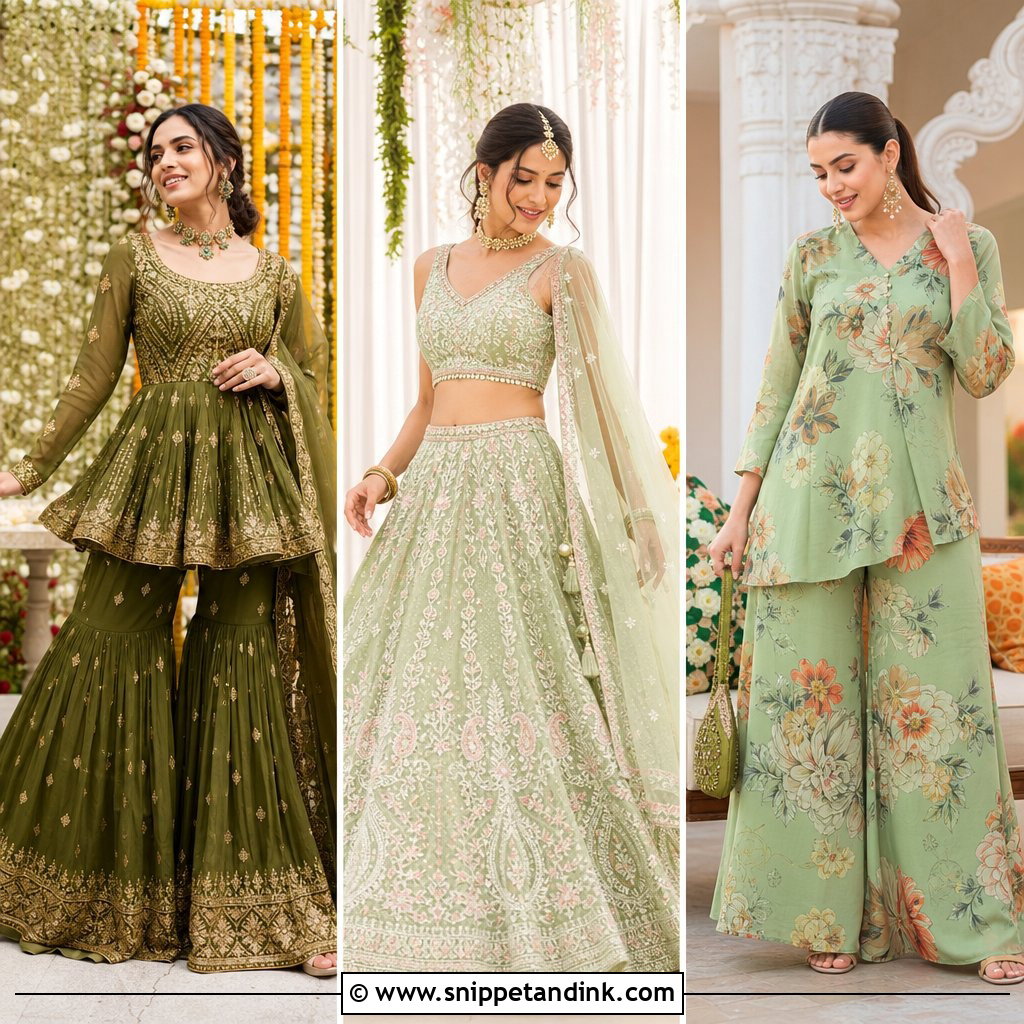
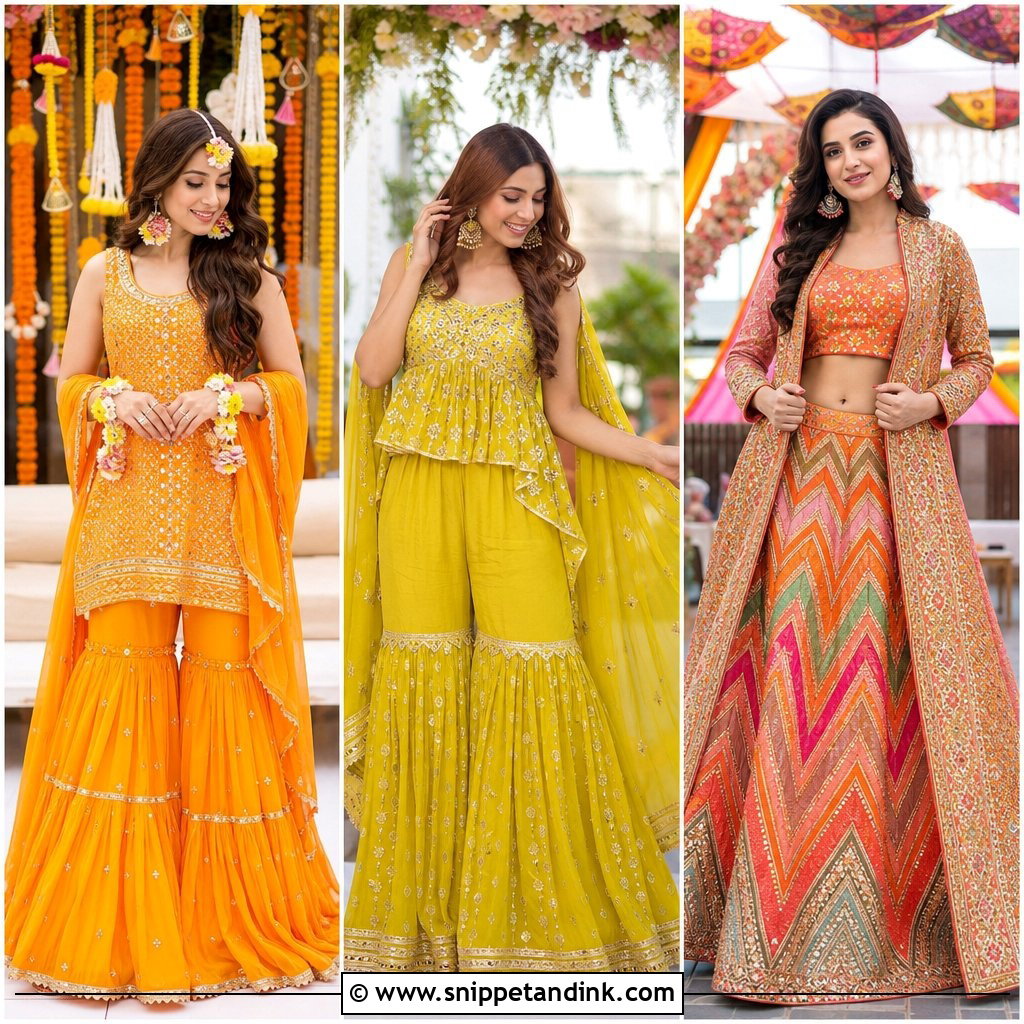
A green mehndi sharara outfit gives you the festivity of a lehenga at maybe half the weight, which you’ll be grateful for at hour four. A short kurti with wide pants in lime, emerald, mehndi green or pista suits most brides. Gold embroidery or mirror work makes it bridal. The detail I always check: the sharara’s waistband should be a drawstring or have a side zip you can manage later, because once your hands are covered in paste someone else will be dressing you. A contrast dupatta in yellow, orange or pink, a maang tikka and embroidered flats complete it.
3. Floral Mehndi Lehenga Outfit
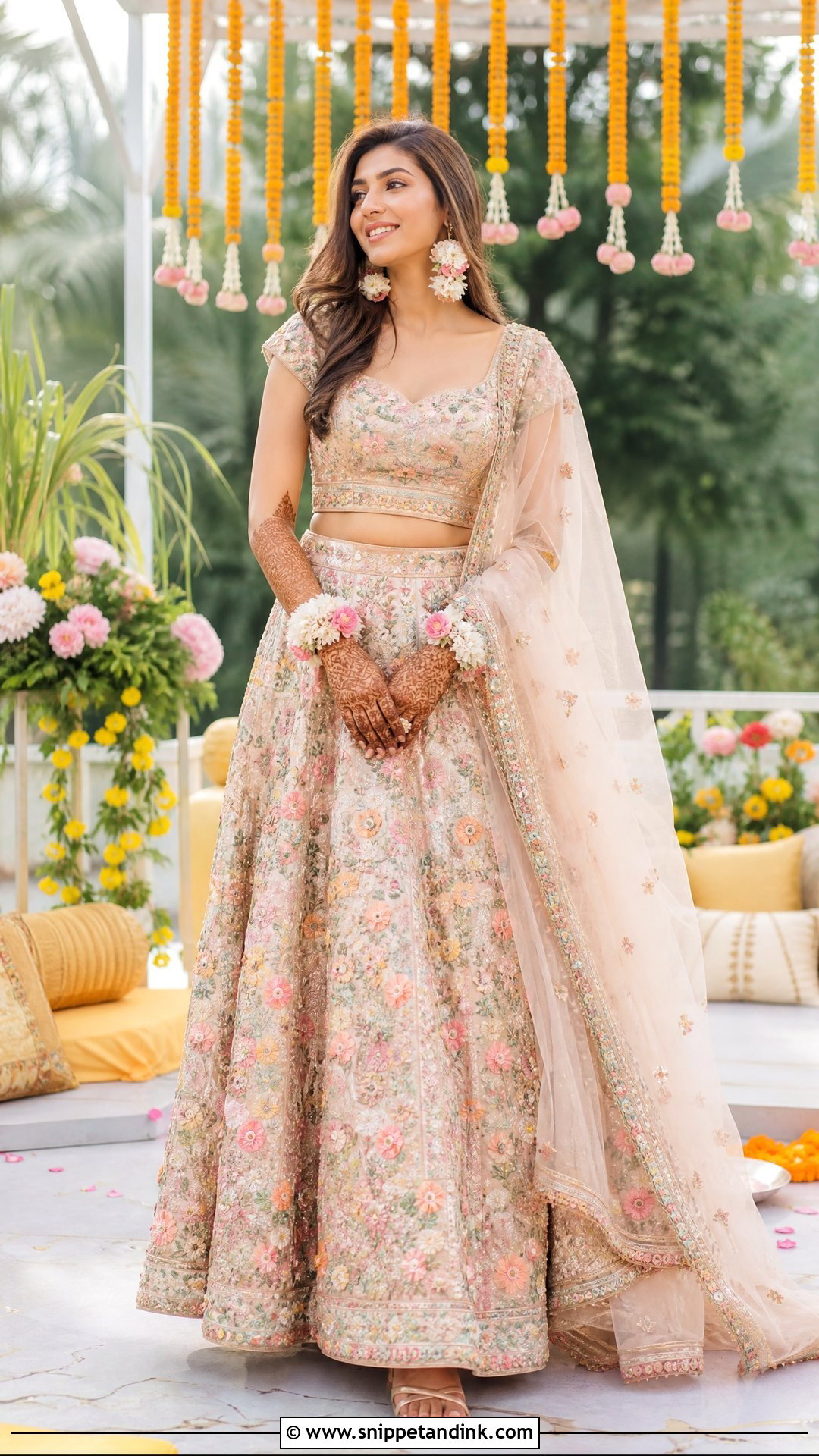
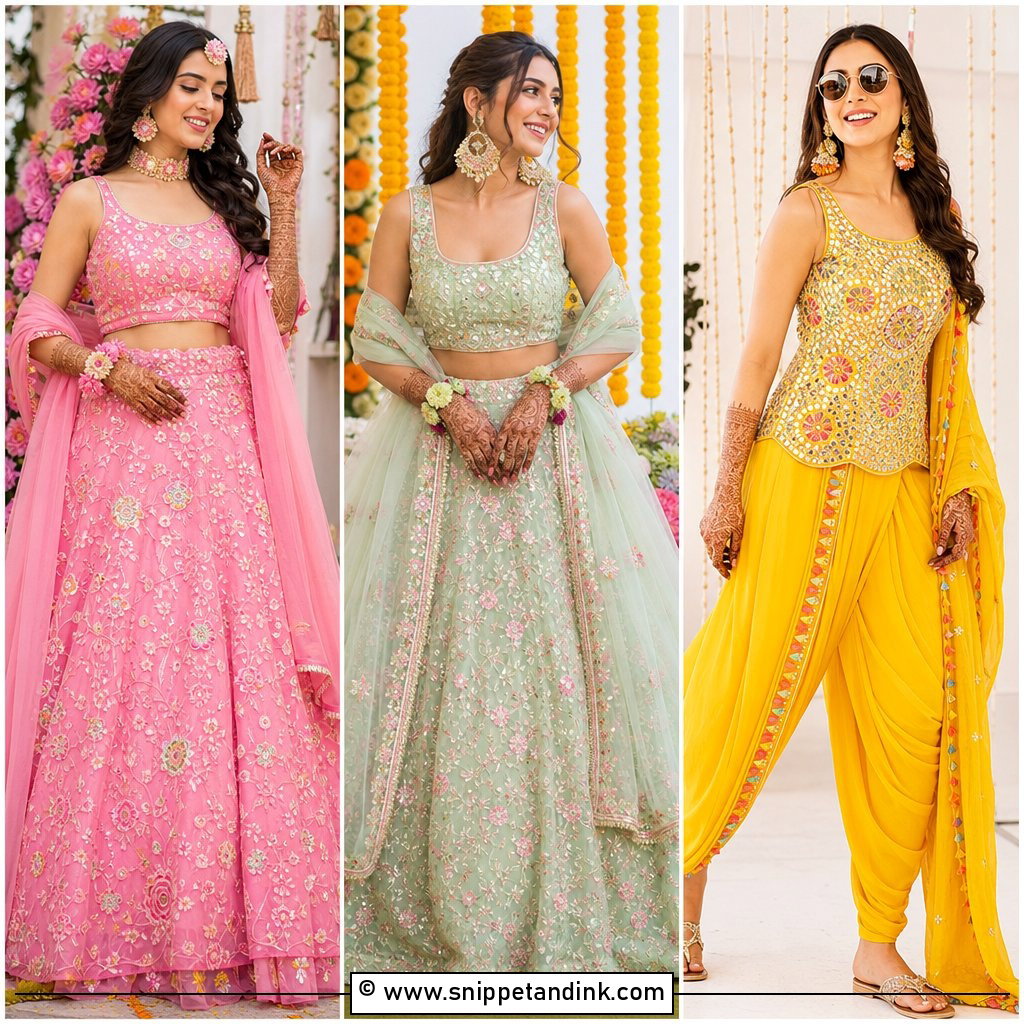
Floral prints and embroidery suit a daytime or garden mehndi, where real flowers are already part of the decor. Marigold, rose, lotus or tropical motifs on a pastel yellow, mint, blush, ivory or peach base all work. If the skirt is heavily printed, the blouse should be calm, with only light embroidery. Faux floral jewellery is far more practical than fresh for a long event, since real blooms wilt and drop petals onto wet henna. Nude or gold sandals keep the finish light.
4. Mirror Work Mehndi Outfit
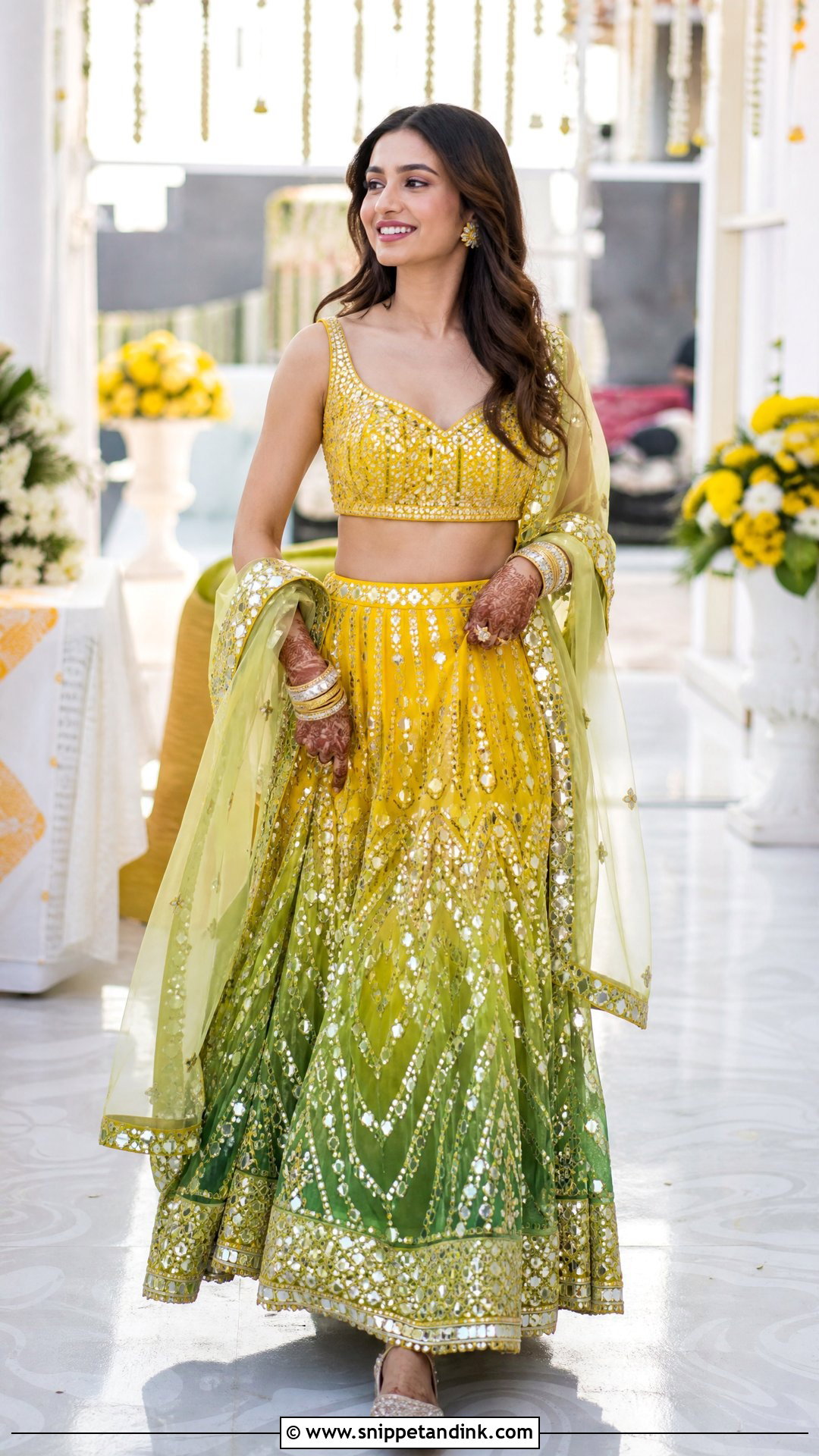
Mirror work sparkles in daylight and on video without looking formal, which is why I suggest it for brides who find sequins too dressy. A lehenga, sharara or skirt set in yellow, green, orange or fuchsia carries it well. The blouse should be fitted but roomy enough under the arm to rest your elbows on a cushion for hours. Because the mirrors already do so much, keep makeup clean and jewellery minimal. One practical note: mirrors on the forearm area of a sleeve will catch on the artist’s cone and on your own wet designs, so keep them off the lower sleeve.
5. Orange Mehndi Gharara Outfit
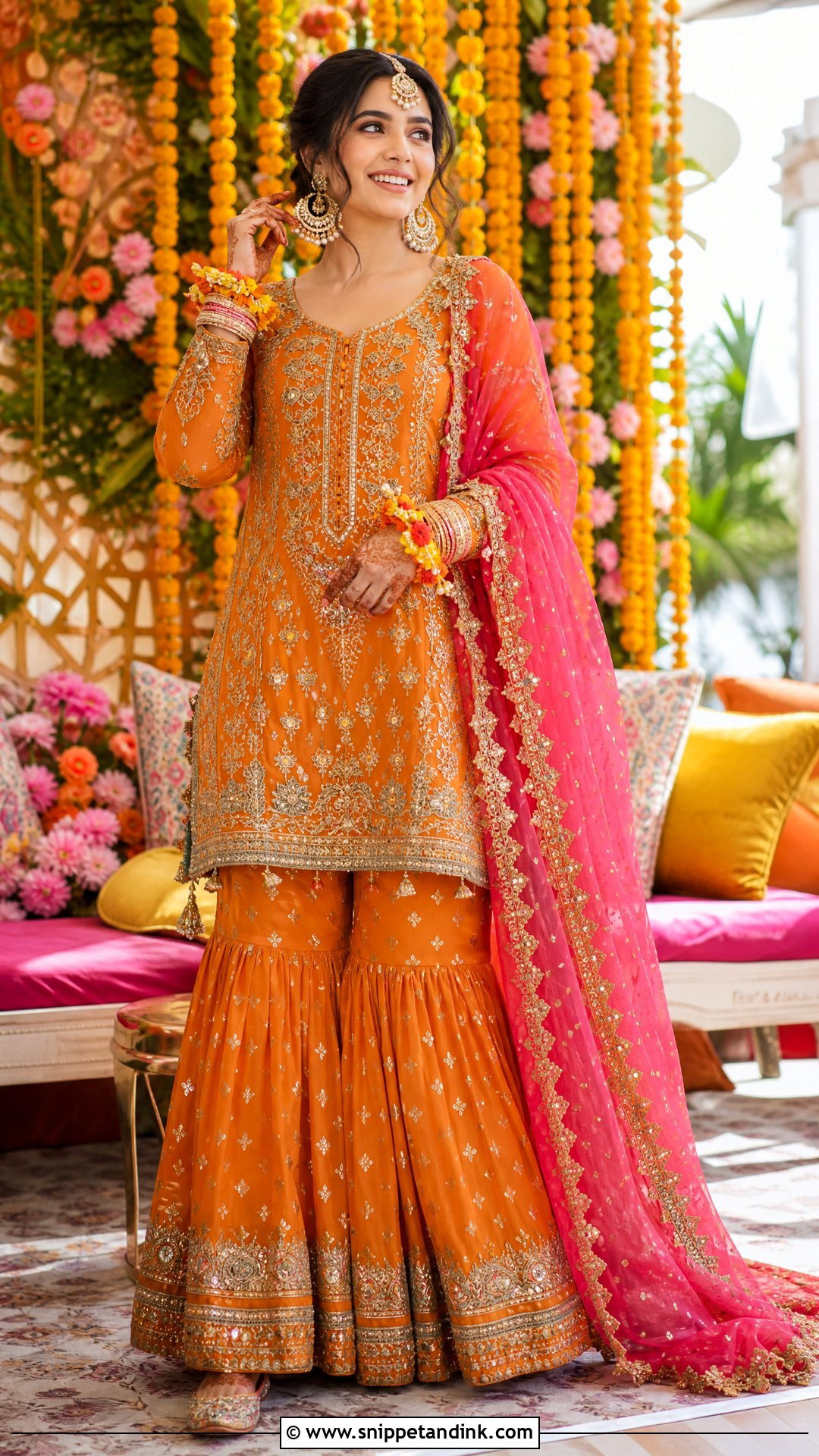
Orange is warmer and bolder than yellow, and a gharara cut gives it a Pakistani or North Indian feel that’s hard to beat for an entrance. Pair a short embroidered kurti with ghararas that flare from the knee. Tangerine, burnt orange, marigold and coral all look rich with gold work; burnt orange is the easiest on most skin tones. A hot pink, green or yellow dupatta adds contrast. Ghararas need a careful hem, so try them in your khussas before the final fitting. A passa, chandbalis and bangles finish it.
6. Pink Mehndi Lehenga Outfit
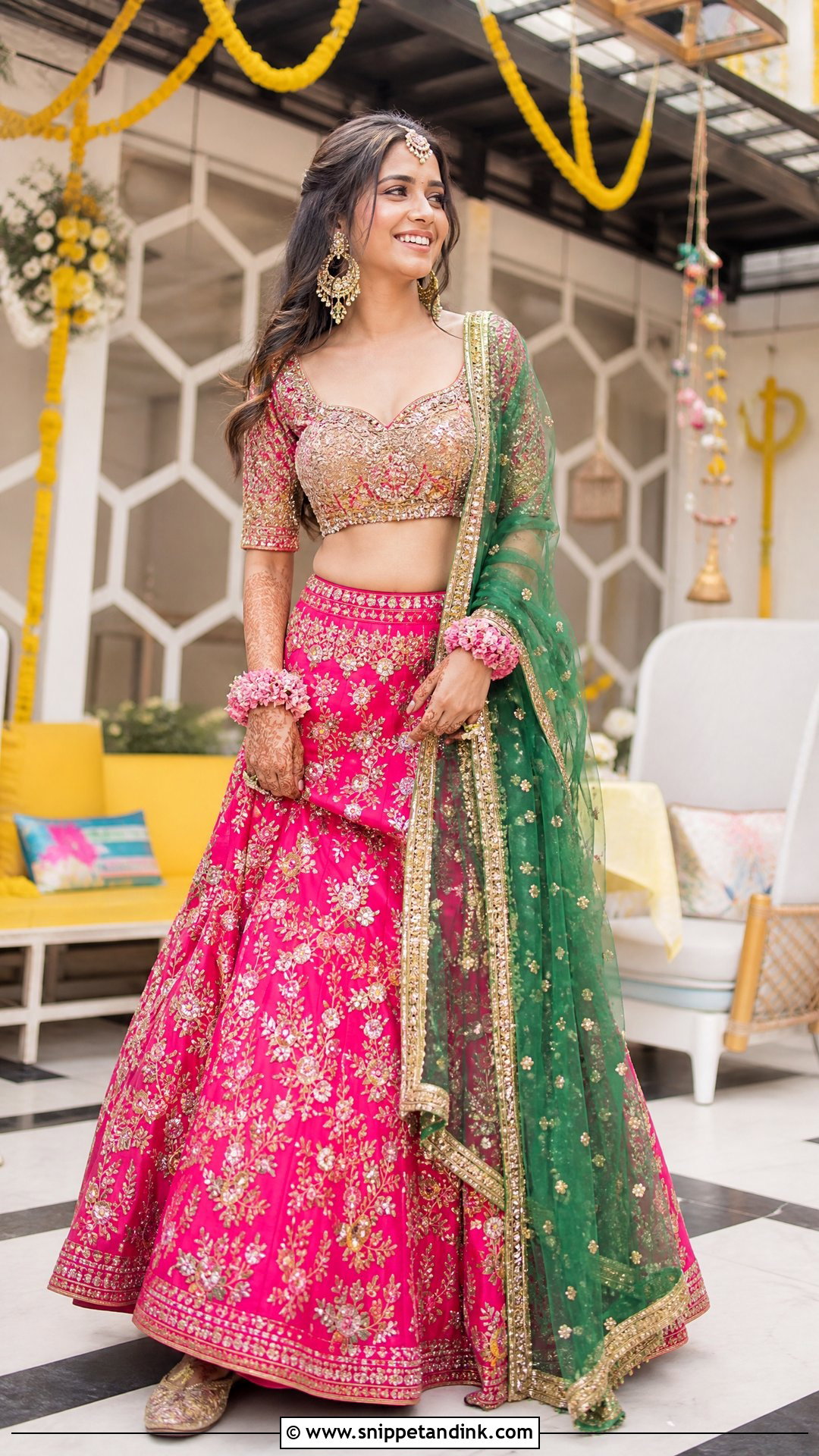
Pink photographs well and gives you a mehndi look that won’t clash with a red wedding lehenga in the album. Hot pink makes a bold statement, blush is soft, rani pink feels most traditional. Gold embroidery, mirror work or multicolour threadwork keeps it in mehndi territory, and a green or yellow dupatta ties it back to the theme. I’d suggest wedges or juttis rather than stilettos, because mehndi floors are usually rugs and cushions. Floral bangles and a maang tikka add life.
7. Multicolor Mehndi Lehenga Outfit
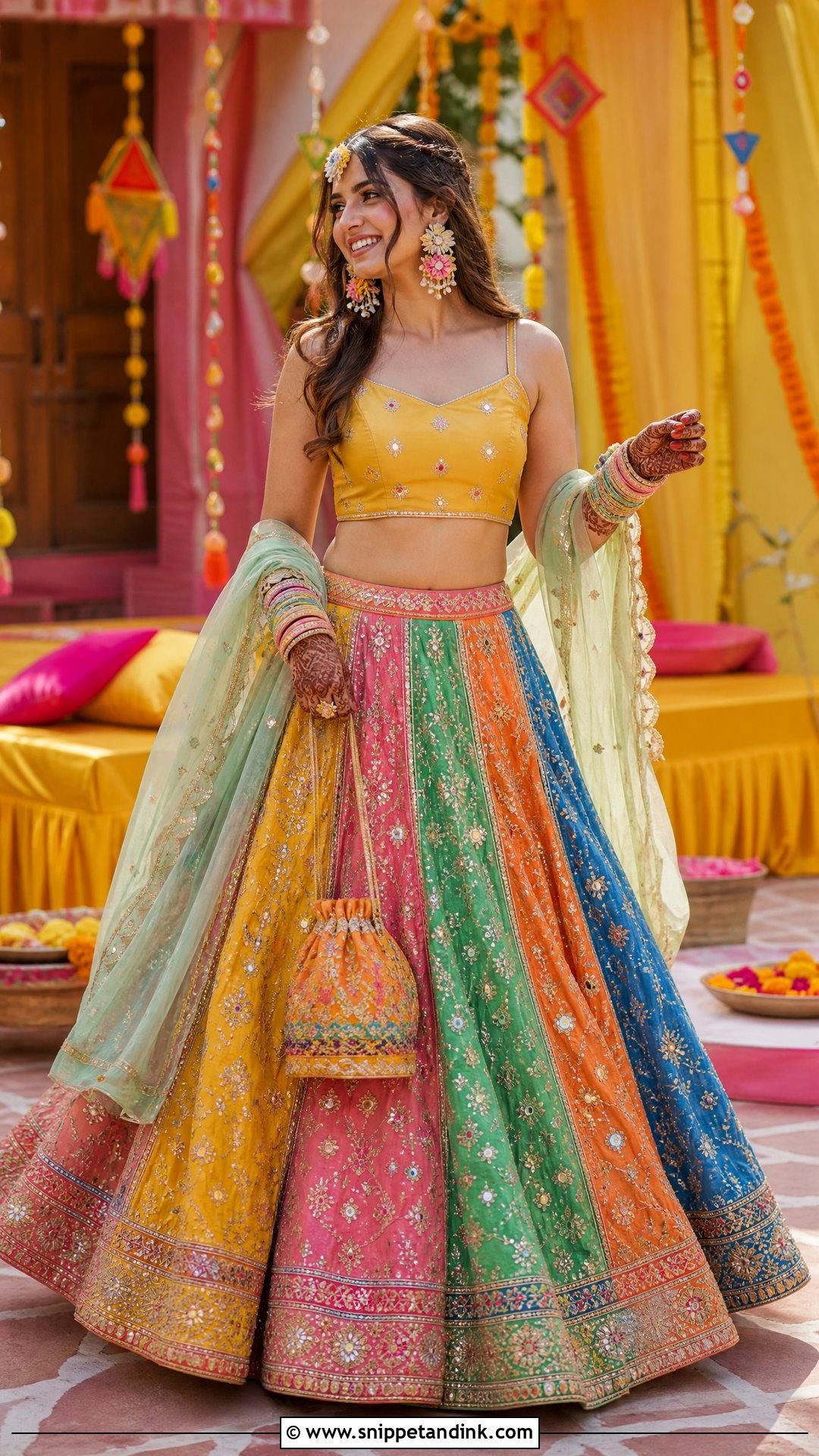
A multicolour lehenga, with panels of yellow, pink, green, orange and blue or multicolour embroidery on a neutral base, matches a loud, dance-heavy mehndi. The risk is that the bride disappears into equally colourful decor. I ask to see the decorator’s palette before signing off on this one. Keep the blouse plain and the dupatta light. Colourful bangles, a bright potli, floral earrings and a flower braid suit it, especially in a garden or outdoor setting.
8. White Mehndi Gharara Outfit
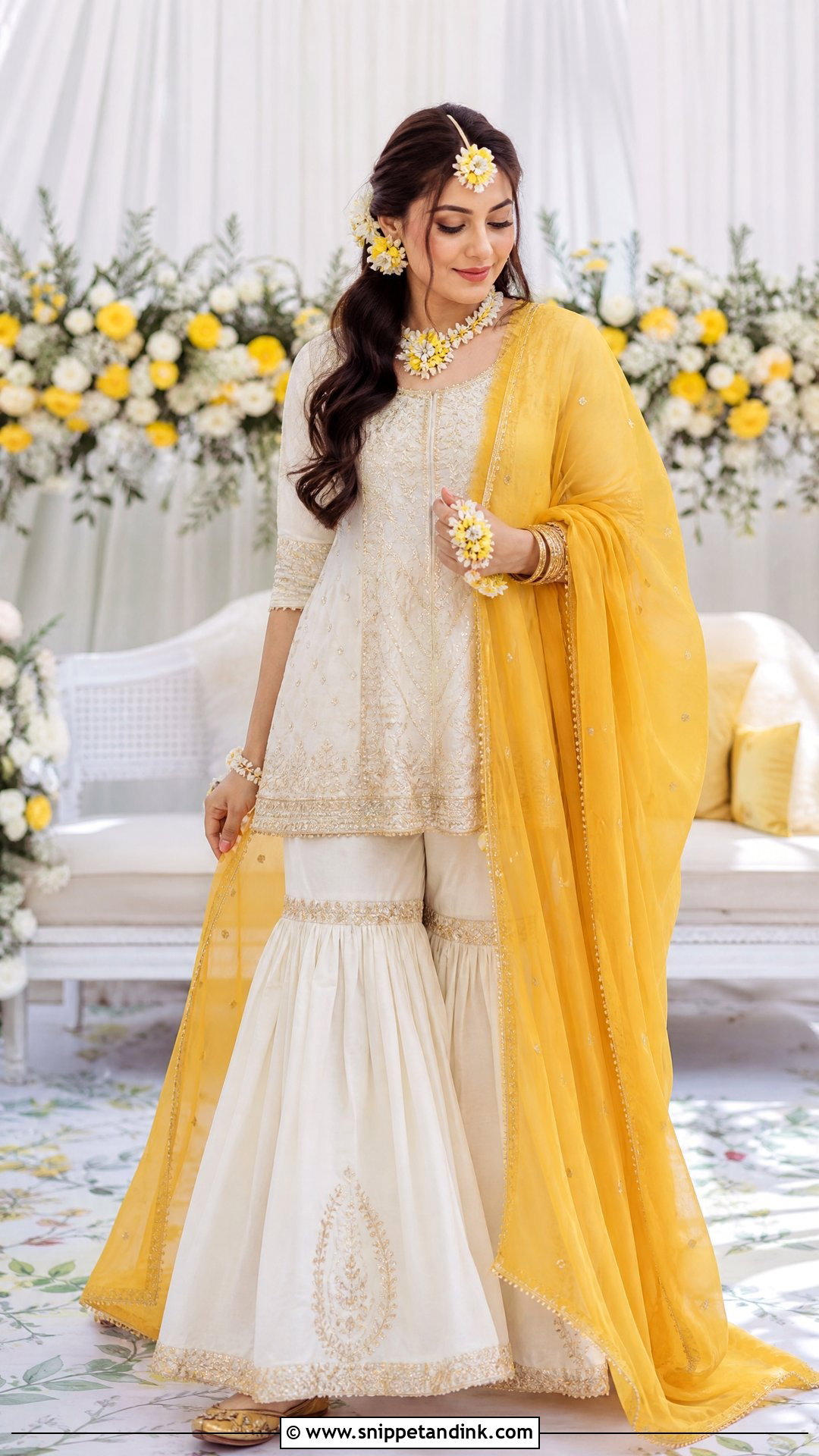
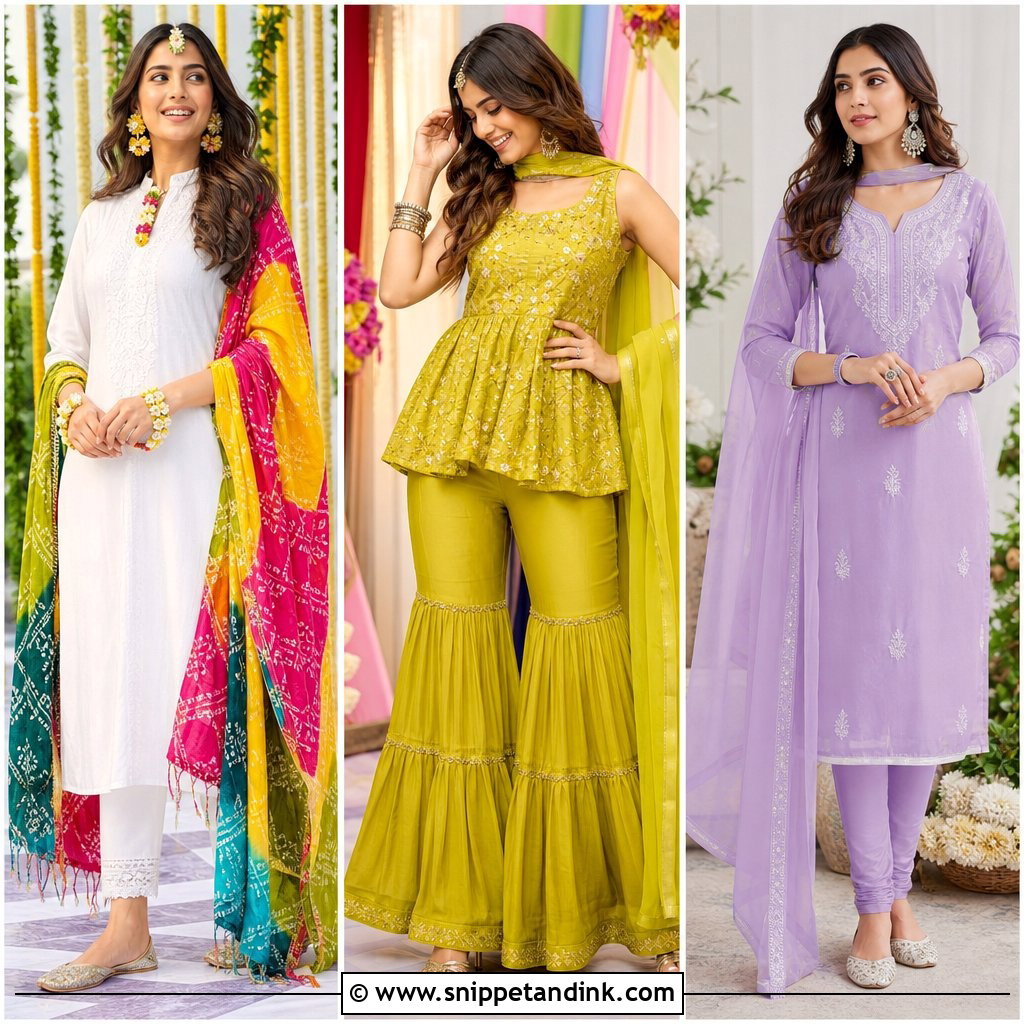
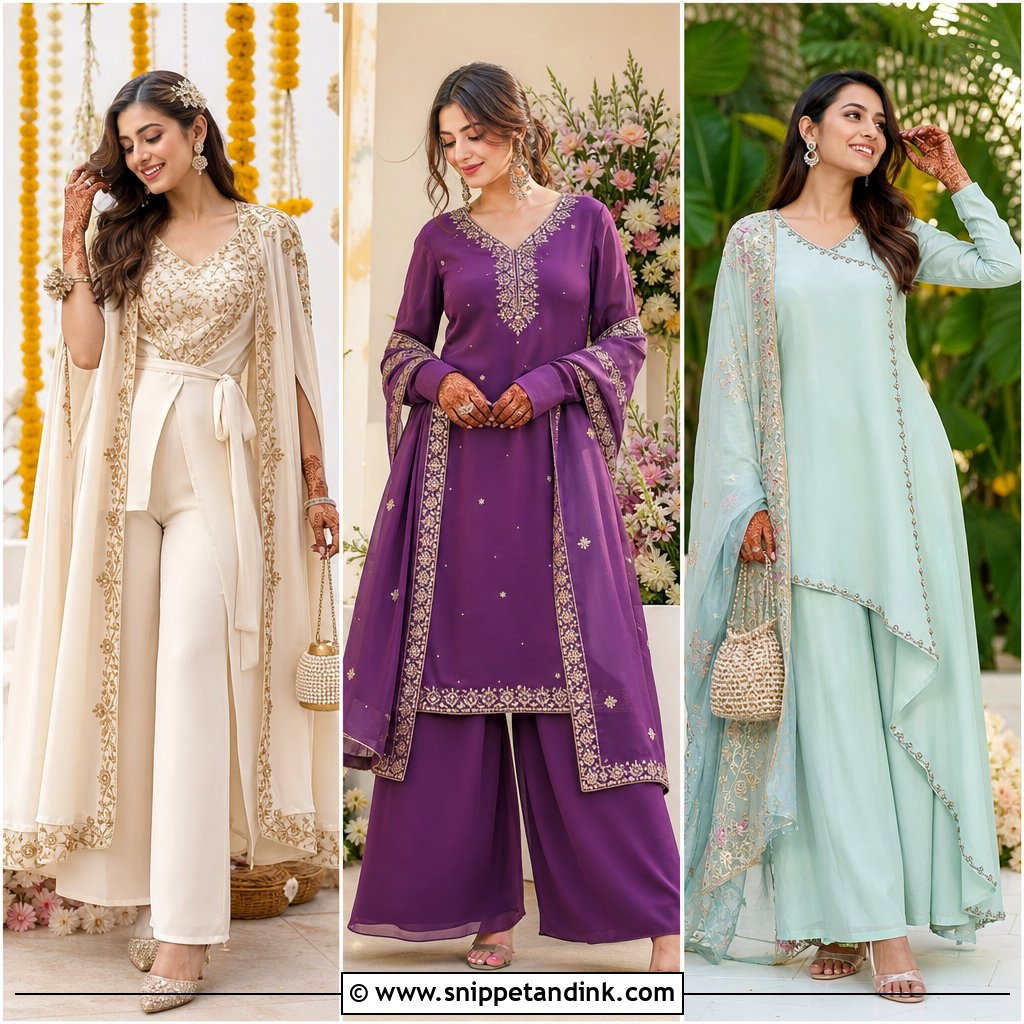
White and ivory are the modern choice, and they make henna, jewellery and colourful accessories pop. The honest warning is that ivory shows every smear of paste and oil, and fresh henna on white is very hard to remove. If you love this look, wear it for photos and the entrance, and ask the artist to apply your designs after you’ve changed into something darker, or keep a dark cloth over your lap. Yellow, green or gold embroidery ties it to the occasion; a mustard, lime or fuchsia dupatta adds contrast.
9. Pastel Mehndi Anarkali Outfit
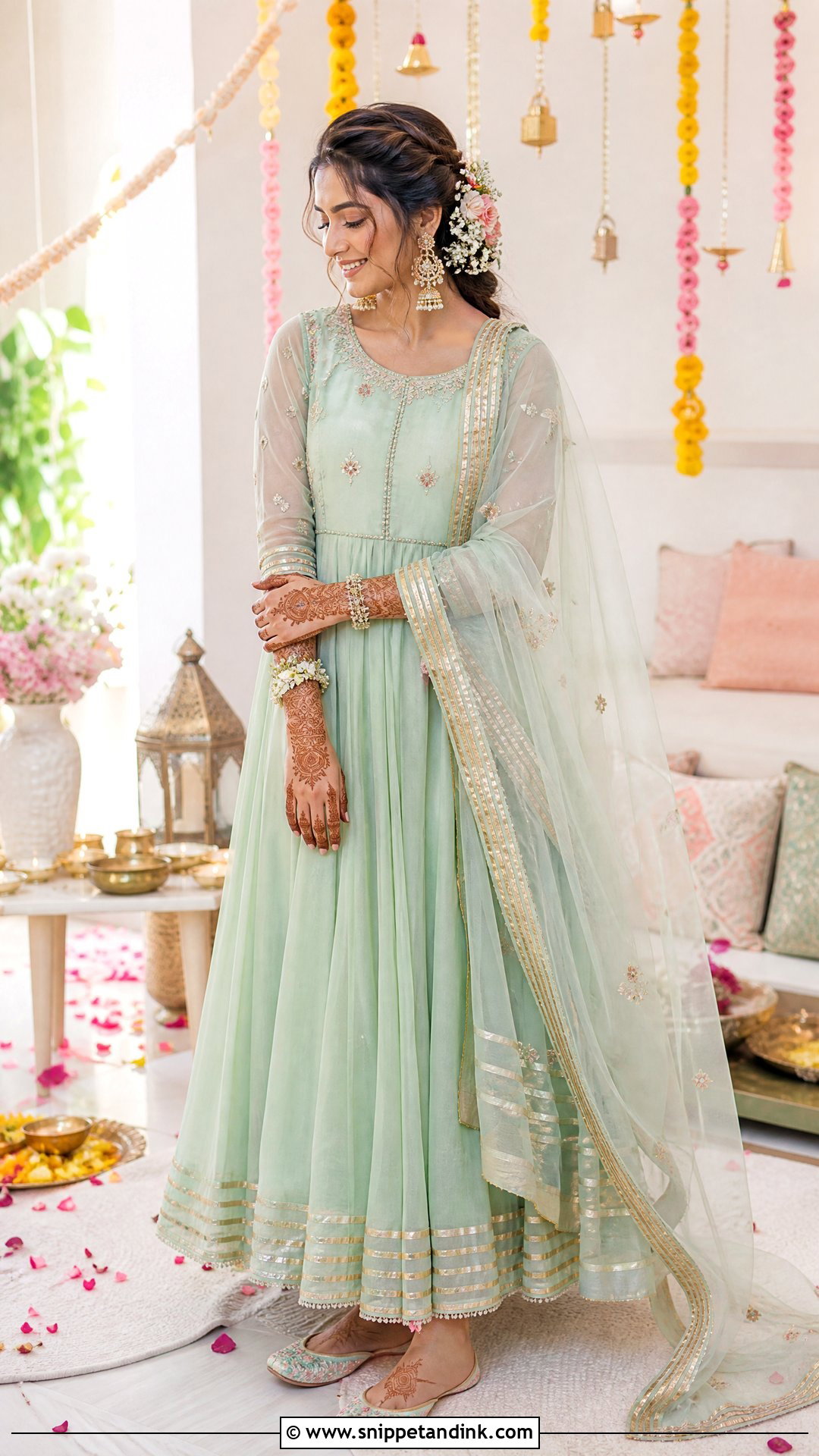
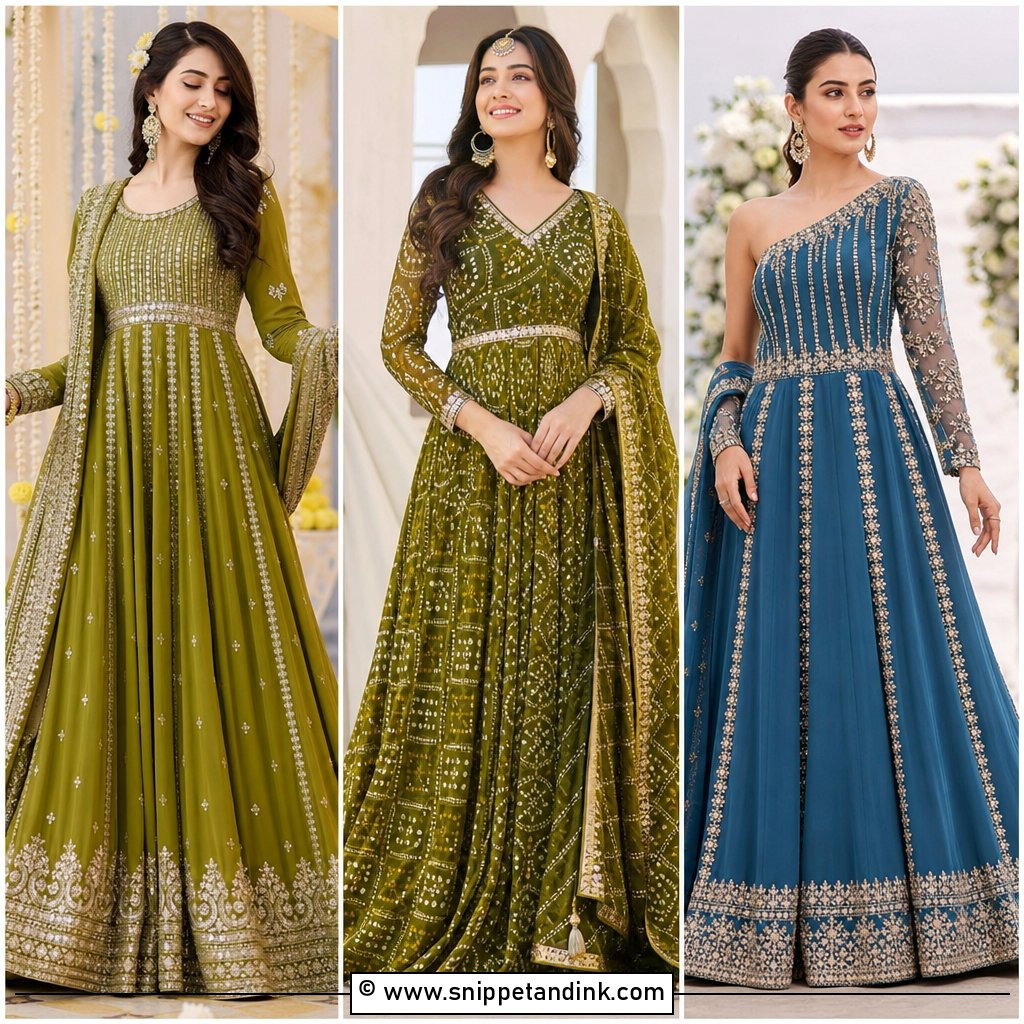
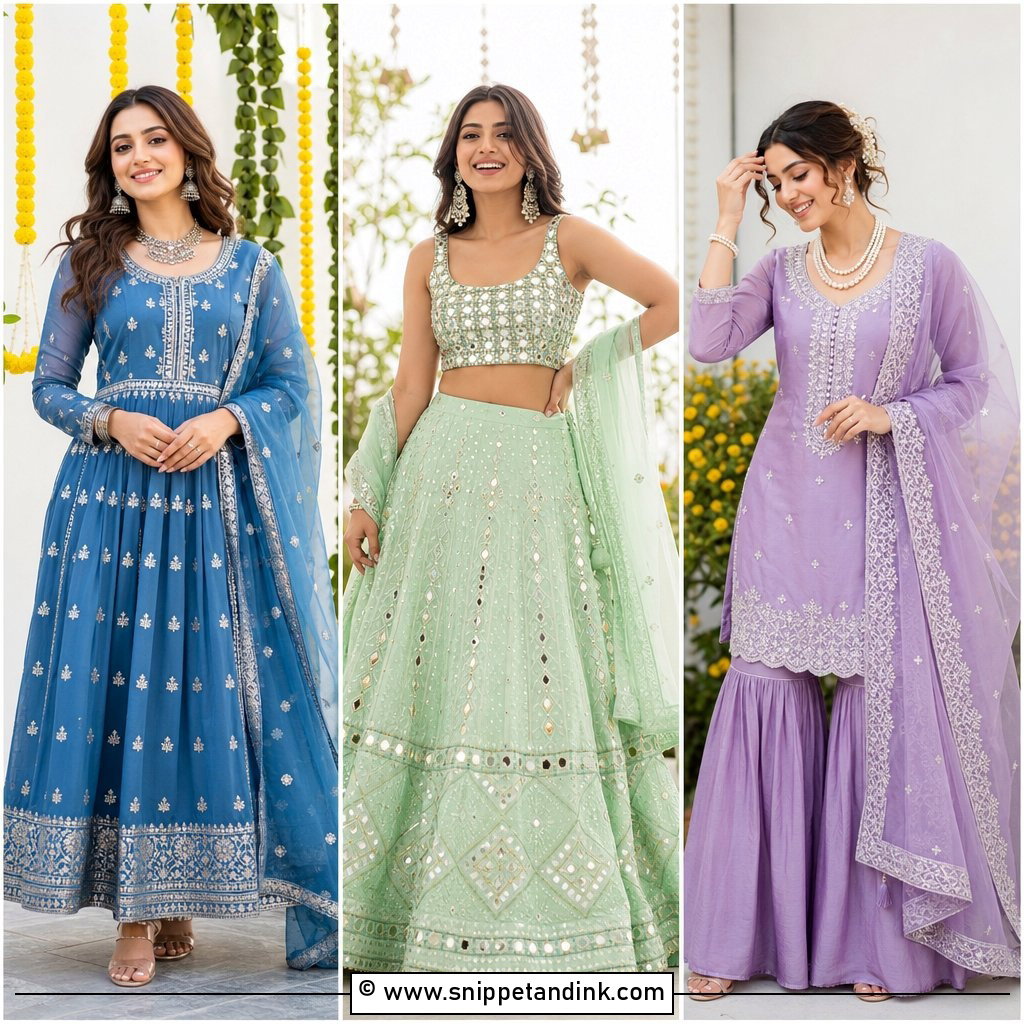
An anarkali flares from just under the bust, so it’s comfortable for the long sitting stretch and hides how you’re folded on a cushion. Mint, peach, powder blue, lavender and pale yellow with light embroidery or gota borders all work. Go sleeveless or elbow length; anything longer gets in the way of the artist. A pastel anarkali suits an intimate or indoor mehndi and brides who don’t want much sparkle. Keep the dupatta sheer and the earrings delicate.
10. Yellow Sharara With Floral Jewelry Outfit
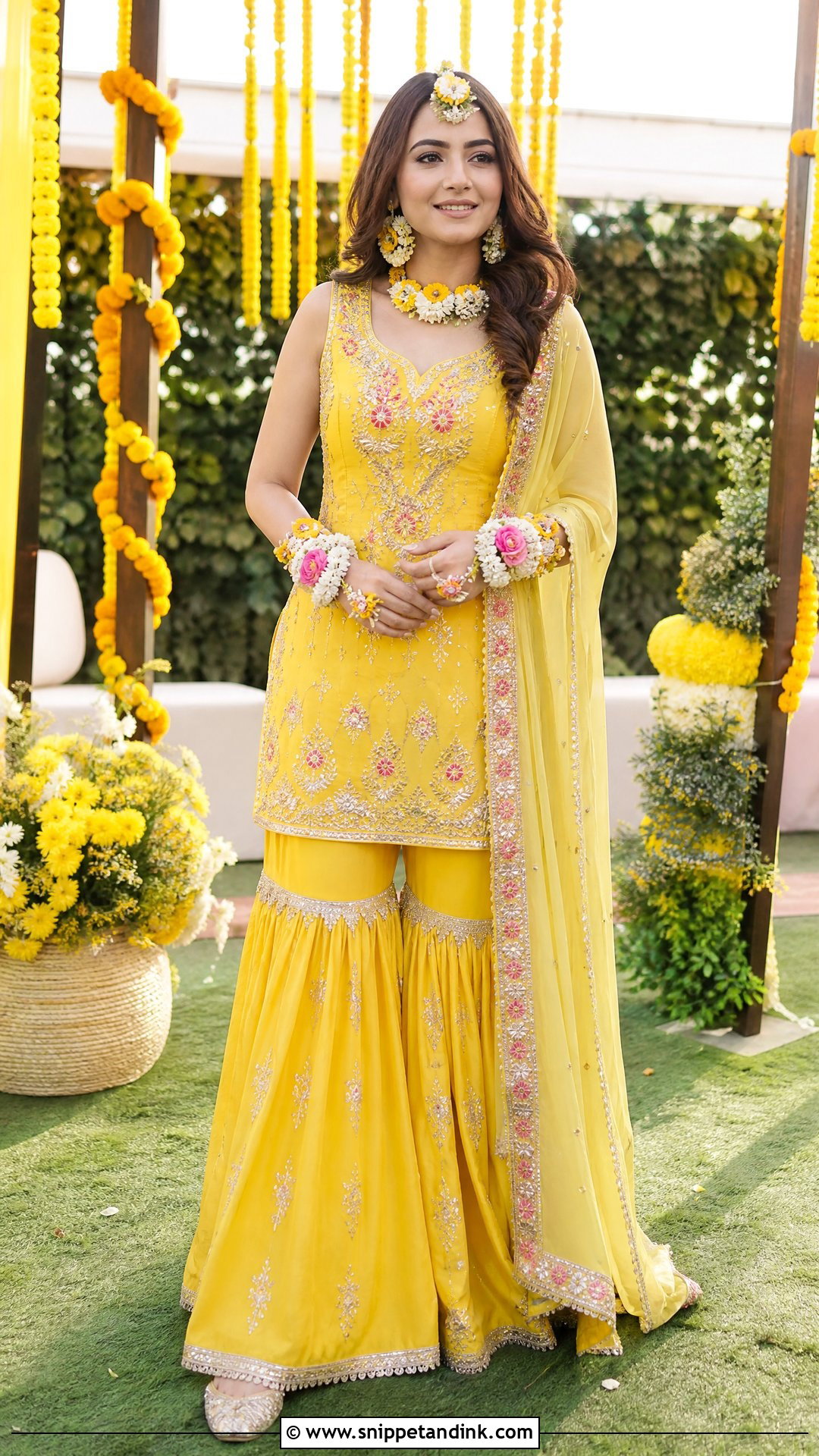
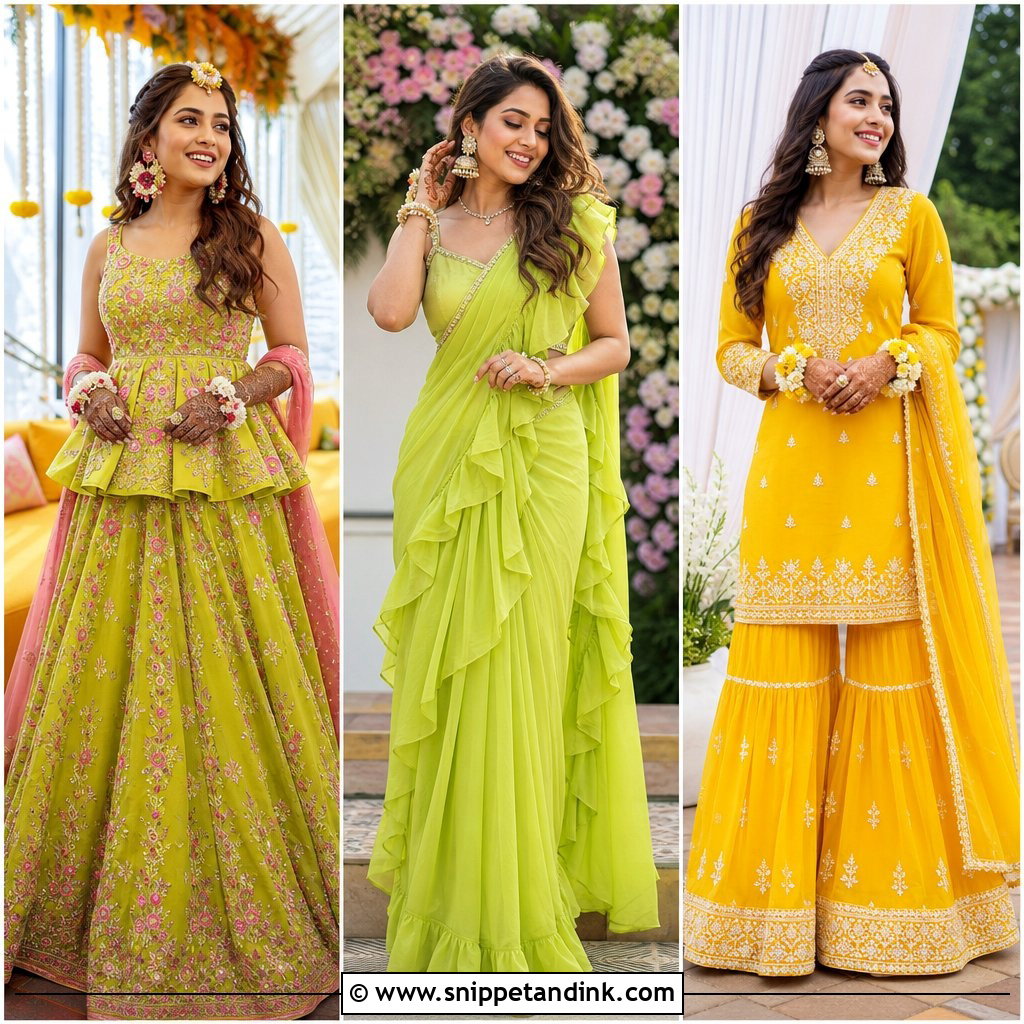
Fresh flower jewellery with a yellow sharara is one of the most requested combinations I see, and it’s easy to wear. The sharara keeps things relaxed; mirror work, gota or threadwork on a short kurta make it bridal. The haath phool is the tricky piece: it has to go on after the henna is applied and dried, or the artist can’t work around it. Plan a separate moment for it before photos. A flower braid or half-up style ties it together, and embellished juttis keep you mobile.
11. Lime Green Lehenga Choli Outfit
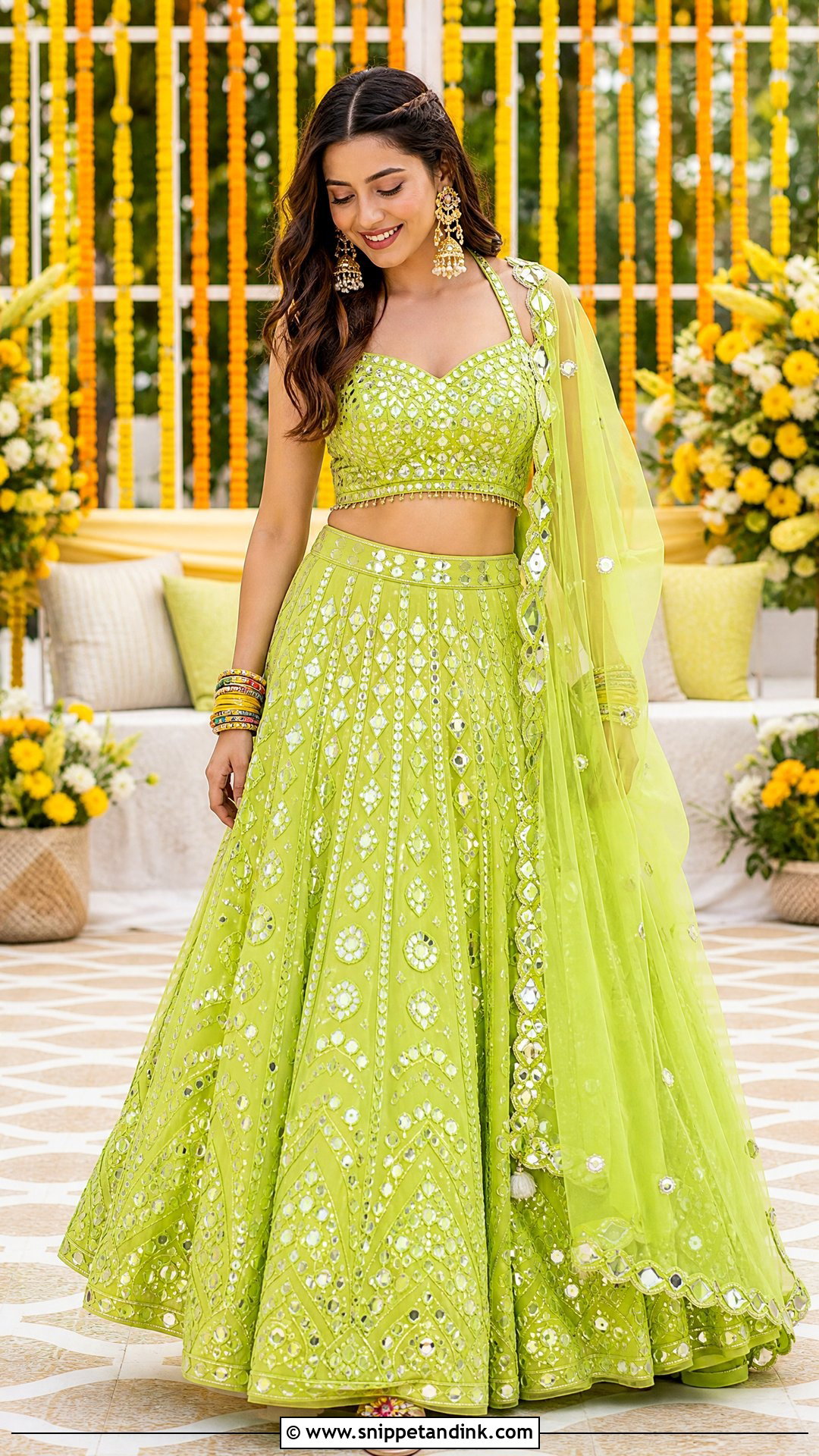
Lime green sits right on the mehndi theme and reads fresher than the deeper greens. Gold, pink, orange or ivory accents all suit it. Light mirror work or sequins give enough shine. A cropped blouse with short sleeves or straps keeps it modern; drape the dupatta over one shoulder and pin it securely so your hands stay free while the paste dries. Lime can make olive skin look a touch sallow near the face, so I often add a pink or gold dupatta closest to the cheek. A sleek ponytail or braid suits it.
12. Mustard Mehndi Saree Outfit
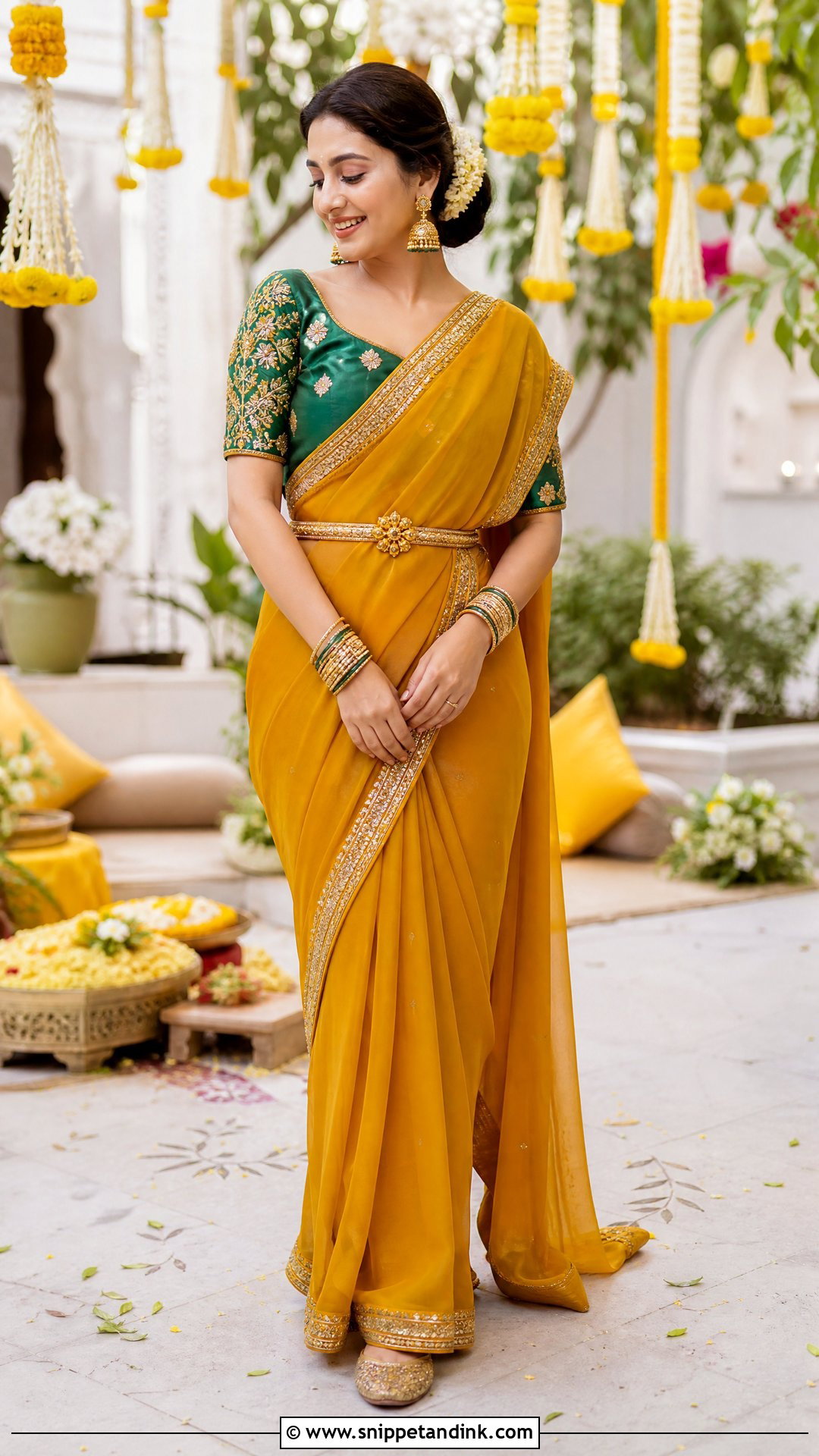
A saree is the graceful alternative to a lehenga, but for a mehndi it has to be secured properly. Pre-pleated draping, or a pinned style done by someone who knows sarees, means nothing unravels when you stand up without the use of your hands. Lightweight silk, organza, chiffon or georgette with gota work or mirror edging suits the evening. A green, pink or gold statement blouse adds contrast, and a waist belt holds the drape. Jhumkas, bangles, a low bun with flowers and flats finish it.
13. Mehndi Jacket Lehenga Outfit
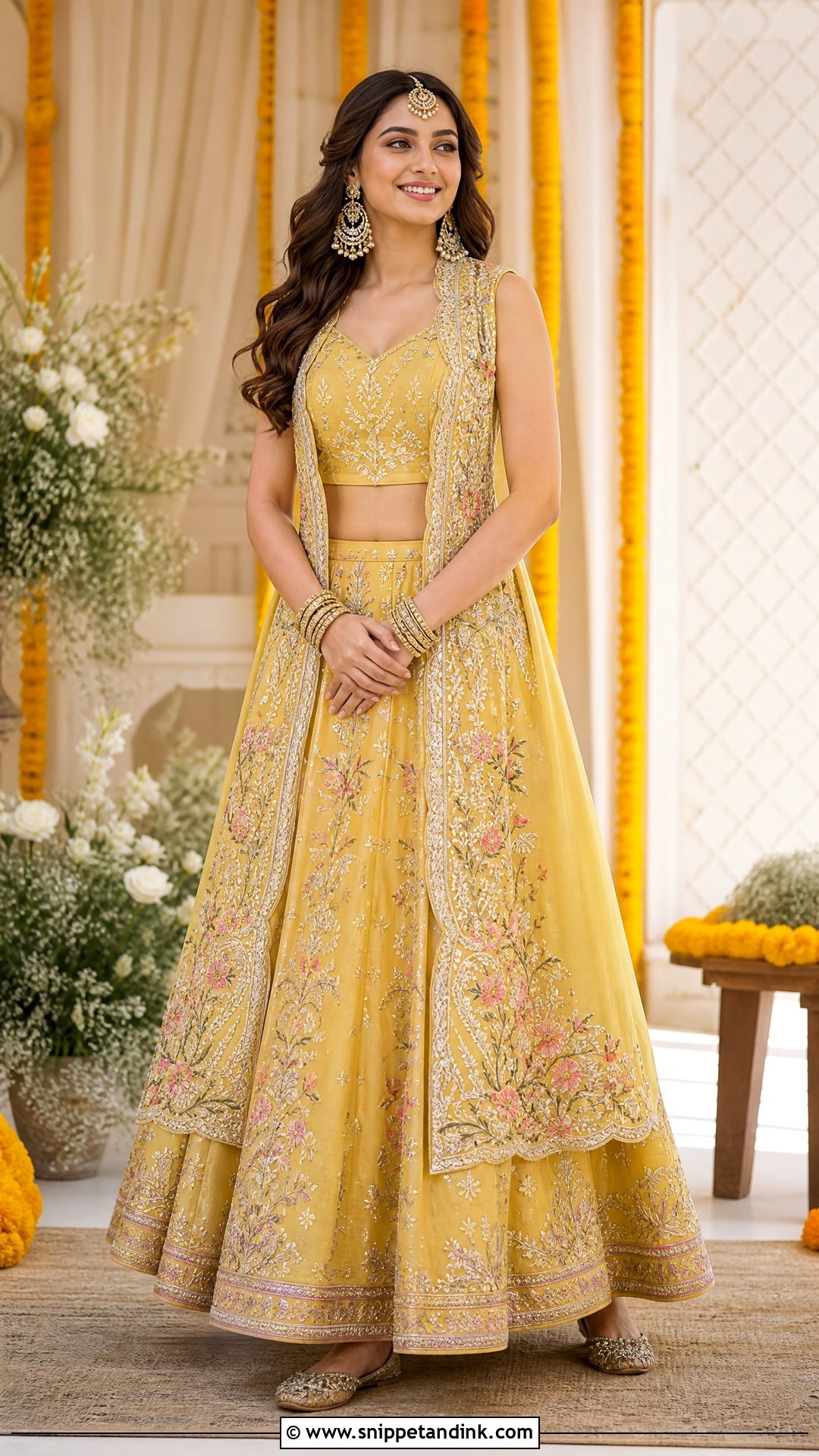
A long embroidered jacket over a light lehenga and blouse gives you drama without a dupatta, which is one less thing to manage with wet hands. Yellow, green, ivory or multicolour threadwork all work. Sleeve length is the deciding factor: sleeveless or short-sleeved jackets let the artist reach your arms; a full-sleeved jacket has to come off for application. Keep the jewellery to earrings, a maang tikka and a few bangles so the jacket stays the focus.
14. Dhoti Pants Mehndi Outfit
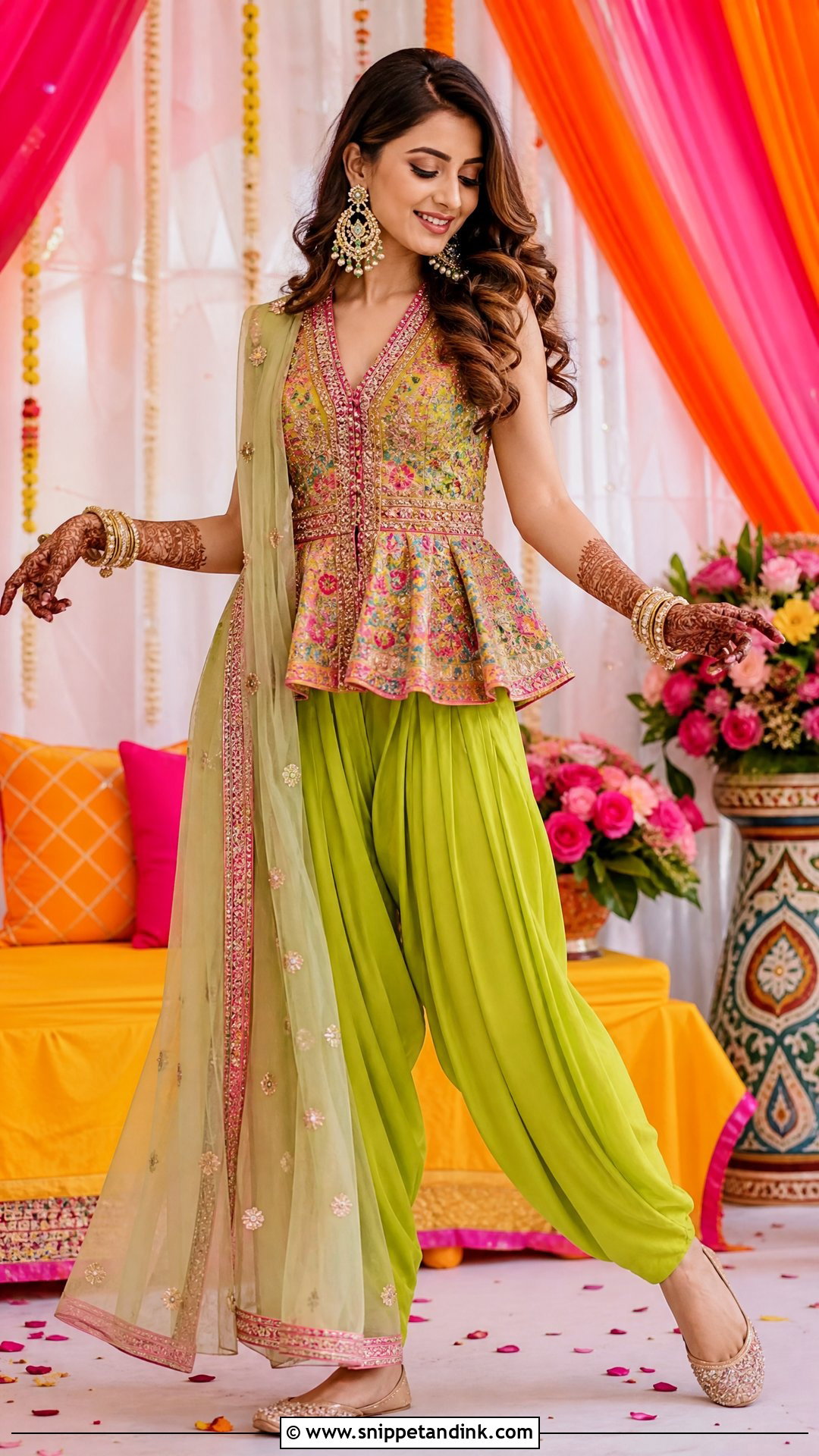
A dhoti pants mehndi outfit is what I suggest to brides with a choreographed dance planned, because nothing restricts the legs. Pair draped dhoti pants with a short kurti, peplum, cape blouse or crop top in yellow, green, fuchsia or orange. A light dupatta or cape adds bridal detail. The drape needs a fabric with fall, like crepe or georgette, or it puffs out at the hips. Statement earrings, bangles and embellished flats complete a festive but relaxed look for a long night.
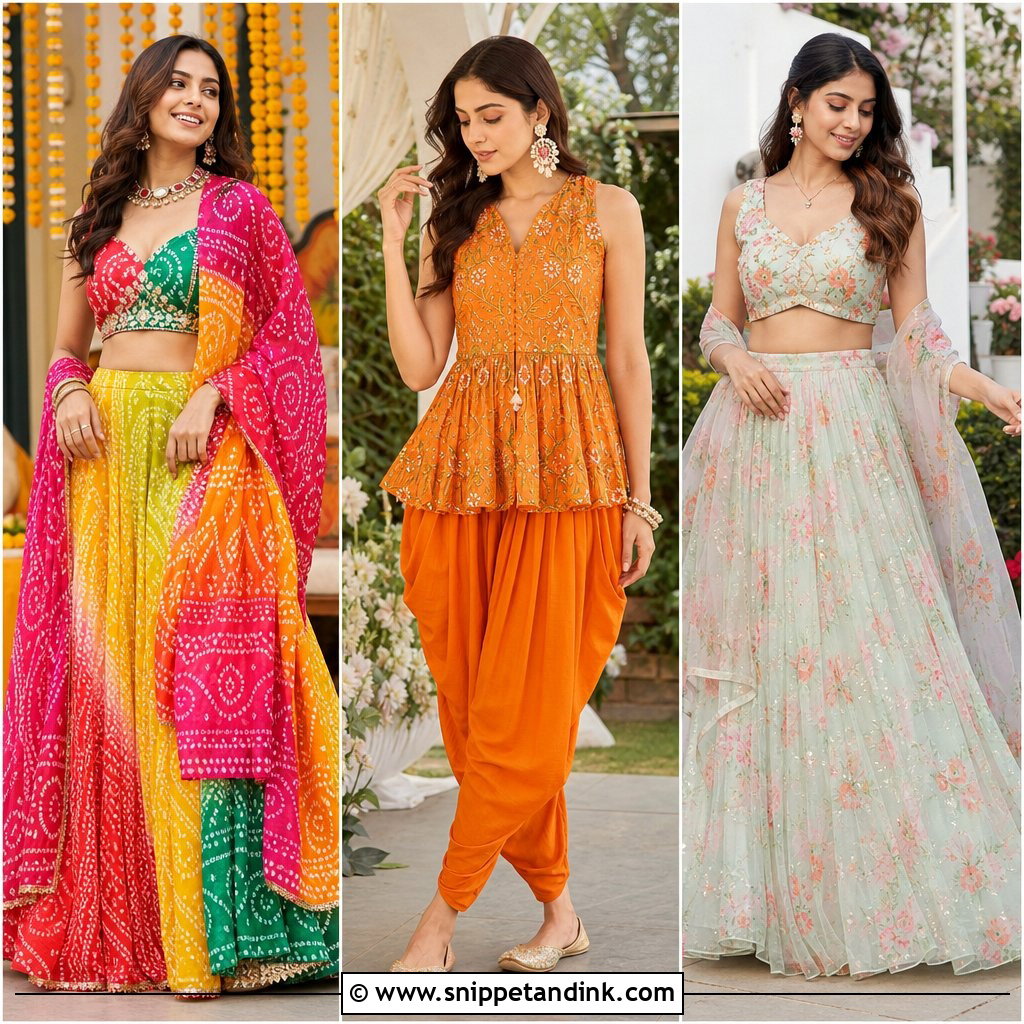
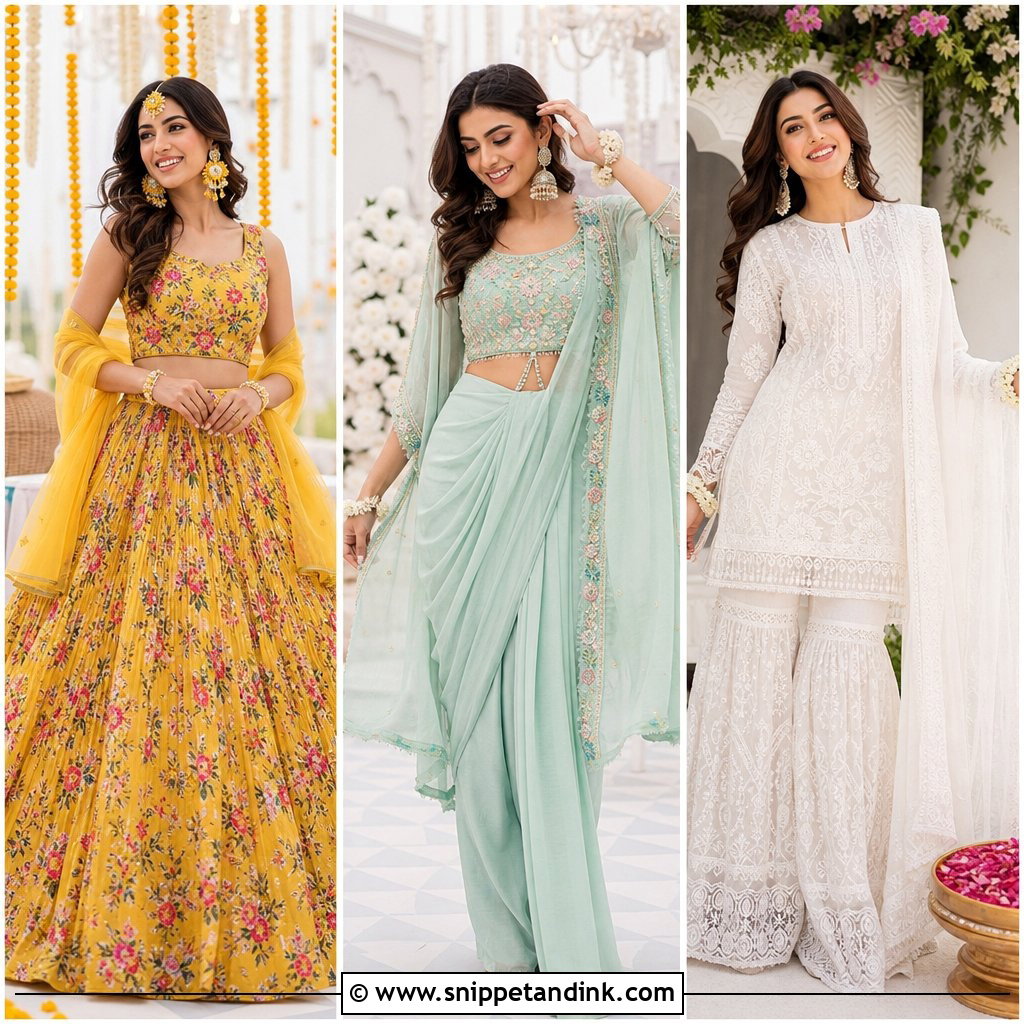
15. Cape Lehenga Mehndi Outfit
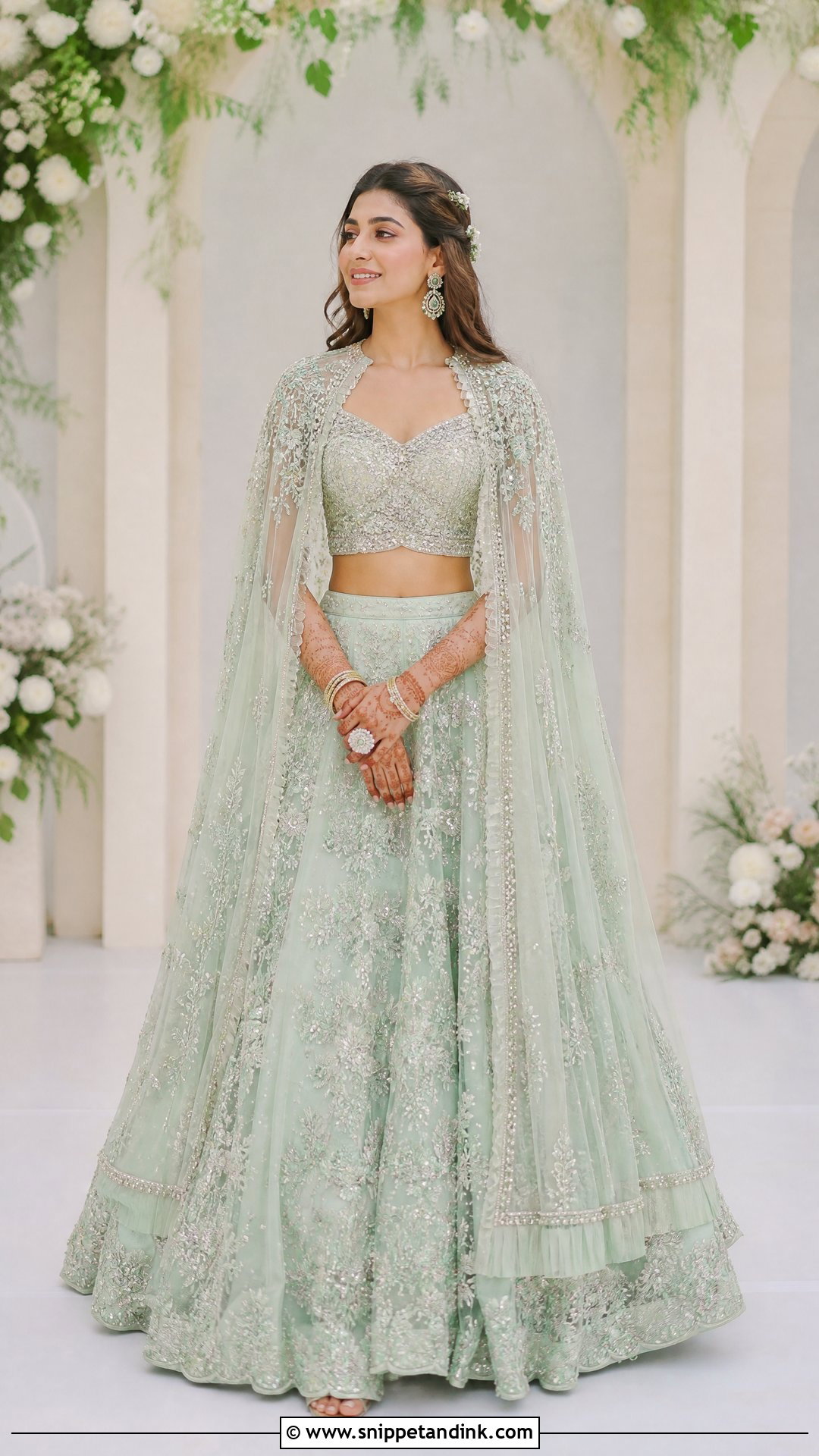
The cape replaces a heavy dupatta, so there’s nothing to pin or rearrange. Sheer organza, net or chiffon capes with mirror work, tassels, pearls or embroidered borders suit yellow, mint, peach and ivory lehengas. I ask for the cape to be stitched or hooked to the blouse at the shoulder, since a loose cape slides back when you raise your arms for the artist. Keep the jewellery simple. A sleek bun, soft waves or a braid all suit the shape.
16. Indo Western Mehndi Outfit
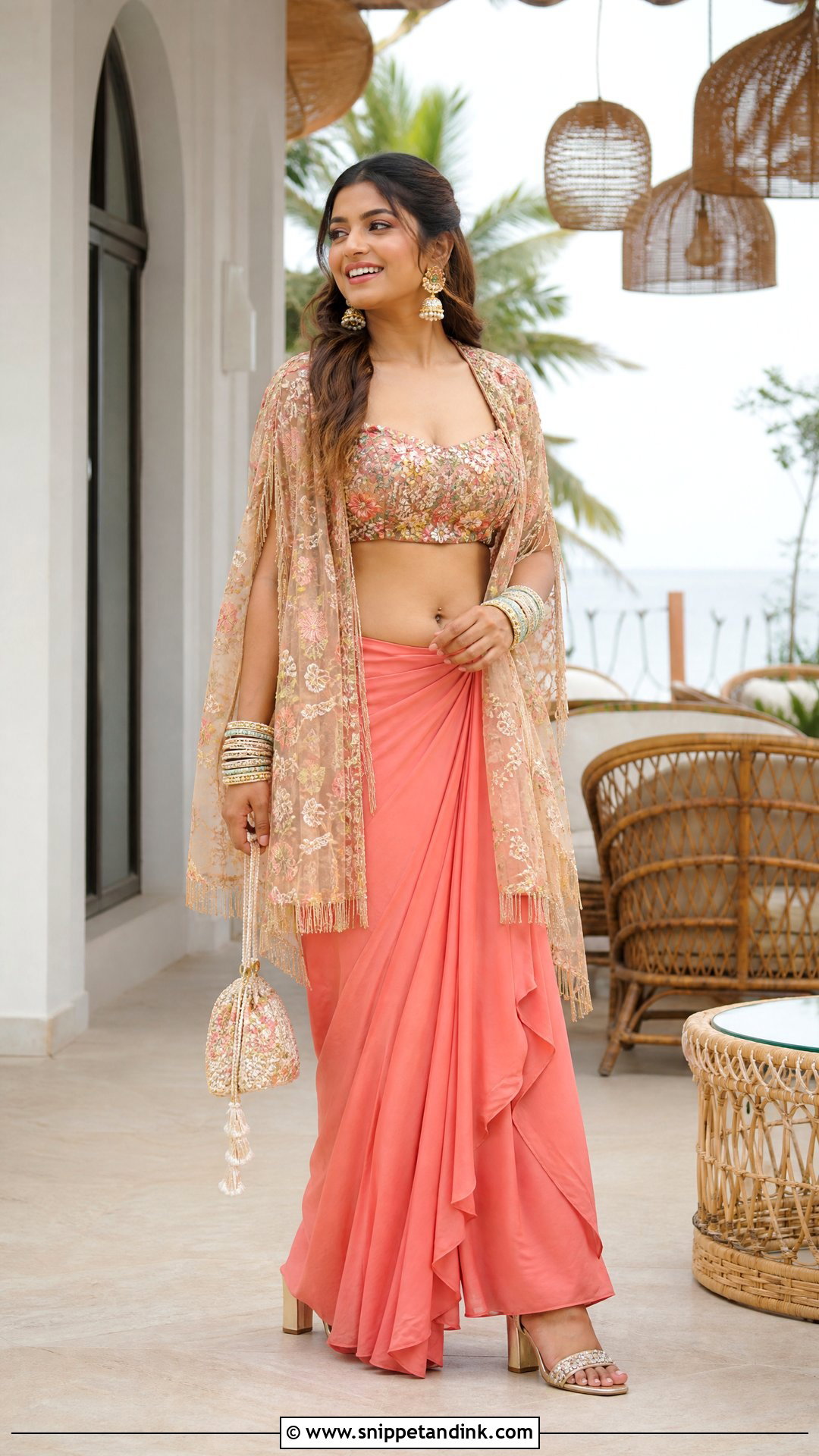
An Indo Western mehndi outfit lets you build the look from separates: a skirt with crop top and cape, palazzos with an embroidered jacket, or a draped skirt with a structured blouse. Keep the colours festive, such as lime green, mustard, coral, pink or ivory with bright accents, and add ethnic jewellery so it still reads bridal. This suits destination weddings and smaller events, and brides who don’t want a typical lehenga. Block heels or juttis work best.
17. Bandhani Mehndi Lehenga Outfit
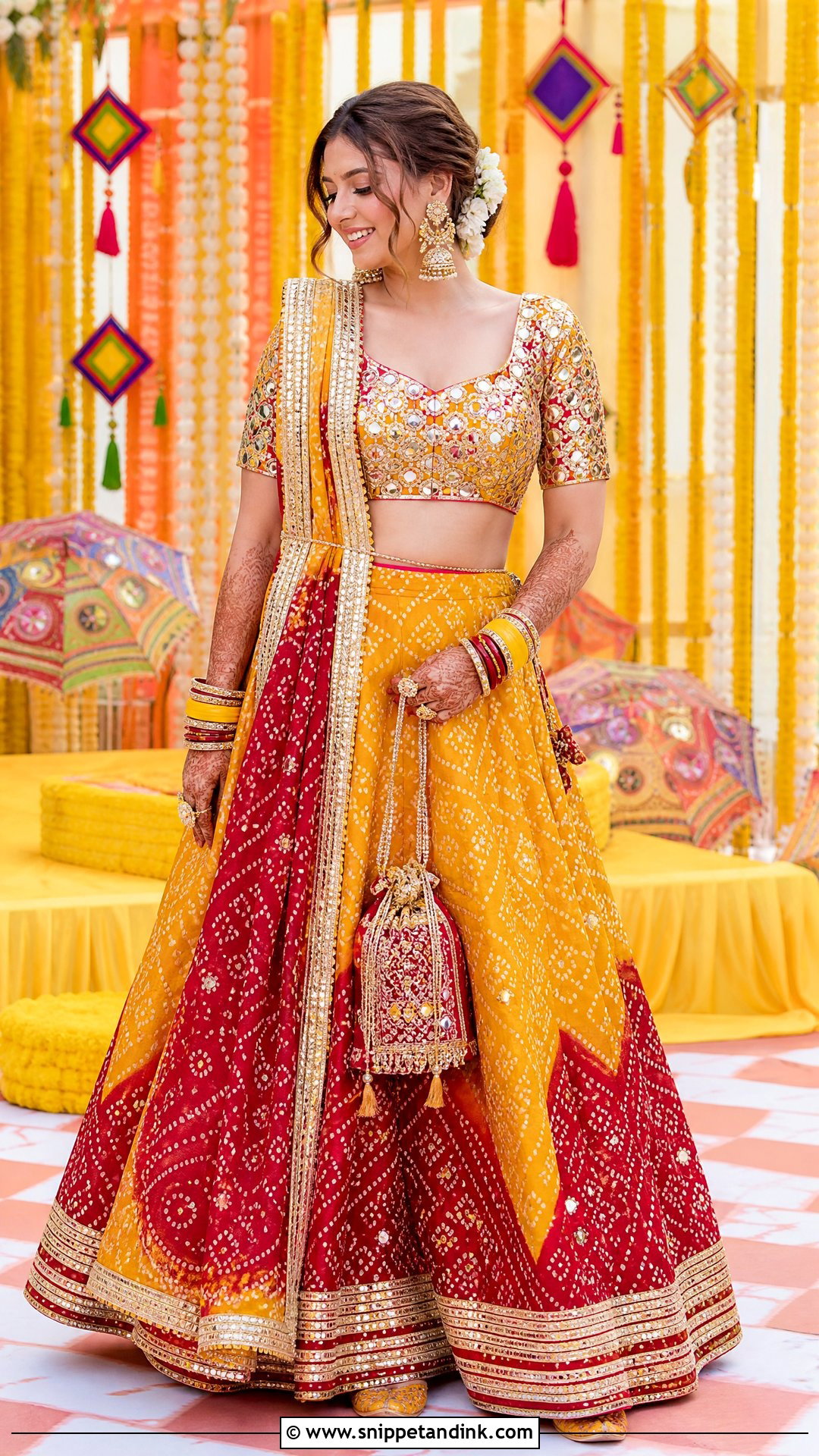
A Bandhani mehndi lehenga outfit gets its colour from tie-dye, so it’s lively without heavy embroidery and much lighter to wear. Yellow, red, green, pink or orange bandhani all suit the event. Pair it with a plain blouse, a mirror work choli or a gota-bordered dupatta. Oxidised jewellery or gold jhumkas, bangles and a potli finish it, with a flower braid or soft bun. Bandhani can bleed if it gets damp, so keep wet henna and drinks away from the skirt.
18. Phulkari Mehndi Outfit
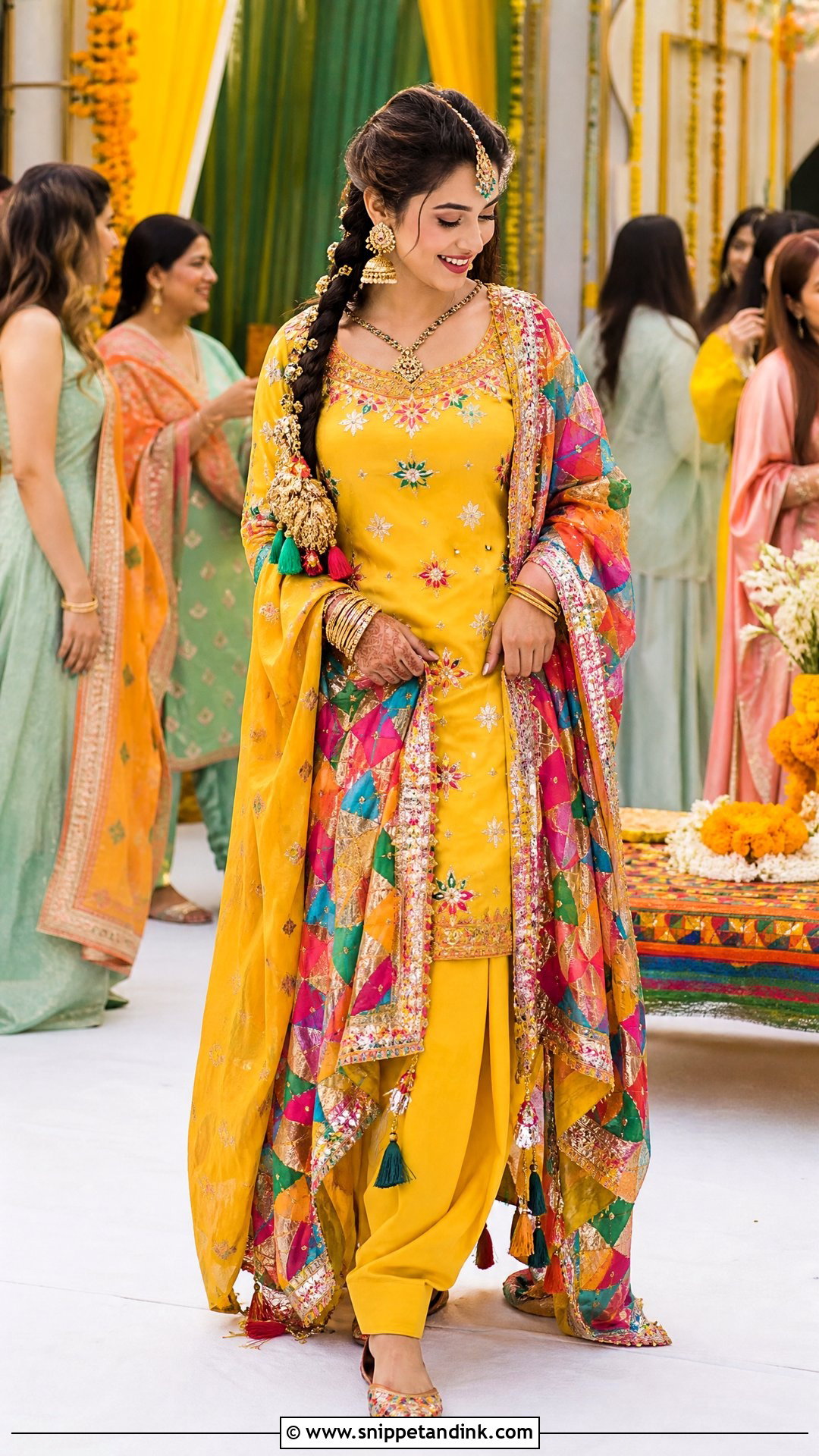
Phulkari brings Punjabi colour and dense embroidery to a suit, lehenga or sharara in yellow, orange, pink or green. Even a plain outfit transforms with a phulkari dupatta. Because the threadwork is heavy, keep the silhouette comfortable and loose. A parandi woven into a braid, jhumkas, bangles and embroidered juttis complete it. I like it most for family-centred mehndis with live dhol and giddha, where the bride is expected to dance.
19. Mirror Work Sharara Mehndi Outfit
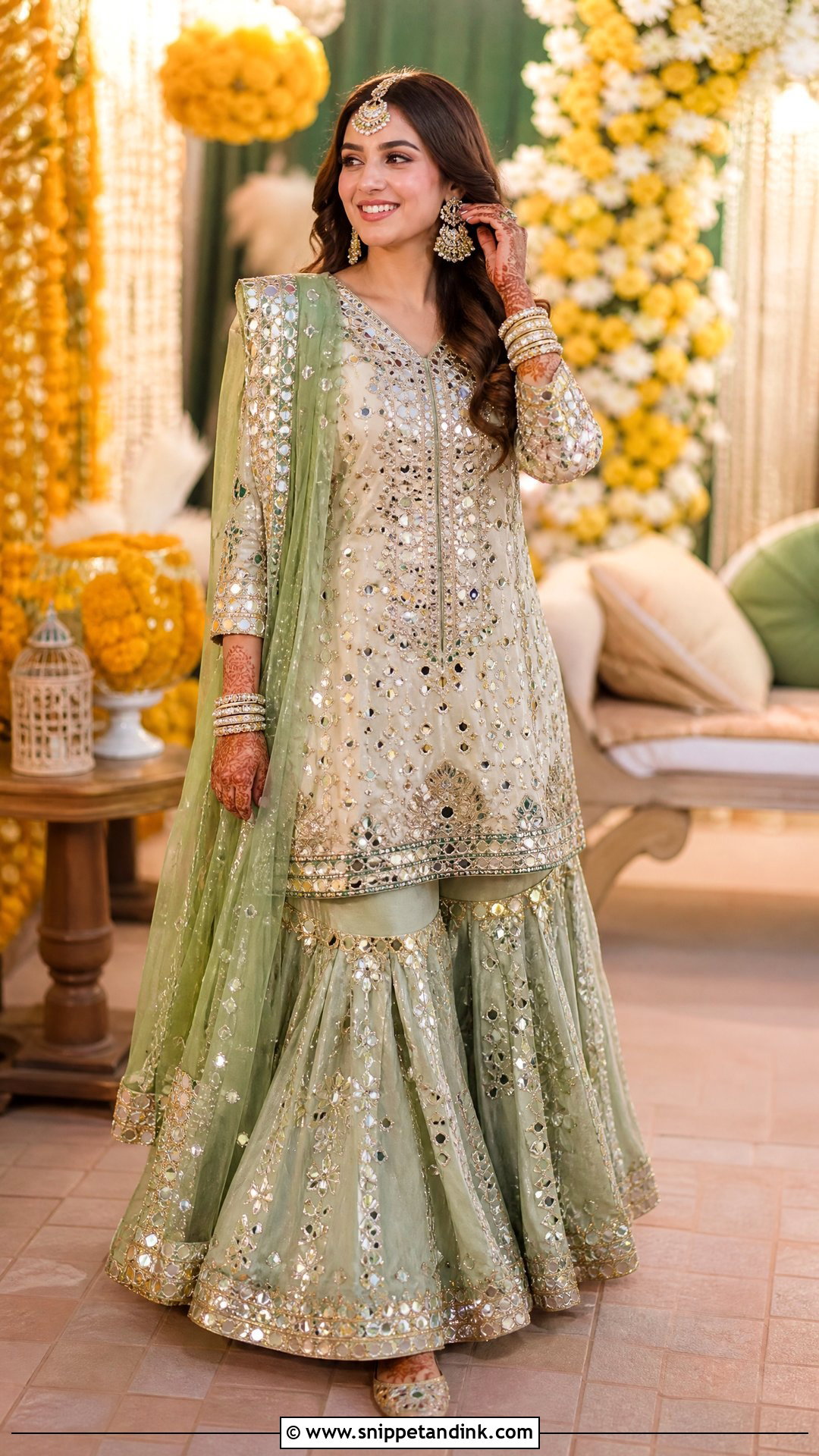
A mirror work sharara works especially well at an evening mehndi, when fairy lights and lamps make the mirrors glow. Mehndi green, yellow, ivory, orange or rani pink all suit it. A short kurti or peplum keeps the shape flattering, and the dupatta should have mirror borders rather than full coverage, or it gets heavy. Earrings, a maang tikka, stacked bangles and flats finish a look built for dancing. Check that the mirrors are stitched, not glued; glued ones drop off on the dance floor.
20. Peplum Lehenga Mehndi Outfit
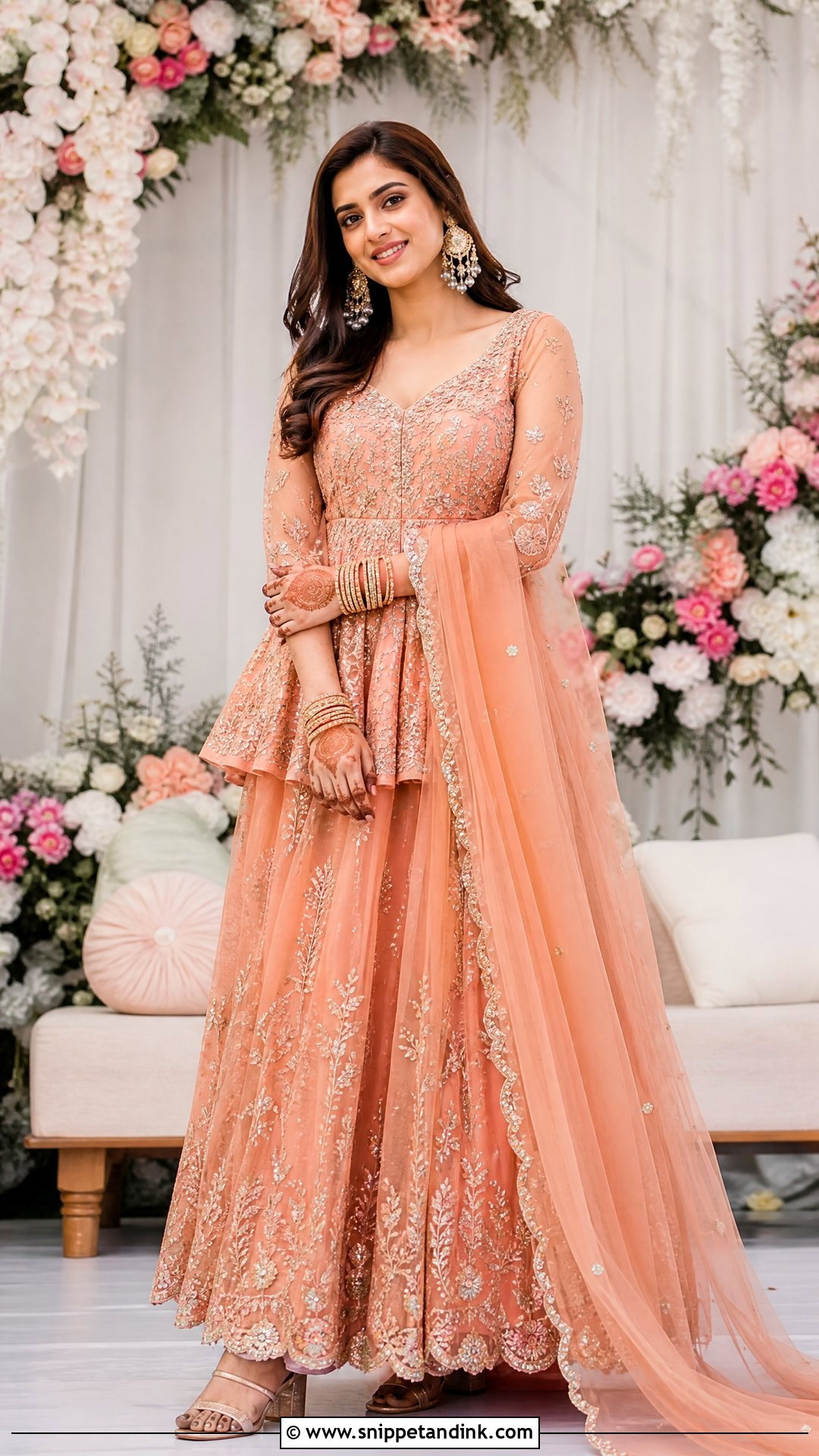
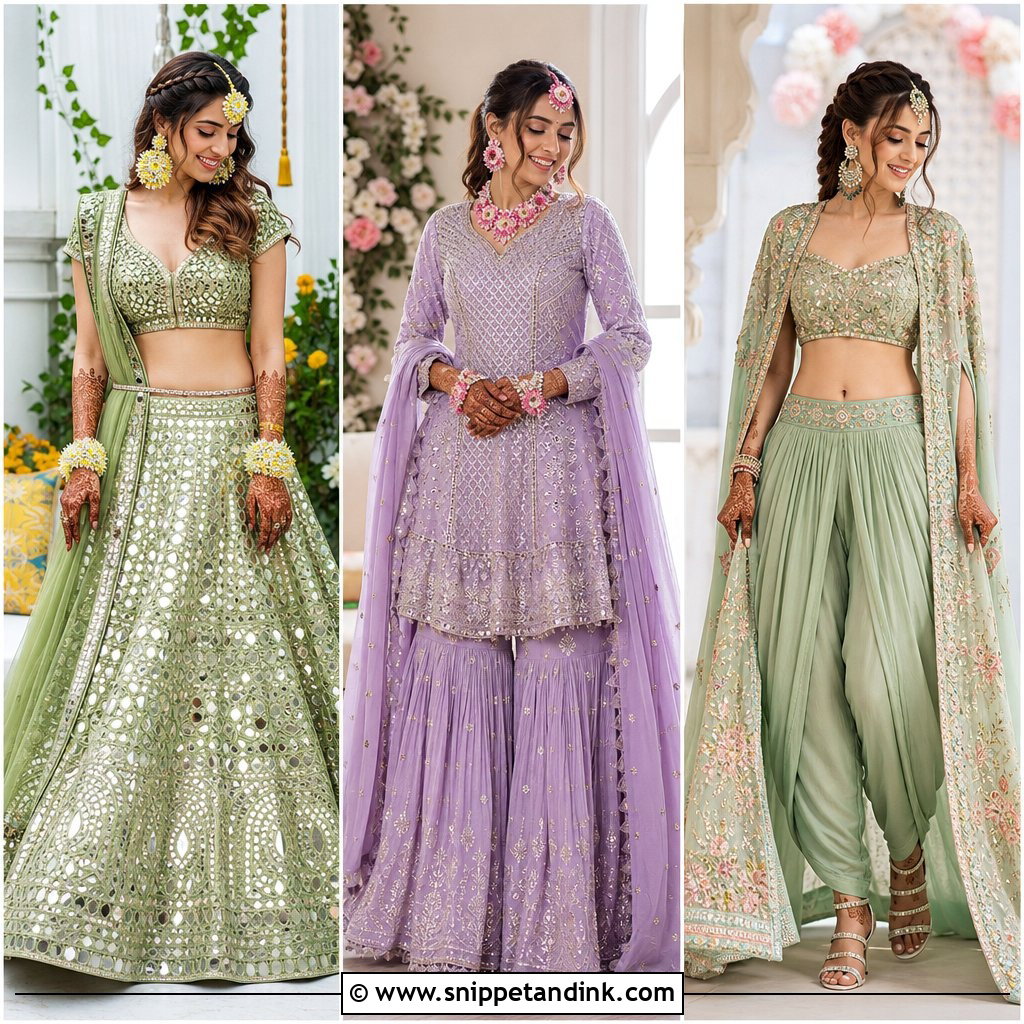
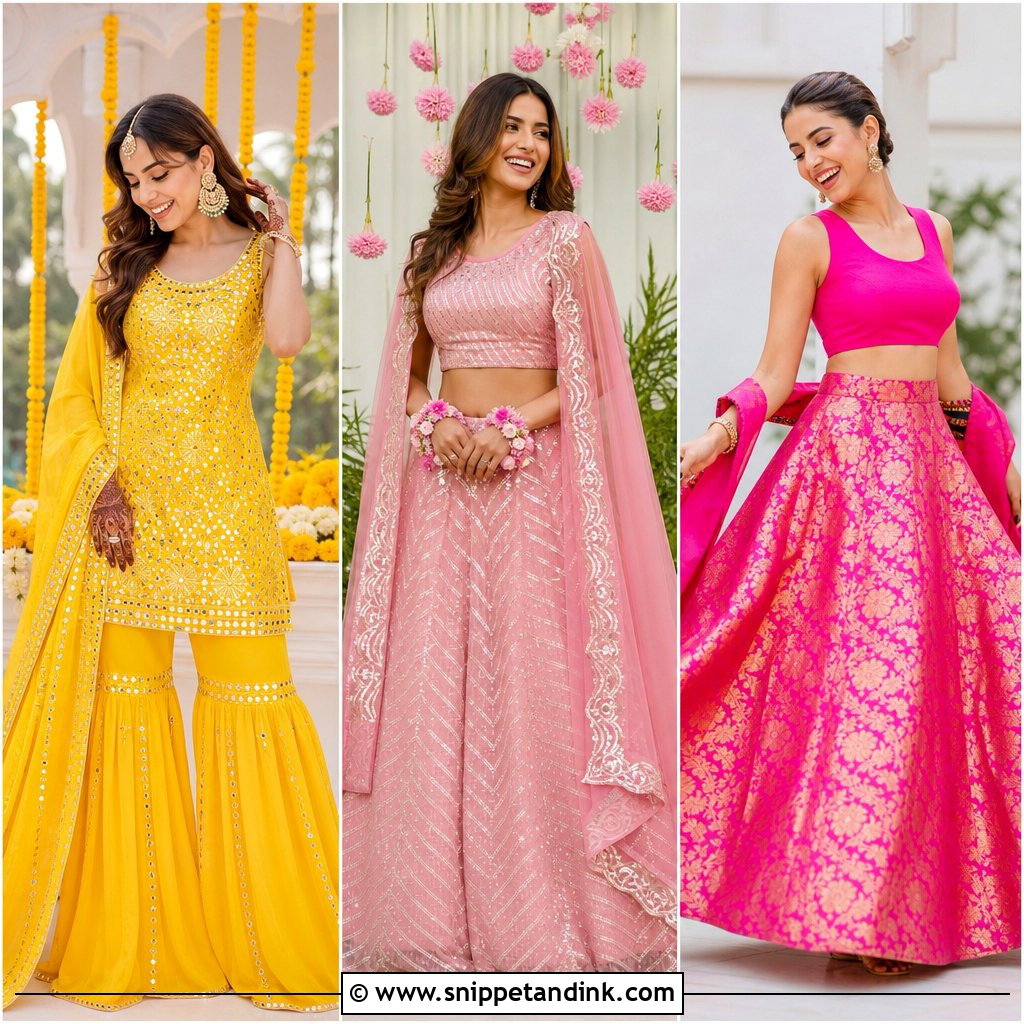
A peplum top over a lehenga gives structure at the waist and more coverage than a crop blouse, with far less weight than an anarkali. Short sleeves, cap sleeves or straps keep the arms free for henna. Yellow, green, peach, pink and ivory are all good choices. The peplum seam should sit at the natural waist; if it sits low, it shortens the torso in seated photos. Embroidery, gota, mirrors or floral thread details make it bridal, and a light dupatta with juttis or block heels finishes it.
21. Ruffle Saree Mehndi Outfit
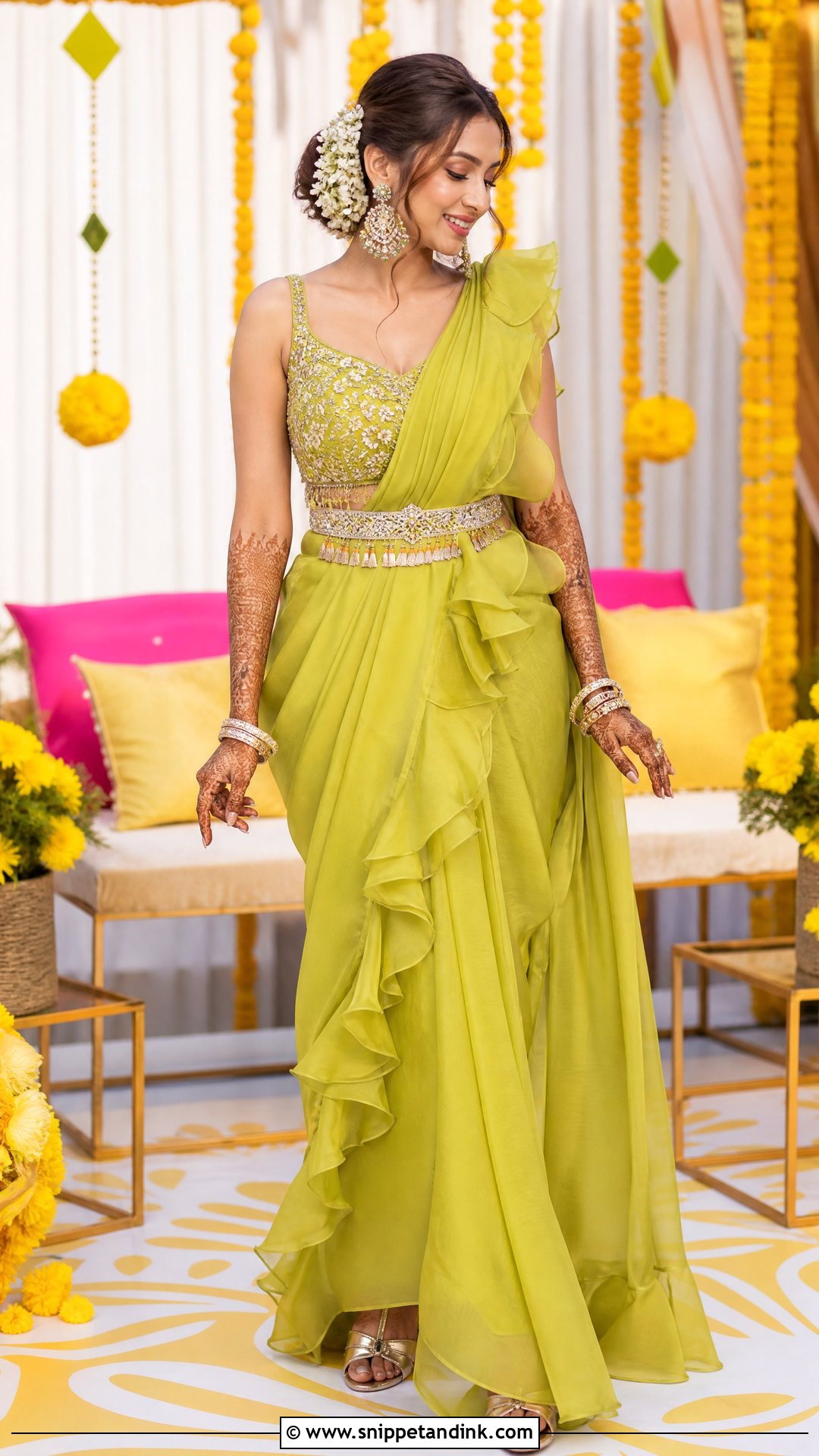
Ruffles give a saree volume and movement without embroidery, so it stays light. Choose a pre-draped ruffle saree in yellow, lime, coral, mint or blush, and pair it with an embellished, mirror work or embroidered blouse. Pre-draped really matters here: you won’t be able to fix pleats yourself once the paste is on. A belt secures the drape and defines the waist. Fresh earrings, bangles and a floral hairpiece suit a bride who wants contemporary fashion with an Indian wedding feel.
22. Printed Mehndi Co Ord Outfit
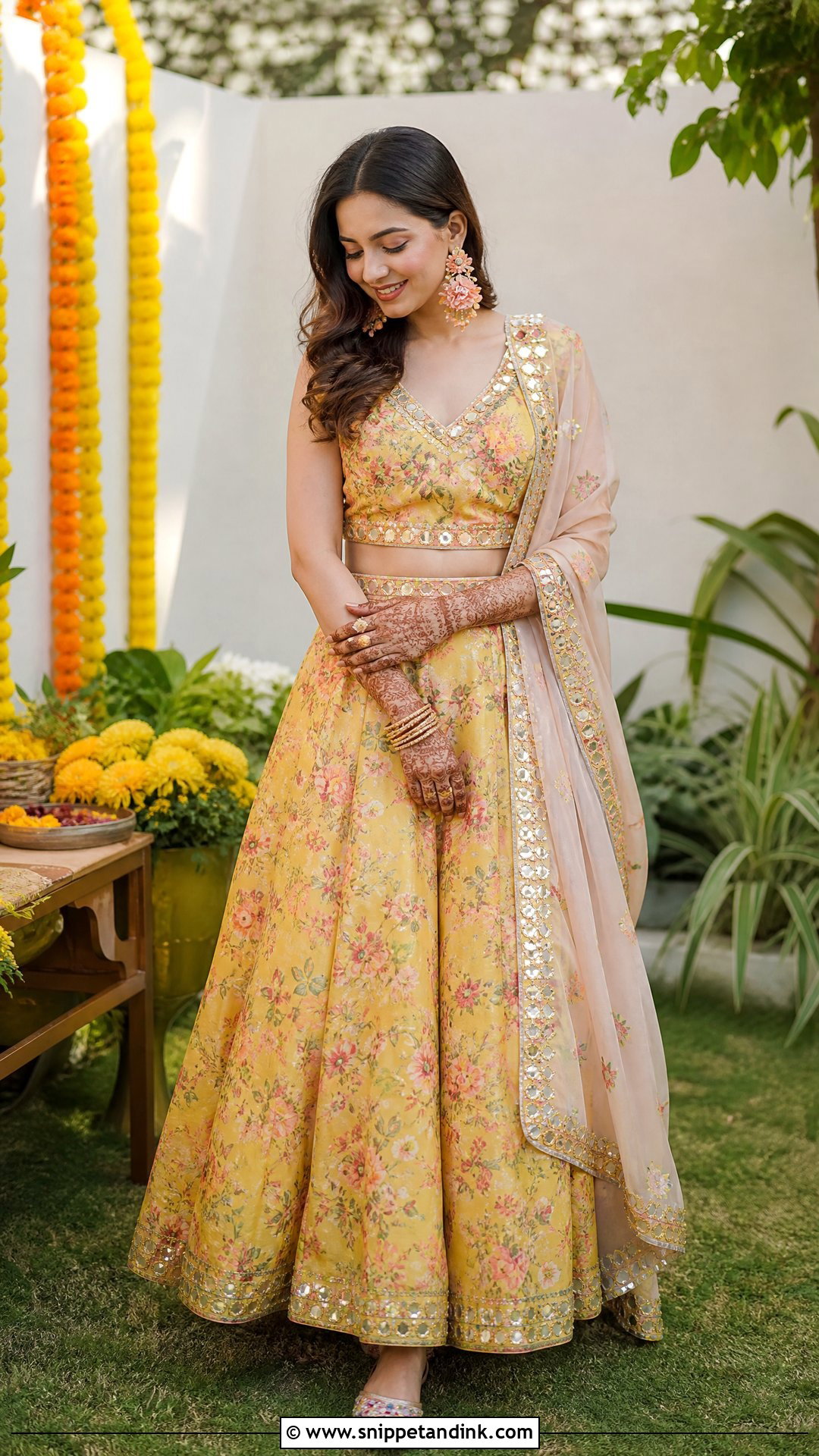
A printed mehndi co ord outfit suits an intimate or daytime mehndi at home. A matching skirt and blouse, palazzo set or sharara co ord in floral, paisley, bandhani or block print keeps it coordinated. To make it bridal, add embroidery, mirror borders, a dupatta or statement jewellery. Bright yellow, green, pink and orange prints work best. Cotton block prints breathe far better than synthetics, which matters when you can’t fan yourself for two hours.
23. Heavy Dupatta Mehndi Suit Outfit
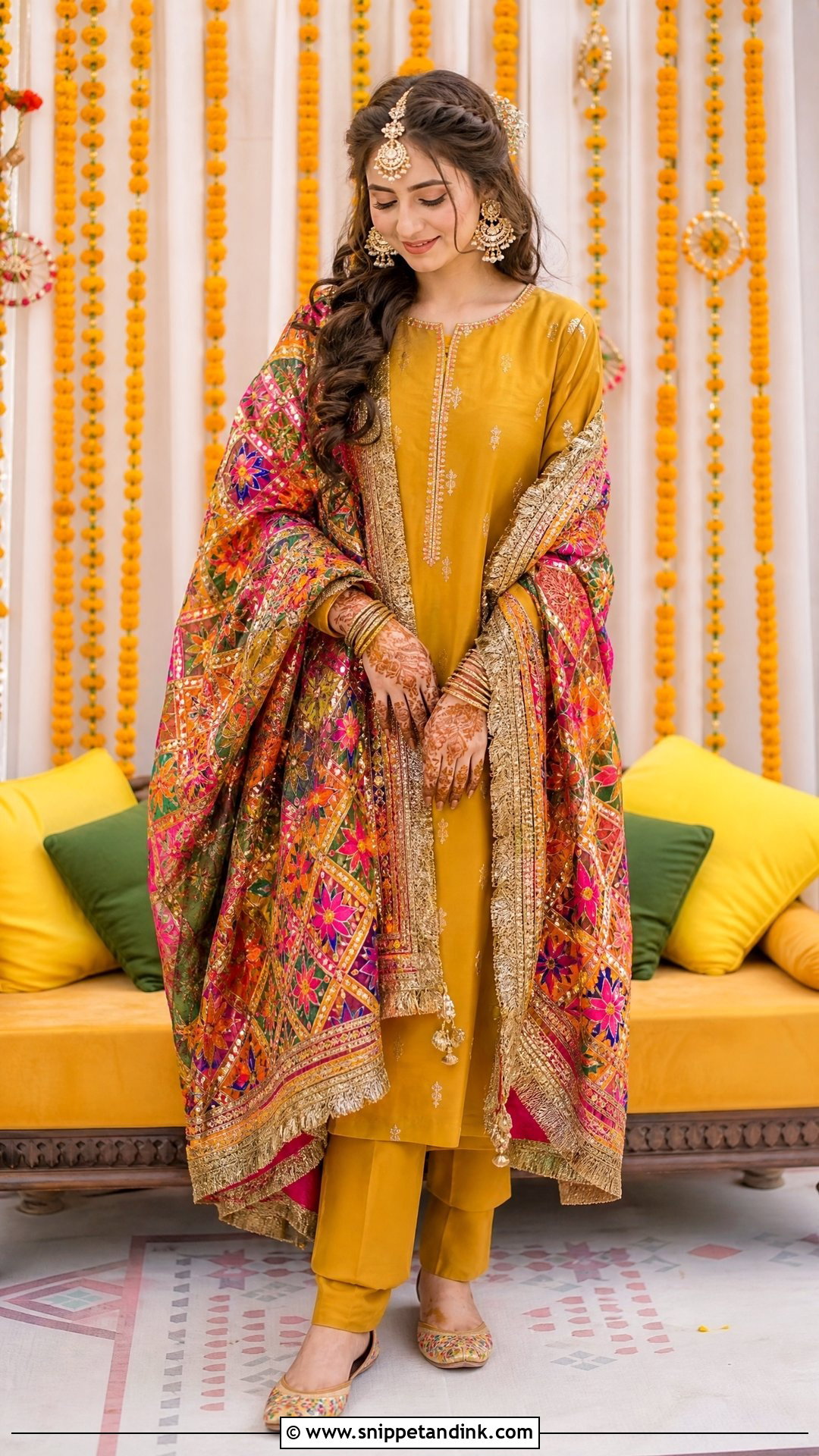
Putting the drama in the dupatta and keeping the kurta and pants simple is how I dress brides who want comfort above everything. Phulkari, gota patti, mirror work or zari dupattas in a bold contrast carry the bridal detail, and the suit underneath can be mustard, green, peach or ivory. Pin the dupatta to the kurta at both shoulders, because a heavy dupatta slides when you lean forward to show your hands. Jhumkas, bangles, a maang tikka and decorated juttis complete it, and it suits home mehndis well.
24. Red And Yellow Mehndi Lehenga Outfit
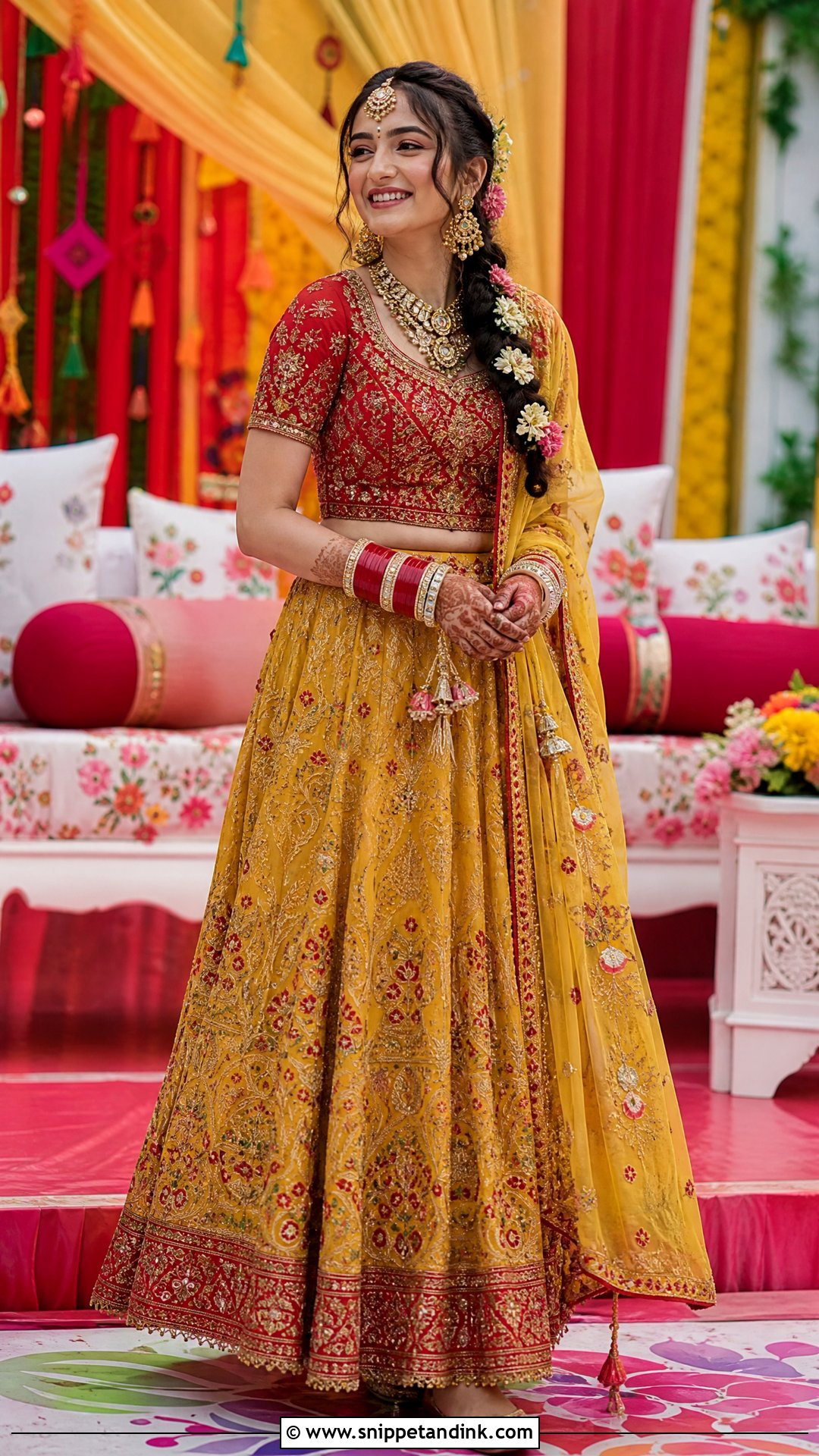
Red and yellow bring bridal richness and mehndi brightness together. A yellow lehenga with red embroidery, a red blouse with a yellow skirt, or a red dupatta over mustard all work. Gold gota, mirror work and threadwork suit the combination. Some families prefer the bride saves full red for the wedding day, so this split is a good compromise. Classic jewellery, red bangles and embellished juttis finish it, with a flower braid or soft bun.
25. Royal Blue Mehndi Outfit
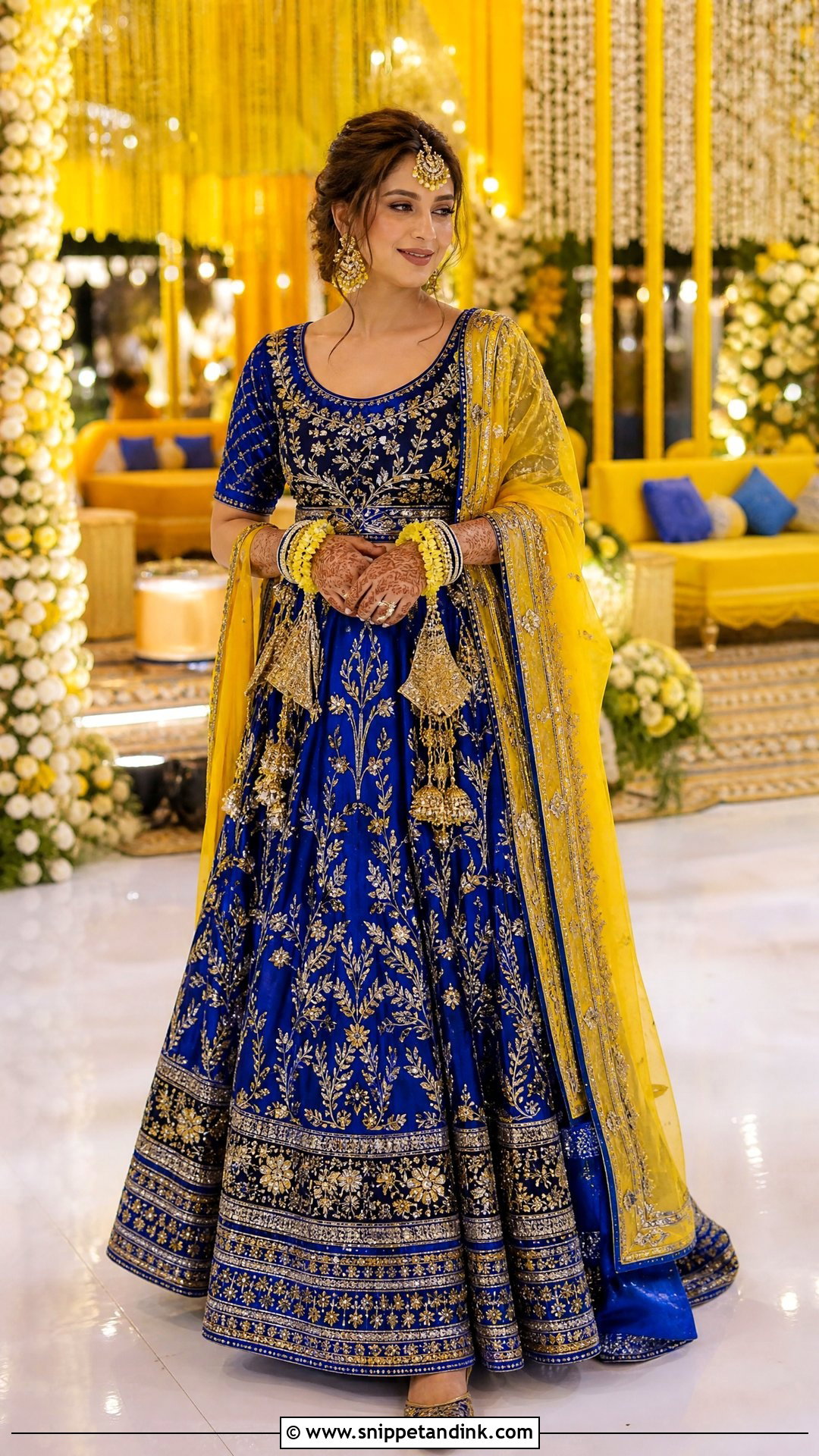
Royal blue breaks away from the yellow and green palette, and it gives the darkest, richest contrast against a deep henna stain in close-up photos. A blue lehenga, sharara or anarkali with gold, silver or multicolour embroidery works; a yellow, pink or green dupatta ties it back to the theme. Blue looks best under evening lighting and can look heavy in harsh midday sun. Gold jewellery, bangles and comfortable heels or juttis complete it, and I’d keep it for an evening mehndi rather than a sunny garden one.
Where the Mehndi Look Fits in the Whole Wedding Wardrobe
The mehndi outfit is rarely bought on its own. It sits beside a wedding lehenga, a reception look and often a haldi outfit, and it reads best when it’s clearly different from all three.
Ordering and timing
Custom or heavily embroidered pieces can take several weeks to a few months from a designer, and every brand quotes differently, so ask at the first visit. Leave room for at least one fitting and a final trial in your actual shoes. Ready-to-wear sets still usually need hemming and blouse alterations.
Keeping the colours apart
- If the wedding lehenga is red or maroon, a red-heavy mehndi look will make the two events blur together in the album.
- If the haldi is yellow and the mehndi is too, change the shade or switch the silhouette so photos from the two days don’t look identical.
- Tell close family your colour early. Sisters and mothers often coordinate around the bride, and they’ll need time to shop too.
Finally, think about how much you’d like to wear the outfit again. A sharara or suit restyles easily for Eid and other people’s weddings; a heavily bridal lehenga mostly stays in the cupboard.
Can You Sit for Three Hours in It?
That question settles more mehndi outfit decisions than colour ever does. Yellow lehengas, green shararas, florals, mirror work, ghararas, sarees and Indo Western sets can all work for a bride, provided the fabric breathes, the sleeves leave your arms free, the dupatta is pinned and the jewellery stays clear of the artist. Pick a colour you love, then test the outfit sitting down, standing up without your hands and dancing for ten minutes before you call it final.
You'll Like These Ideas:


Leave a Reply