
A mehndi outfit has to do something the wedding lehenga never does: let you sit still for hours with wet paste on both hands and arms, then get up and dance once it dries. That changes how I style a bride for this event. Colour can be as loud as you like, with green, yellow, orange, pink, mirror work and gota patti all at home here, but sleeve length, skirt weight and how the dupatta is fixed matter more than the embroidery. Lehengas, shararas, anarkalis, pre-draped sarees and a modern fusion look can all work. Below are twenty-five mehndi looks, each with the practical detail I’d check before you commit to it.

Dressing for Four Hours of Wet Henna
Bridal henna often runs from fingertips to elbow, and on feet up to the ankle or calf, and the bride sits for most of the application and longer while it dries. I plan the outfit around those hours first and the photos second.
- Sleeves: sleeveless, cap or short. Anything below the elbow will sit on the paste.
- Fastenings: get fully dressed before the artist starts, including jewellery on the neck and ears. You cannot do up a back hook with henna on your hands.
- Hem: if the feet are being done, the skirt or trouser hem should clear the ankle when you sit, or someone needs to hold it up.
- Dupatta: pinned firmly or replaced by a cape. A loose dupatta will slide onto your arm at the worst moment.
- Bathroom: go before the application begins. Ask a sister or friend to stay close for the hours after.
Many families also seal the dried paste with lemon and sugar, which is sticky. Keep that in mind before choosing a dupatta in fine net that will cling to anything sweet.
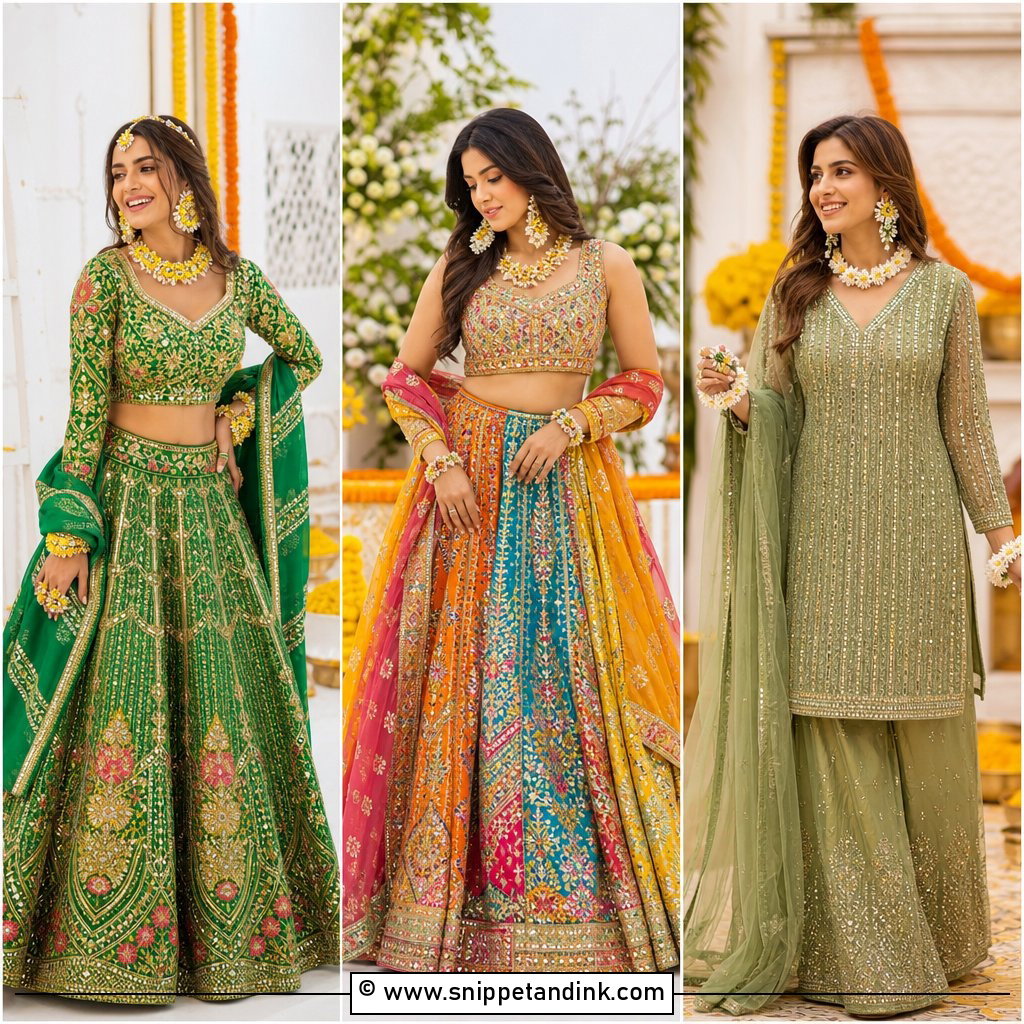
1. Green Bridal Mehndi Lehenga

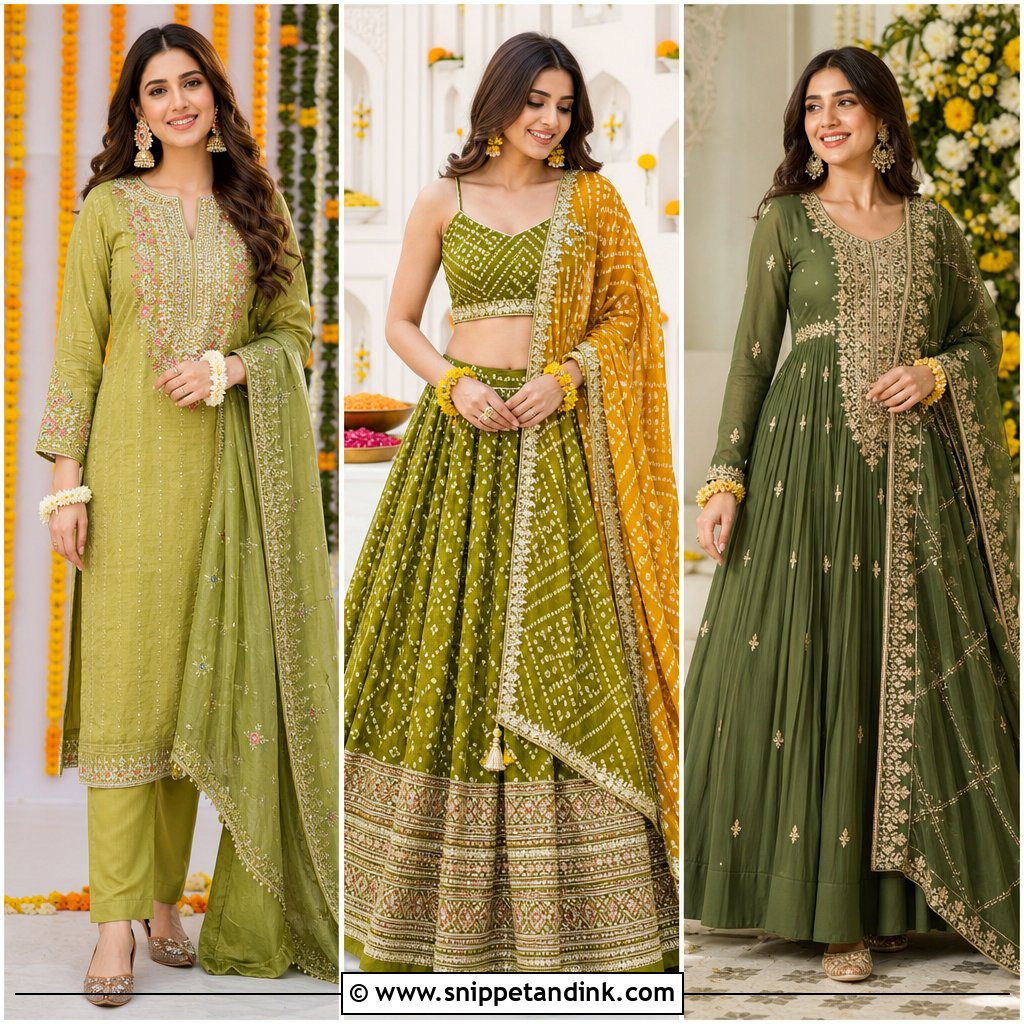
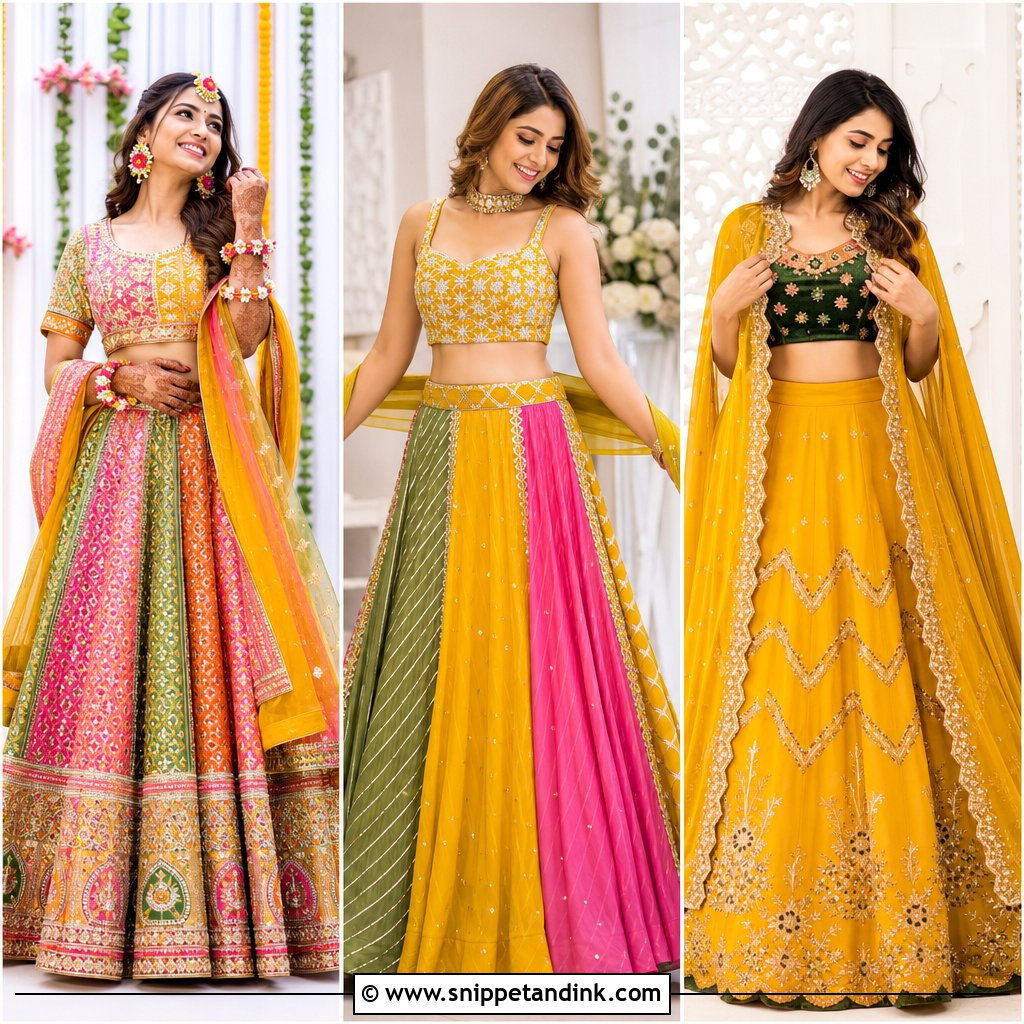
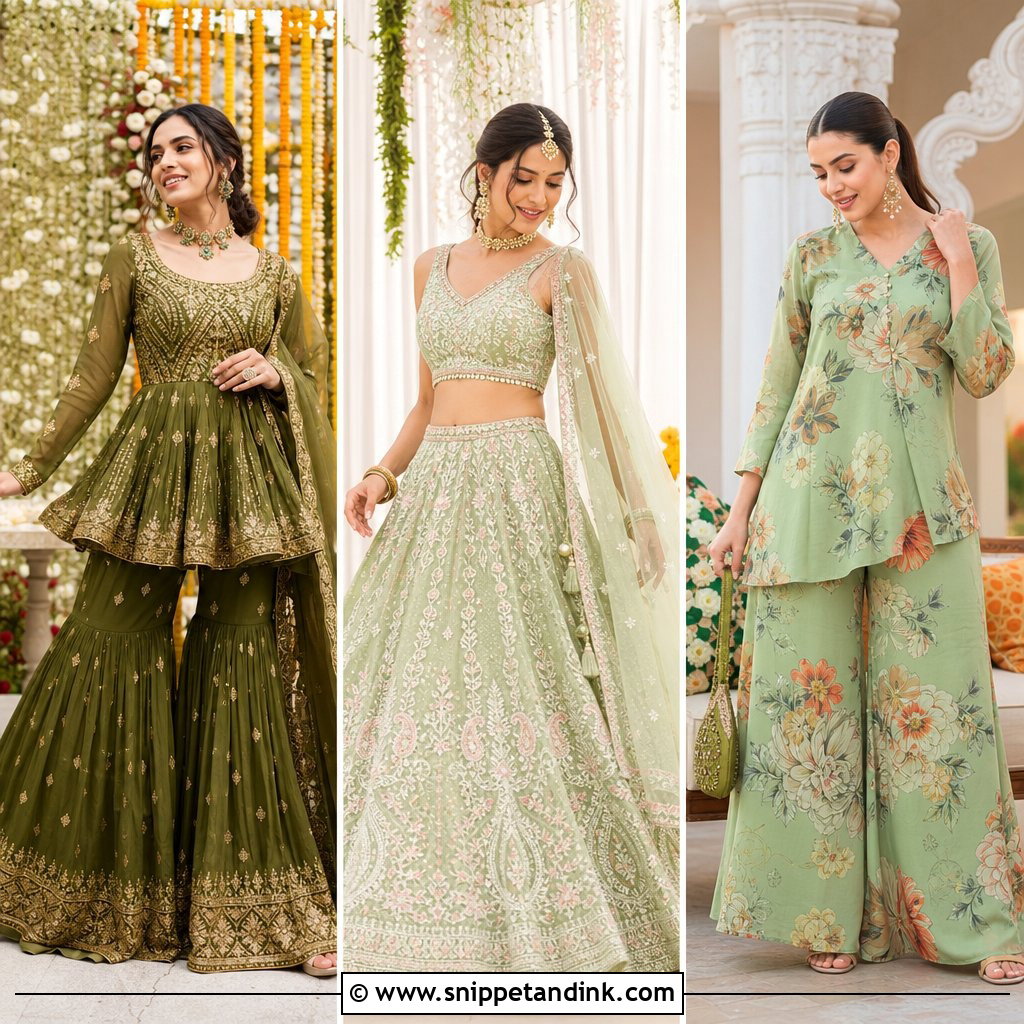
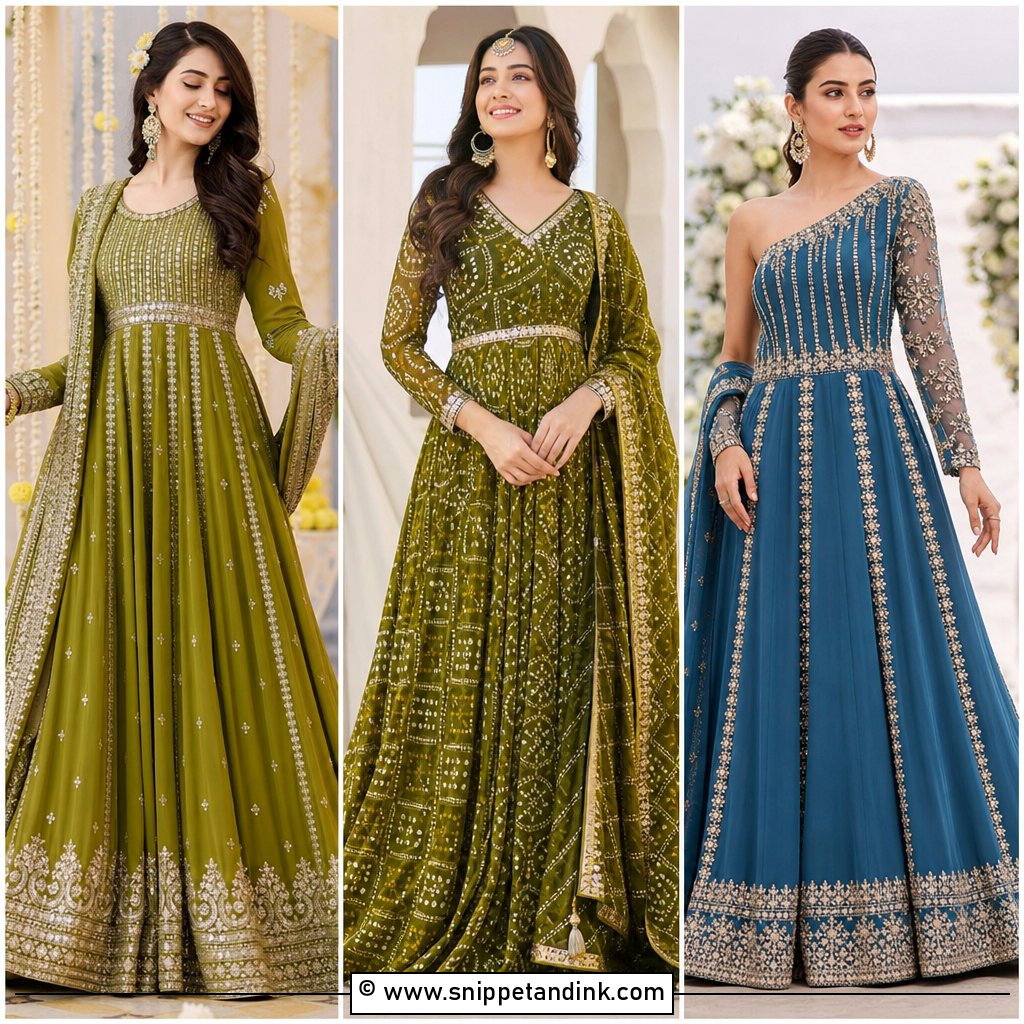
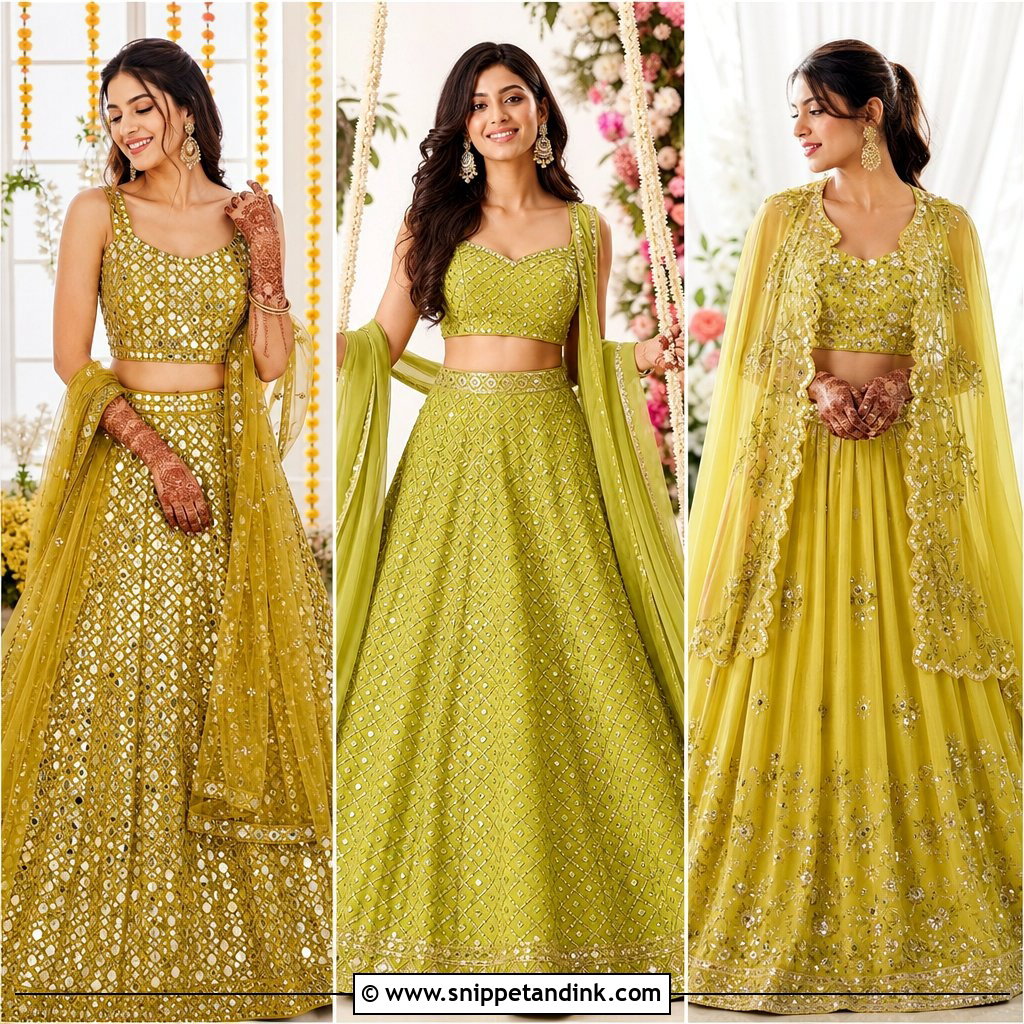
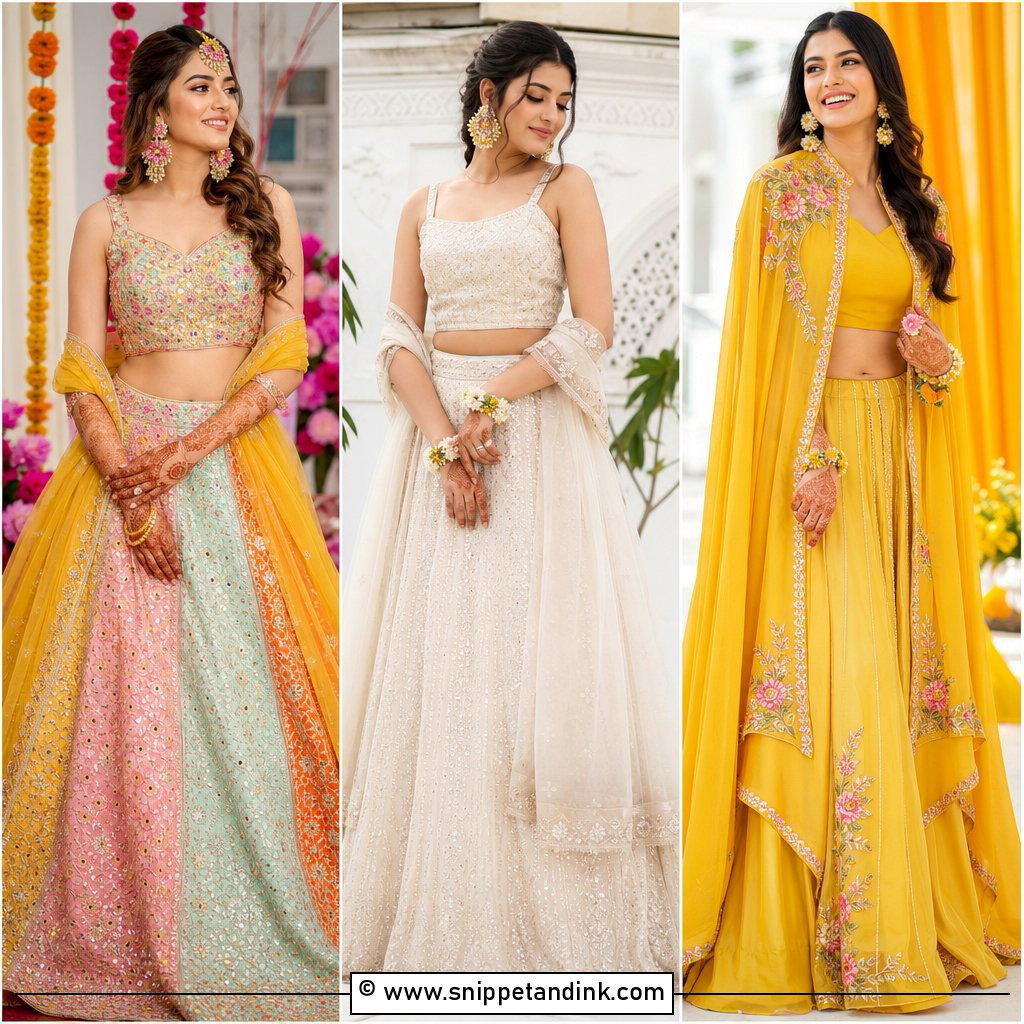
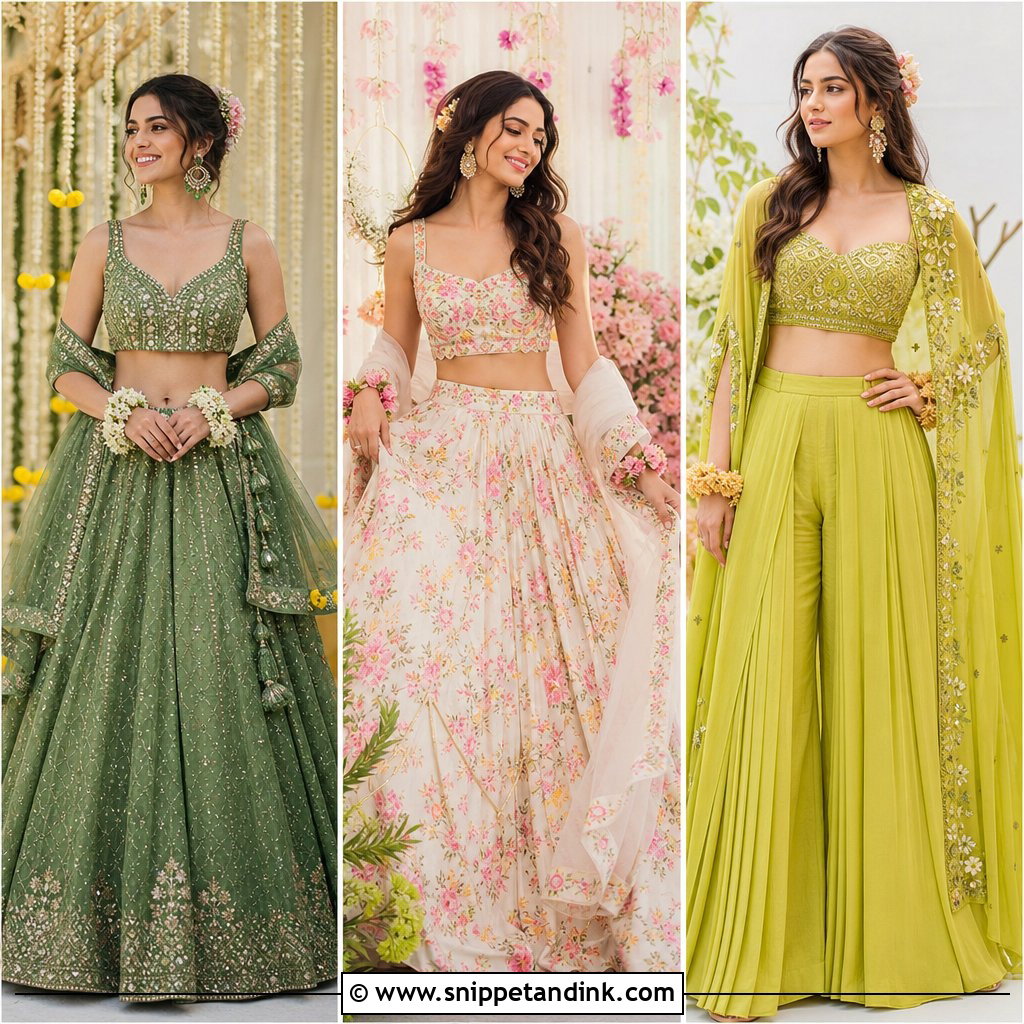
Green is the traditional mehndi colour, and it earns its place because the dark henna stain reads clearly against it in close-up hand shots. I’d go for georgette, organza or a light silk rather than heavy velvet, with mirror work or gota patti for sparkle. Pin the dupatta firmly to one shoulder with two or three safety pins, not one, because a single pin swings loose the first time you lean forward to let the artist reach your palm. Floral jewellery, green bangles and a maang tikka finish it. If you’ll sit on floor cushions, make sure the skirt has enough flare to fold under you neatly.
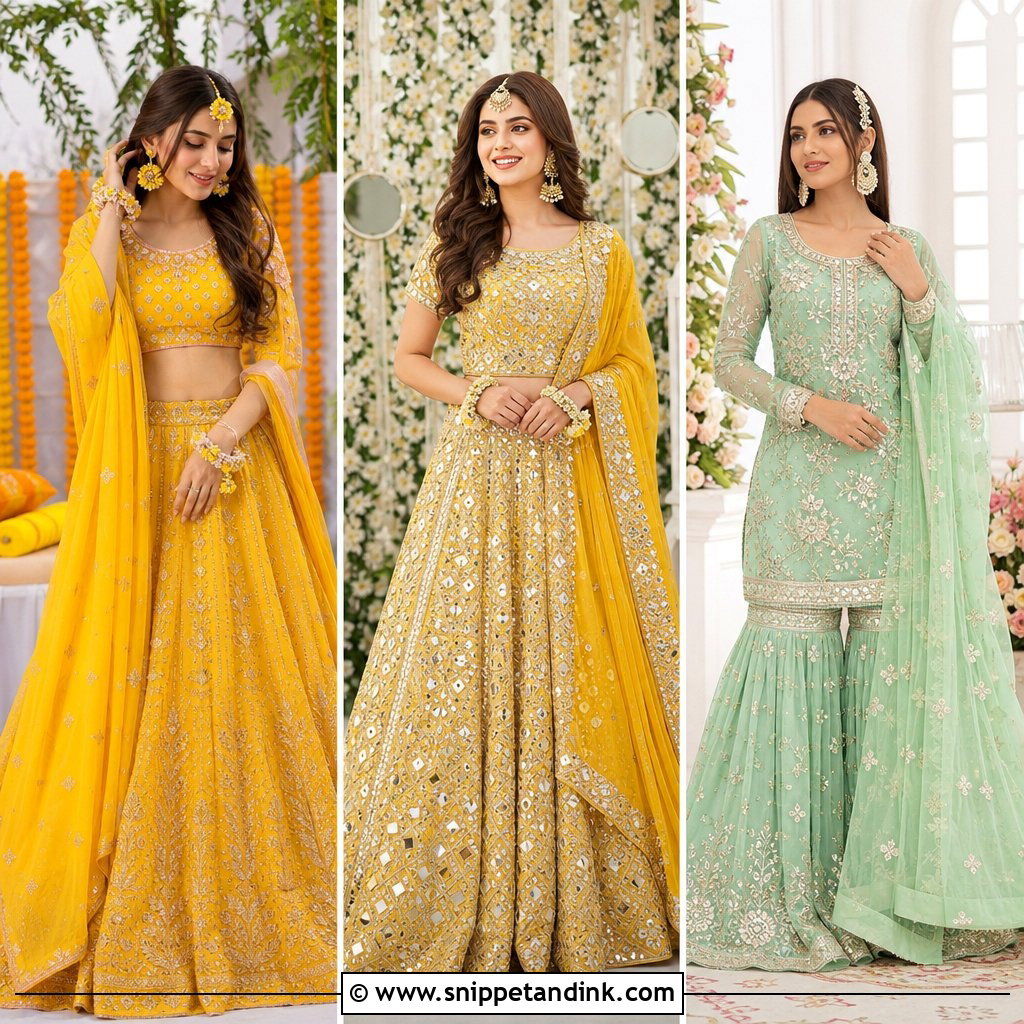
2. Yellow Bridal Mehndi Lehenga

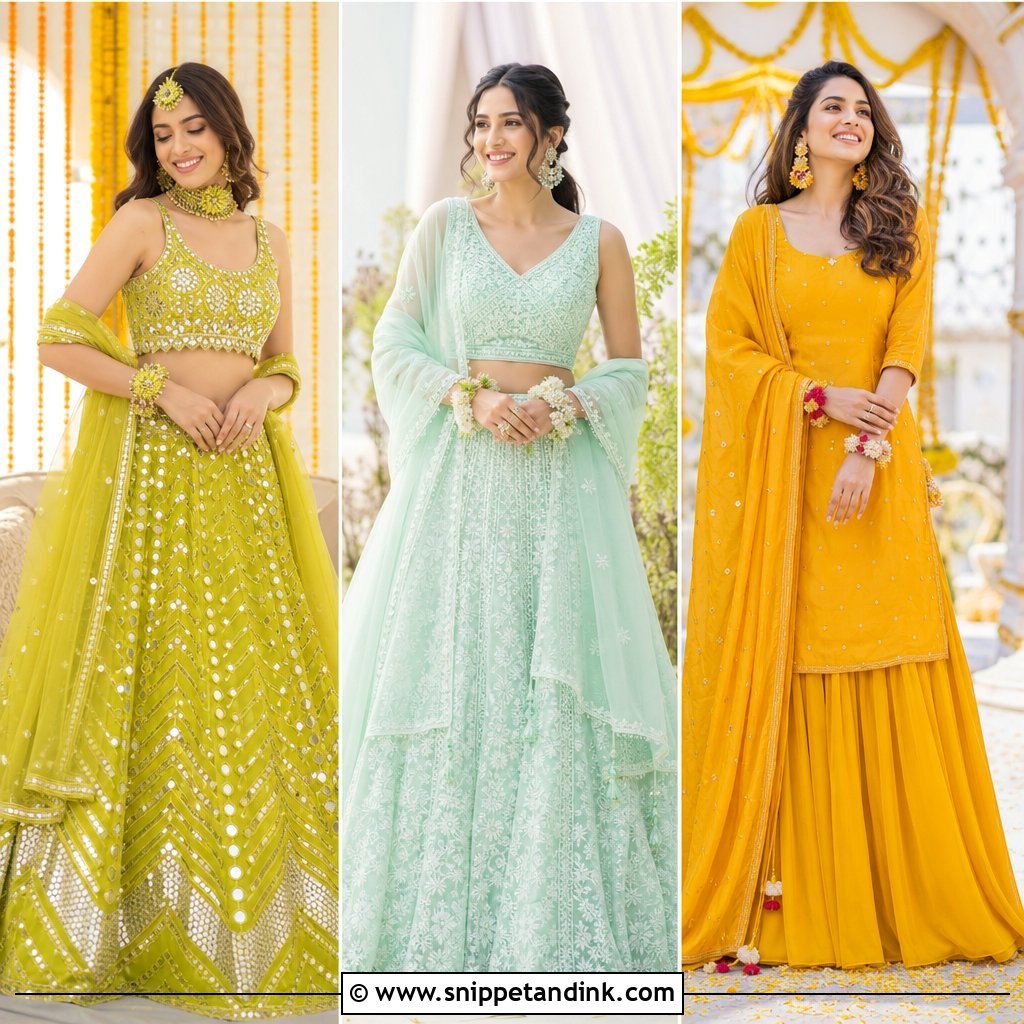
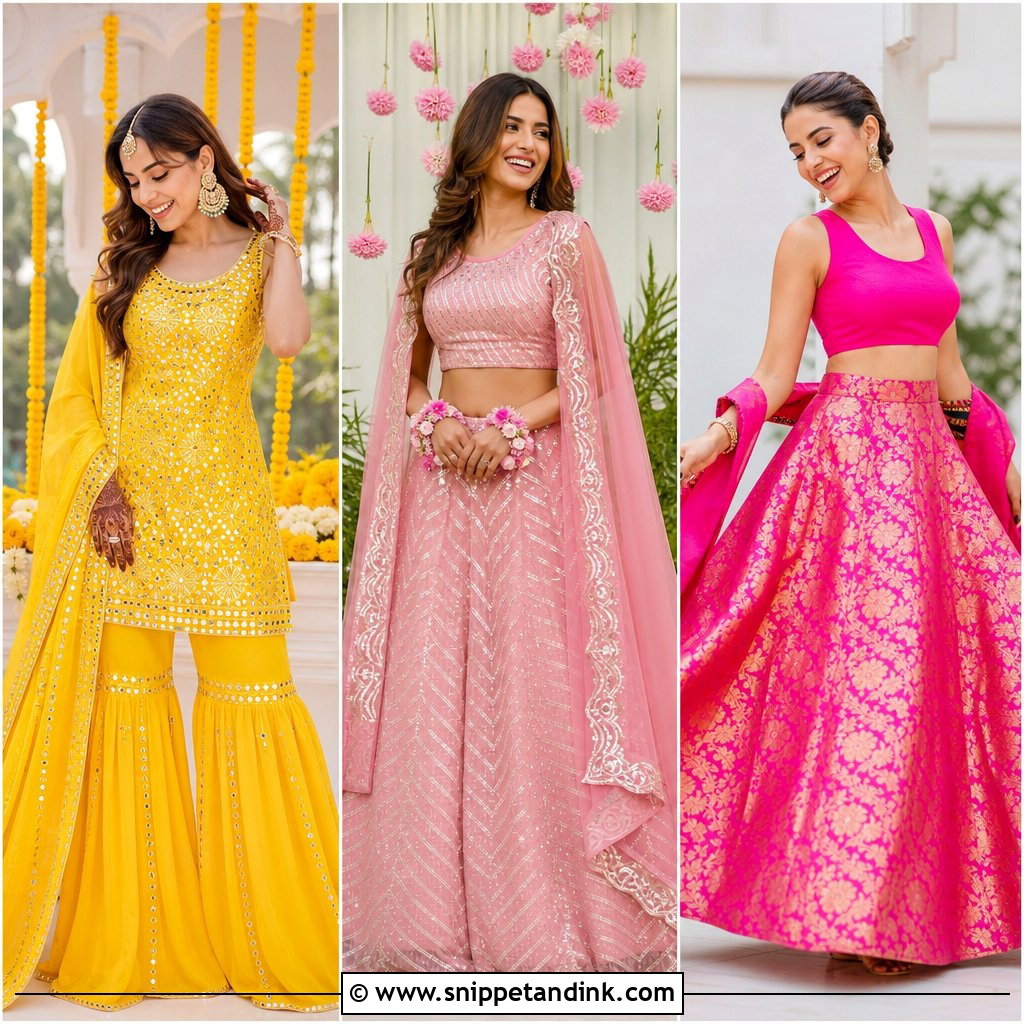
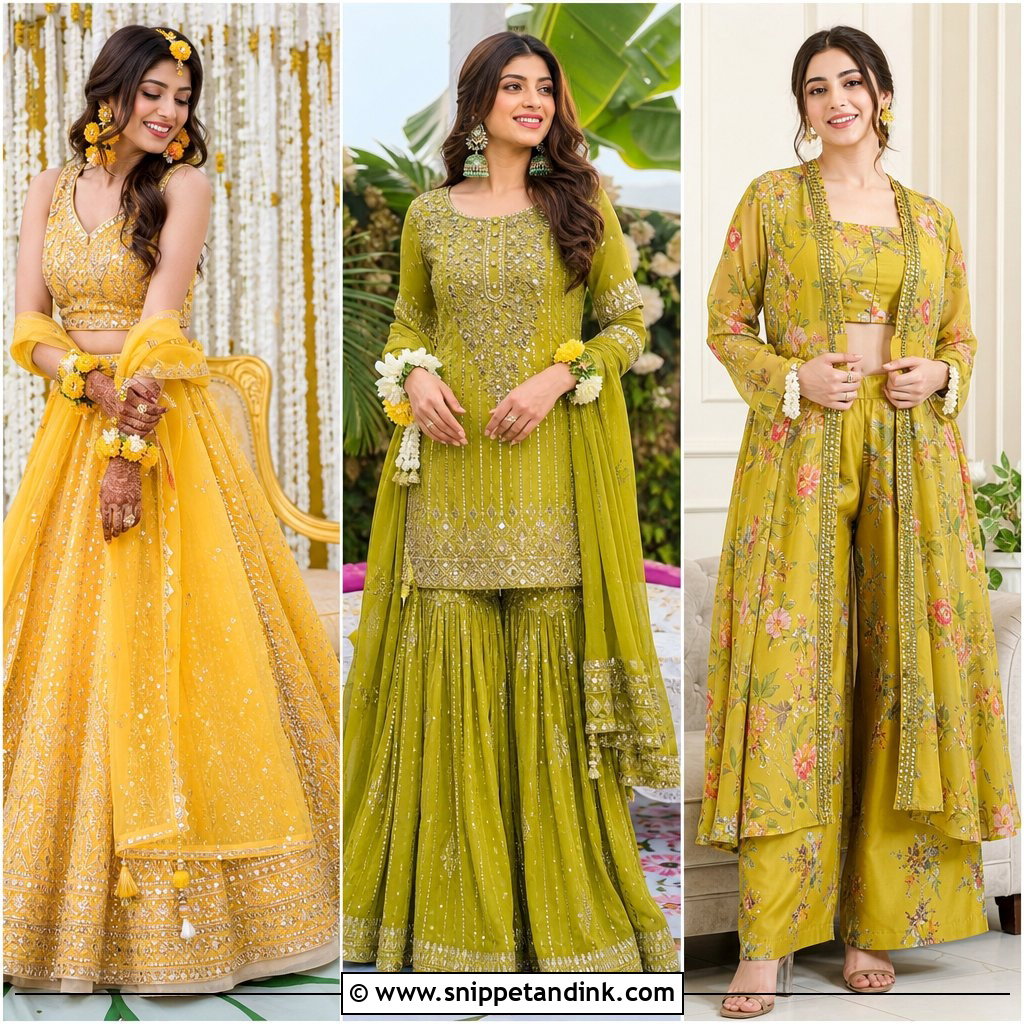
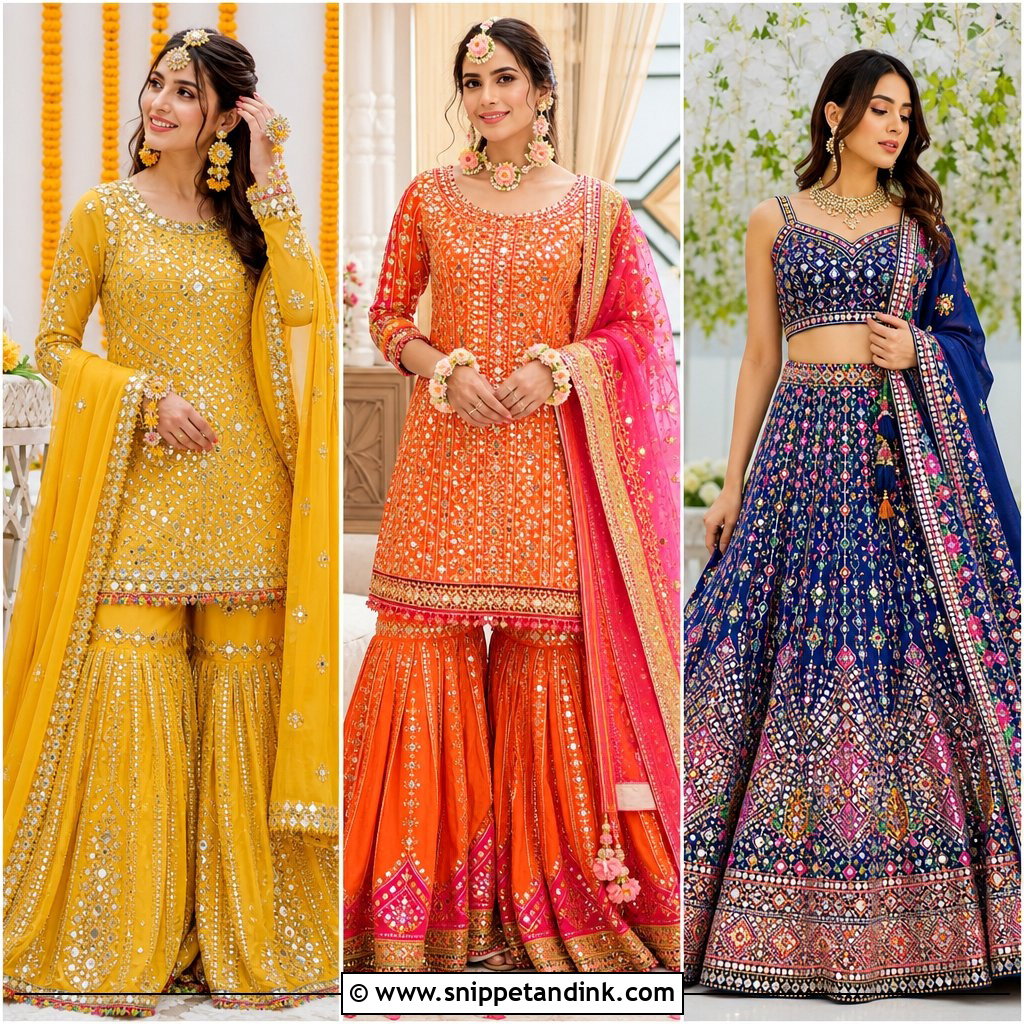
Yellow suits a bride whose mehndi and haldi fall on the same day or back to back, since one colour story carries through both. White mirror work, silver sequins or pink and orange thread stop it from going flat. Sleeveless or elbow-length blouses are the ones I steer brides toward, because the artist needs your arm free well above the wrist. Drape the dupatta around the neck rather than over the head; it stays out of the paste. Kundan earrings, floral kaleeras and embroidered juttis complete the look, and yellow glows in daylight photographs.
3. Multicolor Bridal Mehndi Lehenga

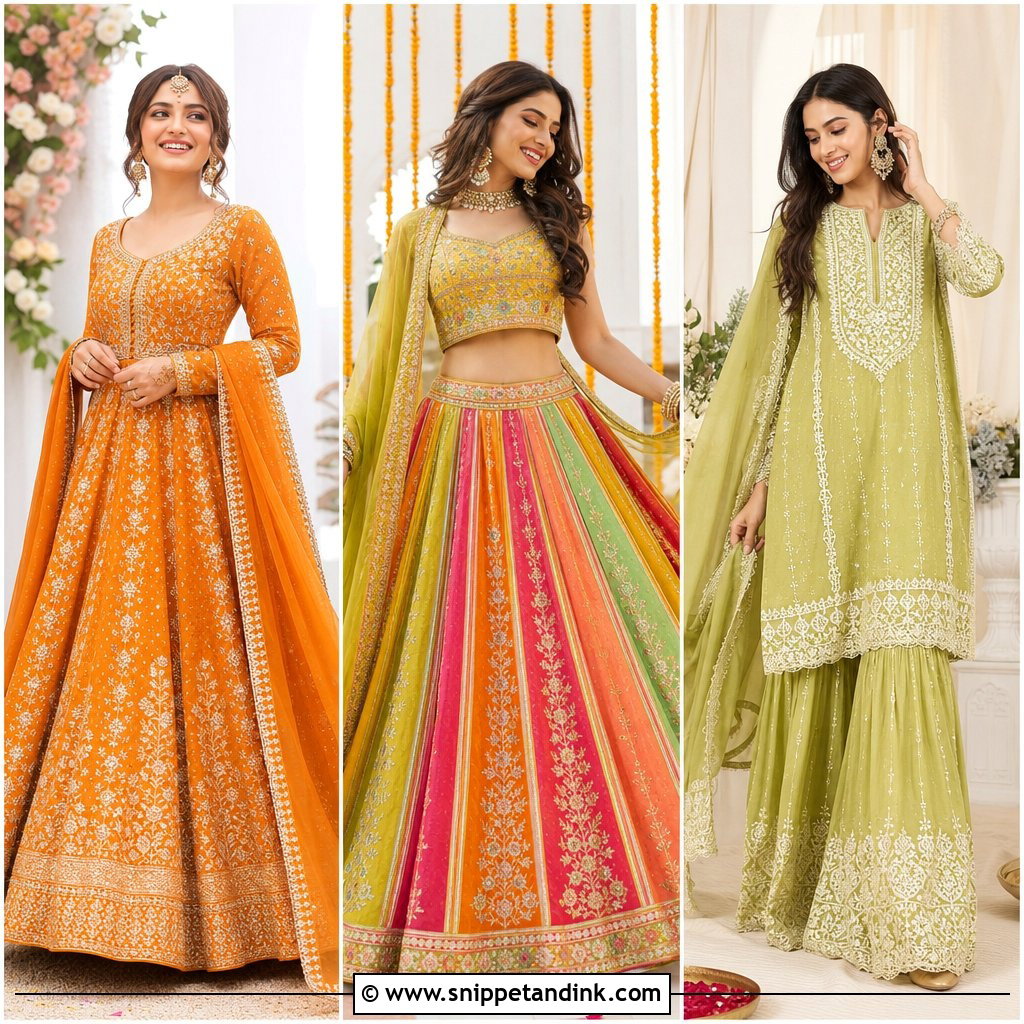
Multicolour panels in green, pink, yellow, orange and blue suit a loud, happy mehndi with marigolds and dhol, but they need an anchor. My rule is one solid colour in the blouse, picked from the skirt, so the eye has somewhere to rest. A dupatta with only a simple border keeps the top half calm. Mixed-colour bangles and statement earrings fit the mood. With this much going on in the clothes, I’d keep the makeup fresh, with glowing skin and a soft lip, rather than competing with it.
4. Mirror Work Bridal Mehndi Lehenga

Mirror work gives sparkle without the weight of stones, and the small mirrors catch both daylight and fairy lights. Lime green, mustard, teal, fuchsia or orange make the best base colours. One thing I check on mirror lehengas is the edging inside the blouse: cheaper pieces have rough backs that scratch the underarm after a few hours of sitting with your arms lifted, so ask for a soft lining. Silver jewellery and juttis with matching mirror accents tie it together. Hold back on extra accessories, because the fabric already shines.
5. Floral Bridal Mehndi Lehenga

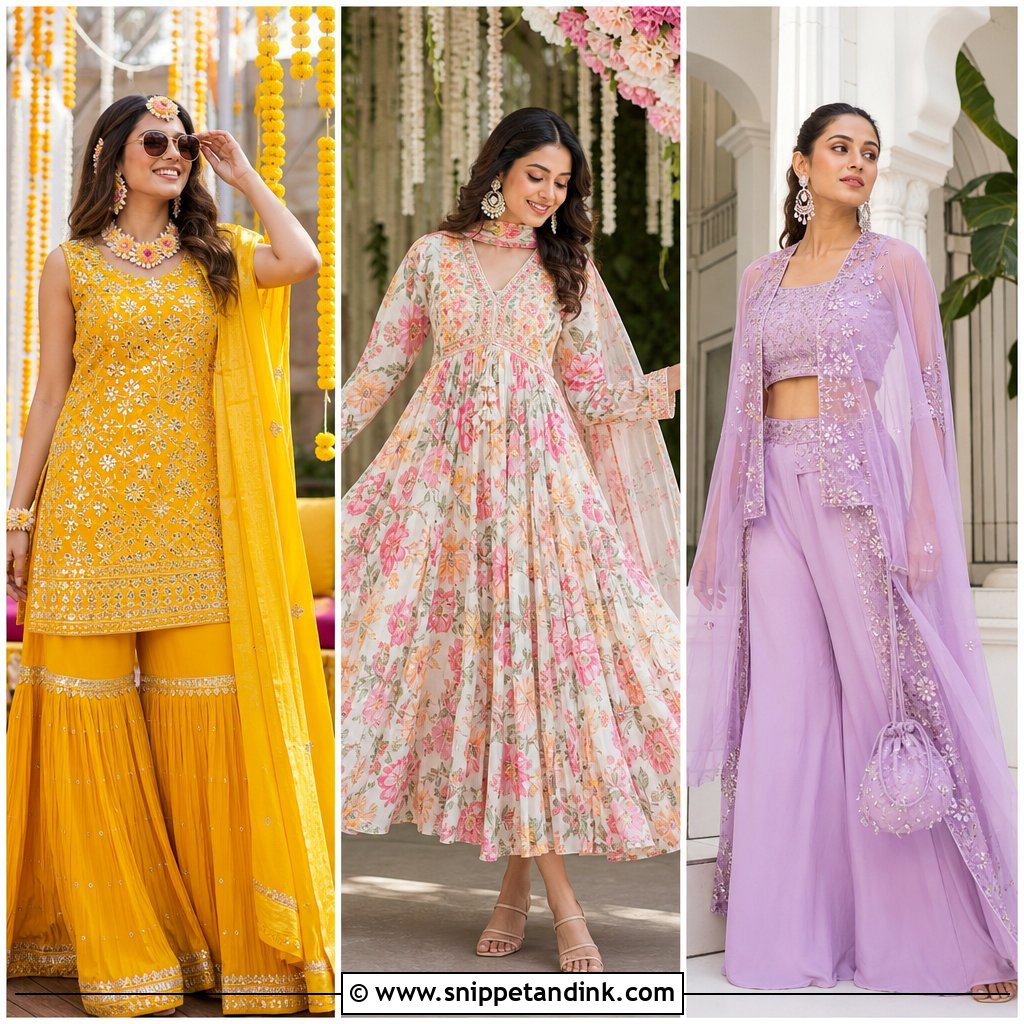
Floral prints, embroidered blooms or appliqué suit a daytime mehndi, and they are far lighter to wear than a traditional bridal piece. Mint, peach, butter yellow, rose or ivory with coloured flowers all work. A floral fabric can look like a summer party dress rather than bridal wear, so I add weight elsewhere: a beaded blouse, a scalloped dupatta border and jewellery with a bit of presence. Fresh flowers in the hair and pastel bangles finish it. You can sit, pose and move freely in it, which is exactly what this event needs.
6. Orange Bridal Mehndi Lehenga

Orange is warm and traditional, with plenty of energy. Marigold, tangerine, rust and mango all count, finished with gold gota, mirror work or zari. A contrasting pink, green or yellow dupatta keeps it from becoming one big block of colour. Watch for one thing: if your decor is a wall of marigolds, an orange outfit can disappear against it in photos, so either choose a deeper rust or wear a contrasting dupatta for the portraits. A lighter skirt fabric and a clean blouse cut make it feel modern.
7. Pink Bridal Mehndi Lehenga

Pink gives you a wide range to play with: hot pink for a loud party, rose for something softer, rani for a deeply traditional feel. Green jewellery or a yellow dupatta links it back to the mehndi palette. Mirror work, gota patti, thread embroidery and sequins all sit well on pink. Ask for a breathable cotton lining, since a synthetic lining under a heavy skirt gets hot quickly when you can’t move your hands to fan yourself. Soft curls, a floral braid or fresh gajra add a sweet finish for a bride who wants colour beyond green or yellow.
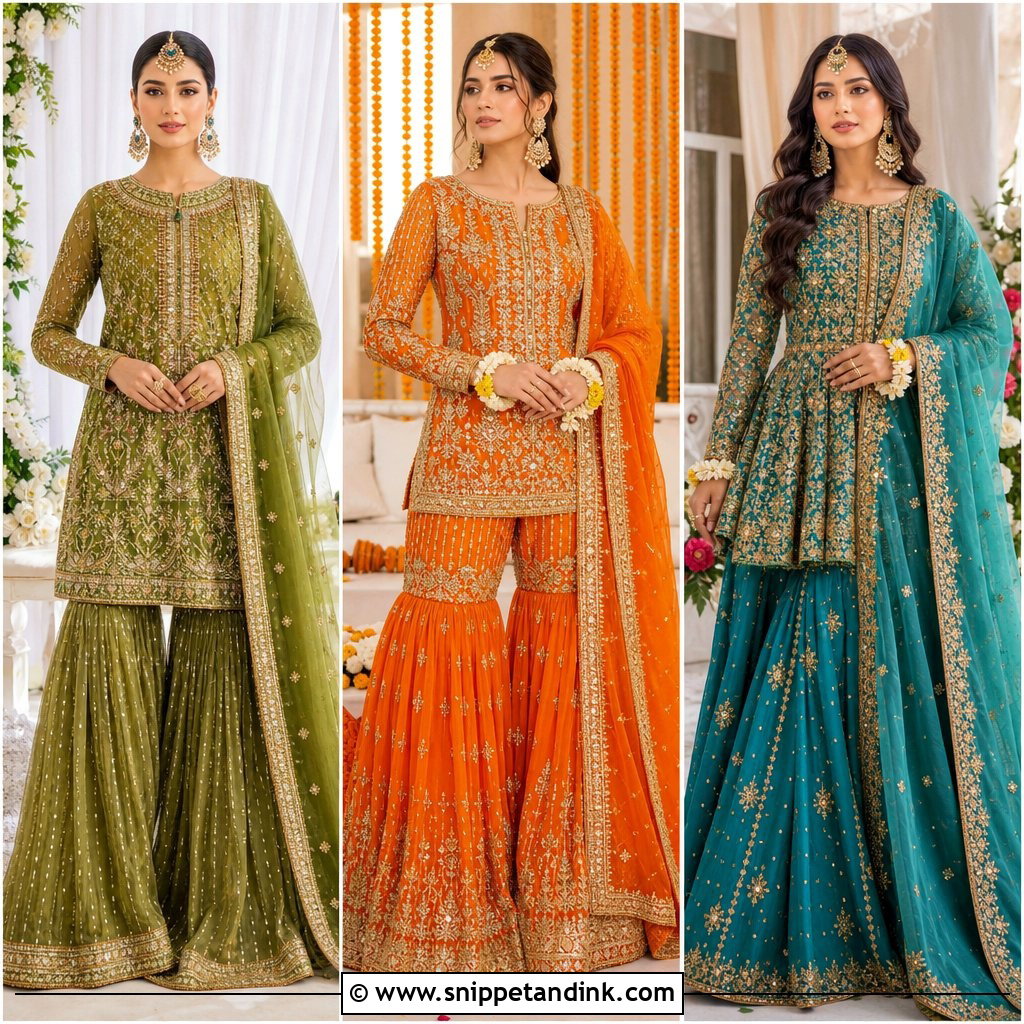
8. Sharara Bridal Mehndi Outfit

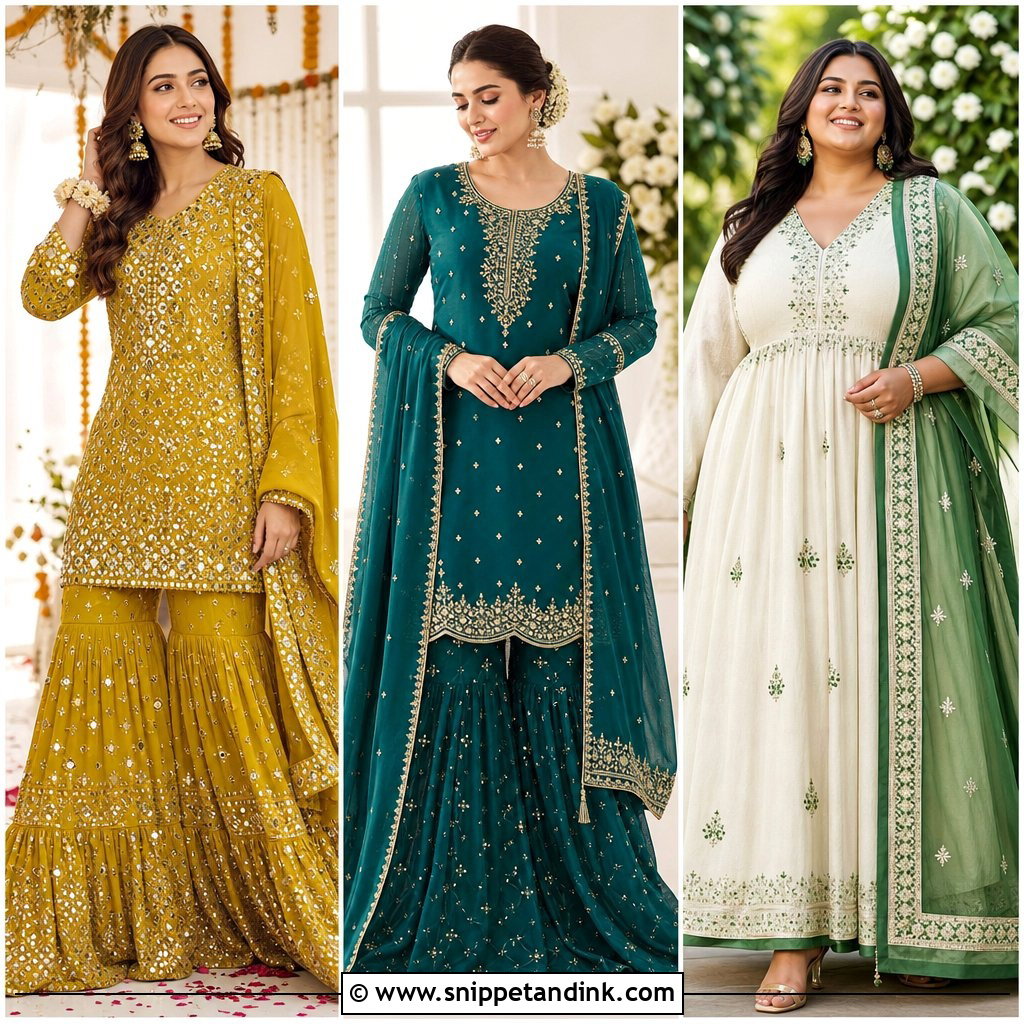
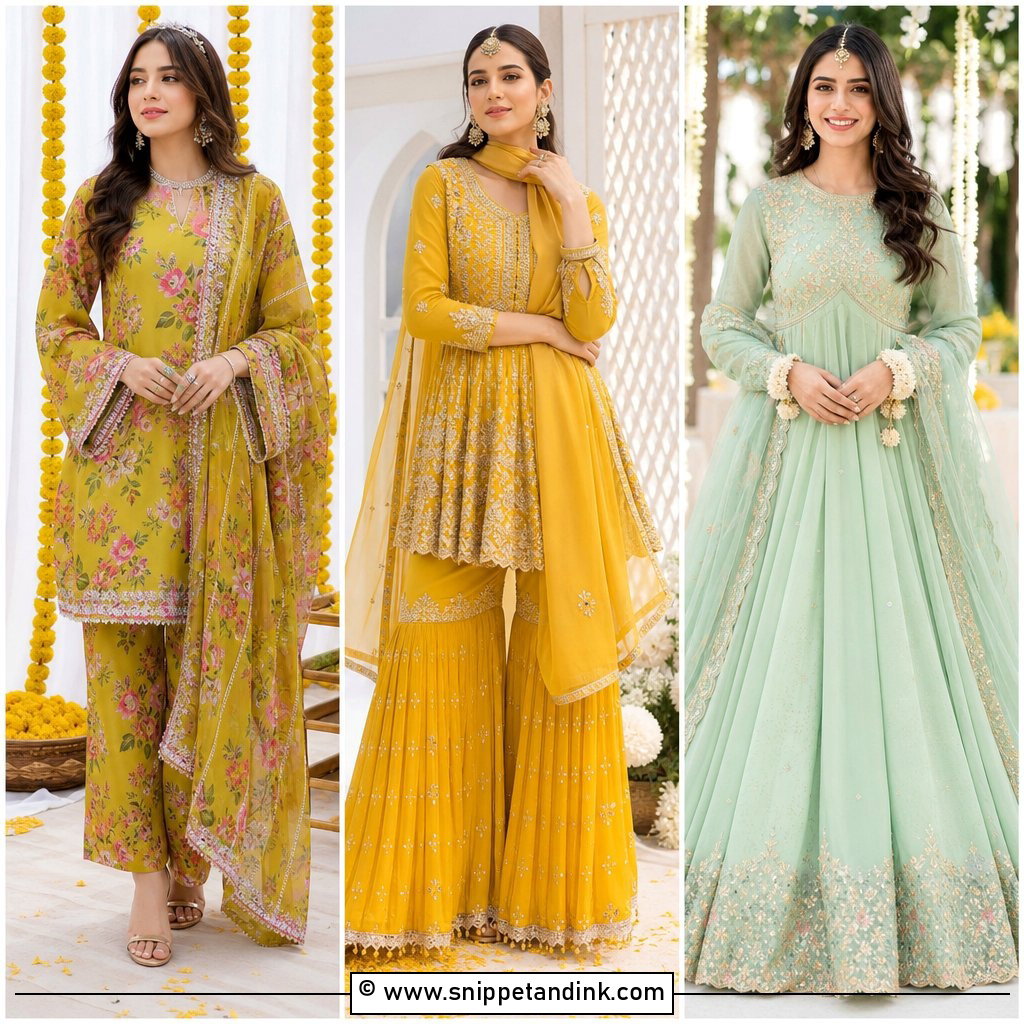
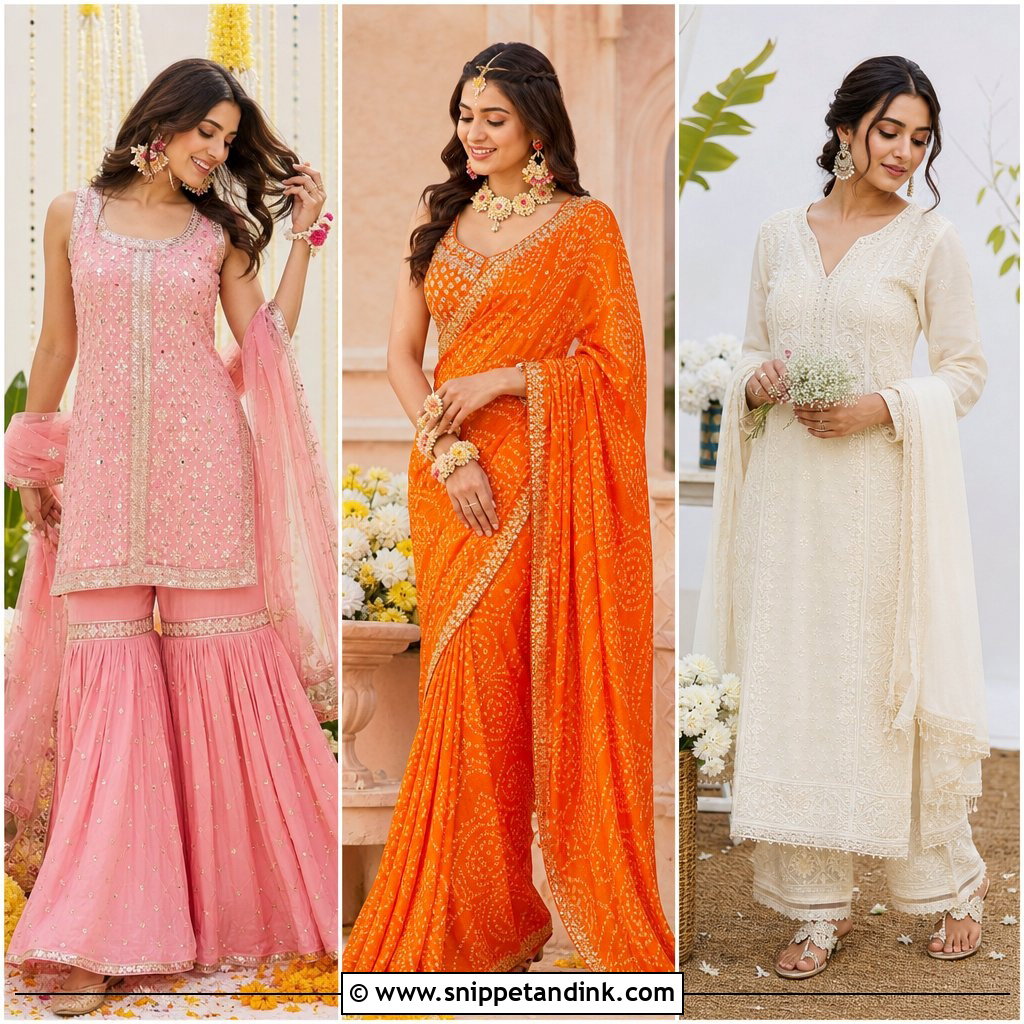
A sharara bridal mehndi outfit is the one I recommend to brides who know they’ll be on the floor with the cousins. The wide legs let you sit cross-legged without hitching a skirt, and they swing nicely in dance shots. Pair a short kurti or peplum top with the sharara and a light dupatta. Green, yellow, coral, fuchsia and turquoise all feel right for the occasion. Keep embroidery to the neckline, hem and sleeves so the weight stays low. Jhumkas, bangles and embellished flats finish a practical, movable look.
9. Gharara Bridal Mehndi Outfit

Gharara has a fitted upper leg and a sudden flare below the knee, joined by a gathered band called the gota, and that seam gives it an old-world, almost courtly look. Wear a short embroidered kurti with it and a soft dupatta over one shoulder. Emerald, mustard, magenta and teal suit it best. Passa earrings, a maang tikka, bangles and embroidered khussas give a heritage finish. Because the upper leg is fitted, test sitting cross-legged in it at the trial; some cuts are tight at the knee. In seated portraits during the henna application, the flare spreads out around you and looks wonderful.
10. Anarkali Bridal Mehndi Outfit

An anarkali is one piece, so there is no blouse to tug down and no skirt waistband to adjust while your hands are full of paste. Floor or calf length both work, in green, yellow, peach or pink with mirror work or gota patti. Churidar underneath, juttis and a light dupatta that stays out of the way finish it. One fitting detail: the flare should start high enough that you can sit without the skirt bunching tightly over your knees. Add a maang tikka and statement earrings. It suits intimate home mehndis especially well.
11. Angrakha Bridal Mehndi Outfit

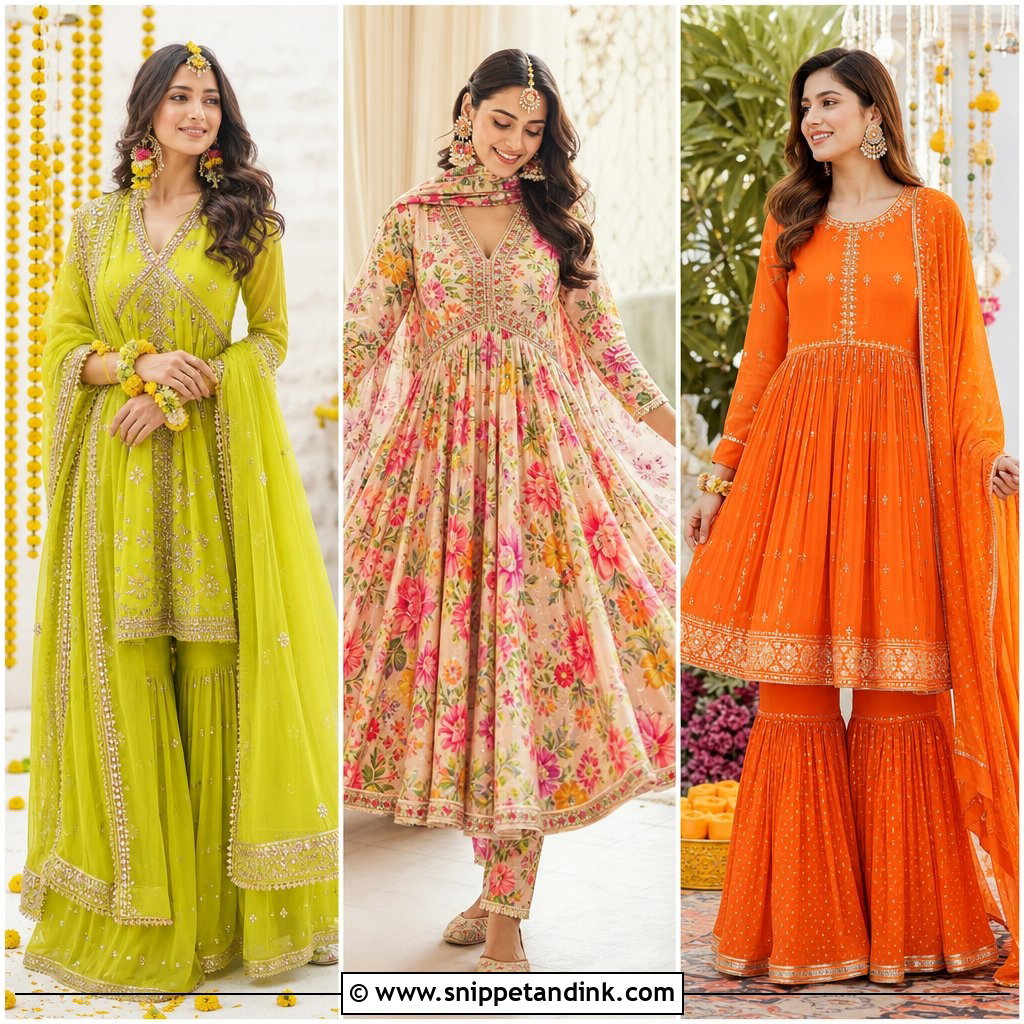
The wrap front of an angrakha is flattering, and its tie closure is easy to loosen during a long sitting. I like it in haldi yellow, lime, coral or rani pink with tassels, mirror work or gota borders. It goes over palazzos, sharara pants or a flared skirt depending on how formal the night is. Pin the dupatta neatly so your hands stay free. Brides who dislike anything tight at the waist after a big lunch tend to love this one.
12. Kurta Palazzo Bridal Mehndi Outfit

Kurta and palazzo is the most relaxed outfit on this list, and that is its strength at a home mehndi, a poolside lunch or a small family gathering. The embroidery has to do the bridal work, so look for a richly worked kurta in sage, lemon, peach, turquoise or magenta with a matching dupatta. Mirror work or gota patti adds shine. Statement earrings, colourful bangles and embellished flats lift it. I’d avoid it for a large formal mehndi where your mother-in-law expects a lehenga, but for a small one it makes perfect sense.
13. Indo Western Bridal Mehndi Outfit

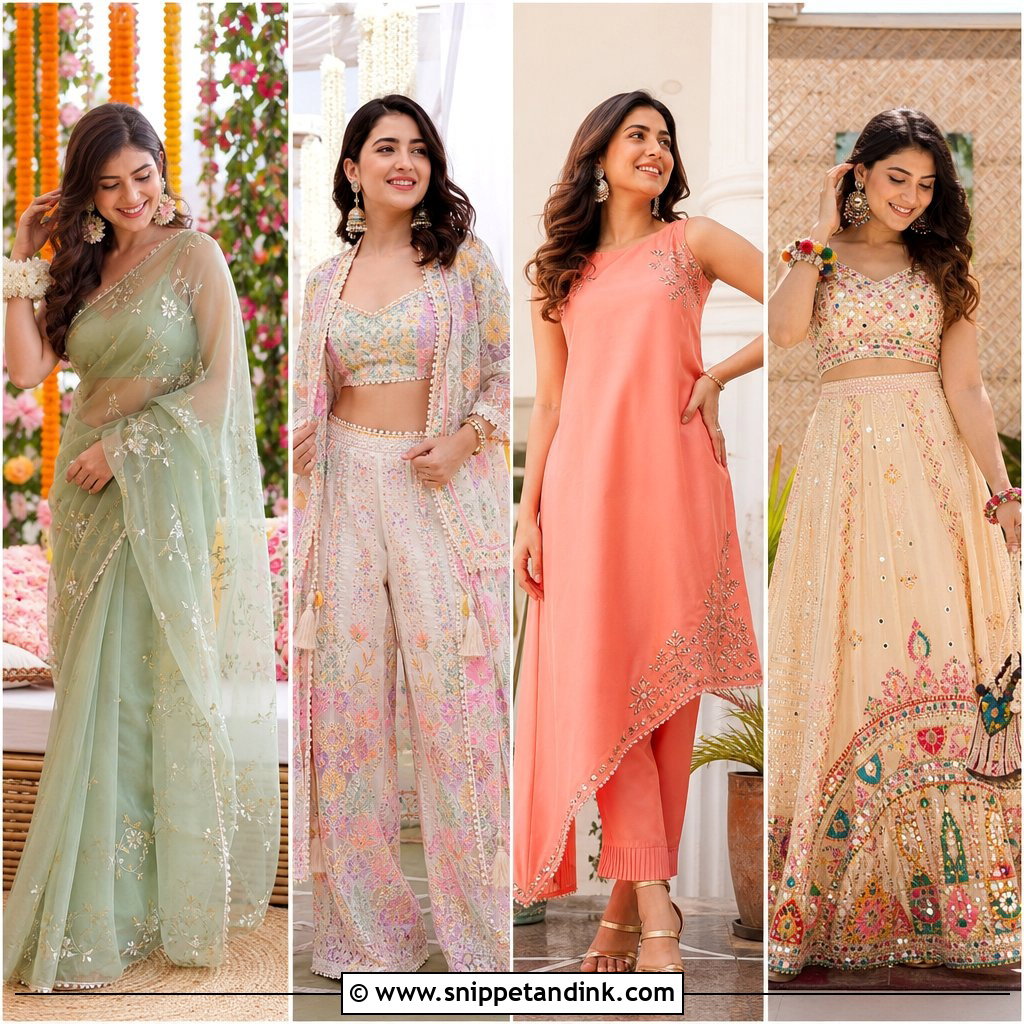
Indo-western suits a bride who’d rather not wear a lehenga at all before the wedding. A crop top with dhoti pants and a cape jacket, a structured blouse with a draped skirt, or a peplum with flared trousers all work. Emerald, mustard, fuchsia or ivory with coloured embroidery keeps it connected to the occasion. Before you choose a cape jacket, check that its sleeves or panels will not drag across your arms while the paste is wet. A sleek hairstyle and stacked bangles give a contemporary finish, ideal for cocktail-style mehndi events or resort weddings.
14. Cape Bridal Mehndi Lehenga

A cape solves the biggest mehndi annoyance: a dupatta that keeps sliding while your hands are covered in paste and you can’t fix it. The sheer cape sits on the shoulders over a fitted blouse and lehenga skirt. Organza, net and georgette all work, in green, yellow, pink or mint, with mirror work, tassels, pearls or floral embroidery. Make sure the cape is open at the front or short at the arm, because a long cape sleeve brushing your forearm will smudge fresh henna. It looks good from every side, front, back and in profile.
15. Jacket Bridal Mehndi Lehenga

A jacket bridal mehndi lehenga gives a little more coverage than a blouse and dupatta, which suits brides who feel exposed in a cropped choli. Cropped or long, the jacket goes over a simple blouse and flared skirt. Sleeveless jackets are far more practical for henna than long-sleeved ones. Teal, lime, mustard, coral and magenta all work well. Keep the skirt light so the layers don’t add up to something heavy. Statement earrings and minimal neck jewellery leave the jacket’s embroidery to speak.
16. Peplum Bridal Mehndi Outfit

The fitted waist and flared hem of a peplum give shape without the structure of a full lehenga blouse. It goes over sharara, gharara or a flared skirt. Parrot green, marigold, coral and hot pink feel festive. If the top is heavily embroidered, you can skip the dupatta entirely, which is one less thing to manage. I always check the peplum length against the bride’s height; on a petite frame a long peplum cuts the leg line short, so I’d take it up an inch or two. Chandbalis, bangles and embellished flats finish it.
17. Pre Draped Saree Bridal Mehndi Outfit

A pre-draped saree has the pleats stitched in, so nothing unravels while you greet guests or lower yourself onto a cushion for henna. Lightweight georgette, chiffon or crepe works best, with a structured blouse and a belt at the waist. Green, yellow, fuchsia and orange suit the occasion. It packs flat, which makes it my choice for destination weddings. Sit down in it at the fitting: some pre-drapes are cut for standing and pull tight across the hips when seated.
18. Ruffle Saree Bridal Mehndi Outfit

The ruffled pallu adds movement and makes this the most fashion-led saree here. Lime, yellow, pink, coral or mint in a light fabric with an embroidered blouse keeps it fresh. A belt holds the drape and defines the waist. Plan the blouse sleeve around your henna design: if the artist is going to the elbow, a short or cap sleeve is the only sensible choice. Shoes need to be comfortable enough for a long stand and a dance. It looks its best at a daytime mehndi with clean, bright decor.
19. Banarasi Bridal Mehndi Lehenga

A lighter Banarasi skirt brings a woven-silk richness without the weight of a full wedding lehenga. Jewel tones like emerald, mustard, magenta, teal and purple suit the weave. Pair it with a simple blouse, a soft dupatta, gold jewellery and classic juttis. This is a piece you’ll rewear for festivals and family weddings for years. Woven silk does mark with water and henna oils, so keep a napkin over your lap if you are eating while the paste dries. A sleek bun with flowers or a braid with hair jewellery completes it.
20. Chikankari Bridal Mehndi Outfit

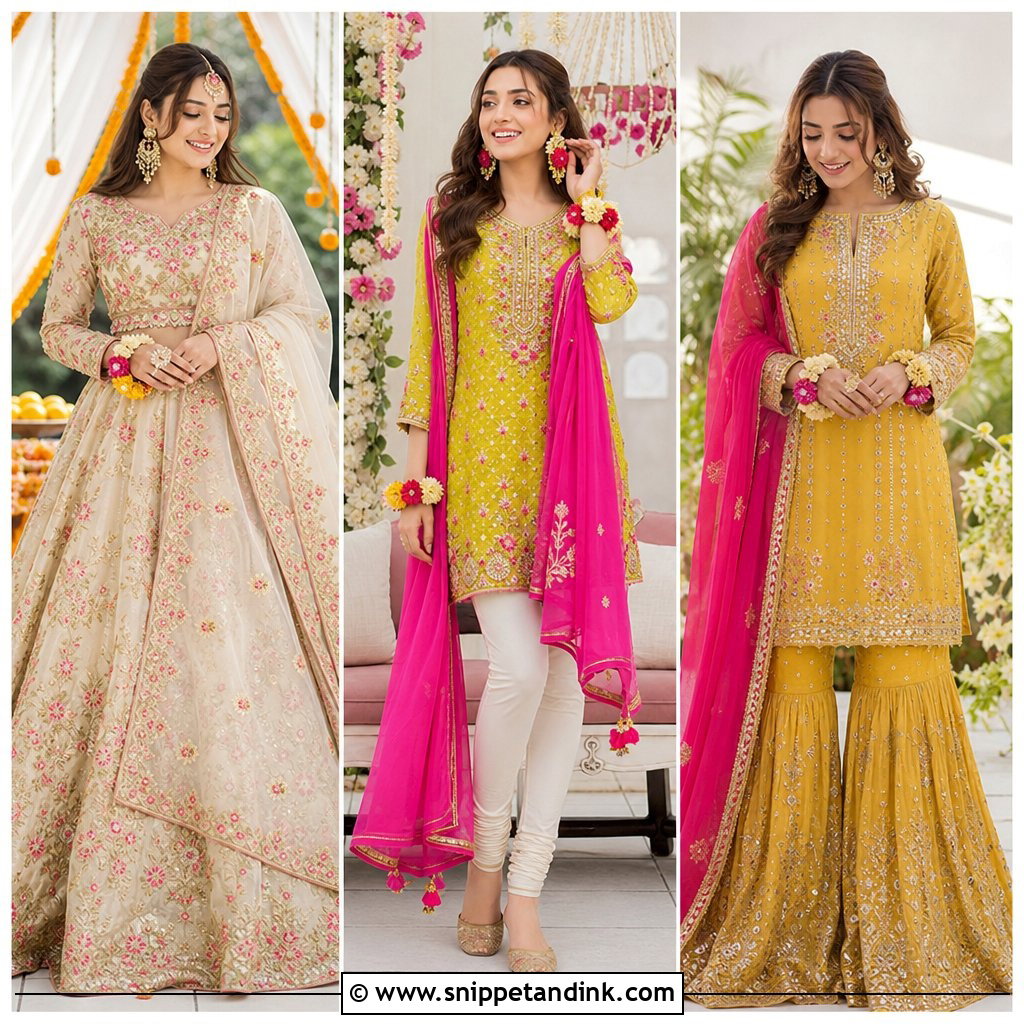
A Chikankari bridal mehndi outfit is the coolest thing you can wear on a hot summer lawn, because the base is usually fine cotton or georgette. A lehenga, sharara set or kurta palazzo in pastel yellow, mint, peach, ivory or sage all suit it. To make it bridal, add mirror accents, mukaish work, pearls or a coloured dupatta. Kundan earrings and delicate bangles finish it. My caution: pale chikankari shows henna stains more than anything else on this list, so keep the paste well away from the fabric until it has fully dried.
21. Phulkari Bridal Mehndi Outfit

Phulkari is Punjabi embroidery, and here the dupatta becomes the hero. Keep the kurta, lehenga or sharara solid and let a bright phulkari dupatta in mustard, hot pink, orange, green or red do the work. A paranda in the braid, jhumkas, bangles and traditional juttis complete the festive look. Phulkari dupattas can be heavy with dense silk floss, so I’d pin it at two points rather than letting it hang. It sits well against marigold decor and a lively dhol setup.
22. Bandhani Bridal Mehndi Outfit

A Bandhani bridal mehndi outfit uses tie-dye dots that read festive from across a room. A lehenga, saree or sharara set in green, yellow, pink, orange or red with gota patti borders all work, and a contrasting dupatta makes it brighter still. Oxidised jewellery takes it toward folk; kundan makes it bridal. Real bandhani is usually cotton or light silk, so it is comfortable through a long evening. The fabric can bleed dye when wet, so if it gets damp, dab gently and don’t rub.
23. Pastel Bridal Mehndi Lehenga

Pastels like mint, butter yellow, powder pink, lavender, peach and sage give a softer, more modern mehndi. They need texture to stay festive, so look for mirrors, pearls, sequins or coloured threadwork. A delicate dupatta, floral jewellery, soft glam makeup and nude or metallic juttis keep the styling light. They suit garden ceremonies and brunch mehndis best. Under warm evening lighting, very pale pastels can look washed out, so I’d pick one with a little more saturation if your event runs after dark.
24. White And Green Bridal Mehndi Outfit

Ivory with green accents is fresh and slightly unexpected, and it shows the henna stain off sharply in daytime photographs. Choose an ivory lehenga, sharara or anarkali with green embroidery, mirror work or a bright green dupatta. Emerald jewellery, green bangles and detailed juttis make it bridal. The green has to be strong, or the look drifts toward a plain white outfit. Of every outfit here, white is the one most at risk from henna stains, so read the stain section further down before you buy it.
25. Floral Jewelry Bridal Mehndi Outfit

This look is about styling more than the clothes: start with a lehenga, sharara or anarkali in green, yellow, pink or peach, then build it with floral earrings, haath phool, kaleeras, bangles and a maang tikka. Fresh flowers wilt in heat within a few hours, so for a long outdoor mehndi I’d go for good-quality artificial flowers or have fresh pieces made the same morning and kept cool. Match the flowers to your outfit and keep the pieces modest in size. Juttis, glowing makeup and loose waves or a flower-trimmed braid complete it.
If Henna Paste Lands on Silk, Chikankari or Ivory
Henna dye is made to bind to keratin in skin, but it will still mark fabric, and pale cotton and silk take the orange tone readily. Most damage happens because someone rubs wet paste in a panic.
- Do not wipe wet paste. Let it dry on the fabric, then lift it off with the edge of a card or a blunt knife.
- Blot the area from the back of the cloth with cold water, never hot, which can set the stain.
- Leave embroidery, zari and silk alone after that and take the piece to a dry cleaner who handles bridal wear, telling them it is henna.
- For cotton and chikankari, a mild detergent soak can lighten a fresh mark, but test it on a hidden seam first.
Prevention is easier. A cotton dupatta or old shawl across the lap during application costs nothing, and many henna artists bring one anyway.
Wearing the Mehndi Outfit Again After the Wedding
Mehndi outfits get worn again more often than any other wedding piece, because they are lighter and more colourful than the main lehenga. A sharara or anarkali goes to a cousin’s sangeet or an Eid lunch with different jewellery. A Banarasi skirt pairs with a plain silk blouse for festivals. Store them flat or rolled in a cotton cloth, not plastic, and keep mirror and zari pieces away from damp so the metal threads do not tarnish.
Comfort First, Colour Second at the Mehndi
A good mehndi outfit lets you sit through the application, greet relatives and dance afterwards without fighting your clothes. Green and yellow will always feel right; pink, orange, pastels, mirror work, shararas, capes and pre-draped sarees give you plenty of fresh options. Whatever you choose, I’d check the sleeve against your henna design, pin the dupatta securely and wear shoes you can stand in for hours. Then pick the one that looks like you, because this is the night to have fun before the wedding.
You'll Like These Ideas:


Leave a Reply