
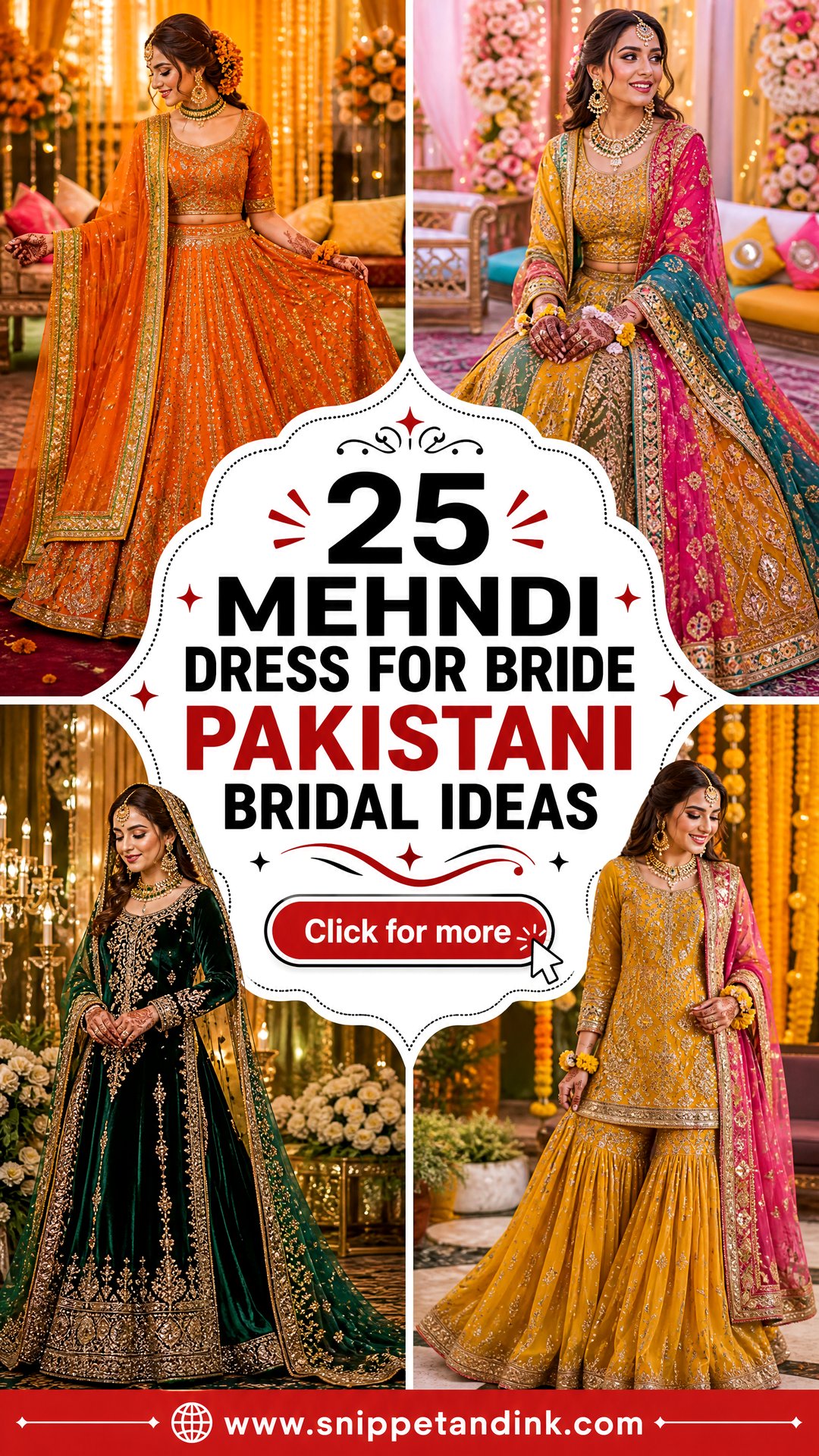
A Pakistani mehndi is the one wedding event where the bride is expected to move: dance entrances, rasams on the floor, cousins pulling her up for one more song. That changes what I look for in her outfit. Yellow is still the anchor for many families, but the choice has widened a lot. Modern mehndi bridal looks now run through lehengas, ghararas, shararas, angrakhas, peshwas and jacket sets, in mustard, lime, orange, green, pink, teal and full multicolor. Before color, I ask about the venue, the dance plans, the family’s rasams and the jewelry already chosen, because those decide the cut. The ideas below are written with those questions in mind.
Commission the Mehndi Outfit With the Barat Lehenga
The mehndi outfit is best ordered at the same time as the barat and walima looks, not squeezed in after them. Custom handwork takes time, and lead times vary widely between designers, often running to a few months, so the mehndi piece shouldn’t be the one left until last.
- Bring the color story for all three events to the first meeting, so the mehndi doesn’t accidentally echo the walima.
- Ask how heavy the finished piece will be and, if you can, hold a similar sample. Gota, mirror and dabka add weight very differently.
- Book at least two fittings, the last a few weeks out, so any weight change before the wedding can still be taken in.
- Wear your actual shoes to the last fitting. Hem length on a lehenga, peshwas or sharara depends on the heel.
- Bring the jewelry too. A heavy passa or choker changes how the neckline and dupatta sit.
If time is short, a ready-to-wear mehndi outfit with alterations is a perfectly good route. Look for pieces where the embroidery stops short of the side seams, which leaves room to take them in or let them out.
1. Yellow Mehndi Lehenga Dress For Bride
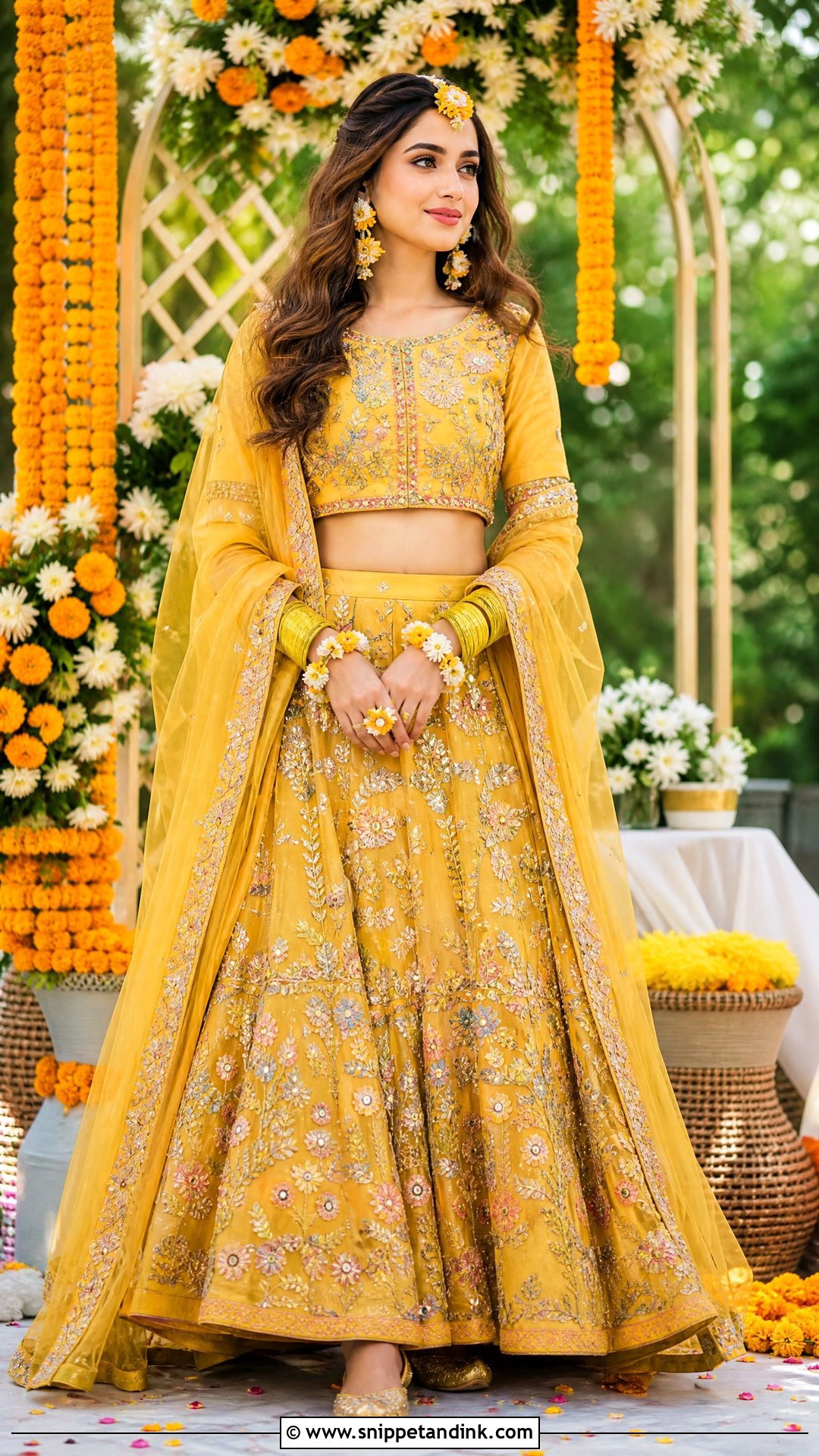
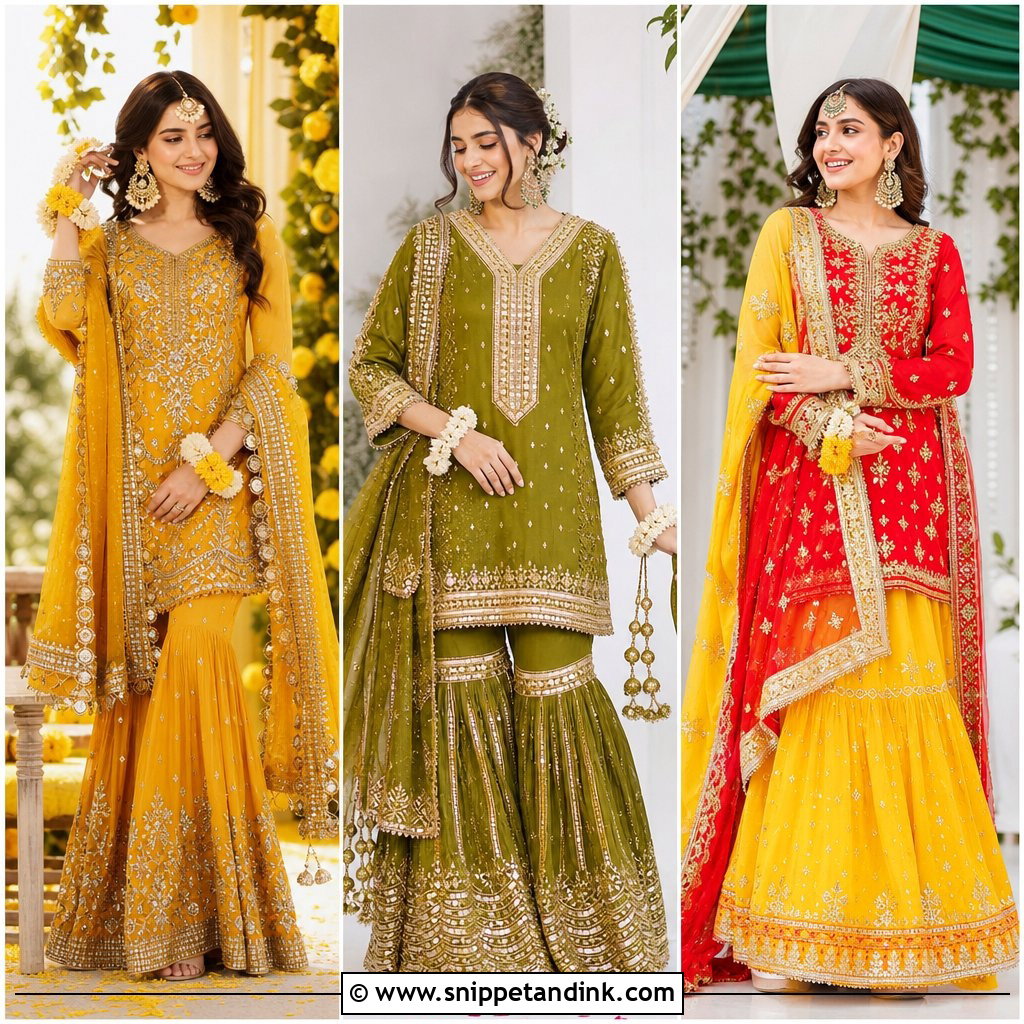
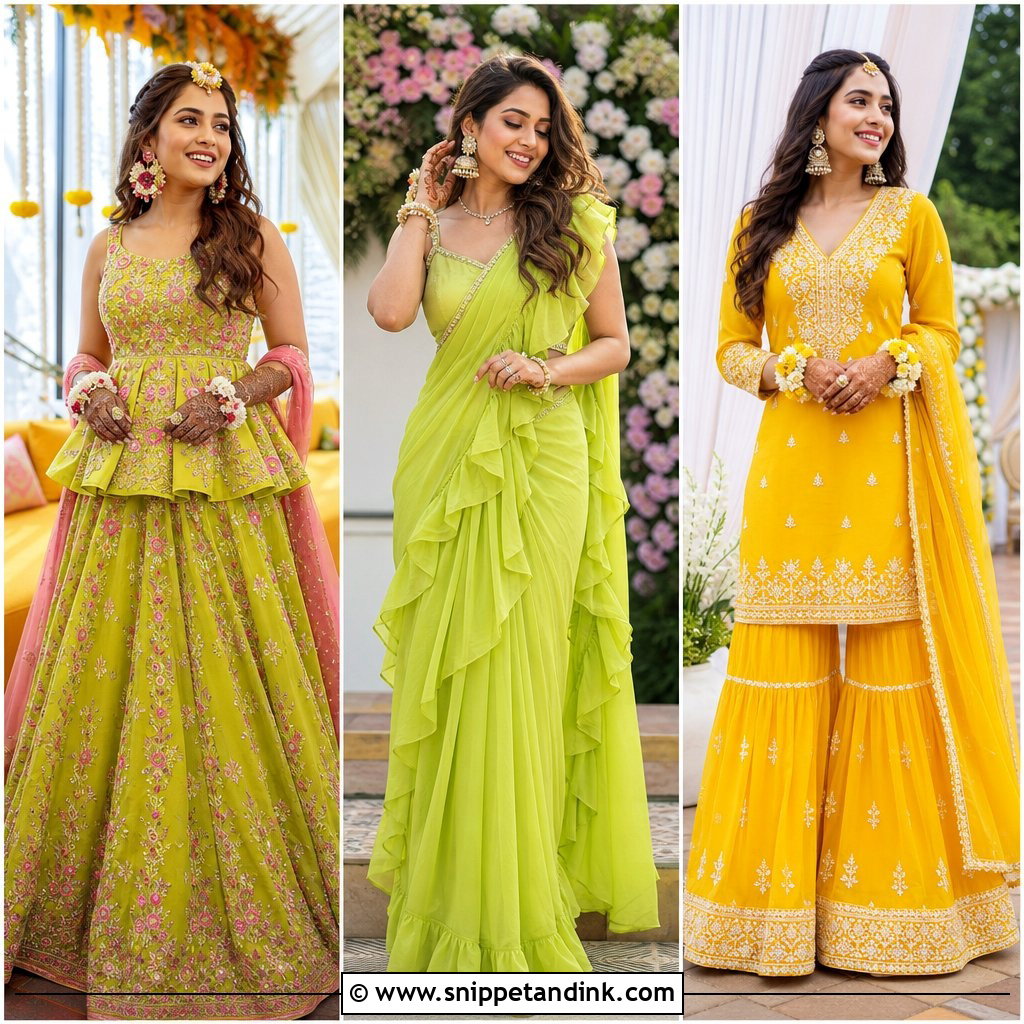
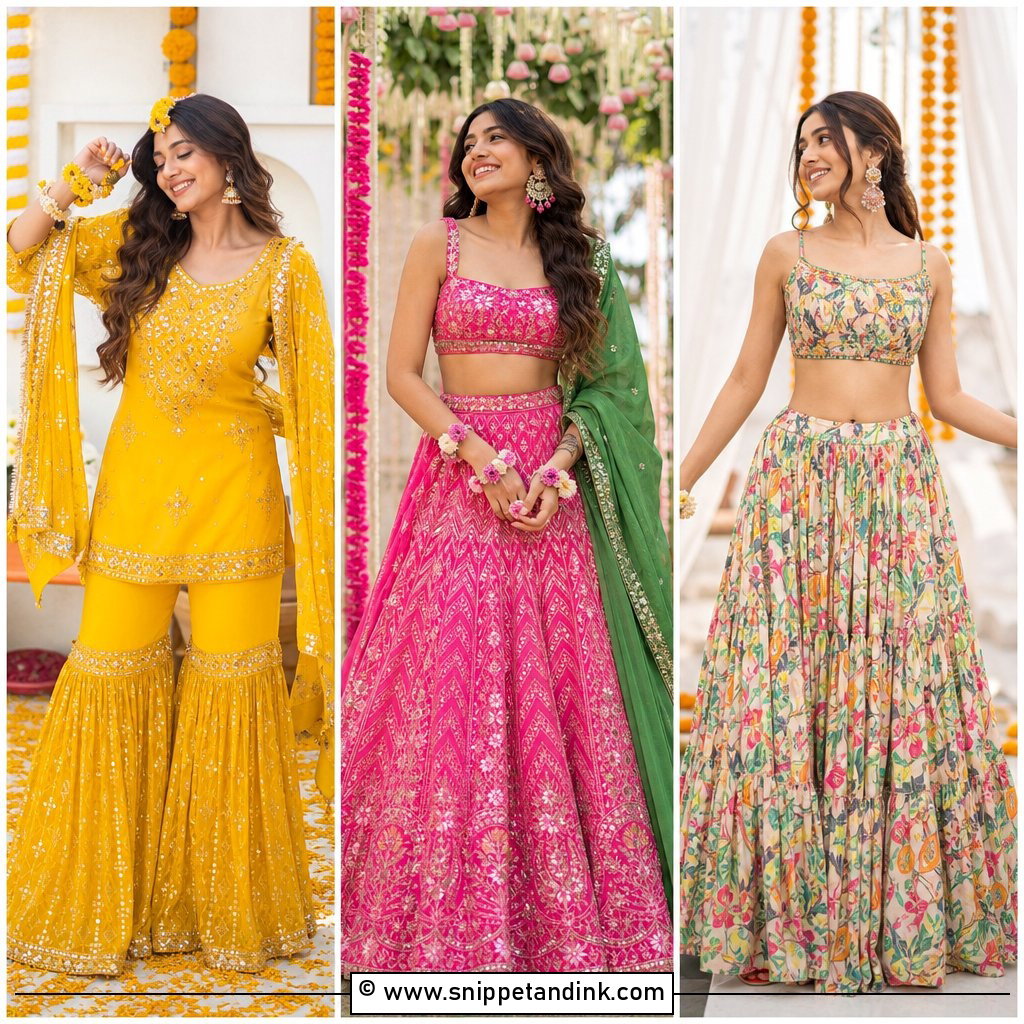
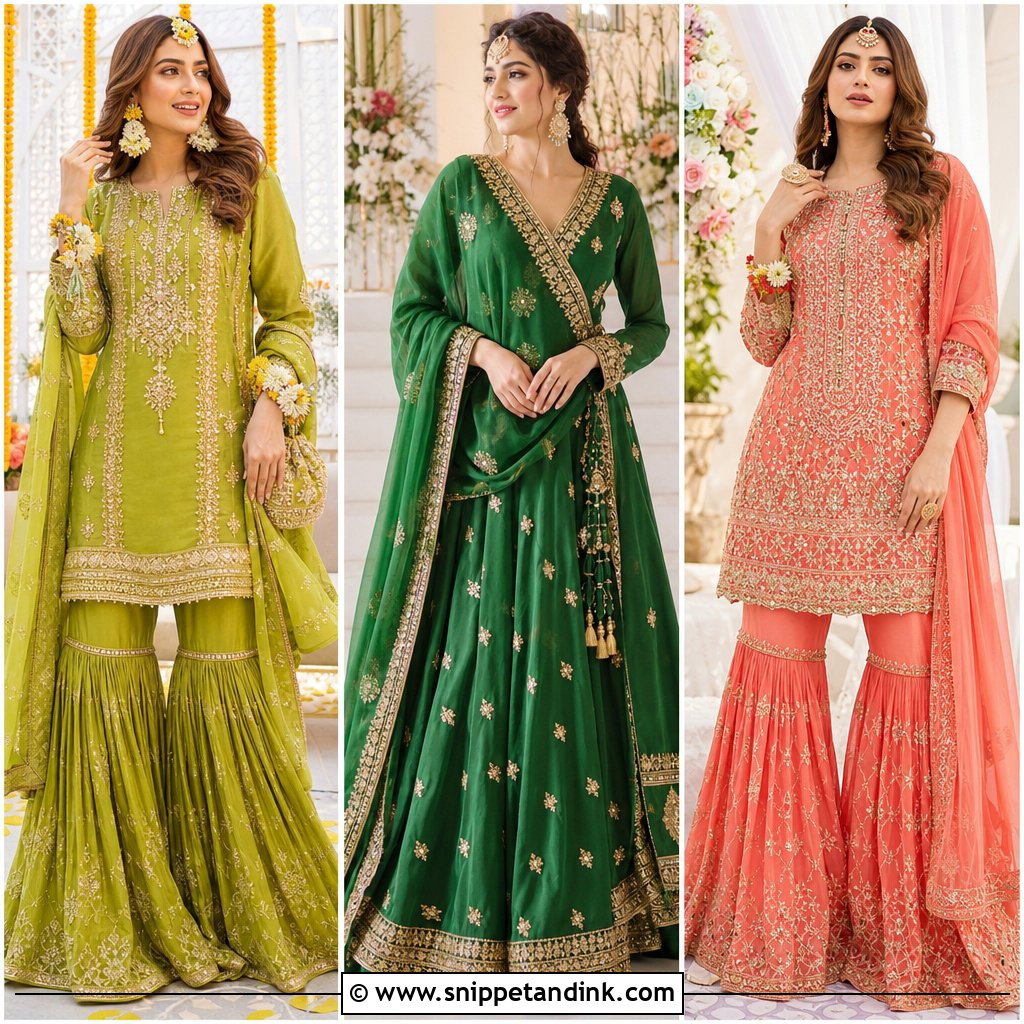
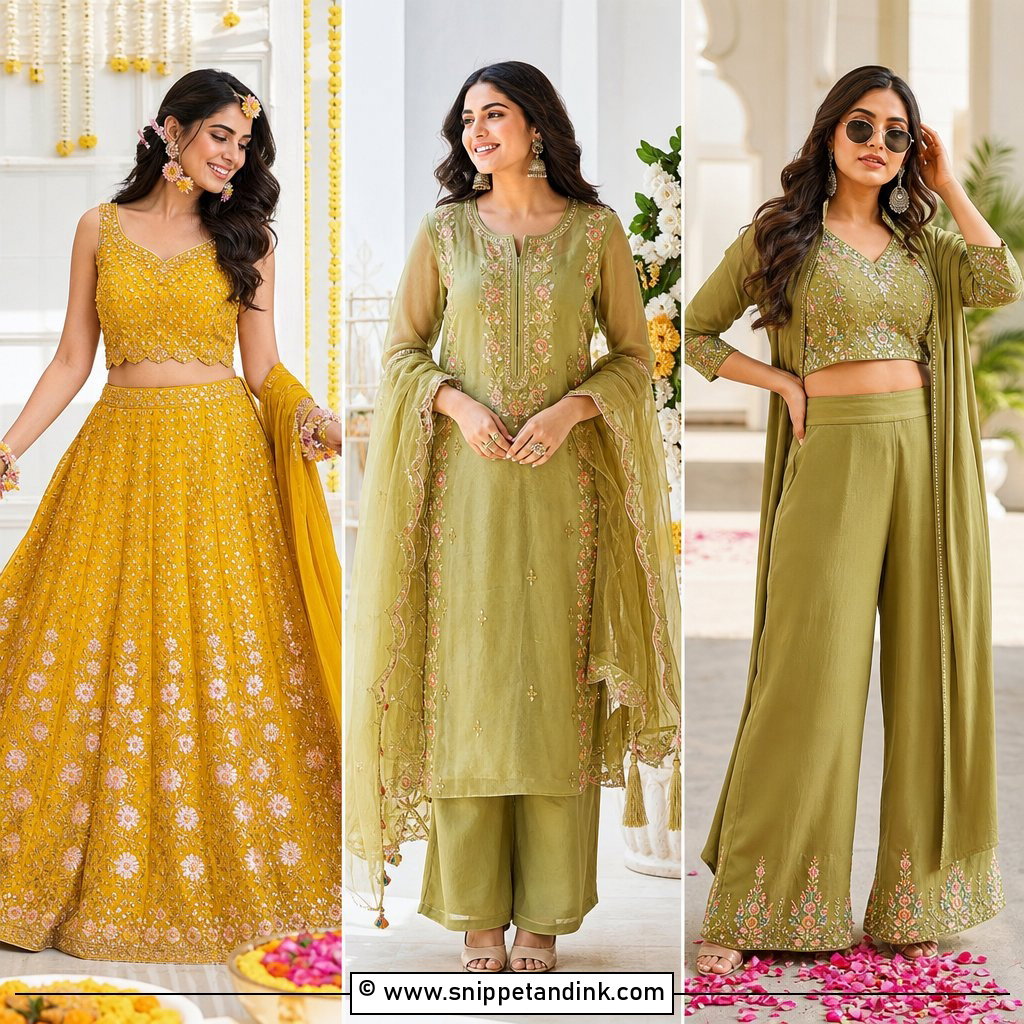
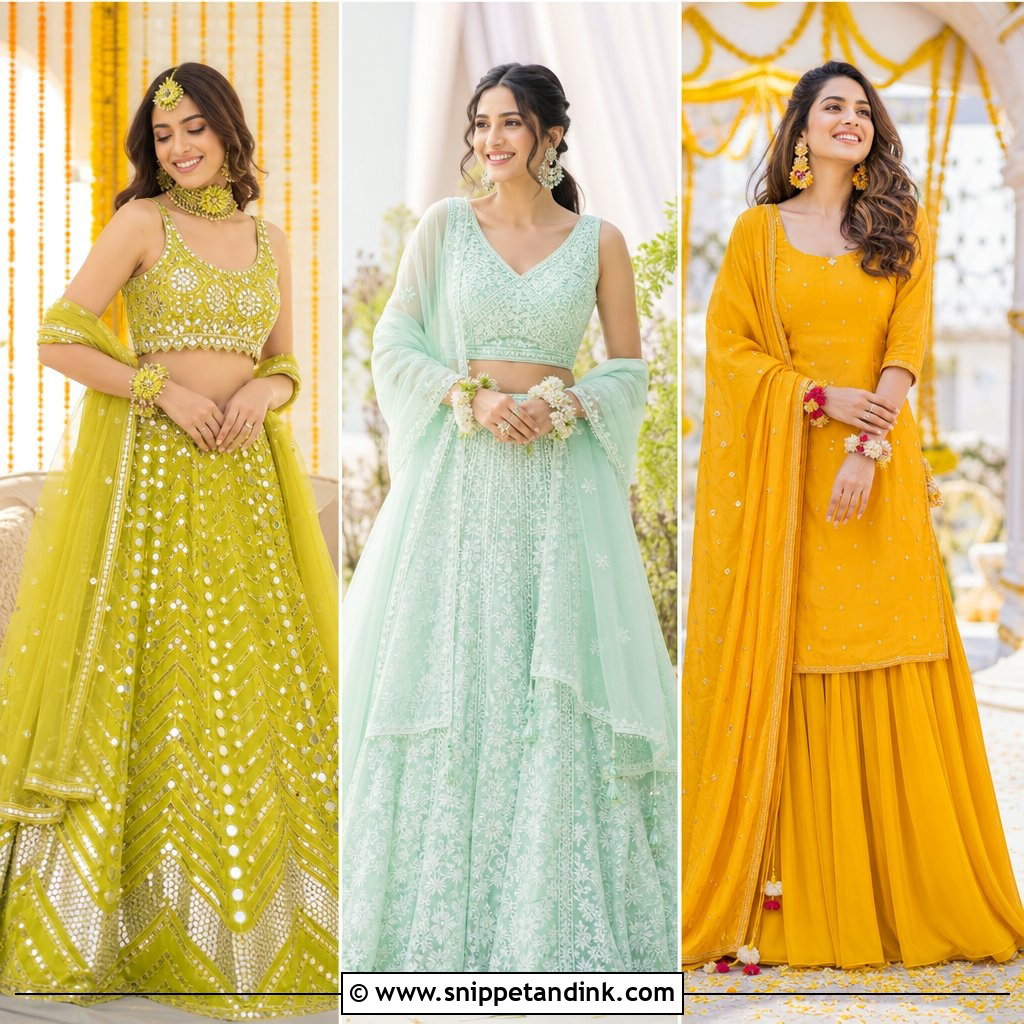
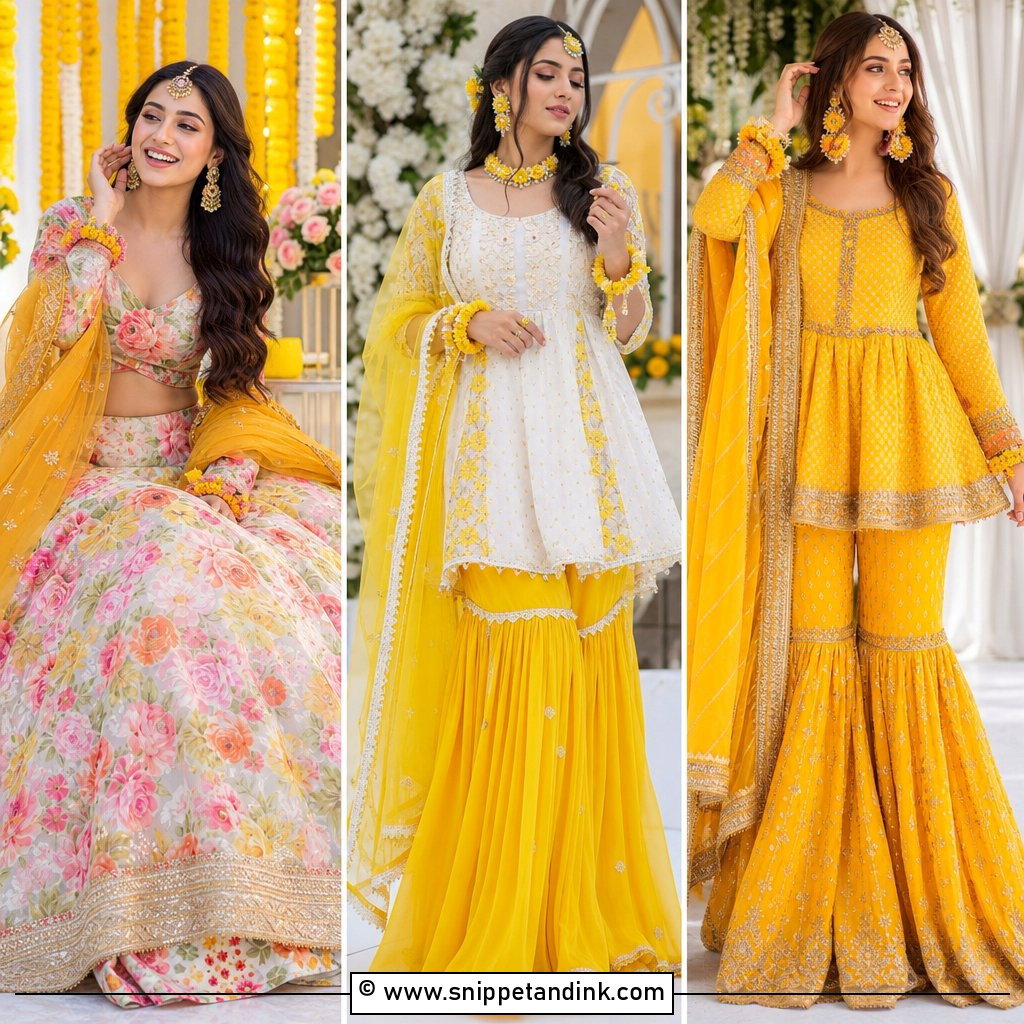
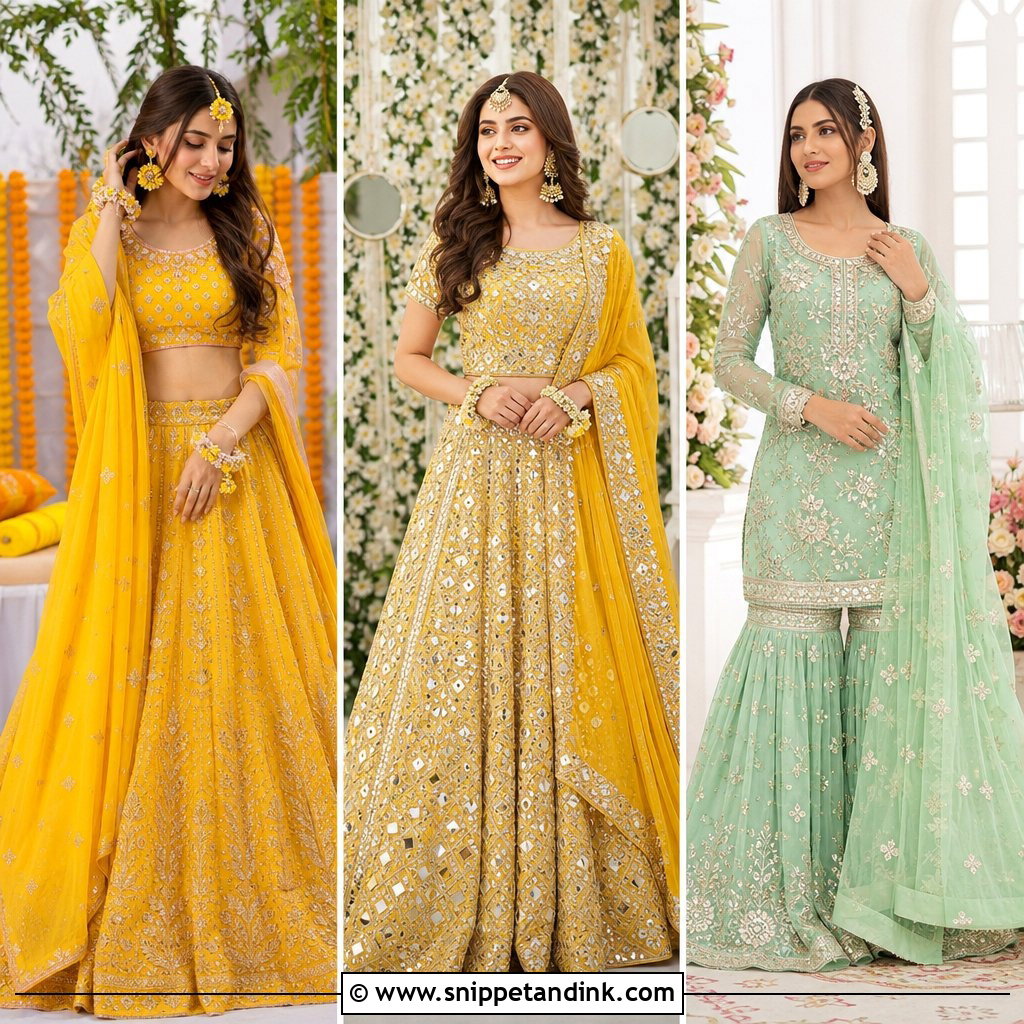
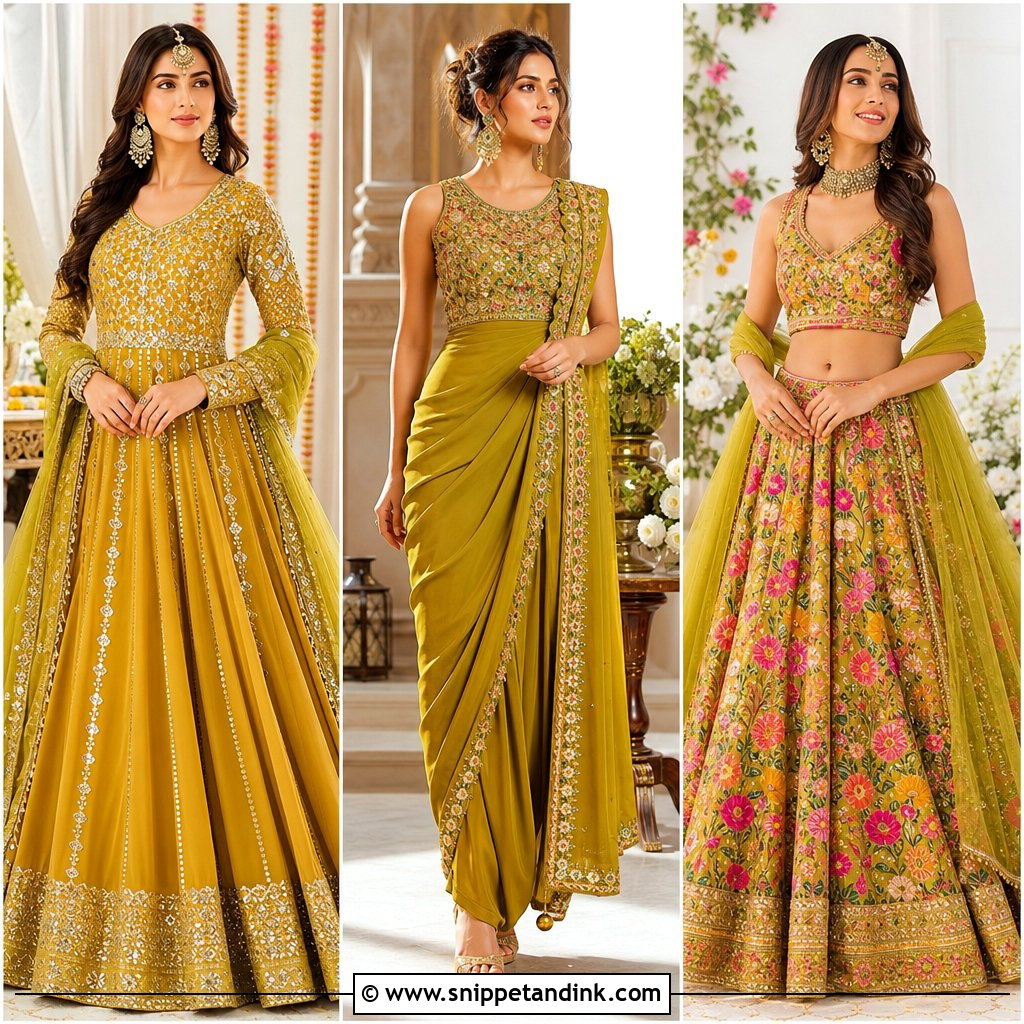
Yellow is where most families start, and for good reason: it’s the color of the mayun, and it marks the bride out at a glance. I’d choose chiffon, organza, raw silk or net with gota, dabka, mirror or thread work, but watch the dabka. It’s coiled metal wire and adds weight quickly, so on a lehenga you’ll dance in, keep it to the borders. A short choli and a light dupatta leave you free to sit and move. Pick the shade by time of day: lemon or marigold for daylight, mustard with antique gold for the evening, when pale yellows wash out under warm bulbs. Gold khussas, bangles and floral jewelry finish it.
2. Mustard Gharara Mehndi Dress For Bride
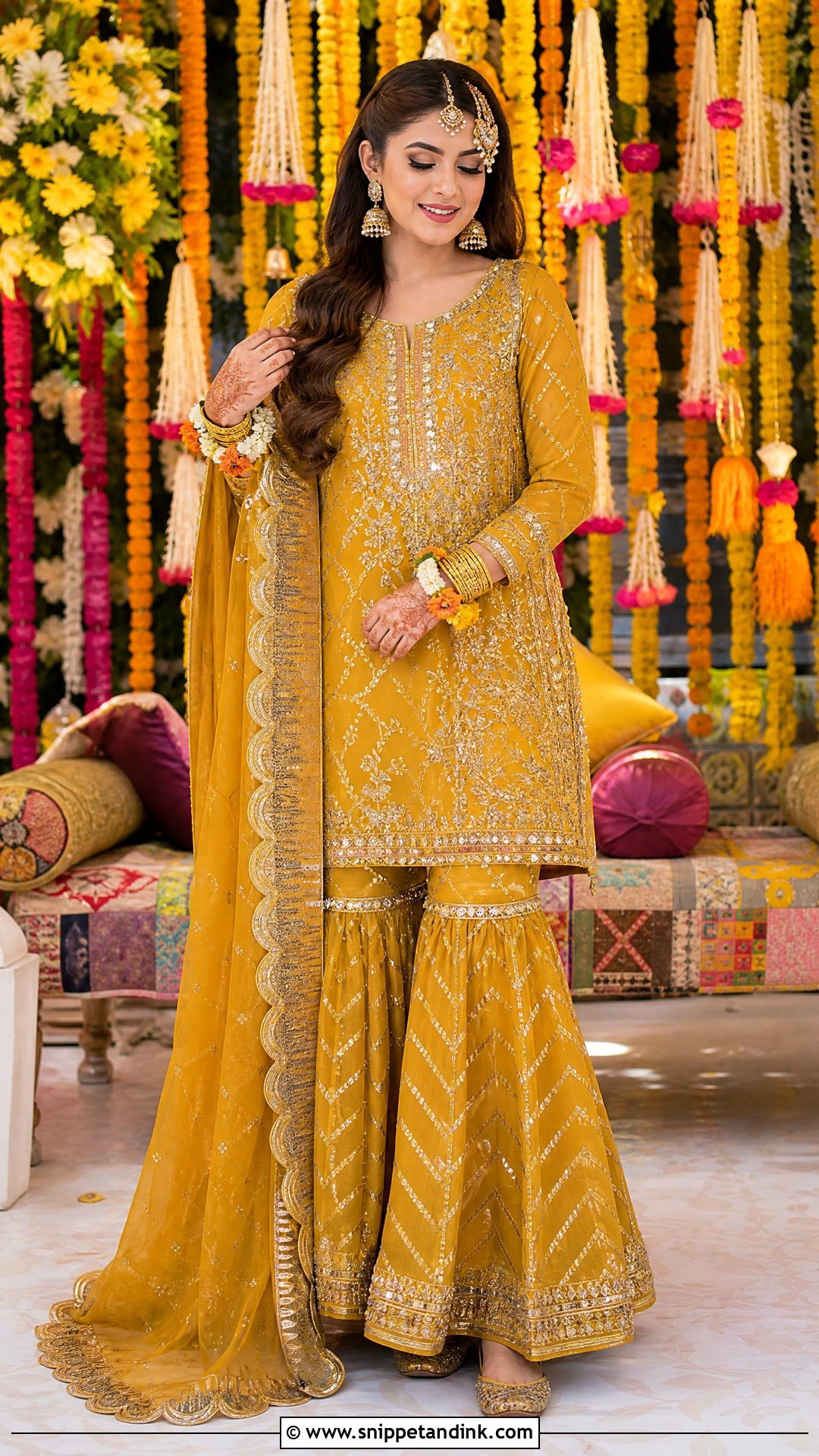
Nothing reads as heritage quite like a gharara. The joint at the knee, usually covered with a band of gota, is what separates it from a sharara, and it creates that distinctive flare in seated photos. Pick a mustard base with magenta, green or orange embroidery, and a scalloped dupatta with gota edging. At the fitting, I make sure the knee seam sits exactly at the knee, not above it, or the flare kicks out awkwardly when you walk. Jhumkas, a passa, stacked bangles and embroidered khussas complete it, with bronze eyes and a soft rose lip.
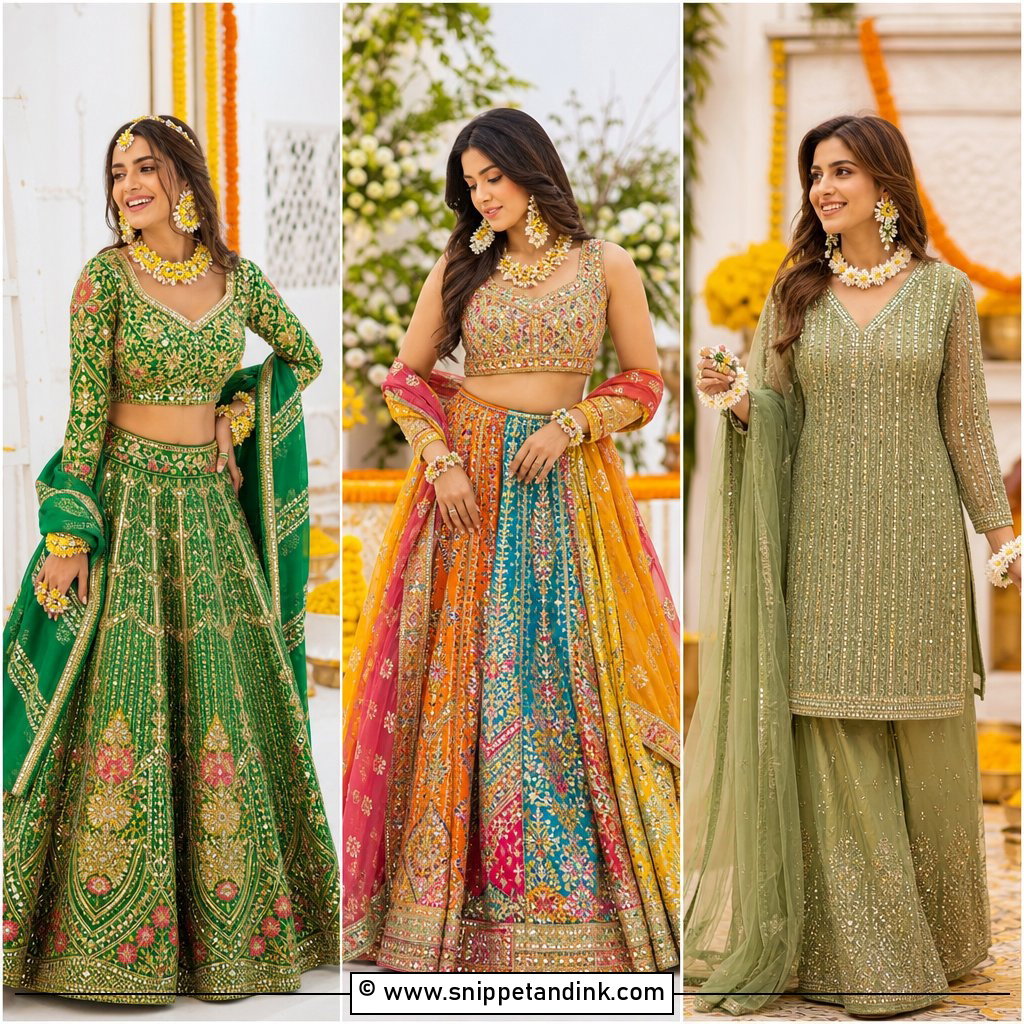
3. Green Sharara Mehndi Dress For Bride
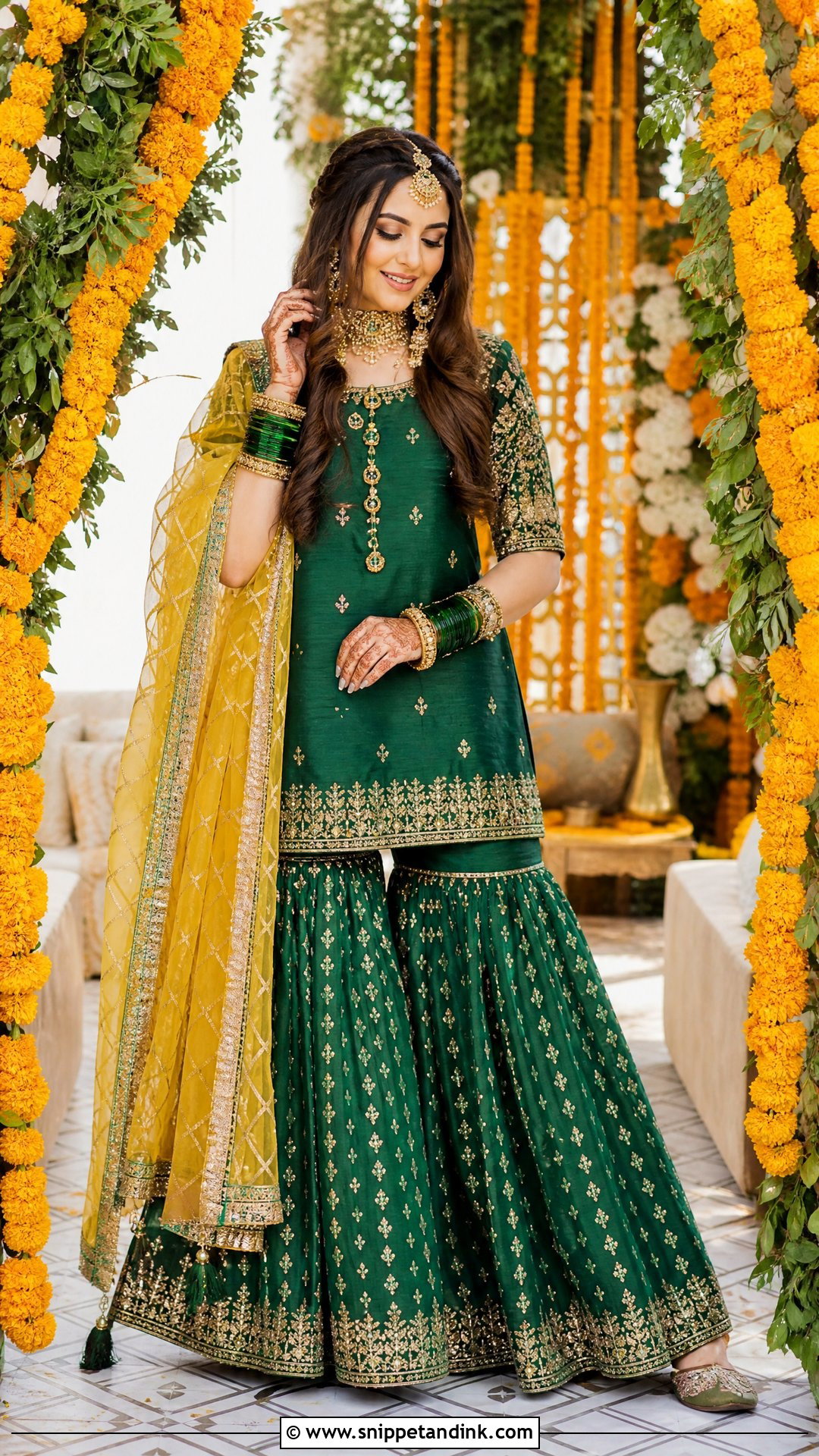
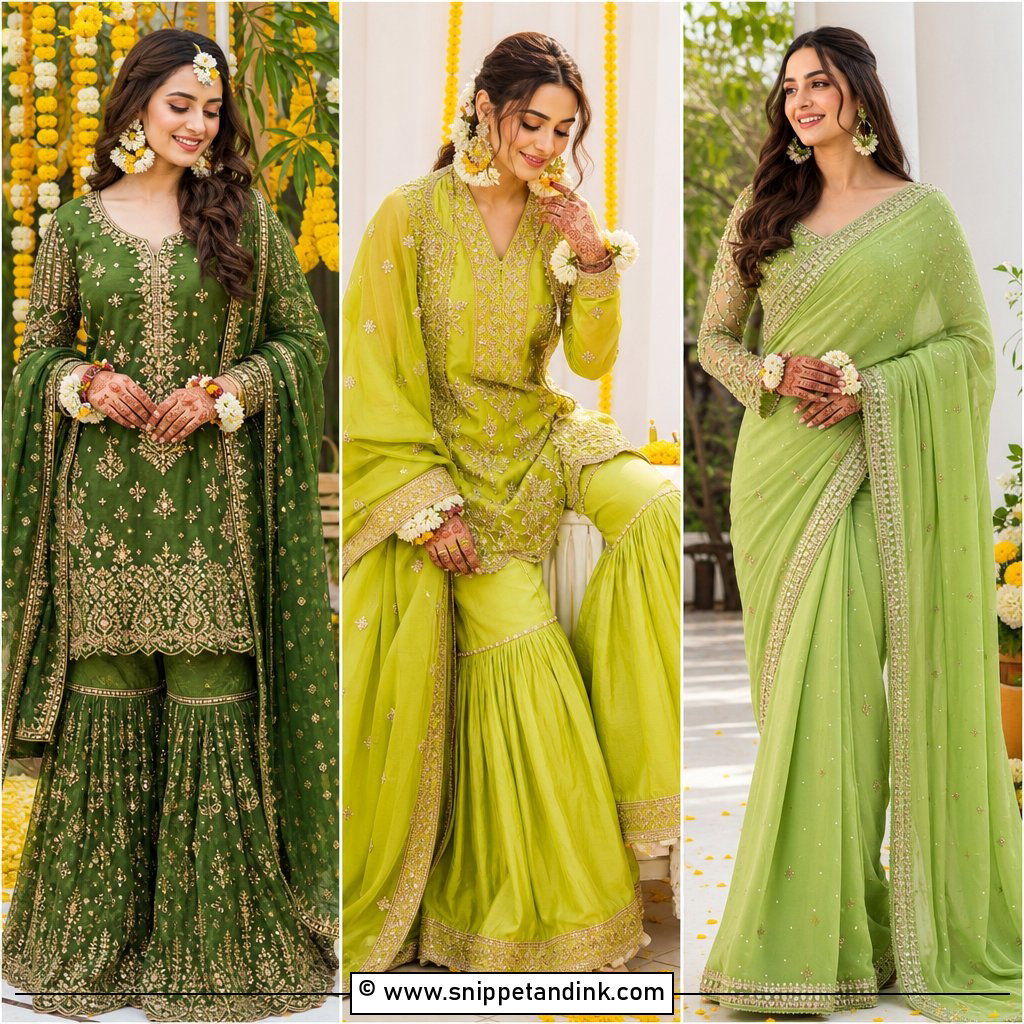
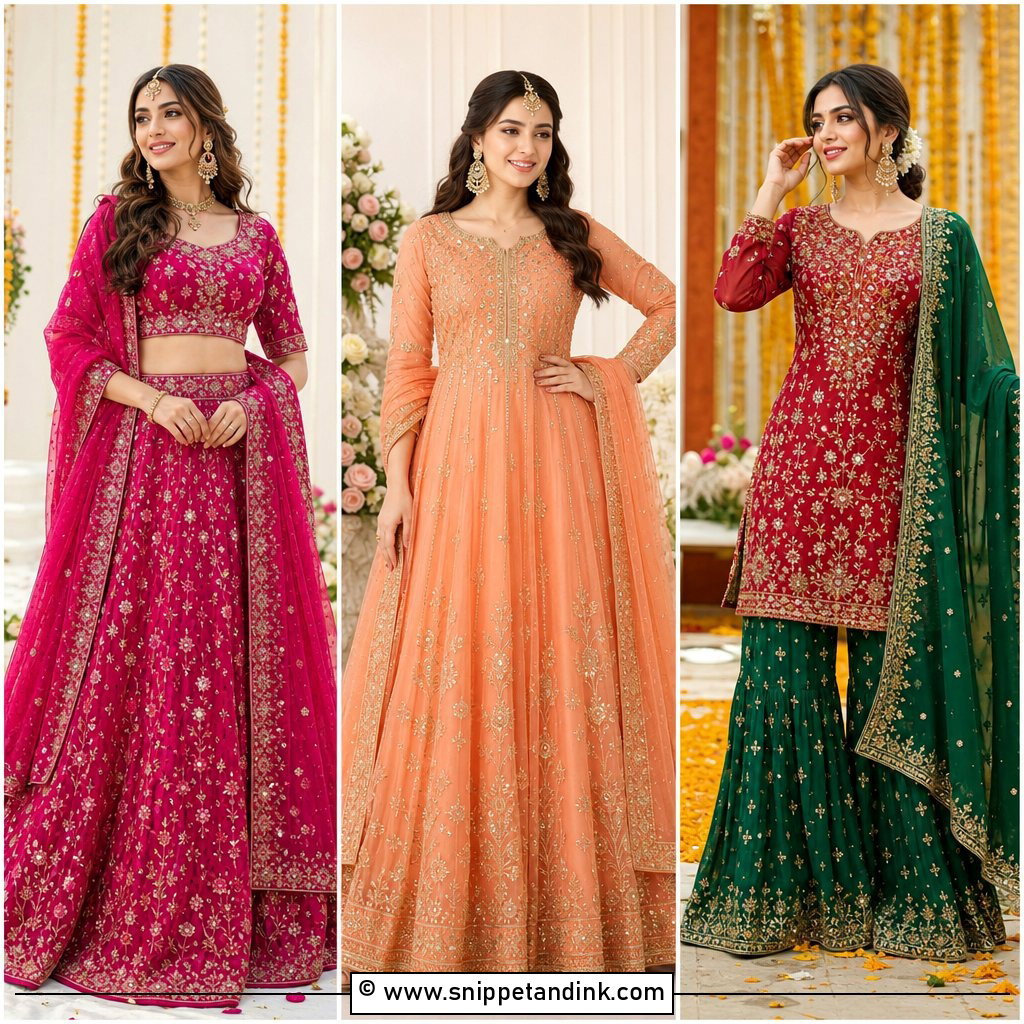
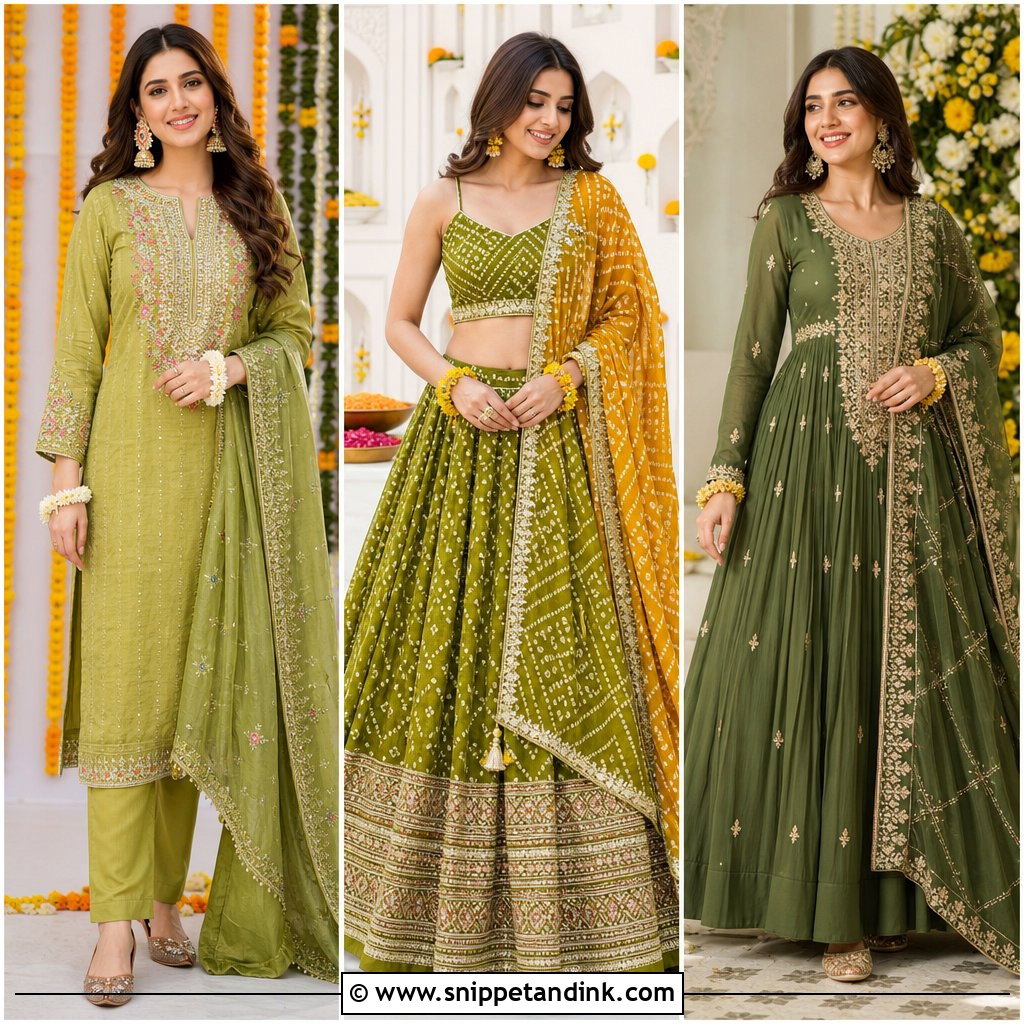
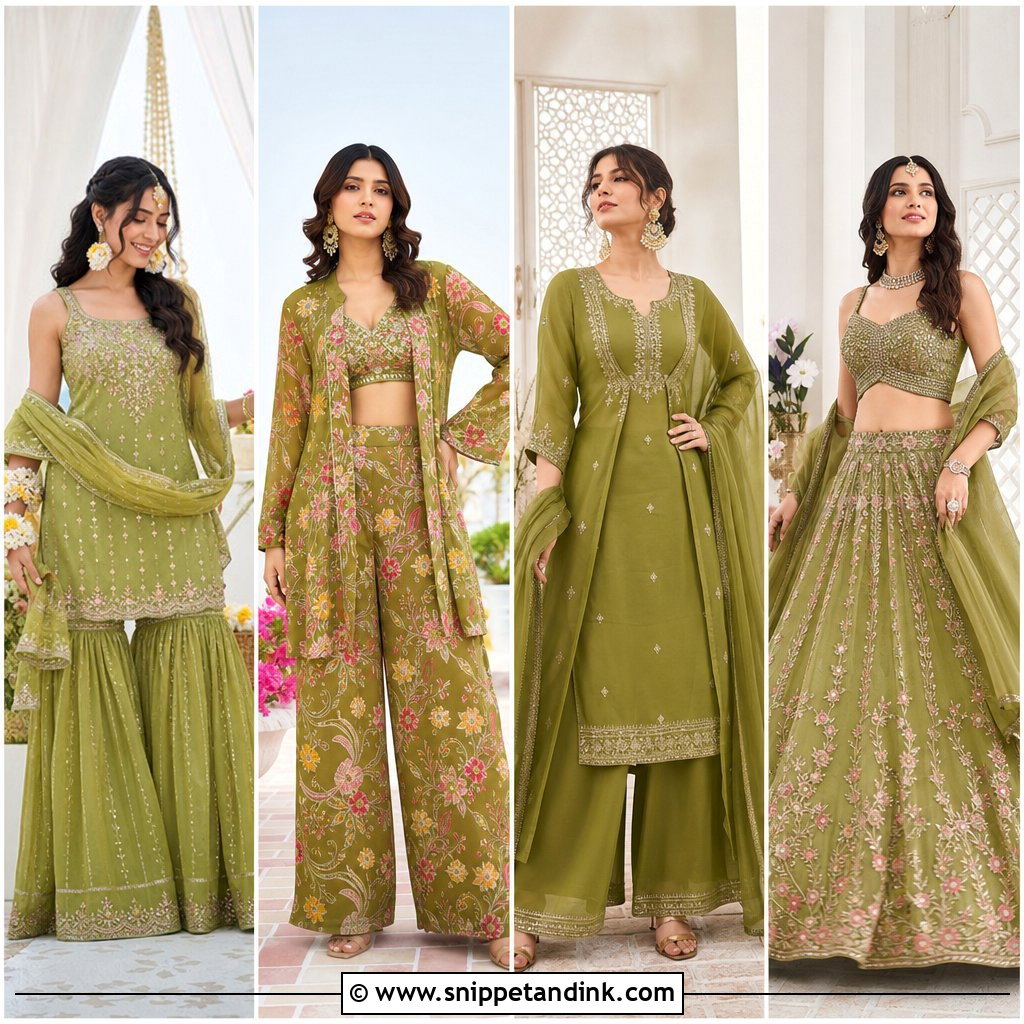
Green gives you a mehndi outfit that isn’t yellow but still belongs. Emerald, parrot, olive and mehndi green all work, though emerald holds up best under evening light and parrot green is happiest in daylight. A short embroidered shirt over a wide sharara moves well for a dance entrance, since the flare starts at the waist and swings with every step. Add a yellow or orange dupatta to tie it back to the theme, then gold jewelry, green glass bangles and a maang tikka. Glass bangles crack easily during rasams, so give a spare set to whoever is carrying your bag.
4. Orange Lehenga Choli Mehndi Dress For Bride
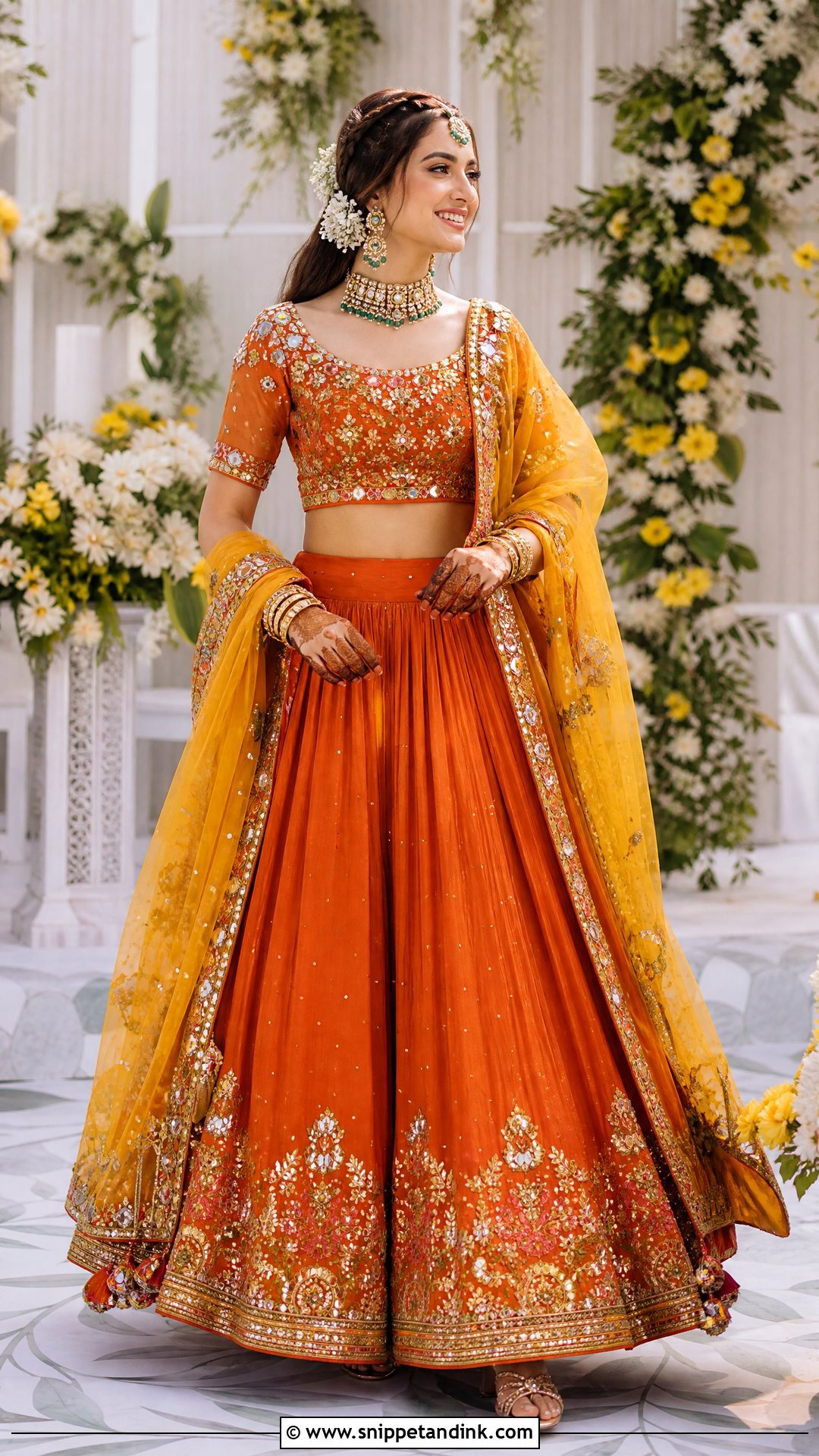
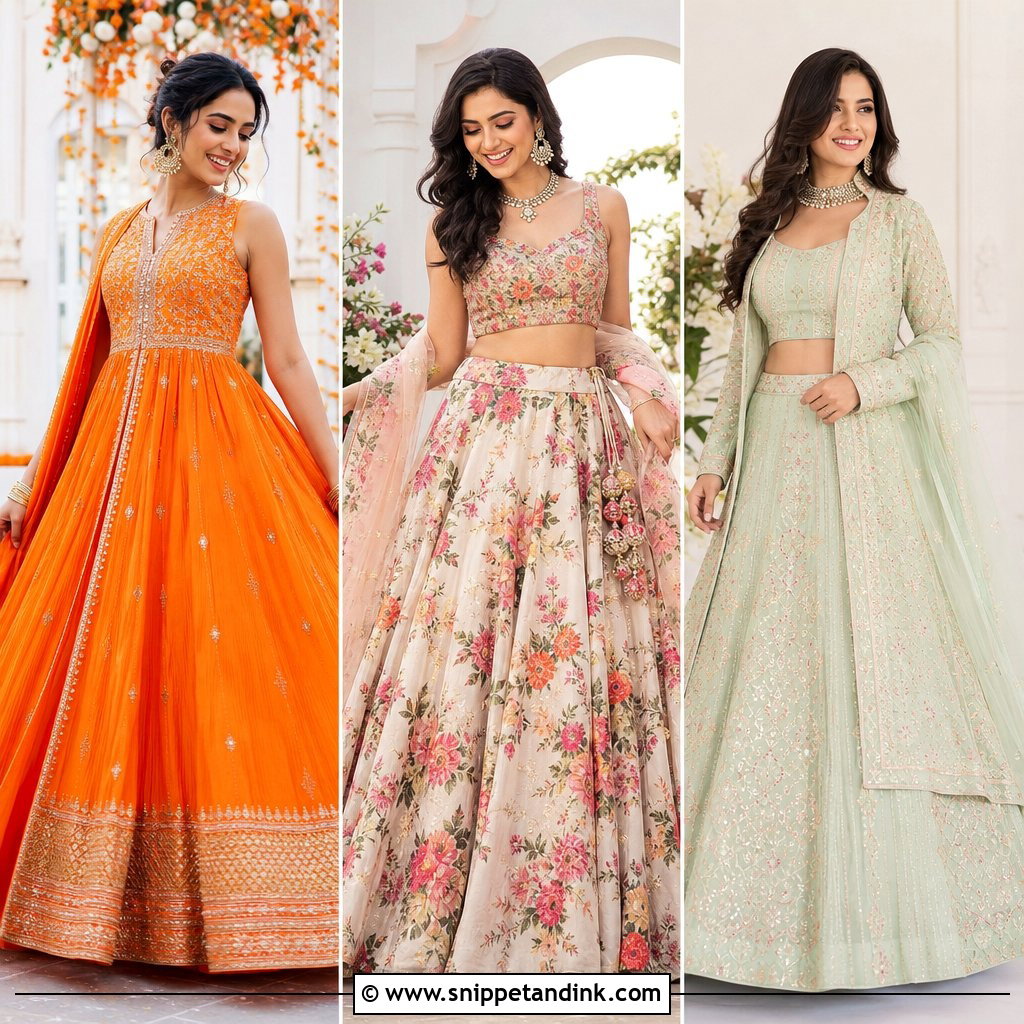
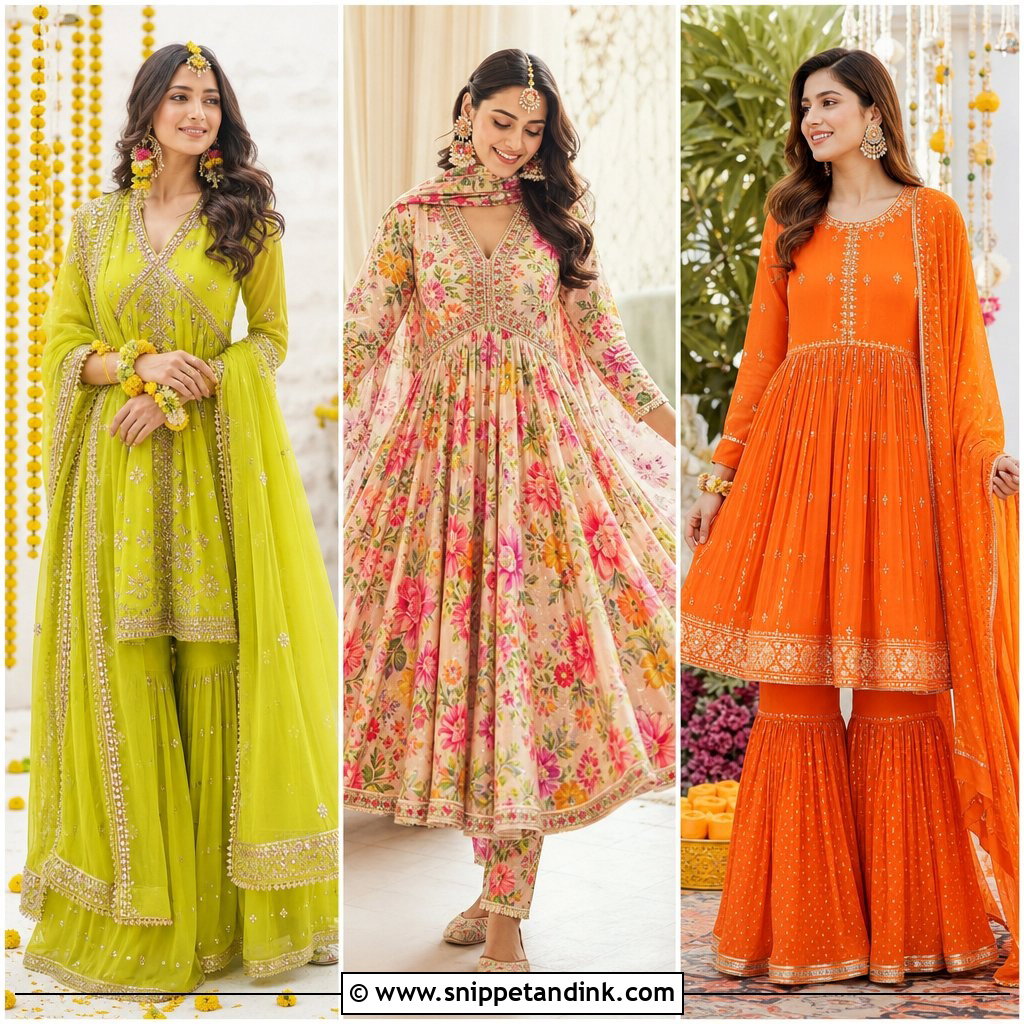
Orange stands out on a stage full of yellow-clad cousins, which is exactly why some brides choose it. Burnt orange or tangerine with gold embroidery glows under event lighting, and a yellow, pink or green dupatta gives the classic Pakistani color mix. Test the flare before you commit. A lehenga with stiff can-can underneath twirls well for the camera but is tiring to dance in for hours, while soft layers of net give movement with less weight. Kundan jewelry, gold khussas and fresh floral hair pieces suit it at outdoor mehndis and dholki-style evenings.
5. Multicolor Mehndi Lehenga Dress For Bride
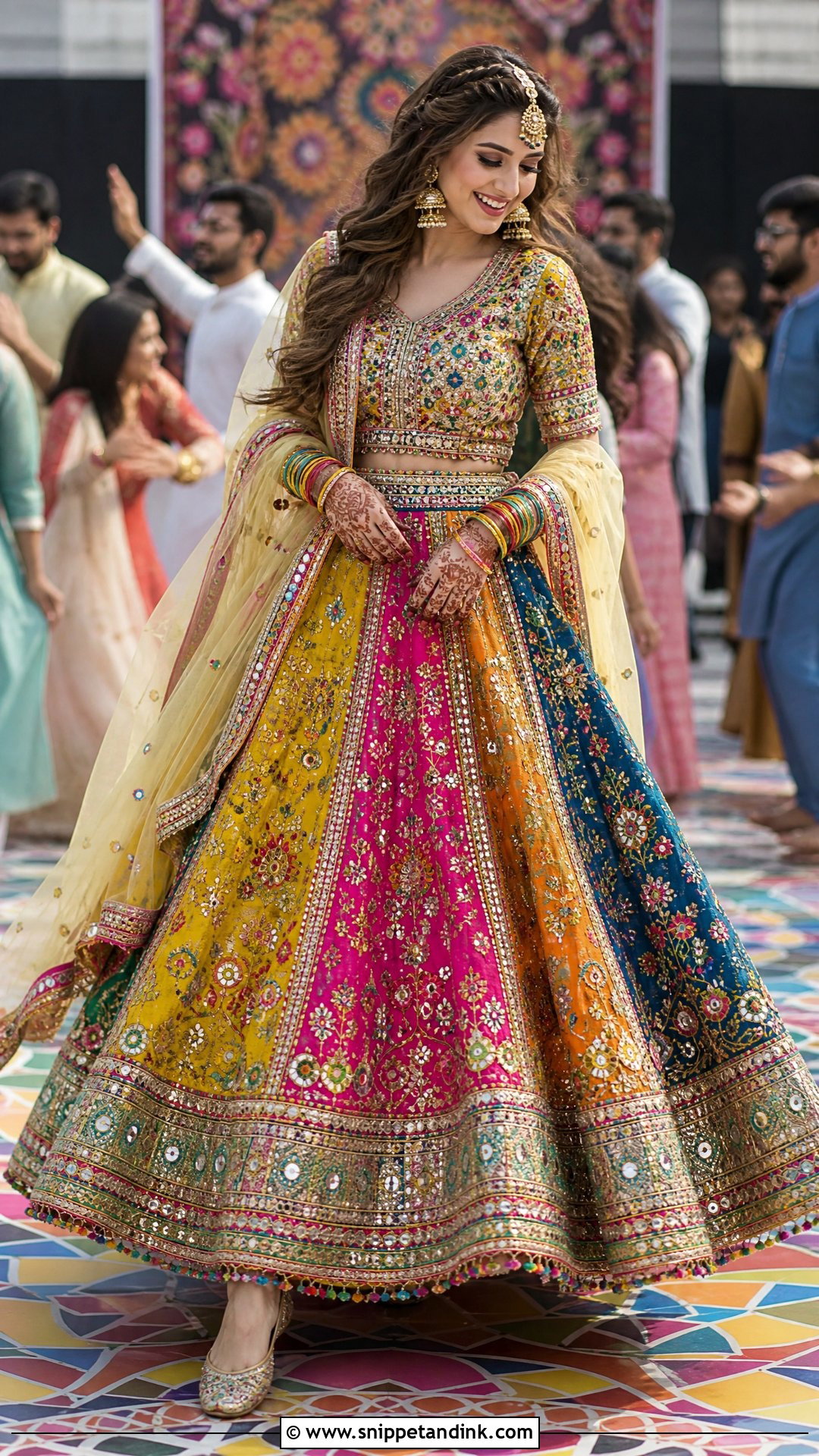
A multicolor lehenga is a celebration in itself, and the only real danger is too much. Look for panels of yellow, orange, pink, green and blue, or a solid blouse over a multicolor skirt, with mirror work, tassels, gota patti or thread embroidery for texture. With that much going on below, the dupatta has to be quieter, usually a single color lifted from the skirt. Simple gold jewelry, colorful bangles and a sleek bun or braid keep the face clear. Save it for vibrant decor and a bride who wants a busy dance floor.
6. Mirror Work Mehndi Dress For Bride
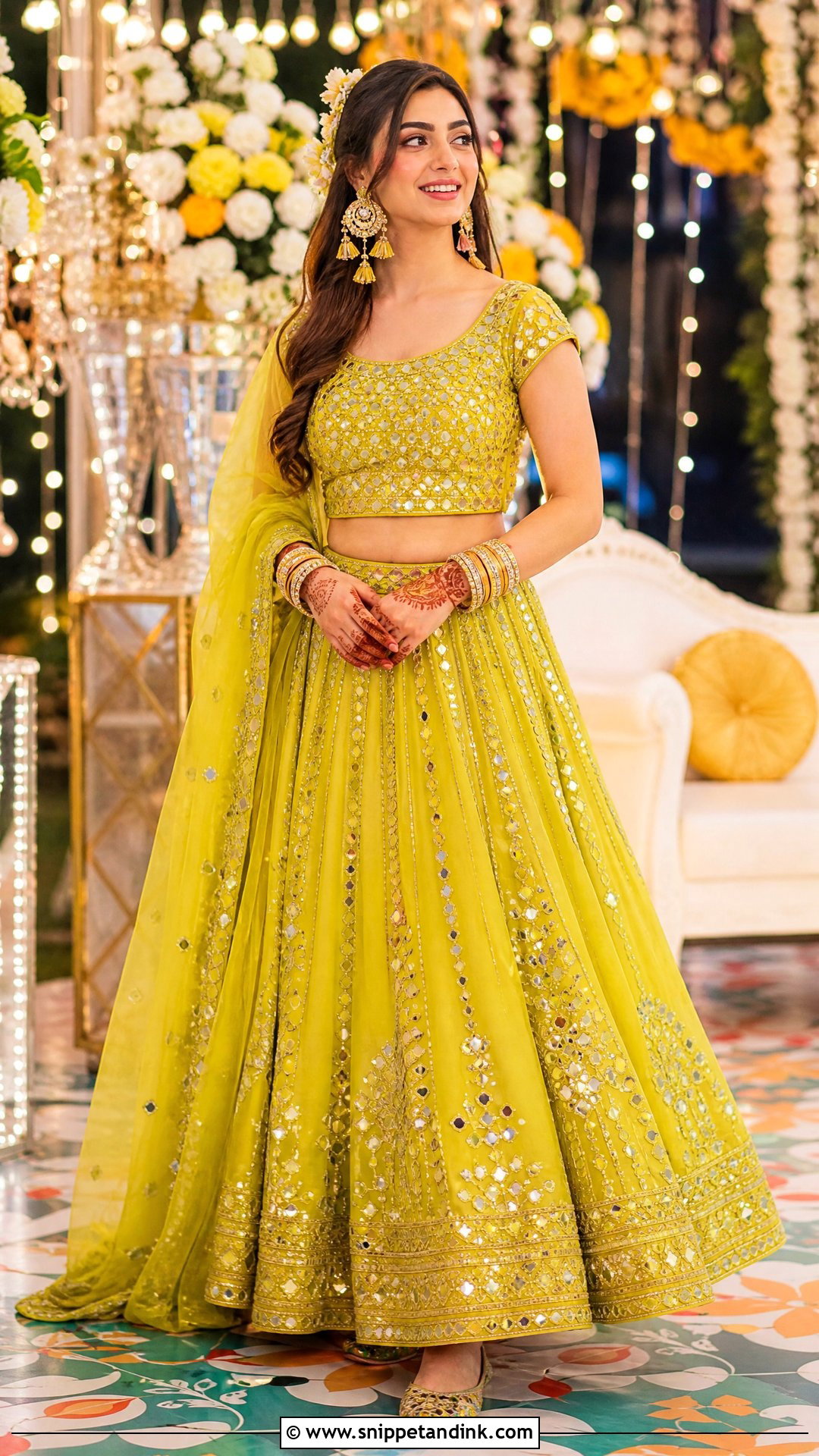
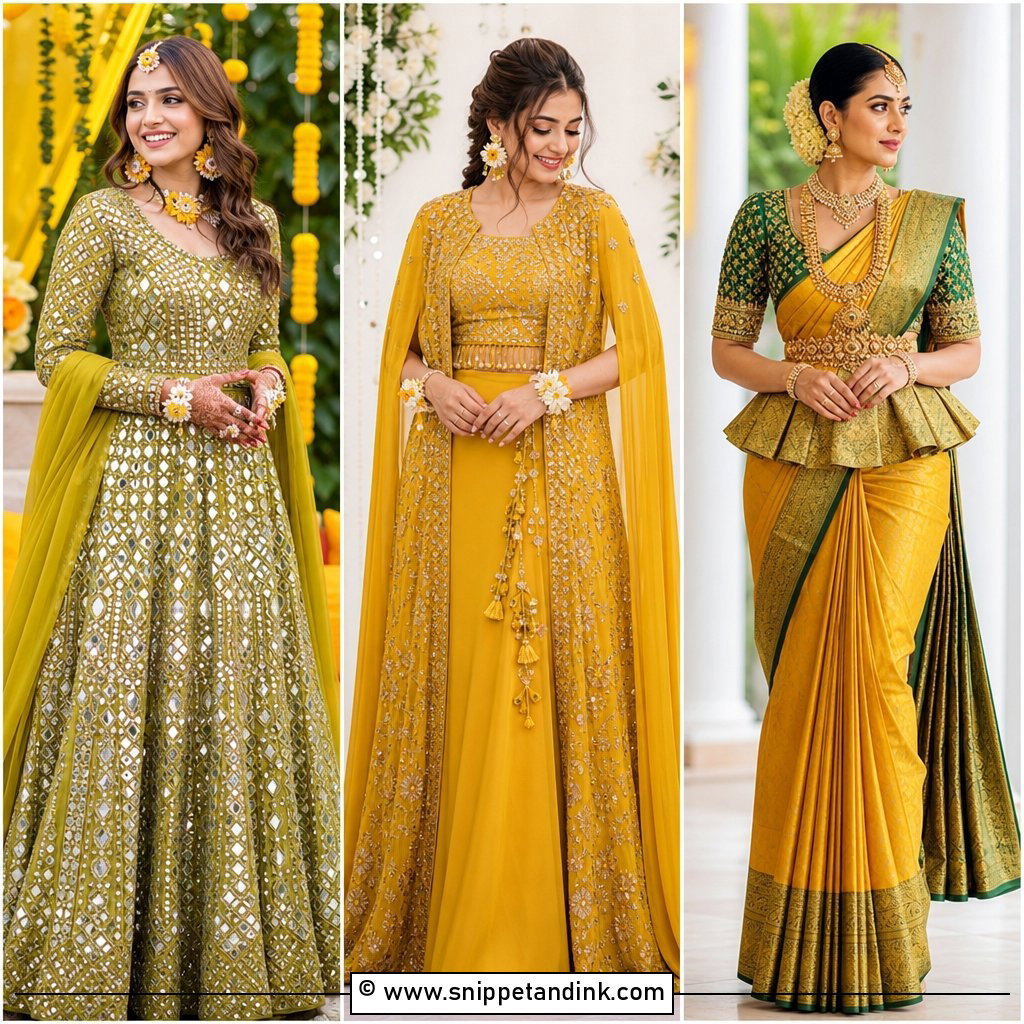
Mirror work earns its place at evening mehndis. Every light in the room bounces off it, and it does the job of heavy embroidery at a fraction of the weight. A mirror work lehenga, sharara or long shirt in yellow, green, teal or orange is enough on its own, so keep jewelry to jhumkas, a tikka and bangles. One thing I check on every mirror outfit is the inner arm and side seam. Mirrors set there rub against the skin through a long dance, so ask for the work to stop short of those areas.
7. Gota Patti Mehndi Dress For Bride
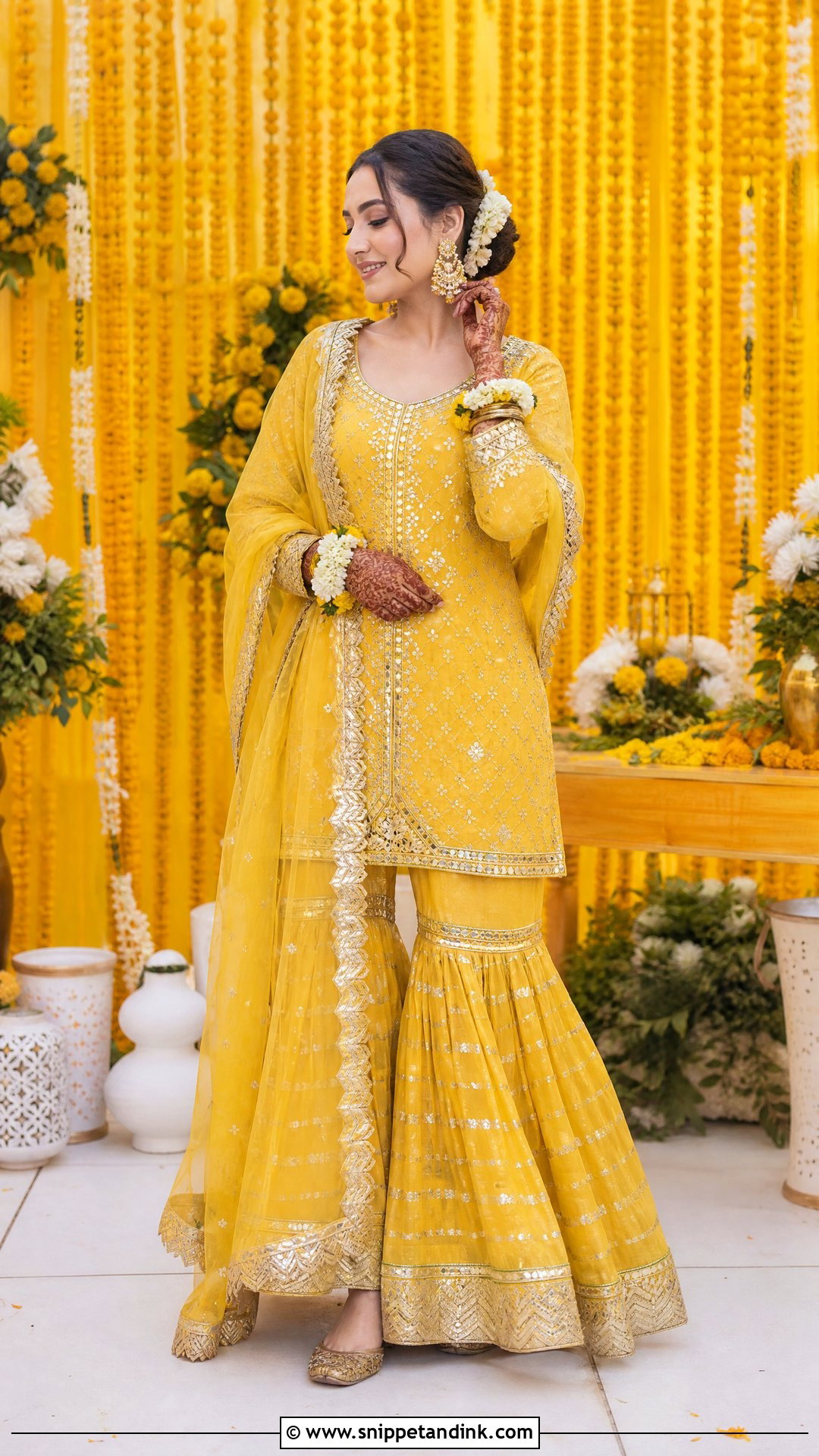
Gota patti is the detail I’d reach for first for a Pakistani mehndi bride who plans to dance. It gives a festive gleam without the weight of dabka or zardozi, so a gota patti gharara, lehenga or angrakha in yellow, green or orange looks rich and stays light. Most gota today is metallic polyester ribbon rather than true metal, which keeps it lighter and slower to tarnish, though it creases if folded hard. A dupatta with gota borders and small scattered motifs, a floral bun, gold bangles and soft kundan suit it by day or evening.
8. Angrakha Mehndi Dress For Bride
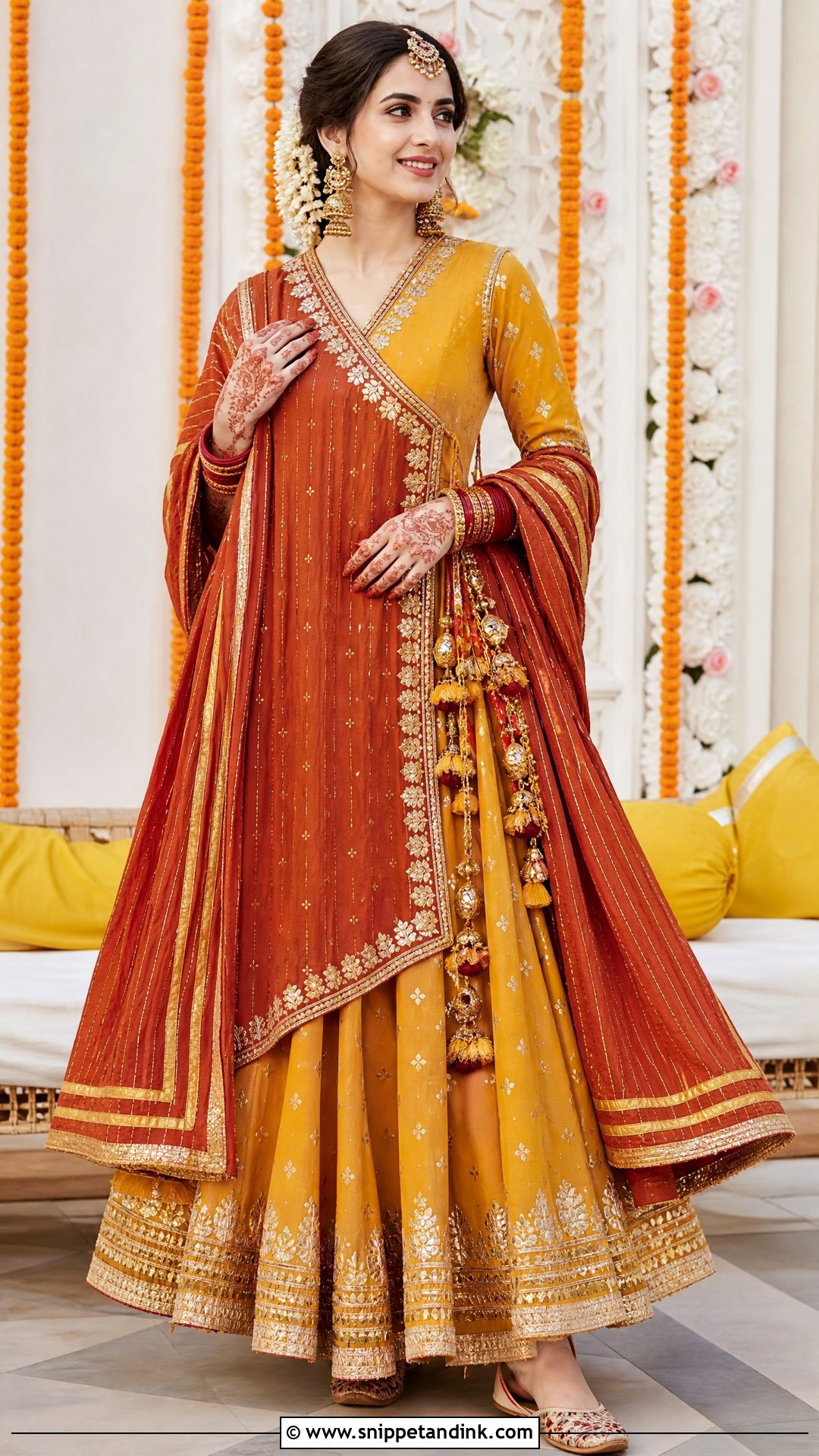
The angrakha’s overlapping wrap front defines the waist and gives comfortable coverage, which is why I suggest it to brides who don’t want a short choli. Wear the angrakha frock over a lehenga, sharara or straight pants, depending on how traditional you want it to feel. Tassel ties, gota borders and mirror details make it festive, and yellow, rust, green and hot pink all suit the shape. Ask for a hidden hook or press stud under the tie. The bows alone loosen after an hour of dancing. A side braid, jhumkas and embroidered khussas finish it.
9. Peshwas Mehndi Dress For Bride
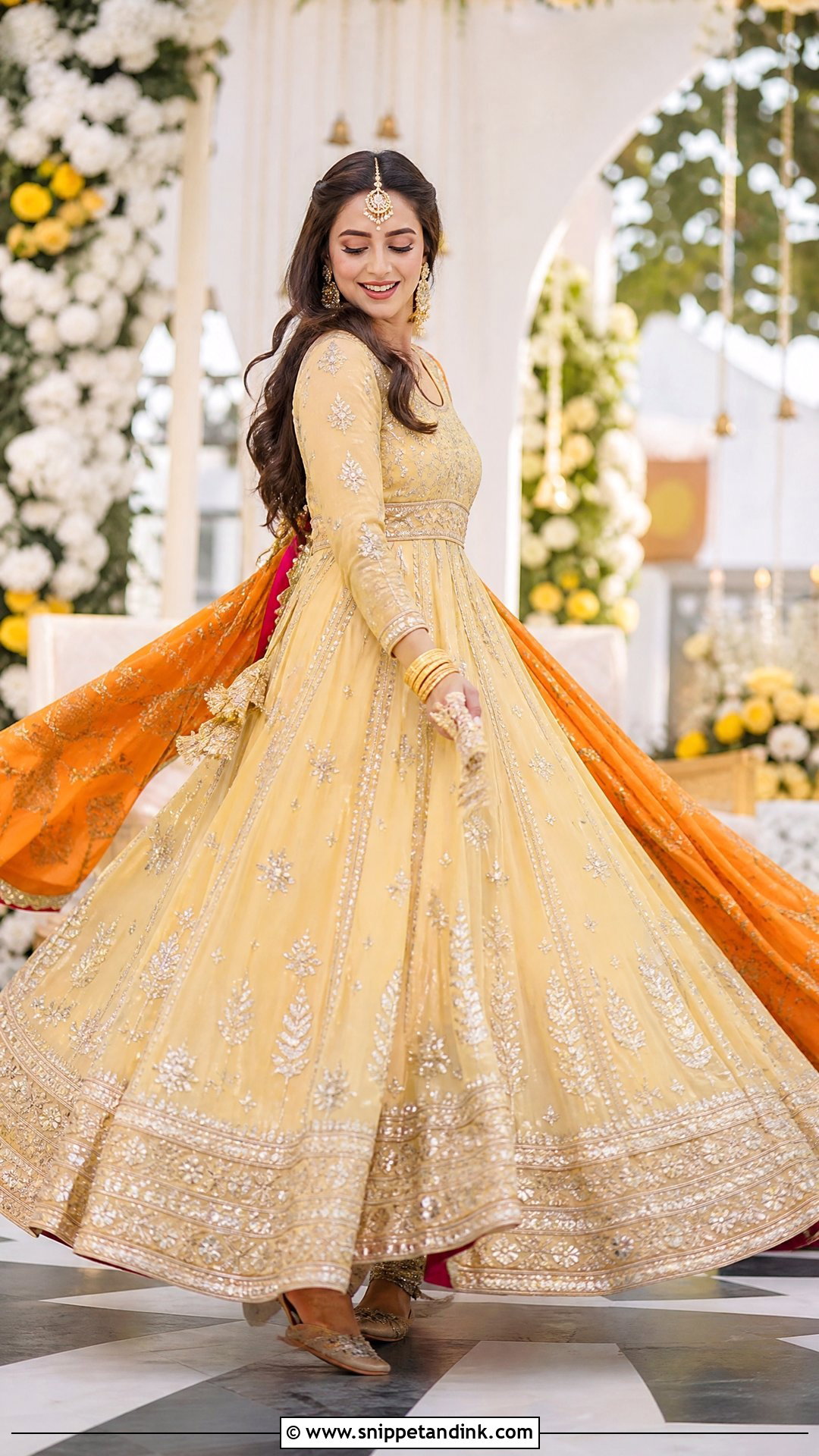
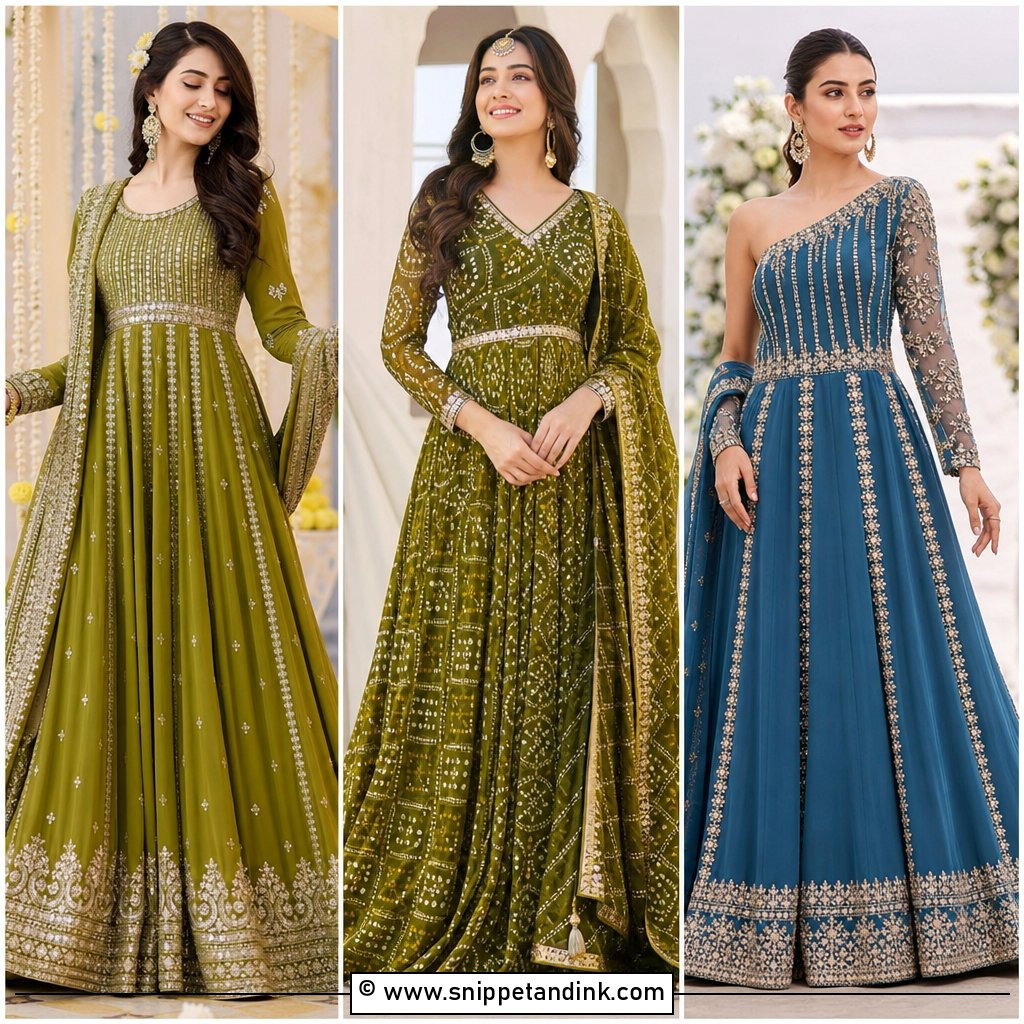
A peshwas is a long, flared frock that opens into a full circle when you spin, so it gives the best twirl shots of anything here. Choose yellow, lime, peach or mint with gota, zari or resham work, and a contrasting orange, pink or green dupatta to anchor it in mehndi colors. The silhouette is already strong, so jewelry stays balanced: tikka, earrings, bangles. Floor-length flare does need care on stage steps. Have the hem finished just off the floor in the exact shoes you’ll wear, and lift the front when you climb.
10. Peplum Sharara Mehndi Dress For Bride
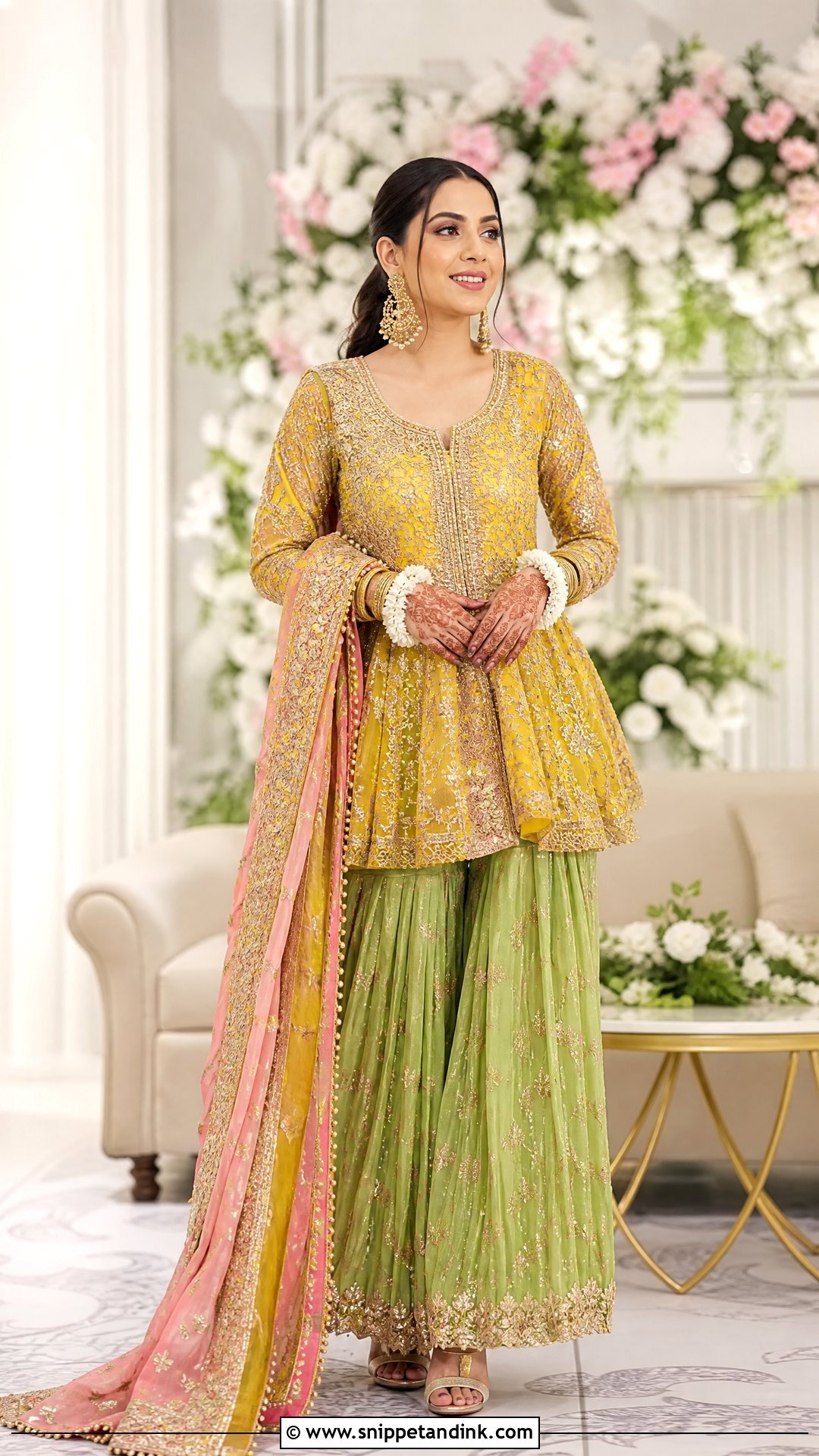
Over a sharara, a peplum top is the most modern silhouette in this list, and it gives you a defined waist without a fitted choli. Try a yellow peplum with a green sharara, or pink with a mustard dupatta. Embroidery at the neckline, sleeves and hem keeps it polished. Structure is everything here. A peplum without proper interfacing goes limp by the second hour, so ask your tailor what’s inside the flare. Statement earrings, a sleek hairstyle and embellished heels or khussas suit hotel mehndis and dance-heavy nights.
11. Jacket Lehenga Mehndi Dress For Bride
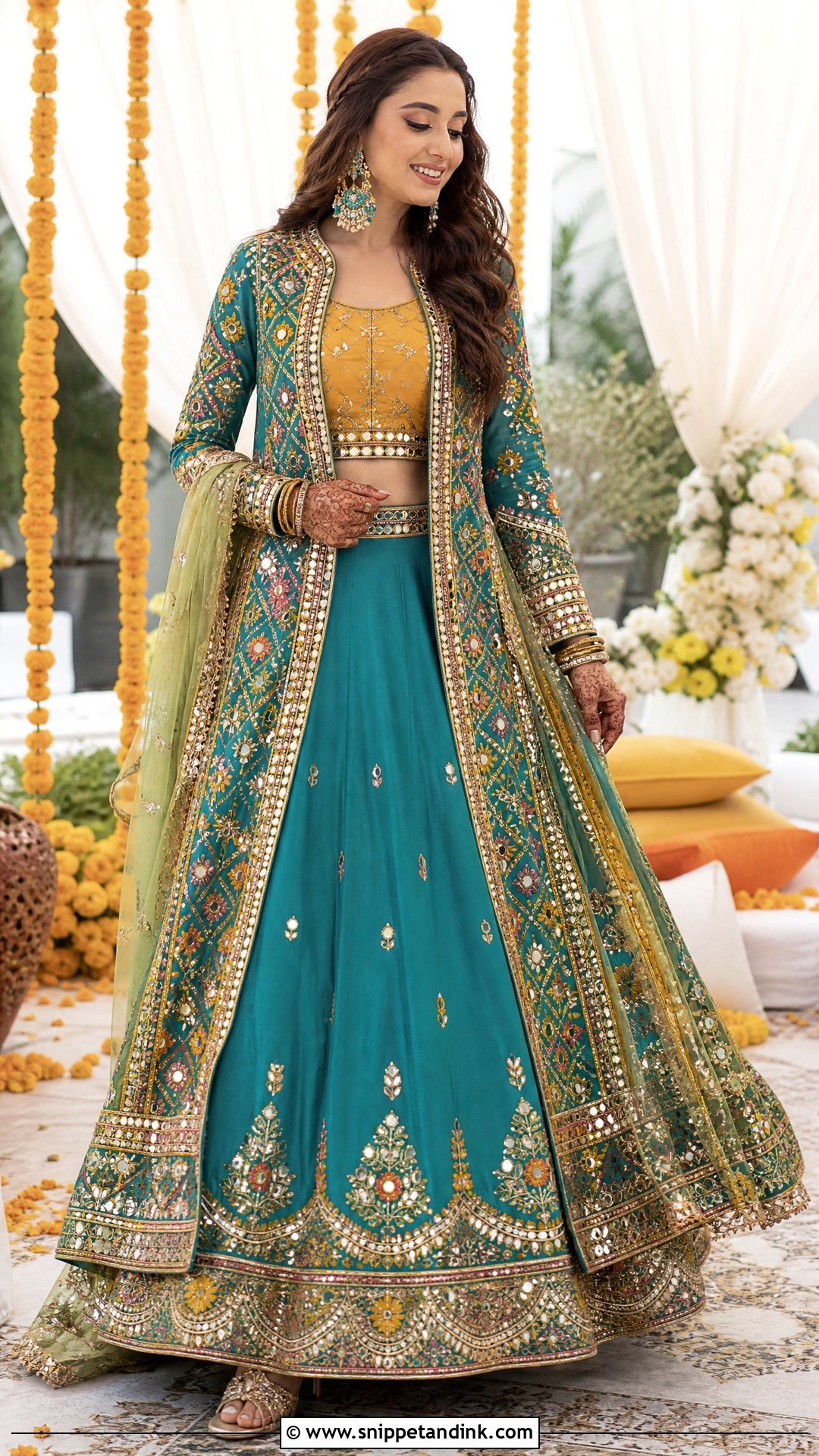
A jacket lehenga gives a fashion-forward look with coverage: the long or short embroidered jacket adds structure over a sleeveless or short blouse, and the lehenga keeps it traditional. Yellow with hot pink, teal with mustard and green with orange are strong pairings. The dupatta becomes optional, or a light one draped to one side. Check the jacket’s weight before ordering. Heavily mirrored jackets get hot fast in a packed hall, and you can’t take one off without changing the whole look. Statement earrings and soft waves finish it.
12. Anarkali Mehndi Dress For Bride
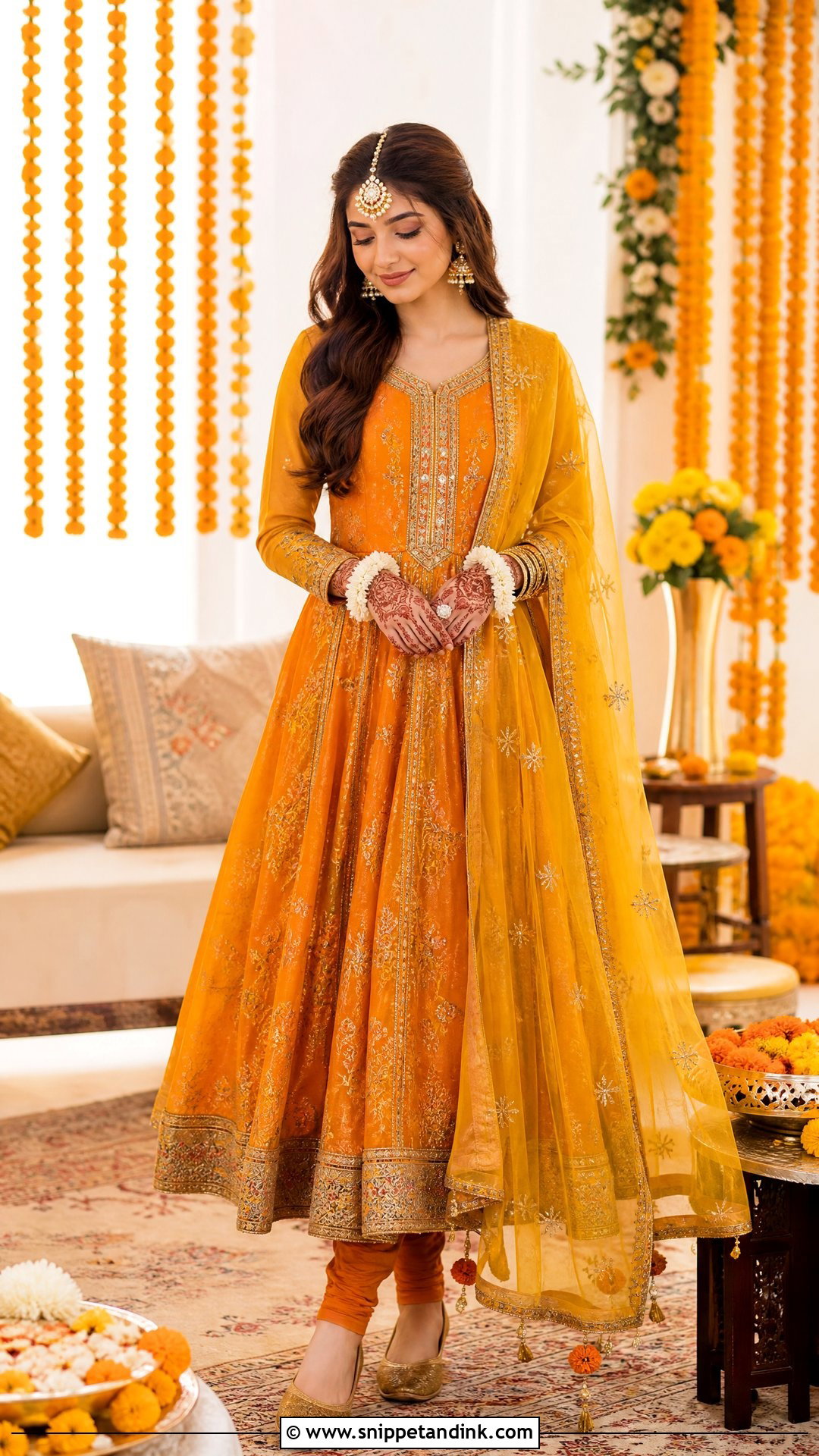
If you’ll be sitting through long rasams, an Anarkali is the kindest outfit on this list. The flowing cut suits most body types and gives coverage without feeling restrictive. Choose yellow, orange or green with detailed borders and a festive dupatta, and layered net or organza panels if you want it richer. Anarkalis are cut close through the bodice, so do your final fitting sitting as well as standing. Kundan earrings, a tikka and bangles complete it, and it sits naturally at smaller home mehndis and intimate family evenings.
13. Yellow And Pink Mehndi Dress For Bride
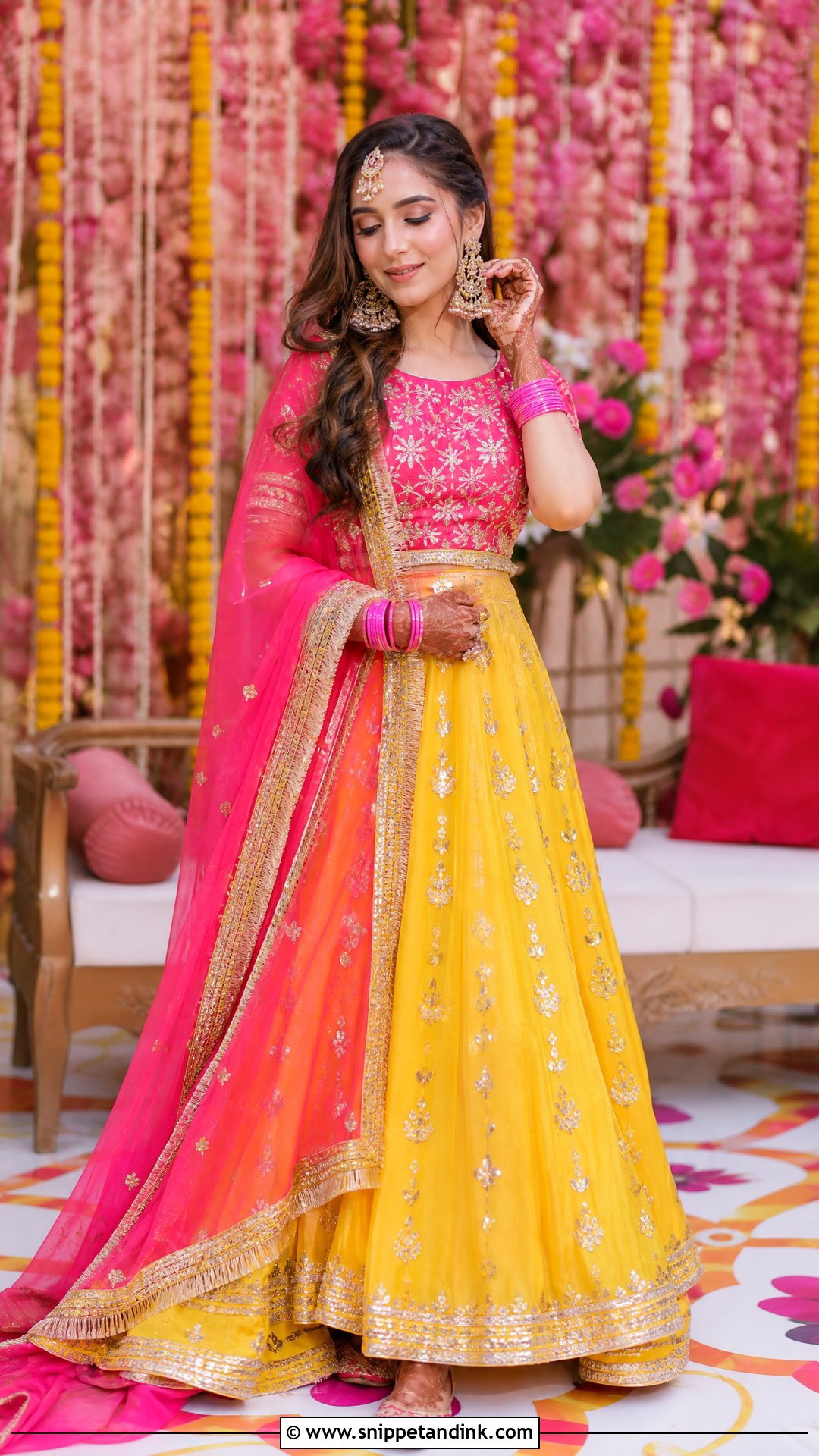
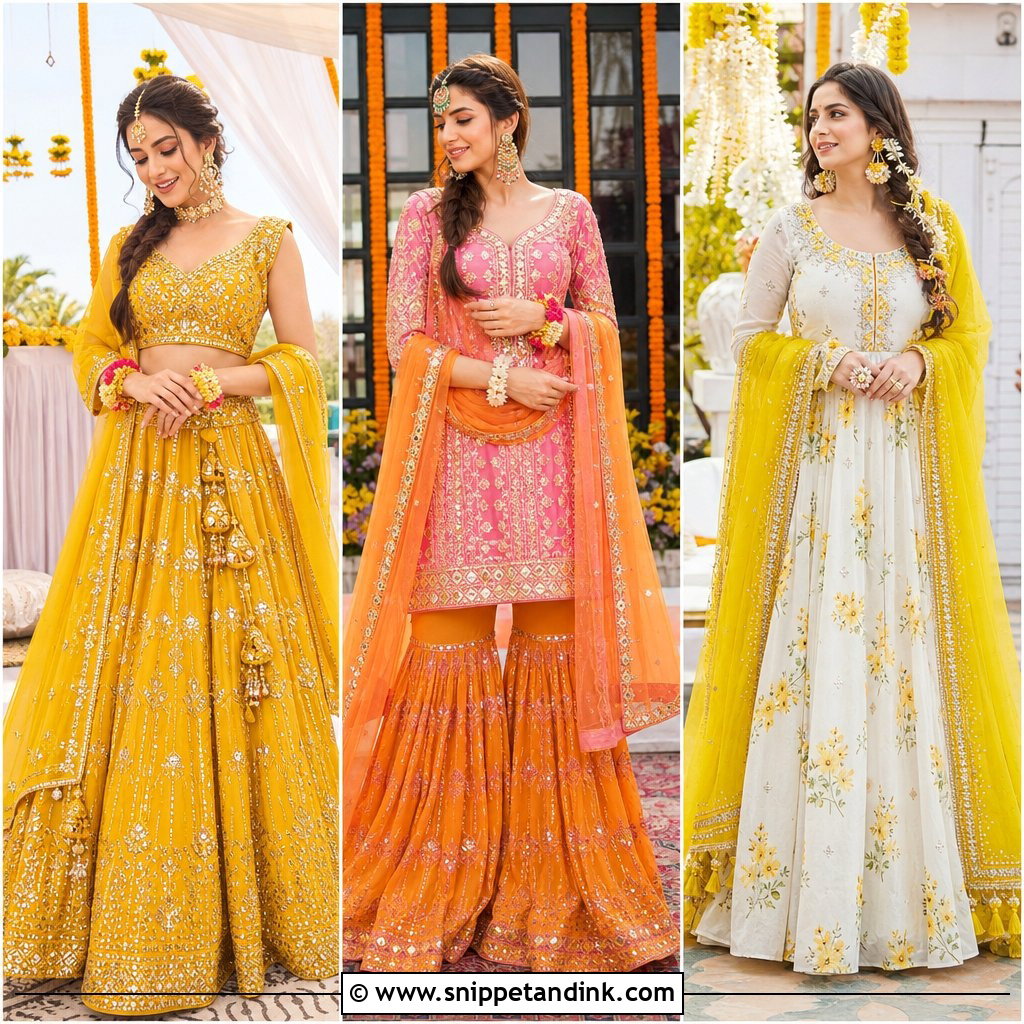
Yellow and pink is the cheerful pairing that flatters a wide range of complexions, because the pink frames the face while the yellow keeps the theme. Try a yellow lehenga with a hot pink choli, or a pink shirt with a yellow sharara. Gold gota or mirror work ties the two colors together. A very bright hot pink can cast onto the skin in close-ups, so I often suggest a slightly softer rose for the dupatta that sits near your face. Gold jewelry, pink bangles and peach-toned makeup finish it.
14. Yellow And Green Mehndi Dress For Bride
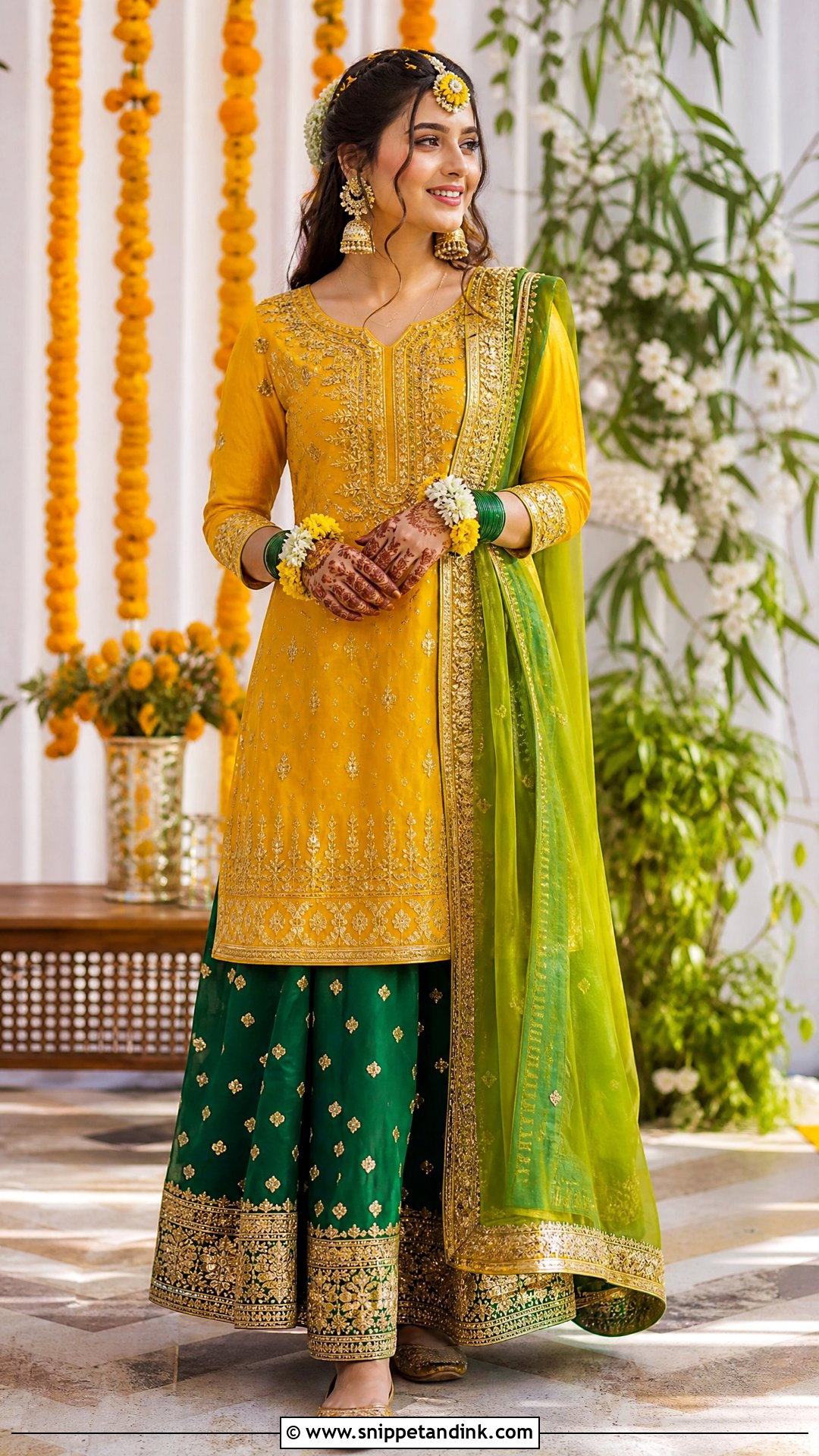
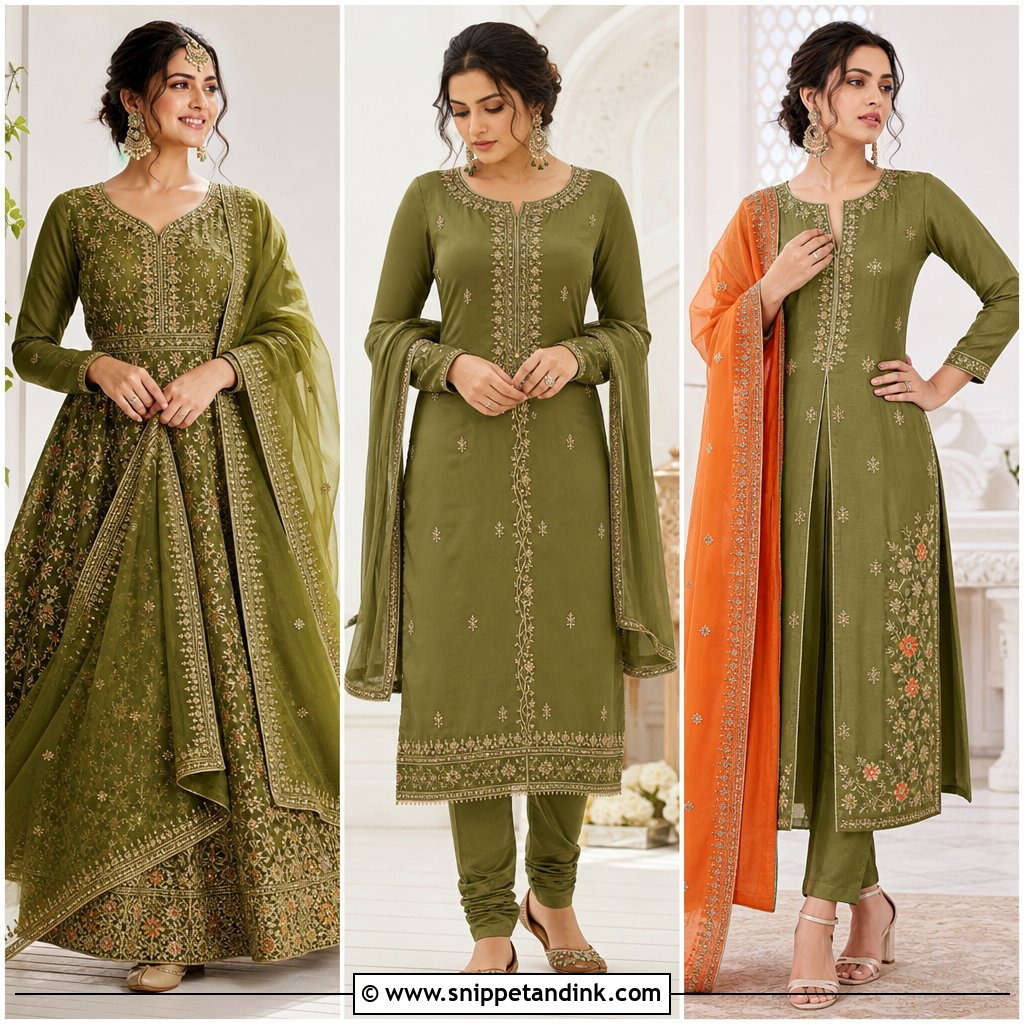
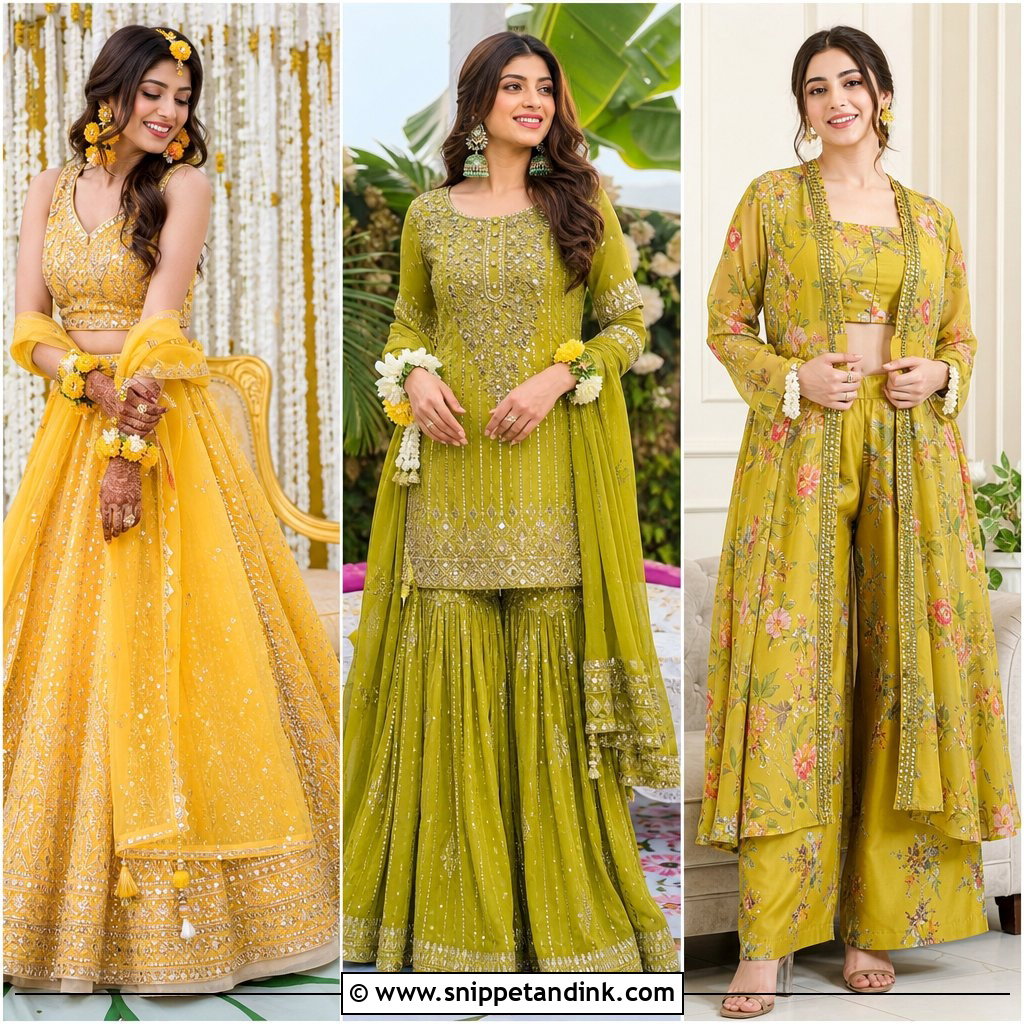
Yellow and green is the oldest mehndi pairing, tied to henna leaves, flowers and the mayun. A yellow kurti with a green gharara, or a green lehenga with a yellow dupatta, both work, with gold embroidery to keep things warm. Here’s the catch. If your decor is all marigolds and greenery, the outfit can blend right into it and you disappear in wide shots. I ask the decorator for the stage backdrop color before finalizing shades. Green bangles, gold jhumkas and a floral hair piece complete it.
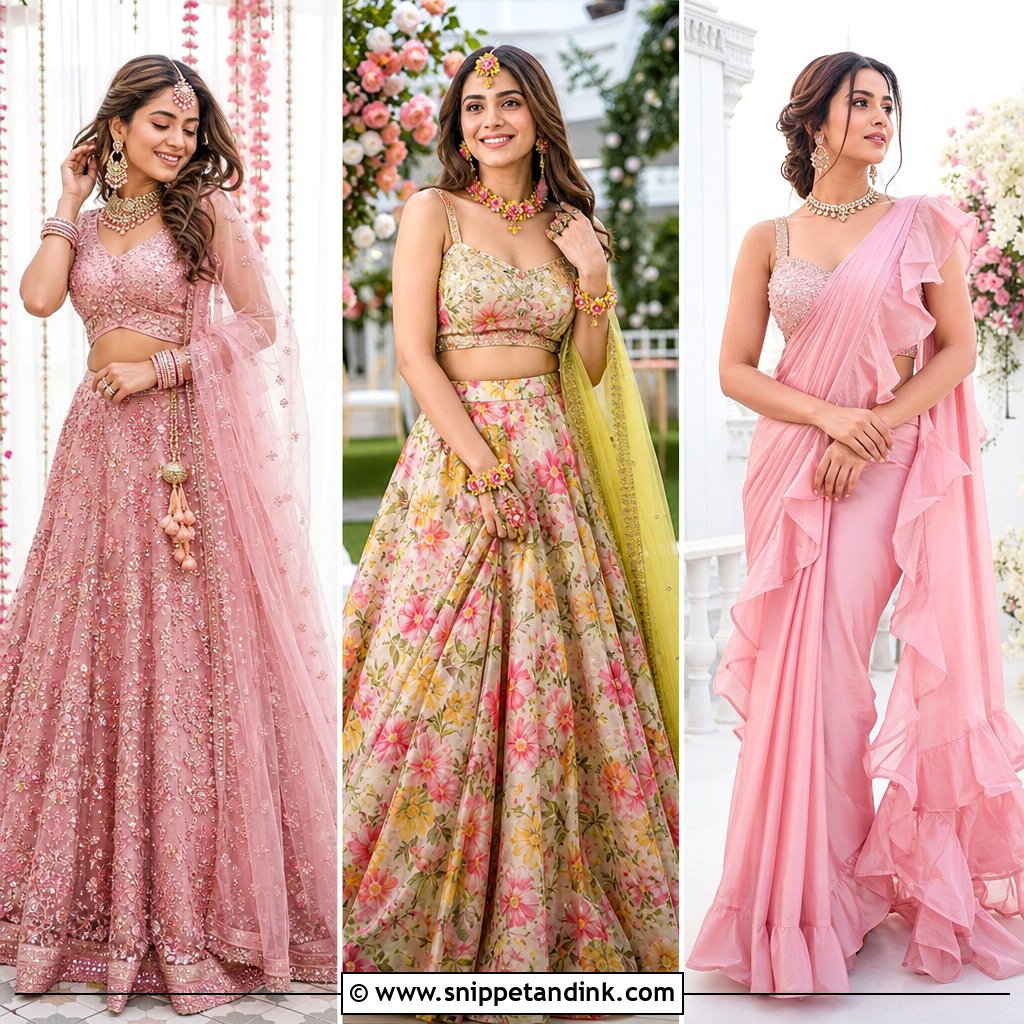
15. Lime Green Mehndi Dress For Bride
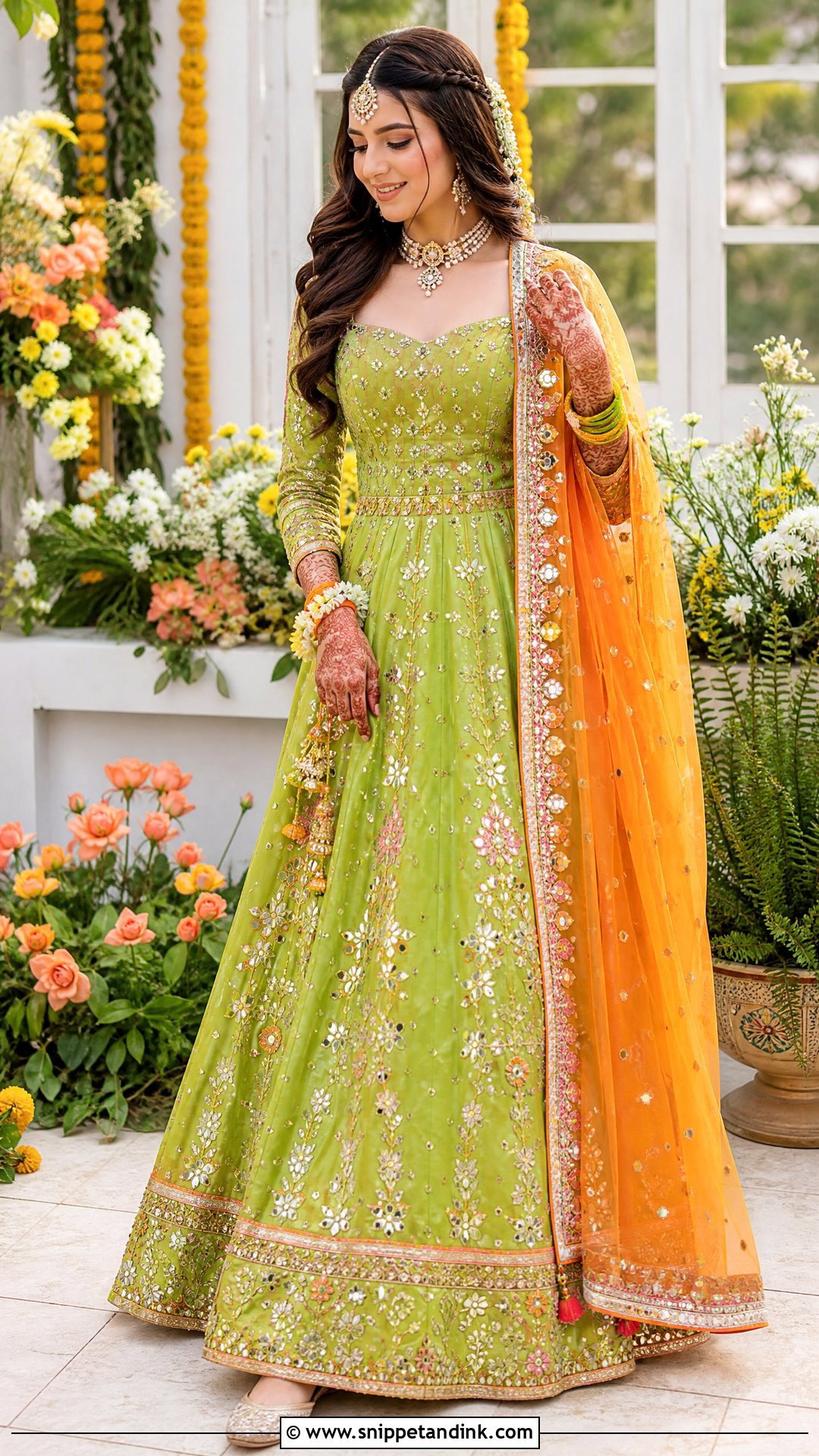
Lime sits between emerald and neon: bright, modern and very good on camera in daylight. A lime lehenga, sharara or peshwas with silver, gold or mirror detailing suits garden and daytime mehndis, and a yellow or orange dupatta pulls it toward tradition. Under warm evening bulbs, lime can drift toward a dull yellow, so for a night event look at the fabric under similar light first. Keep makeup clean with glowing skin, defined eyes and a soft lip, and let the embroidery decide between gold and pearl jewelry.
16. Hot Pink Mehndi Dress For Bride
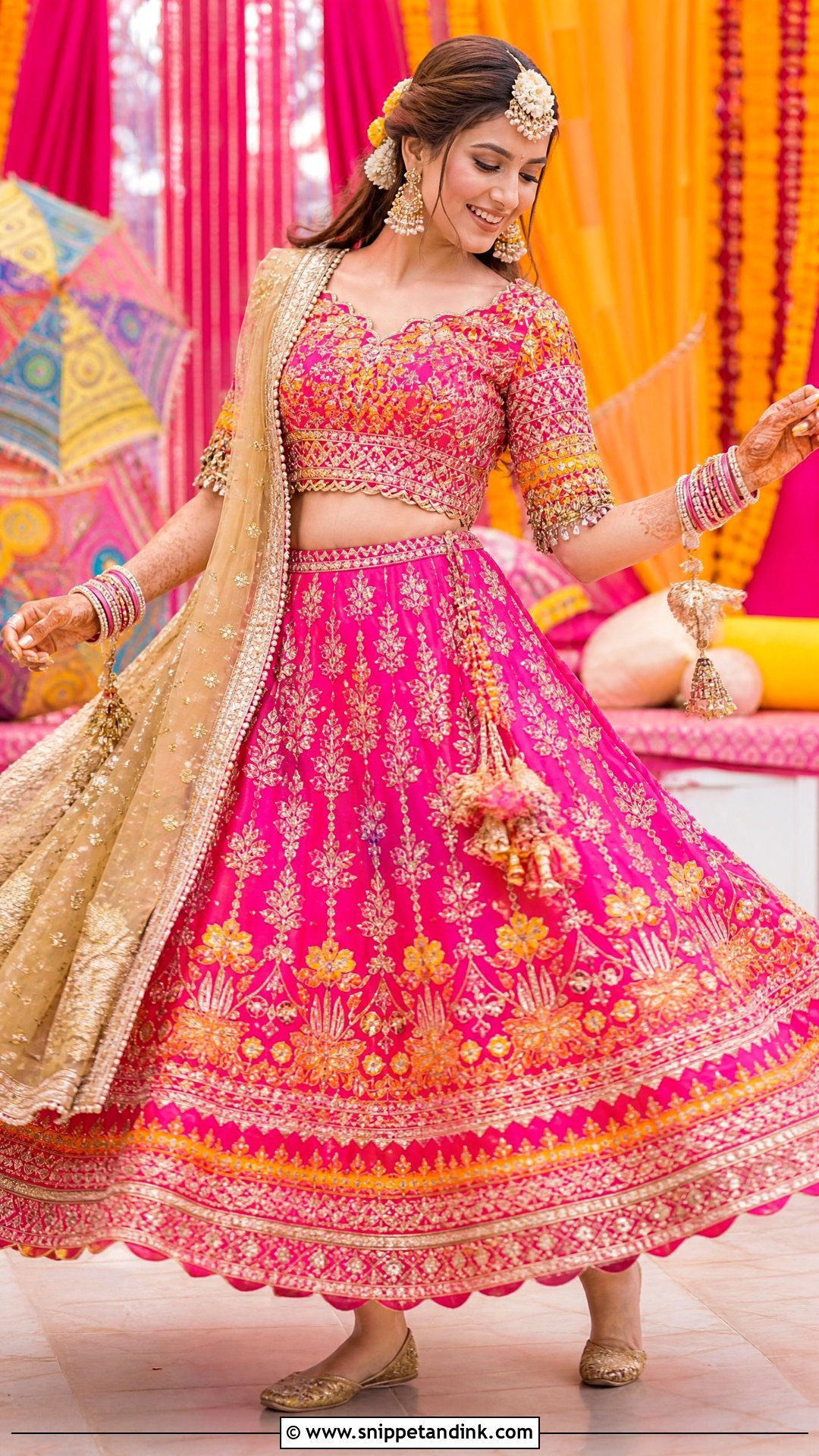
Hot pink is for the bride who’s decided the stage is hers. To keep it mehndi rather than reception, add orange, yellow or green accents, with festive detail in gold embroidery, mirror work or gota patti. A lighter dupatta or neutral gold accessories balance the strength of the color, and a sleek bun, passa and jhumkas make it read as bridal. Bright pink and wet henna are a bad mix. If your hands are being done that night, keep the dupatta pinned well clear of them.
17. Teal Mehndi Dress For Bride
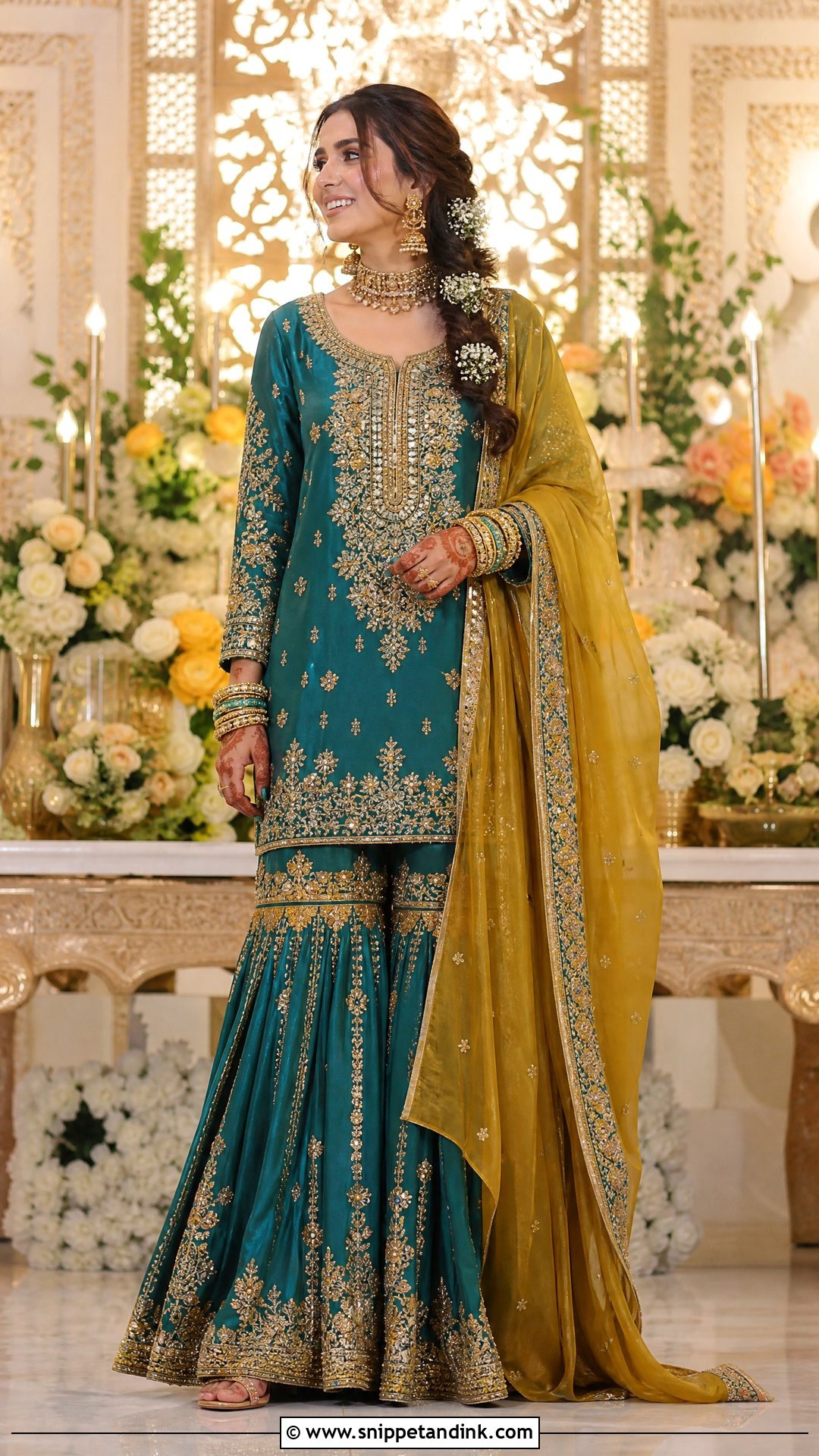
Teal carries the depth of blue and the freshness of green, and at an evening mehndi it looks rich without tipping into barat territory. Choose a teal sharara, lehenga or long shirt with gold embroidery, and a mustard, rust or pink dupatta to bring in the warmth. Antique gold suits teal better than bright yellow gold, especially in jhumkas, chokers and bangles. Against marigold and gold decor, teal is the outfit that actually separates from the backdrop in photographs.
18. White And Yellow Mehndi Dress For Bride
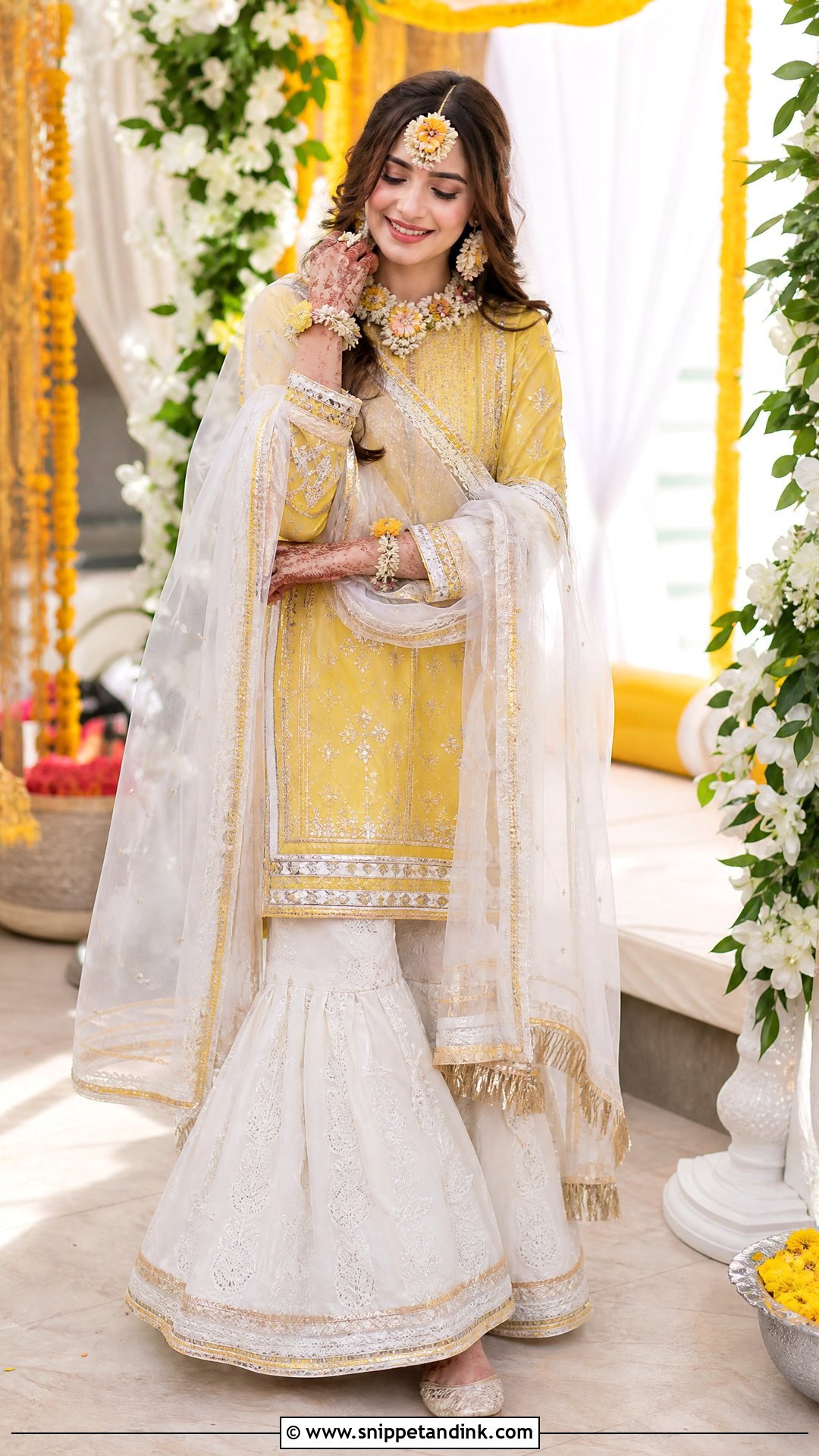
White and yellow is the softest way to keep a mehndi look festive. Think a white gharara with a yellow kurti, or a yellow lehenga with a white embroidered dupatta, with gold gota, thread work or mirror accents to keep it bridal. It’s a daytime outfit, and white shows everything: rasam oil, ubtan, henna paste. If the mayun rituals happen the same night, choose the yellow lehenga version so the white stays above the mess. Floral jewelry, pearls or delicate kundan, and glowy peach or coral makeup suit it.
19. Pastel Mehndi Dress For Bride
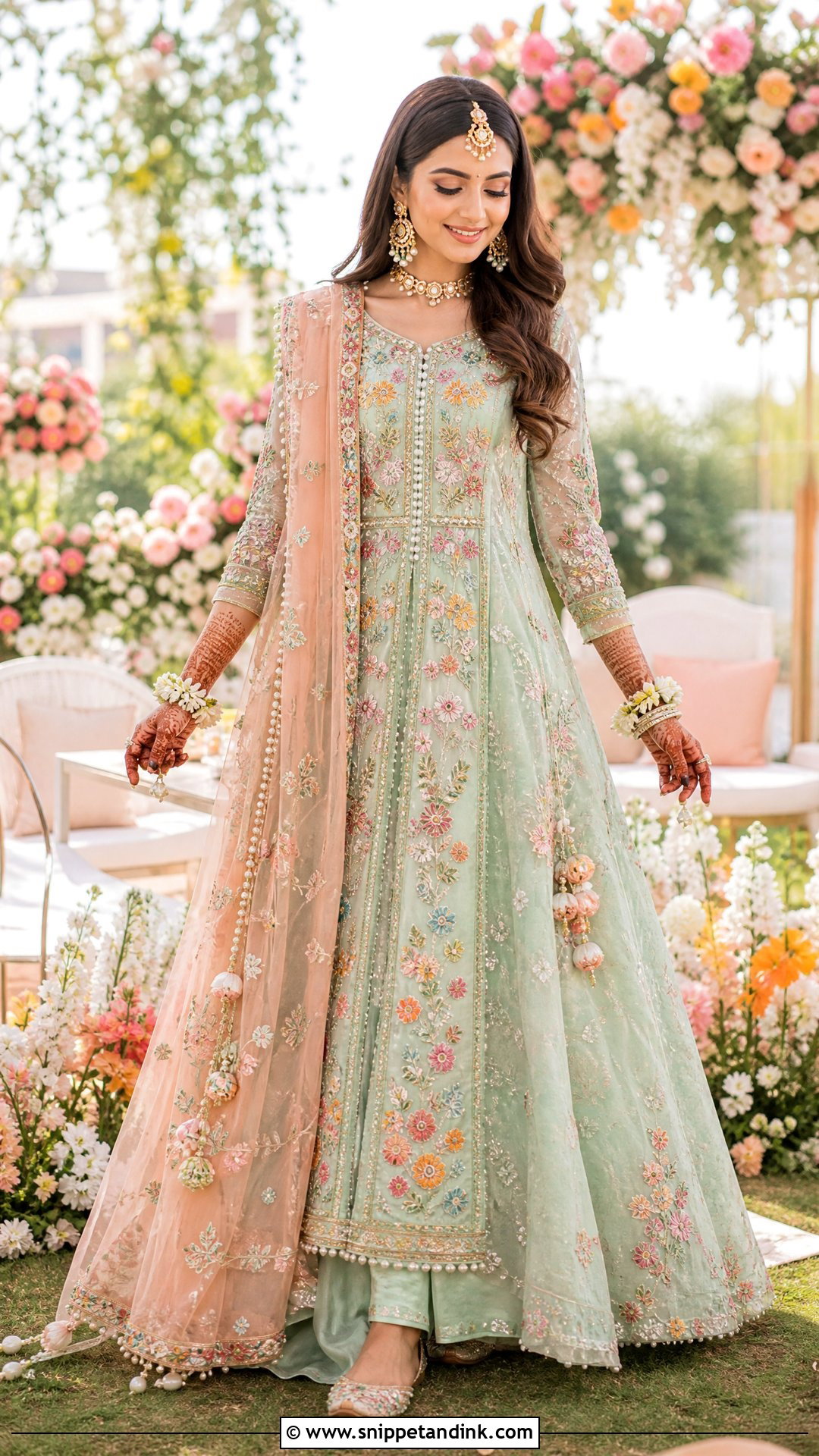
Pastels have found a place at Pakistani mehndis, but without the right detailing they read as a guest outfit. Mint, peach, blush, powder blue and pale yellow all work with gota, mirror work or colorful resham, and a brighter dupatta or statement jewelry brings in the mehndi energy. They suit daytime and garden events. In a dim hall, pastels flatten and can look grey on camera, so ask about the lighting plan before you commit. Pearls, kundan or gold accents keep it polished.
20. Velvet Mehndi Dress For Bride
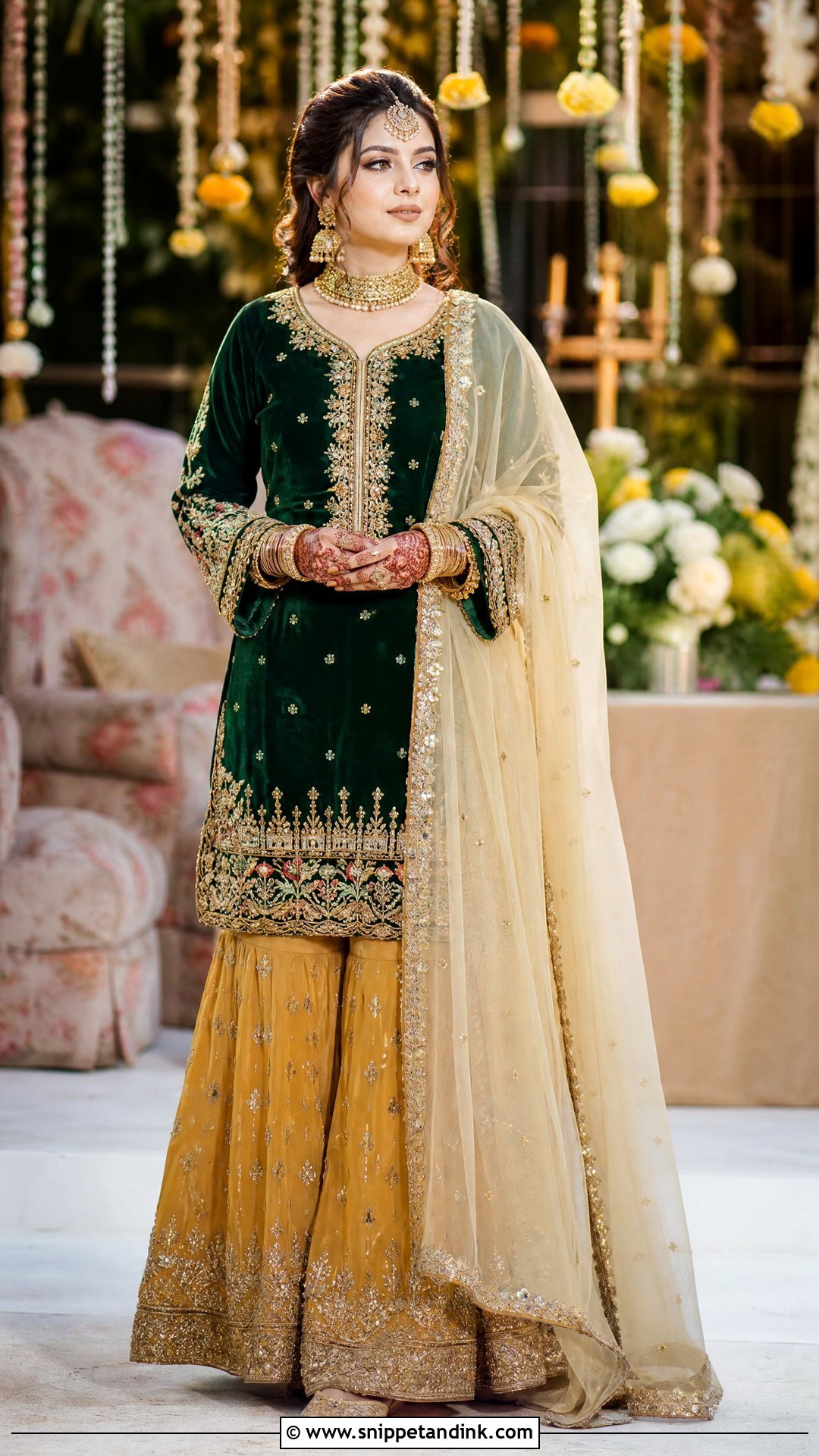
Velvet belongs to winter mehndis, in deep mustard, emerald, rust or teal. It’s warm and heavy, so balance it with a simple silhouette: a short kurti with gharara, a jacket lehenga, or a straight shirt with sharara. Gold embroidery sits richly on the pile and gives a regal Pakistani bridal feel. Keep the dupatta in organza or net. Velvet also crushes wherever you sit and lean, so hang it the night before rather than folding it, and steam it from the inside without pressing the pile flat. Antique jewelry and a neat bun suit it.
21. Organza Mehndi Dress For Bride
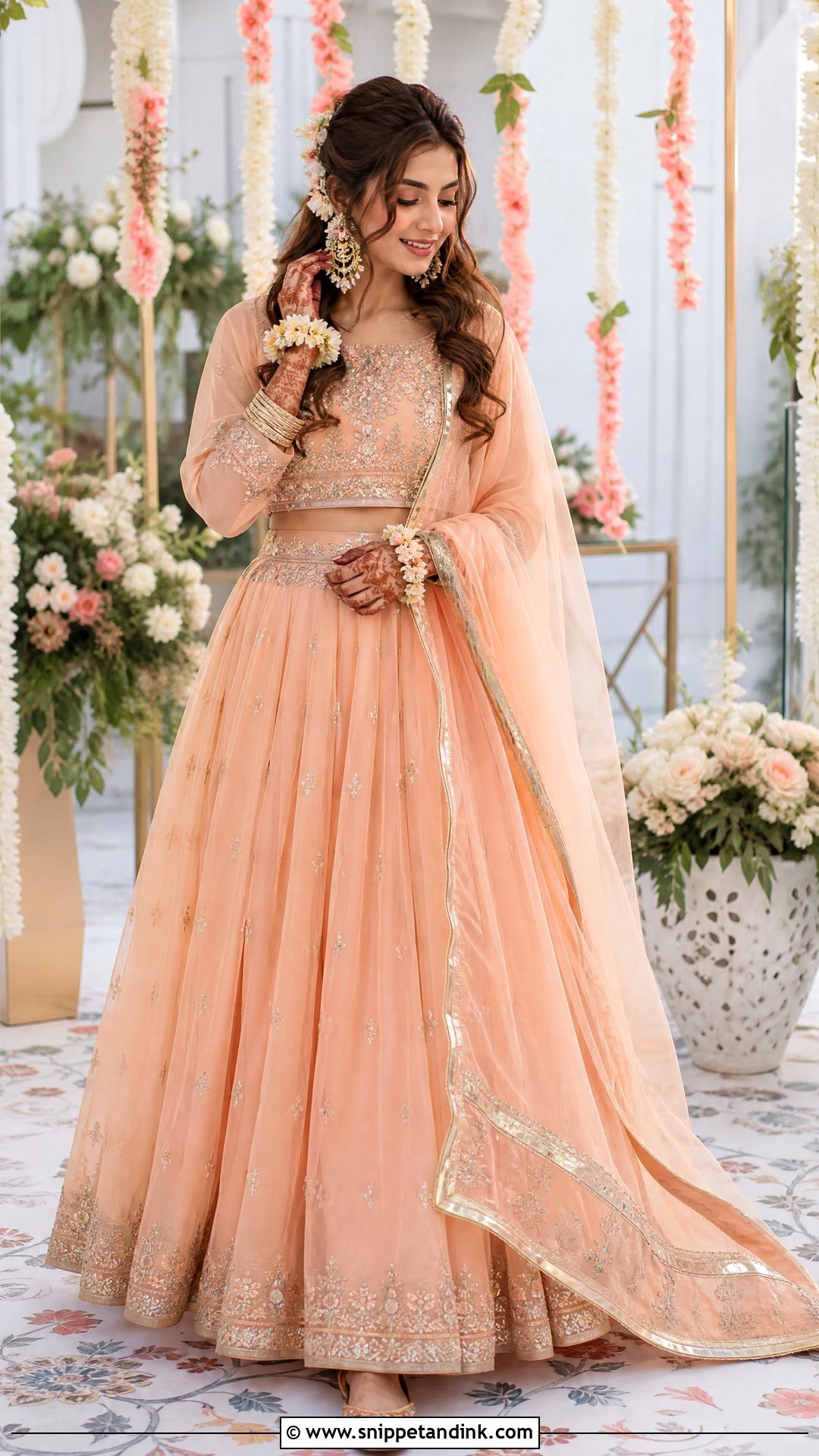
Organza is crisp and light, which is why it turns up in dupattas, layered lehengas, peshwas and flared shirts. In yellow, peach, mint or orange with delicate embroidery, gota borders or sequins, it gives volume without bulk because the fabric holds its own shape. A light organza dupatta frames the face well in photos. The trade-off is texture: organza can feel scratchy on bare skin and creases sharply. Ask for a soft lining in the bodice and sleeves. Soft jewelry, khussas and a neat hairstyle suit it at daytime mehndis.
22. Short Frock Gharara Mehndi Dress For Bride
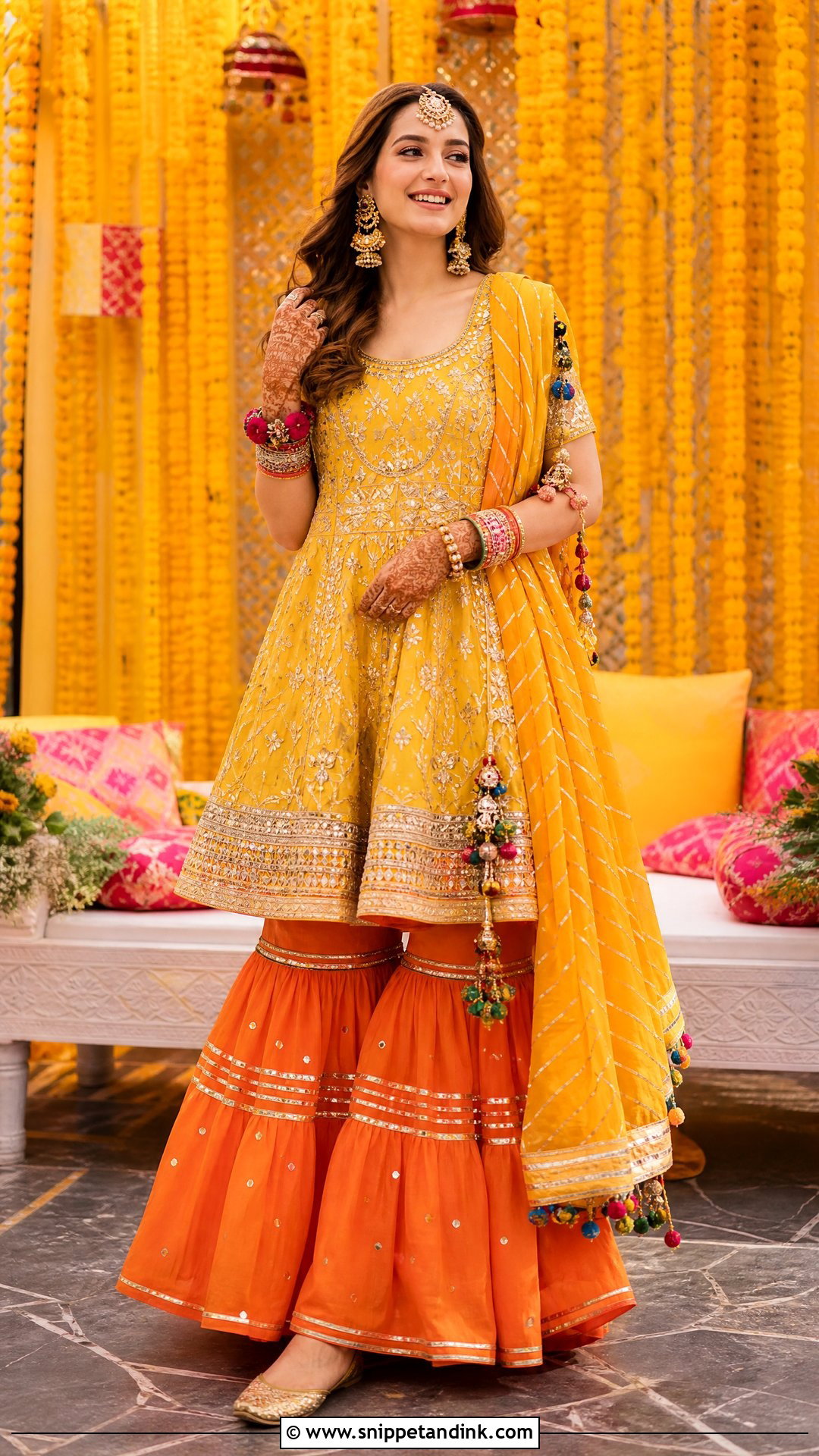
A short frock over a gharara is playful and very traditional at the same time. The frock gives a youthful shape, and the gharara roots it in Pakistani bridal wear. Mustard, orange, green or pink with gota and mirror details suit it, and a dupatta with tassels or kiran edging adds the classic finish. Because the top is short, sitting cross-legged during rasams is easy and nothing bunches when you dance. Khussas, a passa, bangles and fresh makeup complete it.
23. Long Shirt Sharara Mehndi Dress For Bride
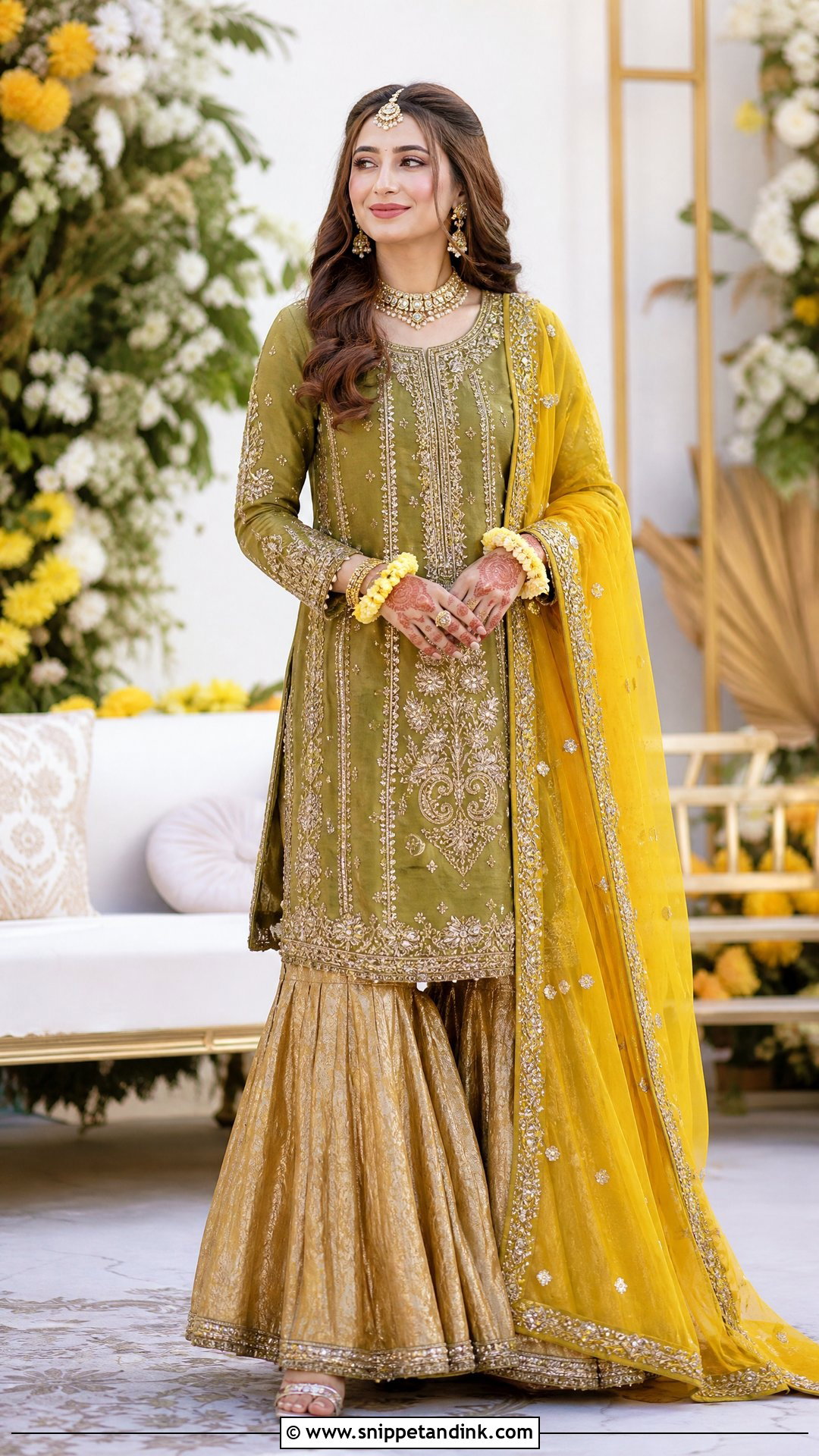
For brides who don’t want a fitted blouse or cropped choli, a long shirt with sharara gives full coverage and still has festive volume below. Choose a yellow, olive, teal or rust shirt with heavy borders and a lighter embroidered sharara, so the weight sits on the shirt rather than dragging the waistband down. A contrasting dupatta adds color. Check the side slits. Too low, and the shirt bunches across your lap in every seated photo. Kundan jewelry, soft curls and embellished khussas finish it.
24. Dhoti Pants Mehndi Dress For Bride
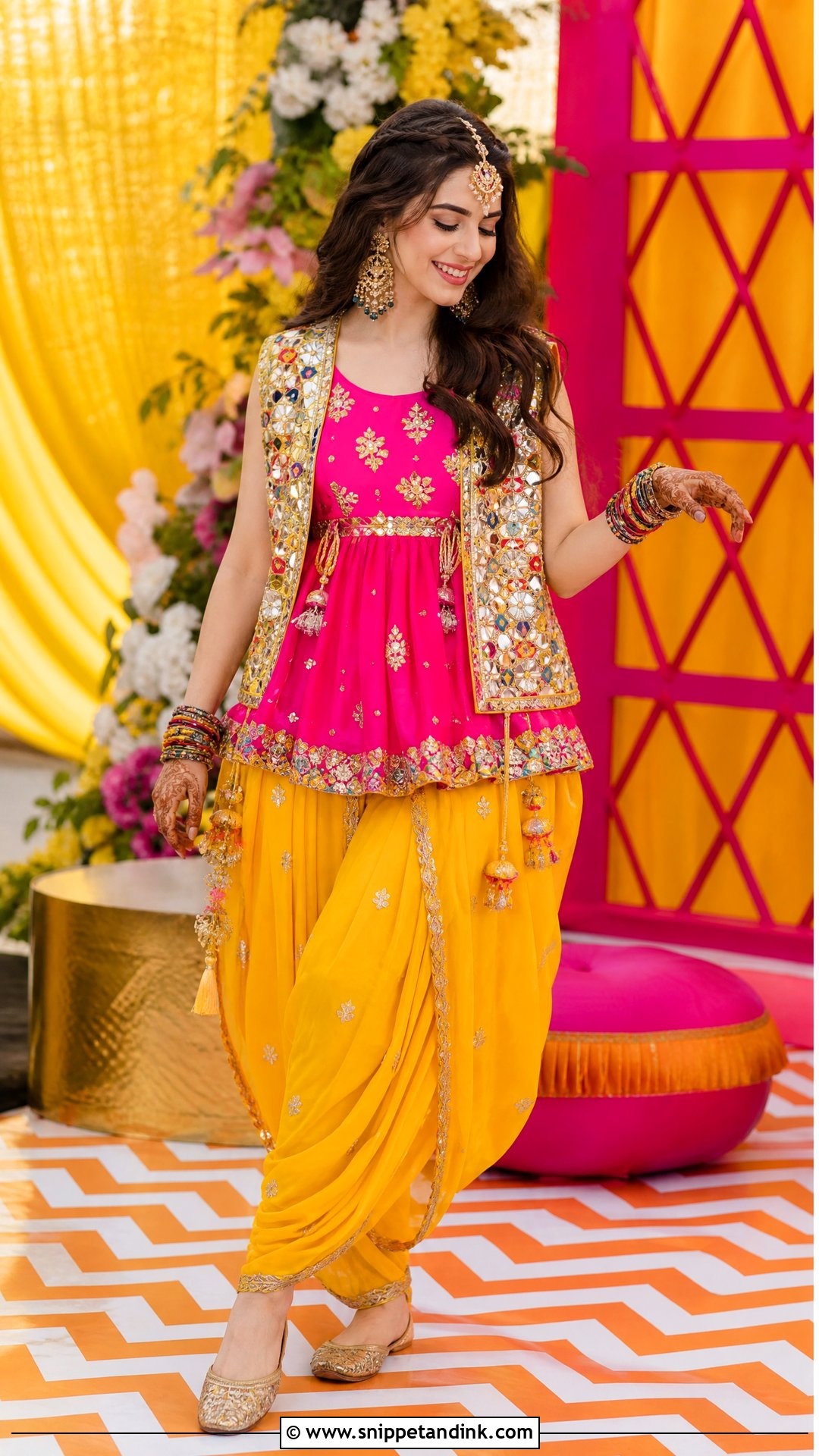
Dhoti pants make a fusion mehndi look for a bride who wants to dance freely before the heavier events. Pair embroidered dhoti pants with a short kurti, peplum top or jacket blouse. Yellow, orange, lime or hot pink keep it festive, and mirror work, gota, tassels or colorful embroidery stop it from looking casual. Insist on pre-draped dhoti pants; I wouldn’t trust hand-draped pleats through a mehndi night. Statement earrings, stacked bangles and embellished flats suit dholki nights and dance performances.
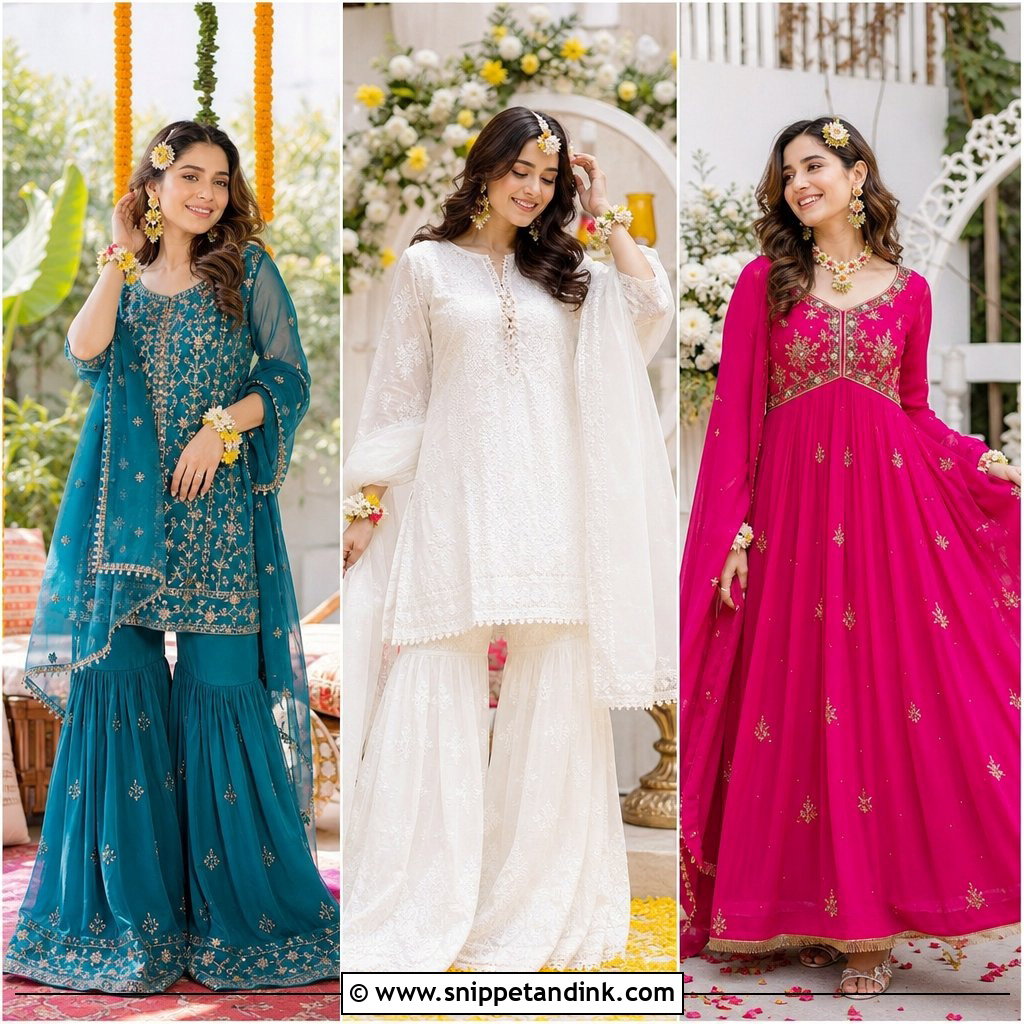
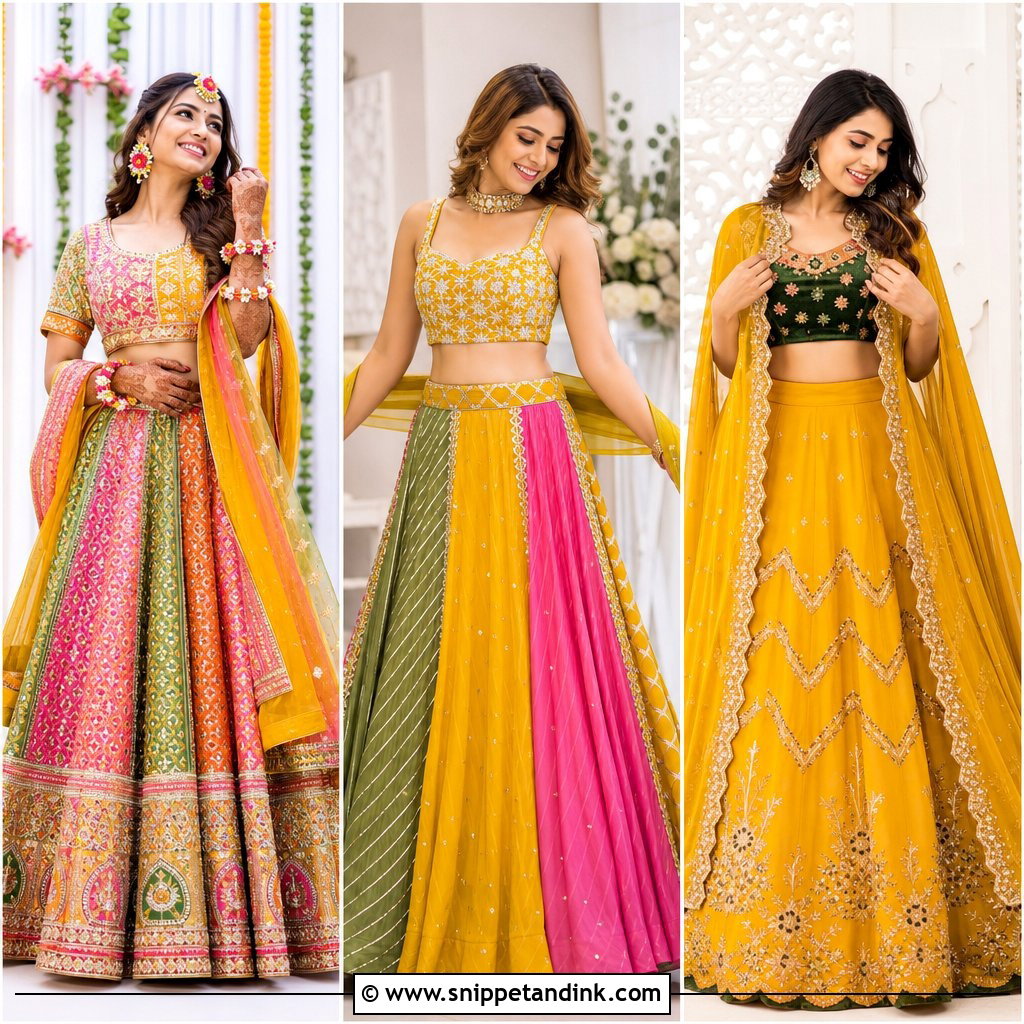
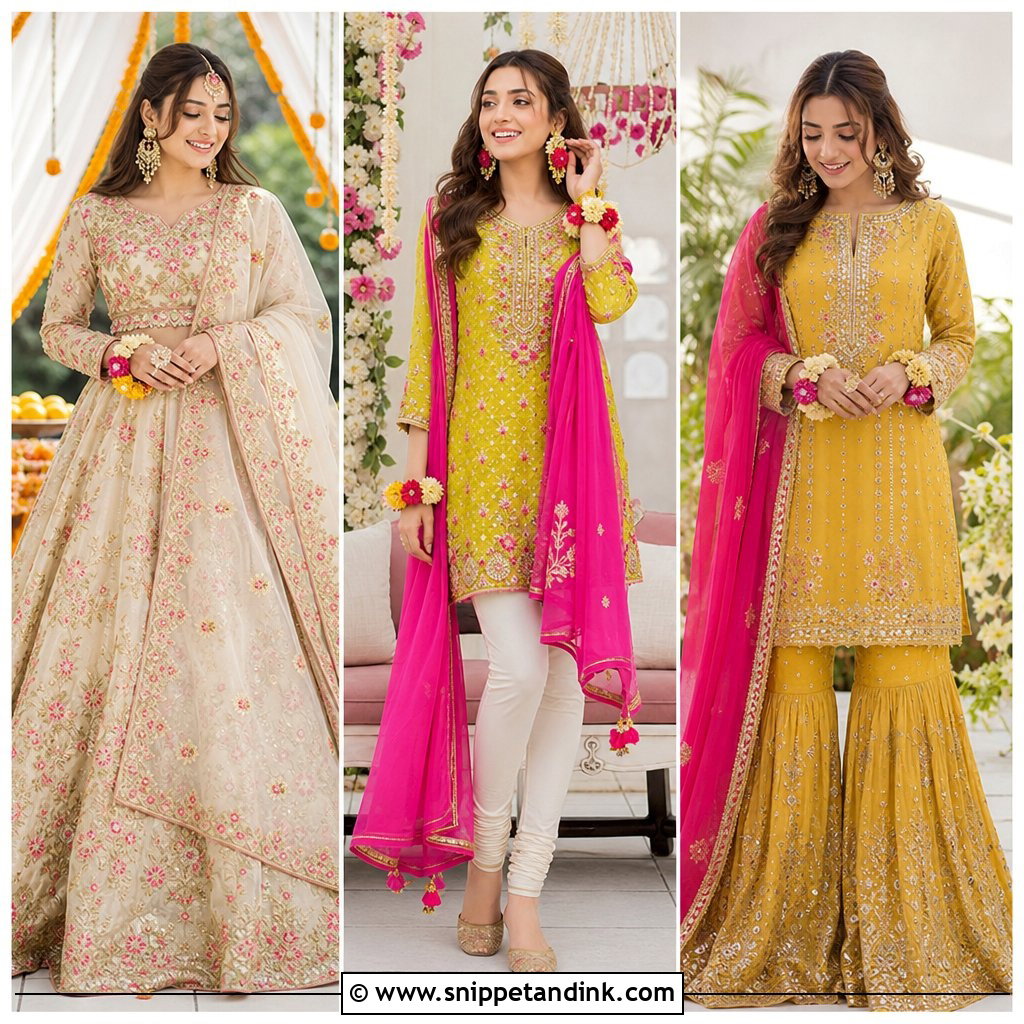
25. Floral Jewelry Mehndi Dress For Bride
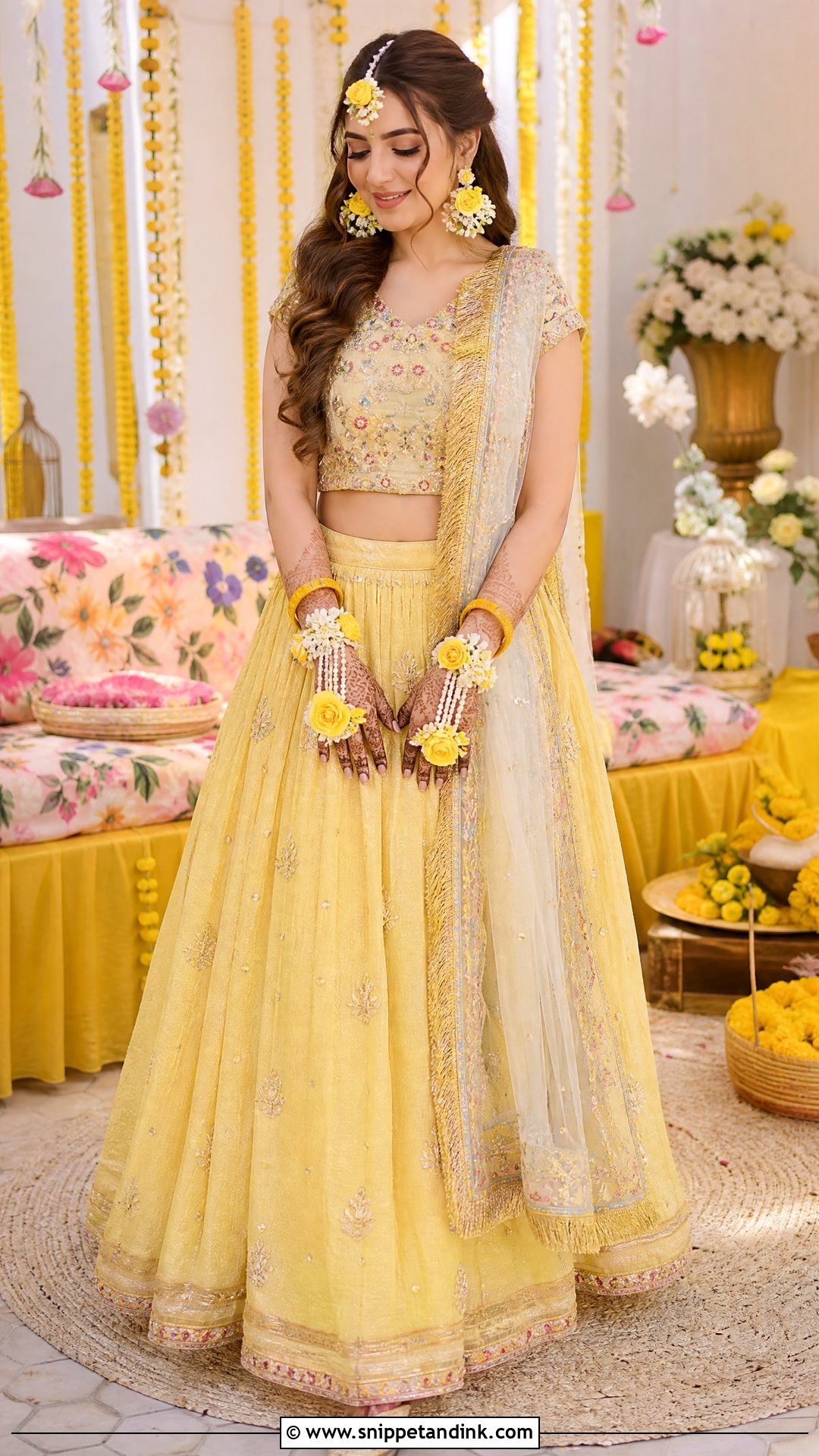
Floral jewelry belongs with the mayun and daytime mehndis, and the outfit should step back to let it show. Choose a yellow, white, peach or green lehenga, gharara or Anarkali with lighter embroidery, then add a floral maang tikka, earrings, bracelets and haath phool. Fresh flowers wilt in heat and their petals can stain pale fabric, so I have them made the morning of the event and kept cool until dressing. Artificial pieces avoid both problems and become a keepsake. Natural makeup, a braid or bun and comfortable khussas finish it.
Ubtan, Oil and Wet Henna Near Your Outfit
Mehndi and mayun rasams are messy by design. Relatives smear ubtan on your face and hands, drip oil into your hair and feed you sweets with sticky fingers, and if your henna goes on the same night, wet paste is never far away. Yellow suits the mayun partly because turmeric marks barely show on it.
- Pin the dupatta back over your shoulders before the rasam starts, and have someone else hold the loose end.
- Keep a plain cotton cloth across your lap for the ubtan rounds.
- If henna is applied that night, wear something simpler for the application and change for photos, or have it done the day before.
- Blot oil and ubtan straight away with a dry tissue. Don’t rub, and leave the rest for a dry cleaner who handles embroidered wear.
Putting Gota and Mirror Work Away After the Night
The outfit usually comes off in the small hours and gets dropped over a chair, and that’s when the damage starts. Air it overnight before storing it, because sweat and food smells set into silk if it’s sealed away damp. Once it’s been cleaned, fold it with acid-free tissue or soft muslin between the layers so mirrors and embroidery don’t press into the fabric beside them. Wrap the whole piece in cotton rather than plastic, which traps moisture, and refold it along different lines every few months so the creases don’t wear through the gota.
Sit, Walk and Dance in It Before the Last Fitting Ends
A mehndi outfit has more work to do than look good. It has to survive rasams, dance entrances and hours on a stage, and still feel like yours. Classic yellow lehengas, mustard ghararas, teal shararas, pastel peshwas, mirror work sets and dhoti pants all have their place. Decide by your venue, the season, your family’s traditions, the jewelry you’ve already chosen and how much you plan to move. Then, at your last fitting, wear the finished outfit for twenty minutes, sitting, walking and lifting your arms, before anyone calls it done.
You'll Like These Ideas:


Leave a Reply