
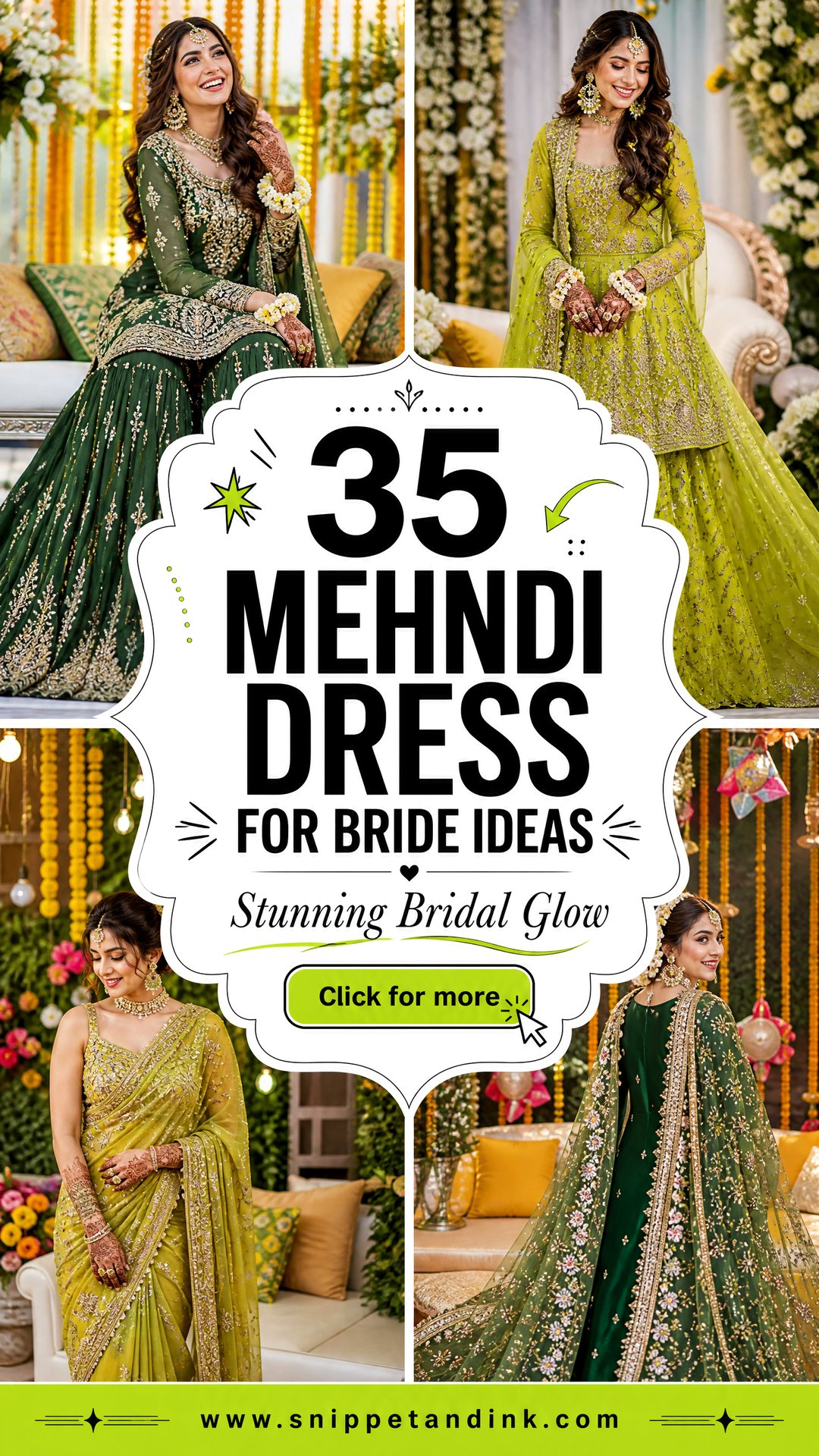
The mehndi outfit has a harder job than the wedding outfit. You sit for hours while an artist works on your arms, you cannot use your hands, then you get up and dance, and through all of it the camera keeps zooming in on your hands against the fabric. So when I dress a bride for this event, I start with the sleeves, the seating and the dupatta, and only then talk about color. Yellow, green, orange, pink and multicolor are still the classics, but ivory, teal, pastels, mirror work and statement dupattas all show up on my rails now. Below are the outfits I put in front of brides, traditional, Pakistani, Indian and fusion, with what each one demands on the day.
Dressing for Hours With Wet Paste on Both Arms
Once the henna artist starts, you lose the use of your hands for a long time. Every outfit decision I make for a mehndi bride starts there. Get fully dressed, jewelry included, before the application begins; you will not be able to fasten a hook, change earrings or adjust a blouse until the paste is dry and scraped.
- Sleeves: sleeveless, cap or elbow length if the design goes up the forearm. Sheer sleeves still drag on wet paste.
- Closures: side zips or front hooks that someone else can manage quickly. Long back tie-ups are a problem when you need the bathroom.
- Skirt volume: a heavy can-can lining pushes up when you sit cross-legged on a low stage. Try sitting in it at the fitting.
- Dupatta: pinned on firmly, or removable for the application and put back on for photos.
Bring a trusted helper. Someone has to feed you, hold your phone and help you in the bathroom, and it is far easier if the outfit lets them do it without unpinning half your look.
The color your hands will actually be that day
On the mehndi night itself, your hands are covered in dark green or brown paste, not the reddish stain you will have at the wedding. Once scraped, the fresh stain is a bright orange that deepens over the next day or two. So photos taken at the mehndi show paste or orange against your outfit. That is why I hold a swatch of the fabric next to a dark brown paste color when brides are deciding, not next to a finished-stain photo.
1. Yellow Mehndi Lehenga For Bride
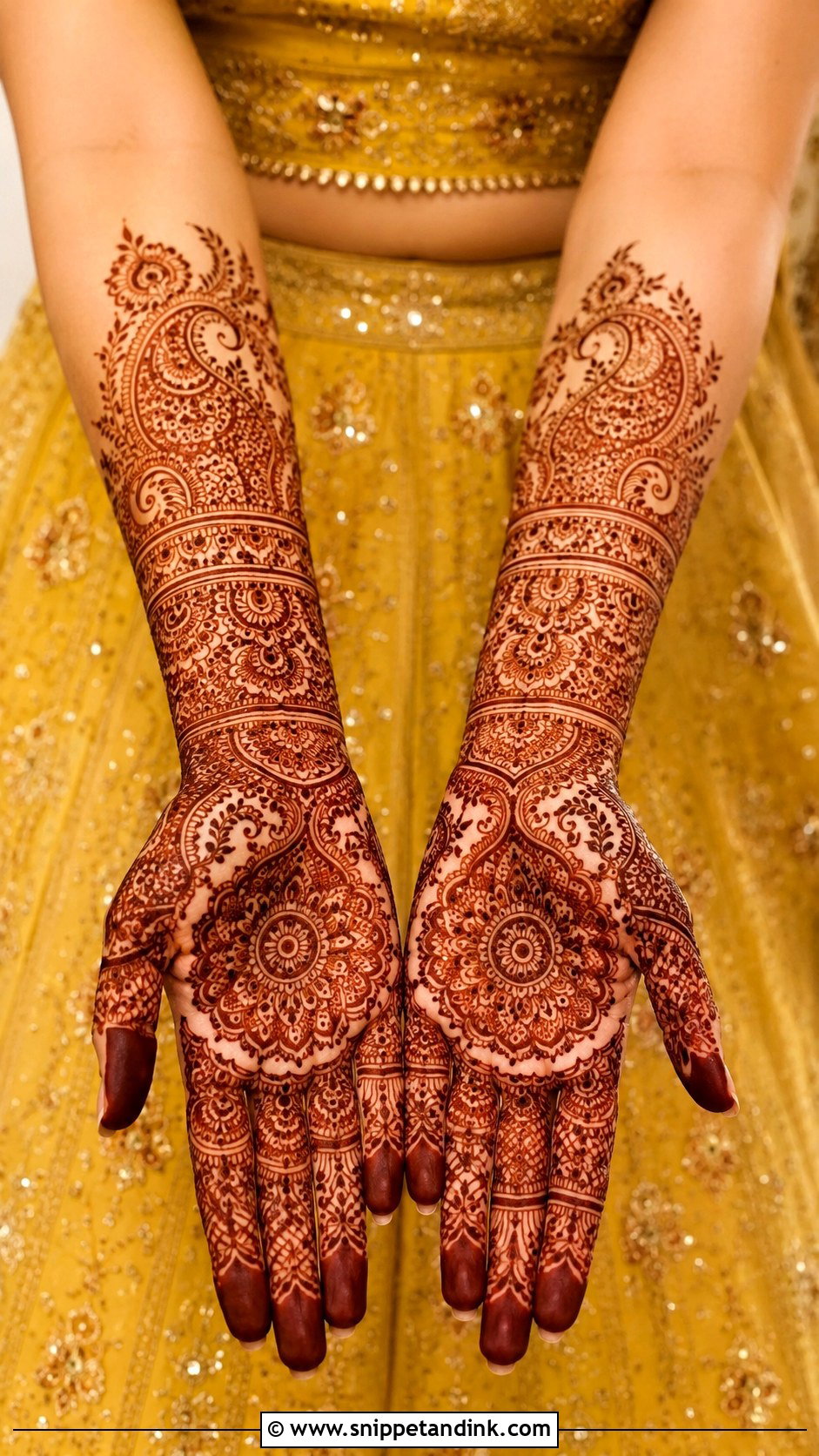
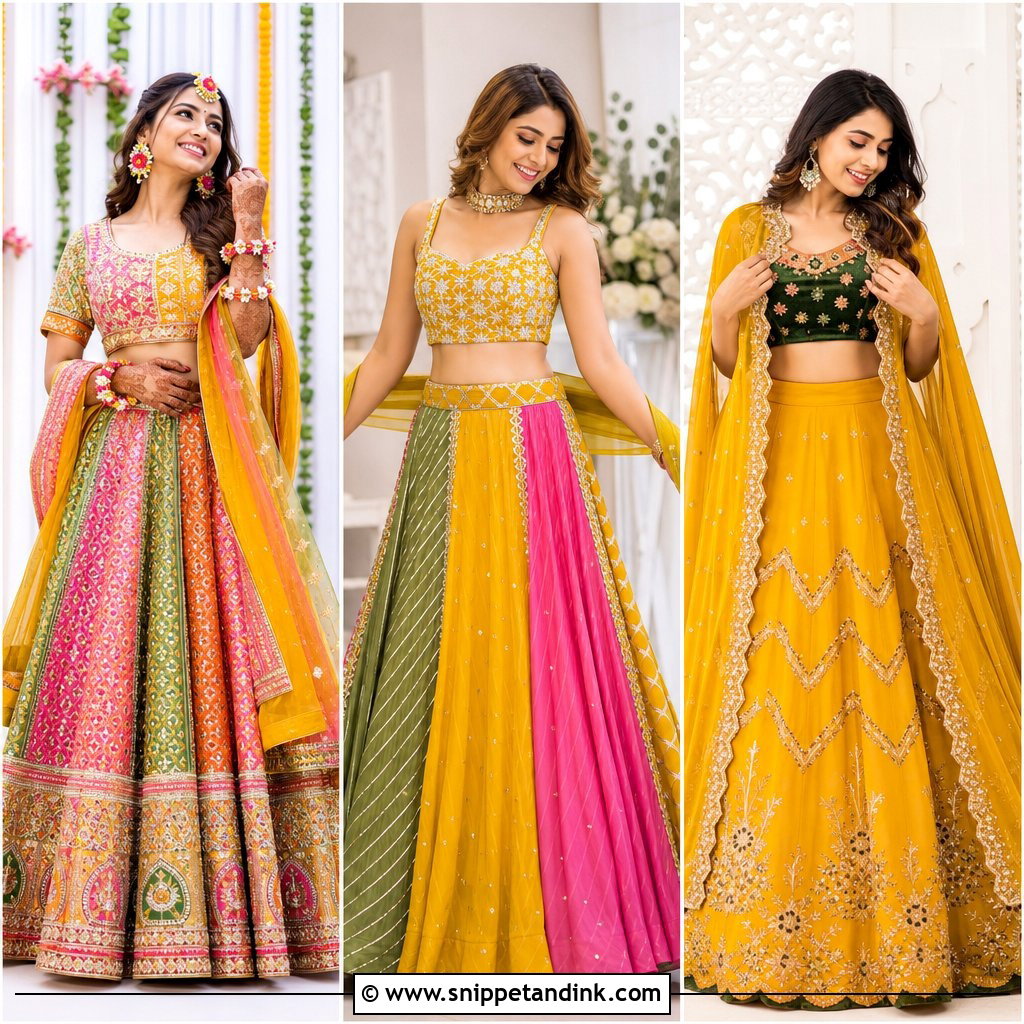
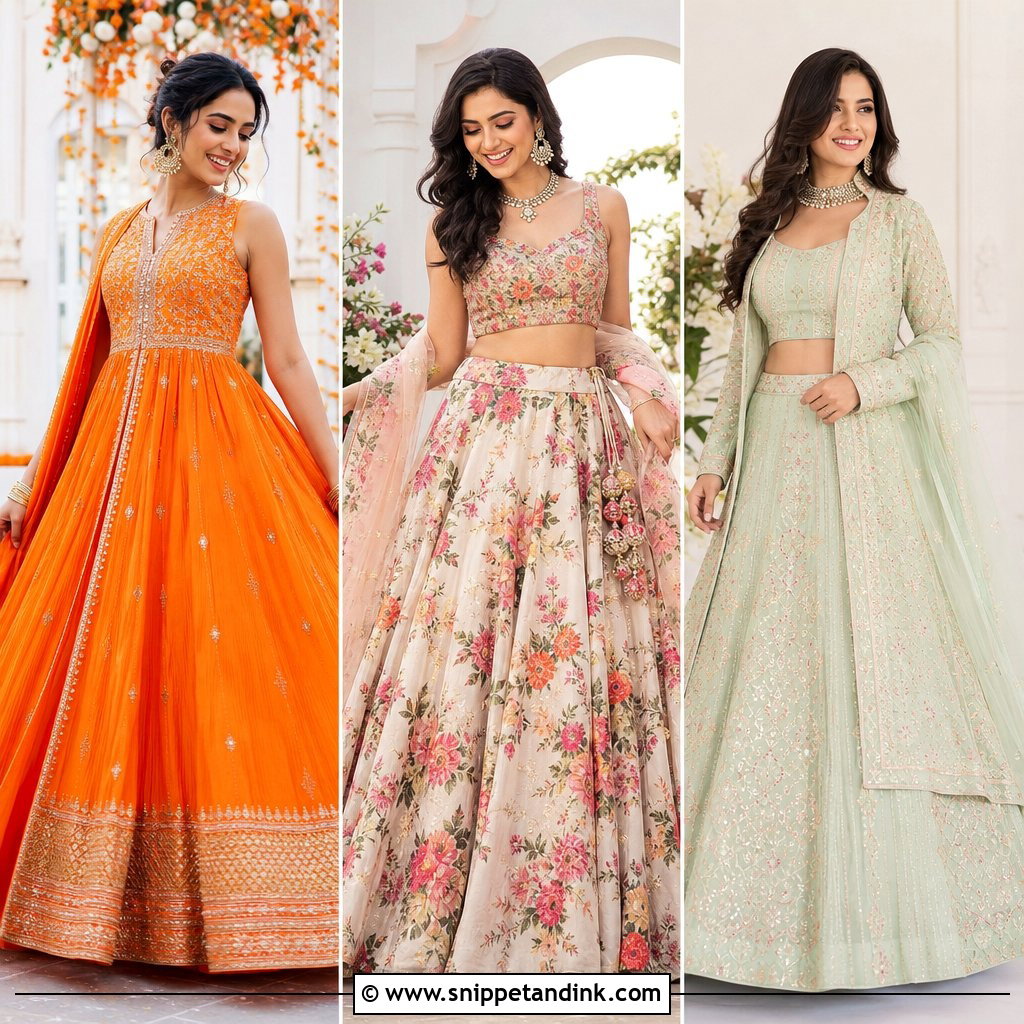
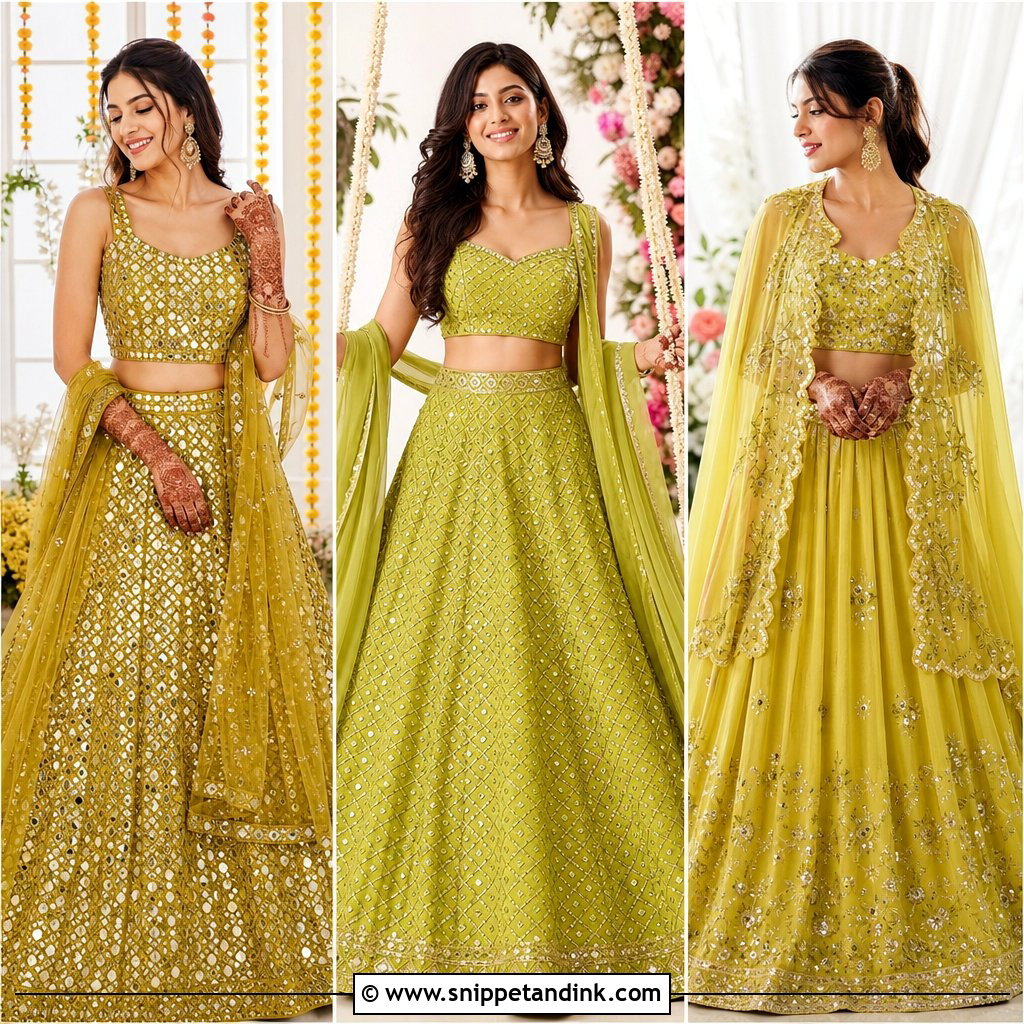
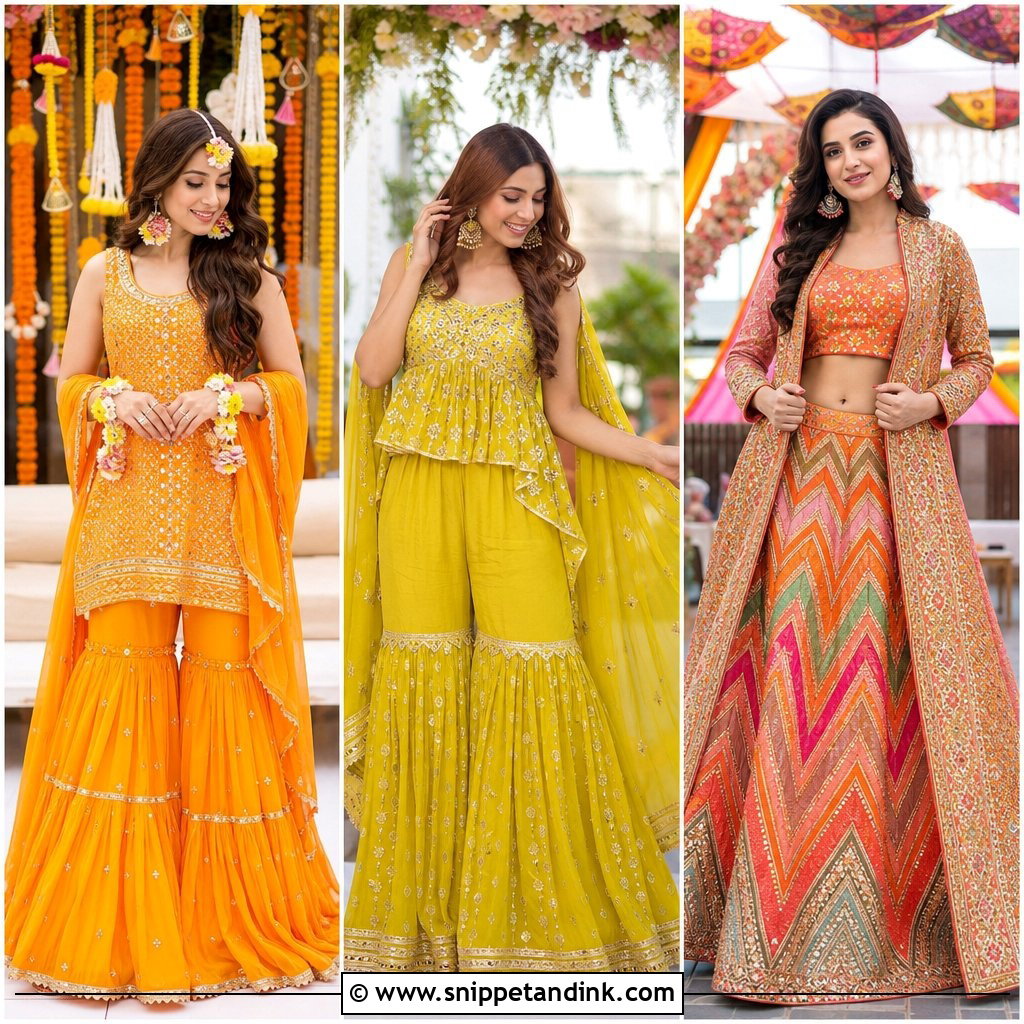
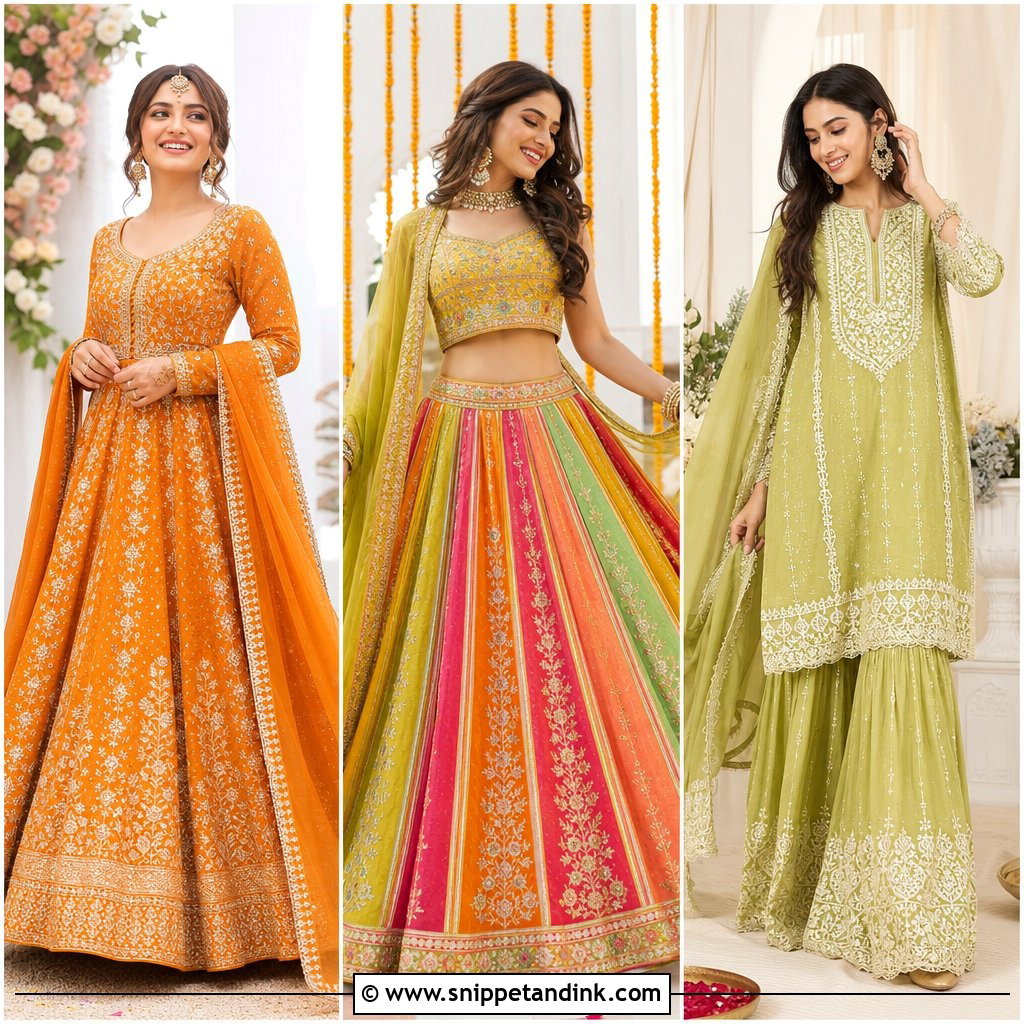
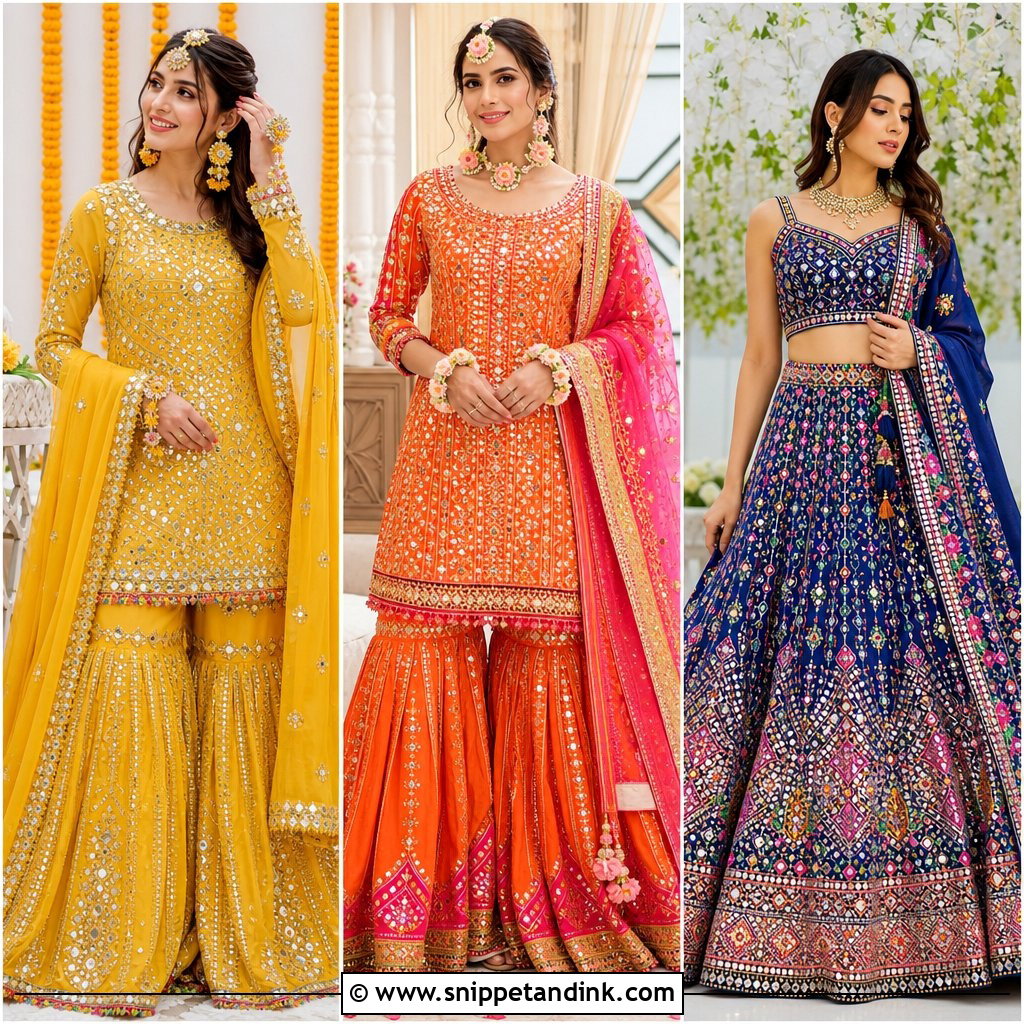
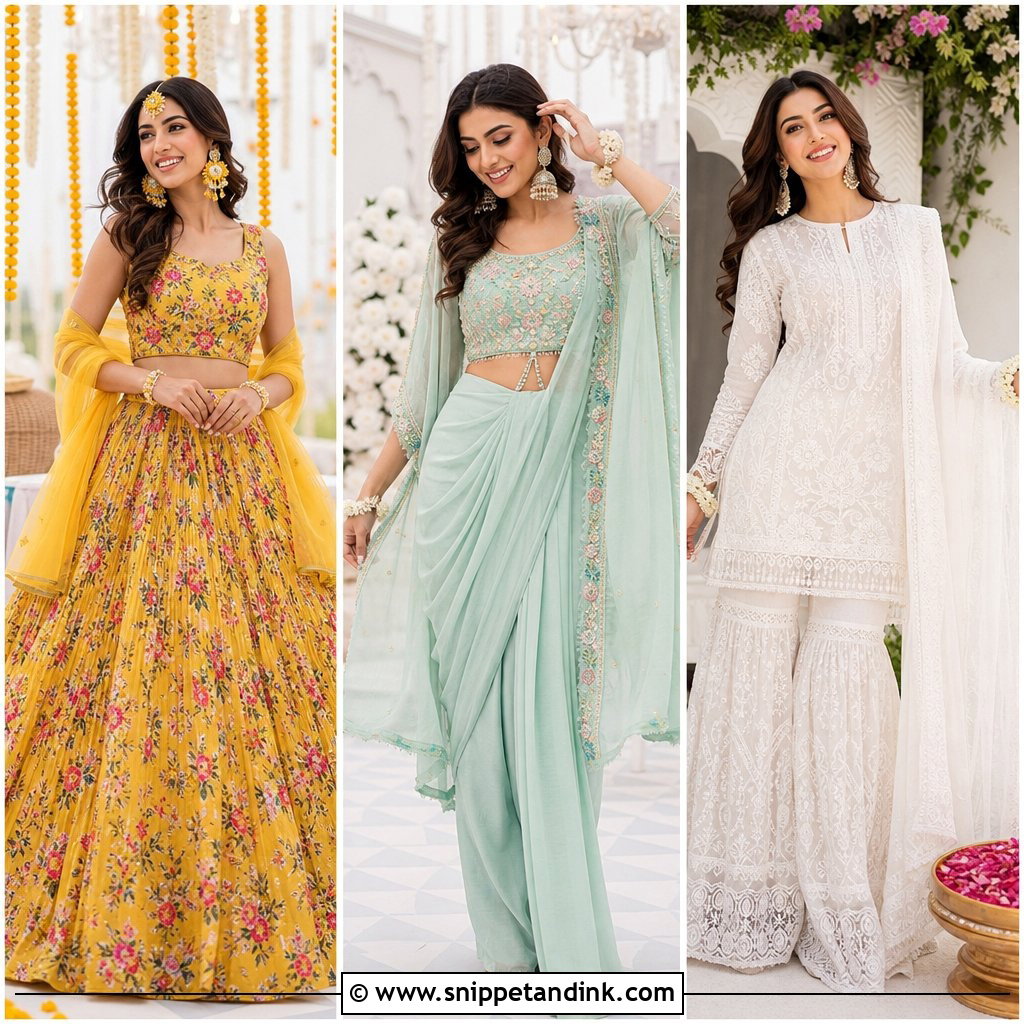
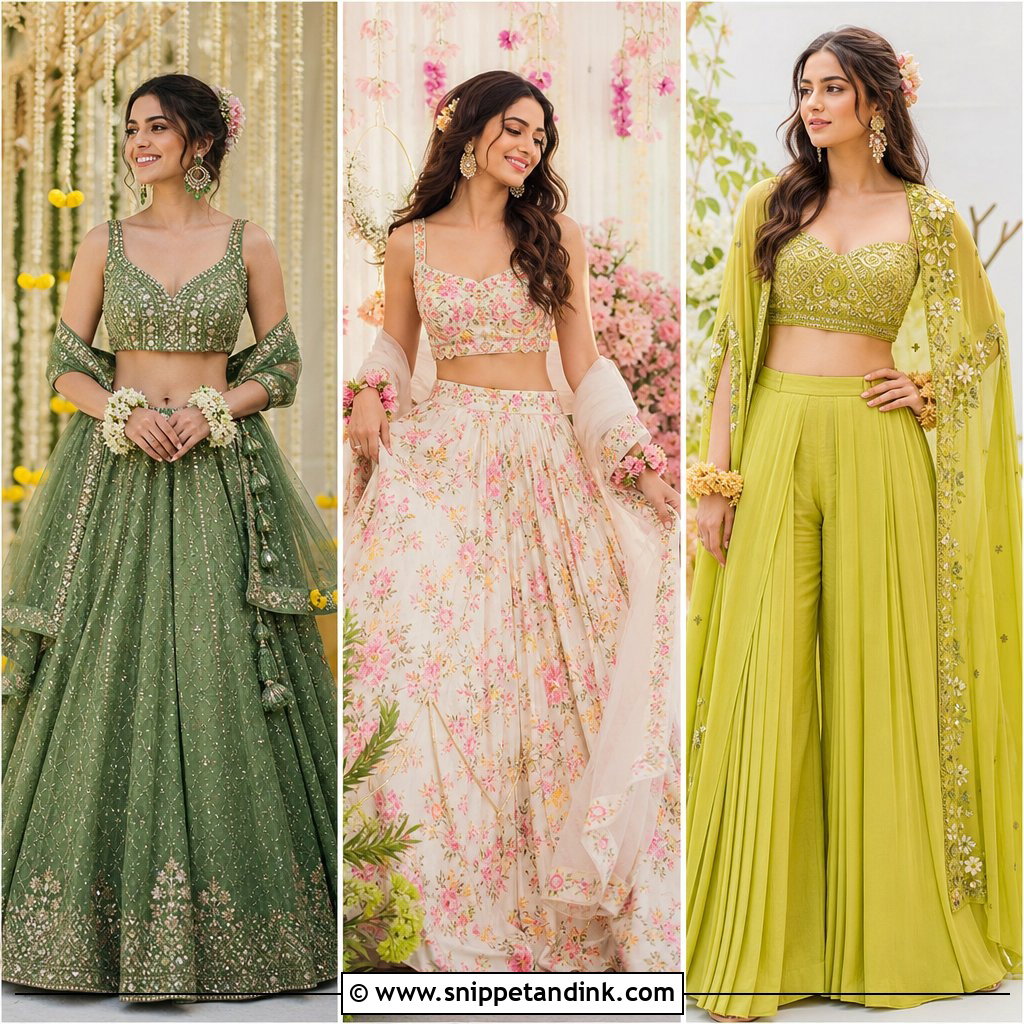
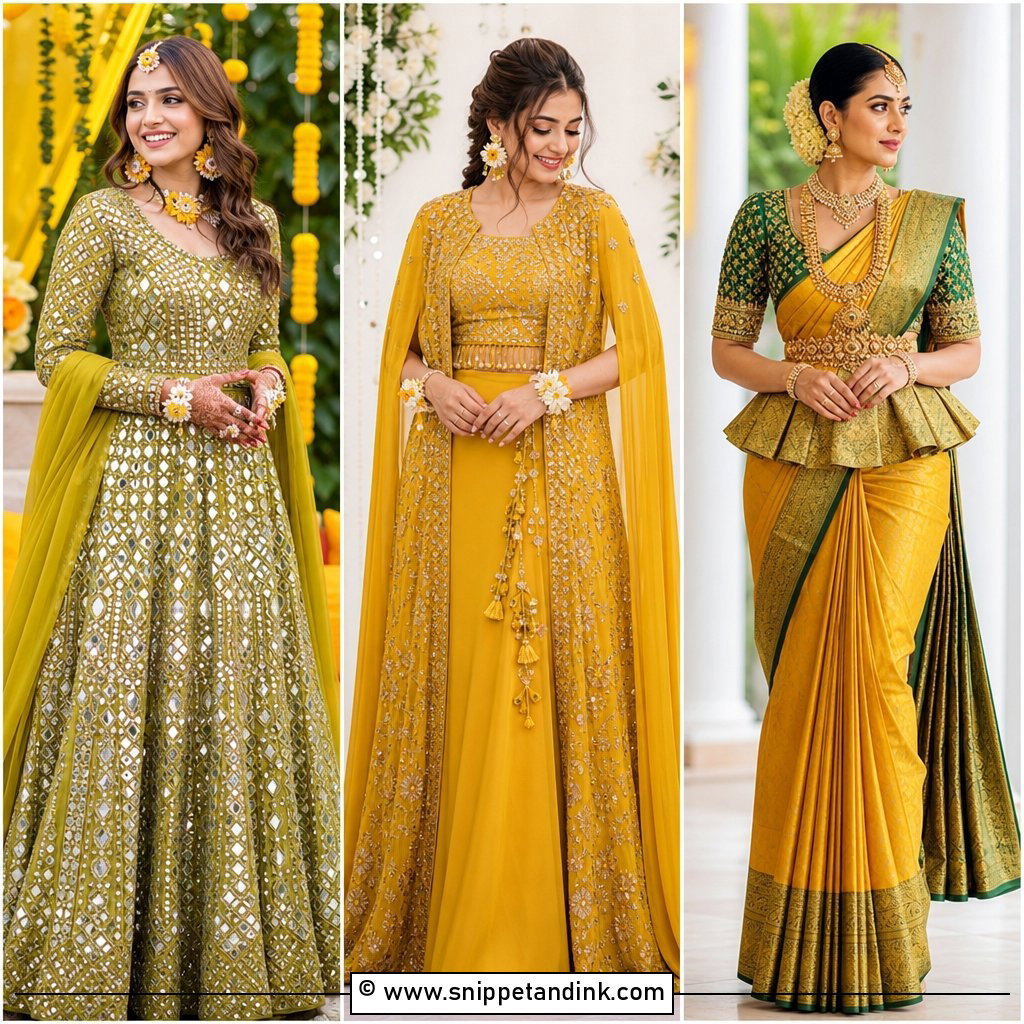
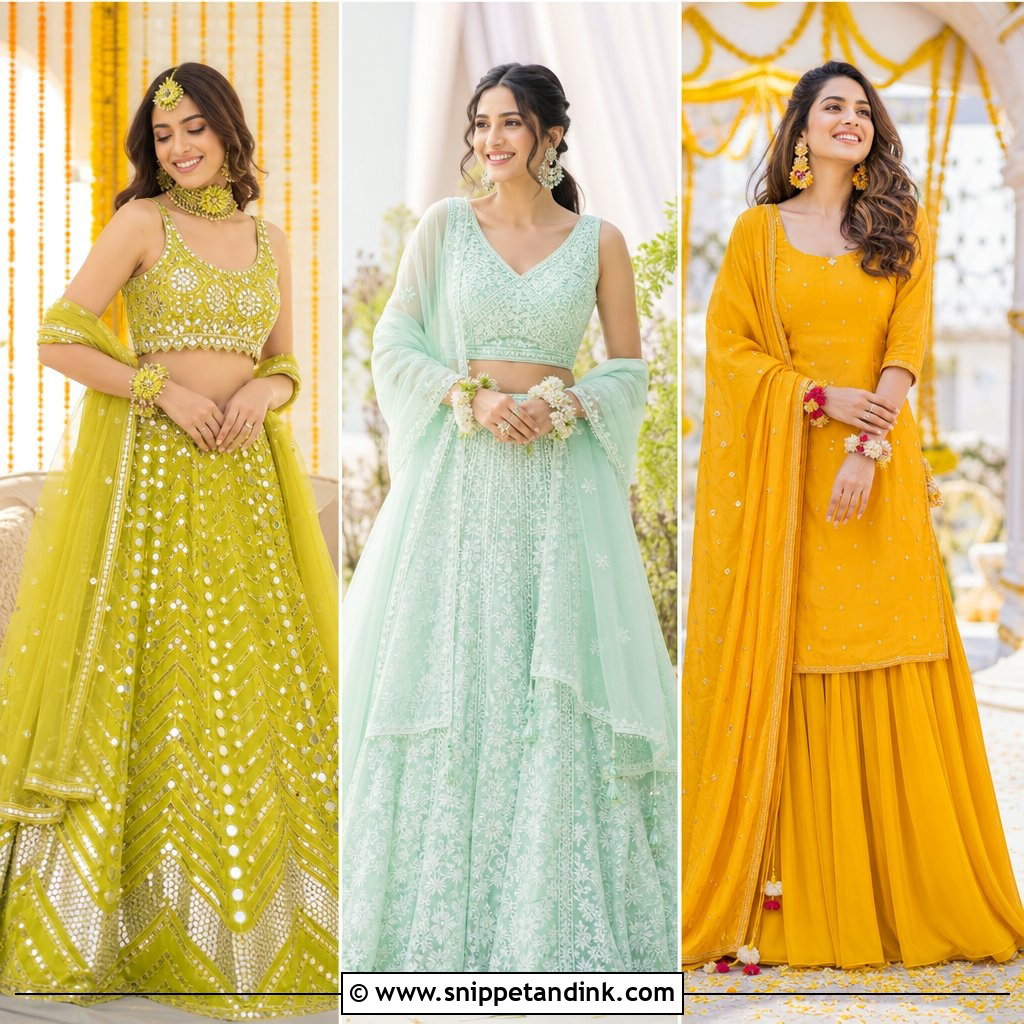
A yellow mehndi lehenga is the traditional default for good reason: it reads festive without competing with the wedding look. I steer brides toward a skirt in georgette, chiffon, organza or a soft silk, since a stiff, heavily lined skirt balloons out awkwardly when you sit cross-legged on cushions. Pair it with a short choli or an elbow-length sleeve so the artist can reach your forearms. Gota patti, mirror work and small sequins are enough embellishment. A light dupatta pinned over one shoulder, floral jewelry and soft curls complete it.
2. Green Mehndi Sharara For Bride
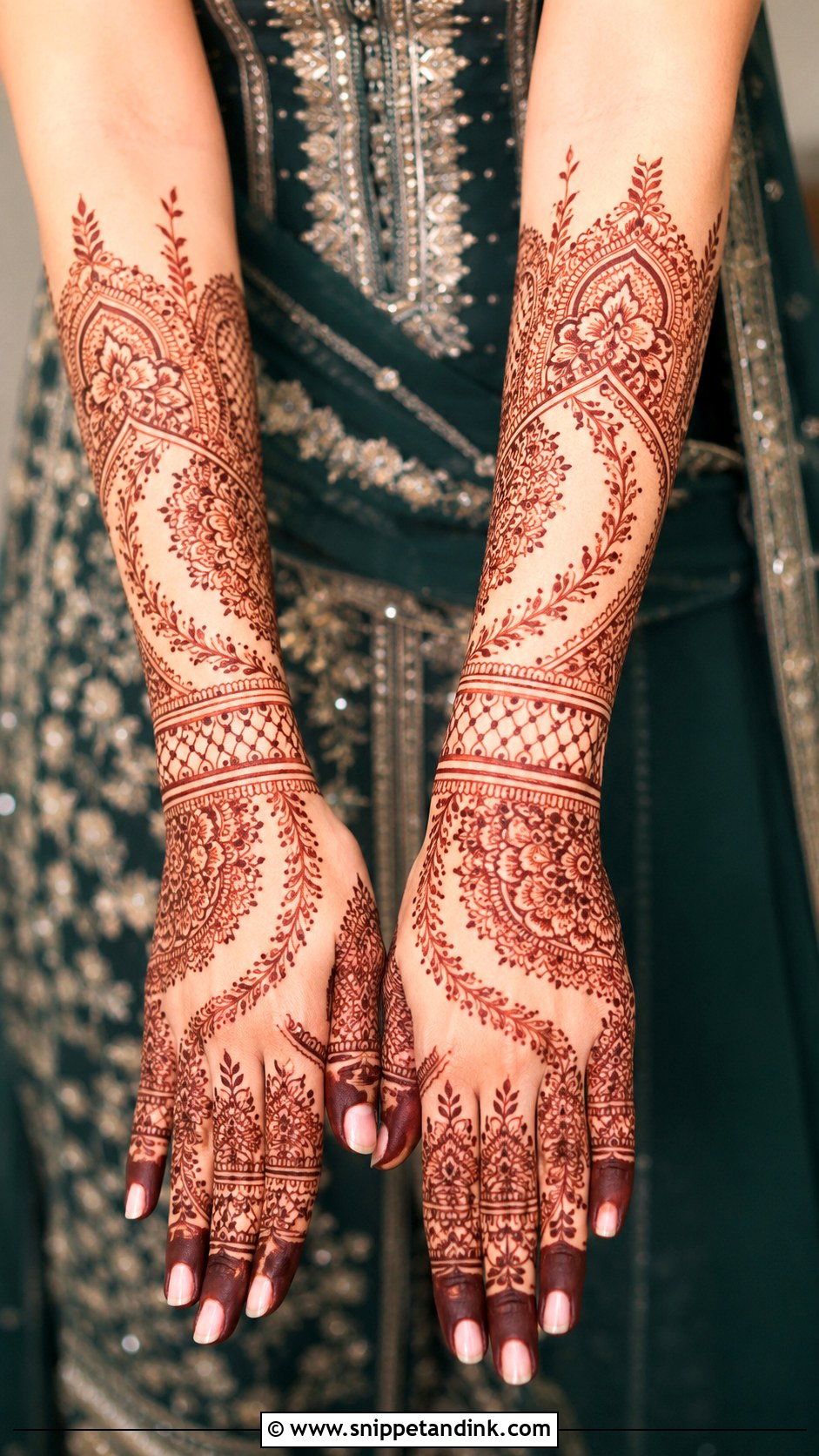
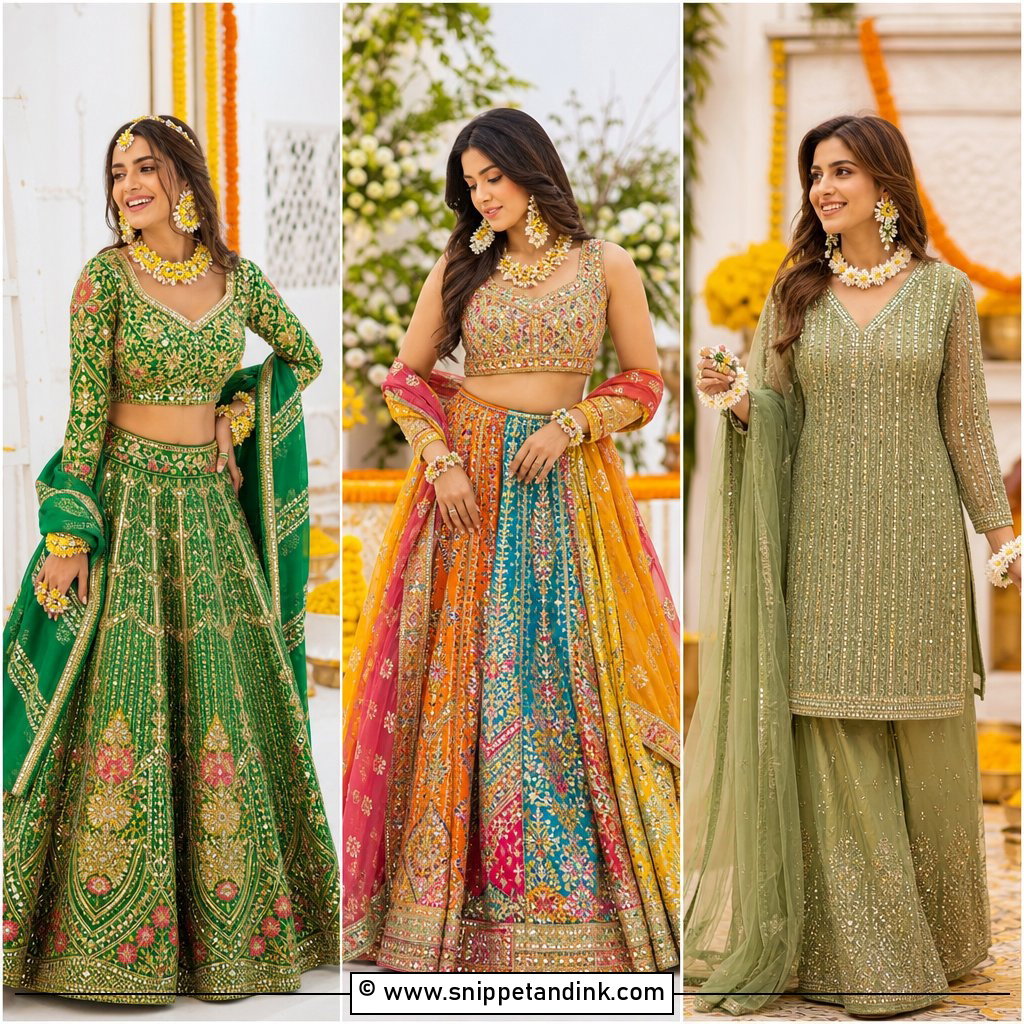
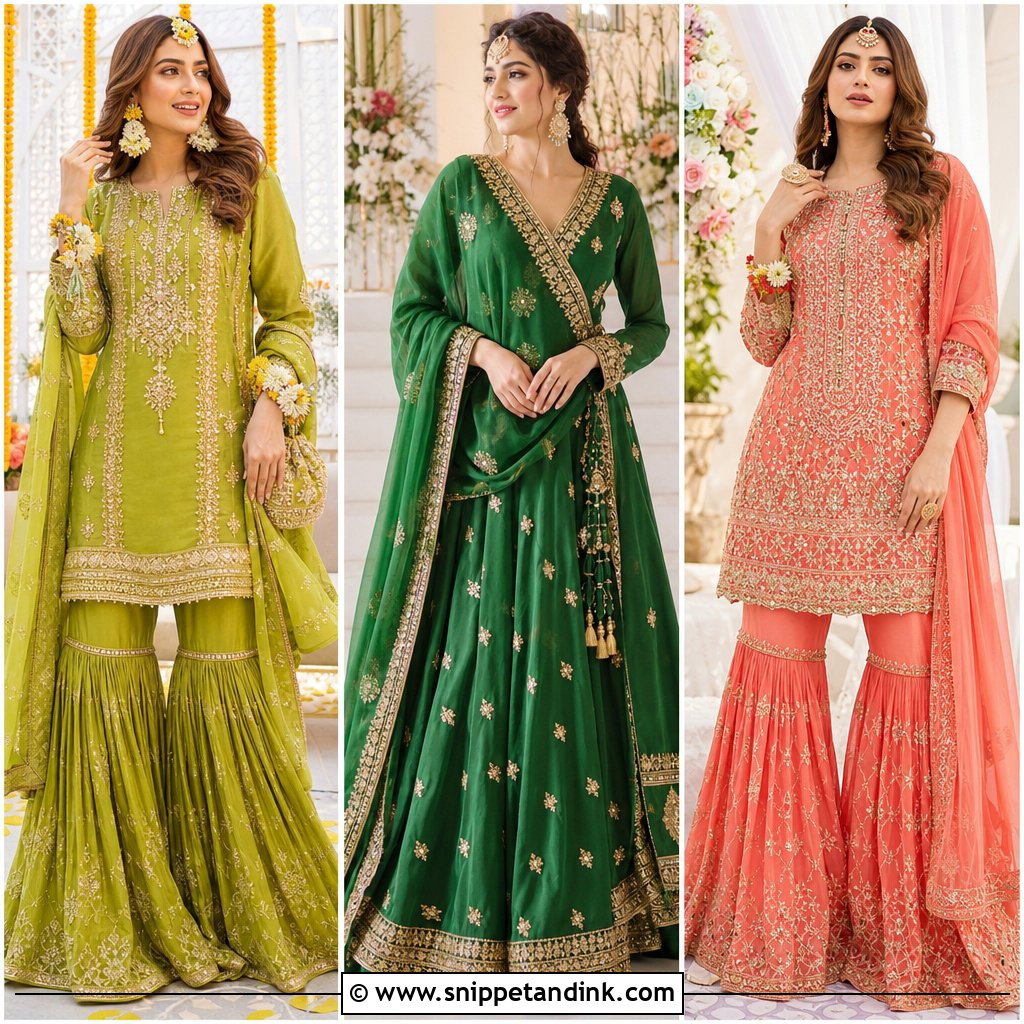
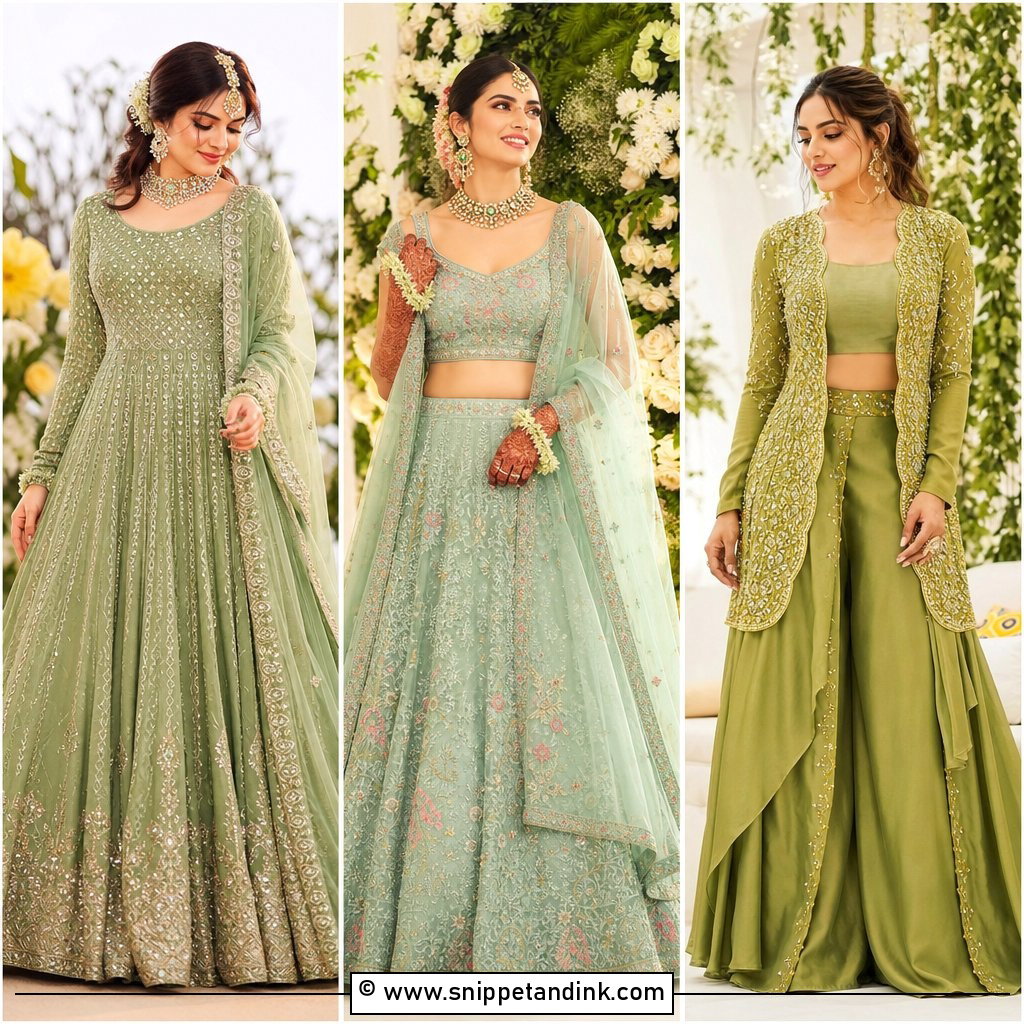
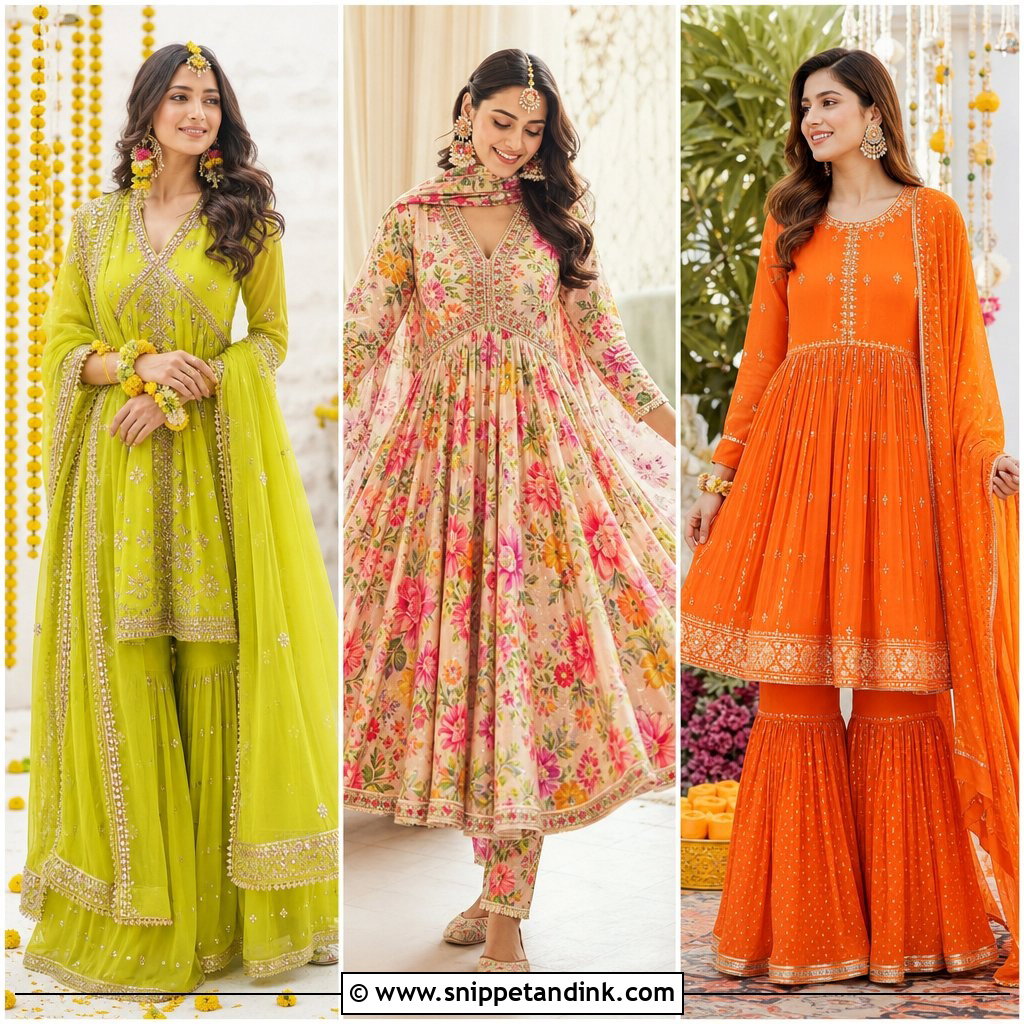
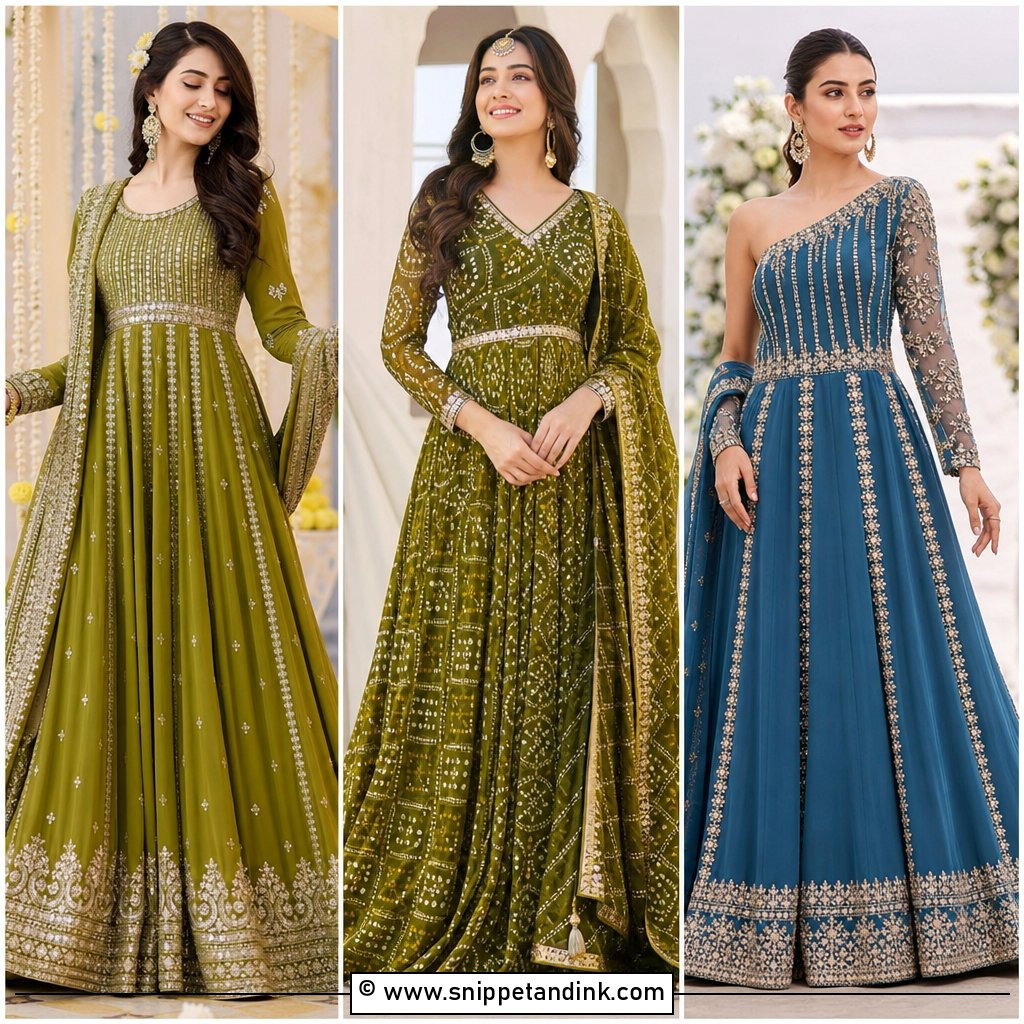
Green shararas have been a fixture at Pakistani and North Indian mehndis for generations, and the reason is mobility. The wide legs let you sit on the floor, climb onto a stage and dance without managing a skirt. Lime green suits a daytime function; emerald holds up under evening lighting. Keep the kurti short so the sharara’s flare does the work, add zari borders or mirror work for shine, and use a net or organza dupatta that weighs almost nothing. Finish with jhumkas, bangles and a sleek braid that stays off your face while your hands are busy.
3. Orange Mehndi Gharara For Bride
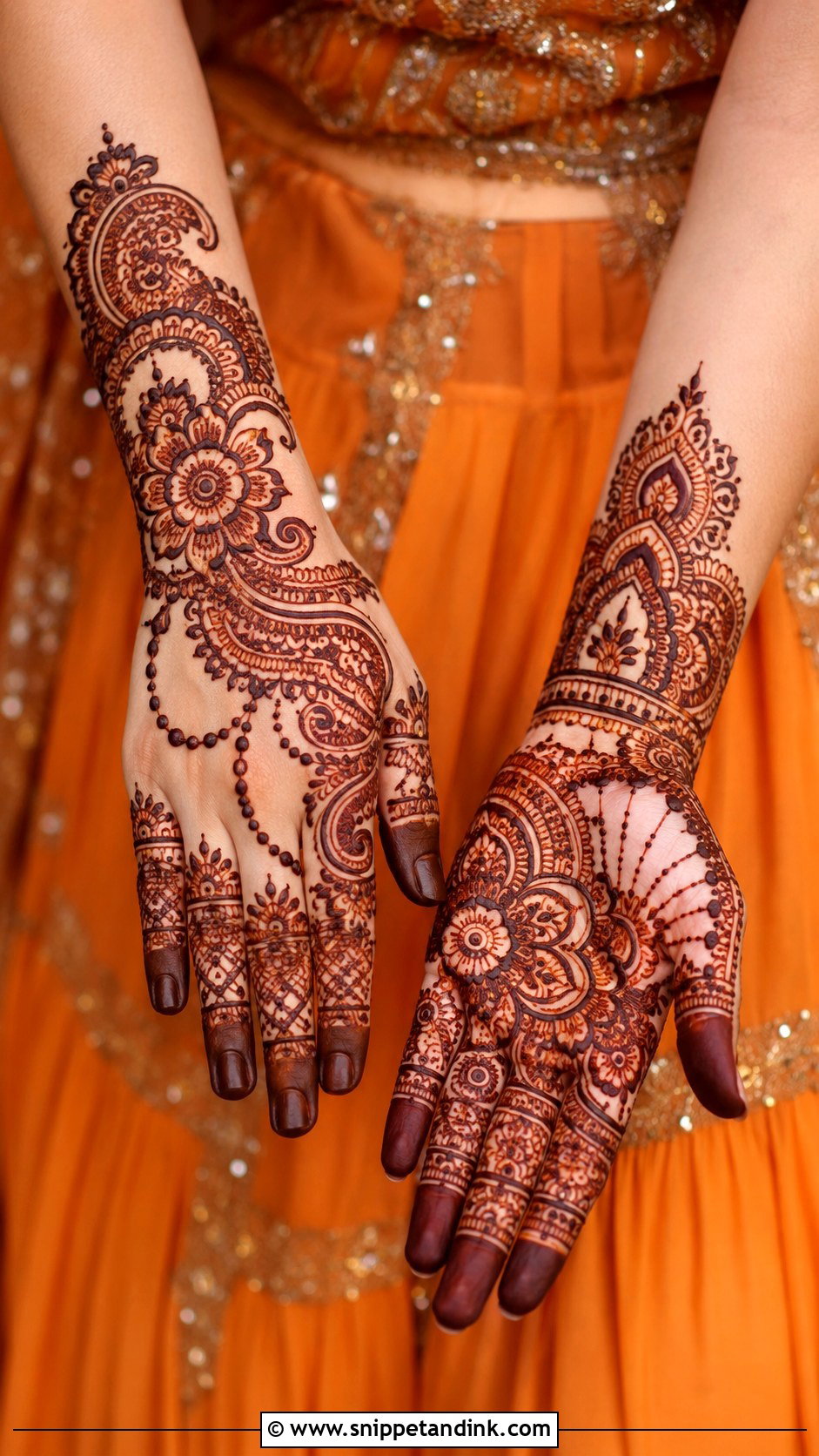
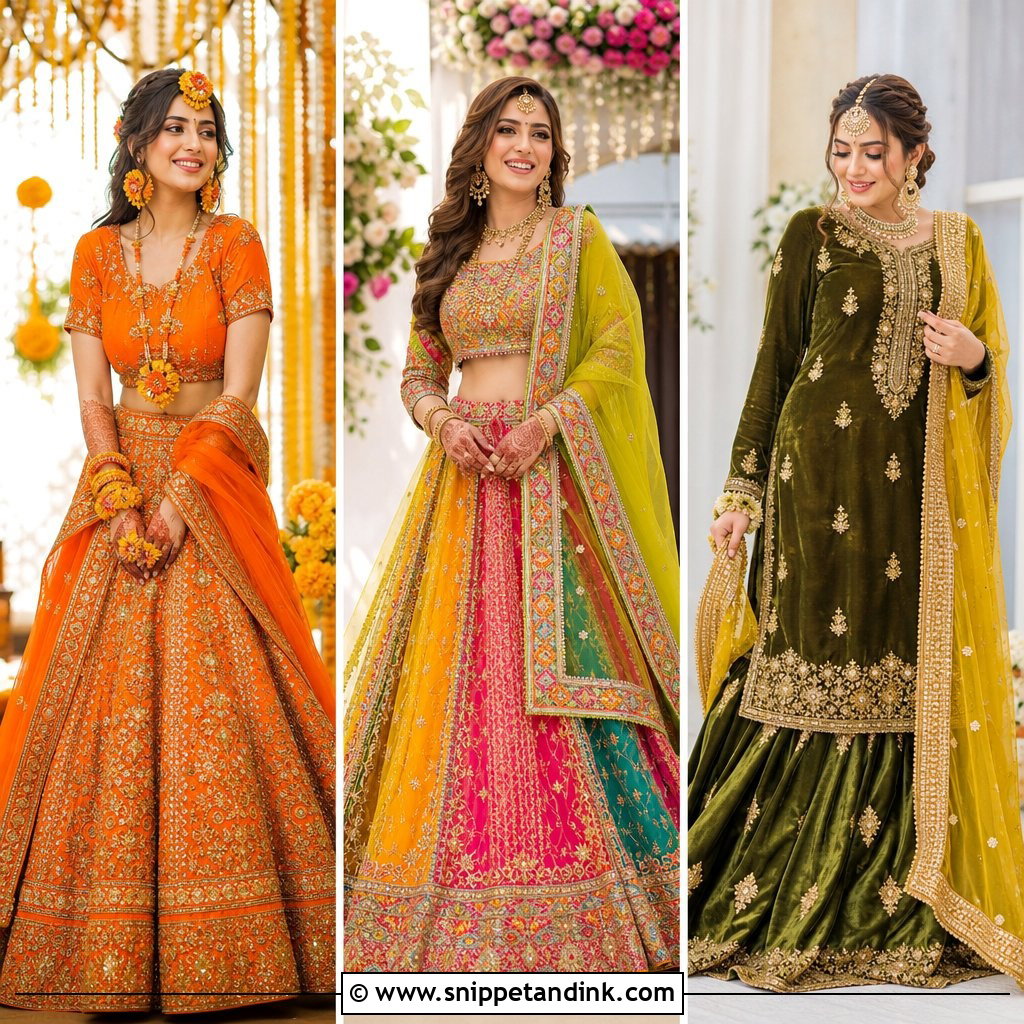
Orange ghararas photograph warm and bright, so I suggest them to brides who find yellow too expected. Tangerine, marigold and burnt orange all look rich with gold work, dabka, gota and mirror accents. The gharara’s fitted knee and flared lower panels give a regal shape without the formality of a wedding lehenga. One fitting note: that knee joint (the gota band) has to be placed where your knee actually bends, or sitting for henna pulls it tight. Keep sleeves short, sheer or three-quarter length, and add contrast with a green, pink or yellow dupatta and fresh flowers in the hair.
4. Pink Mehndi Lehenga For Bride
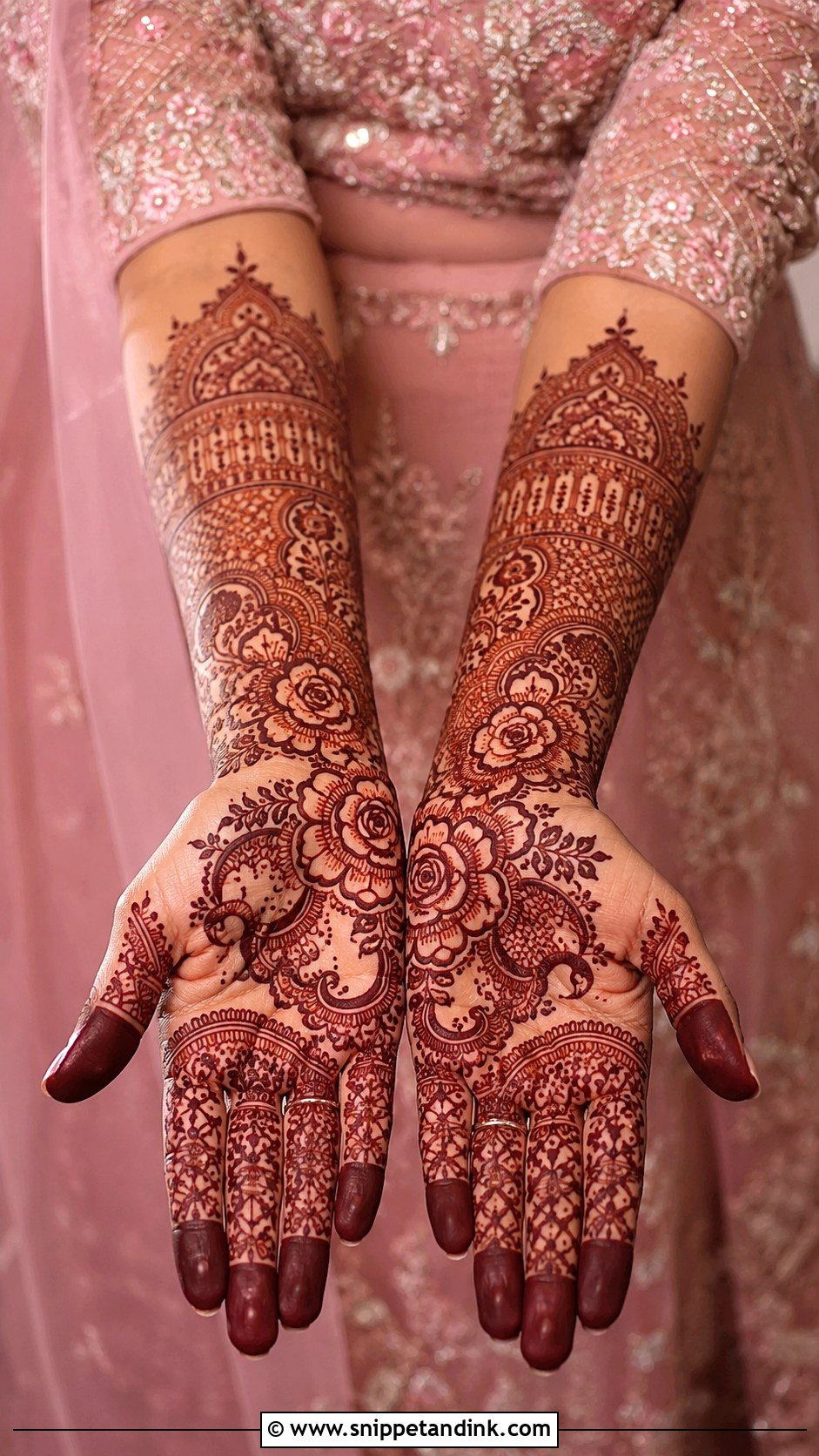
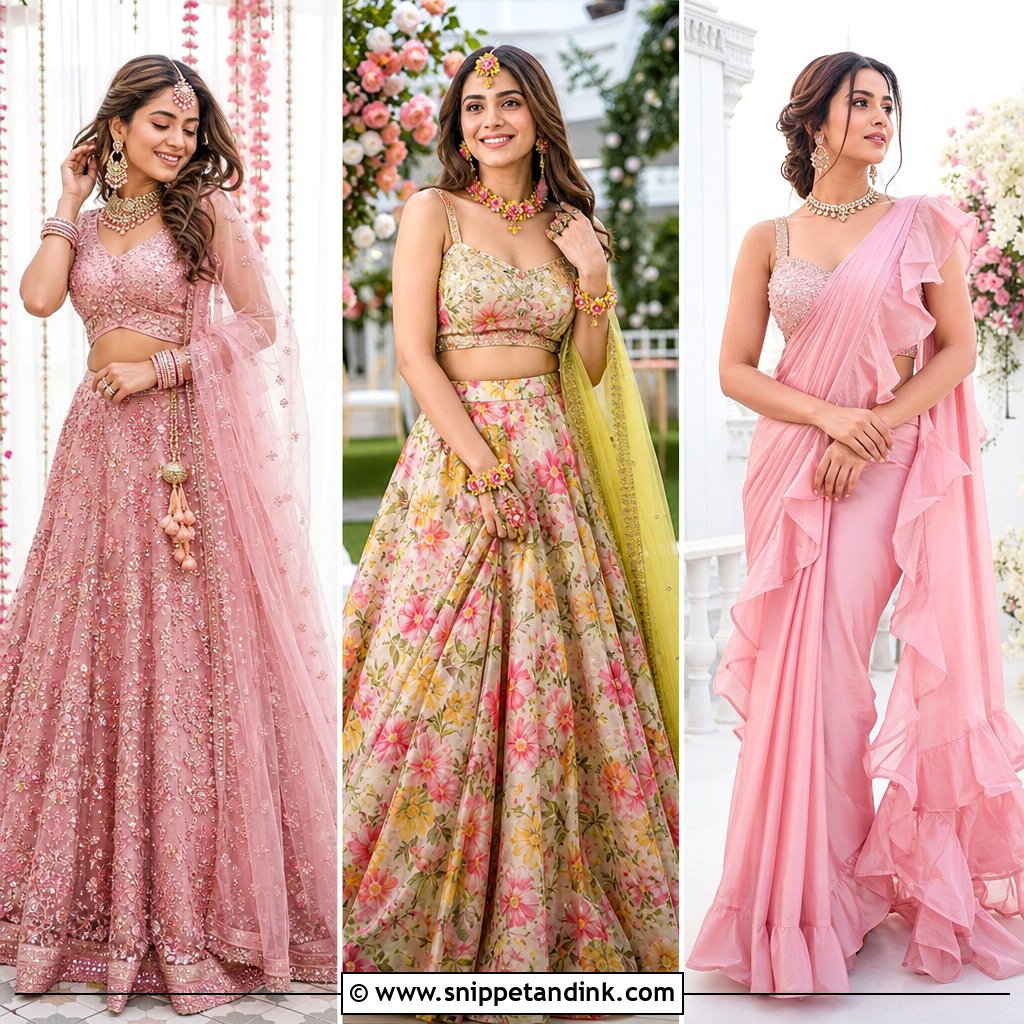
Pink is the color I reach for when a bride wants something softer than yellow but still festive. Hot pink, rani and coral read bolder; rose pink reads gentler. Most skin tones carry at least one of those shades well, and pink sits comfortably next to a dark henna stain in close-ups. Floral embroidery, mirror detailing or colorful thread work all suit it. A cropped blouse with tassels or a sweetheart neckline keeps it youthful, and pinning the dupatta to one side means you are not constantly tugging it off your wet arms.
5. Multicolor Mehndi Lehenga For Bride
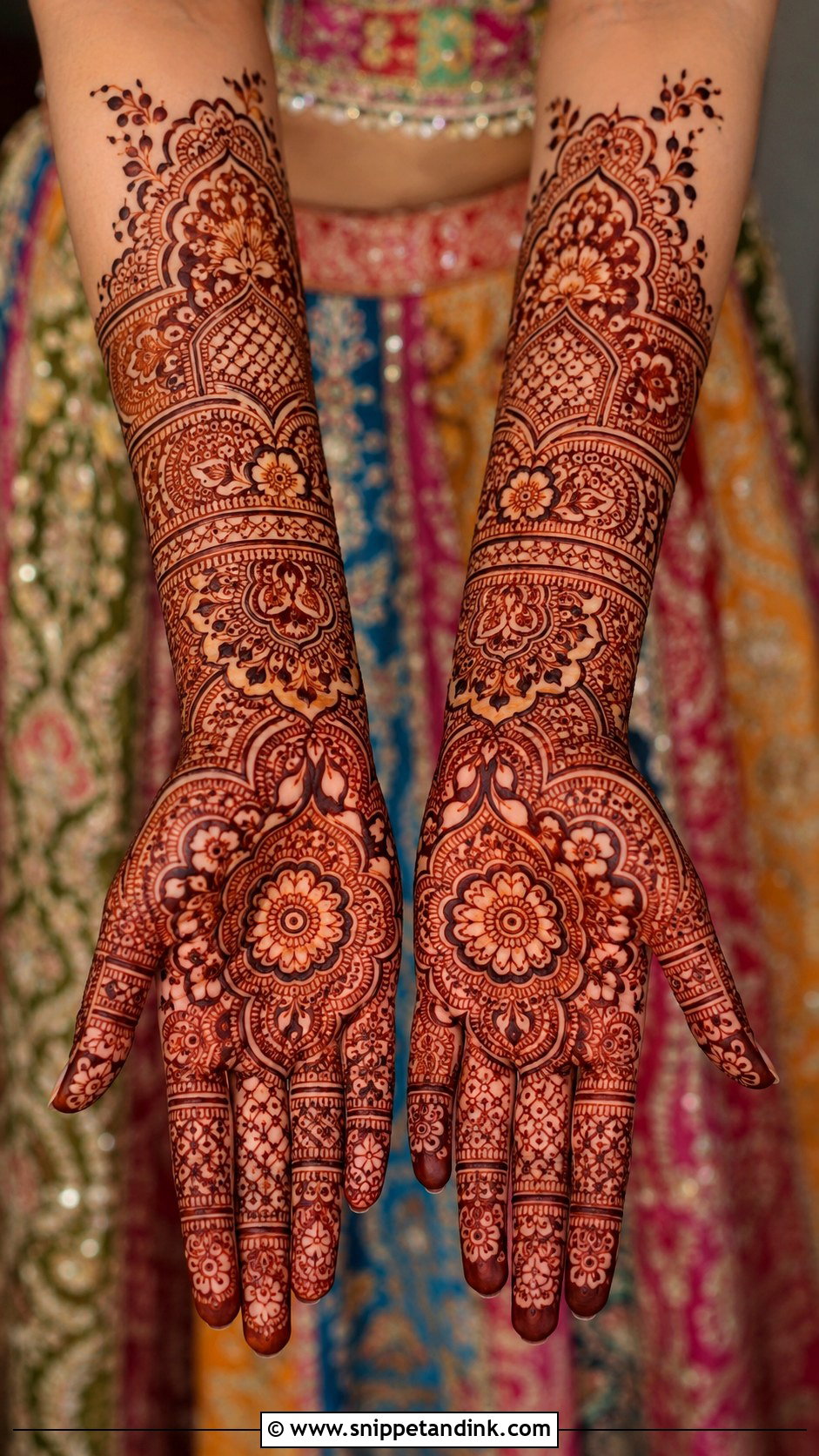
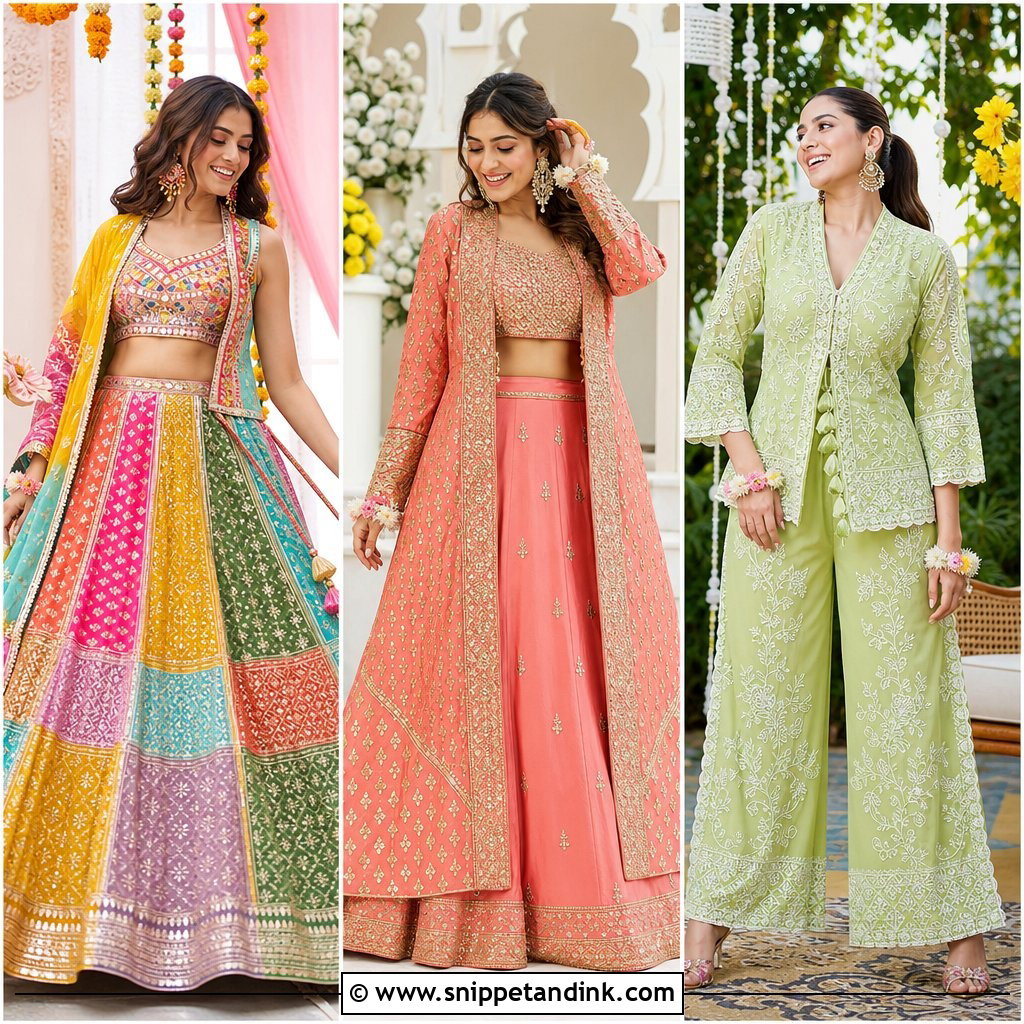
Multicolor lehengas mix yellow, green, pink, orange, blue and gold through panels, embroidery or patchwork, and they suit daytime outdoor events and dholki nights. When the fabric is already doing this much, I keep the silhouette plain: a flared skirt, a fitted blouse and a light dupatta. Mirror work, tassels, pom-pom trims and thread embroidery add texture. My one firm rule is a single metal tone for the jewelry; mixing gold and silver on top of six colors starts to look chaotic. Gold bangles and floral hair pieces are plenty.
6. White Mehndi Dress For Bride
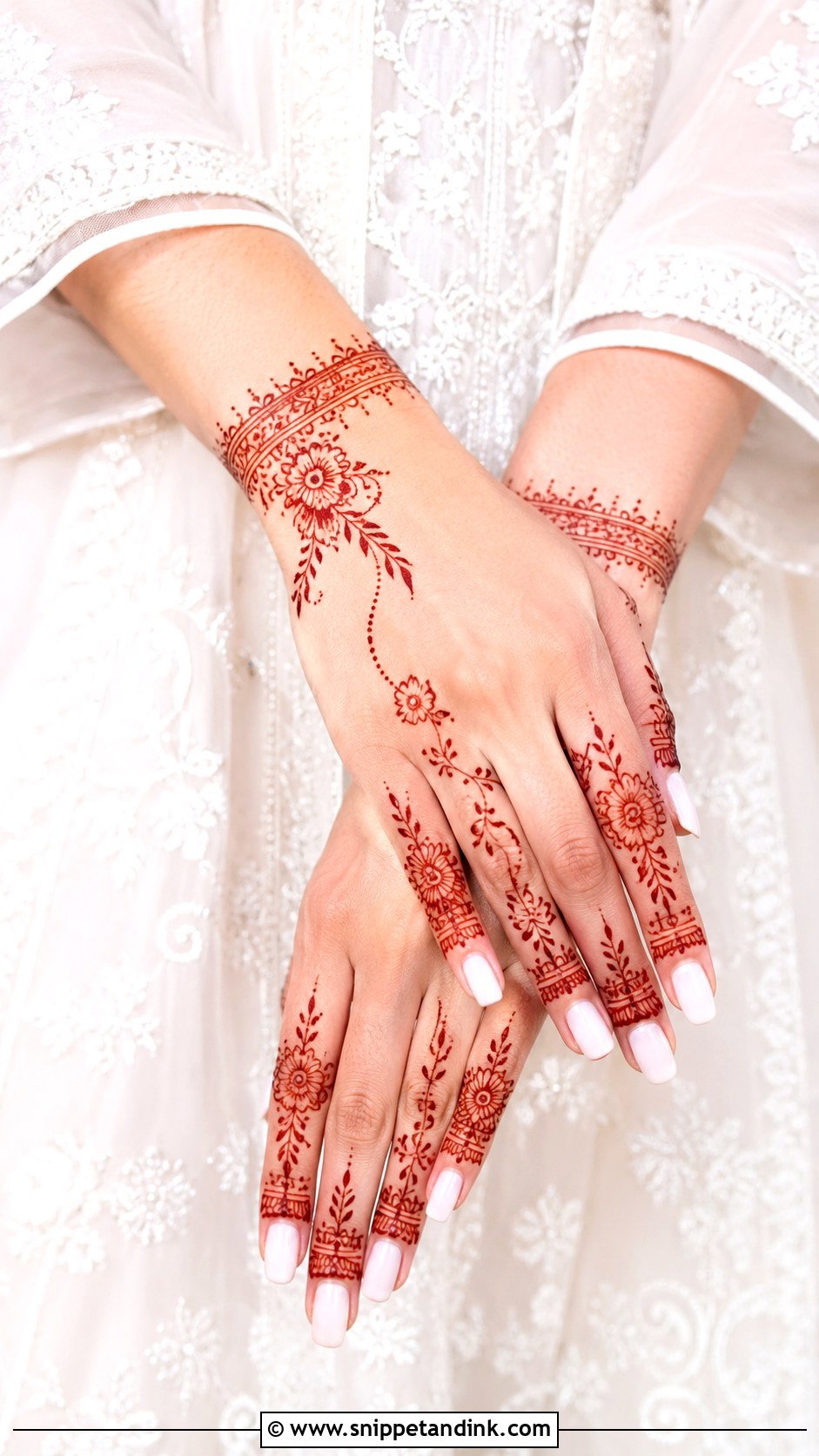
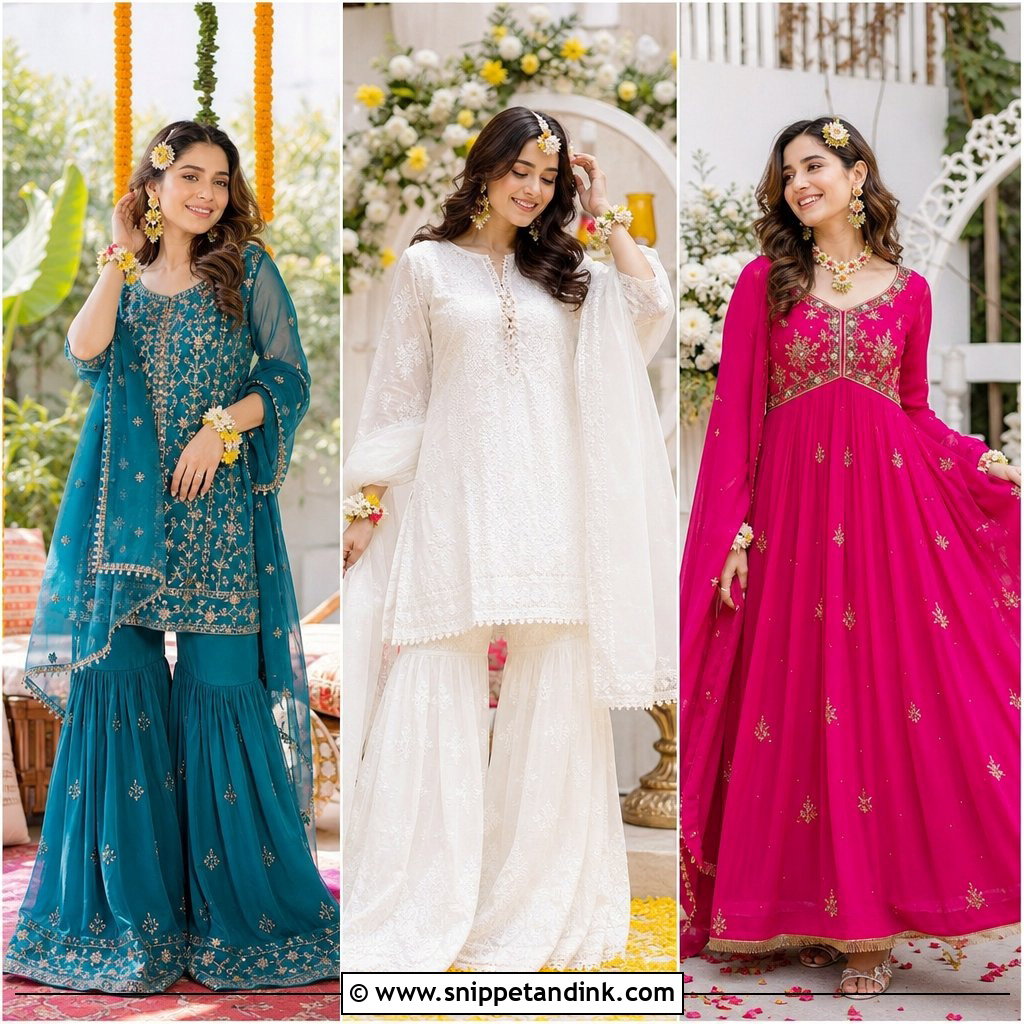
Ivory or off-white at a mehndi looks modern, and the contrast with a dark stain is crisp. I rarely recommend stark white, because it can look grey under warm evening light and makes the bride harder to photograph against a bright backdrop; pearl, cream and ivory are kinder. Yellow embroidery, green borders or colorful thread motifs stop it reading like a wedding gown. The honest risk is staining. Fresh henna paste and the lemon-sugar sealant both mark pale fabric, so wear short sleeves and keep the dupatta well away from your arms until the paste is scraped off.
7. Mirror Work Mehndi Outfit For Bride
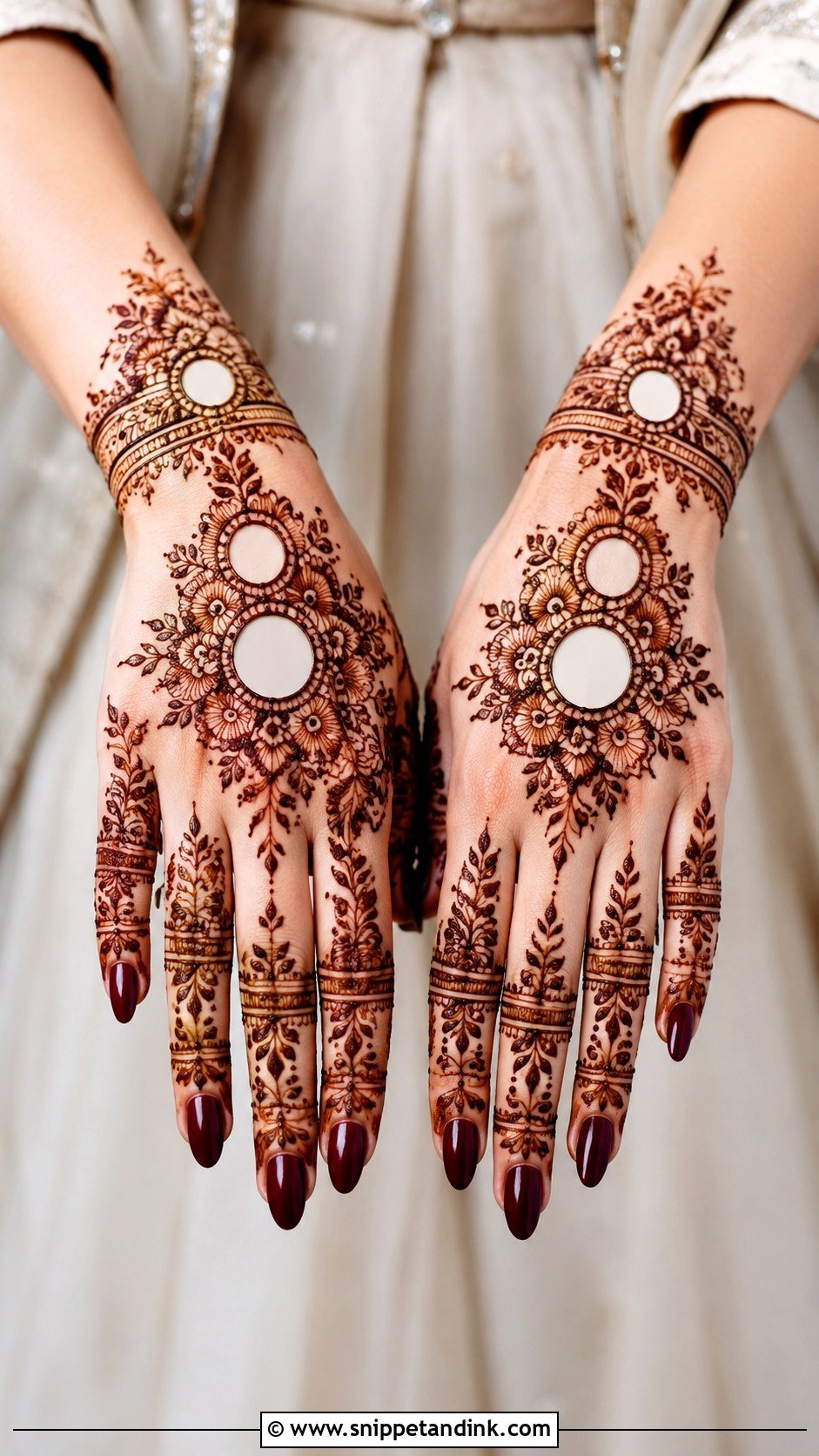
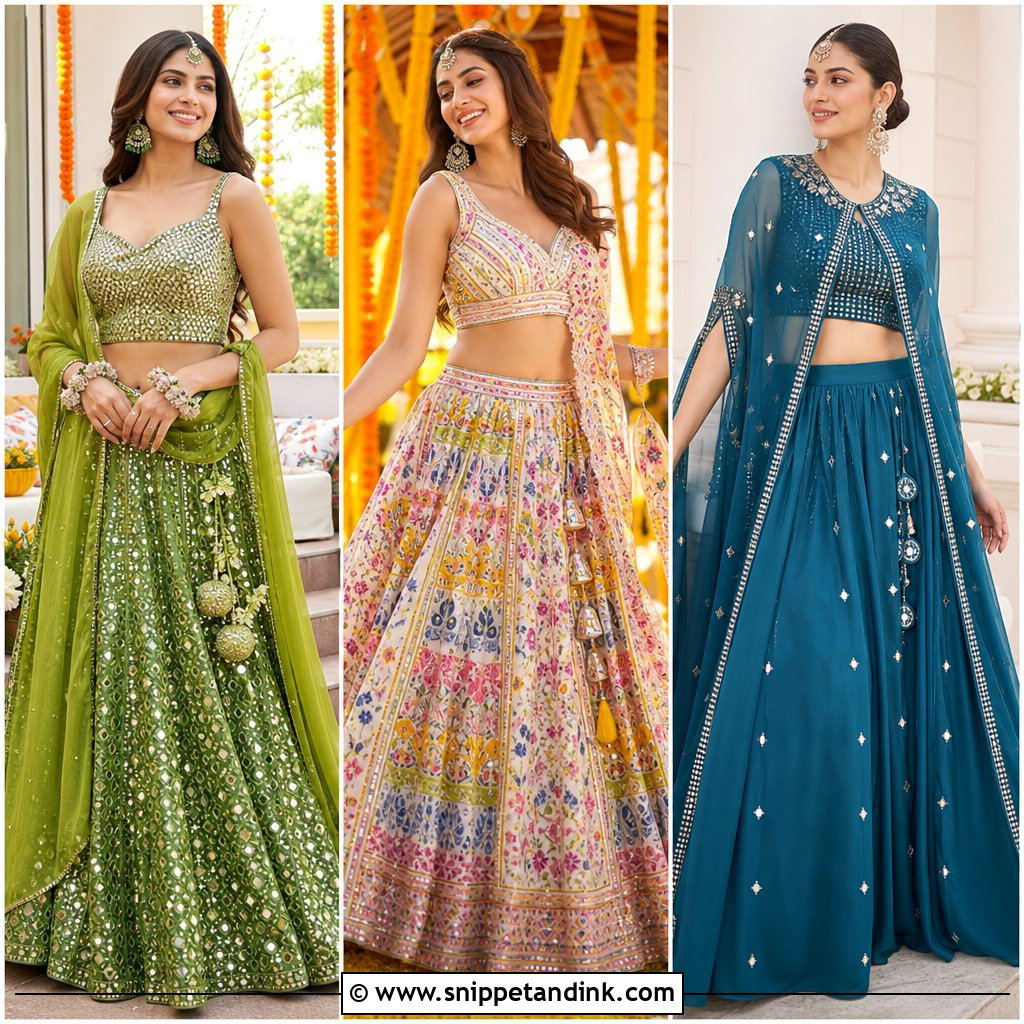
Mirror work gives you sparkle without heavy stones, and it catches light during dances and evening photos. It looks festive on yellow, green, orange, pink or ivory. I suggest scattered mirrors rather than a fully covered garment: each mirror is set in a stitched ring and adds weight, and a densely covered blouse becomes stiff and hot over a long event. Sleeveless, cap or short sleeves keep the henna visible. Center-parted hair, soft makeup and very little at the neck let the mirrors and the henna share the attention.
8. Floral Mehndi Lehenga For Bride
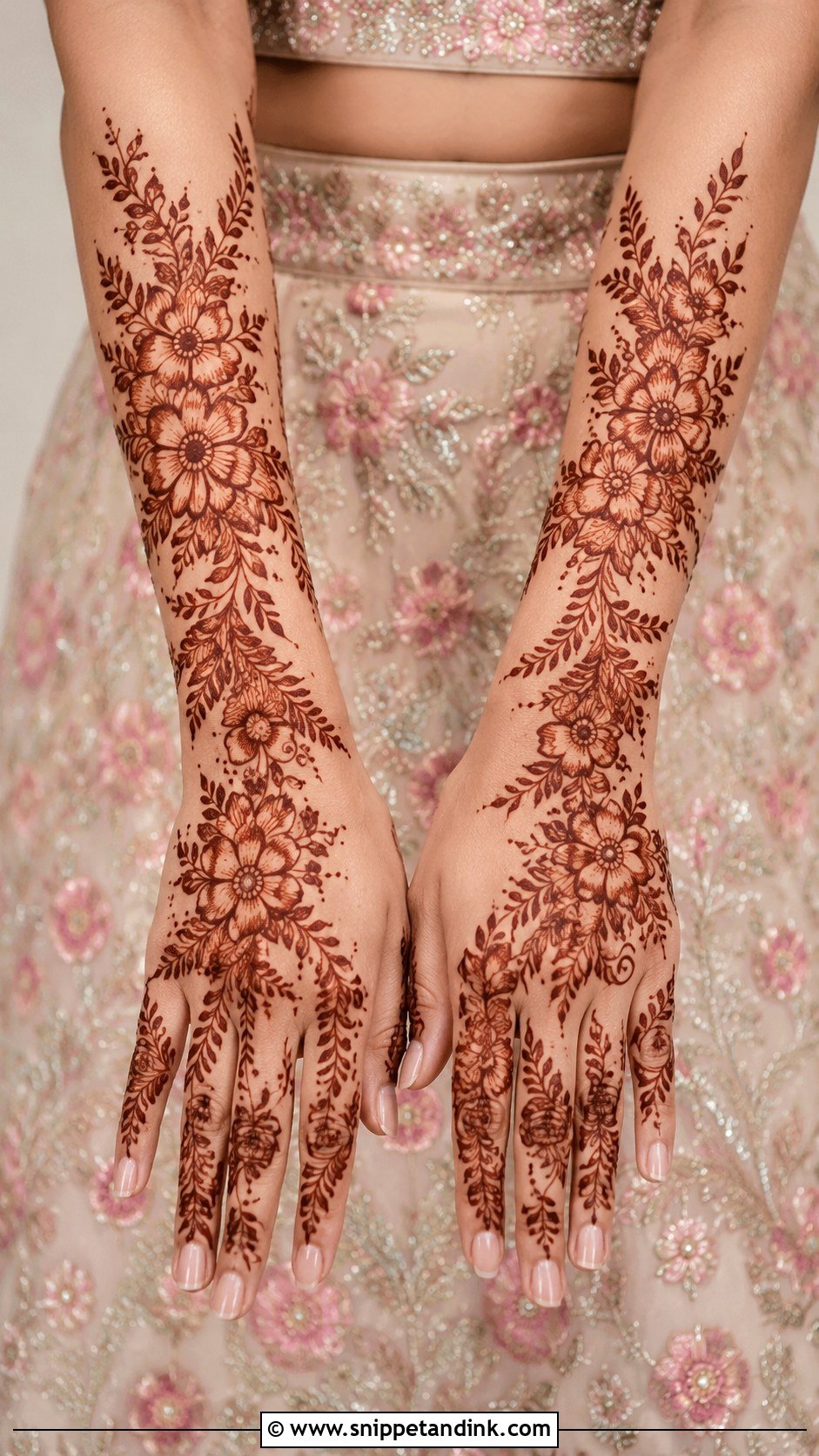
Floral lehengas can be printed, embroidered, appliqued or hand-painted, which gives a wide budget range. Pastel florals feel like a garden party; bright yellow, pink and orange florals read more traditional. Organza, georgette and raw silk all move well. Flowers also echo the vines and paisleys in bridal henna, which ties the hands and the outfit together in photos. Keep the jewelry fresh, like floral earrings, a maang tikka or pearl bangles, and pin the dupatta loosely so it hangs rather than wraps.
9. Pastel Mehndi Dress For Bride
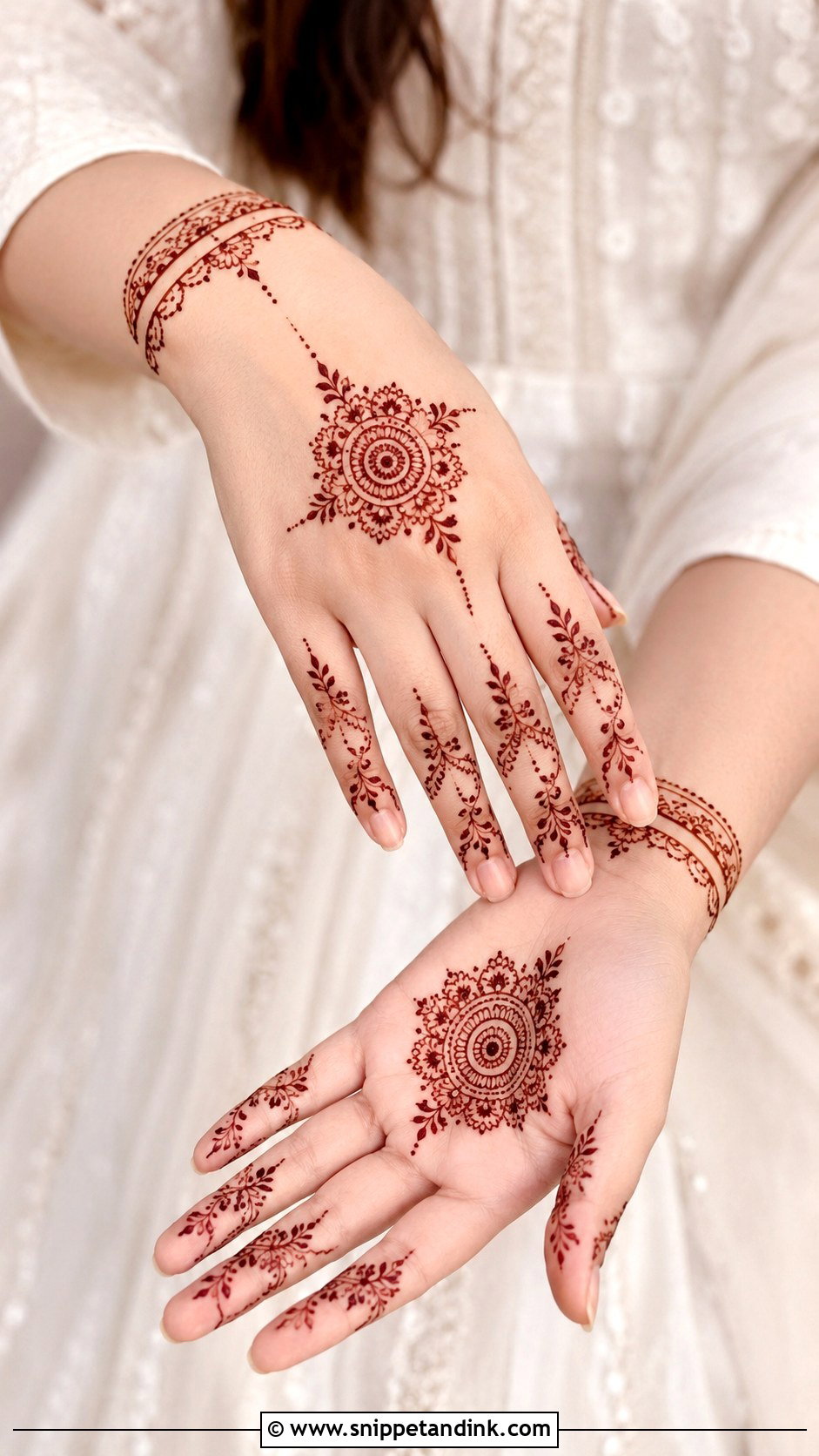
Mint, peach, lavender, powder blue, blush and butter yellow all make a dark stain look darker, which brides tend to love. Pastels are at their best in daylight; under warm evening bulbs they can wash out, so I recommend them for morning and afternoon functions. Silver, pearl, white or soft gold embroidery suits these shades. A pastel lehenga, sharara or anarkali still reads bridal when the fabric has volume and detail. Keep the makeup fresh and the jewelry light.
10. Anarkali Mehndi Dress For Bride
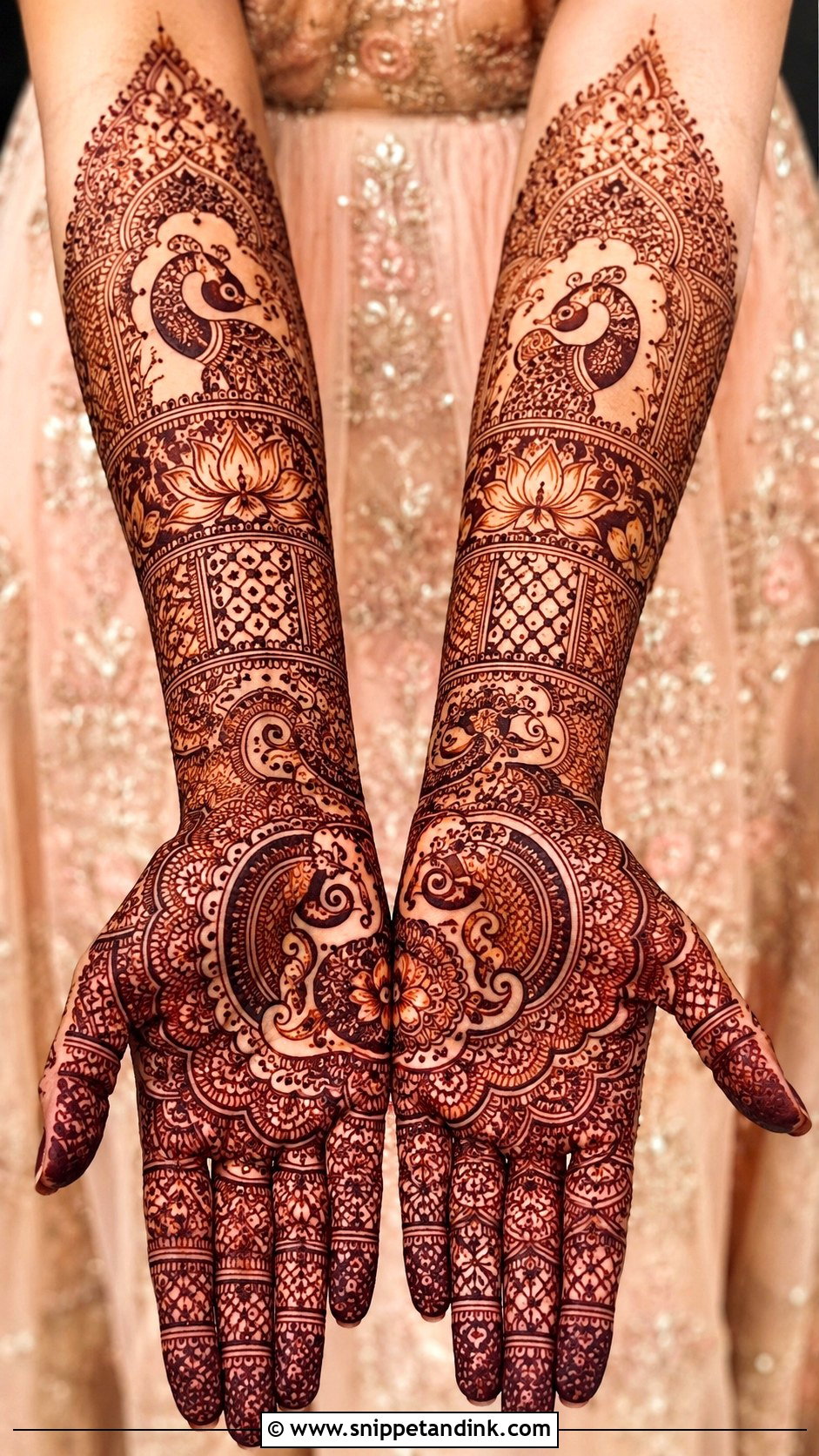
An anarkali gives you the swing of a lehenga without a separate heavy skirt, which matters on a long day. Brides wanting more coverage often choose it. Yellow, green, pink and ivory with embroidery at the bodice and hem are the usual picks. Check the sleeve before you buy: many anarkalis come with full, fitted sleeves, and those need to be shortened or swapped for sheer ones if your henna goes past the wrist. A churidar or slim pants underneath, a light dupatta, jhumkas and soft glam makeup finish it.
11. Pakistani Mehndi Dress For Bride
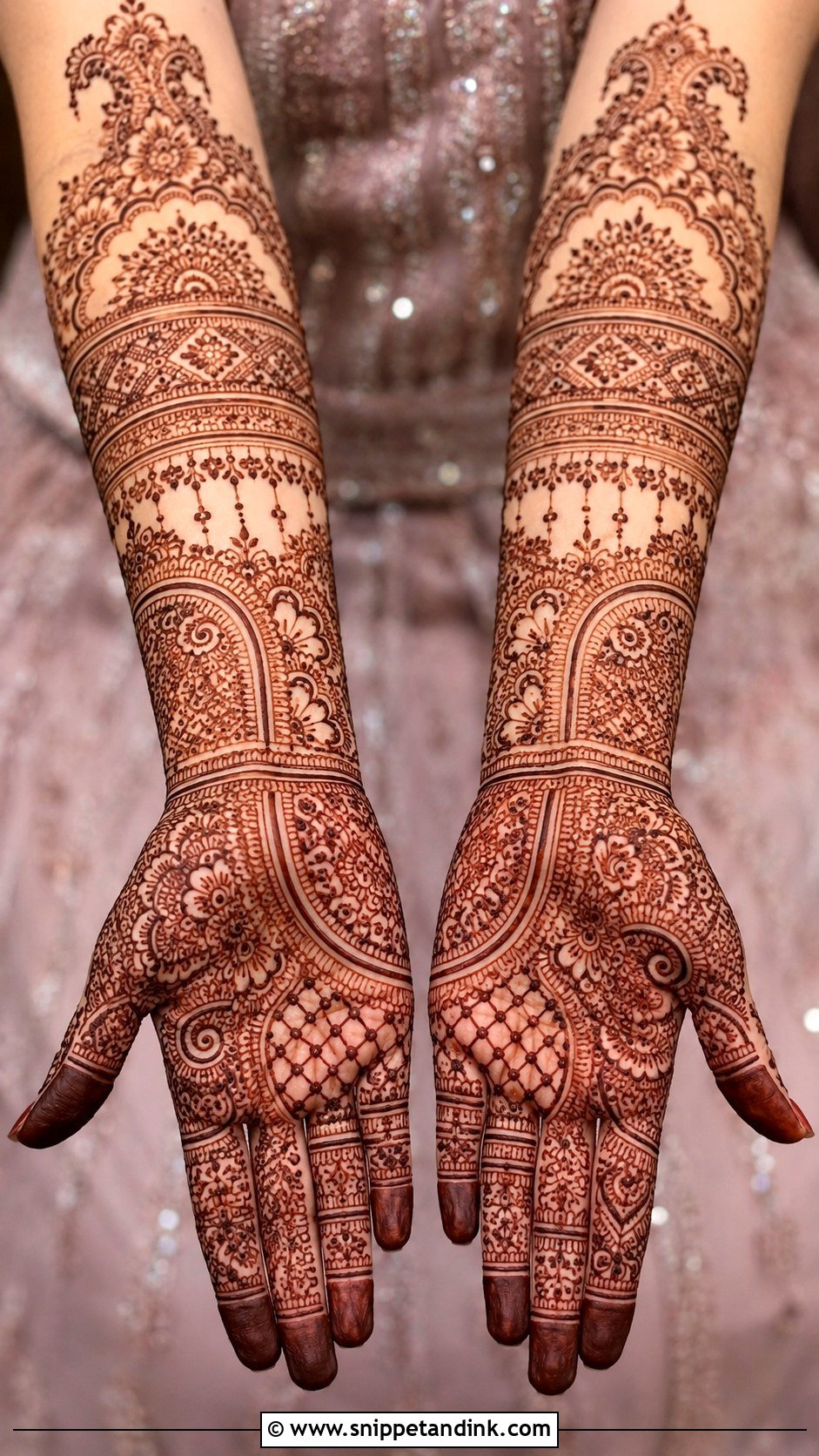
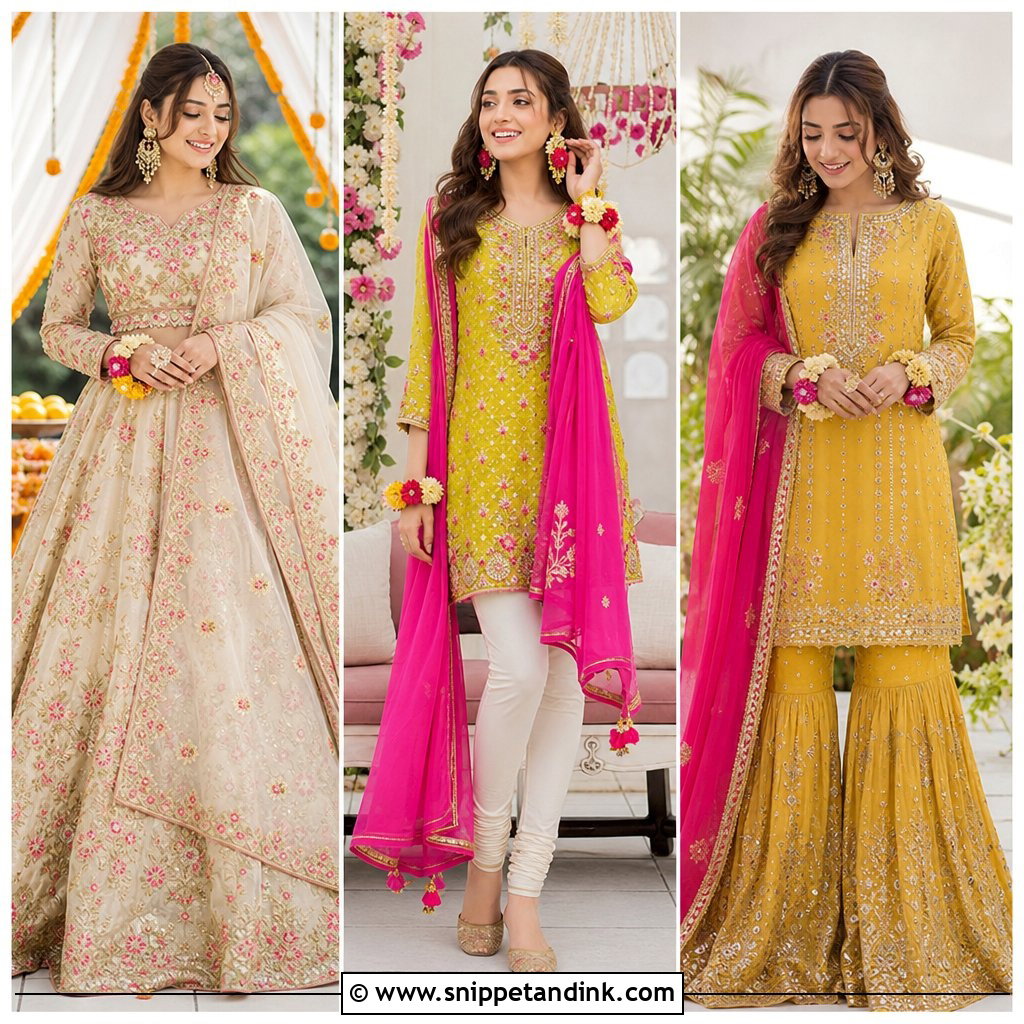
Pakistani mehndi outfits lean colorful and heavily worked: ghararas, shararas, frocks, lehengas and long shirts with dense dupattas. Yellow and green remain the classics, though orange, magenta, teal and multicolor combinations are everywhere. Gota, dabka, zari, mirror work and resham embroidery create the festive finish. The thing I check at the fitting is whether you can sit on a low stage with a long shirt without it bunching under you; a short or mid-length kameez with a flared bottom is far easier. Passa, jhumar, bangles and a paranda complete the traditional look.
12. Indian Mehndi Dress For Bride
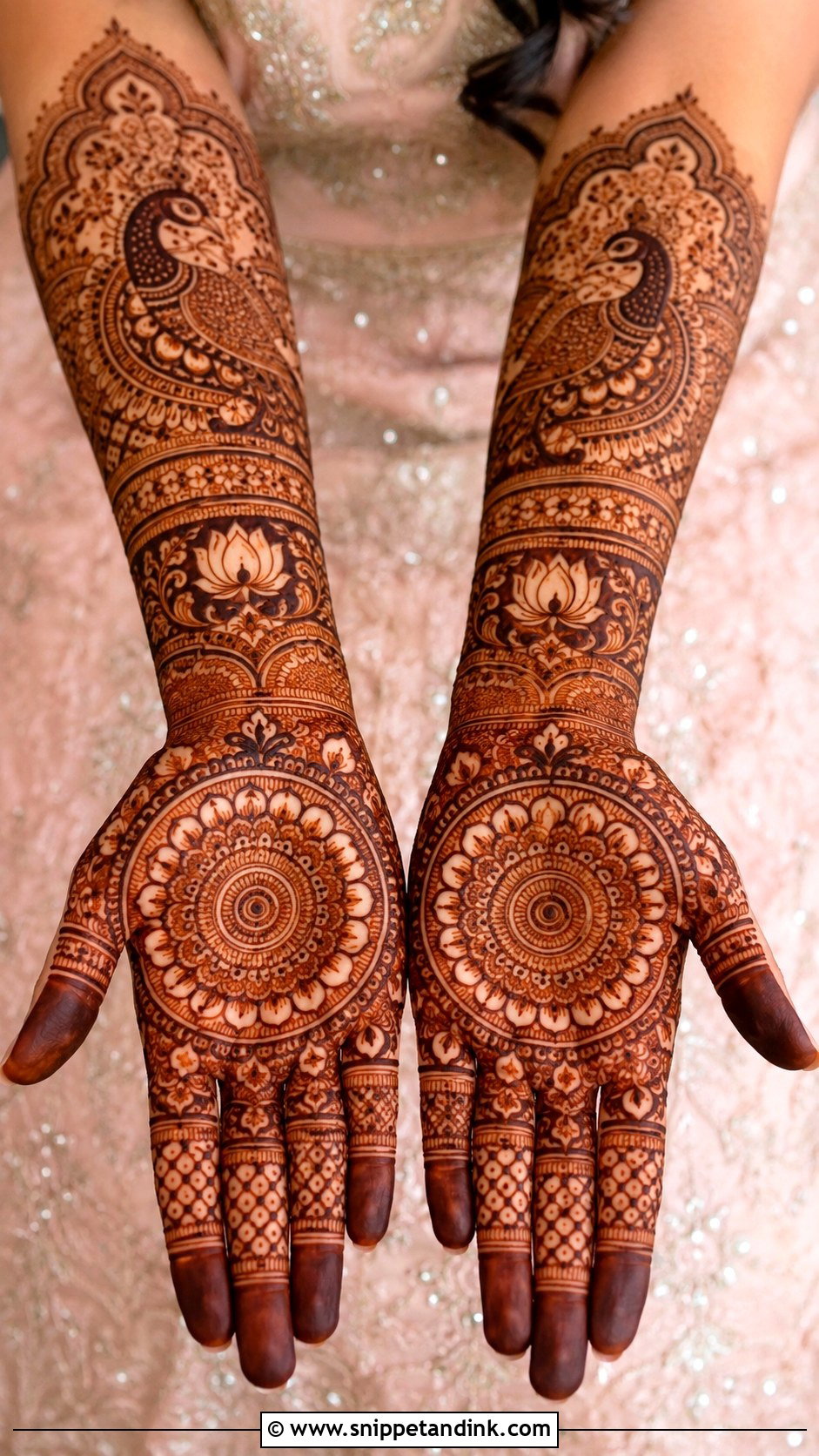
Indian mehndi wear spans lehengas, sarees, anarkalis and Indo-western sets, mostly in yellow, green, orange, rani pink and marigold. If your henna design is detailed, choose sleeves that leave the arms clear. A lehenga with mirror work or gota patti is the easiest place to start. For a regional touch, I like bandhani, leheriya, phulkari or a brocade border. Bangles, anklets, floral jewelry and a hairstyle that keeps your face and hands clear complete it.
13. Indo-Western Mehndi Dress For Bride
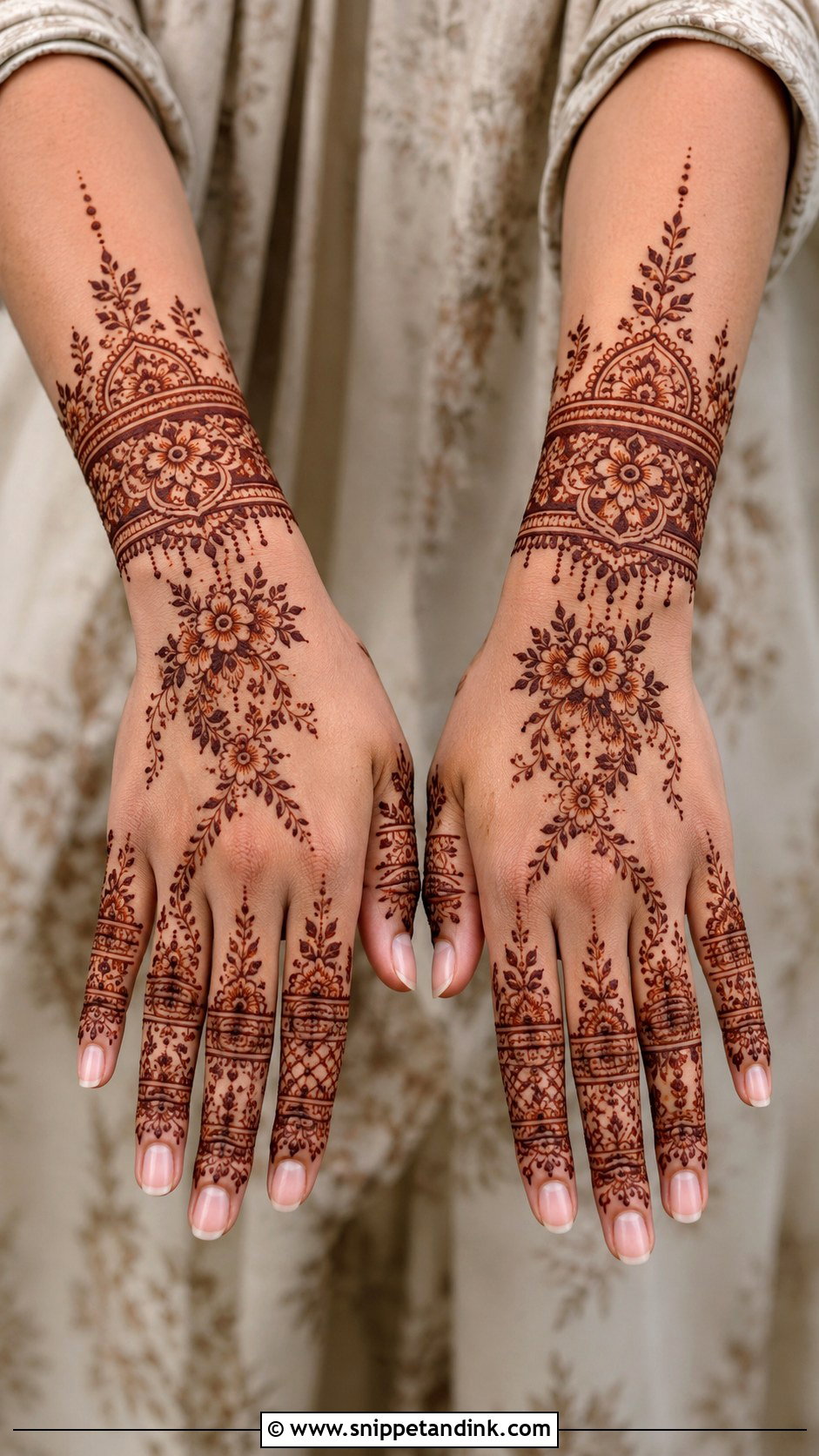
Indo-western sets suit brides who plan to dance, greet and pose straight after the henna. Draped skirts, cape blouses, crop tops, palazzo sets, pre-draped dupattas and jacket lehengas all belong here. They usually have fewer loose layers, which means fewer things to hold while your hands dry. Keep the colors bright or jewel-toned so the event still feels like a mehndi, and use mirror details, tassels or printed panels for texture. Statement earrings and stacked bangles are enough jewelry. They suit rooftops, modern venues and destination weddings well.
14. Simple Mehndi Dress For Bride
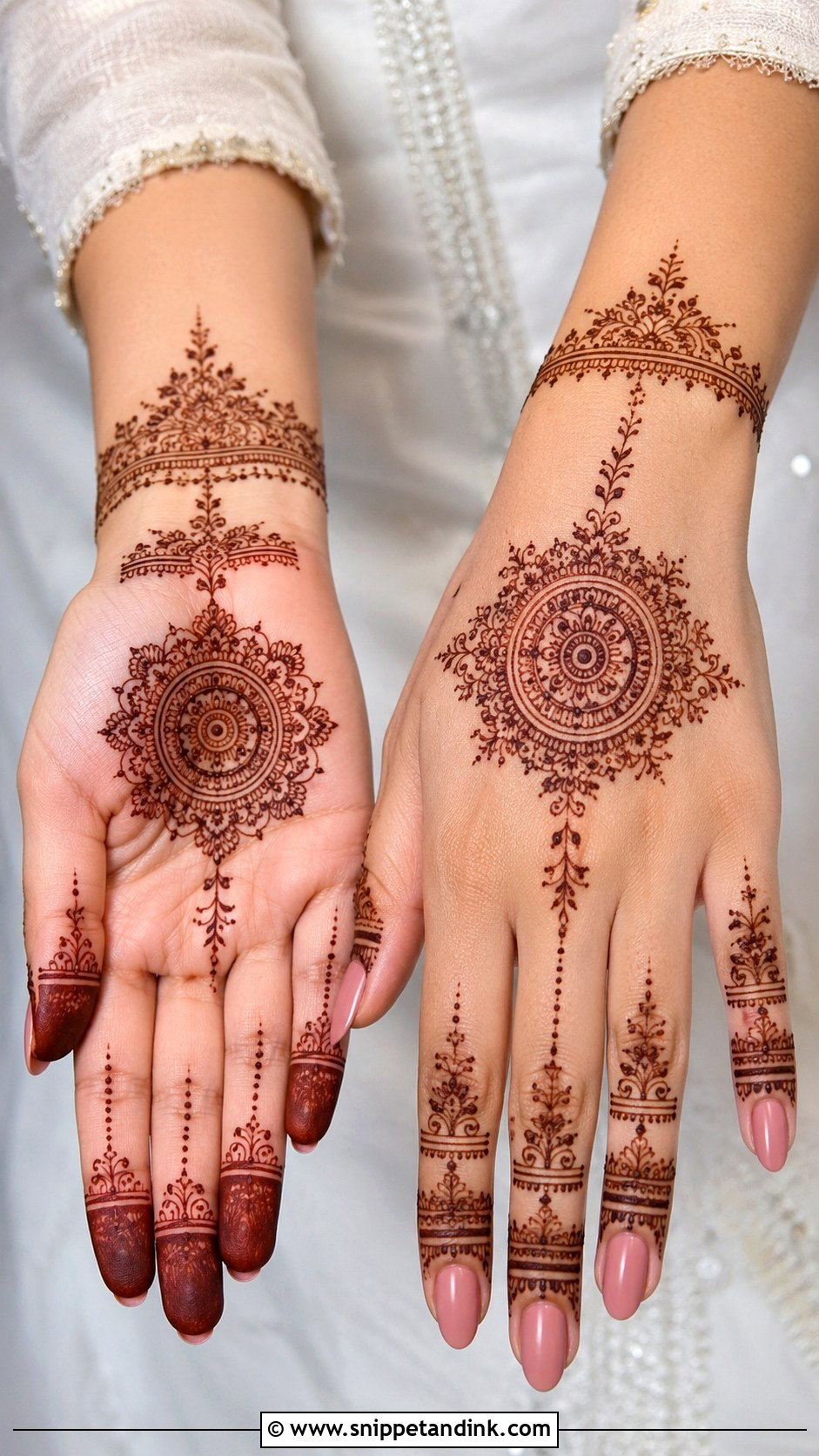
A simple outfit can absolutely carry a mehndi, especially at a home ceremony or a small function. A plain yellow kurta with a worked dupatta, a soft printed lehenga or a light sharara will do it, provided the fabric breathes and the sleeves are easy. Let the henna, jewelry and makeup bring the festivity. I ask brides to choose one hero detail, either a bright color or an embroidered border, and build around it. Simple outfits also leave you room for bold bangles and floral accessories.
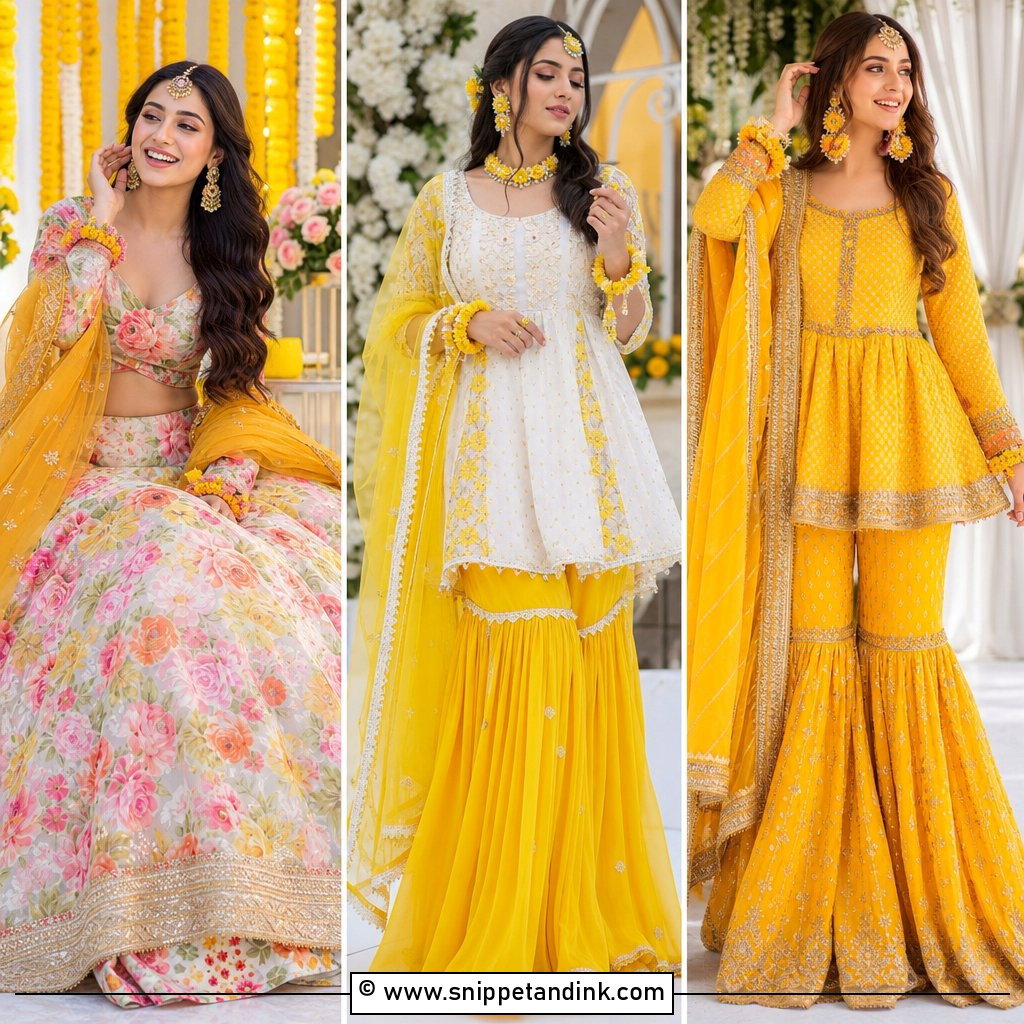
15. Heavy Mehndi Dress For Bride
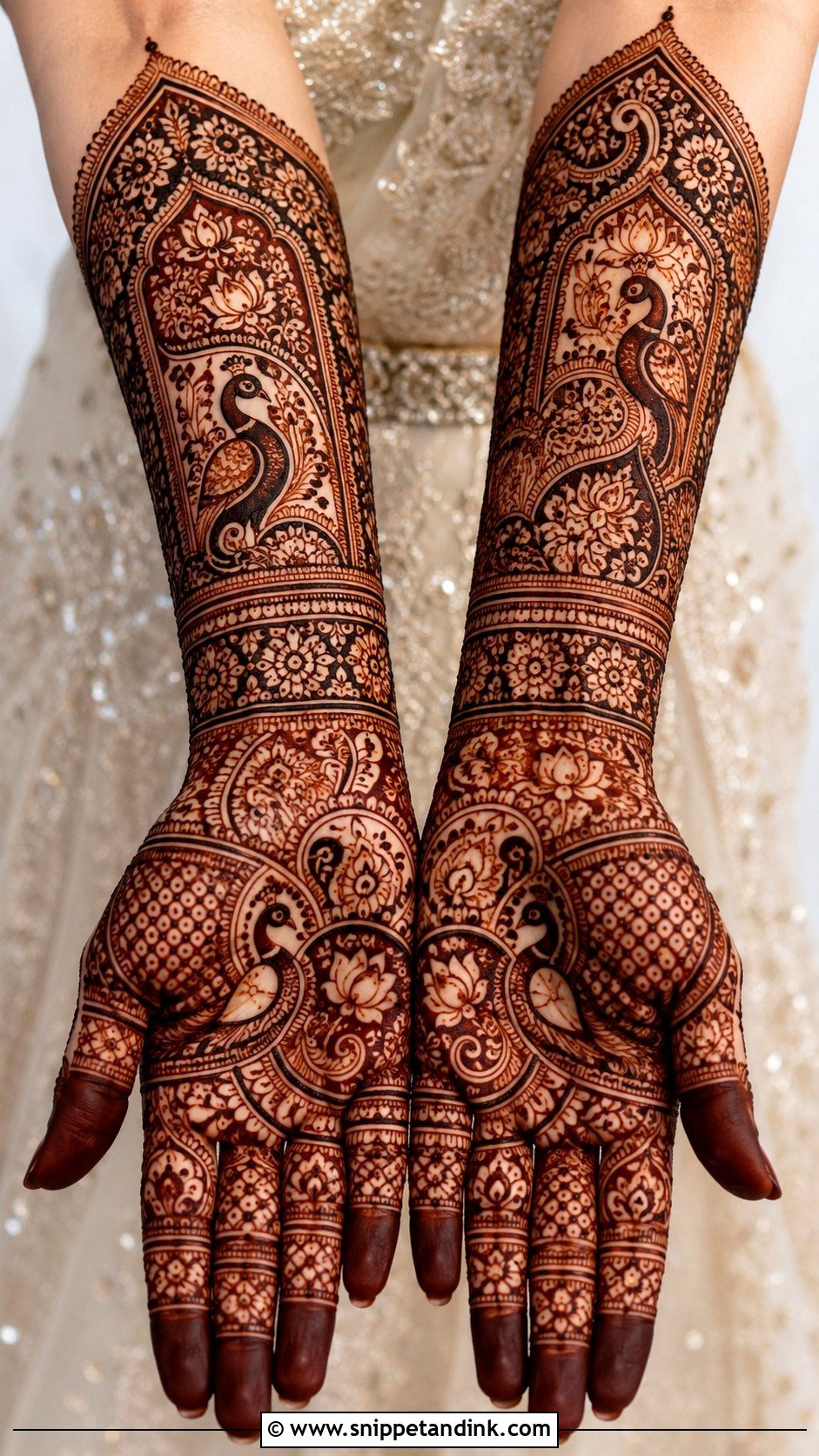
Some brides want the mehndi to feel almost as grand as the wedding, and a heavily worked lehenga, gharara or sharara with gota, zari, dabka, mirrors or sequins delivers that. Deep yellow, emerald, magenta, orange and teal keep it festive without looking like a second wedding dress. Balance is everything here. With a heavy outfit, I keep the dupatta light so it does not drag across wet henna. Heavy embroidery on a sleeve also scratches against fresh paste, so choose sleeves that stop well above where the design ends.
16. Lightweight Mehndi Dress For Bride
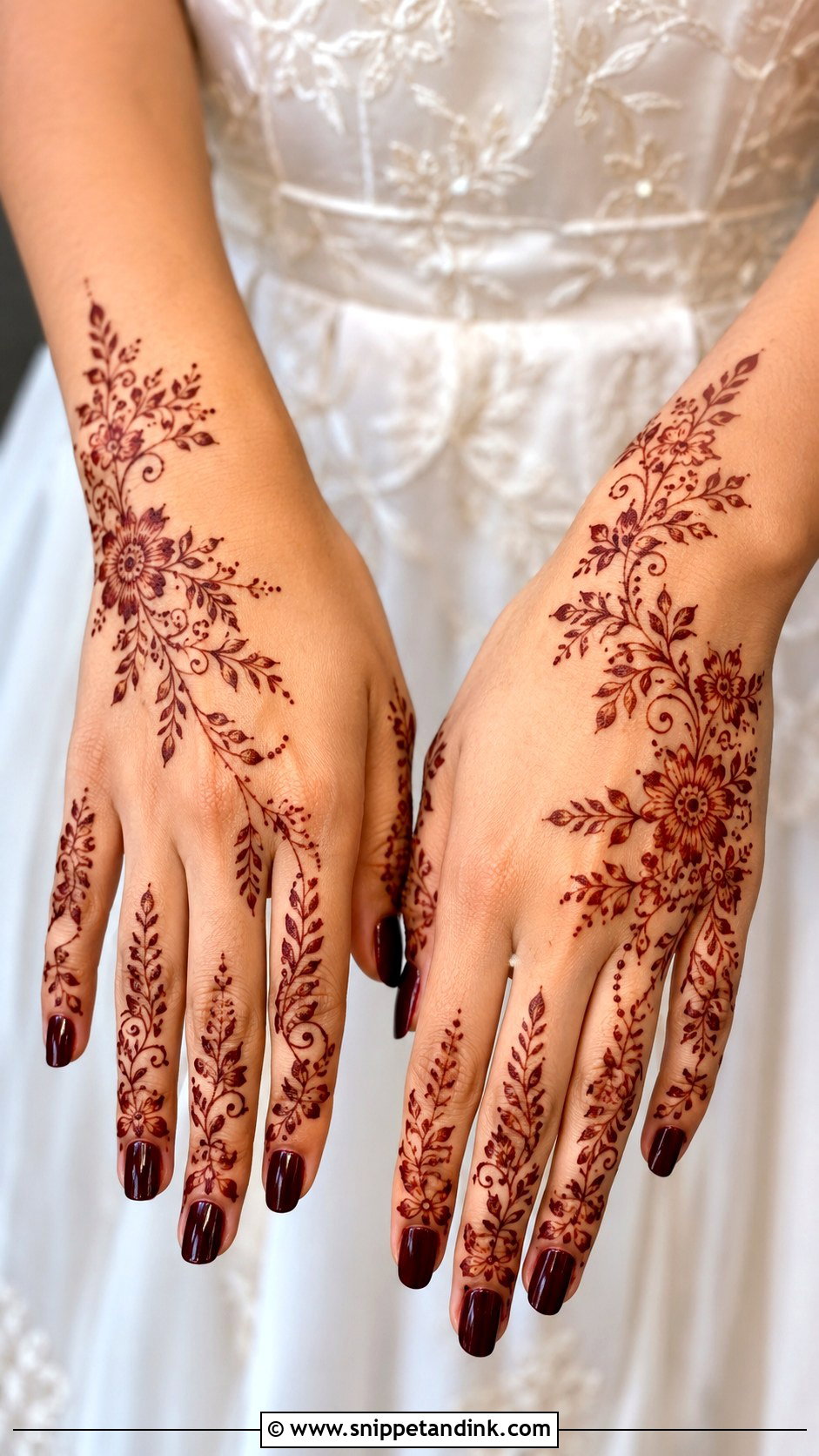
Mehndi functions involve hours of sitting, moving, dancing and close-up hand photos, so a light outfit is a practical decision as much as a style one. Chiffon, georgette, organza, cotton silk and soft net are the fabrics I recommend most. A flowy lehenga, printed sharara or simple anarkali still looks special with the right color, a little mirror work or a contrasting dupatta. Avoid tight cuffs; they leave a ring in the henna if they rub before the paste is dry. It is the most comfortable choice in warm weather.
17. Yellow And Green Mehndi Dress For Bride
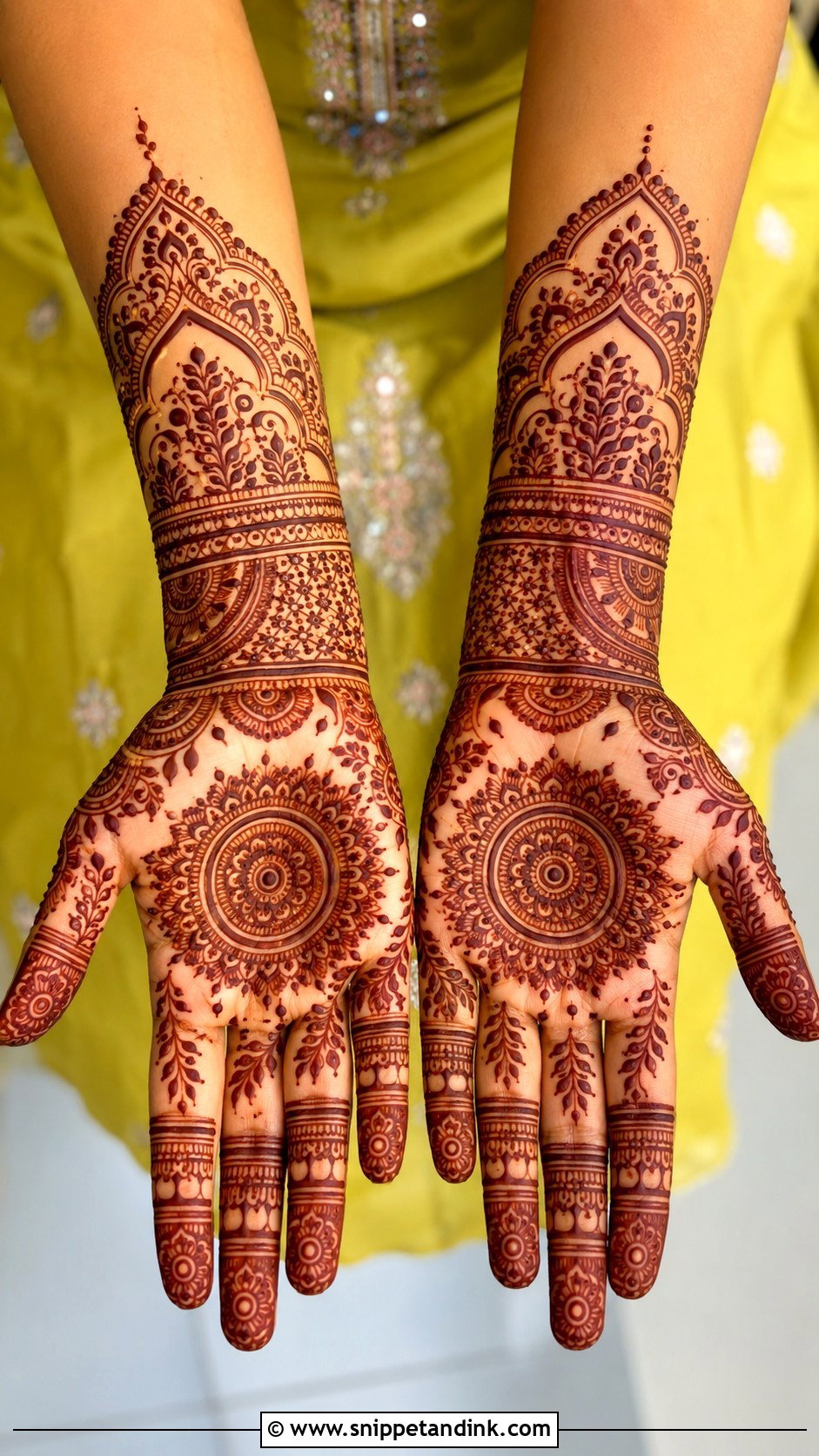
Yellow with green is probably the most requested mehndi pairing I see. A yellow lehenga with a green dupatta, a green sharara with a yellow kurti, or a two-tone gharara with gold embroidery all work. Warm and cool sit side by side, so a reddish-brown stain looks good against either one. Gota patti, mirror work or floral embroidery deepen it; gold jewelry suits it best, though pearls soften it. Peach blush and defined eyes keep the makeup in the same fresh register.
18. Mustard Mehndi Dress For Bride
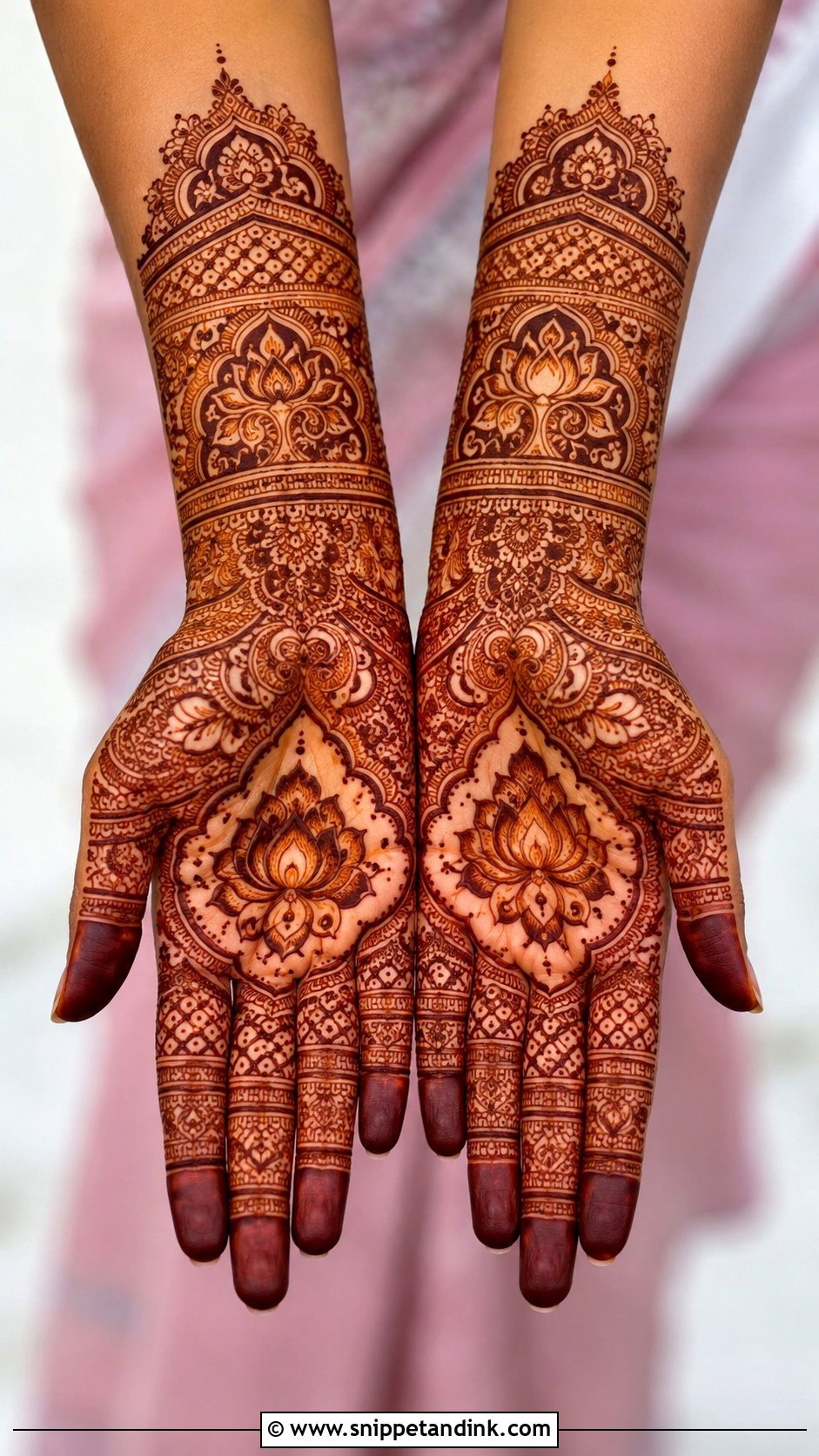
Mustard is yellow for the bride who finds bright yellow too sunny. It looks deep and rich in photos, works day or evening, and sits especially well on warm, olive and deep skin tones. A mustard lehenga, anarkali or gharara with antique gold embroidery feels heritage. Pink, green or rust dupattas give contrast. Since mustard is already warm, I keep the makeup balanced with soft brown eyes and a natural lip, and let traditional jewelry carry the drama.
19. Lime Green Mehndi Dress For Bride
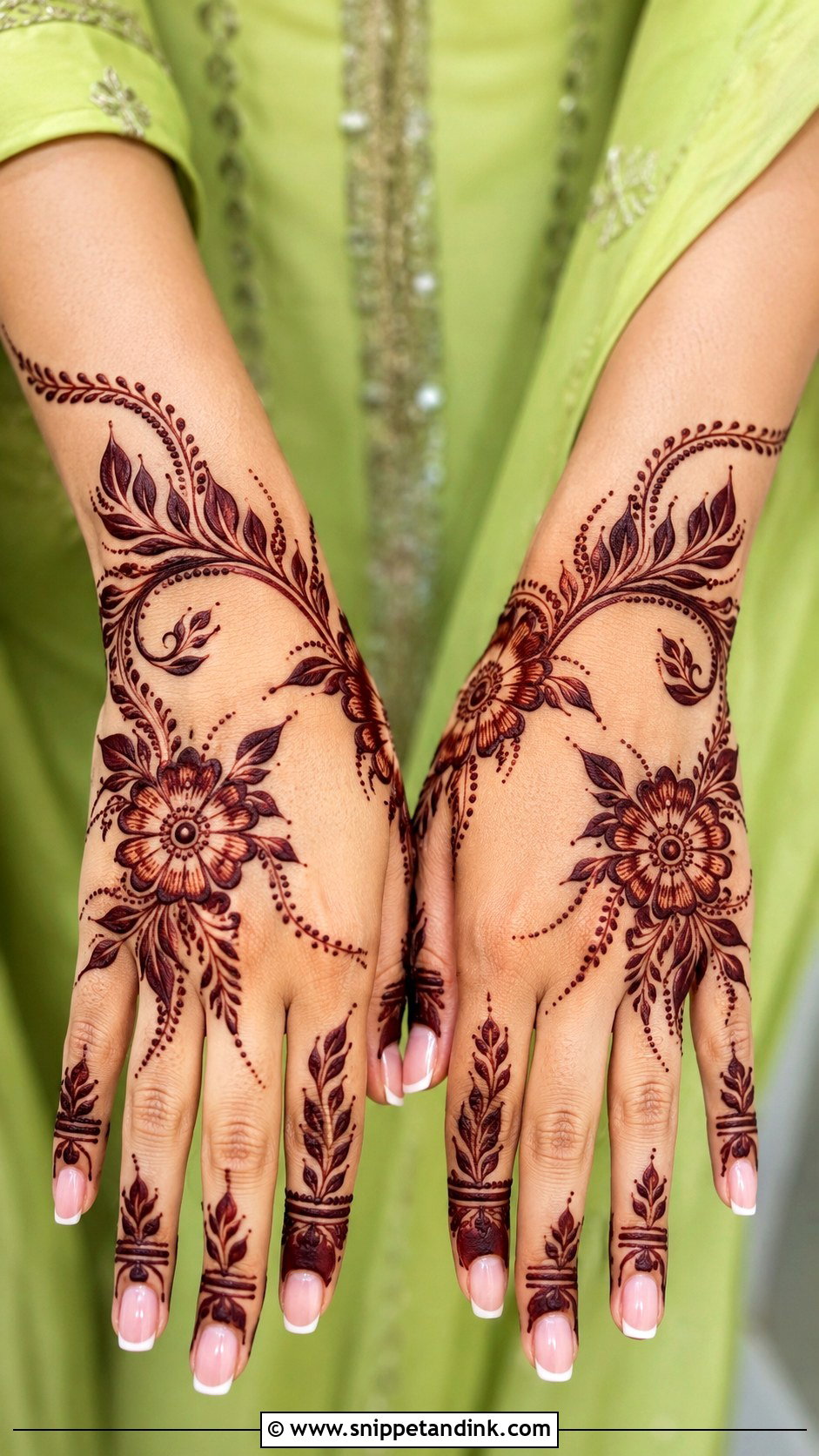
Lime green feels young and lively; it is brighter than emerald but stops short of neon, which makes it best in daylight and outdoors. A lime green sharara, lehenga or frock looks fresh with gold embroidery, mirror work and floral borders, and a hot pink, orange or yellow dupatta adds contrast. The color makes a dark henna stain pop in hand photos. Keep the jewelry festive but light: floral earrings, bangles and a braid with tiny flowers woven in.
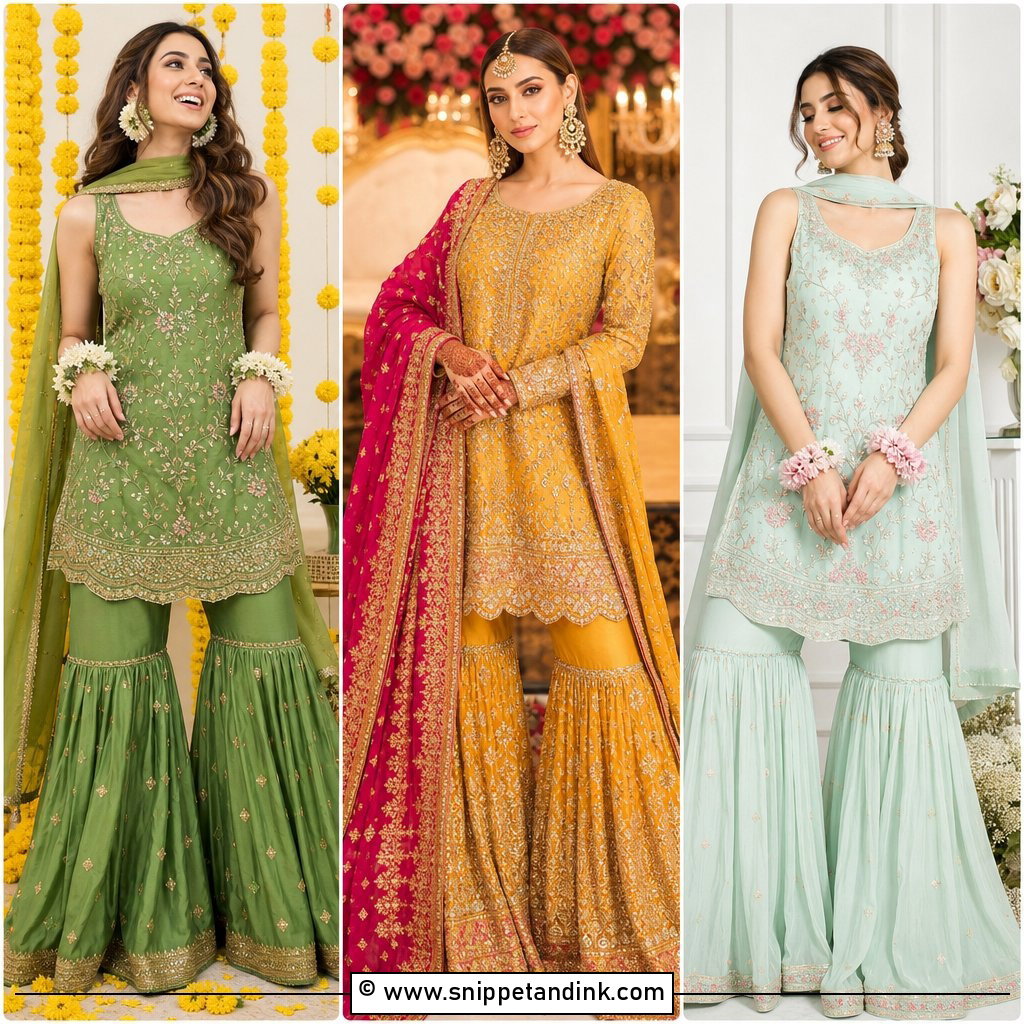
20. Teal Mehndi Dress For Bride
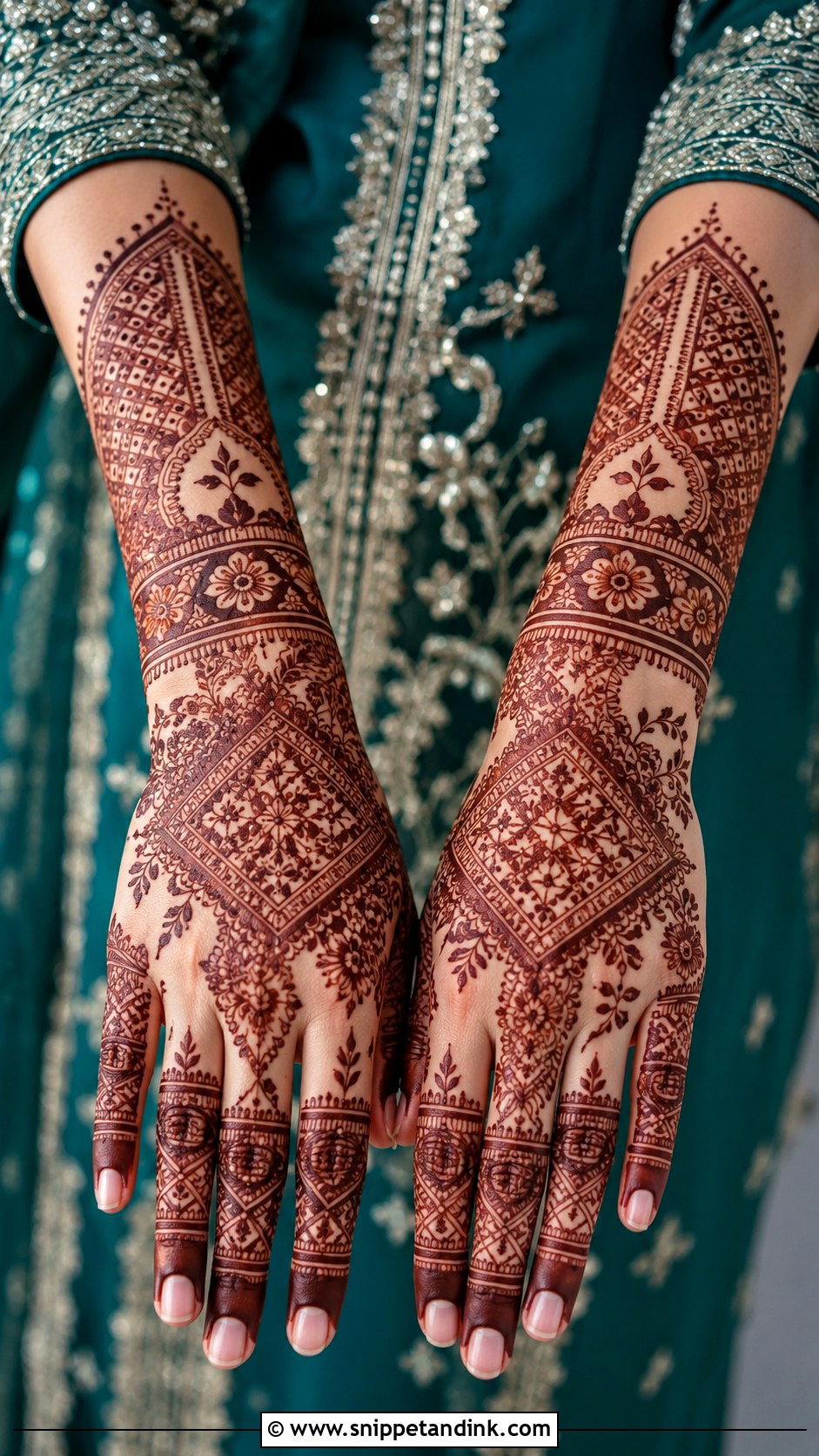
Teal sits between blue and green, so it feels different from the usual yellow without leaving the festive palette. A teal lehenga, gharara or long shirt with gold embroidery is striking at an evening mehndi. I pair it with a mustard, orange, pink or gold dupatta to keep it traditional. Teal is one of the more forgiving colors for henna photos, because the contrast is strong without being harsh. Antique jewelry, a smoky eye and soft waves suit it.
21. Magenta Mehndi Dress For Bride
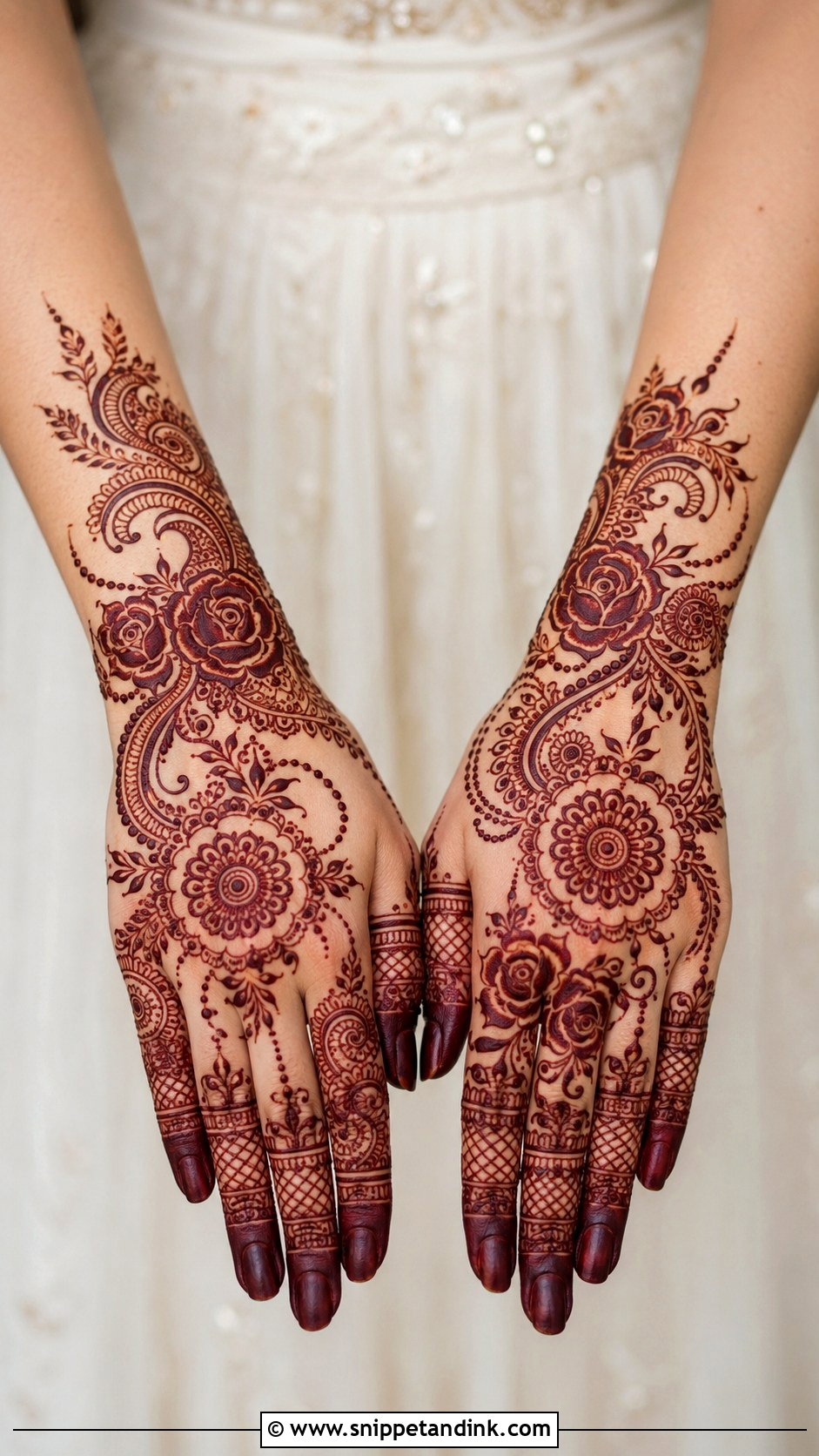
Magenta is pink with more conviction. It looks good on lehengas, ghararas and shararas with gold, green or orange accents, and it holds its color under both indoor bulbs and daylight. Because the shade is so strong, I keep the cut clean and let the embroidery support the color rather than fight it. Kundan jewelry, stacked bangles and either a neat bun or soft curls finish it.
22. Red And Yellow Mehndi Dress For Bride
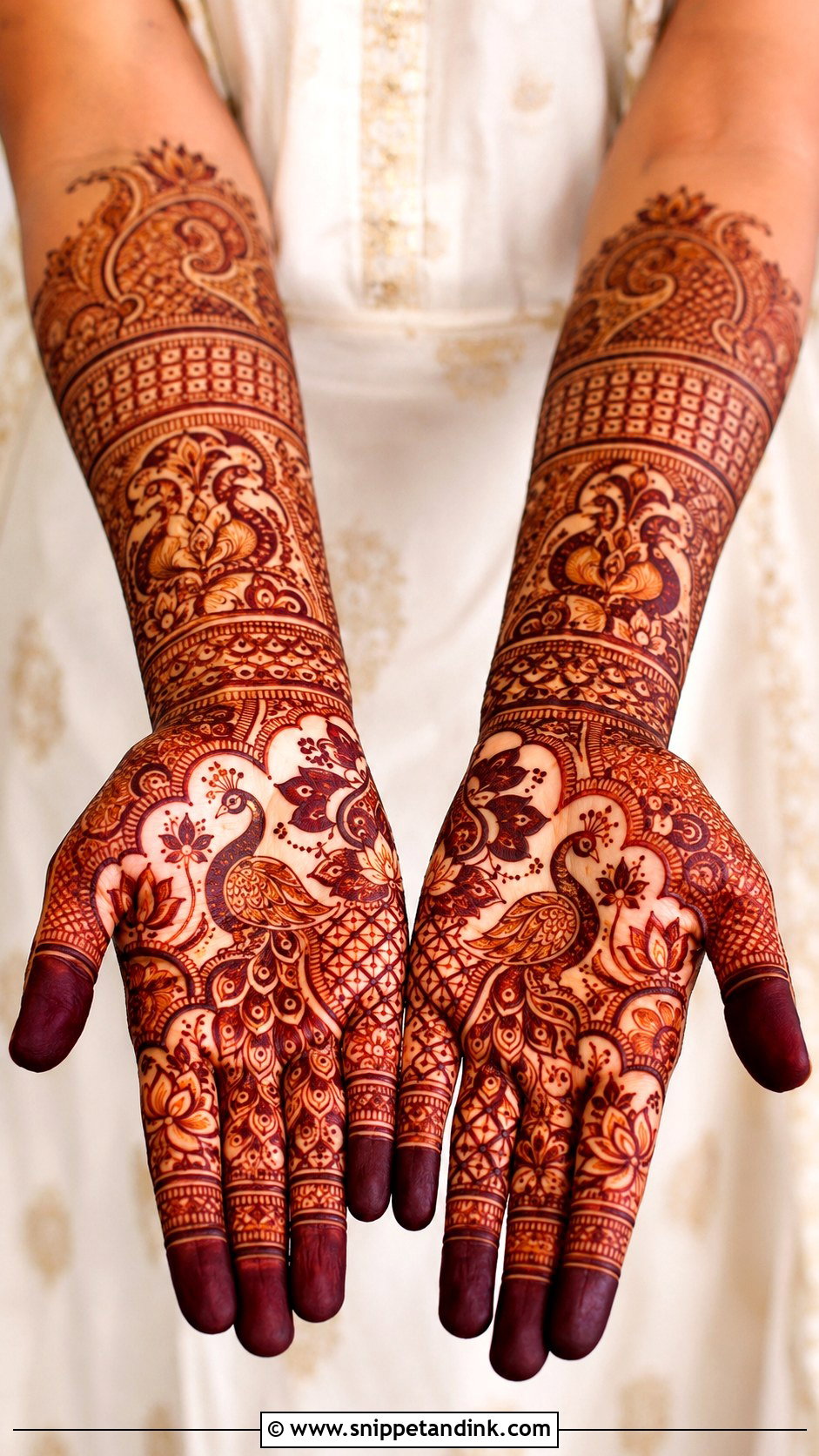
Red and yellow together give a strongly traditional mehndi look. Yellow ties it to the occasion; red adds a bridal note. Wear a yellow lehenga with a red dupatta, a red blouse over a yellow skirt, or a panelled outfit with both, and let gold embroidery pull them together. I only suggest it when the wedding outfit is not also bright red, so the two days look distinct in the album. Classic jewelry, red bangles and soft gold makeup complete it.
23. Purple Mehndi Dress For Bride
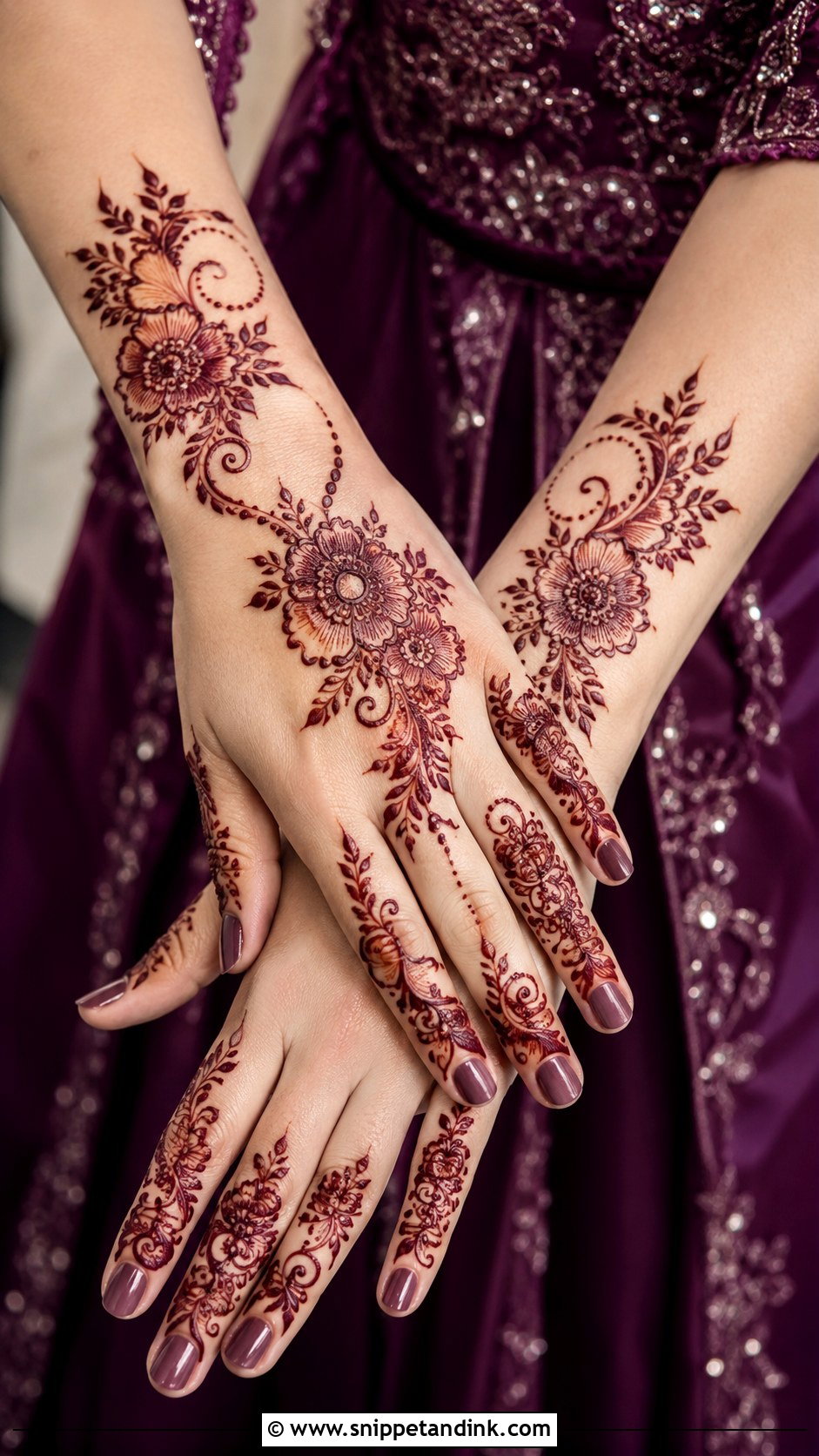
Purple gives a regal feel with a playful edge. Lavender reads soft and modern; plum and violet look richer at night. It combines well with yellow, green, silver, gold and pink accents, and suits a lehenga or sharara with floral embroidery, mirror work or delicate sequins. I suggest it when a bride is tired of seeing the same yellow at every family wedding she has attended. Keep the dupatta light and easy to pin, and add kundan earrings and soft curls.
24. Blue Mehndi Dress For Bride
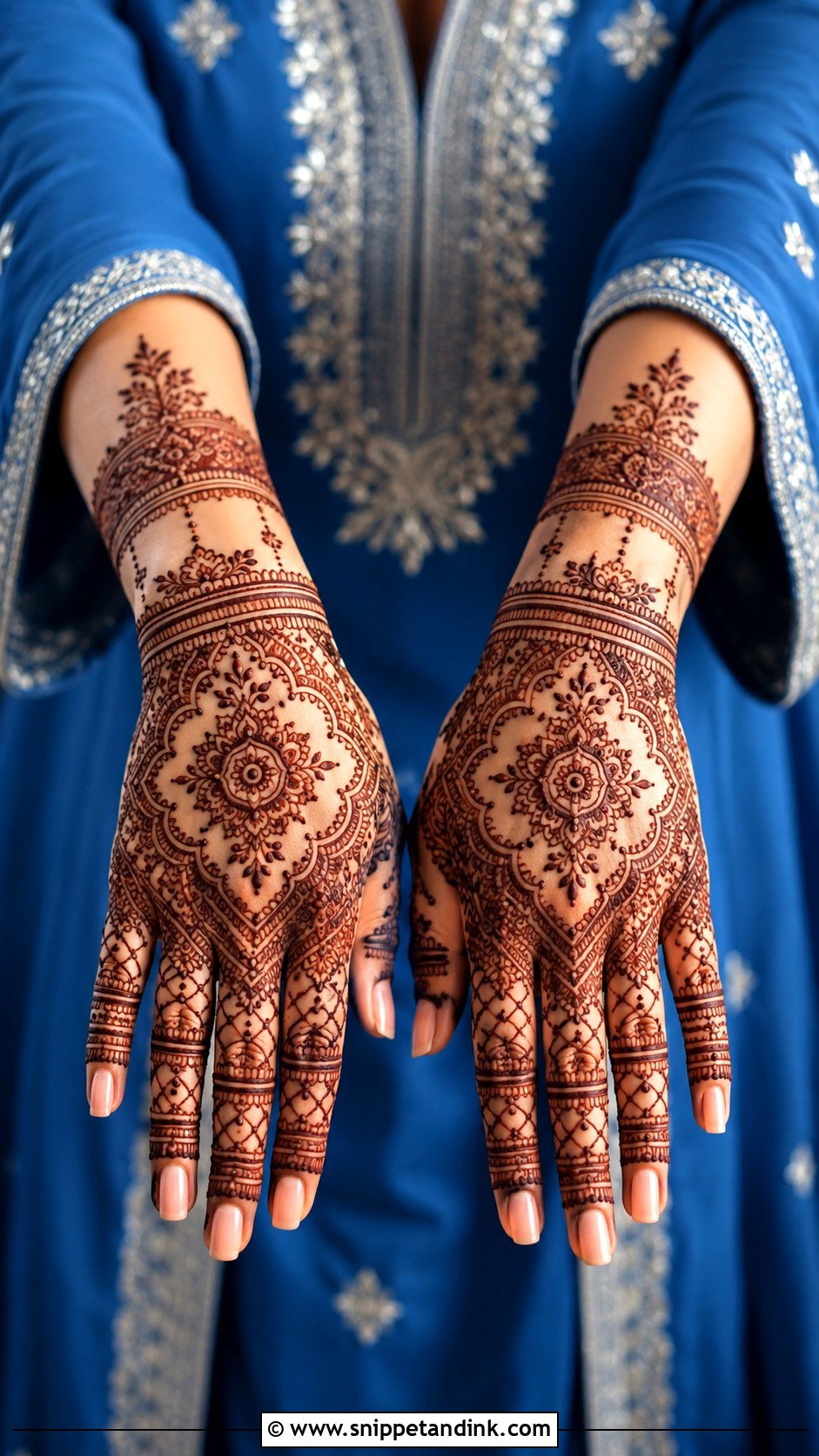
Blue is the unexpected mehndi color, and it works. Powder blue suits daytime; royal blue and navy hold up in the evening. To keep it festive, I add yellow, green, orange or pink embroidery, and a bright dupatta over a blue lehenga photographs very well. The cool base makes the warm stain on your hands stand out. Gold suits royal blue and navy; pearls suit powder blue. Choose mirror work or thread embroidery rather than crystals to keep it in the mehndi mood.
25. Bandhani Mehndi Dress For Bride
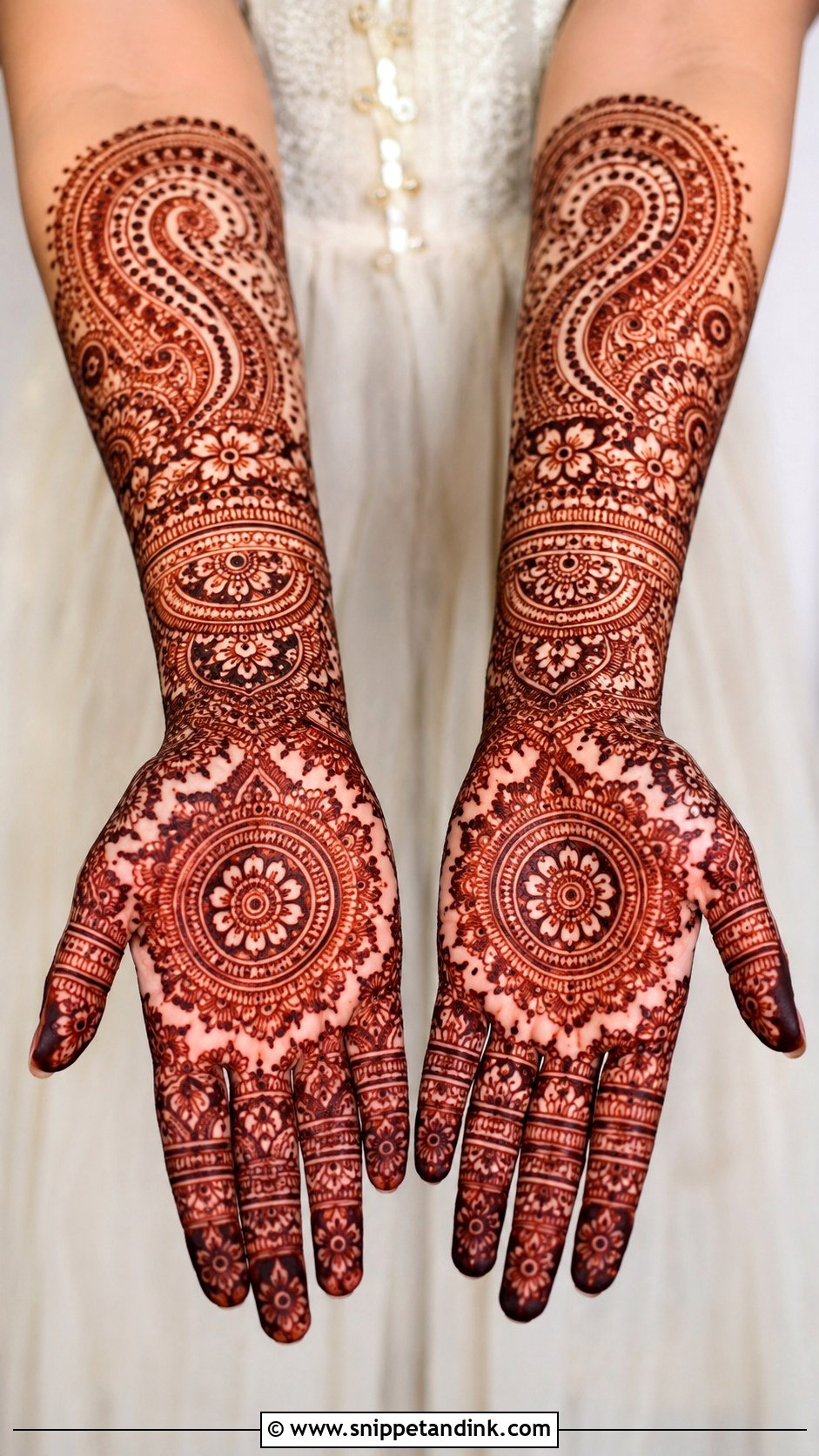
A bandhani mehndi dress brings texture and a lot of tradition. The tie-dye dots are cheerful and the fabric is usually light, which helps in warm weather. Bandhani lehengas, sarees, shararas or dupattas in yellow, red, green, orange or pink all suit the occasion. For a calmer outfit, I pair a plain blouse and skirt with just a bandhani dupatta, and add gota borders or mirror work to make it festive. Traditional jewelry and a braid complete it.
26. Leheriya Mehndi Dress For Bride
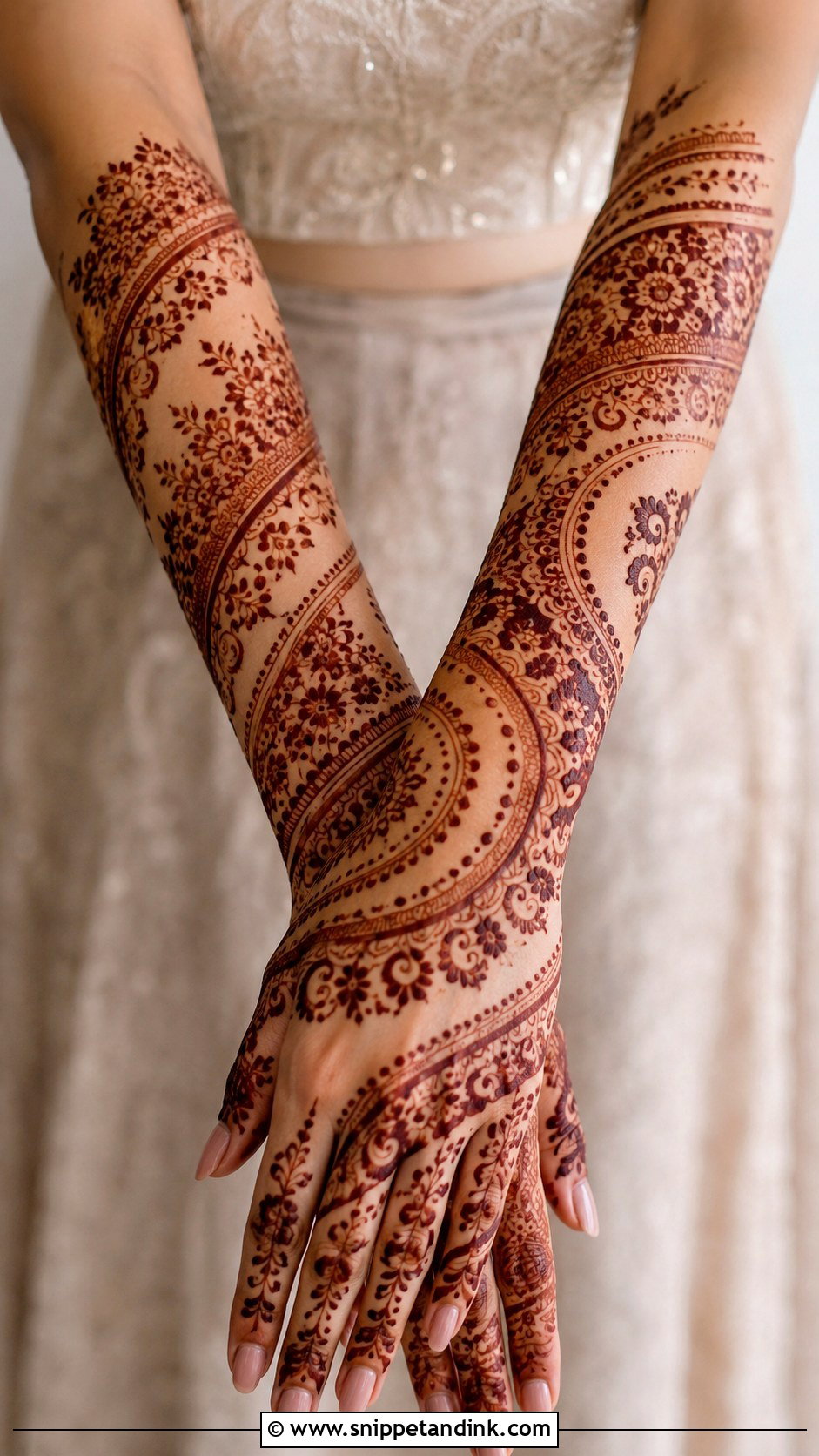
Leheriya’s wave pattern looks like movement even when you are standing still, and it is lovely on flowing lehengas, sarees and dupattas. Yellow, pink, orange, green and multicolor versions are all popular. The pattern is festive by itself, so the outfit does not need heavy embroidery; a worked blouse, gota patti borders or a statement dupatta lift it to bridal. Less embroidery also means less weight, which you will appreciate sitting through henna and dancing afterwards. Jhumkas and bangles are enough.
27. Phulkari Mehndi Dress For Bride
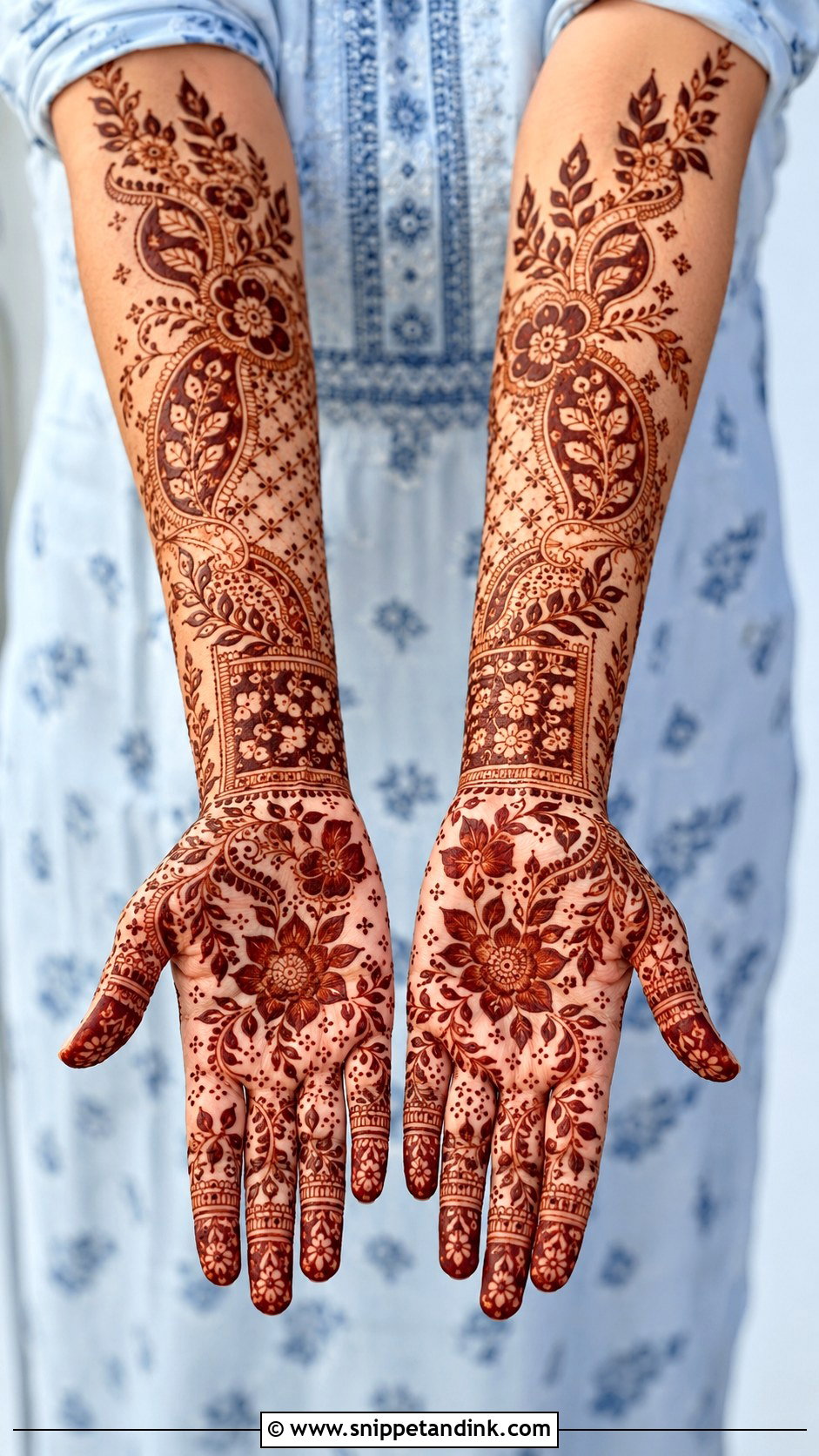
Phulkari brings Punjabi threadwork into the mehndi, with bold flowers in bright silk floss. A phulkari dupatta over a plain yellow, green or white suit works for an intimate ceremony; a phulkari lehenga or sharara with coordinated embroidery suits a bigger event. The floral patterns sit naturally beside bridal henna vines and paisleys. Real hand-embroidered phulkari is often heavy and can be delicate, so I handle family pieces gently and keep wet paste well away from them. Jhumkas, bangles and a paranda finish the traditional look.
28. Jacket Lehenga Mehndi Dress For Bride
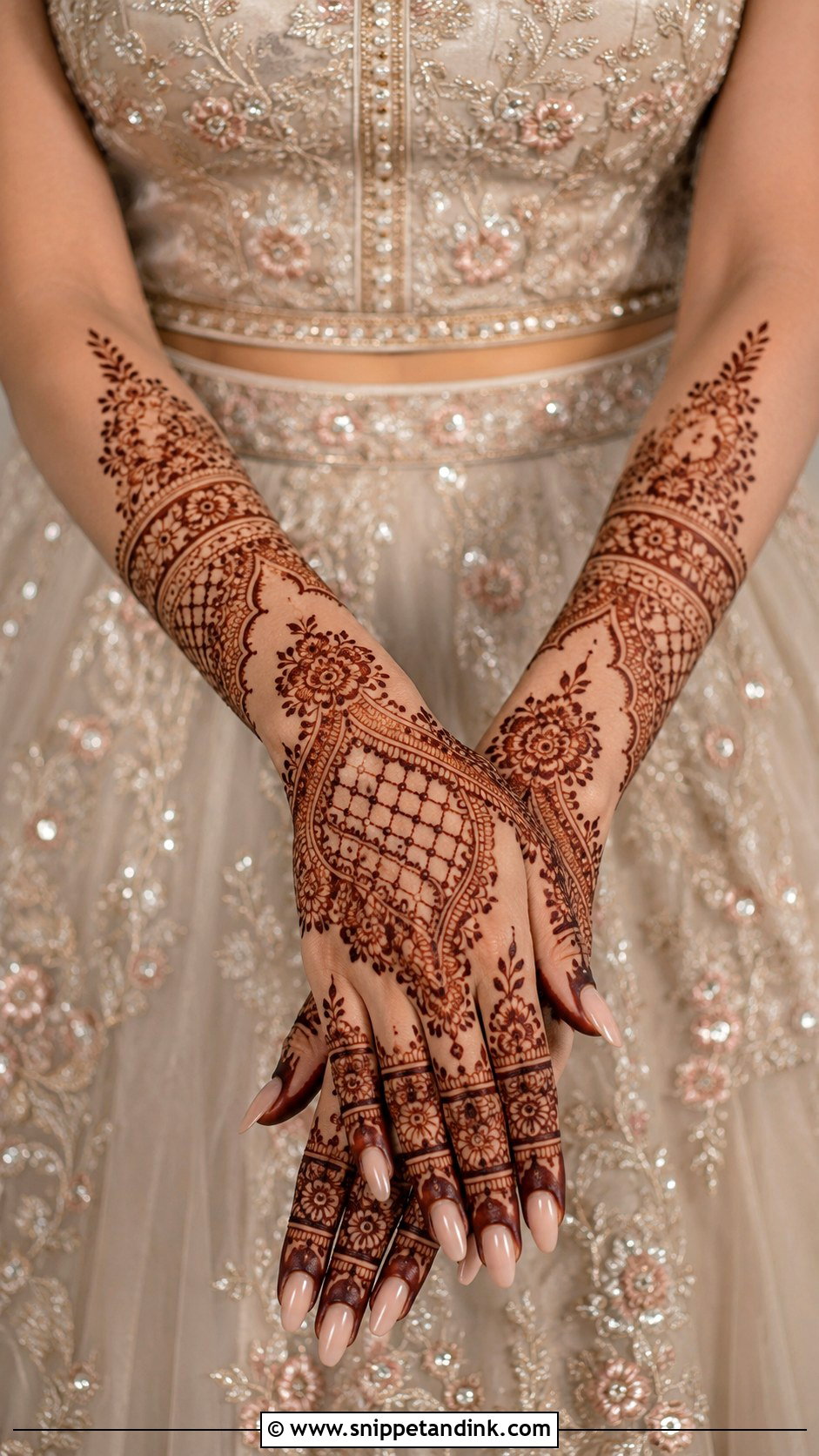
A jacket lehenga gives you a layered look with no dupatta to manage, which frees your hands during the ceremony. The jacket can be short, waist-length or long and sheer. I put the embroidery on the jacket and keep the skirt lighter so the outfit does not become heavy. Yellow, ivory, teal, pink and green all suit the shape. Choose a sleeveless or short-sleeved jacket, or the artist has to work around the cuff. Statement earrings work better than a heavy necklace if the jacket is detailed.
29. Cape Mehndi Dress For Bride
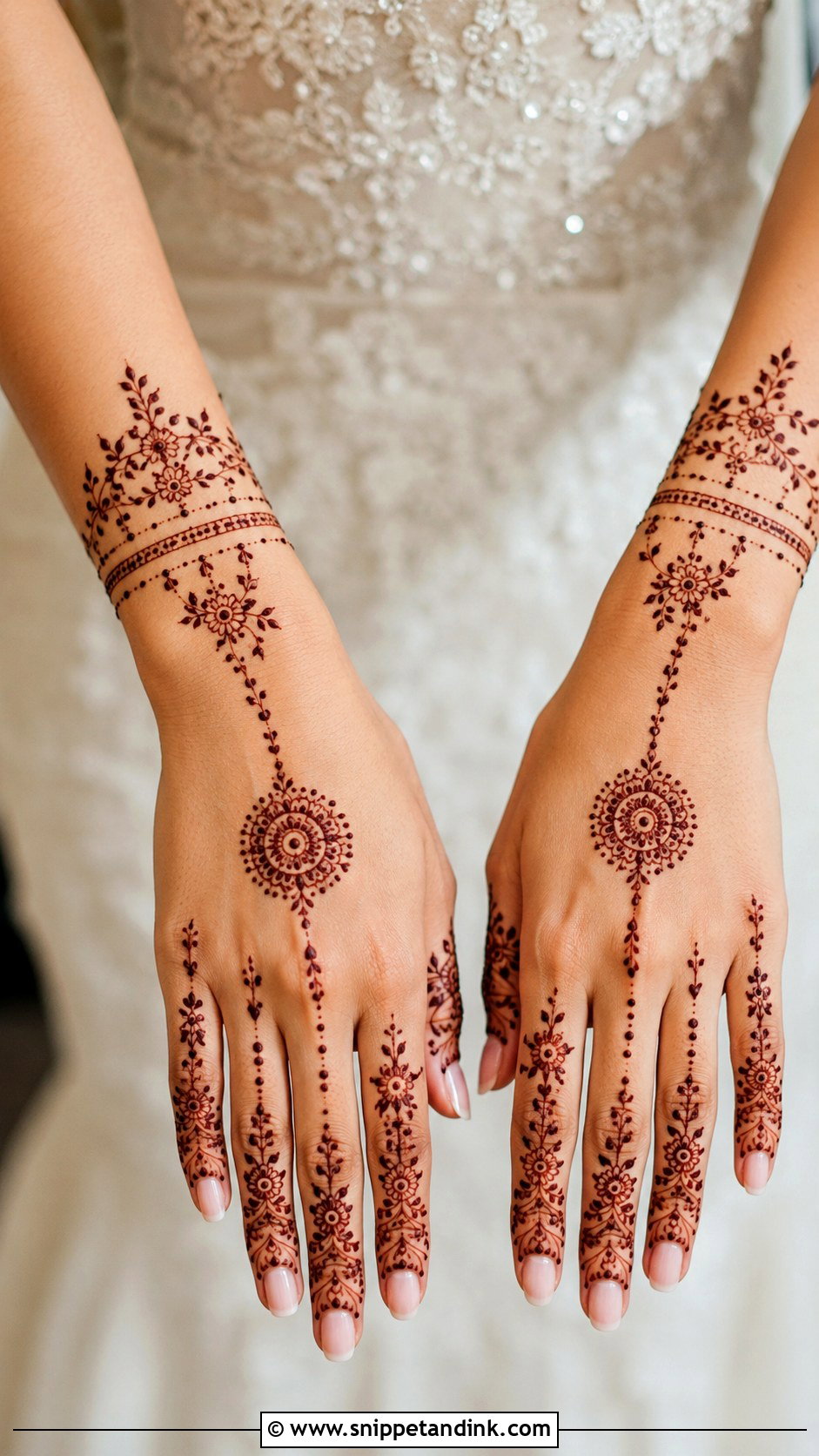
A cape replaces the dupatta entirely, which means nothing slipping onto wet henna and nothing to keep readjusting in photos. Capes go with lehengas, dhoti pants, palazzos or shararas. A sheer embroidered cape in organza, net or chiffon keeps it light, and yellow, mint, blush, ivory and peach suit the style. Keep the sleeves open or short. Sleek earrings, soft waves and glowing skin finish a contemporary look.
30. Saree Mehndi Dress For Bride
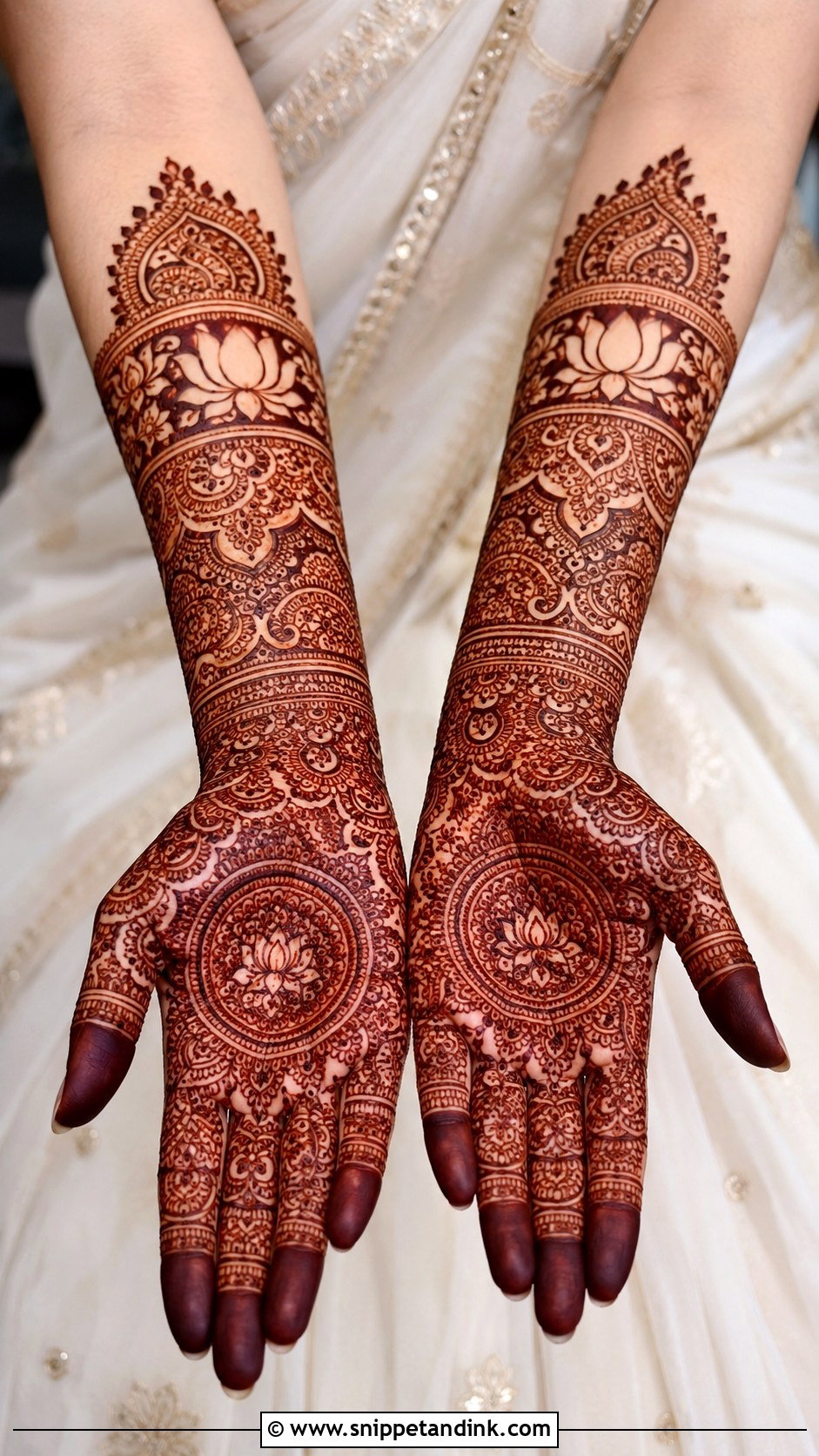
A saree works for a mehndi as long as the drape is light enough to sit in. Printed organza, chiffon, georgette, bandhani, leheriya or a soft silk all suit the ceremony. Bright yellow, green, pink and orange read festive; pastel and ivory look more modern. A sleeveless or short-sleeved blouse leaves the arms open. Because you cannot re-tuck pleats with henna on your hands, I always suggest having it pre-pleated and pinned by someone else, or choosing a pre-draped version. Bangles, a maang tikka and soft makeup finish it.
31. Peplum Mehndi Dress For Bride
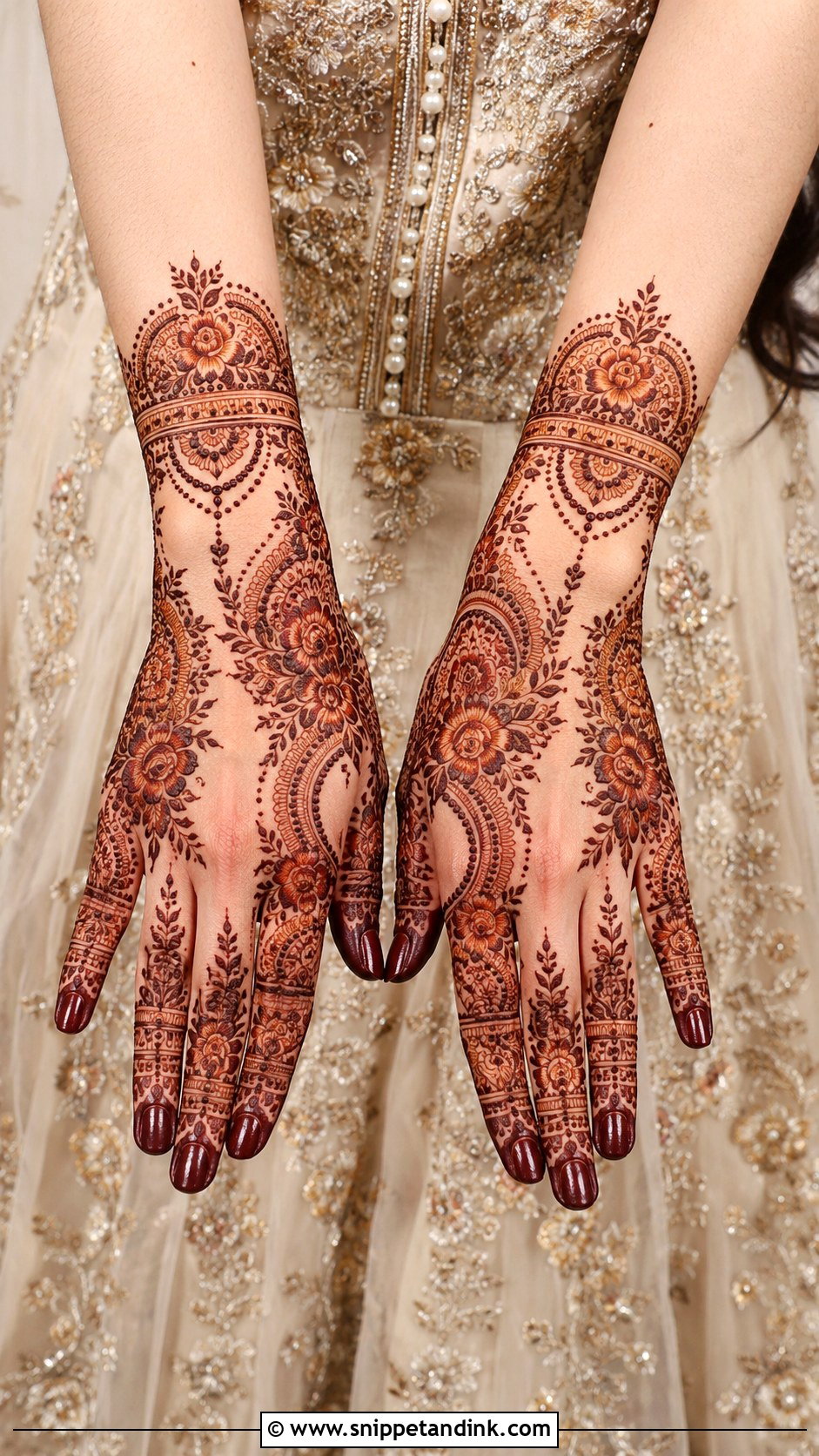
A peplum top gives waist definition without a very short blouse, which some brides prefer. It pairs well with ghararas, shararas, lehengas or straight pants, in bright yellow, green, orange or pink, or in ivory with mirror work for something modern. Three-quarter or short sleeves suit mehndi. Keep the lower half flowing to balance the structure on top. A light dupatta, statement earrings and soft curls are all it needs.
32. Dhoti Pants Mehndi Dress For Bride
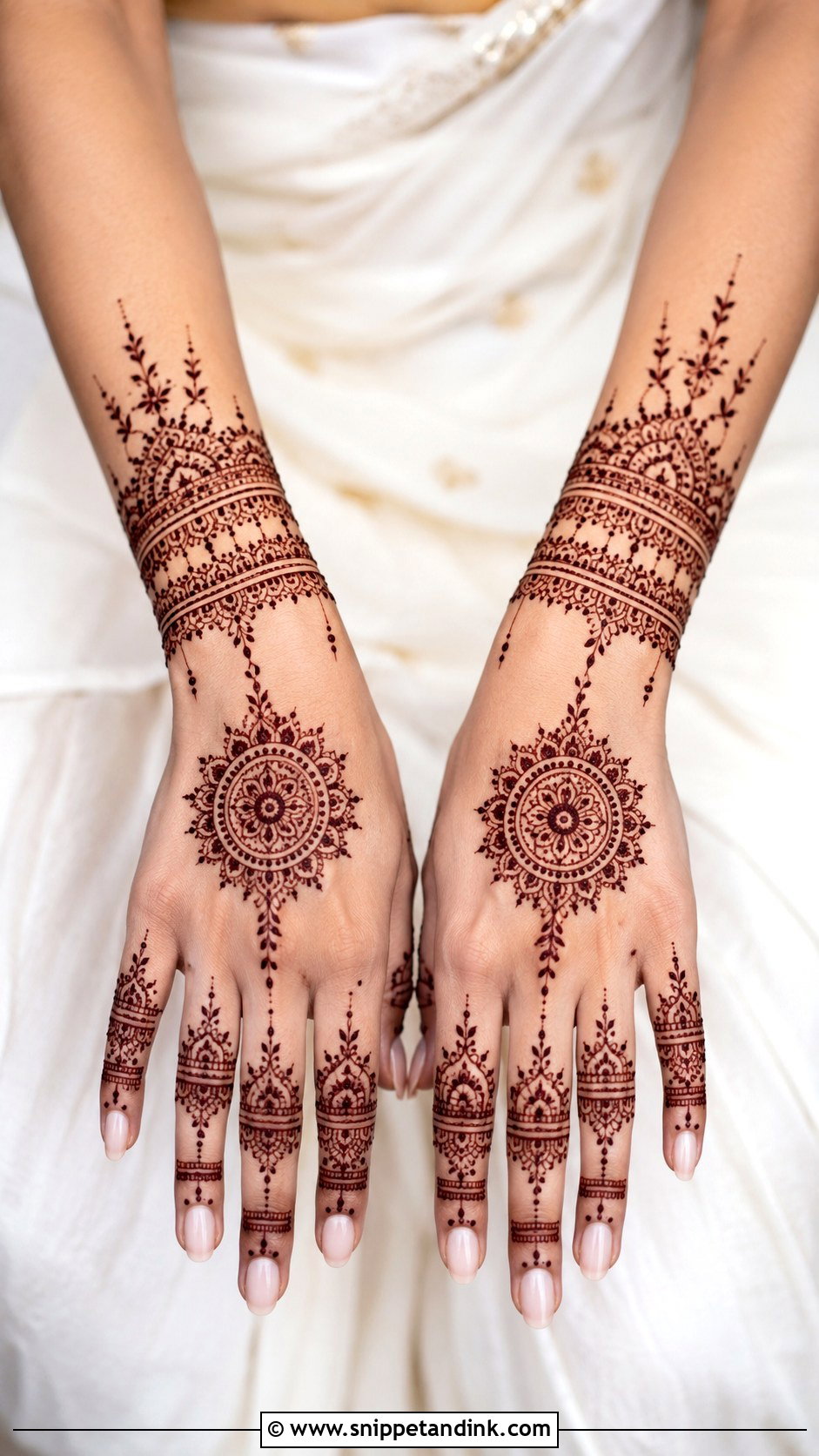
Dhoti pants are the outfit I suggest to brides who plan to dance more than they sit. They allow easy movement and pair well with a crop top, short kurti, cape or embroidered jacket. Yellow, green, pink and printed fabrics keep it festive. Replace the dupatta with a cape or keep it very light. It suits smaller functions, destination weddings and modern mehndi parties best. Add bold earrings, stacked bangles and juttis or a comfortable block heel.
33. Palazzo Mehndi Dress For Bride
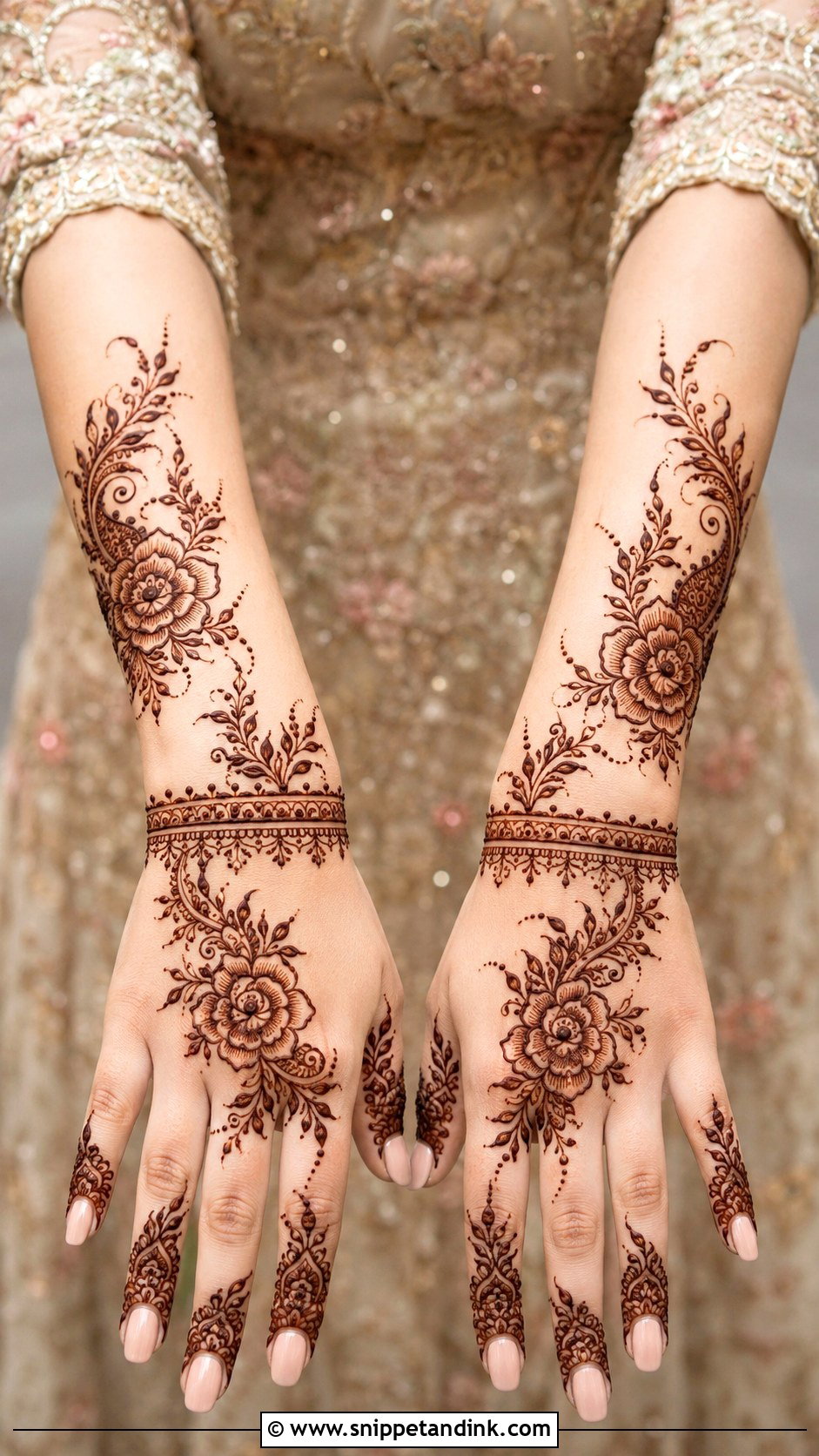
Palazzos give you the movement of a skirt without the weight of a heavy lehenga. A short kurti, peplum top, crop blouse or long jacket all pair with them, in mustard, lime, pink, orange or teal. Embroidered borders, mirror work and a contrast dupatta make it bridal. Palazzos also suit brides who want modest coverage and still look dressed up. Keep the sleeves simple; jhumkas, bangles and soft glam makeup complete it.
34. Dupatta Focus Mehndi Dress For Bride
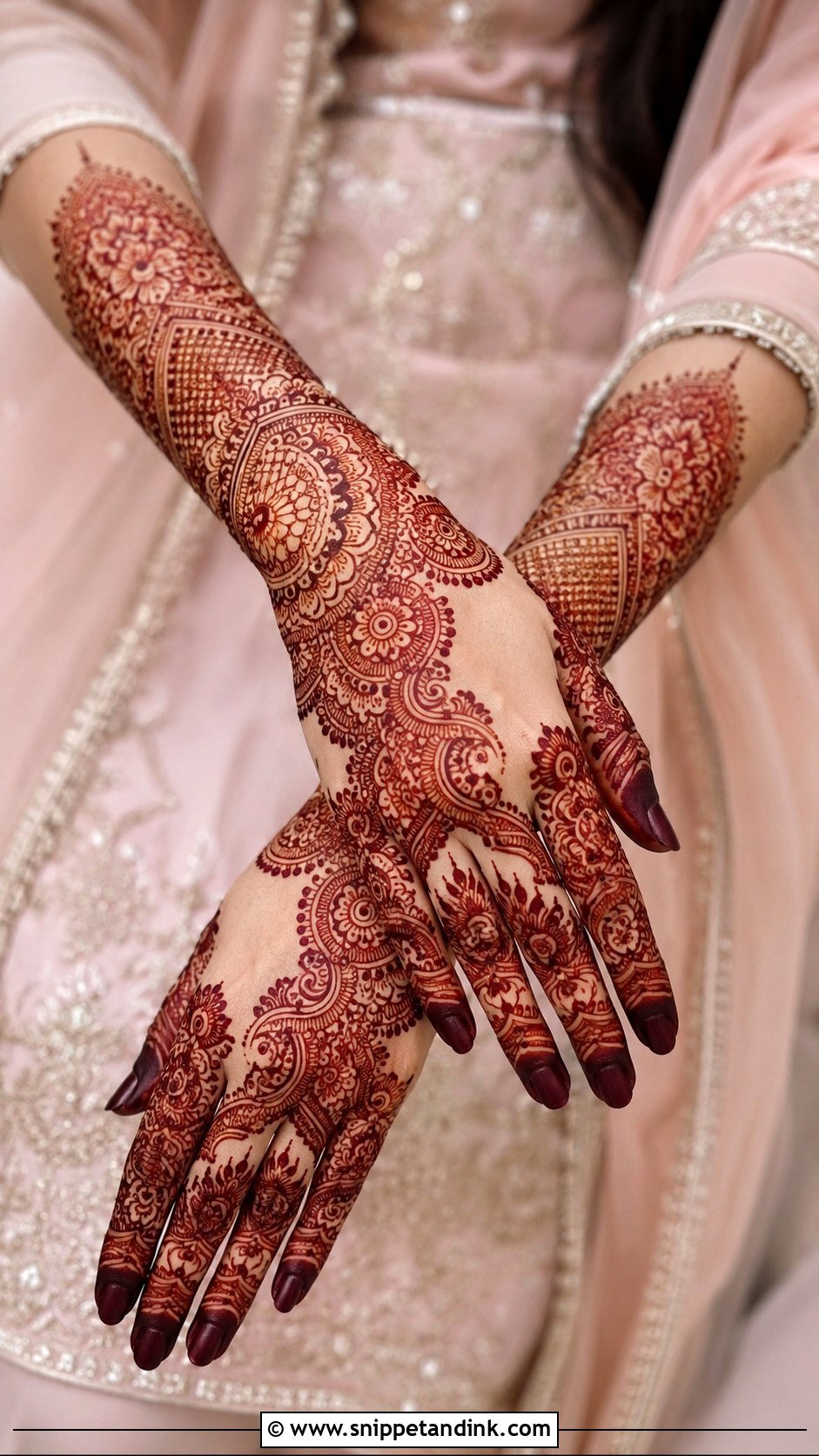
One dramatic dupatta over a simple base is the most budget-friendly way to look bridal at a mehndi. Start with a plain lehenga, sharara or anarkali, then add a heavily worked, bandhani, phulkari, mirror work or gota dupatta. It is also the most practical styling choice, since the dupatta can come off completely while the artist works and go back on for photos. Bright dupattas in yellow, green, pink, orange or multicolor create the mood instantly. Keep the base quiet so the dupatta leads.
35. Floral Jewelry Mehndi Dress For Bride
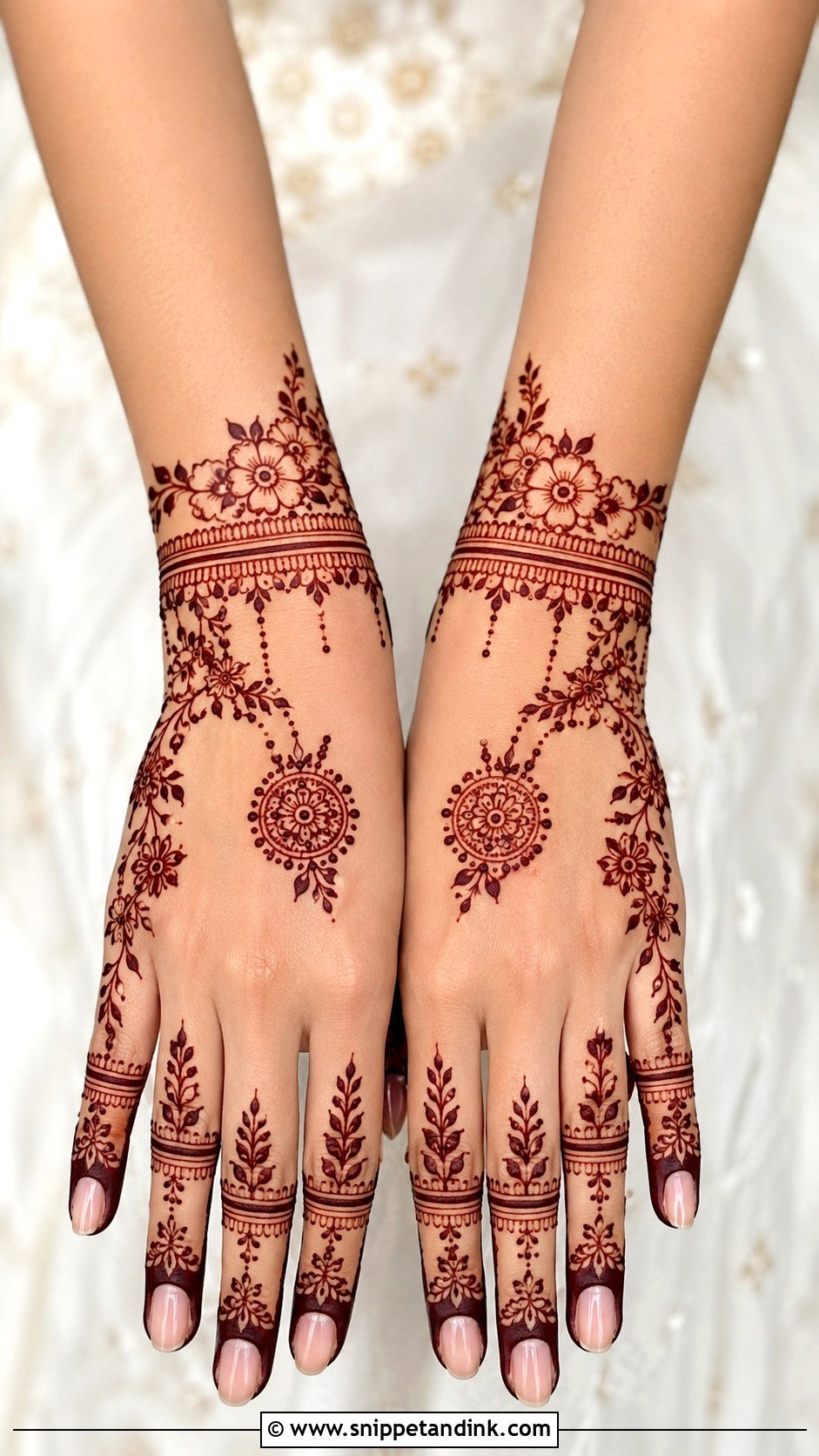
Floral jewelry is as much a part of the look as the dress. It suits yellow, white, pastel, green or pink outfits best, worn with a light lehenga, sharara, anarkali or saree. Floral earrings, a haath phool, maang tikka, bracelets and hair pieces can be fresh or artificial. Fresh flowers wilt in heat and leave marks on pale silk, so for long outdoor events I often suggest good artificial pieces. Watch the haath phool: it sits right on top of the henna, and a big one hides the design in every hand shot.
Saving the Outfit From Paste, Oil and Long Storage
Henna paste and the lemon-sugar sealant mark fabric quickly, especially silk and anything pale. If paste lands on the outfit, let it dry, then lift it off with a blunt edge rather than wiping it, which pushes it into the weave. Blot, do not scrub, and take it to a dry cleaner who handles embellished ethnic wear, telling them exactly what the mark is. Home washing is risky on gota, zari and mirror work, since metallic threads can tarnish and mirrors can loosen.
Oil is the other enemy. Many brides rub on mustard or coconut oil after scraping to protect the stain, and an oily hand pressed on silk leaves a dark patch that is hard to remove. I keep the dupatta and skirt out of reach until hands are wiped.
- Air the outfit for a day after the event before storing it, so sweat and perfume dry out.
- Wrap it in clean cotton or muslin, never a sealed plastic bag, which traps moisture.
- Roll or loosely fold heavily embroidered pieces with tissue in the folds, so sharp creases do not crack the zari.
- Refold it every few months and check for tarnish or loose mirrors.
Many mehndi outfits get worn again, at a sibling’s wedding or Eid, so it is worth that small effort. A light, well-stored lehenga often outlasts the wedding outfit in actual wear.
Sleeves, Seating and Color Before Anything Else
A mehndi outfit has to let you sit for hours, show your henna clearly, move freely and still feel like you. Yellow and green will always have a place, but pastel lehengas, mirror work shararas, cape sets, sarees and phulkari dupattas all deserve a look. Before you commit, think about the venue, the weather, how short the sleeves really are, the jewelry, and how your hands will look against the fabric. Get those right and the color choice becomes the fun part.
You'll Like These Ideas:


Leave a Reply