
Covered bridal style stopped being one silhouette a long time ago. A bride can ask for sleeves, a higher neckline, a lined bodice or a closed back and still end up in satin, crepe, lace or tulle cut in any shape she likes. In the fitting room, the conversation I have most often isn’t about style at all; it’s about where the coverage starts and stops, and whether the dress lets her move, sit and hug without adjusting anything. The 35 gowns below range from plain high-neck satin to full beaded lace, with notes on what each one needs to work for real.
Most Gowns Can Be Made Modest, If You Ask Early
Brides sometimes rule out a dress they love because it’s strapless or has a sheer back. In my experience, a good seamstress can change more than people think, but the work takes time and the materials have to match.
Changes that usually work
- Lining an illusion bodice or back with nude or ivory fabric.
- Adding sleeves, either set into the armhole or as a separate topper that hides the join.
- Raising a neckline with a lace or tulle insert that echoes the gown’s pattern.
- Closing a low back with a panel of matching fabric or lace appliqué.
Changes that rarely look right
Turning a fitted mermaid into a looser shape, or adding sleeves to a heavy beaded bodice with no matching lace available, usually shows. If the designer can’t supply extra fabric from the same dye lot, the new piece may not match exactly in colour. I’d ask the shop whether the designer offers sleeves or a higher back as an official option before you order, because built-in modifications sit far better than ones added afterward. Allow extra time for this kind of work on top of normal alterations, and expect the cost to vary widely with the fabric.
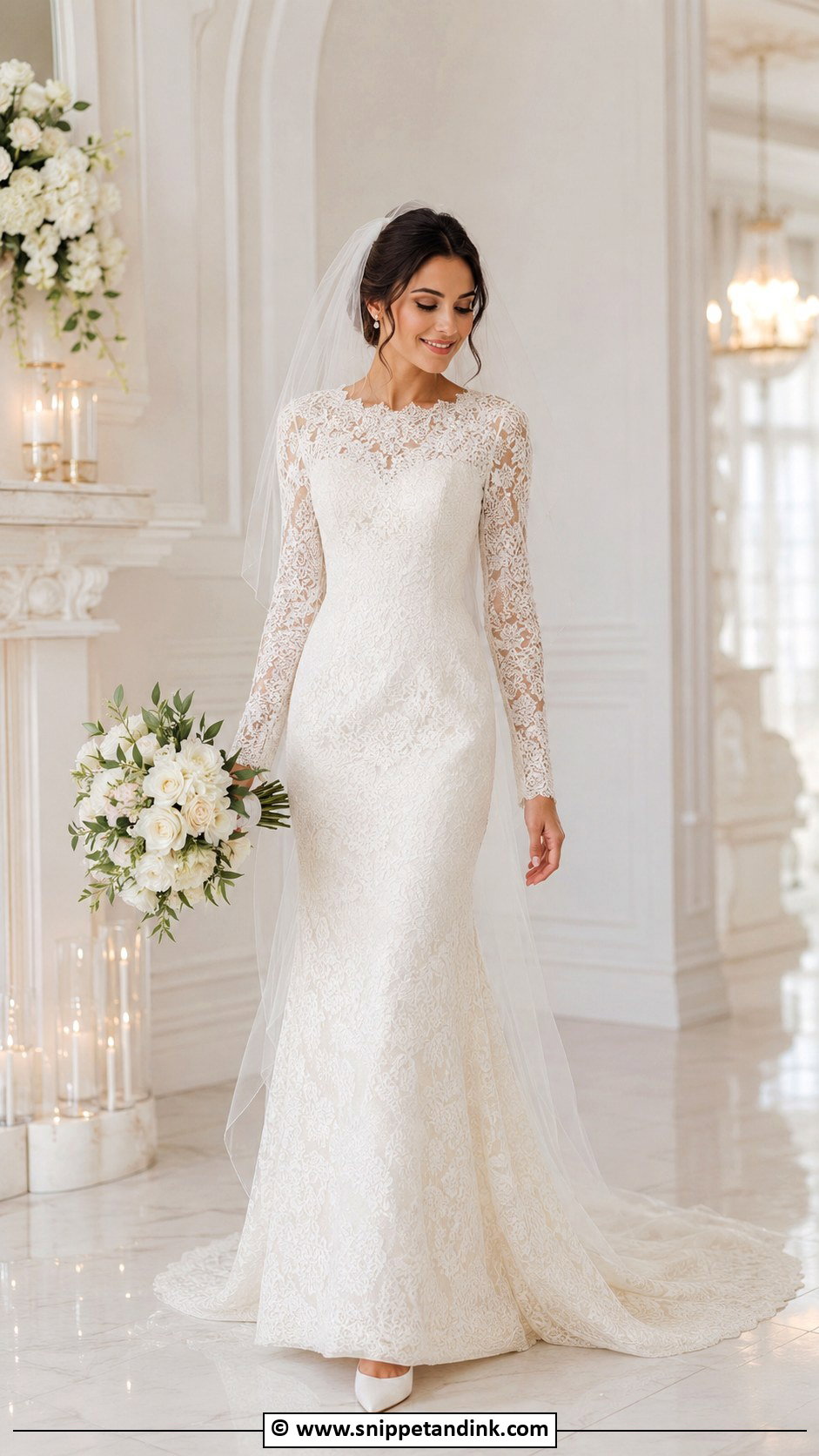
1. Long Sleeve Lace Wedding Dress
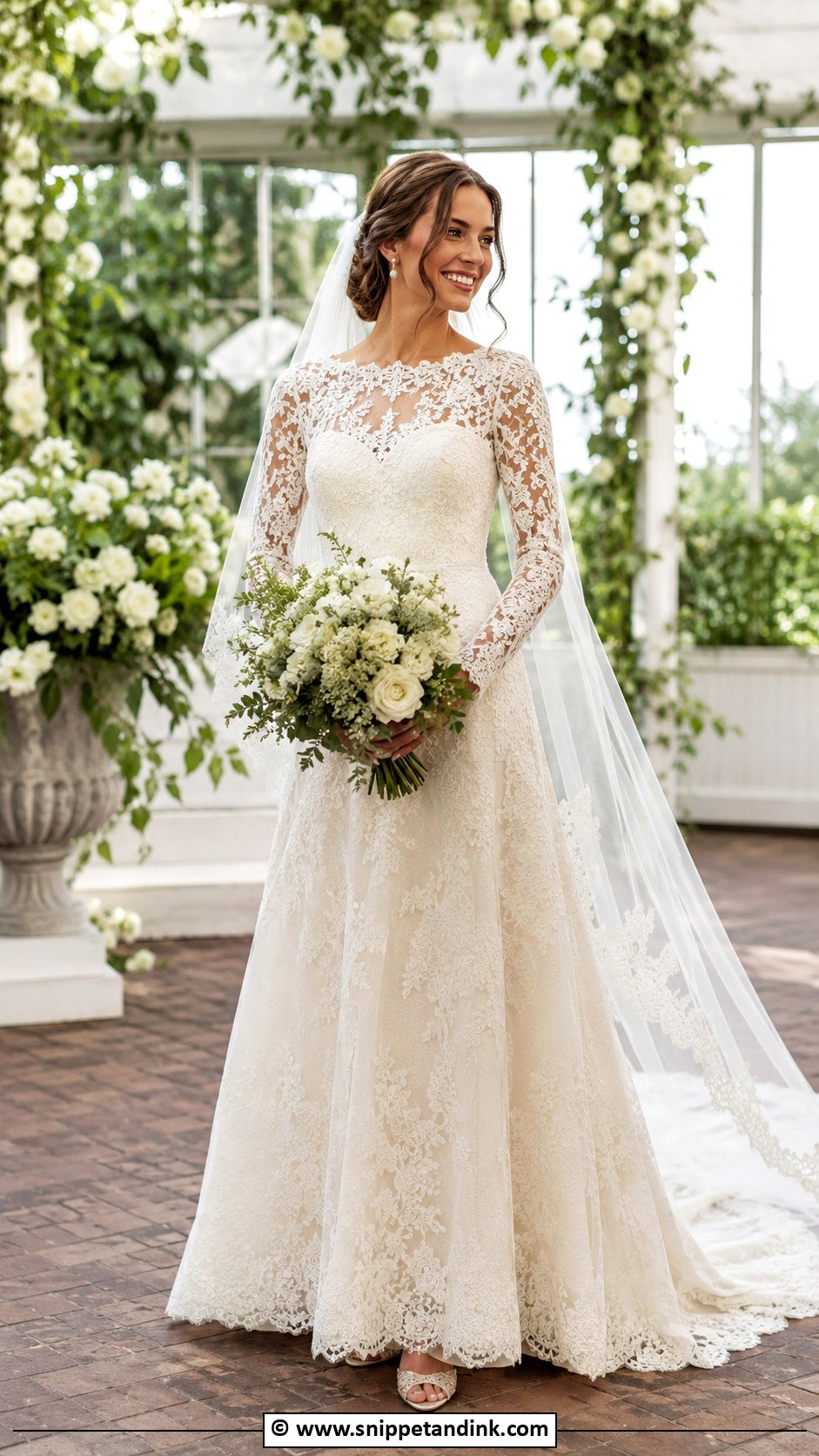
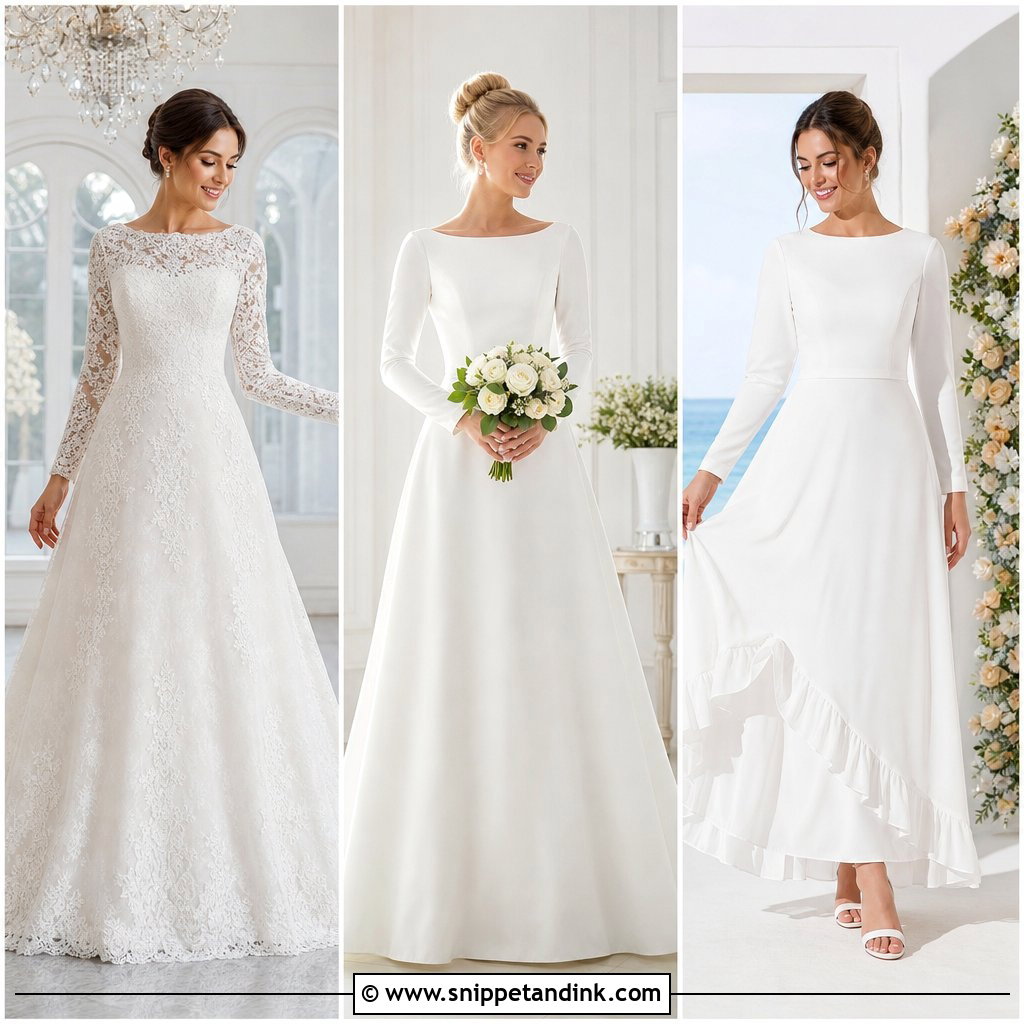
Long lace sleeves are the classic answer, and for good reason: the lace softens the arm, and the sleeve itself gives coverage through every photo. Ask for a lined bodice if the lace is open, especially with large floral or botanical patterns where gaps can be wide. An A-line skirt moves easily, and a chapel train finishes it. Pearl earrings, a simple veil and satin or lace heels are enough. I check one thing on every lace sleeve: how high you can raise your arm before the sleeve pulls at the armhole. Cooler seasons, indoor venues and gardens suit it.
2. High Neck Satin Wedding Dress
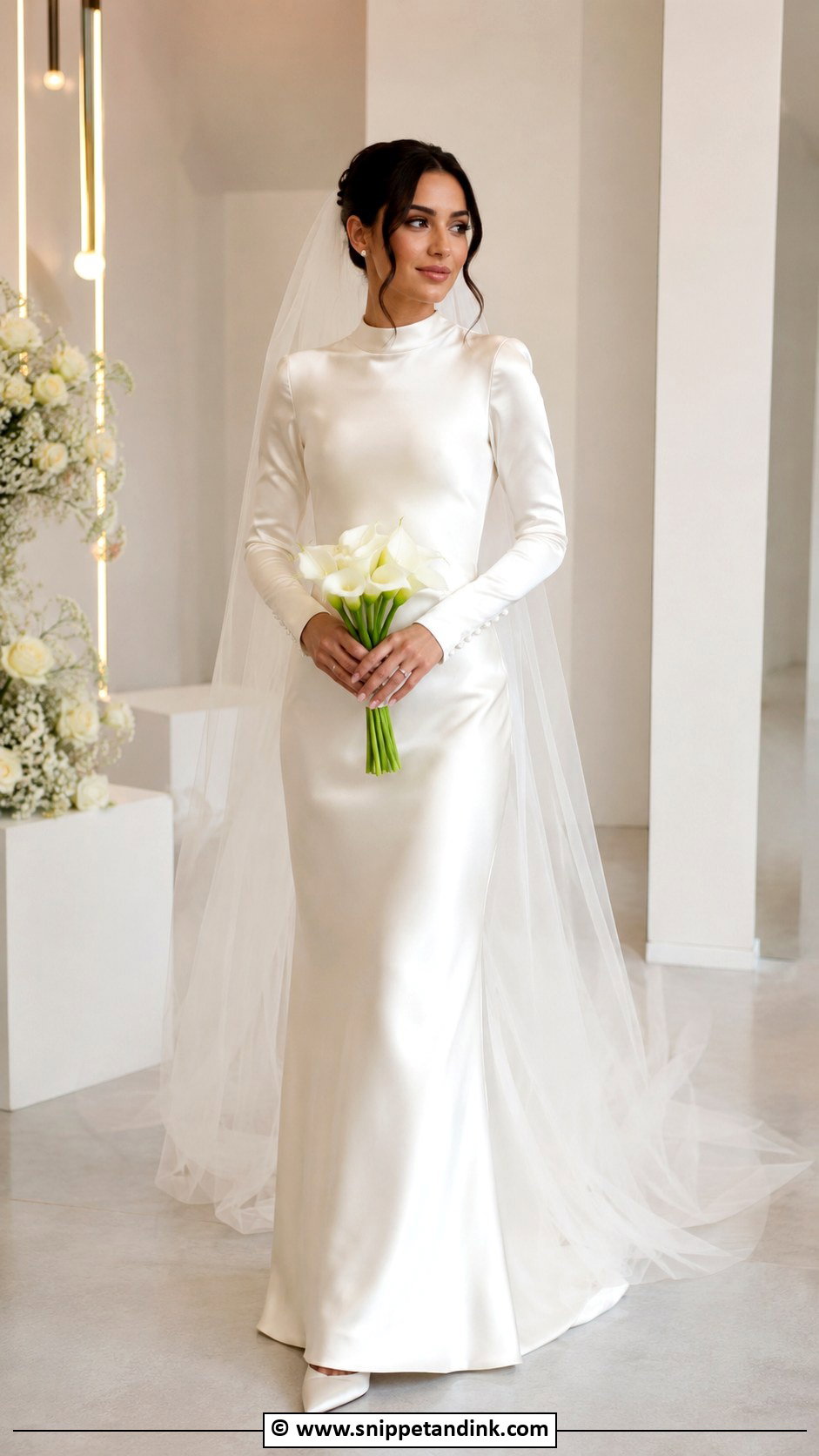
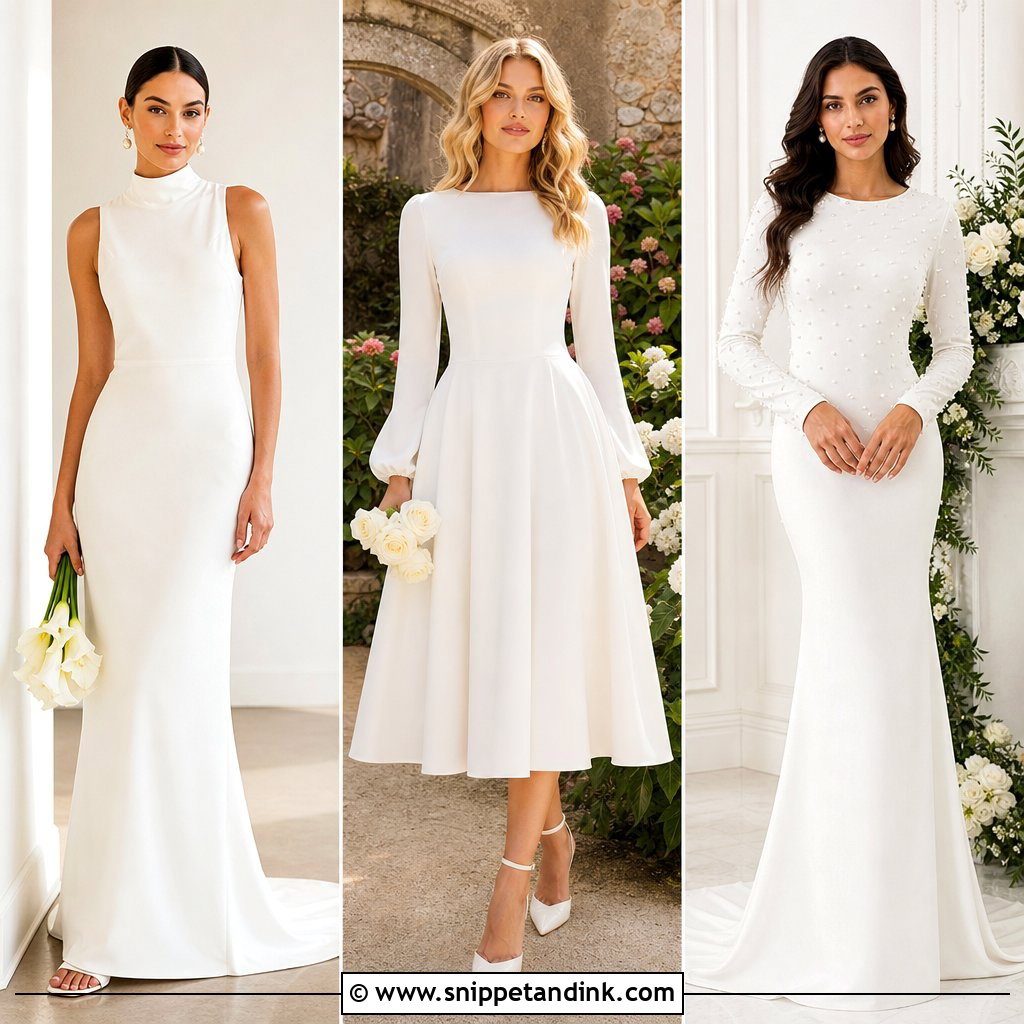
High-neck satin is clean and formal with almost no decoration. The fabric carries the dress, so the cut has to be exact around the throat; too tight and it presses when you look down, too loose and it ripples. A column, sheath or soft A-line all suit it. If you lean minimal, matte satin with covered buttons down the back and either long or cap sleeves is the version I’d show first. Finish with a low bun, pearl studs, pointed heels and a long veil.
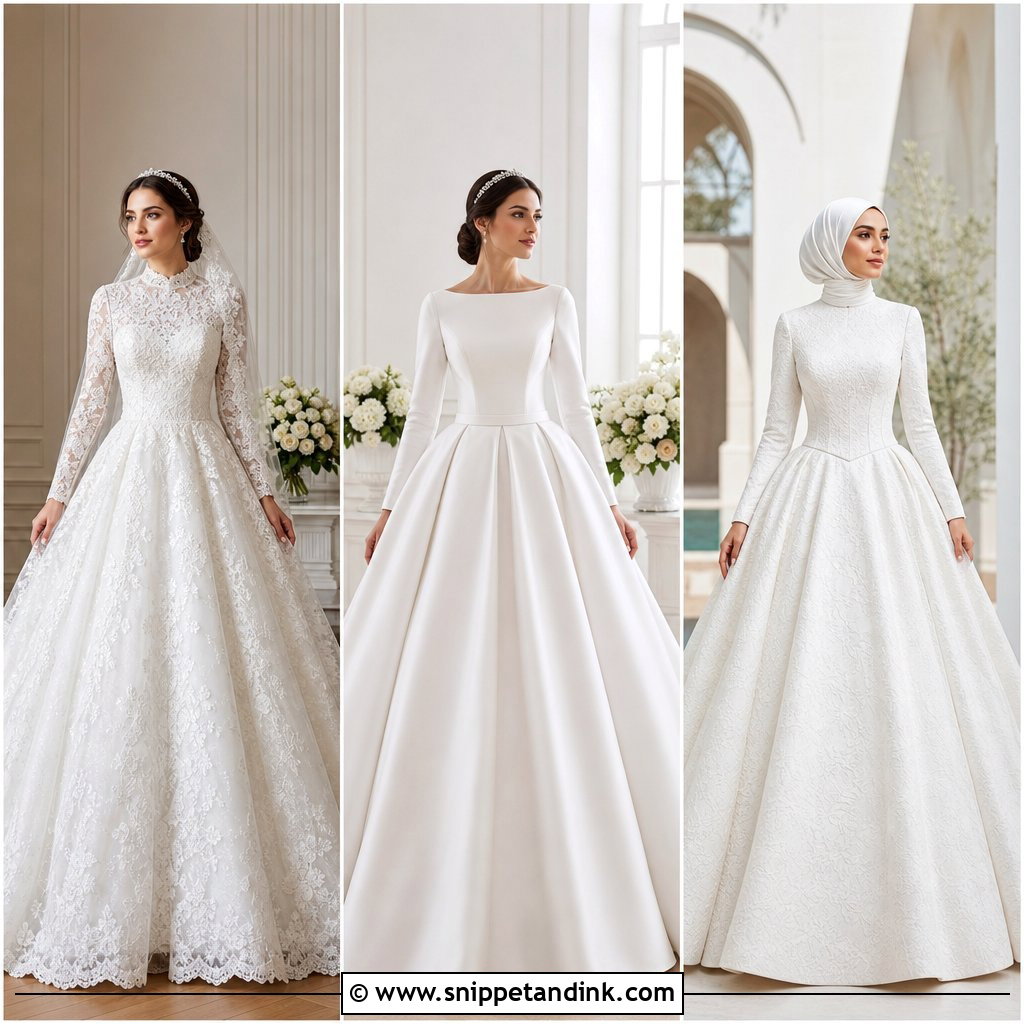
3. Modest A Line Wedding Dress
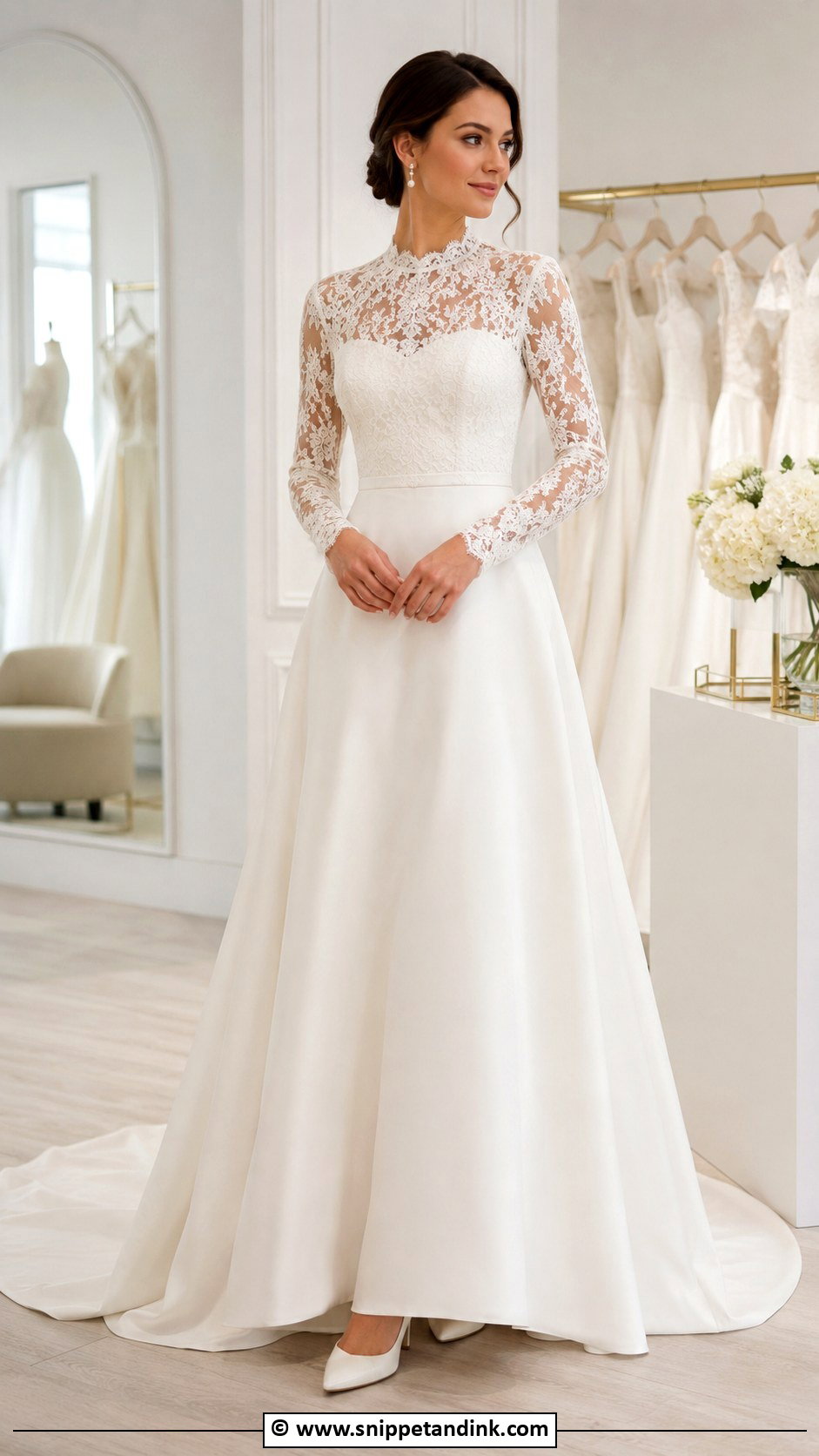
The A-line flatters a wide range of figures, which is why I usually start modest brides here. The fitted bodice defines the waist, and the skirt flows away from the hips without the weight of a ball gown. For coverage, add a higher neckline, a lined bodice, long sleeves or three-quarter sleeves. Lace, satin, chiffon and crepe all work. A soft train adds romance, and a waist seam or narrow belt gives more shape. Keep the rest calm: a delicate veil, comfortable heels and a small bouquet.
4. Modest Ball Gown Wedding Dress
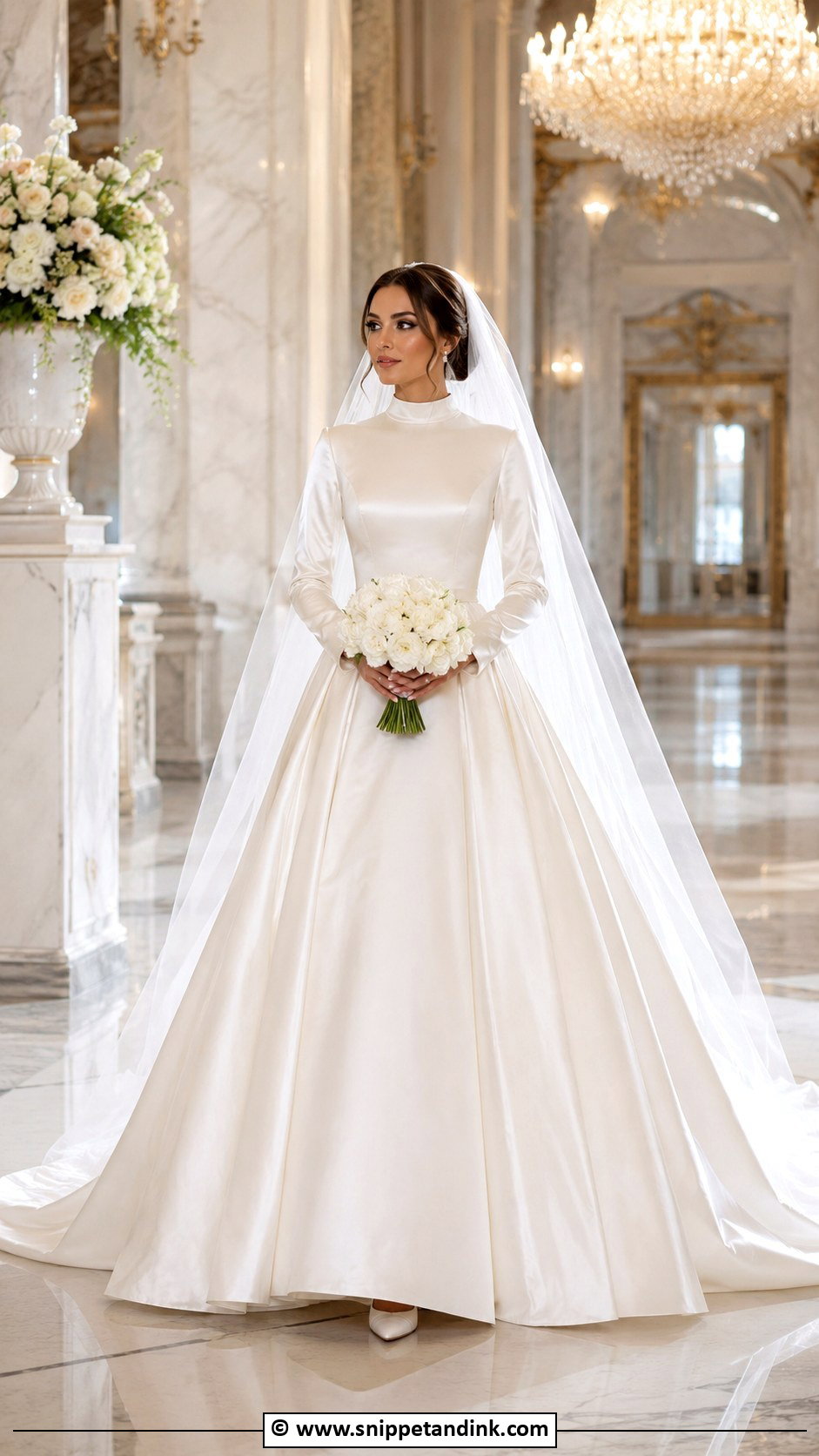
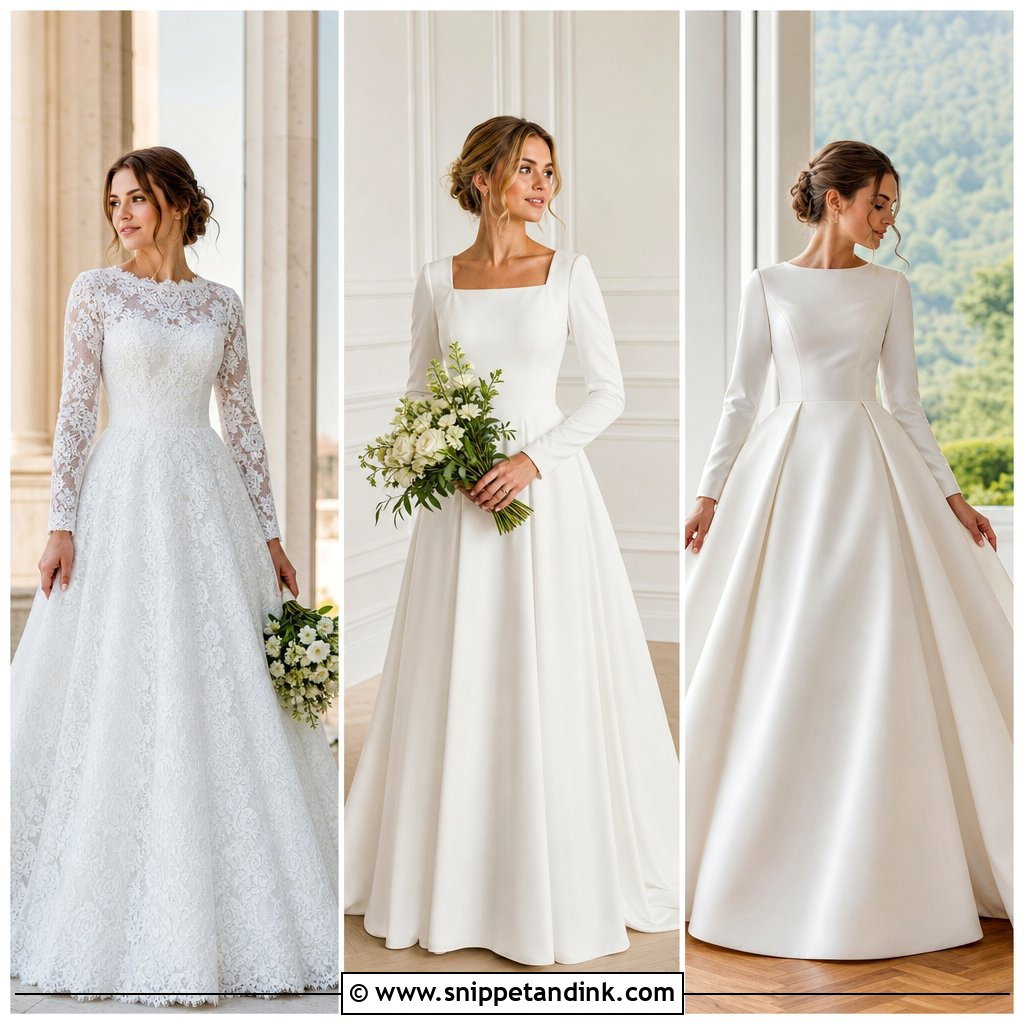
A ball gown with a covered bodice has presence without showing much skin. The full skirt brings the drama, so the top should stay balanced, and a high or bateau neckline does that well. Satin, mikado, tulle or lace can all set the mood. Long sleeves make it feel even more formal. What brides underestimate is weight: a full mikado skirt can be heavy, and paired with long sleeves it gets warm, so I’d only choose it for a cool or air-conditioned venue. Pearl drops or small crystal studs are plenty.
5. Modest Crepe Wedding Dress
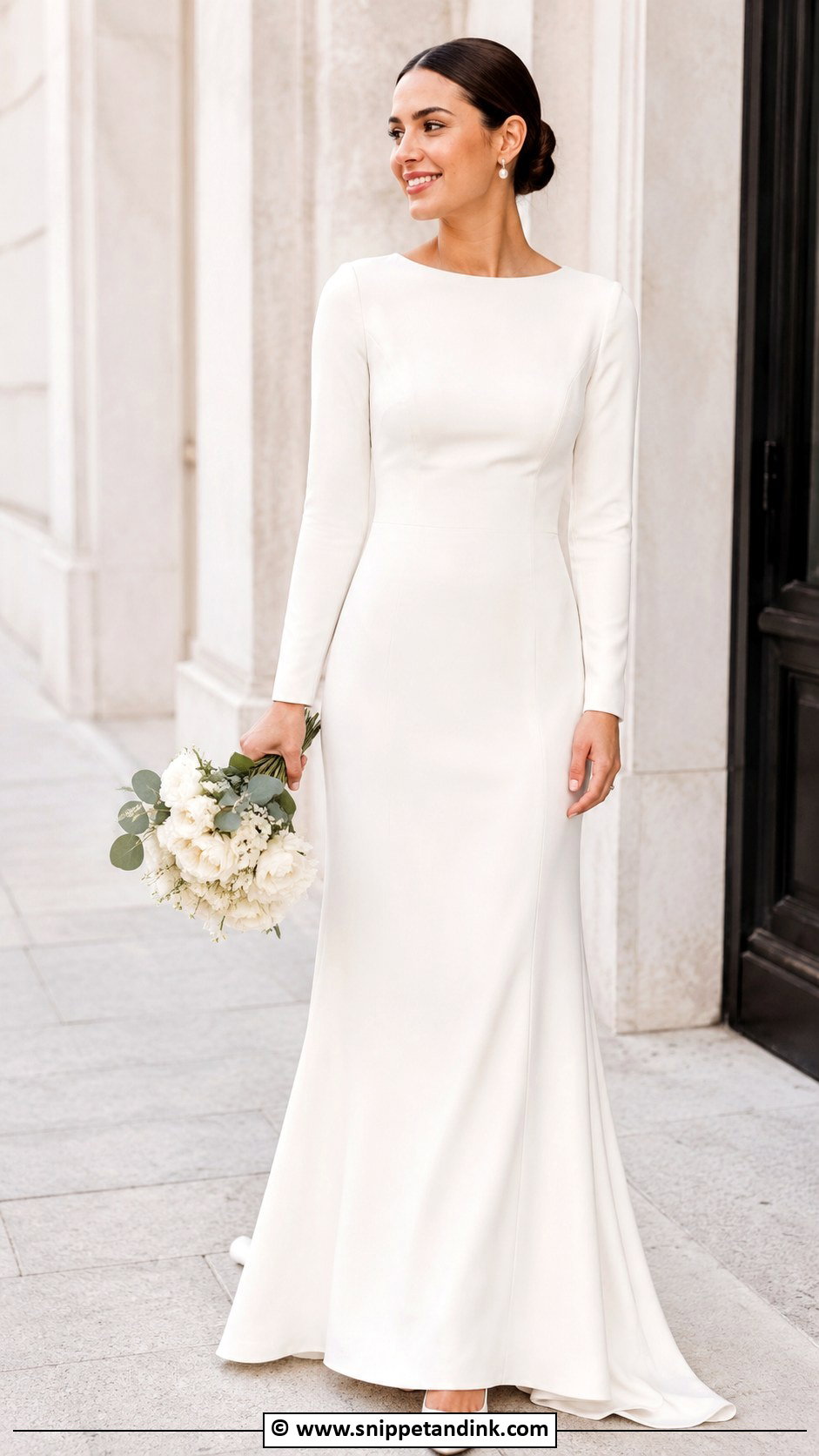
Crepe gives clean lines and a smooth fit with no shine. It has soft structure, skimming the body rather than clinging, and it pairs naturally with high, square or bateau necklines. Long sleeves in crepe look sleek and fully covered; a fitted skirt or gentle flare adds shape. If you prefer tailoring to embellishment, this is your fabric. Add a long veil to soften it or a modern headband instead. One thing I warn about: crepe shows every pressing mark, so whoever steams it on the morning needs to keep the iron well away.
6. Modest Chiffon Wedding Dress
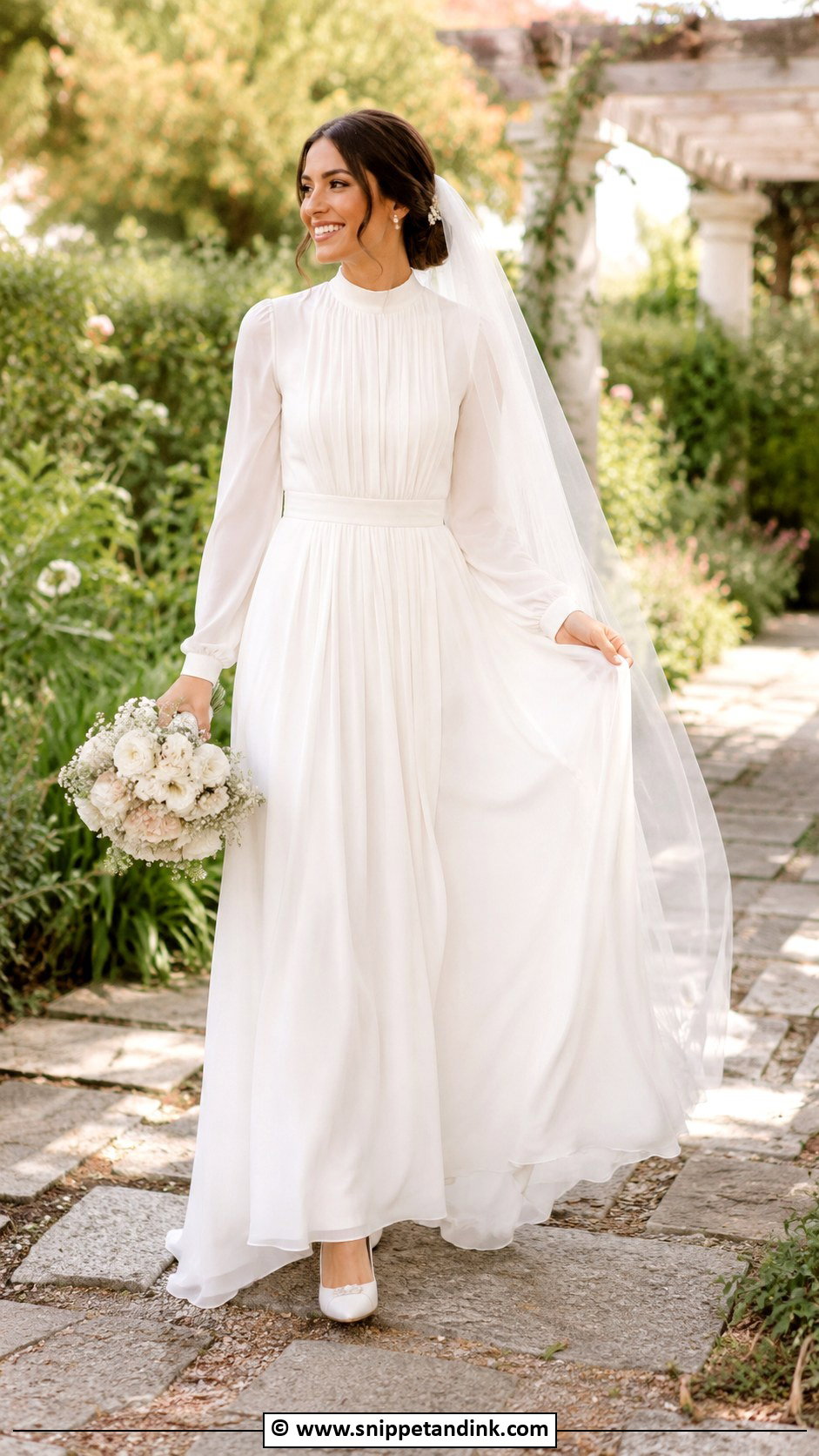
Chiffon is the coolest fabric on this list to wear, light enough that the skirt floats when you walk, which makes it a natural pick for spring and summer. Pair a lined bodice with long sheer sleeves, a high neckline or a modest V. A chiffon A-line feels romantic and relaxed. Soft pleats, gathering or a subtle waist tie add shape. Chiffon snags easily on rough stone or bouquet wire, so I always check the venue paths before recommending it. Low heels, pearl pins and a sheer veil keep the look light.
7. Modest Tulle Wedding Dress
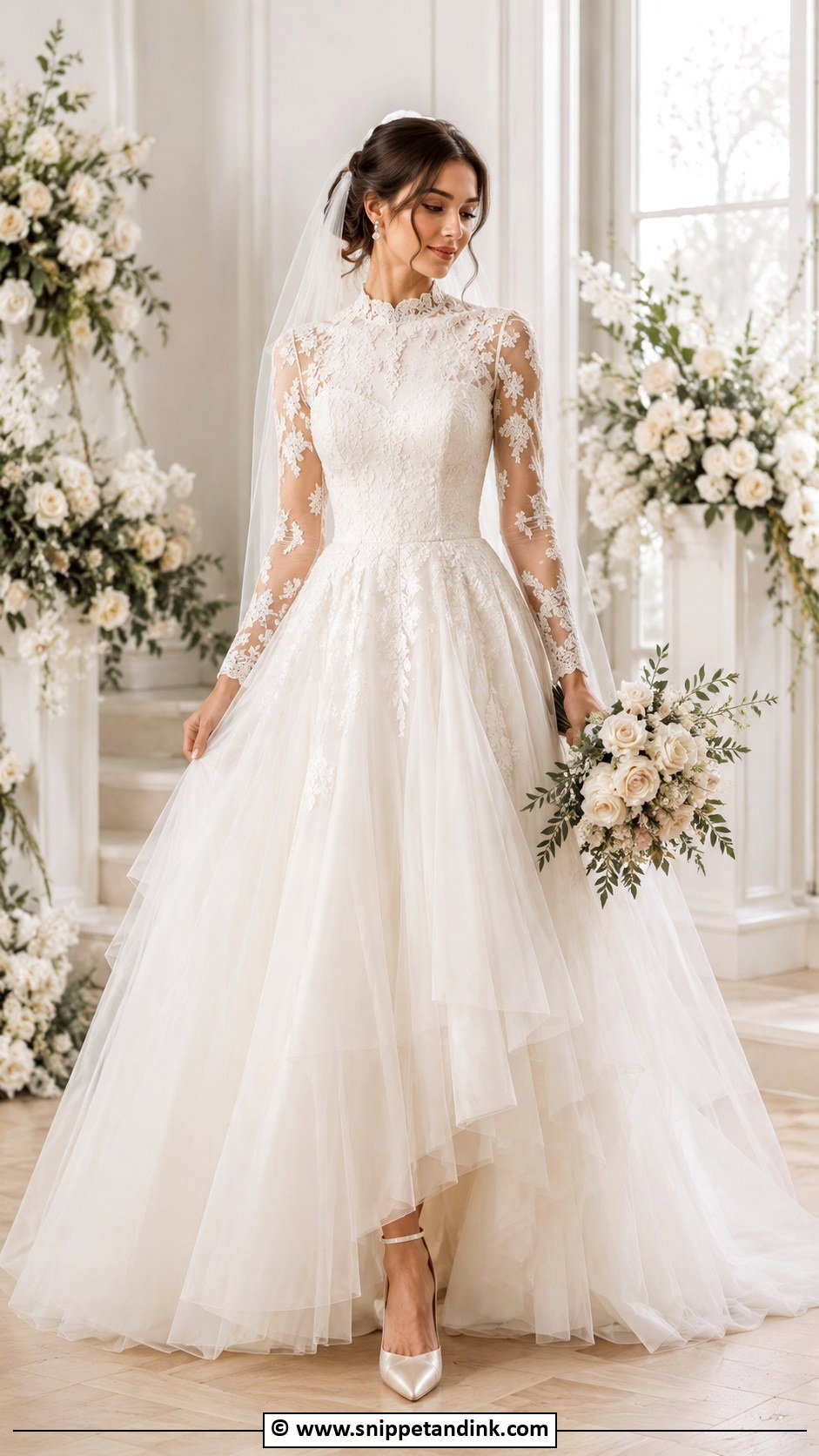
Tulle gives soft volume in layers, romantic without being loud when it’s used in an A-line or ball gown. For coverage, pick a lined bodice, covered shoulders and long sleeves with lace appliqué, with a high neck or soft scoop. Light beading scattered across the bodice or skirt adds sparkle if you want it. Tulle is also the fabric I see crushed most often in cars, so plan how you’ll sit on the way to the ceremony. A long veil and dainty earrings let the texture speak.
8. Modest Mikado Wedding Dress
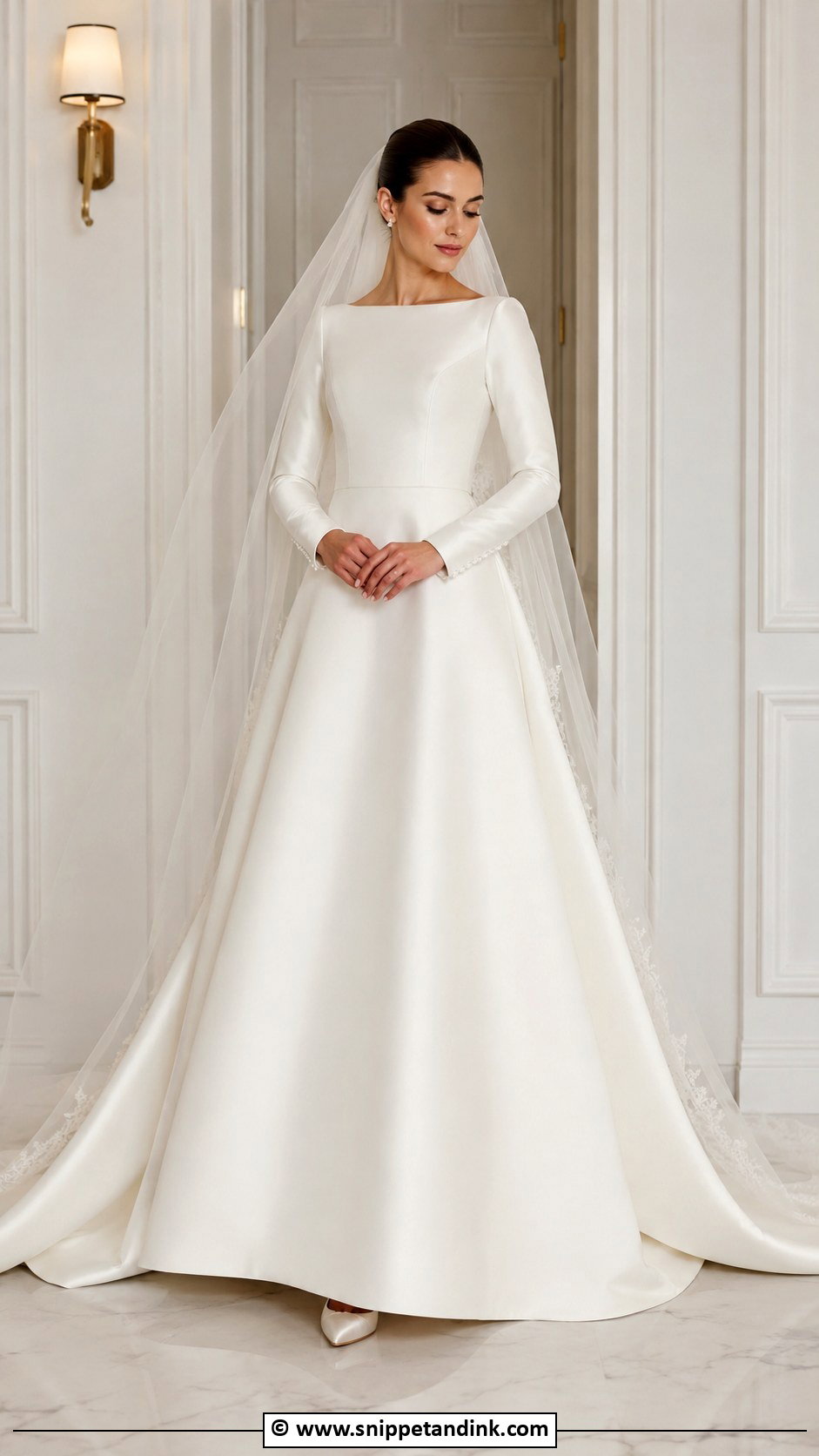
Mikado is for the bride who loves structure. It’s a heavier woven fabric with a slight sheen, and it holds a shape on its own, which is why it suits A-lines, ball gowns and tailored columns. Bateau, high and square necklines look sharp in it, and long or elbow sleeves add coverage while keeping it polished. Because the fabric already has presence, it barely needs embellishment. A cathedral veil, pearl earrings and satin heels finish it. I’d save it for formal weddings and cooler months.
9. Modest Bateau Neck Wedding Dress
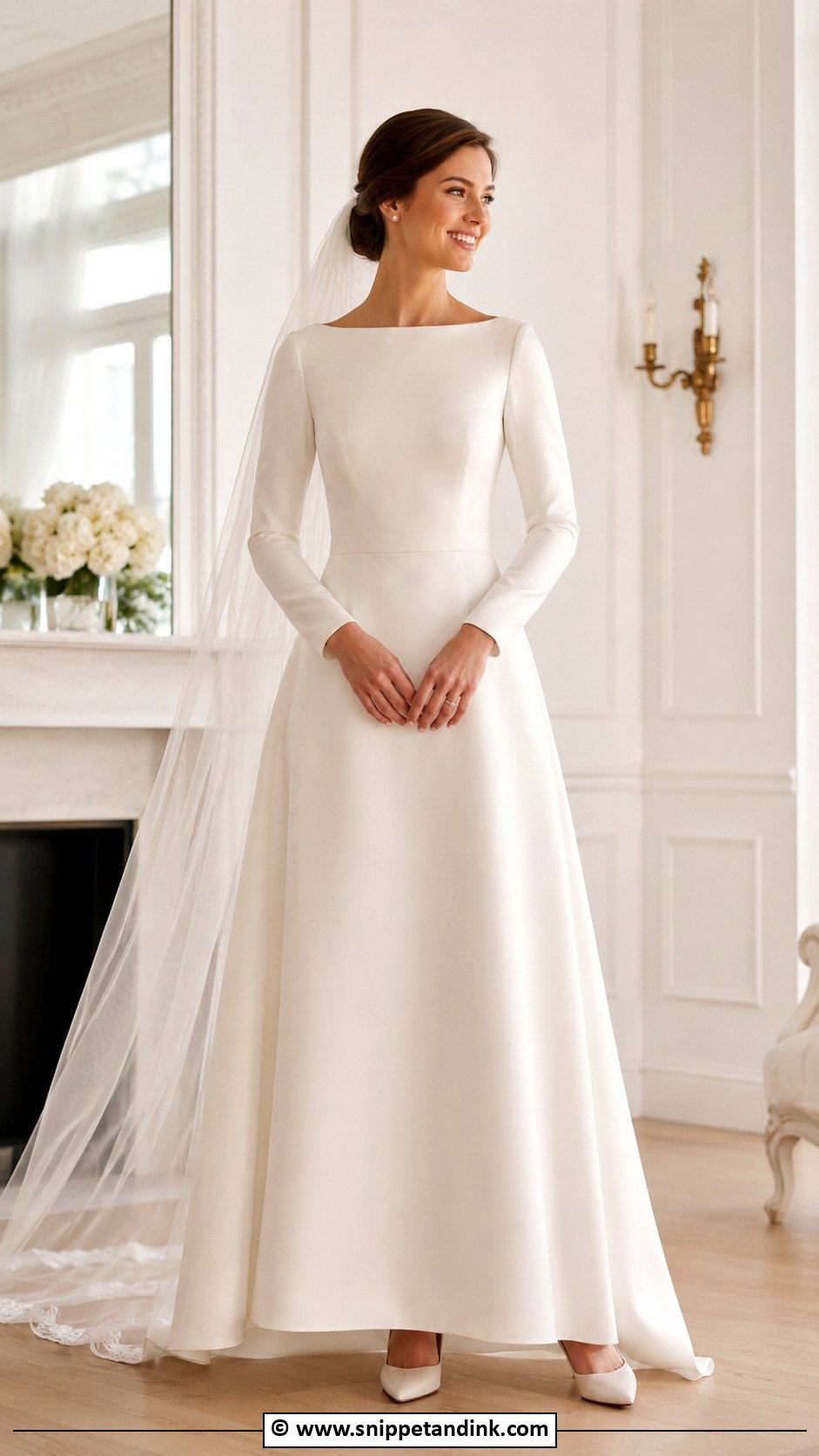
The bateau line runs close to the collarbone and widens gently across the shoulders, showing very little skin while still looking open. It sits well with long sleeves, a fitted bodice and either a slim or full A-line skirt, in satin, crepe or lace. I find it especially kind to narrow shoulders, since it adds width. Keep accessories quiet: a low bun, pearl studs, a soft veil and classic heels.
10. Modest Square Neck Wedding Dress
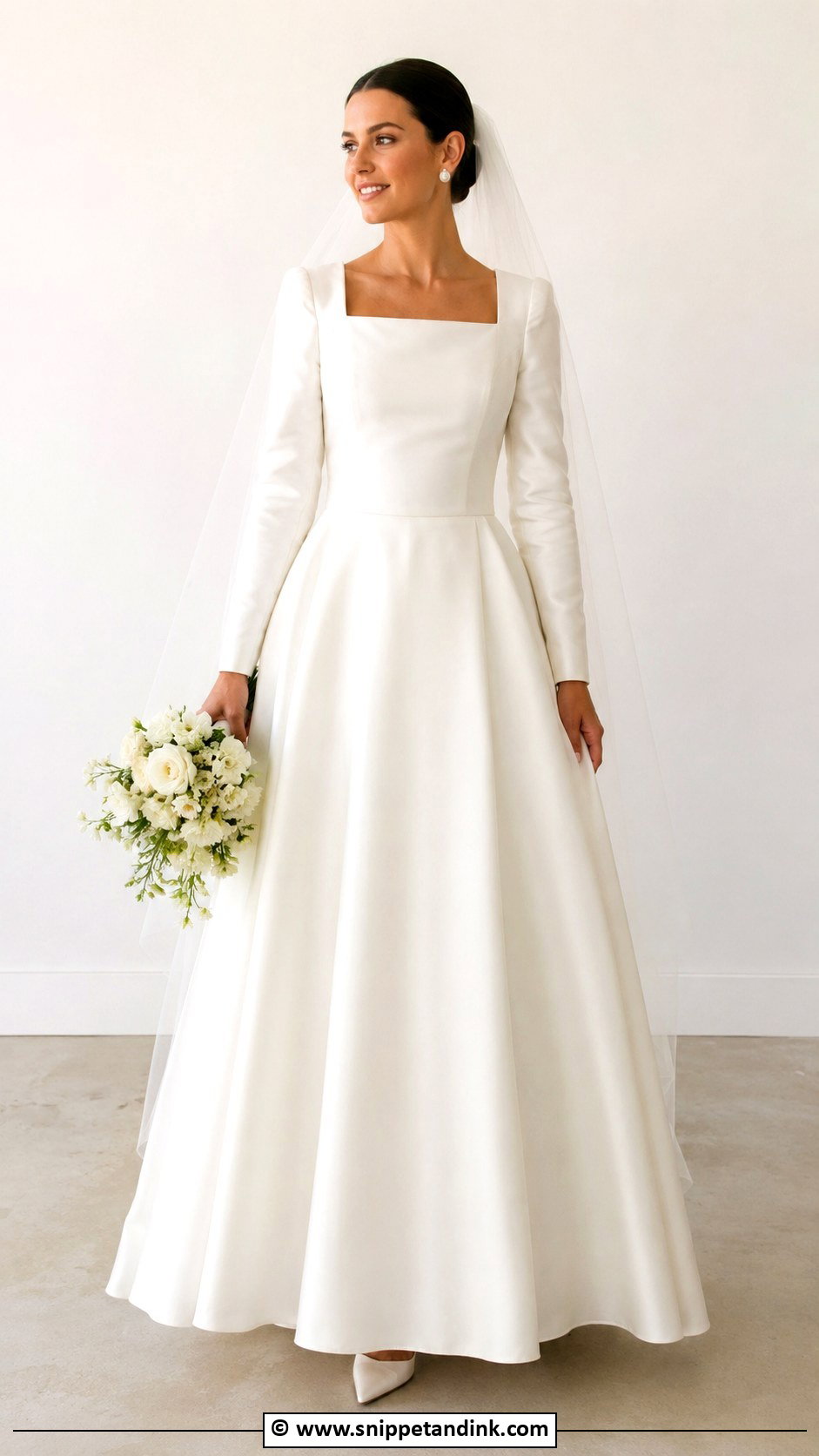
A square neckline frames the collarbone neatly and can be cut higher for more coverage. Paired with long sleeves or short puff sleeves, it feels structured but soft. Satin, crepe, mikado and lace all hold it well; fitted reads modern, A-line reads romantic. A pendant only works if the neckline leaves room. Otherwise leave the neck bare and let pearl earrings, a veil and pointed heels do the rest. On a higher square cut, I check the corners stay flat when you lean forward, because loose corners pop out in side photos.
11. Modest Mock Neck Wedding Dress
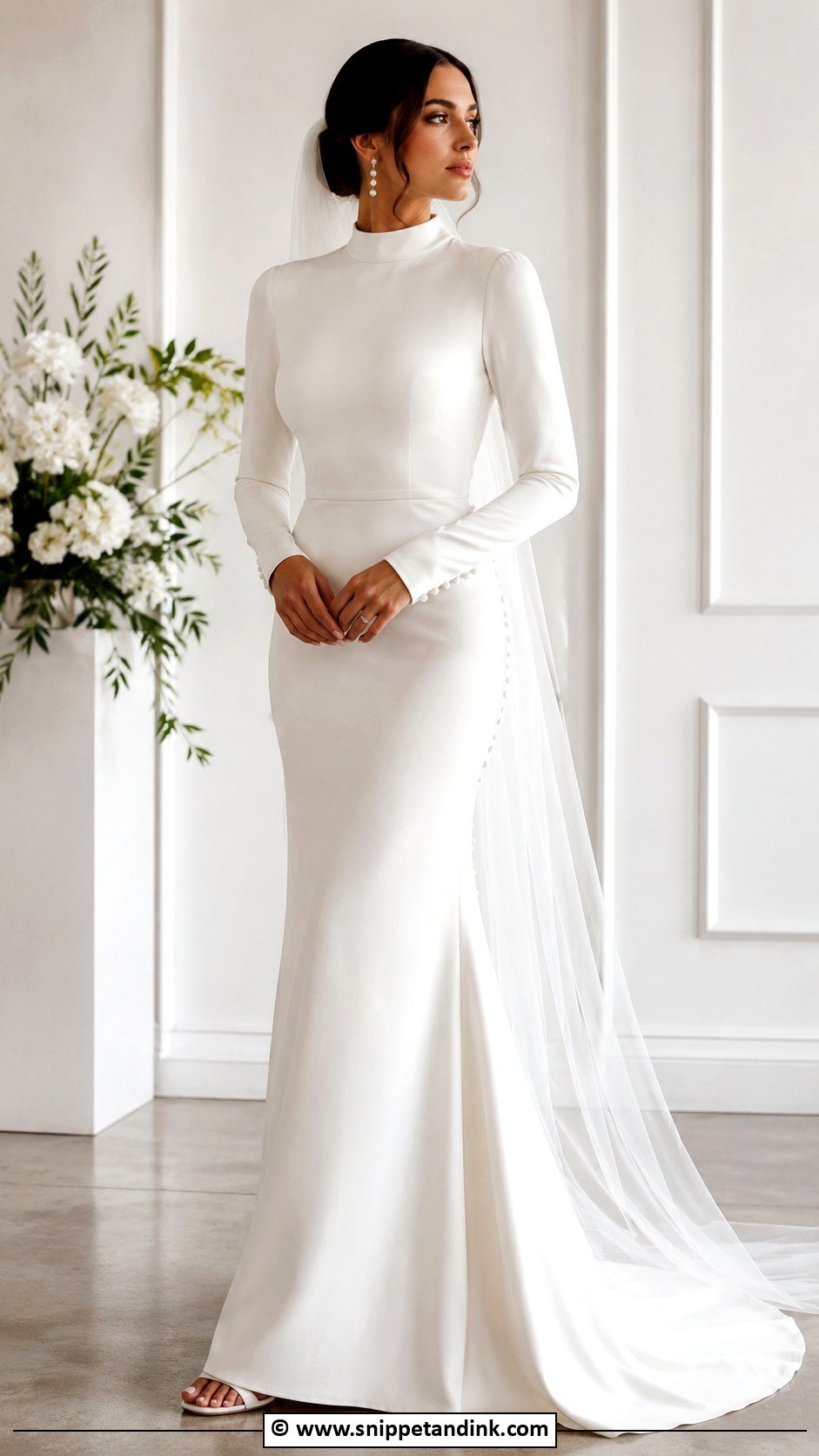
A mock neck sits high without the full height of a turtleneck, so it reads sleek rather than severe. Crepe, lace, satin and stretch bridal fabric all suit it, and long sleeves make the line continuous from throat to wrist. Covered buttons, a neat updo and statement earrings balance it; no necklace needed. My caveat: a high neck in a non-stretch fabric needs a back opening that reaches high enough to get over your head and hairstyle without disturbing it, so check the zip length before your hair appointment, not after.
12. Modest Illusion Sleeve Wedding Dress
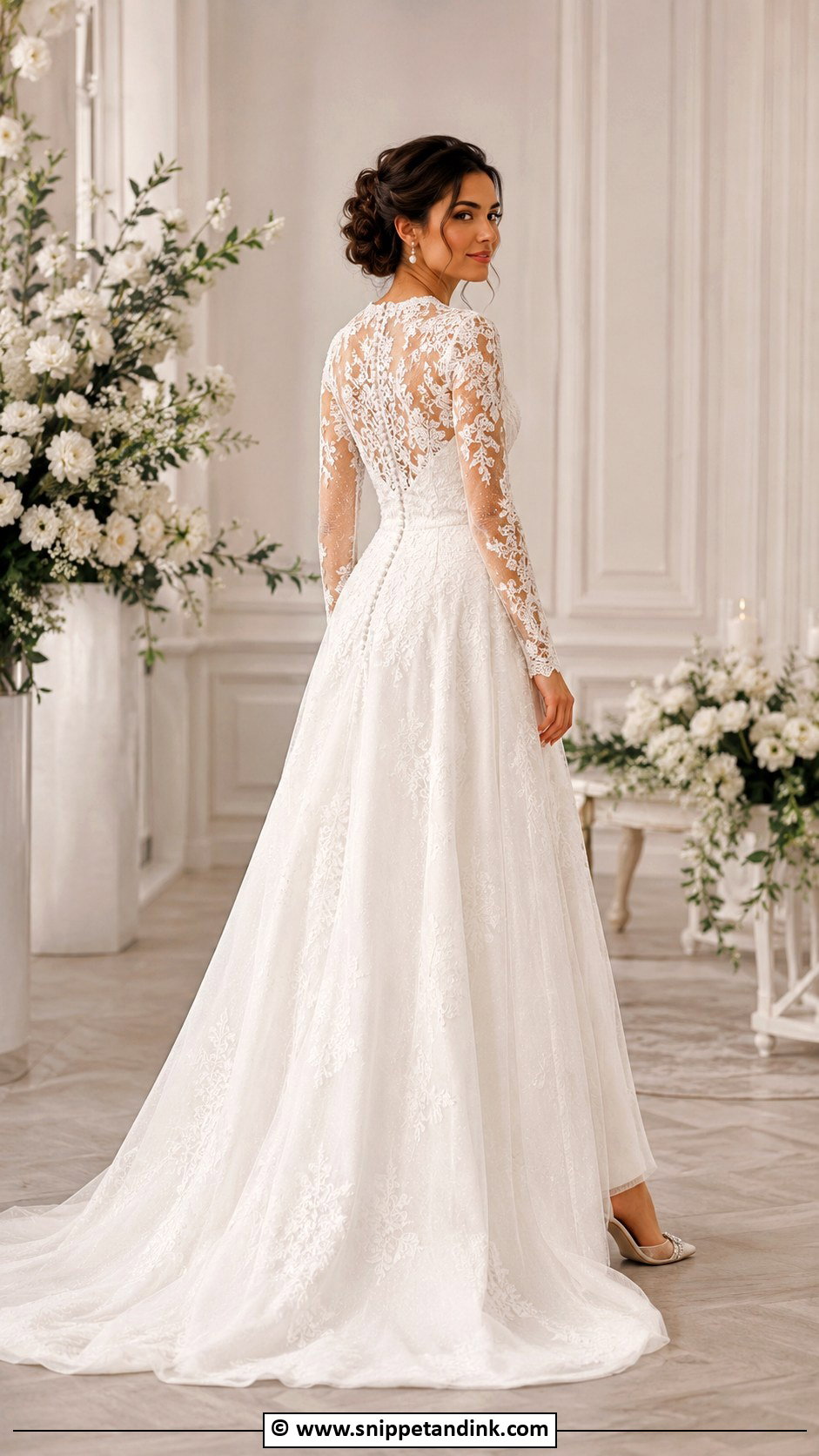
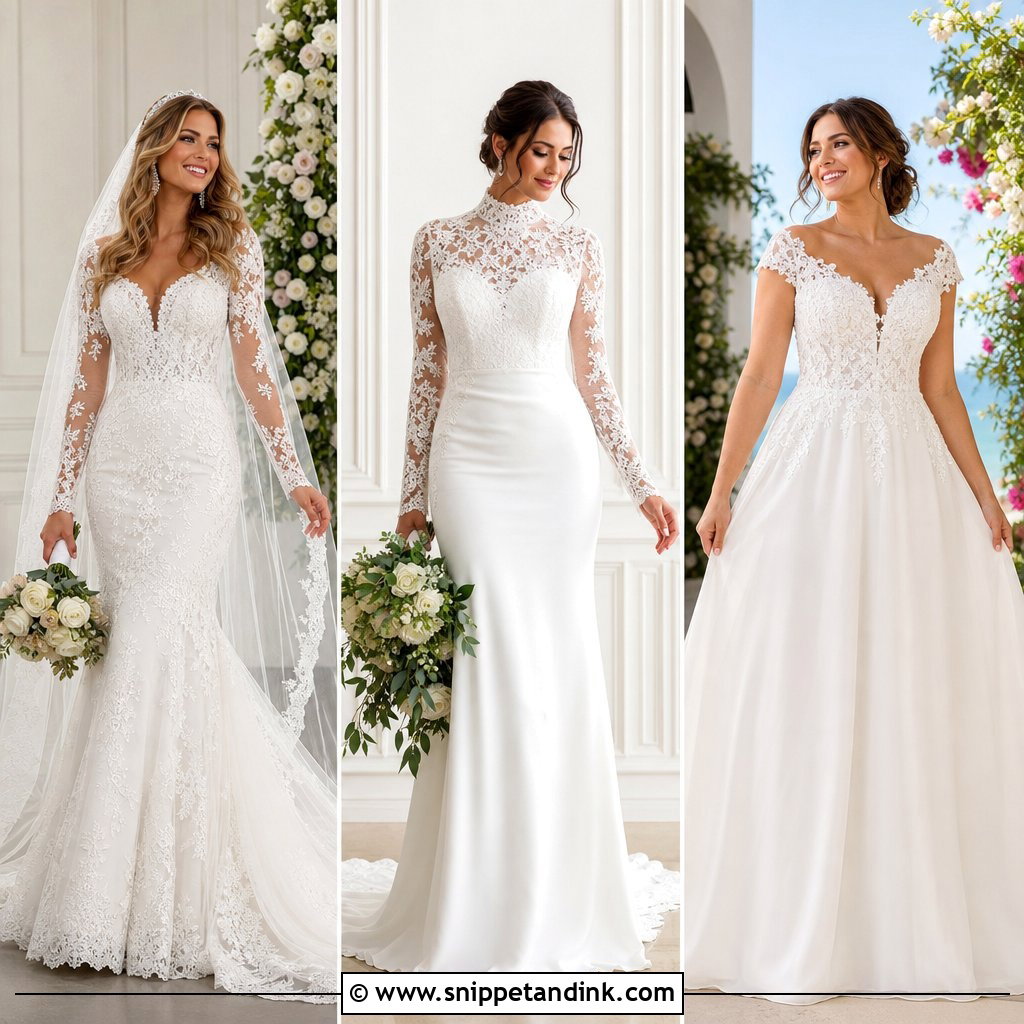
Illusion sleeves are tulle or mesh dressed with lace appliqué or embroidery, giving coverage that feels light. The catch is that sheer mesh is still sheer. If you need true coverage, ask for lined sleeves or dense lace placement, and look at them under strong light. They suit A-line, sheath and ball gown silhouettes, and with a lined bodice and covered back the whole dress feels consistent. Soft curls, pearl accents and a sheer veil finish it.
13. Modest Three Quarter Sleeve Wedding Dress
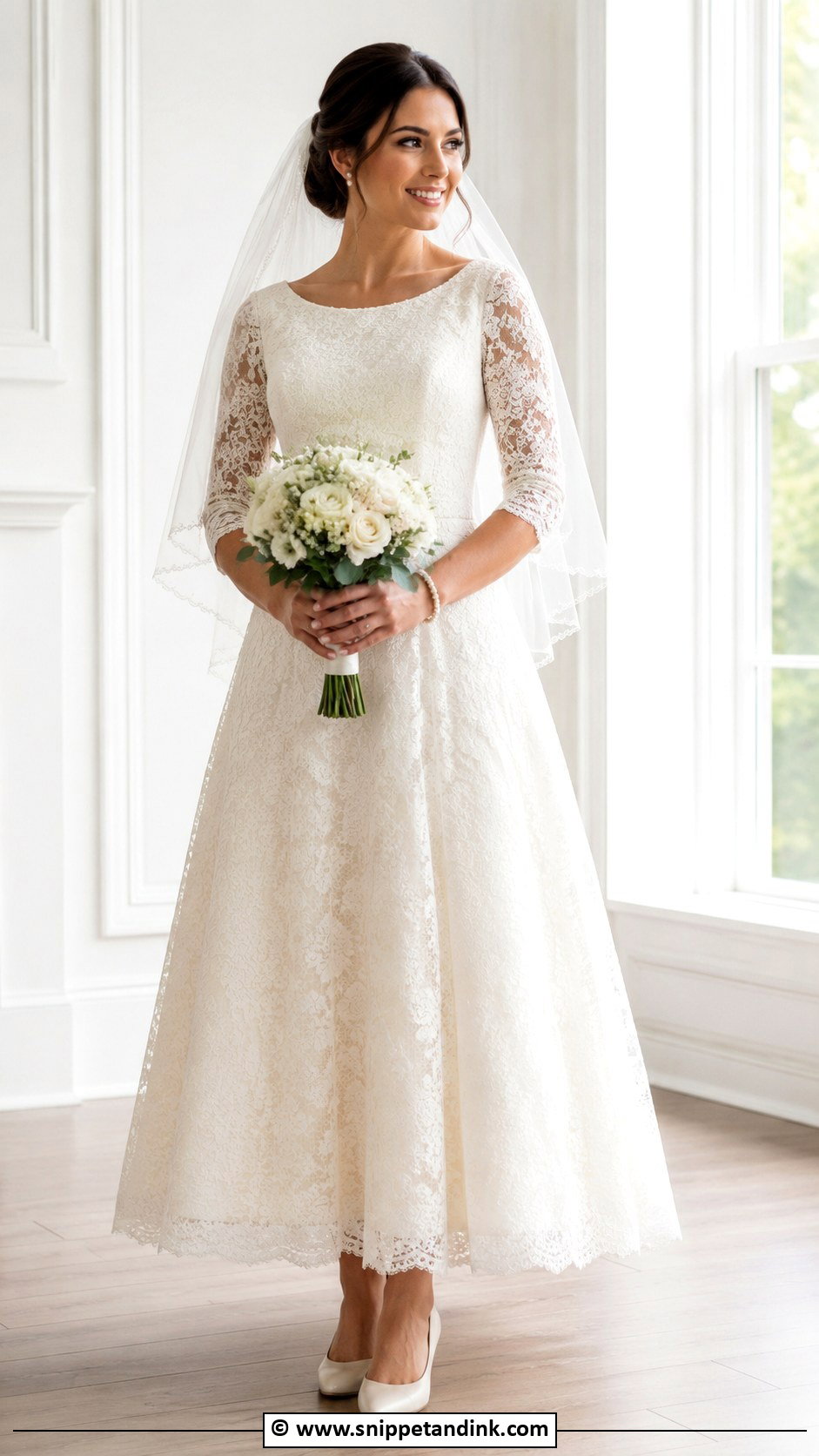
Three-quarter sleeves are the practical middle ground. They cover the upper arm while leaving the wrists free, which is cooler for summer and easier for dancing and eating. Lace, crepe, satin and chiffon all work, and they pair with bateau, scoop, square and high necklines. An A-line feels classic; a sheath feels modern. A bracelet won’t fight the sleeve here, unlike with full-length ones. I suggest this length to brides who run warm but still want their arms mostly covered.
14. Modest Cape Sleeve Wedding Dress
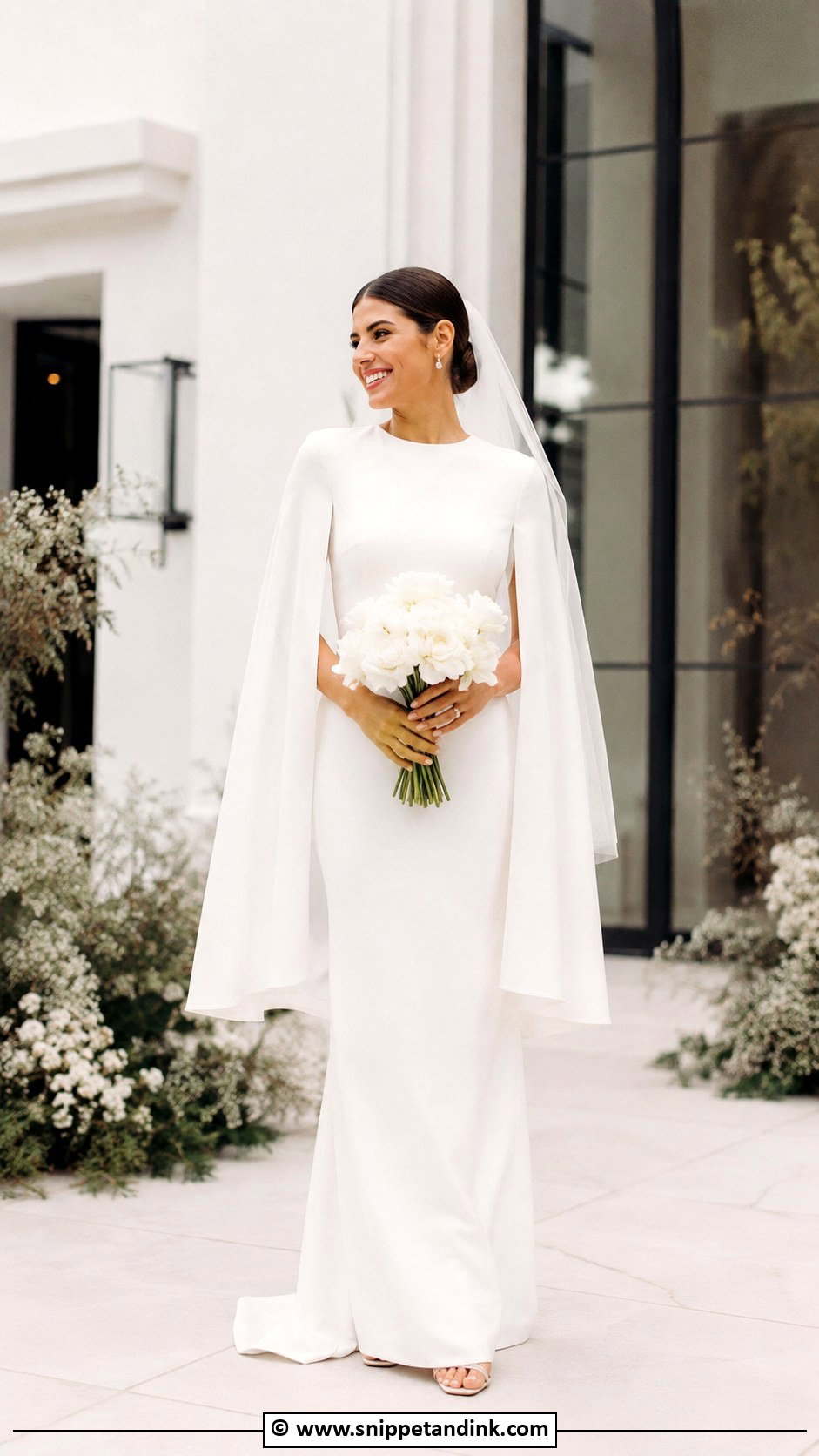
A cape sleeve falls over the shoulders and upper arms, covering them while still moving as you walk. Some gowns have a detachable cape, which gives you a second look later. Choose a high neck or simple bodice underneath so the cape looks deliberate. Crepe and satin capes feel modern; lace ones romantic. The thing I’d test is arm movement: some cape sleeves are stitched down at the side seam and restrict you more than they appear to. Small earrings, smooth hair and simple heels keep it clean.
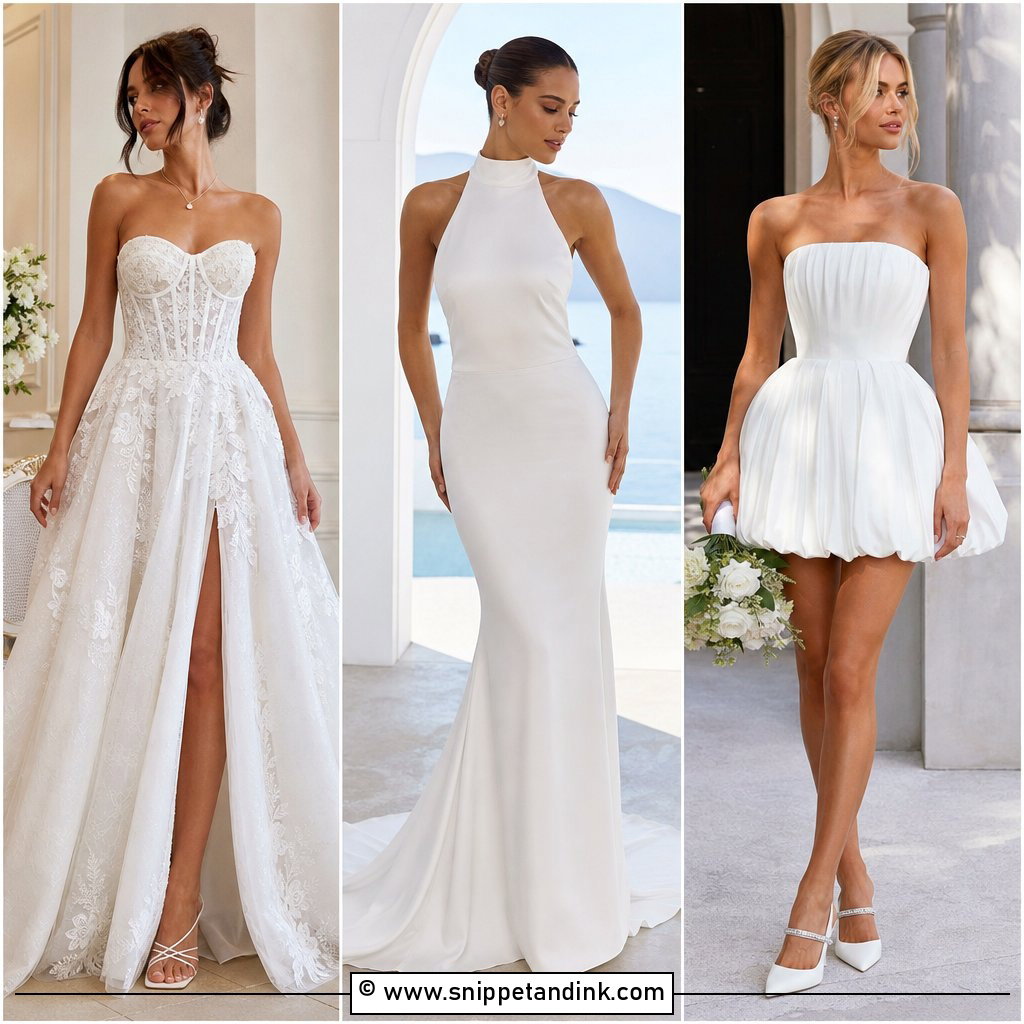
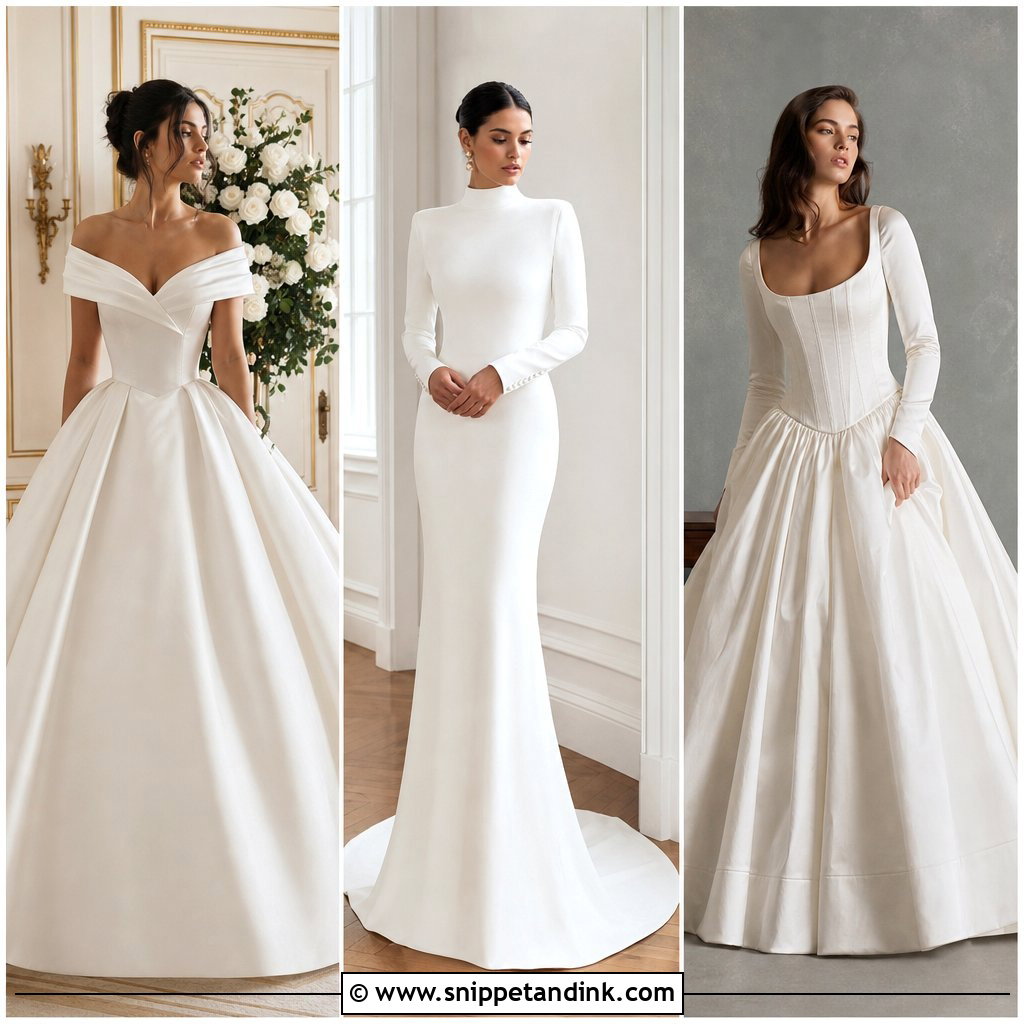
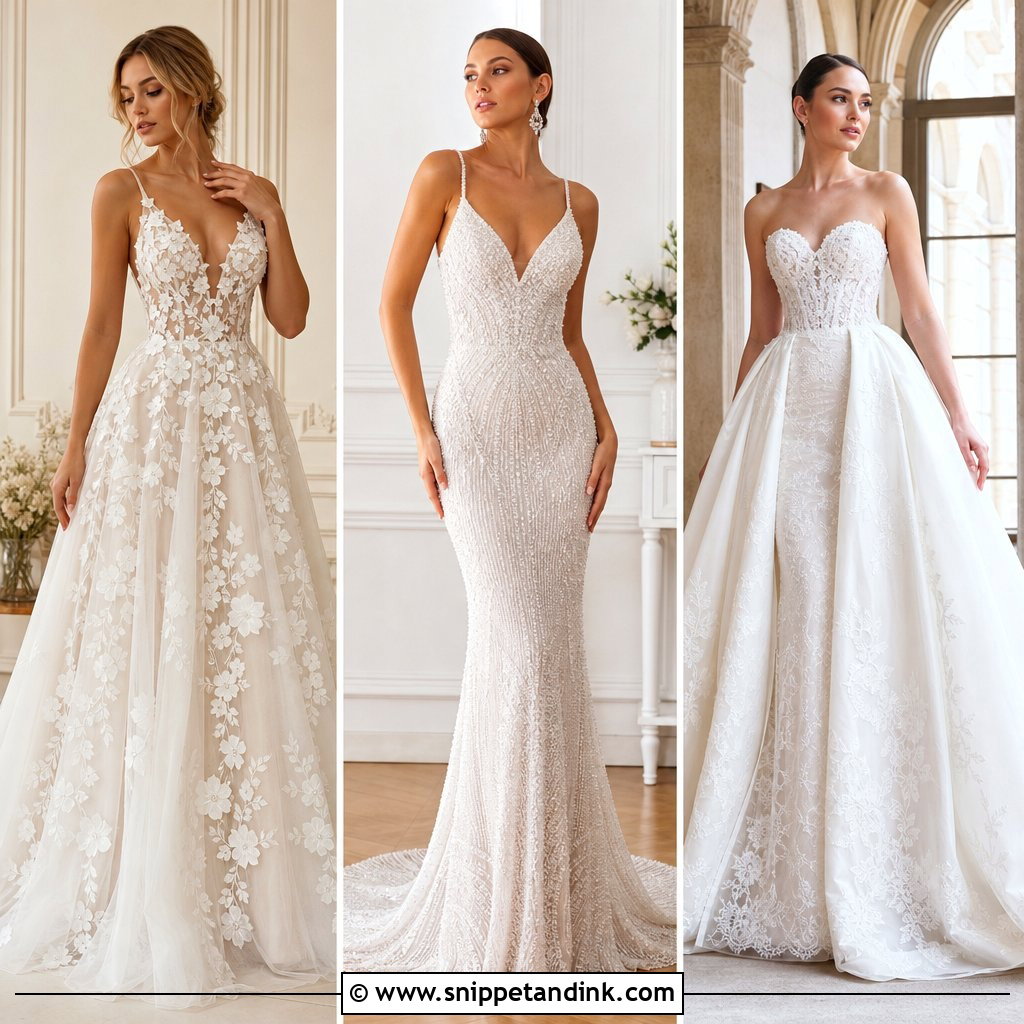
15. Modest Wedding Dress With Jacket
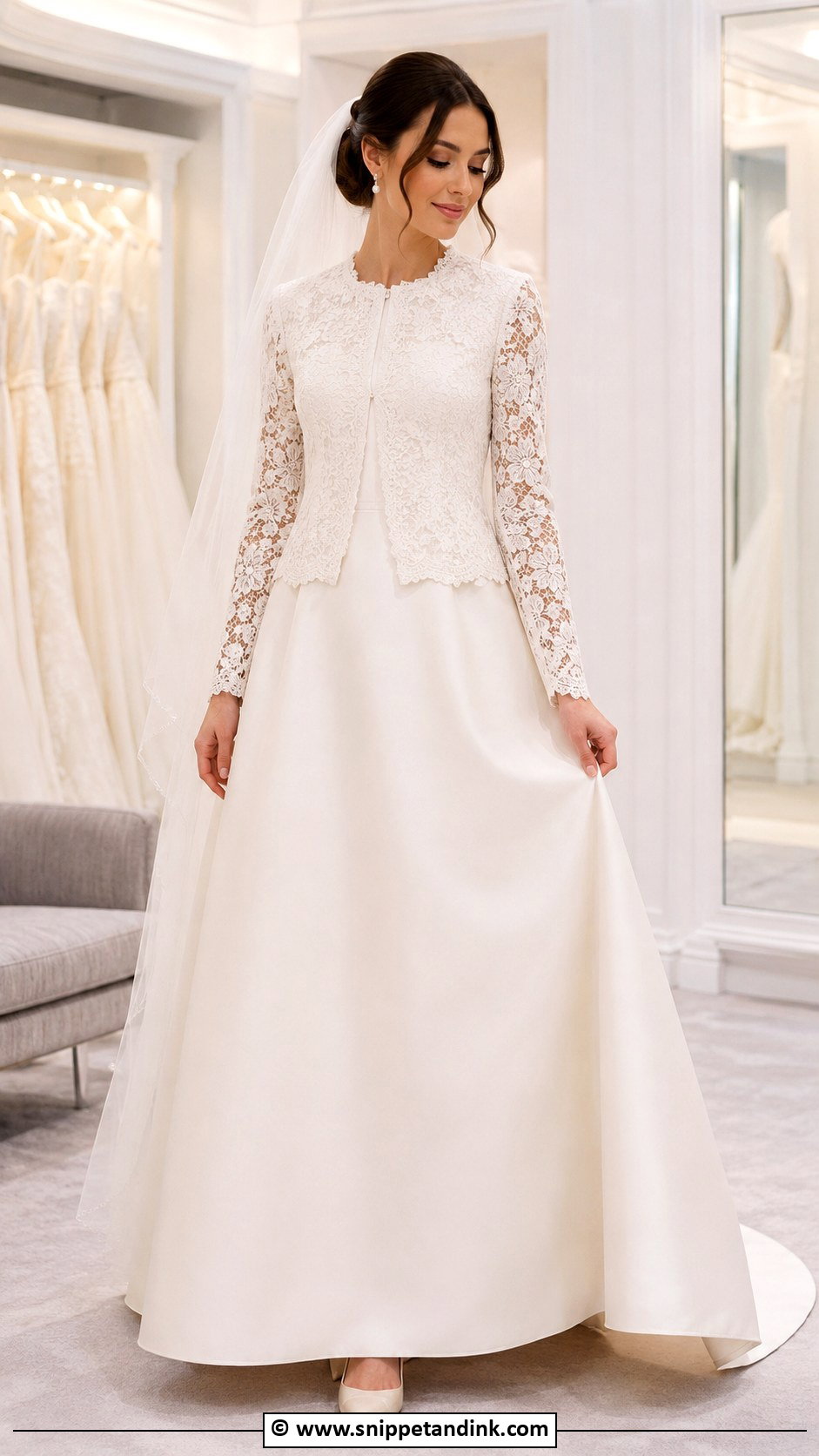
A jacket is the most flexible way to add coverage to a gown you already love. A fitted bridal jacket, lace topper, satin bolero or crepe overlay can cover the neckline, shoulders, back or arms for the ceremony, and come off afterward. Match or deliberately complement the gown fabric so the layers look planned. Lace over plain satin adds detail; crepe keeps things minimal. I’d bring the gown to the jacket fitting, because the shoulder seams of both need to line up or the jacket bunches.
16. Modest Wedding Dress With Detachable Sleeves
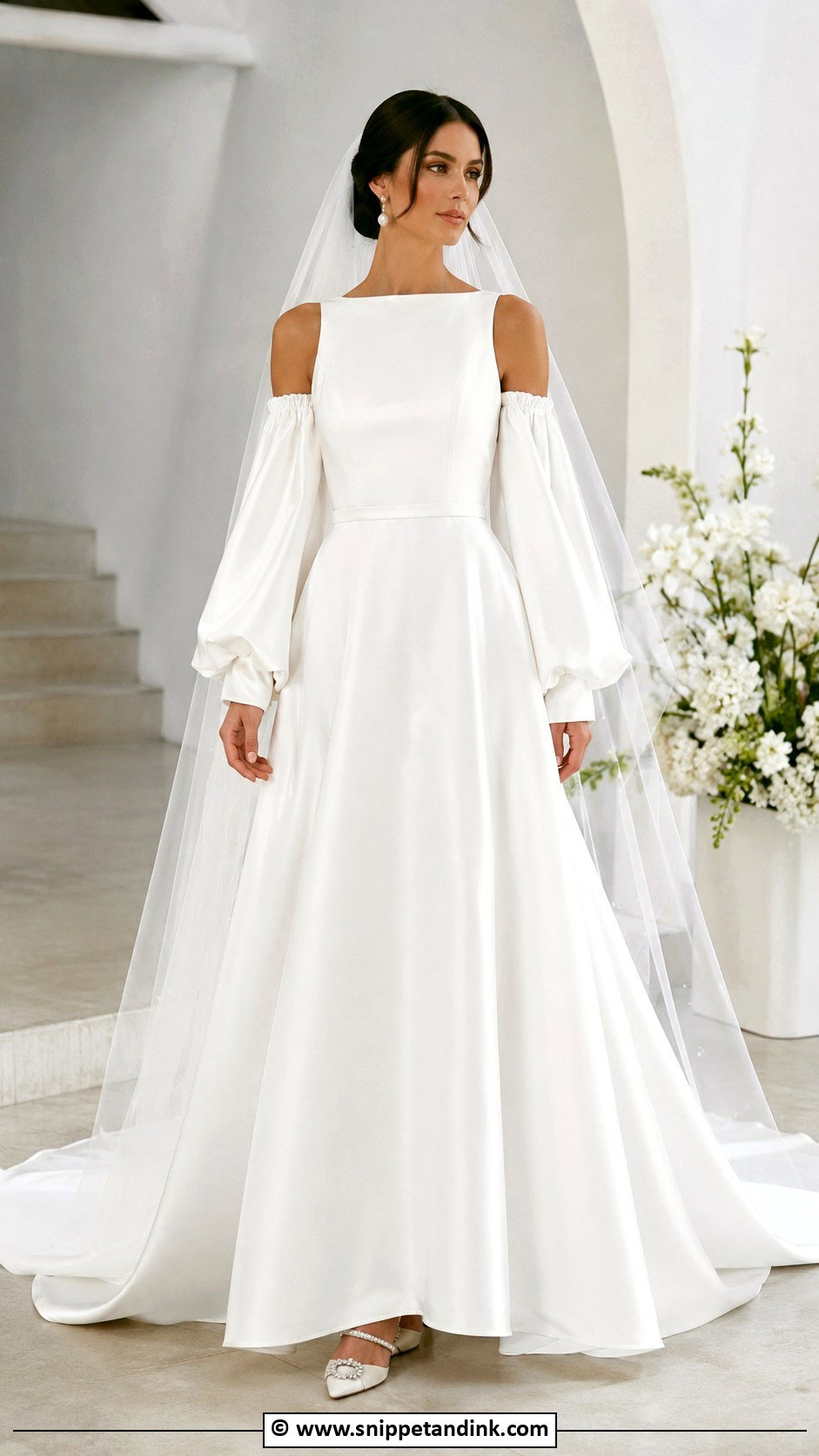
Detachable sleeves let one dress serve two moods. Wear them for a covered ceremony and remove them for the reception if your community or venue allows. They can be fitted, puffed, sheer, lace or satin. For a modest look, they have to meet the bodice cleanly with no gap at the armhole, and that join is the detail I examine first. Ask how they attach, too; snaps are quicker to remove, while hidden loops sit flatter. A simple veil and matching shoes keep the design cohesive.
17. Modest Wedding Dress With Covered Back
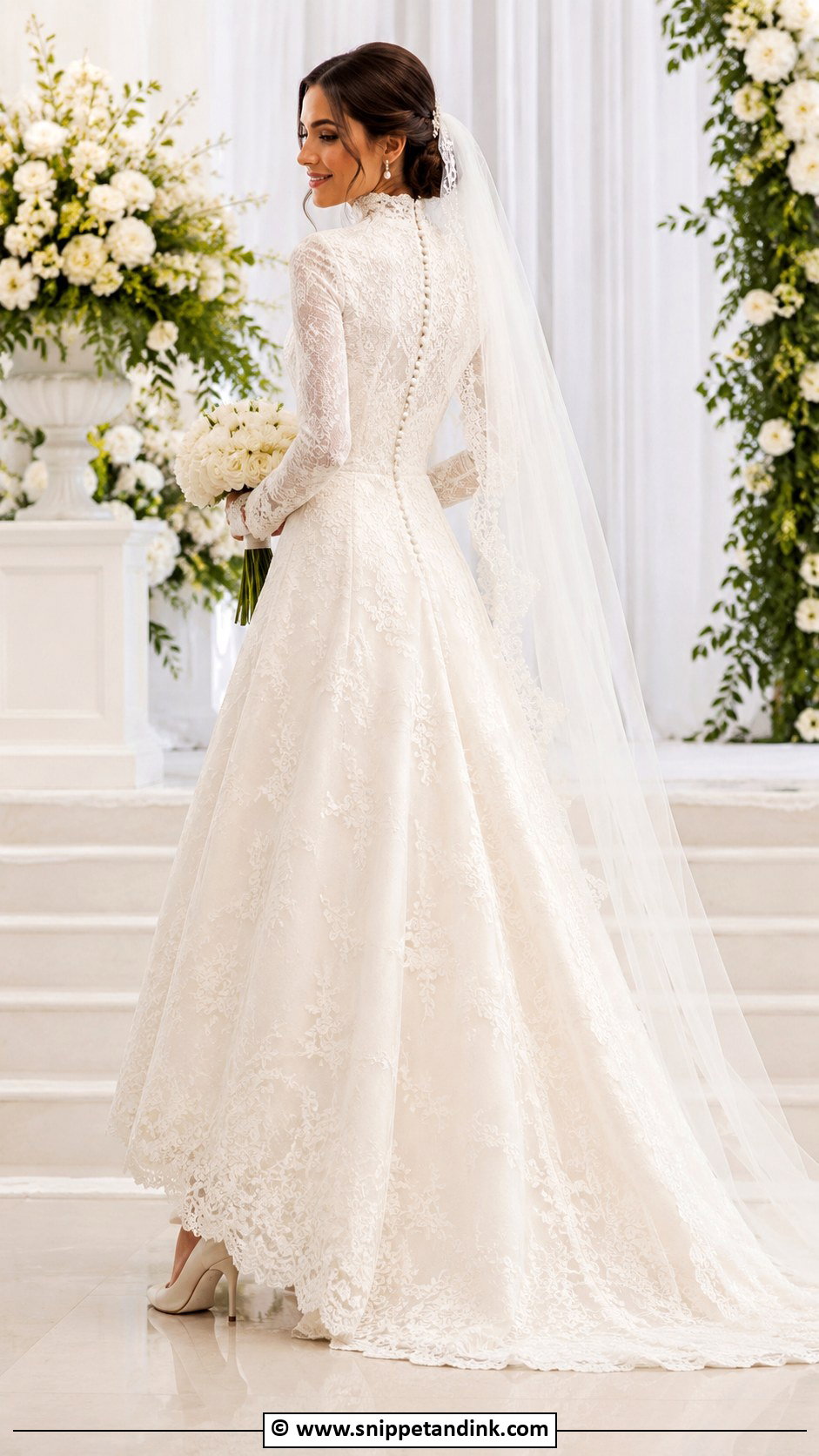
Guests spend most of the ceremony looking at your back, which brides often forget while focusing on the front. A covered back can be lace, satin, crepe, buttons or illusion fabric with dense appliqué. Covered buttons down the spine are the classic finish, though a row of thirty buttons takes a while to fasten, so ask for a hidden zip beneath them. A plain back in the gown’s fabric reads sleek; lace or embroidery reads romantic. A long veil frames it.
18. Modest Wedding Dress With Lined Bodice
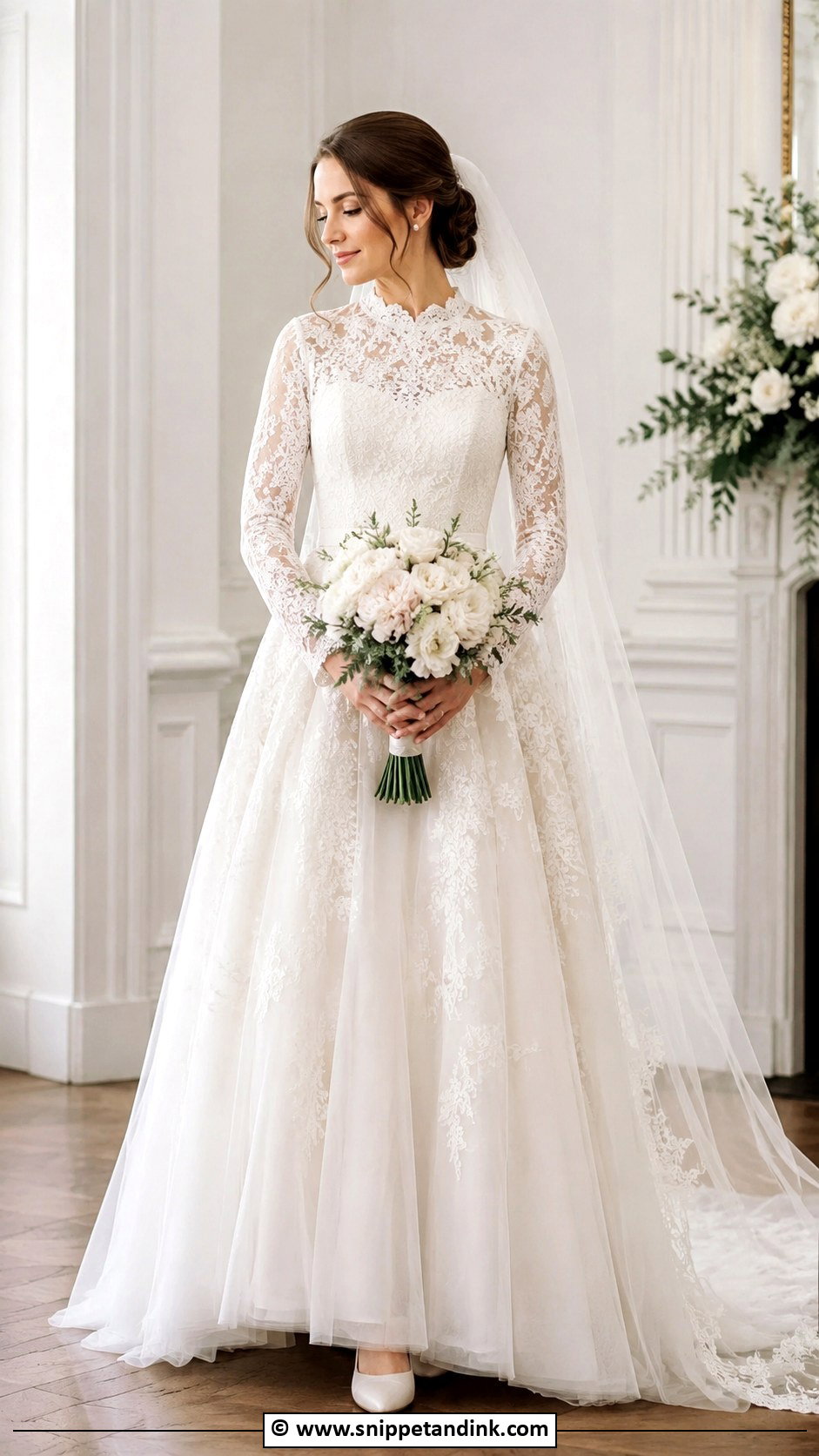
Lining is the single most useful modification for a modest bride. Many gowns are made with sheer bodices, and a lining adds full coverage without changing the design, while also making lace, beading and appliqué stand out more clearly against a solid backing. It works on high neck, scoop, bateau and square neck gowns. Choose skin-tone lining for subtle coverage or ivory for a more classic effect, and pair it with sleeves and a covered back for a complete look. I’d always ask to see a sample of the lining fabric against your skin first.
19. Modest Mermaid Wedding Dress
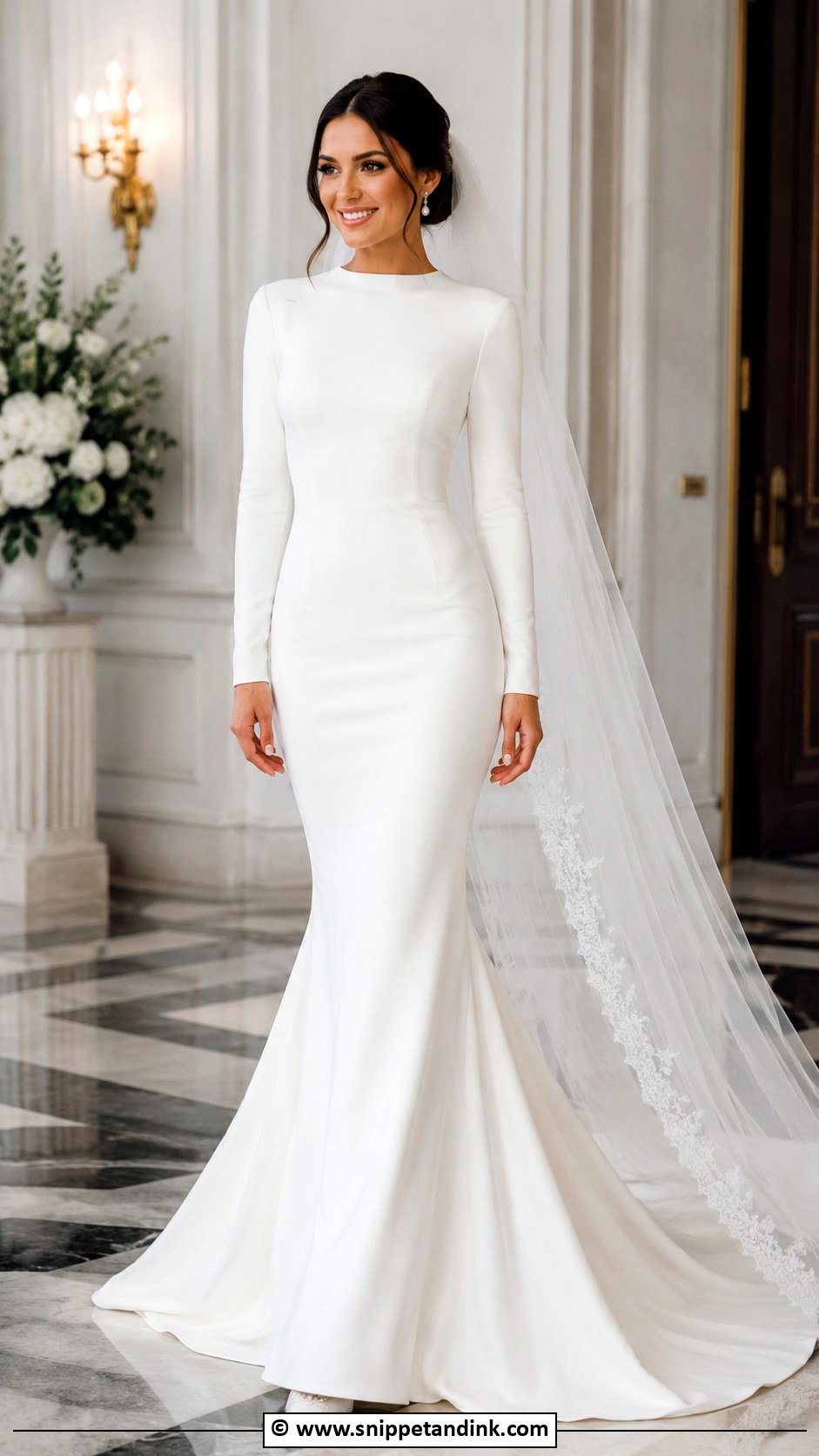
A mermaid gives shape with coverage. The silhouette follows the body and flares near the knee or lower thigh, so pair it with a higher neckline, long sleeves and a lined bodice to keep it modest. Crepe, lace and satin all work, and a covered back refines it further. A fitted dress plus long fitted sleeves is a lot of restriction at once, so do a full sit, stand and arm-raise test before ordering. Clean accessories, a long veil and simple heels balance the drama.

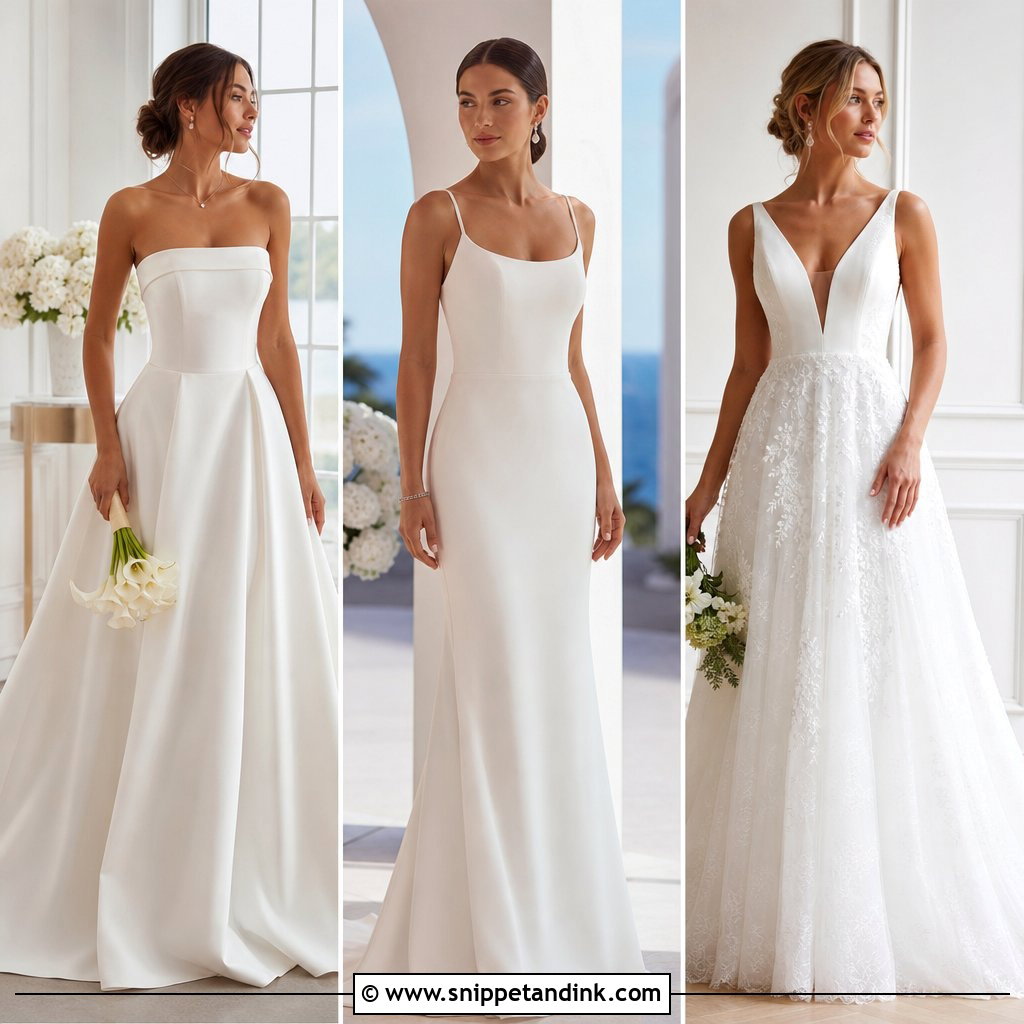
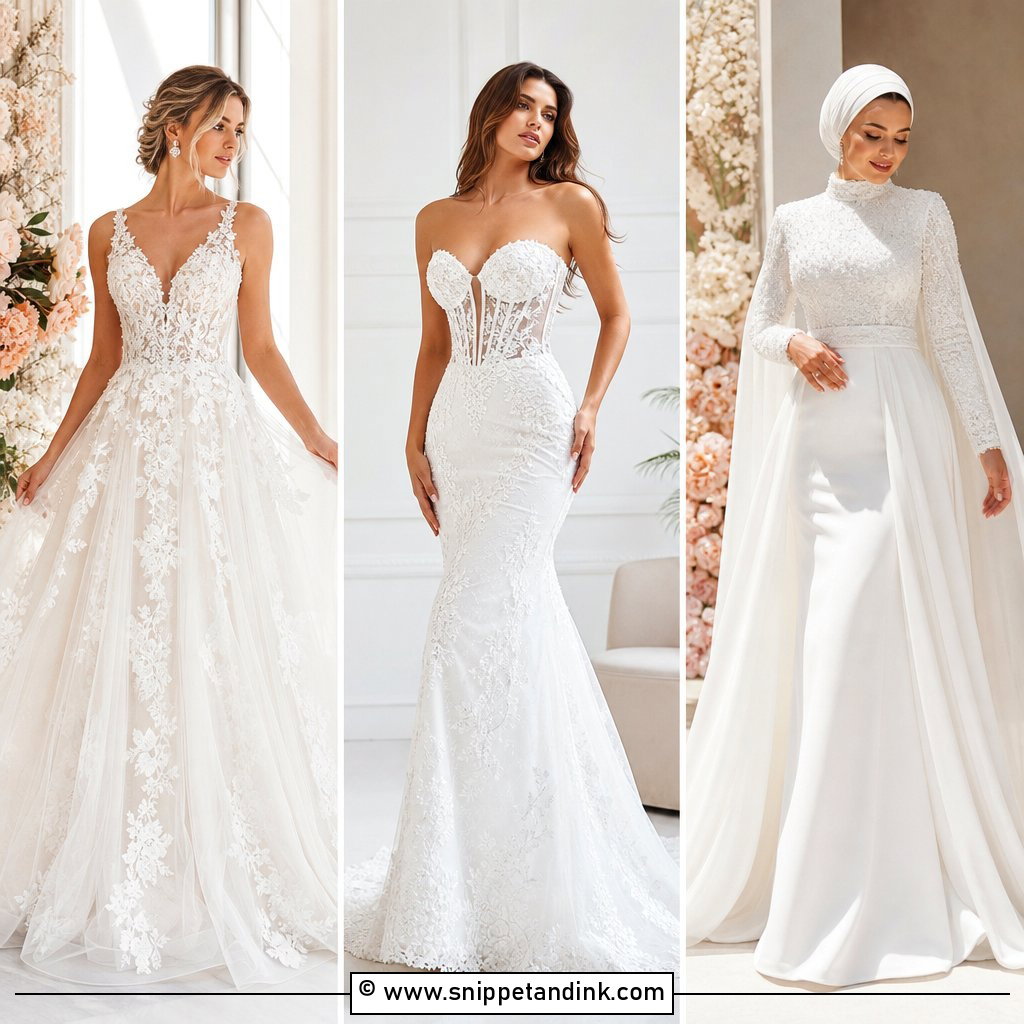
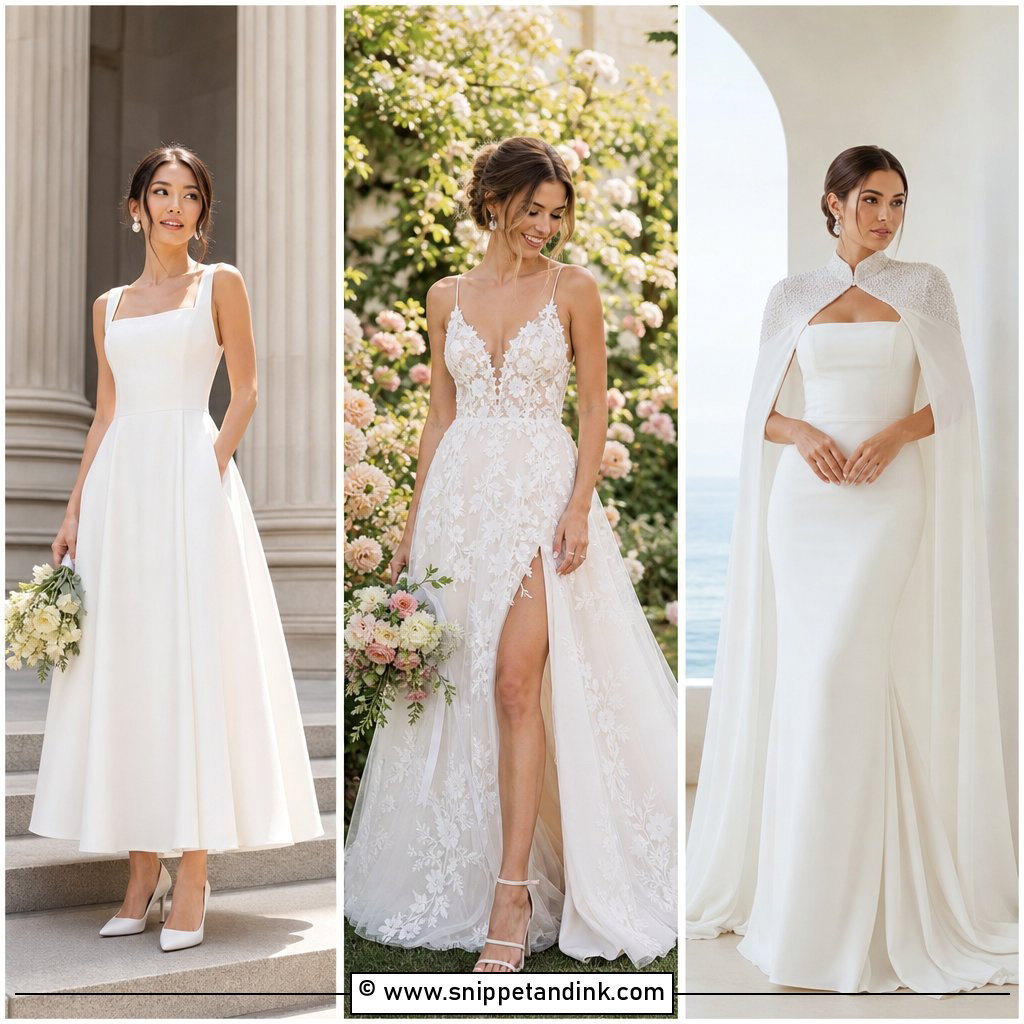
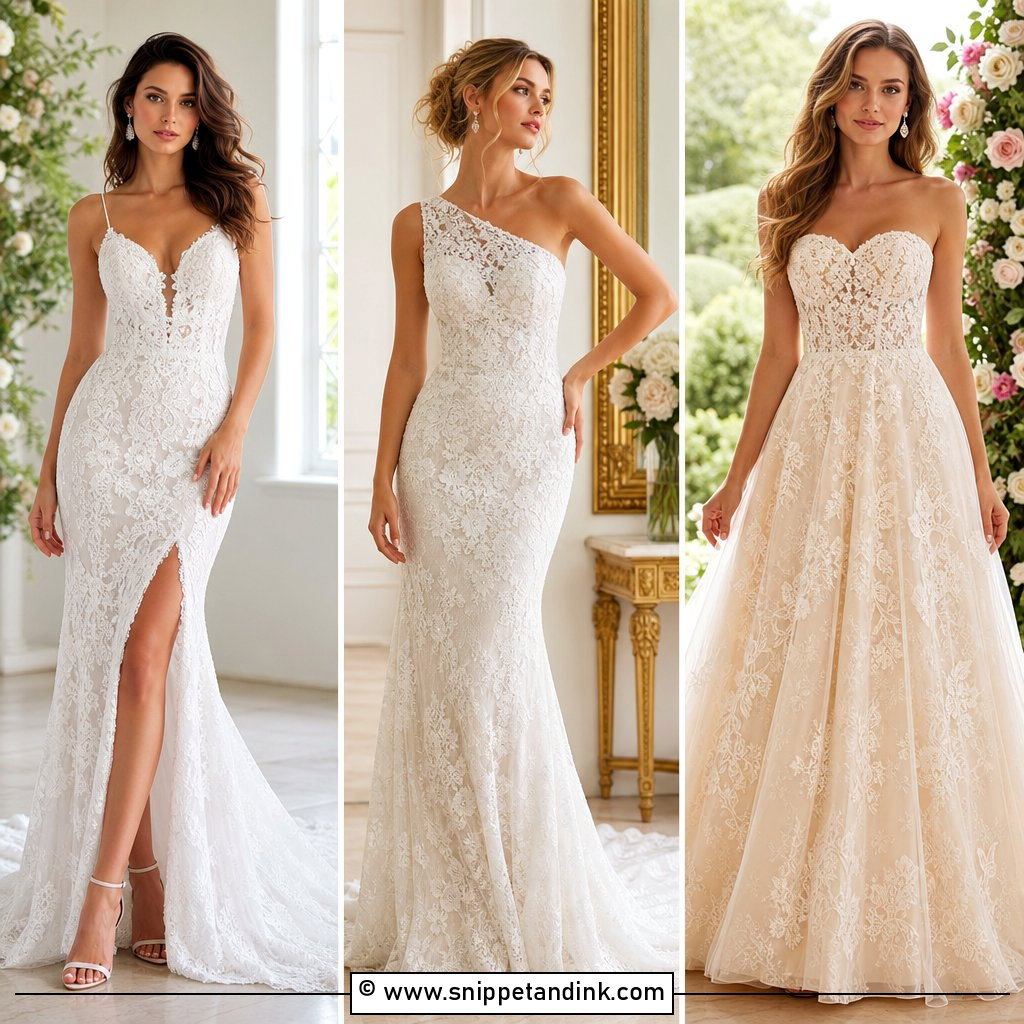
20. Modest Fit And Flare Wedding Dress
Fit and flare is the gentler cousin of the mermaid. It’s fitted through the bodice and hips, then opens earlier, so walking and sitting are easier. Long sleeves, a high neckline or a covered back keep it modest. Lace versions feel romantic, crepe ones smooth and modern, and a small train adds detail without much weight. Pearl earrings, a simple veil and classic pumps. In my experience it’s the fitted shape most brides can actually dance in.
21. Modest Tea Length Wedding Dress
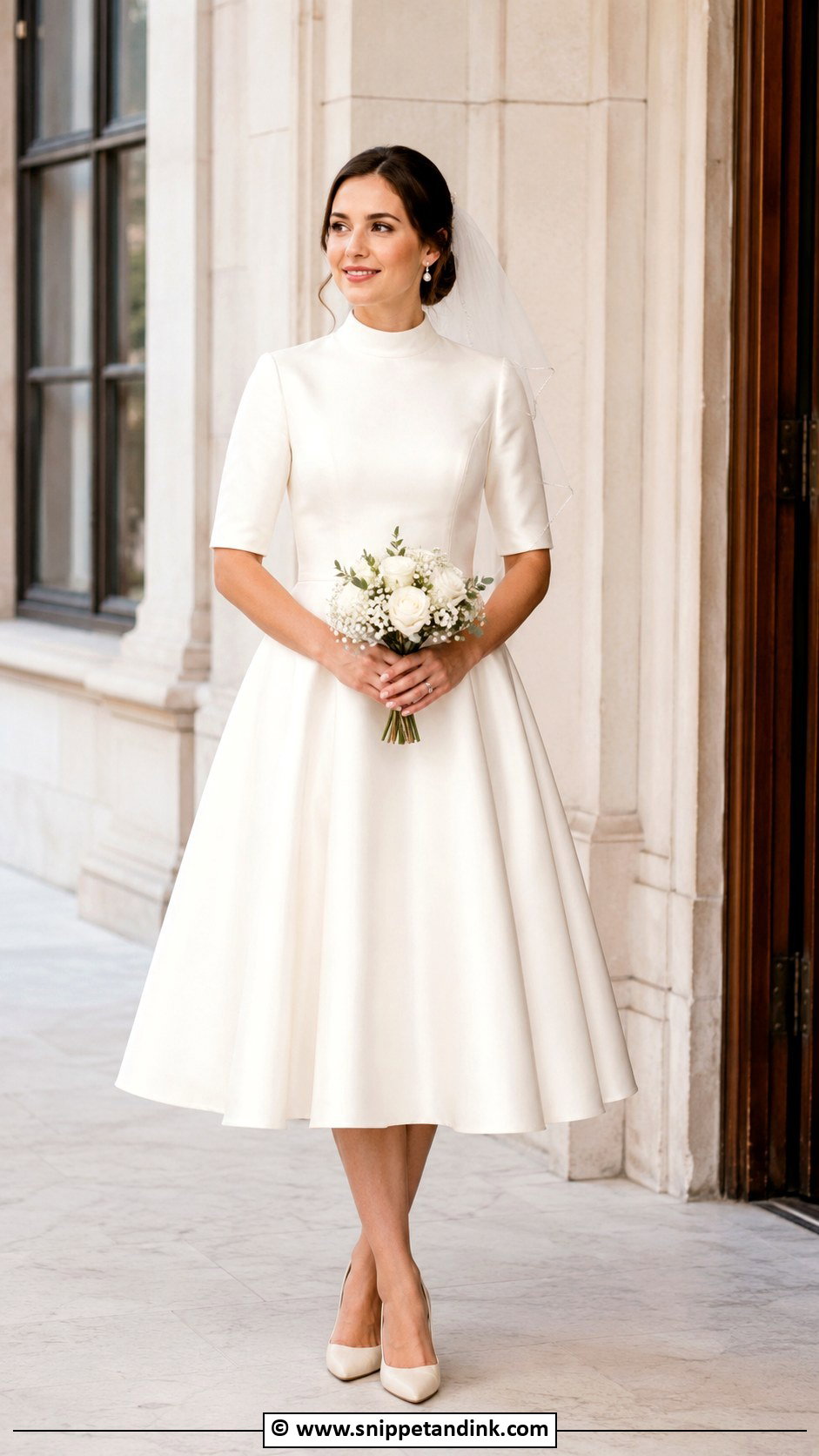
Tea length falls between knee and ankle, so it suits courthouse weddings, smaller celebrations and vintage-inspired looks. A high neckline with short, elbow or three-quarter sleeves keeps it modest; a full skirt gives movement and a fitted bodice keeps it neat. Your shoes are on show, so choose elegant pumps, ballet flats or low block heels, and plan whether you want tights or bare legs, which matters more at this length than any other. A short veil, pearl earrings and a structured bouquet complete it.
22. Modest Minimalist Wedding Dress
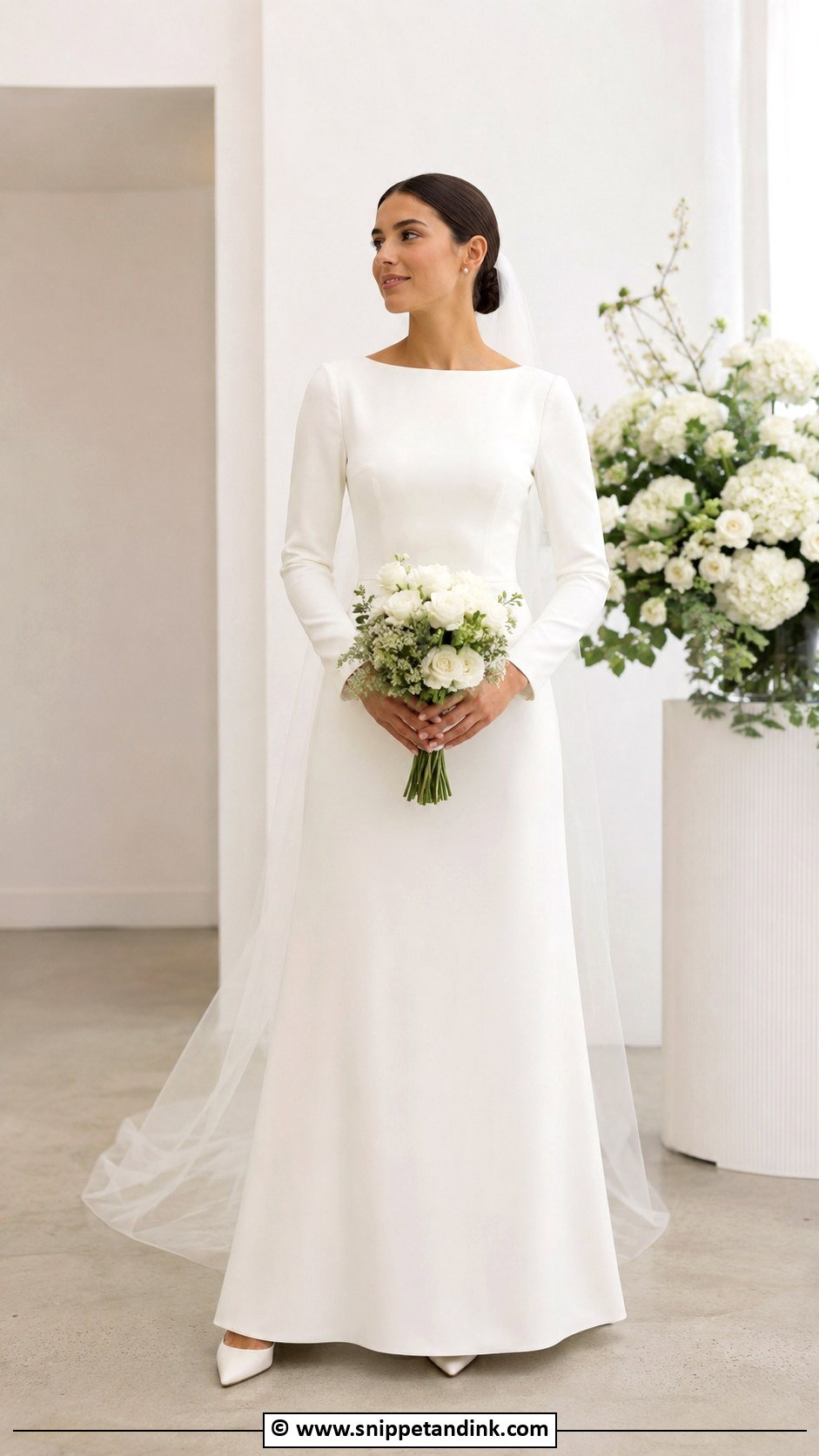
A minimalist modest gown relies on shape, fabric and fit rather than lace or beading. Crepe, satin and mikado are the strongest choices. A high, bateau or square neck gives coverage; long sleeves and a covered back finish it without decoration. Plain fabric shows every fitting flaw, so budget for proper alterations. A sleek bun, pearl studs and a plain veil are all it needs.
23. Modest Beaded Wedding Dress
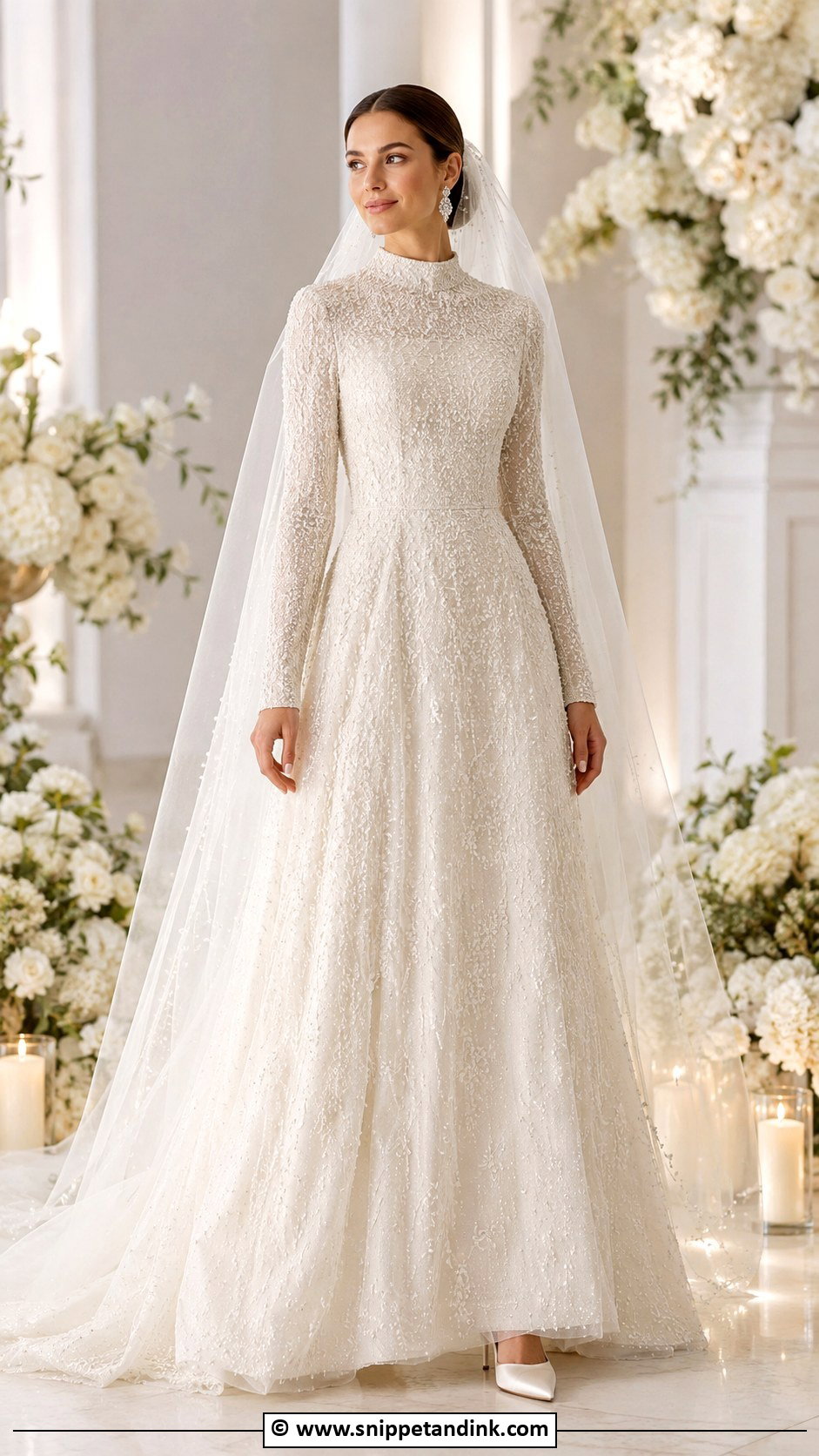
Beading adds sparkle, but placement decides whether it looks graceful or heavy. Delicate beads across lace sleeves, the bodice or the waist catch light well. For coverage, look for a lined bodice, high neckline, long sleeves and a covered back, with a soft A-line skirt to balance the shine. Beaded sleeves can scratch the inner arm over a long day, so I run a hand along the inside of the sleeve before recommending one. Crystal studs or pearls are enough jewelry. Evening celebrations and formal venues suit it.
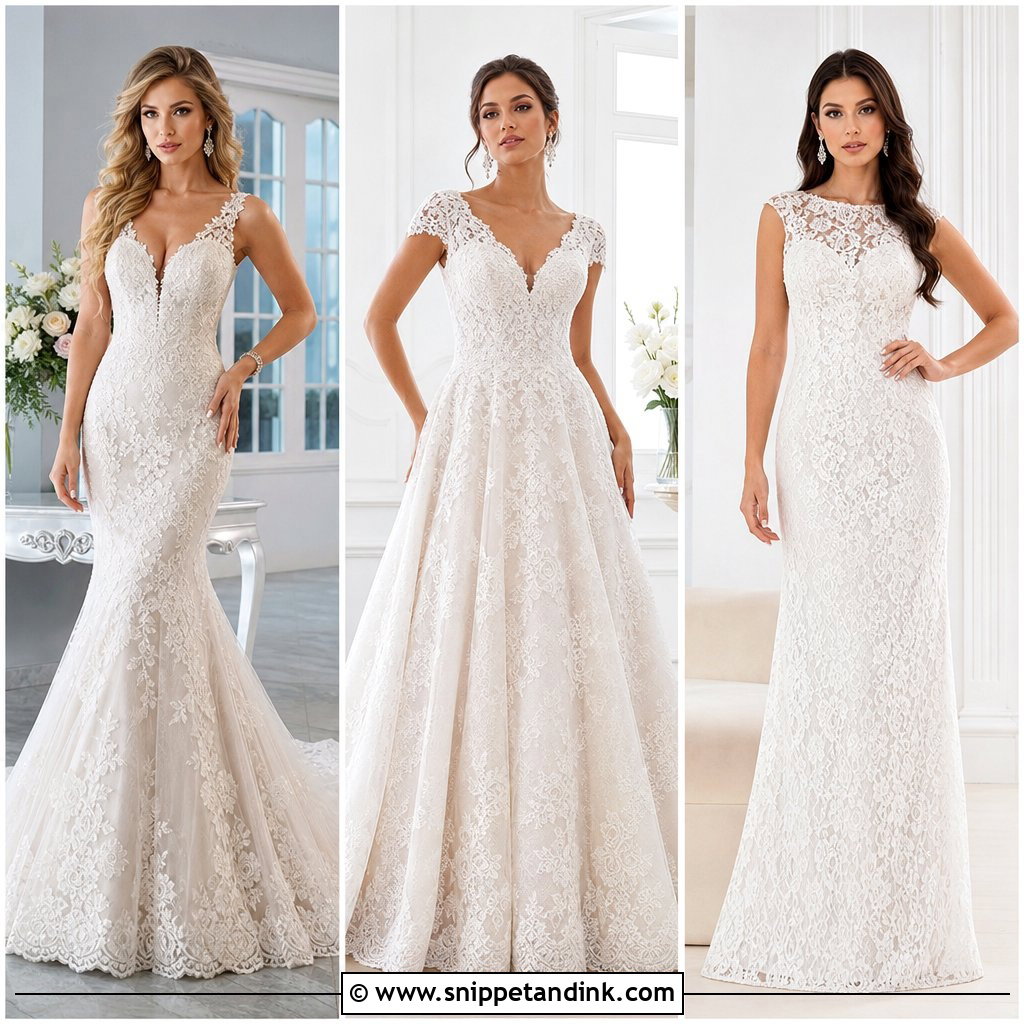
24. Modest Floral Lace Wedding Dress
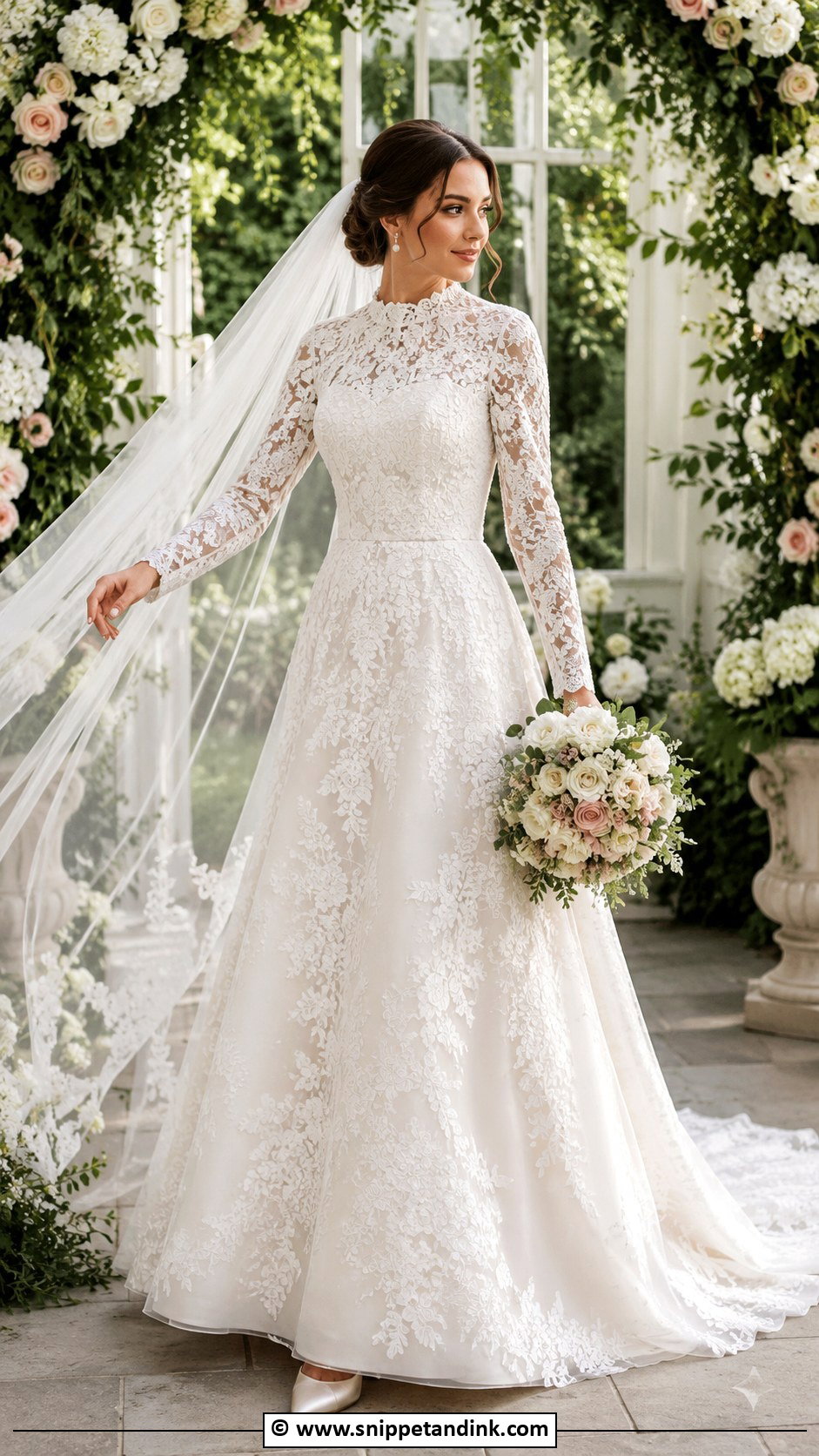
Floral lace brings texture, and over a lined bodice and long sleeves it feels soft and classic. Pattern scale changes the mood: large motifs look modern, small ones traditional. An A-line moves gently, while a sheath feels more fitted. Pair with a high, bateau or modest scoop neckline, pearl accessories, a sheer veil and simple heels. When a gown is altered, the lace has to be cut and re-appliquéd around the motifs, so lace alterations usually take longer than plain fabric ones. Gardens and spring weddings are its natural fit.

25. Modest Embroidered Wedding Dress
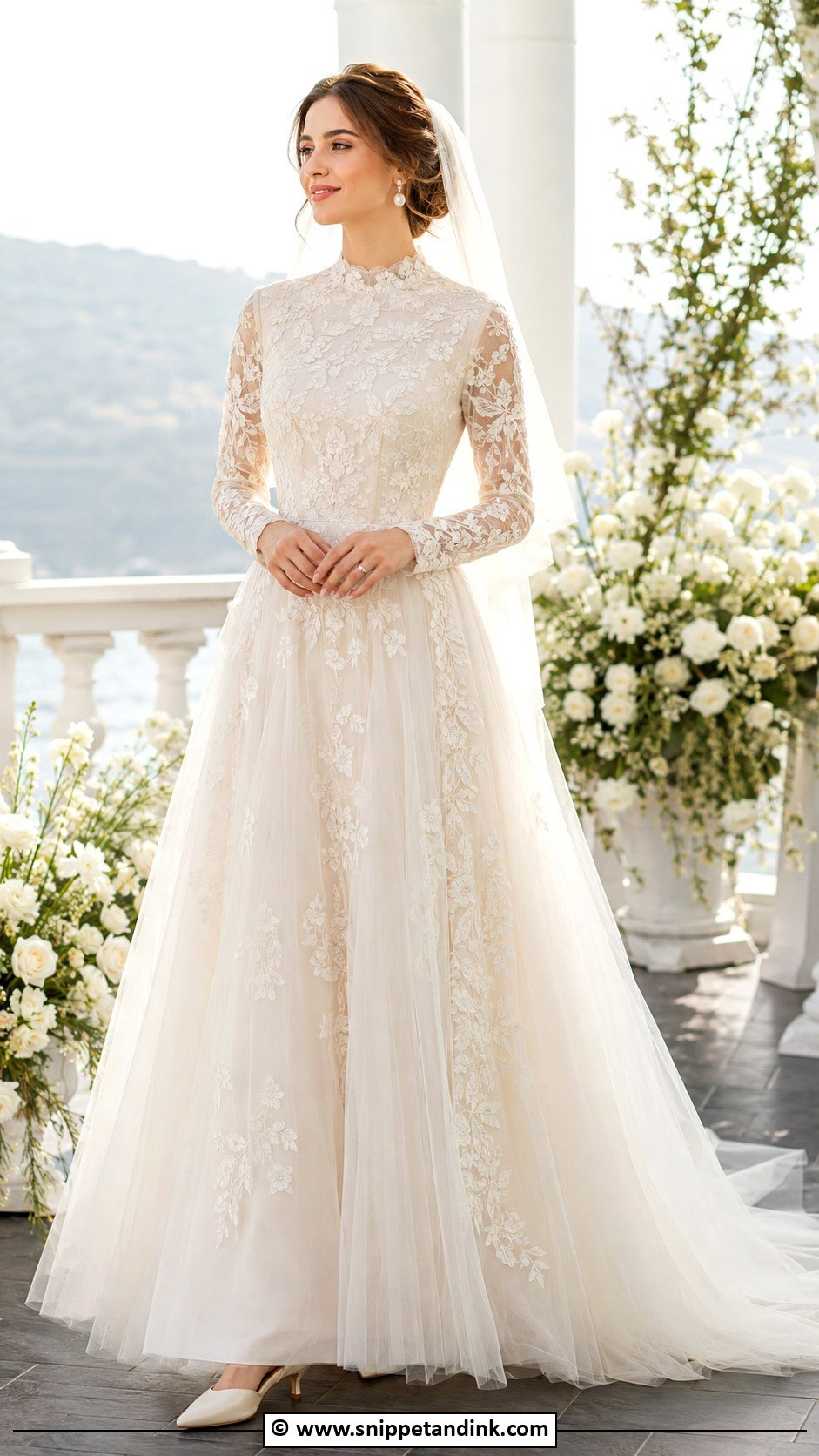
Embroidery gives a handcrafted feel: florals, vines, leaves or fine patterns stitched across the bodice, sleeves and skirt. On a lined base with long sleeves and a higher neckline, it stays covered, and soft tulle or organza layers make the stitching look light and dimensional. It suits brides who want texture rather than sparkle. Keep accessories subtle, with a simple veil, low heels and small earrings. Embroidered gowns can be heavier than they look on a hanger, so ask to try the actual sample on.
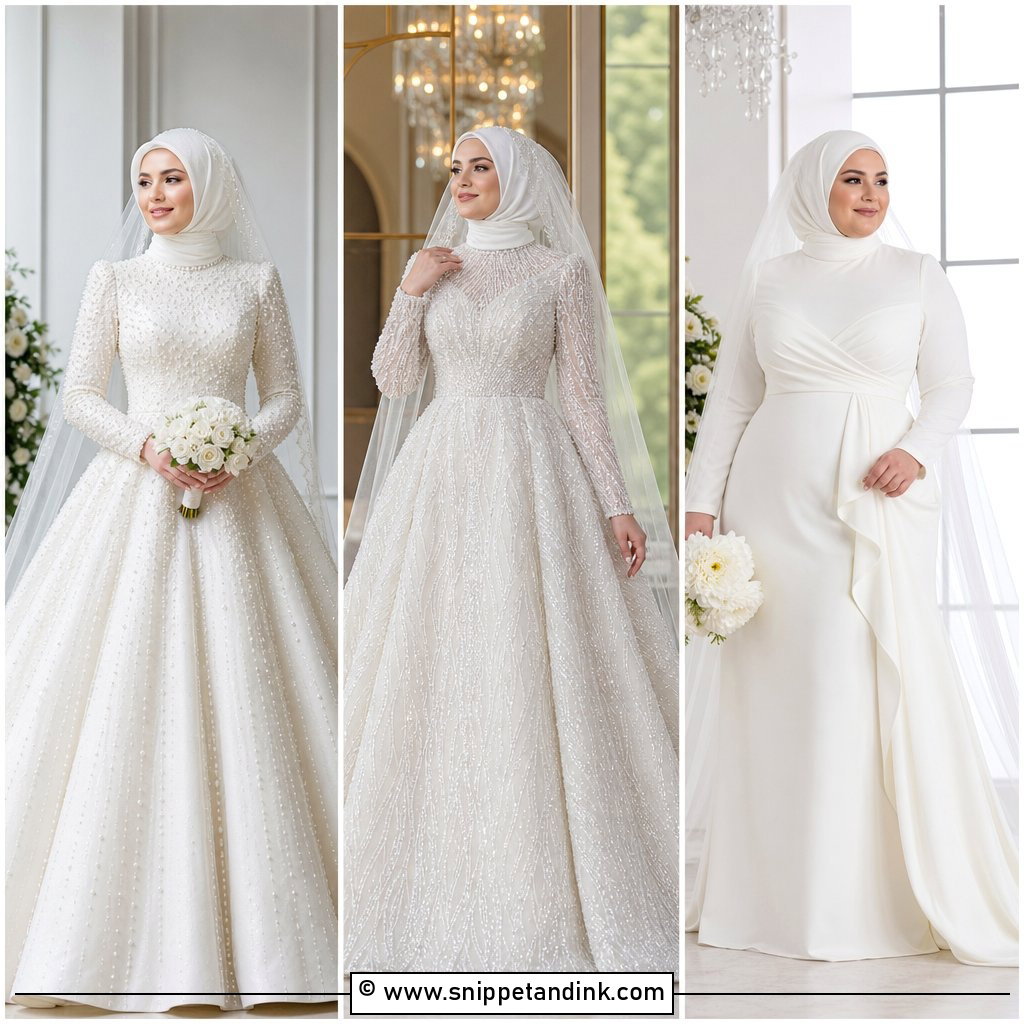
26. Modest Pearl Wedding Dress
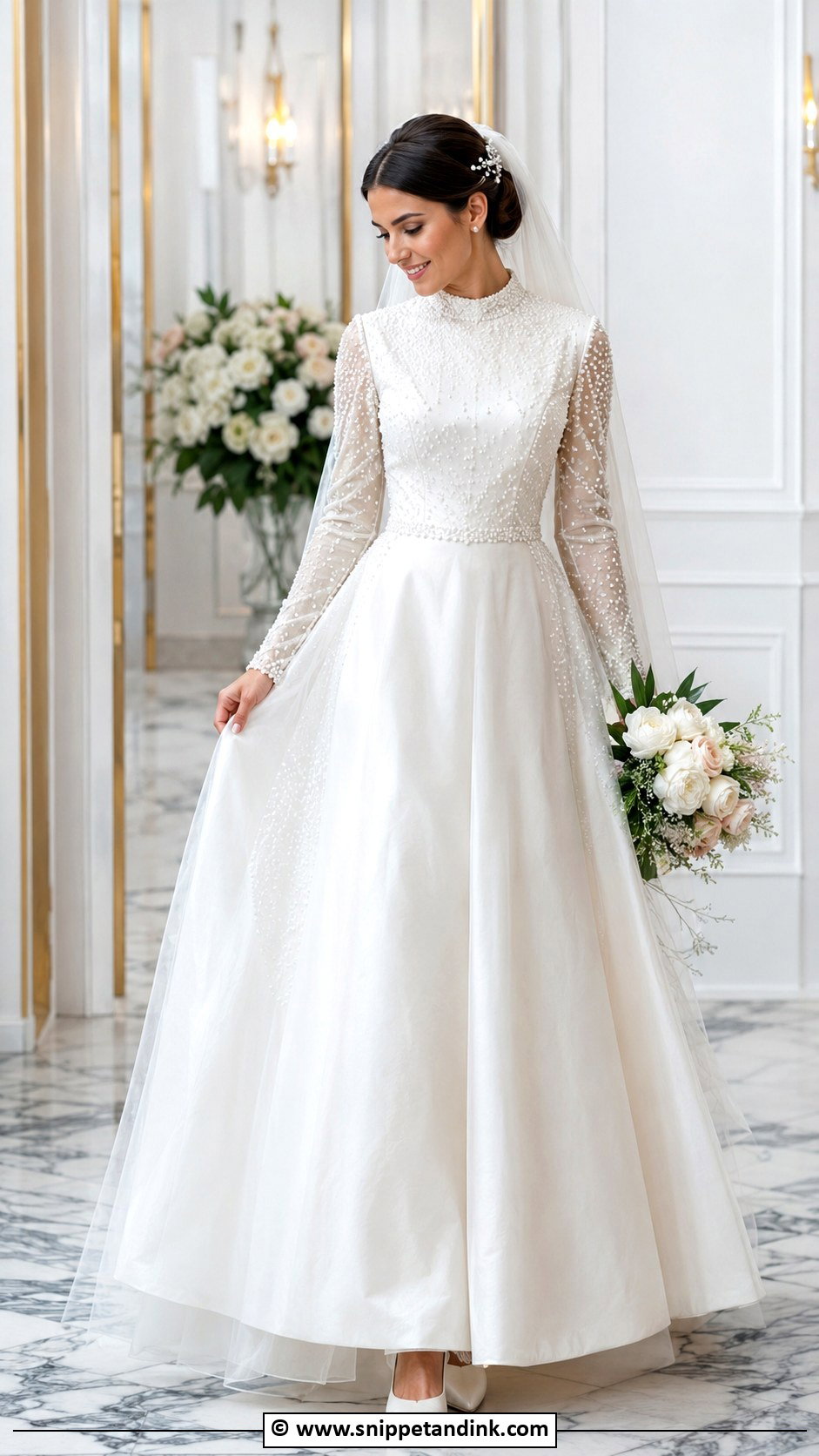
Pearls can be scattered across sleeves, set along the neckline or stitched into the bodice for a soft glow. They suit satin, tulle and crepe. For a modest look, choose a higher neckline, covered shoulders and a lined bodice. A pearl-edged veil or pearl hair pins tie the outfit together. Skip heavy jewelry, since the dress already has detail. I check that the pearls are sewn individually rather than glued, because glued ones can pop off during a long day of hugs.
27. Modest Pleated Wedding Dress
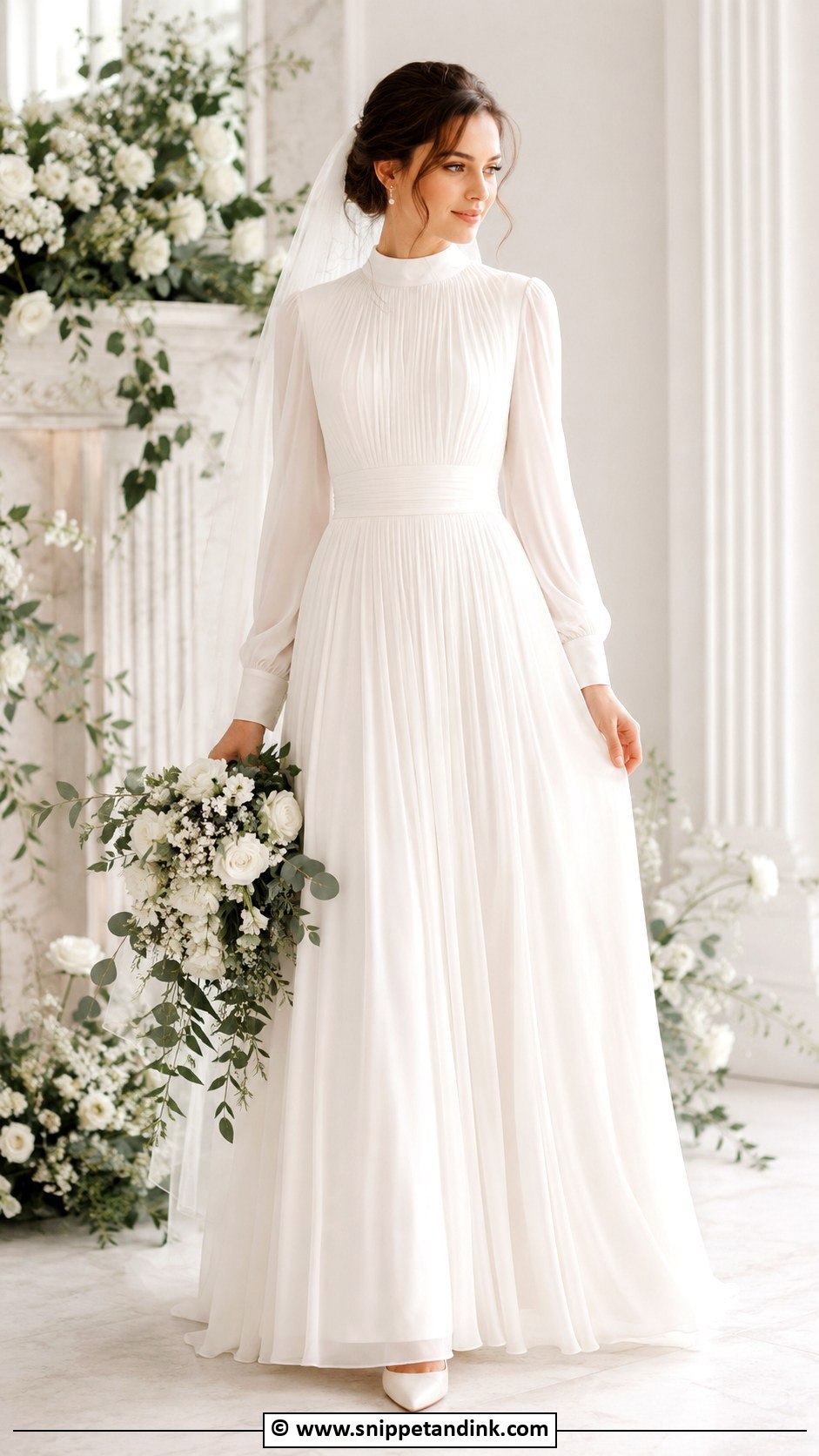
A modest pleated wedding dress gets its texture from folds rather than decoration. Soft chiffon pleats look airy, while crisp pleats in satin or mikado feel formal. Pleats can sit in the skirt, bodice, sleeves or waist, and they look most flattering when they start at the waist and fall downward. A high neck or bateau neckline keeps the design clean, with long or elbow sleeves. Pressed pleats can lose their sharpness in humidity, so I always ask how they were set. Simple heels, small earrings and a smooth veil.
28. Modest Empire Waist Wedding Dress
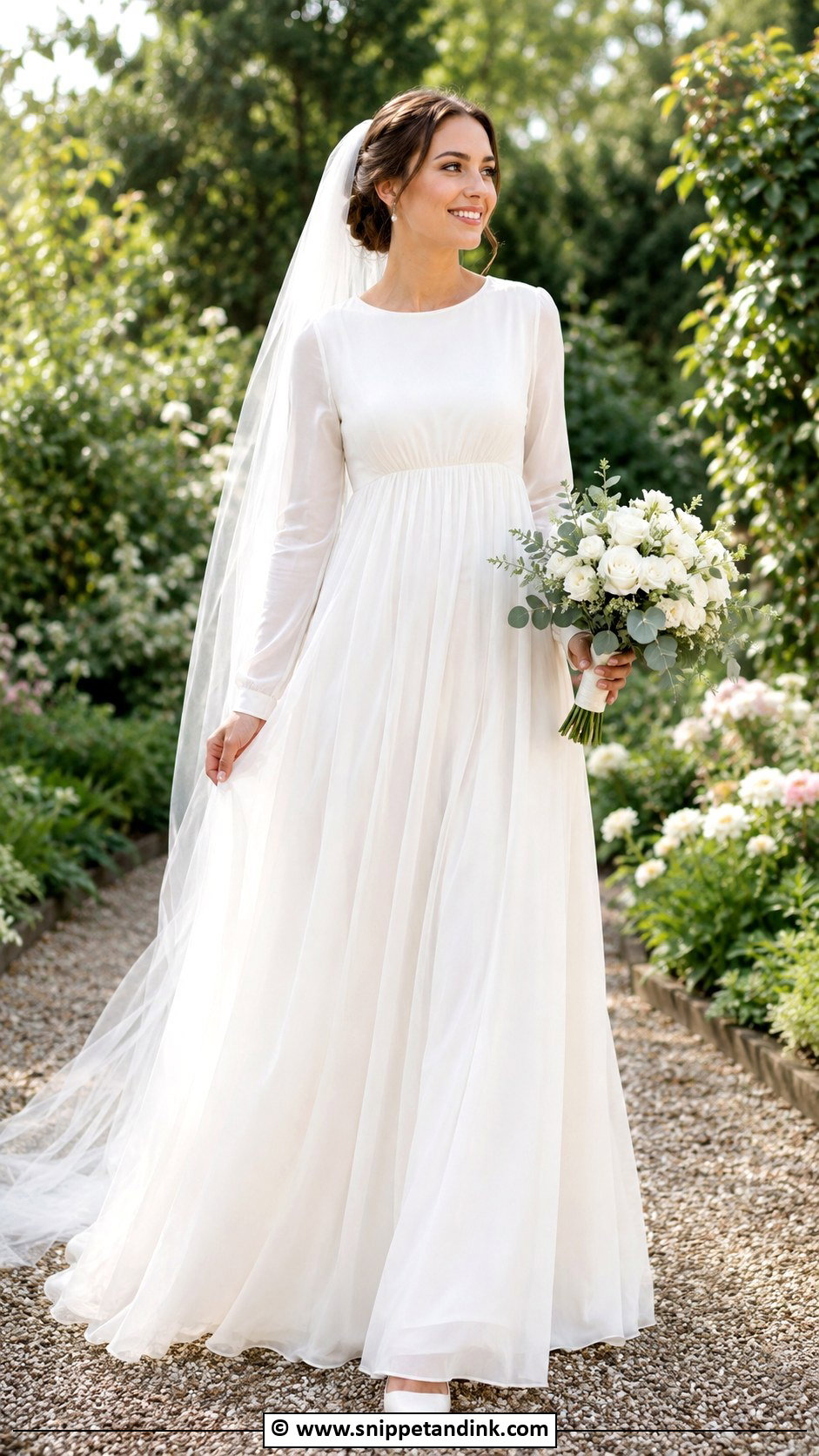
A modest empire waist wedding dress raises the waistline to just below the bust and lets a soft skirt fall from there. It feels relaxed through the waist and hips, which is why I often suggest it to brides who dislike anything snug in the middle. Chiffon, tulle and soft satin suit it. Add long sleeves, a high neckline or a gentle scoop with enough coverage. A light veil and low heels keep it easy for outdoor venues and smaller weddings.
29. Modest Princess Wedding Dress
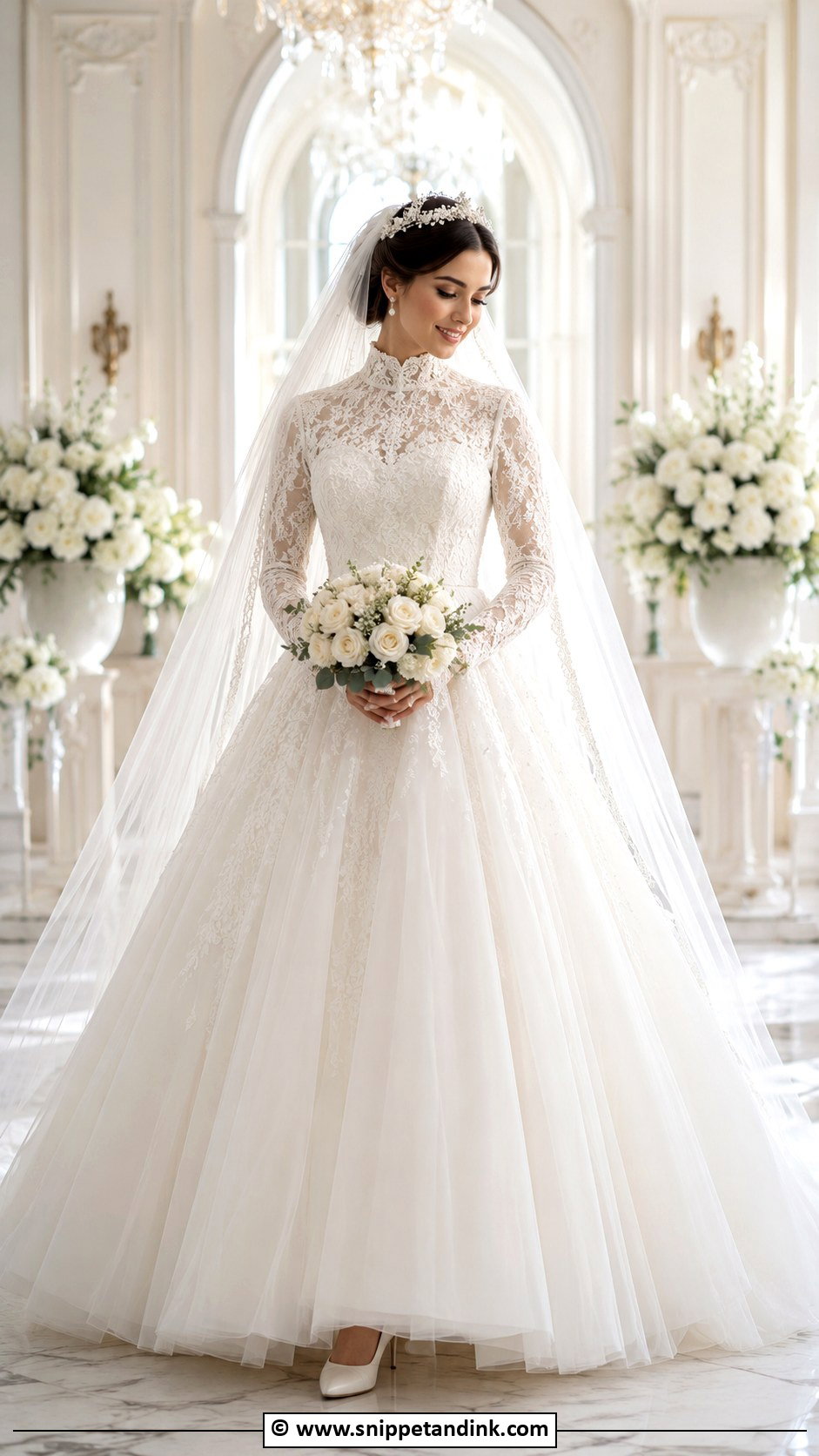
The princess gown is the fairytale shape: full skirt, fitted bodice, formal details. Long sleeves, a high neckline, a covered back and a lined bodice make it modest. Lace, tulle, satin and mikado all work. A small crown-style headpiece can suit it, but only one statement on the head, or the look gets crowded. Pair it with a long veil and classic heels. Practise walking in it; a full skirt plus a train takes some getting used to on stairs.
30. Modest Winter Wedding Dress
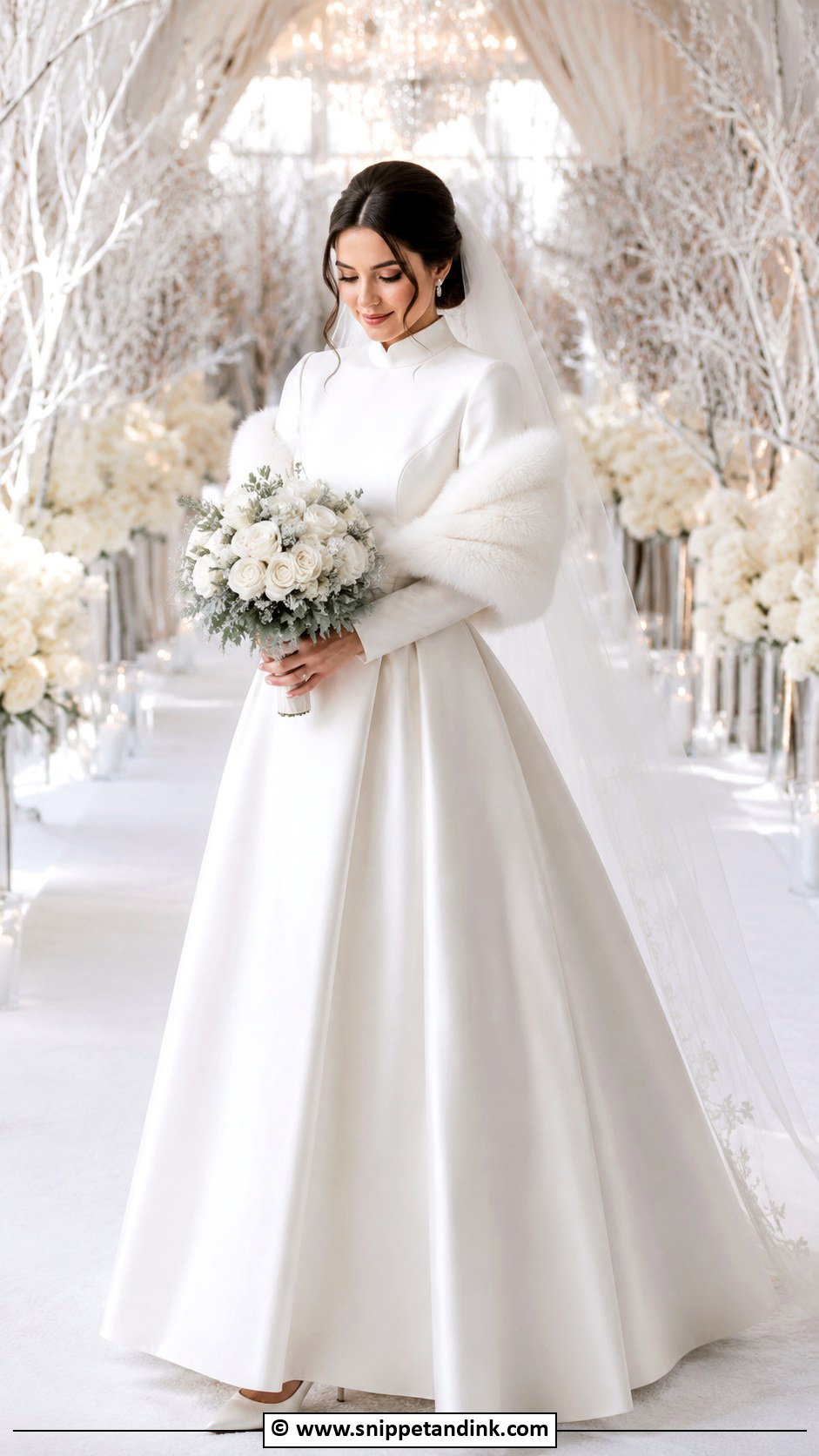
Winter is the easiest season for covered gowns, since long sleeves, heavier fabrics and closed necklines are already practical. Satin, mikado, crepe and layered lace feel substantial. A full skirt or structured A-line adds warmth. For outdoor photos, add a faux fur wrap, bridal coat or tailored cape, and closed-toe heels or elegant boots if the ground calls for them. Keep the coat in mind when choosing the neckline, though; a high neck under a collared coat can look bulky.
31. Modest Summer Wedding Dress
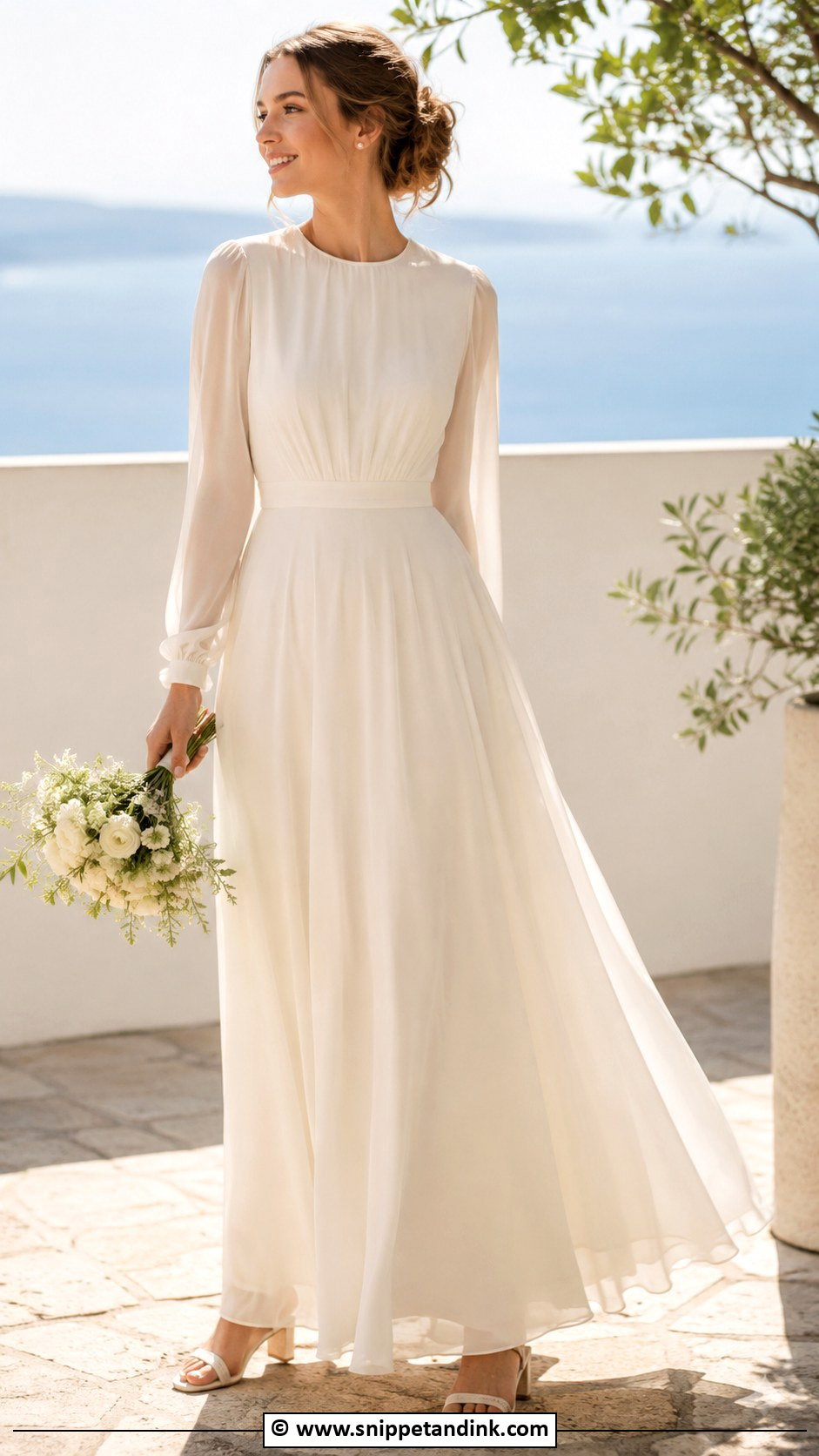
Summer coverage is the hardest brief I get. Chiffon, lightweight crepe, soft tulle and lace breathe better than heavy satin. Instead of thick long sleeves, look at lined sheer sleeves, three-quarter sleeves or flutter sleeves that cover the shoulders. A high neckline can work if the fabric is light and the bodice isn’t tight. An A-line skirt lets air move. Low heels, pearl studs and a soft updo keep you cooler. Ask whether the lining is a breathable fabric; a polyester lining under lace traps heat far more than the lace does.
32. Modest Beach Wedding Dress
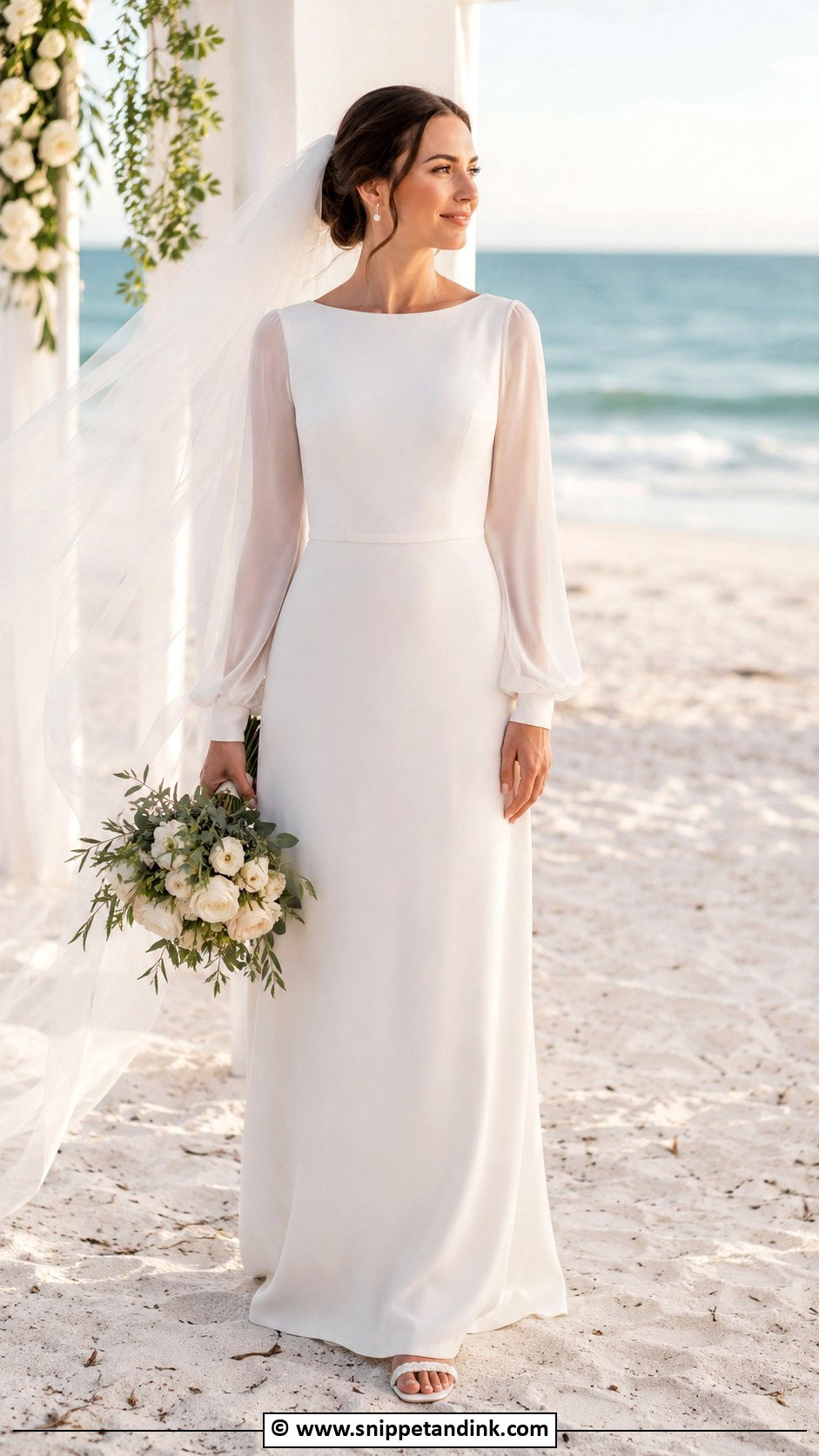
Near sand and water, light and secure matter more than volume. Chiffon, soft crepe or lightweight lace in a simple A-line or sheath beats a heavy ball gown. Long sheer sleeves, a high scoop or a bateau neckline give coverage. Skip a long train outdoors, or pick a detachable one for photos. Flat sandals, low block heels or bridal flats are practical. Wind is the factor brides forget: a light skirt lifts easily, so I sometimes add small hem weights, and a hair comb holds better than a long veil.
33. Modest Courthouse Wedding Dress
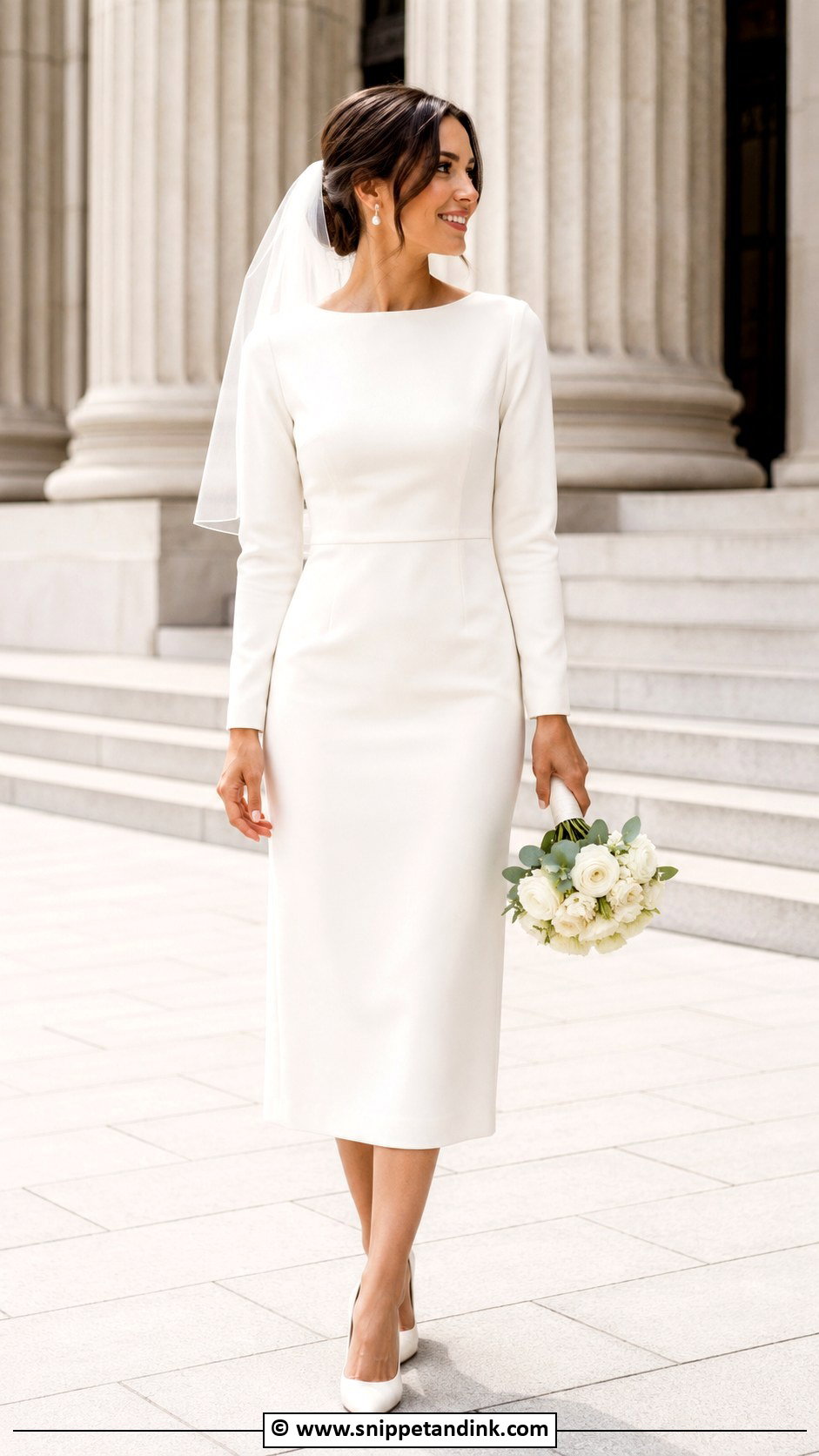
A courthouse look can be simple and still clearly bridal. A tea-length dress, a midi, a tailored crepe gown or a sleek satin column dress all suit the setting. Higher necklines, short or long sleeves and covered backs all work. The room is usually plain, so put your money into tailoring and good fabric rather than embellishment. A small veil, pearl earrings and classic pumps make it feel special. Carry a small bouquet for the photos on the steps.
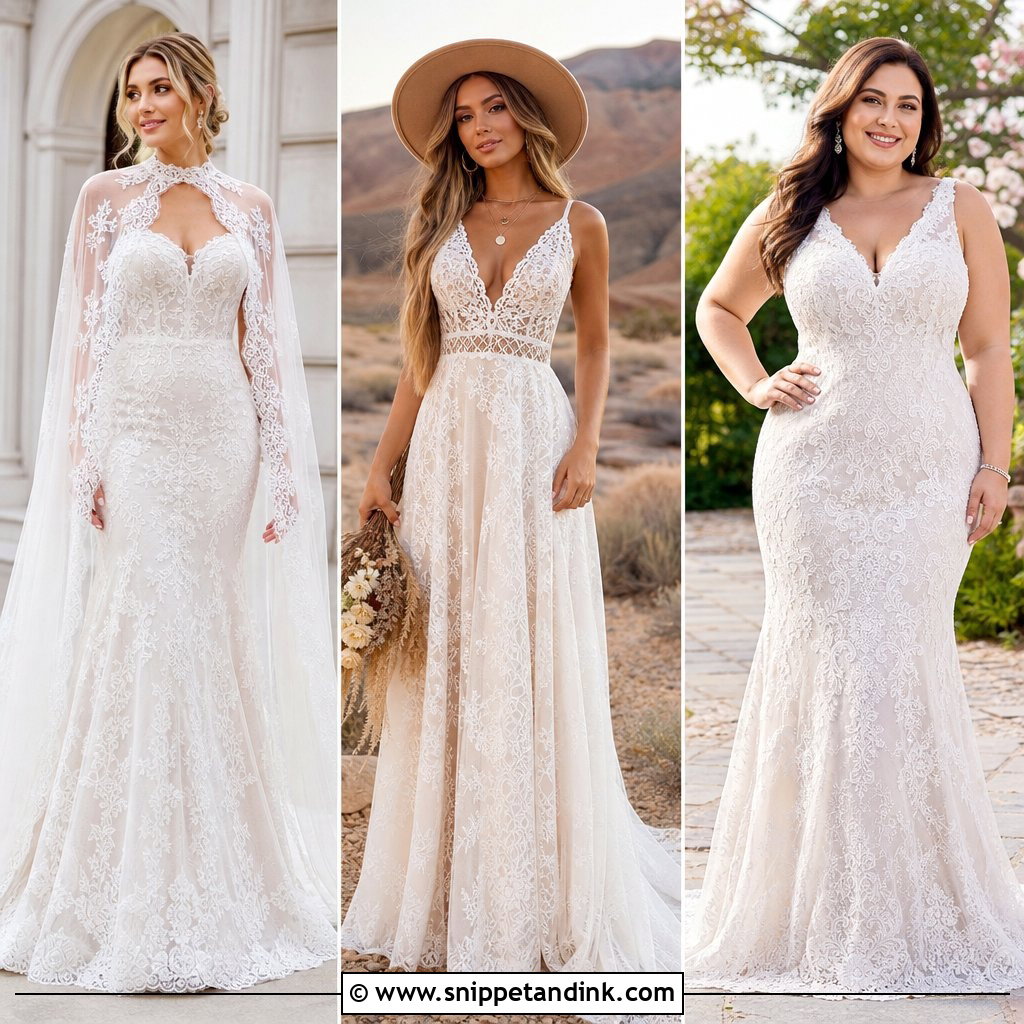
34. Modest Plus Size Wedding Dress
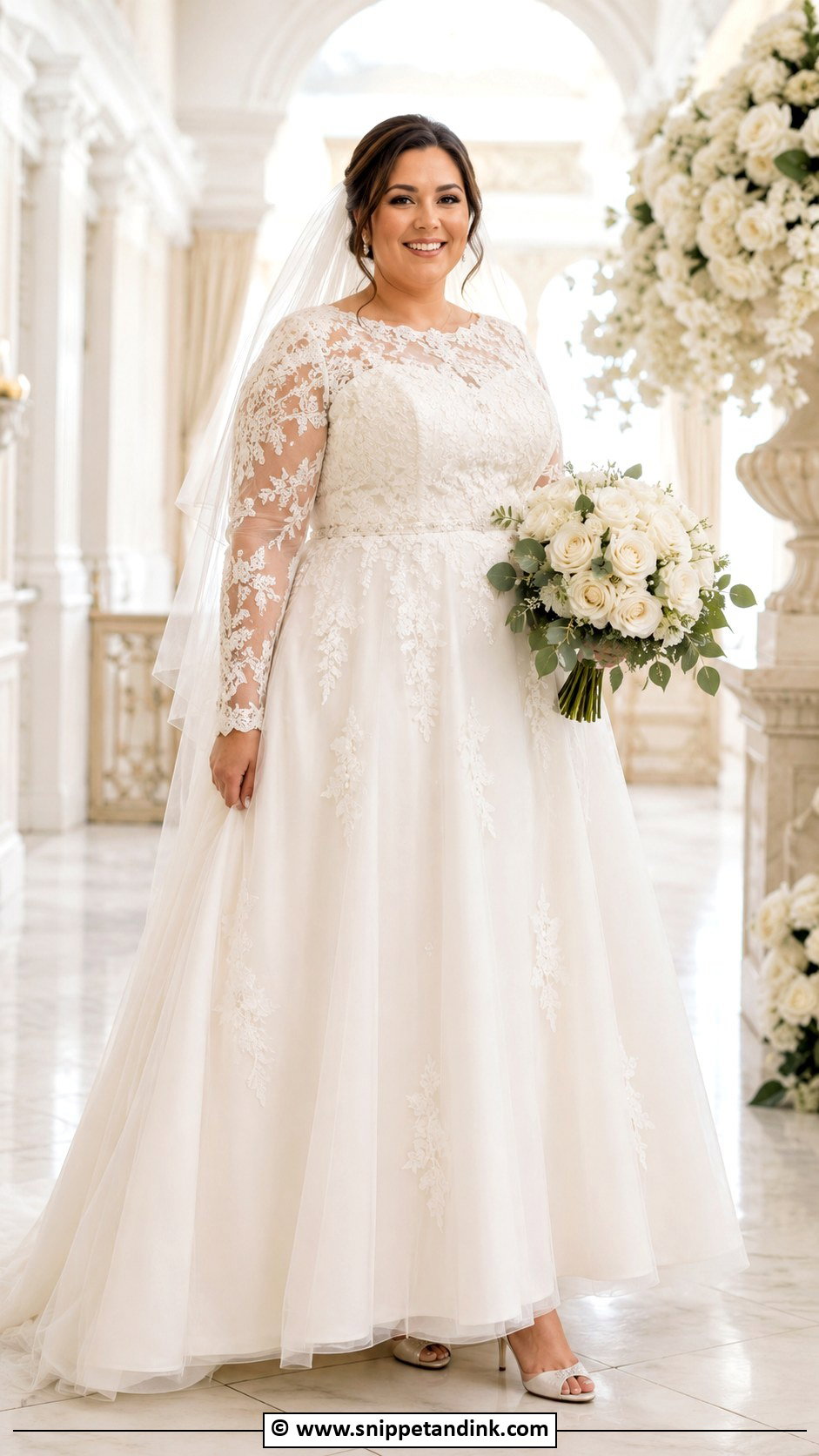
A modest plus size wedding dress should feel supportive first. A-line, ball gown, empire waist and fit and flare silhouettes can all be flattering; the right one depends on where you want structure and where you want ease. Look for internal support, a lined bodice, sleeves you can move in and a neckline that stays put. Sleeves are where I see the most fit problems, so ask whether the armhole and upper sleeve can be let out, not just the bodice. A defined waist or soft belt adds shape. Comfortable shoes and simple accessories finish it.
35. Modest Maternity Wedding Dress
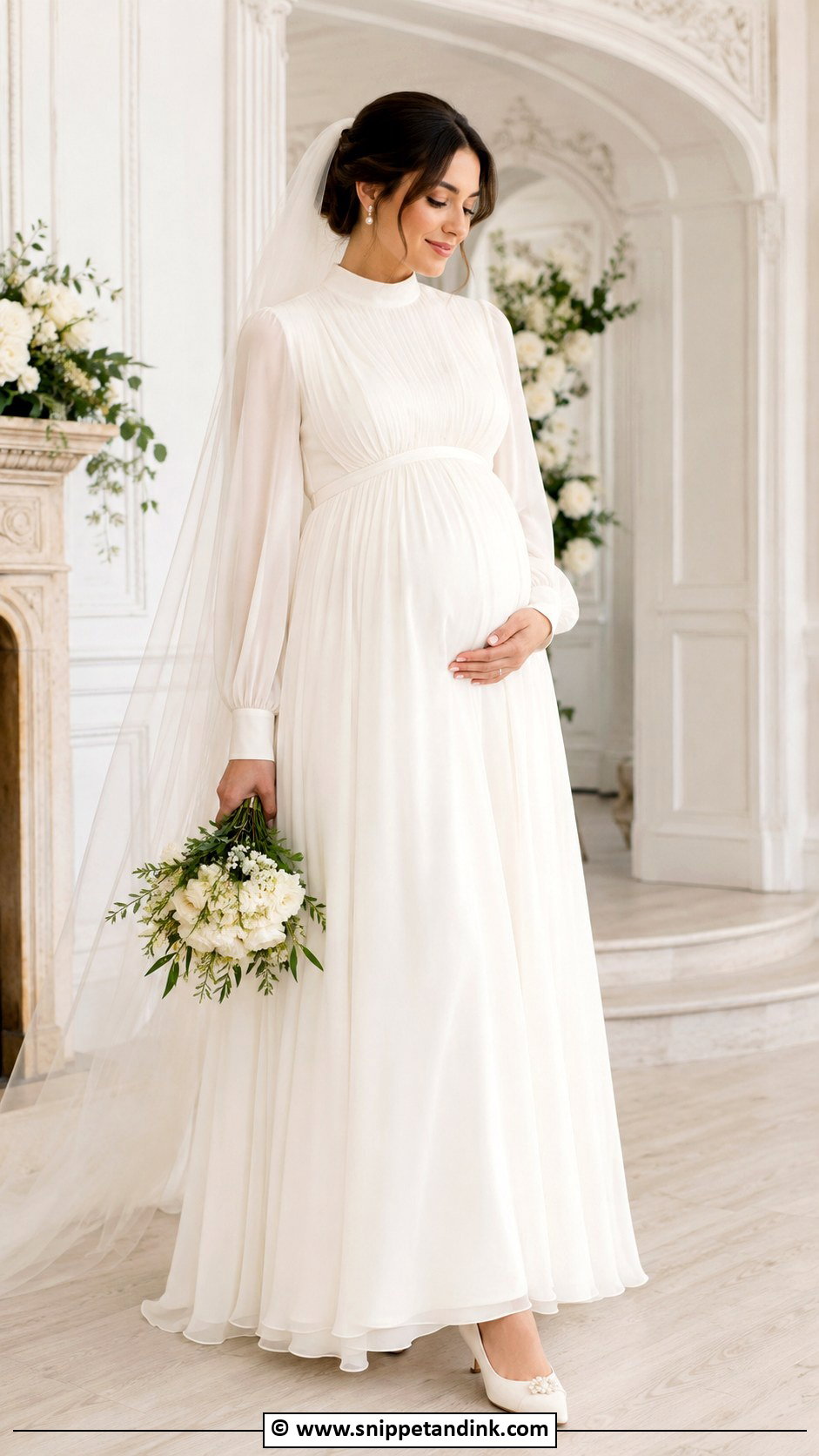
Maternity gowns need room to change. Empire waists are often the easiest because the skirt falls over the bump without pressure. Chiffon, soft tulle, stretch lace and lightweight crepe are comfortable. Add a higher neckline, sleeves and a lined bodice for coverage, and a wrap-style bodice or gentle gathering for shape. Schedule the final fitting as close to the wedding as your seamstress allows, since your measurements may shift in the last weeks. Low heels or flats, a simple veil and pearl earrings complete it.
Sheer Fabric Under Camera Flash and Afternoon Sun
Coverage that looks complete in a fitting room can disappear in photos. Nude illusion mesh reads as bare skin from a few feet away, which is the whole point of it for some brides and a real problem for others. If what matters is that the arm or back looks covered, choose ivory lining or dense lace, not skin-tone mesh.
Light is the other test. A chiffon or tulle skirt with a single lining layer can turn see-through when the sun is behind you at an outdoor ceremony. I ask brides to stand in front of a bright window at a fitting and have someone photograph them with a phone flash. If the outline of the legs shows, a simple slip or an extra skirt layer fixes it.
Then there’s heat. Long sleeves and high necks keep warmth in, and most bridal linings are synthetic. Ask for a cotton or breathable lining where possible, slip underarm shields into the bodice, and plan a cooler moment between the ceremony and the reception. A bride who is comfortable at hour eight looks better in the evening photos than one who has spent the afternoon overheating.
Coverage That Still Lets You Dance
A covered gown has to do more than cover. It needs to suit your values, your body and your venue, and it has to feel right when you stand, walk, sit and celebrate. Simple or detailed, structured or soft, the right one is the dress you forget you’re wearing by the second hour. Settle fabric, neckline, sleeve length, lining and silhouette first, then add accessories. Lace, satin, crepe, chiffon or beading, there’s far more choice now than most brides expect when they first walk in.
You'll Like These Ideas:









Leave a Reply