
Drama, coverage and handwork: that is what most families mean when they ask me for an Arabic bridal look. The range is wide, from Gulf pearl gowns to Moroccan kaftan bridal looks, and long sleeves, high necklines, capes, embroidered veils and crystal work turn up across nearly all of it. A gown can be all of that and still be wrong for you if it fights the venue, the family traditions or your own body over a long night. The thirty dresses below each come with full styling, and I’ve noted where each one tends to cause trouble in practice.
Which Fabric Can Actually Hold the Embroidery You Want
Brides usually fall for the embellishment first and ask about fabric last. I work the other way round, because the base cloth decides whether that beading lies flat or drags.
- Mikado and heavy satin: stiff enough to carry dense crystal or pearl work and keep a structured skirt. Warm in summer.
- Crepe: smooth and modern, good for a few clean details. Heavy beading pulls it out of shape.
- Tulle: light and airy, holds scattered pearls or appliqué well. Snags easily.
- Brocade and velvet: the natural partners for kaftans and takchitas with gold trim, and best saved for cooler months or air-conditioned halls.
- Lace: looks richest with beads stitched into the motifs rather than sprinkled on top.
Ask to hold a sample of the actual fabric with a section of the embroidery on it. If the cloth sags when you hold it up by one edge, it will sag on you after a few hours.
1. Arabic Ball Gown Wedding Dress
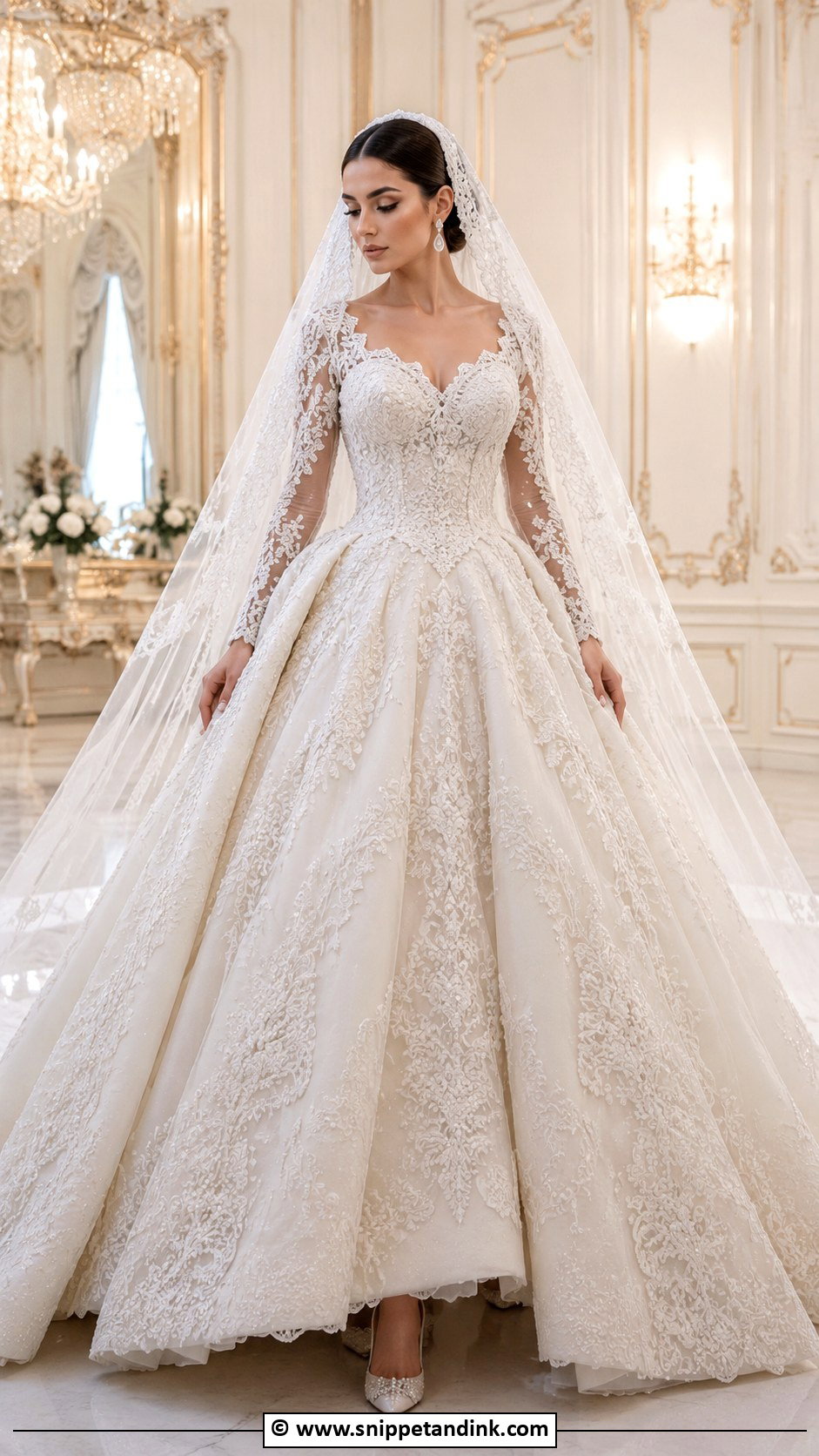
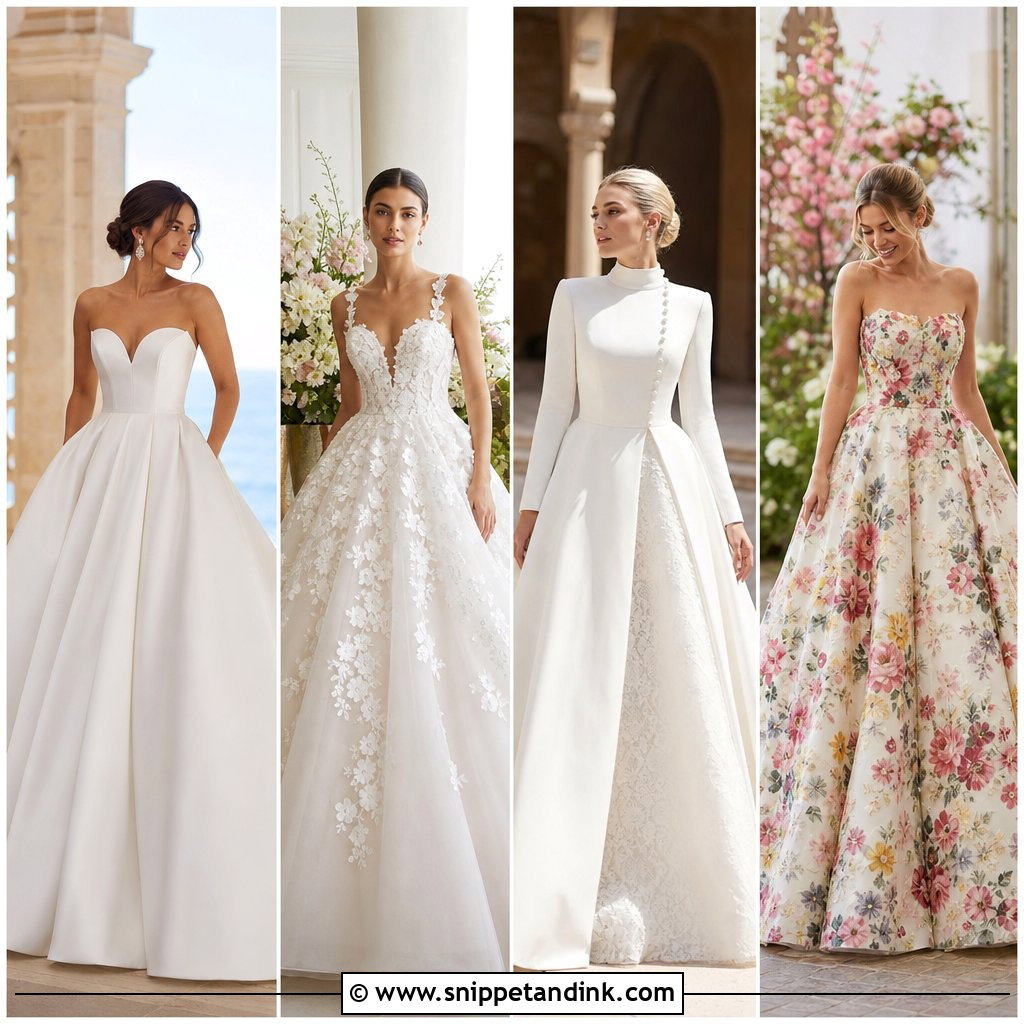
A ball gown is the grand-entrance dress: fitted bodice, full skirt, and embroidery that looks finished from every side, including the back. Ivory, soft white or champagne gives a calm base for crystal beading, pearls or lace appliqué. With a cathedral veil, pointed heels and a structured bouquet, it fills a ballroom. Long illusion sleeves and a higher neck add coverage. Before you order, measure your venue doors and any staircase, because a wide hoop skirt plus a cathedral veil needs more room to turn than brides expect.
2. Arabic Long Sleeve Wedding Dress
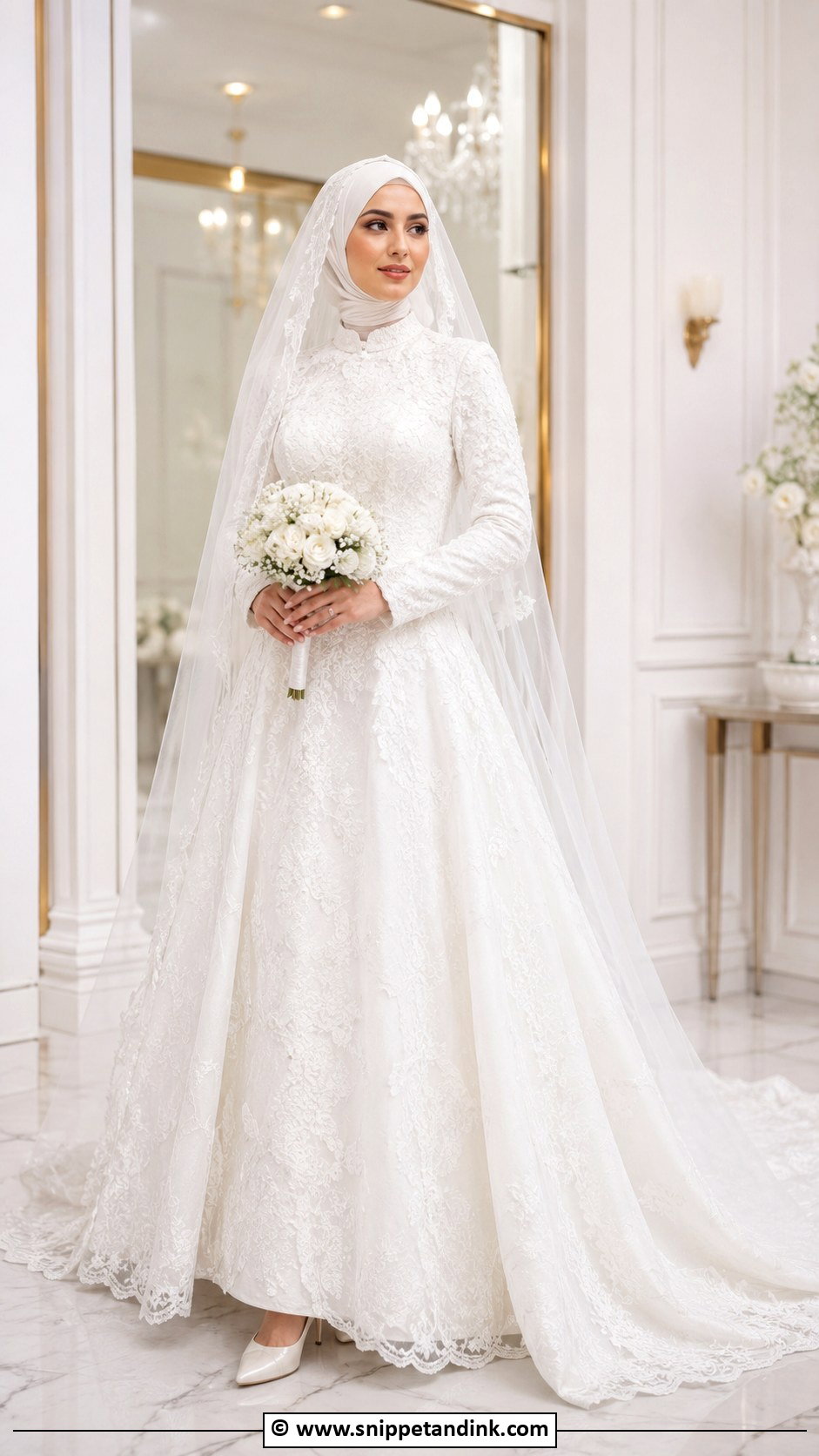
Coverage is only half of a long-sleeve gown; the other half is whether you can lift your arms. Sleeves can be sheer lace, satin, crepe or fully embroidered, set into a fitted waist with an A-line or ball skirt. Brides drawn to modest bridal fashion usually add a high neck, a covered back and a matching veil. I set sleeves with a little ease at the upper arm, because a sleeve cut tight for a standing photo will tear at the armhole during the first round of hugs. Pearl earrings, a clean clutch and closed-toe heels are all the styling it needs.
3. Arabic Hijab Wedding Dress
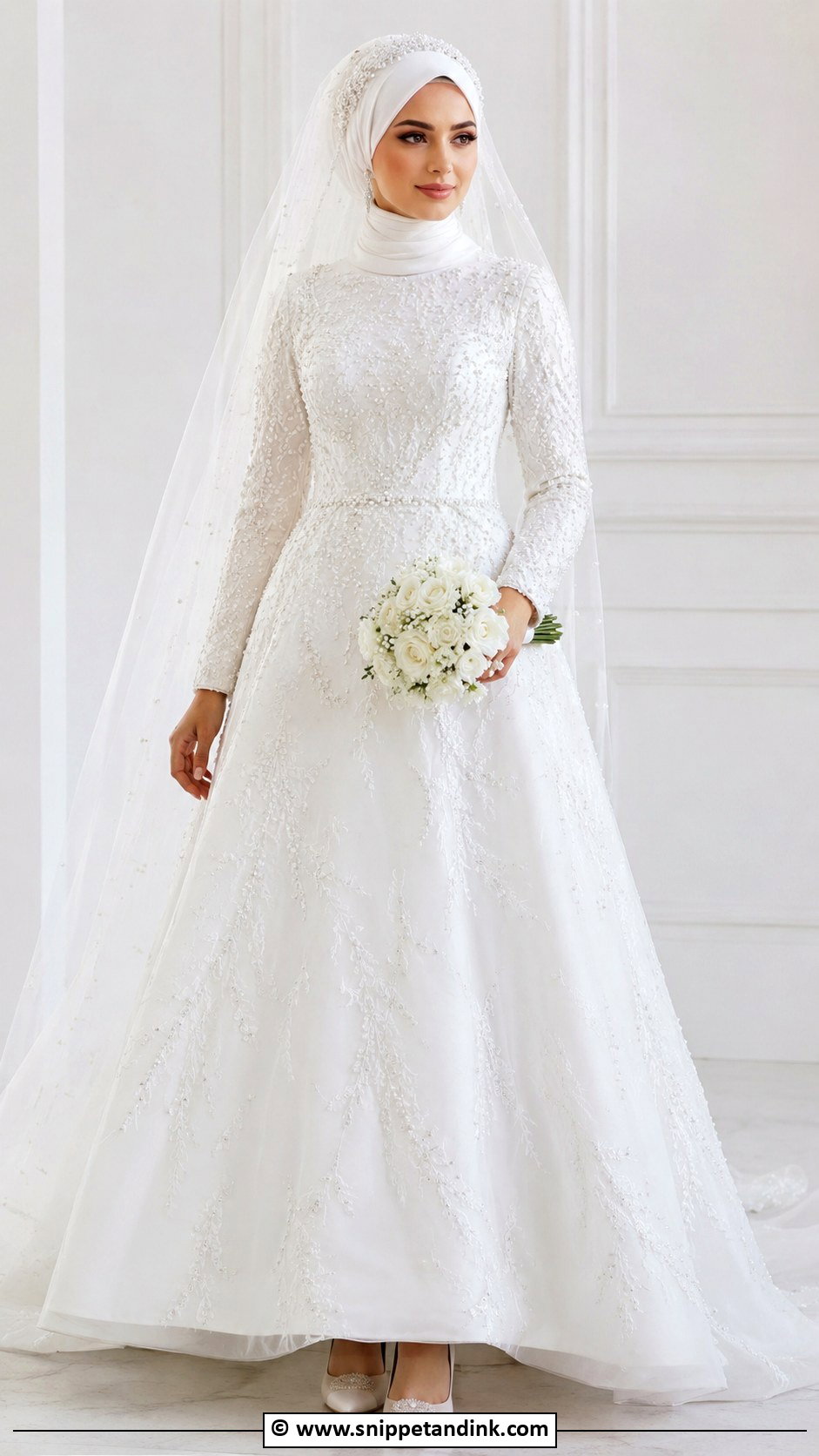
Treat the hijab as part of the gown from the first fitting, not a last-minute add-on. Match it to the dress fabric, the embroidery or the veil trim, over a long-sleeve gown with a high neckline. Lace, satin, tulle and beaded crepe all work. A softly wrapped bridal hijab with a tiara or jeweled headpiece adds height. The detail I fuss over is bulk at the neck: a high collar plus a wrapped hijab plus an underscarf can stack into a thick ring, so I often lower the collar slightly or choose a thinner underscarf to keep the line clean.
4. Arabic Mermaid Wedding Dress
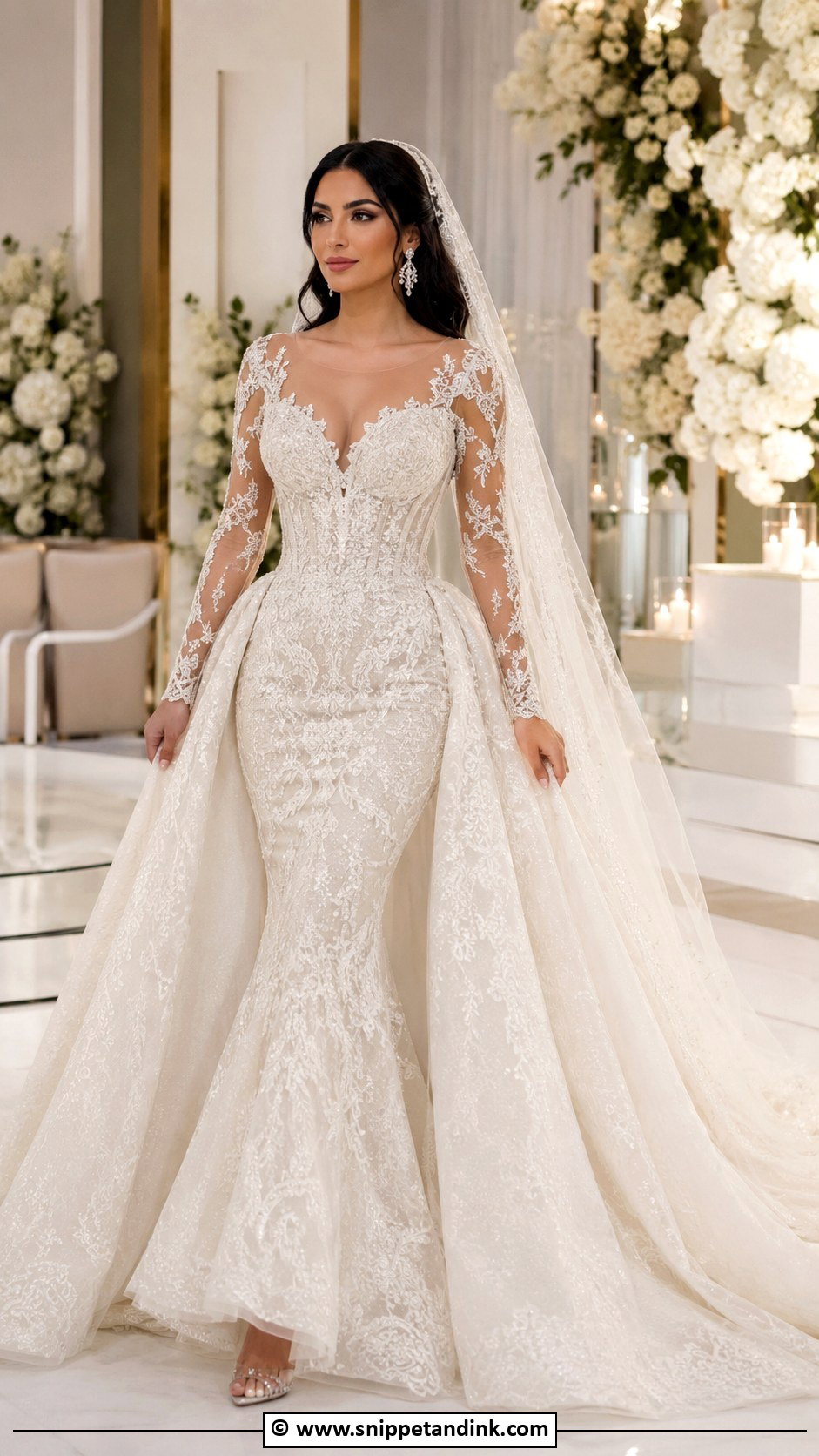
Fit is the whole point of an Arabic mermaid wedding dress, so tailoring has to be excellent. The bodice and hips are fitted, the hem flares, and mikado, satin, lace or beaded tulle hold that sculpted shape best. Long sleeves, an illusion neckline or a detachable overskirt make it feel more formal. I check the flare point at every fitting; if it creeps up even a few centimeters, the skirt starts to pull when you walk. Sparkling heels, a long veil and statement earrings finish it for an evening wedding at a luxury venue.
5. Arabic A Line Wedding Dress
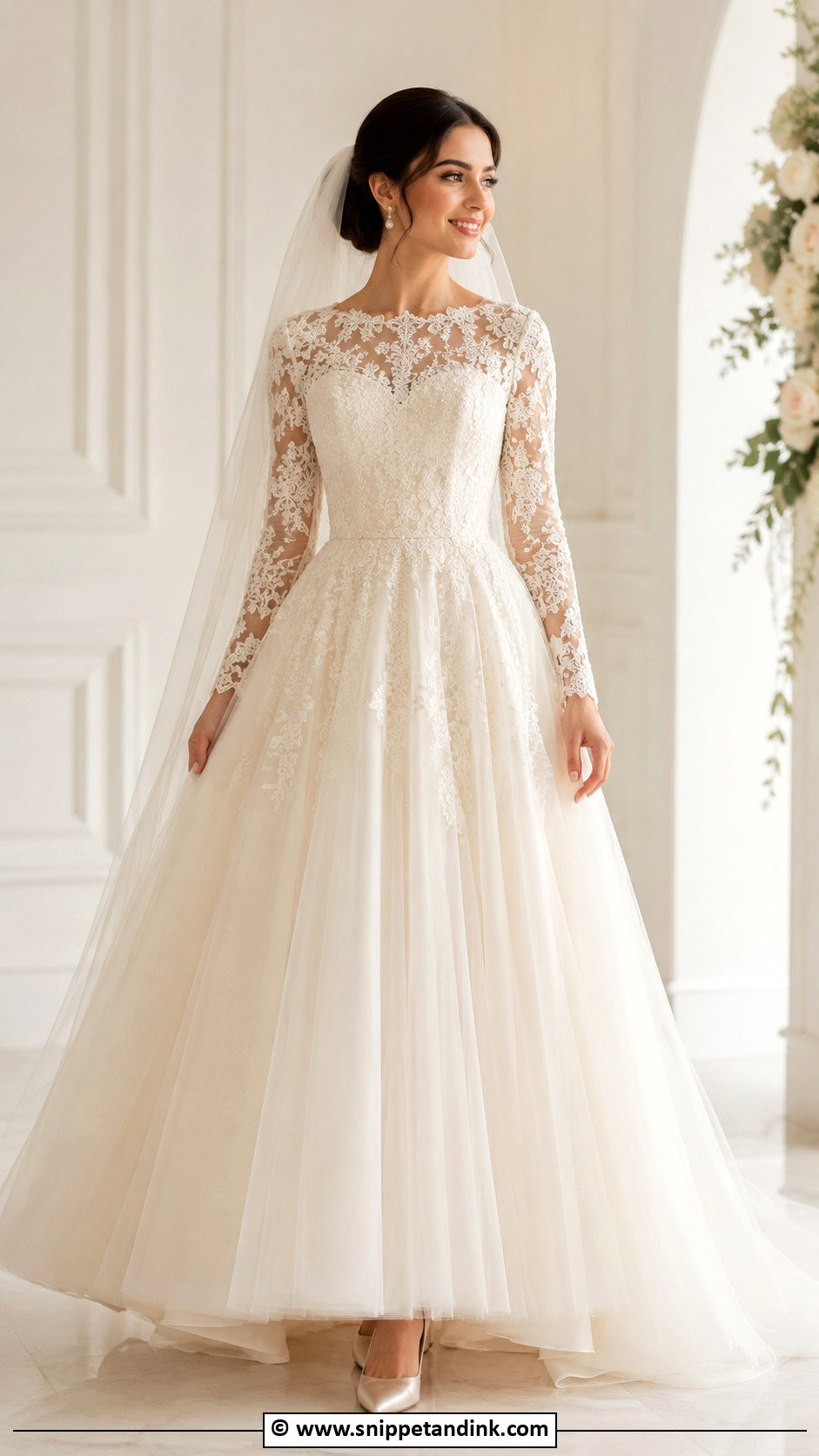
Easy to wear, easy to move in: the A-line is fitted at the bodice and widens gently from the waist, which suits most body types. Lace sleeves, a beaded bodice or floral embroidery bring in the Arabic bridal feel. Tulle softens it; satin sharpens it. A long veil, delicate jewelry and classic heels are enough. It is the shape I’d send to a bride who has a long reception ahead and does not want a second dress.
6. Arabic Princess Wedding Dress
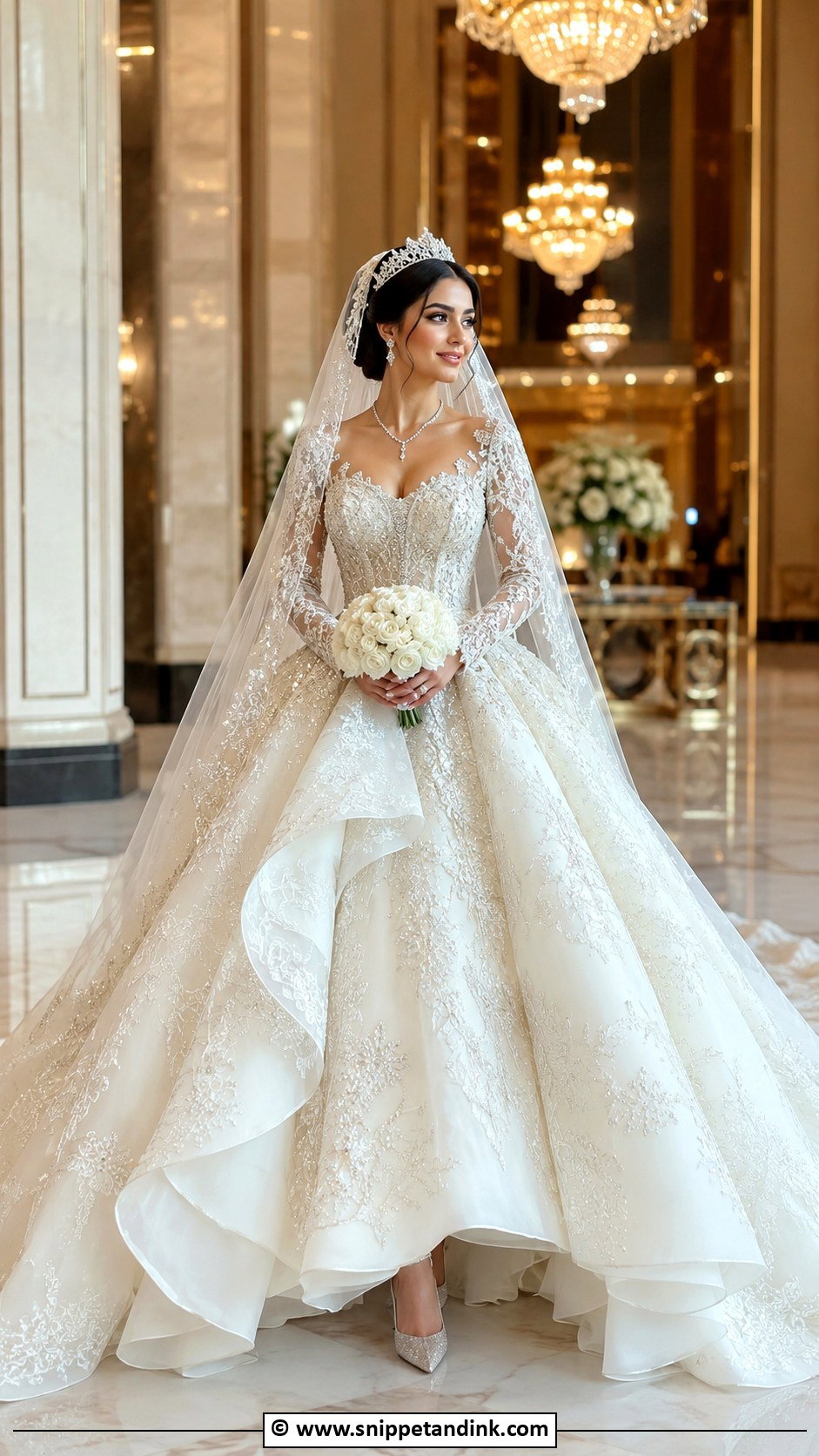
Princess gowns depend on two things: a waist that is clearly defined and a skirt with real volume underneath. A structured bodice, detailed lace and a trailing veil do the rest. Embroidery, pearls, crystals or metallic thread give it richness, so jewelry can stay light. A tiara sits best on a sleek bun or a neat hijab wrap. I usually build the volume with a separate petticoat rather than heavy skirt layers, because a petticoat can be adjusted at fittings and taken off for the drive. Soft white, ivory or light champagne keeps it classic.
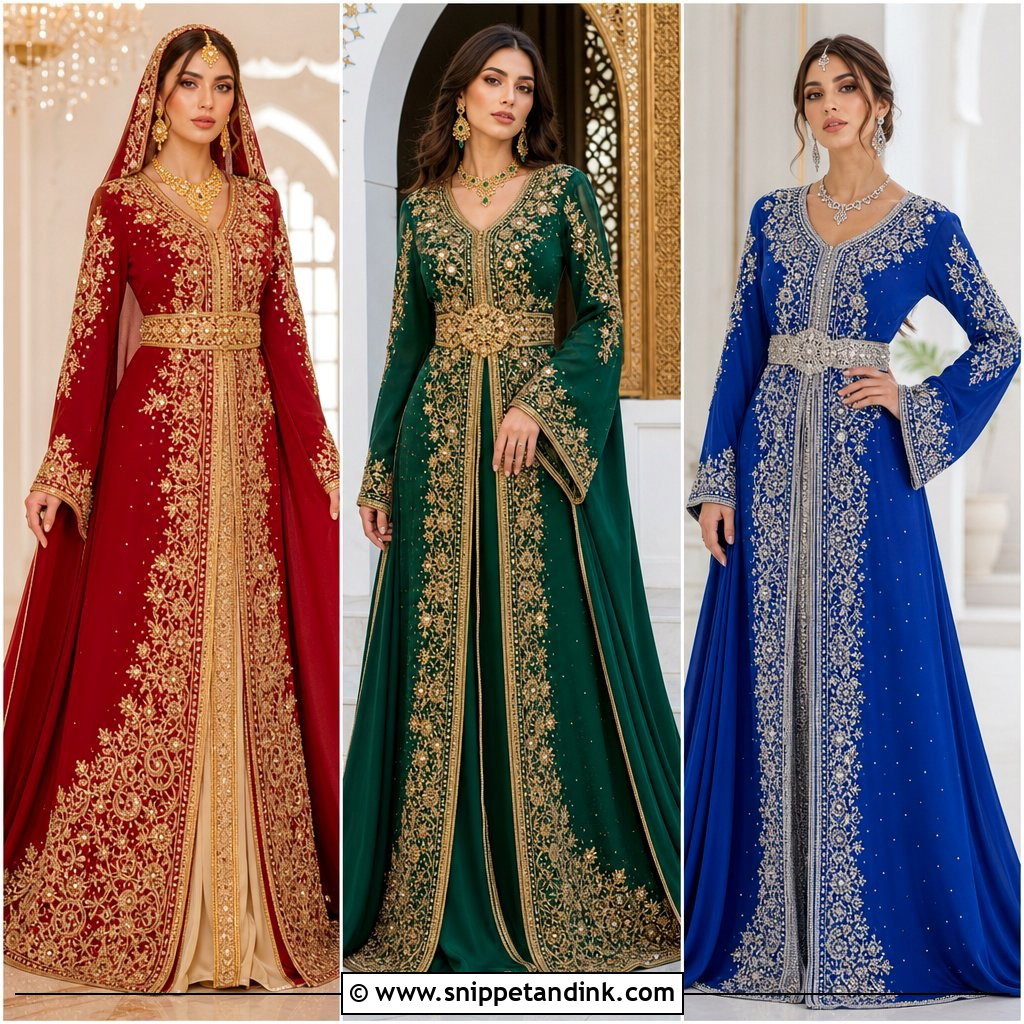
7. Arabic Kaftan Wedding Dress
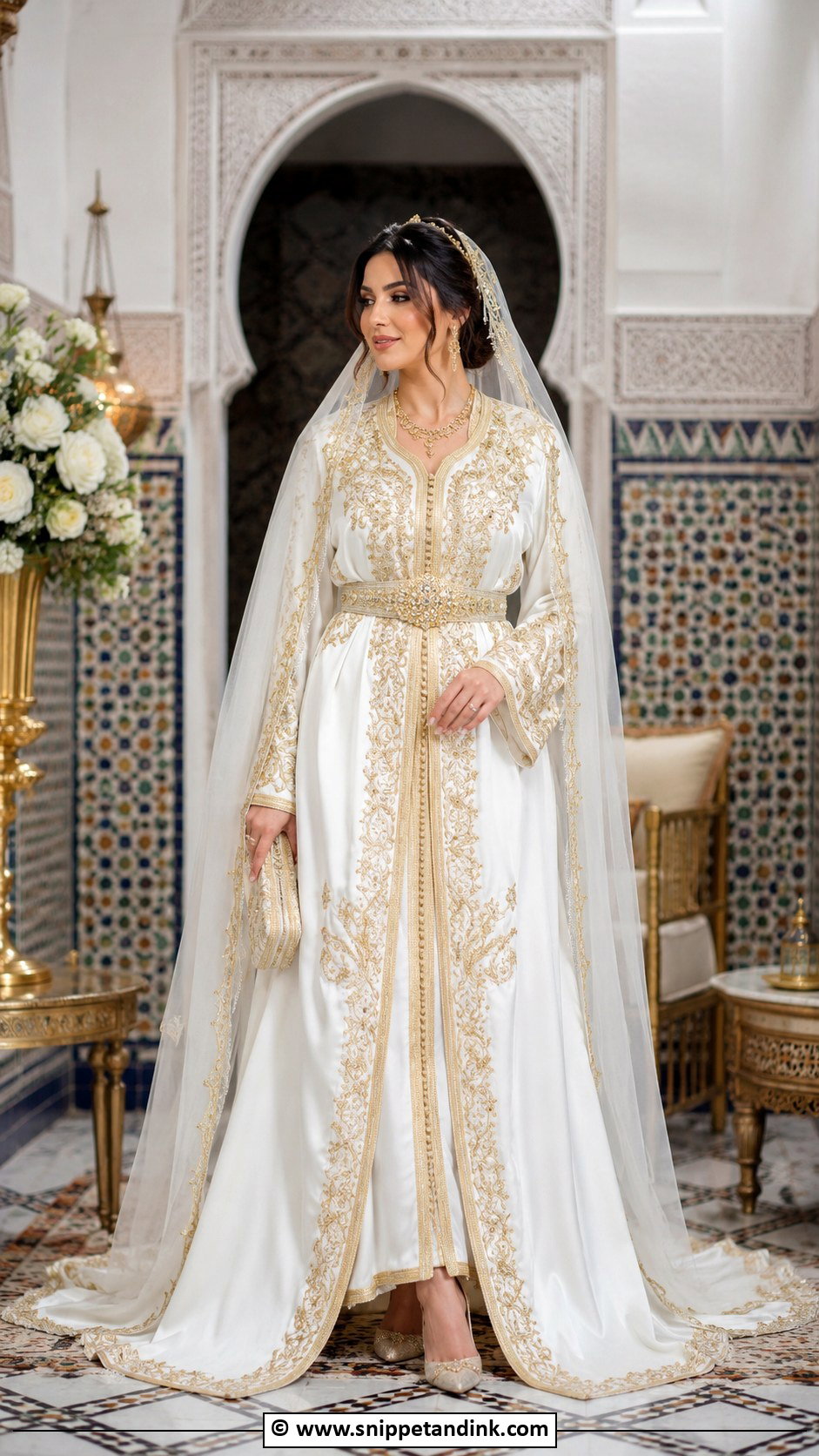
Kaftans let a bride wear heritage without a corset. The cut is relaxed and flowing, and the decoration does the work: embroidery, beading, gold trim, often a structured belt. Pick the fabric by season, silk or satin for warm months, brocade or velvet for winter, since velvet in a hot hall is uncomfortable within the hour. A jeweled belt defines the waist without stiffness. Pointed heels, a matching veil or scarf and refined gold jewelry complete it, for a bride who wants a traditional influence instead of a Western gown.
8. Moroccan Arabic Wedding Dress
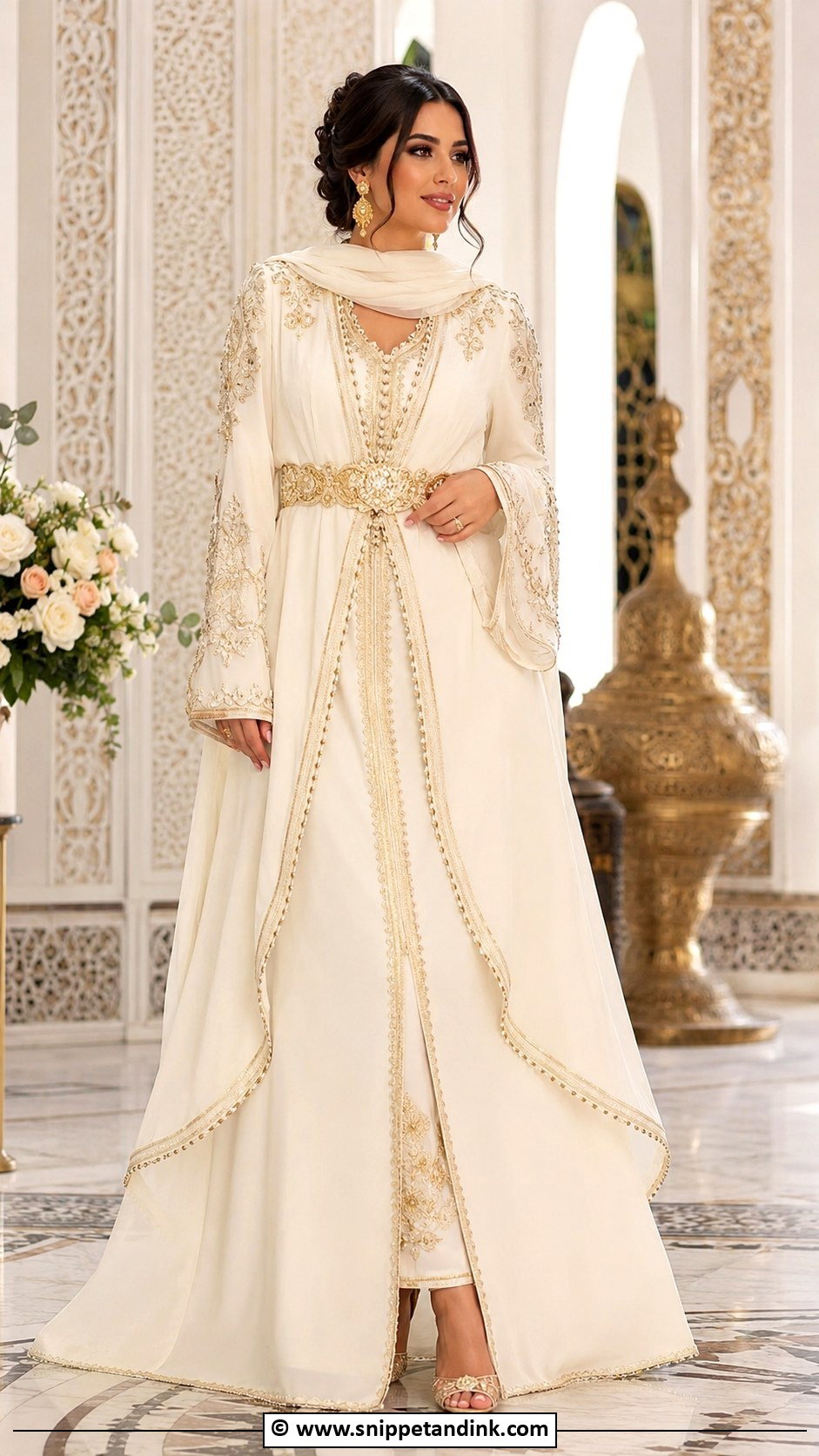
Moroccan bridal dressing is ceremonial, and the takchita is its centerpiece: layered fabric, ornate embroidery and a decorative belt. White, ivory, gold, green or blush can all read bridal depending on the event, and many brides wear several in one night. Style it with polished hair or a coordinated head covering, statement earrings and elegant heels. Because the craftsmanship is dense, I keep the bouquet small or skip it. The layers are warm, so plan short breaks between changes if you are wearing more than one.
9. Gulf Arabic Wedding Dress
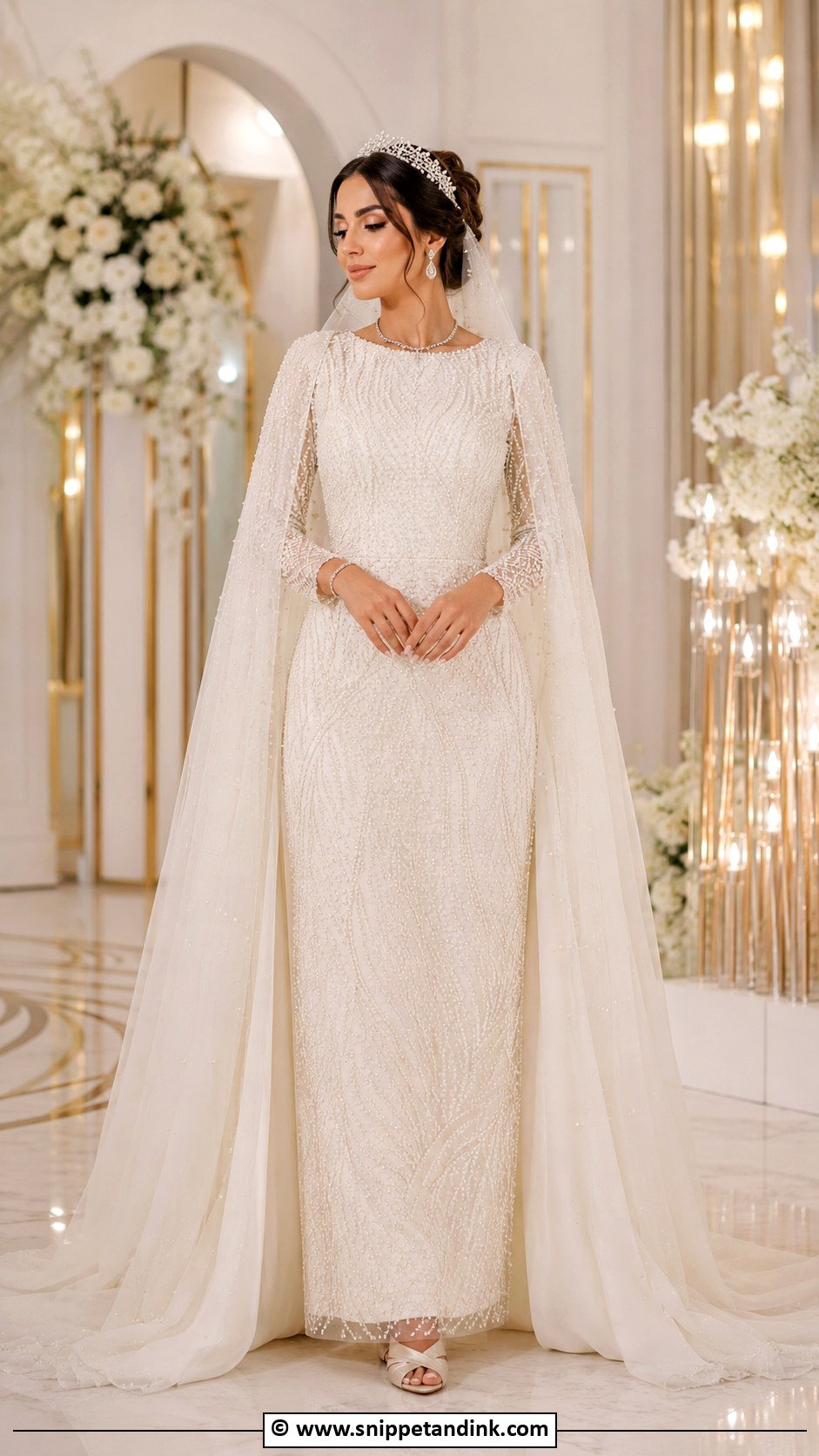
Gulf bridal style is polished and detailed: pearl embroidery, crystal beadwork, dramatic sleeves, sometimes a cape-style veil. The silhouette varies, ball gown, A-line or fitted, but the finish stays rich. White, ivory, silver and champagne show embellishment best. Pair the dress with a sparkling headpiece, soft bridal makeup and a long veil. Large indoor halls with bright lighting suit it, and in women-only receptions the gown is seen up close all night, so I pay extra attention to how the beading is finished on the inside seams and cuffs.
10. Lebanese Arabic Wedding Dress
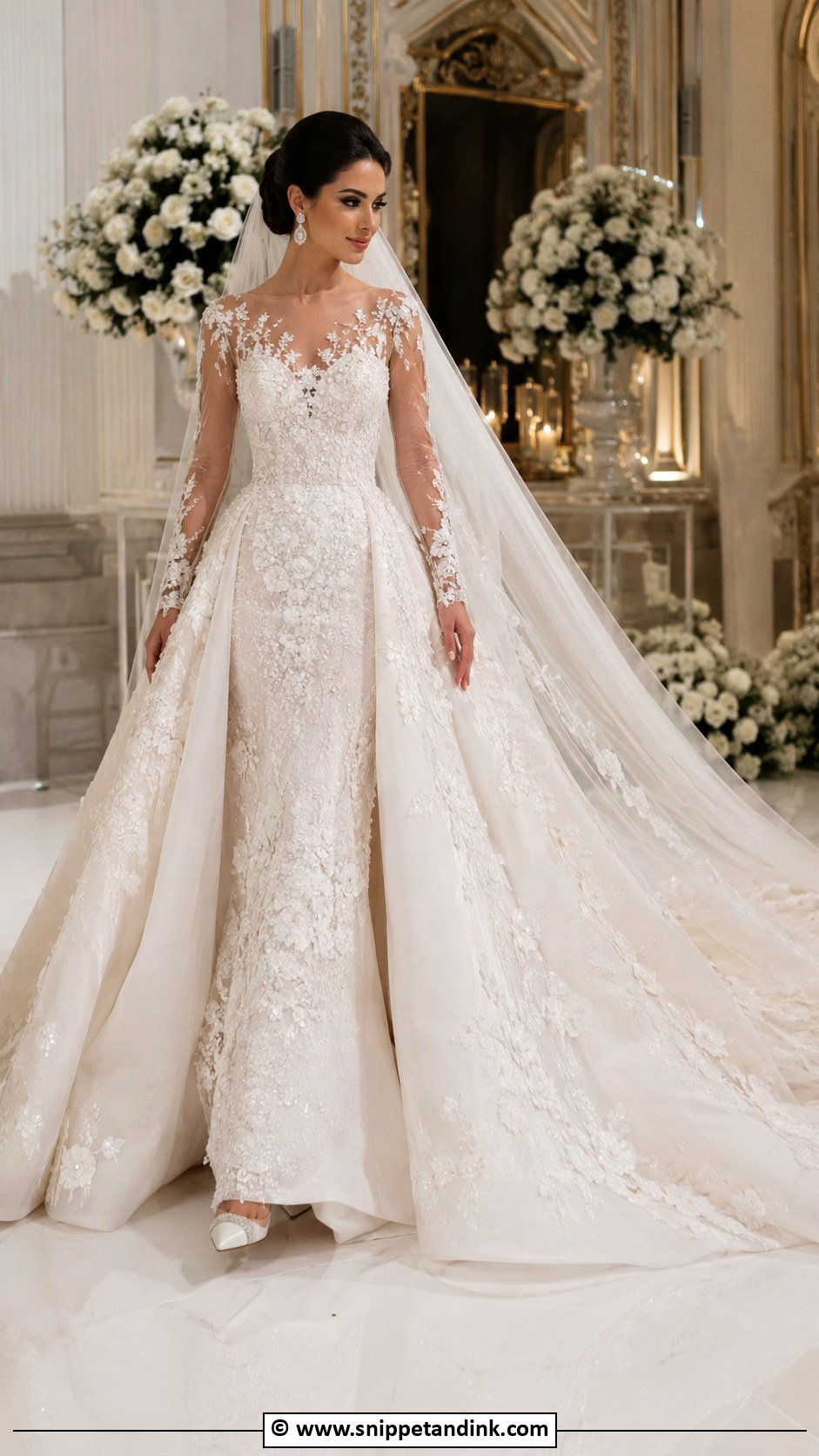
Lebanese gowns are about construction: sheer lace sleeves, a fitted bodice, a sculpted skirt, a long train. Lebanese bridal fashion is known for elegant construction and embellishment that is bold without tipping into clutter. A modern version uses floral appliqué, pearl accents and a soft sweetheart or high illusion neckline. Add pointed heels, a cathedral veil and clean jewelry. Illusion mesh is the part to test against your skin in daylight; the wrong shade of mesh shows as a grey band in photographs.
11. Egyptian Arabic Wedding Dress
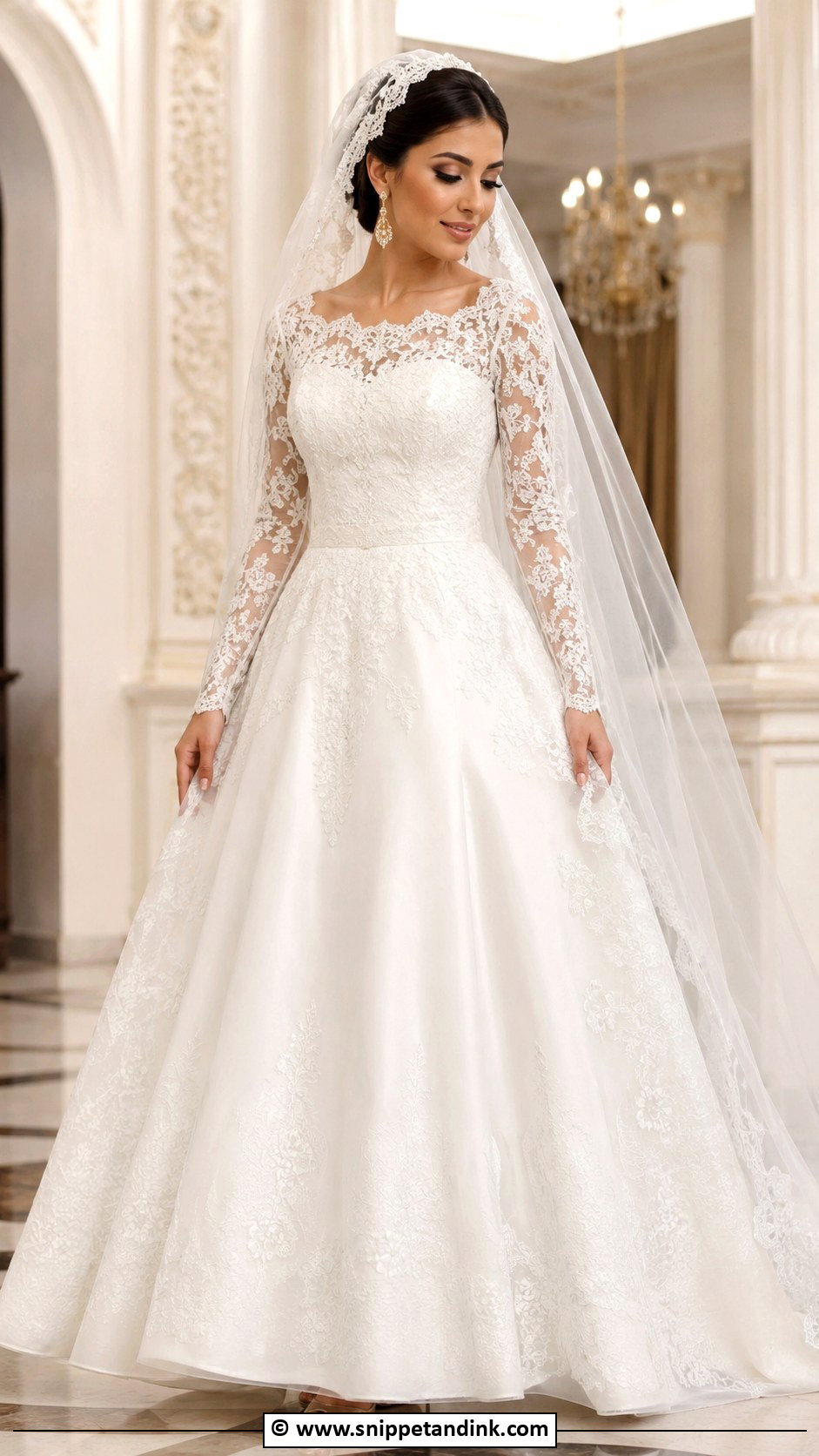
Egyptian bridal looks often lean classic and feminine: fitted gowns, full skirts or A-lines with lace and beadwork. Restraint is what makes them work. A satin gown with embroidered sleeves or a lace bodice suits a long veil and gold-toned accessories. Tulle layers and delicate sparkle soften it; structured fabric and a dramatic train make it formal. It sits comfortably in a ballroom or a family celebration, and it is a good fit if you want tradition and current bridal fashion in equal parts.
12. Saudi Arabic Wedding Dress
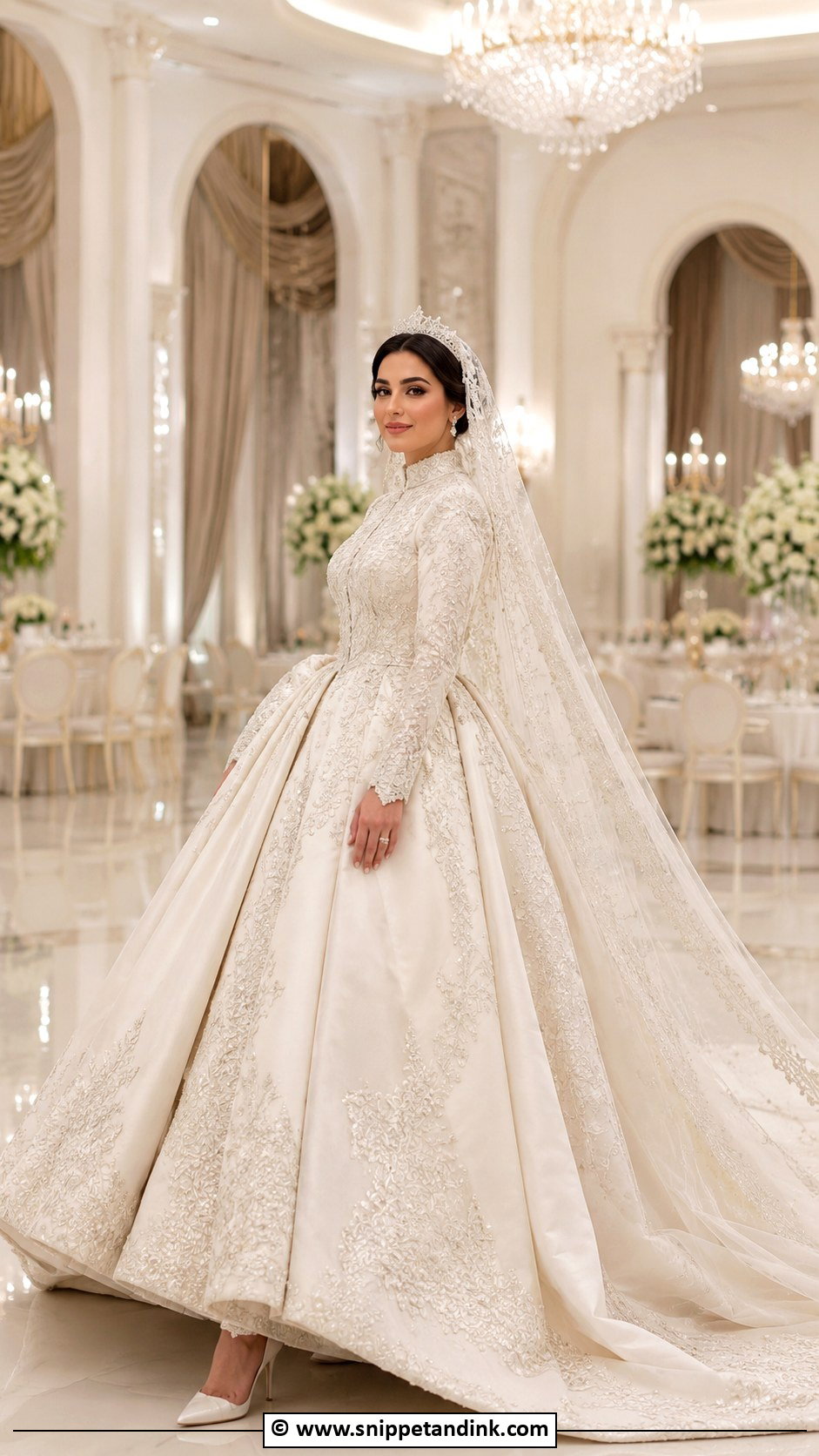
Saudi bridal gowns tend toward full skirts, long trains, high necklines and embroidered sleeves. Ivory satin, pearl lace, crystal tulle and silver embroidery are the usual materials. A long veil, tiara and refined jewelry complete it, and with heavy embellishment I keep shoes and bouquet simple. The thing I check is the train length against the hall: a train that looks right in a bridal salon can be too short for a deep stage entrance, or too long for a crowded floor.
13. Emirati Arabic Wedding Dress
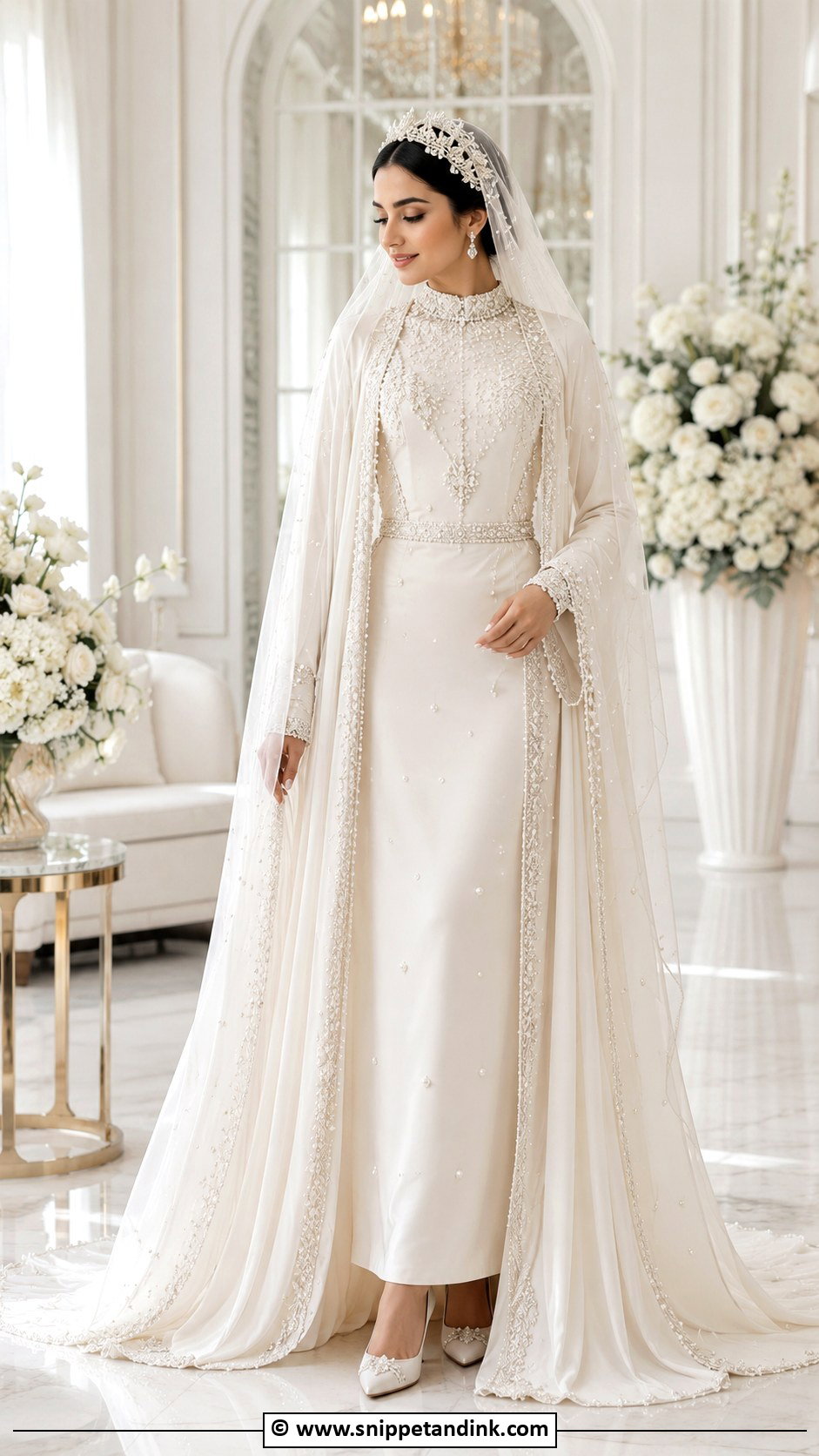
Flowing shapes, pearls, a little shimmer and long sleeves are the usual Emirati notes. A cape, embroidered overlay or soft train adds polish. White and ivory are the classics; champagne or silver undertones warm the dress. A coordinated veil, sparkling headpiece and elegant heels finish it. Reception lighting in large halls is very bright, so I lean toward pearls and fine shimmer over large crystals, which can flare into white spots on camera.
14. Arabic Lace Wedding Dress
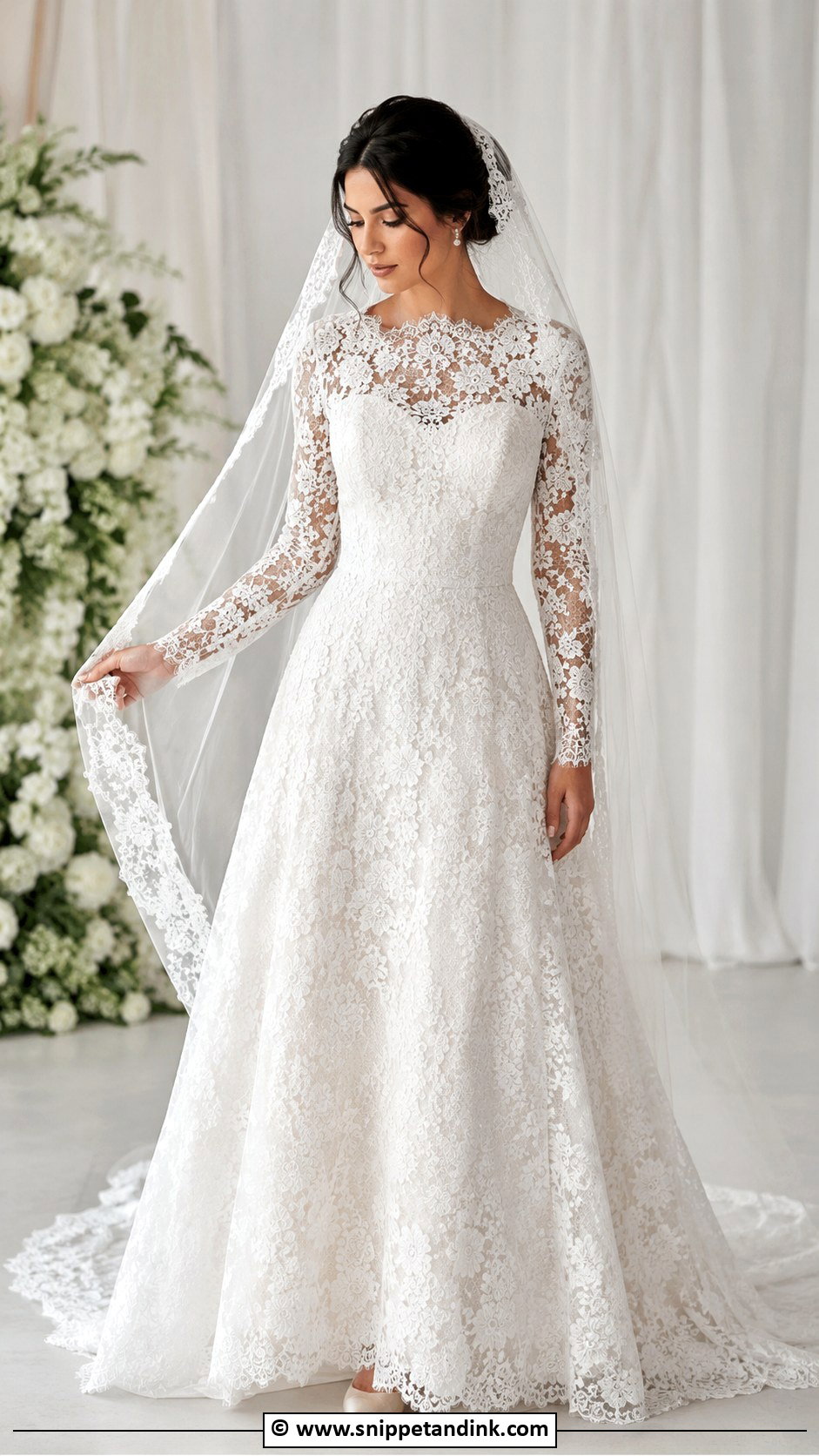
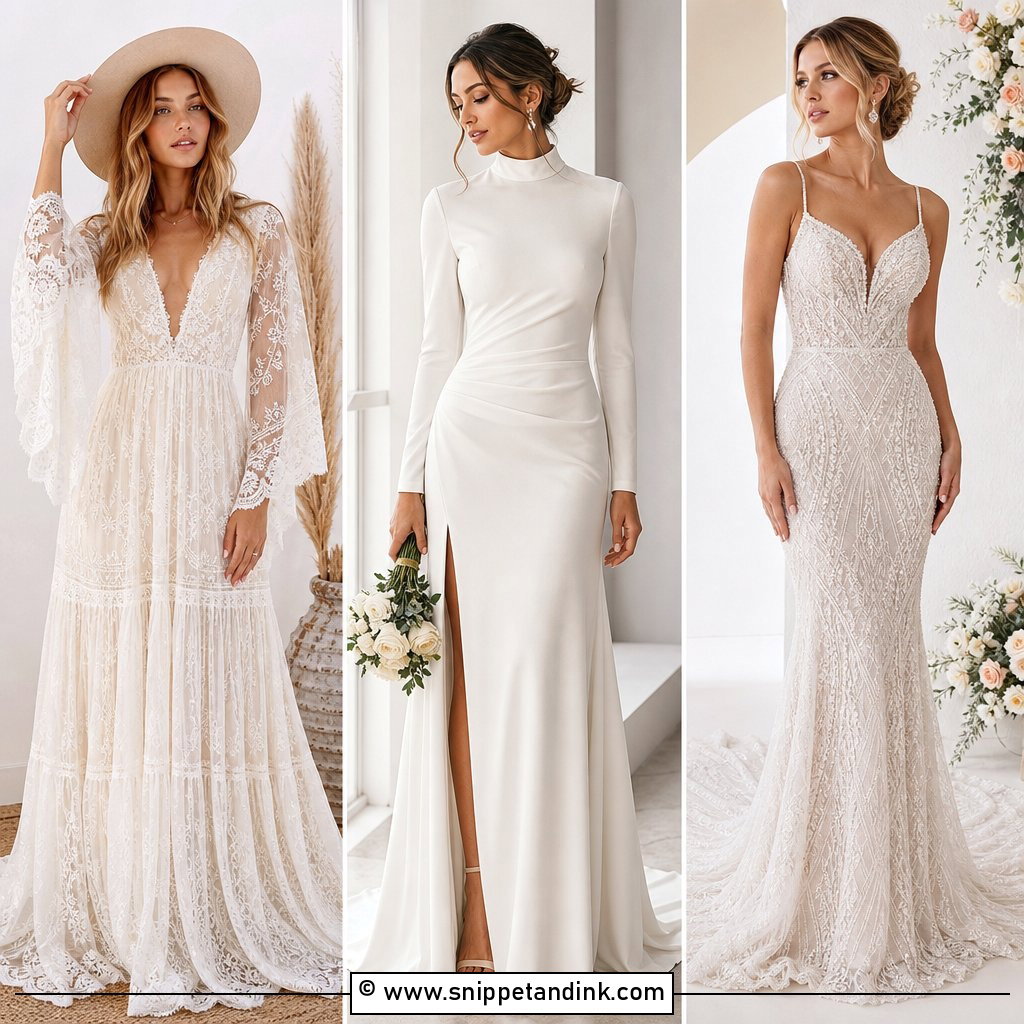
Lace can go anywhere on the gown: bodice, sleeves, skirt, veil or all over. For a modest finish, line it and choose long sleeves and a covered neck. For something lighter, illusion sleeves with floral appliqué give texture without weight. A-line and ball shapes give lace room to show. I check where the lace motifs fall at the seams, because a good maker matches or appliqués across them while a rushed one just cuts through the flowers. Pearl earrings, satin heels and a simple veil edge are enough.


15. Arabic Satin Wedding Dress
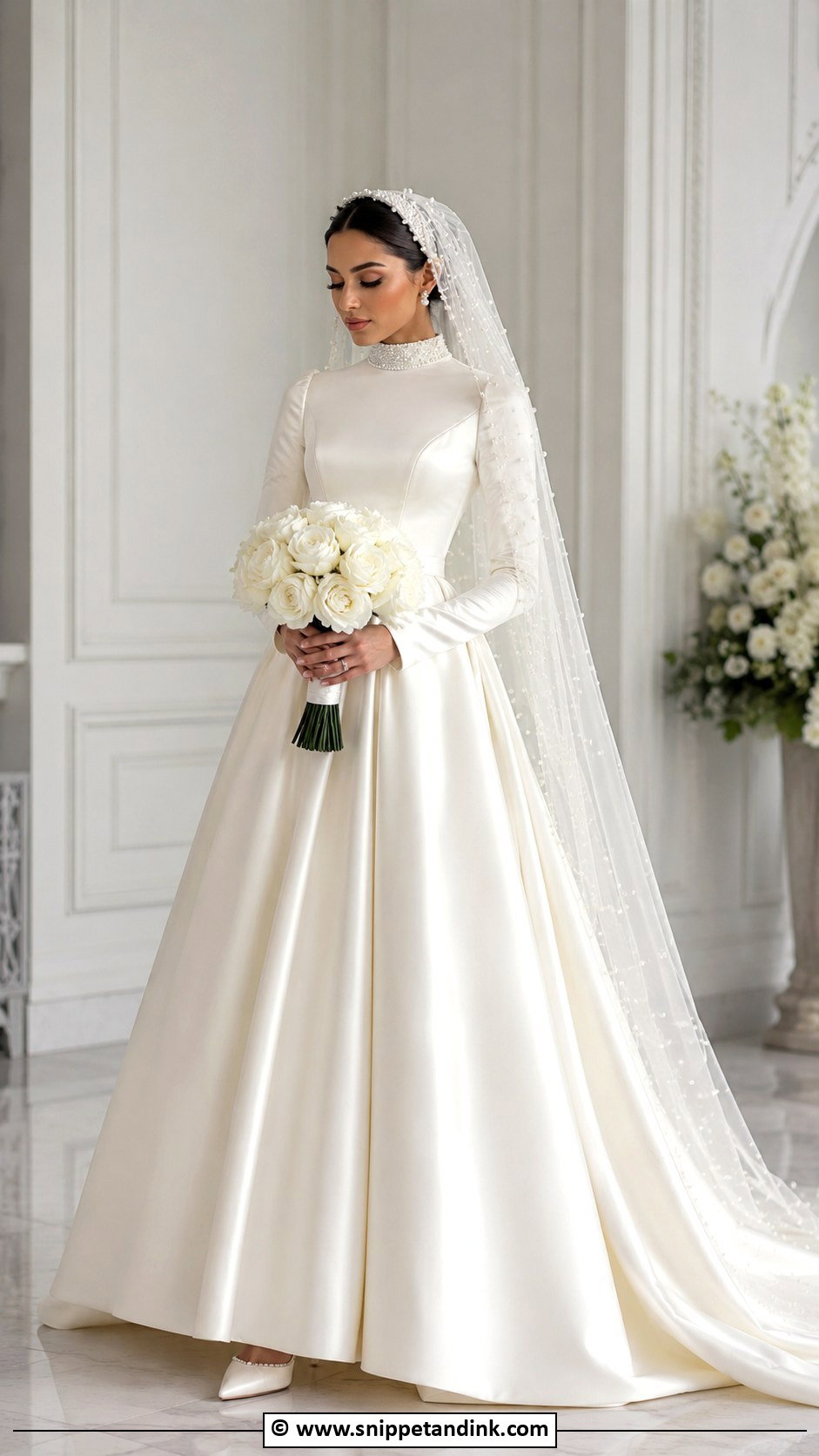
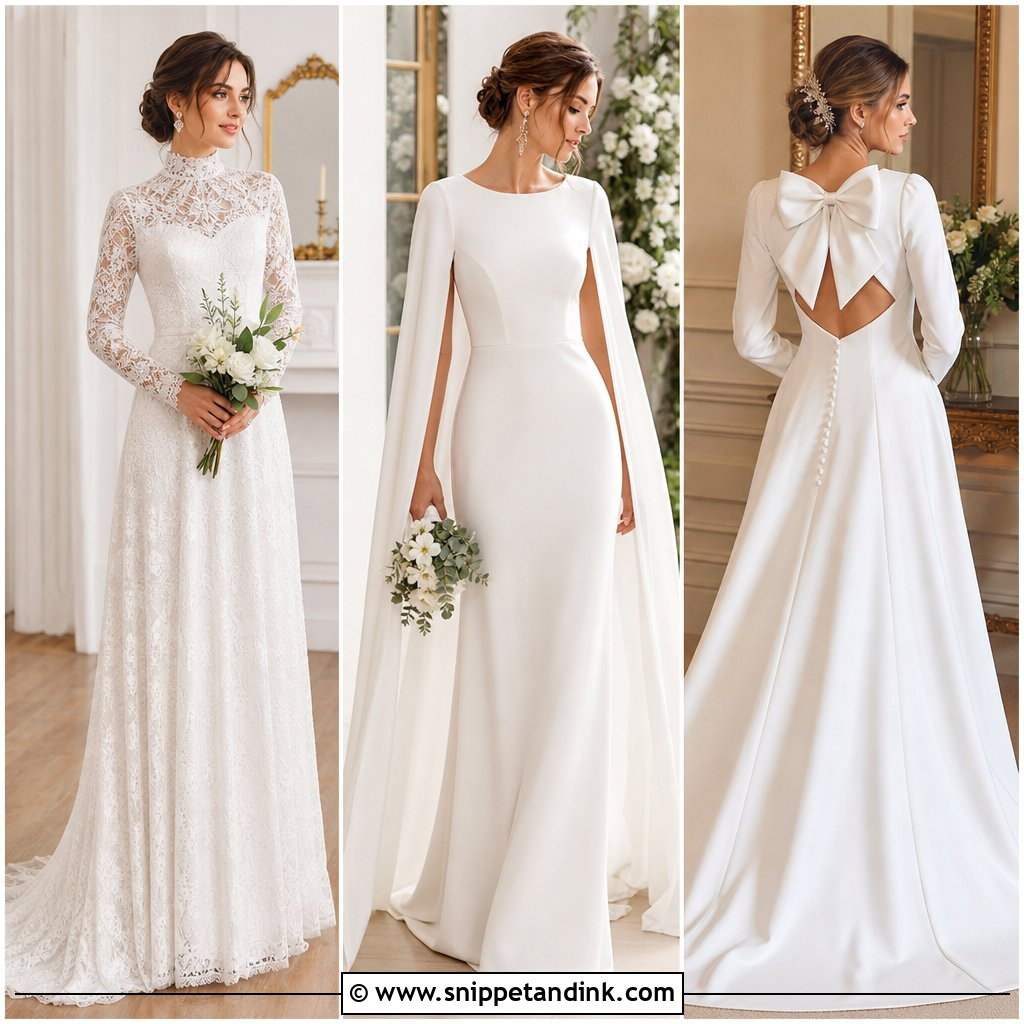
Satin is the fabric for less beading and more presence. A long-sleeve satin gown with a high neckline feels modest and modern; a ball or A-line skirt gives it movement, and a fitted cut makes it sleek. Satin shows every pull at a seam, so the fit through the back must be exact. Add a pearl veil, pointed heels and a structured bouquet. For more detail, choose embroidered cuffs, a beaded belt or a dramatic train.
16. Arabic Tulle Wedding Dress
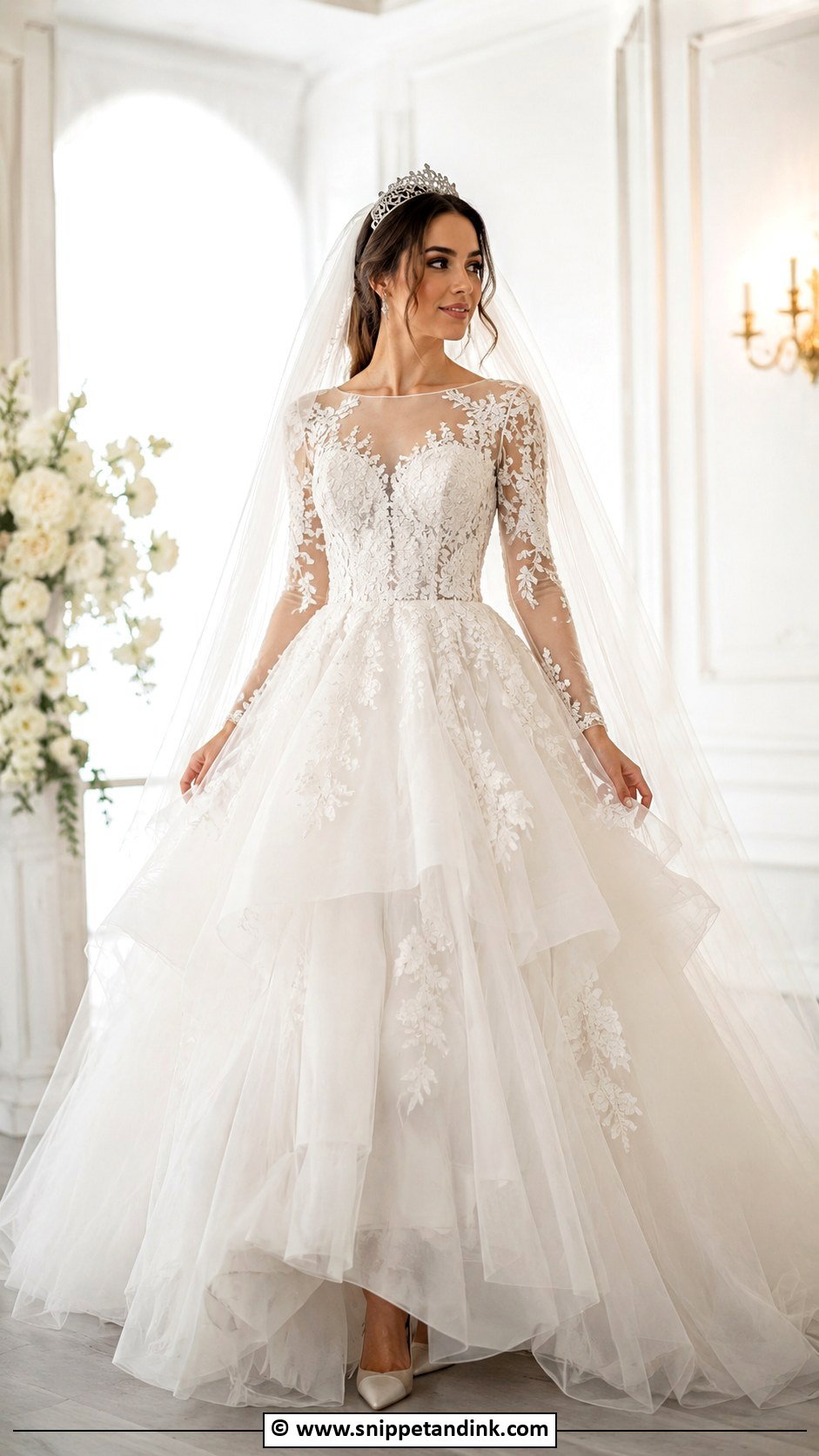
Tulle gives volume without weight. A layered tulle skirt, a lace bodice and long sleeves make a soft modest gown, and crystals or floral appliqué add glamour. Because tulle is already textured, keep accessories refined: a delicate tiara, soft veil and simple heels. I warn brides that fine tulle snags easily on bracelets, shoe buckles and rough flooring, so check your jewelry clasps and have a bridesmaid lift the hem on outdoor steps.
17. Arabic Beaded Wedding Dress
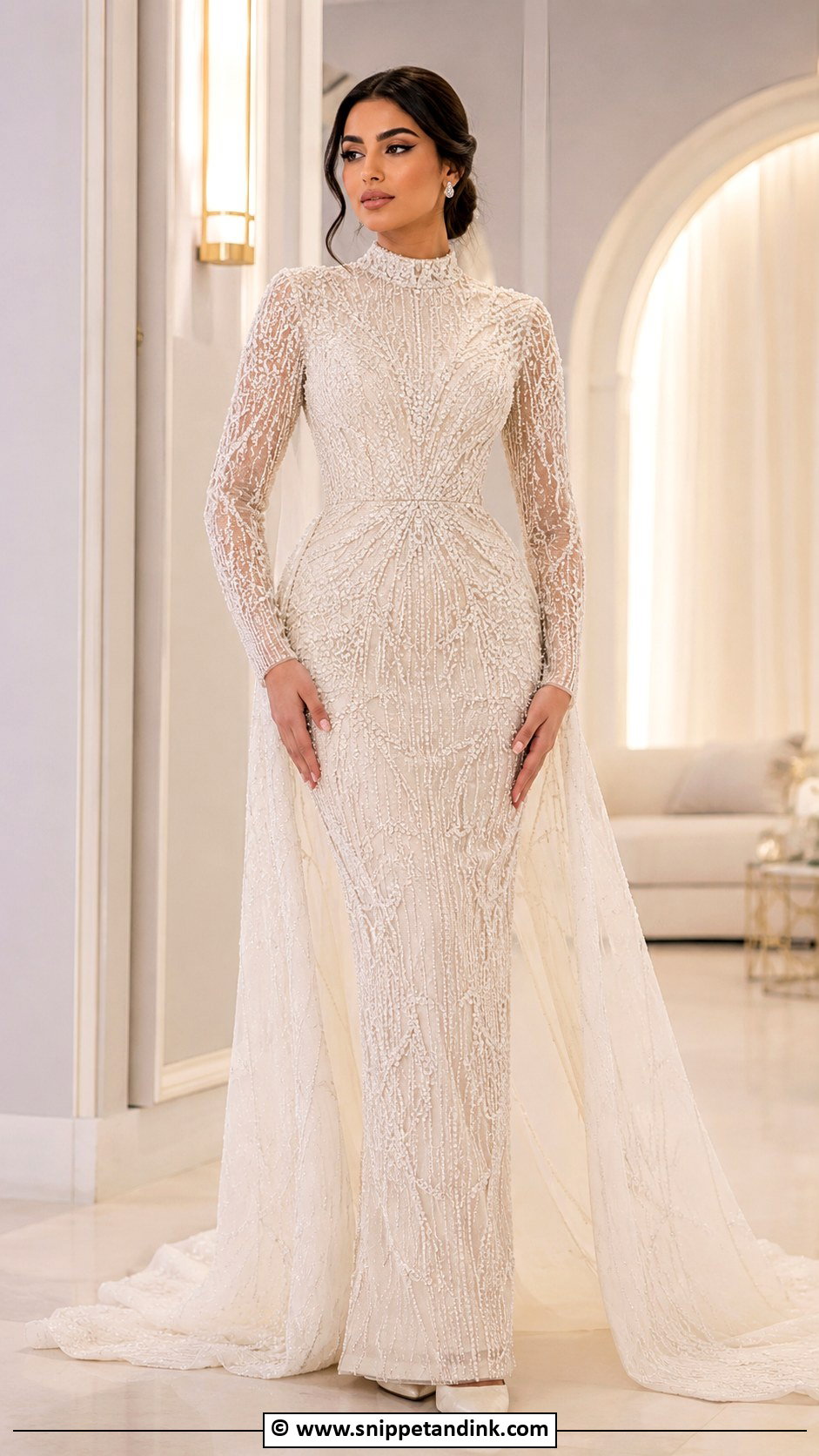
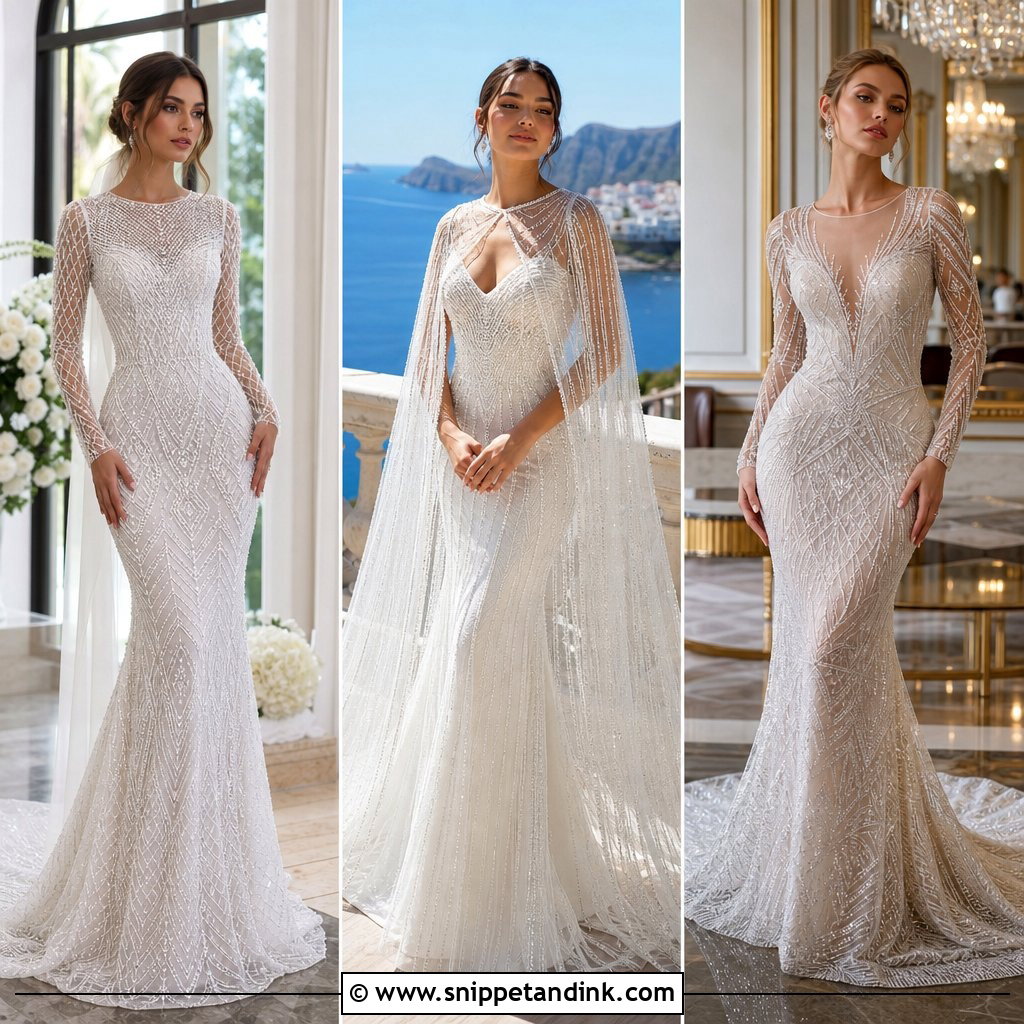
Placement decides whether beading flatters or fights you. It can be pearl vines, crystal patterns, metallic embroidery or shimmer across the whole dress. Vertical lines of beading lengthen the body; dense work on sleeves and bodice draws the eye upward toward the face. Minimal jewelry, a clean veil, closed-toe heels and a simple bouquet balance it. When I fit a beaded gown, I check for loose threads and missing beads at the hem, since that is where beading wears first during a night of walking.
18. Arabic Pearl Wedding Dress
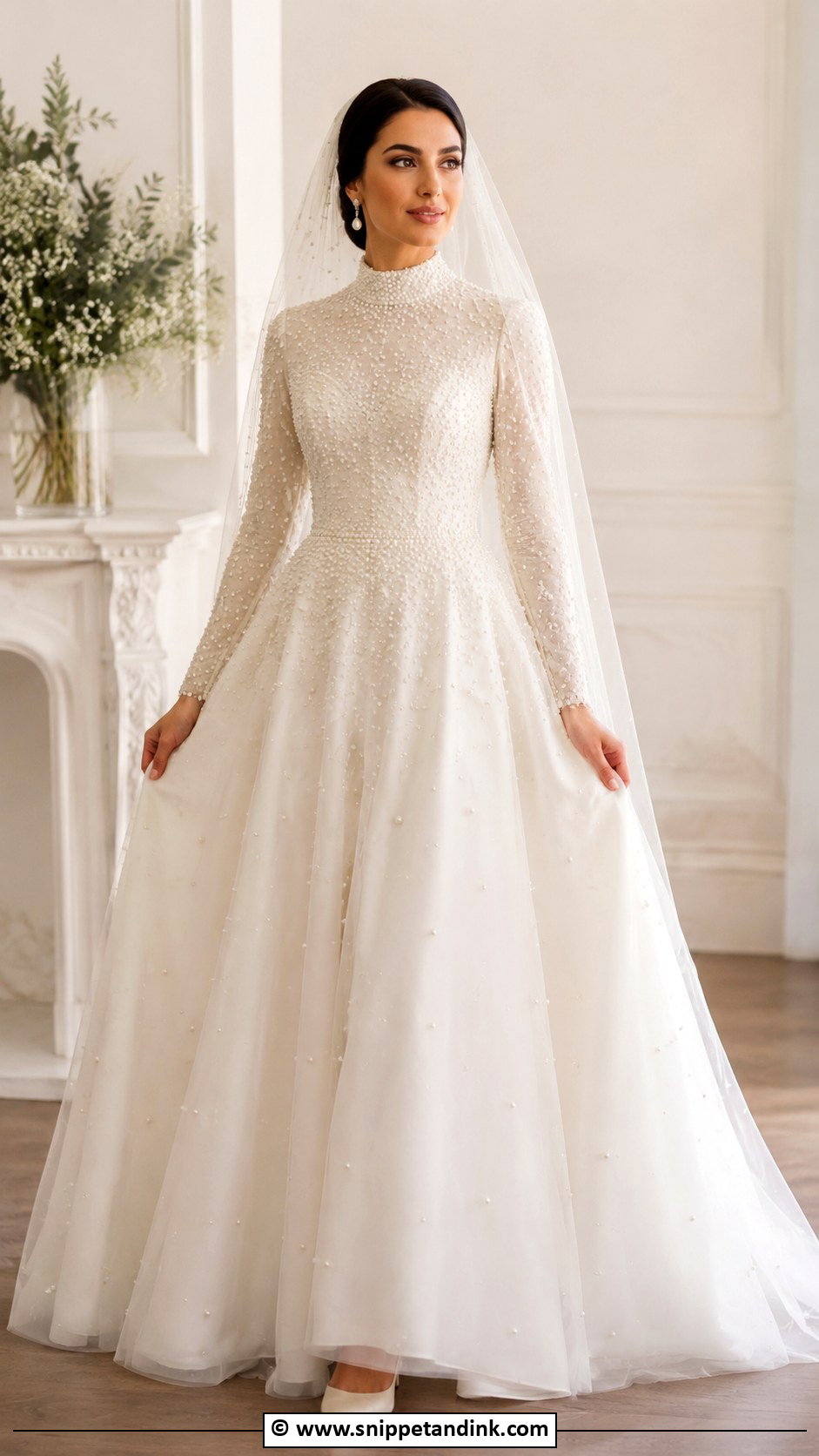
Pearls add texture without harsh shine, which is why I reach for them on sleeves, bodices, veils and capes. A pearl-embroidered gown in ivory or soft white suits satin heels and pearl drop earrings. A high neck and long sleeves make the pearl work feel even more refined. For a modern take, scatter pearls over sheer tulle or a clean crepe base. One practical point: glass and plastic pearls on a cheaper gown can peel at the coating, so ask what they are made of.
19. Arabic Cape Wedding Dress
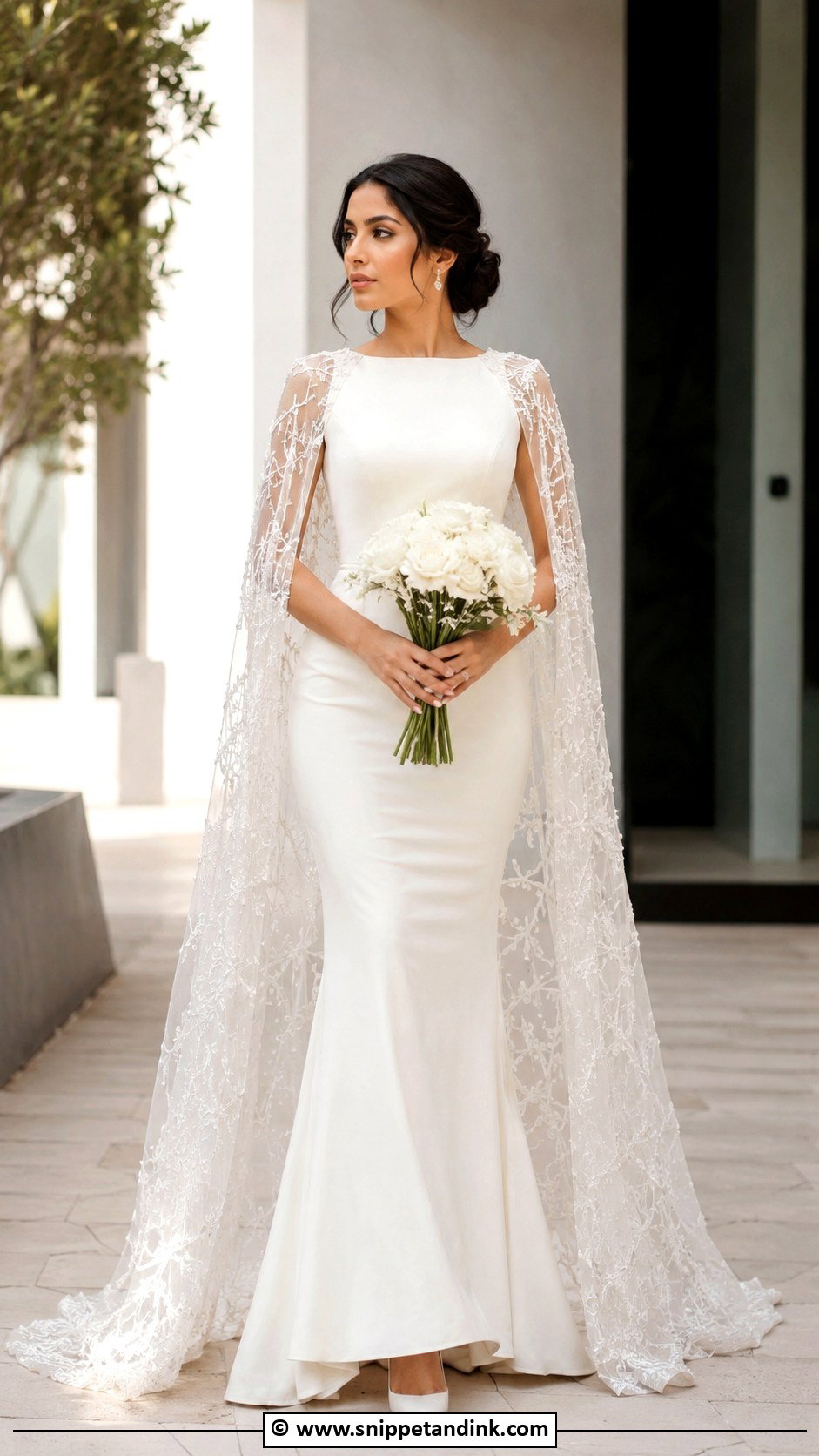
A cape can replace a veil or a train, and it moves more than either. It can be sheer, lace, satin or embroidered. Cape sleeves or a cape overlay give coverage while feeling modern. A fitted dress underneath sets up a contrast; an A-line keeps the shape soft. Elegant heels, a smooth hairstyle or neat hijab and small earrings are enough. Walk in it outdoors before the day if you can, since a long sheer cape catches wind like a sail.

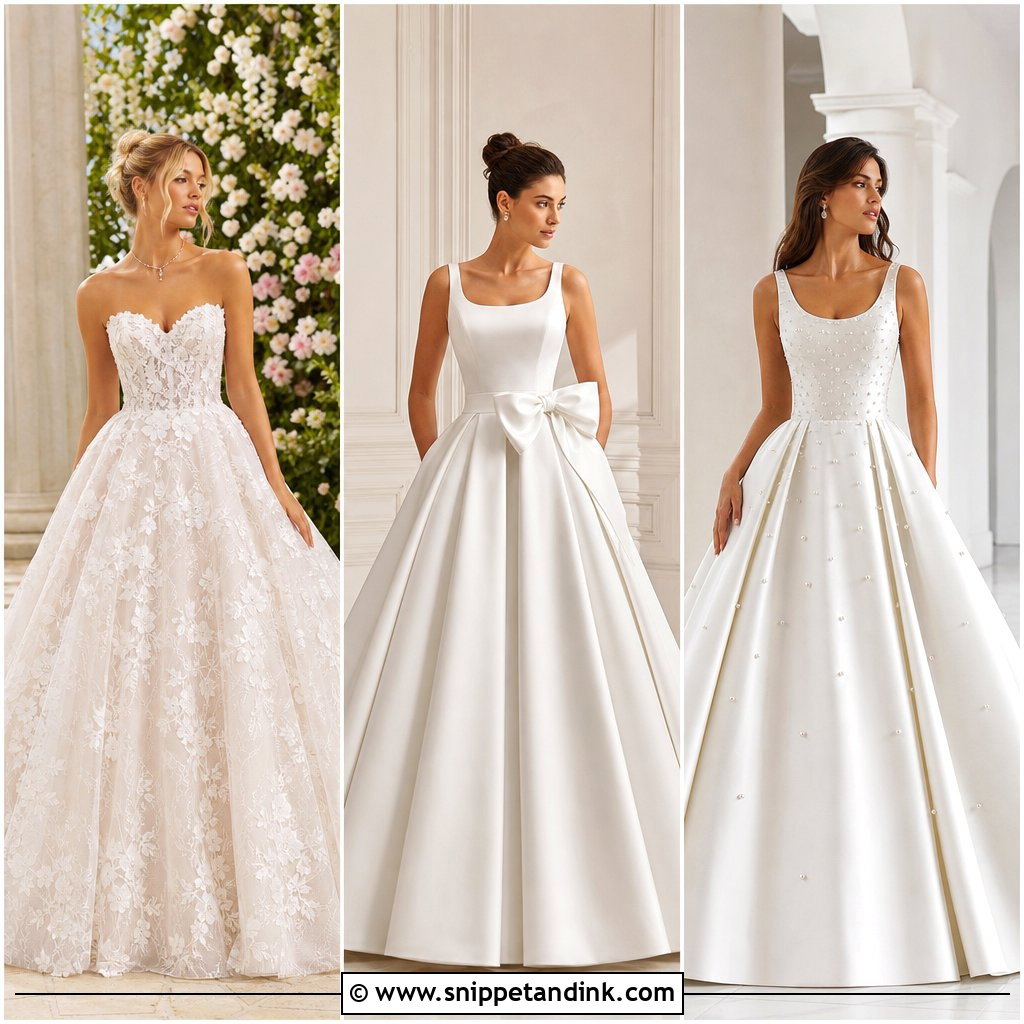

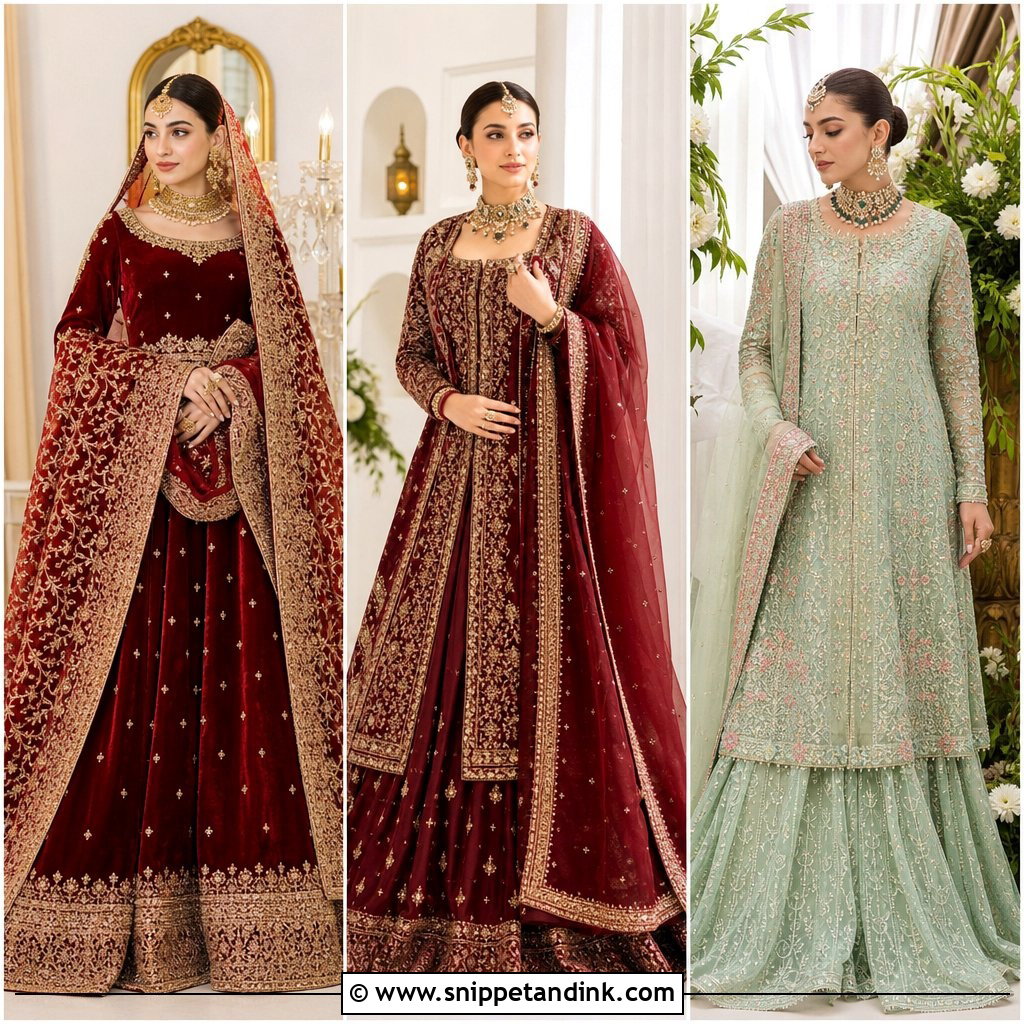
20. Arabic High Neck Wedding Dress
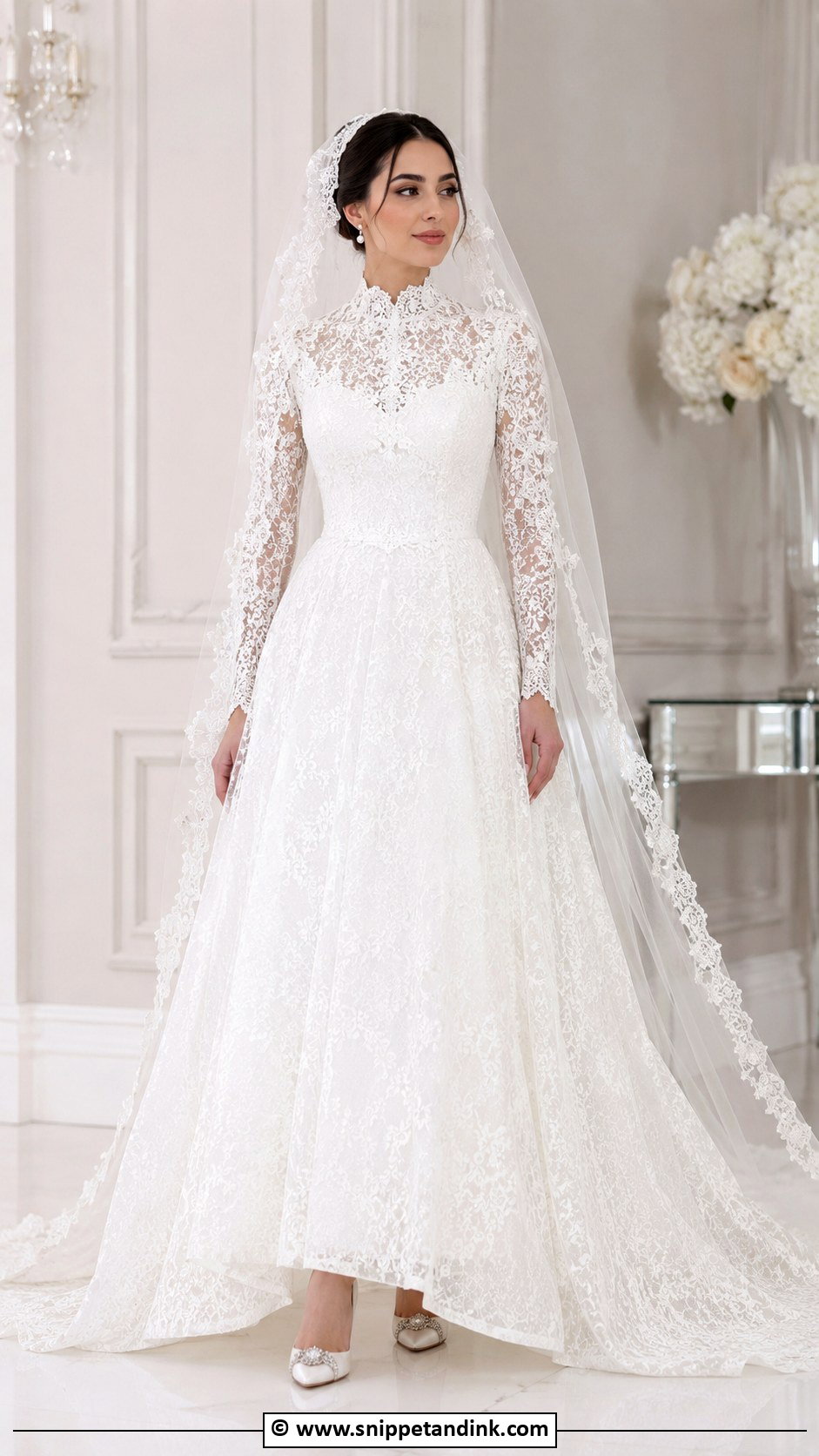
A high neck creates a clean vertical line with long sleeves and a fitted bodice. It can be plain satin, sheer lace, pearl-covered tulle or embroidered mesh. Skip the necklace and choose earrings; a necklace over a high collar crowds the face. A long veil, soft makeup and classic heels complete it. I always check comfort when the bride sits and looks down, because a stiff high collar can press into the throat during the meal.
21. Arabic Off White Wedding Dress
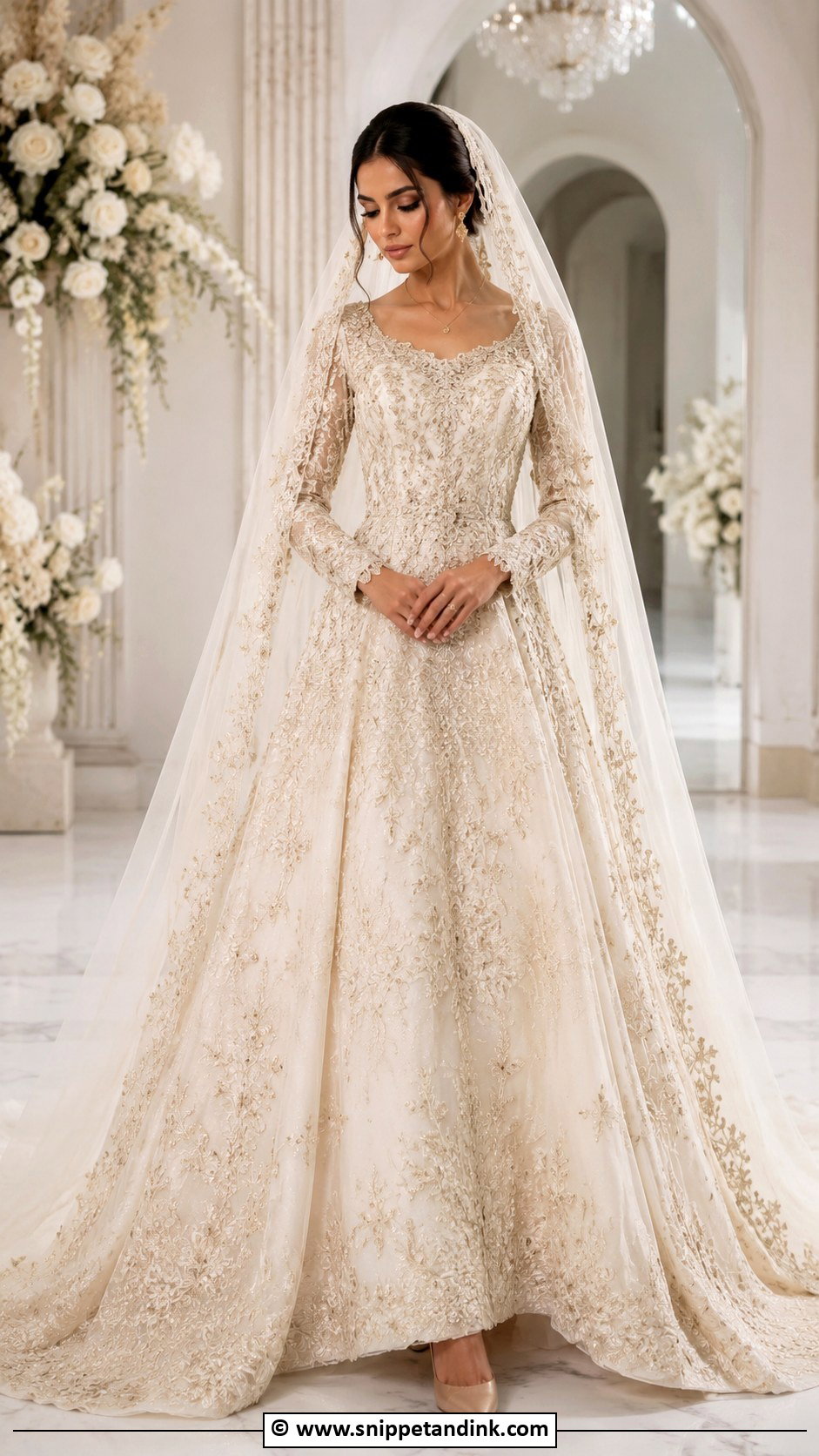
Off white, ivory and cream suit more skin tones than bright white, and they make embroidery look warmer. This color sits well with gold detail, pearl accents, lace sleeves and satin skirts. Champagne heels, a matching veil and delicate jewelry complete the outfit. If your décor runs to neutrals, florals or gold, the dress settles into the room naturally. Compare swatches of the dress, veil and hijab together; three different ivories side by side are the most common mismatch I see.
22. Arabic Gold Embroidery Wedding Dress
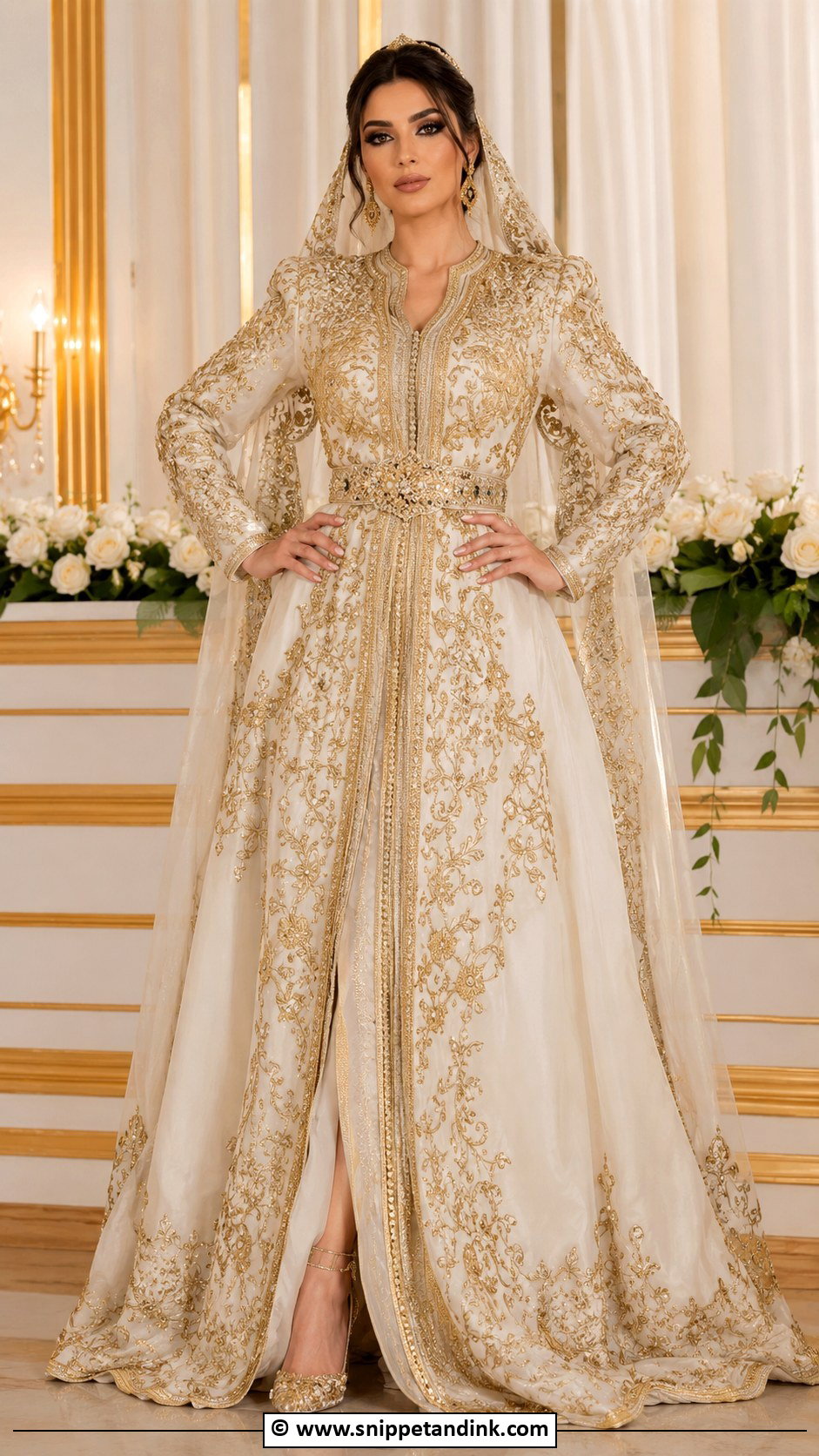
An Arabic gold embroidery wedding dress reads formal and cultural. Gold thread can highlight the neckline, sleeves, waist, hem or the whole gown, and it shows best on ivory, cream, champagne or soft beige. Give it one focal point, an embroidered bodice or a detailed train, rather than spreading it everywhere. A gold belt, matching earrings and elegant heels finish it. Real metal thread is heavier and stiffer than metallic polyester, and it can tarnish, so ask which you are getting.
23. Arabic Modest Wedding Dress
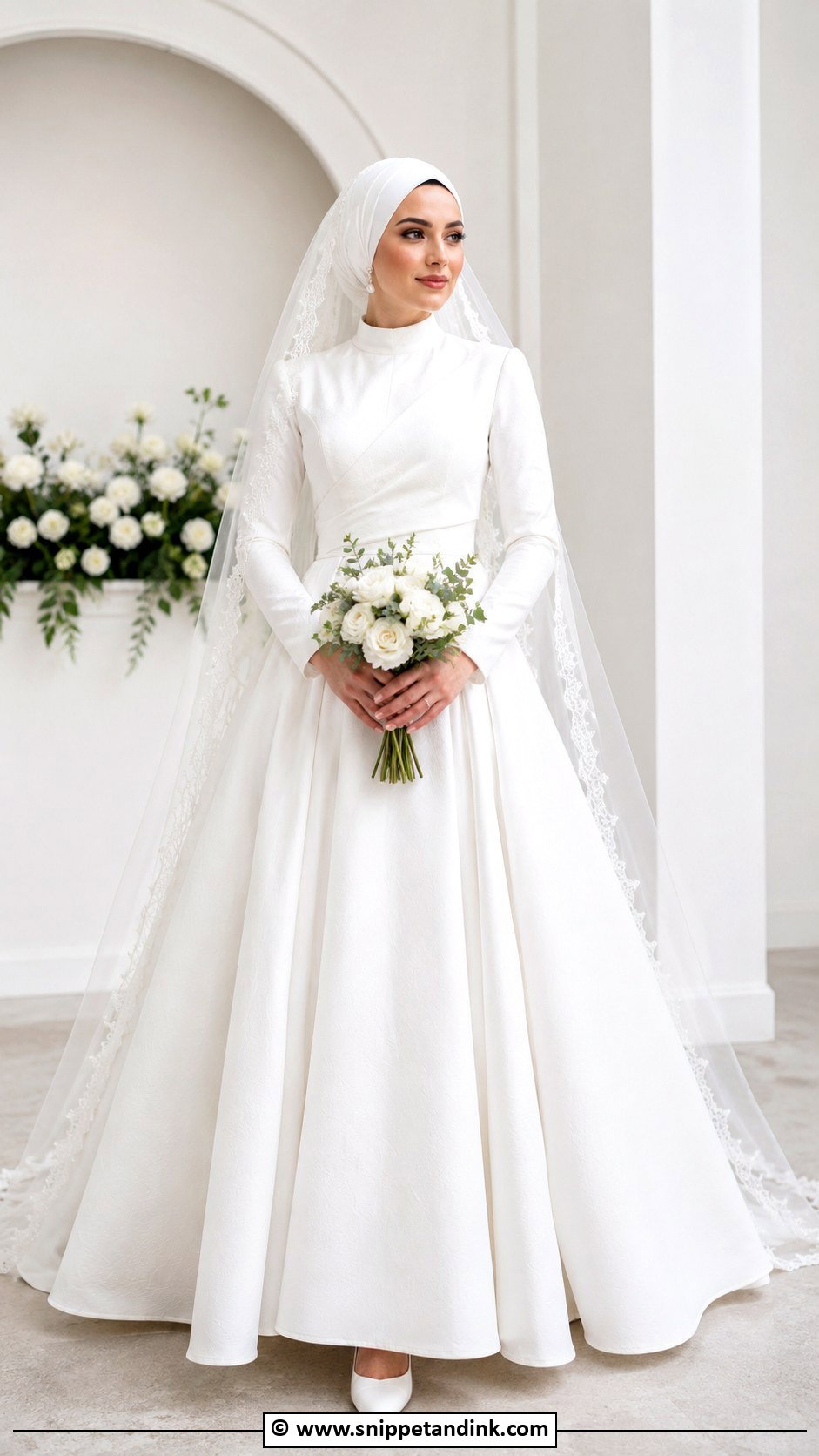
A modest gown should never feel like a compromise. Long sleeves, higher necklines, lined bodices and full skirts are the base, and lace, pearls, embroidery or a dramatic veil carry the glamour. What I fit for is behavior: a neckline that stays put when you sit, sleeves that let you reach, lining that breathes in a warm hall. Closed-toe heels, a coordinated hijab or veil and refined jewelry complete it.
24. Arabic Simple Wedding Dress
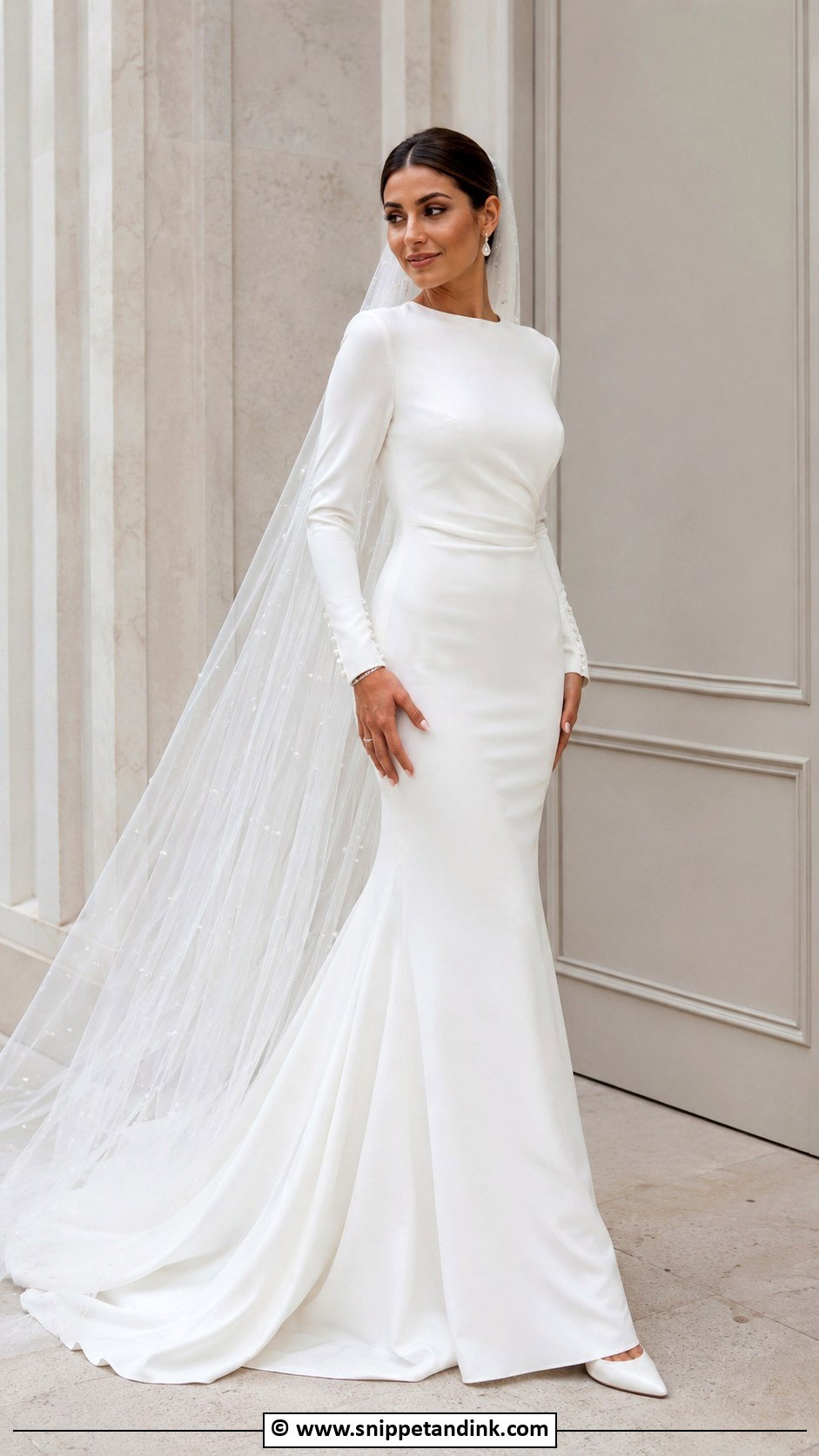
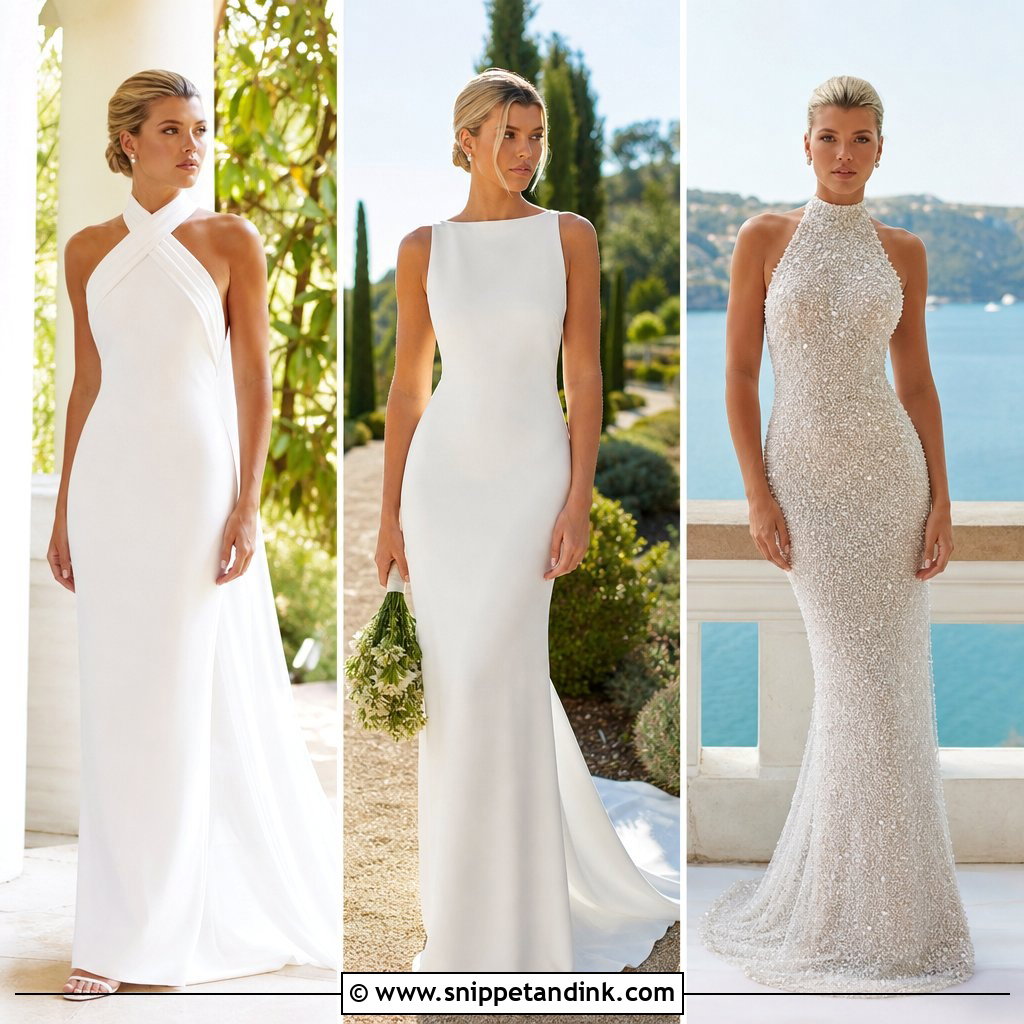
Simple gowns hide nothing, so fabric and tailoring are the whole design. Satin, crepe and mikado hold shape best. A long-sleeve A-line, a high-neck crepe dress or a minimal satin ball gown can look striking with the right accessories. Add a pearl veil, small earrings and sleek heels. If you want one standout detail, a dramatic train or covered buttons down the back gives it. Crepe in particular shows lumps from underwear and shapewear, so wear your actual foundation pieces to every fitting.


25. Arabic Luxury Wedding Dress
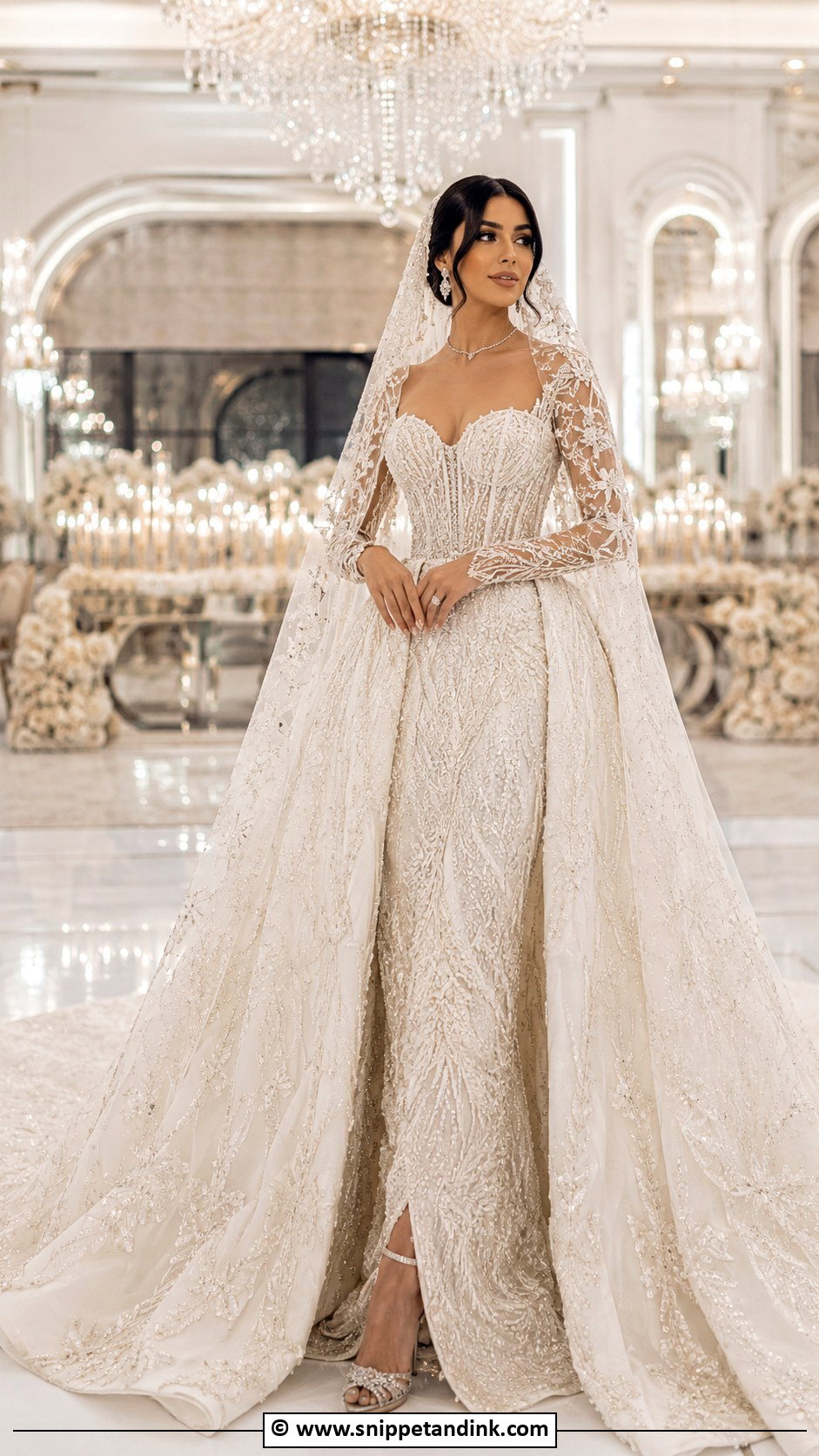
Luxury is in the proportions and the finishing, not the amount of sparkle. Hand beading, layered embroidery, structured corsetry, a dramatic train and a custom veil are the signs. Turn the gown inside out at a fitting; clean seams, covered boning and hand-finished hems tell you more than the outside does. Choose a silhouette that supports your body, especially if the dress is heavy. A cathedral veil, elegant heels and fine jewelry complete it for a formal reception in a grand ballroom.
26. Arabic Royal Wedding Dress
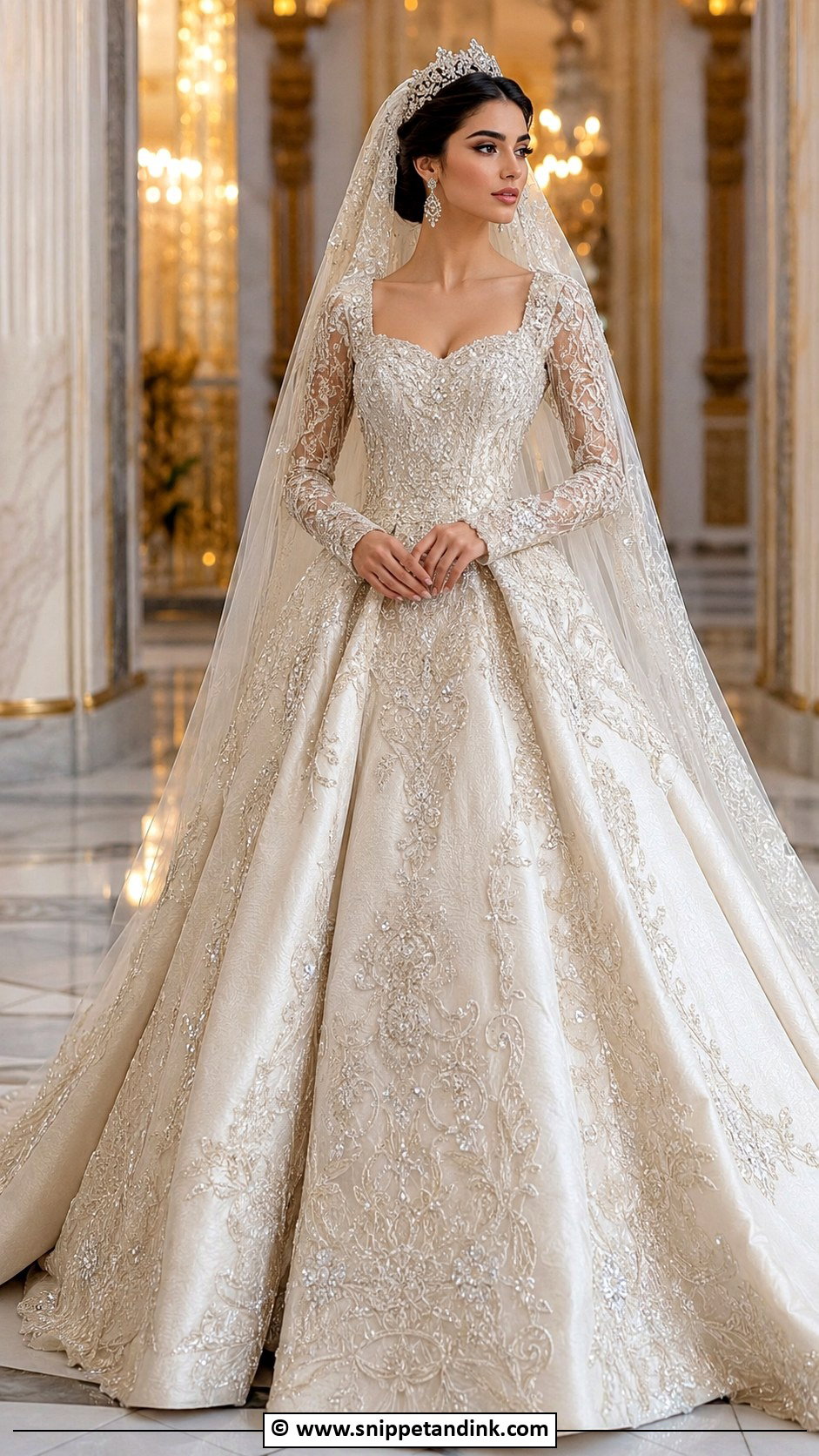
Maximum presence: a full skirt, long train, detailed bodice and refined accessories, with pearls, crystals, lace, metallic embroidery or a dramatic veil. To keep it royal rather than crowded, hold to a clear palette. Ivory with silver, white with pearls, or champagne with gold each work. A tiara or jeweled headpiece adds height. A dress this heavy needs a plan for the night: who carries the train, where you sit, and when you can step away to rest.
27. Arabic Reception Wedding Dress
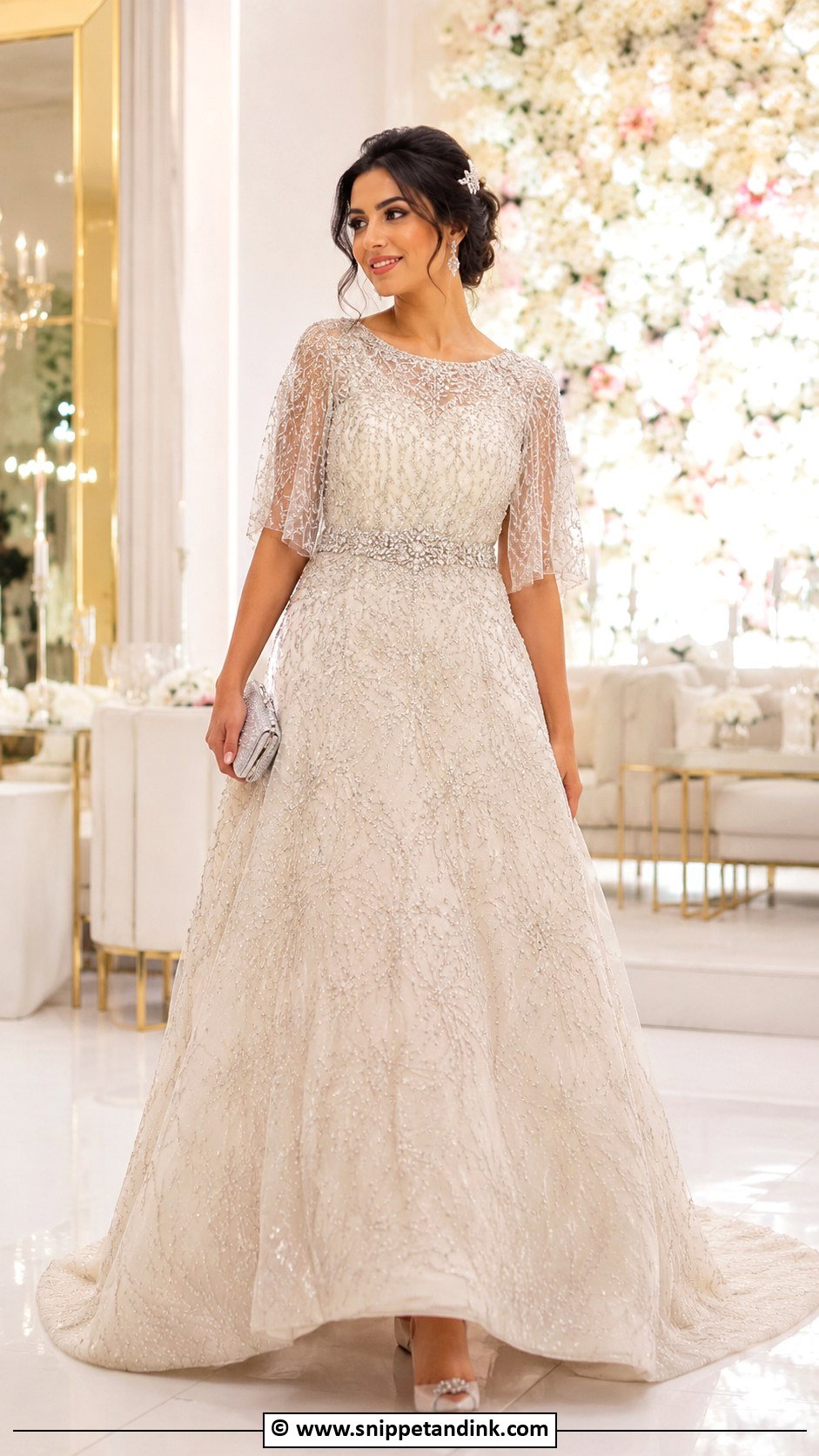
A reception gown should let you sit, eat and greet without thinking about your dress. Many brides switch to a fitted dress, a lighter A-line or a beaded gown with less train. Ivory fabric, pearl details or a sparkling belt keep it bridal. If the first dress was very traditional, this one can go modern. I keep the change short and practical: comfortable heels, a smaller veil or hair accessory, and a neat clutch, laid out in order before the day.
28. Arabic Henna Wedding Dress
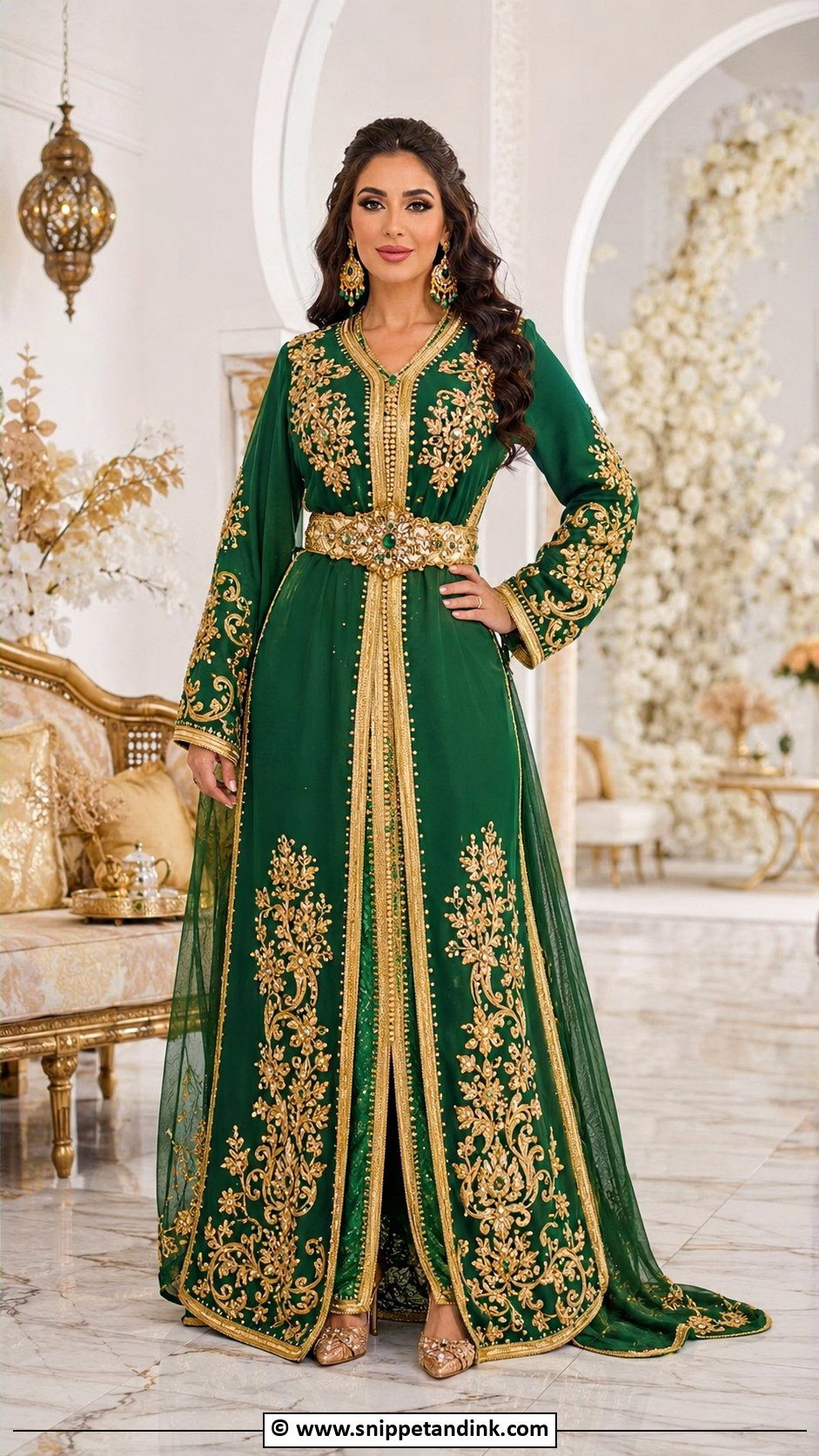
Henna night is a celebration of color, and the dress can leave white behind entirely. Green, gold, red, white or jewel-toned kaftans with embroidery, metallic trim and a decorative belt are the classics. You will sit for the henna application and the paste needs time to dry, so choose a dress you can sit in comfortably for a long stretch, with sleeves that stay clear of your hands. Gold jewelry, embellished heels and a coordinated scarf or veil complete it.
29. Arabic Plus Size Wedding Dress
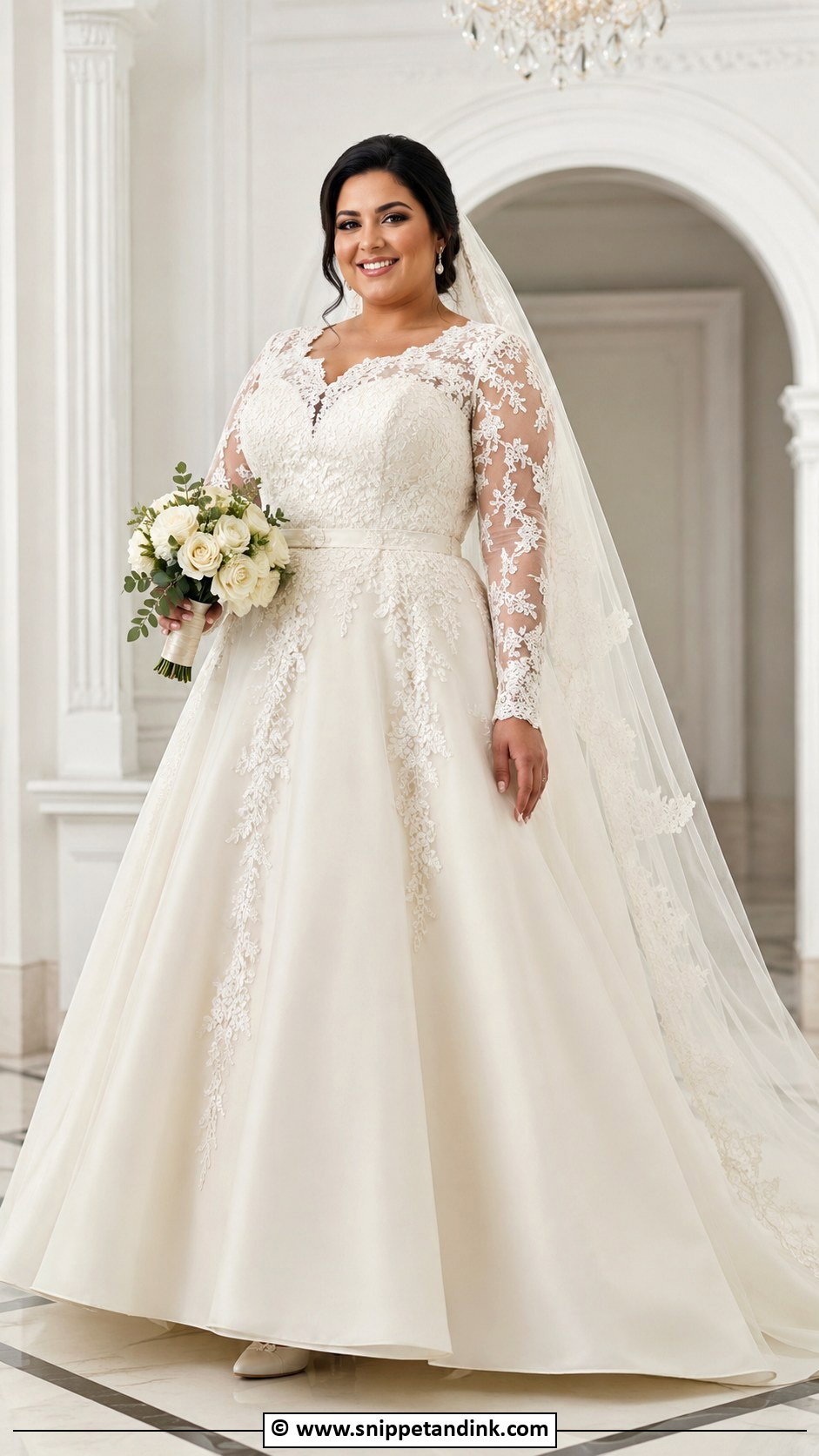
With a plus-size gown I fit for support, proportion and comfort before anything else. A-line, structured ball and soft empire shapes all work when tailored well, and long sleeves, lace overlays and detailed bodices add elegance without hiding the body. Choose fabrics that skim and do not pull across the bust, waist or hips. A built-in corset or strong inner structure matters most on heavier beaded gowns, because it carries the weight at the waist instead of the shoulders. A long veil, comfortable heels and jewelry that frames the face finish it.
30. Arabic Modern Wedding Dress
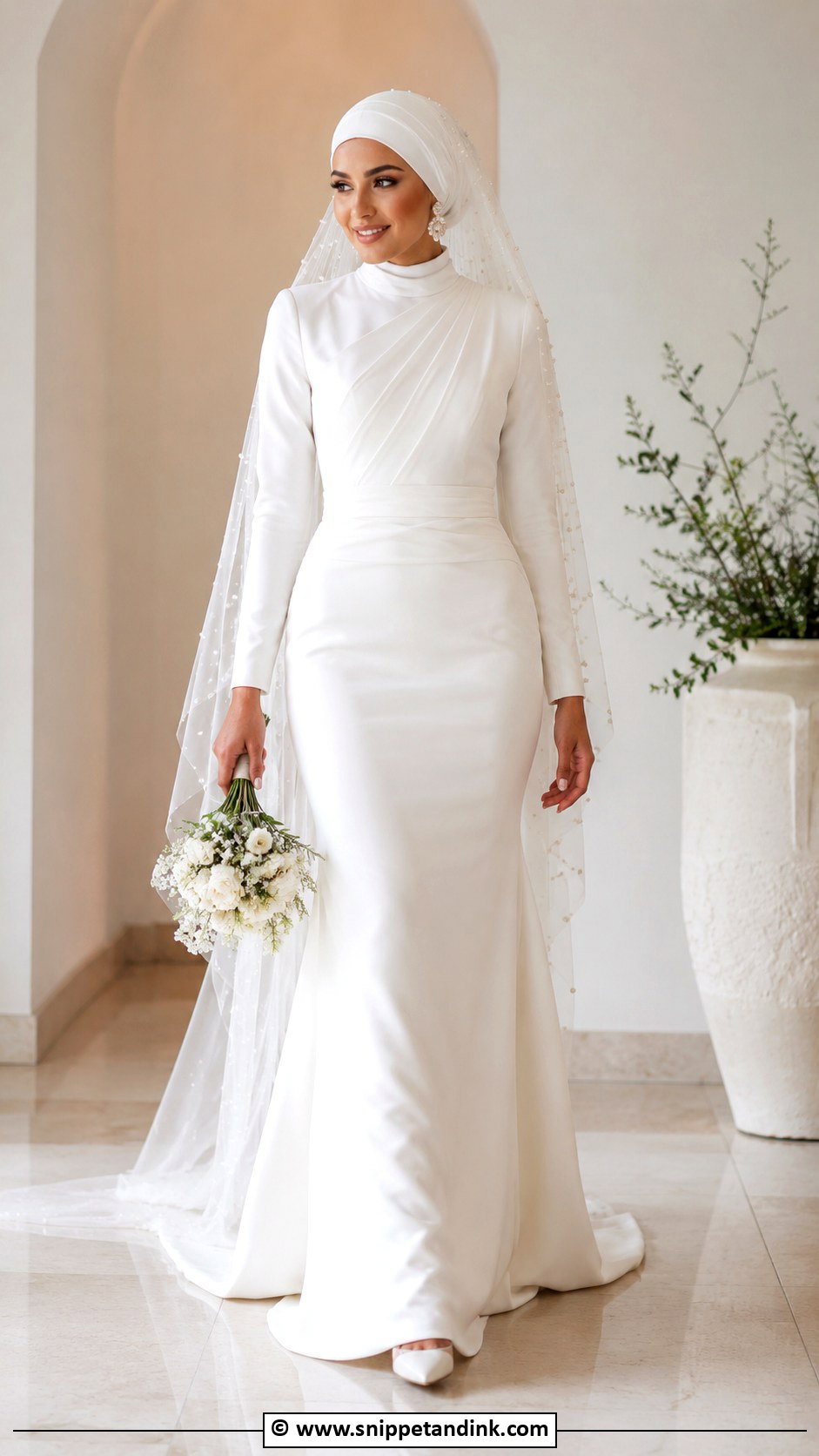
Modern here means a clean line with cultural detail kept small. A sleek crepe gown with long sleeves, a satin dress with a cape, or a minimalist A-line with pearls are good examples. Keep styling deliberate: a neat veil, sculptural earrings and polished heels. If you wear hijab, a smooth wrap in matching fabric makes the outfit read as one piece. It adapts easily to different settings, which is useful when one dress needs to carry the whole wedding.
Who Dresses You on the Morning, and What They Need to Know
Heavy Arabic gowns rarely go on in five minutes. Corset lacing, hidden hooks, a bustle, a hijab pinned around a headpiece: one calm person should know all of it, and ideally they should have practiced at your last fitting. I ask brides to bring that person, whether a sister or a friend, and to film the seamstress showing how the bustle works.
Steaming and transport
Have the gown pressed by your seamstress a day or two before, then carry it flat or hung in a long garment bag, never folded in a car boot. If it has creased, a handheld steamer held a little away from the fabric works on tulle and satin; never put an iron on beading or metallic thread.
A small kit for the hall
- Safety pins, flat-headed hijab pins and a needle threaded in your dress color.
- Clear nail varnish to stop a run in tulle or a fraying thread.
- A white chalk block for small makeup marks on ivory fabric.
- Spare beads or pearls if the maker gives you any.
- Flat shoes for after the zaffa or the photographs.
One Gown or Five, Wear It Through the Whole Night
Royal ball gowns, plain satin, embroidered kaftans, modern capes: the range is wide, and the right one respects your comfort, culture, venue and taste. Weigh fabric, sleeve movement, neckline coverage and train length against how the night will actually go. Let accessories support the gown rather than compete with it. Pearls, gold embroidery, lace or clean satin can all be right, as long as you can wear the dress through the whole celebration and still feel like yourself at the end of it.
You'll Like These Ideas:






Leave a Reply