
When a bride tells me she needs a modest gown, the first thing I ask is what modest means for her and her family, because the answer changes everything from the sleeve lining to the neckline height. The choice today is wide: satin gowns, embroidered lehengas, lace abayas, cape dresses and modern hijab bridal looks. Below are thirty ideas, from classic white to red, gold and sage, and from Turkish and Arabic styles to Pakistani and South Asian ones. For each I’ve added what I’d check at the fitting so that the coverage holds through a long day of greetings, sitting and photographs.
Turning a Strapless Gown Into a Modest One
Many bridal gowns in shops are strapless or sleeveless. If you love one, it can often be made modest by a skilled seamstress. I’d allow at least two to three months for this, because matching lace and fitting sleeves takes time.
- Sleeves can be added in matching lace, satin or lined tulle. Ask the shop if they have extra fabric from the same bolt.
- A neckline can be raised with lace or opaque mesh, lined in a shade close to your skin or the gown.
- A separate jacket or bolero gives coverage for the ceremony and can come off later if appropriate.
- Sheer lace or tulle can be lined with a soft fabric so the coverage is complete.
Bring the hijab you plan to wear to every fitting. The neckline and sleeves need to sit correctly with it, and the colours need to match in the same light.
1. White Satin Muslim Wedding Gown
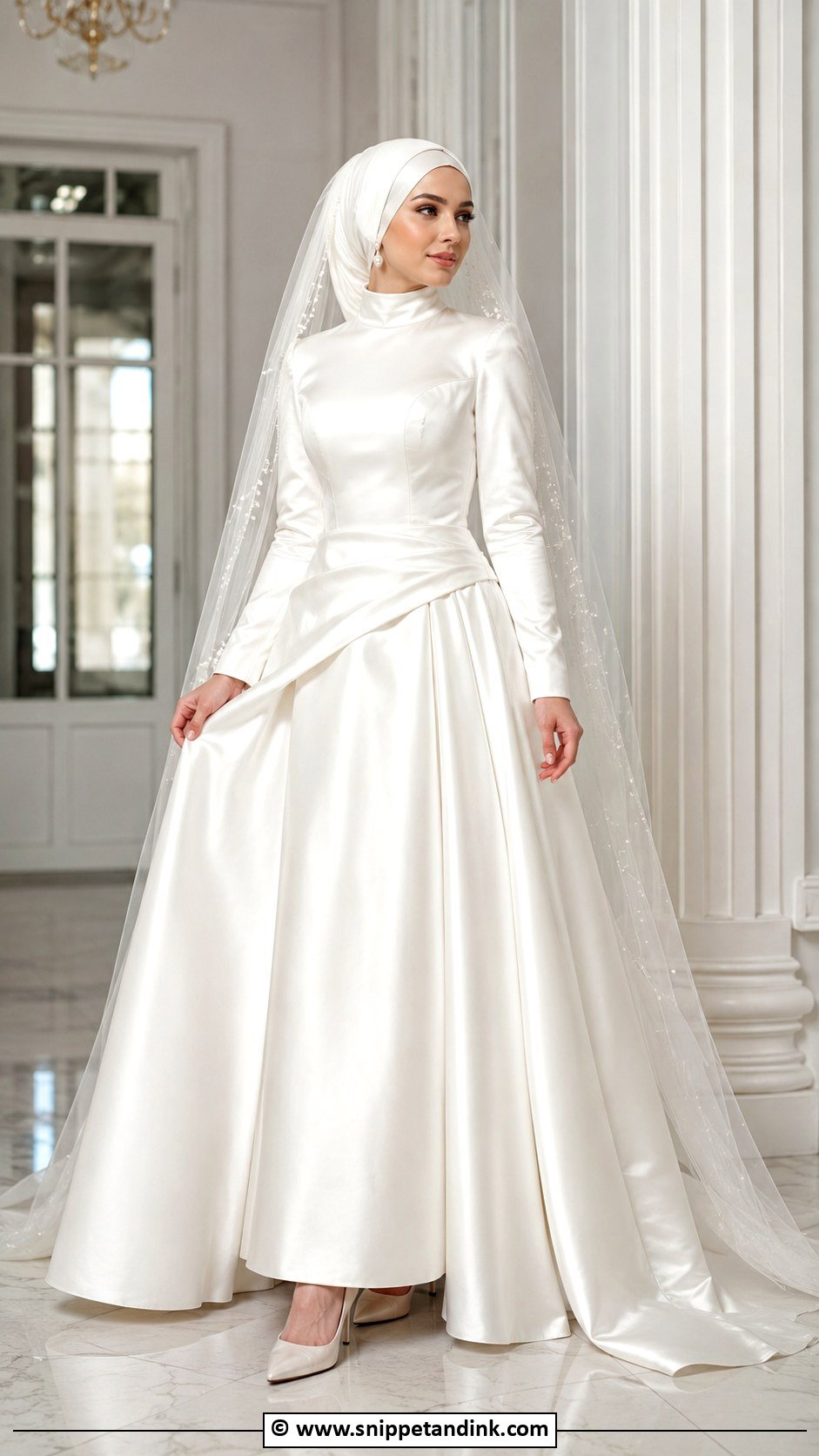
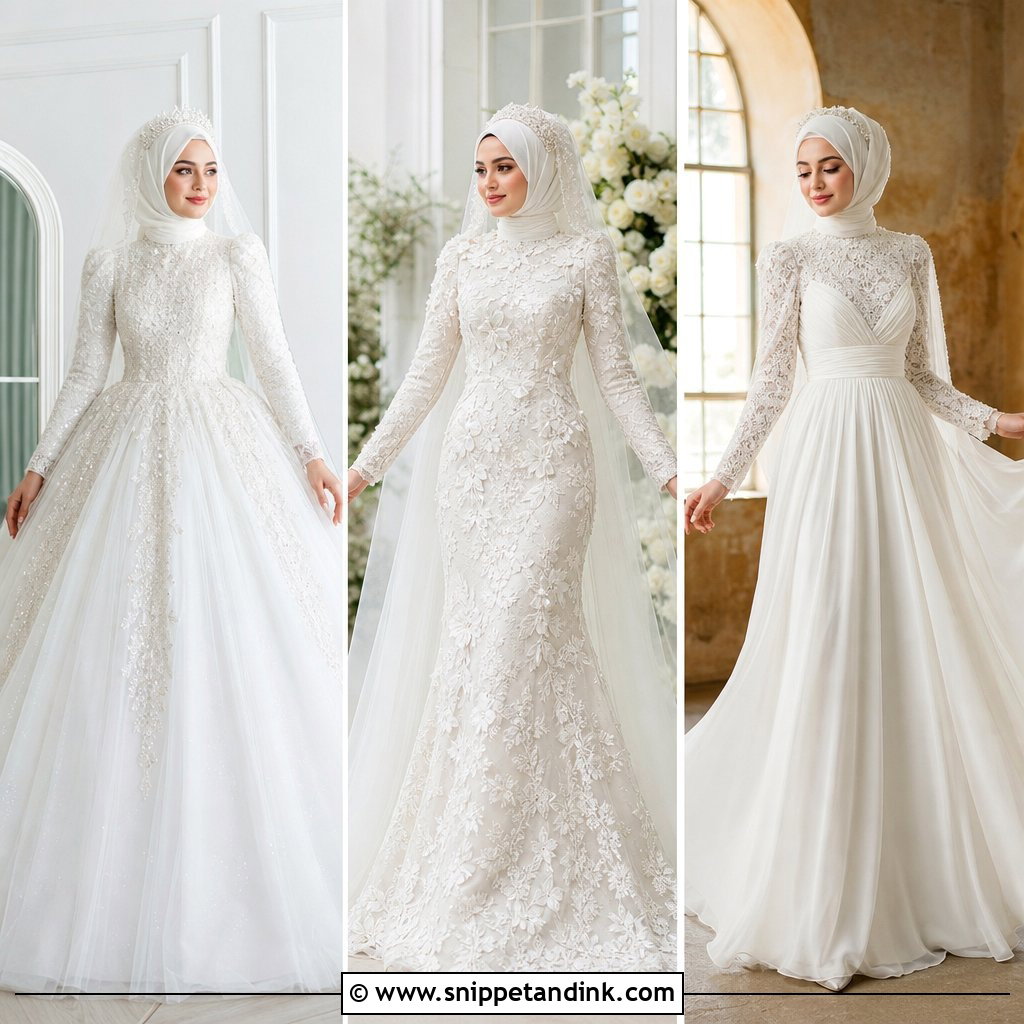
White satin has a soft shine and needs very little decoration. With a high neck, long sleeves and a gently flared skirt it gives full coverage and moves well. Satin does show creases from sitting, and it reflects light at every seam, so the fit through the bodice has to be precise. I’d match the hijab in the same white or a slightly softer ivory; two different whites next to each other can make the dress look grey. A pearl-trimmed veil and pointed ivory heels finish it.
2. Lace Muslim Wedding Gown With Hijab
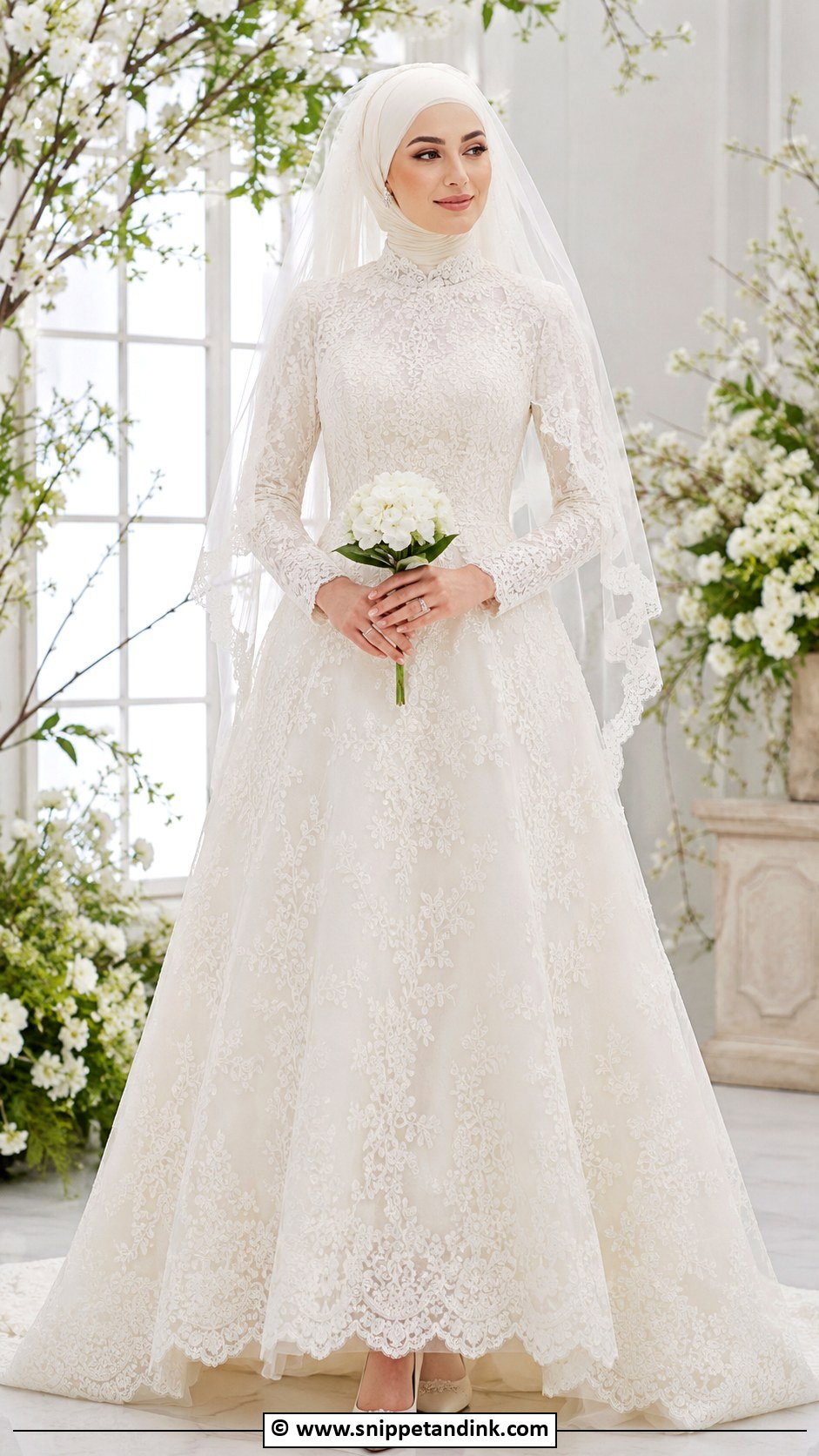
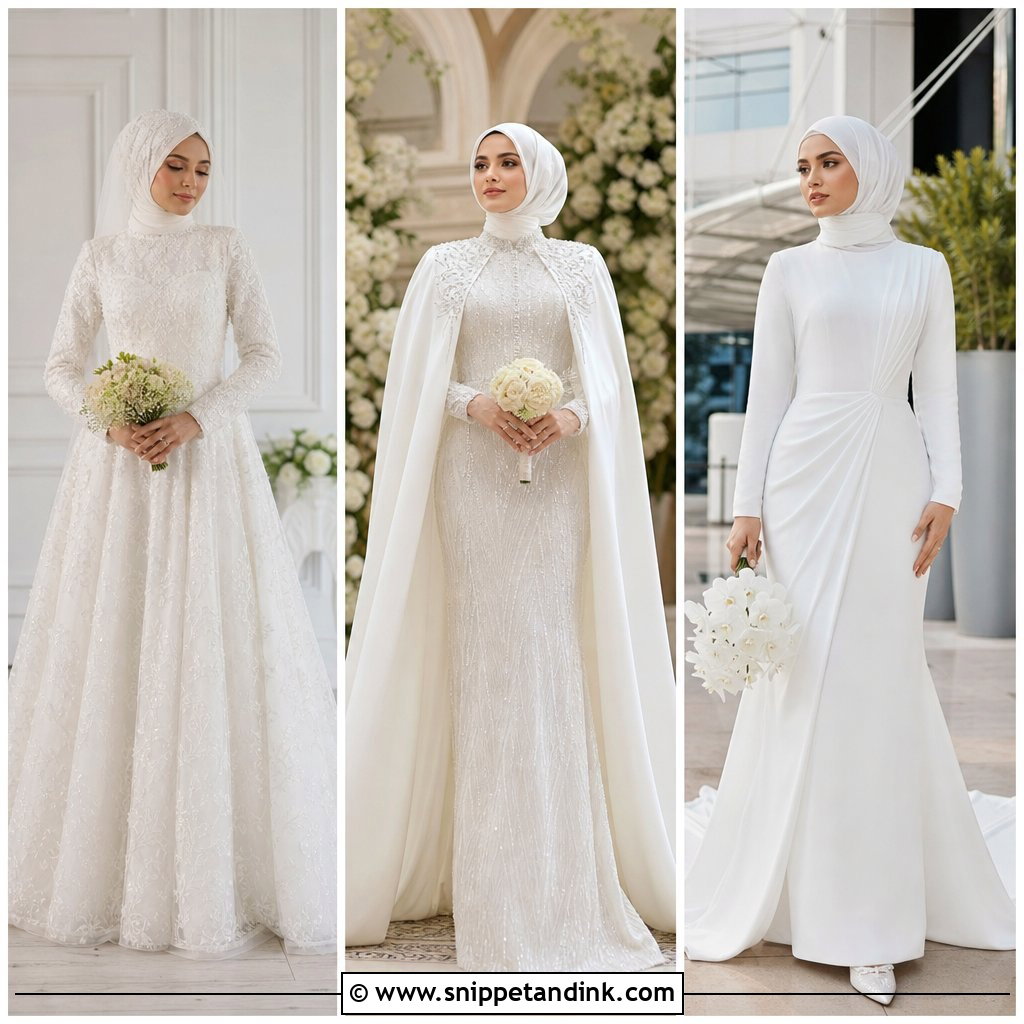
Lace sleeves are lovely but often sheer, so the first thing I check is the lining. Many lace gowns use unlined lace on the arms, and if your coverage needs to be opaque, a seamstress can add a fine lining in a matching shade. A lined bodice, high neck and soft A-line skirt make this easy to wear. A smooth satin or chiffon hijab balances the busy lace. A long veil over the hijab gives a traditional finish.
3. Pearl Beaded Muslim Wedding Gown
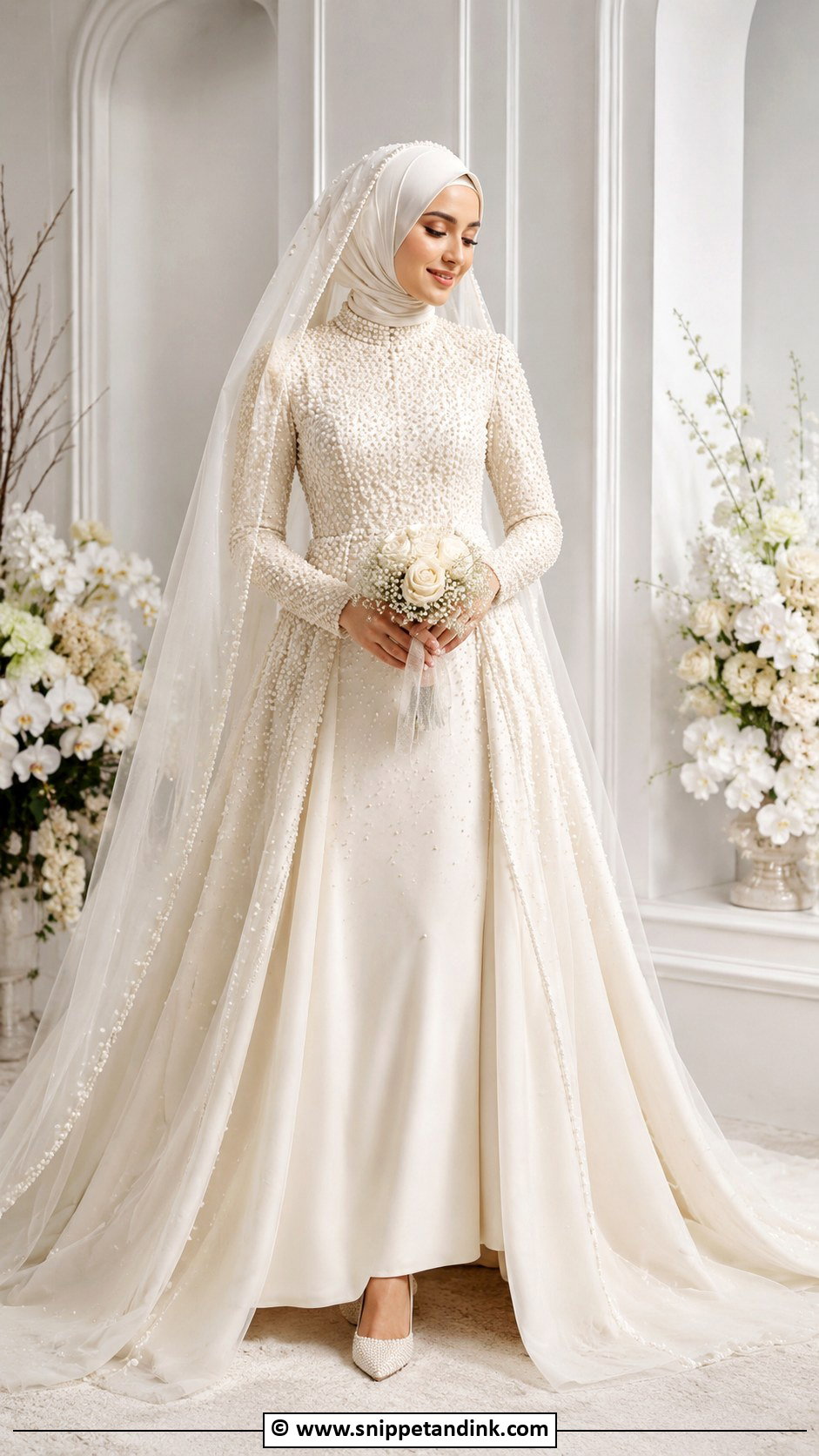
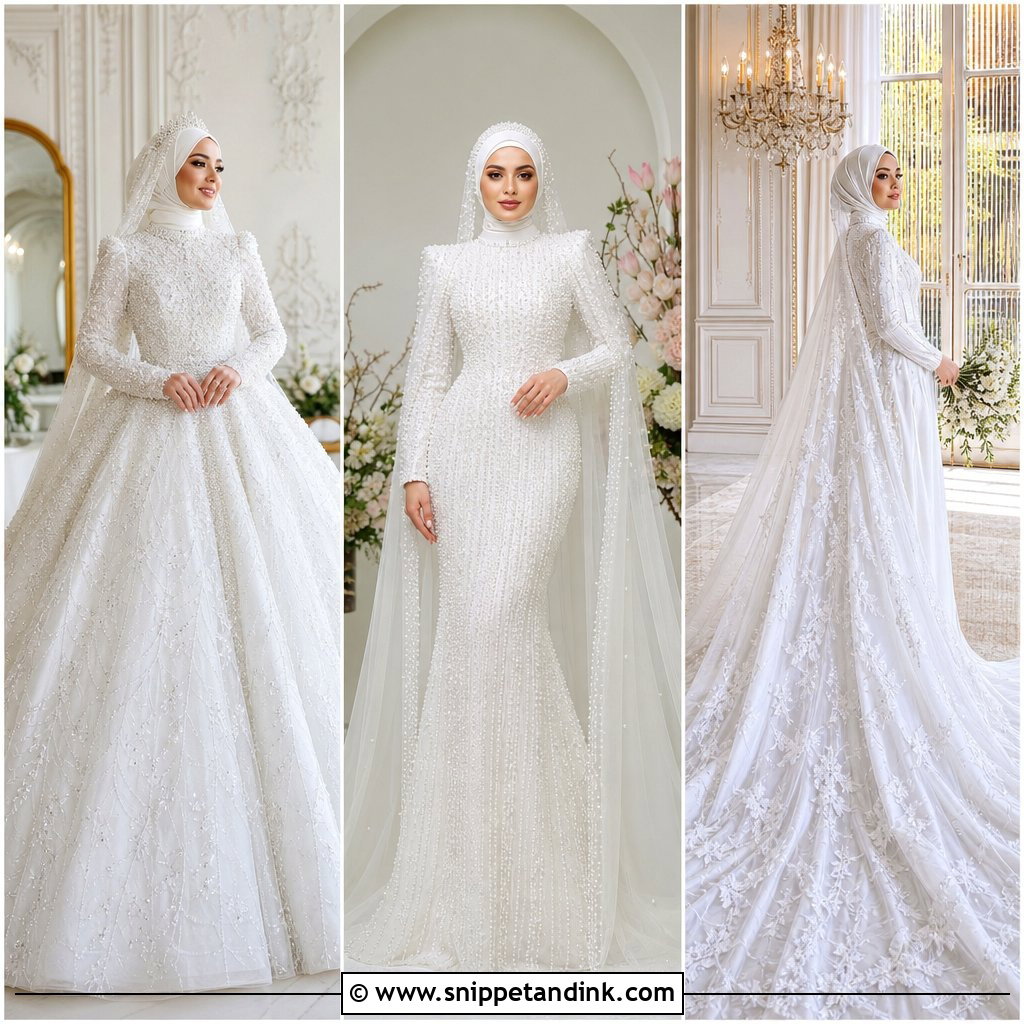
Small pearls scattered across a bodice or sleeves give texture and catch light softly. A fitted waist and full skirt keep the shape modest. Pearl-heavy gowns weigh more than they look, and sewn pearls can loosen, so I’d ask for a final check of the beading. A plain ivory hijab lets the pearl work stand out. A cathedral veil with a few pearls on the edge adds drama for the entrance.
4. Ball Gown Muslim Wedding Dress
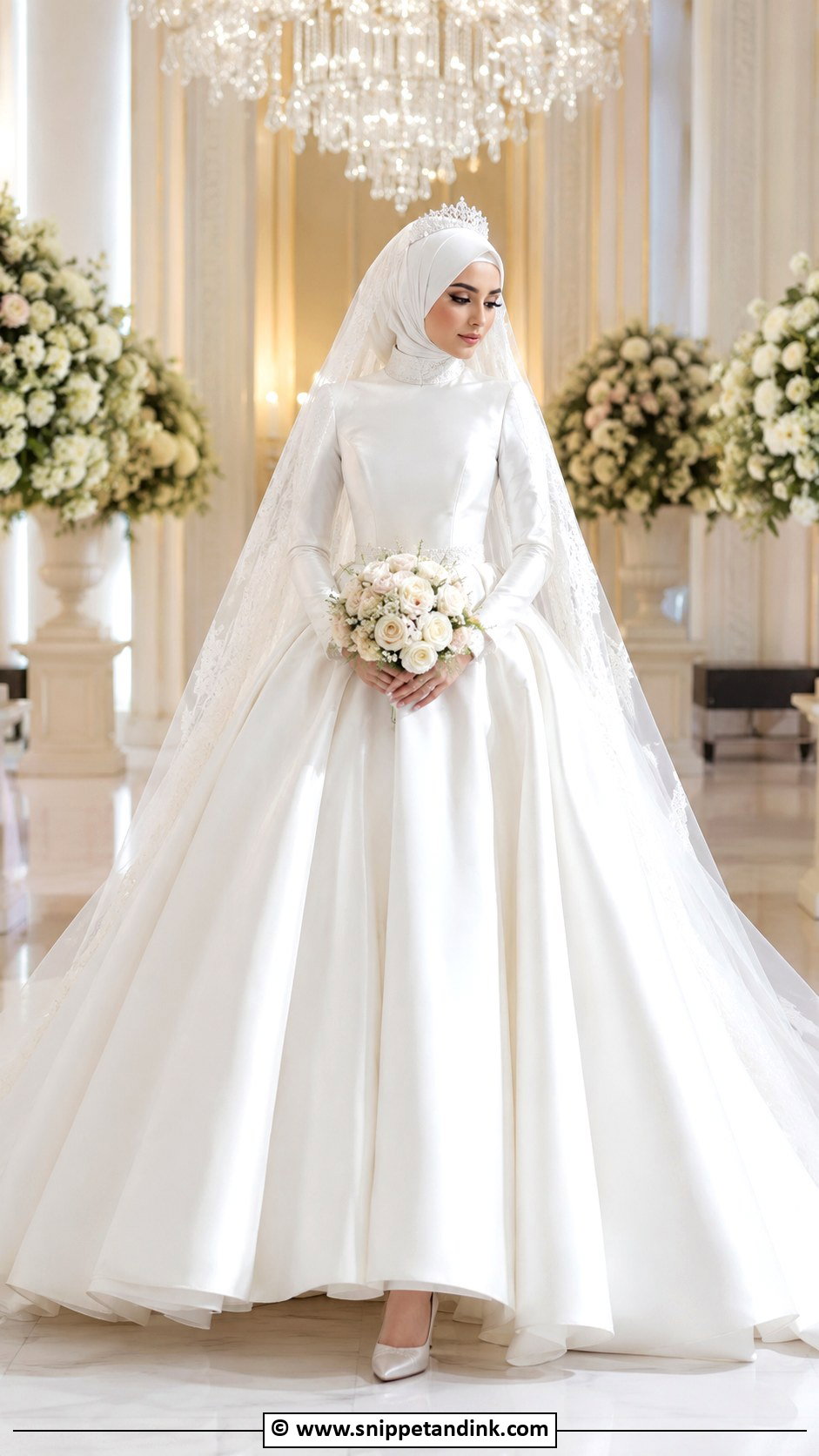
A ball gown has a full skirt for drama, with a high-neck bodice and long sleeves to balance it. Mikado, satin, organza and layered tulle all give volume; mikado holds the shape best. A big skirt is heavy and wide, so think about doorways, car rides and greeting long lines of guests. Block heels under a heavy skirt are kinder to the feet. A tiara can sit over a neatly wrapped hijab with a long veil behind.
5. A Line Muslim Wedding Gown
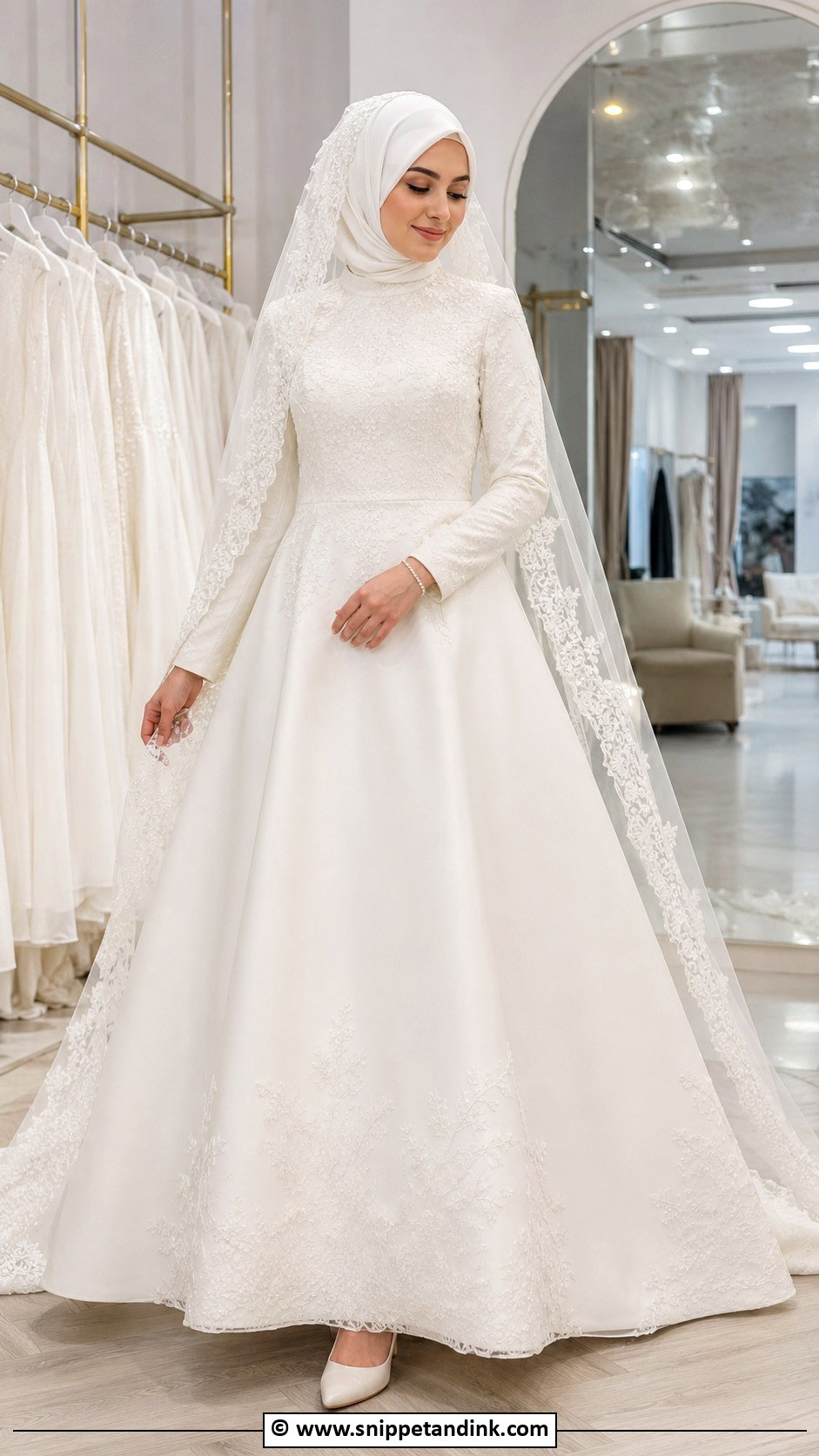
The A-line is the shape I’d suggest to most brides who haven’t decided, because it suits many bodies and is comfortable for a long day. It fits at the bodice and widens gently from the waist. Long sleeves and a modest neckline in chiffon, satin or soft tulle keep it covered. A matching hijab and a lace-trimmed veil complete it. It’s also one of the easiest shapes to alter.
6. Mermaid Muslim Wedding Gown
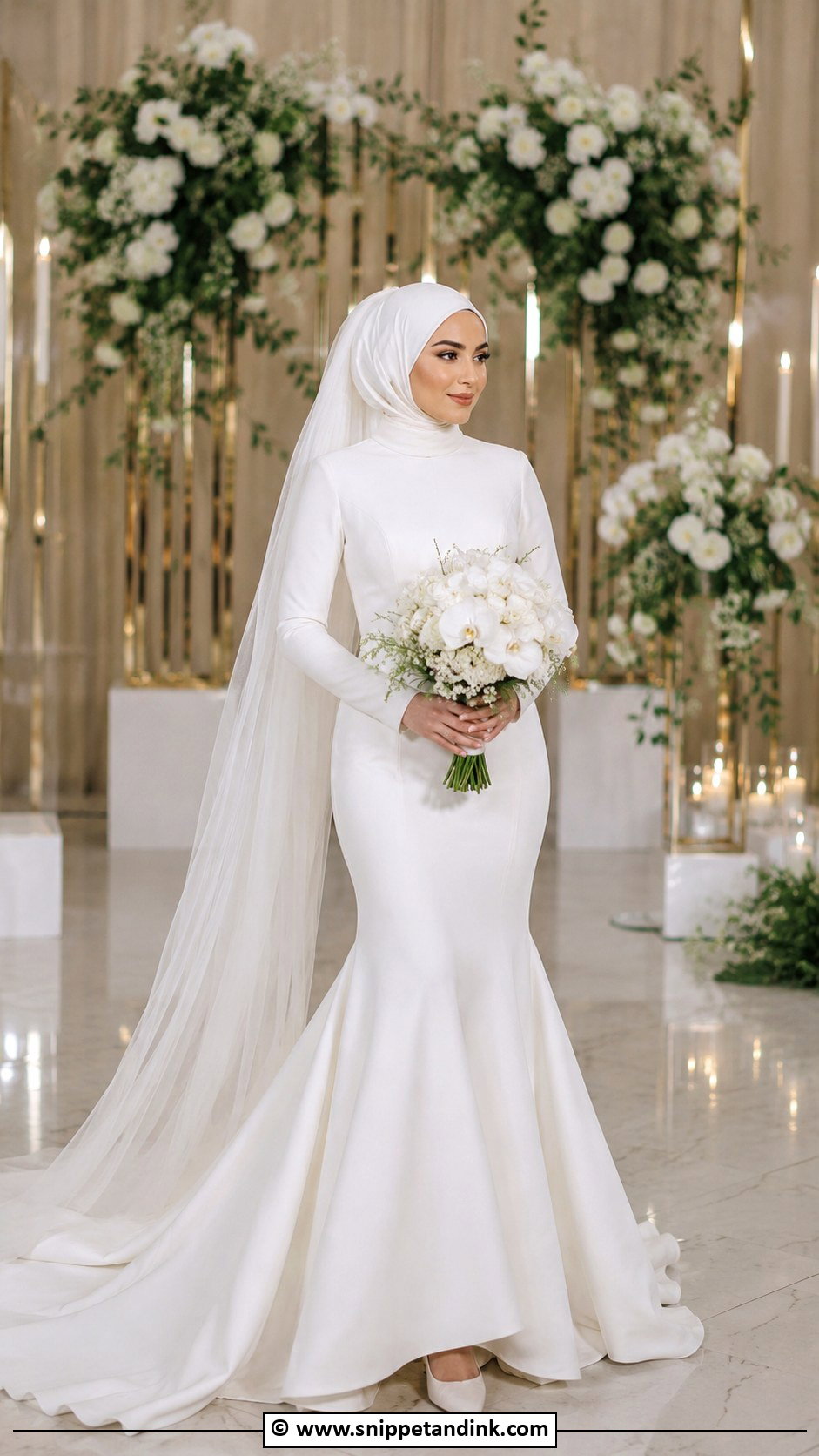
A mermaid can be modest if the fit skims rather than clings. I’d look for full sleeves, a high neck and a flare that starts at or just below the knee, and I’d fit it with enough ease through the hips to sit and walk. Stretch crepe is the most forgiving fabric for this shape. A long hijab draped over the chest and shoulders softens the fitted line. Pointed heels set the hem length, so bring them to the fitting.
7. Cape Muslim Wedding Gown
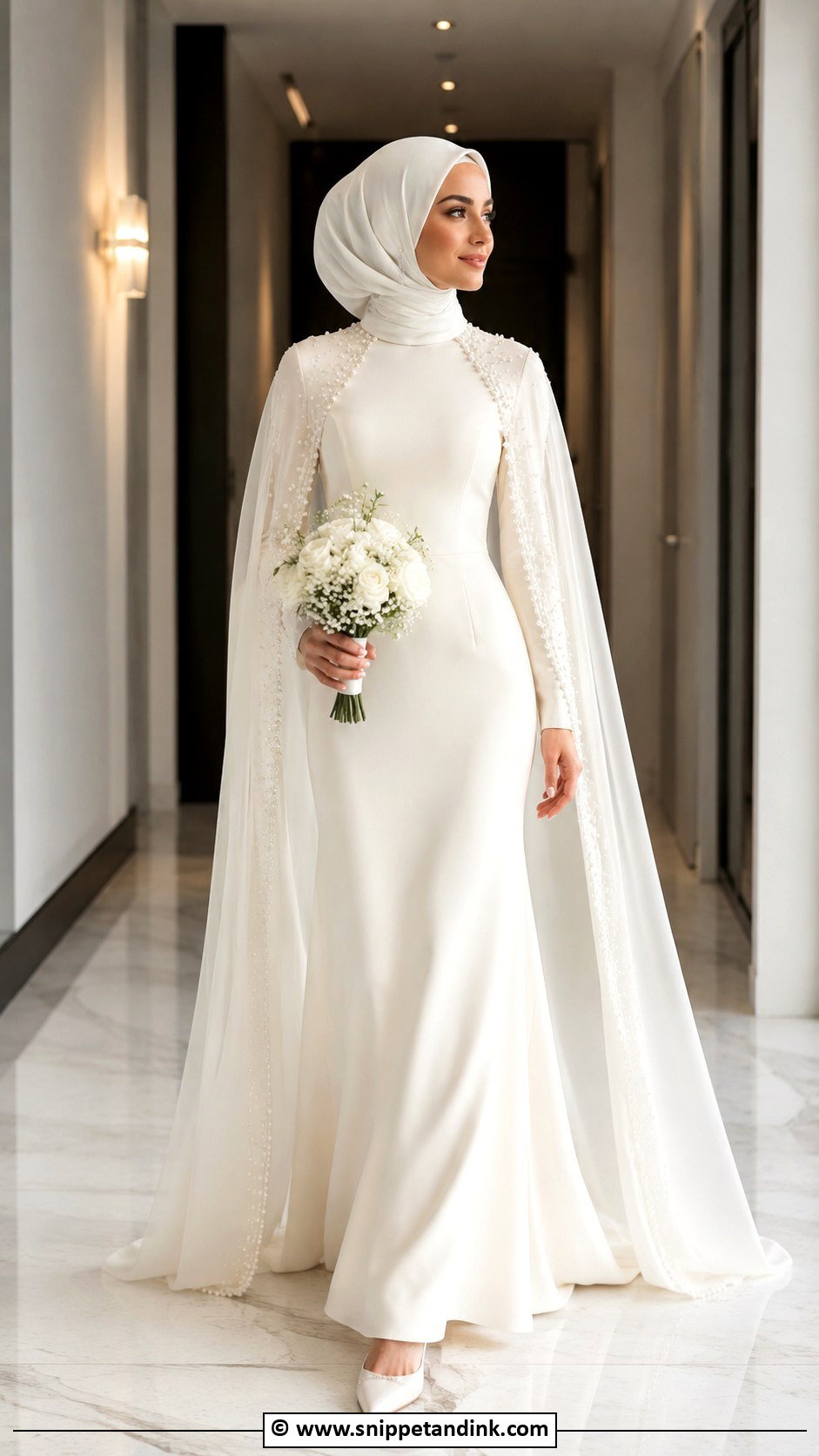
A cape adds coverage over the shoulders and back as well as drama. It can attach at the shoulders, fall from the neckline or layer over the bodice. I’d pair it with a simple satin or crepe gown and tuck the hijab under the cape so the lines stay clean. Check that the cape is opaque enough if it’s meant to cover; sheer chiffon capes are decorative rather than modest. Crystal edges or pearls depending on taste.
8. Embroidered Muslim Wedding Gown
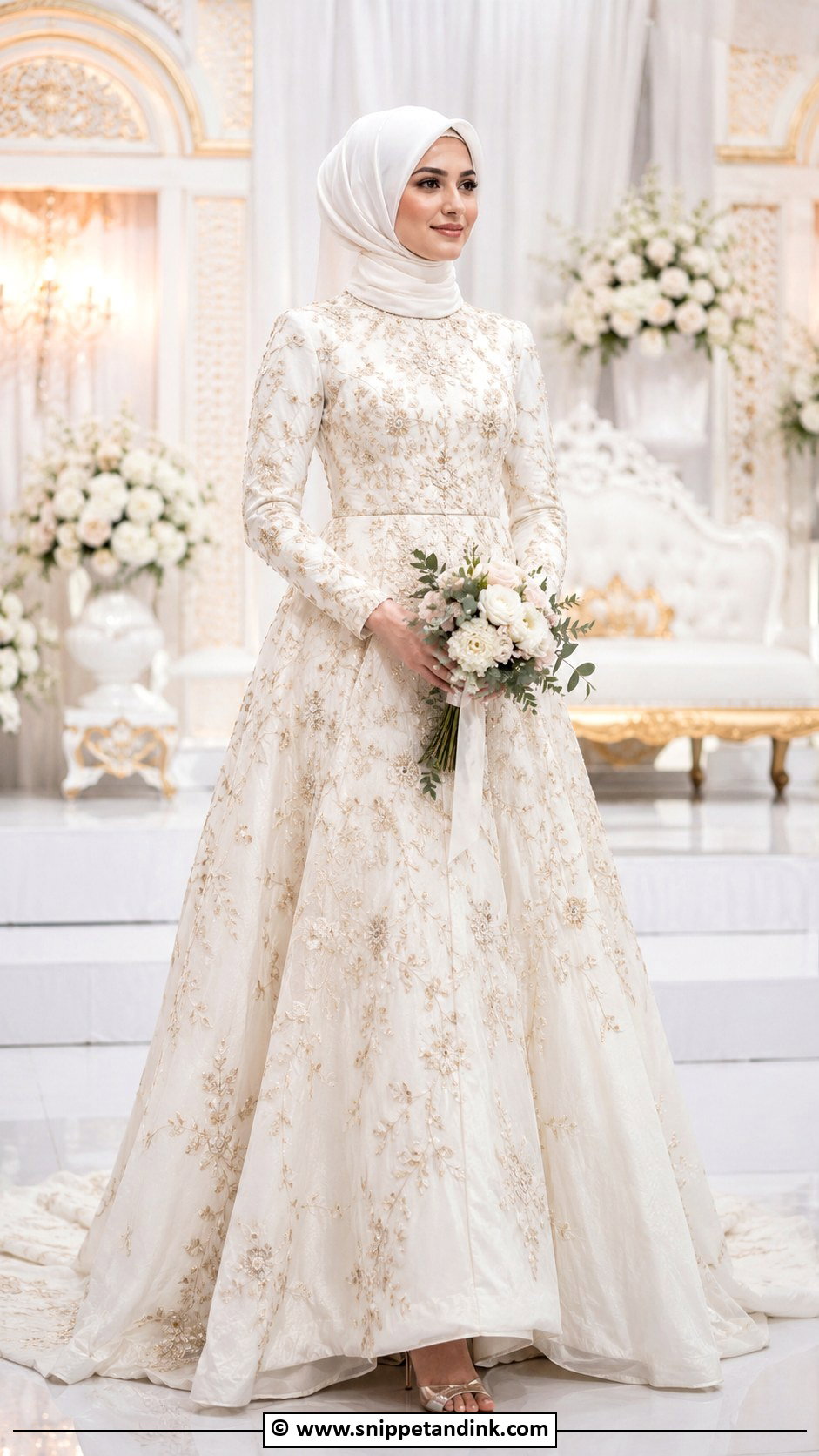
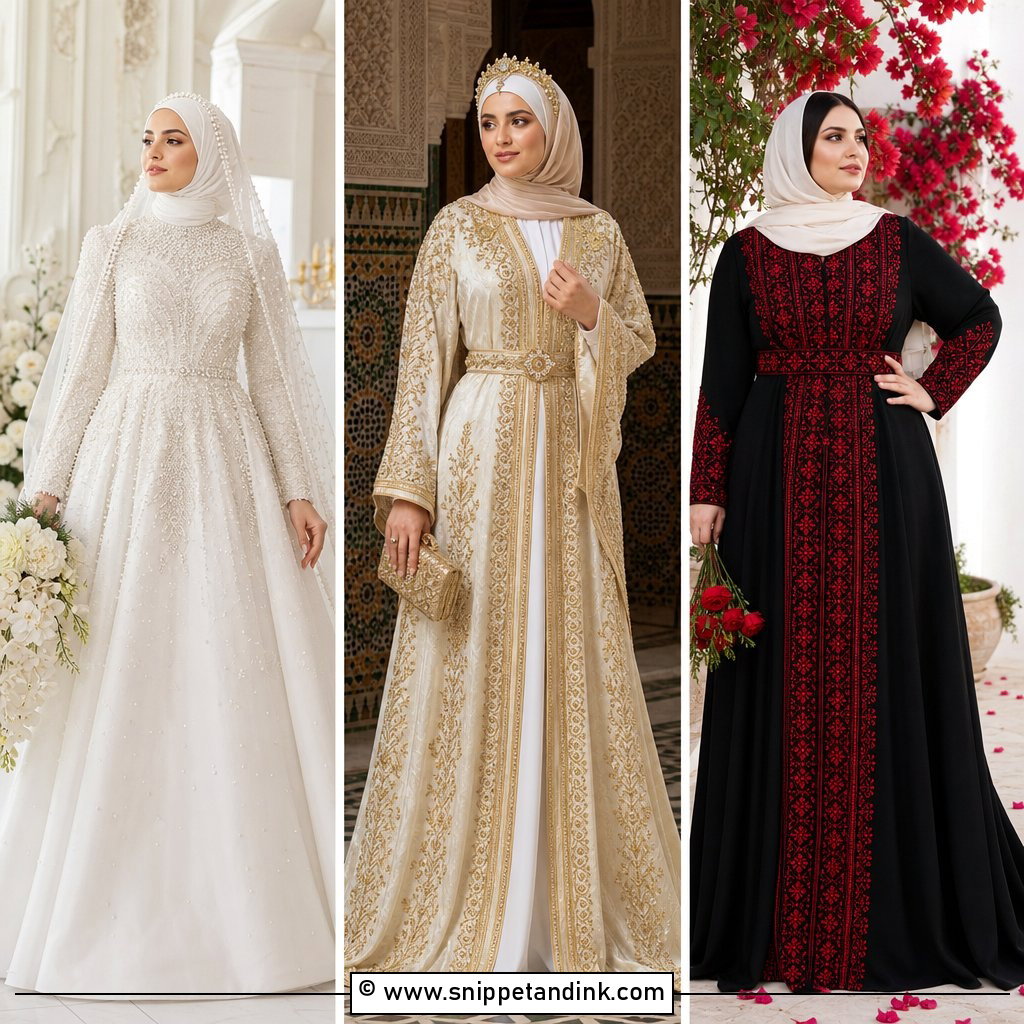
Embroidered gowns carry florals, vines, geometric patterns or metallic thread across the bodice, sleeves and skirt. Metallic threadwork can be scratchy against the skin, so I’d check the lining at the sleeves and neck. A modest cut with a high neck and flowing skirt keeps it elegant. A plain hijab in ivory or champagne lets the embroidery stand out. Gold or silver heels can echo the thread.
9. Champagne Muslim Wedding Gown
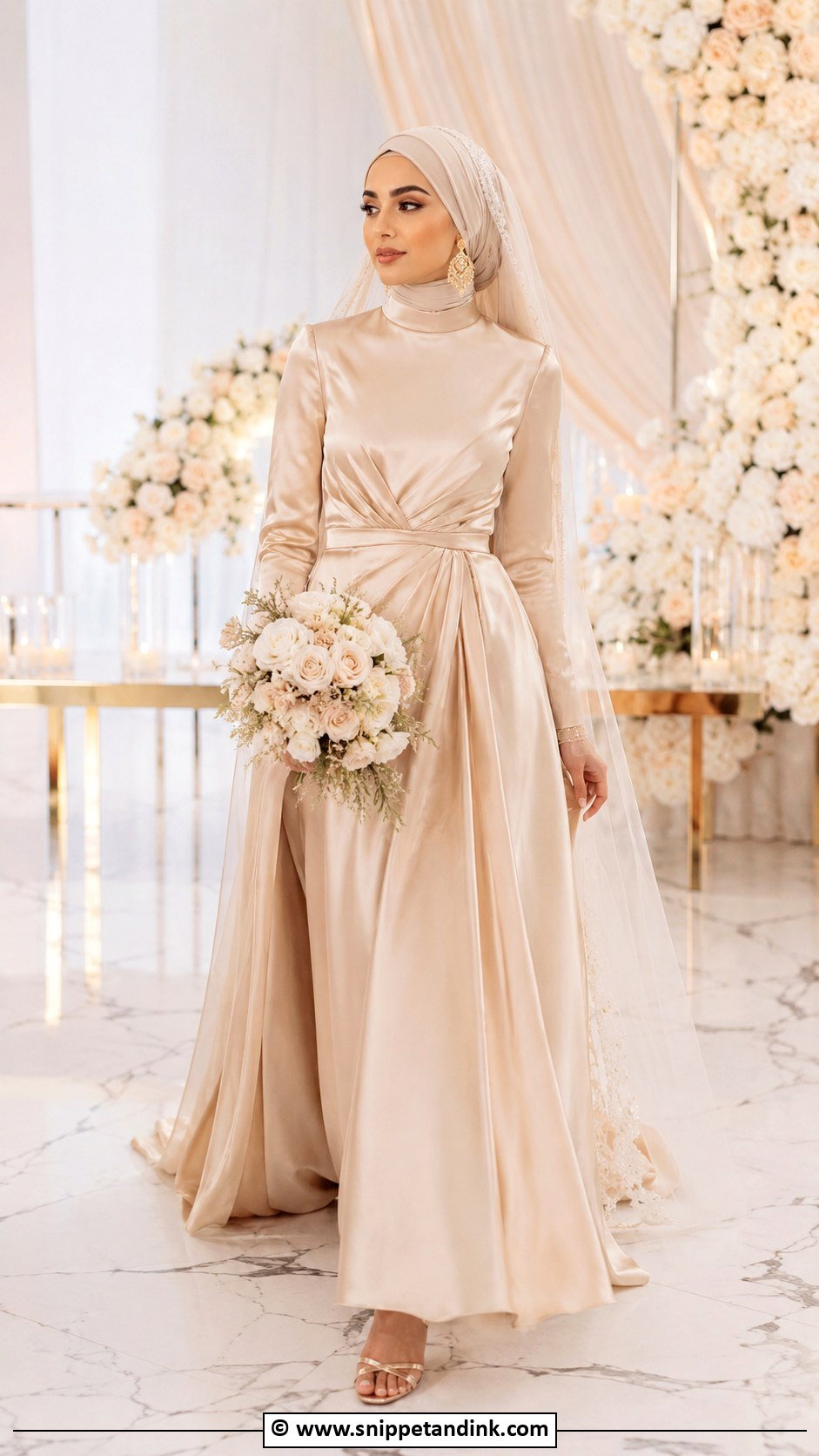
Champagne is a warm alternative to white that flatters many skin tones, especially warm and olive ones. It works in satin, tulle, lace or beaded fabric. I’d match the hijab to the gown’s shade or go a little lighter in ivory; a bright white hijab against champagne looks mismatched. Gold jewellery and nude or metallic heels suit it.
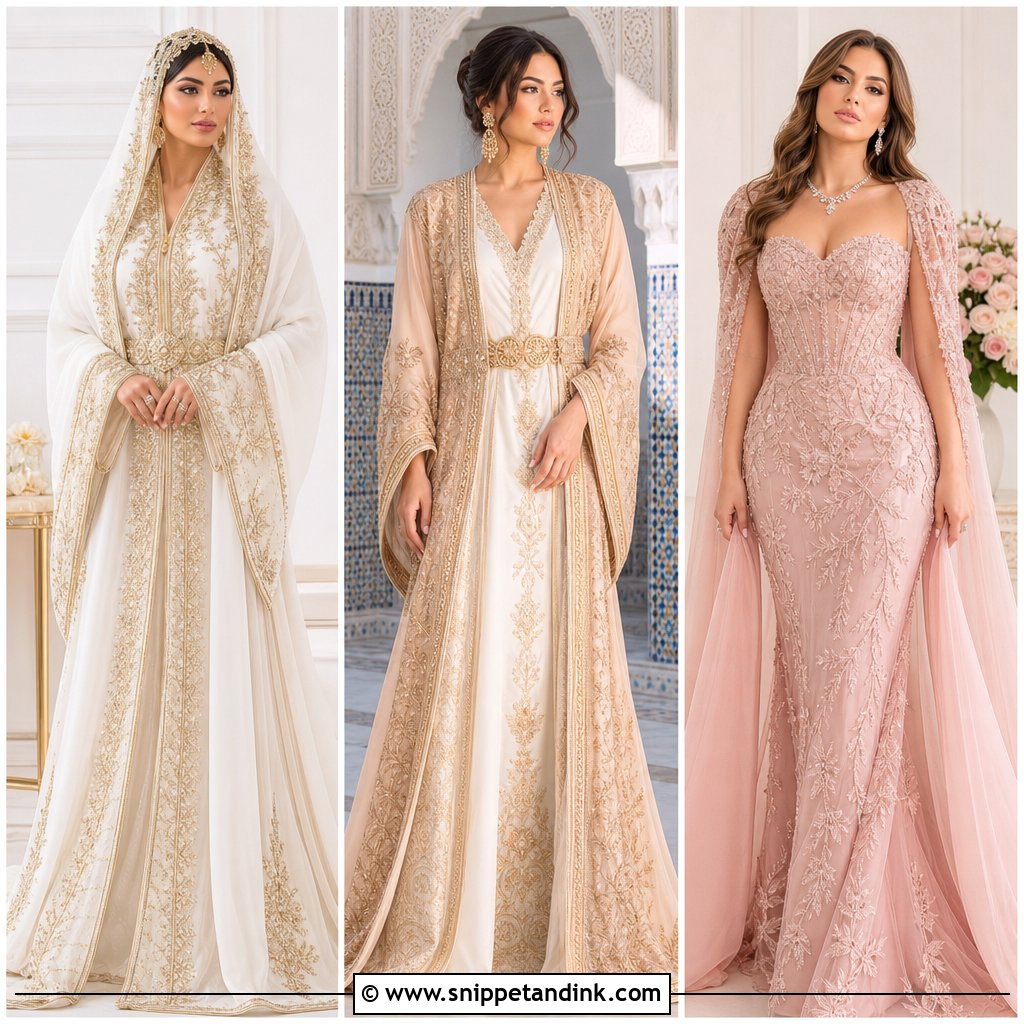
10. Blush Muslim Wedding Gown
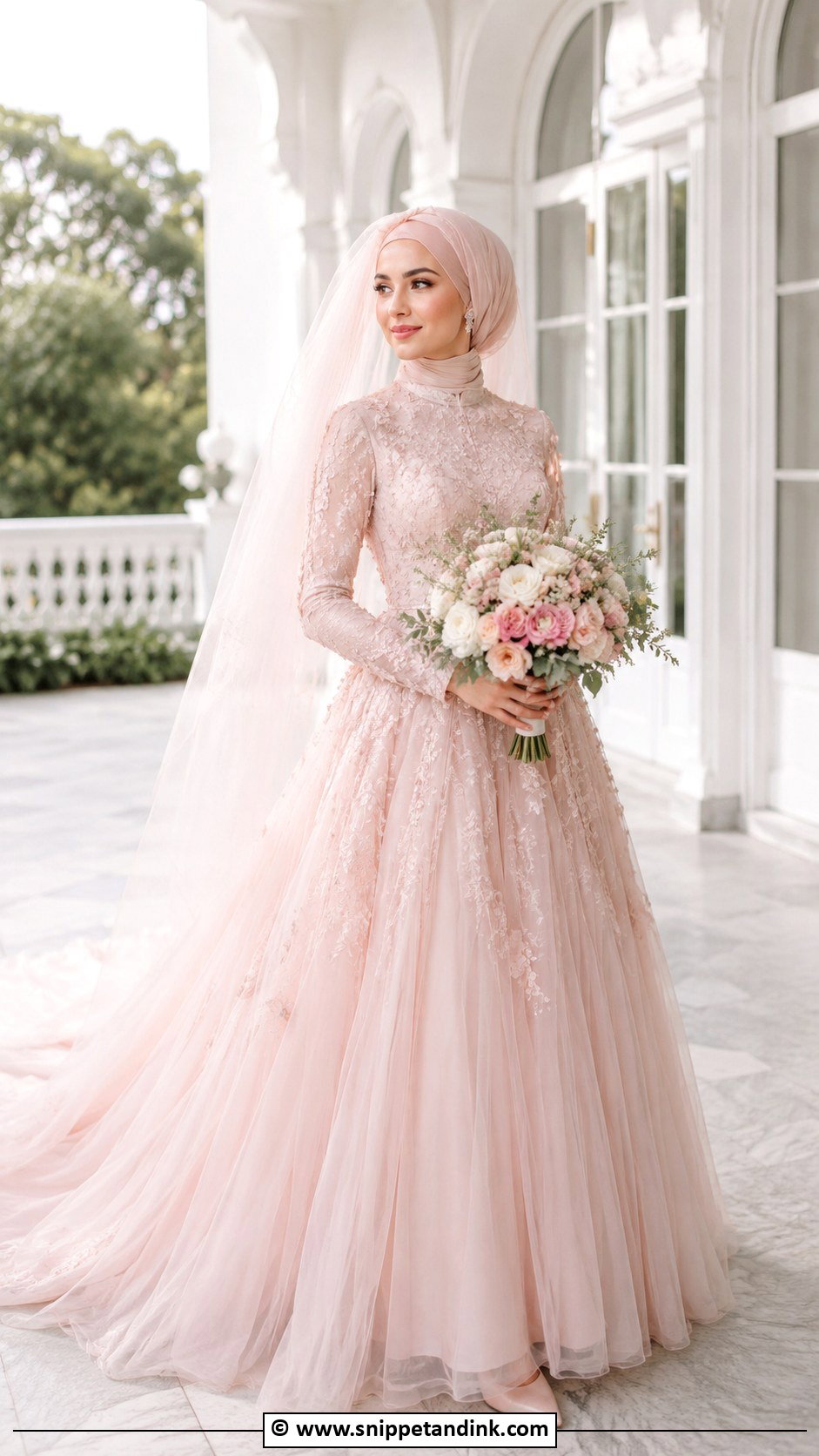
Blush is a pale pink that adds warmth while staying formal. Tulle, organza, chiffon or lace all suit it, with long sleeves and a modest neck. A blush hijab keeps the colour continuous; an ivory veil over it brings contrast. Some blushes look peachy on warm skin, so check it near your face in daylight. Rose-gold earrings and soft pink heels complete it.
11. Gold Muslim Wedding Gown
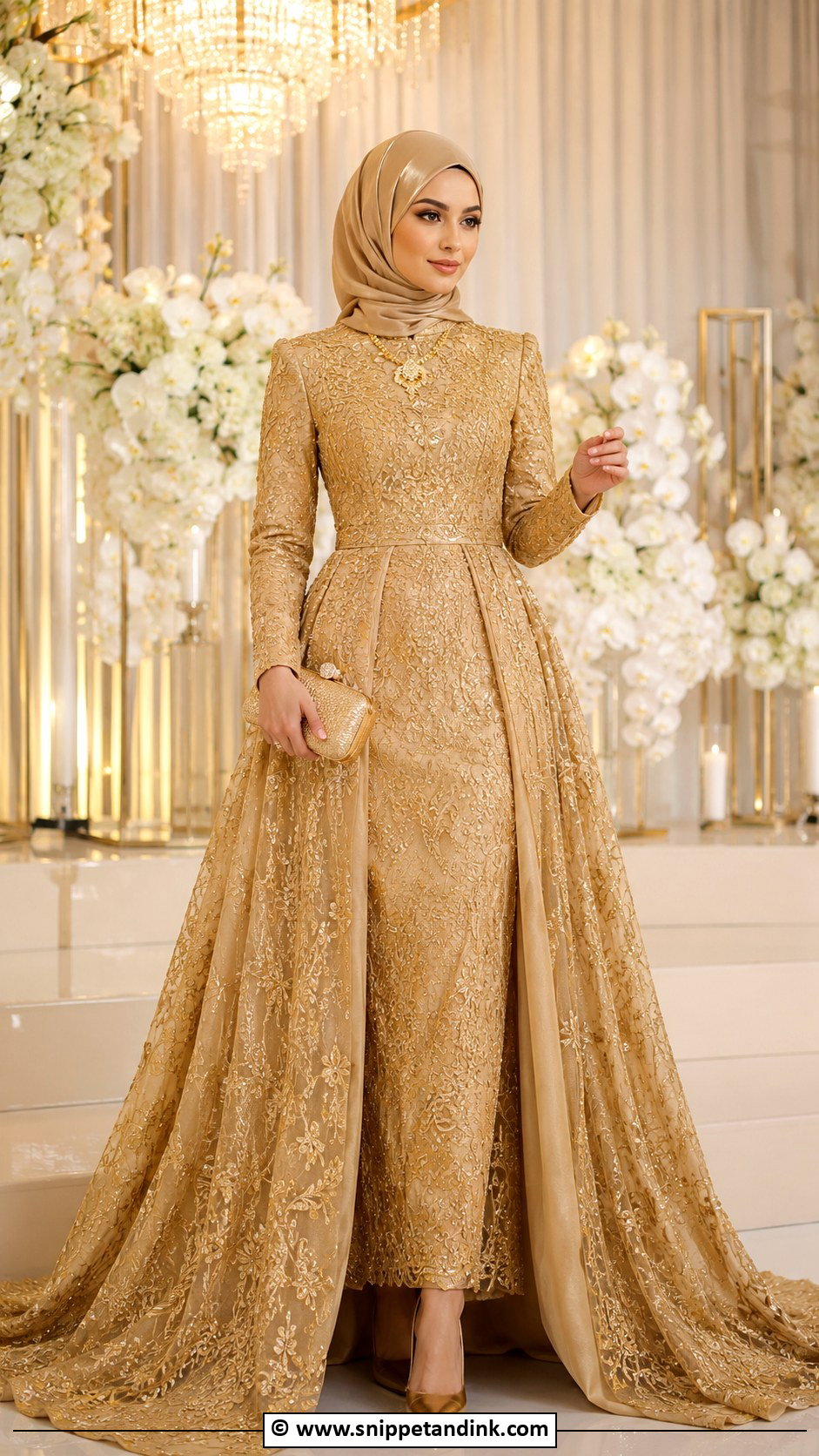
Gold gowns range from soft and antique to champagne gold, and the right shade depends on your skin tone and the venue light. Beadwork, sequins or zari-inspired embroidery add depth, but the cut should stay clean. Sequins can scratch the inner arm, so check the sleeves. A matching or ivory hijab balances the shine. Gold heels and a delicate headpiece finish it.
12. Red Muslim Wedding Gown
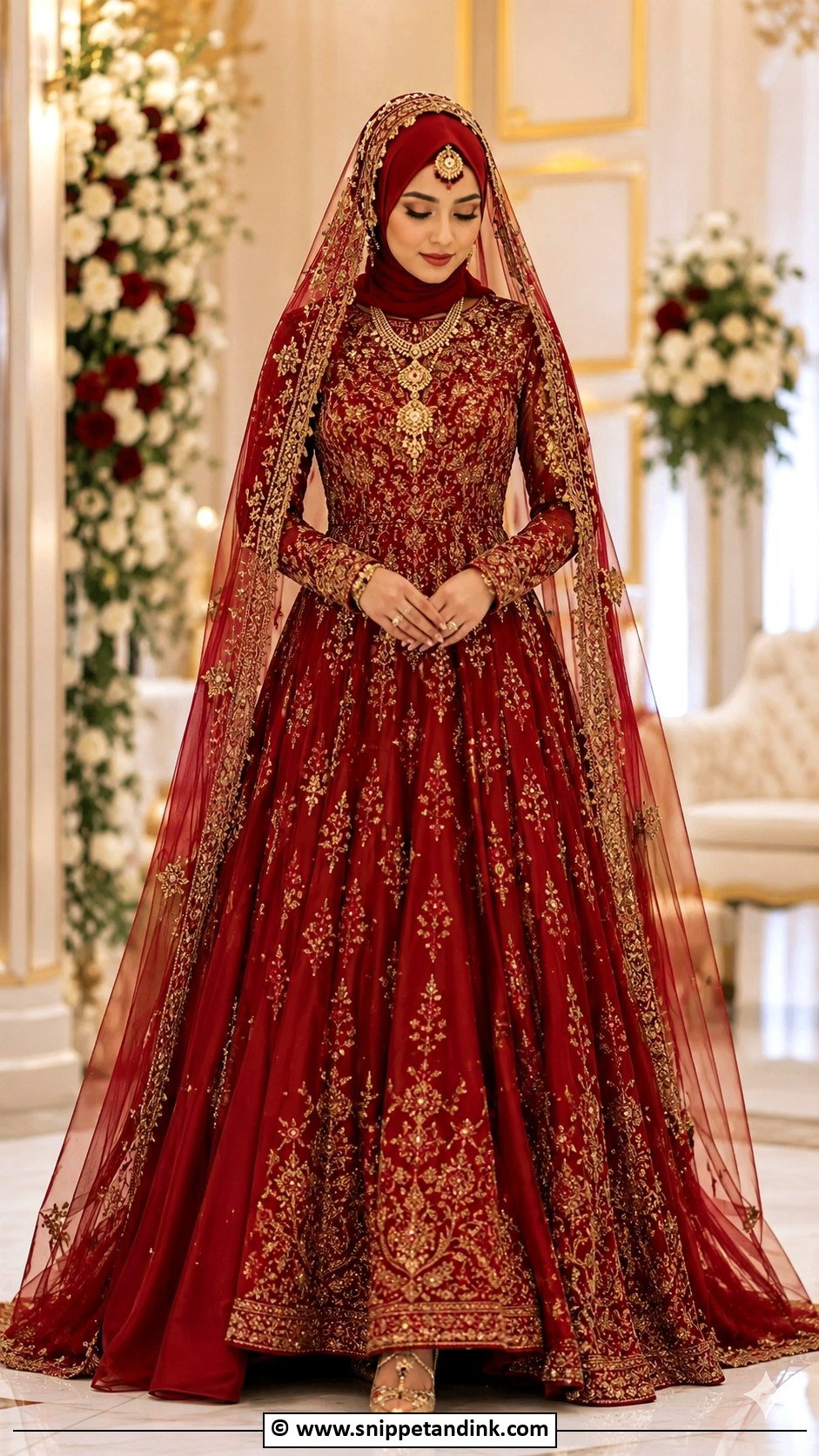
Red is a traditional bridal colour in many South Asian and some Arab communities, and it reads festive and rich. Ruby, maroon or cranberry in embroidered satin, velvet or brocade suit it. Heavy brocade and velvet are warm, so consider the season. Pair it with a red or gold hijab and a coordinating dupatta or veil. Gold jewellery and embellished heels complete it.
13. Green Muslim Wedding Gown
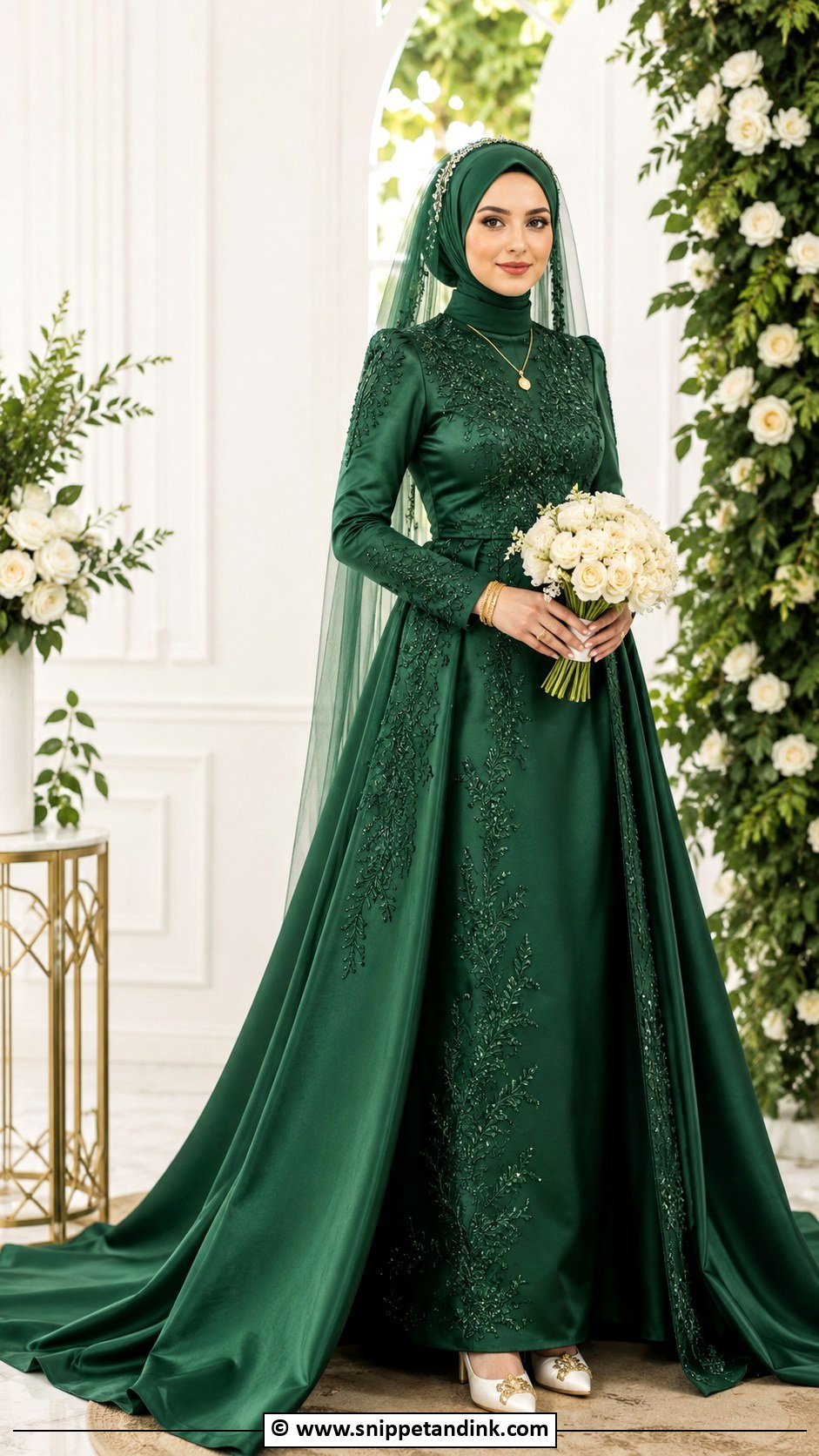
Green gives colour with depth: sage is soft and modern, emerald regal, olive earthy. Embroidery, beading or smooth satin suit it depending on the setting. A matching hijab keeps it cohesive; gold accessories add warmth. Ivory heels and a cream bouquet soften deeper greens. I’d check the shade in the venue light, since greens can shift a lot between daylight and warm bulbs.
14. Blue Muslim Wedding Gown
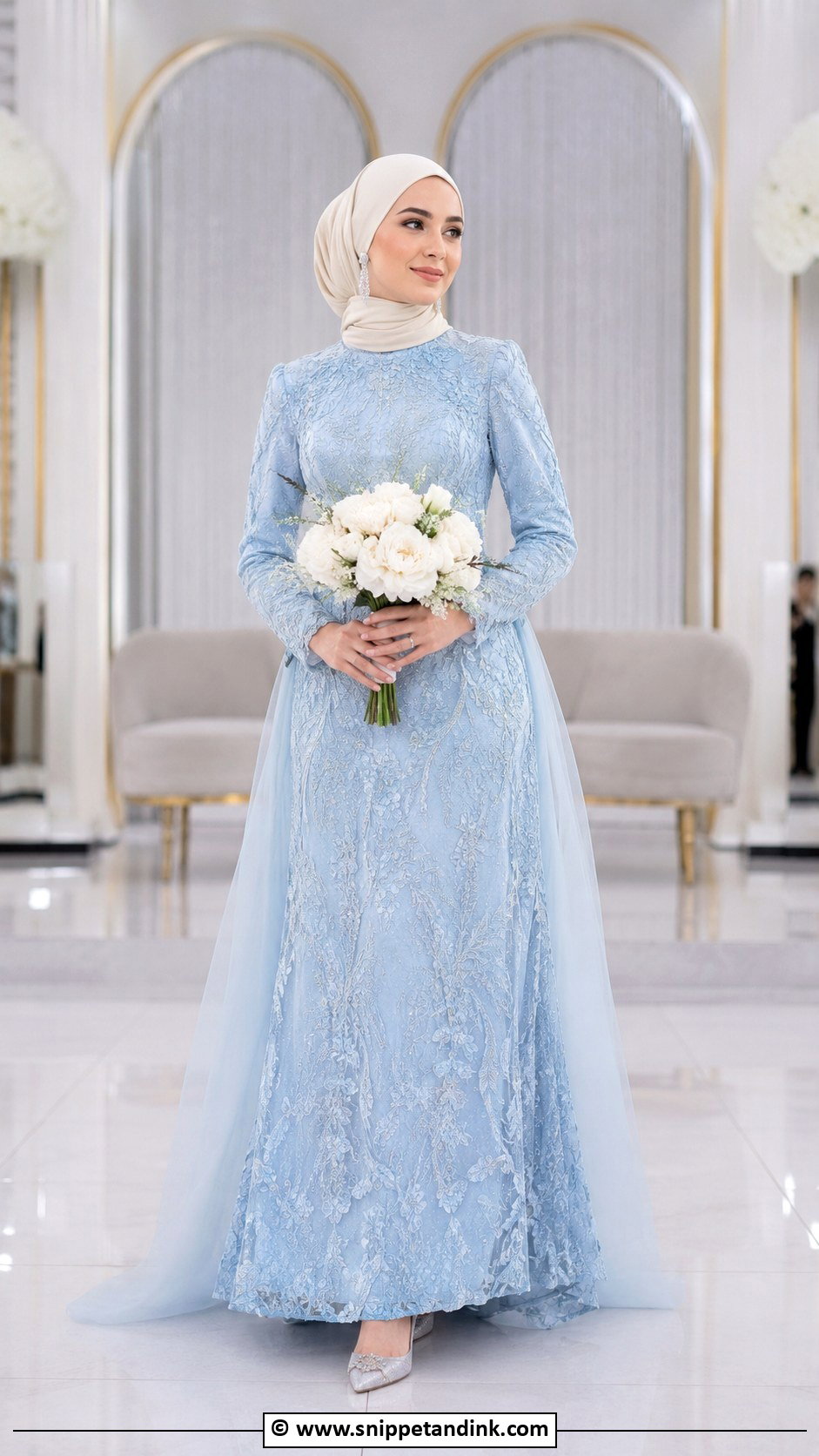
Powder blue is soft and airy; navy and steel blue feel formal. With a high neck, full sleeves and a flowing skirt the look stays modest. Lace, satin or embroidered tulle all work. An ivory hijab gives a brighter contrast than a matching one. Silver heels and crystal earrings suit blue better than gold, which can clash with cooler shades.
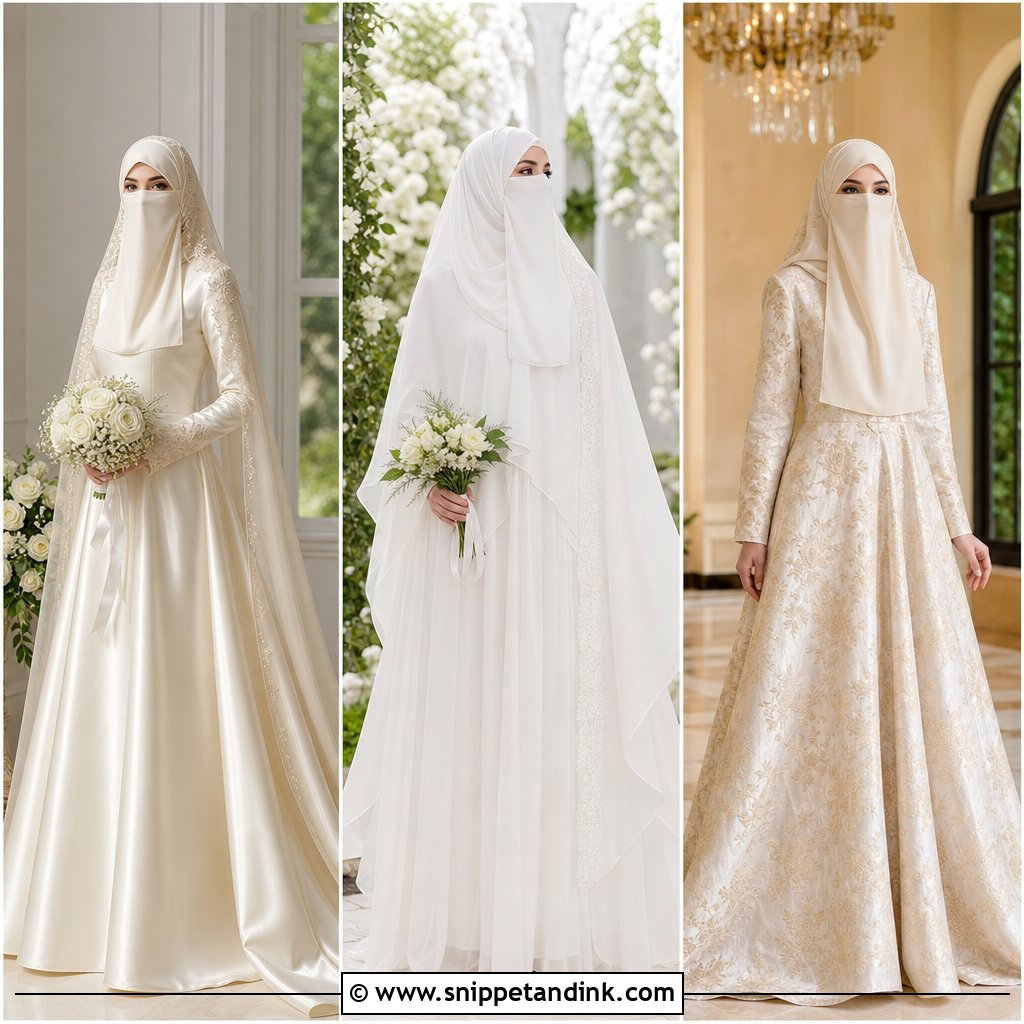
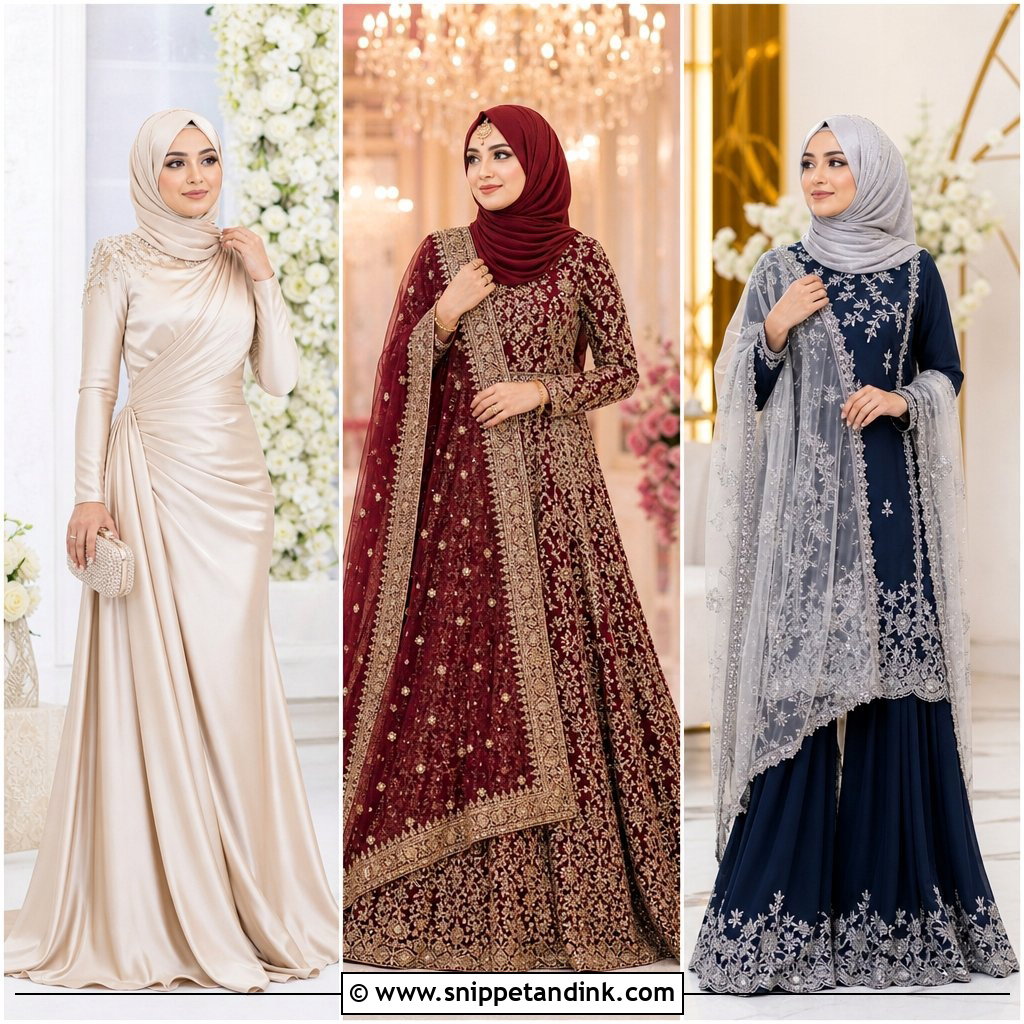
15. Ivory Muslim Wedding Gown
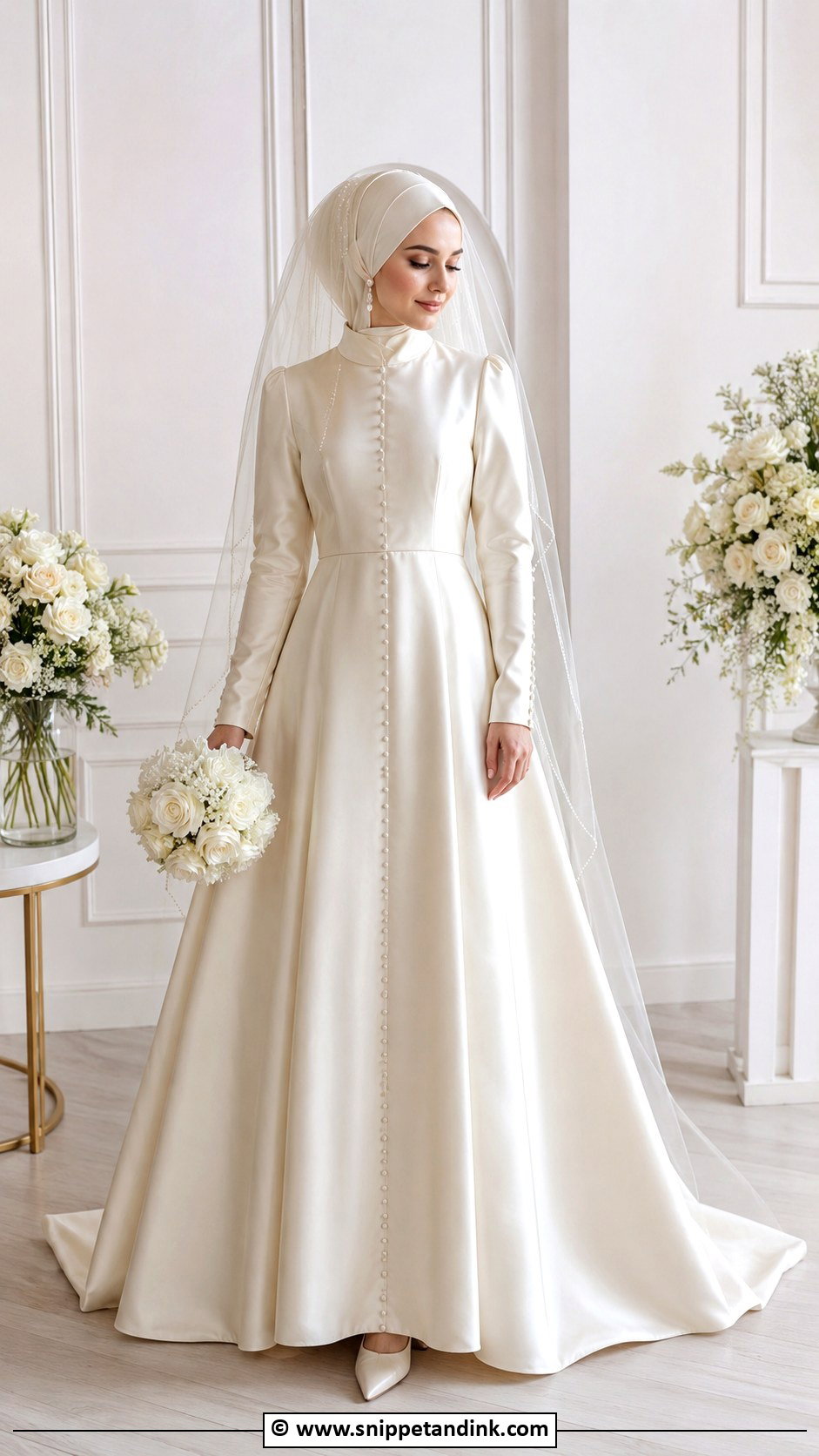
Ivory is softer than pure white and flatters more complexions. A long-sleeve gown with a high neck, gentle waist definition and a skirt that moves suits it. Lace, satin, chiffon and crepe all come in ivory, but ivories vary a lot between fabrics, so I’d get the hijab from the same fabric as the gown if possible. Pearl jewellery and closed-toe pumps complete it.
16. Crepe Muslim Wedding Gown
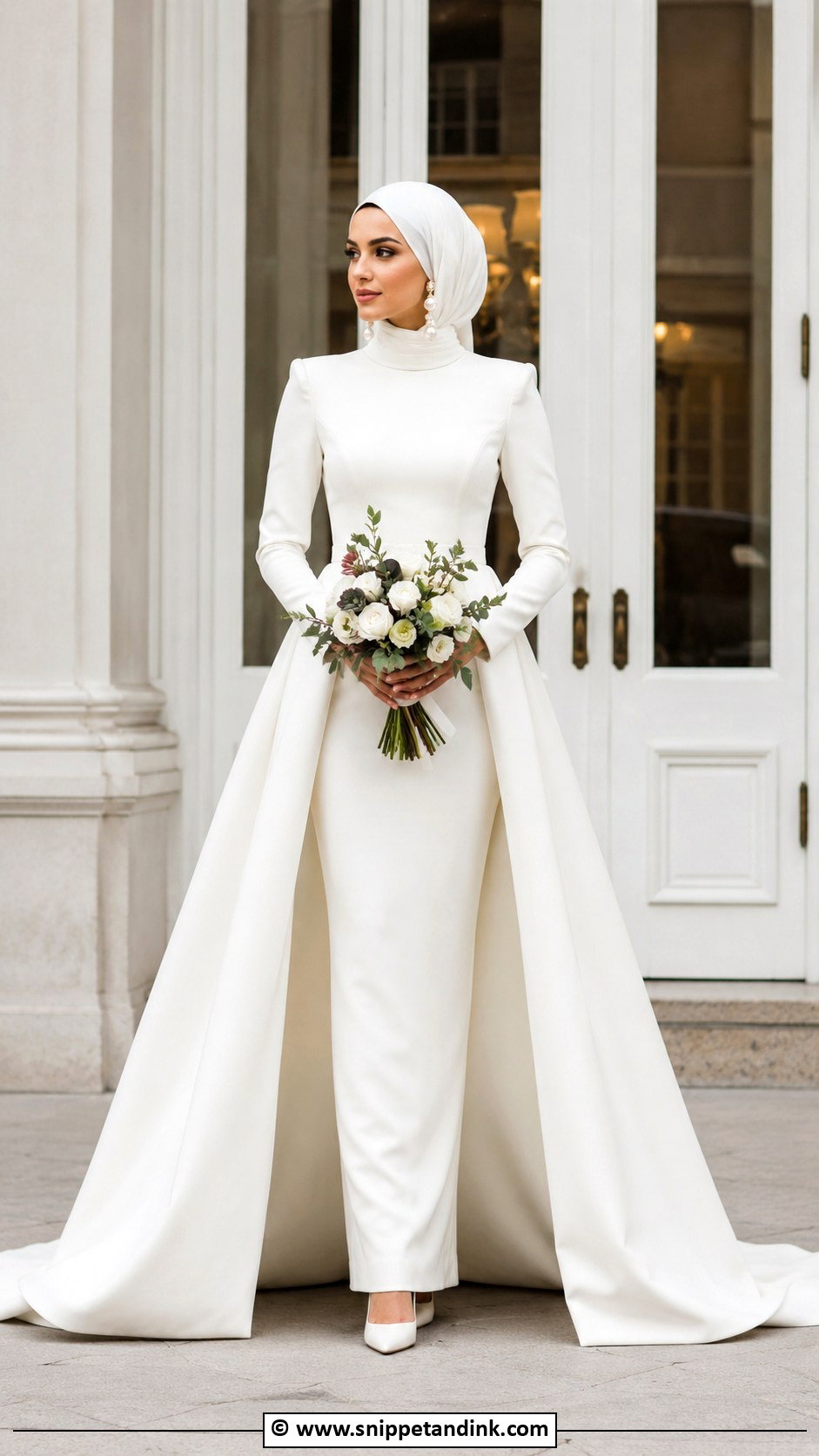
Crepe has a matte, smooth surface and a little structure, so it gives clean lines without sparkle. A long-sleeve column or A-line with a high neck suits it. Crepe shows the body’s shape more than satin does, so I’d fit it with a little ease at the hips for modest wear. A detachable overskirt, cape or long veil adds drama. A smooth hijab and sculptural pearl earrings suit it.
17. Chiffon Muslim Wedding Gown
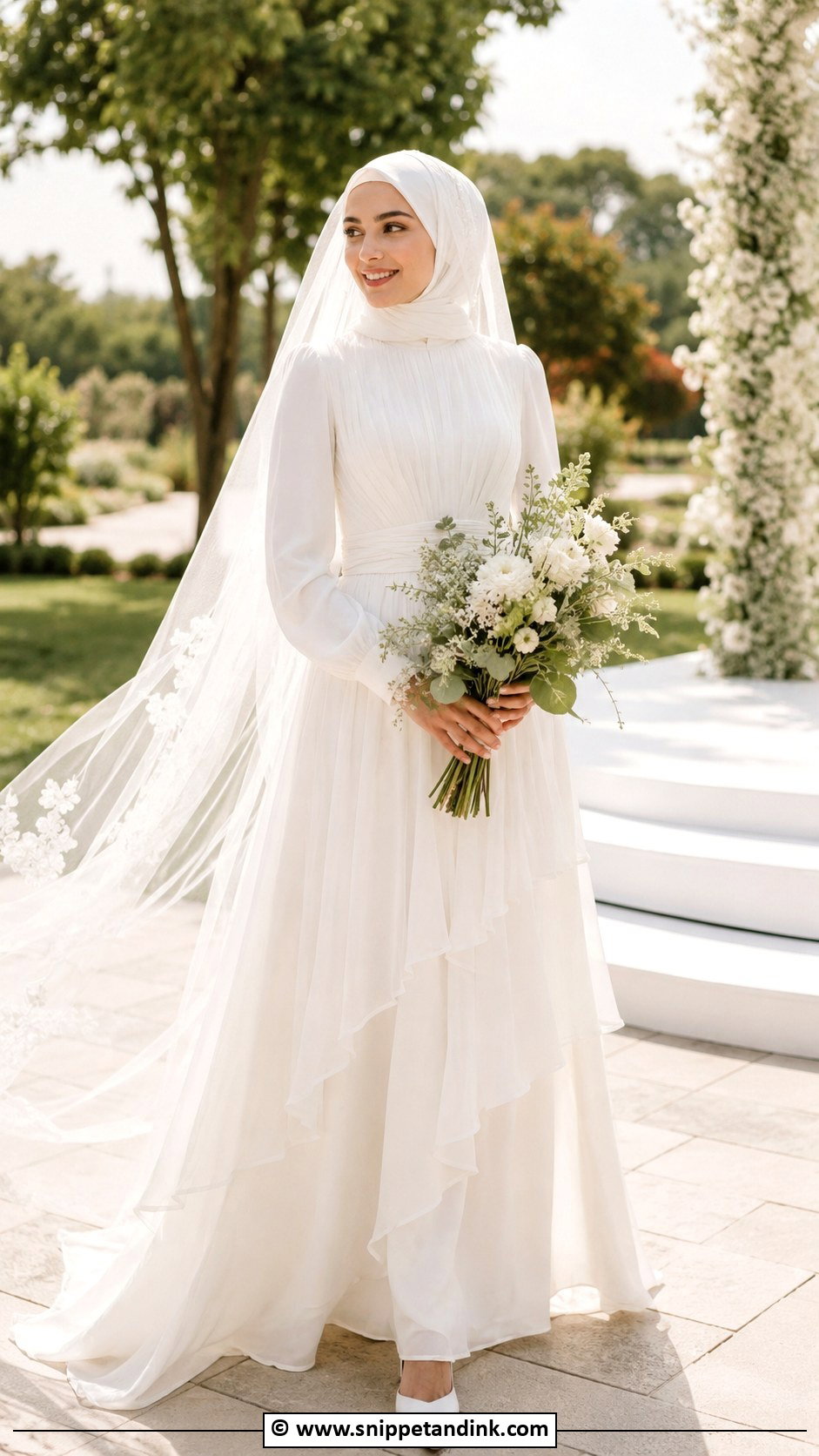
Chiffon is light and moves well, which makes it comfortable through a long ceremony and reception. A gathered bodice, long sleeves and a layered skirt give a modest shape without weight. Chiffon is sheer, so sleeves and bodice need lining for full coverage. A chiffon hijab drapes naturally with it. Low heels and a delicate veil finish it.
18. Tulle Muslim Wedding Gown
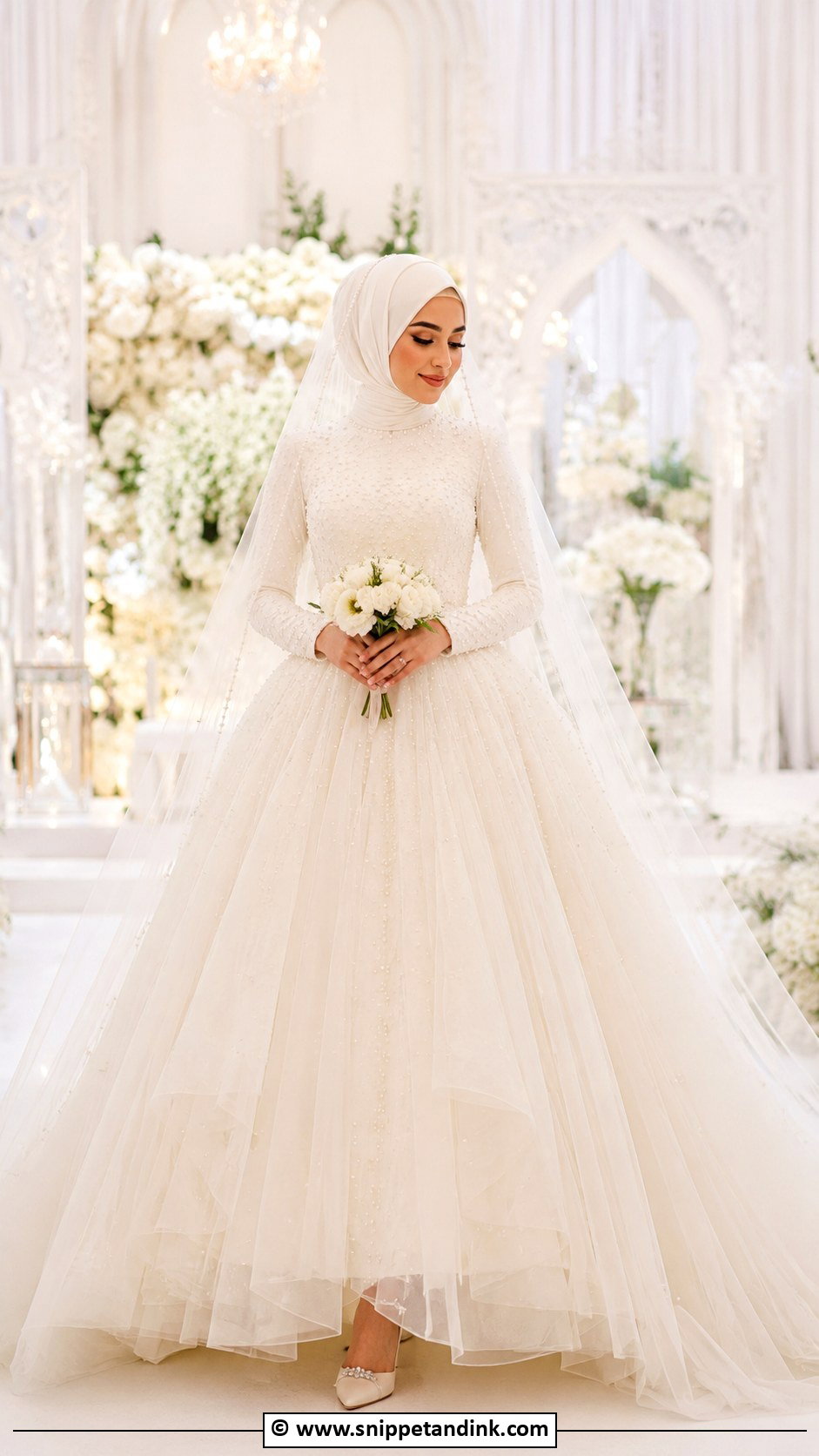
Tulle gives volume without the weight of satin, so it suits a princess-like silhouette that stays comfortable. A lined bodice, full sleeves and a high neck keep it modest; tulle sleeves are sheer and need lining for coverage. Embroidered or pearl-dotted tulle adds detail. A smooth hijab balances the airy skirt.
19. Velvet Muslim Wedding Gown
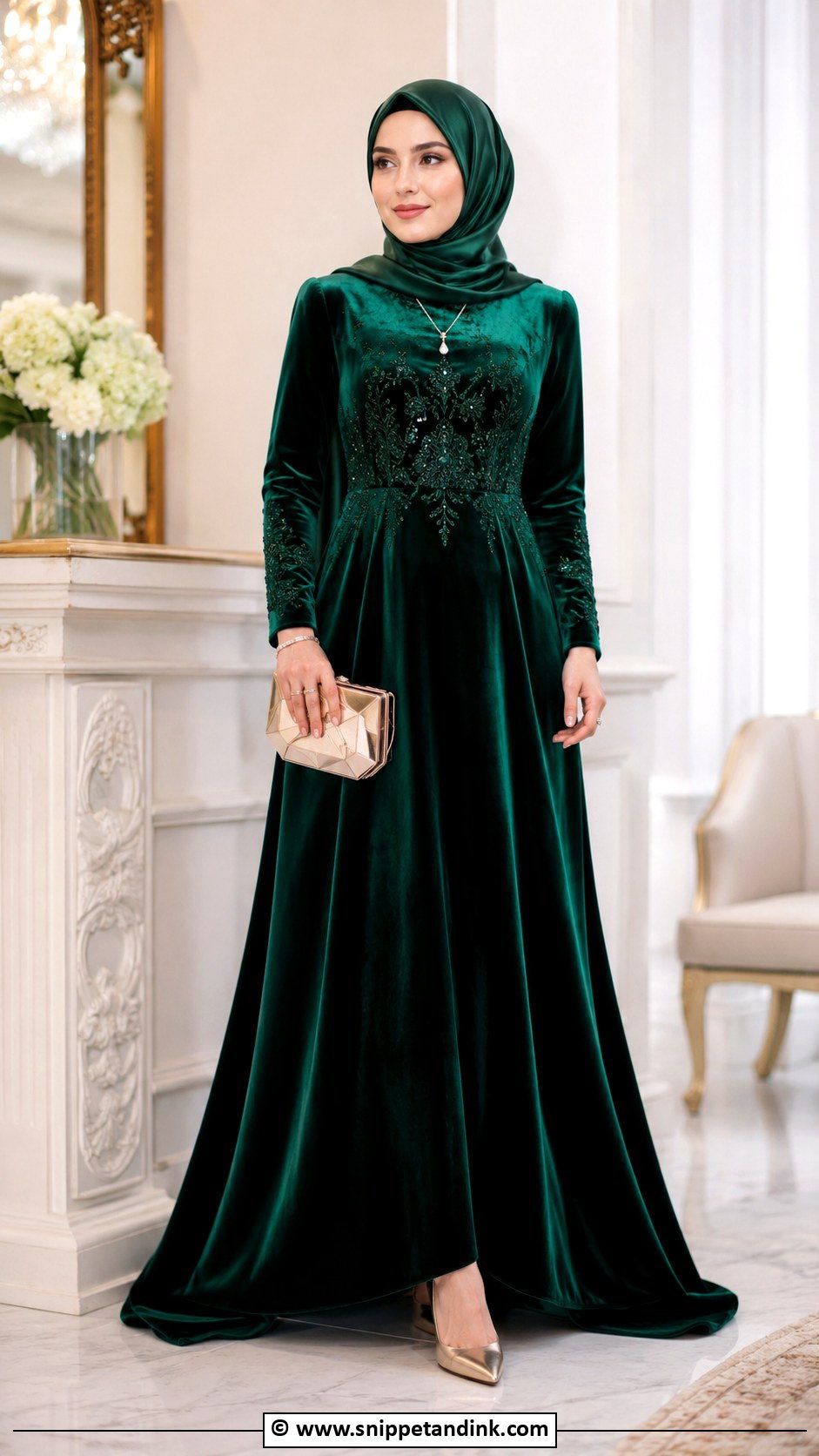
Velvet suits cool seasons and evening celebrations, and it looks rich in ivory, emerald, burgundy, navy or plum. It is warm and heavy, so I’d keep the silhouette simple with a slight flare. Velvet marks easily where it’s pressed or pinned, so steam it rather than iron it. A satin or chiffon hijab softens its weight. Metallic heels and refined jewellery suit it.

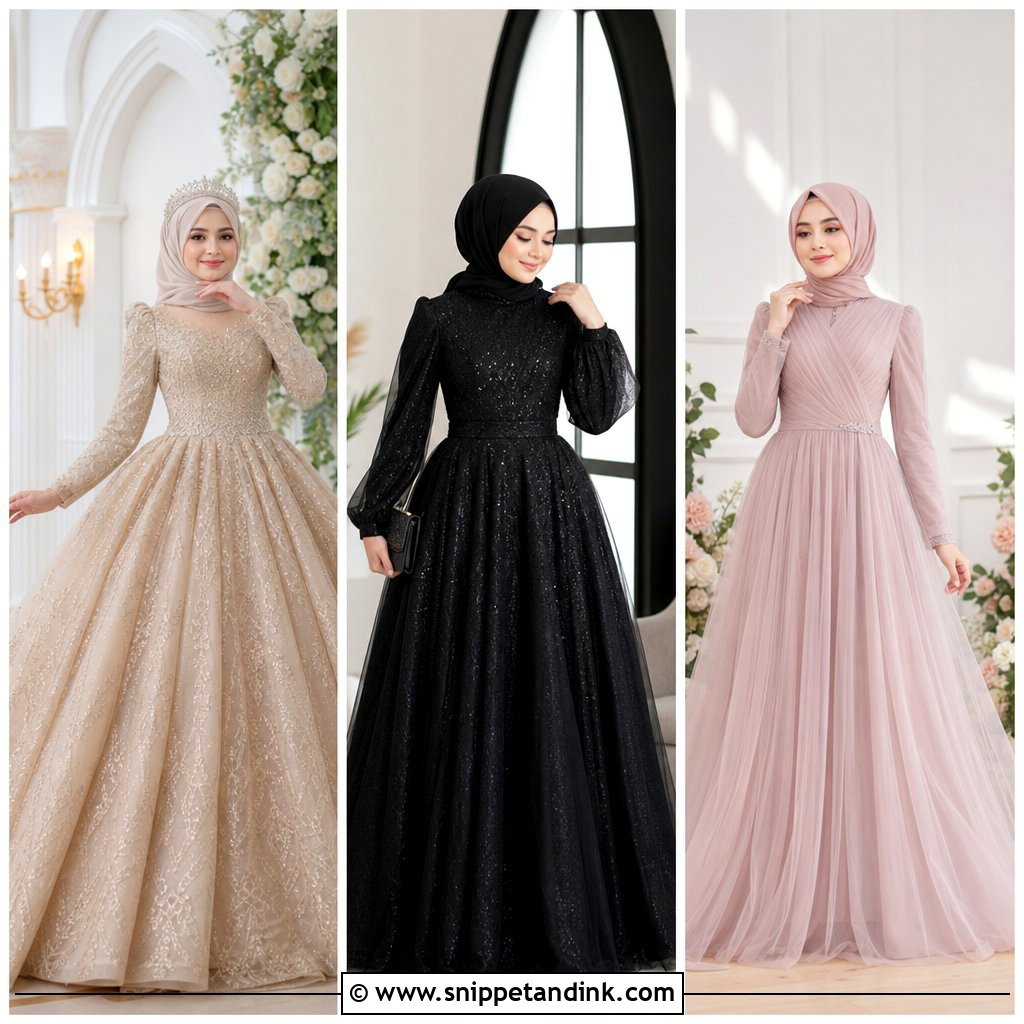
20. Long Sleeve Muslim Wedding Gown
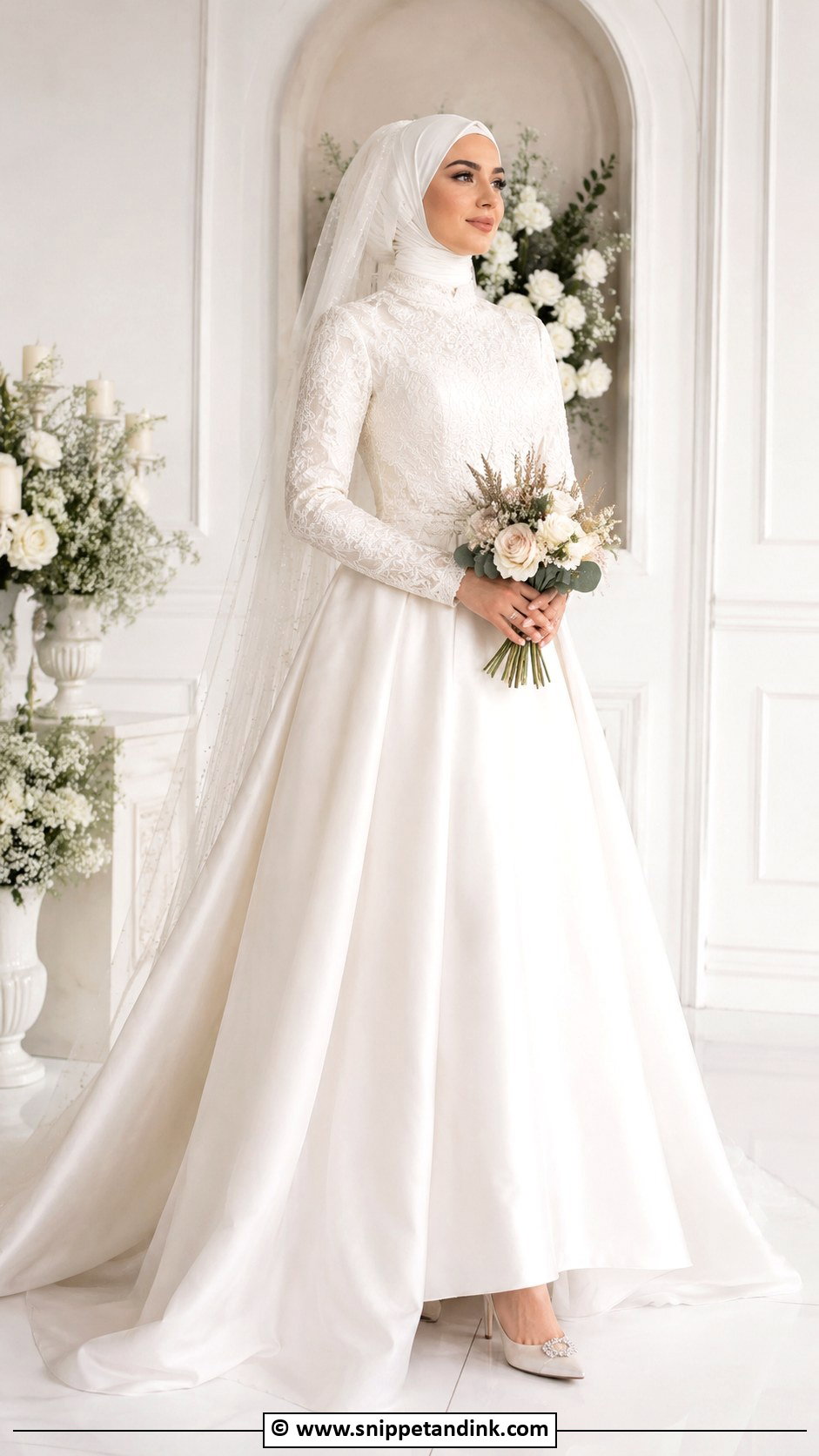
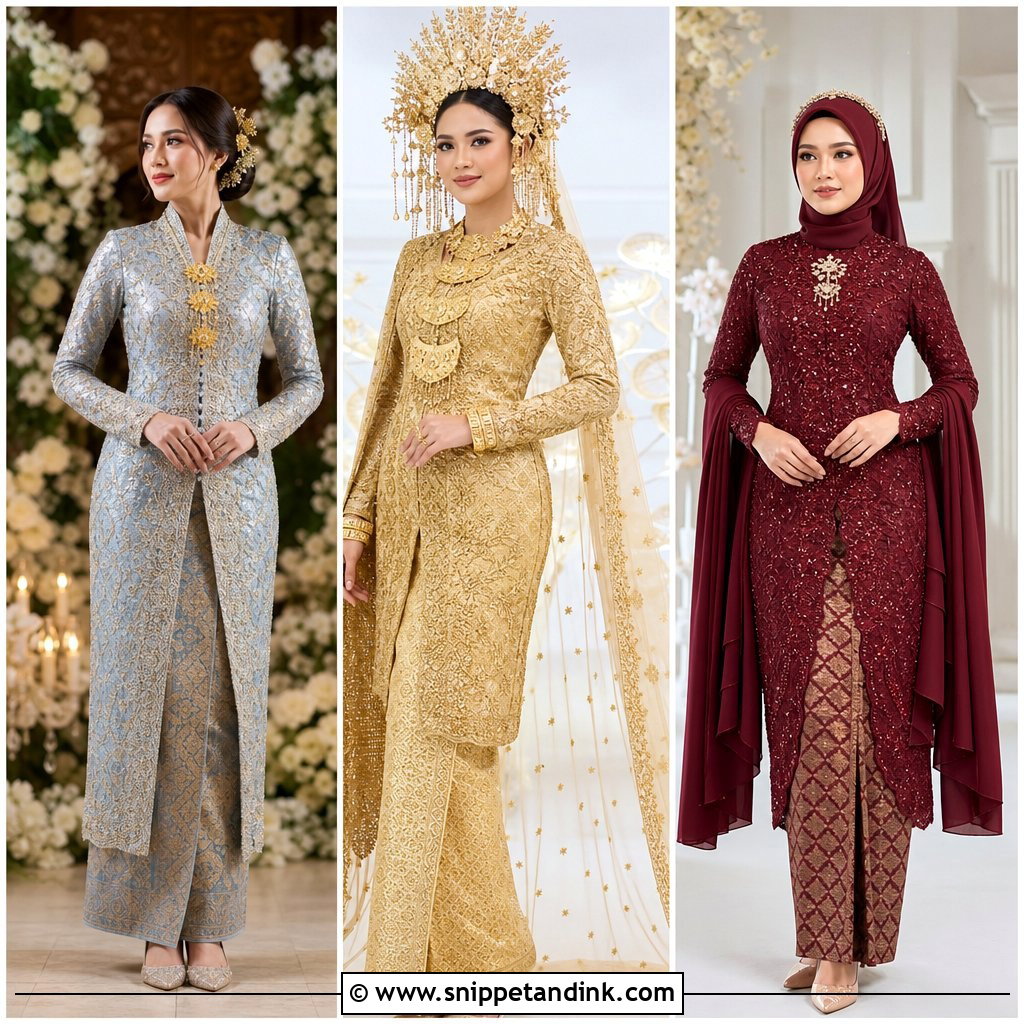
Long sleeves give coverage while leaving room for design: lace, satin, chiffon, beaded, embroidered or puffed. A high neck and full-length skirt make the look complete and hijab-friendly. If the sleeves are detailed, keep the hijab simple; if the gown is plain, a pearl veil or embellished hijab pin adds interest. I’d check that the sleeve allows the arms to lift for hugs without the cuff riding up.
21. High Neck Muslim Wedding Gown
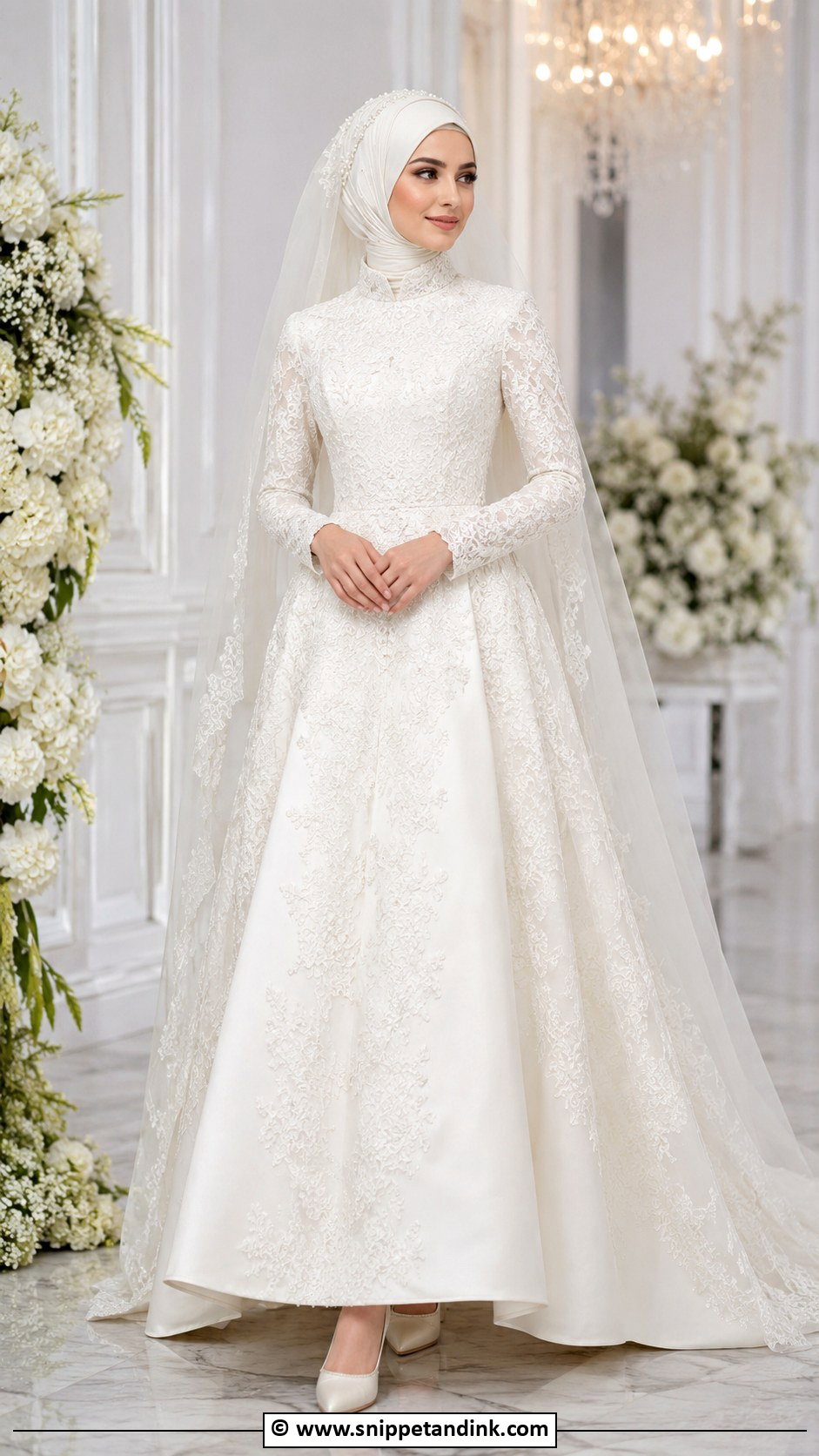
A high neckline gives full coverage and a long line from the face to the bodice. It works in lace, satin, crepe or embroidered fabric. The fit at the neck matters: too tight is uncomfortable, too loose gapes under the hijab. A fitted bodice with an A-line skirt feels classic; a high-neck column feels modern. A hijab in the same shade keeps the line unbroken.
22. Simple Muslim Wedding Gown
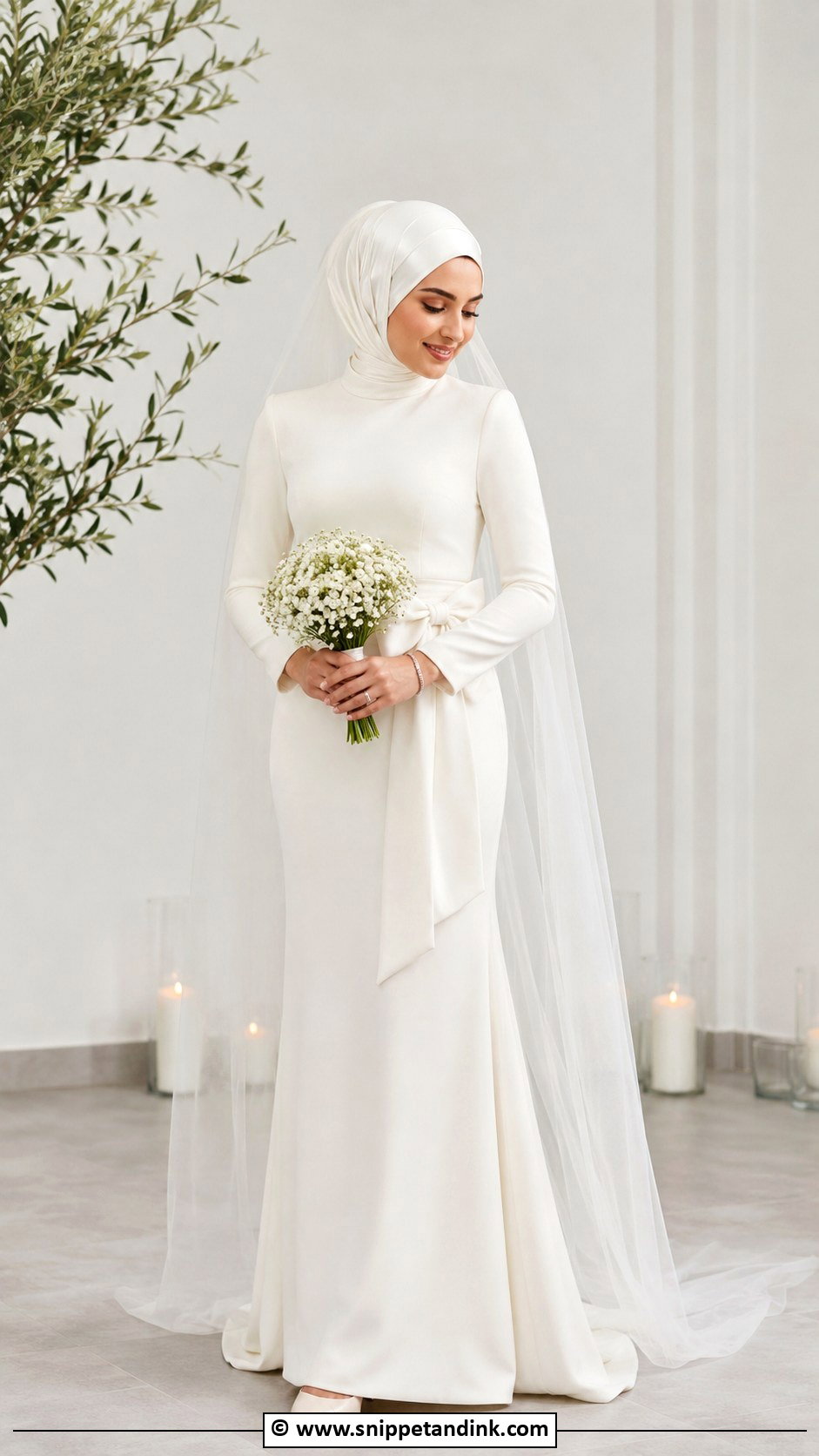
A simple gown depends on clean fabric and a good fit. Plain satin, crepe or chiffon with long sleeves and a high neck can look very refined. I’d choose one special detail, pearl buttons, a bow at the waist or a subtle train, and leave the rest plain. A matching hijab and a smooth veil finish it. It suits intimate nikah ceremonies and civil weddings.
23. Modern Muslim Wedding Gown
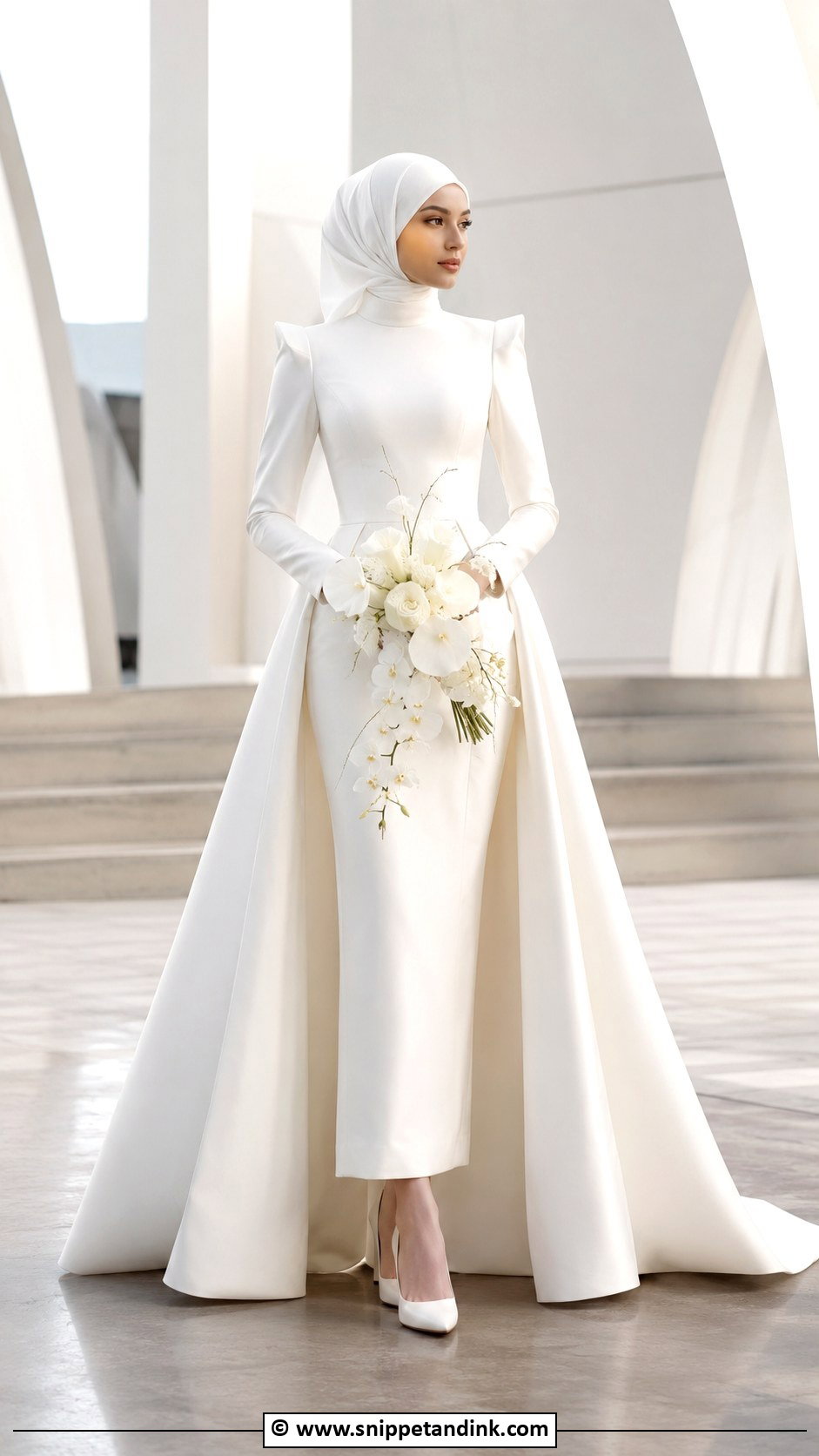
Modern modest gowns use clean structure: sharp shoulders, a sleek waist, a cape overlay, a detachable skirt or minimal beadwork. They still need full sleeves, lining and a neckline that works with the hijab. White, ivory, champagne and soft grey suit them. Keep accessories minimal so the shape stands out.
24. Traditional Muslim Wedding Gown
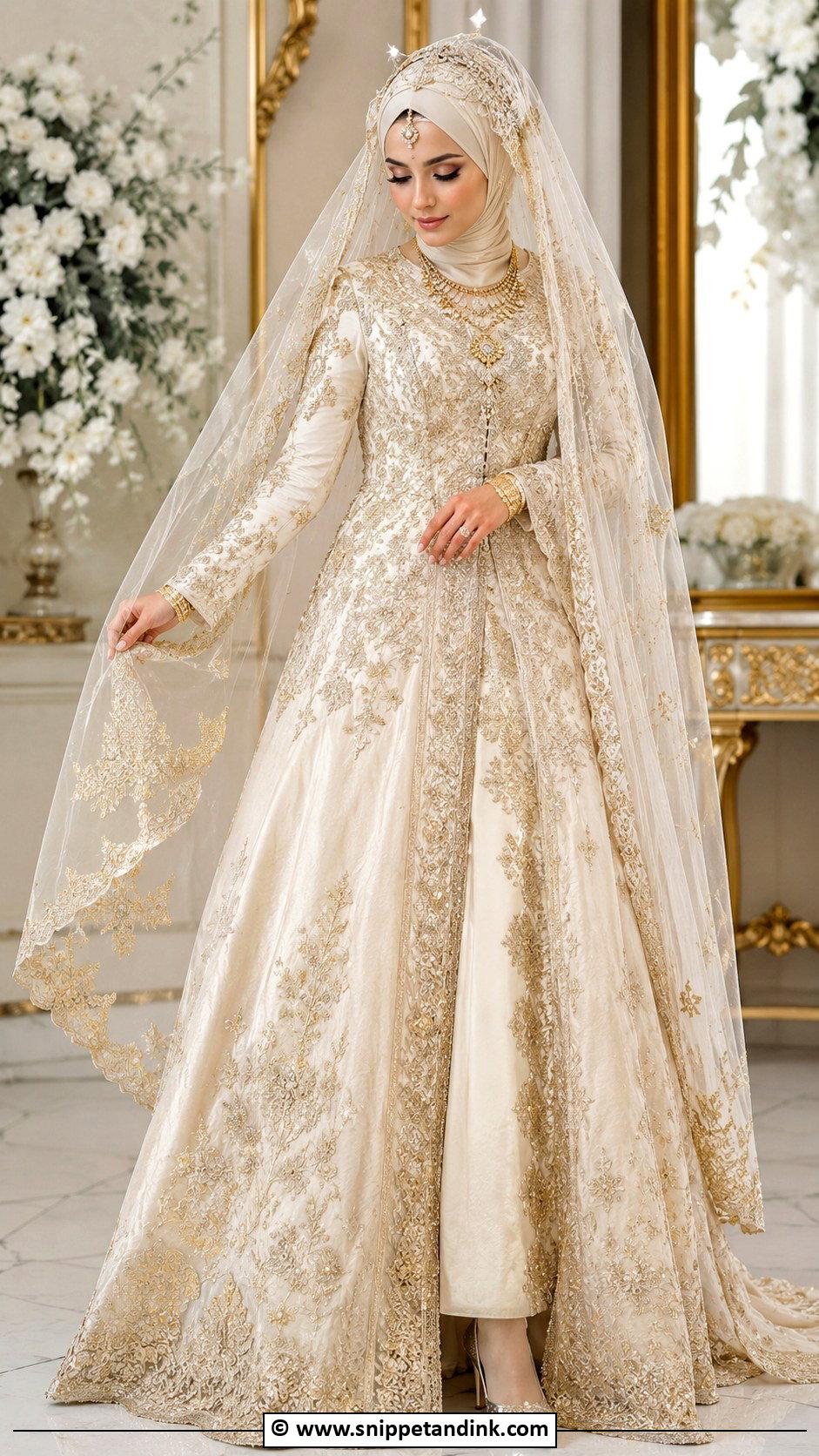
Traditional gowns reflect heritage: embroidery, gold accents, a full skirt, and a veil or dupatta over the hijab. Depending on your background, they may lean Arab, Turkish, South Asian, Malay, Somali or North African. I’d ask your family which details carry meaning, because some colours, motifs or pieces of jewellery may be expected. Jewellery can be more ornate for large celebrations.



25. Pakistani Muslim Wedding Gown
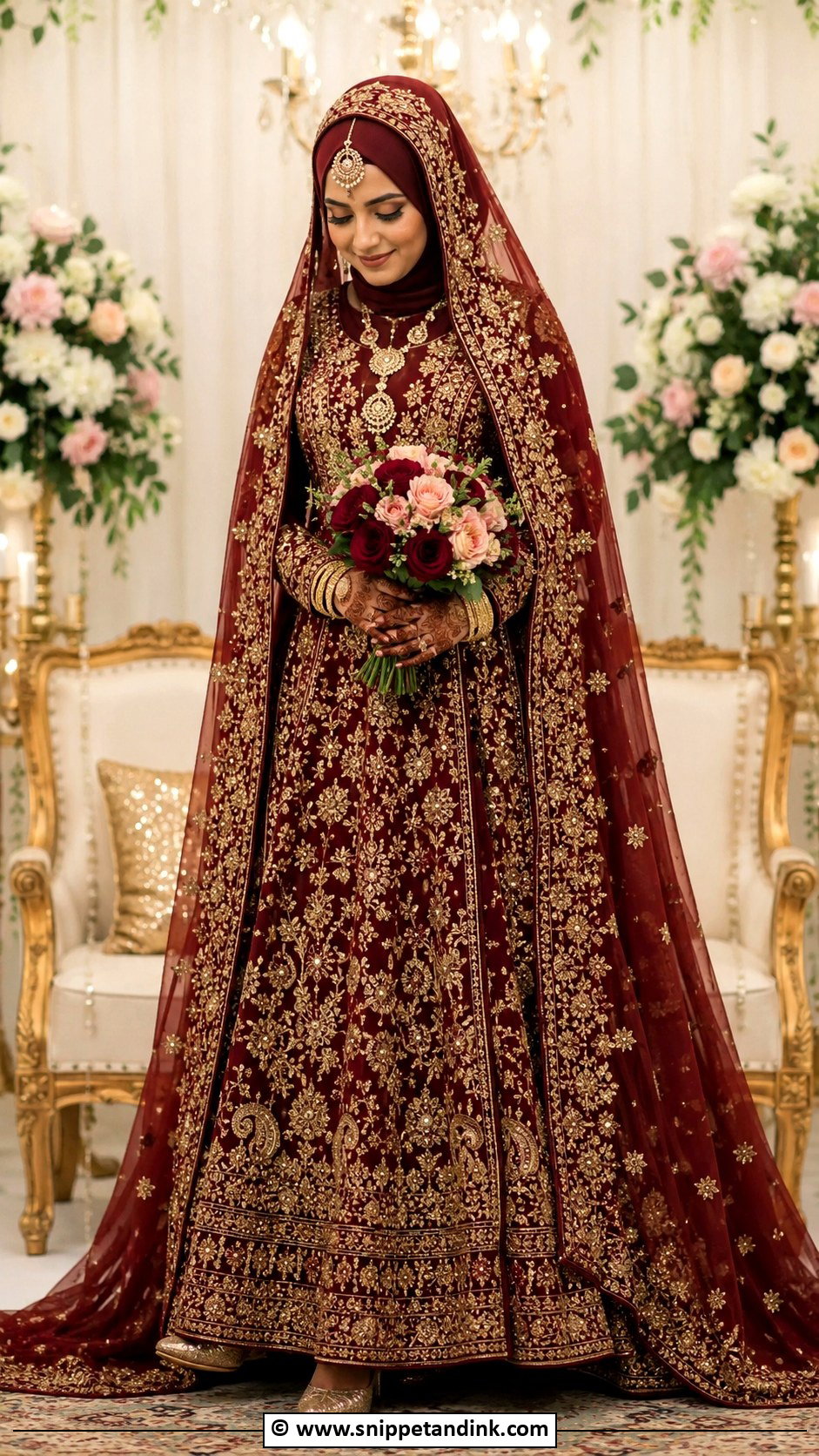
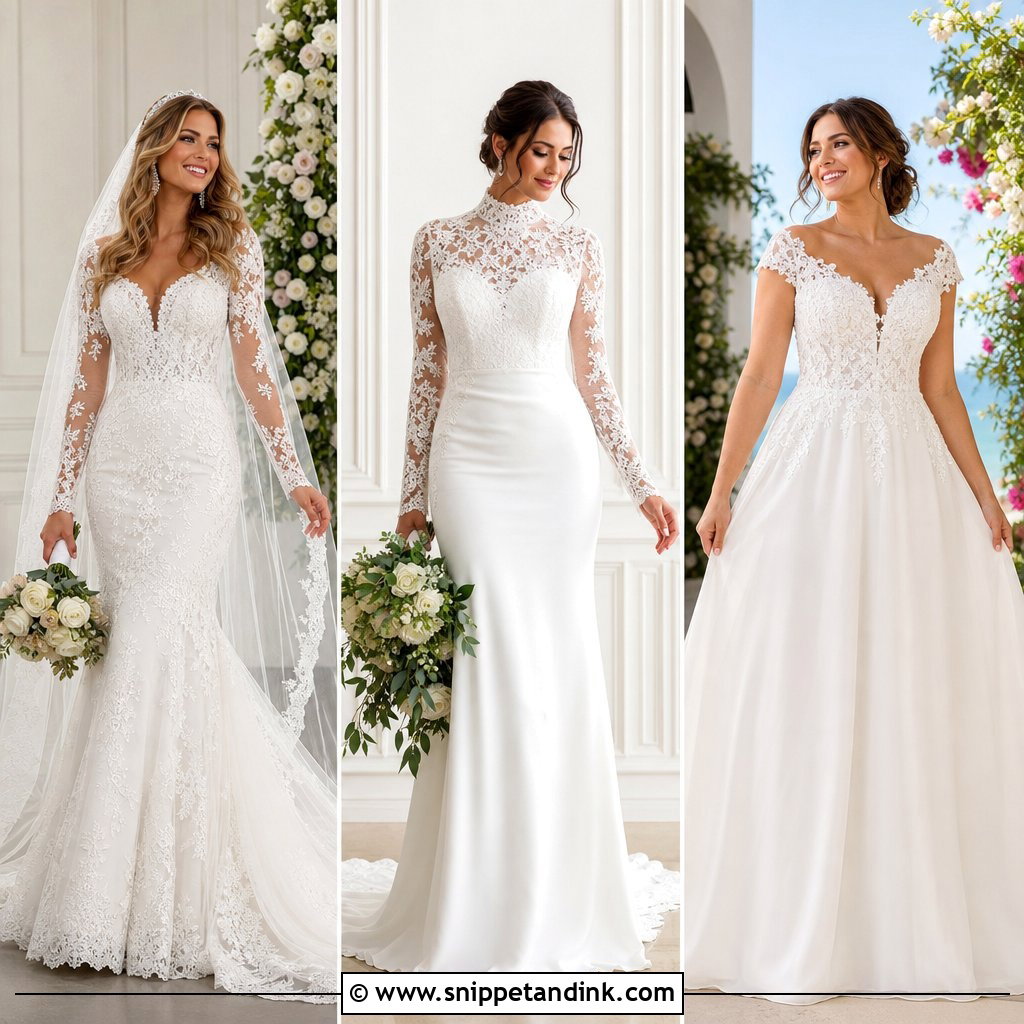
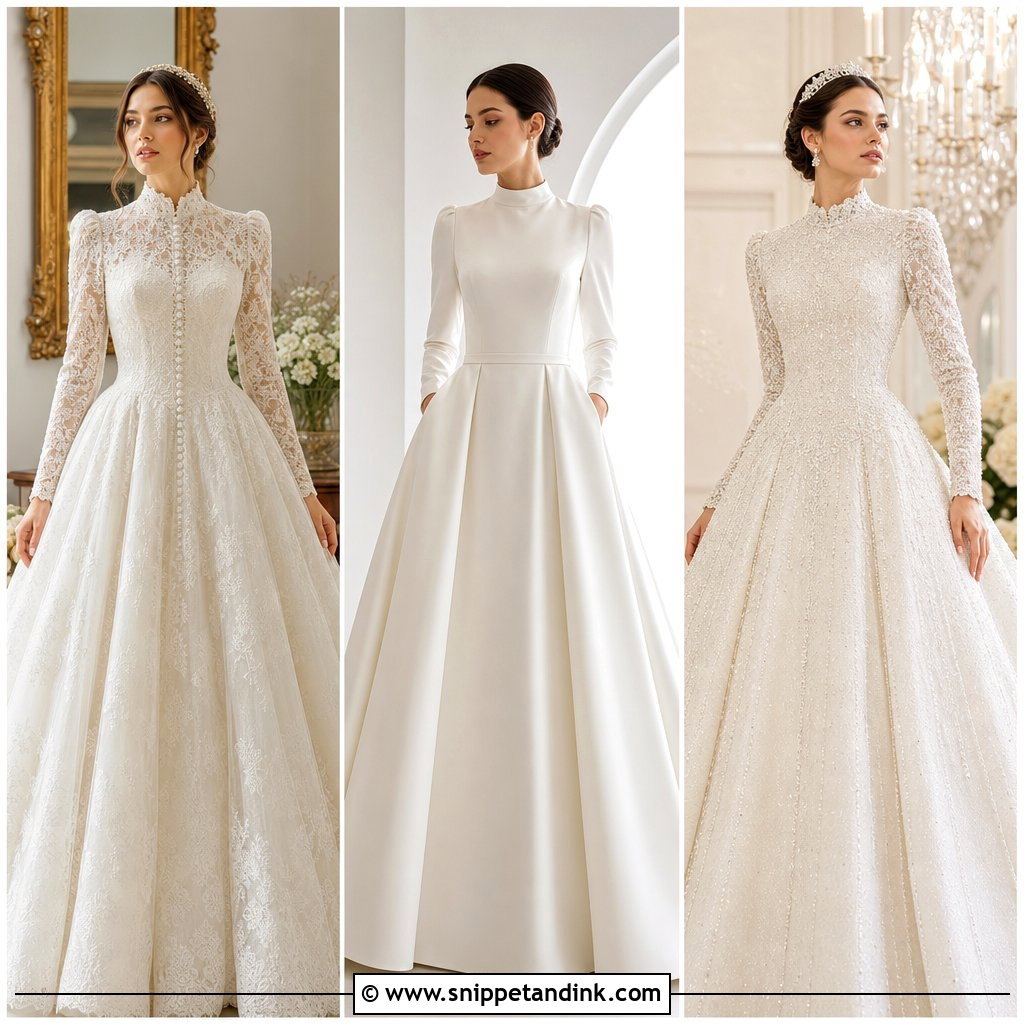
Pakistani bridal wear blends rich embroidery, coverage and festive colour. Popular choices include long maxi gowns, peshwas-inspired dresses, embroidered frocks and lehenga-style gowns with full sleeves. Heavily embroidered pieces are often very heavy, so I’d try one on for a while before committing. A dupatta can drape over the hijab. Colour and detail usually change across mehndi, nikah, baraat and walima.
26. Turkish Muslim Wedding Gown
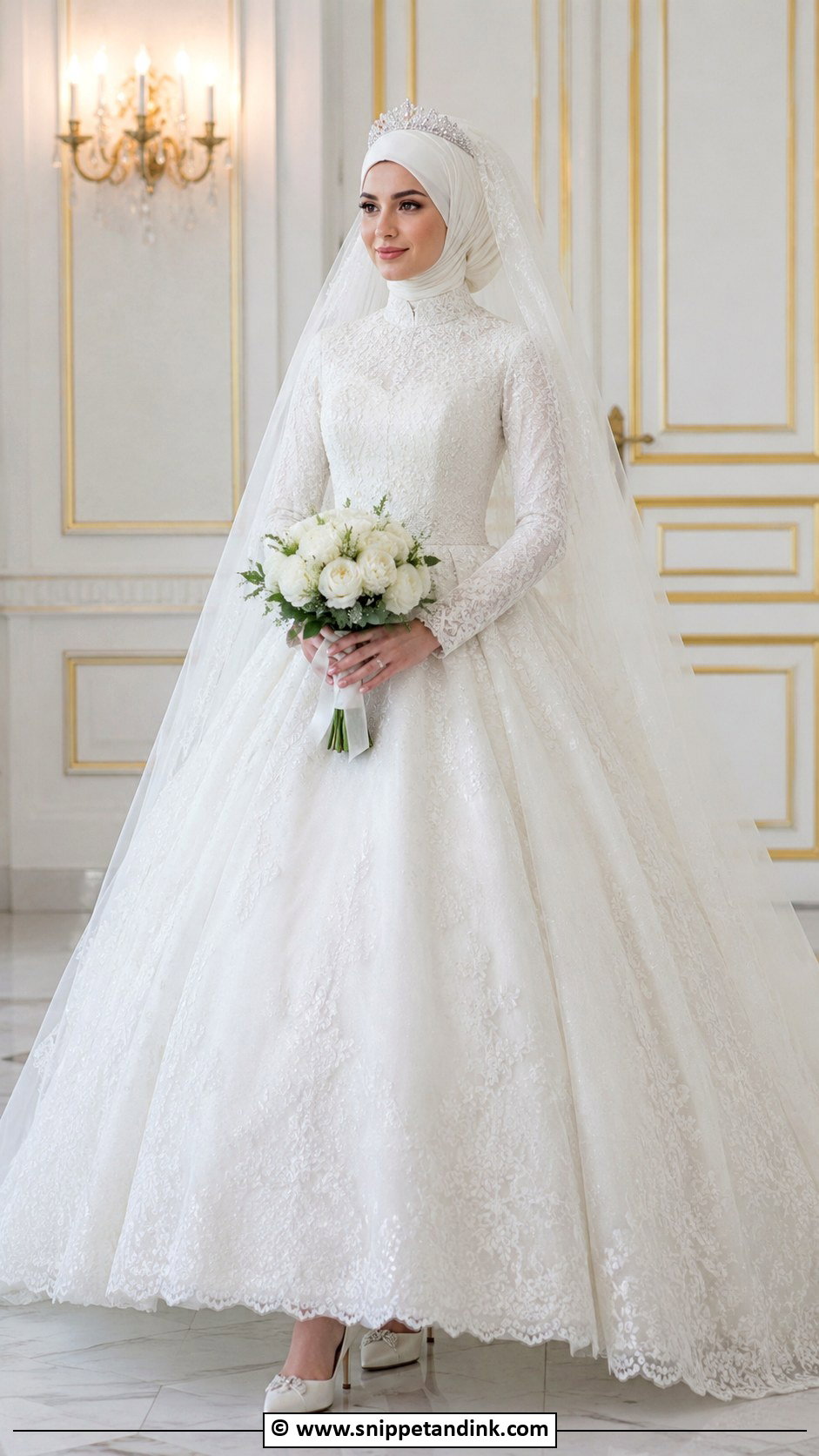
Turkish-inspired gowns often have high necks, long sleeves, fitted bodices, full skirts and ornate lace or embroidery. White and ivory are most common. A structured hijab style with a tiara or crown is typical, and it needs firm pinning to hold the crown’s weight. A long veil adds drama. Keep jewellery minimal if the gown is detailed.
27. Arabic Muslim Wedding Gown
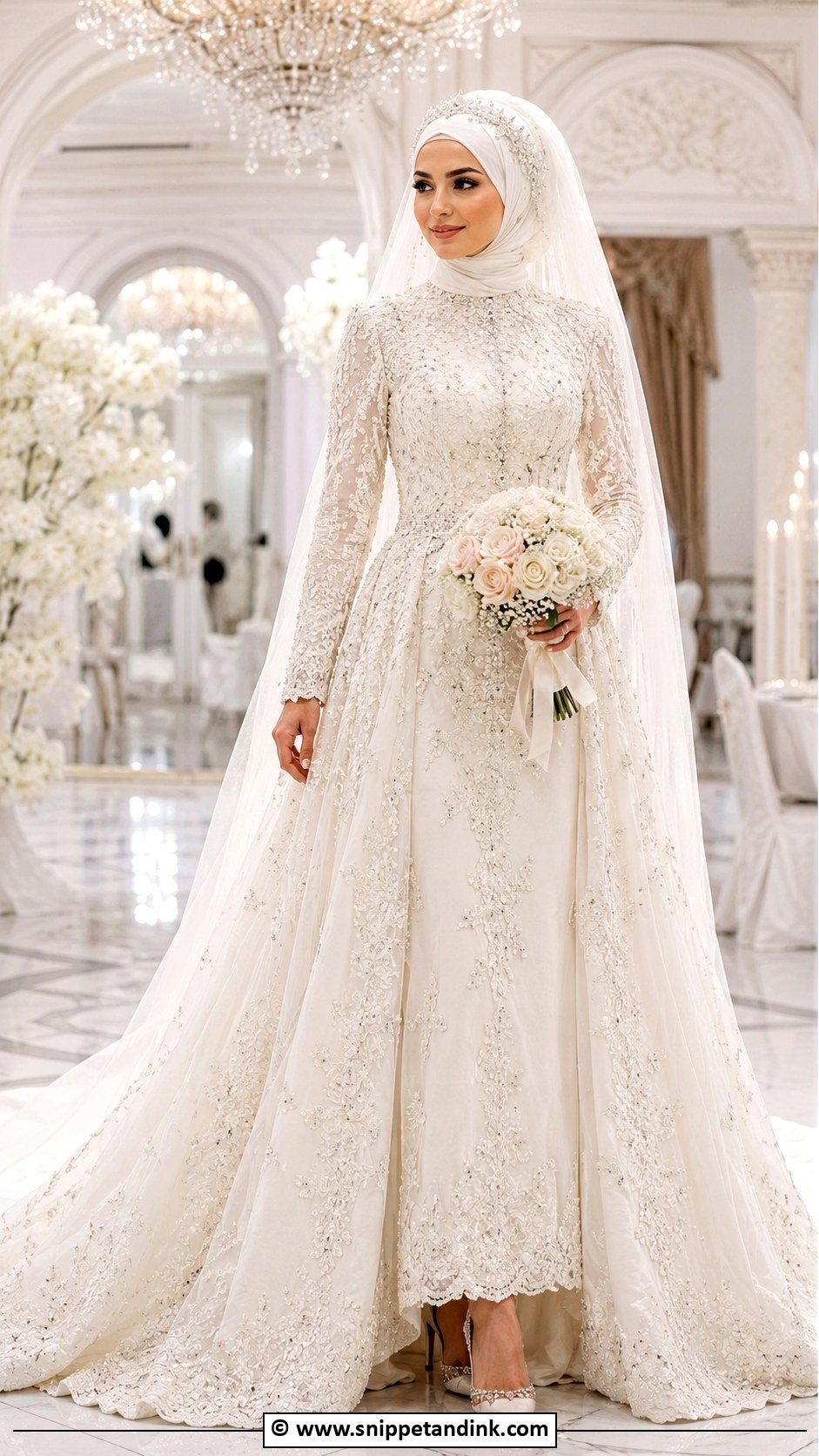
An Arabic Muslim wedding gown is often glamorous and richly detailed, with beadwork, crystal embroidery, lace sleeves and a flowing train. White, ivory, champagne and gold are common; deeper colours can suit receptions. I’d look for full lining, comfortable sleeves and enough room to move during greetings. A jewelled headpiece over the hijab adds sparkle.
28. Abaya Muslim Wedding Gown
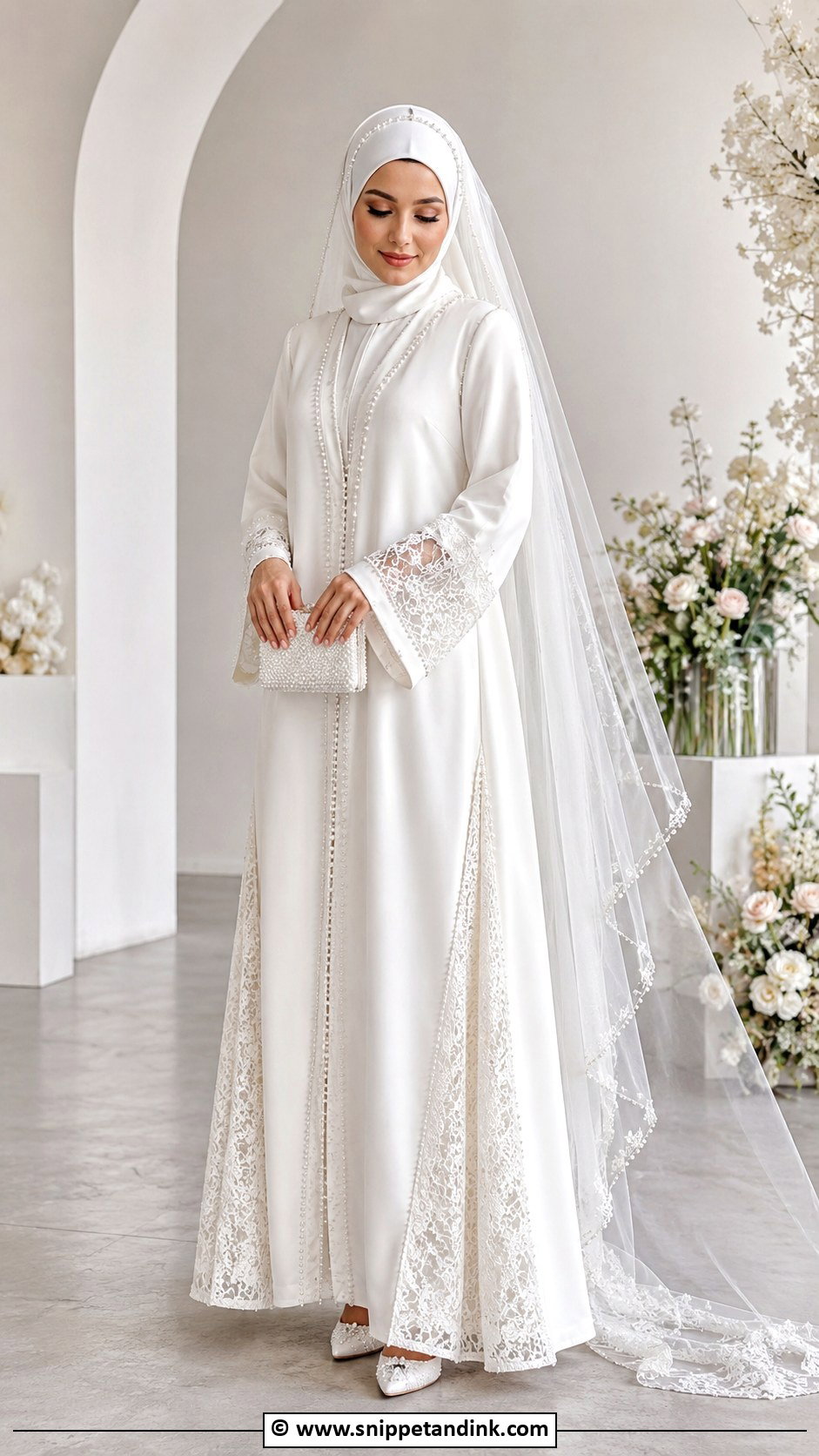
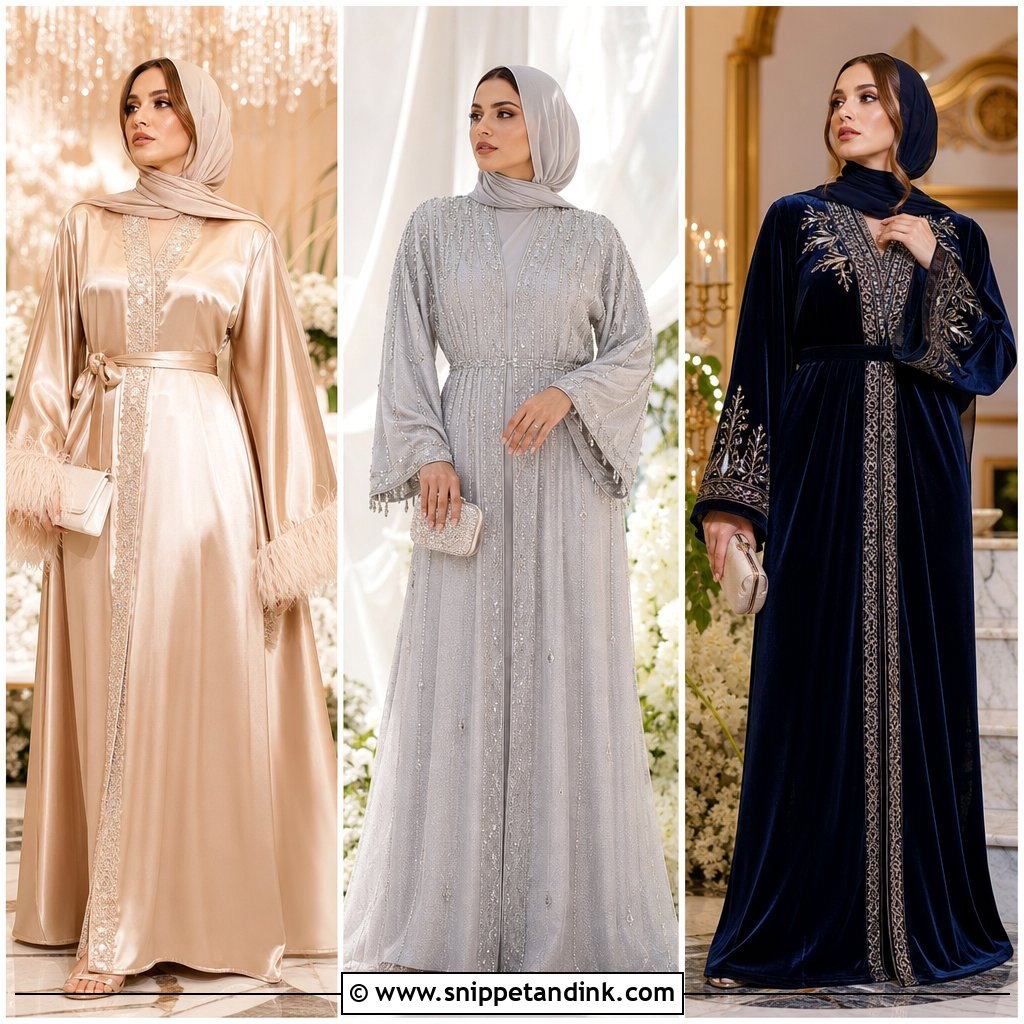
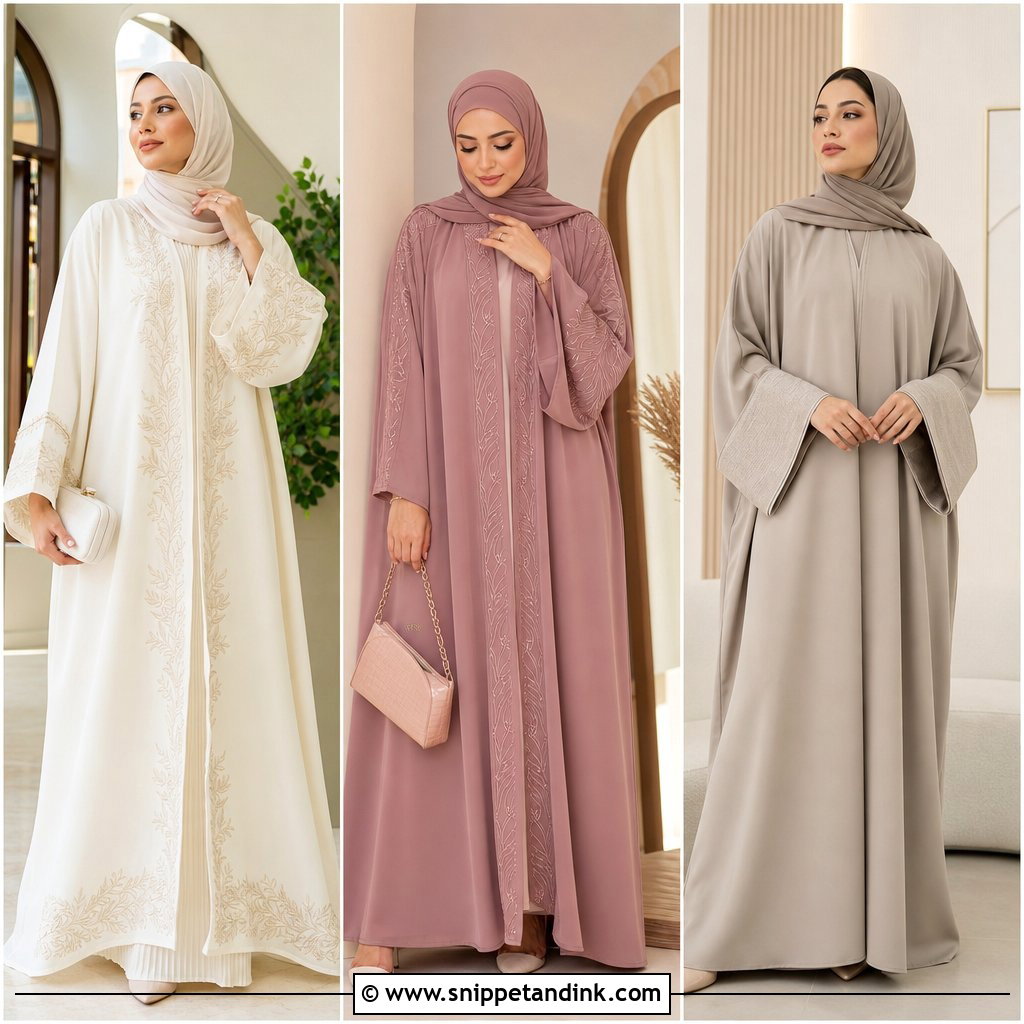
A bridal abaya can be made from satin, crepe, chiffon, lace or embroidered fabric, and in white or ivory with pearls, crystal trim or lace panels it feels as special as a gown. The loose silhouette gives full coverage and easy movement. I’d still have it fitted at the shoulders and sleeve length so it doesn’t look borrowed. It suits nikah ceremonies and intimate weddings particularly well.
29. Lehenga Muslim Wedding Gown
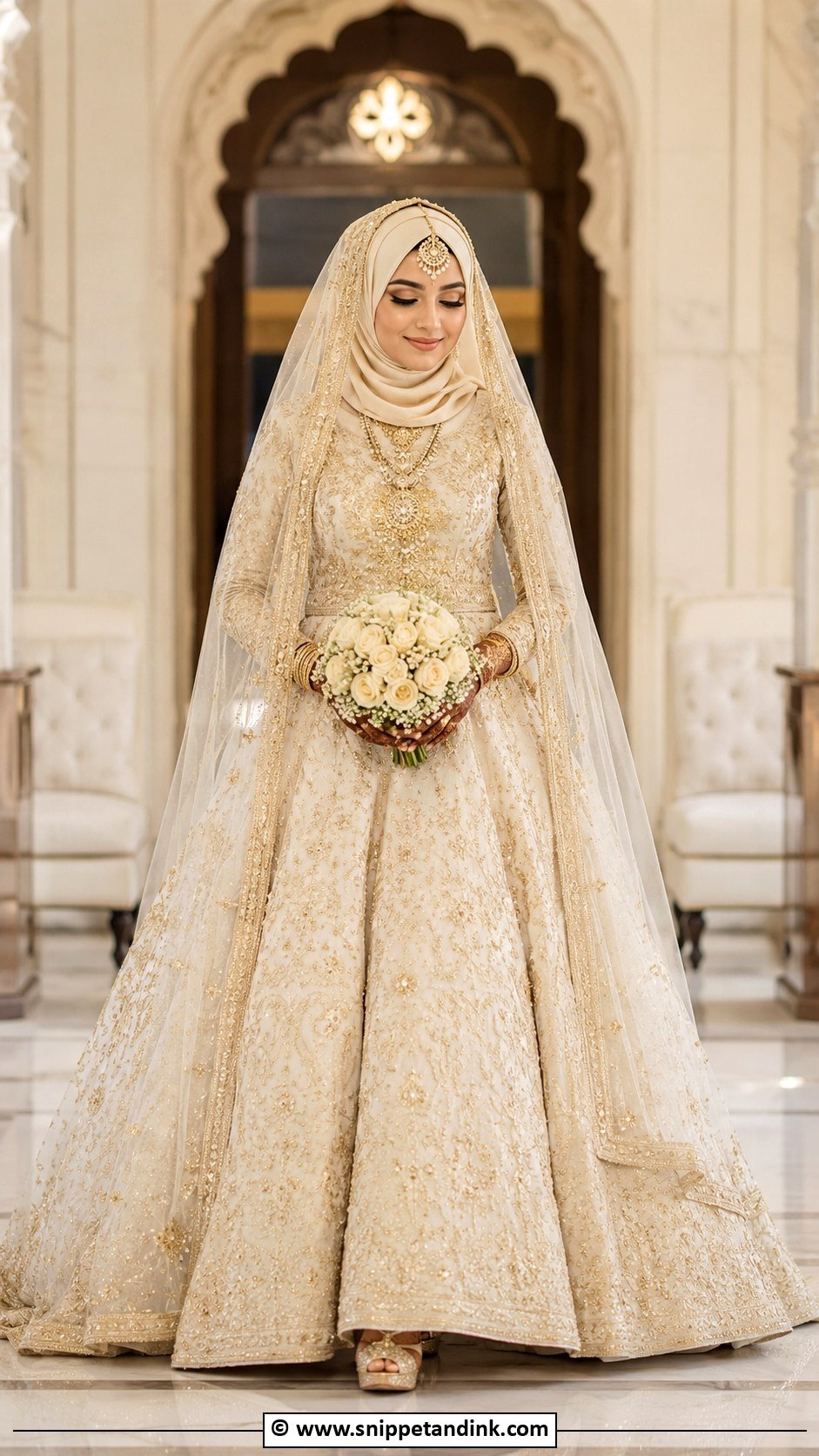
A lehenga gives a dramatic skirt with modest styling when paired with a long-sleeve blouse or extended bodice and a dupatta layered over the hijab. Embroidery, mirror work, sequins, pearls or zari add festivity. A heavily embellished lehenga skirt can weigh several kilos, so ask about weight and try walking in it. Pin the dupatta securely; it shifts with every greeting.
30. Two Piece Muslim Wedding Gown
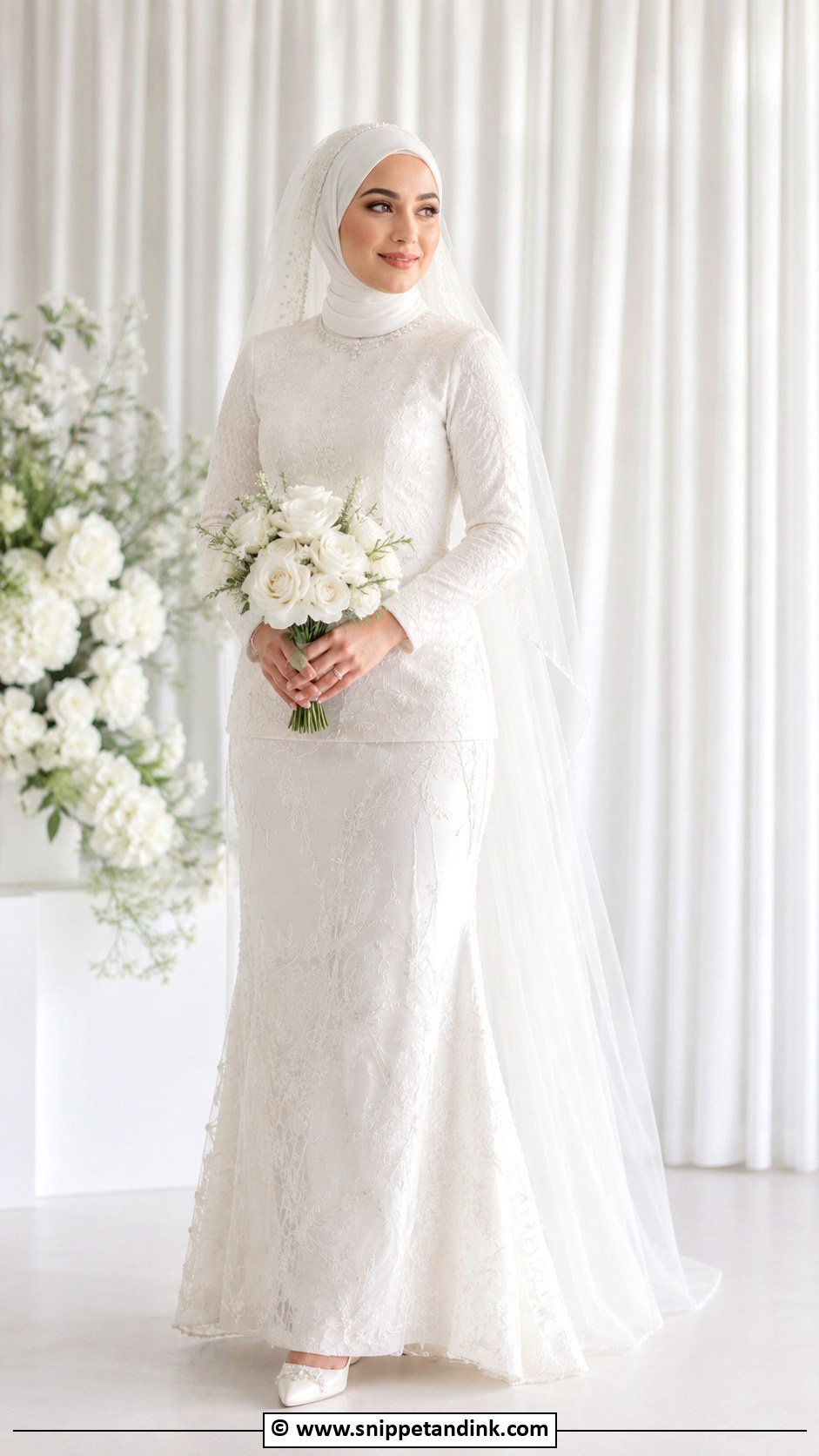
A two-piece outfit can be a long-sleeve top with a full skirt, a tunic with a bridal skirt, or a blouse with an embroidered maxi. Both pieces have to look intentional and bridal. I’d choose matching fabric and similar embellishment and make sure the top is long enough to stay covered when you lift your arms. A coordinated hijab and veil connect the look.
Hijab, Veil and Gown Fitted as One Outfit
The hijab is part of the outfit, not an accessory added at the end. I’d plan it with the gown from the start.
- Use an underscarf or cap to give the hijab grip, so it doesn’t slide during the day.
- Secure the veil with pins through the hijab and underscarf rather than a comb, which won’t hold in fabric.
- Practise the style with whoever will do it on the morning, and time it.
- Carry spare pins and a small mirror for touch-ups.
Heat is the other thing I plan for. A hijab, long sleeves, a high neck and a lined skirt add up to a lot of fabric, and a summer hall full of guests gets warm. I’d ask for breathable linings such as cotton or viscose where the skin touches, choose a lighter chiffon hijab over a heavy satin one, and keep a quiet room or fan nearby between the ceremony and the reception.
Planning for more than one event
Many Muslim weddings have several events, such as nikah, mehndi, reception or walima, each with different expectations. At a women-only reception some brides take the hijab off, so their hair and neckline need planning for both settings. I’d talk this through with family early, so each outfit suits the event it’s for.
Modesty Built Into the Fit
A modest bridal look is about feeling covered, confident and comfortable for the whole day, not only in the first photos. The ideas above cover classic white gowns, colourful cultural outfits, cape dresses, lace, abayas and rich embroidery. Whatever you choose, think about your venue, the season, your family’s traditions and how each event will run. Fit the gown, hijab and veil together, line anything sheer, and choose accessories that support the gown rather than compete with it.
You'll Like These Ideas:






Leave a Reply