
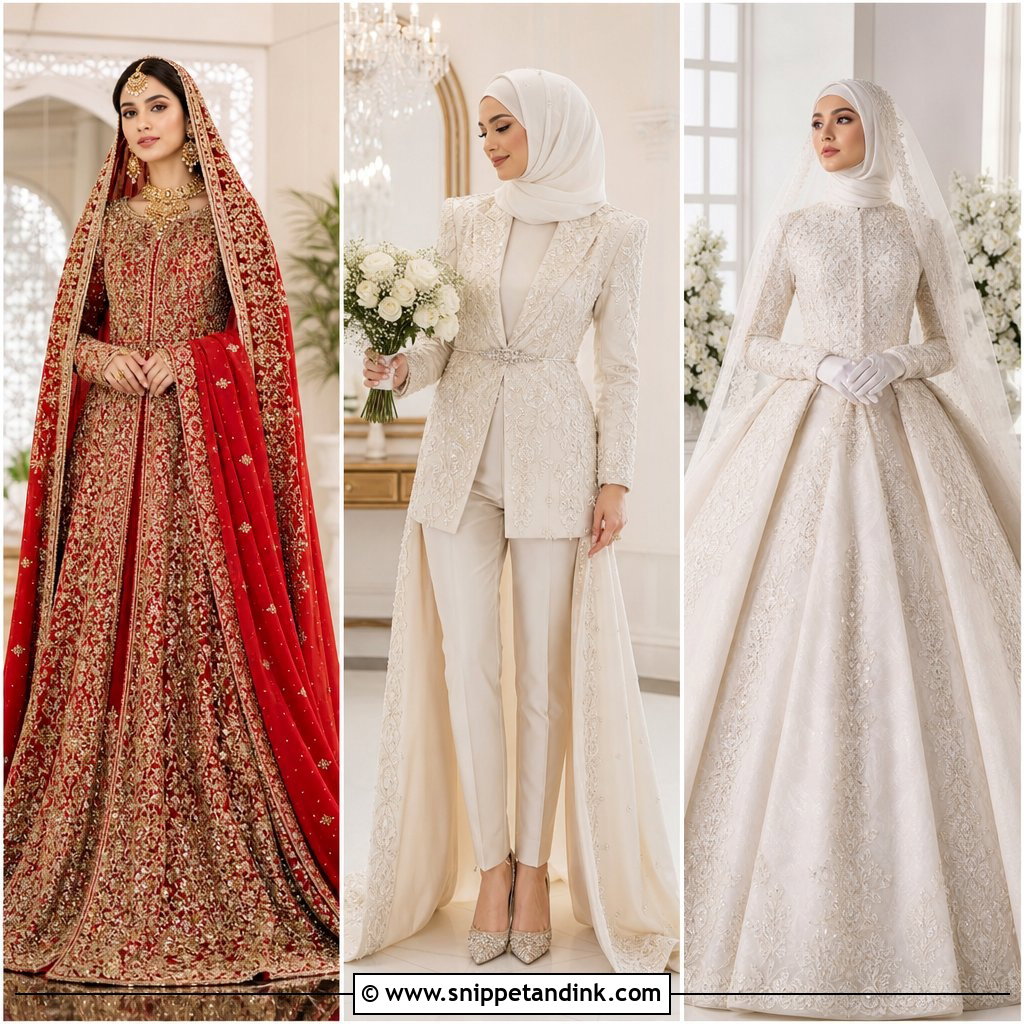
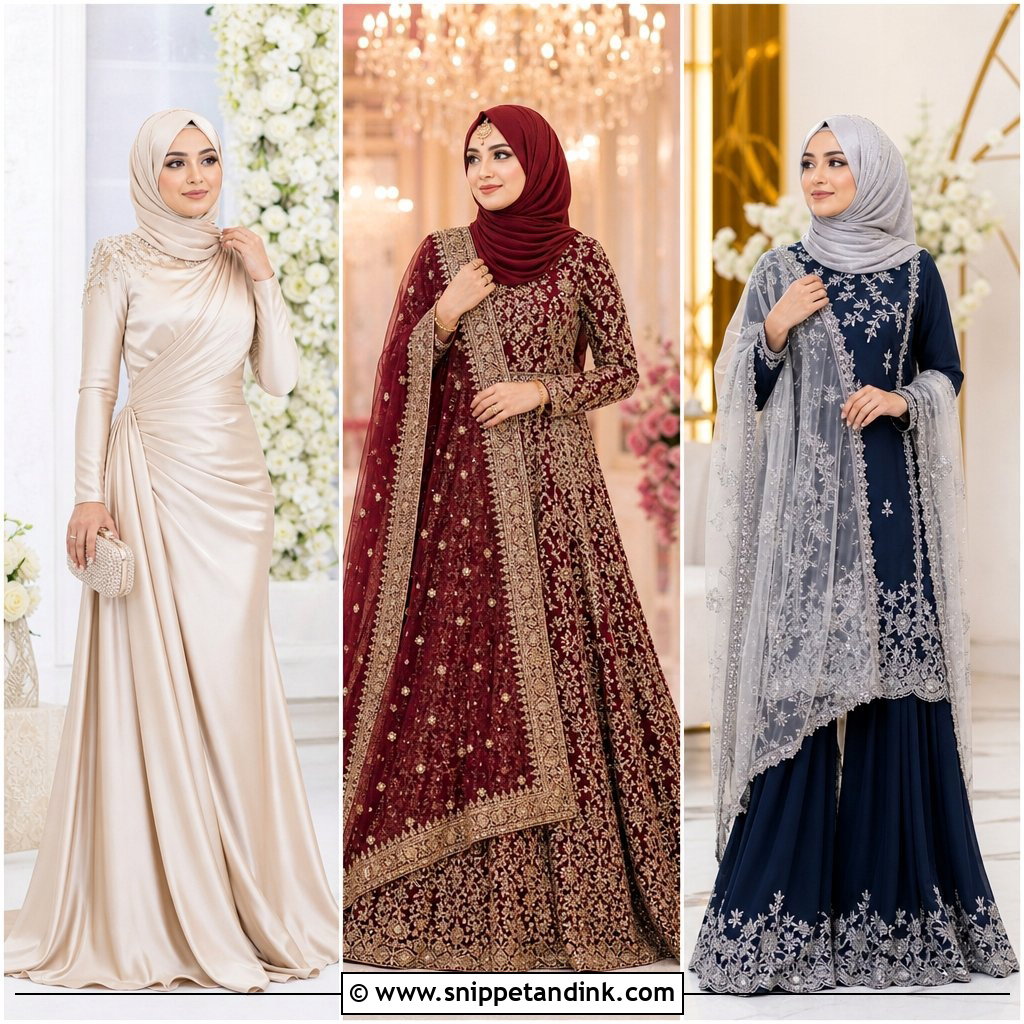
Most of the Arab brides I dress want full coverage and still want to feel like the most finished person in the room. That balance comes from structure and detail rather than skin: a sleeve that sits right at the wrist, a neckline that holds its shape under a hijab, embroidery placed where the camera and the family will actually look. Below are 25 gowns I’d happily put a bride in, from a heavy ball gown to a Moroccan kaftan to a plain crepe column. Before you fall for one, picture where you’ll be wearing it, how long you’ll be standing, and which pieces of jewelry your mother or grandmother expects to see on you. Those three answers rule out more dresses than taste ever does.
Fittings for a Fully Covered Gown Need Extra Tests
A covered gown has more places to go wrong than a strapless one: sleeves, cuffs, a high collar and a hijab all have to agree with each other. Standing still in front of the mirror tells you very little. These are the checks I run with every covered bride before the final pin goes in.
- Arms up, then a hug. If the sleeve pulls the waist seam upwards, the armhole is cut too low or the sleeve too tight.
- Sit down for five minutes. A high collar that’s fine standing can press into the throat when you sit and lean forward to eat.
- Wear your actual hijab, underscarf and pins at the second fitting, not just the gown. The neckline height changes once fabric is layered under the chin.
- Bring the shoes. Hem length on a long, covered skirt has very little margin before you’re stepping on it.
- Look at yourself with a light behind you. Unlined lace and thin chiffon both become see-through against a window.
Alterations on embroidered or beaded gowns take longer because beads have to be removed and re-stitched around every changed seam. I’d plan the first fitting about two to three months before the wedding and the last one within the final two weeks.
1. Arabic Wedding Dress With Long Sleeves
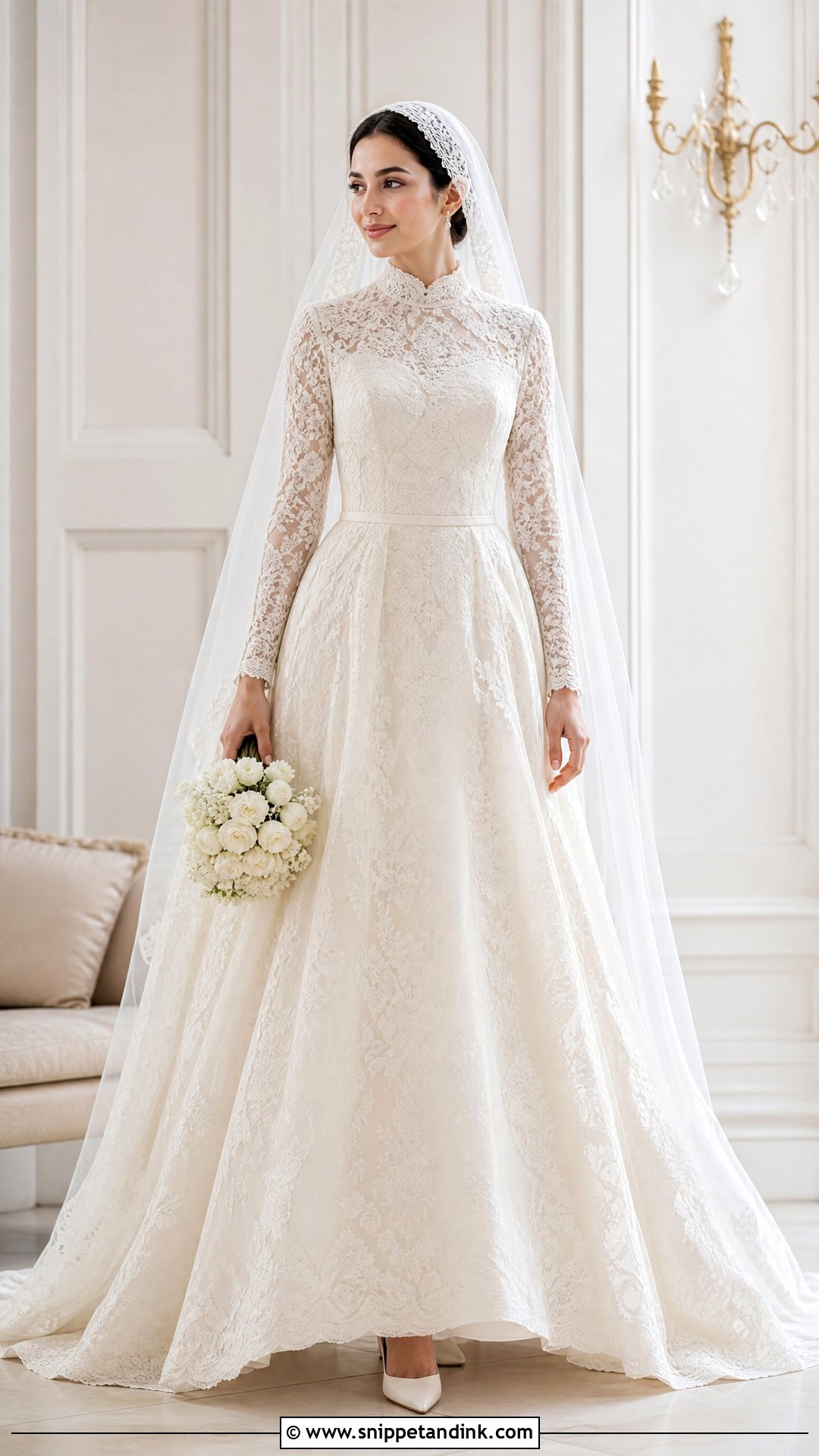
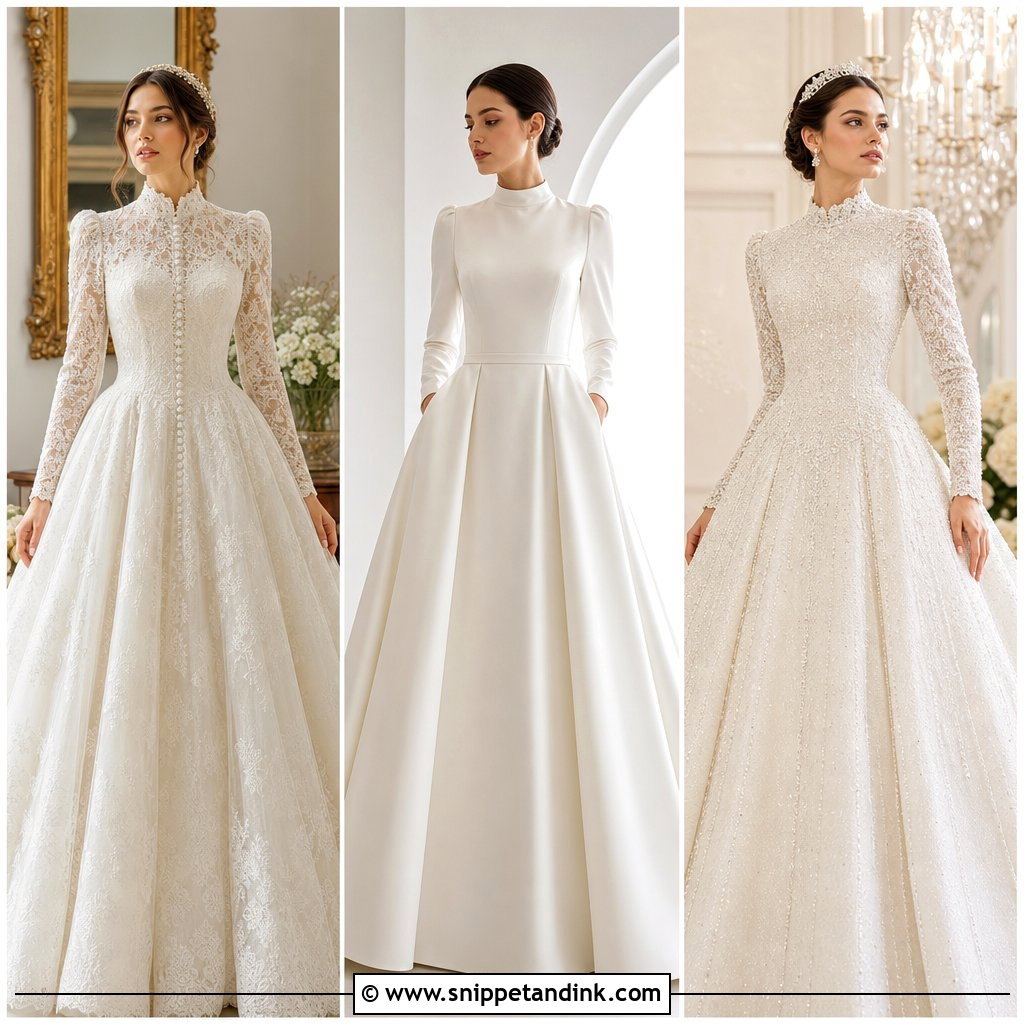
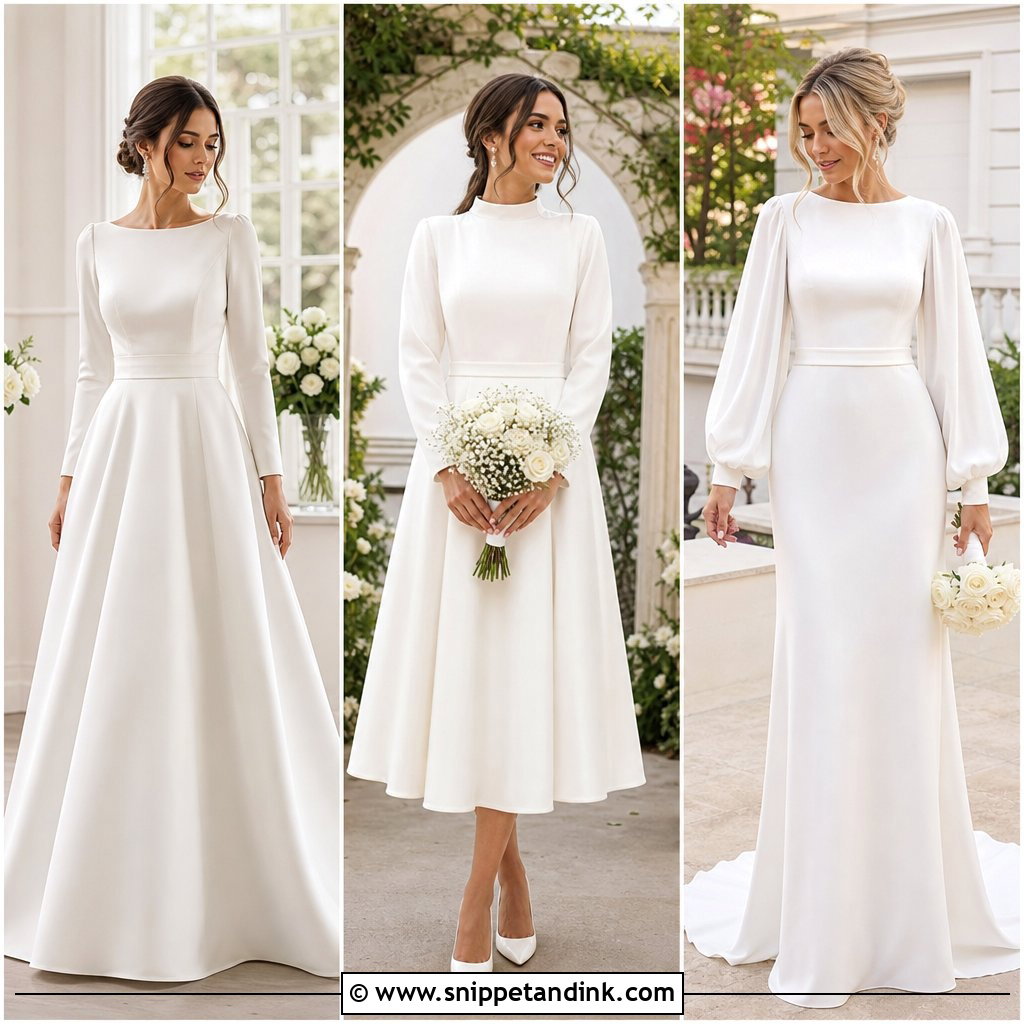
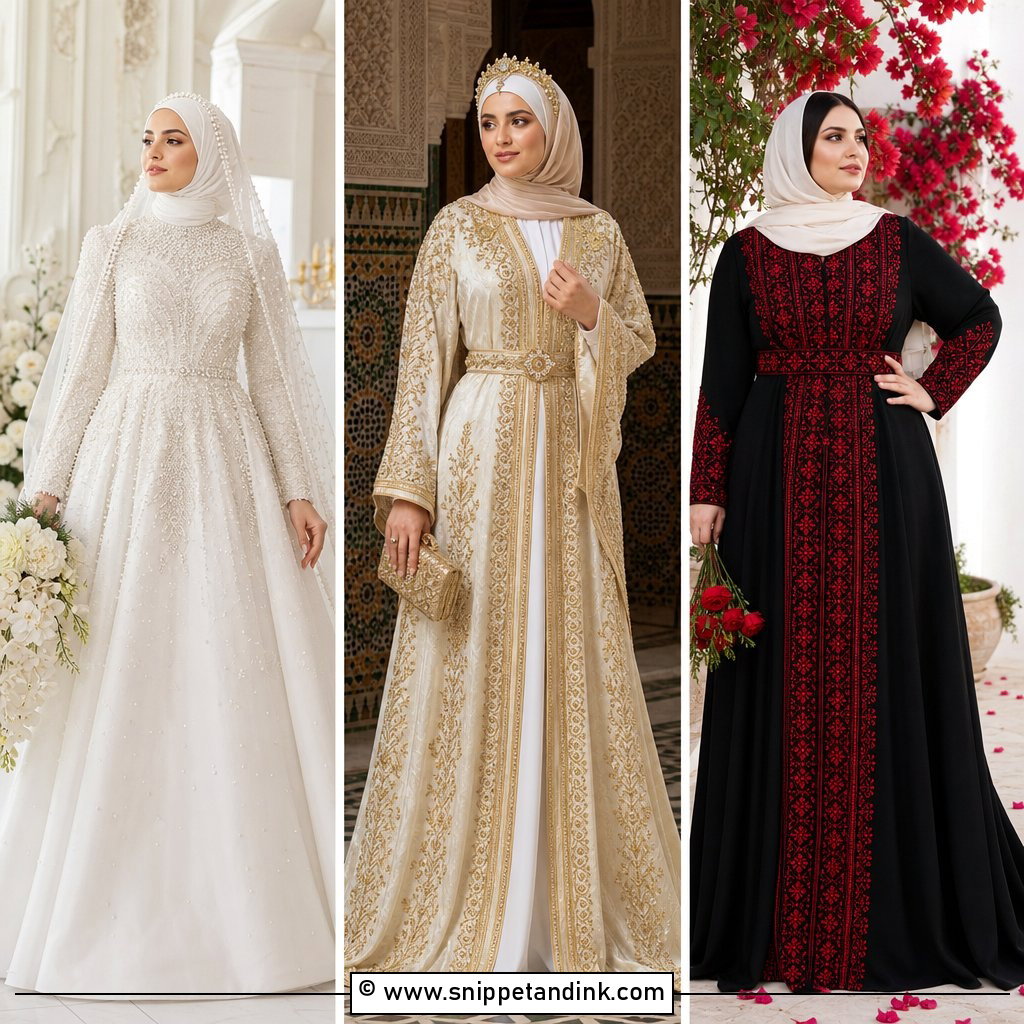
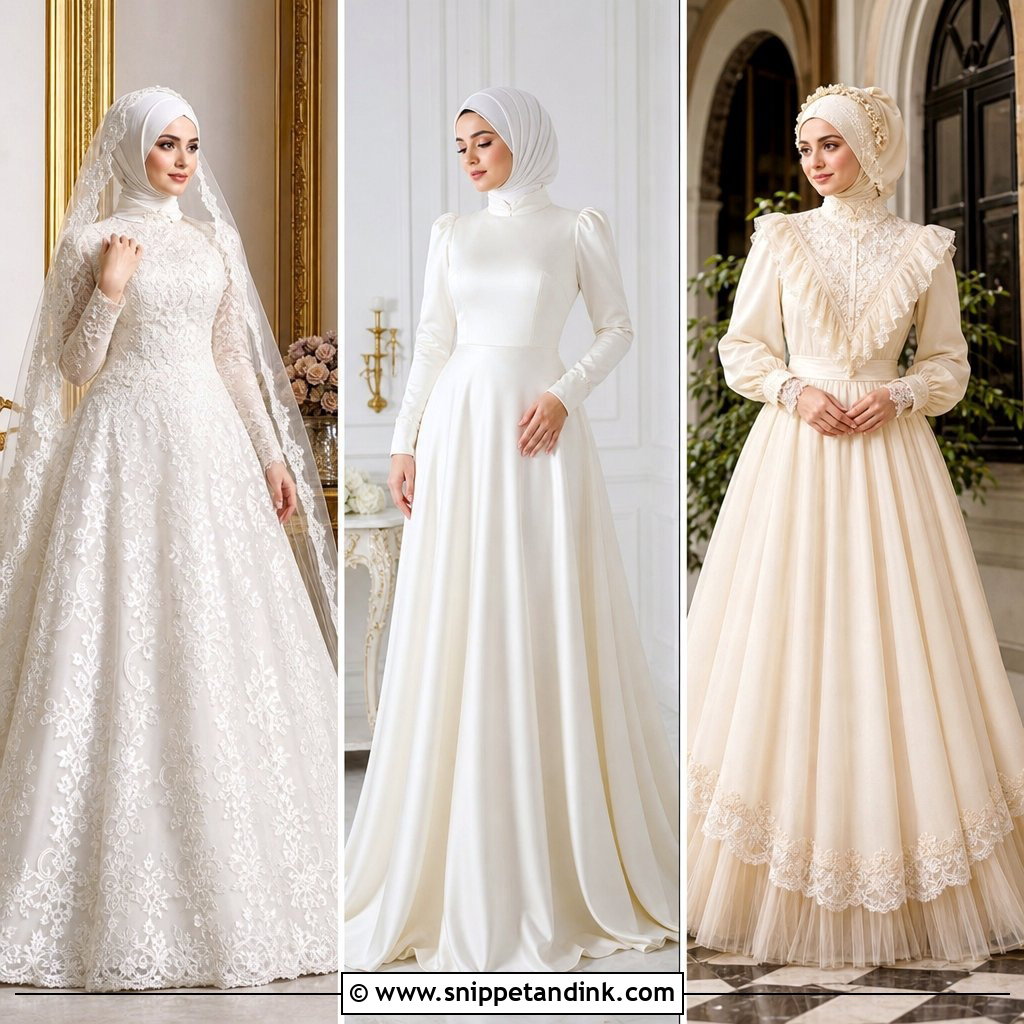
Long sleeves are where a covered gown is won or lost. At fittings I have every bride lift her arms as if hugging someone, because a sleeve cut tight through the upper arm rides up and pulls the bodice with it. Lace sleeves give texture and a little stretch; satin sleeves look sharper but need more ease. A high neck with a fitted bodice and an A-line skirt suits most figures. If the gown is heavily embroidered, keep the veil plain. If it’s plain, that’s the moment for a lace edge.
2. Arabic Wedding Dress With Hijab
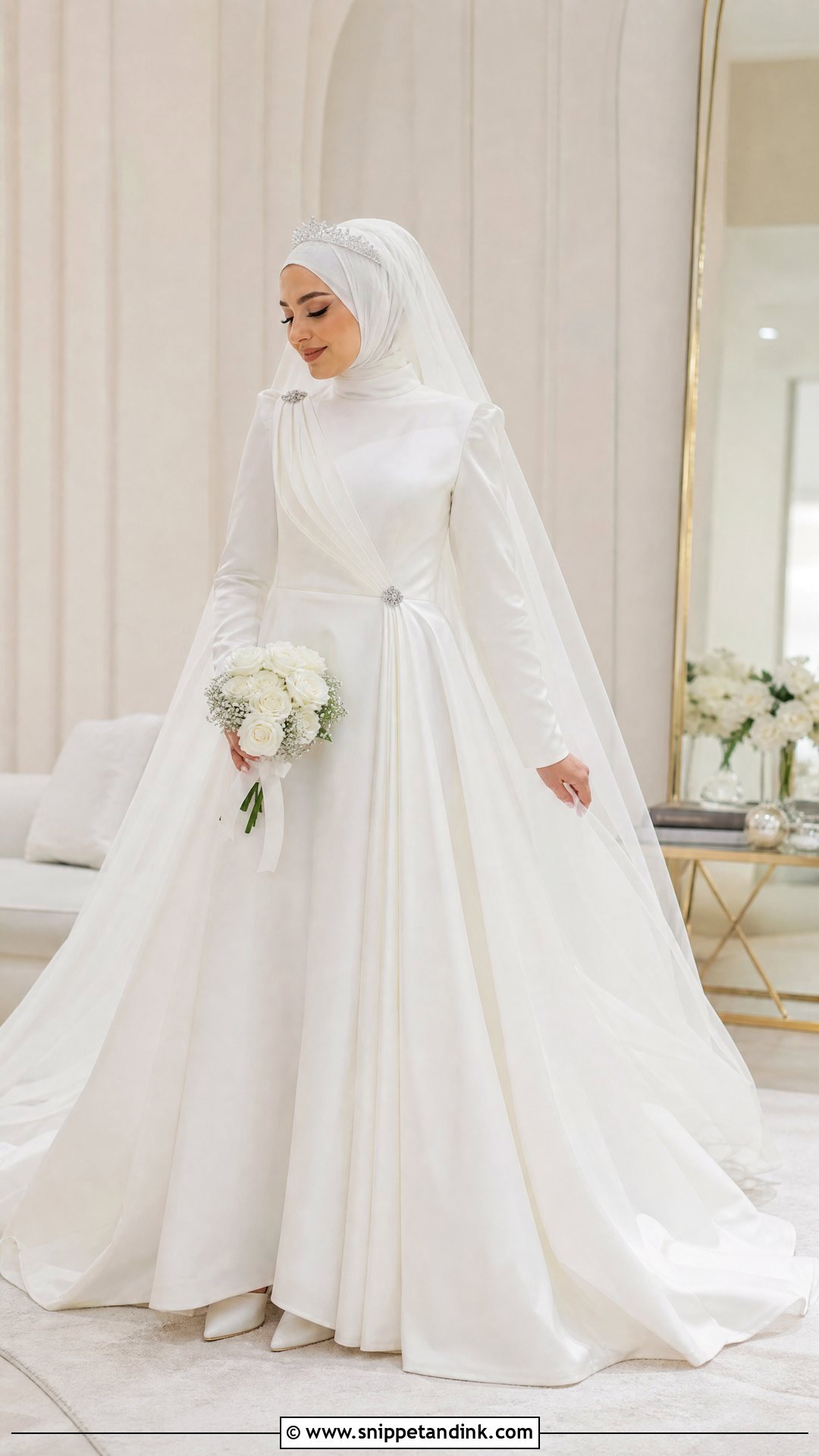
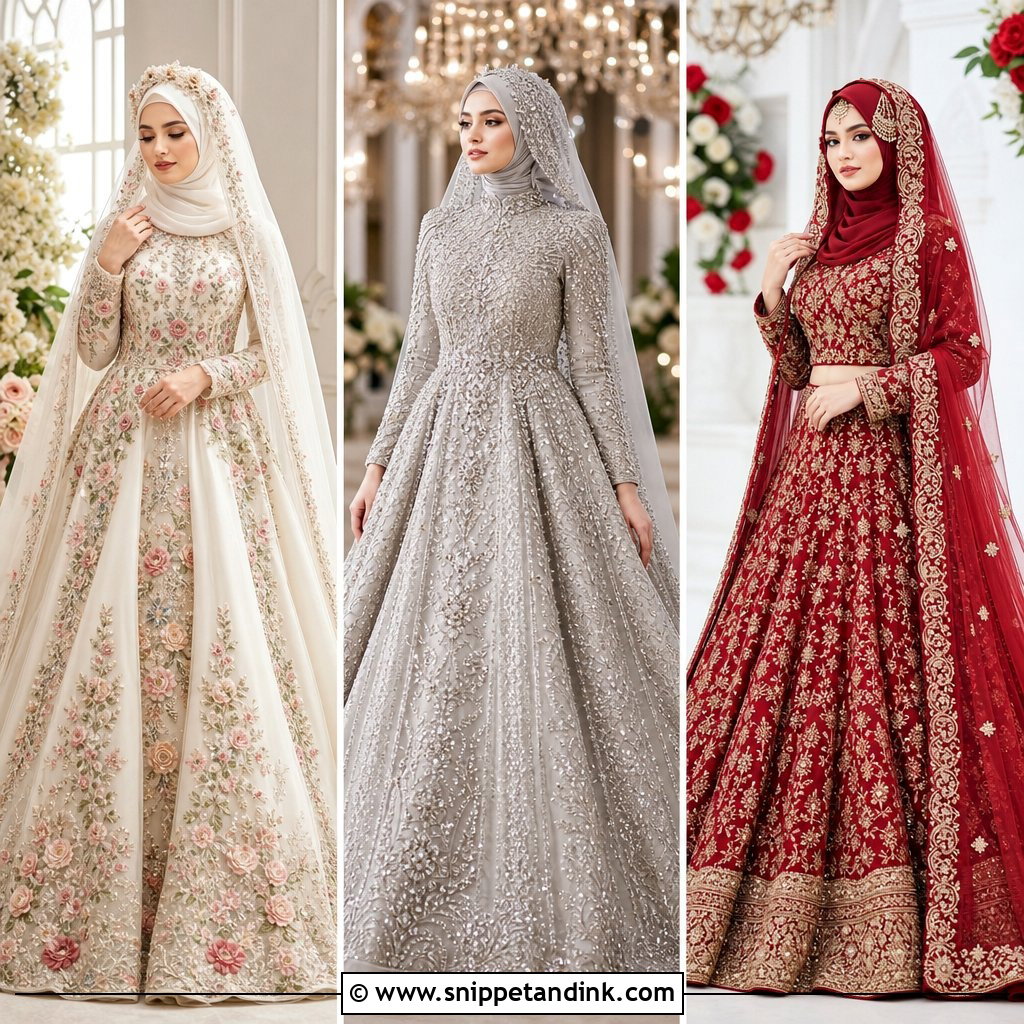
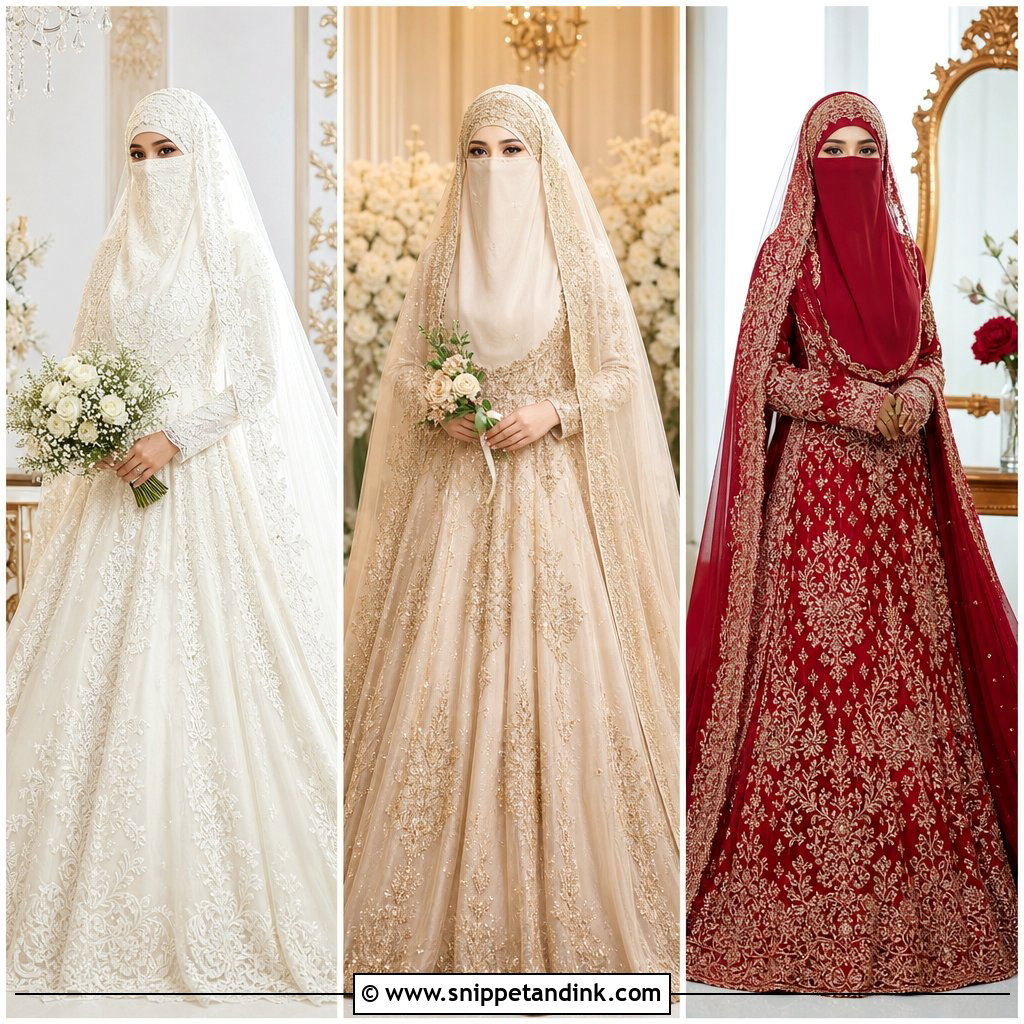
A hijab should look like part of the gown’s design, not something pinned on in the car. I match the fabric to the dress first: chiffon for a soft, floaty gown, satin for a structured one, tulle when a full veil goes over the top. A high neck or illusion neckline gives the hijab a clean edge to sit against, so there’s no gap of skin or underscarf at the throat. With a beaded bodice, keep the fabric around the face smooth and let pearl pins or a slim headband carry the sparkle. A plain gown can take a lightly embellished hijab instead.
3. Arabic Wedding Ball Gown Dress
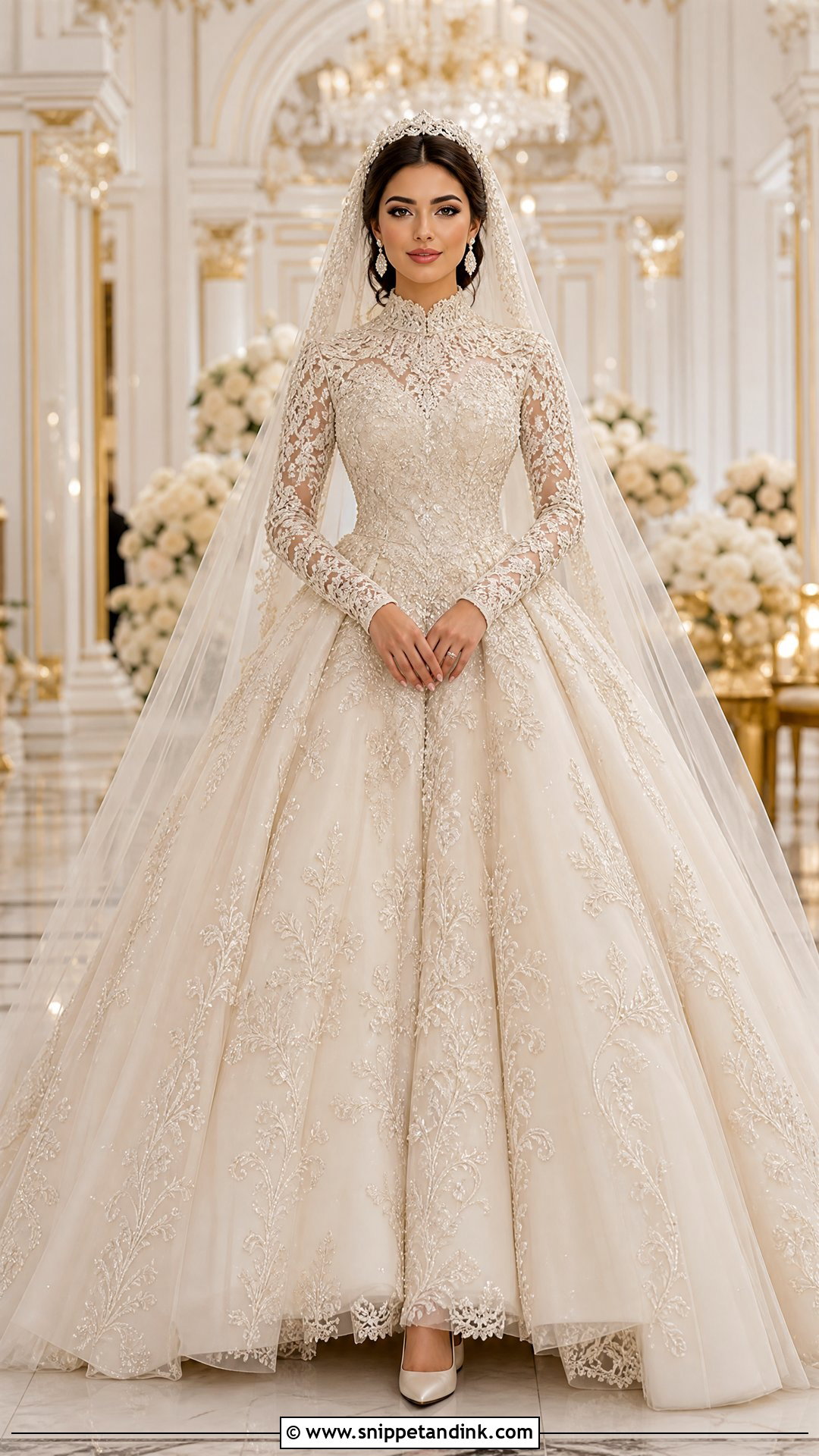
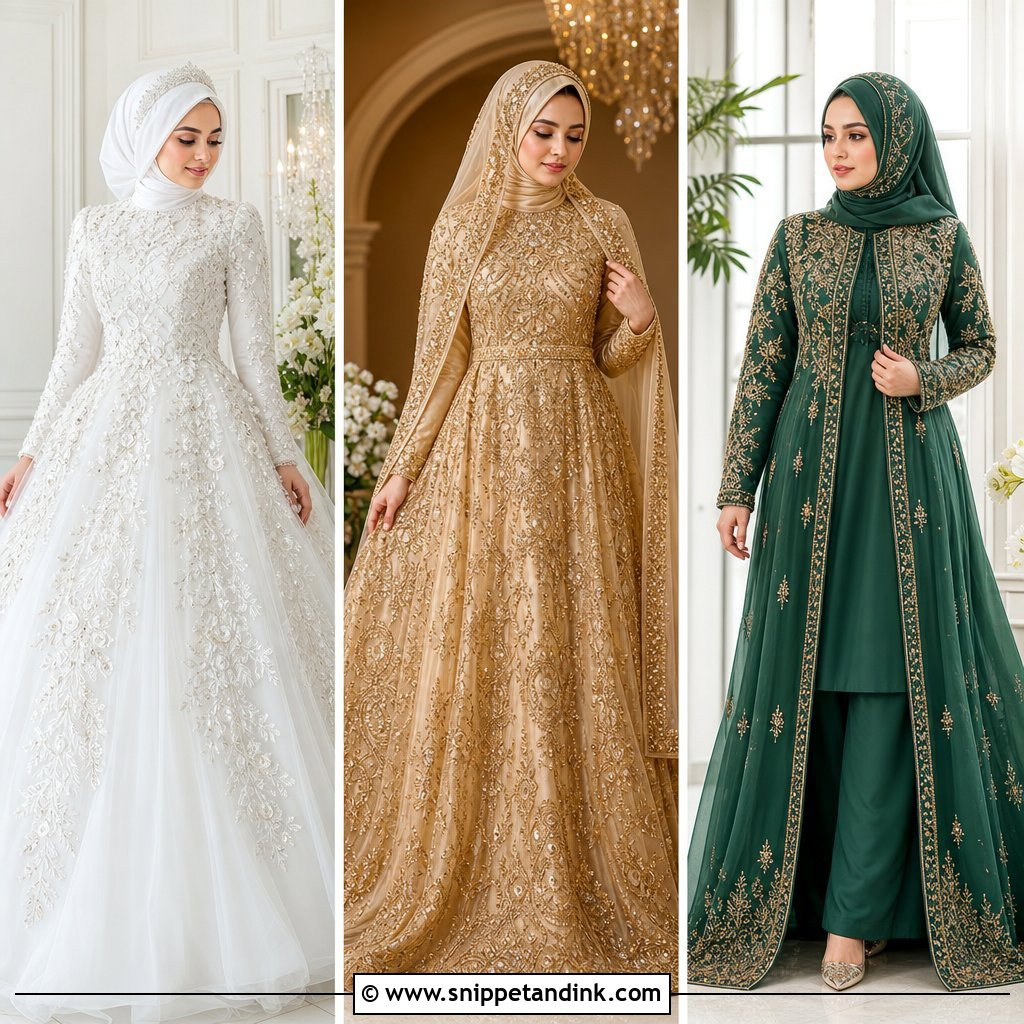
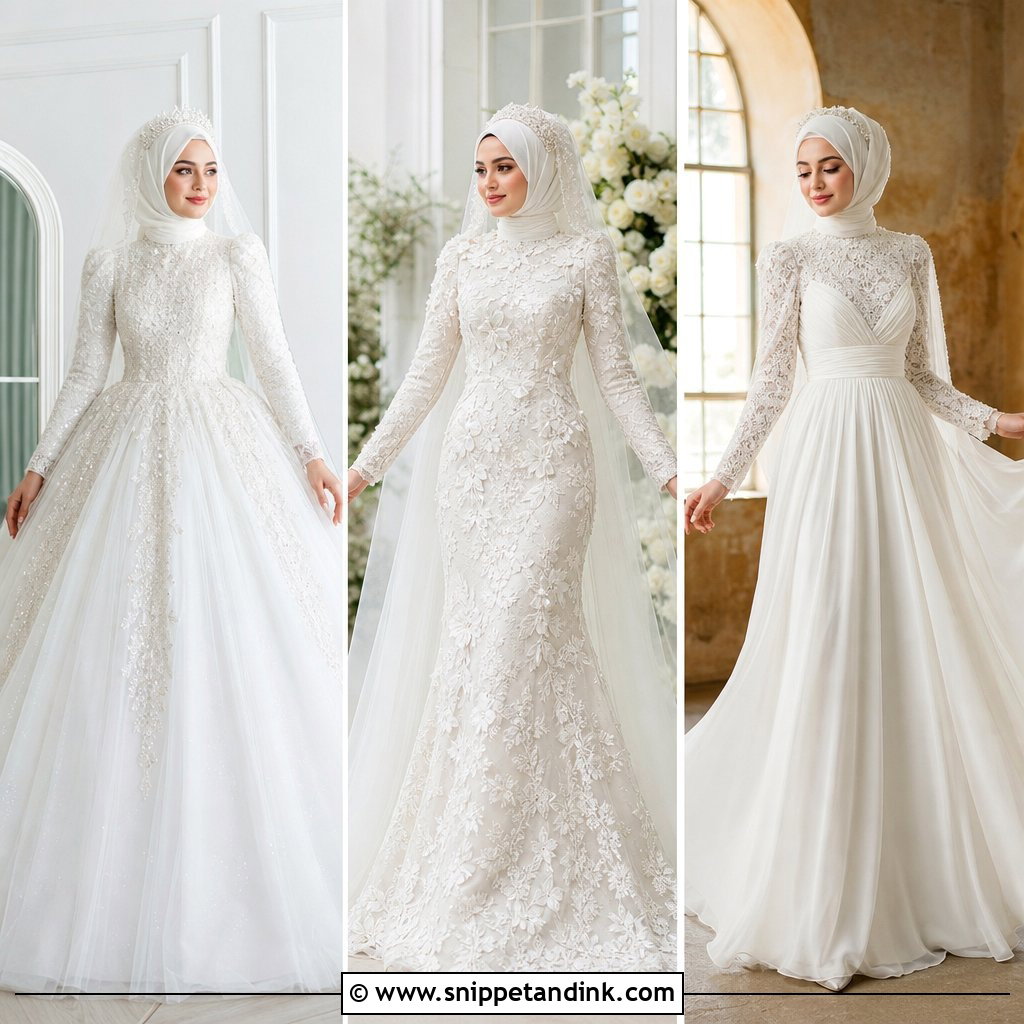
Nothing makes an entrance like a full skirt, and it needs no low cut to do it. Pair a fitted long-sleeve bodice with a wide skirt in ivory satin, or lace over tulle if you’d rather it look softer. Crystal work across the bodice and cuffs reads well from the back of a hall. Be realistic about weight: a full satin skirt with layers of petticoat can be heavy by the third hour, so your shoes must be ones you’ve already worn in. A cathedral veil adds height, and a sleek hijab or low updo keeps all that volume from swallowing your face.
4. Arabic Wedding Dress With Gold Embroidery
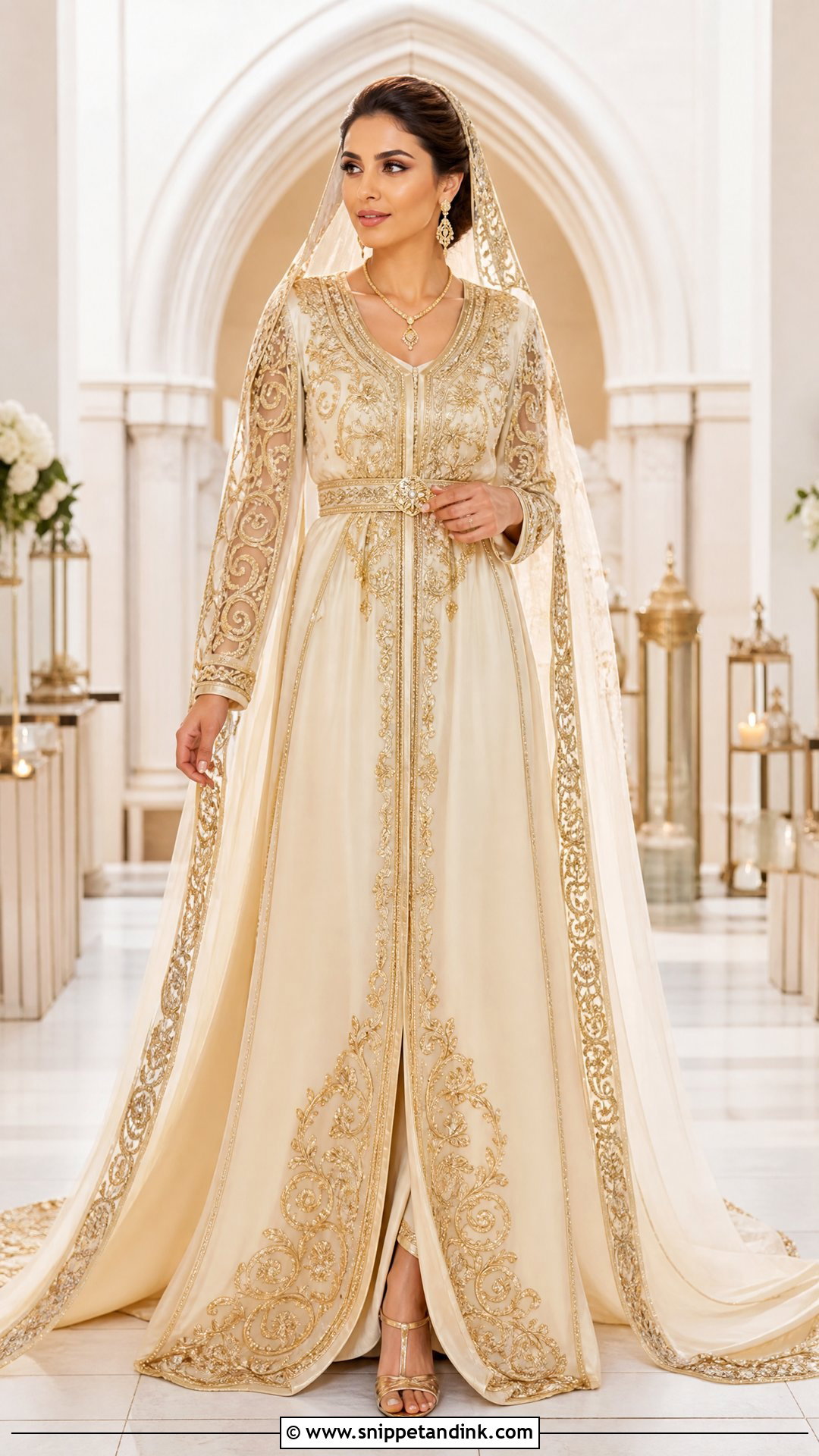
Gold thread is warmest on ivory, champagne or cream; on stark white it can look brassy under evening lights. I look for embroidery spread across neckline, cuffs, waist and hem so the eye travels the whole gown instead of stopping at one heavy patch. Because the embroidery already does the talking, I keep jewelry small and let a gold-trimmed veil echo the dress. Tell your makeup artist about the gold early; bronze tones on the lids tie the face to the fabric without competing with it.
5. Arabic Wedding Abaya Dress
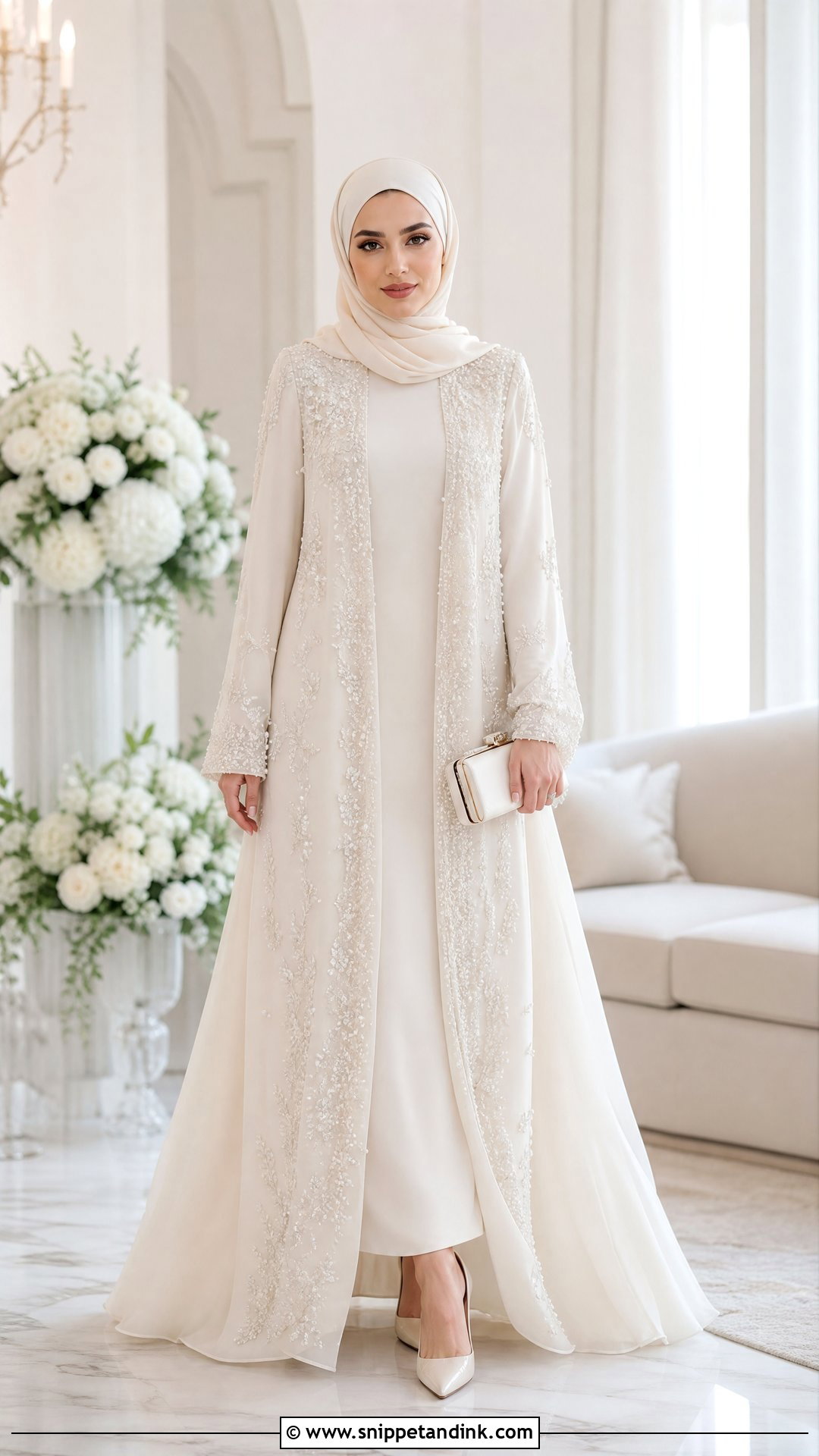
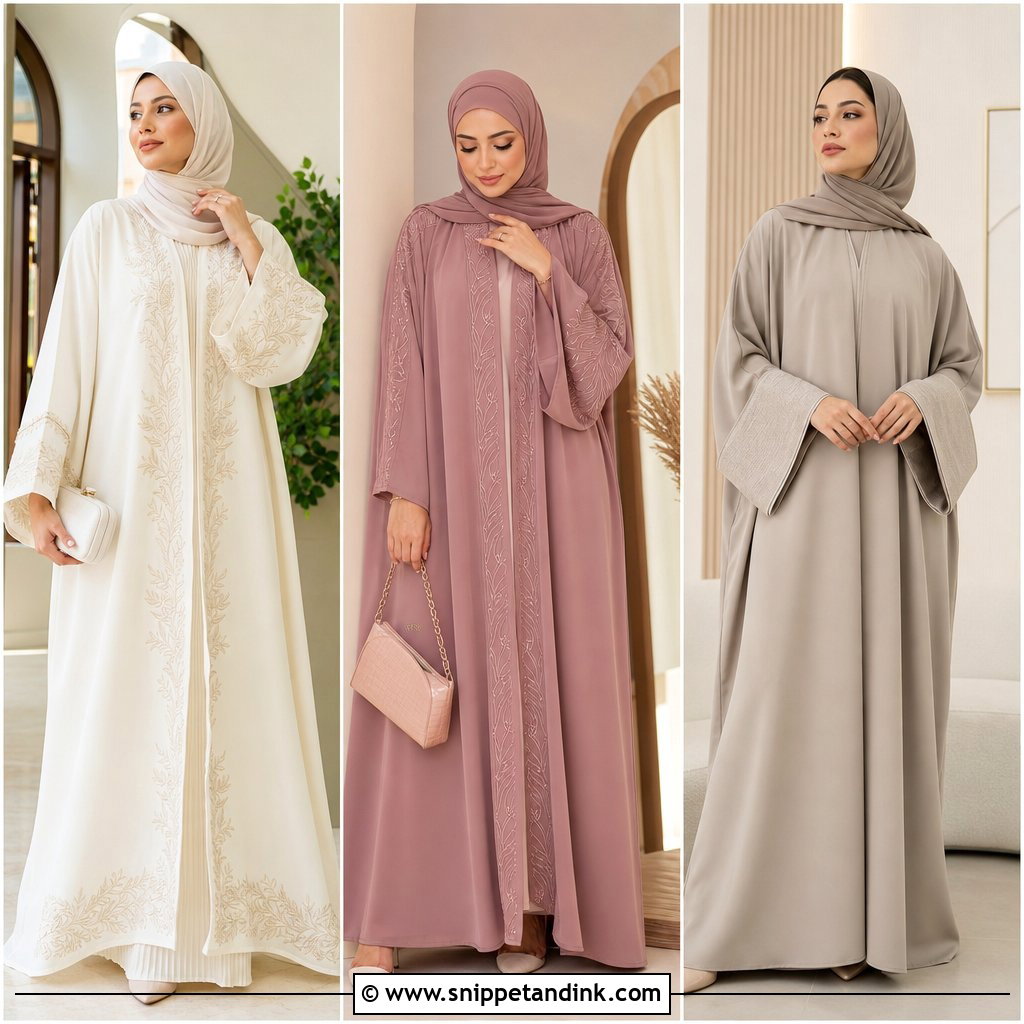
An Arabic wedding abaya dress gives you a loose, flowing line that never clings, which is exactly why so many brides choose it for the nikah. Bridal versions usually layer pearl work, crystals or lace panels over a simple slip dress, and I always check that slip at the fitting, because a cheap lining shows through when the light is behind you. White, ivory, blush and champagne all read as bridal. Wide sleeves catch on bracelets, so I’d keep the wrists bare and let a structured clutch and closed-toe heels finish the look.
6. Arabic Wedding Kaftan Dress
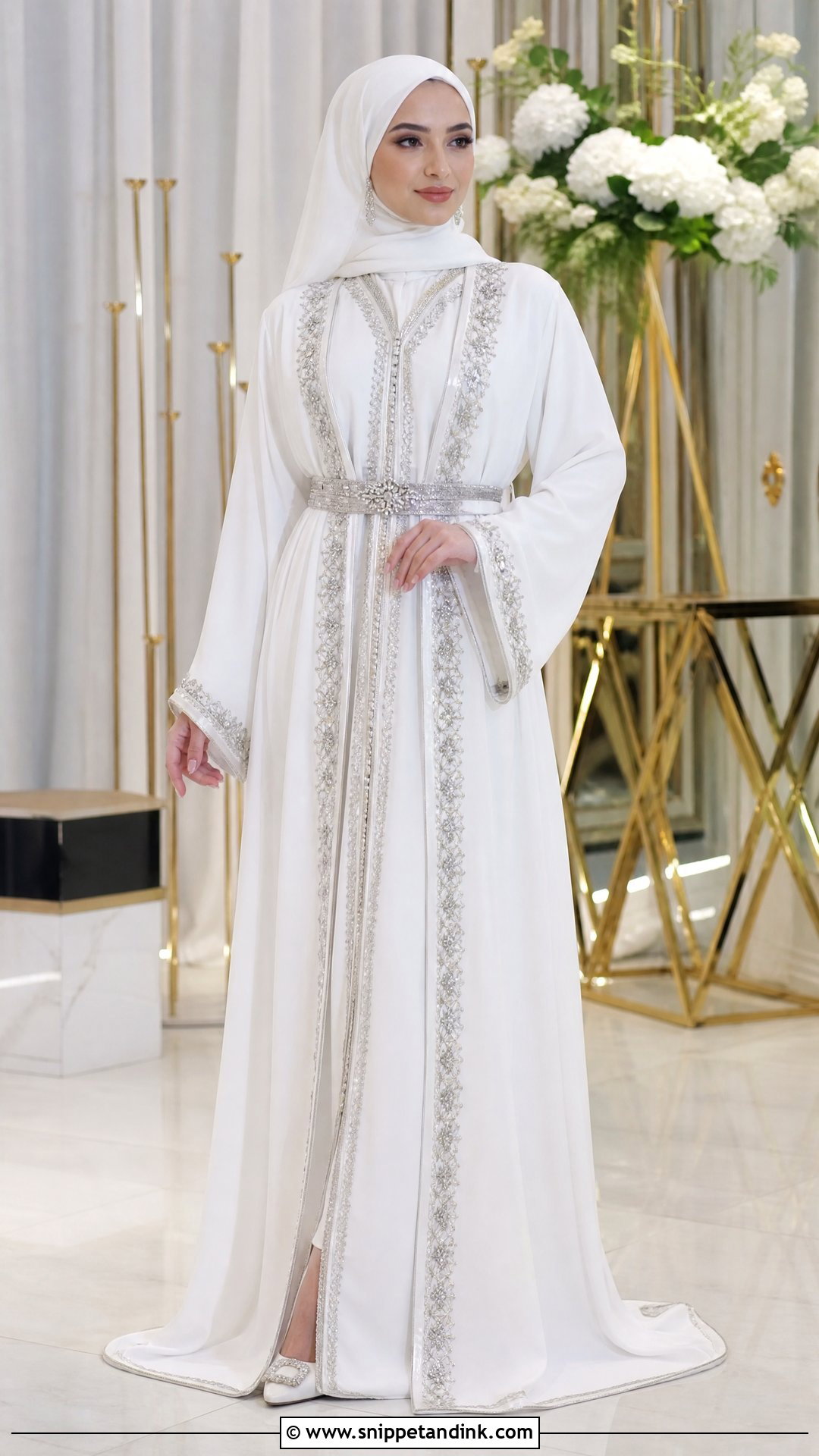
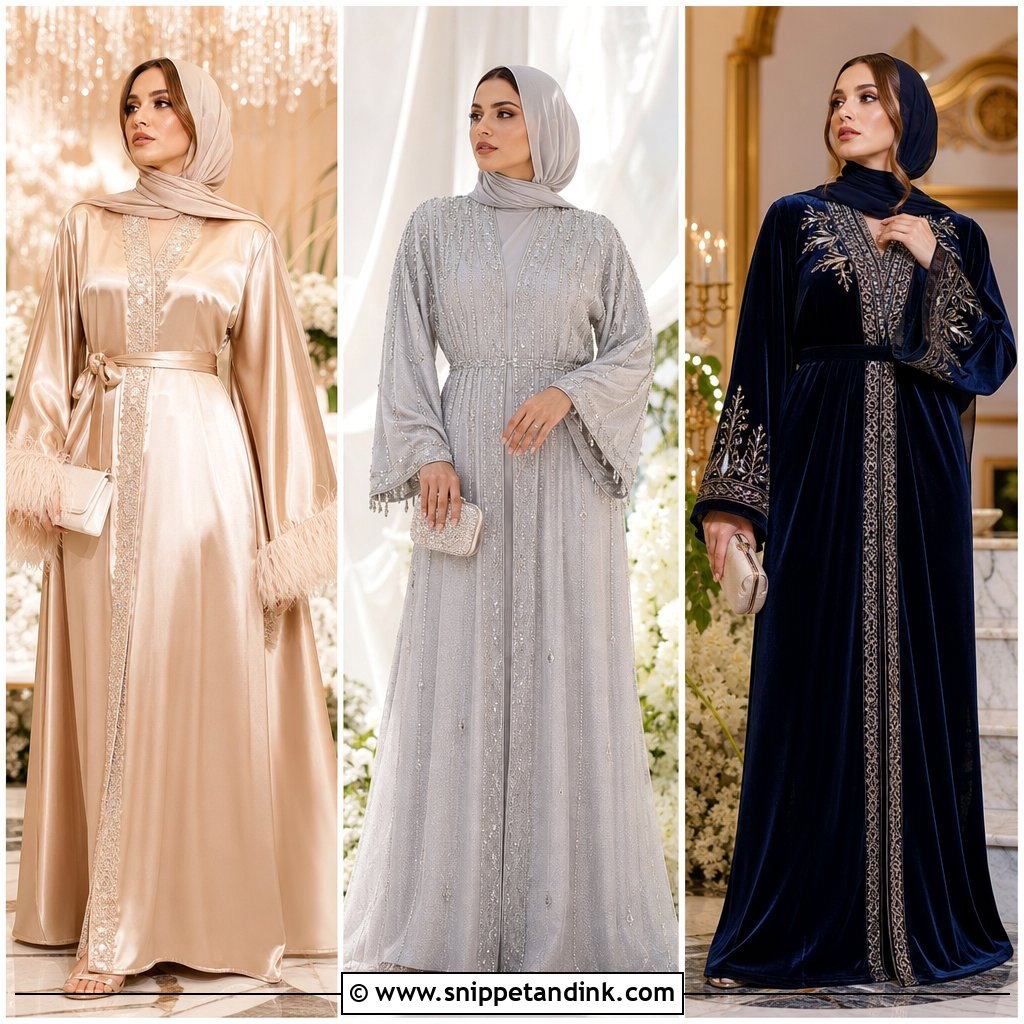
A kaftan moves with you, which matters on a long night of greeting relatives. The relaxed cut, long sleeves and trim down the front give it a regal look without the weight of a layered gown. For the wedding itself I’d choose silk, satin, brocade or embroidered crepe; cotton blends crease badly once you sit. White with silver beadwork reads modern, cream with gold reads traditional. If you like some waist, a slim belt is enough. A matching hijab or soft veil, pointed heels and good earrings complete it.
7. Arabic Wedding Dress With Cape
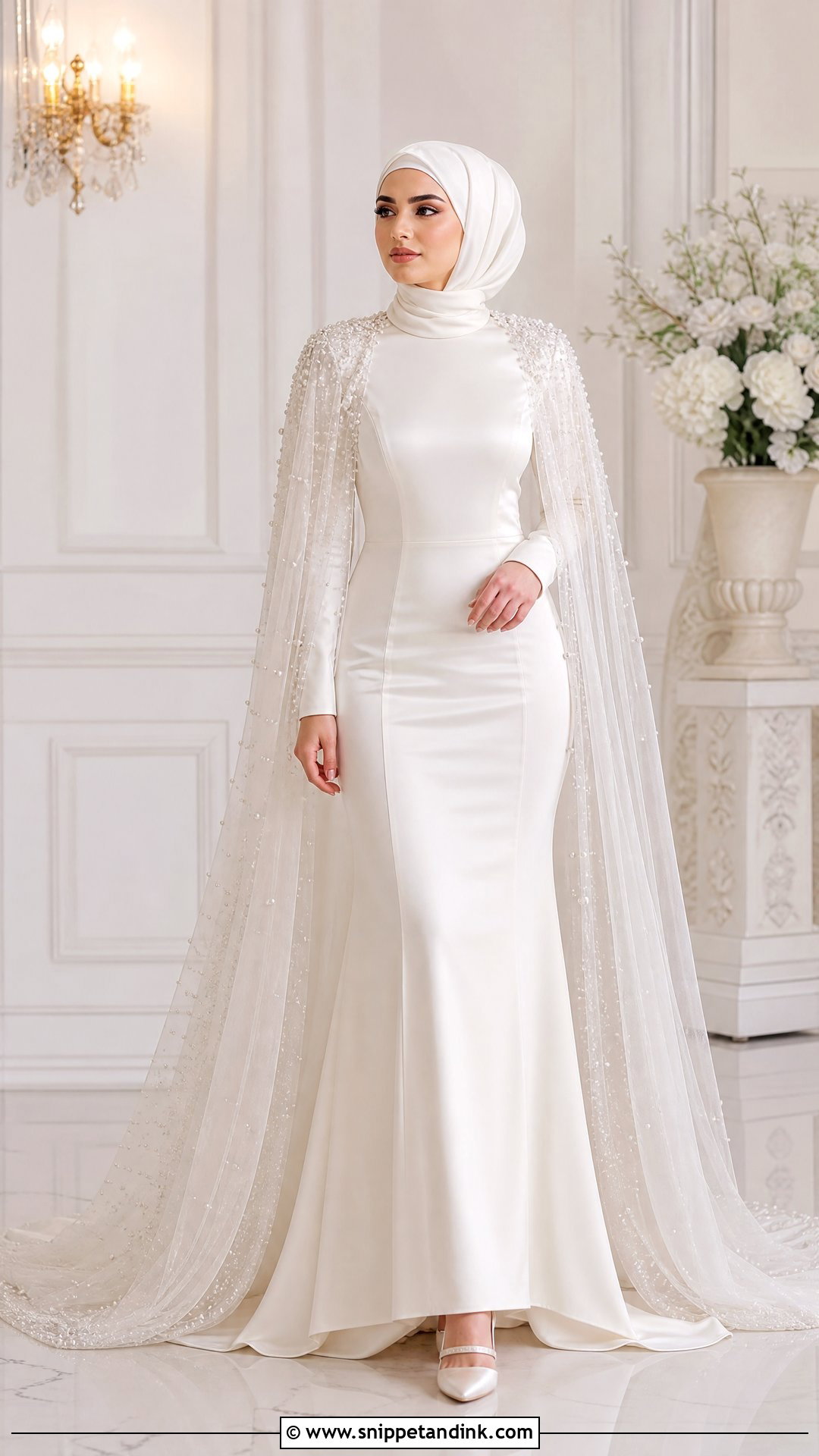
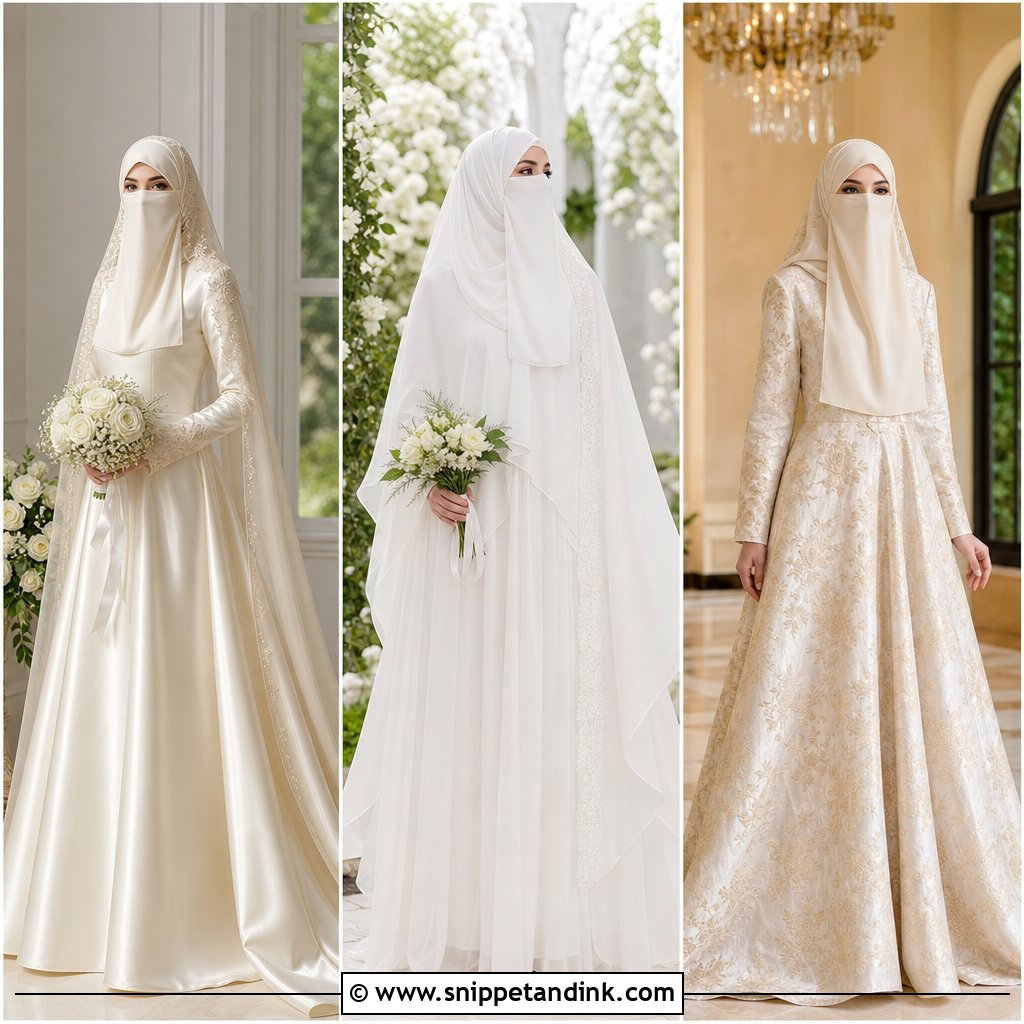
Capes solve a common problem: the bride wants drama but not a long veil fighting with her hijab. A cape can sit from the shoulders or replace the veil entirely. Sheer tulle with scattered pearls looks soft; heavy satin looks architectural. I pair capes with a simple fitted or A-line gown, because a cape over a busy bodice just looks like two outfits. Watch the shoulder seam at fittings. If the cape hooks on with tiny loops, ask for snaps or a hidden hook so it doesn’t slip back when you hug people.
8. Arabic Wedding Dress With Train
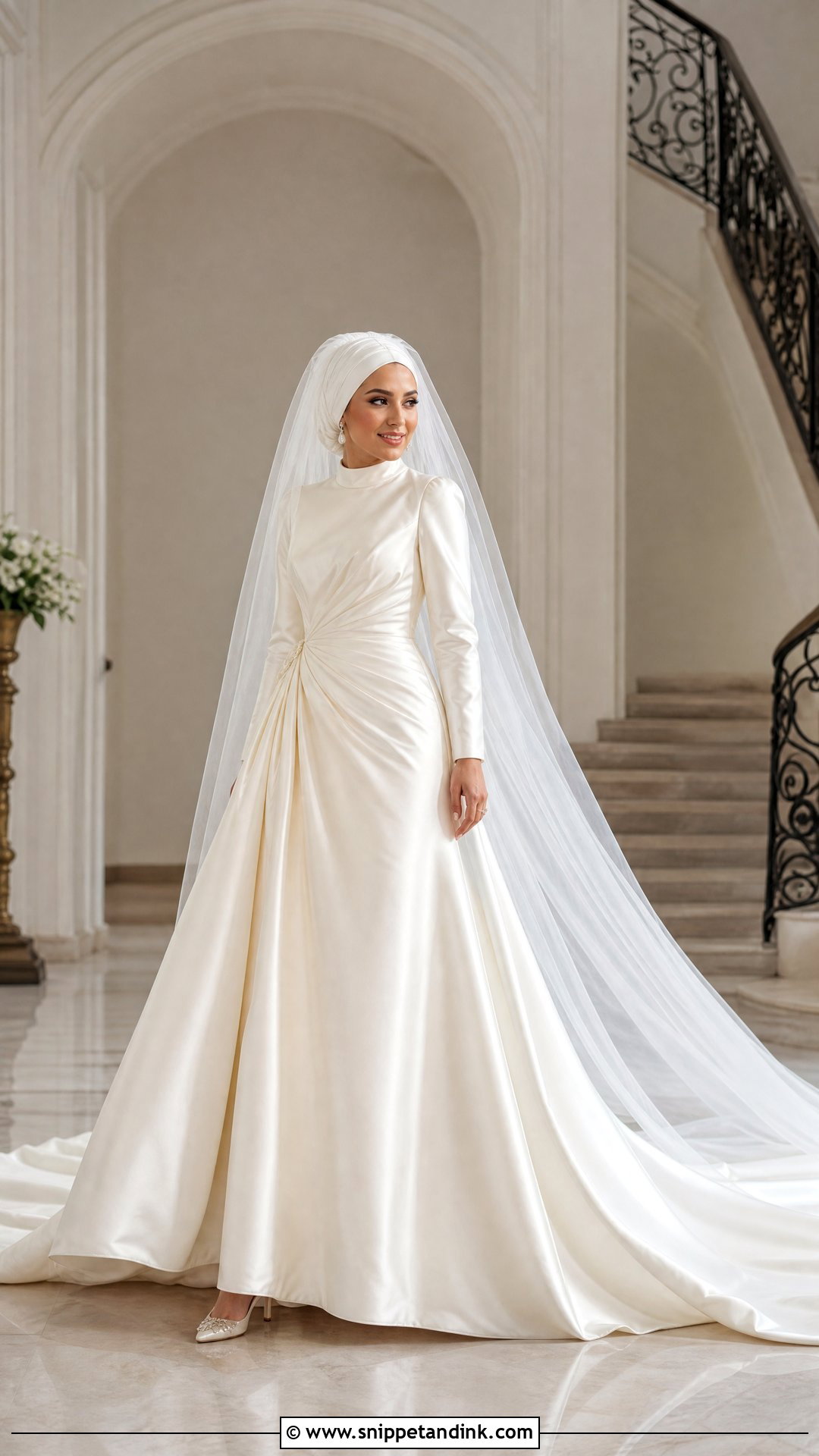
A long train needs a gown with enough body to carry it, otherwise the skirt drags backwards and the waist seam twists. Satin with a detachable train is the practical route; lace trains look romantic but snag on carpet edges and chair legs. If you’ll be greeting guests and dancing, insist on a bustle and have your mother or a bridesmaid practise fastening it at the final fitting, not on the night. Wear the long veil for the entrance, then take it off. Pearl earrings and a fine bracelet are plenty with this much fabric behind you.
9. Arabic Wedding Dress With Pearl Details
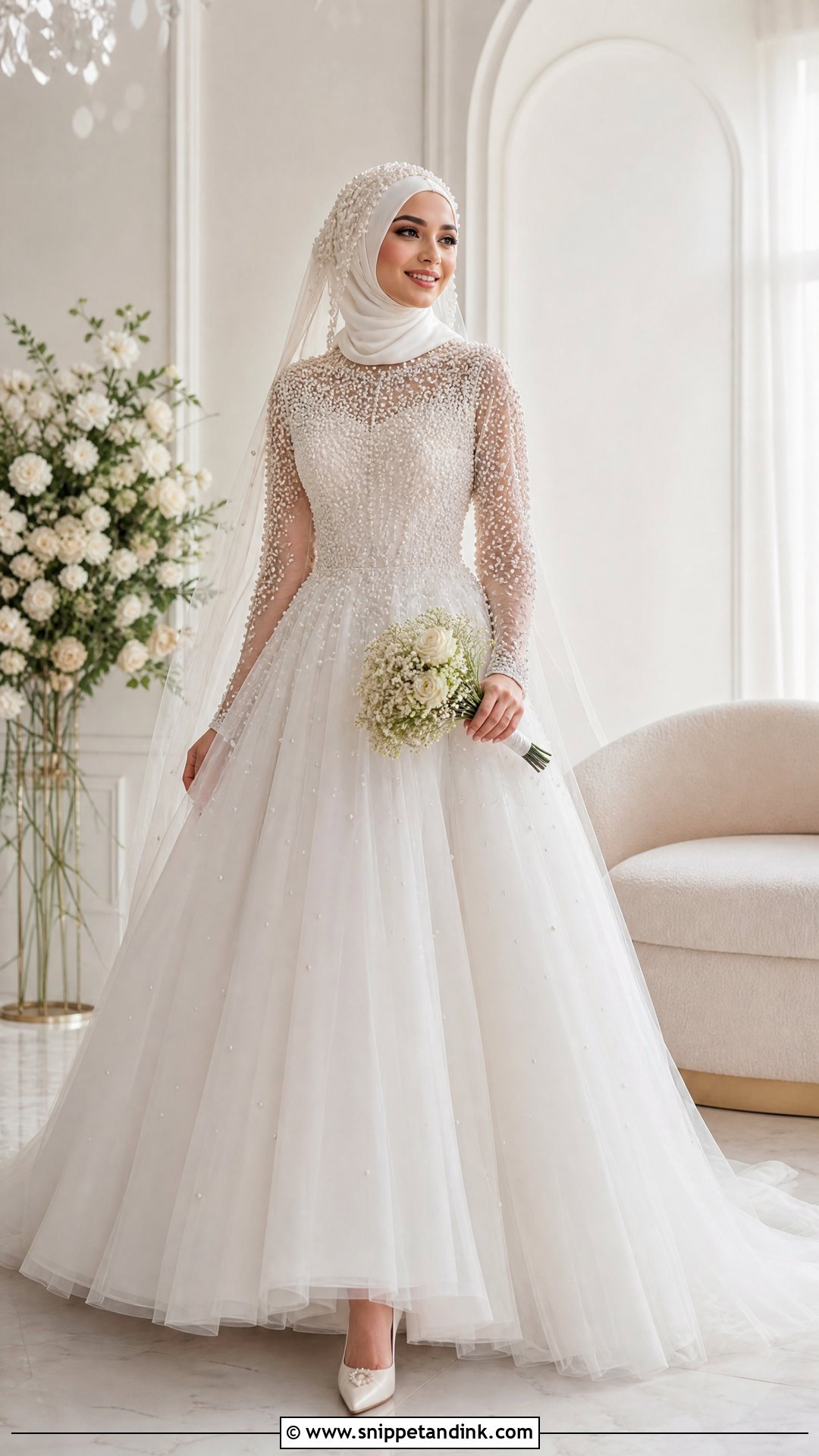
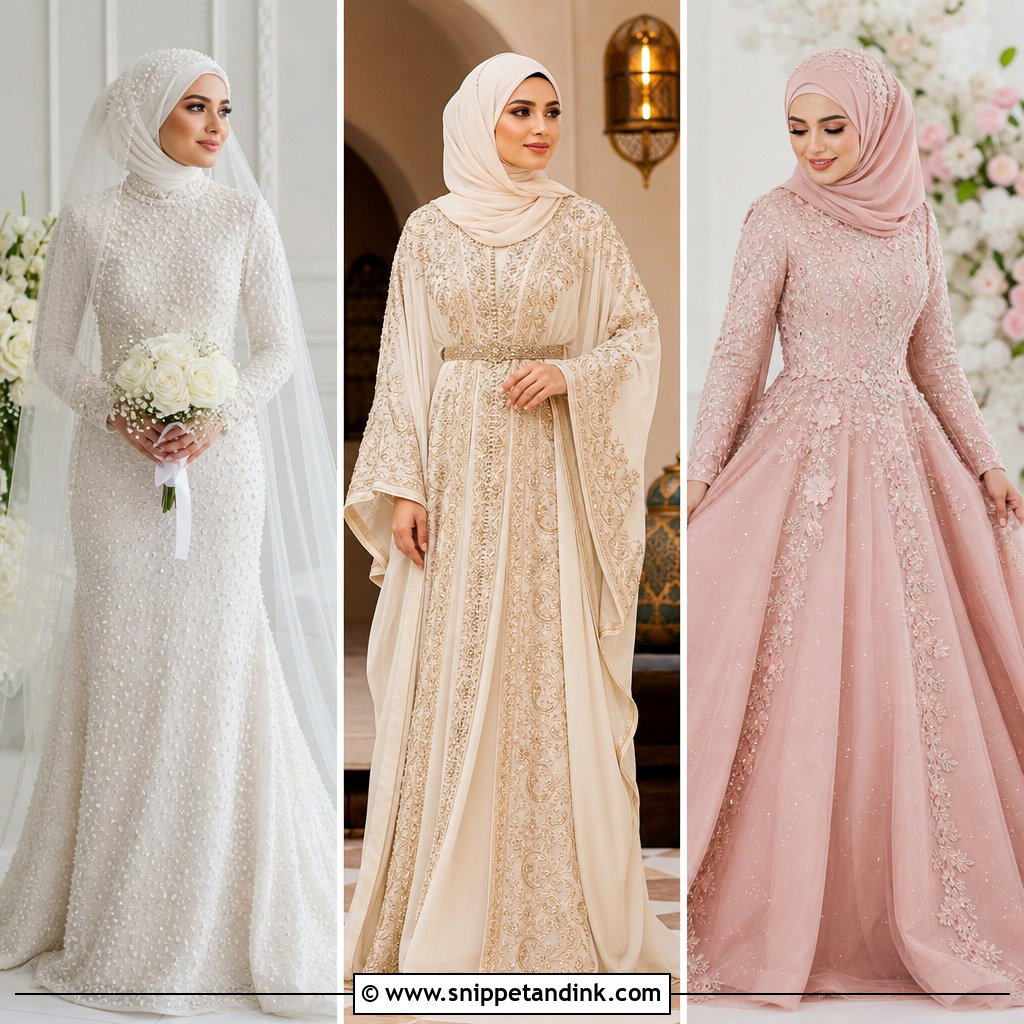
Pearls catch light softly where crystals flash, which is why I steer brides with very fair or very deep skin towards them for daytime. They sit nicely on tulle, lace and matte satin, along long sleeves, a high neckline or a sheer overskirt. One thing to check: pearl beads are heavier than sequins, so a pearl-covered tulle sleeve can stretch and drop if the base fabric is too fine. A pearl-trimmed hijab ties the outfit together. Keep earrings to studs, and save pearl-strap shoes for a gown that isn’t already covered.
10. Arabic Wedding Dress With Lace
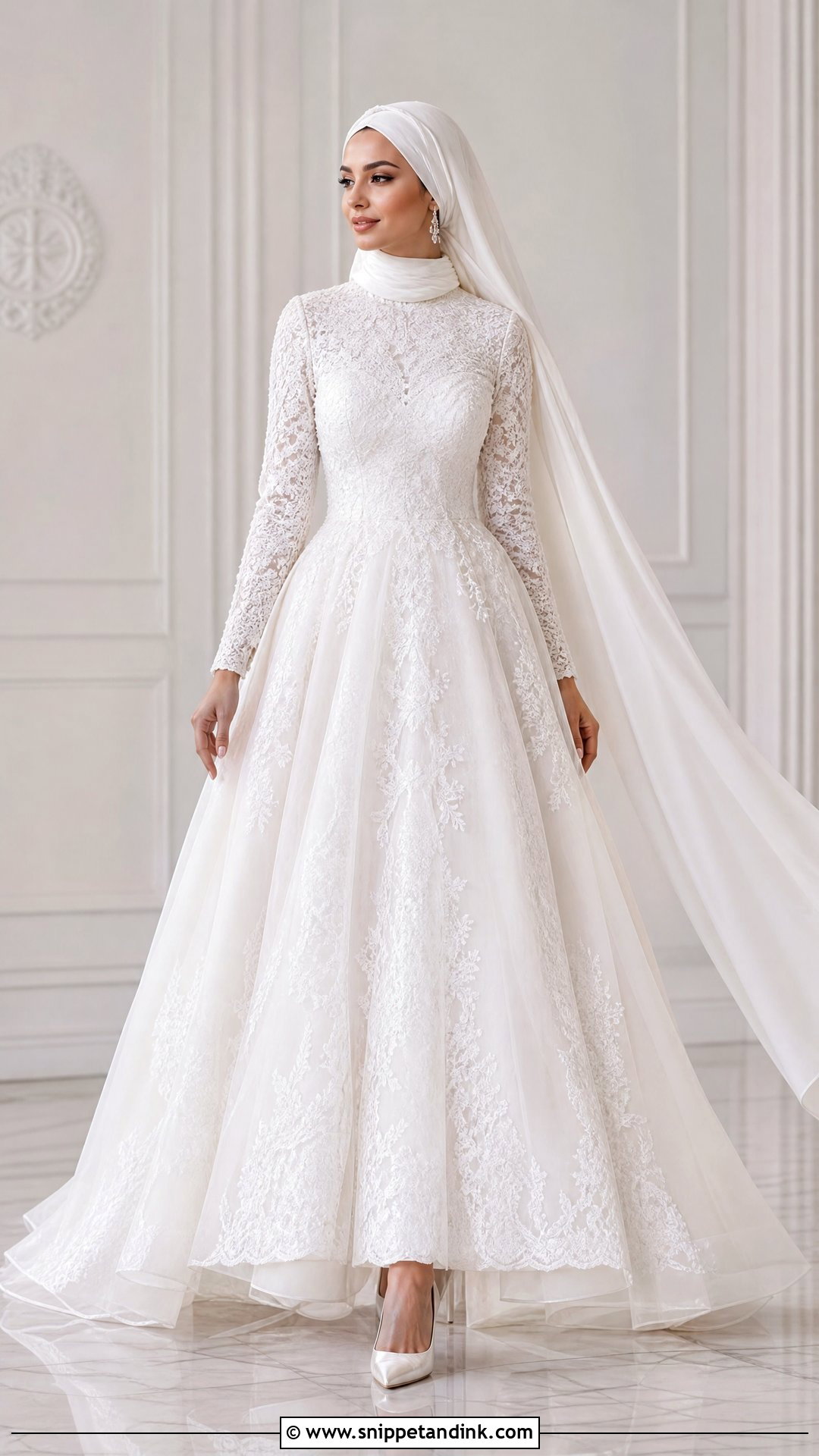
Lace adds pattern without adding skin, and a lined lace bodice with long sleeves is one of the easiest covered gowns to fit. Insist on the lining. Unlined lace looks fine on a hanger and patchy in flash photography. Floral lace leans traditional; geometric lace looks current. Busy lace calls for a plain hijab, while a simpler gown can take a lace-trimmed veil. Satin heels and small crystal earrings are all it needs.
11. Arabic Wedding Dress With Satin Skirt
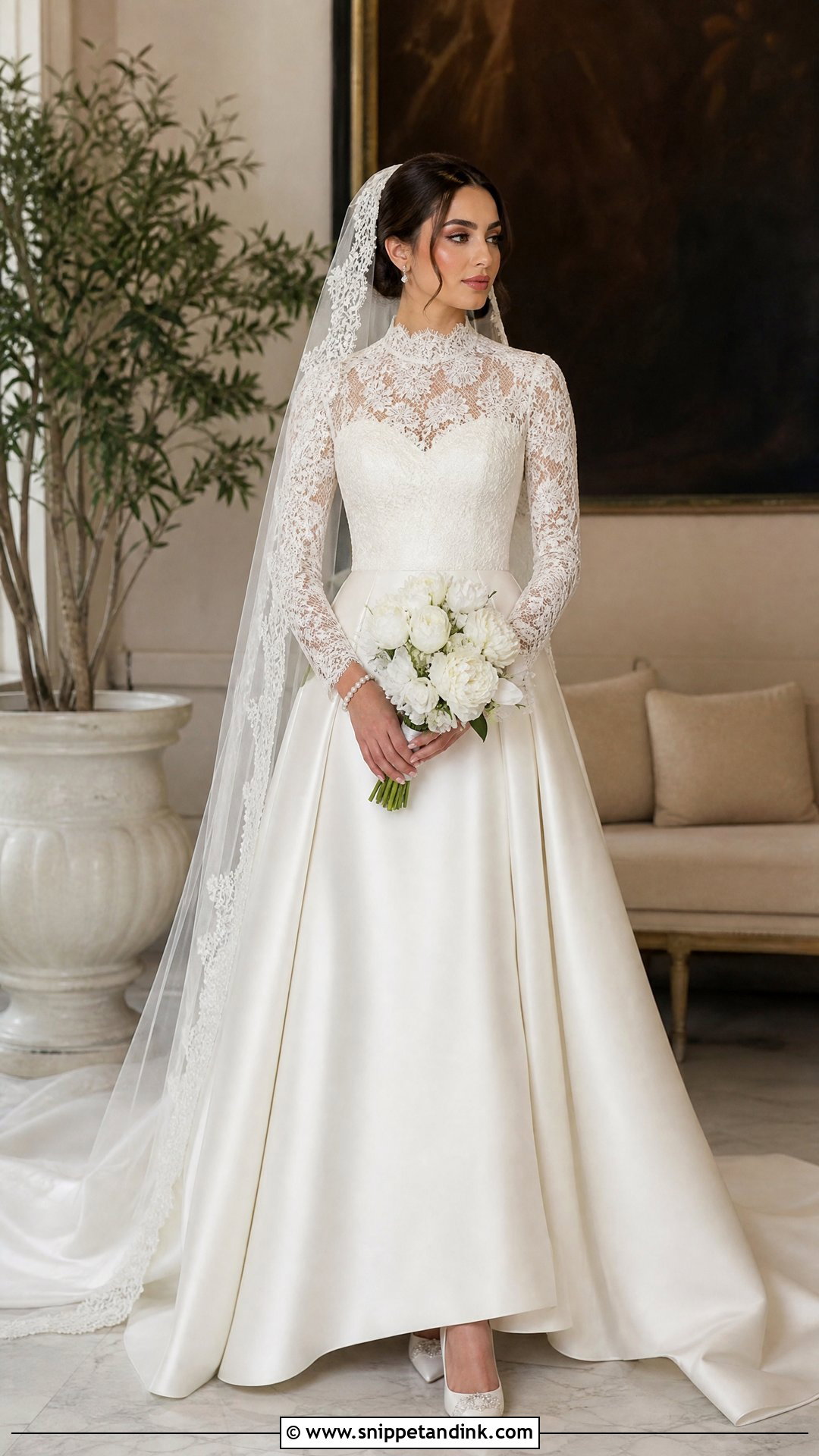
Satin reflects light in broad, clean planes, so it rewards a simple cut and exposes a poor one. A fitted long-sleeve bodice over a full satin skirt is the classic version; a plain high-neck satin gown with covered buttons is the modern one. Lace on top with a satin A-line skirt sits somewhere between. The catch is creasing. Satin marks where you sit, so steam the gown on the day and, if you can, stand for the car ride or sit on the train rather than the skirt. A long veil and structured bouquet suit it best.
12. Arabic Wedding Dress With High Neck
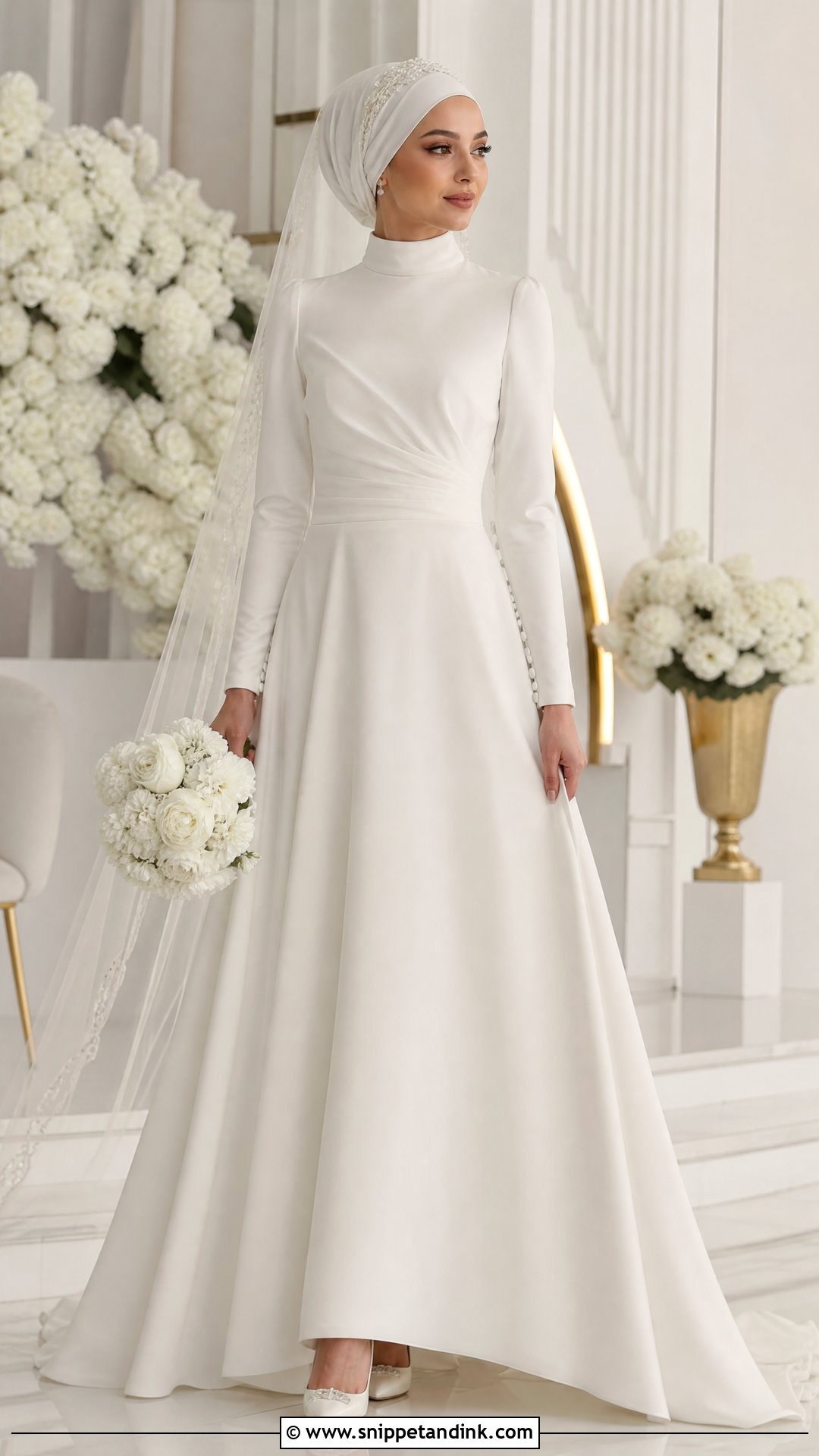
A high neck frames the face and gives a hijab a firm edge to sit against, which is why it’s the neckline I suggest most for covered brides. A mock neck, bateau or soft collar all work in the right fabric: crepe for minimal, lace for soft, beaded tulle for evening. Make sure you can turn your head fully at the fitting; a stiff collar cut too close rubs the jaw by evening. With the throat covered, move jewelry up to the ears or a headpiece and skip the necklace.
13. Arabic Wedding Dress With Detachable Overskirt
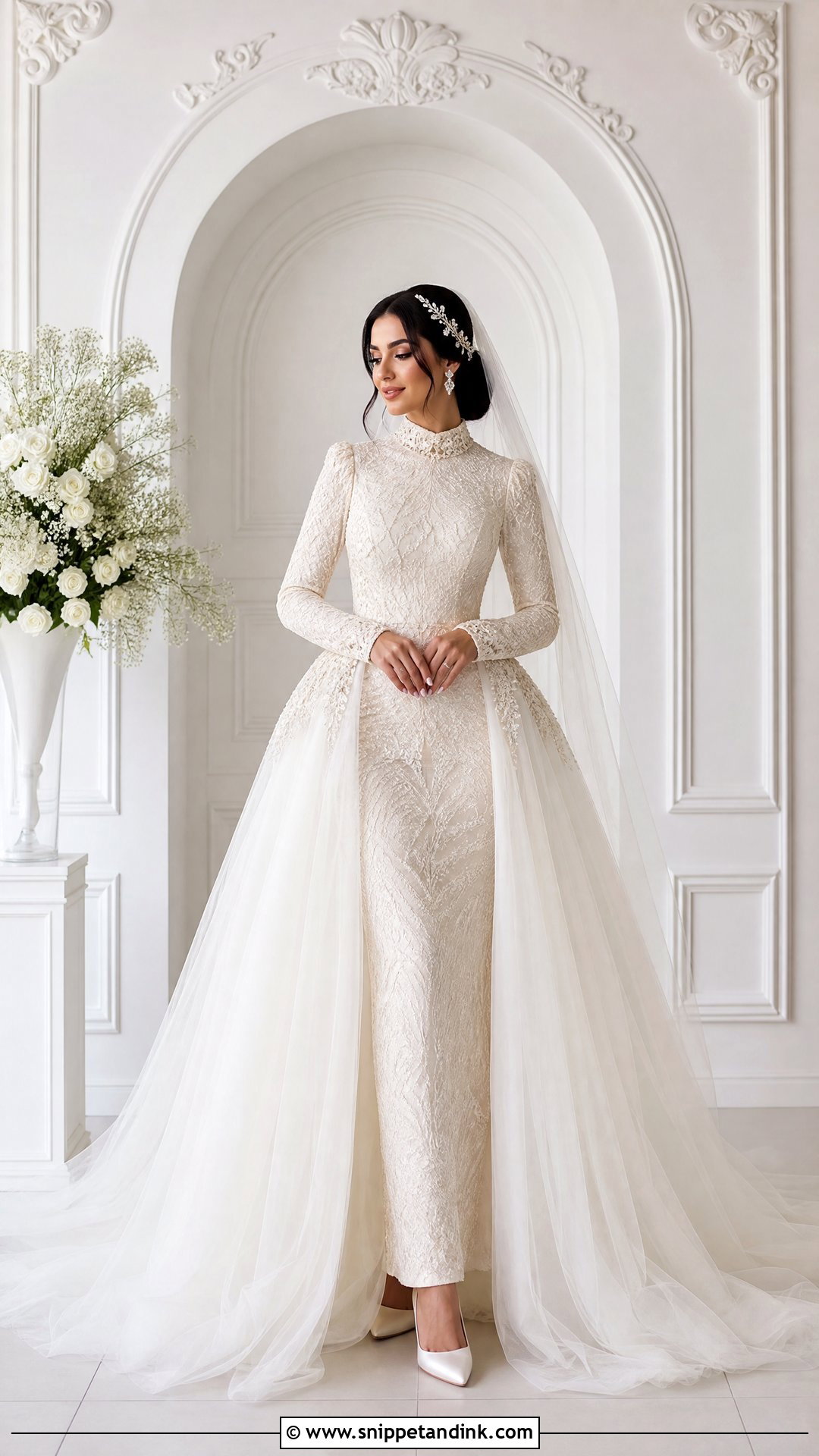
A detachable overskirt gives you two silhouettes in one booking: full volume for the entrance and portraits, a slimmer gown for dinner and dancing. It suits a fitted long-sleeve base with a high neck. Tulle overskirts add soft volume; satin ones add structure and weight. Test the fastening at your fitting. Overskirts that close with a long row of hooks take ages to remove in a crowded bridal room, while a hidden zip or two sturdy hooks take seconds. Keep the veil short enough that it doesn’t tangle with the overskirt when you turn.
14. Arabic Wedding Dress With Modest Mermaid Shape
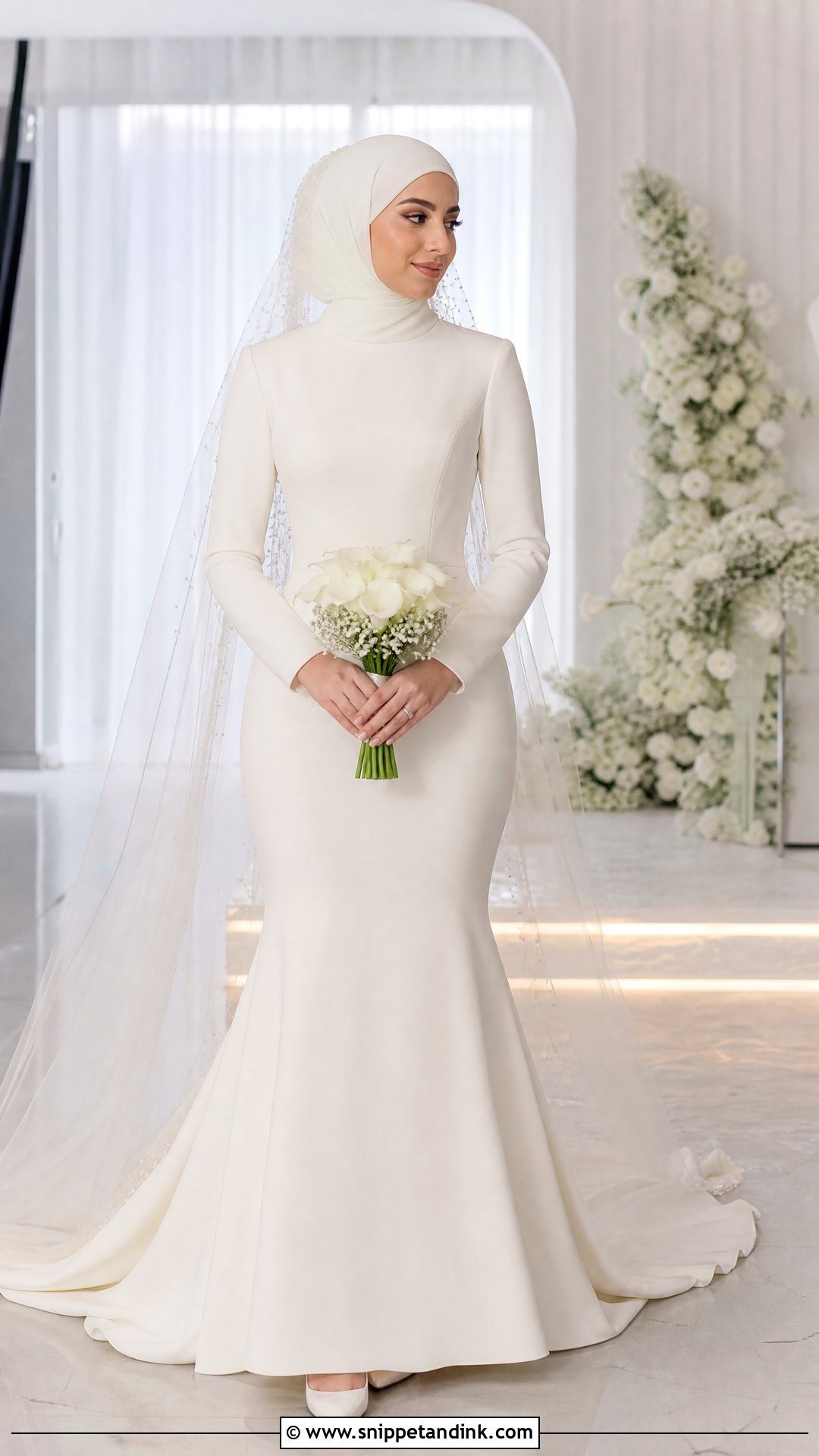
Modest mermaid gowns go wrong when they’re cut like evening dresses. The skirt should skim the hip and thigh, not grip them, and the flare should start low enough that you can still climb a step. Ask to sit down and walk a staircase during the fitting before anyone pins the final seam. Long sleeves and a high neck balance the shape, and crepe, satin or lace all hold it well. A detachable cape gives extra coverage for the entrance. Finish with a sleek hijab and a simple veil falling behind the shoulders.



15. Arabic Wedding Dress With Chiffon Layers
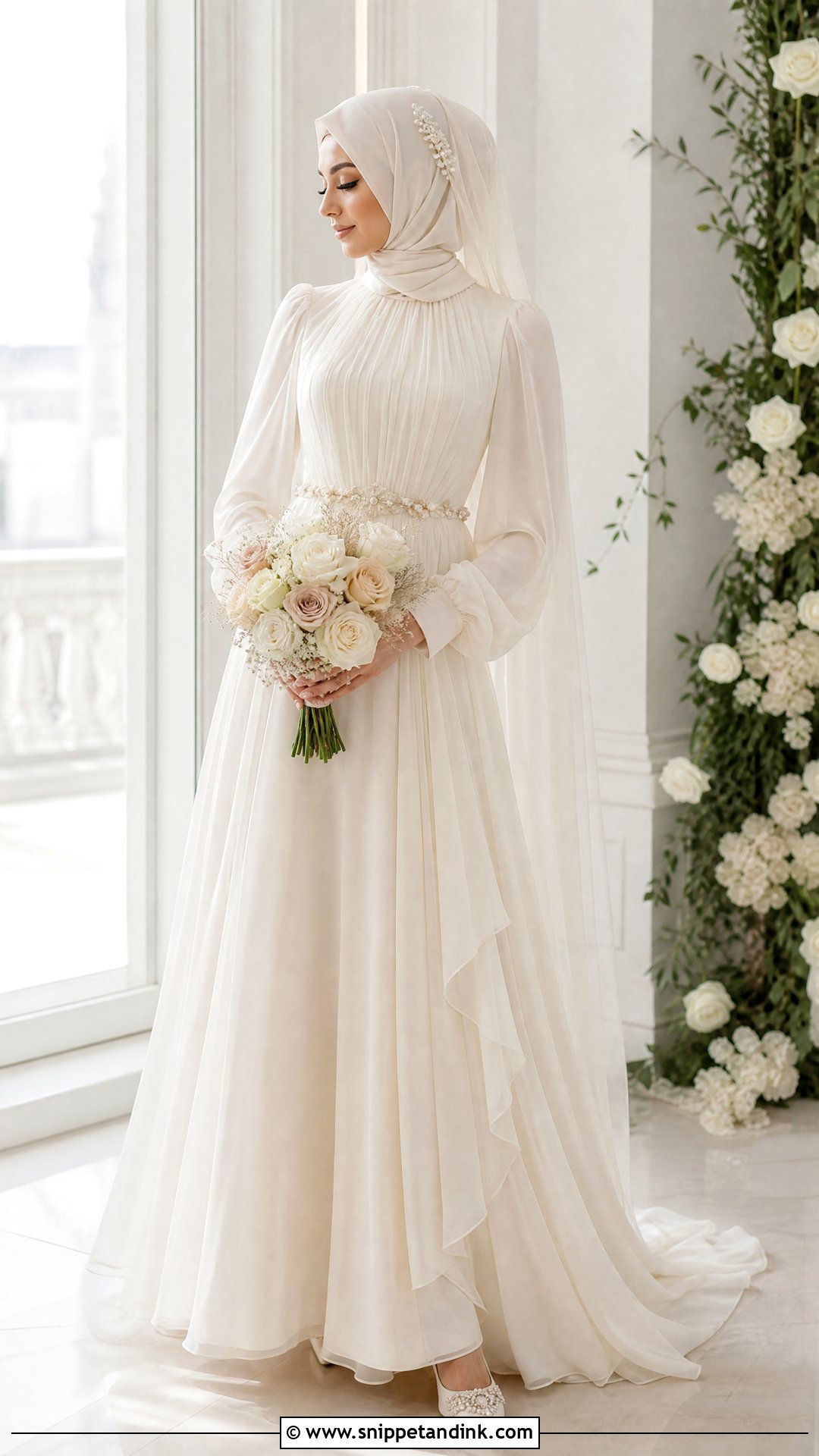
Chiffon is the fabric I recommend to brides marrying in heat or dancing for hours, because it breathes and moves when you walk. Layered over an A-line skirt with long sleeves and a soft high neck, it stays modest without feeling heavy. Ivory chiffon looks classic; a blush tint adds warmth. The weakness is static and snagging. Chiffon clings to tights and catches on rough beading, so keep embellishment flat and jewelry light. A chiffon hijab in the same shade blends straight into the gown.
16. Arabic Wedding Dress With Beaded Bodice
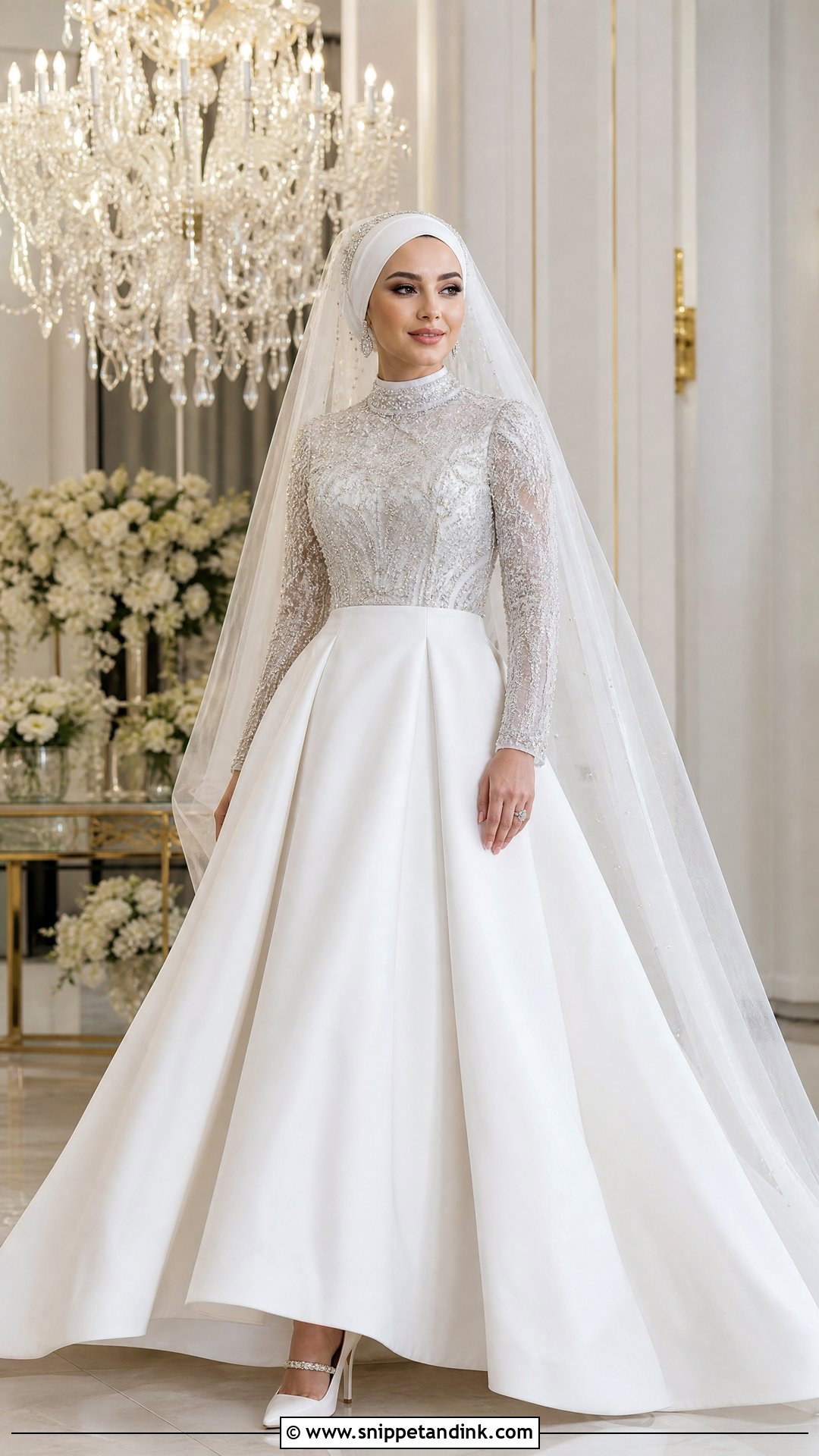
A beaded bodice gives sparkle near the face, where it photographs, and leaves the skirt free to be simple satin, crepe or soft tulle. Silver beads look cooler and modern; gold beads warmer and traditional. Check the inside of the bodice at fittings. Heavy beadwork is stitched through, and the knots can scratch the underarm if there’s no smooth lining. Keep the hijab or veil plain and the bouquet small so the bodice stays the focus.
17. Arabic Wedding Dress With Tulle Skirt
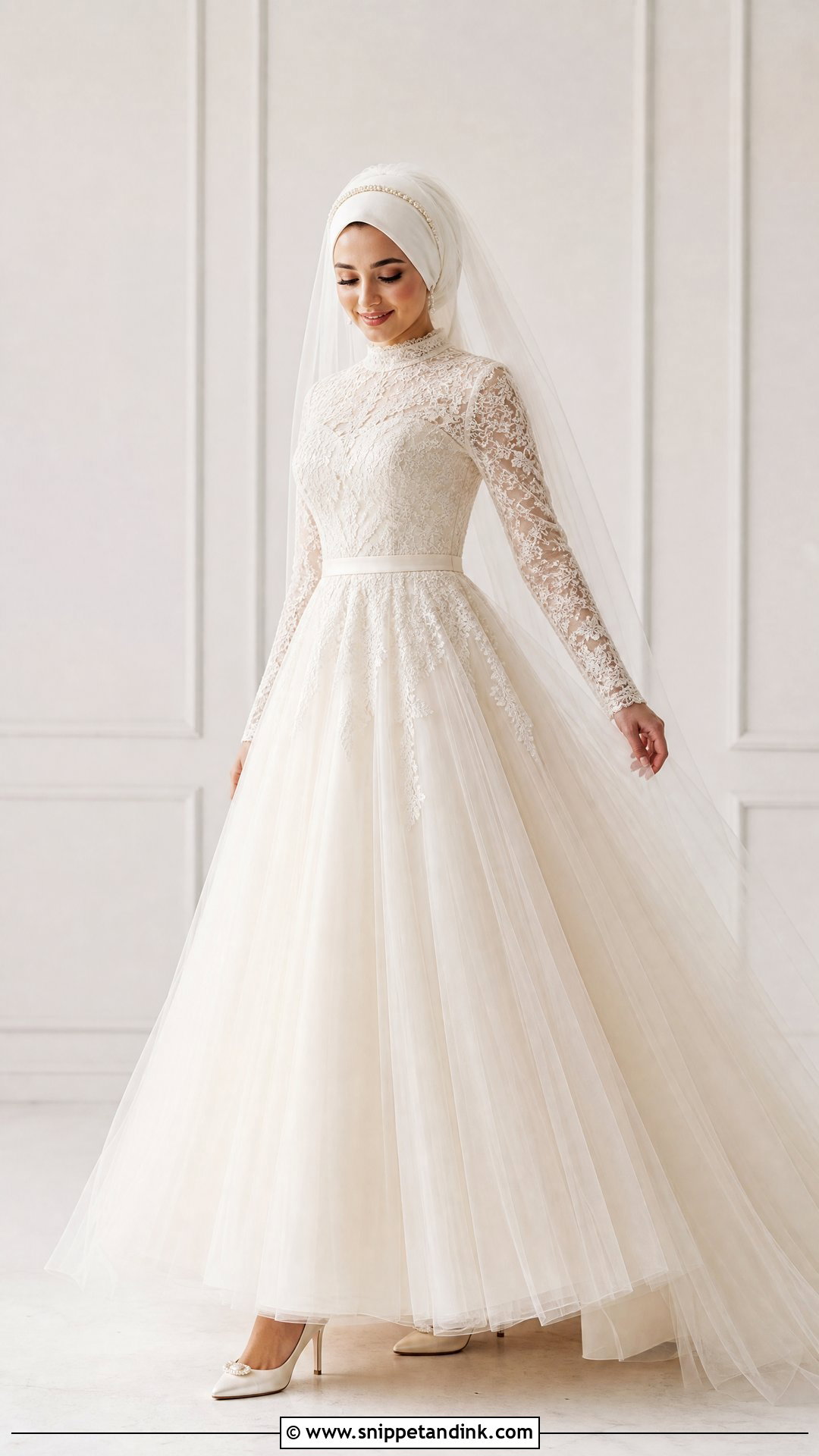
Tulle gives you volume without the weight of satin, so a full tulle skirt is kinder over a long reception. It can be princess-full or lightly layered. A long-sleeve lace or satin bodice provides the coverage, and a high neckline keeps hijab styling simple. Pearl appliqué or fine shimmer sits well on tulle. Light shoes are fine because the skirt hides them. A plain-edged veil disappears into the tulle; a beaded edge can catch on it, which I’ve seen pull threads loose by the end of a night.
18. Arabic Wedding Dress With Moroccan Kaftan
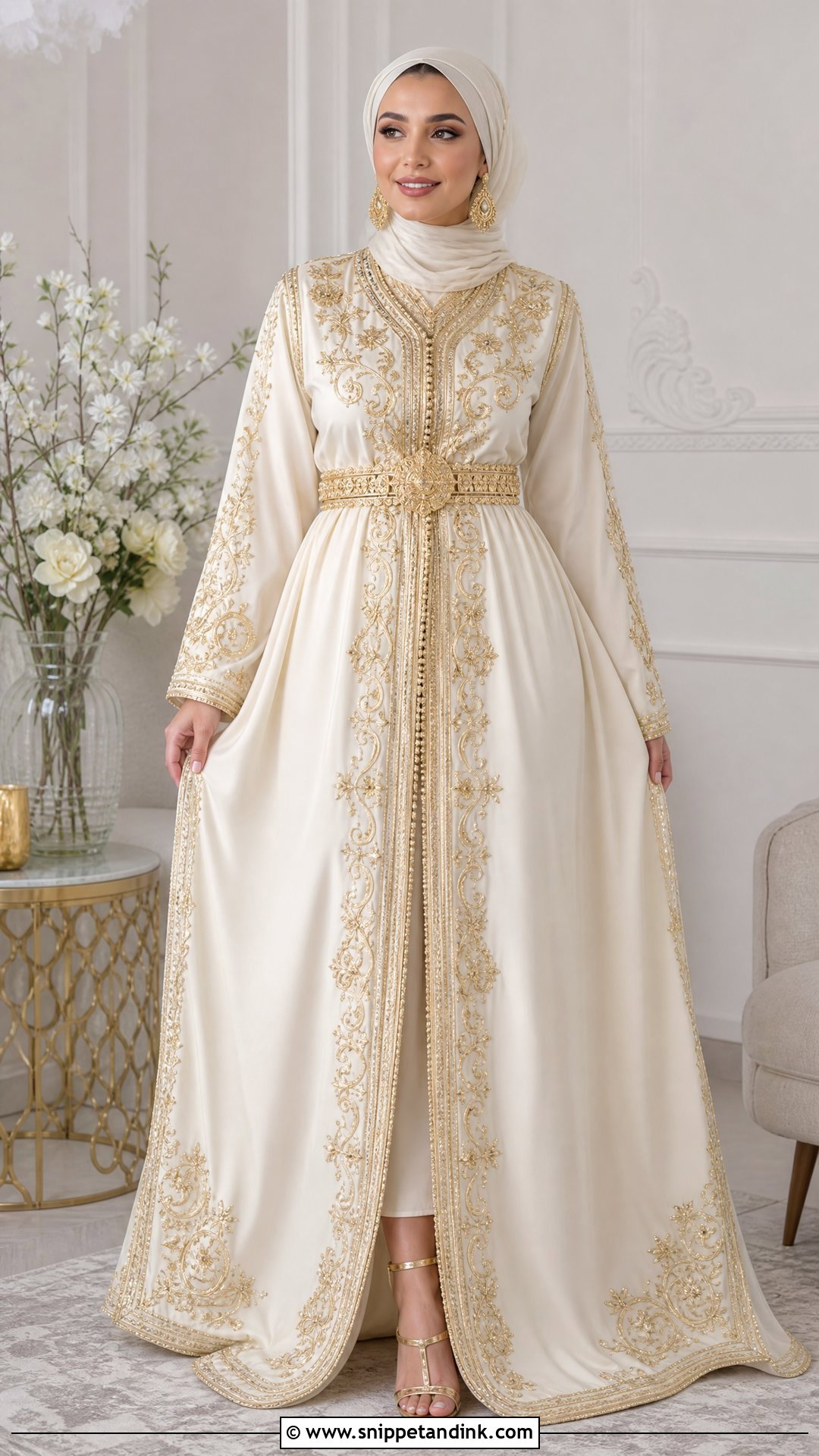
A Moroccan kaftan wedding dress is built around its embroidery and its belt, the mdamma, which can be metallic, beaded or fabric-covered depending on how formal the evening is. For the bride, white, ivory, gold or champagne work well. The belt changes the whole posture of the outfit, so try the kaftan with and without it at the fitting and make sure it doesn’t press when you sit to eat. A softly draped hijab or veil, elegant heels and statement earrings, if the neckline leaves room, complete it. It’s comfortable enough to wear for hours.
19. Arabic Wedding Dress With Palestinian Embroidery
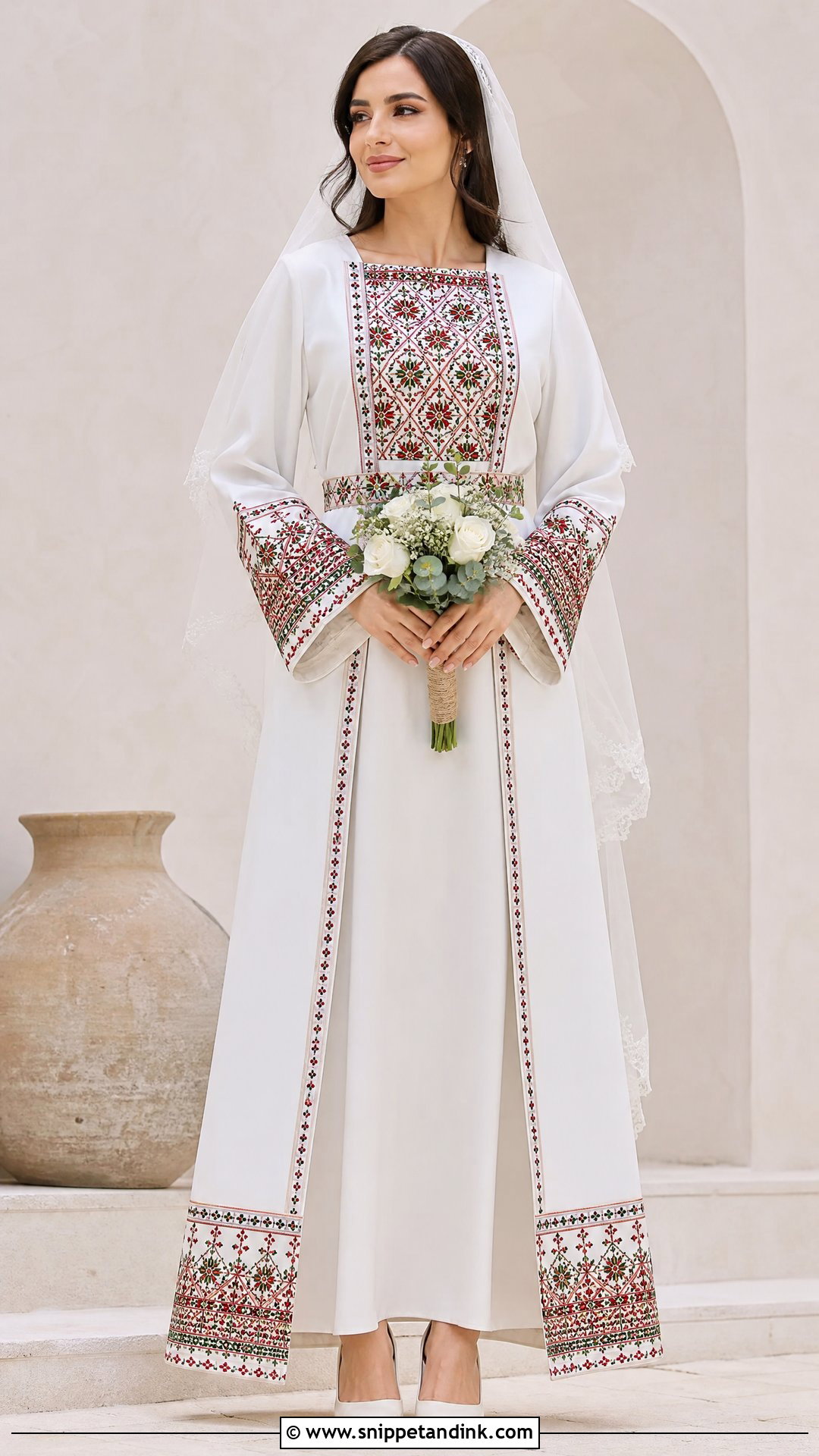
Palestinian tatreez carries meaning in its motifs and colors, and families often recognise regional patterns, so I always ask a bride whose embroidery she wants to honour before we place it. On a white or ivory base, red, black or gold cross-stitch stands out clearly on the sleeves, bodice panel, belt or hem. Hand embroidery takes far longer than machine work, so order early if you want it stitched rather than printed. With this much story in the thread, keep the veil, shoes and jewelry quiet.


20. Arabic Wedding Dress With Lebanese Couture Shape
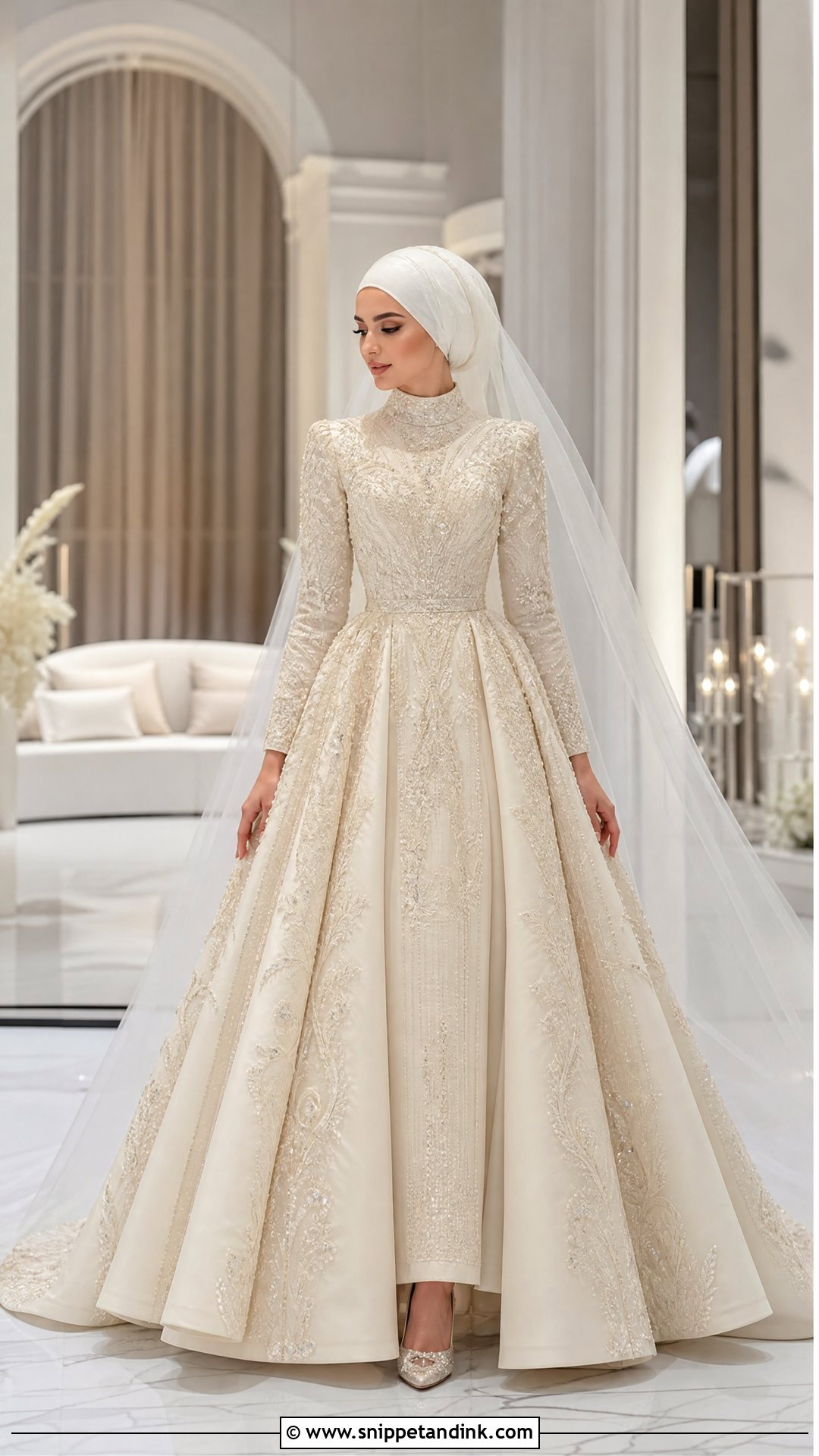
A Lebanese-inspired couture Arabic wedding dress depends on precise tailoring: a structured bodice, a dramatic skirt and beading laid exactly to the seam. It can still be fully modest with long sleeves and a covered neckline. A fitted top over an A-line or ball gown skirt keeps the proportions right. Couture shapes show every fitting flaw, so budget for at least two alterations sessions and bring your actual shoes and underlayers to both. A sleek hijab, a long veil and refined sparkle suit it.
21. Arabic Wedding Dress With Simple Crepe Gown
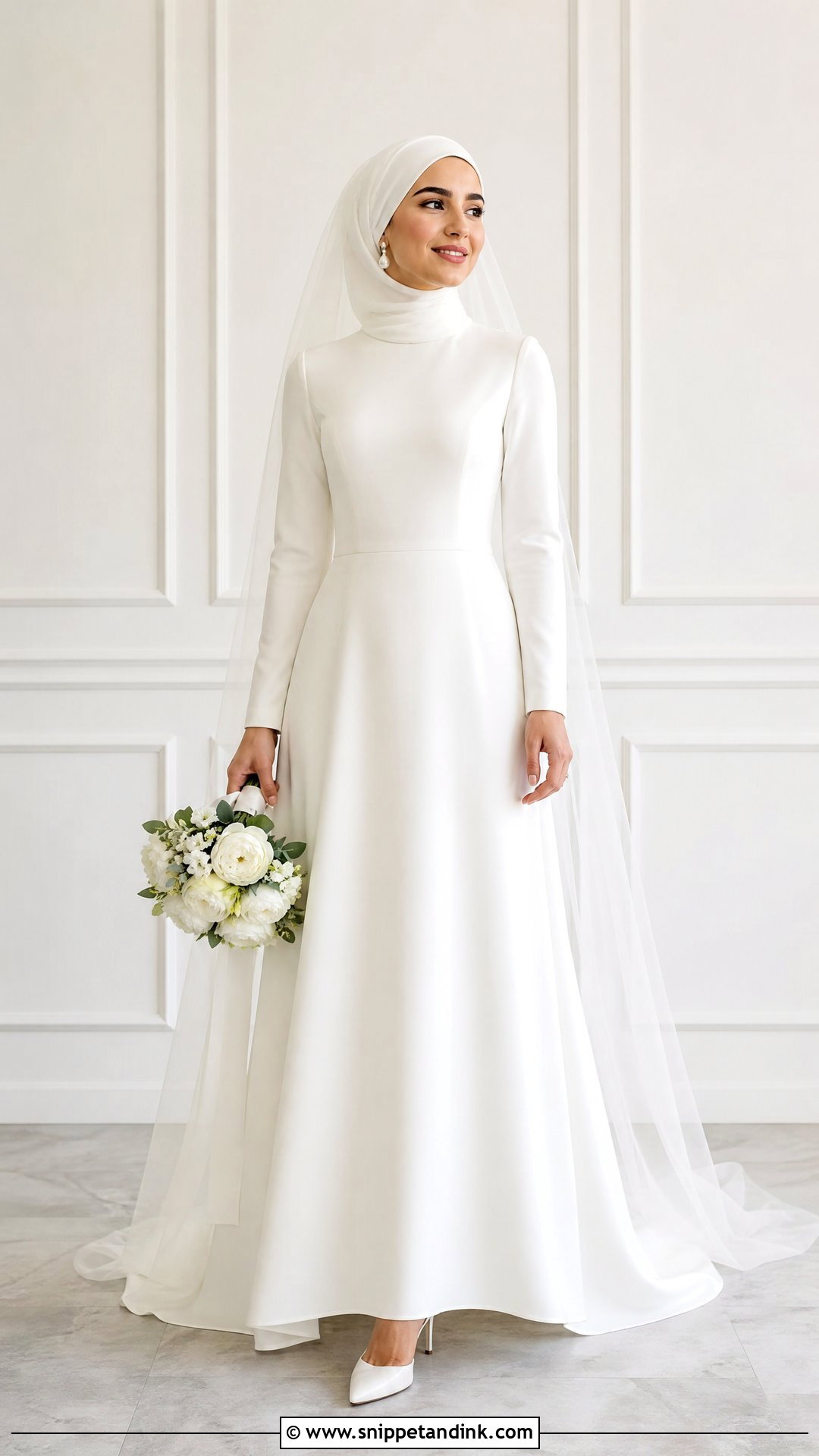
Crepe has a matte, slightly weighty drape that skims the body without clinging, which makes a long-sleeve high-neck crepe gown with a gentle A-line one of the cleanest looks a covered bride can wear. Its honesty is also its risk: crepe shows every line underneath, so smooth, line-free underwear and a slip matter more here than with lace. If you wear hijab, match it in crepe or chiffon of the same shade. A long veil, satin heels and pearl earrings are enough. No embroidery needed.
22. Arabic Wedding Dress With Blush Color
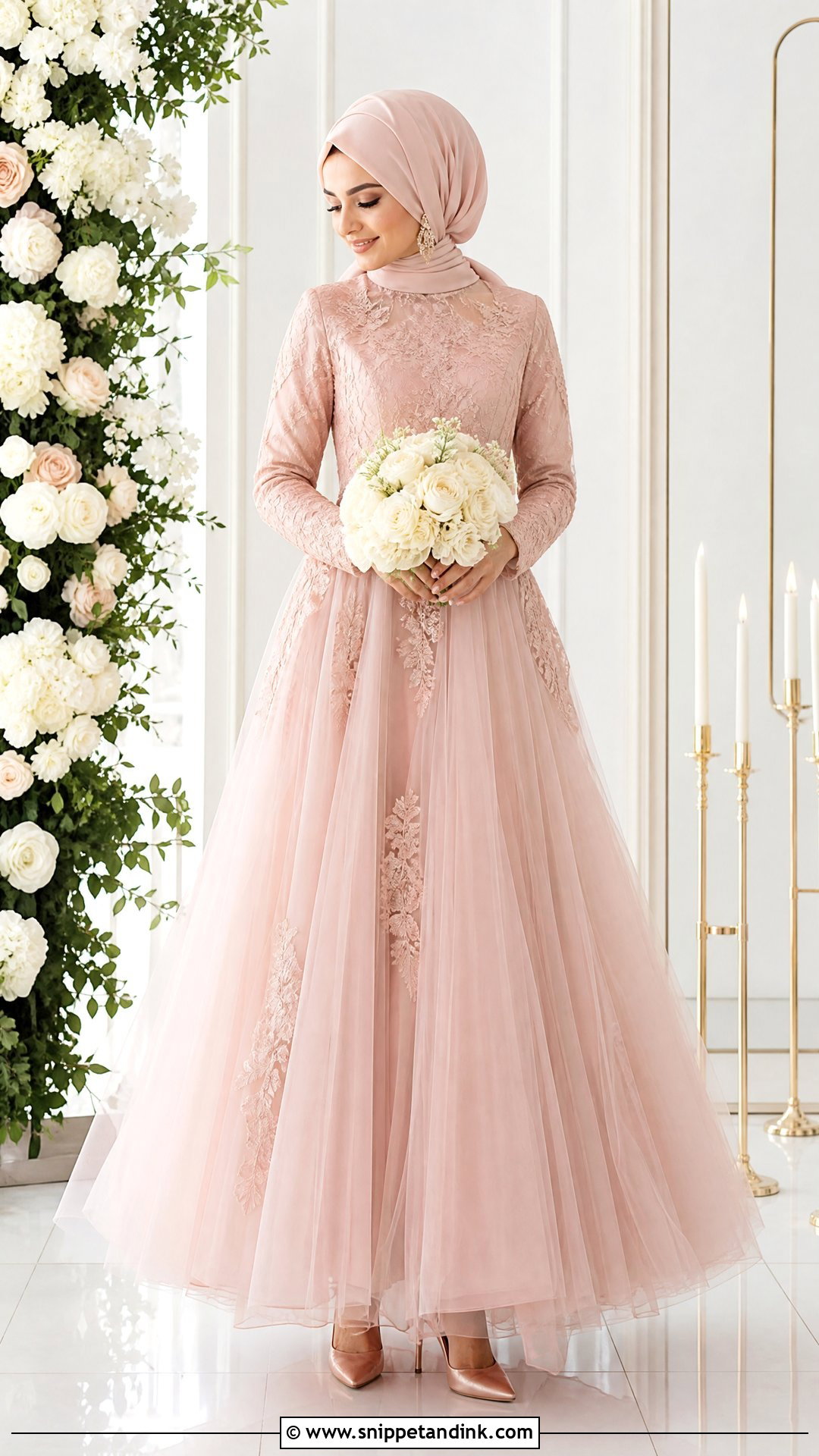
Blush still reads as bridal but warms up the skin, especially on olive and golden complexions. It sits well with lace, tulle, chiffon and pearl beading. Before you commit, look at the fabric in daylight and under warm indoor bulbs; some blushes turn almost beige under yellow light and others go pink. Choose a modest A-line with long sleeves and a covered neck. A blush hijab looks tonal and soft, an ivory veil adds contrast. Rose-gold accessories and cream and pale pink flowers carry the color through.
23. Arabic Wedding Dress With Ivory Color
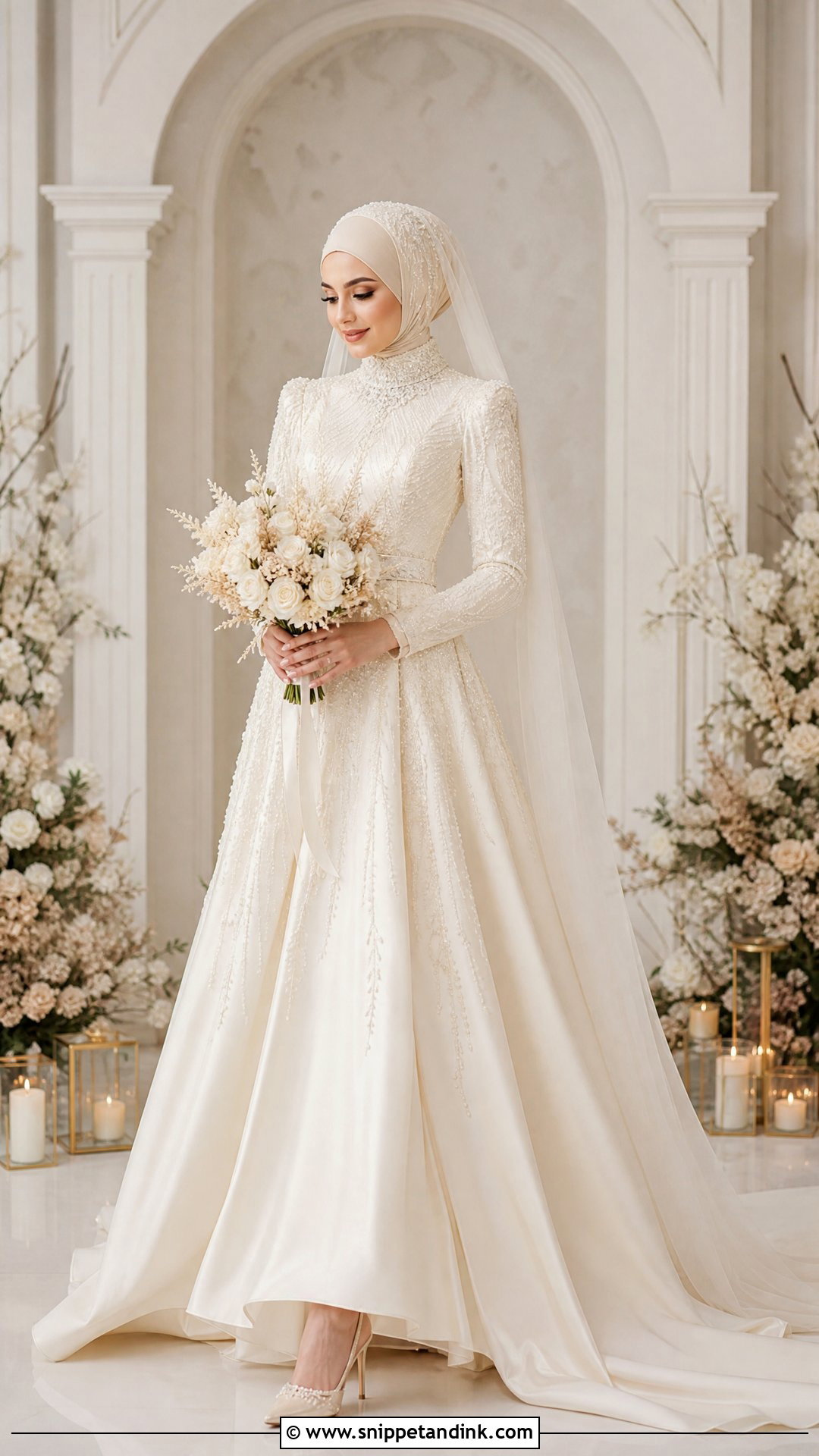
Ivory flatters more skin tones than bright white because it lacks that blue cast that can make skin look grey in photos. It pairs with gold, pearl, silver or lace detailing. An ivory gown with long sleeves, a high neck and a flowing skirt is an easy base to personalise. Match the hijab exactly or use a slightly sheer veil for a little depth; ivories vary a lot between suppliers, so bring a fabric swatch when you buy the hijab. Warm skin and traditional gold sets look especially good against it.
24. Arabic Wedding Dress With Silver Embellishment
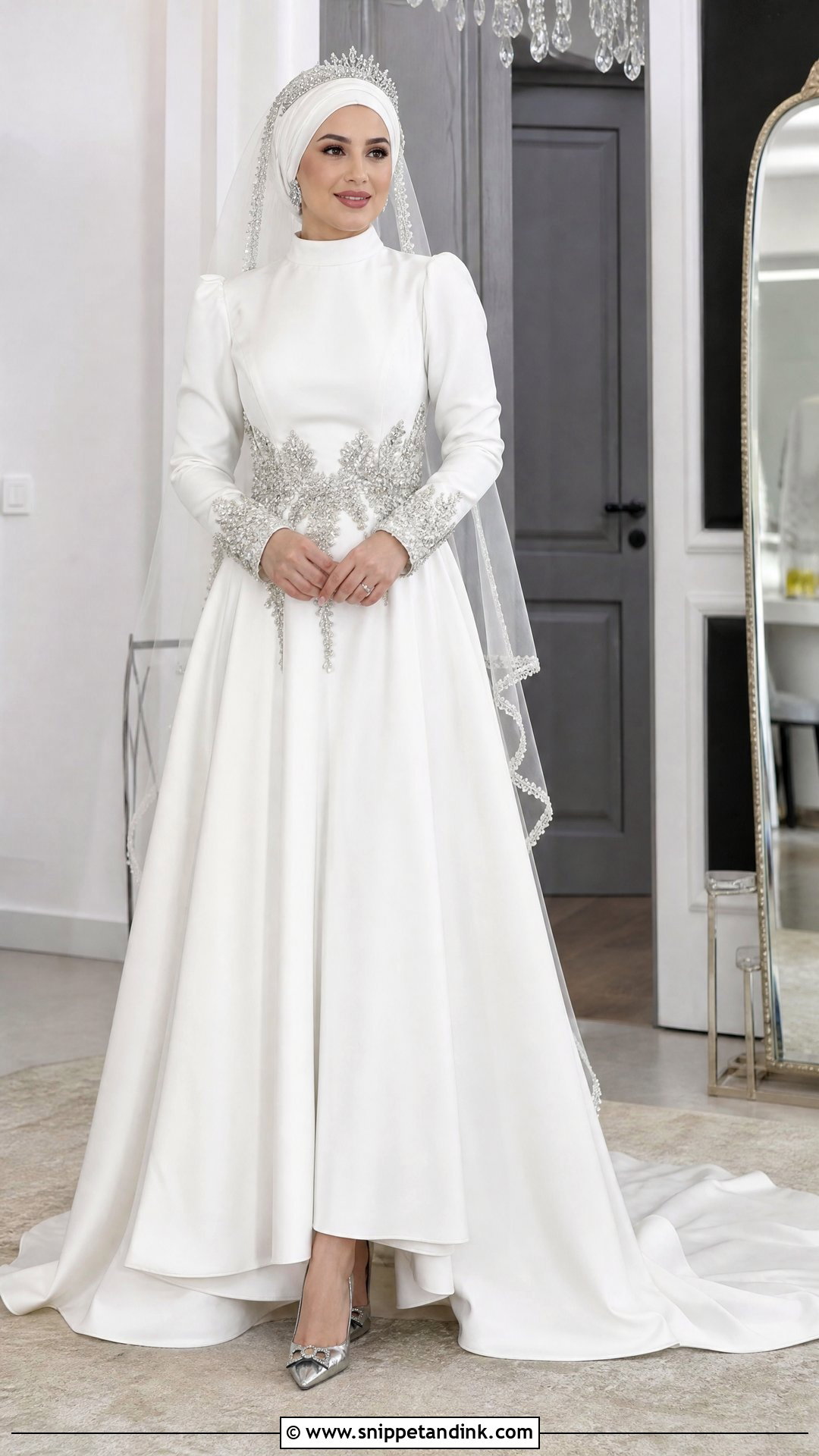
Silver embellishment suits a cooler base: pure white, icy ivory or a fabric with a faint grey tint. Placed along the sleeves, neckline, waist or veil edge, it ties the outfit together. A long-sleeve gown scattered with silver crystals gives plenty of glamour with no open back or low neck needed. Mixing silver dress beading with heavy gold family jewelry rarely works, so decide early which metal leads. A silver tiara or crystal pins and plain white satin or silver heels finish it.

25. Arabic Wedding Dress With Traditional Henna Look
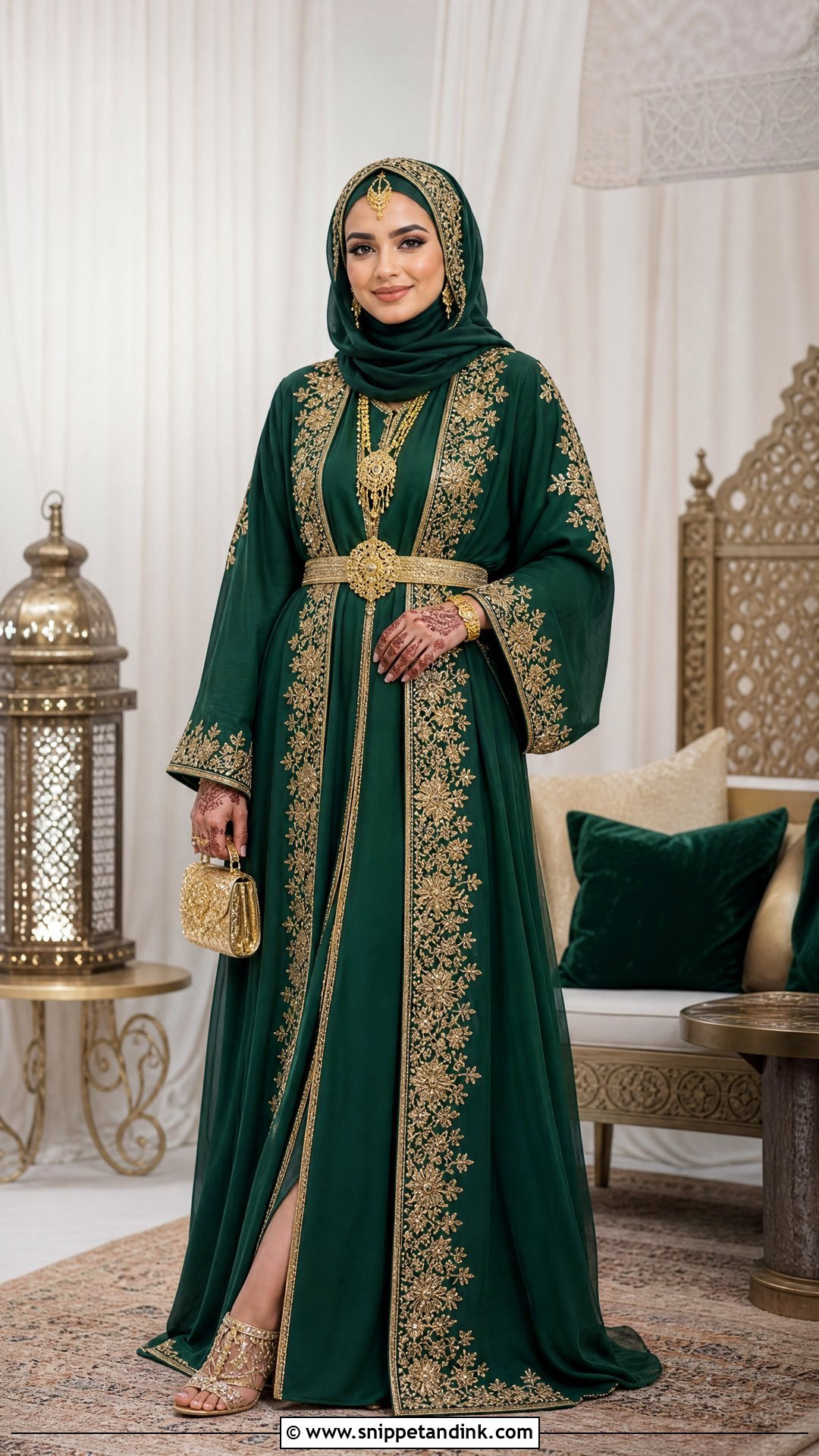
The henna night is where color comes back in, and a traditional henna look is often the outfit the family remembers most. Green, red, gold and deep jewel tones are the usual choices, cut with long sleeves, a flowing line and ornate trim. Practical point from the dressing room: wet henna paste stains fabric, so either have your henna applied before you change, or wear a sleeve that pushes back easily and keep the fabric well clear of fresh designs. Gold jewelry, embellished heels and a small clutch complete it.
One Bride, Three Events, and the Changes Between Them
Many Arab weddings run across a henna night, a nikah or katb al-kitab, and a reception, sometimes on separate days. Treat them as a wardrobe rather than three unrelated shopping trips. The henna outfit usually carries color and heritage embroidery, the nikah calls for the simplest and most covered look, and the reception is where the big white gown or couture piece belongs.
Changing mid-event is common at receptions, so plan it. Choose a hijab style that can stay in place while the gown changes, or have your stylist on hand to re-pin it. A gown with a detachable overskirt or train counts as two looks and saves a full change. Agree on a private room close to the hall, and keep a small bag there with safety pins, a steamer and blotting papers.
Getting Heavy Beadwork Home in One Piece
Embroidered and beaded gowns are heavy, and hanging them by the shoulders for days stretches the fabric. Use the hanging loops sewn inside the waist, or lay the gown flat in a breathable cotton bag. Never steam directly over beads or metallic thread; steam from the inside of the skirt instead.
After the wedding, get it to a cleaner who handles bridal work within a few weeks. Sugar from drinks dries invisible and turns brown with time, and henna or makeup on cuffs and collars sets the longer it sits. Store it away from plastic, which traps moisture, and away from sunlight, which yellows ivory and dulls gold thread.
The Gown Is Only Half of the Silhouette
The dress you pick from this list will be seen together with the hijab, the veil, the shoes and the family jewelry, so judge them as one outfit at your fitting, not piece by piece. Covered bridal style can be quiet crepe or a full embroidered kaftan and still feel completely bridal. What matters is that the sleeves let you hug people, the neckline stays put, and the fabric survives a long night. Get those right, and the gown will look as good in the last photo of the evening as it did when you walked in.
You'll Like These Ideas:





Leave a Reply