
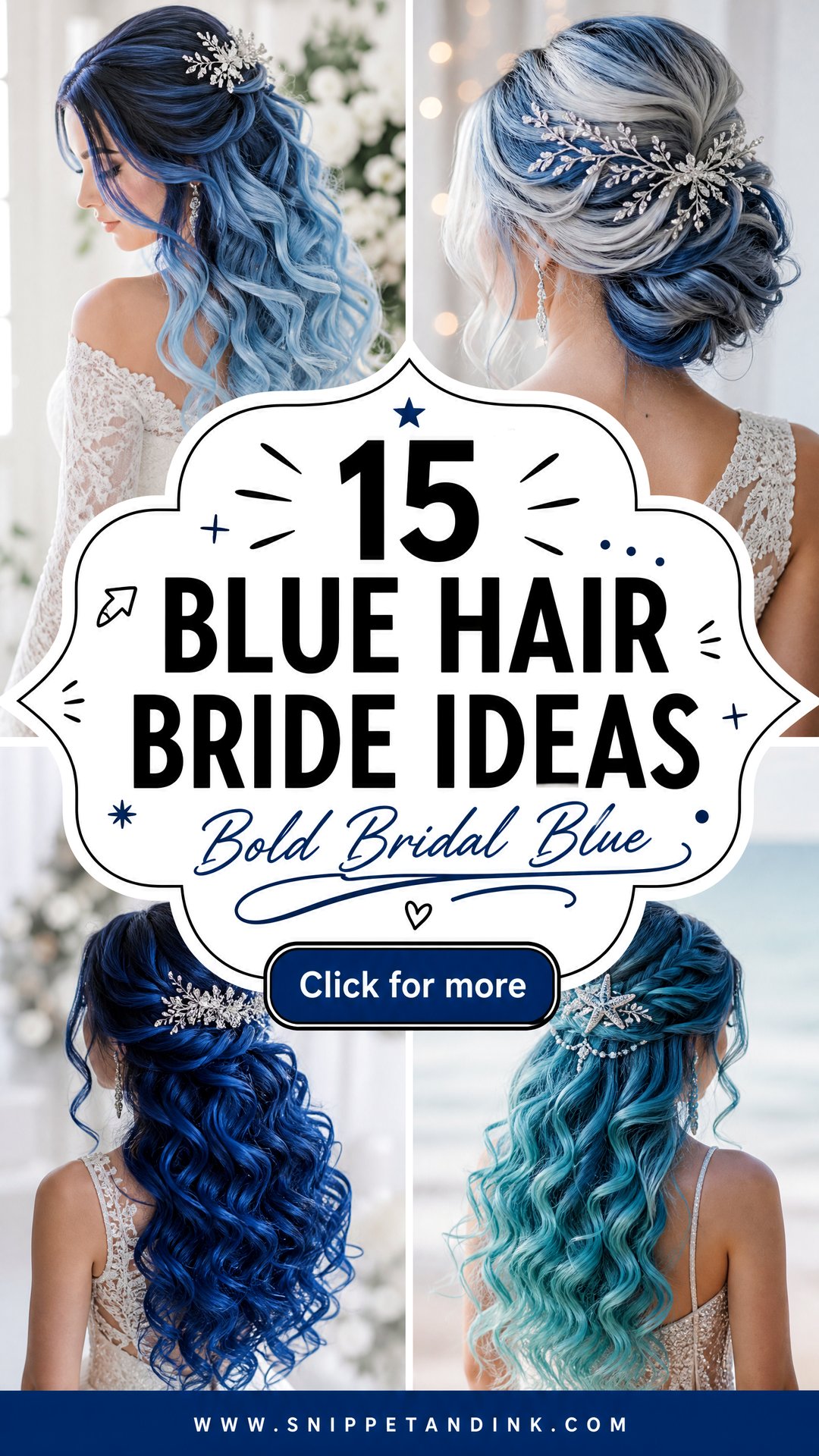
Blue hair on a bride still turns heads, and I love that it puts the “something blue” where everyone can see it instead of under a hem. The shades below run from barely-there powder blue to inky navy, on everything from a pixie to waist-length waves. Before you fall for a photo, I always ask three things at a consultation: what your dress is made of, what light you’ll be married in, and how much upkeep you can honestly fit into the final month. Those answers decide the shade far more than any mood board does.
Blue Only Shows Up on Hair That’s Been Lightened First
Almost every blue in this list is a semi-permanent or direct dye sitting on top of pre-lightened hair. On dark brown or black hair with no bleach, most blues simply won’t register, or you’ll get a faint tint visible only in sunlight. Navy and midnight are the forgiving exceptions, since they need less lift. Pastels and icy blues are the opposite: the hair has to be lifted to a very pale yellow, and any warmth left underneath turns the blue slightly green.
That’s why I tell brides to start earlier than they expect. The calendar I work back from:
- Three to four months out: a consultation and a strand test, so you see the real shade on your own hair rather than on a photo.
- Two to three months out: the lightening, split across more than one session if you’re dark or your hair is fragile.
- Around six weeks out: a full trial with the color, the actual hairstyle and your veil or hair accessories.
- Five to ten days before: the final color refresh, so it gets a few washes to settle and stop bleeding.
If your hair is already damaged, I’d steer you toward a money piece, an ombre or a balayage. They put far less bleach on your head than an all-over pastel and grow out far more gracefully.
1. Pastel Blue Bridal Waves
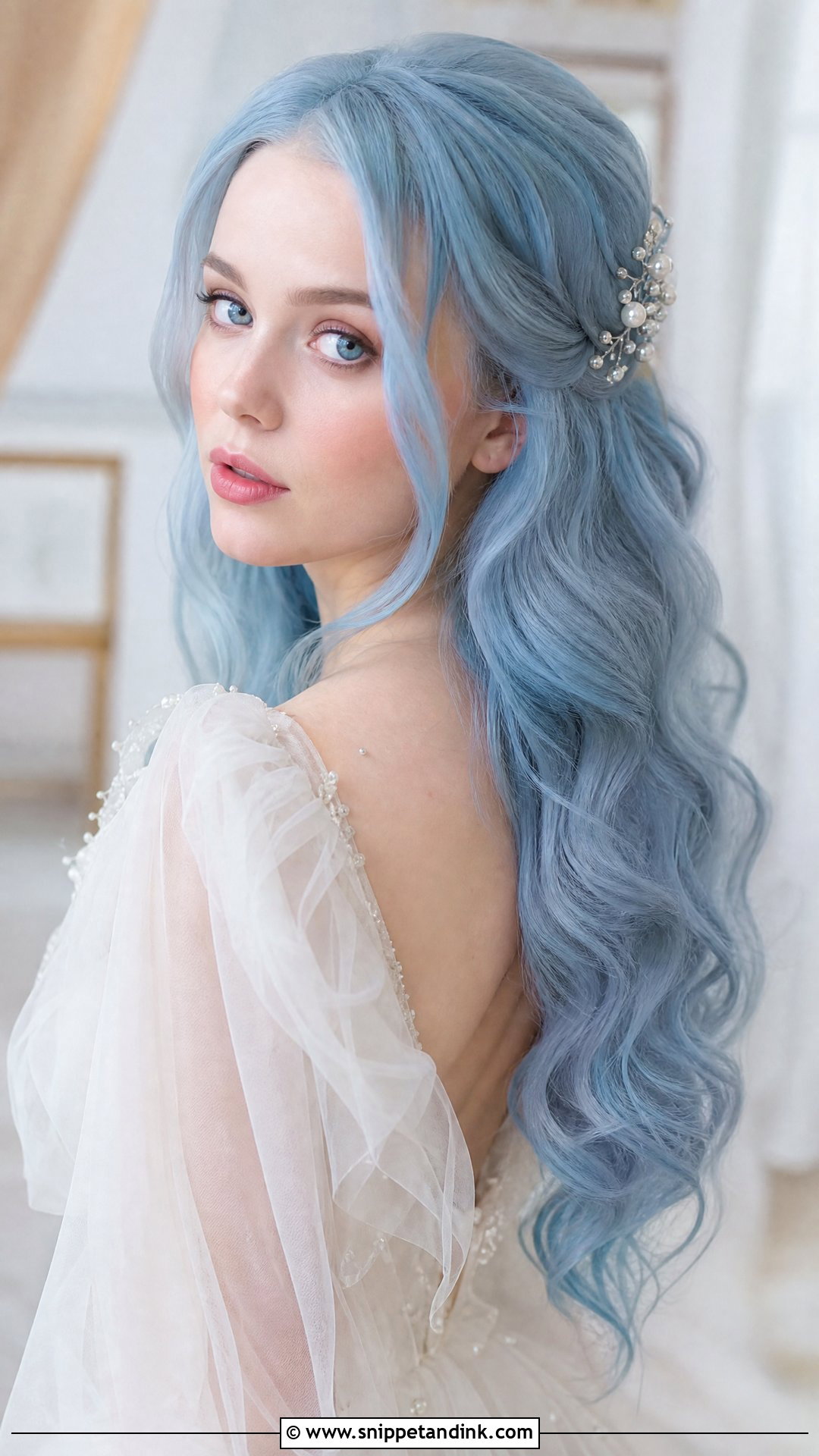
Pastel waves are the gentlest way into blue, but they’re also the shade that fades fastest, so I treat them as a last-fortnight color. They need medium to long hair to read properly, because the bend of each wave is where the light catches the tone. I ask the colorist for a powder blue with a glossy finish, since a matte pastel looks chalky under a flash. Loose waves sit well under a cathedral veil or with a couple of pearl pins. Switch to a sulfate-free shampoo a month out and the blue stays even instead of patchy at the ends.
2. Icy Blue Bridal Updo
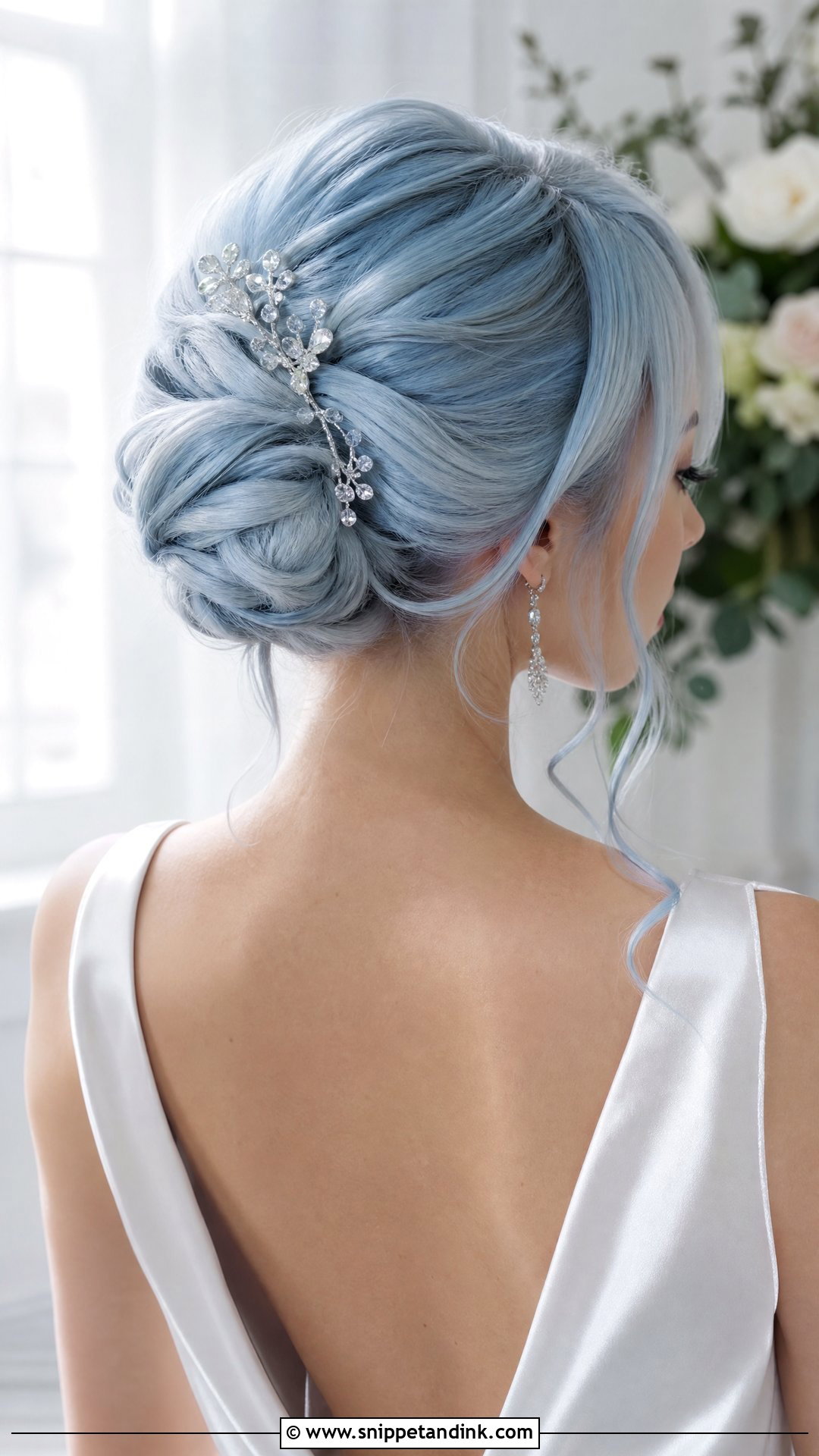
Icy blue is so pale that in bright daylight it reads as silver, which is why I find it suits winter weddings and white satin so well. The catch is the base: any yellow left in the lightened hair turns ice blue faintly green, so this shade needs the cleanest lift of the lot. I’d put it in a low twisted bun or a soft chignon, leaving two face-framing pieces out to break up the structure. Silver jewelry keeps it cool. Because icy tones wash out in a handful of shampoos, book a toner refresh within the last week and rinse with cool water only.
3. Navy Blue Bridal Bun
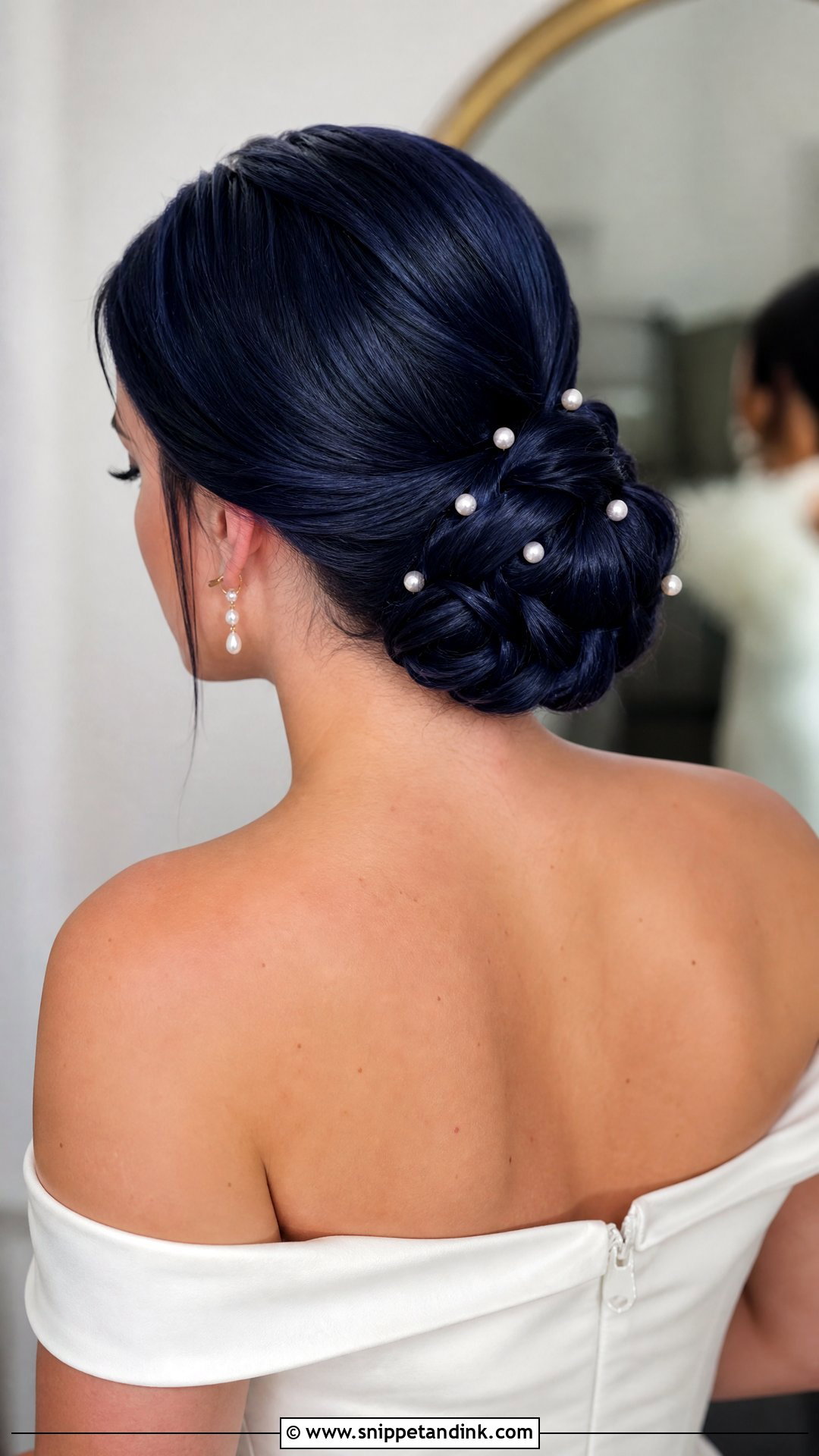
Navy is the shade I suggest when a bride wants blue but is nervous about it. Indoors it reads nearly black; step outside and the blue comes up rich and obvious. It also needs the least lightening of anything here, which matters if your hair has been bleached before. I pin a navy bun high for a fashion edge or low at the nape so a veil comb can slide in underneath. Ivory and champagne gowns sit nicely against it. Finish with a shine spray, because dark blue on dull hair looks flat and almost grey in pictures.
4. Dusty Blue Half Up Wedding Hair
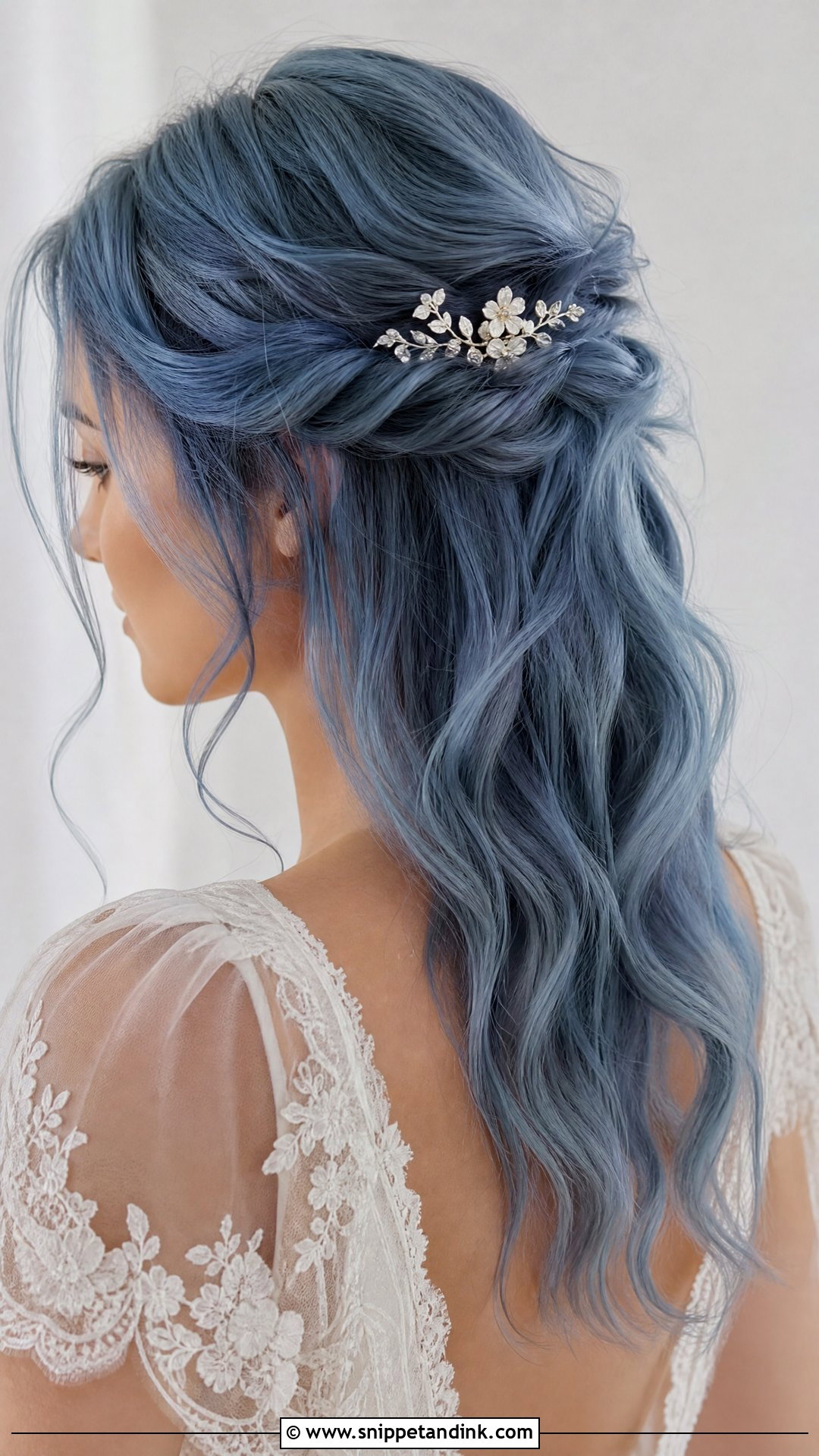
Dusty blue has grey mixed through it, which makes it the easiest blue to wear with soft makeup and a pale gown. A half-up style gives height at the crown and still shows length, and I usually twist rather than braid the top section so the color isn’t broken into tiny segments. Secure it with a small comb or bow. The thing to watch is grip: freshly colored, conditioned hair is slippery, so I backcomb lightly at the base of the half-up before pinning or it slides by the first dance. Leave the waves loose enough that people can hug you without crushing them.
5. Blue Ombre Bridal Curls
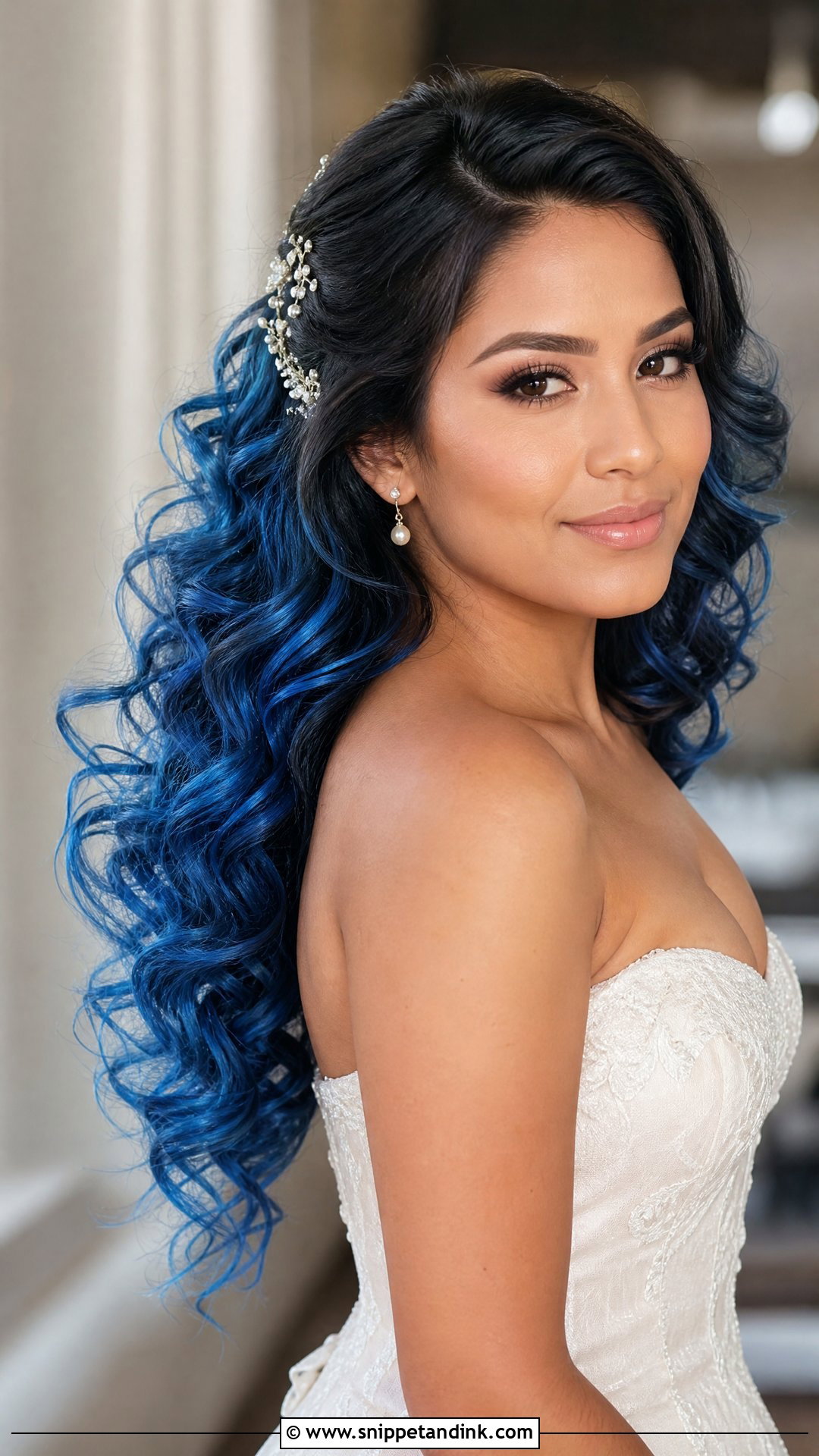
Ombre is the compromise I suggest most often when a bride likes blue but worries about it near her skin. The roots stay natural brown, blonde or black, and the blue only starts around the cheekbones, so your complexion is framed by your own color. Curls show the blend best because each spiral carries both tones. When I set them, I curl away from the face so the brighter ends open outward in photos. A drop of light serum on the last few inches stops the bleached ends from looking fluffy.
6. Blue Balayage Wedding Hair
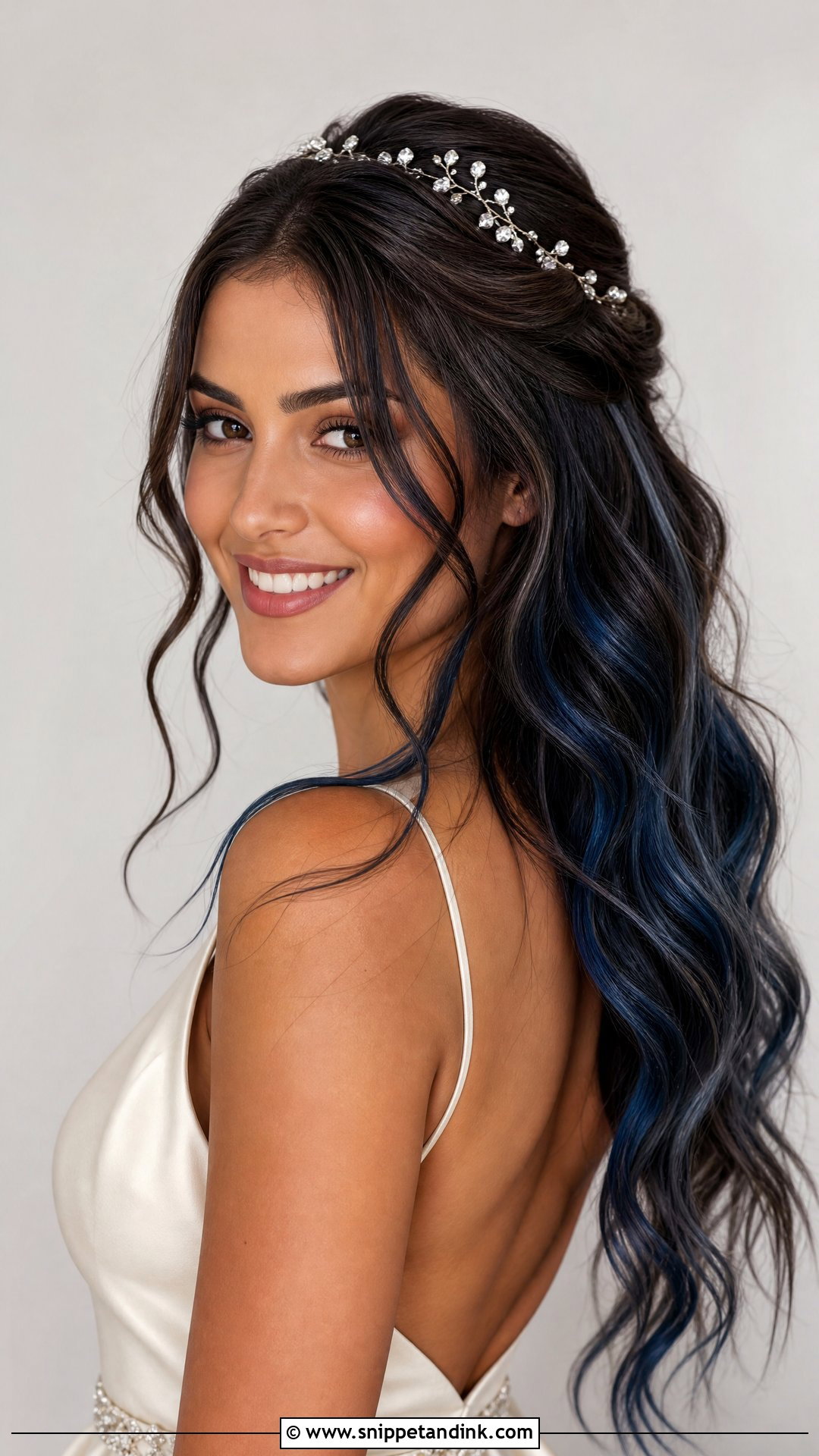
Blue balayage wedding hair is hand-painted, so the blue sits in ribbons rather than a solid block. You decide the contrast: soft blue through blonde, teal into brunette or sapphire into dark brown. I like it on wavy hair because the waves move the ribbons around and every angle looks a little different. It’s also the kindest option for after the wedding, since the grow-out line is blurred and there’s no harsh root at six weeks. Ask for a gloss the week of the wedding so the painted pieces don’t look dry next to the untouched hair.
7. Denim Blue Bridal Bob
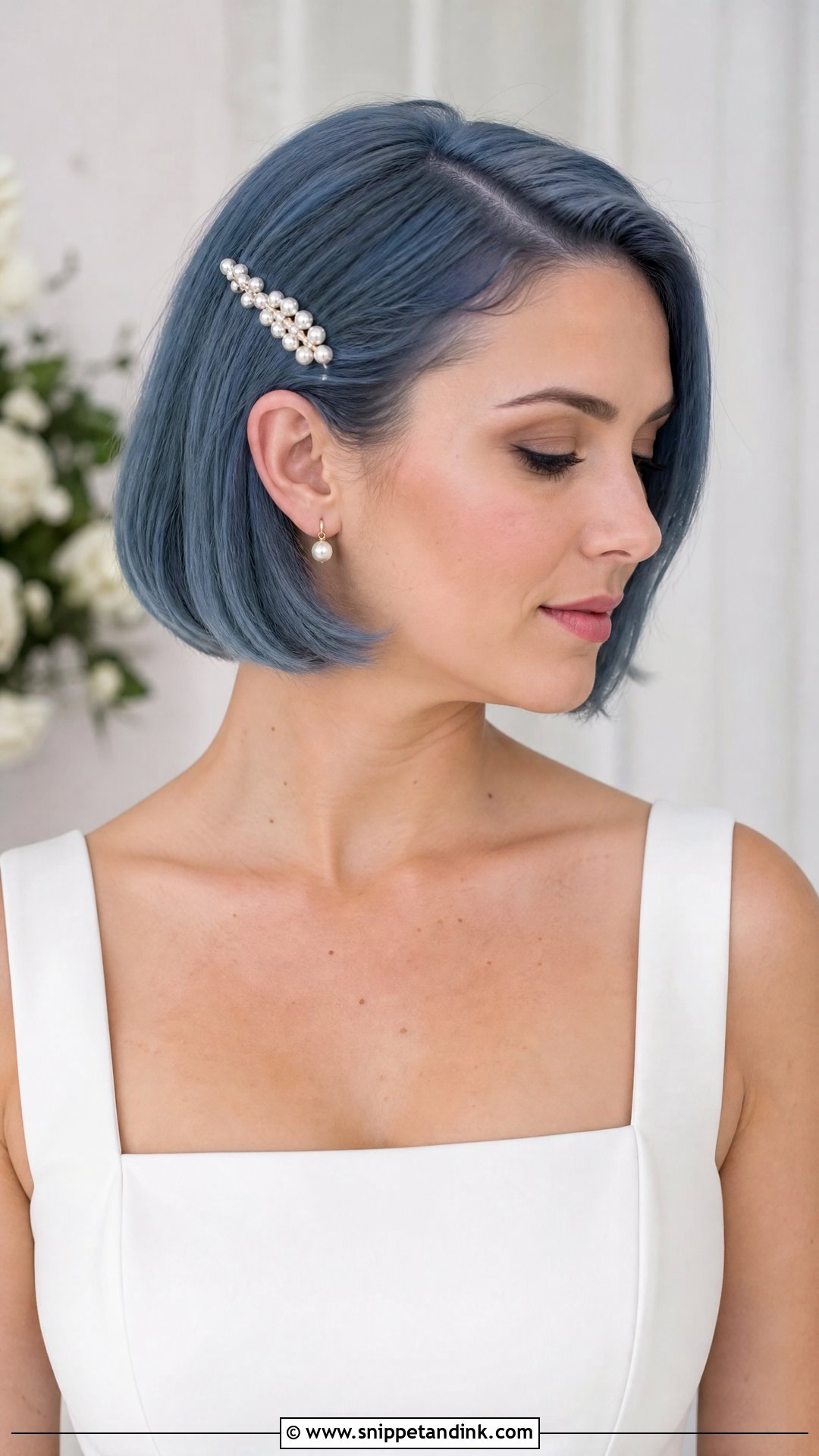
Denim blue has a smoky edge that suits a bob. Short hair shows every line of the cut, so I’d schedule a trim about a week out, not the day before, giving the ends time to settle. Blunt bobs carry this shade best because the color sits in one clean block at the hem. If you want it softer, tuck one side behind your ear and add a pearl clip. A square neckline or a structured satin dress keeps the whole look crisp. Polish the ends with a flat iron and a little cream; frayed ends make any blue look cheap.
8. Teal Blue Bridal Braid
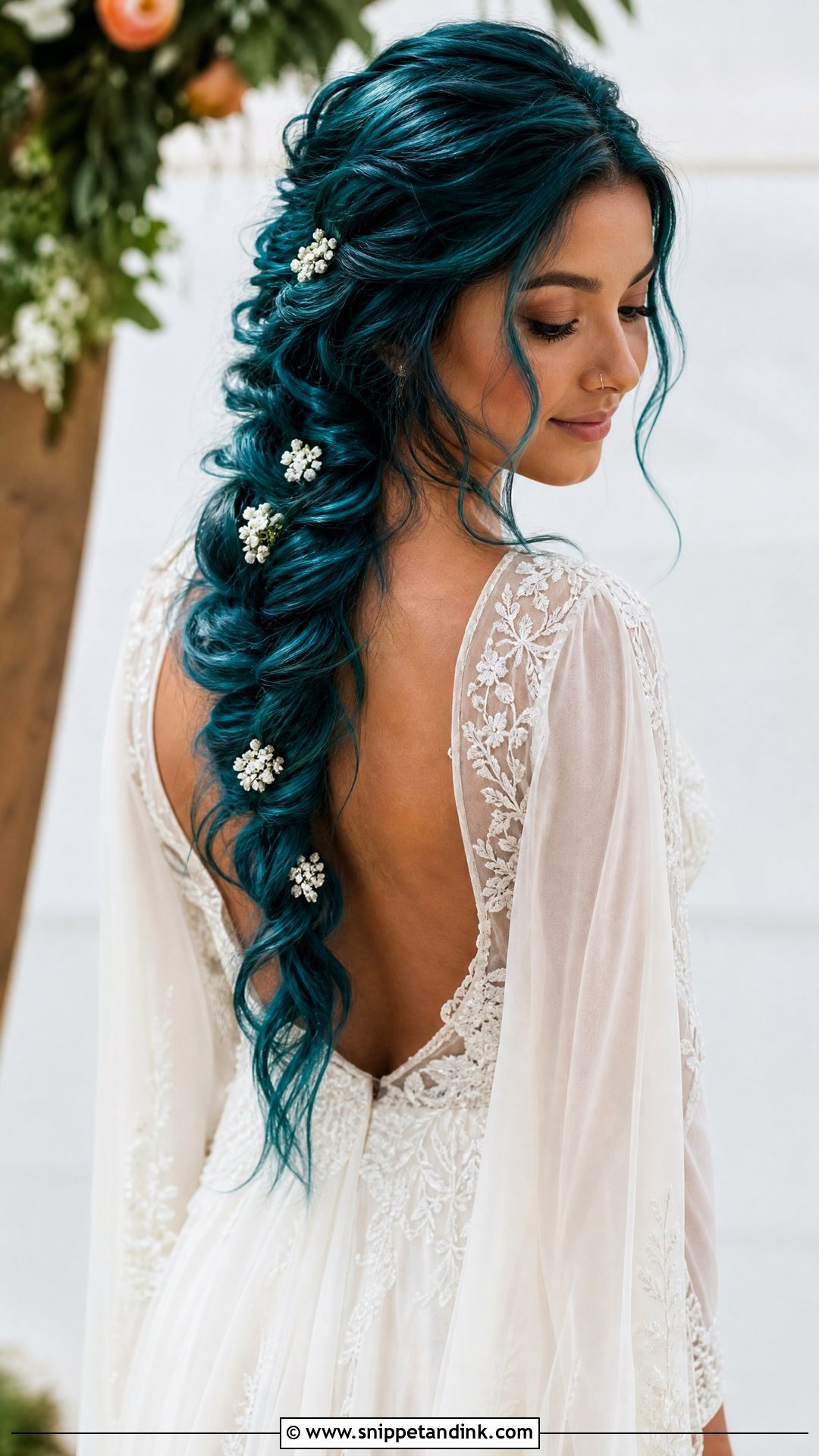
Teal sits right between blue and green, and braids are where it really shows, since the weave exposes the color on every crossover. A loose side braid, a crown braid or a fishtail all work. On a beach, though, salt air and humidity will fluff a braid fast, so I set it with a light-hold spray and pull it apart deliberately before the ceremony instead of letting the wind do it. If your hair is short of the length you need, I’ll weave in a color-matched extension rather than tug the braid thin. Tiny pearls along the plaits keep it bridal.
9. Midnight Blue Hollywood Waves
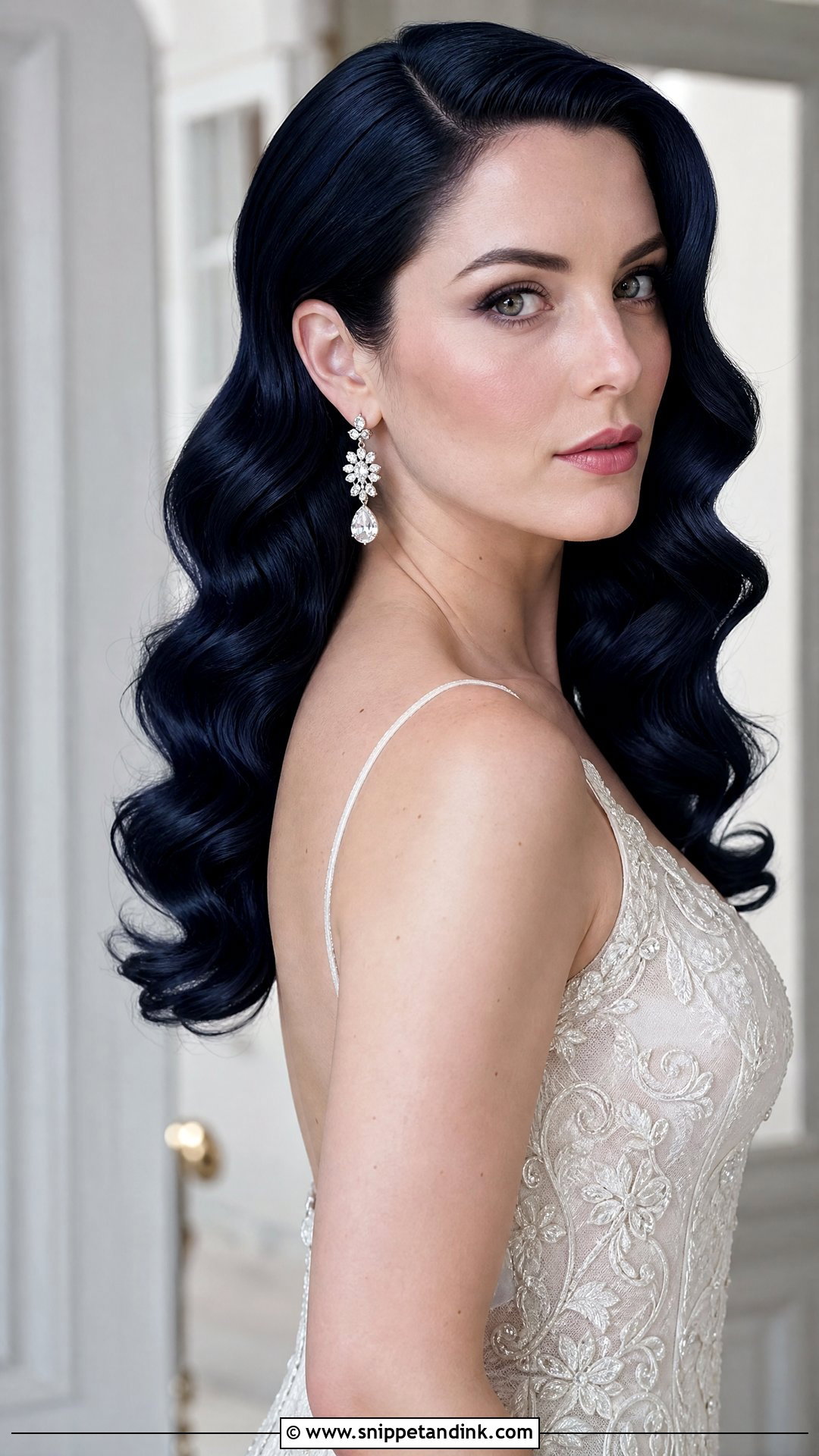
Hollywood waves give midnight blue a formal shape, and that’s what makes a deep color feel bridal rather than casual. This is the version I’d point you to if you want glamour with a moody edge. The style depends entirely on shine, so I do a smoothing blowout first, set the waves in pin curls, brush them out and clip the ridges while they cool. A deep side part adds drama. In candlelight and under the photographer’s flash, midnight blue shows tones that look almost black in daylight, so evening ceremonies suit it best.
10. Baby Blue Bridal Ponytail
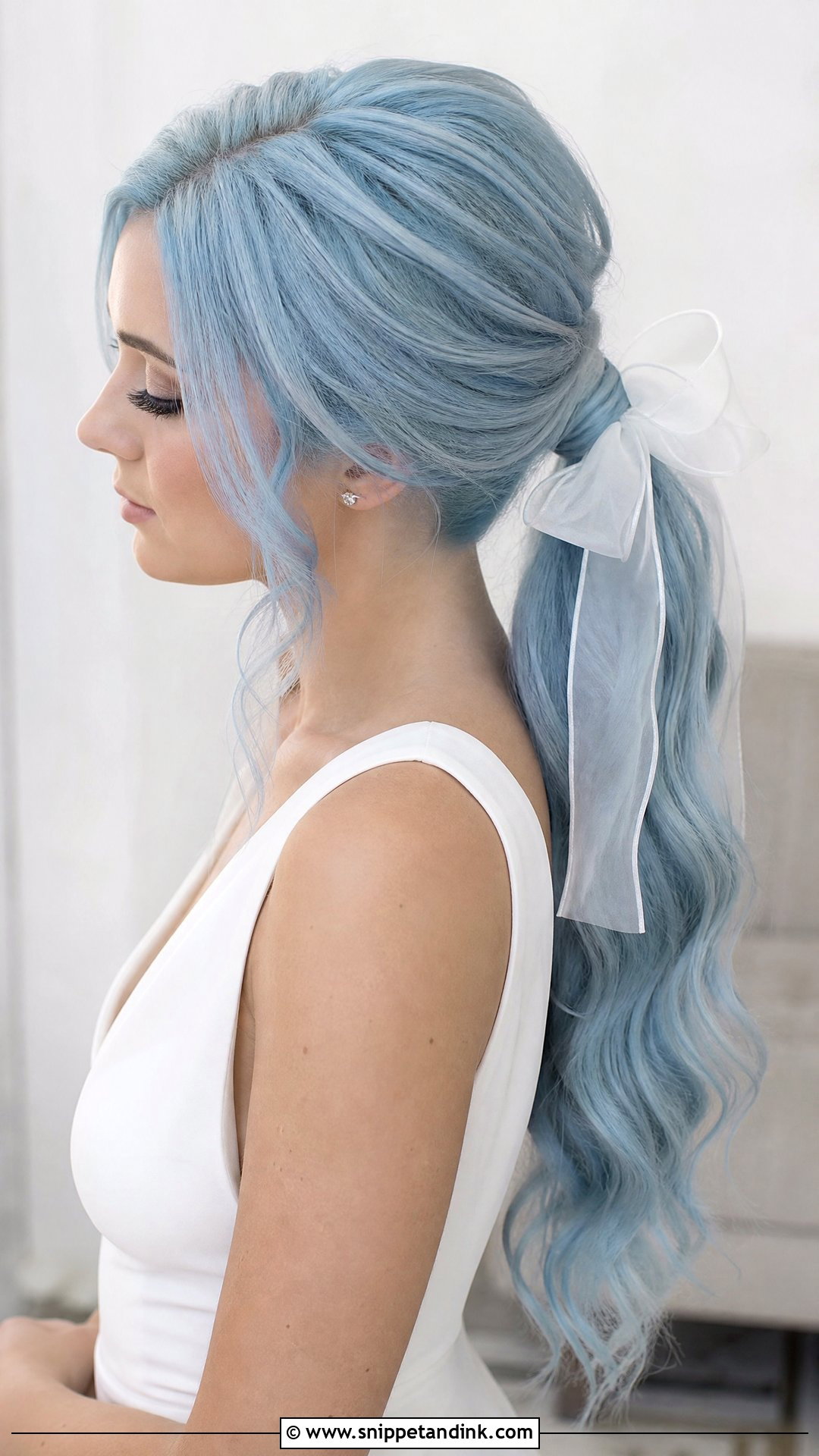
A ponytail lifts the hair away from your neck and gown, which is useful with pastel dye that can still bleed slightly in the first few days. Baby blue reads sweet, so I balance it with a sleek high pony for a modern dress or a low wavy one for something softer. Wrap a strand around the elastic to hide it and anchor it with a bobby pin pushed up through the base. A pony is also the style that survives dancing best. Smooth the crown with a little cream so close-ups don’t catch flyaways.
11. Blue And Silver Bridal Hair
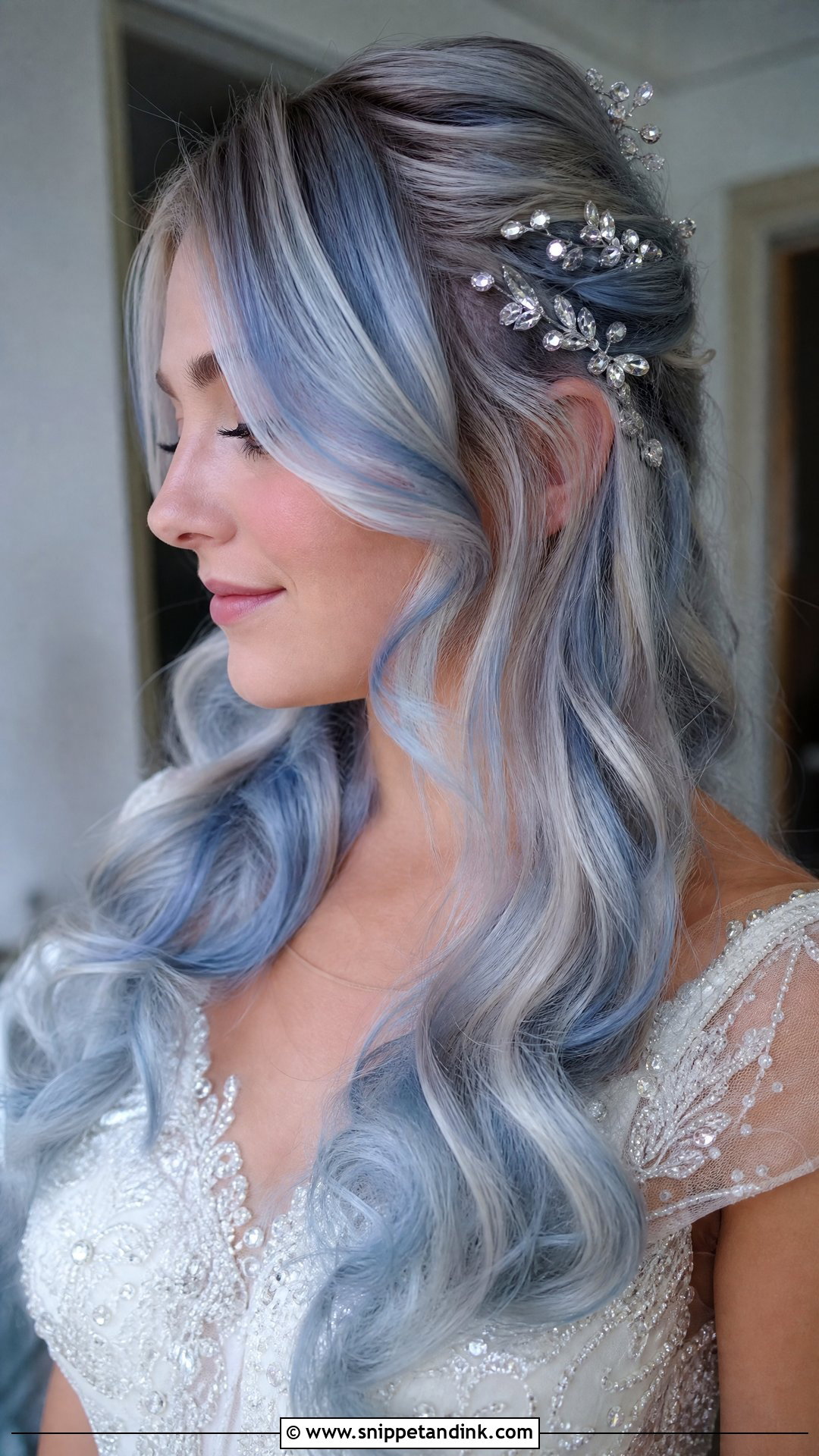
Silver softens blue and makes it look lit from inside. The risk is stripes: if the two colors are applied in neat panels, the hair looks banded when it’s pinned up. I ask the colorist to weave them finely so twists and buns mix the shades naturally. It pairs well with crystal and beaded gowns because the sparkle echoes the hair. A clear gloss at the end helps both colors reflect light, and it keeps the silver from going dull and grey under indoor bulbs.
12. Sapphire Blue Curly Bridal Hair
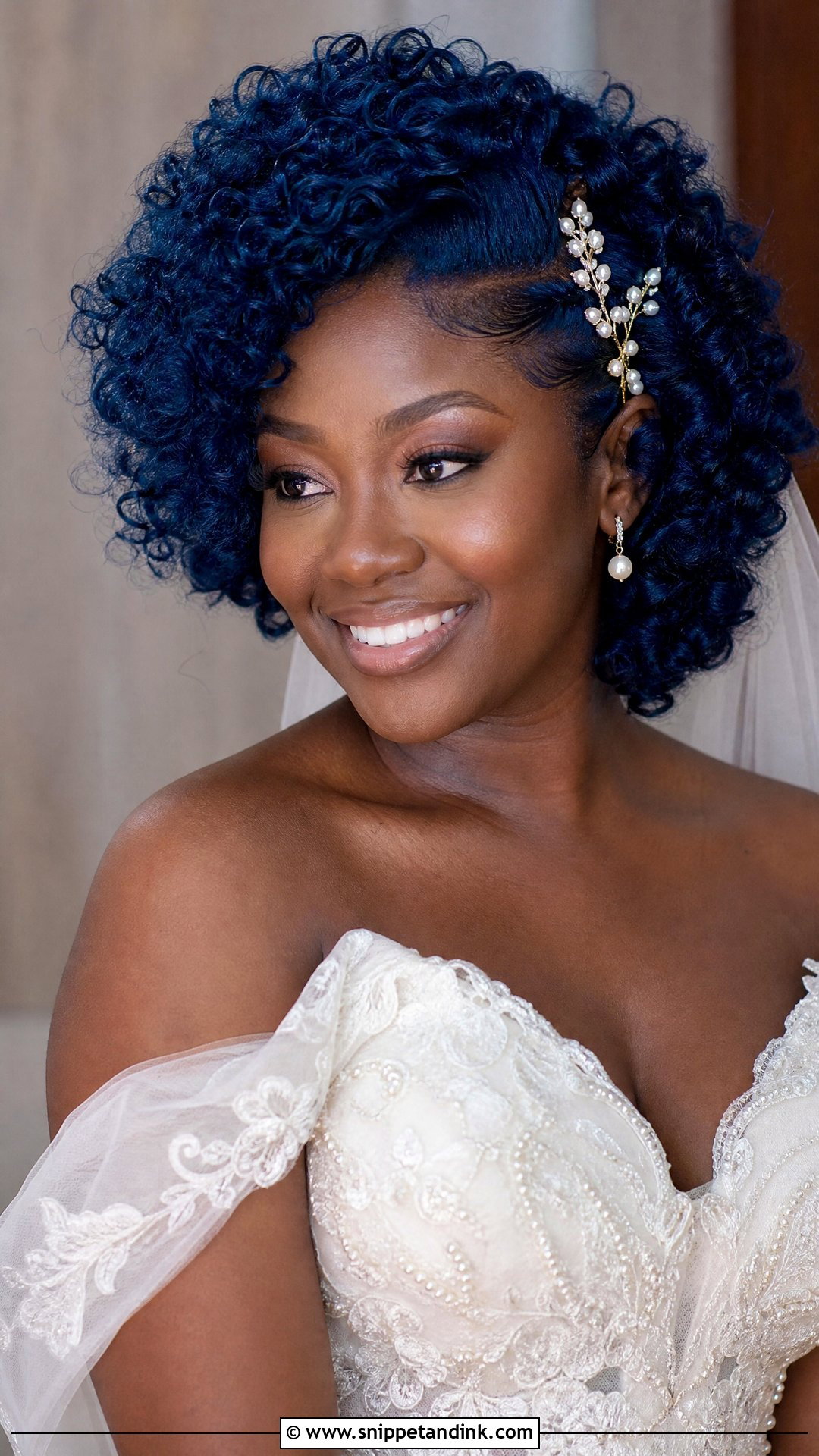
Sapphire on curls is rich because each coil catches a slightly different depth of the jewel tone, which is the same reason jewel-toned color works so well across a whole wedding. Curly hair takes bleach harder than straight hair, so I’d only do this with a colorist who works with textured hair and with bond-building treatments along the way. Book a curl cut a couple of weeks before. On the day, I apply curl cream and a light gel on soaking wet hair, diffuse, then leave it alone. Every touch after that adds frizz.
13. Blue Money Piece Wedding Hair
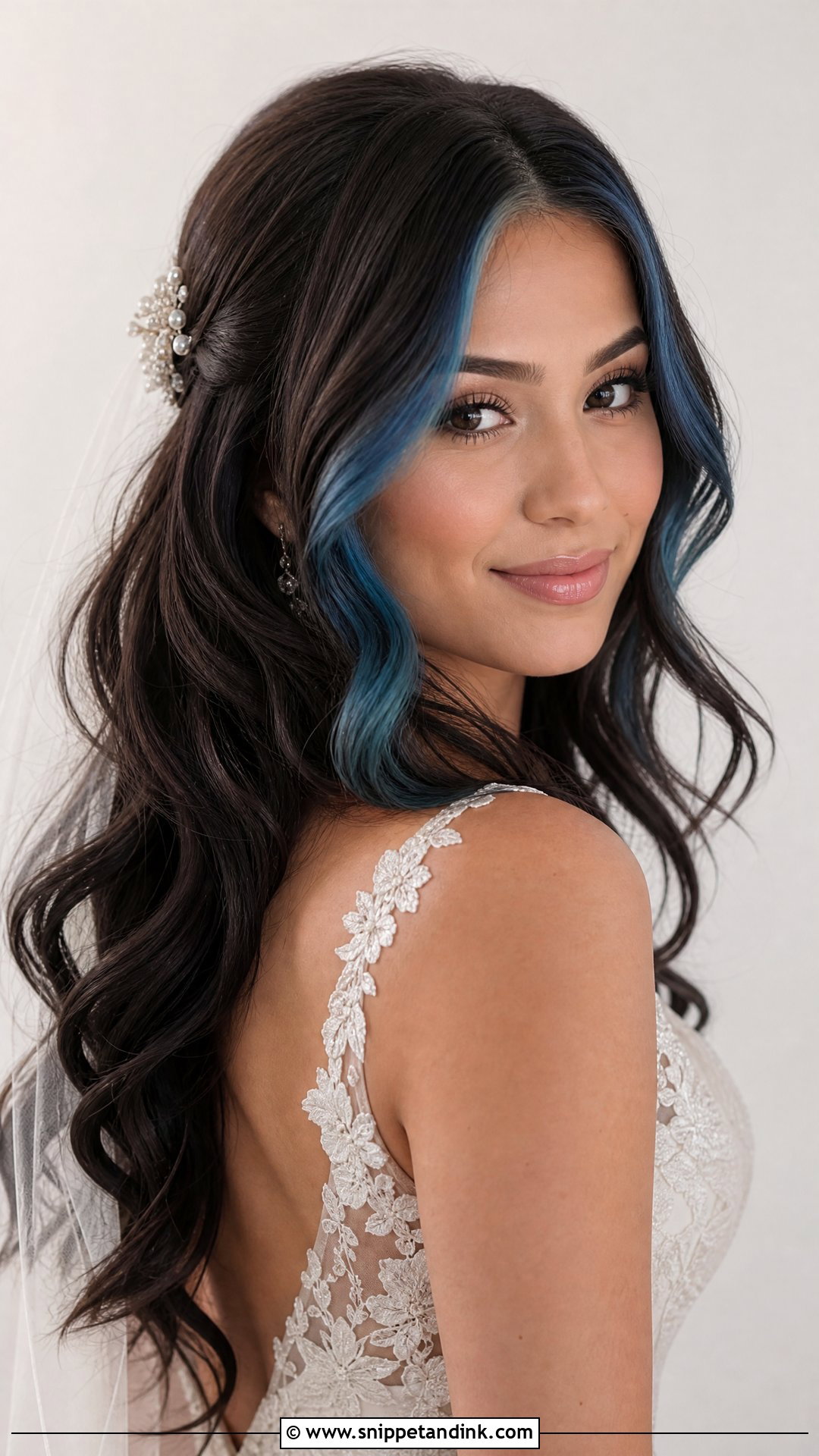
Blue money piece wedding hair keeps color to the two front sections, so you get blue right next to your face without bleaching your whole head. That makes it the least committal option here and the easiest to remove after the honeymoon. Pastel, aqua, cobalt or navy all work. Because the color frames your face, I check it against your foundation at the trial; very bright cobalt can make some skin look slightly sallow in photos. Ask for blurred roots so there’s no hard line where the blue starts.
14. Blue Pixie Bride Hair
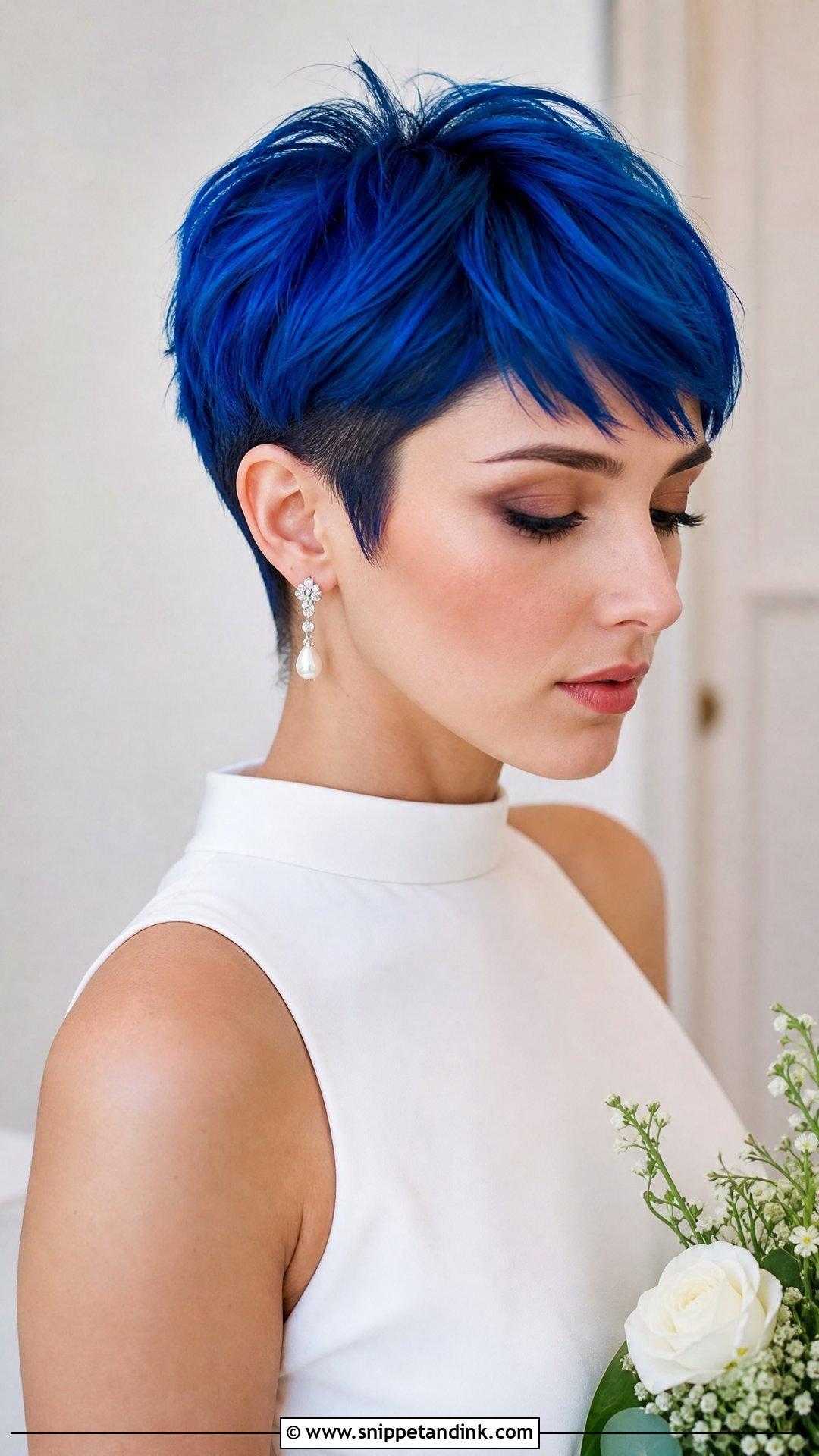
A pixie already puts your face, neck and earrings on show, so blue color on it becomes the whole statement. Short hair also shows shape clearly, which means a fresh cut matters more here than in any long style. I’d book the trim and the color refresh in the same week. For texture, a pea-sized amount of paste worked through dry hair is plenty; anything more and the pastel tones go dark and greasy. A high neck gown or a cape makes a striking frame for it.

15. Blue Mermaid Bridal Hair
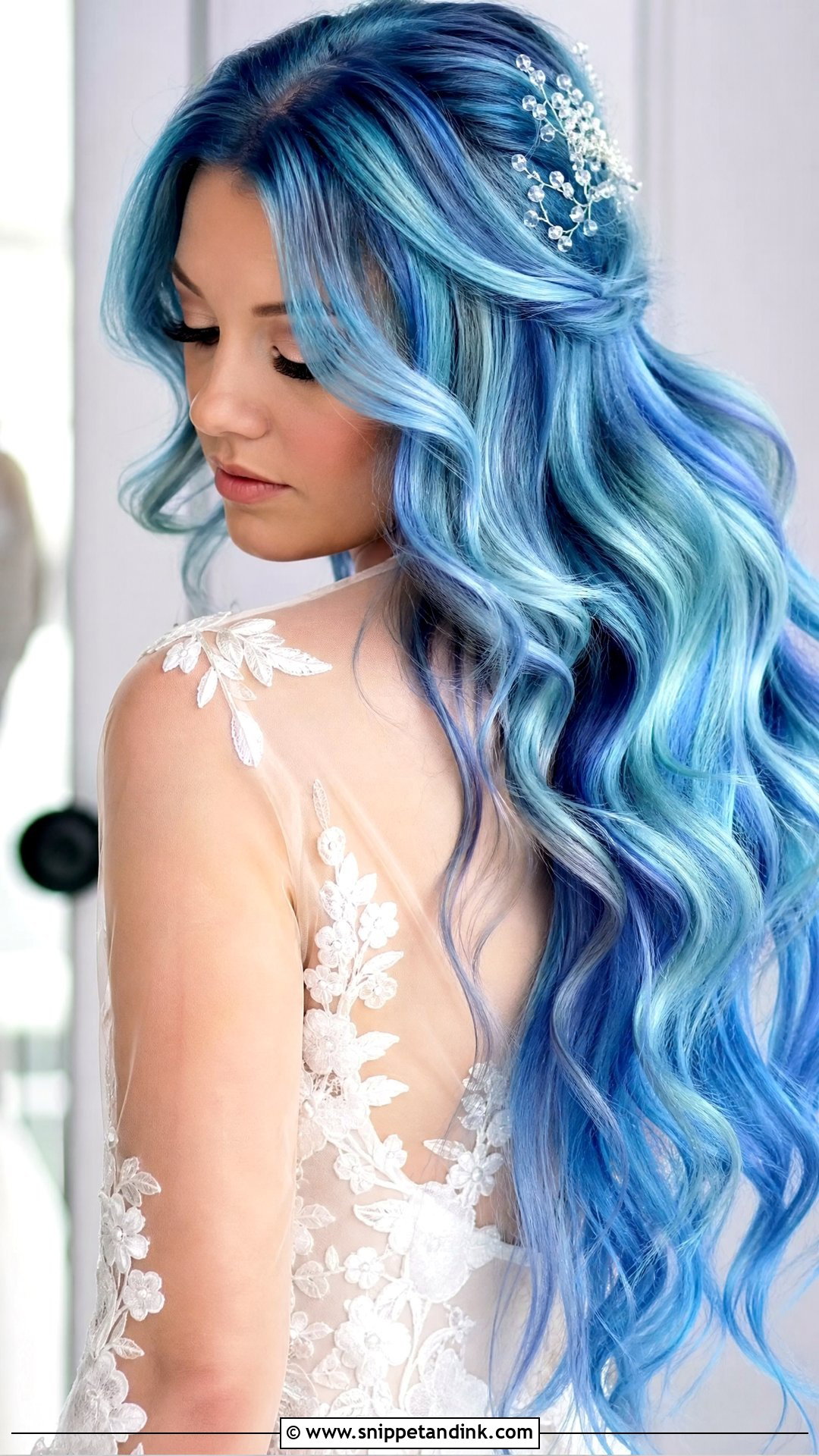
Mermaid hair blends several blues, often aqua, teal and cobalt, through long waves. It’s the most dramatic idea in this list and also the most work: multiple shades fade at different speeds, so by week three the aqua may be gone while the cobalt holds. I plan the final color appointment within about a week of the wedding for this one. A middle part shows the blend best. If you wear a veil, pick a sheer one so the colors show through it. Keep the hair hydrated, because vivid dye on dry hair looks rough rather than glossy.
Will the Dye Rub Off on an Ivory Gown?
Nobody thinks about this until a white collar turns faintly turquoise. Fresh blue dye can transfer onto a lace strap, the top of a tulle veil or a friend’s shoulder during a hug, especially if you sweat or get caught in drizzle. Semi-permanent blues are the worst offenders in the first few days after coloring.
The White Towel Test
A day or two before the wedding, wash with cool water until it runs nearly clear, dry your hair, then rub a dampened white towel firmly over one section. Any color on the towel means more rinsing, or a heavier finishing spray on the morning to seal the outside of the strand. I also tell brides to sleep on a dark pillowcase that week so a stained one doesn’t fool them.
Small Habits on the Morning
- I finish the hair before the dress goes on, and you step into the gown rather than pulling it over your head.
- For down styles, a strapless or open-back dress keeps colored ends off fabric that touches your neck.
- Keep blotting papers handy in heat, because sweat at the hairline is where blue bleeds first.
- Tell your photographer about the color so they don’t correct it out of the edits as a color cast.
None of this should put you off. Blue hair just needs a little more planning than a fresh gloss, and the brides who end up happiest are the ones who did the towel test.
Blue Fades, So Time the Last Color Appointment Well
Each blue here sends a different signal: pastel reads romantic, navy reads polished, teal feels adventurous and sapphire goes straight for drama. My advice is to choose the shade that makes you grin in the mirror rather than the one that looks best on a stranger’s board. Then work backwards from the date: strand test early, do the towel test, and set the final refresh close enough that the color is at its brightest when you walk in.
You'll Like These Ideas:


Leave a Reply