
Deep color turns a cake into part of the room rather than something wheeled out at the end. Emerald, sapphire, ruby, amethyst, teal, garnet and plum all sit well next to metallic leaf, and they give a reception a depth in photographs that pastel icing can’t. In my studio the conversation always starts with balance: how much of the cake carries the color, and what calms it, from ivory tiers and gold to fresh flowers, fruit or a textured finish. These shades suit ballrooms, gardens, autumn and winter dates and black-tie evenings alike. Below are twenty complete designs to borrow from, with notes on how each one is actually made and where it can go wrong.
Dark Icing Without a Bitter Taste or Blue Teeth
Saturated color is easy to look at and harder to eat. To push buttercream to a true emerald or ruby, a baker has to add a lot of gel coloring, and past a certain point it changes the flavor and stains lips, teeth and white napkins. Most of the cakes below get around that in one of three ways, and it’s worth knowing which one your baker plans to use.
Start from a darker base
For burgundy, garnet, plum and black, I mix the color into chocolate buttercream rather than white. The cocoa does half the work, so far less coloring is needed and the taste stays clean.
Put the color on the outside, thinly
Fondant, a thin colored ganache or a painted surface puts the deepest shade in a layer guests barely eat. Underneath, the frosting can stay pale and taste normal.
Give the color a night to develop
Gel colors keep deepening for hours after mixing. I mix dark shades the day before and judge them the next morning, instead of adding more until the bowl looks right on the spot. That habit is how icing ends up bitter and nearly black.
At your tasting, ask for a spoonful of the colored icing itself. If it tastes faintly metallic or bitter, ask what can change before the design is final.
1. Emerald Green Wedding Cake
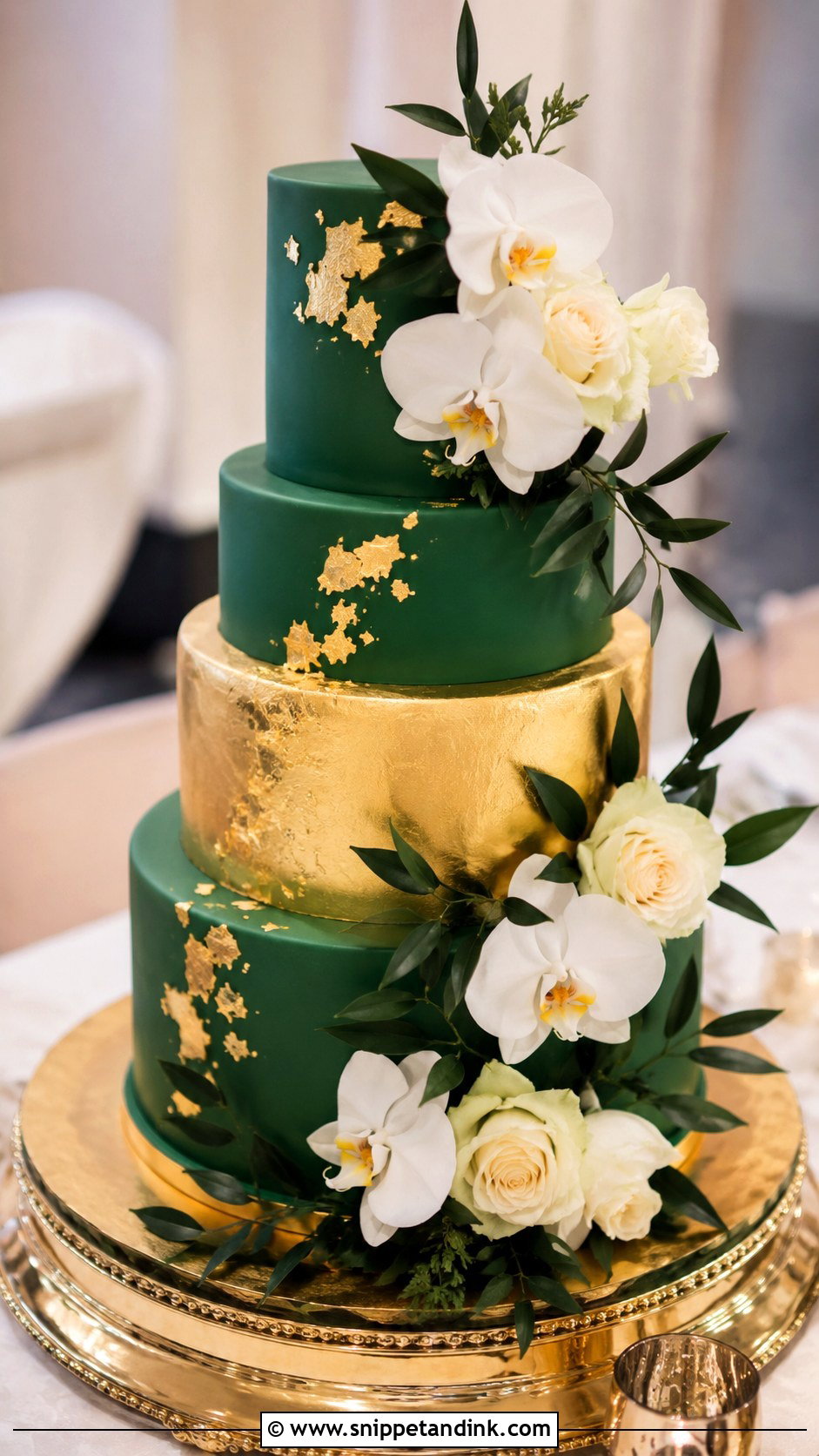
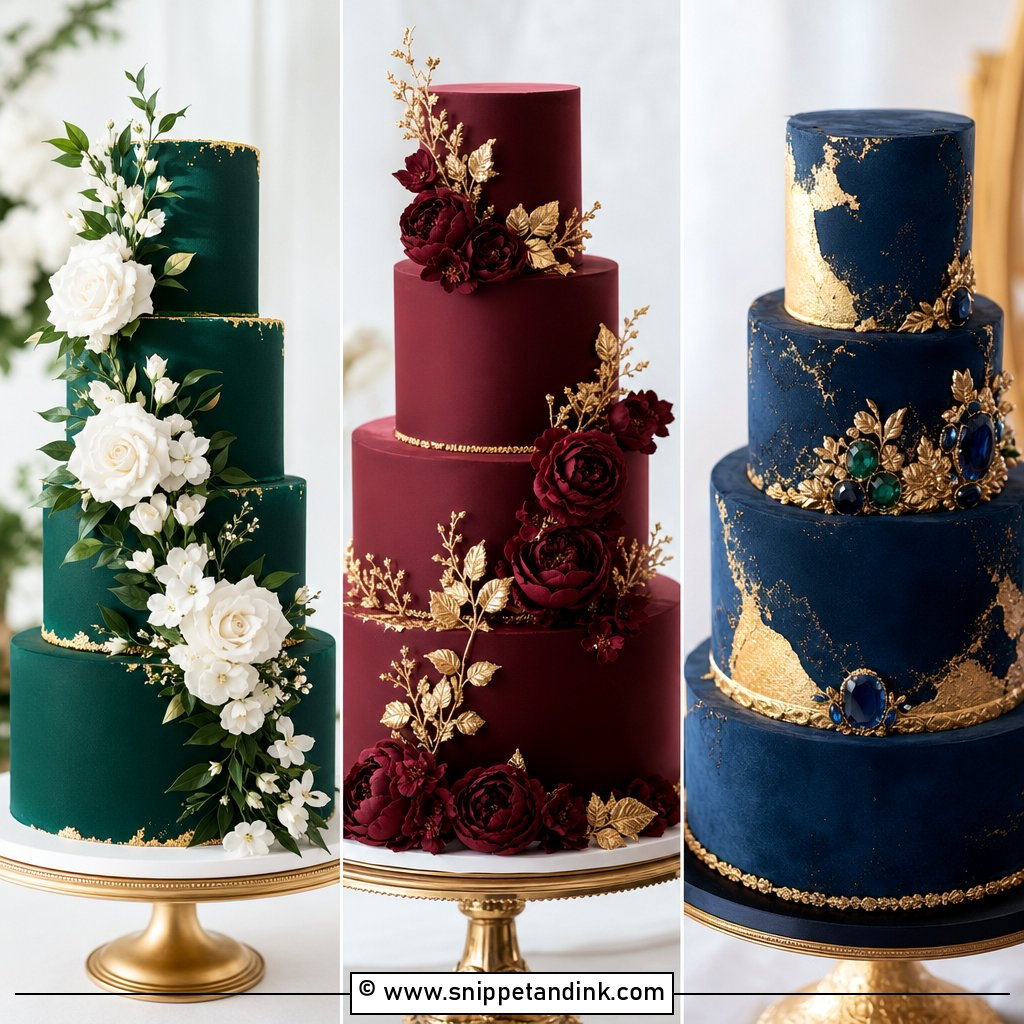
Emerald is the jewel tone I’m asked for most, and it’s the forgiving one. It reads rich without shouting, and ivory flowers, soft greenery or a thin line of gold leaf settle it quickly. Smooth fondant makes it formal; textured buttercream relaxes it. Green buttercream is where I’m careful, because a true emerald takes a lot of gel color, so I mix it the day before and let it deepen overnight instead of adding more. Inside, vanilla almond, pistachio, lemon or white chocolate raspberry all sit well under the dark green. If your florist is already using deep greens, the cake ties straight into the tables.
2. Sapphire Blue Wedding Cake
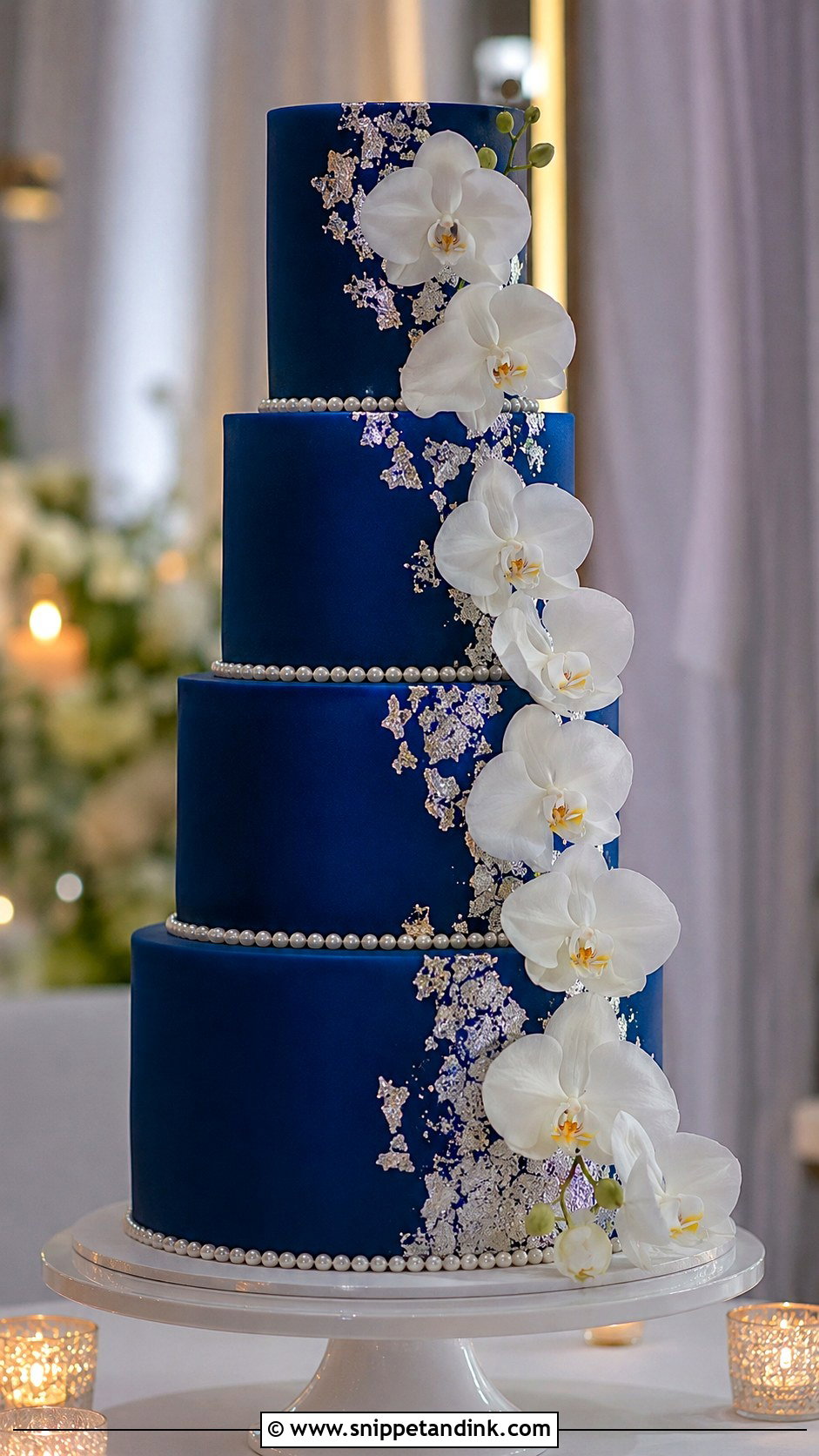
Sapphire needs a finish that looks deliberate, or it reads like a novelty cake. Smooth navy fondant, a watercolor buttercream wash or a deep ombré are the ways I’d do it. Silver leaf, white orchids, pearl details or pale blue sugar flowers keep it bridal. Blue is also the color most likely to tint mouths, so in buttercream I keep the colored layer thin over a white crumb coat and let fondant carry the darkest shades. Vanilla, chocolate ganache, blueberry lemon or a champagne-style sponge go inside. Under evening lighting the cool blue stays crisp in photos.
3. Ruby Red Wedding Cake
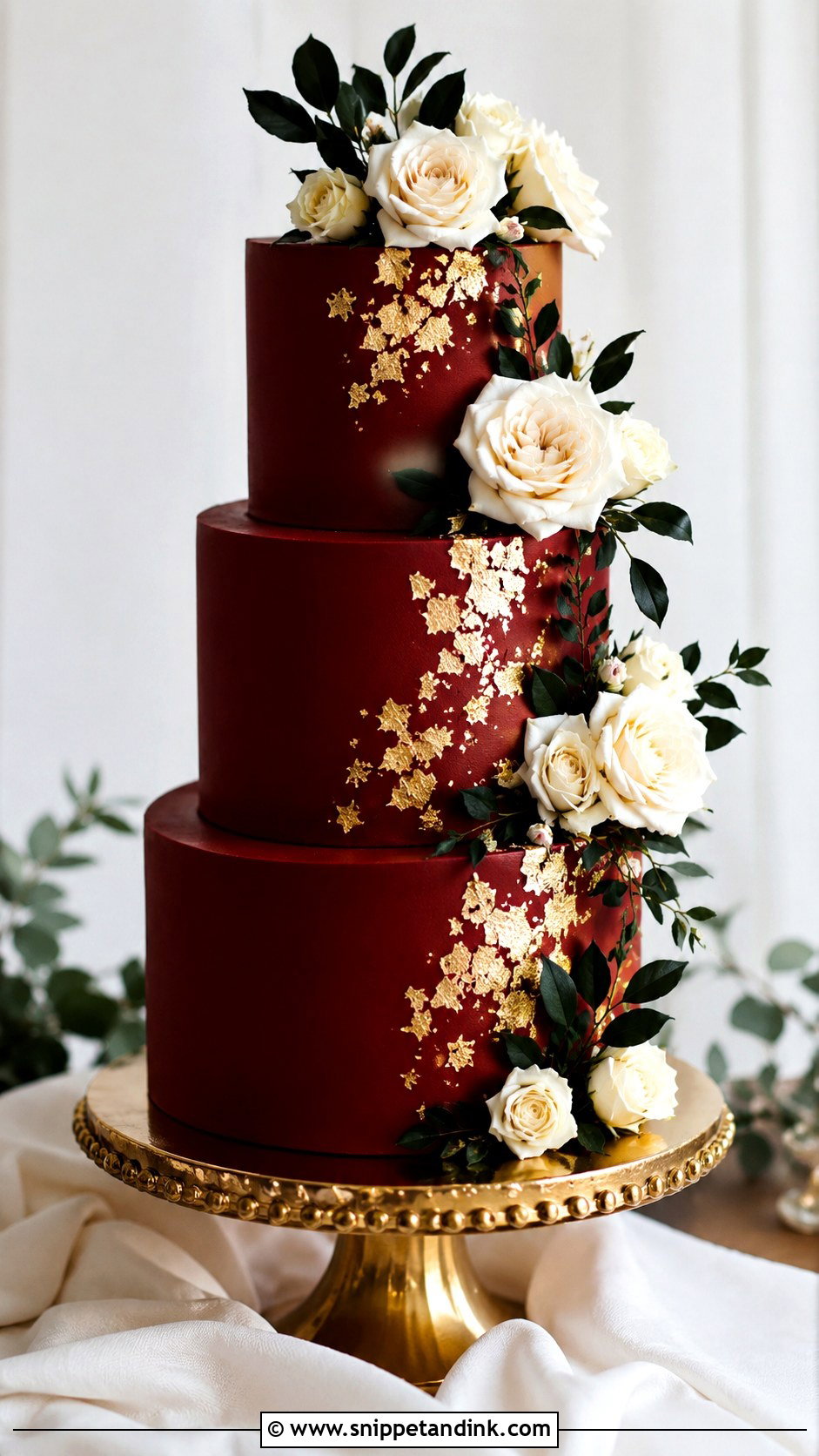
Red gets more attention on a dessert table than any other color, and a ruby red wedding cake warms the whole reception, especially with gold, ivory roses or dark foliage beside it. Matte red fondant looks modern, while red buttercream or a deep red ganache softens it. The honest catch is taste. Mixing a true red into buttercream takes so much color that it can turn bitter, so I use a no-taste red gel, start from a pink base and give it a day to develop. Red velvet is the obvious flavor, though chocolate raspberry, vanilla bean or dark chocolate cherry suit it just as well and feel less expected.
4. Amethyst Purple Wedding Cake
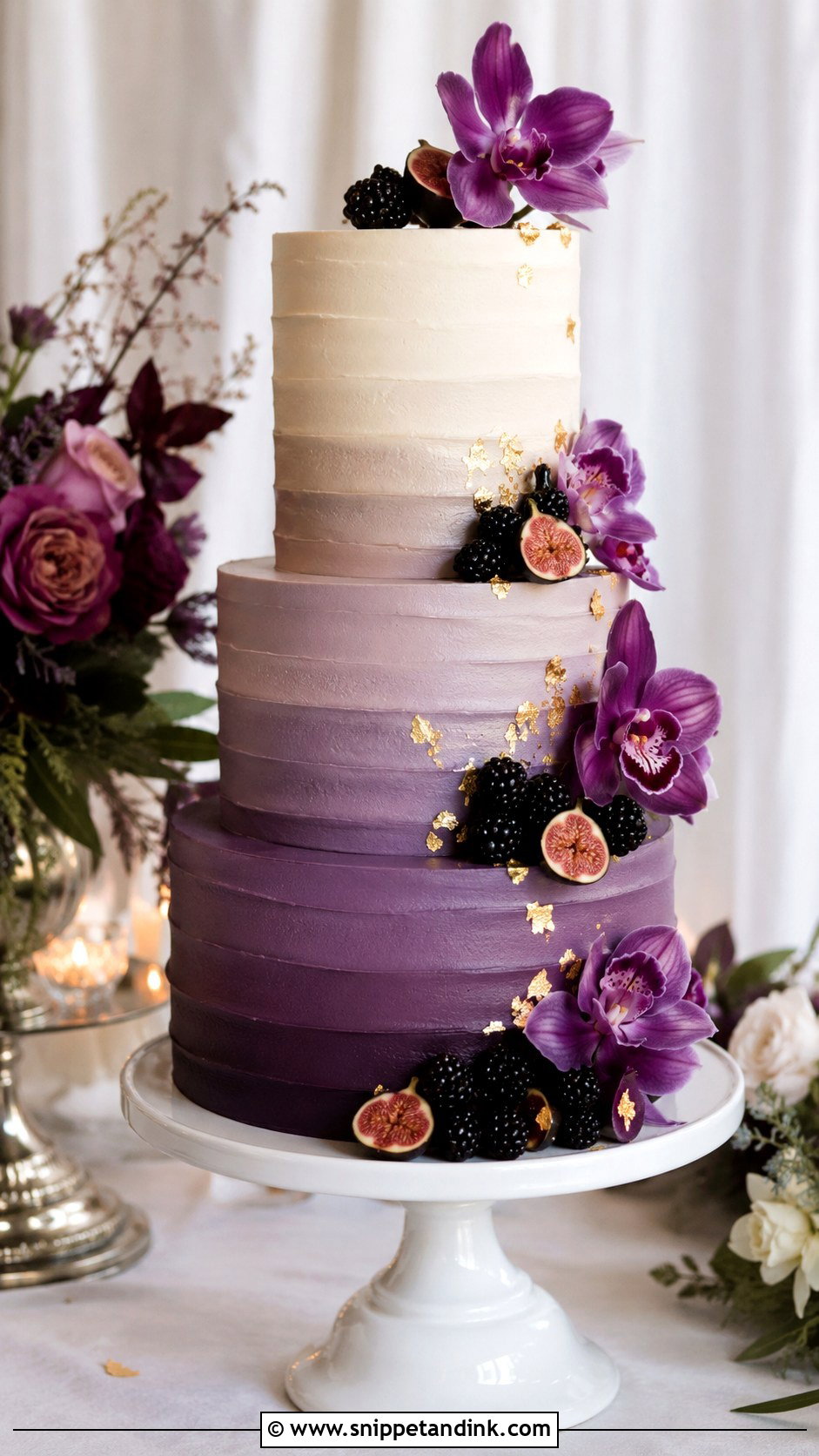
Purple has depth on its own, so a plain three-tier cake can carry it with very little decoration. Lavender-to-plum ombré buttercream, deep purple fondant or a painted watercolor with ivory edges are my usual routes. Gold leaf, sugar orchids, blackberries, figs or pale blush flowers add contrast. Purple is the shade I warn couples about most, because many purple colorings fade toward blue or grey under bright light, so the cake should stay away from sunny windows until it’s served. Blackberry vanilla, lavender honey, chocolate or almond flavors suit it.
5. Teal Wedding Cake
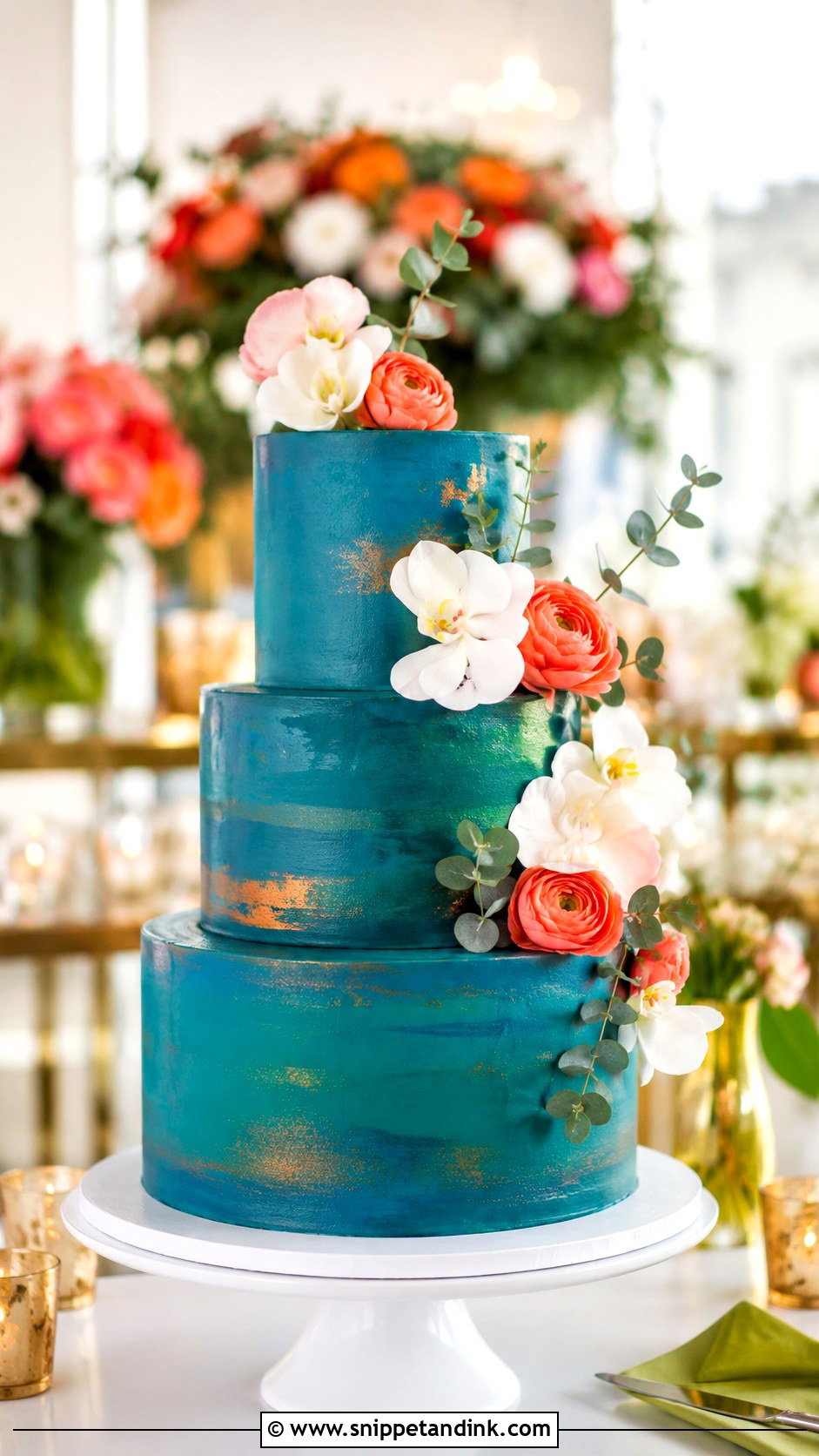
Teal sits between green and blue, which is why it gets along with so many palettes, from gold and copper to coral and berry. A smooth teal fondant with metallic brushstrokes looks clean and graphic, while teal buttercream with textured sides looks handmade. I match the shade against a fabric swatch in daylight, since teal shifts more than most colors between warm and cool lighting. Citrus vanilla, coconut, white chocolate or passion fruit keep the inside bright. Orchids, ranunculus, eucalyptus or painted sugar leaves finish it.
6. Burgundy Wedding Cake
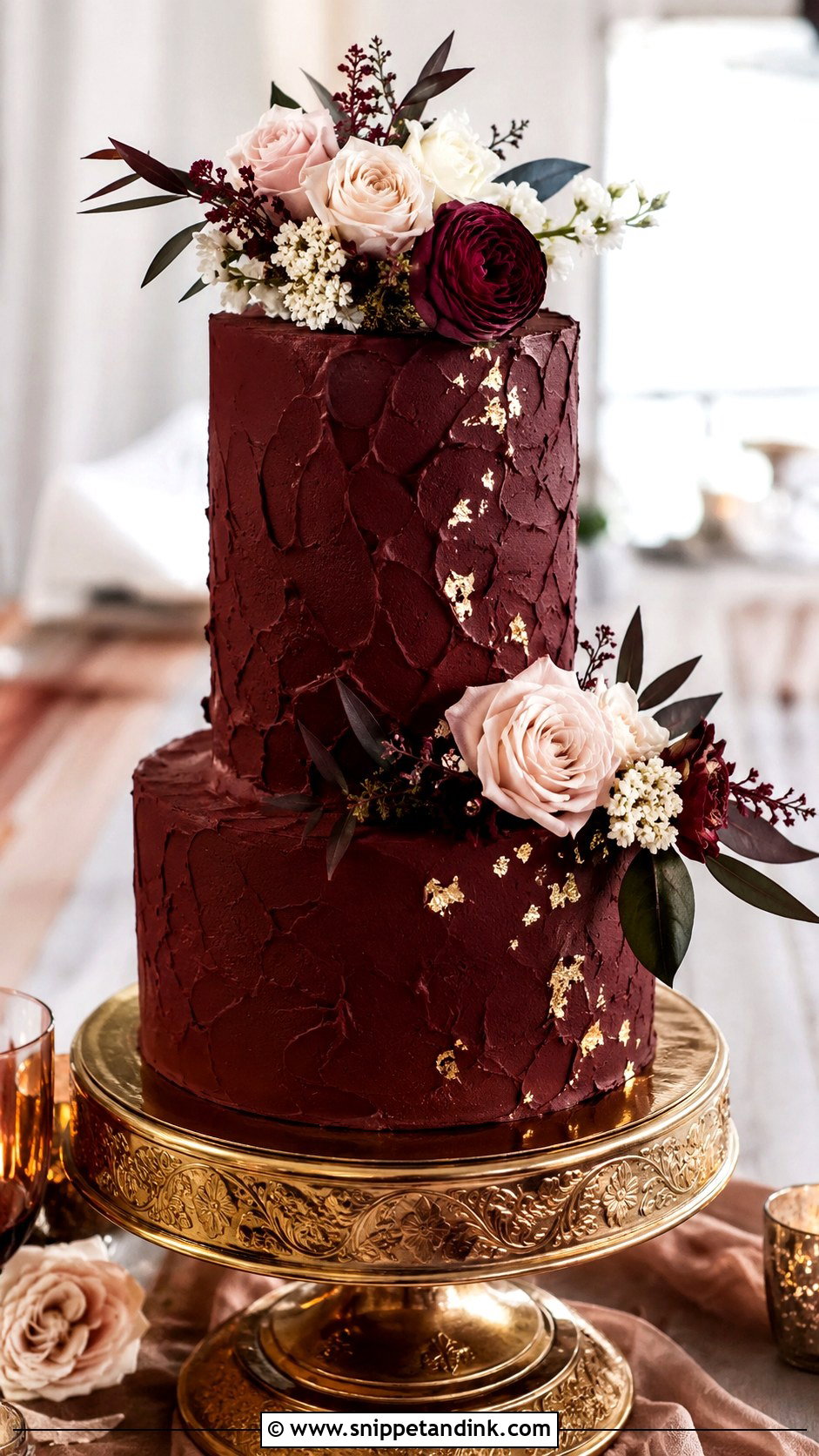
Burgundy is warm and grounded, and it mixes easily with ivory flowers, blush roses, dark greenery and gold. Smooth fondant keeps it classic; textured buttercream and loose floral clusters push it rustic. It holds its tone under warm reception lighting better than brighter reds, which makes it a safe pick for evenings. I usually build burgundy on chocolate buttercream rather than white, since you need far less coloring to reach a deep wine shade. Chocolate raspberry, red velvet, spice cake or vanilla with berry filling go inside. Add something light, pale flowers or a metallic band, so the color doesn’t feel heavy.
7. Plum Wedding Cake
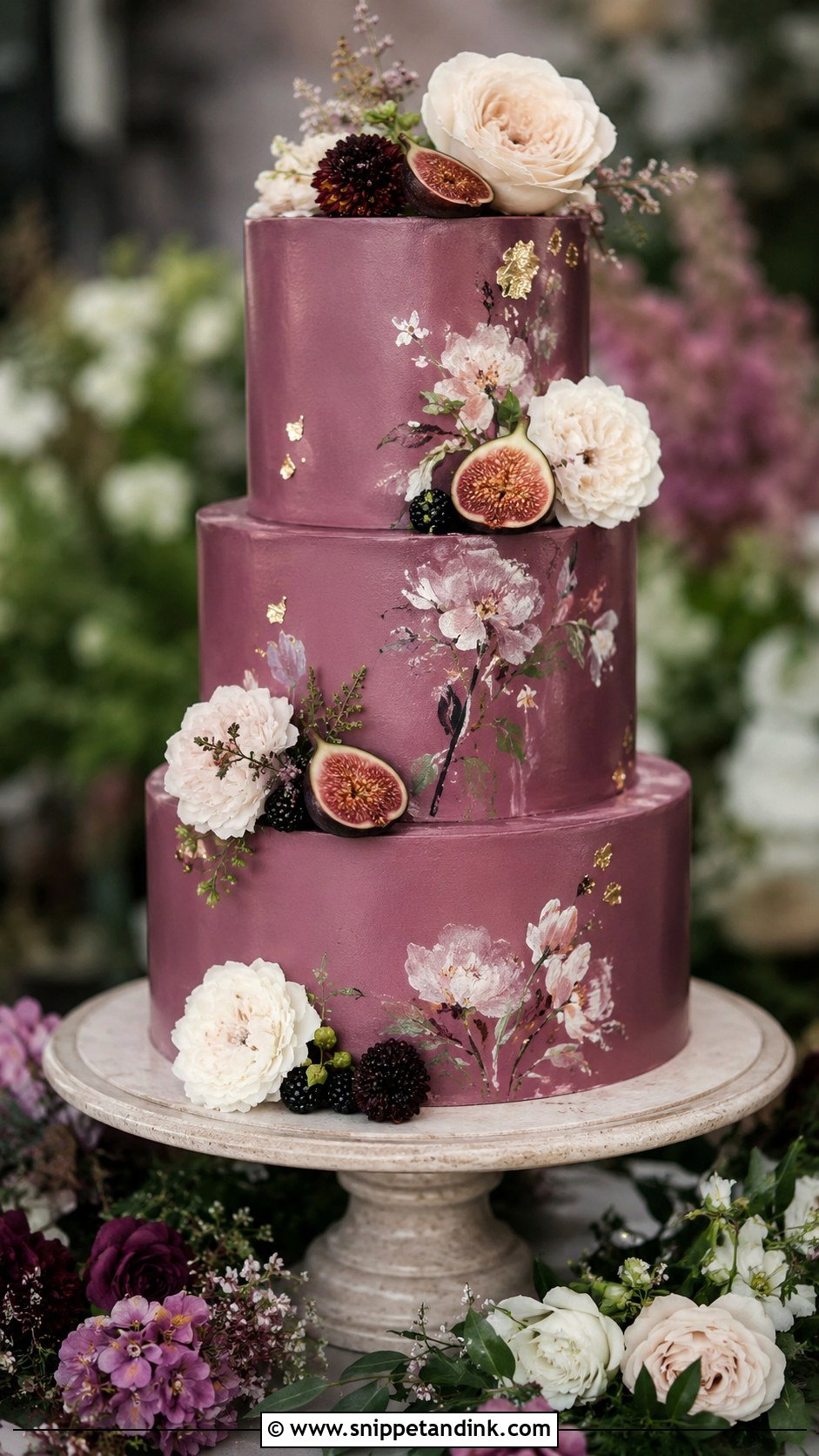
Plum is softer than deep purple but still dramatic. A plum buttercream finish takes hand-painted florals, sugar flowers or a gentle fade into ivory well. Gold leaf warms it, and silver cools it toward modern. Where plum gets tricky is consistency between tiers. If each tier’s icing is mixed separately, the shades rarely match, so I mix one batch for the whole cake. Vanilla blackberry, chocolate, almond or spiced pear fit the mood, and autumn weddings and candlelit venues suit it.
8. Garnet Red Wedding Cake
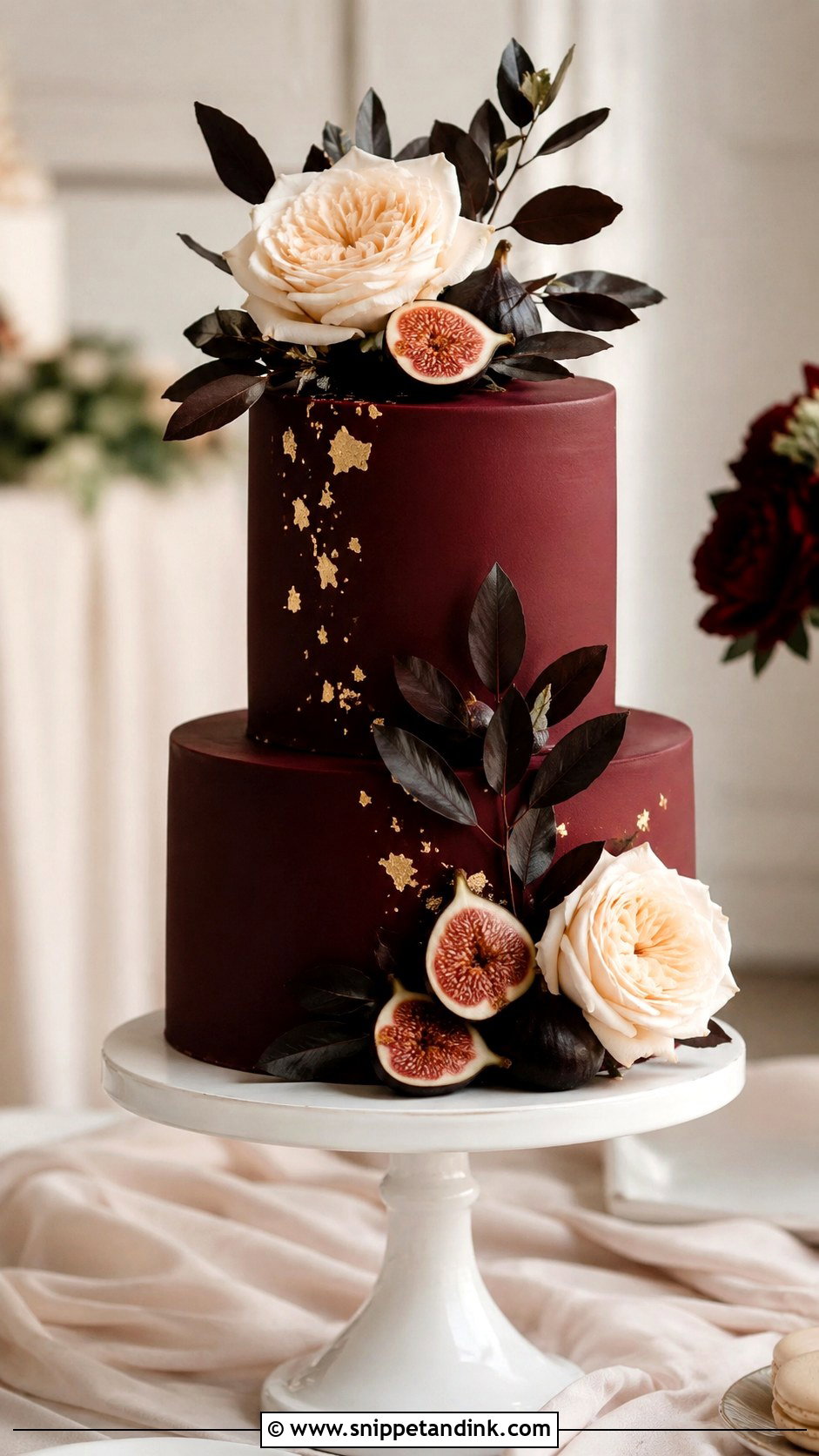
Garnet is deeper and moodier than ruby, and it rewards restraint. Clean lines, smooth frosting and very little decoration let the color do the work, with gold flecks, ivory garden roses, dark foliage or fresh figs adding texture without crowding it. I’d choose fondant or ganache over buttercream here, because a near-black red in buttercream needs heavy coloring that can stain lips. Chocolate ganache, red velvet, espresso chocolate or vanilla with raspberry filling inside. A tall two- or three-tier shape suits it, set on a plain white or gold stand.
9. Peacock Blue Wedding Cake
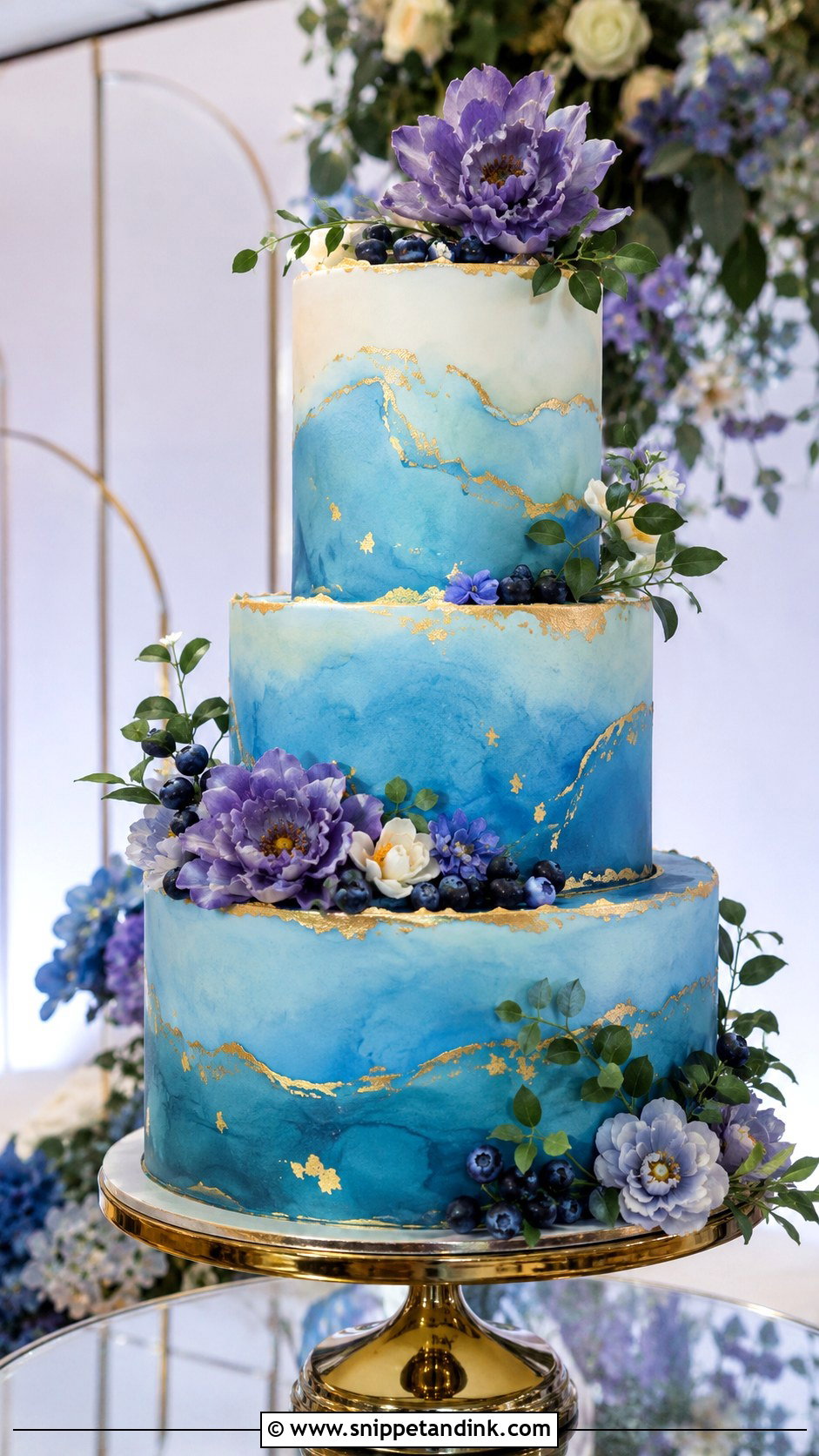
Peacock blue is brighter than navy and deeper than turquoise, so it’s a statement shade from the start. It pairs well with gold, emerald, violet, ivory and soft peach flowers. A watercolor buttercream finish can echo feather tones, while smooth fondant makes it sleek and formal. Painting watercolor by hand means no two tiers come out identical, which I see as the charm. If you want perfect symmetry, choose fondant. Lemon blueberry, vanilla bean, coconut or chocolate can follow the season, and sugar flowers or a thin metallic edge finish it.
10. Emerald And Gold Wedding Cake
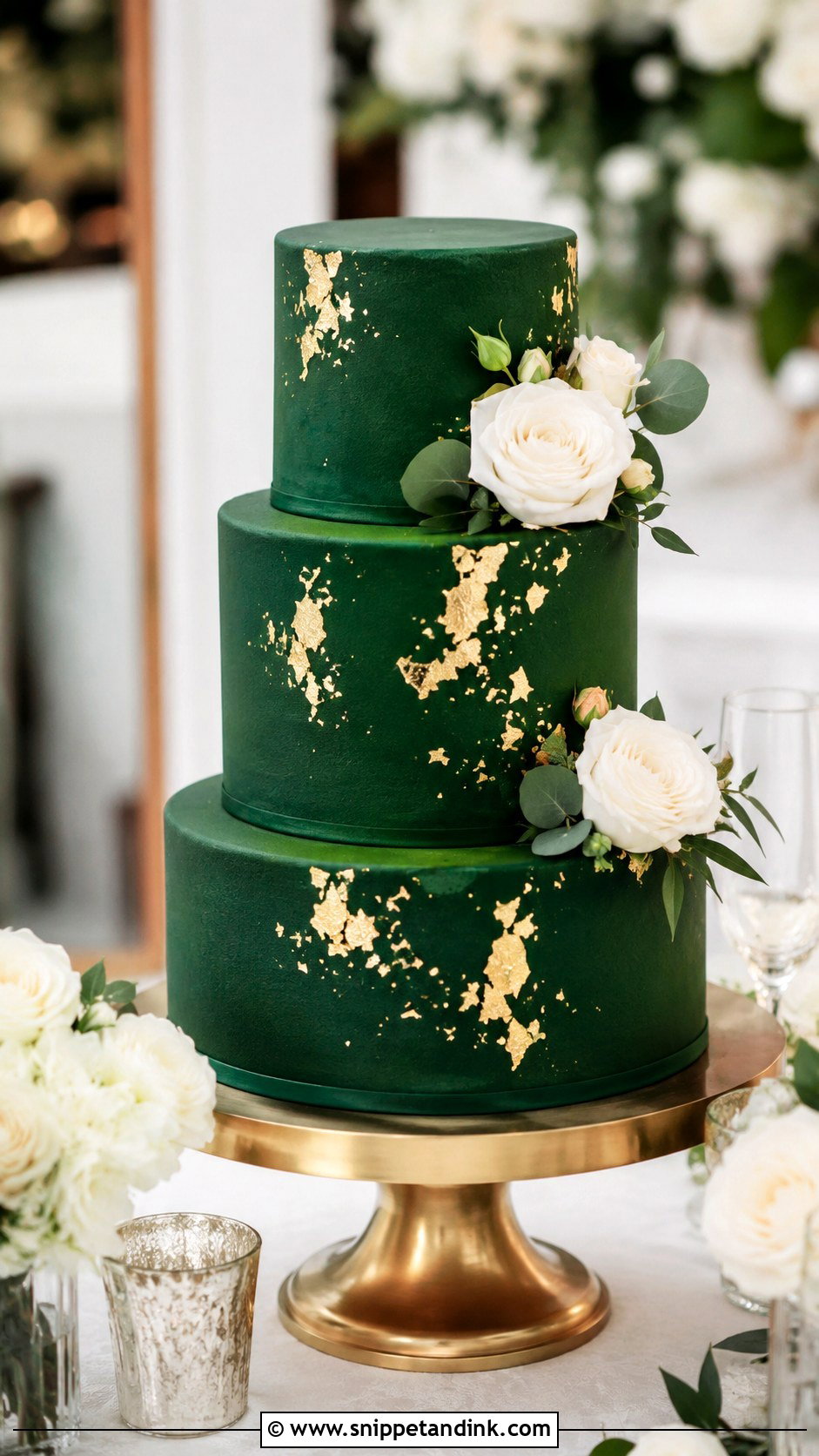
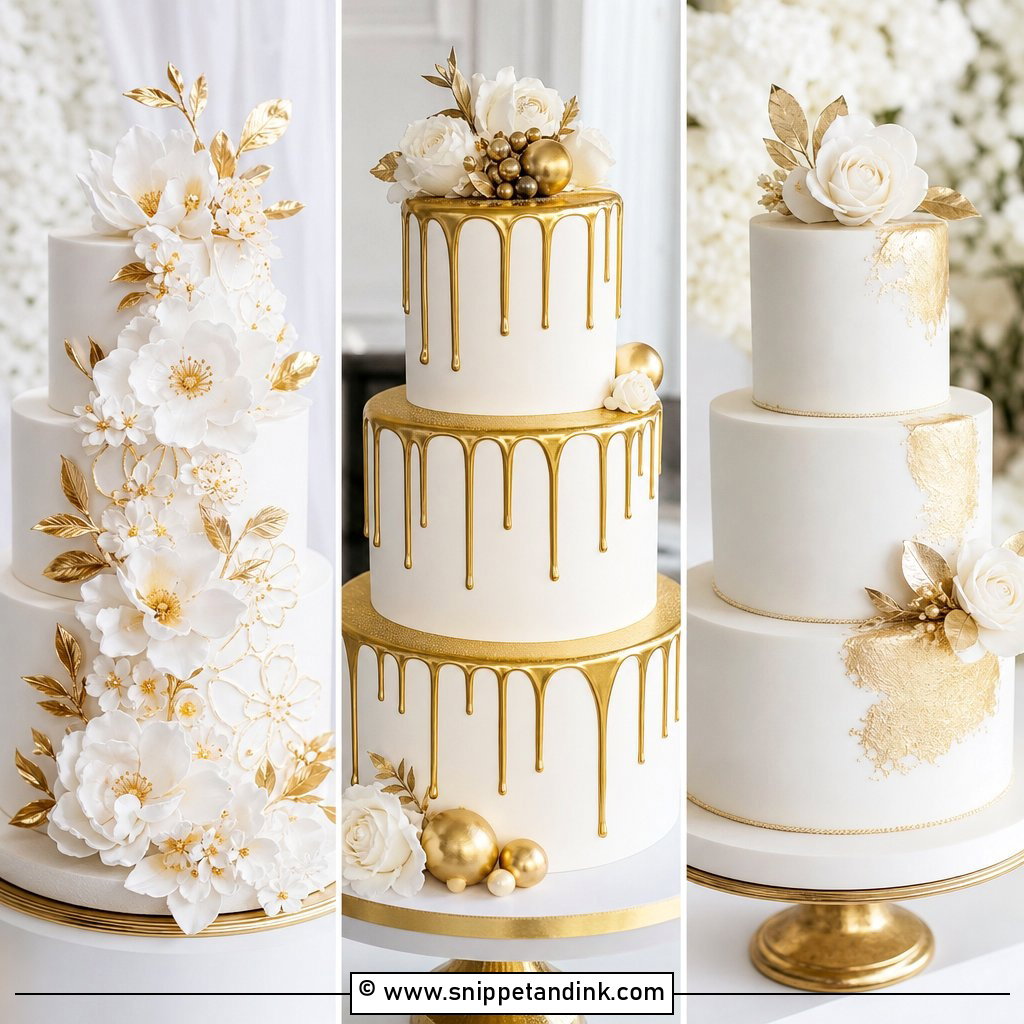
Green brings depth and gold brings light, which is why this pairing has lasted. I design it as emerald fondant tiers with gold leaf edges, metallic brushstrokes or one fully gilded tier for contrast, softened with ivory flowers, white roses, orchids or deep green leaves. Gold leaf sticks best to firm, slightly tacky fondant. On soft buttercream it wrinkles, so for a buttercream version I chill the tier first and apply the leaf in patches. Pistachio, vanilla almond, chocolate or lemon elderflower are good flavors. Keep the gold to one or two zones rather than every tier.
11. Navy And Burgundy Wedding Cake
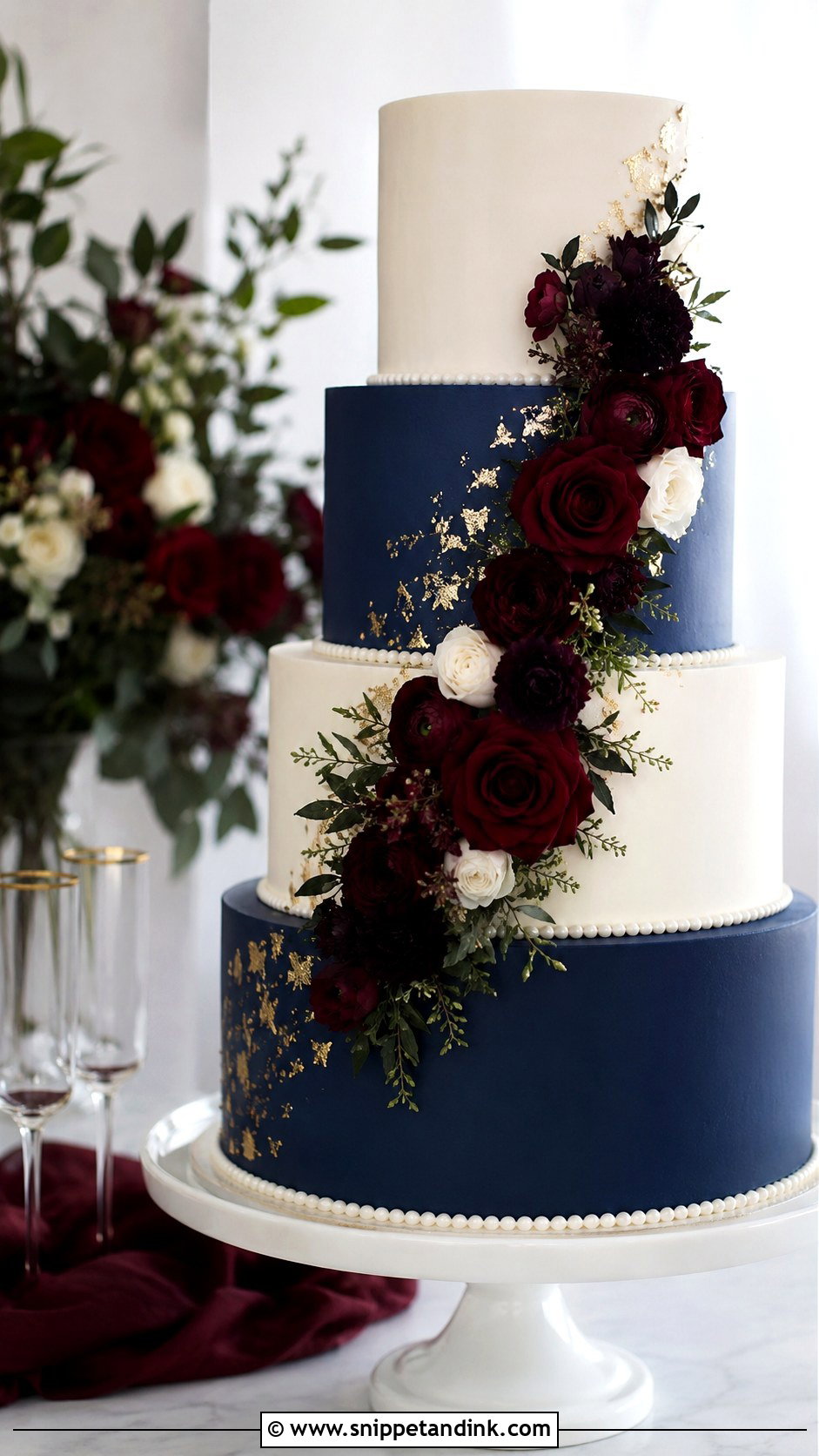
Navy gives structure and burgundy florals add warmth, so together they read formal with a romantic side. My favorite layout is one navy tier, one ivory tier, with burgundy flowers placed in a diagonal sweep across both. Gold leaf, pearl piping or dark greenery ties the colors together. Fresh blooms need food-safe handling: I wrap or seal stems before they touch the icing and check with the florist that nothing was sprayed. Chocolate, vanilla bean, red velvet or berry almond suit it, and evening receptions in venues already dressed in deep tones are its natural setting.
12. Purple And Gold Wedding Cake
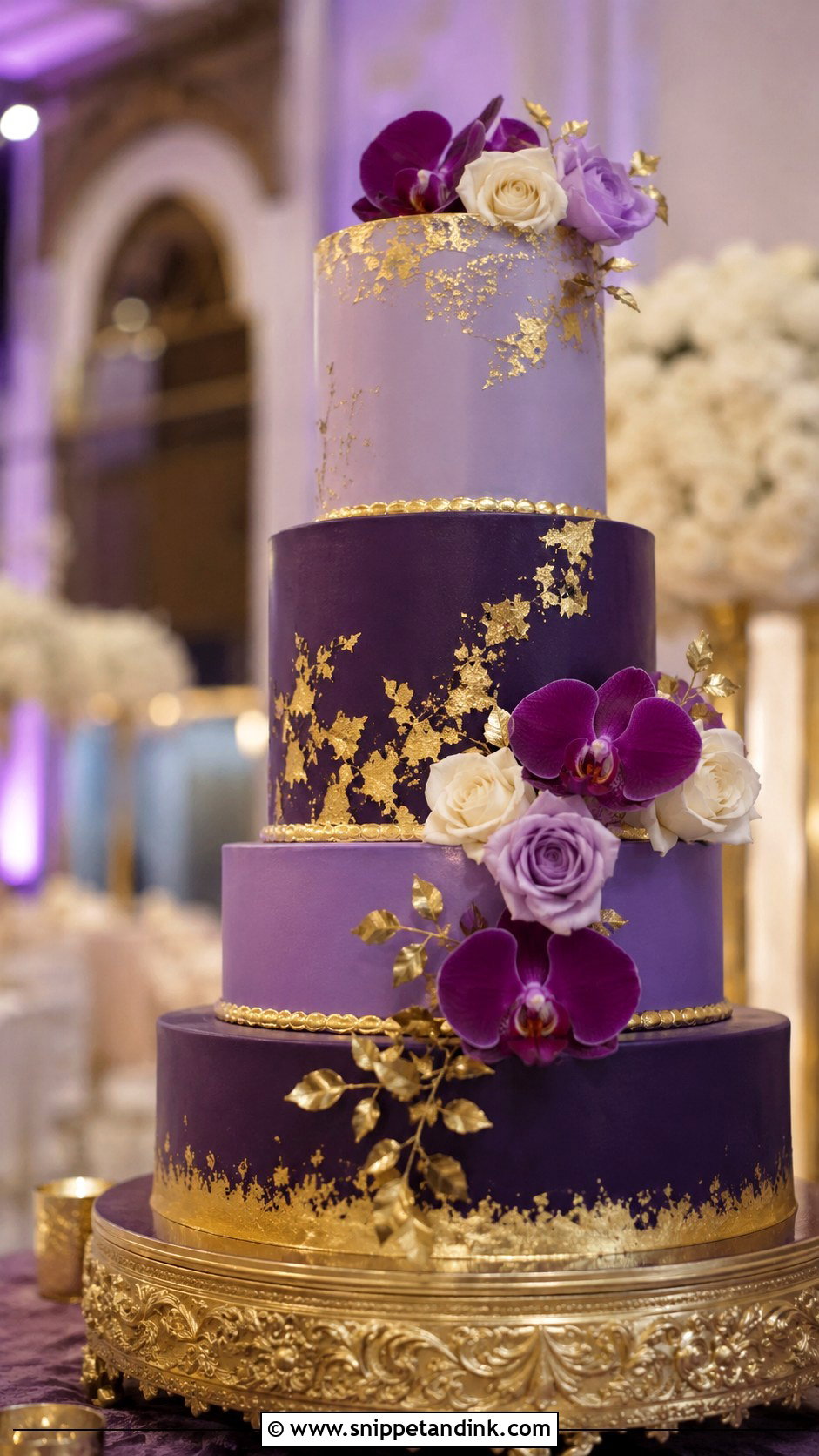
Purple and gold always feels royal, but a modern finish keeps it from tipping into costume. Deep purple fondant, amethyst watercolor buttercream or plum ombré tiers all take gold leaf or painted metallic edges well. Keep the flowers spare, a few ivory roses, purple orchids or sugar blossoms, so the cake doesn’t get busy. For painted gold I mix a food-grade metallic dust with a little alcohol, which dries fast and doesn’t drag the icing underneath. Lavender vanilla, chocolate, blackberry or almond cream inside. Ballrooms and formal receptions suit it best.
13. Jewel Tone Floral Wedding Cake
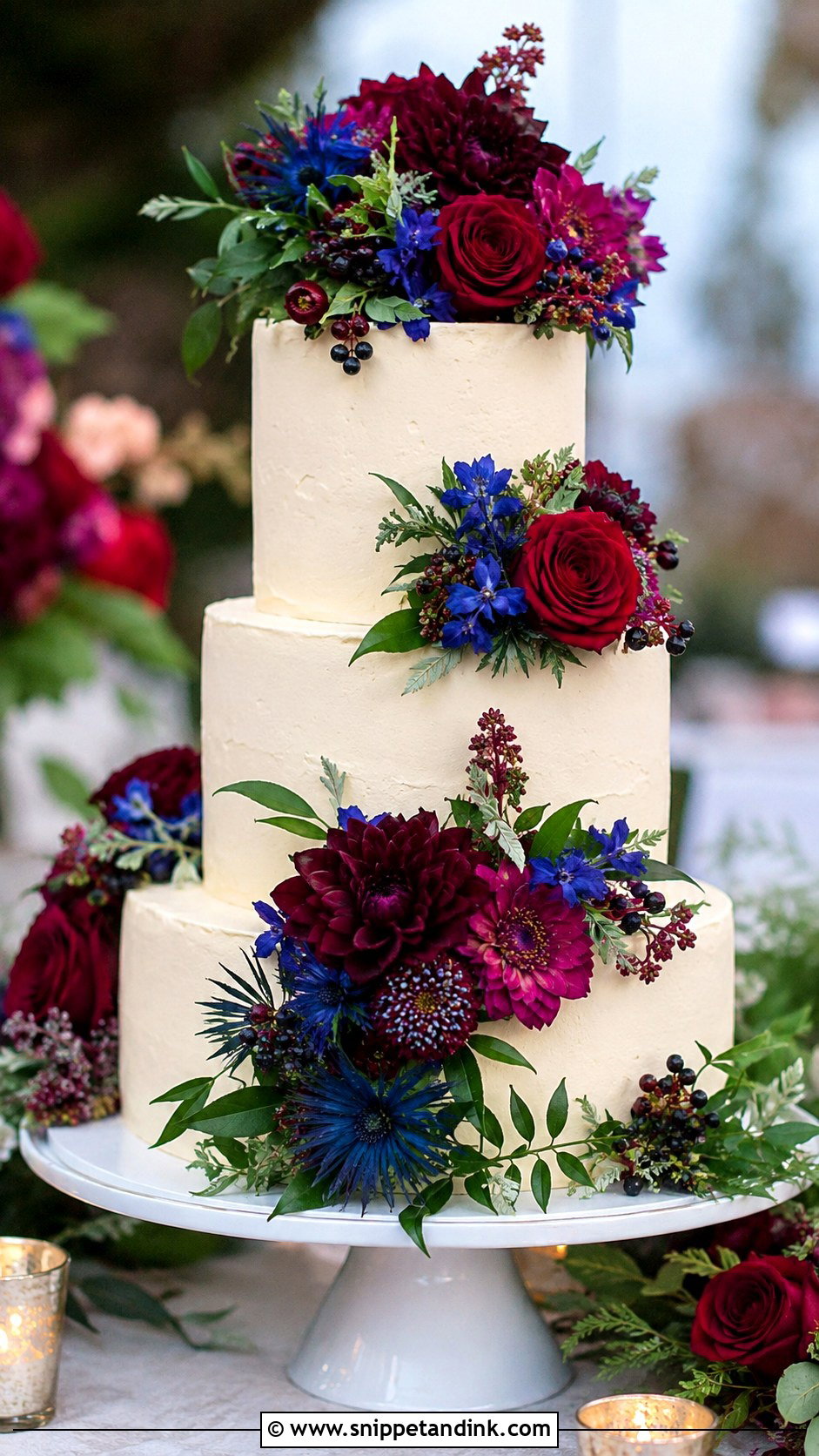
This is the route I suggest when couples love jewel tones but worry about dark icing. Start with an ivory, pale blush or champagne cake, then add flowers in emerald, ruby, sapphire, plum and deep teal tones. Fresh flowers look lush but wilt and can drop pollen. Sugar flowers give more control and last, though they take days of work, so order them early. Buttercream or fondant both suit it, depending on how formal the wedding is, and vanilla, lemon, almond or white chocolate keep the inside light. If your bouquets already carry rich color, the cake picks it up without extra effort.
14. Black Jewel Tone Wedding Cake
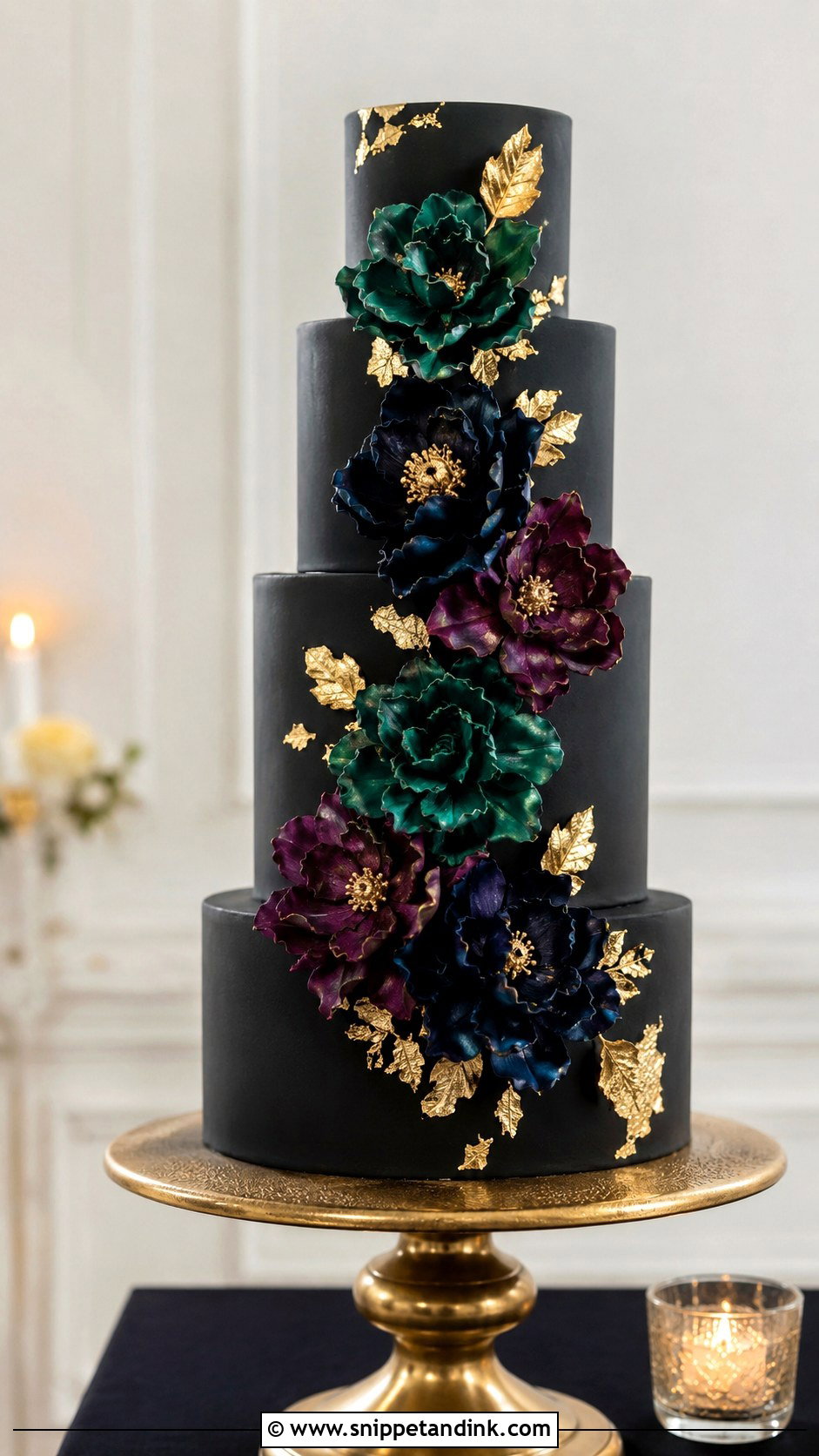
Black makes every jewel accent near it look brighter, which is why emerald, ruby, sapphire and amethyst sit so well against it. Keep it wedding-appropriate with clean tiers, smooth fondant and details like gold leaf, sugar flowers or painted gemstone strokes. True black is hard to make. I build it from black cocoa, which already gives a dark base, and only then add color; otherwise the frosting turns grey or bitter. Dark chocolate, mocha or vanilla with berry filling fit inside. I’d keep it to formal evening receptions and art-led weddings, because in bright daylight it can look heavy. A plain gold stand and soft florals help it feel intentional.
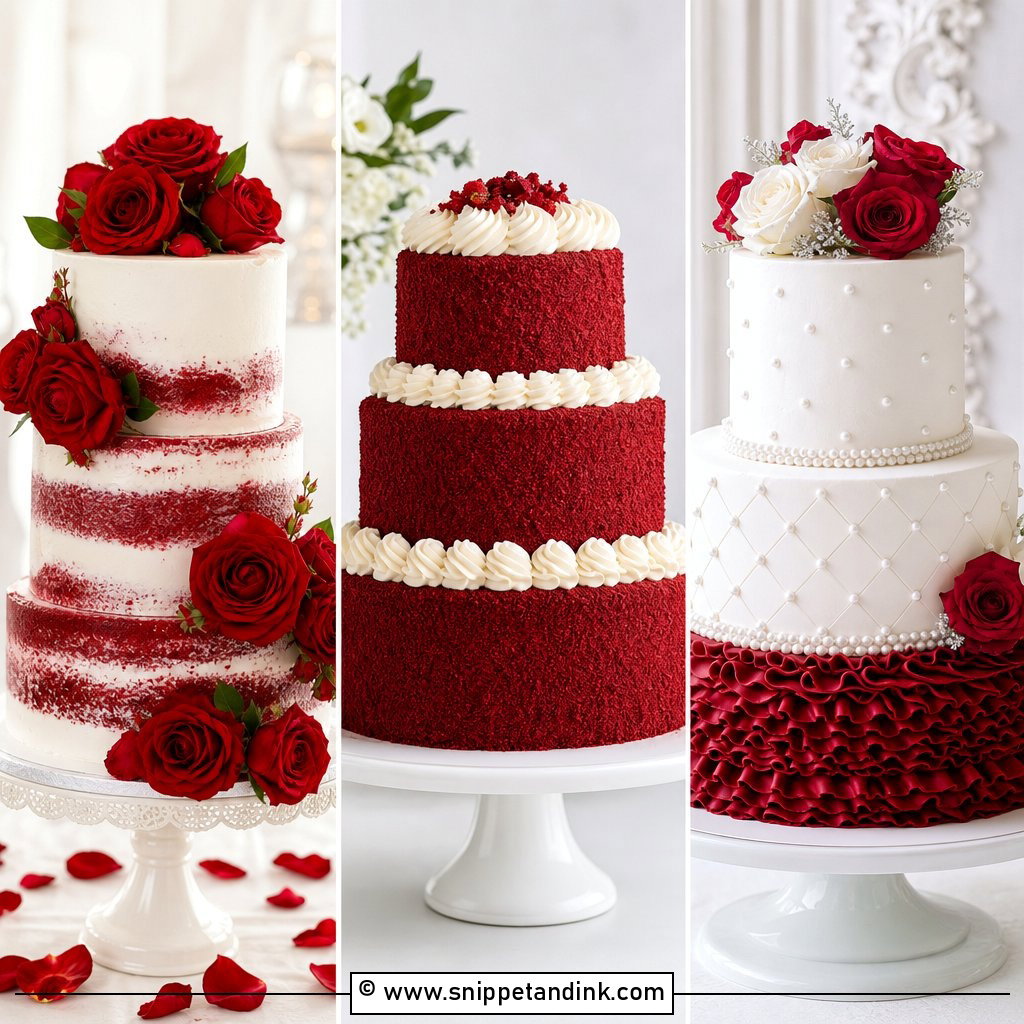

15. White Wedding Cake With Jewel Tone Flowers
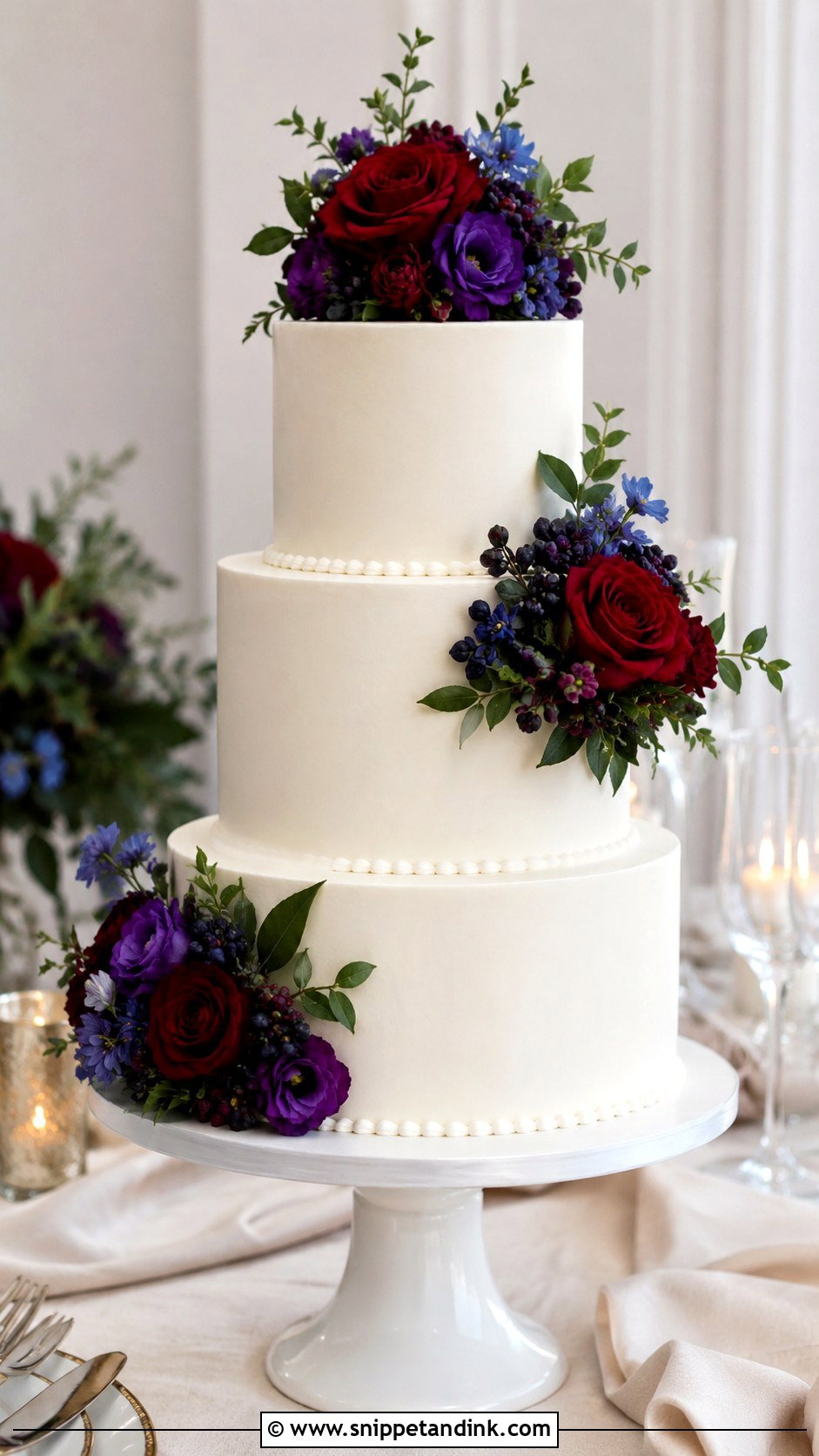
Keeping the cake white and letting flowers carry the color is the easiest way to use jewel tones without taking risks with icing. Deep red roses, purple lisianthus, blue delphinium, emerald foliage and berries layered together give all the drama. Smooth buttercream, fondant or a subtle texture all suit it. Delphinium is one I’d only place on a barrier, never touching the cake directly, since it isn’t food-safe. Vanilla bean, lemon, almond or coconut inside. From across the room it looks most like a traditional wedding cake of anything here.
16. Jewel Tone Geode Wedding Cake
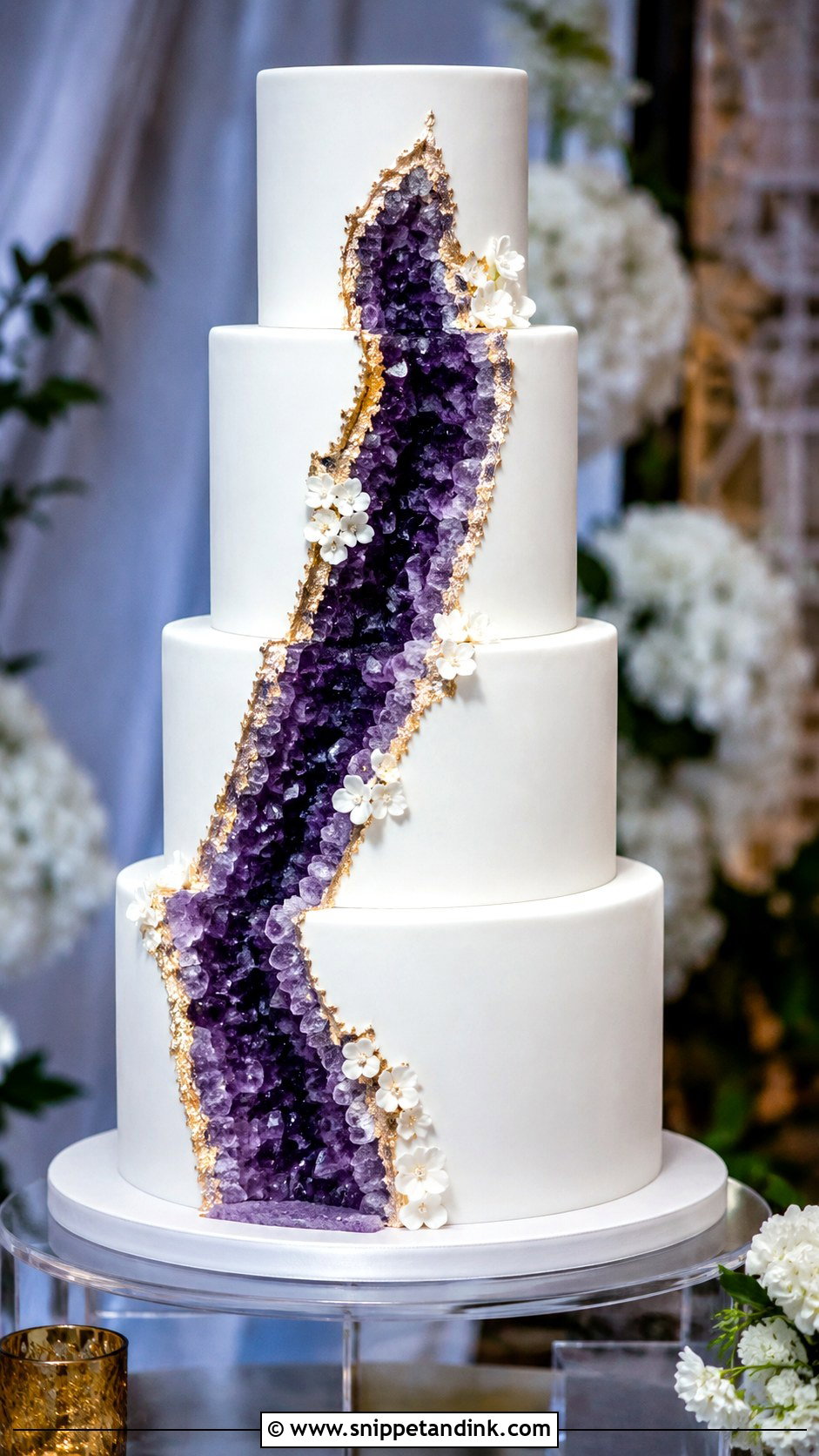
A jewel tone geode wedding cake is the showpiece of this list. The geode cut is filled with rock candy or sugar crystals in emerald, sapphire, amethyst or ruby, set into a white or deep-colored fondant base, and a painted gold edge makes the crystals glow. I run the cut vertically across the tiers for height and movement. Sugar crystals draw in moisture, so in a humid tent they can turn sticky and dull; I add them as close to delivery as possible and keep the cake out of steamy air. Vanilla, chocolate, almond or raspberry keep the flavor familiar under all that sparkle.
17. Jewel Tone Watercolor Wedding Cake
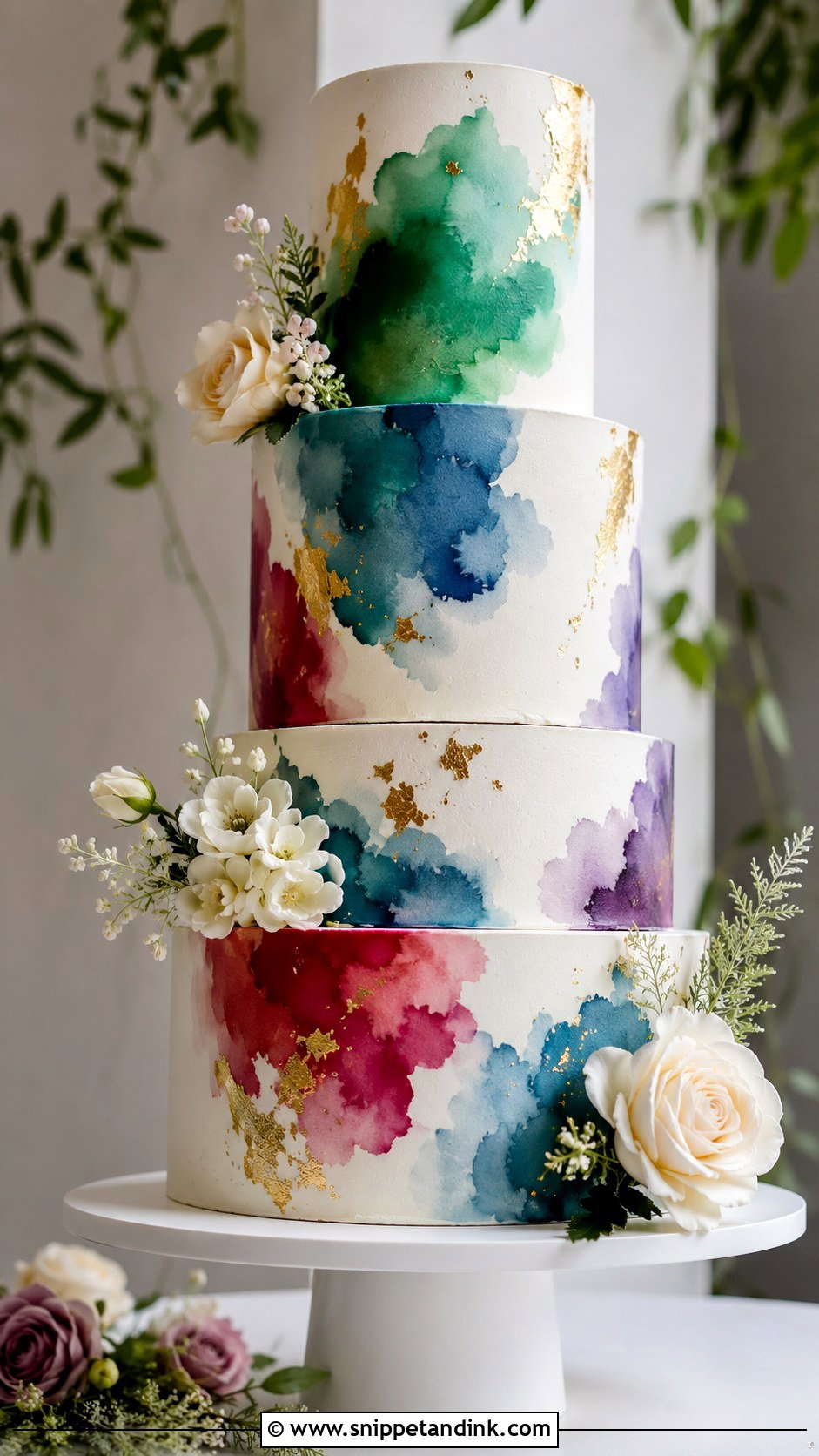
Instead of one solid color, watercolor blends emerald, sapphire, plum, ruby and teal into a painted surface. I spread it on smooth buttercream with a palette knife, or brush thinned gel color over fondant, and the colors move differently on each. A clean white top tier, a little gold leaf or a few simple sugar flowers stop it getting crowded. Too many shades on one tier turn muddy where they meet, so I limit it to three per tier. Vanilla berry, lemon, almond or white chocolate keep the flavor light.
18. Jewel Tone Ombre Wedding Cake
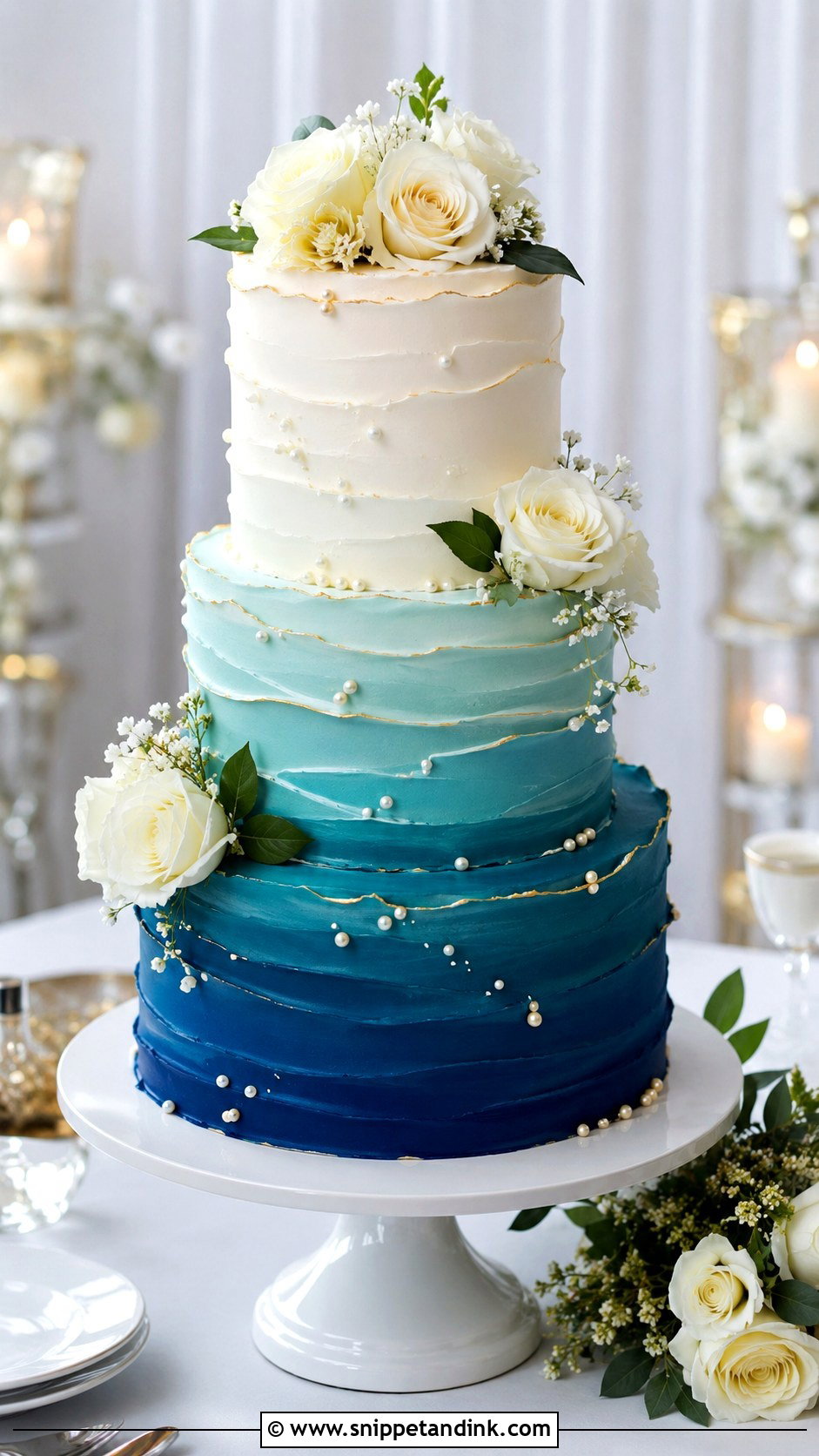
Ombré delivers dramatic color in a controlled way. The tiers fade from ivory into emerald, blush into ruby, lavender into amethyst or pale blue into sapphire. Smooth buttercream gives the softest transitions; fondant looks cleaner, but each tier then becomes a solid block of color. Every step of the fade has to be mixed and checked against the last under the same light, and that takes longer than couples expect. Minimal flowers, gold edges or pearl details complete it, with vanilla, almond, lemon or chocolate keeping the inside simple. Weddings with layered color palettes suit it well.
19. Jewel Tone Drip Wedding Cake
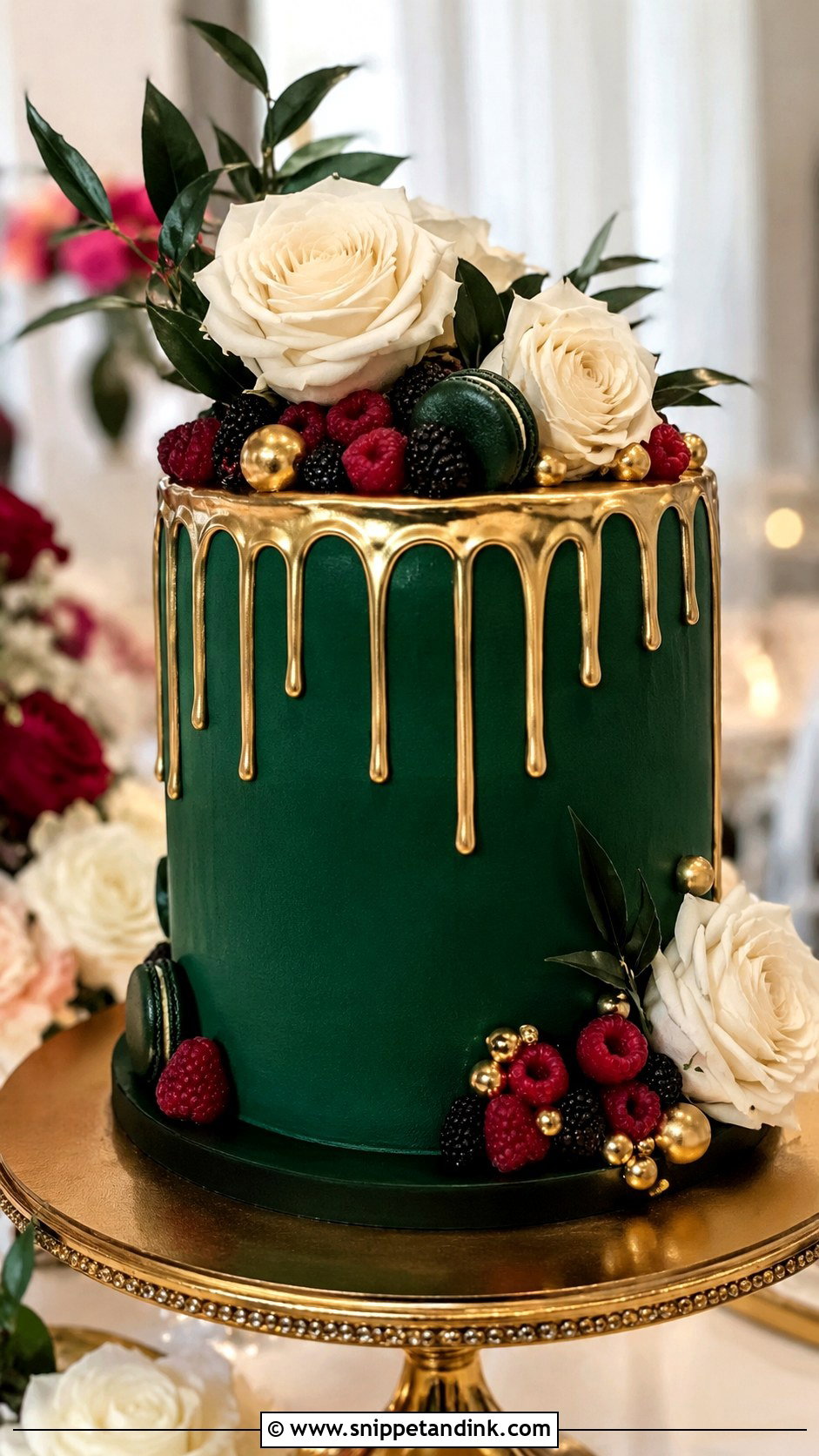
Start with a deep emerald, sapphire, plum or ruby buttercream, then add a metallic gold or dark chocolate drip, and you get something less formal than fondant but bolder than plain buttercream. Fresh berries, macarons, sugar flowers or edible pearls finish the top. The drip needs a cold cake and ganache at the right temperature. Too warm and it runs to the board; too cool and it stops in stubby blobs, so I always test one drip on the back first. Chocolate raspberry, vanilla caramel, lemon blueberry or red velvet suit it. Evenly spaced drips are what make it read as a wedding cake.

20. Jewel Tone Buttercream Wedding Cake
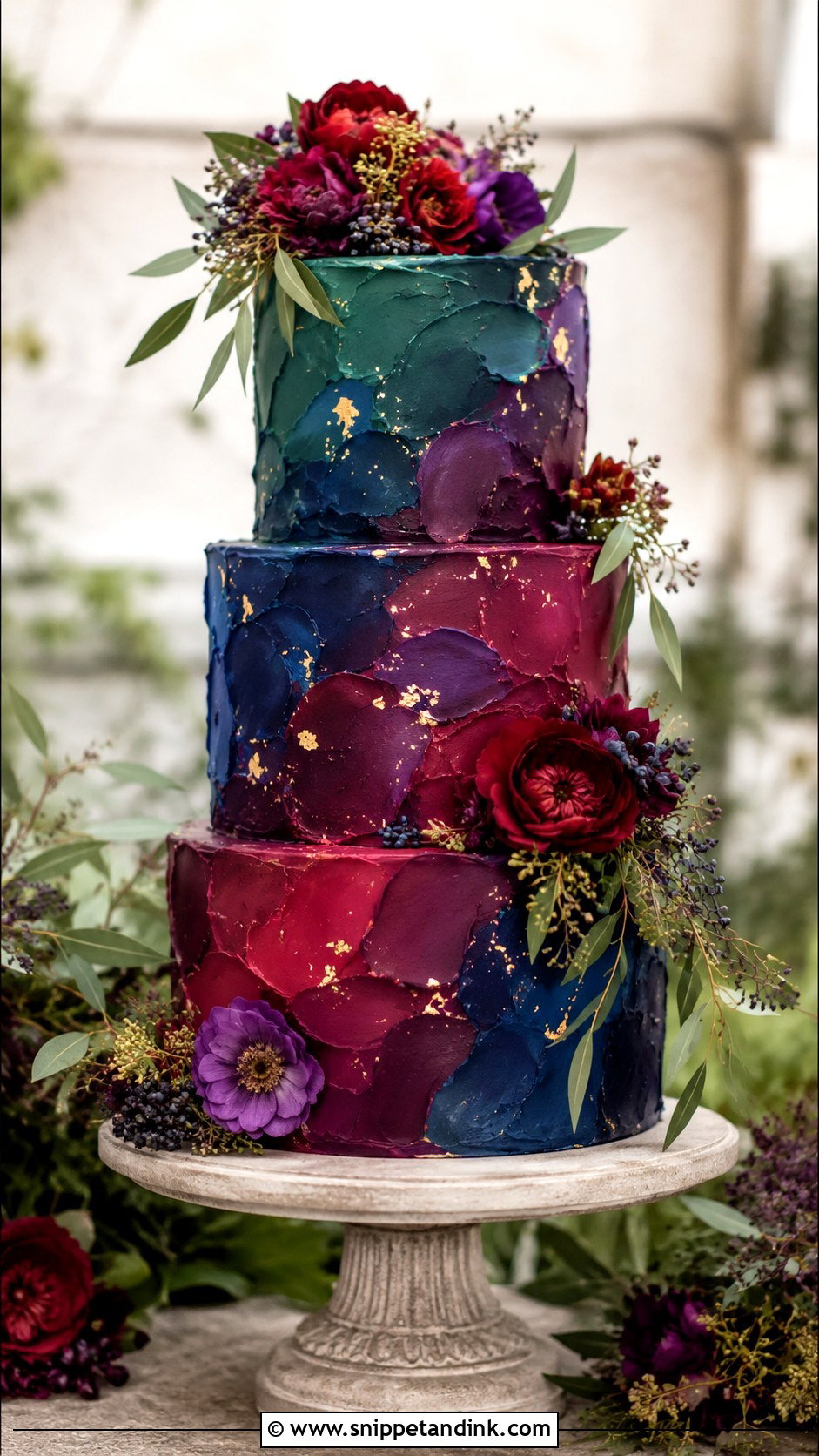
Buttercream softens jewel tones. It can be smoothed, painted, ruffled or spread with a palette knife, so it adapts to almost any design, and emerald, sapphire, plum, ruby and teal all look rich in it next to fresh flowers or gold. It has limits, though. Swiss meringue buttercream softens in summer heat, and dark colors show fingerprints and dents more than pale ones, so I’d keep an outdoor buttercream cake in shade and set it out late. Vanilla bean, chocolate, almond, lemon and berry-filled sponge are the usual picks. Garden receptions and smaller weddings where texture matters are where it shines.
How Saturated Icing Holds Up to Sunlight, Fridges and a Warm Room
Deep colors are less forgiving on the day than ivory. Pale icing hides small problems. Emerald and navy show every one of them.
- Light fades some colors. Purples and pinks are the most likely to drift toward blue or grey under strong sun or display lights, so keep the cake away from windows and put it out as late as the venue allows.
- Condensation marks dark fondant. A cake that goes straight from a cold fridge into a warm room sweats, and on navy or black the drying water leaves visible spots. I let tiers come up to room temperature in their boxes before they’re unwrapped.
- Heat shows on buttercream fast. Dark colors absorb warmth in the sun, and soft meringue buttercream starts to slump. Shade and a late reveal matter more than any recipe.
- Fingerprints and scuffs show on dark surfaces. Ask that only your baker or the venue’s cake handler moves it once it’s set up.
If your reception is outdoors in summer, look hard at the white cake with jewel-tone flowers. It carries the same palette with far fewer things that can go wrong between delivery and the first cut.
Deciding Where the Color Lives on Your Cake
The real decision is where the color goes. A deep emerald, sapphire, ruby or plum cake needs contrast beside it: ivory flowers, metal, fruit or a clean stand. If dark icing makes you nervous, keep the cake white and let jewel-tone flowers do the work. If you want drama, a geode, black fondant, ombré or metallic drip will give it to you. Bring a fabric swatch and a photo of your florals to the tasting and ask to taste the colored icing as well as the sponge. Then the cake will sit naturally among the rest of the day’s details.
You'll Like These Ideas:








Leave a Reply