
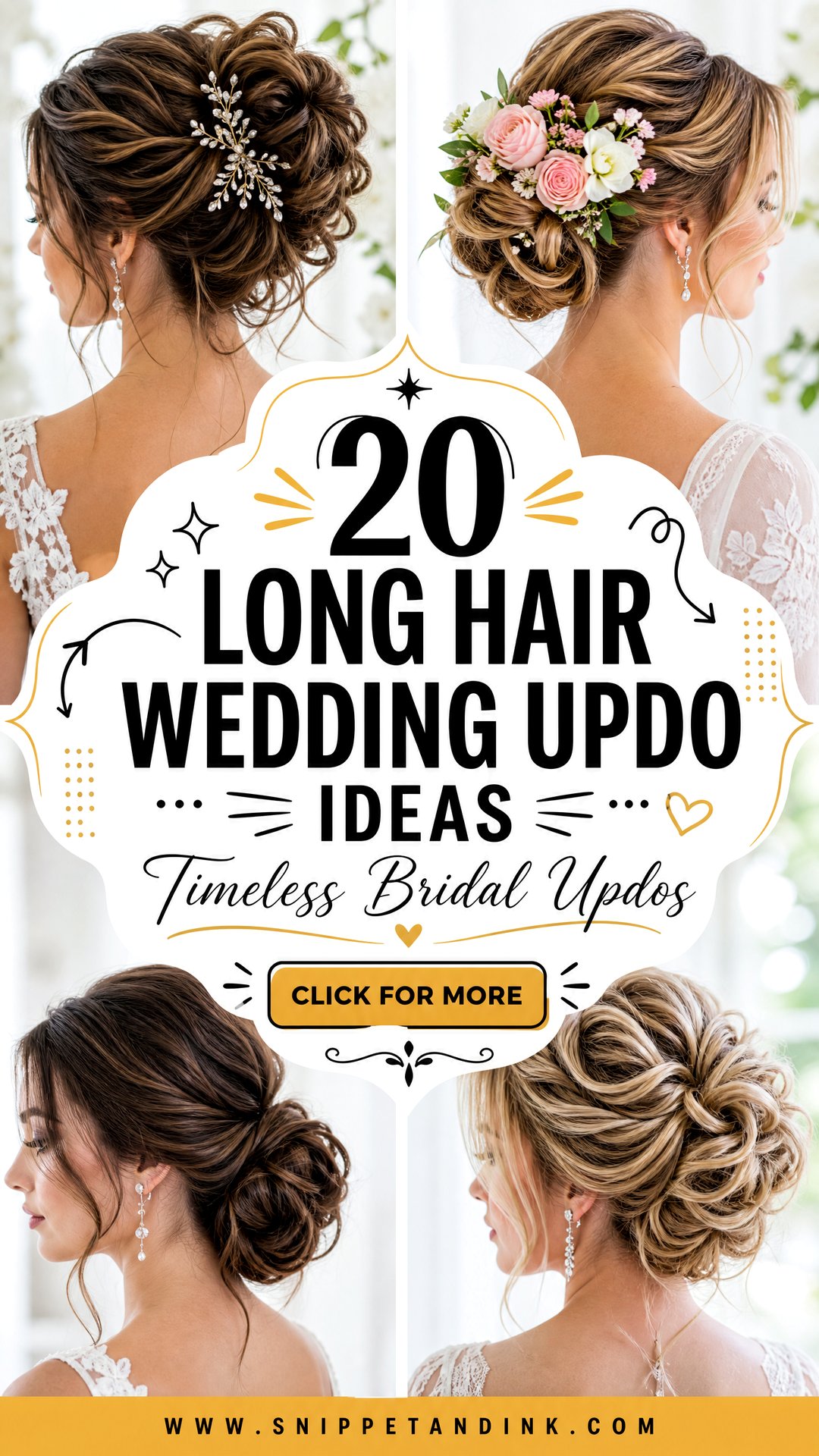
Long hair gives me a lot to work with in an updo, and a lot to hide. Every extra inch has to be folded, wrapped or pinned somewhere, so the same chignon that sits neatly on shoulder-length hair can turn into a heavy knot on hair that reaches your waist. The right shape comes down to your dress neckline, your veil and how your hair behaves once it has been curled. A sleek bun reads modern, a loose low bun reads soft, and a braided one adds texture the camera picks up from across the room. The 20 updos below are all ones I’d build on long hair, with notes on how each one holds and who it suits.
Extra Length Means Extra Weight at the Nape
Brides with long hair often assume an updo will be easy because there’s so much to work with. The opposite tends to be true. Once hair passes the bra strap, the weight of a full bun pulls on the pins and on your scalp, and that’s what causes the slow sag by the speeches and the headache by the first dance.
There are a few ways I manage it. I split very long hair into two or three sections and anchor each one separately, so no single set of pins carries the whole weight. I braid or twist the lengths before wrapping, which compacts them. And I keep the heaviest shapes low, at the nape, where the neck supports them, rather than high on the crown.
- Hair to the shoulder blades handles almost any updo here, including high buns.
- Hair to mid-back is best in low chignons, braided buns and French twists.
- Waist-length hair usually needs braids or twists inside the bun, and very thick hair may need some thinning of the bulk at the nape by your stylist, never the length.
- Fine hair of any length often needs a small amount of padding or clip-in hair to make a bun look full.
1. Low Chignon Wedding Updo
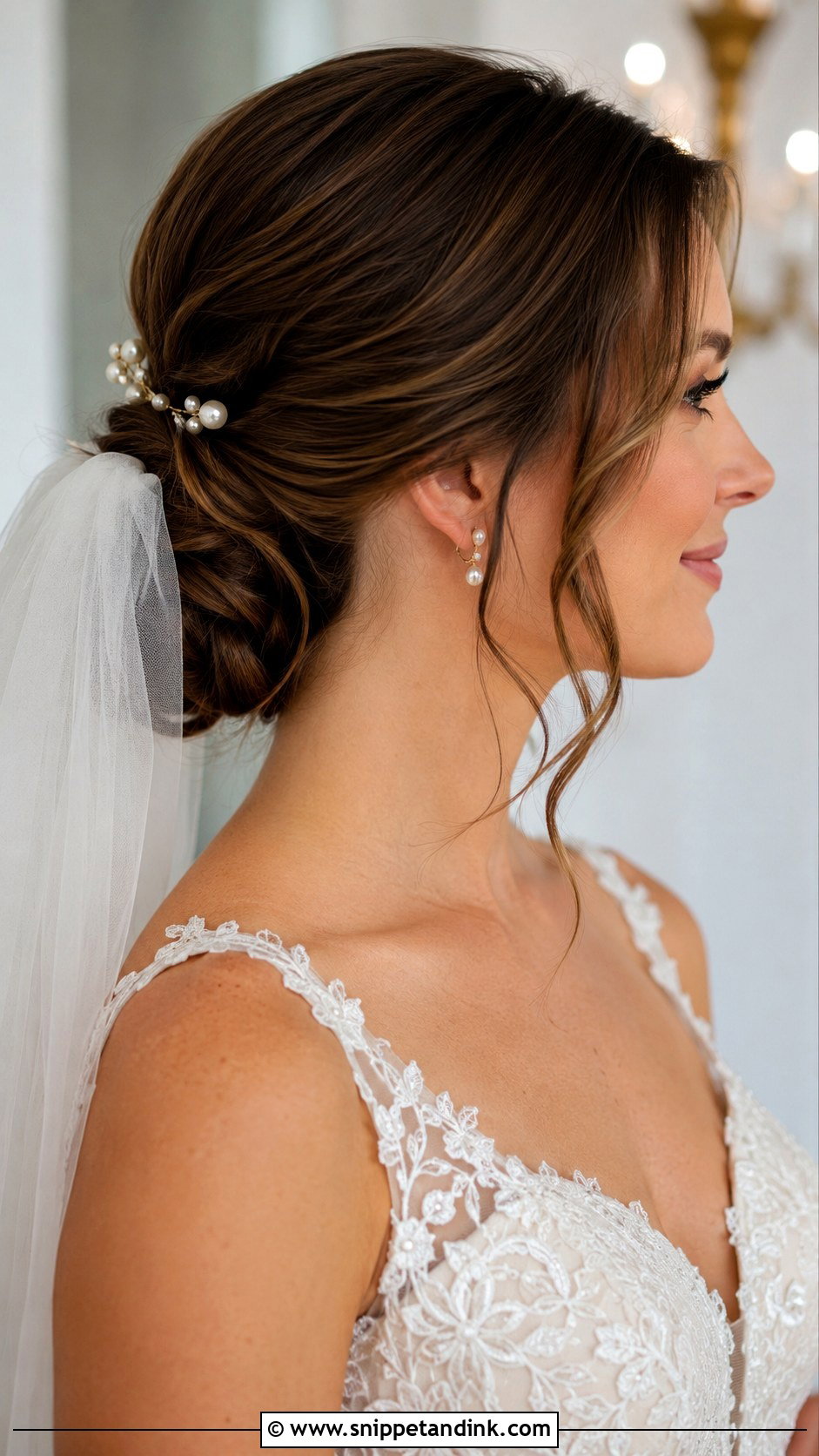
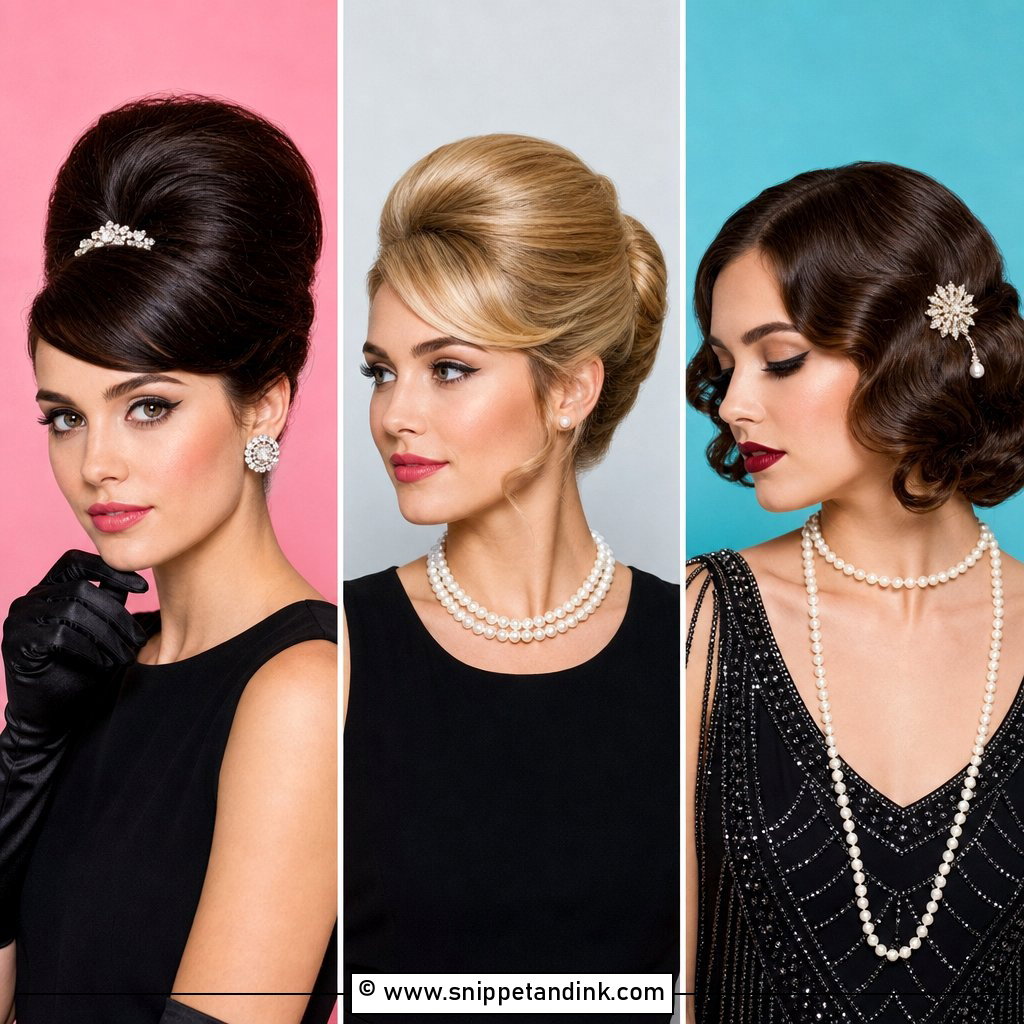
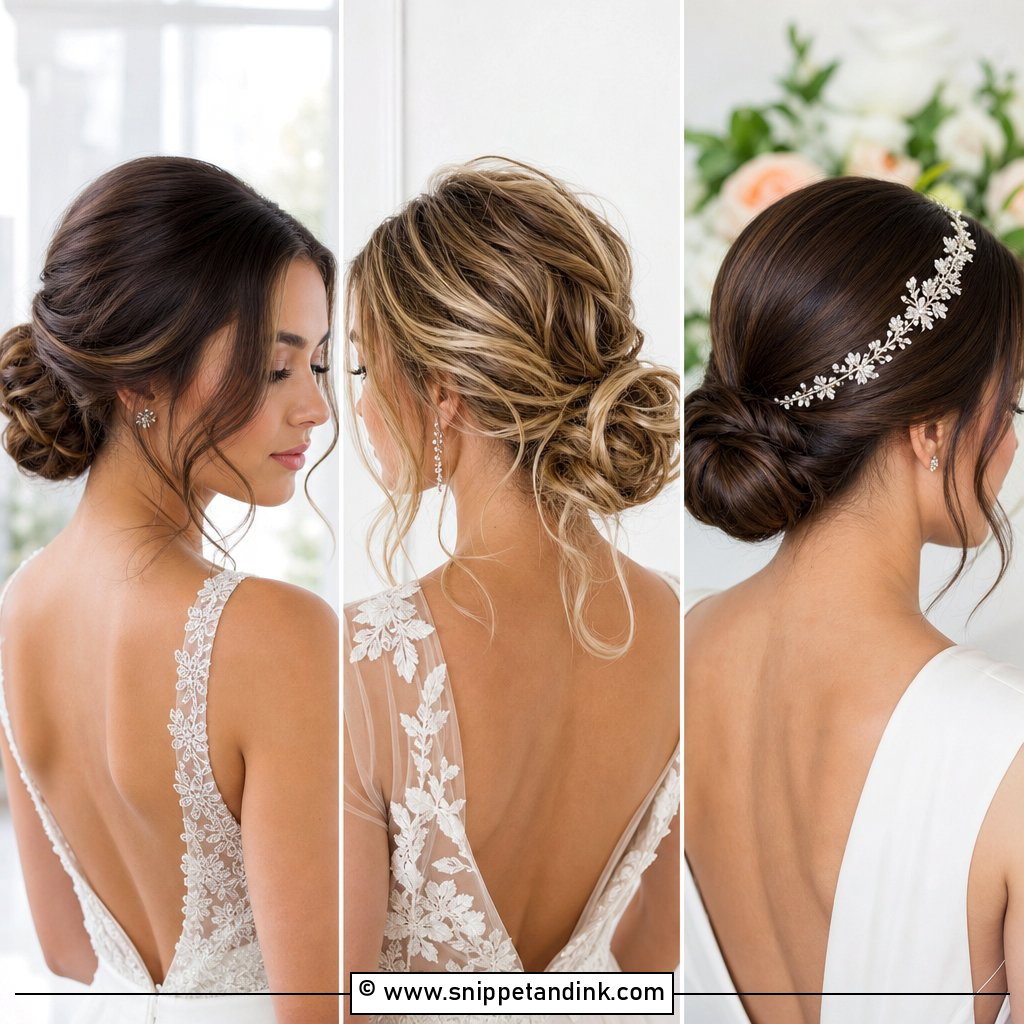
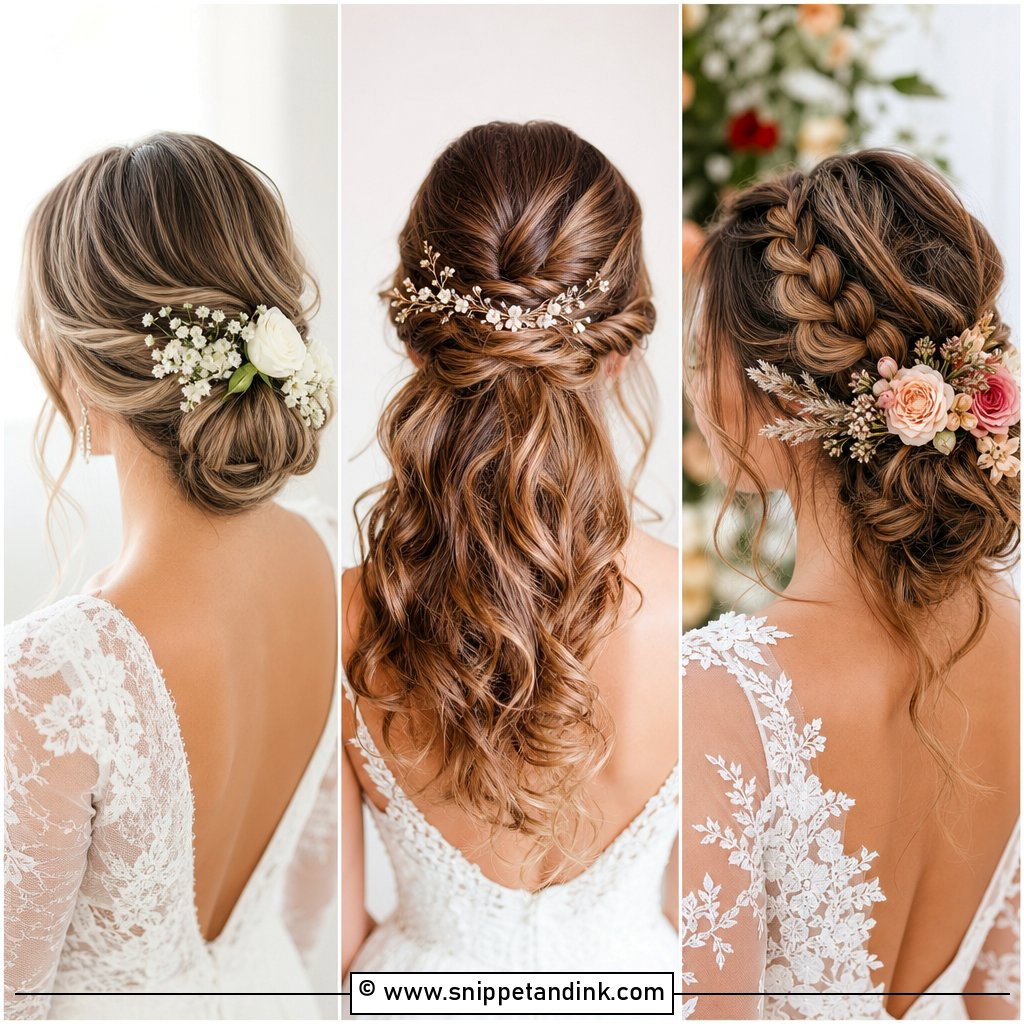
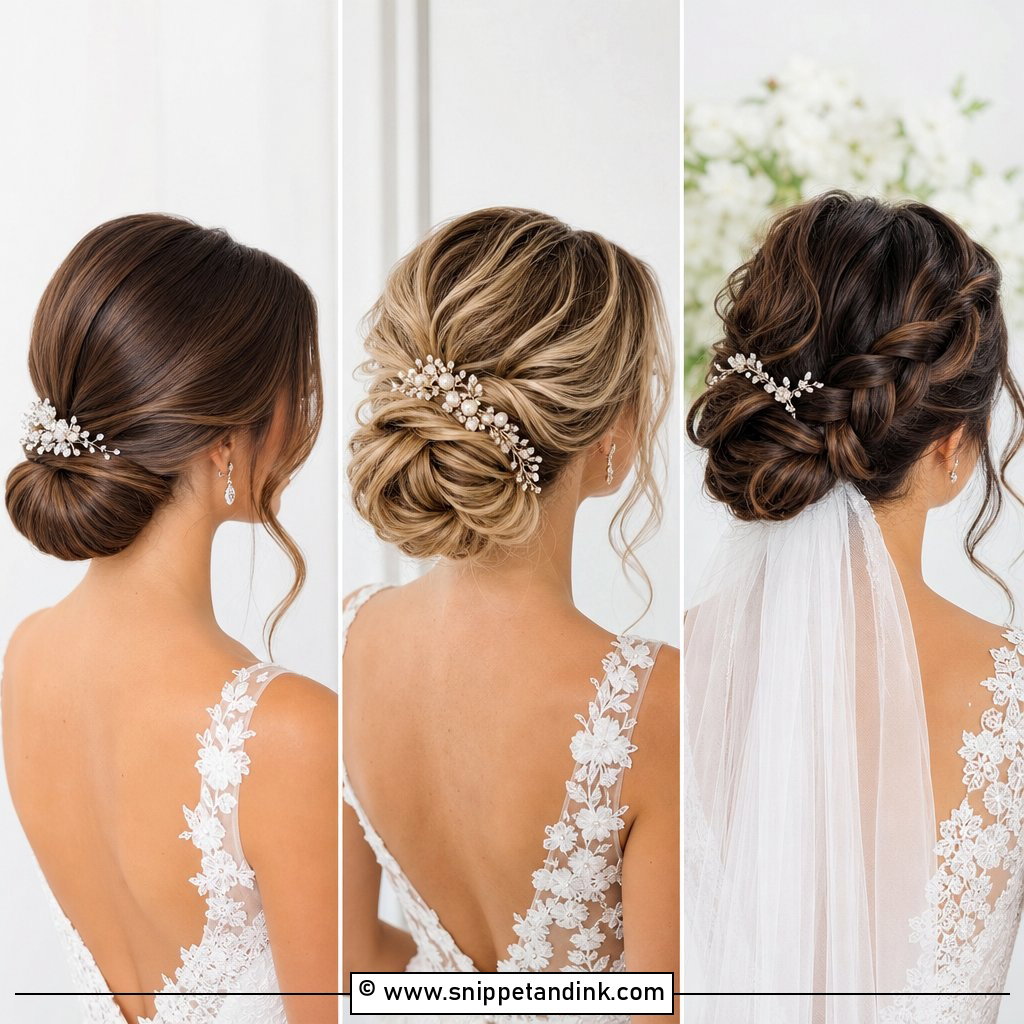
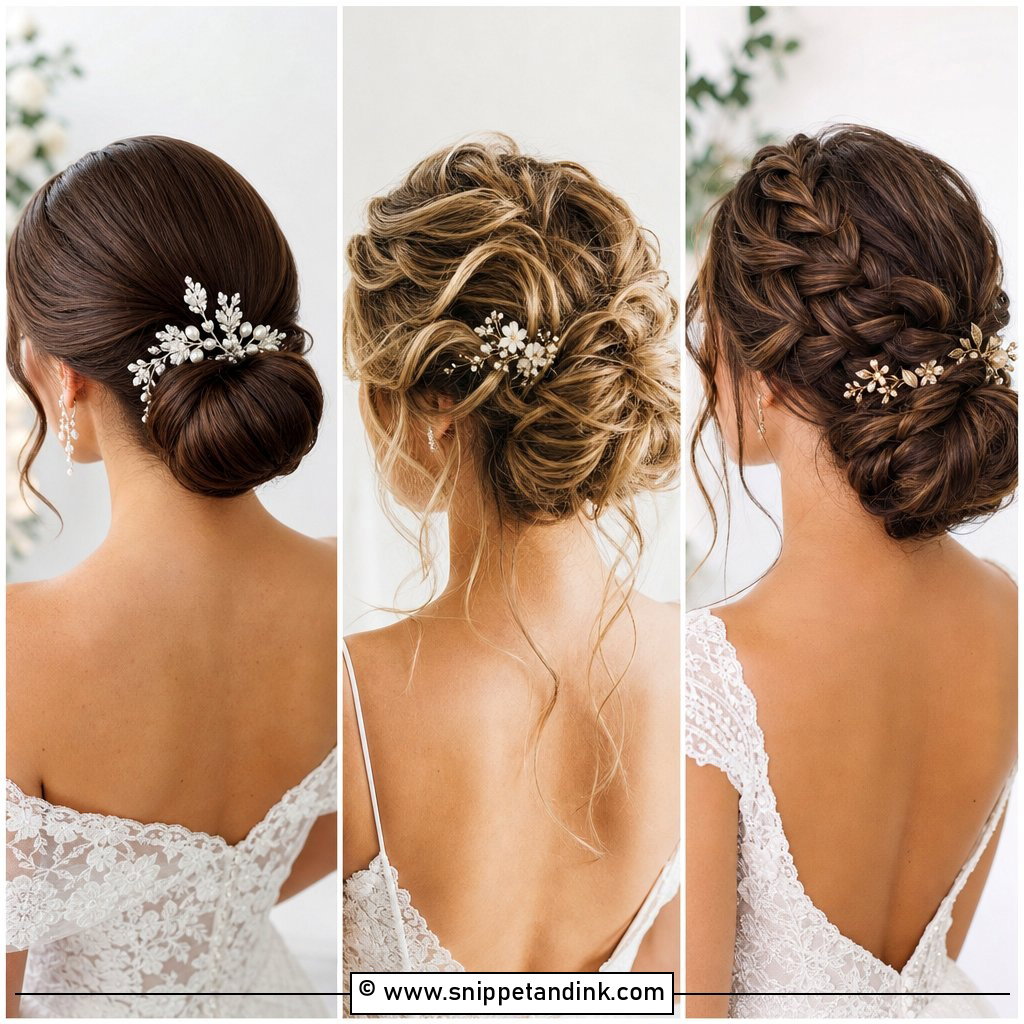
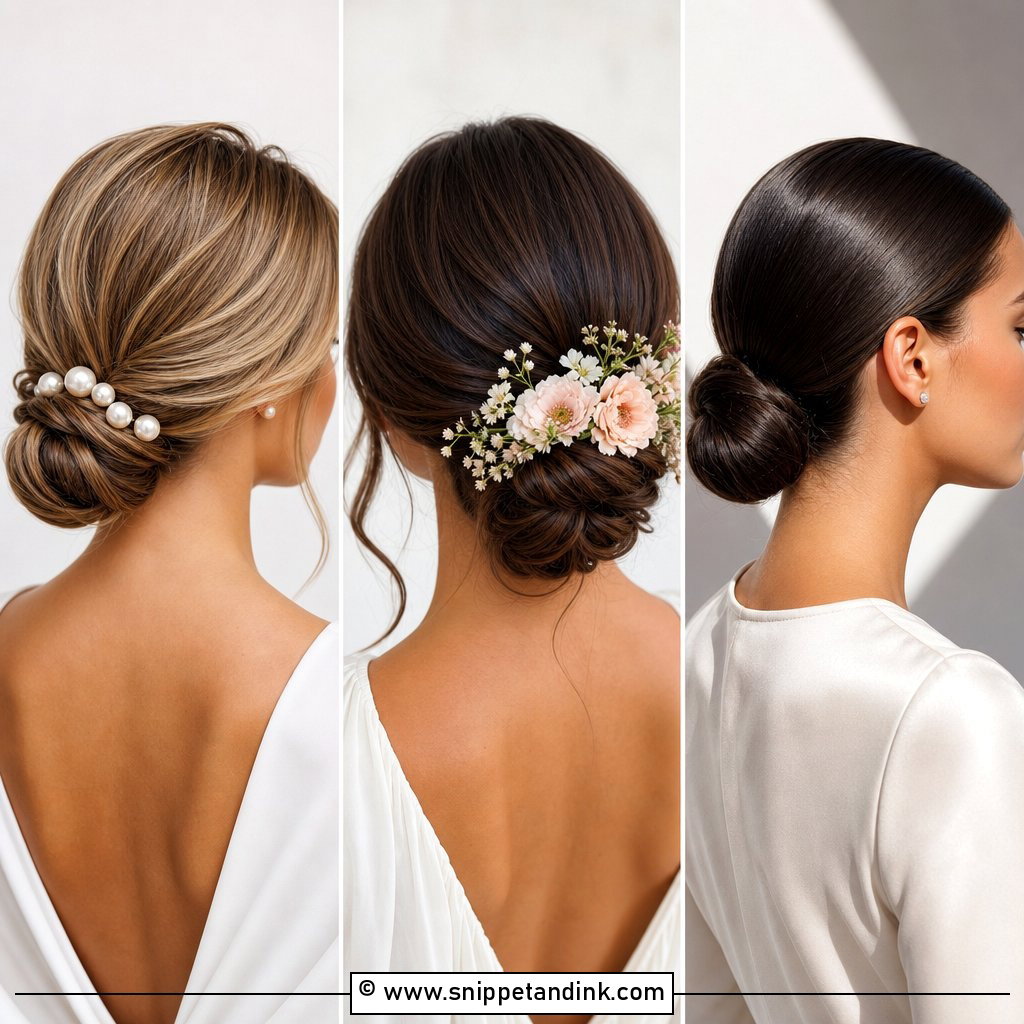
Few shapes are as reliable on long hair as a low chignon. I gather the hair at the nape, twist or fold it into a soft bun and pin it from underneath, so the pins grip the base rather than the outer layer. Sitting low, it leaves room above for a veil comb and keeps the face and neckline open, which is why it works with strapless, off-shoulder and high-neck dresses alike. Leave a few curved pieces at the cheeks for softness, or smooth the crown and tuck everything in for a cleaner finish.
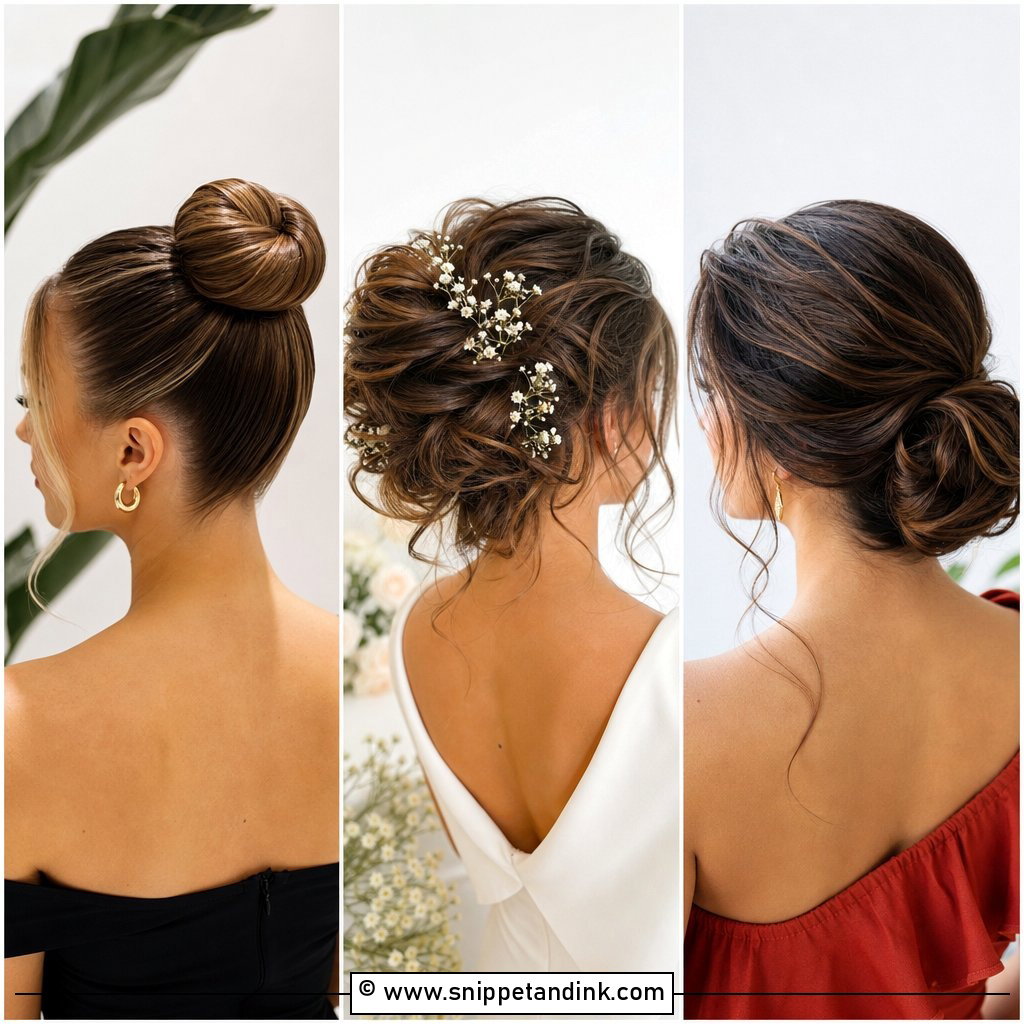
2. Messy Bun Wedding Updo
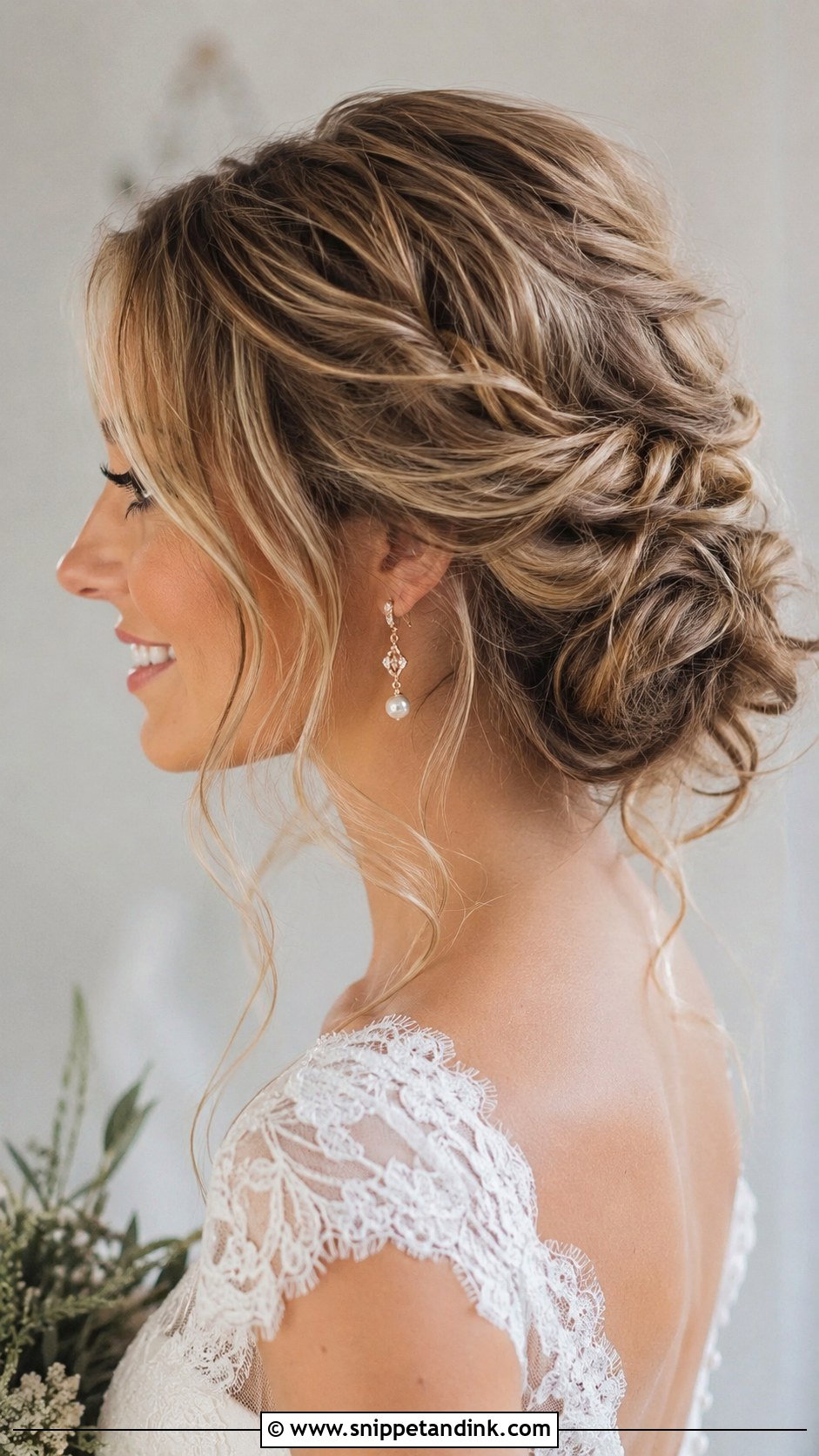
The trick with a messy bun is that none of it is actually messy. I curl the whole head first, then pin it into a low or mid bun section by section, pulling each loop out a little so the texture looks loose while the pins underneath stay tight. Volume at the crown balances the bun from the front. Garden, beach and rustic venues suit it, and it sits nicely with lace gowns and fine veils. One caution: on very silky, straight hair, the texture collapses unless it has been curled and sprayed before pinning.
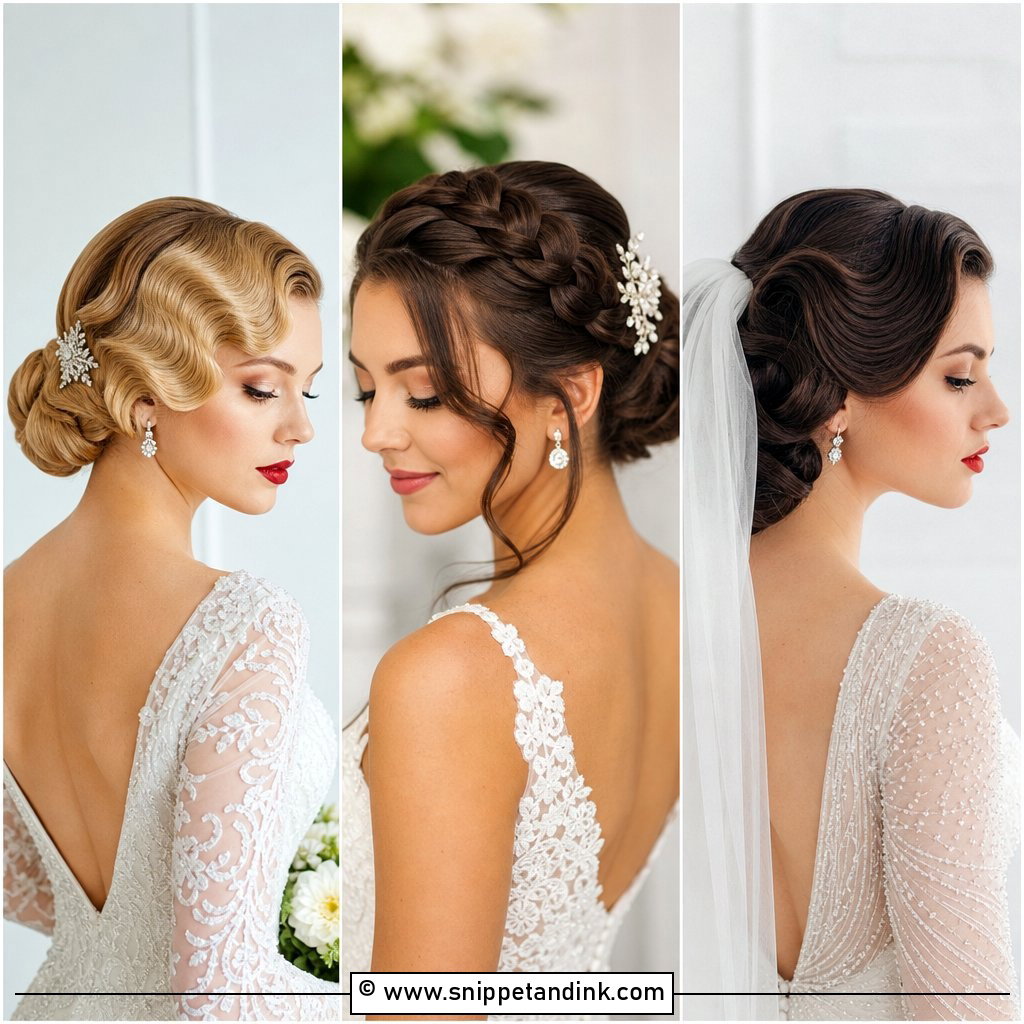
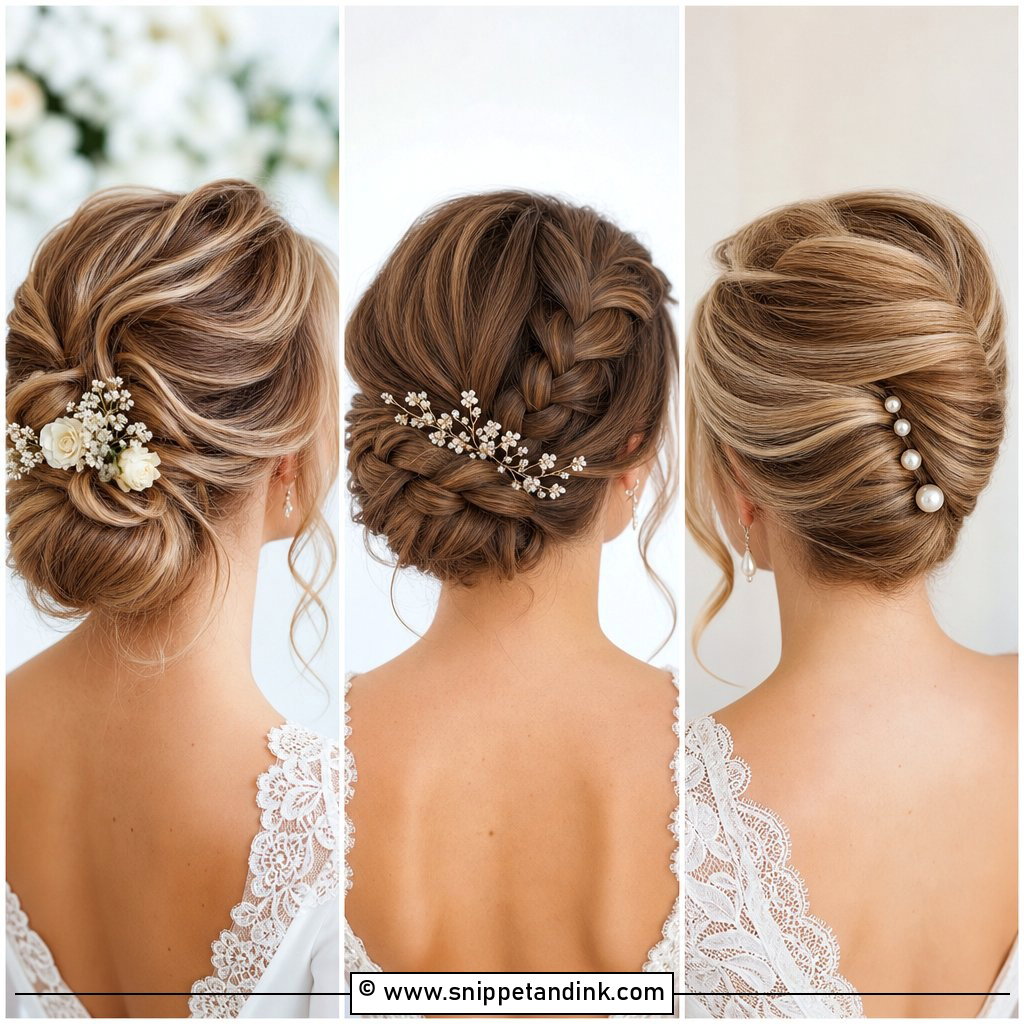
3. Braided Low Bun Wedding Updo
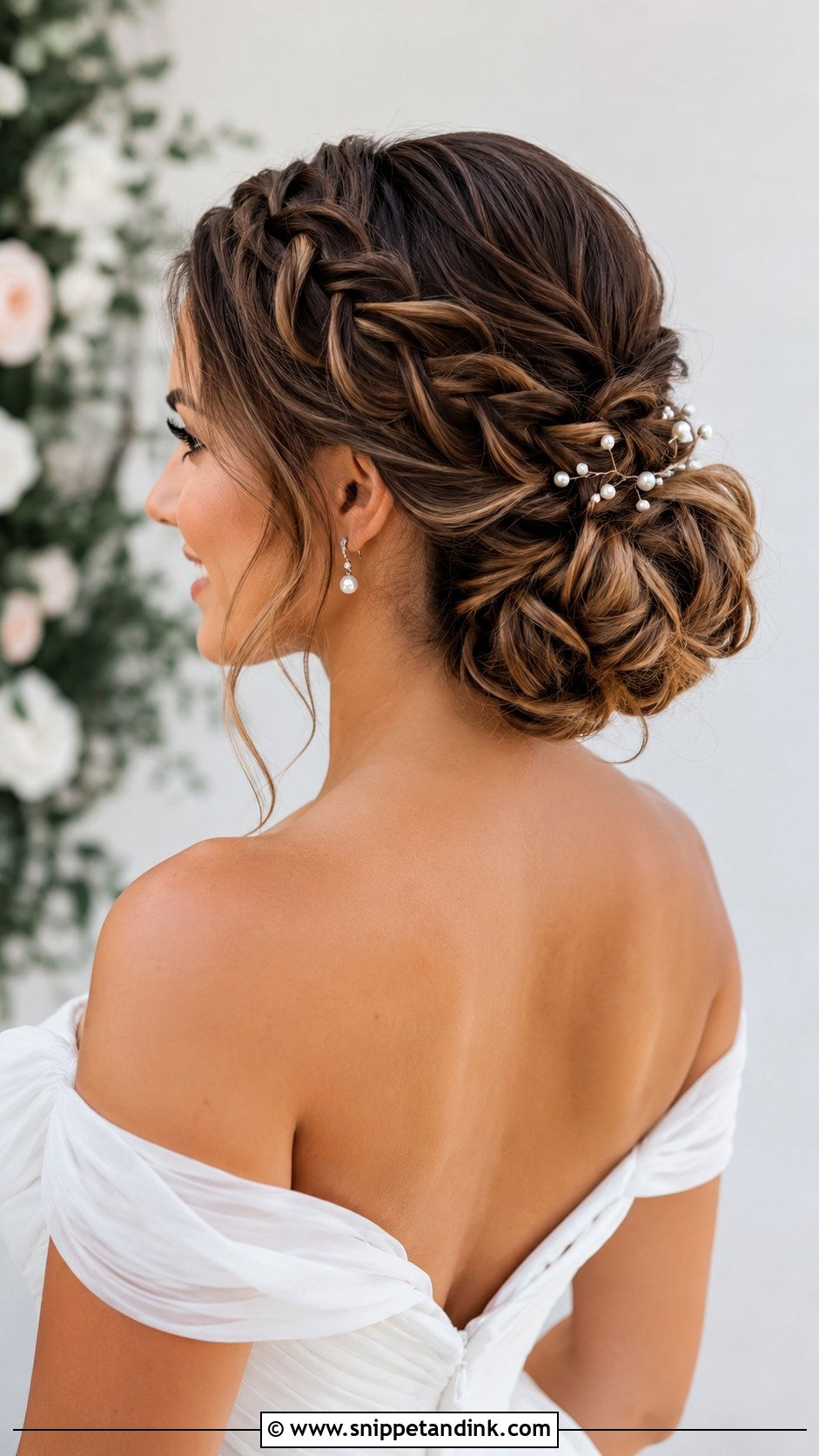
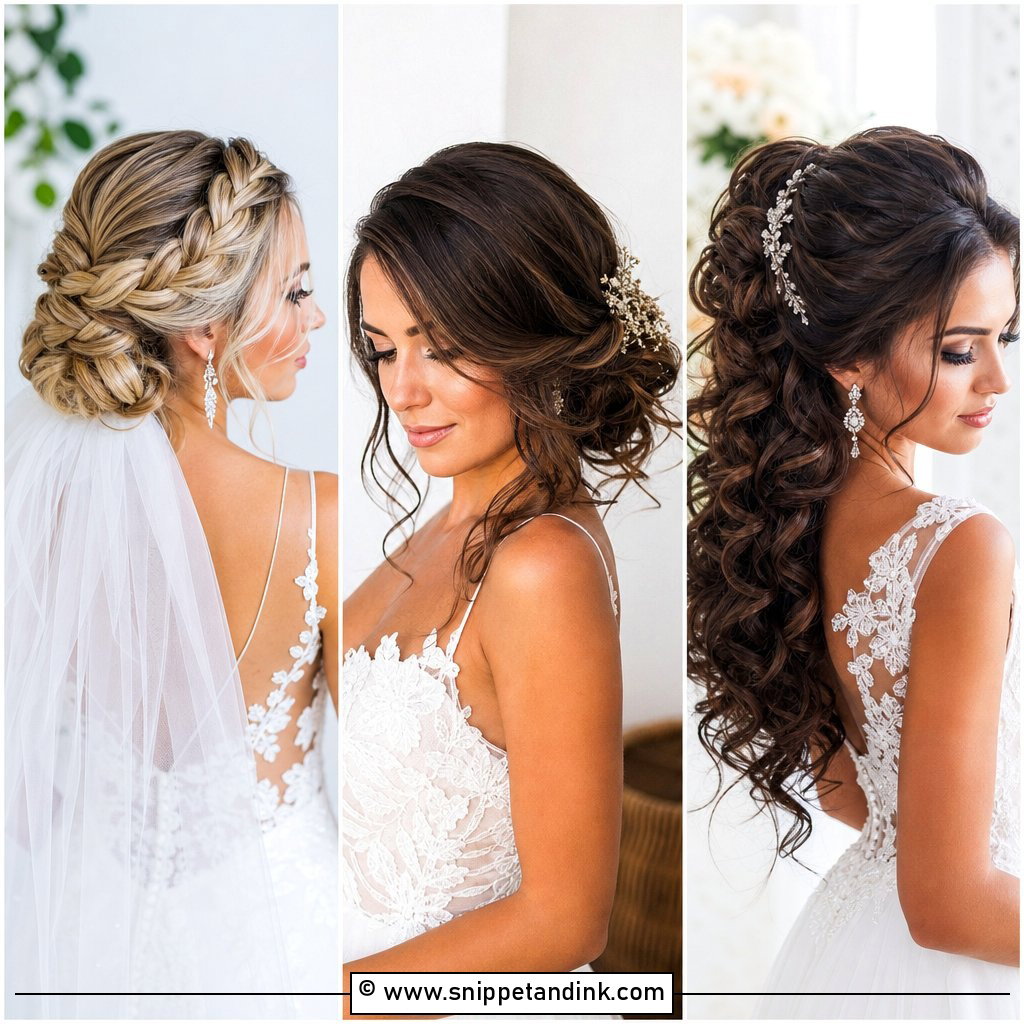
Braids solve one of long hair’s problems: too much length to pin neatly. In a braided low bun, the braid takes up that length, then wraps and folds into the bun so the shape looks detailed from the back and the side. A side braid, a crown braid or a small accent braid can feed into it. Highlighted and balayage hair shows every tone in the plait. On thick hair, the braid also gives me structure, because a plait holds its shape where a loose twist would spread. Pearl pins or tiny flowers sit well in the gaps.
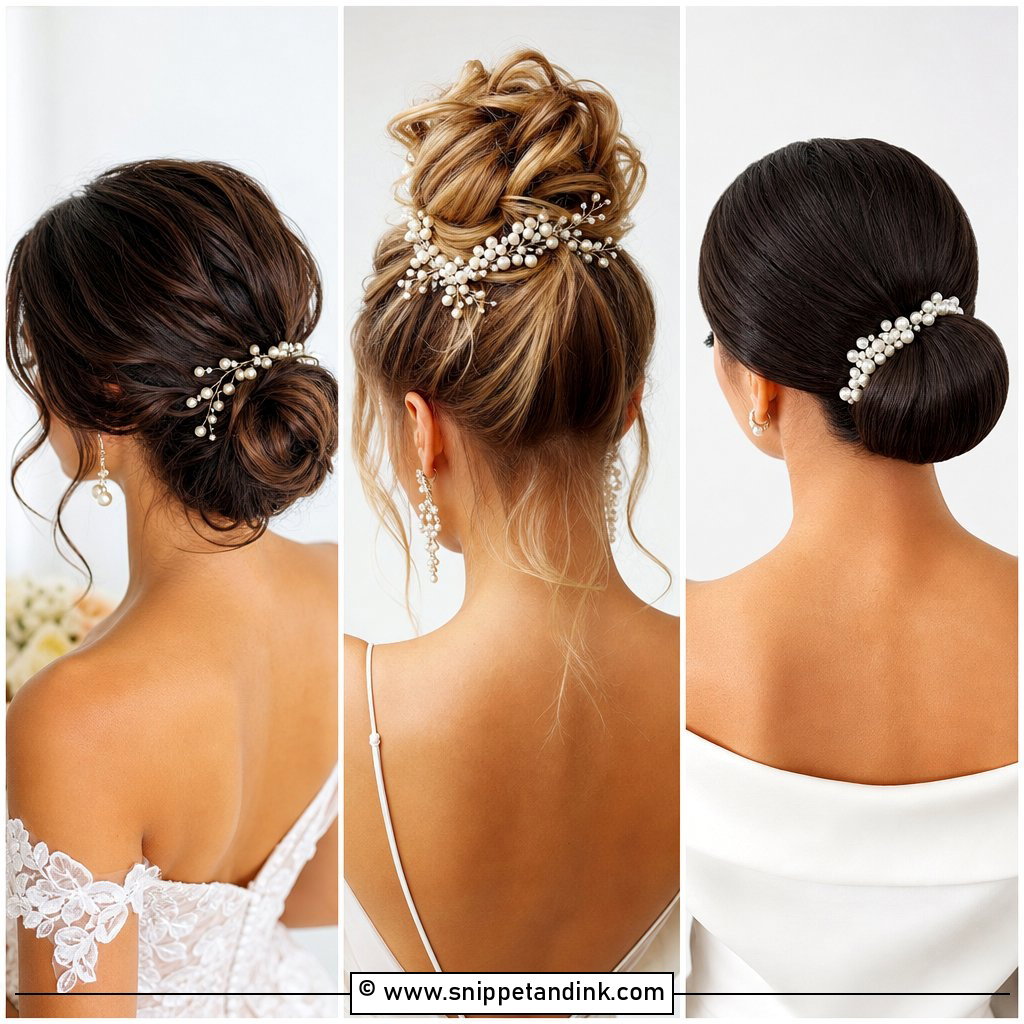
4. High Bun Wedding Updo
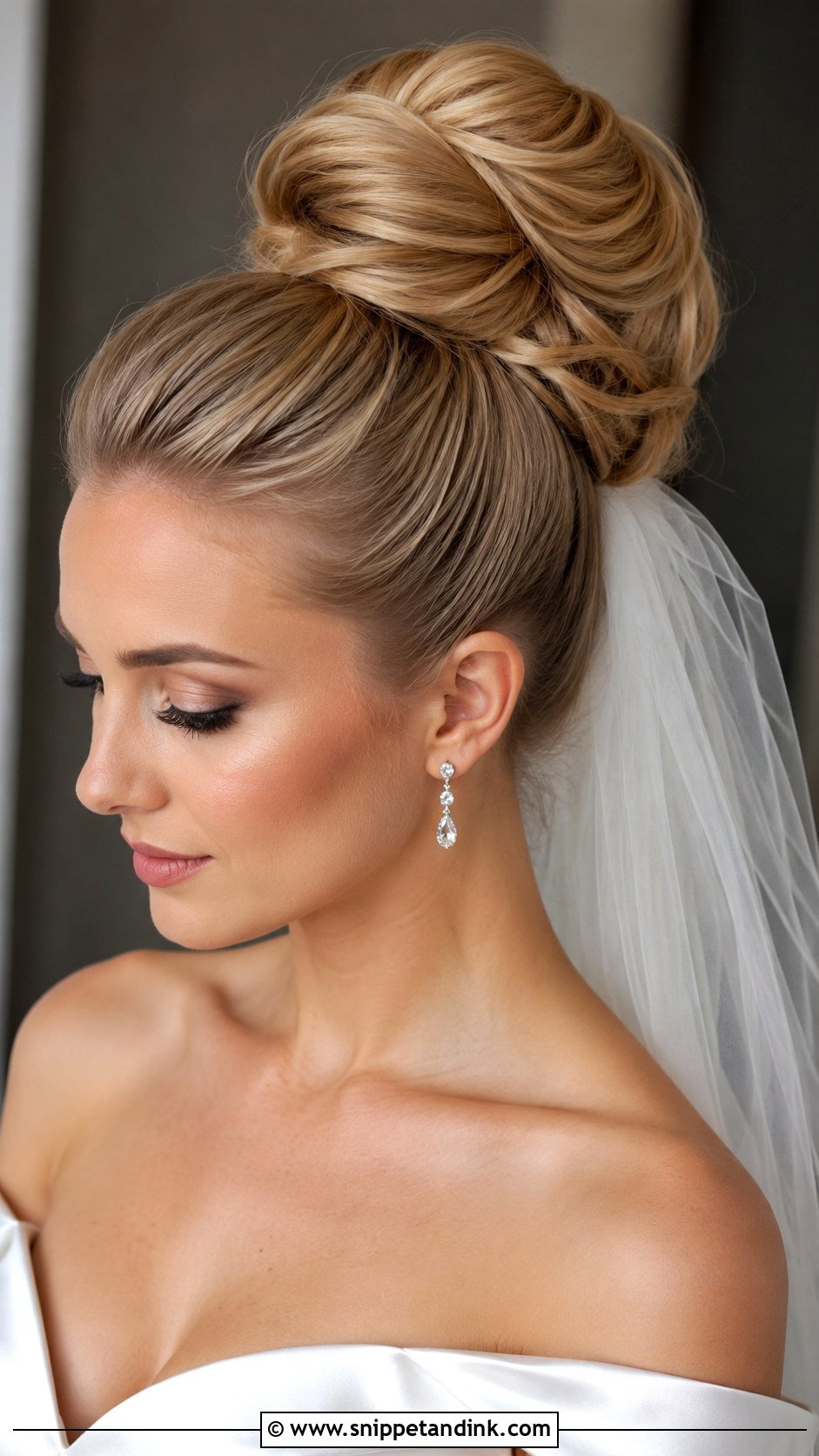
A high bun lifts the hair right off the shoulders and lengthens the neck, which suits halter gowns, high necklines and statement earrings. Placement is everything for comfort: I set it on the crown rather than tipped forward, because a bun angled over the forehead pulls on the hairline and starts to ache within a few hours. Long hair usually gives enough density to make the bun full without padding. A veil sits underneath it at the back, and a comb or a row of pearl pins can frame the base.
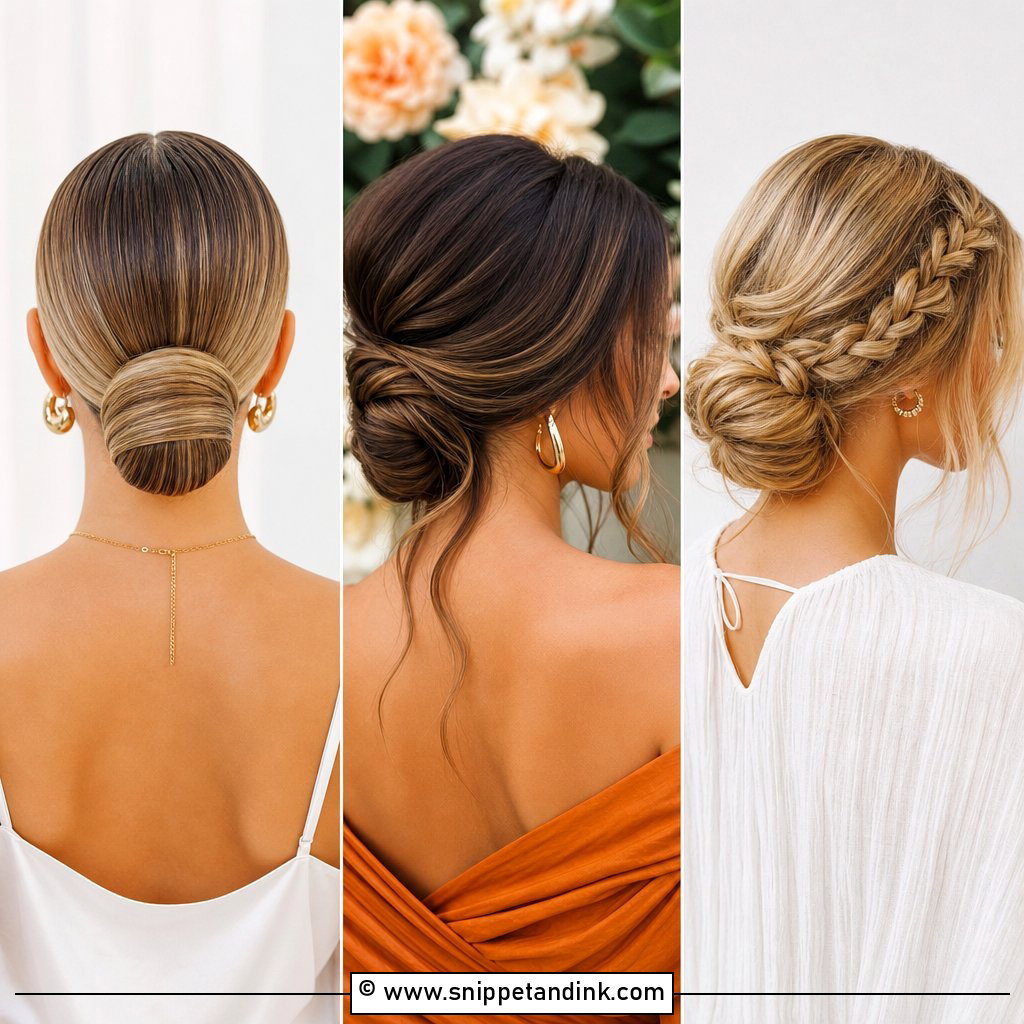
5. Sleek Bridal Bun For Long Hair
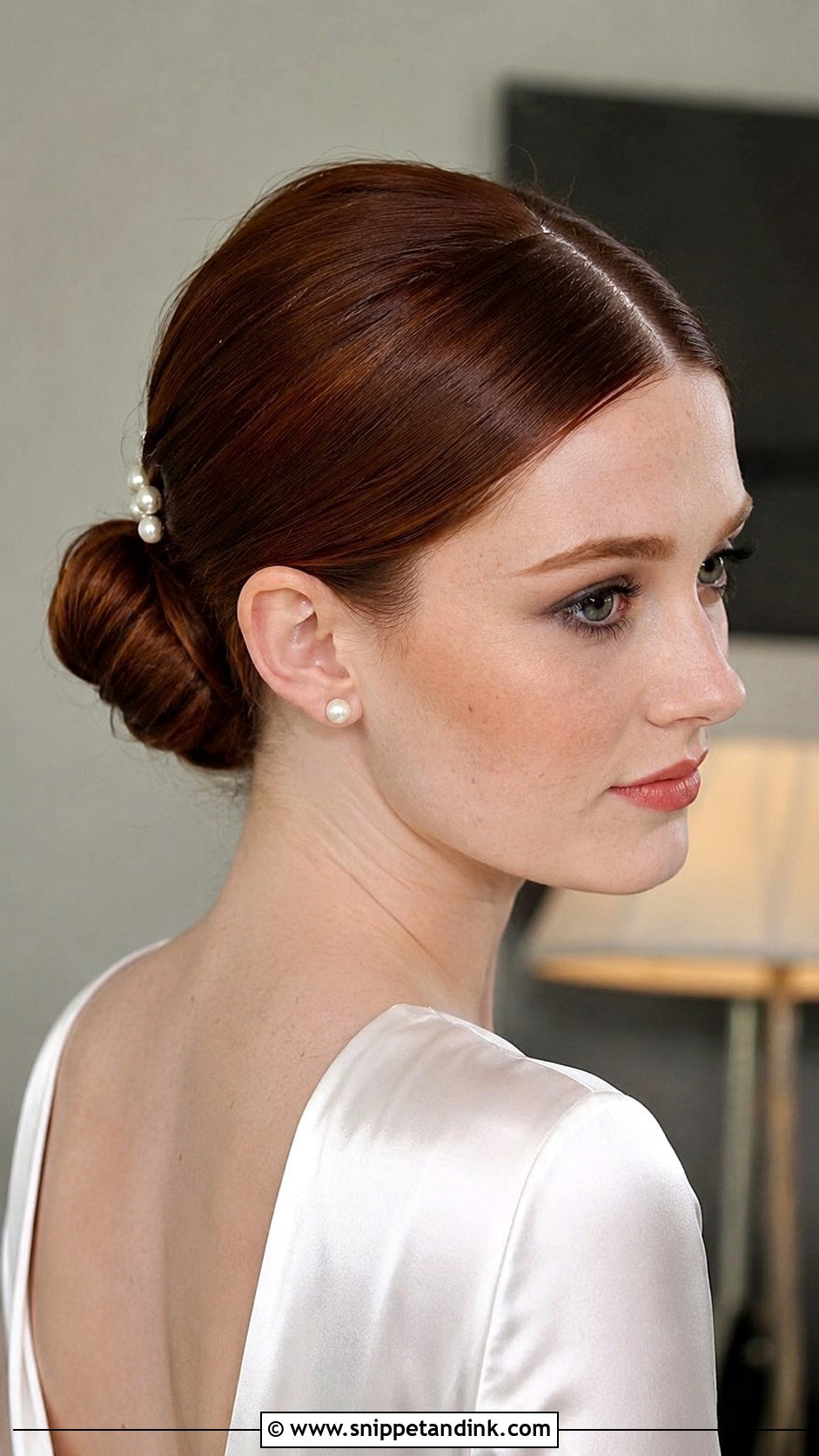
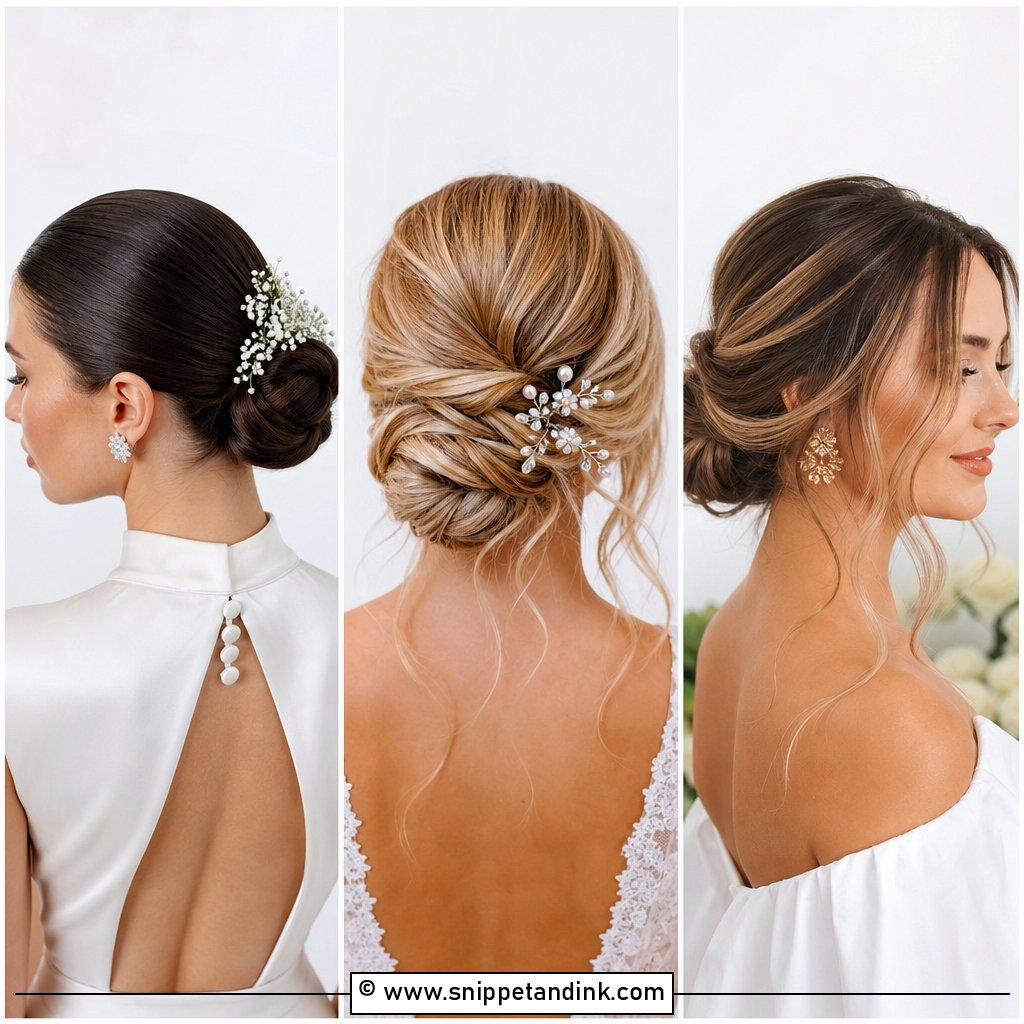
Clean and very refined, a sleek bun is the updo I’d suggest with satin dresses, architectural gowns and sharp makeup. I smooth the hair back with a centre part, side part or none, then wrap it at the nape or crown. Long hair has to be wrapped evenly or the bun turns lumpy on one side, so I often split it into two sections and wrap them in opposite directions. Nothing hides the face, which means every bump at the hairline shows; a small toothbrush and a firm gel are my best tools here. Glowing skin, soft earrings or a fine veil keep it from feeling severe.
6. Textured Wedding Updo For Long Hair
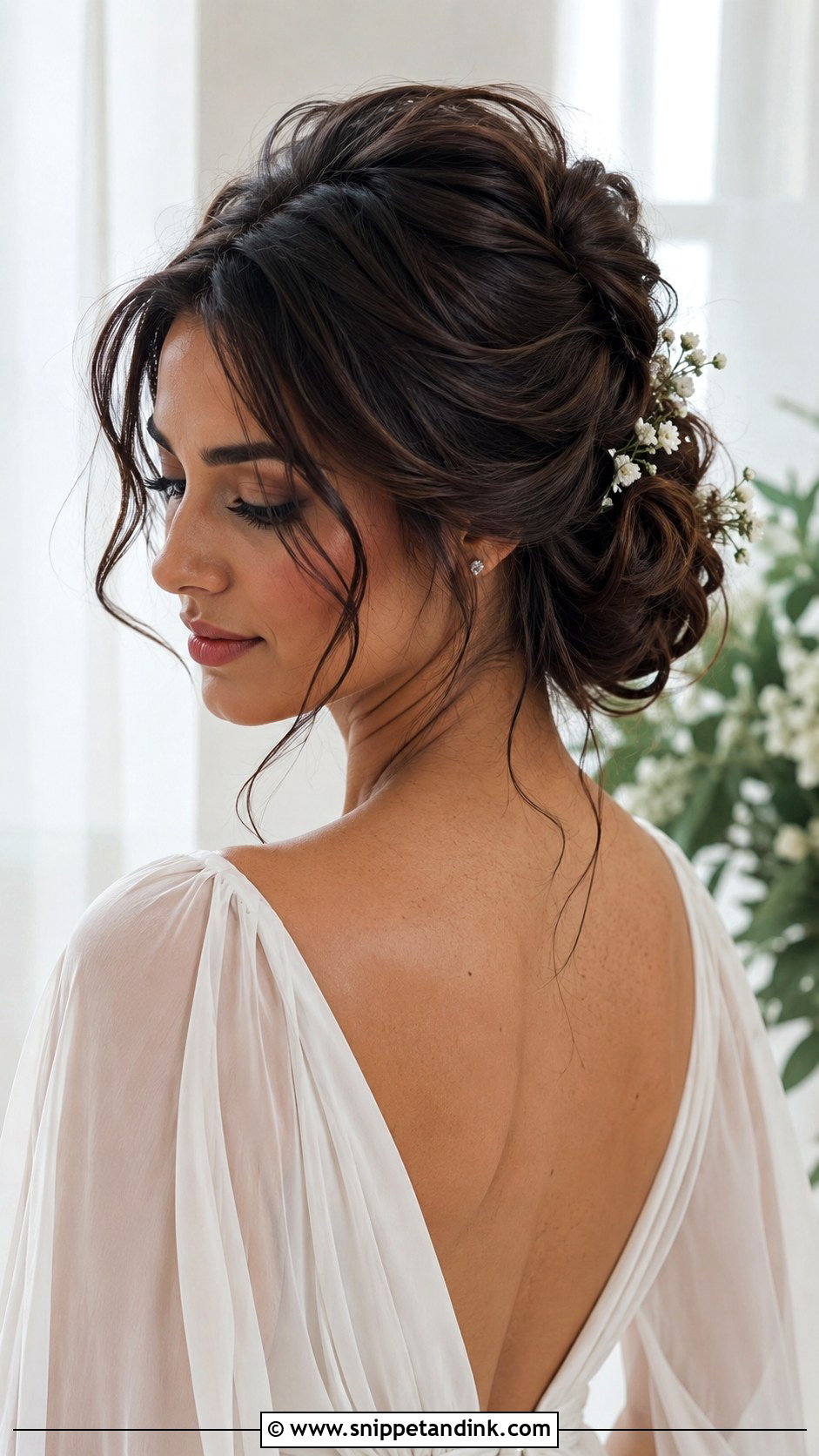
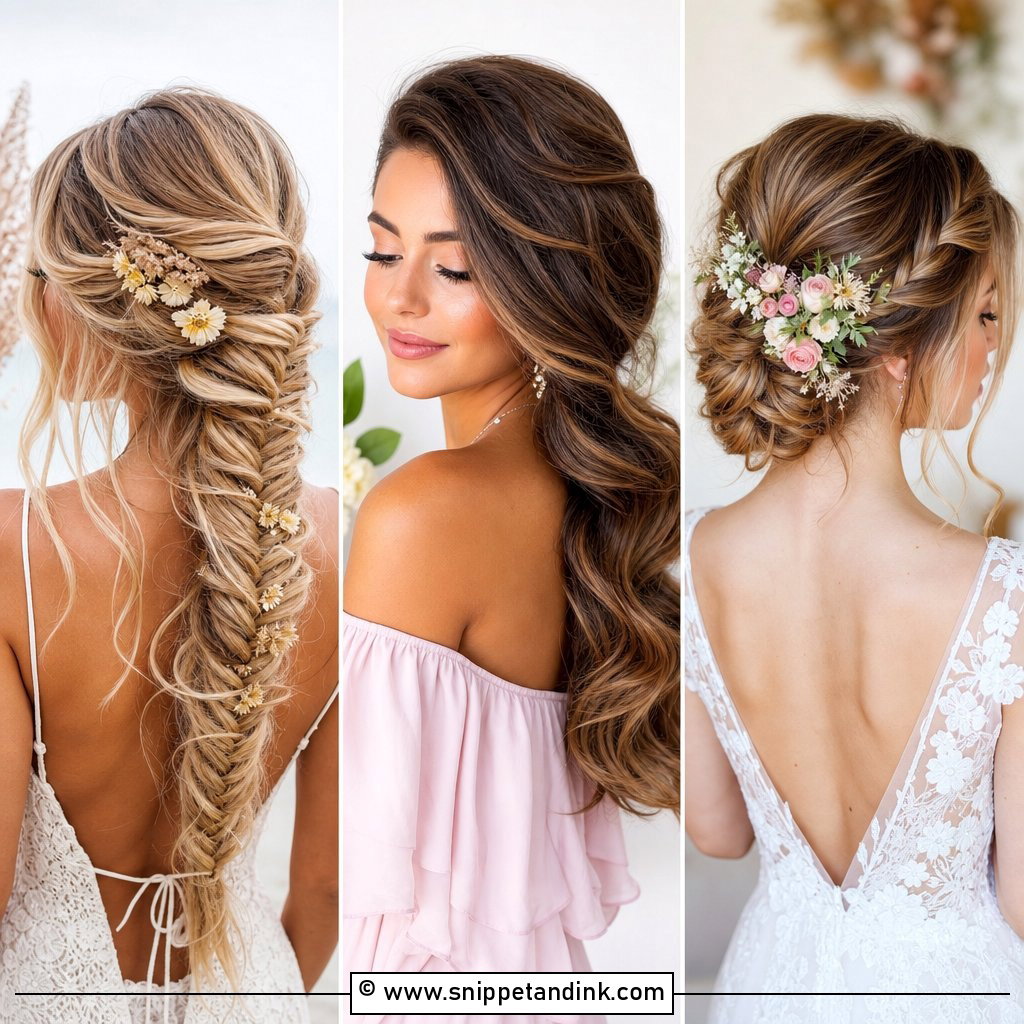
Texture is what gives an updo depth in photographs. Instead of pulling the hair tight, I curl it first, then pin sections in loose, layered loops through the crown, sides and bun. Each piece of long hair can be twisted and placed on its own, which is how I control where the volume sits. This one suits outdoor weddings, boho gowns and soft glam makeup. Second-day hair takes this kind of styling better than freshly washed hair, so I usually ask brides not to wash that morning.
7. Curly Wedding Updo For Long Hair
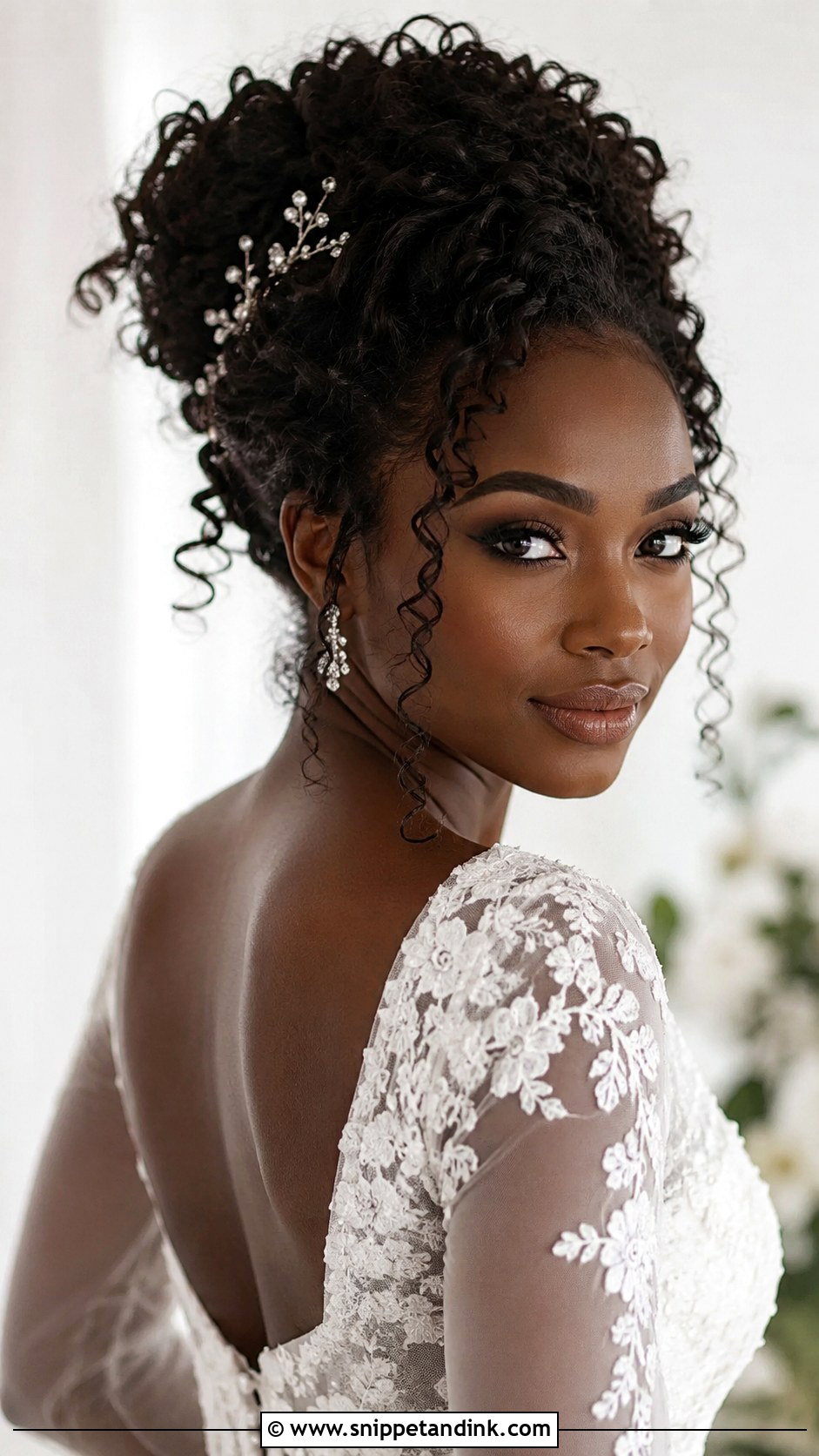
Natural or set curls should still look like curls once they’re up. I pin them by their base, not through the middle of the curl, so each one keeps its shape instead of being flattened under a pin. Leave a few tendrils at the temples or the nape. Coily and curly hair holds pins well because the texture grips, but brushing dry curls into an updo creates frizz that no product will undo. Curl-friendly cream plus strong, flexible pins keep the bounce through photos, hugs and dancing.
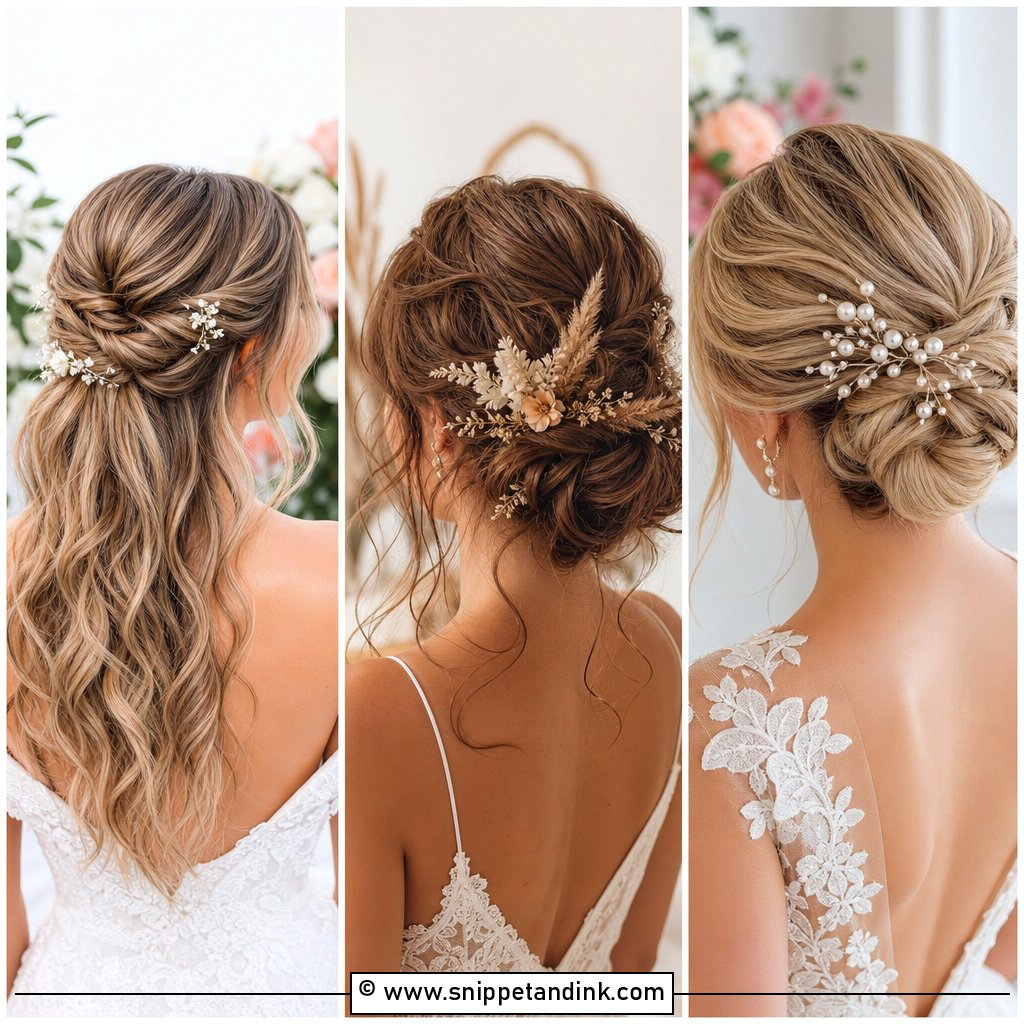
8. Half Braided Wedding Updo For Long Hair
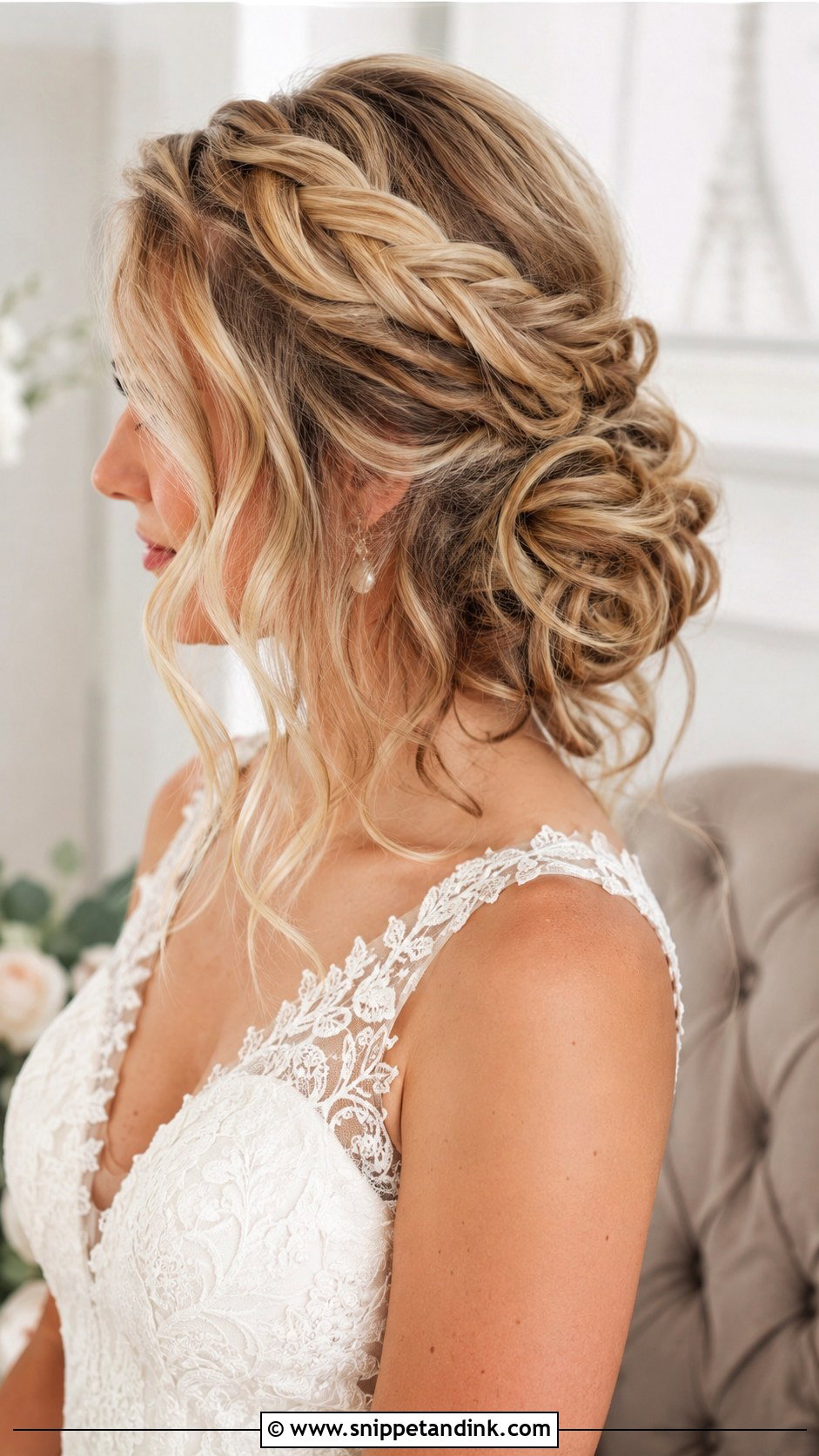
A braided section running into a pinned bun gives you the security of an updo with visible detail. The braid usually starts at the crown or one side and blends into the bun, loose and soft for a boho dress, tighter for a polished gown. I keep the braid to one area so it adds interest without taking over the whole head. Long hair gives the plait enough length to look full. Small flowers, pearl accents and a couple of soft curls by the face finish it.
9. Twisted Low Bun Wedding Updo
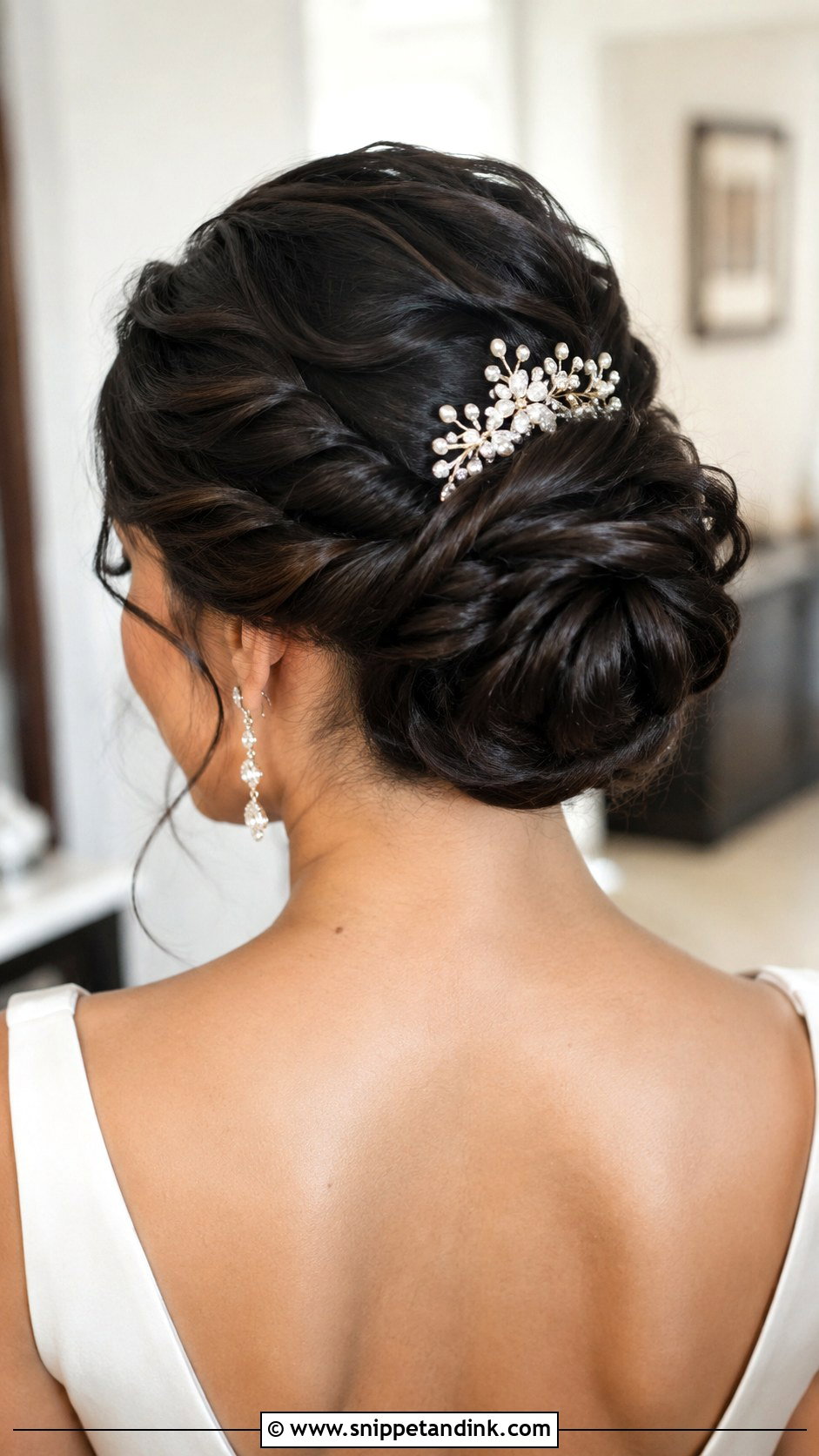
Twists are quicker than braids and softer to look at. I take sections from the sides and back, twist each one away from the face and wrap it into a low bun, so the lines curve around the head. Close-up photos pick up those curves from the side. Dimensional colour is a bonus, since the twists catch light in different places. I keep the crown slightly lifted so a full bun doesn’t make the head look flat. Veils, combs and small pins all sit in it without crowding.
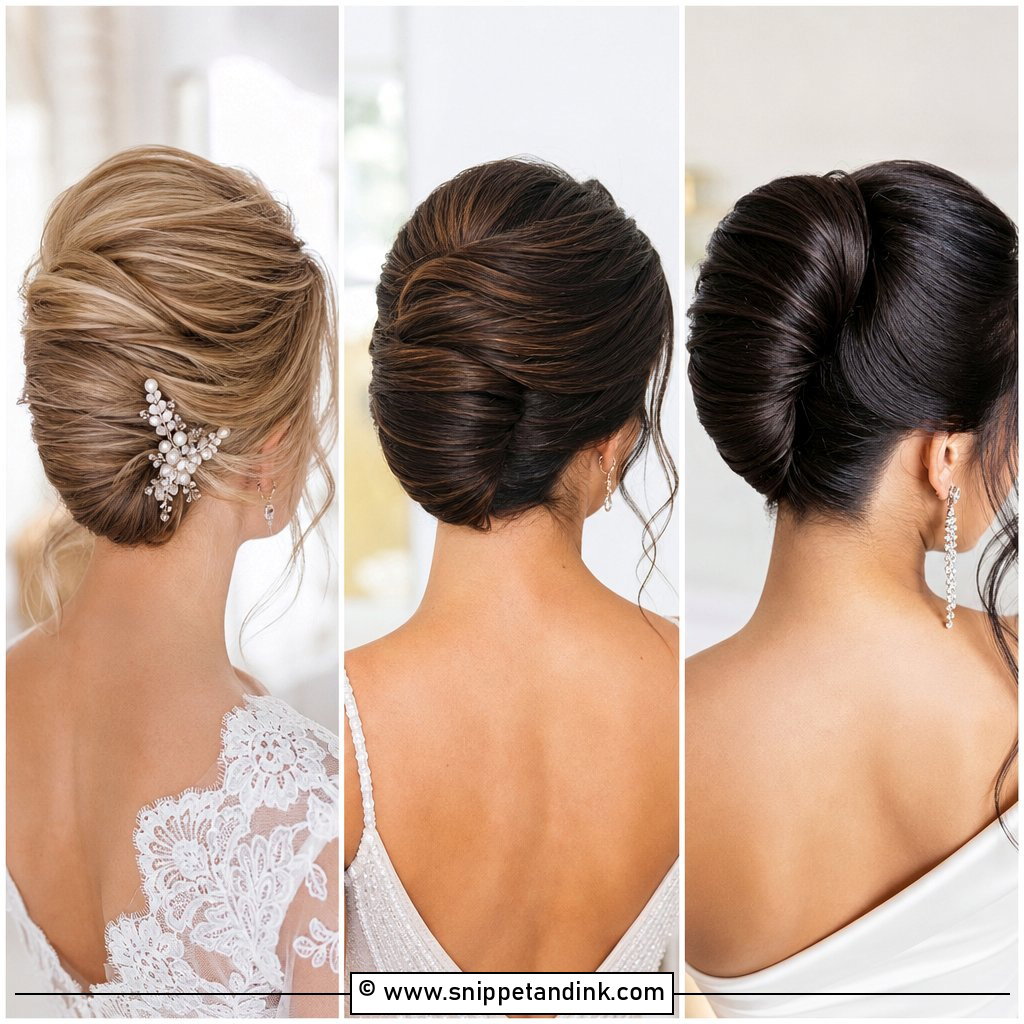
10. French Twist Wedding Updo
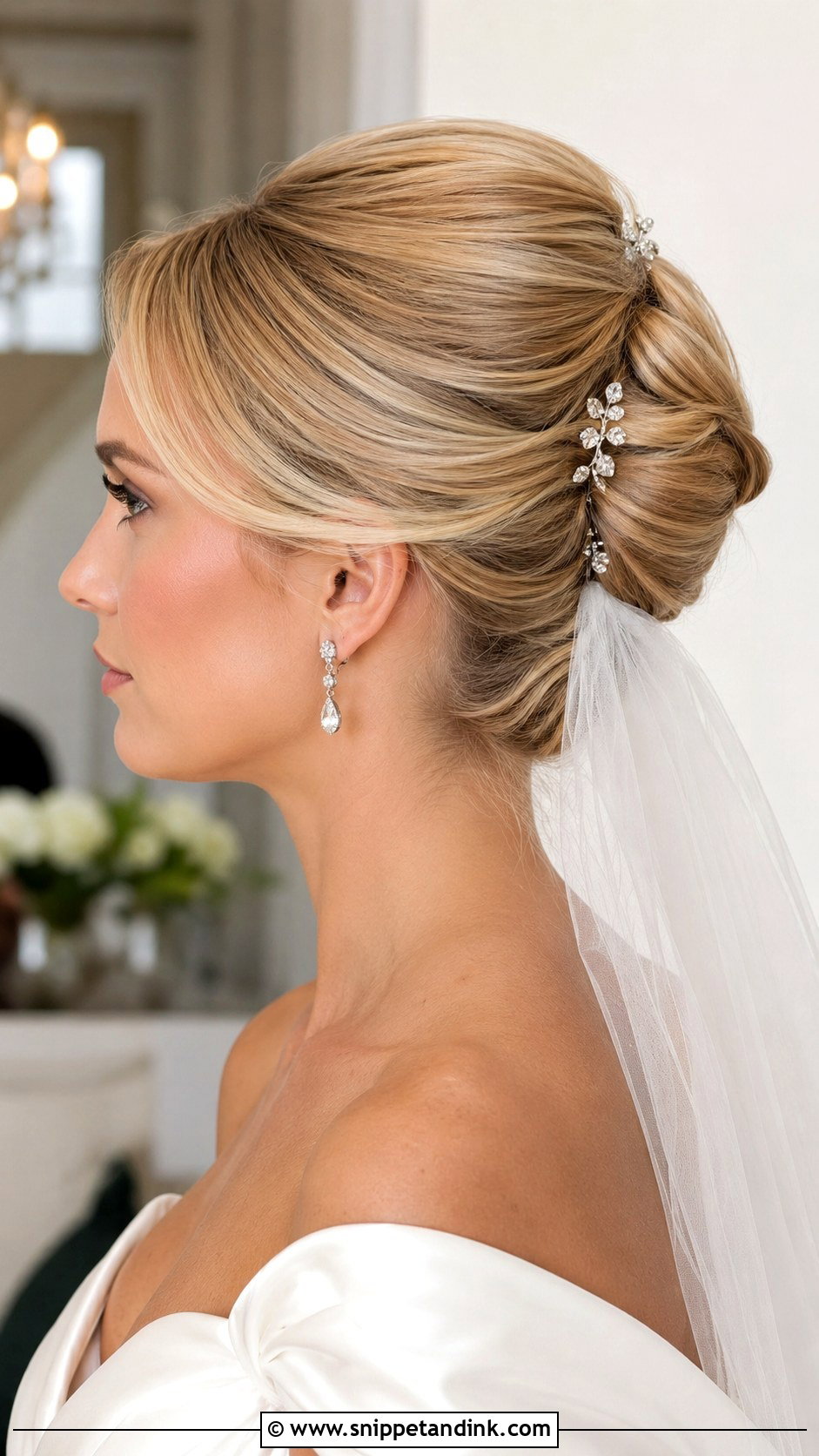
A French twist is a fold, not a bun. Long hair is swept to one side, folded upward into a smooth vertical roll and pinned along the seam, which makes it one of the most secure updos I know. A soft front wave or a side part makes it romantic; a smoother finish makes it modern. Very long, thick hair can make the roll bulky, so I sometimes tuck the ends into a small bun hidden inside. Elegant gowns, long veils and simple jewelry suit it, especially at formal venues.
11. Side Bun Wedding Updo
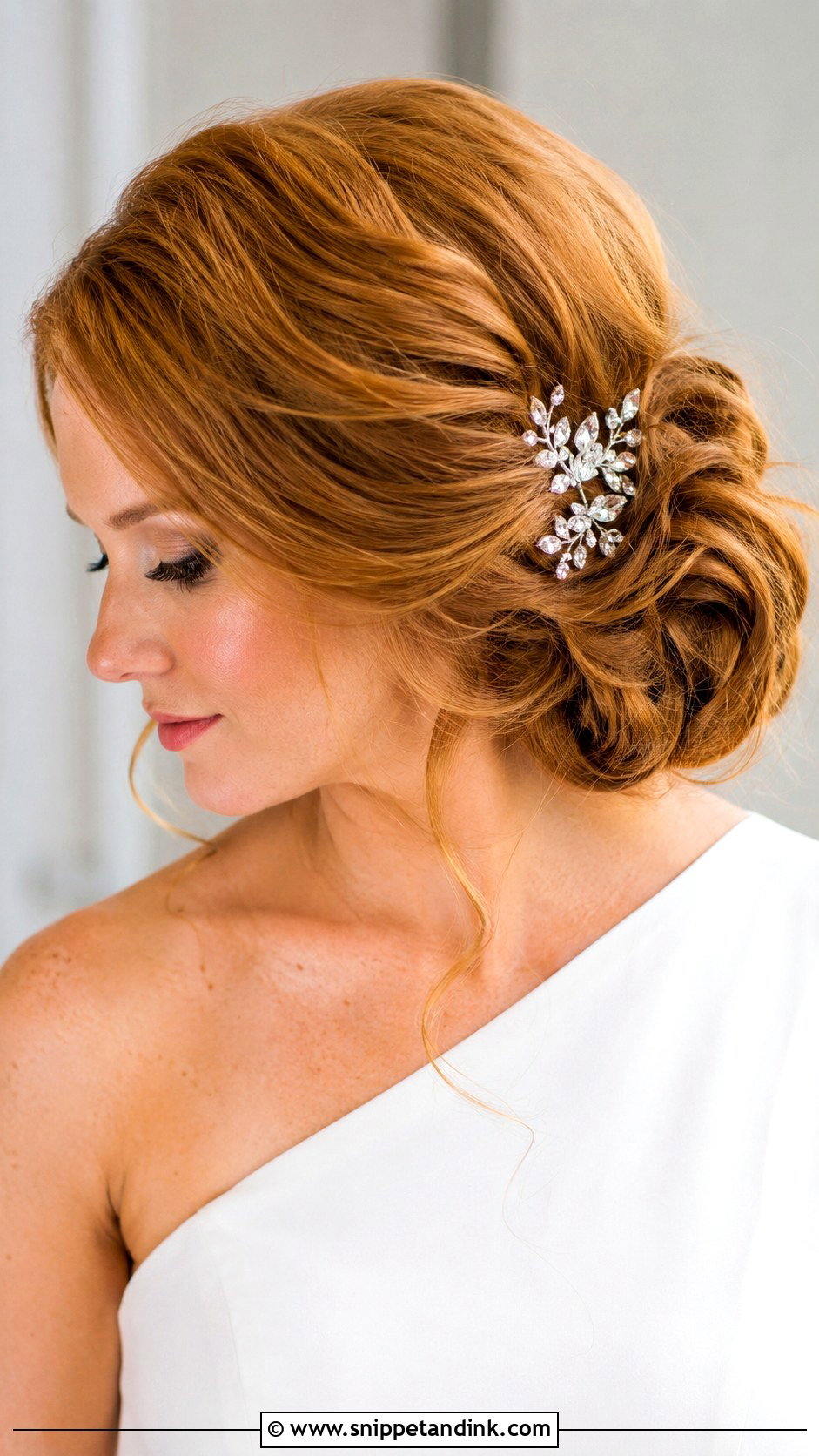
Placed slightly off-centre near the side of the neck, a side bun creates a soft angle along the jaw and shoulder. I pair it with one-shoulder gowns, asymmetrical necklines and dresses with a dramatic back, putting the bun on the side opposite the strap. Curling first makes the bun fuller and gives it texture. A side part, loose tendrils or a decorative comb complete it. Think about which side your partner stands on at the ceremony, because that is the side guests photograph most.
12. Loose Romantic Wedding Updo
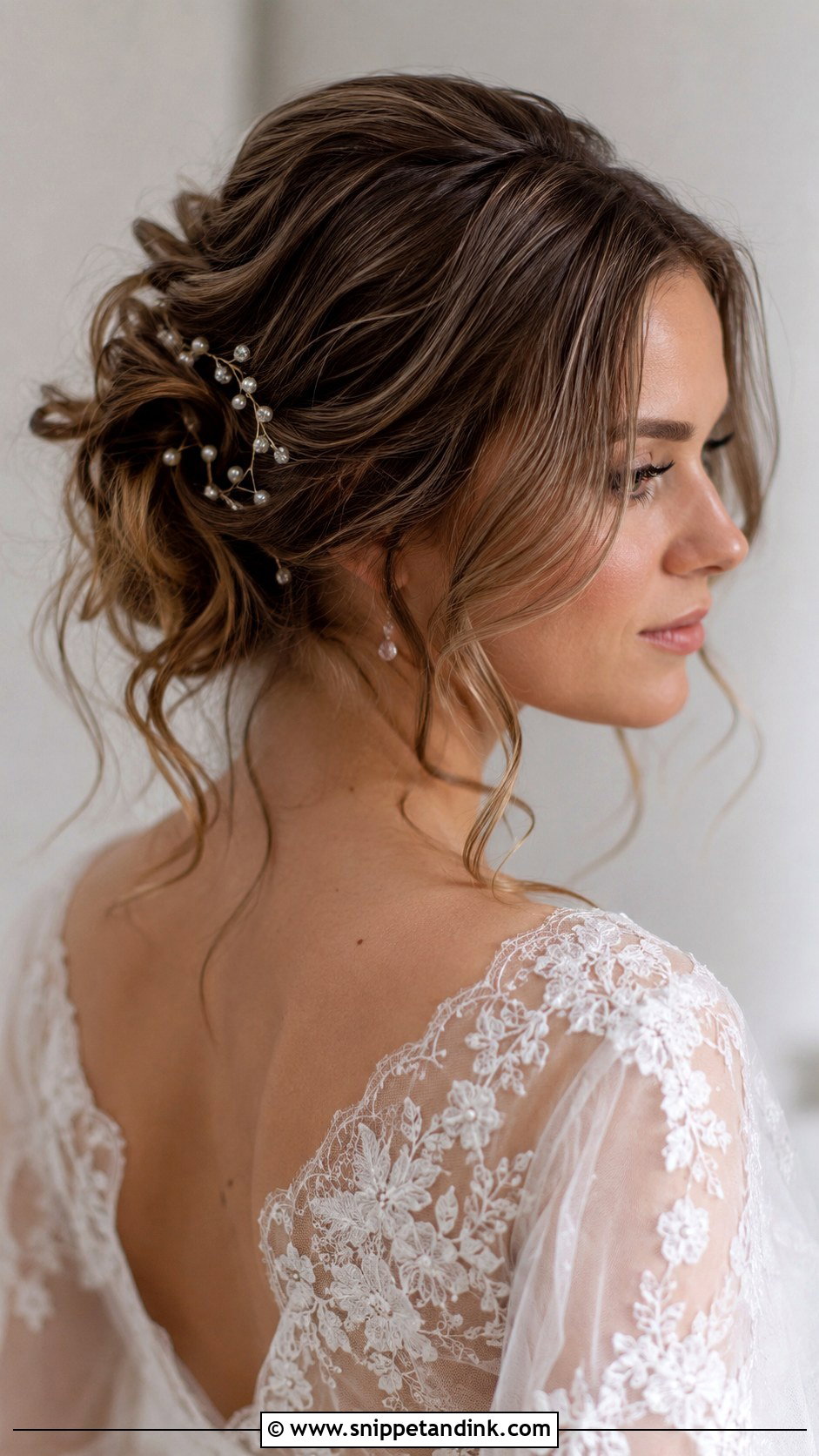
Loose, airy updos are the most deceptive. Long hair is curled, lightly teased at the base and pinned in sections so it looks soft, but underneath there’s a firm framework of crossed pins doing the real work. It suits lace, tulle and outdoor ceremonies. A few escaped pieces look intentional, which makes it forgiving when hugs pull a strand loose. Ask your stylist to show you where the structural pins are, so you know not to pull on them.
13. Pearl Wedding Updo For Long Hair
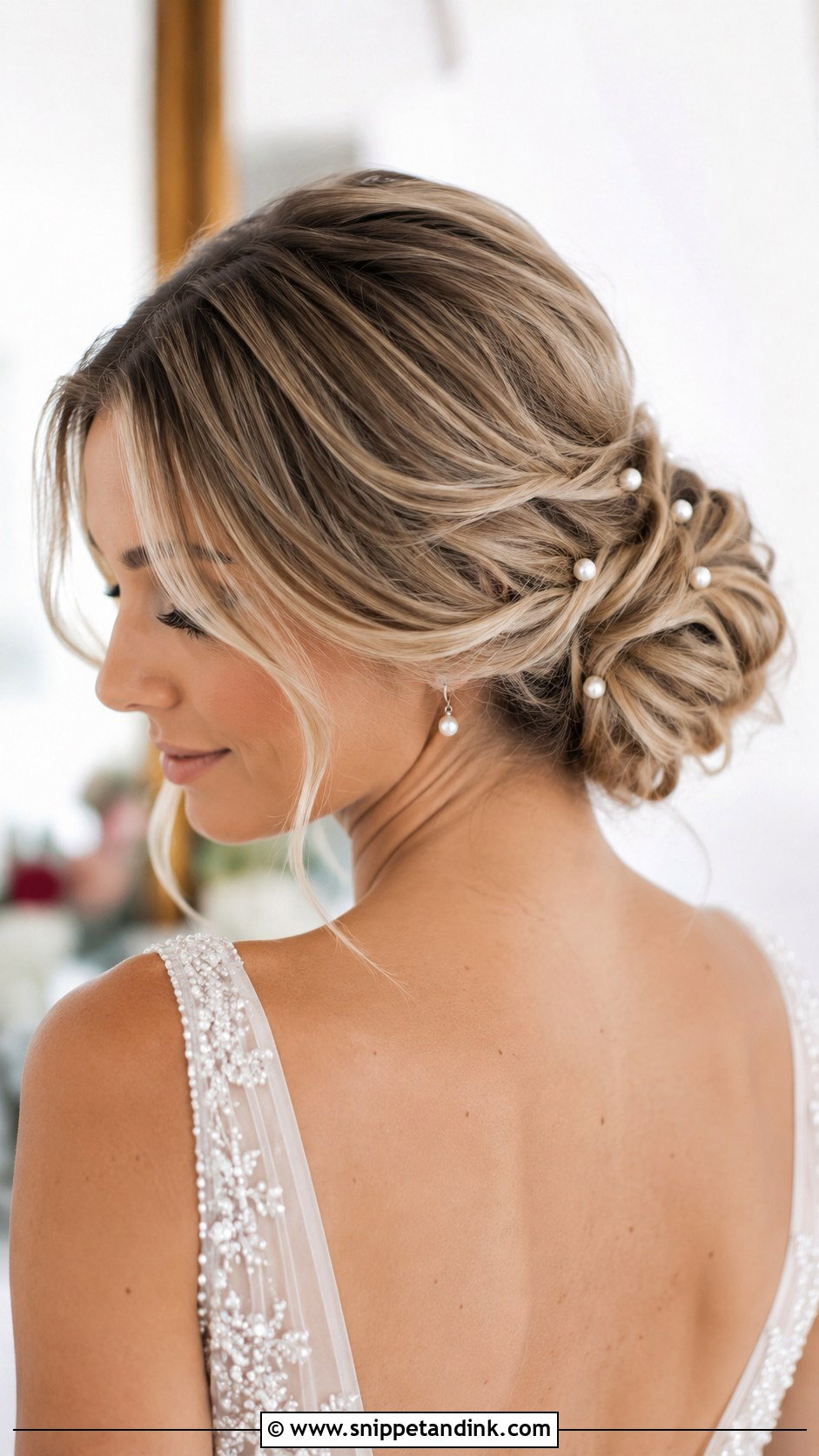
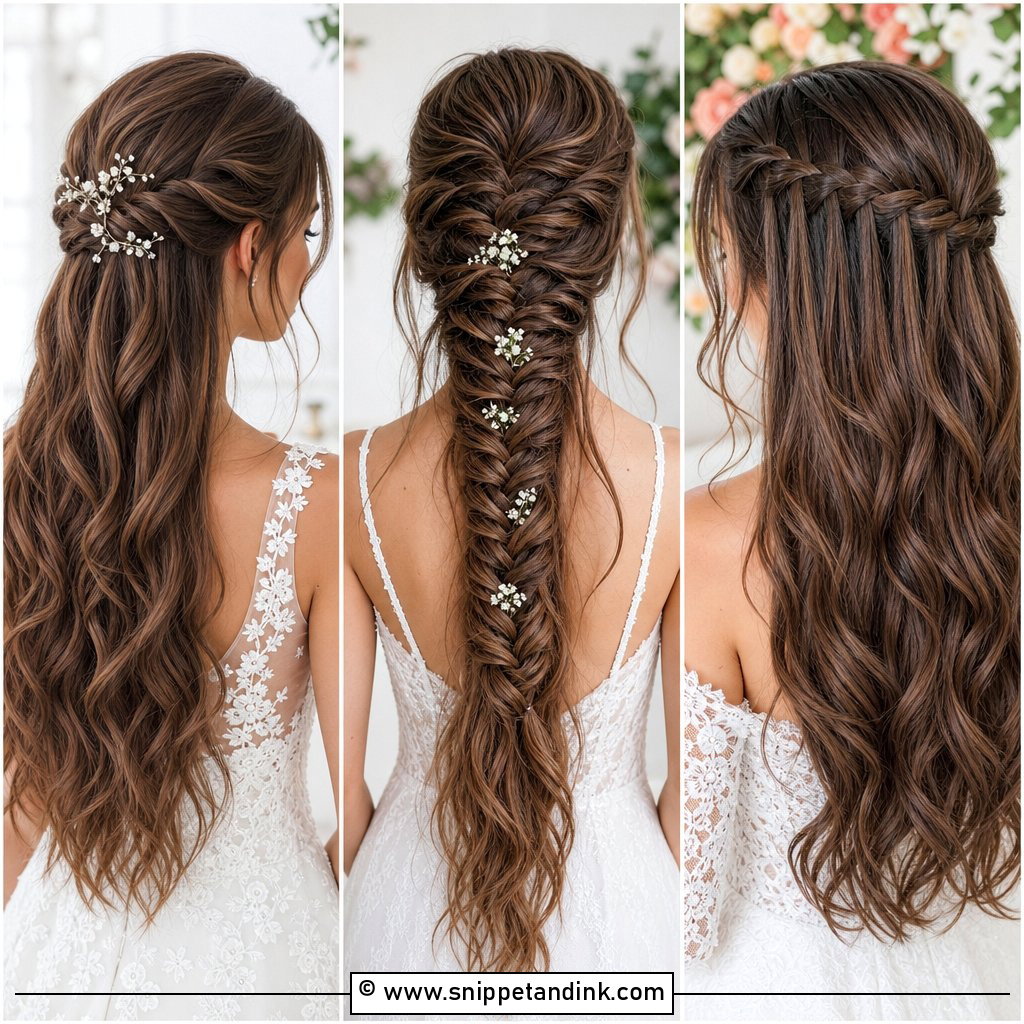
Pearl pins give bridal detail without the weight of a headpiece. I scatter them through a bun, place them along a braid or tuck them around the crown. Pins with a spiral or U-shaped stem hold far better in long, heavy hair than straight ones, which slide out by evening. Tiny pearls read subtle; larger ones read more like jewelry, so match their size to the dress. Low buns, chignons, braided updos and textured styles all take them well, and they catch the light nicely outdoors.
14. Flower Wedding Updo For Long Hair
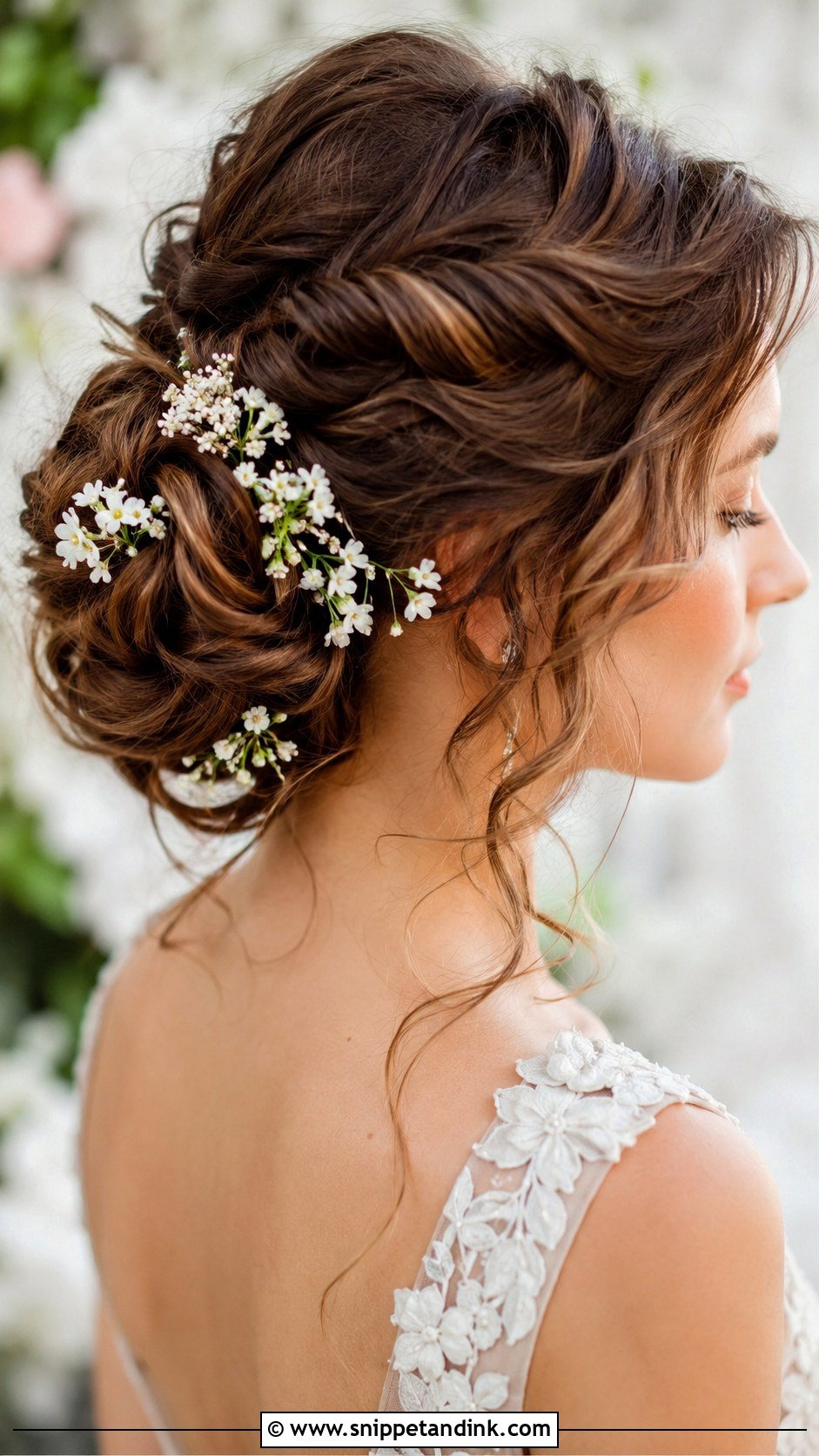
Flowers in an updo stay put best when they go into pinned sections, not loose strands. Small blooms can be tucked into a low bun, a braided crown, a twisted style or loose texture. Fresh flowers look natural but wilt in heat; silk ones are easier to control and last all night. I’d ask your florist for sturdy, conditioned stems and keep their size modest so the shape of the updo still reads. Spring and garden weddings suit this best, and matching the bouquet ties it together.
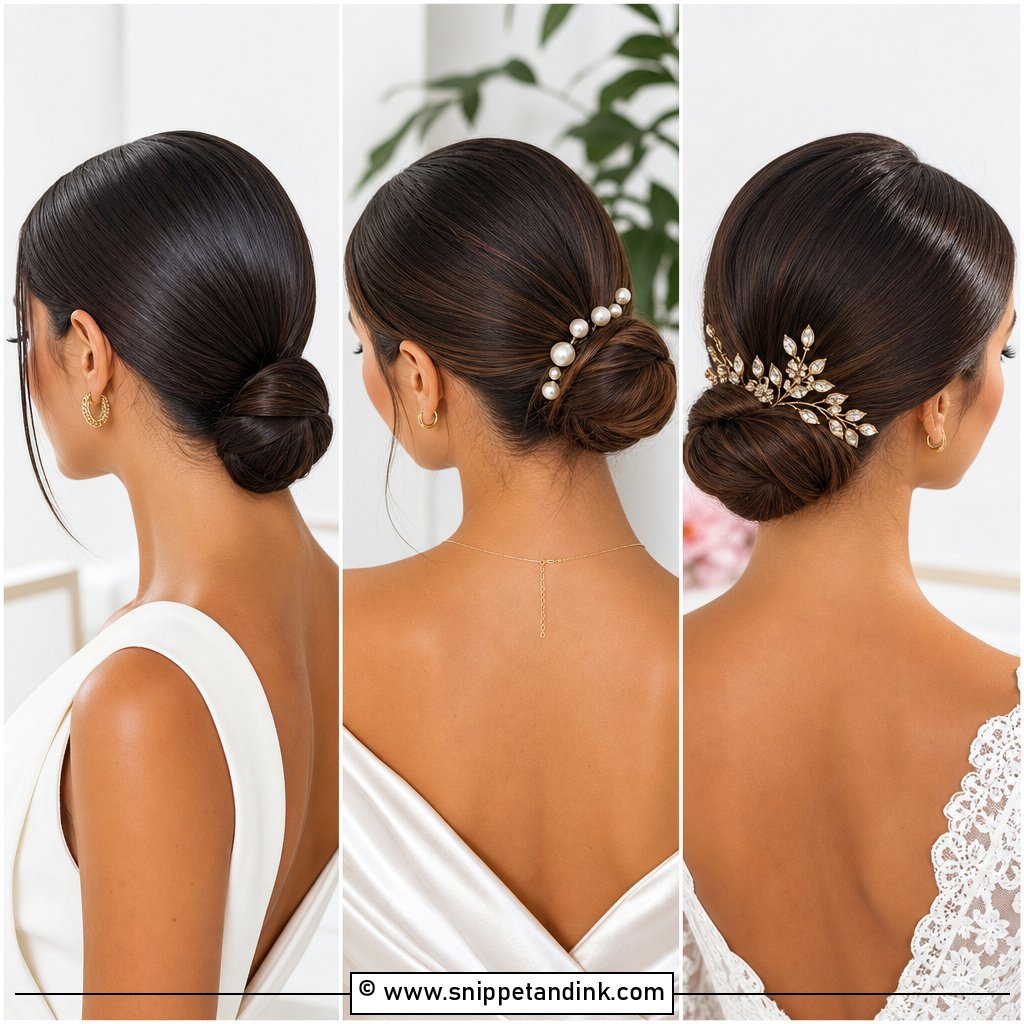
15. Boho Wedding Updo For Long Hair
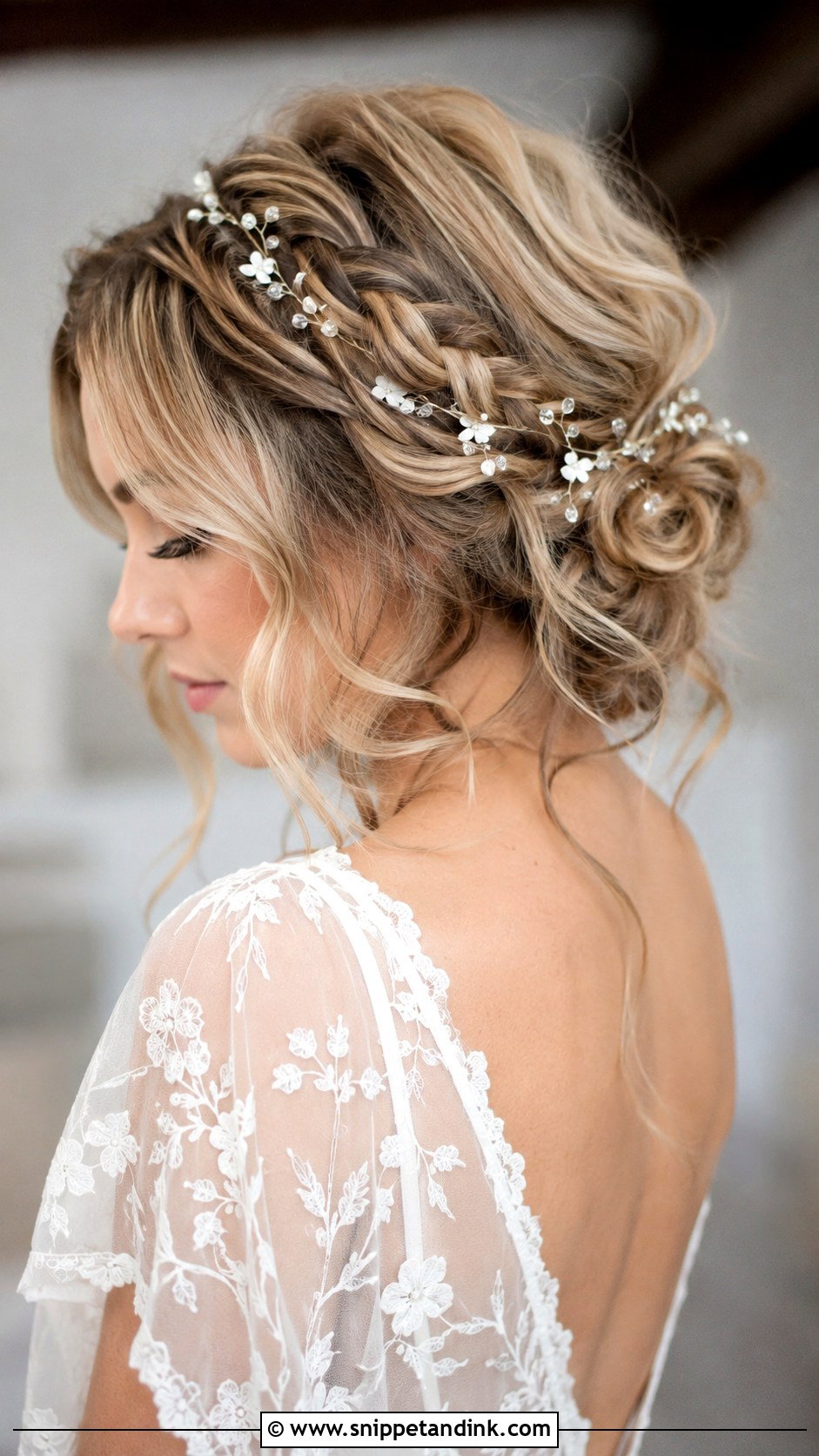
Boho updos combine loose waves, soft braids, twisted sections and a low pinned bun into one airy shape. The finish should look relaxed rather than unfinished, so I add a little volume at the crown and leave gentle pieces by the face. It suits outdoor, beach and barn weddings with flowing dresses. Long hair with highlights or soft balayage shows off the texture especially well. Add tiny flowers, a vine accessory or pearl pins, and keep any accessory light, because boho texture holds less weight than a tight bun.
16. Vintage Wedding Updo For Long Hair
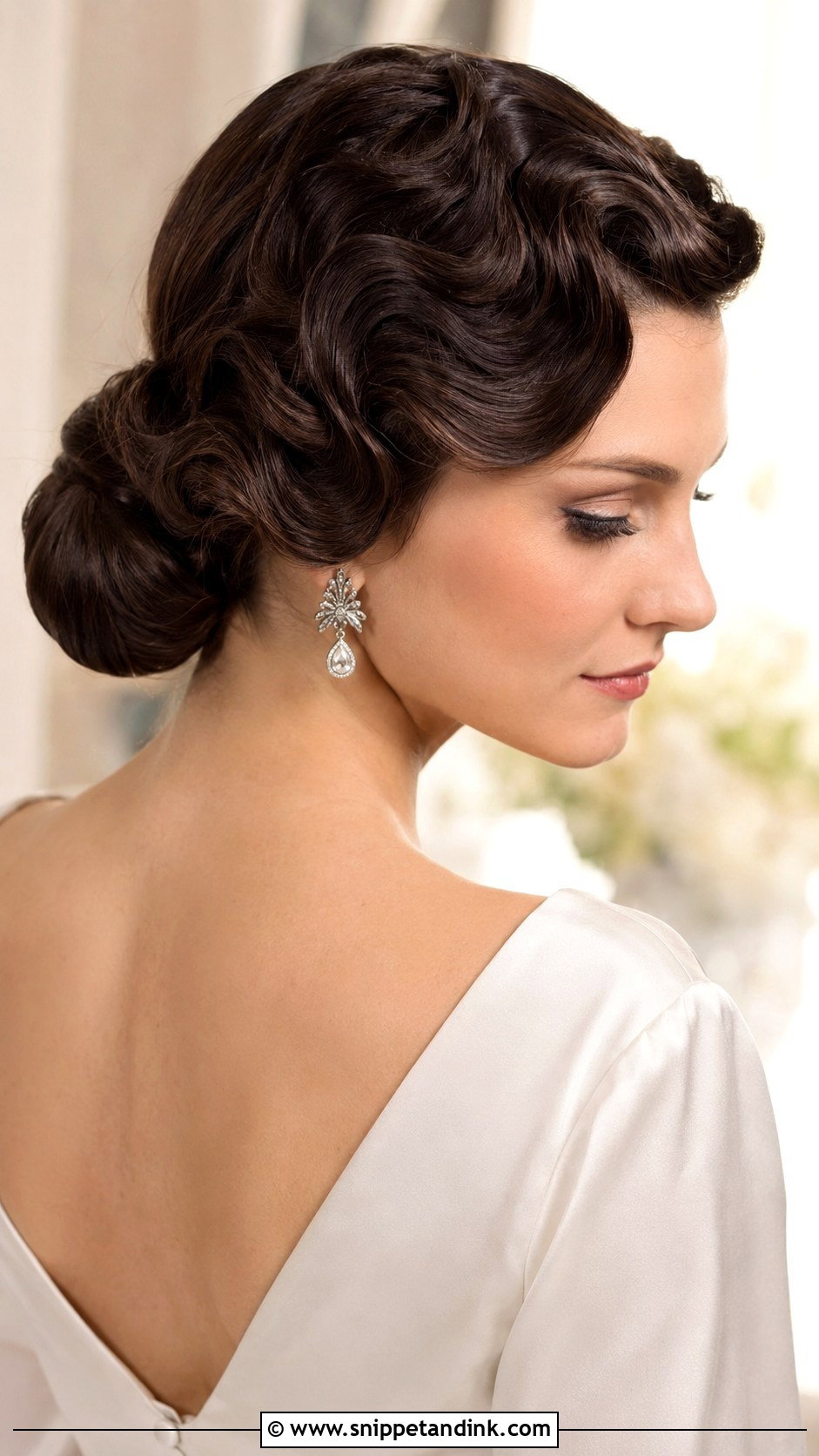
Vintage glamour is built with rolls and sculpted waves: a retro side part, a glossy wave across the forehead, then rolled sections or a low bun at the back. Long hair gives me enough length to roll and still keep the style secure. It goes with satin gowns, lace sleeves, birdcage veils and red or rose lipstick. The finish should be smooth but still move. Fine hair often needs a little backcombing inside each roll so it keeps its shape. It’s a strong choice if old-Hollywood photos are what you keep saving.
17. Crown Braid Wedding Updo
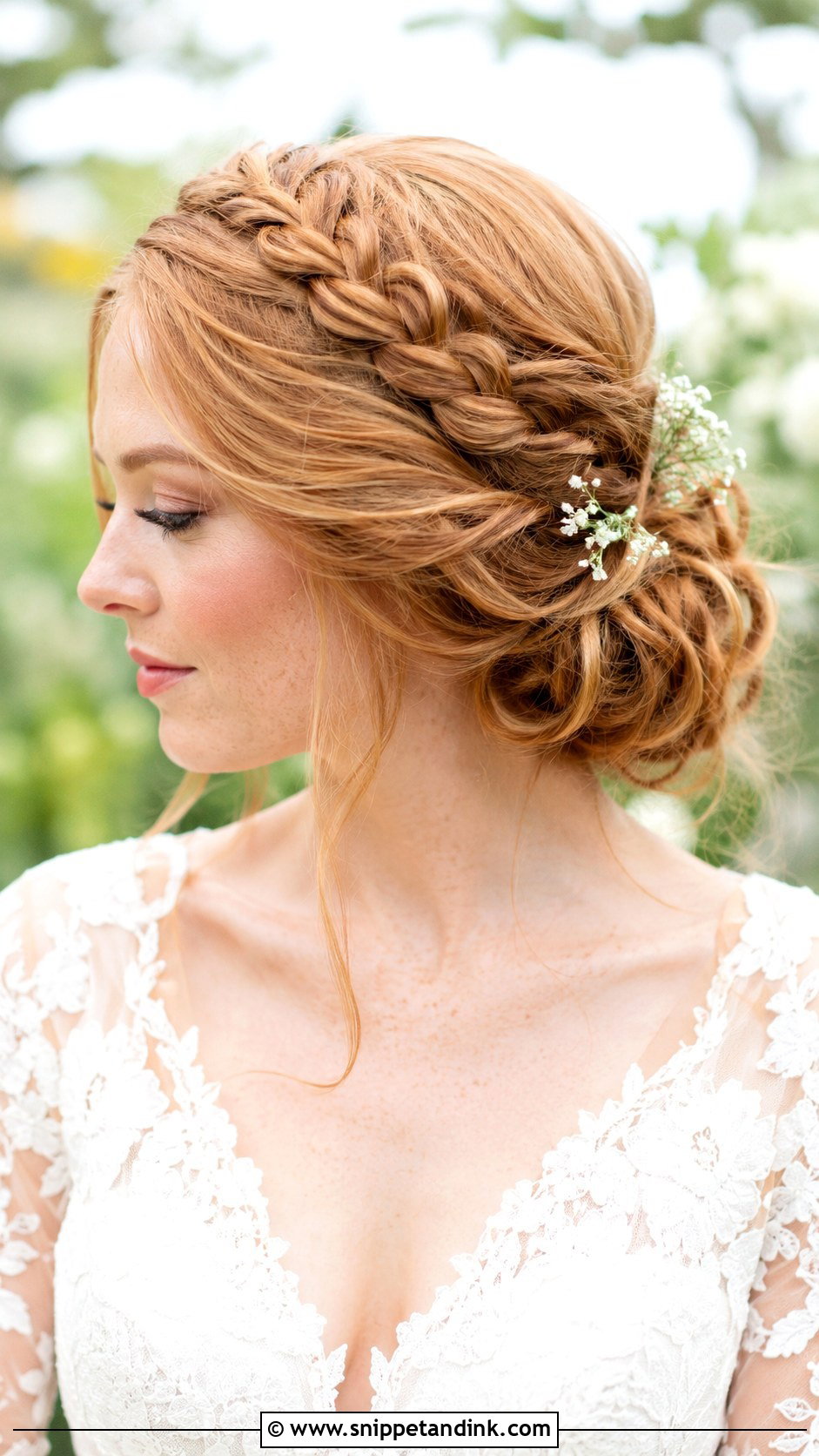
A crown braid wraps the hair around the head like a halo or sits lower at the back, then blends into a bun or tucked finish. Thick long hair suits it best; fine hair can look sparse once it’s stretched around the whole head, so I’ll add a clip-in piece if needed. Gently pulling out the edges of the plait softens it. The hair is fully away from the face, which makes it a good choice for hot outdoor ceremonies. Tiny pearls or small flowers finish it.
18. Low Bun With Face Framing Pieces
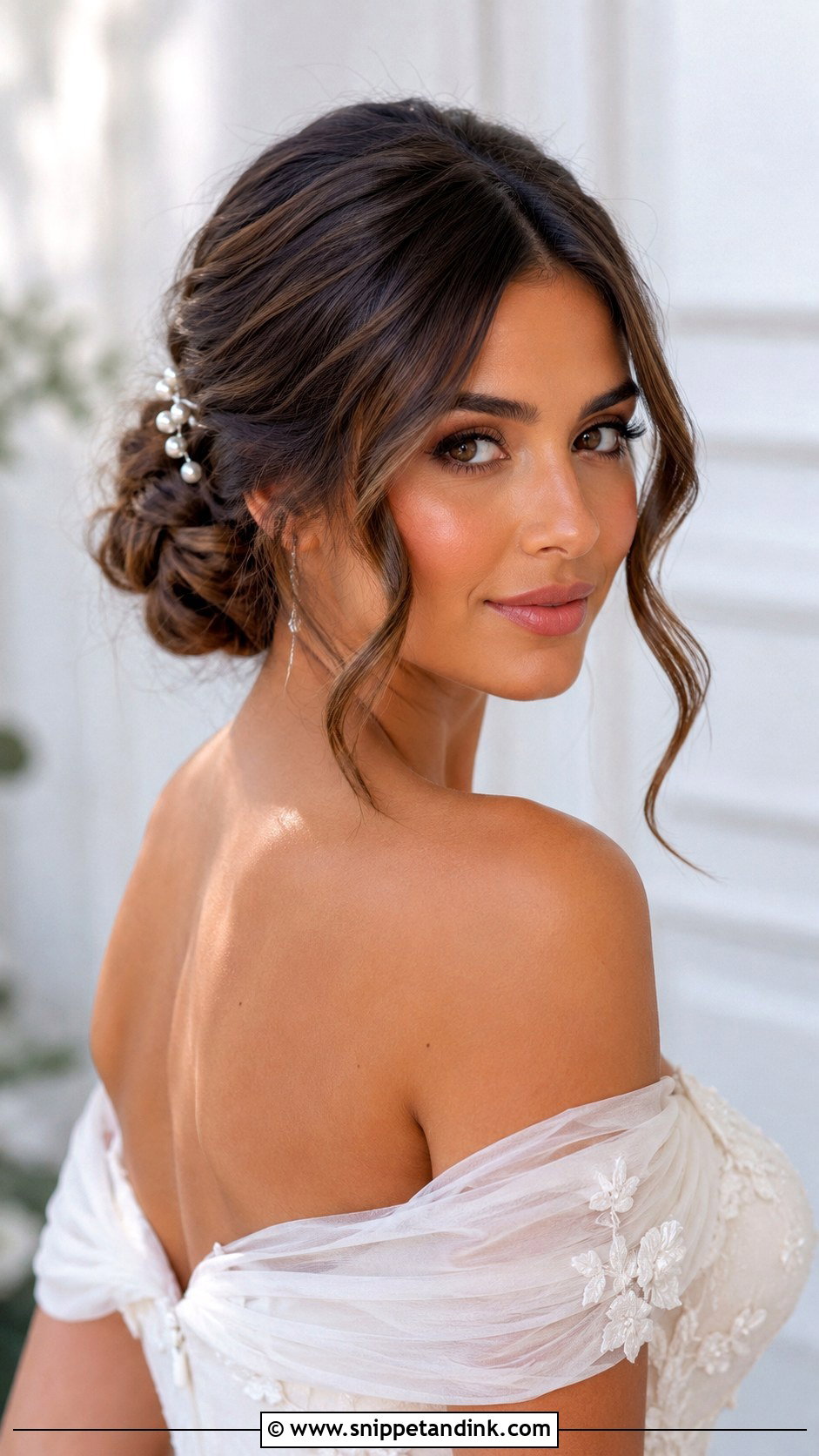
Face-framing pieces are what keep a bun from looking strict. The bun stays secure at the nape while the loose front pieces soften the face, curled, waved or just gently bent. It works with centre parts, side parts and curtain bangs. I cut a clear line between what’s pinned and what’s loose, otherwise strands from the bun start drifting forward and the pieces multiply by evening. Long hair keeps the bun full while the front stays romantic.
19. Voluminous Wedding Updo For Long Hair
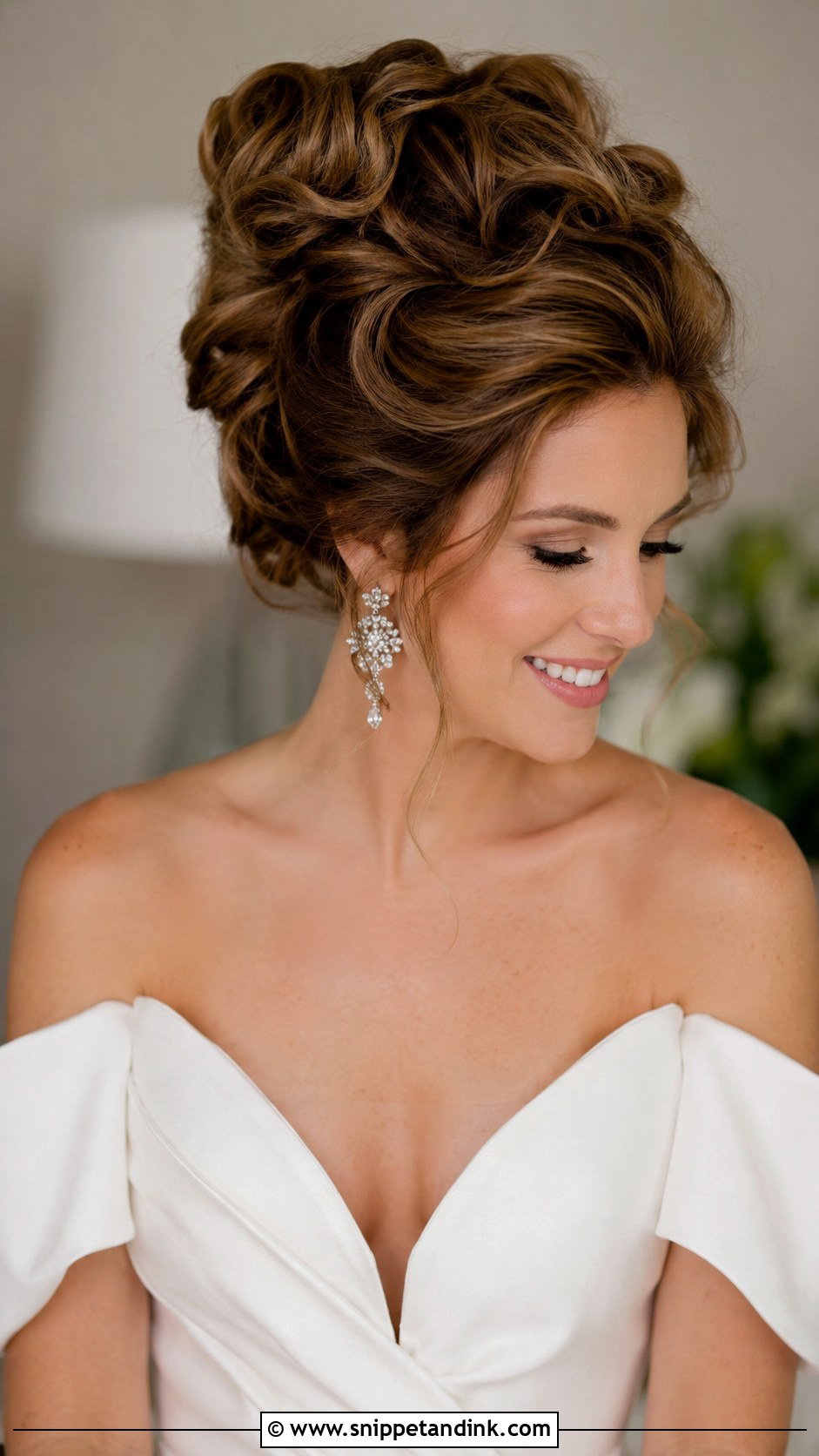
Big volume is all about balance. I place the height at the crown, through the bun or at the sides depending on face shape and dress, then soften it with face-framing detail so it doesn’t look heavy. Long hair gives me plenty to build with, but the volume has to come from backcombing at the base, not from piling more hair on top, or the updo starts to sag. Cathedral veils and statement earrings both suit it. Round faces usually look best with height on top rather than width at the sides.
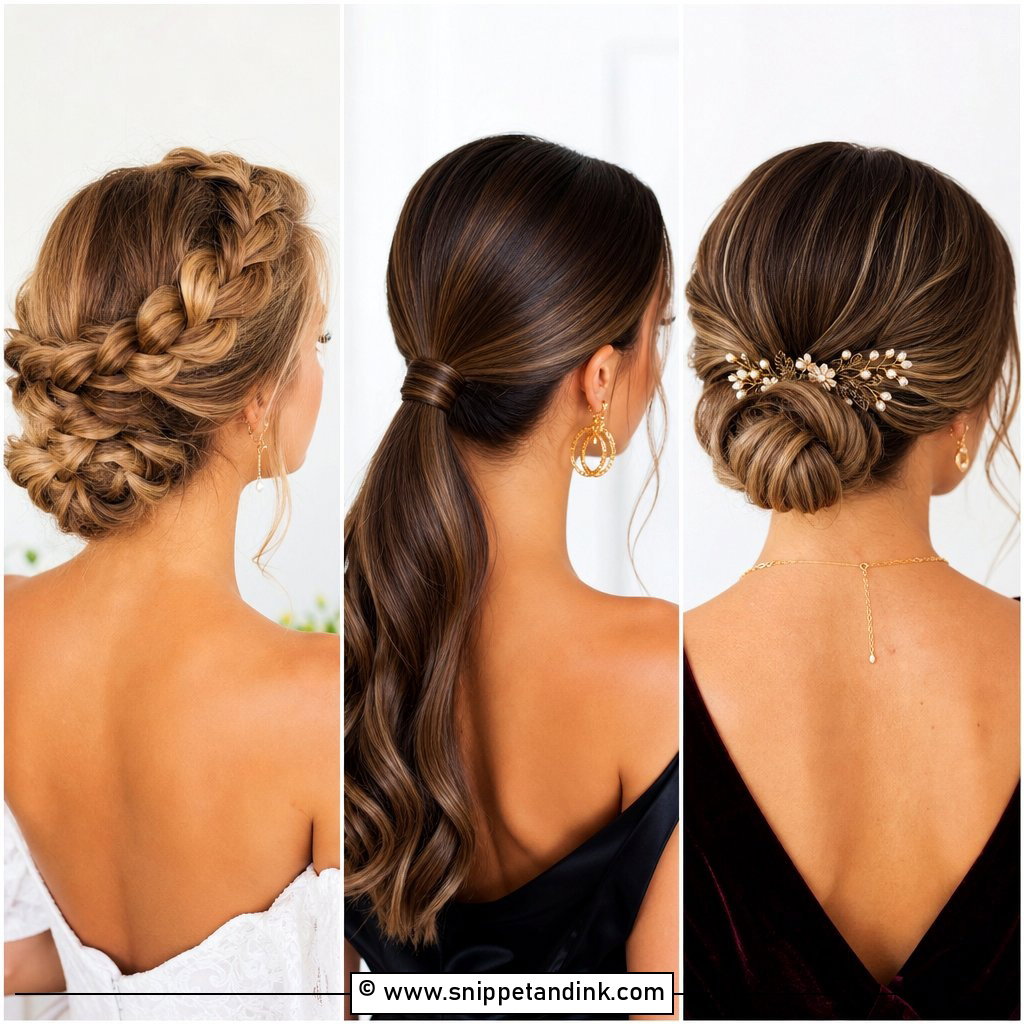
20. Simple Wedding Updo For Long Hair
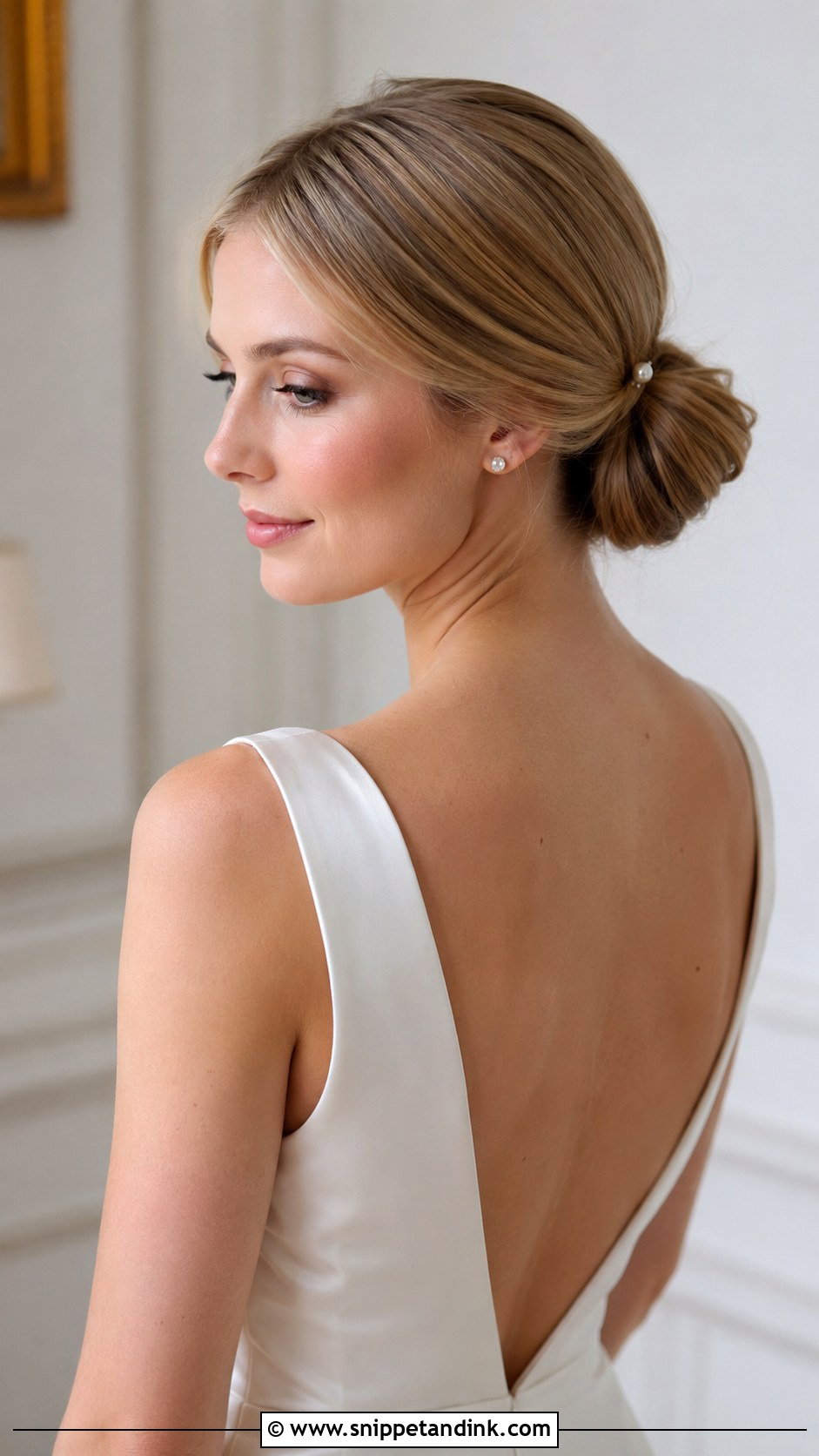
Simple is not the same as plain. A smooth low bun, a soft twist at the back or a clean chignon lets the dress take the focus, which suits minimalist brides, courthouse weddings and modern gowns. With so little detail, the finish has to be precise: an even shape, a clean part and no visible pins. Long hair makes even an understated bun look full. One quiet detail is enough, such as a veil, a single pearl pin or a sleek part.
Veil Comb Placement Changes With Bun Height
The bun’s position decides where the veil goes, and getting this wrong is the usual reason a veil tugs or slides during the ceremony. With a low chignon, I put the comb above the bun at the crown so the veil falls over it. With a high bun, the comb goes just under the base, so the veil falls from beneath. For a side bun, I place the comb on the opposite side or centred at the back. Always bring the actual veil to your trial, because its weight changes everything.
Undoing Forty Pins at Midnight Without Losing Hair
A long-hair updo can hold dozens of pins, plus hairspray, and pulling it down in a hurry rips hair. Take it down slowly, in reverse: remove accessories first, then feel along each section for the pins and slide them out in the direction they went in. Don’t brush the hair while the spray is still in it.
Once the pins are out, work a conditioner or oil through with your fingers, then rinse. Ask your stylist how many pins went in so you know when you’ve found them all, and keep a small dish nearby. Leaving one in overnight is uncomfortable and can snag on the pillow.
Which Updo Still Feels Comfortable After Ten Hours
Pick the updo that suits your neckline, your hair and the way you want to feel when you walk in. A sleek bun gives a modern line; a loose updo stays soft; braids and twists add detail that shows in photos. Accessories should support the shape, not compete with it. Book a trial, bring photos of your dress and accessories, and wear the result for the rest of the day so you know it feels as calm as it looks.
You'll Like These Ideas:


Leave a Reply