
More of the brides I style now want their hair open for at least one function, and I understand why. The tight bun used to be the default for every ceremony, but open curls, relaxed braids and half-up looks move with you and show off long hair you’ve spent months growing. The challenge is that Indian bridal jewellery and a pinned dupatta are heavy, and loose hair has less to hold them than a bun does. These loose Indian wedding hairstyles are the twenty I’d show you at a trial, from the sangeet to the reception, with notes on what each one needs underneath to stay put.
Where Heavy Jewellery Hooks Into Open Hair
In a bun, I pin jewellery into a solid base. With open hair, I have to build that base invisibly, and it’s the step that decides whether your tikka stays centred for six hours.
- Maang tikka: a small teased section at the crown, sprayed and pinned flat, takes the hook. Smooth waves alone let it slide sideways.
- Matha patti: each side chain gets its own small pinned anchor at the temple, hidden under the front layer.
- Passa or jhoomar: the weight sits on one side, so I add an extra crossed pin behind it to stop it pulling that side flat.
- Dupatta: needs two or three anchor points along the crown or a braid. If your look is fully open, ask your stylist to hide a thin braid underneath for this alone.
Bring every piece to your trial, even the ones you think are light. Jewellery that feels comfortable in the shop can tug noticeably by the time pheras finish.
1. Loose Curls With Open Hair
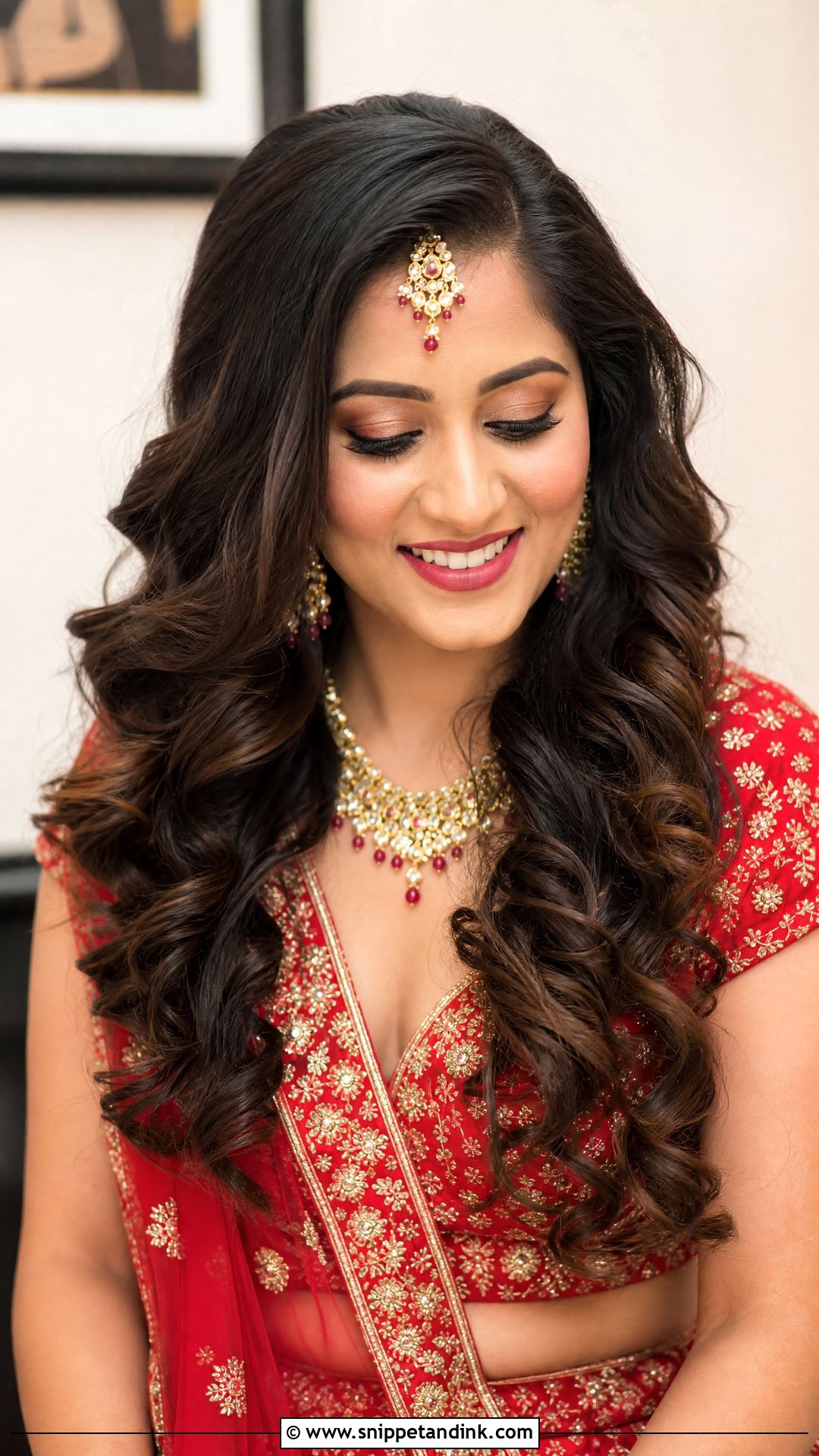
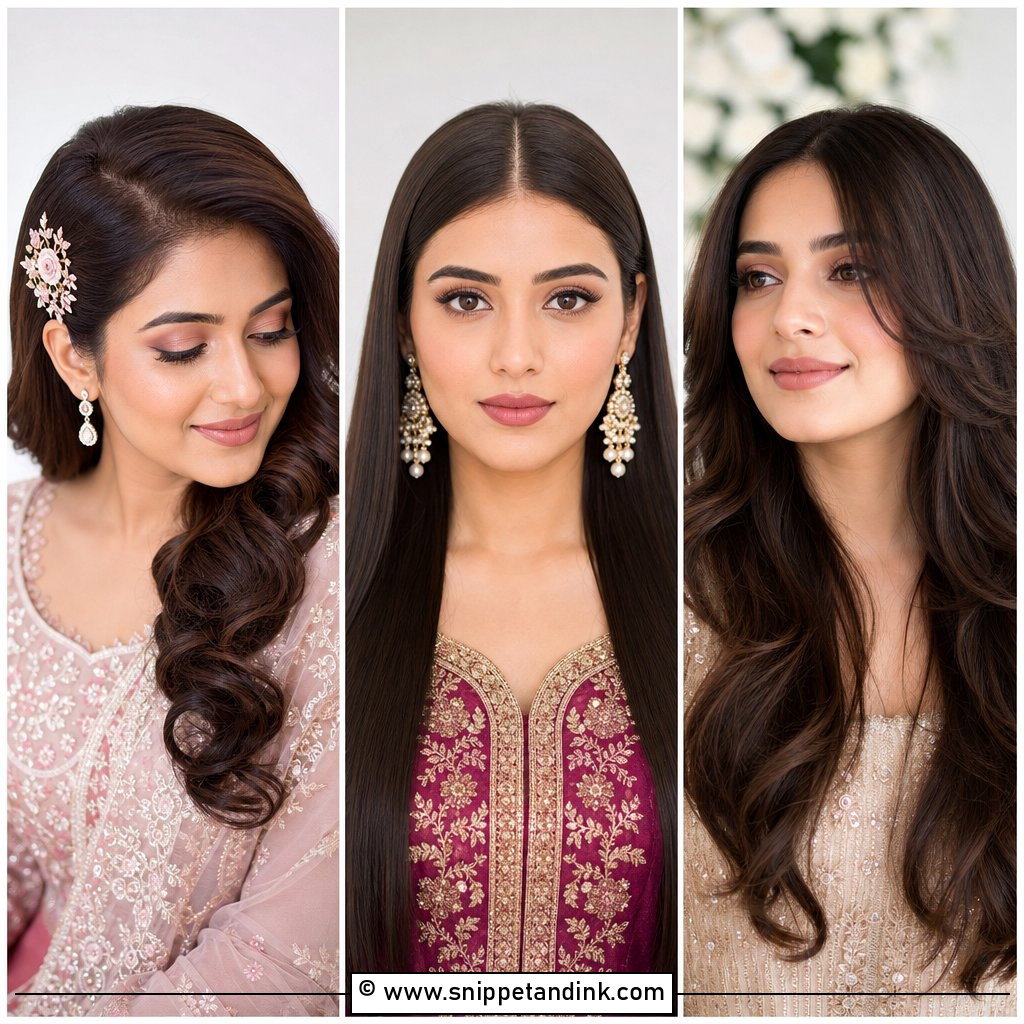
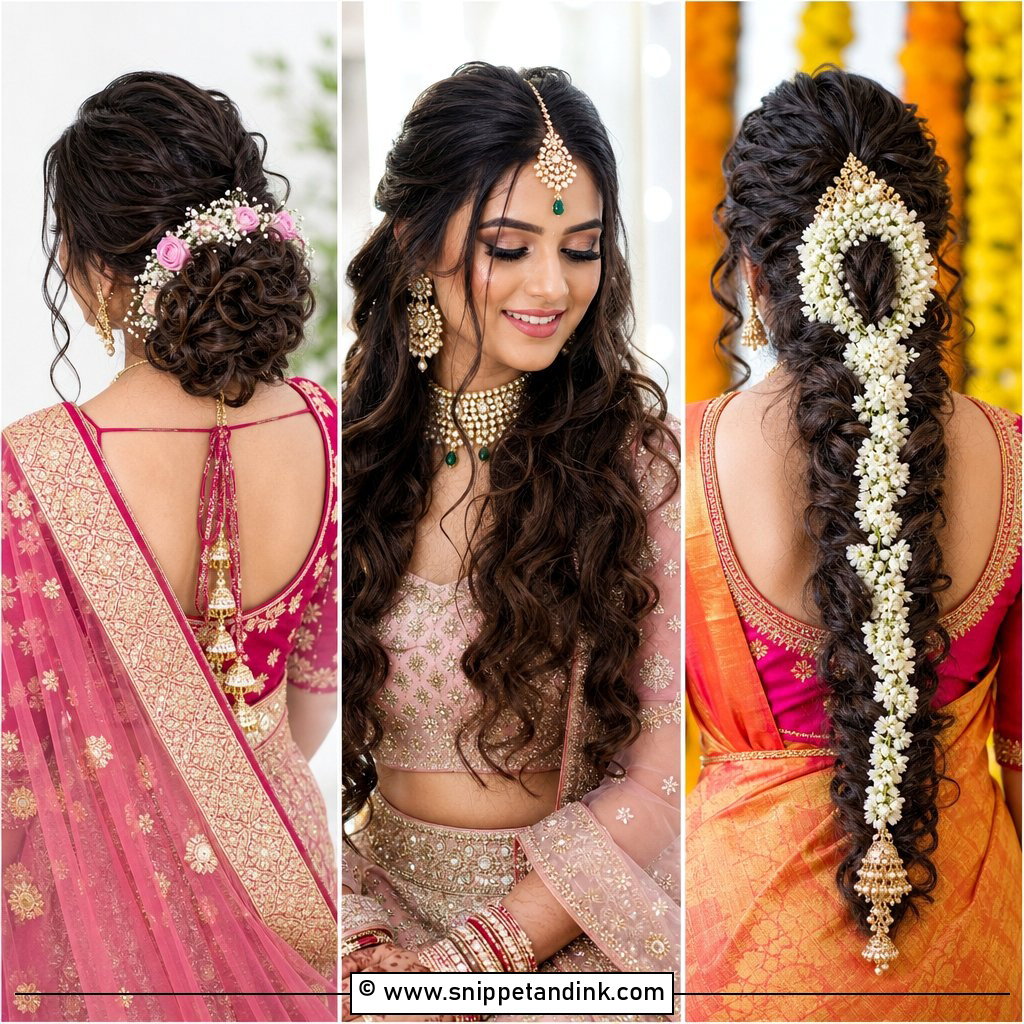
Bouncy curls falling over the shoulders make even fine hair look thick, which is why this is so popular for the reception entrance. I start with a deep side part and curl in larger sections at the back, smaller ones near the face, so the curls frame you instead of sitting in a uniform row. The ends get a final pass with a wand for a cleaner spiral. A thin diamond hairband or a few pearl pins keeps it tidy. It holds its own beside a heavy lehenga and statement earrings, but it’s also the look most likely to tangle with a long necklace, so I keep the front curls slightly shorter than the back.
2. Half-Up Half-Down Bridal Hairstyle
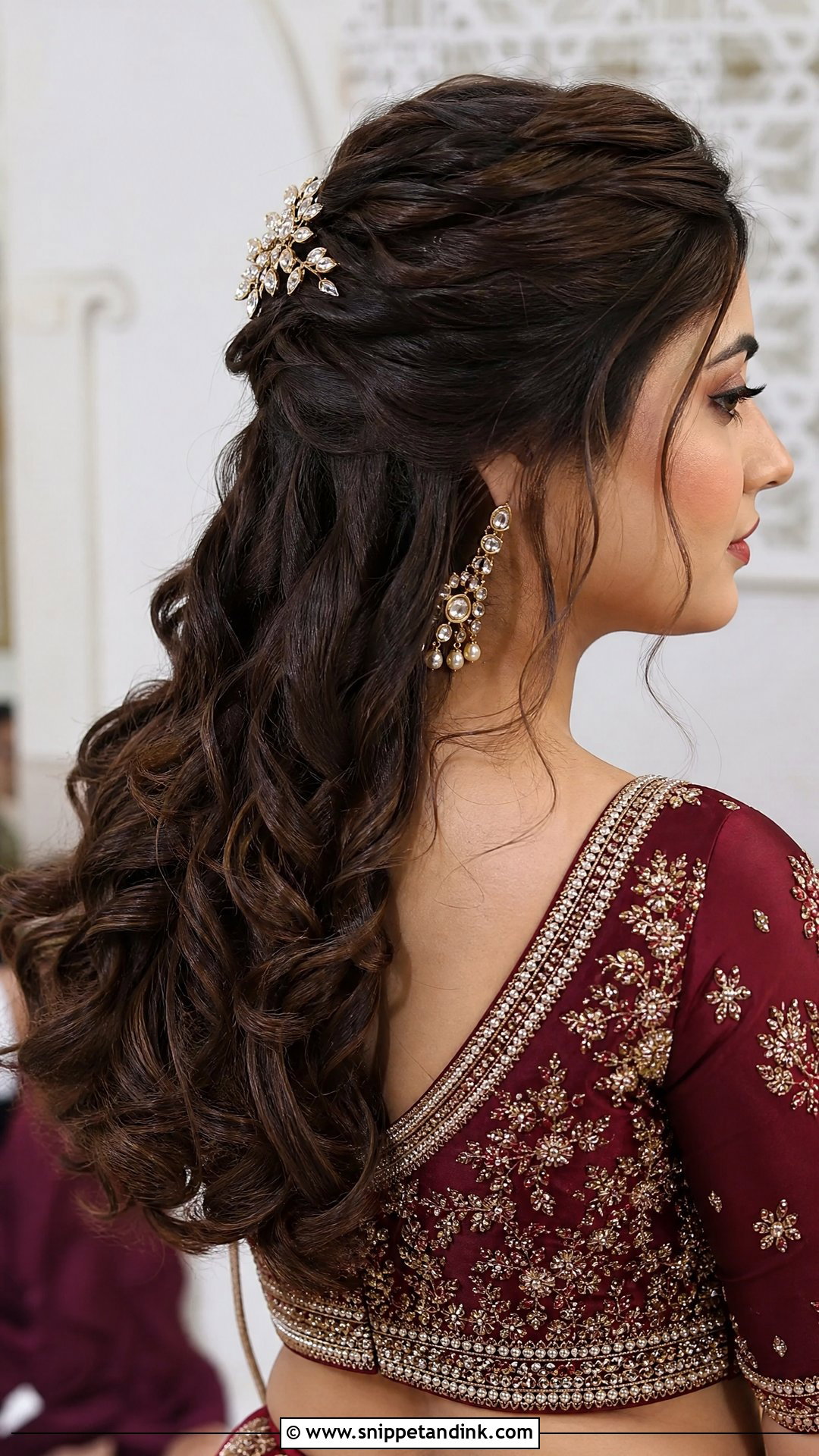
Torn between an updo and open hair? This gives you both. The top section is pulled back and secured, and the rest flows in soft waves, which keeps your face clear for the maang tikka and chandelier earrings. The point where the hair gathers is the strongest anchor in the whole style, so that’s where I put a jeweled pin or a small floral accent, and it’s where a dupatta can be pinned later if you change outfits. Medium to long hair suits it best. It’s my usual suggestion for an engagement ceremony, because it photographs from every side and survives a lot of hugging.
3. Loose Side Braid With Flowers
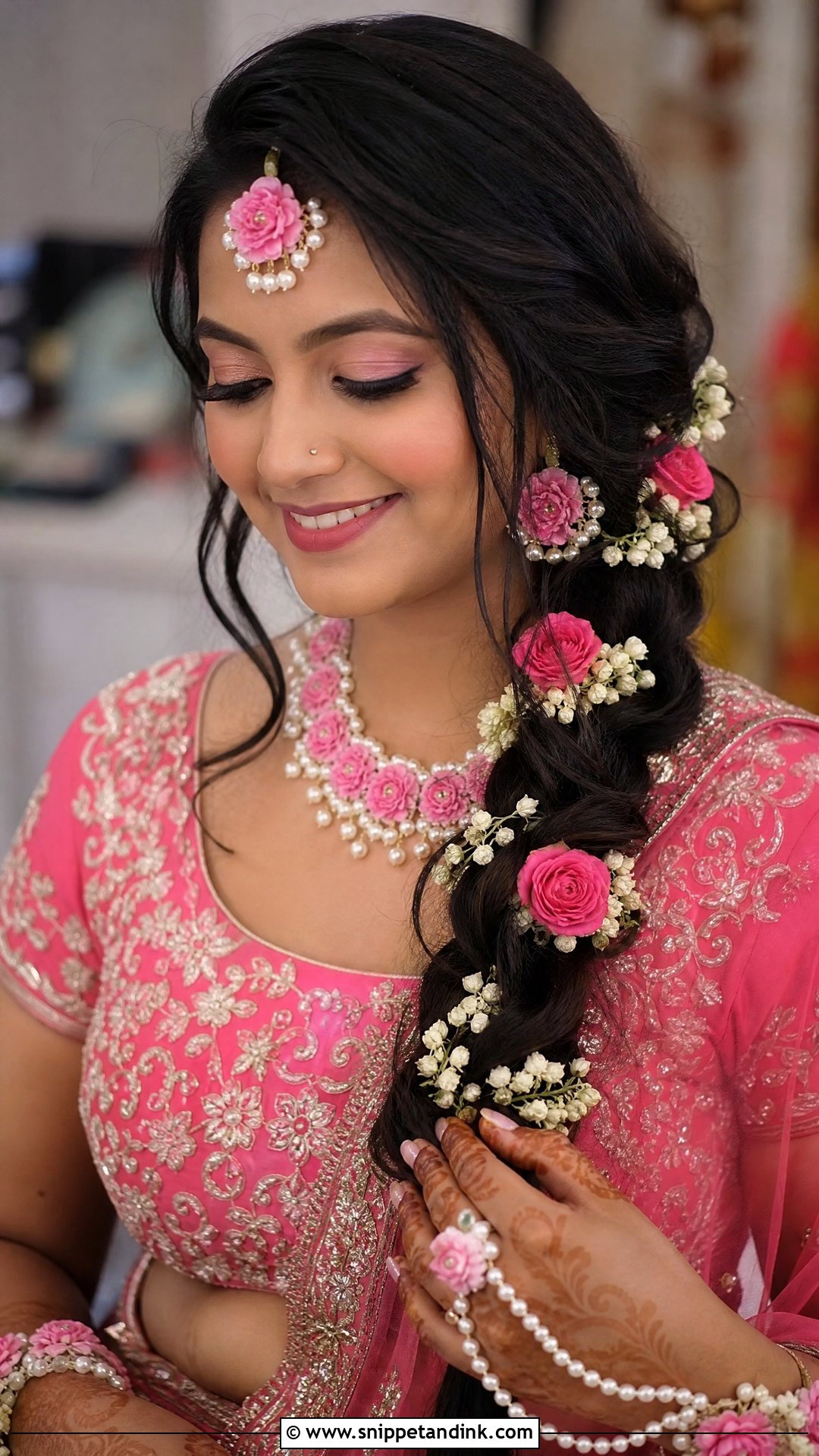
A soft side braid over one shoulder is one of the most forgiving looks for a long daytime function. I braid it loose and pancake the outer loops so it looks full without being tight at the nape. Decorated with fresh jasmine, roses or baby’s breath, it suits a mehndi beautifully, and the braid keeps hair out of the way while your hands are being worked on for hours. Pull a few strands loose near the face. Fresh flowers are the one thing to time carefully: jasmine opens and browns within a few hours in heat, so I add them last.
4. Loose Waves With Maang Tikka
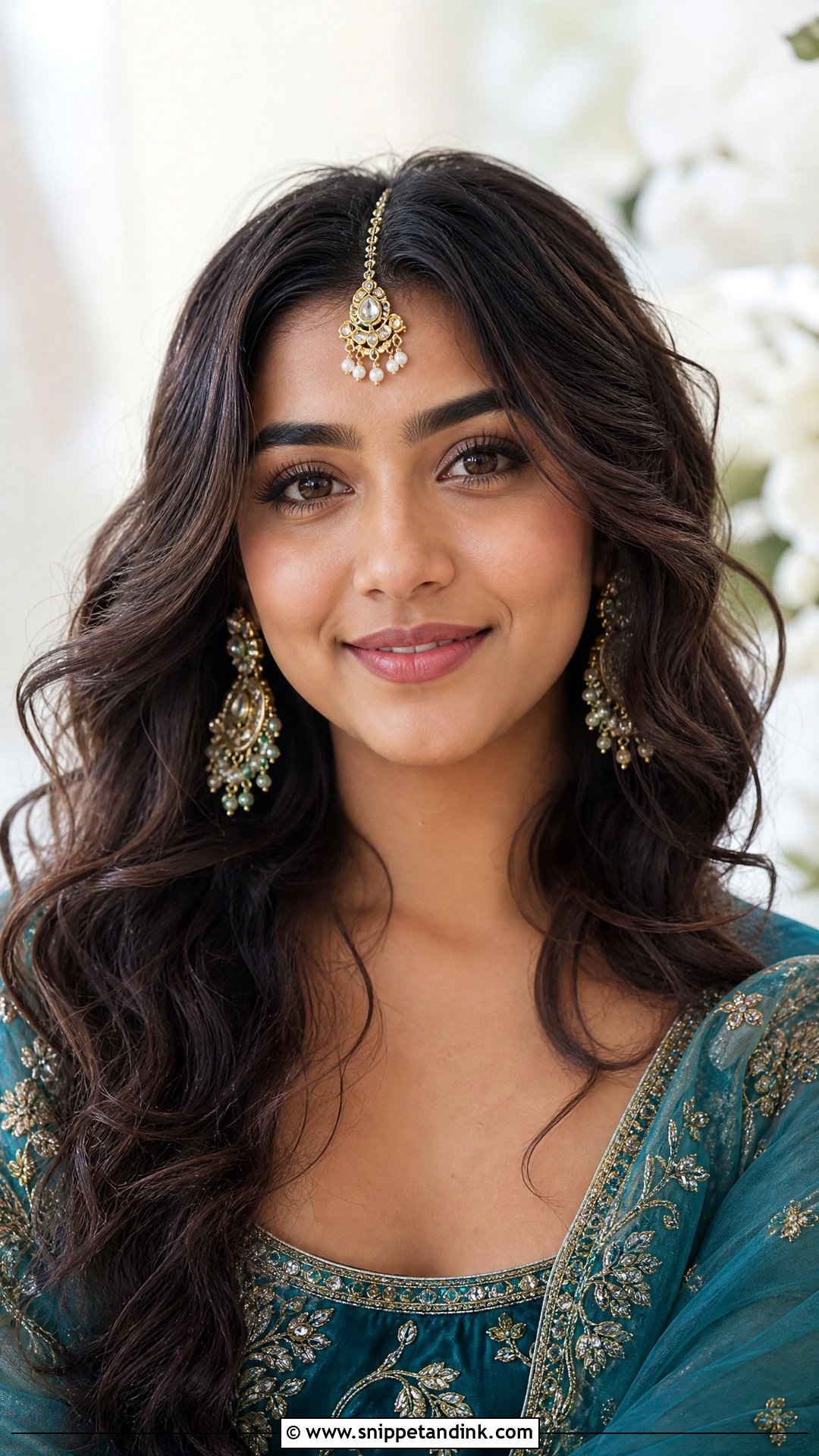
Gently curled, brushed-out waves give a relaxed finish, and the maang tikka sits right at the part as the focal point. The tikka chain needs a firm base, so I tease a small section at the crown and pin the hook into that rather than into smooth waves, where it will slide and tilt the pendant off-centre. A slight push back at the crown adds height. The waves move well on the dance floor at sangeet nights and reception parties, and a few small crystal pins add shine without weight. Most face shapes suit it.
5. Open Hair With Diamond Hairband
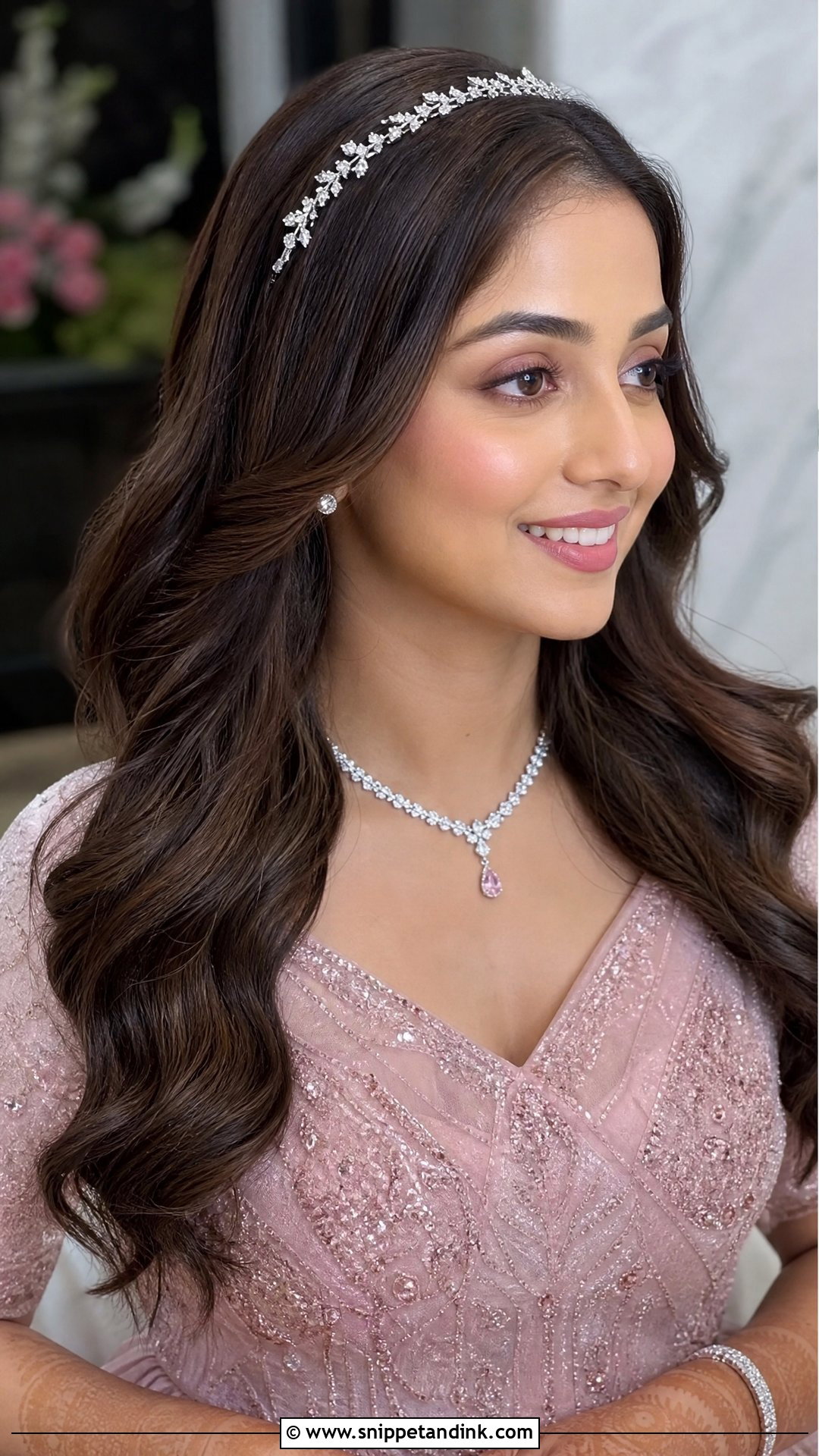
An open-hair look with a diamond hairband lets the band do the sparkling while the hair stays in smooth waves or soft curls. I prefer this for receptions and cocktail evenings, since the band also controls flyaways that open hair picks up through a long night. The band itself can press on the head after a few hours, especially a rigid metal one, so try it on for at least an hour at your trial. A deep side part or a centre part both work; the band sits more evenly with a centre part. Statement studs balance it better than drops.
6. Loose Fishtail Braid Hairstyle
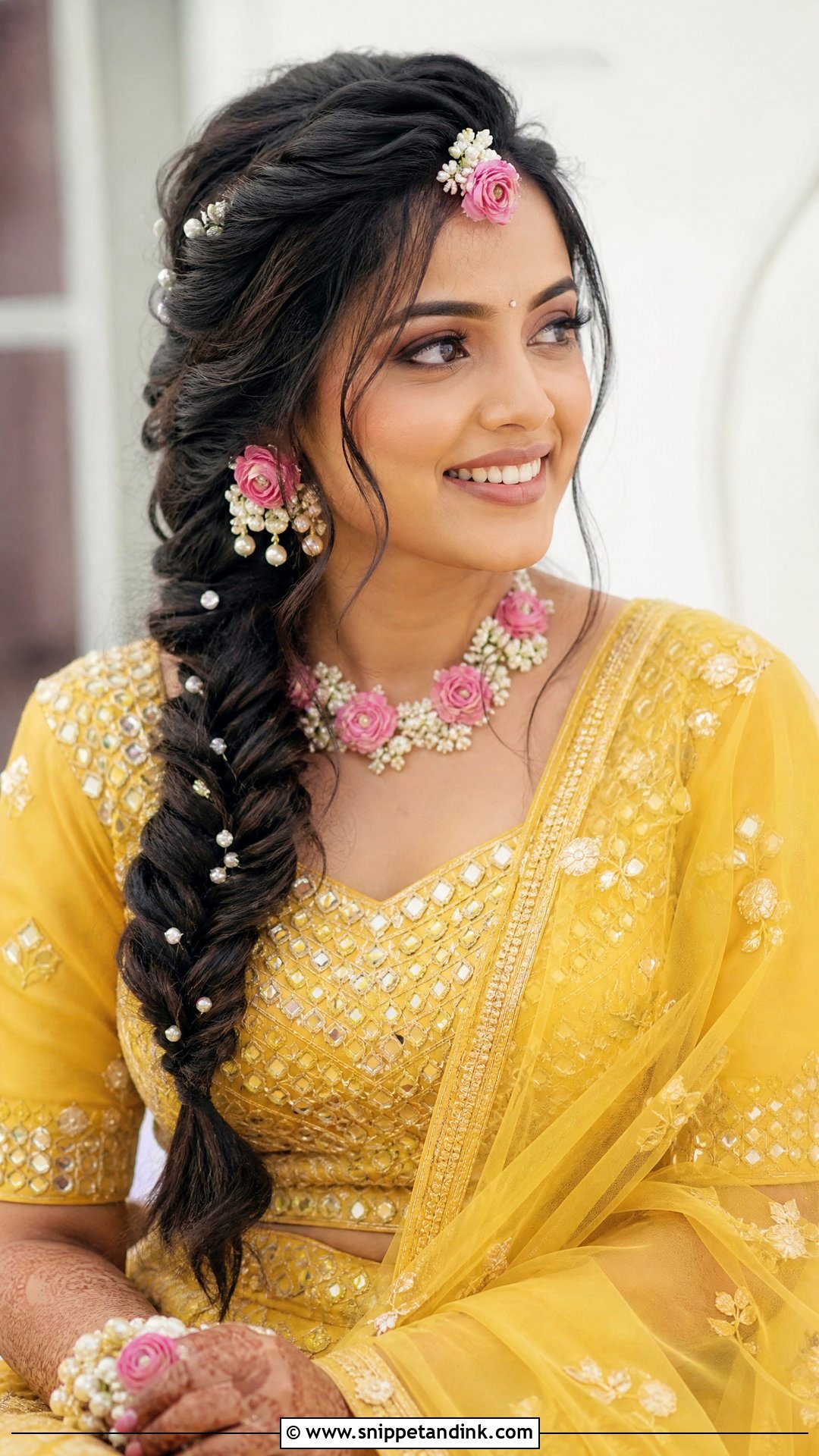
A fishtail braid has more visible texture than a three-strand braid, especially once I gently pull it apart for fullness. Drape it over one shoulder and leave a few wispy strands around the face. Small pearls or tiny flowers tucked between the weaves sit securely because the fishtail grips them from both sides. It’s a natural fit for mehndi and haldi, where you want hair contained and away from turmeric paste. Long hair suits it best; on shoulder-length hair the braid ends before it has a chance to show its pattern.
7. Soft Curls With Floral Crown
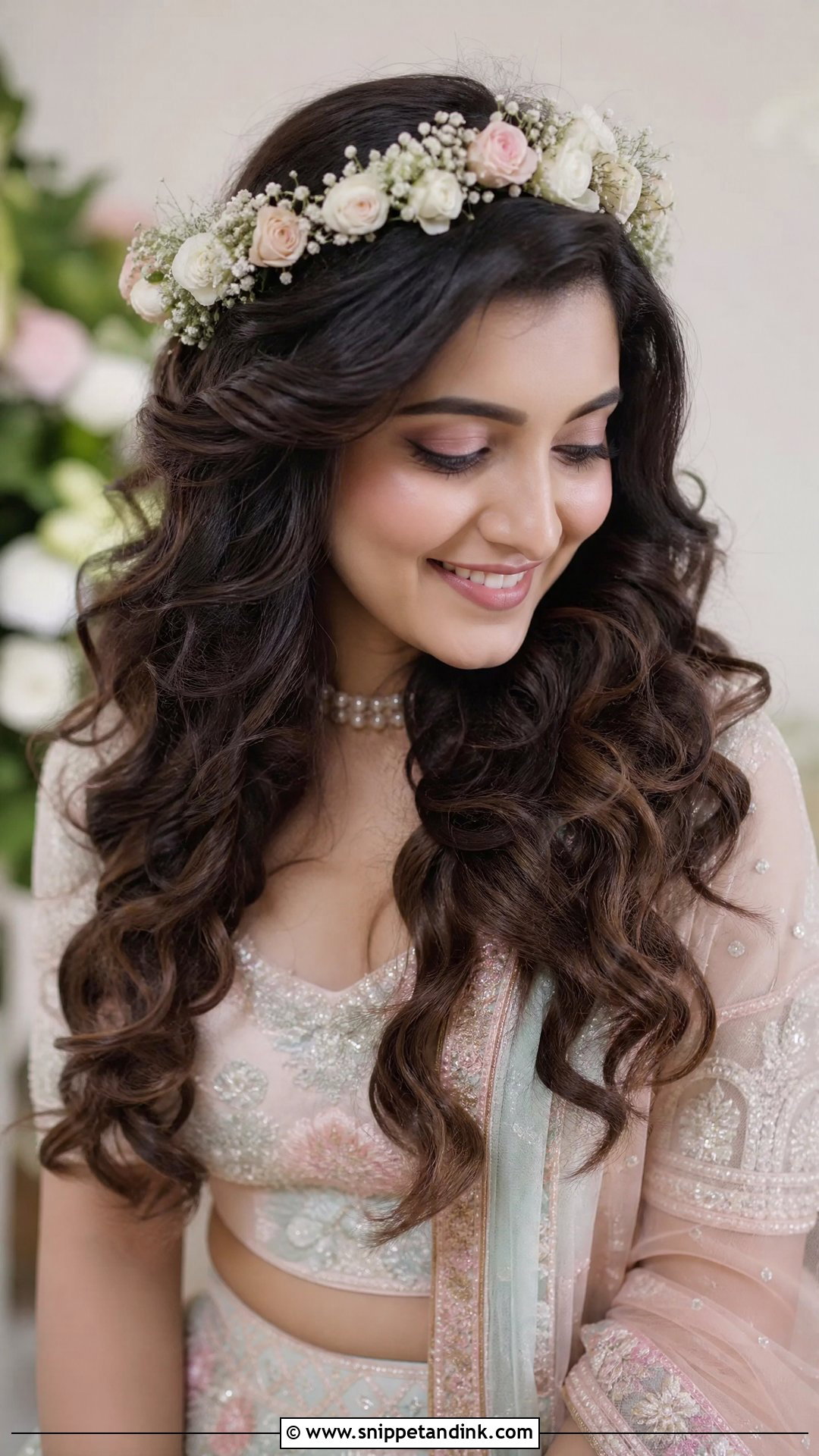
Soft curls with a floral crown give an outdoor or daytime wedding a garden feel, and the flowers bring colour and a natural scent. The crown is the focal point here, so I keep the curls underneath relaxed and slightly tousled rather than tightly set. It suits pastel lehengas with minimal jewellery; adding a heavy tikka and matha patti on top of a crown is usually too much on one head. Ask for the crown to be made with wired stems and pin it at several points, because a loose curl gives a crown nothing to rest on.
8. Loose Bun With Front Curls
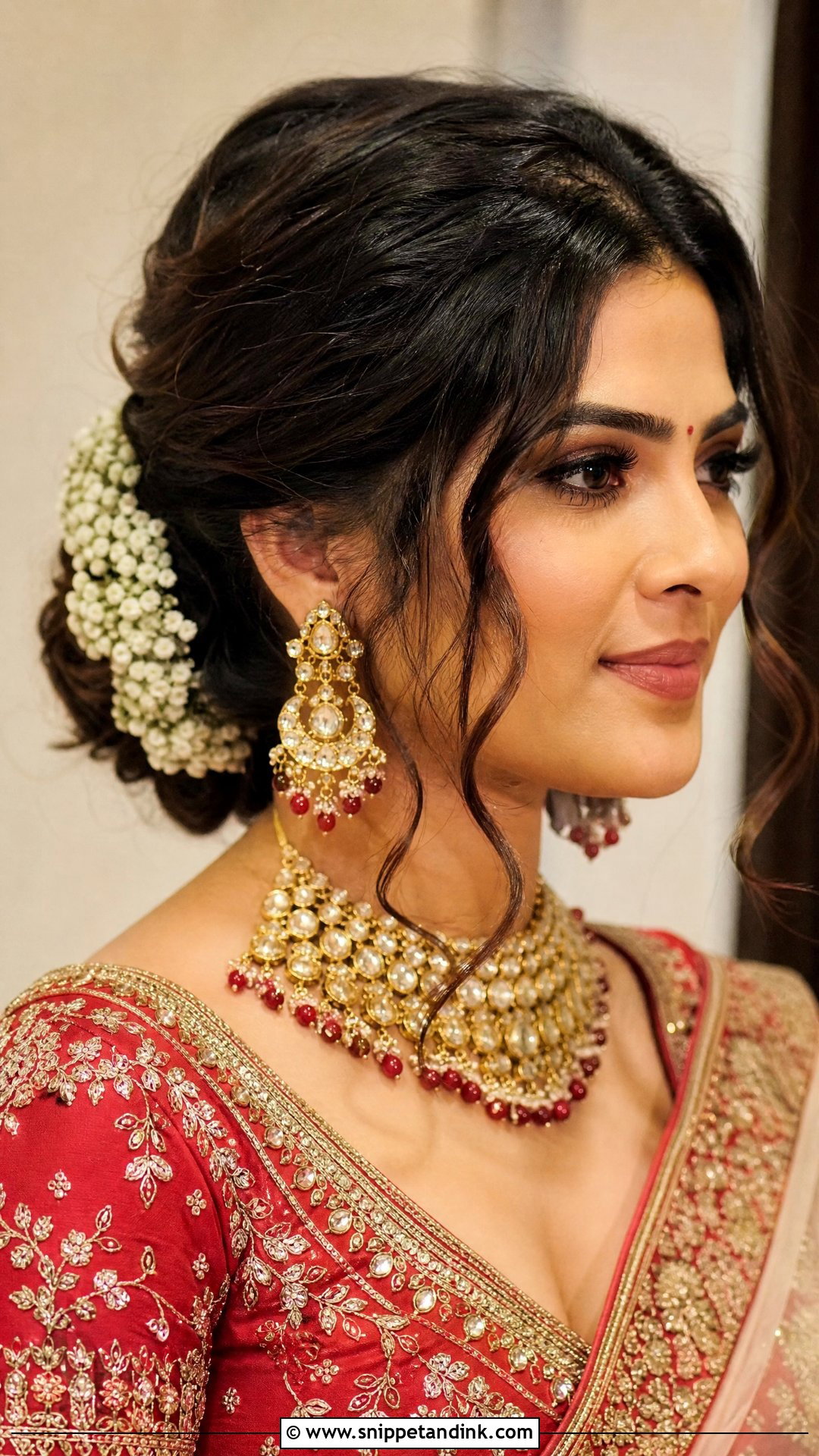
A relaxed low bun at the nape, with soft curls left out at the front, sits halfway between structured and loose. The bun gives me a solid base for gajra, pearls or a jeweled pin, and the front curls keep the face soft. It’s a practical choice for a warm-weather wedding because it keeps hair off the neck under a heavy dupatta. With big earrings, I make sure the front curls fall behind the earring rather than across it, otherwise they snag every time you turn your head.
9. Open Hair With Pearl Pins
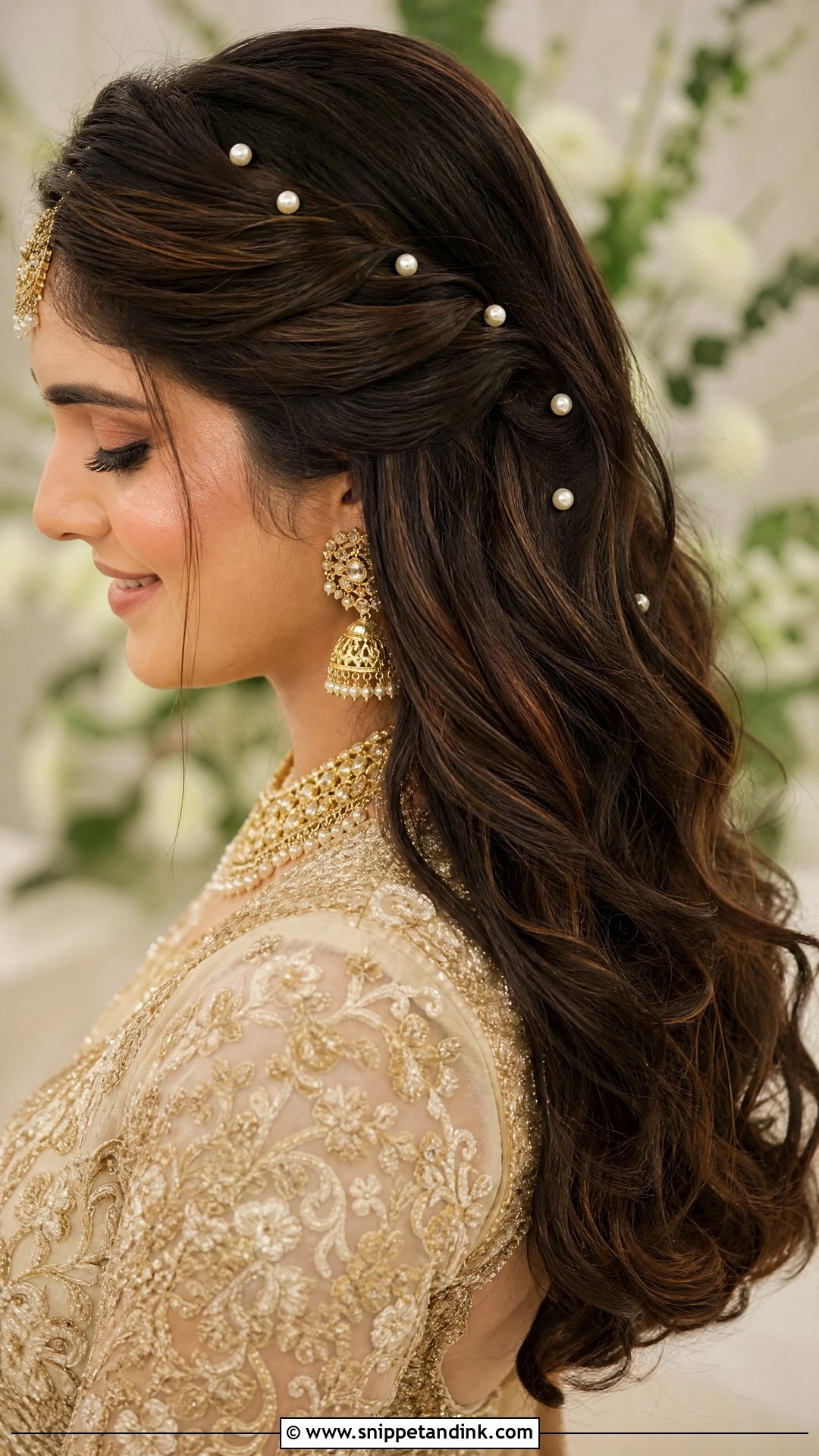
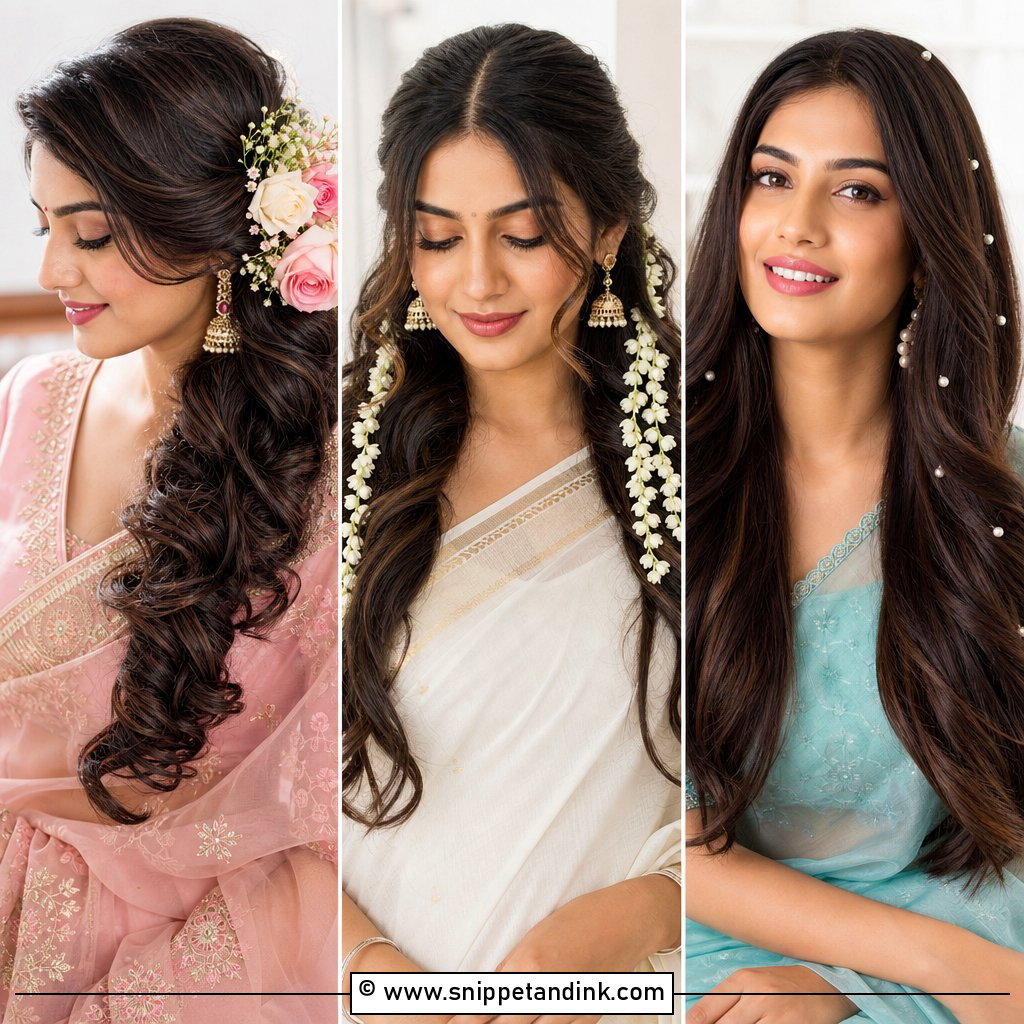
Scattered pearl pins through open, smooth waves add polish without a heavy accessory. I set a light wave, push the hair back from the face, and place the pins in a loose cluster on one side so they read as intentional. They suit a reception or an intimate ceremony, and they sit naturally beside pearl-toned outfits and classic gold jewellery. Pearl pins slip in soft hair, so each one goes over a small crossed bobby pin. If you prefer subtle detail to heavy adornment, this is about as quiet as bridal hair gets while still looking finished.
10. Loose Braid With Curls
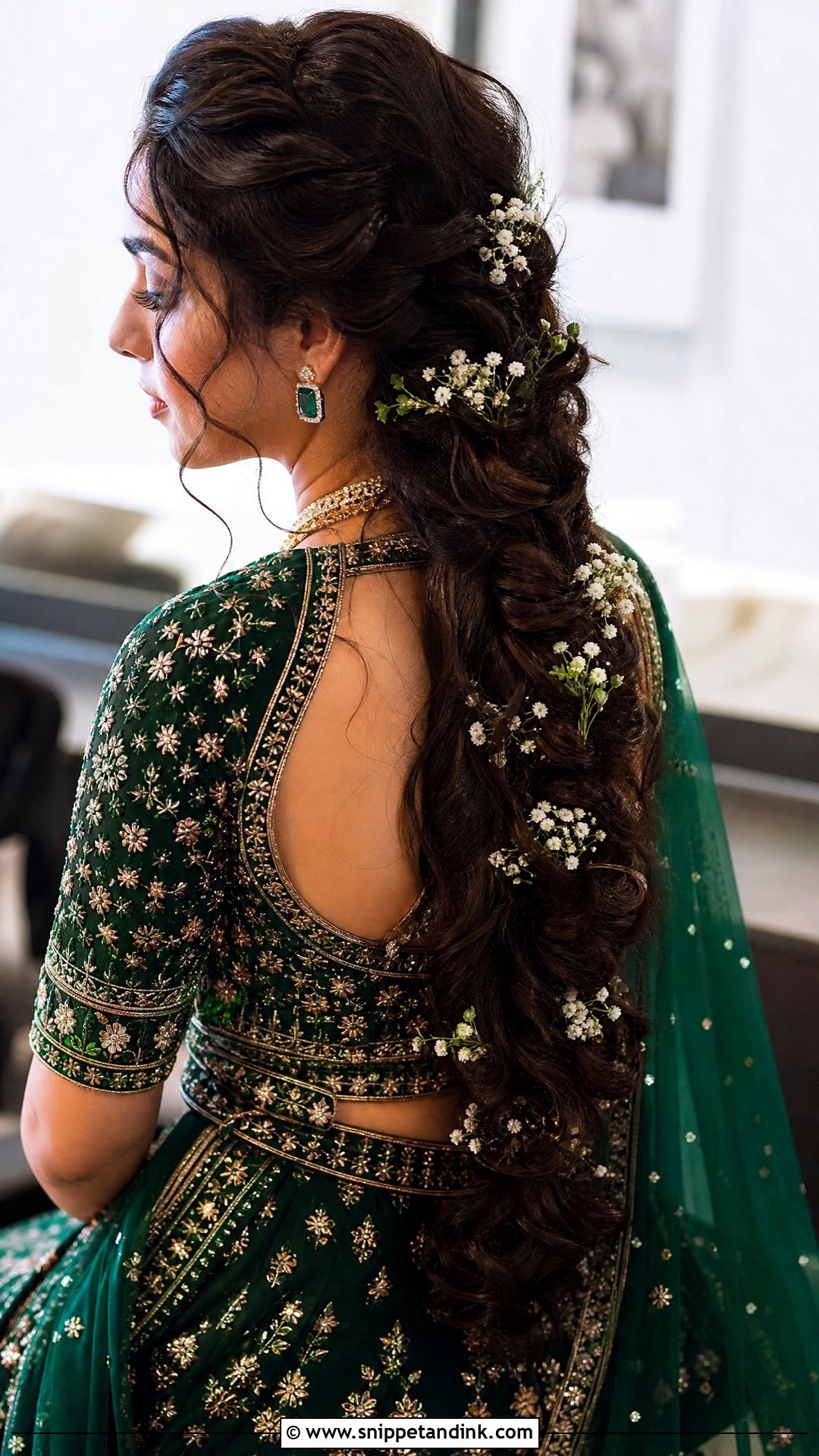
Woven loosely over flowing curls, this braid almost reads as open hair. The curls are set first, then braided very gently so they peek through the plait instead of being flattened into it. That order matters; braiding first and curling after leaves a stiff, kinked texture. Tiny flowers or delicate pins finish it off. It’s an engagement and sangeet style for me, relaxed enough to dance in, and a few strands pulled loose near the face keep it soft.
11. Wavy Hair With Side Swept Look
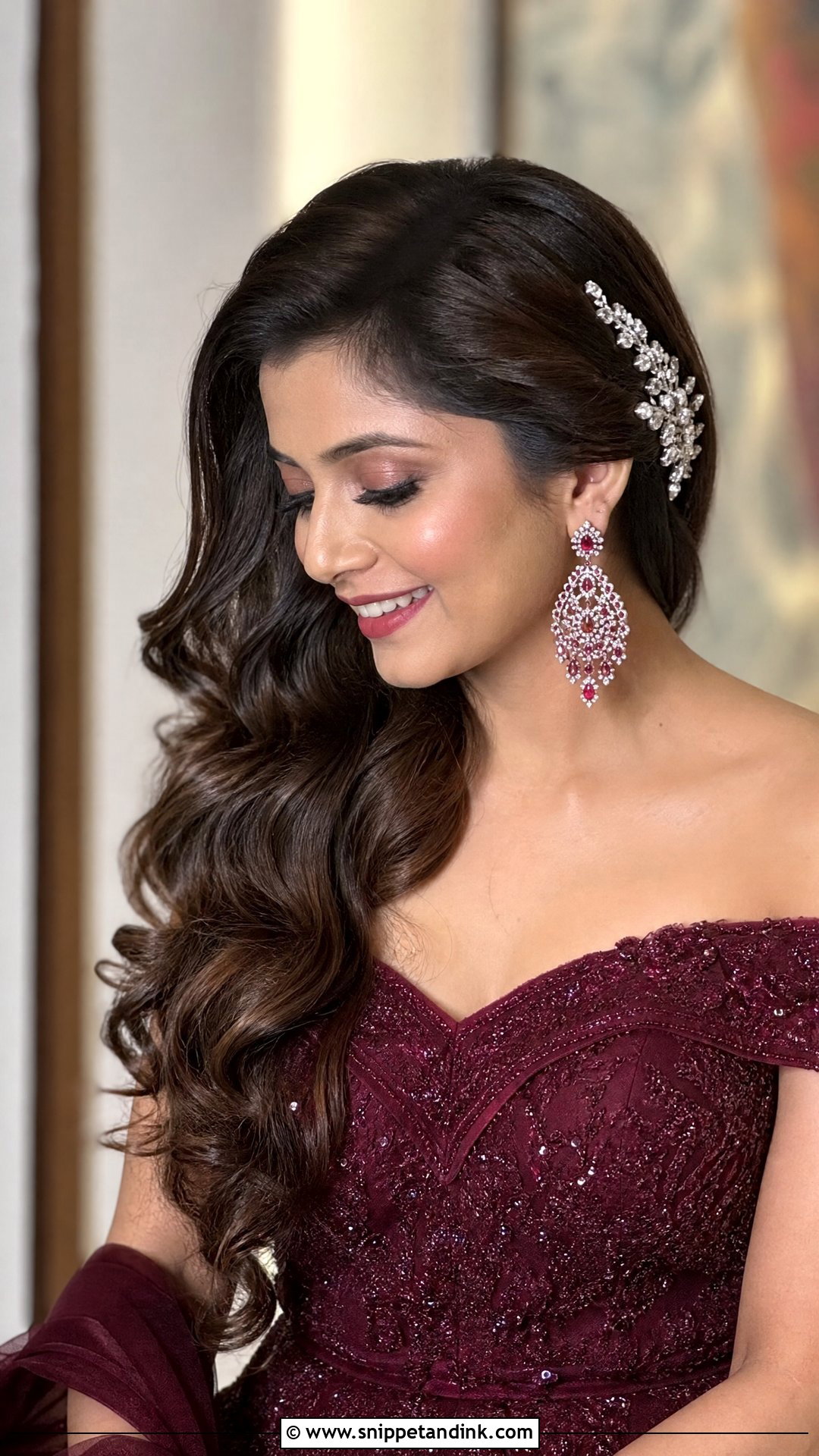
Gathering all the waves over one shoulder gives an old-Hollywood feel on a deep side part. I pin the hidden side flat behind the ear, sometimes with a sparkly clip on top, so the waves don’t creep back to the centre as you move. It works with an off-shoulder blouse and statement earrings, and medium to long hair suits it. One practical note: it only works if your dupatta drapes on the opposite shoulder, so plan the draping with your stylist before deciding.
12. Loose Low Ponytail Hairstyle
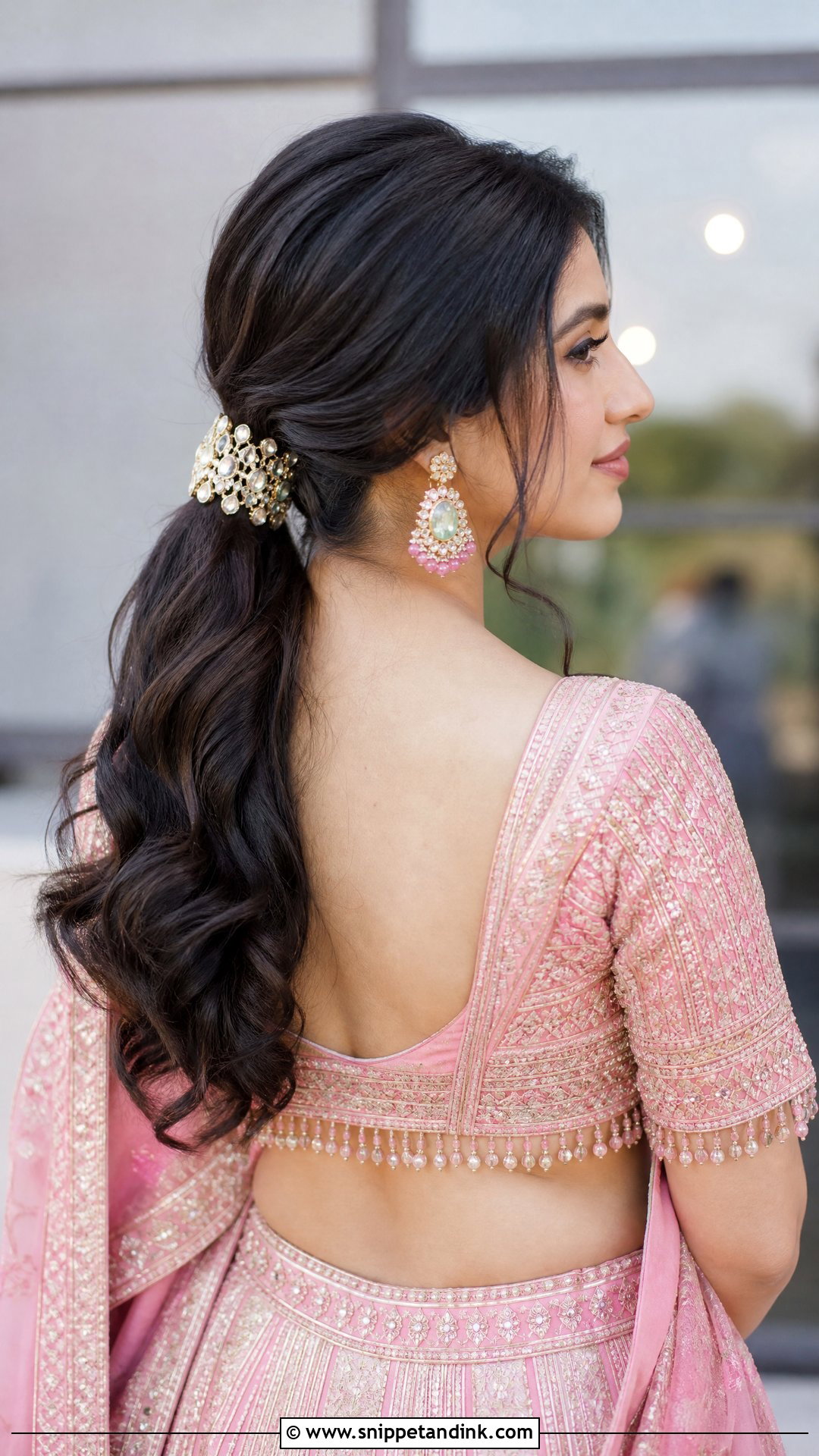
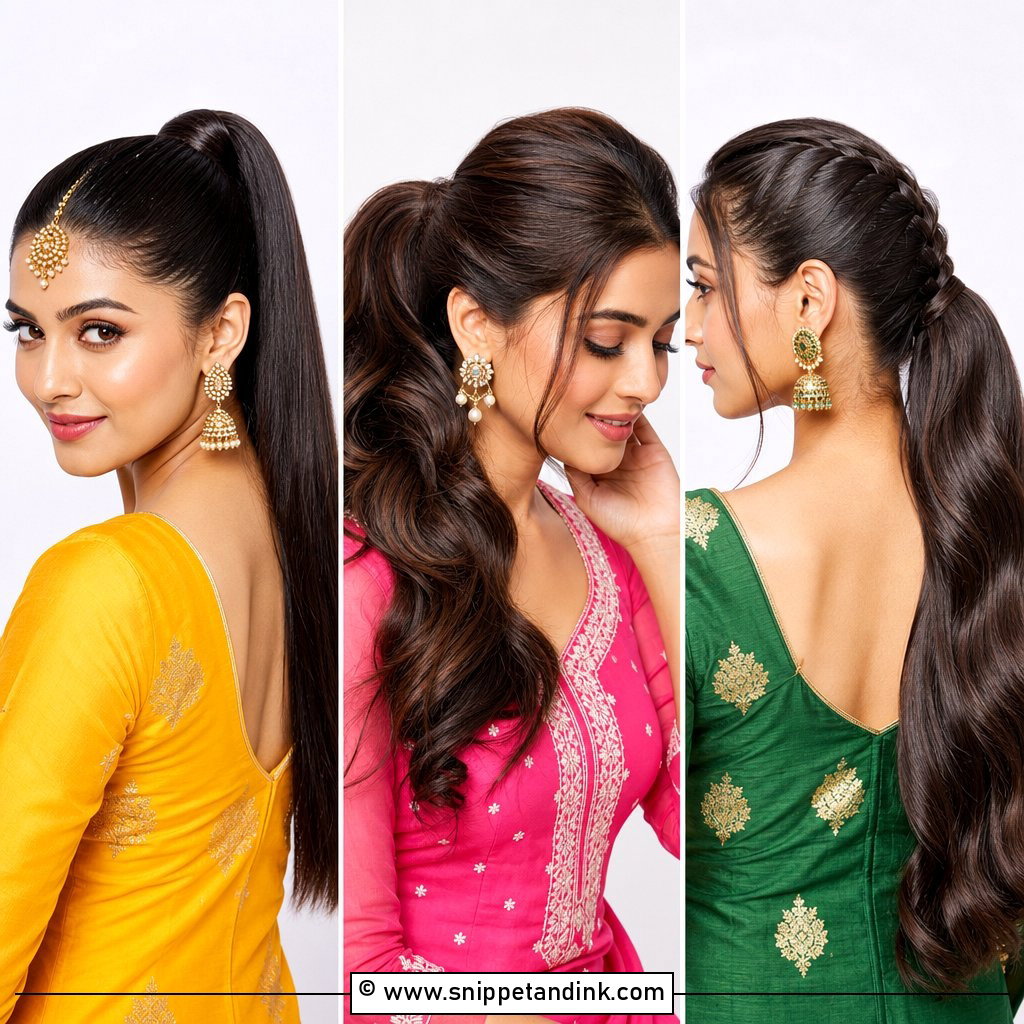
A loose low ponytail is sleek at the top and finishes in soft waves or curls below. I wrap a strand of hair around the base to hide the elastic, then add a jeweled cuff or pearl detail over it. It flatters a long neck and puts the earrings on full display, which makes it a strong match for structured lehengas and bold jewellery. On very thick hair, one elastic sags within a couple of hours, so I hide a second one beneath the first.
13. Open Curls With Gajra
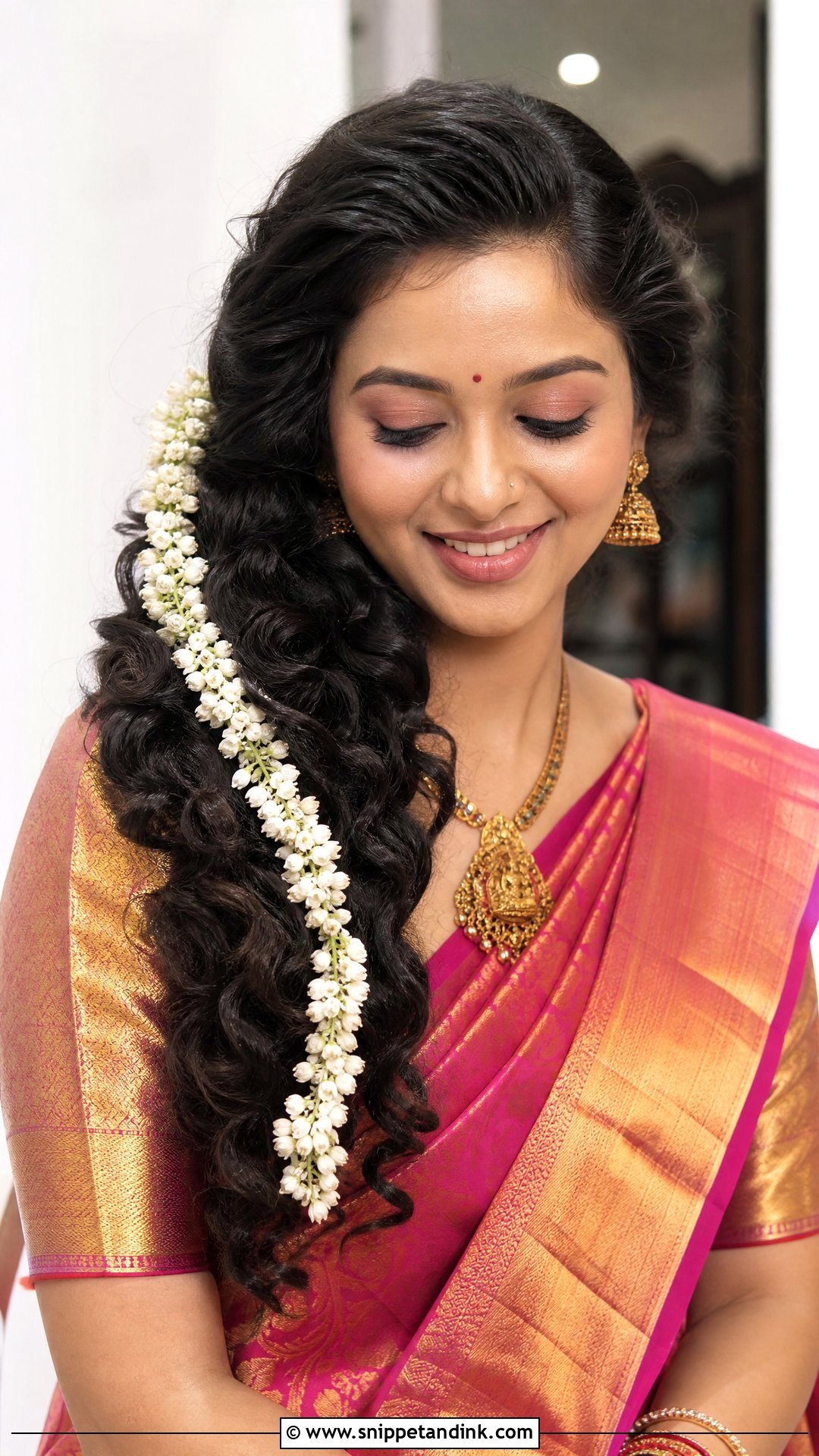
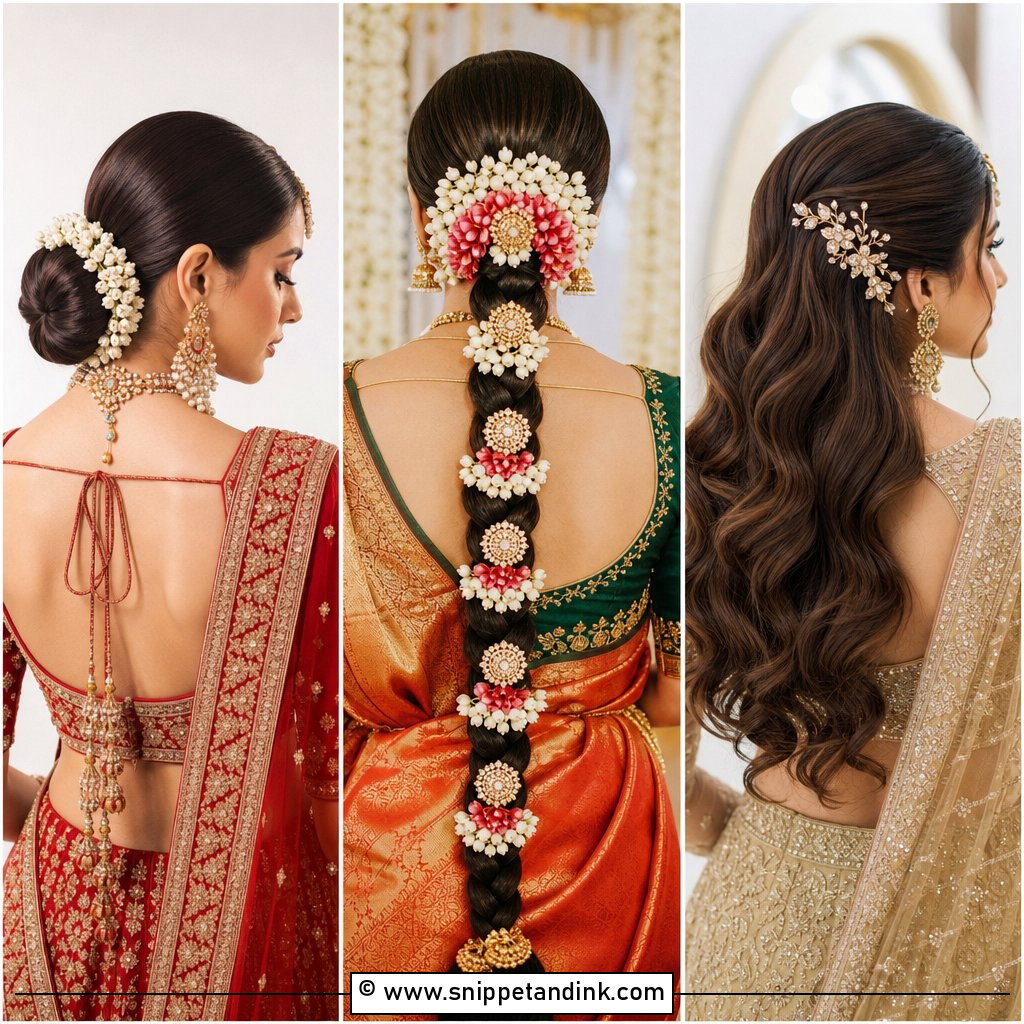
Fresh jasmine gajra draped along one side of open curls is about as traditional as loose hair gets. White blooms stand out against dark hair, and the scent stays with you through the ceremony. I secure the gajra with U-pins at each end and one in the middle, since a single pin at the top lets the whole strand swing forward. It suits haldi, mehndi and traditional ceremonies, especially with temple jewellery and a silk saree. If you’re after a classic South Indian-inspired look, open curls and gajra deliver it with very little fuss.
14. Textured Waves With Headband
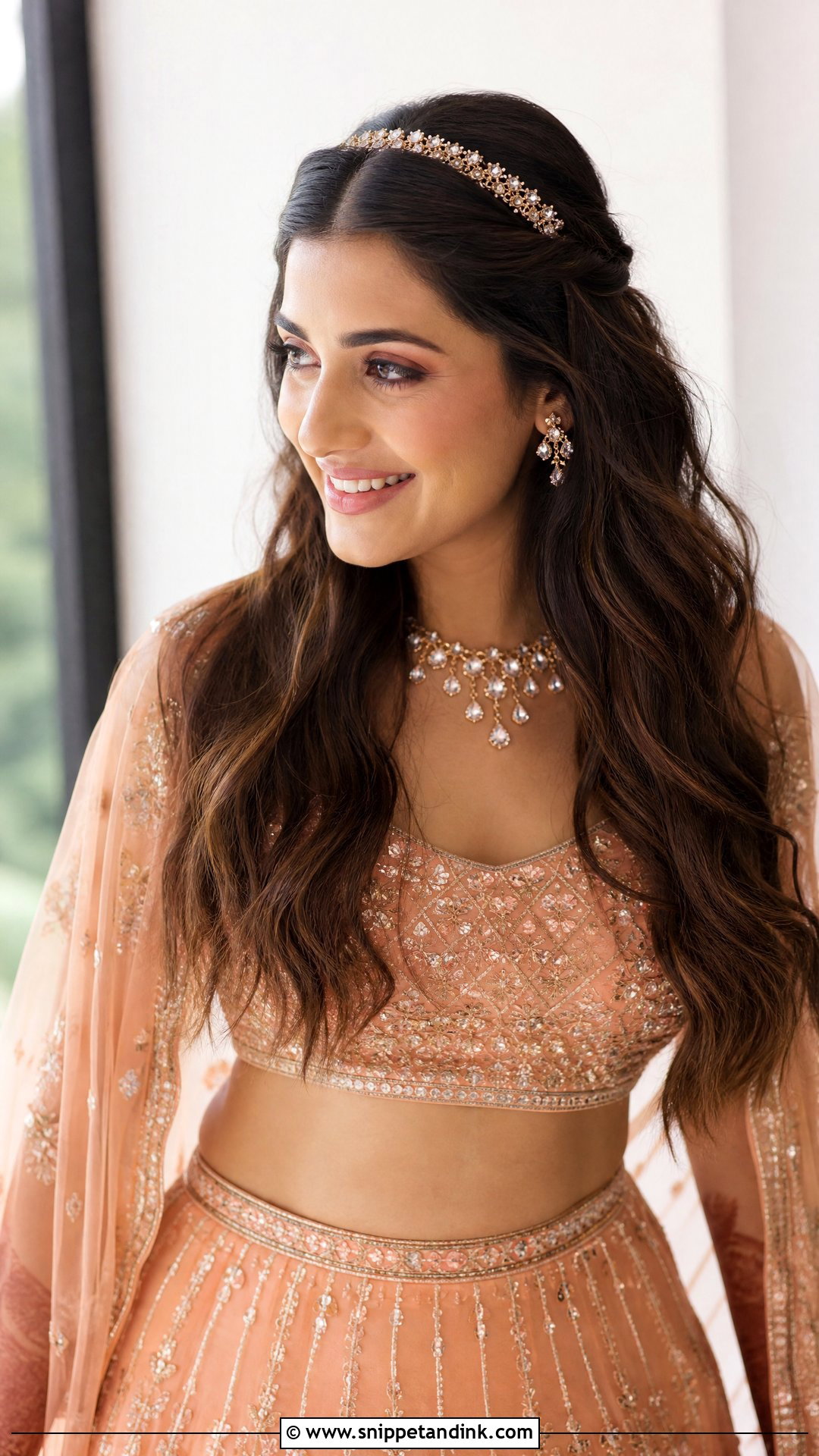
Textured waves under an embellished headband have a boho feel, and the band replaces a maang tikka as the main accessory. A little mousse through damp hair gives the waves definition before curling. The band keeps hair pushed back neatly through a full evening of dancing, which suits a sangeet or cocktail party with a flowy lehenga and modern jewellery. Very thick hair can push a thin headband forward over time, so I pin it behind the ears where nobody sees.

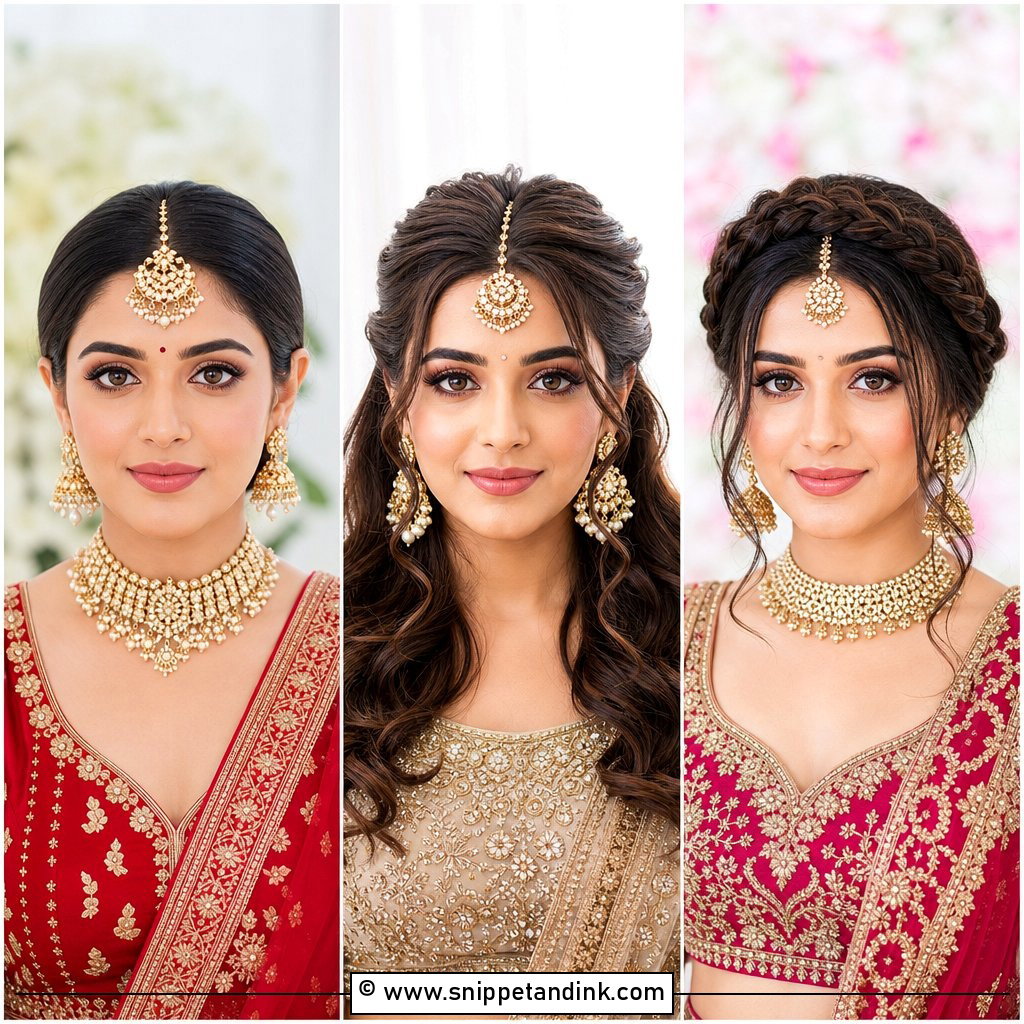
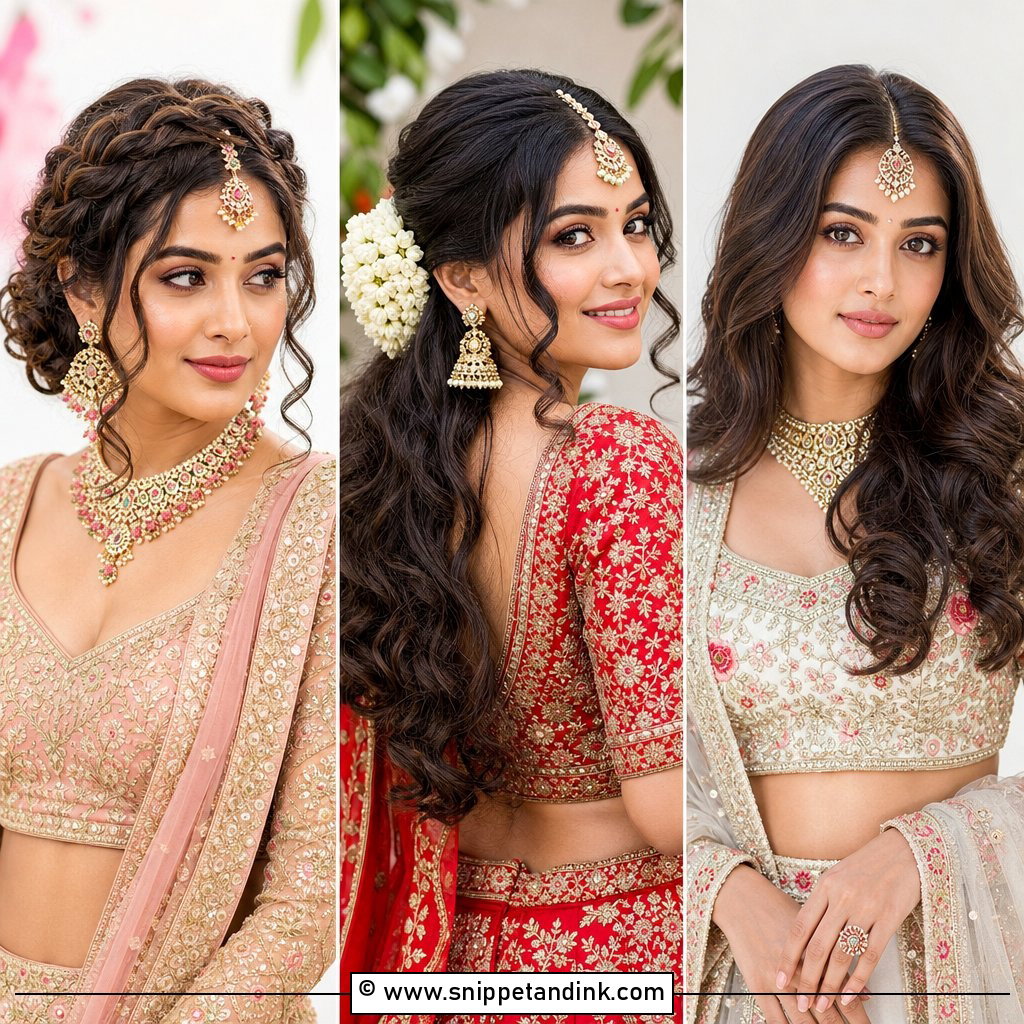
15. Loose Curls With Maang Tikka And Matha Patti
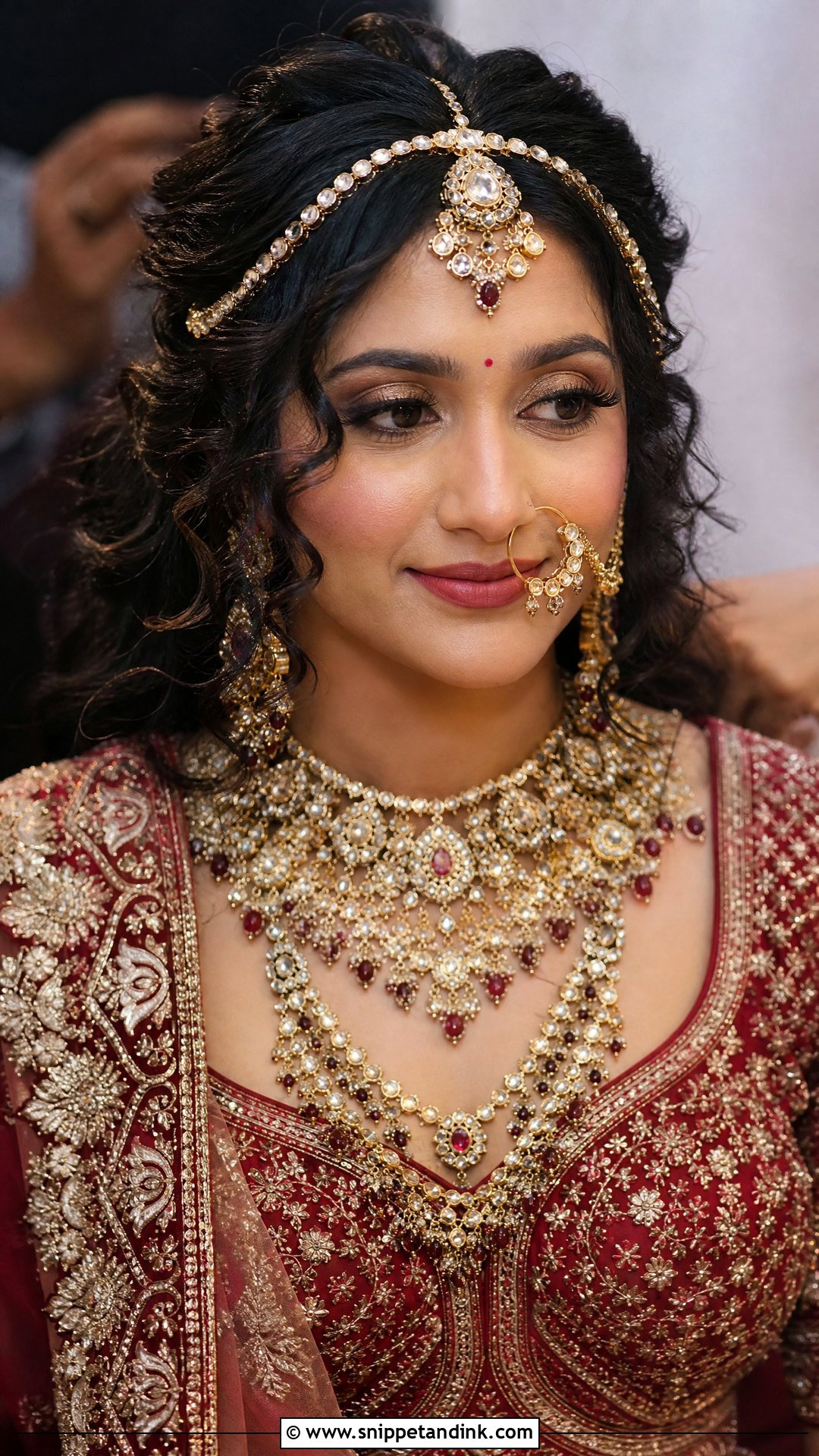
Loose curls under a maang tikka and matha patti give open hair the full traditional frame for the main ceremony. The matha patti’s side chains need their own anchors at each temple, small hidden pinned sections, otherwise the weight drags the curls down and the chains droop. I keep the hair pushed back slightly so the forehead jewellery shows. With a heavy lehenga and an elaborate necklace, the soft curls stop the overall look from feeling stiff. Do a full jewellery fitting at your trial; this is the combination where surprises happen.
16. Half-Up Braided Crown Hairstyle
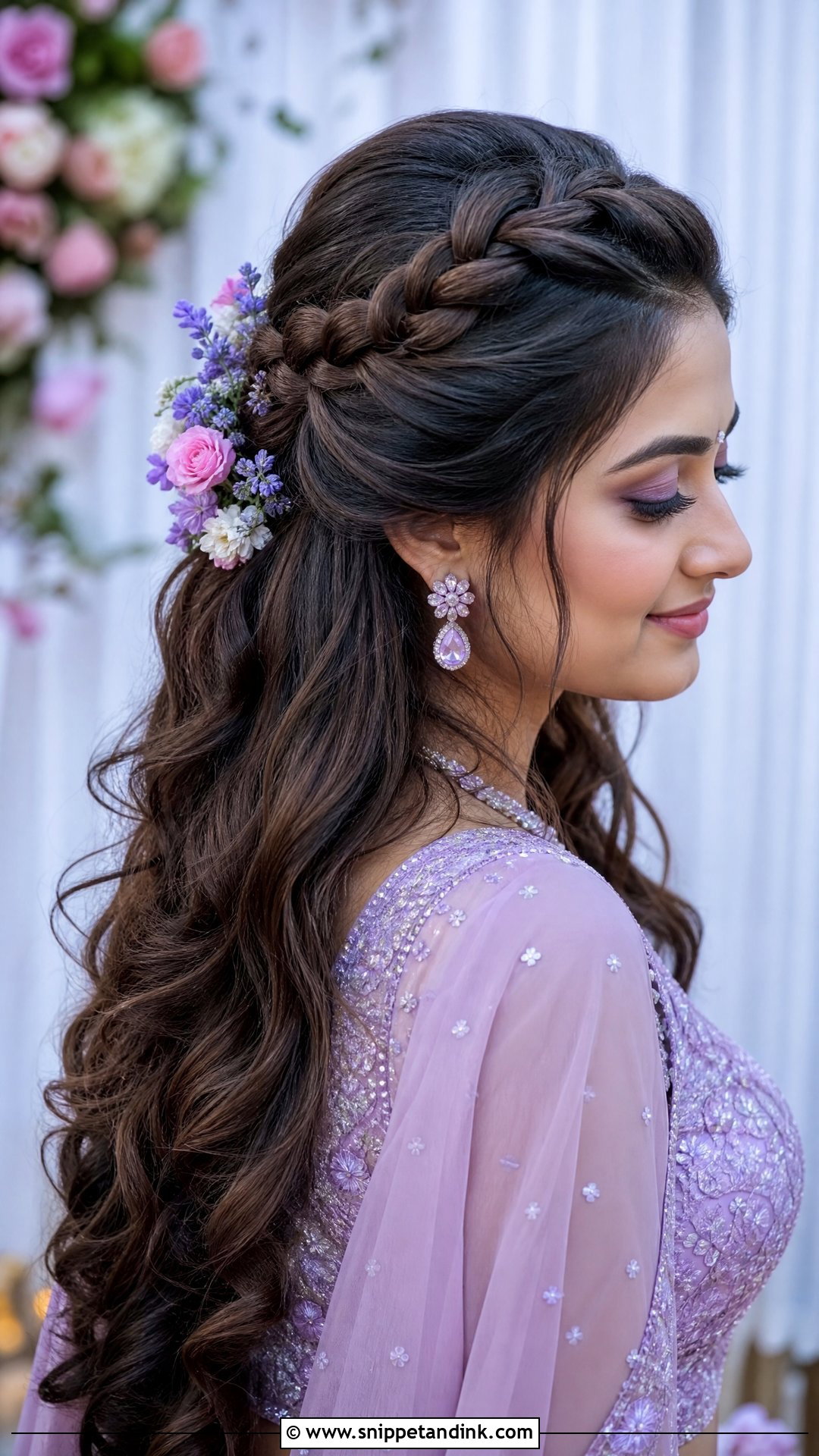
A braid wrapped across the top of the head, with loose hair flowing beneath, keeps the face clear and gives open hair real structure. It’s also one of the best options for pinning a dupatta, because the braid gives every pin something solid to grip. Tiny flowers or pearls tucked into the braid add detail. It suits engagement ceremonies and receptions with delicate earrings and a flowing dupatta. On layered hair, shorter pieces escape the crown, so I add a few hidden pins along it.
17. Loose Waves With Floral Hairpins
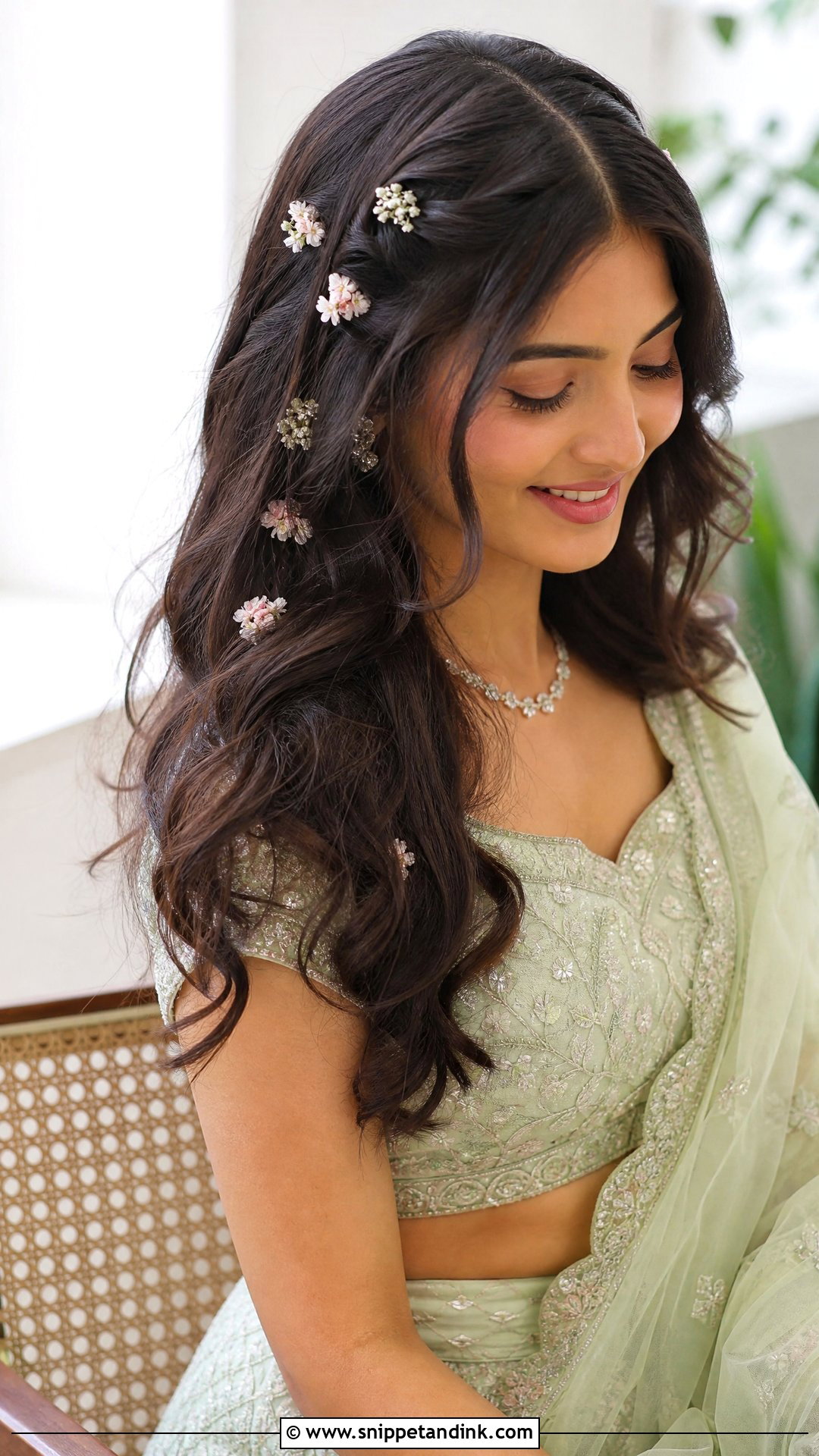
Small floral hairpins scattered through open waves add pops of colour without the weight of a gajra or crown. They work best for daytime and outdoor celebrations with pastel outfits and minimal jewellery. I keep a deep side part and place the pins mostly on the fuller side. Silk or preserved blooms last longer than fresh ones under hot lights, and they won’t drop petals on your blouse by the end of the evening.
18. Open Hair With Twisted Sides
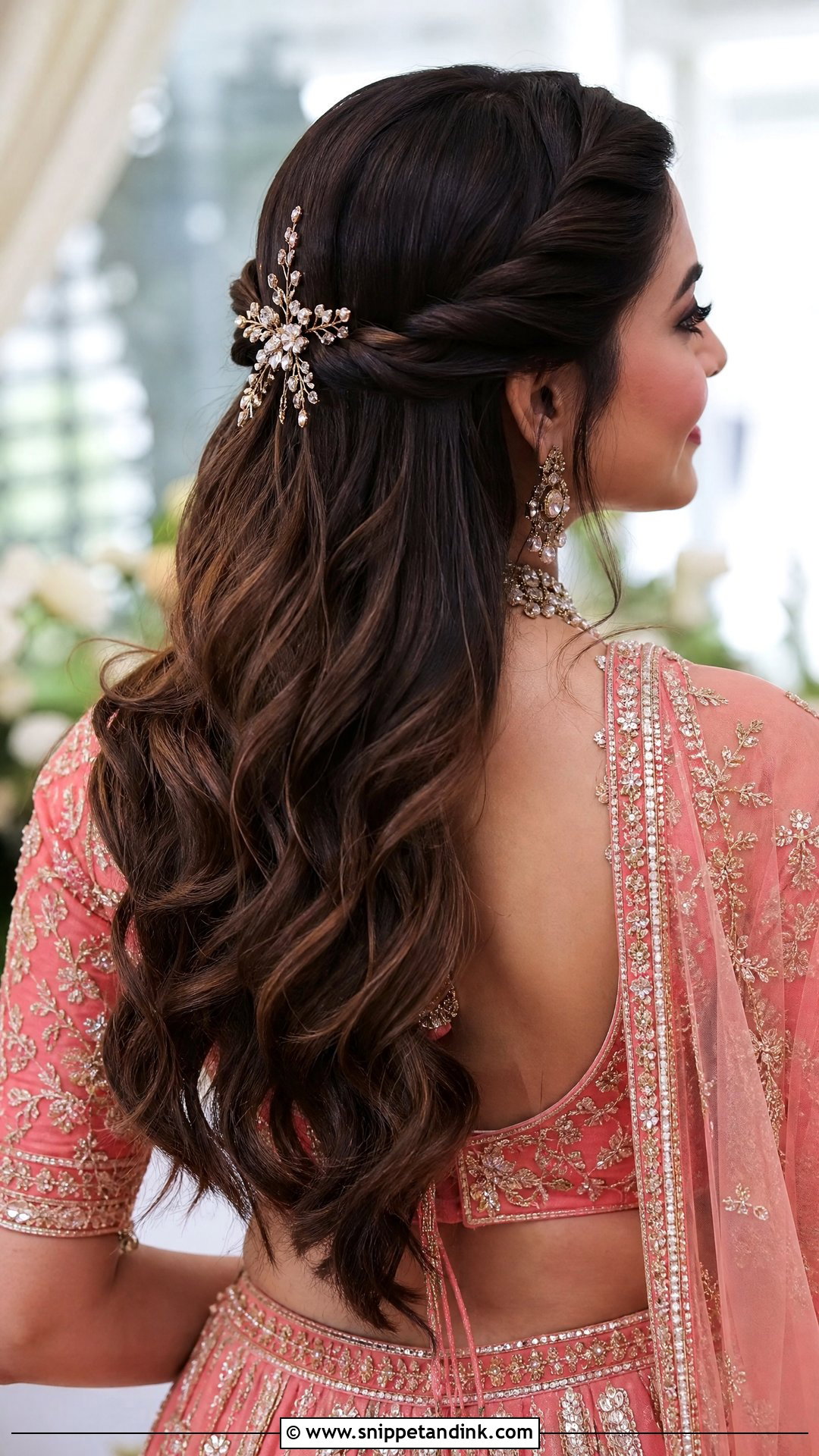
Twisting a small section from each side and meeting them at the back keeps the face clear while the rest of the hair stays open. It’s one of the quickest looks on this list, which is handy on a day with several outfit changes. A decorative pin or a few small flowers secure the join. I twist toward the back of the head, never forward, so the twists tighten rather than unravel as you move. It suits sangeet nights and receptions.
19. Loose Curls With Side Braid Accent
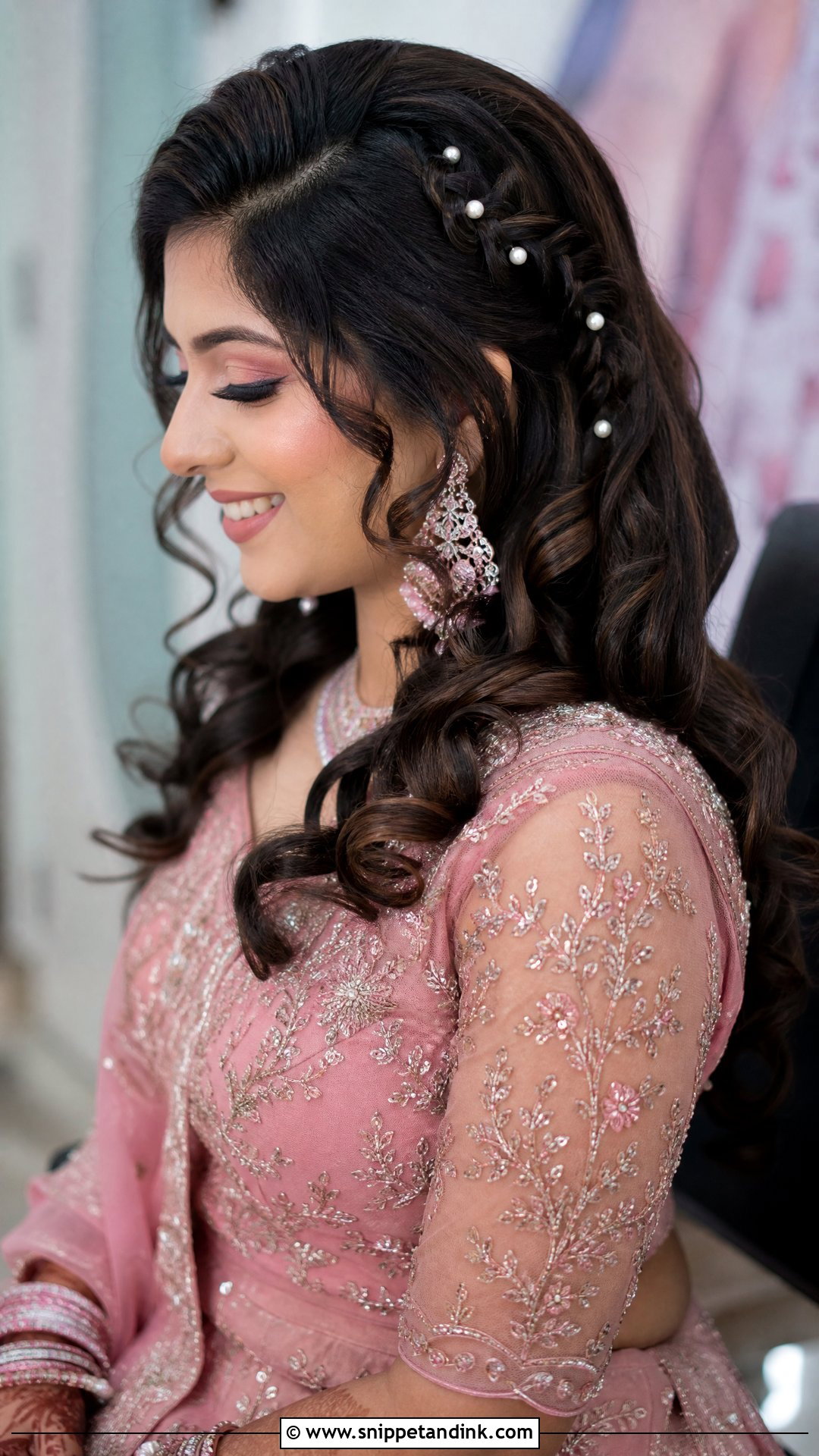
A thin braid running along one side, with loose curls everywhere else, adds detail without committing to a full braid. I braid that section before curling the rest, so the curls fall over the braid’s tail and hide where it ends. Tiny pearls or flowers can sit along the plait. It suits an engagement or reception with statement earrings and a flowing lehenga, and it’s a good way to keep one side tidy for a phone call or a dupatta pin.

20. Sleek Open Hair With Center Part
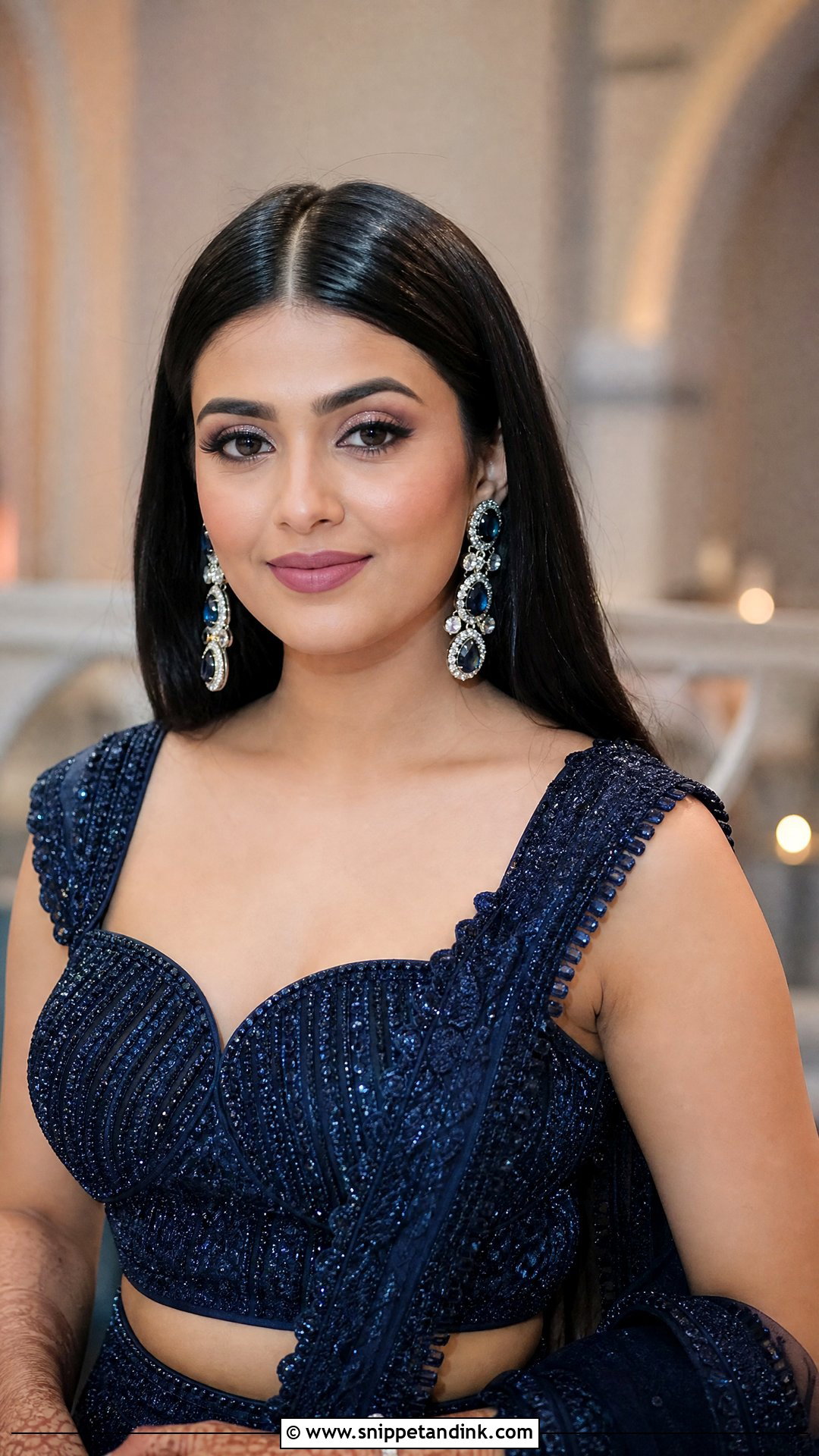
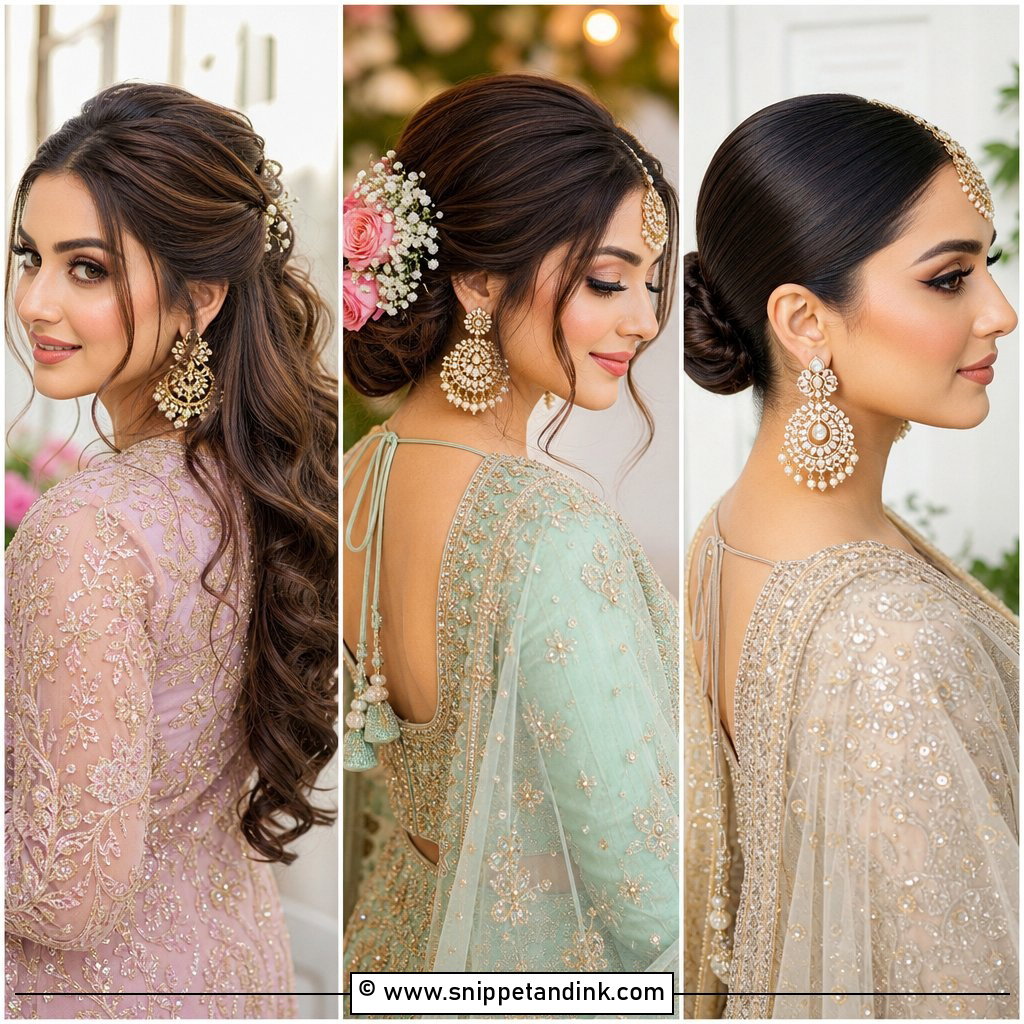
Sleek, straight open hair with a sharp centre part is the most minimal look here and, honestly, one of the hardest to keep perfect. Humidity puts frizz back into straightened hair within hours, so I use a smoothing serum and a light anti-humidity spray, and I avoid it for outdoor summer functions. When it holds, it lets bold earrings and a structured outfit take over, which makes it a good reception or cocktail choice. It’s worth asking whether your hair actually stays straight on a humid day before you commit.
Mehndi to Reception: Planning Hair Across Several Functions
Most Indian weddings mean three to five hairstyles over a few days, and open hair takes more heat than a bun. I plan the whole sequence together so your hair isn’t curled, straightened and curled again in 24 hours.
Days with henna or haldi
Braids and pinned-back looks are kinder here. Haldi paste stains light hair and is hard to rinse from curls, and you can’t touch your hair while mehndi dries, so nothing should need adjusting.
Back-to-back evening functions
If the sangeet and wedding are on consecutive days, sleep in a loose braid or silk scrunchie after the sangeet. Day-old curl is easier to restyle than freshly washed hair, and it saves a full round of heat.
Hair oiling before the wedding
A pre-wedding oil massage is lovely, but leave at least a full day and a thorough wash before any open style. Even a trace of oil at the roots makes curls fall within the hour and stops pins from gripping.
What Humidity Does to Loose Curls, and How I Plan Around It
Many Indian weddings happen in heat, rain or both, and open hair shows it first. Curls set on hair with heat protectant and a medium-hold mousse last far longer than curls set on bare hair. I also curl slightly tighter than the finished look, so the drop that humidity causes lands you at the right shape instead of flat. For an outdoor monsoon function, I’d honestly steer you toward a half-up or braided version and save fully open hair for an air-conditioned reception.
Open Hair Is Easier Than It Looks, With the Right Anchors
Loose bridal hair doesn’t have to mean hair that falls apart. Curls, waves, relaxed braids and half-up styles can all carry a tikka, a dupatta and a long day, provided the hidden structure is there. Pick by function: braids and gajra where your hands are busy, open curls and bands where you’ll dance, and the most secure option for the ceremony with the heaviest jewellery. Take your two or three favourites to your trial with the actual jewellery and dupatta, and wear the result for a few hours before you decide.
You'll Like These Ideas:





Leave a Reply