
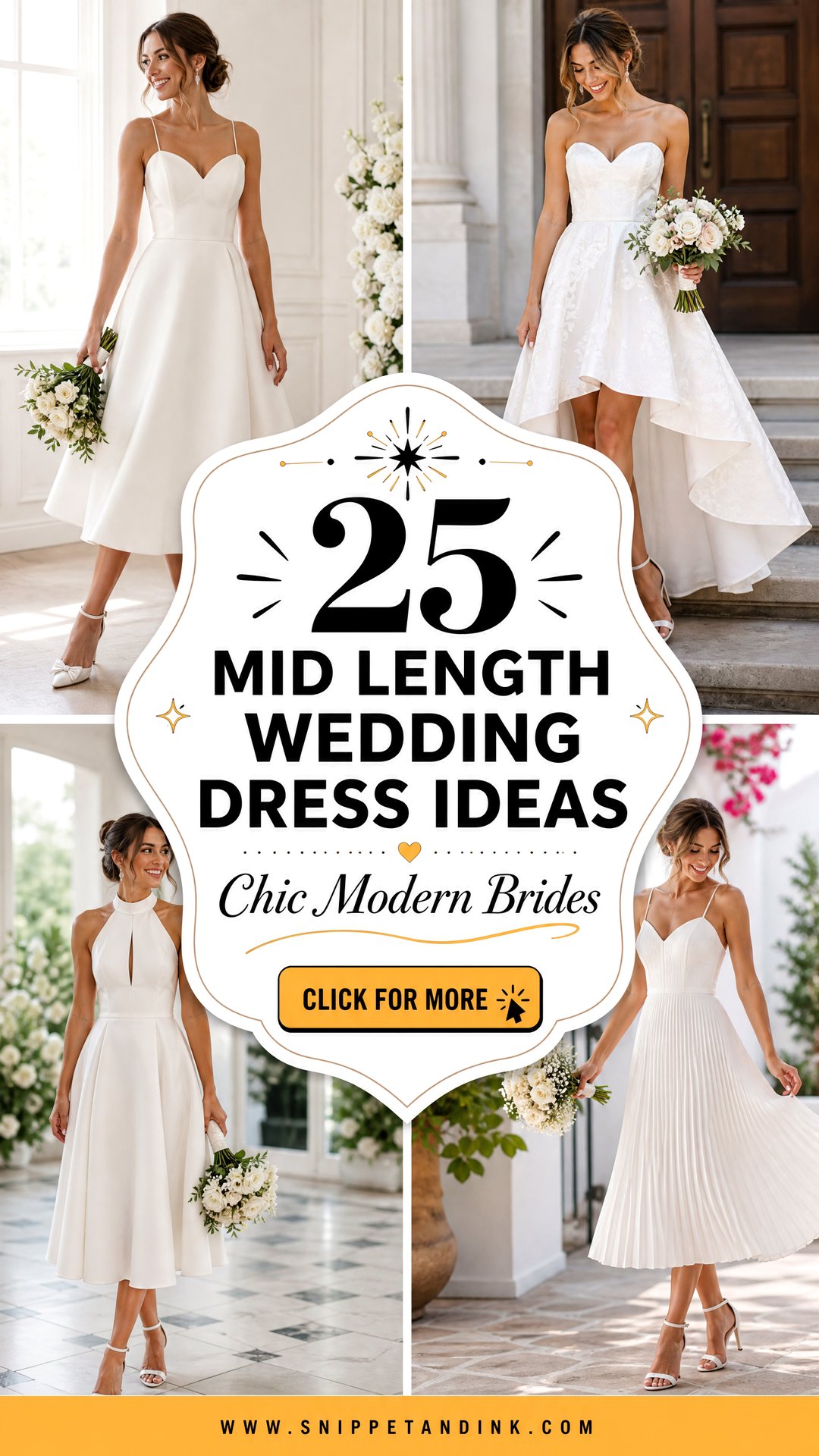
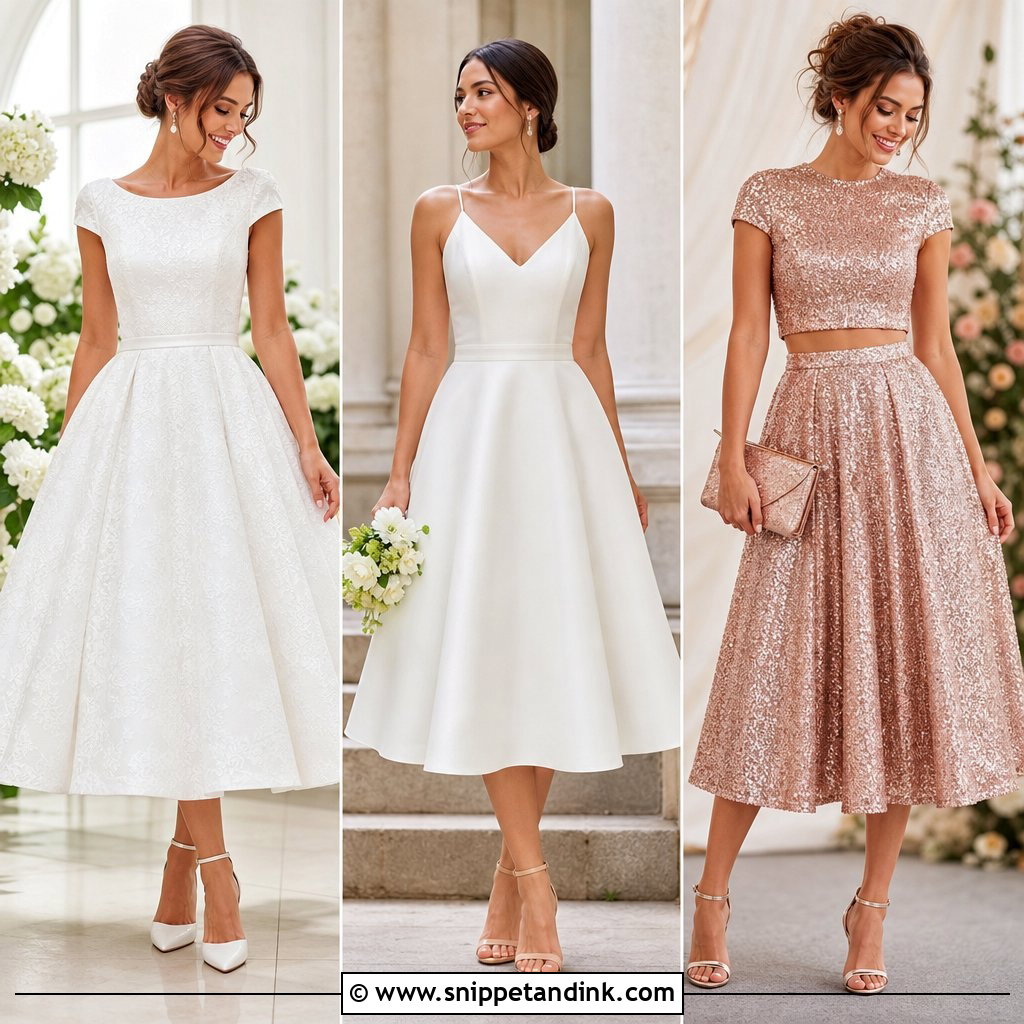
A midi or tea-length dress gives you a bridal outfit you can actually move in: no train to manage, no hem to lift on stairs, and your shoes finally get seen. Cut, fabric and accessories decide whether it reads vintage, modern or quietly simple. Brides choose shorter hems for courthouse weddings, garden ceremonies, destination trips, reception changes and second weddings, and a shorter length never stops a dress looking bridal when the fabric and fit are right. Below are 25 ways to wear it, from lace A-lines to satin slips and full tulle skirts, each with the fitting notes I’d give you in the room.
How Far Below the Knee Should It Fall?
Midi and tea length cover a wide band of leg, roughly from just under the knee to just above the ankle, and where your hem lands matters more than the label on the tag. The most useful rule I know is to stop the hem at a narrow point of the leg: just below the knee, or above the ankle where the calf slims. A hem that ends at the widest part of the calf cuts the leg visually and makes most people look shorter.
A few other things I check before we settle on a dress:
- Height. On petite brides, a hem just under the knee keeps the proportions long; a lower tea length can still work with a pointed toe or a little heel.
- Skirt volume. A full tulle or petticoat skirt usually looks better slightly shorter, while a slim slip or sheath can drop lower without looking heavy.
- Veil length. Shoulder, elbow and fingertip veils sit in proportion with a shorter hem. A cathedral veil over a midi is a deliberate fashion choice, so try it at a fitting before committing.
- Shoes at the hem appointment. Bring the exact pair, because a two-inch change in heel moves where the hem hits your calf.
1. Tea Length Lace Wedding Dress
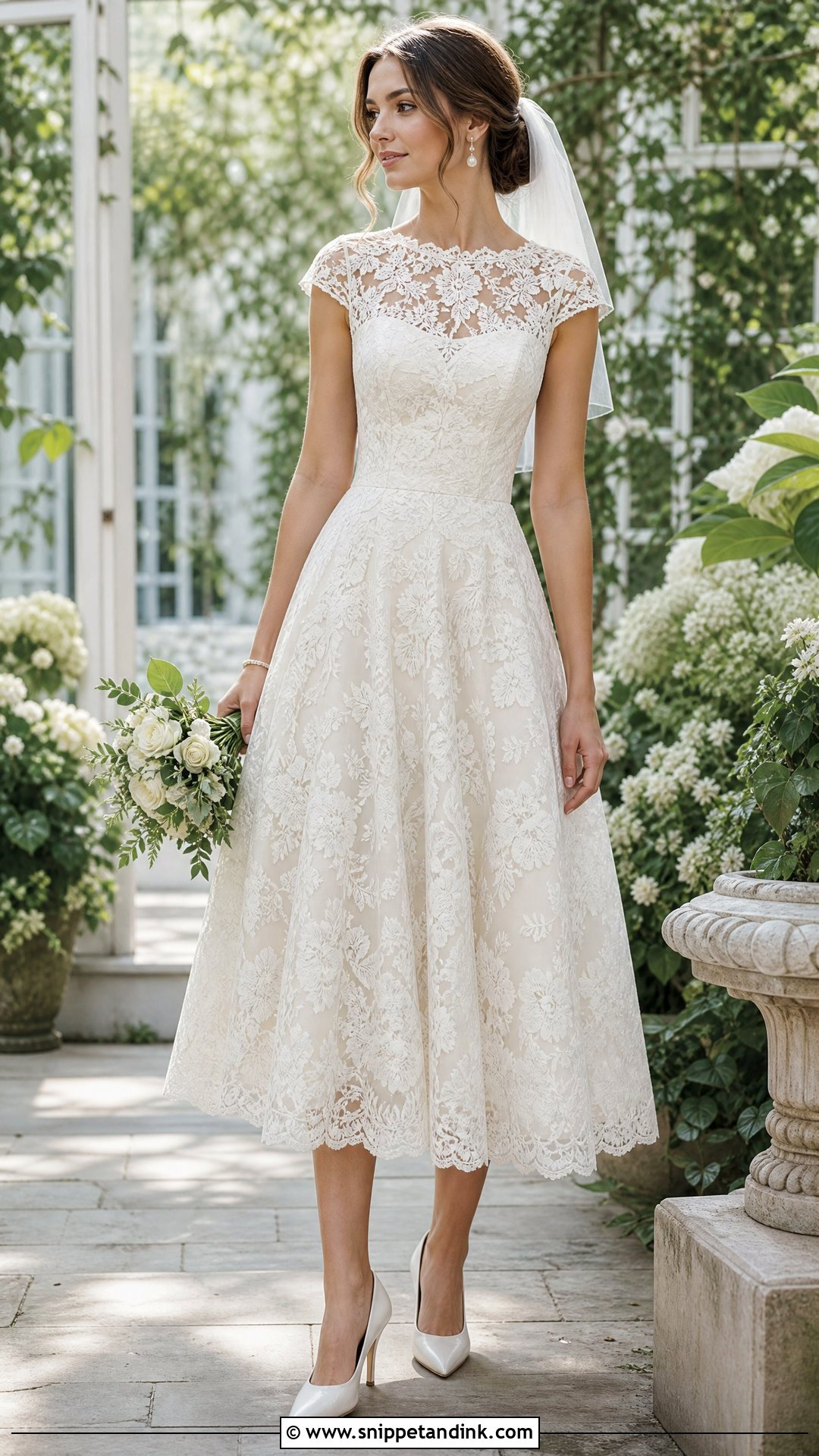
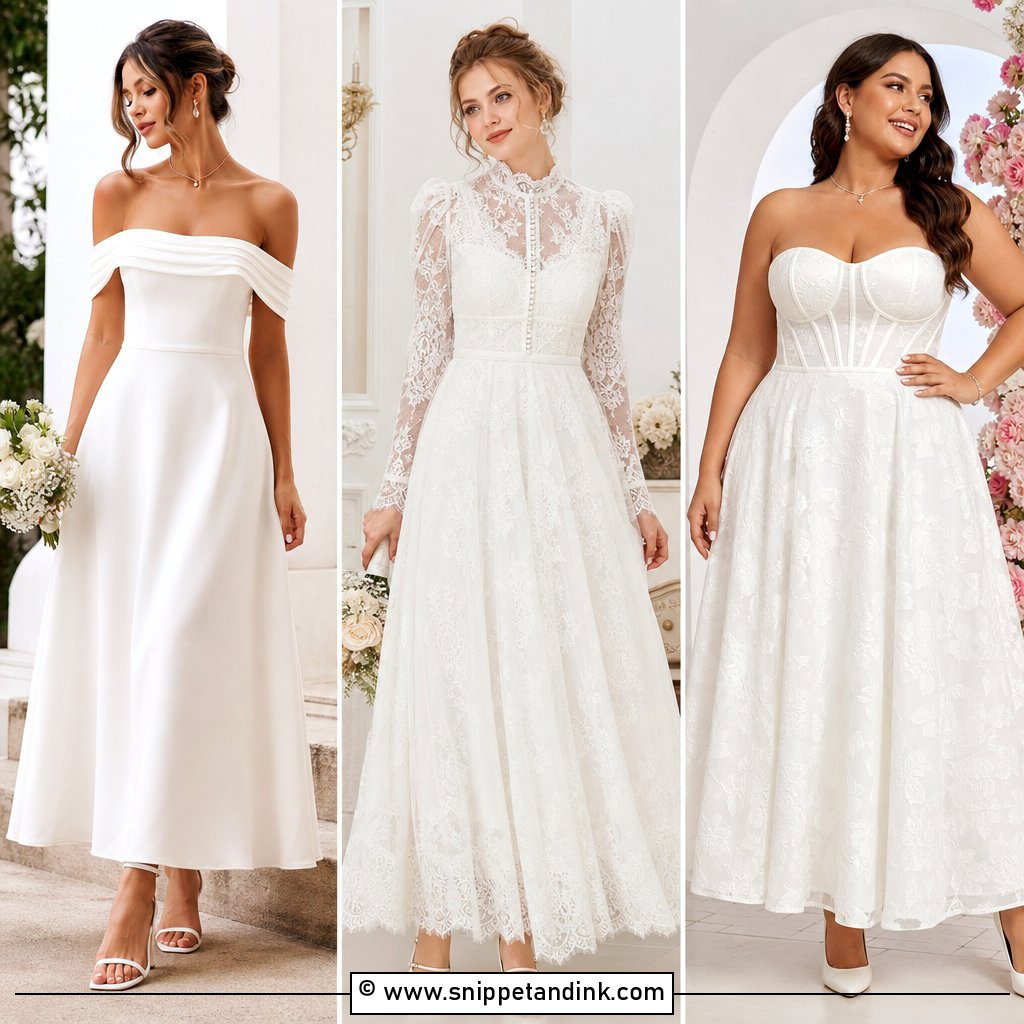
Tea length sits anywhere between the knee and the ankle, and lace is the fabric that makes it read as a wedding dress rather than a party dress. Floral lace over a smooth lining looks traditional; sheer lace sleeves add coverage without weight. The thing I check first is where the scallop lands. A scalloped hem cut through the middle of a motif looks unfinished, so good alterations lift the lace edge and re-apply it rather than chopping straight across. Pointed pumps, pearl earrings and a simple veil are enough. Garden venues and afternoon ceremonies suit it, as does anyone who likes vintage detail but wants to move freely.
2. Satin Midi Wedding Dress
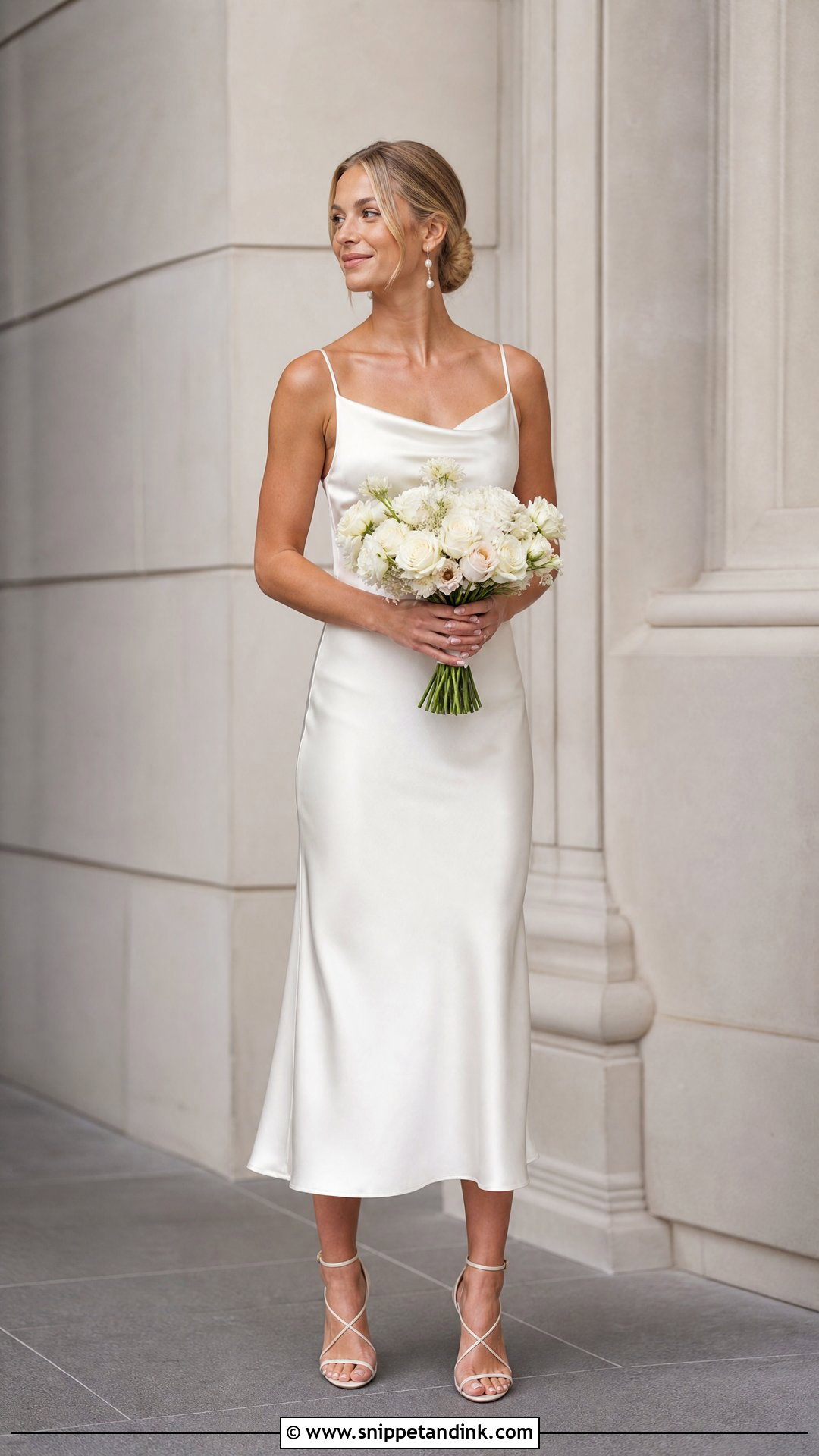
Satin catches the light, which makes a plain midi look expensive and also makes every ripple visible. A bias-cut satin midi skims the body and moves as you walk, while a structured satin A-line holds more volume and support. Bias-cut satin is honest about what’s underneath, so plan on smooth, laser-cut underwear and try it on with them. Strappy heels, a low bun and delicate drop earrings keep it clean, and a short veil or hair bow is all the bridal finish it needs. City weddings, civil ceremonies and modern venues are its natural home.
3. Off Shoulder Midi Wedding Dress
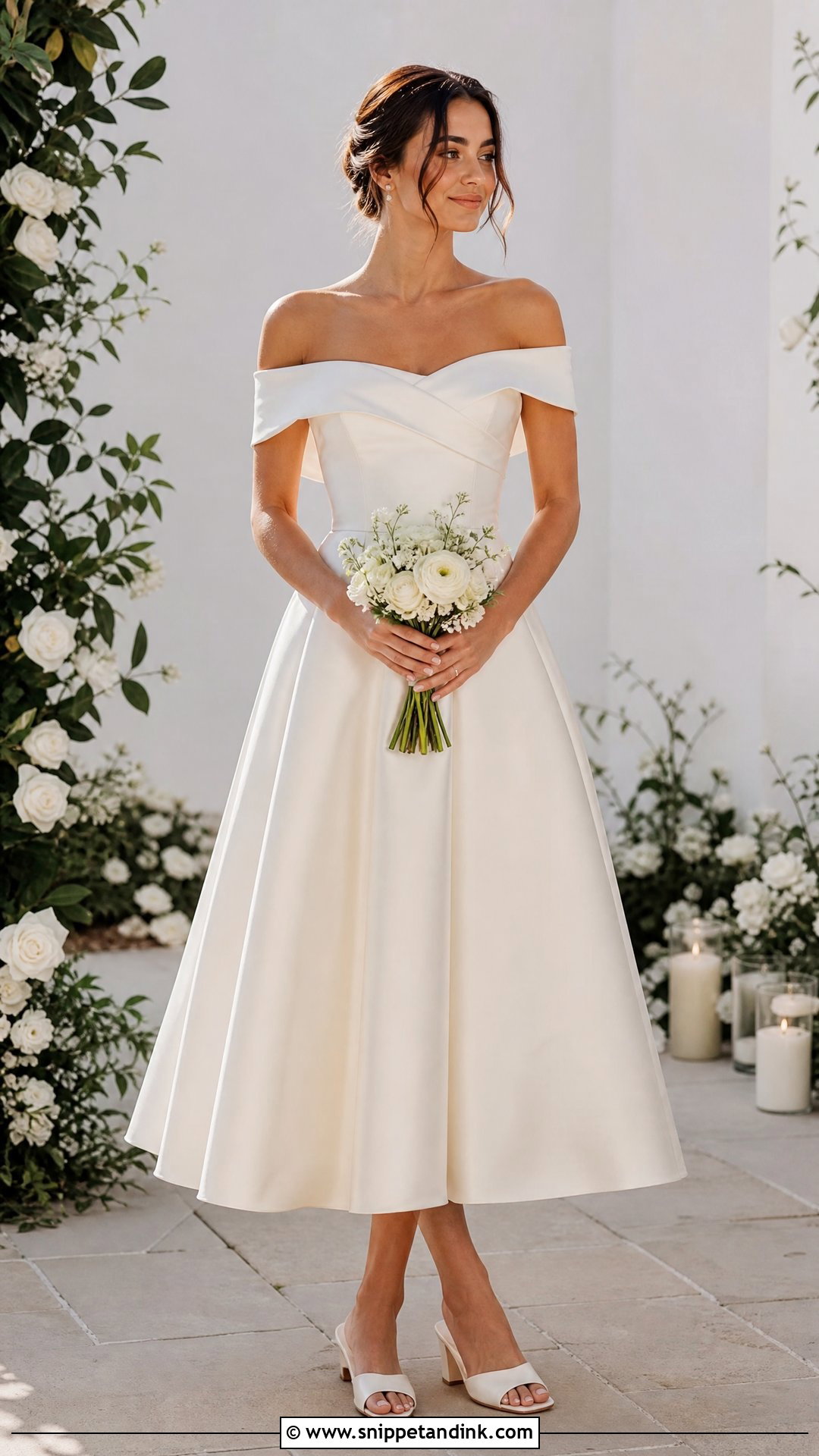
Bare shoulders above a shorter skirt keep this look light, and the neckline balances either a fuller skirt or a fitted bodice. Crepe, satin and lace all hold an off-shoulder line. My test is the hug. A band cut even slightly loose climbs every time you wrap your arms around someone, so I always fit it with the arms raised. Pearl studs, low block heels and a small bouquet are plenty. For more drama, look for folded satin cuffs or soft ruching through the bodice, both of which frame the collarbone well.
4. A Line Midi Wedding Dress
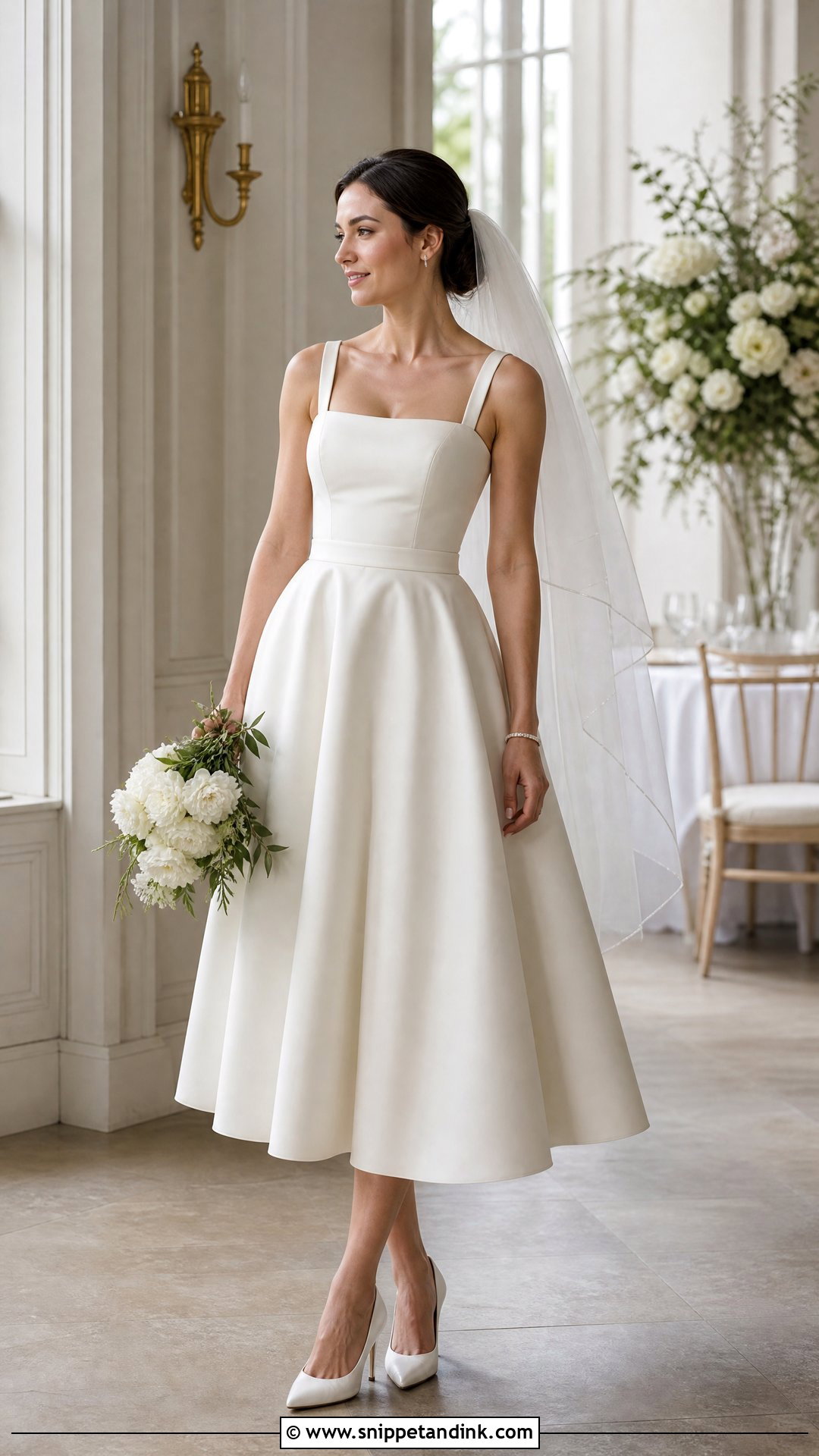
The A-line suits more body types than any other midi shape I fit. The bodice defines the waist and the skirt widens gently without clinging, in anything from crisp mikado to tulle or lace. You can sit, walk and dance without adjusting a thing. Classic pumps, a waist-length veil and a fine bracelet finish it, and it feels traditional without the weight of a floor-length gown.
5. Tulle Midi Wedding Dress
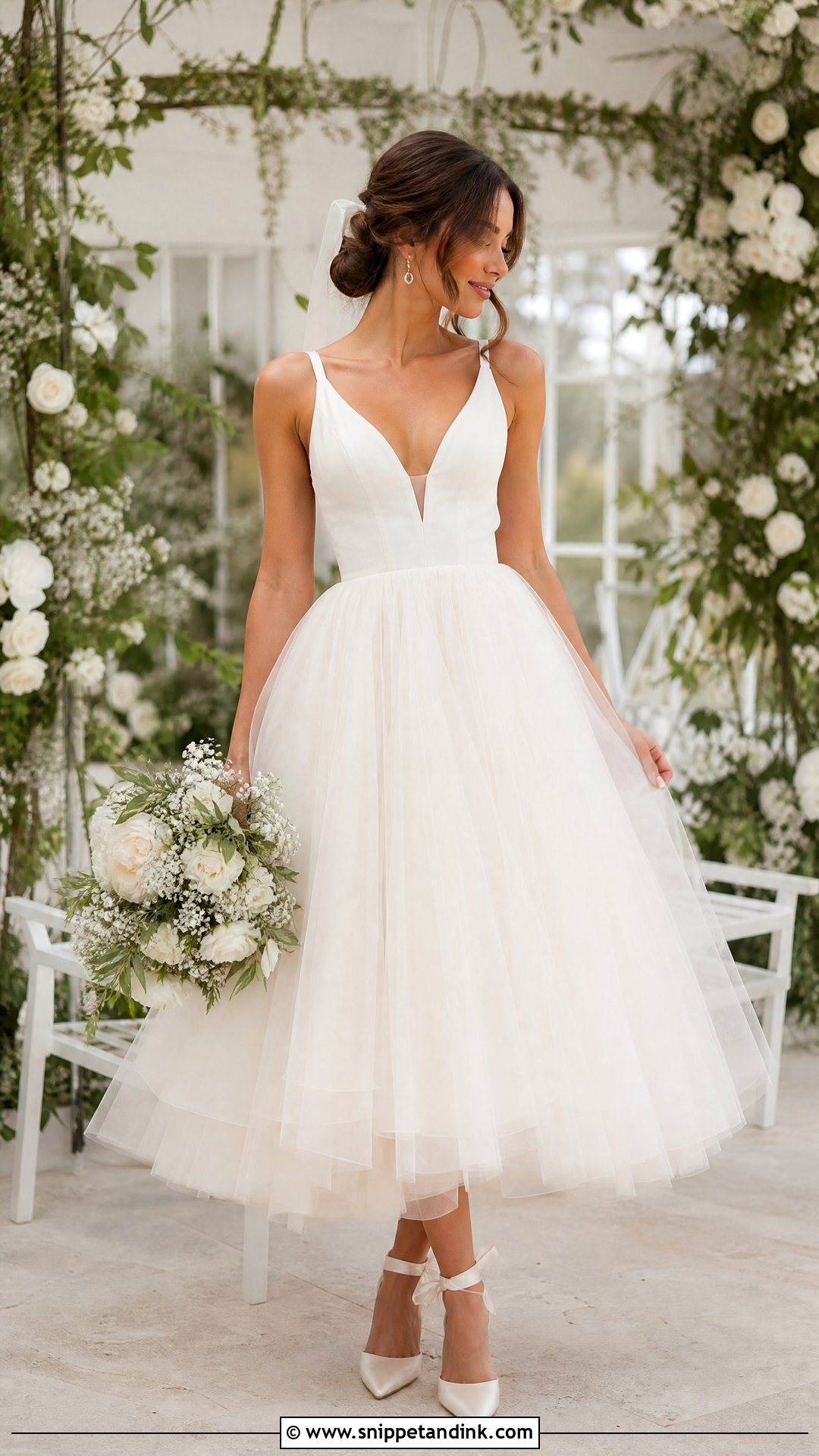
Layered tulle gives a midi volume and bounce without ball-gown weight. Fine ivory tulle on a simple bodice stays soft; gathered tulle, a corset top or woven sparkle add drama. Because the hem is short, your shoes do a lot of work here, and ballet flats, satin heels and embellished pumps all suit it. A practical note from fittings: a new tulle skirt can look stiff and creased from its bag, and a gentle steam held well away from the layers lets them relax before the day. Keep jewelry fine so the texture stays the focus. It’s light enough to wear from the first look to the last song.
6. Long Sleeve Midi Wedding Dress
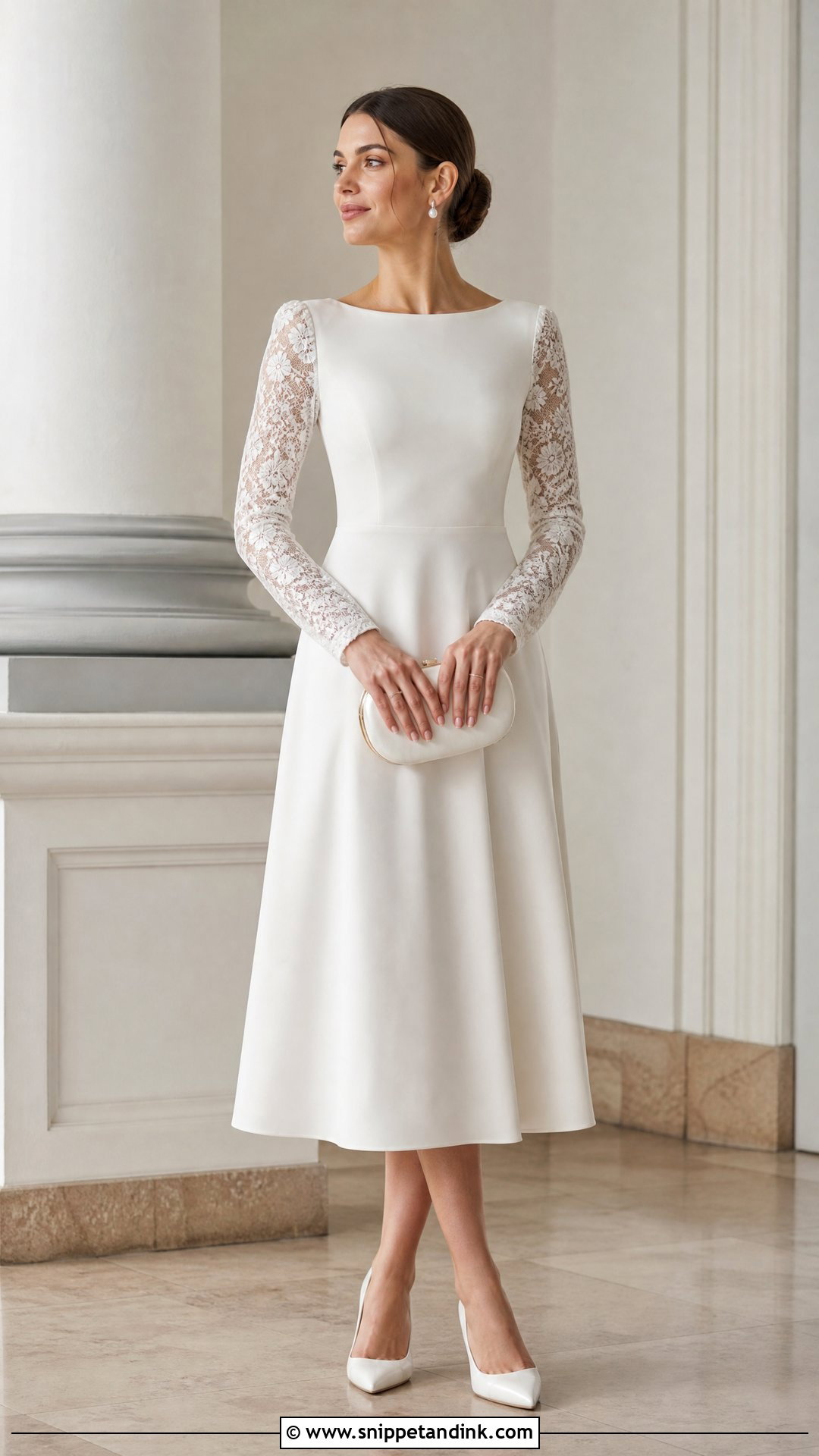
Long sleeves give coverage, and the midi hem stops them feeling too formal. Lace sleeves read romantic, sheer ones delicate, fitted crepe ones clean. I check that the cuff still reaches the wrist bone with the elbow bent, because a sleeve that looks right with arms down rides up the forearm the moment you hold a bouquet. Closed-toe heels, a sleek clutch and soft waves or a polished bun complete it. Cooler seasons, formal daytime ceremonies and modest dress codes suit it, and the sleeves frame the dress in photos without needing extra jewelry.
7. Square Neck Midi Wedding Dress
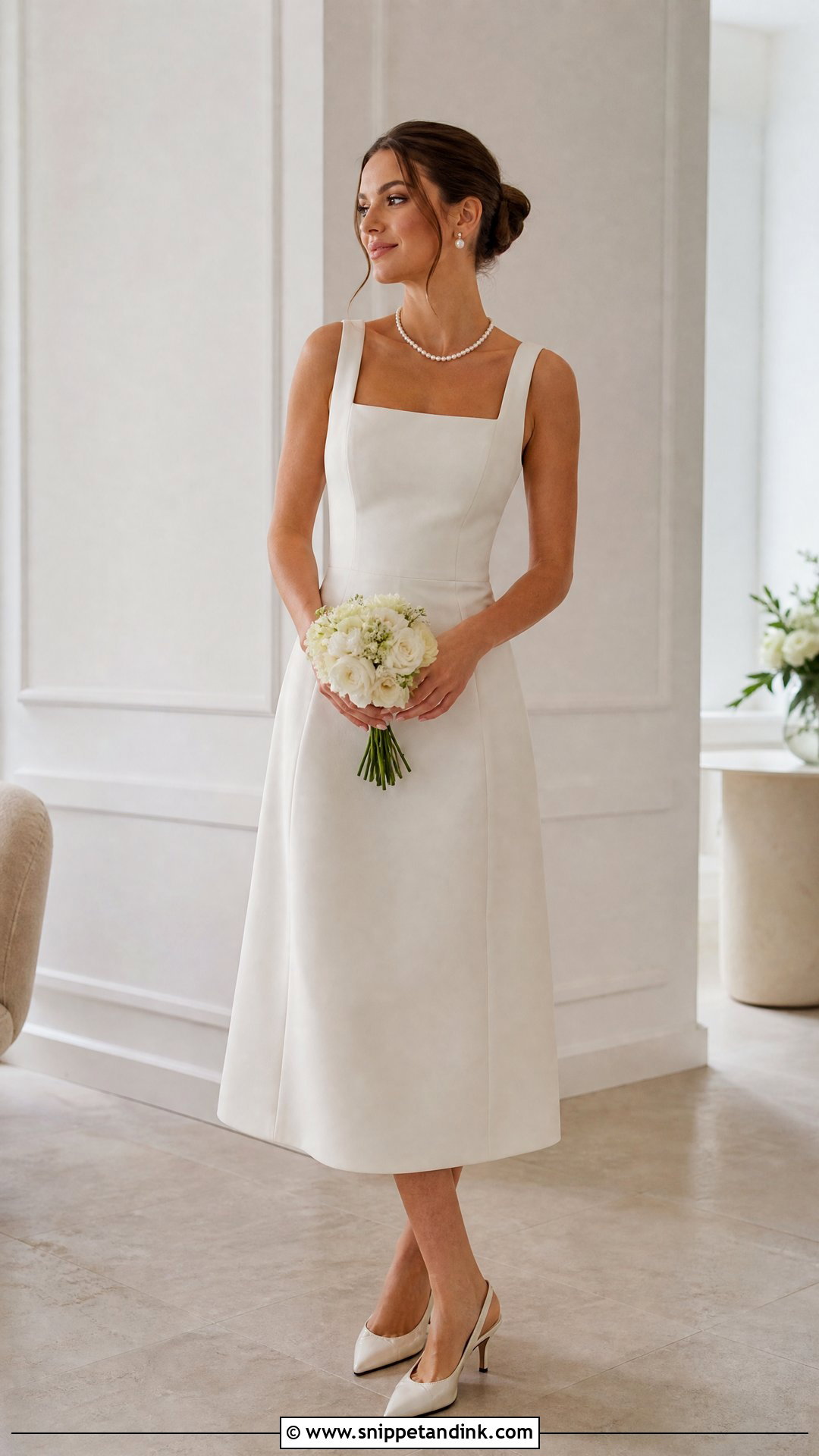
A square neckline runs straight across and frames the collarbone, sitting well with wide straps, puff sleeves or a fitted bodice. A structured fabric keeps it polished; cotton lace relaxes it. It’s my usual suggestion when a bride needs support but dislikes high necks, because the straight edge and the straps hold everything in place without boning digging into the ribs. Add slingback heels, a pearl necklace and a neat updo. Ceremony, reception or courthouse, it fits any of them.
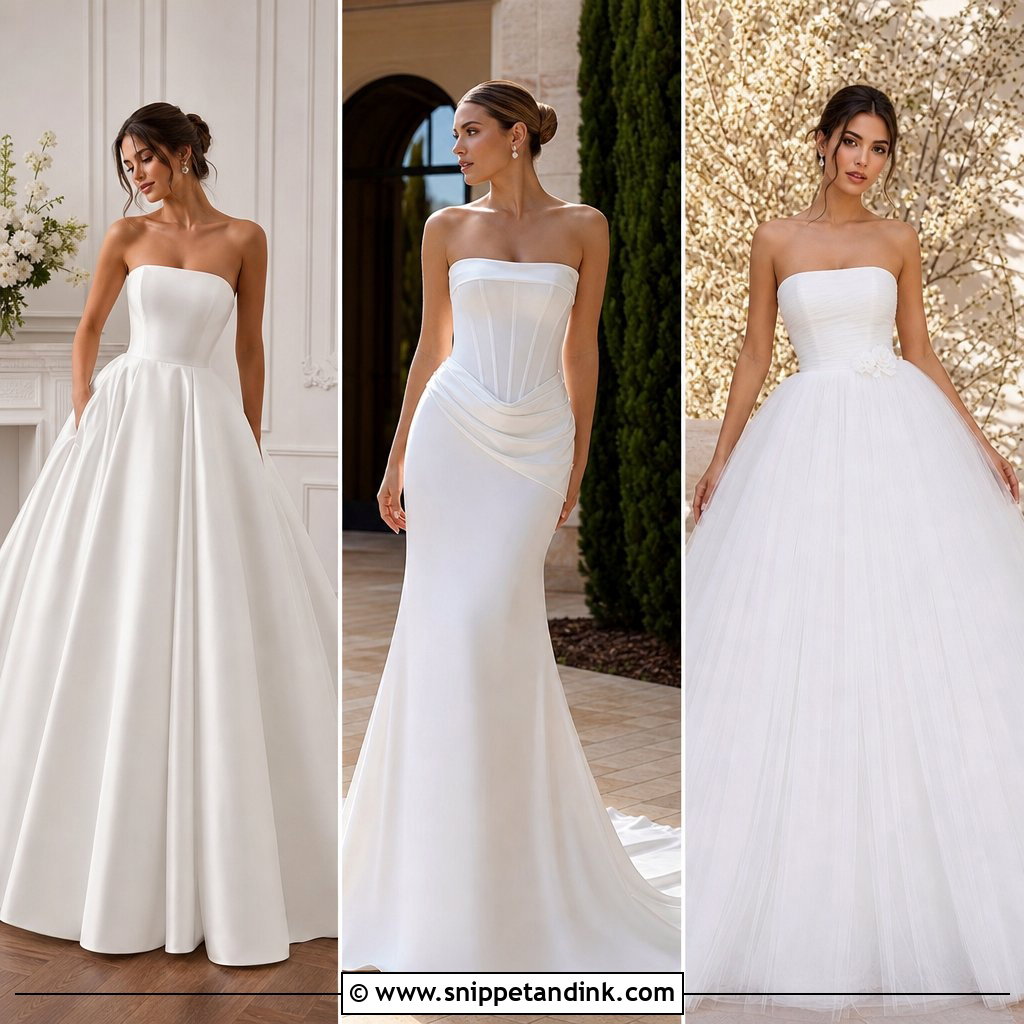
8. Strapless Midi Wedding Dress
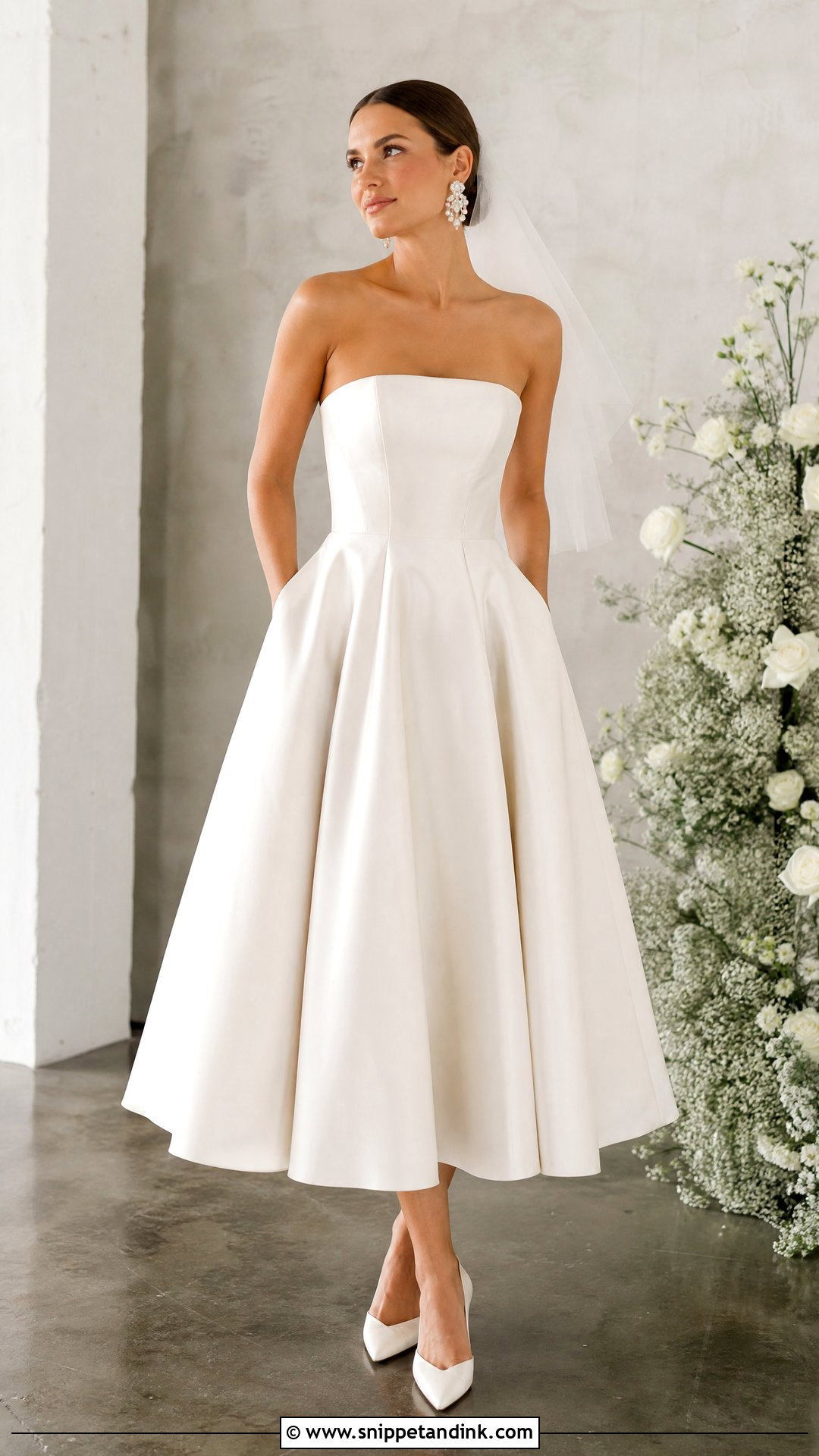
A strapless midi wedding dress depends on its bodice, which needs real structure to stay put while the shorter skirt keeps things fresh. Satin, mikado and crepe hold the shape best. Before you buy, do a slow twist and a reach in the mirror; if the top edge moves, the bodice needs taking in at the side seams. Statement earrings, pointed heels and a short veil polish it. For softness, add detachable gloves or a sheer wrap for photos. Clean lines and strong shape are the whole point.
9. Courthouse Midi Wedding Dress
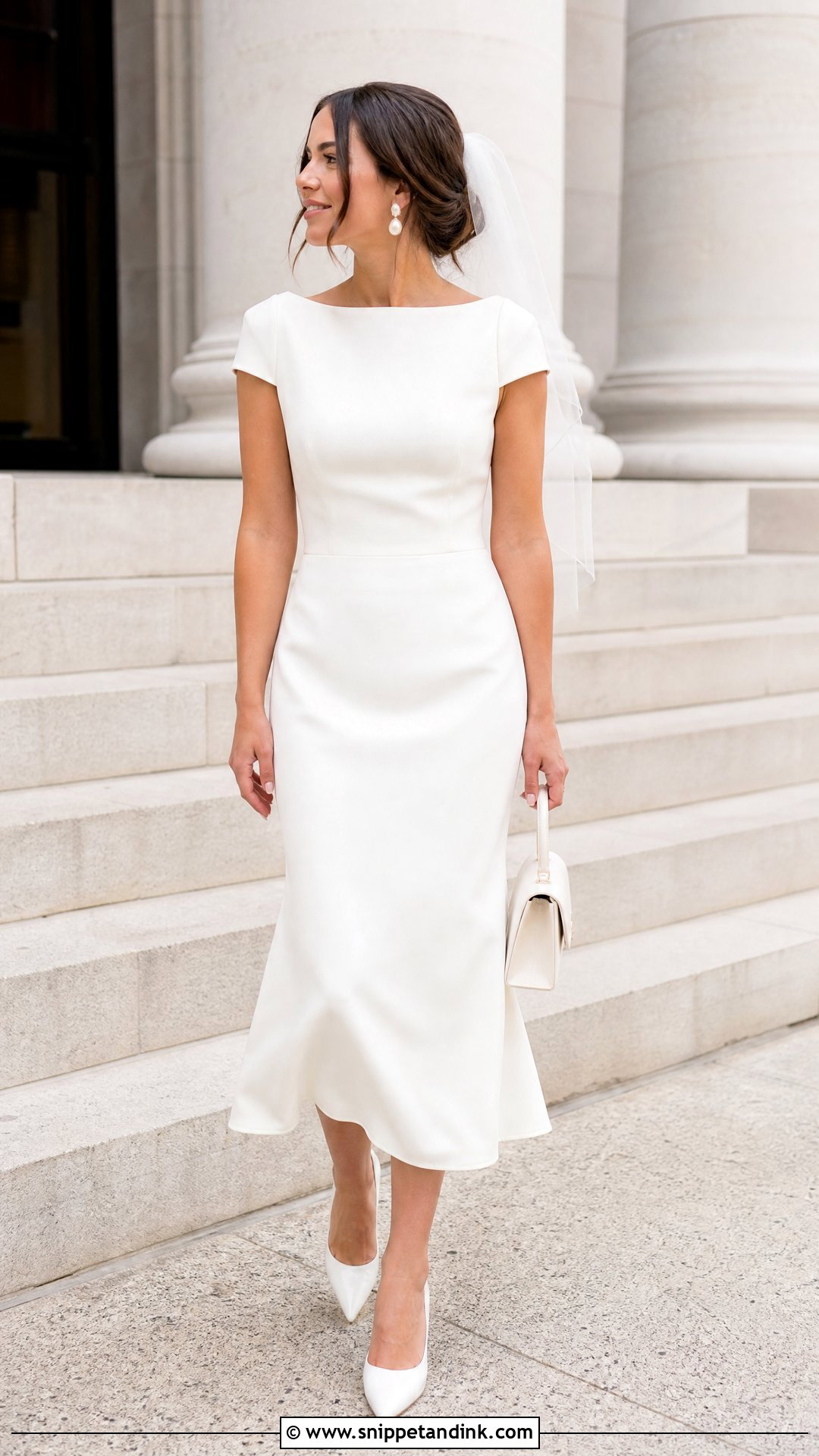
For a courthouse ceremony I want a dress that looks bridal in a marble hallway and doesn’t fuss on a city sidewalk. A clean sheath, tailored A-line or structured satin midi all manage that. Accessories carry more weight than usual: white pumps, pearl earrings, a small top-handle bag, a short veil or hair clip. A tailored blazer over the shoulders looks sharp and keeps you warm in air-conditioned halls. Expect security lines and steps, and choose shoes you can walk a few blocks in, because street photos afterward are half the fun of a city wedding.
10. Vintage Tea Length Wedding Dress
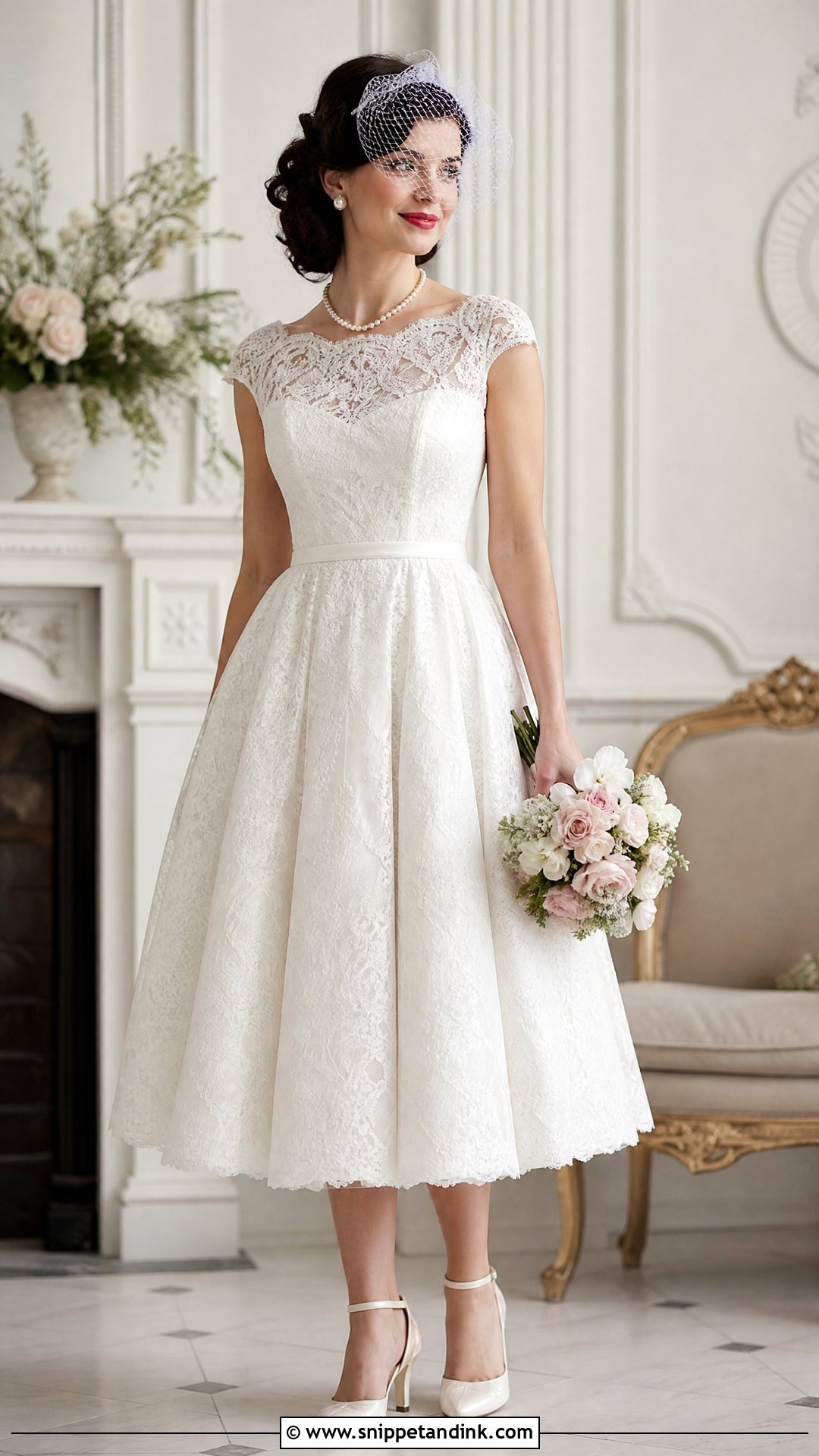
Fitted bodices, full skirts, lace overlays, bateau necklines and cap sleeves are what make a vintage tea length wedding dress feel like the 1950s. That full skirt depends on what’s underneath it. A tulle petticoat gives the classic bell shape, and I always try the dress both with and without one, since the right amount of volume changes with your height. Block heels, pearls and a birdcage veil or bow bring it into the present when everything else stays simple. A defined waist keeps the silhouette graceful, and there’s no train to manage at all.
11. Simple Crepe Midi Wedding Dress
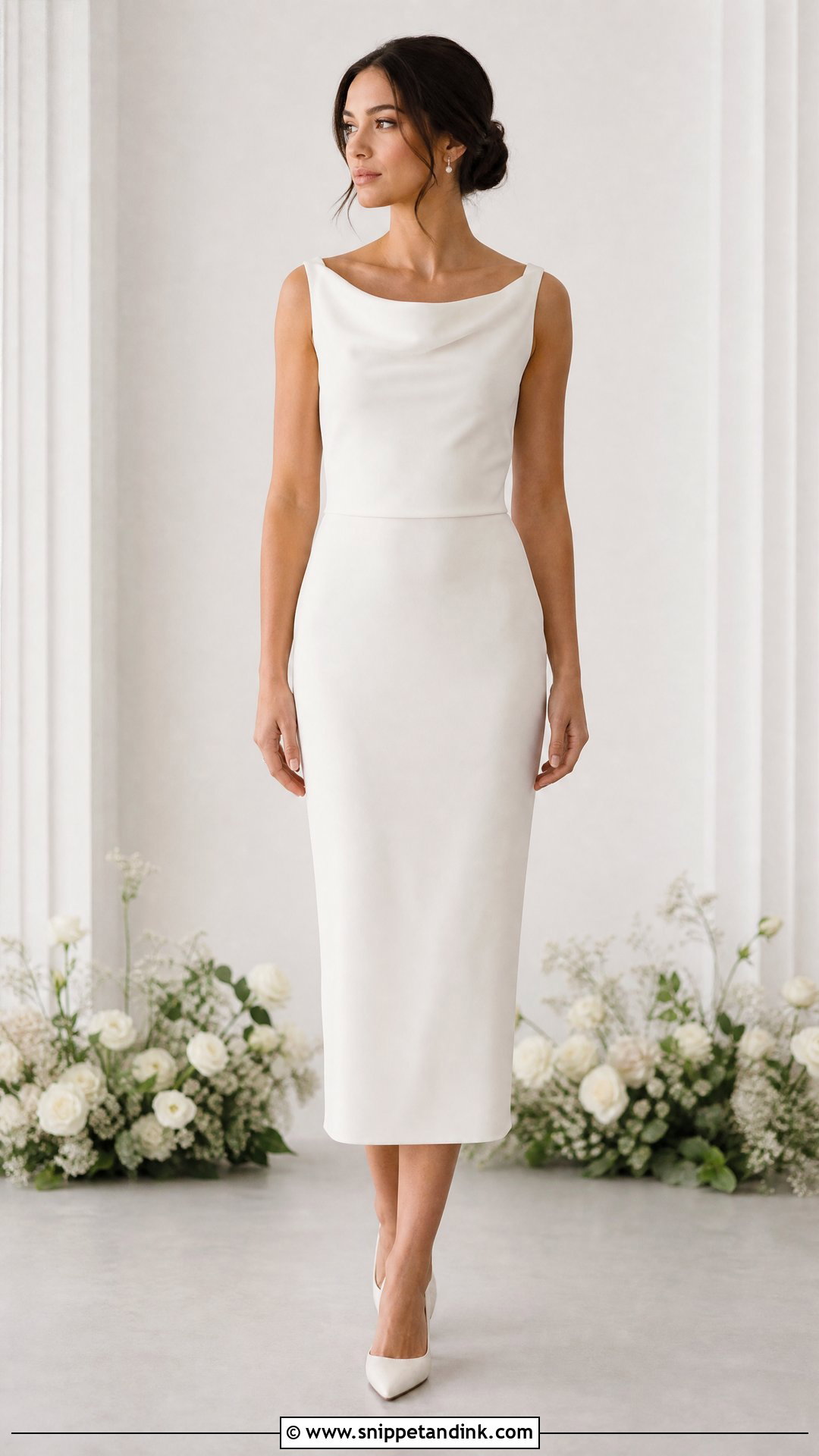
Crepe has a smooth, slightly structured surface with very little shine, so a sheath, column or soft A-line all look clean in it. It is unforgiving in one way: it shows undergarment lines, so bring the exact bra and shapewear to every fitting. Keep jewelry minimal, heels sleek and hair in a low bun. If you want one detail, make it a low back, a bow or a sculpted neckline, not all three. Minimalist venues suit it, and it lets your own styling do the talking.
12. Floral Applique Midi Wedding Dress
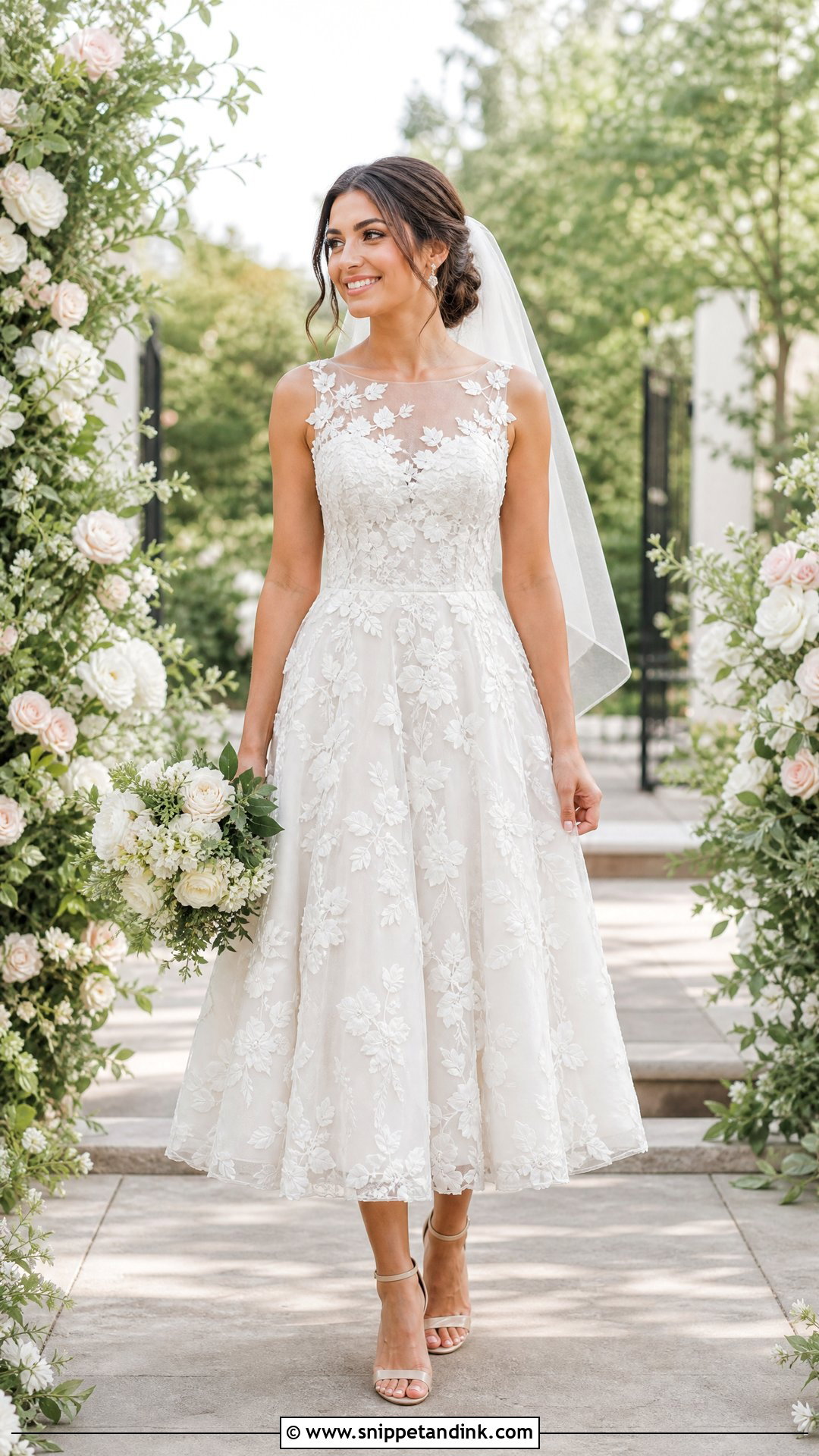
Raised floral appliqués can be scattered across the bodice, set along the skirt or layered over sheer sleeves. They’re usually stitched on by hand, which matters for alterations: a seamstress has to lift and re-sew any appliqué that crosses a seam she’s taking in, so ask about that cost early. The dress is already busy, so style it quietly with neutral heels, tiny earrings and a soft veil or plain ribbon. The shorter hem keeps all that detail from feeling heavy, and spring and summer garden ceremonies show it at its best.
13. High Low Midi Wedding Dress
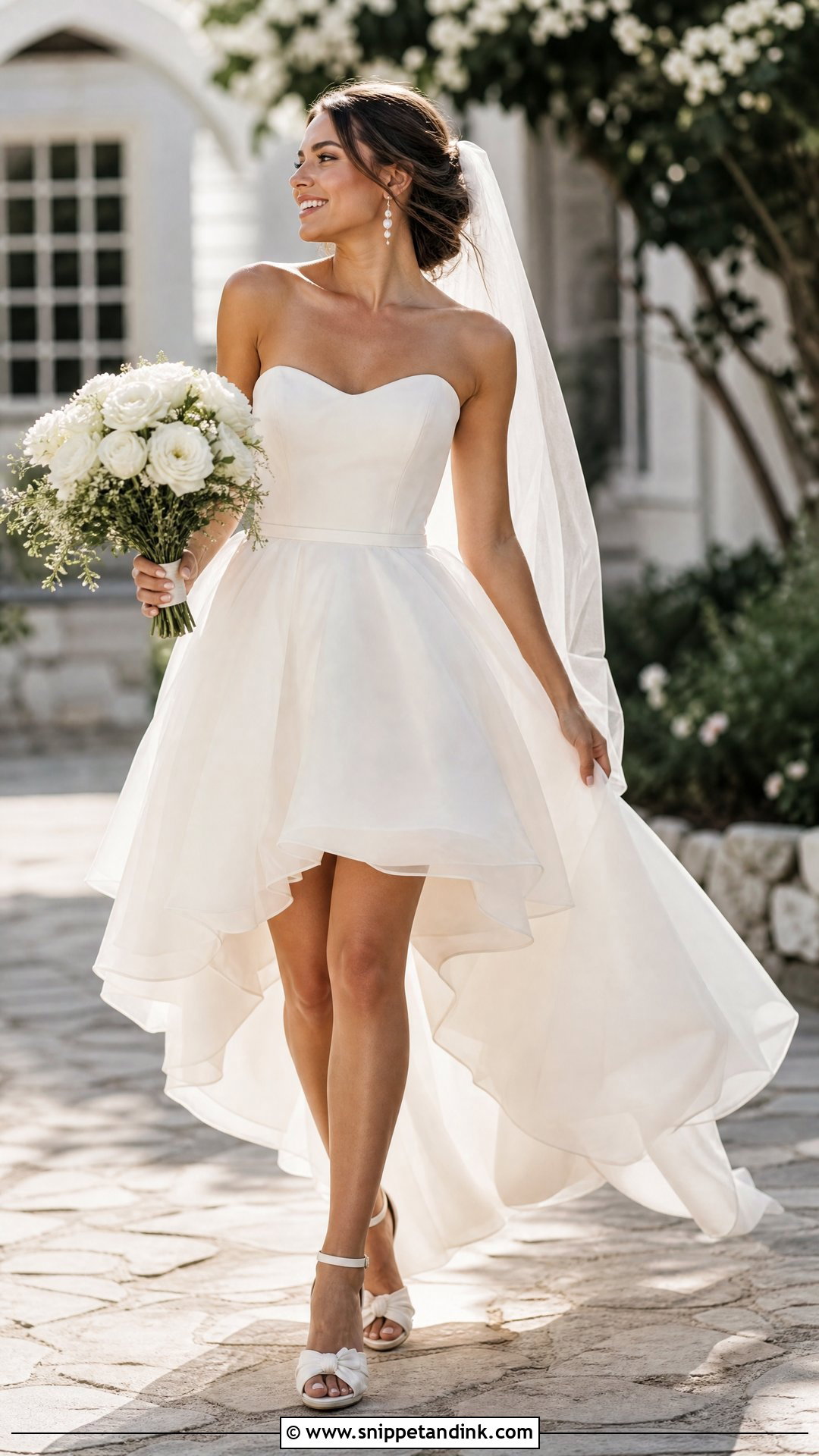
Short at the front, longer at the back, a high low midi gives movement and a hint of a train with nothing to bustle. Organza, satin, tulle and soft crepe all drape well this way. Your shoes show at every step, so this is the dress for the heels you actually love. I watch the side seam where the two hem lengths meet: a sharp drop can look accidental, while a gradual curve looks designed. A simple veil and fine jewelry keep it balanced for outdoor ceremonies and reception entrances, where the motion makes the photos.
14. Bow Detail Midi Wedding Dress
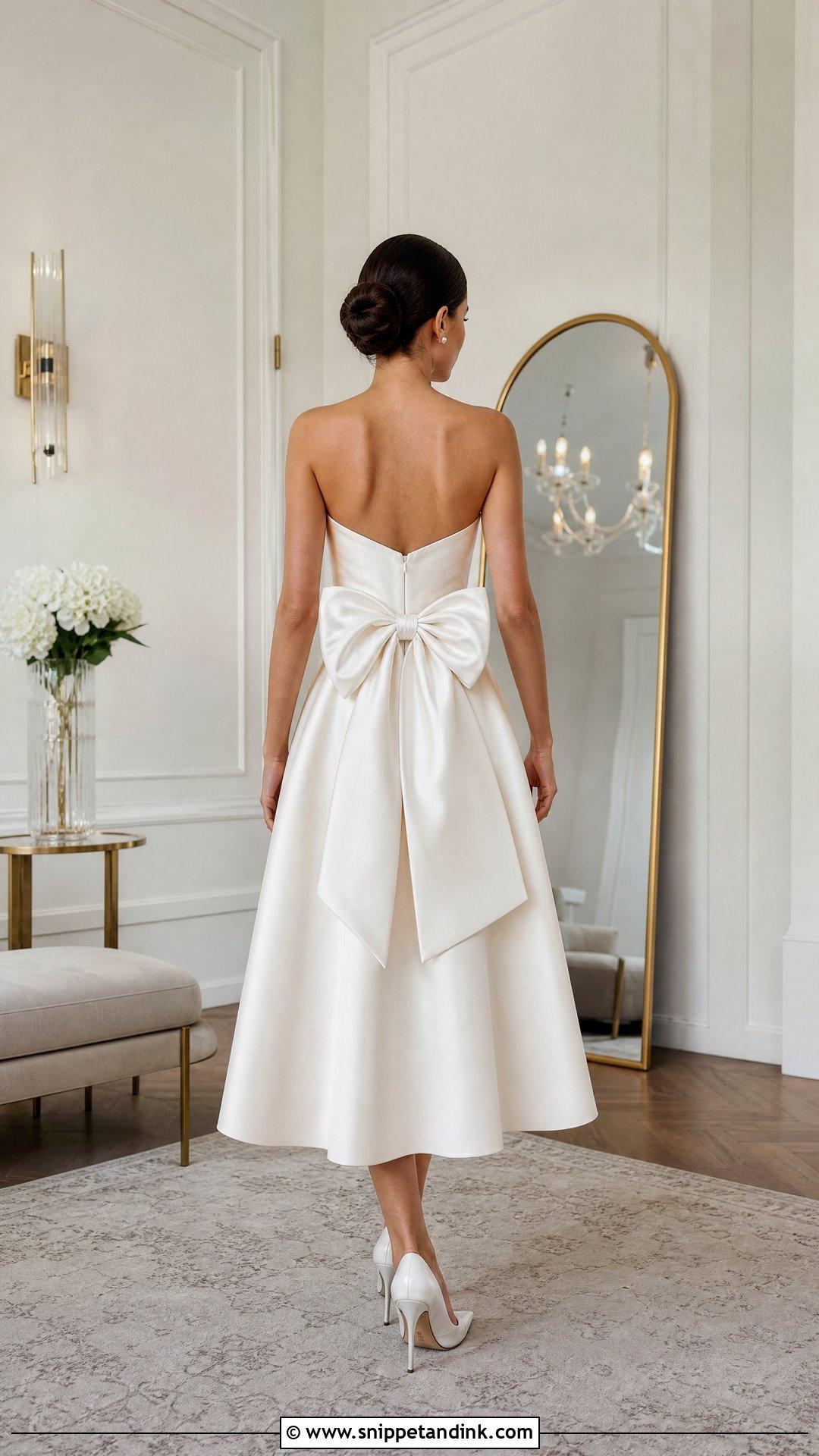
A bow is one detail that changes the whole mood. At the back it reads dramatic and bridal; a small waist bow reads sweet, and shoulder or neckline bows sit somewhere between. Satin and mikado hold a crisp loop, while softer fabrics slump after a few hours, so have the bow steamed back into shape just before you dress. Simple heels, pearl studs and a clean hairstyle keep attention on it. Expect a back bow to be photographed more than any other part of the outfit, since guests see it all through the ceremony.
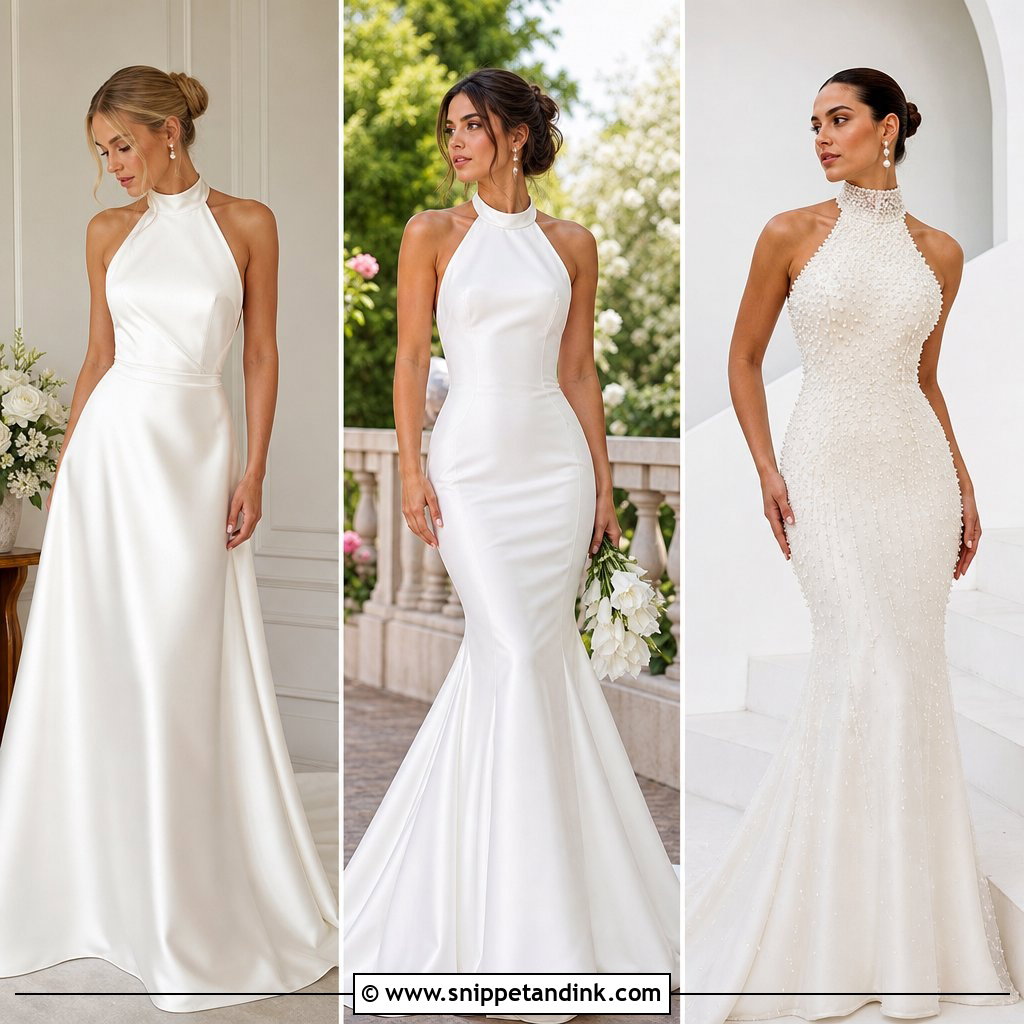

15. Halter Midi Wedding Dress
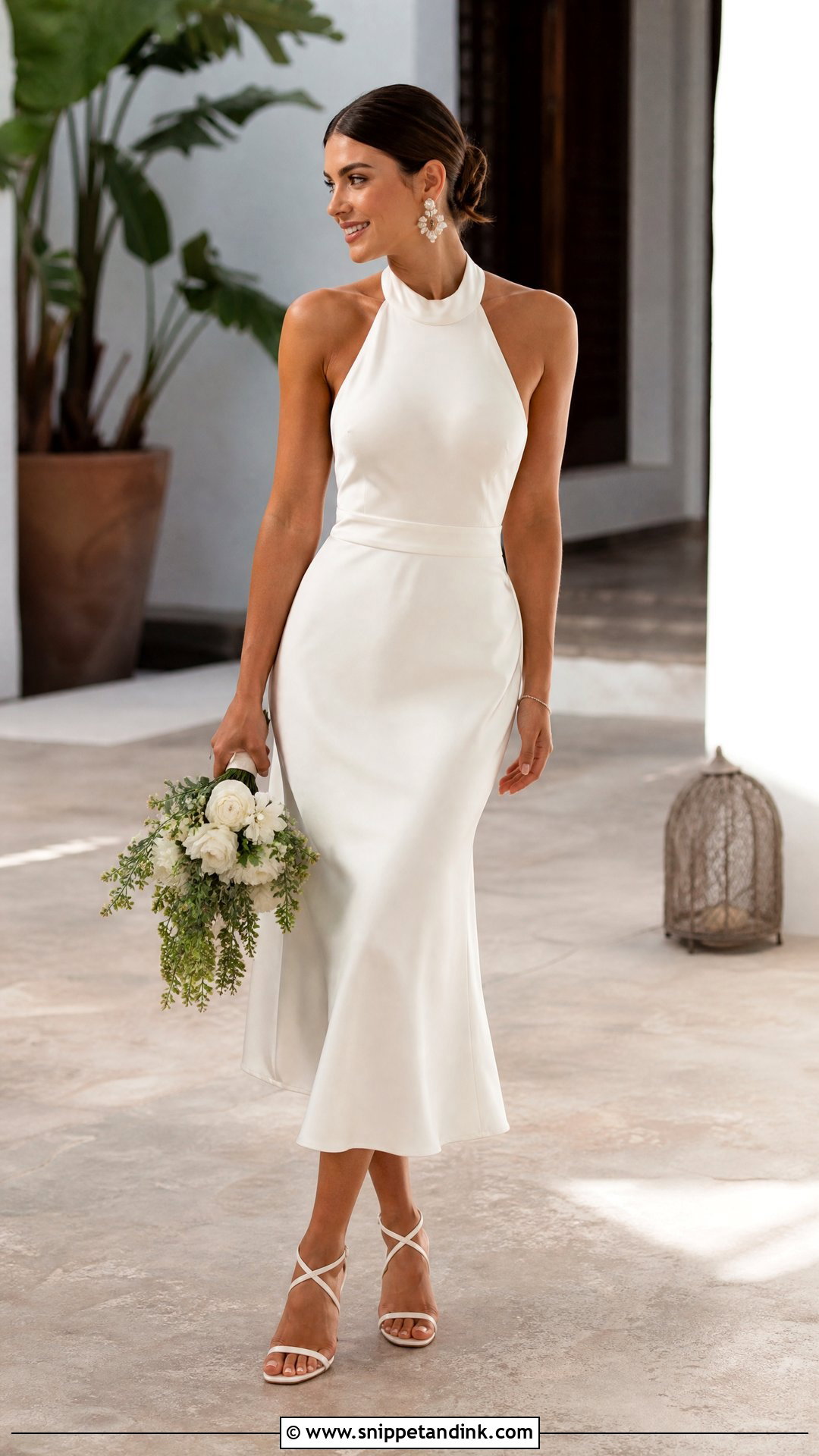
The halter draws attention upward and suits clean fabrics like satin, crepe and silk blends. Fitted, it looks modern; over an A-line skirt, softer. Skip the necklace, wear earrings, and put your hair up so the strap line shows. One honest trade-off: halters leave the upper back and shoulders bare, so strap tan lines from the weeks before will show in every photo. Plan your time in the sun accordingly if the wedding is in summer. Strappy heels and a small bouquet finish it, and warm-weather and destination weddings are its natural setting.
16. Puff Sleeve Midi Wedding Dress
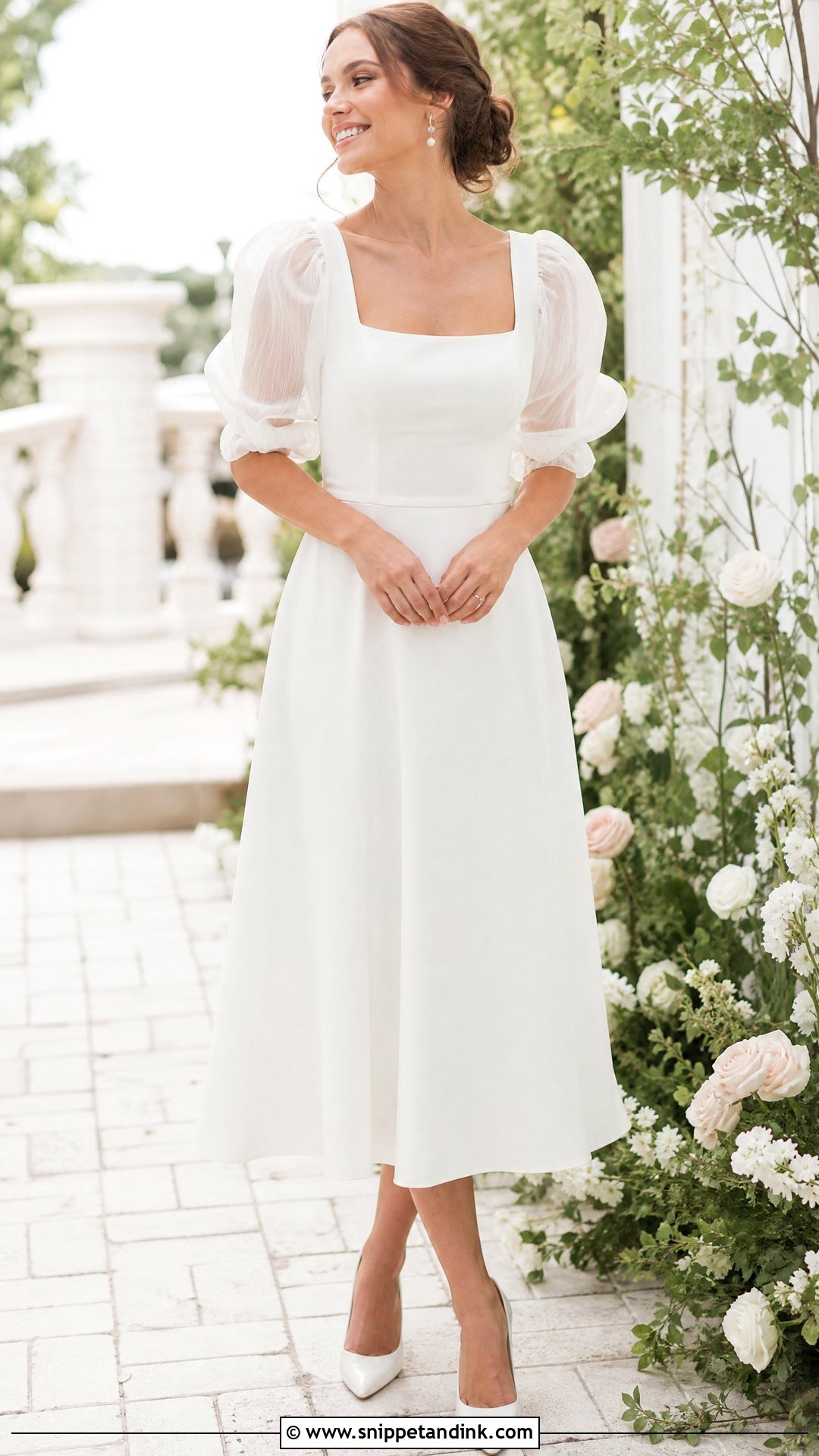
Puff sleeves add shape and personality, whether sheer and soft, crisp and structured or gently gathered in a cottage style. Balance is the rule I repeat at fittings. Full sleeves need a clean skirt and quiet accessories, otherwise the outfit turns top-heavy. A square neckline, fitted bodice and A-line midi skirt make the most flattering combination, with simple pumps, pearl earrings and a soft updo. Lift a glass at your fitting, too. Gathered sleeves can bind under the arm, and that’s easy to fix before the day and impossible during it.
17. Corset Midi Wedding Dress
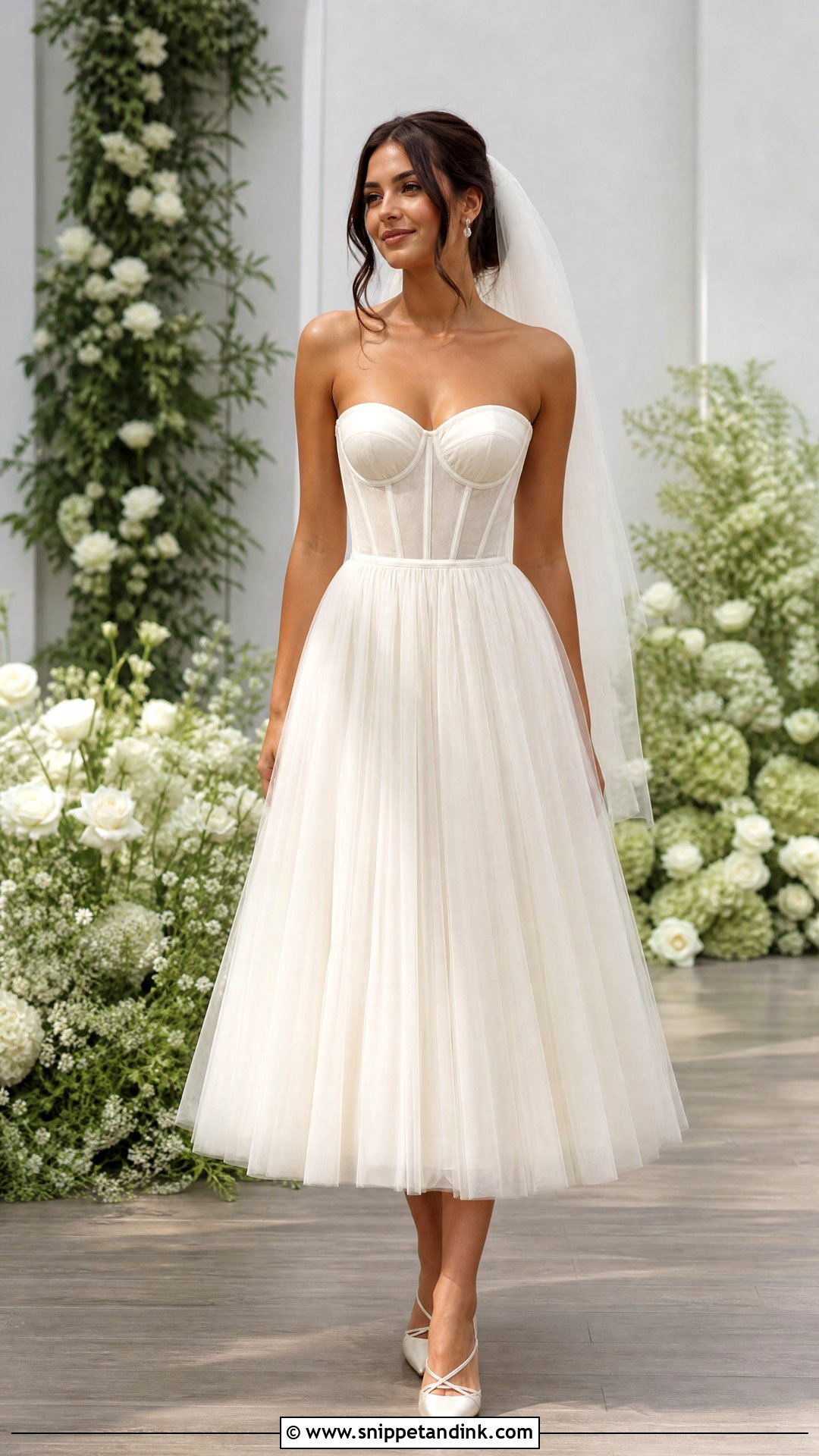
A corset bodice defines the waist and supports the bust, and the shorter skirt keeps the effect fresh rather than formal. Visible boning looks fashion-forward; an internal corset gives hidden support. Tulle, satin, lace and organza all work beneath it. I leave a little ease in a corset for dinner, because one laced tight at a morning fitting feels very different after a long meal and a few toasts. Pointed heels, small earrings and a simple veil balance all that structure.
18. Pleated Midi Wedding Dress
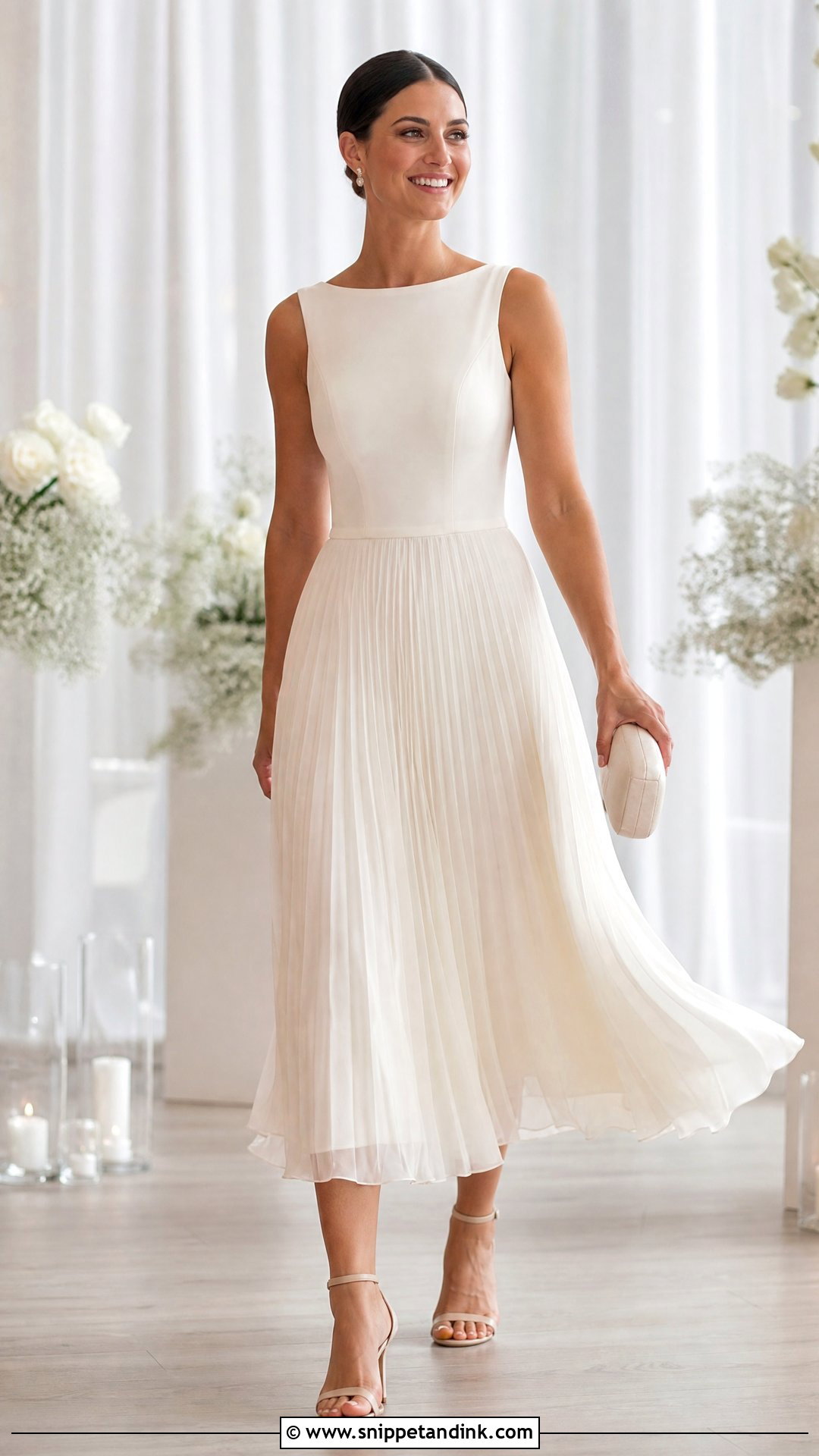
Pleats bring movement and texture without any embellishment. Fine pleats flow; wider pleats look architectural. Lightweight satin, chiffon and organza hold them best, and a fitted bodice keeps the waist defined above all that motion. The catch: a long car ride or a seated ceremony can crush pleats out of line. I tell brides to sit with the skirt fanned behind them and to keep the dress hanging, never folded, until they step into it. Delicate heels, a smooth clutch and understated jewelry keep it clean, and the skirt swings well in walking photos.
19. Beaded Midi Wedding Dress
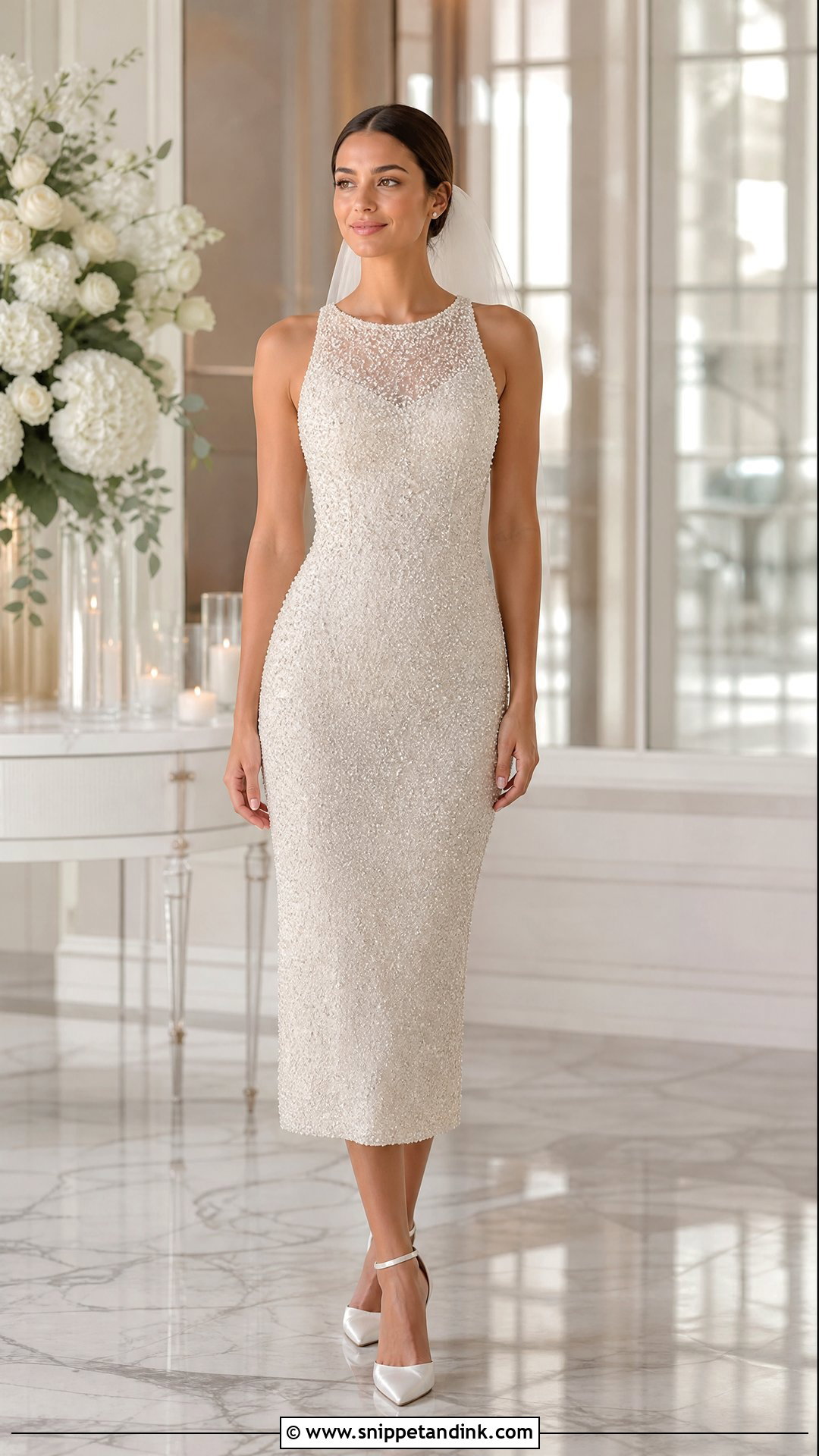
Beading on a midi gives sparkle in a manageable dose. Tiny pearls, sequins, crystals or tonal embroidery all work, and a simple silhouette such as a sheath, slip or soft A-line keeps it from looking busy. Shoes and accessories stay quiet: satin heels, small studs, a clean veil. Run your hand over the inside seams at the fitting, because beading stitched through the lining can scratch, and a seamstress can add a soft facing. It also doubles neatly as a second wedding outfit or reception dress.
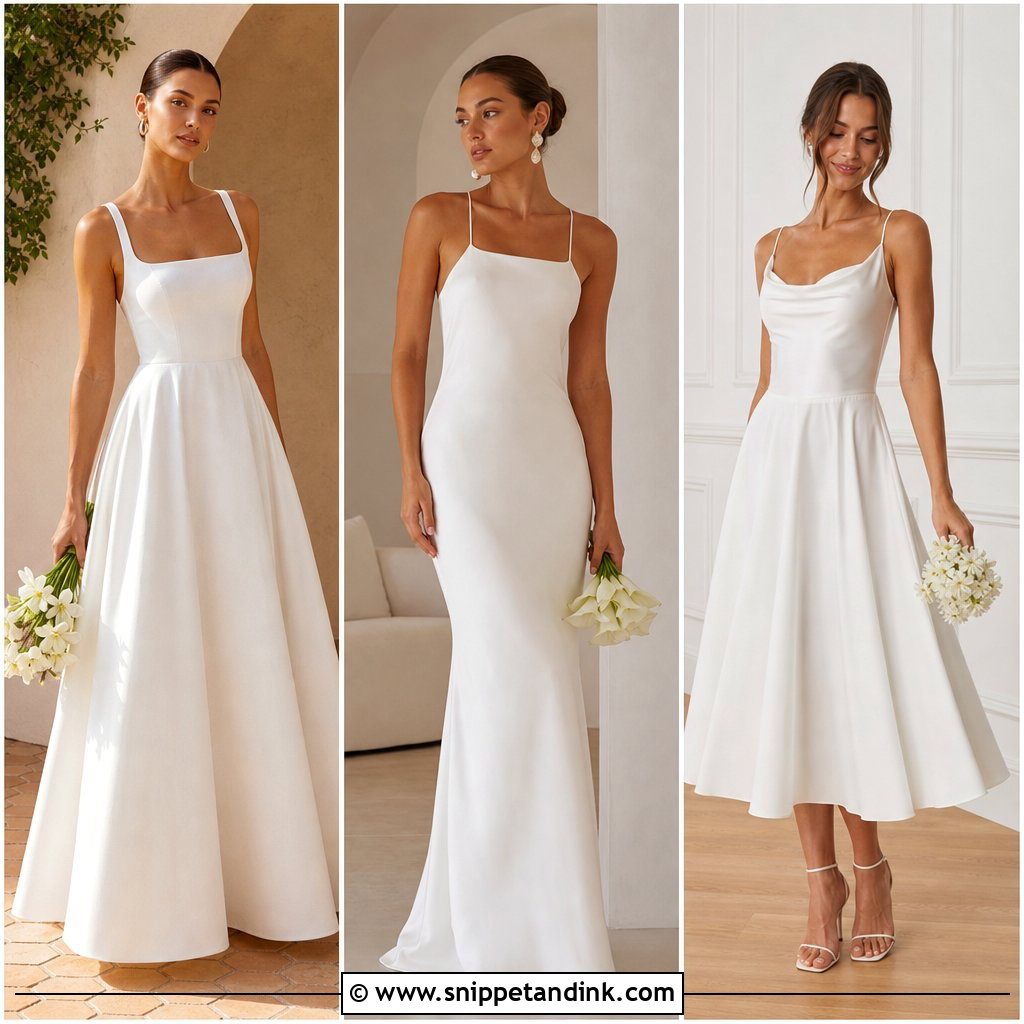
20. Slip Midi Wedding Dress
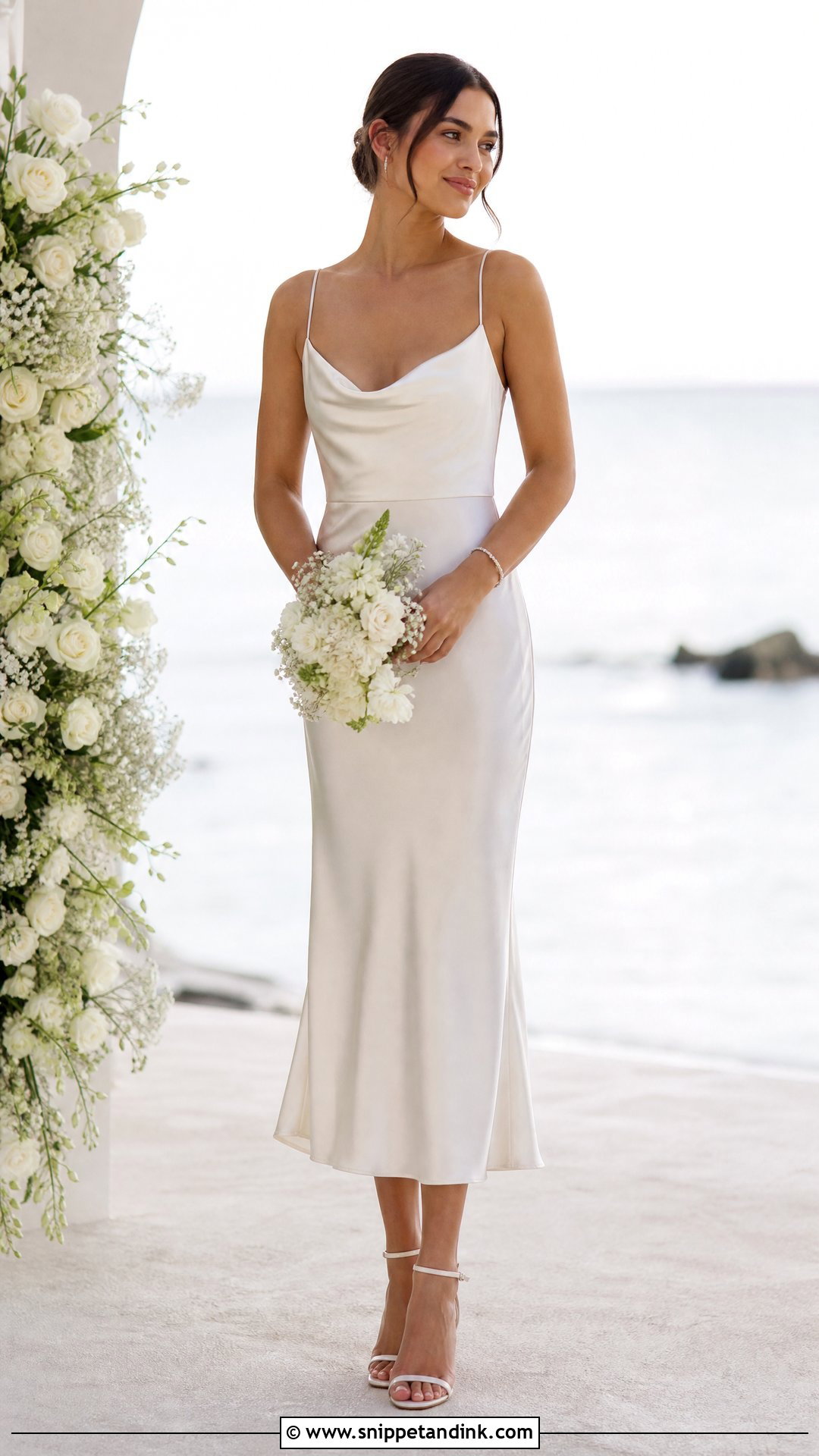
A slip midi wedding dress skims the body, so fabric is everything. Silk satin or crepe-backed satin gives the most fluid fall, and a cowl neck, thin straps or a bias cut keep it soft. Slips crease where you sit, so I steer anyone with a long car journey or a seated ceremony toward a heavier satin. Strappy heels, a fine bracelet and a low bun finish it; for coverage, add a cropped bridal jacket or a sheer wrap. Beach ceremonies and modern elopements suit it, with no volume to manage.
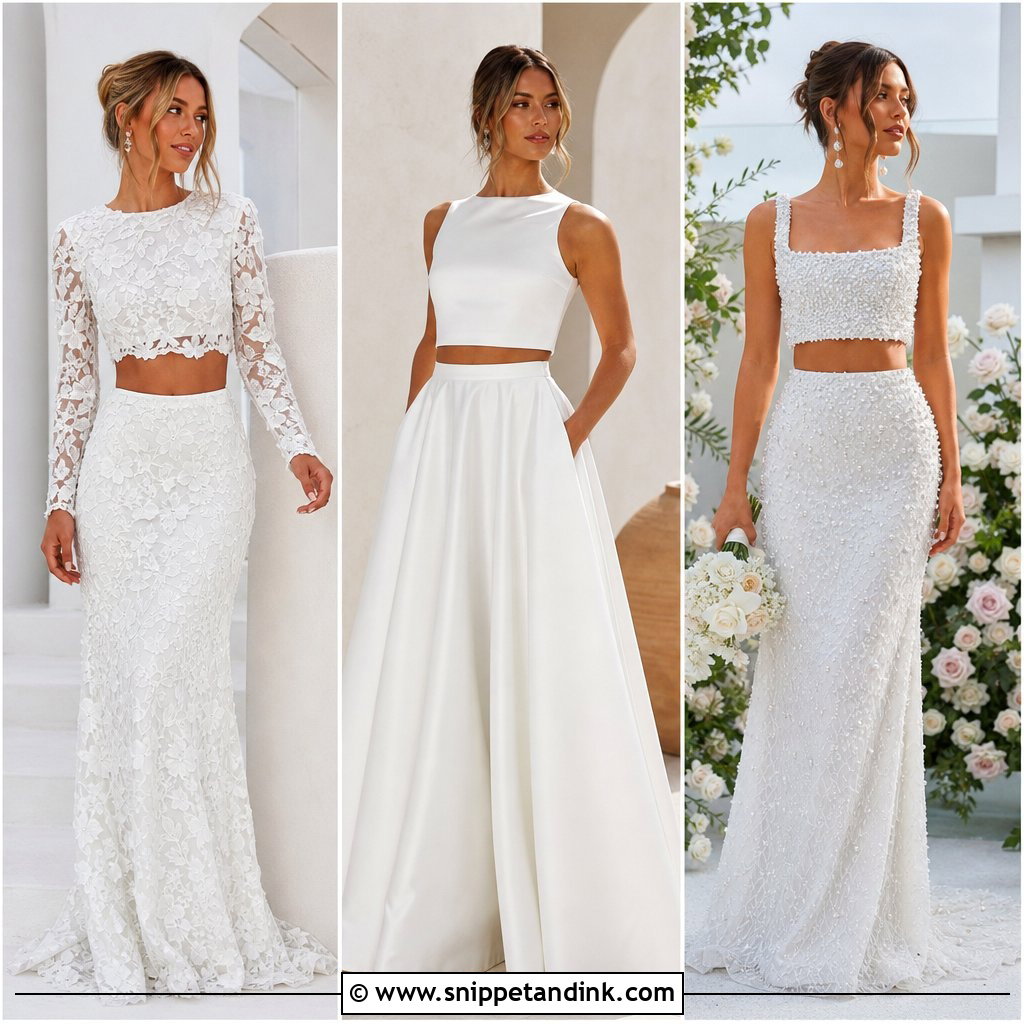
21. Two Piece Midi Wedding Dress
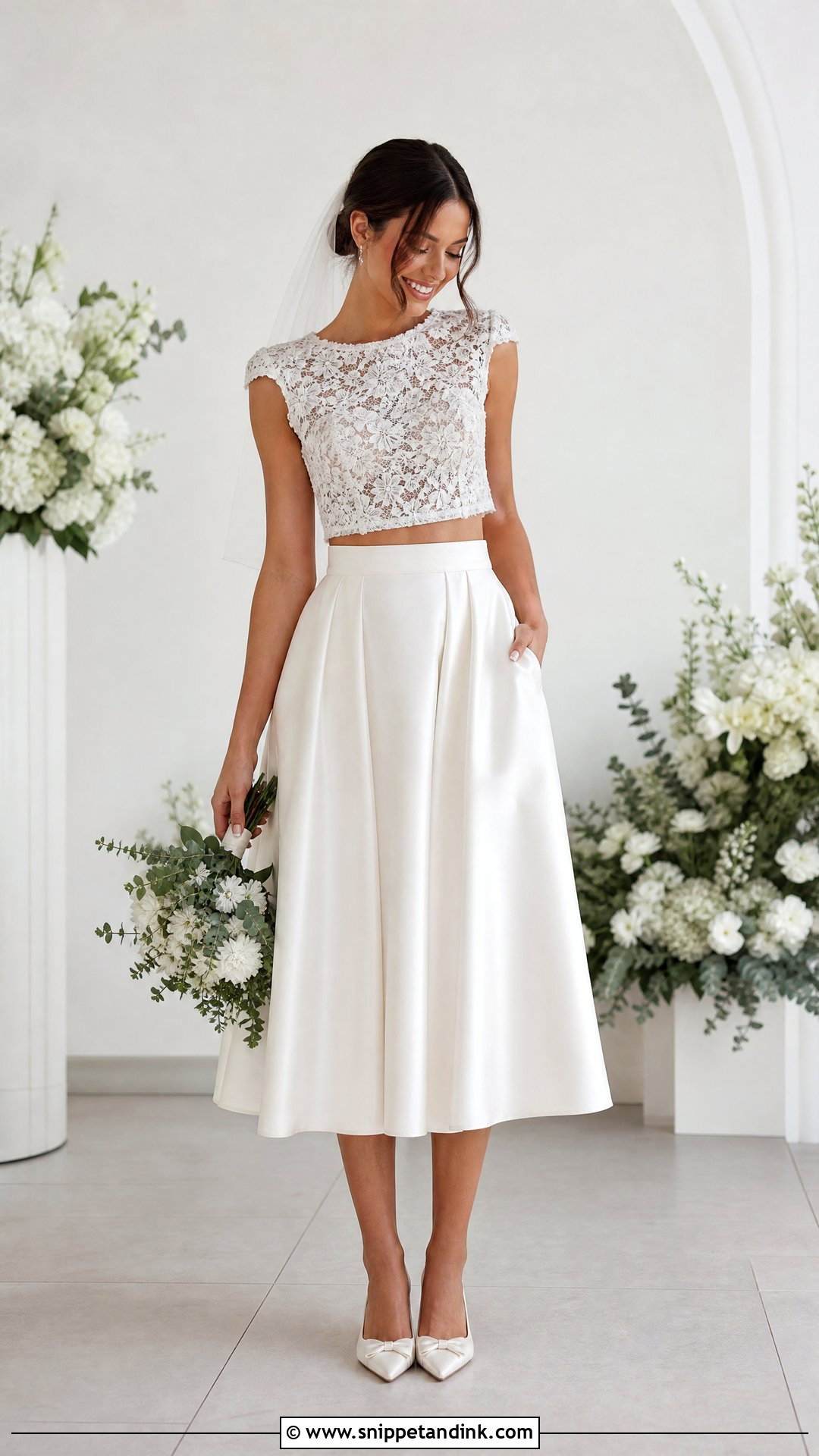
Separates let you choose each half for your body, which helps when your top and bottom halves never fit the same dress size. A fitted bridal top with a midi skirt still reads as one outfit. Try a lace top with a satin skirt, a corset top with tulle, or a crepe top with a clean A-line. Matching tones keep it cohesive; mixed textures add interest. I check the gap first: raise your arms and see whether skin shows at the waist, then decide whether you want it to. Classic heels, a short veil and delicate earrings finish it.
22. Midi Wedding Dress With Gloves
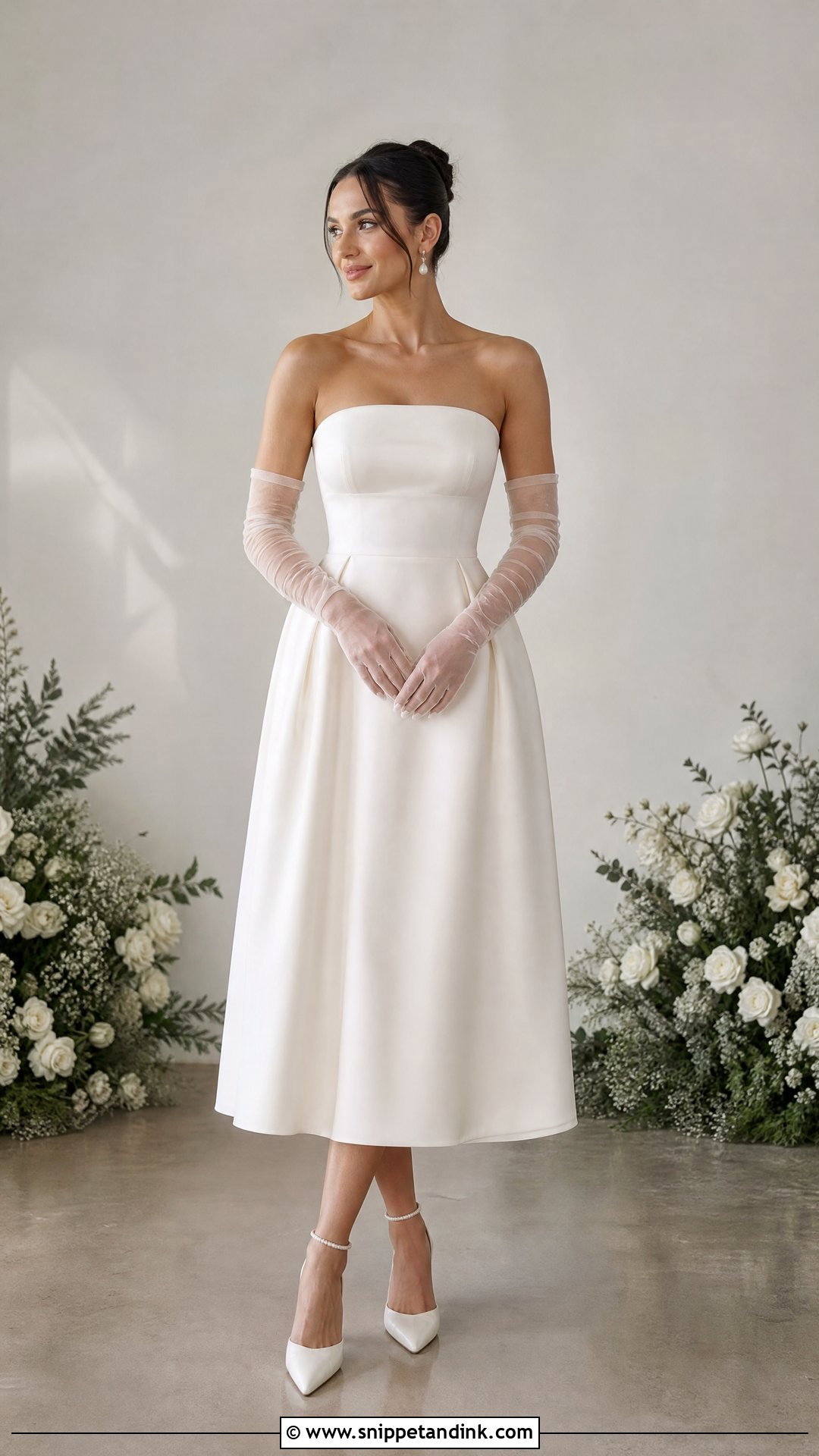
Gloves turn a simple midi into a deliberate outfit. The dress can stay plain, a strapless satin, a square-neck crepe or a clean A-line. Sheer gloves read soft; satin gloves read formal. One practical point: decide before the ceremony whether you’ll remove the left glove for the ring, and practice it, because peeling off a fitted glove in front of guests is slower than you’d think. Pointed heels, pearl earrings and a neat hairstyle keep it refined, and the shorter hem stops the whole look tipping into costume.
23. Midi Wedding Dress With Detachable Skirt
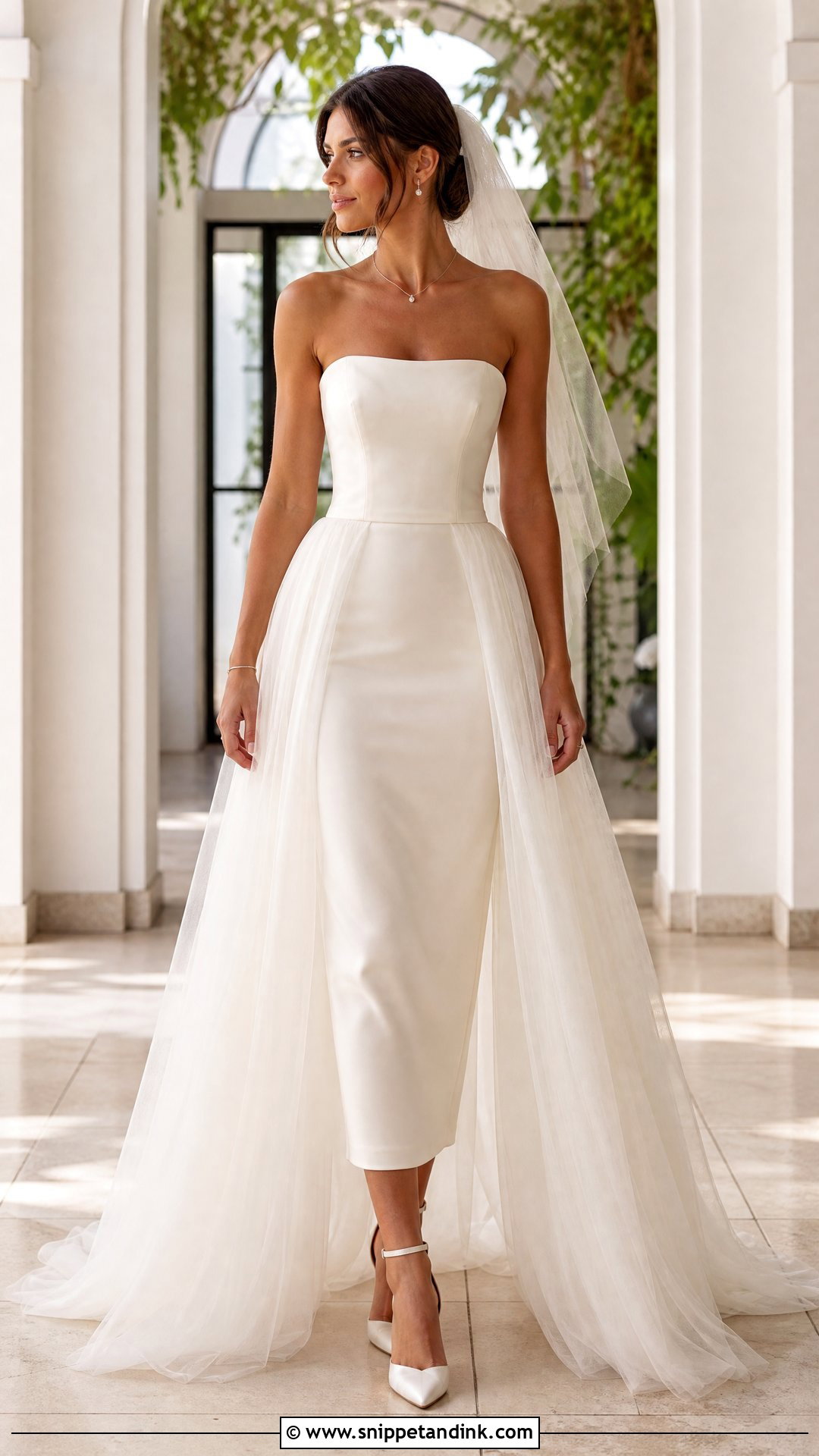
Two looks, one dress. A tulle or organza overskirt adds volume for the ceremony, then comes off to leave a fitted midi, satin sheath or lace dress underneath for the party. I’d rehearse the change with whoever will help you, since hooks or snaps at the back of the waist are hard to find in a hurry. Pair it with heels, a veil and simple jewelry. You get the dramatic entrance and reception comfort without a full outfit change.
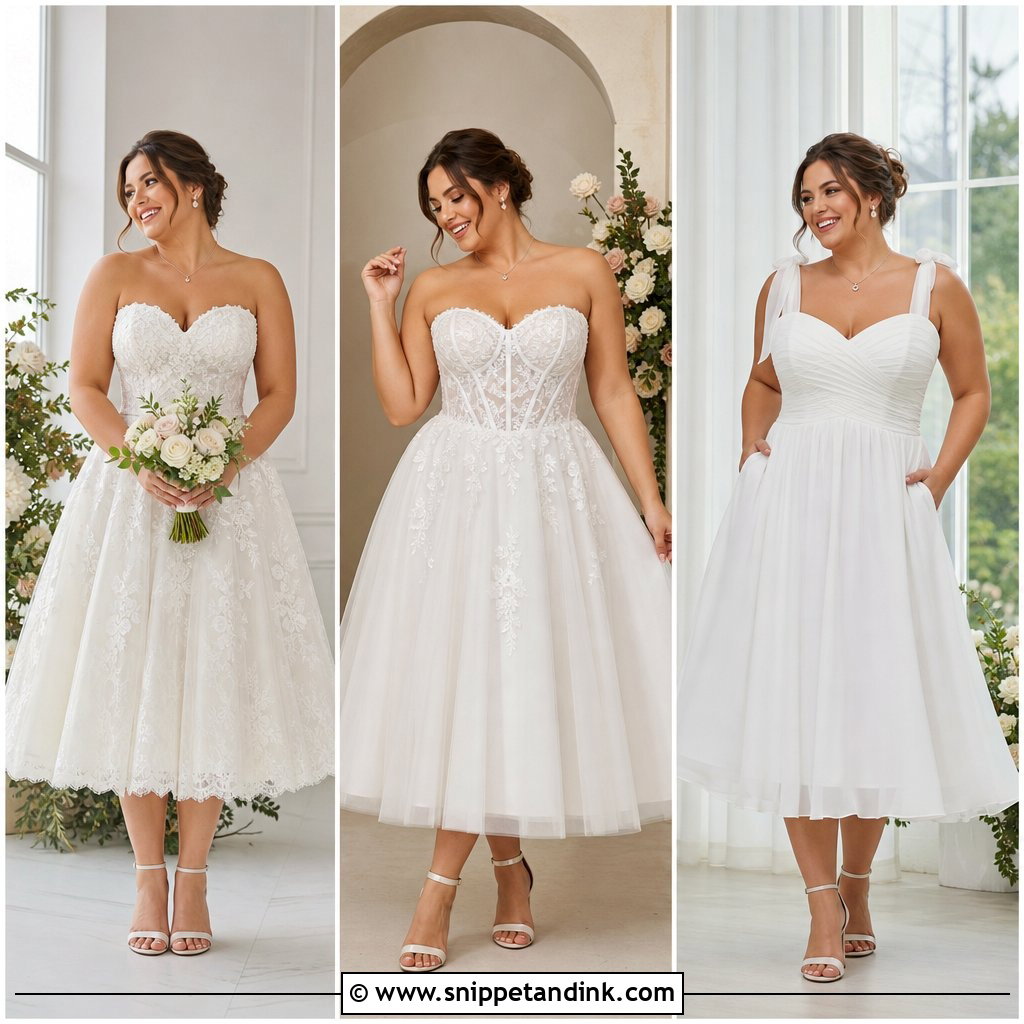
24. Plus Size Midi Wedding Dress
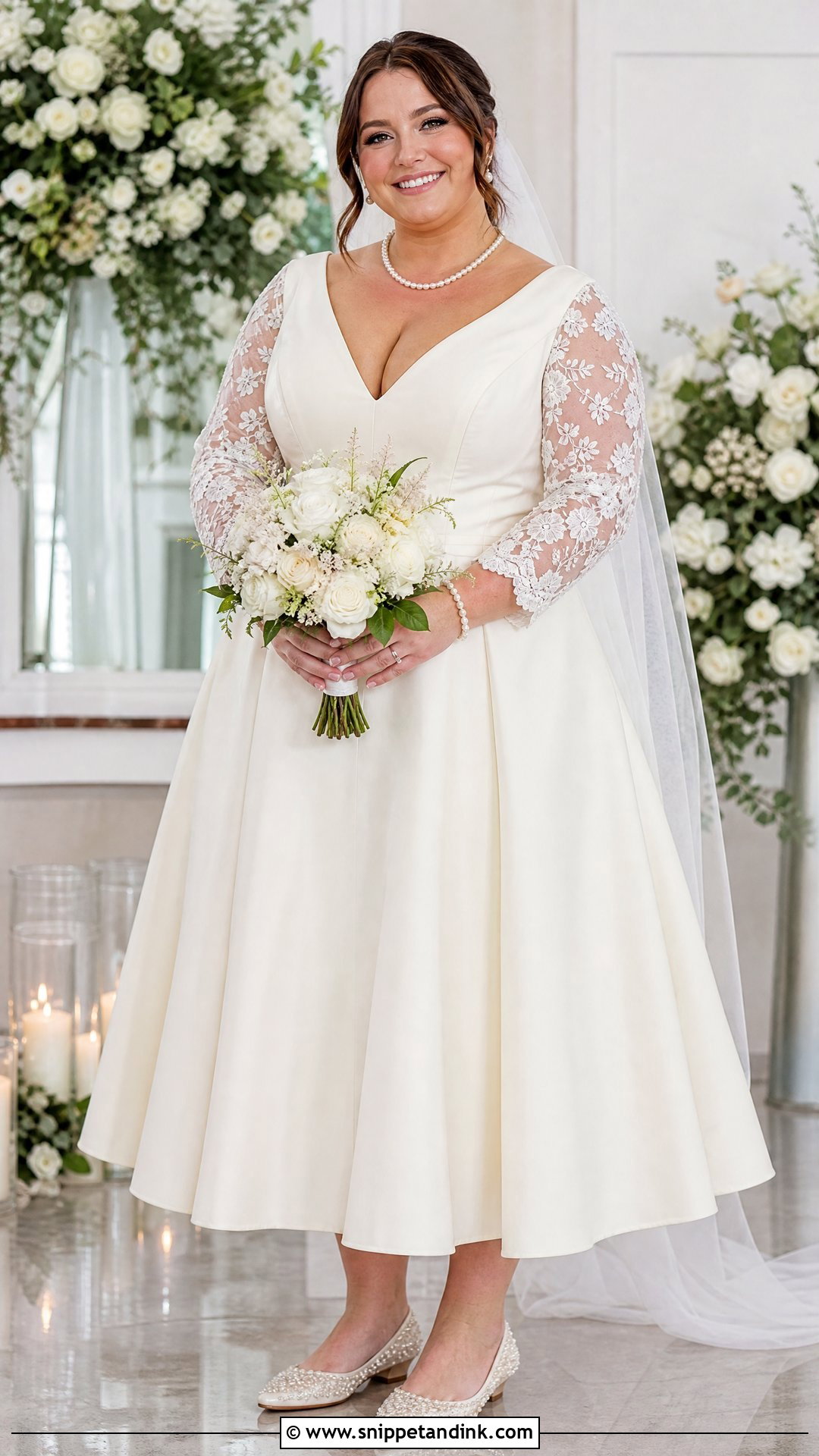
Fit and support come first. A structured bodice, defined waist and balanced skirt give the strongest shape, and A-line, wrap-style, corset and fit-and-flare midis are all good starting points. Look for fabric heavy enough to hold its shape without pulling at the seams. Lace sleeves, a square neckline or a soft V-neck add comfort. With wrap styles, sit down at the fitting and check the overlap, because a wrap skirt can open higher than expected once you’re seated. Supportive heels or embellished flats, pearl jewelry and a veil matched to the dress length finish it. Nothing here is about hiding; it’s about feeling comfortable and fully bridal.

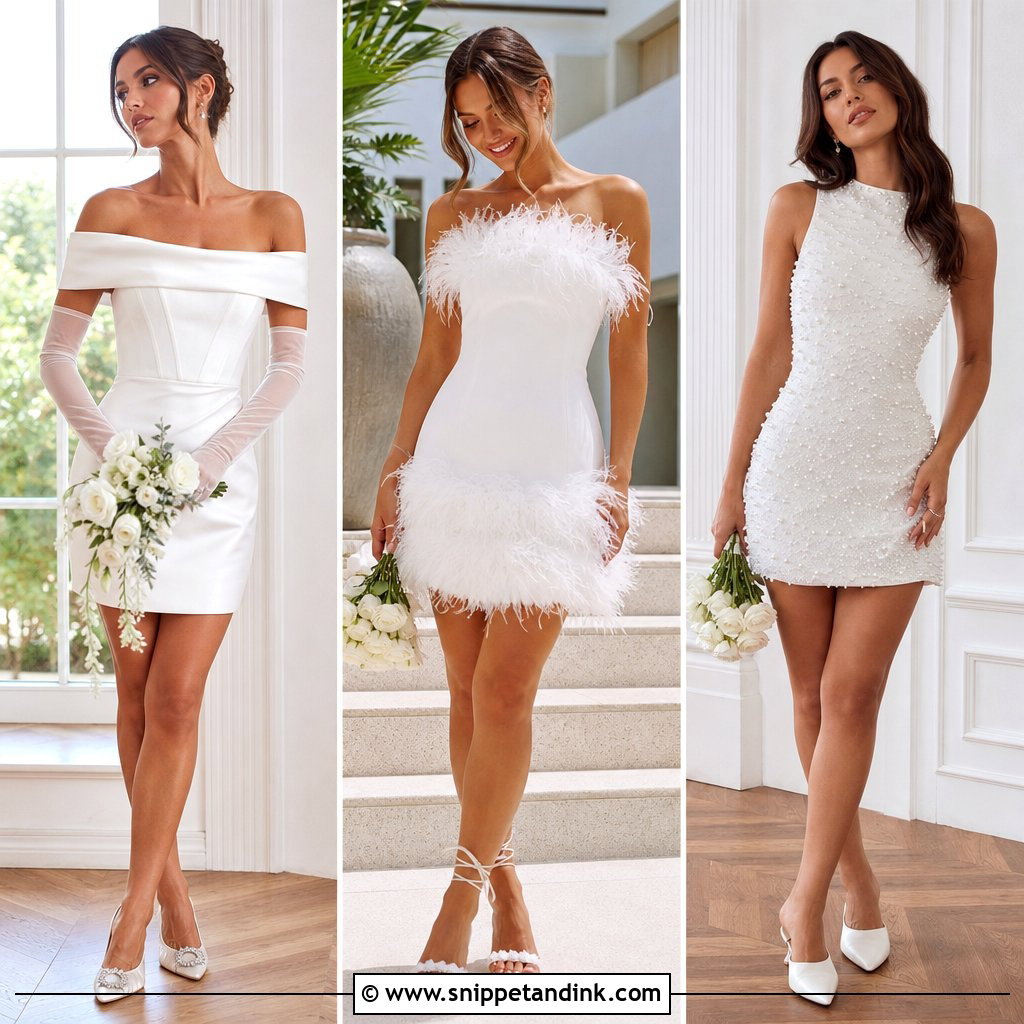
25. Reception Midi Wedding Dress
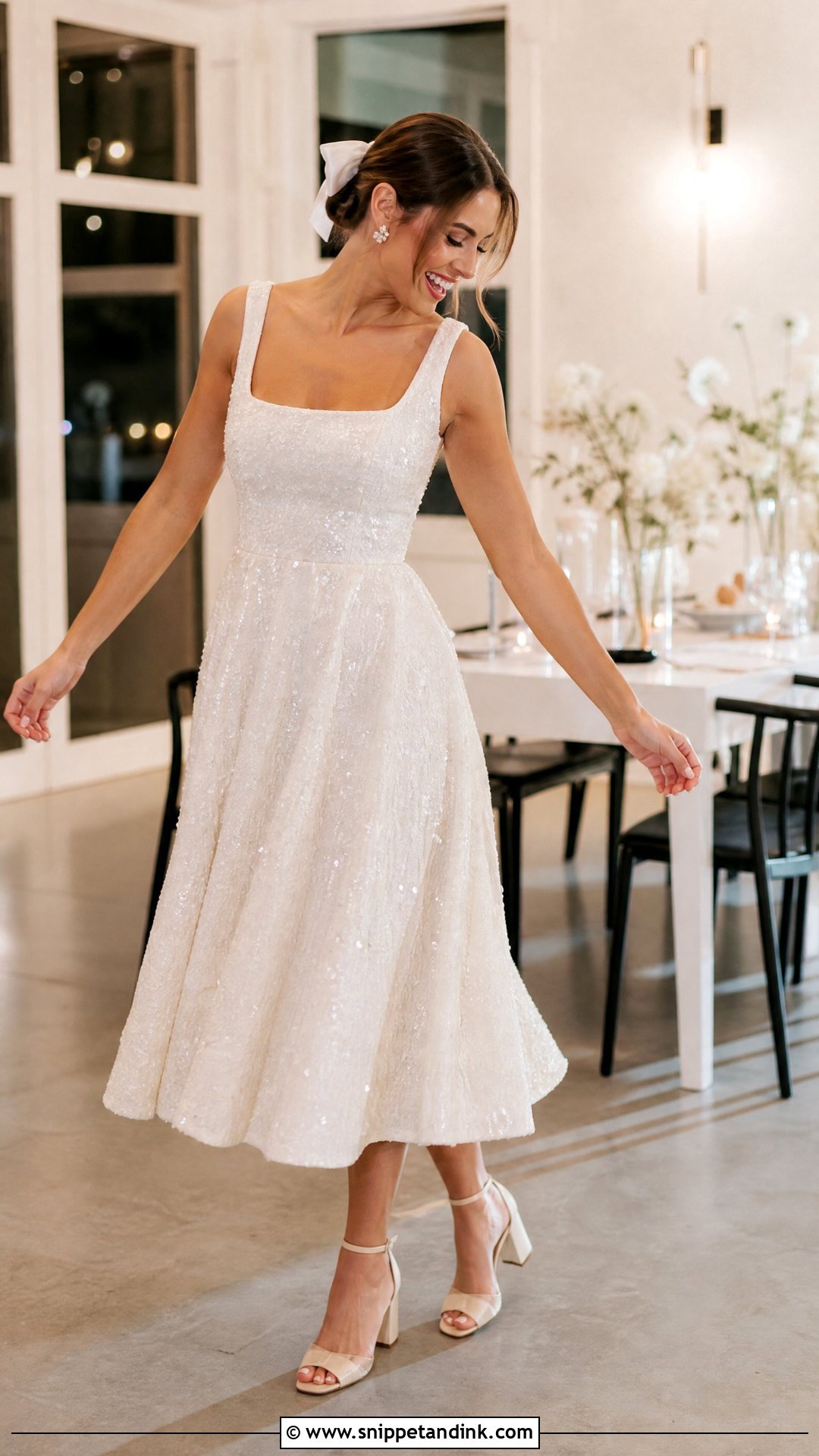
A reception midi wedding dress is where you get to play with sparkle, feathers, fringe, bows or a fun tulle skirt. The shorter hem makes walking and dancing easier. Feathers shed and fringe tangles on a crowded floor, though, so choose them for personality and accept a little wear. A beaded midi, satin party dress or organza design all work. Wear shoes you can genuinely stand in for hours, block heels, platforms or polished flats, and keep accessories light enough to dance in.
Your Shoes Are Half the Outfit Now
With a floor-length gown, nobody sees your feet. With a midi, every guest does, in every full-length photo. I treat shoes as part of the dress fitting rather than something to sort out the week before.
Match the heel to the ground
Stilettos sink into lawns and catch between deck boards and cobblestones. For gardens, vineyards and beaches, a block heel, a low wedge or clear heel protectors stop you walking on tiptoe all afternoon.
Break them in at home
Wear them around the house for a few evenings, first with thin socks and then without. If the soles are slick on hard floors, scuff them lightly with fine sandpaper so you don’t slide on a polished aisle.
Think about legs and toes
Open-toe shoes mean your toes are on show, so book a pedicure in the final week. If you’re unsure about bare legs, very sheer tights in your skin tone look natural on camera, while anything with a sheen bounces the flash back. Whatever you wear, pack a pair of flats for the end of the night.
A Shorter Hem Still Reads as Bridal
A midi or tea-length dress takes away the weight and the train without taking away the occasion. Fabric, neckline and styling decide whether it reads classic, modern or playful, and the shorter hem lets your shoes show and your stride stay natural. Start with your venue and how you’ll spend the day, then try lace, satin, tulle and crepe side by side, because the same cut looks completely different in each. Get the hem height right, wear the shoes you’ll marry in to every fitting, and the rest follows.
You'll Like These Ideas:







Leave a Reply