
Barat hair has a harder job than most bridal hair. It has to sit under a heavy dupatta, carry a maang tikka and often a jhoomar, survive the photographs, the rasms and the rukhsati, and still look intentional when the dupatta finally comes off. The twenty styles below range from gajra buns and Mughal braids to open curls and sleek ponytails, and with each one I’ve noted how it actually behaves on the day, which hair it suits and where it tends to let a bride down.
Building Barat Hair Around a Heavy Dupatta
Most barat dupattas are heavily embroidered and pinned directly into the hair, so the hairstyle is really the foundation the dupatta sits on. The first thing I ask a bride is how she’ll wear it: draped over the head and pinned at the crown, set back behind a bun, or pinned at the side. That answer decides more than any photo she brings.
- For a full head drape, a low bun or braided bun gives the dupatta a solid ridge to pin against. Open hair and high ponytails struggle here.
- For a dupatta set back off the crown, open curls, half-up styles and crown braids stay visible and work well.
- For a side drape, a side braid or side bun on the opposite shoulder keeps the hair from being hidden.
I always build a hidden anchor before the dupatta goes on: a small flat braid or a row of crossed bobby pins where the dupatta will be pinned. The dupatta pins go into that, not into loose hair, which is why it stays put through the entrance and doesn’t pull at the scalp. Bring your dupatta, or one of similar weight, to the trial so the anchor can be placed properly.
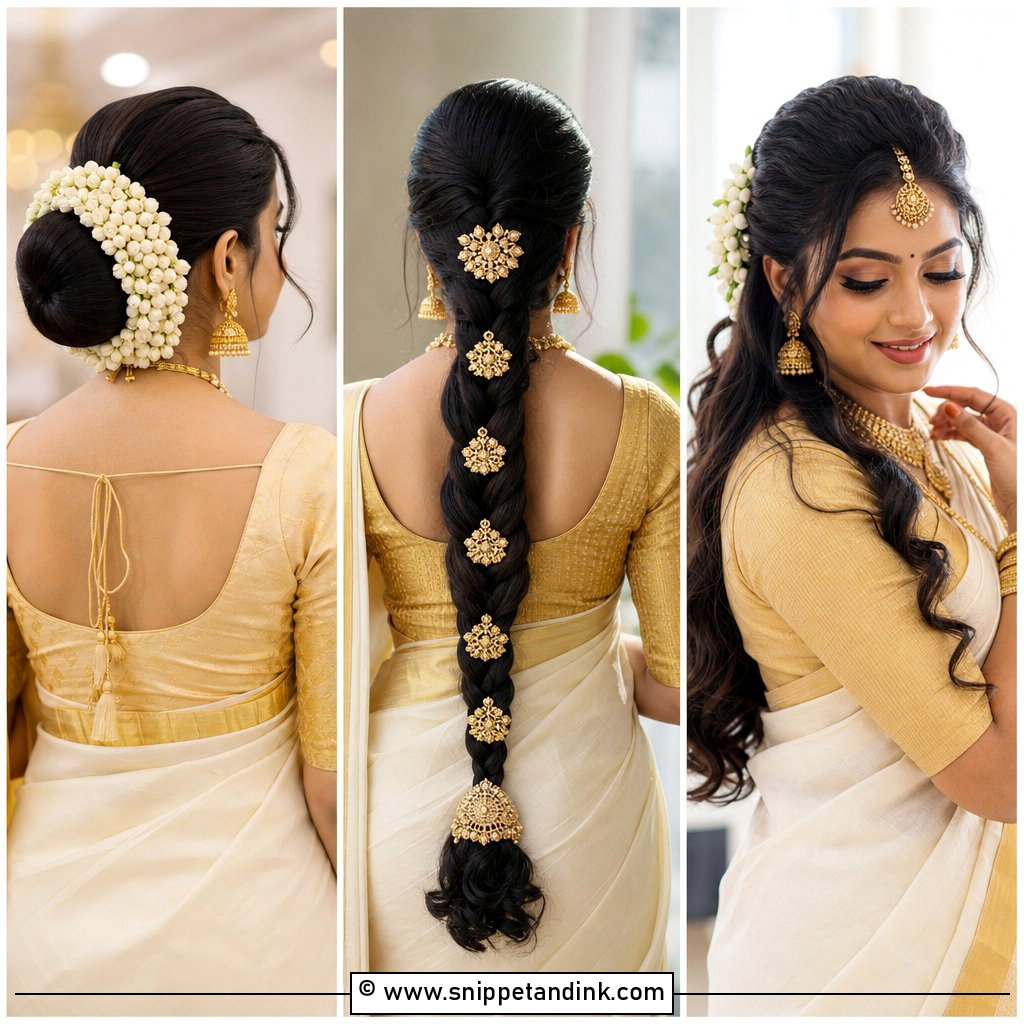
1. Classic Bridal Bun With Gajra
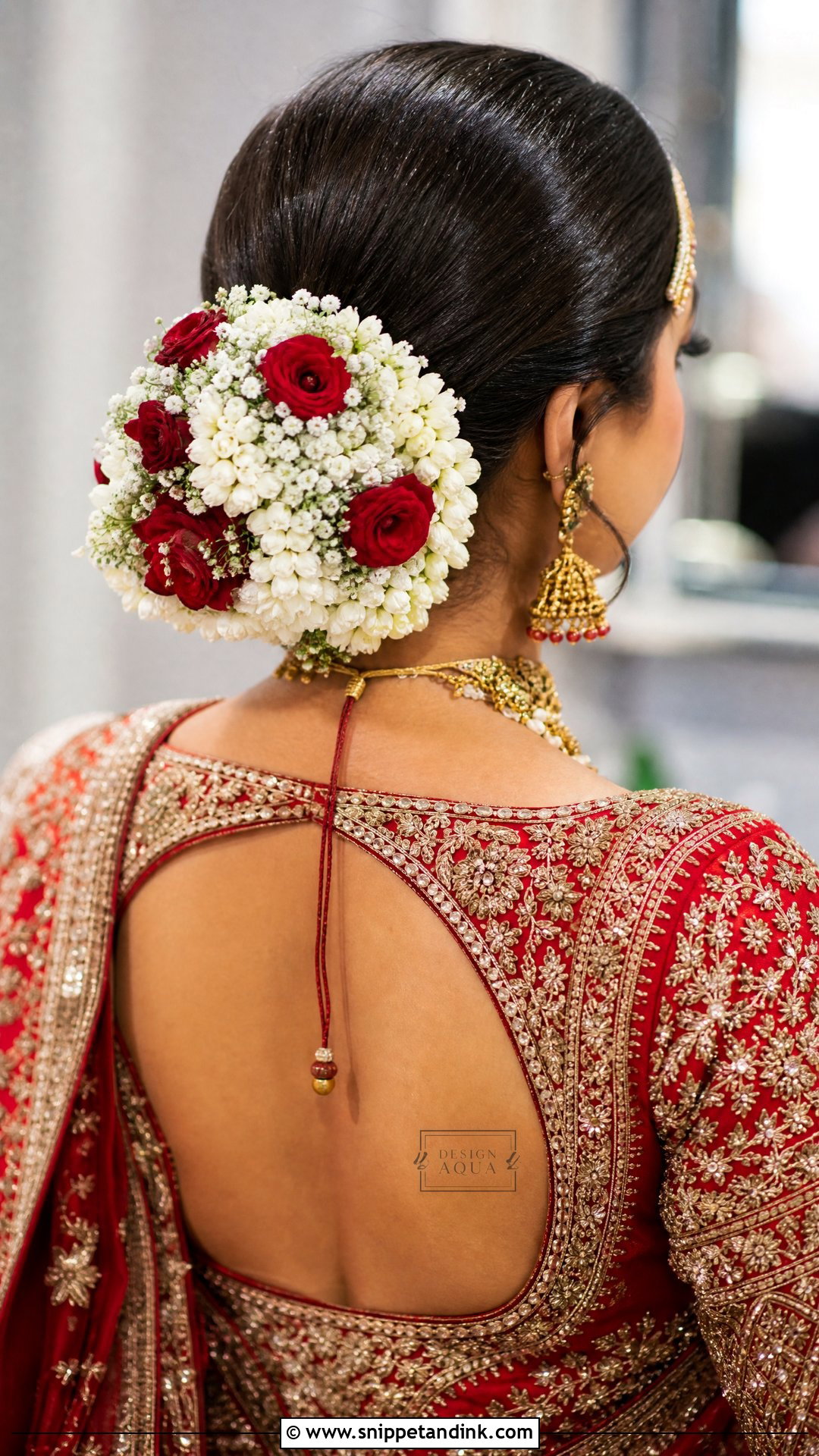
There’s a reason the gajra bun keeps coming back: a smooth, low bun at the nape is the most reliable base I know for a heavy red lehenga and temple jewellery. I build it over a small padded donut so it has a firm shape to pin the gajra into, then wrap jasmine or rose strands around the base. Pin the gajra through the bun itself rather than to loose hair, or the weight of the flowers drags it sideways by the second hour. Keep the bun just below the occipital bone so the dupatta can rest above it without squashing it flat.
2. Side Swept Mughal Jhoomar Braid
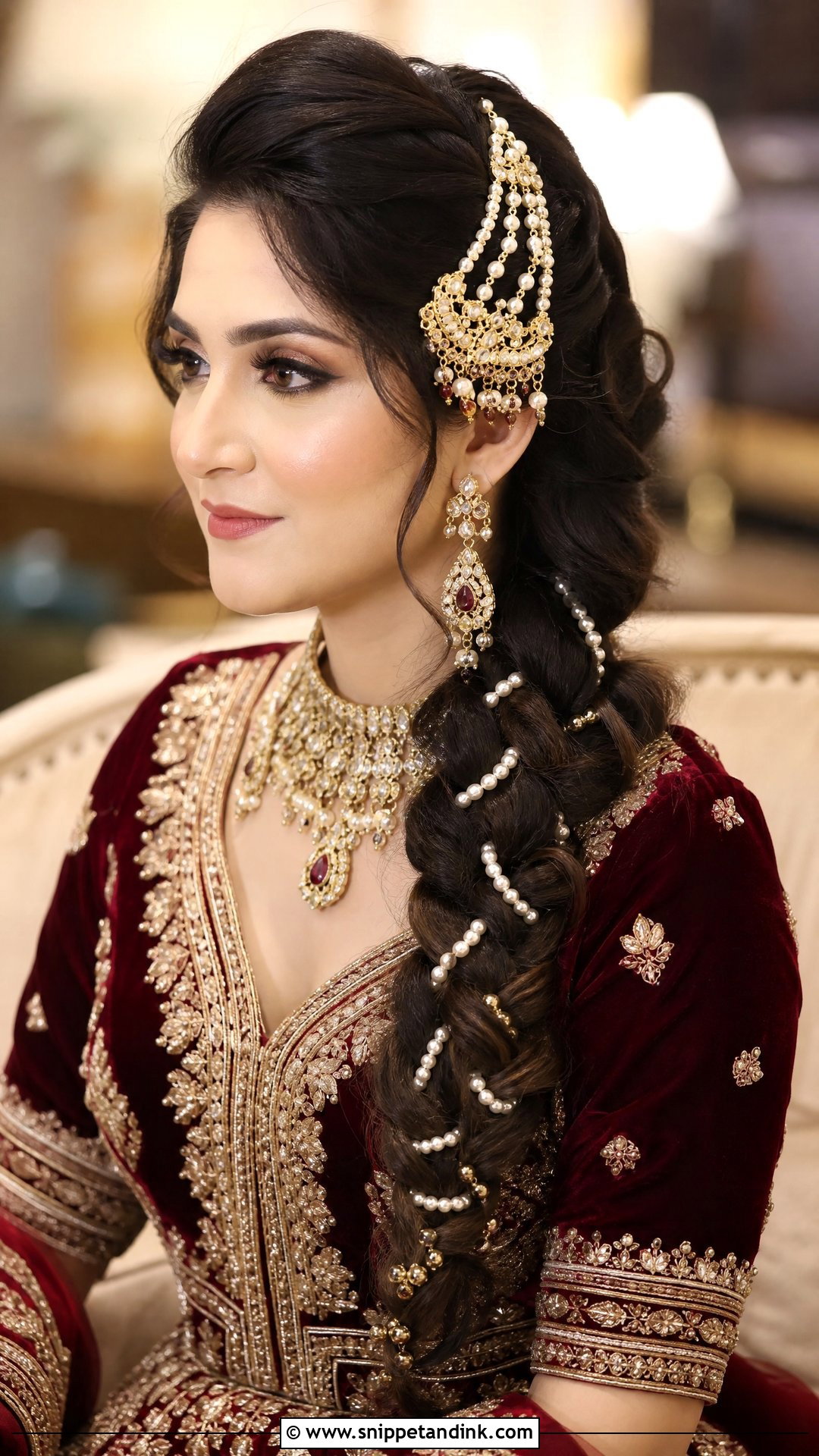
A thick braid swept over one shoulder, threaded with tiny pearls, with a sparkling jhoomar at the temple. It’s a Mughal look that needs real length and density; on shoulder-length or fine hair I’d add clip-in wefts or choose something else. The thing I watch is the jhoomar: it’s heavy and pulls the parting, so I anchor it with a small hidden braid or crossed pins along the side before it goes in. Leave a couple of loose tendrils near the ears, finish with a passa and statement earrings, and keep the dupatta draped on the opposite shoulder so the braid stays visible.
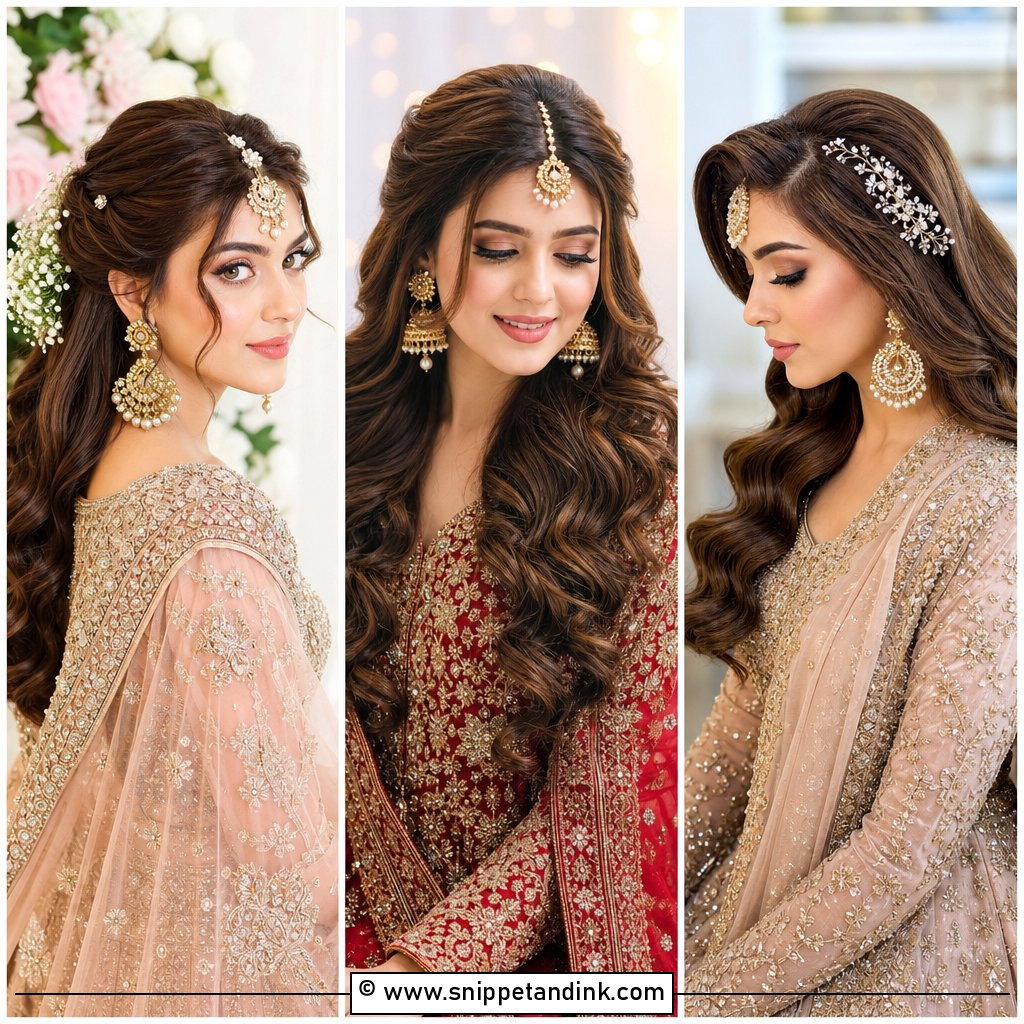
3. Open Curls With Maang Tikka
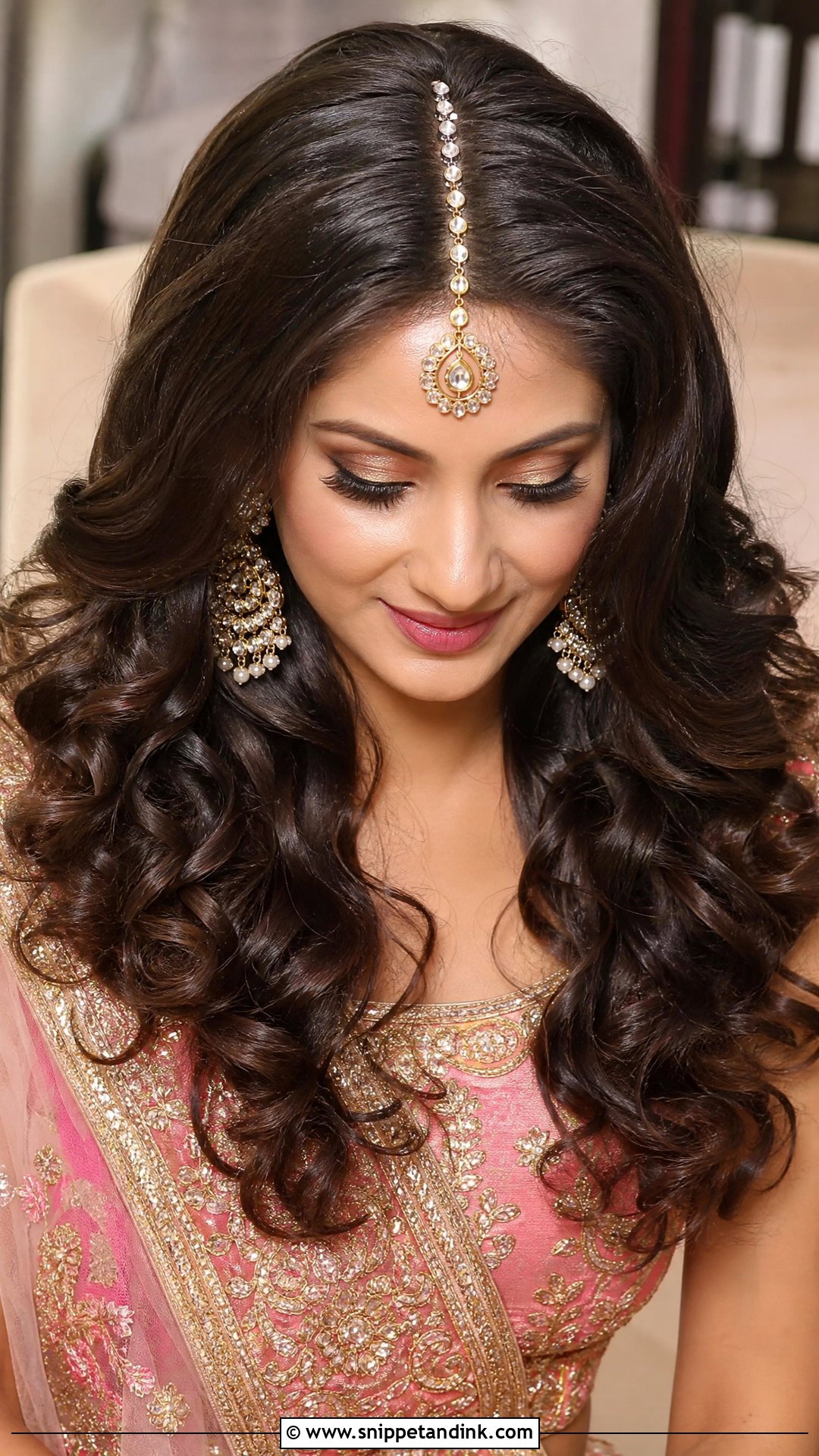
Open hair is the style I talk brides out of most often for a barat, and it’s also the one that can look the freshest when it works. Center-part, curl with a wide barrel, and lay a delicate maang tikka along the parting for that classic desi touch. The catch is the dupatta: it rubs against open curls all evening and flattens the crown, so I set every curl and let it cool fully before brushing out. If your hair drops a curl within an hour on a normal day, it will drop faster under a dupatta in a warm hall.
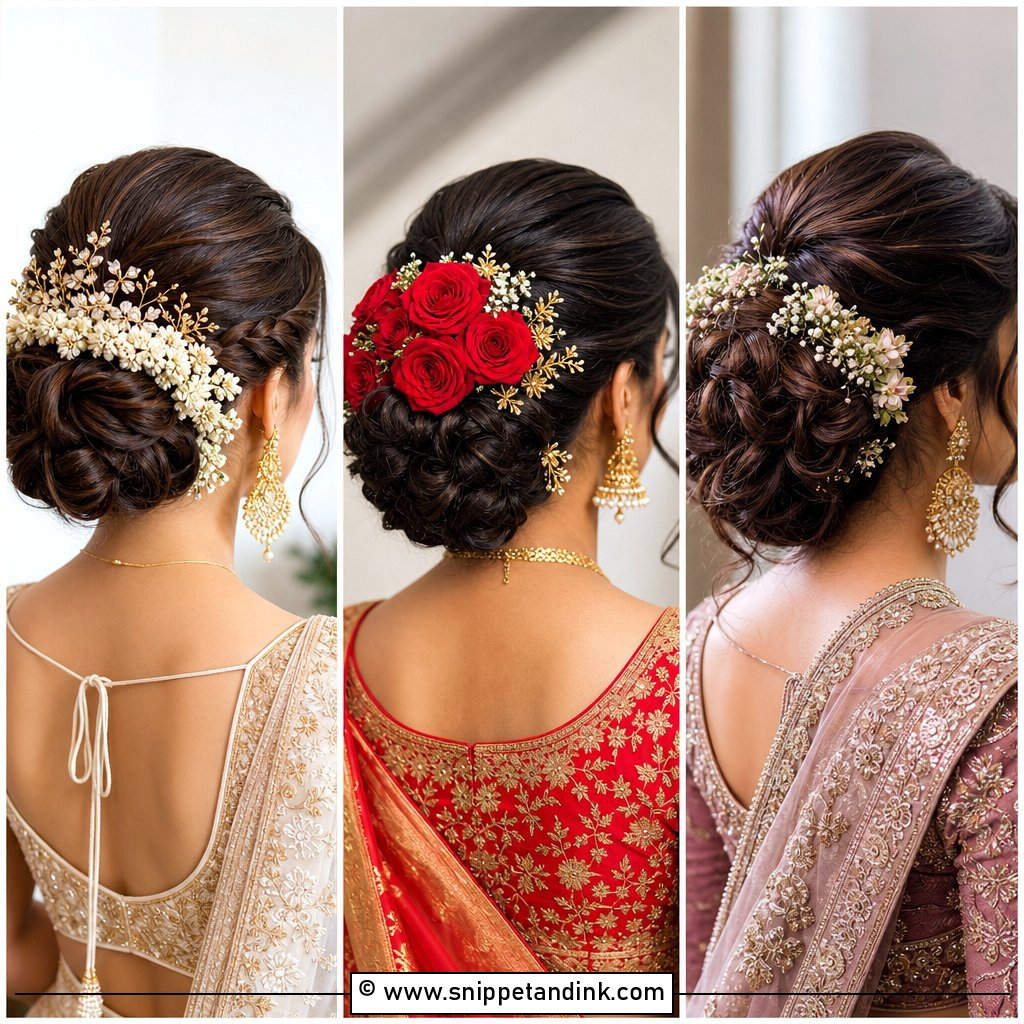
4. Braided Bun With Floral Detailing
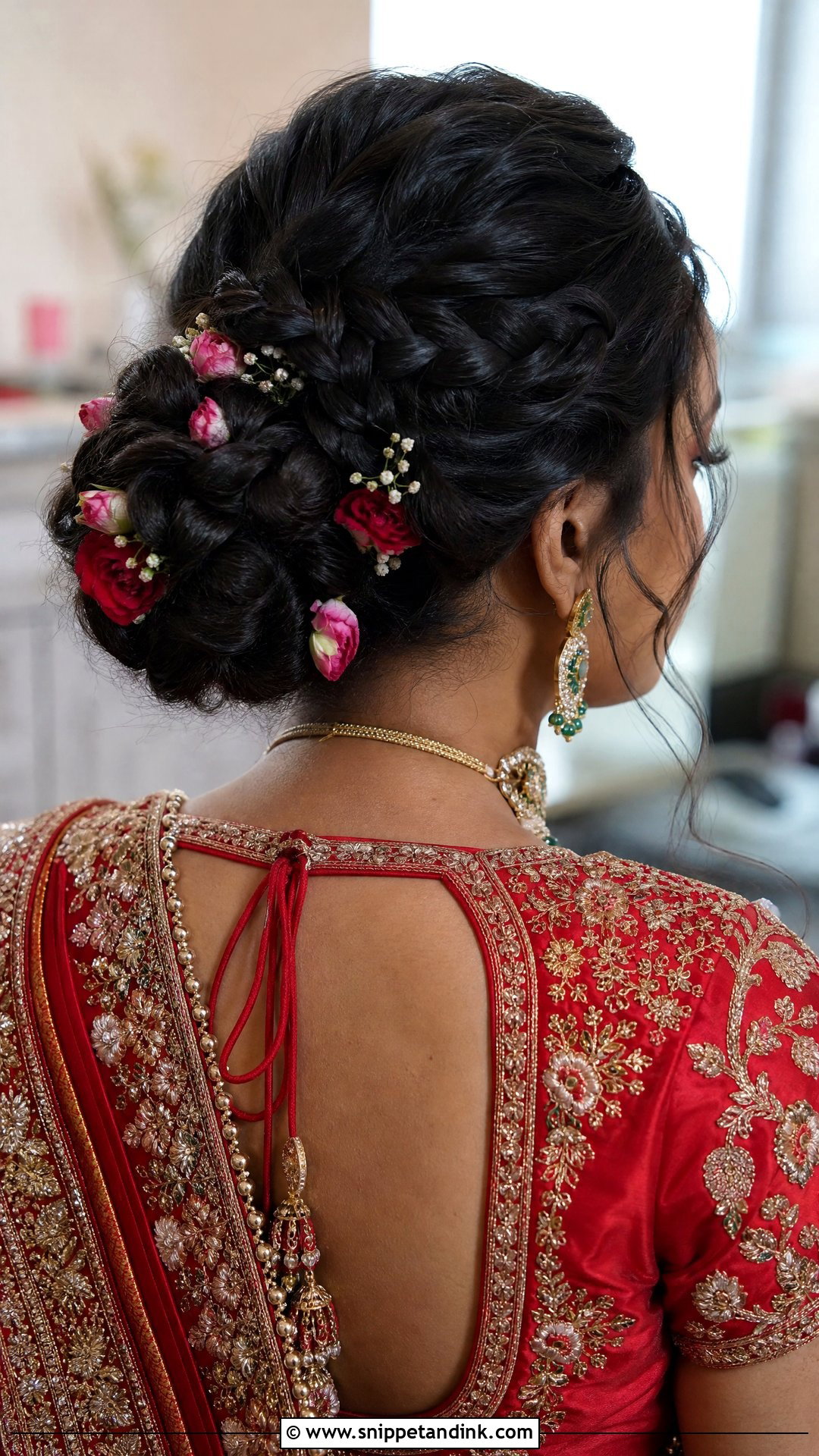
Coiling a loose braid into a soft bun gives you both textures in one shape, with roses or orchids tucked between the twists. It’s one of the most secure styles on this list because every section is braided before it’s pinned, so the pins grip woven hair instead of slippery lengths. That makes it a strong choice for long ceremonies and a lot of hugging relatives. On fine hair, I pancake the braid (gently pull the edges wider) before coiling it, which gives the bun visible size without extensions.
5. Half-Up Half-Down With Soft Waves
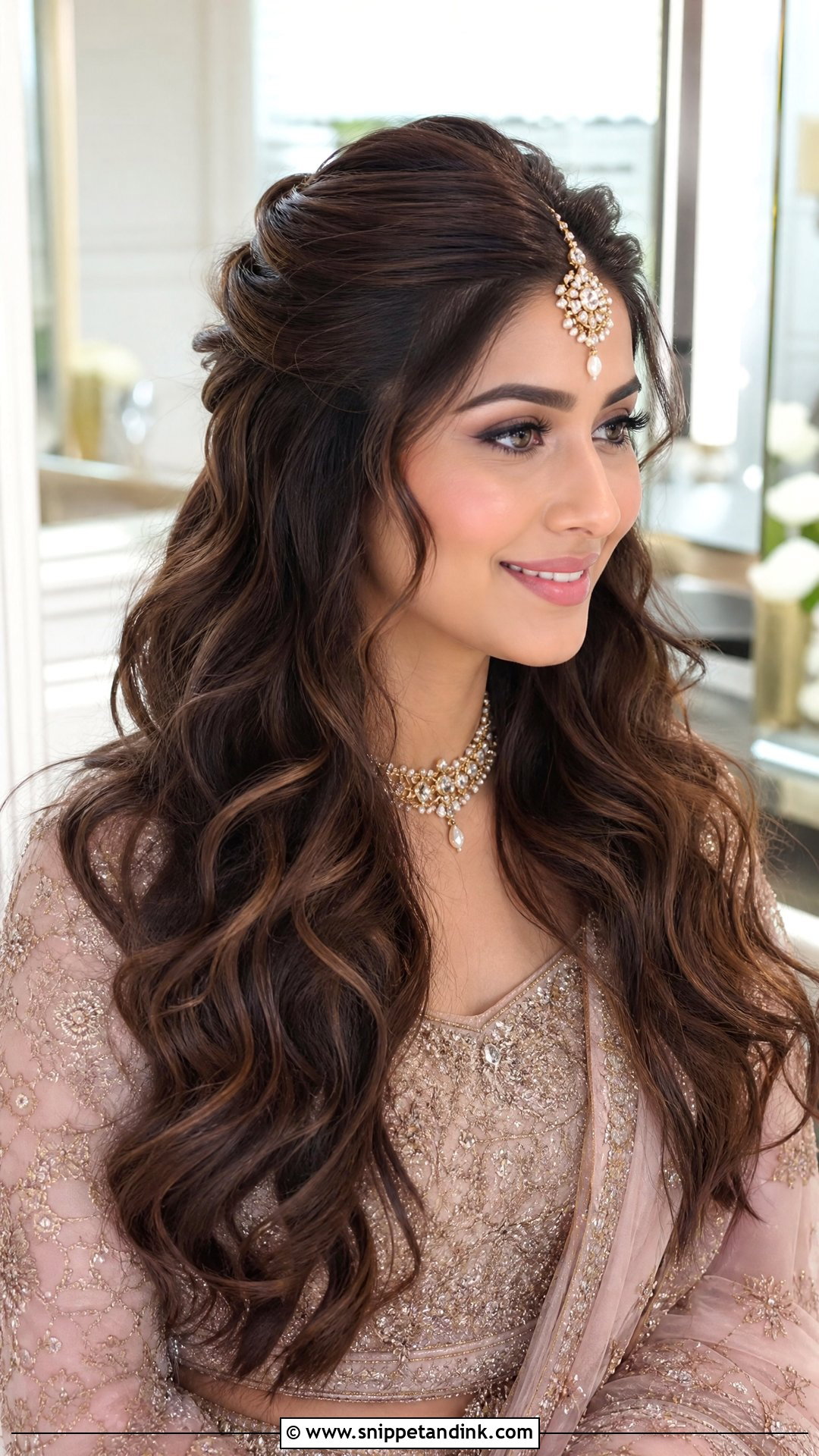
Half-up, half-down pins the crown back and leaves the lengths in loose waves, with a small jhoomar or a few pinned curls for depth. It keeps hair off the face without hiding its length. My honest caveat: under a heavy barat dupatta the pinned crown section takes all the weight, so I backcomb lightly at the roots and cross-pin underneath it. Brides with very straight, silky hair should expect the waves to relax by the evening and plan a quick touch-up after photos.
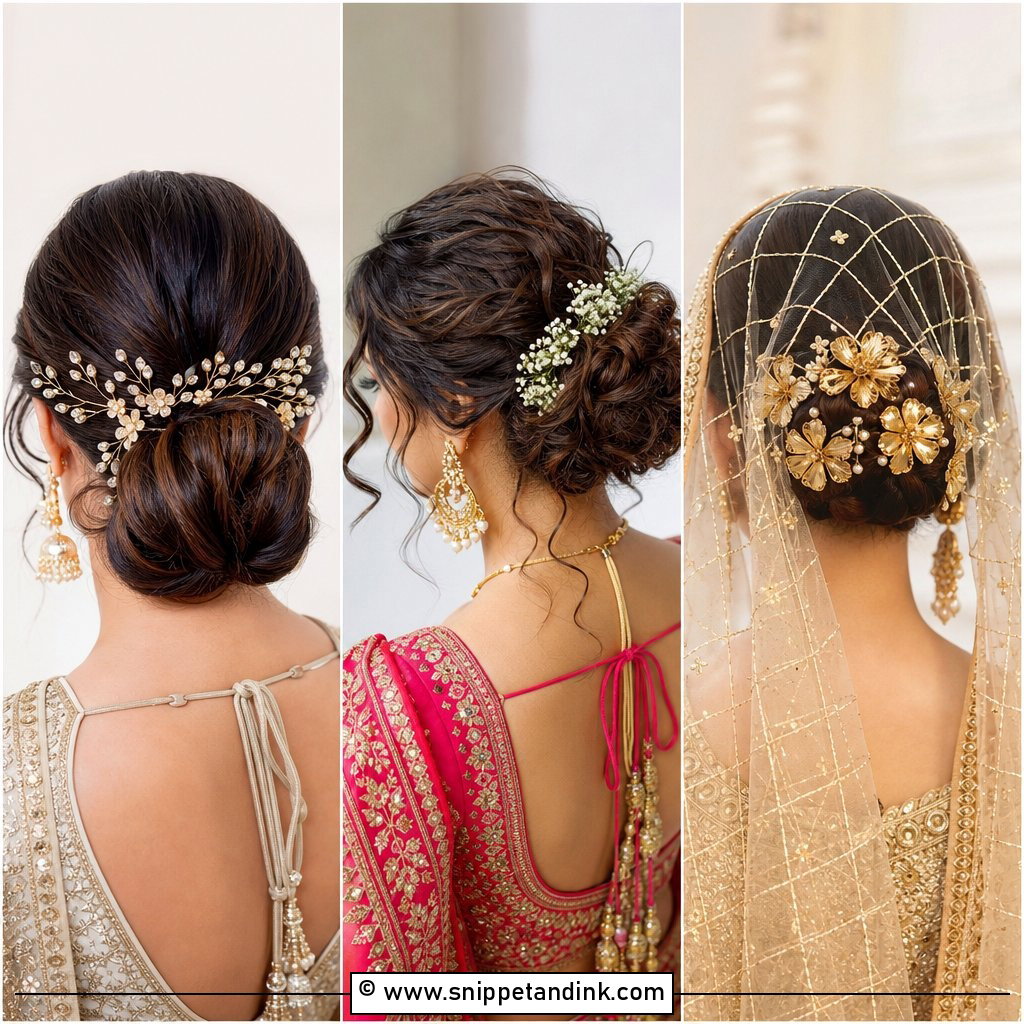
6. Sleek Low Bun With Statement Earrings
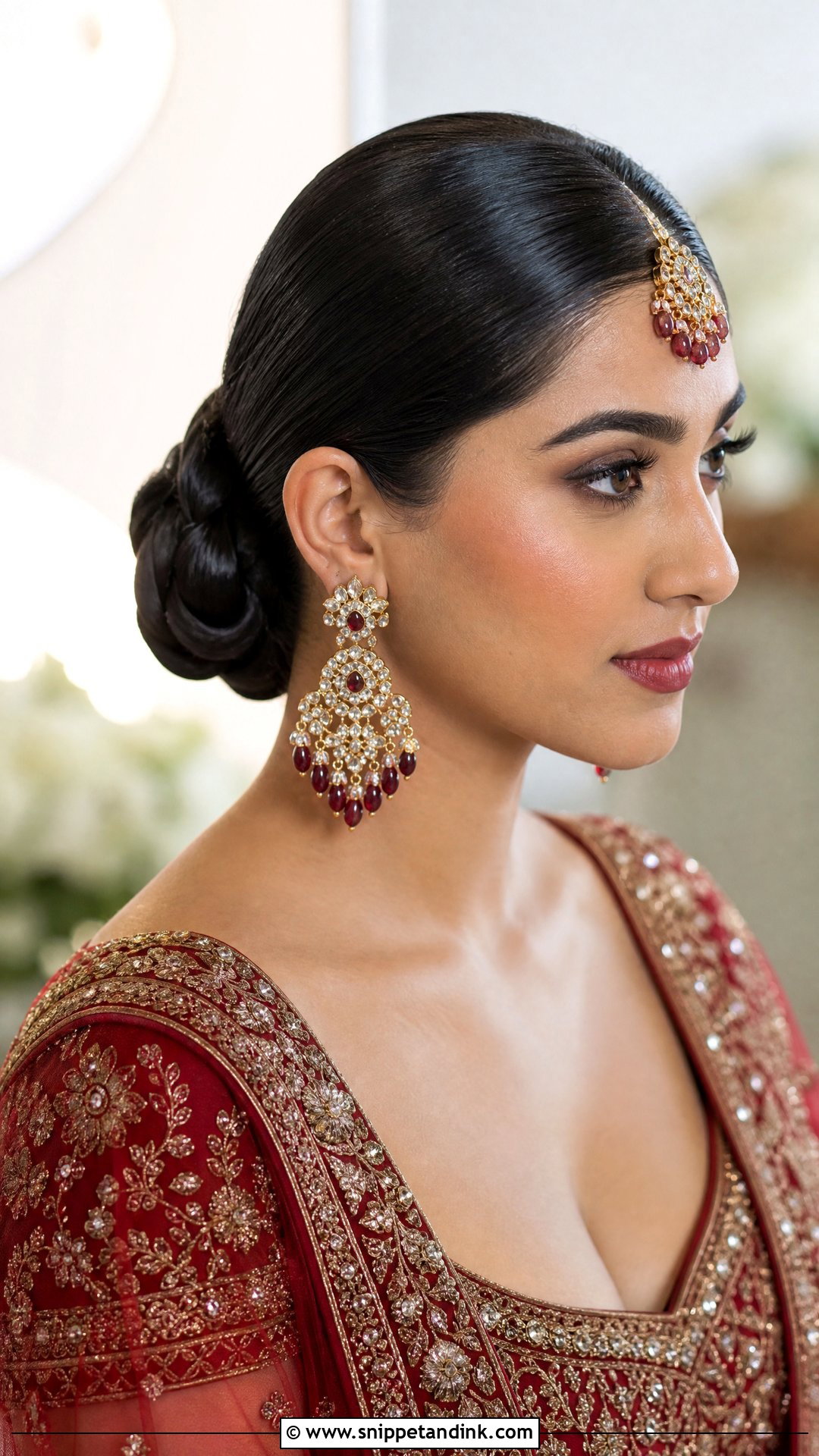
A sleek low bun pulls all attention to your face, neckline and statement jewellery. I comb the hair back with a gel or a firm cream, twist it into a tight knot at the nape, then finish with a little serum for shine. Two things go wrong with it: flyaways along the hairline that show up badly in flash photos, and a bun that’s too tight, which gives a headache halfway through the night. Set it with a fine-tooth comb and a toothbrush of gel at the edges, and pair it with chandelier earrings and a bold maang tikka.
7. Double Braided Crown Hairdo
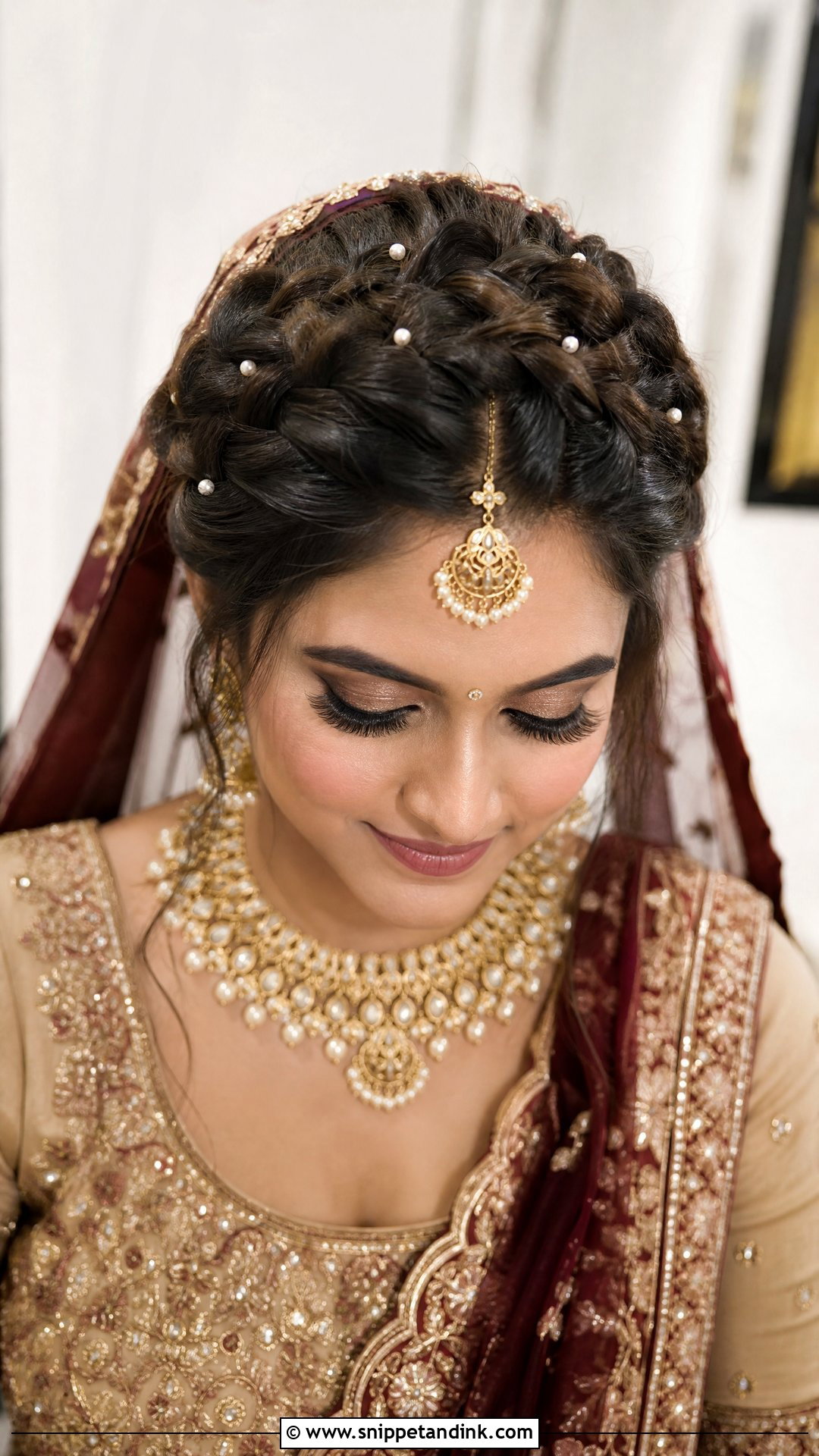
Two braids wrapped around the top of the head like a natural tiara. It’s very secure, which matters on a dance-heavy night, and tiny pearls or flowers tucked into the plaits catch the light. My concern with it is the dupatta: a crown braid sits exactly where a dupatta is pinned, so it either gets hidden or adds bulk that lifts the dupatta awkwardly. I’d keep the braids slim and flat if you’re wearing a full head drape, or save this one for a lighter net dupatta worn back off the crown. It holds best on thick, slightly textured hair.
8. Voluminous Ponytail With Curls
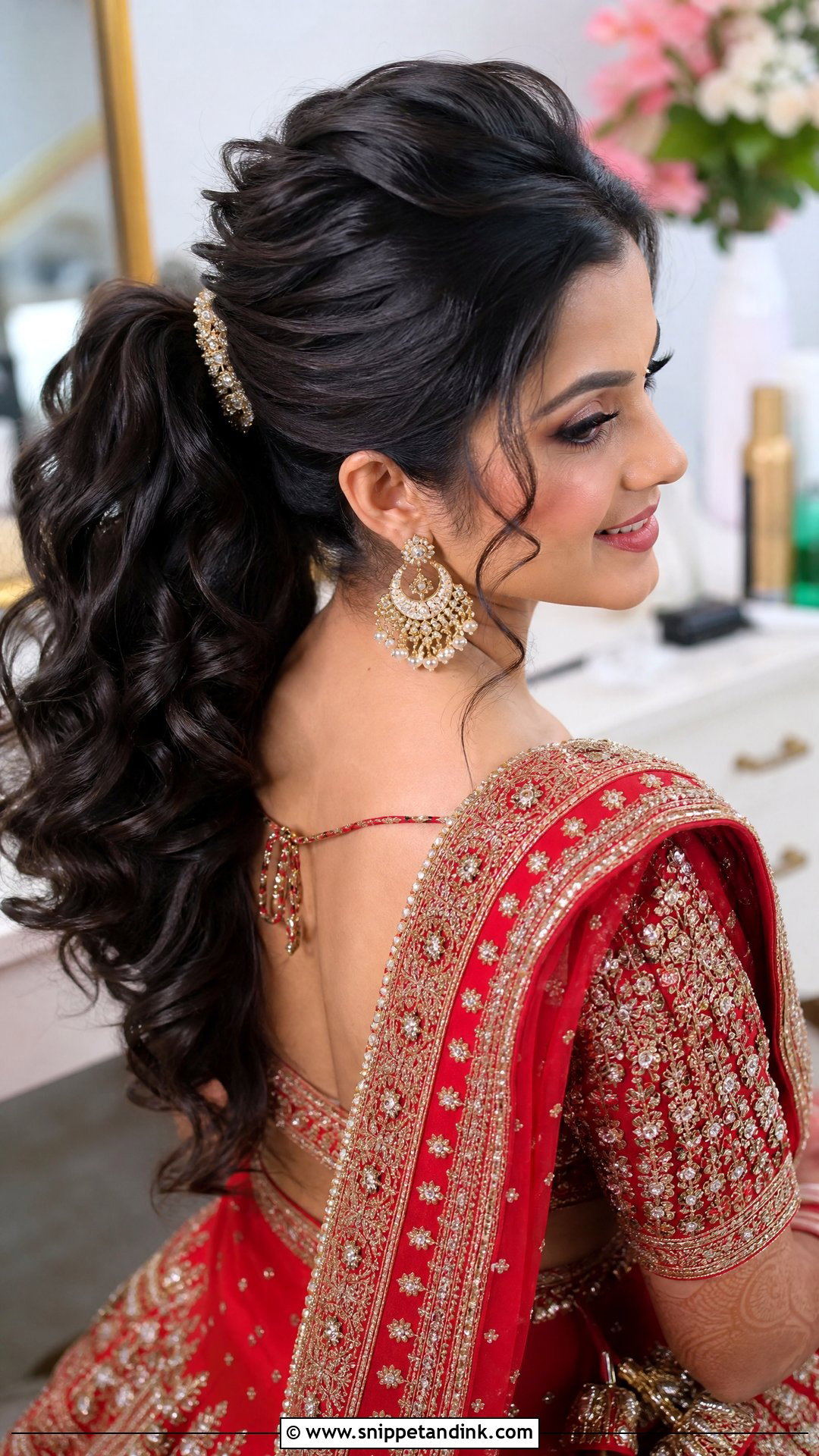
A bridal ponytail gets its drama from volume at the crown and soft curls at the ends. I wrap a section of hair around the base to hide the elastic, then pin a delicate hairpiece over it. Placement matters: a high pony lifts the face and lengthens the neck, but a heavy dupatta pinned on top can push it down, so I usually set it slightly lower than a fashion ponytail and pin the dupatta in front of the base. Paired with a heavy lehenga and chandbalis, it reads modern without losing the occasion.
9. Gota Patti Ribbon Bun
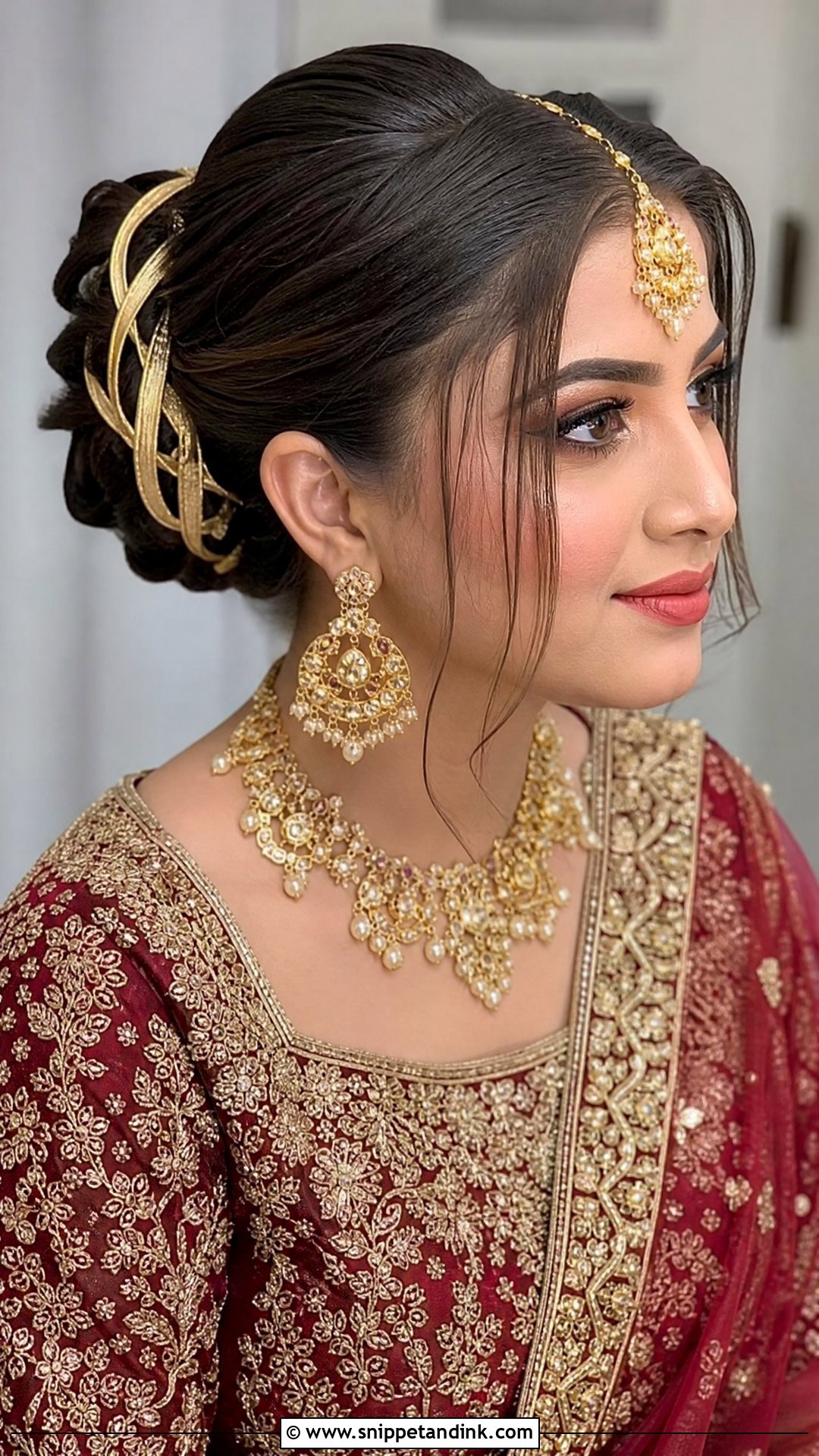
Weaving a gota ribbon through the bun picks up the same golden trim that runs along most bridal lehengas, so the hair and outfit read as one piece. Ask your tailor for an offcut of the actual gota from your outfit; matching it from a market reel rarely gets the shade right. I stitch or pin the ribbon to the bun after it’s built rather than braiding it in, so it can be adjusted if it shifts. Finish with a maang tikka for balance, and keep the bun low so the dupatta doesn’t crush the ribbon work.
10. Loose Fishtail Braid With Pearls
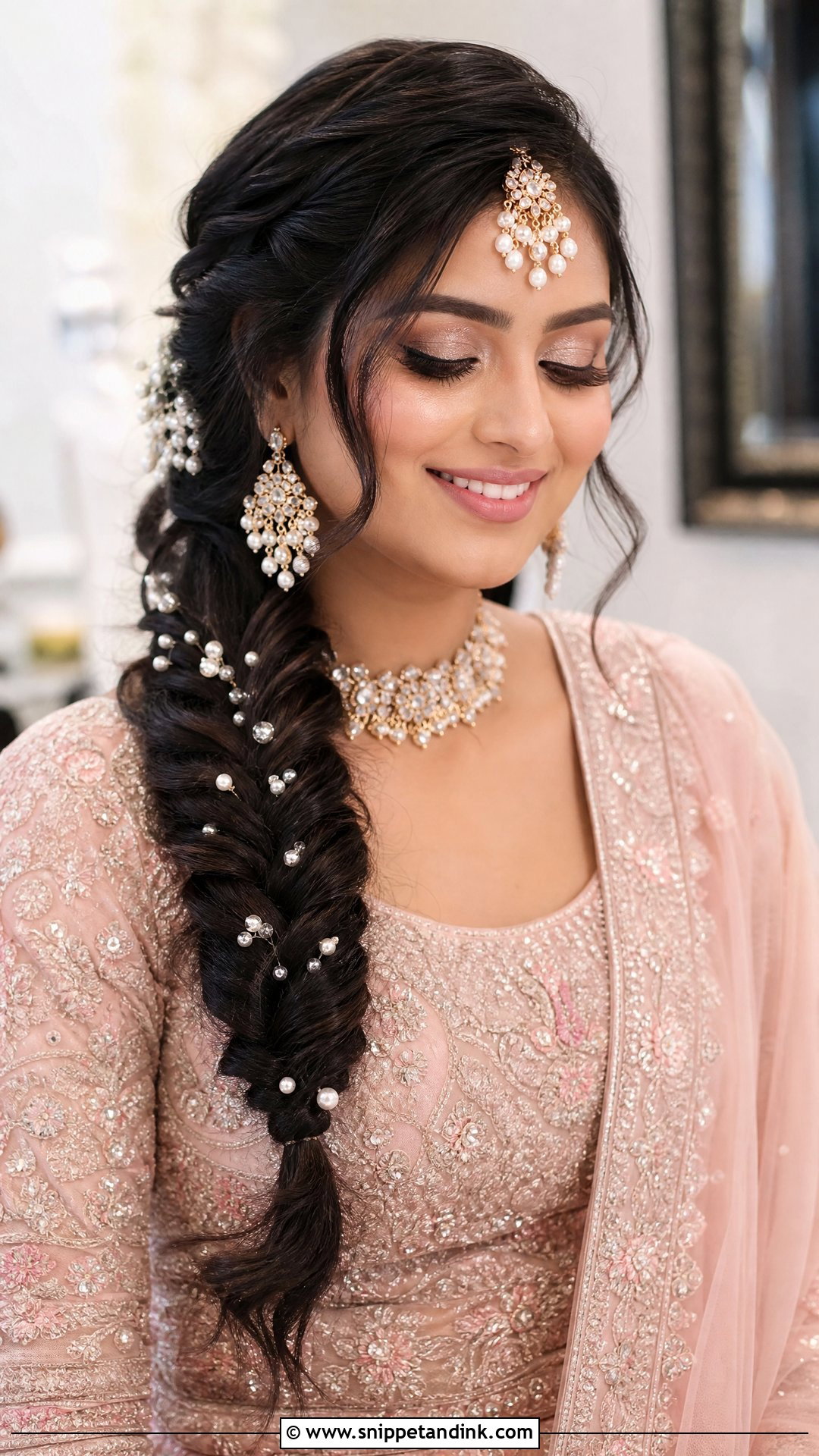
The fishtail braid gives intricate texture for very little bulk, worn over one shoulder and loosened gently to look fuller. Pearls or mini jewels can be scattered through the weave. It needs at least collarbone-length hair, and layered cuts tend to poke out of the braid, which is why I lightly mist each section with texturising spray before plaiting. The pattern shows up well in close side portraits, so tell your photographer to get a profile shot. Pair it with subtle floral accents or a passa near the temple.
11. Messy Bun With Curly Tendrils
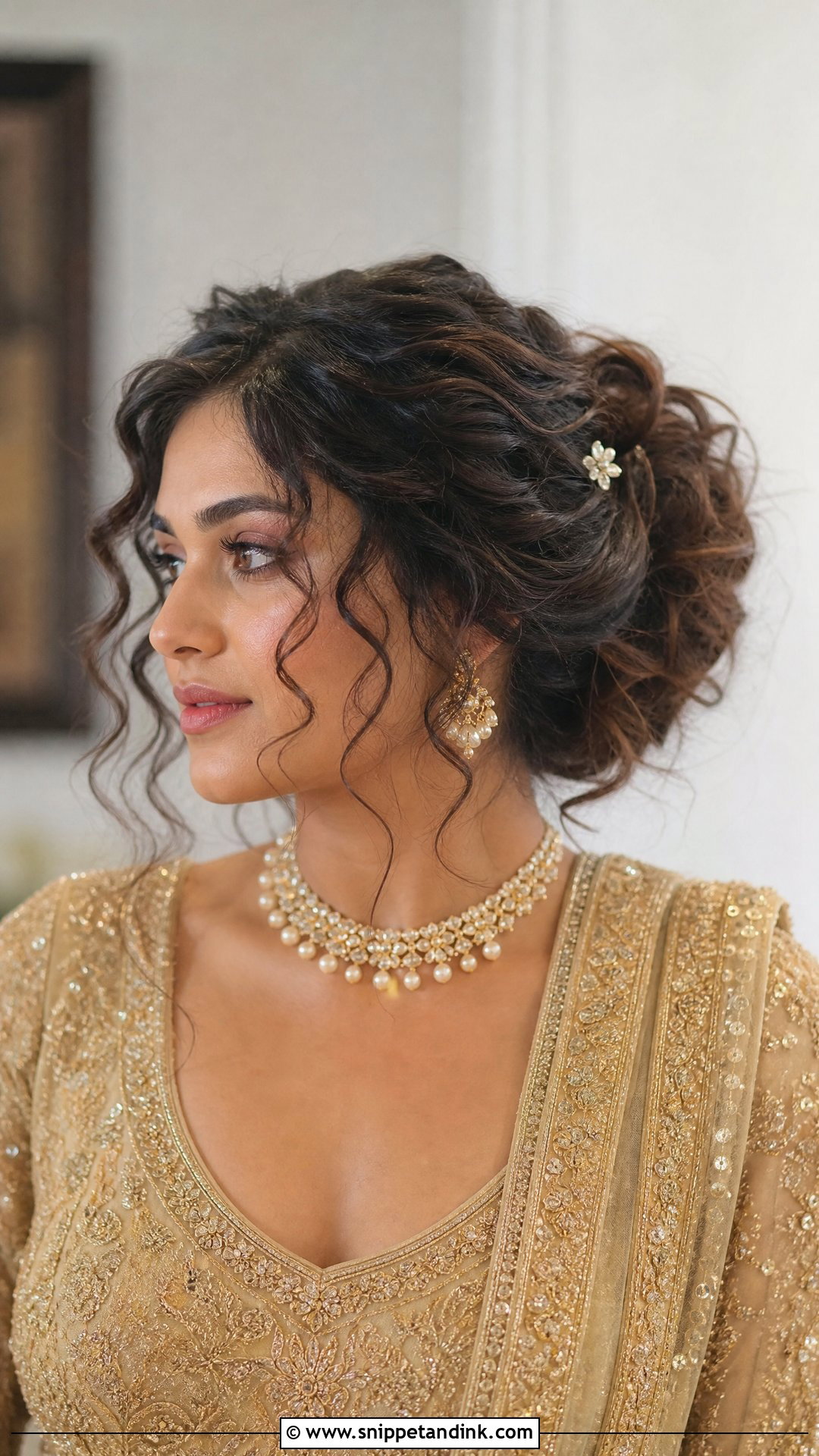
A messy bun with curly tendrils looks relaxed, but it’s one of the more skilled styles to get right. Gathered loosely with a few curls left free around the face, it pairs well with glowy, dewy makeup and lighter jewellery, and suits daytime or outdoor barats. The texture has to be built in before it’s gathered, with curling and backcombing, or it just looks unfinished. Keep the tendrils short and few; long loose pieces stick to a dewy base and to the dupatta’s embroidery.
12. Sleek Center Part With Long Straight Hair
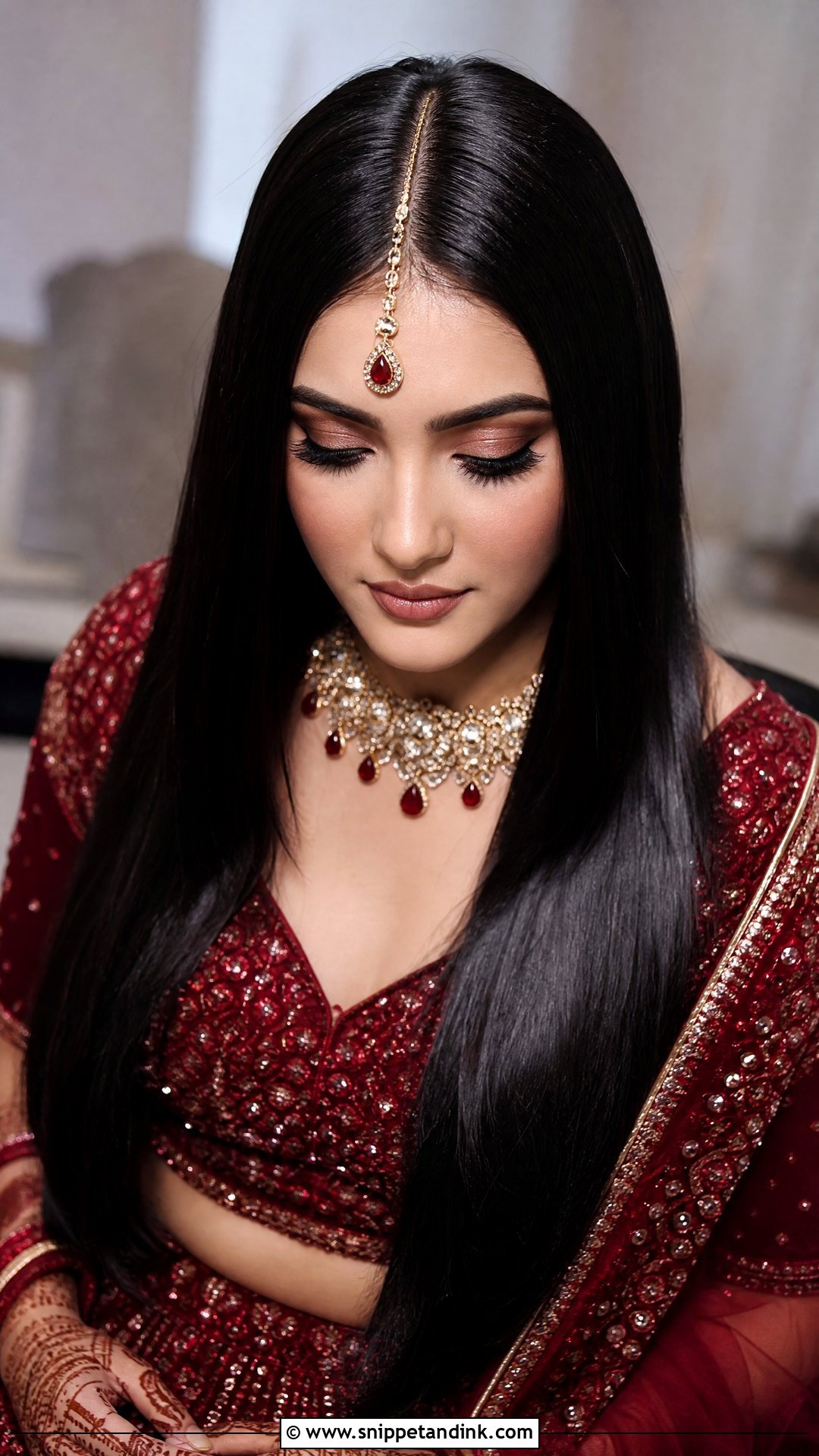
Sleek, poker-straight hair with a sharp center part is a strong, high-fashion choice for brides with naturally smooth hair. A thin maang tikka along the parting keeps it grounded in tradition, and the clean lines let your jewellery do the talking. I’ll be direct about the risk: in humidity or a packed hall, straightened hair starts to frizz at the ends and kink around the ears, and every flaw shows because there’s no texture to hide it. Use an anti-humidity spray and keep a smoothing cream and a flat comb in your clutch.
13. Side Bun With Passa Accessory
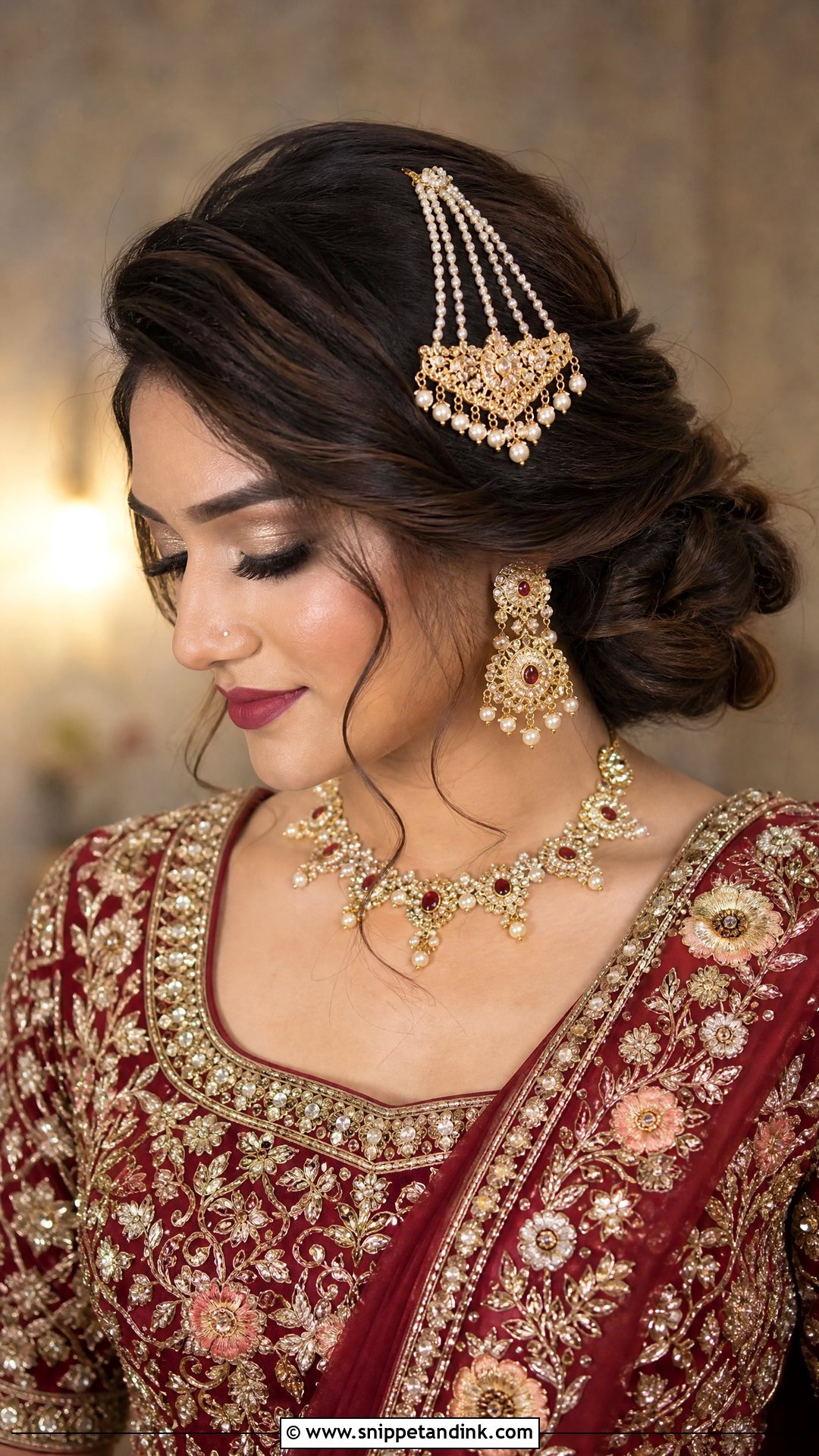
Placing the bun low and just behind one ear leaves the other side open for a passa or side tikka. The asymmetry is what makes it, so I check it from the camera’s side before anything else: the bun should sit opposite the jewellery, not on the same side. It flatters round and oval faces by pulling the eye off-centre. A side bun needs more pins than a central one because it sits off the head’s natural balance point, so I lock it with a few crossed pins under the bun as well as through it.
14. Curly Half Updo With Jhoomar
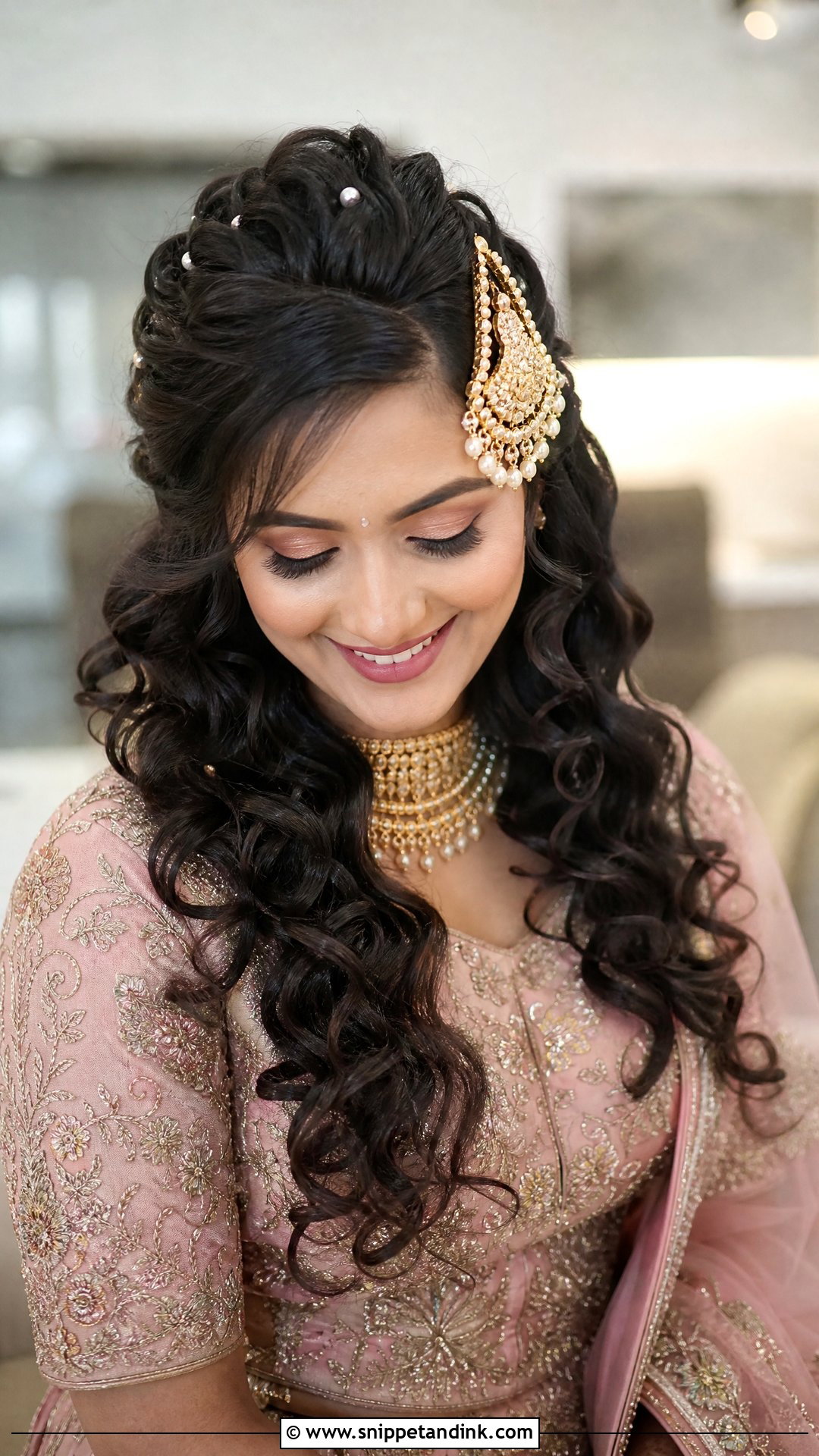
The curly half updo pins the top section back for lift while the curls fall loose below, with a jhoomar at the side parting. It’s a comfortable option for long rasms because the face is clear. For fine hair I add volume with hot rollers rather than a curling iron alone, since roller-set curls hold their shape longer under weight. Keep the floral pins or pearls few and small; on curls they get lost if there are too many.

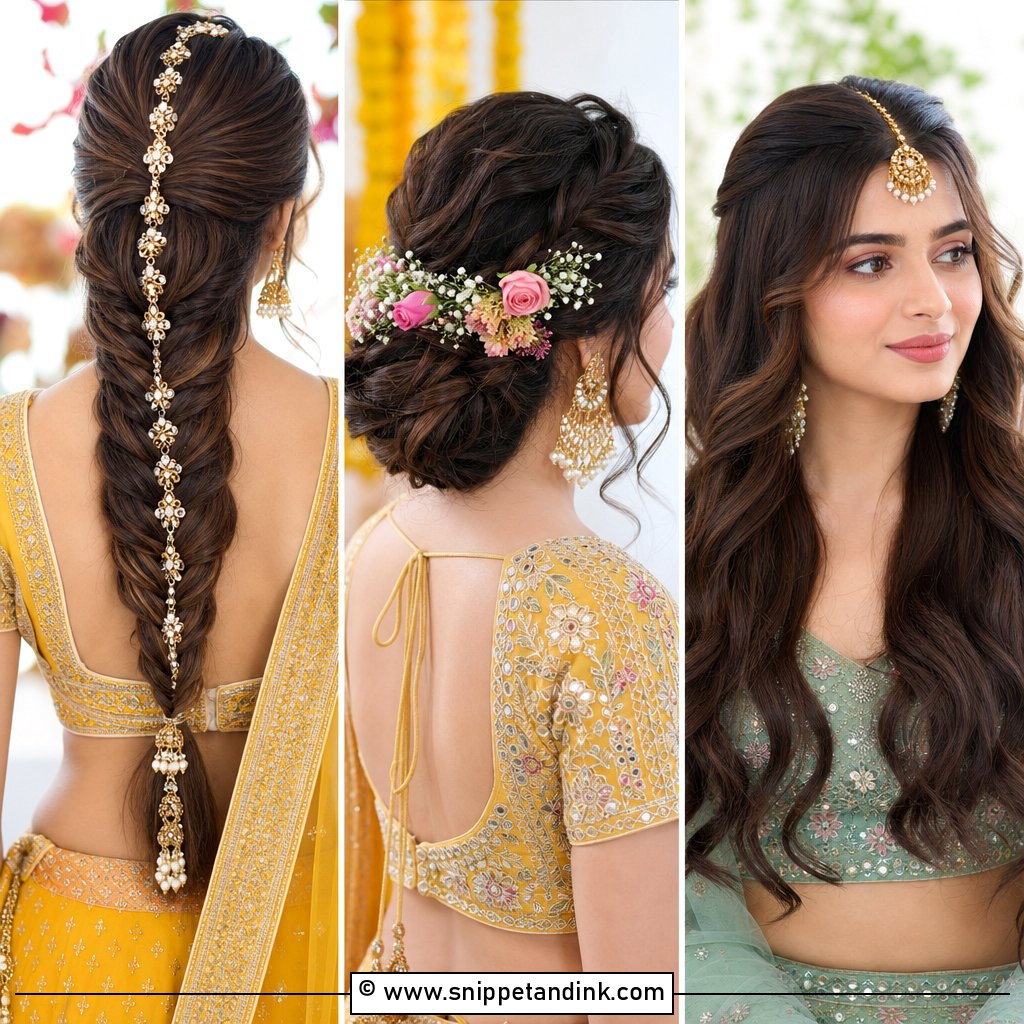
15. Bridal Bun With Hair Chain Detailing
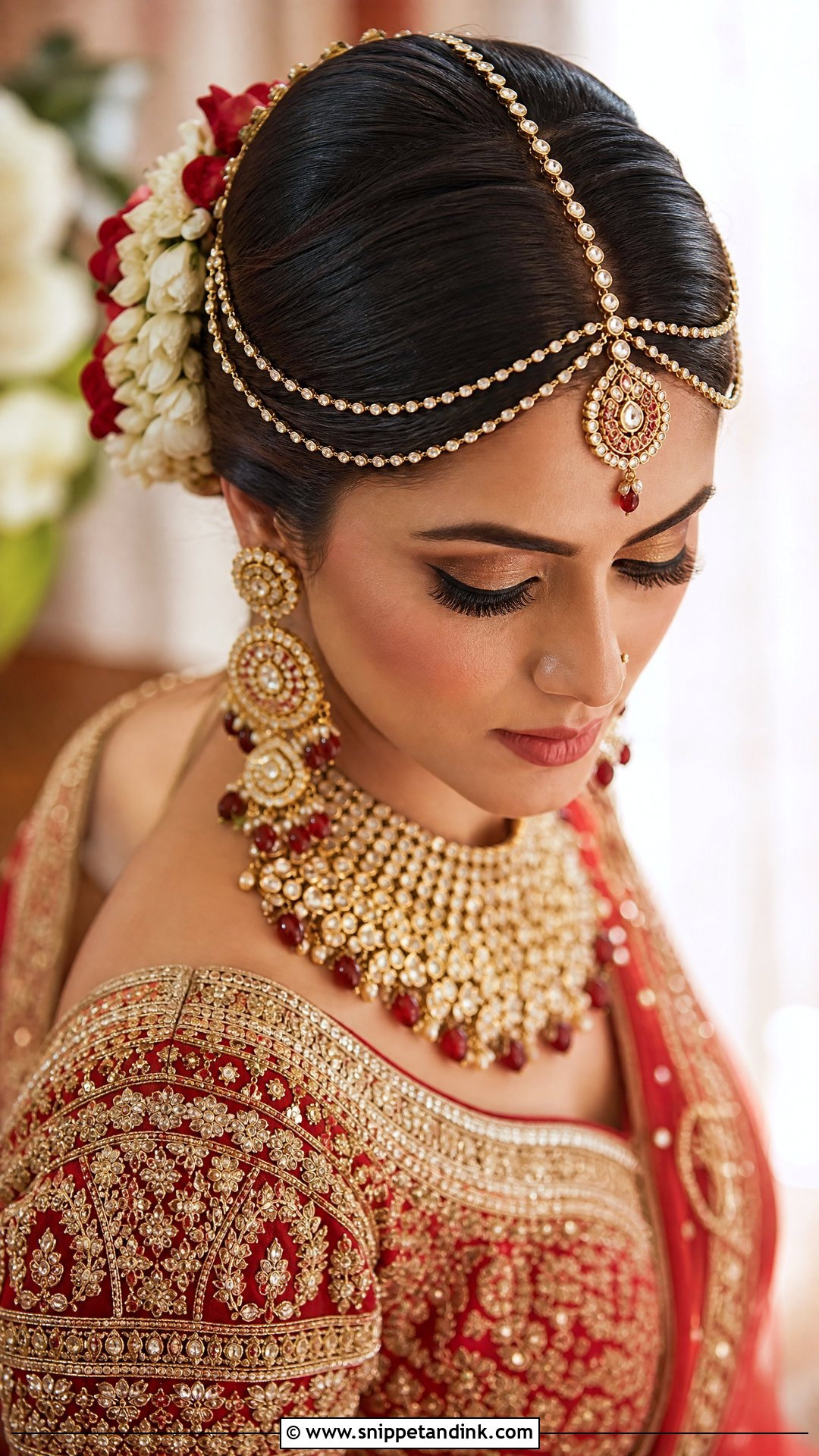
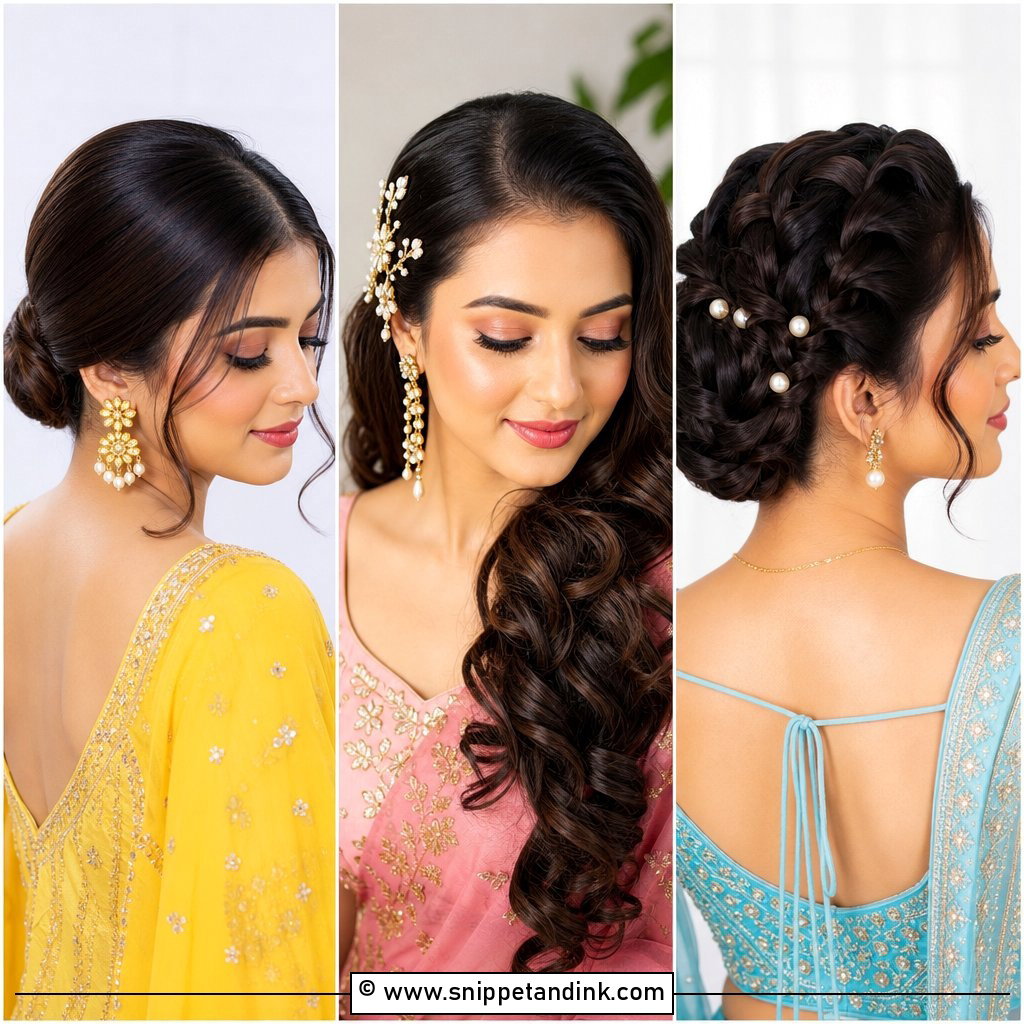
Fine jewelled chains draped over a bun and along the parting catch light with every turn of the head. The base has to be completely smooth, because chains show every bump underneath. I pin chains at several points rather than just the ends, otherwise they slide when you lower your head during the nikah or the rasms. Choose chains in the same metal tone as your jewellery and add a maang tikka to tie it together.
16. Thick Side Braid With Flowers
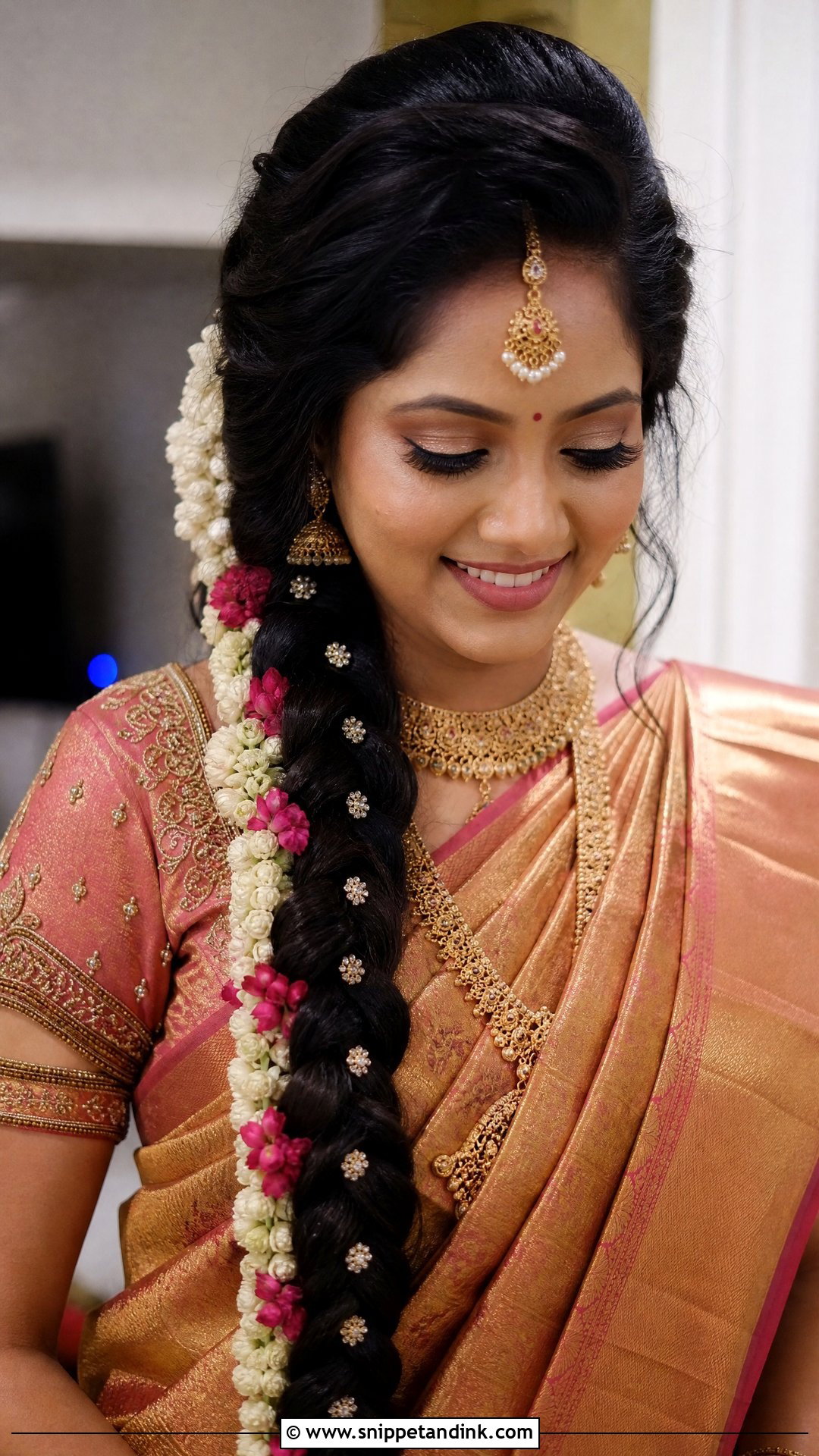
The thick floral side braid draws from South Indian bridal tradition: a heavy braid over one shoulder, dressed with rows of fresh flowers and small jewels down its length. It needs real length and density, so extensions are common here and nothing to be shy about. Fresh flower strands are surprisingly heavy, so I sew them to the braid with a needle and thread instead of relying only on pins. Pair it with temple jewellery and a silk or velvet outfit for full impact.
17. Bouffant Puff With Open Hair
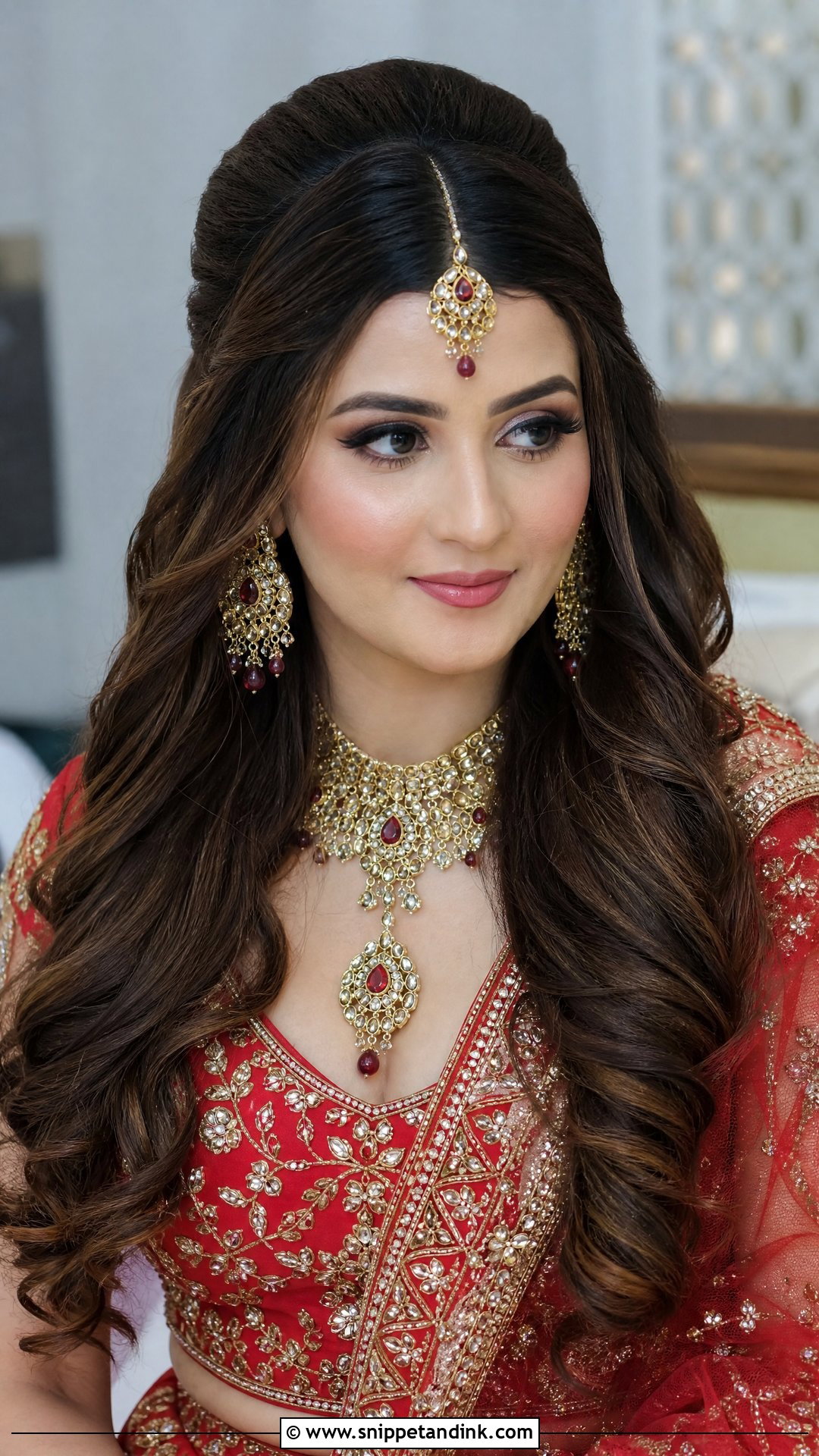
The middle-partition puff adds height at the crown while the rest flows down in waves. A maang tikka along the parting finishes it. Height flatters longer faces less than you’d think, so I keep the puff modest for oval or long face shapes and give it more lift for rounder ones. The backcombing needs to be smoothed over with a soft brush, or the puff looks fuzzy in flash photography.
18. Braided Low Bun With Maang Tikka
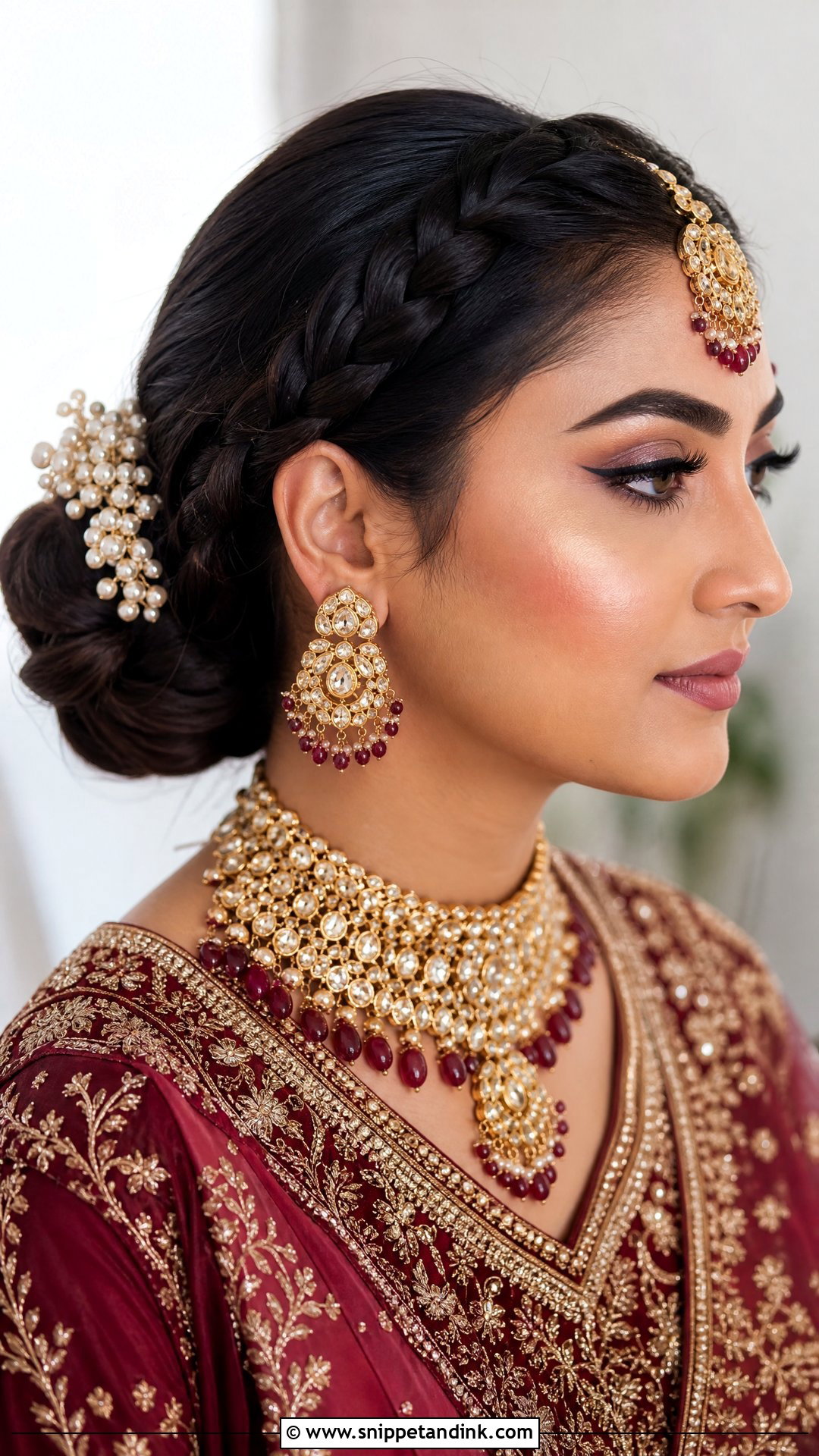
A braid wrapped into a low bun gives intricate texture in a compact, secure shape. It’s the style I’d point a bride to if she’s worried about hair coming down during a long night, because braided sections hold pins far better than smooth ones. A statement maang tikka draws the eye forward, and small pearls or flowers can be tucked into the braid. Medium-length hair works; the braid just wraps fewer times.
19. Pearl Adorned Chignon
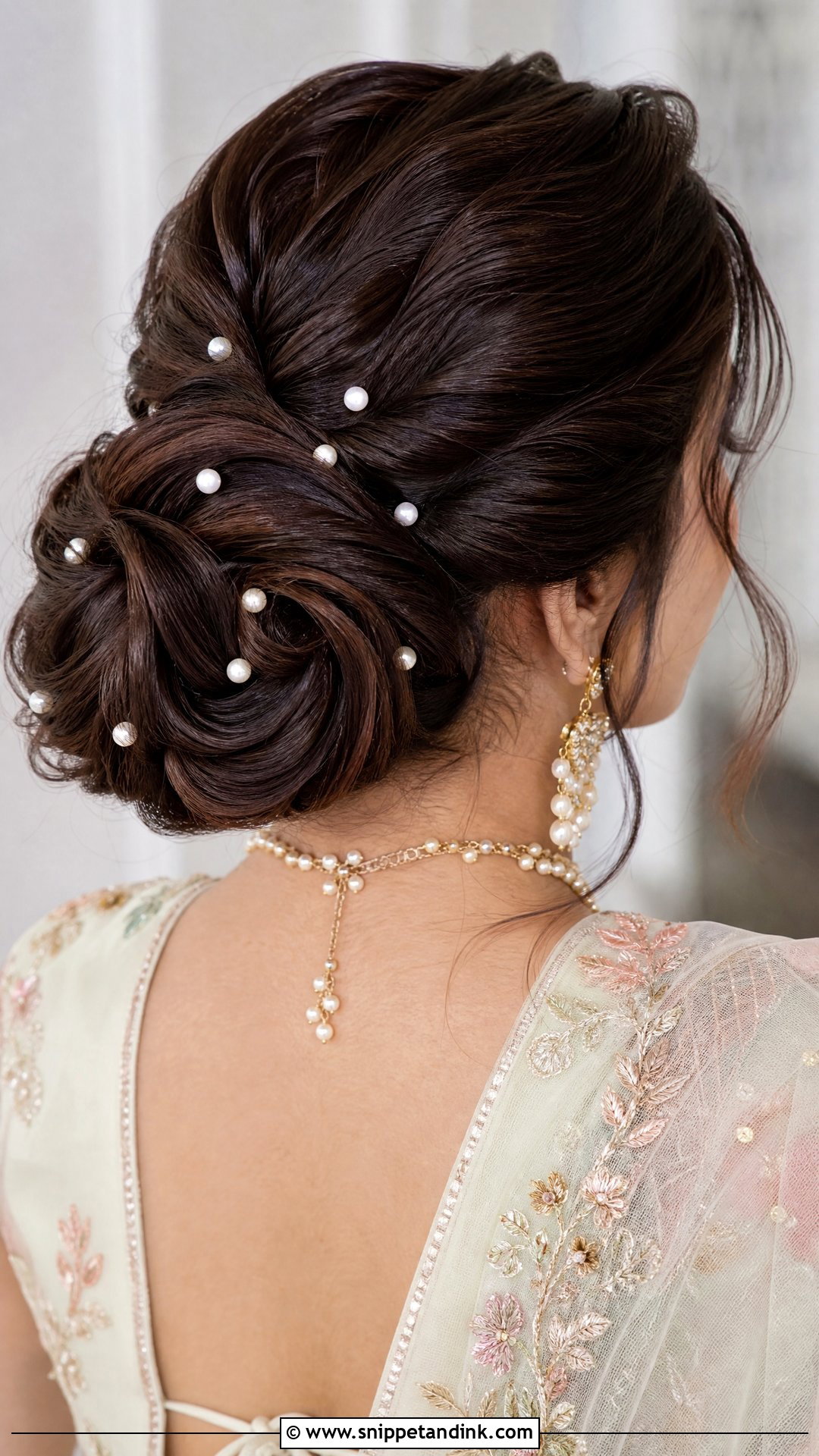
The pearl chignon is a low, looped knot scattered with delicate pearls, and it reads vintage without looking old-fashioned. I use pearl pins on U-pins rather than glued pearls, so they can be repositioned if one gets knocked. It works with pastels and ivory, and also with bold reds. The back of the head is often what photographers capture during the barat walk, so the knot needs to be finished cleanly from every side, not just the front.
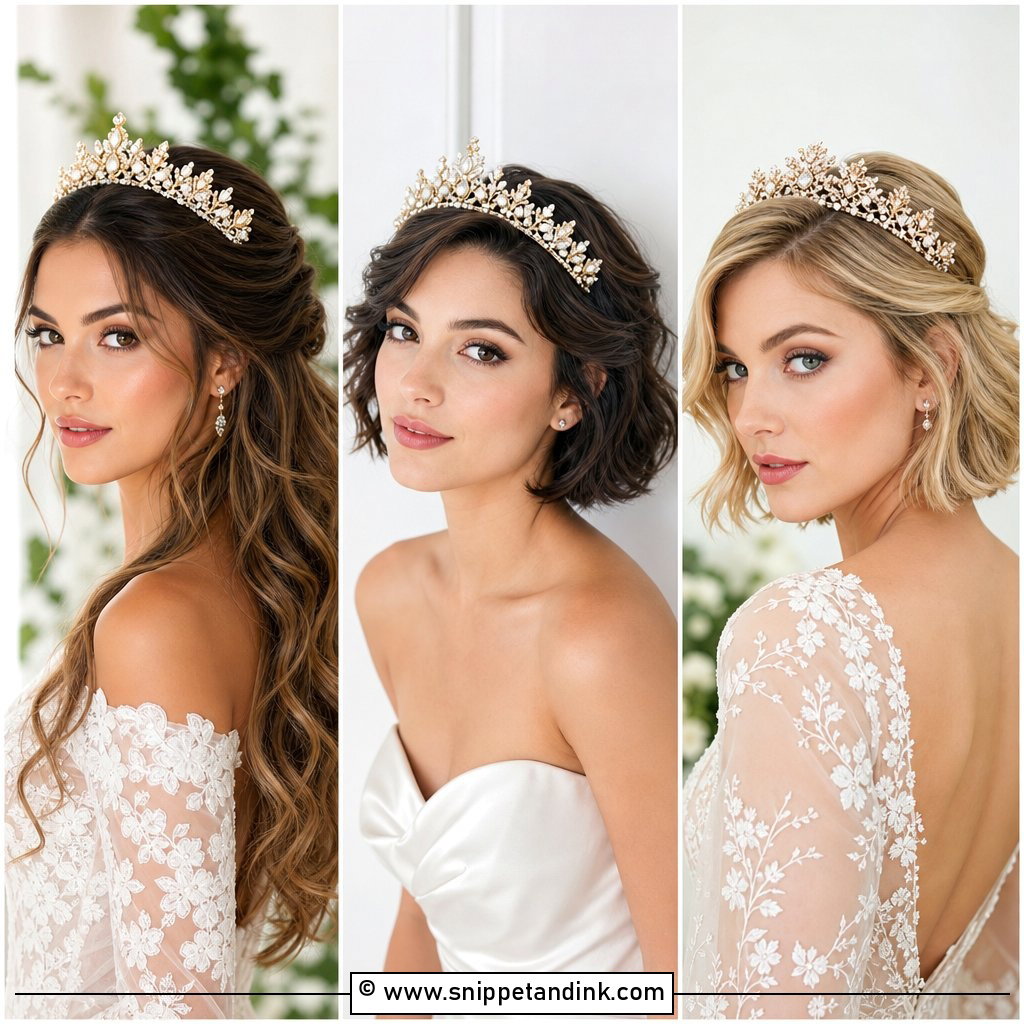
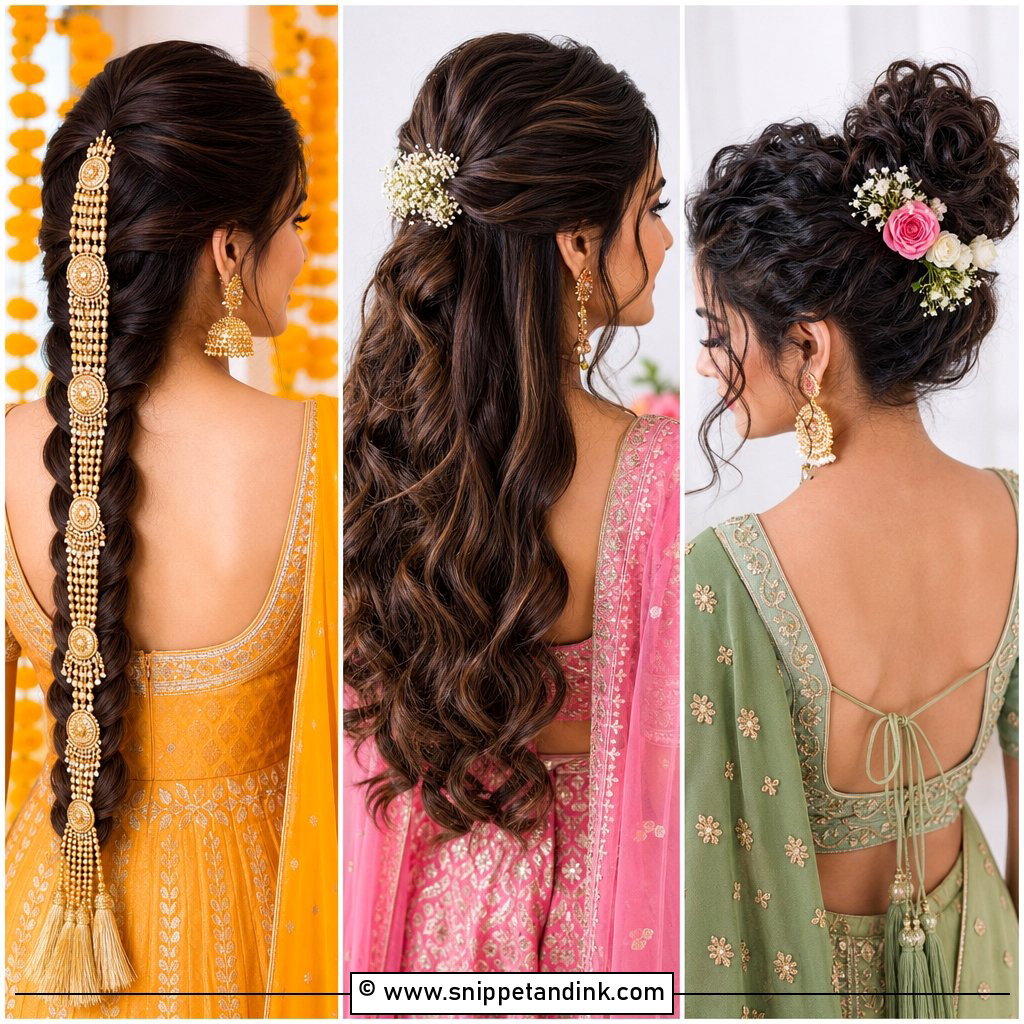
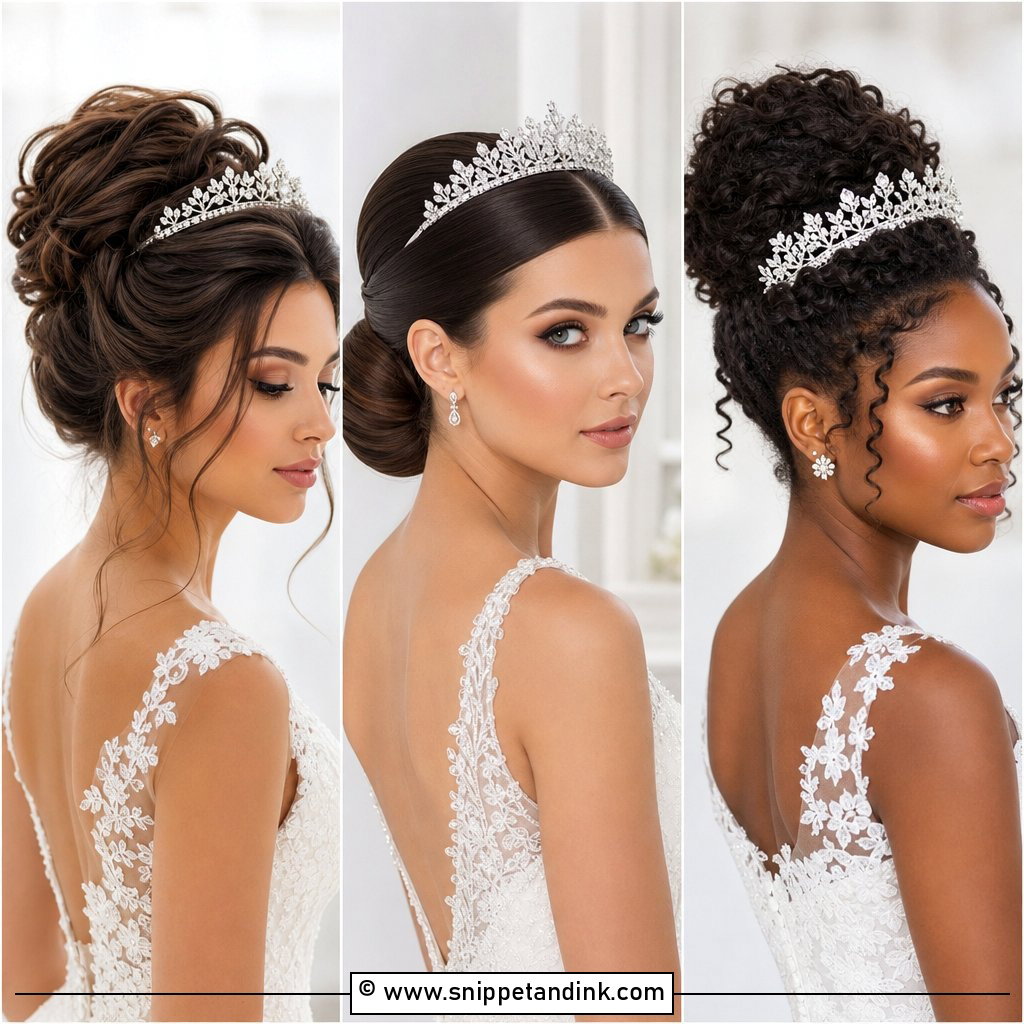
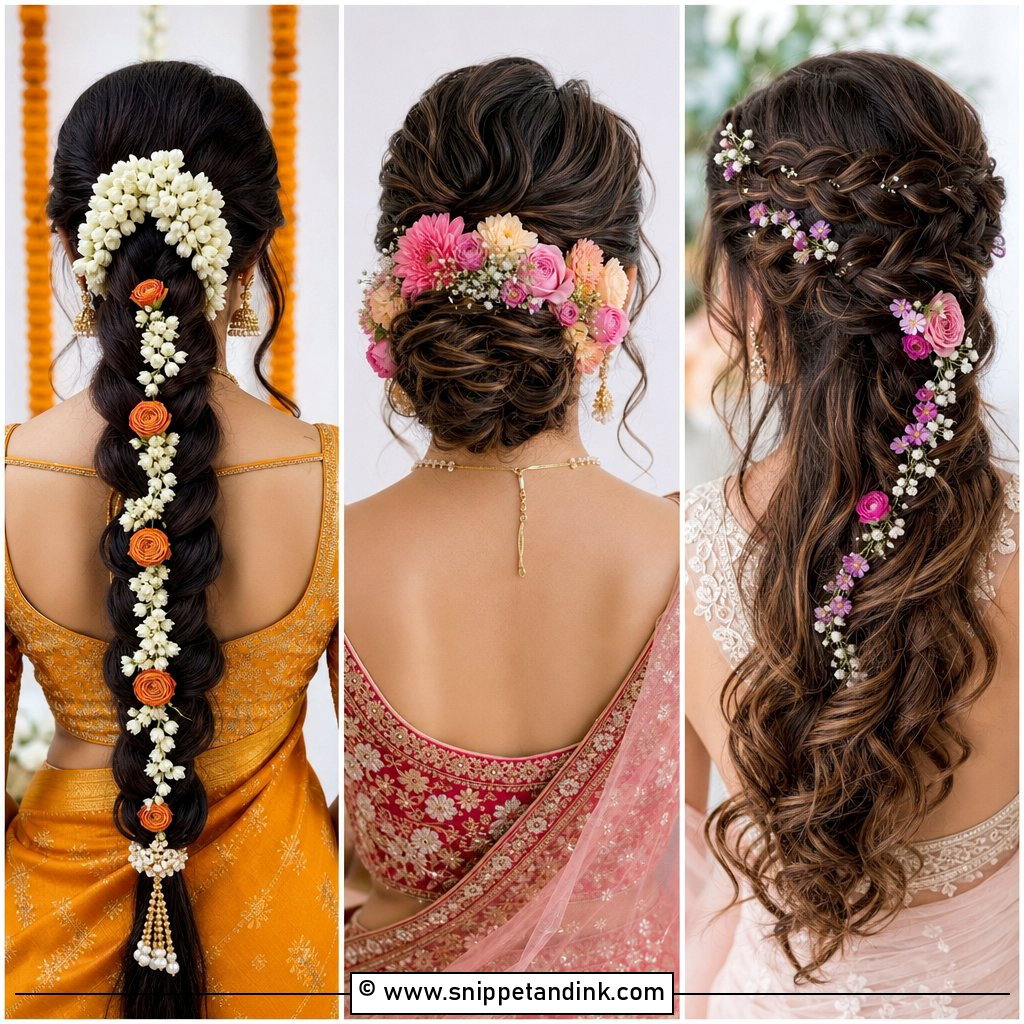
20. Open Waves With Floral Headband
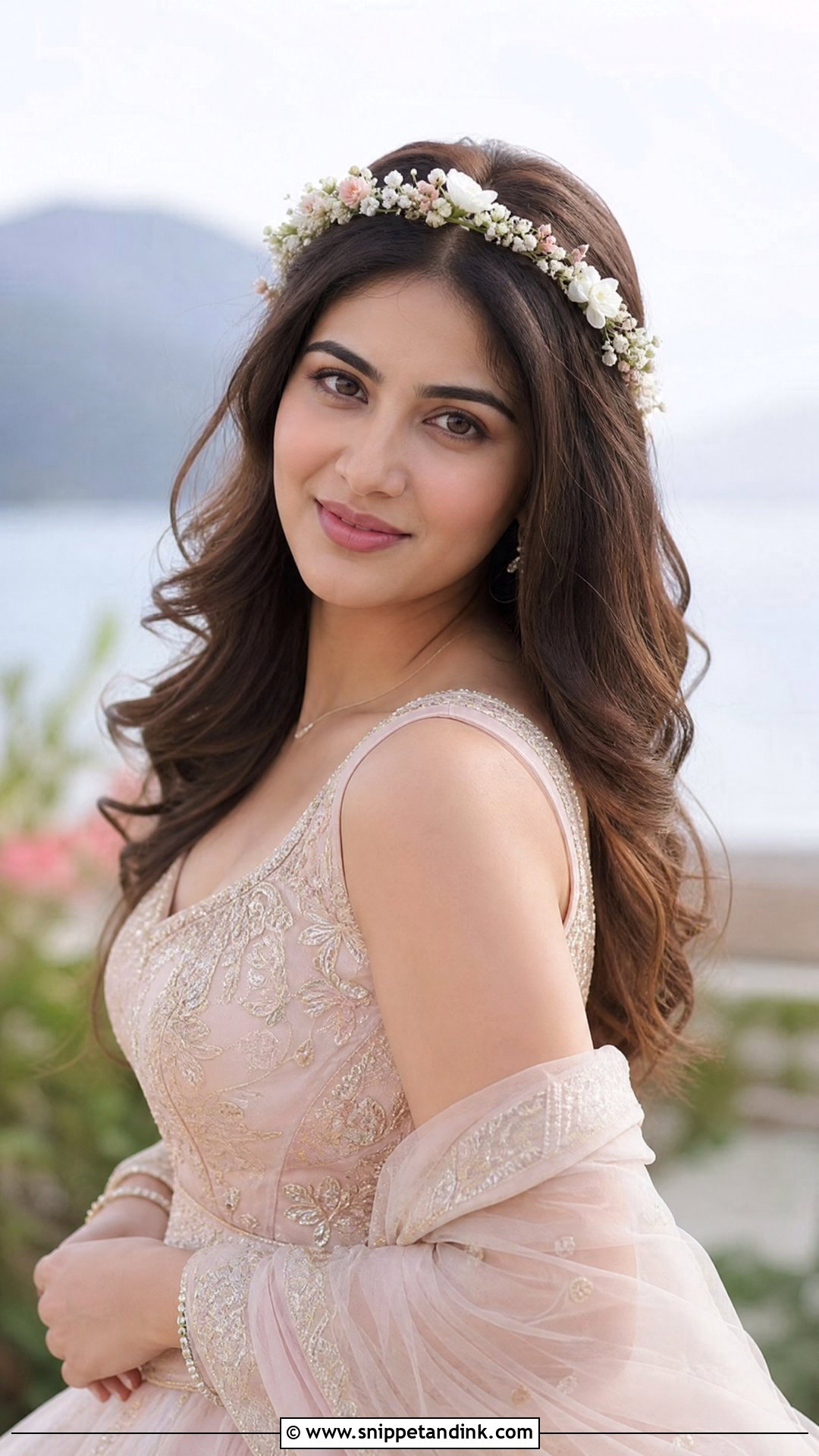
Loose, tousled waves with a floral headband or a sispatti suit a daytime or outdoor barat. It pairs with glowy makeup and minimal jewellery for a fresher look. Two practical notes: a fresh floral headband wilts in direct sun, so I’d use a silk or preserved band if you’ll be outdoors for hours, and the headband sits where the dupatta goes, so try both together at your trial.
Fresh Gajra, Real Flowers and the Timing Problem
Jasmine and mogra start to brown within a few hours of being picked, faster in heat and under hot lights. Roses hold their colour better but drop petals once they’ve been pinned for a while. So the fresher the flowers when they go on, the better they’ll look by the rukhsati.
I ask for the gajra to be delivered the morning of, kept wrapped in a damp cloth in a cool place, and pinned on last, after the jewellery. A light mist of water just before you leave helps. If your barat runs late into the night or is outdoors in summer, consider a mix of fresh and good silk flowers, with the fresh ones placed where the camera sees them most.
What to Have Ready for the Rukhsati
By the end of the night the dupatta has been adjusted many times and the hair has taken a lot of weight. Give someone you trust a small pouch with bobby pins that match your hair colour, a mini hairspray, a few spare U-pins for the bun and a comb. Ten quiet minutes in a side room before the rukhsati photos can fix most of what the evening has done.
Matching the Hair to Your Barat Night
Start from your dupatta and jewellery, not from a photo. Know how heavy your dupatta is, where it will be pinned, and which pieces (tikka, jhoomar, passa) you’re wearing, then pick the style that supports them. Do a trial with your actual jewellery and a dupatta of similar weight, wear it for a few hours, and see what moves. If it still feels secure and comfortable at the end of that trial, it will see you through the barat.
You'll Like These Ideas:





Leave a Reply