
A South Indian bride’s hair has a long shift ahead of it. It goes on before an early muhurtham, sits under a silk pallu and a weight of jasmine and gold through the rituals, and often has to be reworked for an evening reception. Long hair gives me the most room to build that: full braids, layered flowers, jada billa and buns that hold their shape for hours. The styles below range from the classic temple bride to softer looks for the sangeet or a guest who wants something festive. If you’re still settling your muhurtham look, plan hair and makeup together, because a heavy flower jada changes how much the face needs to carry. Screenshot the ones you like and bring them to your trial.
Weight, Extensions and Flowers for a South Indian Bridal Braid
The biggest surprise for most brides at the trial is how heavy a full flower braid is. Jasmine, kanakambaram, a jada billa set and a braid extension together pull on the crown all day. I plan the base before I plan the decoration, because if the anchor is weak the whole thing slides by the second ritual.
How I build the base
- I make a small, firm anchor at the crown with crossed pins, and the flower jada hooks into that, not into loose hair.
- If the hair stops around the shoulders, I plait in an extension matched to the hair color. Most South Indian brides use one for a poola jada; it’s normal, not a cheat.
- I pin flower strings every few inches along the braid so the weight is spread out, not hanging from the top.
- Heavy jada billa sets get stitched to the braid with thread in addition to their own hooks.
Ordering the flowers
Order flowers from someone who makes bridal jadas regularly, and agree on delivery the morning of the wedding, not the night before. Jasmine is picked as buds and opens over the day, so tightly closed buds look fuller by the time you reach the mandap. Ask for a spare string or two. Flowers break at the pin points when you sit back against a chair, and a quick patch saves the photos.
1. Traditional South Indian Braid With Poola Jada
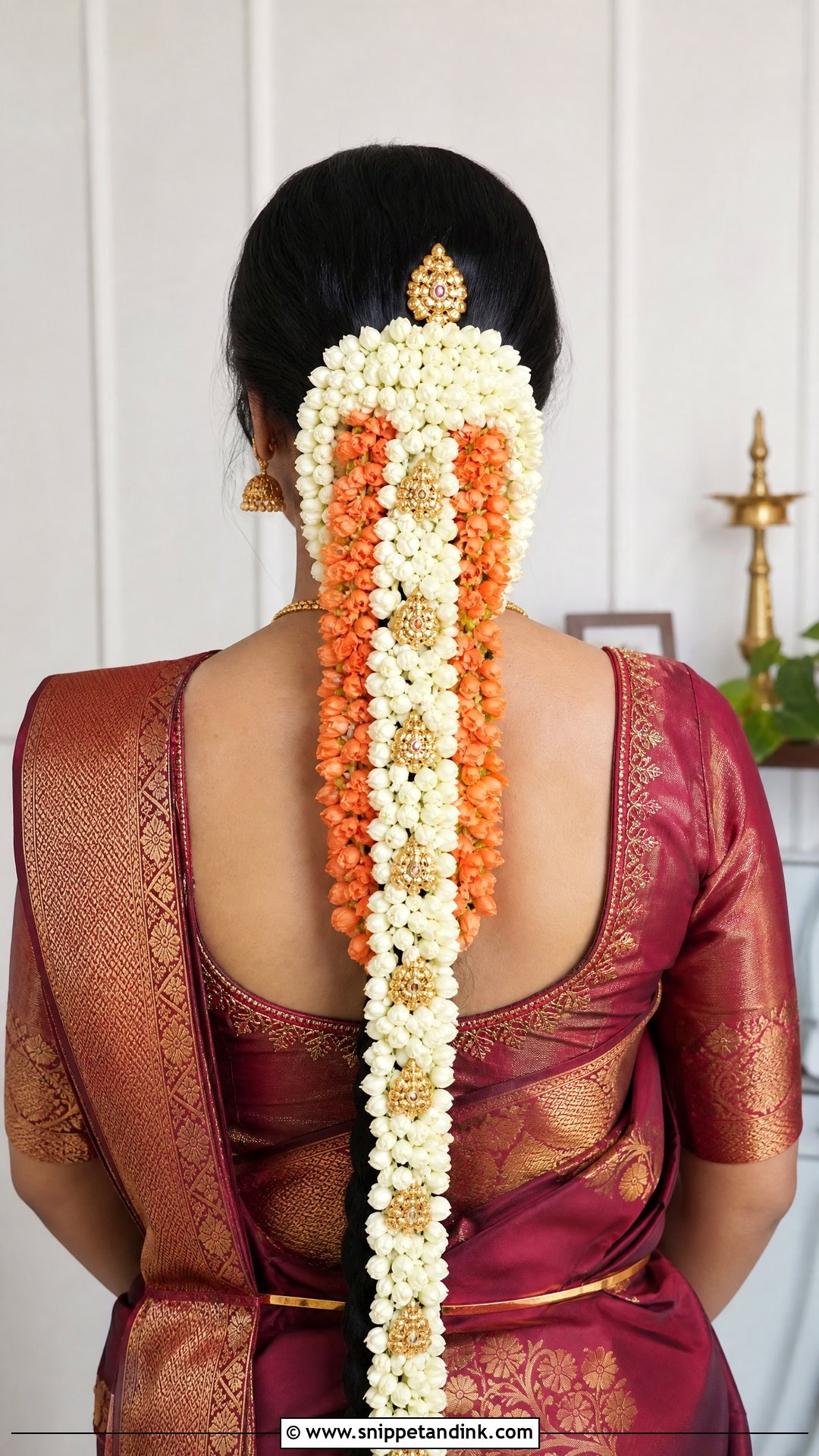
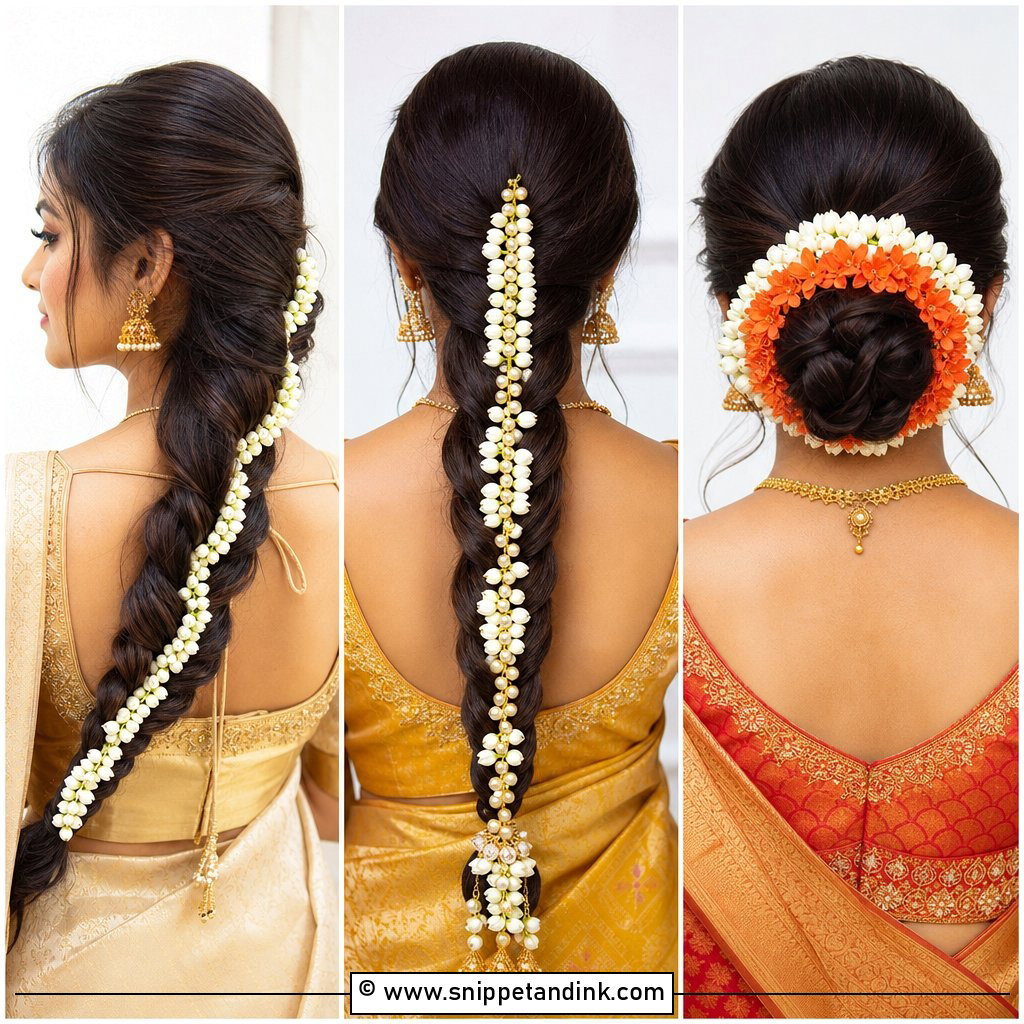
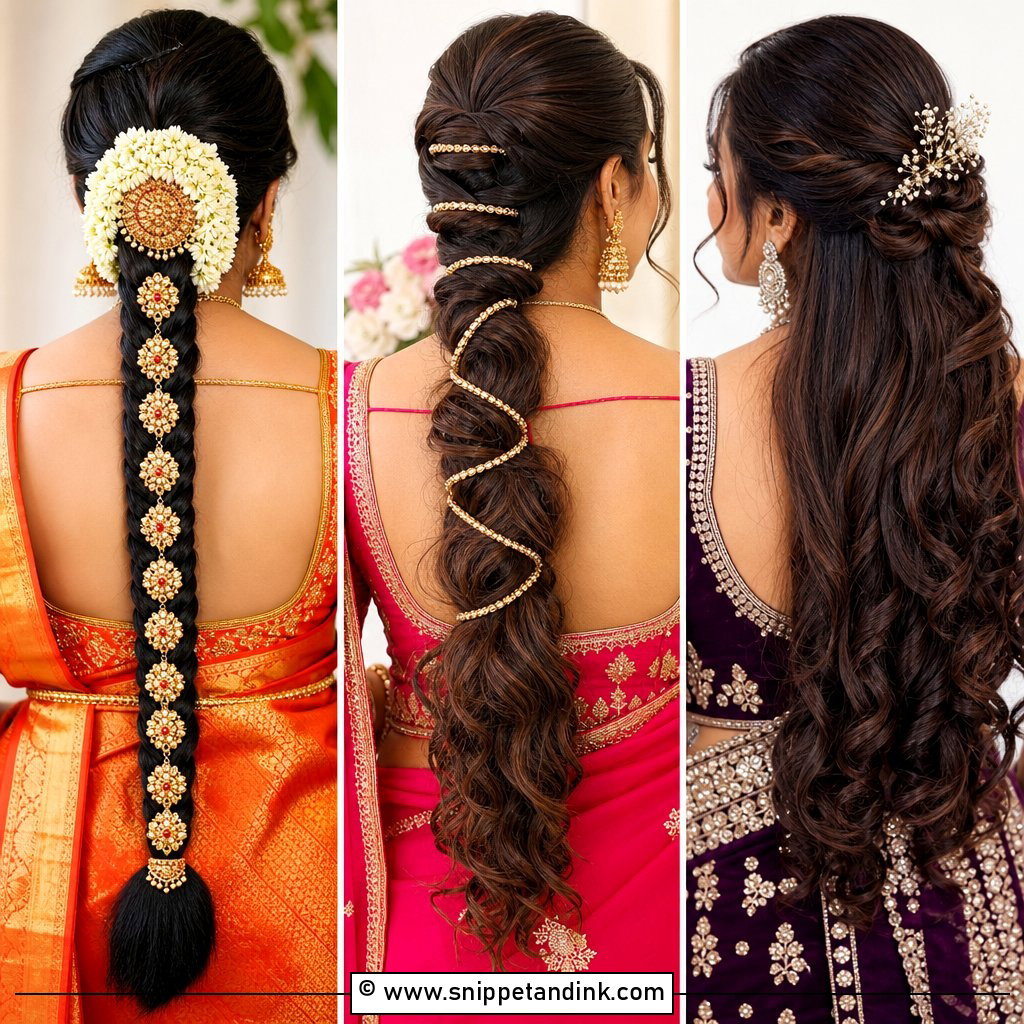
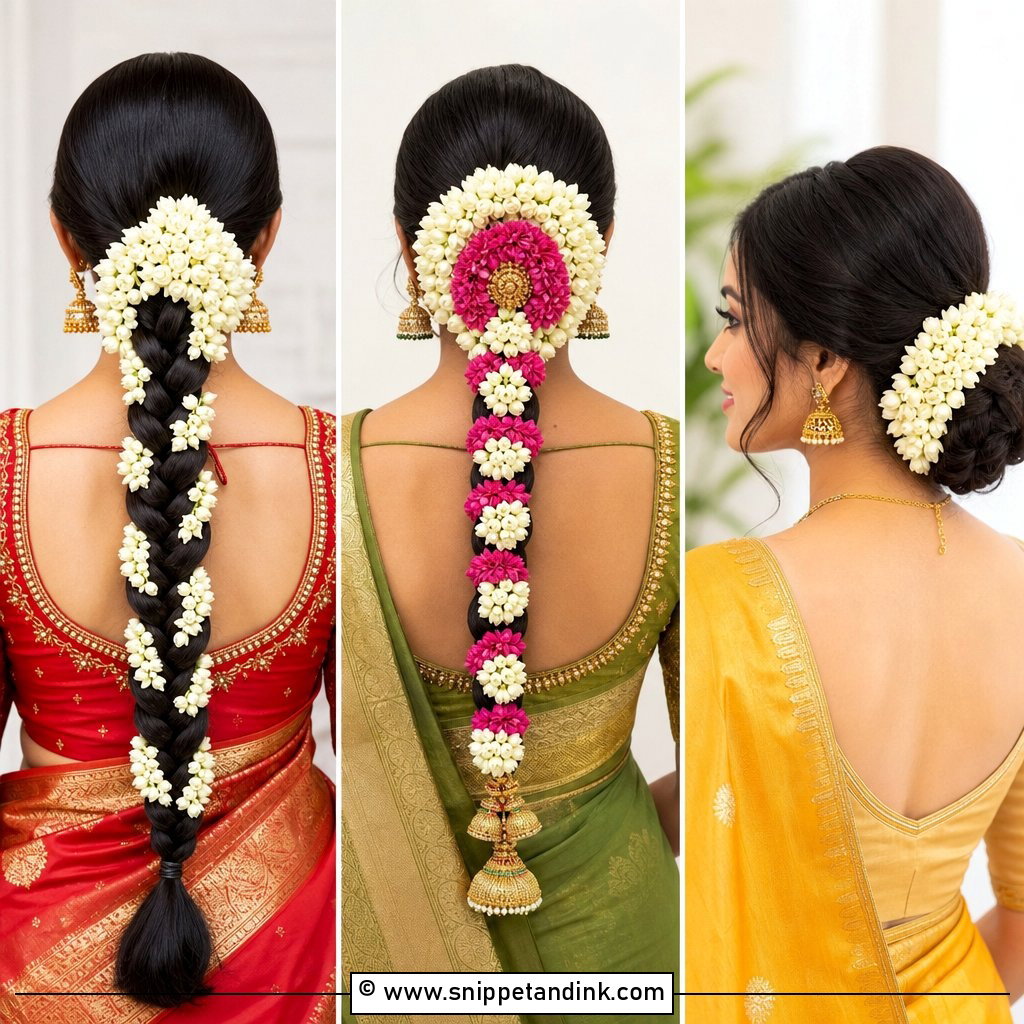
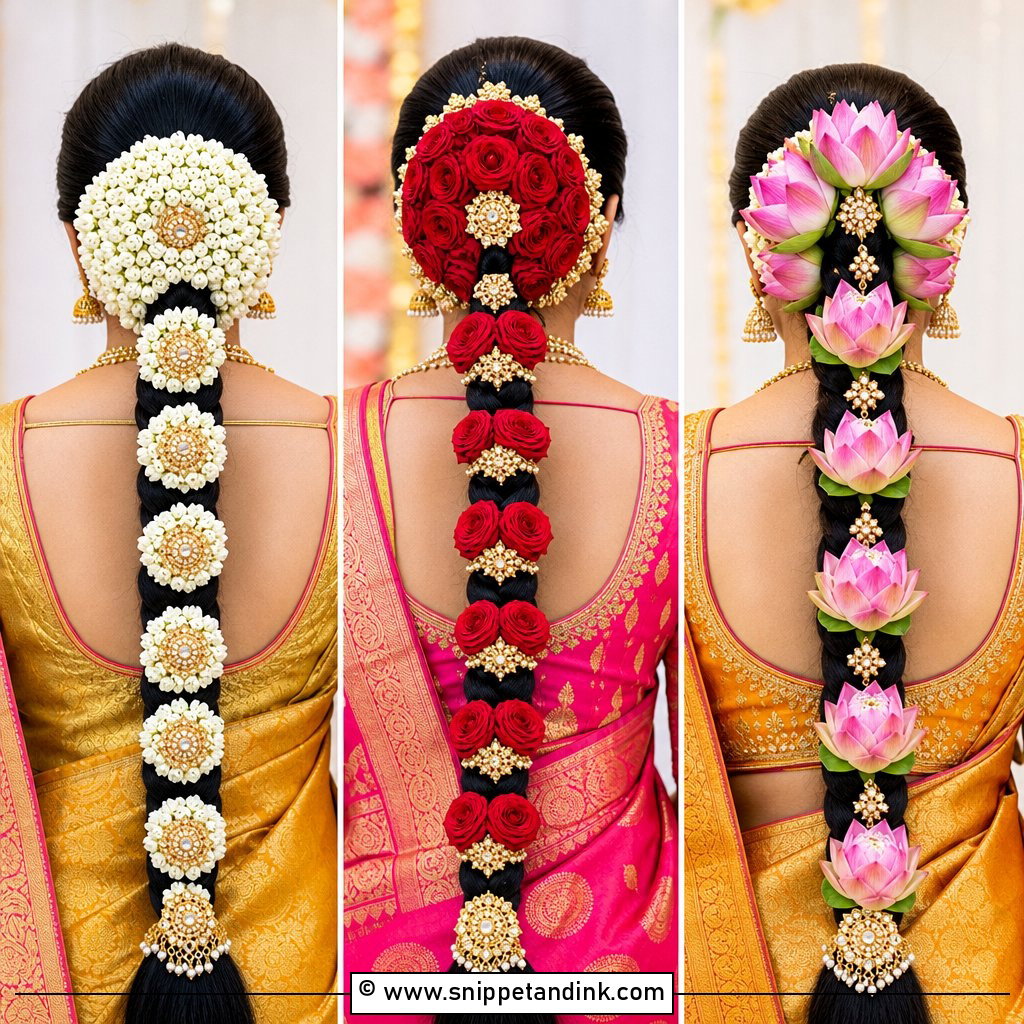
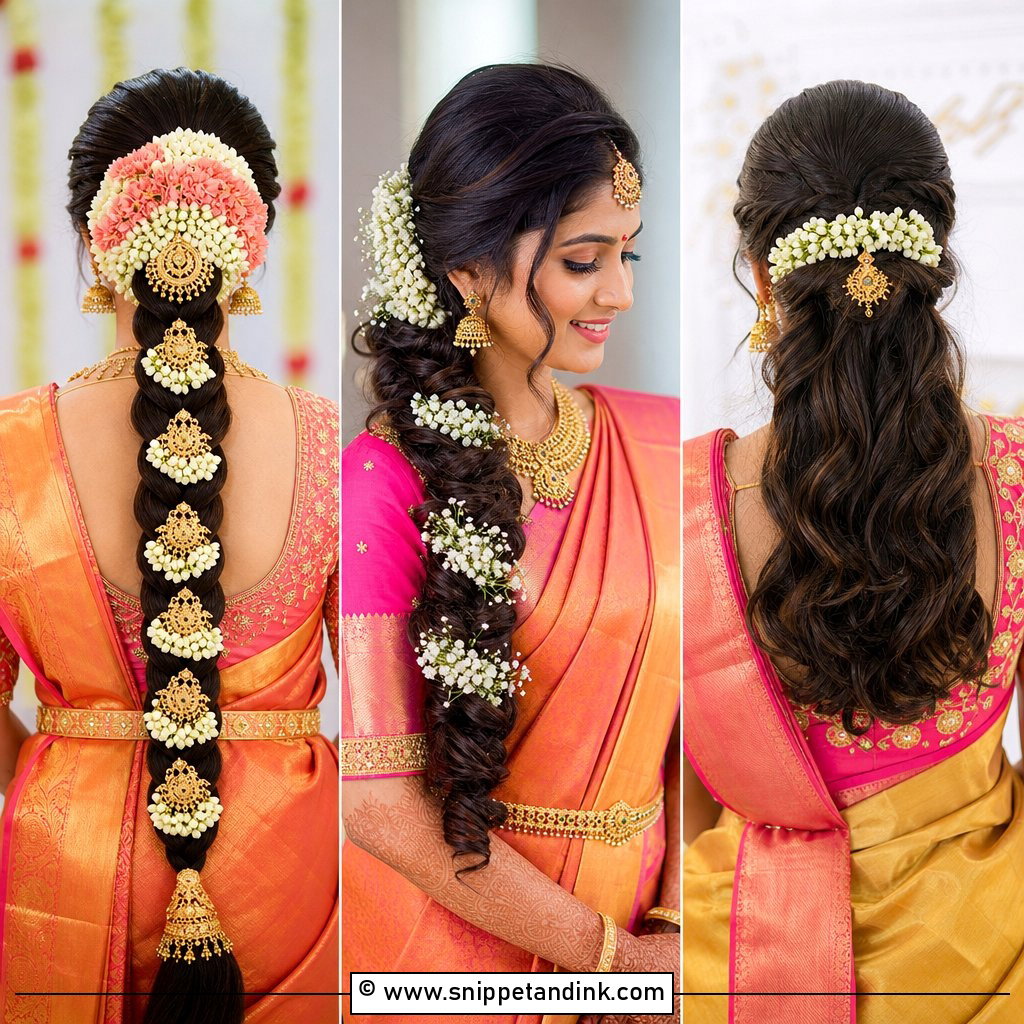
The poola jada is the look most families picture when they think of a Southern bride: one thick braid down the back, covered top to bottom in jasmine, kanakambaram and rose, usually with a gold jada billa at the crown. I braid it tight and anchor the flower base to the braid itself, not just the top section, so the weight is shared along its length. On shoulder-length or thinner hair, a matching extension (a jadai or sowri) is plaited in to give the braid enough body to hold the flowers. It belongs with a Kanchipuram silk and temple jewelry, and it is heavy, so I always tell brides to sit with it on for twenty minutes at the trial.
2. Jasmine Flower Bun at the Nape
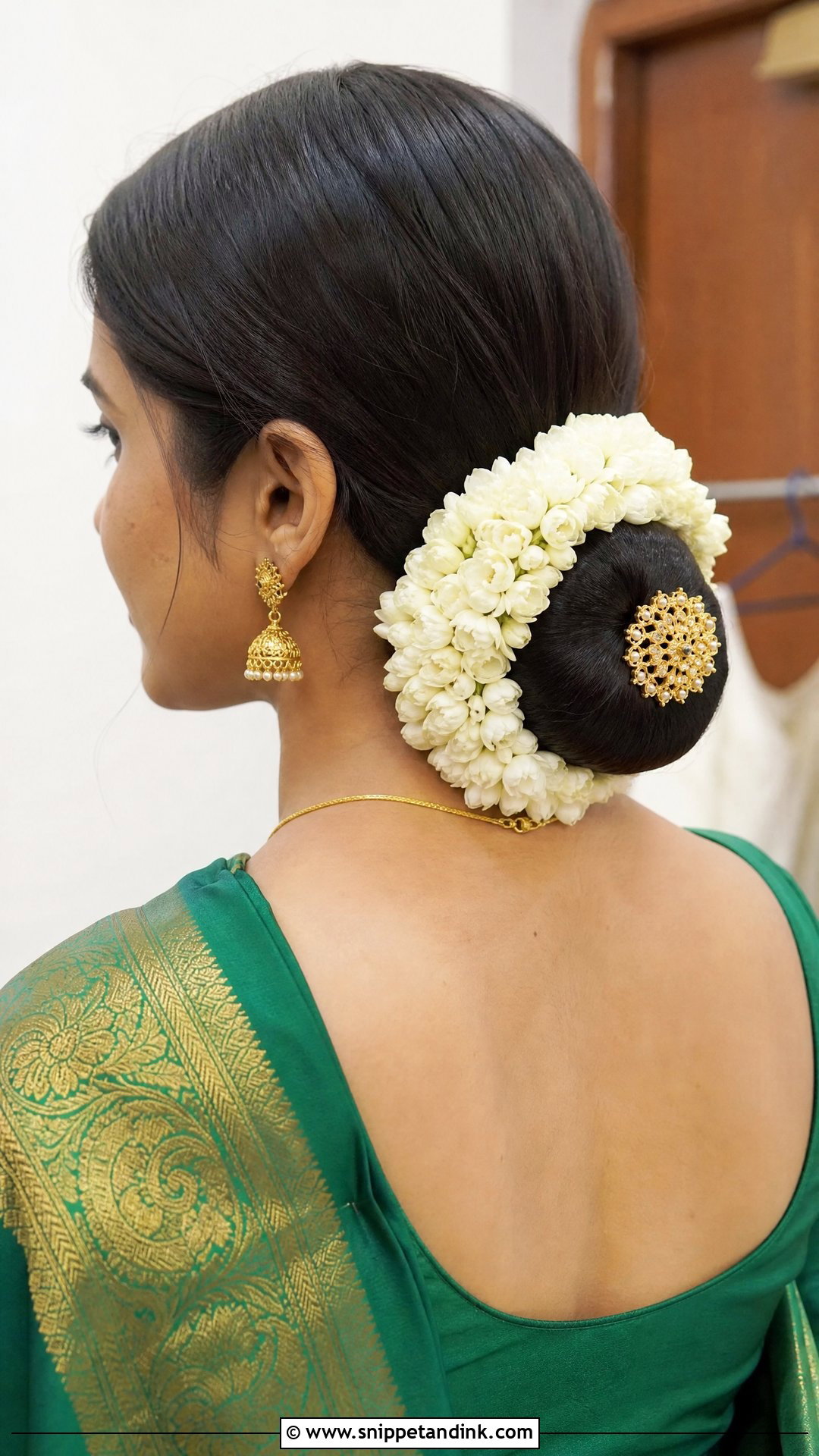
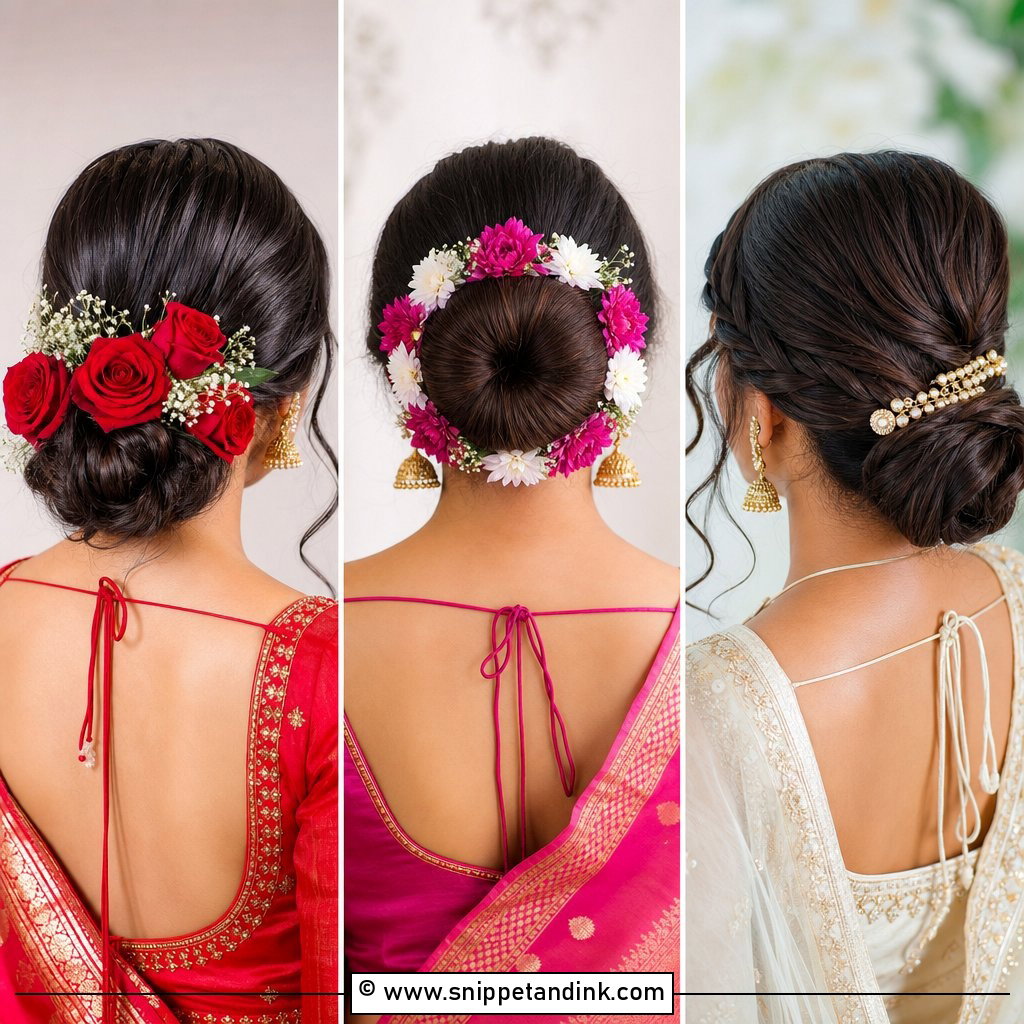
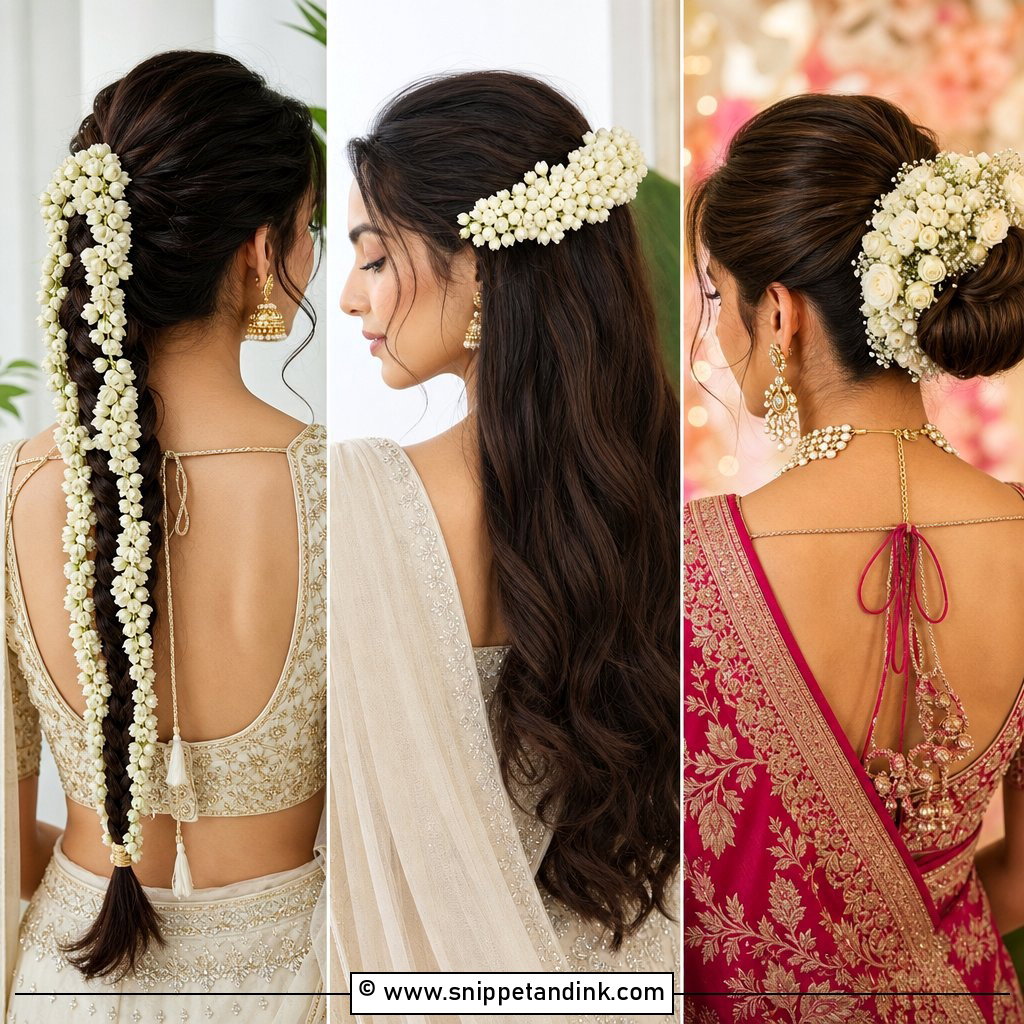
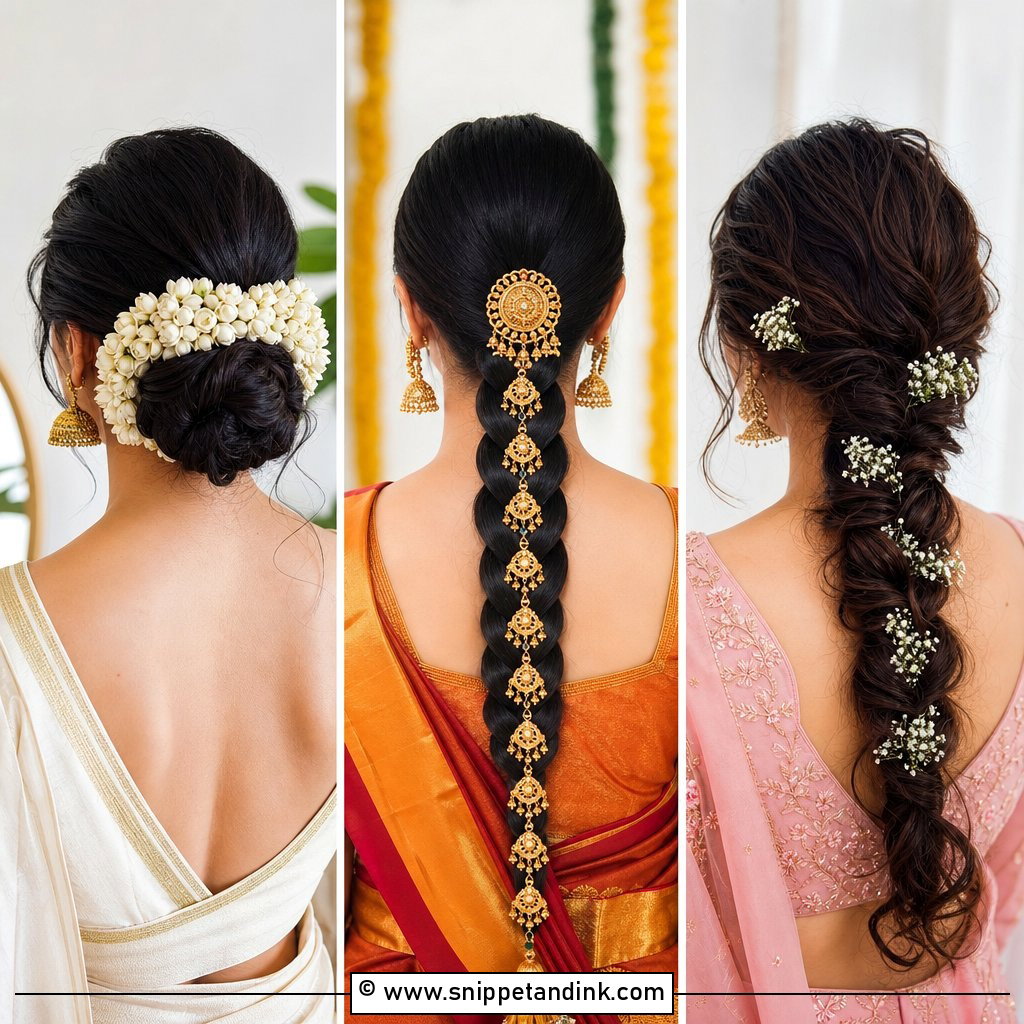
The low nape bun is the one I suggest when a bride wants flowers without the weight of a full jada. I twist the hair into a smooth round knot, pin it into a crossed pair of anchor pins, then circle it with strands of mallige. White against dark hair reads clearly from the back of the hall, and the neck and earrings stay visible. It’s also comfortable to lean against during long rituals. A gold hair brooch or a few small pins add shine if the jewelry is light.
3. Kerala Bridal Braid With Jasmine
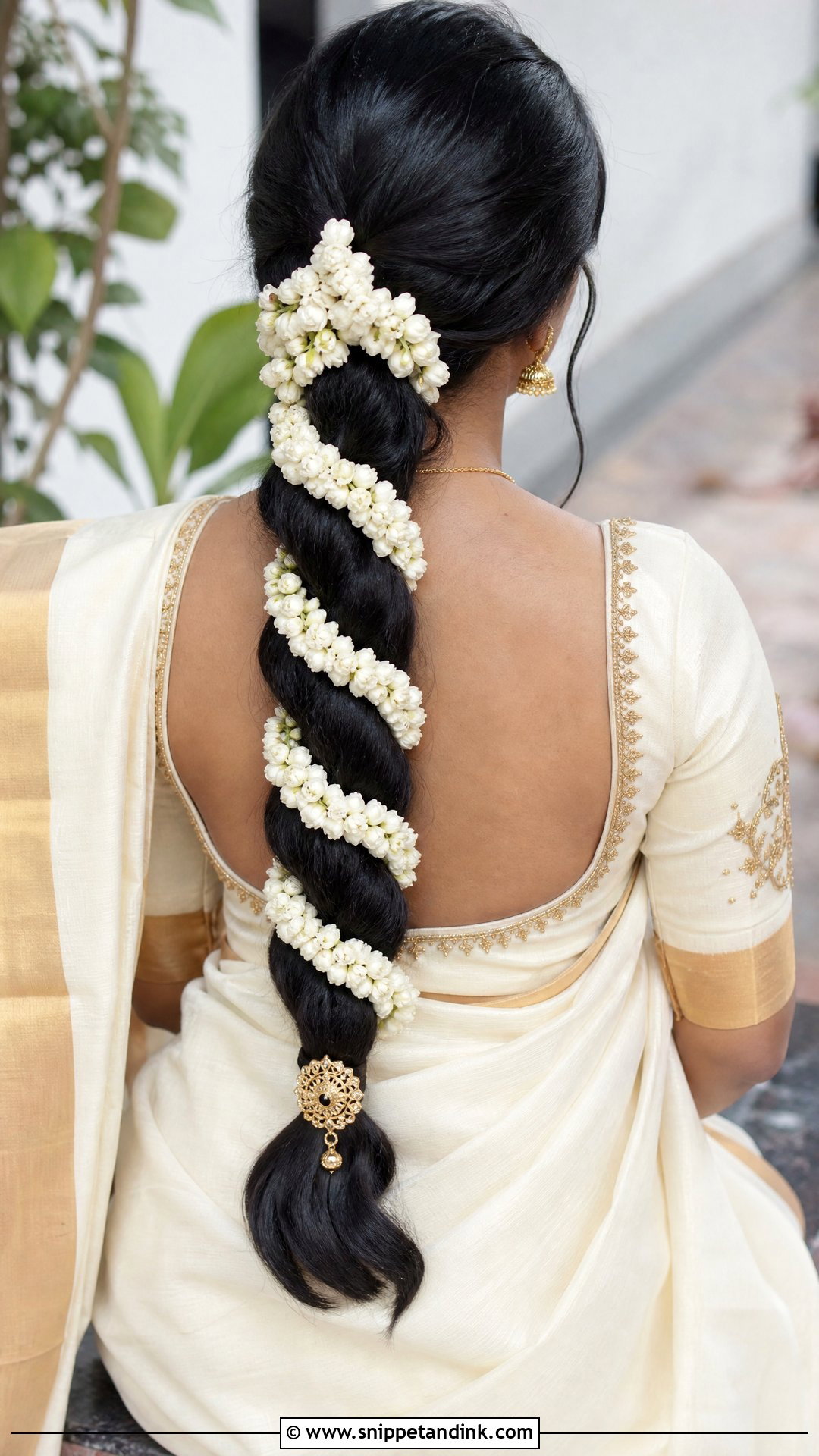
Lighter than a poola jada, the Kerala bride braid is a loose three-strand plait with jasmine strings wound around it from crown to tip. It suits the cream and gold of a kasavu saree because nothing competes with the border. The trick is to braid it looser than it looks in pictures, then pin the jasmine every few inches so it doesn’t slide down as the bride moves. A small gold pendant where the braid begins is common. On very straight, silky hair I add a little texture spray first, or the plait loosens by lunch.
4. Gajra Bun With Silk Saree
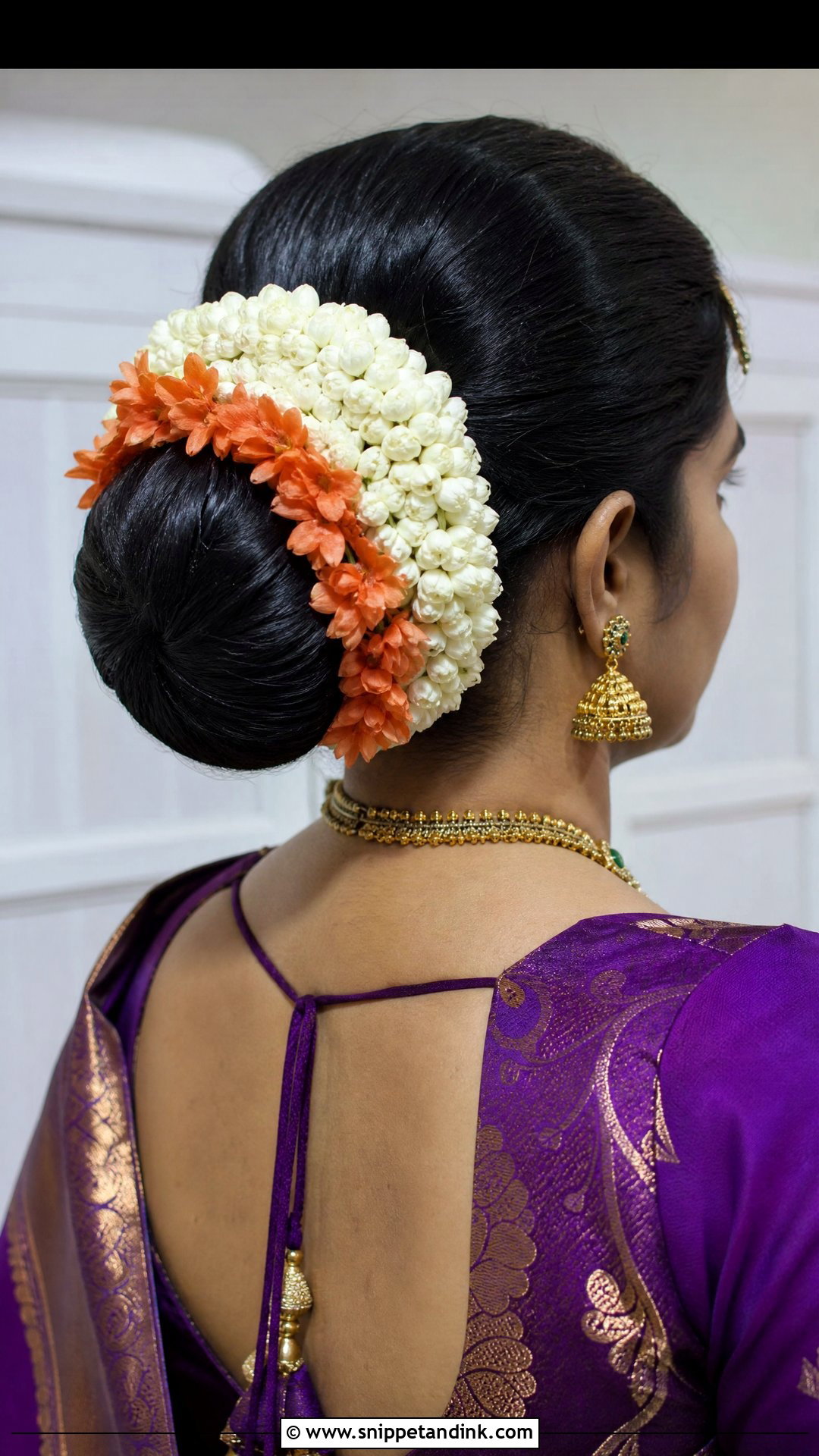
This is the drama option: a full, high bun ringed with several rows of gajra until the hair barely shows. I tease and pad the base so the bun has a firm shape to pin the flowers into, because jasmine pinned into soft hair sags. Next to a heavy silk saree and a large temple necklace, the round shape balances the jewelry well. A few orange kanakambaram tucked between the rows give it color. It holds through the ceremony and the reception, but a high bun can push against a pallu draped over the head, so check that in the mirror at your trial.
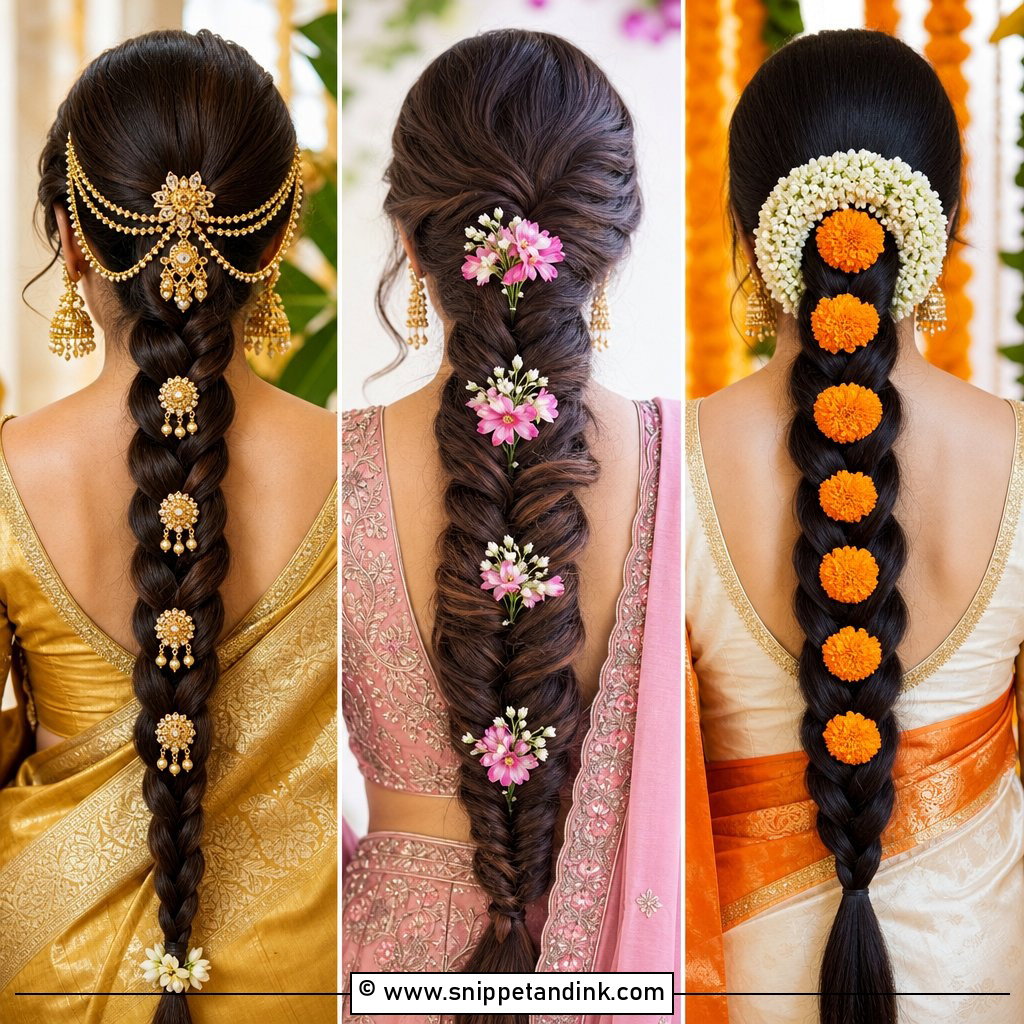
5. Fishtail Braid With Floral Accents
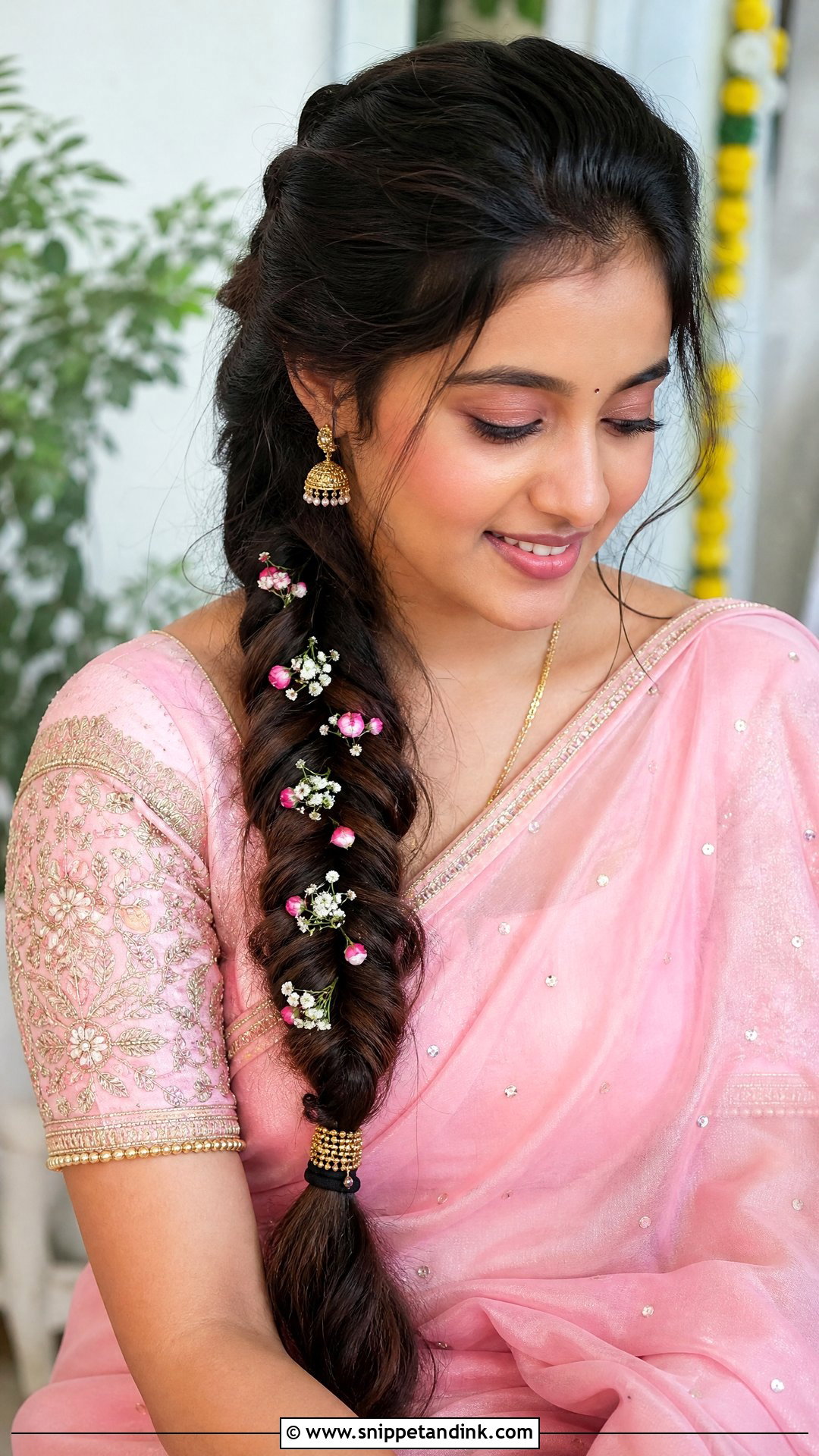
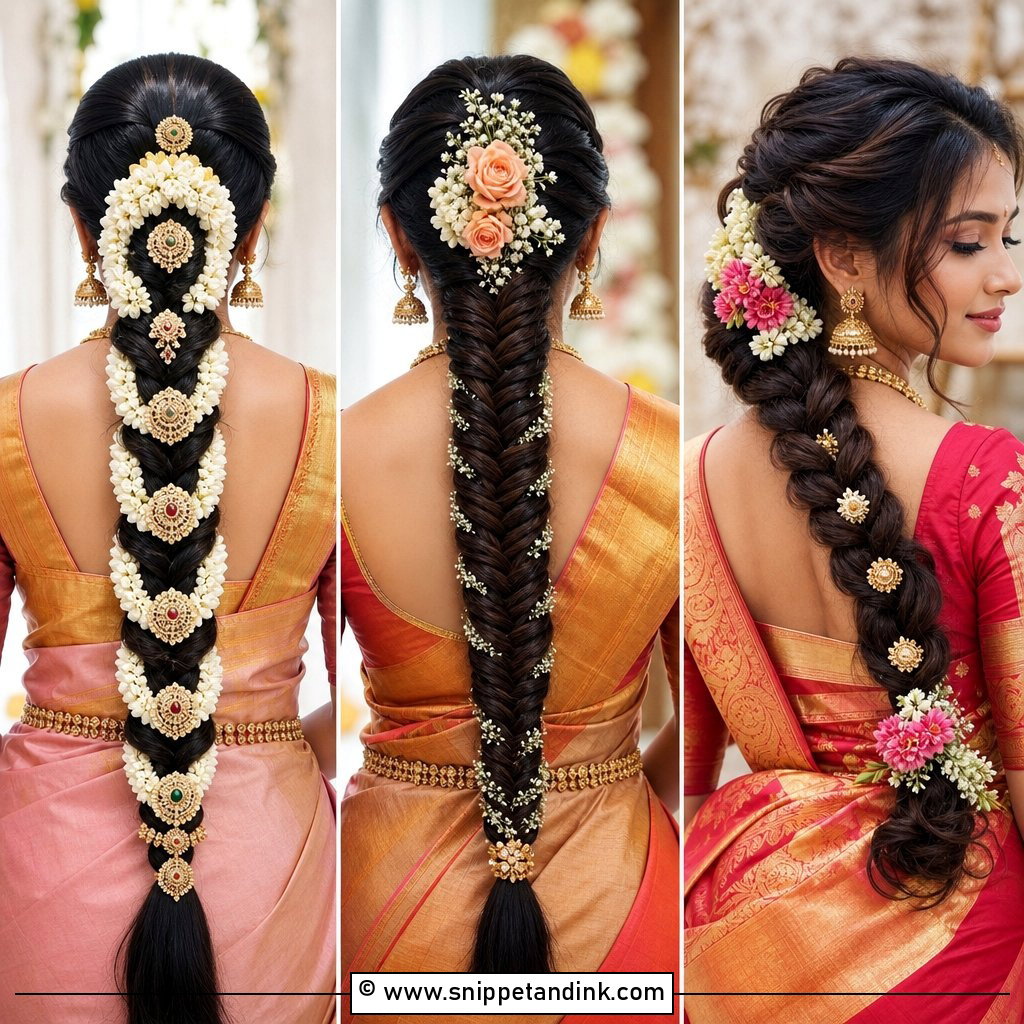
A fishtail takes longer to weave than a regular plait and shows its pattern best on thick, long hair. I loosen the edges slightly once it’s done, then tuck baby jasmine or tiny roses between the sections. It can sit over one shoulder or down the back. On fine hair the pattern turns stringy, and I’d steer those brides to a three-strand braid with extensions instead. With a pastel lehenga or a half-saree for the sangeet, it looks current without dropping the flowers.
6. Rose Bun for the Reception
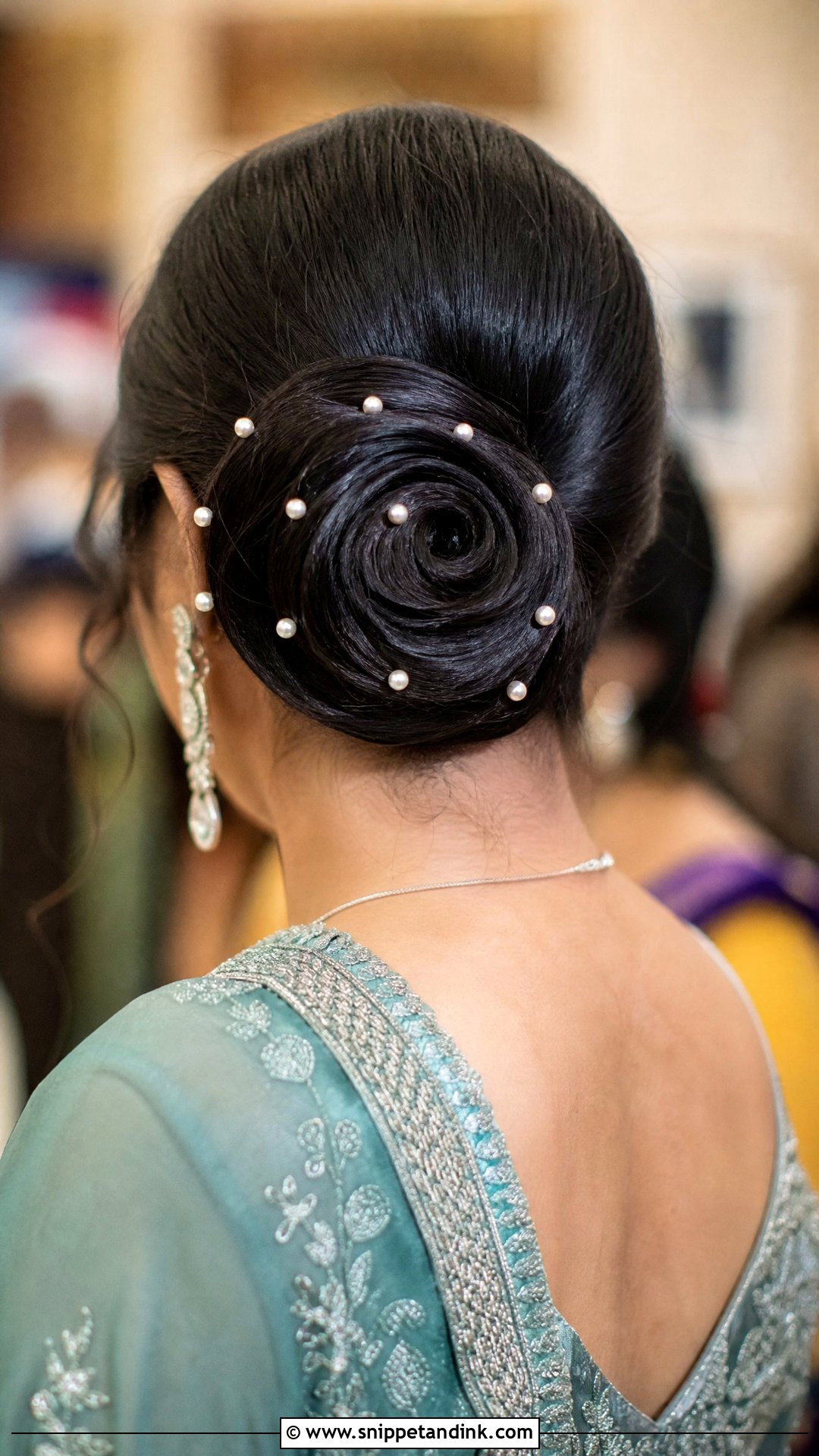
The rose bun is sculpted, not tied. I section the hair into small panels, smooth each one with gel, and coil them around a center point so they read as petals. It needs very long hair, ideally past the bra strap, and hair that has been straightened or blow-dried smooth first, since any frizz shows in the folds. Real rose buds or pearls along the outer edge finish it. Because it’s quite structural, I keep it for the reception with a designer saree or gown, where it can be the main piece.
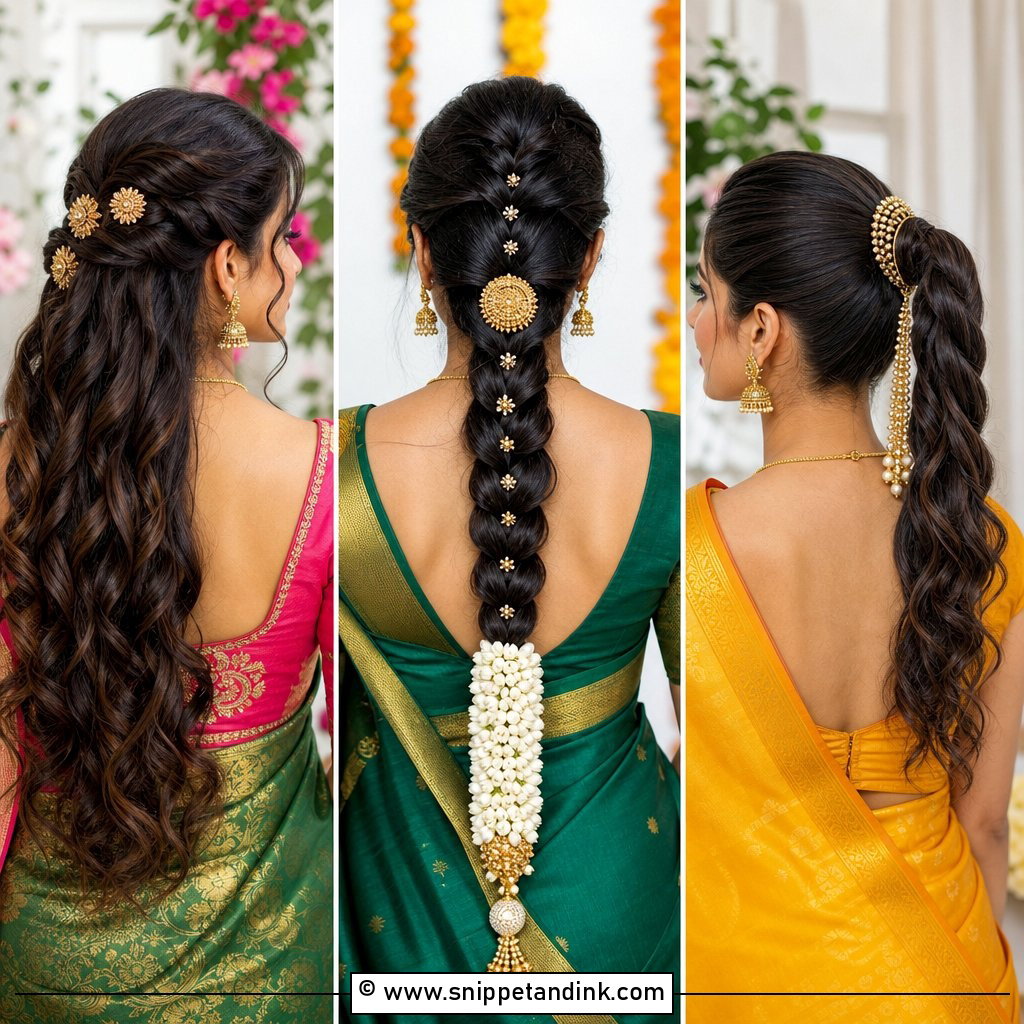
7. Half-Up Half-Down With Curls
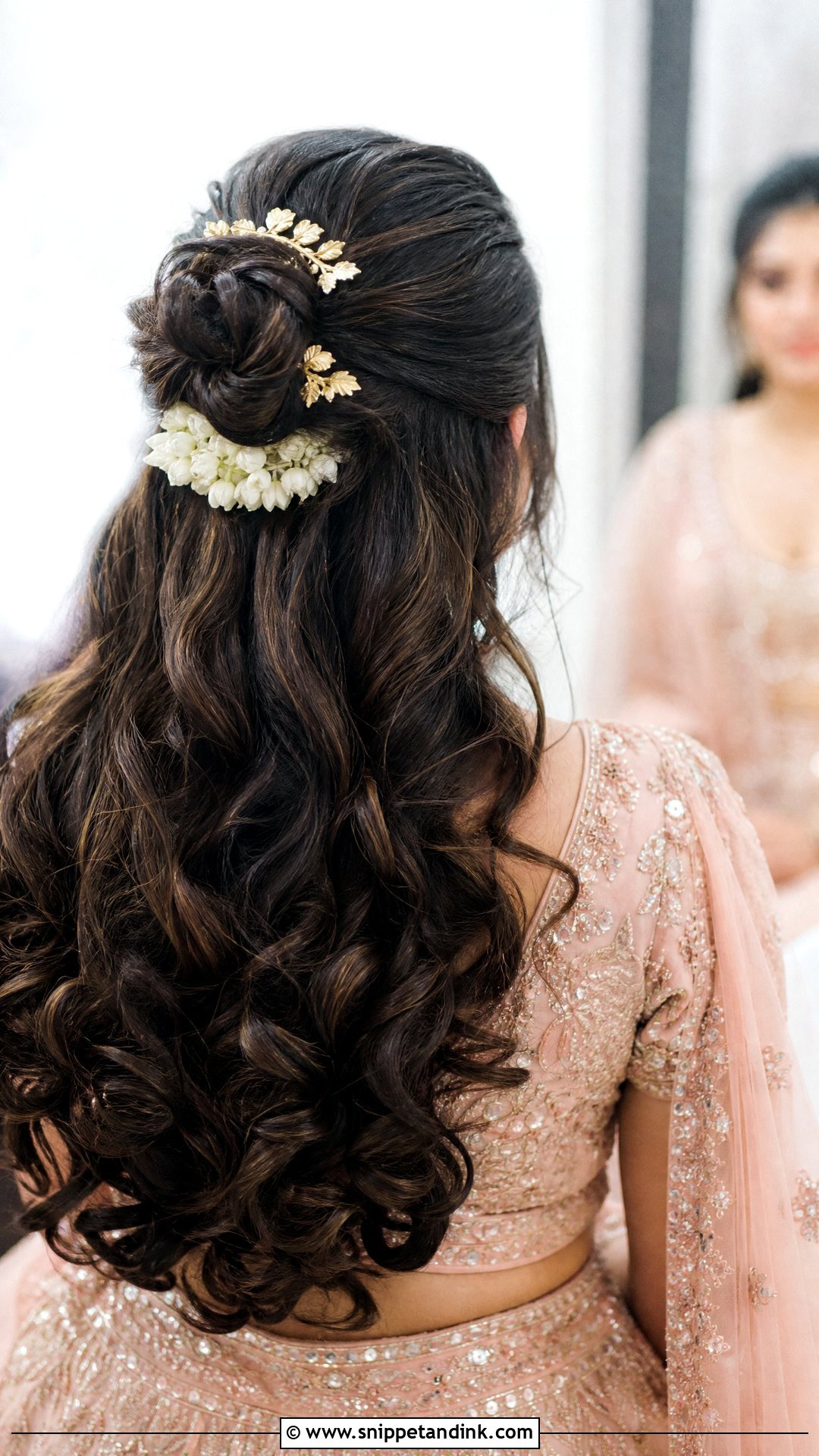
Half-up suits a bride who doesn’t feel like herself with all her hair pinned away. I take the top section into a soft twist or small bun, curl the rest, and tuck frangipani or jasmine at the crown. Gold barrettes add shine without weight. The curls need a proper set: I curl, pin each one while it cools, and only release them just before she leaves the chair. In humid coastal weather they will still relax by evening, so I’d keep this for the engagement or sangeet rather than a full muhurtham day.
8. Loose Curls With Hair Chain
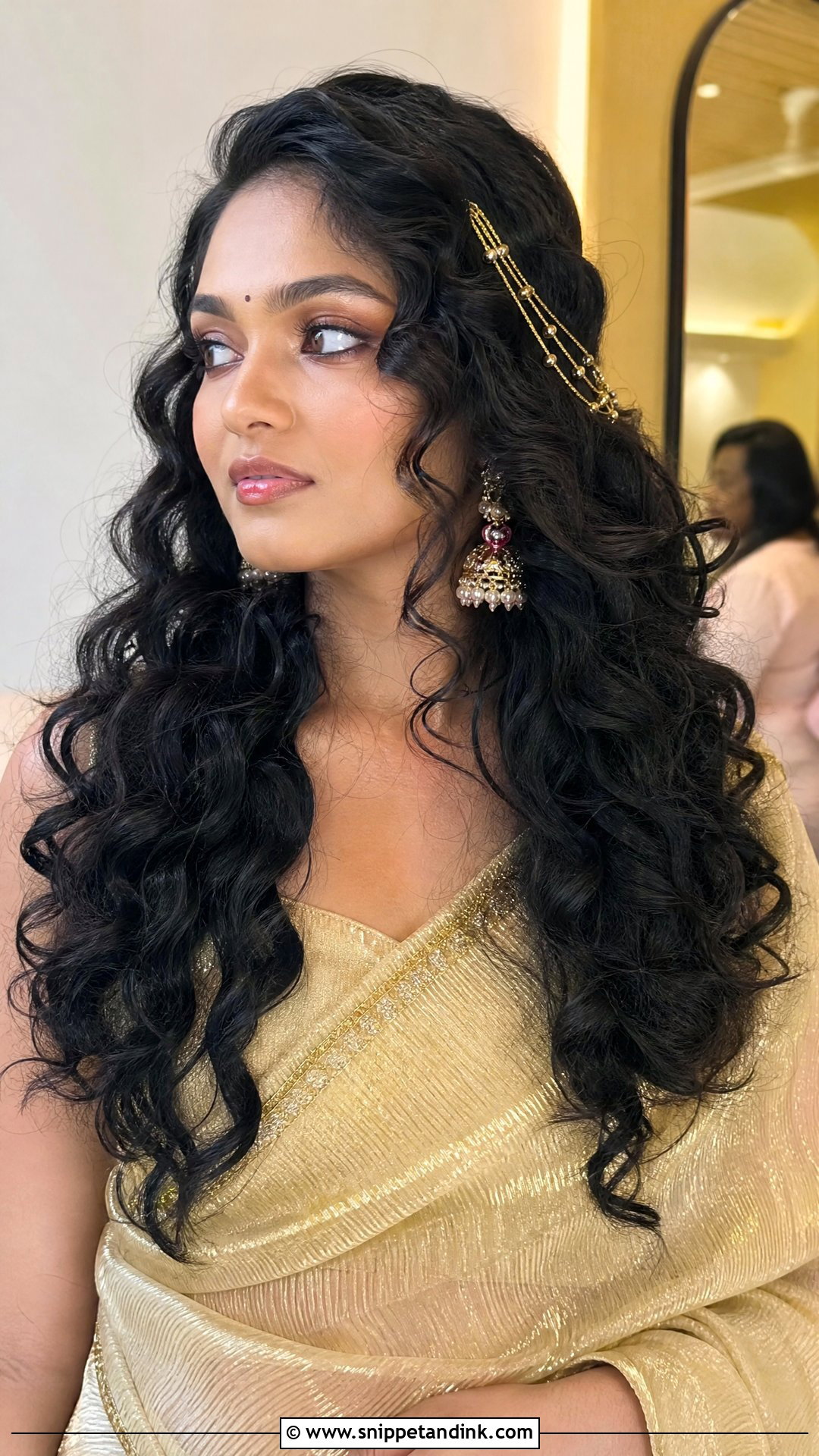
Open curls with a gold hair chain skip flowers altogether. The chain usually clips near the parting and drapes across to sit near the ear, so I place it after the curls are set and brushed out, never before. Curls add fullness to thinner hair and movement to thick hair. The chain is heavier than it looks, so I hide a small pin under each attachment point. With a shimmery saree or a modern blouse this is a good reception option.
9. Maang Tikka With Side Braid
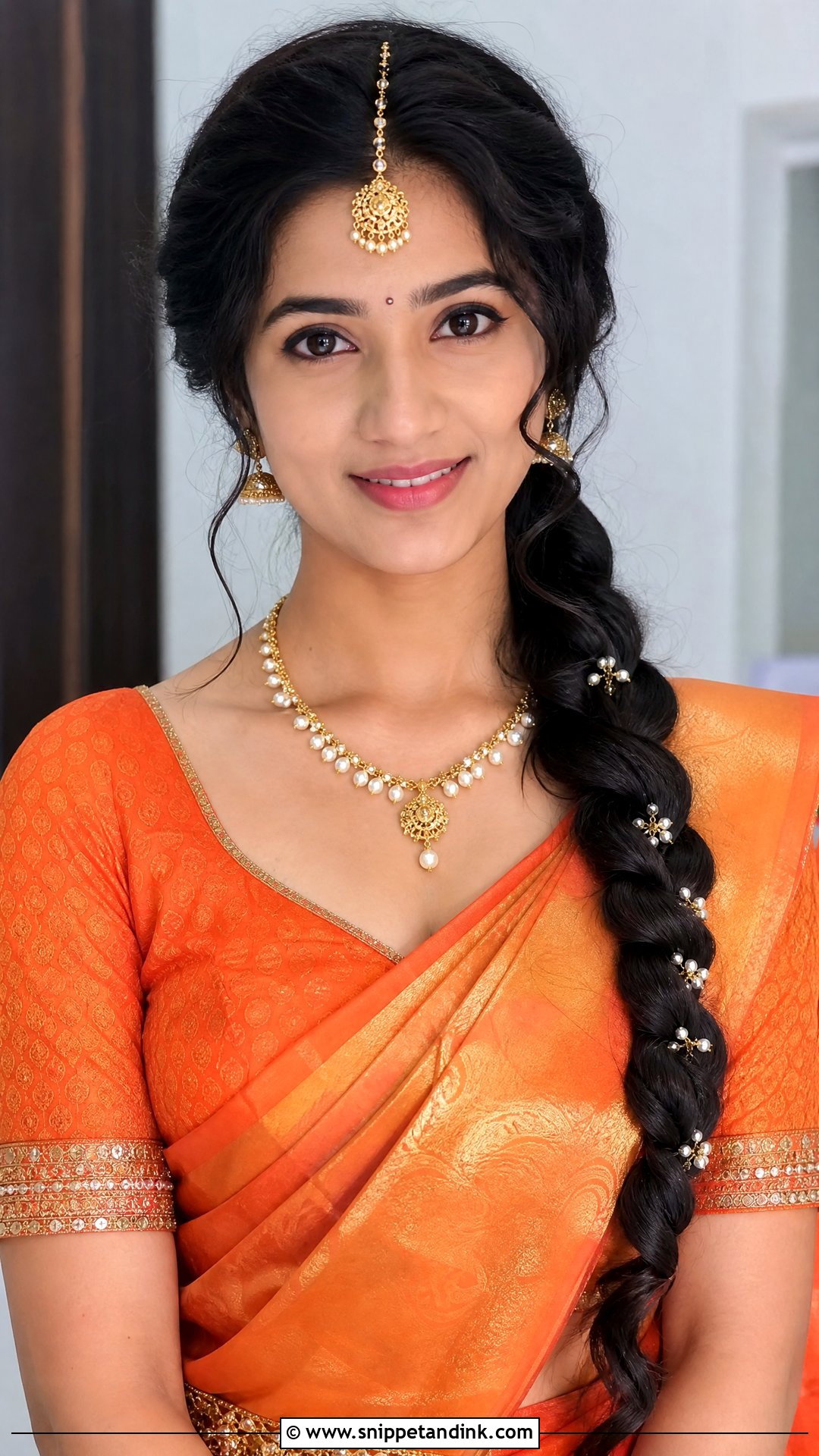
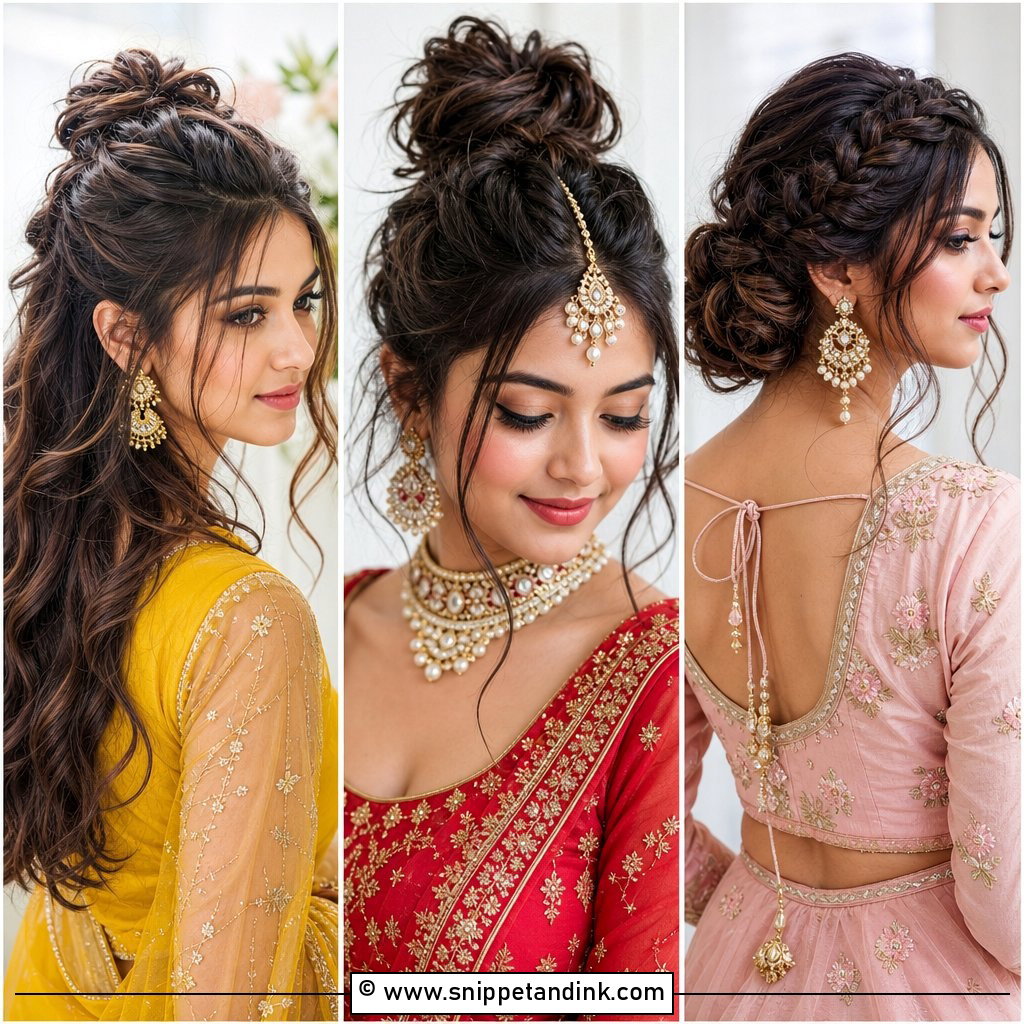
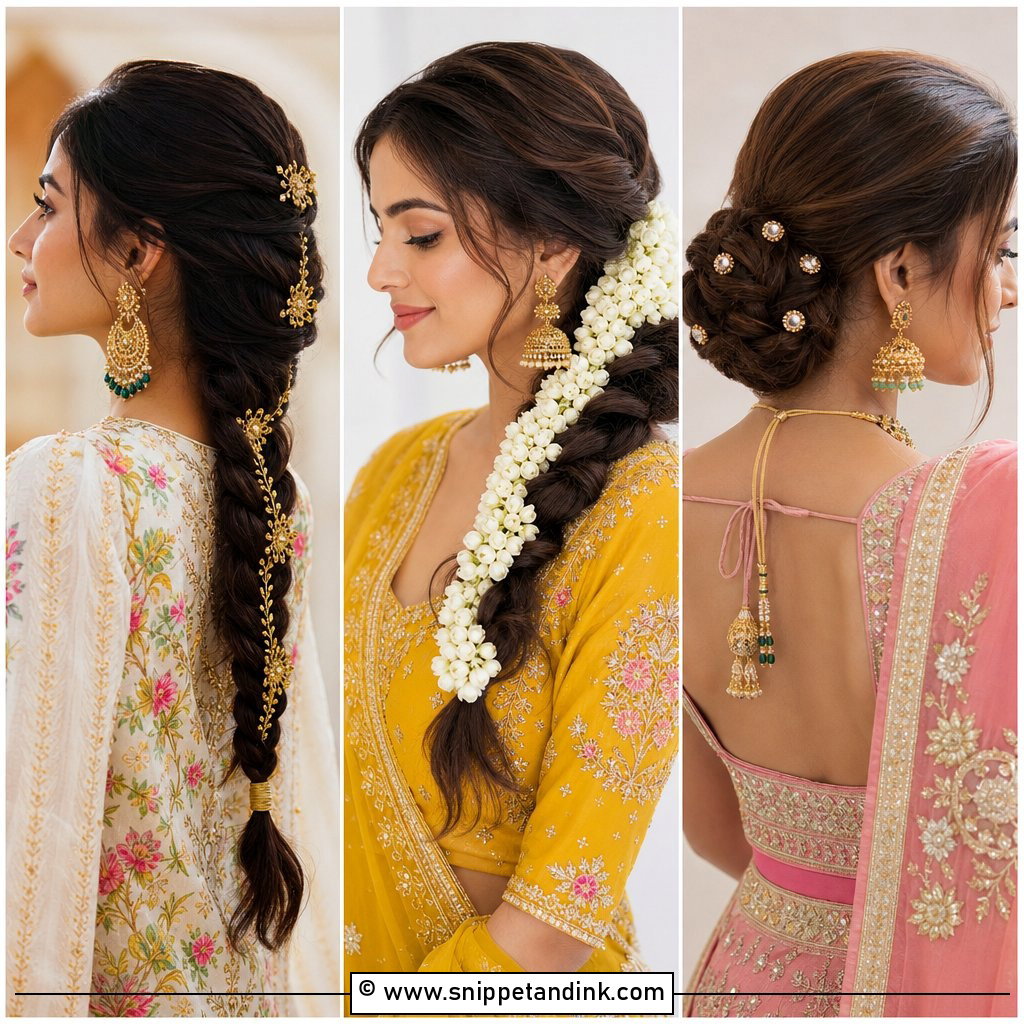
A side braid with a maang tikka on the center part works well for mehndi and haldi, when you’re sitting on the floor and turning a lot. I keep the braid soft and pulled over one shoulder so the face stays open for the tikka. Small flowers or pearls can go into the braid. Before I pin the tikka, I set the parting very cleanly, because the tikka sits right on it and any zigzag shows. It looks right with a bright half-saree or floral lehenga.
10. Donut Bun With Gold Jewelry
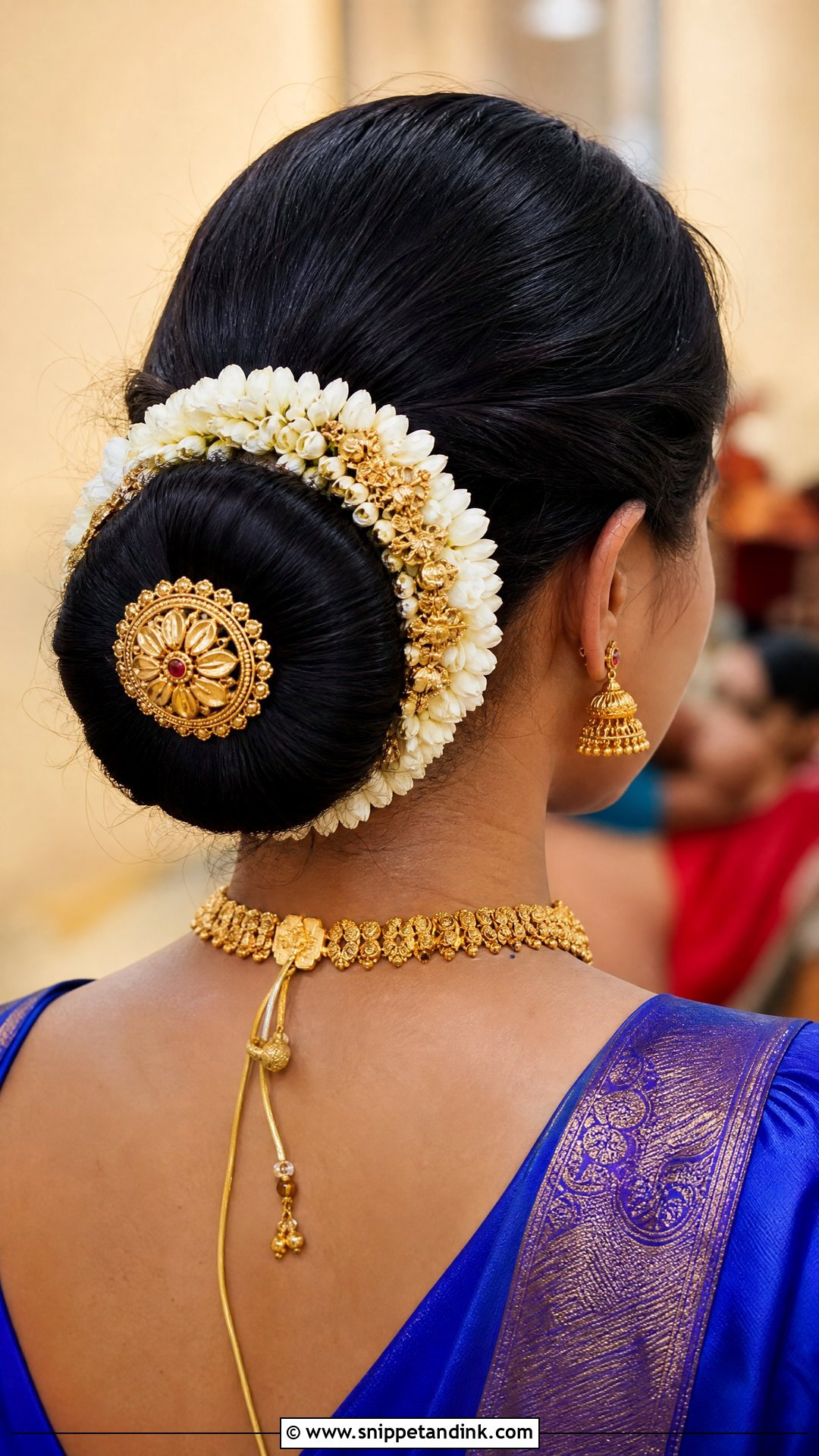
For the donut bun I wrap the hair around a padded ring to get a perfectly round, smooth knot, then decorate it with gold ornaments, jada billalu or a jasmine circle. Matching the ring to the hair color matters; a light donut peeks through on dark hair under flash. The shape is symmetrical and doesn’t collapse, so it pairs well with heavy temple jewelry and silk drapes. Very short layers around the nape are the weak point, and I finish them with a little gel and a fine net.
11. Braided Bun With Kanakambaram Flowers
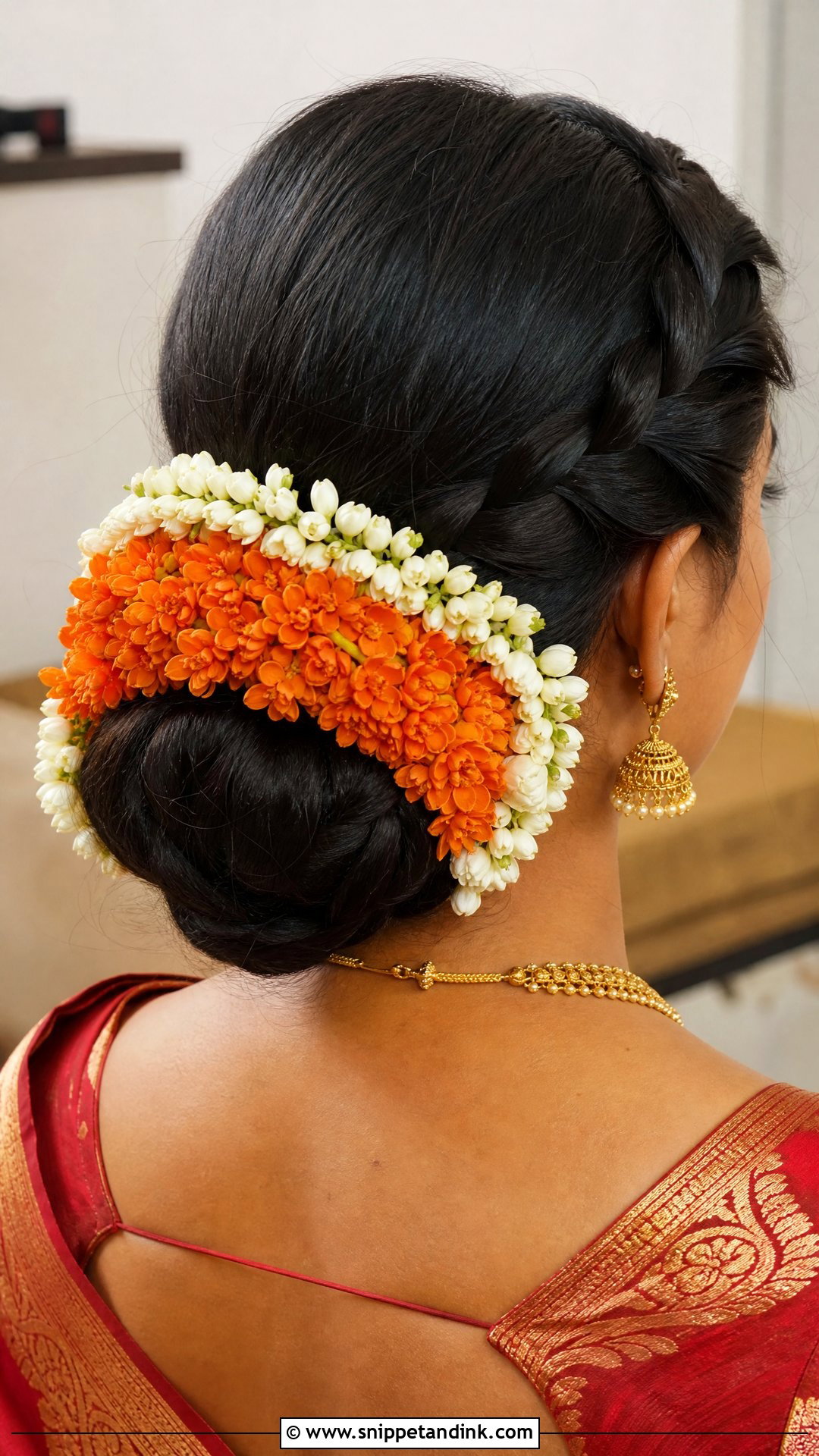
Braid first, then coil: I plait the hair partway down, wind it into a low bun and pin orange kanakambaram flowers around it, often with a white jasmine border. The orange and white together are what you see at so many temple weddings. Kanakambaram is sturdier than jasmine and holds its color longer, which is useful on hot days. It sits easily with Kanchipuram silk and antique gold.
12. Side Swept Curls With Jasmine
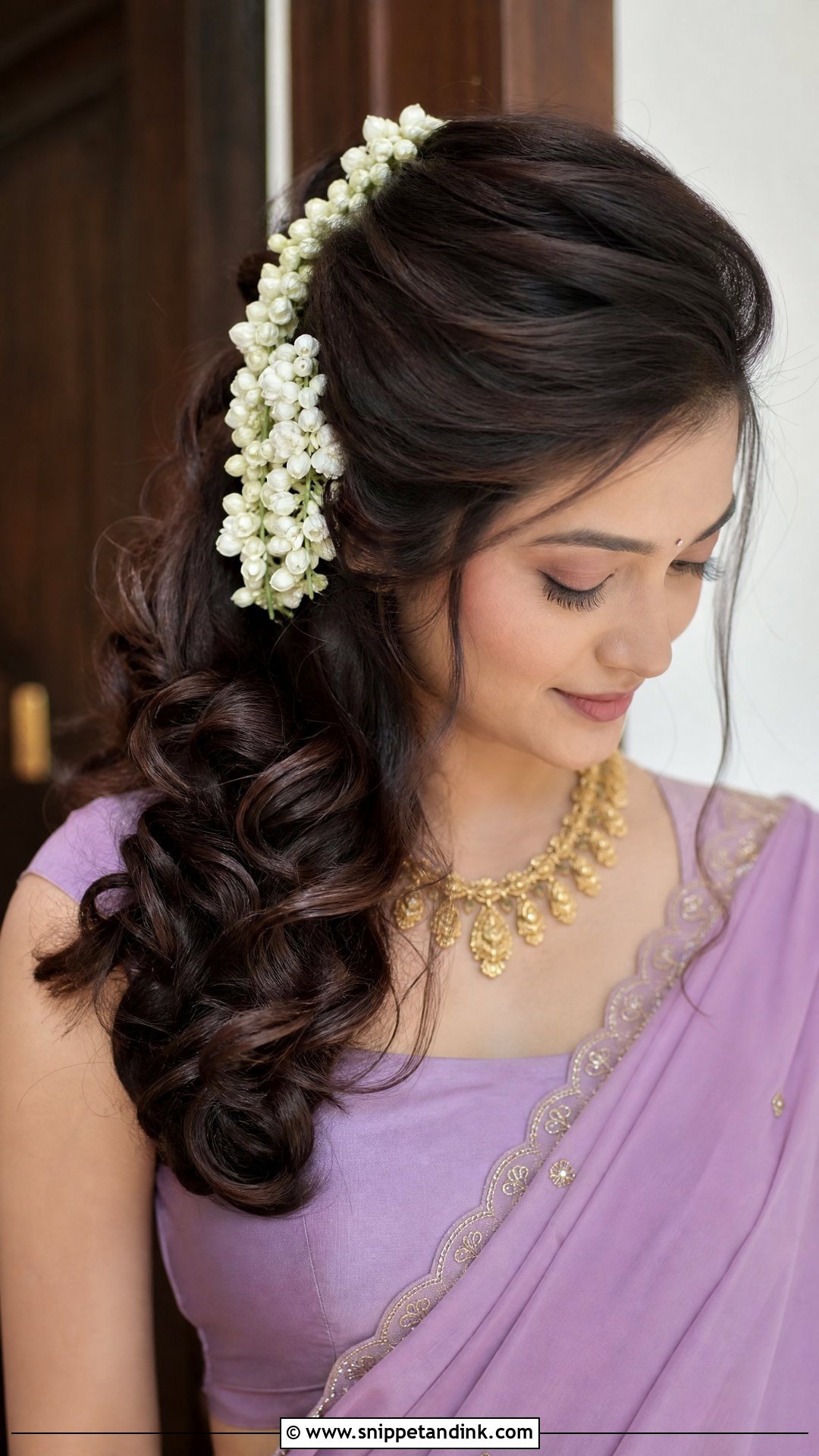
Side-swept curls gather all the hair over one shoulder, with jasmine pinned along the part or tucked into the waves. Layered hair suits this best, since the shorter layers fall into the curl pattern instead of sticking out. I anchor the sweep behind the opposite ear with crossed pins so it doesn’t drift back during the evening. One side of the neck stays open for earrings and a necklace. I tend to use it for a reception or engagement with a flowing saree or a pastel gown.
13. Braid With Jada Billa Hair Jewelry
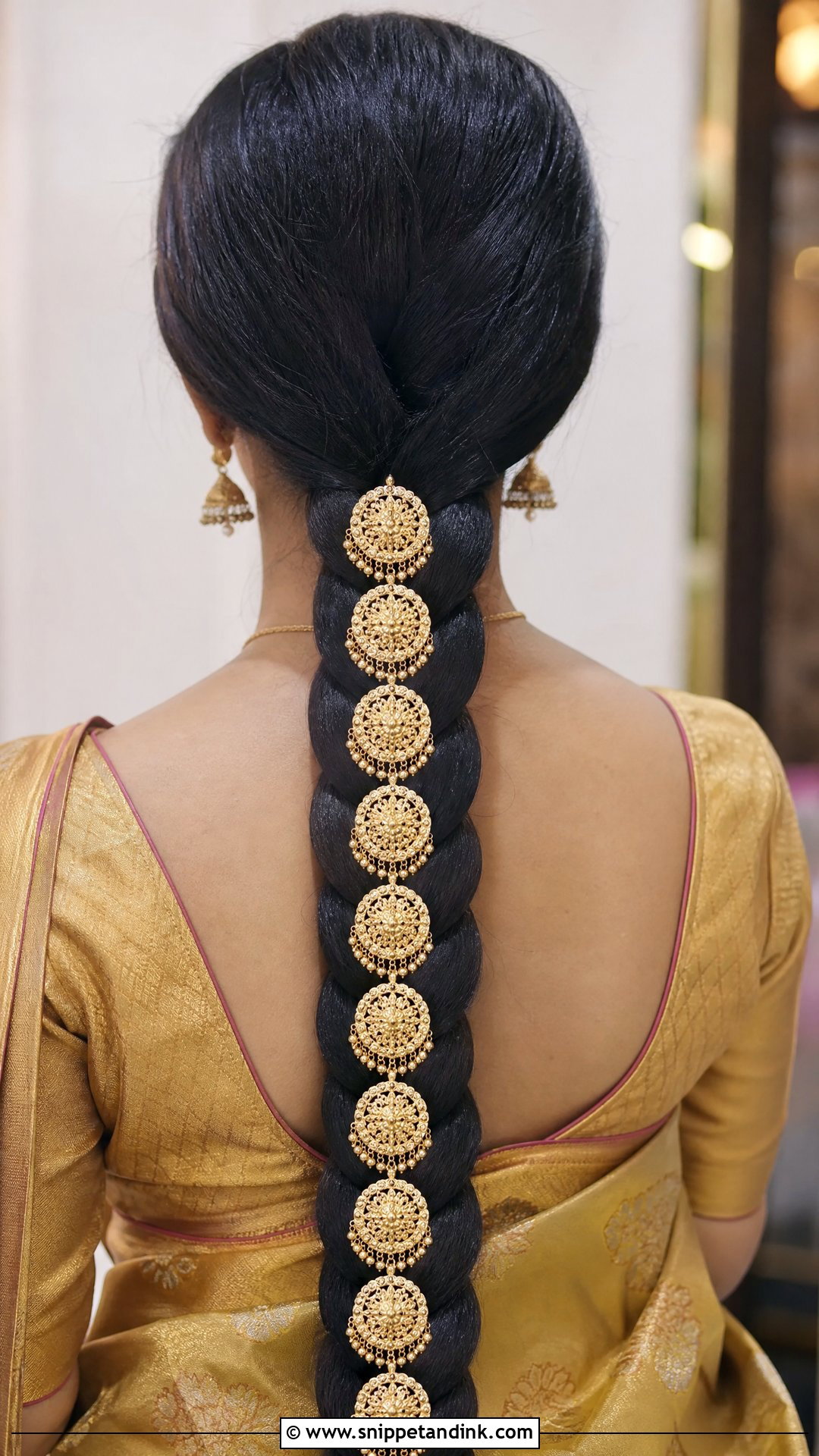
Nothing marks a South Indian bride quite like a braid adorned with jada billa. The gold discs, often with sun, moon and floral motifs, are pinned in a line down the braid. Each billa has its own hook or pin, and I stitch the longer sets to the braid with thread so they don’t twist sideways when the bride sits. The braid can be tight or softly woven. It’s heavy on gold and light on flowers, so it suits brides who prefer jewelry, and it reads richly against a densely woven silk saree.
14. Messy Bun With Loose Strands
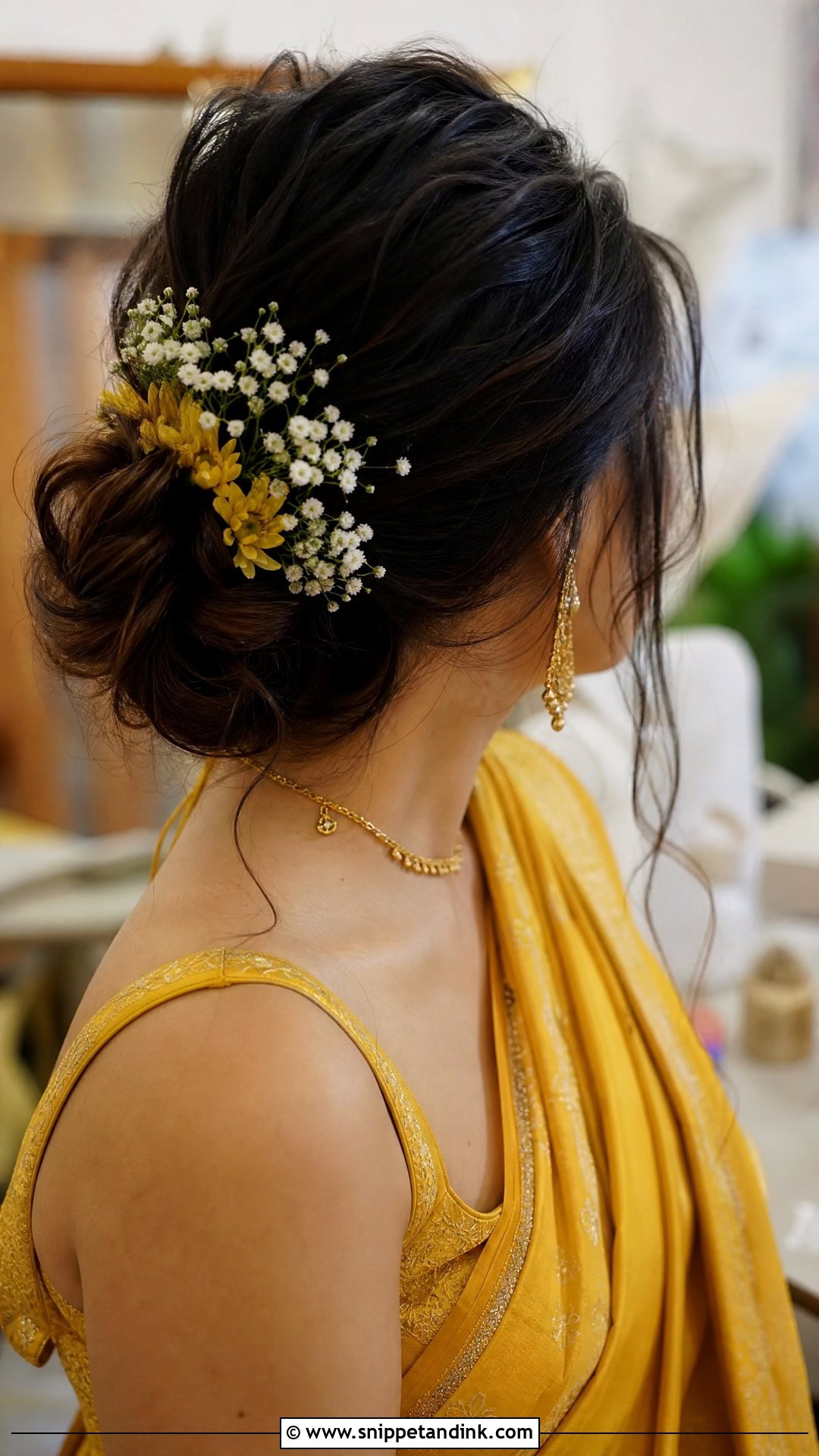
A messy bun is harder to do well than a neat one. I start with texture, either second-day hair or a dry texture spray, then pin the bun low and pull a few strands out around the face. Small flowers or baby’s breath go in last. Freshly washed silky hair won’t hold a tousled shape, so I ask brides not to wash it that morning for this one. It suits intimate weddings, haldi and relaxed receptions, with delicate gold jewelry.
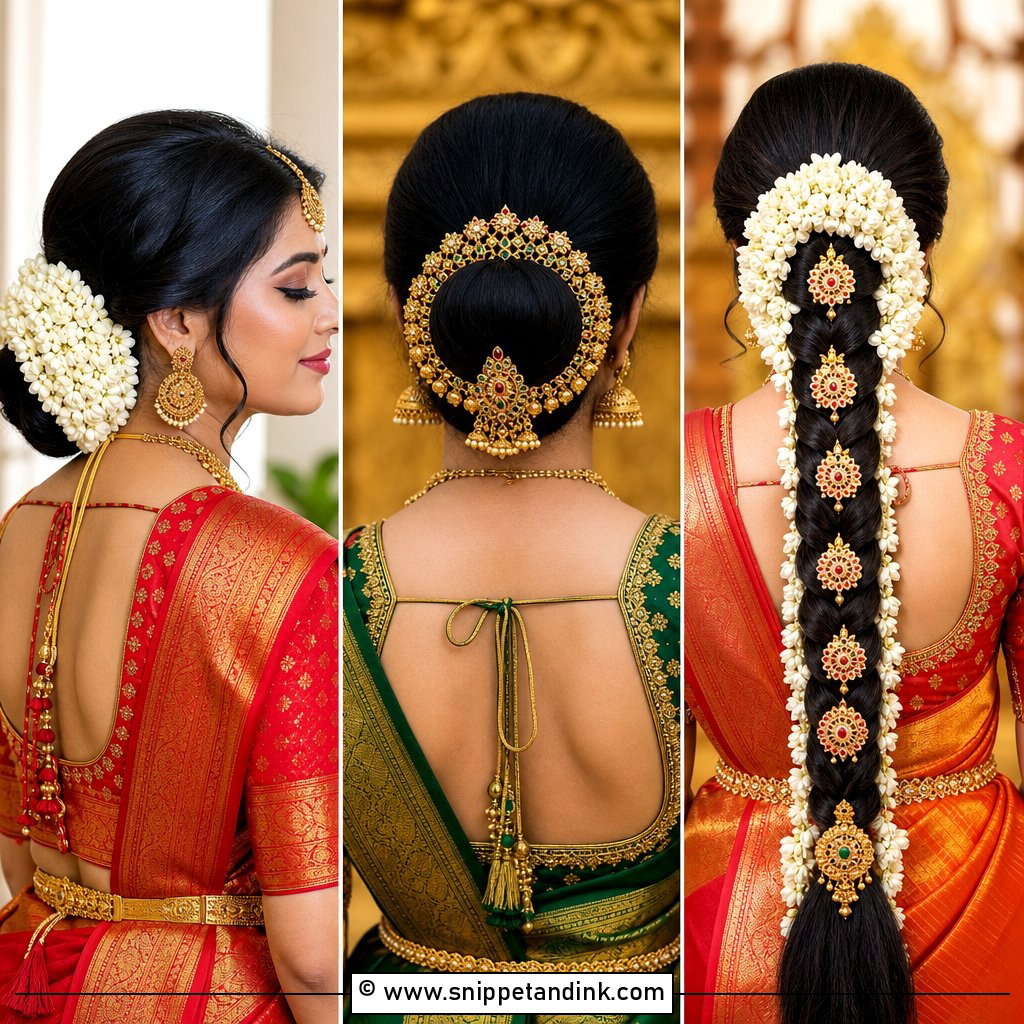

15. Crown Braid With Flowers
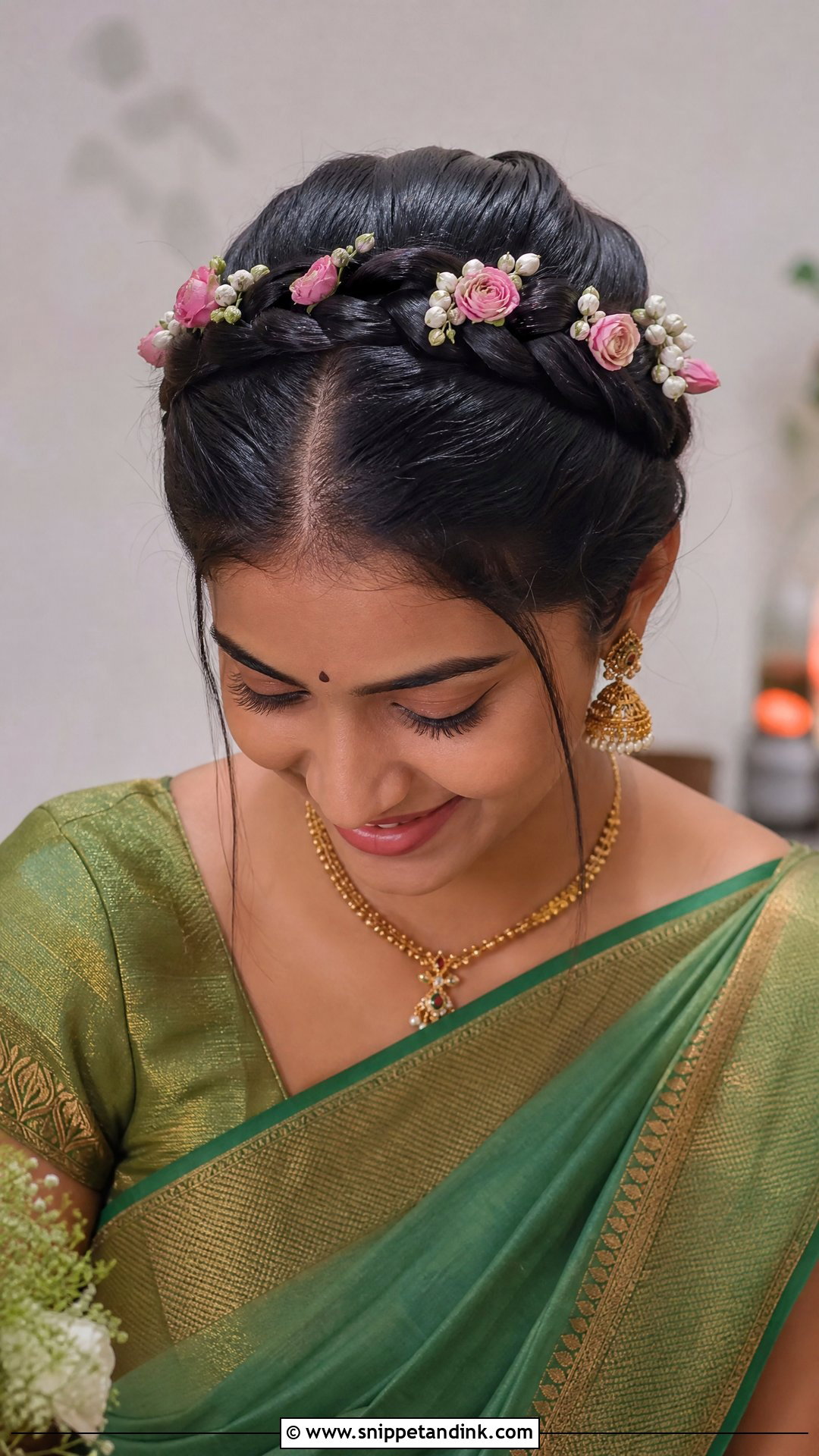
The crown braid wraps around the head like a tiara and keeps everything off the neck, which matters at a daytime ceremony in the heat. I braid from behind one ear, loop it over the top and pin it along its whole length, then dot it with jasmine or rose buds. Very long hair can be doubled for a fuller crown. It works with sarees and lehengas and suits outdoor mandaps. One caution: a crown braid and a heavy maang tikka fight for the same space, so pick one to lead.
16. Low Bun With Pearl Strings
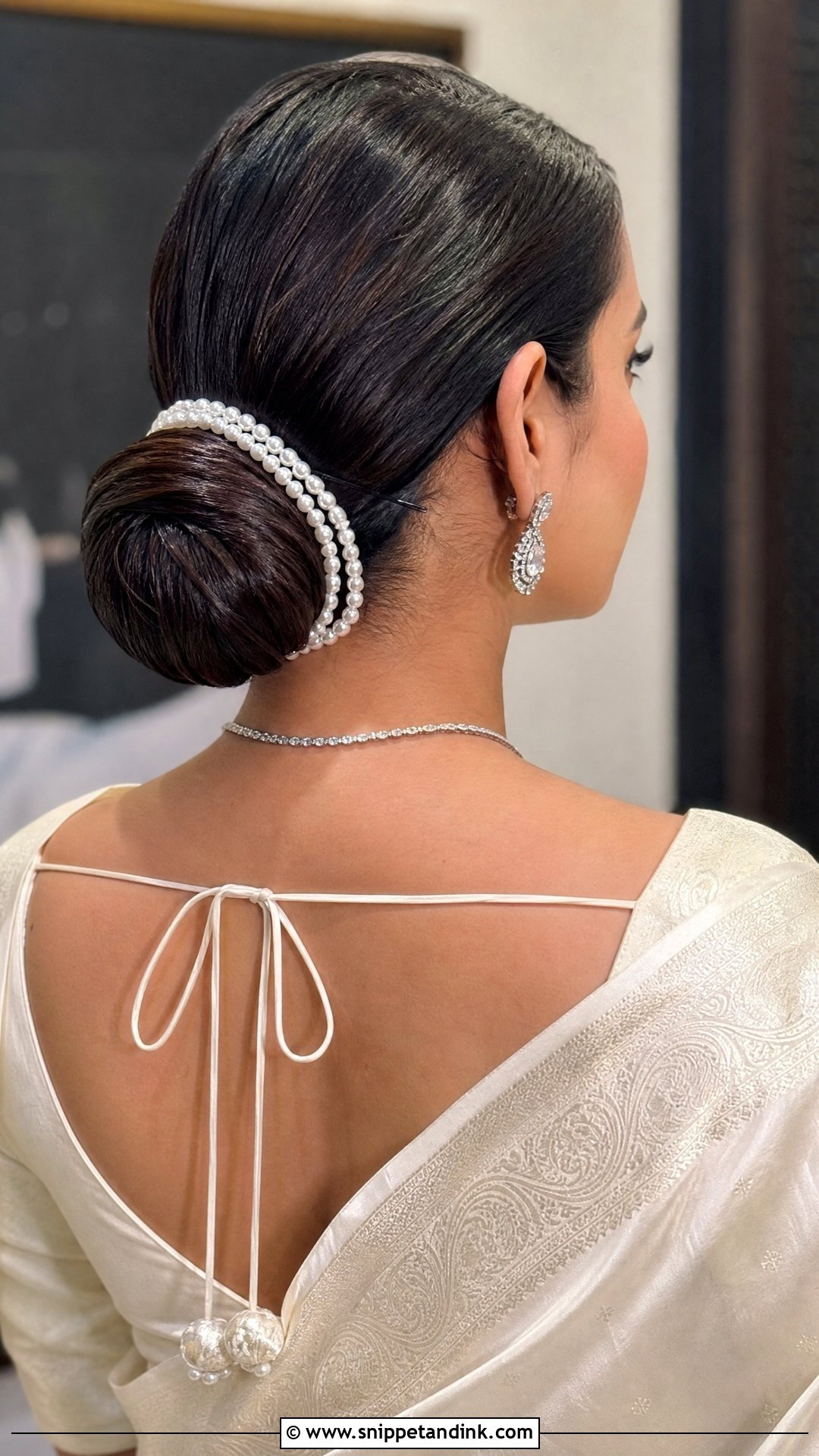
Pearls instead of flowers make this low bun feel modern. I smooth the hair back, pin the knot and wrap it with pearl strands, securing each strand at both ends. It’s quieter than a floral bun and suits silk sarees with diamond jewelry. The surface needs to be really sleek, because pearls sitting on frizz look untidy in close-up. I’d use it for an engagement or evening reception, when you want a polished, lighter finish.
17. Thick Braid With Rose Garland
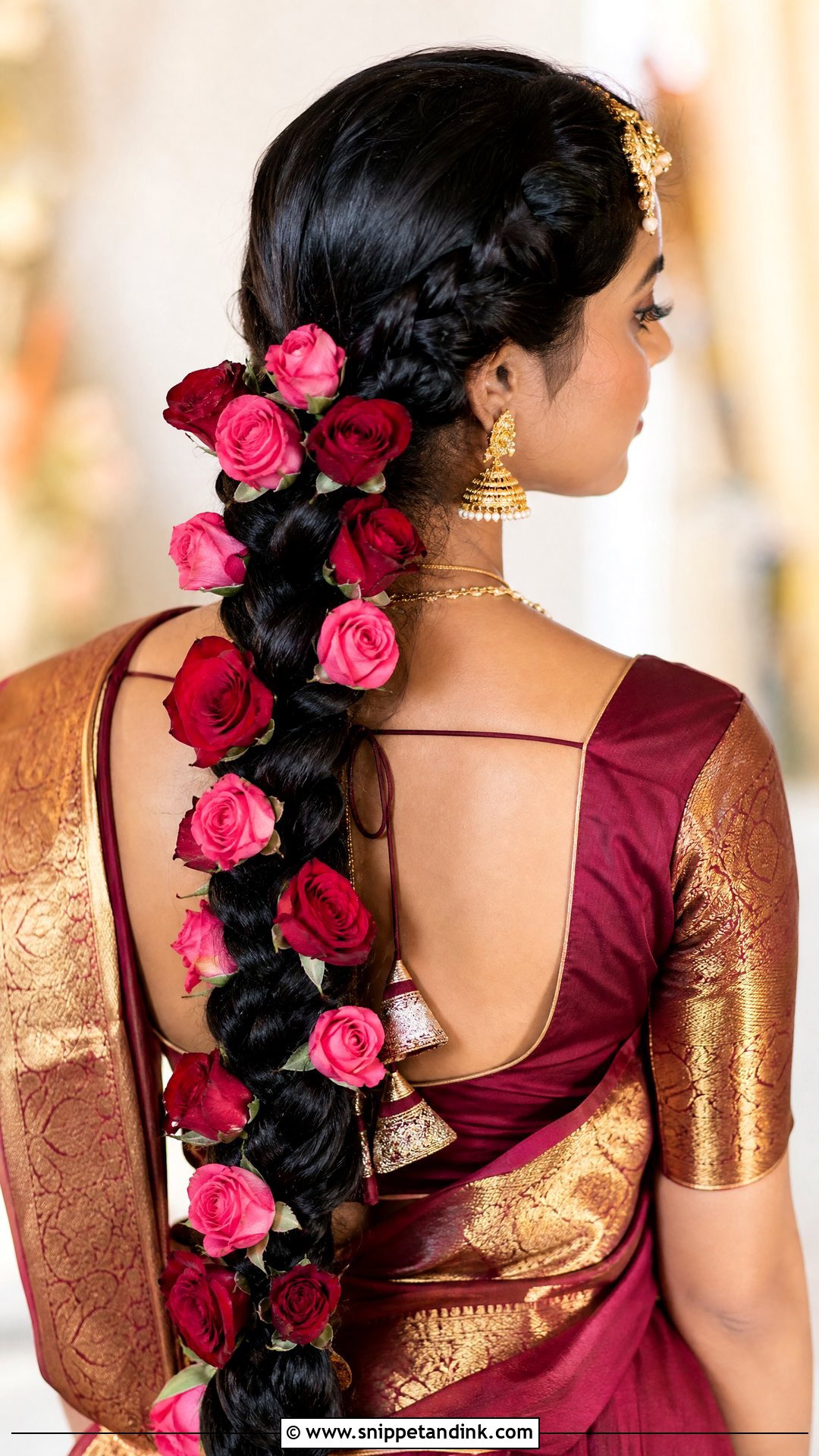
A thick braid with a full rose garland spiraled around it puts the flowers first. I plait tightly for volume, then wind a rope of red or pink roses around it and pin it as I go. Roses are heavier and bulkier than jasmine, and that weight keeps the braid hanging straight. Against gold and maroon silk the color stands out. Add jhumkas and a maang tikka and it’s ready for the main ceremony. Ask your florist for buds that are just opening, since full blooms drop petals by evening.
18. Twisted Updo With Hair Accessories
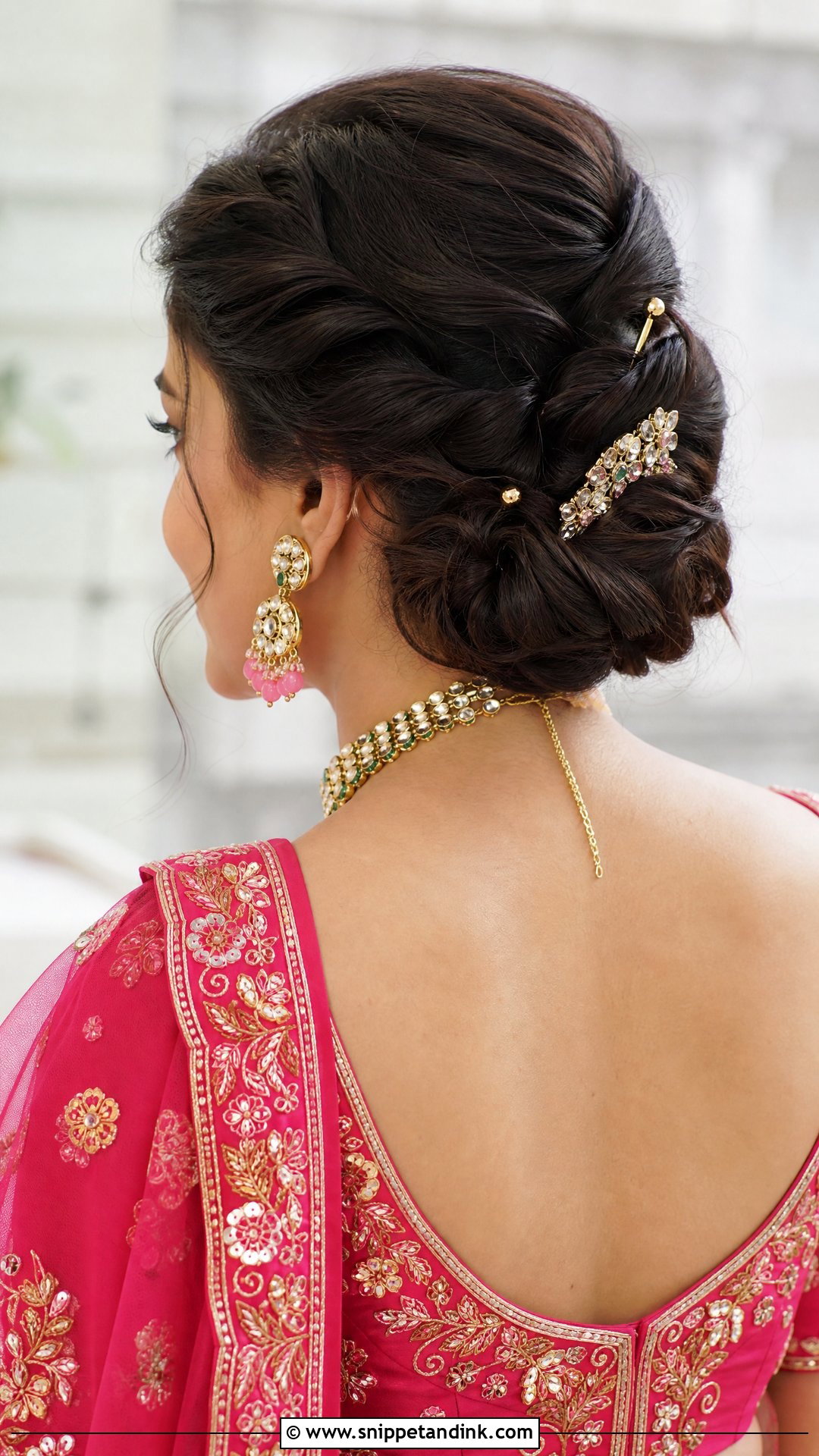
The twisted updo gathers long hair into rolls and loops pinned at the back. Each twist is pinned at its base and again at the turn, so it stays secure through hours of standing and sitting. I weave in gold pins, small floral clips or a jeweled comb. It sits between a bun and a braid and works with sarees and lehengas. The back view is where it shows, so tell your photographer to get a shot from behind.
19. French Braid With Jasmine Trail
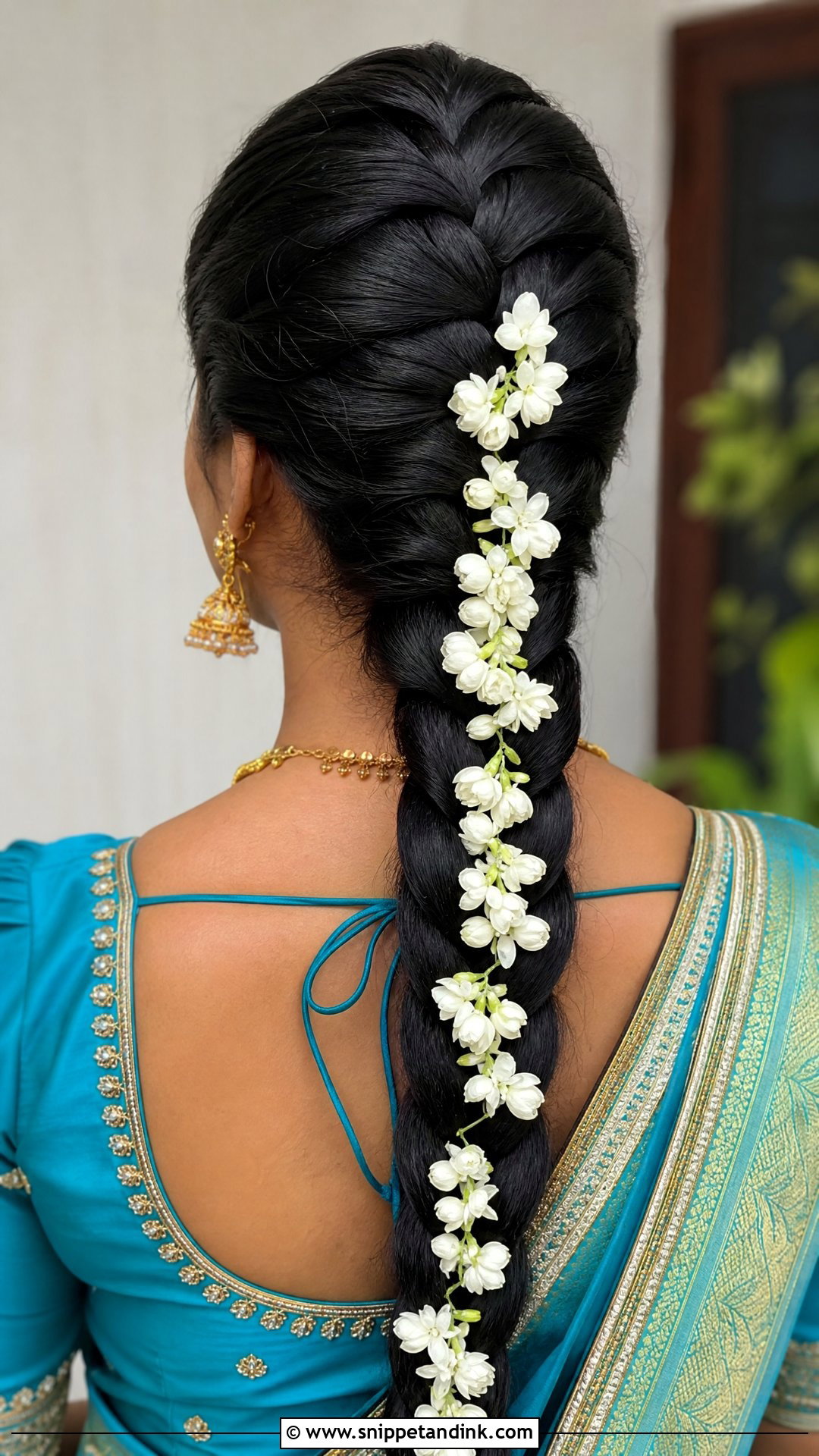
A French braid hugs the head and runs in one clean line down the back. I braid tight from the crown, gathering every strand, then pin a trail of jasmine along its length. It suits active days, with lots of standing, bending and greeting guests, because nothing comes loose. Thick, long hair shows the weave best. With a silk saree and temple jewelry, it’s practical and still clearly bridal.
20. Open Hair With Floral Crown
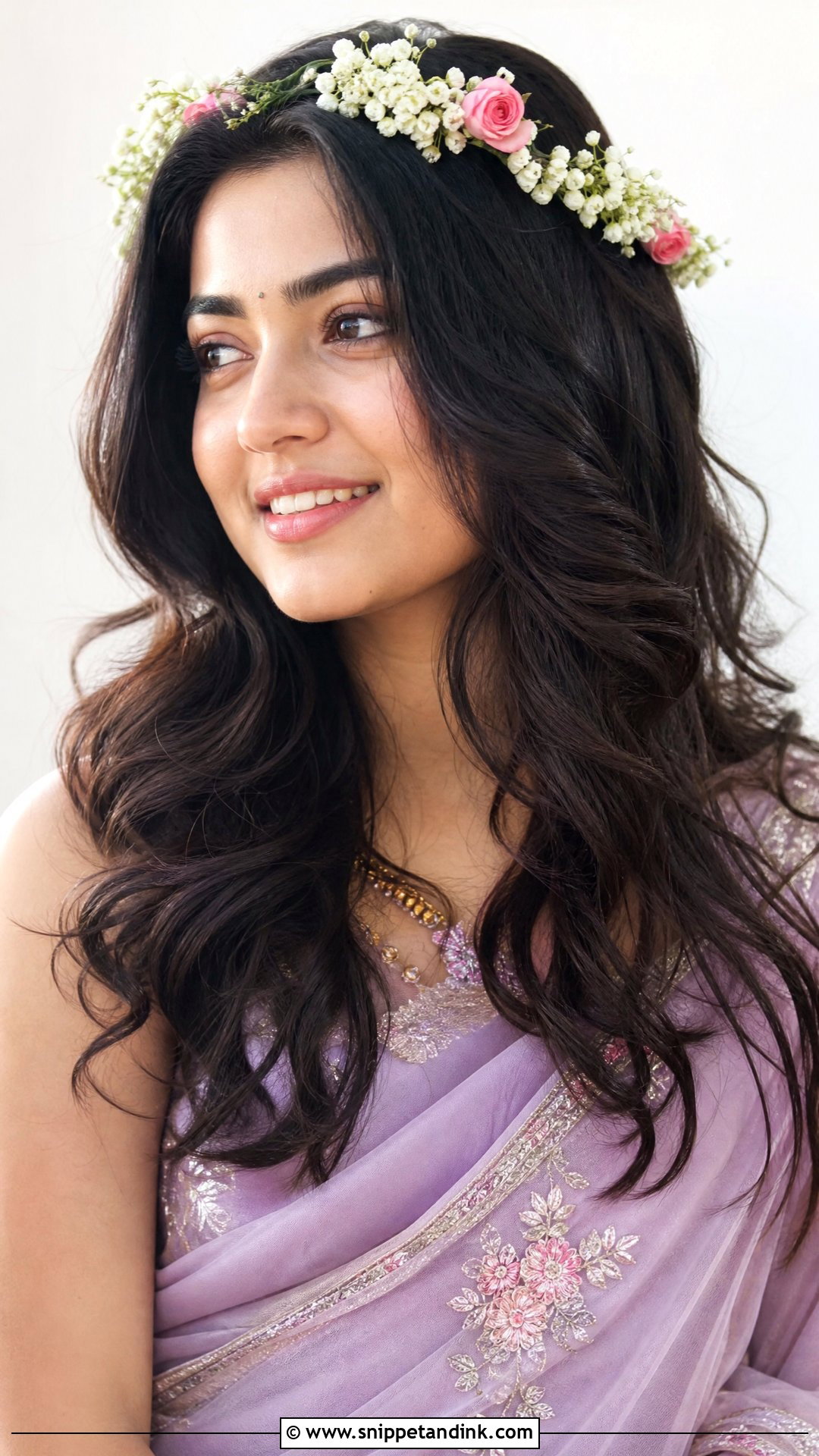
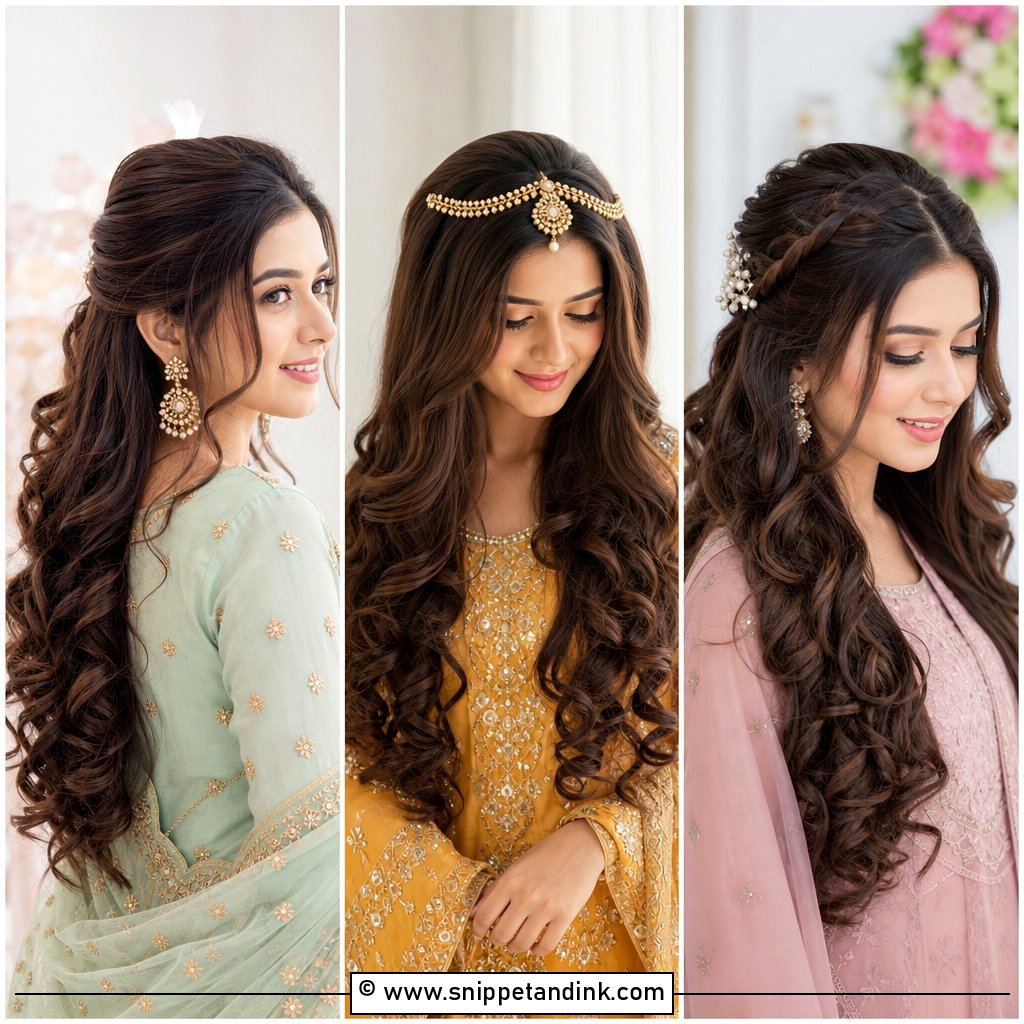
Open hair with a floral crown is the softest look here. The hair falls in loose waves while a circlet of jasmine and small roses rests on top. I wire the crown to fit the head and fix it with small pins on both sides, or it slides back. It suits engagement shoots, sangeet evenings and boho weddings, with a flowing half-saree or a pastel lehenga. I wouldn’t use it for a muhurtham, where most families expect the hair up and the flowers in a braid or bun.
Jasmine Wilts Faster in a Hot Mandap Than You Expect
A muhurtham can start before sunrise and run into the afternoon, and a reception may follow the same evening. Fresh flowers don’t last that whole stretch in the heat of lamps, a homa fire and a crowded hall. Planning for that is part of the hairstyle.
- Keep the flowers in a cool, damp cloth until they go into the hair, and never in a sealed plastic bag, which bruises jasmine.
- A light mist of water on the flowers between rituals helps, but keep it off the hair and the silk.
- Kanakambaram and roses hold up longer than jasmine, so a mixed jada ages better than an all-white one.
- For a reception change, it’s usually quicker to take the flowers off and switch to a fresh bun than to revive a wilted jada.
What to bring to your trial
Bring the actual jewelry, or photos with sizes, and wear a top with a neckline close to your blouse. If you’ll drape the pallu over your head for any ritual, bring a dupatta so we can test that too. I’ll usually do the heaviest look first, let you wear it while we talk through the day, and then check which pins are pressing. That hour tells us more than any photo.
Matching the Braid or Bun to Each Function
Most South Indian weddings have several functions, and each one asks something different of the hair. A poola jada or jada billa braid carries the muhurtham, a softer bun or side braid handles mehndi and haldi, and open curls or pearls can lead the reception. Start with the outfit and the jewelry, then think about how long you’ll sit, how hot the hall will be and how much weight you can carry. Mixing tradition with something modern, like pearls in place of jasmine, is fine. Book a trial, wear it for an hour, and adjust from there.
You'll Like These Ideas:





Leave a Reply