
Brides often ask me for a dress that won’t look dated in twenty years, and the honest answer is that no single style guarantees it. What does hold up is a gown whose fit, fabric and proportions were right for the woman wearing it. Satin, lace, crepe, organza and tulle have all been around for generations; sleeves, trains, pearls and bows come and go but never really leave. The classic shapes below are the ones I keep returning to in fittings. For each, I’ve added what it asks of you on the day and the detail that decides whether it ages well in photographs.
Which Details Date a Wedding Photo, and Which Don’t
When I look back at old wedding albums with brides, the dresses that still look right share something. The fit was good and the fabric was honest. What dates a picture is usually a single loud detail that belonged to one season.
The elements I see aging fastest:
- Very trend-specific cutouts and illusion panels in unusual places.
- Heavy all-over sparkle that turns into glare under flash.
- Coloured sashes or details matched to that year’s palette.
- Extreme proportions, such as a train out of scale with the venue.
The elements that hold: a neckline chosen for your shoulders, a waist seam that sits at your natural waist, ivory or warm white in place of stark white, and one strong detail rather than several. If you love a trend, put it somewhere removable, like a bow, a sleeve, a veil or a second dress. That way the core gown stays classic.
1. Satin Ball Gown Wedding Dress
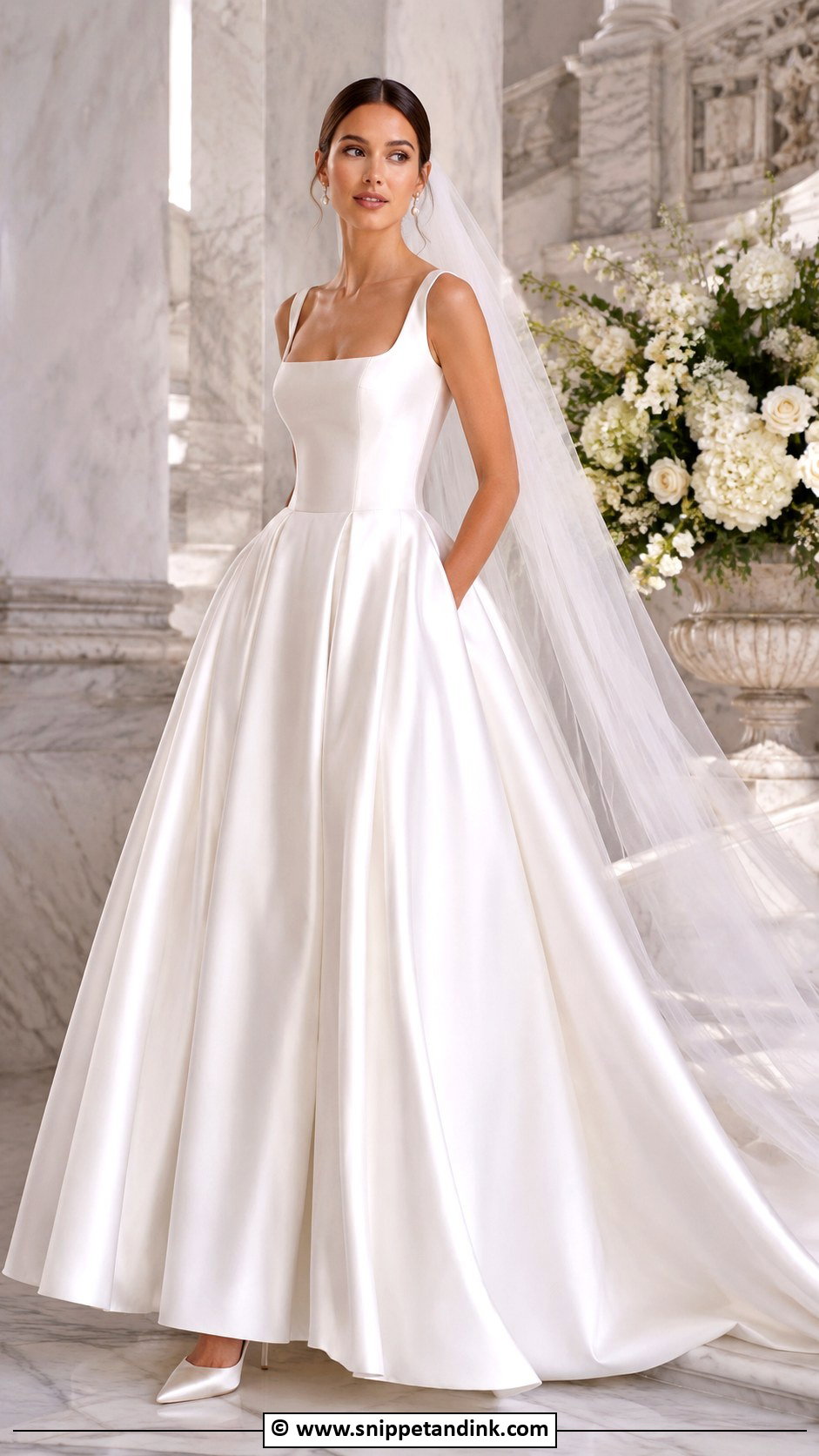
Few bridal shapes have lasted as long as the satin ball gown. A structured bodice and a full skirt carry it with no ornament at all. Ivory or soft white satin looks richer in daylight than bright white, which can turn slightly blue in photos. I’d keep the neckline clean and let the skirt do the work, with a cathedral veil, pearl drops, pointed satin heels and a low bun. Practicalities first, though: this skirt needs a bustle for dancing and a roomy car for the journey.
2. Lace A Line Wedding Dress
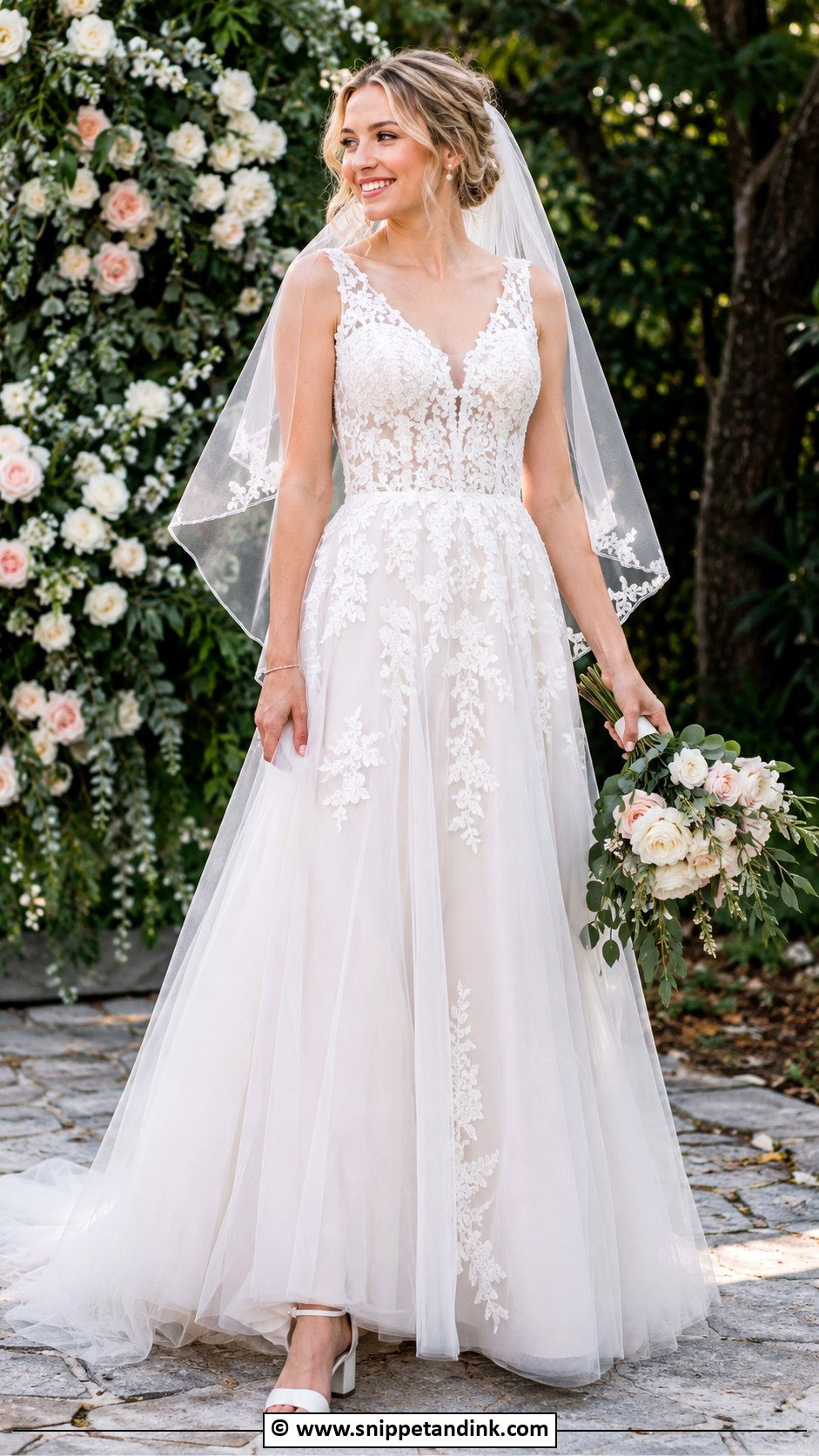
Lace with an A-line skirt is romantic without being fussy, and the fitted bodice flatters most figures. Classic floral lace, scalloped edges or appliqué over tulle give texture. I look at how the lace motifs are placed at the side seams: on a well-made gown the pattern is matched or hand-appliquéd across the seam, and that’s often what separates a dress that looks expensive from one that doesn’t. Illusion sleeves add coverage; a sheer, lined bodice feels lighter. A fingertip veil and block heels suit gardens and estates.
3. Long Sleeve Wedding Dress
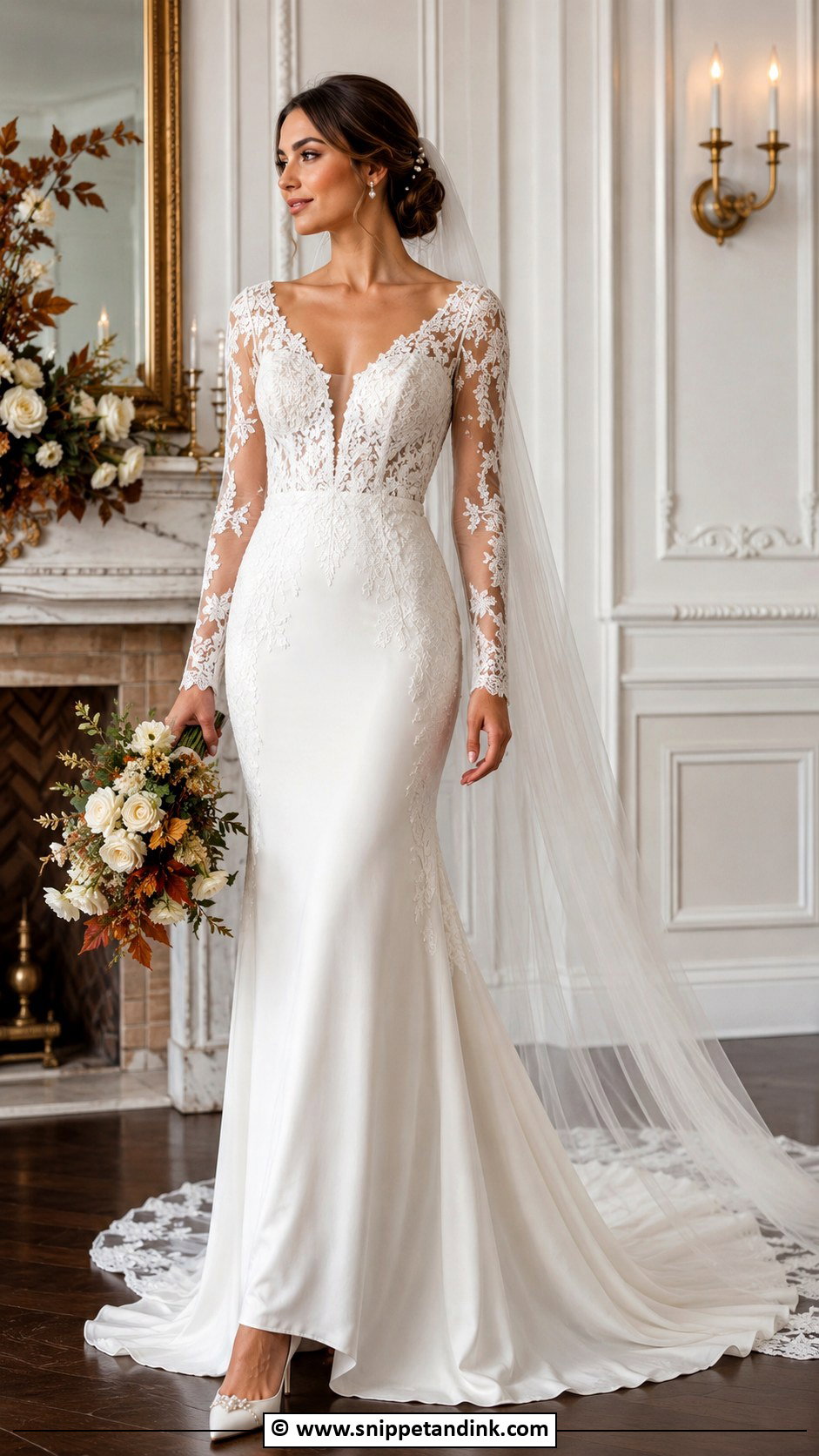
Sleeves finish a gown in a way nothing else does. Lace, crepe or sheer tulle with light appliqué all read classic. The fit is the whole story here: I ask brides to lift their arms above their heads and hug me at the fitting, because a sleeve set too tightly at the armhole feels fine standing still and miserable by the speeches. A clean updo, pearl pins and classic pumps suit autumn, winter and formal indoor weddings, and lightweight versions work in spring.
4. Off Shoulder Wedding Dress
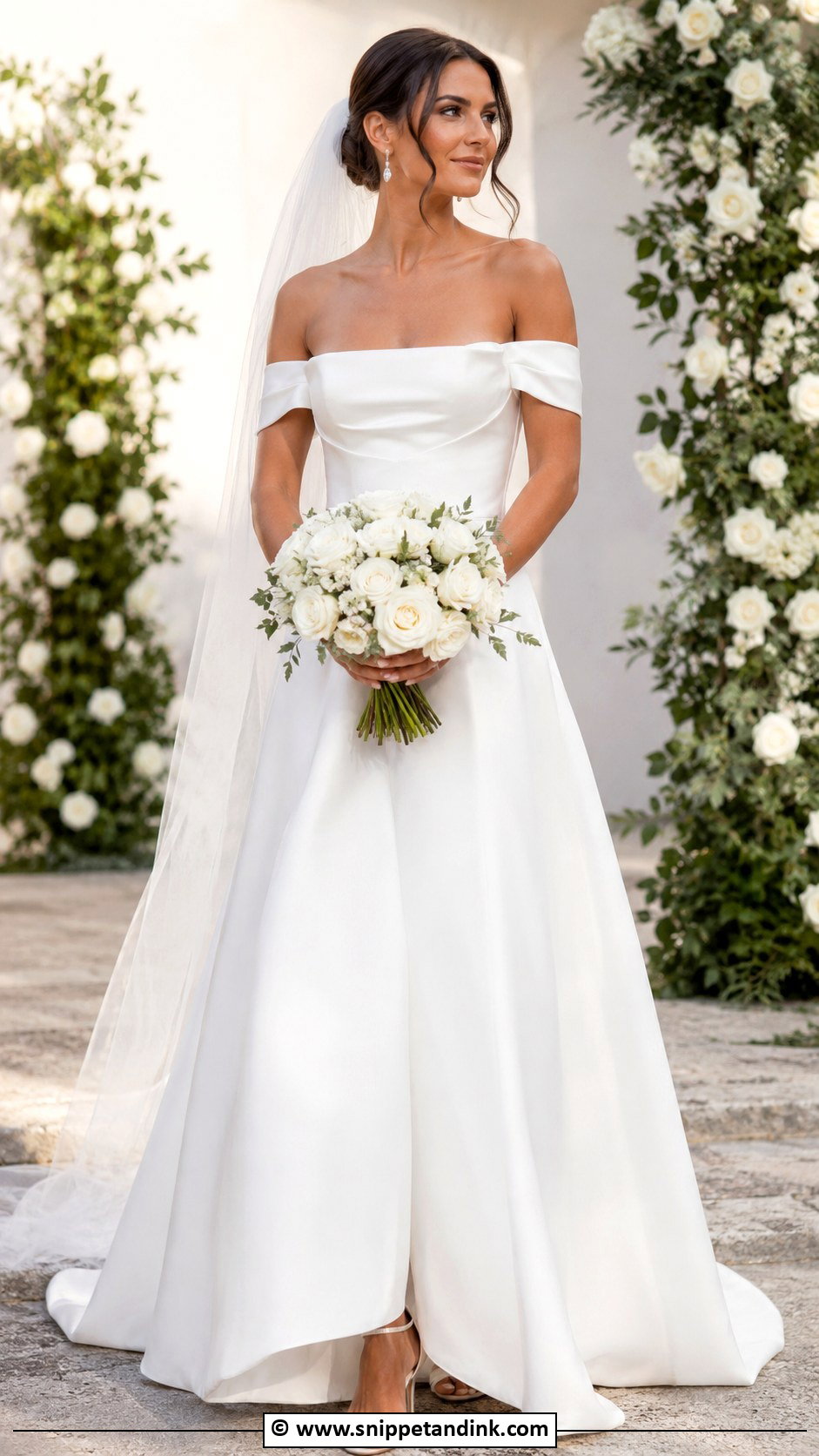
The off-shoulder line frames the collarbone and balances coverage with openness, which is why it never quite goes out of style. It suits an A-line, ball gown or mermaid skirt. What usually goes wrong is the arm band: too tight and you can’t hug anyone, too loose and it creeps toward your neck. I fit it with the bride reaching forward. A smooth chignon, drop earrings and a sheer veil keep it light.
5. Strapless Wedding Dress
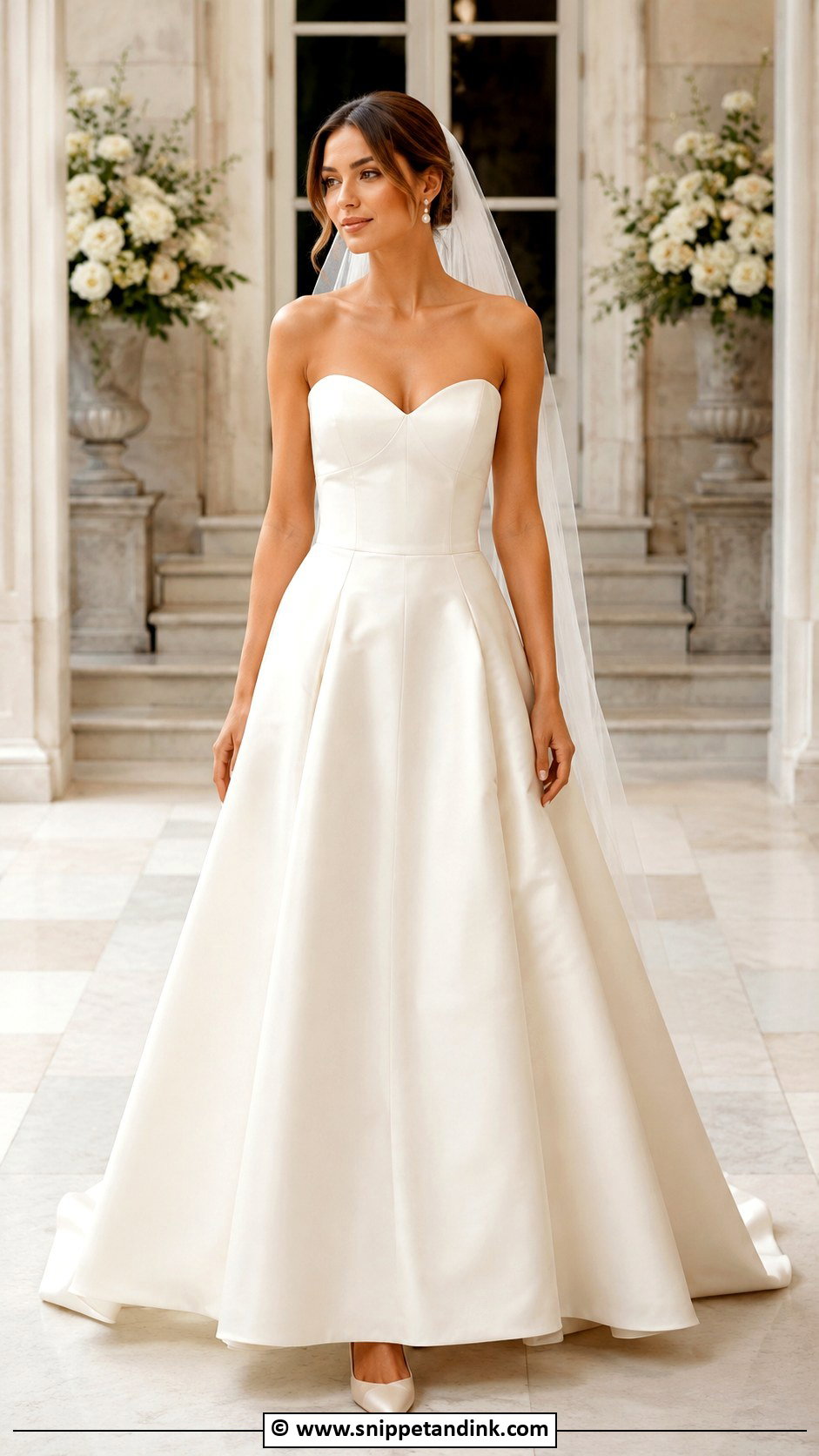
Strapless gowns rely entirely on inner structure, so I check for boning and a waist stay before judging the neckline. Straight, sweetheart or soft scoop all work. For a cooler ceremony, a tailored wrap or a removable bolero solves the coverage question and comes off for the reception. It pairs with ball gown, A-line, sheath and mermaid skirts. A polished bun and pearl earrings are enough. If you keep tugging it up during the fitting, it is not finished yet.
6. Square Neck Wedding Dress
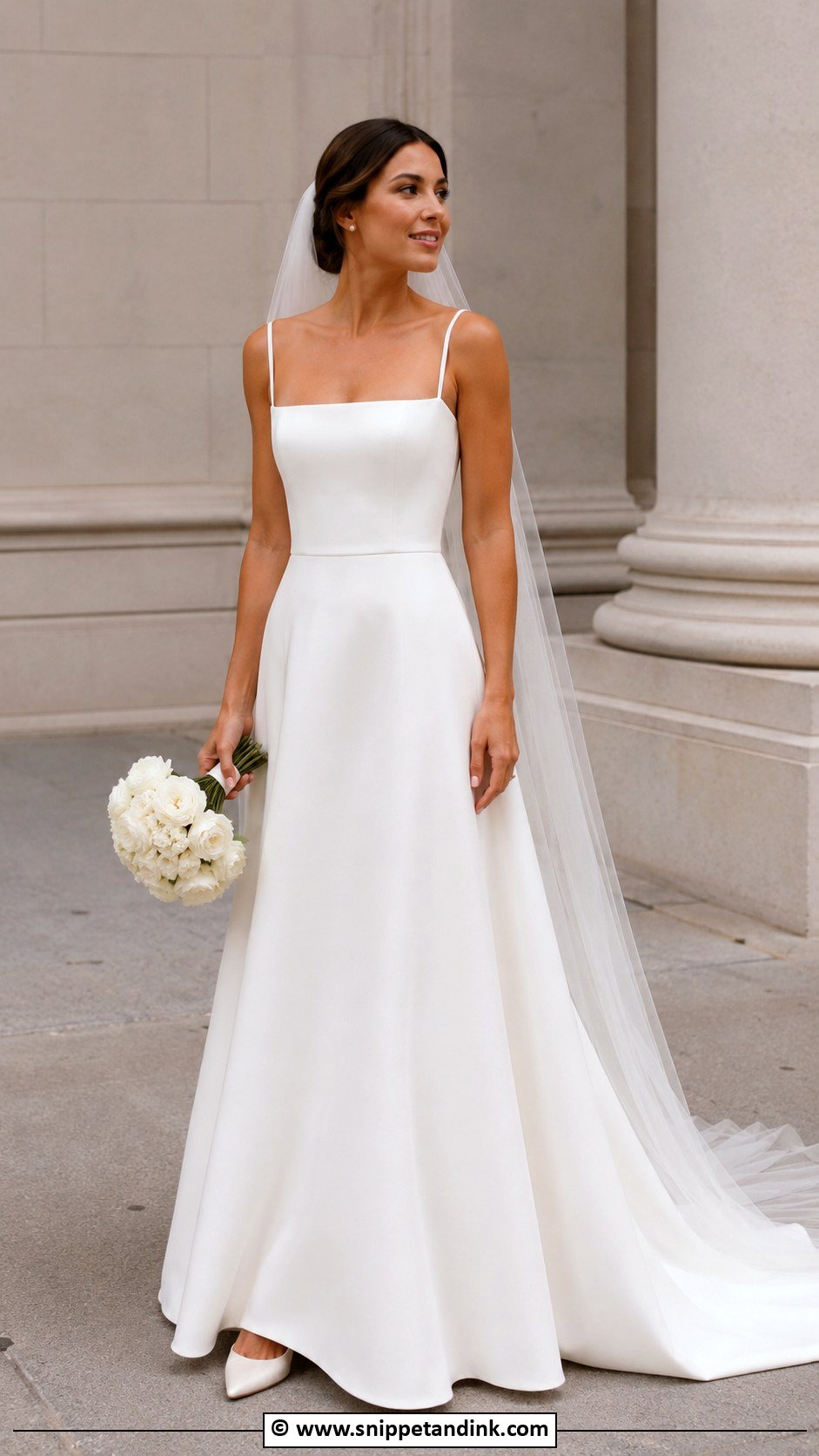
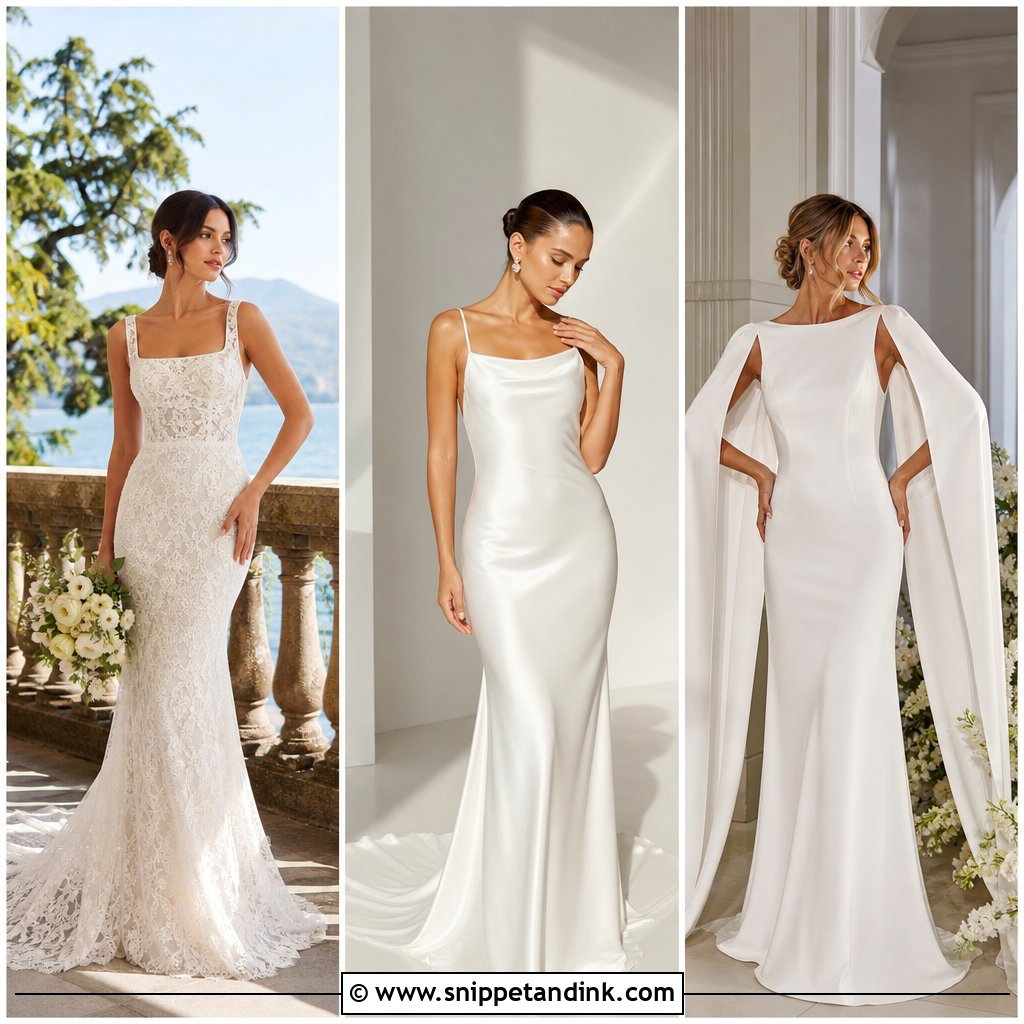
A square neck is the most modern of the classic necklines, yet it doesn’t date, because the straight line has appeared in bridal fashion for centuries. It suits fitted bodices, A-lines and columns, and holds its shape best in crepe, satin or mikado. On a fuller bust it often works better than a sweetheart, since it doesn’t plunge. A centre-part bun, pearl studs and slim heels finish it. Straps or long sleeves both sit well with it.
7. High Neck Wedding Dress
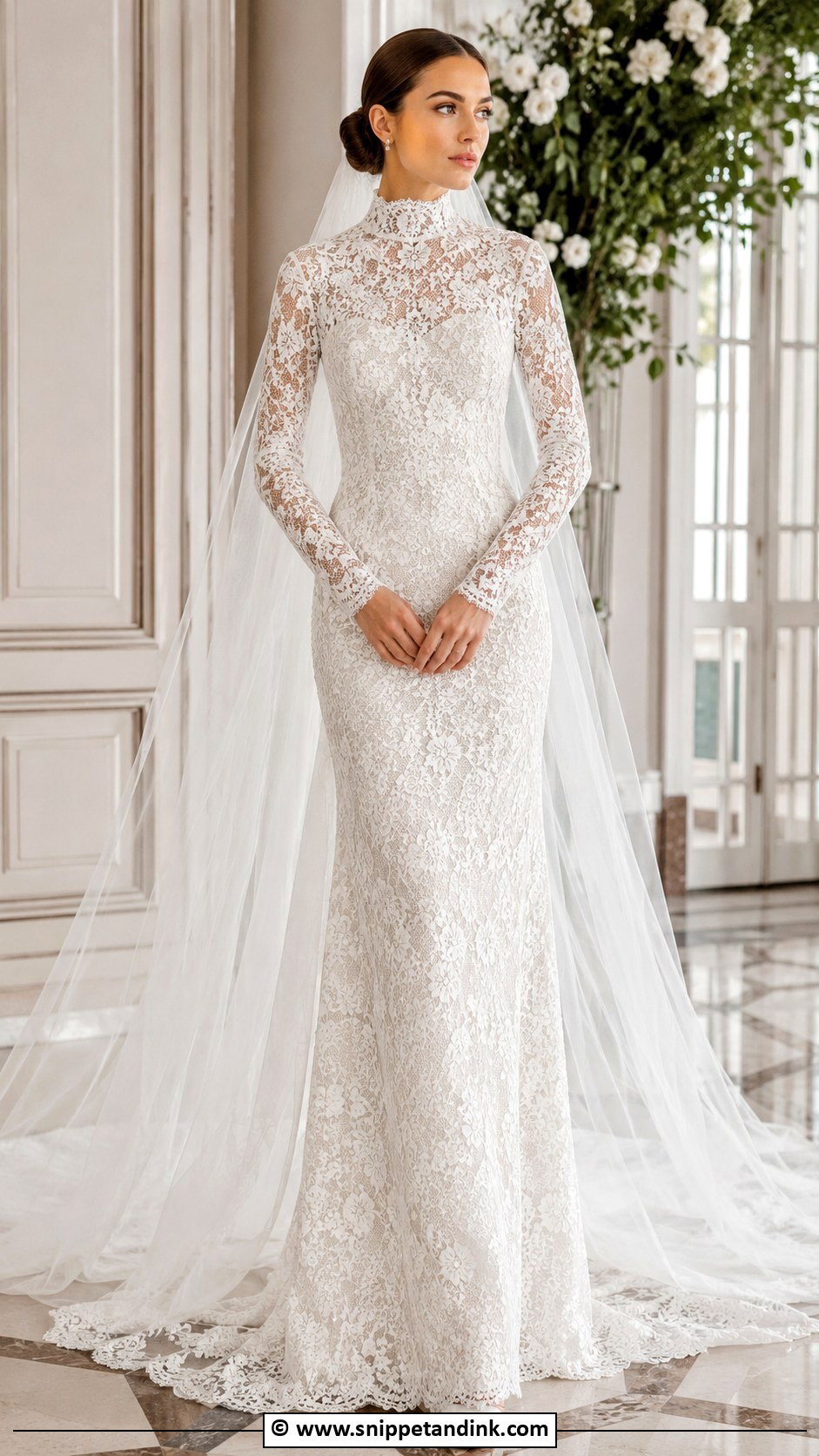
High necks bring posture. The covered neckline draws attention to the face and shoulders, and brides tend to stand taller in one. Lace versions feel vintage; crepe and satin look sleek. Comfort decides this one. I check the neckband fits with a finger’s room, because you’ll be turning your head and talking all day. Skip necklaces, add small earrings and a long veil, and it suits winter, formal and city weddings.
8. Bateau Neck Wedding Dress
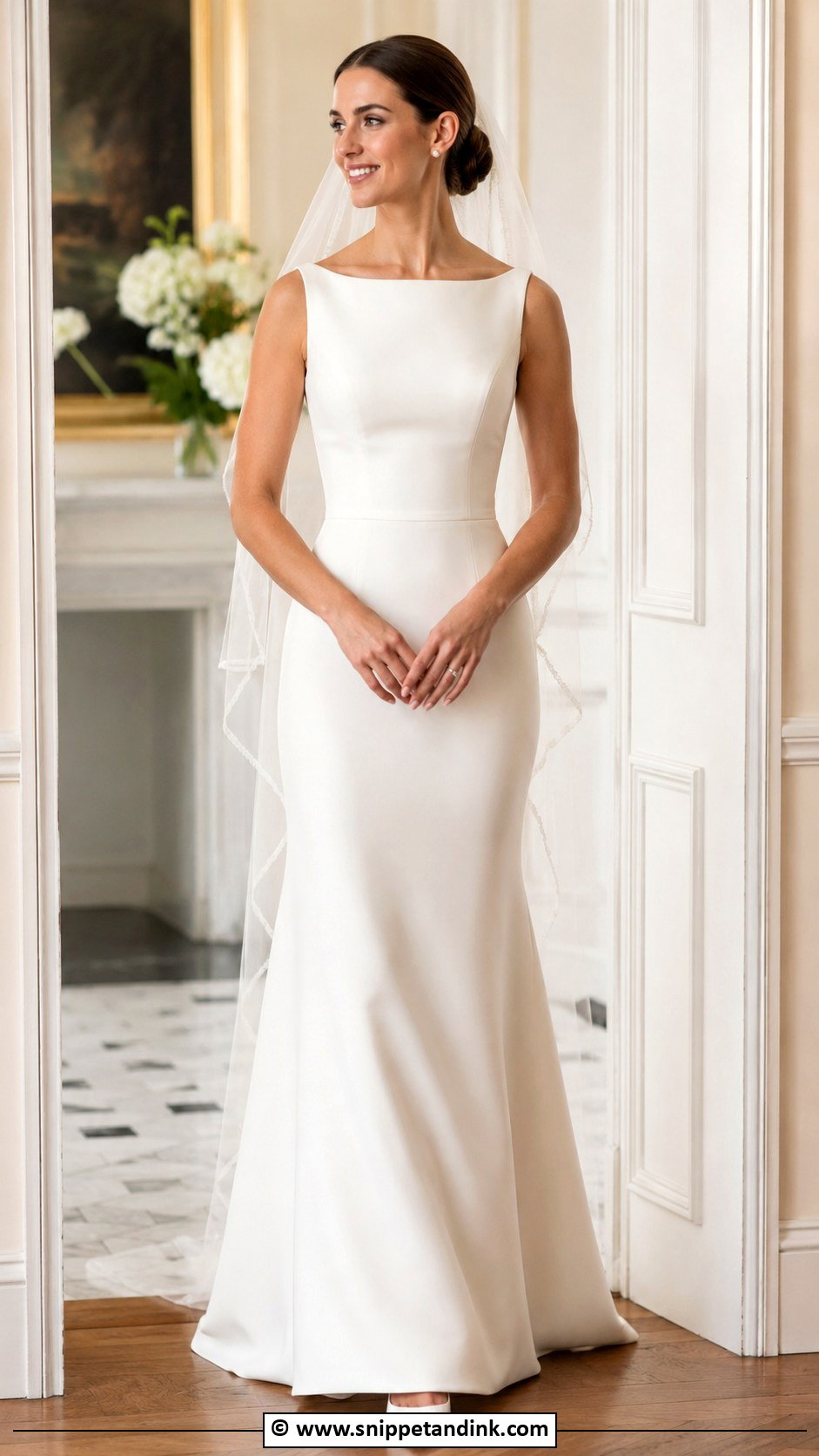
A bateau neck wedding dress runs almost straight from shoulder to shoulder just below the collarbone, skimming rather than revealing. It gives coverage with softness, in satin, crepe, mikado or lace, over an A-line, fit and flare or sheath. My caution is for narrow shoulders: the wide line can look like it’s slipping, so I sometimes add a discreet lingerie strap keeper. Pearl studs, a low bun and a fingertip veil finish it.
9. V Neck Wedding Dress
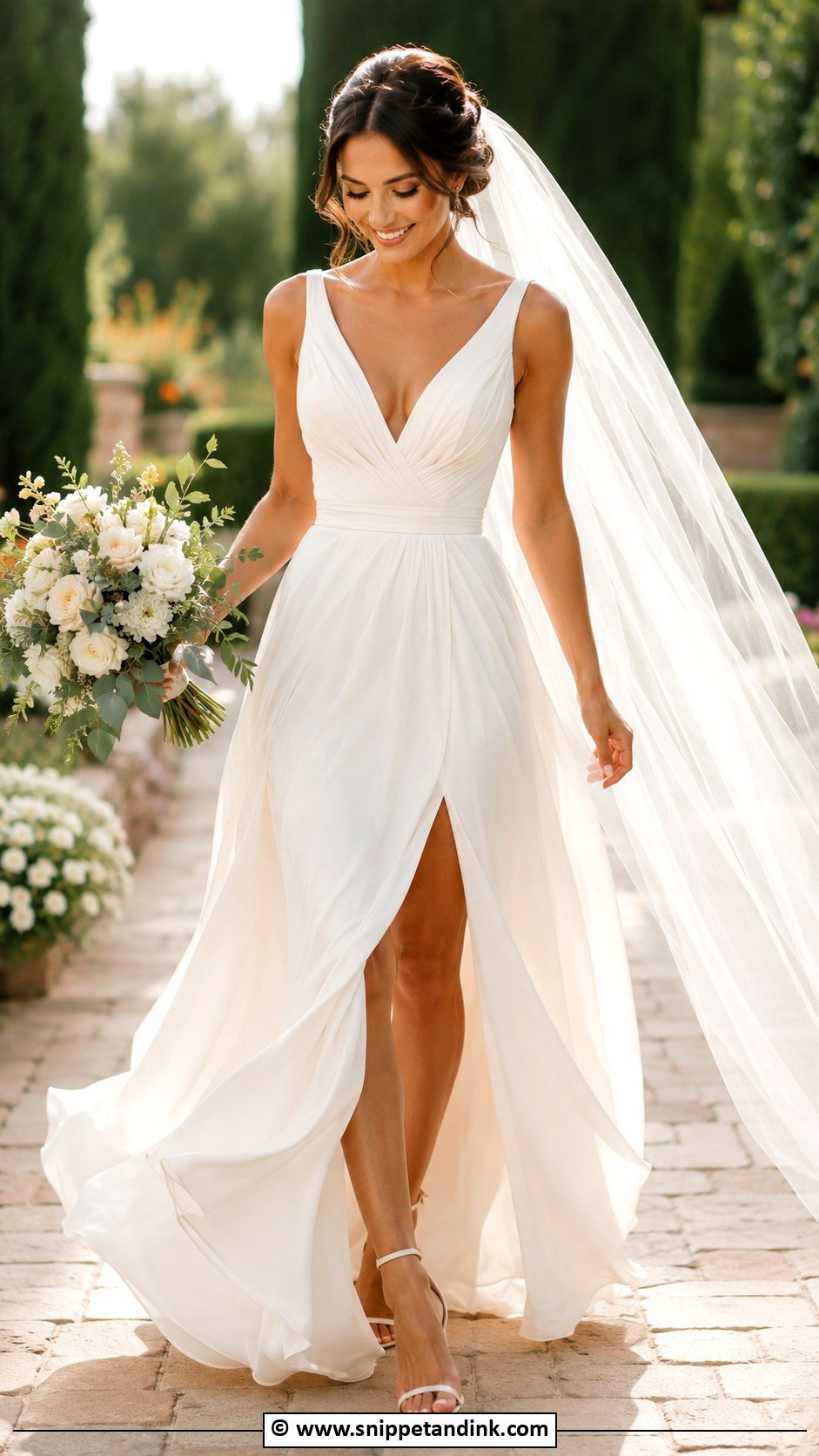
The V neckline lengthens the neck and gives the whole body a vertical line. A shallow V reads modest; a deeper V needs fashion tape and a bodice fitted firmly at the ribs, or it gapes when you lean in. Supportive straps, a defined waist and a skirt that moves well keep it classic. Lace adds romance, crepe and satin keep it sleek. Earrings or a fine pendant, never both competing, plus loose waves and a soft veil.
10. Sheath Wedding Dress
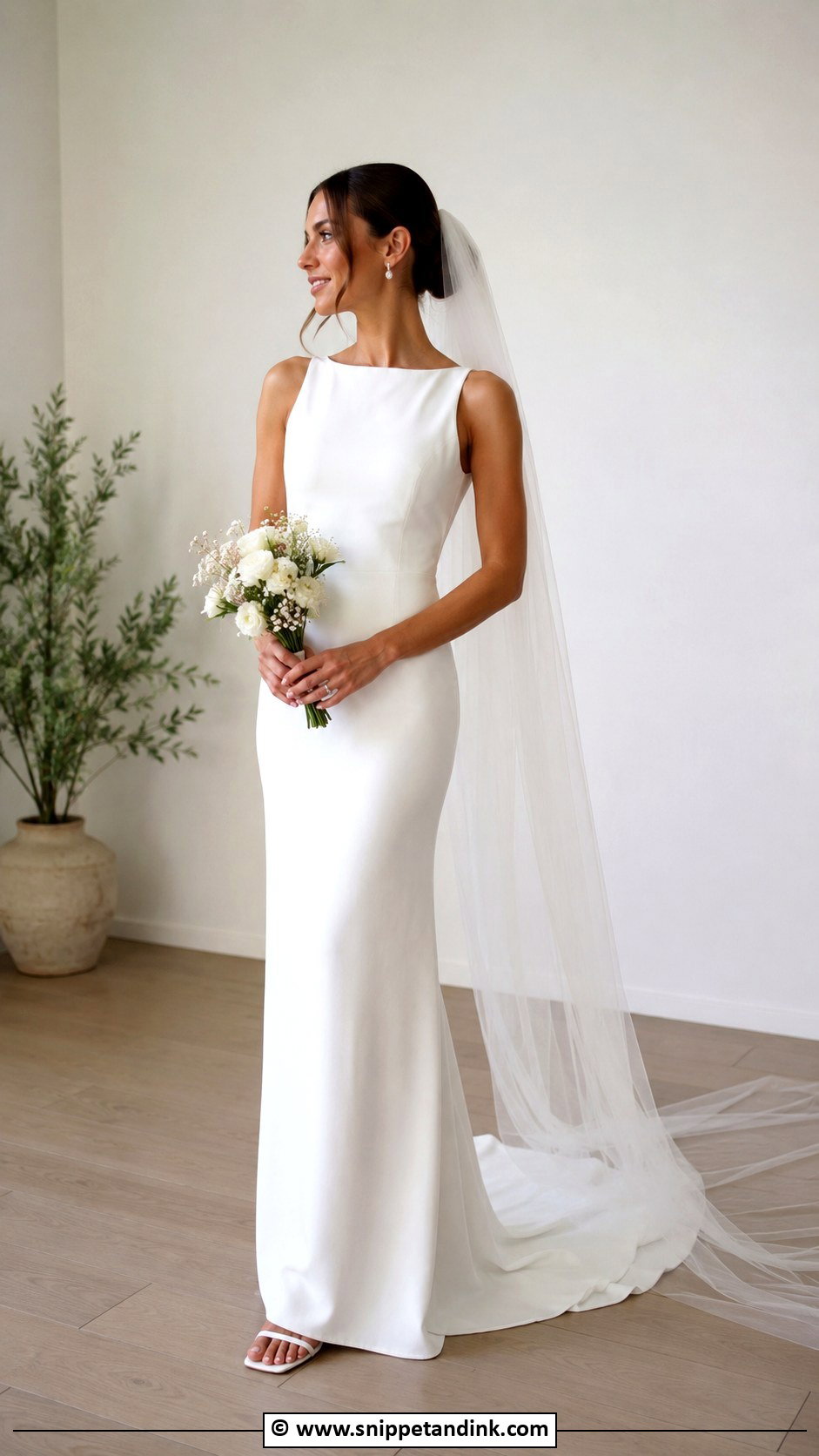
Sheaths follow the body without a full skirt, which makes them light and easy to move in. Crepe, silk, satin and lace all suit them. Because there’s no volume, any pulling across the hips shows immediately; the dress should skim, not grip. I fit them over the exact underwear the bride will wear. Beaches, rooftops and intimate ceremonies suit a sheath, with delicate heels and a long veil. A low back or covered buttons add detail if you want it.
11. Column Wedding Dress
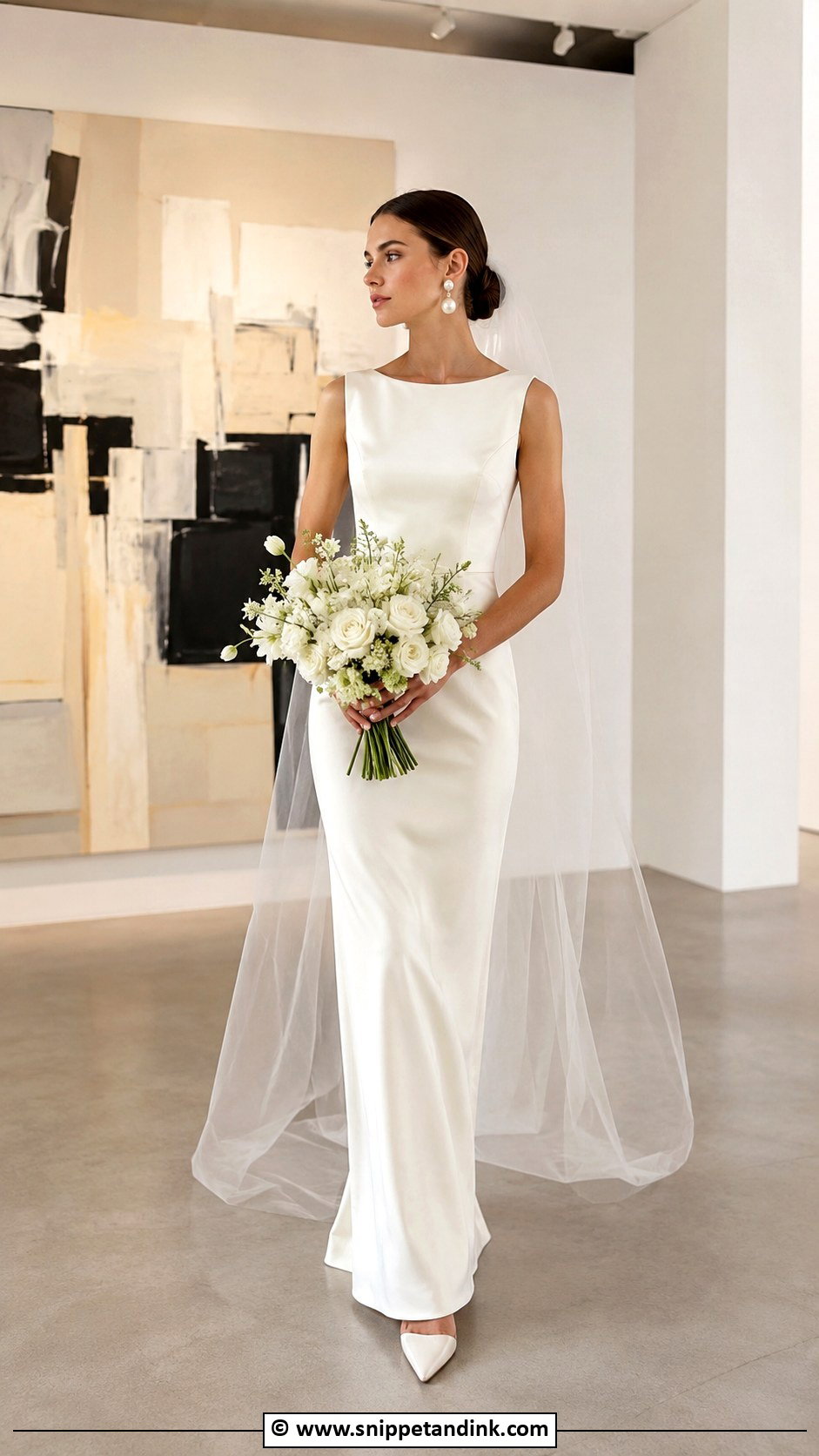
A column falls straight from neckline to hem with more structure than a sheath, giving a clean vertical line and real formality. Crepe, satin or silk keep it smooth. To keep it timeless, I’d steer away from cutouts and trend-led details; those are the elements that date first in photographs. Statement earrings, a simple veil and pointed heels suit galleries, hotels and modern ballrooms. A column needs a stride check too: walk the length of the fitting room before you commit.
12. Slip Wedding Dress
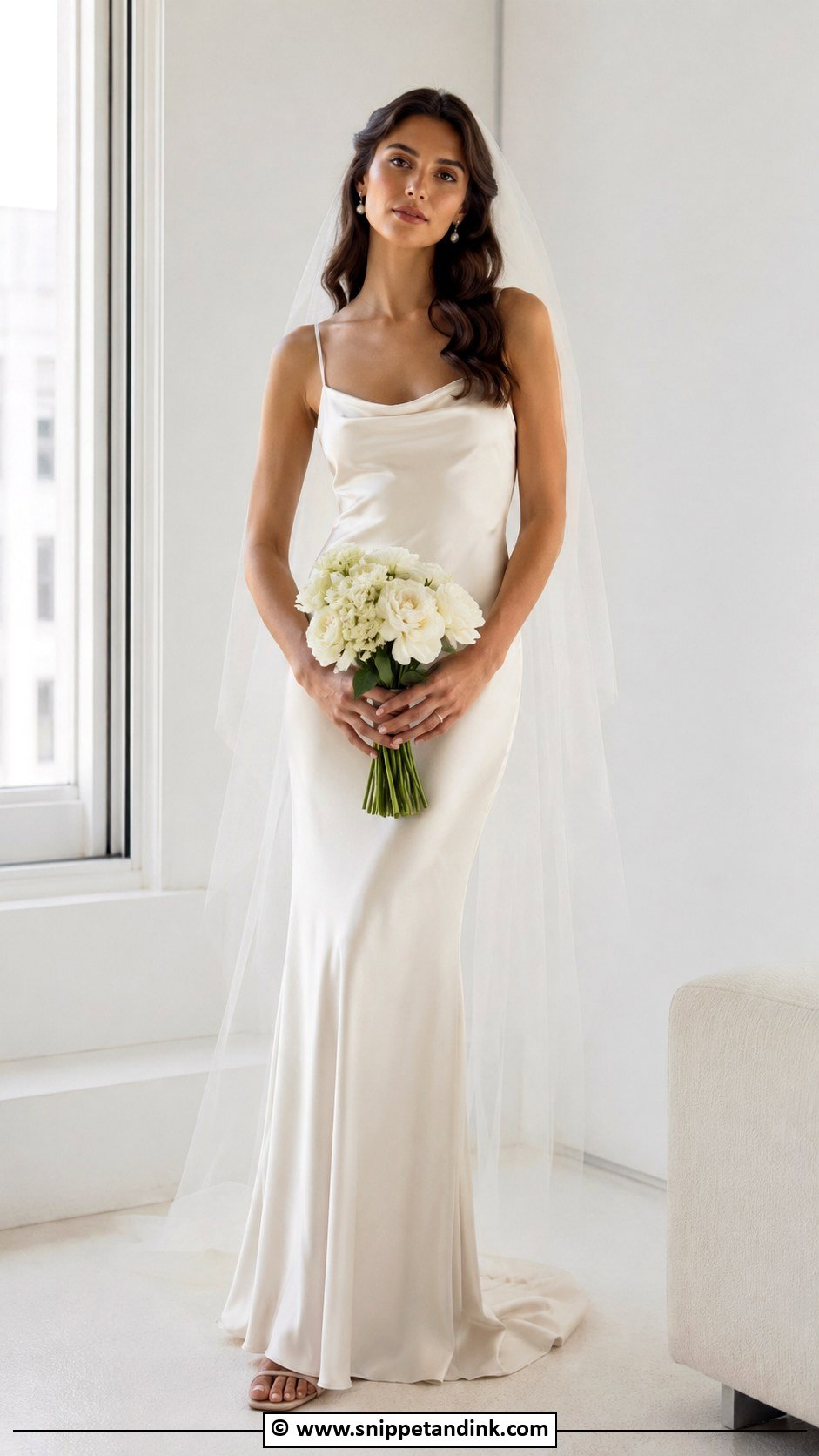
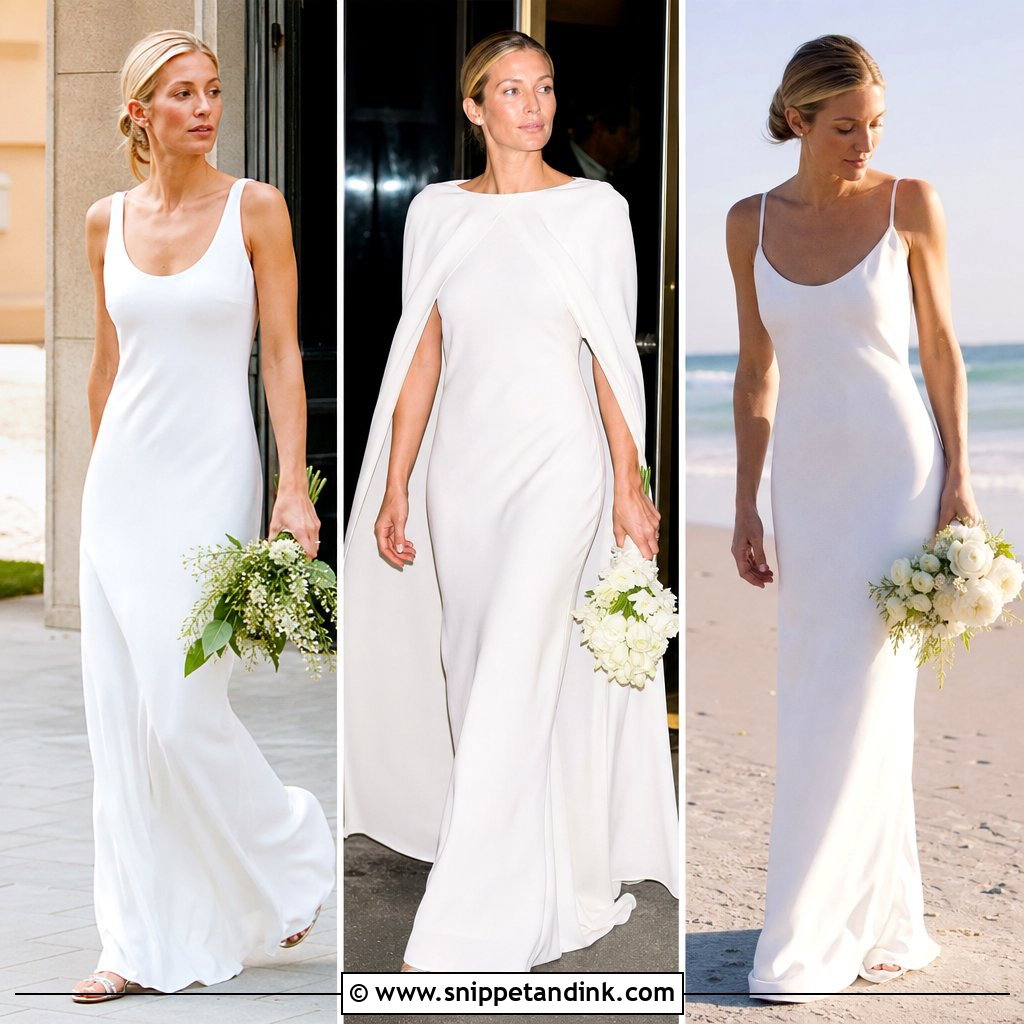
Bias-cut satin or silk is what makes a slip dress fall the way it does, and it’s also what makes it cling. The fabric shows everything underneath, so good underpinnings matter as much as the dress. Barely there heels, a soft veil and smooth waves or a neat bun keep it simple. For coverage, a long bridal coat or sheer cape works better than a wrap, which slides off satin. Slips suit city weddings and destination ceremonies.
13. Mermaid Wedding Dress
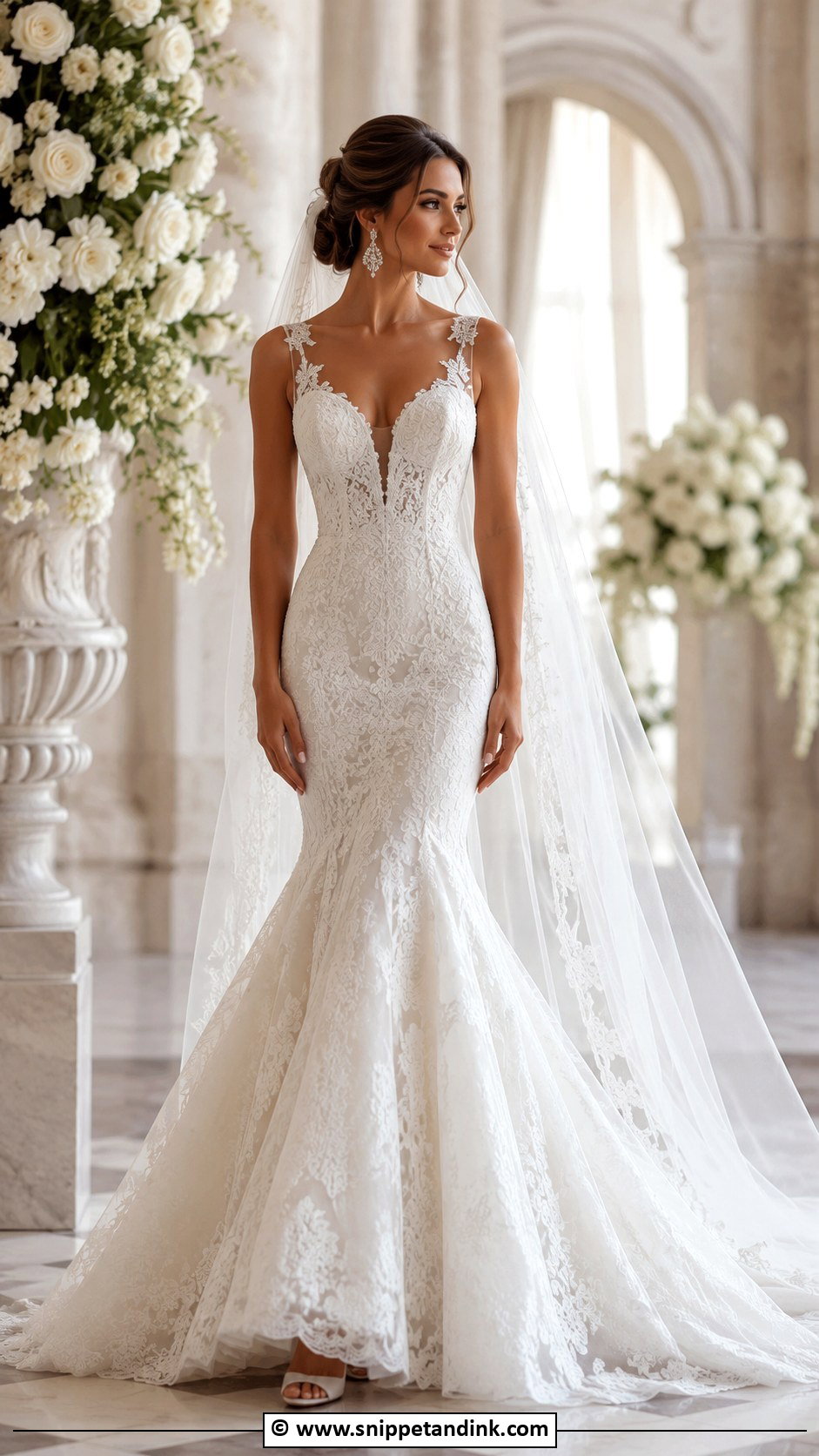
The mermaid fits closely through the bodice and hips, then flares below the knee. In lace, satin, crepe or mikado it reads glamorous and stays classic if the details are restrained. I always ask brides to sit, climb a step and walk quickly in one before deciding, because a true mermaid limits all three. A soft train adds grace without bulk. A long veil, drop earrings and a polished hairstyle suit formal venues.
14. Trumpet Wedding Dress
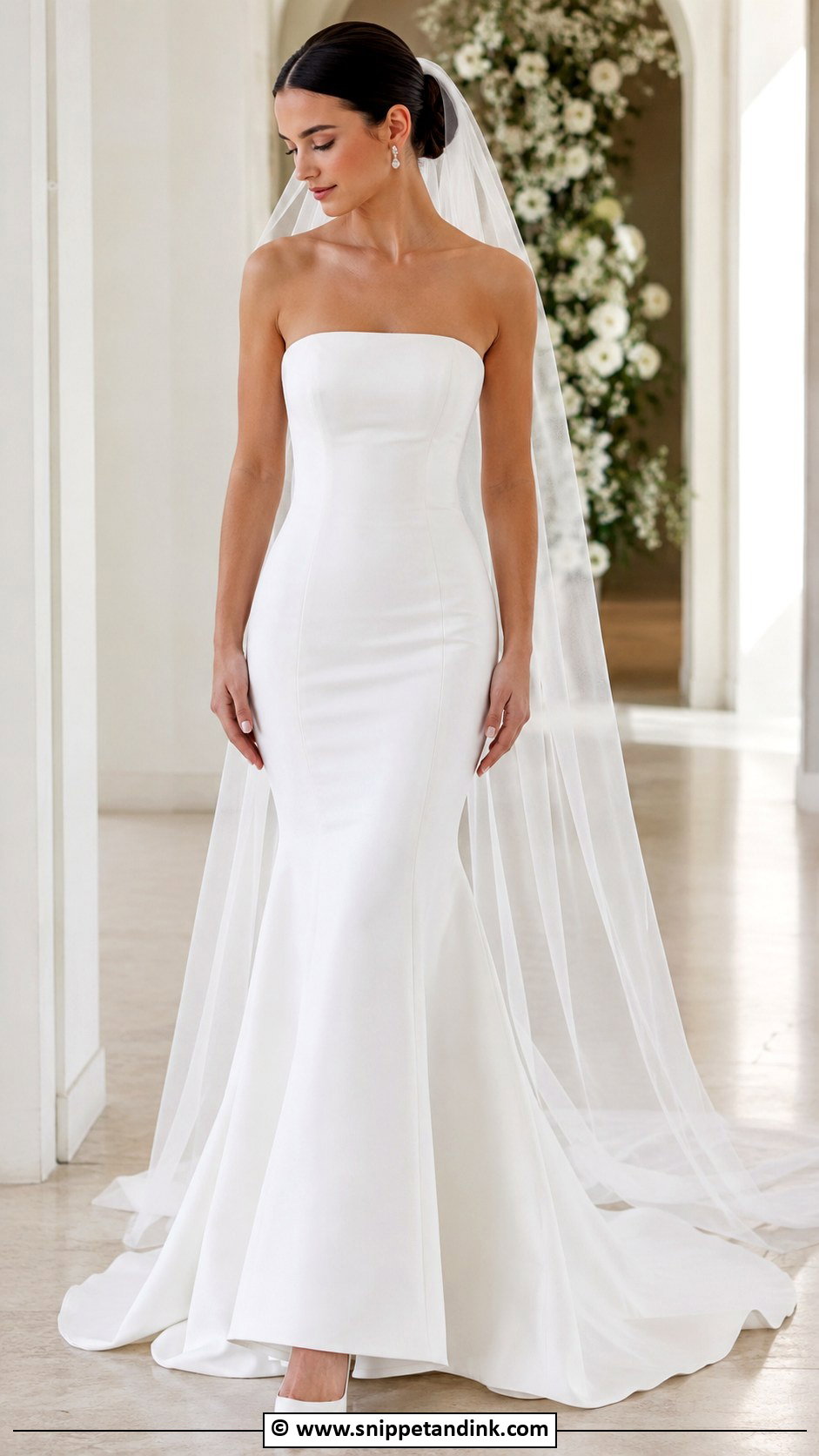
A trumpet wedding dress flares higher on the thigh than a mermaid, which gives shape with more room to walk and sit. It’s the one I suggest when a bride loves the mermaid look but hates how restricted she feels in it. Crepe trumpets look modern; lace ones traditional. It suits strapless, off-shoulder, V neck and long sleeve bodices. Keep the train proportional to the venue, and add a chapel veil and a smooth bun.



15. Basque Waist Wedding Dress
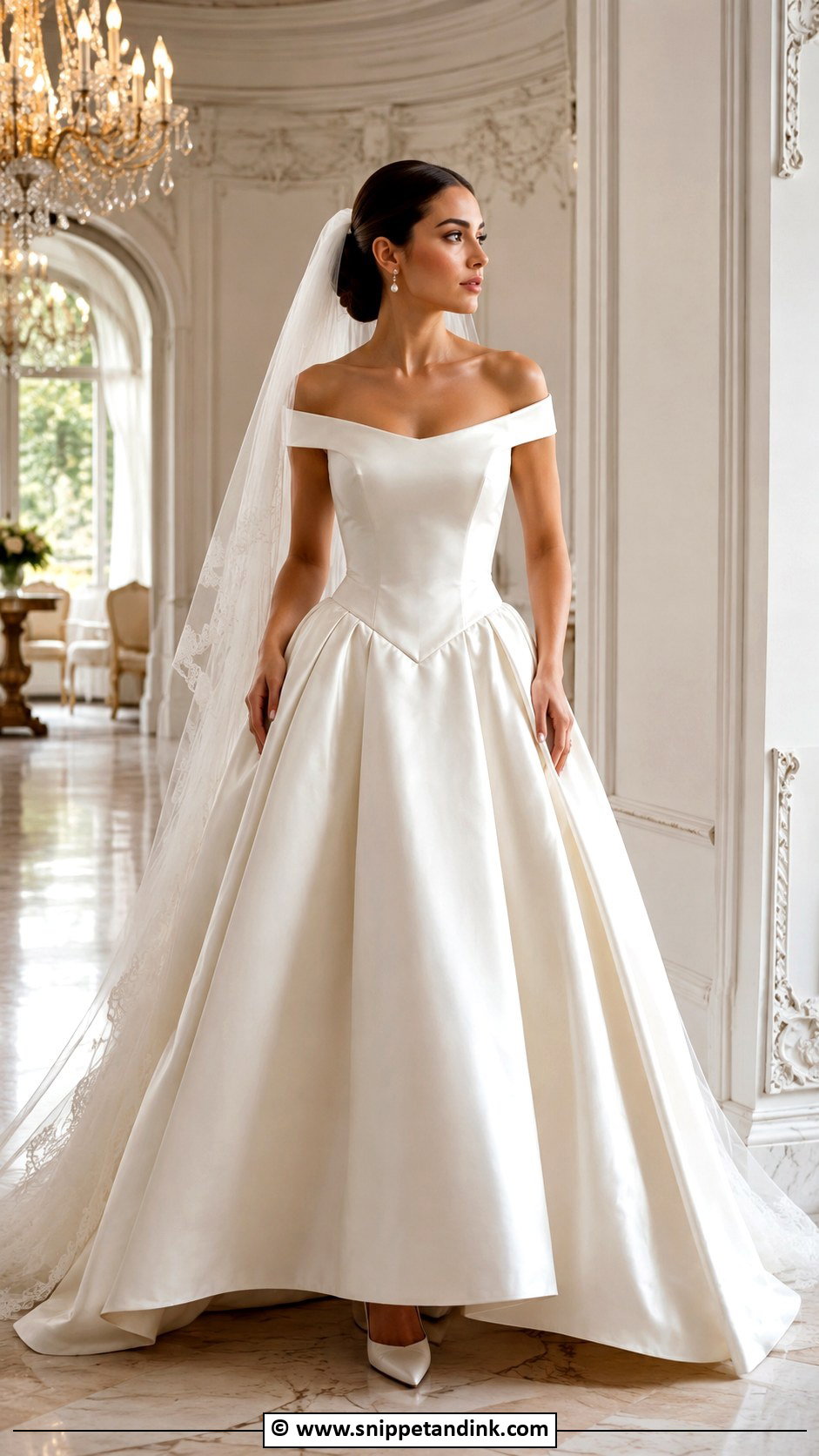
The Basque waist dips to a point at centre front, a shape borrowed from historical dress that lengthens the torso and defines the waist. It’s at its best with a full skirt in satin. Because the point draws the eye, skip belts and extra decoration at the waist. I check that the point sits at the right height: too low and it shortens the legs. A long veil, pearl earrings and a soft updo suit it.
16. Drop Waist Wedding Dress
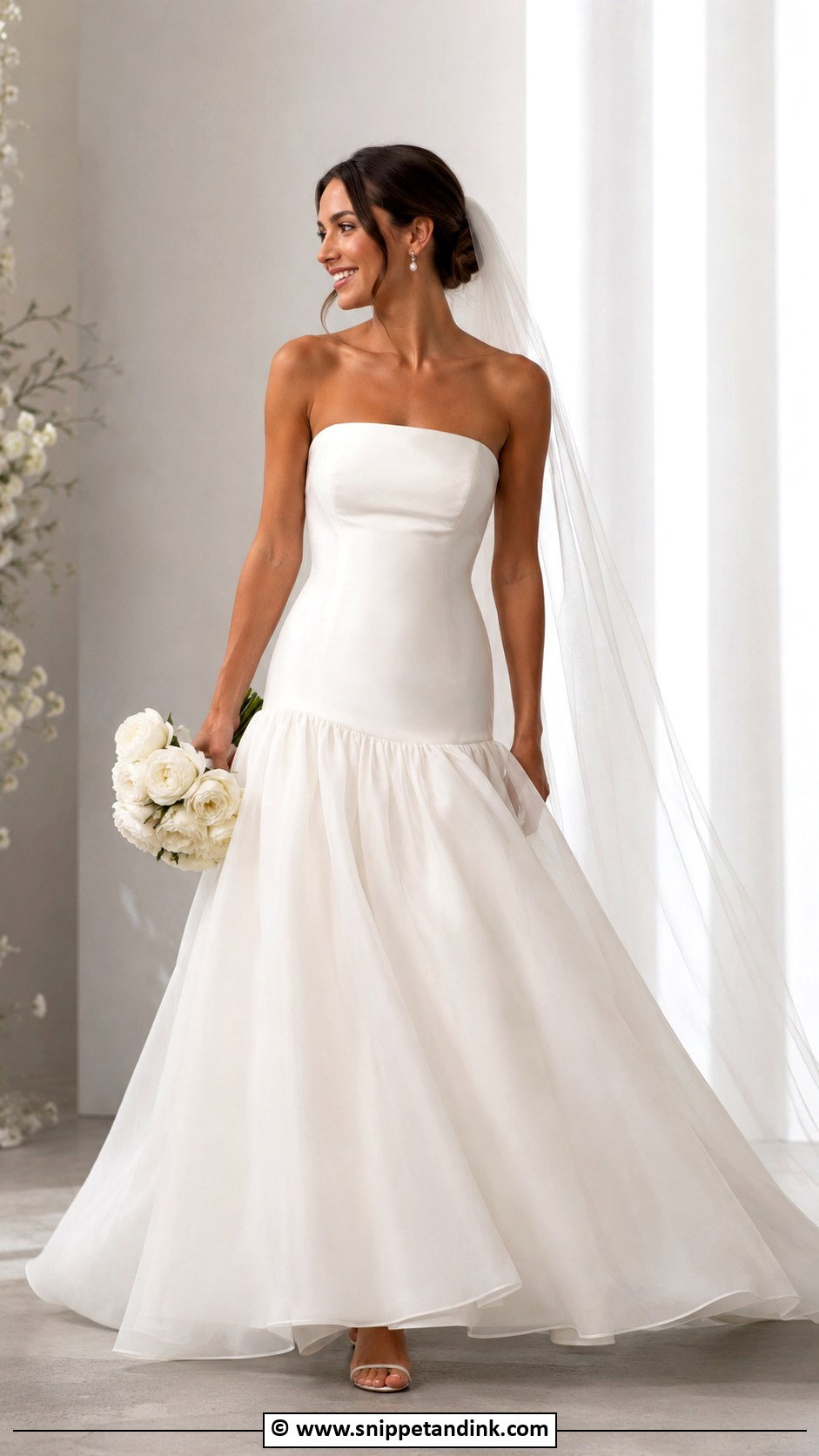
A drop waist starts the skirt low on the hips after a long, smooth bodice. It’s back in bridal collections, but it has older roots, so the right version doesn’t feel like a fad. Soft satin, tulle or organza keep it graceful over a ball gown, A-line or fit and flare skirt. This shape suits long-waisted and straighter figures; if your hips are noticeably wider than your waist, the seam lands at the widest point. Simple earrings and a clean veil.
17. Corset Wedding Dress
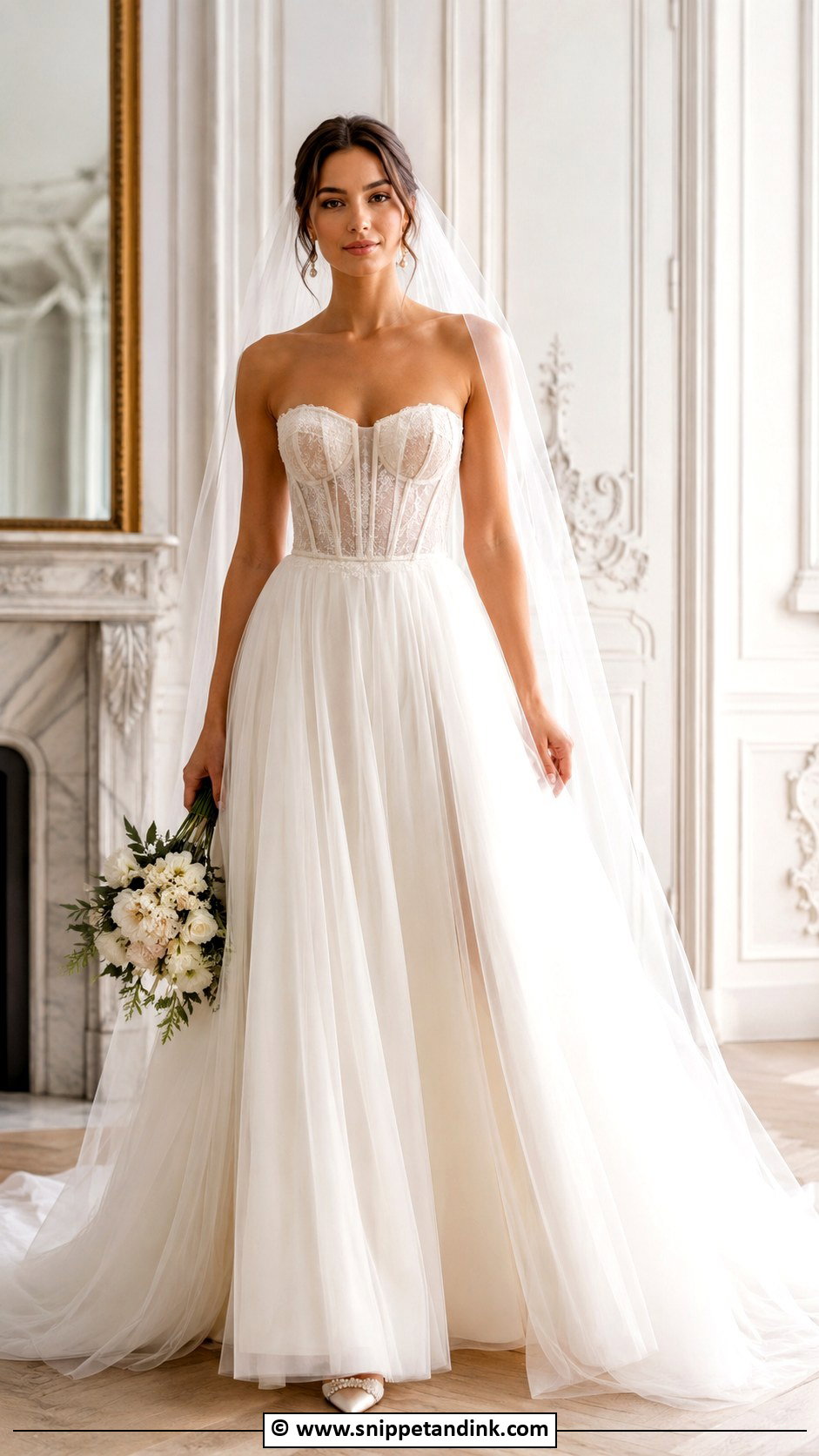
Corsets have come back strongly, and the way to keep one classic is covered structure rather than exposed boning. Satin, lace or tulle over the corset softens it. The skirt can be A-line, ball gown or fitted crepe. I lace corsets with the bride breathing normally, never holding her breath, because she needs to eat dinner in it. Pearl earrings, a veil and classic heels. Let the fit do the talking.
18. Princess Wedding Dress
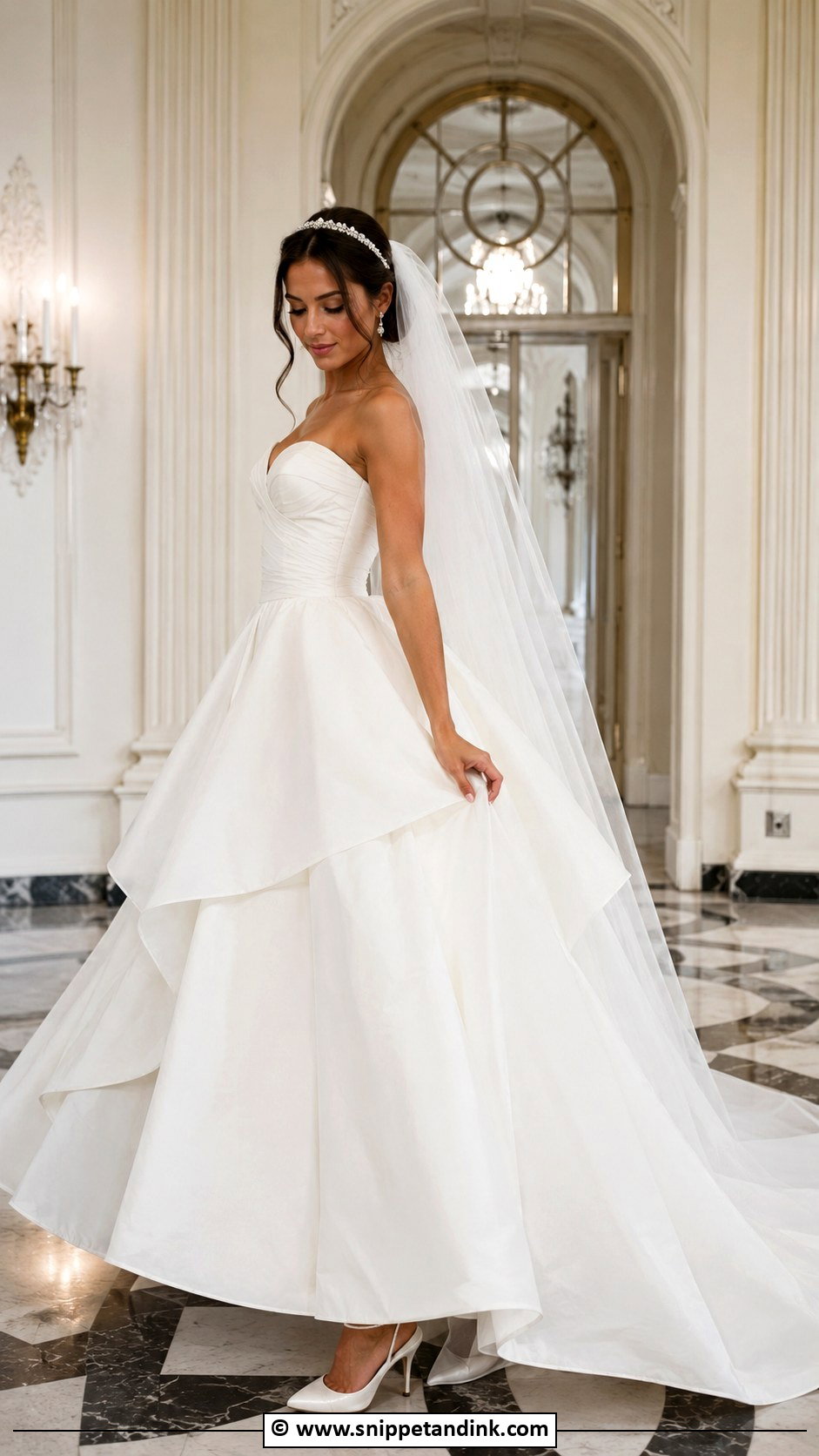
A princess wedding dress combines a fitted bodice, defined waist and full skirt, and it’s the closest bridal comes to a fairytale. Satin, mikado, organza or layered tulle keep it refined. Heavy sparkle is the element most likely to date it, so I’d be sparing. A long veil, a delicate tiara or pearl headband and elegant heels finish it. Plan the logistics: a full skirt needs a bustle, a wider doorway and help in the loo.
19. Empire Waist Wedding Dress
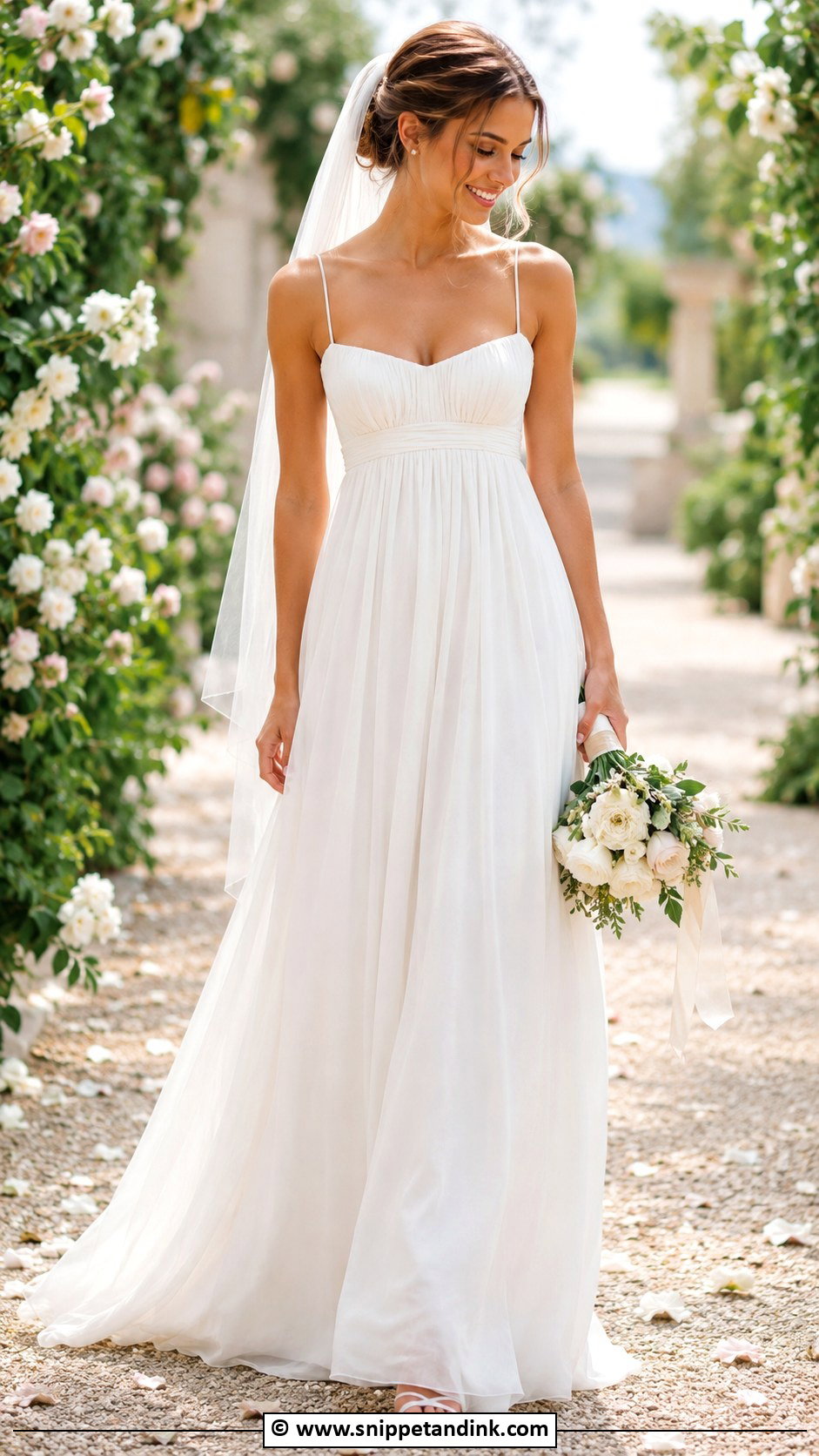
The empire waist sits just below the bust and lets the dress fall loosely from there, so nothing grips the waist or hips. Chiffon, silk, crepe and soft tulle suit it. It’s one of the most comfortable silhouettes I fit and moves well outdoors and on beaches. Keep the bodice clean; heavy detail can make it look like costume. On a very full bust, check the seam sits under the bust rather than across it. Delicate sandals, a light veil and loose waves.





20. Tea Length Wedding Dress
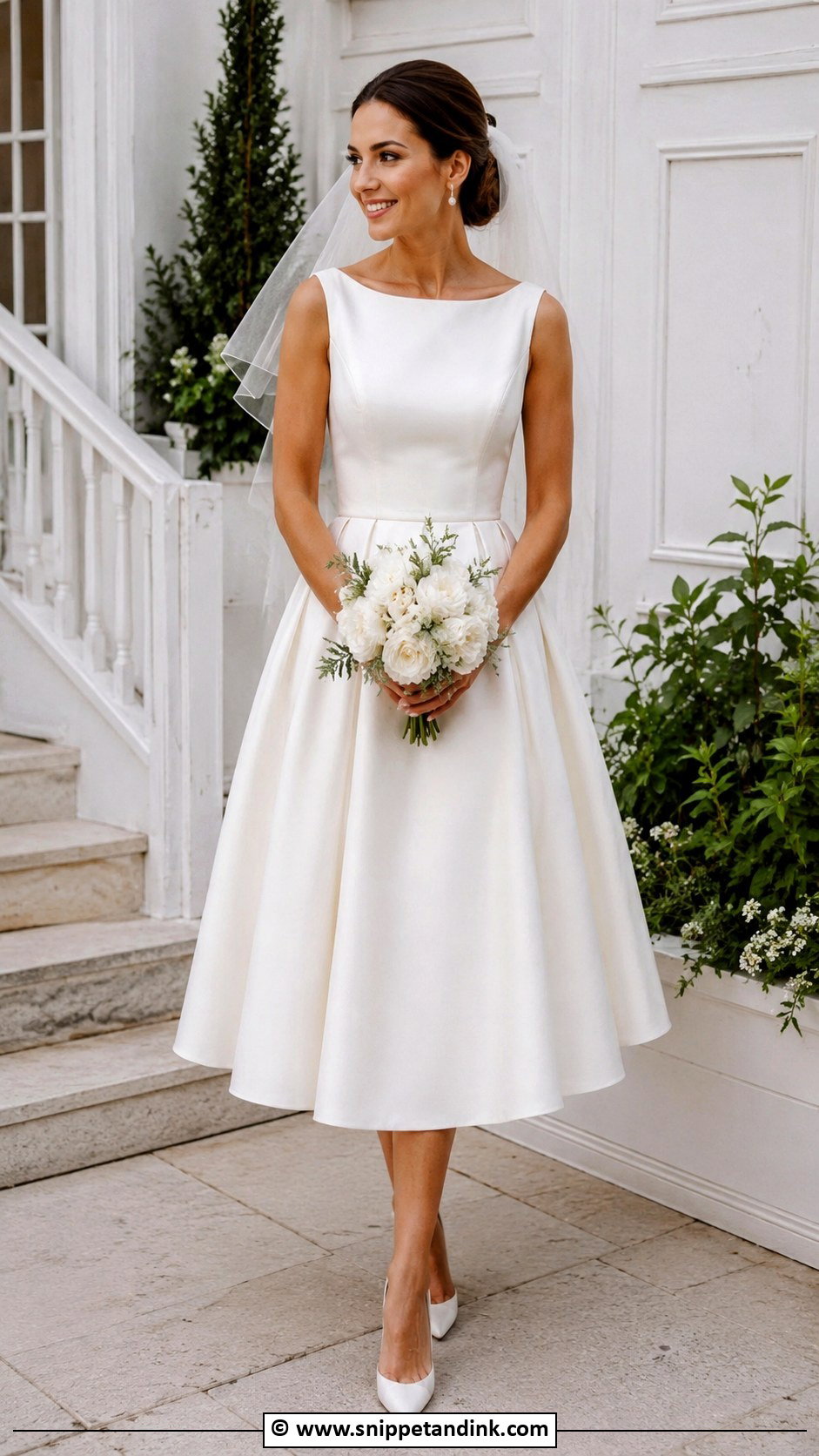
Tea length falls between the knee and ankle, so your shoes become part of the outfit: pointed pumps, slingbacks or a fine ankle strap. A fitted bodice and full skirt read 1950s; a slimmer cut feels modern. I set the hem only once the shoes are bought, since a different heel height moves it noticeably. Pearl earrings, a short veil and gloves if they suit you. I recommend it for courthouses, gardens, brunch receptions and anyone who plans to dance.
21. Midi Wedding Dress
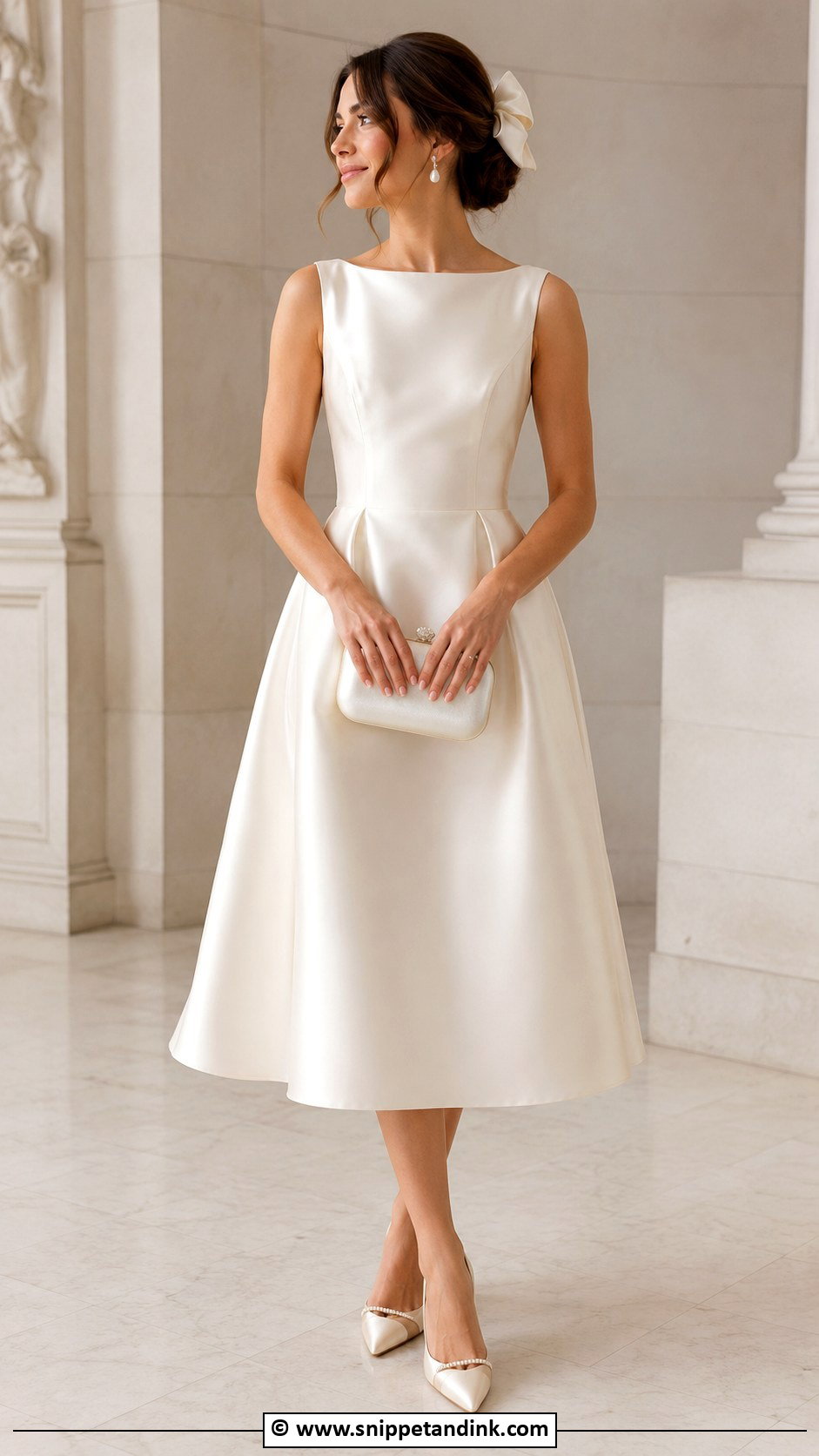
A midi lands around mid-calf and reads polished without the formality of a full gown. Satin, crepe, lace or structured cotton blends all work depending on the season. It needs good fabric and a precise fit to look bridal rather than like a party dress. Elegant heels, a small veil or bow, pearl earrings and a structured clutch suit civil ceremonies, elopements and intimate receptions. On a shorter frame, a slightly higher hem keeps the leg from looking cut.
22. Mini Wedding Dress
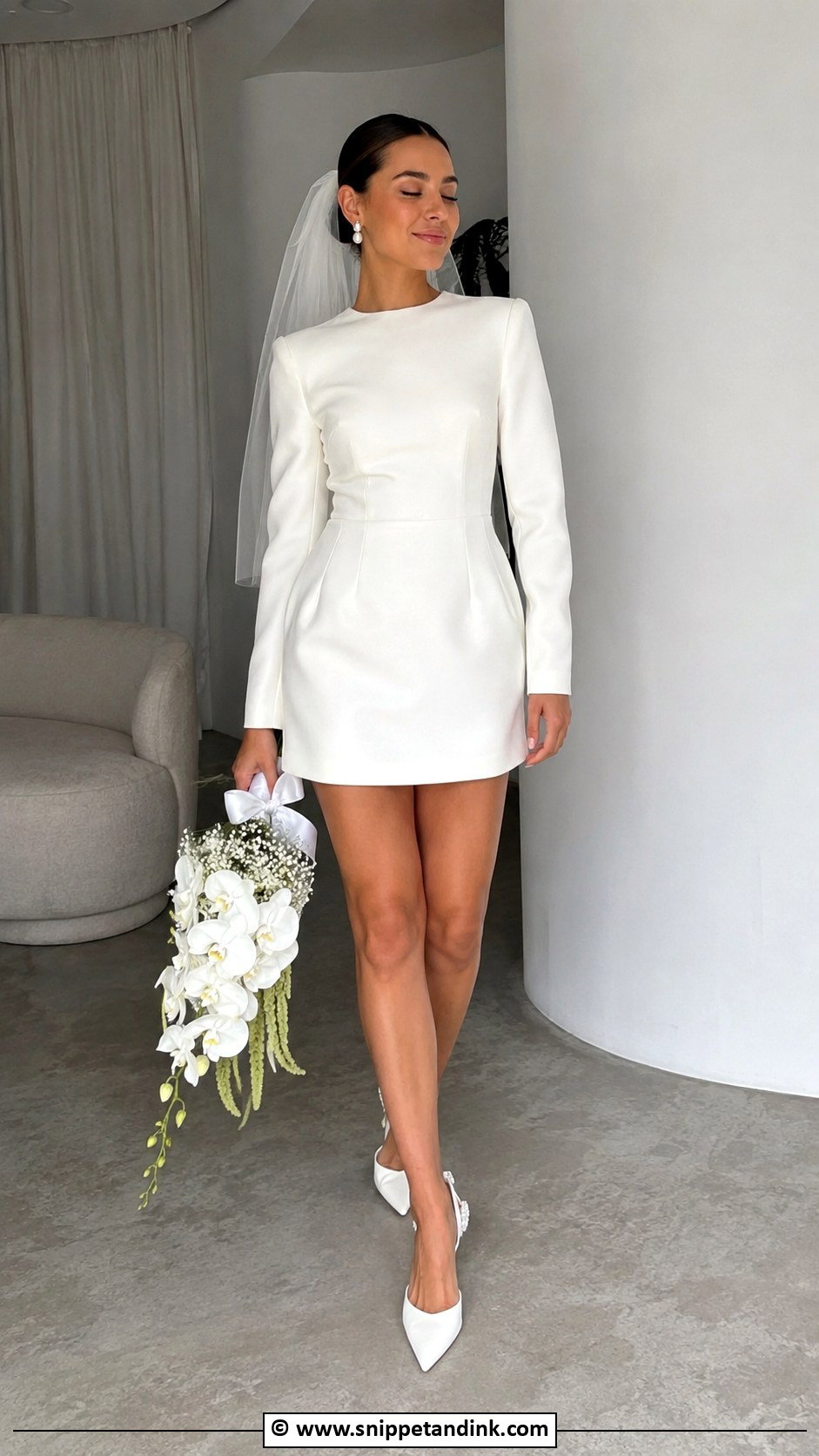
Minis have had a place in bridal since the 1960s, which is why a well-cut one can still feel classic. Structured fabric, long sleeves, a square neck or a bow keep it bridal. Check it seated, since short structured skirts ride up. Pointed heels, sheer tights if the season calls for them, pearl earrings and a short veil or hair bow. It suits courthouse weddings, reception changes and after-parties, and lives or dies by the tailoring.
23. Courthouse Wedding Dress
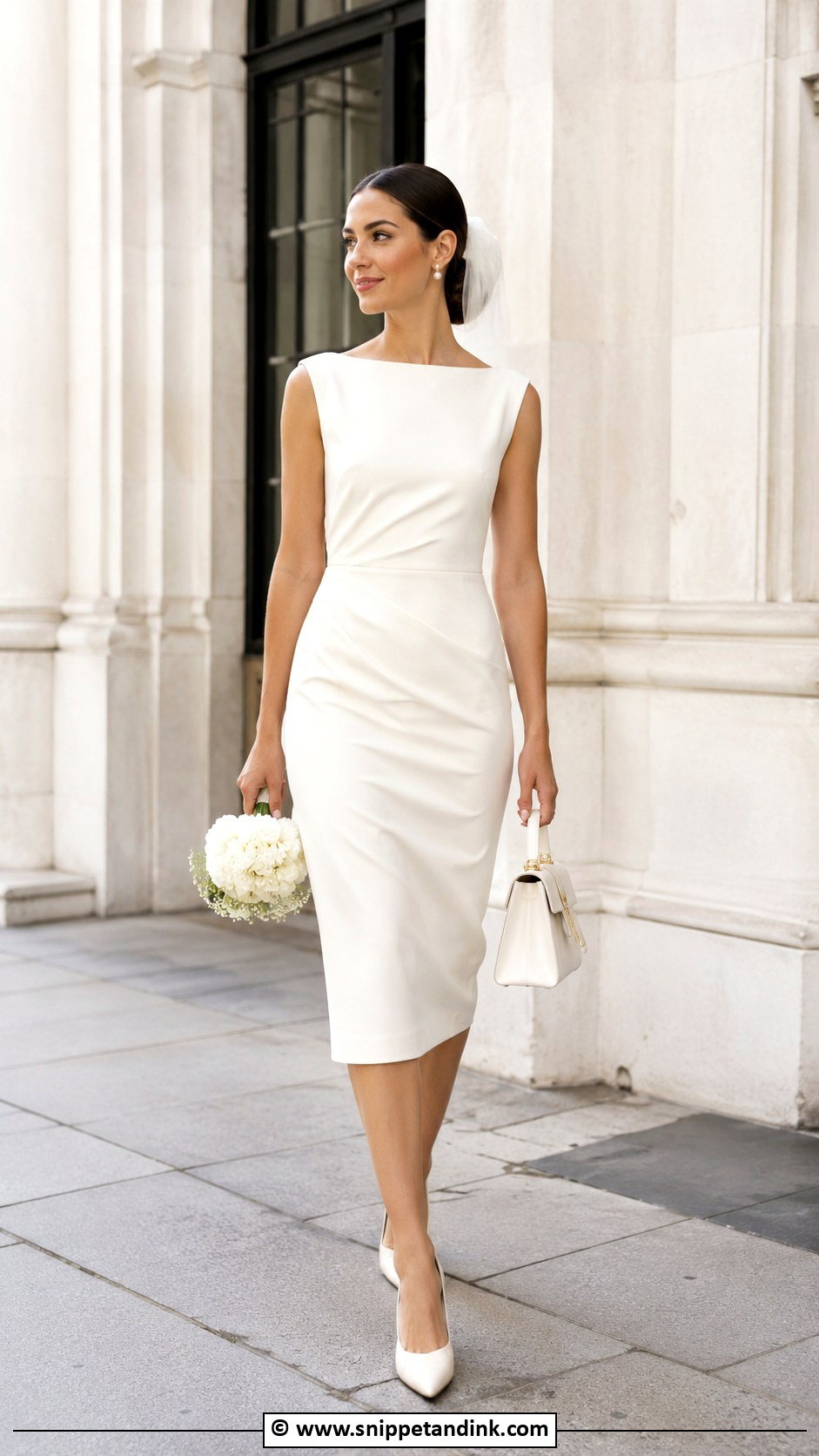
A courthouse wedding dress has to work in a corridor, a small room and on the steps outside. A midi sheath, tailored mini, satin column or simple long sleeve dress all suit it, in white, ivory, champagne or cream. You’ll walk, wait and stand for photos, so I’d choose a heel you can stand in for an hour. Refined heels, a small bouquet and a structured bag finish it, and a short veil, pillbox-style headpiece or bow adds the bridal note.
24. Simple Crepe Wedding Dress
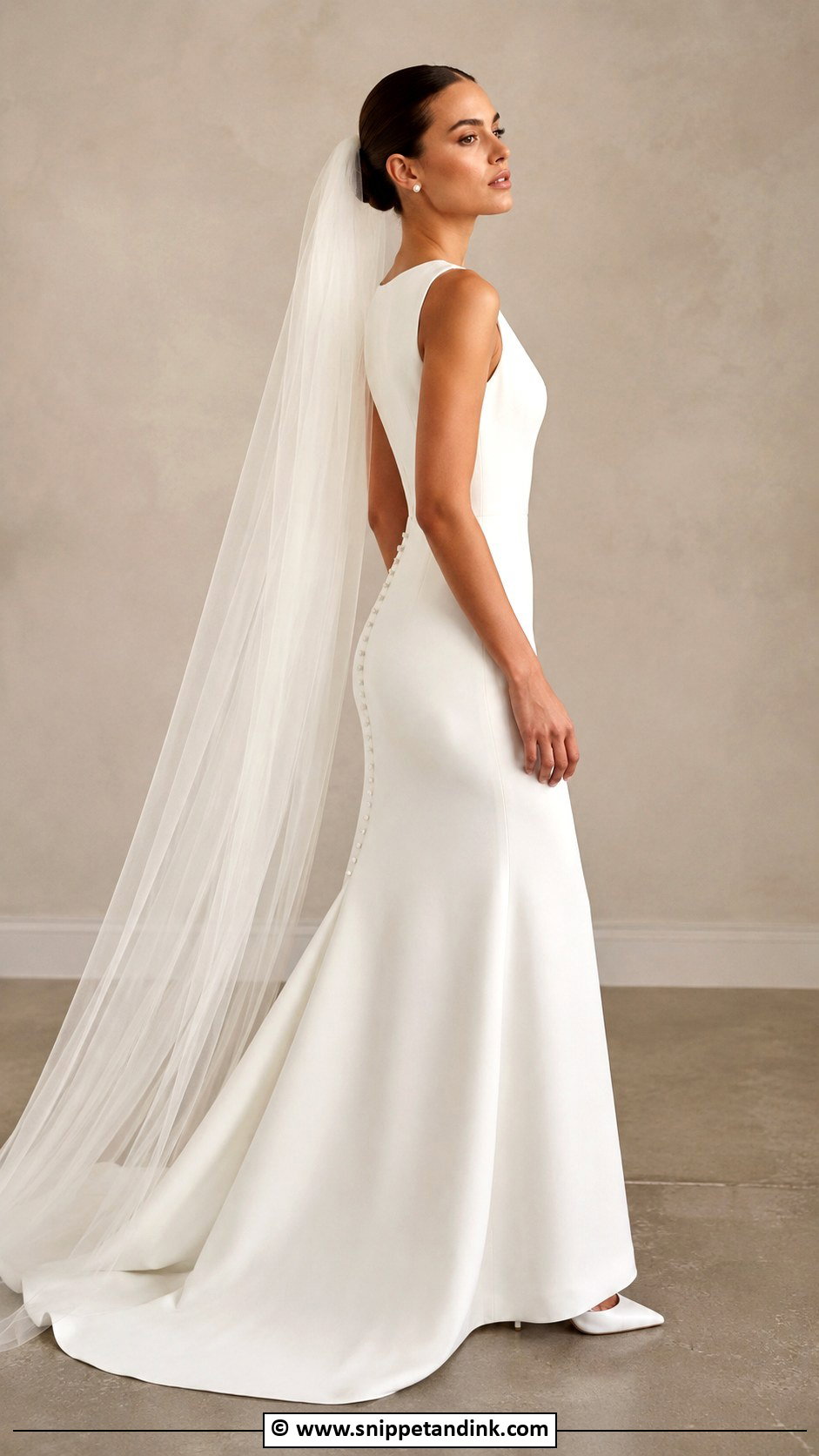
Crepe has a smooth, matte weight that skims rather than clings. A simple crepe wedding dress suits sheath, column, A-line and fit and flare shapes, and the plainer it is, the more the seams, hem and neckline have to sit perfectly. Covered buttons down the back add a quiet detail. Pearl or diamond-like studs, a sleek veil and a polished bun are all it needs. Crepe also travels better than satin; it creases less on the way.


25. Mikado Wedding Dress
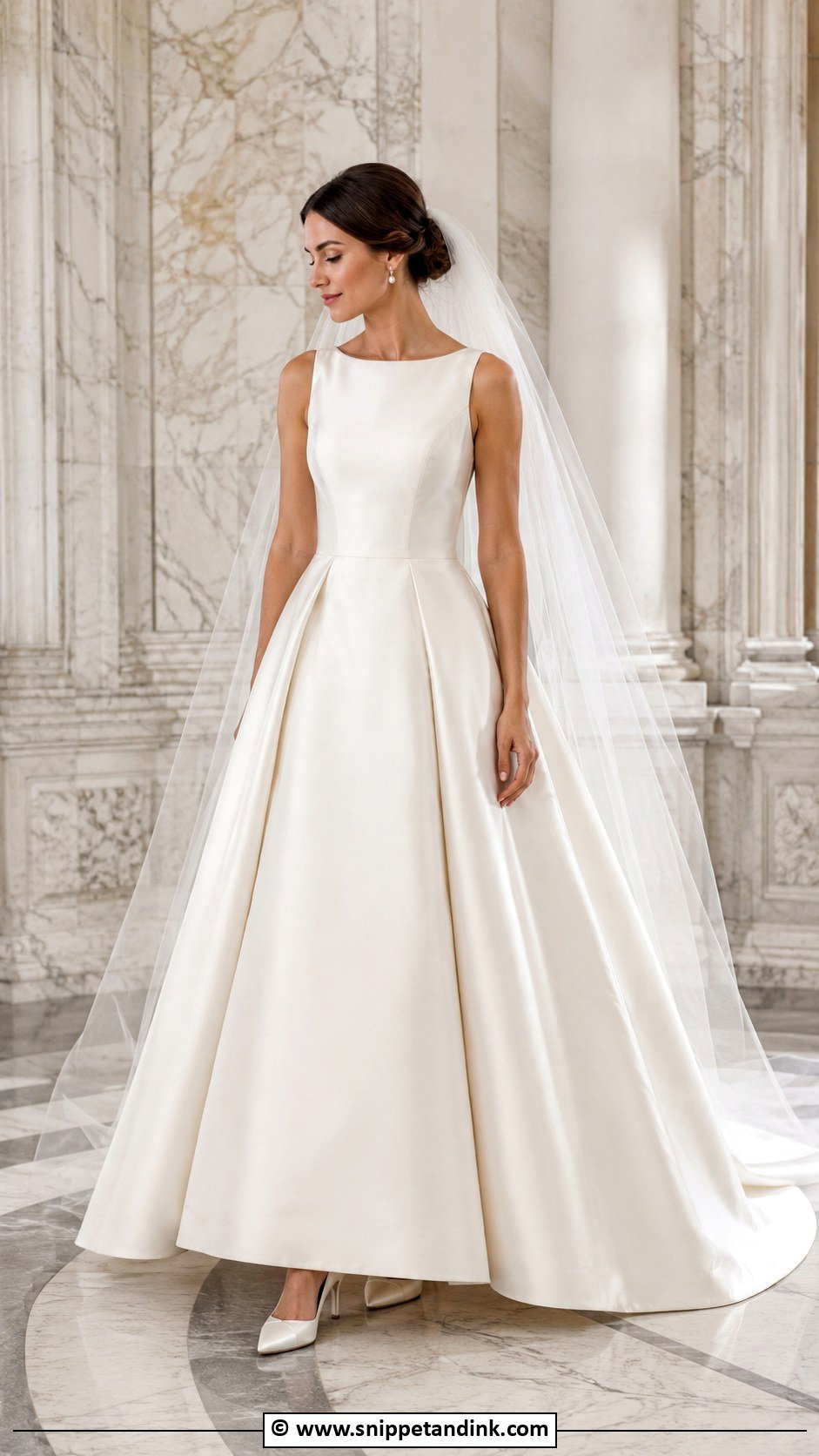
Mikado is dense, slightly lustrous and heavier than most bridal fabrics, which is why skirts made from it hold their shape so well. A mikado ball gown, A-line or fit and flare looks refined and photographs crisply. It does crease sharply if you sit carelessly, so I show brides how to smooth the skirt behind them as they sit. A bow, buttons or subtle pleating add interest. Satin heels, pearl earrings and a neat updo.
26. Organza Wedding Dress
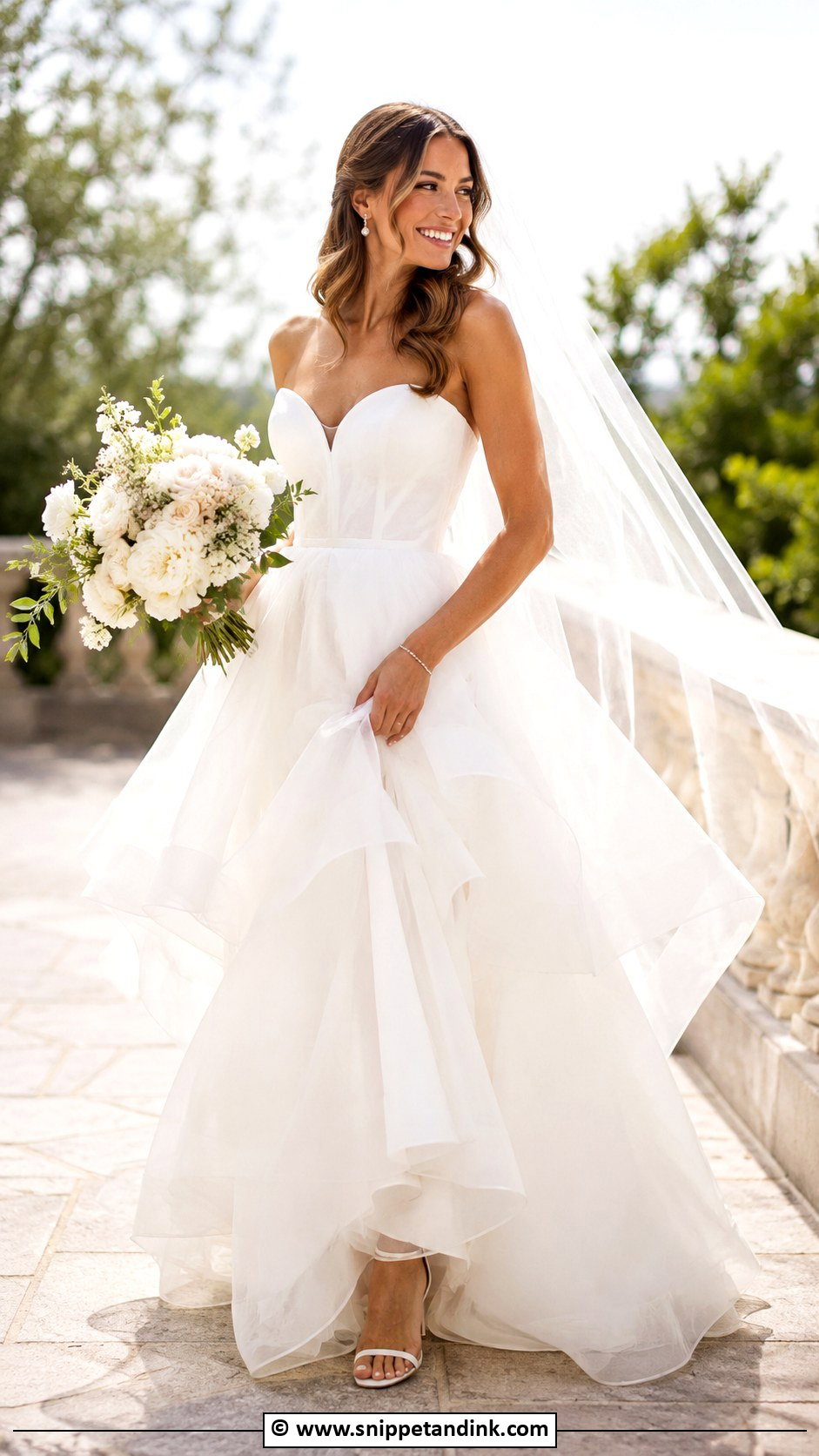
Organza is crisp but sheer, so it builds volume without weight, and it suits spring, summer and destination weddings. Layered organza skirts pair with fitted bodices, off-shoulder necklines or fine straps. Simple layers age better than ruffles. One practical note: organza shows water spots, so keep drinks and damp hands well away. Soft waves, pearl earrings and a sheer veil keep it airy.
27. Tulle Wedding Dress
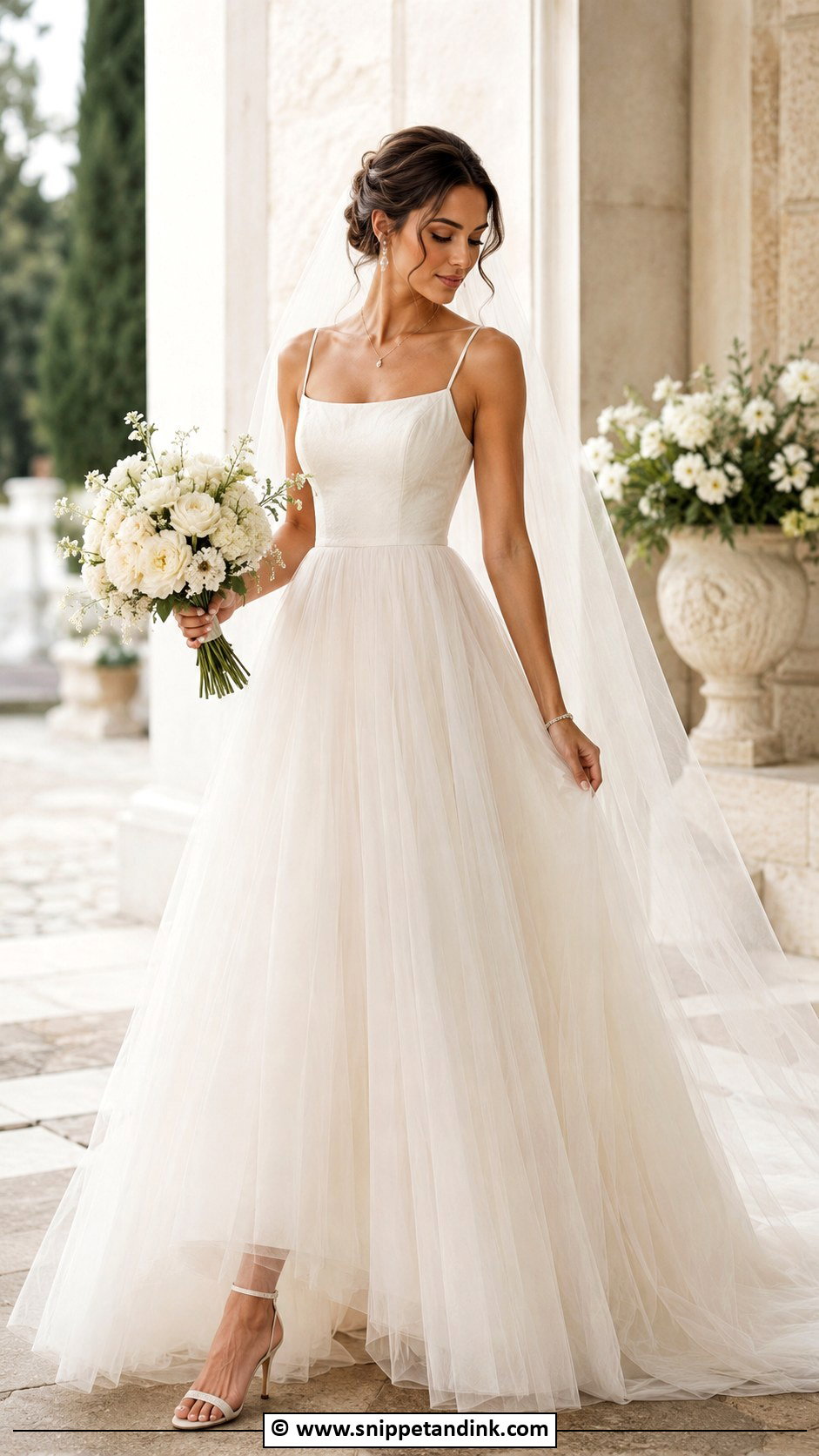
Tulle can be full and dramatic or barely there, depending entirely on the number of layers. Fine tulle in ivory or soft white with a clean bodice keeps it classic. Too many layers feel heavy at the waist and too few look flat, so I count them at the fitting. Tulle snags easily, so watch bracelet clasps and rough venue floors. It suits formal ceremonies, gardens and estates, with a long veil and delicate jewellery.
28. Chiffon Wedding Dress
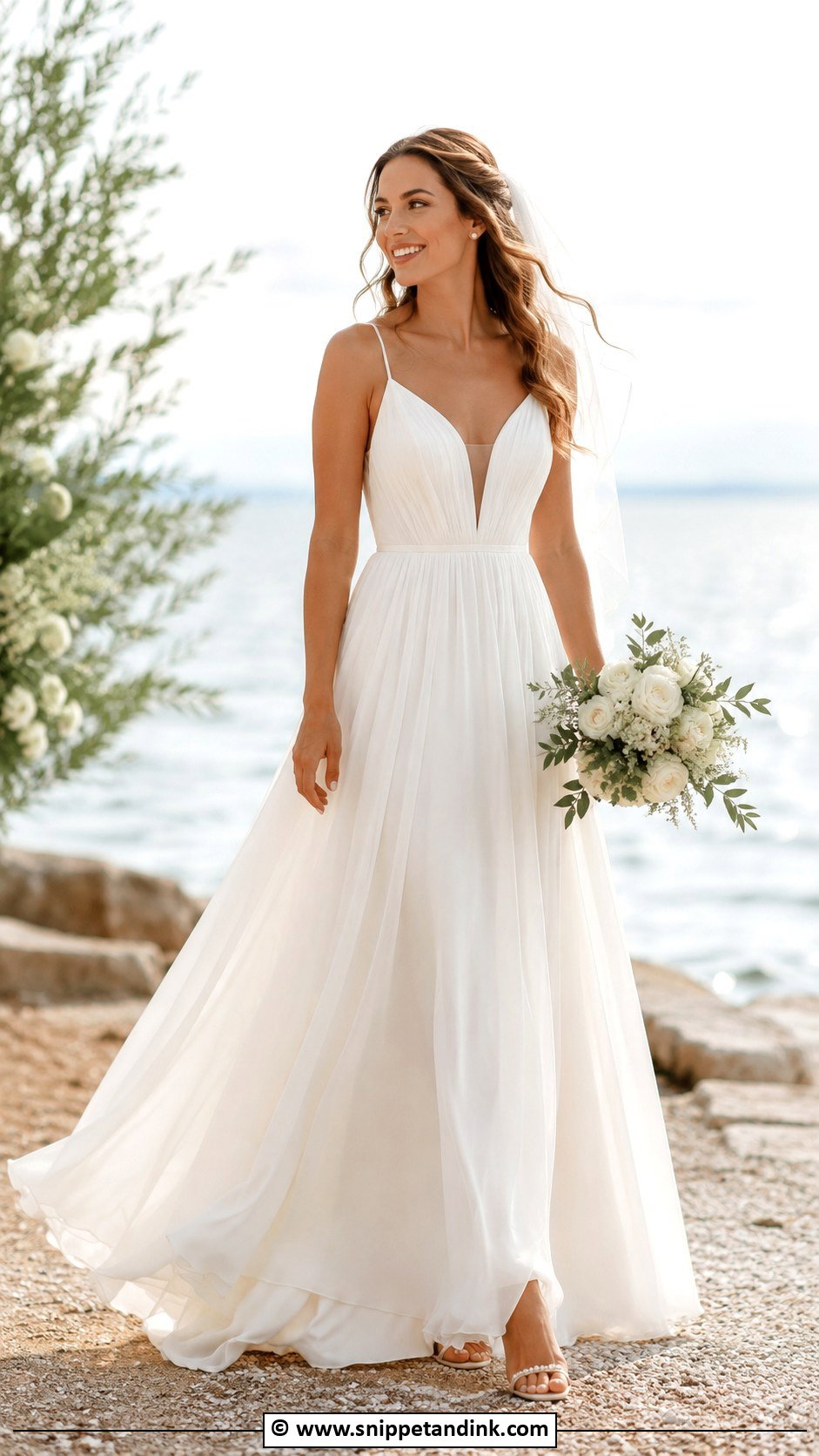
Chiffon drapes and moves with no structure at all, which makes it light and comfortable. It suits empire waist, A-line, sheath and Grecian-style silhouettes, and it’s my usual pick for beaches and hot weather. It is sheer, though, so a lined bodice and good construction stop it looking casual. Delicate sandals, pearl studs, loose waves and a light veil finish it, and a short train adds a bridal note.
29. Pearl Wedding Dress
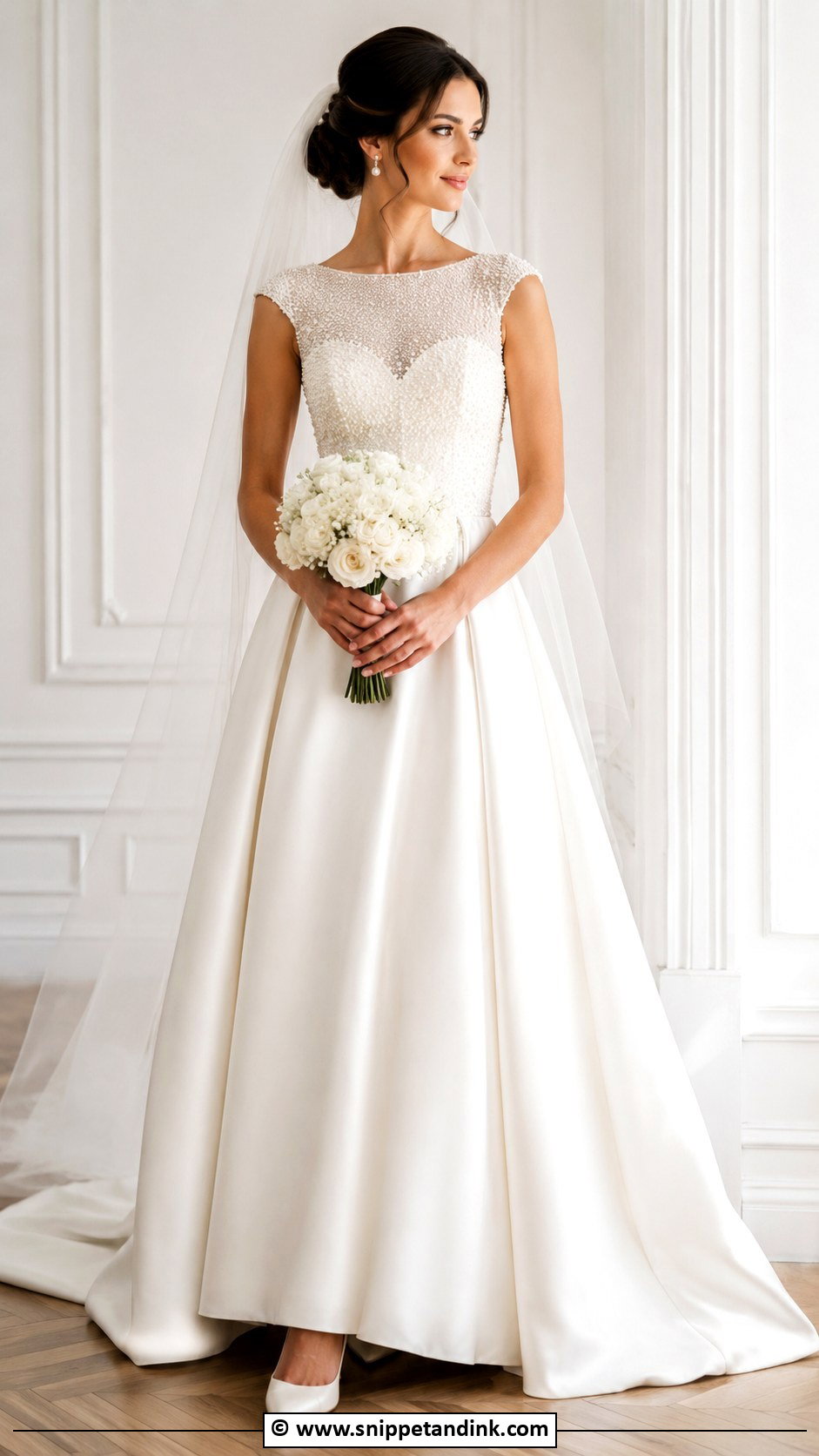
Pearls catch light softly rather than sparkling, which is why they’ve never really left bridal design. They appear as beading on the bodice, scattered over tulle, or as trim on sleeves and veils. Pick one focal area rather than covering the whole gown. Check the stitching: pearls sewn individually stay put; glued ones can pop off over a long day of hugs. Simple pearl earrings and satin heels, with other jewellery kept minimal.
30. Bow Wedding Dress
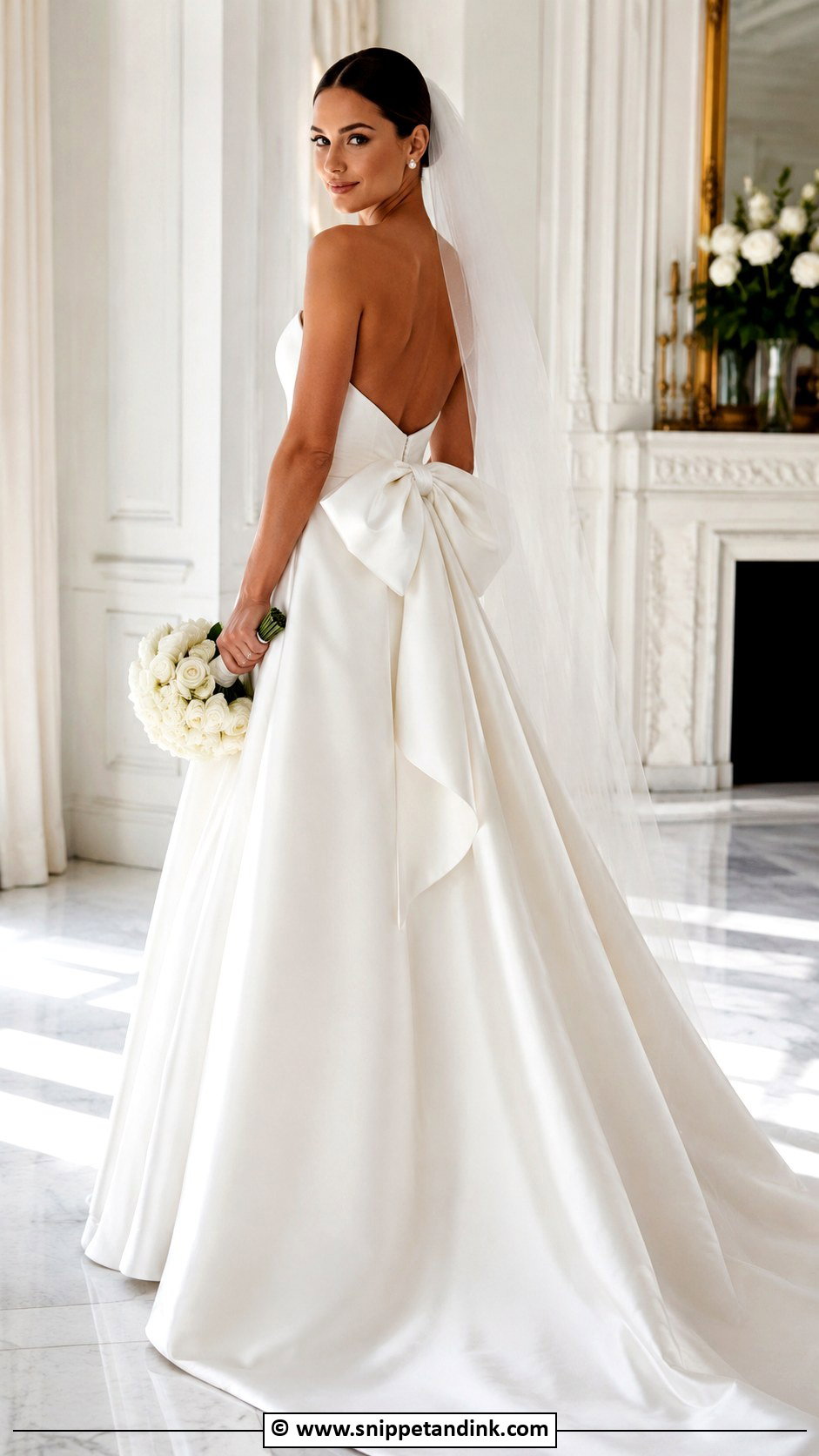
Bows change character with placement: at the back, waist, shoulder or on a detachable train. A clean satin, mikado or crepe dress with one strong bow is the classic version. A large bow should have interfacing inside, or it will droop by the evening. Choose a veil that doesn’t hide it completely. Simple heels, pearl earrings and a smooth bun keep the bow as the only statement.
31. Floral Lace Wedding Dress
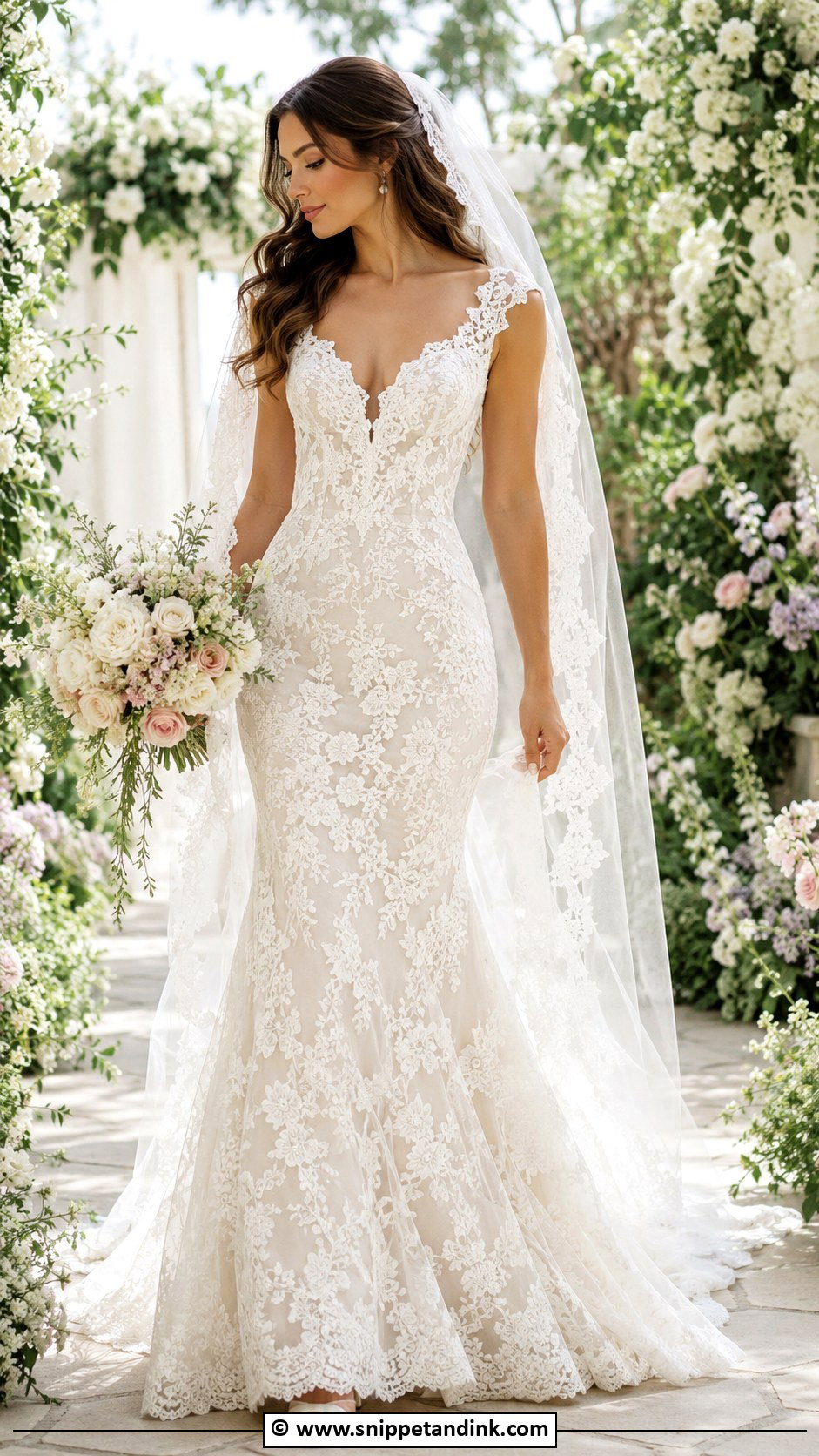
Floral lace has been a bridal staple for generations. Fine texture and gentle floral motifs, placed thoughtfully across bodice and skirt, keep it traditional. Match the veil to the tone of the lace; an ivory veil over a slightly different ivory lace shows in photos. Bold lace wants a simple silhouette; delicate lace can carry sleeves, a train or scalloped edges. It suits gardens, historic venues and spring weddings, with pearl earrings and soft waves.
32. Beaded Wedding Dress
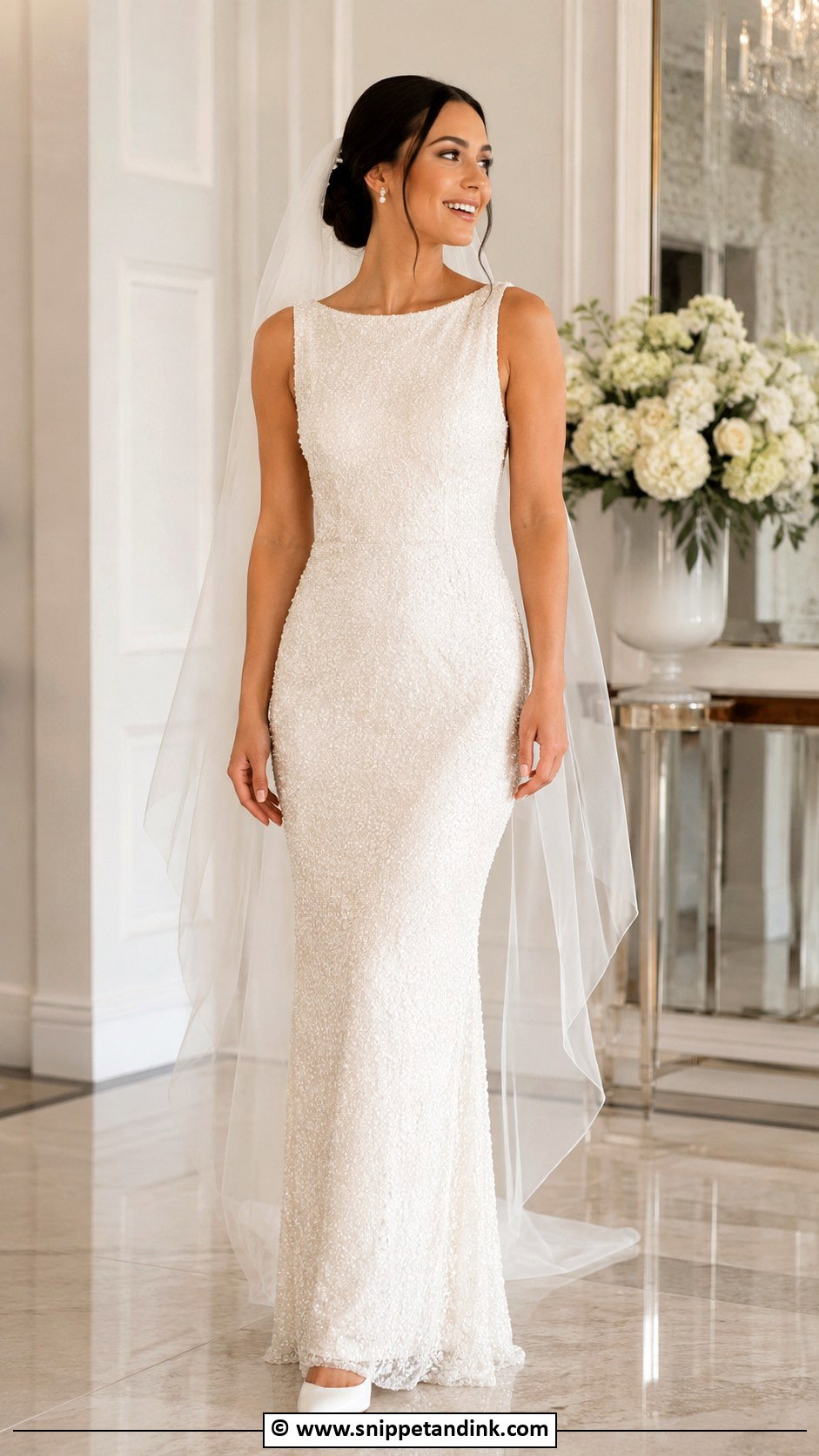
Beading reads timeless when it’s soft: fine beads, pearl accents or delicate embroidery rather than heavy sparkle. A beaded sheath, A-line or fit and flare suits evening and formal venues. Heavily beaded bodices are heavy, so good lining and strong straps matter; I check the inside of the bodice for scratchy thread ends. Simple earrings and a sheer veil keep it balanced. Beading looks its best in candlelight.
33. Champagne Wedding Dress
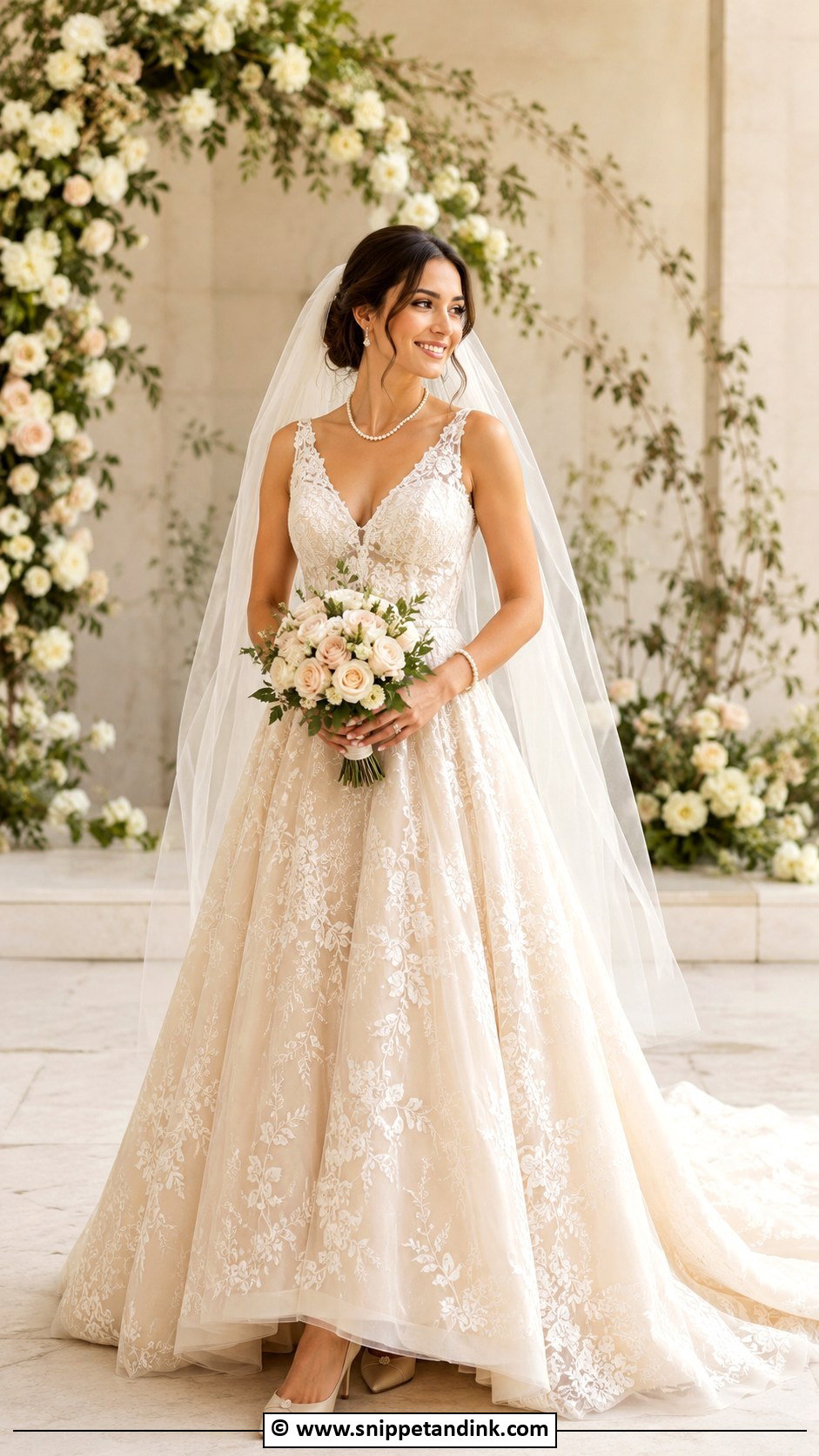
Champagne is warmer than white, and it flatters many skin tones by adding depth to lace, satin, tulle and beading. A classic silhouette such as A-line, ball gown, sheath or fit and flare keeps the colour from looking trend-led. A champagne lining under ivory lace gives a subtler effect. Ivory shoes, pearl jewellery and gold hair accessories suit it. I always view champagne in daylight before deciding, because indoor lighting can make it look beige.
34. Blush Wedding Dress
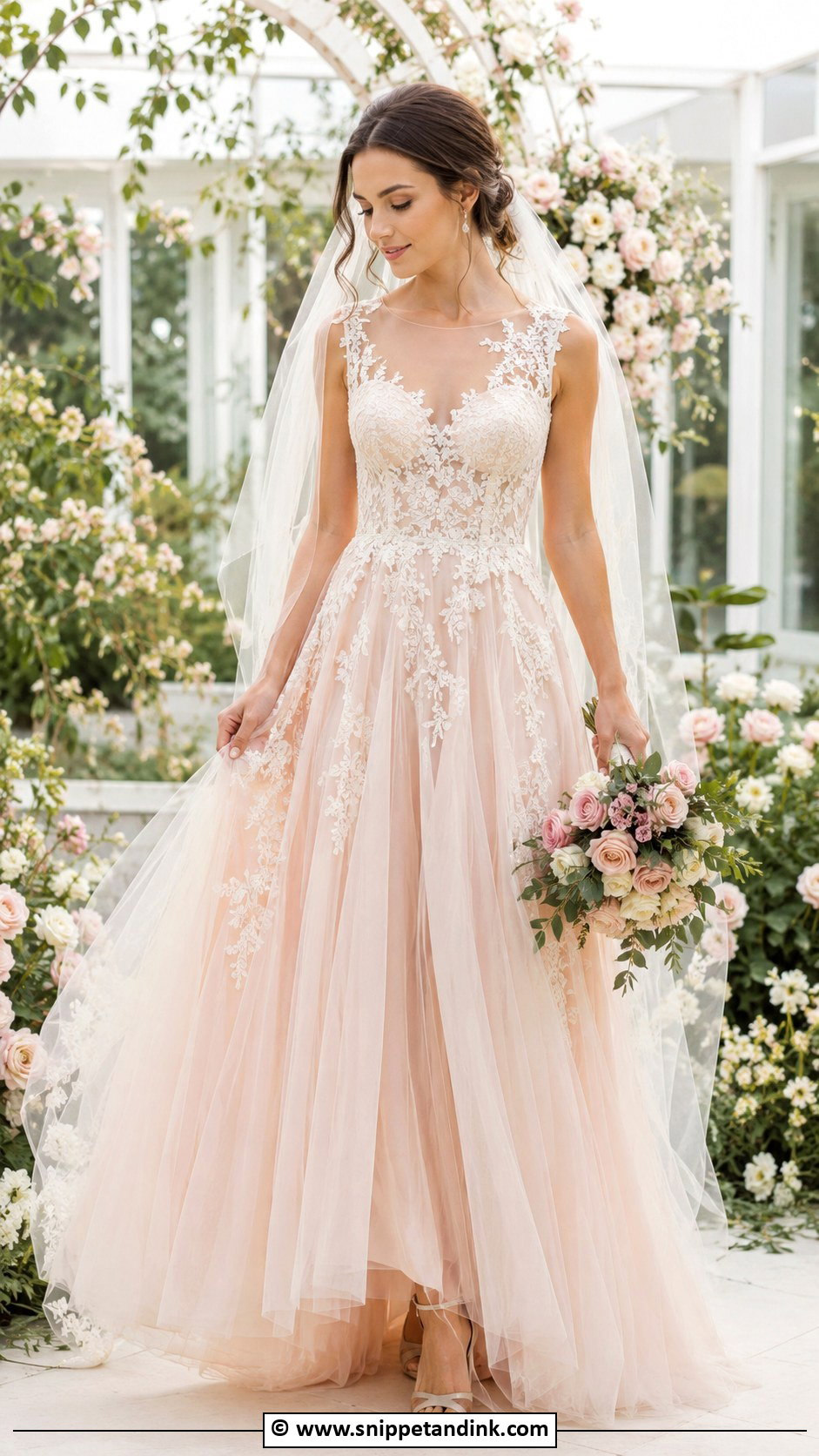
Blush ranges from barely pink tulle to soft blush satin or ivory lace over a blush lining. A classic silhouette keeps the colour from tipping into fashion. Blush adds warmth in photos without shouting. Keep accessories delicate and avoid competing colours; I’d look at bridesmaid dresses and flowers alongside it, since several pinks together can clash. Ivory heels, pearl earrings and natural makeup suit garden and spring weddings.
35. Reception Wedding Dress
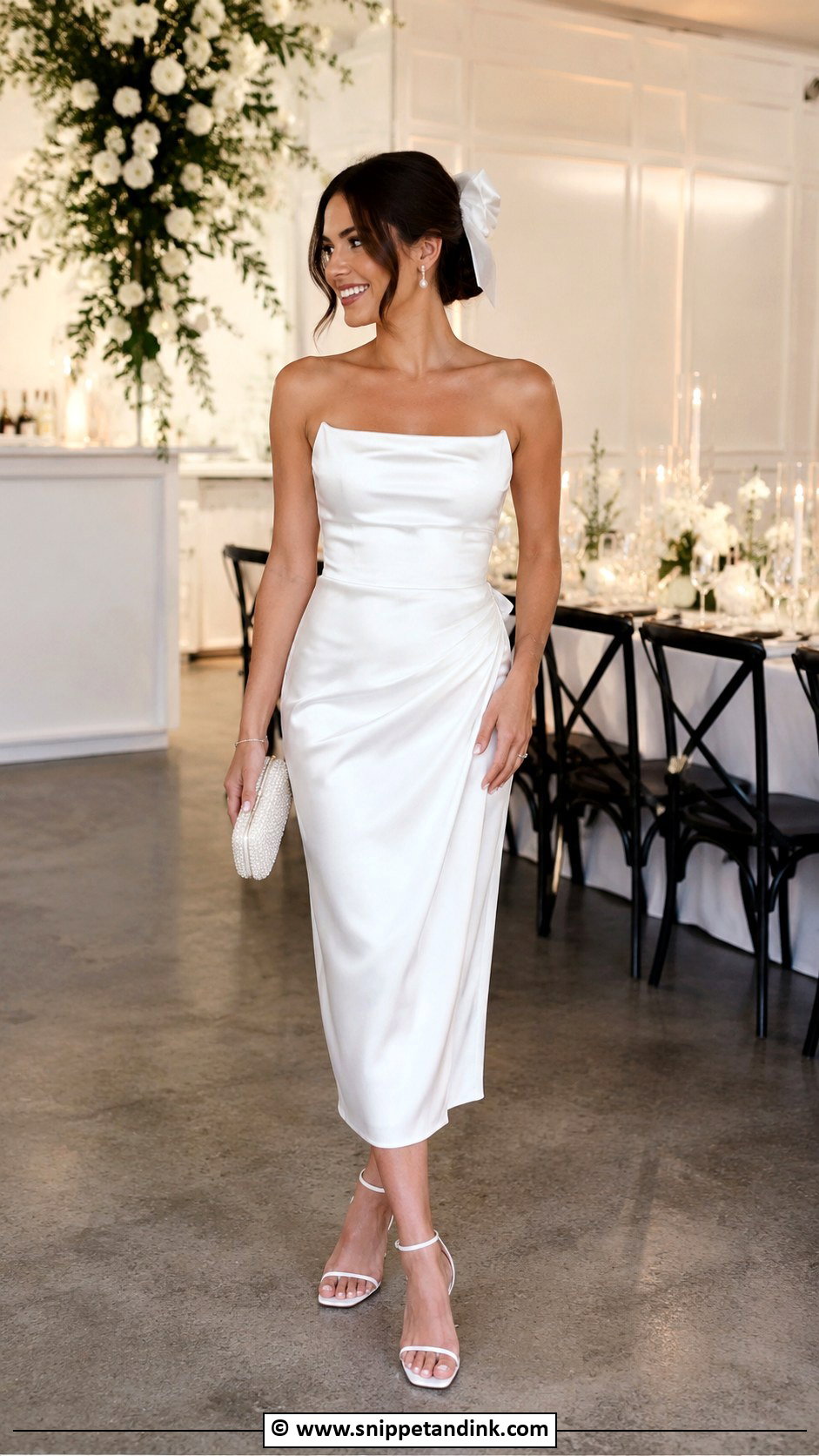
A reception dress lets you dance and greet guests without a train. A satin midi, sleek mini, simple column or lightweight slip all work, in fabric that moves well and doesn’t wrinkle easily. If the ceremony gown is dramatic, a clean second dress gives a fresh contrast. I time the change after the first dance so the main gown is fully photographed. Comfortable heels, pearl earrings and a hair bow or playful veil finish it.
After the Wedding: Caring for a Dress Meant to Last
A classic dress is often one a bride hopes to keep, or pass on. That only works if it’s cleaned properly soon after the wedding. Sugar from champagne, cake and soft drinks dries invisible on ivory fabric and then oxidises into brown marks months later. I tell brides to get the dress to a specialist bridal cleaner within a few weeks, and to point out every spill they remember.
Storing it at home
- Take it out of any plastic garment bag. Plastic traps moisture and can yellow fabric over time.
- Fold it loosely in acid-free tissue in an acid-free box, padding the folds so they don’t set into hard creases.
- Keep the box somewhere dark with a steady temperature, not a loft or a damp basement.
- Unfold and refold it along different lines every year or two, wearing clean cotton gloves.
Heavy beaded and satin gowns should never hang for years, because the weight pulls on the shoulder seams. Lighter slips and chiffon dresses travel better, but they still deserve a box and tissue rather than a hook on the back of the wardrobe door.
What Still Looks Right in Your Photos Decades Later
A classic dress doesn’t have to be plain, and a modern one doesn’t have to be trendy. What makes a gown look right in photographs decades later is fit, fabric and proportion chosen for the woman wearing it. Think about your venue, season, comfort and how you want to move through the day. From satin ball gowns to courthouse midis, the shapes above have outlasted plenty of trends, and with careful tailoring they’ll suit you just as well.
You'll Like These Ideas:













Leave a Reply