
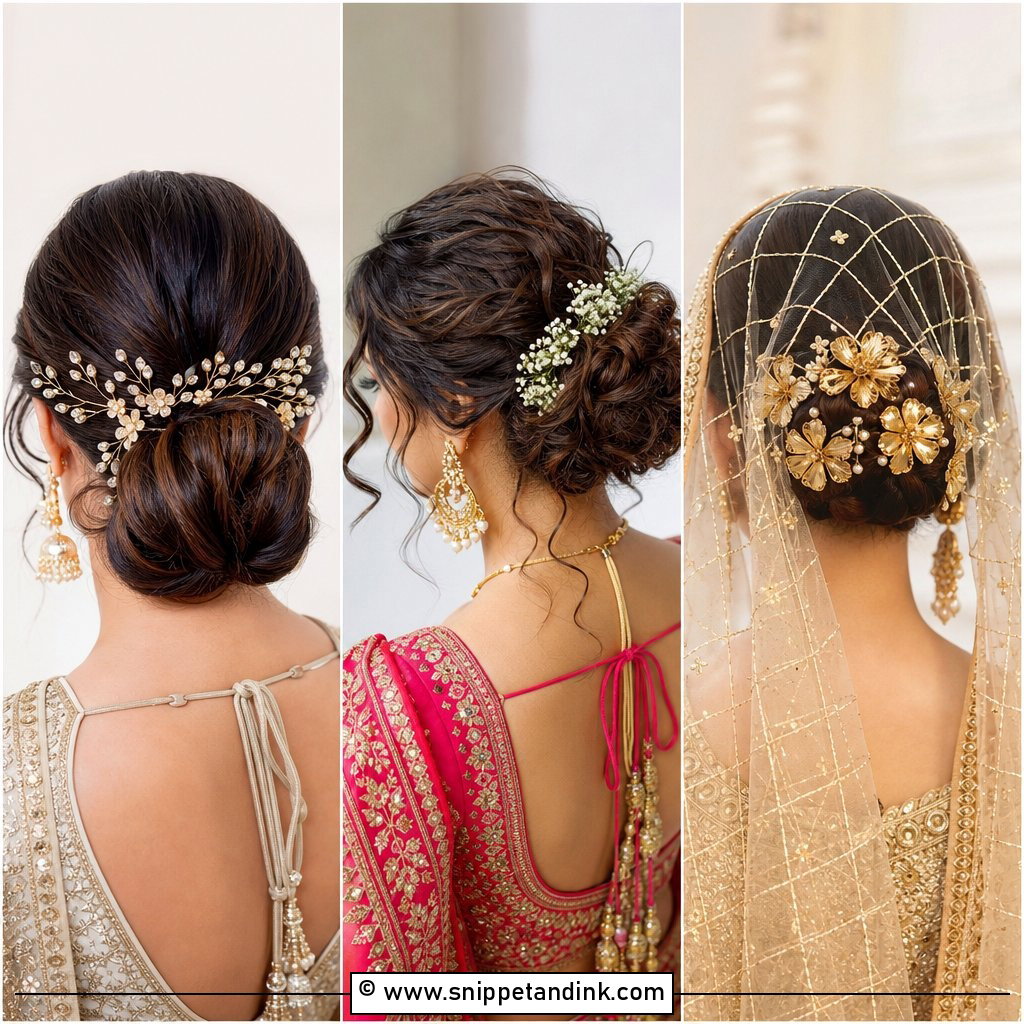
A flower bun is still the hairstyle I’m asked for most at Indian weddings, and for good reason: it holds through hours of rituals and gives the jewelry a solid base to sit on. Jasmine gajra, mogra, marigold and roses, orchids, baby’s breath all have their place, and right now I’m seeing more brides ask for pastel blooms and lighter, partial placements rather than a full floral ring. The bun shape matters as much as the flowers. A sleek South Indian knot, a textured reception bun and a low chignon under a dupatta each need different pinning, so below I’ve noted what each version asks of your hair and when I’d talk you out of it.
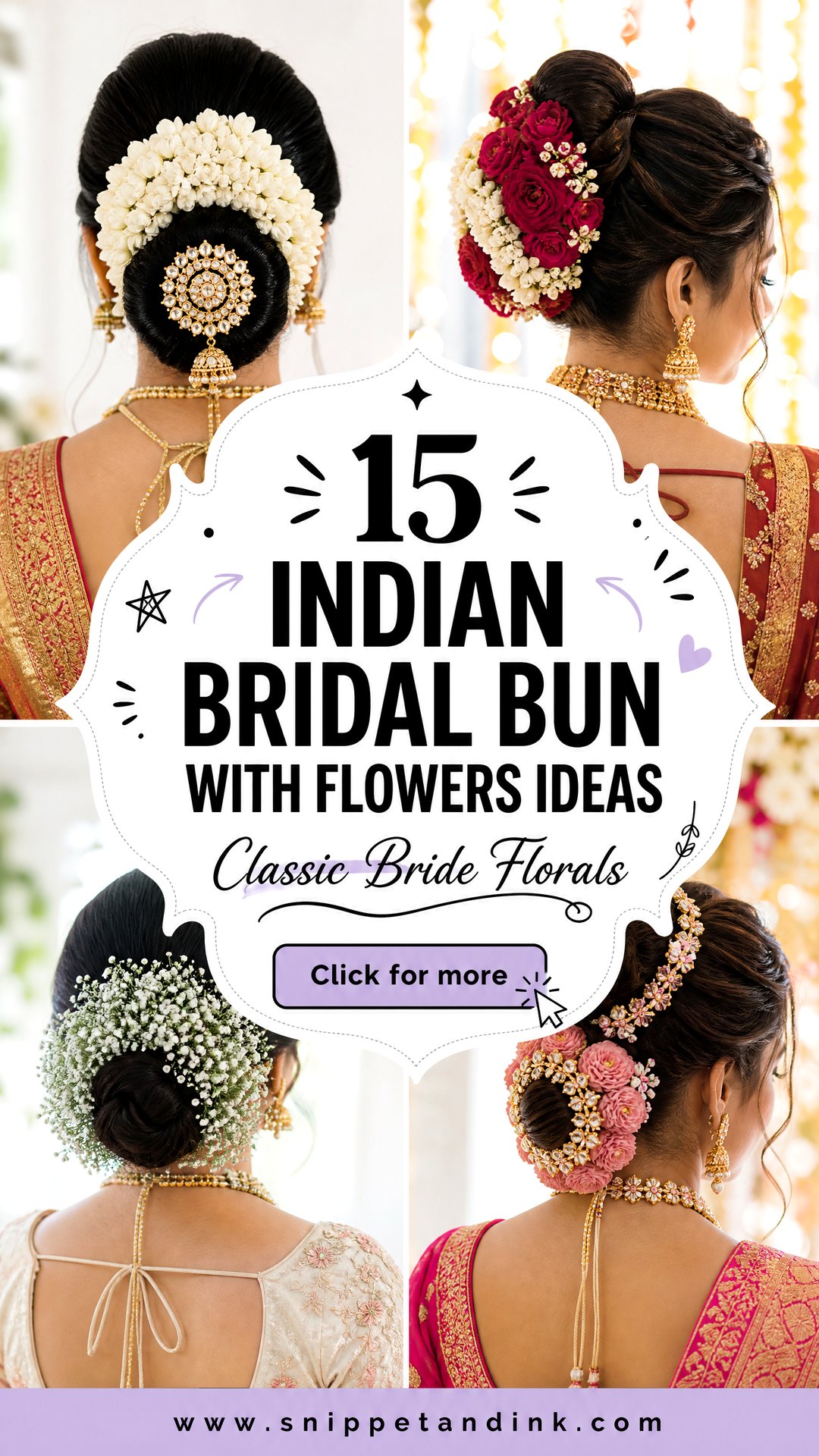
Building a Bun Strong Enough to Carry Real Gajra
Fresh flowers are heavier than most brides expect. A double coil of jasmine plus a tikka, a matha patti and a dupatta pinned at the crown all pull on the same small area, so the bun underneath has to be built like a frame rather than just twisted up.
My order of work rarely changes. I set a firm ponytail base first, because a bun anchored to an elastic stays put while a bun pinned straight to loose hair slowly drifts. Then I add a bun filler or a rolled donut in the closest shade to your hair, and wrap the hair around it. Every pin after that goes into the base, never only into the surface.
Adjusting for your hair
- Fine or thin hair: backcomb lightly at the base and use clip-in extensions so the bun has enough bulk to hide the filler.
- Thick, heavy hair: thin out the bun by pinning part of the length underneath, or it ends up too big for the flowers to sit flat.
- Very silky hair: prep with a texturizing spray the night before or the morning of; freshly conditioned hair lets pins slide out.
- Curly hair: keep the curl pattern and stretch it gently rather than flat-ironing it completely, which takes longer and holds worse.
Bring the actual dupatta and the heaviest hair jewelry to your trial. I can’t judge pin placement properly with a stand-in, and the weight of real gold changes everything.
1. Indian Bridal Bun With Jasmine Gajra
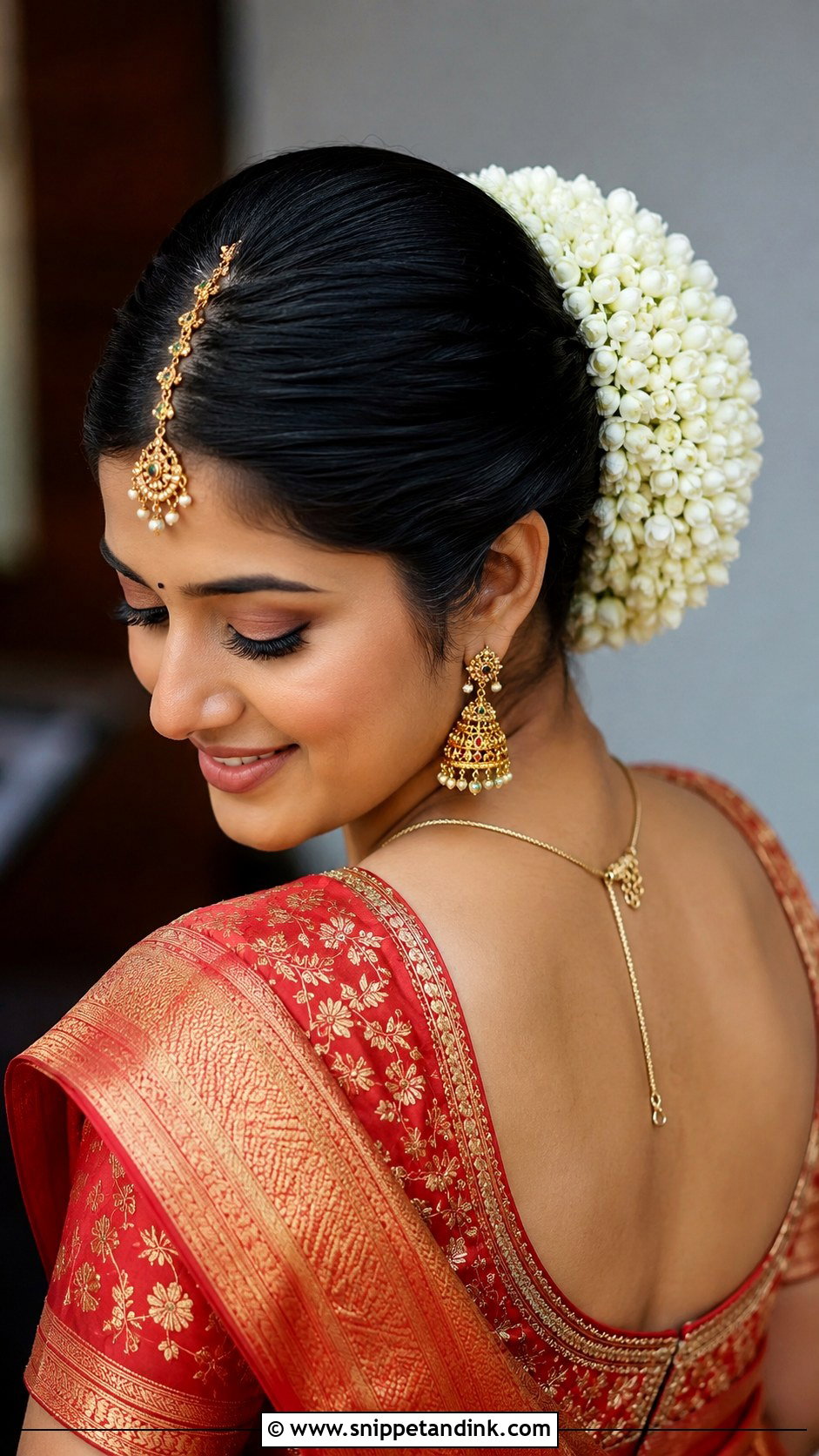
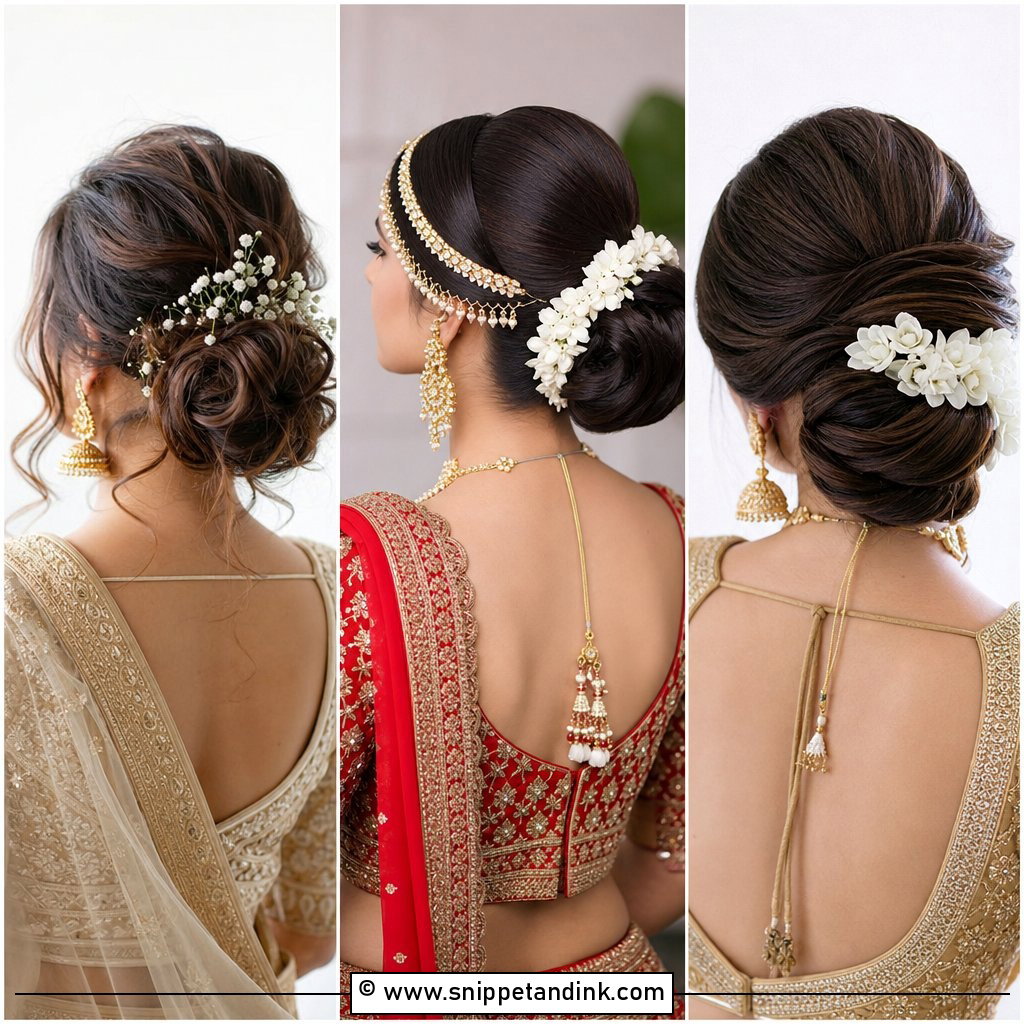
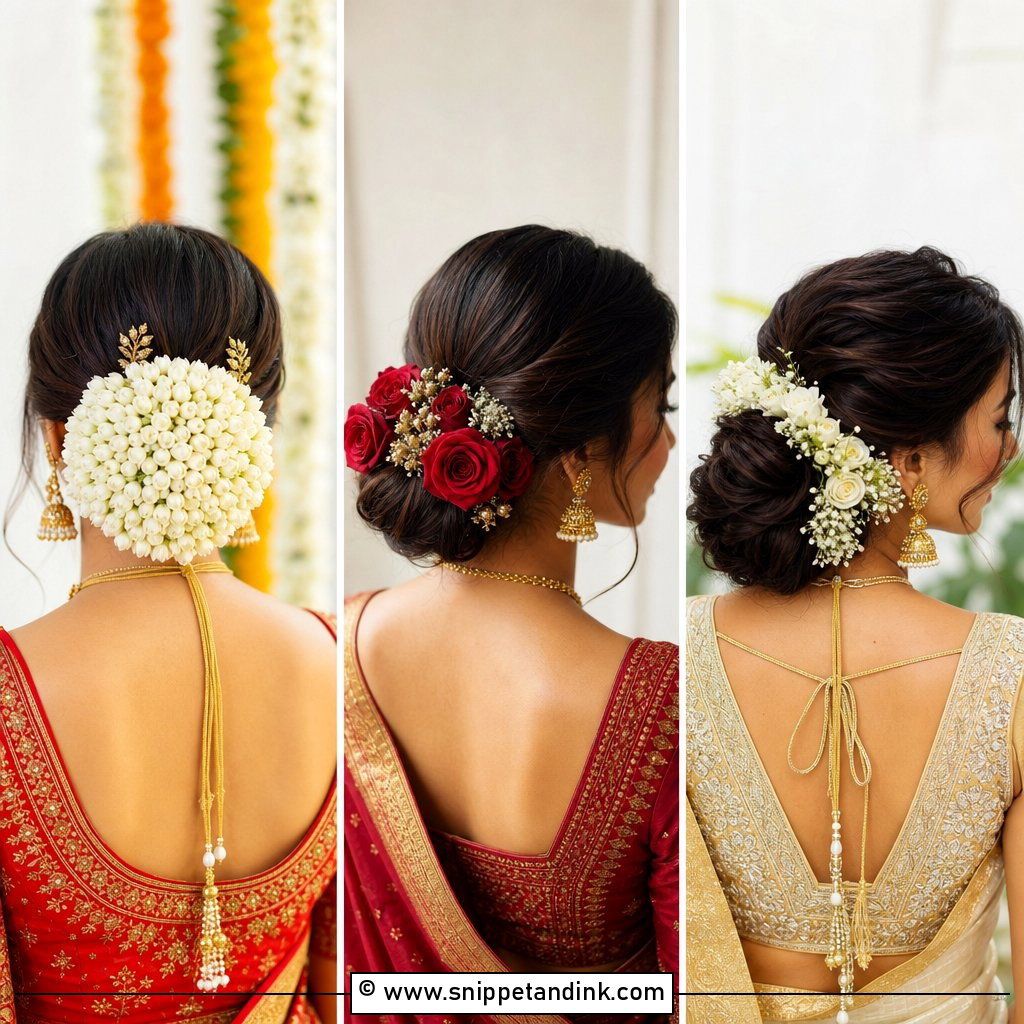
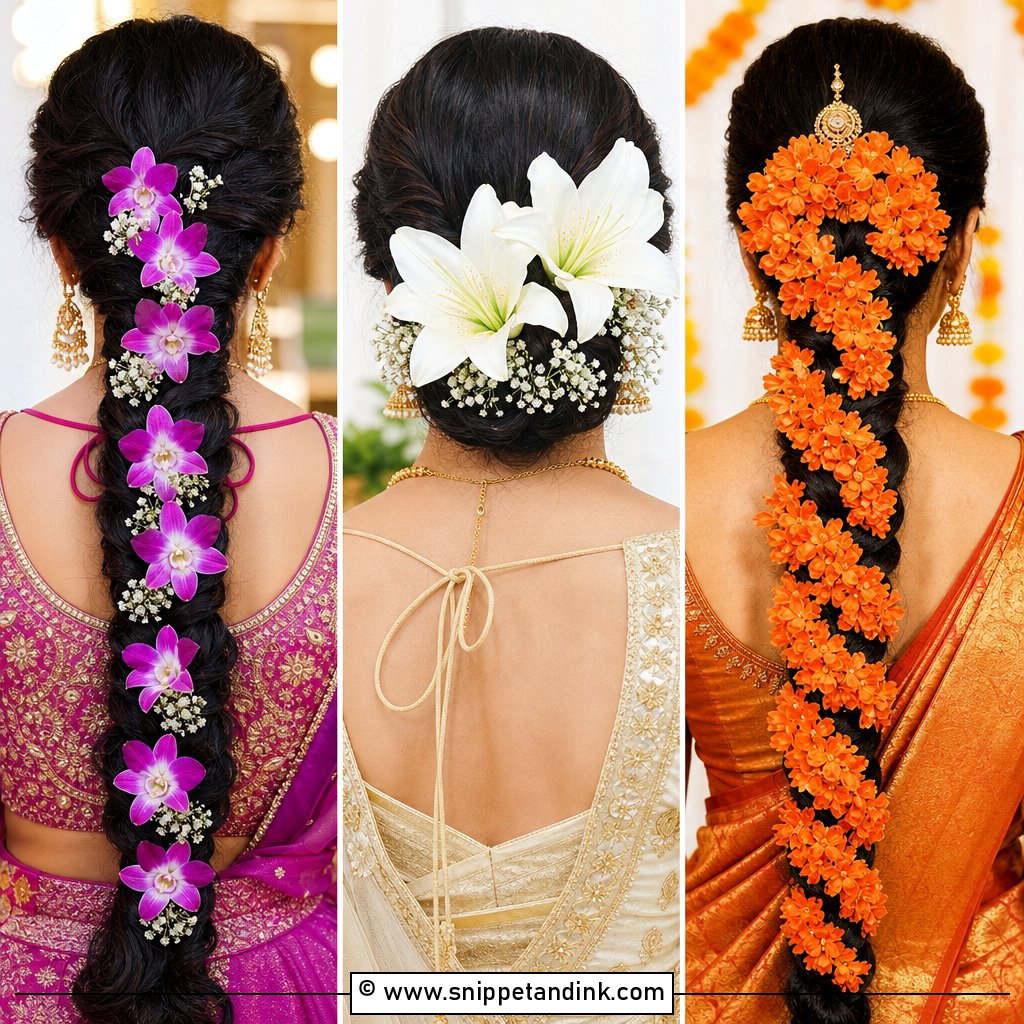
The gajra bun is the one I could set blindfolded, and it’s still the version most families expect for the muhurat. I build the bun tight and round first, then wrap the jasmine in one or two coils, pinning each strand with U-pins pushed into the bun itself rather than into the loose hair around it. That detail is what stops the gajra sliding down by the pheras. Silk sarees, temple jewelry and a matha patti all sit well against it. If you want a cleaner finish, ask for a smooth crown and a center part so the tikka hangs straight.
2. South Indian Bridal Bun With Flowers
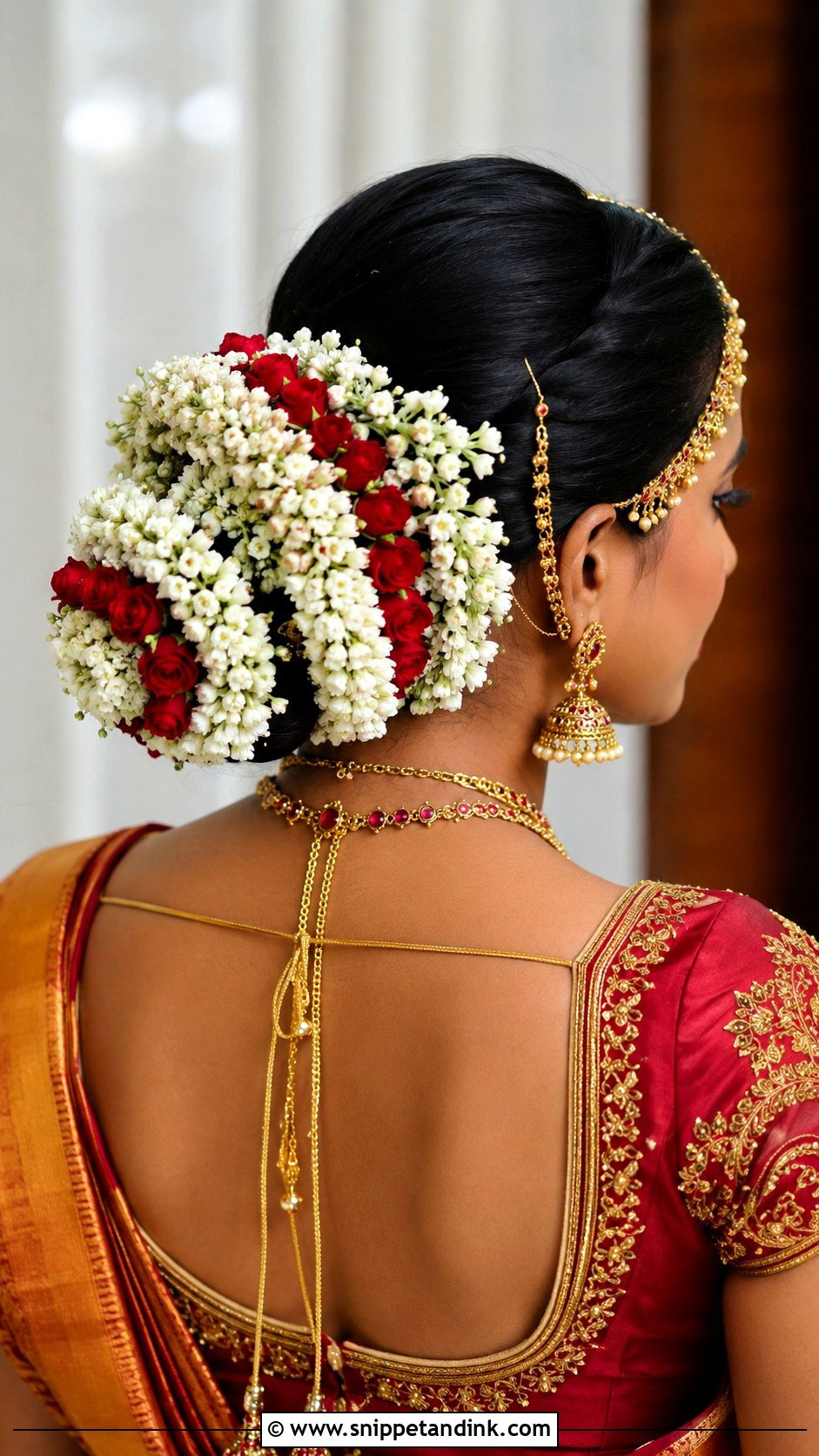
With a Kanjeevaram saree and heavy gold, a South Indian bridal bun is less a style choice than a structural one. The bun sits low at the back and has to bear a veni, a jadai billai or several layers of jasmine, so I pad it with a bun filler matched to the hair color and anchor that filler with crisscrossed pins before any flowers go on. A middle part and sleek crown keep the focus on the jewelry. Classic white jasmine reads traditional; a few red roses tucked at the sides add contrast in photos without changing the shape.
3. Indian Bridal Low Bun With Roses
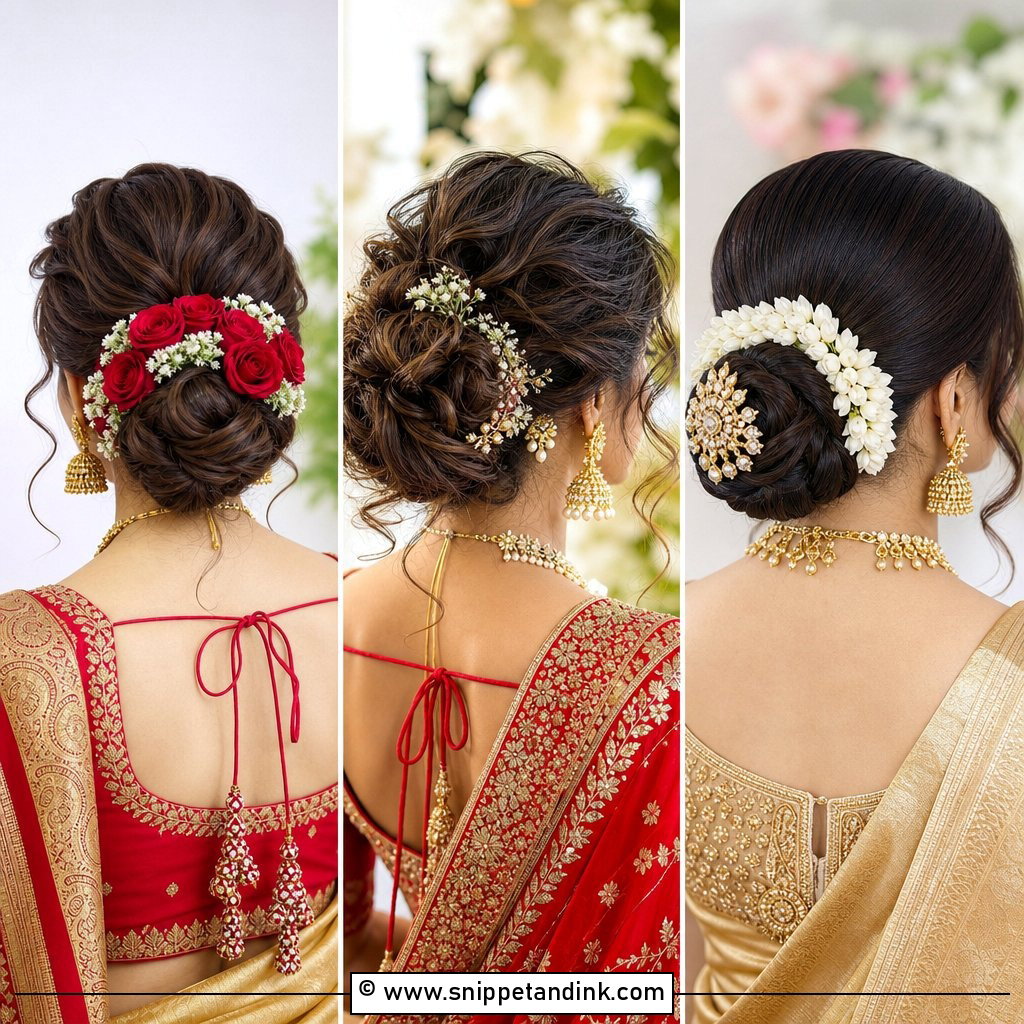
A low bun circled with rose petals sits right at the nape, which is why it works so well under a dupatta or veil: the fabric drapes over it instead of catching on it. Red roses look bridal and bold. Blush, peach or ivory soften the whole look and suit pastel lehengas. One thing I warn brides about is that rose heads are heavier than jasmine, so on a low bun I wire them in small groups rather than pinning each one. A little lift at the crown and two loose strands at the face keep it from looking severe.
4. Indian Bridal Messy Bun With Flowers
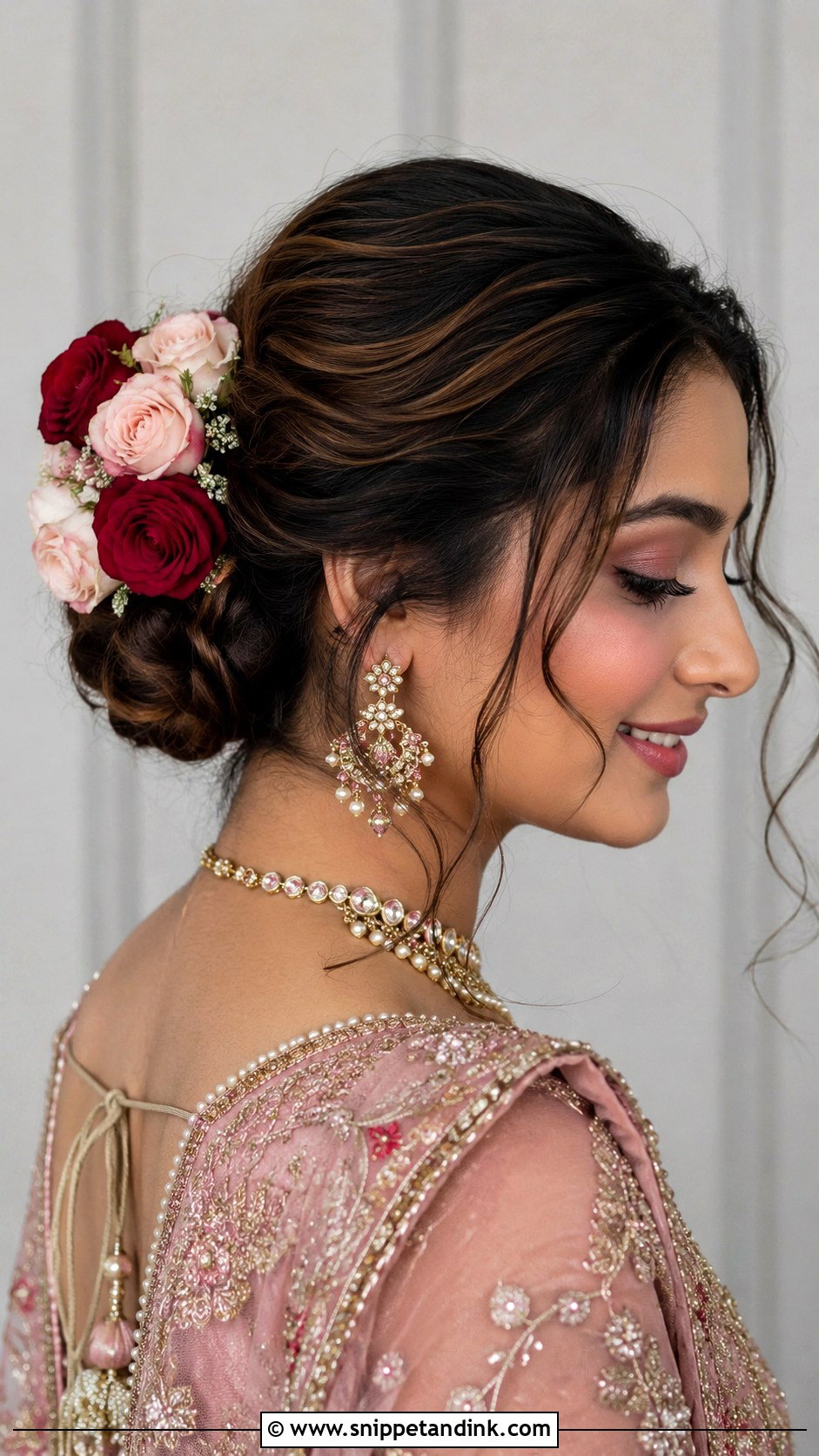
The messy version is harder to do well than it looks. Every loose twist still has to be pinned, or it collapses within an hour of dancing. I curl the hair first, set it, then pin the bun in sections so the texture is built in rather than pulled out. Small flowers like baby’s breath, jasmine buds or spray roses get tucked into the gaps instead of wrapped around the outside, which keeps it airy. I’d steer you away from this one for a long temple ceremony with a heavy dupatta; it shines at engagements, receptions and outdoor events where the texture can be seen.
5. Indian Bridal High Bun With Flowers
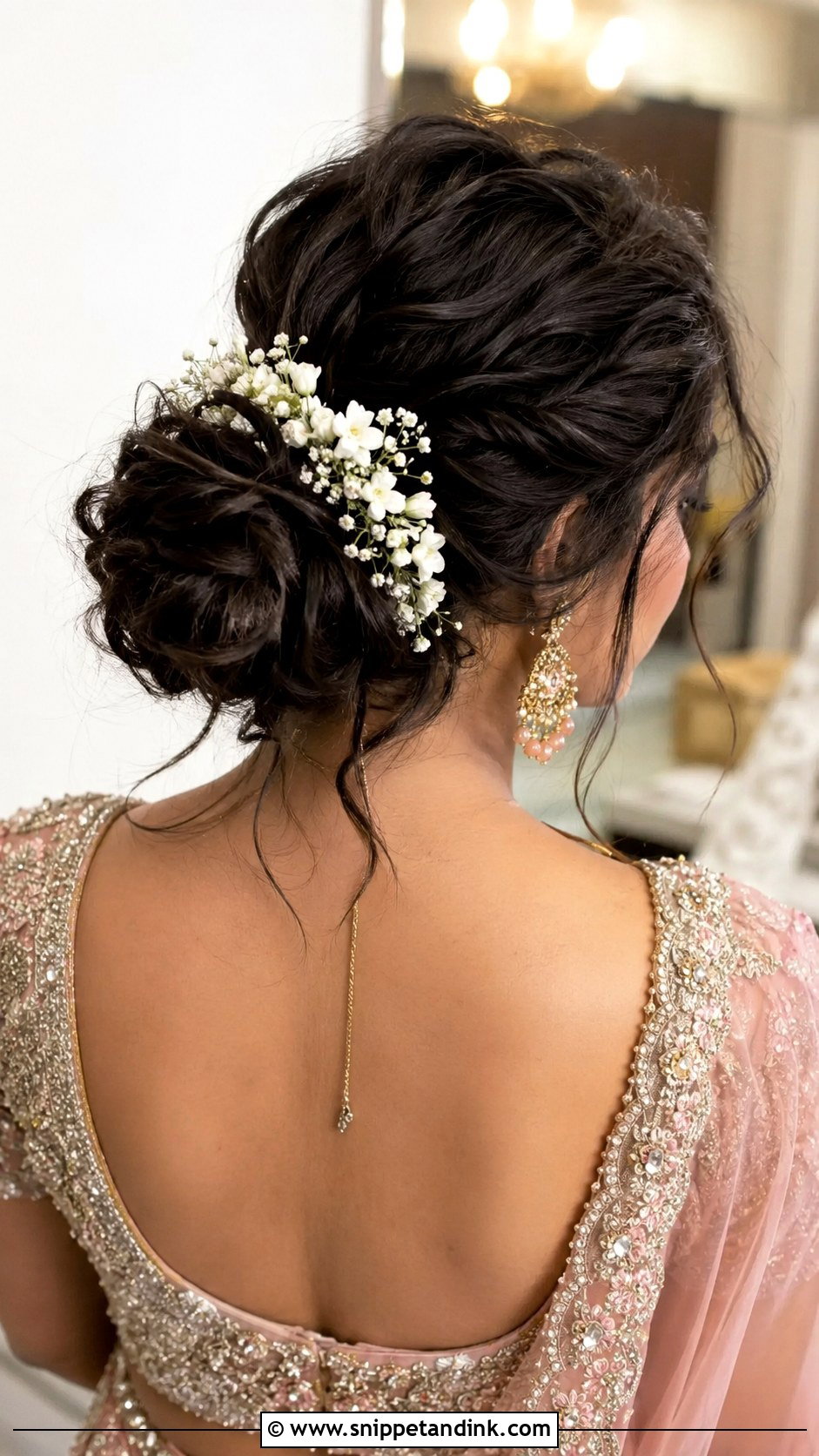
Placing the bun high lifts the whole silhouette and leaves the neck and earrings completely clear, so heavy chokers and layered haars get the attention they deserve. It can be wrapped with jasmine, roses or orchids. Because the crown stays exposed, a matha patti sits neatly across it. The catch is weight: a high bun with a full gajra pulls on the scalp after a few hours, so I keep the flowers lighter here and anchor the bun to a small ponytail base. Keep it sleek for a regal finish or slightly textured for a reception.
6. Indian Bridal Bun With Red Roses
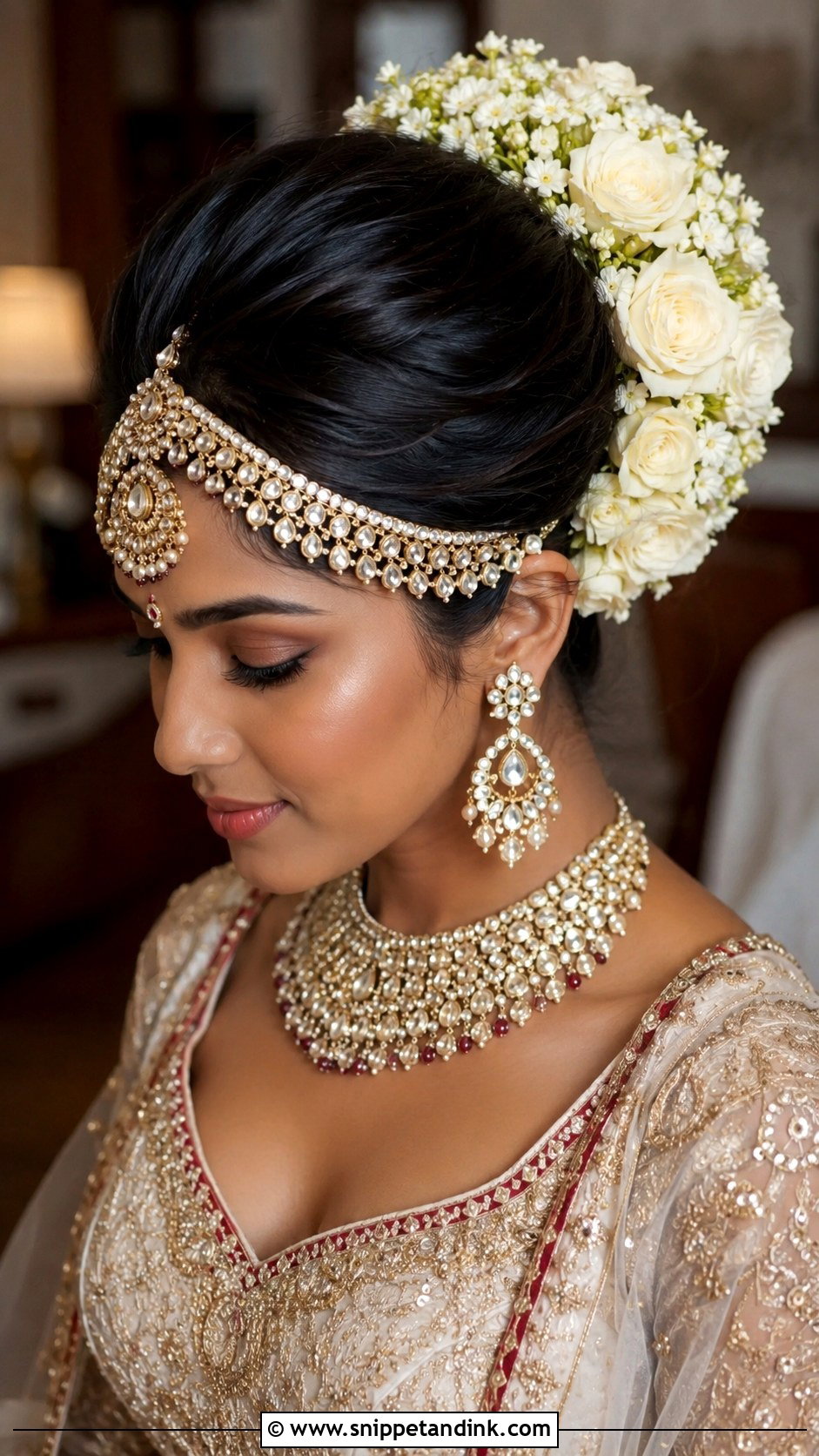
Red roses against dark hair give the strongest contrast of any flower in this list, and that contrast carries even in wide group shots. They suit red lehengas, maroon sarees and yellow gold. I usually arrange them as a cluster on one side or alternate them with jasmine, because a full ring of red roses can look heavy from the back. Choose roses that are just opening rather than fully blown; open blooms drop petals on your shoulders by the reception. A smooth bun keeps the mood formal, and a few soft twists make it warmer.
7. Indian Bridal Bun With White Flowers
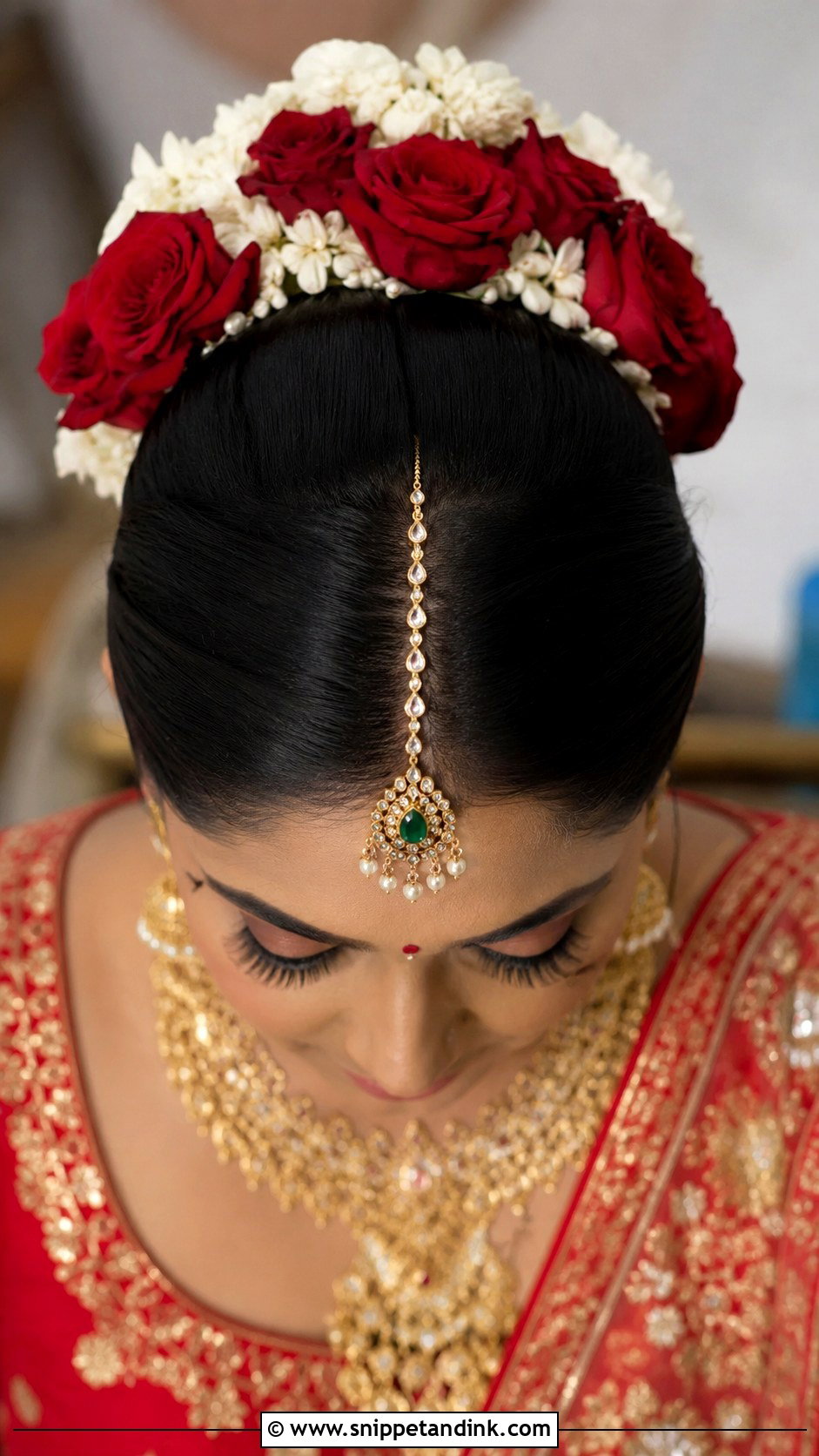
White flowers are the safest bet if your outfit is heavily embroidered, since they add fragrance and finish without fighting the zari. Jasmine, mogra, tuberose, orchids and baby’s breath all suit this style, and they work with red and gold as easily as with ivory, emerald or champagne. I like a crescent of white blooms on one side when the jewelry is detailed and a full wrap when the makeup is soft. Tuberose has a strong scent, so if anyone in the bridal party gets headaches from perfume, I’d lean on jasmine instead.
8. Indian Bridal Bun With Baby’s Breath
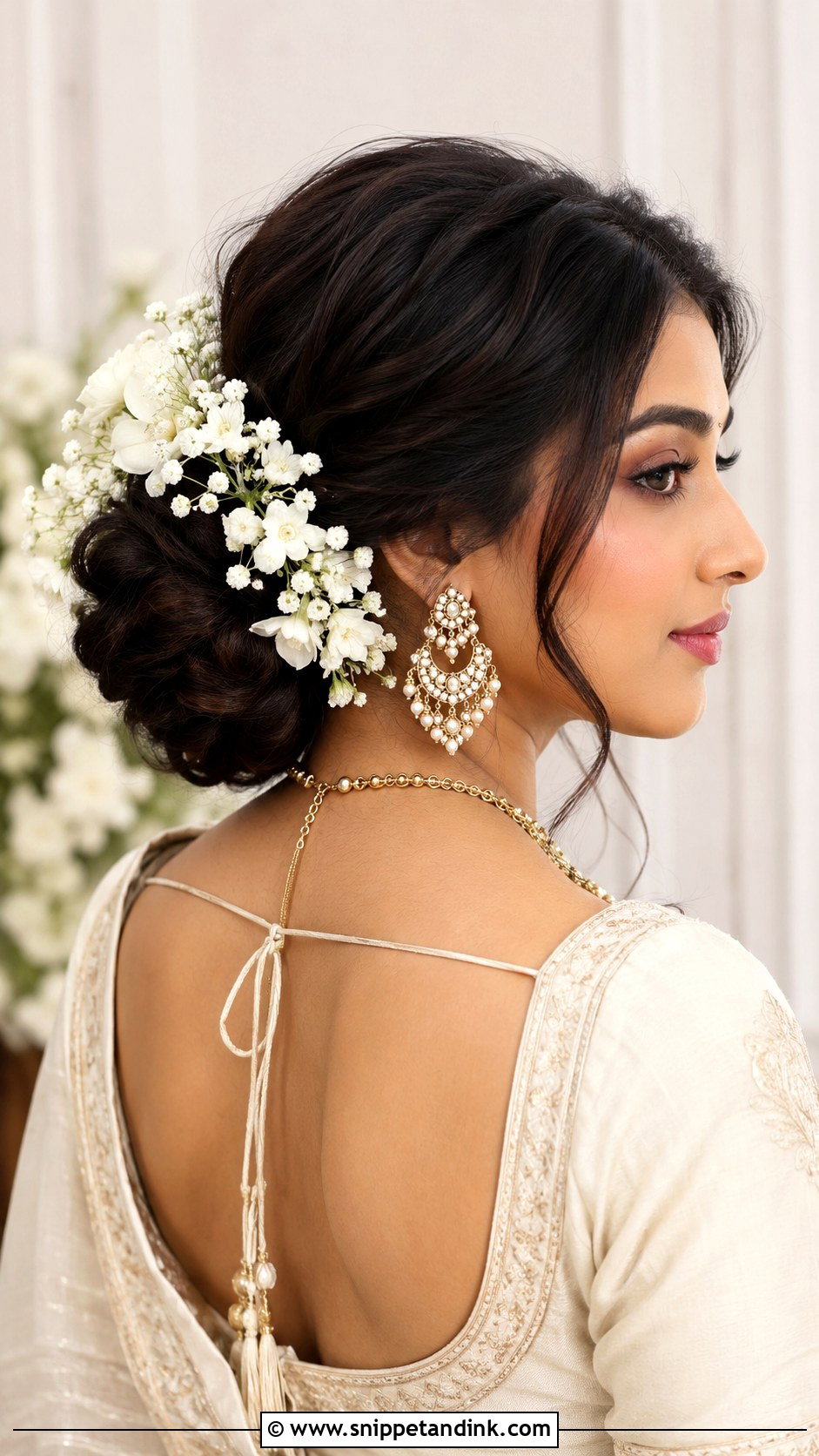
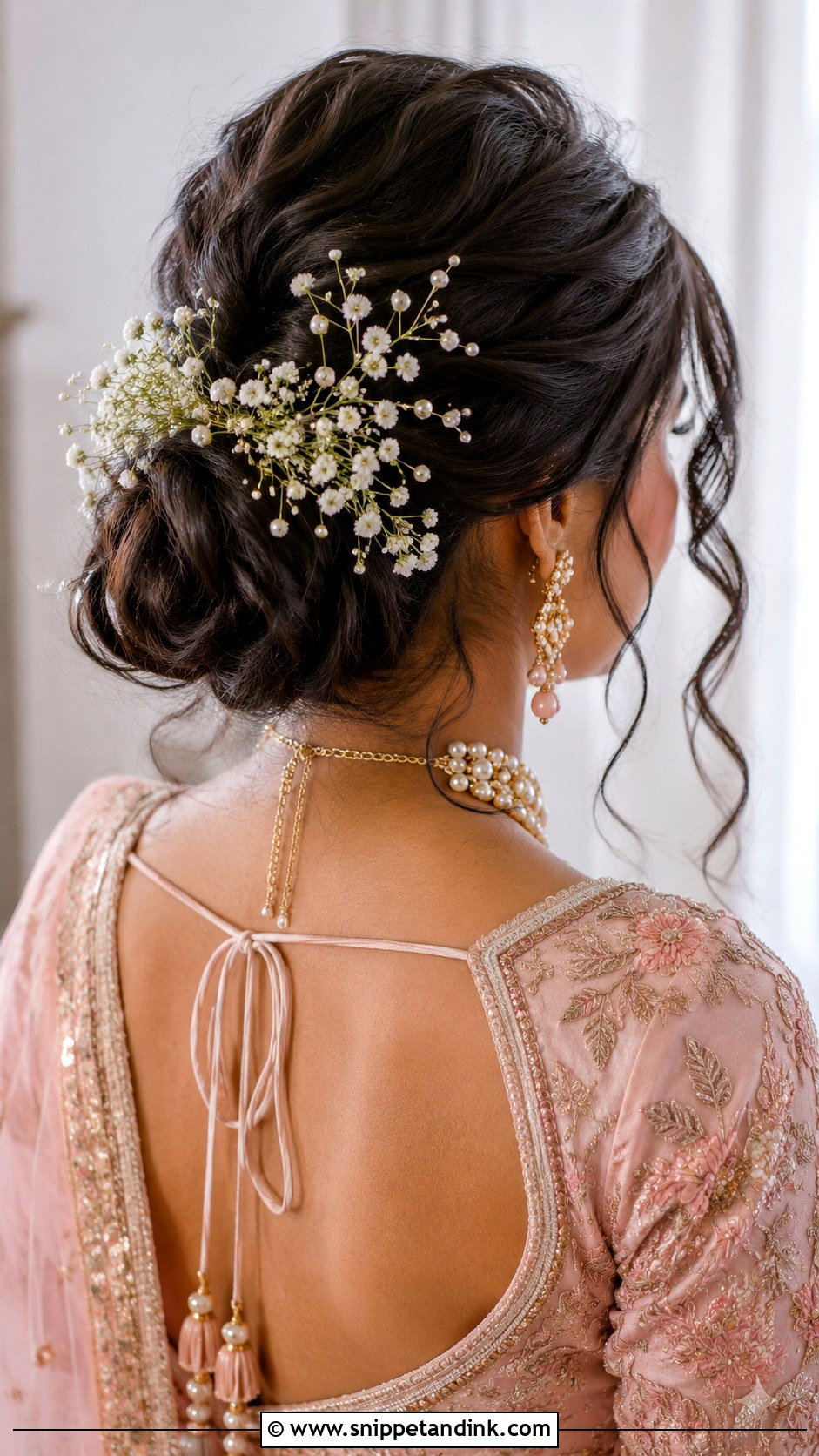
Baby’s breath behaves differently from every other flower here. It’s tiny, it dries out slowly, and it needs to be scattered through a textured bun rather than laid on a smooth one, where it can look like lint from a distance. I snip it into small sprigs and pin each sprig into a twist so the bloom sits in shadow and the white pops. It suits pastel lehengas, ivory sarees, engagement looks and day receptions, and it pairs nicely with pearls. Spread the sprigs evenly so the bun reads full rather than patchy.
9. Indian Bridal Bun With Orchid Flowers
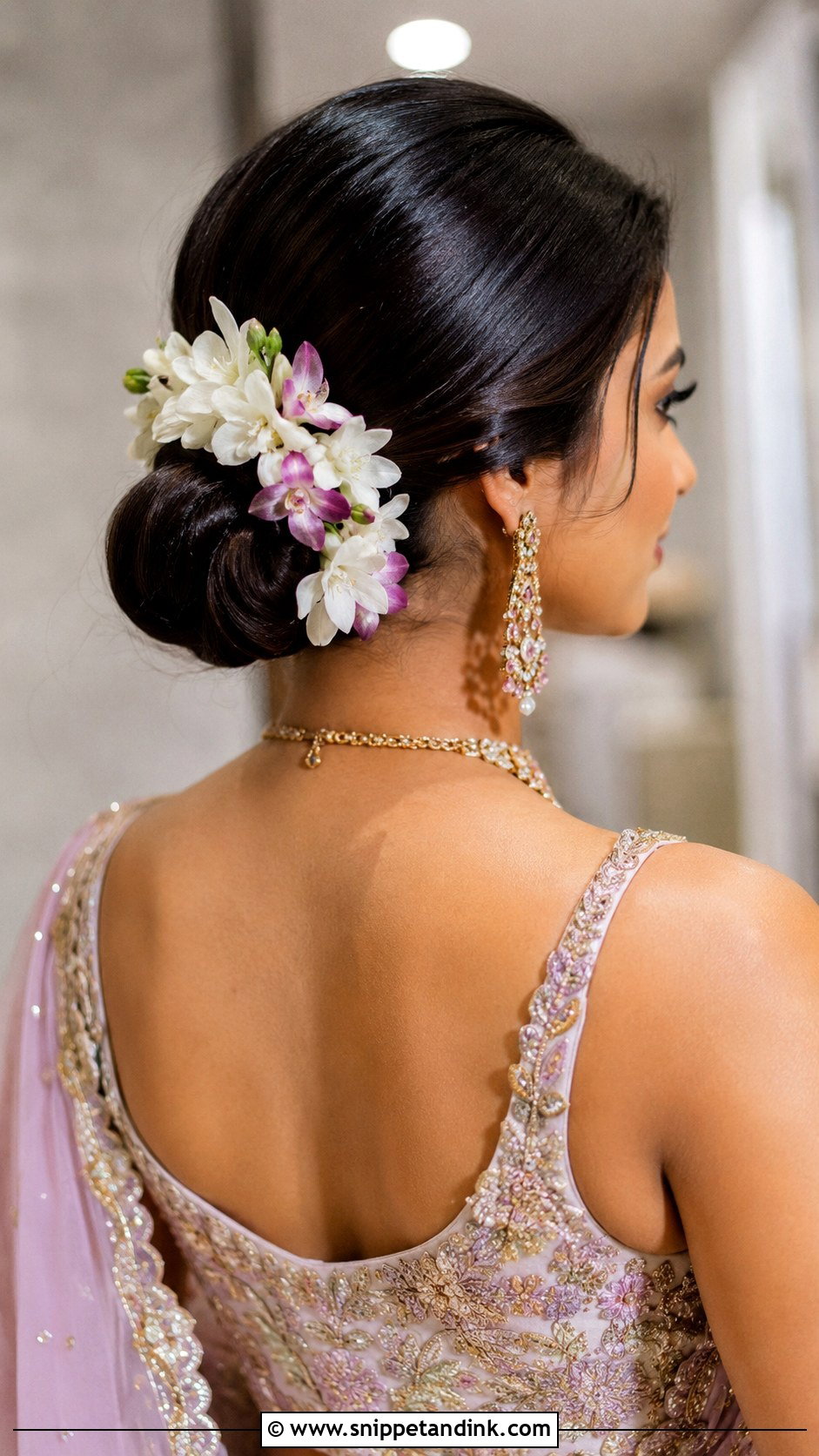
Orchids are sculptural, so three or four blooms do the work of a whole gajra. White orchids look clean and formal; purple, pink or peach add color for a reception or cocktail evening. On a sleek low bun, I place them on one side and angle them slightly downward so they’re visible in front-facing photos. They’re larger and stiffer than jasmine, which means each one needs its own pin or a short wire stem. Too many and the bun disappears; a small cluster gives one strong focal point. Mixing them with a single strand of jasmine bridges modern and traditional.
10. Indian Bridal Bun With Marigold Flowers
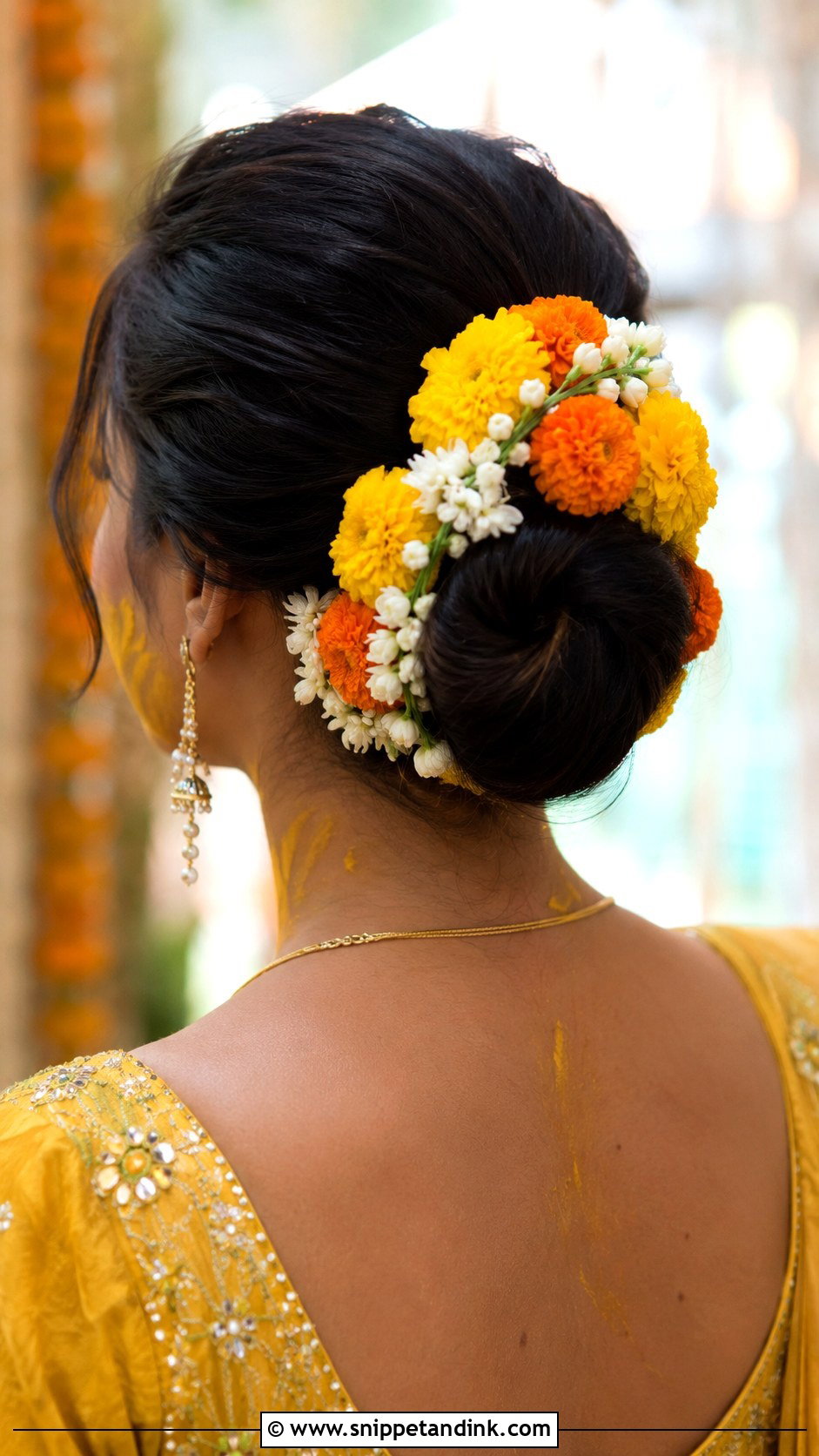
Marigolds belong to the daytime functions. For haldi and mehndi they bring color that matches green, yellow, pink, and white outfits, and they’re sturdy enough to survive turmeric, dancing and hugs. Mini marigold strings wrapped around the bun look festive, while a small cluster at the back is lighter. I keep the jewelry simple with this one because marigold heads are bulky and already carry a lot of volume. They also have a sharp scent that some brides dislike up close, so smell a strand before you commit.
11. Indian Bridal Bun With Floral Veni
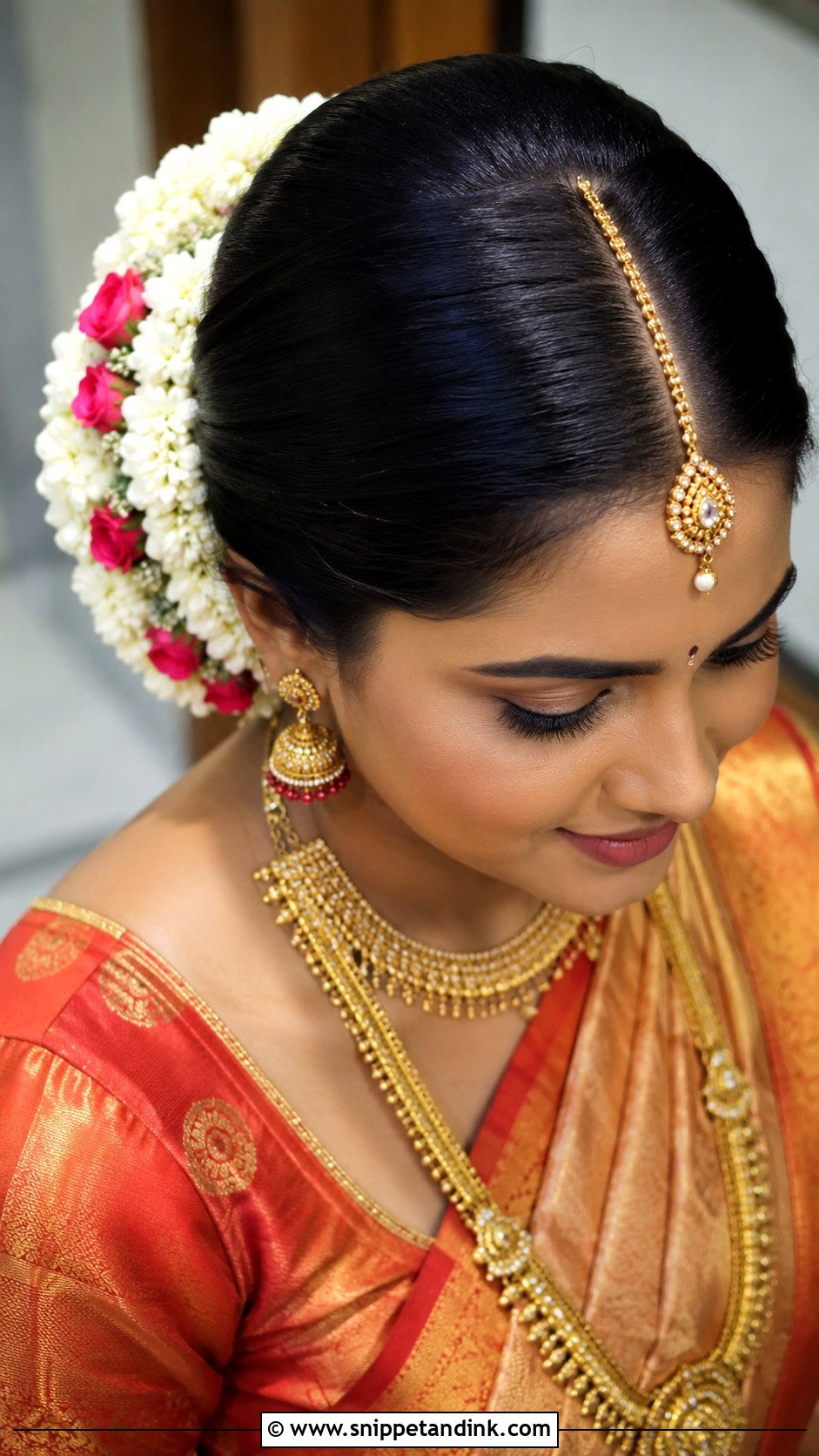
Few looks are as instantly recognizable as a floral veni wrapped around a bun. The veni can be jasmine, roses, kanakambaram or a mix, and it frames the bun like a border so the shape stays crisp in photos. Because a veni is pre-strung, it needs fewer extra accessories, which suits brides who’d rather not wear hair jewelry. I fix it with pins at the top, bottom and both sides, then add a fifth pin hidden where the ends meet. The crown can stay sleek, braided or lightly puffed depending on your face shape.
12. Indian Bridal Bun With Flower Jewelry
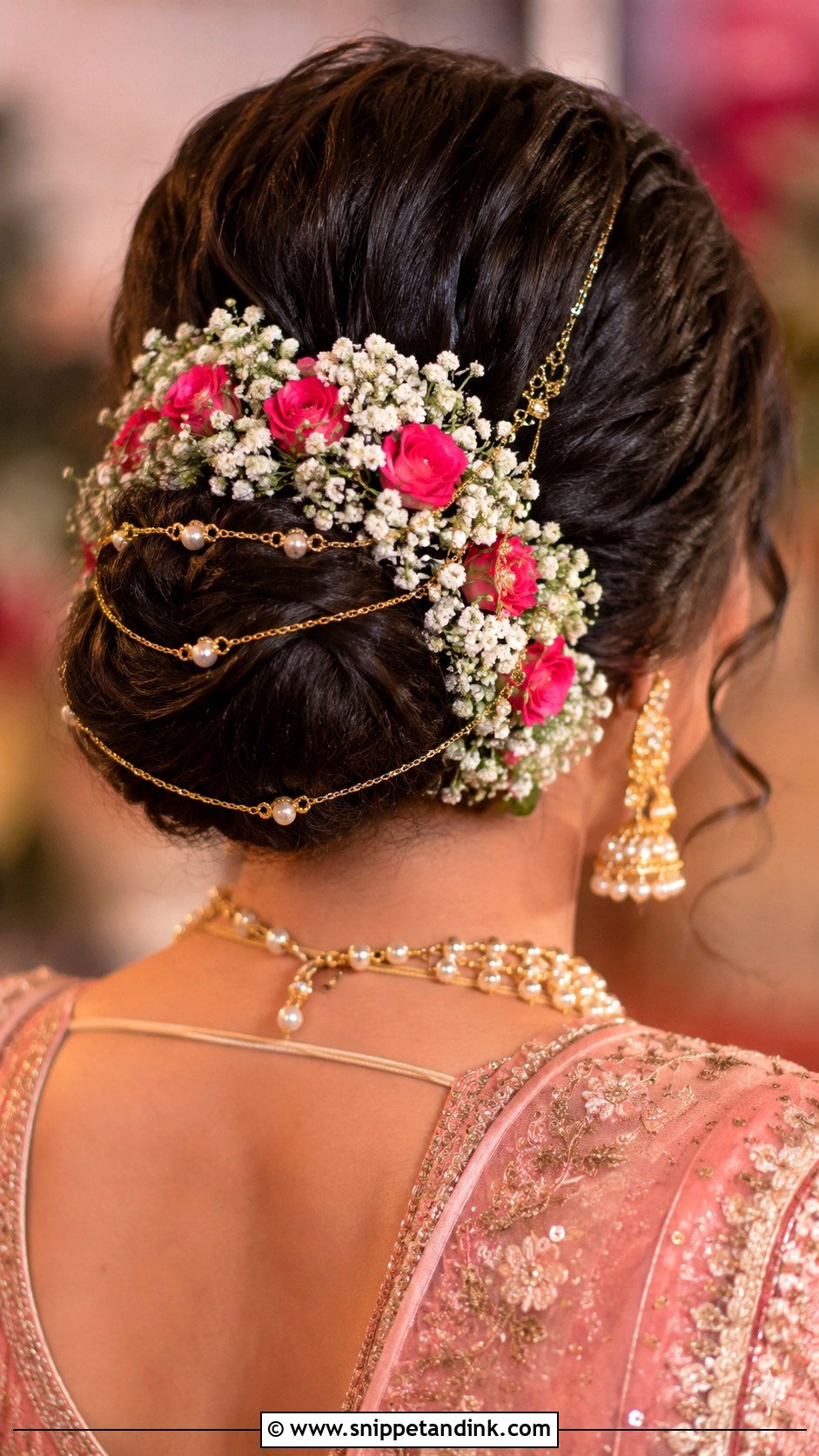
Flower jewelry gives detail without the weight of a full gajra. It can be real blooms, pearl pins, gold hair chains or good-quality artificial flowers set into the bun. I use it most for mehndi, haldi and small ceremonies, though richer flowers make it work for the main wedding too. Place the bun to suit where your dupatta will sit: low if it drapes over the head, higher if it pins at the shoulder. One practical advantage is that pins and chains don’t wilt, so the look holds through a long day without top-ups.
13. Indian Bridal Bun With Side Flowers
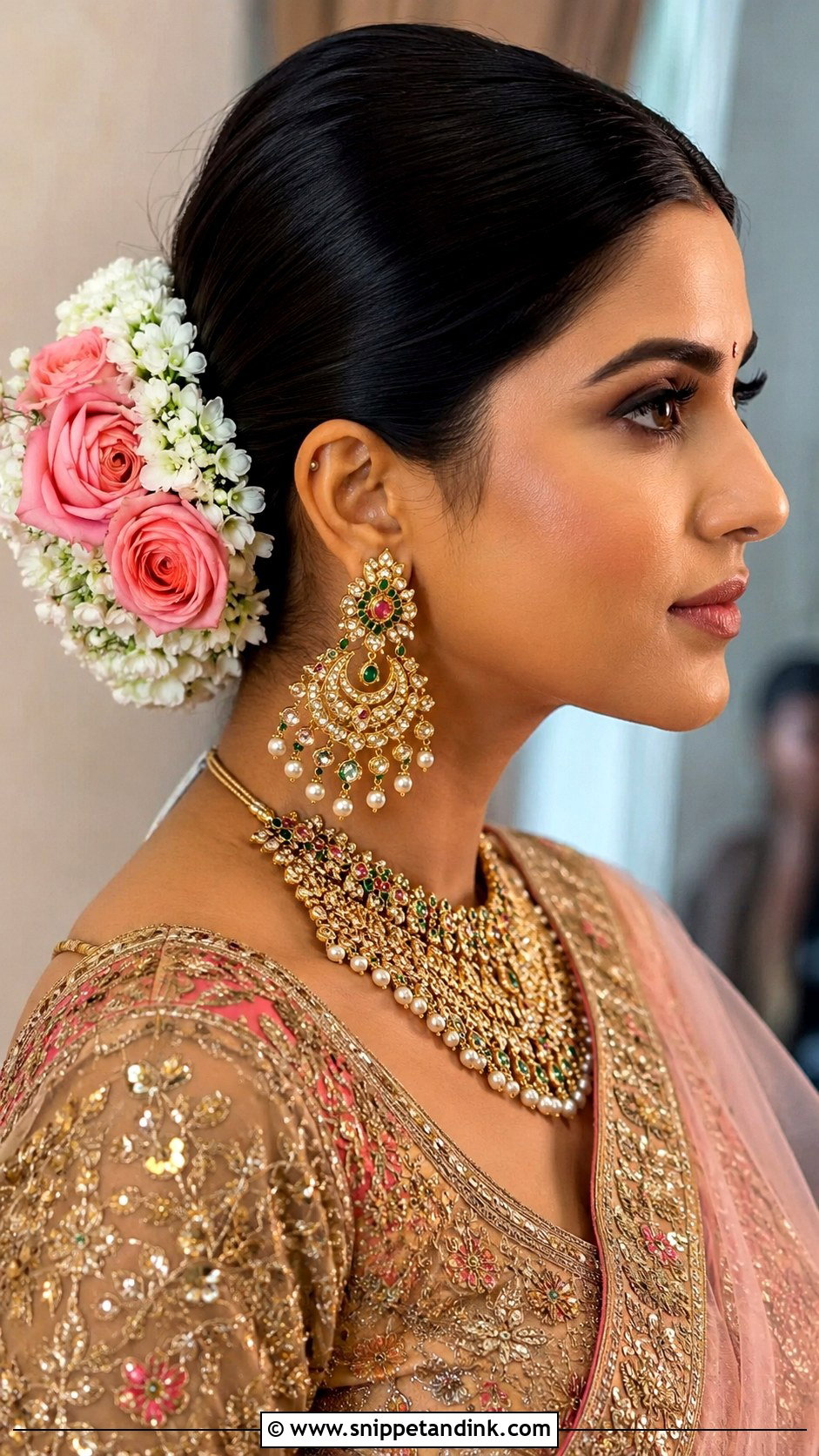
Side placement is what I suggest to brides who want flowers but find a full ring too traditional. Roses, orchids, jasmine clusters or mixed pastels go on one side only, which gives the bun an asymmetric line and leaves the other side clean for earrings. Decide the side at your trial by checking your better profile, because that’s the side the photographer will favor in portraits. Pinning matters here: all the weight sits on one side, so I add an extra anchor pin underneath to stop the bun tilting. Statement earrings and a soft dupatta drape suit it well.
14. Indian Bridal Bun With Braided Crown And Flowers
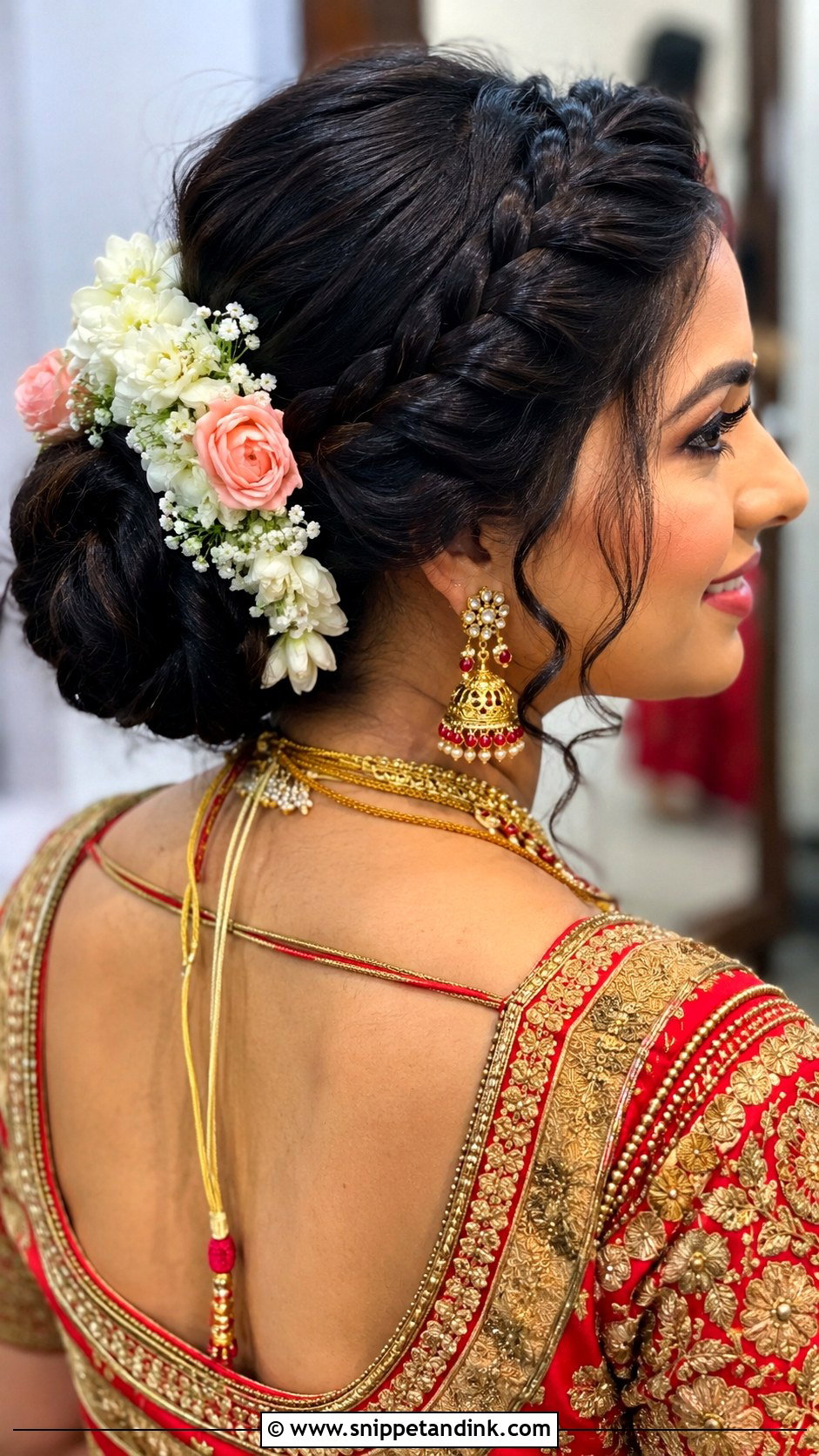
Adding a braided crown gives the bun extra grip as well as texture. I braid the front or sides, pull them back into the bun, and the braids act like straps that hold everything tight through a long ceremony. Jasmine, roses or small floral pins go along the braid line or into the bun itself. It works best on medium to long hair; on shorter hair I add clip-in extensions so the braid has enough length to reach the bun. Lehengas and sarees with detailed necklines or embroidered dupattas balance well against it.
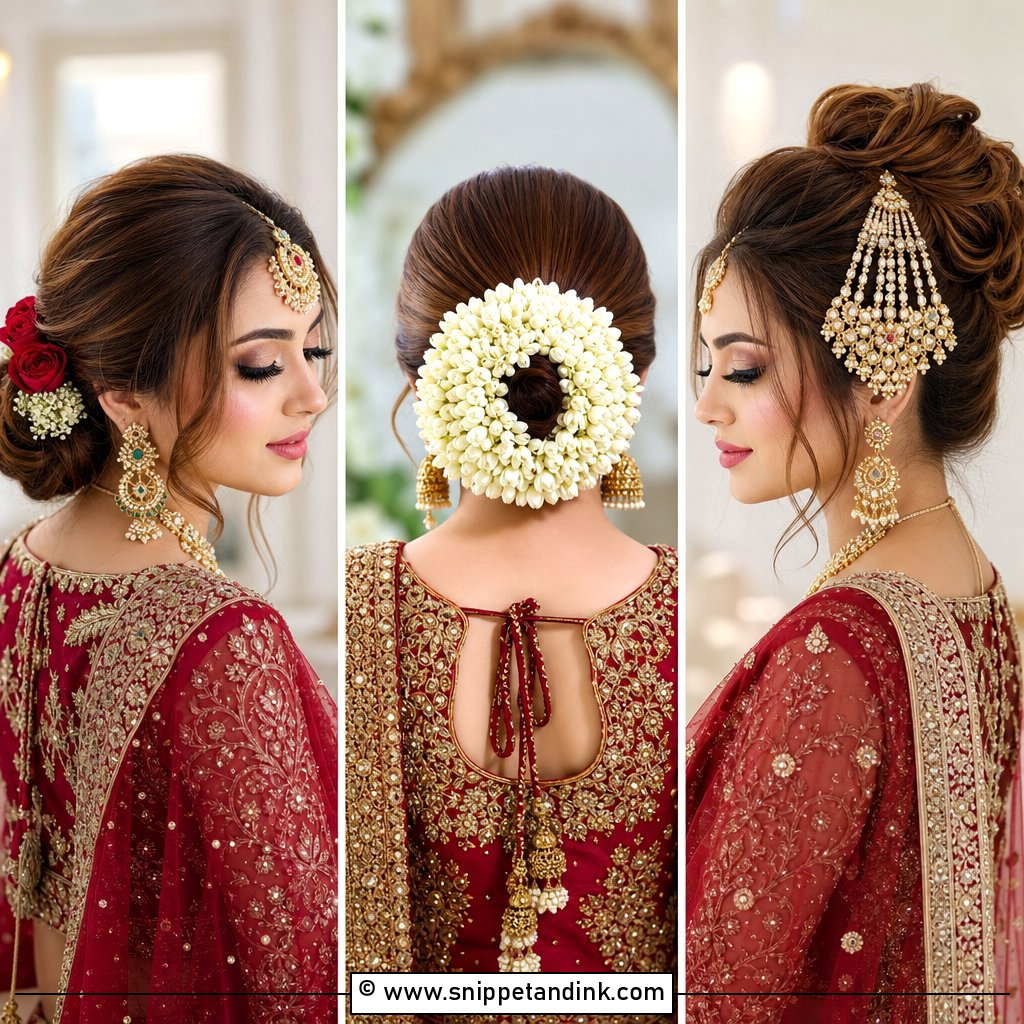
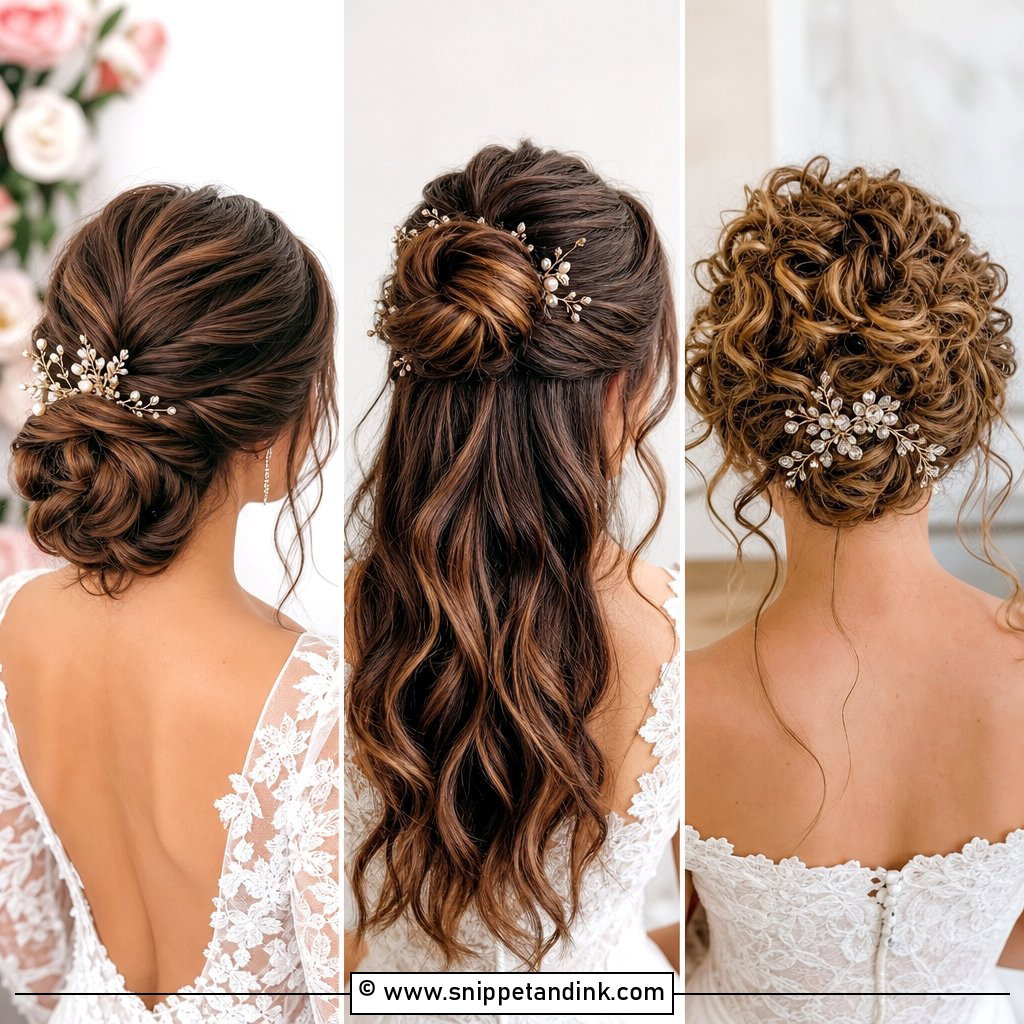
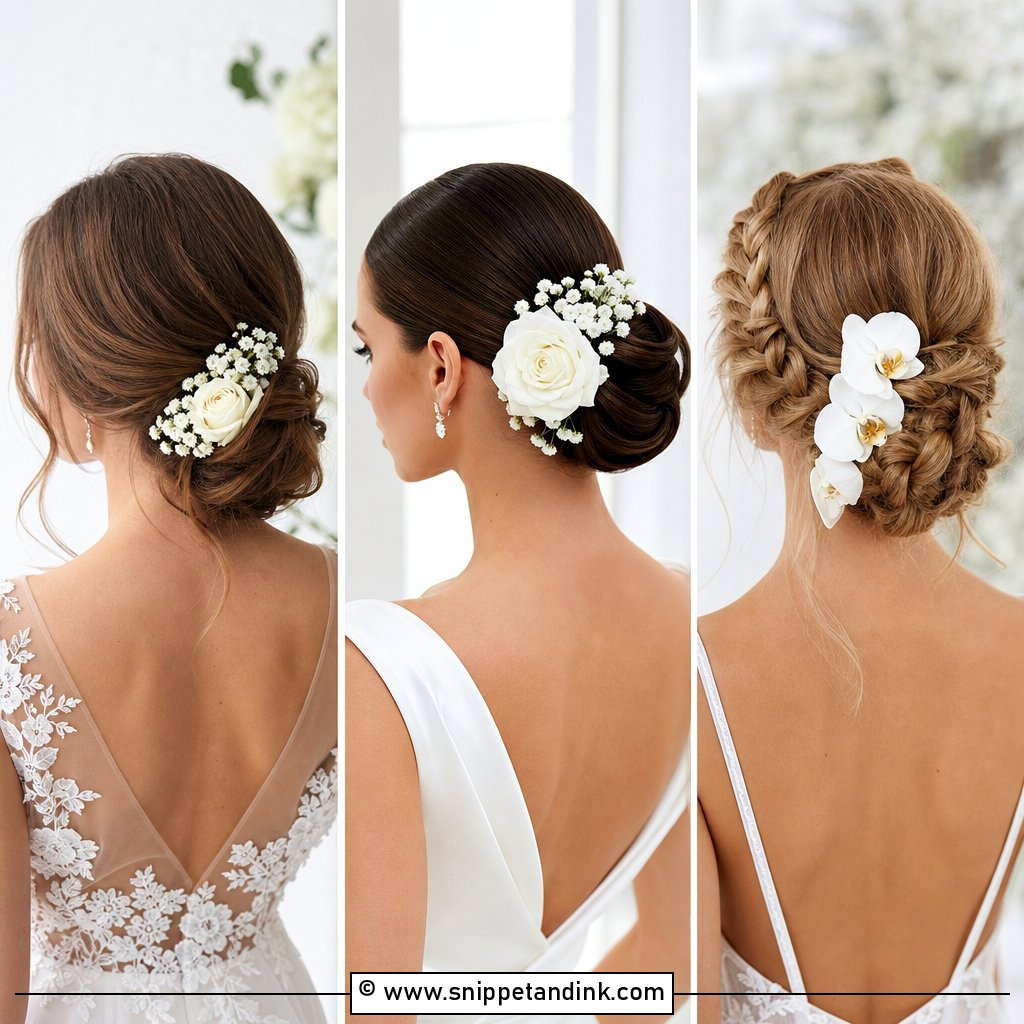
15. Indian Bridal Bun With Pastel Flowers
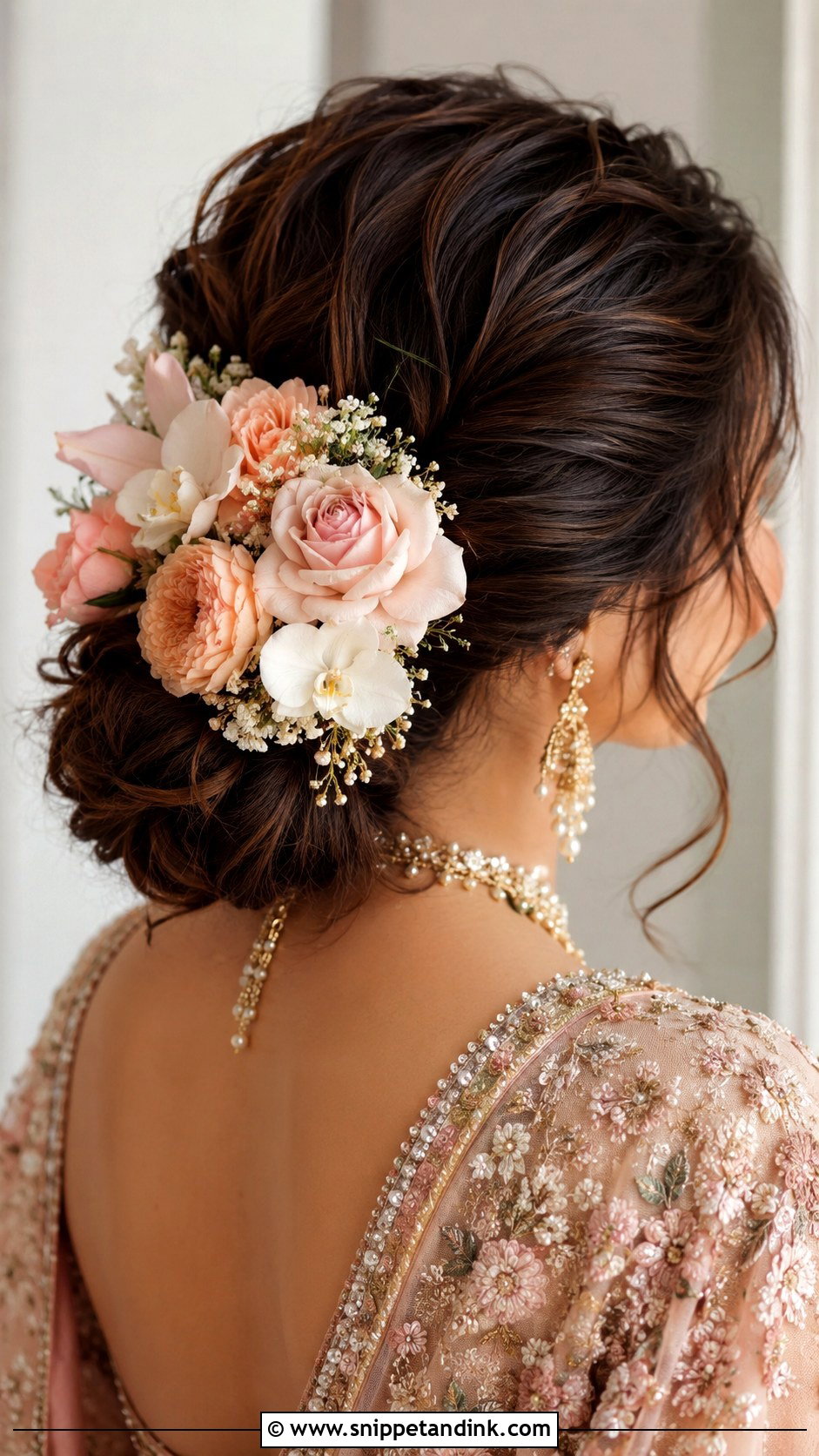
Pastel flowers soften the whole look and suit day weddings, garden ceremonies, receptions and pastel lehengas. Blush roses, peach blooms, lavender, ivory orchids and small white fillers all fit. The thing I watch with pastels is lighting: very pale blooms can wash out against light brown or highlighted hair, so I add a slightly deeper shade in the mix for definition. The bun can be low and textured or smooth and classic. Pearls, subtle gold pins or a delicate maang tikka keep it bridal instead of casual.
Ordering Gajra So It Still Smells Fresh at the Pheras
Jasmine is at its best for a few hours. The buds open and release scent through the day, and they bruise brown wherever they’re pressed or handled with warm fingers. That’s why timing the delivery matters more than which florist you use.
- Order strung gajra or veni a few days ahead, and ask for delivery on the morning of the ceremony rather than the night before.
- If it arrives early, wrap it loosely in damp muslin or a damp paper towel and keep it in the fridge, away from fruit. Never freeze it.
- Ask for buds that are still closed. They open on your head and keep smelling fresh into the evening.
- Order one spare strand. Petals get crushed under a dupatta, and a quick swap before the pheras looks better than patching.
- For a multi-day wedding, order flowers per function. Yesterday’s jasmine won’t recover.
When I’d switch to artificial
If your ceremony runs late into a reception without a hair change, or the venue is hot and outdoors, I’d consider good silk jasmine for the reception look. It won’t smell, but it won’t brown either, and it’s lighter. Many brides keep real flowers for the rituals and switch afterwards, which also gives the scalp a break from the weight.
Let the Ceremony Clock Pick Your Flowers
Every bun here can be made to last; what changes is how much weight and fragrance you want to carry and for how long. For a morning muhurat with heavy gold, classic jasmine gajra, a veni or a red rose bun will feel right. For an evening reception, orchids, baby’s breath, side flowers or a textured bun feel lighter. Fresh flowers give scent; good artificial ones save you from wilting on a twelve-hour day. Bring your outfit photos and jewelry to the trial, and wear the finished bun for at least an hour before you decide.
You'll Like These Ideas:




Leave a Reply