
Indian weddings ask a lot of your hair: hours of rituals, a heavy dupatta pinned over the head, earrings that snag loose strands, outfit changes and a great deal of dancing. A French braid copes with all of it. In my work it’s the base layer, the thing that keeps the length controlled while the decoration does the talking: jasmine gajra, a bright paranda, kundan pins, a maang tikka on a clean part, or a full jada for a South Indian ceremony. It sits as happily under a lehenga dupatta as with a saree, sharara or anarkali. The fifteen looks below cover brides, sisters, bridesmaids and guests.
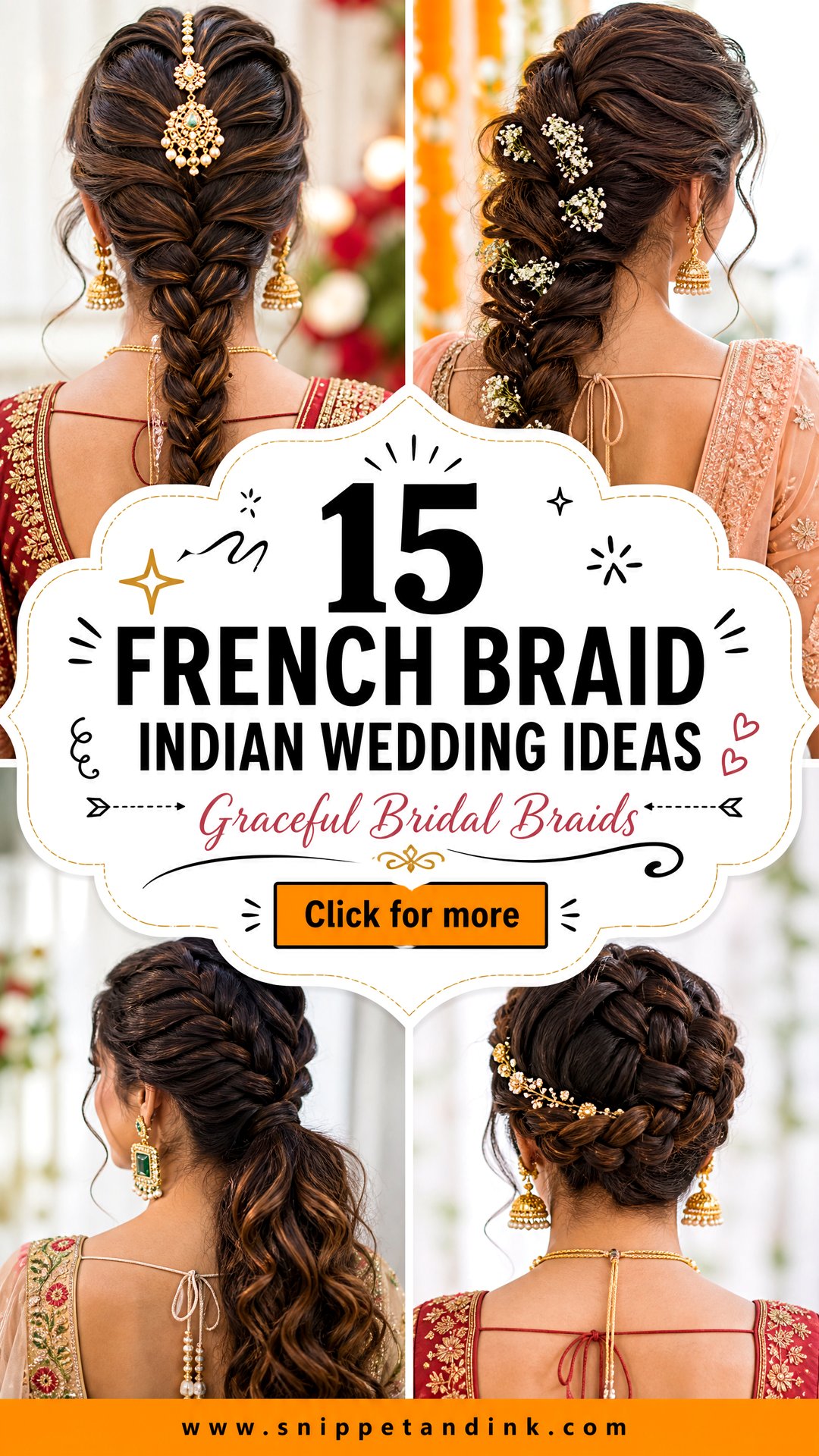
Haldi to Reception on the Same Head of Hair
Over a multi-day wedding the same hair works through very different events, and I plan the braids as a sequence rather than five separate looks.
- Haldi: a quick, loose braid or simple side plait. Turmeric paste gets everywhere, so wear something you can wash out that evening and skip anything precious.
- Mehendi: you’ll sit still for hours with wet henna on your hands, unable to fix your own hair. A half-up or neat side braid keeps strands off your face.
- Sangeet: the night for movement. A braided ponytail or paranda braid swings well on the dance floor.
- Ceremony: the firmest braid of the week, usually into a bun or a long gajra braid, built to hold a heavy dupatta and tikka.
- Reception: often softer and fuller, with curls or open hair under a braided crown.
When functions fall on back-to-back days, a loose braid slept on in a silk scarf gives good texture for the next morning. Avoid sleeping in a tight braid; it leaves crimps that are hard to smooth.
1. French Braid With Gajra For Indian Wedding
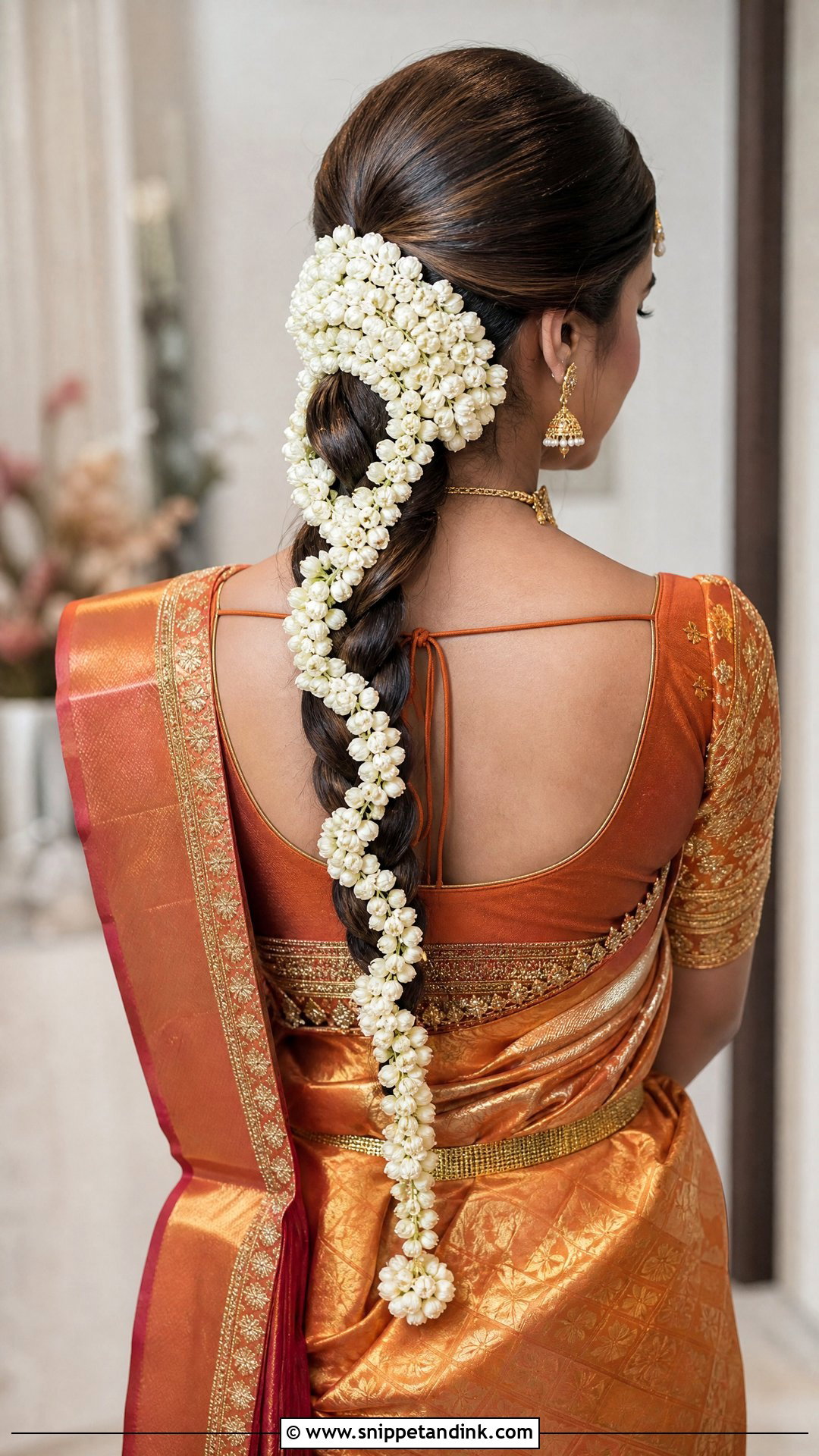
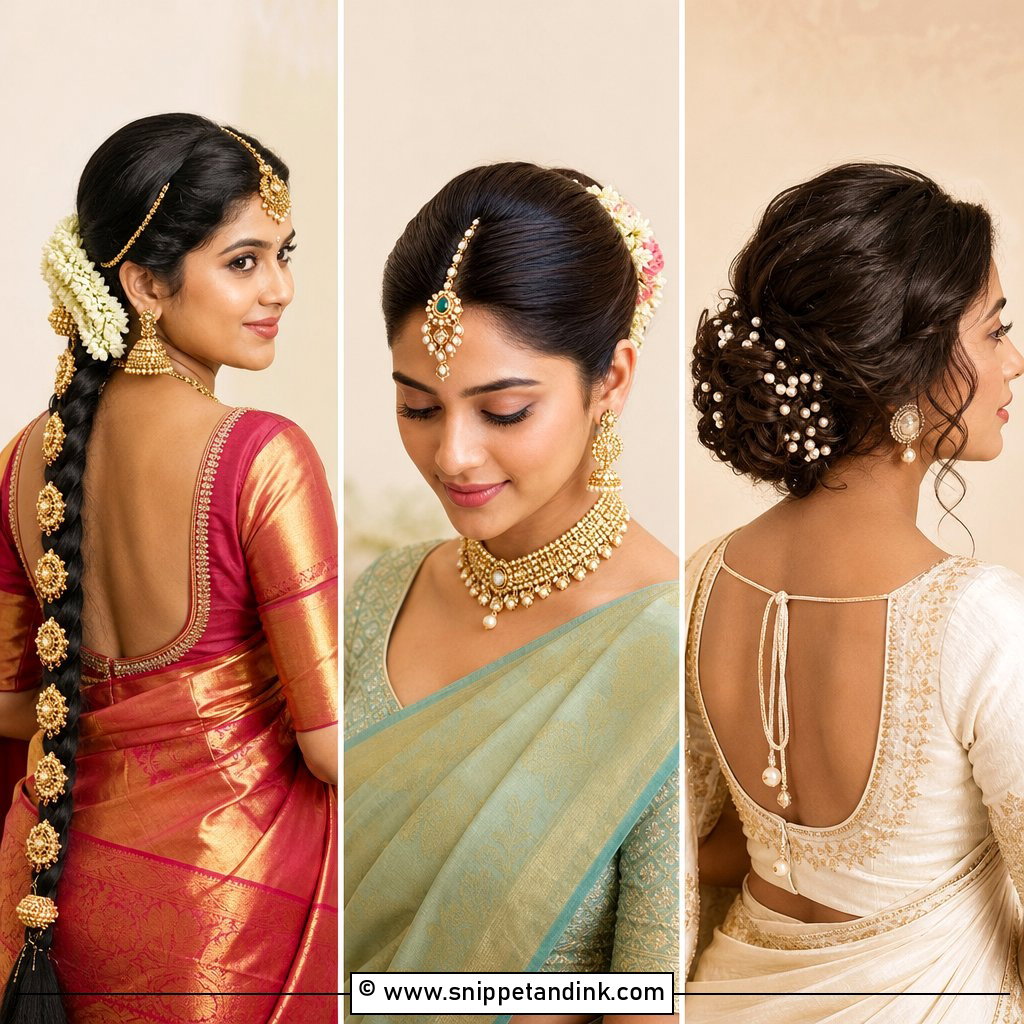
Jasmine wrapped around a braid is the image most families picture, and a French braid with gajra delivers it with far more security than a plain three-strand plait. I start the braid neatly at the crown, keep the front soft around a center part and tikka, then wrap or pin the gajra along its length. Mousse before braiding gives grip; a flexible spray after keeps it clean but not crunchy. Fresh jasmine is heavier than it looks, so I pin the strand to the braid every few inches rather than tying it only at the top. Silk and Banarasi sarees suit it best.
2. French Braid Bun For Indian Wedding
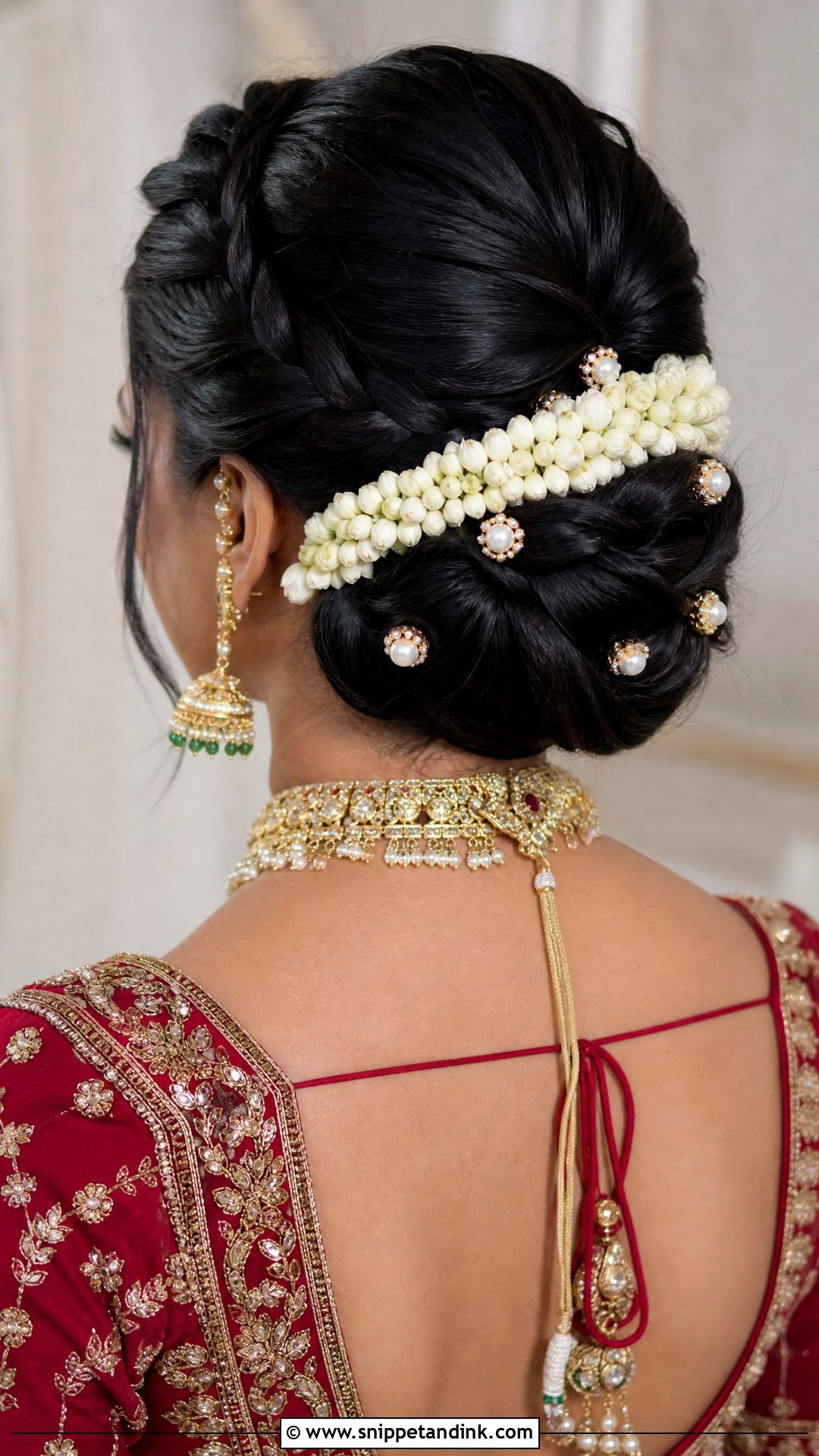
Braid into bun is my pick whenever the bride is wearing heavy earrings and a statement necklace, because nothing hangs down to tangle with them. The braid starts at the hairline or crown and folds into a low bun at the nape, which also leaves room for the dupatta to drape. A gajra round the bun, pearl pins down the braid or a juda pin in the center all suit it. Side profile shots are where it really shows.
3. Side French Braid For Indian Wedding
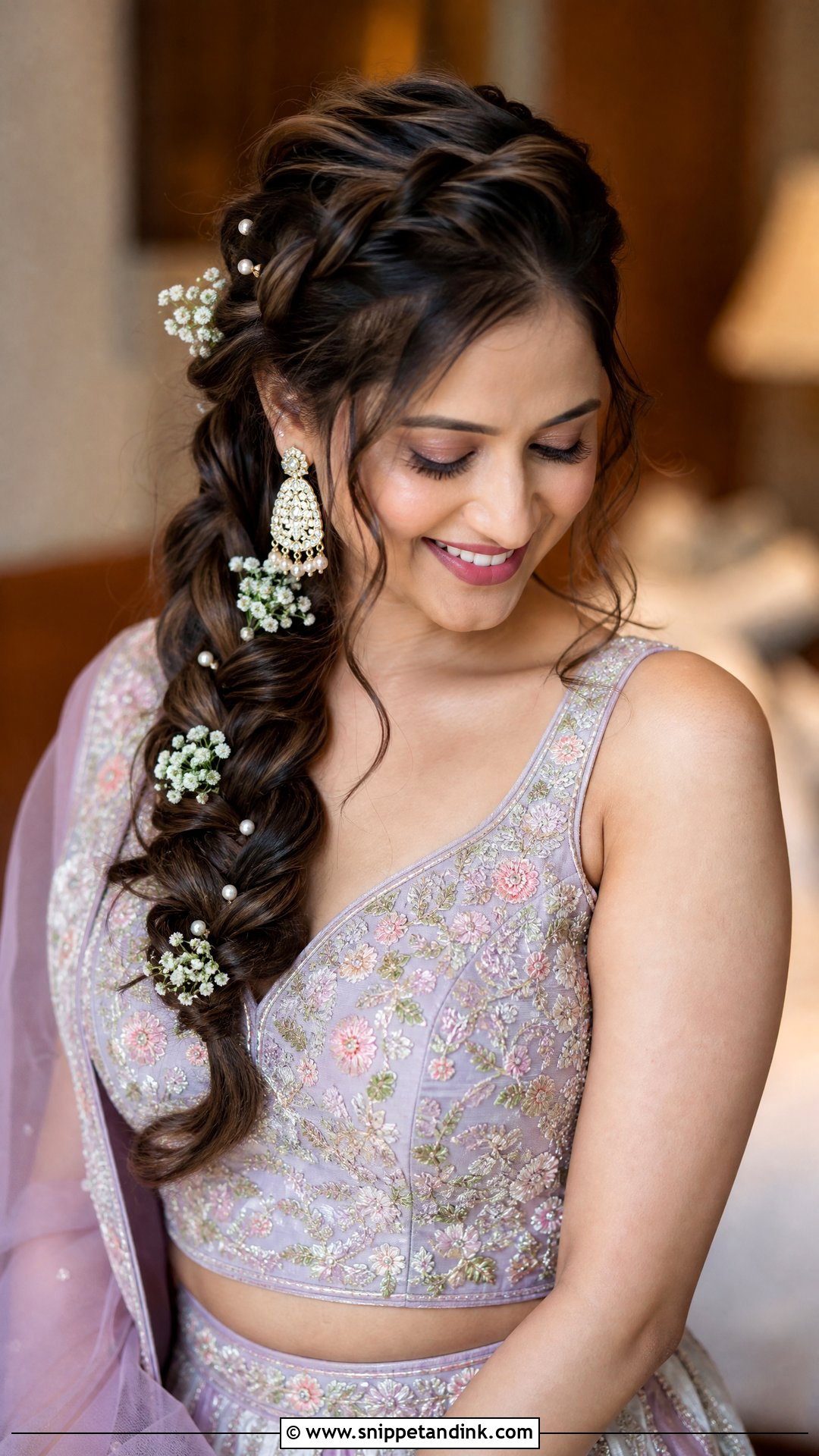
Brought over one shoulder, a braid shows the whole hairstyle to the camera, and it’s comfortable for long sangeet and mehendi evenings. It pairs well with a detailed blouse back or an open-back saree, since the back stays clear. Sleek reads ceremonial; pulled apart reads relaxed. One practical note from experience: heavy dupattas tend to slide over the braided shoulder, so I pin the dupatta on the opposite side. Jasmine buds, baby’s breath or small gold clips finish it.
4. French Braid With Maang Tikka For Indian Wedding
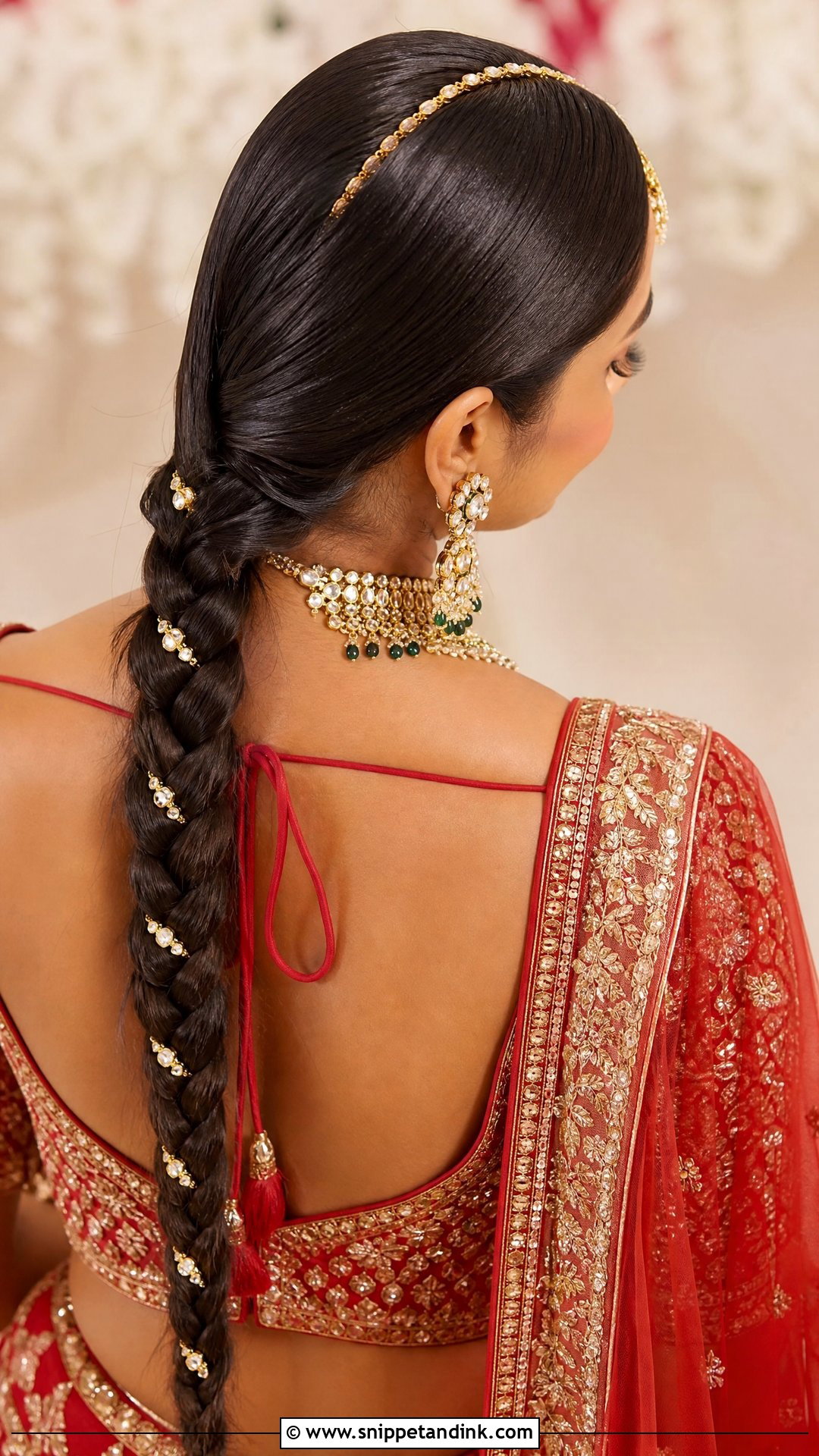
Placement of the tikka decides where the braid begins. I set a clean middle part first so the tikka sits straight on the forehead, then start the braid slightly behind the crown, because starting it right at the hairline drags the chain sideways. The front gets a touch of serum; the braid gets texture for volume. A heavy tikka needs two hidden pins under the hair where its chain meets the scalp, or it slides off center during the ceremony.
5. French Braid With Flowers For Indian Wedding
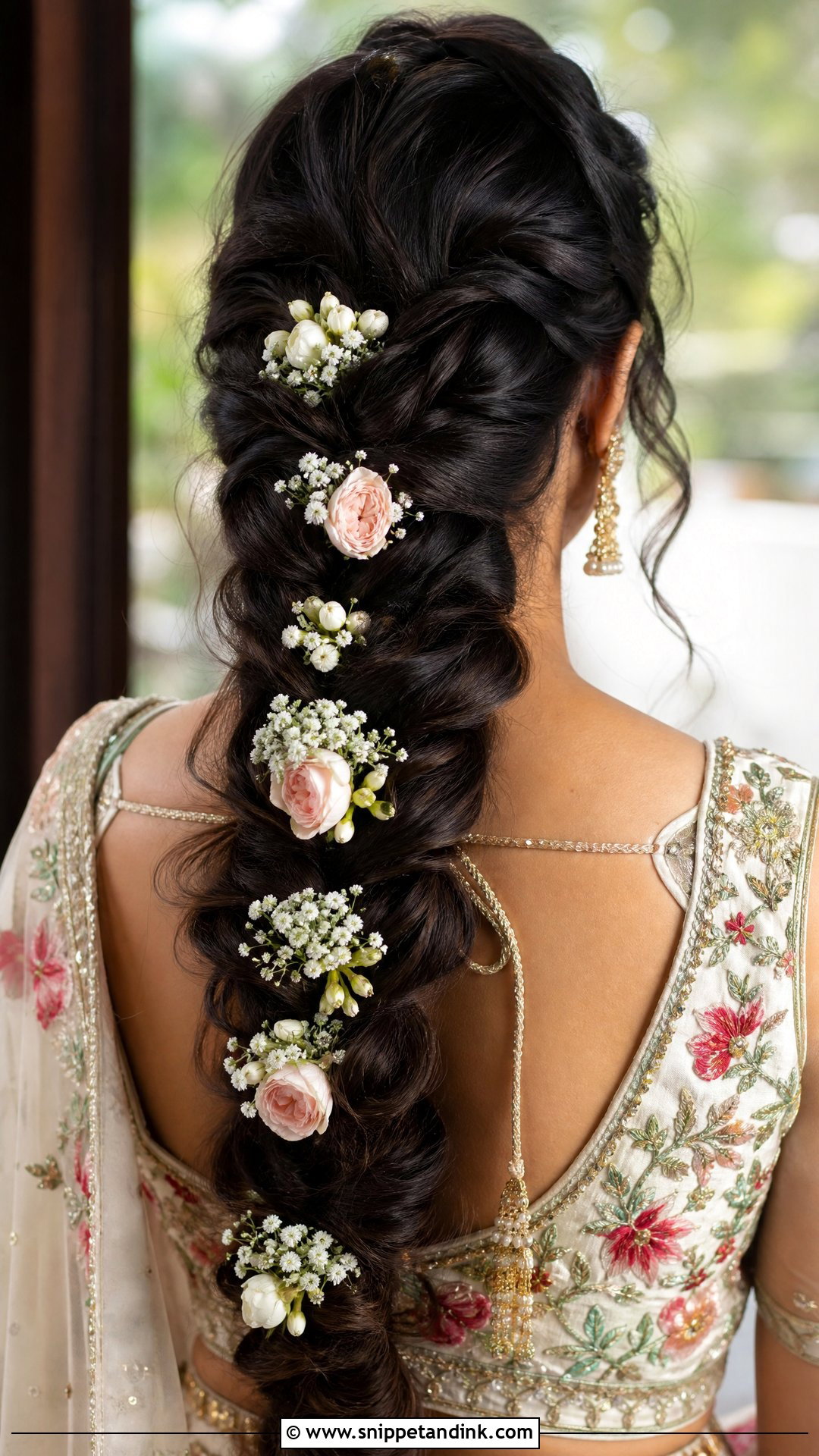
Flowers make a braid festive, and the color can change with the event. For haldi I’d use yellow or white flowers; for mehendi, brighter blooms; for the main ceremony, jasmine and roses. Marigold and baby’s breath are popular too. Pin them lightly rather than packing the braid. A braid stuffed with blooms gets heavy fast and starts pulling at the scalp halfway through a long day.
6. French Braid With Paranda For Indian Wedding
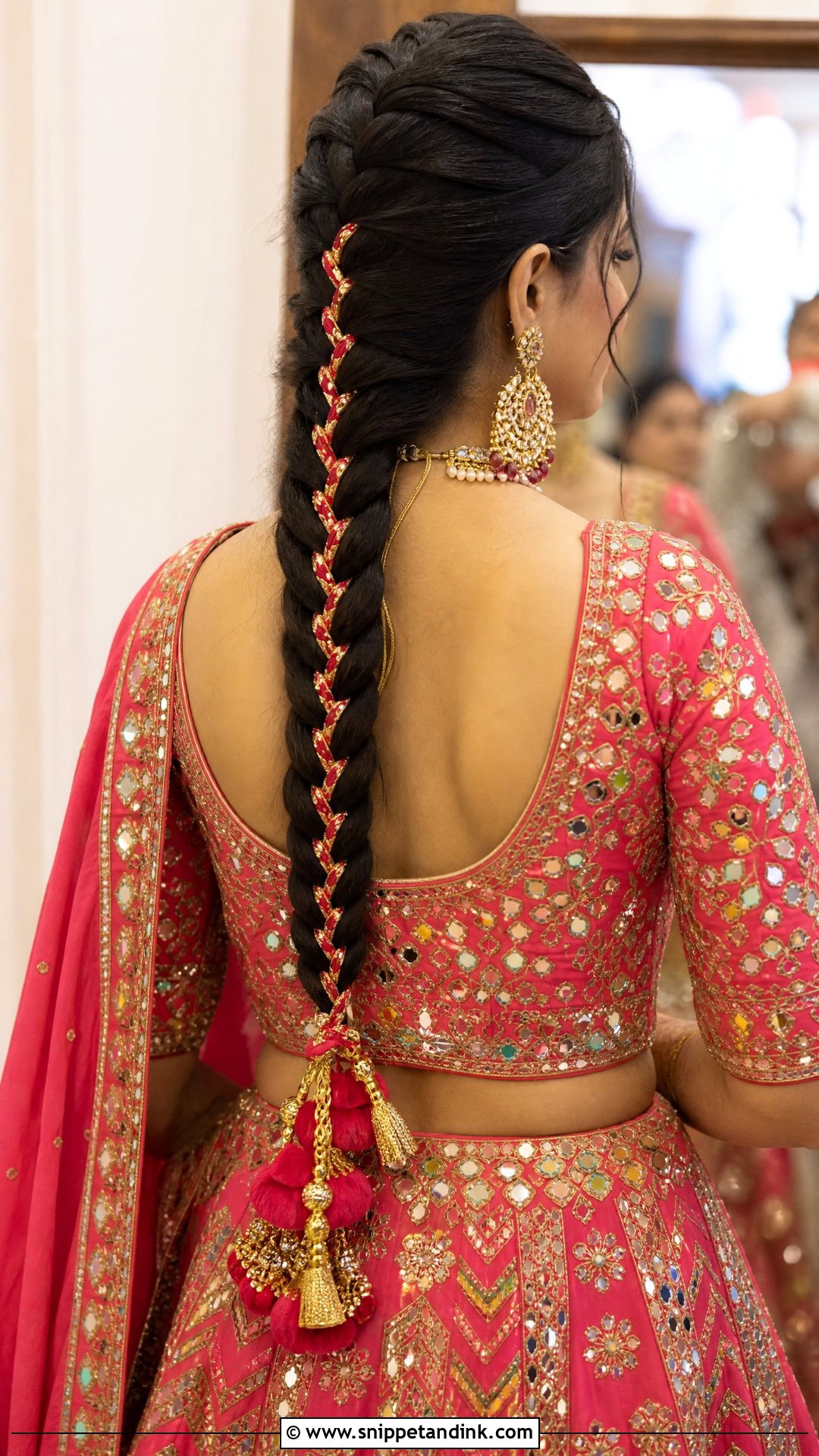
Bright, traditional and made for the livelier functions, a French braid with paranda is the one I see most at Punjabi celebrations, mehendi and sangeet. The paranda can be woven in from the mid-lengths or tied lower so the tassels swing when you dance. Match it to your lehenga border, dupatta or jewelry tone; gold, red, pink and mirror-work all show well on camera. I keep the top of the braid smooth so the paranda stays the focus. It’s lighter to wear than it looks.
7. French Braid With Curls For Indian Wedding
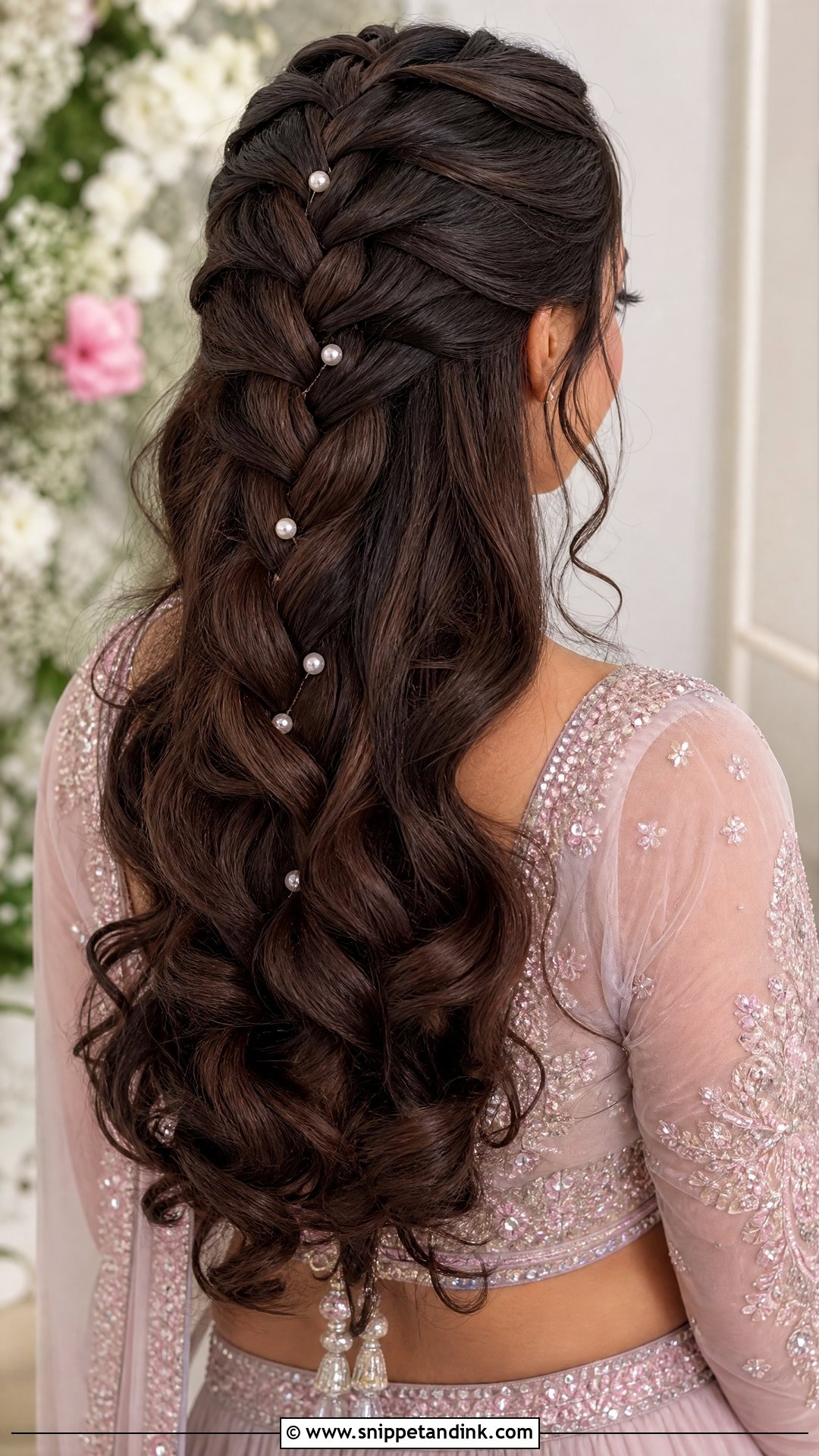
Stopping the braid halfway and curling the rest gives structure on top with open-hair movement below, which suits receptions, sangeet nights and cocktail-style wedding events. Texture spray goes in before braiding so the plait doesn’t slip. I curl the ends in one direction for a smoother finish. Curls relax in humid venues, so if the event is outdoors in summer I’d set them a little tighter than you want.
8. Loose French Braid For Indian Wedding
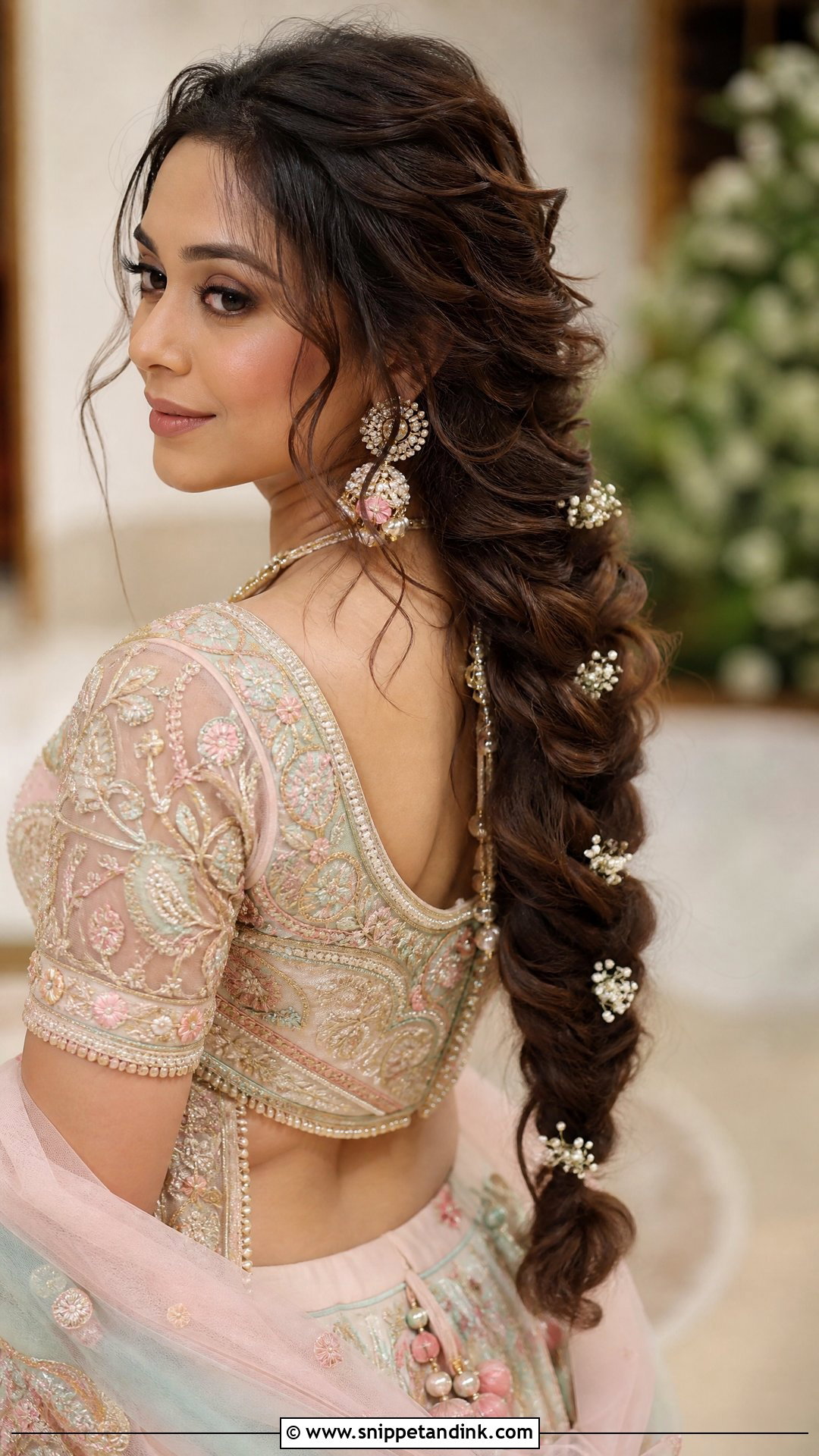
A loose braid is gently pulled apart for width, and it’s my quiet trick for medium-density hair because it looks noticeably thicker without many extensions. Pastel lehengas, floral sarees and outdoor ceremonies suit it. The risk is leaving too much loose around the face on a long day; those pieces end up in your lipstick by evening. A few hidden pins and light spray keep the shape steady.
9. French Braid With Lehenga For Indian Wedding
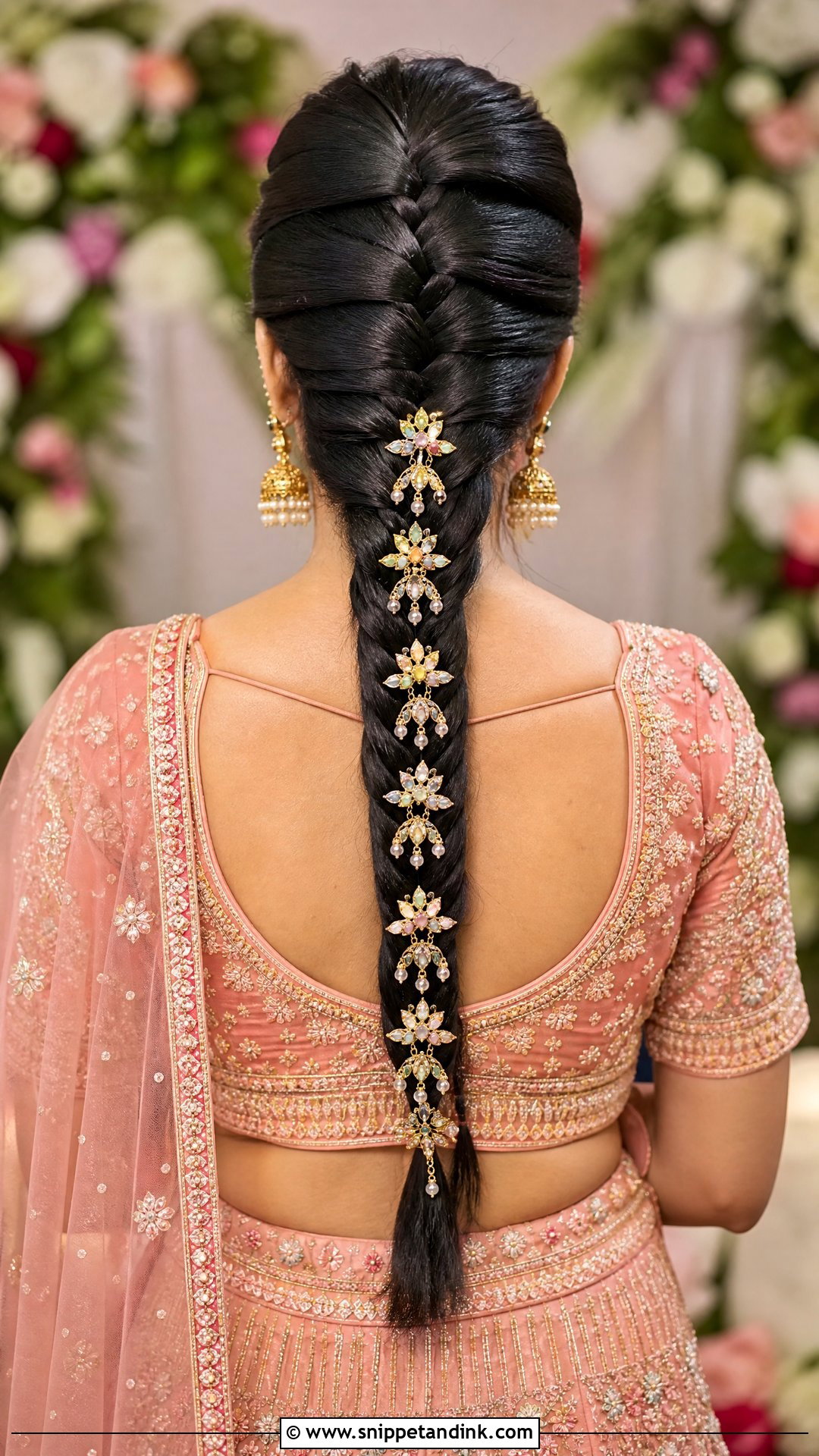
The neckline of the blouse decides where I put the braid with a lehenga: centered down the back, swept to one side, or finished into a bun. For heavily embroidered lehengas, I keep the braid smooth with minimal accessories so it doesn’t compete with the work on the blouse. Simpler lehengas can take flowers, pearls or a jeweled braid chain. If the dupatta is pinned over the head, I keep the crown flat so the fabric lies neatly.
10. French Braid With Saree For Indian Wedding
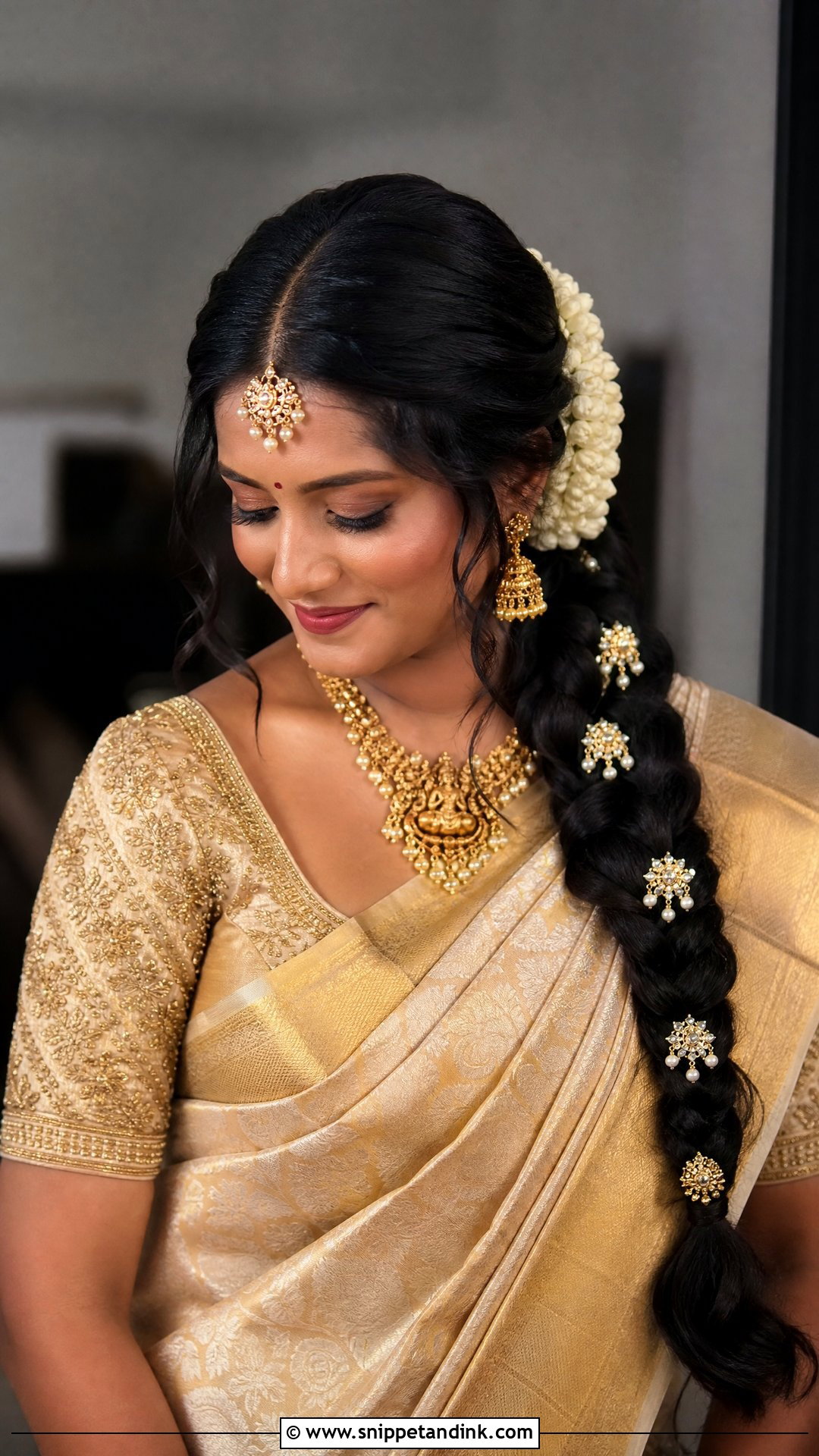
With a saree, the braid has to manage the pallu as well as the jewelry, and it handles both well. Silk, organza, chiffon and designer sarees all work. A gajra along the braid or around a low bun reads traditional; a soft braid with pearl pins reads modern. A center part is the natural partner for a maang tikka. Chiffon slides, so if your pallu is light I’d pin it to the braid at the shoulder.
11. French Braid With Dupatta For Indian Wedding
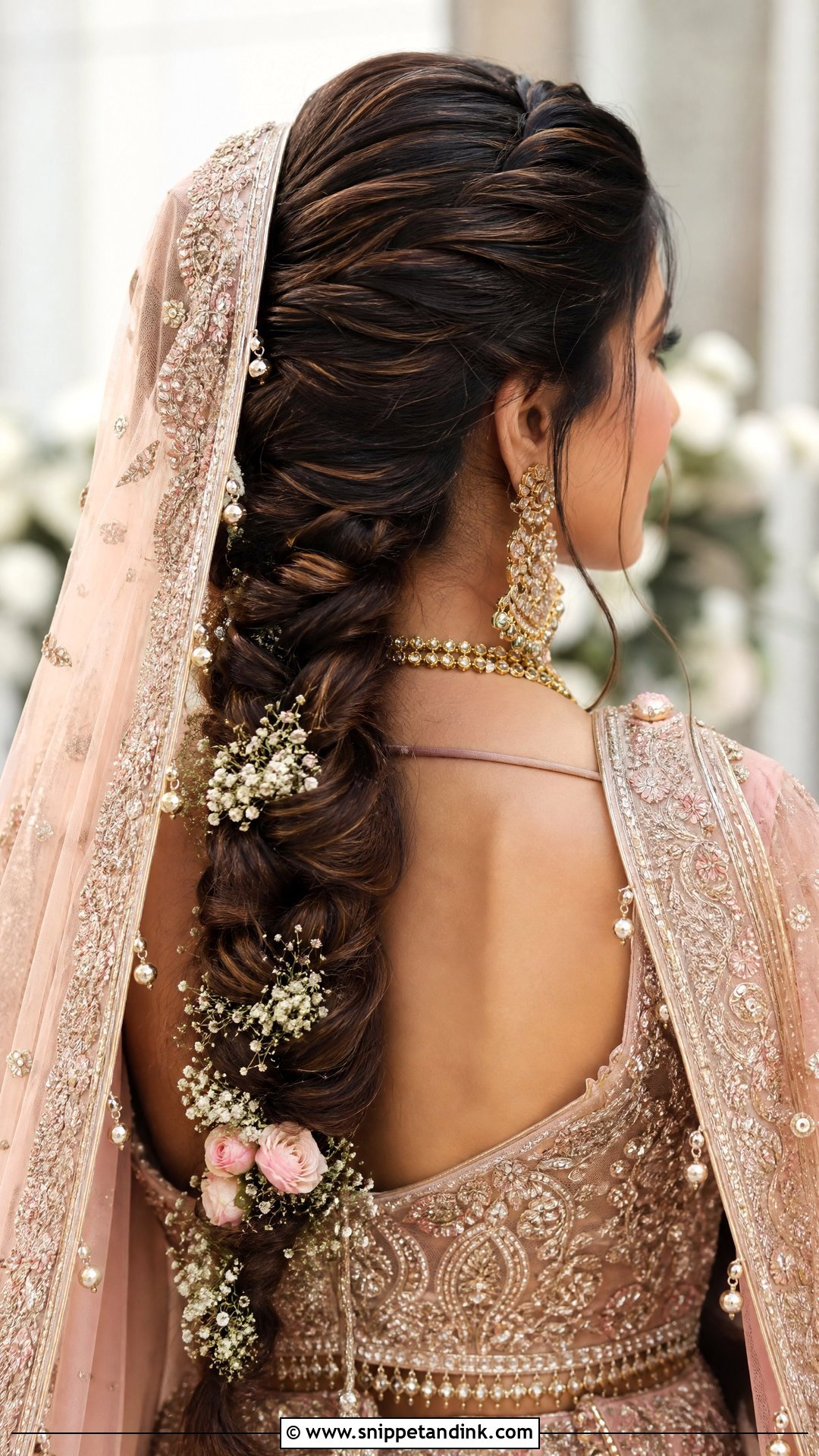
Heavy bridal dupattas are the real test of a hairstyle, and a French braid makes dupatta placement much easier. I keep the top of the braid sleek and low-profile so the fabric sits comfortably over the crown, with the rest of the braid visible down the back or over a shoulder. Strong pins go in at the crown where the dupatta is anchored, and I keep bulky accessories away from that spot. Flowers and jewelry go lower on the braid, where they’ll still show.
12. French Braid Ponytail For Indian Wedding
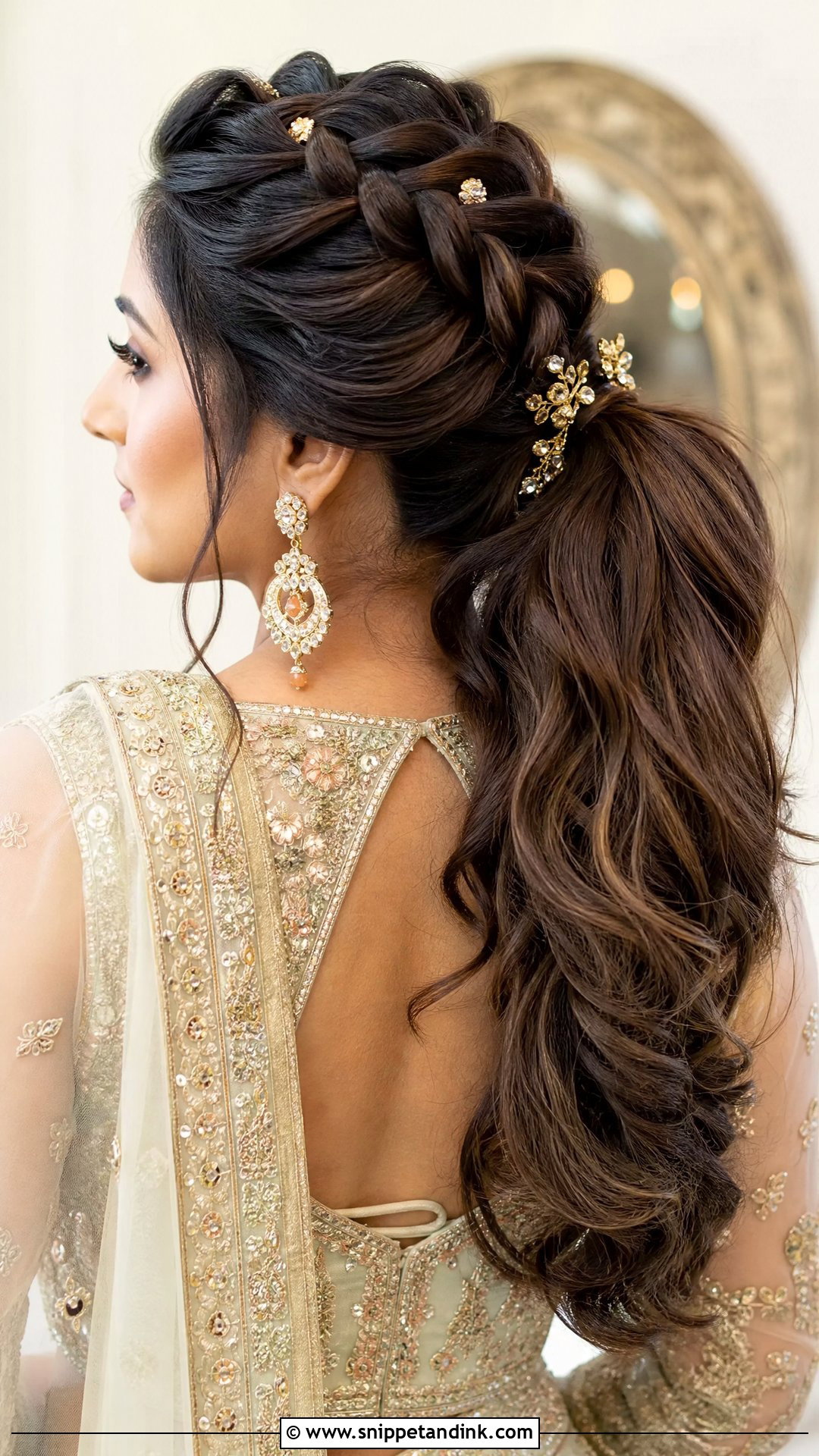
Sangeet, mehendi and receptions are where comfort matters most, and a braided ponytail is easy to wear through hours of dancing. The braid adds detail at the crown; the pony adds bounce. Sleek, wavy or curled all suit lehengas, shararas and fusion outfits. Wrap a small section around the elastic to hide it, and add gold clips or small flowers along the braid. Pull the pony tight at the base, since a loose one droops after an hour of dancing.
13. French Braid Half Up For Indian Wedding
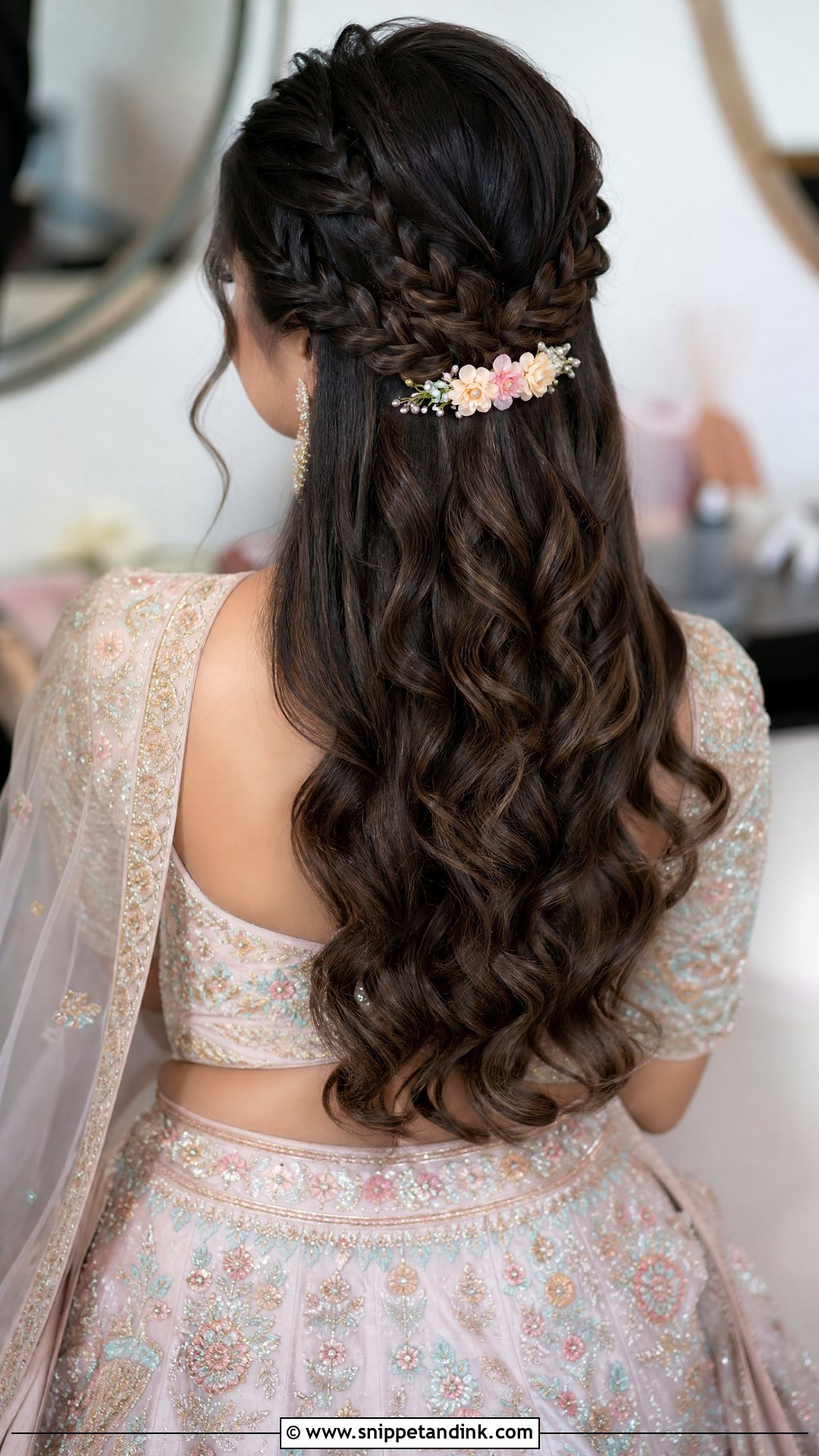
Half-up suits the softer events: mehendi, the engagement and bridesmaid looks. Braids from both sides or from the crown meet at the back, with the open hair falling in waves or curls. A hair chain or tiny flowers can sit where the braids join. I’d keep the open hair smoothed, because with a lighter dupatta and a flowy lehenga, frizzy lengths are the first thing you notice in photos. It’s less suited to the main ceremony if you’ll wear a heavy dupatta all day.
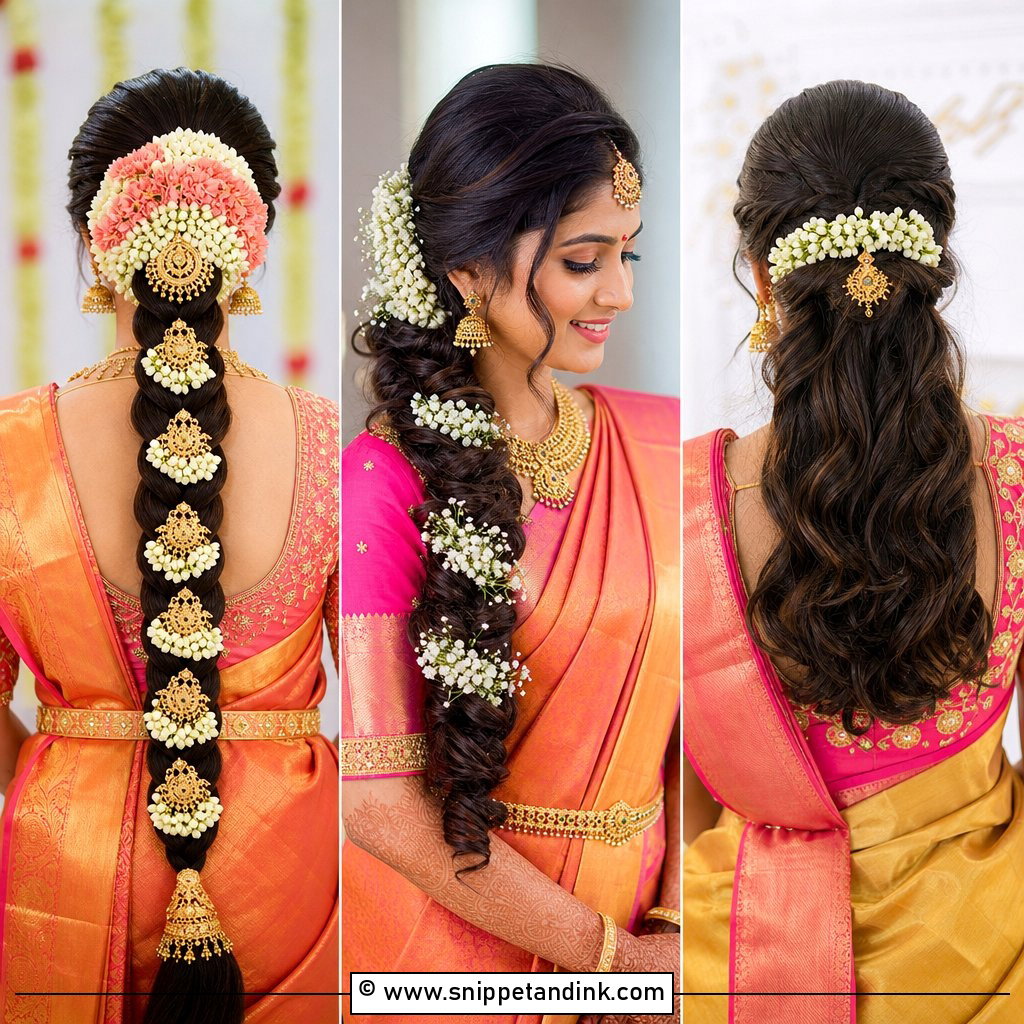
14. French Braid With Jada Accessories For Indian Wedding
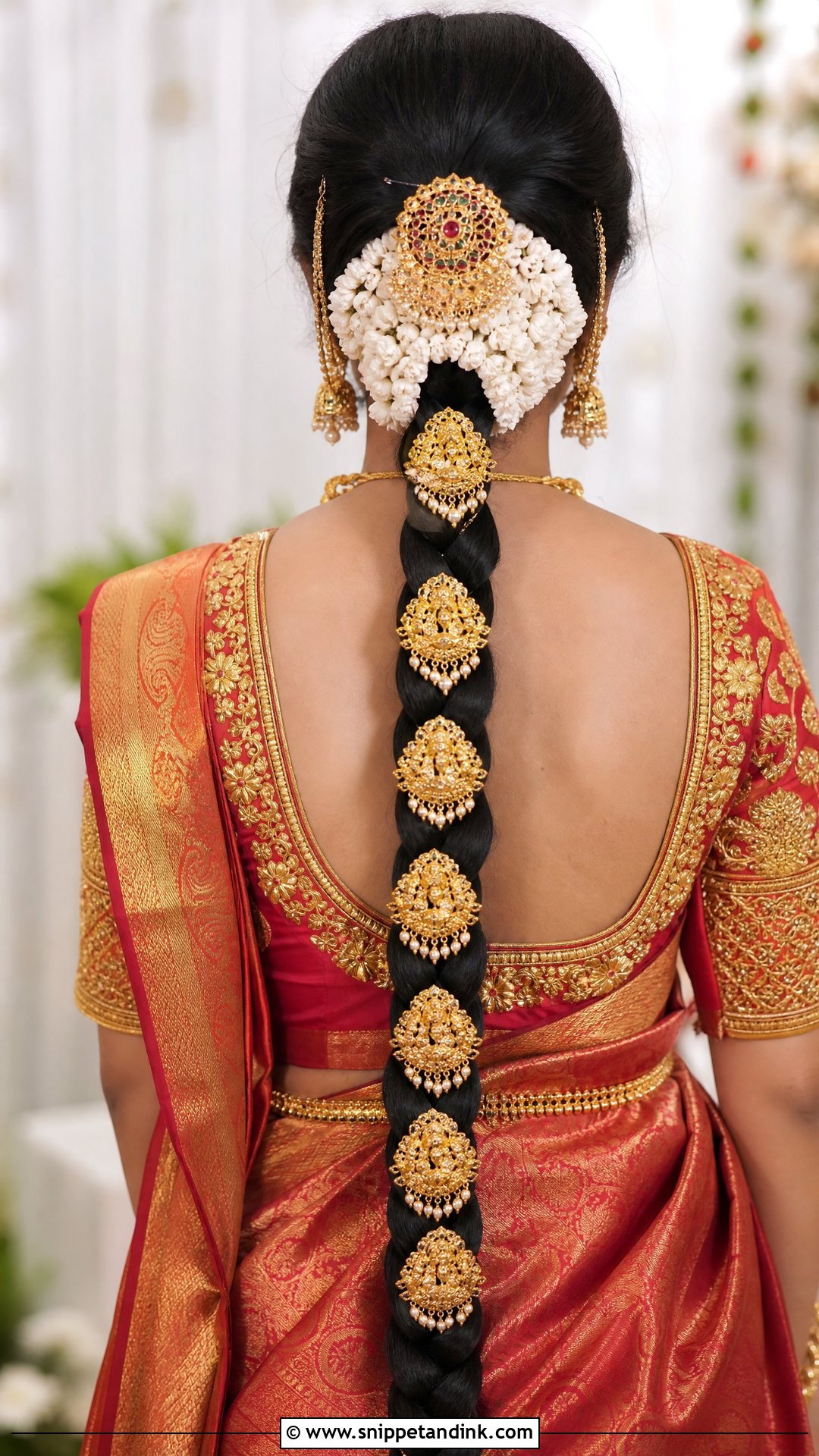
The jada is the centerpiece here, and the braid underneath has one job: carrying its weight. This look blends South Indian bridal tradition with a French braid base that lifts and controls the crown, while the jada pieces run down the length in gold, pearls, flowers or temple details. Kanjeevaram sarees and temple jewelry are its natural match. It needs long hair or extensions, and I braid it firmly so it doesn’t sag. A neat center part, maang tikka and jasmine complete it.
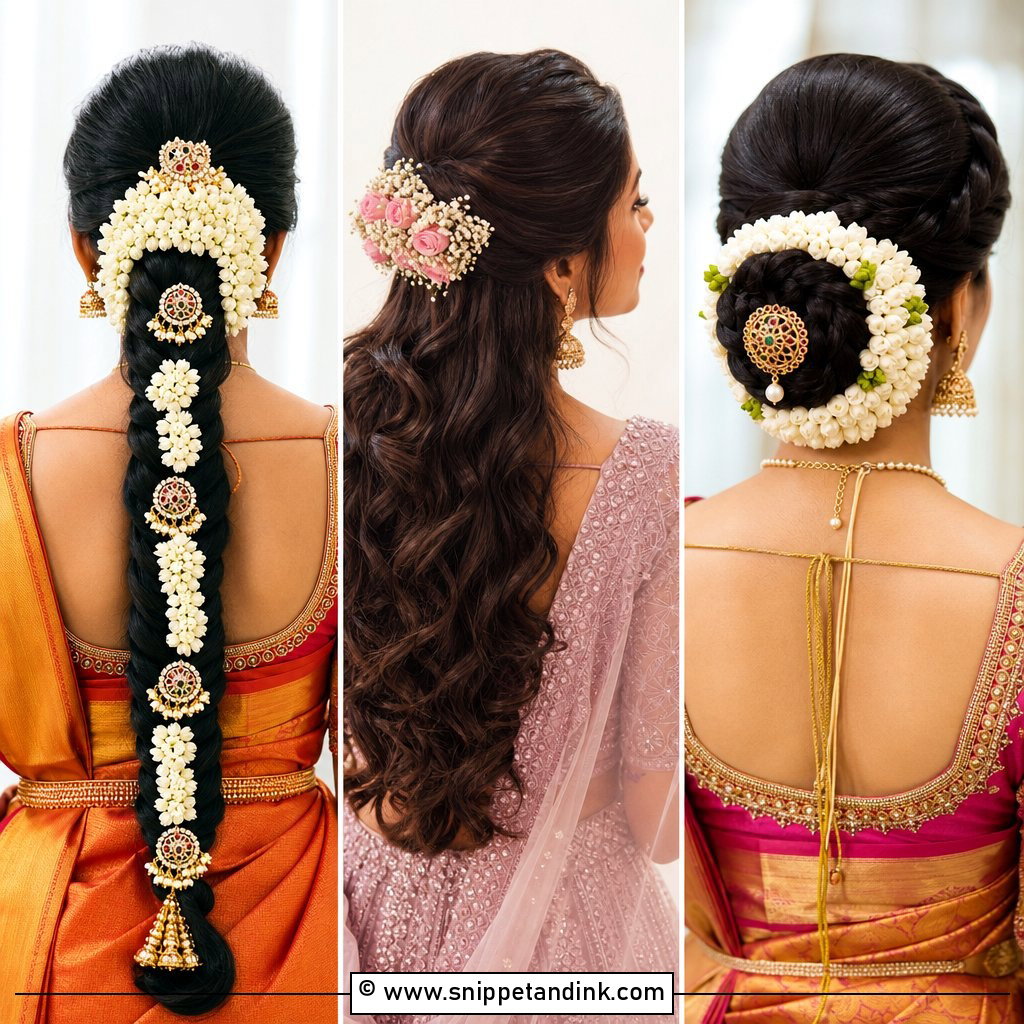
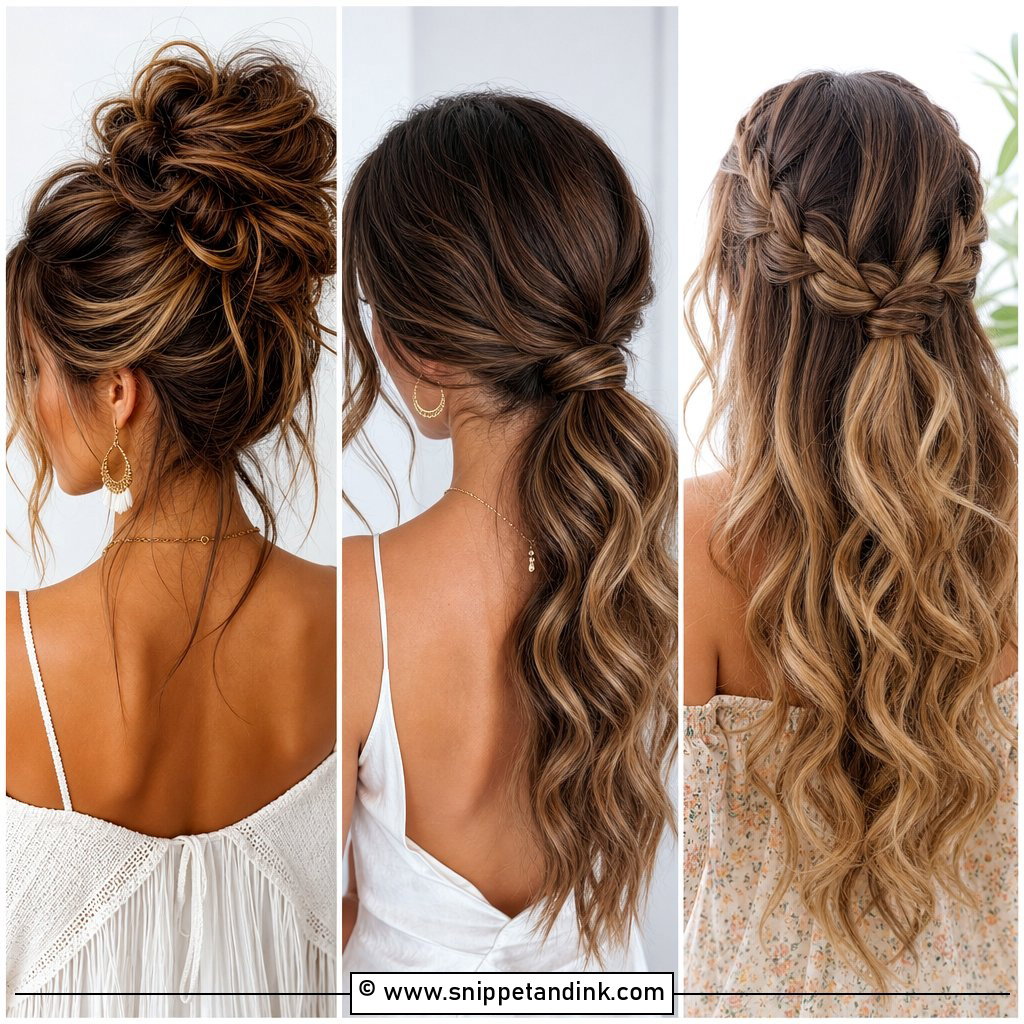
15. French Braid Crown For Indian Wedding
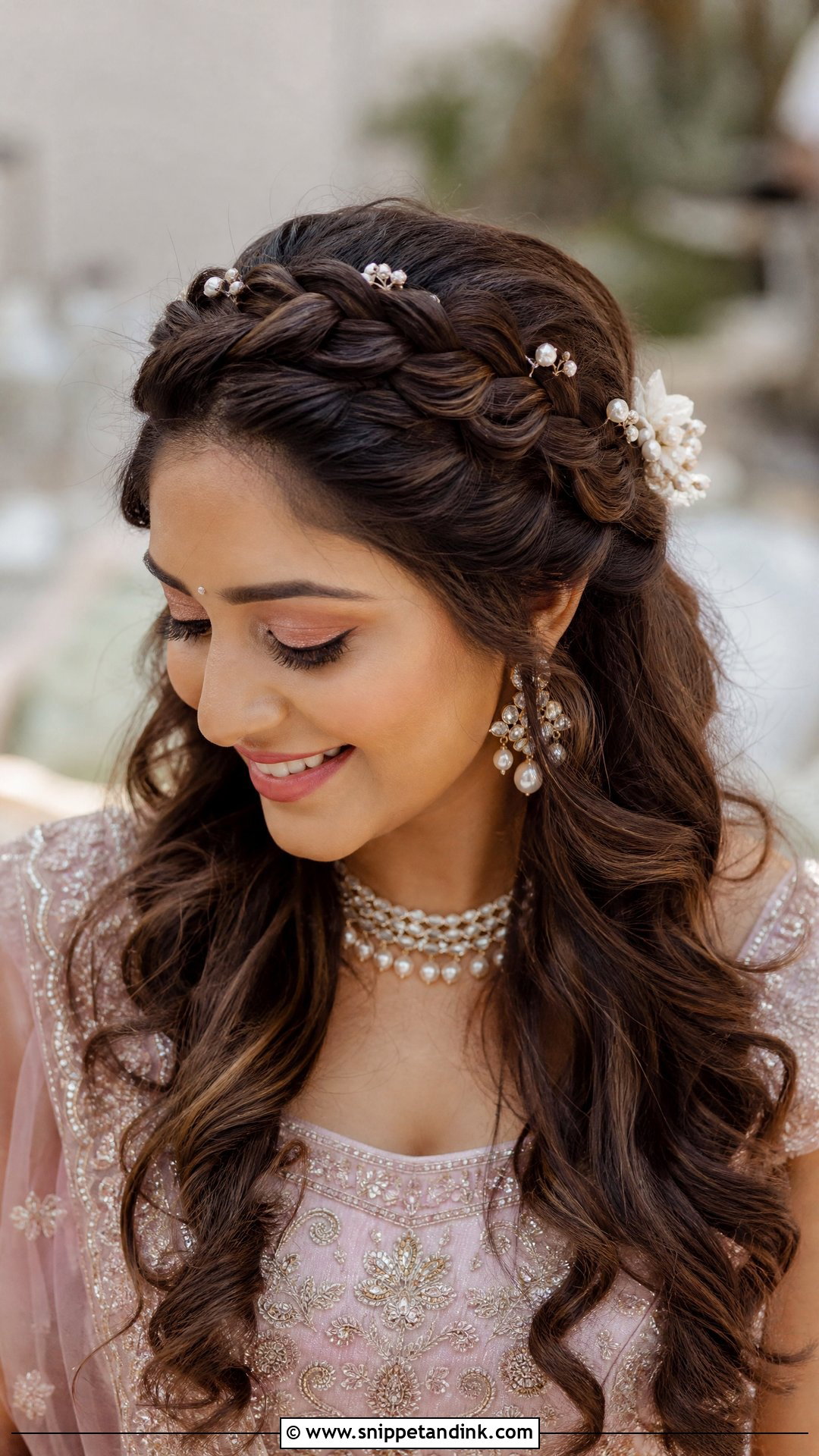
Wrapped around the crown or worn across the front like a headband, the braid frames the face and then blends into a bun, braid or curls. I’d suggest this one more for bridesmaids, sisters and pre-wedding functions than the main ceremony, since a dupatta covers most of it. Floral jewelry, pastel outfits and soft glam suit it. Keep the braid slightly lifted so it doesn’t look flat on camera.
Adding Length for a Long Choti or a Heavy Jada
Many of the longest bridal braids in photos aren’t all natural hair. A full jada, a waist-length gajra braid or a dramatic paranda look need length and thickness, and plenty of brides add extensions to get there.
- Match the shade in daylight. Indian hair is rarely flat black, and an inky extension against warm brown hair shows in close-ups.
- Clip-in wefts are usually enough. They sit under the braid near the nape and come out at night.
- Weight adds up fast. Extensions, flowers, a jada and pins together pull hard on the scalp, so wear the full set at your trial for at least an hour and tell me if it aches.
- I anchor heavy accessories to the braid itself, never to the hairline, so the strain doesn’t sit at your temples.
With fine or short hair, a braided bun with gajra wrapped around it gives the same traditional feel at a fraction of the weight of a full-length choti.
Sleek for the Pheras, Softer for the Sangeet?
That’s how most brides end up using the French braid: firm and polished for the long ceremony, looser and more playful for the evenings. The braid itself barely changes. What changes is the finish, whether that’s a gajra, a paranda, pearl pins, a bun at the nape or a jada running the full length. Plan each function against its outfit, jewelry and dupatta, and test the heaviest version at your trial so you know how it feels after a few hours. With good prep and the right pins, a braid stays comfortable all day and holds its shape in every photo.
You'll Like These Ideas:


Leave a Reply