
In a South Indian wedding the hair carries more than style. It carries flowers that have to stay fresh through a long muhurtham, gold that adds real weight to the scalp, and a back view that the camera sees during every ritual. That is why I plan bridal hair here from the back first. The looks below run from jasmine-covered braids and full Poolajadas to fishtails, buns and open curls for the reception, so there is something for most hair lengths and every function. All of these South Indian bridal hairstyles are designed to sit with silk sarees, temple jewellery and gold ornaments, and I’ve noted where each one is easy to wear and where it asks more of you.
What Holds a Jada Full of Flowers in Place for Hours
Most of the braids below carry fresh flowers, and many carry gold too. Before you fall for one, it helps to know how they are built, because the structure decides how comfortable you will be at hour five of the ceremony.
Length and thickness
A traditional Jada is often longer and thicker than most brides’ natural hair. I blend in a braided extension (a jada or choti) that matches your hair colour, so the flower panel has a full braid to sit on. Very short hair can still wear a Jada this way, as long as there is enough at the nape to anchor it.
Weight
Fresh flowers and gold add up quickly. I spread the load across several anchor points and build heavy panels on a base rather than pinning them straight into your hair. If you get headaches easily, tell me at the trial; we can swap some gold for lighter pieces or use more buds than full blooms.
Jasmine timing
Jasmine buds open through the day and brown where they are handled or squeezed. I order strings for the morning of the wedding and keep them wrapped in a damp cloth in a cool place until styling. Strings bought the evening before are often fully open and tired by the muhurtham.
Hair preparation
Wash the day before and skip the oil. Oiled hair is lovely for everyday care, but on the day it makes pins slip, flowers slide and jasmine stain.
1. Traditional Poolajada Braid
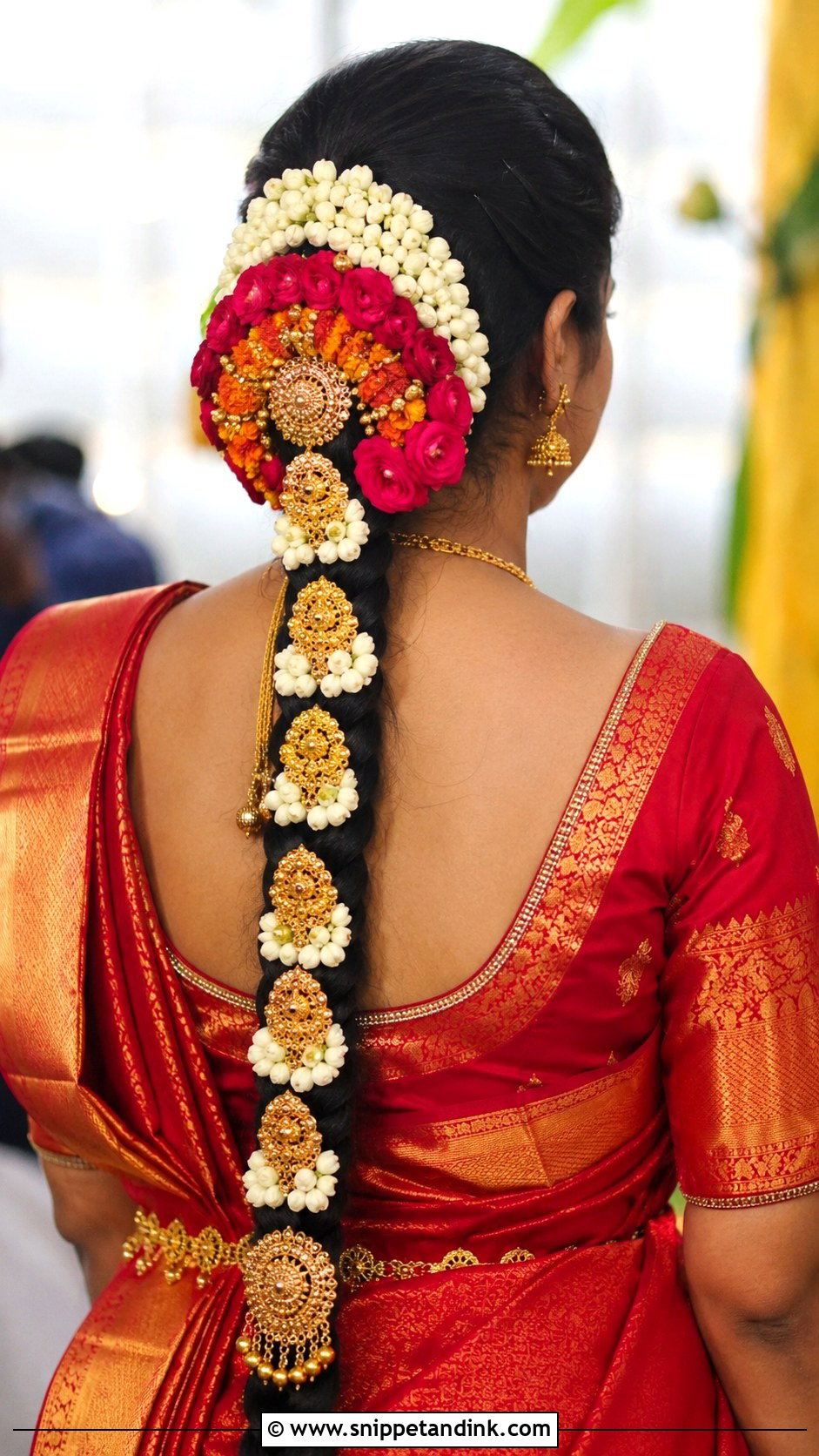
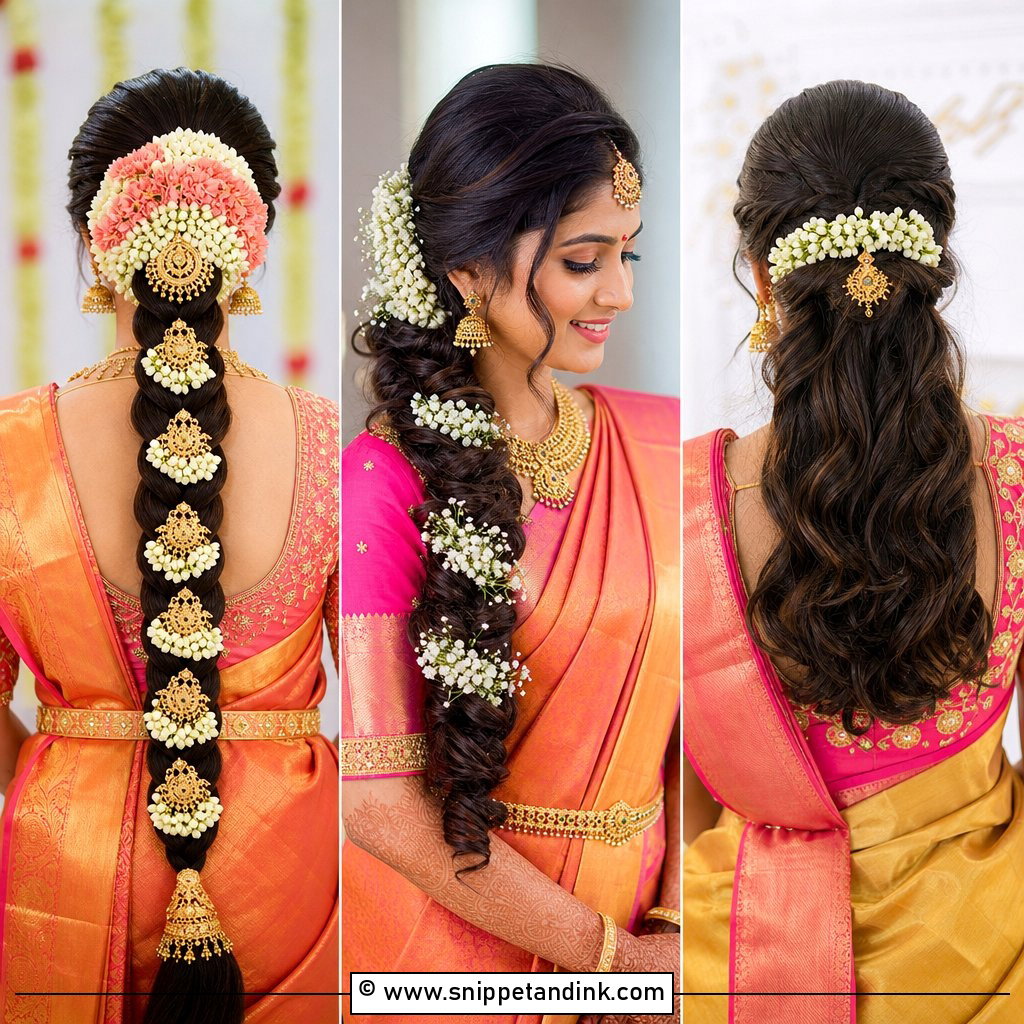
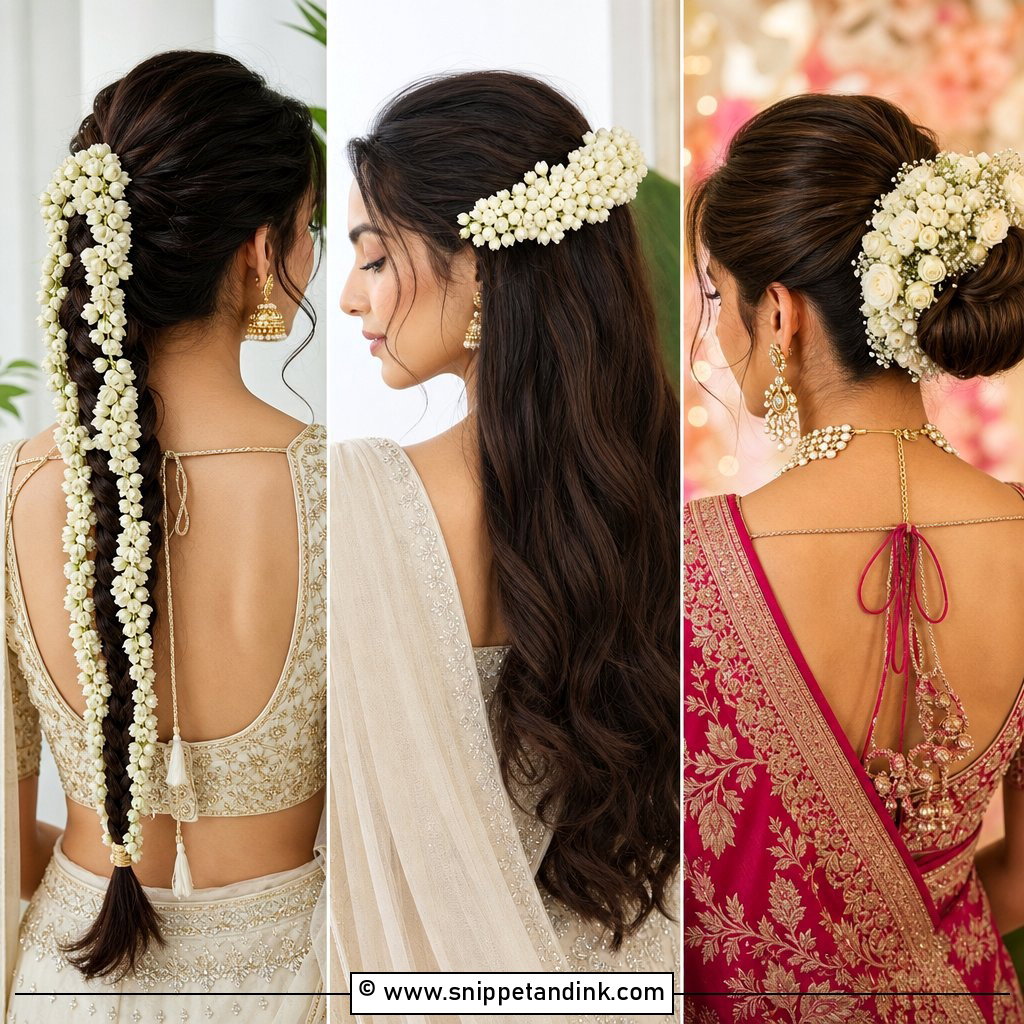
The Poolajada is a single thick braid down the back, covered in rows of jasmine, roses and marigolds, often with gold ornaments set along its length. On most brides I add a braided extension to reach the length and thickness the flowers need, and I build the flower panel on a separate base so the weight sits on that base rather than pulling at your own roots. Expect two to three hours for the hair alone. It belongs with a heavy Kanjeevaram and temple jewellery, and it is the one style I tell brides to wear for a full practice session, because some find the weight tiring by the end of the ceremony.
2. Jasmine Flower Bun
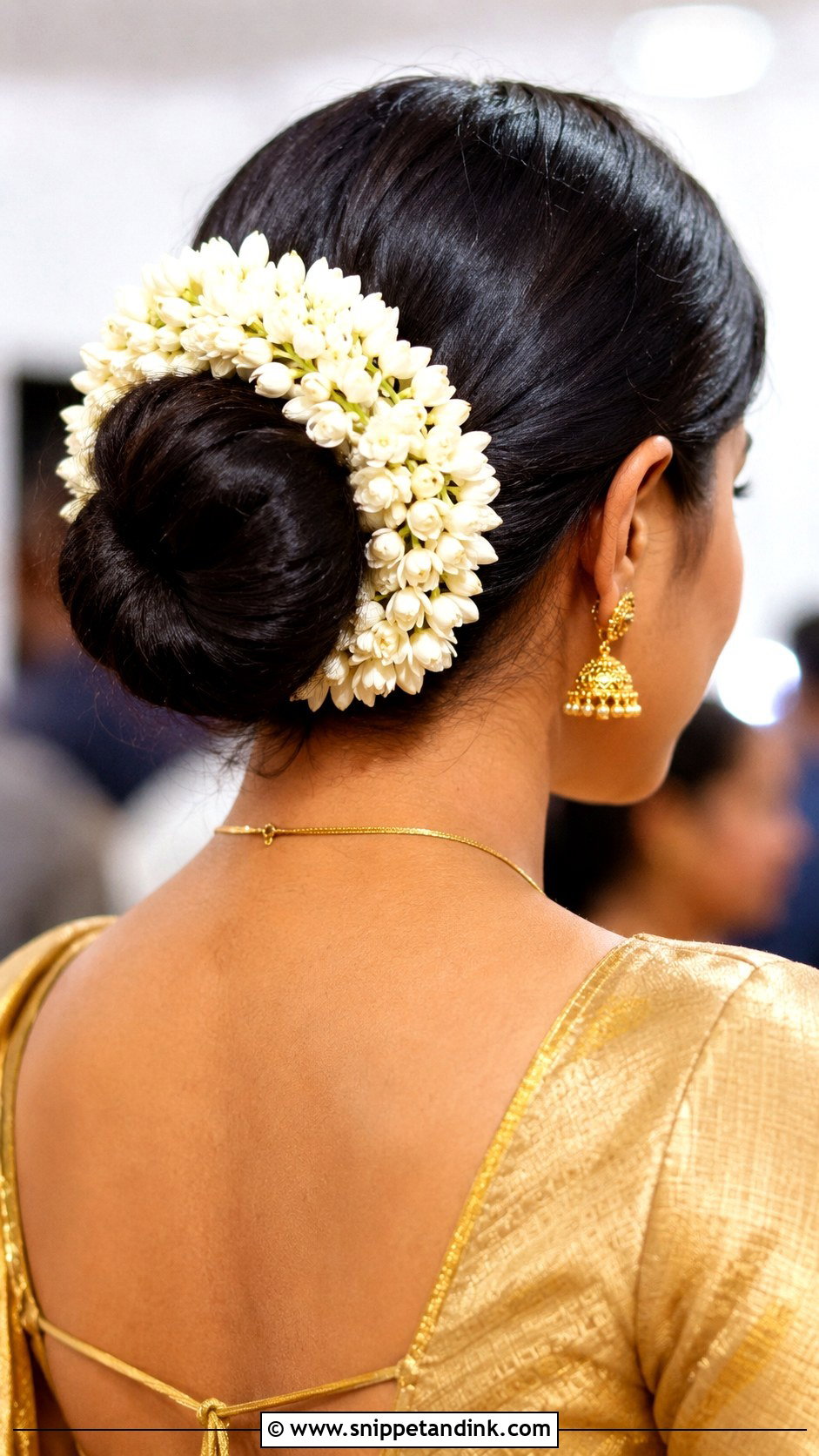
A rounded bun at the nape wrapped in circles of jasmine gajra is the fragrant classic, white against dark hair. I build the bun on a padded donut or a bun of your own back-combed hair so the gajra has something firm to grip; on a soft bun the strings slide down by noon. It keeps hair off the face for morning rituals and lets jhumkas and maang tikka show. A few rosebuds add colour if you want it. It is understated, and that is its strength.
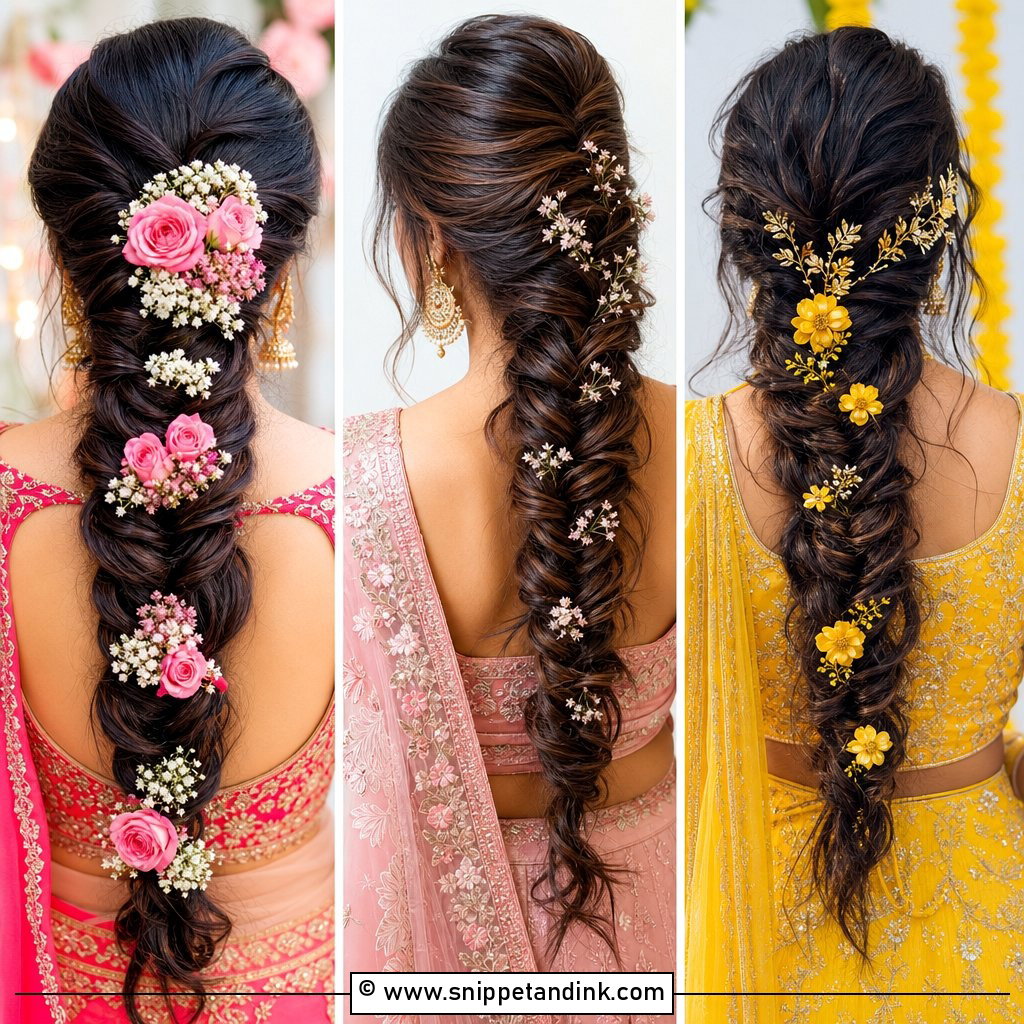
3. Side Fishtail Braid With Flowers
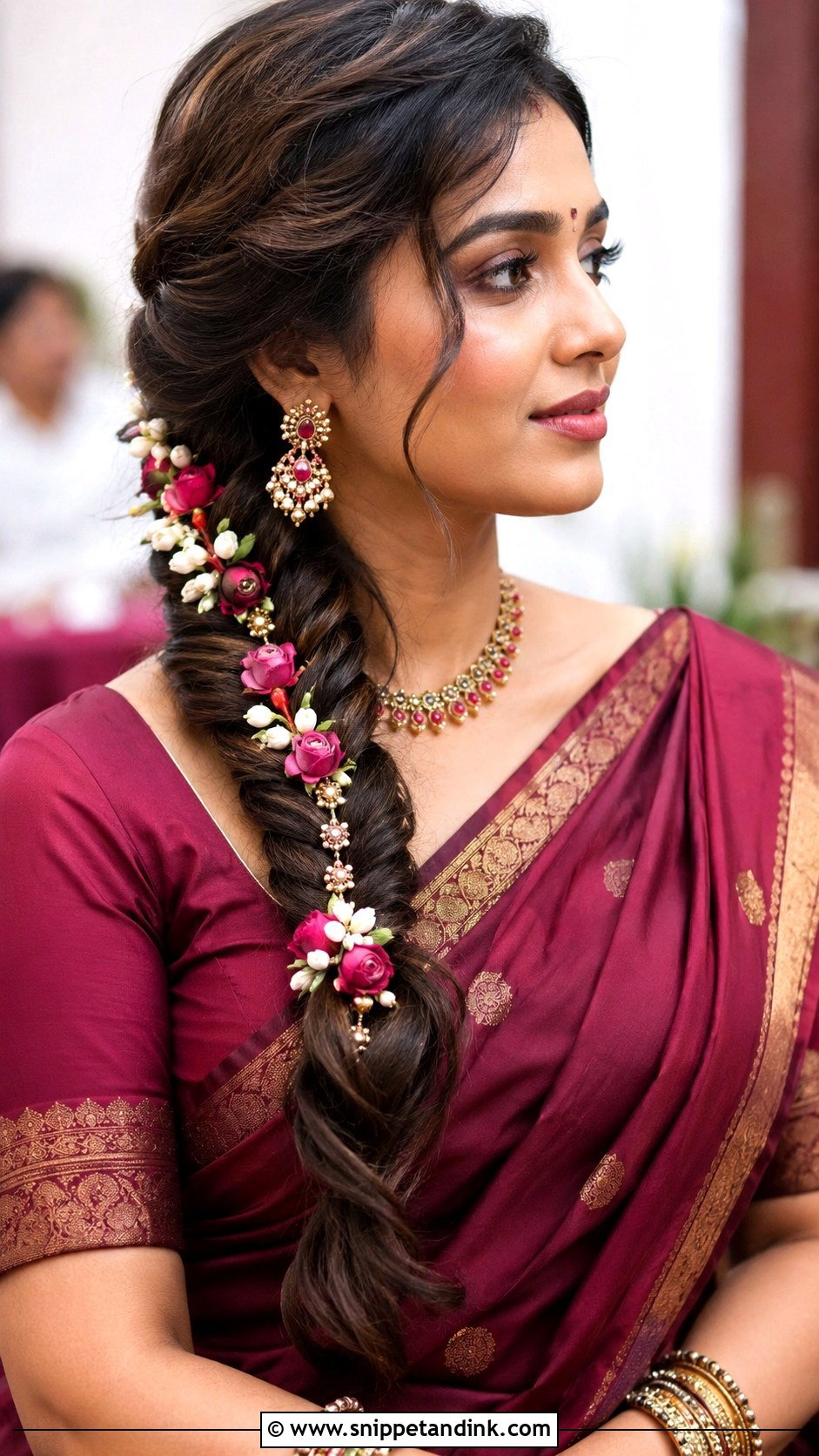
A side fishtail looks intricate because it is: many small strands crossed over each other, draped over one shoulder. South Indian brides usually keep it snug and add rosebuds, jasmine and gold beads into the weave. I build it slightly looser than the final look and then pull out the edges, because a tight fishtail looks thin in photos. It flatters round and oval faces and works for both the ceremony and the reception. Very layered hair struggles, as shorter pieces poke out of the weave unless I add a clip-in underneath.
4. Floral Bun With Gajra
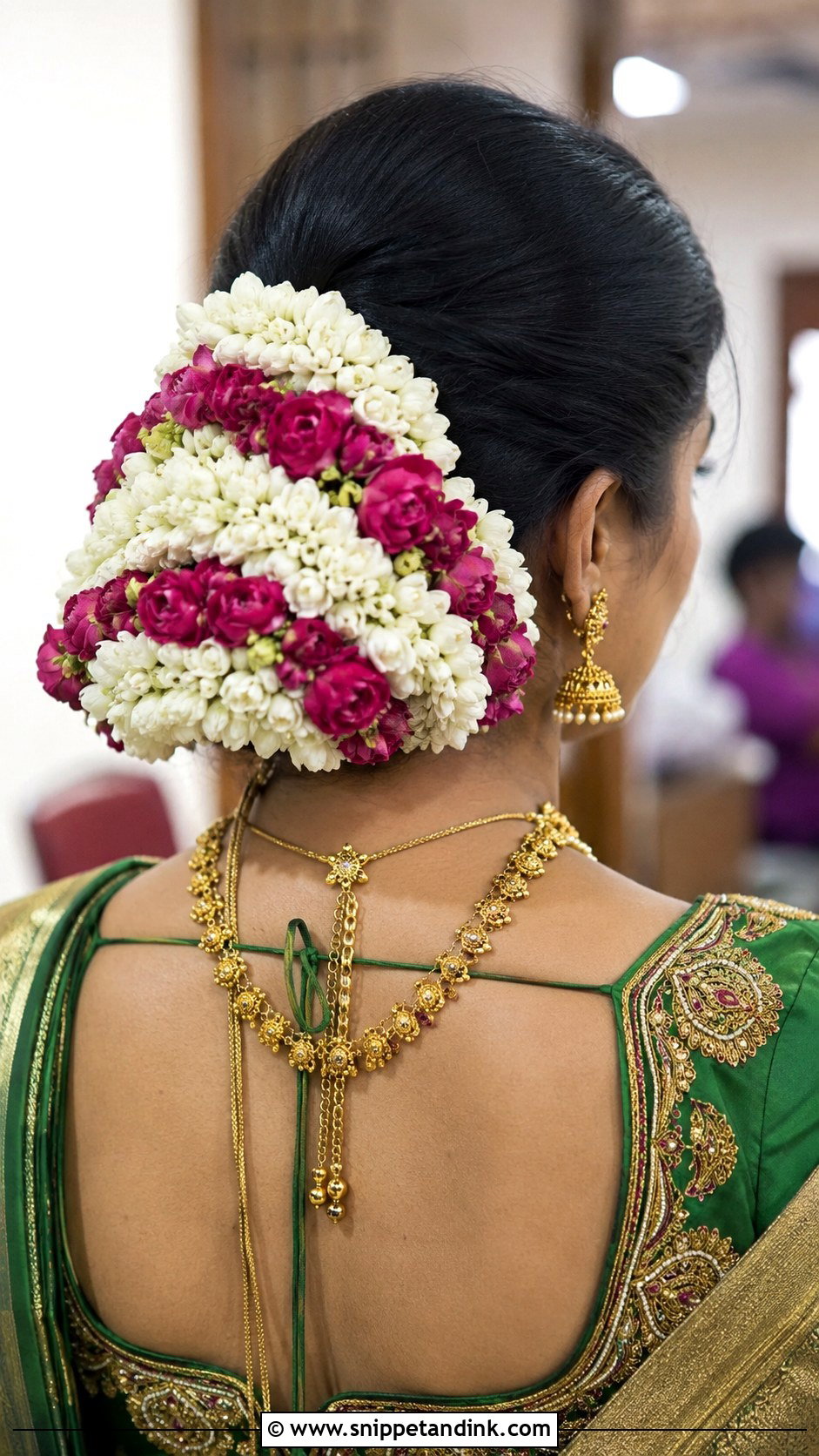
For a floral bun, I set a low bun at the nape and wrap jasmine and rose gajra around it in layers until the hair barely shows. It balances a heavily embroidered saree because the eye splits between outfit and hair instead of everything competing at the neckline. You can go full coverage or keep it to a few rows. I pin each gajra in at least three points with U-pins rather than bobby pins, because U-pins hold flowers without crushing them. It stays comfortable through a long ceremony.
5. Half-Up Half-Down With Curls
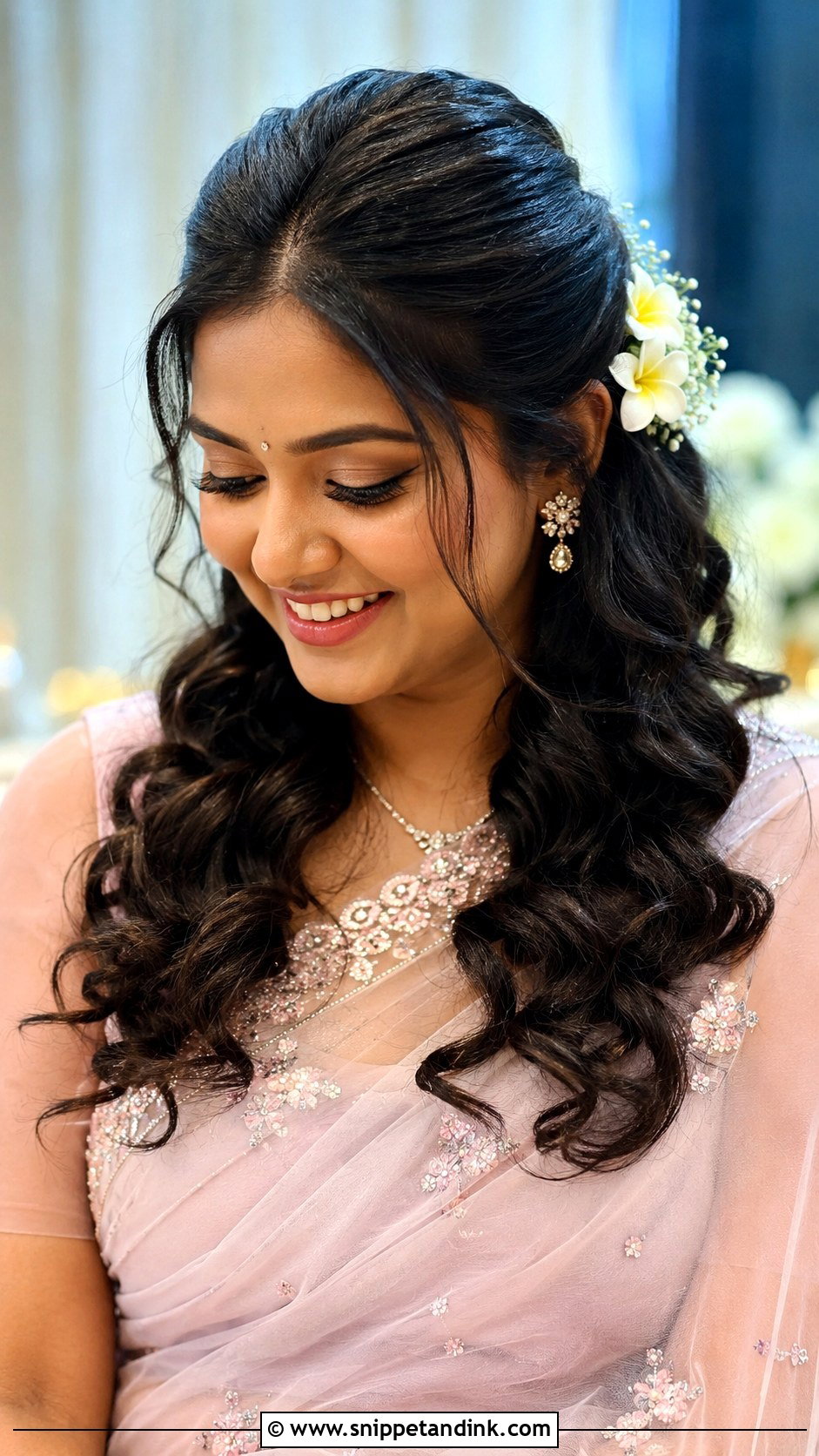
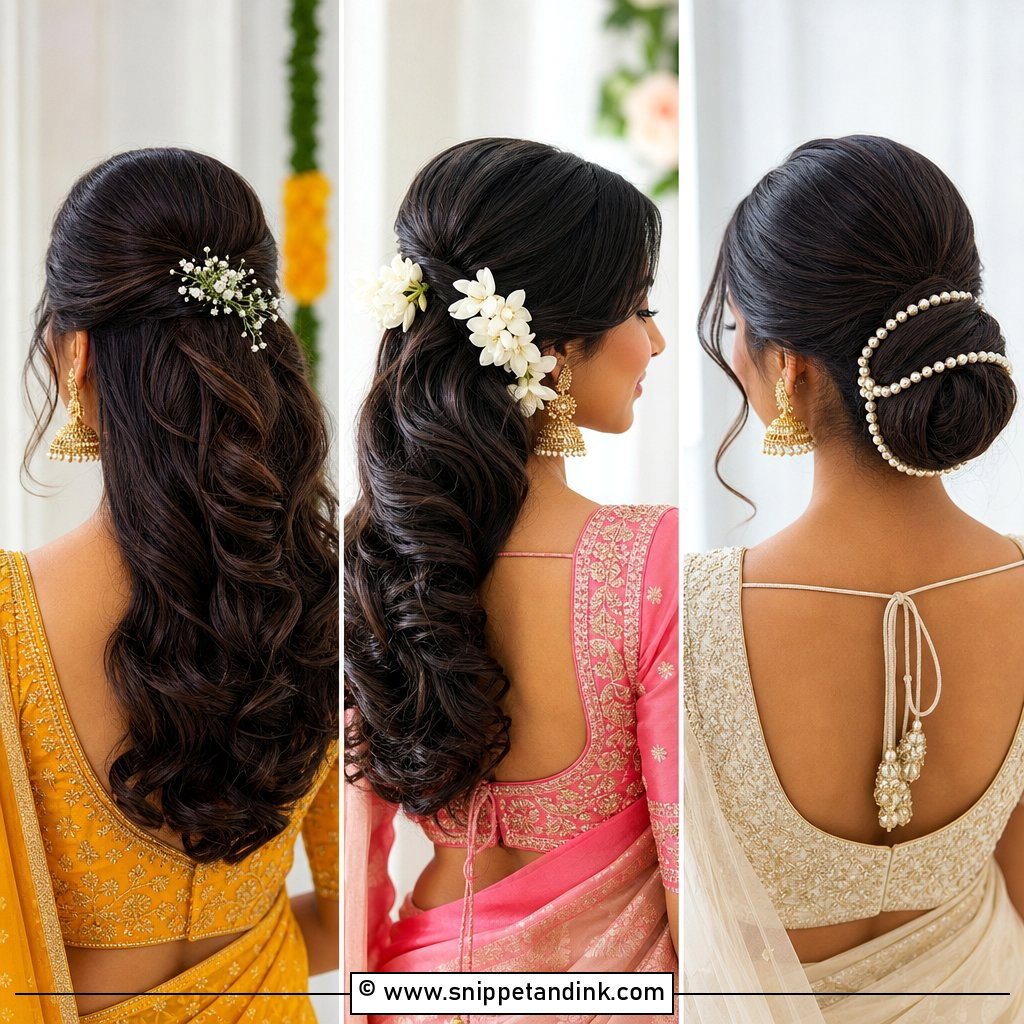
The crown is backcombed and pinned into a soft puff or semi-bun, and the lengths below fall in loose curls. A centre parting frames the face, and frangipani or a gold barrette finishes it. It suits receptions and engagements more than the muhurtham, where most families expect hair up or braided. Curls in heavy, straight hair drop fast, so I set them with heat and let them cool pinned up before brushing them out, which buys several more hours of shape.
6. Kerala Bridal Long Braid
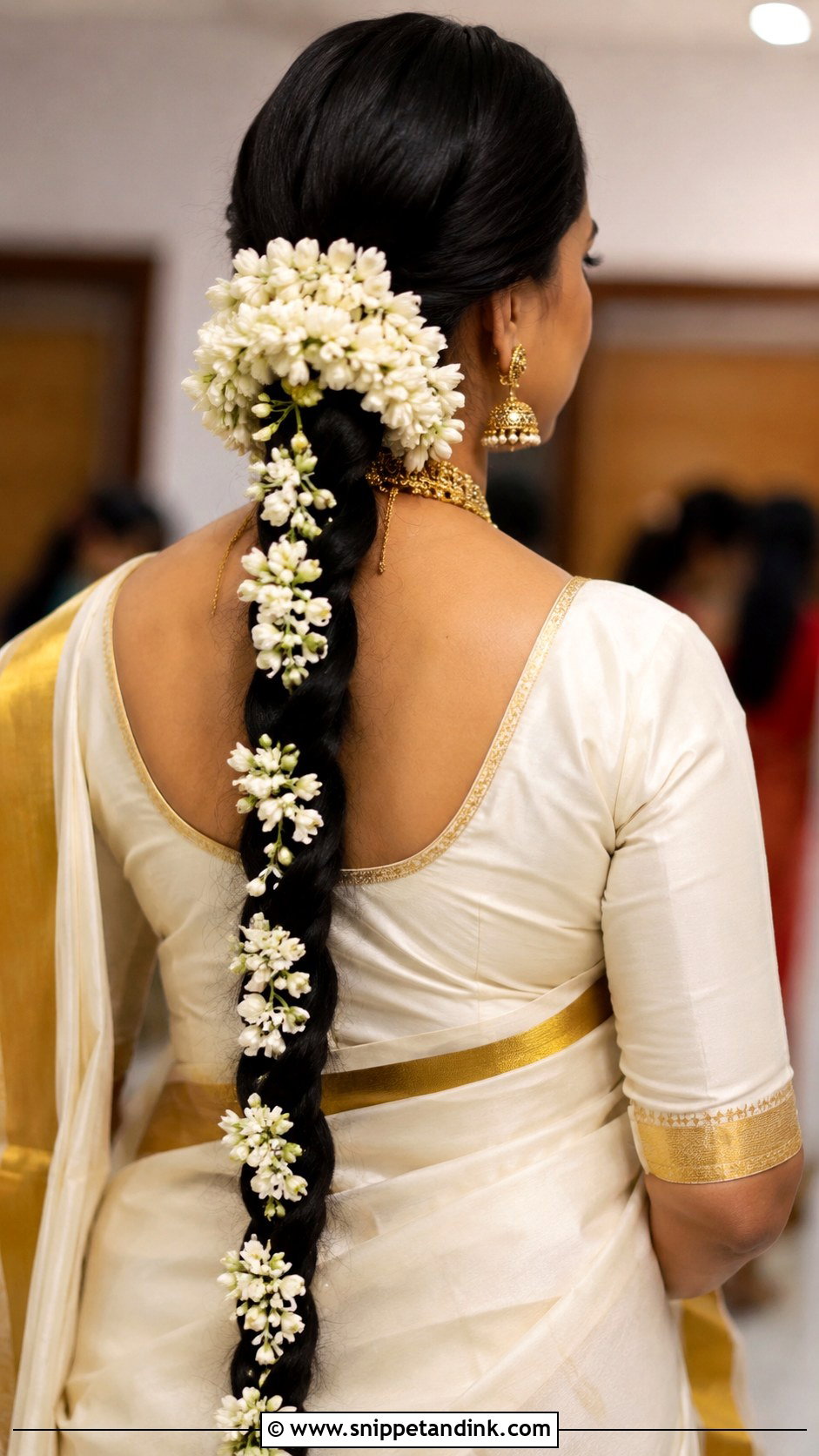
The Kerala bridal braid is a long, sleek braid threaded with jasmine from top to bottom, made to sit with a cream-and-gold Kasavu saree. Accessories stay minimal and the flowers do the work. The sleekness depends on preparation: I smooth the hair with a light serum before braiding, never oil on the day, since oil makes flowers slip and darkens the jasmine where it touches. It is the natural choice for temple weddings and traditional Hindu ceremonies.
7. Bubble Braid With Roses
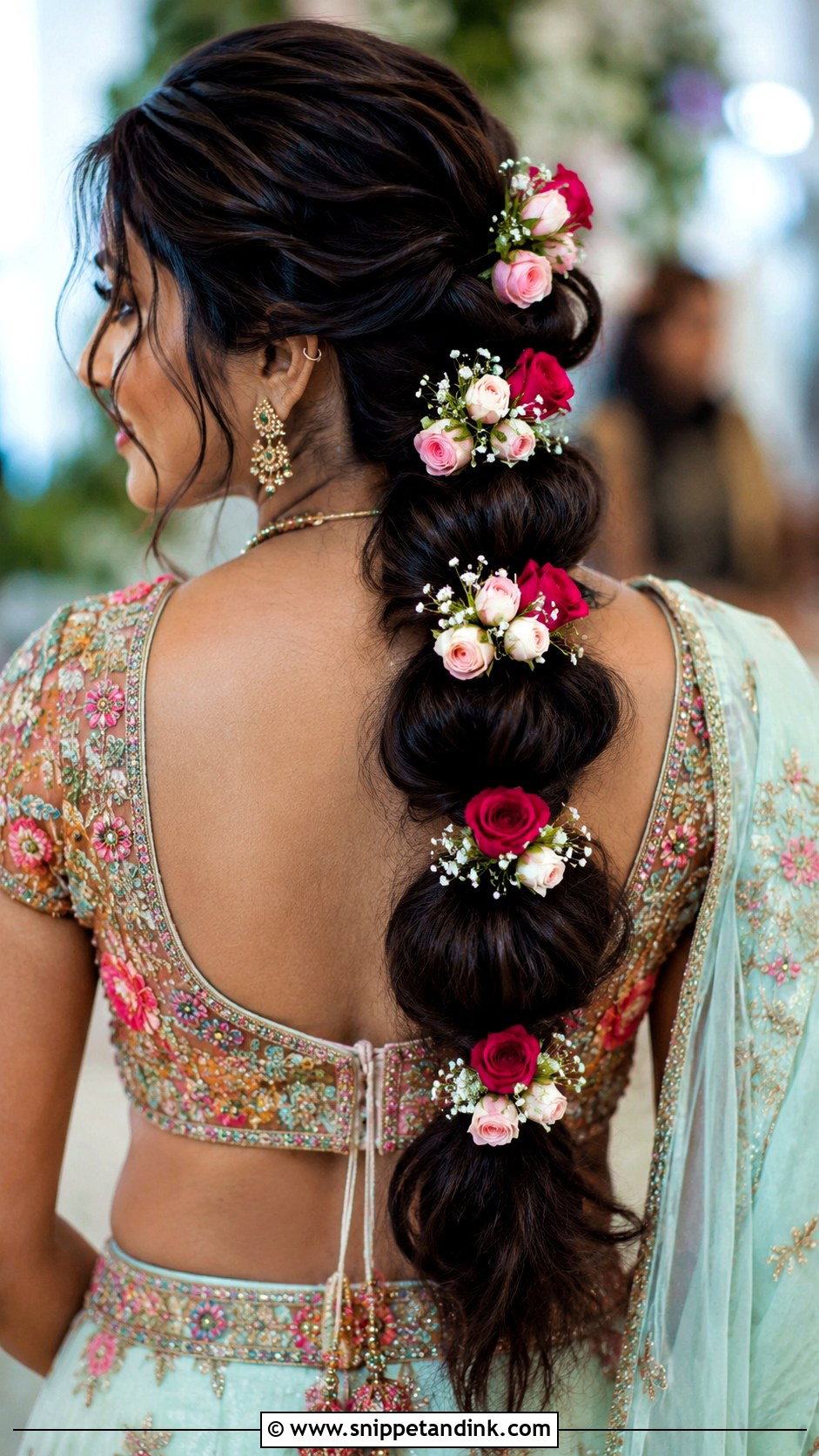
A bubble braid is hair tied off at intervals and gently pulled into rounded sections down its length, each one decorated with roses of different sizes. It is far lighter than a full Poolajada, so I suggest it for mehndi or sangeet when the bride wants flowers without the weight. Clear elastics disappear better than coloured ones, and I wrap a small strand of hair over each one. On fine hair the bubbles can look thin, so I backcomb each section lightly before pulling it out.
8. Maang Tikka With Open Curls
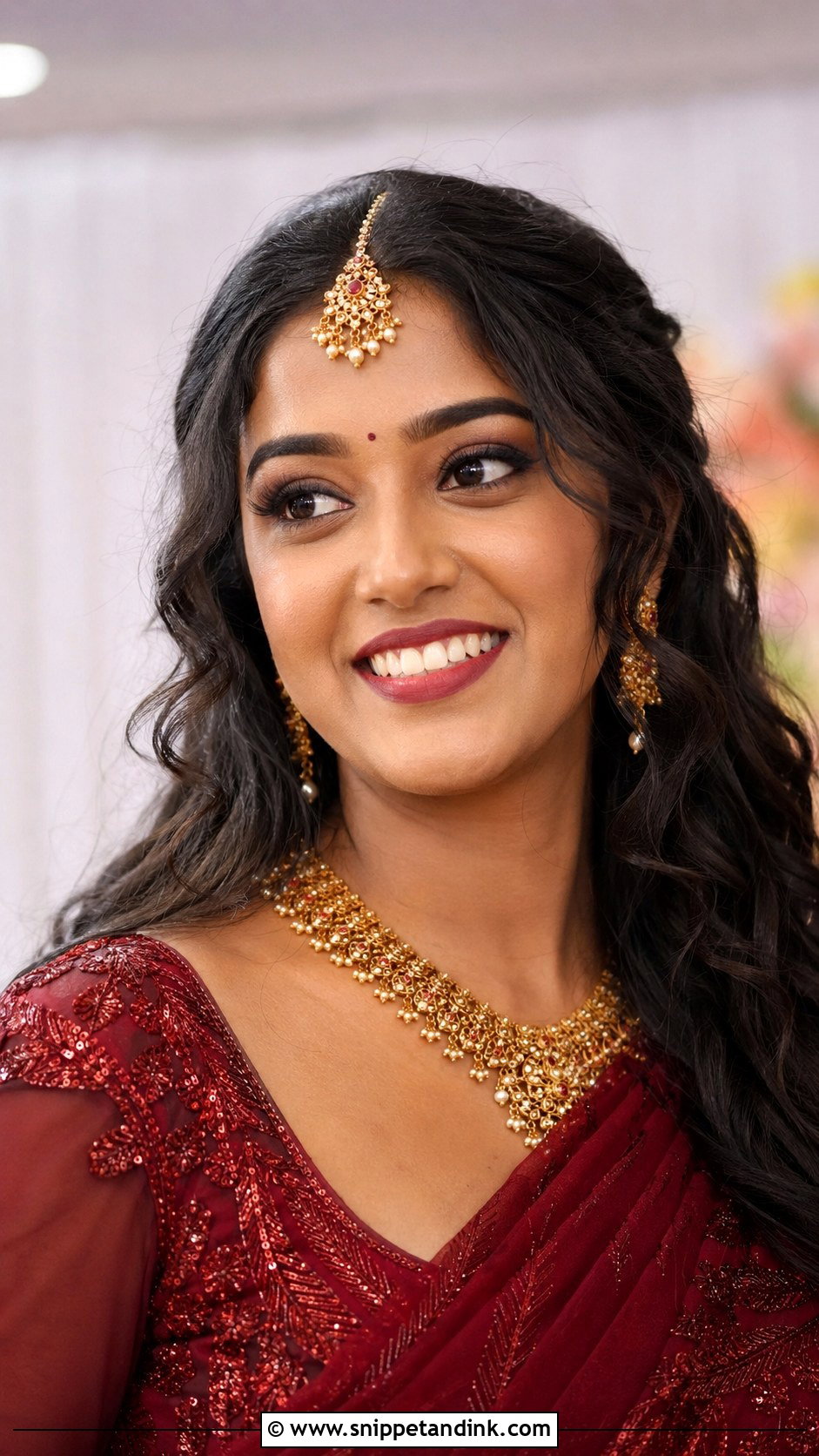
Open curls with a striking maang tikka is one of the simplest looks I do, and simple looks expose every flaw, so the curl has to be good. I curl in medium sections away from the face, then set them before brushing out for volume and movement. A centre or side part depends on your face shape and where the tikka sits. A few small flowers near the crown give a South Indian touch. Long hair suits it best, and in humid weather it needs a firm-hold spray or the curls loosen before dinner.
9. Temple-Inspired Jada
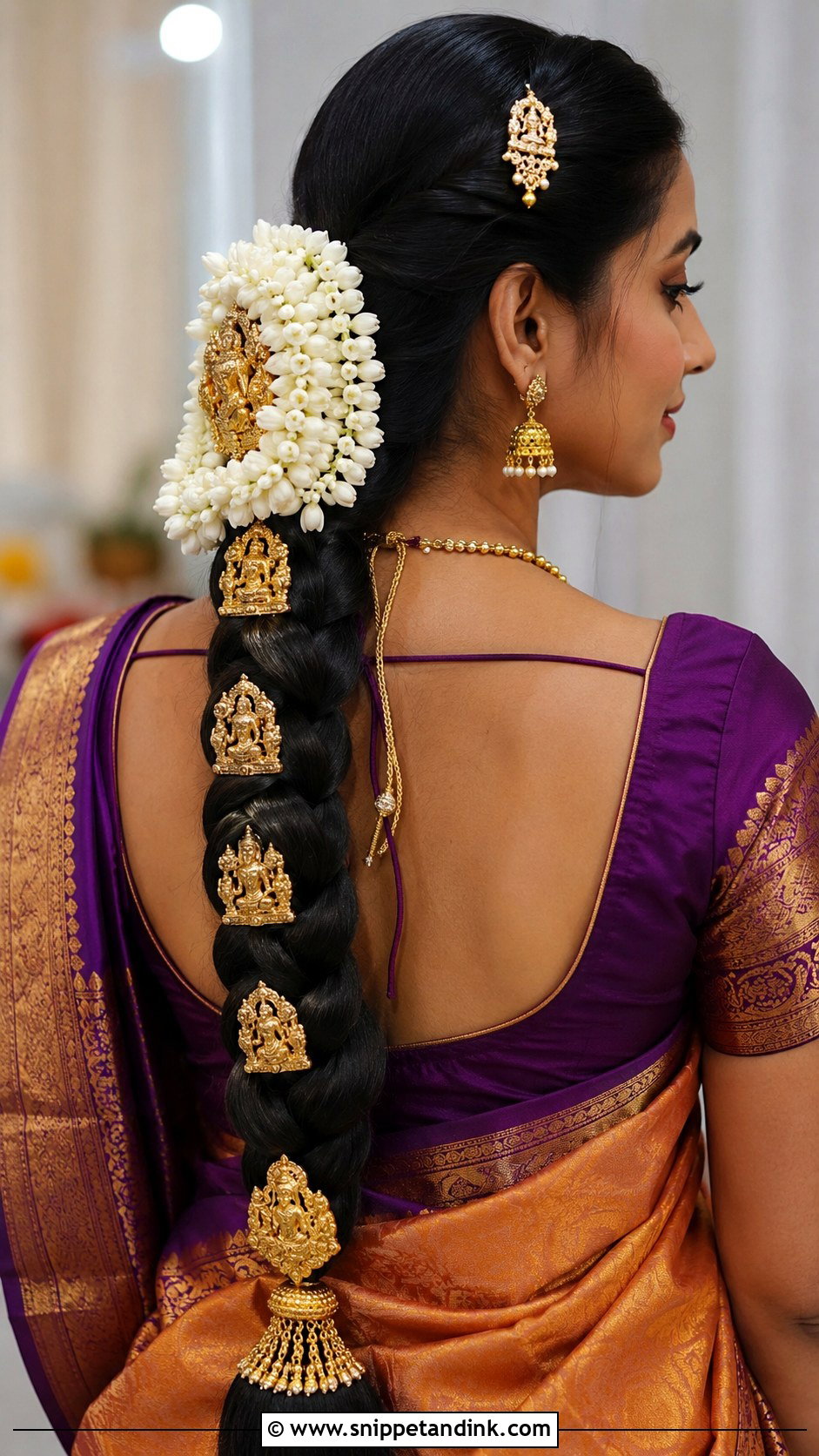
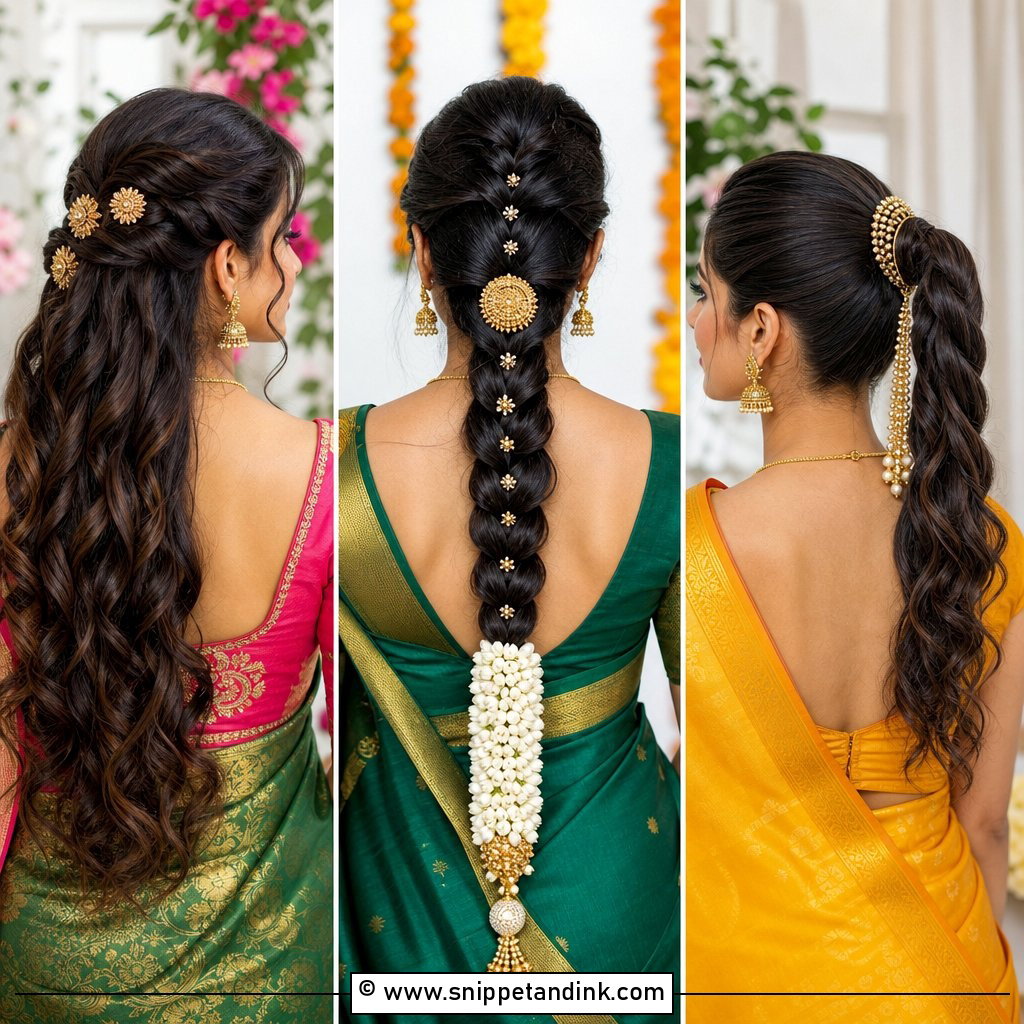
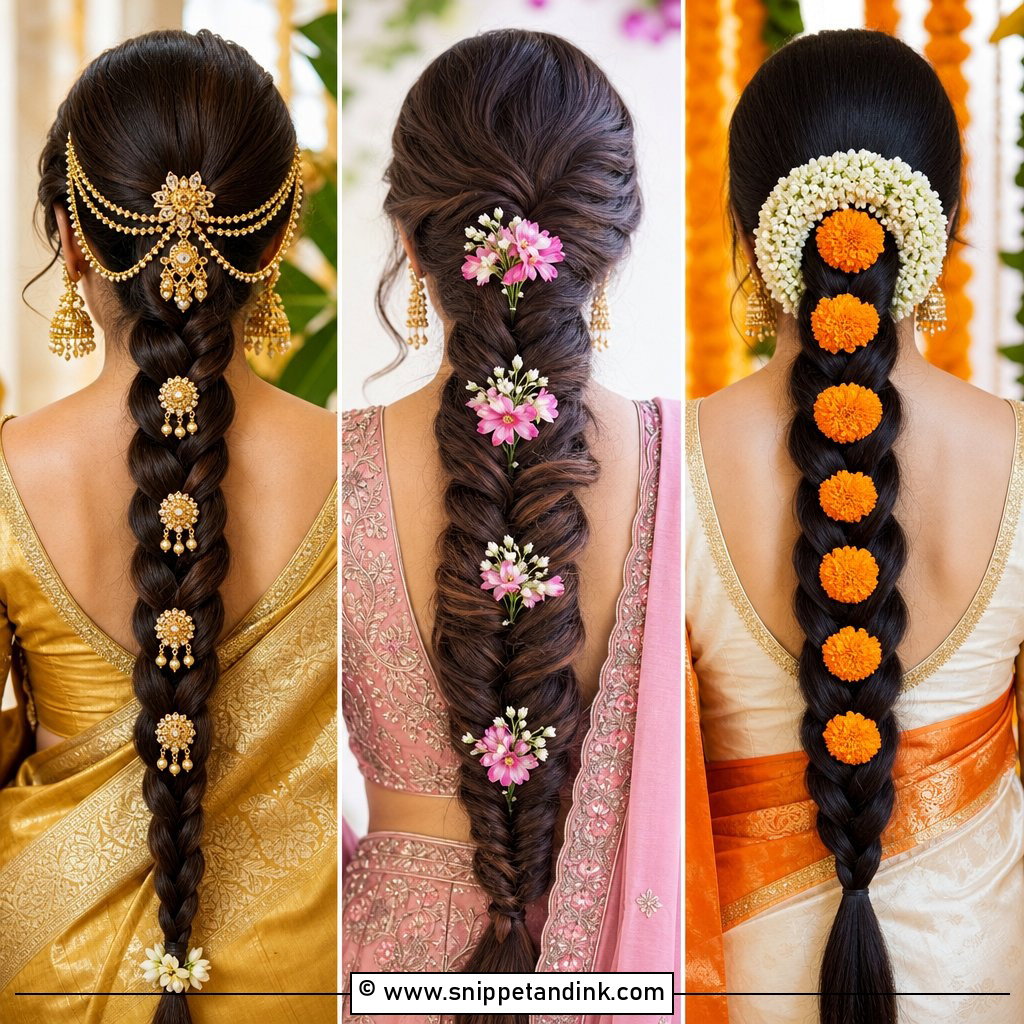
The temple-inspired Jada takes its gold ornaments from temple art: pieces shaped like gopurams, deities and temple motifs set along a thick, structured braid, often with jasmine between them. Those pieces are heavy, so I anchor each one through the braid itself, not just the surface, and space them so the weight is spread. It completes a temple jewellery set and suits a muhurtham where heritage matters. I always check how it feels when you sit on the floor or lean back, since a long ornament can press into the back.
10. Hybrid Braid With Gold Ornaments
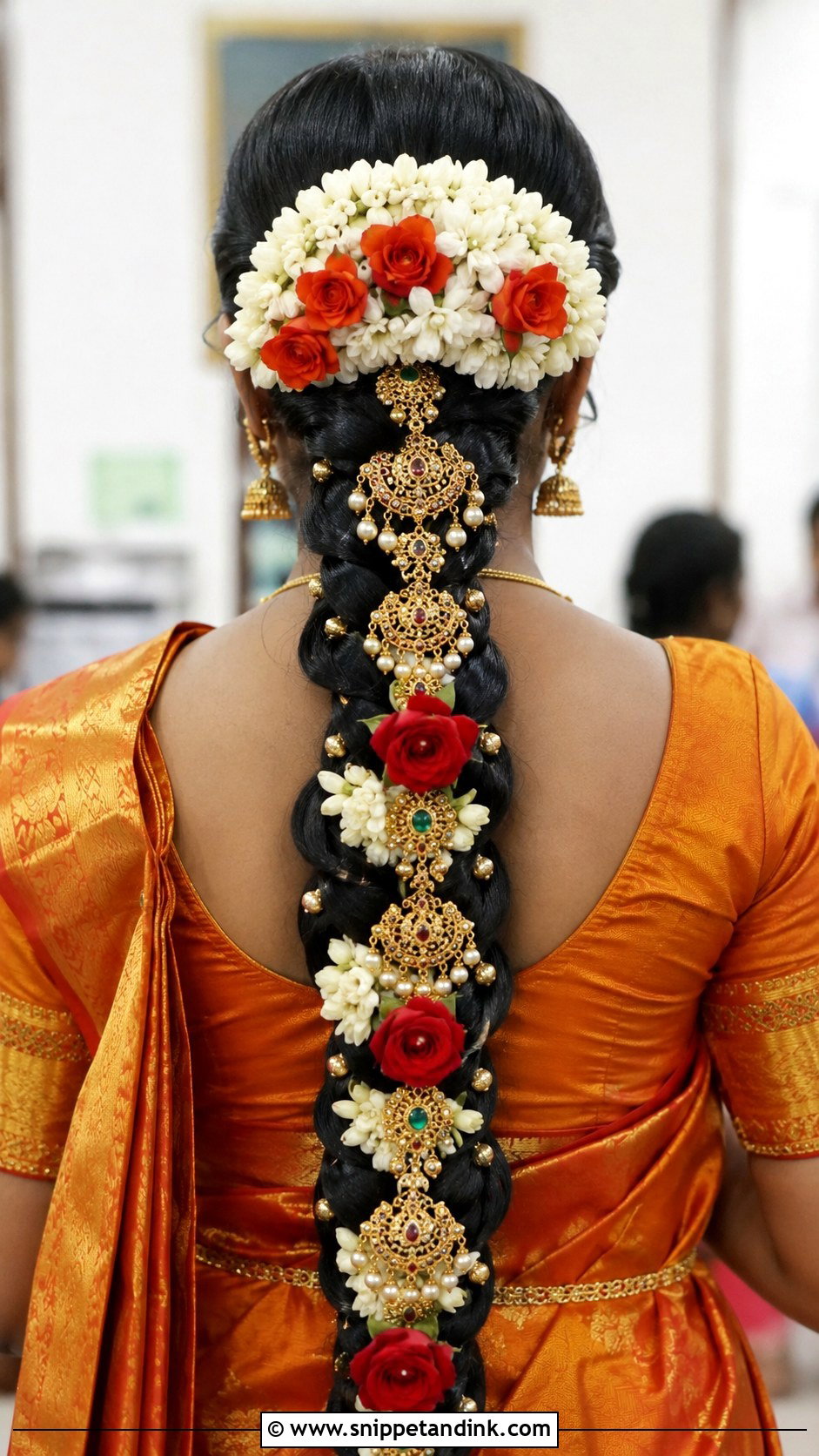
The hybrid braid combines fresh flowers with gold ornaments in a single braid: jasmine, roses and pearls alongside gold hair jewellery. I lay out the gold first and fill in with flowers afterwards, because gold placement is fixed while flowers can be adjusted around it. Colours and pieces can match your saree. It suits the main ceremony when you want something grand and can’t decide between flowers and gold. It is heavy, though not quite as heavy as a full grand Poolajada.
11. Pearl-Embellished Bun
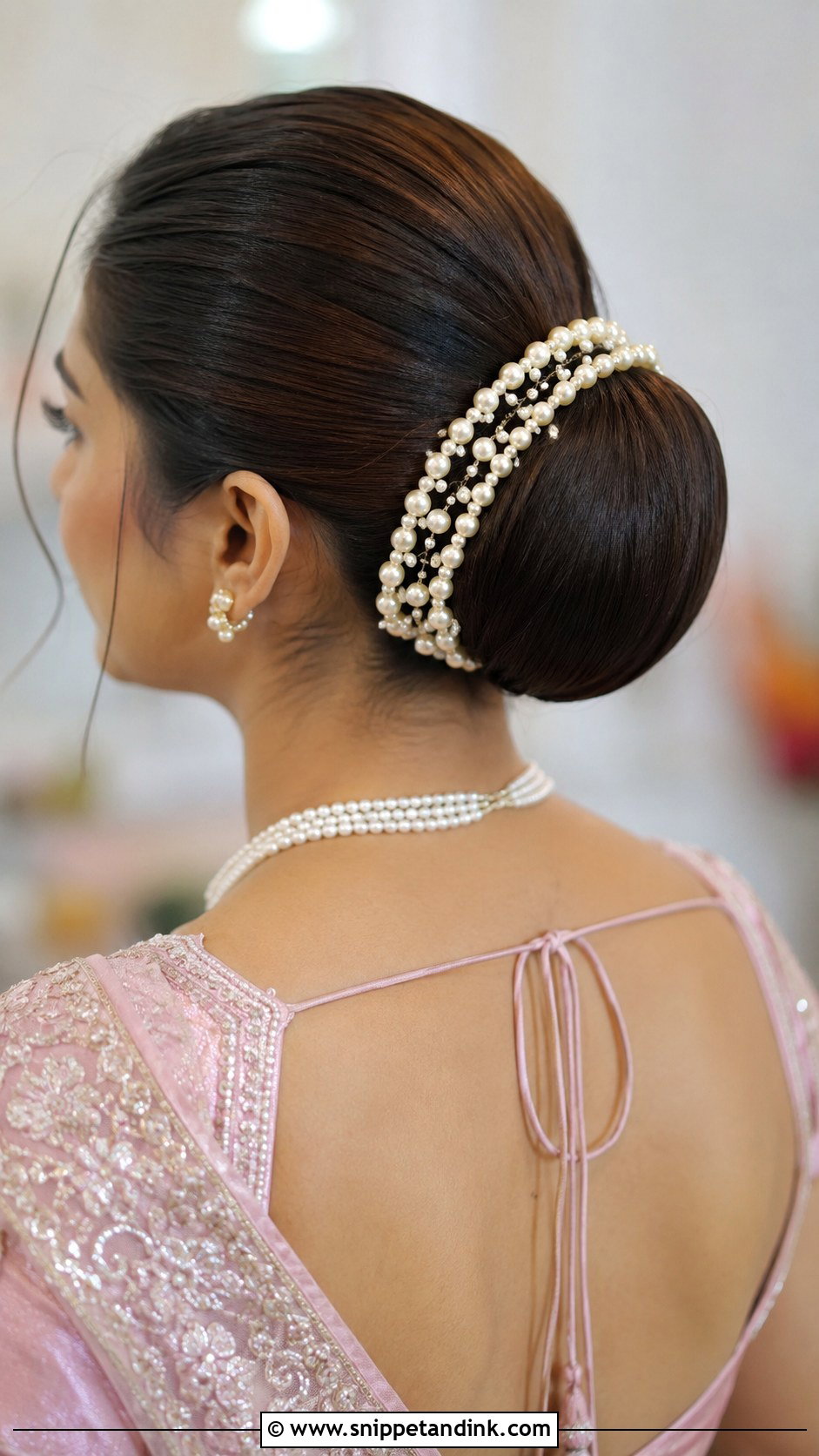
Pearls give a bun a quiet sophistication. I set a smooth, rounded bun and decorate it with pearl strands and clusters; the soft sheen works with deep reds and pastels alike. Pearl pins need a firm base, so I make sure the bun is tight underneath even when it looks soft on top. It keeps hair off the face and suits the reception, especially with diamond or pearl jewellery. A few small flowers alongside add texture without breaking the pearl theme.
12. Rose Braid For Reception
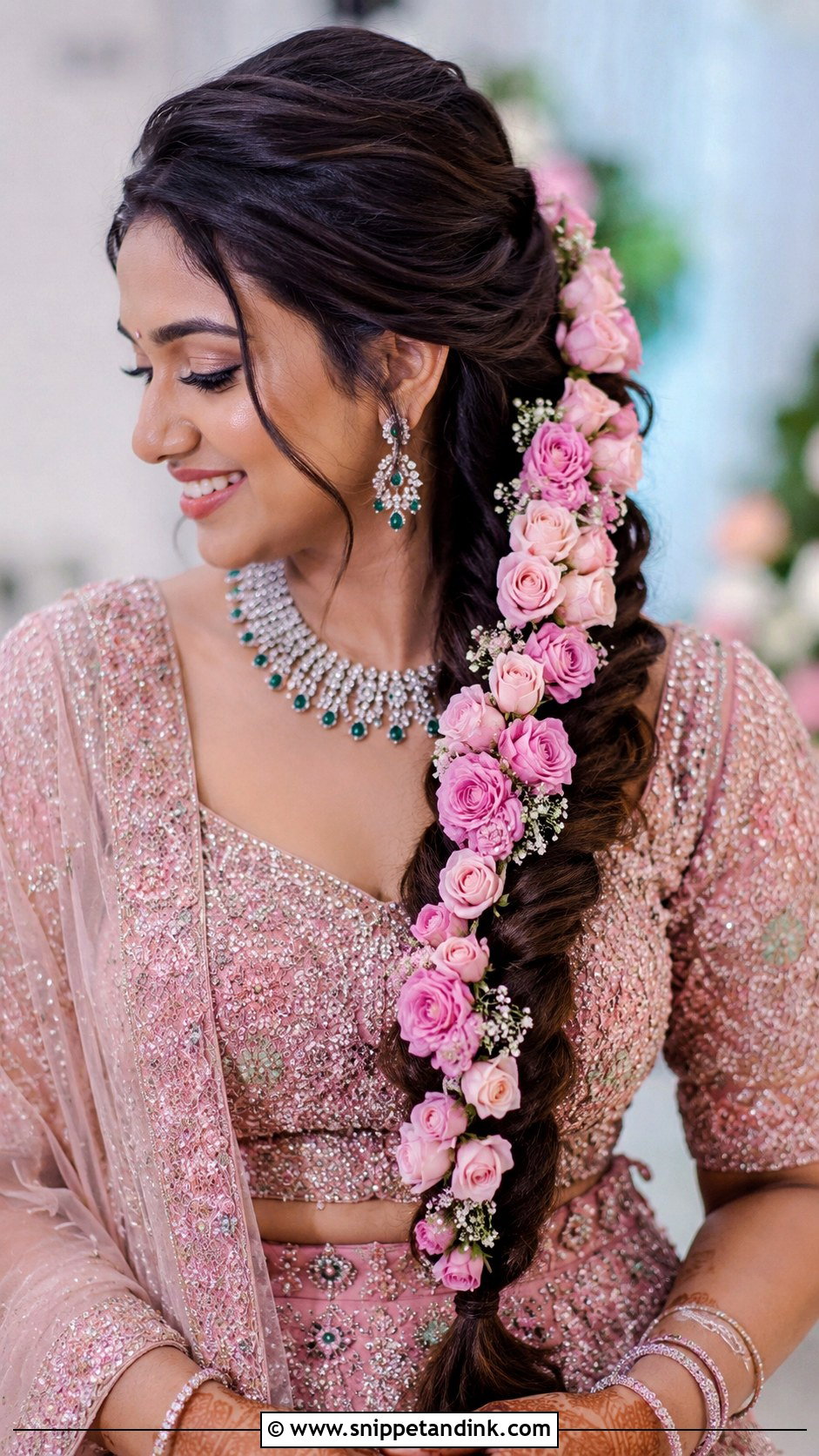
A thick side braid lined with full roses in red, pink or pastel brings colour and softness to an evening look. I wire each rose head into the braid rather than pinning the stem, because stems snap when you turn your head. It pairs with lehengas and lighter reception sarees and frames the shoulders in photos. You can leave it loose and slightly undone for a modern feel. Roses bruise when crushed, so if there is a long car journey I add them after you arrive.
13. Low Bun With Jhumki Accessories
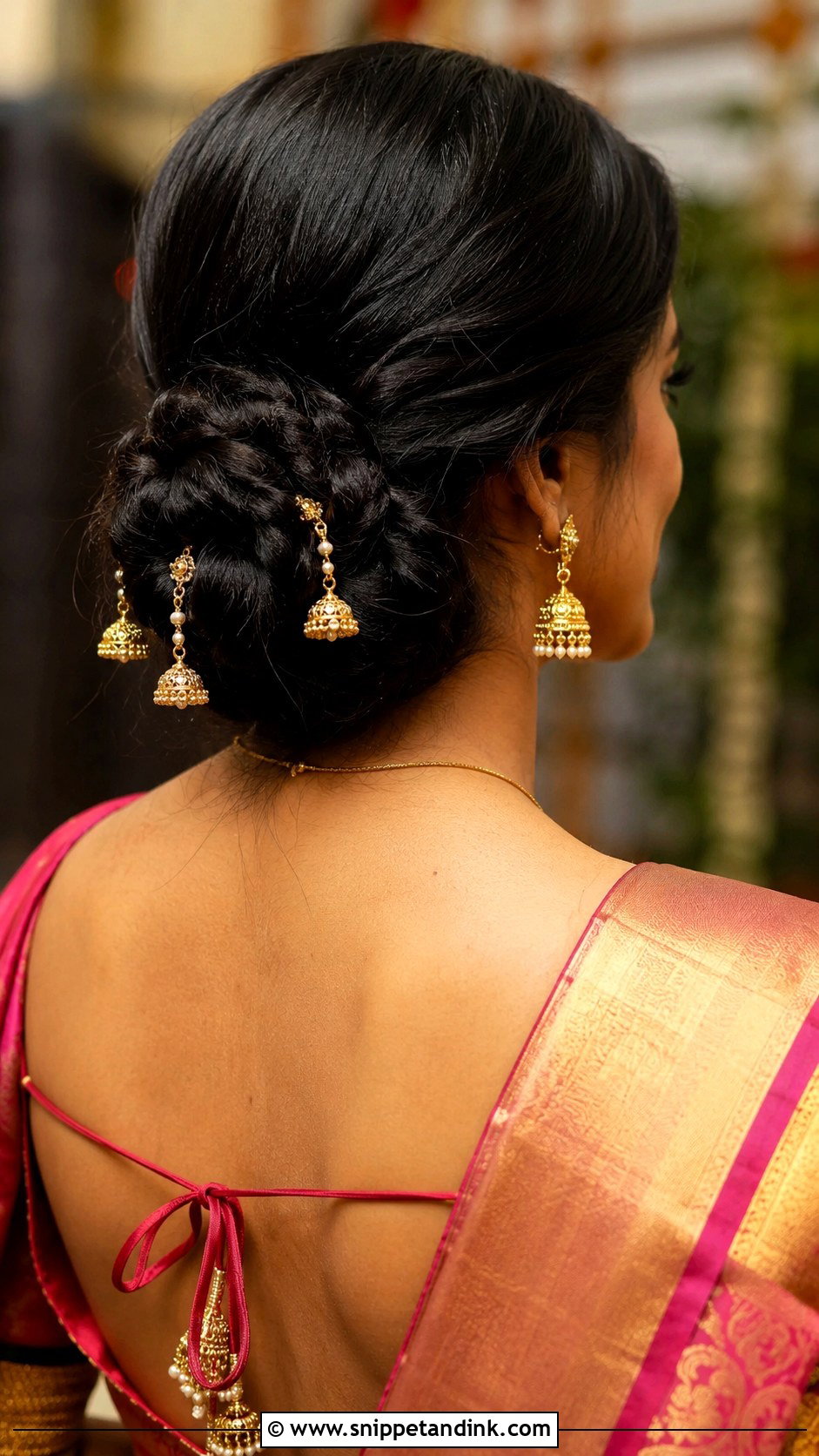
A newer idea I see more of: small jhumki-style ornaments pinned around the edge of a low bun so they dangle and catch the light. They coordinate with matching jhumka earrings. I keep the ornaments light and few, because a full ring of them swings into the neck every time you bow during rituals. The bun stays secure through long ceremonies, and the jhumkis turn a plain bun into something people ask about.
14. Floral Crown Updo
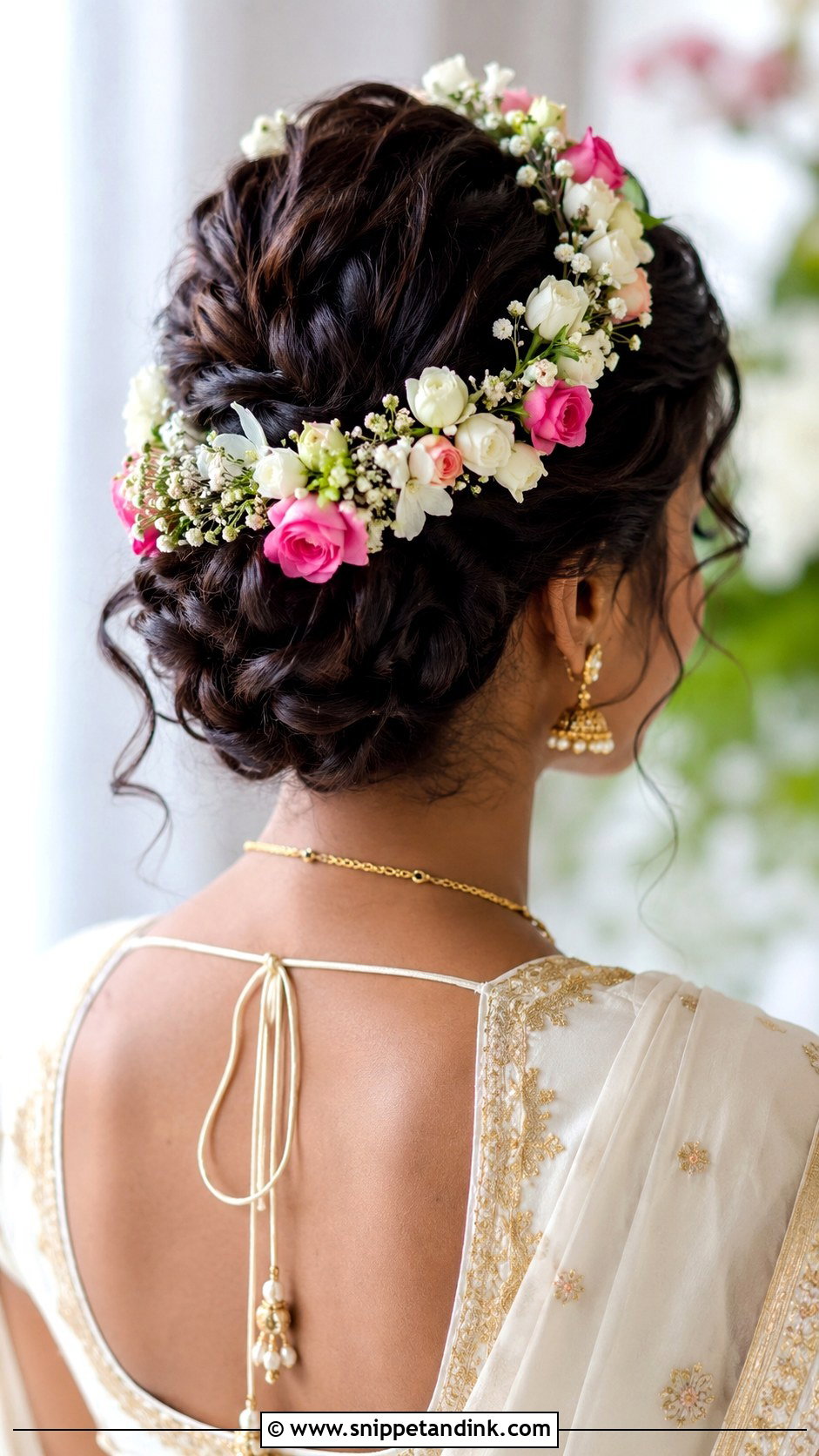
For a floral crown updo, the hair goes up into a soft bun or twist, then a halo of jasmine, roses and small buds circles the head. It frames the face and pairs with delicate jewellery. I build the crown on a thin wire or braided band so it can be fitted to your head size and stays level; pinned flowers alone drift toward the forehead. It suits daytime and outdoor ceremonies, and brides who prefer softness to structure.



15. Sleek Straight Hair With Tikka
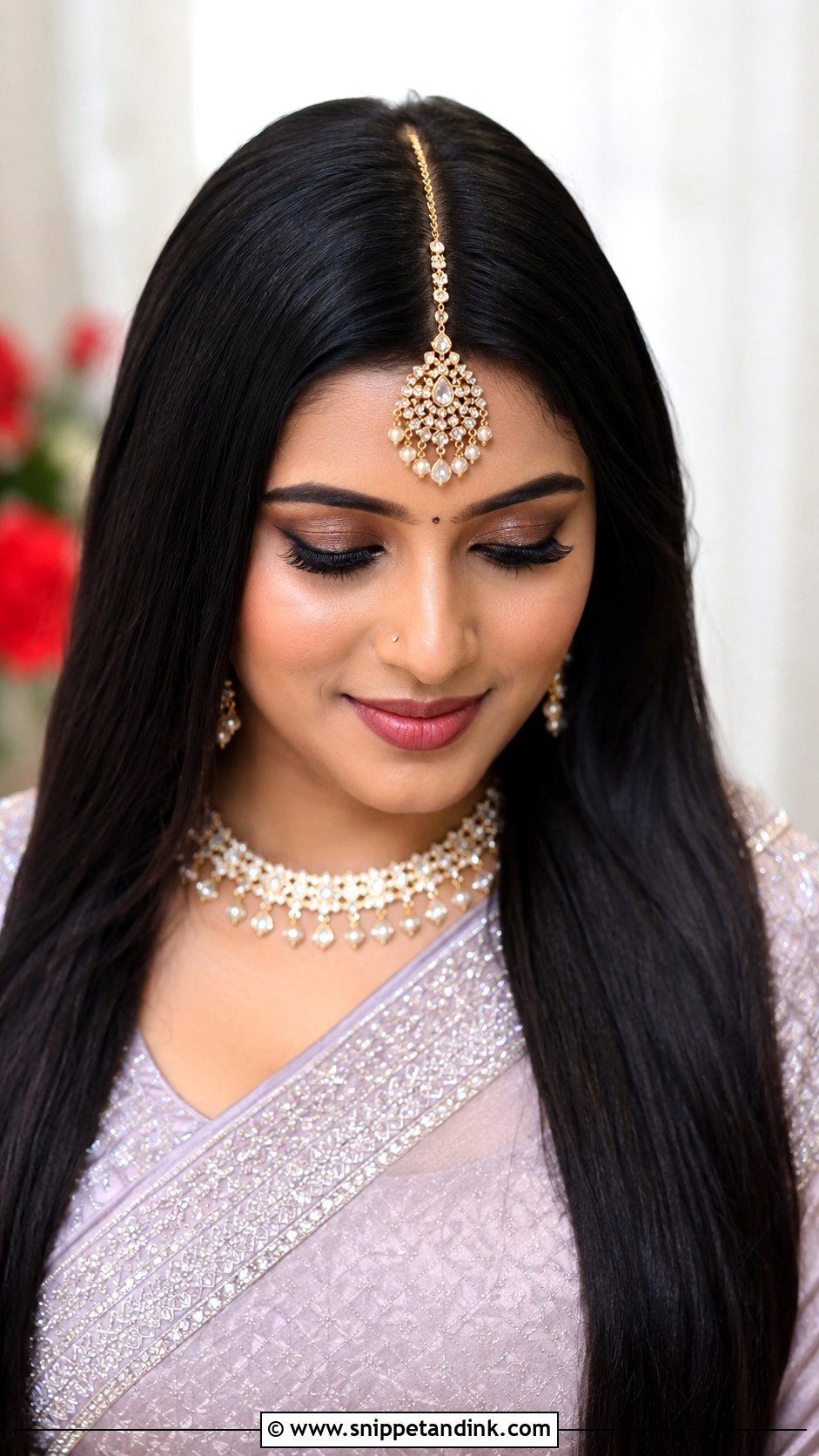
Sleek straight hair, parted in the centre and smoothed to a gloss, is a modern reception look anchored by a statement maang tikka. The polish takes longer than people expect: I blow-dry with a paddle brush before flat-ironing in thin sections, and use a light serum only on the lengths. It suits long hair, and lets the jewellery and saree lead. A small flower near the part adds a South Indian touch. In humidity, very curly or frizz-prone hair can revert within a couple of hours, which I discuss honestly at the trial.
16. Messy Braid With Frangipani
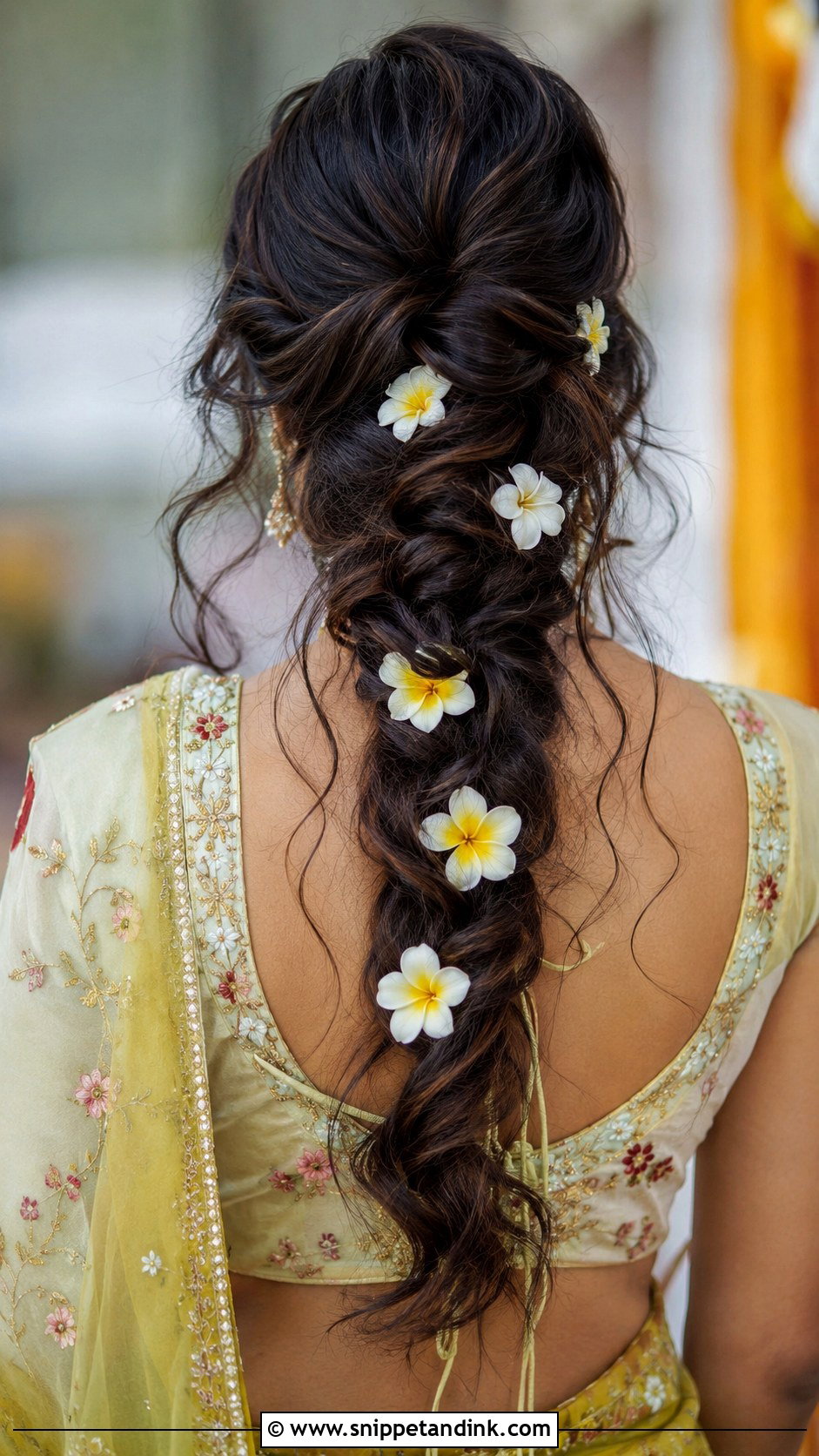
A loose, undone braid with frangipani tucked along it trades the structured Jada for soft texture. It suits mehndi and small ceremonies, lighter sarees and minimal jewellery, and lets you move and dance freely. “Messy” still needs grip, so I add texture spray before braiding and pin the loosened sections from underneath. Frangipani bruises easily, so I handle it as little as possible and add it last.
17. Bun With Kundan Hair Accessories
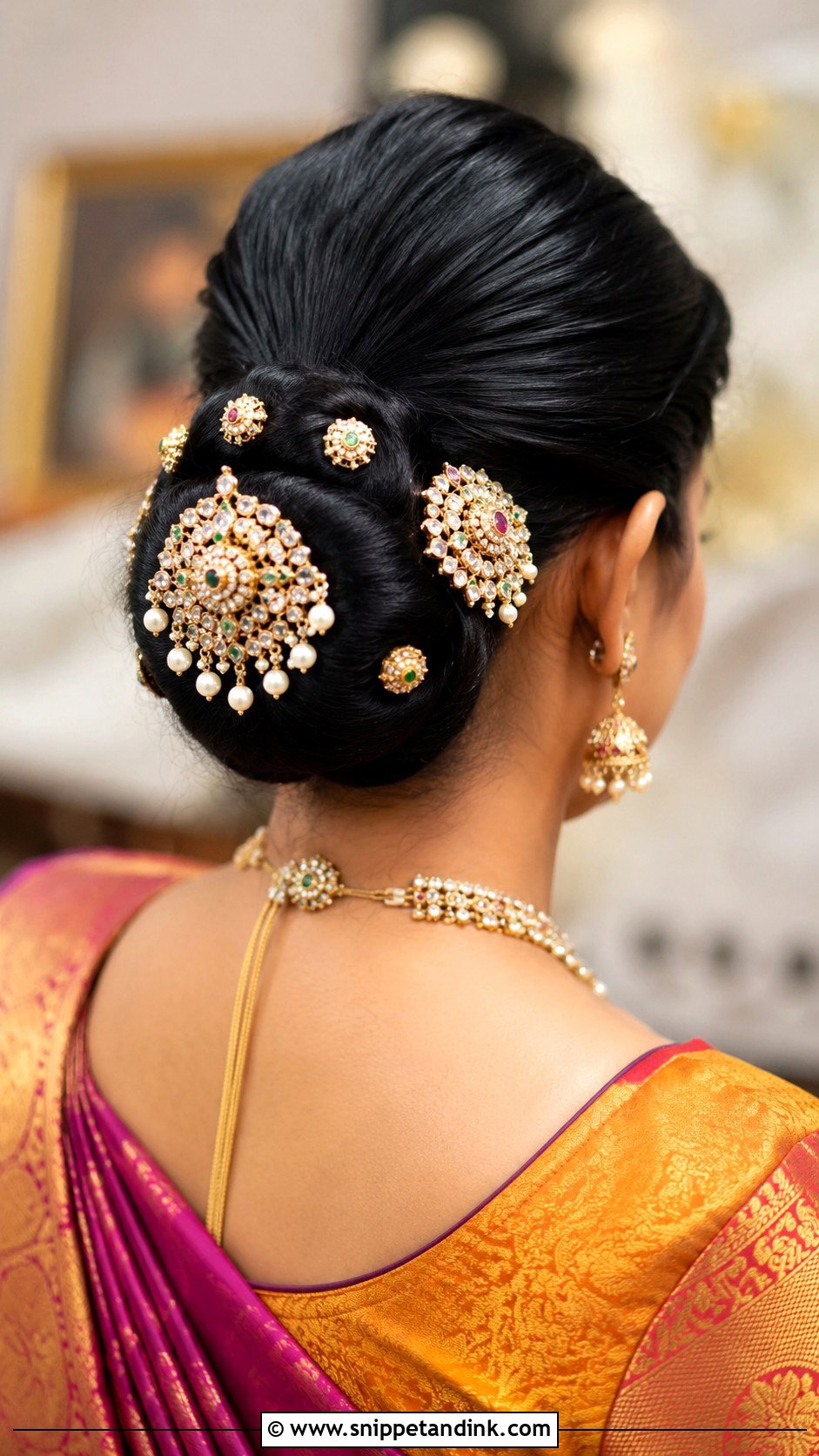
Kundan pieces, brooches and jewelled pins turn a smooth bun into something formal and grand. They catch light well in photographs and suit the main ceremony with rich silk and gold. Kundan pieces vary a lot in weight; I check each one before placing it and back heavy brooches with a pin crossed through the bun underneath. A few flowers layered beneath the kundan add texture and soften the metal.
18. Side Swept Curls With Gajra
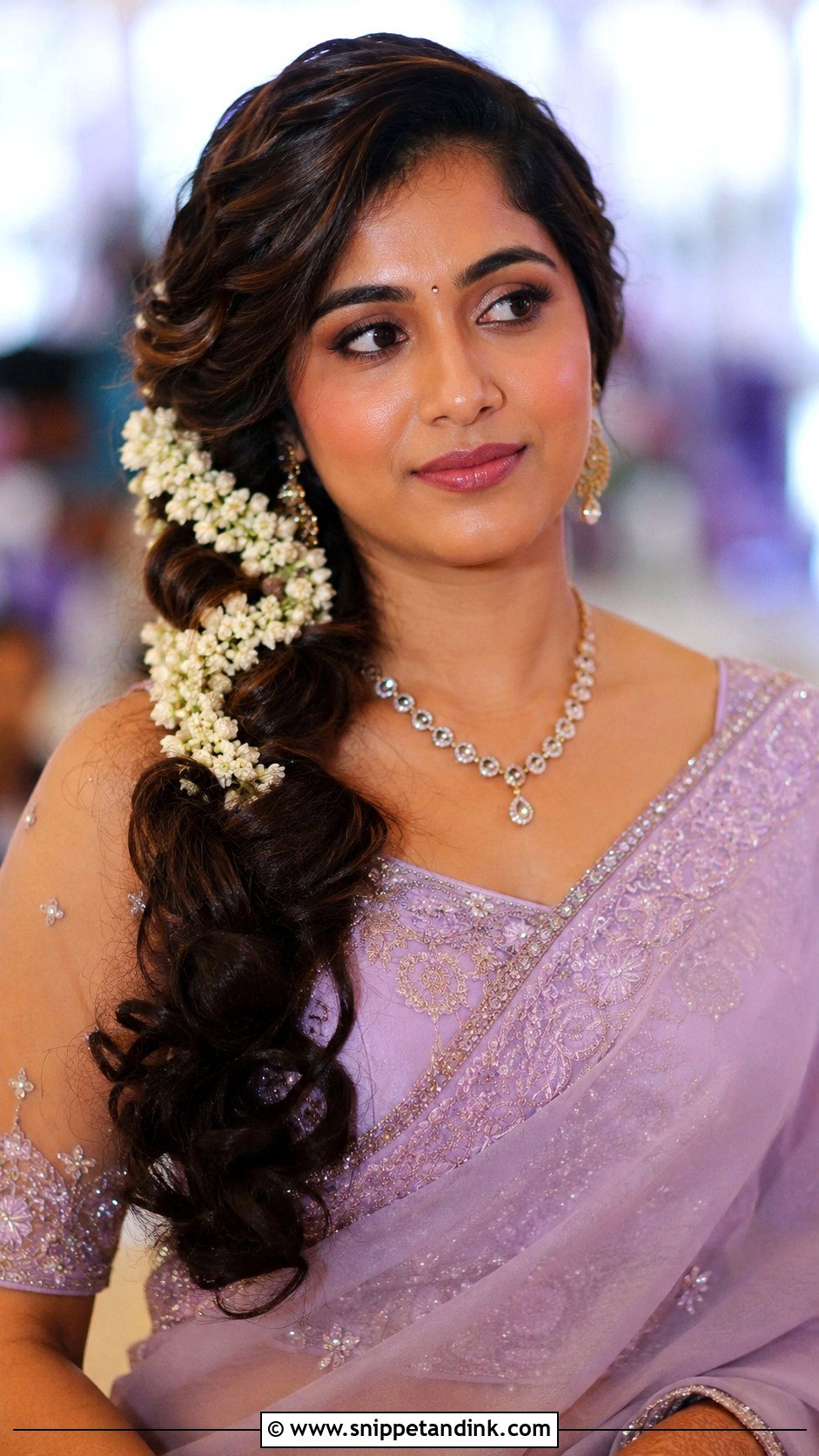
Side-swept curls bring a soft, old-Hollywood shape to a South Indian look: all the hair styled over one shoulder in flowing curls, with a jasmine gajra wrapped around them or pinned at the gathered side. It opens the other side of the neck to show statement earrings. The hidden work is a row of crossed pins behind the ear on the side the hair leaves, or the whole sweep slides back by evening. Long, thick hair suits it best, at receptions and engagements.
19. Double Braid With Flowers
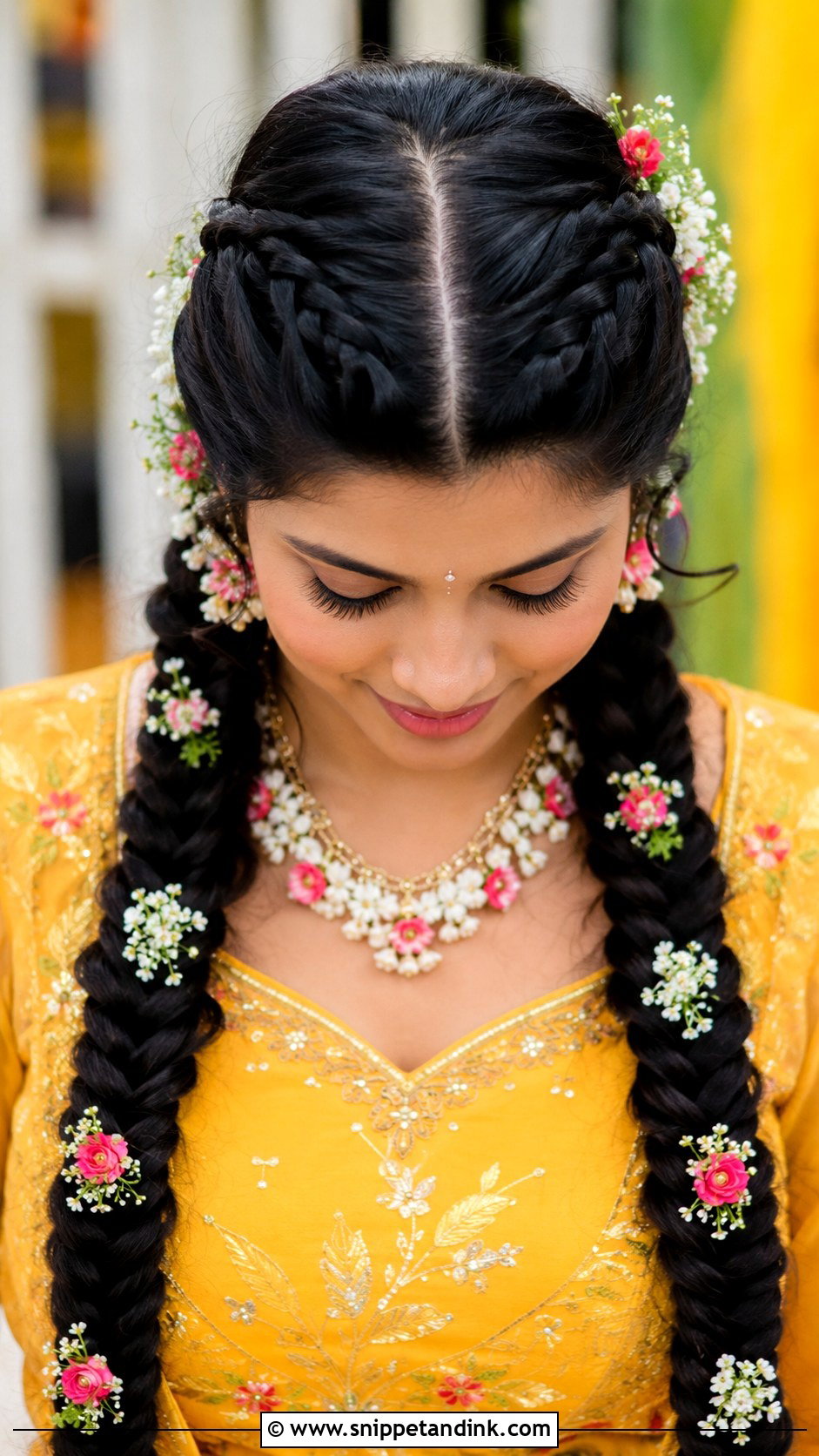
Two braids from a centre parting, left hanging or wrapped into an updo, with jasmine and small roses on both for symmetry. They can crisscross at the back for interest. It is youthful and relaxed, so I suggest it for mehndi and haldi rather than the main ceremony. For haldi in particular, I keep the flowers minimal and use ones you don’t mind losing, because turmeric paste stains everything it touches.


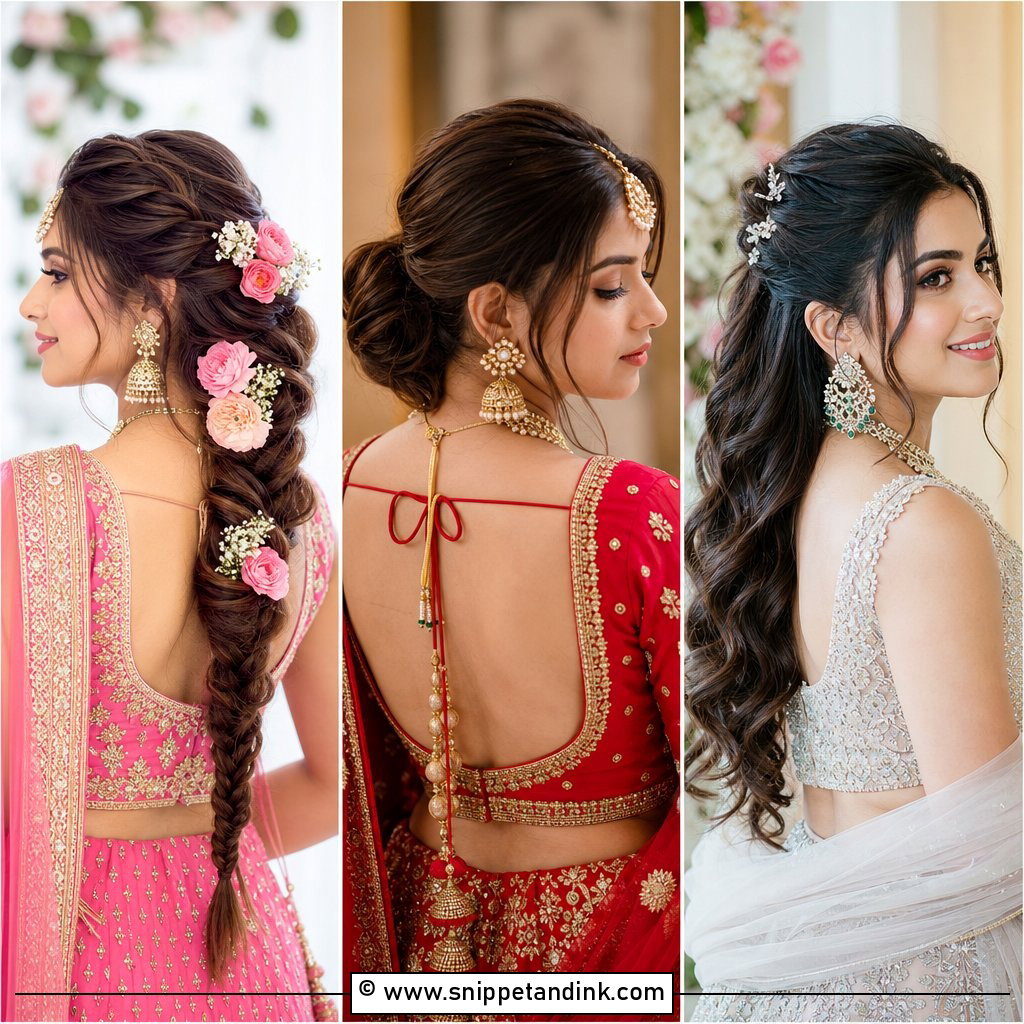
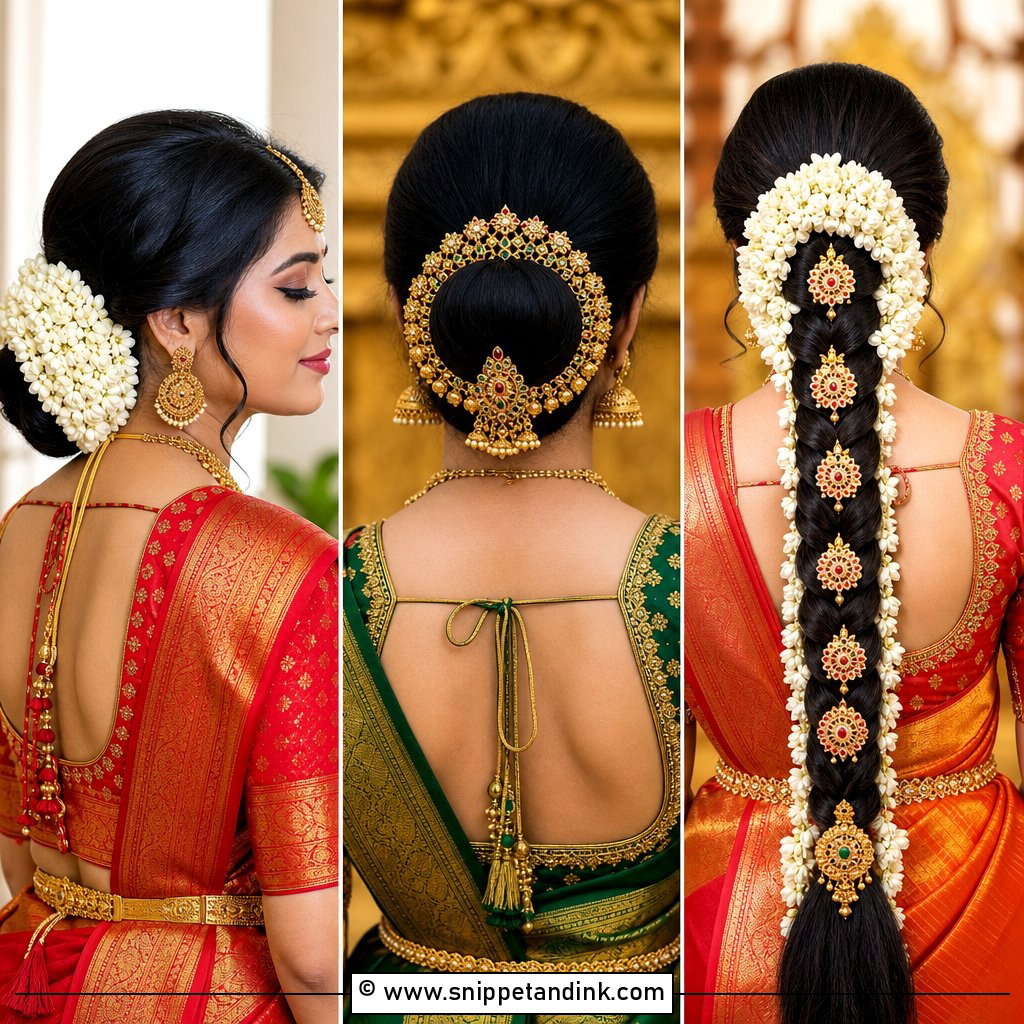
20. Bun With Mango Motif Ornaments
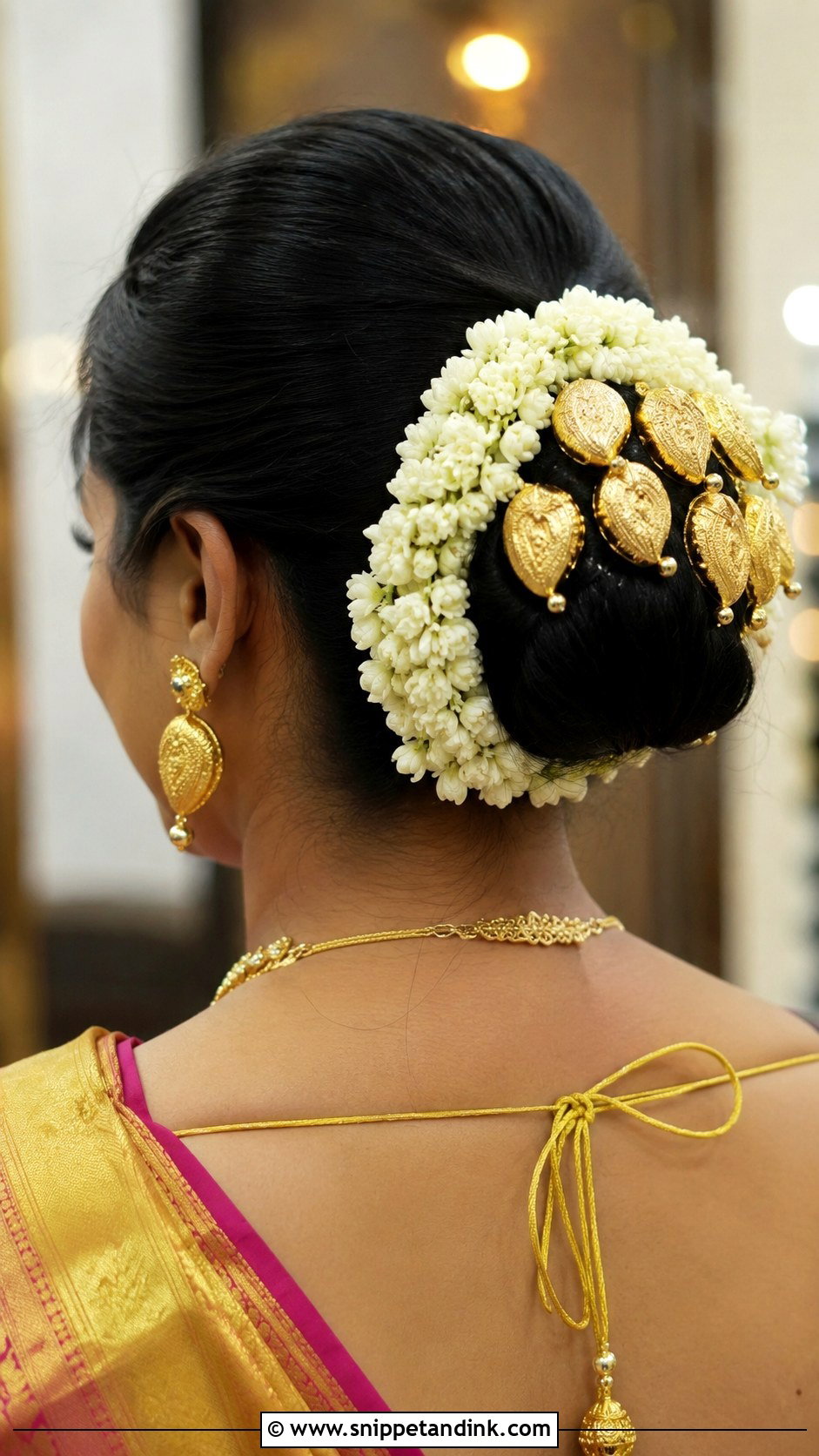
Mango motif ornaments, known as mangamala designs, decorate a neat bun with gold mango-shaped pieces that echo traditional necklaces and earrings. They make the most sense when your jewellery set shares the motif, so I ask to see the set before planning the placement. The bun stays secure and works for the muhurtham. A few jasmine flowers between the gold pieces soften it.
21. Curly Hair Half Updo
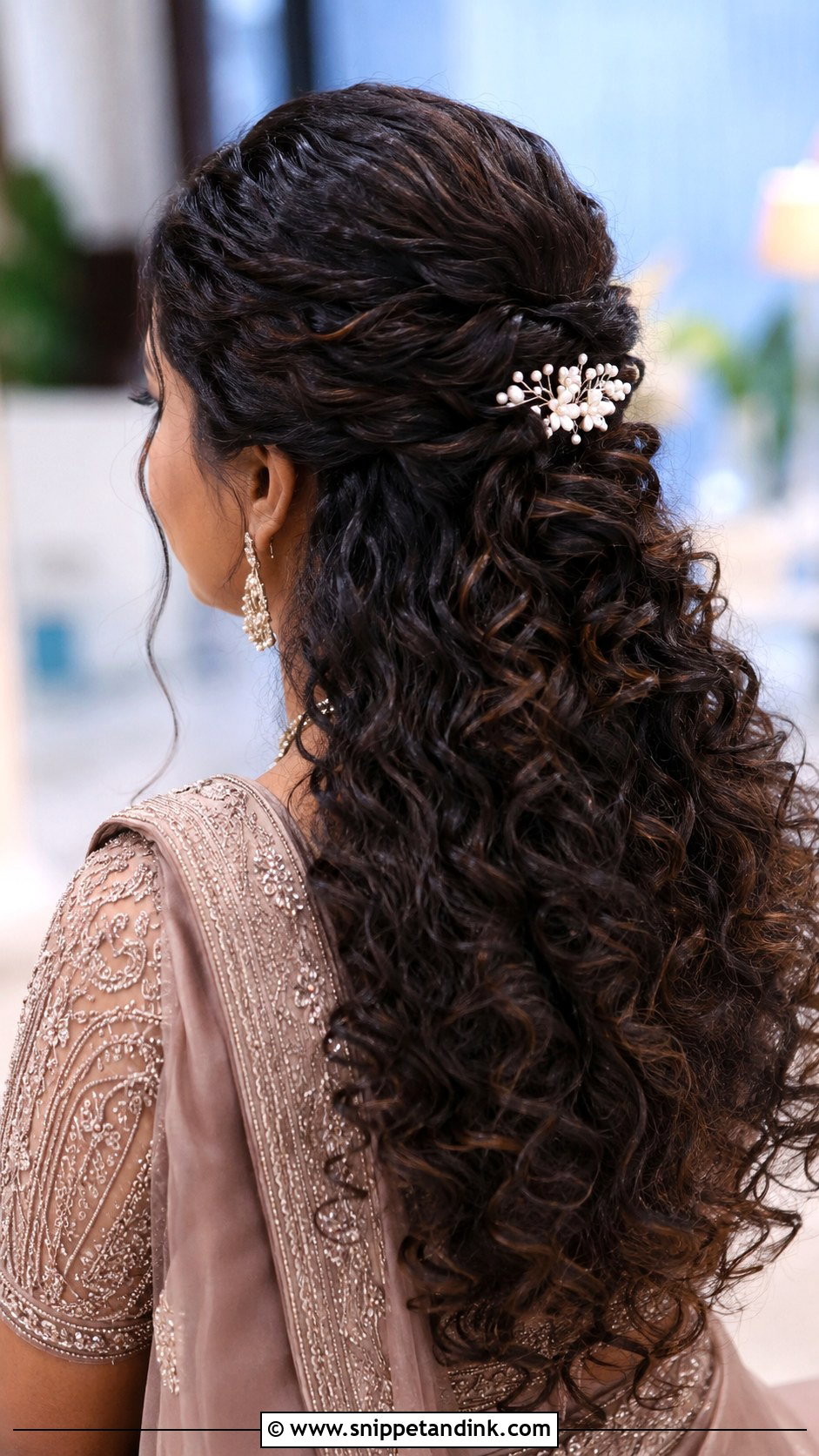
Naturally curly hair can stay curly. In a half updo I pin the top section back softly and leave the curls free below, then add a few flowers or a delicate clip at the crown. The mistake I avoid is brushing curls out; I work with them damp-styled and defined from the wash, and refresh only individual curls with a wand if needed. It suits receptions and engagements, flatters many face shapes and is comfortable all day.
22. Braided Crown With Jasmine
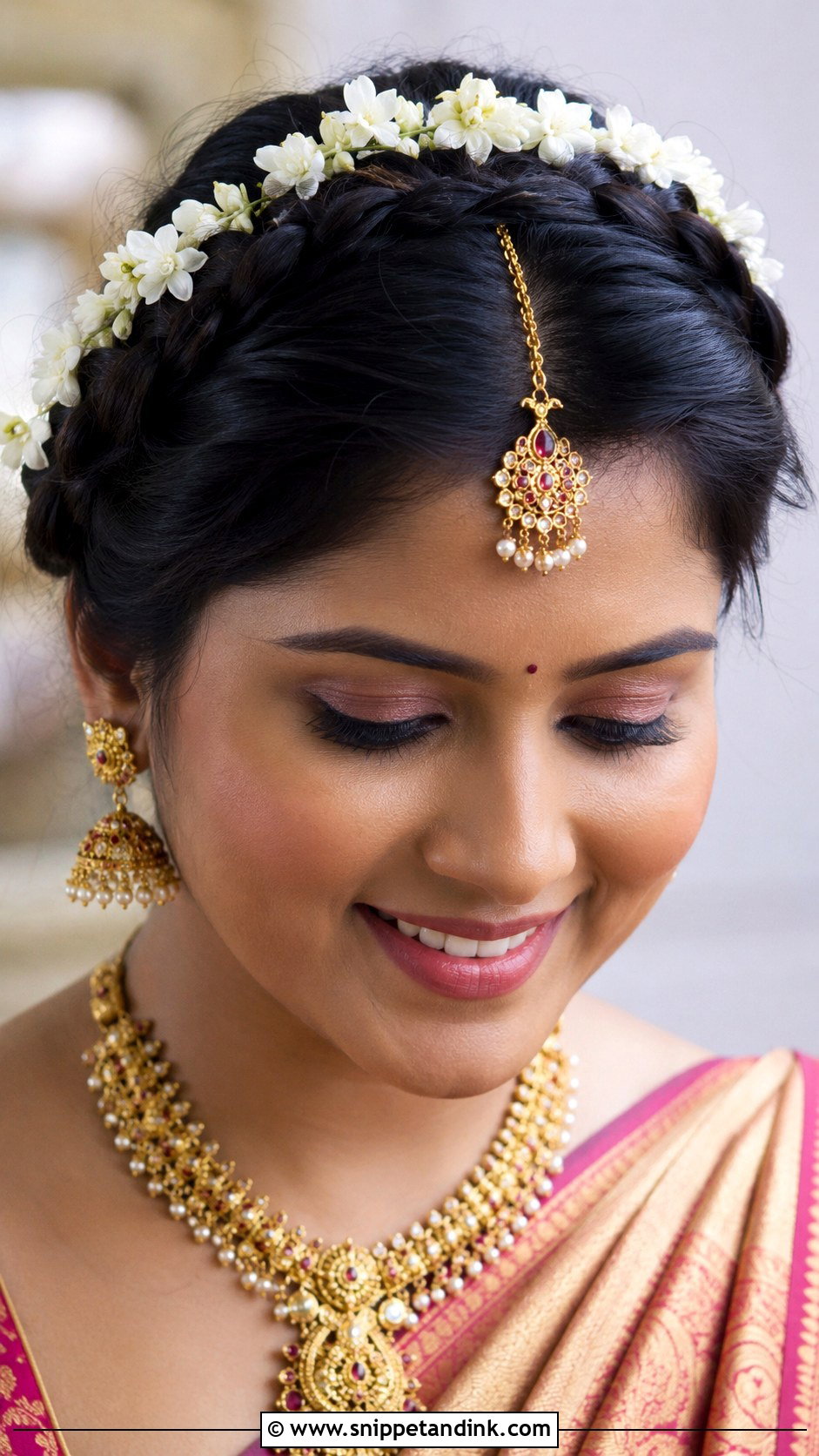
Braids circling the head like a halo, dotted with jasmine, keep every strand off the face, which matters in a hot ceremony hall. It pairs with maang tikka and statement earrings. You need long, fairly thick hair for the braid to reach round, or a matching extension woven in; I check length at the trial by bringing the braid over the top of the head before committing. It looks intricate and traditional at once, at any function.
23. Floral Ponytail For Sangeet
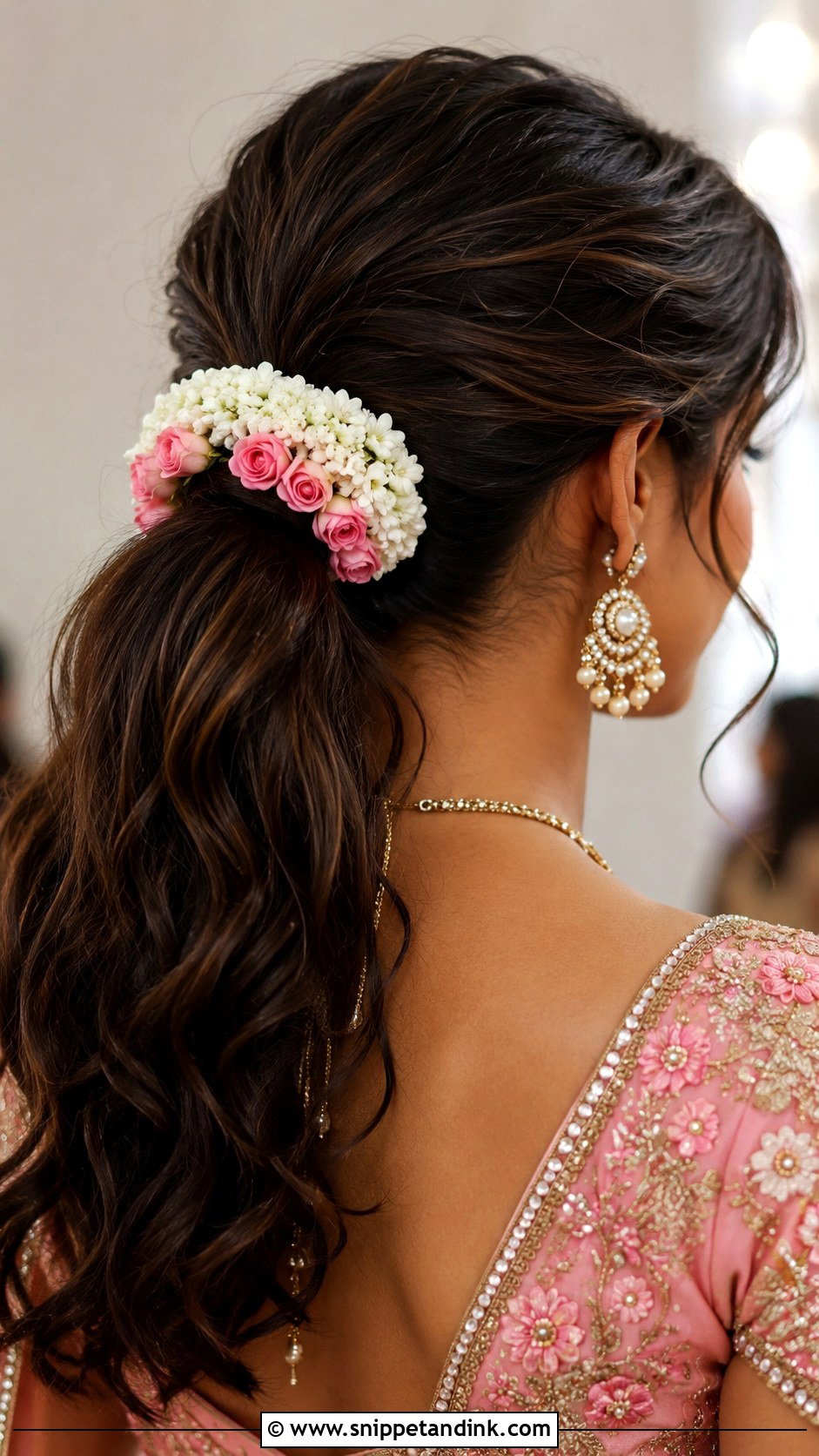
For sangeet I pull the hair into a high or mid ponytail and wrap the base with jasmine or rose gajra. The ponytail swings freely, so it is made for dancing. I secure it with two elastics, one tight at the base and one a finger-width below, so a high ponytail doesn’t sag during the evening. Curling the lengths adds bounce. It goes with lighter outfits and statement earrings.
24. Bun With Pearl Strings
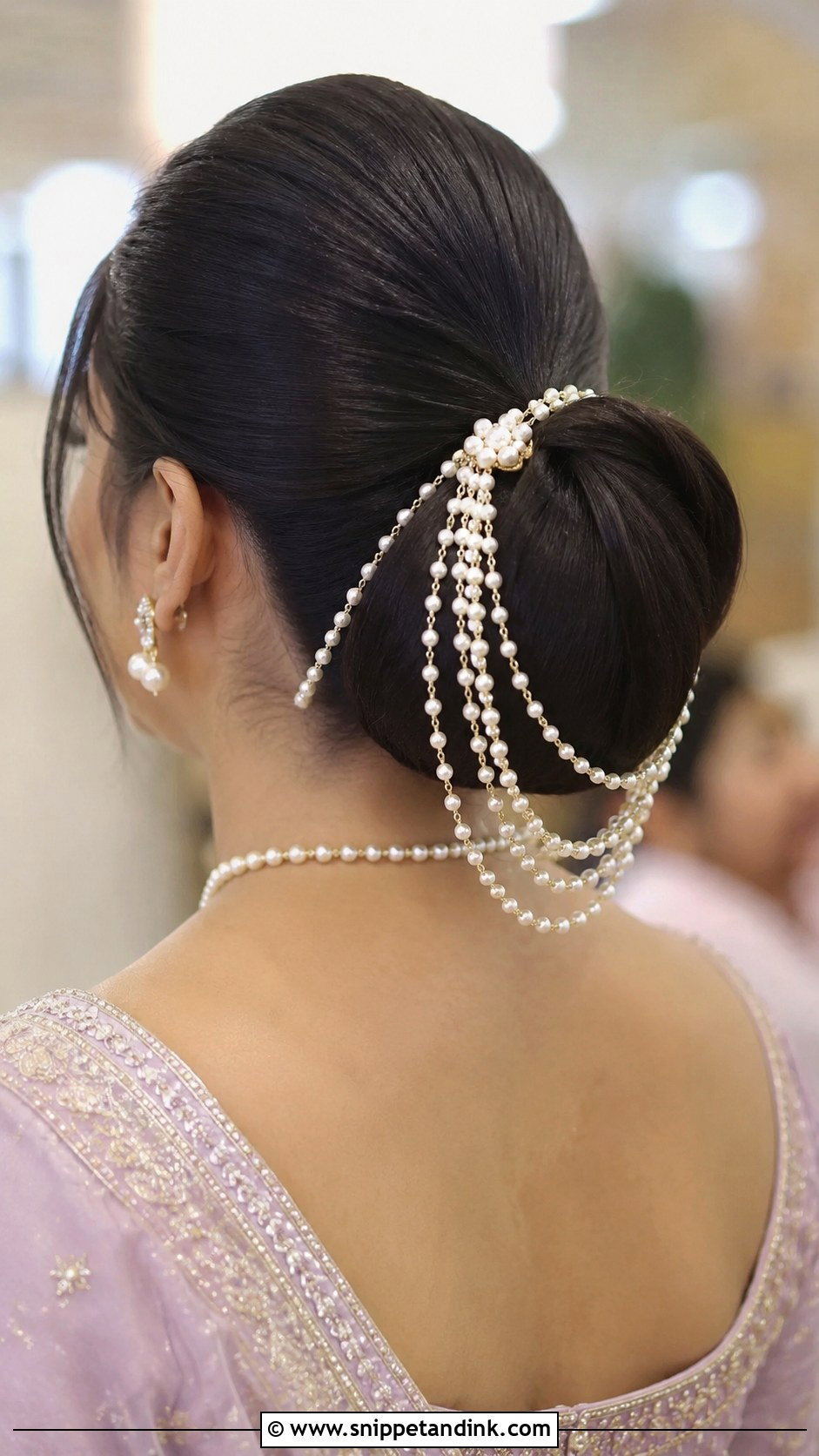
Pearl strings draped across a smooth, rounded bun move gently as you turn, adding shine without covering the hair. They suit pastel sarees and delicate jewellery, and engagements or receptions more than the main ceremony. I hook each strand into the bun at both ends with small pins so it can’t slide off one side. A single flower adds contrast if you want it. It is the quiet option for a bride who finds heavy florals too much.
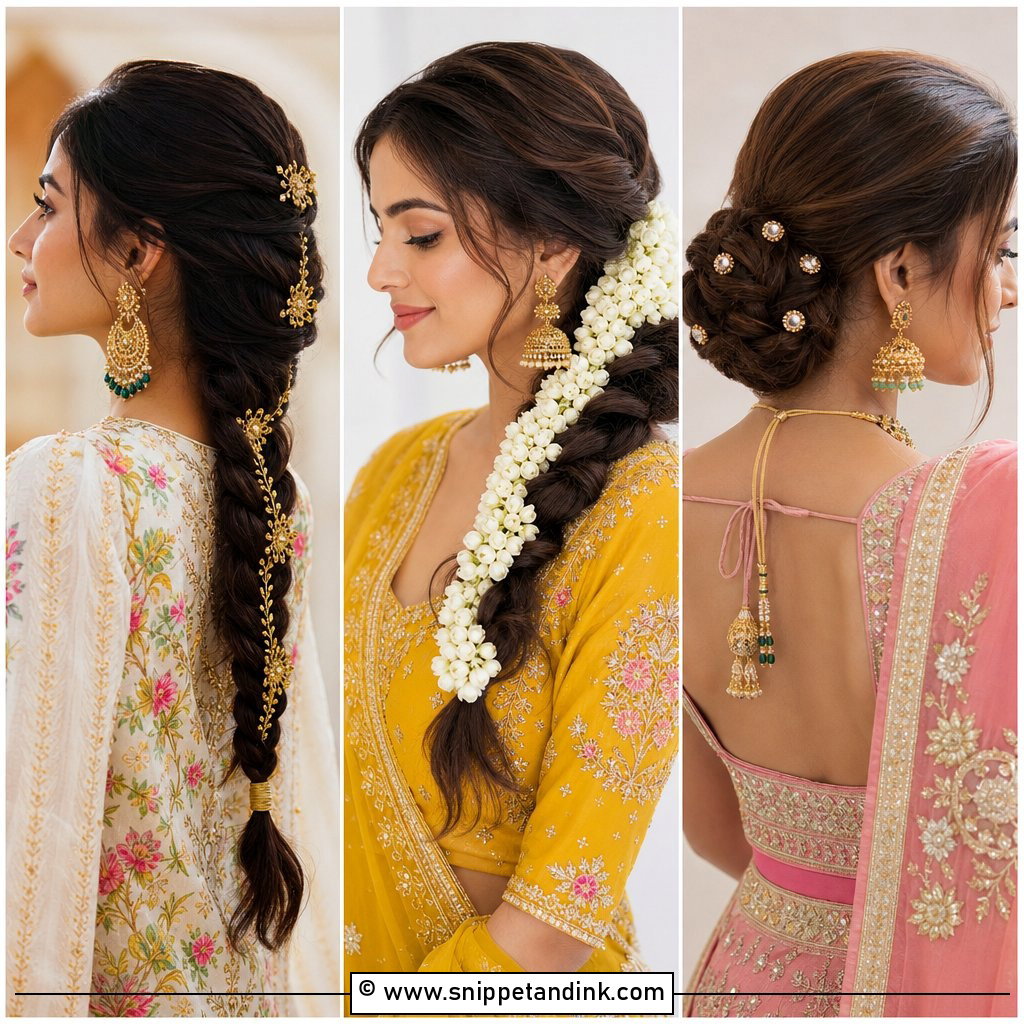
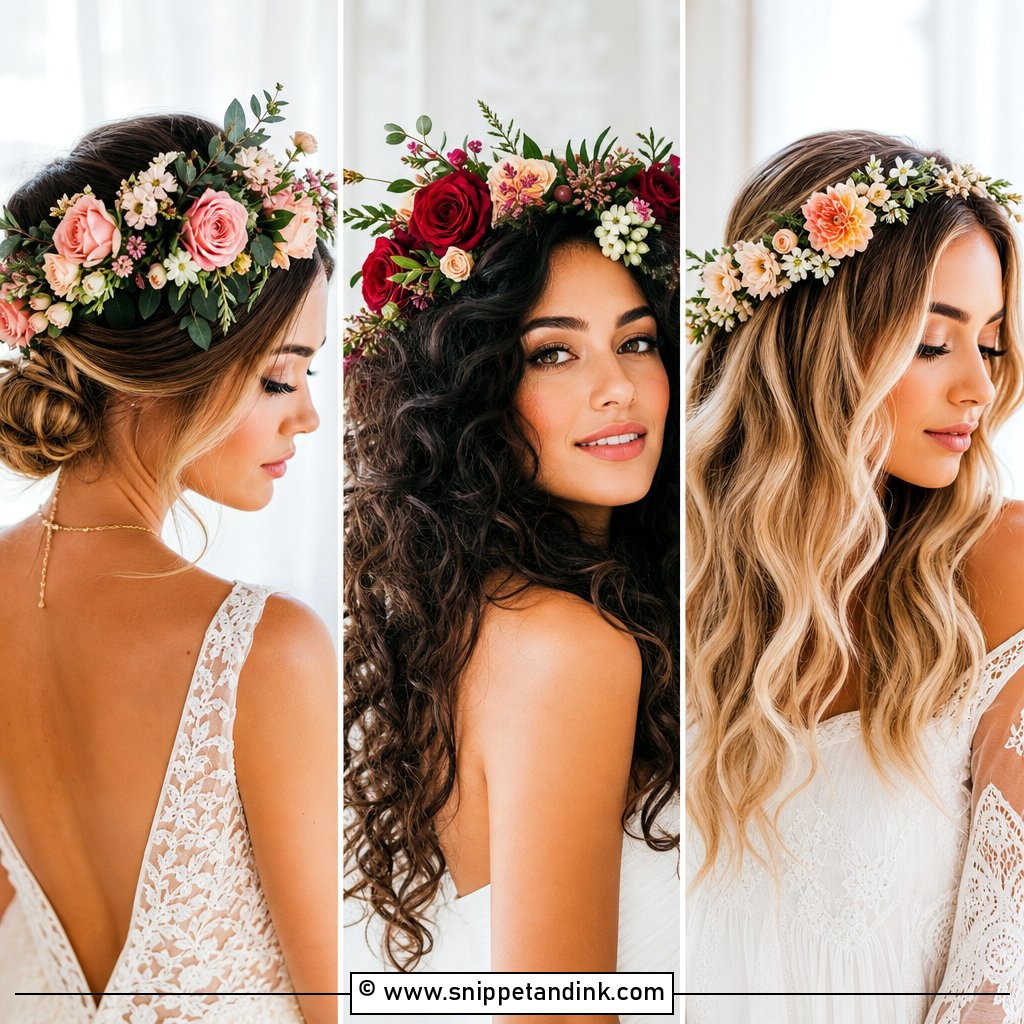
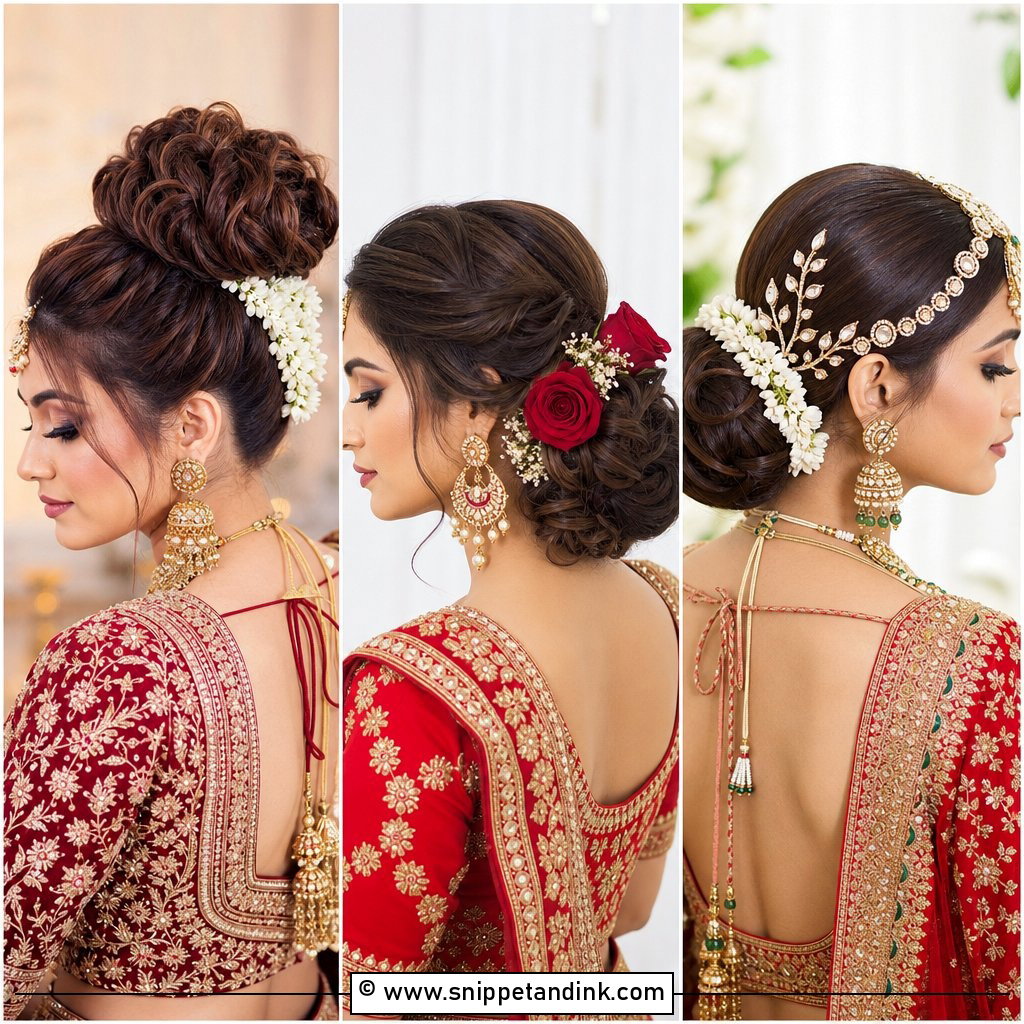
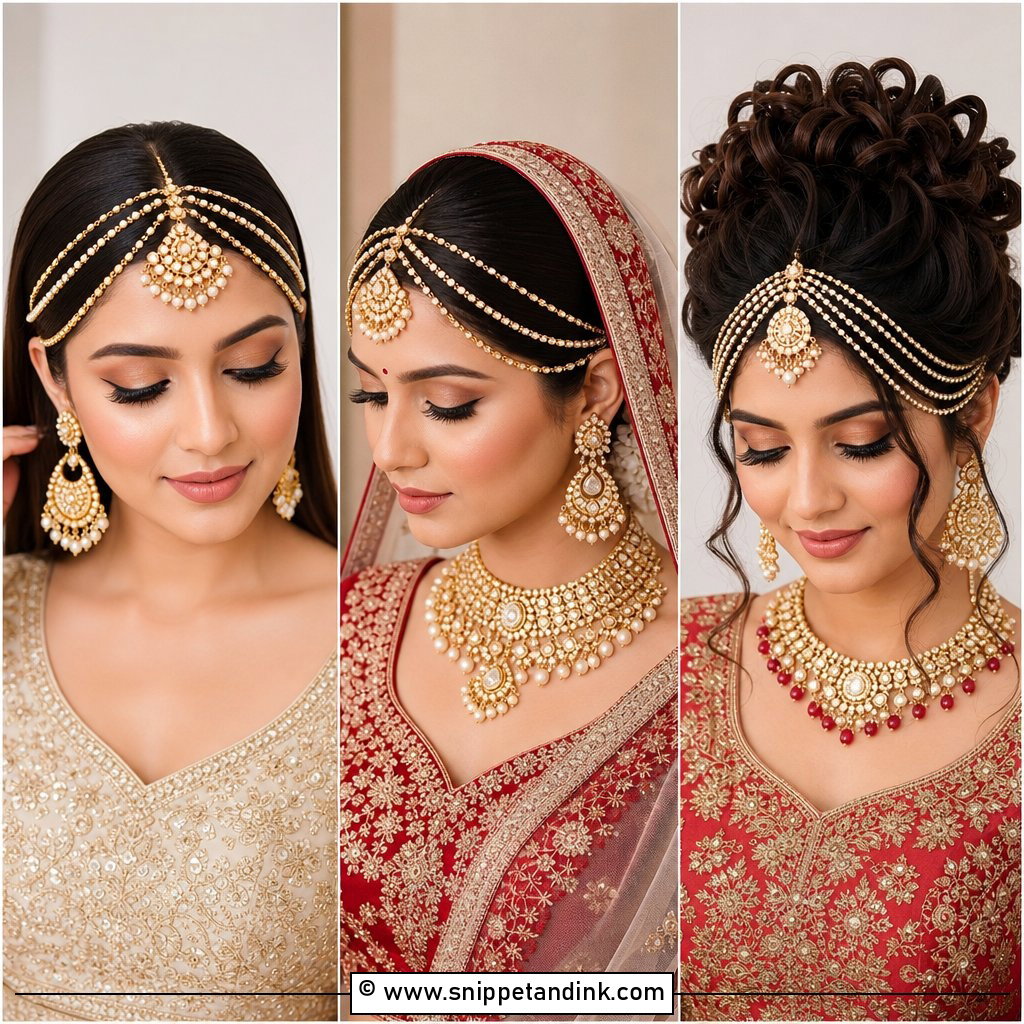

25. Thick Single Braid With Buds
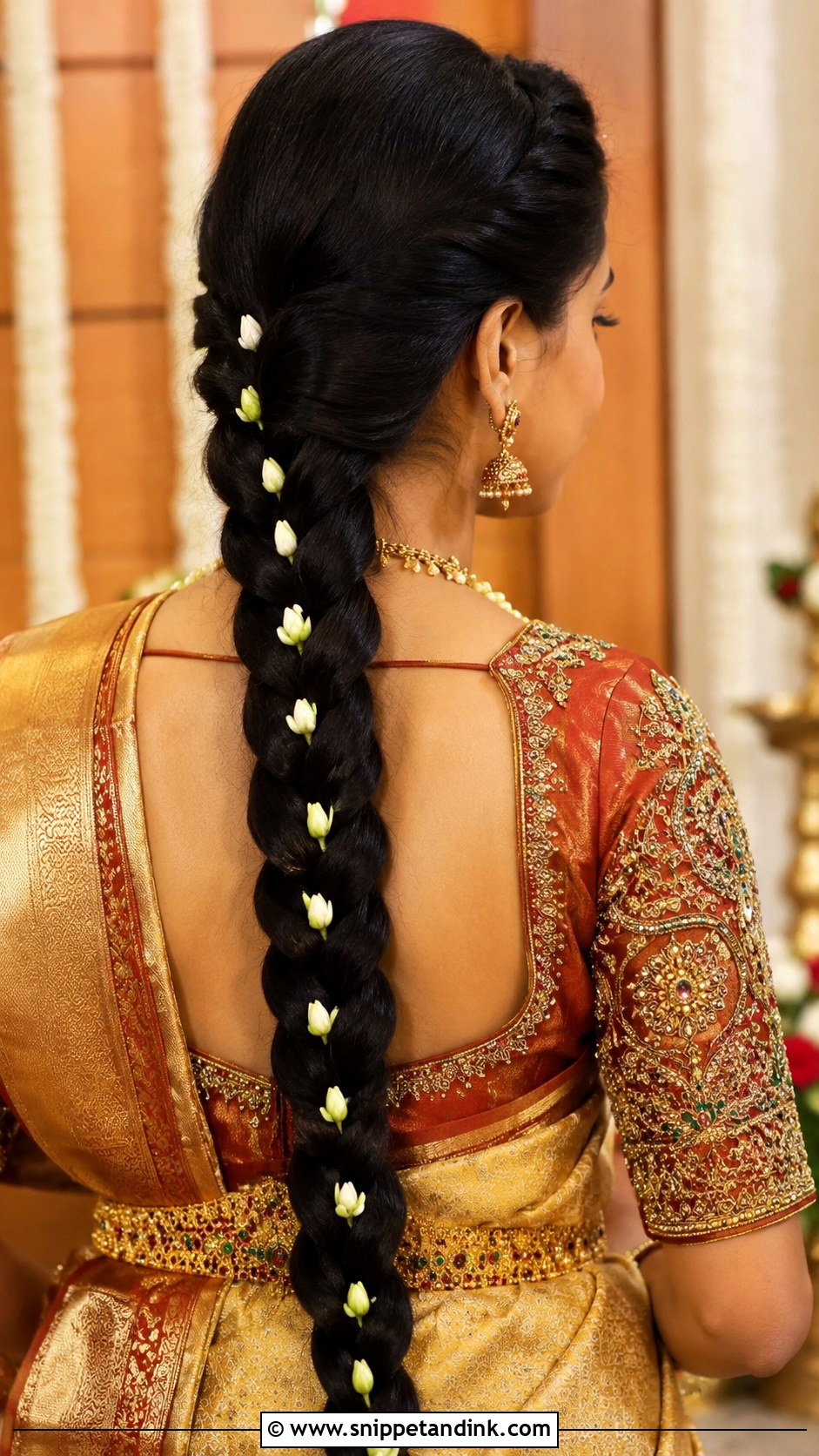
When a saree is heavily embroidered I often suggest small closed buds placed evenly along a thick single braid instead of full blooms. Buds hold their shape longer than open flowers, which also means they look fresh for more of the day, and the restrained pattern complements the fabric rather than competing with it. It pairs naturally with temple jewellery and silk. I keep the spacing even by marking positions along the braid before pinning.
26. Open Waves With Flower Pins
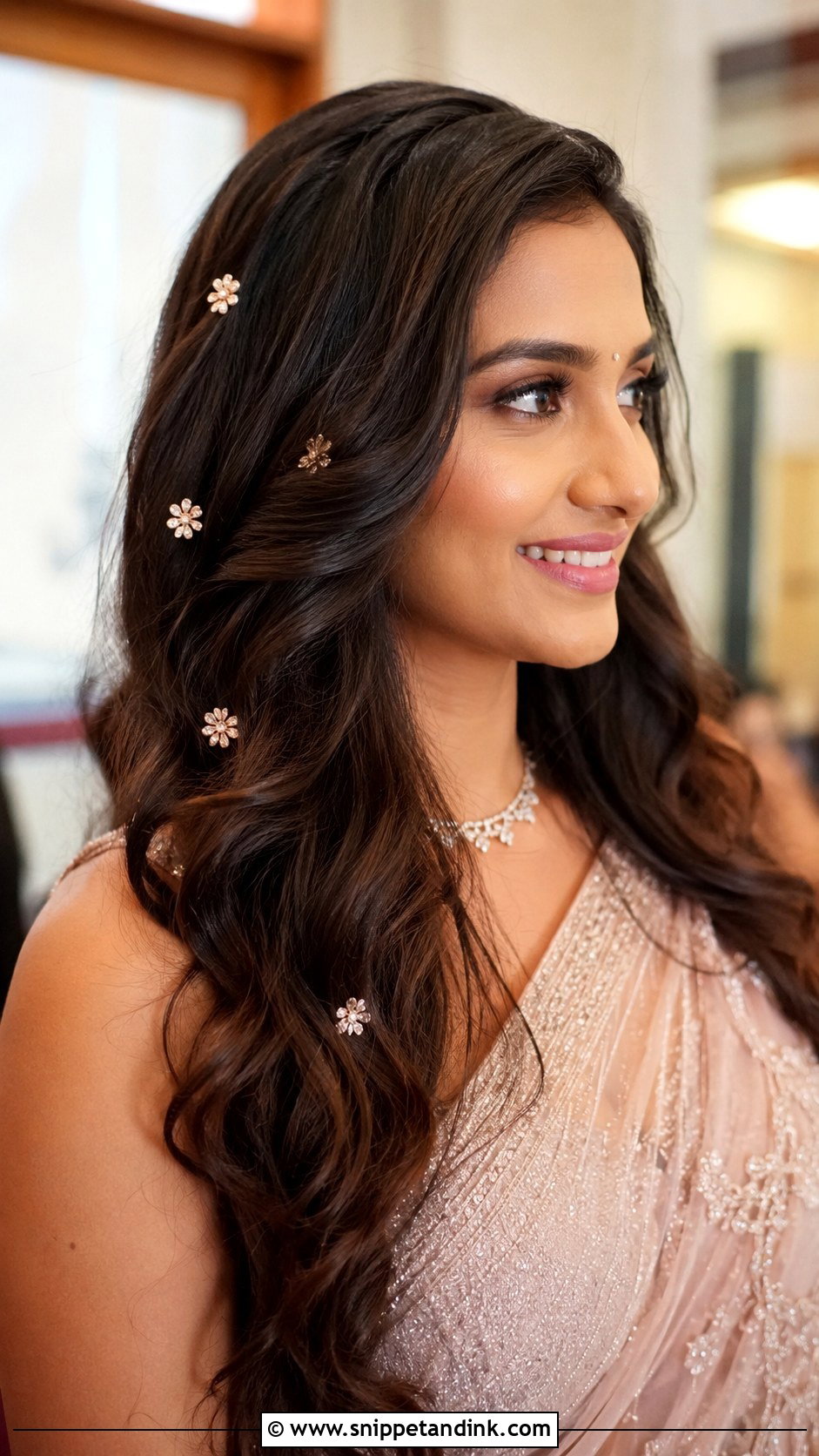
Loose waves with small floral pins placed through them give a cultural touch without a braid or bun. The flowers peek out as you move. I place the pins slightly under the surface of a wave so they grip hair underneath and don’t slide down the lengths. Colours can follow your outfit. It suits reception and engagement events and brides who want their hair down, and it is the most comfortable style on this list for a long evening.
27. Bun With Maatha Patti
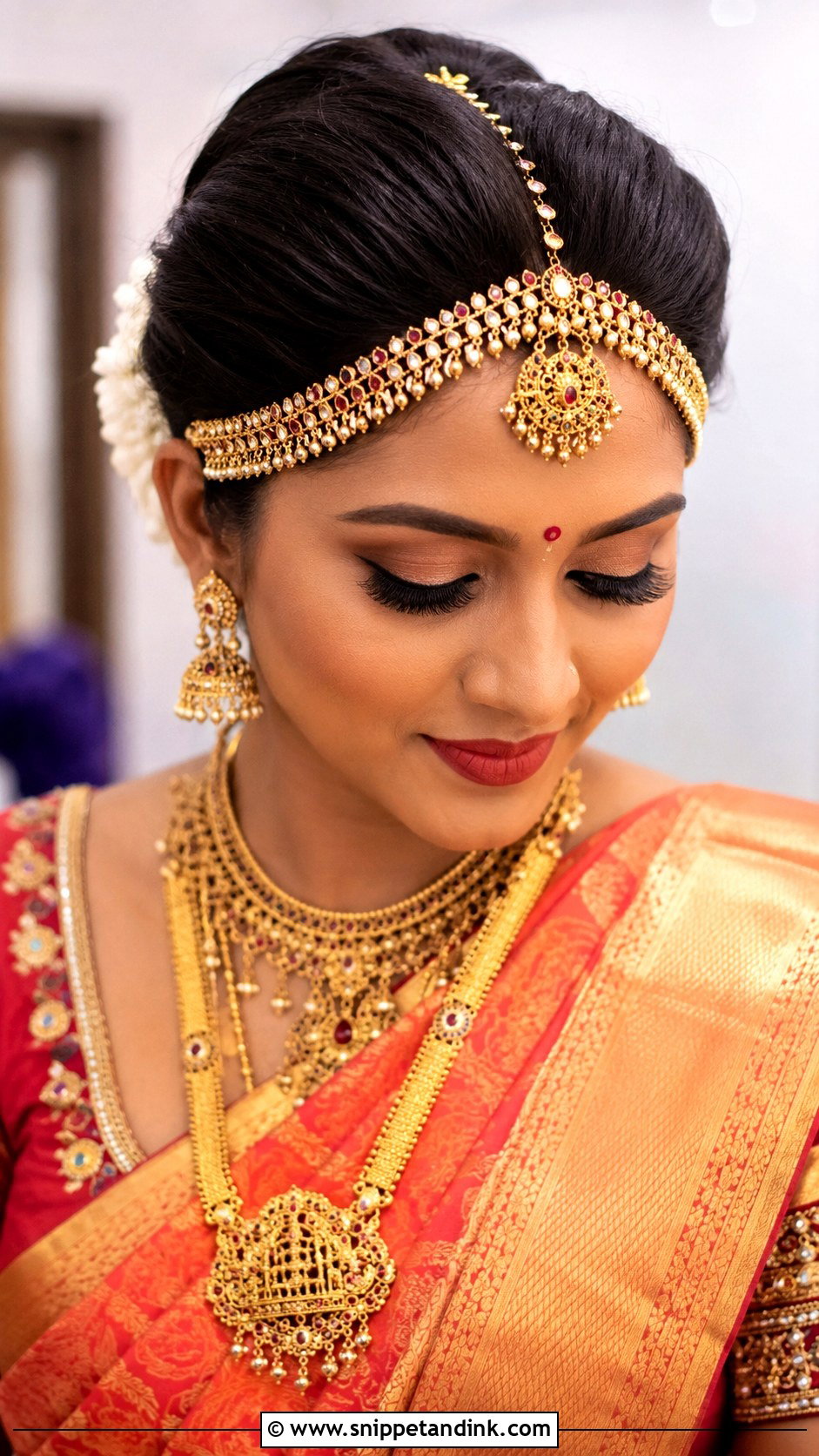
A sleek bun with a maatha patti puts the jewellery first: the bun stays simple while the headpiece frames the forehead and hairline. Fit matters more than anything here; I set the maatha patti before finishing the hair so the centre piece sits exactly on the parting and the side chains sit at the same height. It suits the muhurtham and main ceremony. Small flowers around the bun soften the look.
28. Loose Curls With Side Braid
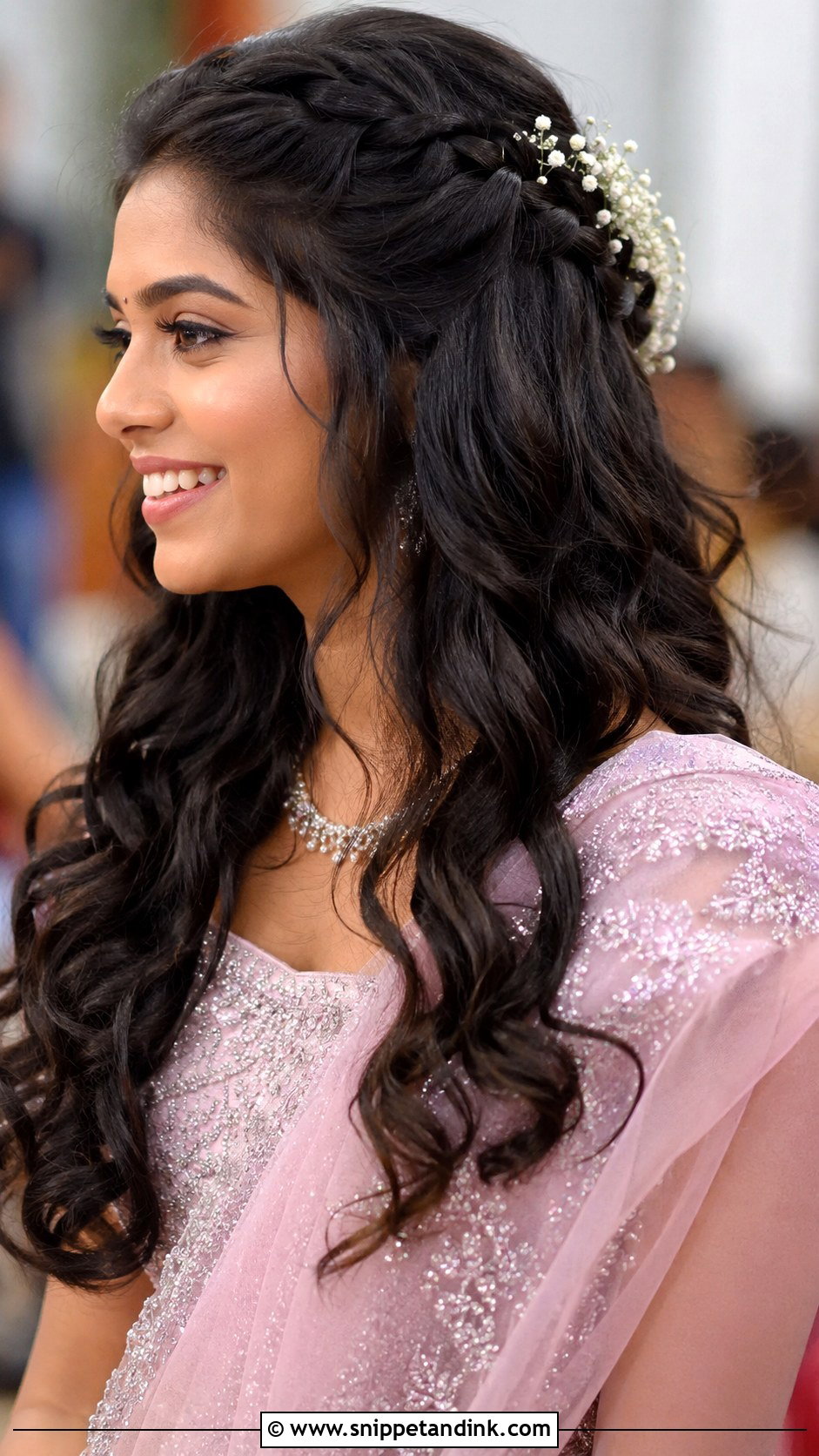
A small braid along one side gathers part of the hair while the rest falls in soft curls, with tiny flowers tucked into the braid. It keeps hair off one side of the face and still gives you volume. I start the braid close to the parting and pin its end under the curls behind the ear, so the join is hidden. It suits receptions and engagements, and brides who can’t decide between braided and open hair.
29. Floral Bun With Pastel Flowers
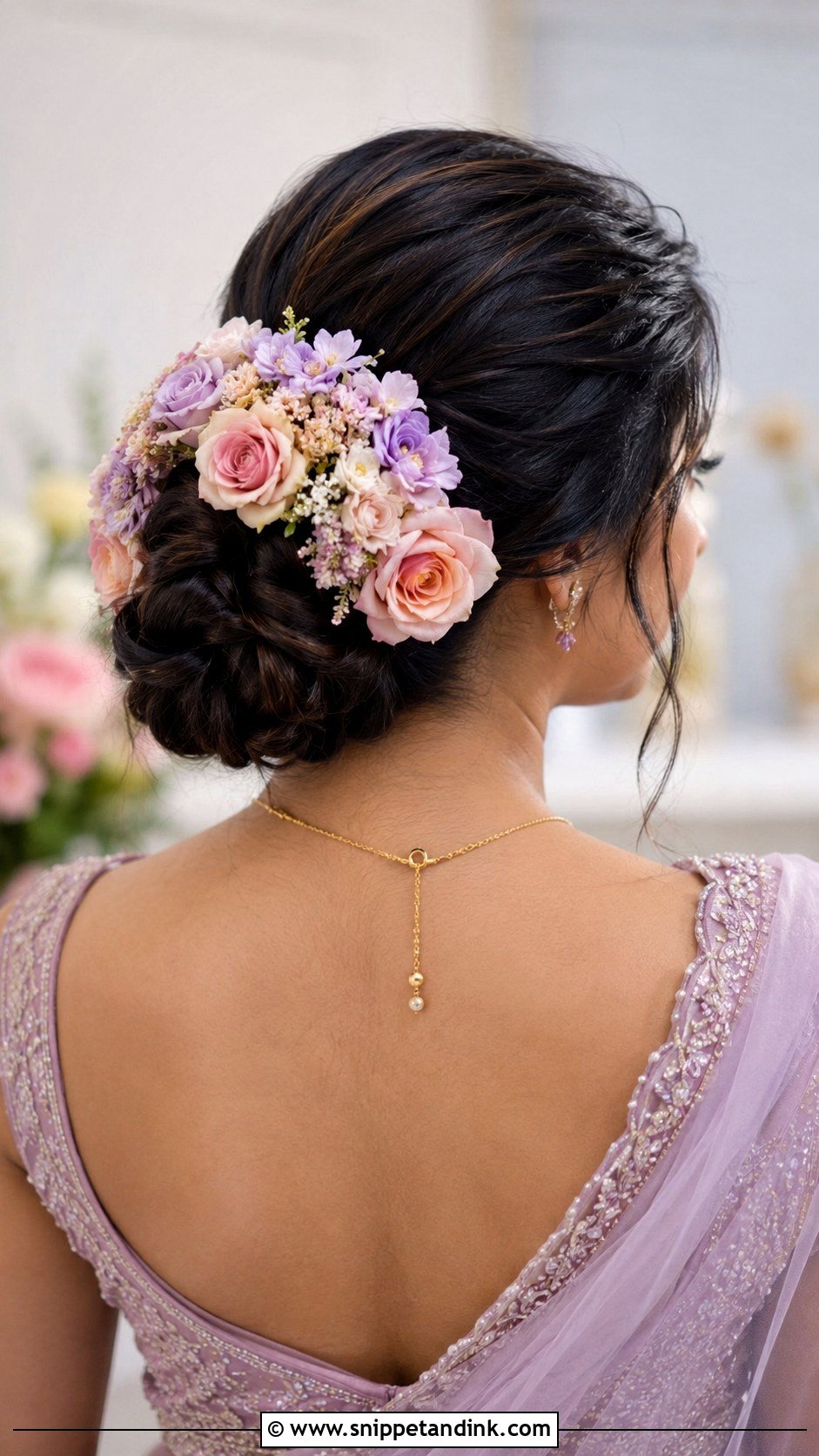
Pastel flowers in blush, lavender, peach and cream, often good-quality faux ones, give a bun a softer, current feel than bold reds and oranges. Faux flowers are lighter on the hair and don’t wilt, which helps on a long day in the heat. I choose ones with a matte finish, since shiny fabric petals look artificial in close-ups. They suit lighter sarees and reception outfits.
30. Grand Poolajada With Gold And Flowers
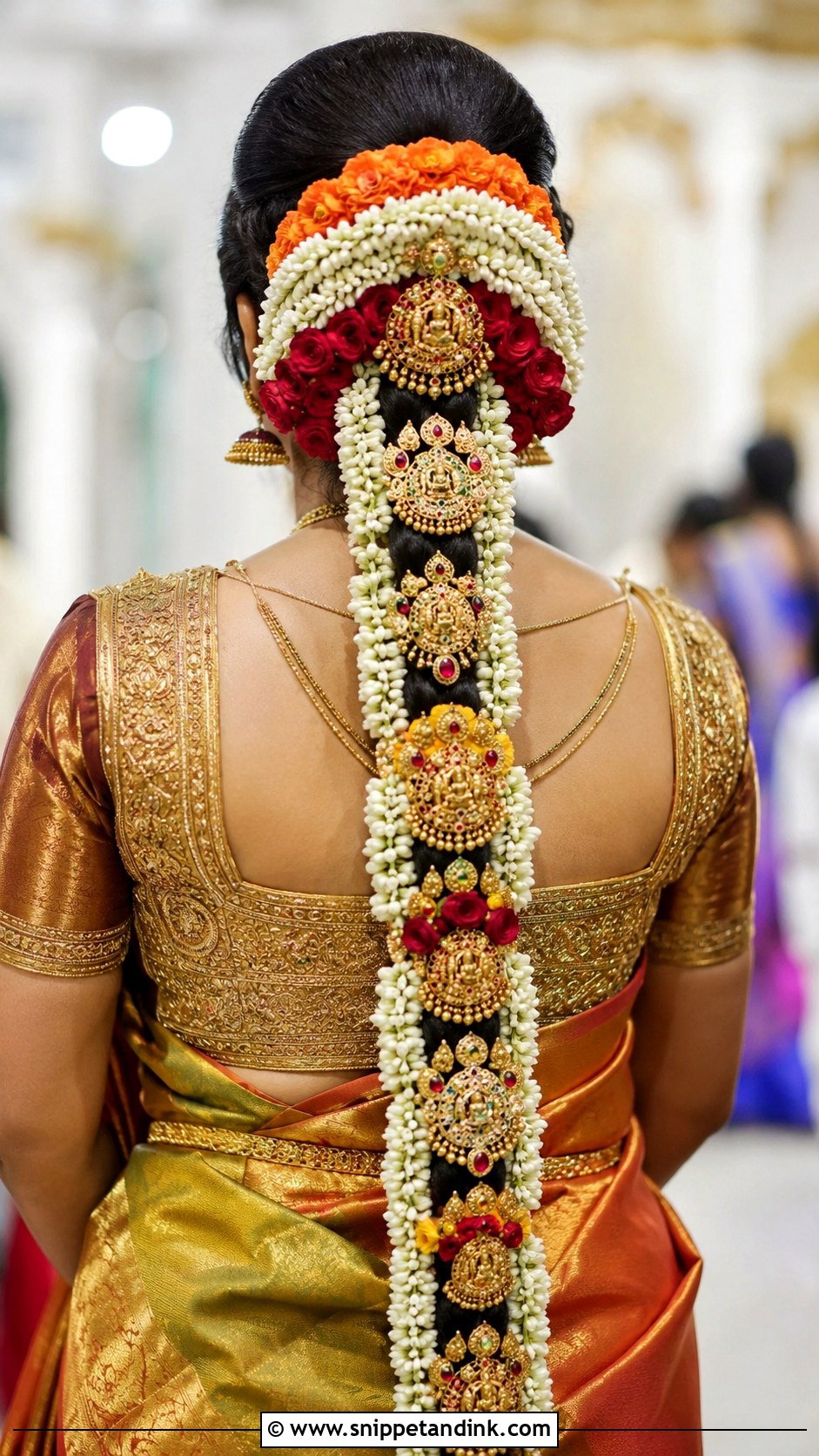
The grand Poolajada layers a thick braid with full rows of jasmine, roses and marigolds and ornate gold temple pieces from top to bottom. It is the most traditional and lavish choice for the main ceremony, and the most demanding: hours to build, and real weight on the head. I build it on a base and extension so your own hair is not carrying everything, and plan time to remove it carefully afterwards. It pairs with heavy Kanjeevaram sarees and full temple jewellery.
From the Muhurtham Braid to Reception Curls Without Damaging Your Hair
Many brides wear two or three hairstyles across the wedding, and the change between them is where hair gets hurt. A tight braid with dozens of pins, taken down in a rush, means broken strands and a sore scalp.
- Remove gold ornaments first and hand them straight to someone responsible for the jewellery.
- Take out flowers from the bottom of the braid upward, then remove every pin you can feel before undoing the braid.
- Undo the braid gently and work through it with fingers, not a brush, from the ends up.
- Use a dry shampoo or a little texturising spray at the roots, then re-set curls or waves for the reception.
- Allow at least an hour for the change. Rushed take-downs are when hair snaps.
If the reception is the same day and time is tight, I’d rather plan a reception look that builds on the ceremony hair, such as loosening the braid into waves or pinning it into a bun, than start from scratch.
Jasmine, Gold and the Weight Your Scalp Can Carry
South Indian bridal hair keeps its traditions and still leaves room to choose: the grand Poolajada, jasmine buns, fishtails, pastel floral buns and soft half-updos all have a place depending on your hair, face shape and the function. Heavy gold and temple jewellery suit one bride; pearls and pastel flowers suit another. Pick the style for the muhurtham first, since that sets the jewellery and the flower order, then plan the reception look around it. Bring your saree colour and jewellery photos to the trial so we can build the hair around them.
You'll Like These Ideas:





Leave a Reply