
At an Indian wedding, the front of your hair is in almost every frame: the varmala, the pheras, the family portraits, the close-ups with your mother. It also has jobs to do. It holds a maang tikka straight, gives a dupatta something to rest on, and has to stay neat through hours of sitting, standing and dancing. When I style for these weddings, I look at the outfit neckline, the earrings and how the dupatta will be worn before I touch a brush. The looks below cover brides and guest-ready looks across mehndi, haldi, sangeet, the ceremony and the reception, with notes on which ones hold up and which ones need help.
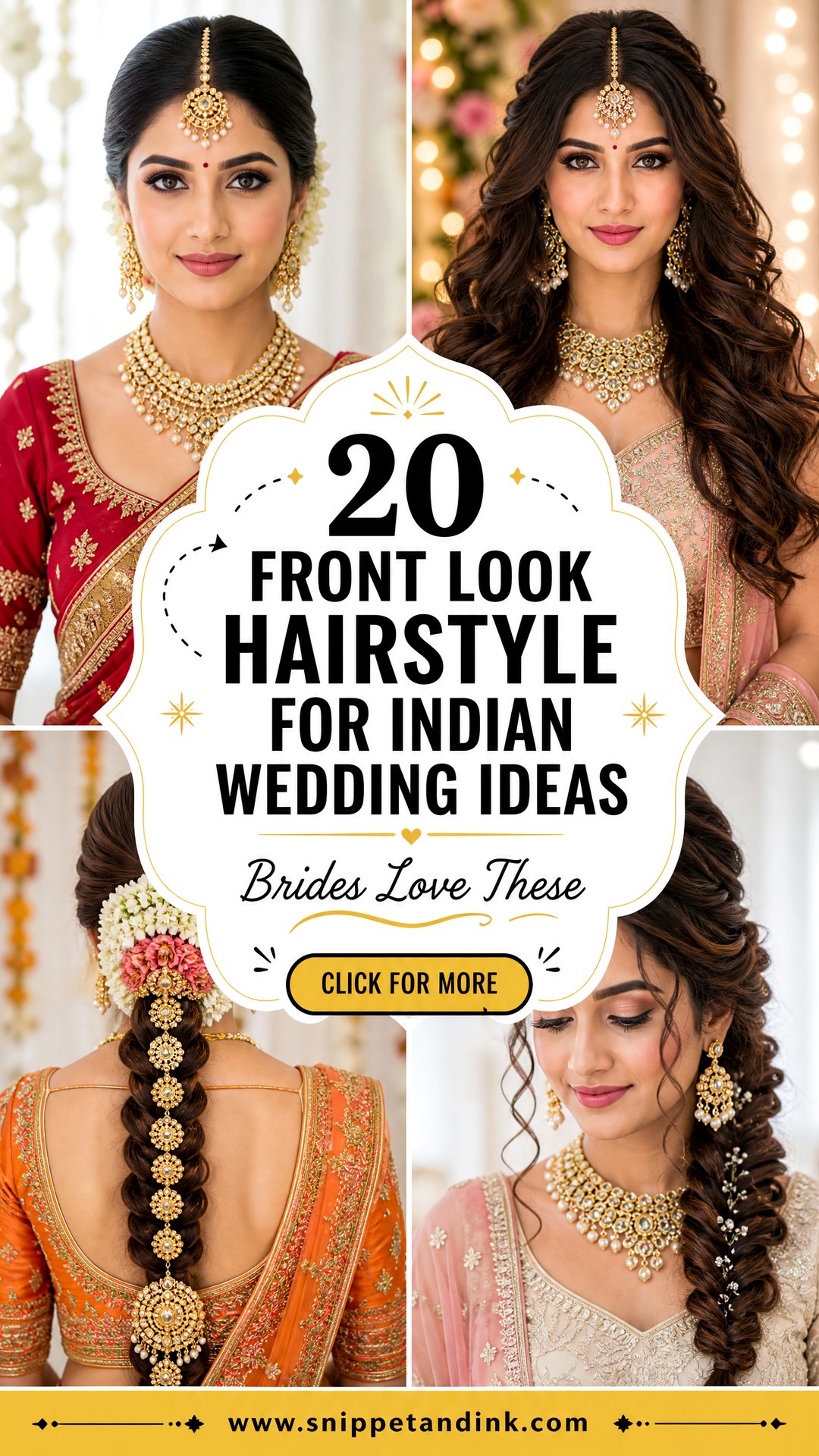
Borrowed Length: The Extensions Behind Many of These Looks
A lot of the long braids, full buns and Poola Jadas you see in wedding photos have help. I use extensions and fillers on a large share of brides, and there’s nothing to be shy about. It simply means planning for them early instead of discovering on the morning that your braid ends at your shoulder blades.
- Clip-in wefts add thickness to open curls and half-up styles. Match them to the ends of your hair, not the roots, since ends are usually lighter.
- Braid extensions and jada pieces lengthen a traditional braid. I attach them a third of the way down so the join hides inside the plait.
- Foam donuts and bun fillers give a bun its size. Pick one close to your hair color; a pale filler shows through gaps under flash.
- Puff padding is a small insert placed under the front section on fine hair, so the lift lasts longer than backcombing alone.
Buy extensions before your trial, not after, so your stylist can color-check them and plan the style around them. Human hair pieces can be curled with heat; synthetic ones often melt, which is worth knowing before anyone picks up an iron.
1. Indian Wedding Center Part Bun With Maang Tikka
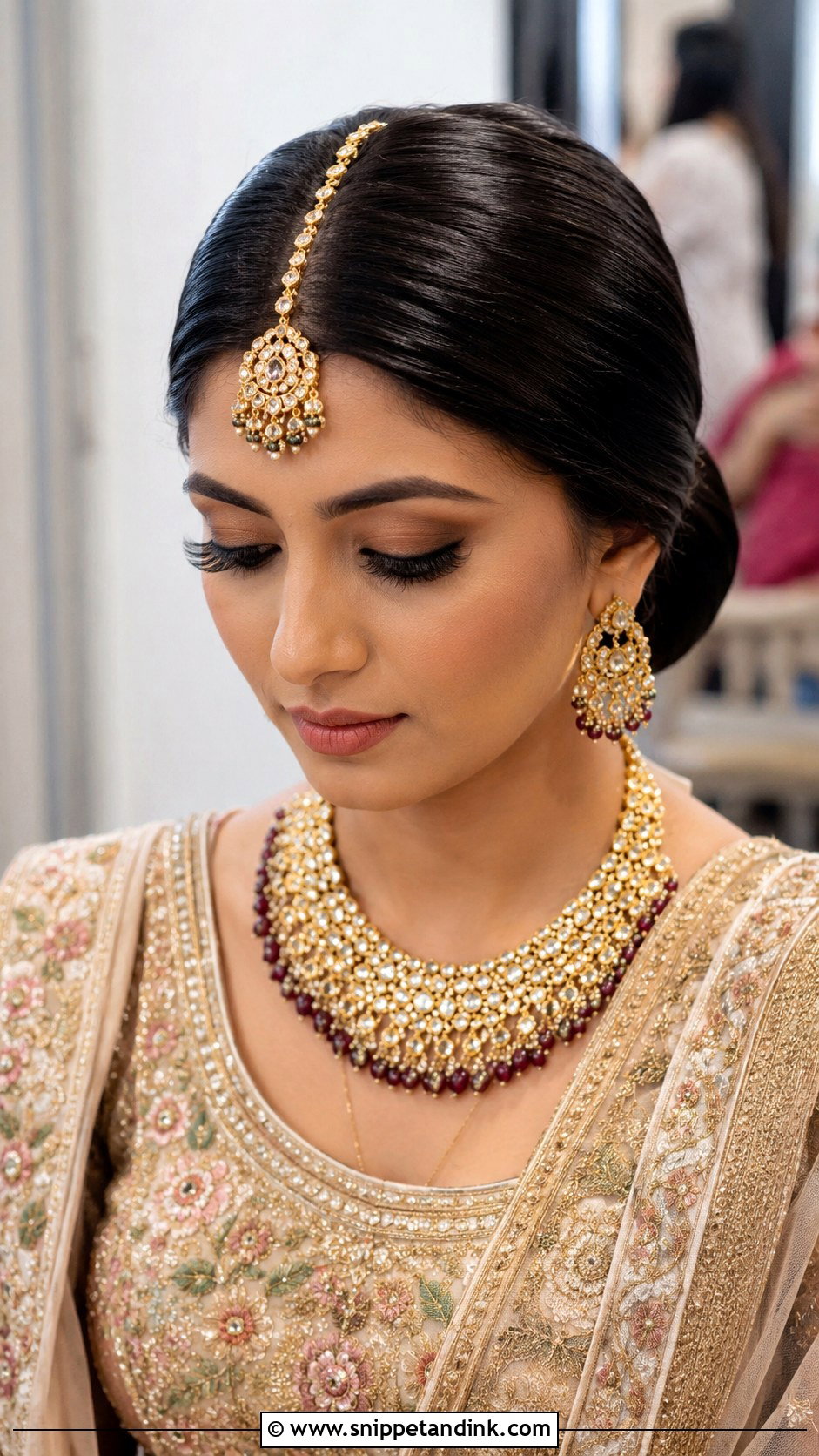
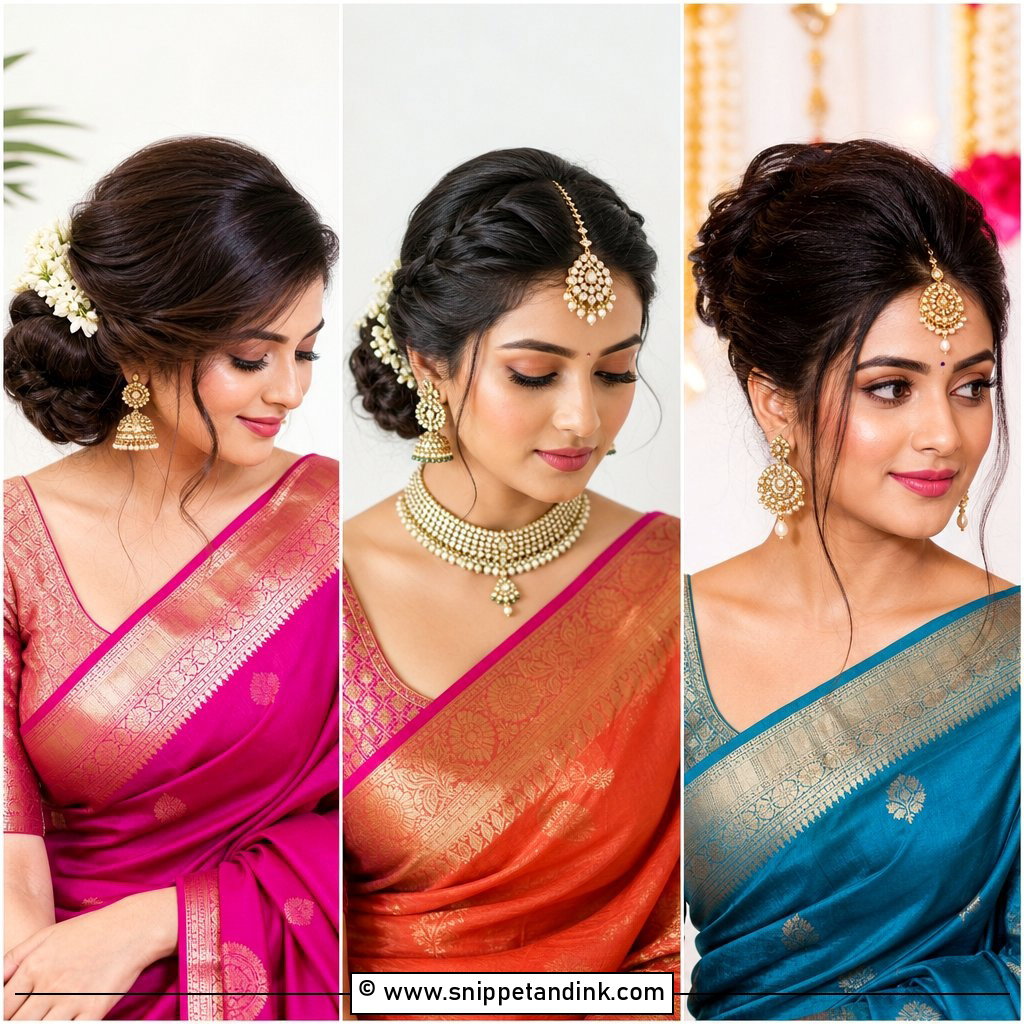
A center part bun with a maang tikka is the front I’d call the backbone of Indian bridal hair. The part has to be dead straight, because the tikka shows any wobble by sitting off-center. I set it with a tail comb and a little gel, then hook the tikka with a bobby pin crossed over its chain. The bun can sit low or mid-height; I place it depending on where the dupatta will be pinned. It works with lehengas, silk sarees, shararas and heavy drapes. Add a little lift at the crown first, because a perfectly flat top looks severe in photographs.
2. Indian Wedding Side Part Low Bun
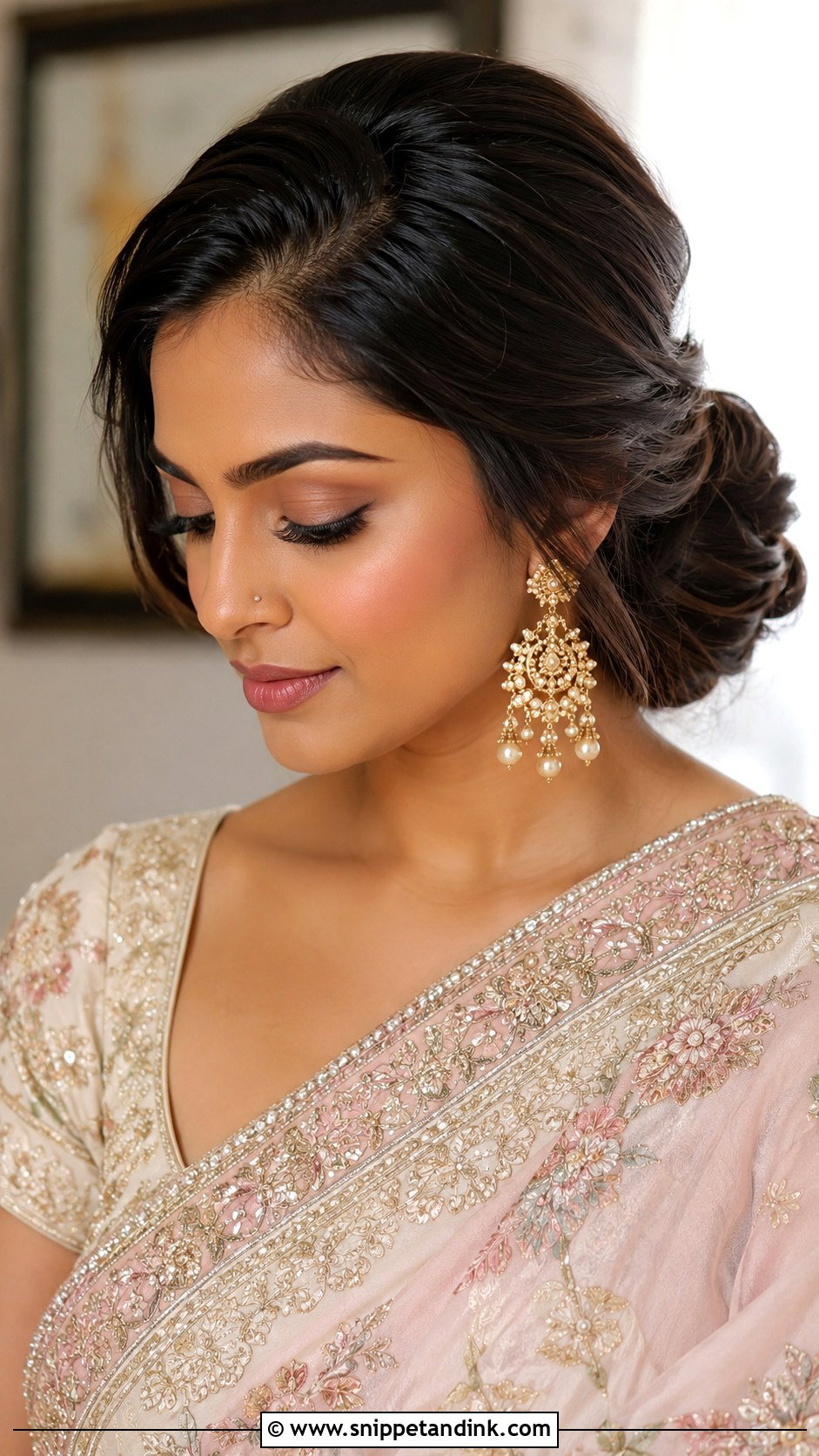
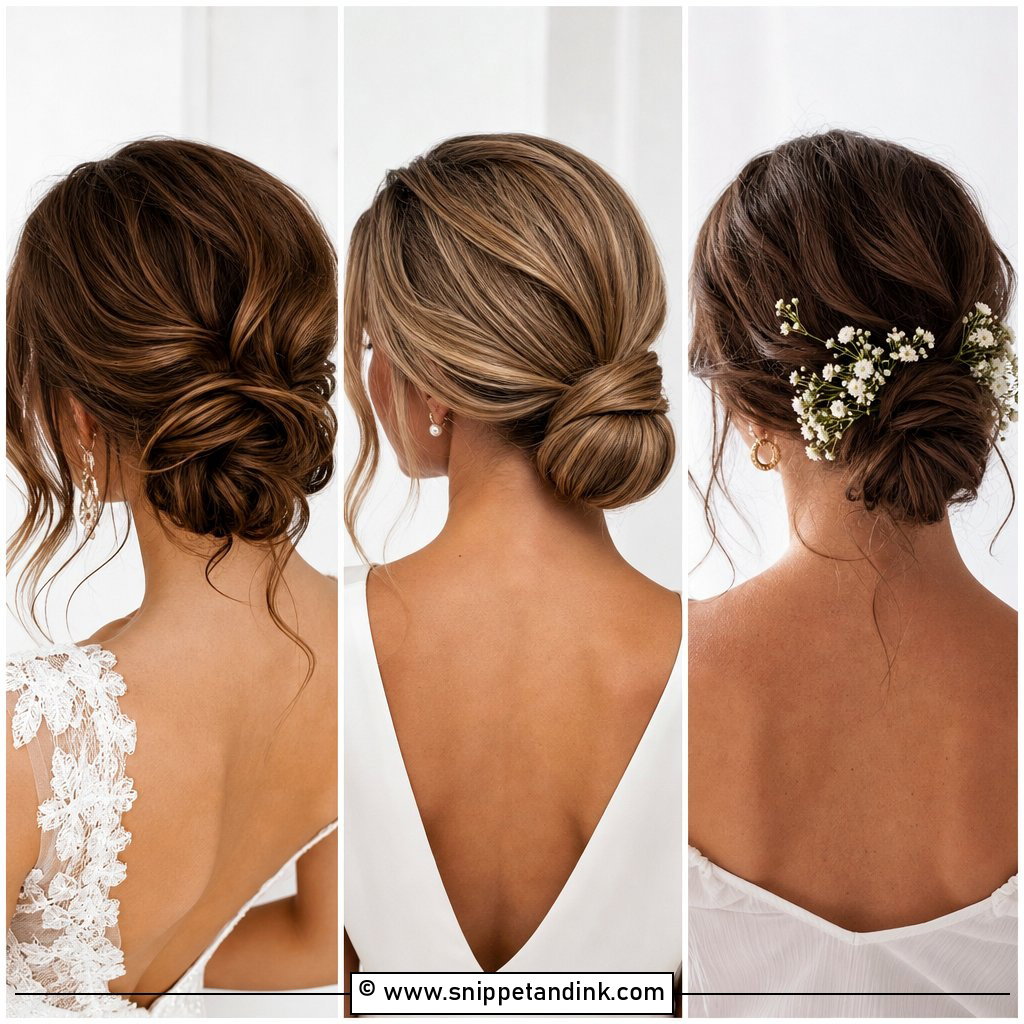
Moving the part to the side softens the face and suits round, square and heart-shaped faces, where a center part can feel too symmetrical. I either smooth the front section across the forehead or give it a little lift at the root, then tuck it into a low bun. Pair it with statement earrings, a passa on the heavier side, or a fine hair chain. The low bun gives a dupatta a firm anchor. A practical note: side parts and maang tikkas don’t always get along, since the tikka hangs from the part. If you want both, I shift the tikka to sit just off the part line so it still lands centered on the forehead.
3. Indian Wedding Front Puff Bun
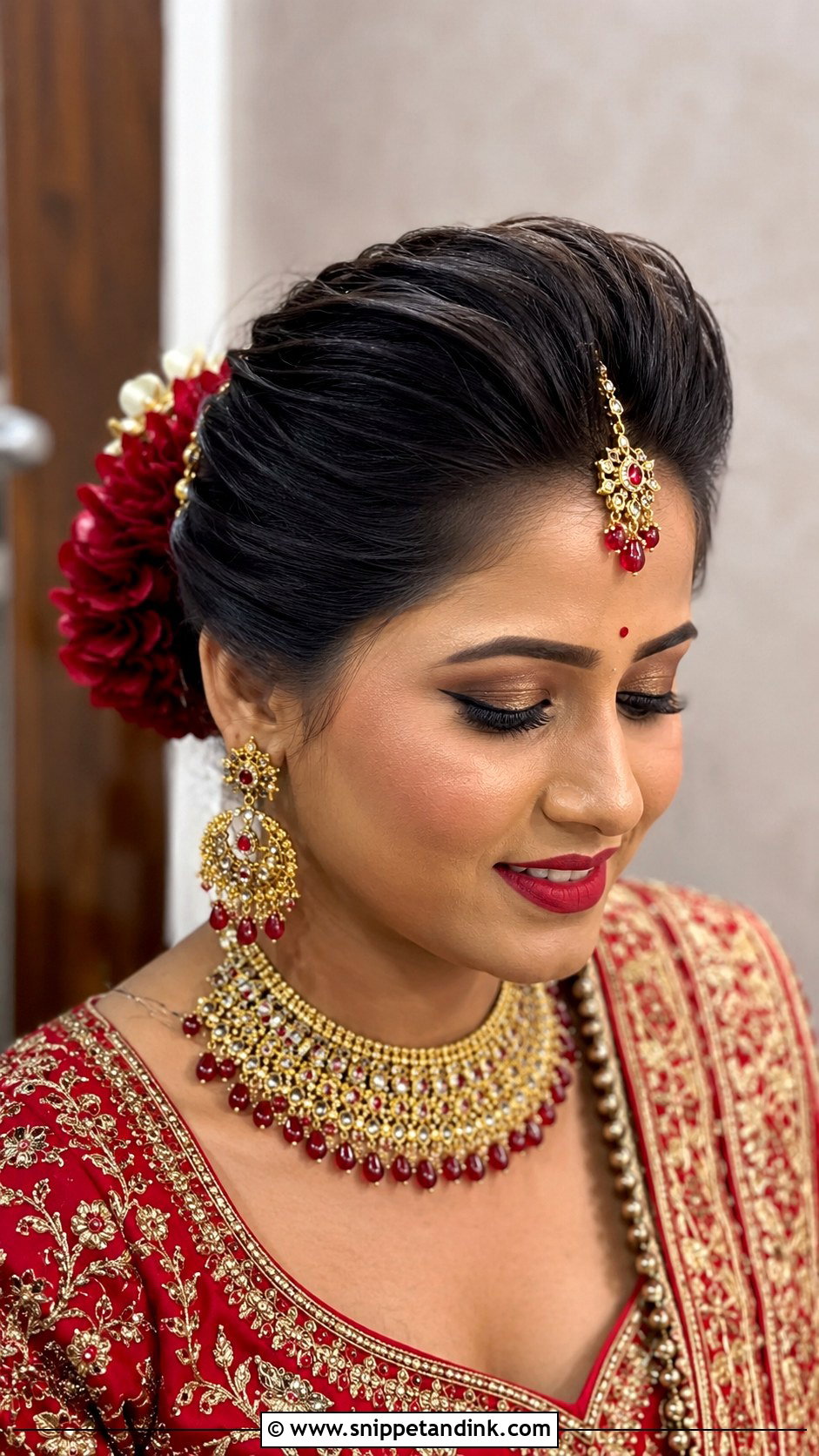
Height at the front makes the eyes, brows and jewelry stand out, and it balances heavy embroidered lehengas that can otherwise swallow a petite bride. The difference between a puff that looks current and one that looks dated is size and stiffness. I backcomb only the first few inches, smooth the surface with a soft brush and set it with a light hold spray instead of a lacquer. The bun behind it takes gajra, roses or pearl pins well. On very fine hair, I’d add a small padding piece under the puff; teasing alone tends to deflate within a couple of hours.
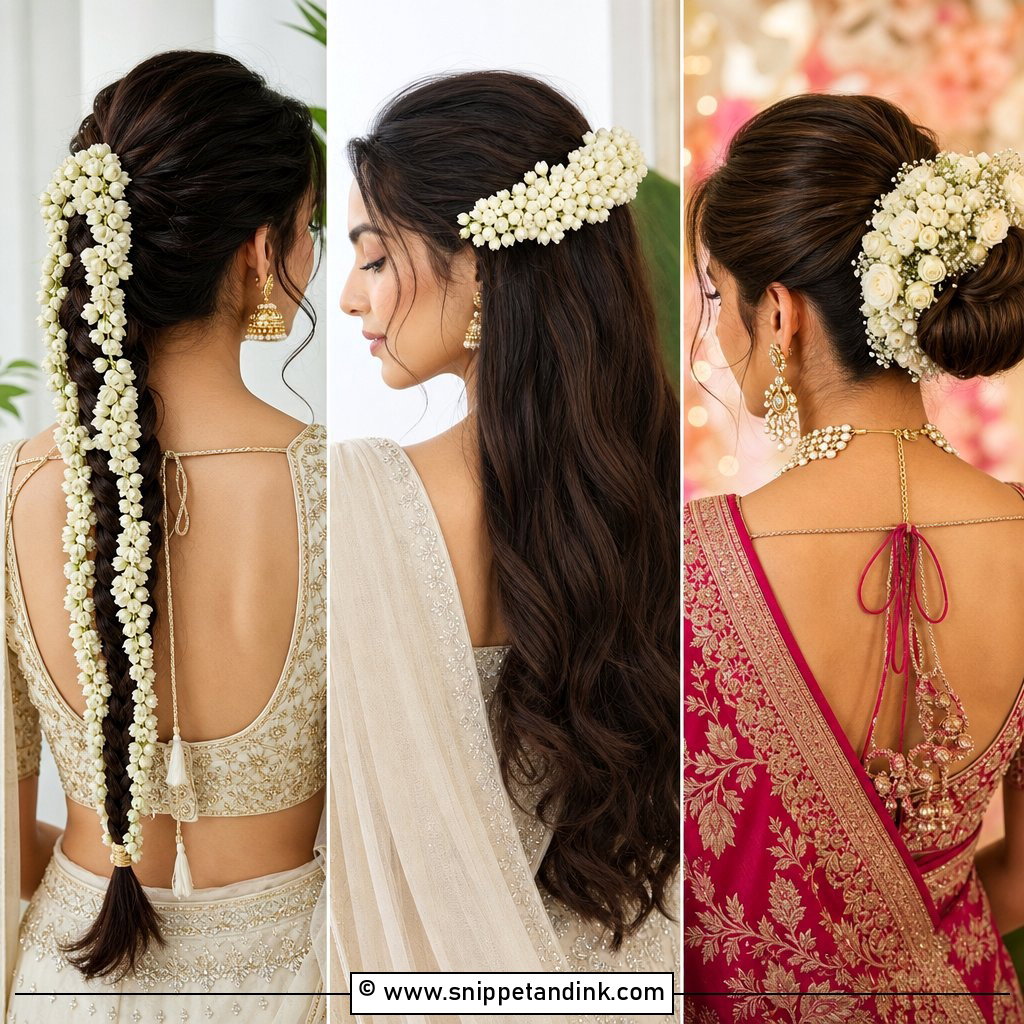
4. Indian Wedding Sleek Bun With Gajra
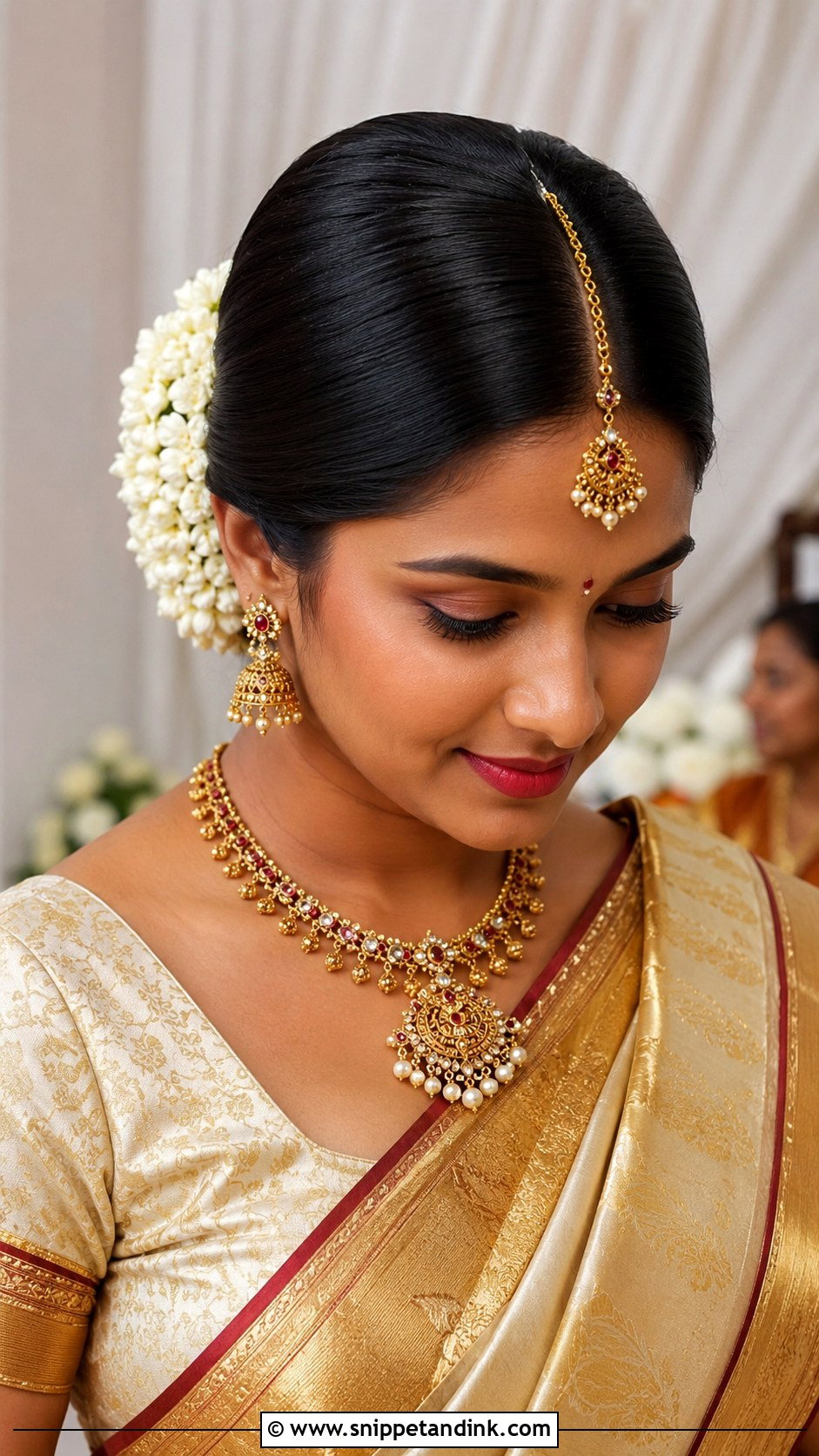
A sleek bun with gajra keeps the front polished so the flowers and temple jewelry carry the look. It suits South Indian bridal sarees, Banarasi silks and lehengas. With a maang tikka I always use a middle part; with heavy earrings and no tikka, a side part reads softer. I build the smooth front with gel and a boar bristle brush and leave it to set before adding the gajra, since jasmine pinned onto damp gel can bruise. The front stays controlled through rituals and long wedding hours, which is its real advantage.
5. Indian Wedding Open Curls With Maang Tikka
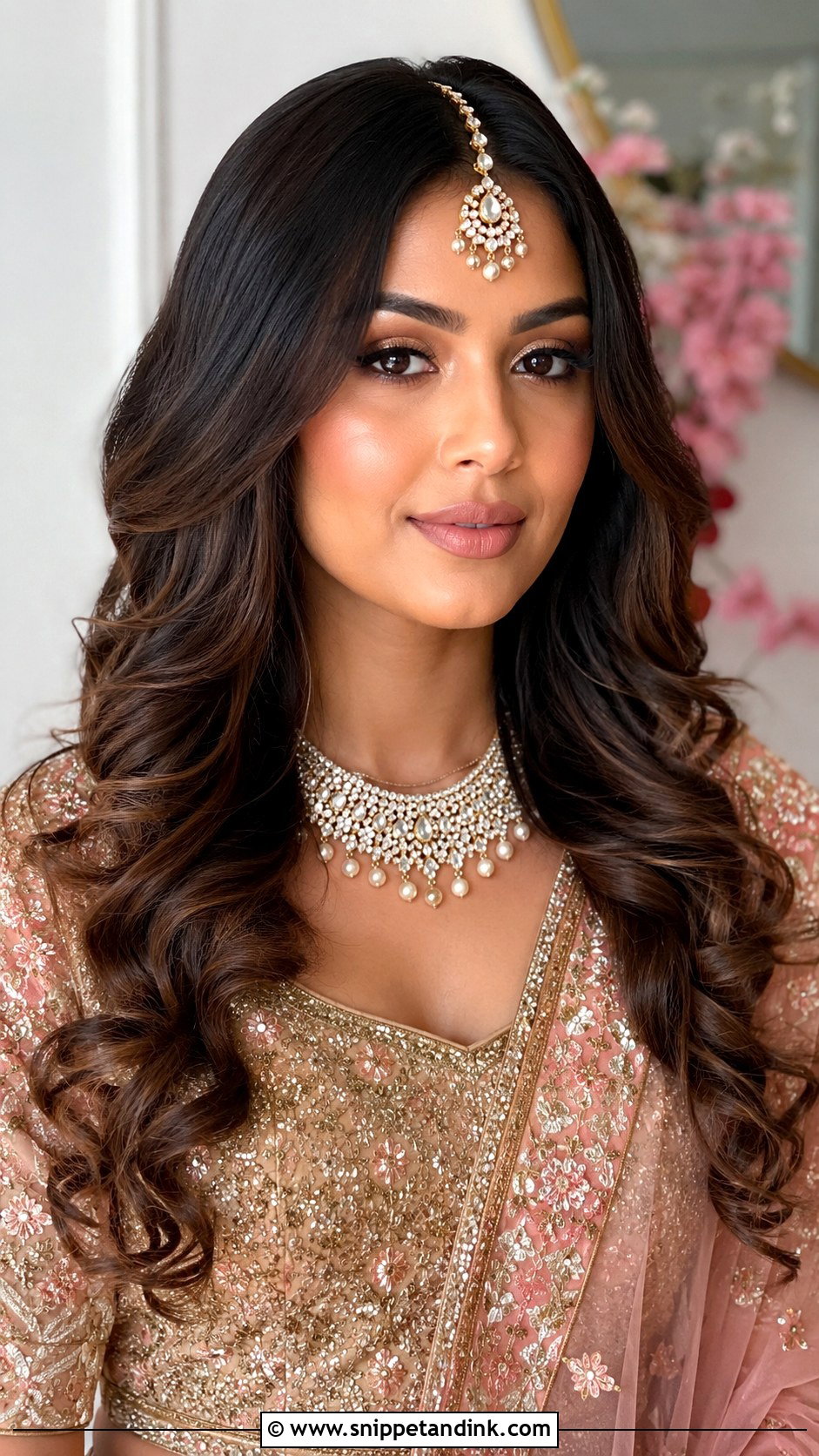
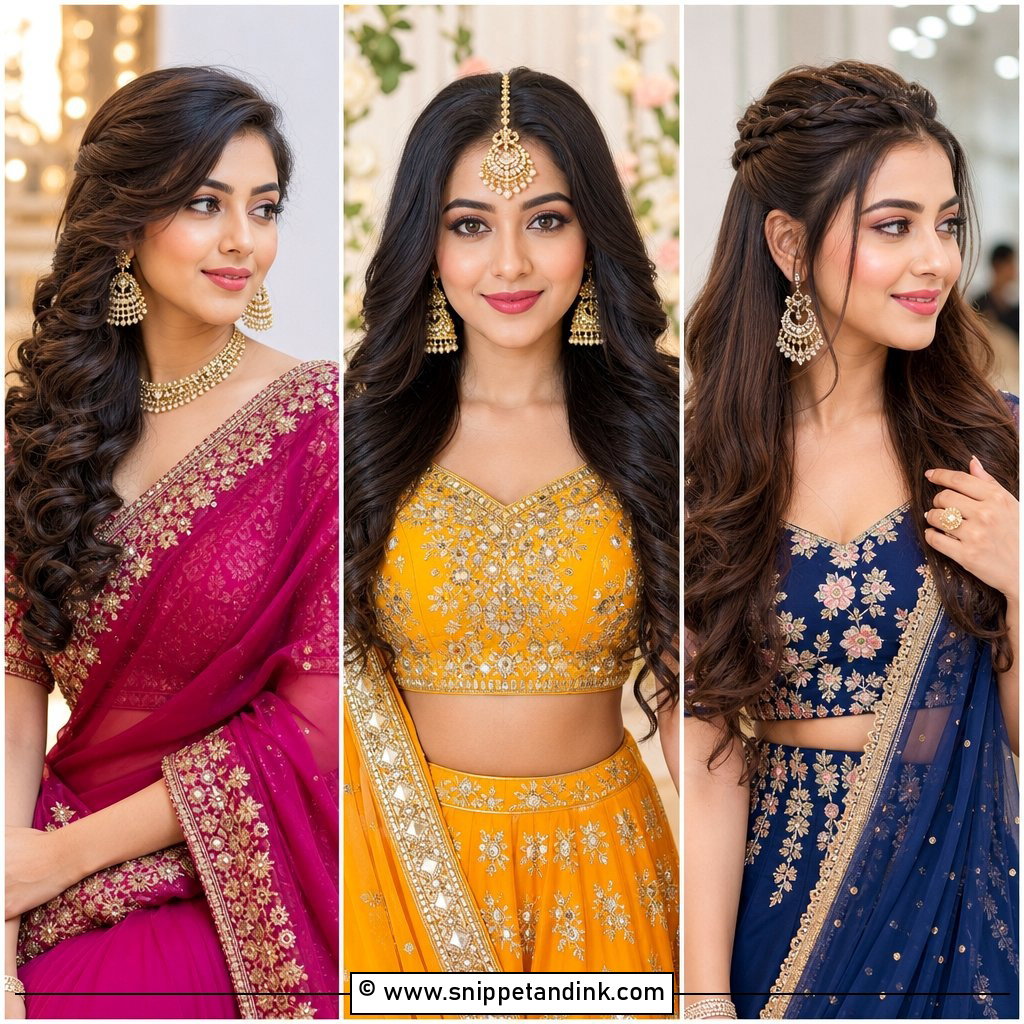
Open curls with a maang tikka are for the bride who doesn’t want a full updo. A clean center part, some lift near the roots and soft curls around the shoulders is the usual shape. I use a large barrel and brush the curls out into waves rather than leaving ringlets, which read dated in close-up. This look belongs at the sangeet, the reception, the engagement or a lighter ceremony. Under a heavy ceremony dupatta, open curls get crushed and catch on embroidery, so I’d save them for an event where the drape is on the shoulders.
6. Indian Wedding Half Up Curls
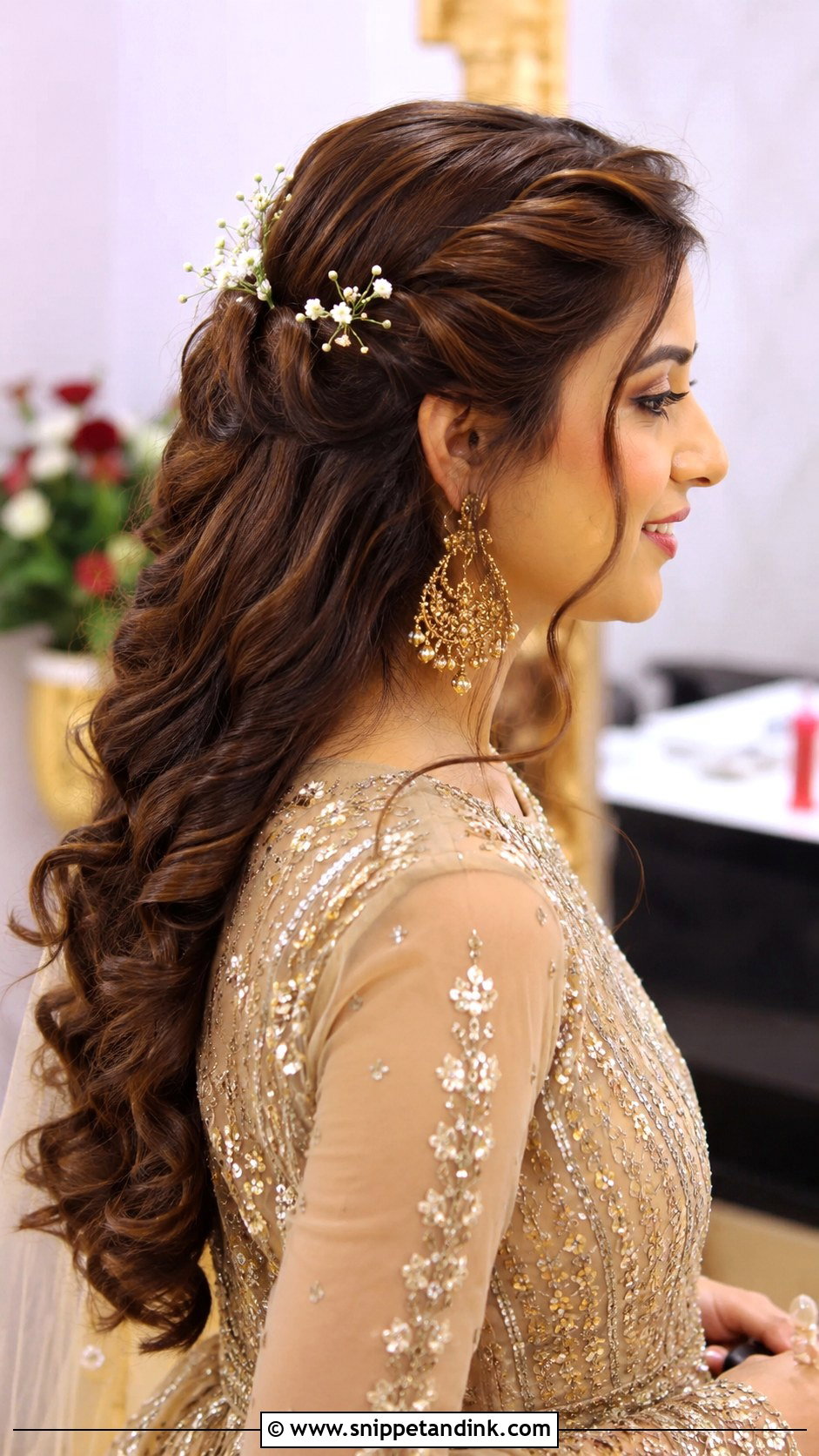
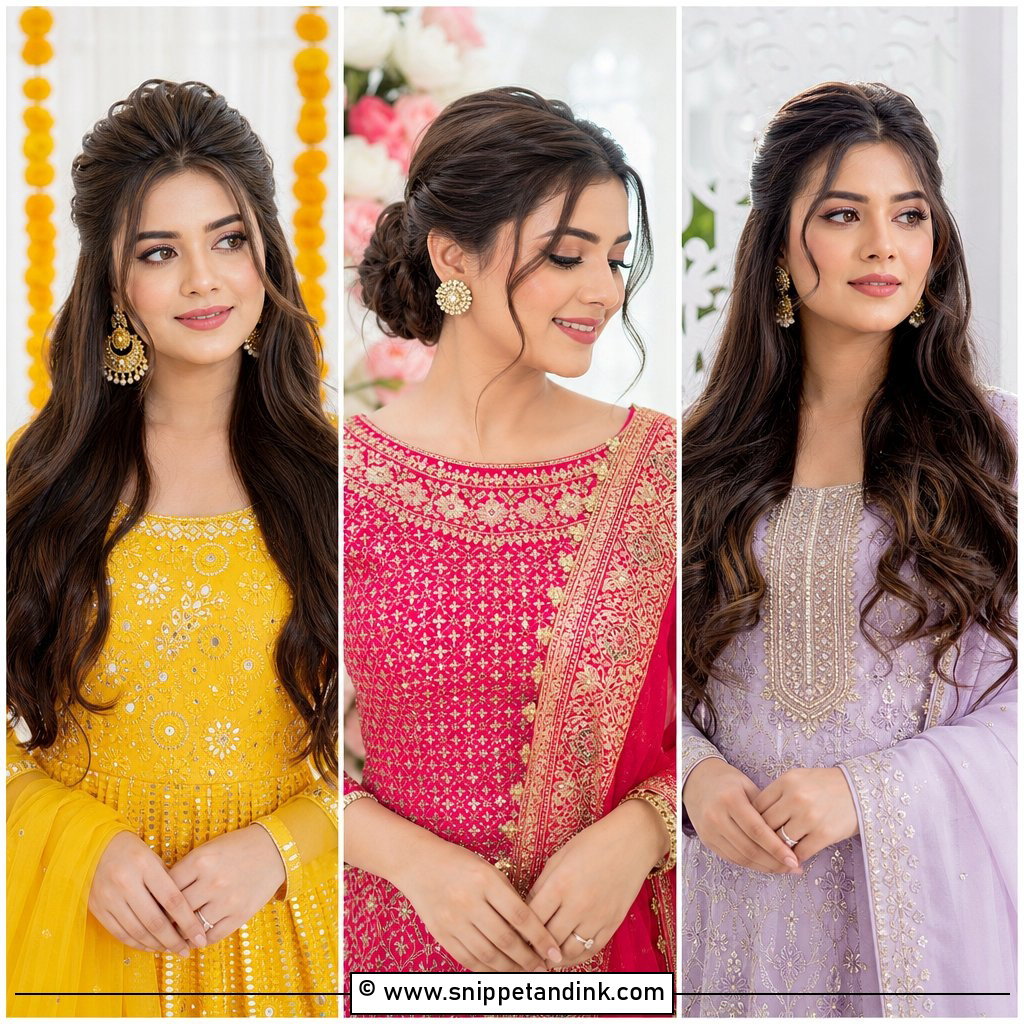
Half up curls are the compromise I suggest most to bridesmaids and guests: movement in the length, but nothing falling forward into the face during dancing. The front can be a center part, a side part or soft twisted sections pinned back. I anchor the half-up section with crossed bobby pins under a decorative pin, because the weight of curled hair below slowly drags a single pin down. Small flowers or a light tikka finish it. It suits medium to long hair and goes with lehengas, anarkalis, sarees and Indo-western outfits.
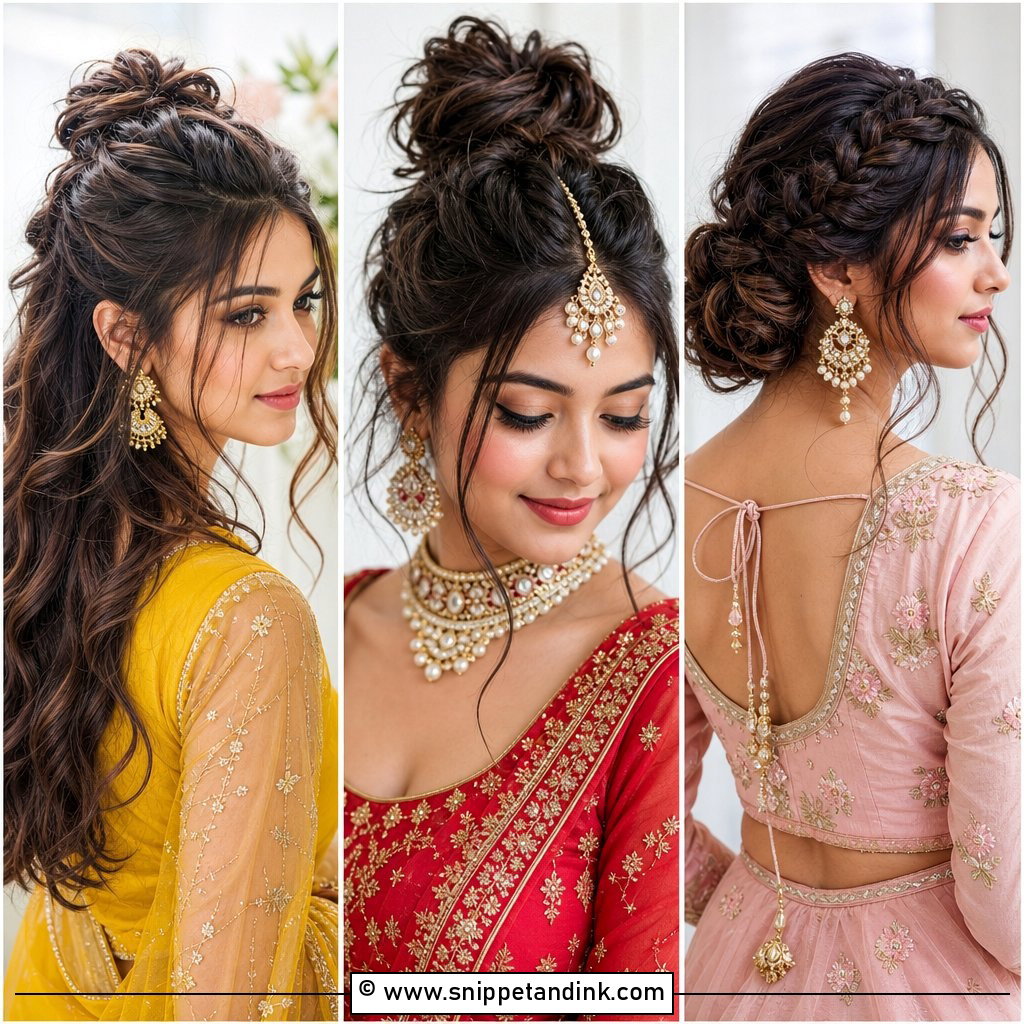
7. Indian Wedding Front Braided Bun
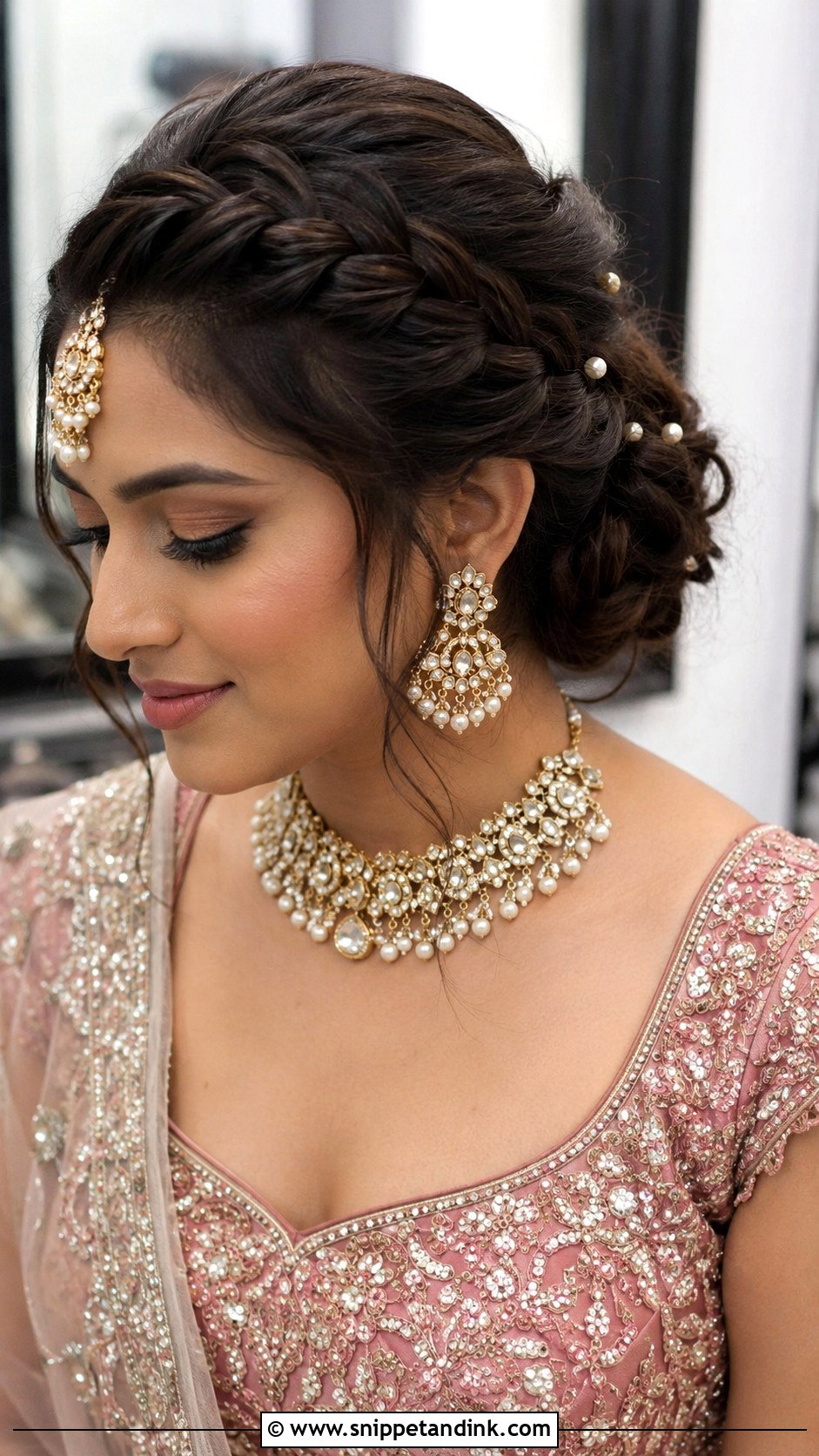
A braid starting at the part and running along the hairline gives the face a frame without needing more jewelry. It blends into a low or medium bun at the back. This is the look I reach for when someone has short front layers or a grown-out fringe, because the braid catches those pieces and holds them. Small flowers, pearls or gold pins make the braid stand out. It suits mehndi, haldi, the wedding or the reception. If your hair is very fine, I’d use a Dutch braid, which sits on top of the hair and looks thicker.
8. Indian Wedding Crown Braid Bun
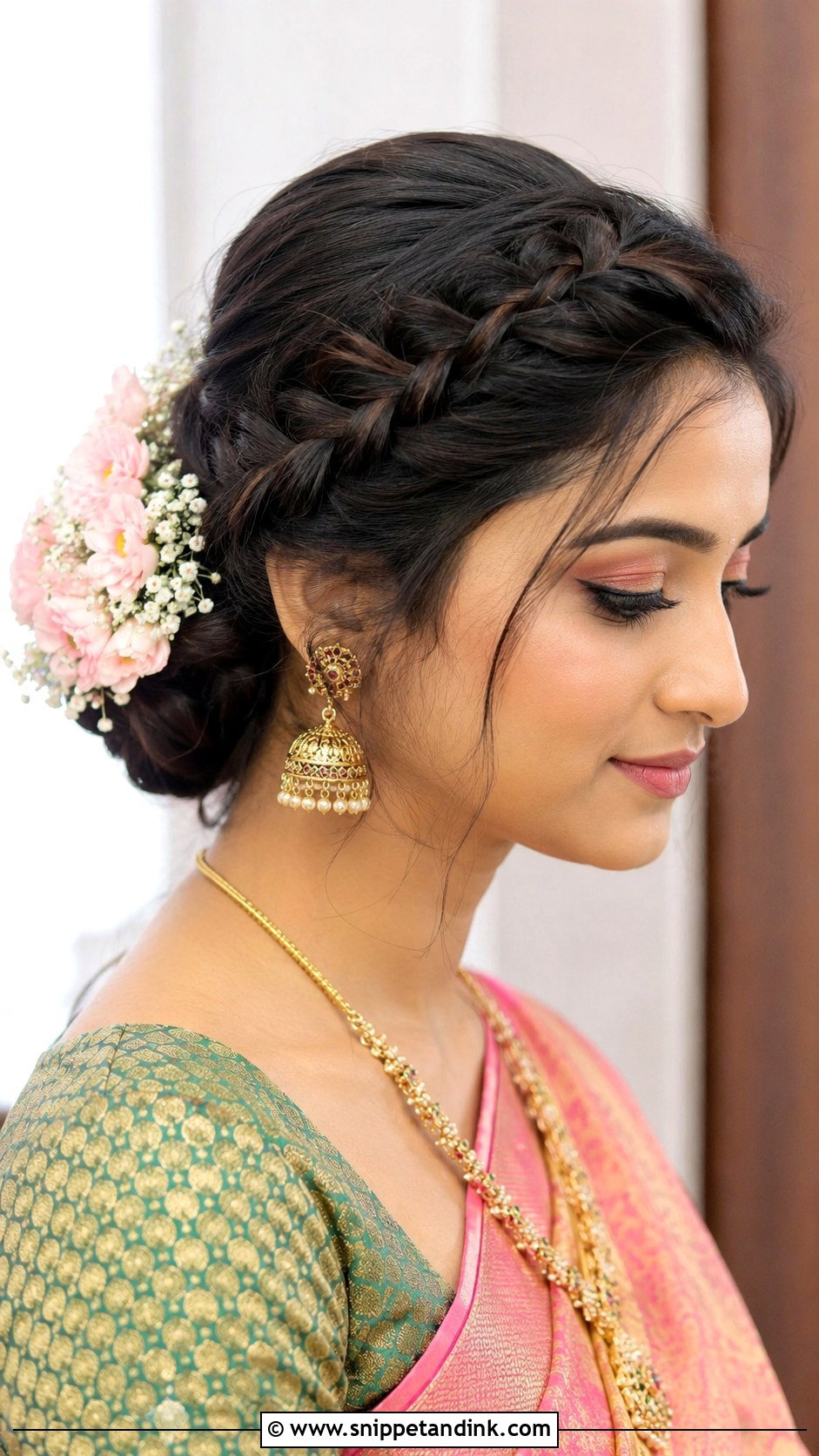
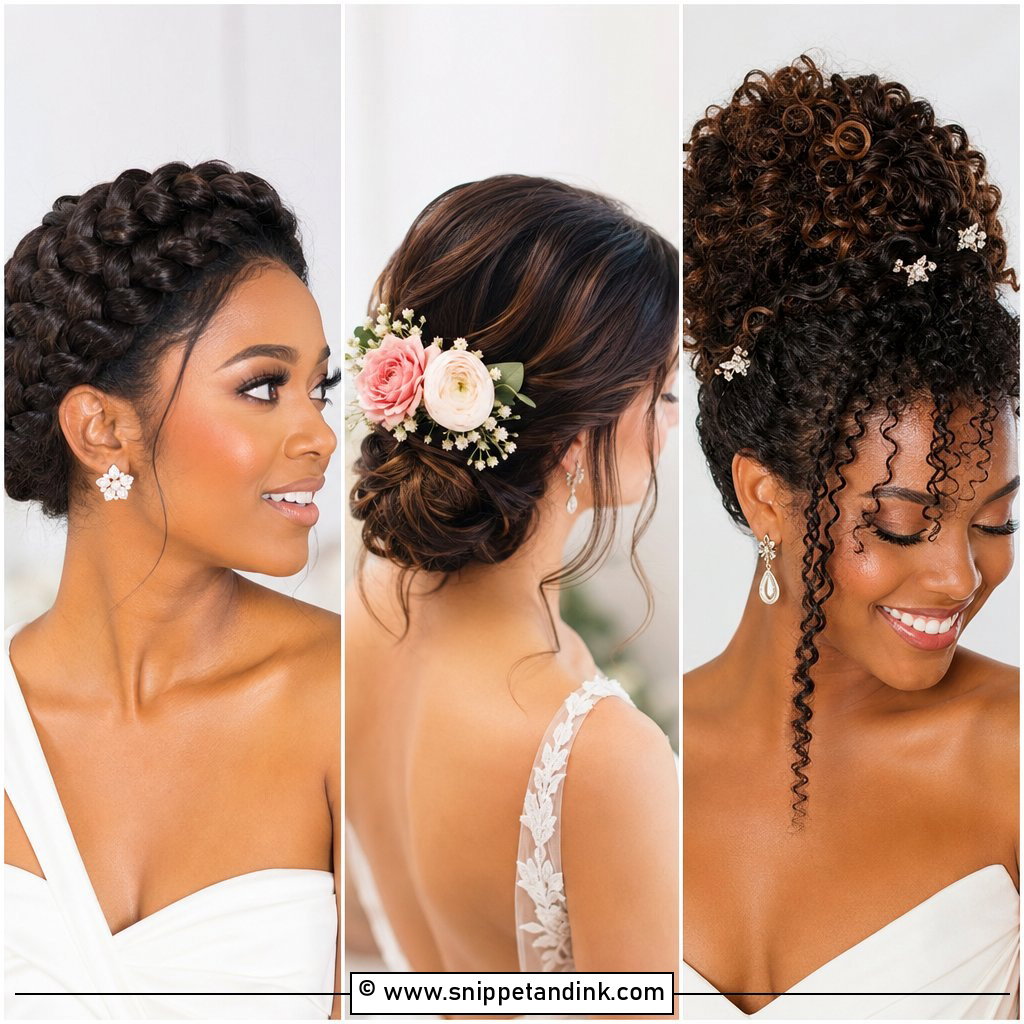
A crown braid wraps around the head like a soft accessory and shows from the front and both sides. The braid can be loose and romantic or tight and polished; I loosen the outer loops so it reads from across a hall. A low bun at the back keeps the shape secure. Because the braid sits forward of where a dupatta is pinned, it stays visible even with the drape on, which makes it more practical than people assume. Pair it with medium earrings, a small tikka or floral pins.
9. Indian Wedding Side Swept Curls
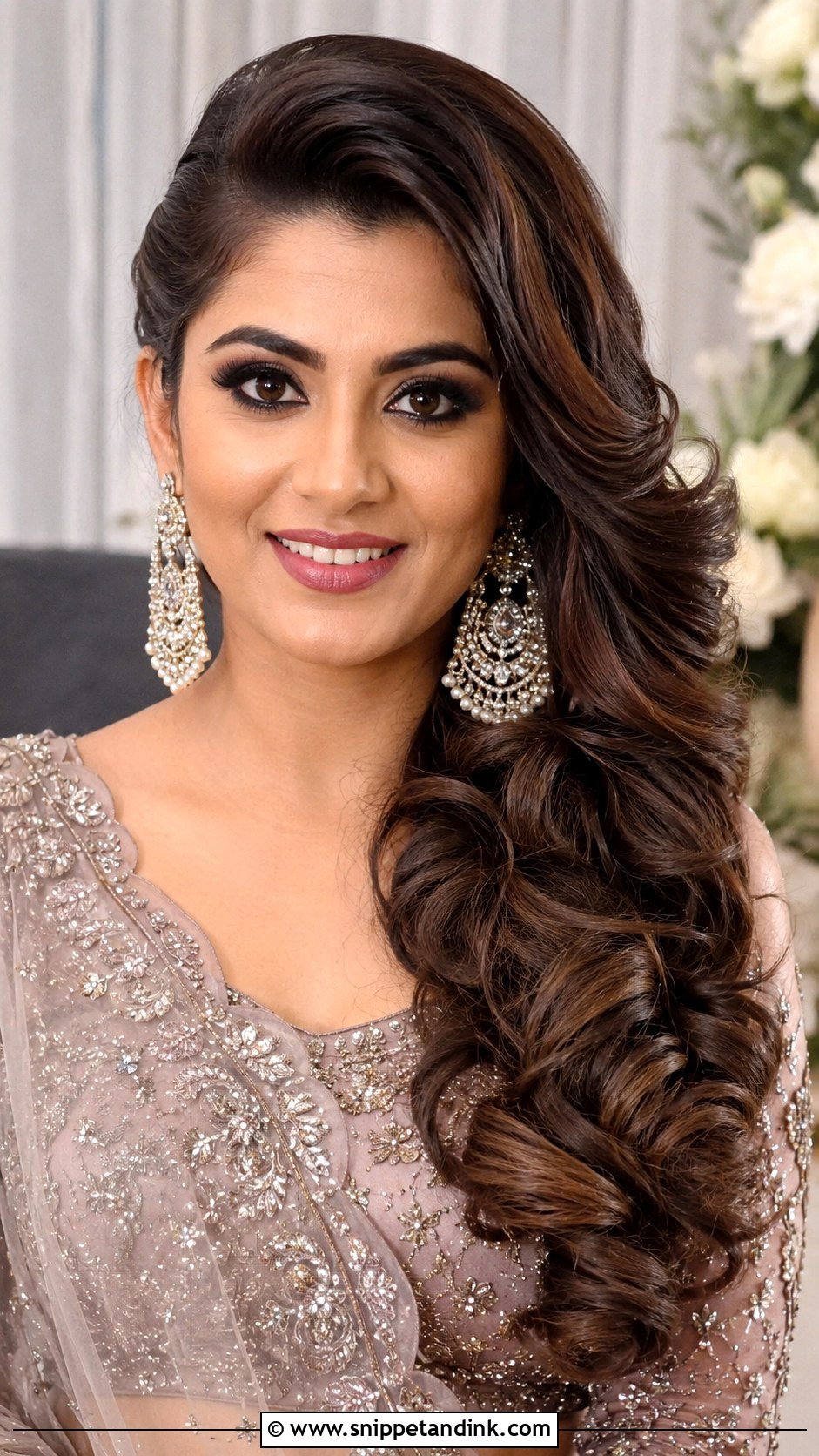
Side swept curls are a reception and cocktail look. A deep side part with the curls swept across and falling over one shoulder gives a lifted line to the jaw. I pin a hidden row of bobby pins down the back of the head behind the sweep, which is what keeps it in place once you start dancing. It works with off-shoulder blouses, deep necklines and statement earrings on the open side. I wouldn’t wear it with a high-neck blouse; the curls bunch against the collar and lose their shape.
10. Indian Wedding Loose Waves With Center Part
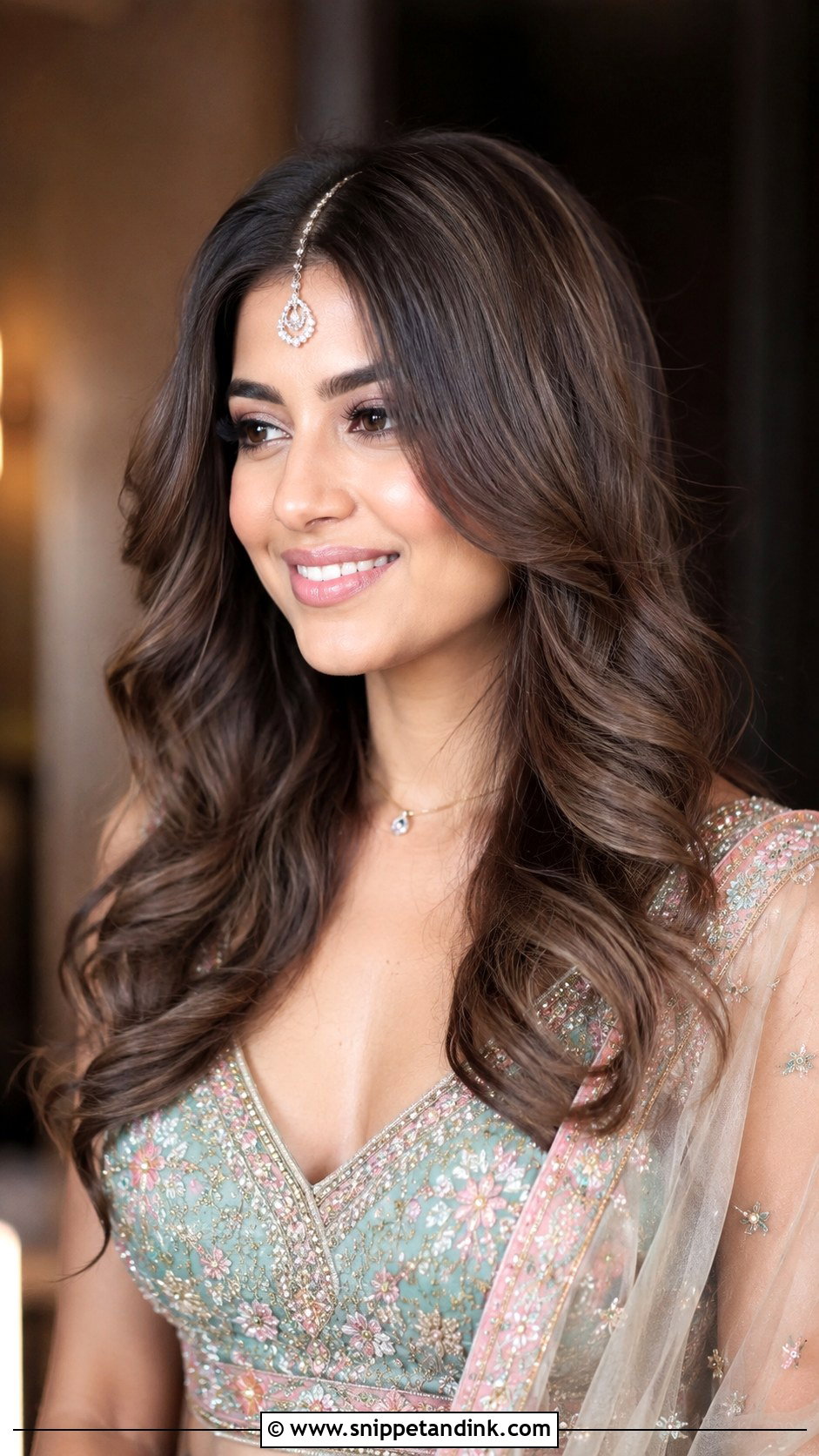
Loose waves from a center part keep the front clean and let the outfit, makeup and jewelry lead. The thing I get right is where the waves begin: starting them below the cheekbones keeps the front from looking bulky and the face from looking wider. They’re suited to engagement, mehndi, roka or reception looks. Add a maang tikka for tradition or leave the part bare. In humidity, loose waves fall flat quickly, so I set them tighter and let them relax over the first hour.
11. Indian Wedding Low Chignon With Face Framing Hair
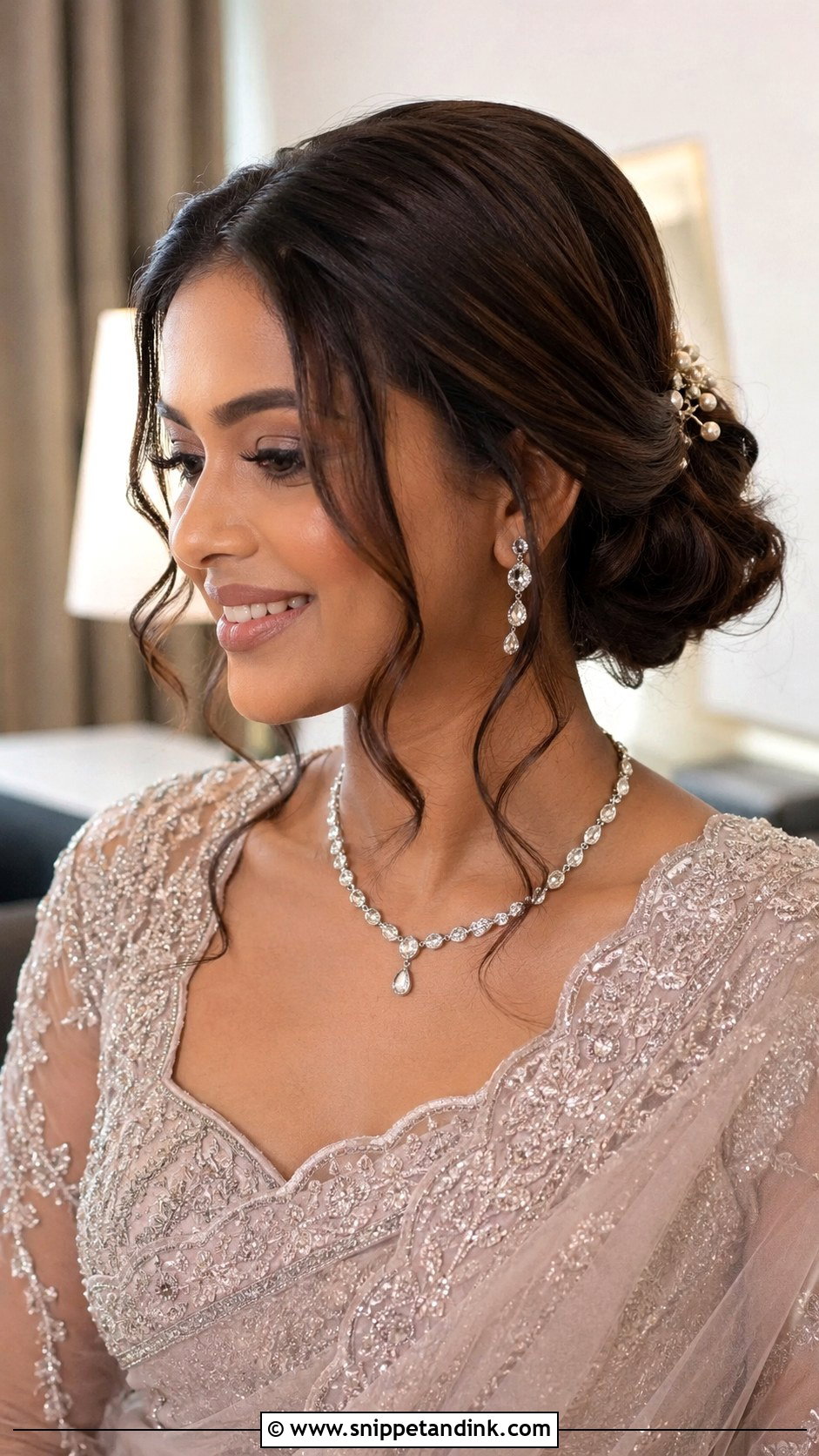
A low chignon at the nape with a few styled front pieces gives grace without a tight finish. The front pieces are where this succeeds or fails. I pull them out after the chignon is pinned, curl them away from the face and smooth them with a little serum so they look placed, not escaped. Pearl pins, fresh flowers or a delicate tikka suit it. Pastel lehengas, reception gowns and sarees all pair well. On oily skin, front pieces can stick to the cheeks by evening; I’d keep them just off the jawline.
12. Indian Wedding Messy Bun With Soft Front Curls
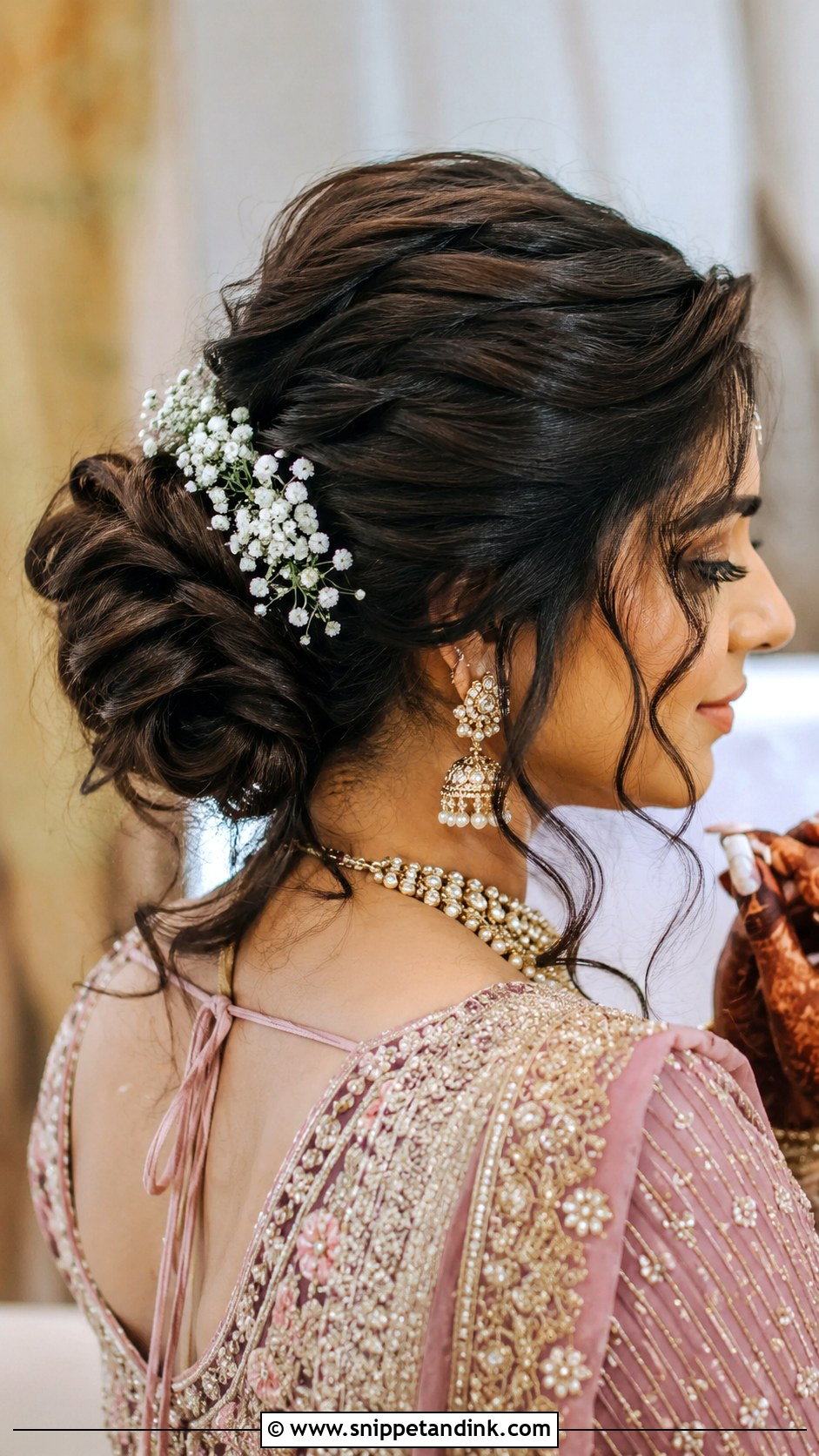
A messy bun with soft front curls suits mehndi, haldi, sangeet and daytime events, where you want to look dressed up but not formal. The bun gives volume at the back, and the front curls soften the face. I keep those curls light and defined so they don’t cover the makeup or earrings. The bun can take baby’s breath, small roses or pearl pins. Messy should still be secure. I pin it as firmly as a sleek bun and only loosen the surface afterward, so it doesn’t fall apart while you’re sitting for henna.
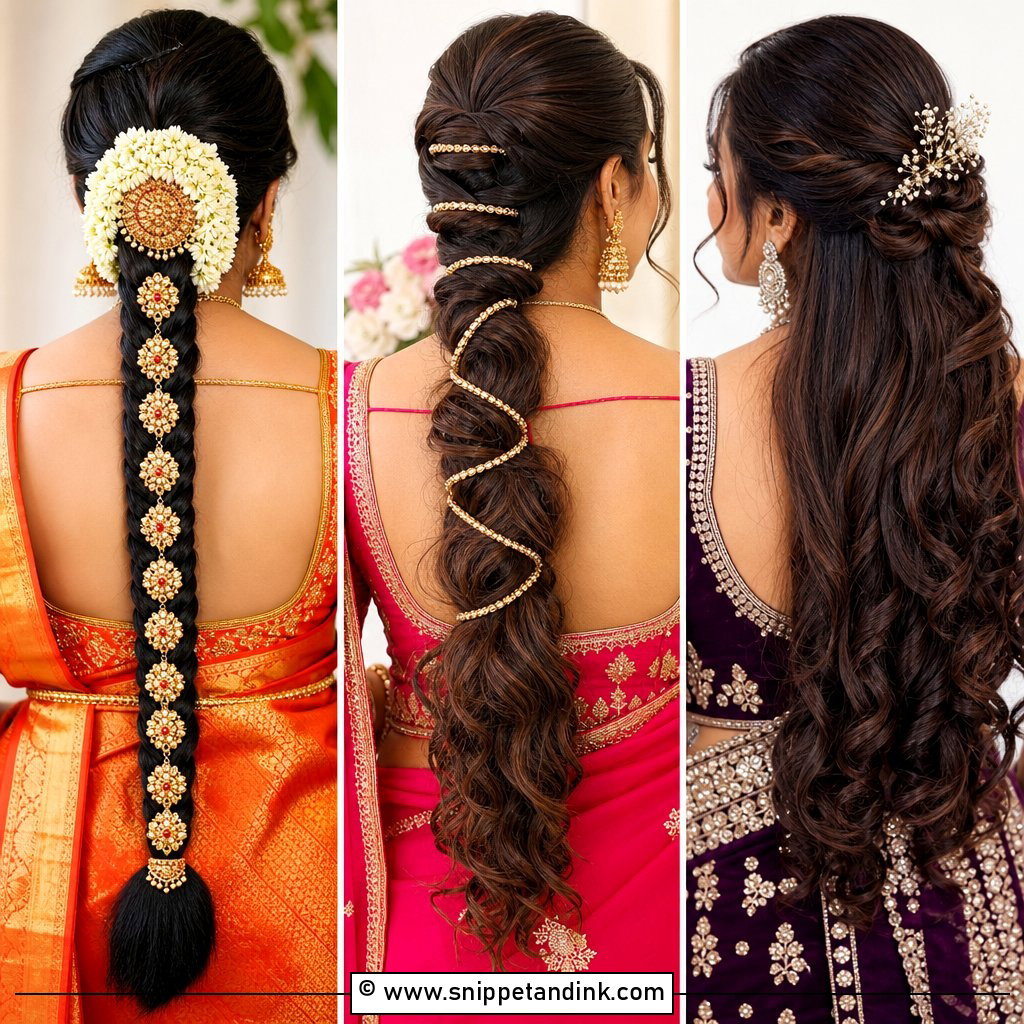
13. Indian Wedding Traditional Braid With Maang Tikka
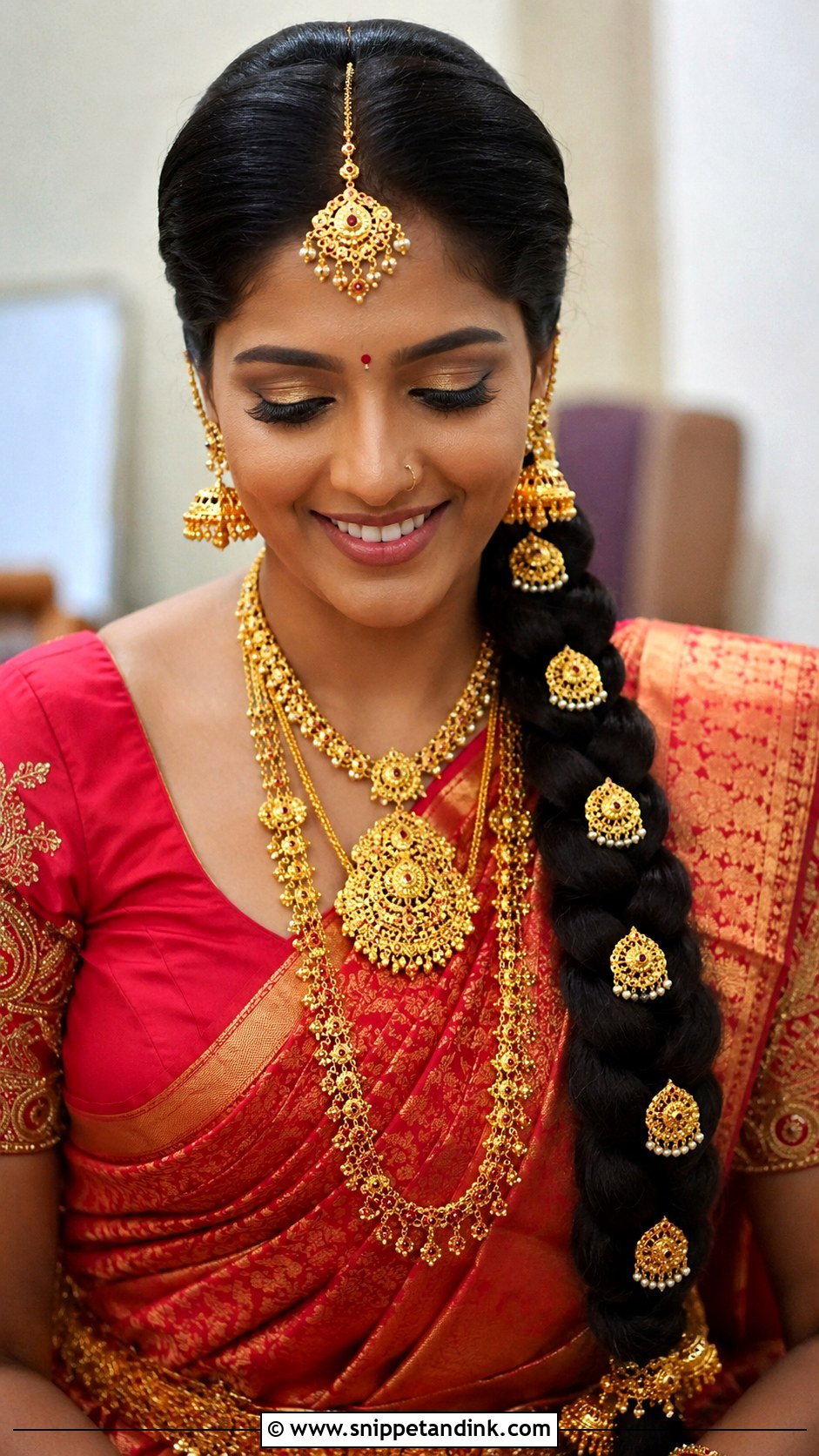
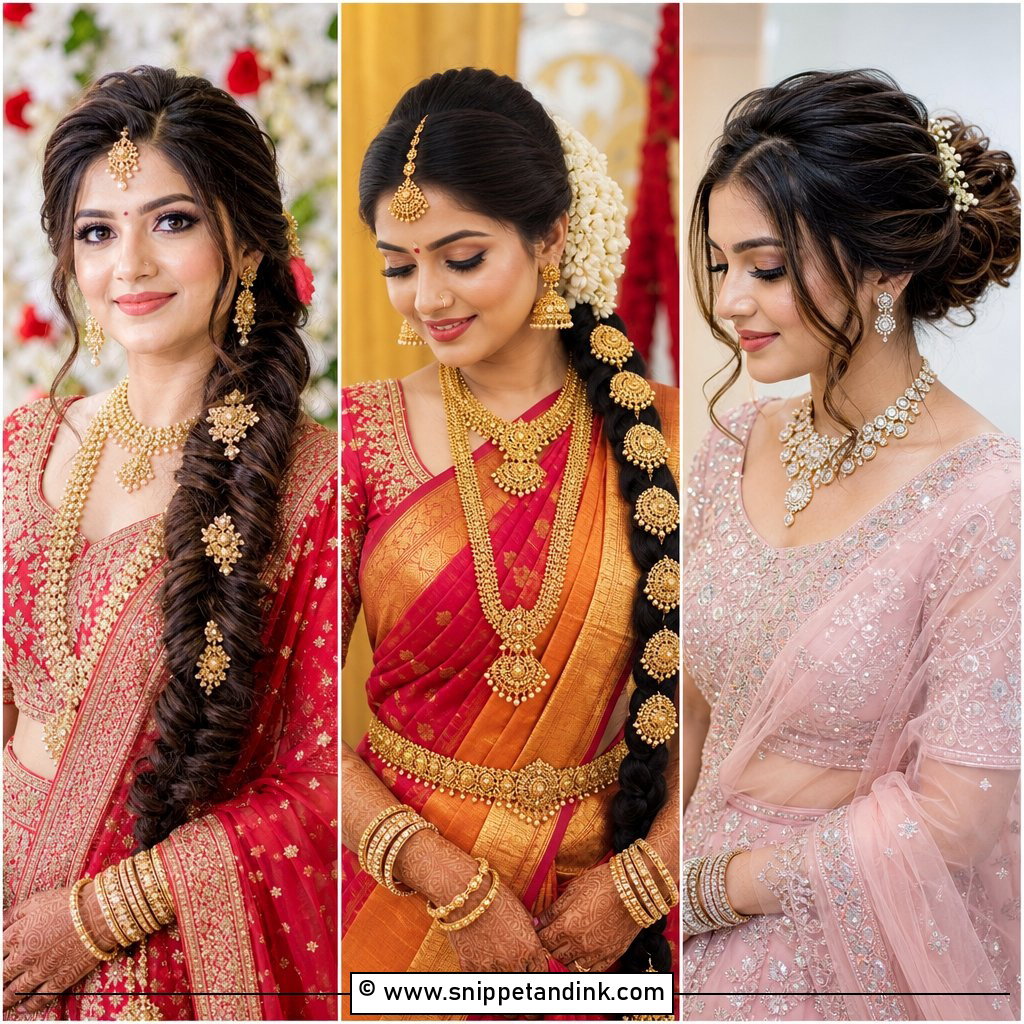
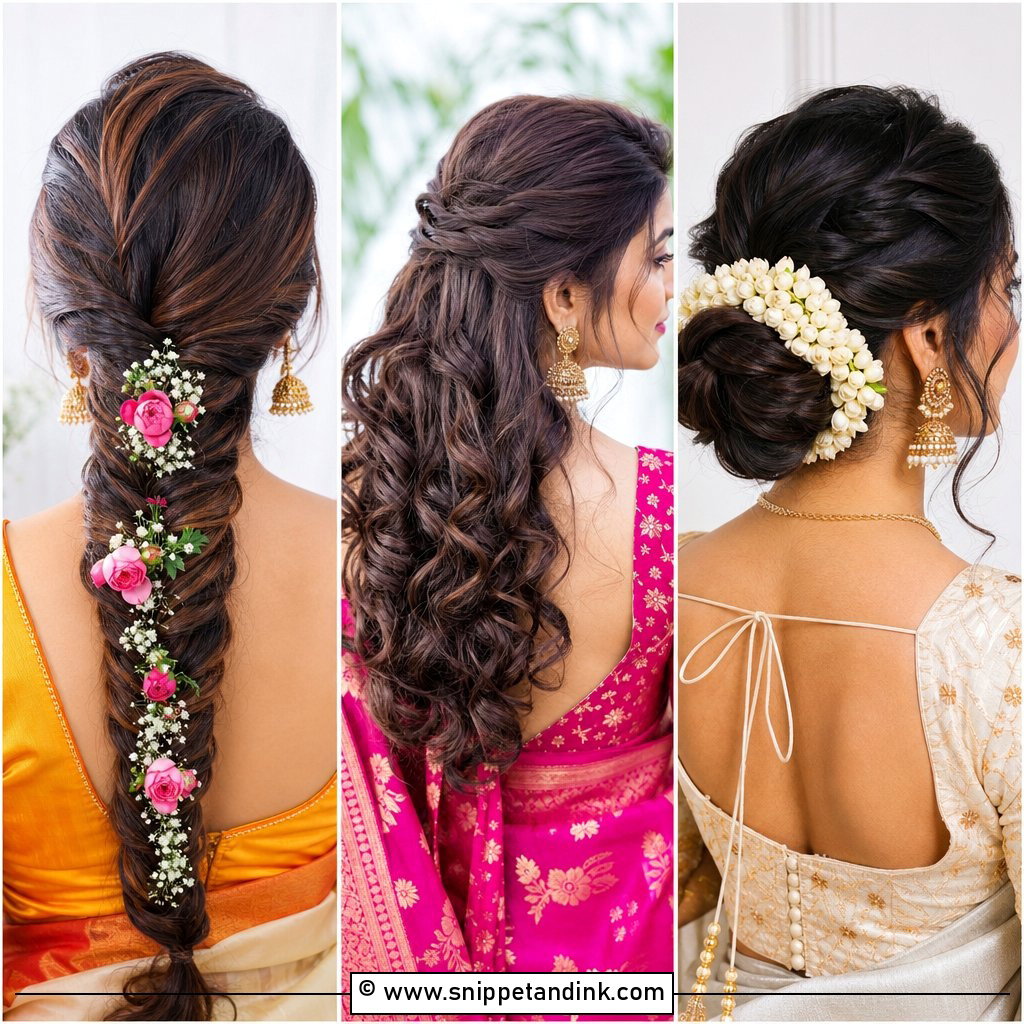
A traditional braid with a maang tikka honors classic bridal styling, with the center part and tikka creating symmetry at the front and the long braid carrying the back. It sits well with sarees, temple jewelry and flowers. The braid can be plain, bubble-style, or decorated with gold accessories. I add a little volume at the crown so the front isn’t too flat. For brides whose hair doesn’t reach the waist, I attach a matched braid extension partway down; it’s a normal part of this look and makes the braid hang properly. It lasts well through long ceremonies.
14. Indian Wedding Poola Jada Hairstyle
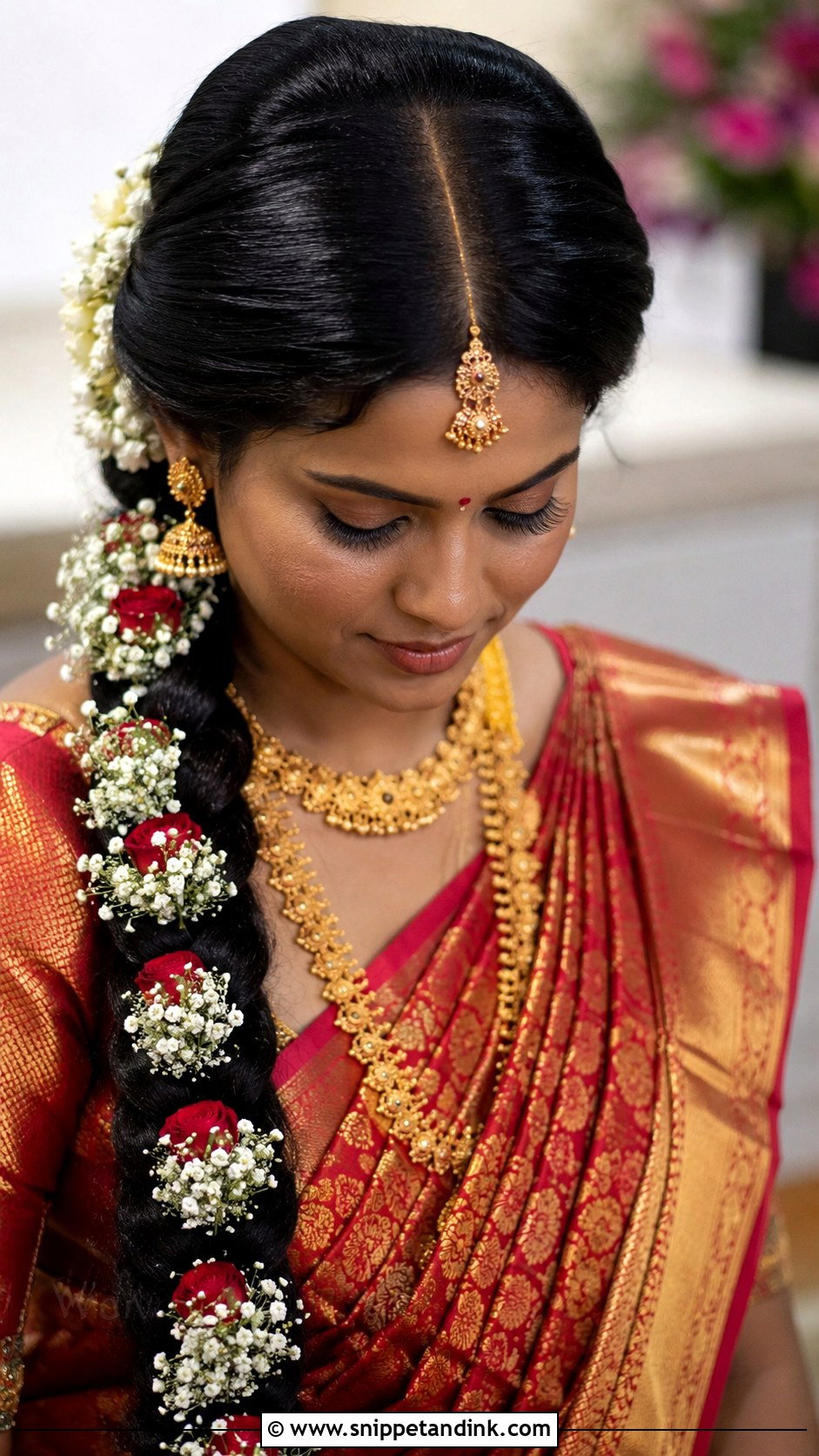
A Poola Jada hairstyle is iconic for South Indian weddings. From the front, it’s a sleek center part with a tikka and temple jewelry, while the long floral braid makes the dramatic finish behind. Jasmine, roses and gold accessories give it a ceremonial richness that pairs naturally with Kanjeevaram sarees. The floral jada is heavy, so I anchor it to a firm base braid with several pins and never to loose hair. Keep the front smooth so the jewelry sits correctly. It’s the deeply traditional choice, and it needs a stylist who has built one before.
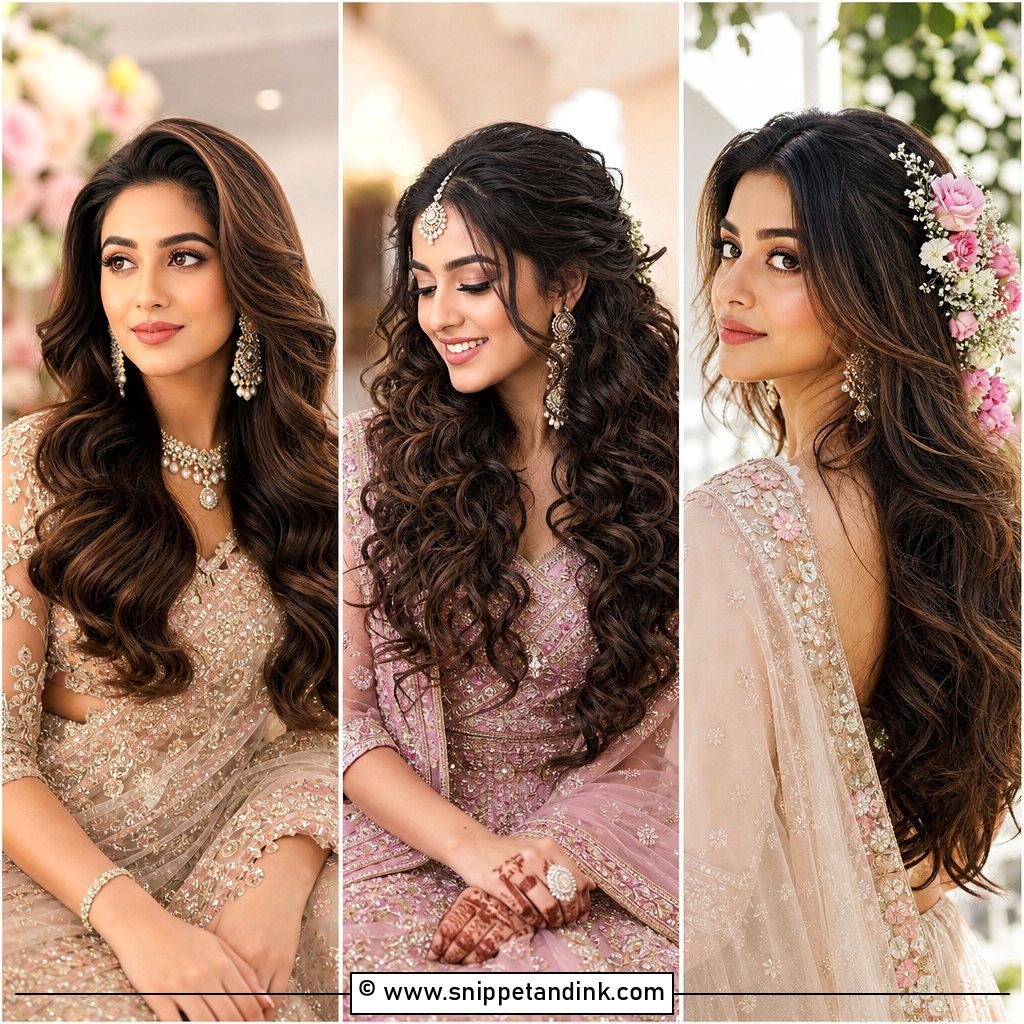
15. Indian Wedding Fishtail Braid With Front Twist
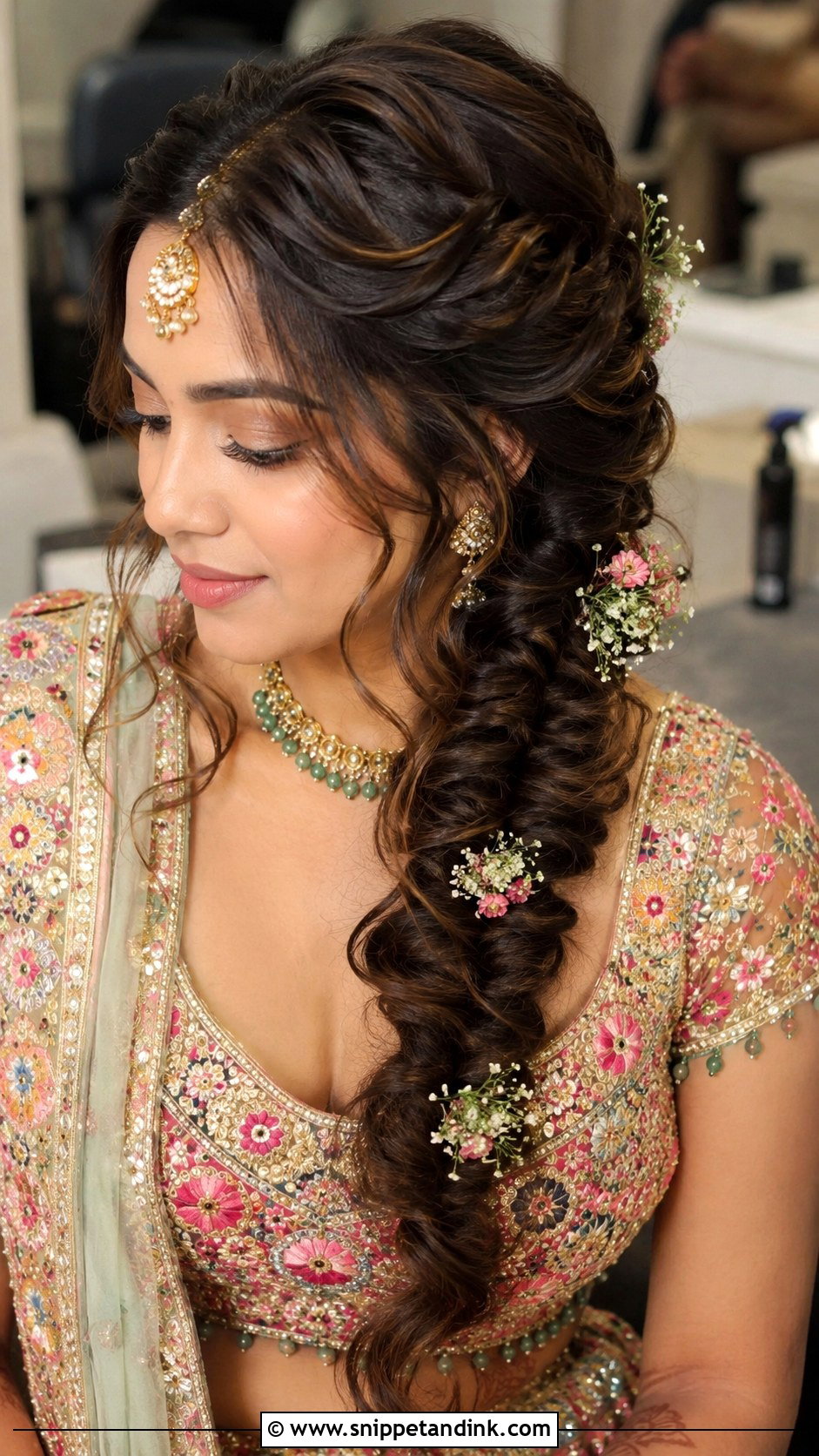
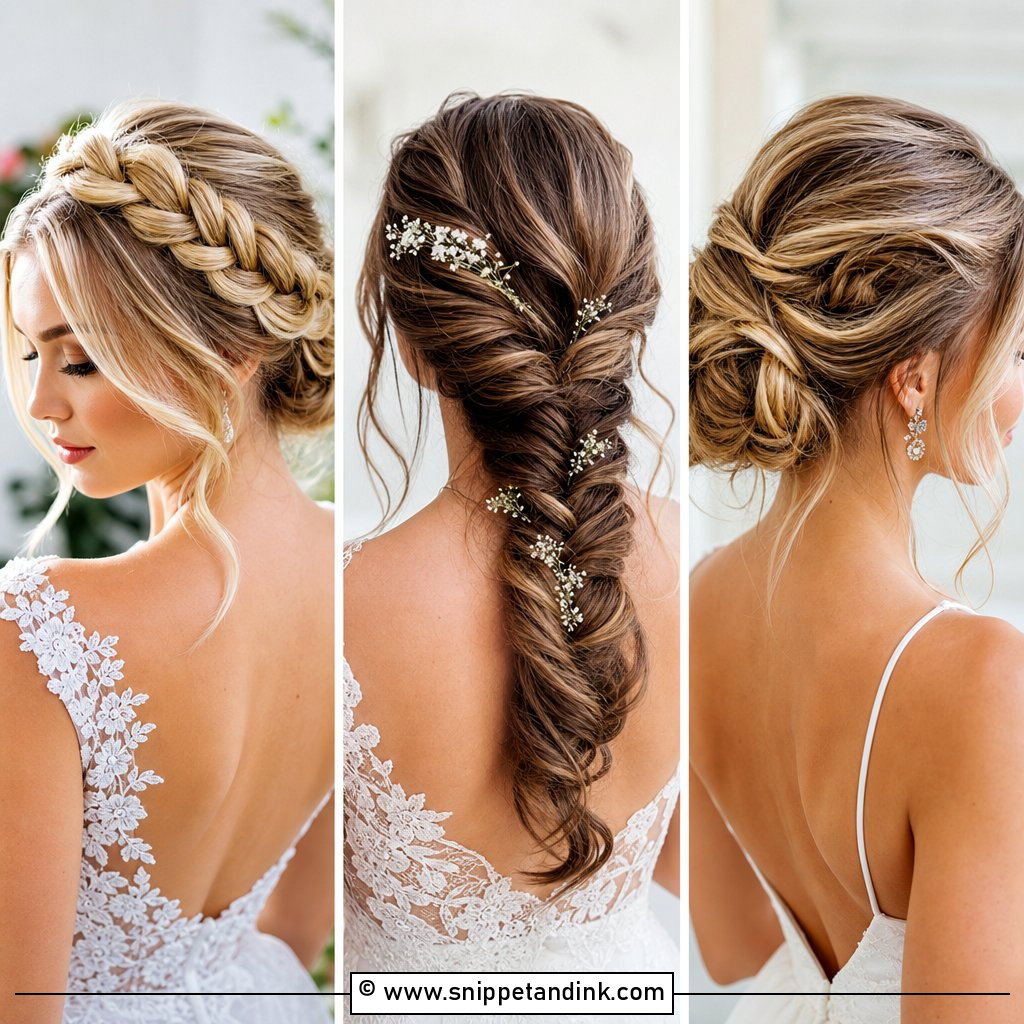
A fishtail braid with a front twist suits guests, bridesmaids and modern brides. The twists keep hair away from the face and add texture near the hairline, and the fishtail carries small flowers, beads or pins woven through it. I’d pick this for mehndi, haldi and outdoor functions because it’s pretty and manageable in wind. Long hair makes the braid look full; on medium hair, I loosen and pull out the edges to give it width. A softly loosened braid photographs more naturally than a tight one.
16. Indian Wedding Side Braid With Front Curls
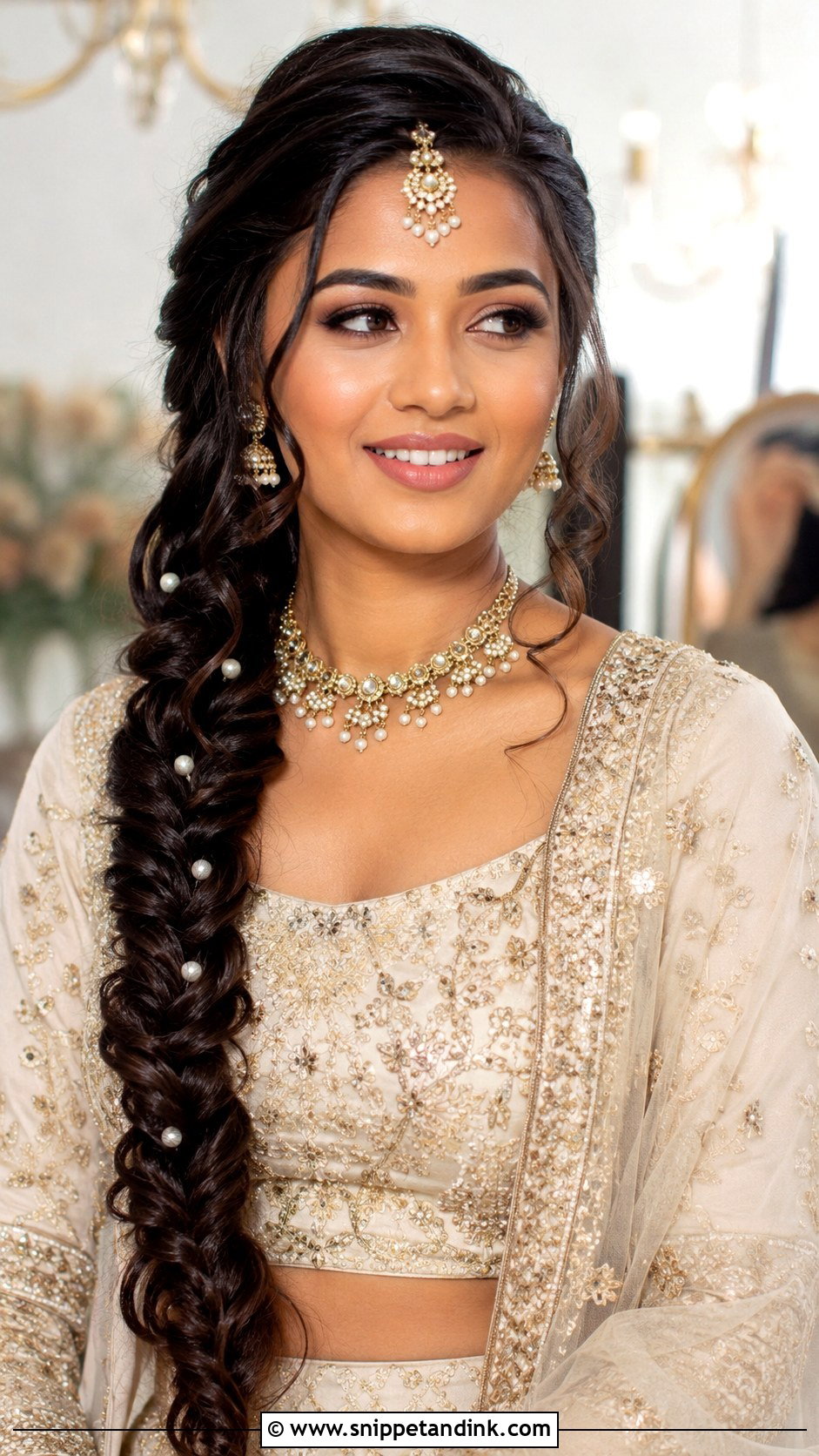
A side braid with front curls frames the face while keeping the rest secure. The braid falls over one shoulder, so it shows clearly in front-facing photos even with a dupatta on the other side. That makes it a good bridesmaid and guest choice. The front curls can sit on a side part or around a center part with a tikka. Flowers, pearl pins or gold thread along the braid add wedding detail. I braid it slightly loose at the top so it doesn’t pull at the nape over a long event.
17. Indian Wedding Sleek Ponytail With Maang Tikka
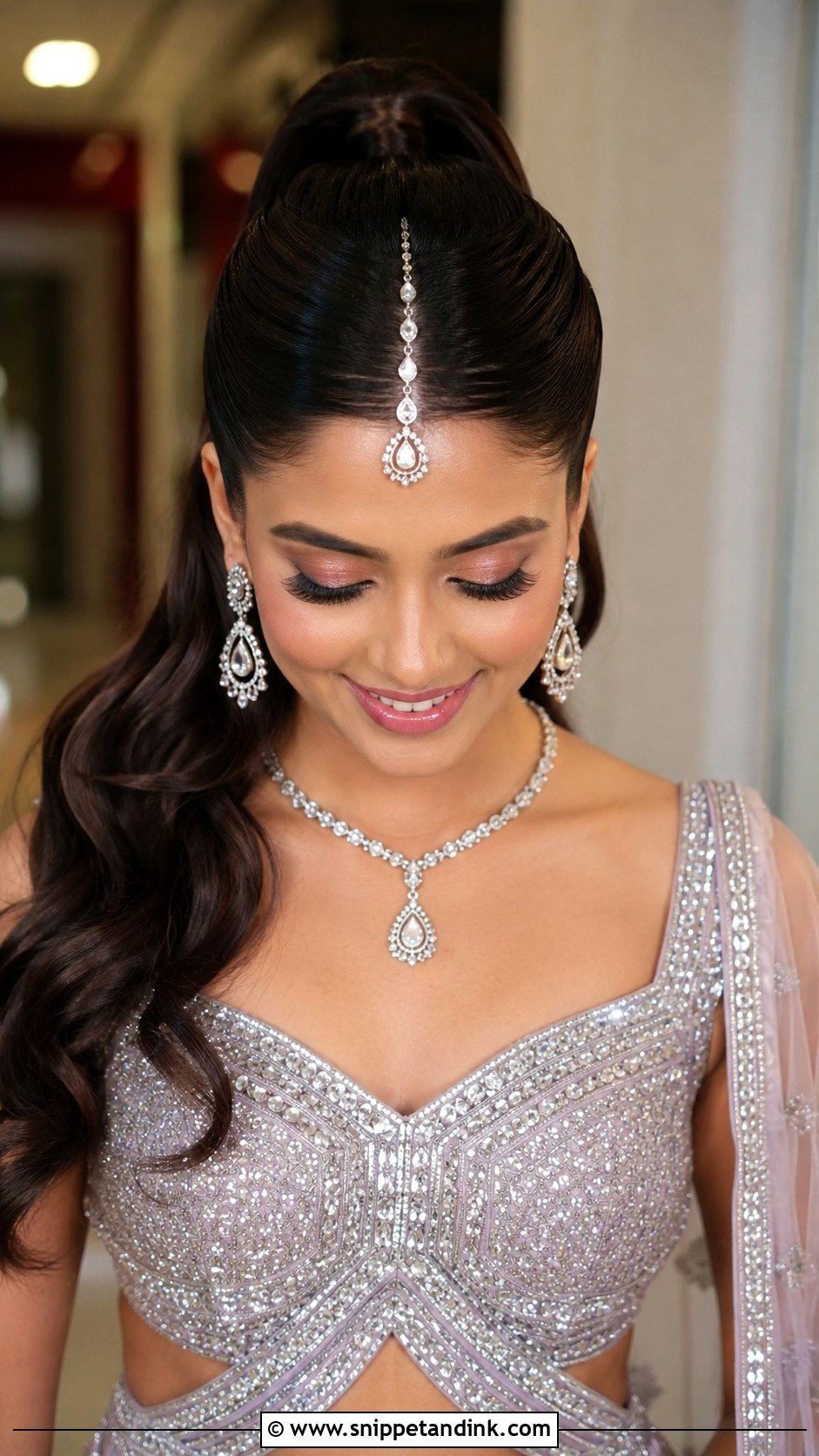
A sleek ponytail with a maang tikka is the modern front for receptions, cocktails, engagements and sangeet. The hair is smoothed at the crown, parted cleanly and pulled into a polished tail, which can be straight, wavy or curled. It opens the face and shows off sharp makeup, earrings and necklines. The tikka keeps it rooted in tradition. I wrap a small section of hair around the base and pin it underneath. Very heavy hair pulls on the hairline in a high ponytail after a few hours, so I’d keep it at mid-height for a long night.
18. Indian Wedding Bubble Ponytail With Front Volume
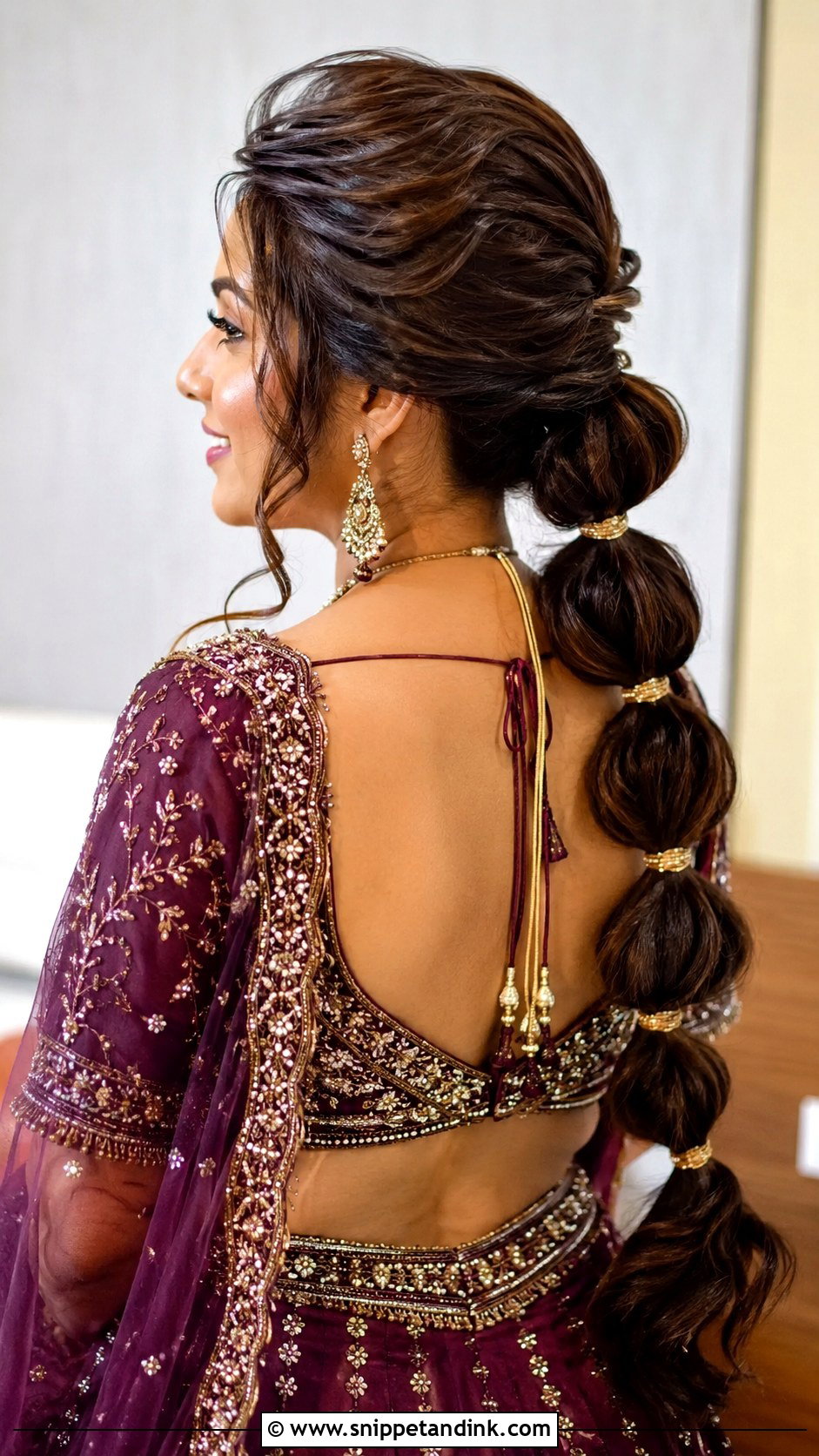
A bubble ponytail with front volume is the playful one, suited to mehndi and sangeet. The front can be a soft puff, a side part or a sleek center part. Below, I tie elastics every few inches and gently pull each section wide to form the bubbles. Tiny flowers, pearls or gold ties on each bubble give it an Indian wedding feel. It needs long hair or extensions to look right, and it stays secure through dancing, which is a big part of its appeal.
19. Indian Wedding Short Hair Waves With Hair Pins
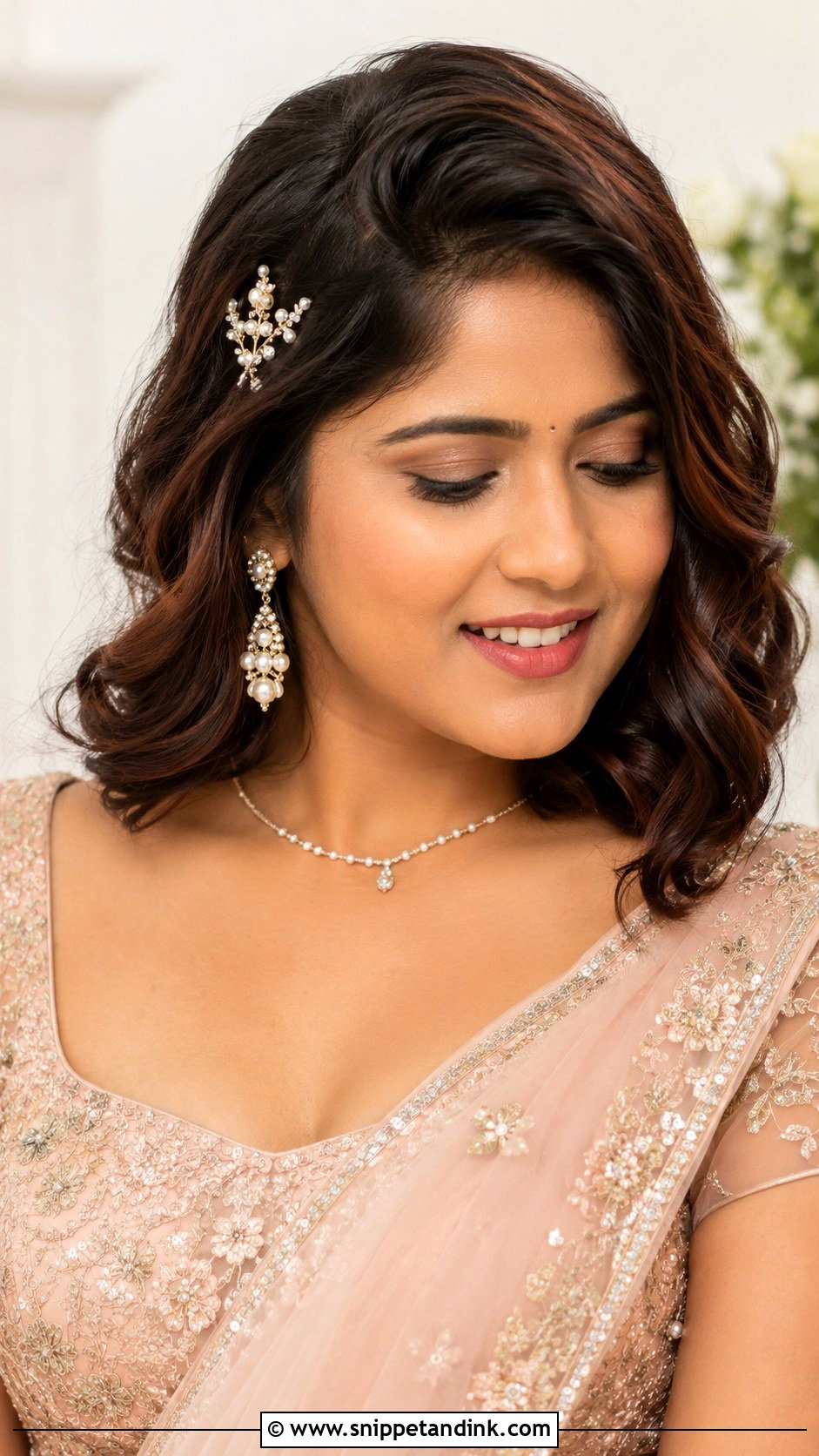
Short hair can look just as festive as long bridal styles. The front gets a side part or soft center part, then is shaped into polished waves around the face, with decorative pins, pearl clips or small floral accents doing the dressing up. Bobs, lobs and shoulder-length cuts all work. I wave short hair with a flat iron rather than a curling tongs, alternating direction, so it doesn’t puff out into a round shape. Keep the waves smooth and glossy so the front looks intentional. It suits sarees, lehengas or gowns.
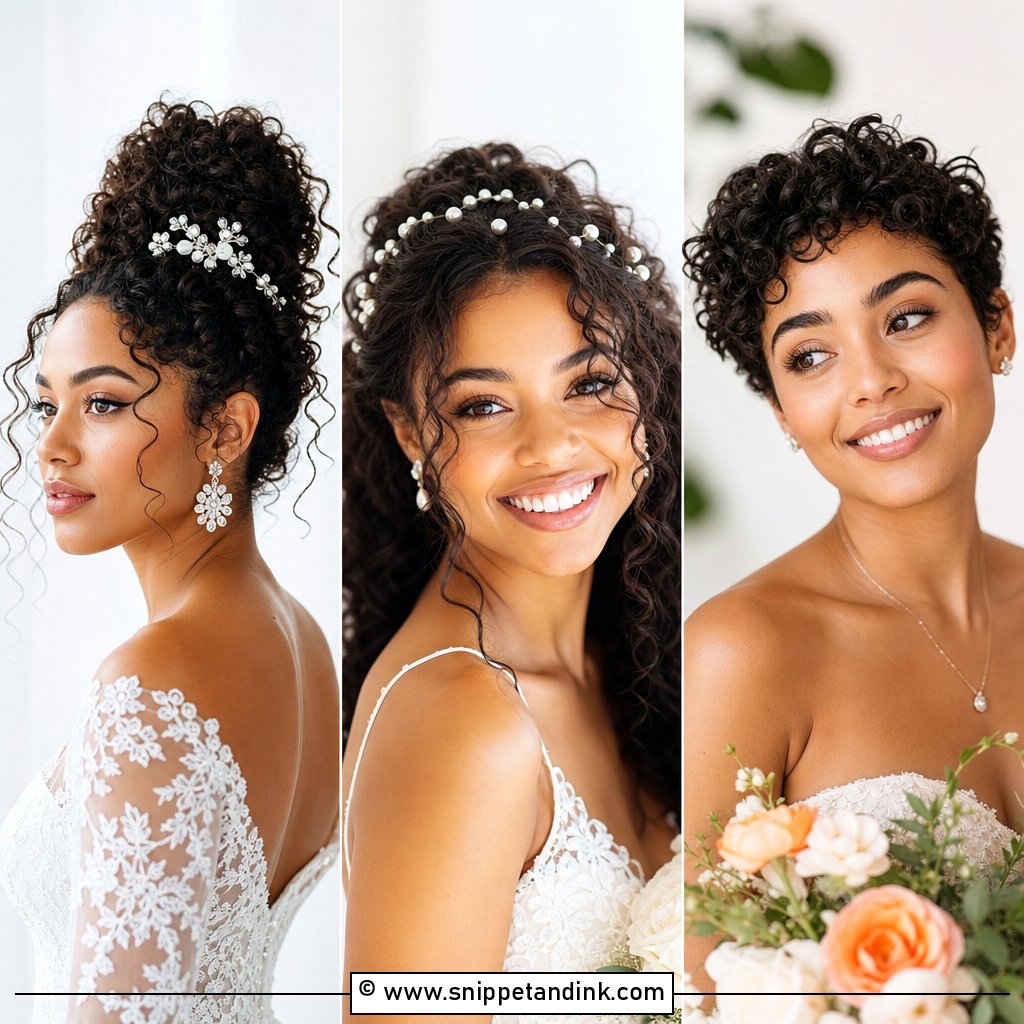
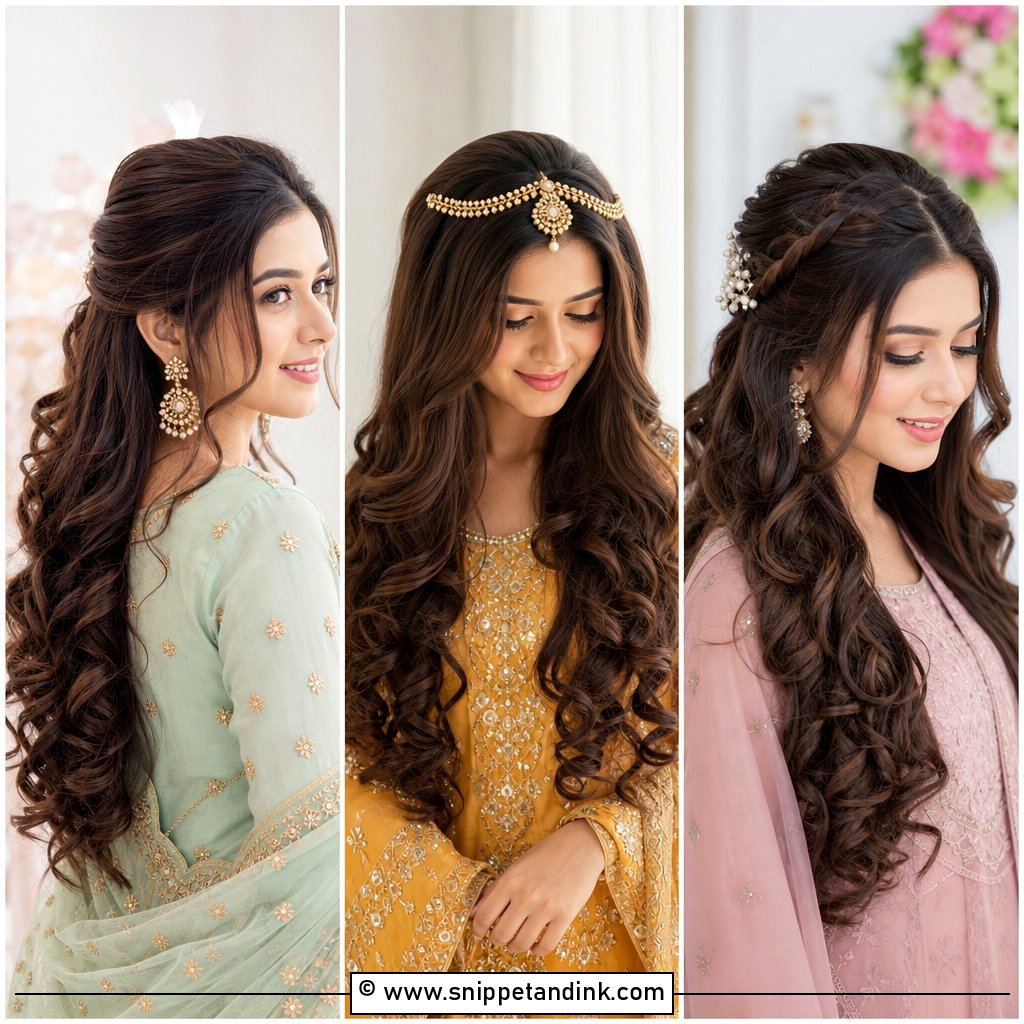
20. Indian Wedding Curly Hair Bun With Front Tendrils
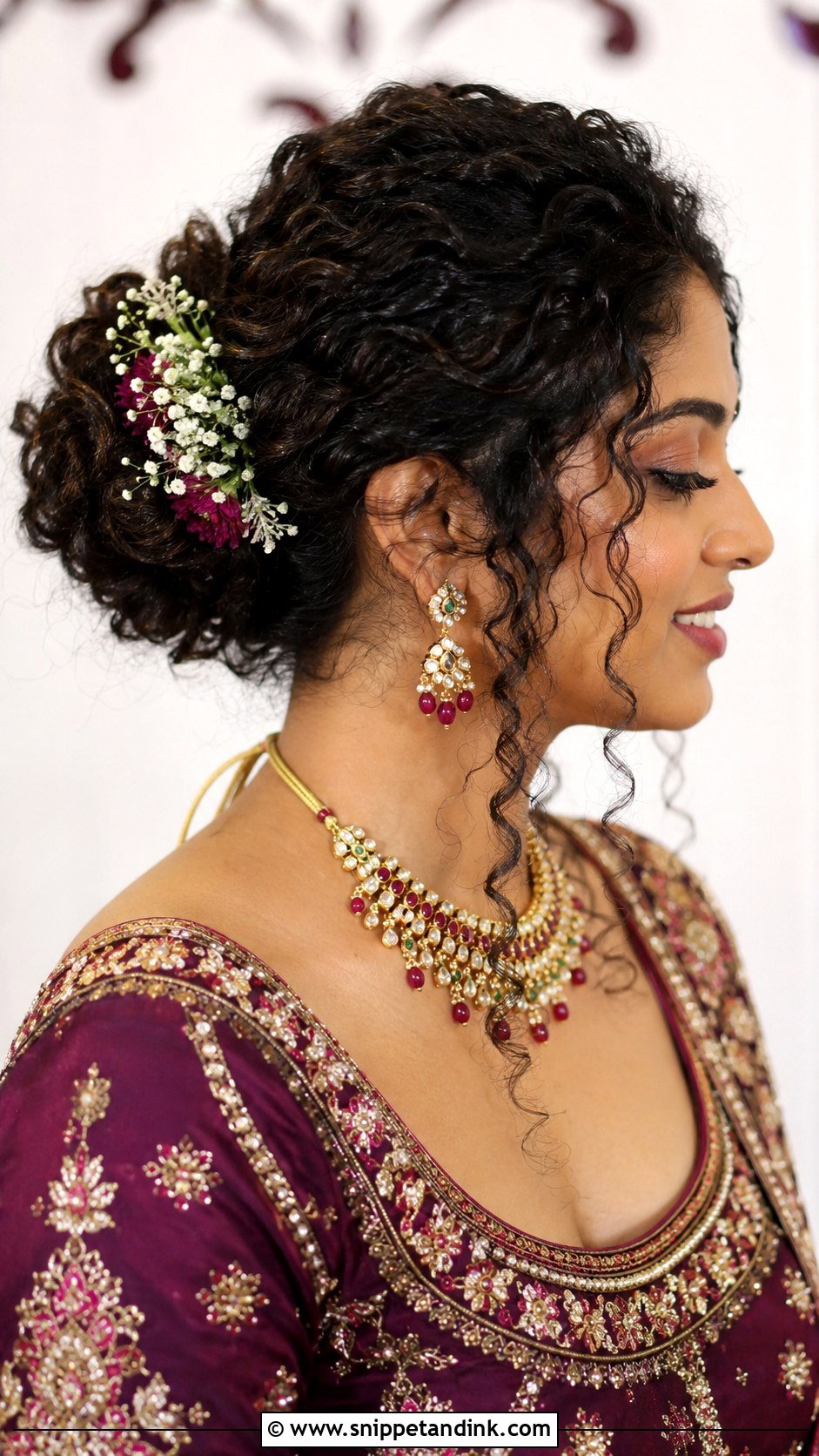
A curly bun with front tendrils keeps your natural texture and still reads polished. The curls are gathered into a bun and a few defined tendrils frame the face. I work with curls while they’re damp, setting them with curl cream, and avoid brushing them dry, which turns curls into frizz. Strong but flexible pins hold the bun through a long event. It suits brides, bridesmaids and guests with naturally wavy or curly hair. Add flowers, pearls or a tikka to match the outfit.
Dressing Your Hair for a Sister’s Wedding Instead of Your Own
Many of these fronts are worn by sisters, cousins and friends, not only the bride. Styling a guest is a slightly different brief. You want to look festive and finished in photos while leaving the bride clearly at the center.
- Keep the jewelry a step lighter. A small tikka or a hair chain reads well; a full matha patti with a bridal puff can look like competing with the bride.
- Ask the bride what she’s wearing on her head for each event. If she has a gajra bun for the ceremony, I’d style bridesmaids in braids or half-up looks so the group photos don’t look like copies.
- For a ceremony at a gurdwara, everyone covers their head with a scarf or dupatta. Choose a low bun or braid that lies flat under it rather than a tall puff.
- For a havan or any ritual near a fire, tie the hair back and keep long open curls and loose dupattas well away from the flame.
If you’re doing your own hair as a guest, the half up curls, side braid and fishtail with front twist from this list are the most forgiving. A bun with a center part and maang tikka looks simple but demands a very straight part and a smooth finish, which is hard to get on yourself.
One Front for the Pheras, Another for the Party
Most brides I work with don’t wear a single front all week, and they shouldn’t. For the ceremony, a center part bun, gajra bun, Poola Jada or classic braid with a maang tikka will hold the jewelry and drape. For the sangeet and reception, open curls, half up curls, side swept waves or a sleek ponytail let you move. Plan each one around the jewelry, dupatta, neckline, hair length and the time of day, and try your main ceremony style for a few hours at the trial before you commit.
You'll Like These Ideas:



Leave a Reply