
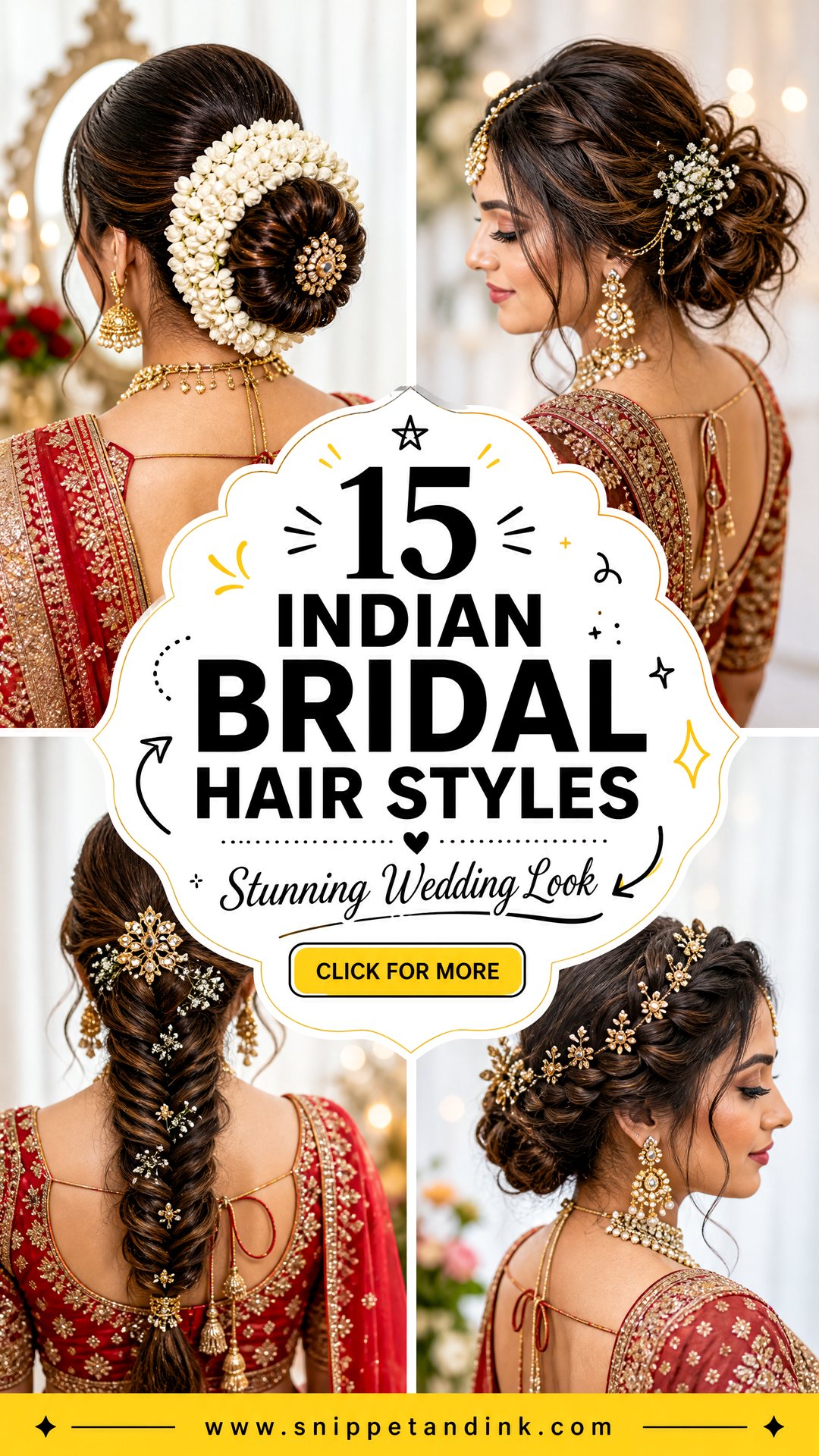
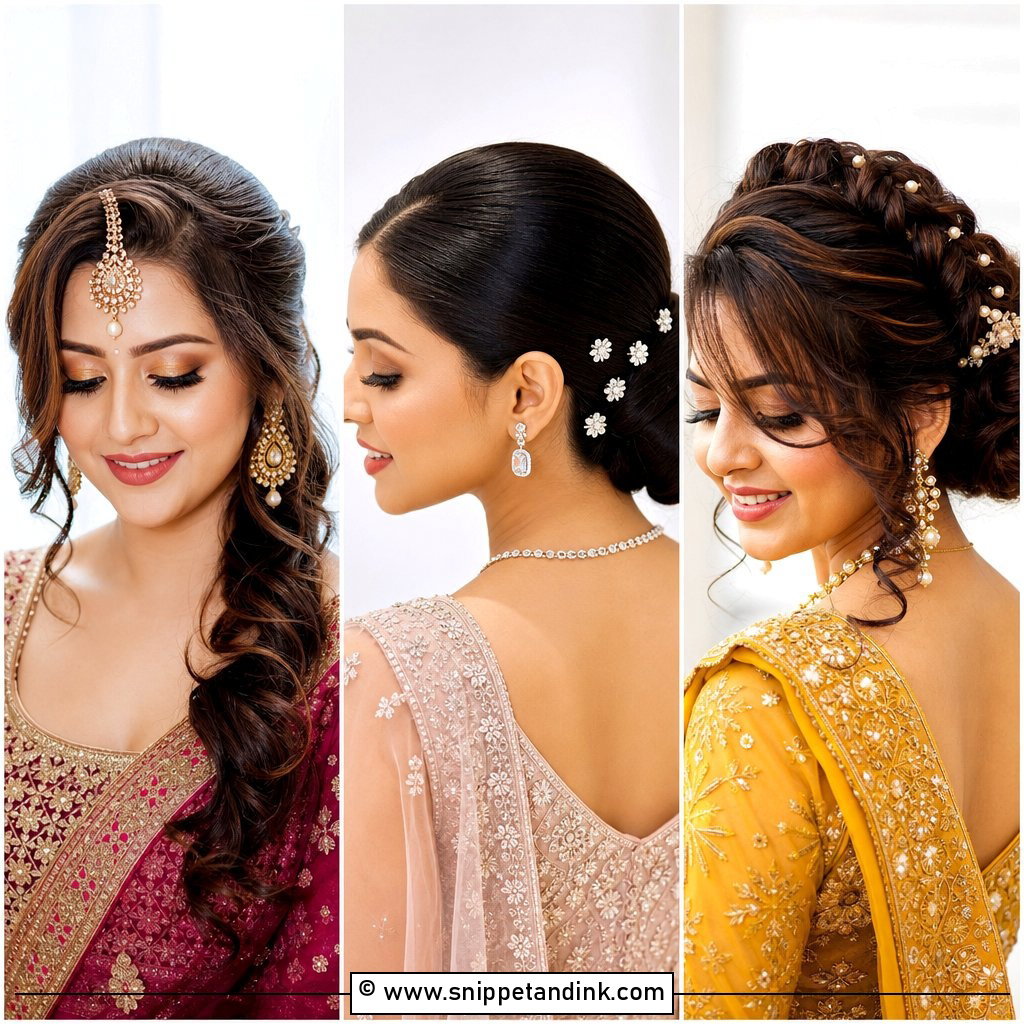
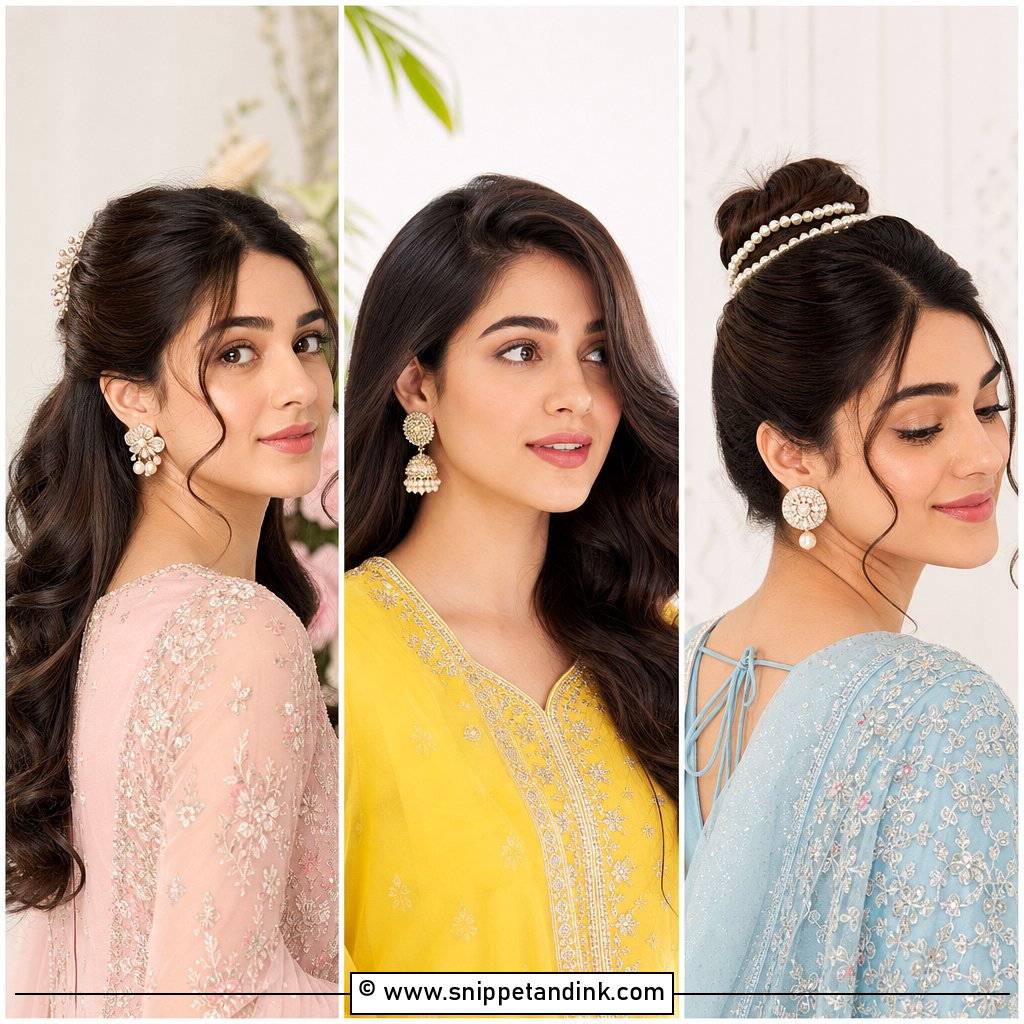
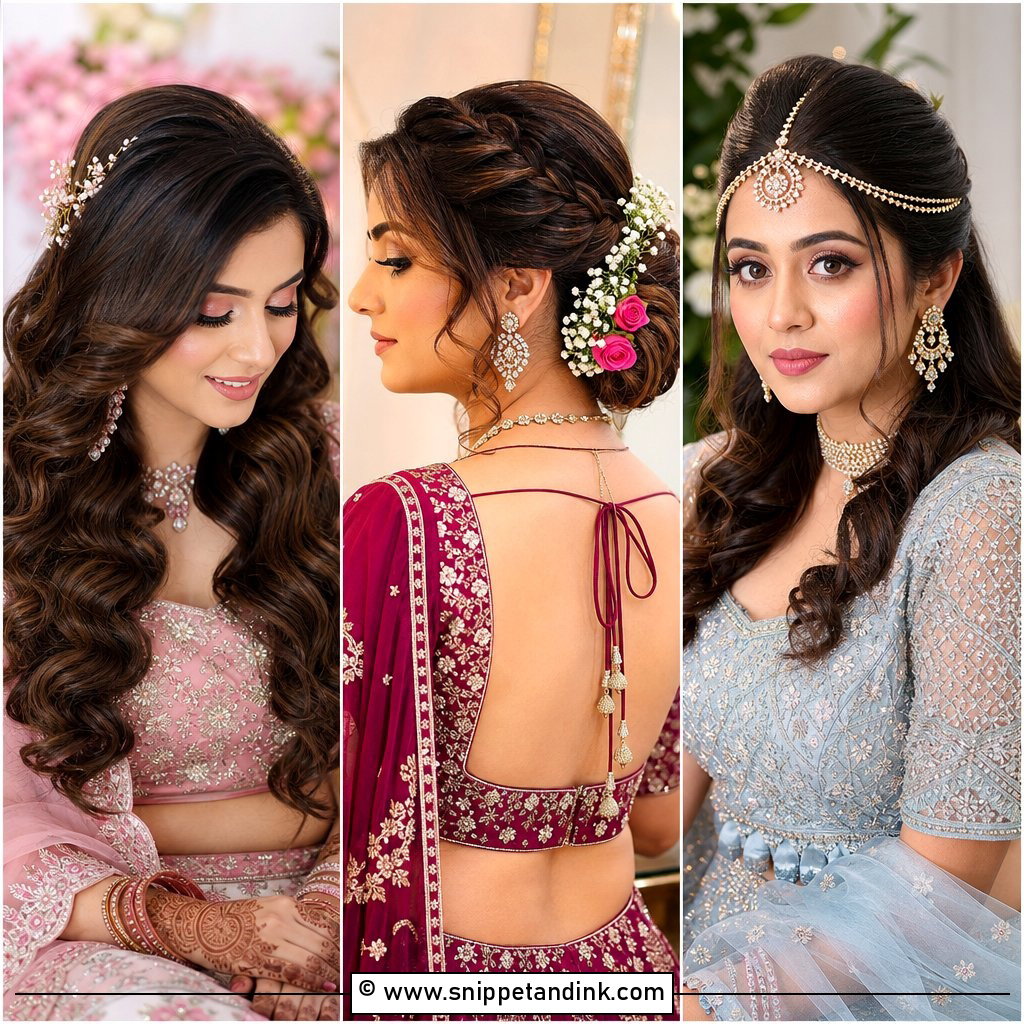
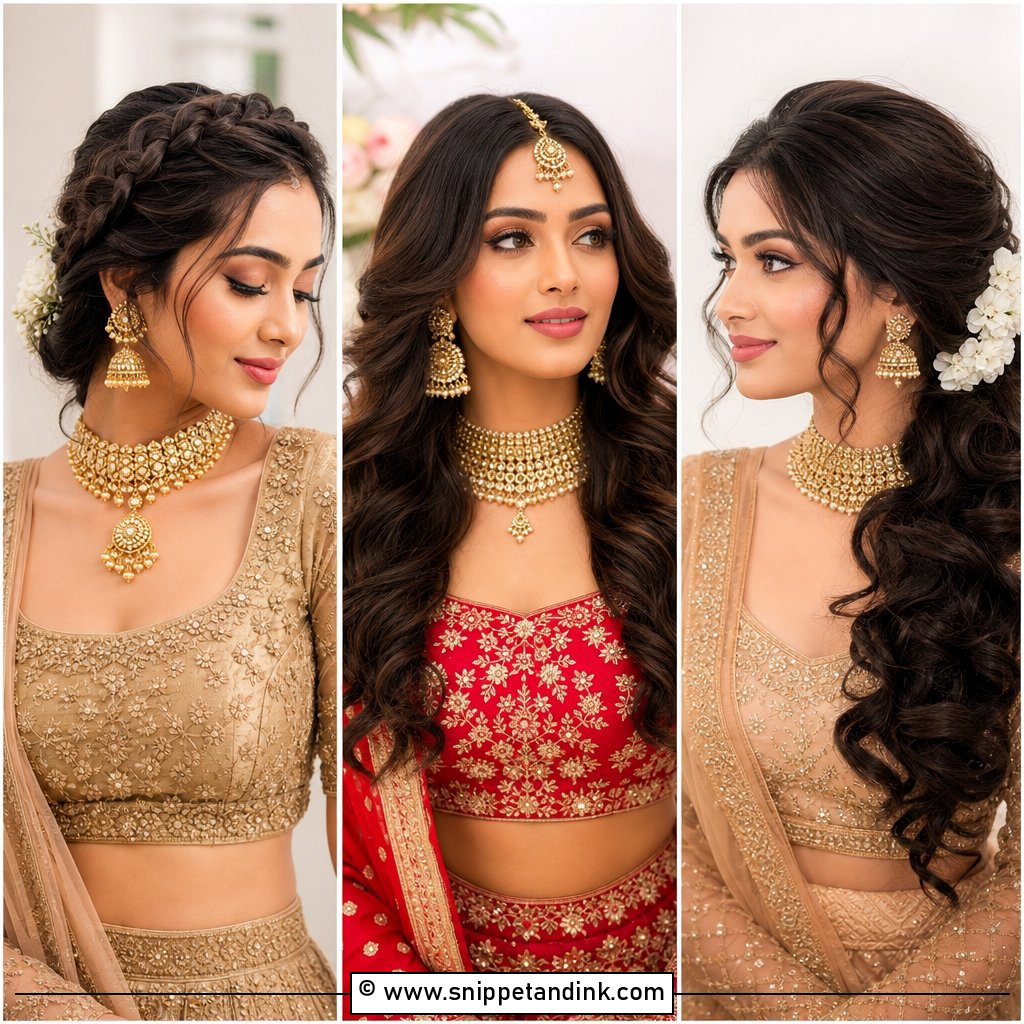
The hairstyle that looks grandest on a mood board isn’t always the one that works on the day. What I’m really building is a base for your dupatta and jewelry that survives rituals, hugs and heat, and still looks like you in the photos. More brides now plan different hair for each function: a firm bun for the pheras, something softer for mehendi, sangeet or the reception. Classic buns, long decorated braids, soft waves, pearls, fresh flowers and lighter face-framing all have a place. Here are fifteen I do regularly, North and South Indian, with what each needs from your hair.
Mapping Your Hair Across Mehendi, Pheras and Reception
Most Indian weddings mean three to five hair looks over a few days, and they don’t all deserve the same effort. I plan them as a set so the hair isn’t damaged by heat and pins before the main ceremony.
- Haldi: something simple you don’t mind getting messy, like a loose braid or a low bun. Turmeric paste can tint light or highlighted hair yellow, so keep it tied back and away from the paste.
- Mehendi and sangeet: softer styles that move, such as a side braid, fishtail or half-up waves. You’ll be sitting for hours at the mehendi, so avoid anything that presses on the back of the head.
- Wedding ceremony: the firmest style of the set, usually a bun or braid, because it carries the dupatta and the heaviest jewelry.
- Reception: often a change of look. Going from a tight bun to open waves needs time, since pinned hair carries kinks, so allow at least an hour or plan a new updo instead.
If one stylist is covering everything, share the full schedule early. Back-to-back functions on one day may mean choosing two looks that can be converted quickly rather than redone from scratch.
1. Indian Bridal Bun With Gajra
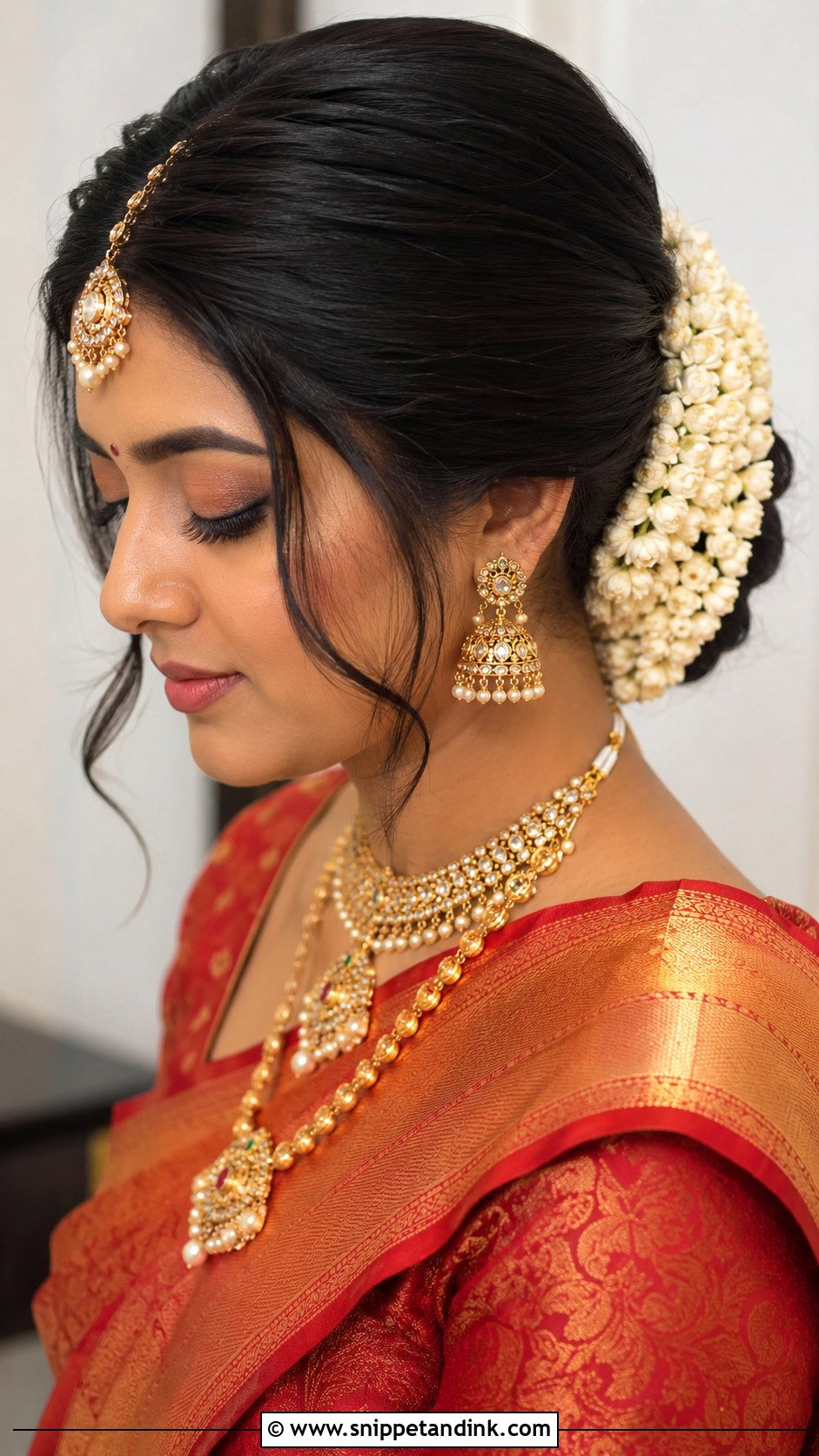
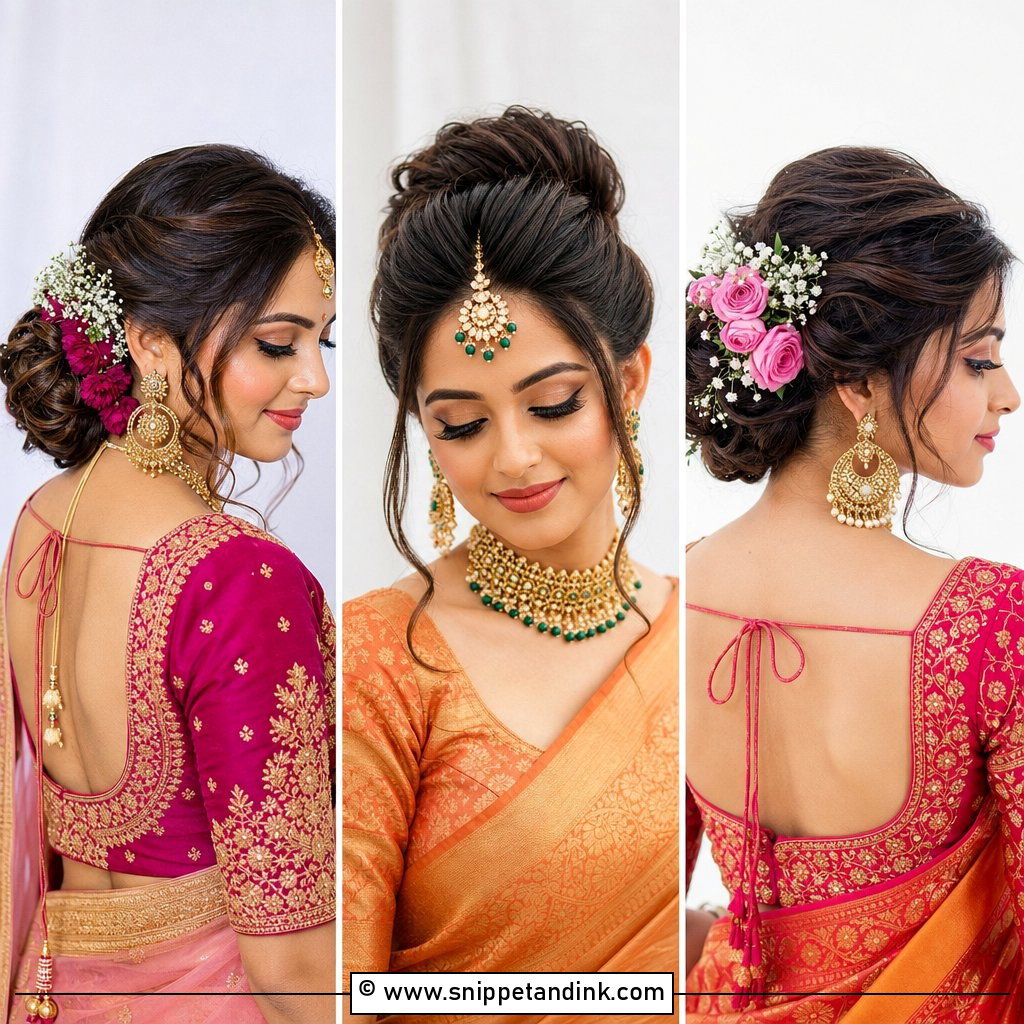
The gajra bun stays the most requested ceremony look because it holds from every angle and gives a dupatta something solid to pin into. I decide its height after seeing where the dupatta will sit: low at the nape for a head drape, a little higher if it’s pinned at the shoulder. Fresh jasmine gajra brings scent and softness; gold pins or a maang tikka add richness. Ask for a smooth base with gentle crown volume. A bun scraped too tight at the hairline gives most brides a headache by lunch.
2. South Indian Bridal Braid
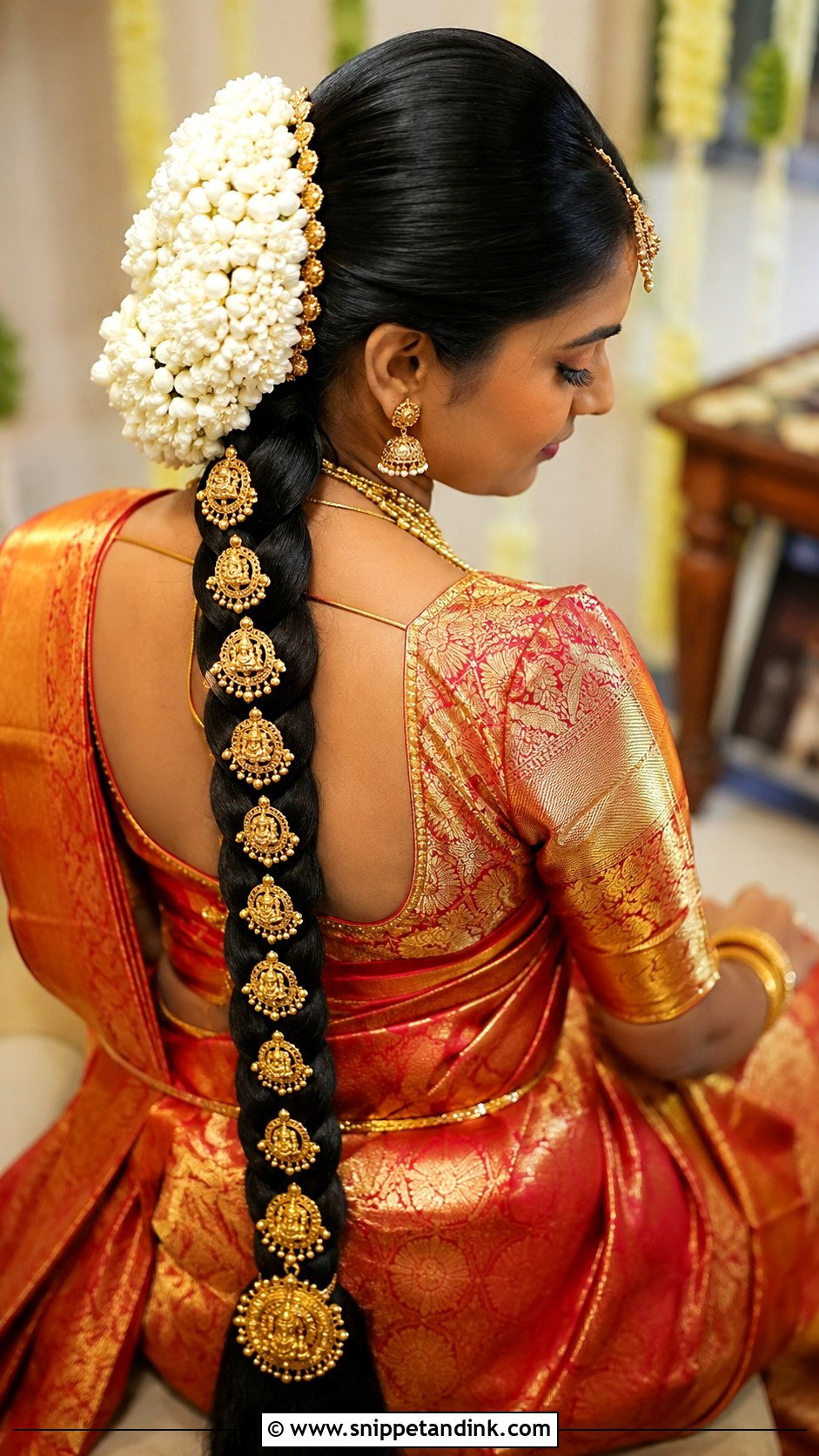
Length is what makes a South Indian bridal braid, and most brides need extensions to get the classic waist-length plait thick enough to carry a jada billalu. The look starts with a neat center part and sleek crown, then the braid carries the flowers, gold pieces or temple jewelry. It sits naturally with Kanjeevaram silk, layered gold necklaces and a matha patti. I braid slightly looser at the nape than at the tip, because a braid that’s tight at the top pulls on the scalp every time you turn your head during the rituals.
3. Indian Bridal Low Bun
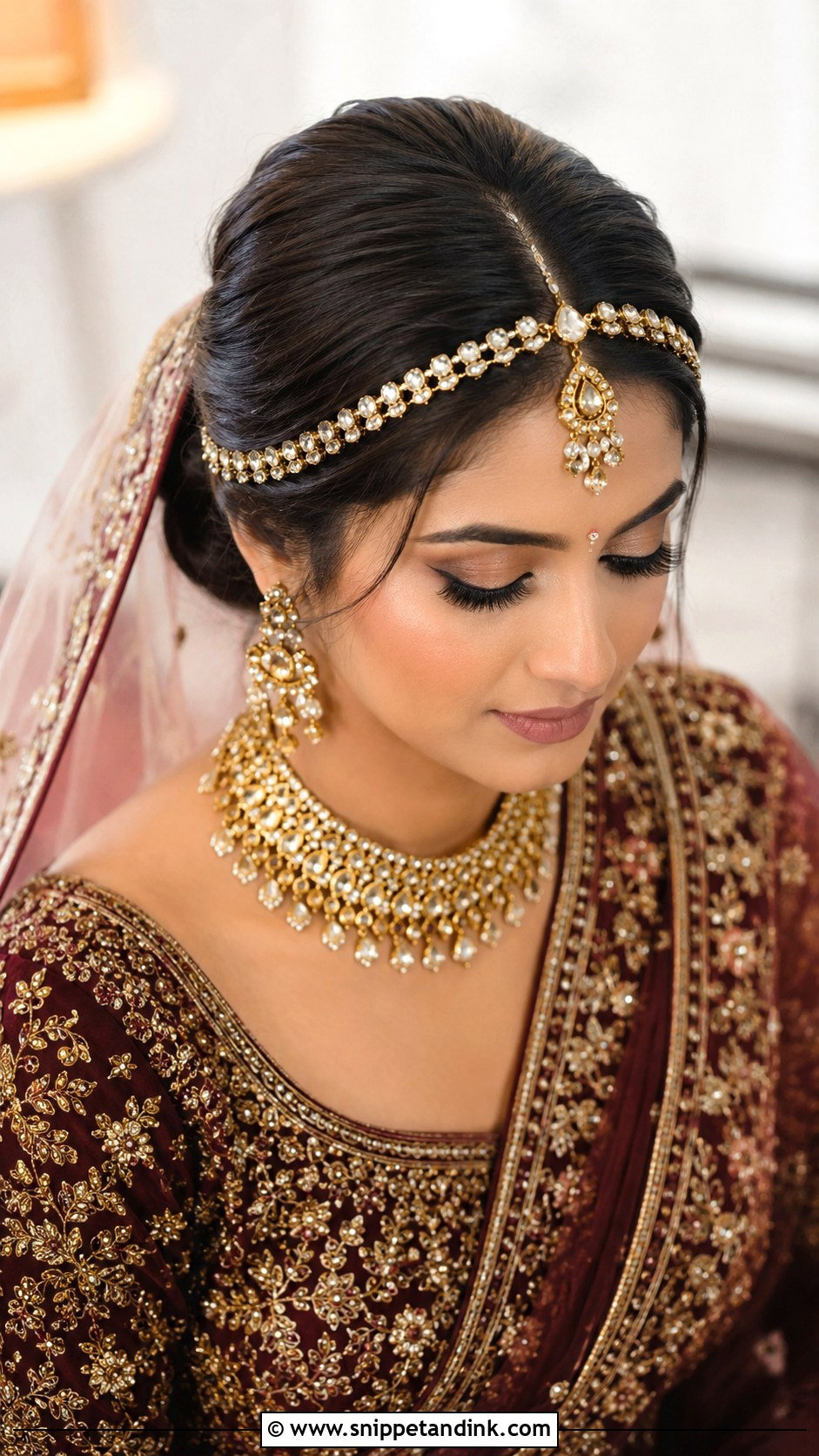
A low bun is my practical answer for heavy jewelry plus a dupatta, because it stays out of the way of both. The placement keeps the face soft and lets a veil or dupatta pin above it without crushing the shape. It can be sleek, twisted, braided or lightly textured. With a center part, a kundan matha patti and bold earrings, the Indian bridal low bun reads clearly in side-angle ritual photos. I finish with a flexible-hold spray, not a heavy lacquer, so it stays firm without looking helmet-hard.
4. Indian Bridal Open Hair With Waves
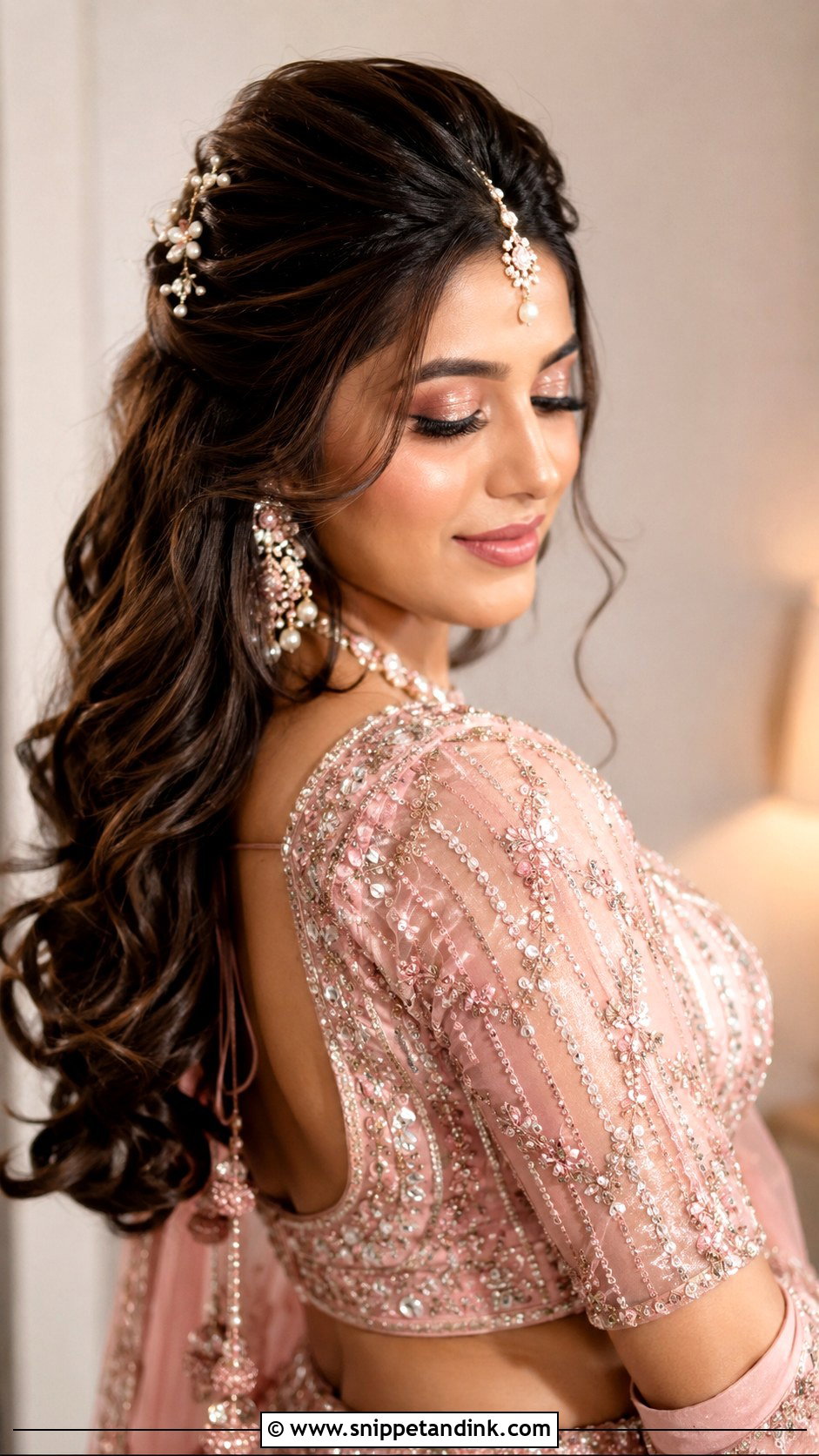
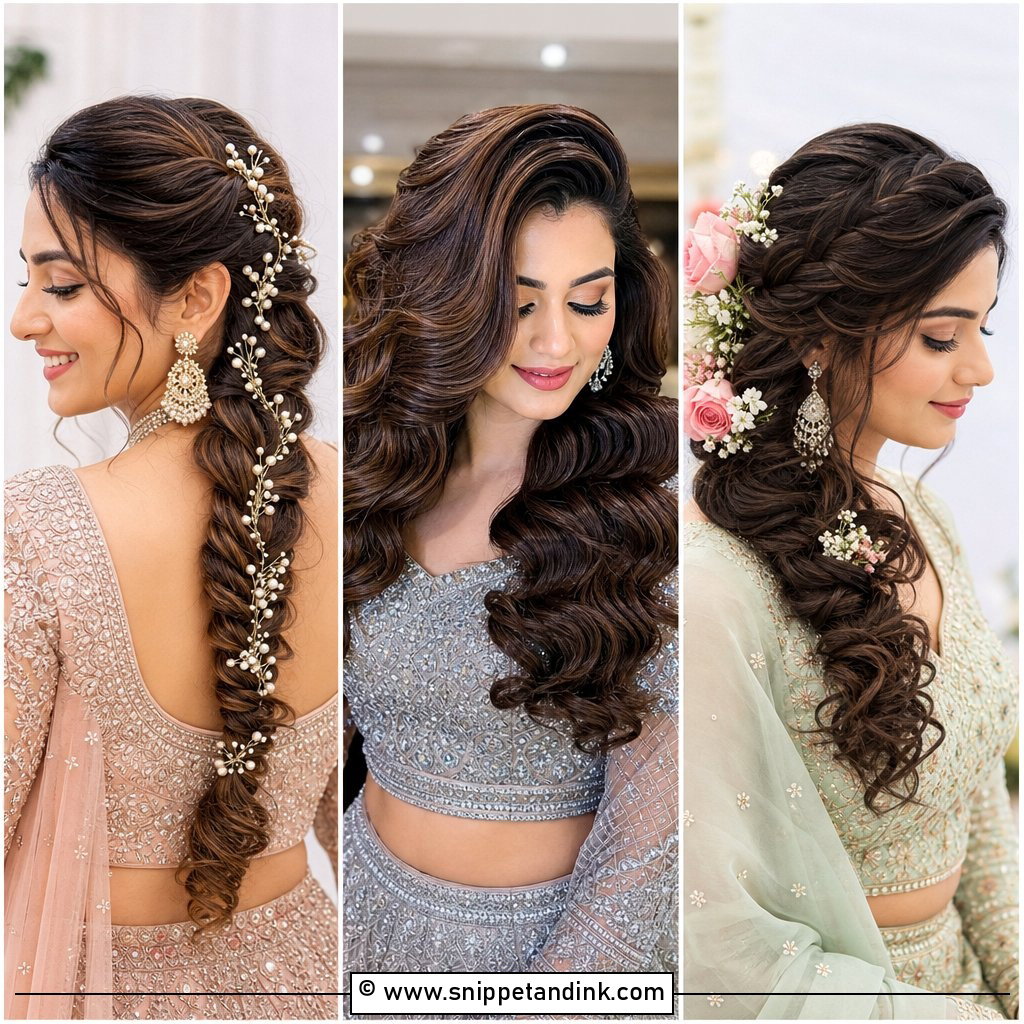
Open waves are lovely for receptions, engagement ceremonies and portraits, and they still look dressed with a maang tikka, pearl pins or a light dupatta. They flatter embroidered blouses, off-shoulder cholis and contemporary lehengas. The honest problem is that loose waves drop fastest of anything here, especially in humidity. I curl tighter than the final look, let every curl cool, then brush them out. Lift at the crown and front pieces shaped away from the face help it last through dancing.
5. Indian Bridal Half Up Half Down Hair
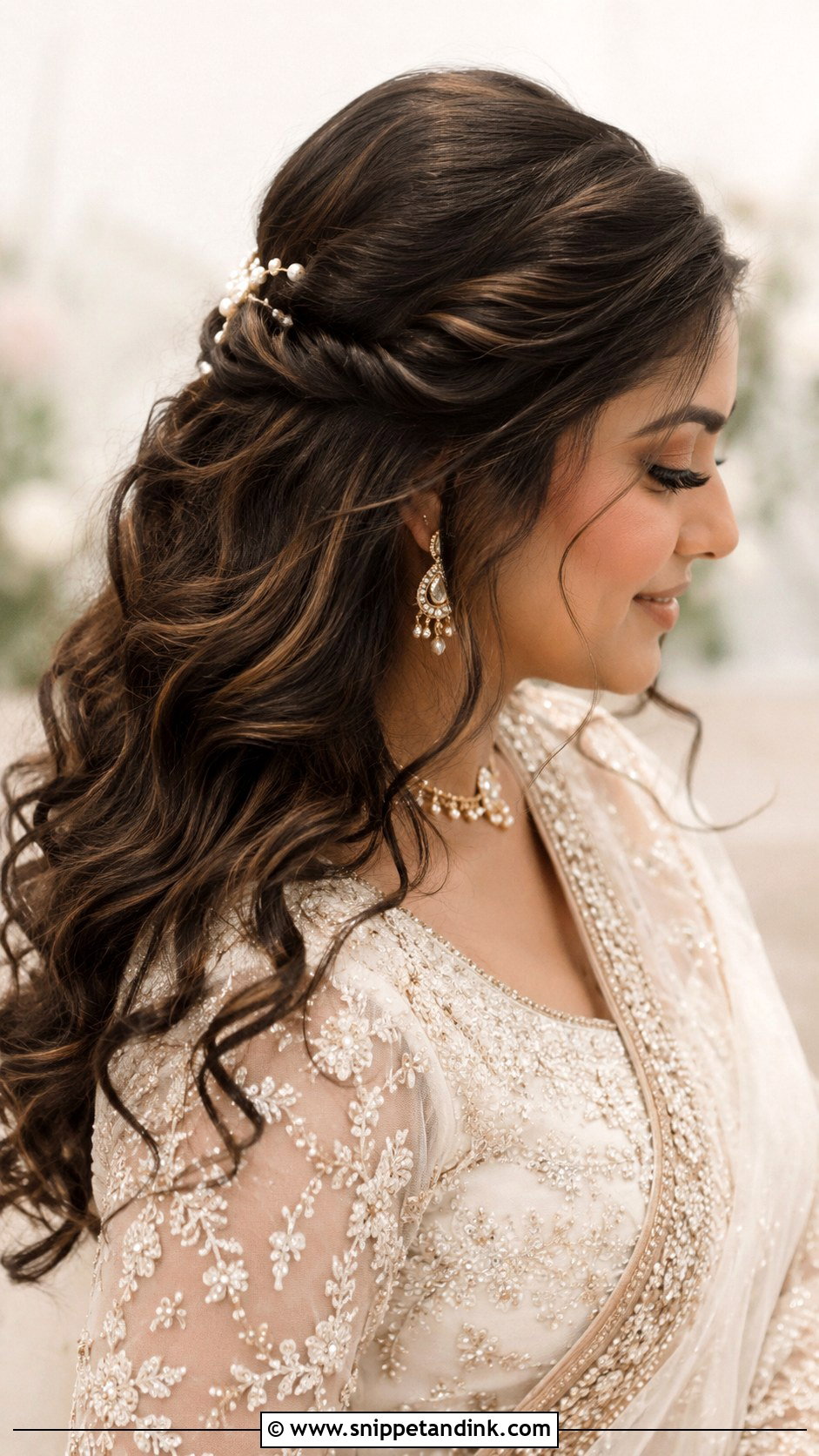
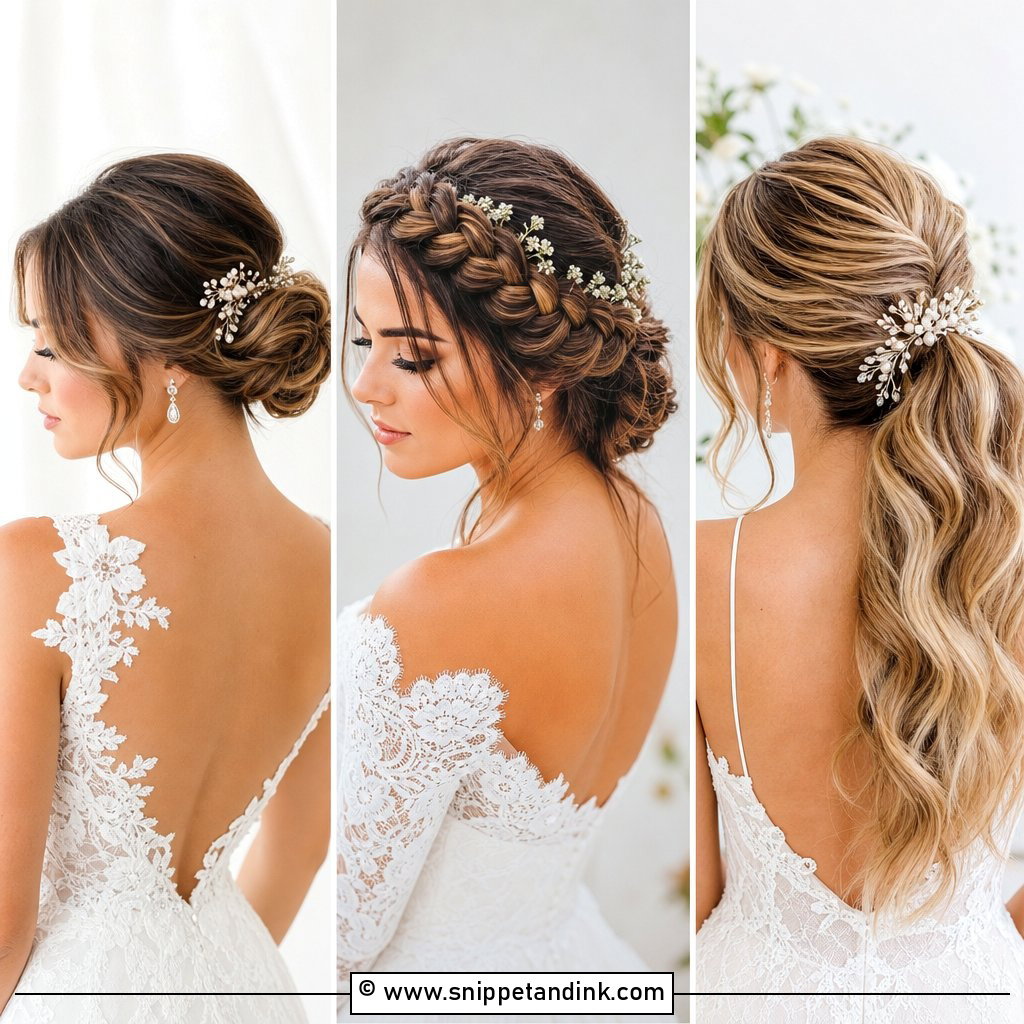
Half up, half down keeps the front pinned and secure for jewelry while the lengths move at the back. I reach for it at sangeets, engagements and receptions where open hair would keep falling into your face while you greet guests. The top can be twisted, braided, puffed or set with pearls; the lengths can be curled or given polished bends. Medium-length hair suits it well, since extensions blend easily into the lower section. Make sure the pinned top section is anchored to a small hidden elastic, or a heavy tikka drags it down.
6. Indian Bridal Braided Bun
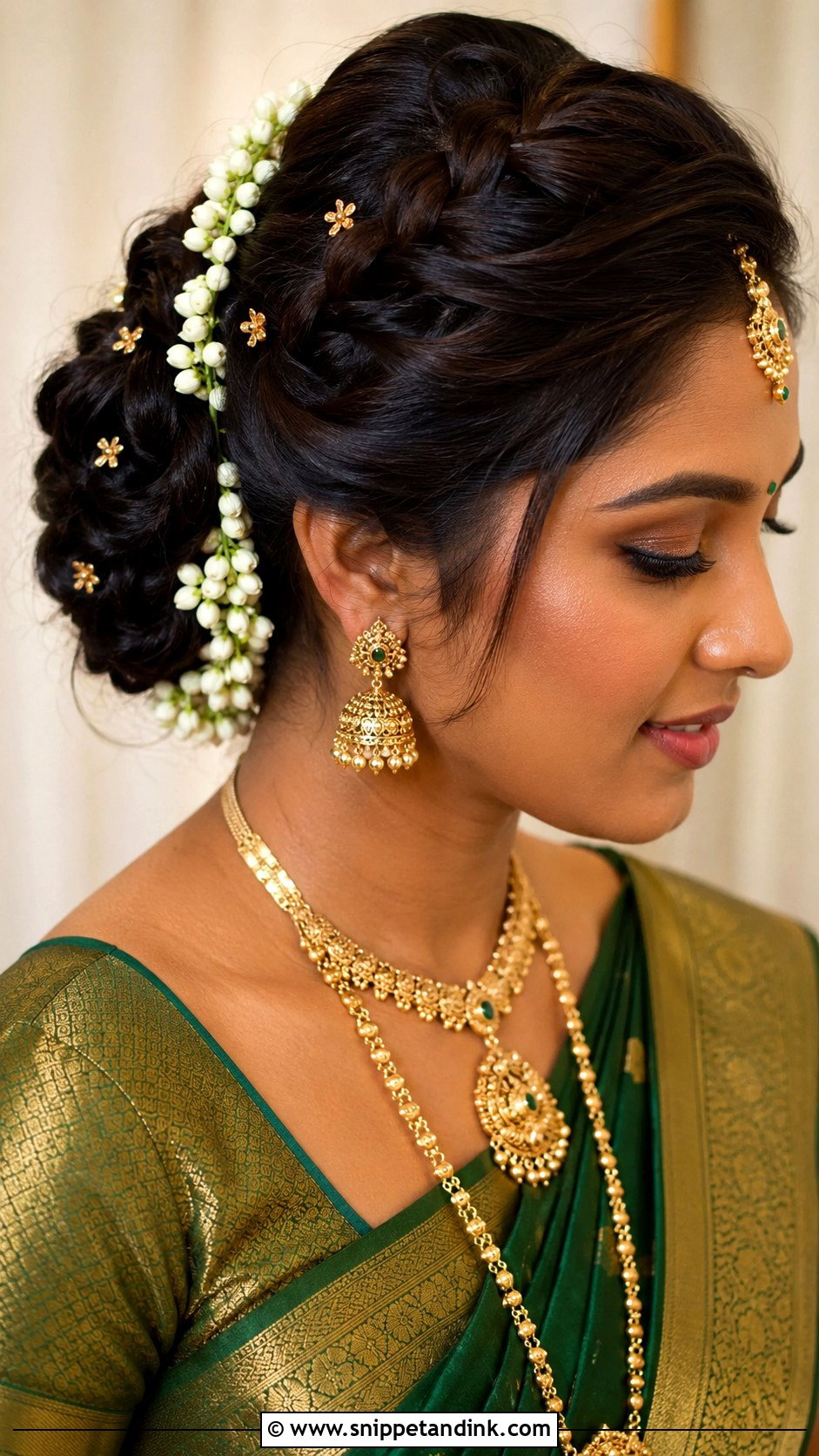
Braiding the hair before wrapping it into a bun gives the whole style more grip, which is why I use this version when a bride has layers or a lot of heavy accessories. Shorter pieces get locked into the braids instead of escaping. Jasmine and gold pins make it traditional; pearls and small crystals make it modern. It holds a dupatta, heavy tikka or florals far better than a smooth bun. Keep a little softness around the face so the structure doesn’t look severe.
7. Indian Bridal Messy Bun
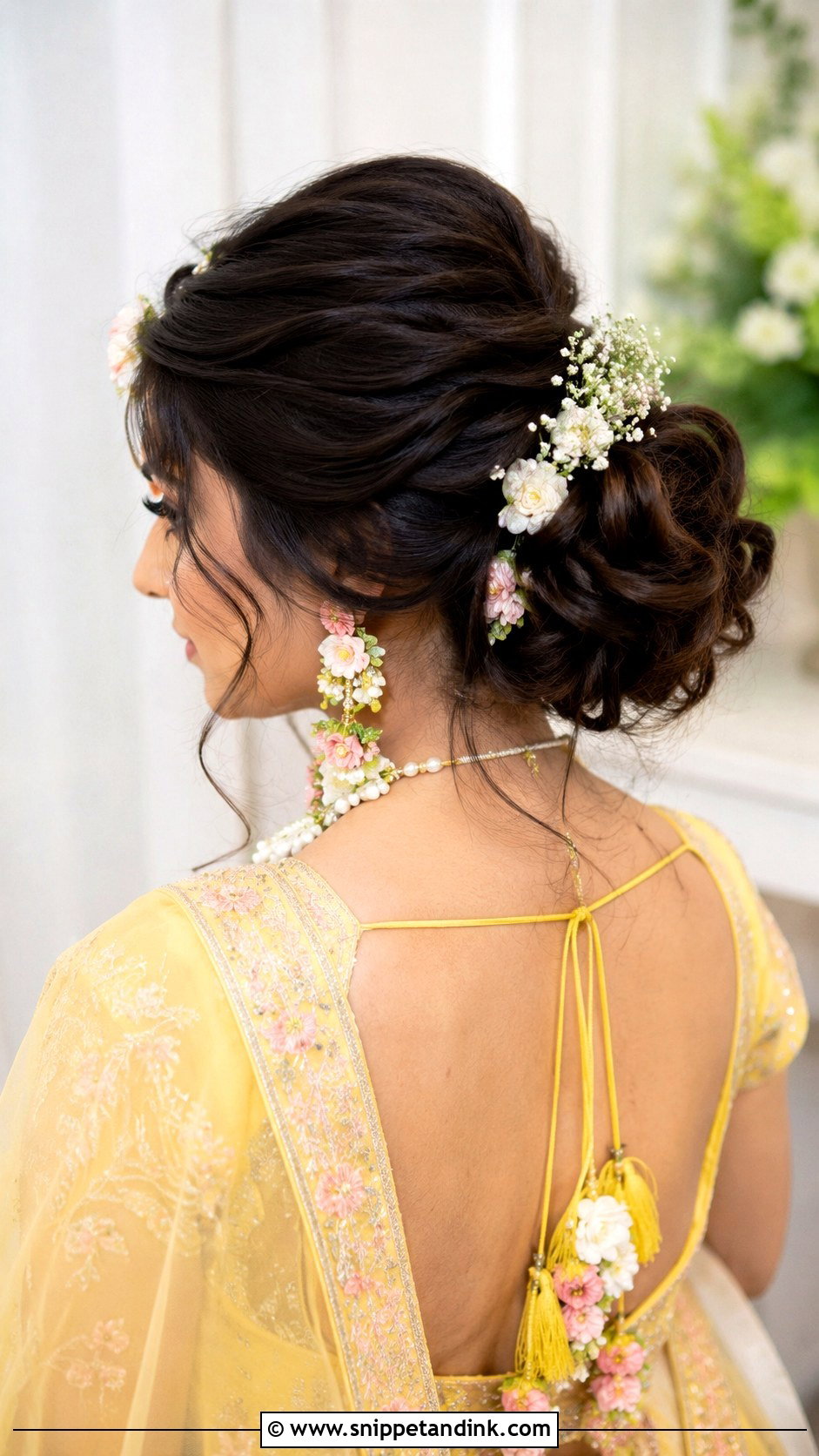
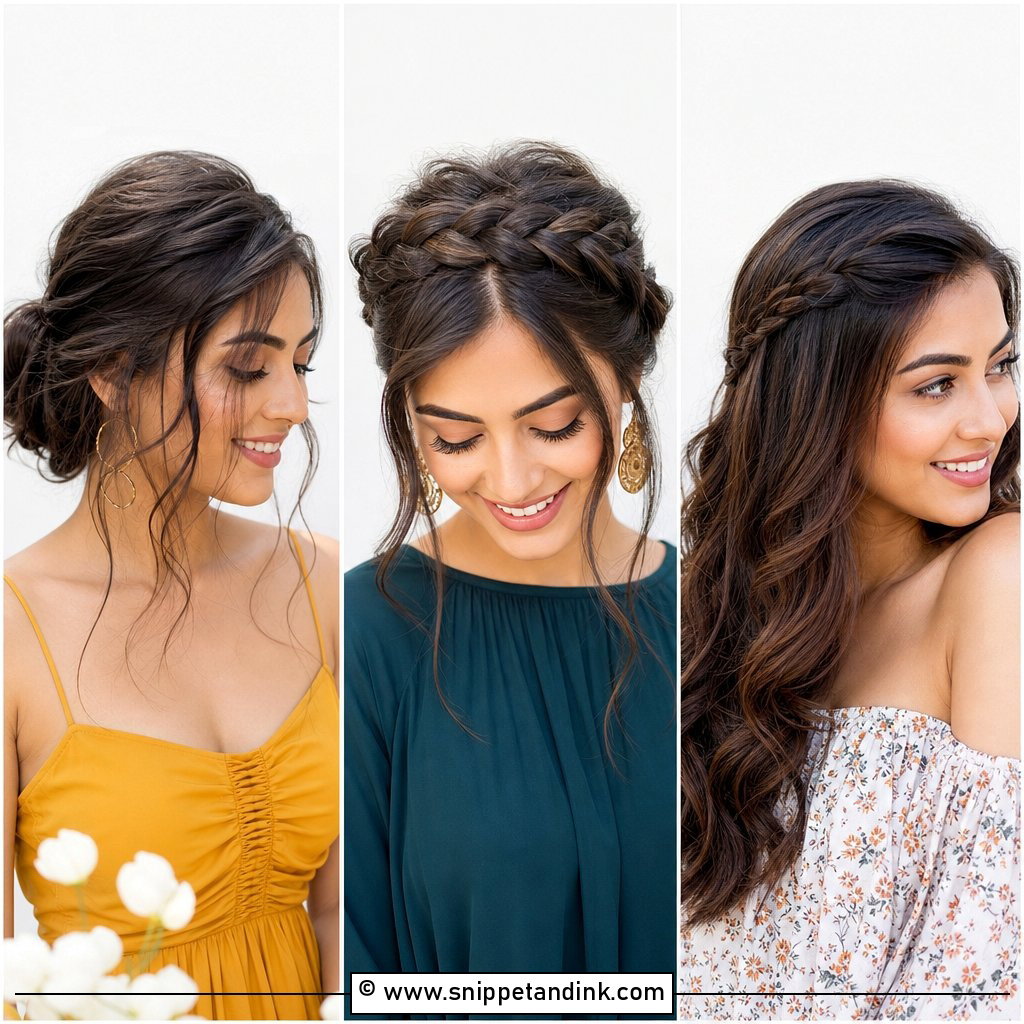
The messy bun is the one that most often goes wrong, because people try to make it loose rather than build it soft. Underneath, it’s pinned as firmly as any formal bun; only the surface texture is relaxed. Soft curls, a few face-framing strands and small floral pins suit mehendi, haldi, sangeet or a garden ceremony, with pastel lehengas, light sarees and minimal jewelry. For a long event, I’d keep it less undone than the photos you’ve saved. What looks airy at noon looks tired at midnight.
8. Indian Bridal Sleek Bun
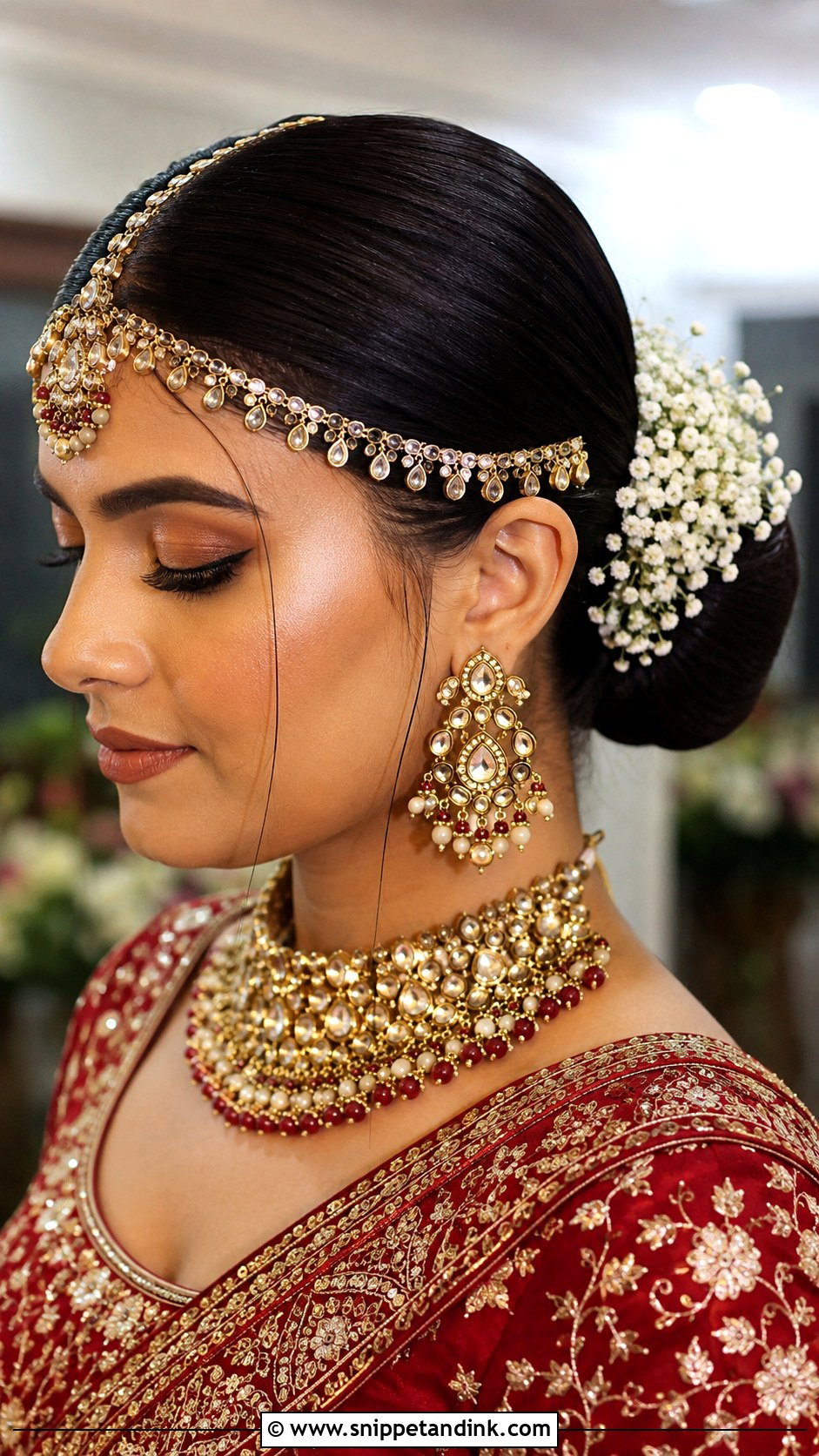
A sleek bun puts your jewelry, makeup and outfit first, which is exactly why I suggest it for heavy lehengas, silk sarees and statement necklaces. The hair is parted neatly, smoothed and pinned compact, and a matha patti sits perfectly on the clean center part. What separates a good one from a stiff one is shine: I use a smoothing cream and a fine brush rather than lots of gel. Fine hair shows the scalp through a very tight sleek style, so I’d add a little root lift first.
9. Indian Bridal Ponytail
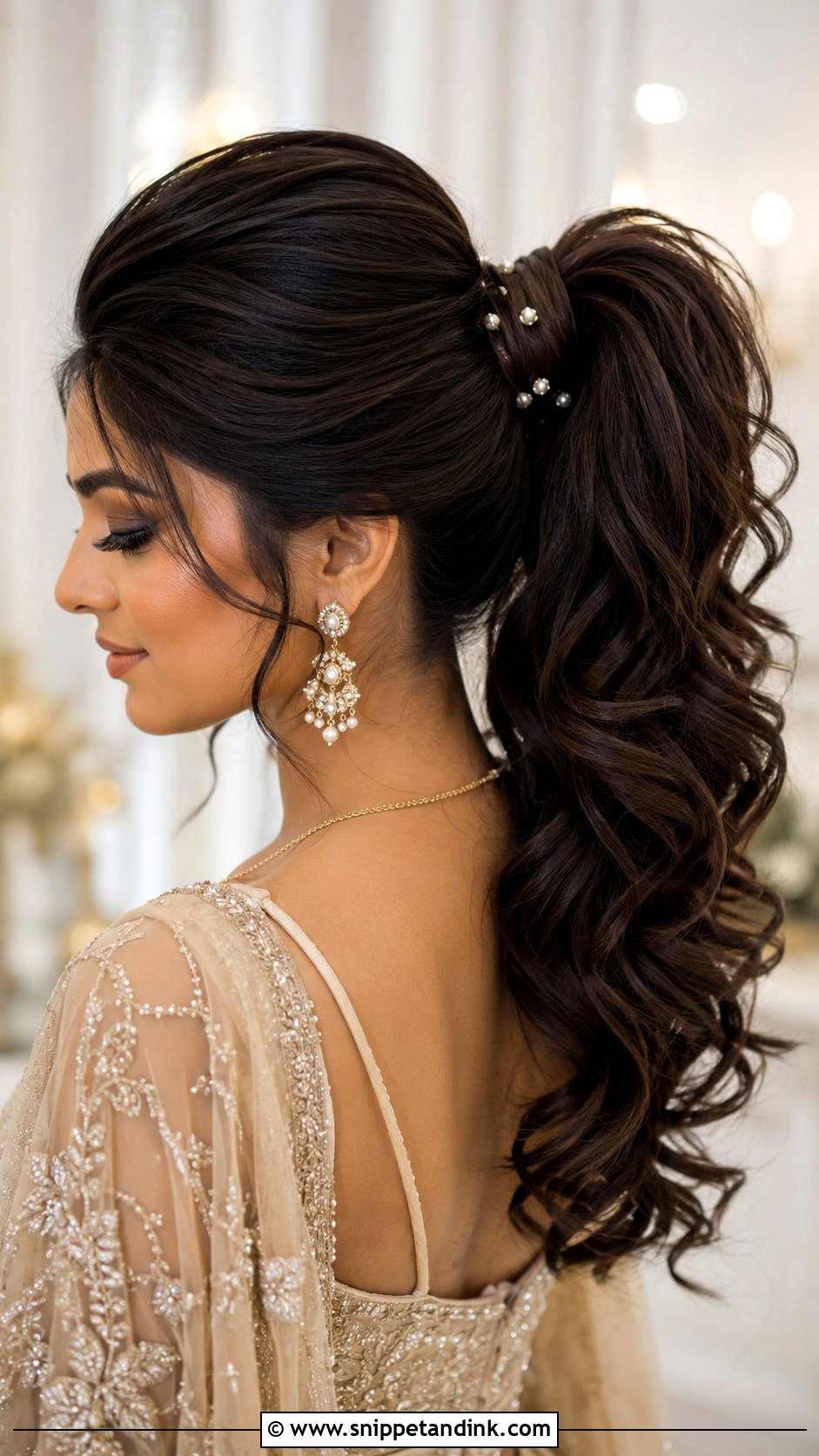
A ponytail is my go-to for reception, cocktail and sangeet nights where comfort and movement matter more than tradition. It can sit high, mid or low, with waves running down the back. A wrapped base, pearl details or a slim braid make it bridal. It pairs well with capes, gowns, Indo-western outfits and lighter lehengas. On fine hair, a clip-in ponytail or a few extension wefts add fullness. I secure a high ponytail with two elastics, one over the other, because a single band loosens with the weight of the hair after a few hours.
10. Indian Bridal Fishtail Braid
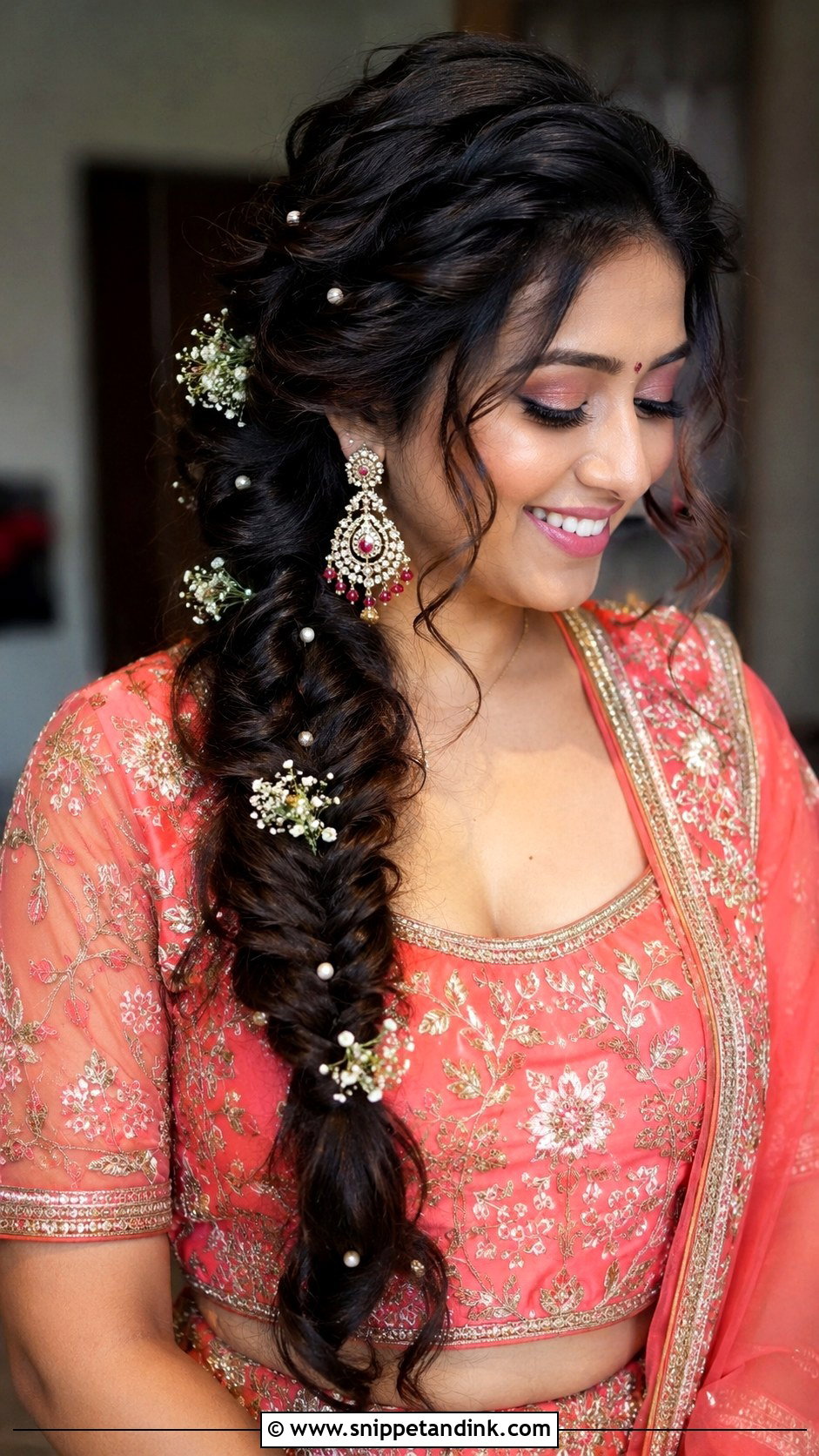
A fishtail braid looks intricate but holds well, which makes it a reliable choice for mehendi, engagement or destination weddings. It can run down the back or over one shoulder. Small flowers, pearl pins, mirror accents or fine chains woven through it add detail. The pattern only shows properly with length, so on shoulder-length hair I add extensions. I keep the top soft, with a center or side part to suit the jewelry, and pancake the braid gently so it looks full rather than skinny.
11. Indian Bridal French Braid Bun
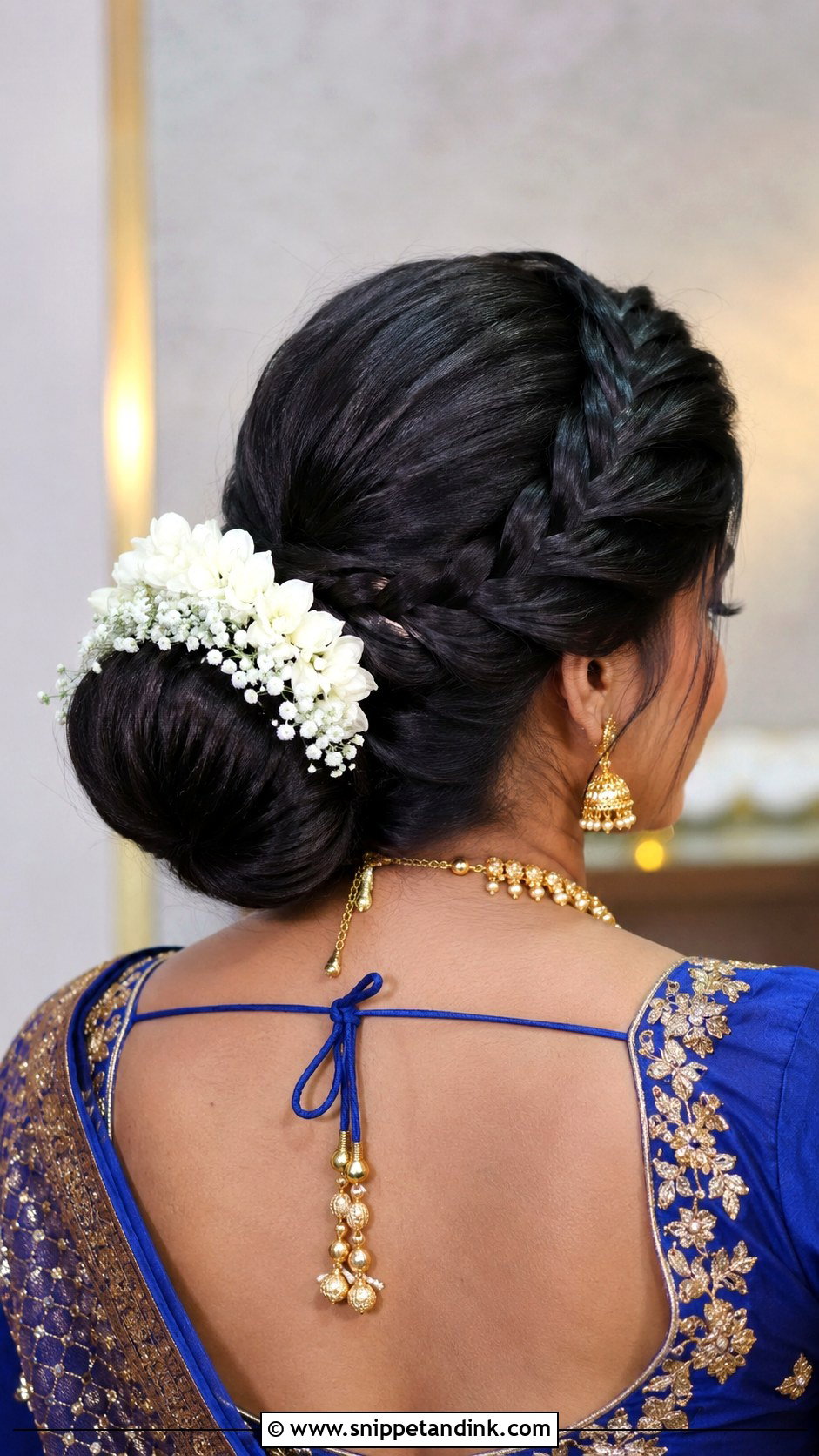
A French braid running from the crown or side into a bun gives the most control of any style here, which matters for thick hair, heavy layers or hair that won’t stay put. It holds well under a dupatta. It also gives the back of your head something interesting to show in ritual photos, where you’ll spend a lot of time facing away from the camera. Fresh flowers around the bun or pearl pins along the braid soften it. I’d choose this over a plain bun if your hair is slippery or freshly colored.
12. Indian Bridal Floral Bun
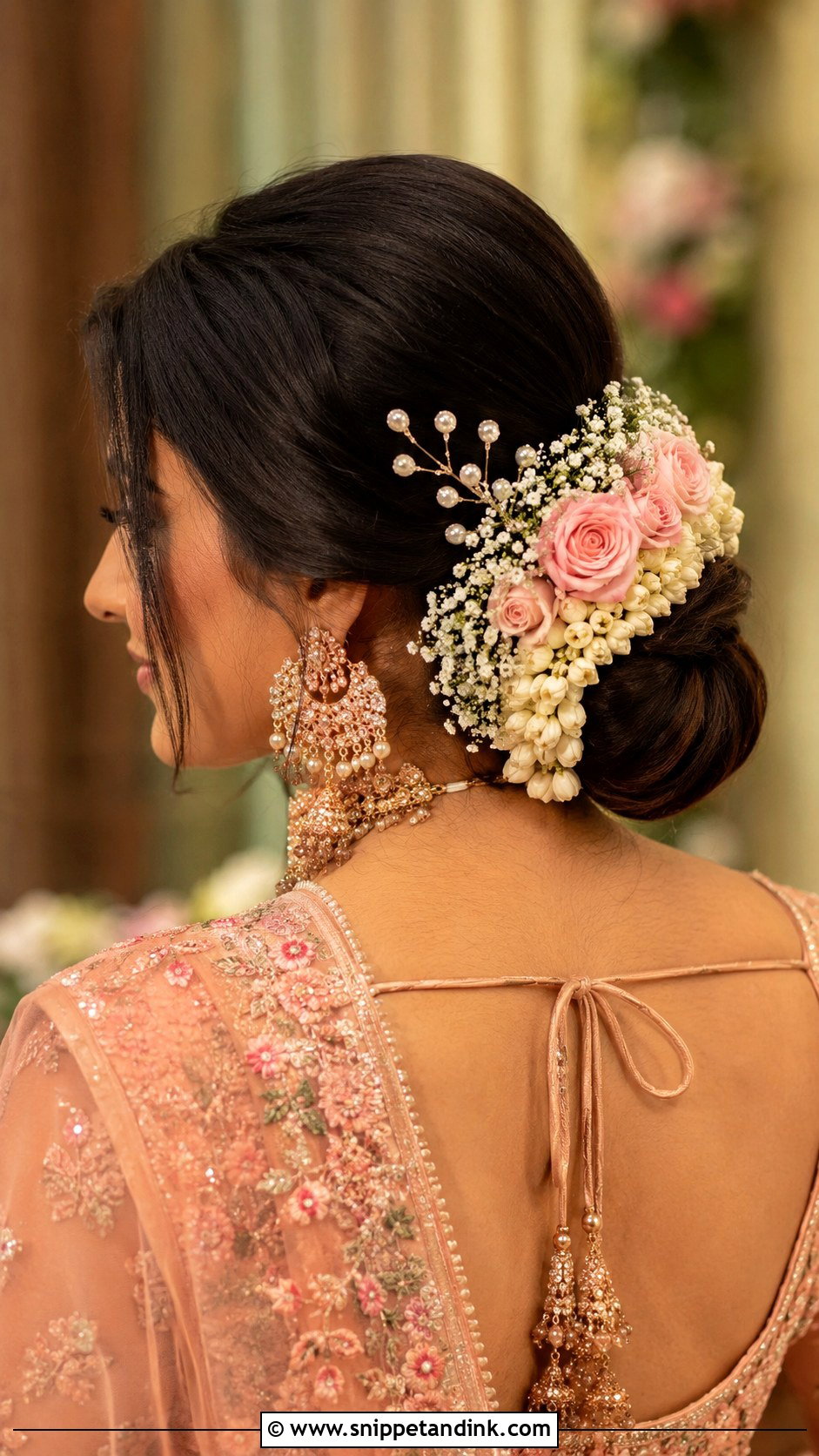
Unlike a straight gajra bun, a floral bun can mix roses, jasmine, baby’s breath, orchids or flowers matched to your outfit, set as a full ring, half moon or scattered design. It suits pastel lehengas, bright sarees and daytime ceremonies. Choose flowers that will survive your climate: in heat, sturdier blooms last longer than delicate jasmine. Flowers are heavier than they look, so I build the base with a ponytail and a filler before anything is added. Weak pins loosen under floral weight during long rituals.
13. Indian Bridal Side Braid
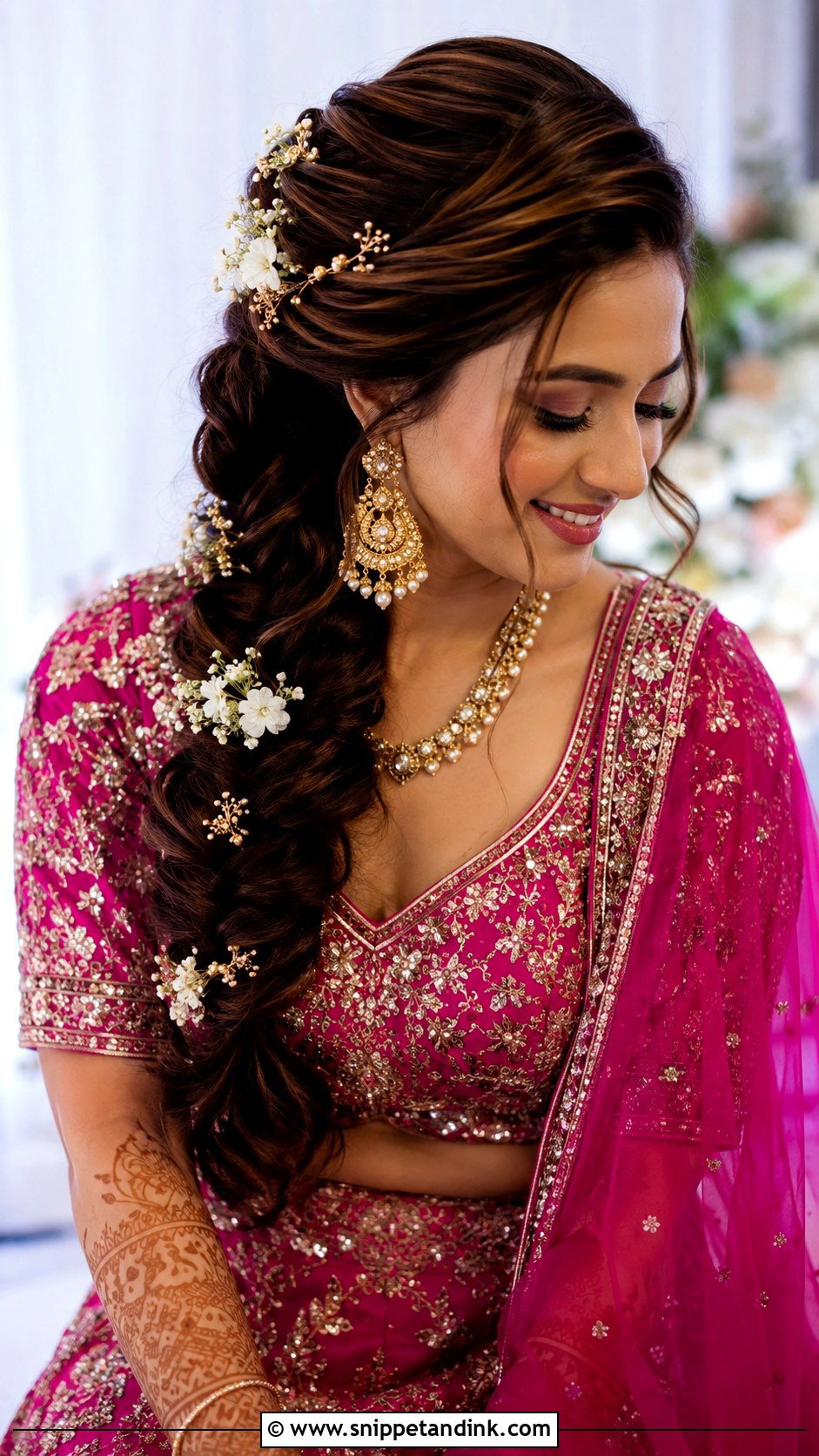
A side braid shows off the blouse, necklace and earrings at once, since the length falls over one shoulder. It can be sleek and traditional or loose and textured, and it works for mehendi, haldi, engagement and pre-wedding shoots. Tiny flowers, pearls, gold pins or a paranda add detail. The thing I watch for is balance: all the hair weight swings to one side, so I keep a little volume at the crown on the opposite side so your face doesn’t look pulled down.
14. Indian Bridal Crown Braid
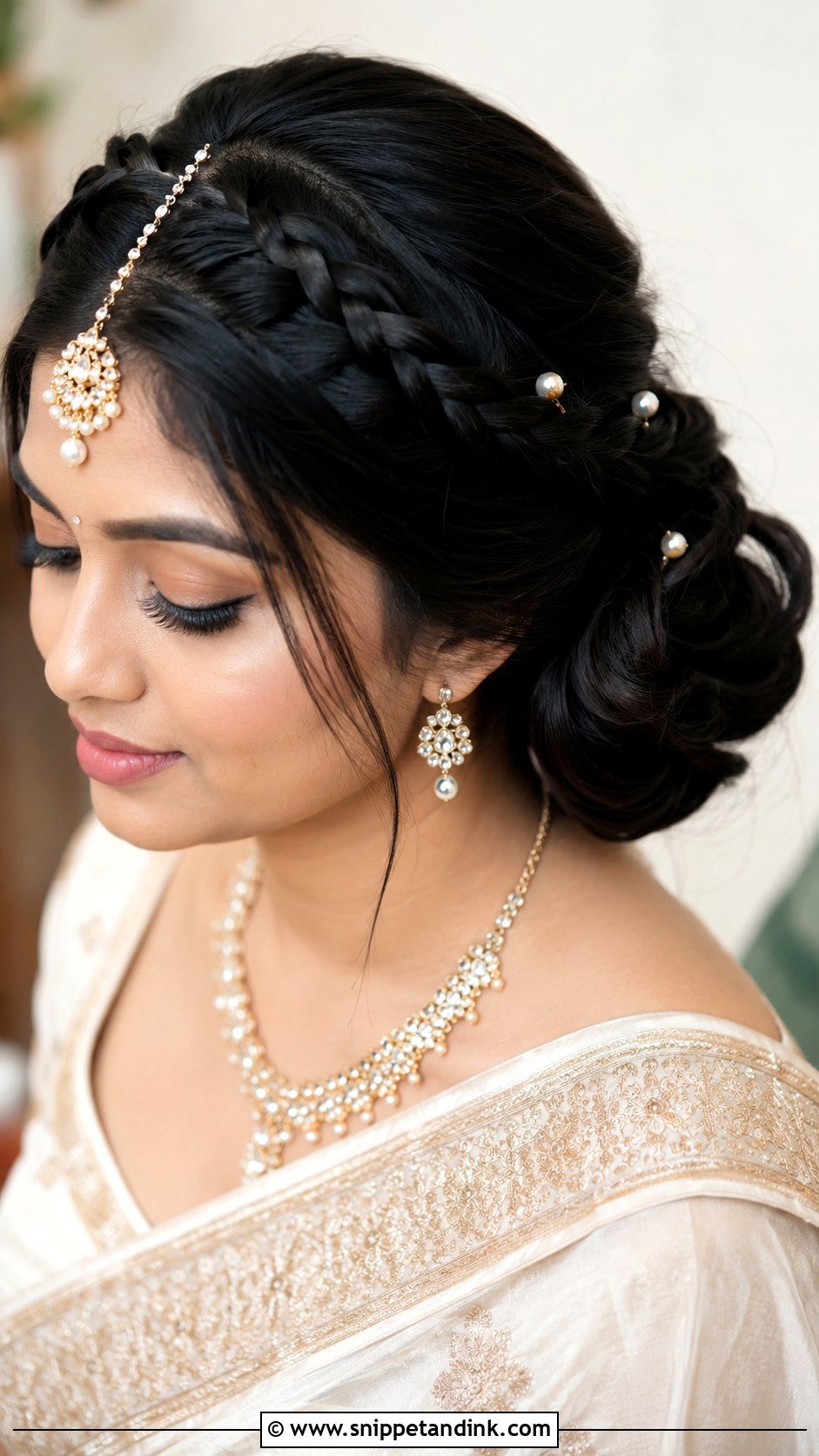
A crown braid wraps the head and frames the face, either flowing into a bun or sitting like a band over soft curls. It gives detail without needing heavy accessories, and it pairs well with a maang tikka, small jhumkas and embroidered dupattas. It’s also my favorite trick for growing-out fringes and front layers, since they get tucked into the braid and stay there. Keep it lifted slightly off the scalp so it reads soft rather than tight.
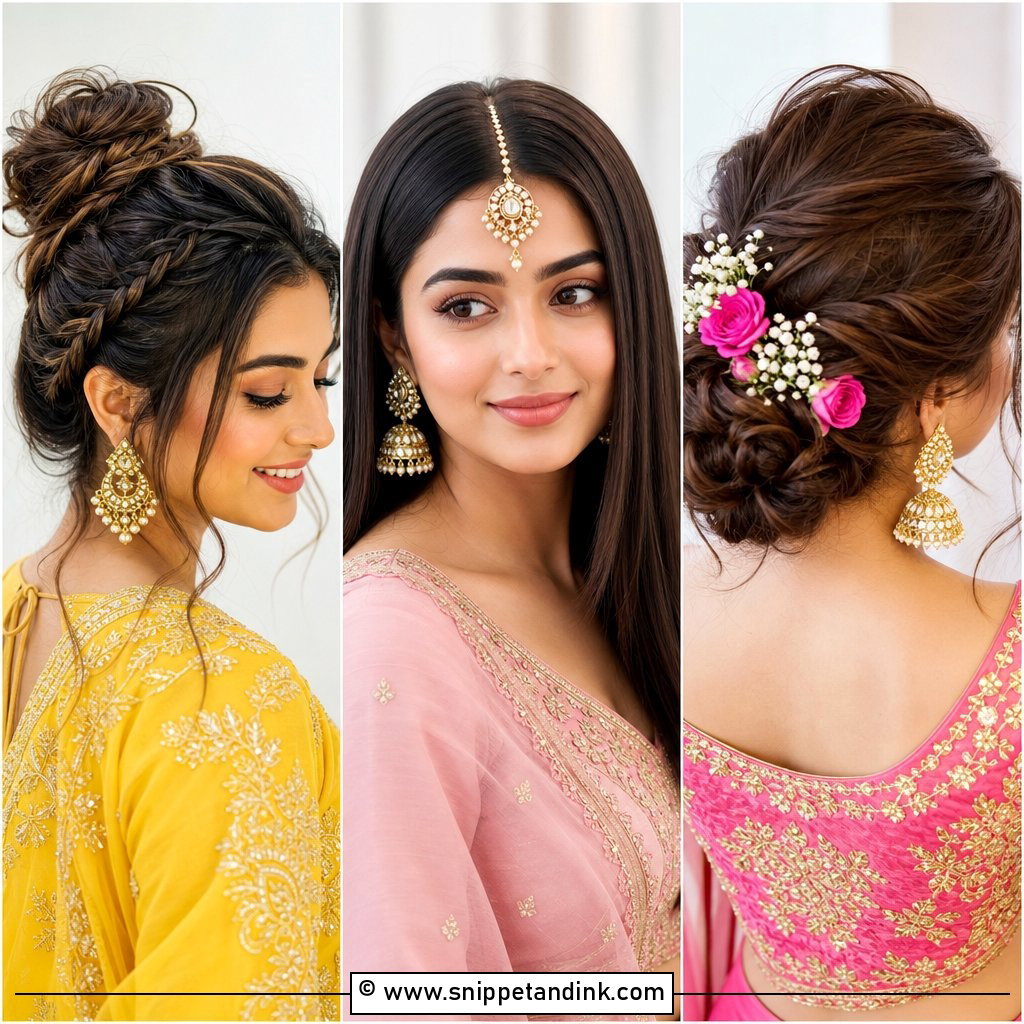
15. Indian Bridal Hair With Matha Patti
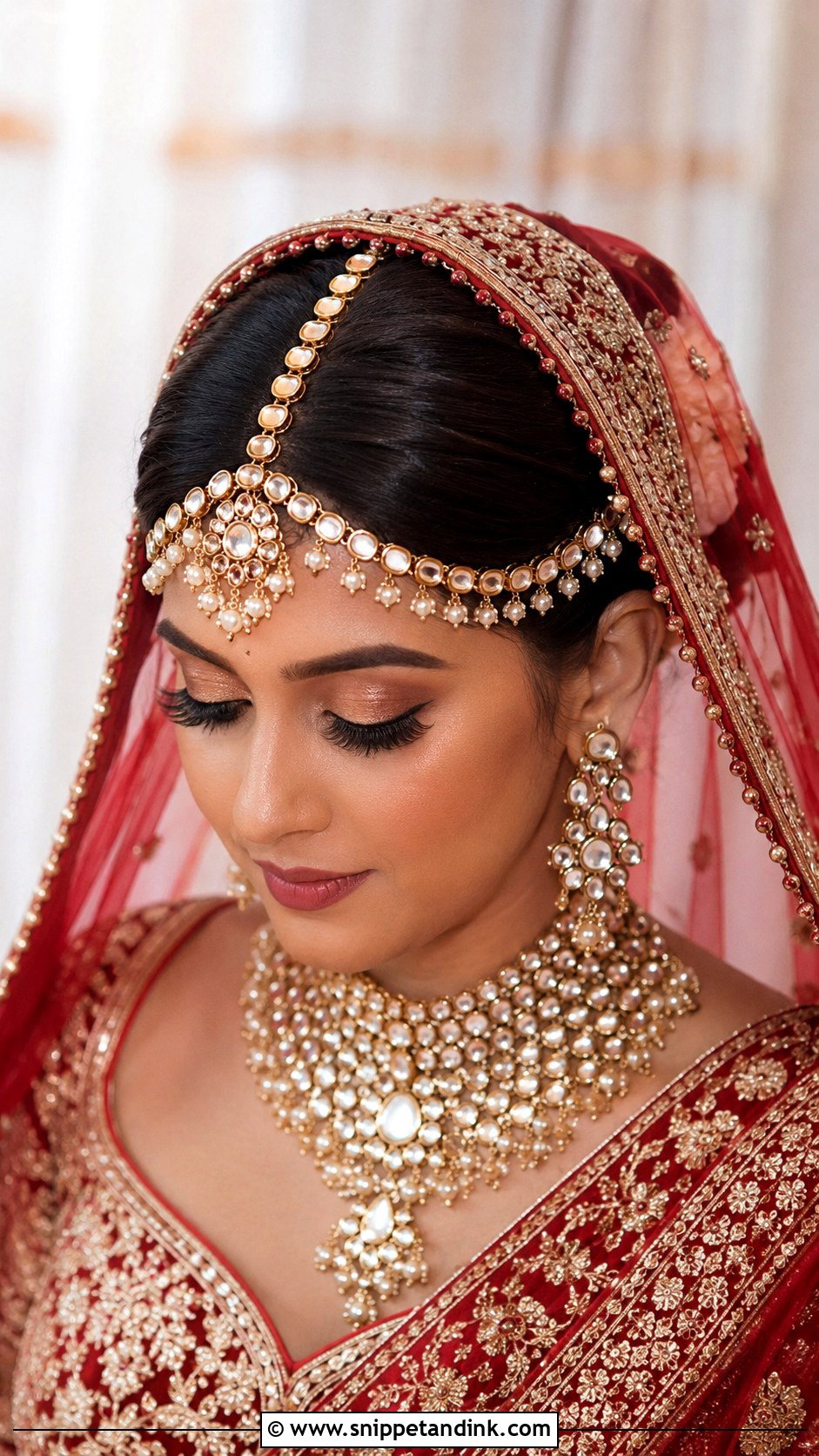
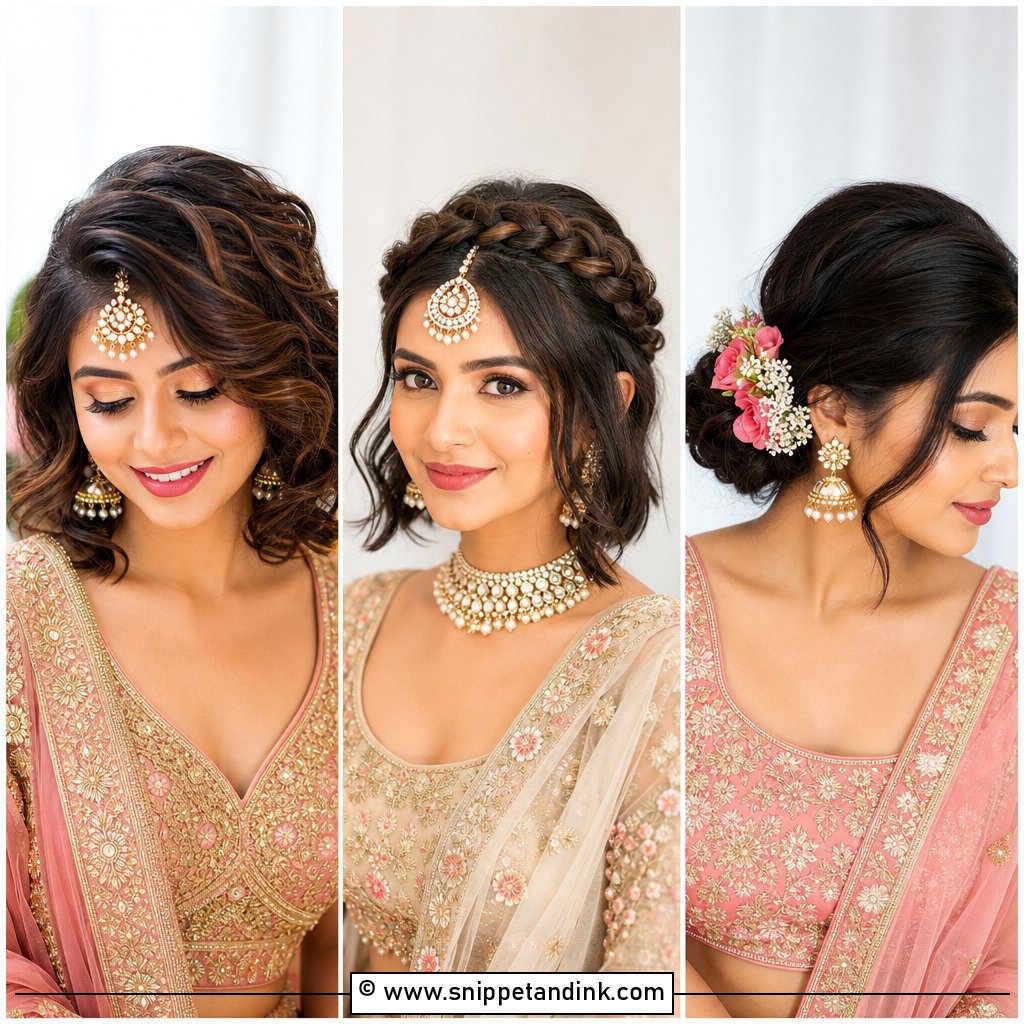
Once a matha patti goes on, it becomes the frame of the face, so the hairstyle is planned around it. A sleek bun, low bun, braid or half-up style can all work, but the center part must be clean and firm. I anchor the patti with hidden pins under each side chain and balance the volume so it sits flat without pulling. It suits North Indian bridal lehengas, rich sarees and heavy dupattas. Keep loose strands away from the forehead; they tangle in the chains and hide the detail.
Oiling, Colour and Extensions in the Final Fortnight
A lot of bridal hair problems start in the weeks before. Here’s what I ask brides to do, and not do, as the date gets close.
Prep that actually helps
- Finish any color, gloss or smoothing treatment two to three weeks out, so the color settles and the hair isn’t too slippery to pin.
- Oil if you like, but not the night before a styling day. Oil makes pins slide; wash it out properly first.
- Wash the day before or the morning of, and skip heavy conditioner on the roots. Very soft, clean hair doesn’t hold pins well, so I add texture spray.
- Avoid a new haircut in the last two weeks. A fresh cut can change how layers sit in an updo.
If you’ll wear extensions
Buy them early and bring them to the trial. Clip-ins need to be matched in daylight, not under bathroom bulbs, and real hair extensions can be curled and colored like your own. For a long South Indian braid, a braid extension or a set of wefts usually looks more natural than one single long piece.
A Trial Tells You More Than Any Saved Photo
Your outfit, jewelry, ceremony, hair length and comfort should decide the style, in roughly that order. A gajra bun or sleek low bun suits the ceremony; waves, ponytails and half-up looks suit the reception or sangeet. South Indian braids, floral buns, fishtails and matha patti hairstyles carry strong cultural detail. Book a trial, especially if you’ll wear extensions, heavy flowers or a dupatta on the head, and be honest about your hair texture. I’d much rather adjust a plan at the trial than on the morning.
You'll Like These Ideas:


Leave a Reply