
Every Indian bride I style is juggling the same three demands: the hair has to look right in photographs, stay put through hours of ritual, and carry jewelry, flowers and often a dupatta heavy enough to drag on the scalp. Indian bridal hairstyles today mix the classics, gajra, matha patti and long braids, with softer waves, textured buns and ponytails. Which one suits you depends less on trend than on the neckline, where the jewelry sits, the dupatta weight, your hair length and which event it is for. A sleek bun may carry the ceremony while loose curls take over at the reception. Here are fifteen I return to, traditional and modern, with the practical side of each.
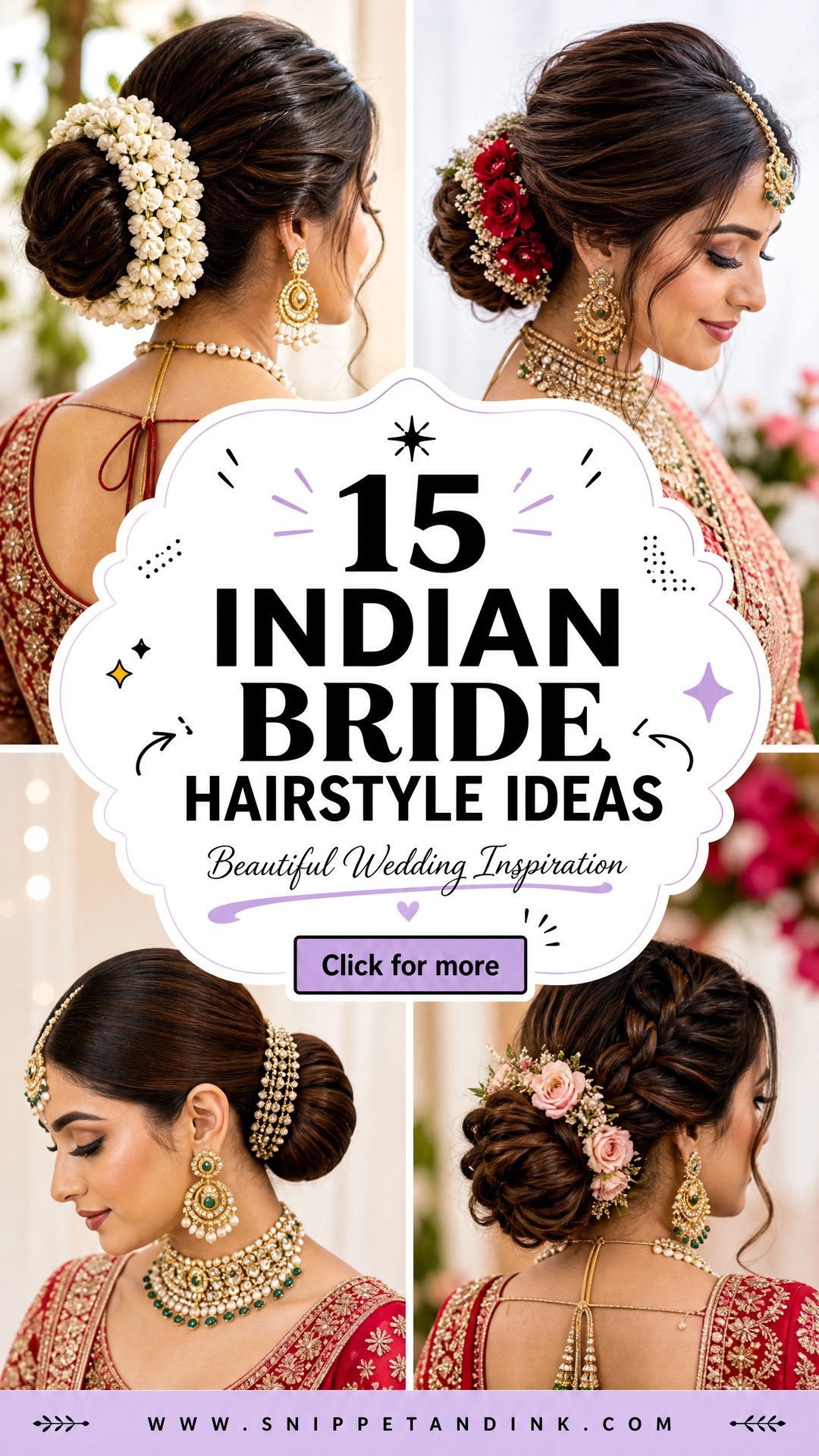
Haldi to Reception, One Hairstyle per Function
A multi-day wedding asks very different things of your hair. This is roughly how I map styles to events when a bride books me for the week:
- Haldi: something you don’t mind getting turmeric on. A simple braid or low bun with a few flowers. Skip expensive extensions this day.
- Mehendi: hair fully off the hands and face, since you will be sitting still with wet henna for hours. Side braids and floral braids work well.
- Sangeet: movement and comfort for dancing. Ponytails, half up styles or a textured bun.
- Wedding ceremony: the most secure style you have, built to carry the dupatta and jewelry. Buns and long traditional braids.
- Reception: the most freedom. Open waves, curls or a sleek bun with one statement piece.
One warning about haldi: turmeric paste can tint blonde, highlighted or grey hair yellow, and it does not always wash out on the first try. If you have lightened hair, tie it up tightly and cover the lengths before the paste comes out, and wash it the same day rather than the next morning.
Notice that the ceremony style is the hardest to change. Everything else can shift around it.
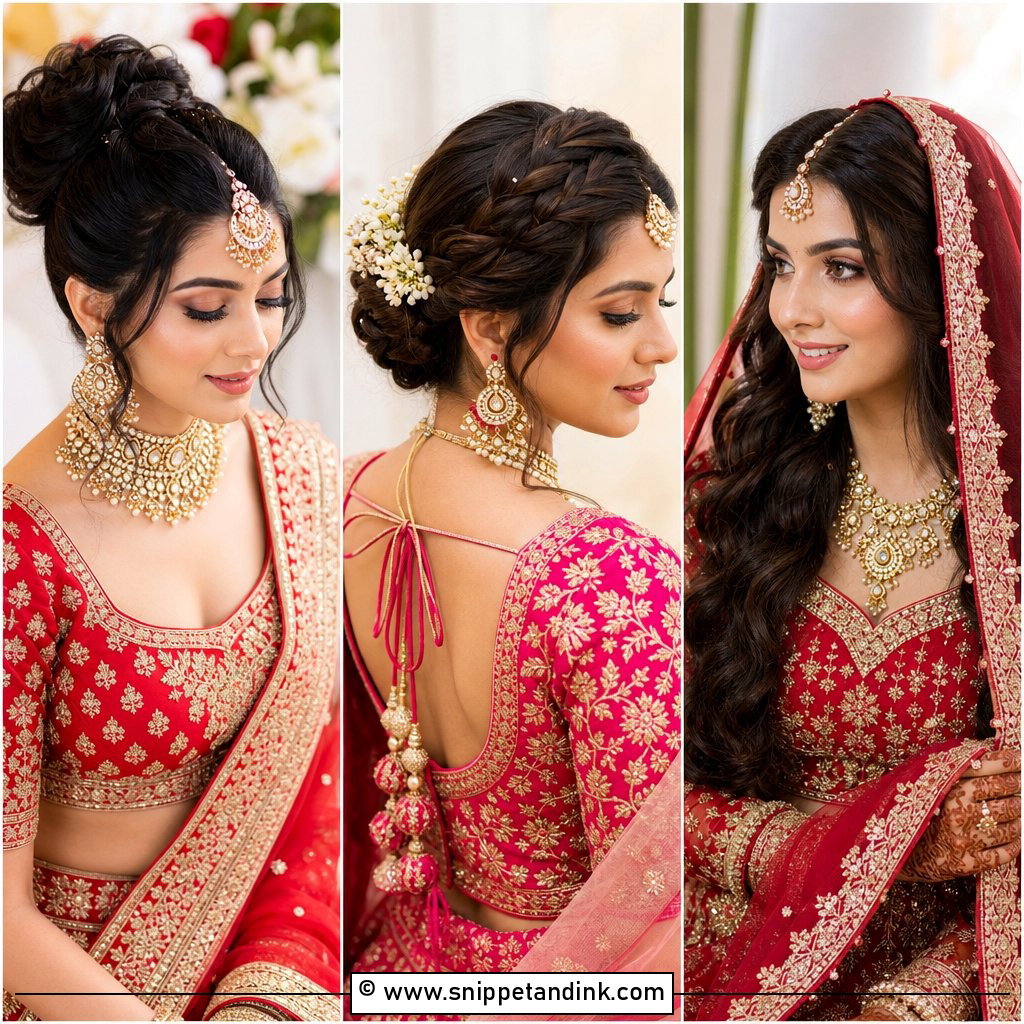
1. Indian Bridal Bun With Gajra
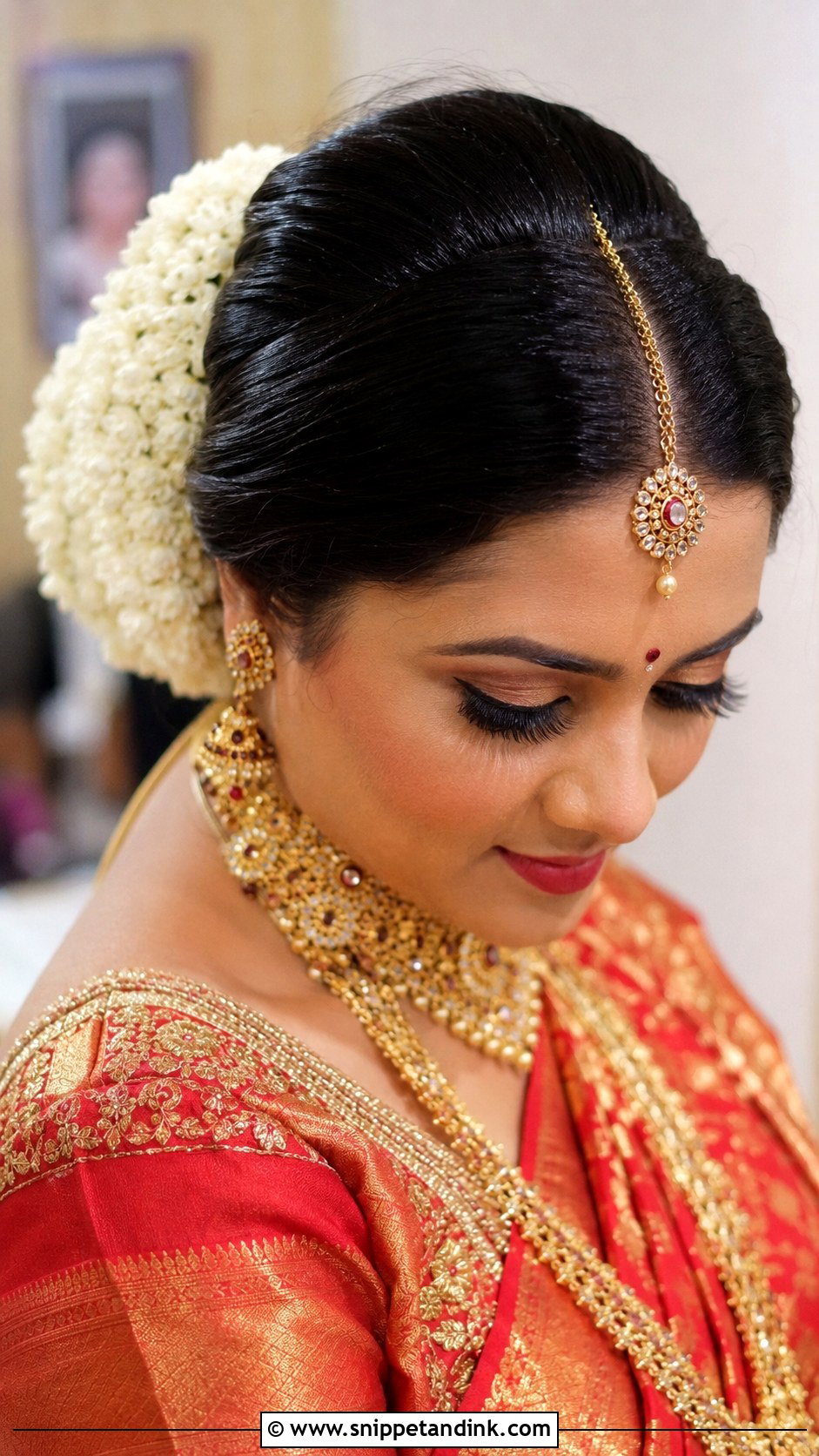
If I had to name the safest ceremony style, this would be it. An Indian bridal bun with gajra sits low or mid-level at the back, leaves room in front for a maang tikka, matha patti or traditional earrings, and gives the dupatta a firm base. Jasmine wrapped around it hides every pin. Silk sarees, lehengas and temple jewelry all suit it. I build the base smooth with strong pins underneath, and if you want it softer, I leave two thin strands at the face rather than a whole fringe.
2. South Indian Bridal Braid
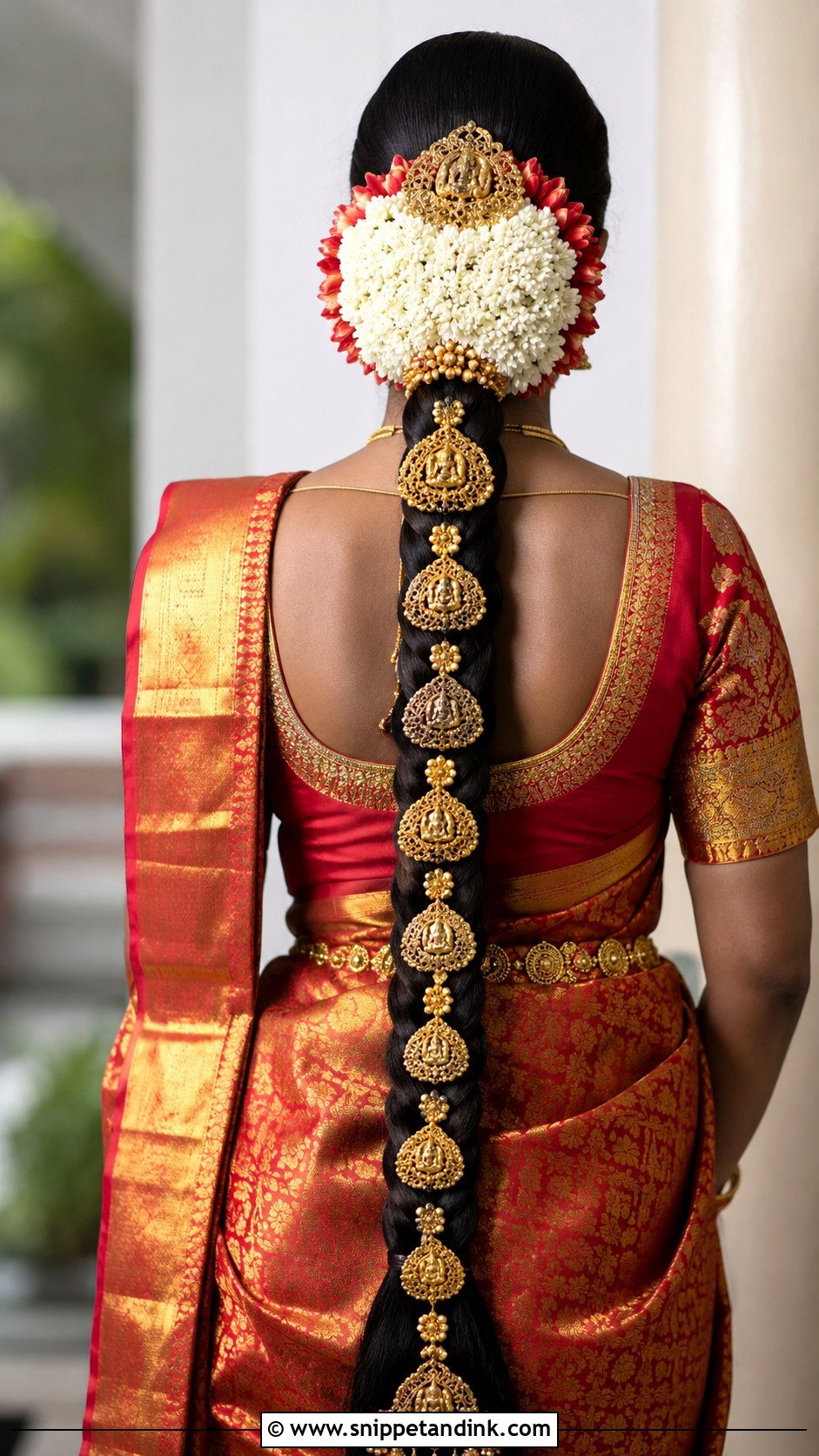
The traditional plait runs the full length of the back and is dressed with flowers, gold accessories or a full jada piece. A South Indian bridal braid belongs with Kanjeevaram sarees, temple jewelry and fresh jasmine, and much of its impact shows in back-view ritual photos. Most brides need extensions or a braided hair piece to reach the length. A full jada is heavy, so I sew it to the braid with thread at several points instead of hanging it from the top; otherwise it pulls the braid sideways when you sit.
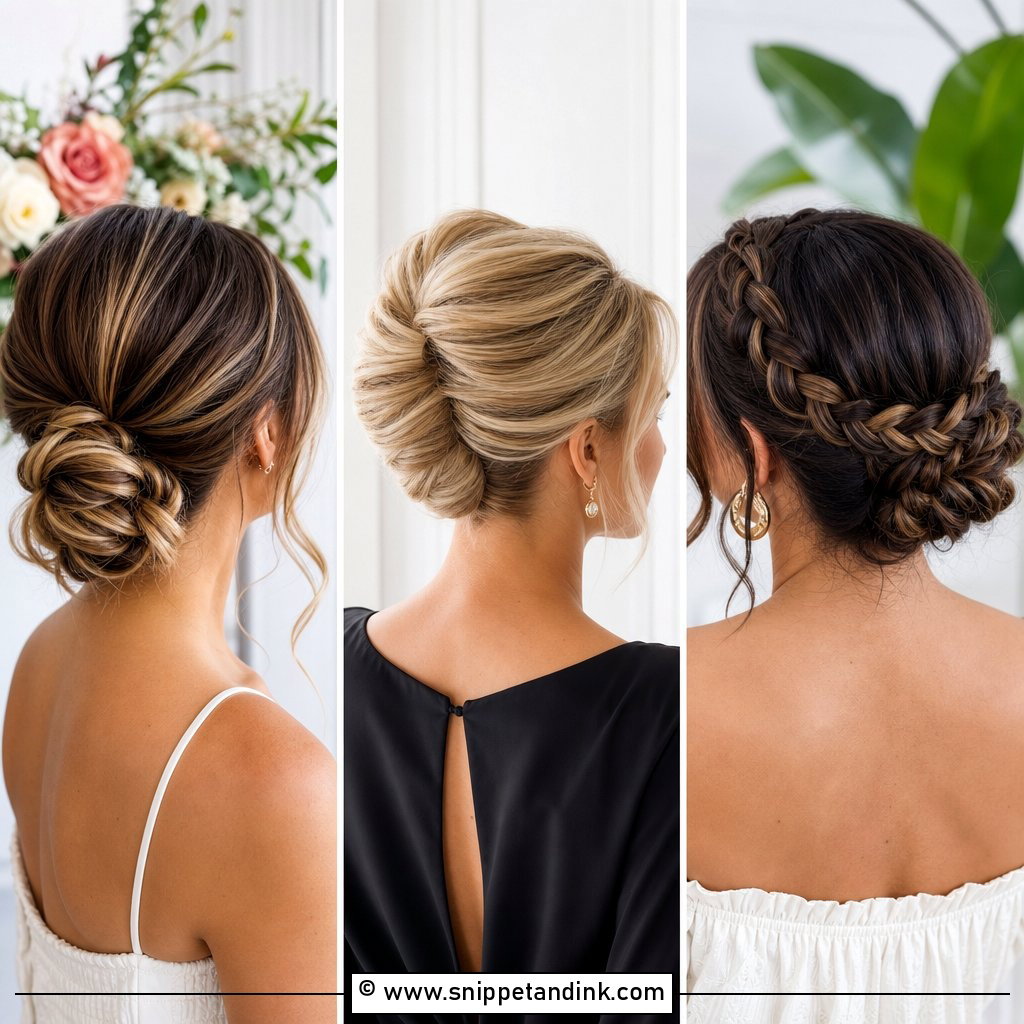
3. Indian Bridal Low Bun
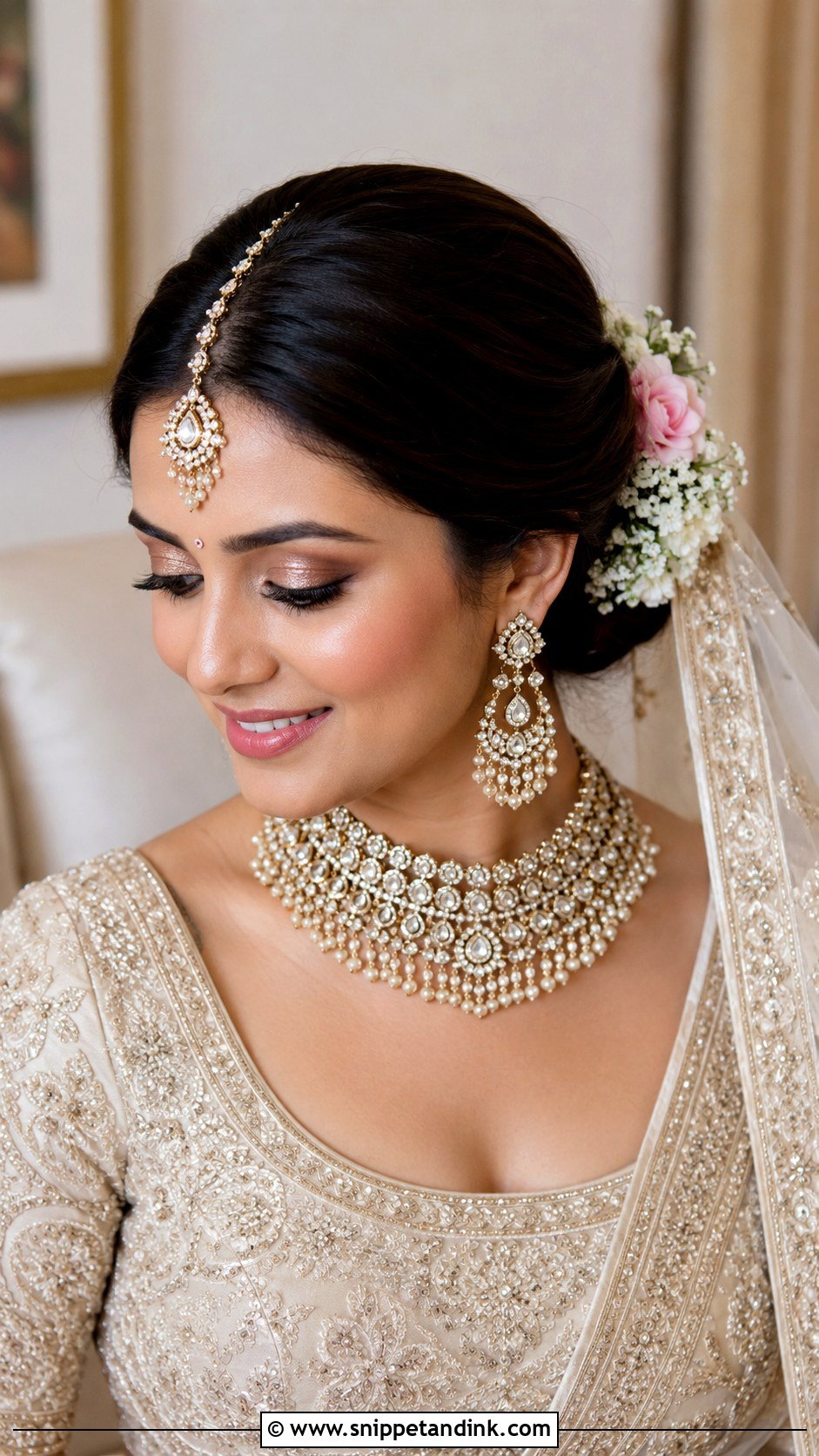
Sitting at the nape, a low bun stays out of the way of a dupatta and lets a heavy necklace lie flat on the collarbone. It can be sleek, softly textured or dressed with roses, baby’s breath, jasmine or pearl pins. I find it adapts to North Indian, Muslim, Sikh and fusion bridal looks more easily than almost any other style, because a veil or headpiece drops over it without a bump. Keep the front structured; your makeup, earrings and forehead jewelry should be what people see first.
4. Indian Bridal Messy Bun
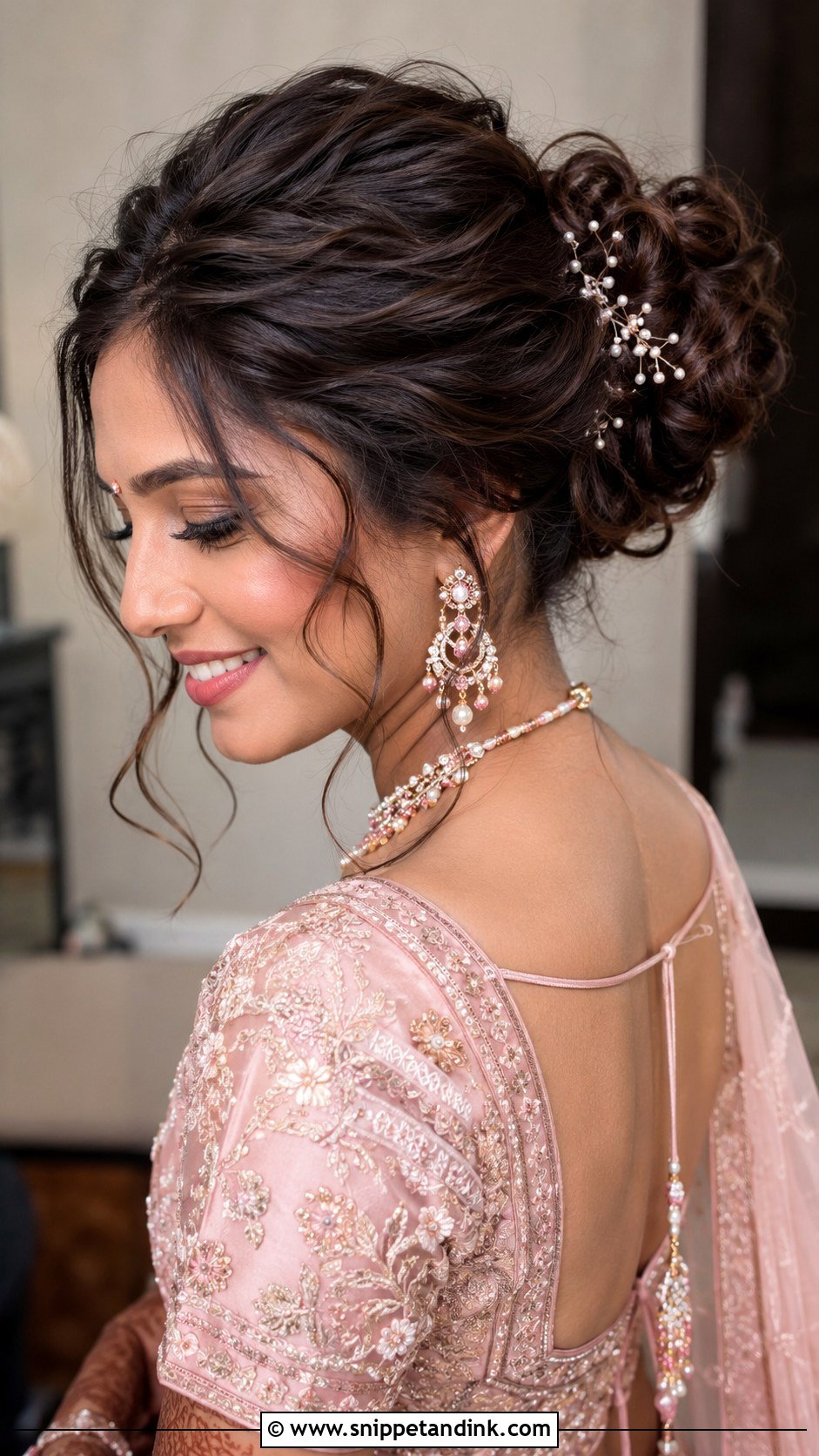
Brides who dislike anything tight on the scalp usually end up here. A messy bun has volume, loose pieces and movement, but each piece is planned: I curl the hair first, build the shape in sections and pin each one securely before pulling anything out. Random flyaways read as undone in close-ups; planned ones read as soft. Pastel lehengas, floral jewelry, organza dupattas and outdoor ceremonies suit it. If your hair is very straight and slippery, ask for texture spray at the prep stage or the pins will slide.
5. Indian Bridal Bun With Flowers
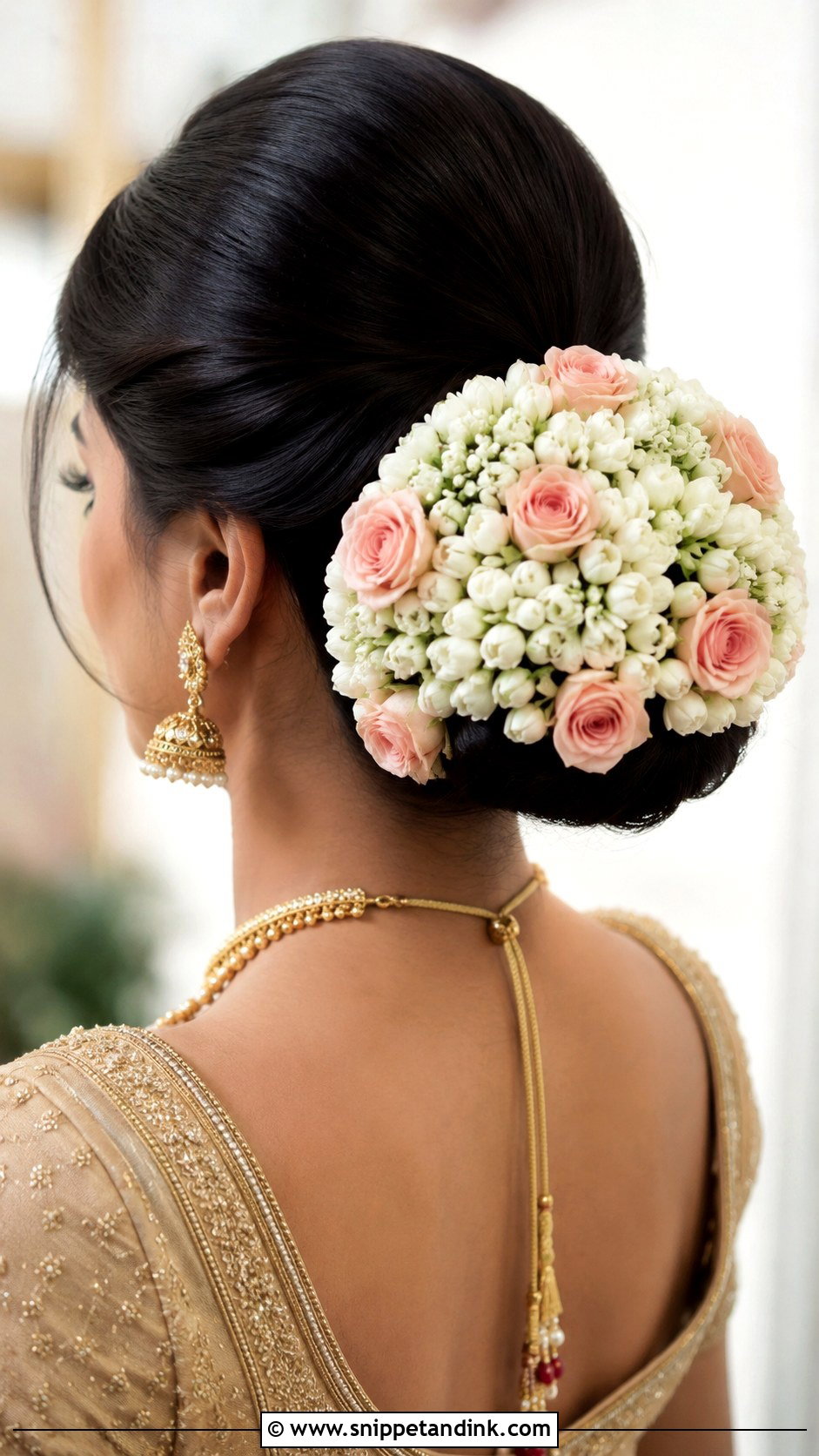
Flowers let the hair pick up the outfit colours. White jasmine reads traditional; roses, orchids, mogra or pastel blooms feel softer and newer. I place them as a frame around the bun, on one side or as a full ring. This works especially well when the blouse back has embroidery or a deep cut, because the flowers continue the detail upward. With a very heavy outfit, fewer flowers look better. I’d also keep fragile blooms like orchids for evening events, since they bruise in daytime heat.
6. Indian Bridal Hairstyle With Dupatta
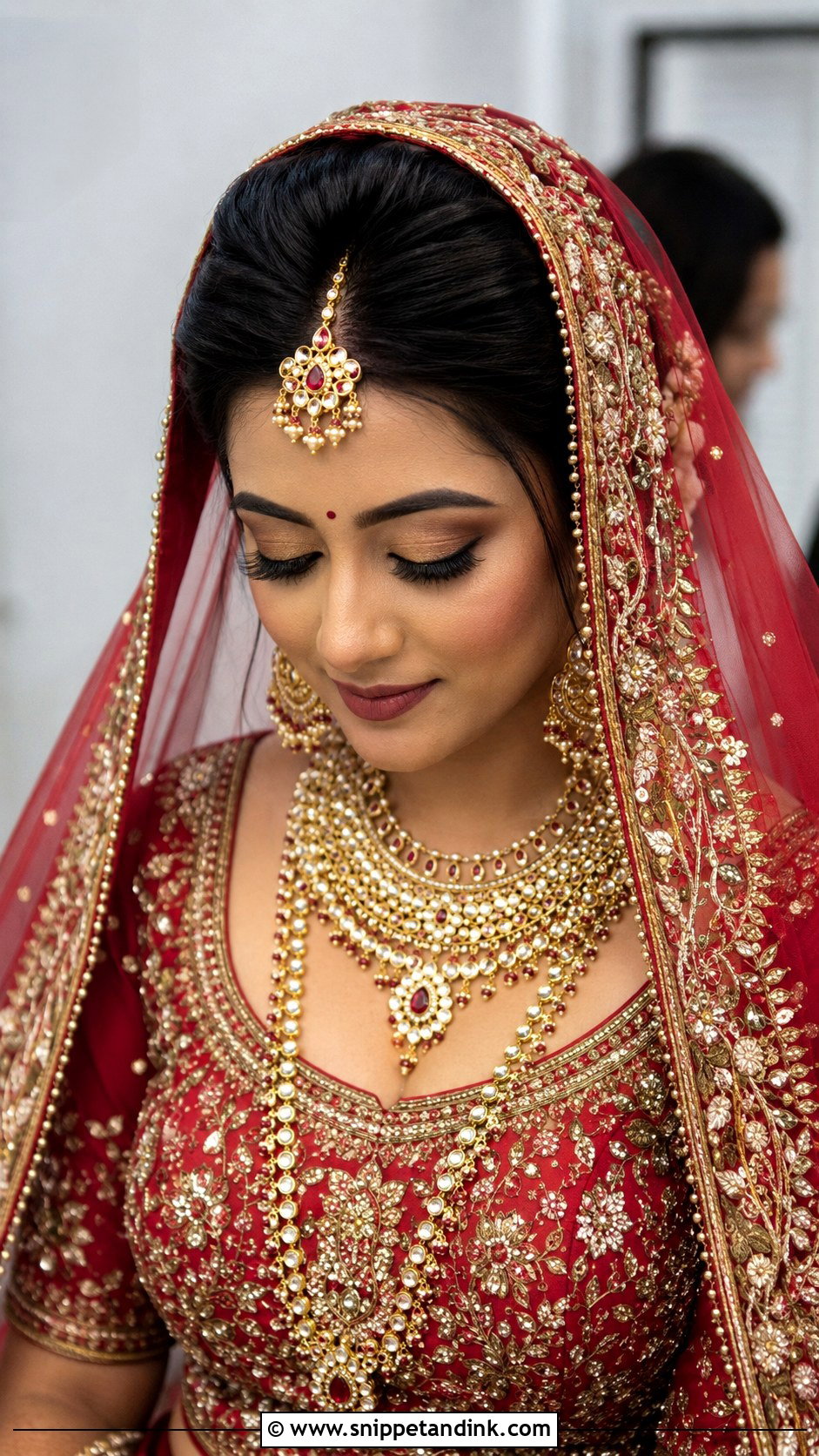
Structure first, beauty second: that is my rule for any hairstyle going under a dupatta. A heavy dupatta with a weighted border will flatten or pull loose hair within an hour unless it is anchored. A bun is the safest base, with a lightly padded crown and a grid of hidden pins where the dupatta pins will catch. It works for lehengas, shararas, ghararas and wedding sarees. If you want the hair visible, set the dupatta slightly behind the crown. And please bring the actual dupatta to your trial; weight varies far more than people expect.
7. Indian Bridal Open Hair Curls
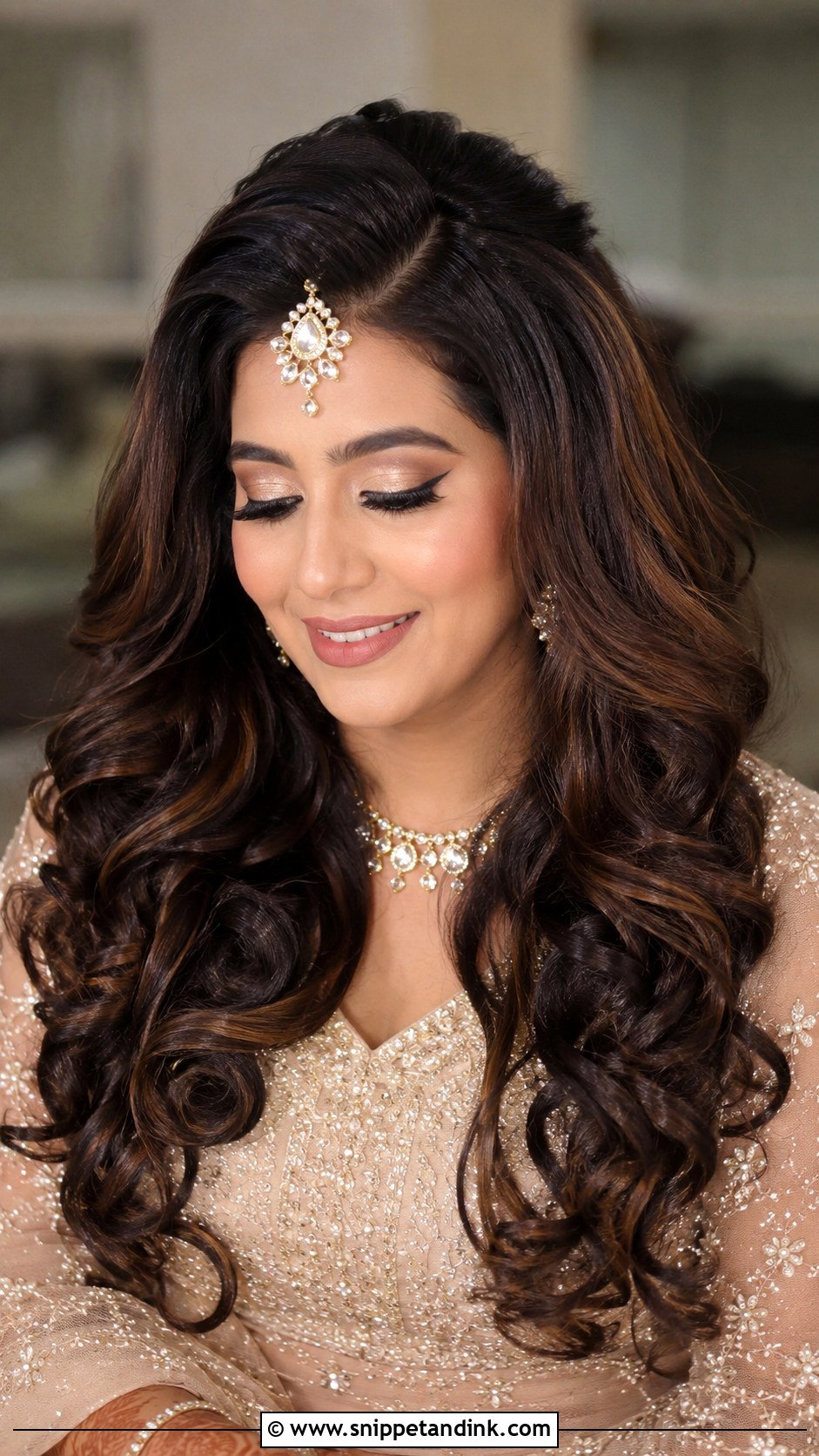
Open curls suit receptions, cocktail nights and engagements more than the main ceremony. I build volume at the crown, set defined curls through the ends and finish with a neat centre or side part. Lighter dupattas, gowns, Indo-western outfits and statement earrings sit well with it. I’d steer you away from it for a hot outdoor ceremony unless your hair holds a curl for a full day. Extensions add length and bounce, and a small maang tikka or side accessory keeps it bridal.
8. Indian Bridal Half Up Half Down Hair
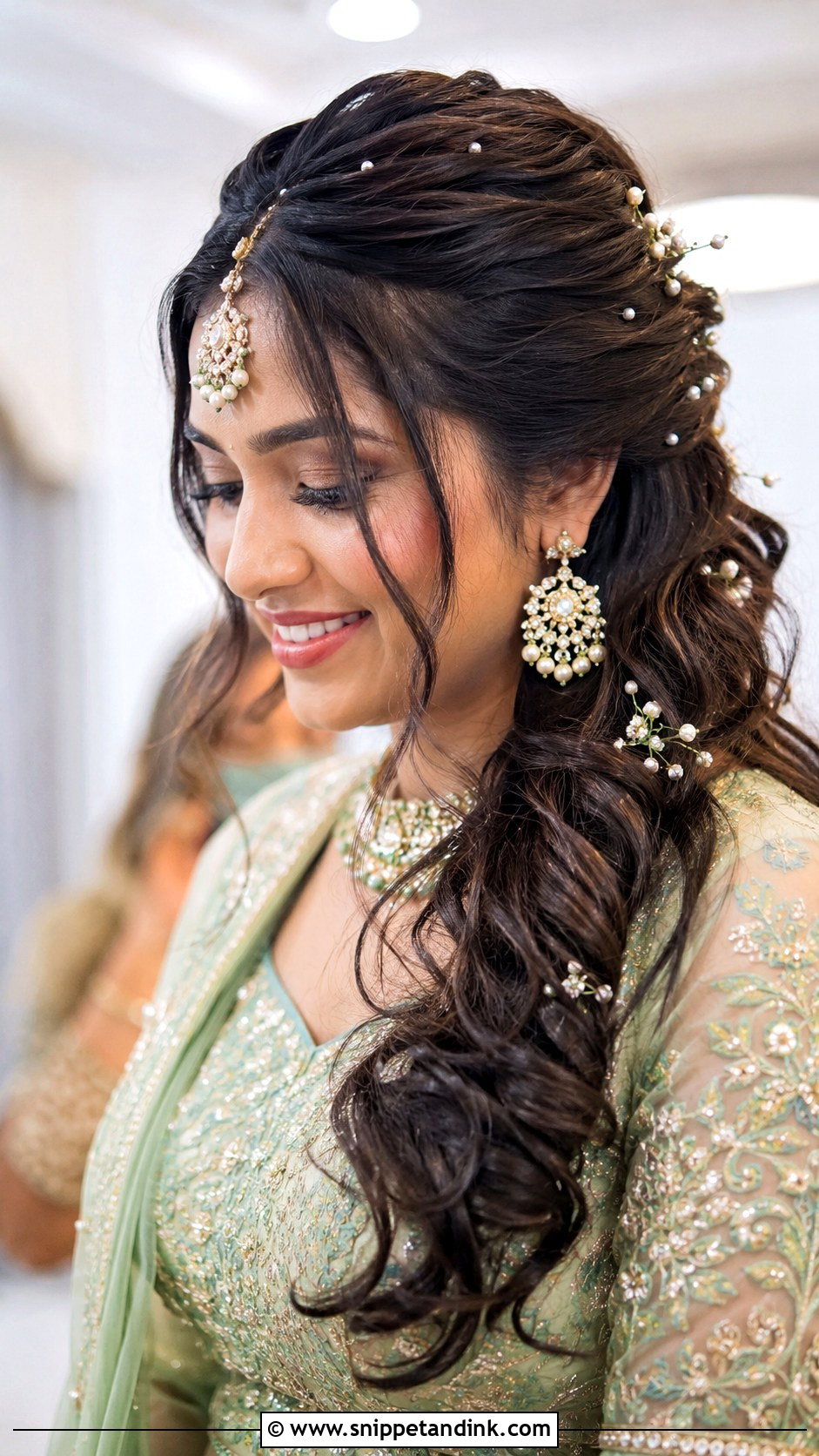
Half up gives you control at the face and length at the back. The pinned crown holds a maang tikka, small flowers, pearl pins or a delicate passa, while the lower section falls in curls or waves. For mehendi, sangeet, engagement and reception looks, it is the style I suggest when a bride wants open hair but has never worn it loose for a whole day. Very thick hair can feel bulky in this style, so I curl in larger sections and take a smaller section for the pinned crown.
9. Indian Bridal Side Braid
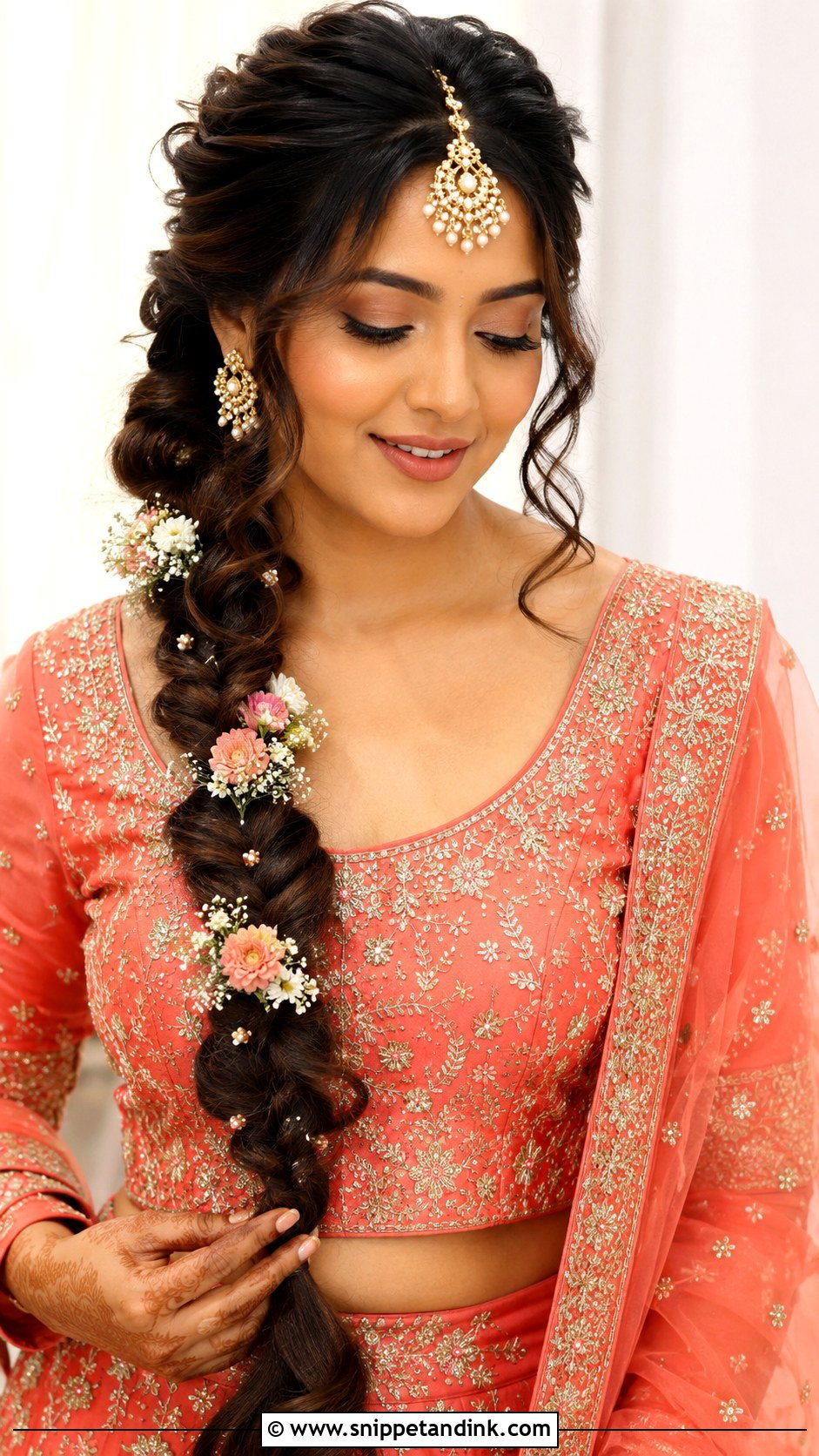
Resting over one shoulder, a side braid photographs best from the front and keeps hair off the back of the neck in the heat. That makes it practical for mehendi, haldi or sangeet. I braid it as a fishtail, a loose textured plait, a rope braid or a classic three-strand with flowers and pins. Fullness is what sells it, so fine hair usually needs a clip-in weft before braiding. Keep the jewelry light, or choose one headpiece, and leave a couple of tendrils at the face.
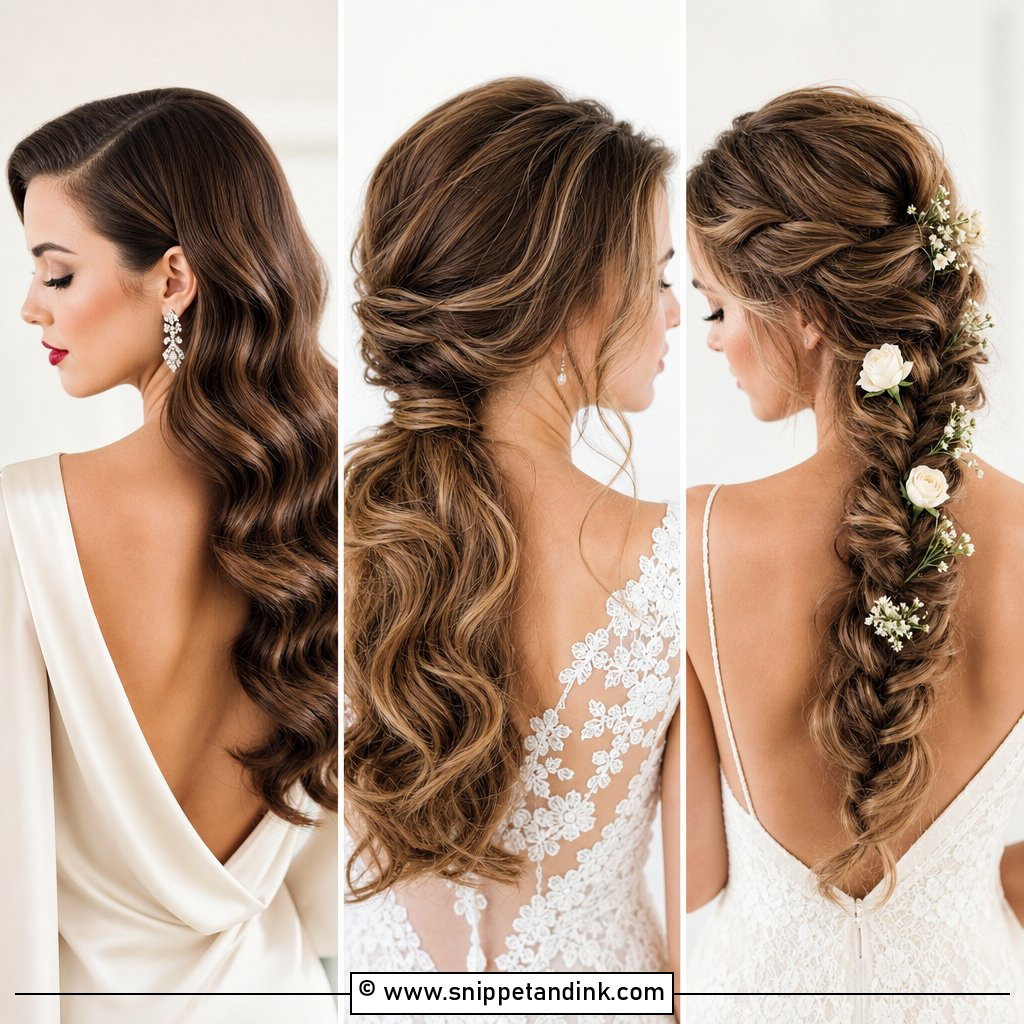
10. Indian Bridal Ponytail
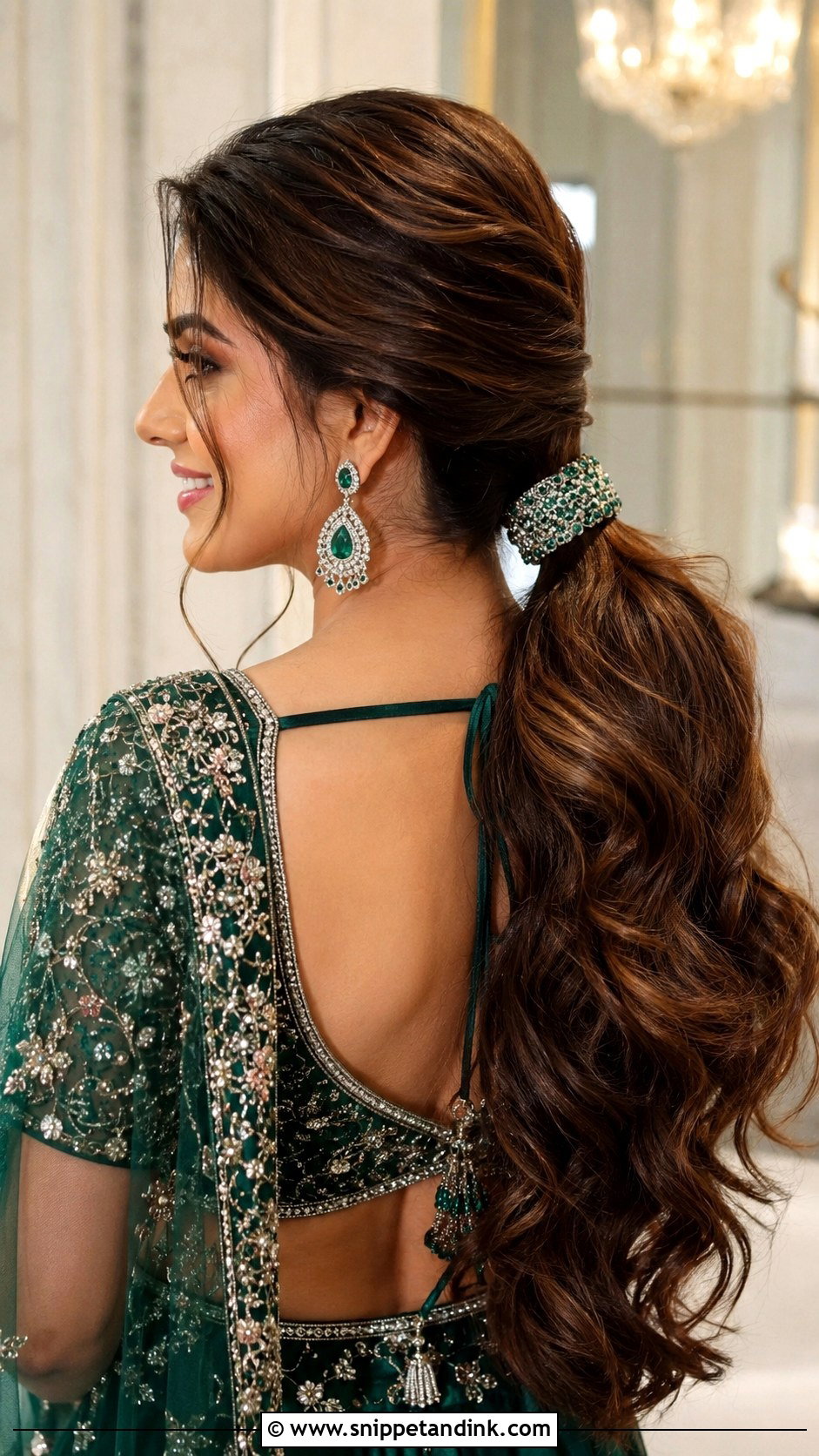
If you plan to dance properly, I reach for a ponytail. Tied low or mid-height with waves, it keeps hair off the neck and face but still moves. Reception gowns, sleek-blouse lehengas and sangeet outfits all suit it. The crown can be smooth, puffed or centre-parted, depending on face shape. Two elastics and a wrapped base hold far better than one band, and a pearl, floral or jeweled wrap hides the join.
11. Indian Bridal Sleek Bun
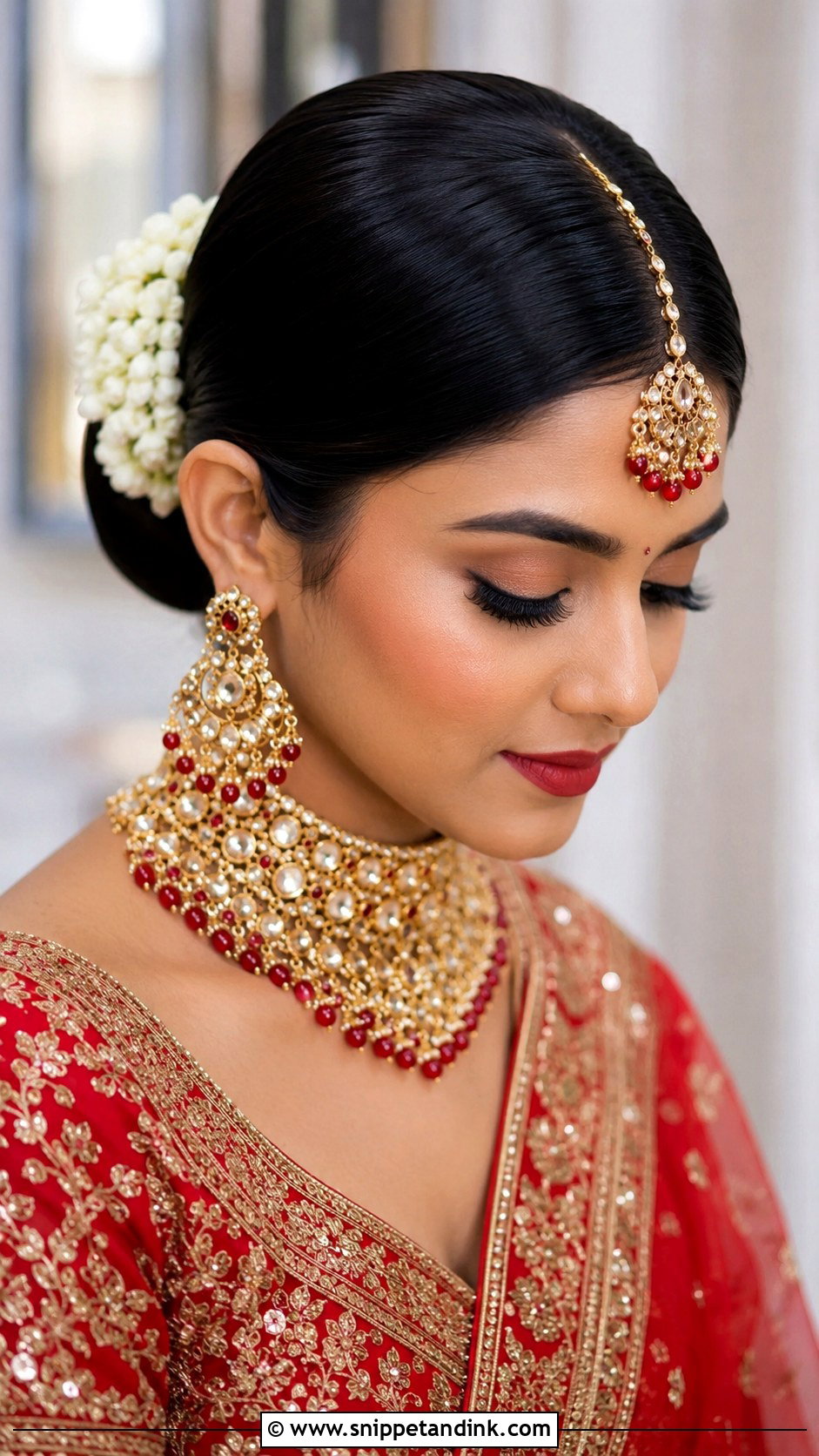
Nothing sharpens a bridal look like a sleek bun. I part the hair precisely, blow-dry it smooth, brush it back and shape a firm bun that stays clean under jewelry and a veil. With no texture competing, attention goes to the eyes, brows, earrings and necklace, which is why it pairs so well with bold makeup and heavily embroidered outfits. The risk is tension: a sleek bun pulled tight at the hairline can give you a headache by midday. Ask your stylist to smooth the surface, not to pull harder.
12. Indian Bridal Braided Bun
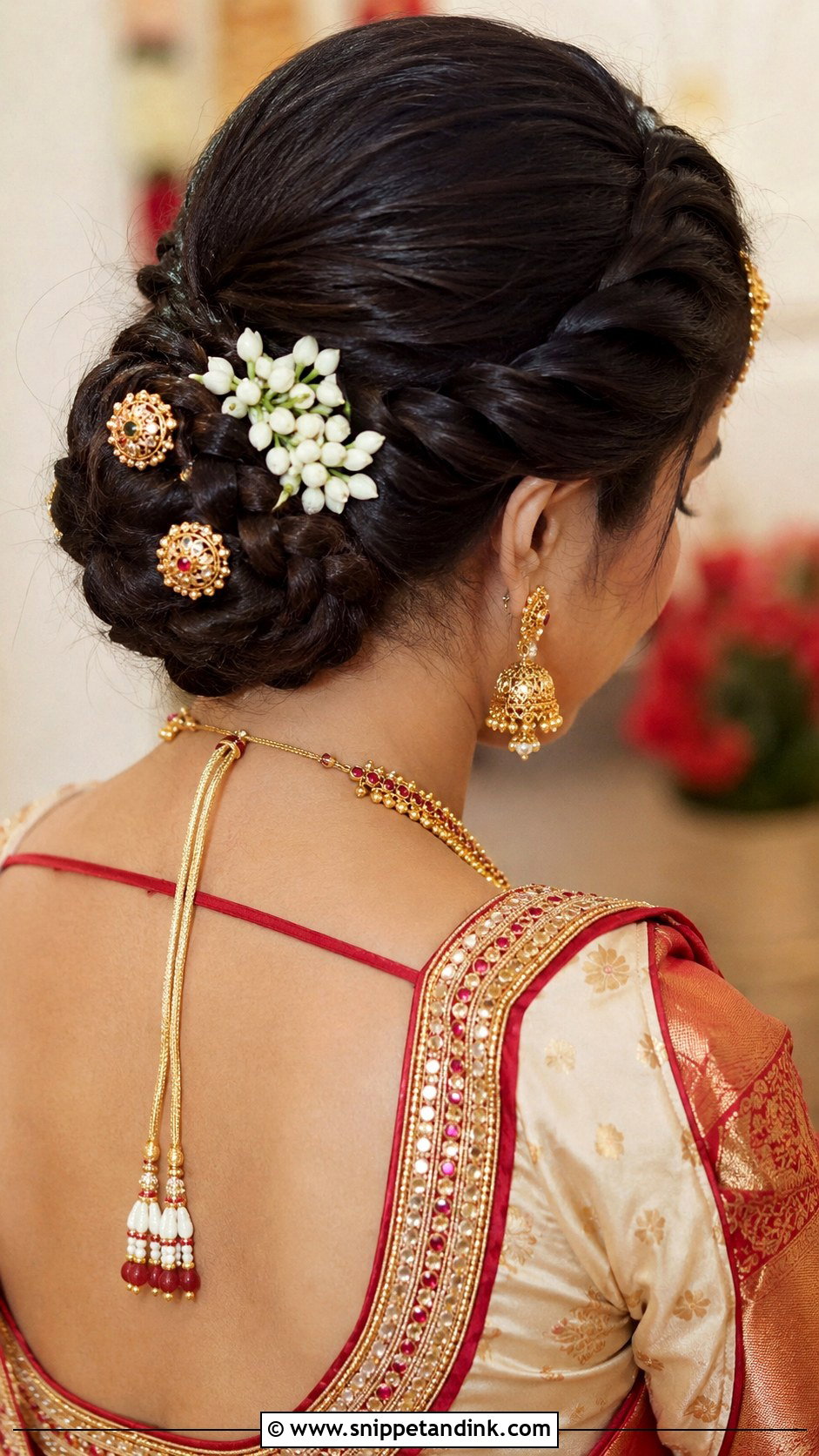
Braiding gives a bun detail before any flowers go near it. I wrap a braid around the bun, cross one over the crown or plait sections into a pattern at the back. I suggest it when a bride wants something traditional that still has detail of its own. The bun takes the dupatta load; the braid adds depth in close-ups. Small jasmine, pearl pins or gold accessories slot easily between the plaits. It works with lehengas and sarees alike, and because the braids lock sections together, it is one of the most secure styles here.
13. Indian Bridal Bun With Matha Patti
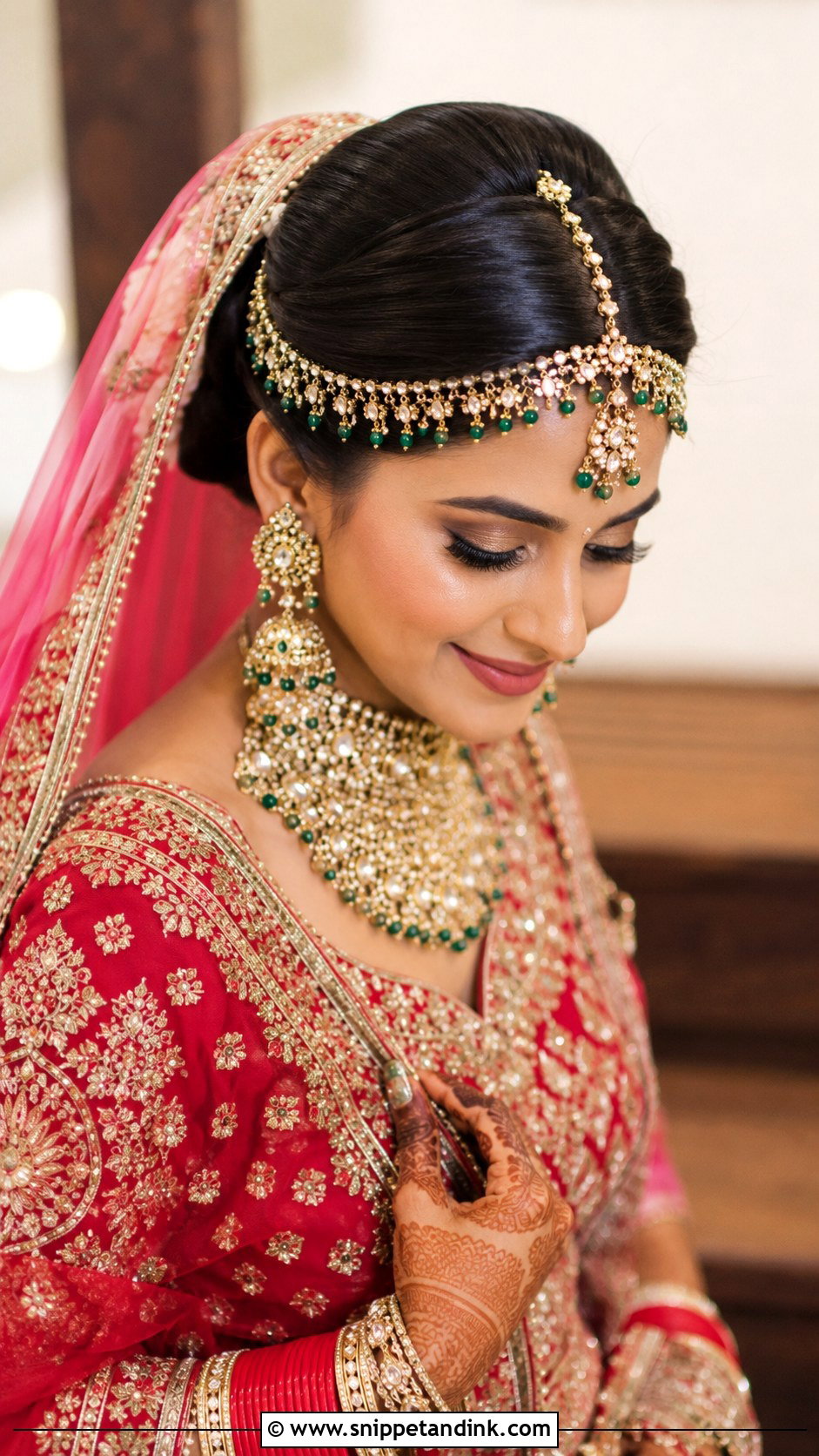
From the front, an Indian bridal bun with matha patti looks complete before anyone sees the back. The jewelry sits across the forehead and hairline, so the parting has to be clean and the base secure. A low or mid bun balances it, especially with a dupatta over the head. Too much front volume lifts the matha patti off the forehead and tilts it, so I keep the front flat. Soft side pieces can be added for a gentler frame.
14. Indian Bridal Reception Waves
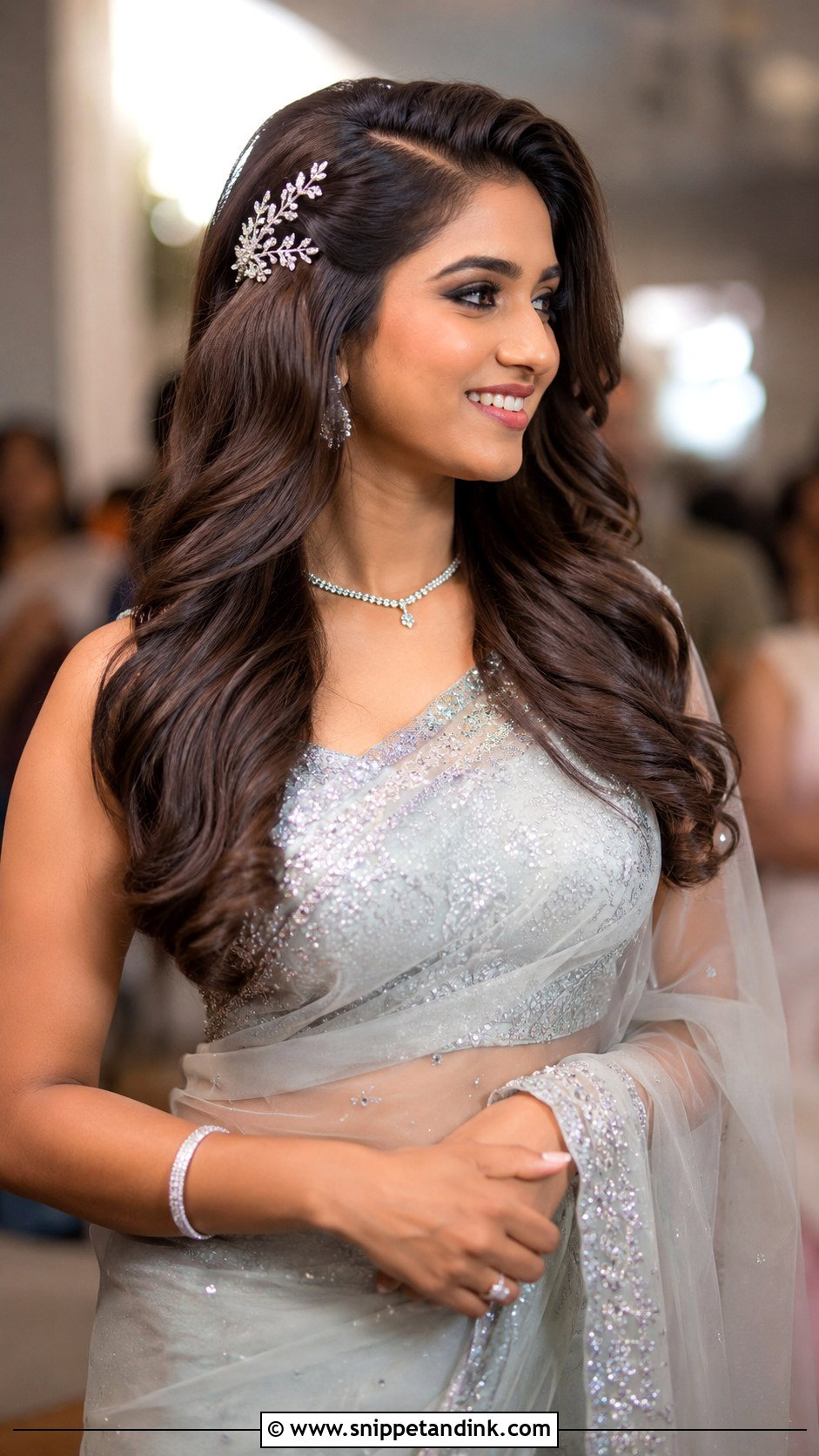
After hours of a heavy ceremony style, reception waves feel like a release. I give the crown a smooth surface and soft volume, then set large waves and brush them out over the shoulders. They suit a change into a gown, saree or lighter lehenga, with diamond jewelry, pearls or a single statement clip. Stage lighting and close portraits show every frizzy strand, so the waves need gloss and definition. Ask for a hold that sets the shape but still lets the hair move when you turn.
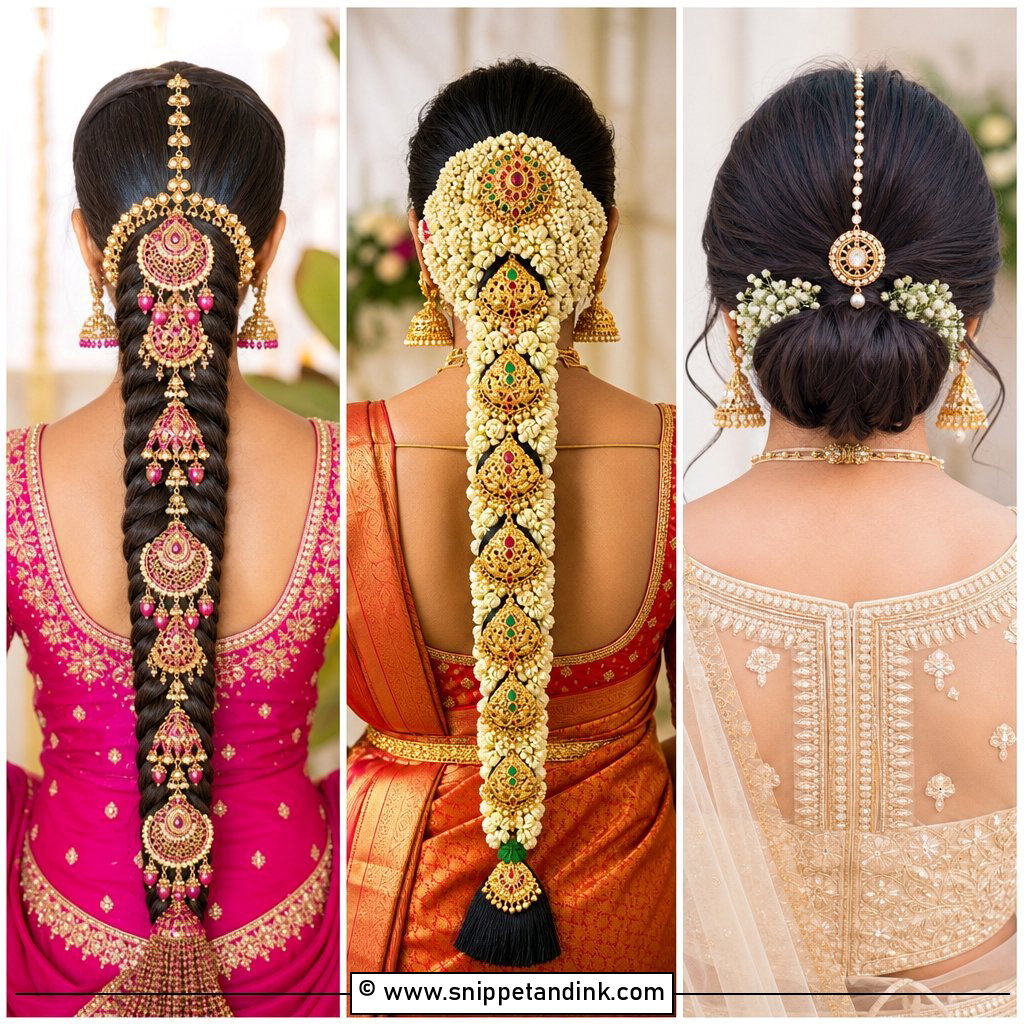
15. Indian Bridal Floral Braid
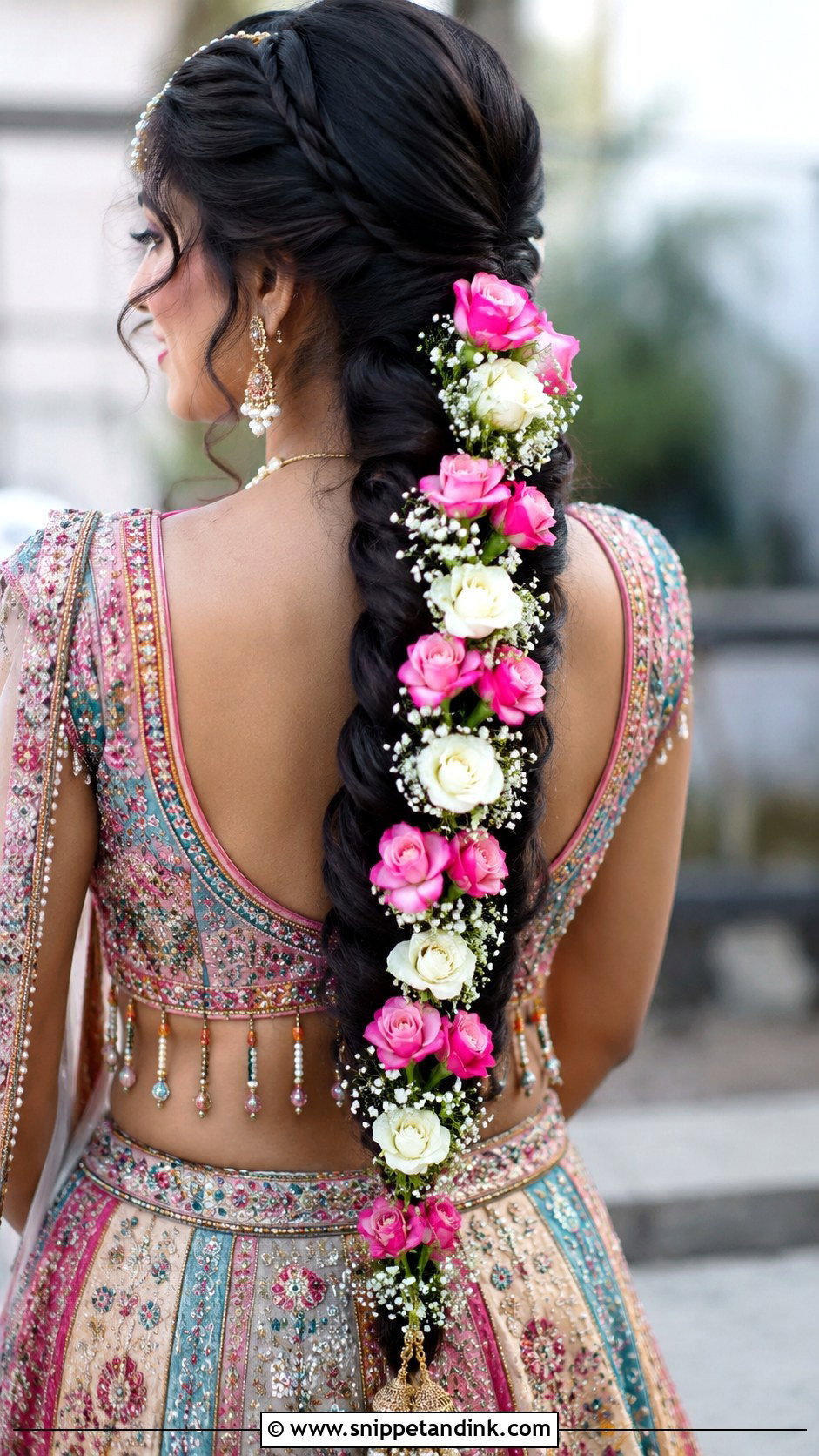
A floral braid makes the flowers the main event. I tuck them throughout the plait, in small clusters or as a full trail from crown to ends. Mehendi, haldi, daytime weddings and South Indian ceremonies suit it, with fresh-coloured outfits, floral jewelry and lighter makeup. The braid can be loose and textured or smooth and traditional. For a long event, I choose blooms that hold up out of water, such as jasmine buds, small roses or baby’s breath, and avoid anything heavy that drags the braid down by afternoon.
Ceremony Bun to Reception Waves on the Same Day
When the wedding and reception fall on the same day, many brides want to switch from a structured bun to open waves. It can be done, but it is not quick. Every pin has to come out, the backcombing at the crown has to be brushed through gently, and the hair has been pressed into shape for hours, so it needs recurling almost from scratch. In practice that usually takes close to an hour, and longer on very thick hair.
If your gap is short, I’d suggest one of these instead:
- Keep the same base and change only the accessories: swap a gajra for pearls or a jeweled pin.
- Plan the ceremony style as a half up, so the lower half only needs refreshing with an iron.
- Move from a low bun to a low ponytail by releasing the bun and wrapping the base; the curls inside a bun are often still holding.
Tell your stylist about the change when you book. It decides how long they need to stay and how the first style should be built.
Your Longest Ritual Should Decide the Main Hairstyle
Traditional brides often lean toward a gajra bun, a South Indian braid or a matha patti bun; others prefer reception waves, a ponytail or half up curls. Most weddings end up using two of these. A style that suits a short reception can be impractical for a long ceremony under a dupatta, so I always plan from the longest, most demanding event first. Save the looks you love, book a trial, bring every accessory and test them together. Then the hair you see in the first ritual photo is still there in the last one.
You'll Like These Ideas:


Leave a Reply