
A South Indian bridal hairstyle has a job most Western wedding styles never face: it has to carry gold, fresh flowers and sometimes a full length of jada through hours of ritual, often in heat, while the bride sits, stands, bows and walks around the fire. Simple doesn’t mean plain here. It means a shape strong enough to hold all of that without pulling. From classic Poola Jada braids to a low bun ringed with gajra, every style below starts from the same question I ask at each trial: how much weight is going on this head, and where will it hang?
How Much a Jada and Jasmine Really Weigh on Your Scalp
Brides are always surprised at the trial. A full Poola Jada, a long gajra, a gold jada set and clip-in braid extensions together can feel very heavy by the end of a muhurtham, and all of it hangs from a few square inches at the back of the head. Headaches and a braid that slides down are almost always weight problems, not styling problems.
Here’s how I build the base so the hair can carry it:
- A small, tight hidden ponytail or rubber-band base at the crown, which every heavy piece is anchored into.
- Extensions clipped below that base, never above it, so they can’t drag the crown flat.
- Gold jada pieces attached top to bottom, starting with the heaviest at the anchor.
- Flowers last, pinned through their thread, so they sit on the structure instead of carrying it.
If your hair is fine or thin at the crown, tell your stylist early. A half jada or a gajra bun may be kinder to you than a full-length flower braid, and you’ll still look completely traditional.
Keeping Jasmine Fresh Until the Muhurtham
Jasmine is at its best for a few hours. I ask for buds that are still closed, kept wrapped in a damp cotton cloth in the coolest room in the house, and never laid directly on ice, which browns the petals. The strands go on during the last stage of styling, not at the start of a three-hour getting-ready session. Expect the buds to open and smell stronger as the day warms up; that’s normal and looks lovely in photos. If the ceremony is long and hot, a second, smaller strand set aside for the reception will look much fresher than the morning one.
1. South Indian Bridal Braid With Jasmine
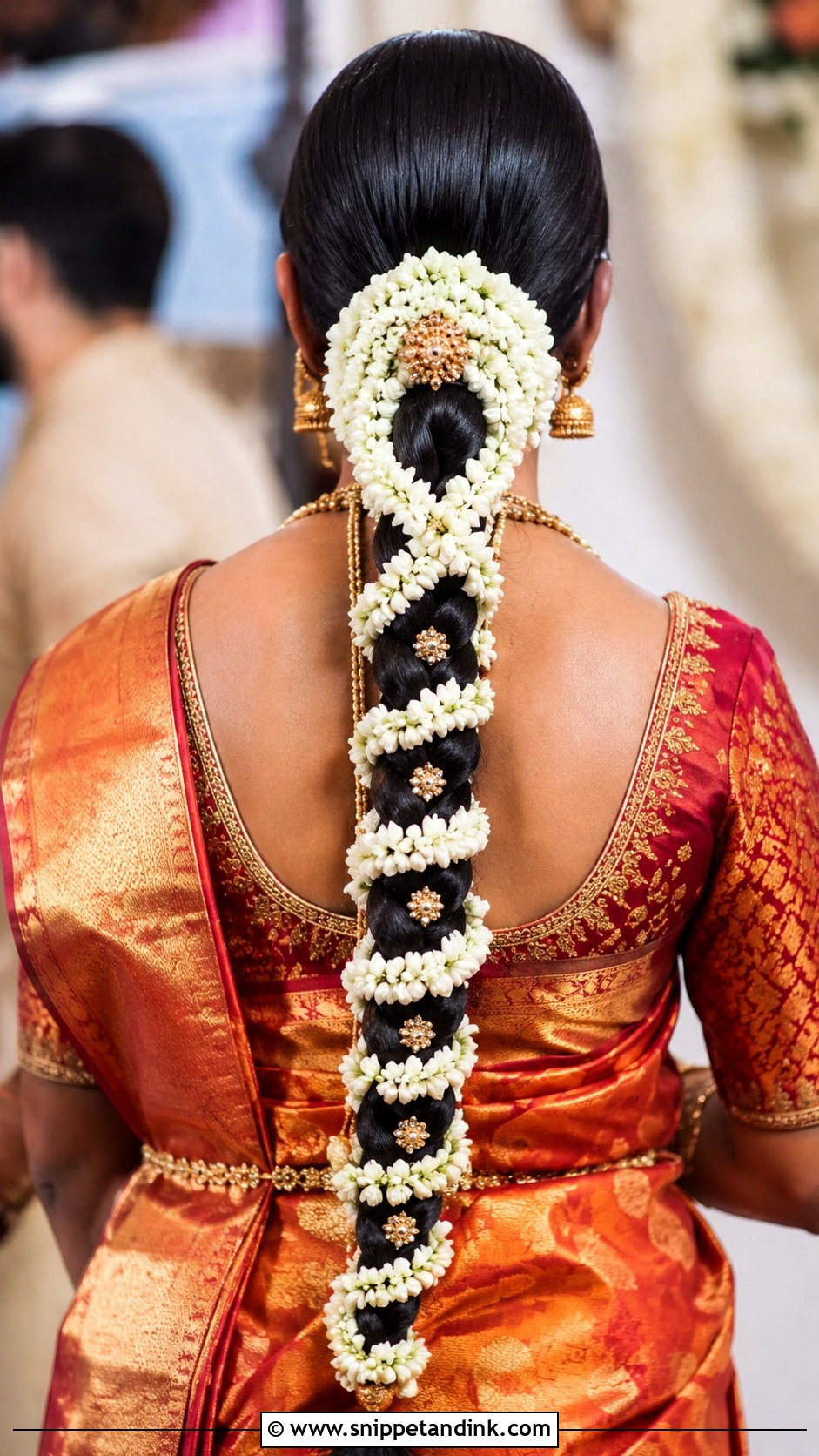
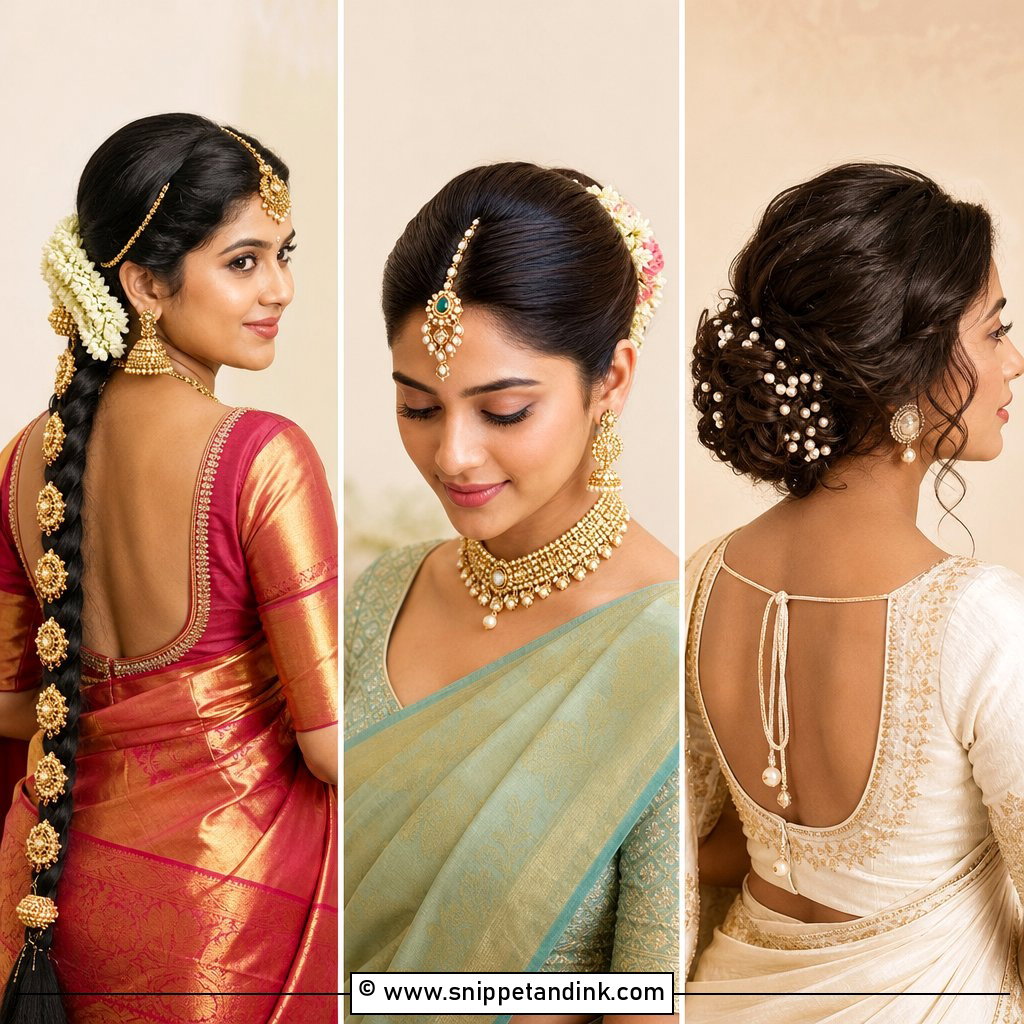
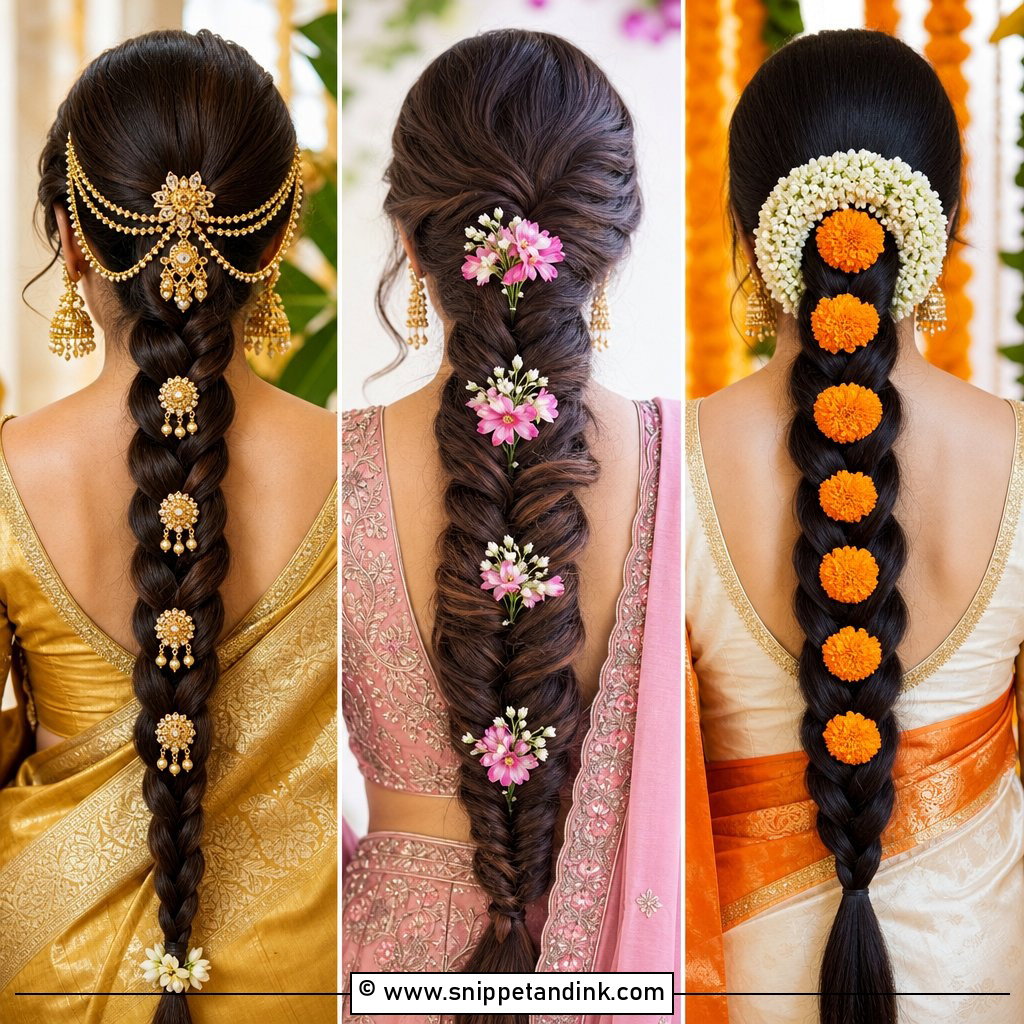
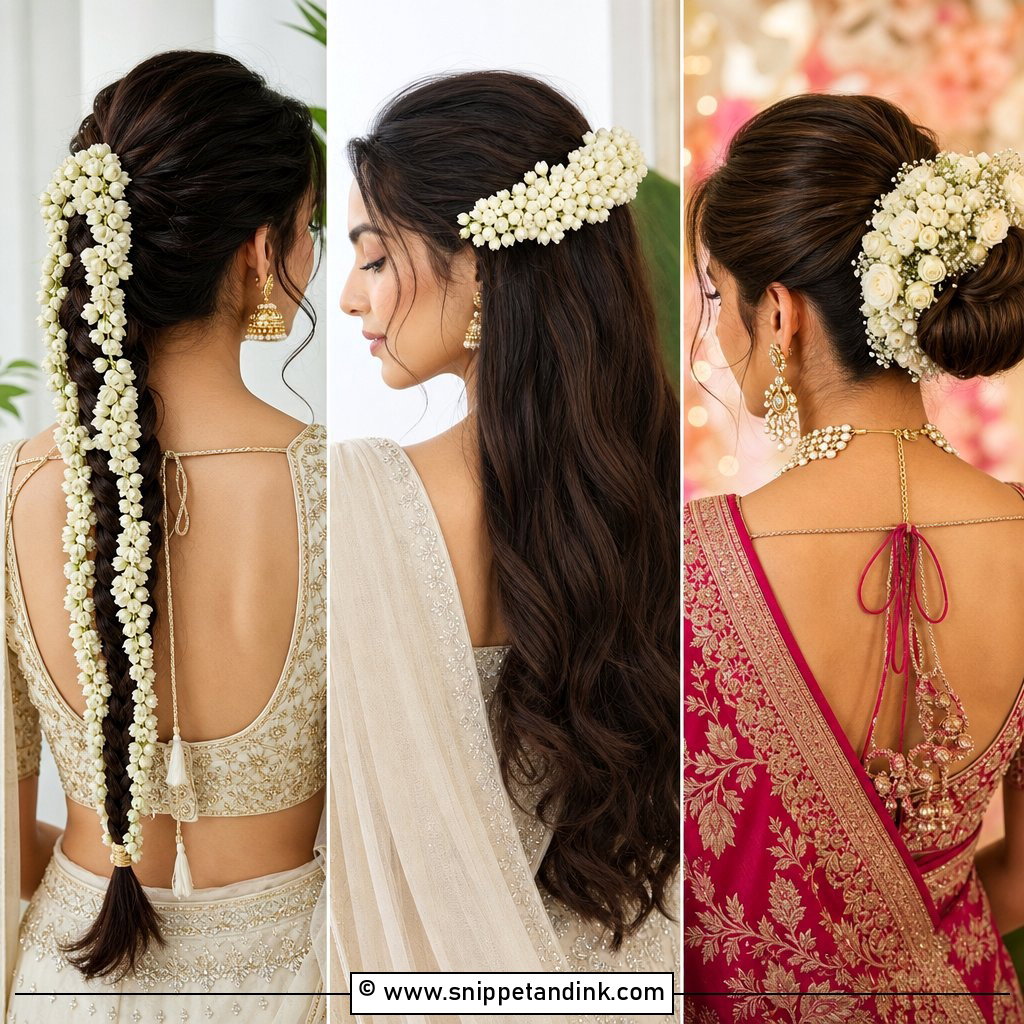
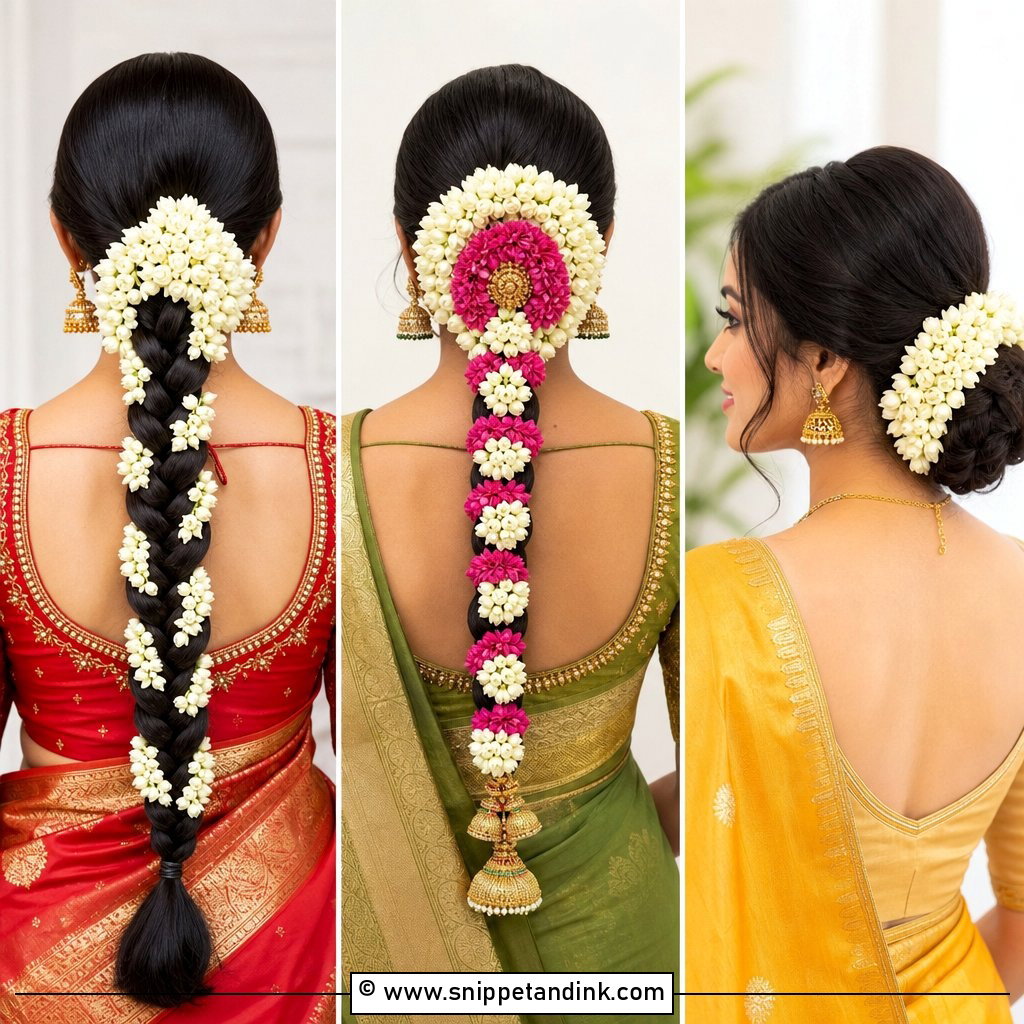
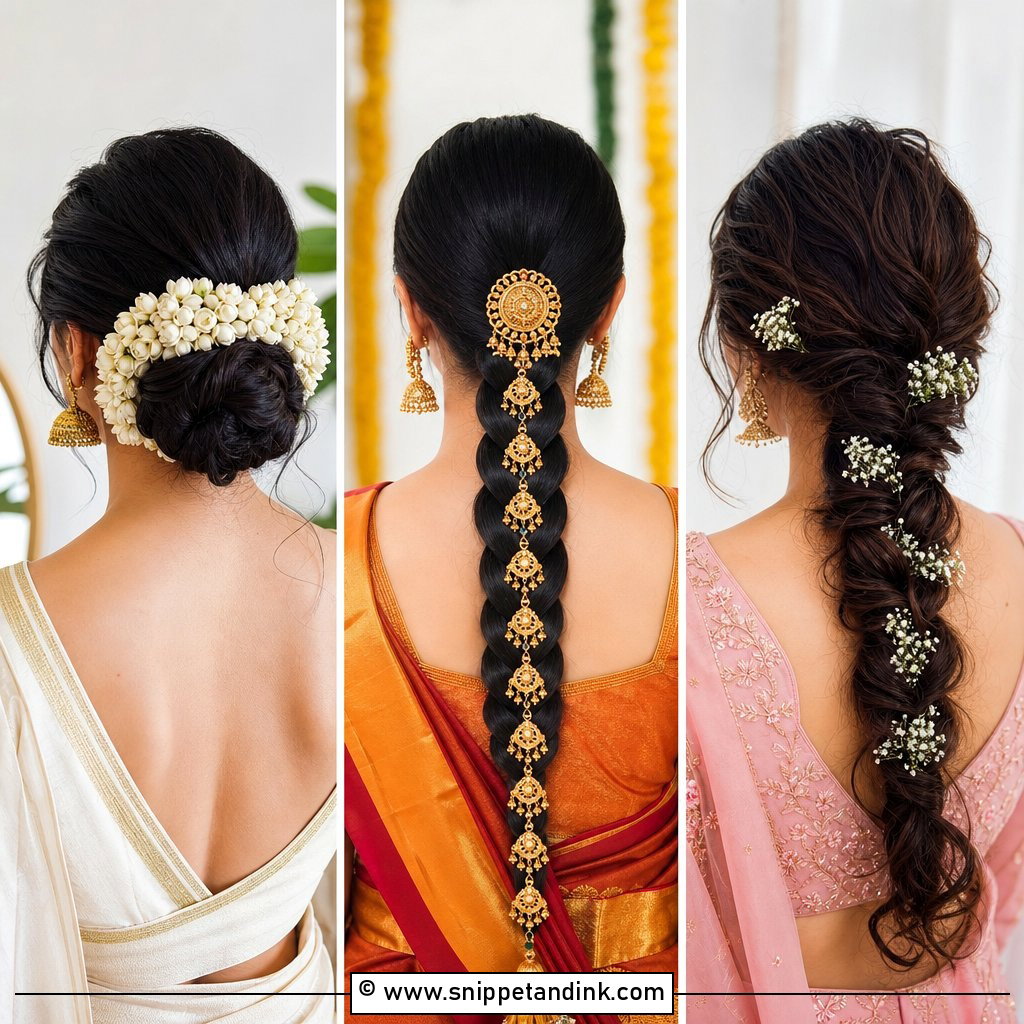
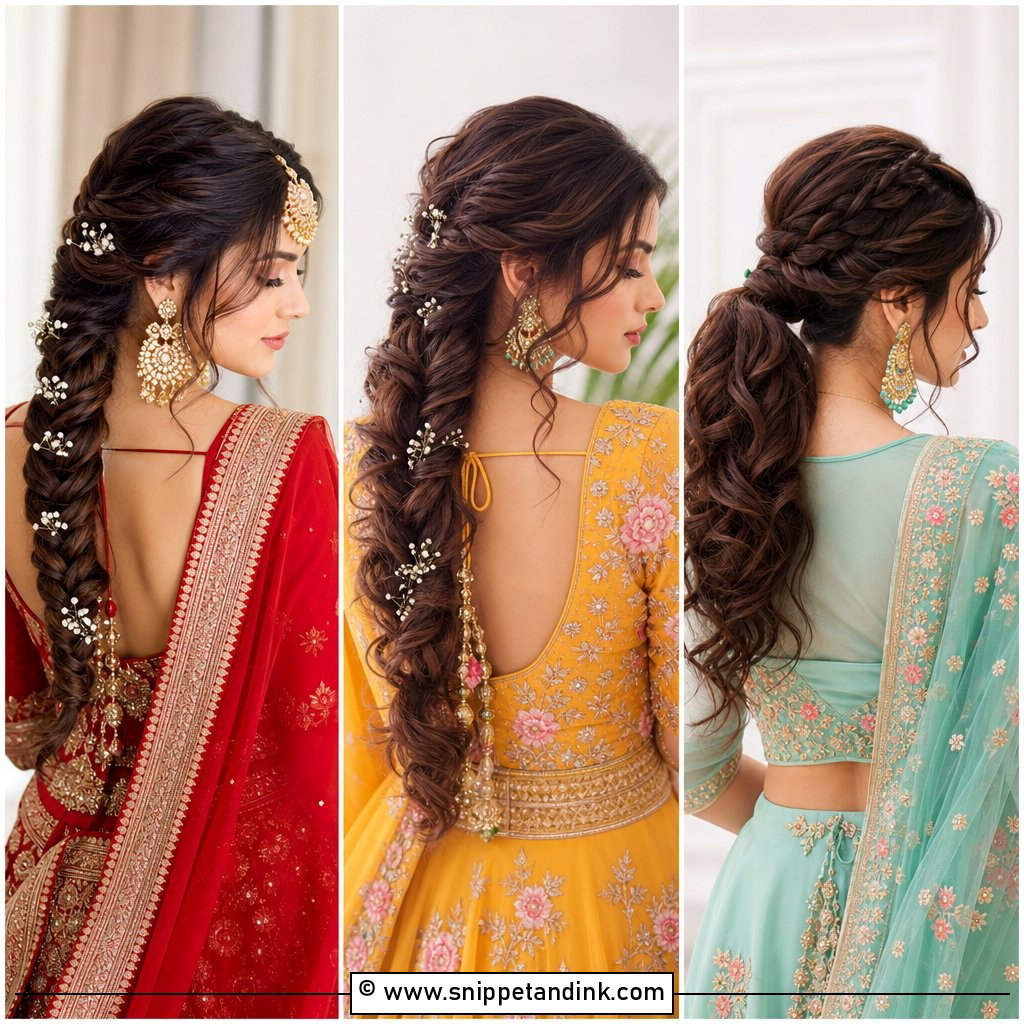
This is the braid most brides picture first. The hair is center-parted, smoothed flat at the crown and braided down the back. Fresh jasmine strands are wound along it or laid in soft loops. Long hair carries it best, though a braid extension clipped in under the top section gives the same length on shorter hair. I tie the braid at the nape with a hidden elastic before braiding down, because a braid that starts loose at the top sags once the flowers go on. Keep the front sleek if you’re wearing a maang tikka; face-framing pieces tend to catch on its chain.
2. South Indian Bridal Bun With Gajra
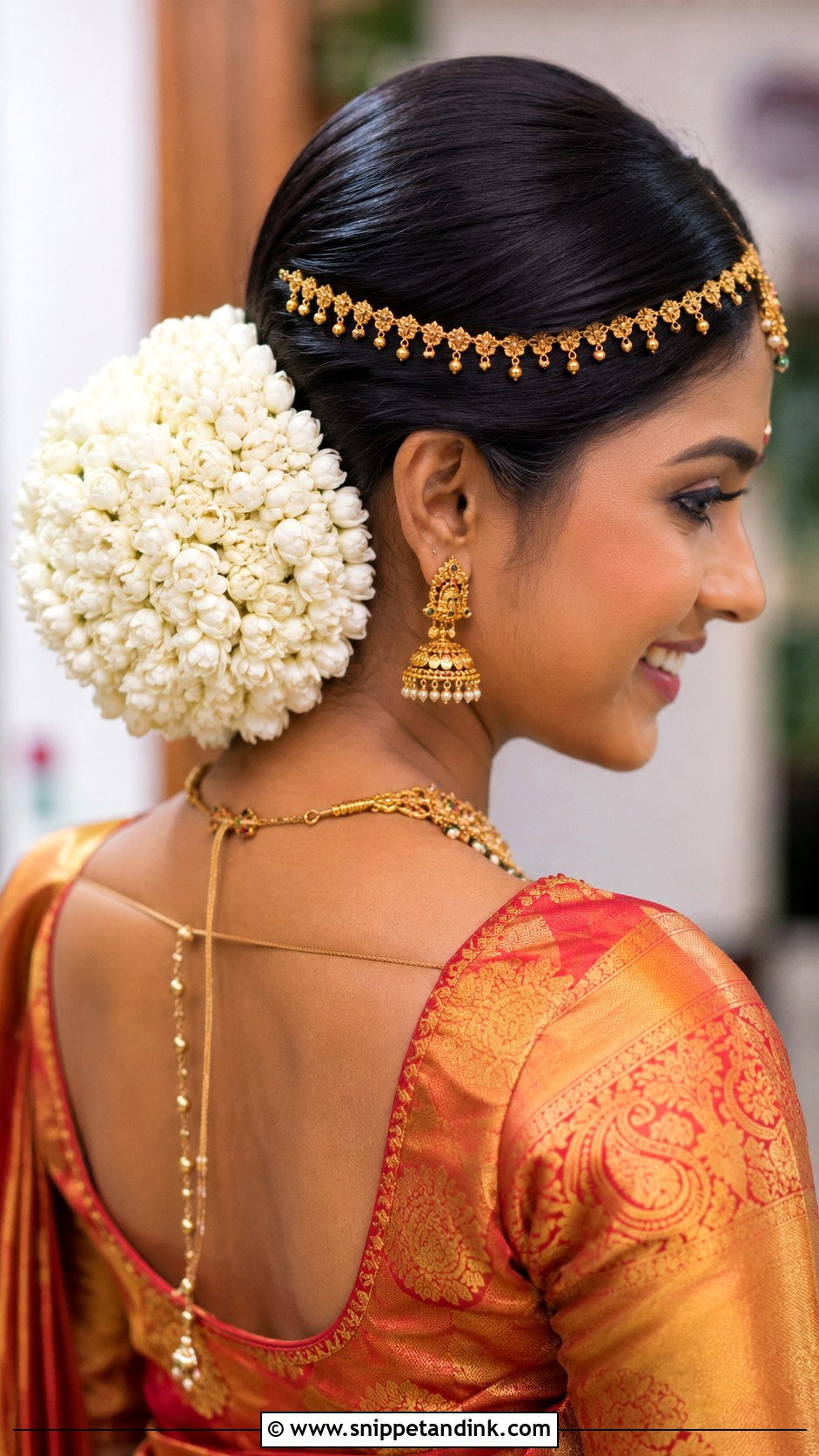
A gajra bun suits a bride who’d rather not feel a braid swinging during long ceremonies. The bun sits low or mid-height and a thick jasmine gajra is wrapped around it like a white frame. Medium-length hair manages this easily with a bun pad. My one rule: the gajra is pinned with U-pins through the strand’s thread into the bun, not just tucked around it, because jasmine strings slide on smooth hair and slip down as soon as you bend forward.
3. South Indian Bridal Poola Jada
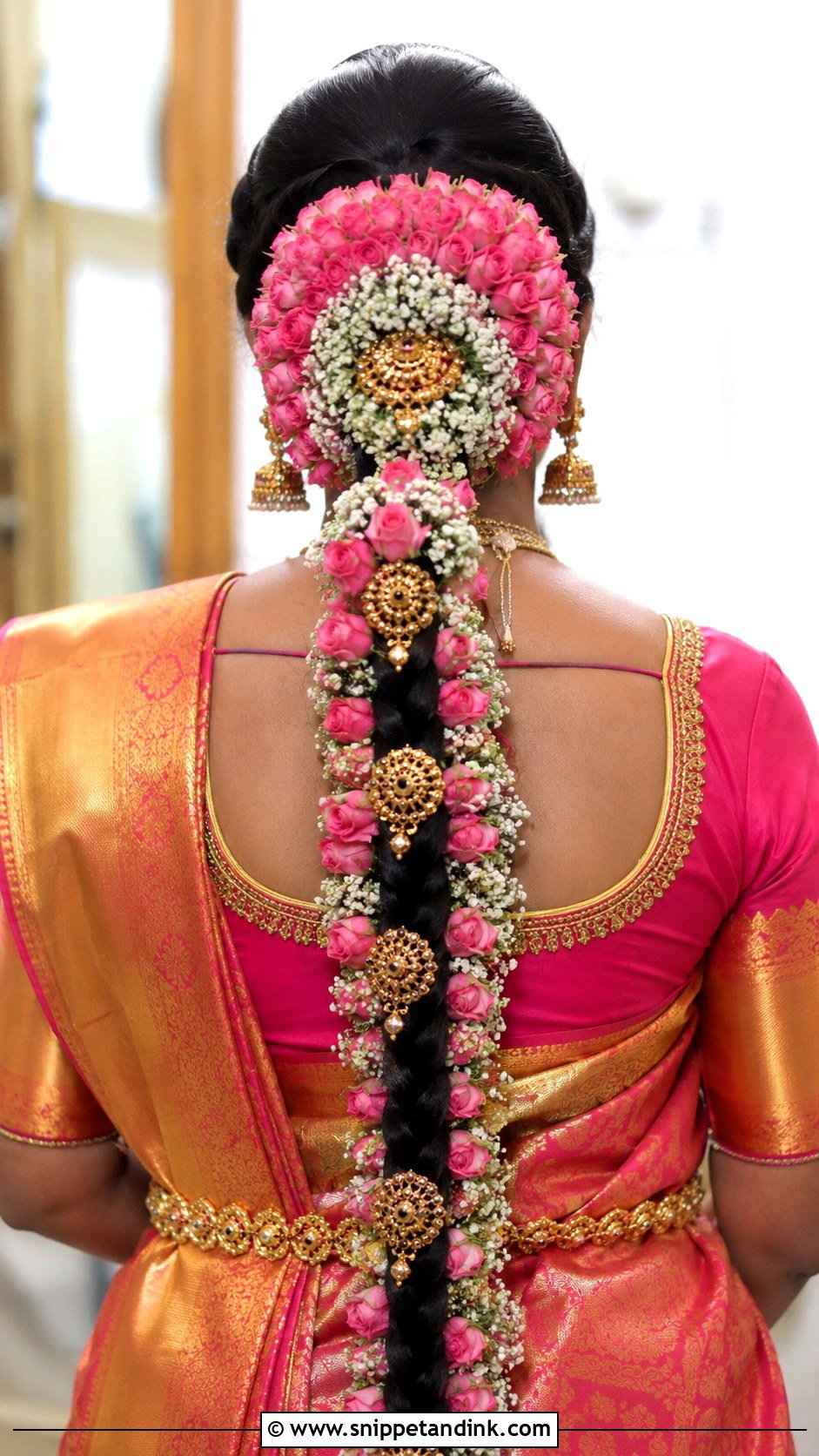
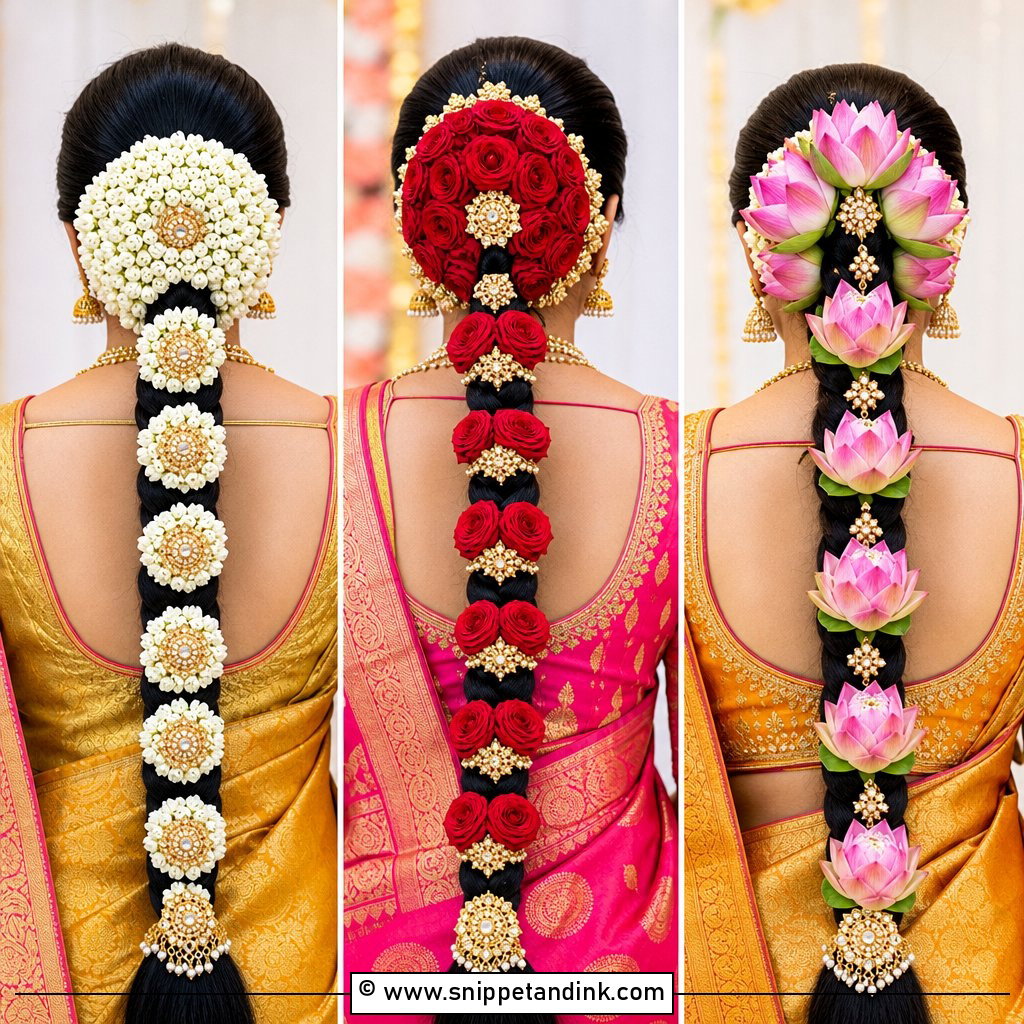
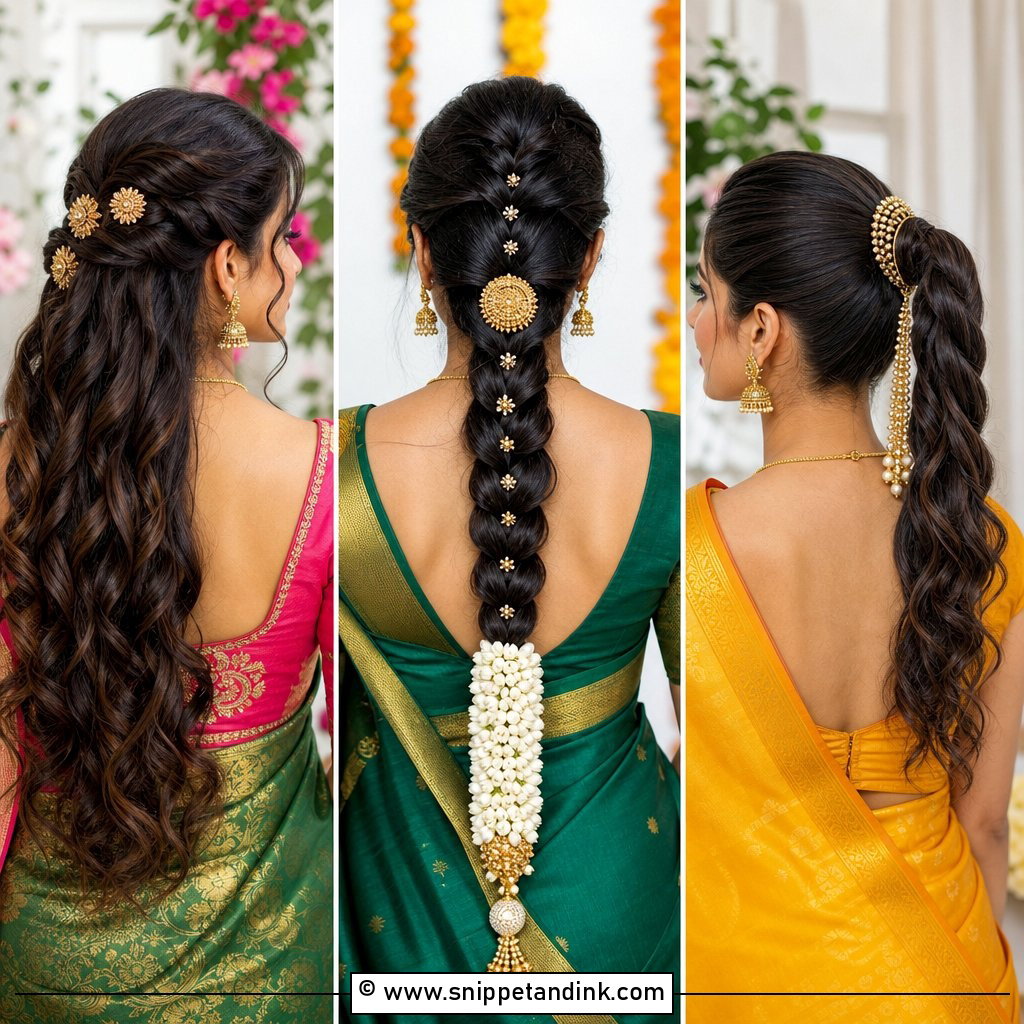
Few things say wedding more clearly than the South Indian bridal Poola Jada, a braid covered in flowers from crown to tip. The florals are usually stitched onto a backing first and then fixed along the braid, which is why I want the base braid tight and even; any bump underneath shows through as a gap in the flowers. Jasmine with rose, or marigold in bands, are the usual patterns. If you want it simpler, one flower color with lighter jewelry looks calmer. Since the whole design faces backward, ask your photographer for at least one full-length back portrait.
4. South Indian Bridal Braid With Temple Jewelry
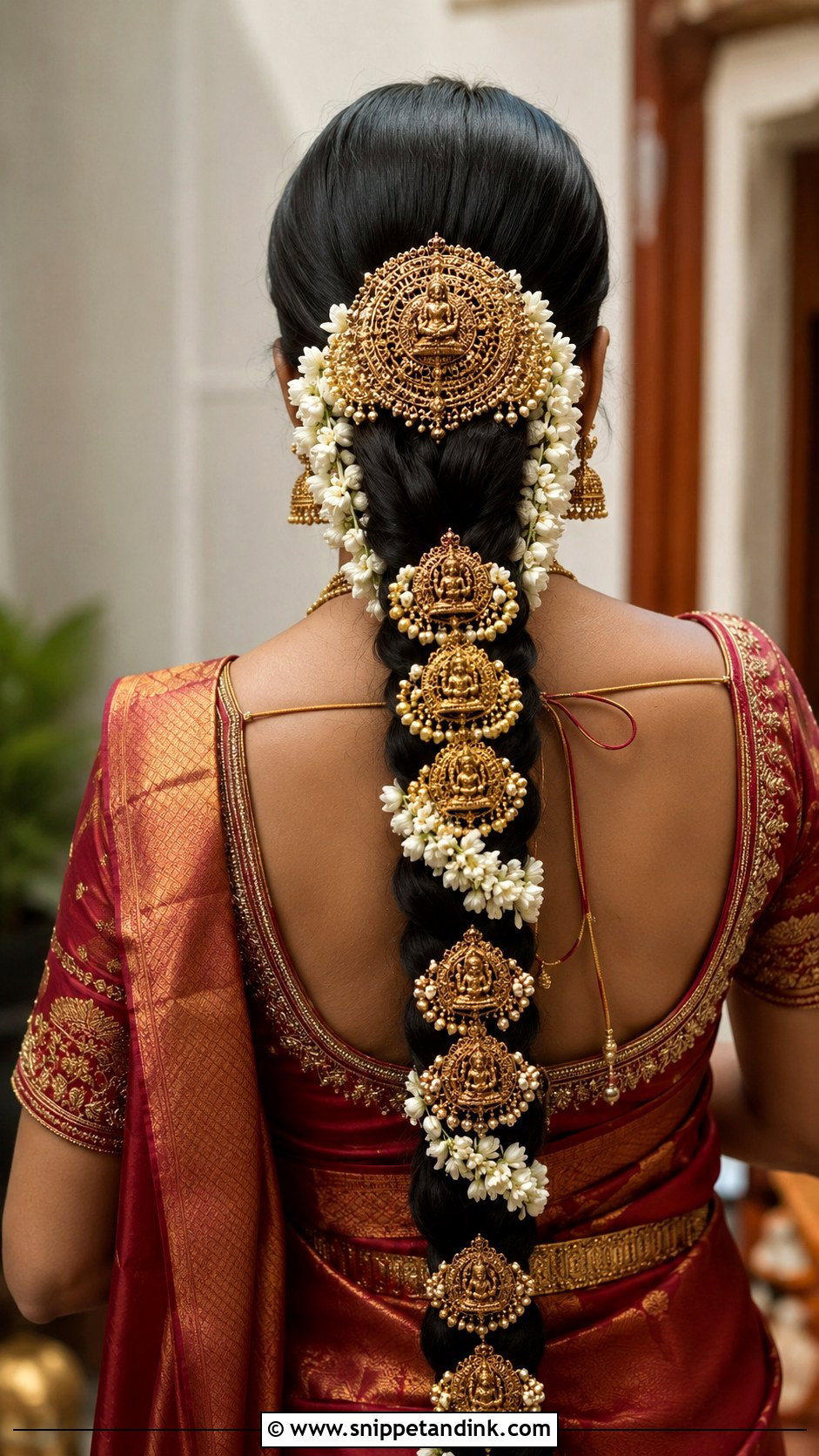
A bridal braid with temple jewelry swaps some or all of the flowers for gold jada pieces and small ornaments, with jasmine tucked between to soften them. It looks rich without needing an elaborate shape. Gold jada is heavier than it looks, though, and the weight sits at the very top of the braid, so I anchor that first piece into a small hidden ponytail rather than into the braid itself. Keep the crown smooth so the ornaments read clearly. Heavy earrings and layered necklaces sit well with it, and I’d test the full set at the trial, worn for at least an hour.
5. South Indian Bridal Low Bun
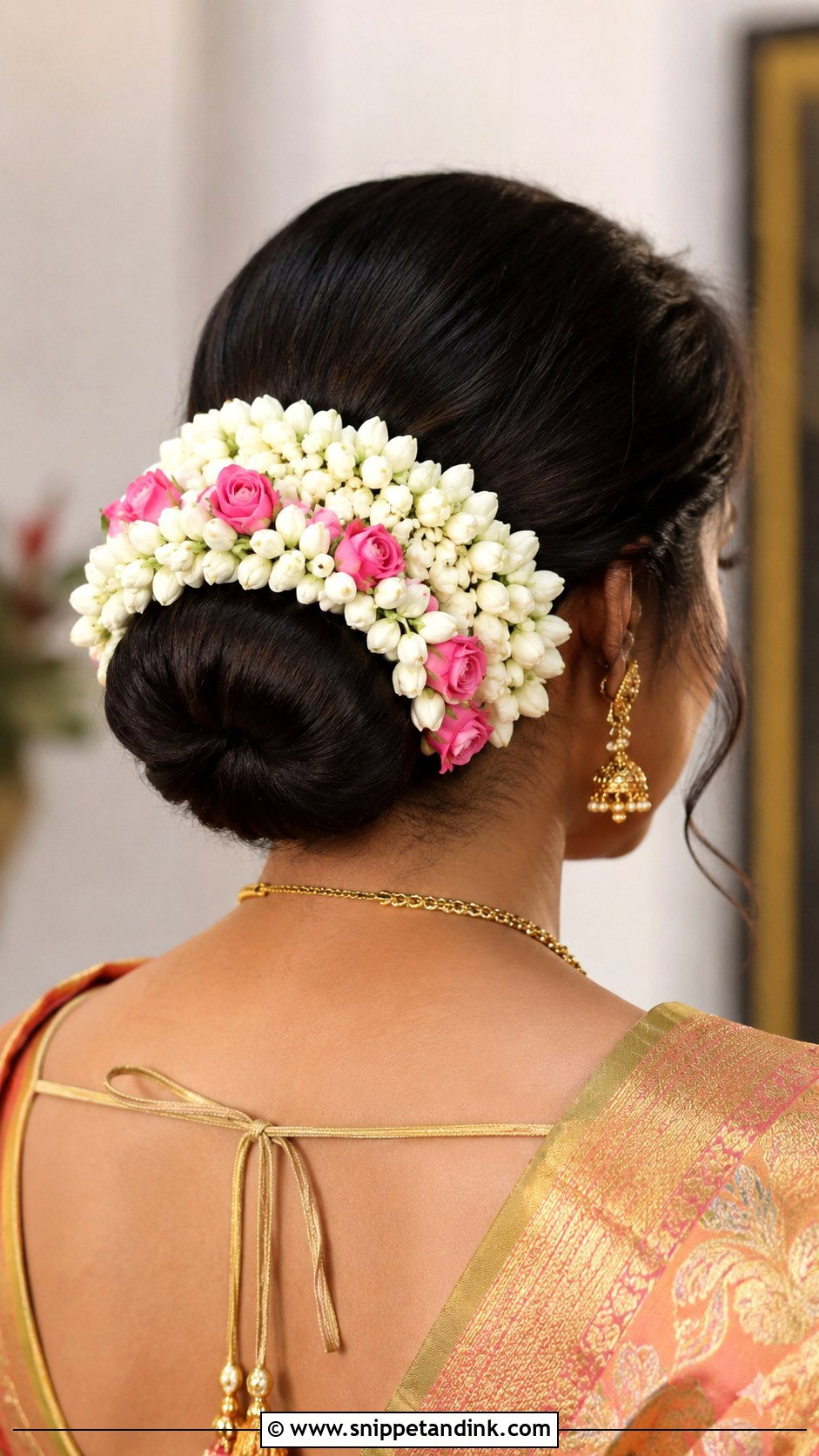
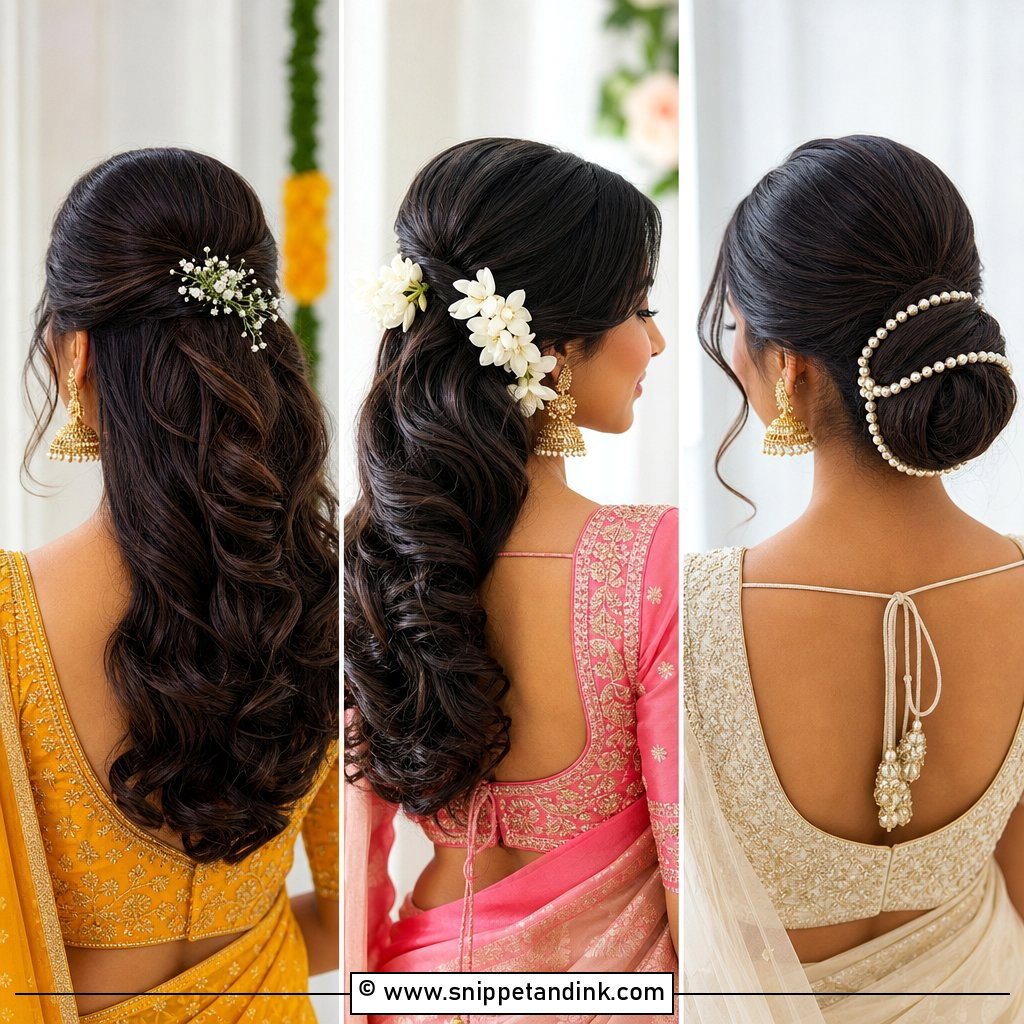
The low bun is the most practical option here for a long muhurtham. Gathered close to the nape into a round, clean shape, it stays out of the way when you sit, and it leaves the saree, jewelry and makeup to take attention. Shorter or thinner hair suits it well, since a pad adds fullness. Decorate it with a single floral ring, a few roses or gold pins rather than all of them. A center part feels traditional; a soft side part reads a little more modern.
6. South Indian Bridal Side Braid
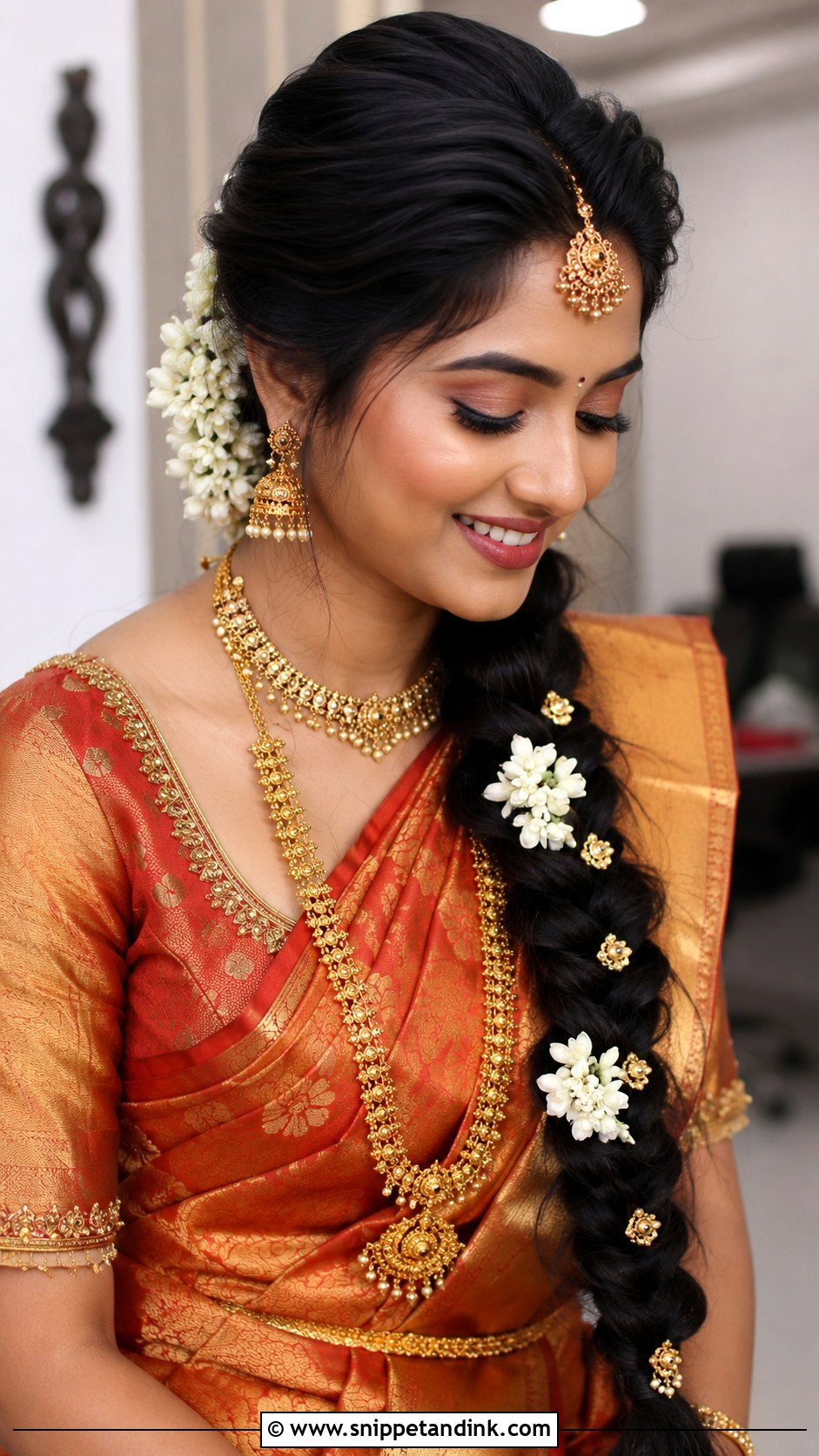
Resting over one shoulder, a South Indian bridal side braid puts the flowers and jada accessories into your front portraits instead of behind you. The crown can be sleek, gently puffed or lightly twisted, depending on how much height your face needs. It’s a sensible choice for engagements, receptions or a lighter wedding morning look. I pull the braid out a little for fullness, but on heavy, silky hair I keep it firmer than I would for a back braid, since a side braid is constantly being brushed by your arm and dupatta.
7. South Indian Bridal Messy Bun
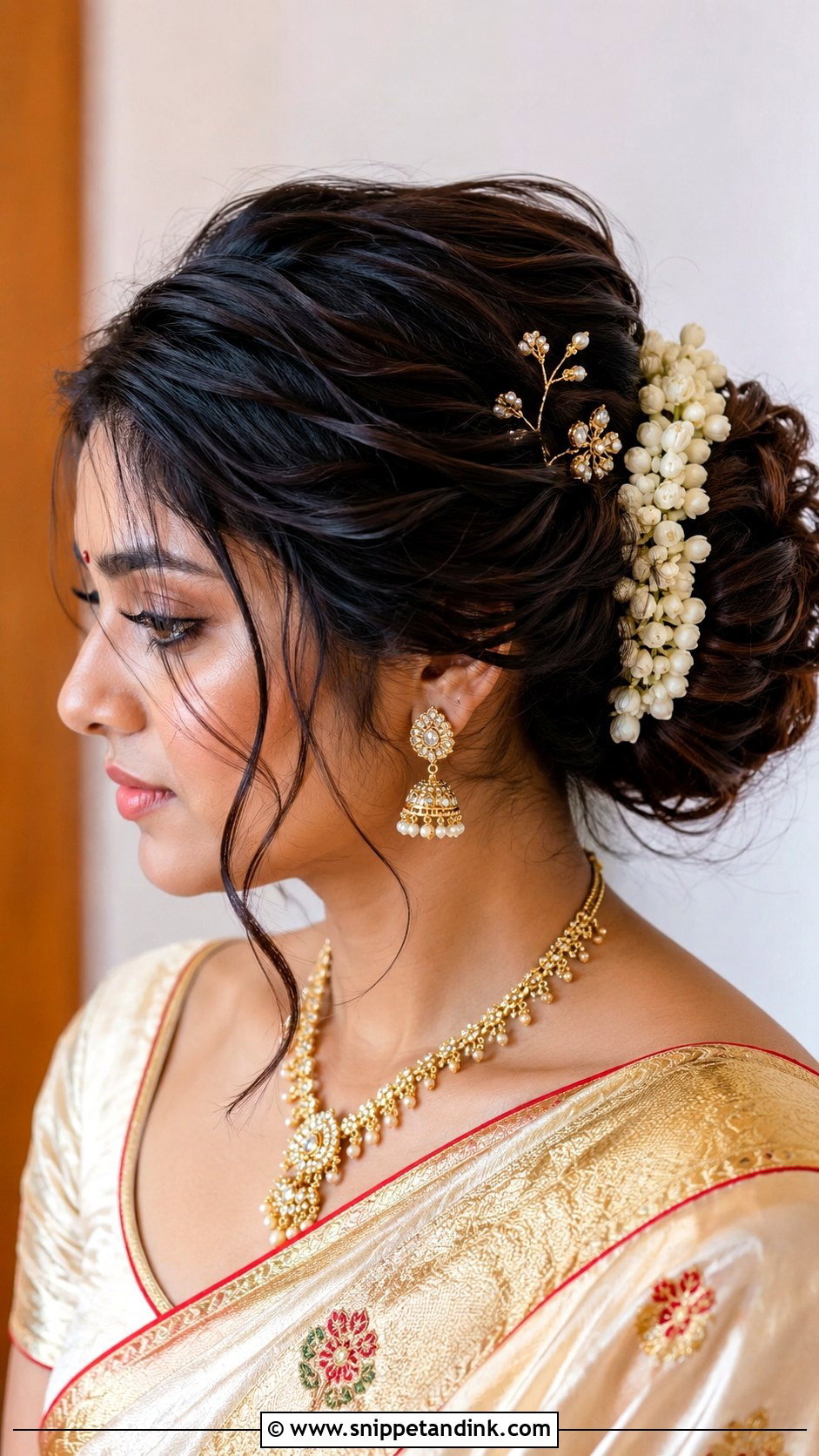
Thick or wavy hair is made for the messy bun, because its natural volume does the work. The bun stays structured underneath while the surface looks airy, with soft strands left at the face. A small gajra, a few roses or pearl pins finish it. For the main ceremony I’d make it a touch neater than for a reception, and I pin every loose-looking piece deliberately. Undone on purpose holds; undone by accident falls by the second ritual.
8. South Indian Bridal Braided Bun
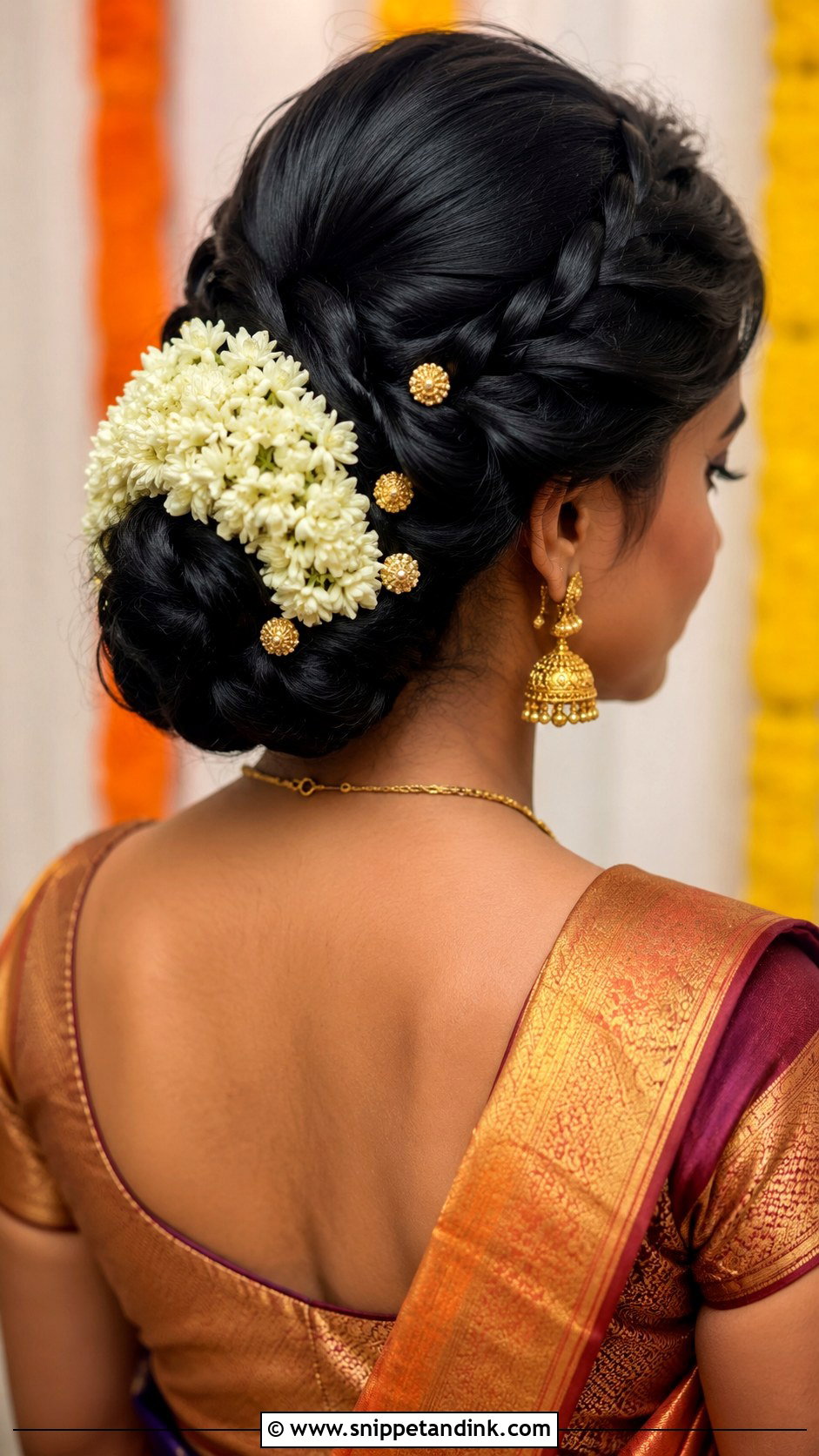
Braid first, then wrap it into a low or mid bun, and you get texture without needing extra ornaments. I like this one for long ceremonies because the braided surface gives pins and flowers far more grip than a smooth bun does, so a jasmine ring or gold pins stay exactly where I put them. It’s comfortable on medium and long hair, and a clip-in extension adds thickness to the braid when the bun looks thin.
9. South Indian Bridal Open Hair With Curls
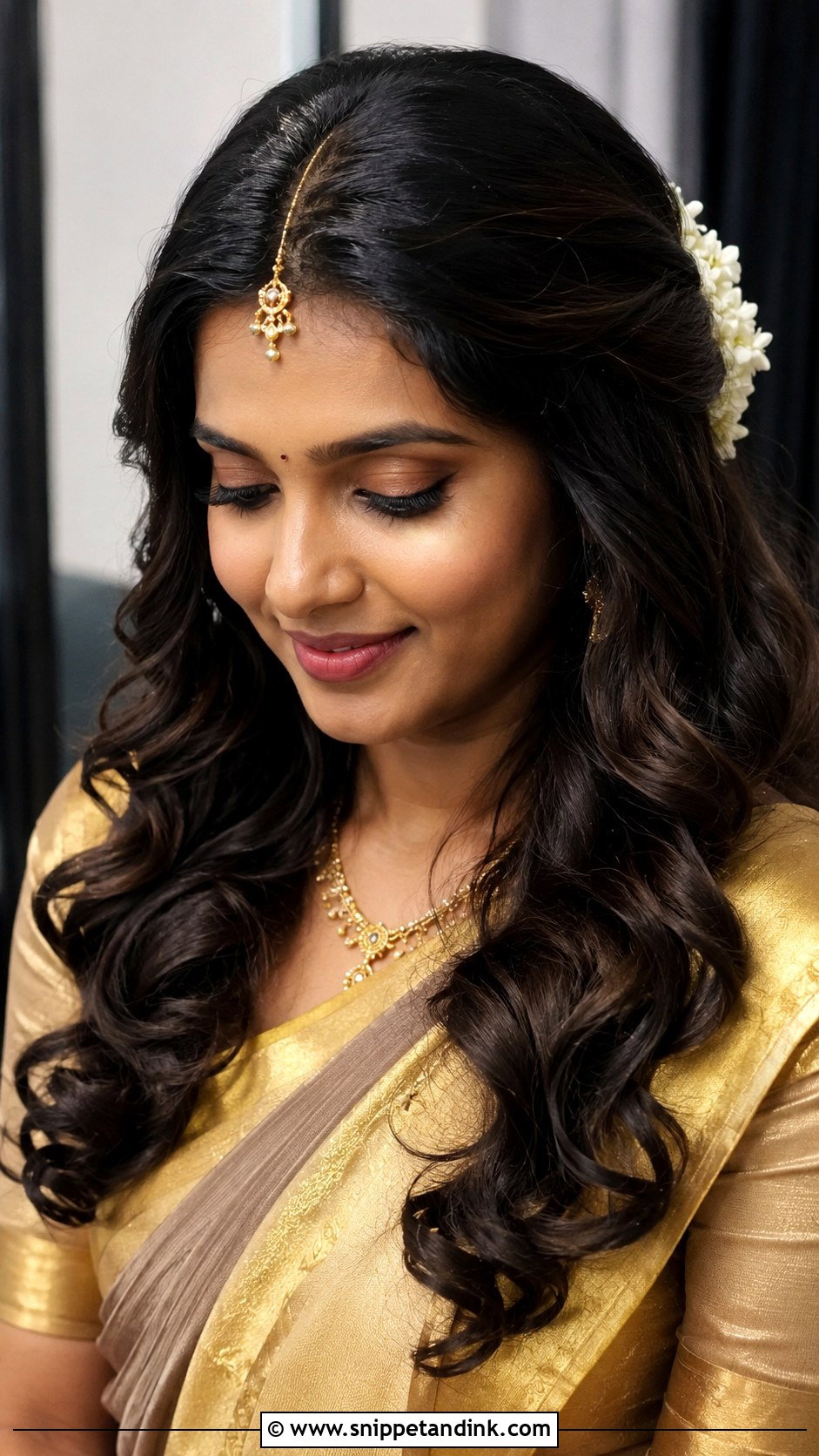
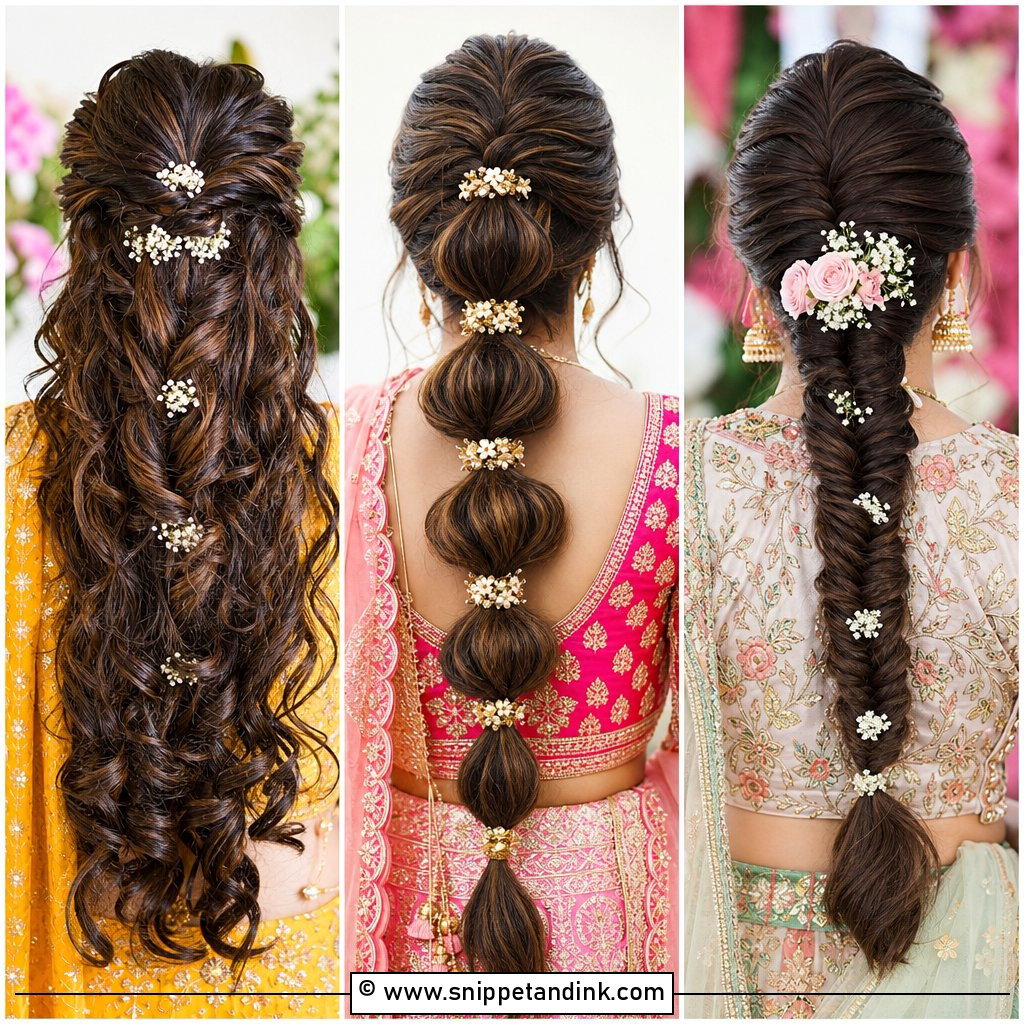
Open curls are the most modern look on this list and the hardest to keep through a South Indian wedding. Center- or side-parted, the hair falls in smooth curls over the shoulders, with a small jasmine section at the back, a maang tikka or delicate gold pins to keep the bridal feel. Humidity and long hours will loosen any curl, so I set them tighter than I want them and leave them pinned while the bride dresses. I’d save this for the reception or engagement rather than the main ceremony. With silk, lighter jewelry and soft makeup, it looks fresh.
10. South Indian Bridal Half Up Hairstyle
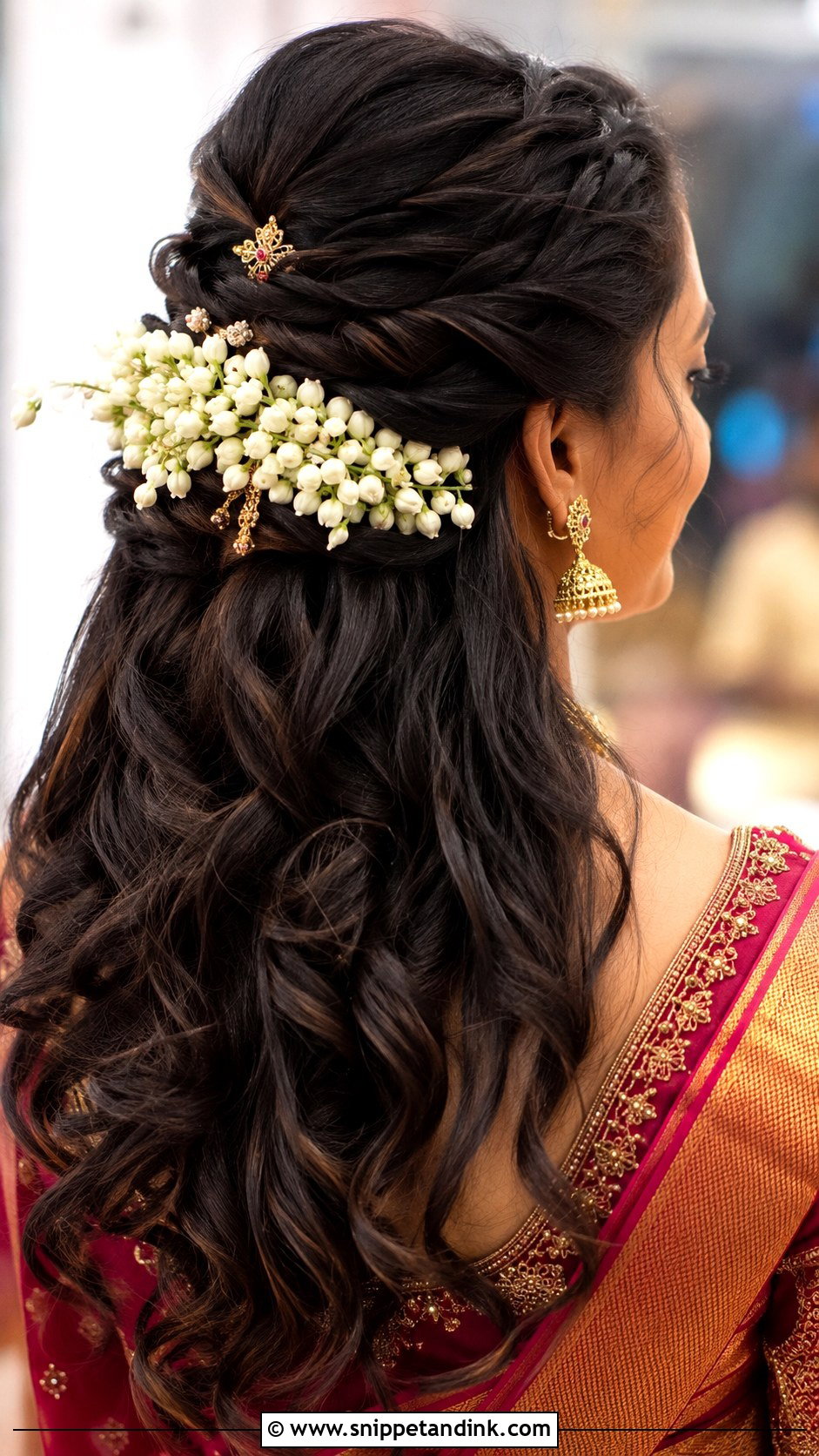
The half up keeps your face clear and still shows off length. The top section is pinned back with twists, a small puff or a slim braid, and the rest falls in curls. Put your jasmine, pearl pins or small gold clips where the sections meet, since that’s also where the pins need covering. It suits medium to long hair at receptions or smaller ceremonies. On fine hair, I secure the top with a tiny elastic first; a puff held only by pins tends to flatten under the weight of a flower cluster.
11. South Indian Bridal Crown Braid
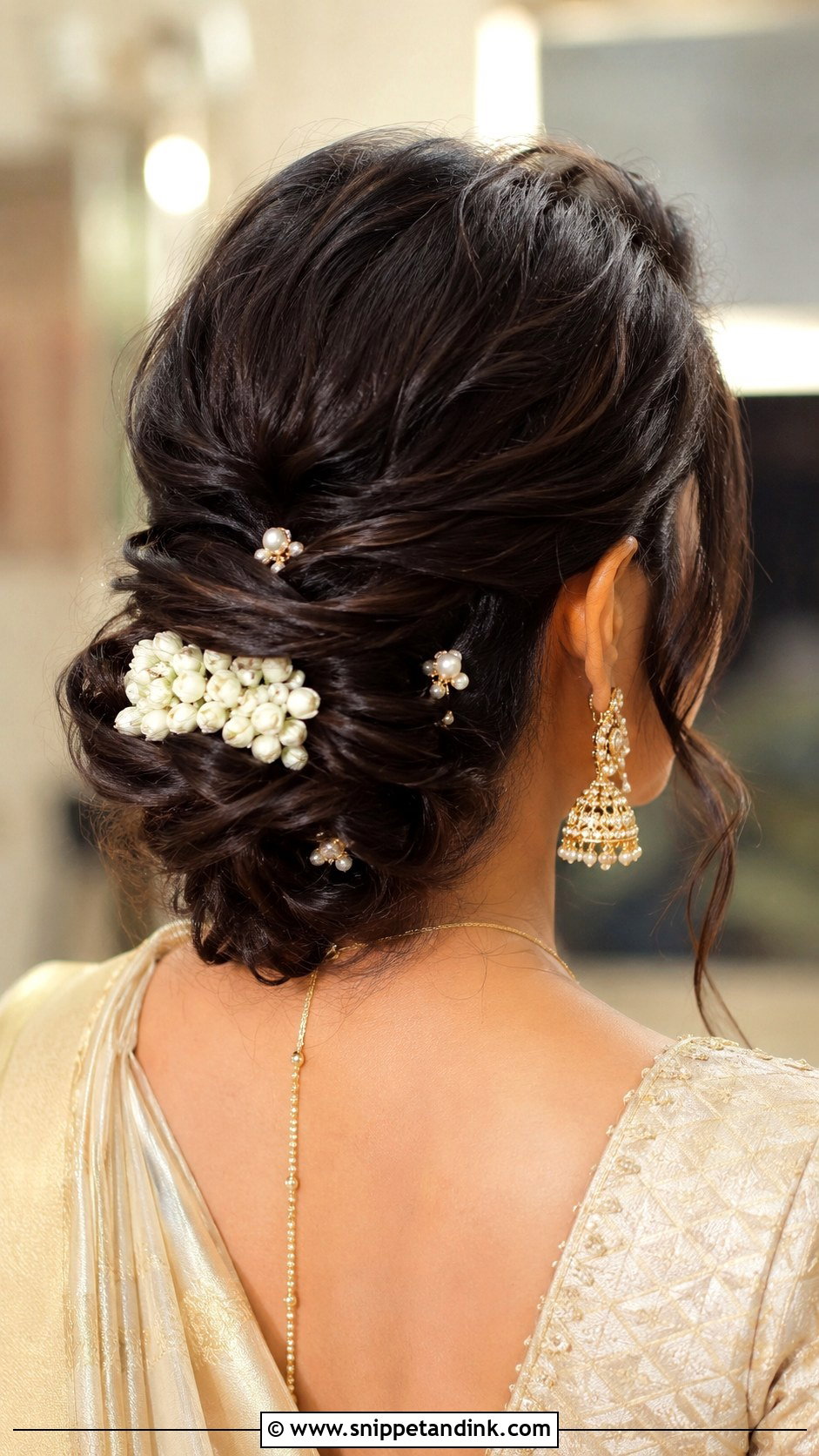
A crown braid adds height and a frame around the face without the heavy front puff many brides don’t want any more. It wraps around the head and joins a bun, a braid or a half up at the back. For a simple bridal version I keep it soft and dot jasmine buds or gold pins along it. It does need enough length at the front to reach around; if your layers are short, I’ll start the braid further back so ends don’t poke out at the temple. Temple earrings and clean makeup sit naturally with it.
12. South Indian Bridal Simple Plait
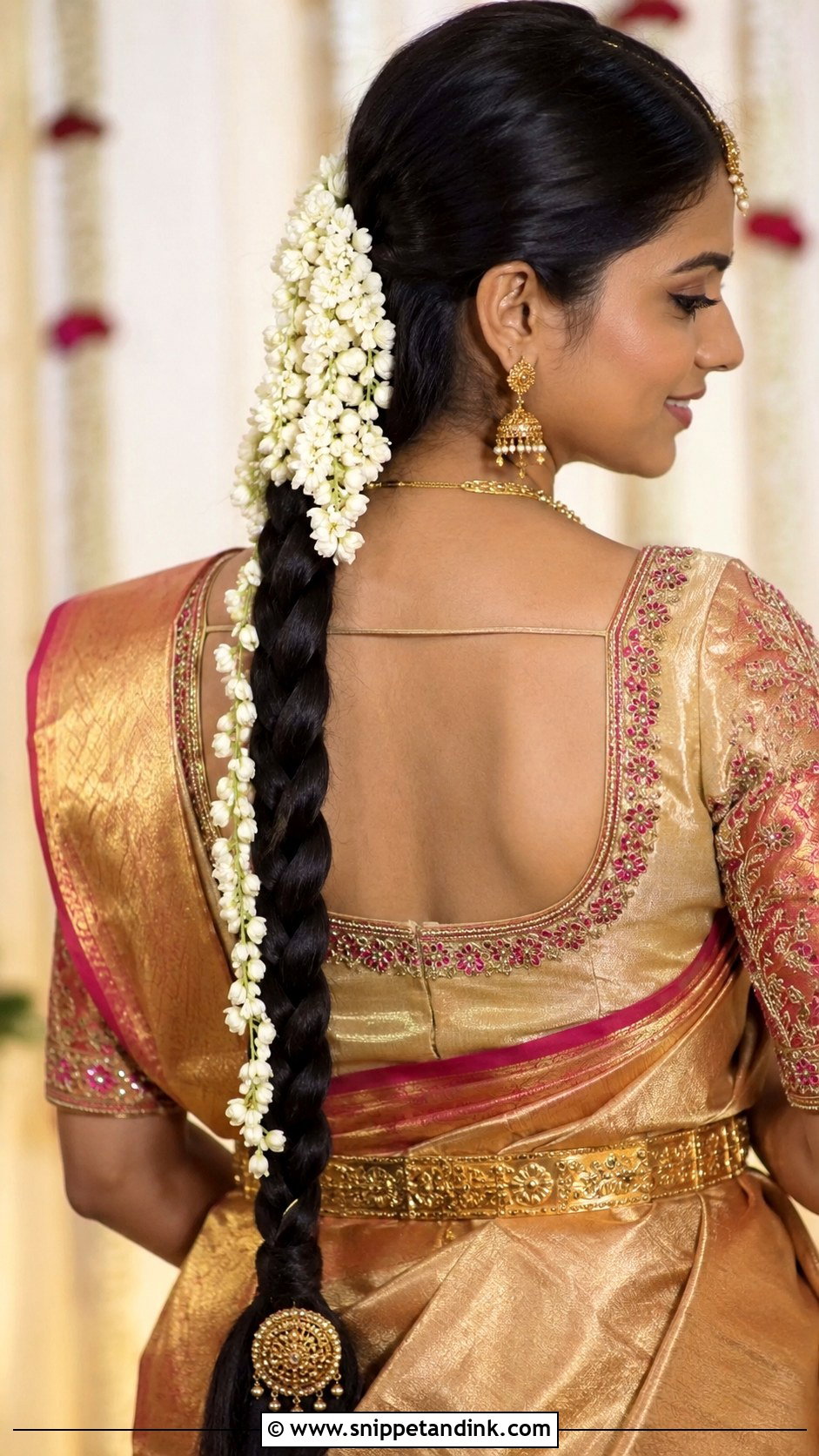
The plain three-strand plait is the most forgiving style here. Parted neatly, smoothed at the crown and braided evenly, it gets its bridal look from what you add: jasmine strands, gold pins, a small jada piece at the tip. It’s comfortable through long rituals and easy for a cousin to refresh between ceremonies. Thick, long hair makes it look full, and extensions can add length. Before the wedding, I’d practice getting an even tension all the way down, because a plait that narrows sharply at the end looks thin once the flowers stop.
13. South Indian Bridal Bun With Roses
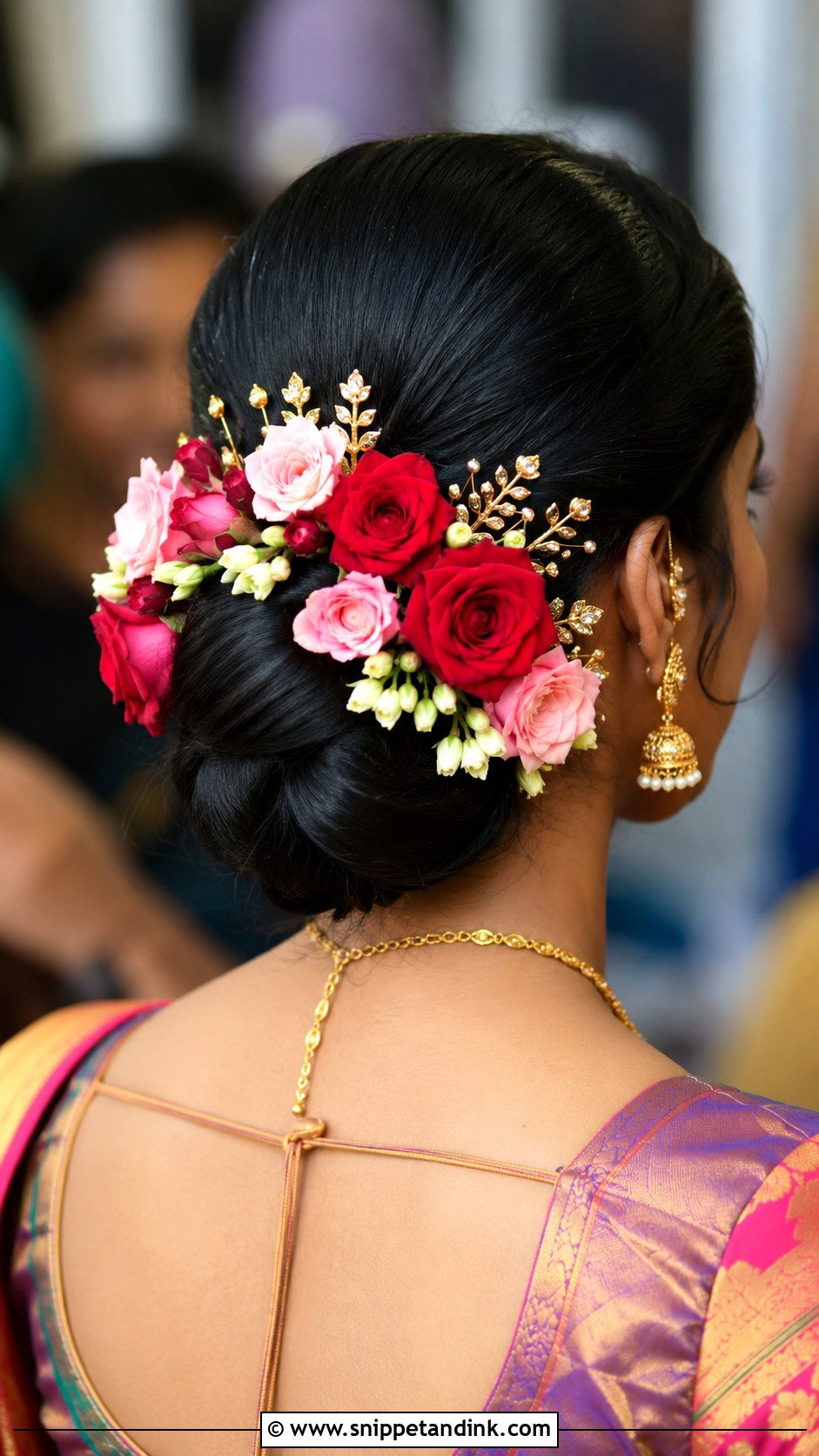
Roses give a bun color without adding much weight. The bun can be sleek, braided or textured, decorated with red, pink or white roses and often edged with jasmine. Many brides match the roses to the saree border or blouse, which works well with rich silks and gold. Roses bruise easily in the heat, so I ask the florist for firm, just-opening heads, wire them, and place them last. Keep the arrangement balanced so it reads well from the side as well as the back.
14. South Indian Bridal Kerala Bun
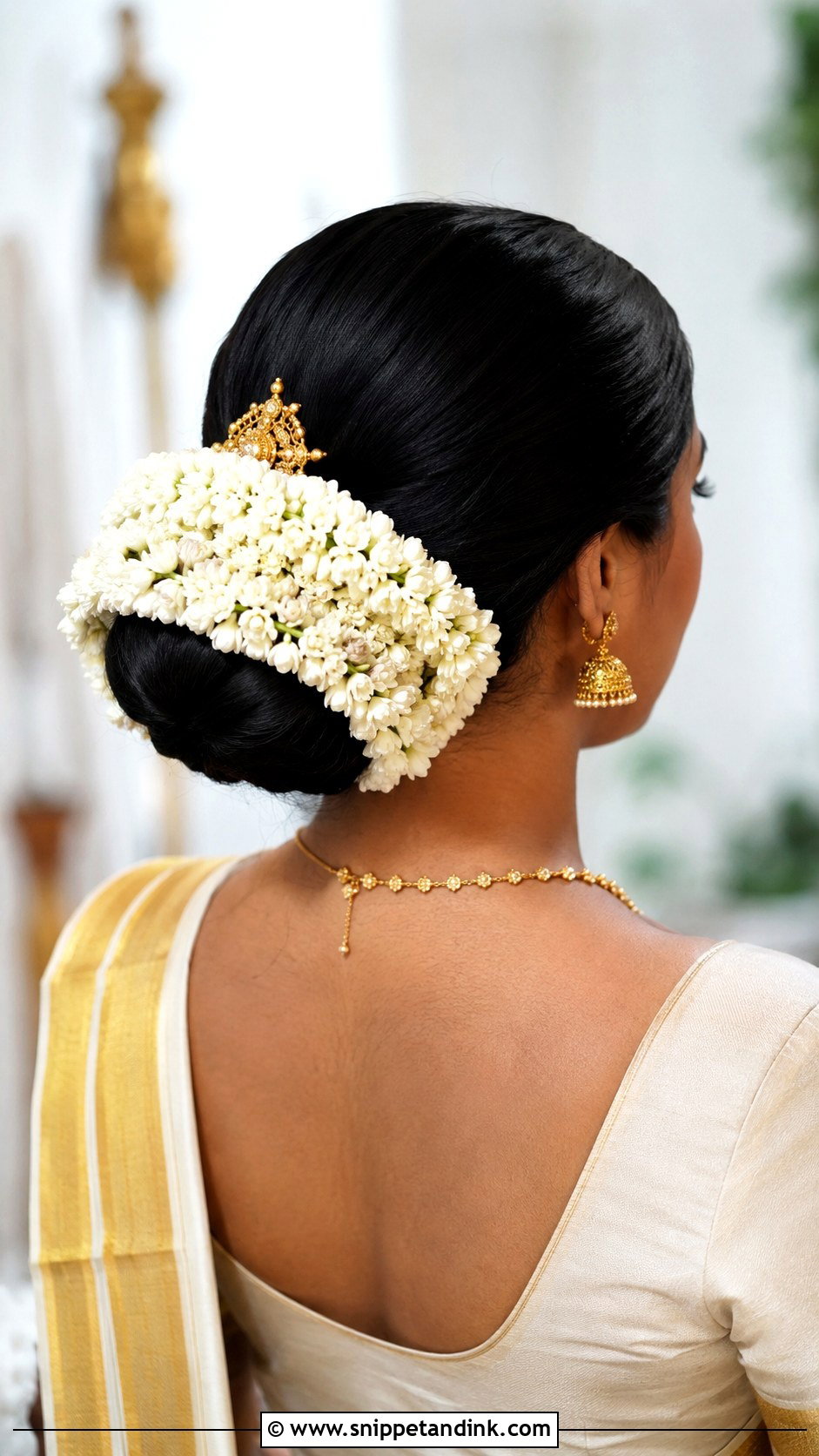
A Kerala bun is about restraint: a center part, a smooth low bun and jasmine or white flowers placed around it. It belongs with a kasavu saree, gold jewelry and minimal makeup, and adding more would fight the cream and gold. The bun should feel secure without looking stiff. I use a small amount of shine serum on the crown only; too much on fine hair makes the part look greasy in daylight.
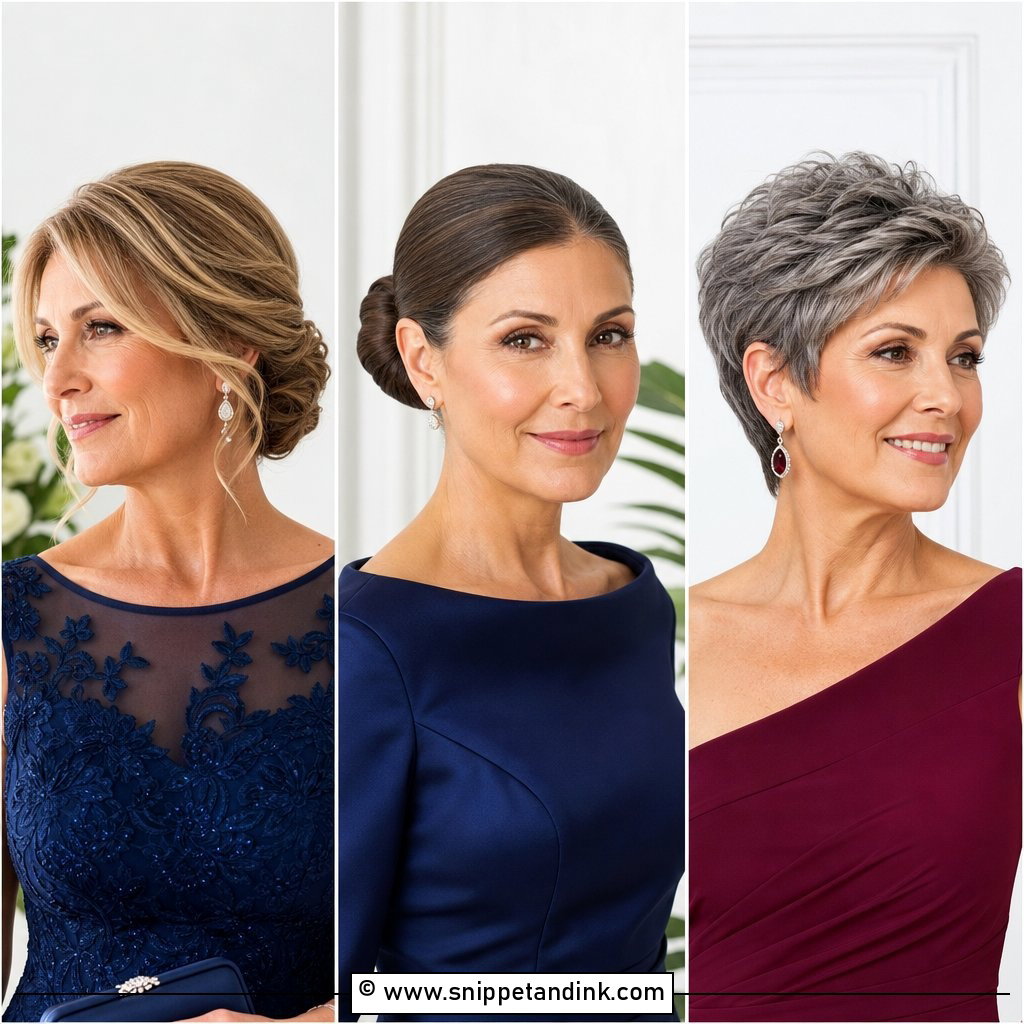
15. South Indian Bridal Reception Bun
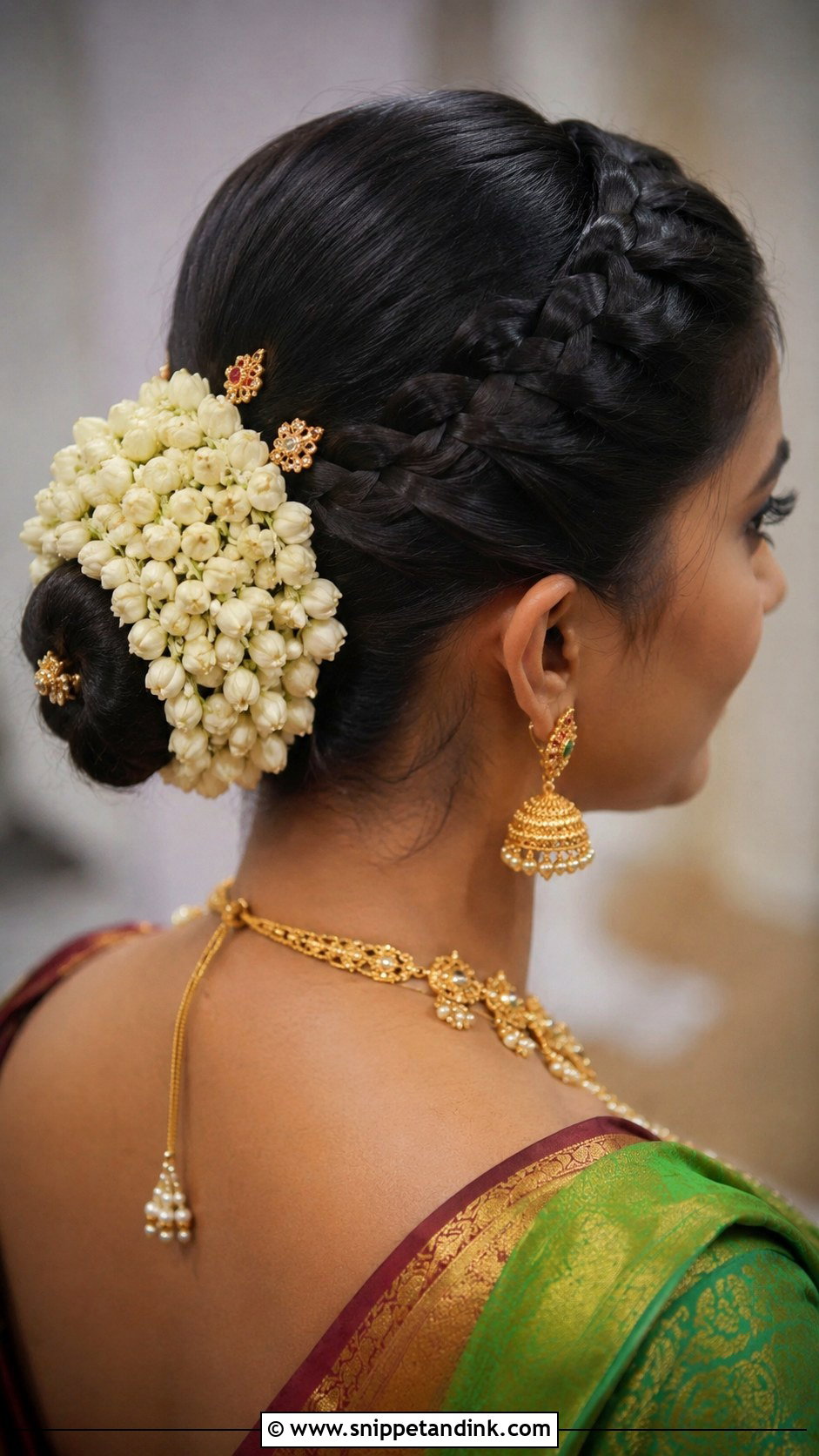
For the reception, the bun can be softer and a little more glamorous than the ceremony version while staying simple. The hair is loosely curled, twisted and pinned into a low bun with some crown volume, and the full flower wrap becomes a small jasmine cluster, pearl pins or gold accessories. That lighter finish matters after a long day; brides often tell me the jasmine scent and weight are the first things they want gone by evening. It flatters most face shapes because the front can be adjusted with side pieces, a center part or a smooth crown, and it works with reception sarees, lehengas or gowns.
From Ceremony Braid to Reception Bun Without Starting Again
Many South Indian weddings put the ceremony and the reception on the same day, and there’s rarely time for a full restyle. I plan both looks together at the trial so the second grows out of the first.
The jada and flowers come off first, from the bottom up, cutting threads rather than pulling pins out of tangled hair. The braid is then loosened slightly, wrapped into a low bun and pinned through the braid texture, which grips well. A light spray, fresh pins at the crown and a small jasmine cluster or gold accessory finish it in roughly half an hour. Keep the morning part and front shape, because restyling the crown is where most of the time goes.
Ask a sister or cousin to watch your stylist do this once at the trial. If your stylist can’t stay for the reception, that person can do it for you.
Let the Shape Carry the Gold and Jasmine
A South Indian wedding look doesn’t need a complex style to feel complete. A jasmine braid, a gajra bun, a Poola Jada, a low bun or a soft half up all work when the base is clean and strong enough for what goes on it. Start with your jewelry and your ritual schedule, then build the hair to support both. Use flowers, gold pins and curls in small measure, and pick the style you’ll still be comfortable in when the last ceremony ends.
You'll Like These Ideas:




Leave a Reply