
A baraat look asks more of the hair than any other event in a Pakistani wedding. It has to carry a maang tikka, a passa or jhoomar, and a dupatta that weighs more than most brides expect, and it has to hold all of that from the entrance until the rukhsati. You’ll walk in beside your groom in a stunning red or maroon outfit, so the hairstyle is doing two jobs: framing your face, and quietly acting as the scaffolding that keeps the jewelry where it was set. The 20 styles below run from low buns to open blowouts, and under each one I’ve noted how it actually behaves once the dupatta goes on.
Your Dupatta Matters More Than Your Face Shape
Most hairstyle advice starts with face shape. For a baraat, I start with the dupatta. An embroidered dupatta with a heavy zari border can drag a soft style backward within an hour, and because it’s pinned straight into the hair, the hairstyle has to be built to take those pins.
Before your trial, gather three things and bring them along:
- The actual dupatta, or at least a clear idea of its fabric and border, so your stylist can judge how much grip it needs.
- Every hair piece in your set. A tikka, matha patti, passa and jhoomar each hook into the hair at a different point.
- How you want it draped: over the head and pinned at the crown, set back to show the hair, or pulled to one side.
The order I build a baraat look in
- The base: bun, braid or set curls, including any padding or extensions.
- Tikka or matha patti, pinned at the parting with the hook hidden behind the base.
- Passa or jhoomar, hooked into a braid or a firmly pinned section, never into loose curls.
- The dupatta, pinned in a crossing pattern into the base.
- Fresh flowers last, so they aren’t crushed while the fabric is adjusted.
If someone other than your hairstylist is setting the dupatta, ask them to work together for that step. The person who built the base knows exactly where the strong anchor points are, and pins that miss them are why a dupatta starts slipping halfway through the evening.
1. Low Floral Bun With Maang Tikka
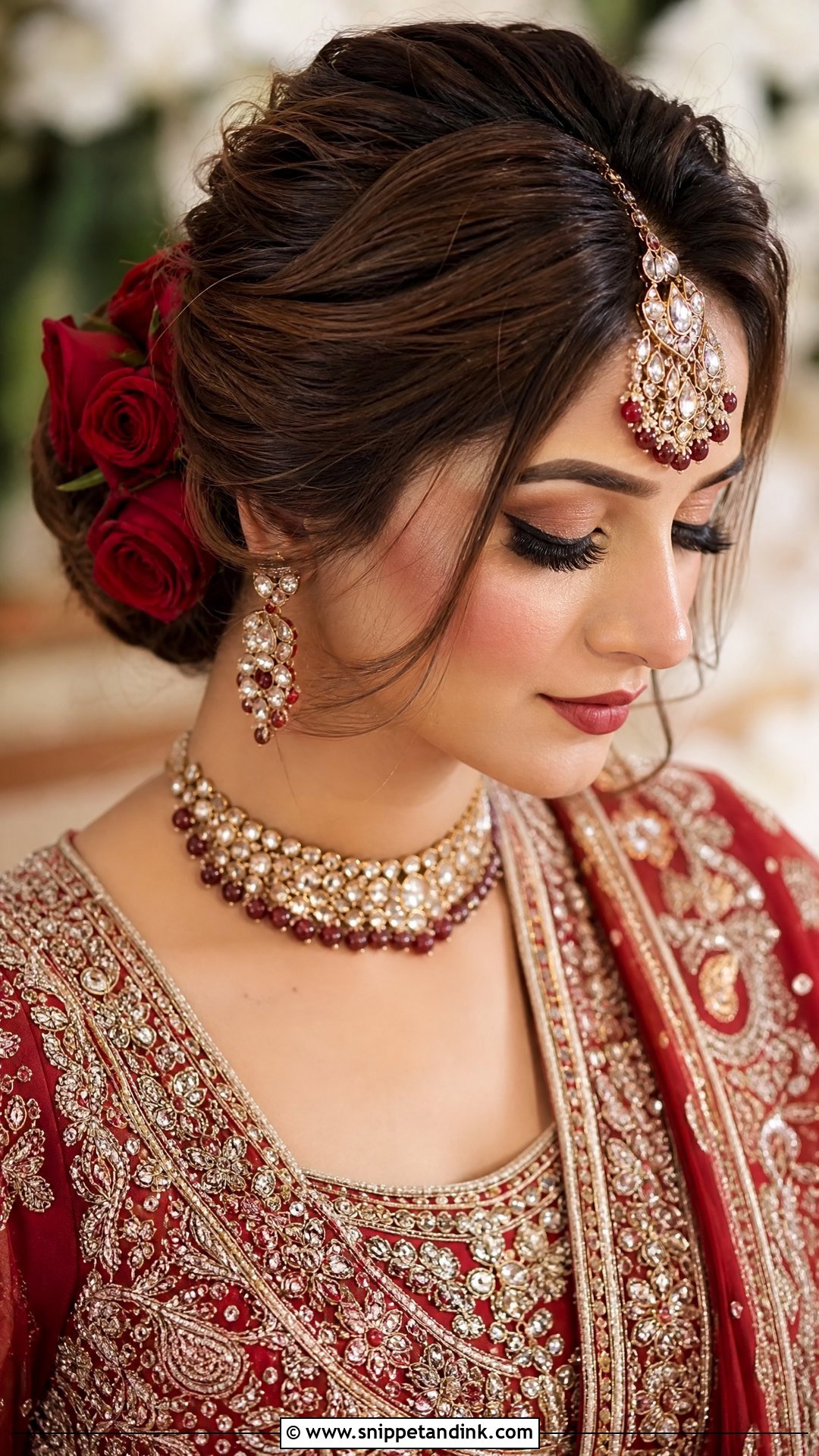
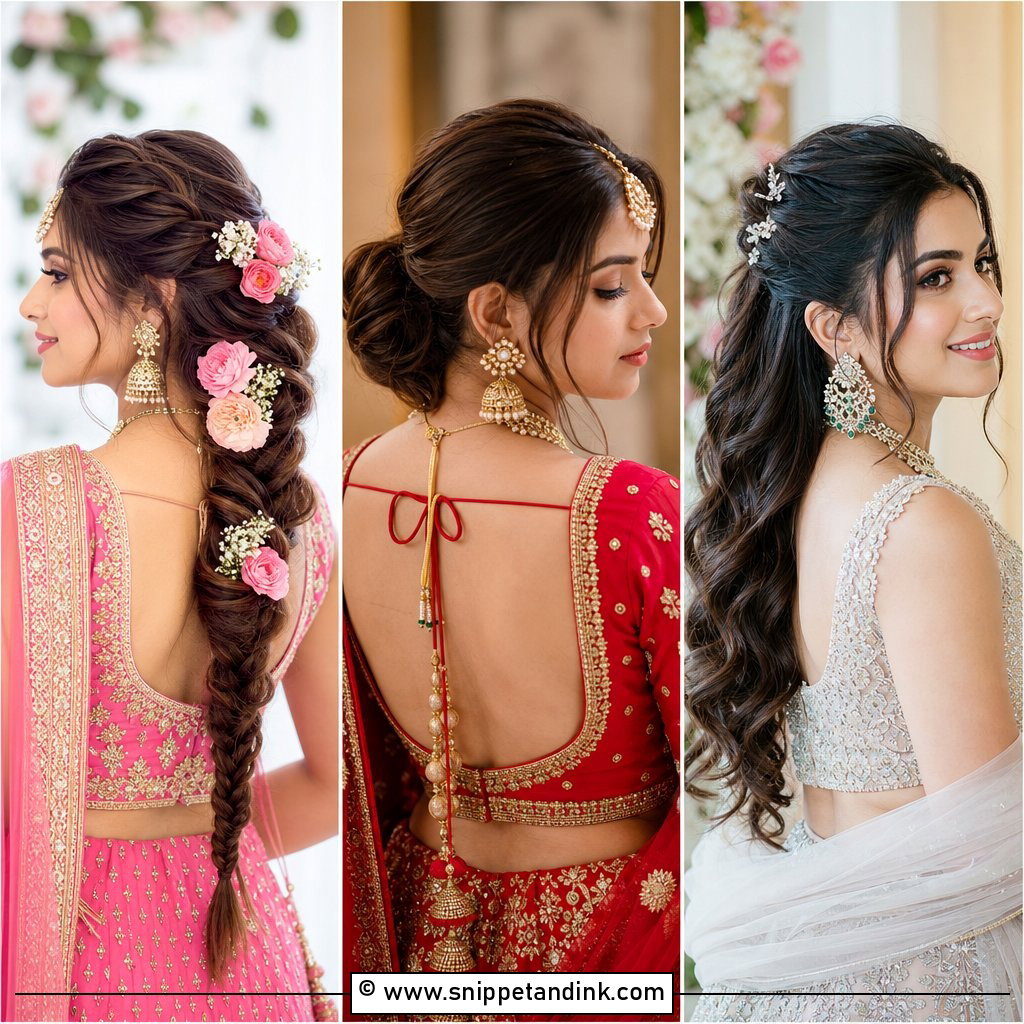
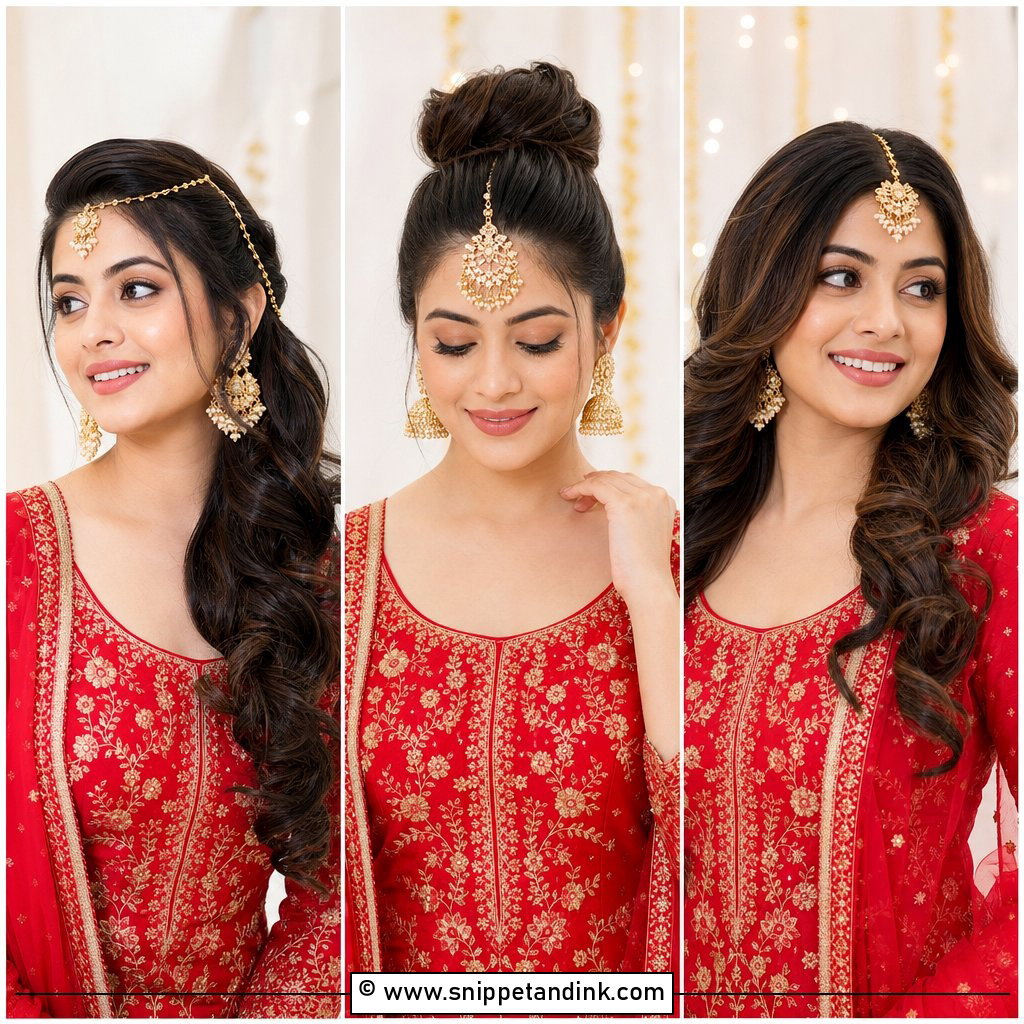
This is the style I reach for when a bride hasn’t decided yet, because a low bun at the nape gives me a solid base to pin the dupatta into without the fabric riding up. The tikka chain runs back along the parting and hooks just in front of the bun, so its weight never pulls on the hairline. Red roses or motia go in last, after the dupatta is set; put them in earlier and they get crushed. Round, oval and square faces all carry it, and the earrings and jhoomar stay in clear view. On very fine hair I pad the bun with a donut or a few wefts so it doesn’t look small under heavy embroidery.
2. Bouncy Blowout With Open Hair
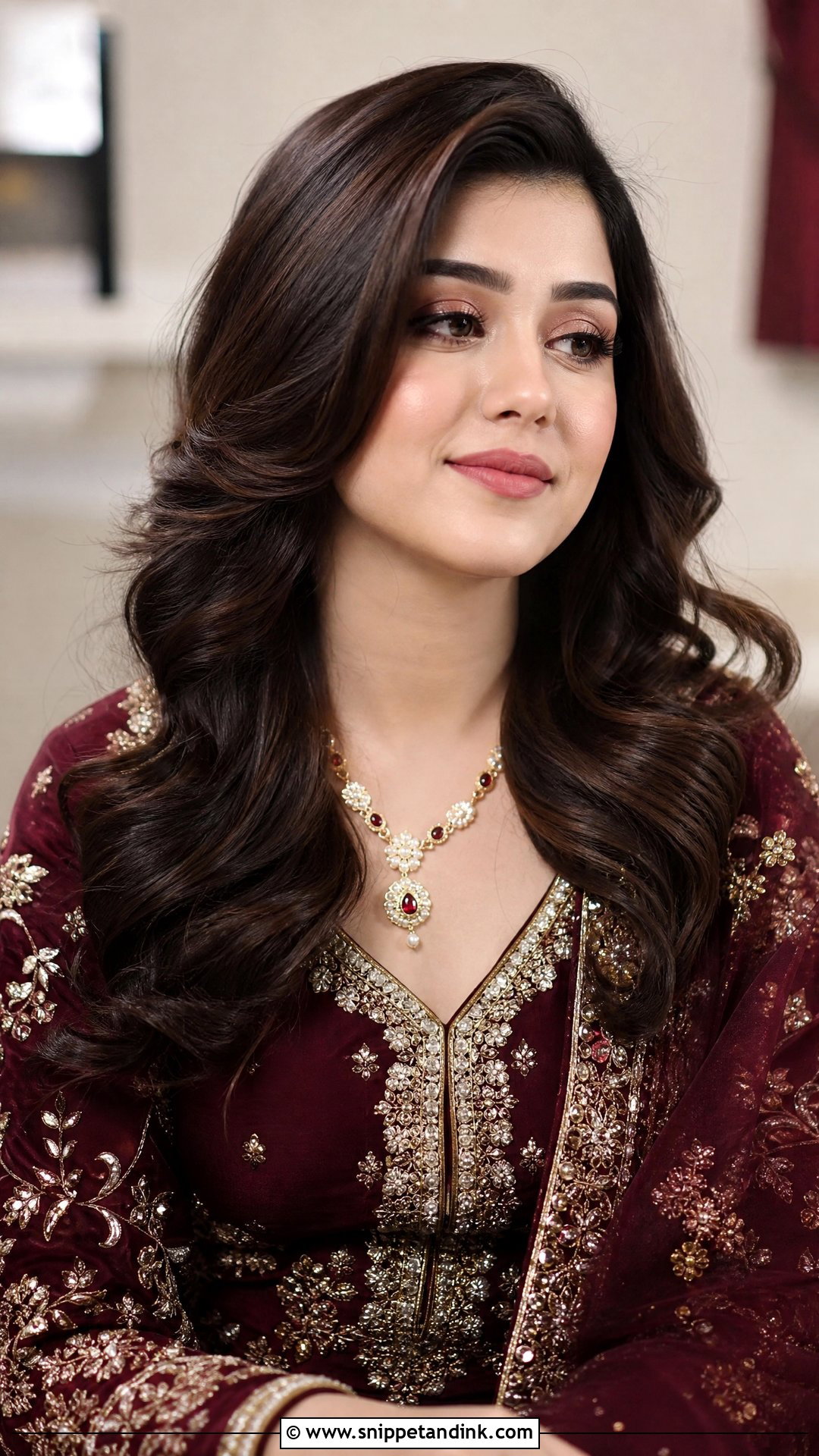
A bouncy blowout is the most comfortable baraat option, and also the most fragile. Round-brush volume depends on the hair setting as it cools, so I let every section cool on a Velcro roller before brushing it out. Skip that step and the bounce is gone before the stage photos. Medium to long hair with some natural body holds it best, and a passa on one side keeps open hair reading as bridal. My honest warning: in a hot, crowded hall, fine hair can go flat within a couple of hours, so I leave a mini round brush and a dry texture spray in the getting-ready room.
3. Half-Up Half-Down With Braided Crown
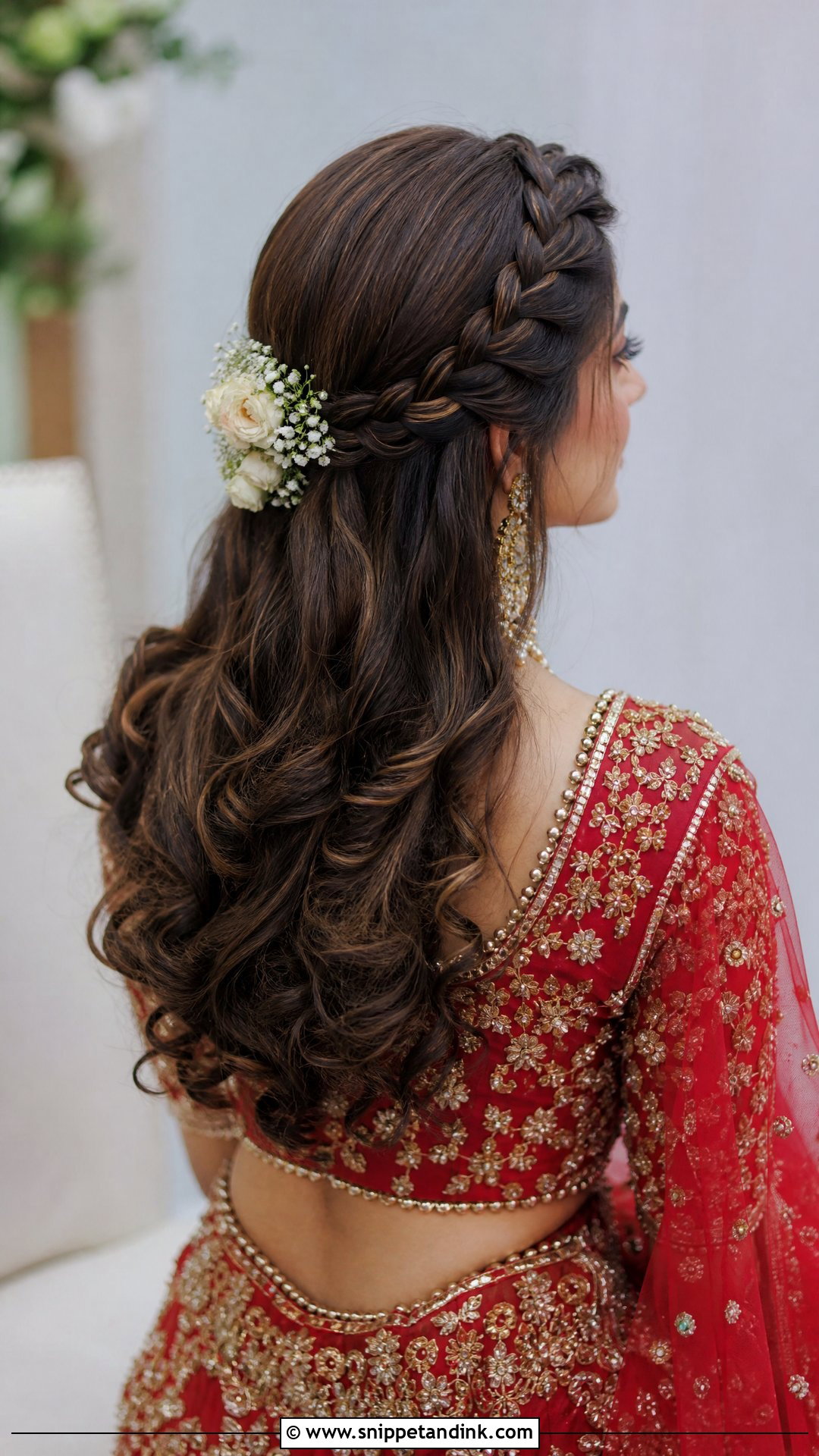
Half-up with a braided crown has become a favorite with modern Pakistani brides, and it earns that because the braid does real work. Pinned across the top, it gives the matha patti or tikka chain something to grip, so the jewelry doesn’t slide when you turn your head. I braid it slightly loose and pull the edges out after pinning, since a tight braid looks thin under stage lights. The lower lengths can be curled. You do need medium to long hair here; on shoulder-length hair the crown uses up most of the length and the curls underneath look sparse.
4. Twisted Bun Updo With Fresh Flowers
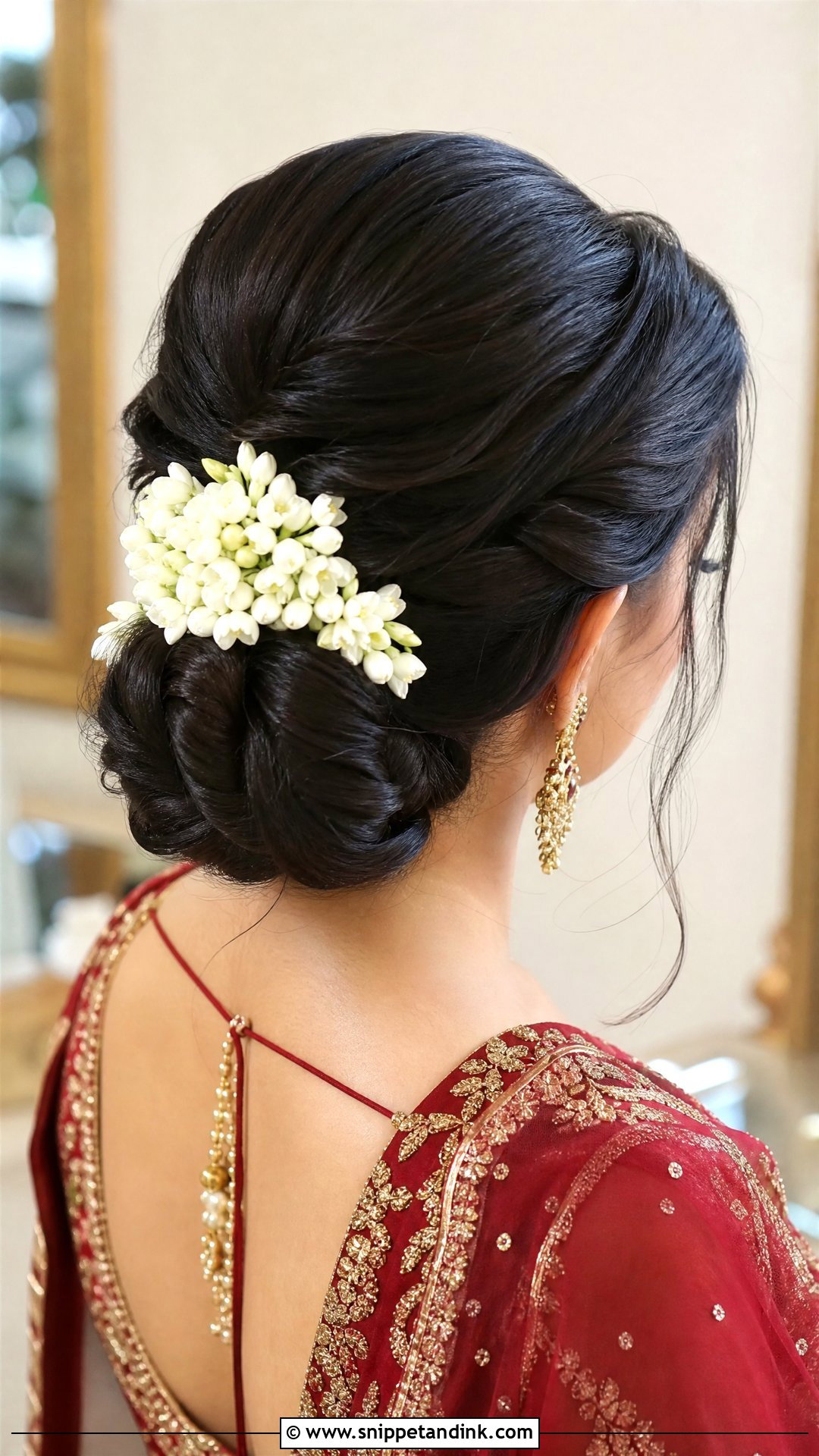
Twisted buns hold flowers better than smooth ones, because each twist leaves a small pocket for a stem. I build the bun from rope-twisted sections pinned in a crossing pattern, and it ends up firm enough to anchor a jhoomar on one side. The neck stays bare, which matters if your necklace is the heaviest piece of the set. Diamond and heart-shaped faces suit it especially well. Keep the blooms small. Large roses push the twists apart, and by evening the bun starts to look lumpy.
5. Messy Fishtail Braid For Long Hair
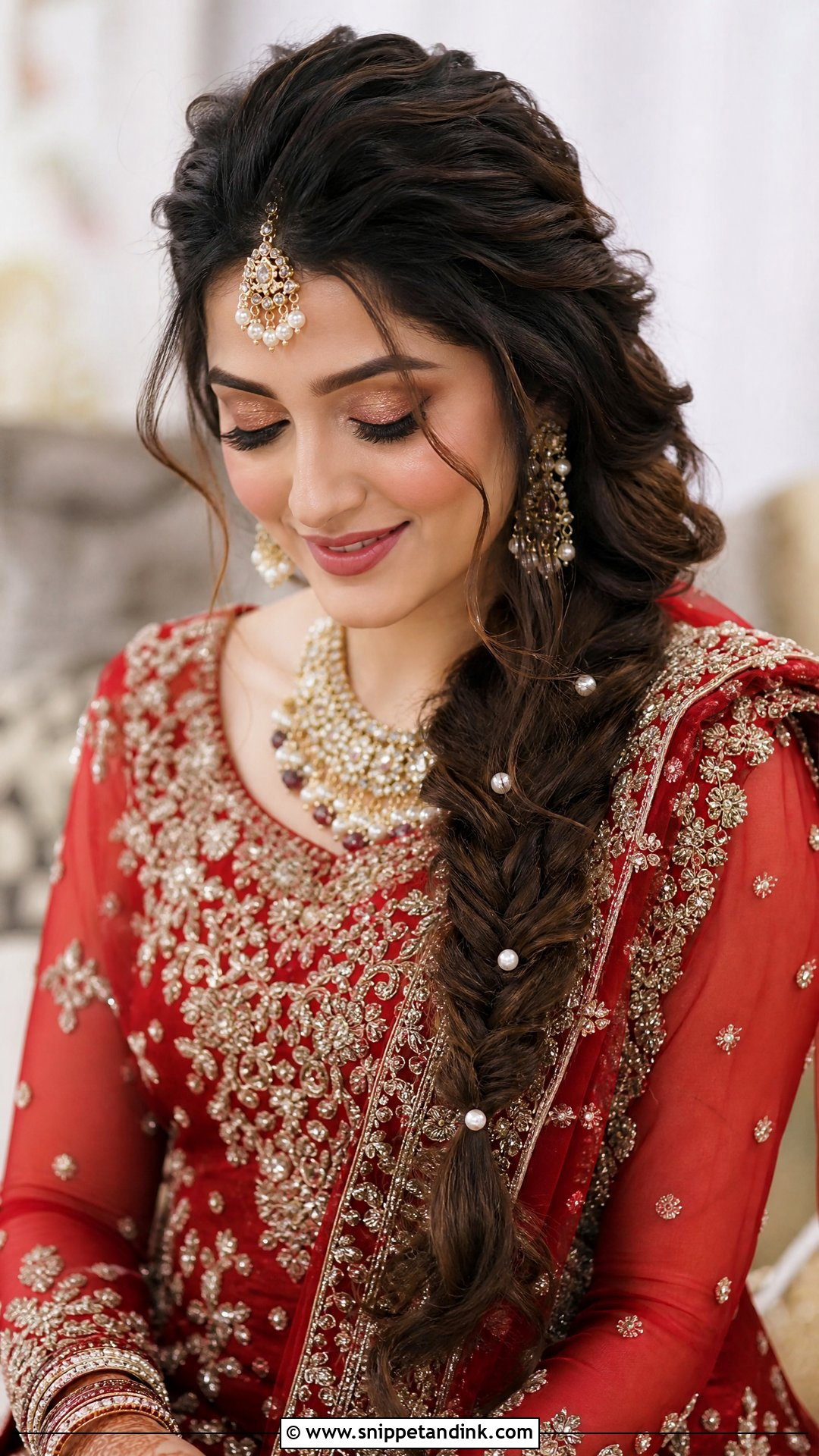
A fishtail over one shoulder needs genuinely long, thick hair. On medium hair it ends up short and stubby once you loosen it for texture. I braid it snug, close it with a clear elastic, then pull the edges out a little at a time from the top down so the shape stays even. Pearls or small flowers can be pinned along the plaits, and a passa or tikka keeps the front bridal. The problem I always plan for is the dupatta, which tends to drag the braid back over the shoulder, so I pin the braid to the blouse strap underneath. Done that way, it’s a relaxed style with a desi touch.
6. Sleek High Bun With Passa
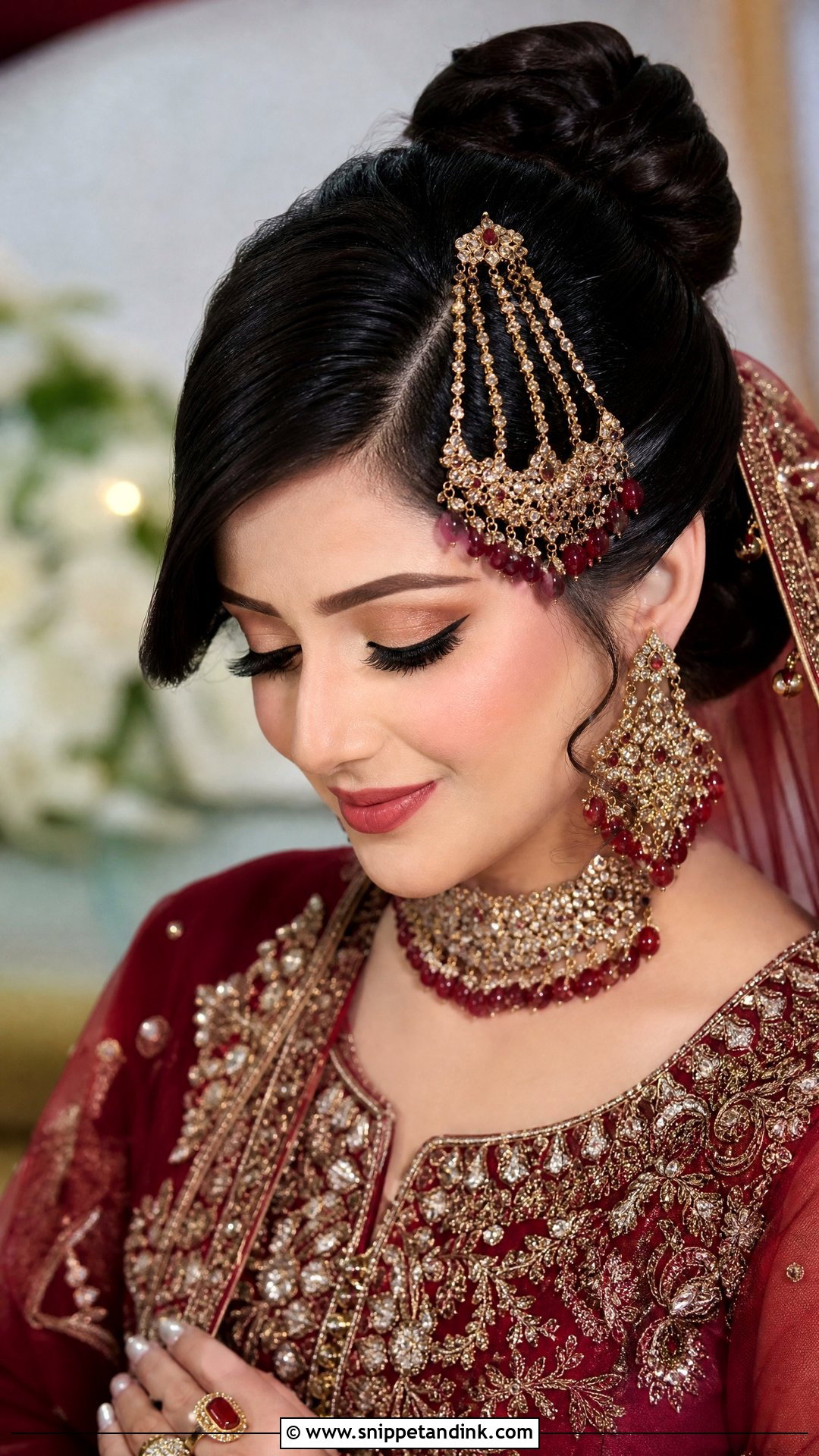
Height is the point of a sleek high bun, and it helps a petite bride hold her own against a heavy lehenga. Smooth hair shows every bump, so I brush it up with a boar bristle brush and a little gel along the hairline before tying the ponytail, then wrap the bun around a firm base. The passa goes on the side of the crown, where it can hook into the bun itself. Oval and heart-shaped faces carry the pulled-back shape best. One caution: a high bun lifts the dupatta off the back of the head, so decide how you want it draped before your stylist sets the bun height.
7. Voluminous Curls With Side Sweep
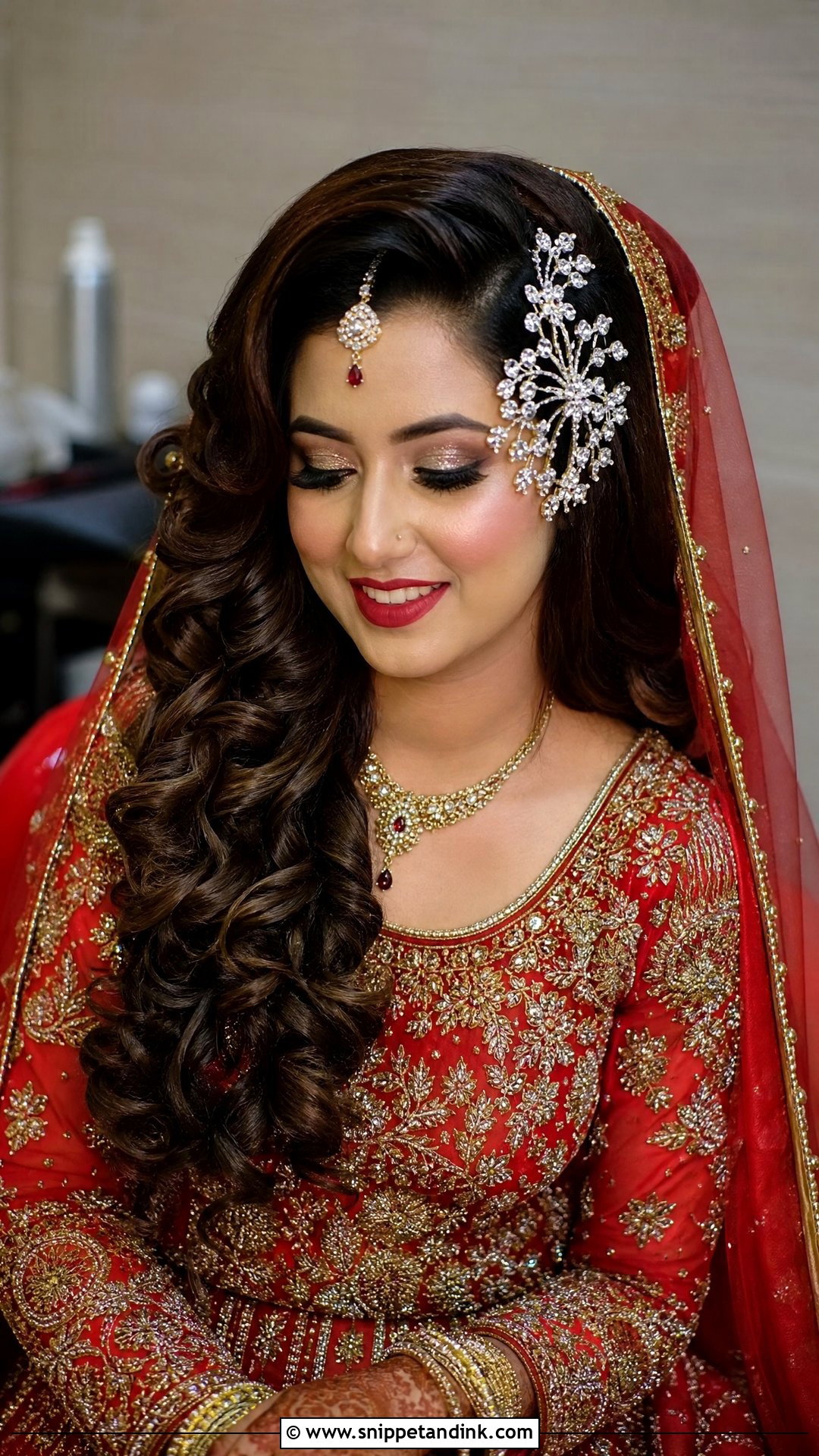
Side-swept curls give fine hair more fullness than almost any updo can. What keeps them swept is a hidden anchor: I cross-pin the hair behind the ear on the bare side, so the curls stay on one shoulder even through hugs. A brooch or a few flowers can cover the pins. Medium to long hair works best. Curls that are pinned up to cool after the iron last far longer than curls brushed out hot, and skipping that cooling time is the main reason curls drop before the rukhsati.
8. Dutch Braid Bun Combination
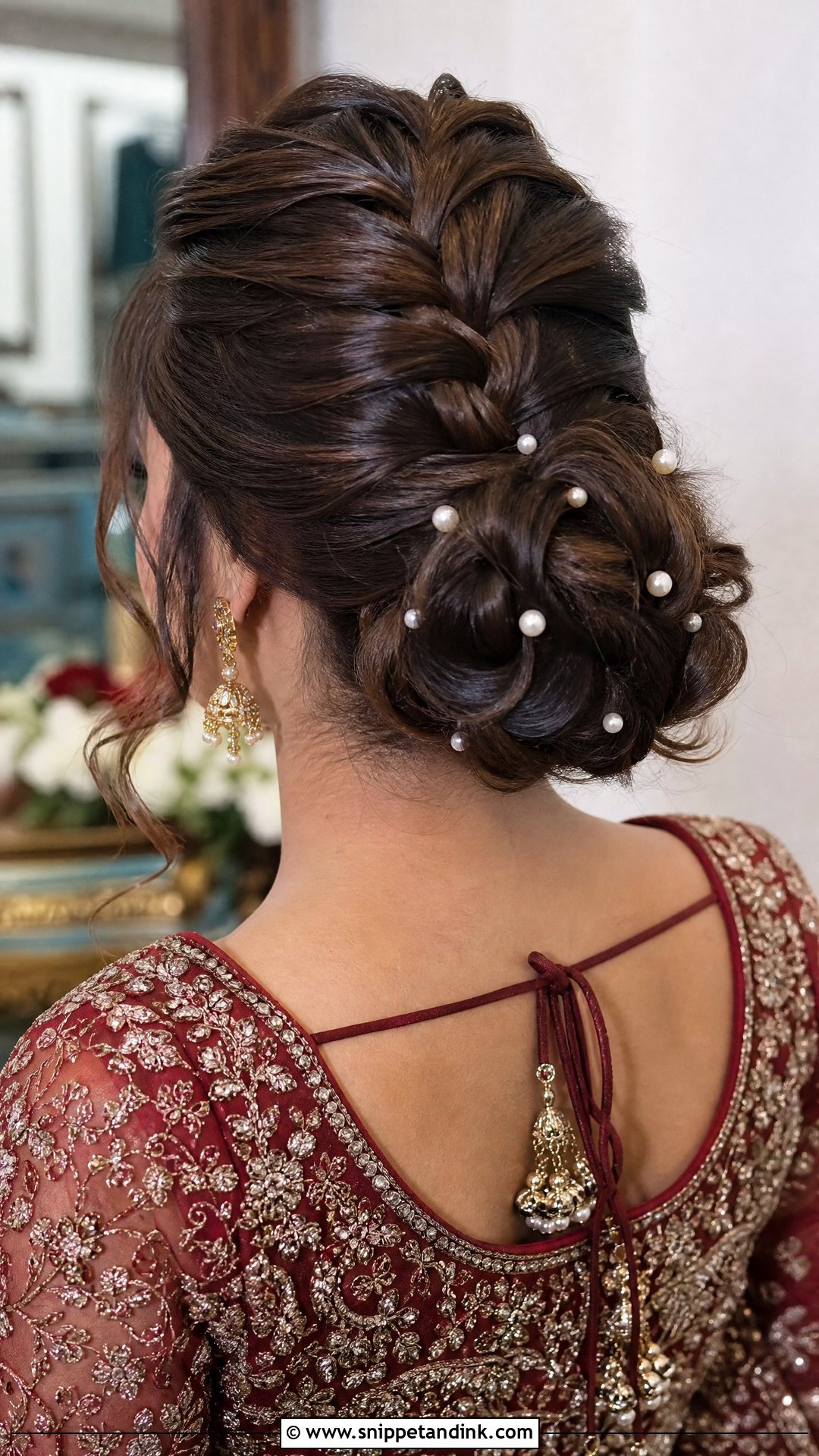
This is a structured look that copes well under a full dupatta. The Dutch braid sits raised along the crown and feeds into a soft bun at the back, and because the dupatta pins straight into the braid, it barely moves all evening. Medium and long hair both work, finished with pearl pins or tiny flowers along the braid. If you have a lot of layers, expect short ends to poke out; I smooth those down with a little pomade so they lie flat in close-ups.
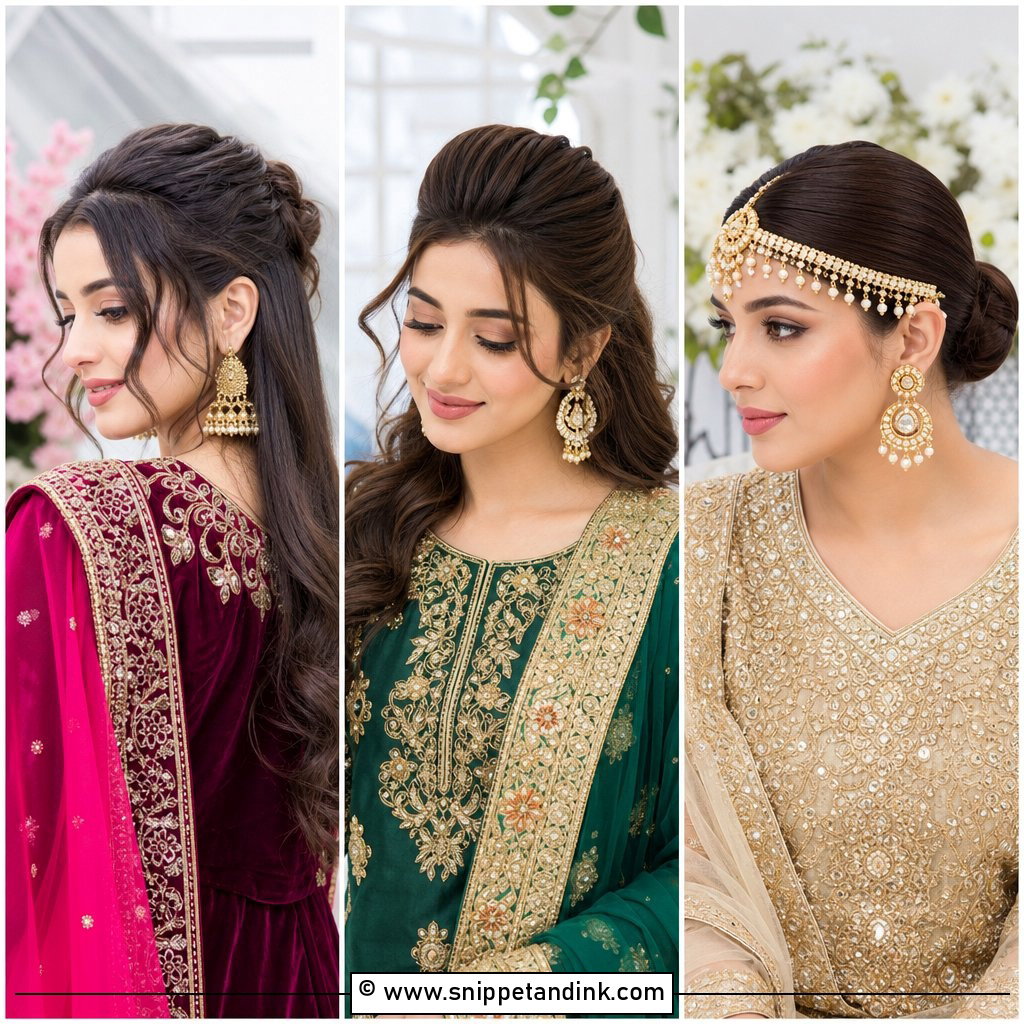
9. Open Wavy Hair With Matha Patti
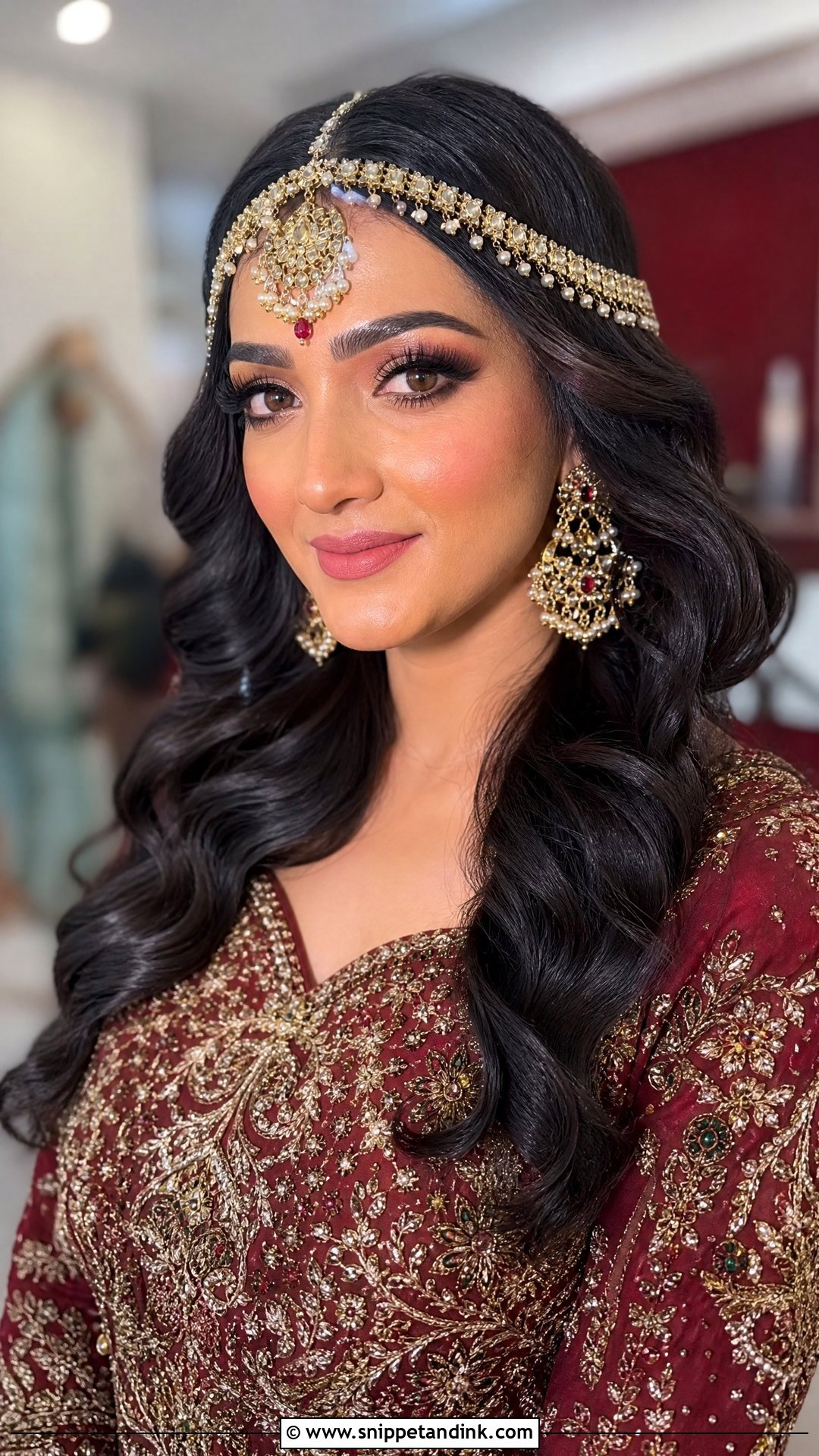
Open waves with a matha patti are one of the softest ways to wear your hair down at a baraat. The patti sits along the hairline, and its side chains need to be pinned into the hair behind each ear or they slide forward every time you look down. I add a little root lift with texture spray so the patti doesn’t flatten the crown. Medium to long hair suits it, as do most face shapes. For straight, slippery hair, I set the waves a size tighter than you want them, because they relax over a long evening.
10. Statement Ponytail With Curls
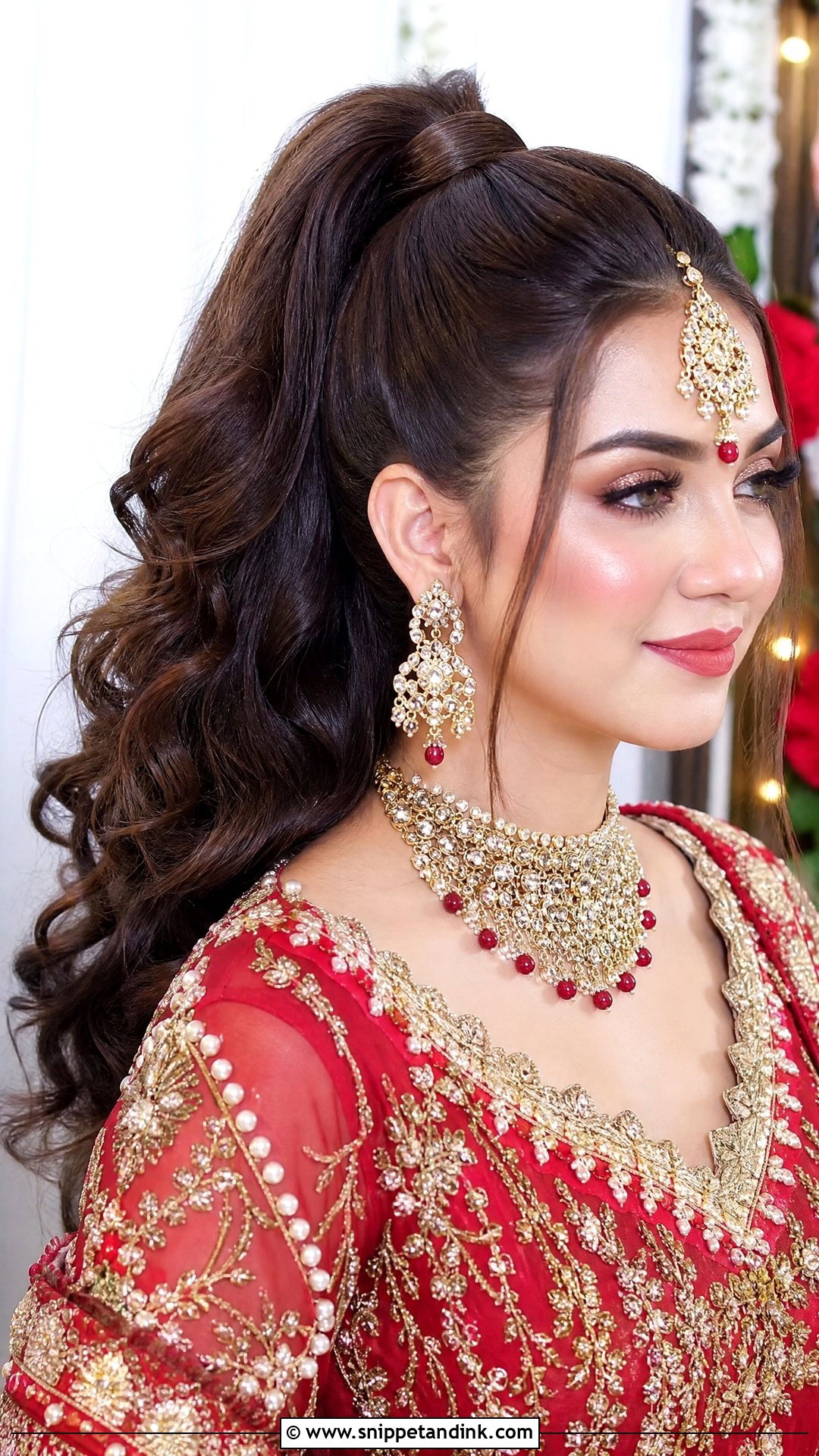
Ponytails used to be the casual option. Now a curled statement pony is one of the better choices for a bride who plans to dance. A very high pony sits above where a dupatta usually pins, so for baraat I tend to suggest a mid-height one and drape the dupatta just above the base. I wrap a section of hair around the elastic to hide it and use two elastics stacked together so the pony doesn’t sag. The curled length needs long hair, or clip-in extensions matched to your color. Keep the maang tikka at the front so it reads as bridal rather than party hair.
11. Braided Low Bun With Gajra
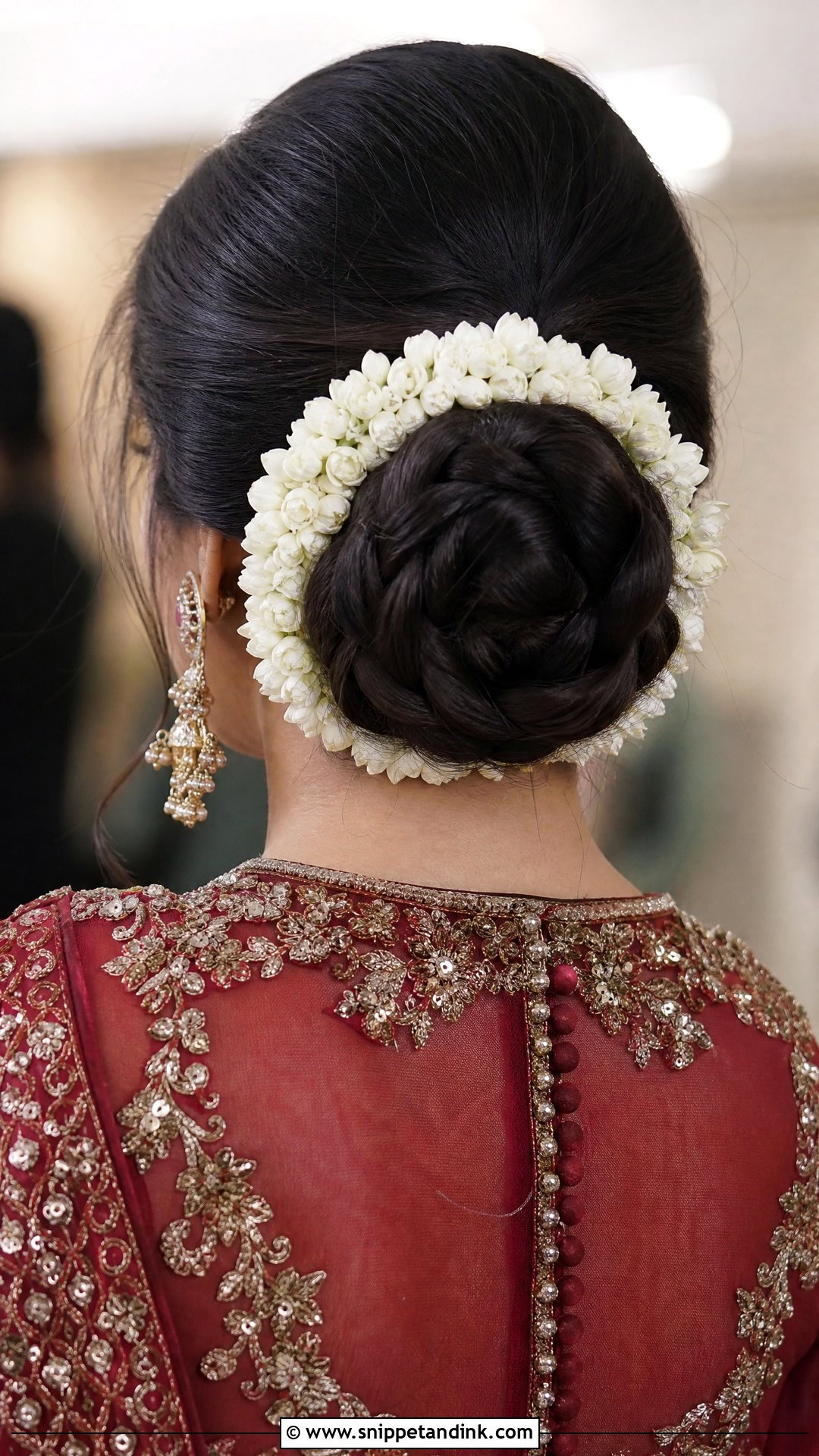
Nothing on this list is more traditional, and the gajra scents the air around you all evening. I braid small sections, coil them into a low bun, then wrap the motia around it and pin through the string rather than the flowers. Fresh motia browns quickly in heat, so I keep the gajra wrapped in a damp cloth in the fridge until the last minute. With a bun filler or extensions, any hair length can manage it. The gajra-wrapped braided bun also takes heavy accessories well, since braids give pins far more grip than smooth hair.
12. Soft Curls With Open Front Layers
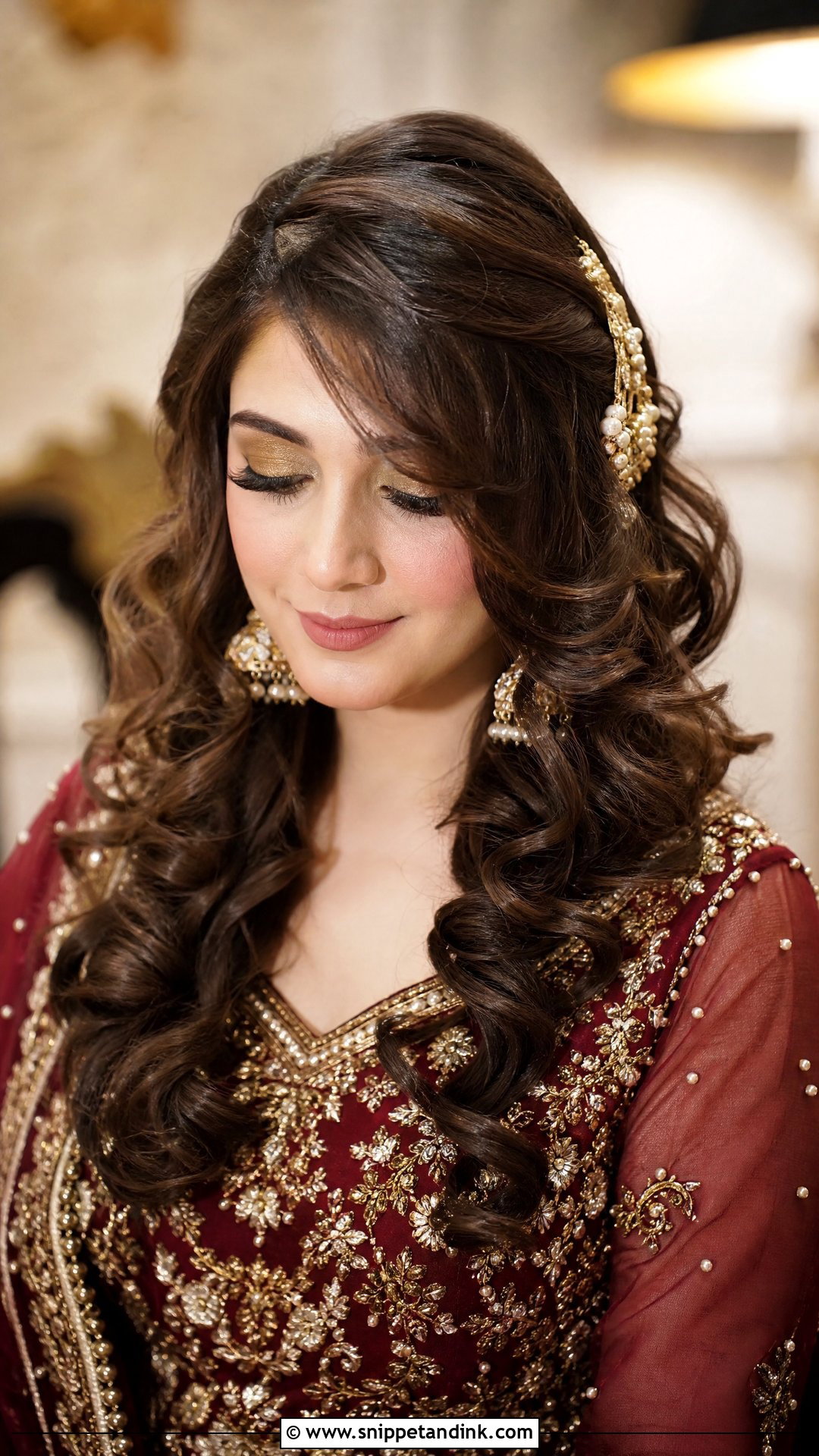
Your haircut decides whether this one works. The curls fall loose while the shorter front pieces frame the cheekbones, which softens round and square faces. I curl those front layers away from the face so they don’t fall into your eyes or catch on the tikka chain. A small side passa or a few flowers finish it. If you’re planning a fresh cut for the wedding, have the layers cut four to six weeks ahead, so they’ve settled and you’re not working with blunt new ends.
13. Side Braided Updo With Jhoomar
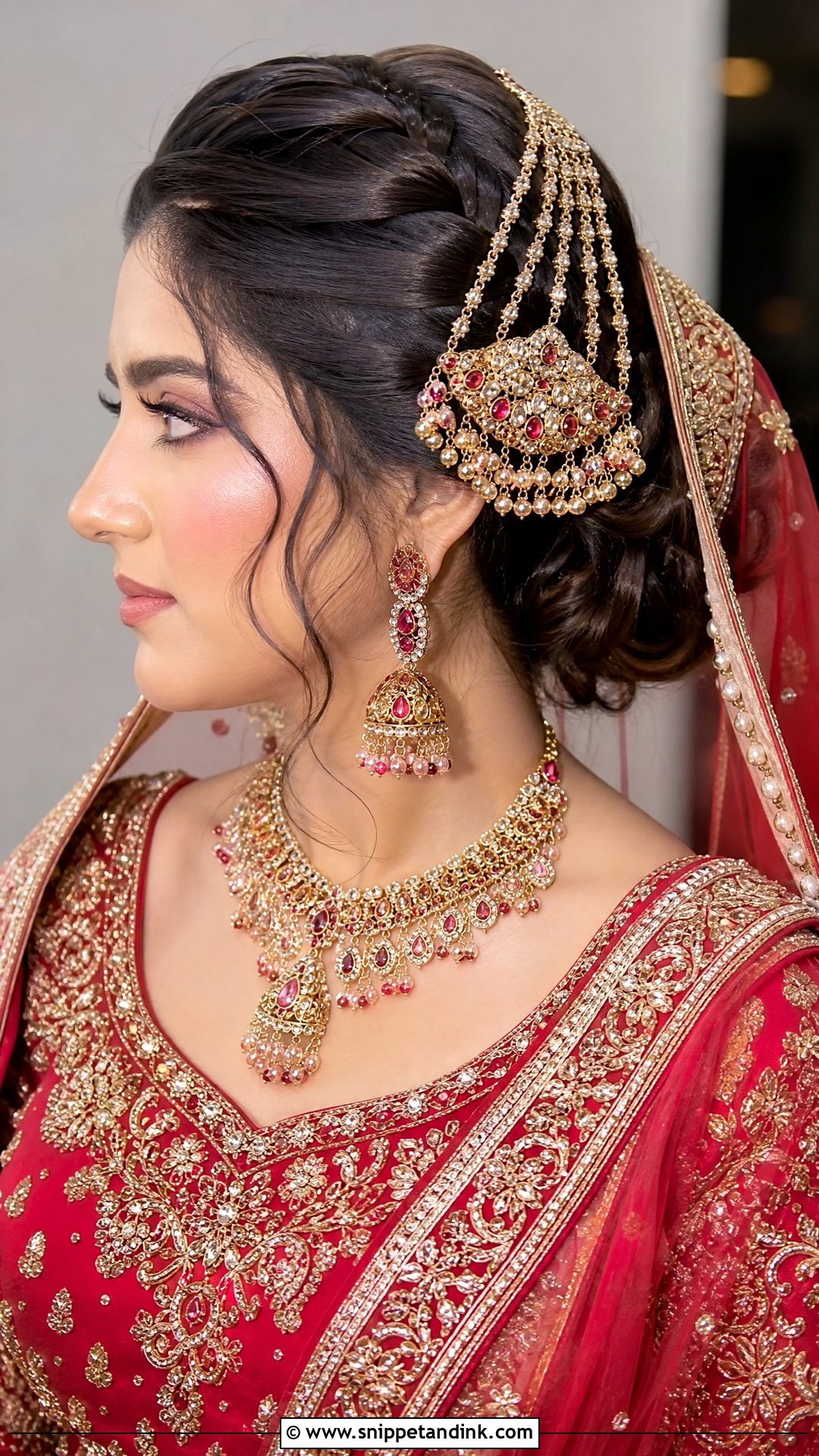
With a side braided updo, the weight of the look sits on one side, so the jhoomar has to go on that same side to balance it. I braid toward the jhoomar side, pin the braid into a low updo behind the ear, then hook the jhoomar into the top of the braid where it can’t drag. Long and oval faces suit it, and the open neck leaves room for a statement necklace. Watch the drape: the dupatta should fall on the opposite side, or it hides the whole detail.
14. Bouffant Bun With Front Puff
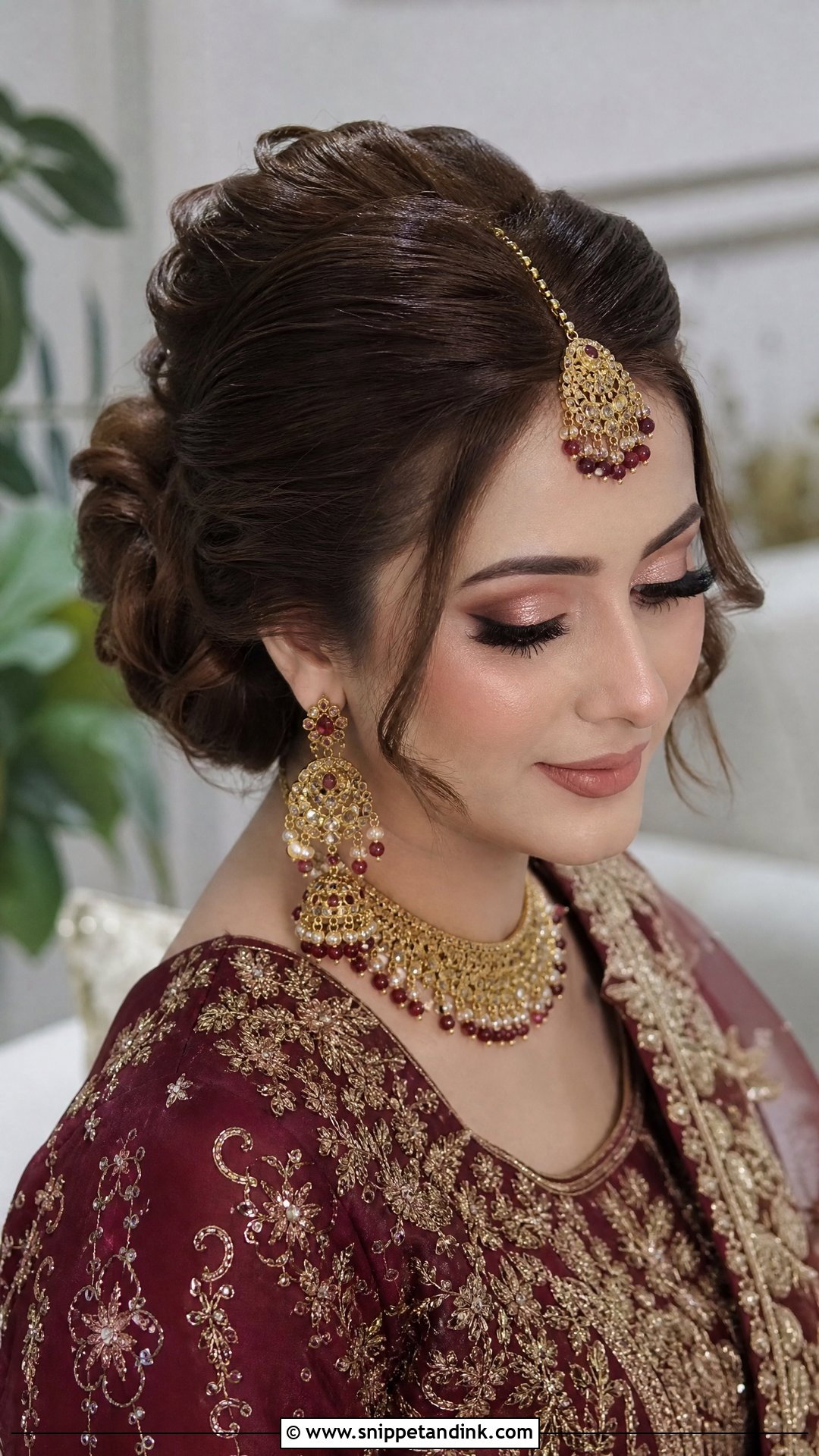
The bouffant with a front puff is the classic shape many Pakistani brides remember from family albums. I backcomb the crown at the root only, smooth the top layer over it, and pin the puff before gathering the rest into a bun. It pairs well with a heavy maang tikka and dupatta, because the puff lifts the dupatta and stops it flattening the hair. Medium to long hair suits it. If you have a long face, keep the puff modest; a tall one lengthens it further.

15. Loose Waves With Crown Braid
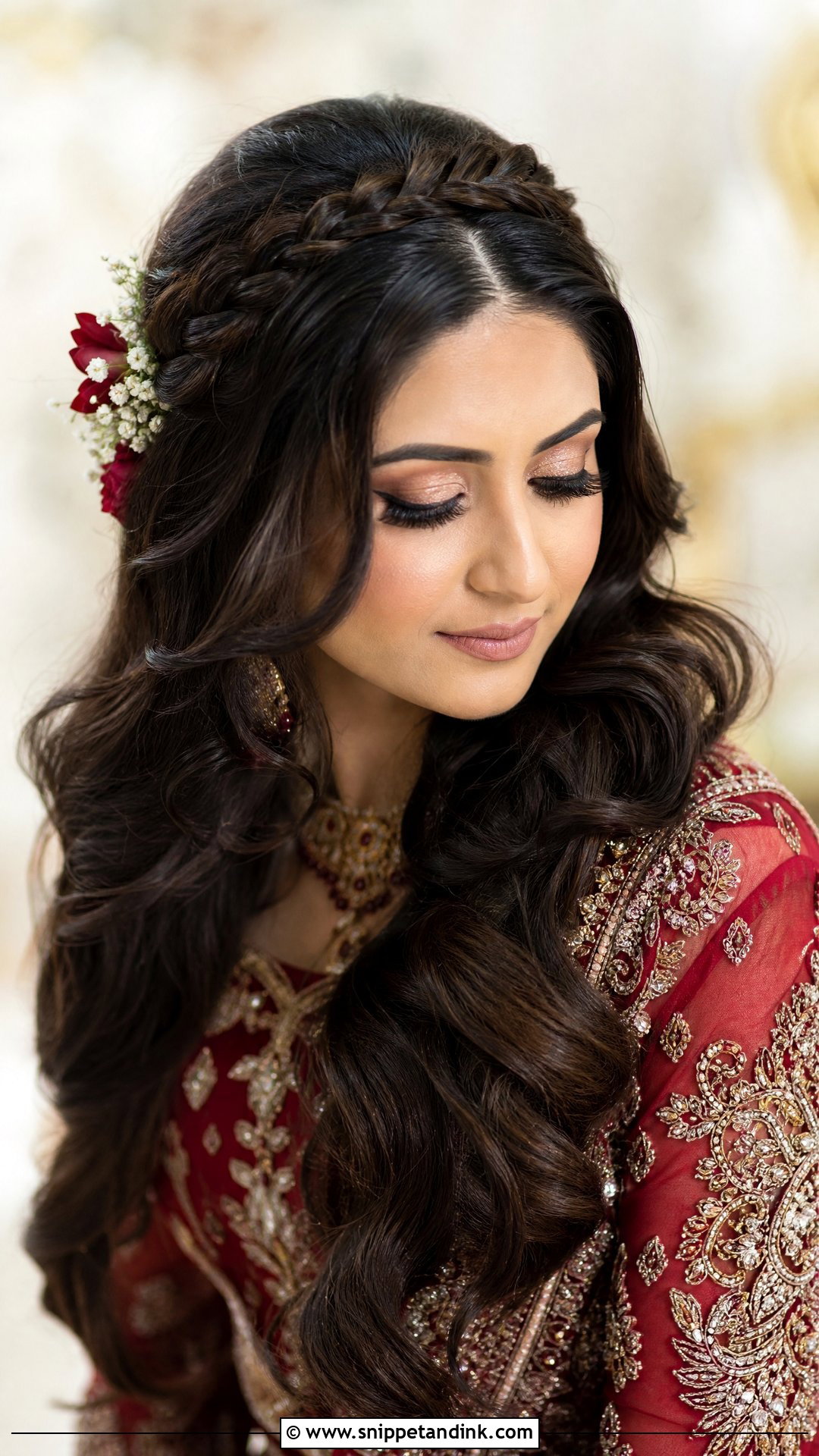
Loose waves with a crown braid are softer and less formal than most baraat styles, and that is both their charm and their limit. The braid wraps over the top like a halo, the rest falls in waves, and tiny flowers can be pinned along the plait. Medium to long hair is needed. Before you settle on it, think about your dupatta. A halo braid sits right where the dupatta pins, so I either drop the braid slightly lower or suggest a lighter net dupatta. Under a heavy embroidered one, the braid simply disappears.
16. Sleek Straight Open Hair With Center Part
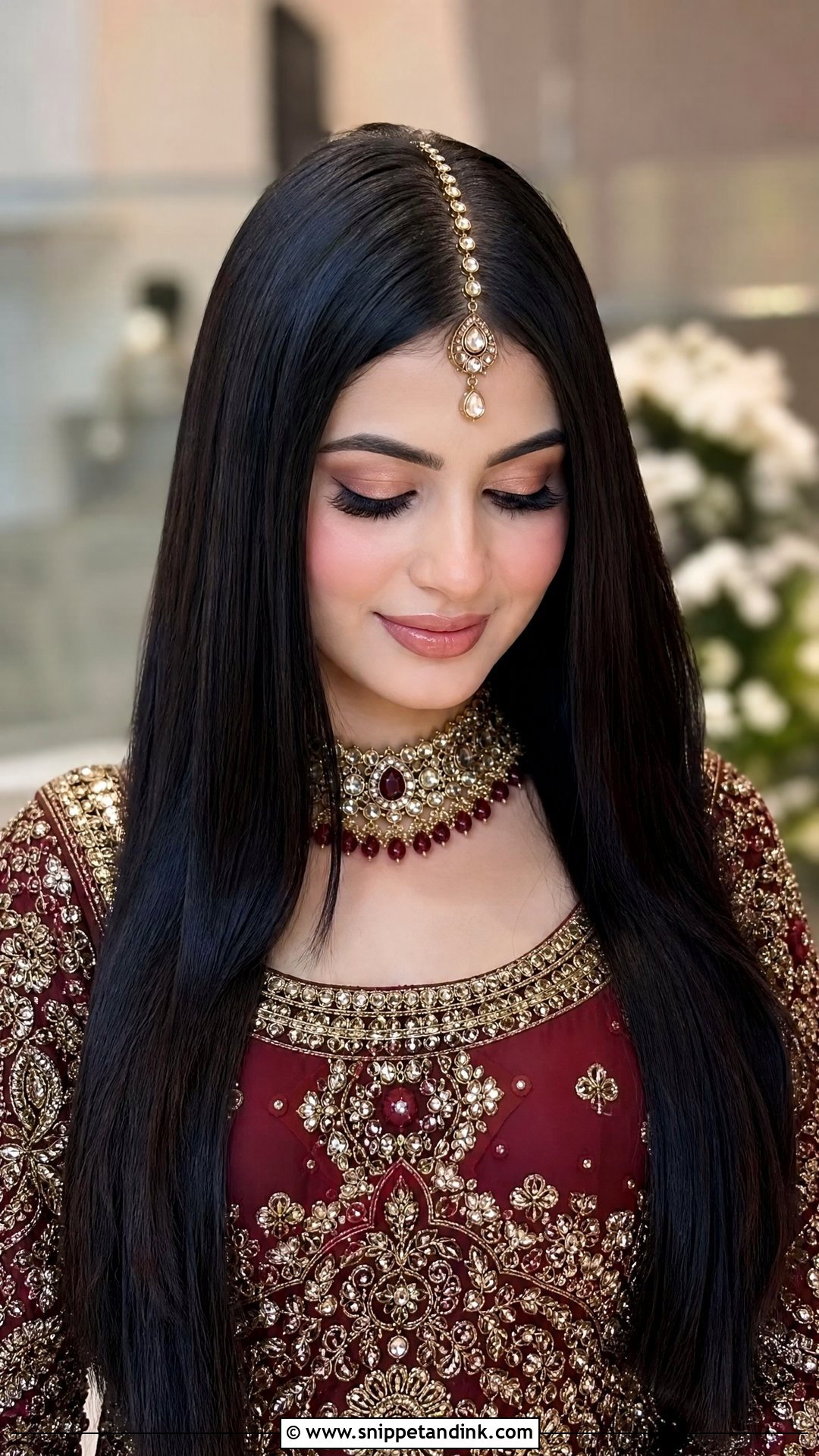
Sleek, center-parted hair is the most minimal look here, and it hands all the attention to your jewelry. It’s harder to get right than it looks. Flat-ironed hair frizzes in humidity and shows every flyaway in close-ups, so I finish with a drop of smoothing serum and press the hair on a lower heat than most people expect. Oval and heart-shaped faces carry the symmetry well. A thin matha patti or simple tikka is enough, and against heavy embroidery the plainness looks deliberate and modern.
17. Rose Adorned Side Bun
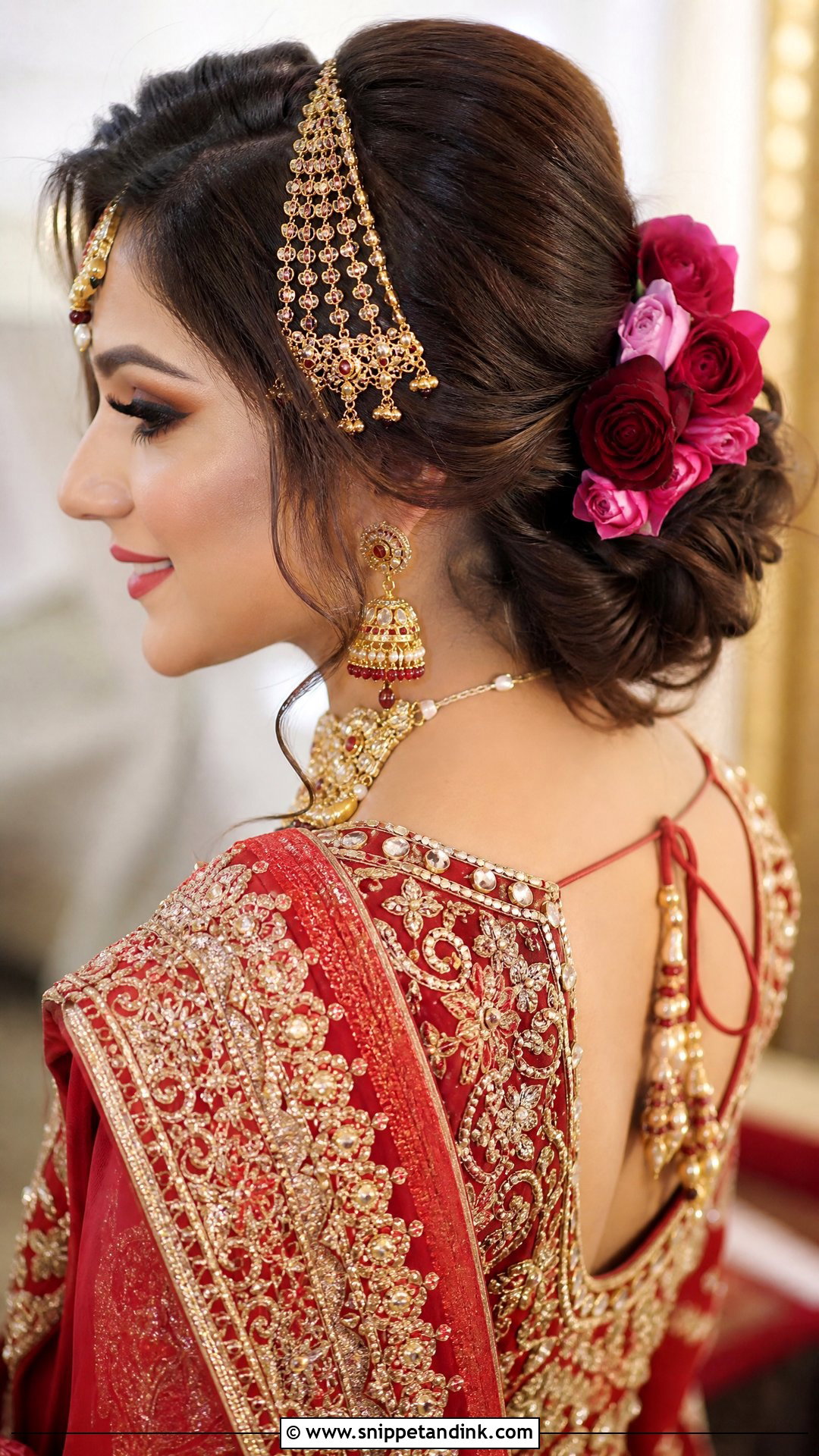
Think of this as a softer cousin of the classic low bun, sitting just behind one ear. I twist the hair to the side and pin it low enough that a heavy passa or earring on that side doesn’t clash with it. Red or pink roses tucked around the bun add color. Ask your florist for roses that are just opening rather than fully blown, as they keep their petals longer out of water. Most face shapes suit it, and the pinned twist holds for hours.
18. Curly Half Updo With Tikka
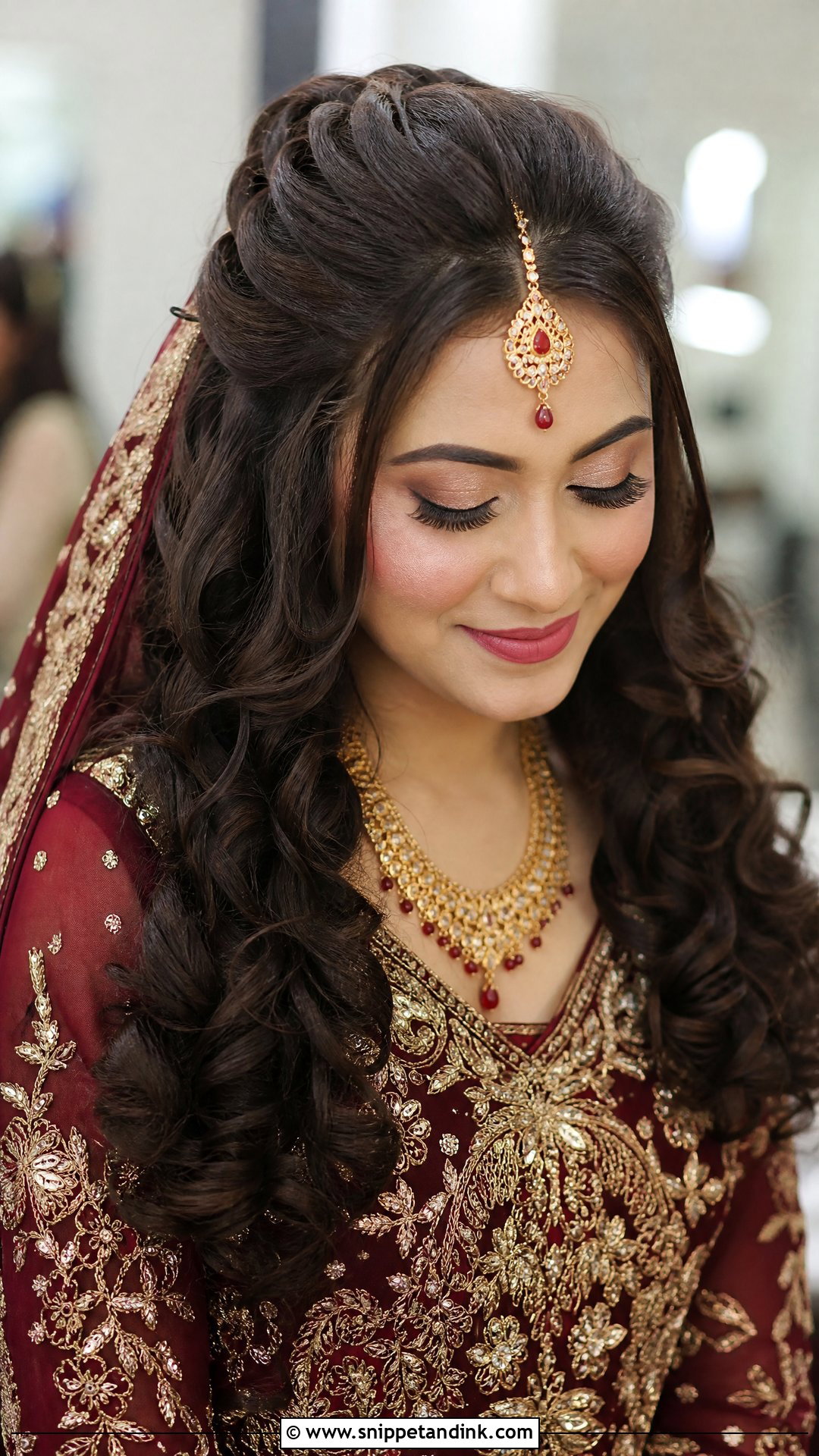
When a bride can’t choose between an updo and open hair, this is the compromise I suggest most often. The top section is gathered back with a little height, so hair stays off your face while you dance, and the curled ends fall around the shoulders. The maang tikka sits at the parting. Medium to long hair suits it. I tie the half-up section with an elastic before pinning, because pins on their own won’t carry the weight of a tikka chain hooked into it.
19. Twisted Side Swept Waves
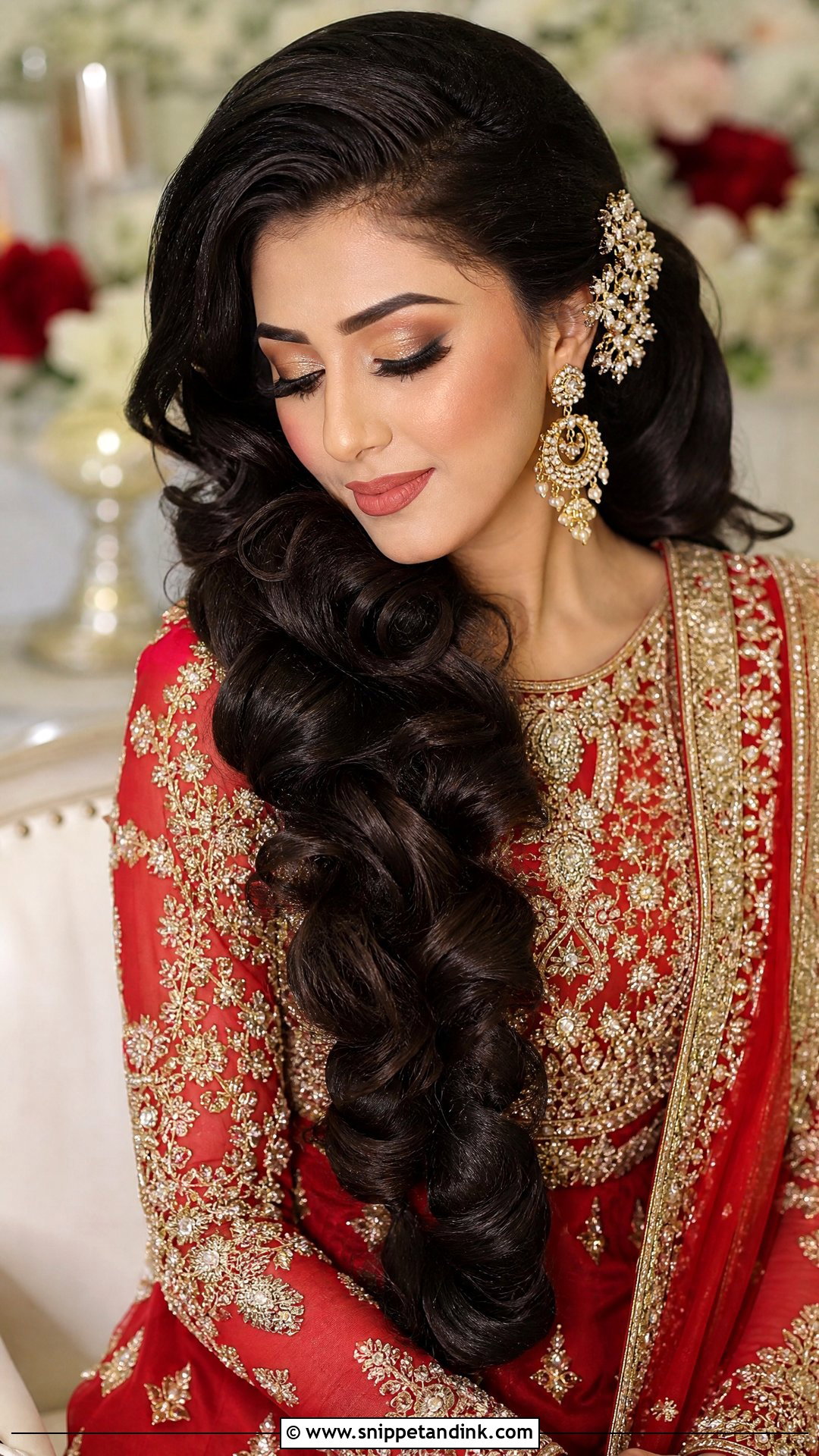
Twisted side-swept waves bring the most drama of anything here. I twist sections from the bare side across the back of the head and pin them under, which locks the sweep in place and sends every wave to one shoulder. A brooch or flowers can hide the pins. You’ll need long hair, and oval and square faces carry it best. The open side shows off the neckline. Plan the dupatta to fall over the bare side rather than the waves, or the two will tangle by dinner.
20. Floral Crown Bun With Dupatta Drape
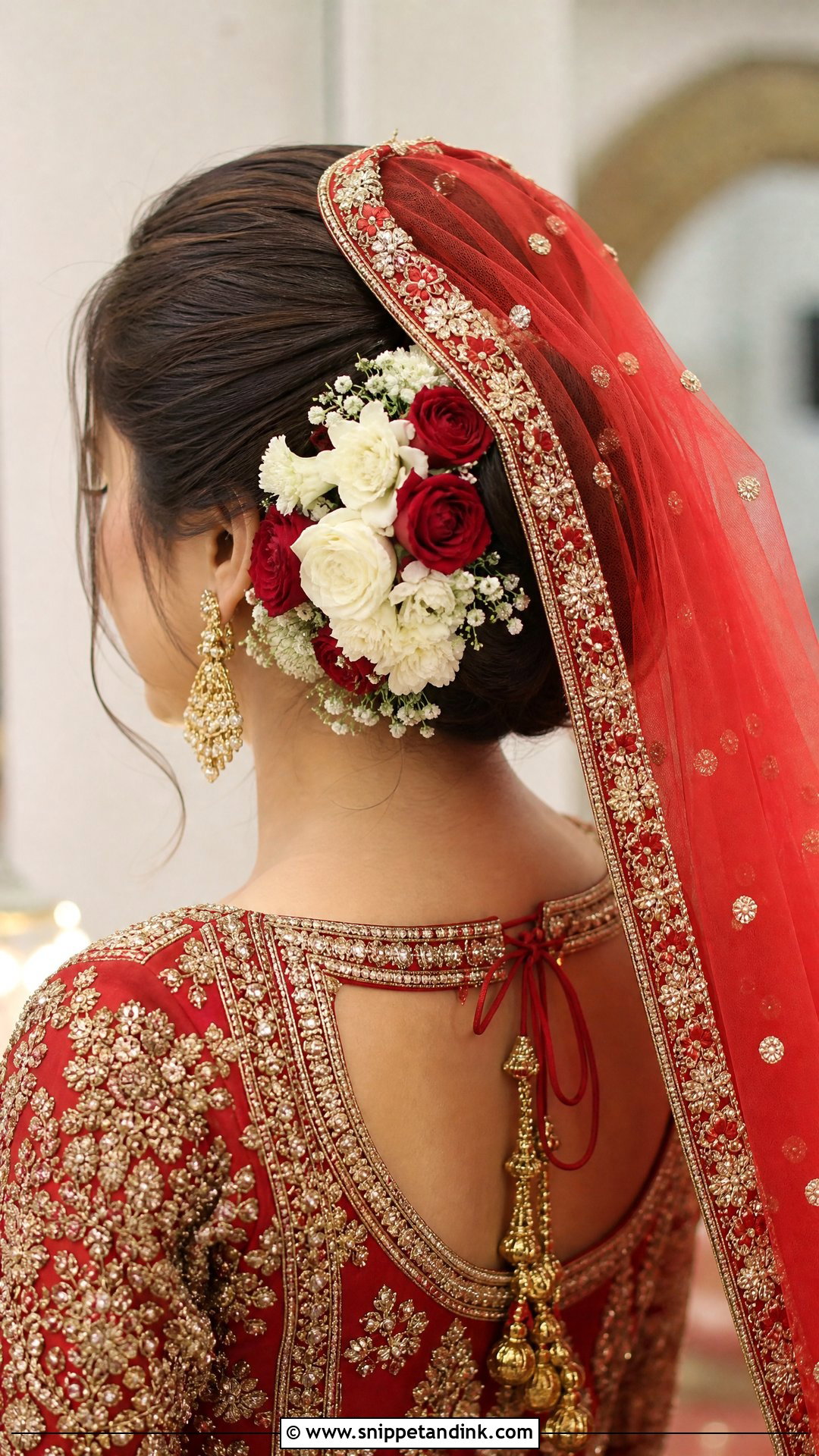
A floral crown bun with the dupatta draped over it is the most finished look on the list. The hair is set into a neat bun ringed with fresh flowers, and the dupatta is pinned just behind that circle so it frames the crown instead of burying it. Any length works with a filler, and the dupatta stays firmly put. Because the pins pass through both fabric and flowers, I set the dupatta pins first and arrange the blooms around them. It’s a style made for a grand entrance.
Will It Hold Until the Rukhsati?
A baraat runs long: the entrance, the stage, photographs with both families, dinner, and finally the rukhsati, often late at night in a warm hall full of people. Open and curled styles suffer first, sleek buns last. A few habits make the difference.
- Ask for curls to be pinned up while they cool. Curls brushed out hot relax within an hour or two.
- Give a sister or cousin a small pouch: bobby pins matched to your hair color, a few U-pins, a travel hairspray and a tail comb.
- If the jhoomar starts pulling, don’t tug it back. Unhook it, cross a fresh pin underneath, and hook it again.
- Motia and roses will wilt by the end of the night. Have someone pull out the browned blooms before the rukhsati photos rather than leaving them in.
Taking it all down deserves patience too. Remove the dupatta pins and jewelry first, then undo the bun from the outside in, pin by pin. Work conditioner through any backcombed section before you brush it; dragging a brush through teased, sprayed hair while it’s dry is how strands snap.
Start With Your Heaviest Jewelry, Then Pick the Hair
Most baraat hair problems I’m asked to fix come from choosing a style first and thinking about the jewelry later. Begin with the heaviest pieces you’ll wear, the dupatta and the jhoomar or passa, and look for a style that gives them something to hold on to. Face shape and length come after that. Have your trial with the real jewelry and dupatta, not stand-ins, and keep it on for a few hours to see what shifts. Do that, and whichever of these looks you love will still be in place when you leave for your rukhsati.
You'll Like These Ideas:




Leave a Reply