
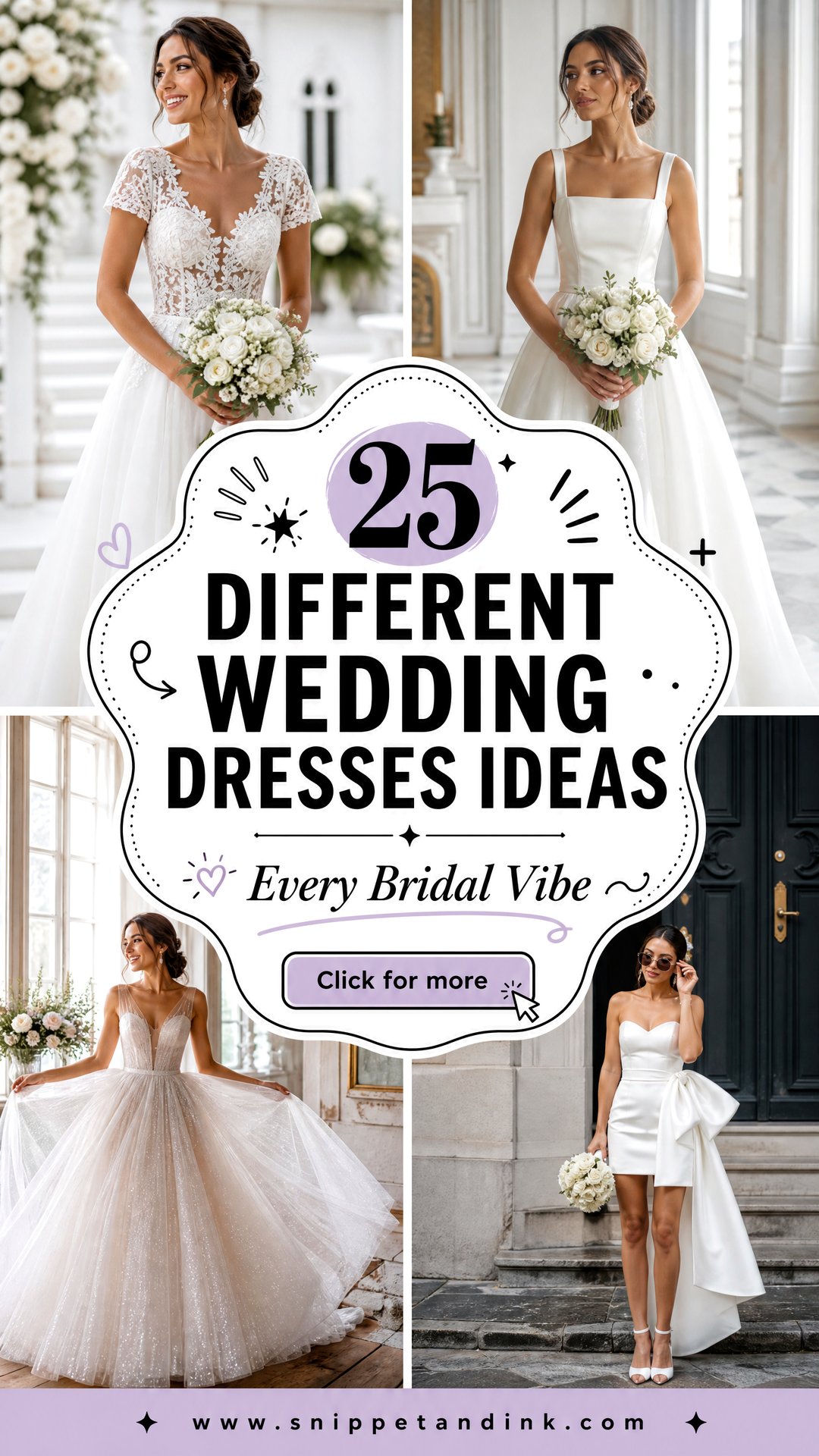
Plenty of brides walk into their first appointment having only ever pictured one kind of gown, and leave in something completely different. That happens because the shape that looks right on a screen often isn’t the one that feels right on your body, in your venue, for twelve hours. Right now the bridal racks lean toward clean minimal lines, basque and drop waists, pearl details, statement sleeves, lace, colored gowns and dresses that change between ceremony and party. Below is the full range, ball gowns to minis, with what I look for in each. Read it with the whole look in mind, since veil, shoes, hair and bouquet all change how a dress reads.
Silhouette First, Then Neckline, Then Fabric
The ideas below mix three different decisions: the overall shape of the gown, what happens at the neckline and sleeves, and the fabric or detail on top. At a first appointment I settle them in that order, because a neckline can be changed by a seamstress and a fabric swap is often possible, but the silhouette is the dress.
- Try four silhouettes back to back: an A-line, a ball gown, a fitted mermaid or trumpet, and a sheath or column. Your reaction to each tells you more than any photo board.
- Once one shape wins, try two or three necklines within it. Strapless, square, off shoulder and high neck read very differently on the same body.
- Only then compare fabrics. Satin, crepe, lace and tulle can turn the same pattern formal, modern or romantic.
Wear or bring underwear close to what you’ll wear on the day, plus shoes at roughly your planned heel height. A gown pinned on a sample size can’t tell you much if the hem is pooling on the floor.
1. A Line Wedding Dress
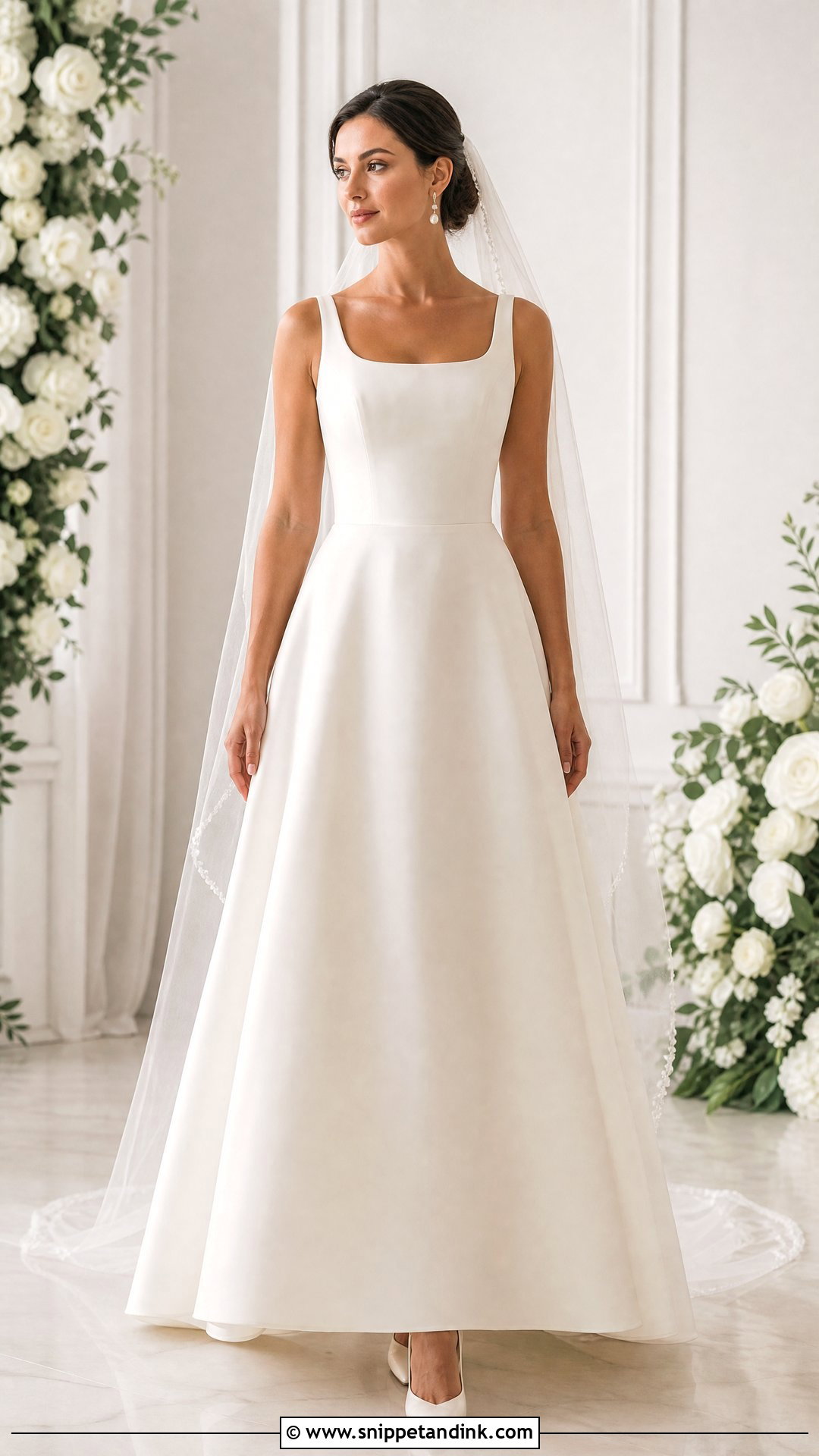
If a bride has no idea where to start, I put her in an A-line first. The bodice fits through the waist and the skirt flares gradually from there, so it suits most figures and almost any venue without much fuss. Satin makes it clean and classic; lace or tulle turns it romantic. Pointed ivory heels, pearl drops and a fingertip veil finish it. One small styling note: keep the bouquet medium-sized, because a big cascade sits right over the waist and hides the shape you chose the dress for.
2. Ball Gown Wedding Dress
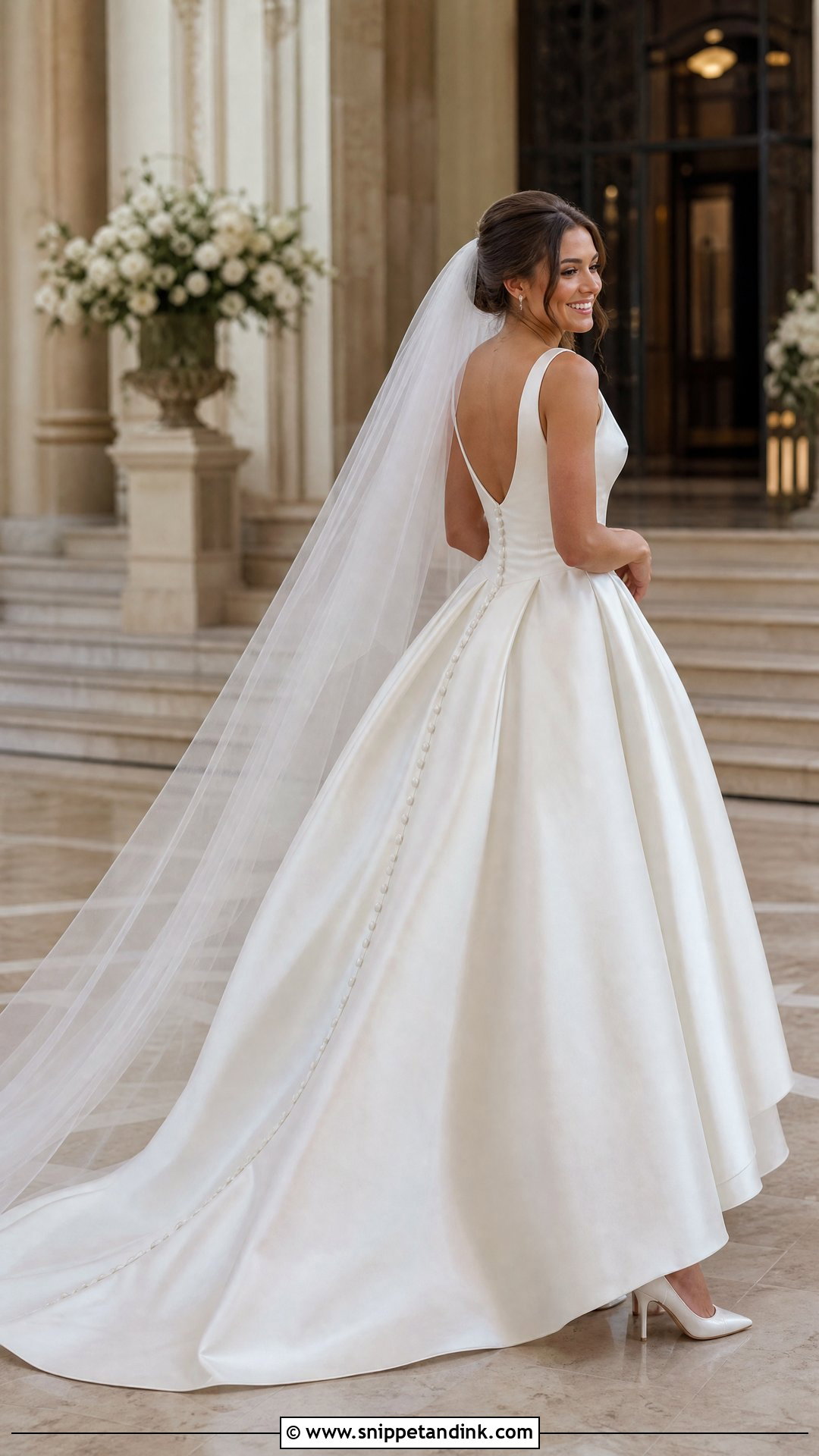
A ball gown is the most traditional bridal shape and the one that needs the most room, both in the venue and in the car on the way there. The fitted bodice and wide skirt create a strong waistline that suits grand halls and black-tie weddings. To keep it from feeling costume-like, I pick one standout detail, a basque waist, pearl buttons or soft appliqué, rather than all three. A structured updo and a long veil balance the volume. Heavy fabric means simple jewelry; the skirt is already doing the talking.
3. Mermaid Wedding Dress
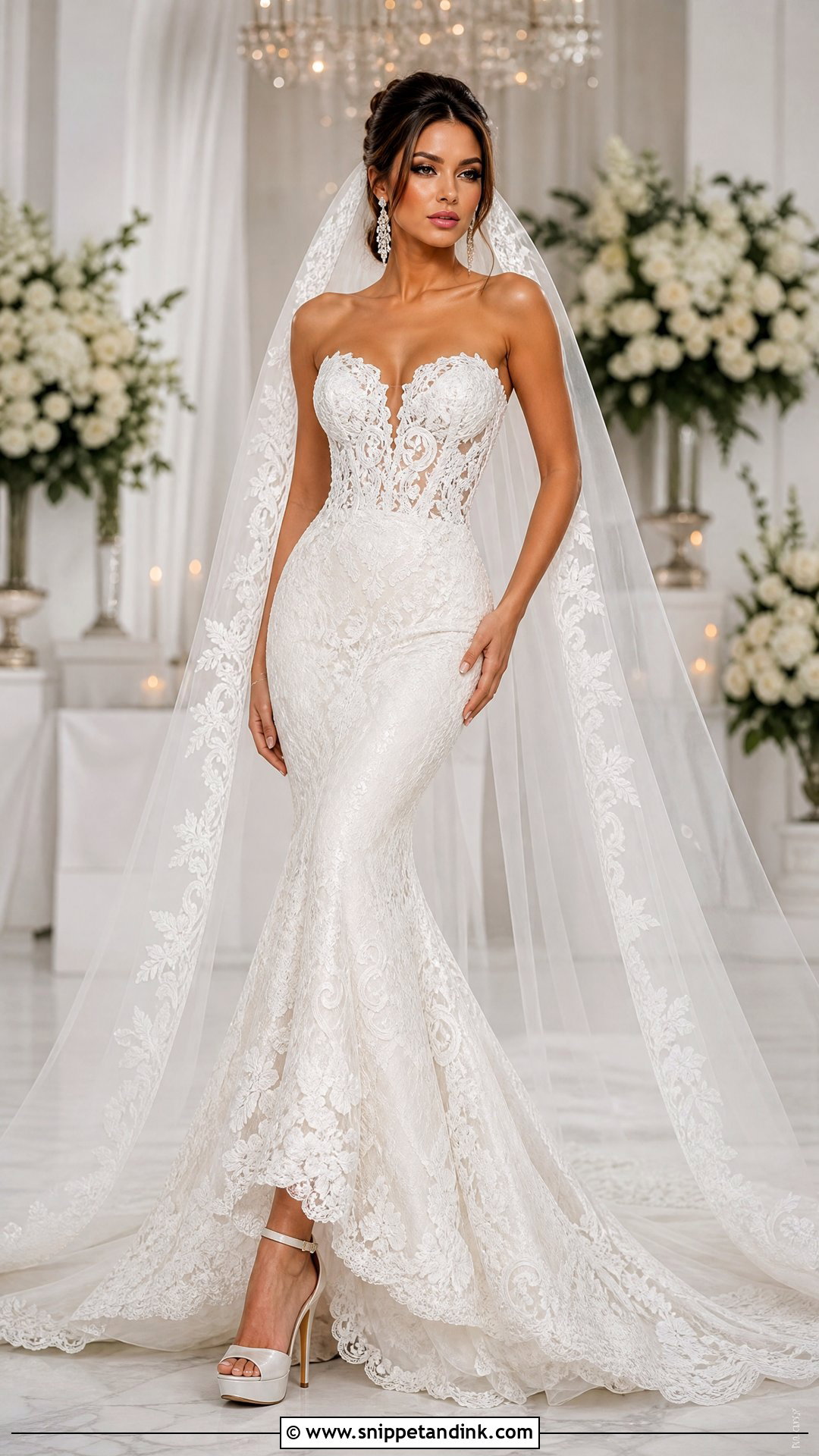
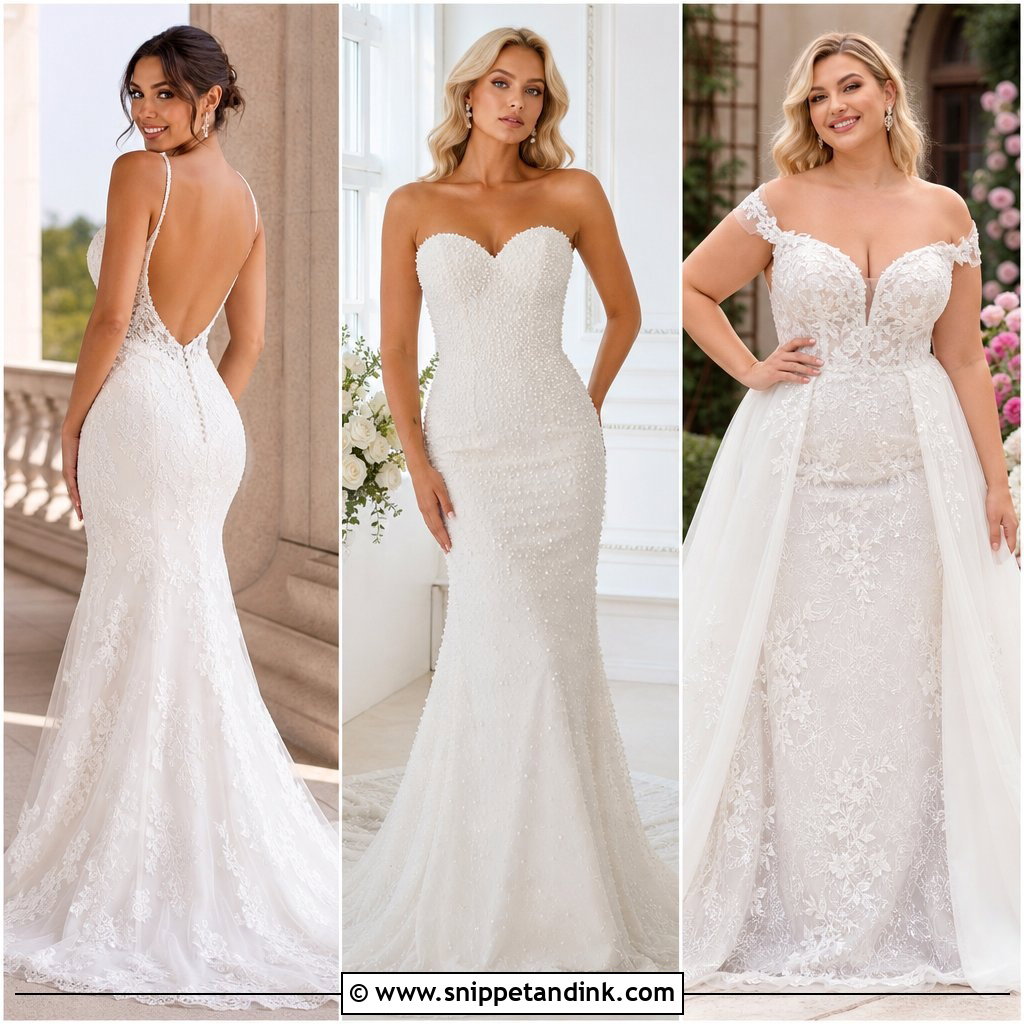
The mermaid fits close through the bodice, waist, hips and thighs before flaring near the knee, so it shows curves more than any other shape here. It also limits movement more than any other. At fittings, I have brides sit, climb a step and dance a few bars, because a flare set too low turns stairs into a shuffle. Stretch crepe gives the sleekest line, lace adds romance and satin looks polished. Heels help the flare fall where it was designed to, and long earrings lengthen the neck.
4. Sheath Wedding Dress
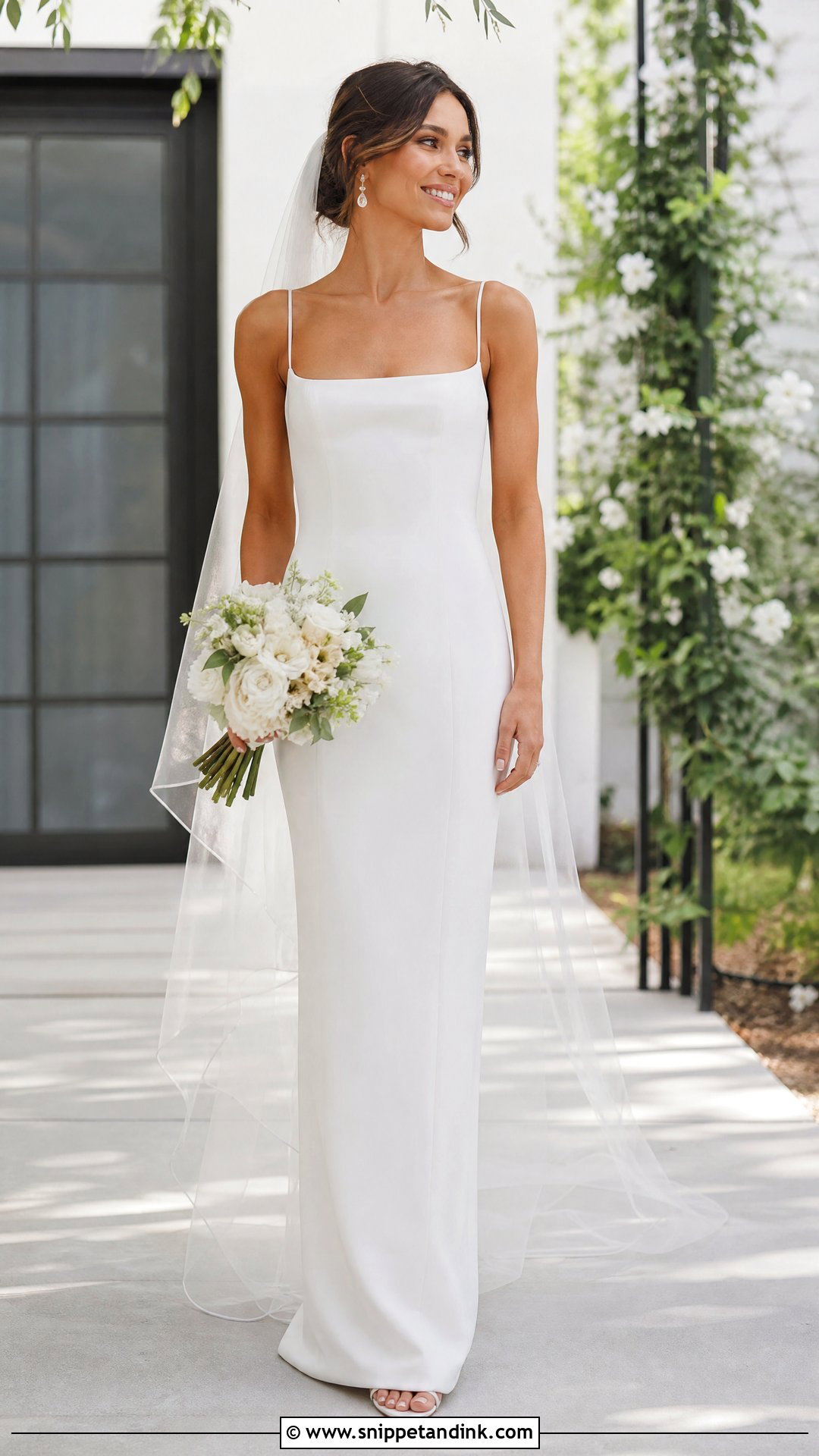
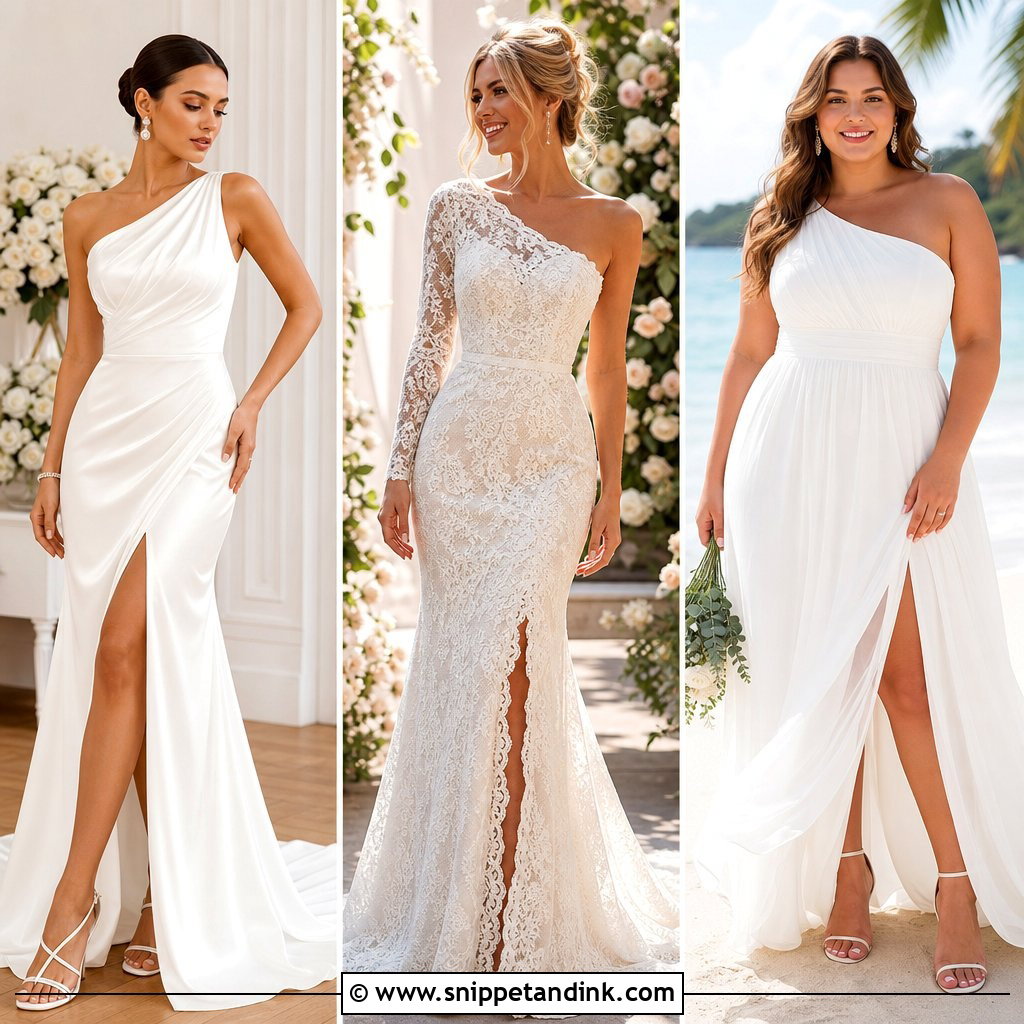
A sheath follows the body without a wide skirt, and everything depends on fit and fabric because there’s no volume to hide anything. Silk, crepe or satin give a smooth line; lace softens it. Beach, garden and city weddings all suit the shape, as do smaller celebrations. Barely-there heels and a sleek low bun keep it modern, while a sheer cape or long veil adds ceremony weight without changing the line. Budget for careful alterations at the waist and hips, since a sheath that’s a little loose looks borrowed.
5. Column Wedding Dress
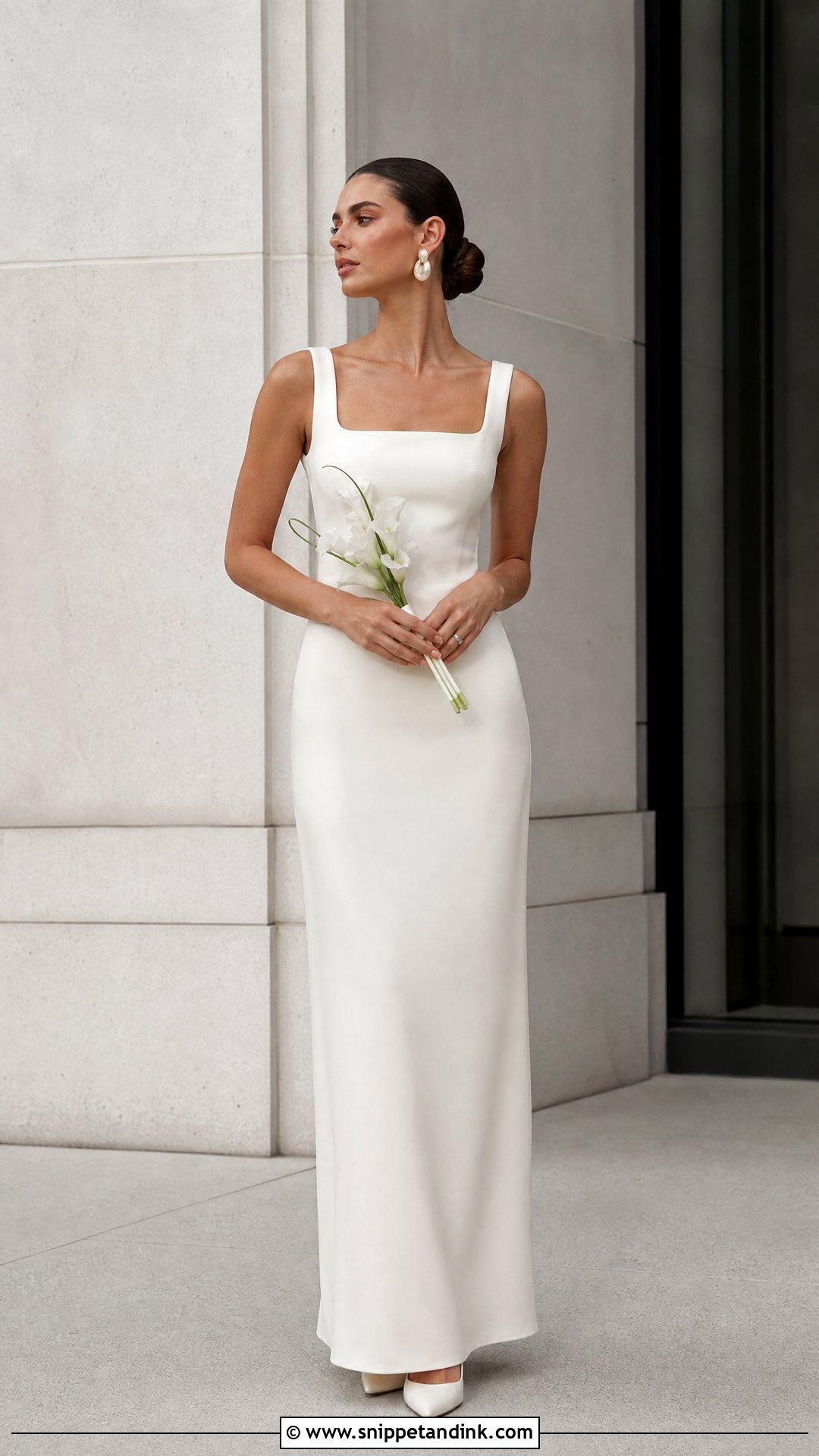
Column and sheath are often used interchangeably, but to me a column reads more structured: a straight line from neckline to hem with almost no shaping at the skirt. That makes it the minimalist’s gown. A square neckline, strapless bodice or high neck all suit it, with satin pumps and sculptural earrings. Its weakness is the aisle, where it can look plain from the back pews, so I often add a detachable overskirt or a long veil for the ceremony and take it off for dinner.
6. Slip Wedding Dress
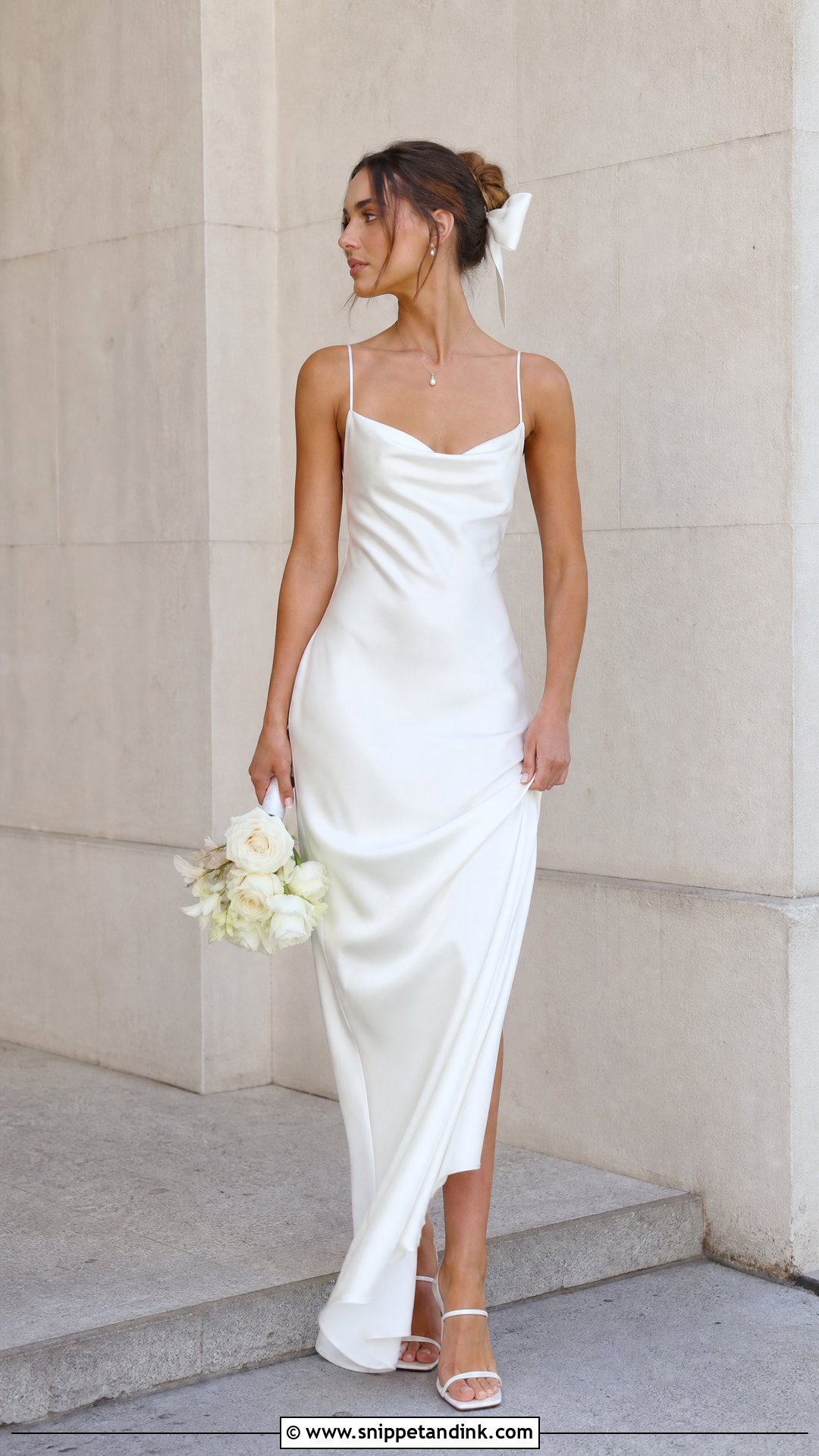
Thin straps, fluid fabric and a shape that skims rather than fits: a slip dress is simple, and that’s exactly why it’s hard to get right. Bias-cut silk shows every line beneath it, so I treat the underwear question as part of the fitting, not an afterthought. It suits destination weddings, courthouse ceremonies, rooftops and second bridal outfits. Silk satin or charmeuse stops it looking casual. Strappy heels and a clean veil or hair bow make it bridal, and a wrap or blazer adds cover when the evening cools.
7. Basque Waist Wedding Dress
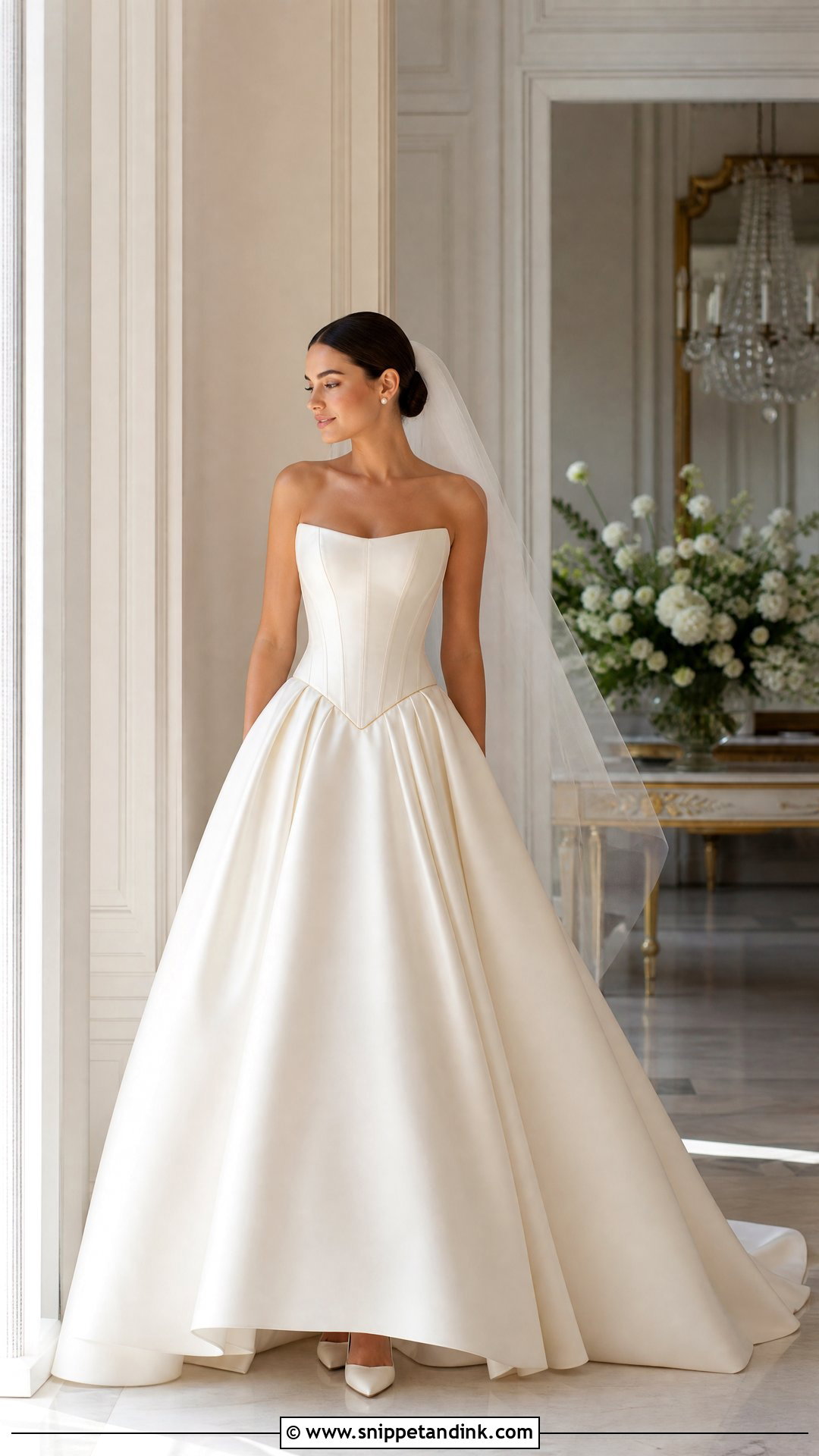
The basque waist dips into a V or U below the natural waist, which lengthens the torso and pulls the eye down to a narrower point. It’s back in a big way, mostly on full skirts, satin, lace bodices and corset-style construction. Because that point sits low, I check the bride sitting down: on a shorter torso, a deep V can dig into the hips. With a structured bodice I skip the necklace and go with pearl studs and a soft veil. It’s the easiest route to a fairytale shape that still shows a defined waist.
8. Drop Waist Wedding Dress
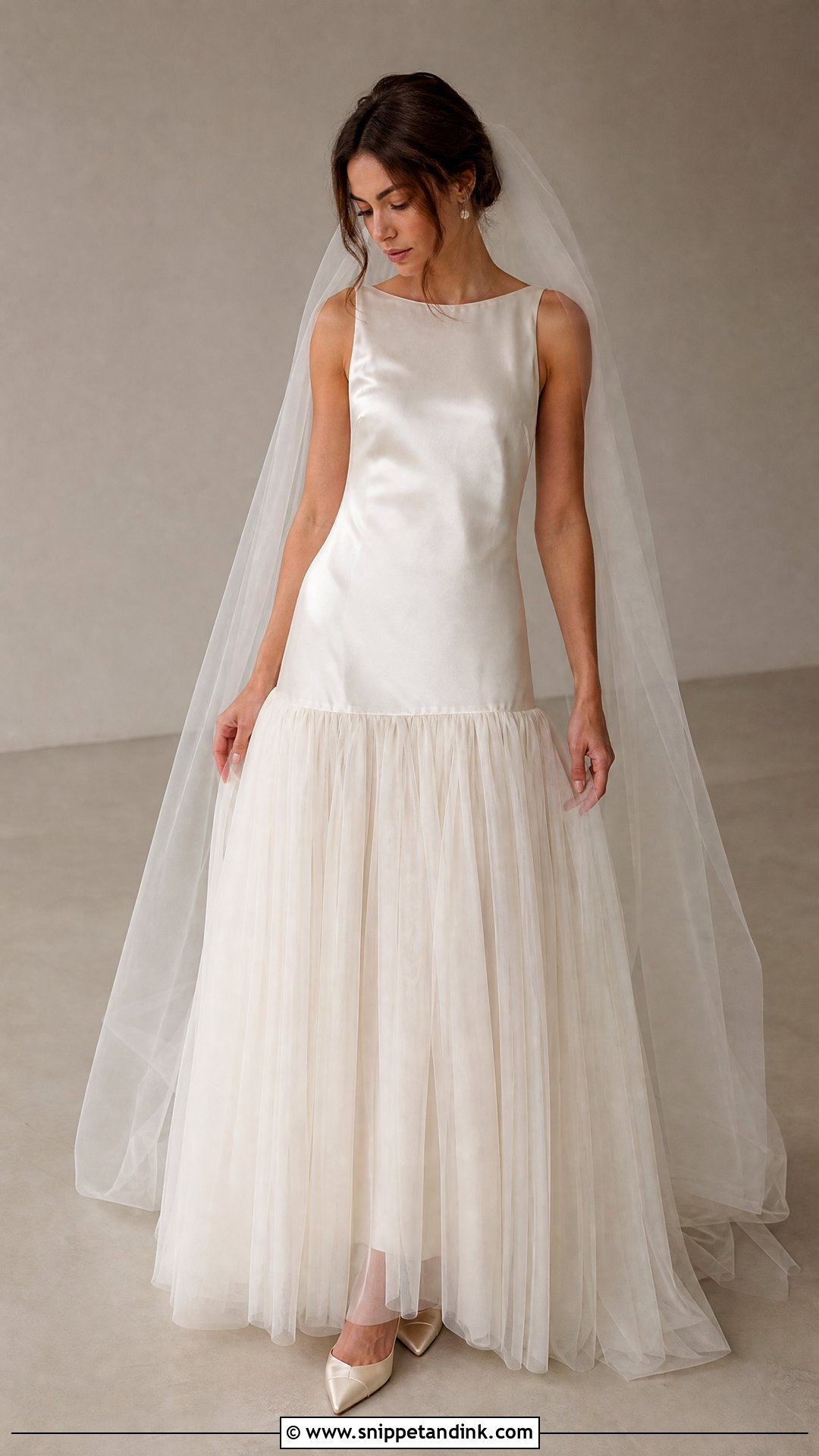
Where a basque waist dips to a point, a drop waist moves the whole seam down to the upper hip for a long, straight torso. Satin makes it sleek, lace makes it romantic and a full tulle skirt makes it dramatic. This is the shape where proportion decides everything: if your torso is short, the seam can land too low and shorten your legs, so try several versions with the seam at slightly different heights. Simple heels and a long veil carry the line through.
9. Corset Wedding Dress
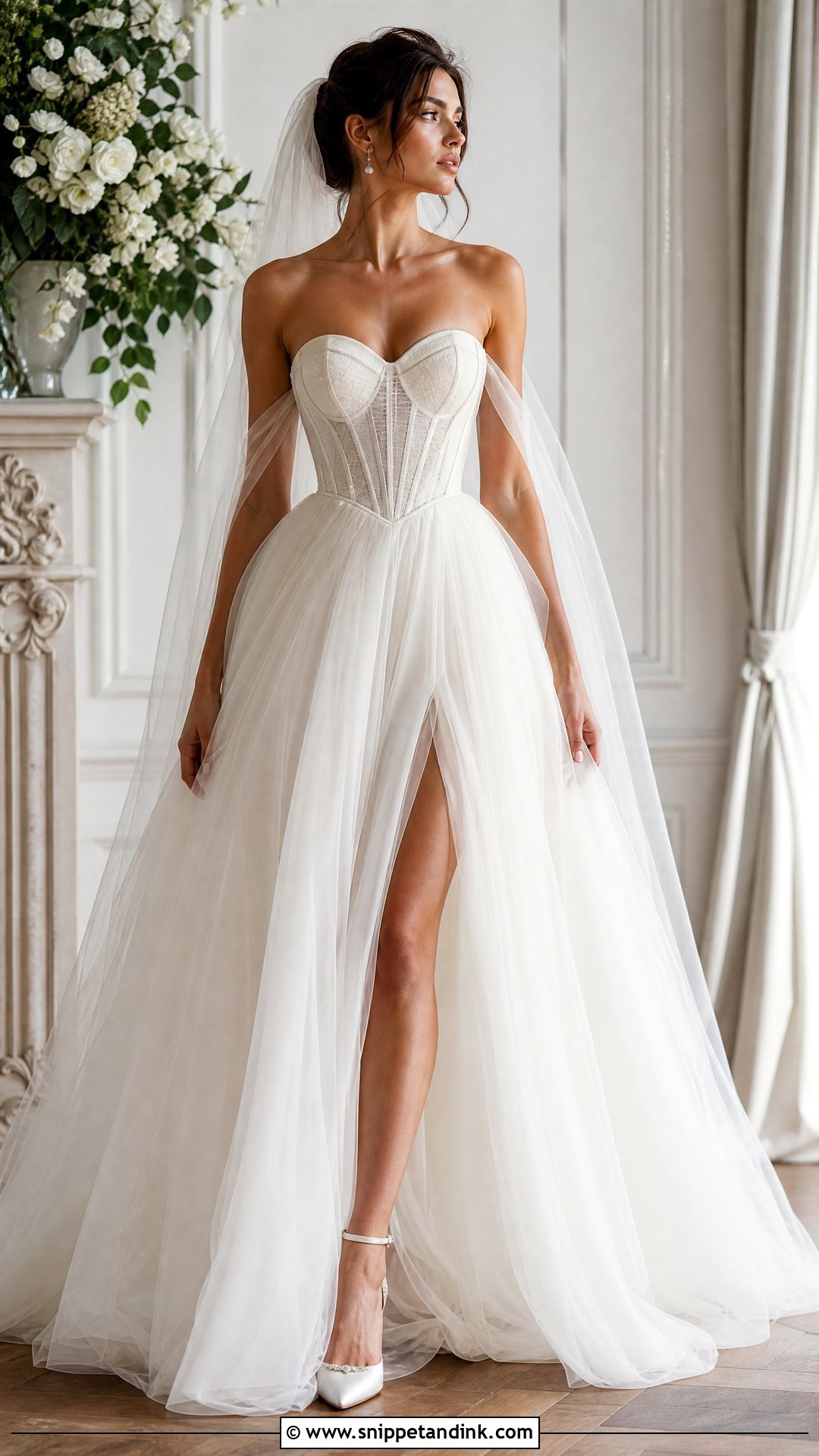
A real corset bodice has boning and a sculpted inner structure that holds the dress up and shapes the waist, which means you can often skip a separate bra. A corset top over soft tulle feels dreamy; a satin corset gown looks sharper. My rule at fittings is simple: you should be able to take a full breath and sit through a three-course dinner, and if you can’t, it’s laced too tight. Small earrings and a veil in the same mood keep the bodice in focus.
10. Off Shoulder Wedding Dress
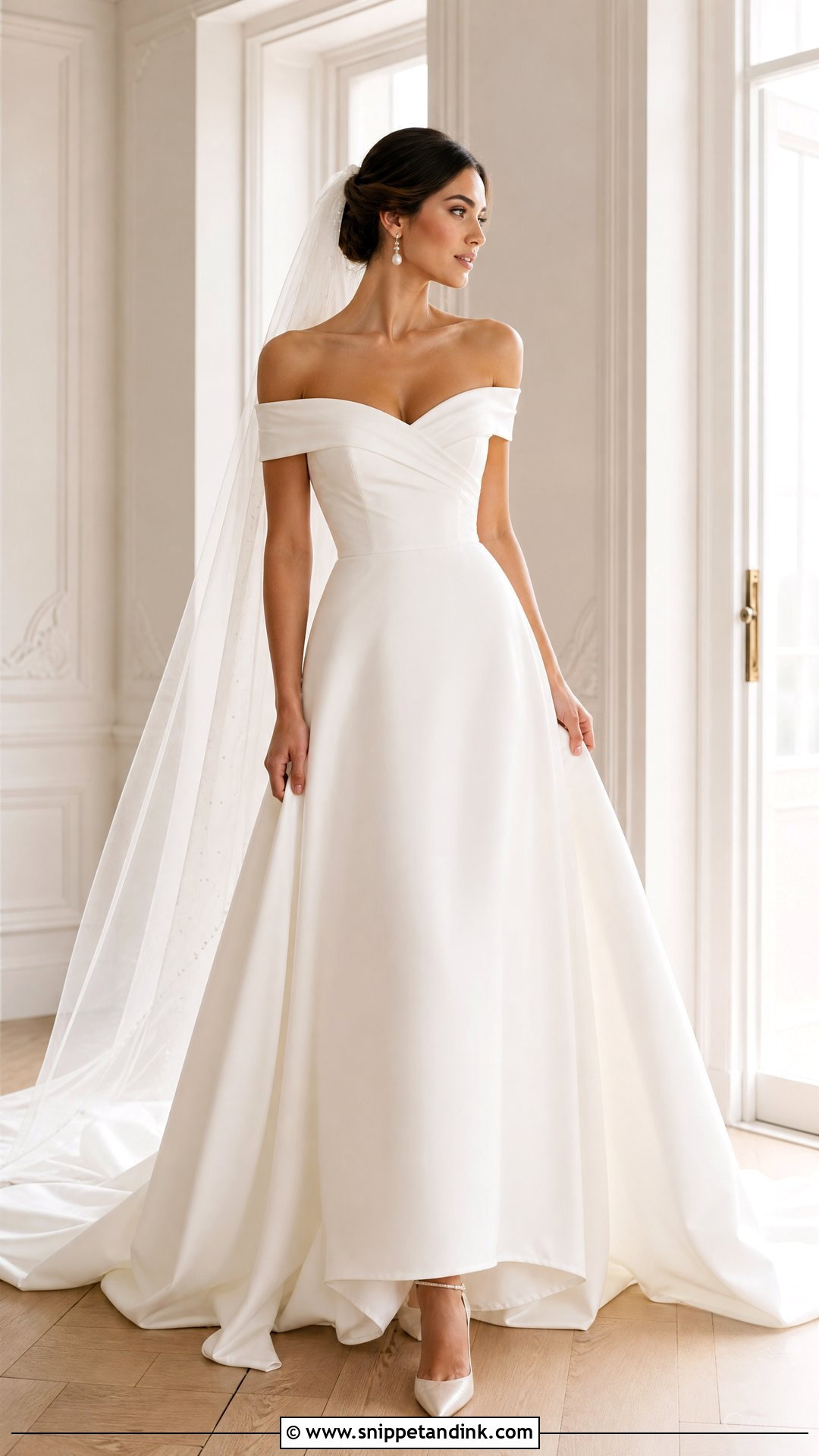
Off shoulder sleeves sit across the upper arms, framing the collarbone and covering part of the arm at the same time. They suit fitted gowns, A-lines, ball gowns and lace. The honest drawback is that they limit how high you can lift your arms, so a hug or a raised toast pulls the bodice up unless there’s a silicone grip inside. A low chignon and pearl earrings keep the neckline clear, and in close portraits the shape draws attention straight to your face.
11. Long Sleeve Wedding Dress
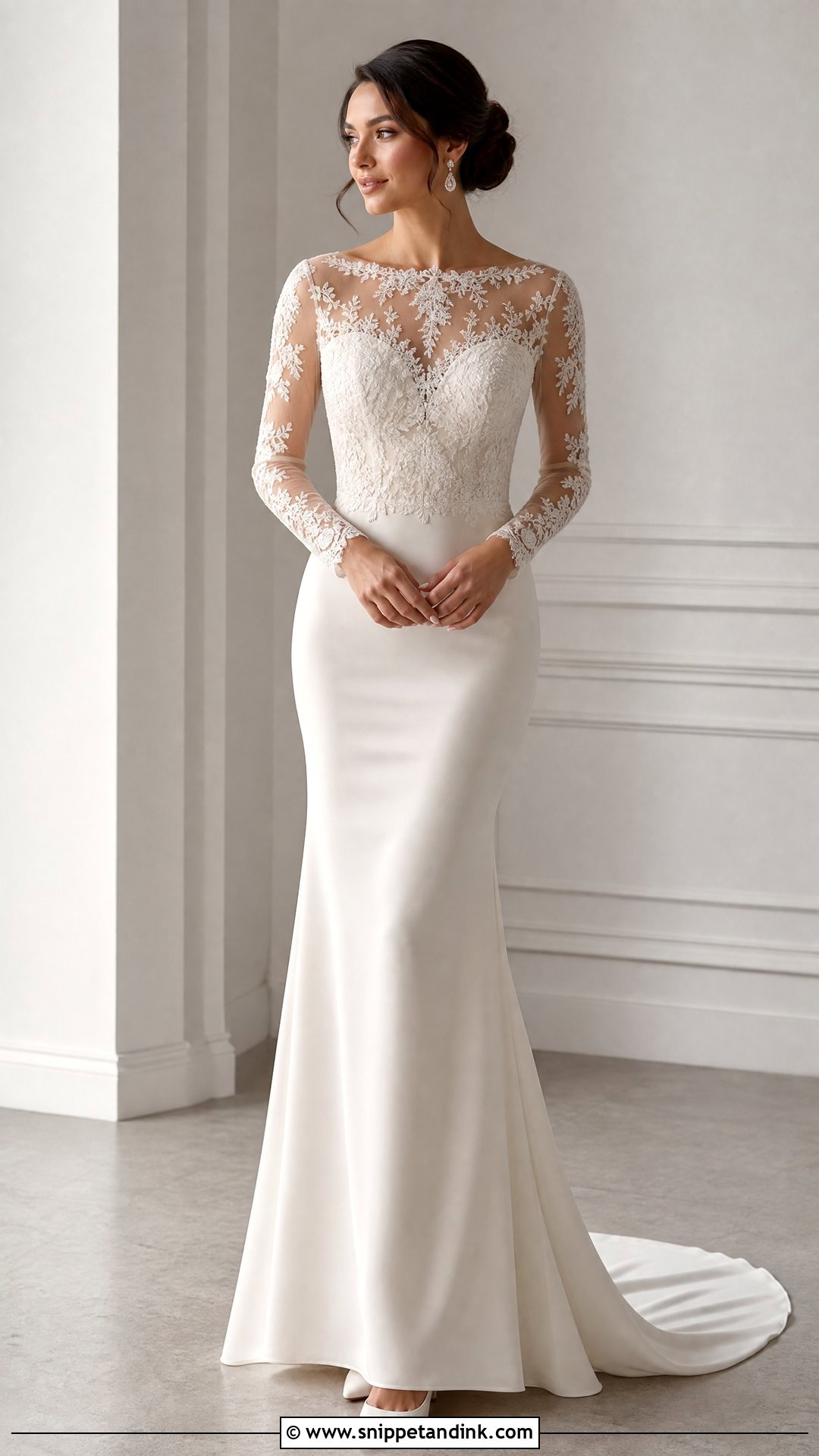
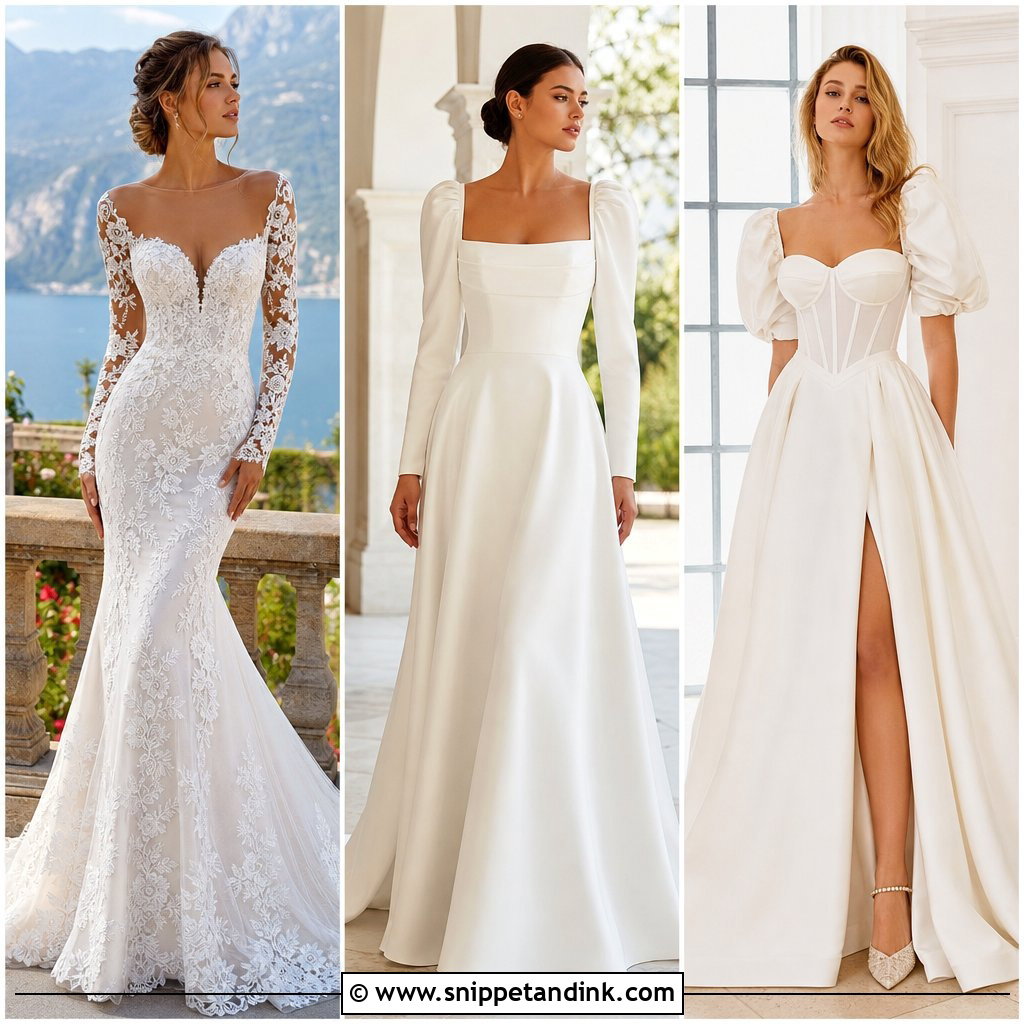
Long sleeves are practical for cool seasons and heavily air-conditioned venues, and they can be sheer lace, fitted crepe, puffed organza or satin. Balance is what I watch: detailed sleeves want a cleaner skirt, and a plain gown can take a statement sleeve. Fit is the risk. Sleeves set too tight at the armhole stop you from raising your arms, so at every fitting I ask brides to reach forward as if hugging someone. A neat updo and refined earrings finish it.
12. Short Sleeve Wedding Dress
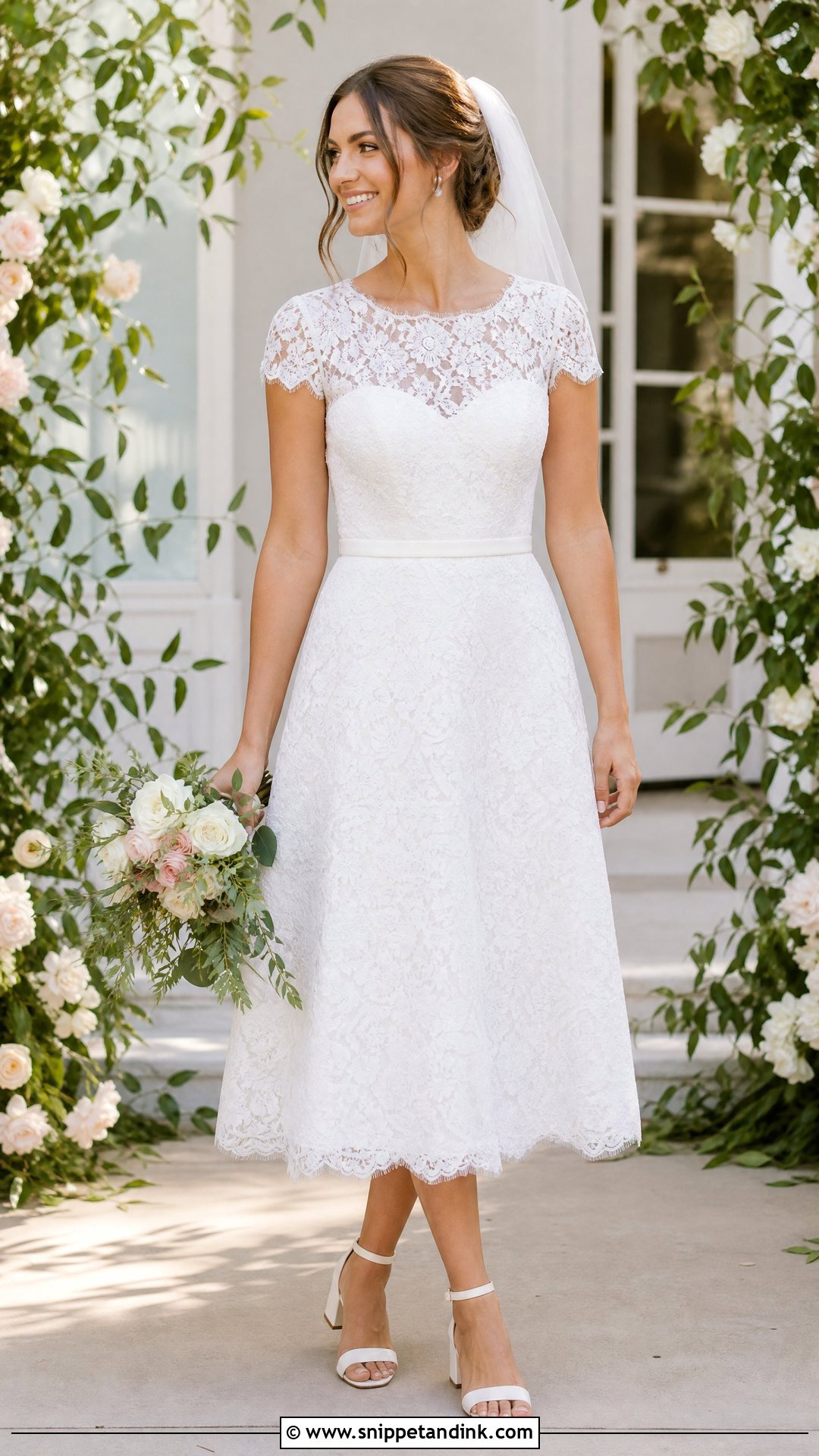
A short sleeve gives a little coverage without the formality of a full sleeve, and it’s comfortable in a way strapless rarely is. It suits tea-length dresses, lace A-lines, simple satin and vintage-style looks. Cap sleeves look delicate; fuller short sleeves feel romantic. The fit point is the underarm: if the sleeve pinches there, it’ll chafe by the reception. Block heels, pearl earrings and a small bouquet keep it relaxed. For warm-weather brides who don’t trust a strapless bodice, it’s the obvious alternative.
13. Strapless Wedding Dress
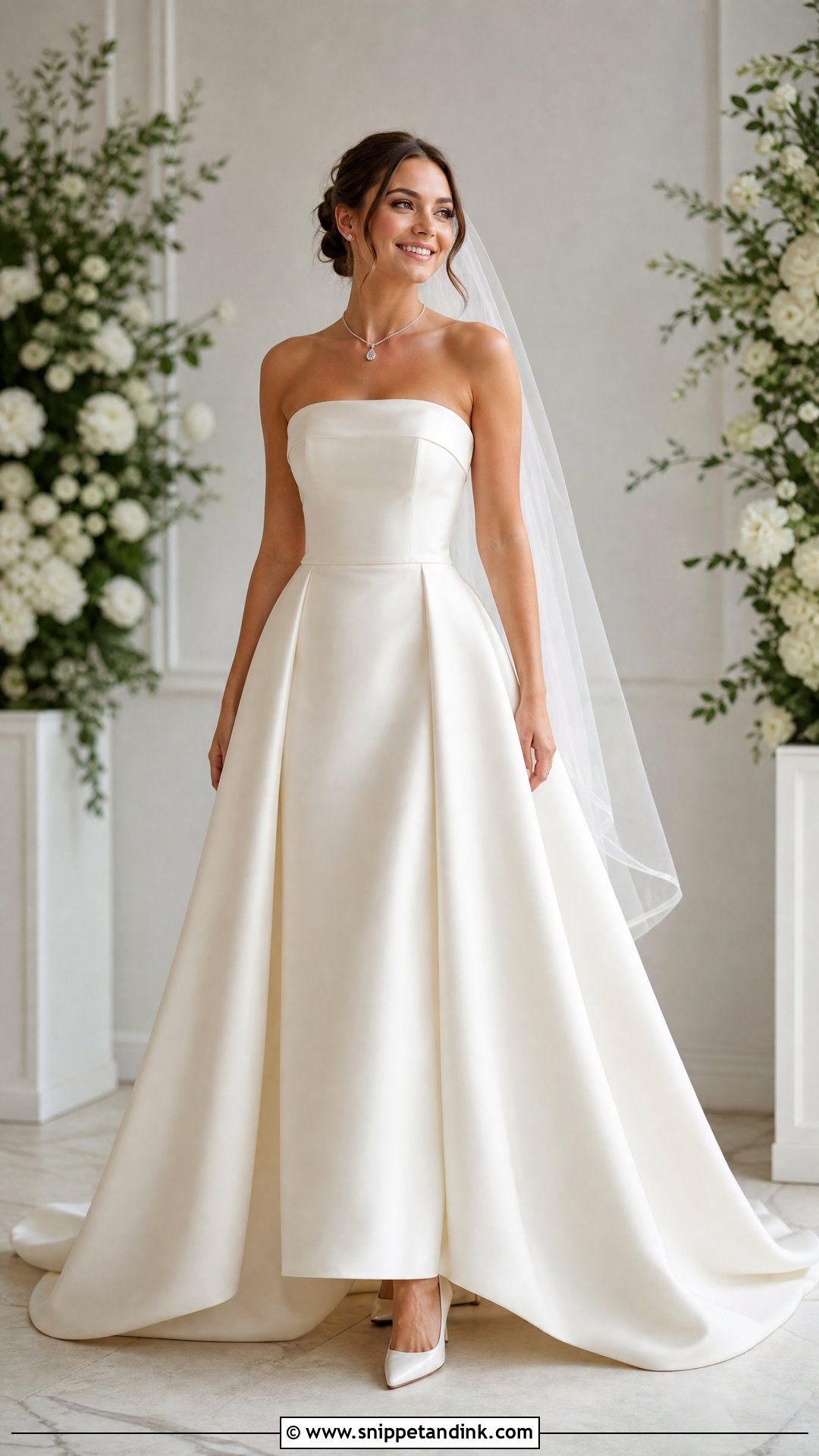
Strapless is classic because it leaves the neckline open for a veil, a necklace or bold earrings, and it suits almost every silhouette. A strapless ball gown reads traditional; a strapless column reads modern. Support is the only question that matters. A well-built bodice grips at the ribcage, not the bust, so it stays up without tugging. If the bodice has lace, pearls or beading, skip the necklace; if it’s plain, a necklace finishes it. Tailoring through the bust and waist has to be exact.
14. Square Neck Wedding Dress
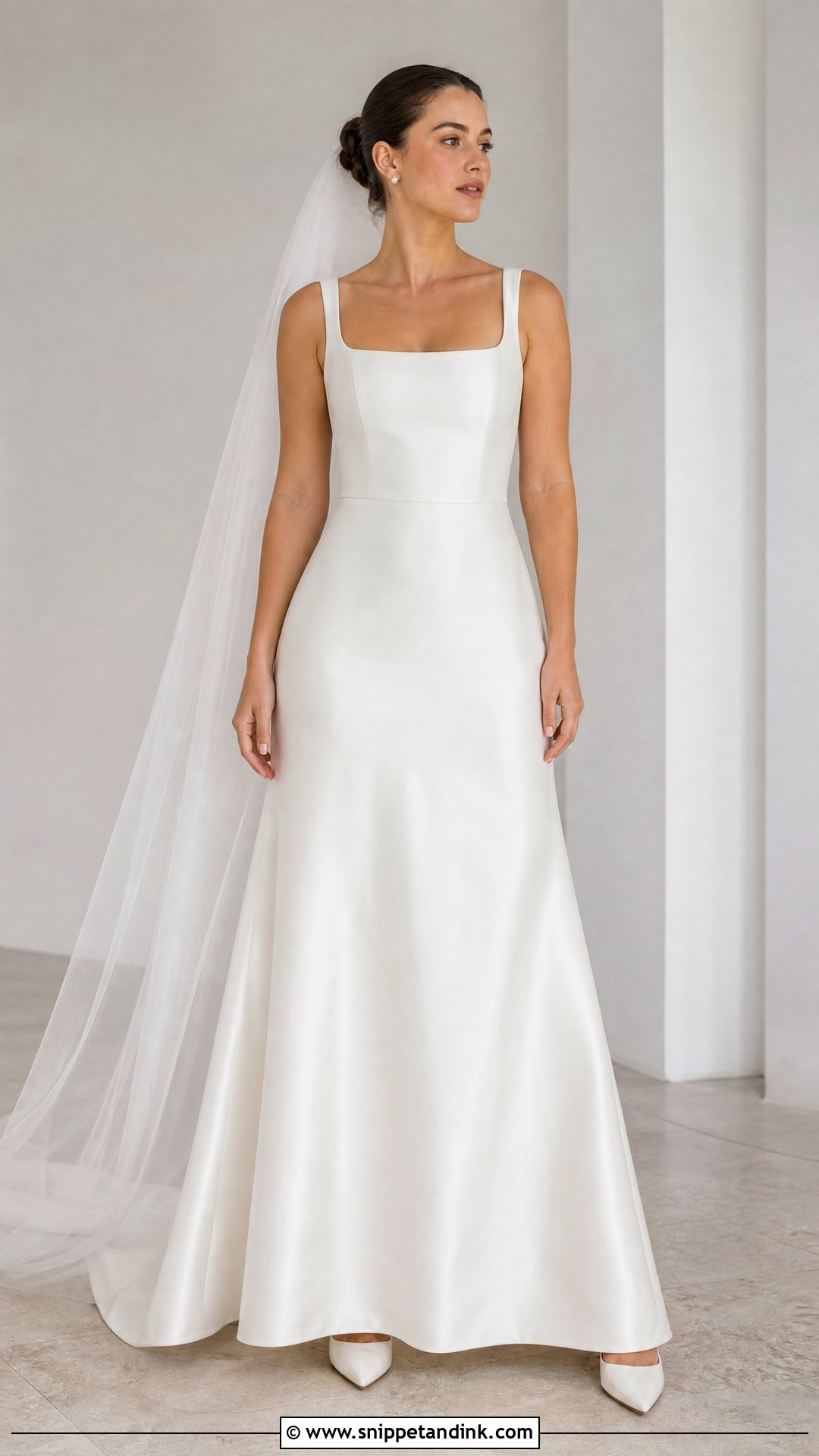
A square neck highlights the collarbone with more structure than a deep V. It suits satin, lace, fitted shapes and A-line skirts alike. Straight lines show any pull, so I check the corners with the bride seated, where gaping usually starts. A sleek bun, small hoops or pearl studs and clean ivory heels are enough, and a simple veil keeps it uncluttered. It’s current without being a trend you’ll wince at later.

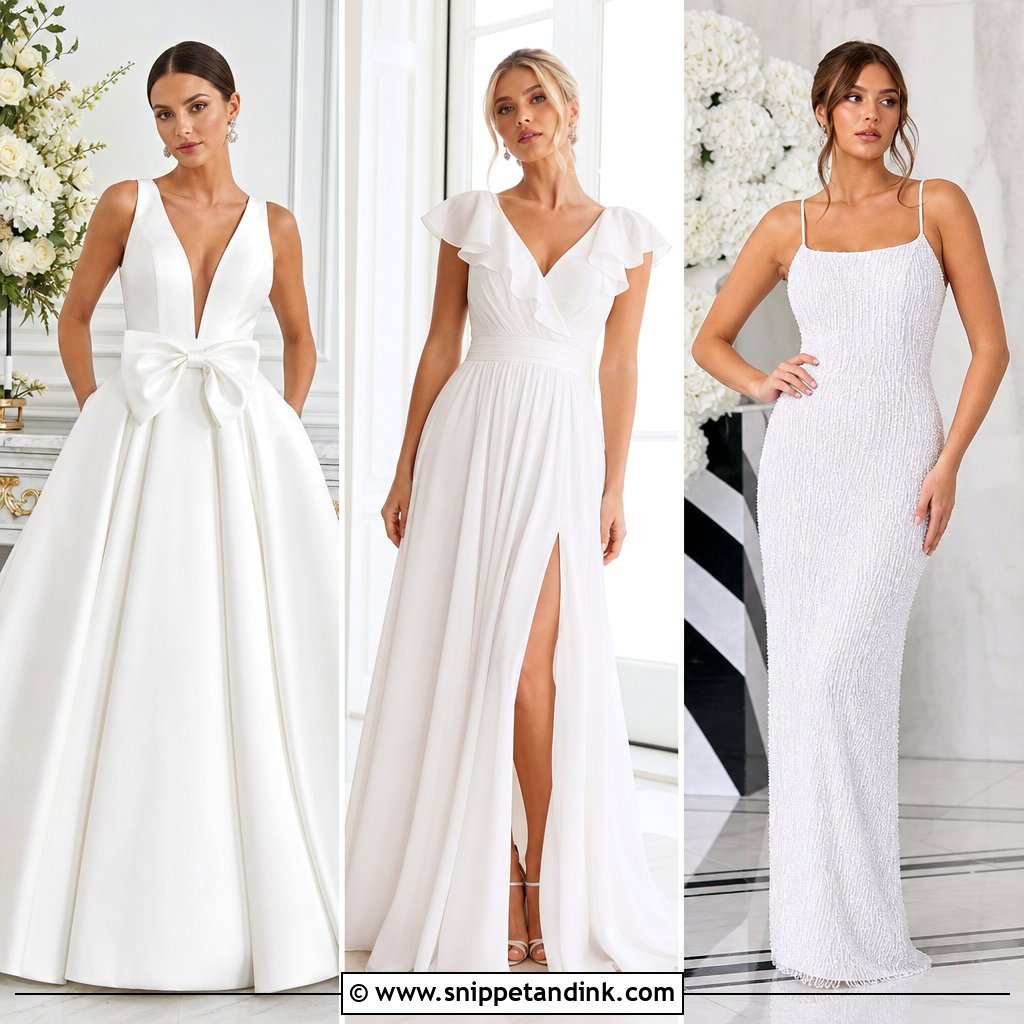
15. High Neck Wedding Dress
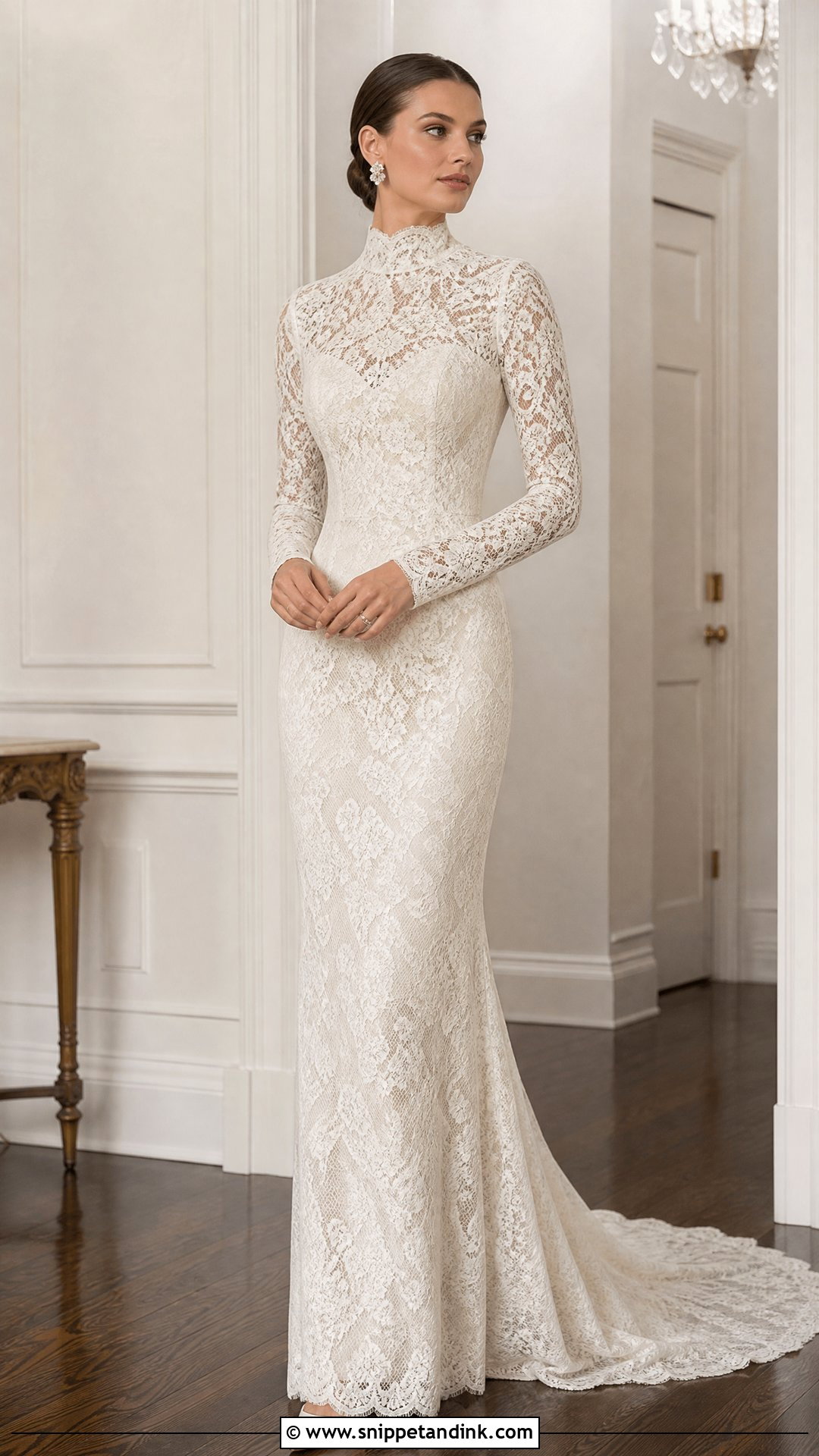
High necks give coverage with plenty of room for shape and detail: lace reads vintage, crepe reads modern, and sheer embroidered fabric reads dramatic. Since so much skin is covered, keep the face and shoulders light, with hair up or tucked back and earrings instead of a necklace. For summer, I’d steer brides toward a sheer illusion yoke rather than solid fabric at the throat, which gets warm fast. In full-length photos, the long unbroken line is the reason to choose it.
16. Lace Wedding Dress
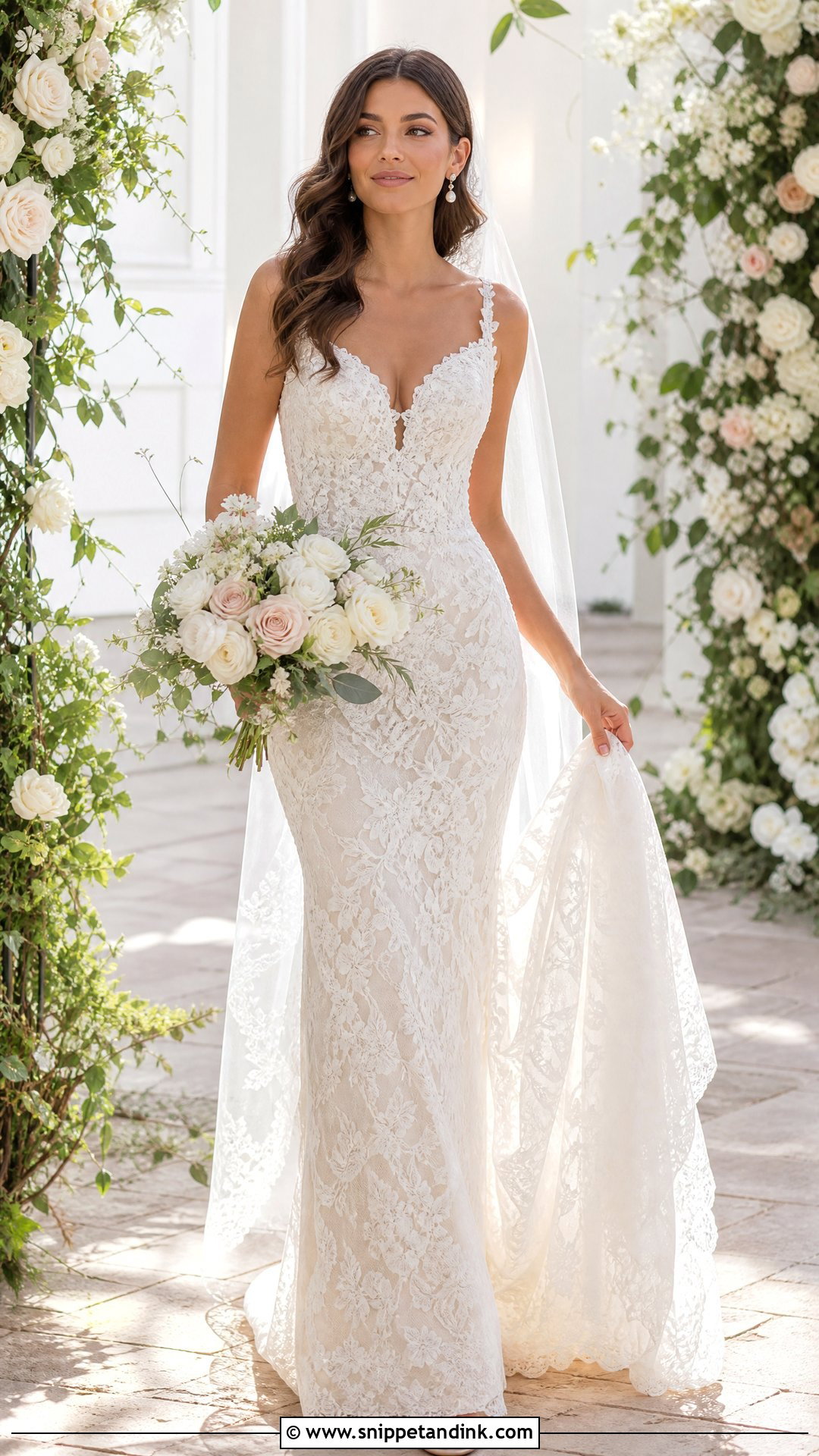
The lace pattern sets the mood more than the dress shape does. Floral lace reads soft, geometric lace reads modern and Chantilly reads fine and classic. When I pair a veil with lace, I either match the lace exactly or choose a plain-edged veil, because two different laces side by side look like a mistake. Heavy lace from top to hem wants minimal accessories; lace only on the bodice or sleeves leaves room for a more detailed veil. Garden, estate and outdoor weddings suit it.
17. Satin Wedding Dress
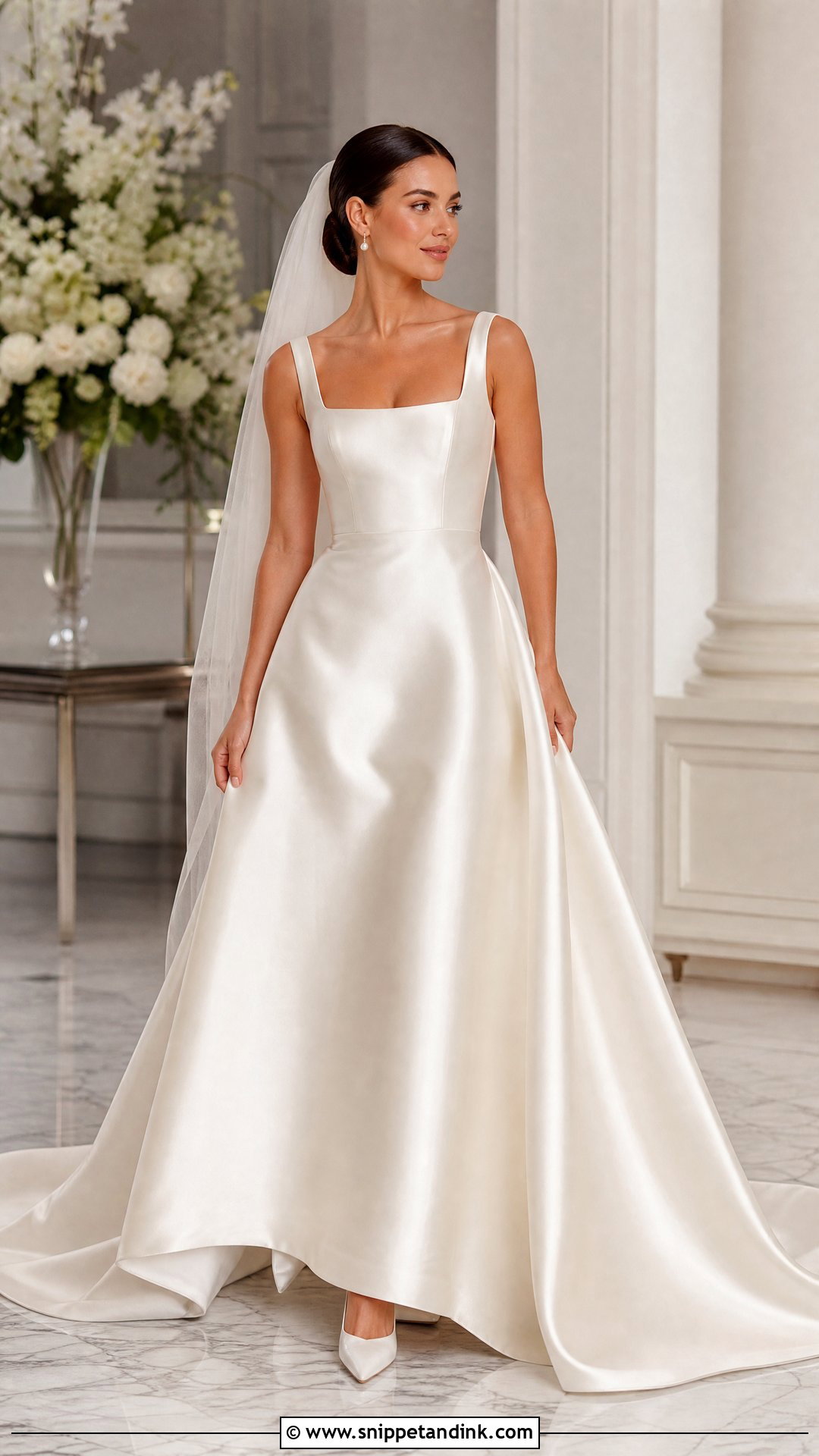
Satin catches light softly, which makes even a plain silhouette look rich. It works for ball gowns, A-lines, slips, columns and basque waists. The catch is care: satin shows creases, water marks and makeup smudges more than any textured fabric, so I plan a steam the morning of and keep foundation well away from the neckline while dressing. Pearl earrings, satin pumps and a structured veil suit its shine.
18. Tulle Wedding Dress
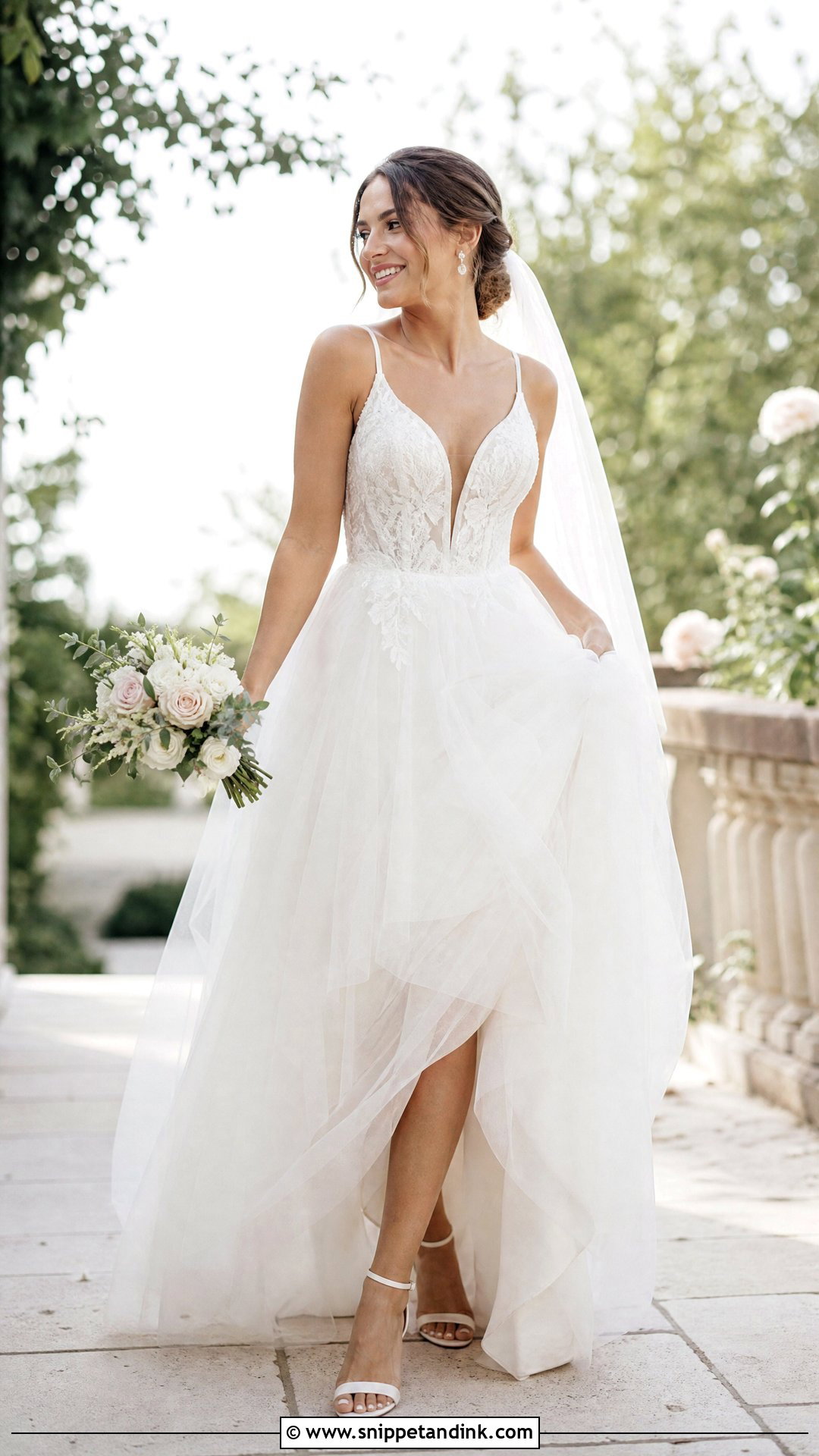
Tulle gives volume without weight. A few layers look subtle; many look dramatic, and either way the skirt moves when you walk. It suits ball gowns, A-lines and dresses with floral appliqué. Tulle is soft but catches easily on prong-set rings and rough bracelet edges, so I keep jewelry smooth. Delicate heels and a veil that blends with the skirt keep everything light, and with many layers, jewelry should stay simple.
19. Pearl Wedding Dress
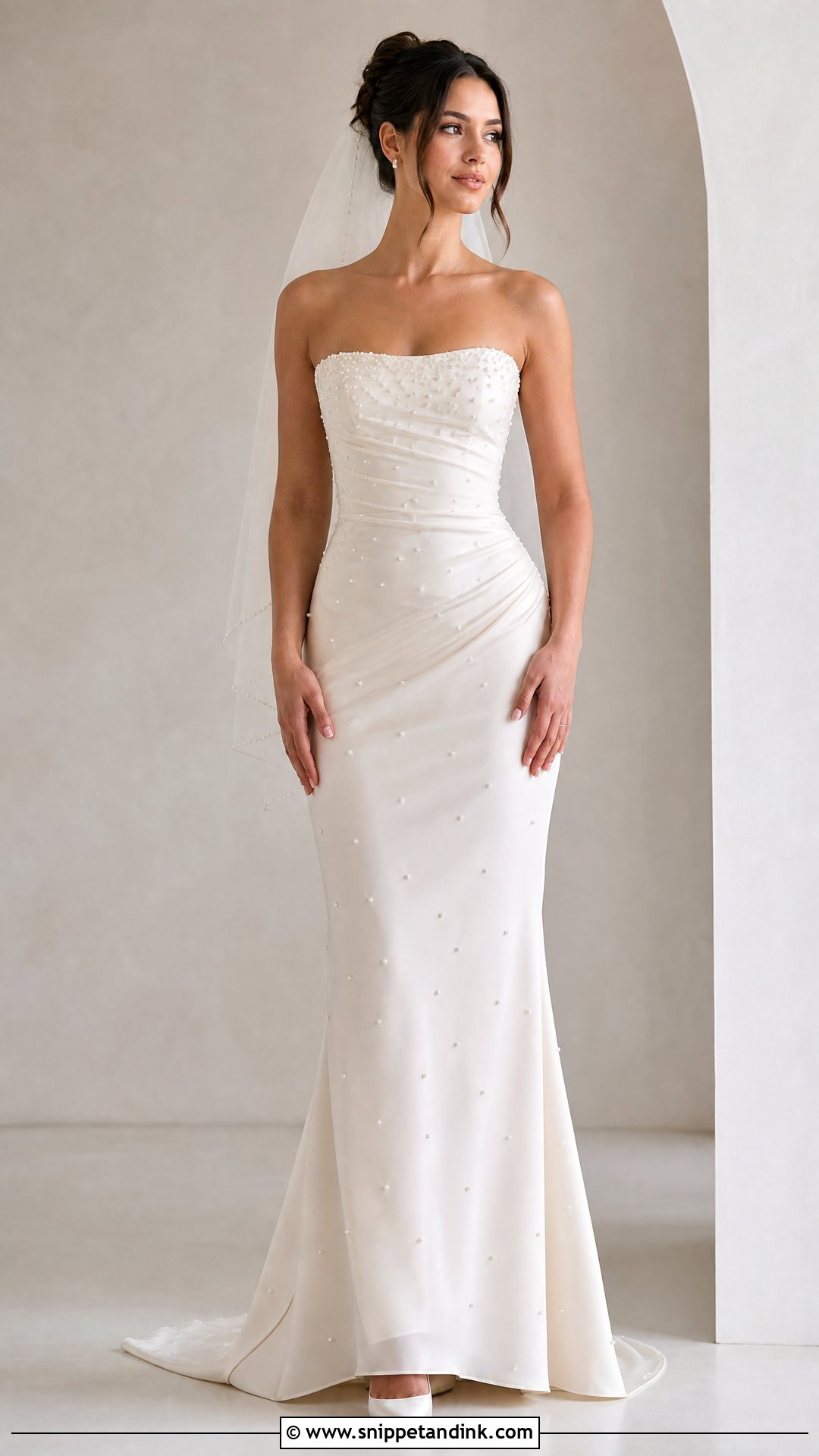
Pearls add glow rather than sparkle, on the bodice, sleeves, straps or scattered over the skirt. A pearl-covered column looks modern, while pearls on tulle feel romantic. Up close they’re the detail guests notice, and in soft light they shine without glare. I’d go easy on pearl accessories: small studs and plain satin heels, and let the dress carry the pearls. Check that sewn pearls are secured individually, since a broken thread on a chain-stitched row can shed several at once.

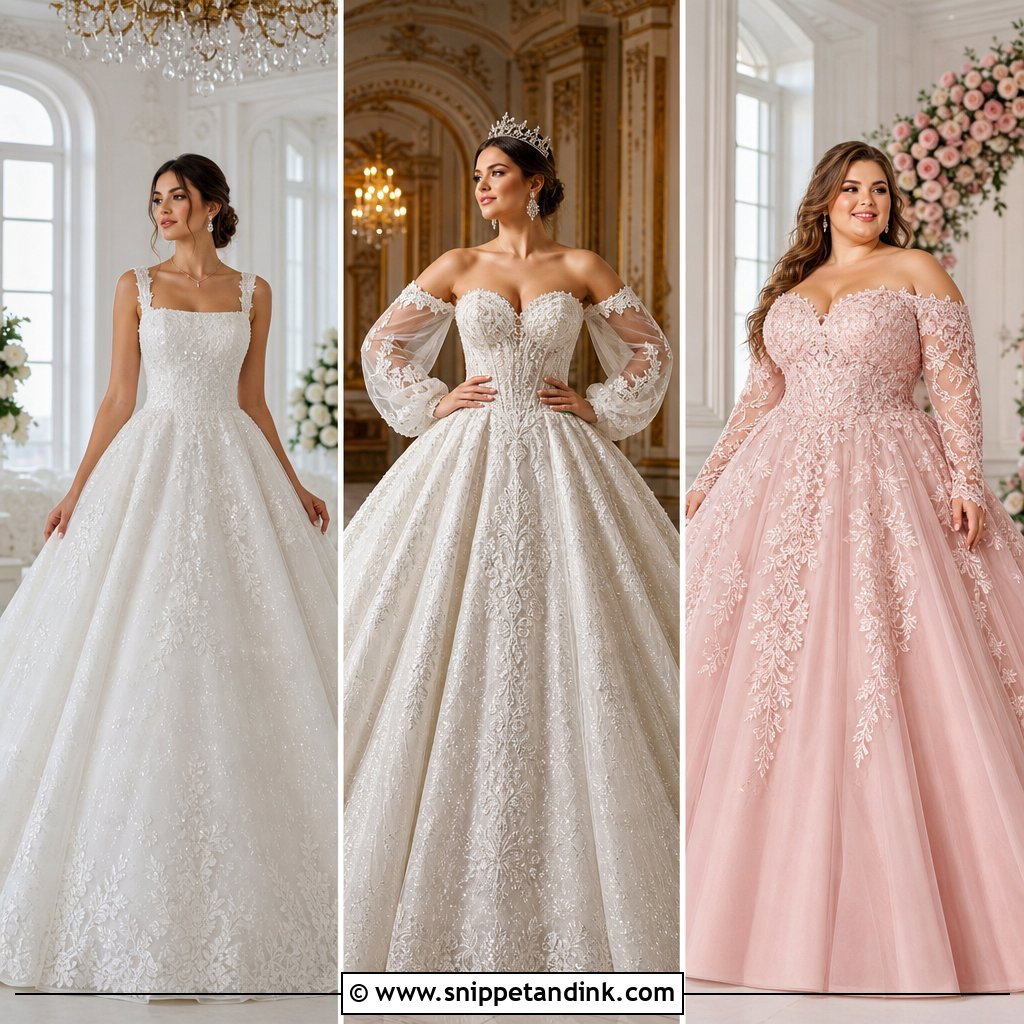
20. Floral Wedding Dress
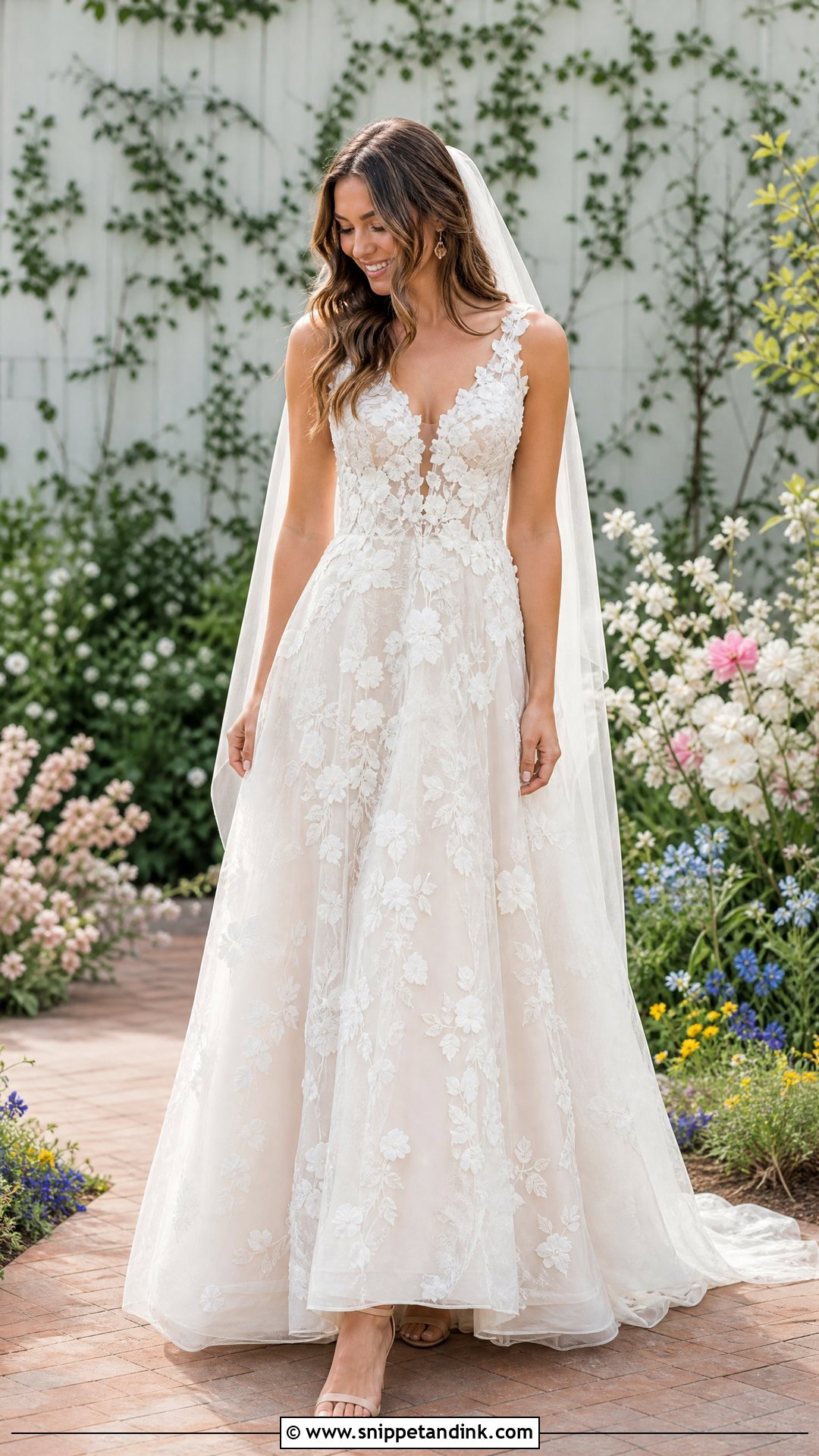
Florals on a wedding dress can be lace, embroidery, appliqué, three-dimensional petals or a soft print. White-on-white florals stay subtle; pastel embroidery brings color in. Three-dimensional petals crush when you sit and when someone hugs you, so I warn brides they’ll look a little flatter by the reception. A floral veil works only if it matches the gown’s flowers. Soft waves and simple heels keep attention on the floral work, and garden or spring weddings suit it.
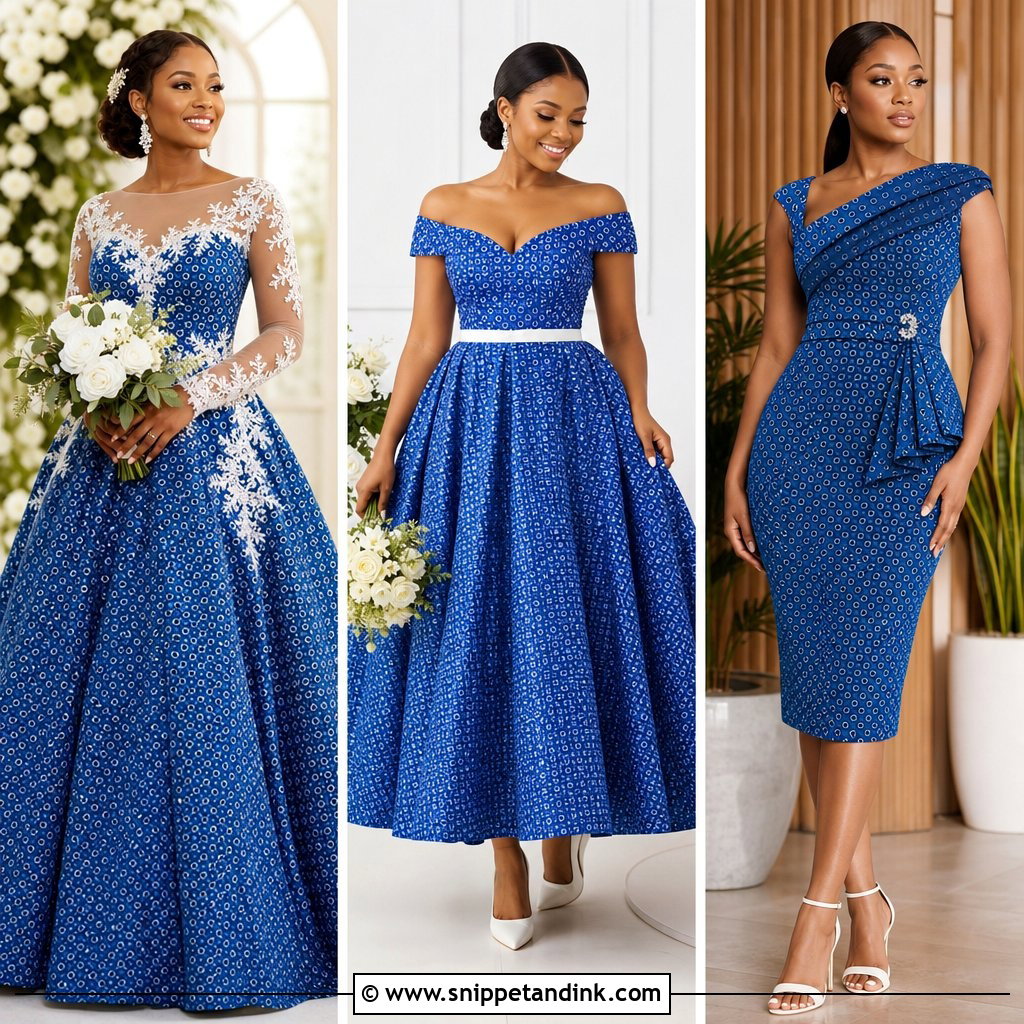
21. Colored Wedding Dress
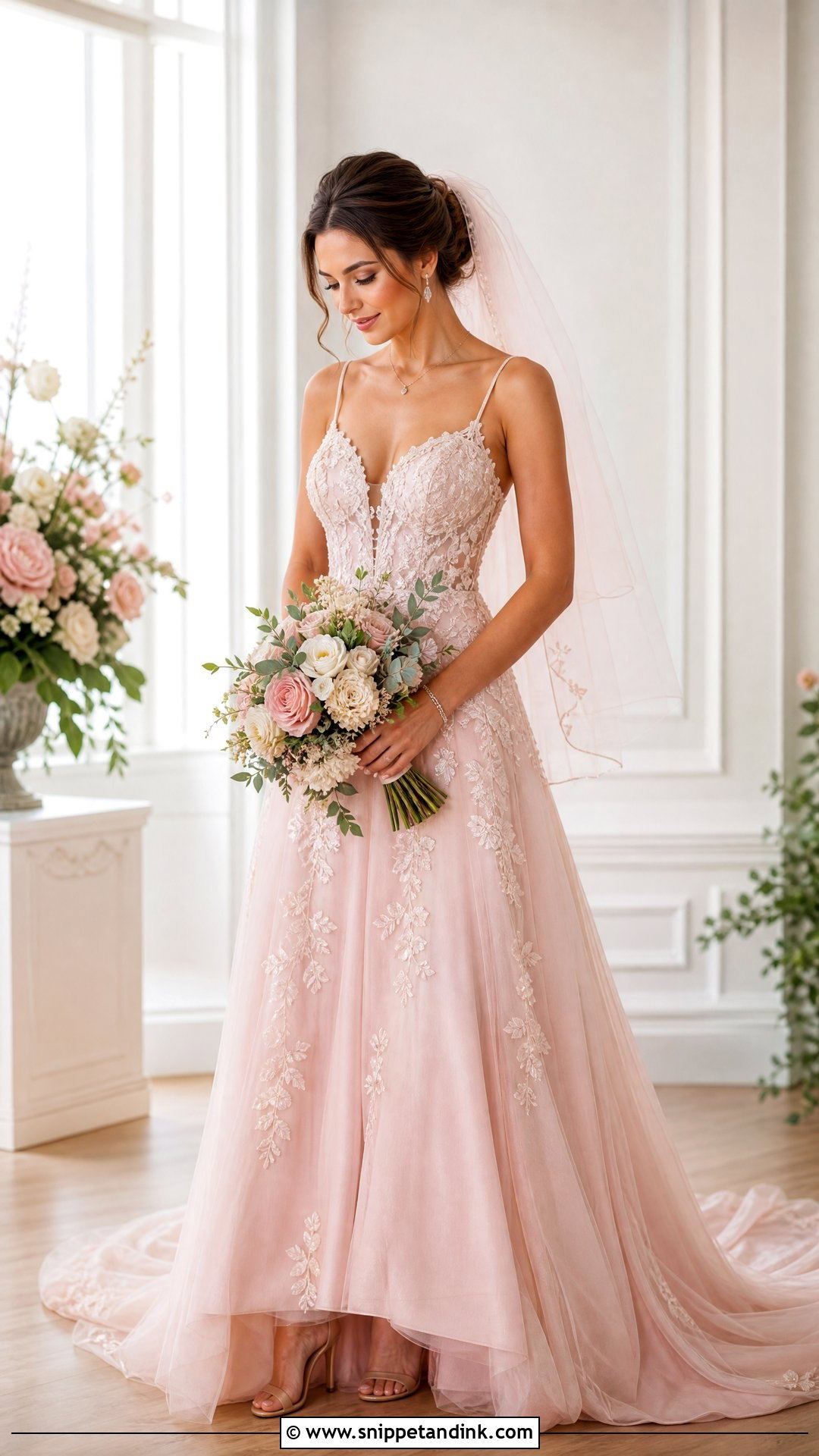
Color is the most personal choice on this list. Blush, champagne, pale blue, buttercream and light silver are the shades brides usually go for, under ivory lace or in full satin or tulle. My firm advice is to see the fabric in daylight and indoor light before deciding, since pale colors shift a lot between the two and the wrong one can make skin look sallow. Pick a bouquet that complements rather than matches, and keep jewelry and shoes neutral.
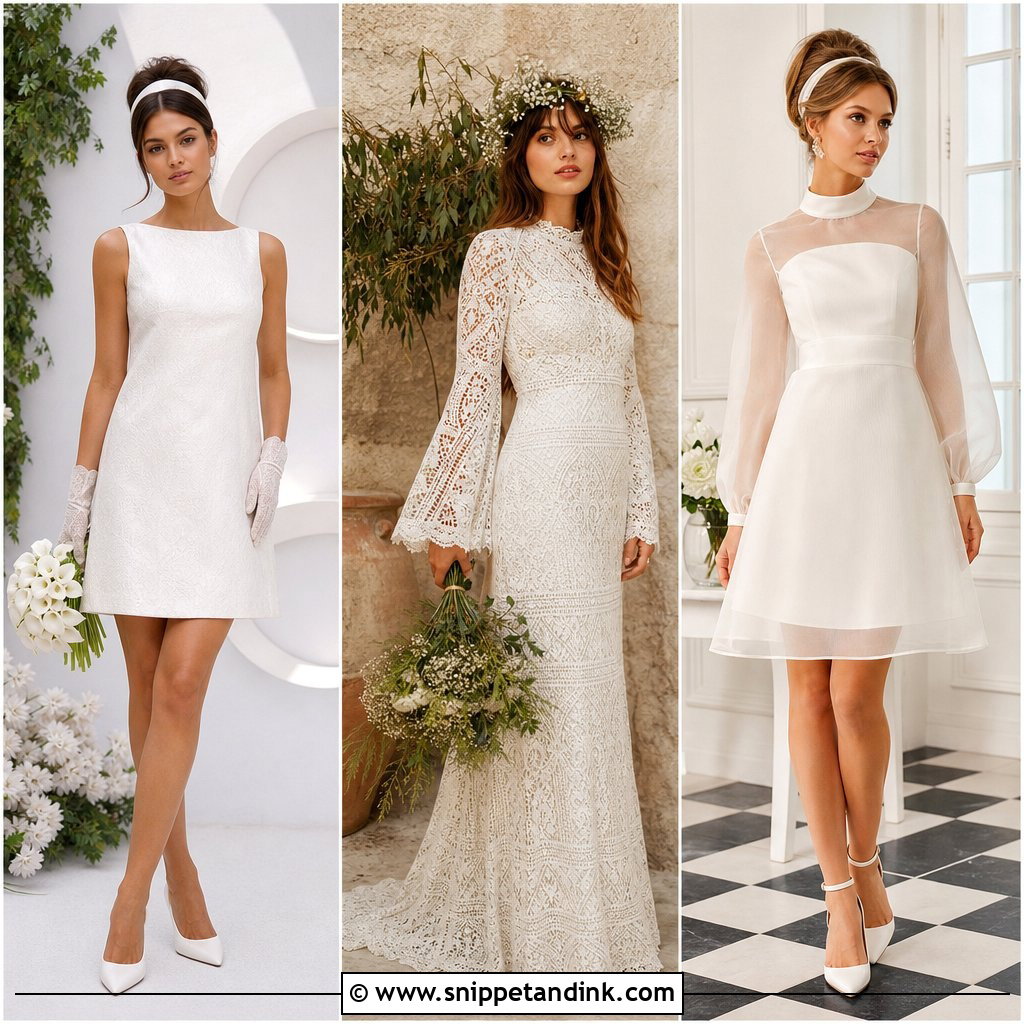
22. Mini Wedding Dress
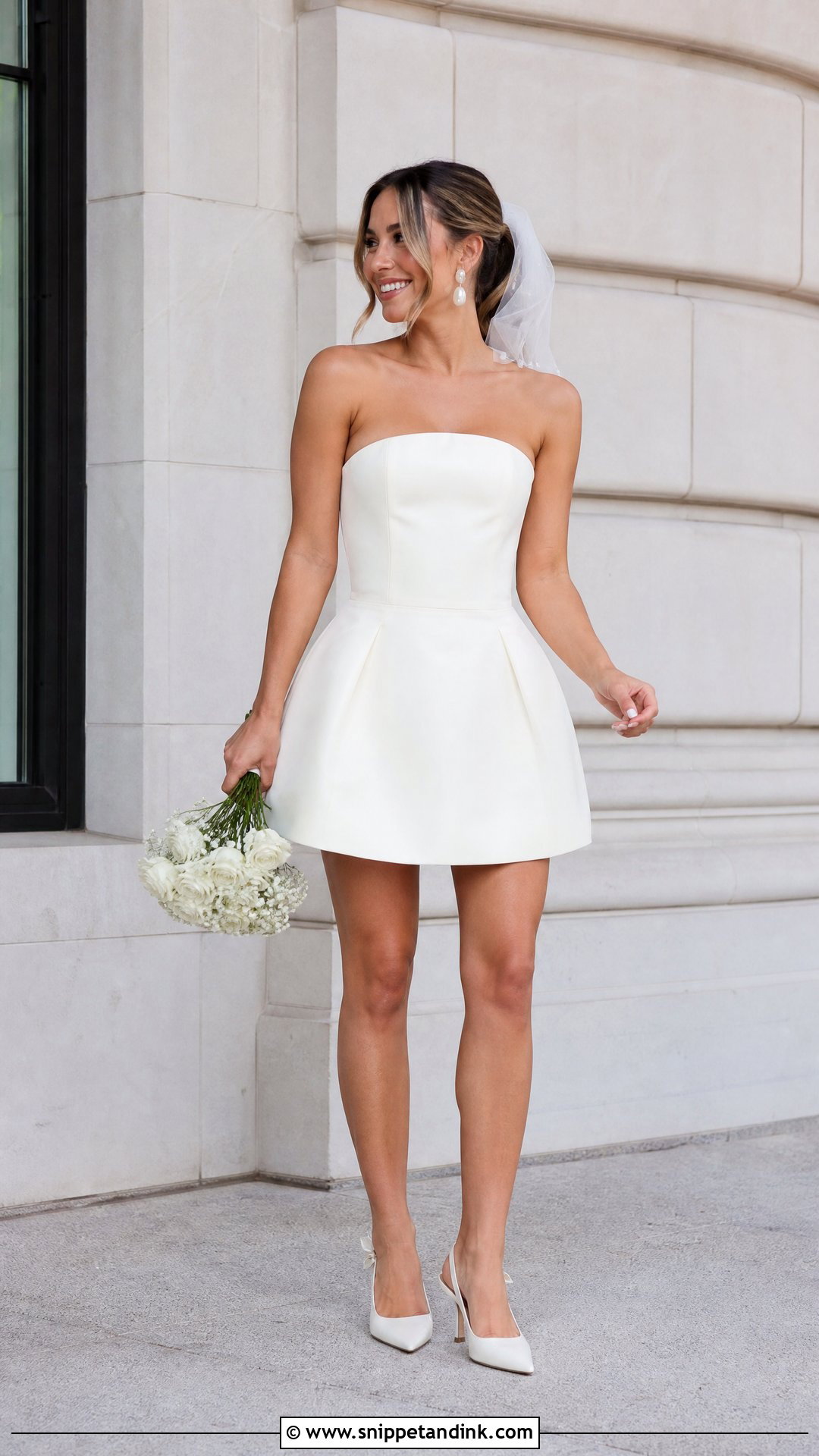
A mini wedding dress suits courthouse weddings, elopements, receptions or a second outfit, sleek in satin or playful with bows, feathers, pearls or lace. With so much leg on show, the shoes become half the outfit, so I’d choose them with the dress rather than after. Fit has to be sharp, or it drifts into party dress. A short veil or hair bow keeps it bridal, and you’ll dance more freely than anyone in a full gown.
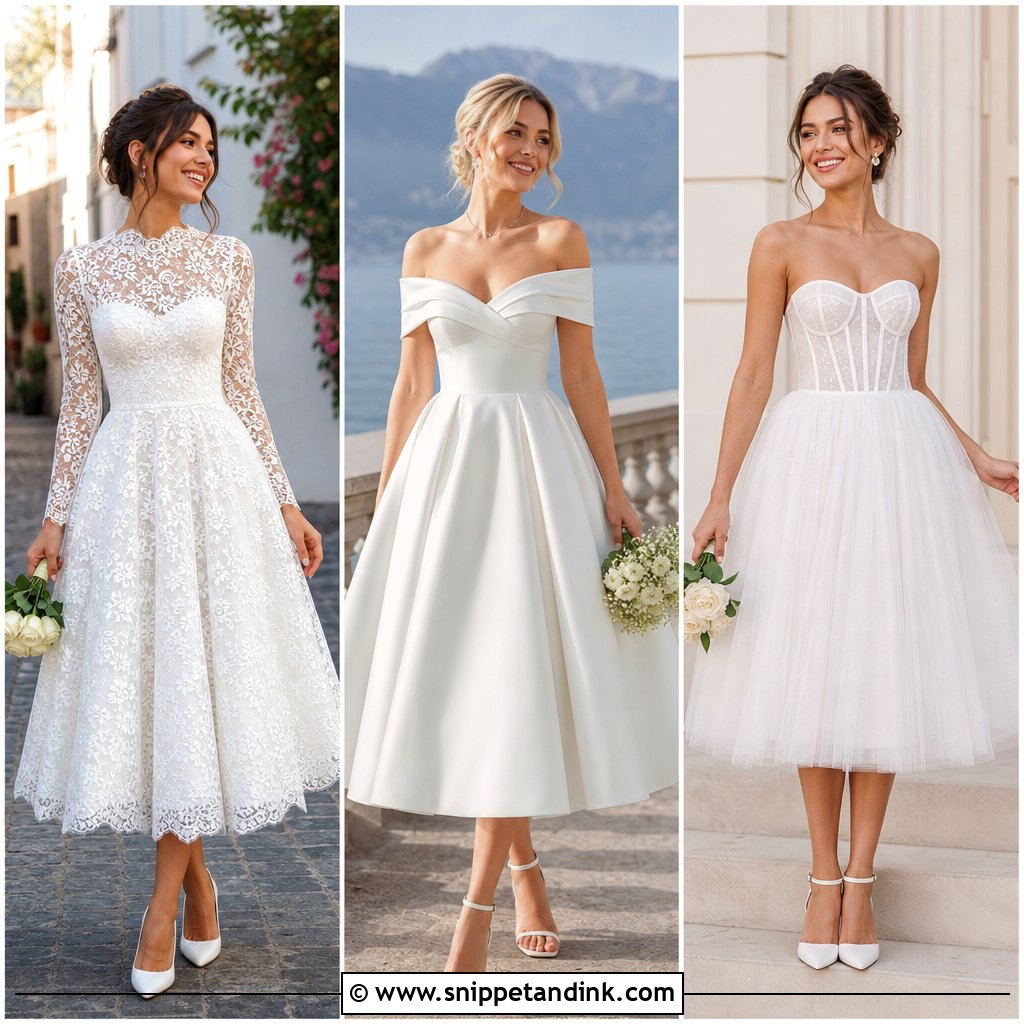
23. Tea Length Wedding Dress
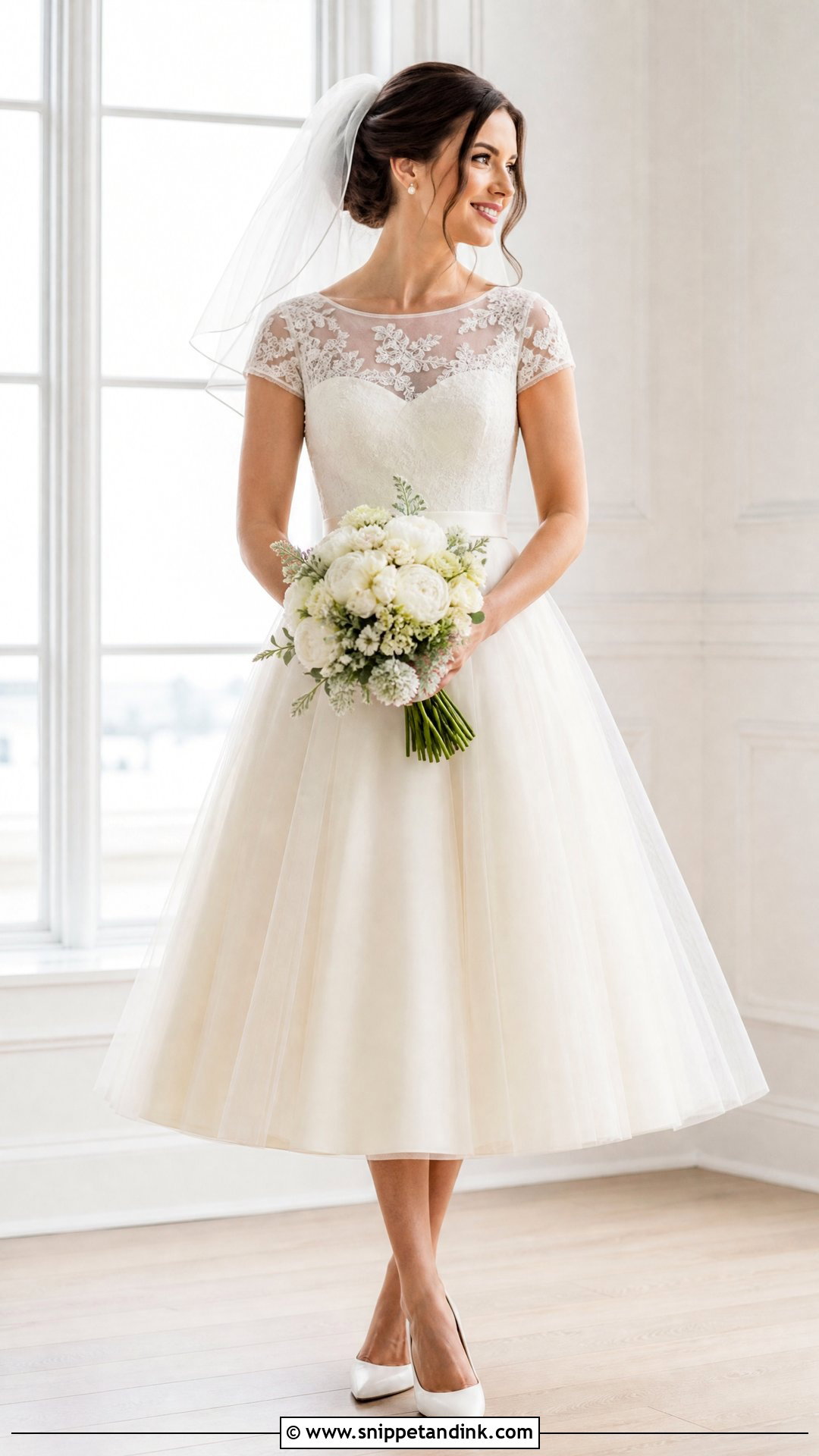
Tea length falls between knee and ankle, a vintage shape that shows your shoes and lets you move. It looks charming with ballet flats, block heels or pointed pumps, in satin, lace, tulle or organza. The hem is the whole decision. I mark it with the bride in her wedding shoes and look from across the room, because an inch higher or lower changes where the calf looks narrowest. Daytime weddings and smaller venues suit it best.
24. Convertible Wedding Dress
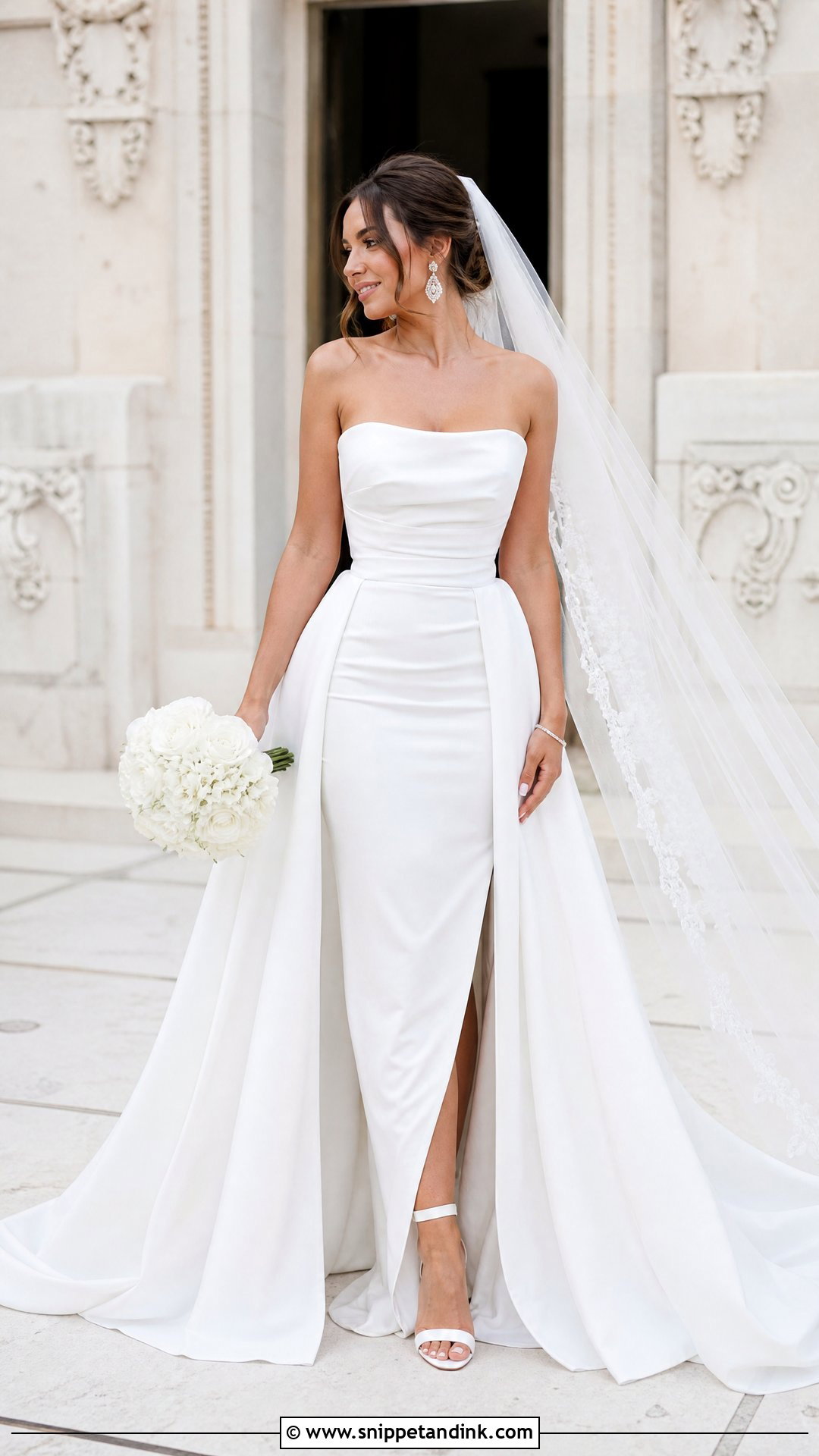
A convertible wedding dress gives you two looks for the price of one gown, with a detachable overskirt, removable sleeves, a cape, a bow or an extra neckline layer. Formal for the ceremony, lighter for the reception. The practical test is the fastening. Every removable piece must stay put through the ceremony and come off in a few minutes with one helper, so practice that change at your final fitting. Swap the long veil for statement earrings or a hair accessory once the party starts.


25. Bubble Hem Wedding Dress
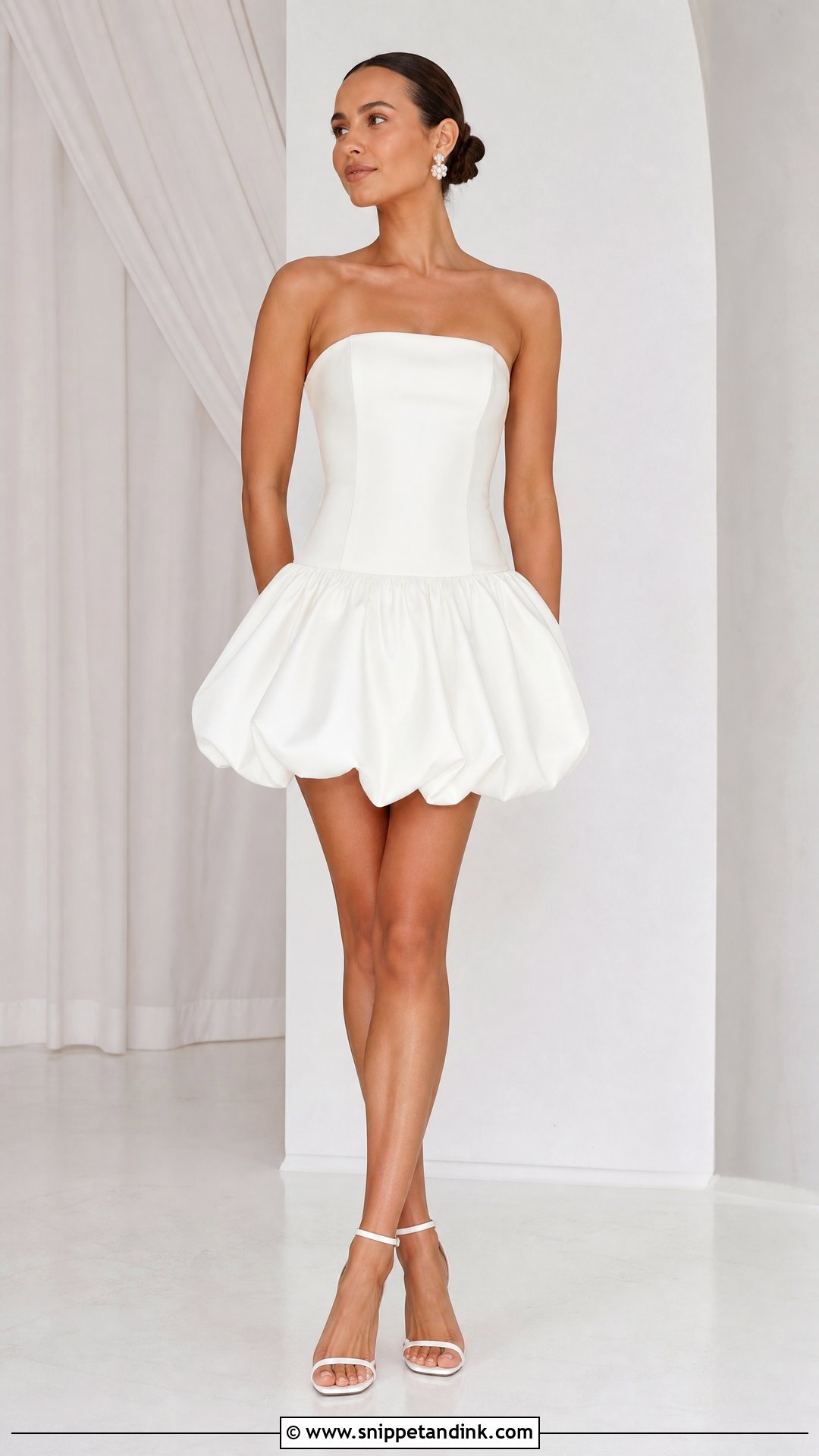
A bubble hem tucks under to form a rounded, puffed edge, playful but still polished. Minis, tea lengths and modern full skirts take it best. Fabric is everything here: soft fabrics collapse, so I look for crisp taffeta, mikado or a structured satin that holds the curve all day. Since the hem is already the statement, keep the rest clean with simple heels, sleek earrings and smooth hair. It’s for the bride who wants something that clearly isn’t traditional lace or satin.
The Calendar Behind a Made-to-Order Gown
Most bridal gowns are ordered in your size and made after you say yes, which takes longer than people expect. Lead times vary a lot by designer and season, so treat these as a rough guide and confirm the real dates with your boutique.
- About nine to twelve months out: start trying dresses on, so you aren’t paying rush fees later.
- Around four to six months of production is common once the order is placed, sometimes more.
- Two to three months before: the first alteration fitting.
- One to two weeks before: the final fitting, with your shoes, underwear and the person who’ll help you dress.
On a short timeline, off-the-rack and sample gowns are the honest answer. You’ll have fewer choices, but you can take the dress home the same day and spend the remaining weeks on alterations.
What a Seamstress Can and Can’t Change
Hemming, taking in the side seams, adding a bustle, sewing in cups or adding straps are all routine. Letting a dress out is limited by how much seam allowance is inside, which is often very little. Shortening a hem edged with lace or beading costs more because that edge has to be removed and re-applied by hand. And no alteration turns a mermaid into an A-line, so if the shape feels wrong in the shop, it will feel wrong at the wedding.
Trust the Dress You Forget You’re Wearing
The gown that works is usually the one you stop noticing after an hour, because nothing pinches, slips or drags. Some brides feel most like themselves in a ball gown, others in a slip, a mini or a clean column. Sleeves, lace, pearls, color and waistline then shift the mood within that shape. Try at least one silhouette you’re sure you’ll hate, since that’s often where the surprise is. Then trust your reaction in the mirror over any trend report.
You'll Like These Ideas:








Leave a Reply