
Comparing whole outfits tells you far more than comparing silhouettes on a hanger. Bridal collections right now run from sleek satin and romantic lace to structured minis, jumpsuits, separates, statement veils and lighter second looks for the reception. In my appointments, the dress a bride loves on the rail is often not the one she chooses once she’s moved, sat and seen it from behind. So below you’ll find thirty-five complete looks, classic, modest, relaxed and bold, each with the practical notes I’d give you about fit, fabric and where it works best, from a ballroom ceremony to a courthouse lunch or an after-party.
Six Things to Do in a Fitting Room Besides Look in the Mirror
A bridal appointment is short, and most brides spend it staring at the front of the dress. The front is the part you’ll see least on the day. These are the checks I run with every bride before she gets attached to a gown:
- Wear the right underwear. Bring a nude no-line set and, if you own one, the strapless or low-back bra you’d actually wear, so the fit you see is honest.
- Bring shoes close to your wedding heel height. A gown pinned for flats will drag once you’re in heels.
- Sit down on a hard chair for a full minute. Watch where the bodice pushes up and where the skirt pulls.
- Lift both arms as if hugging someone taller than you. Sleeves and straps that pass this test pass a whole reception.
- Look at the back in a hand mirror. Guests see the back throughout the ceremony.
- Ask for a phone photo near a window. Shop lights flatter; daylight shows the real colour and any shine.
If a gown fails one of these, it doesn’t mean no. It means ask the consultant what alterations would fix it and roughly what they’d involve before you fall for it.
1. Minimalist Satin Bride Dress
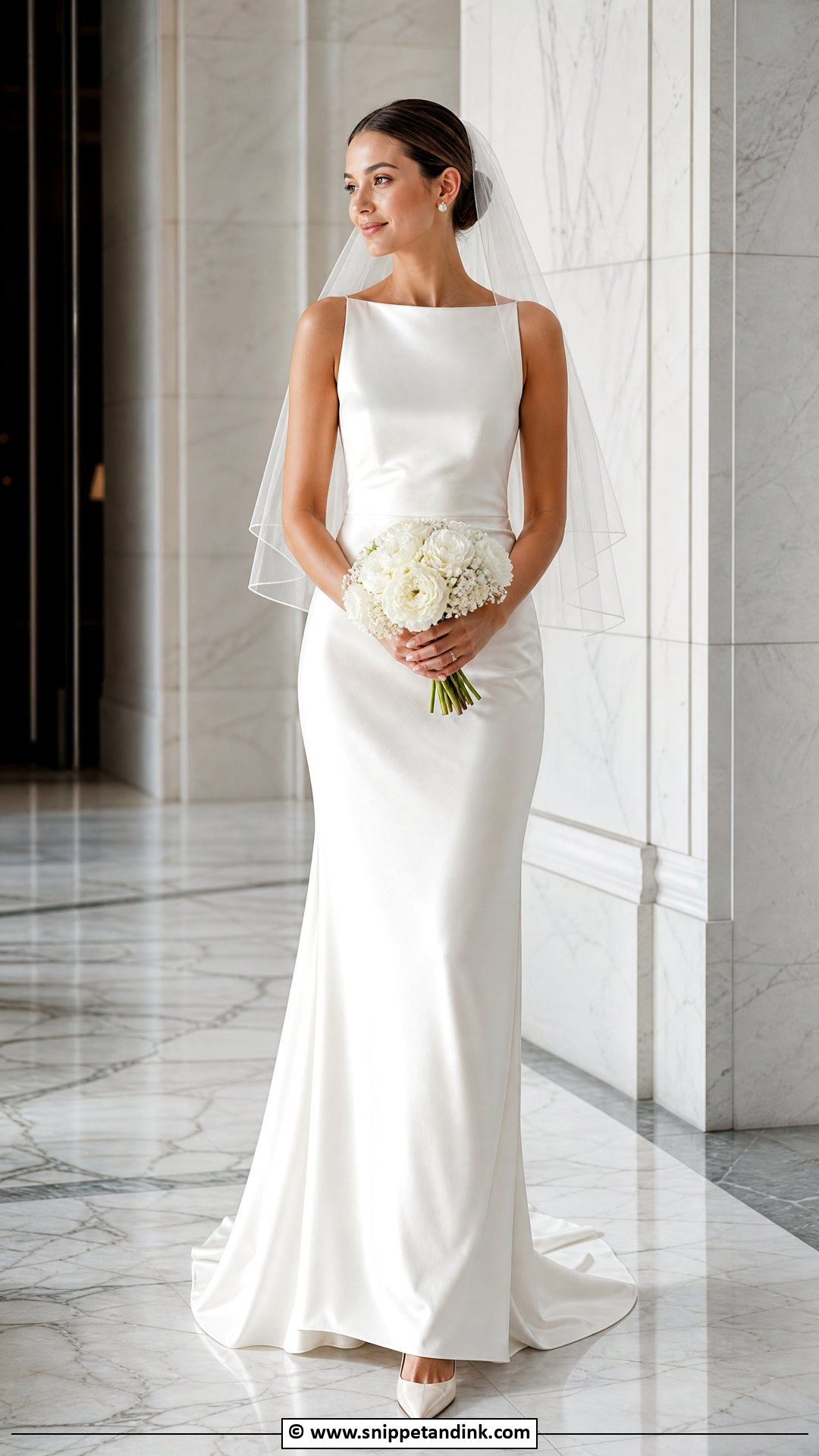
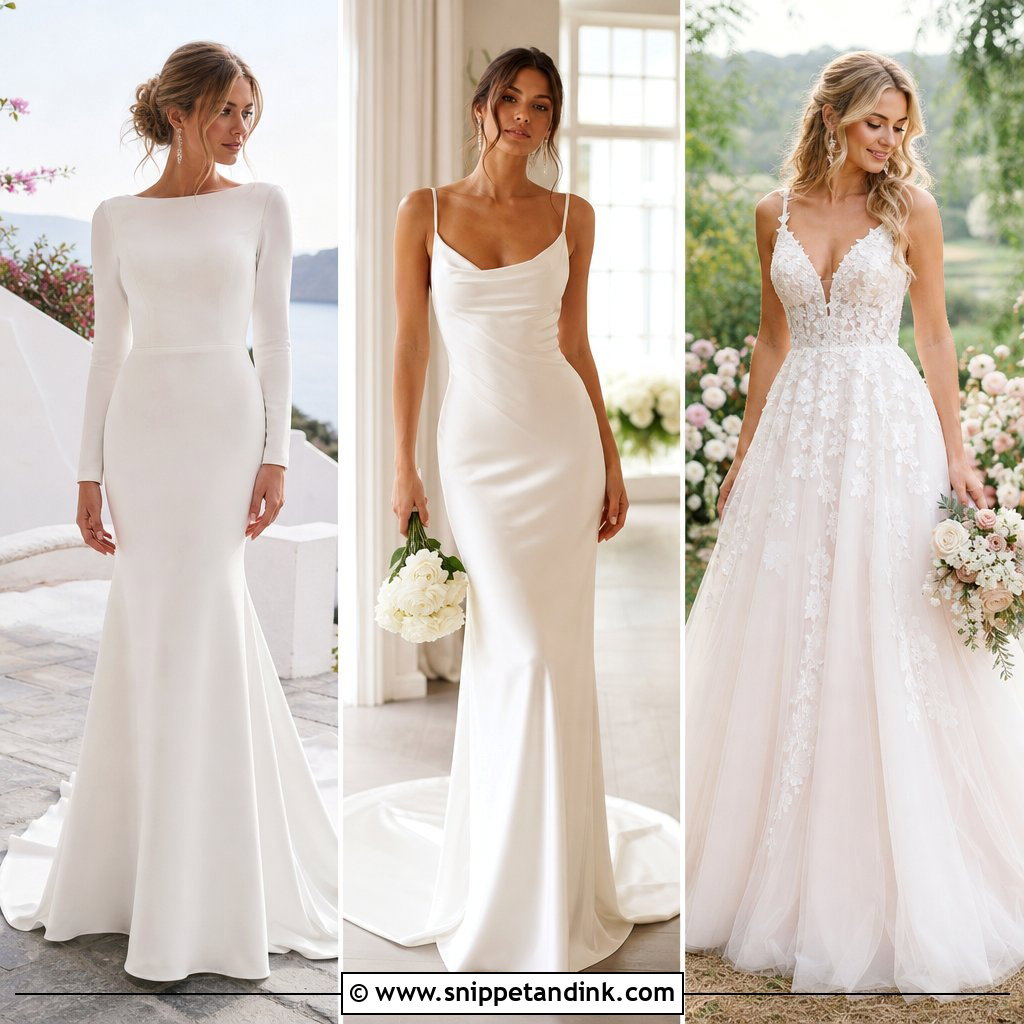
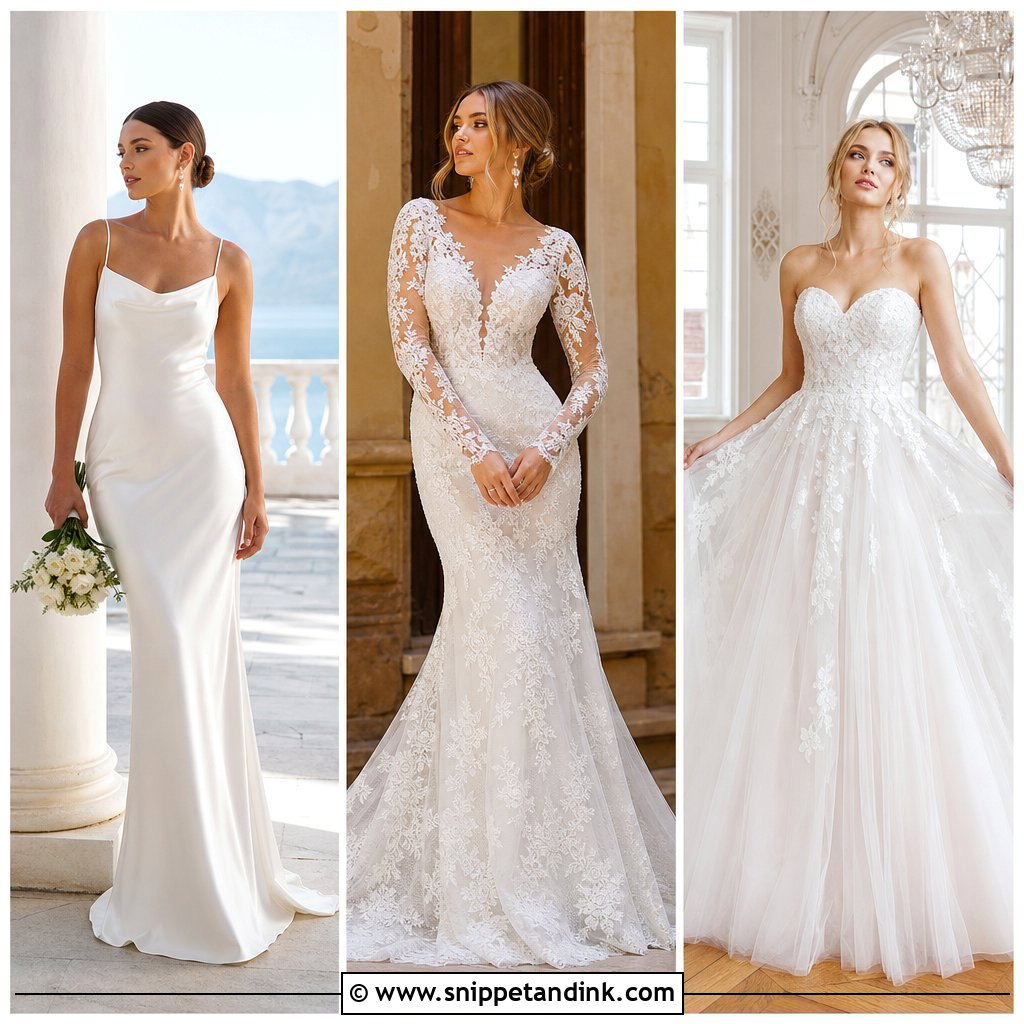
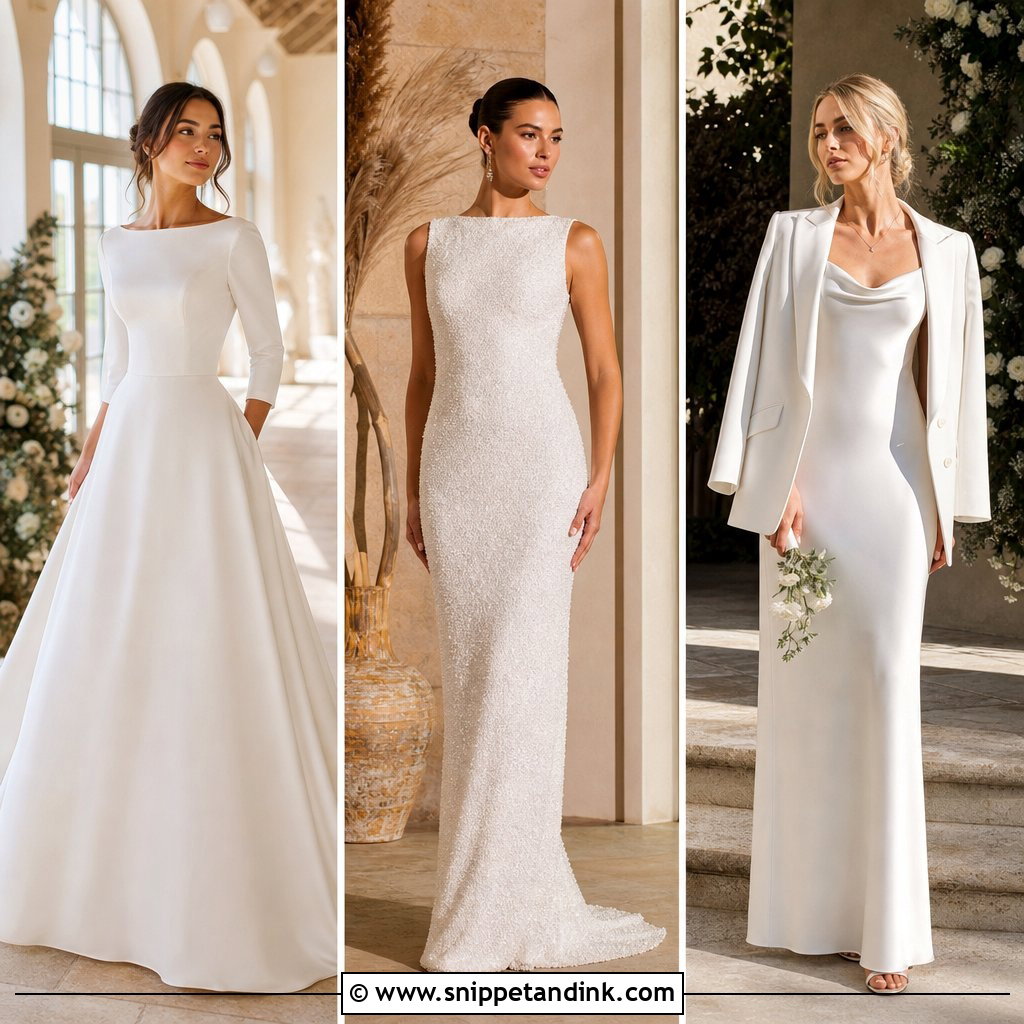
Satin with no embellishment is the most honest fabric in bridal: every seam and every wrinkle shows, so the fit has to be close to perfect. I steer brides toward a bias-cut or column gown in ivory or pearl rather than stark white, which can look blue on camera next to warm skin. Pointed satin heels, a low bun, pearl studs and a fingertip or cathedral veil are all it needs. It belongs in city hotels, modern chapels and evening ceremonies. A softly draped neckline or subtle waist seaming adds shape if a straight column feels too plain on you.
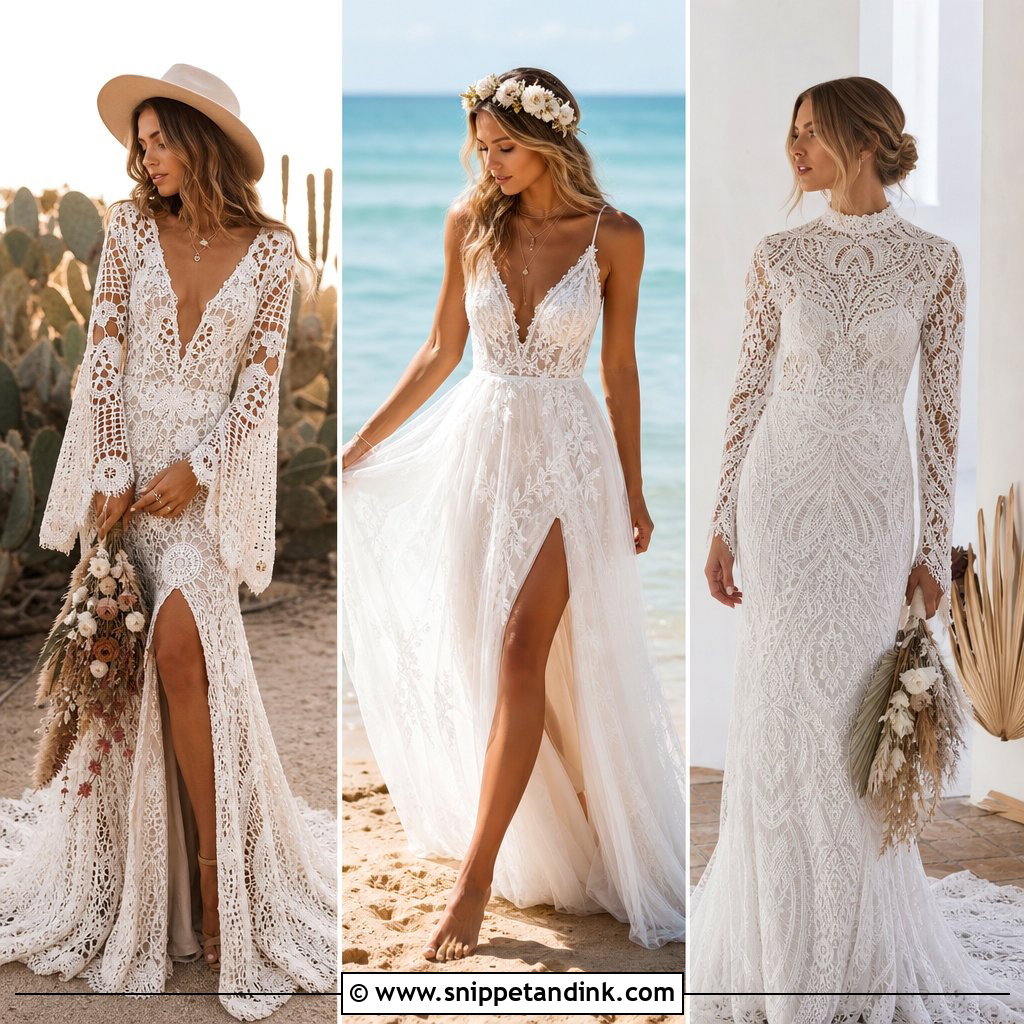
2. Lace Long Sleeve Bride Dress
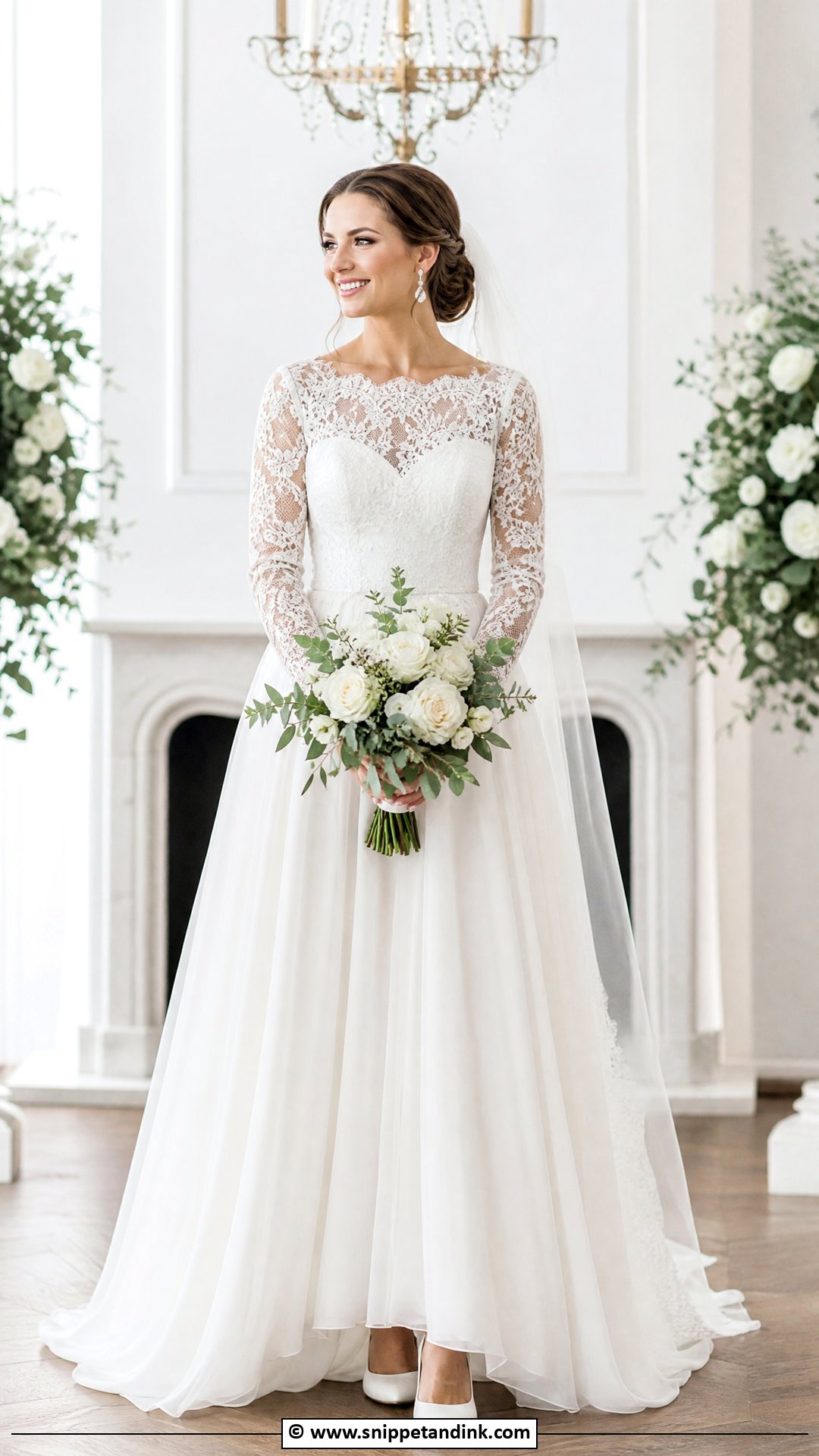
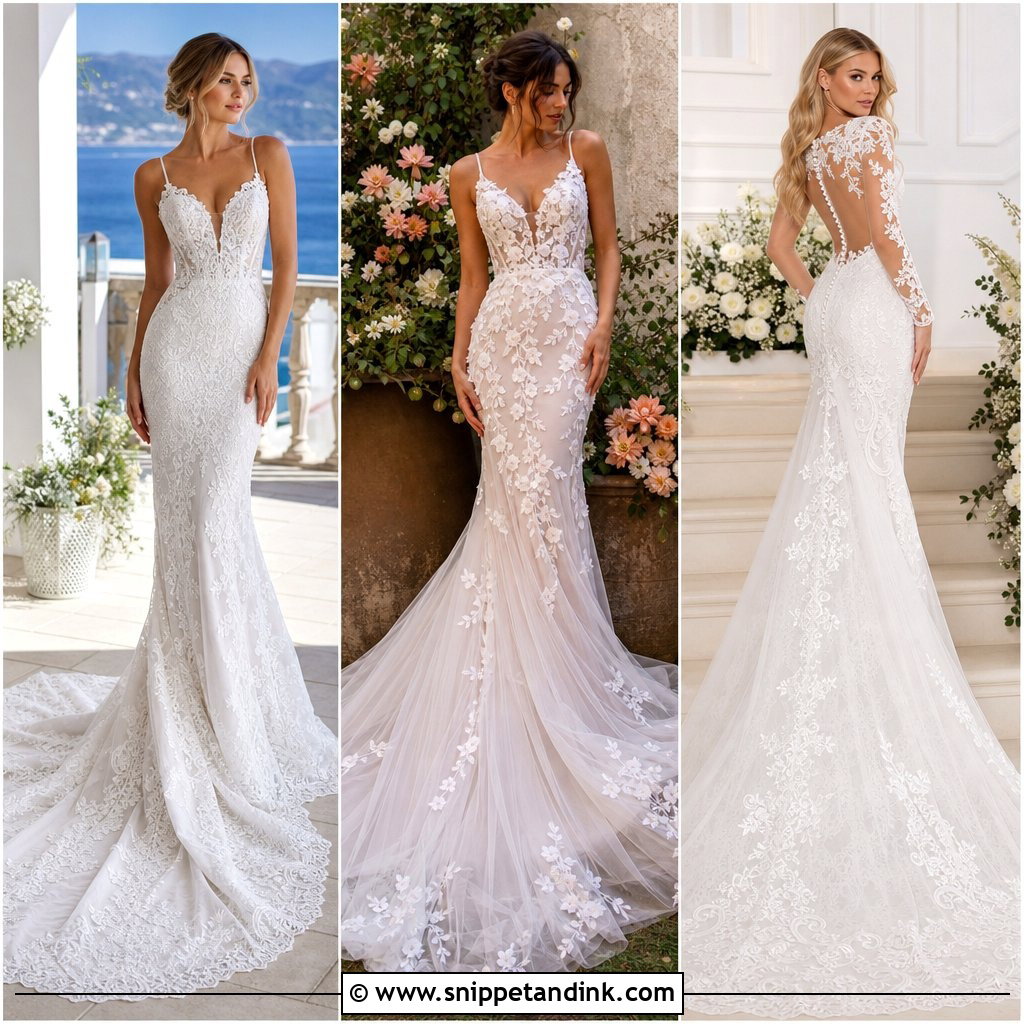
Long lace sleeves give coverage without heaviness, and they’re the first thing I suggest for autumn, winter and formal venues. Floral or Chantilly lace over a fitted lining reads soft; dimensional lace reads richer. The fitting detail that matters is the armhole: lace sleeves set too tight restrict you from lifting your arms to hug anyone, so raise both arms at every fitting. A soft updo keeps the sleeve and neckline in view, and sheer lace sleeves on a plain crepe or satin skirt give the same idea a more modern edge.
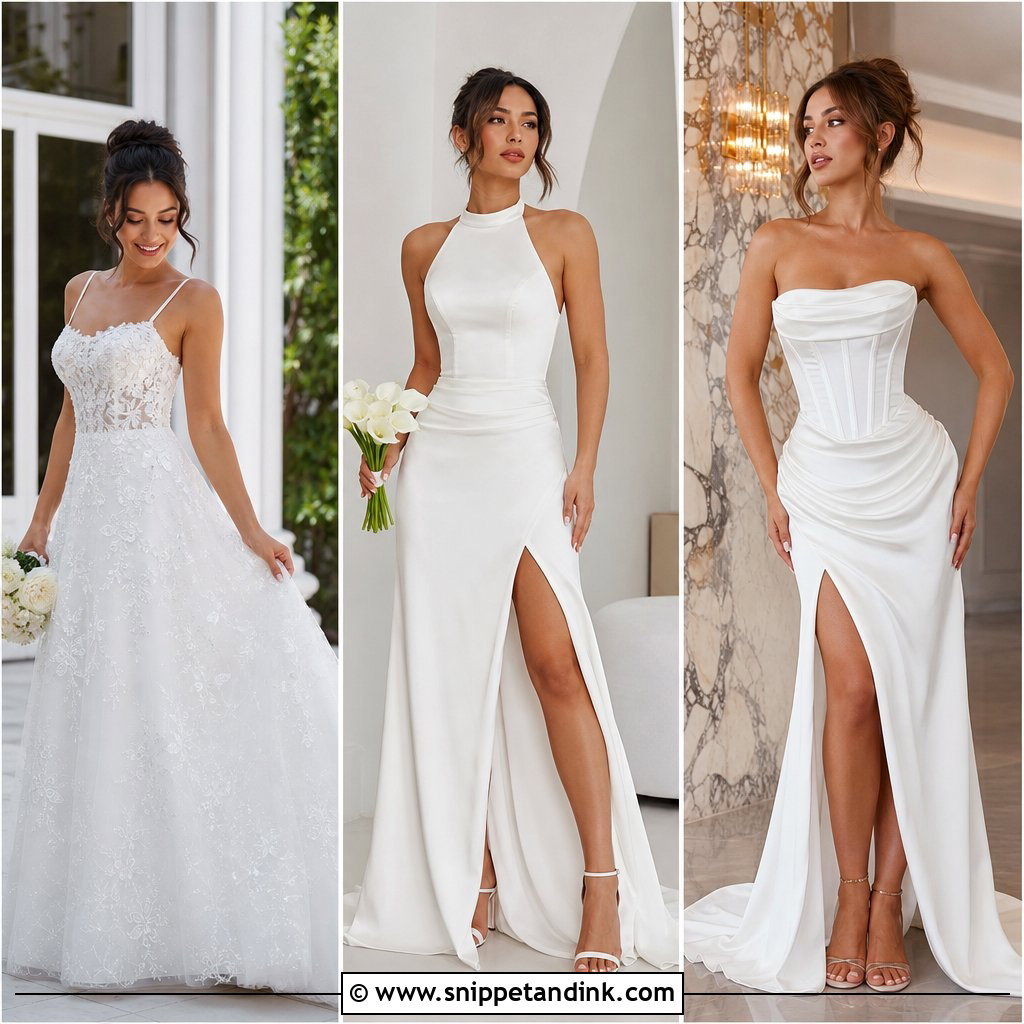
3. Strapless Ball Gown Bride Dress
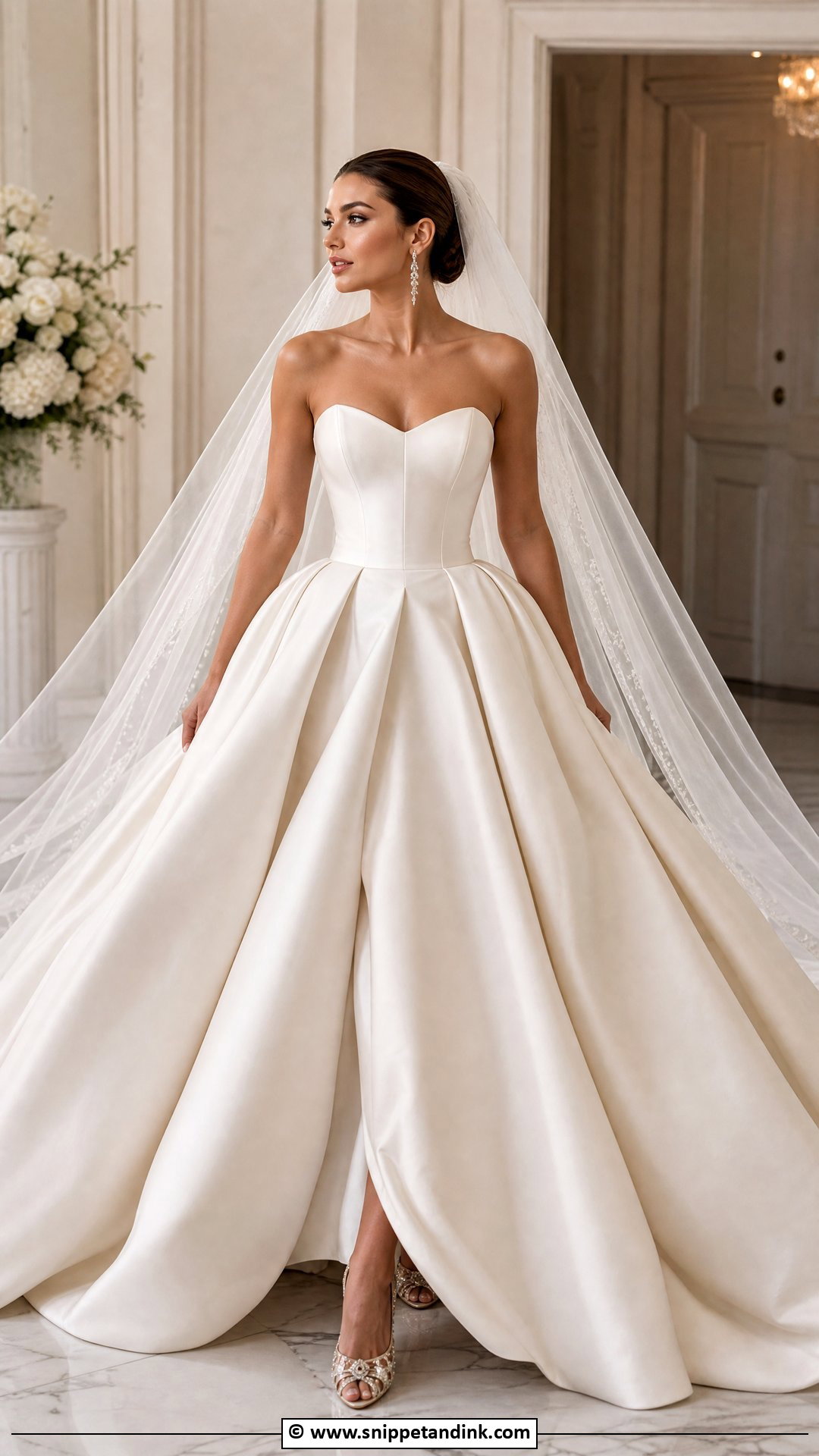
A strapless ball gown is the big entrance, and it only works if the bodice holds itself up. I check the internal boning and the waist stay before I look at the skirt, because a bodice that relies on the bride tugging it upward all night spoils every photo. Mikado and satin give the skirt structure; tulle and organza give it lift with less weight. Embellished heels, a long veil and either a smooth bun or soft waves finish it. Ballrooms, formal estates and traditional ceremonies suit it best.
4. Off Shoulder Bride Dress
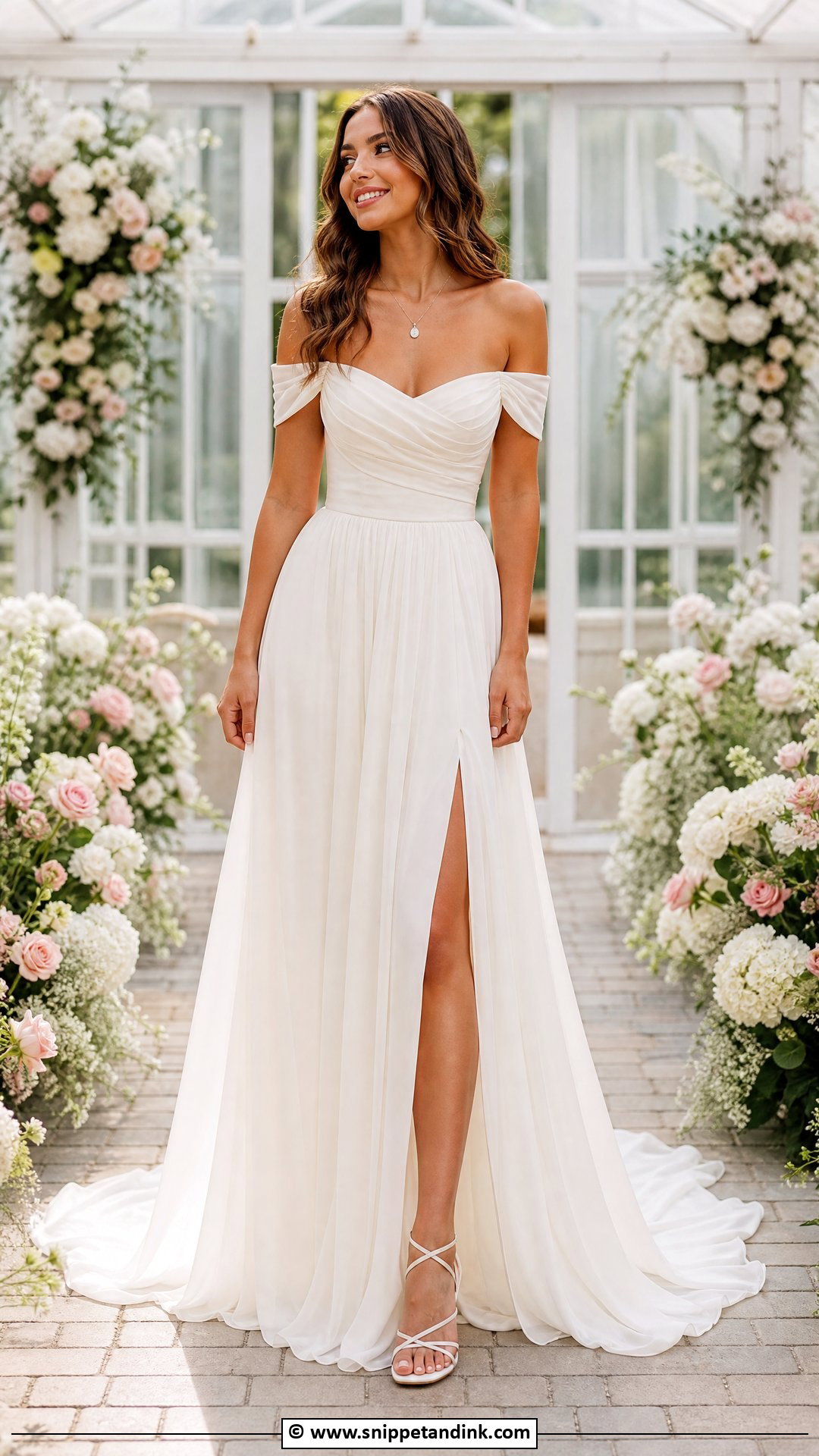
Off-shoulder necklines frame the collarbone, and they need more engineering than they look like they do. Without a hidden elastic or silicone grip along the edge, the neckline slides down as soon as you lift your arms. Satin, lace, crepe and tulle all work here. Since the neckline is the statement, I keep jewelry to a short pearl strand and small earrings, with soft waves tucked behind the ears. It suits garden venues, coastal weddings and candlelit indoor ceremonies.
5. A Line Bride Dress
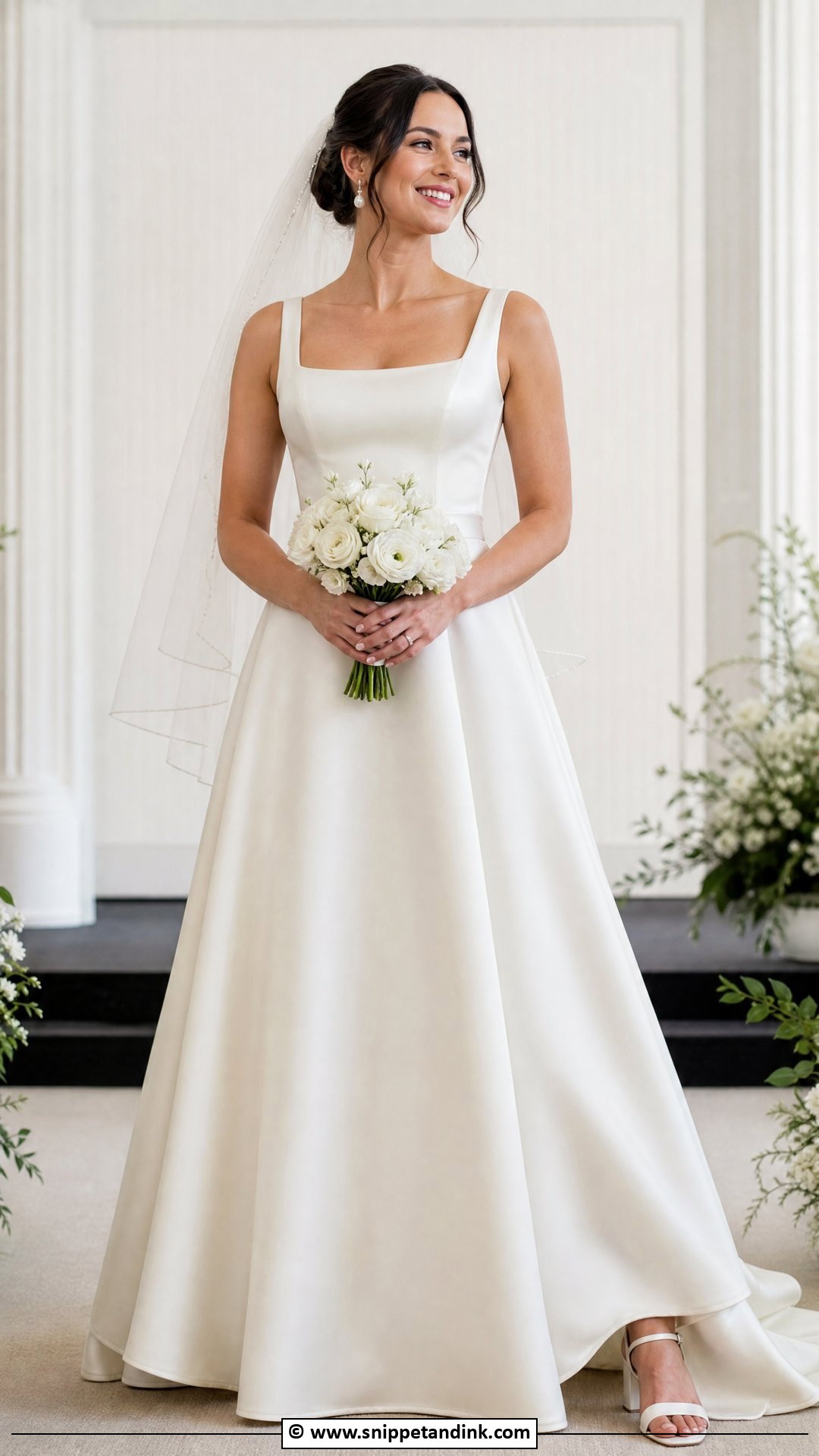
The A-line flatters more figures than any other shape I fit, because it fits through the bodice and then skims away from the hips instead of following them. Lace makes it romantic, satin makes it polished, chiffon gives it movement. Block heels or pumps, a fingertip veil and a small hair comb are enough. Add a slim belt if you want more waist definition. It moves easily between an indoor ceremony and an outdoor lawn, which is why it’s a safe choice for destination weddings.
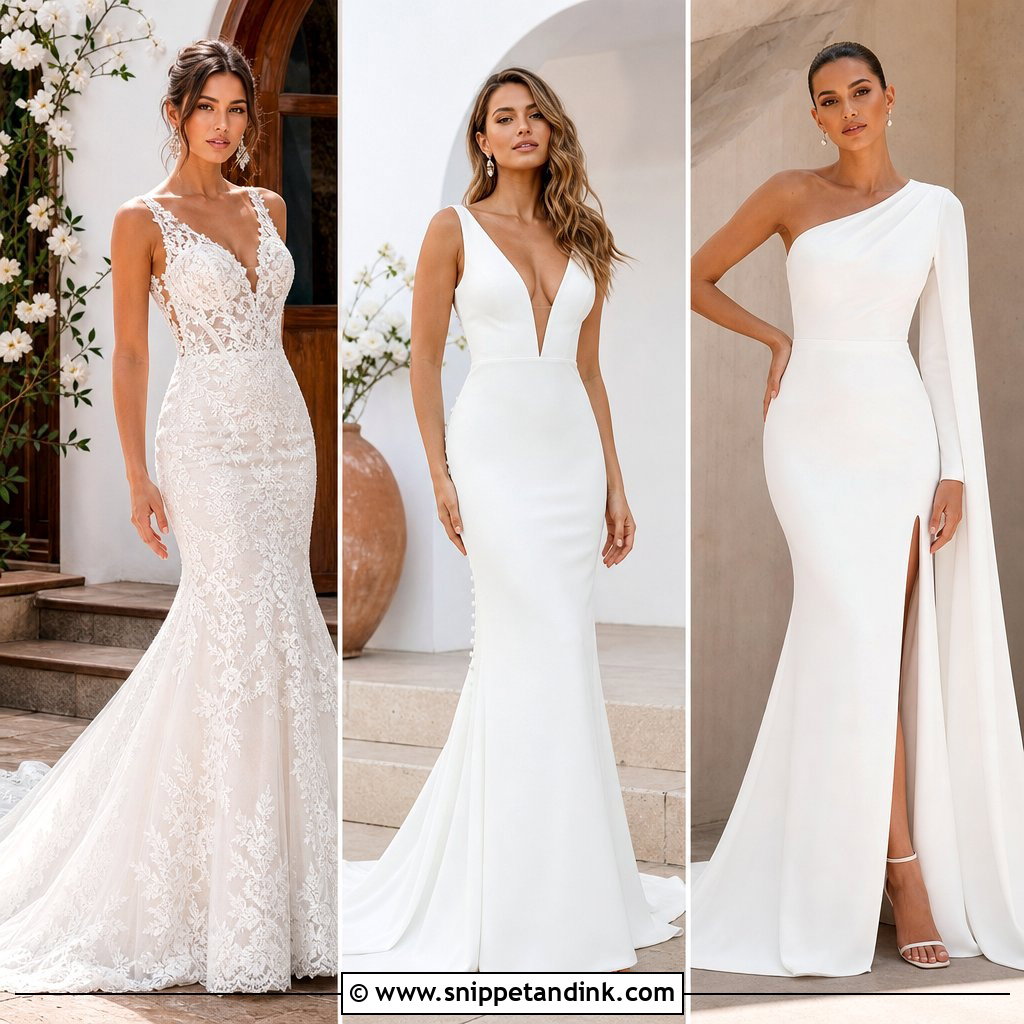
6. Mermaid Bride Dress
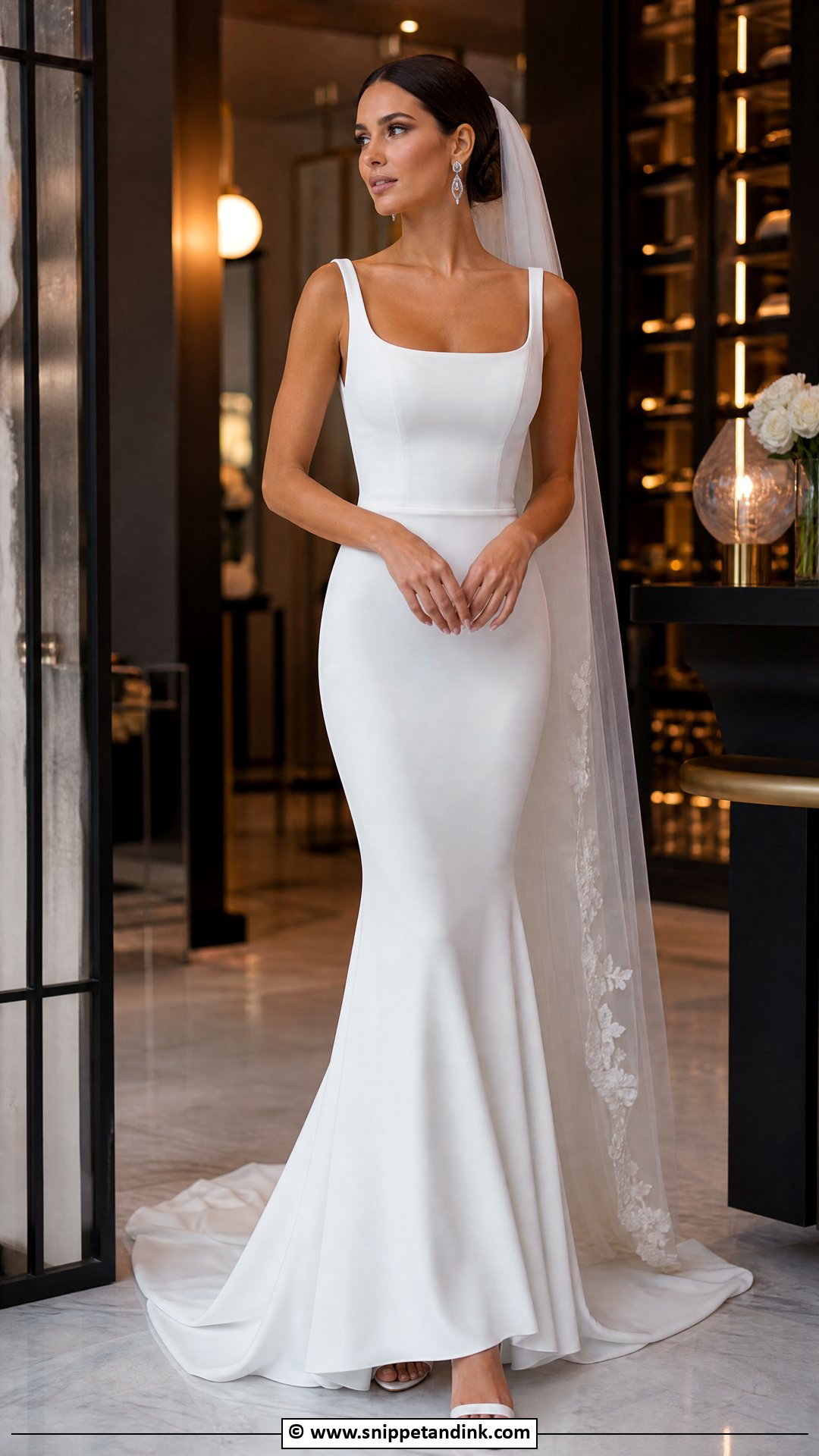
A mermaid gown hugs the bodice, waist and hips before flaring near the knee, and where that flare starts decides how well you can walk. A flare set at the knee looks dramatic but shortens your stride; a trumpet that opens at mid-thigh gives you more room. I always make brides walk the length of the shop, climb a step and sit. Stretch crepe looks sleek, lace softens it, beading suits evening. Tall heels and a long veil balance the fitted shape.
7. Square Neck Bride Dress
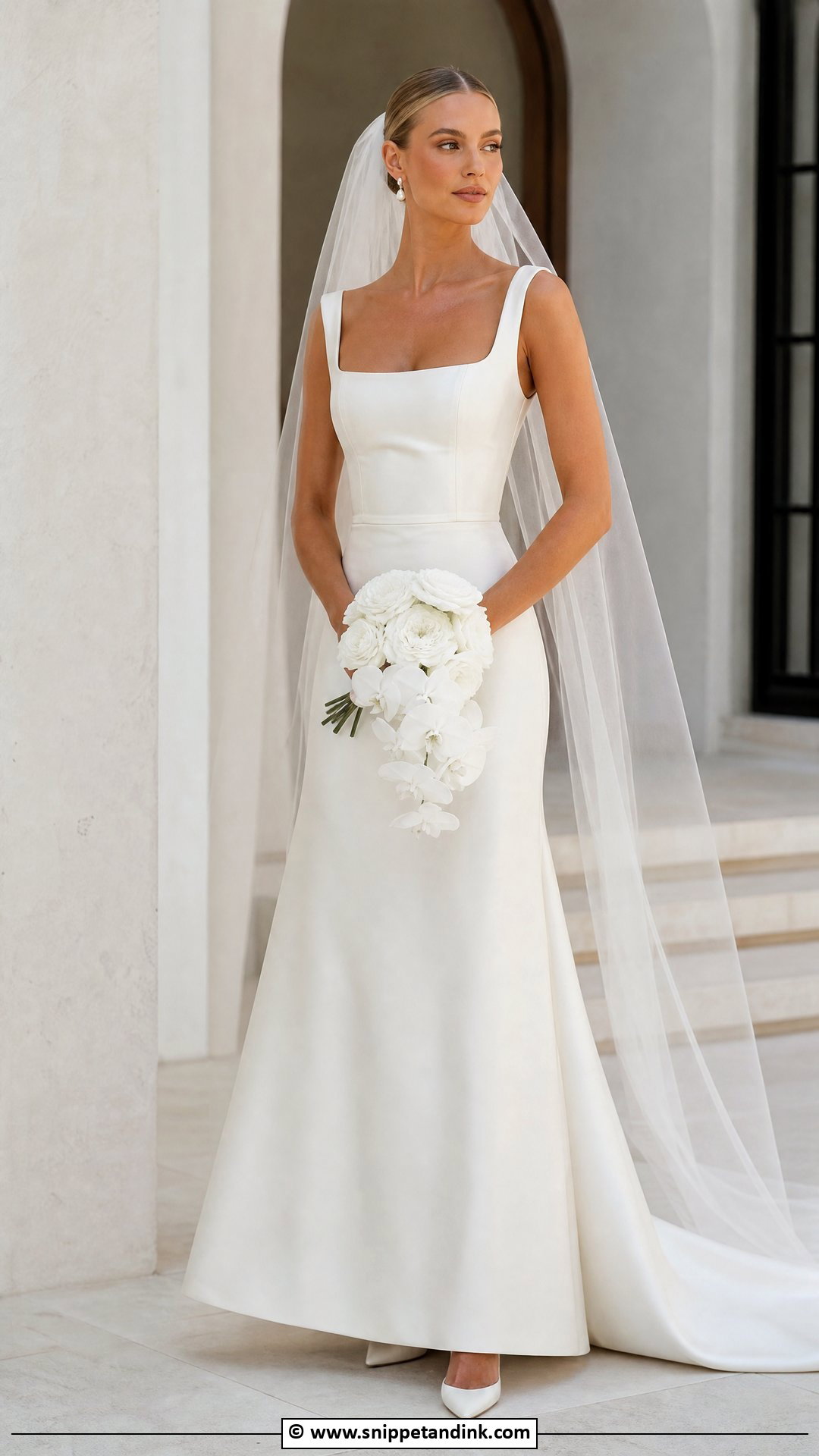
The square neckline sits somewhere between modern and vintage, and it frames the face and collarbone with a strong, clean line. It works with a sleek bun or loose waves equally well. Crepe keeps it minimal, lace softens it. Pearl earrings, ivory heels and a sheer veil finish it. Brides who want chest coverage without a high neck tend to like it, and the straight edge reads crisply in front-on portraits. The one thing I check is that the corners sit flat and don’t gape when you lean forward.
8. Corset Bodice Bride Dress
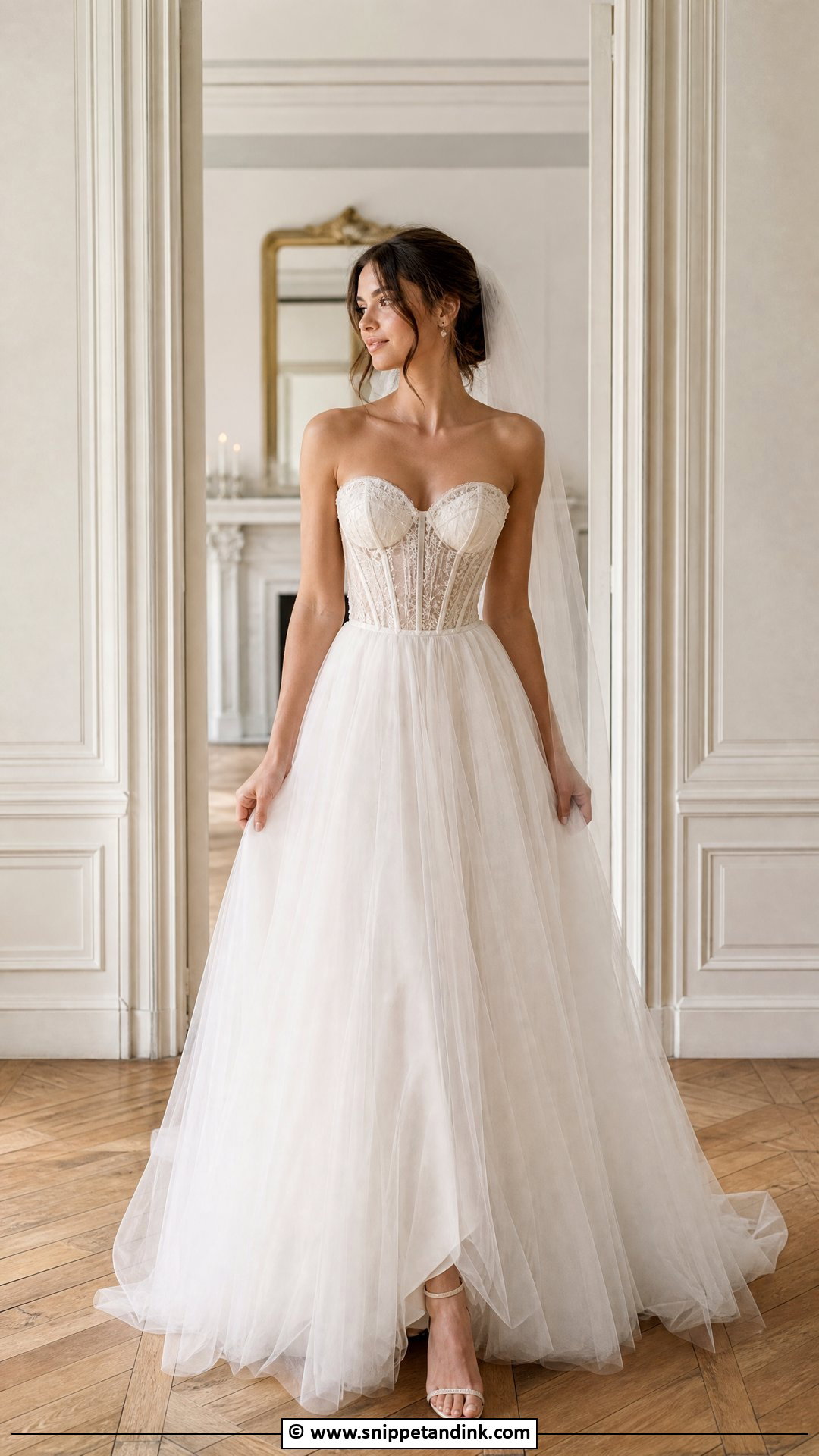
A corset bodice gives support and a defined waist, and it changes character with fabric: romantic in lace, dramatic in satin, modern in sheer layers. Balance is everything. If the boning or seaming is visible, keep the skirt plain or softly flowing. I’d never buy one off the rack without a professional fitting, because a corset that’s slightly too big shifts and one that’s too tight leaves you breathless by the speeches. Simple heels, a delicate veil and earrings that don’t compete with the neckline are plenty.
9. Pearl Embellished Bride Dress
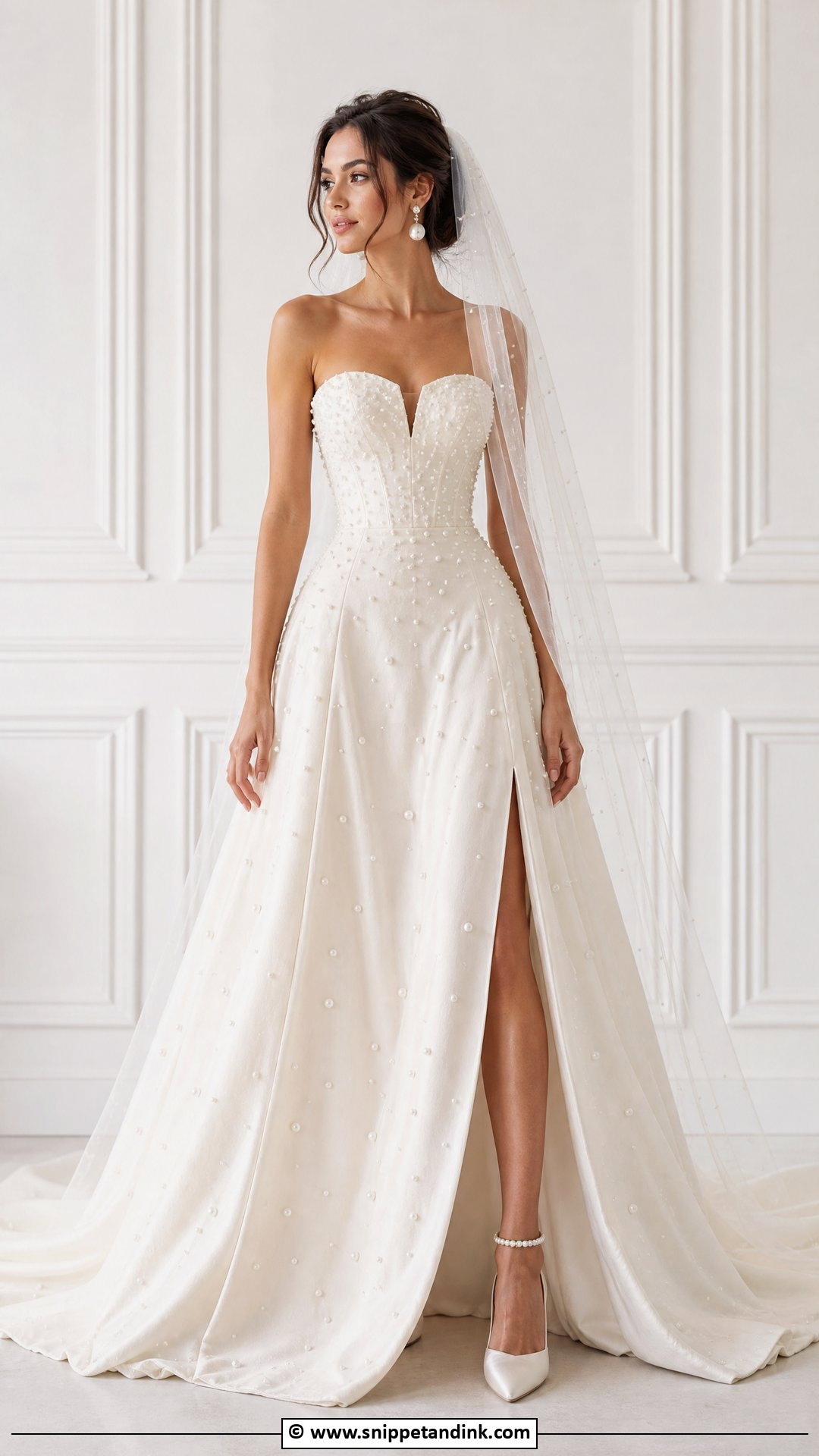
Pearls give a bridal gown texture instead of glitter, and they catch soft light rather than flashing. Scattered pearls on tulle, pearl-trimmed straps or a pearl-worked bodice all work. Check how they’re attached, though: pearls that are only glued, not stitched, can pop off when the bodice is altered or the skirt drags. Pearl earrings, satin heels and a plain veil keep the dress in focus. For a modern take, try a fitted column with pearl gloves or a pearl headband.
10. Floral Applique Bride Dress
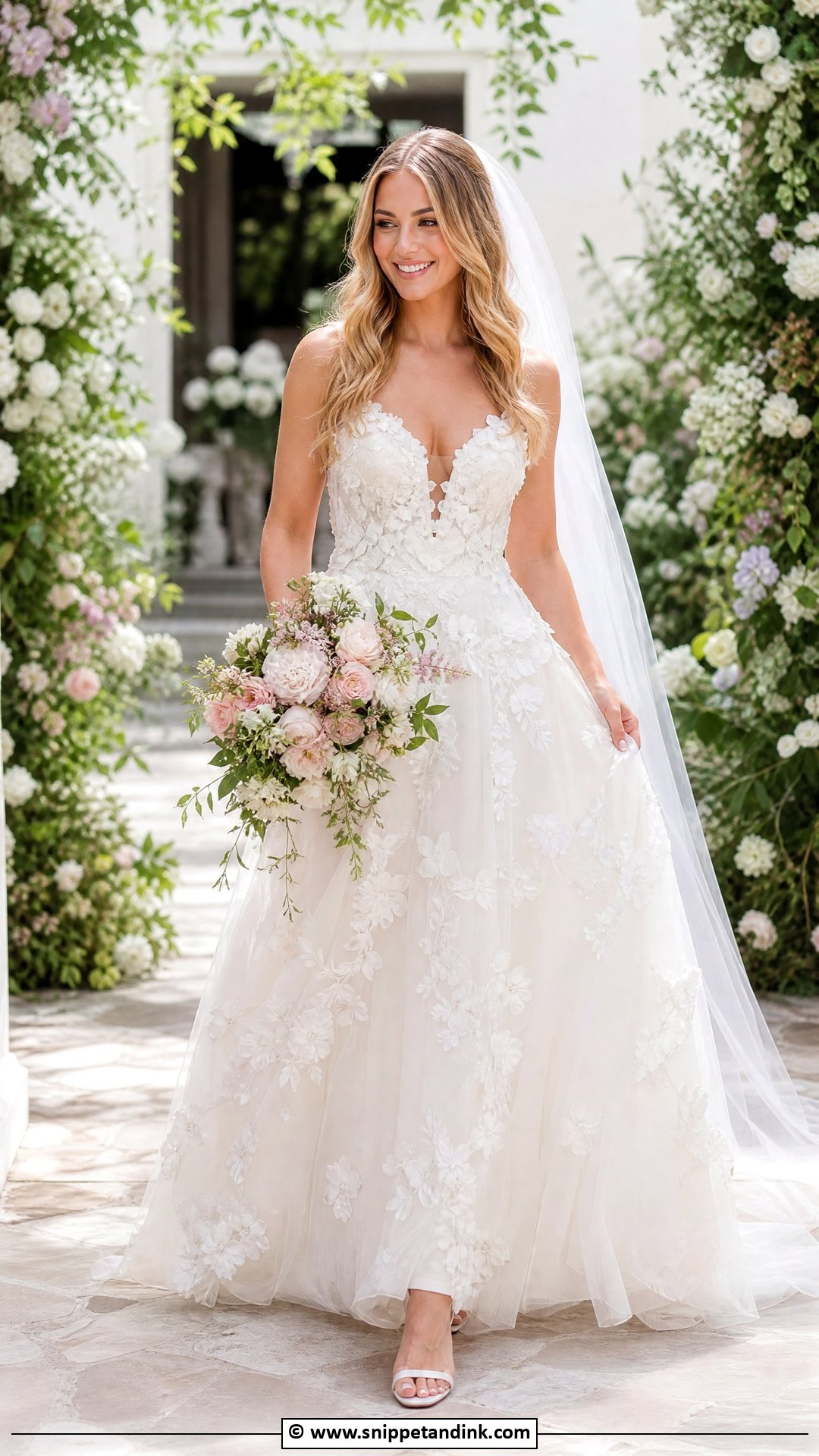
Three-dimensional flower appliques can sit on the bodice, skirt, sleeves or veil, and they give a soft statement without sparkle. Small appliques feel like a garden; large ones feel like a runway. Keep the shoes and jewelry simple so the dress isn’t crowded, and ask your florist to echo the applique shapes in a loose bouquet. They suit spring weddings, greenhouses and estate gardens. One caution from fittings: raised appliques snag on lace veils, so choose a veil with a plain edge.
11. Tea Length Bride Dress
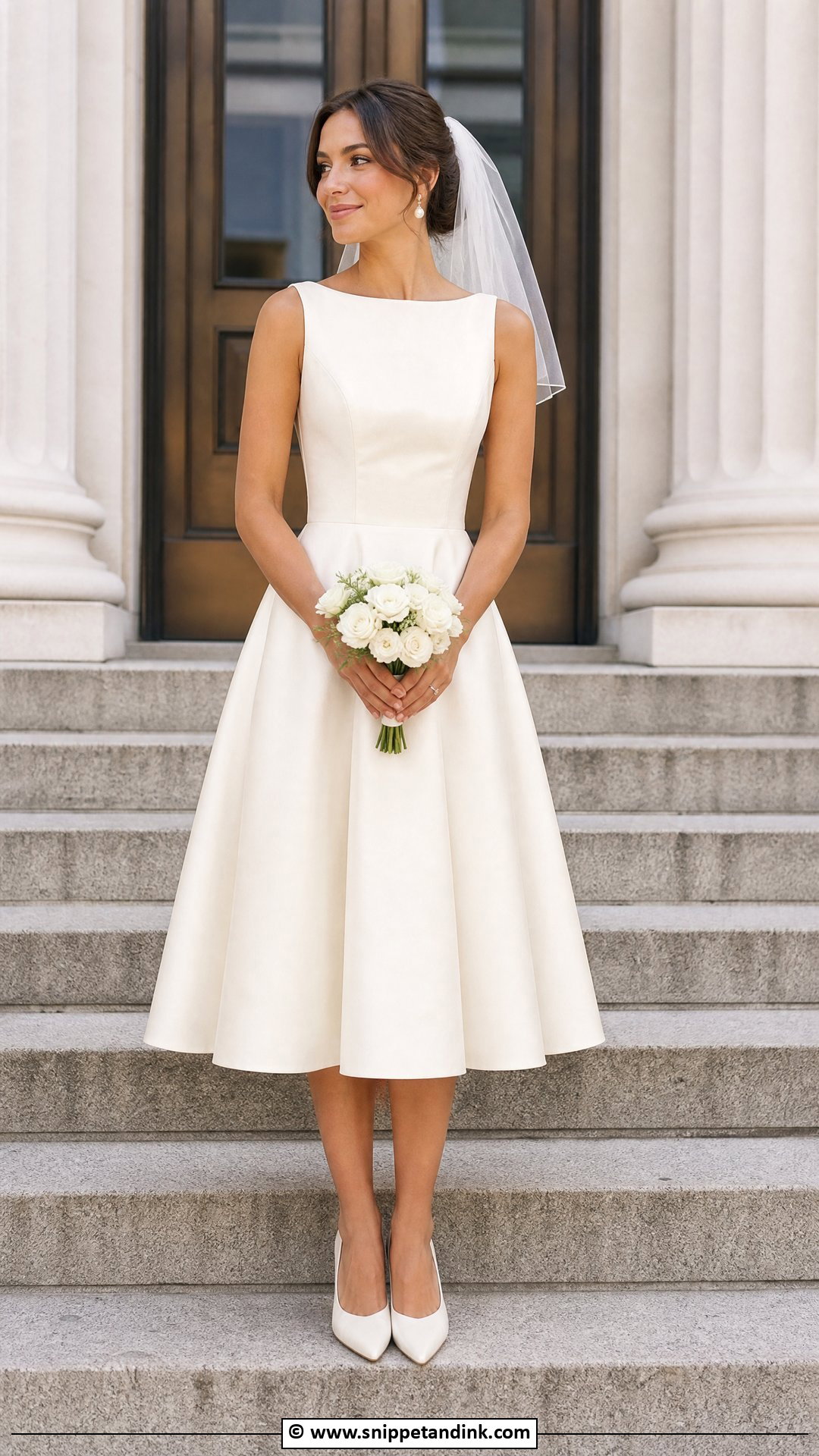
Tea length falls between knee and ankle, which makes it easy to move in and a natural fit for courthouse weddings, daytime ceremonies and vintage-inspired parties. Your shoes will be on show the whole time, so I treat them as part of the dress: pointed pumps, slingbacks or block heels in a colour you’ve chosen deliberately. Add a short veil, pearl earrings and a compact structured bouquet. Satin, tulle, lace and organza all suit the length. It reads bridal without feeling like a ballroom gown, and you can dance in it all night.
12. Short Bride Dress
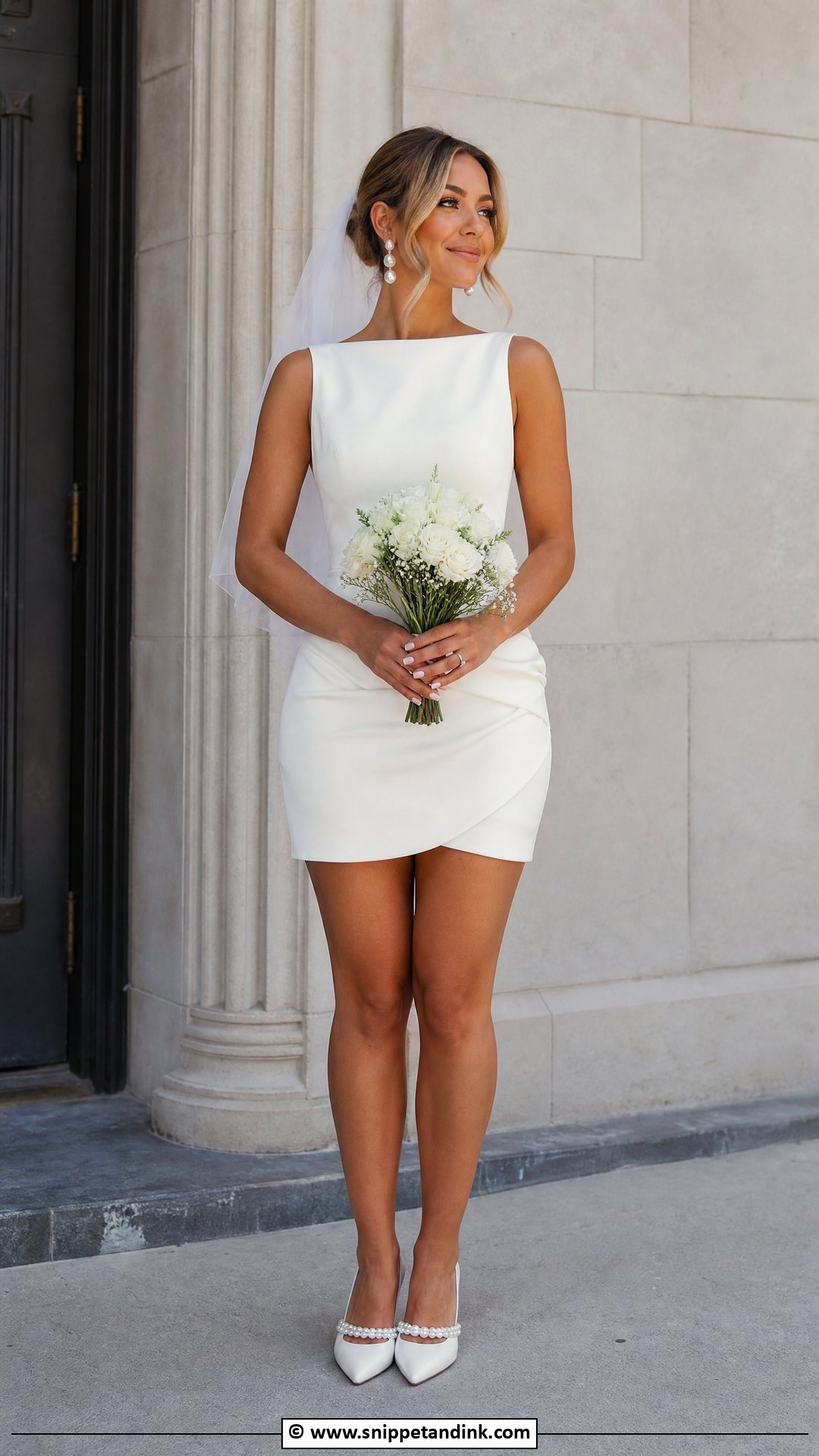
Short dresses suit courthouse weddings, elopements, rehearsal dinners and after-party outfits. A tailored mini, lace shift, satin wrap or structured bow-back all work. With so much leg on show, I put real thought into the shoes: satin pumps, pearl heels or sleek slingbacks, with sheer tights when the weather’s cold. A birdcage veil, a headband or statement earrings make it unmistakably bridal. Do the sitting test in the mirror, since a mini that’s fine standing can ride up a lot in a car or at a registry desk.
13. High Neck Bride Dress
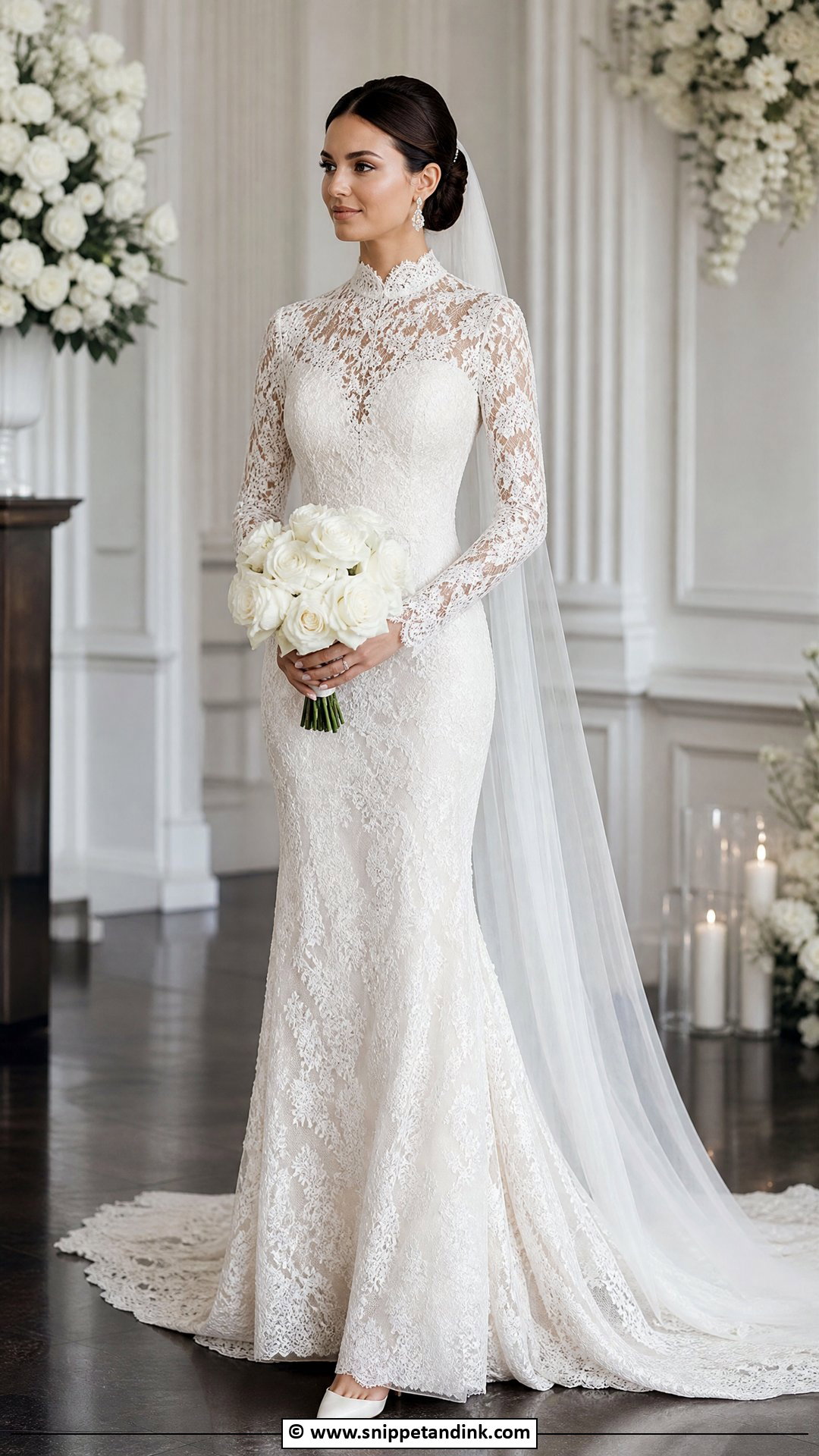
A high neckline pulls attention upward, so the hair has to do some work: a neat bun, a soft chignon or a sleek ponytail. Skip the necklace and wear earrings instead. Lace, crepe, satin and sheer tulle all suit it. Pair it with pointed heels and a long veil. If you find the neck too closed, an open back or a sheer lace yoke balances it. At fittings I check that you can turn your head and swallow comfortably, because a collar that’s a fraction too snug becomes all you think about.
14. V Neck Bride Dress
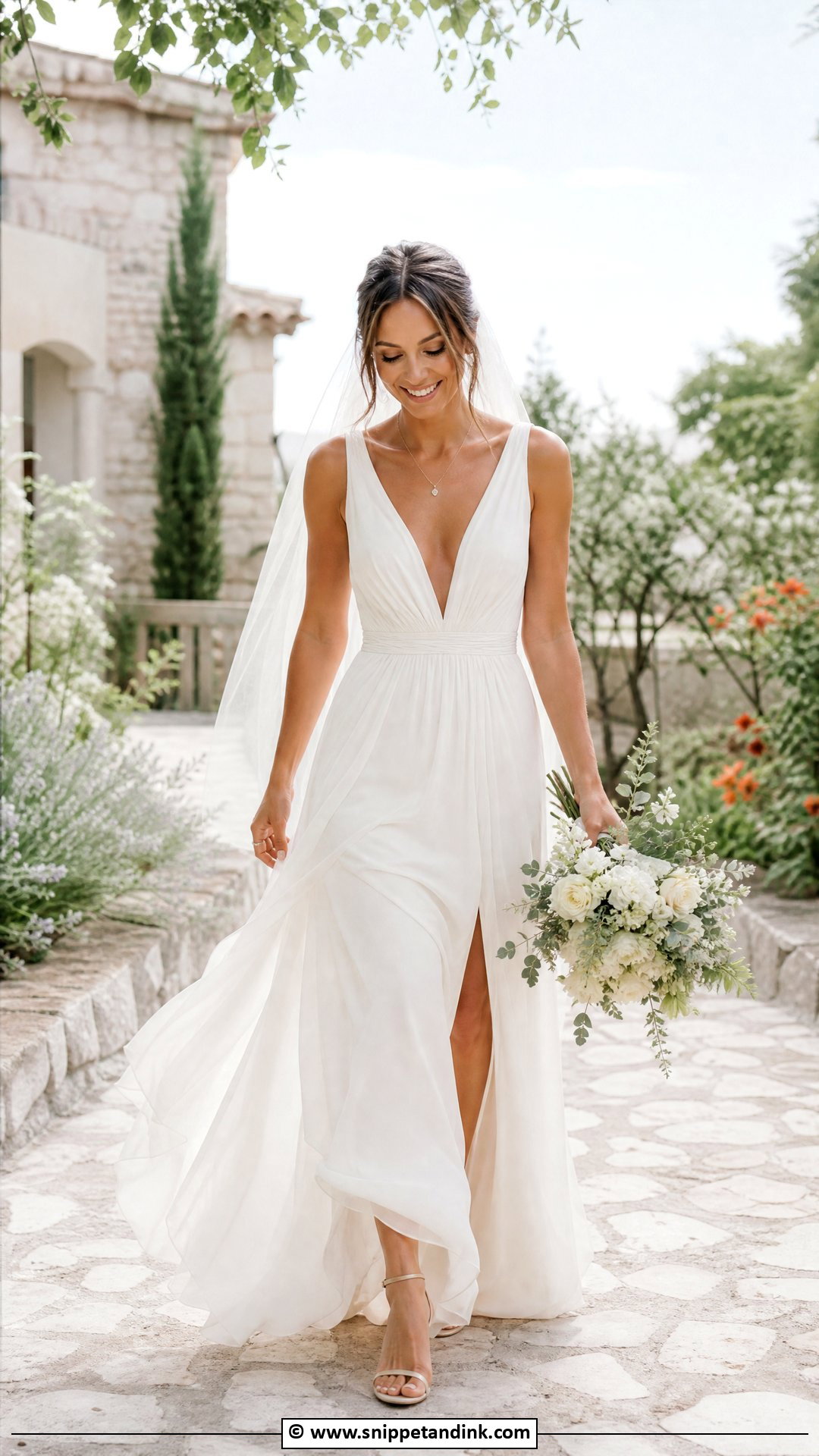
A V-neck lengthens the neck and torso, and how deep you go changes the mood: a shallow V reads classic and modest, a deep one modern and dramatic. Deep Vs need fashion tape or a mesh panel to stay in place when you bend, and I’d always test that at the fitting. Chiffon relaxes it, lace softens it, crepe sharpens it. A delicate pendant, drop earrings and a veil anchored at the crown for height finish it, and it travels well from a beach to an indoor ballroom.
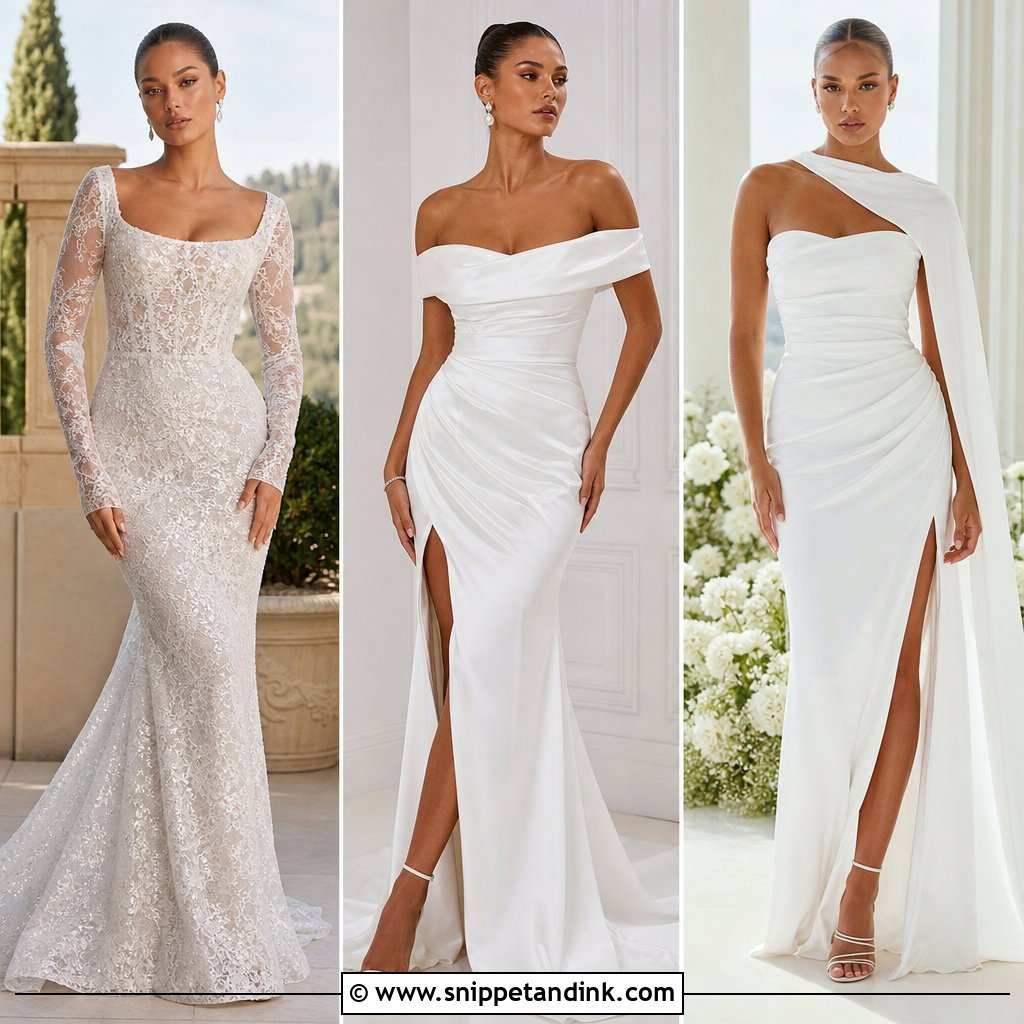
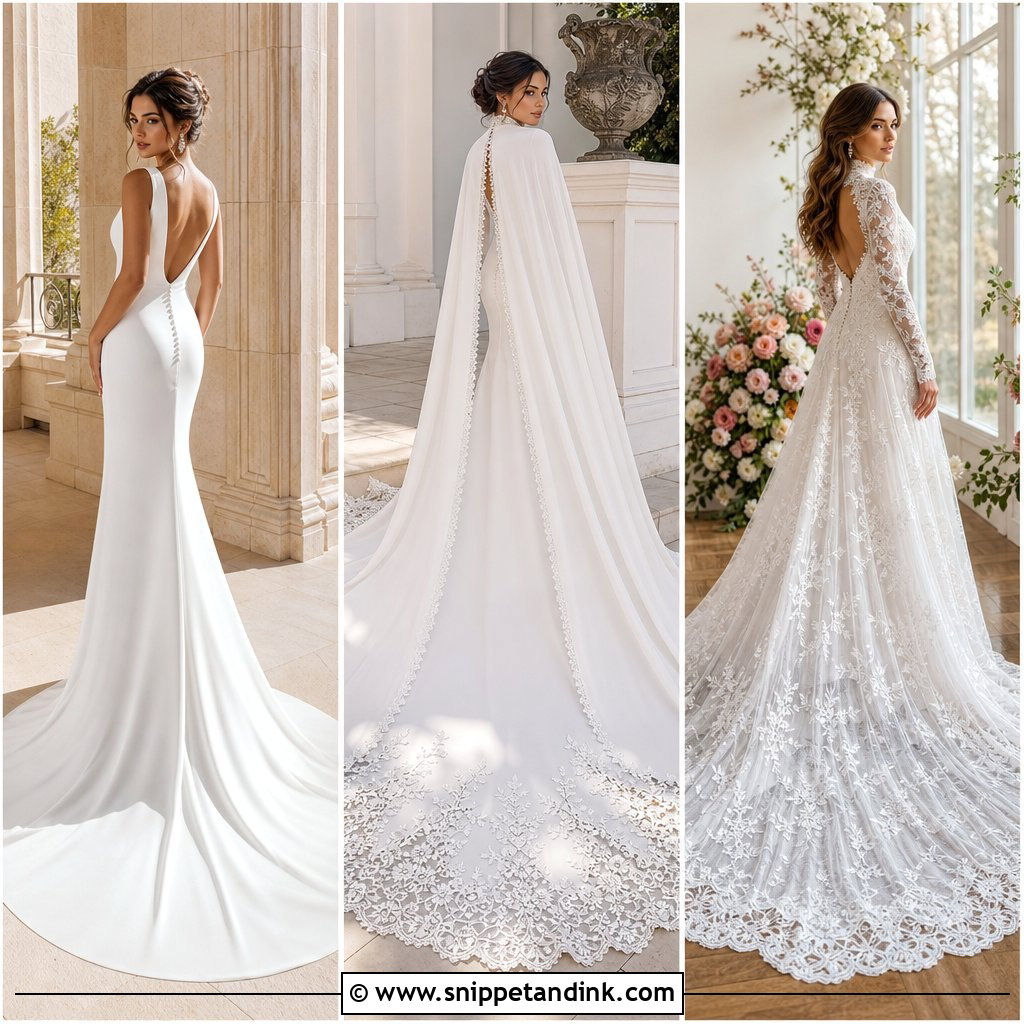
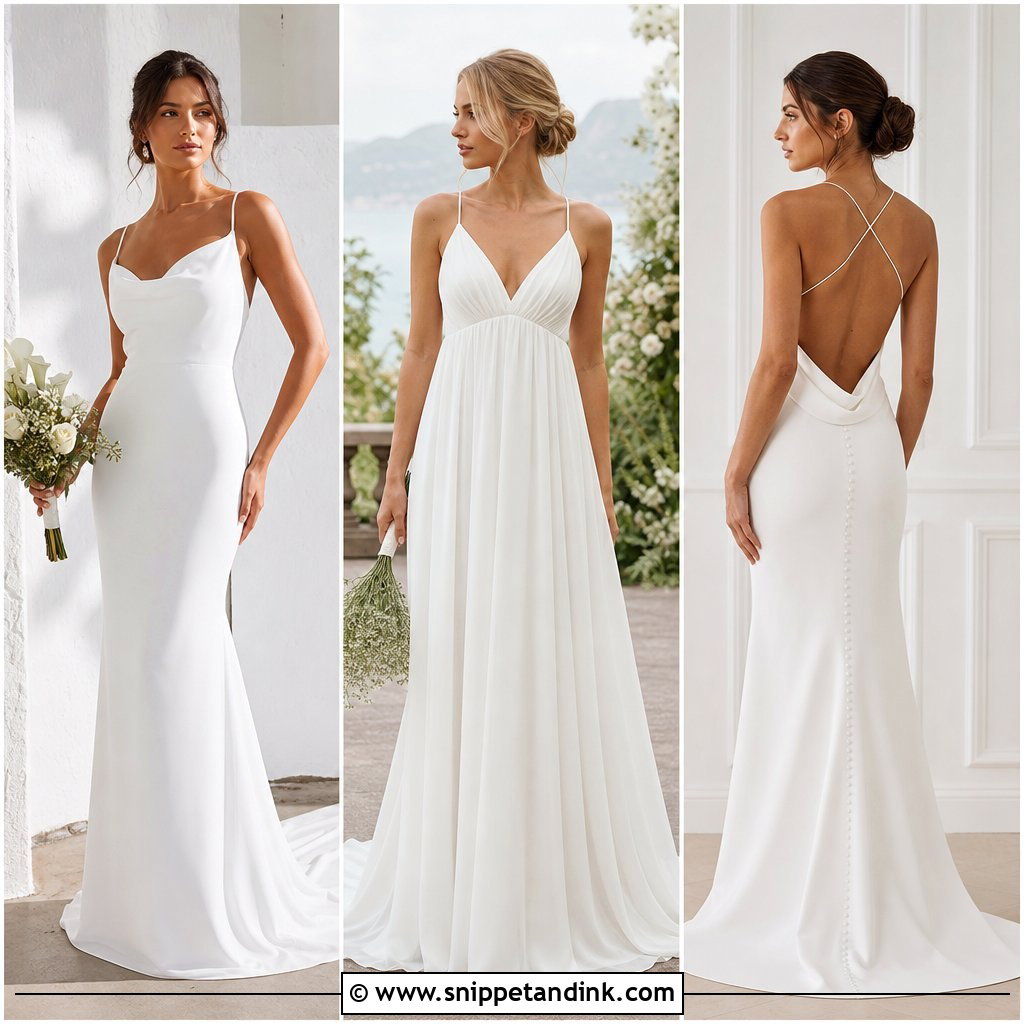
15. Backless Bride Dress
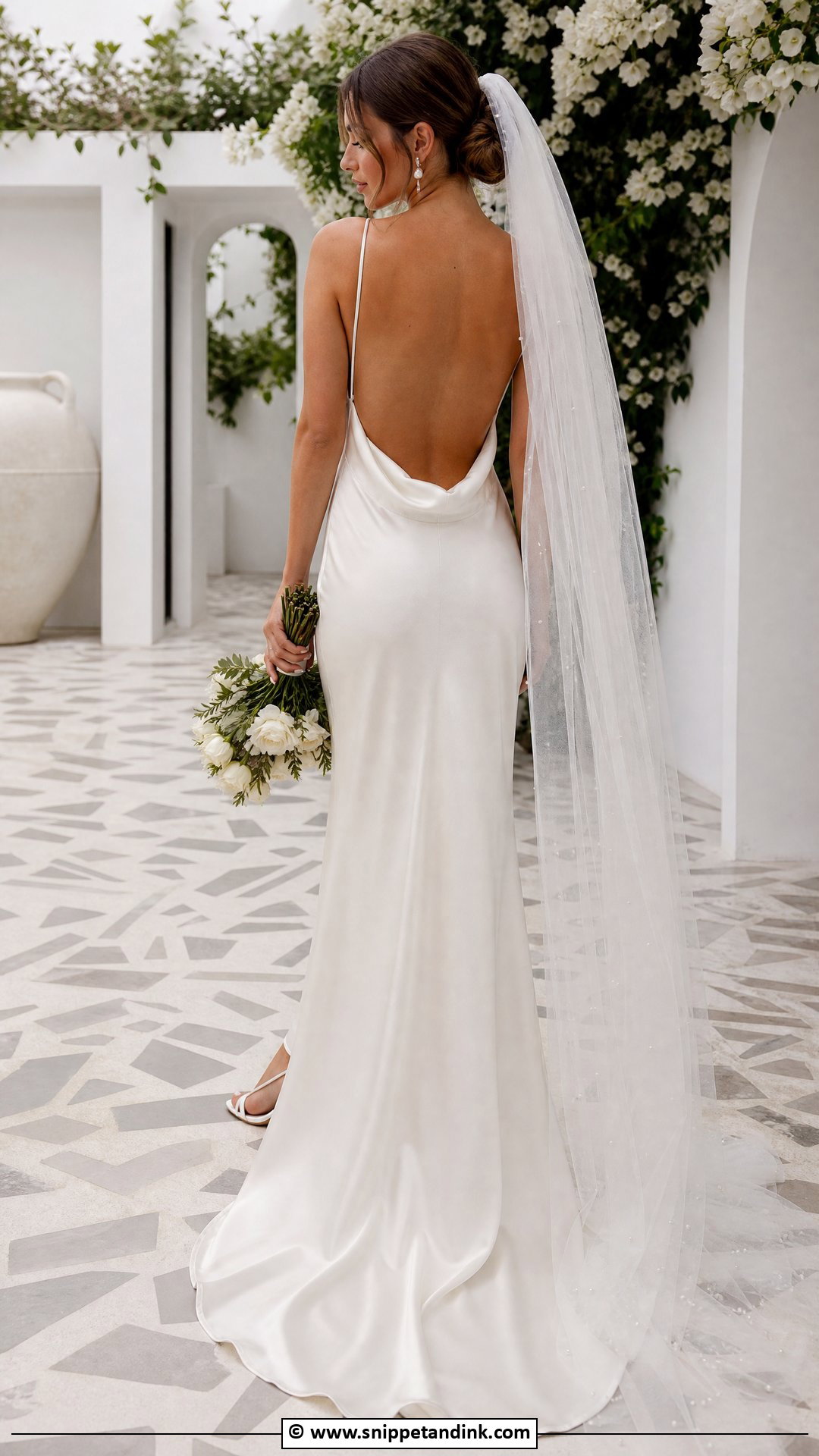
An open back is the view guests see for the entire ceremony, so it deserves as much thought as the front. A sleek satin slip, lace gown or fitted crepe all work. The support question matters most: you’ll likely need a built-in cup or a bodice cut close enough to stay put, since most strapless bras won’t work with a low back. Keep the front simple, wear a low bun and choose a veil you can remove for photos. It suits warm-weather and destination weddings.
16. Bride Dress With Detachable Sleeves
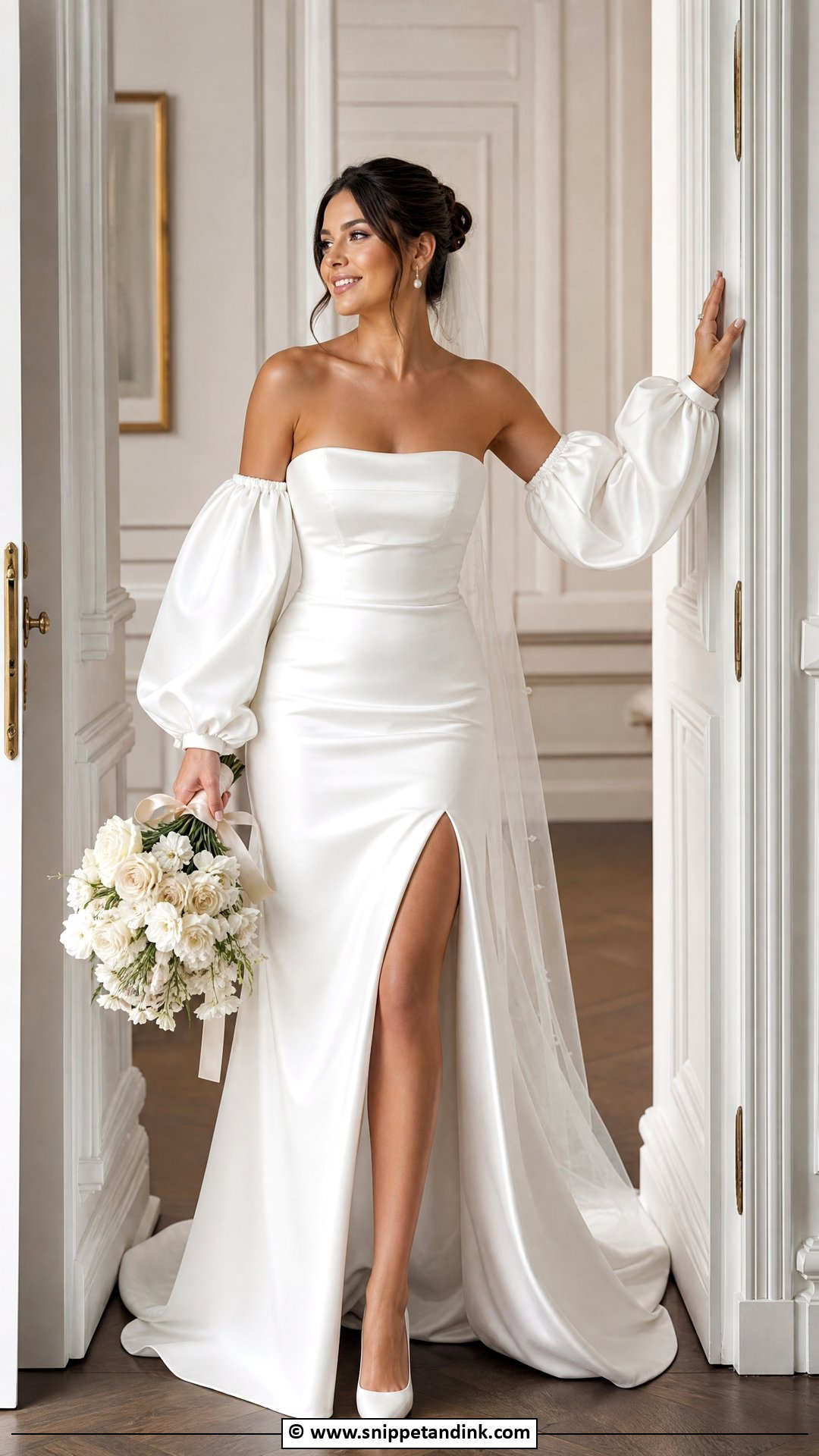
Detachable sleeves give you two looks from one gown: sleeves for the ceremony, bare shoulders for the reception. They pair well with strapless gowns, corset bodices, crepe and tulle. Puff sleeves feel soft, lace sleeves romantic, satin sleeves modern. I always ask how they attach, because sleeves held by ribbons or snaps go on and off in a minute, while sleeves stitched to a hidden band need someone handy with a needle. They’re also practical when a cool ceremony turns into a warm dance floor.
17. Bride Dress With Overskirt
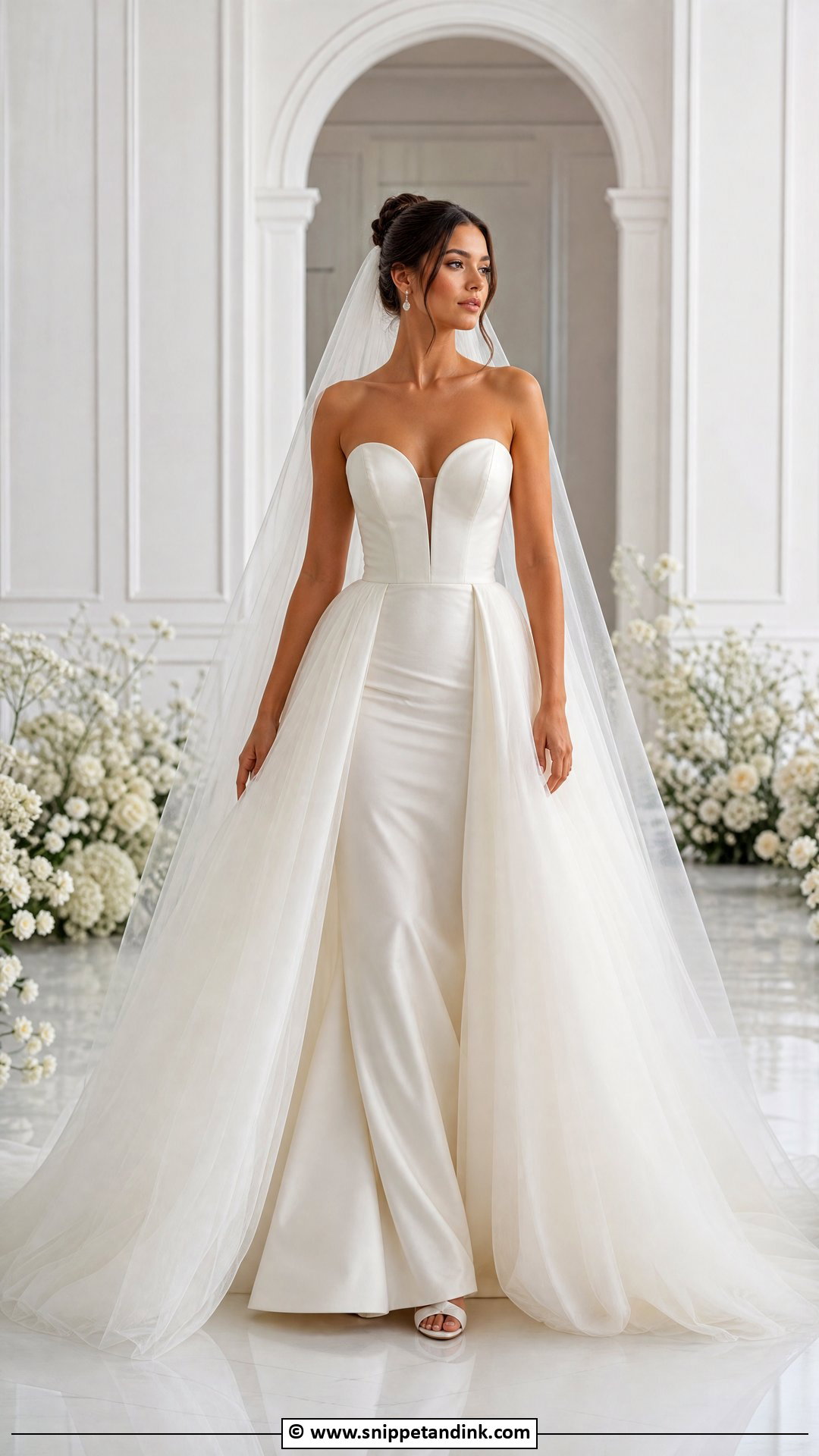
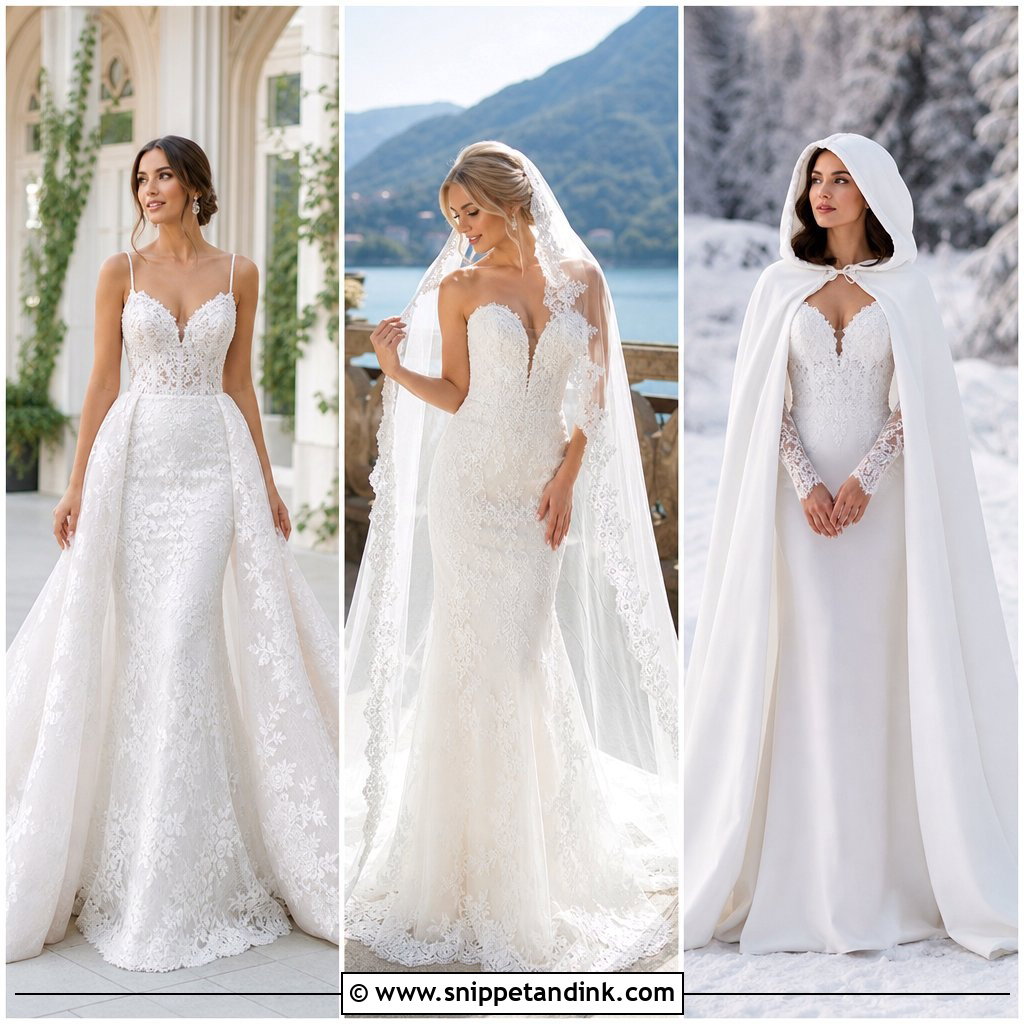
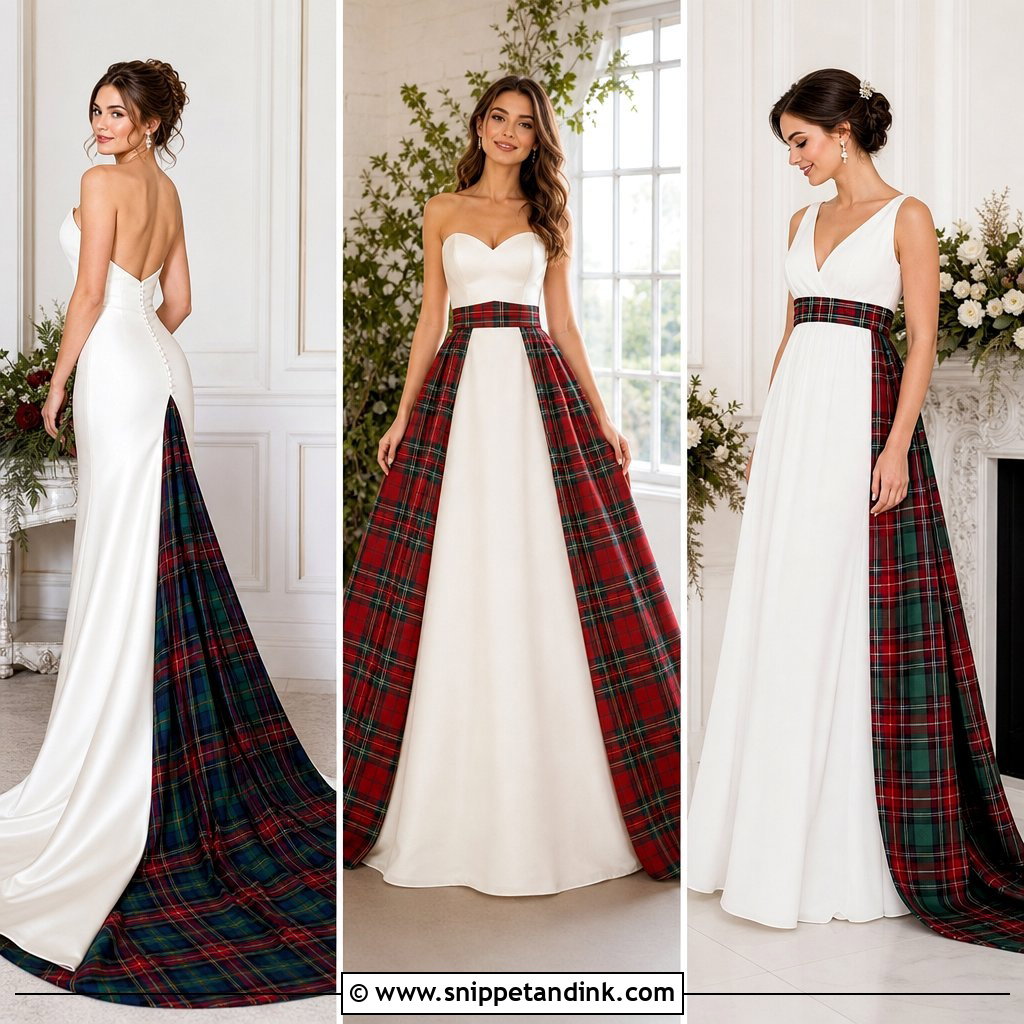
An overskirt gives you volume for the aisle and freedom for the dance floor. The base dress can be fitted, short or slim, and the overskirt snaps or hooks on around the waist. Tulle adds softness, satin structure, organza airy volume. Pick shoes that work with both hemlines and a veil that suits the longer skirt. Have the overskirt fitted with the base dress on, every time, so the waistband doesn’t bunch where the two layers meet.
18. Bride Pantsuit
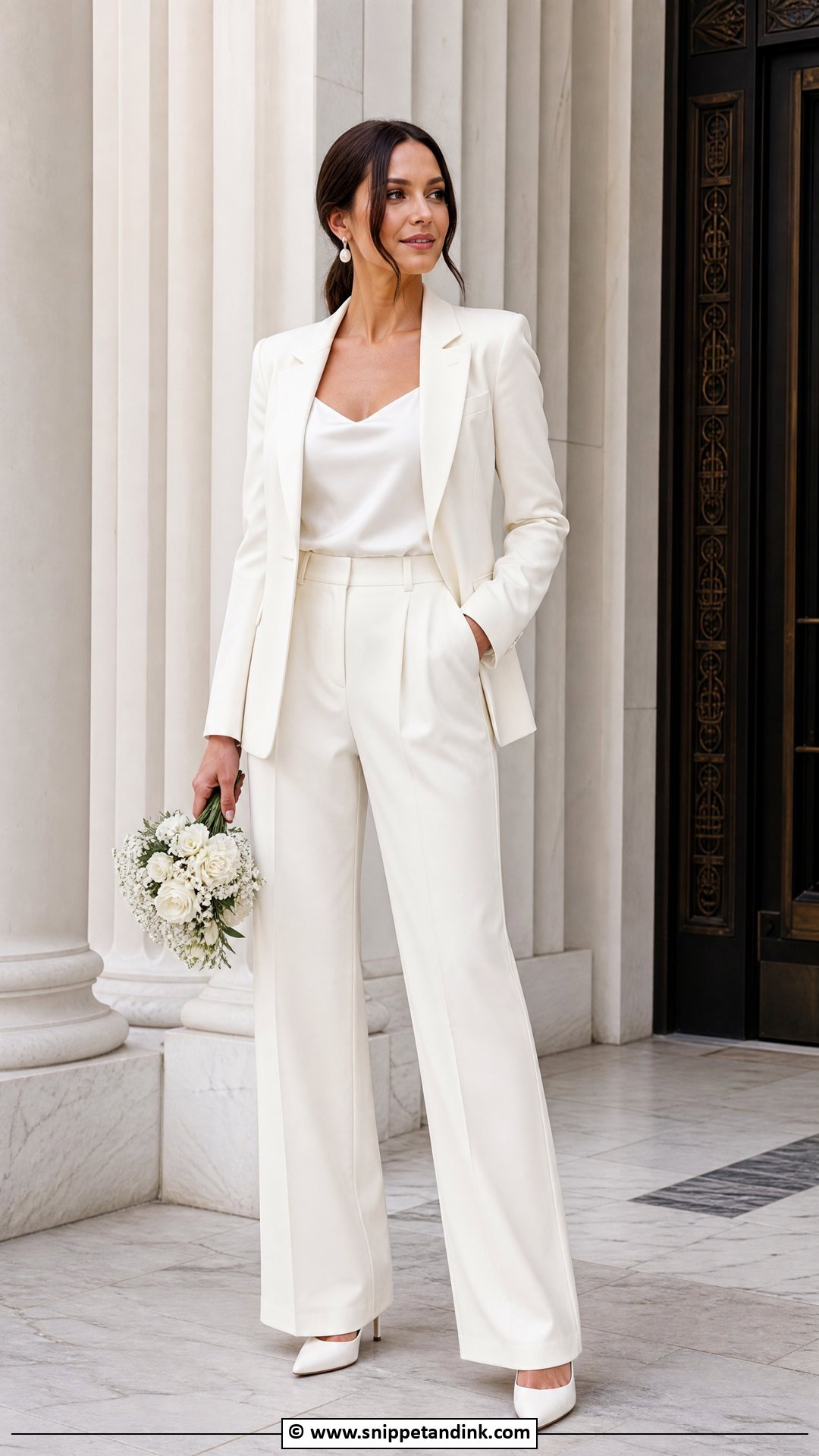
A bride pantsuit is the strongest alternative to a gown I offer, and it works best when the tailoring is impeccable. Ivory wide-leg trousers, a fitted blazer and a silk camisole or corset top underneath form the base. A double-breasted blazer looks sharp, a belted one defines the waist. Fabric quality shows more on a suit than on a gown, so I go for crepe, satin or a good wool-blend suiting. Pearl earrings, pointed heels and a veil keep it bridal. Courthouse weddings, civil ceremonies and reception changes suit it.
19. Bride Jumpsuit
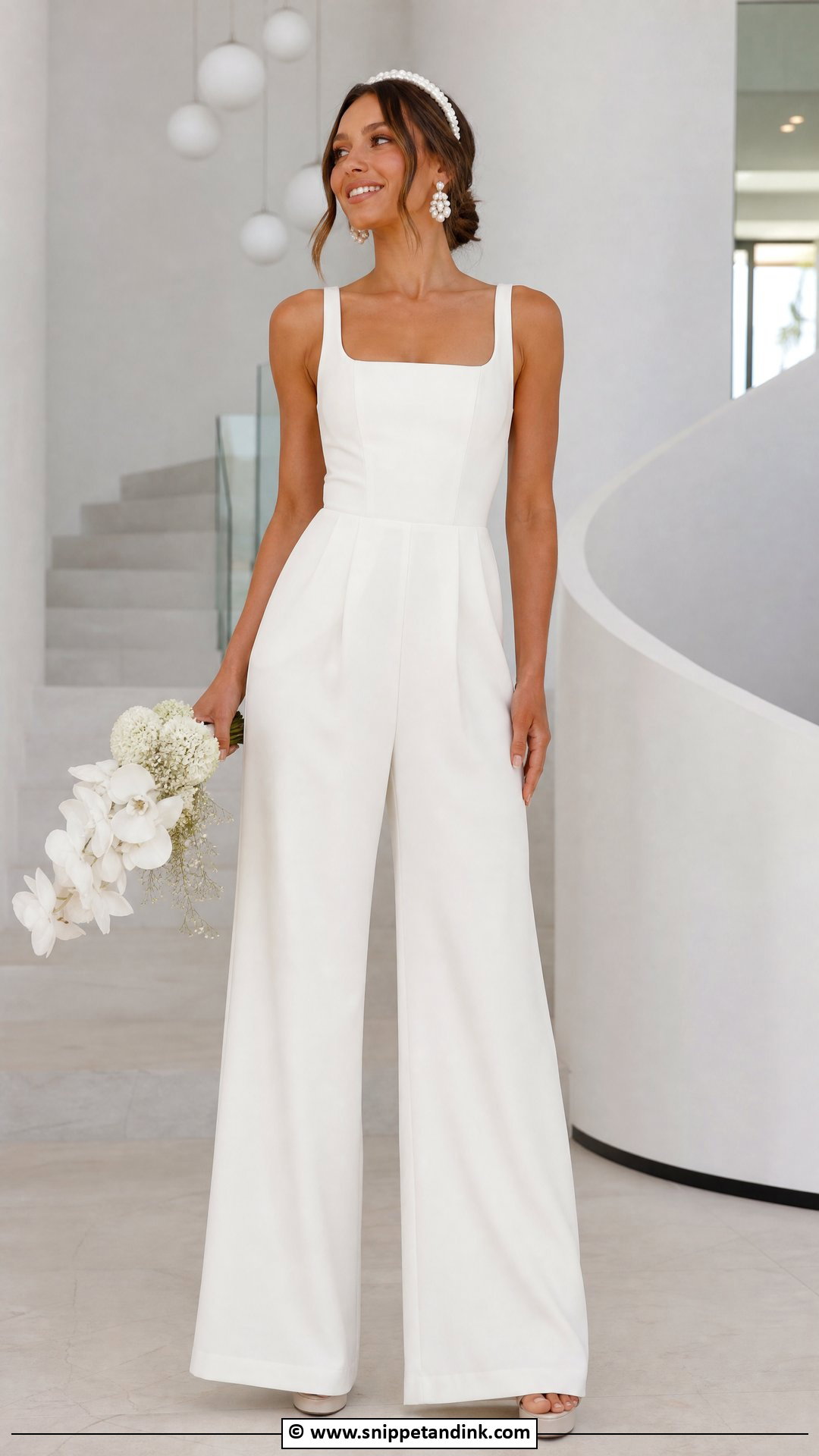
A bride jumpsuit gives you the freedom of trousers with the line of a gown. Wide-leg ivory crepe or satin looks most bridal, and a fitted bodice, square neck, halter or cape detail lifts it to ceremony level. Length is the fitting point people miss: hem it with your actual shoes on, because wide legs that touch the floor collect dirt in a few hours. Platform heels, statement earrings and a short veil or pearl headband finish it, and it suits rooftops, courthouse ceremonies and late-night parties.
20. Two Piece Bride Dress
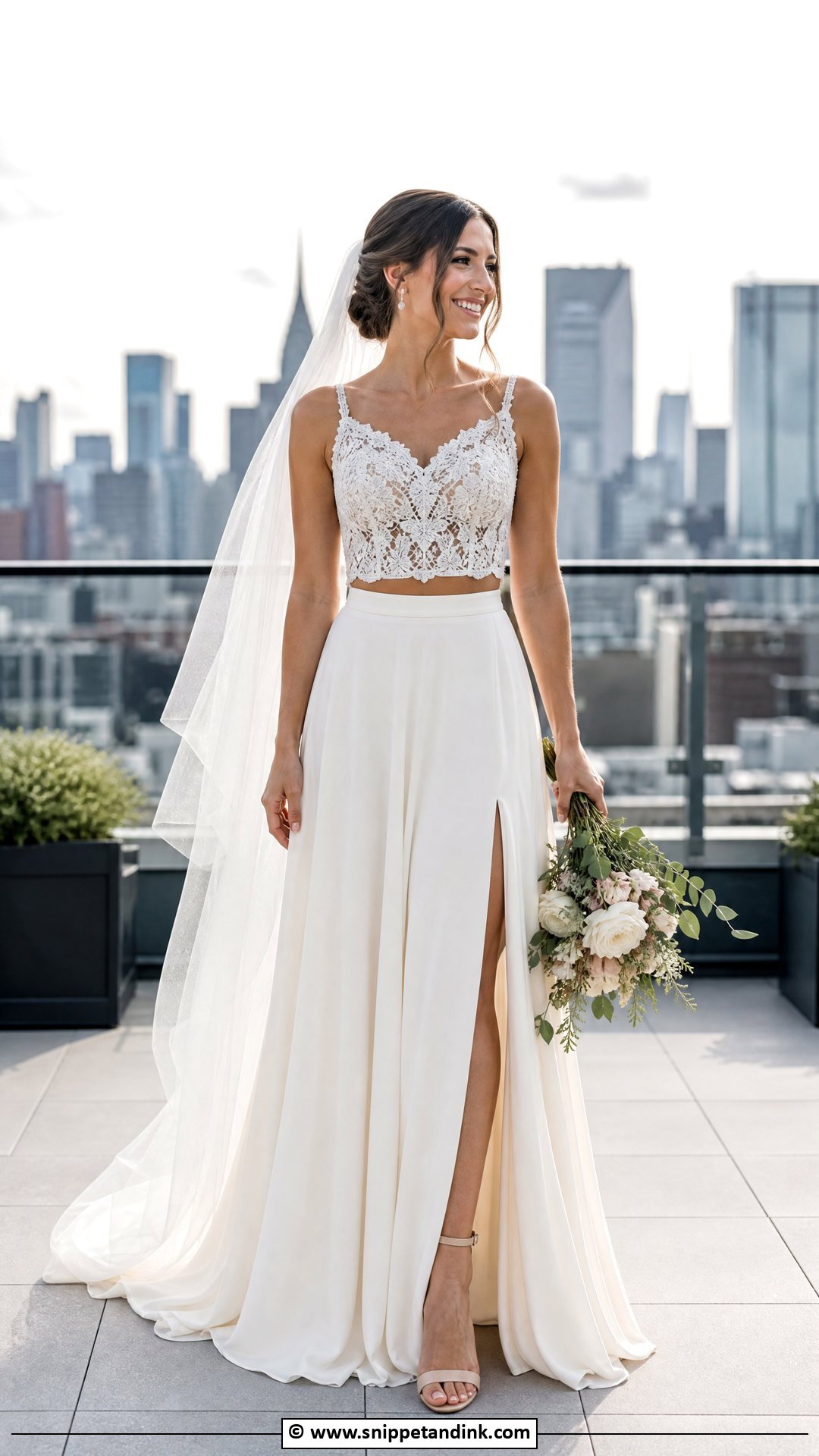
Separates give you a modern look and more control over fit, since top and skirt can each be sized correctly. A lace crop top with a high-waist skirt, a satin bandeau with a full skirt, or a structured corset with a column skirt all work. The pieces need to match in tone; two whites that look identical in the shop can read differently in daylight. Keep jewelry minimal and the veil simple. Beach, rooftop and summer weddings suit it, and you can wear the pieces again afterwards.
21. Slip Bride Dress
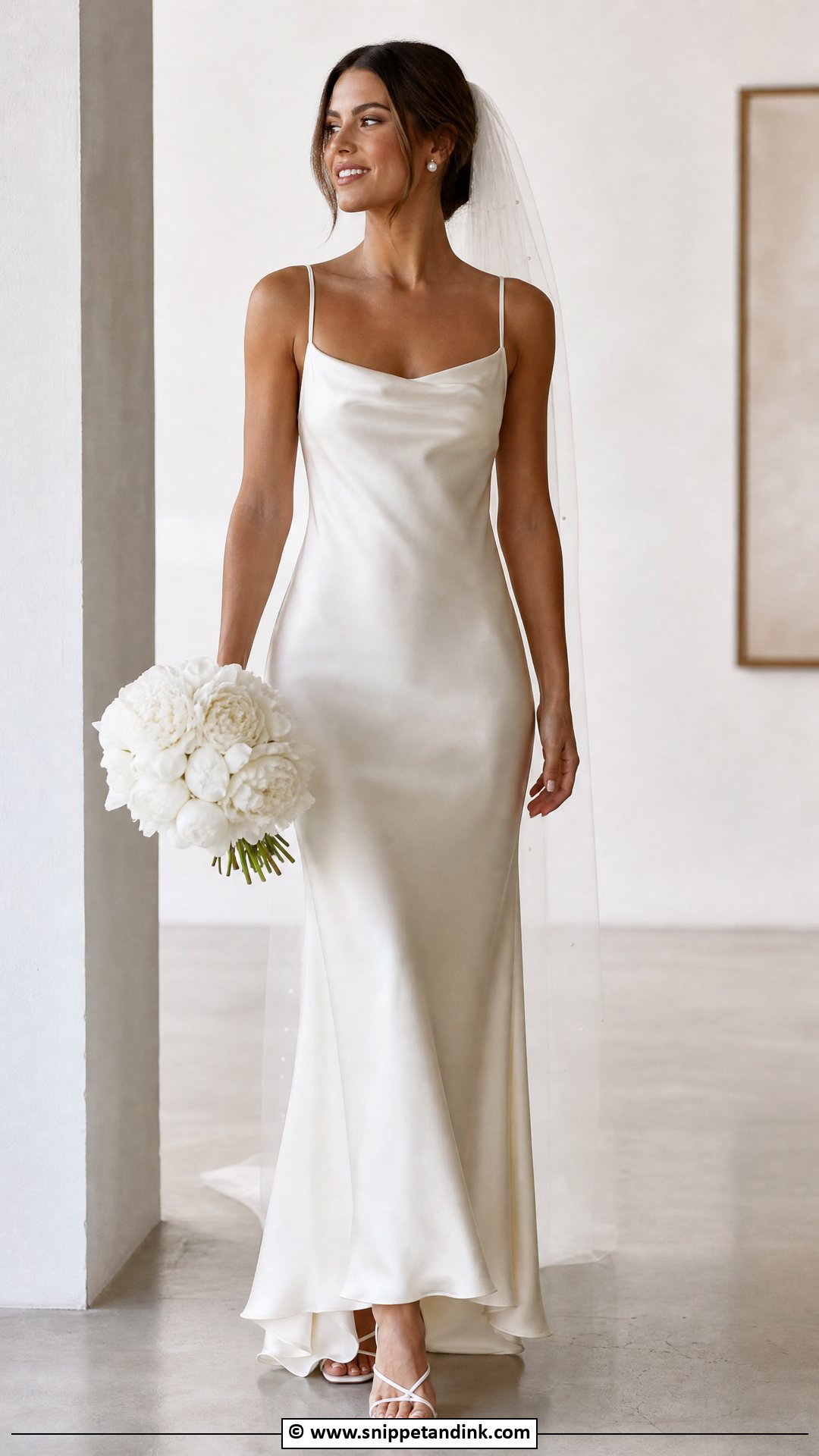
A slip bride dress looks simple and is one of the hardest to fit. Silk, satin or crepe cut on the bias skims the body, and that means it shows undergarment lines and every seam. I fit slips with smooth, no-line underwear and often a light shapewear slip. Thin straps, a cowl neck or a bias cut give movement without detail. The dress should glide over the body, not cling to it. Strappy heels, pearl studs and a sheer veil finish it, and a wrap or tailored blazer adds coverage for a cooler evening.
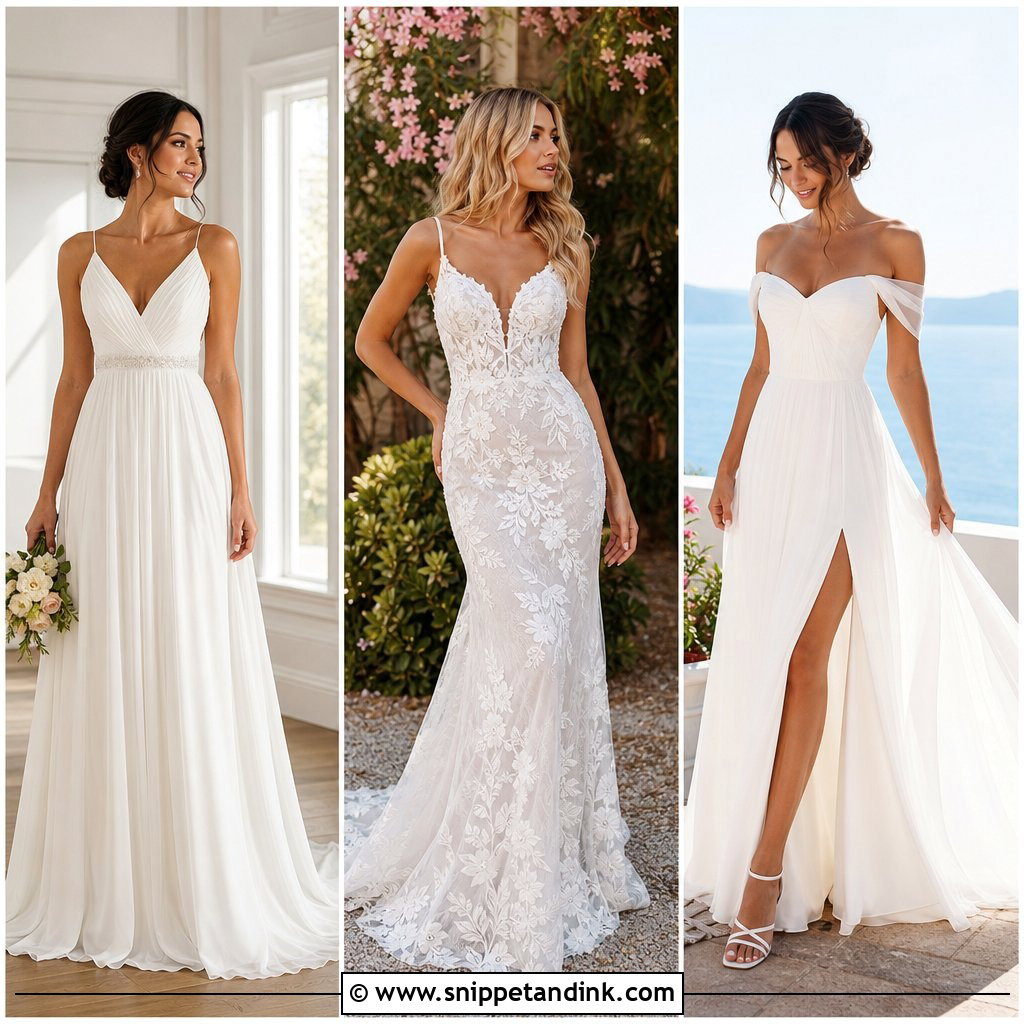
22. Chiffon Bride Dress
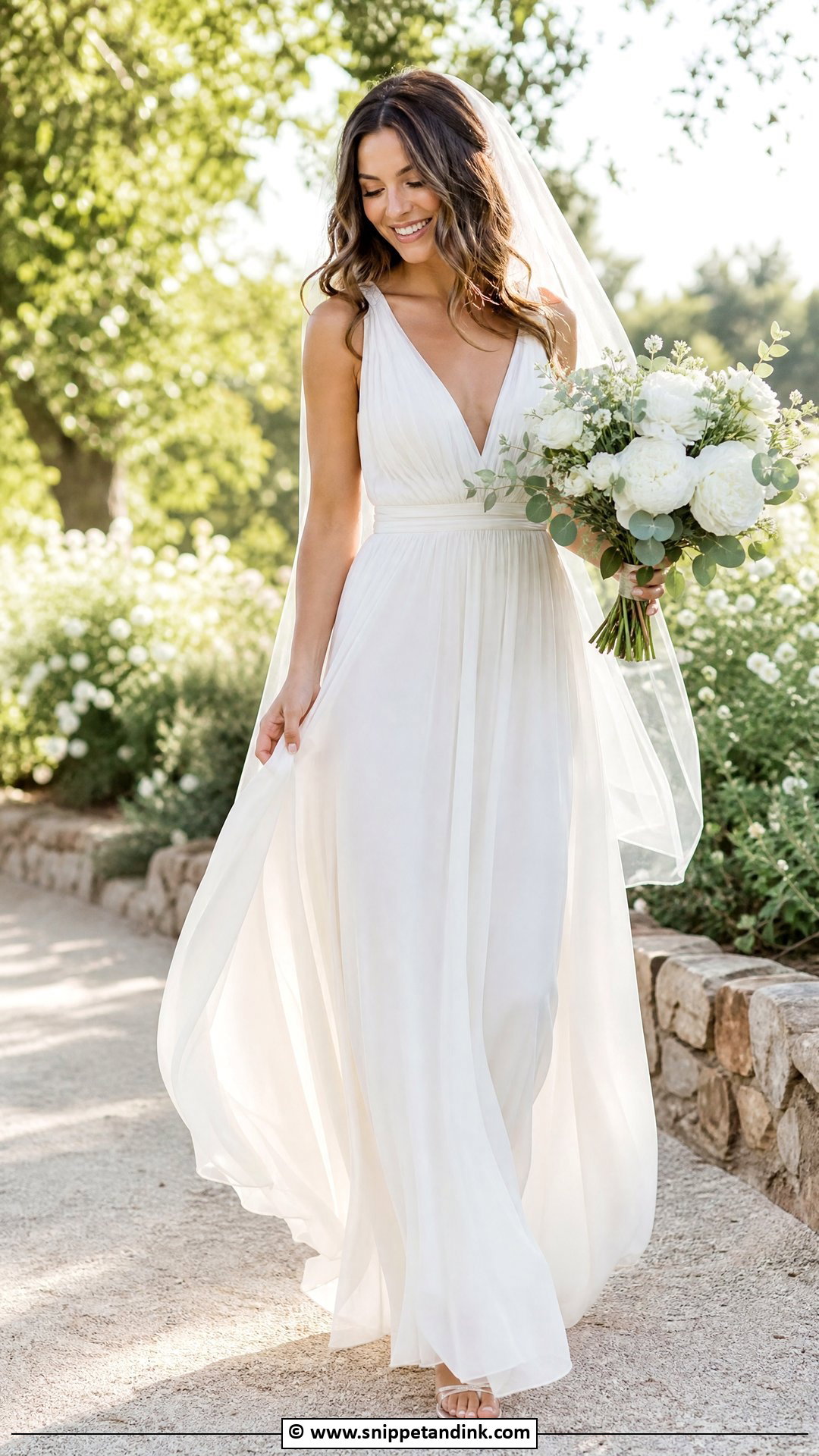
Chiffon is the lightest bridal fabric on this list and the easiest to wear in heat. It moves with any breeze, which outdoor photographers love. An empire waist, A-line, flutter sleeve or V-neck all suit it. Delicate sandals, loose waves and a sheer veil keep it soft. The downside is that chiffon snags on rough surfaces and wrinkles if packed tight, so I’d hang it in a breathable bag rather than fold it for travel.
23. Tulle Bride Dress
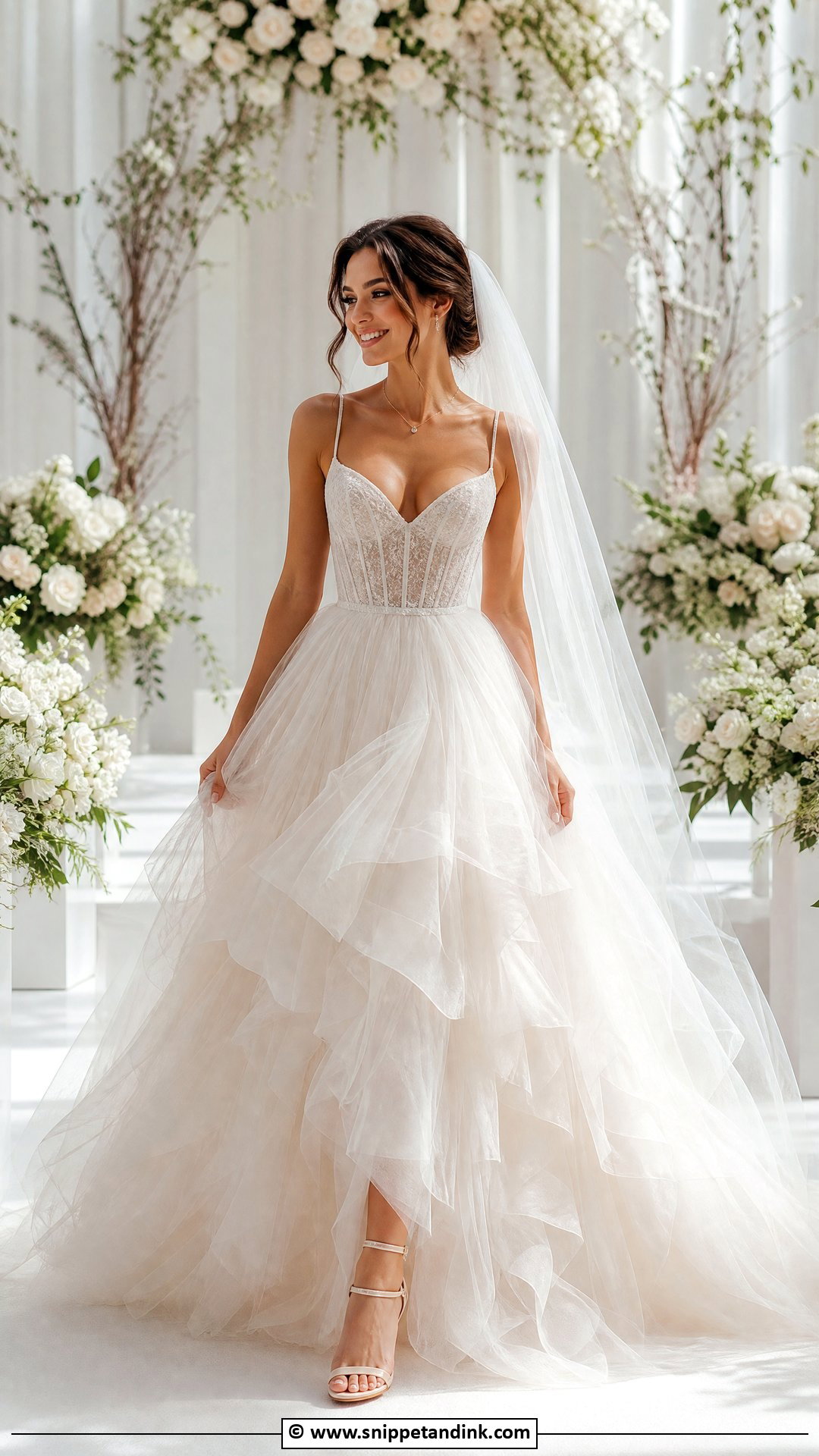
Tulle gives softness and volume and that floating look when you walk. A light A-line skirt keeps it subtle; layered ballgown volume makes it dramatic. Plain tulle is clean, glitter tulle adds soft shine, embroidered tulle adds romance. Pair it with a fitted bodice or a clean neckline so the skirt doesn’t swallow you. Tulle catches on heels, jewelry and bouquet wire, so I’d keep earrings small and ask your florist to wrap the stems well.
24. Crepe Bride Dress
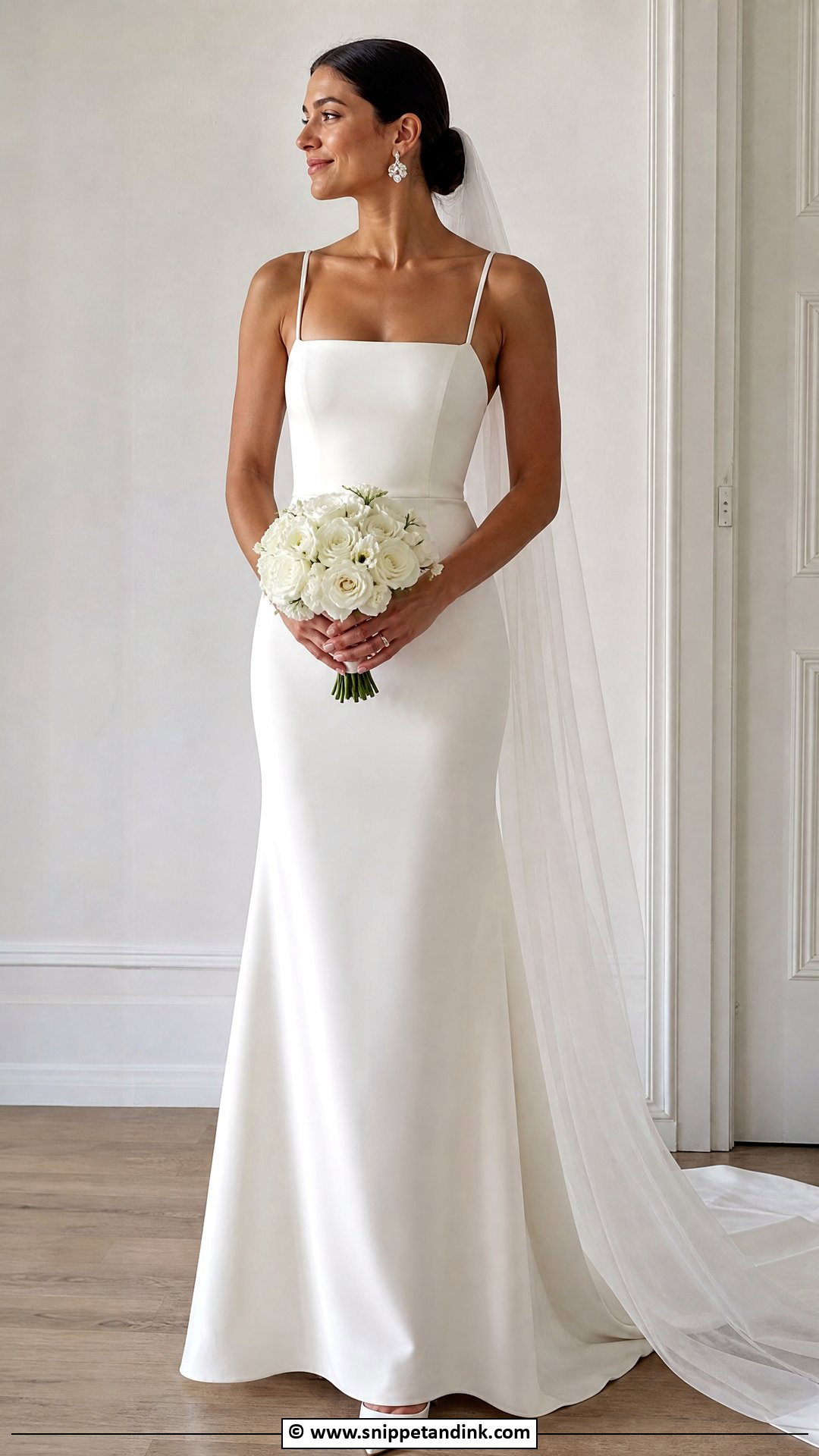
Crepe gives a smooth matte finish and suits fitted, column, trumpet and long-sleeve shapes. It’s my pick when a bride wants clean tailoring, because the lines read clearly in photos without help from embellishment. Pointed heels, a clean veil and sculptural earrings make it modern. Crepe is also the easiest base for capes, overskirts and detachable sleeves. Its weakness is that it’s unforgiving of poor fit; a wrinkle at the waist will show in every shot.
25. Beaded Bride Dress
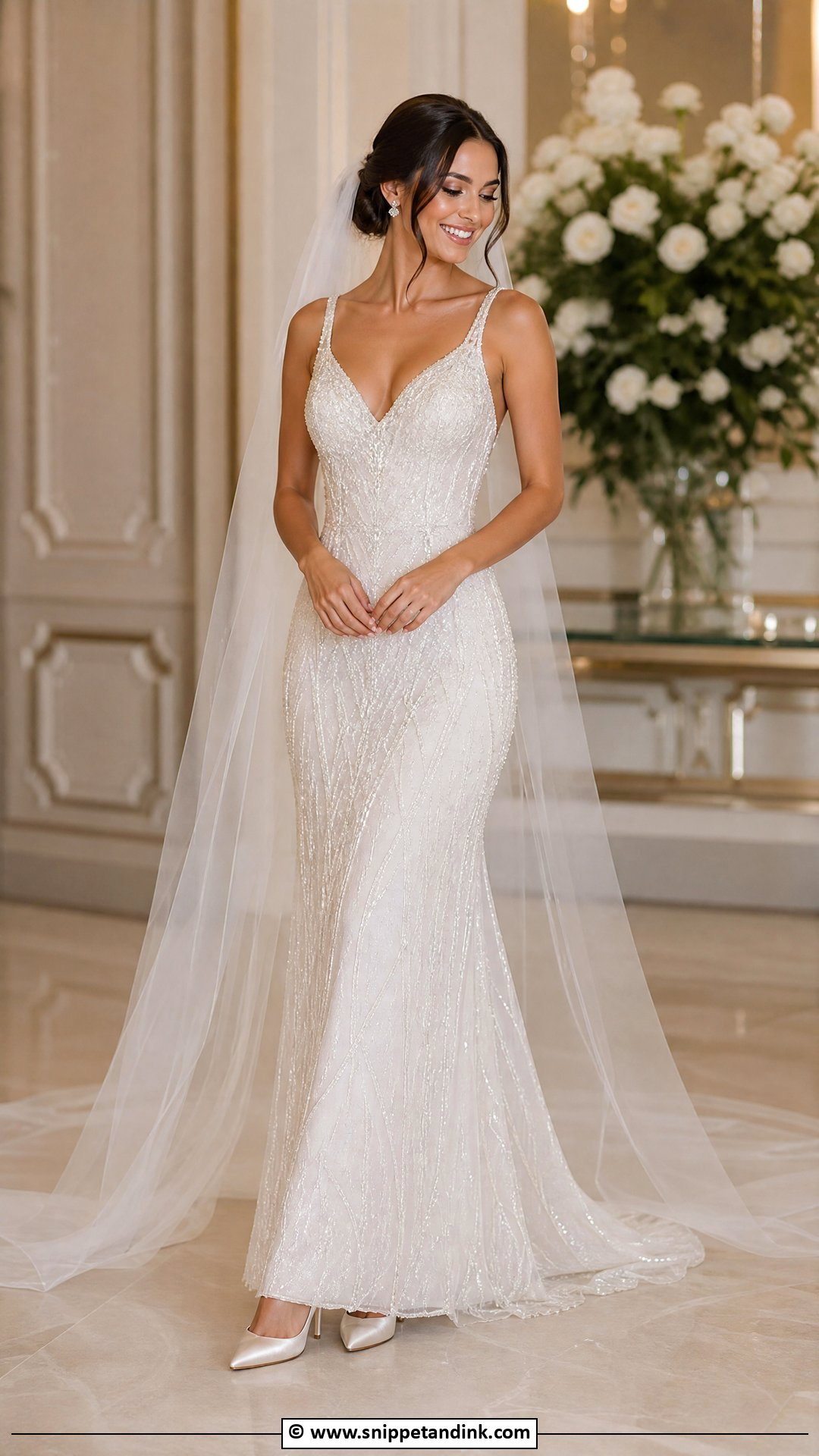
Beading gives shimmer and evening glamour, and it adds real weight. An allover beaded gown can feel heavy by the end of the night, and seams can strain where beads cluster. I ask brides to sit and dance during fittings to feel how the weight moves. Subtle beading on the bodice is the lighter option. Keep accessories simple: satin heels, small earrings, a smooth veil and sleek hair. Hotel ballrooms and formal evening receptions suit it.
26. Bow Back Bride Dress
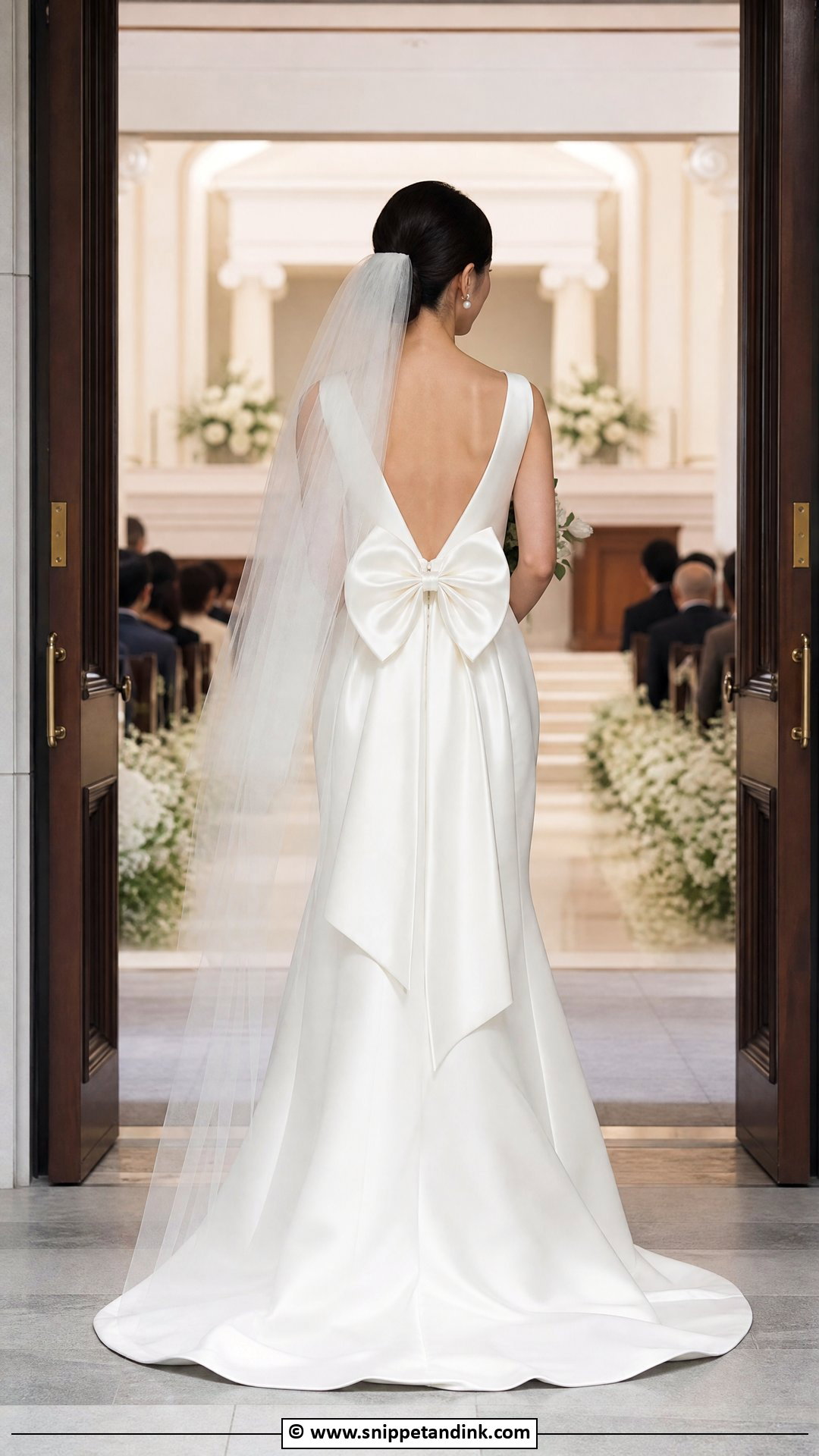
A bow back is the detail guests see during the entire ceremony, and in photos from behind it’s the whole story. It can be oversized, narrow or detachable for a second look. A simple satin, mikado or crepe gown makes the bow stand out. Decide early where the veil sits: placed above the bow it frames it, placed over it the bow gets flattened. Classic pumps, pearl earrings and a neat bouquet finish it.
27. Cape Bride Dress
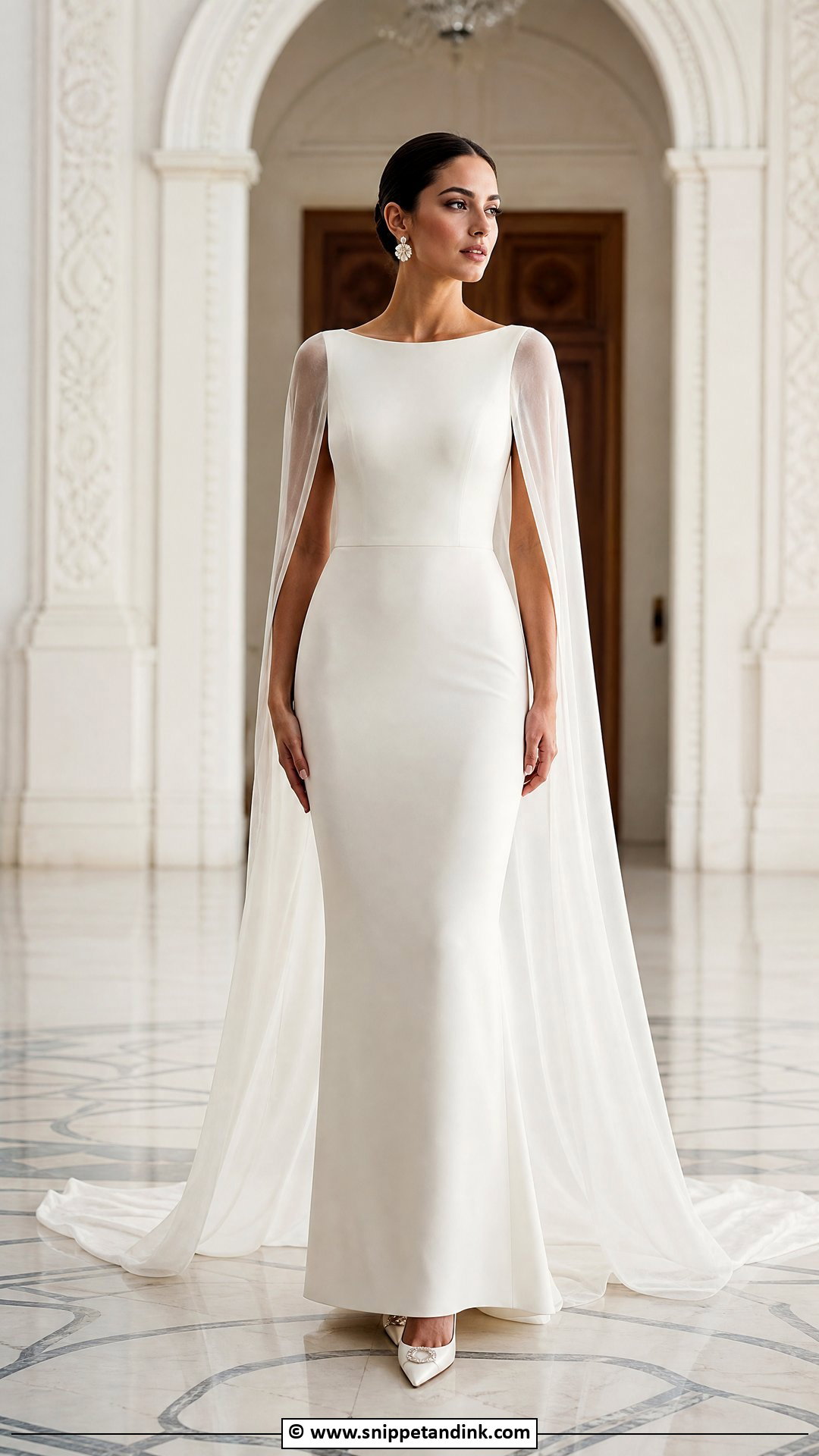
A cape gives you drama without a traditional veil. It can be sheer, lace-trimmed, pearl-edged or flowing chiffon, and it suits column gowns, crepe dresses, jumpsuits and minimal satin. It also covers the shoulders while staying light. Sleek heels, simple earrings and polished hair are all it needs. I’d ask for a removable cape, attached with hidden snaps or hooks, so you can take it off for the reception without unpicking anything.
28. Bride Dress With Gloves
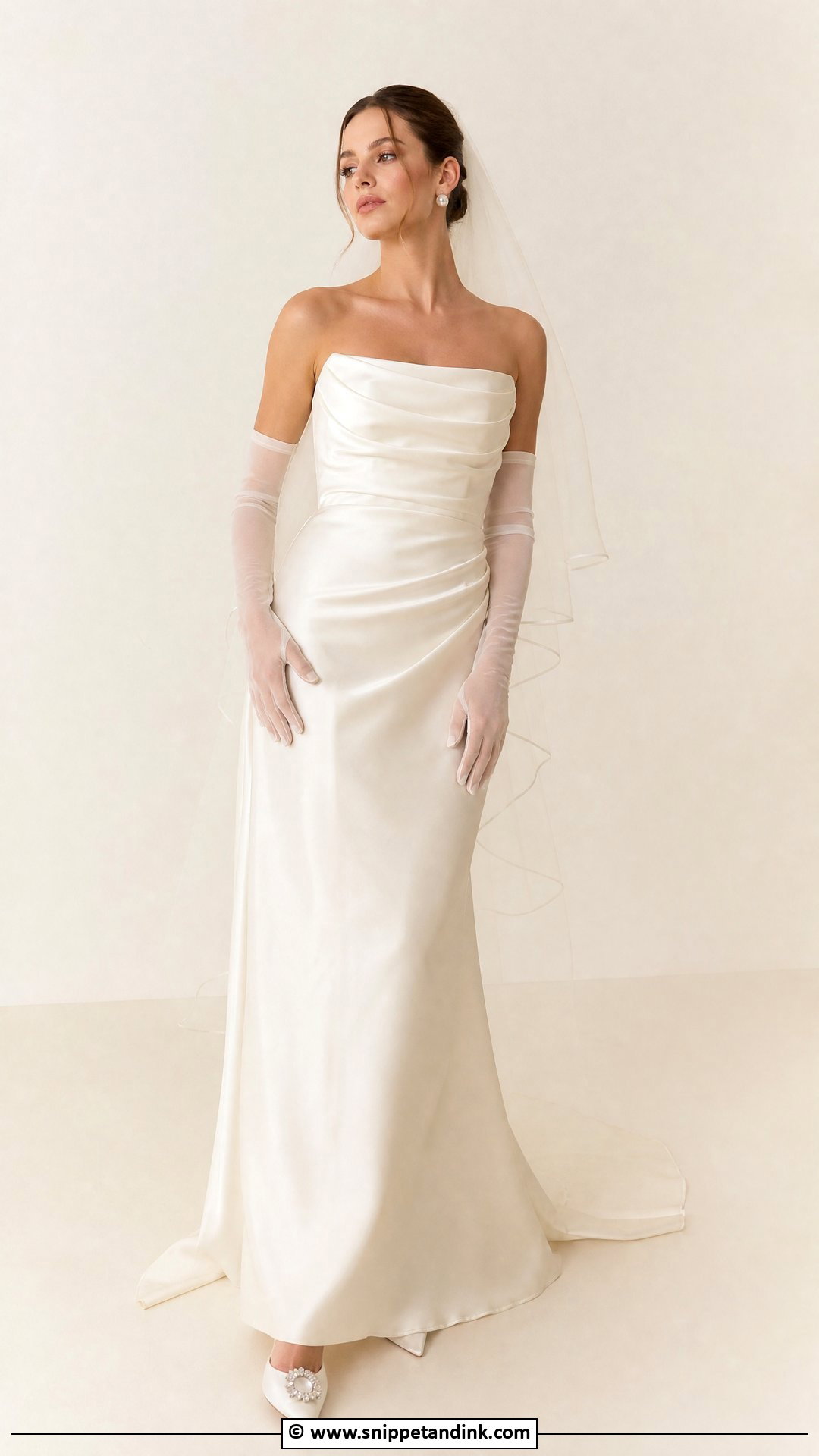
A bride dress with gloves reads refined and slightly vintage. Opera gloves suit a strapless gown, short gloves a tea-length dress, sheer gloves a lace or pearl gown. The rest of the outfit needs restraint so the gloves look intentional. One practical point I raise early: during the ring exchange you’ll need to slip off the left glove, or choose fingerless styles, so rehearse it once. Simple heels, clean earrings and a neat veil complete it.
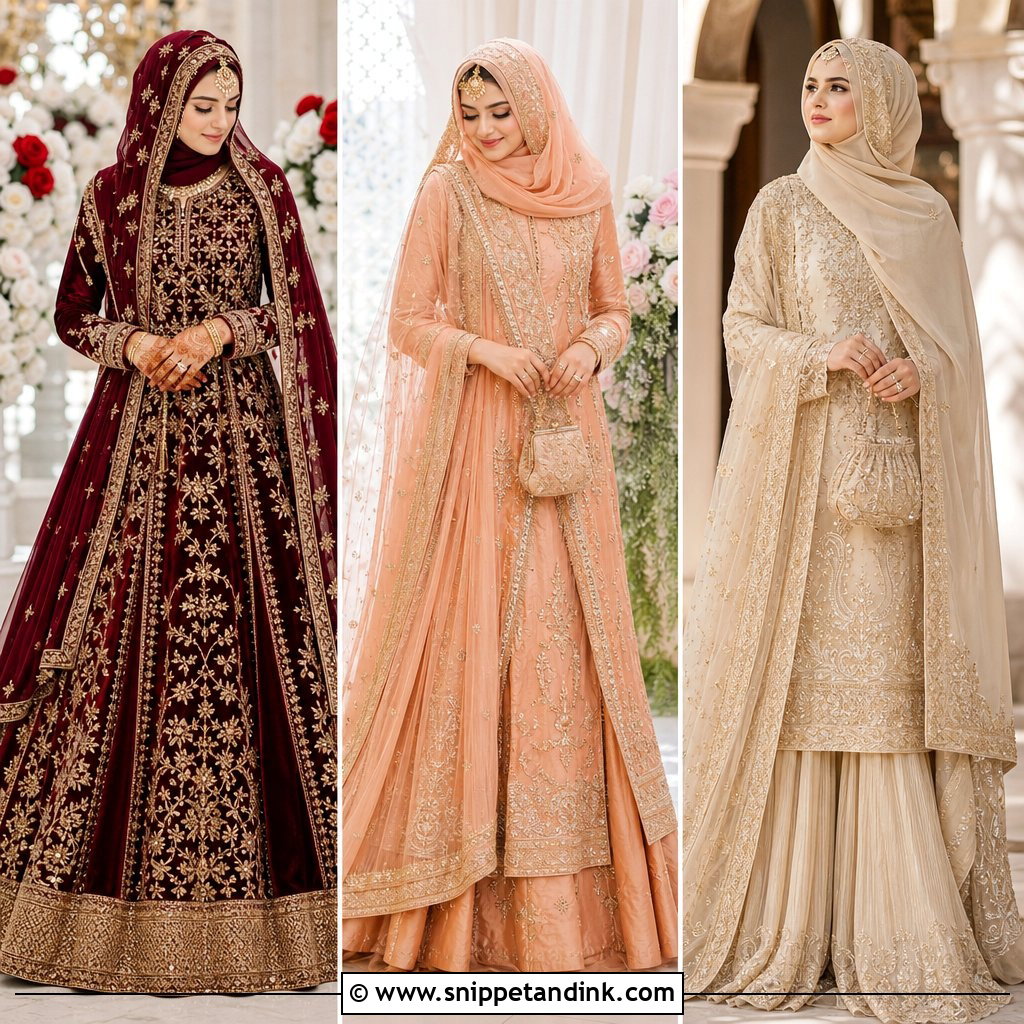
29. Modest Bride Dress
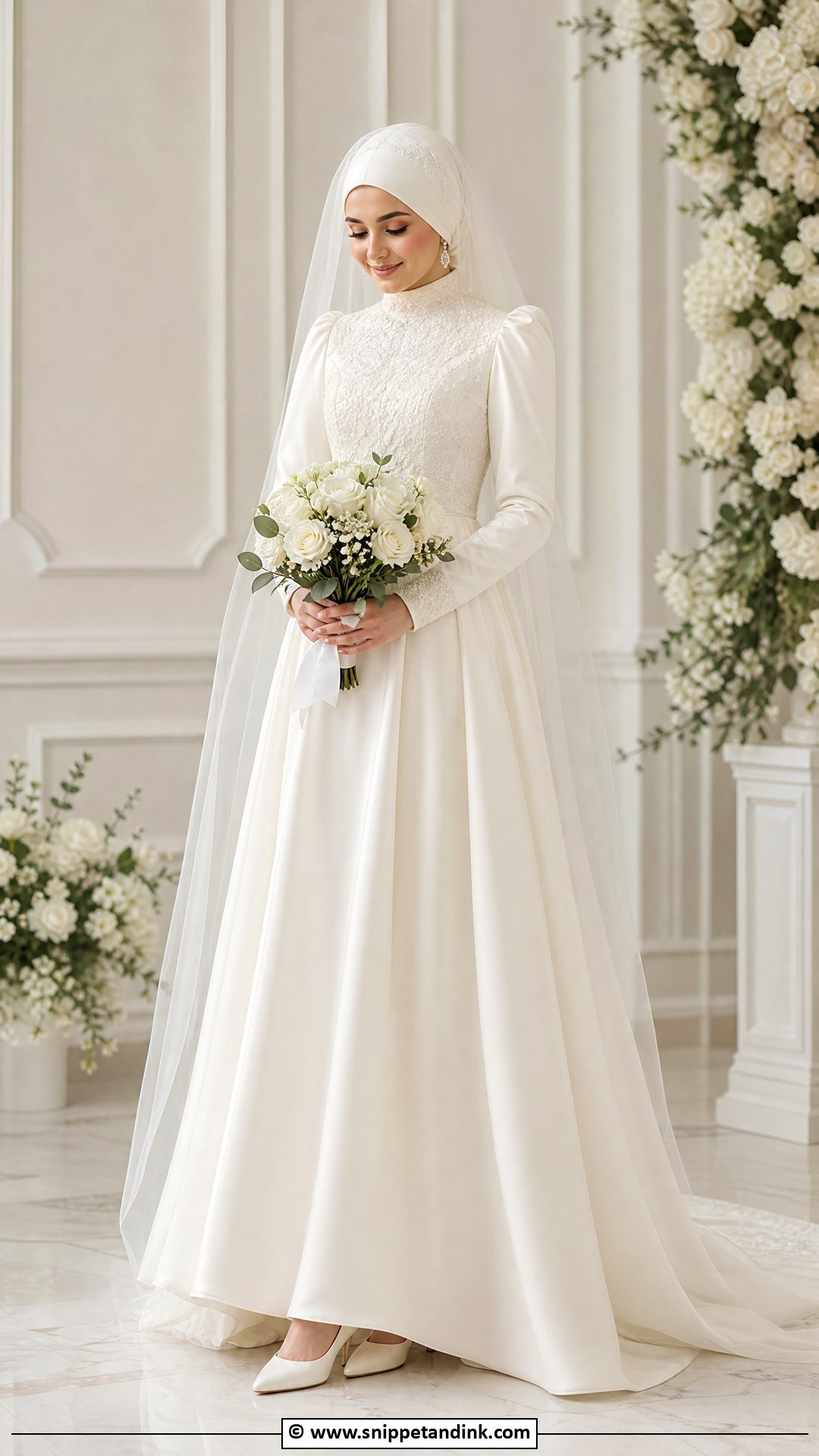
A modest gown can be as detailed and modern as any other. Long sleeves, higher necklines, lined bodices and flowing skirts keep coverage without looking plain. Lace, crepe, satin and chiffon all work. I add interest through buttons, lace cuffs or a statement veil, and a defined waist keeps it from looking shapeless. Closed-toe heels and delicate earrings finish it. When sourcing, ask about linings early, since many sheer sleeves can be lined in matching fabric for more coverage.
30. Plus Size Bride Dress
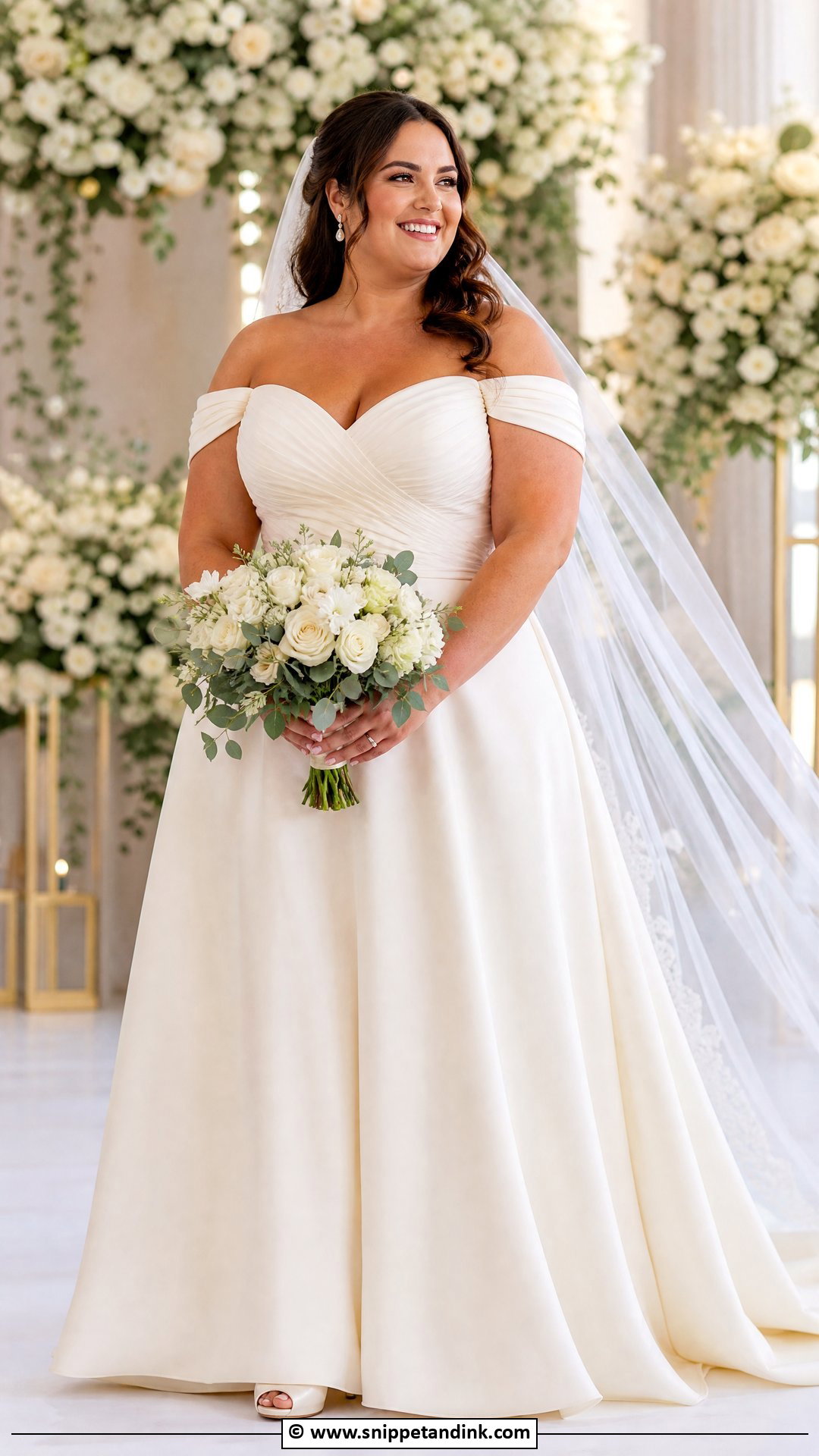
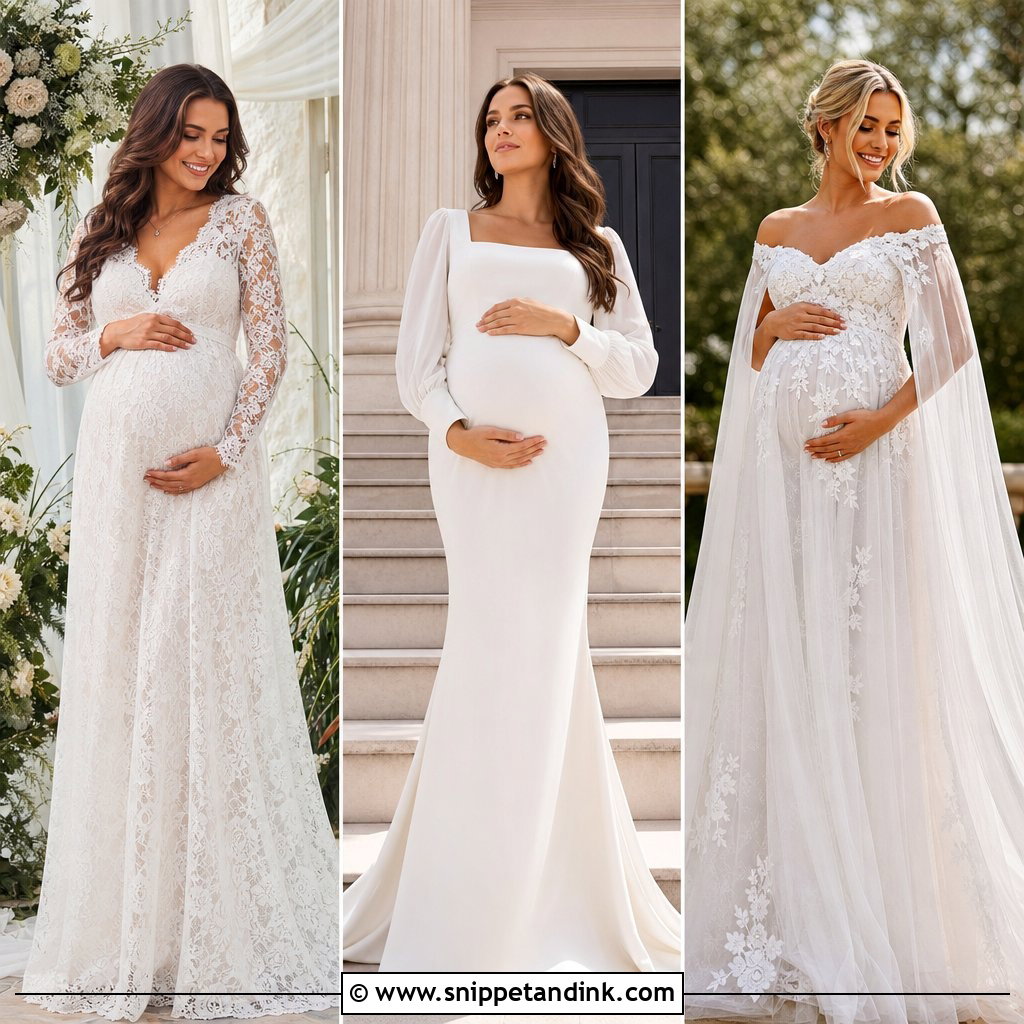
A plus-size gown should be chosen for fit, support and personal style rather than to hide anything. A-line, corset bodices, wrap-inspired designs, off-shoulder necklines and structured crepe can all look right on you; try fitted, flowing, simple and embellished before ruling anything out. Supportive undergarments matter more than any accessory. A skilled tailor makes the biggest difference around bust, waist and hem. The test I use: can you stand, walk and celebrate in it without adjusting anything?
31. Petite Bride Dress
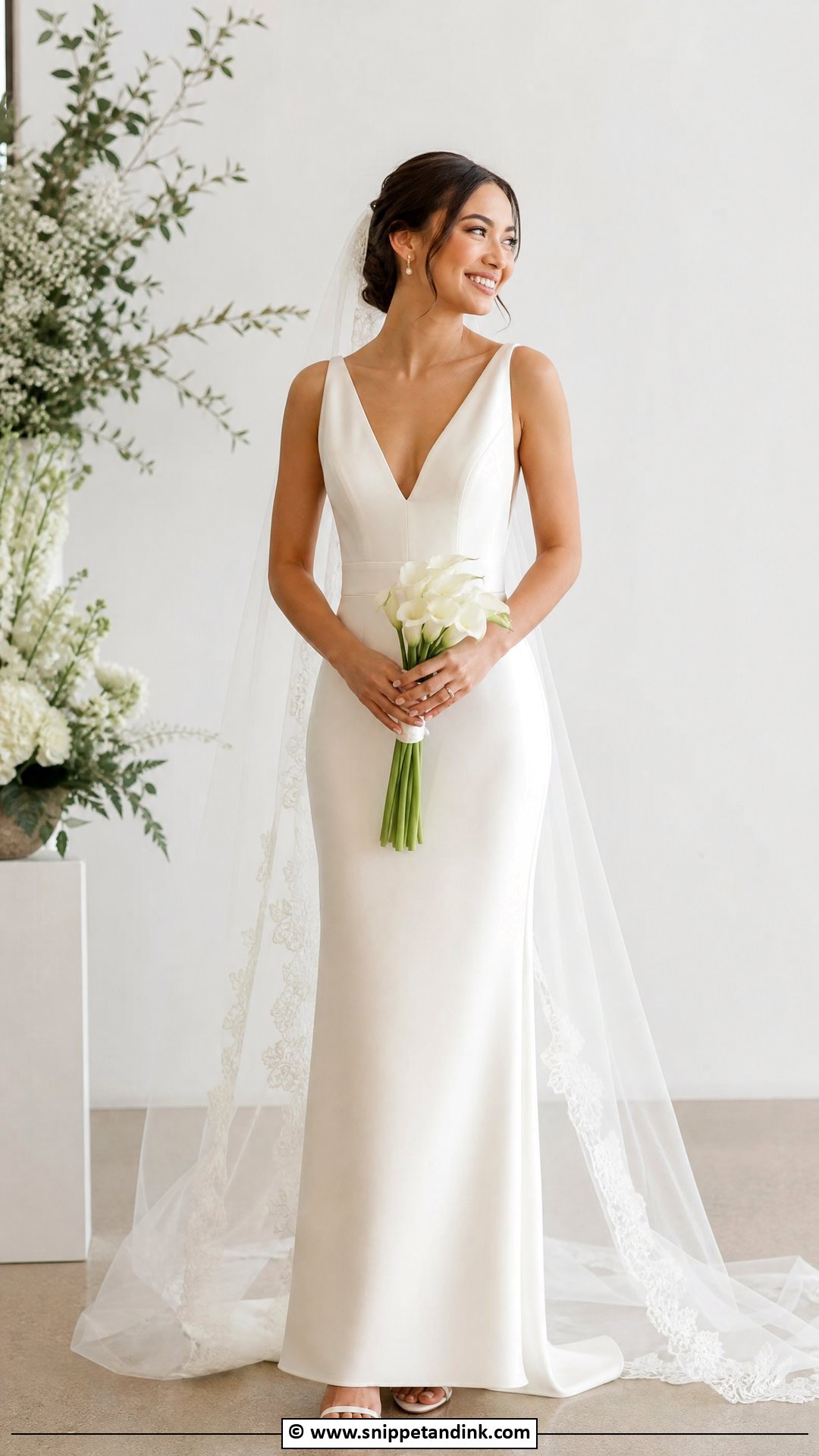
Petite fitting is about scale. Column gowns, A-lines, sheaths, V-necks and high-waisted styles often suit a smaller frame. Heavy skirts can overwhelm, but if you love volume, don’t skip it; just go for lighter layers. Shoes or platforms at a comfortable height, a narrow bouquet and a veil that adds length rather than bulk help. Vertical details, clean seams and light fabrics elongate. Expect hemming on nearly every off-the-rack gown, and bring the actual shoes to that appointment.
32. Courthouse Bride Dress
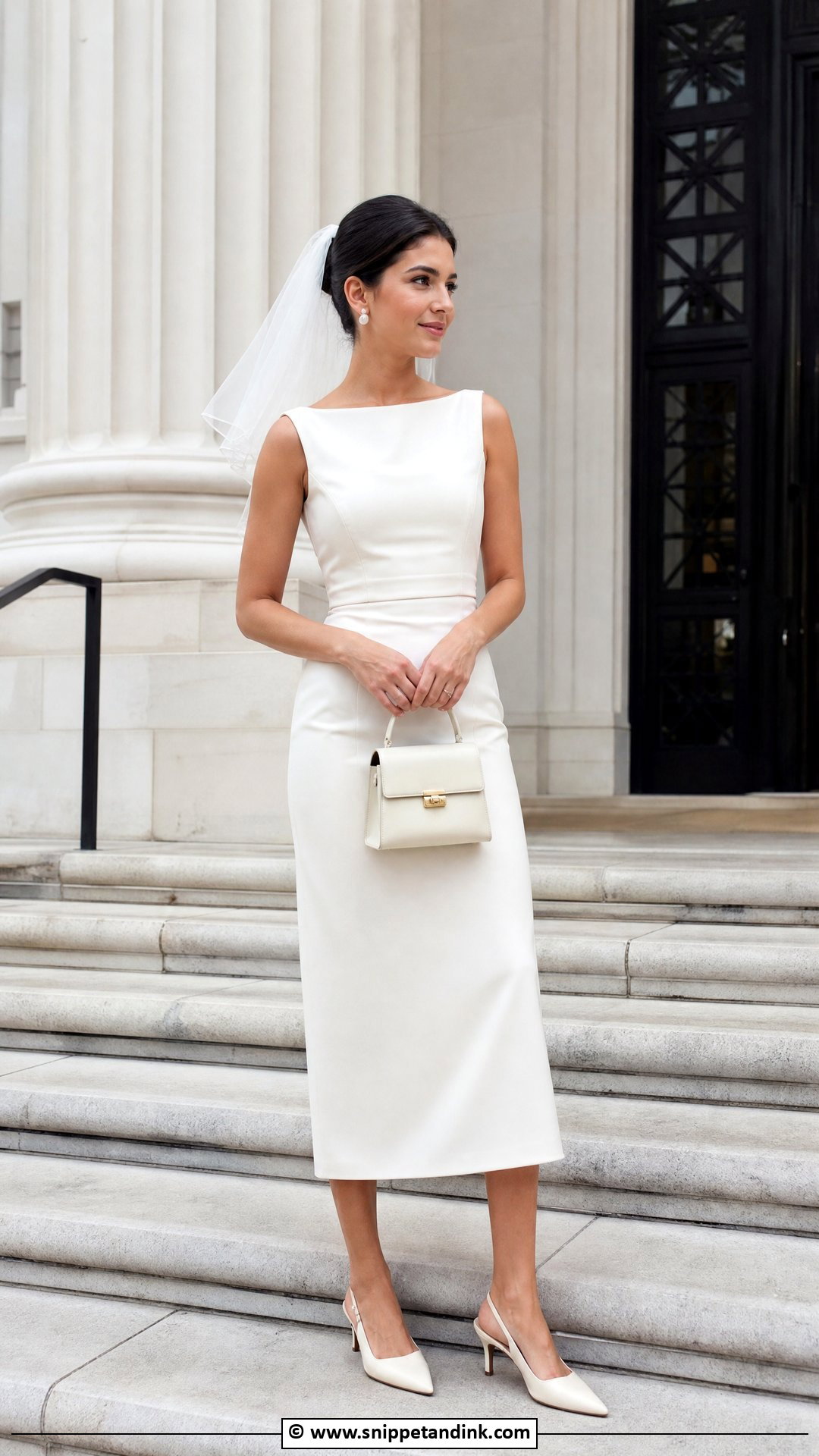
A courthouse bride dress should feel polished and easy to move in. A short white dress, tea-length satin, tailored midi, sleek jumpsuit or ivory suit all suit the setting. Slingbacks, pumps or block heels pair with it, plus a small bouquet, pearl earrings and a structured handbag. A birdcage veil, headband or short veil adds bridal feeling without going too formal. Courthouse lighting is often harsh and overhead, so fabrics with a slight sheen photograph better than flat matte ones.
33. Beach Bride Dress
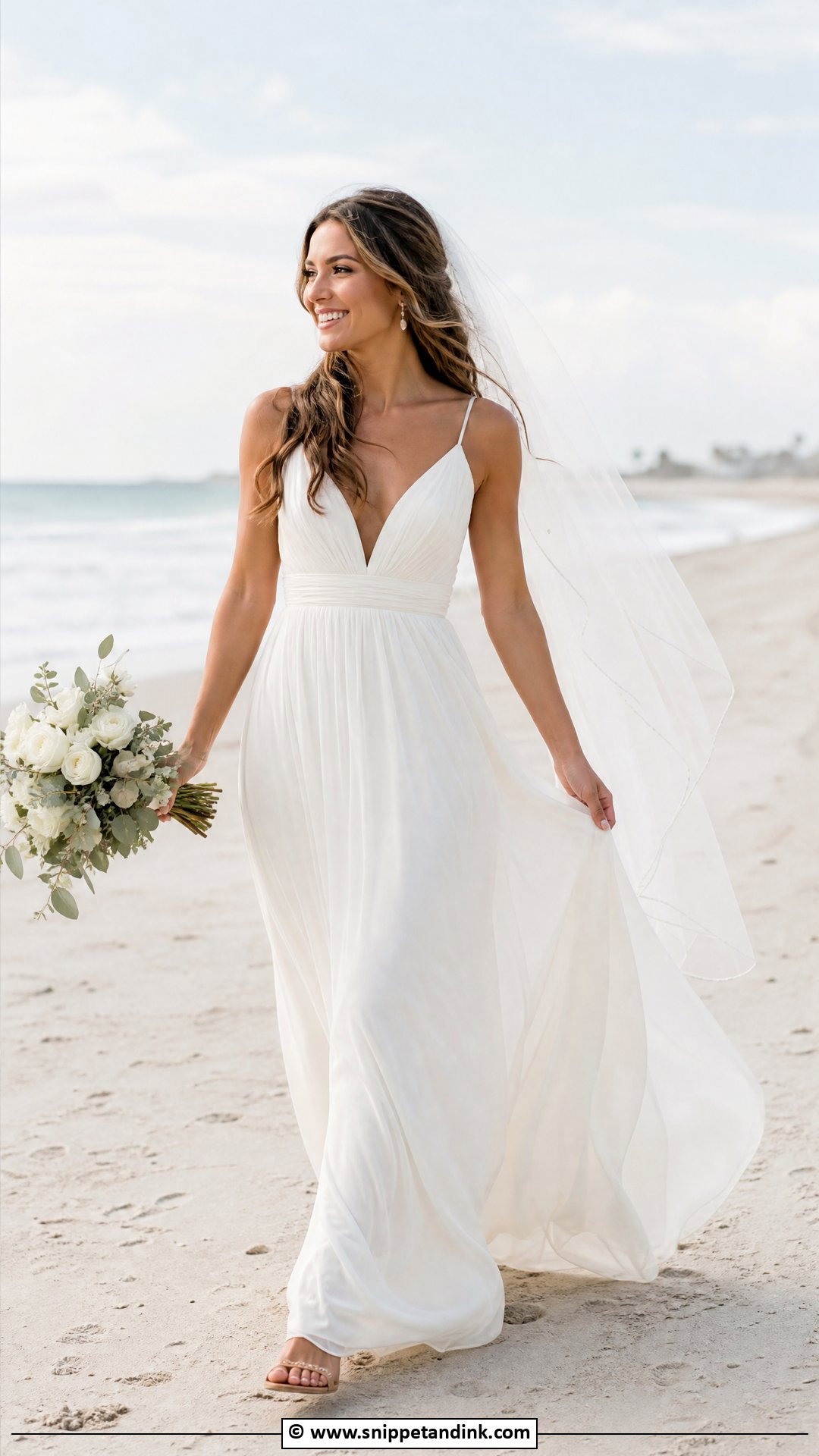
A beach gown should breathe and walk easily on sand. Chiffon, organza, soft lace and silk blends work better than heavy fabrics, and a train is more trouble than it’s worth on a beach. A flowing A-line, relaxed slip, halter or simple off-shoulder all suit. Wear flat sandals or low block heels that won’t sink. Keep accessories light: small earrings, loose waves and a soft veil or hair flower. Wind is the real test, so I’d choose a veil short enough not to wrap around your face.
34. Reception Bride Dress
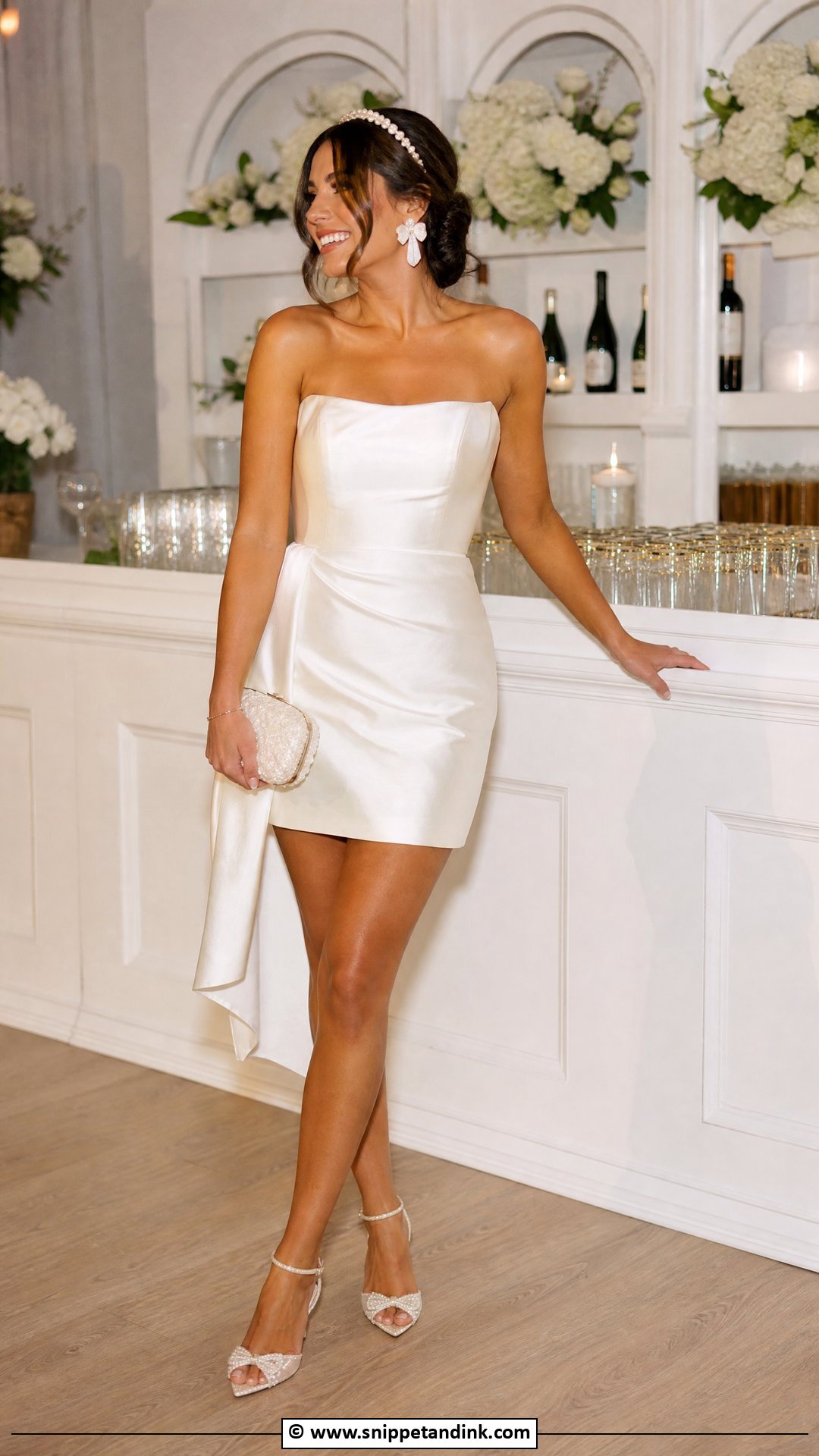
A reception dress lets you change into something lighter and easier. A short satin dress, feather-trim mini, sleek slip, beaded midi or slimmer gown all work. Pair it with comfortable heels, statement earrings and a small clutch. If the ceremony dress is formal, the reception look can be playful while still reading bridal. I’d plan the change itself as carefully as the dress: someone to help with buttons, a private room and about twenty minutes. A shorter veil, hair bow or pearl headband ties it back to the ceremony look.
35. After Party Bride Dress
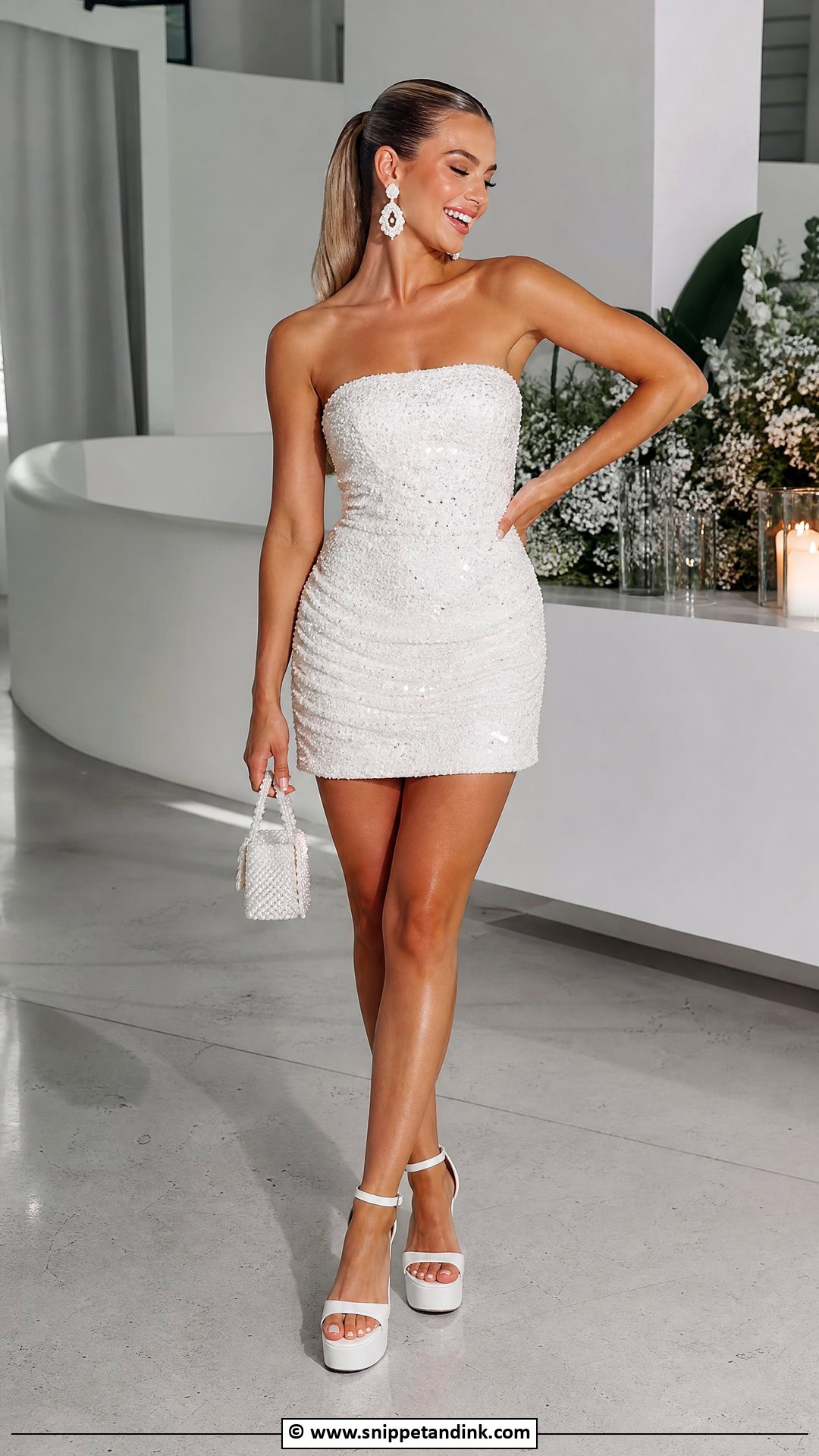
The after-party dress is built for movement. White mini dresses, sequin shifts, satin slips, tailored shorts sets or feather hems all fit the mood. Platform heels, comfortable sandals or sleek sneakers work if dancing is the priority. Bold earrings, a small bag and a fun hair accessory finish it. It should still link back to your bridal style: if the main dress is classic, the after-party look can be playful; if the wedding look is modern, keep it sleek.
Gown Order Dates Most Brides Underestimate
Made-to-order gowns commonly take several months to produce, and that’s before alterations start. I usually suggest ordering around nine months to a year out, then planning alterations in the last two to three months. Most gowns need two or three fittings: one to set the major changes, one to check them, and a last one close to the date with your shoes and undergarments. Timelines vary by designer and shop, so ask each for a written delivery estimate.
Short on time? Sample gowns and off-the-rack pieces skip the production wait entirely, but leave room for cleaning and tailoring, as samples have often been tried on many times.
Champagne Stains Turn Brown Later
Spills that look invisible on the night, like champagne, white wine or sugary cocktails, can oxidise and show up yellow or brown months later. That’s why I tell brides to get the gown to a specialist cleaner within a few weeks, not a year. Point out every spill and the hem dirt when you drop it off.
For storage, keep it away from light and plastic. Use a breathable cotton bag or an acid-free box with acid-free tissue in the folds, and store it somewhere with steady temperature rather than an attic or basement. Hang only lightweight gowns; heavy beaded ones stretch on a hanger and are better laid flat.
A Dress Is Only Half the Outfit
The right bridal outfit is the one you can wear, move and celebrate in without thinking about it. Some brides feel most themselves in classic satin, others in lace sleeves, a tailored suit, a short reception dress or a jumpsuit. Consider your venue, season, comfort and photos together, and decide early whether you want one outfit for the whole day or a lighter second look. Shoes, veil length, jewelry and tailoring can change the result completely. Save the looks that caught your eye above and take them to your first appointment.
You'll Like These Ideas:


Leave a Reply