
Most brides I dress want two things that pull against each other: a long train for the aisle and a dress they can dance in by nine o’clock. A detachable train wedding dress settles that argument by splitting the gown into a ceremony layer and a reception layer. The train can be lace, tulle, satin or a cape, and the dress underneath can be a ball gown, a mermaid, a column or even a mini. What decides whether it works is the join: where the train attaches, how it hangs, and whether the base dress looks finished once it’s gone. The ideas below cover every silhouette, with notes on how each one wears.
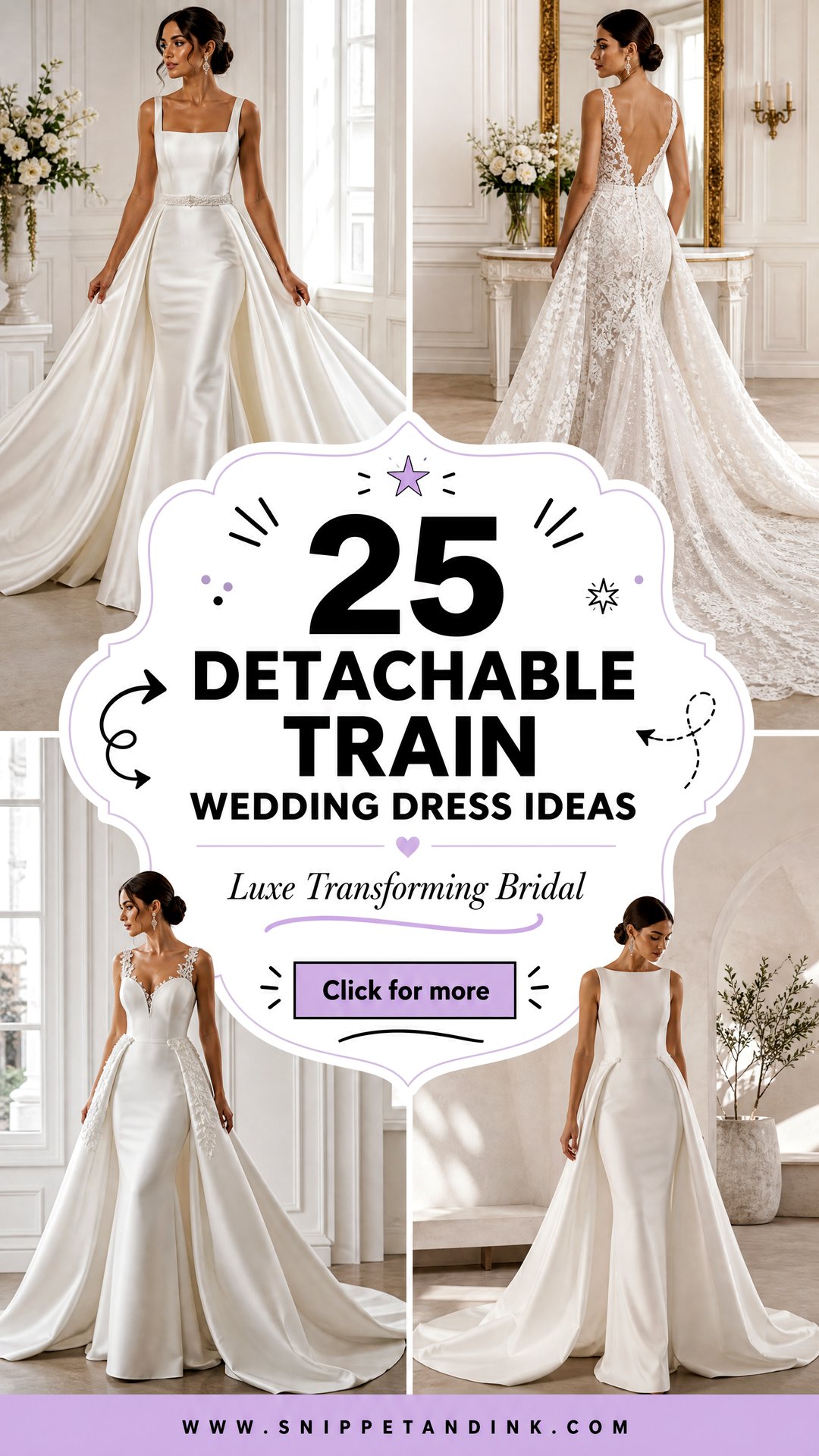
How a Detachable Train Actually Comes Off
The fastening decides how quick the change is and how clean the dress looks afterward. Ask your boutique which system the gown uses, and try it yourself at a fitting rather than trusting the description.
- Hooks and thread loops: hidden in the waist seam, strong, and the most common. Removal takes a helper a few minutes.
- Snaps: faster to undo, but they can pop open under the pull of a heavy train.
- Covered buttons: neat and decorative, especially on cape trains, though slower to fasten.
- Ties or ribbon loops: simple and forgiving on a wrap overskirt, but they need a belt or bow to hide the knot.
When a Bustle Makes More Sense
A bustle lifts the train and fastens it to the back of the skirt instead of removing it. I suggest one when the train is cut as part of the skirt or when you love the train’s shape in reception photos. A detachable train wins when you want the skirt lighter, slimmer or shorter for dancing, because a bustled train still carries all its weight.
1. Satin A-Line Wedding Dress With Detachable Train
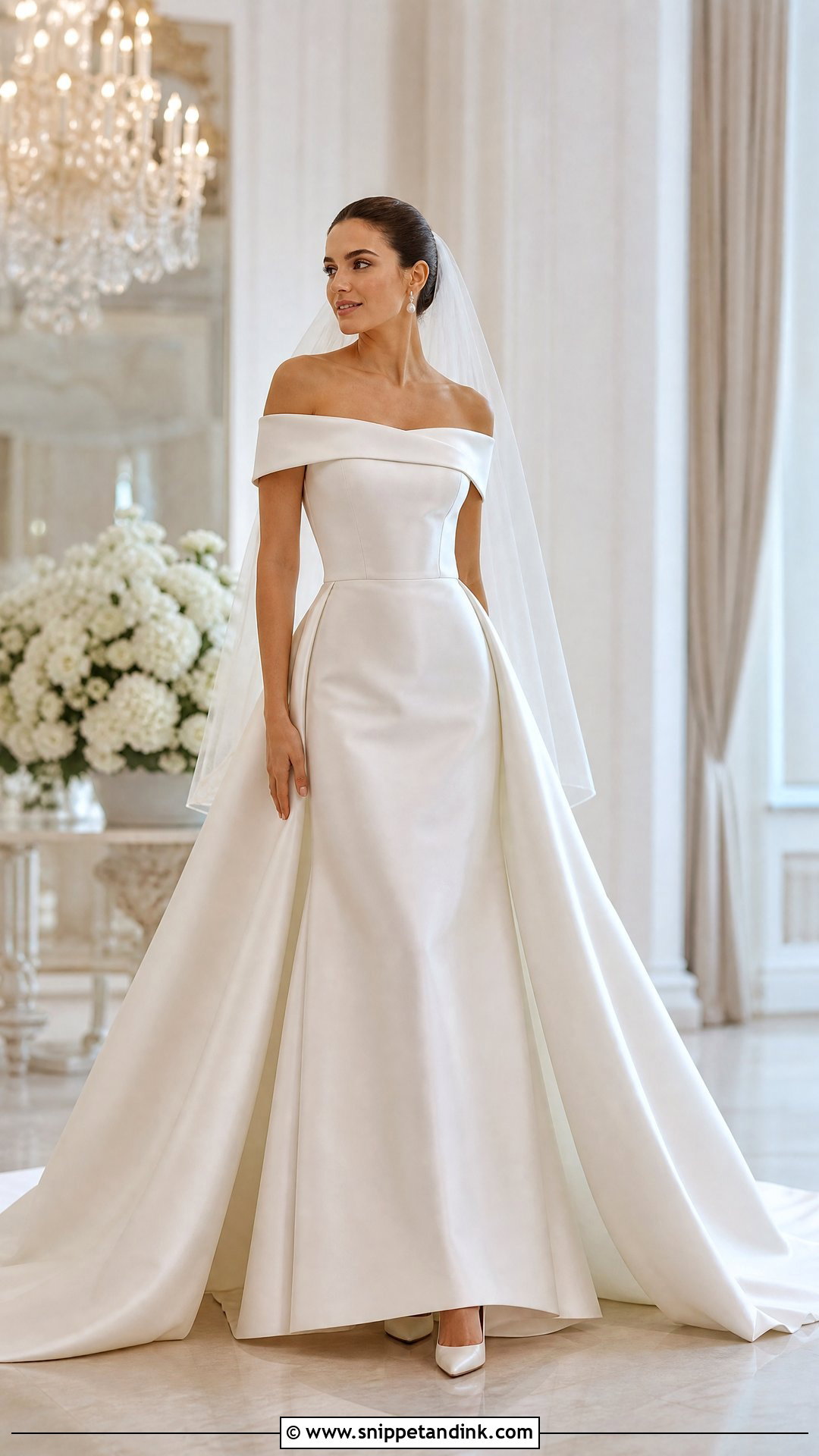
Satin A-lines are the shape I see detachable trains on most often, because the waist seam gives the train a strong, level place to hook on. The fitted bodice holds you; the A-line skirt falls clean without heavy petticoats. A satin train reads formal in portraits, but satin also shows every crease, so I ask for the train to travel flat in a garment bag, never folded into the car. Unhook it after the ceremony and you’re left with a lighter skirt for greeting guests. Pearl earrings, a simple veil and a low bun keep the focus on the fabric.
2. Lace Mermaid Wedding Dress With Detachable Train
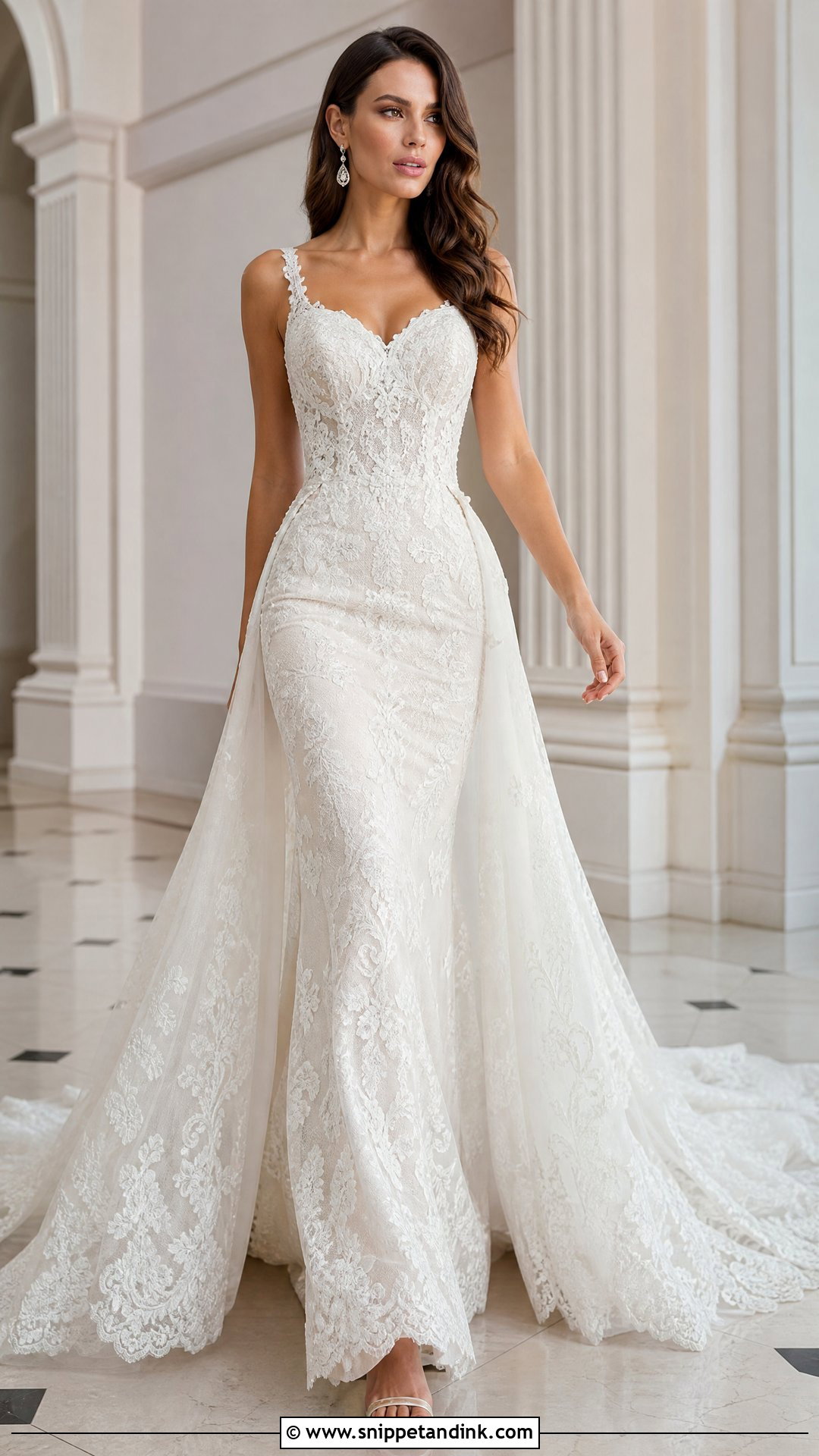
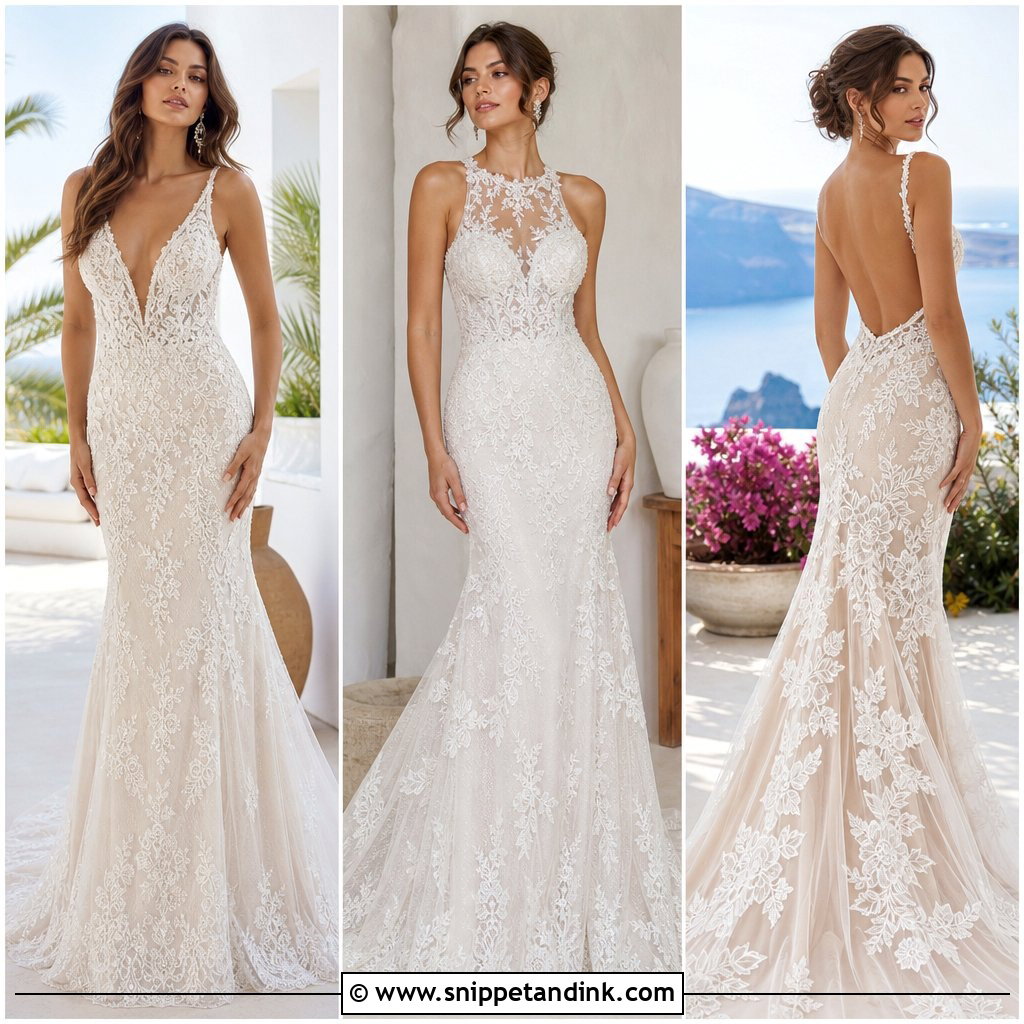
Mermaid gowns hug the body to the knee and flare from there, which looks sculpted but shortens your stride. I always have brides walk the length of the fitting room before we talk about trains, because a lace train adds weight right where your legs already have the least room. Done well, the train softens the shape for the ceremony without hiding it. Match the lace motif and color to the gown, since ivory laces vary more than people expect. Drop earrings, a fingertip veil and soft waves finish it for an evening wedding.
3. Strapless Wedding Dress With Detachable Overskirt Train
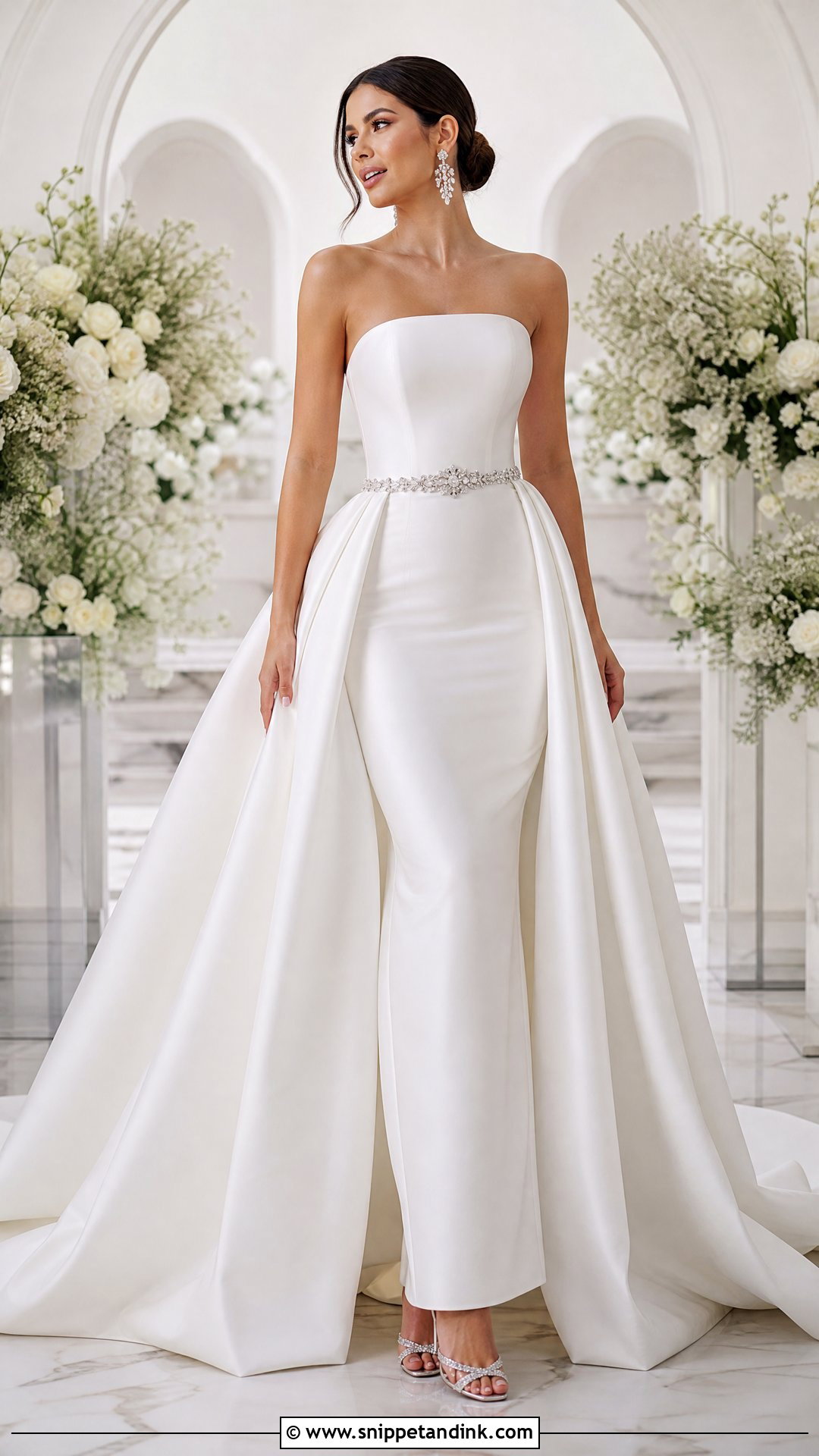
An overskirt is the most complete change on this list: a full skirt with a long train that wraps over a slimmer dress and comes off whole. Under a strapless wedding dress, that means two genuine looks from one fitting schedule. The overskirt usually fastens with hooks or snaps at the waist, and the strapless bodice carries that extra weight during the ceremony, so it needs solid boning and a firm waist stay. A crystal belt or satin waistband hides the fastening line. Finish with a smooth updo and statement earrings.
4. Ball Gown Wedding Dress With Detachable Train
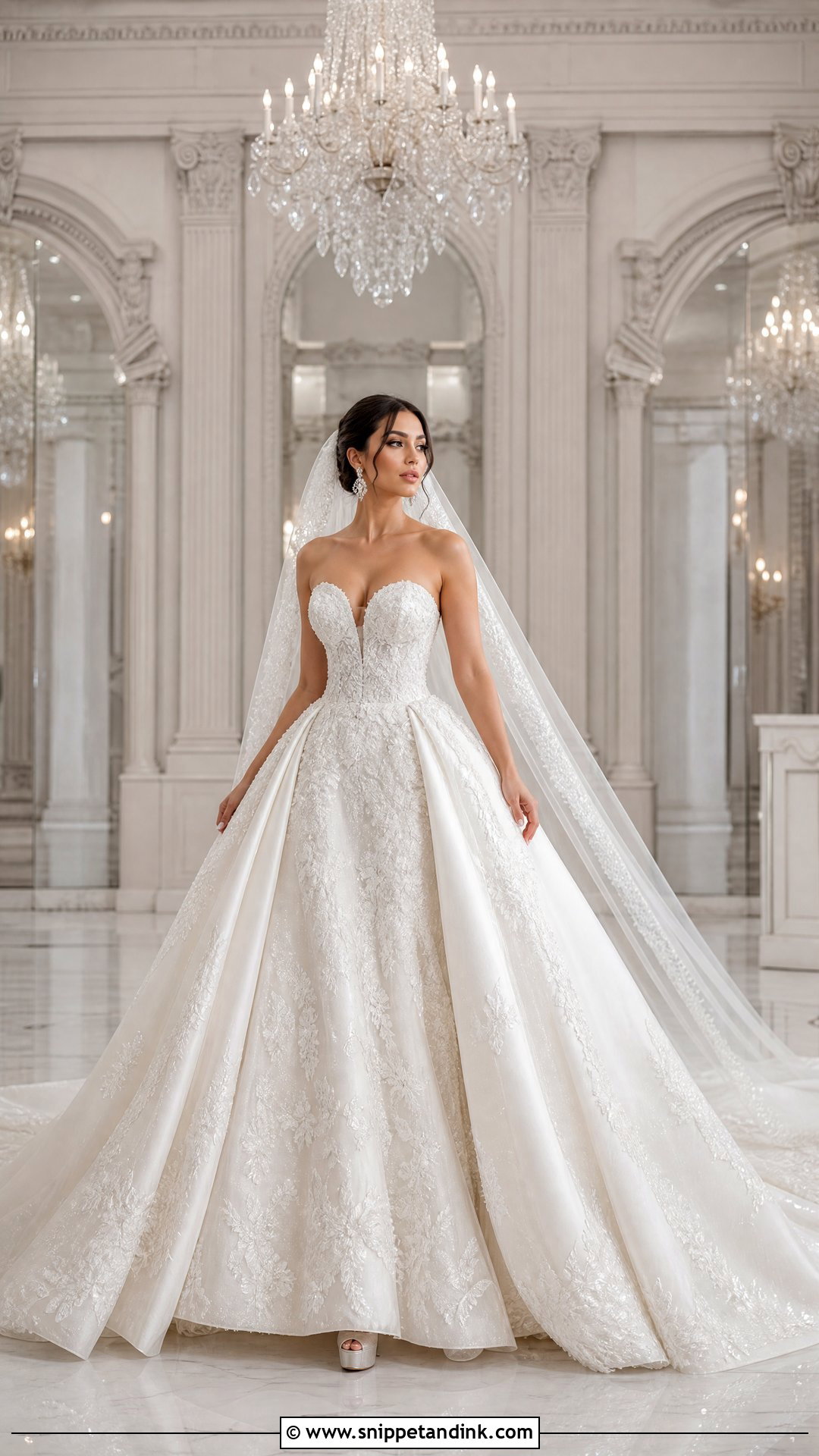
A ball gown already has volume, so a detachable train here is about length rather than width. The thing to check is weight: a full skirt plus a long train pulls backward on the bodice, and a bodice can gap at the top edge if the waist stay isn’t firm enough. Choose clean seams, lace or light beading on the bodice to keep the top balanced against all that skirt. Once the train is off, the gown keeps its classic shape and becomes far easier to manage. A cathedral veil and platform heels suit the scale, and large formal venues give it room.
5. Crepe Fit And Flare Wedding Dress With Detachable Train
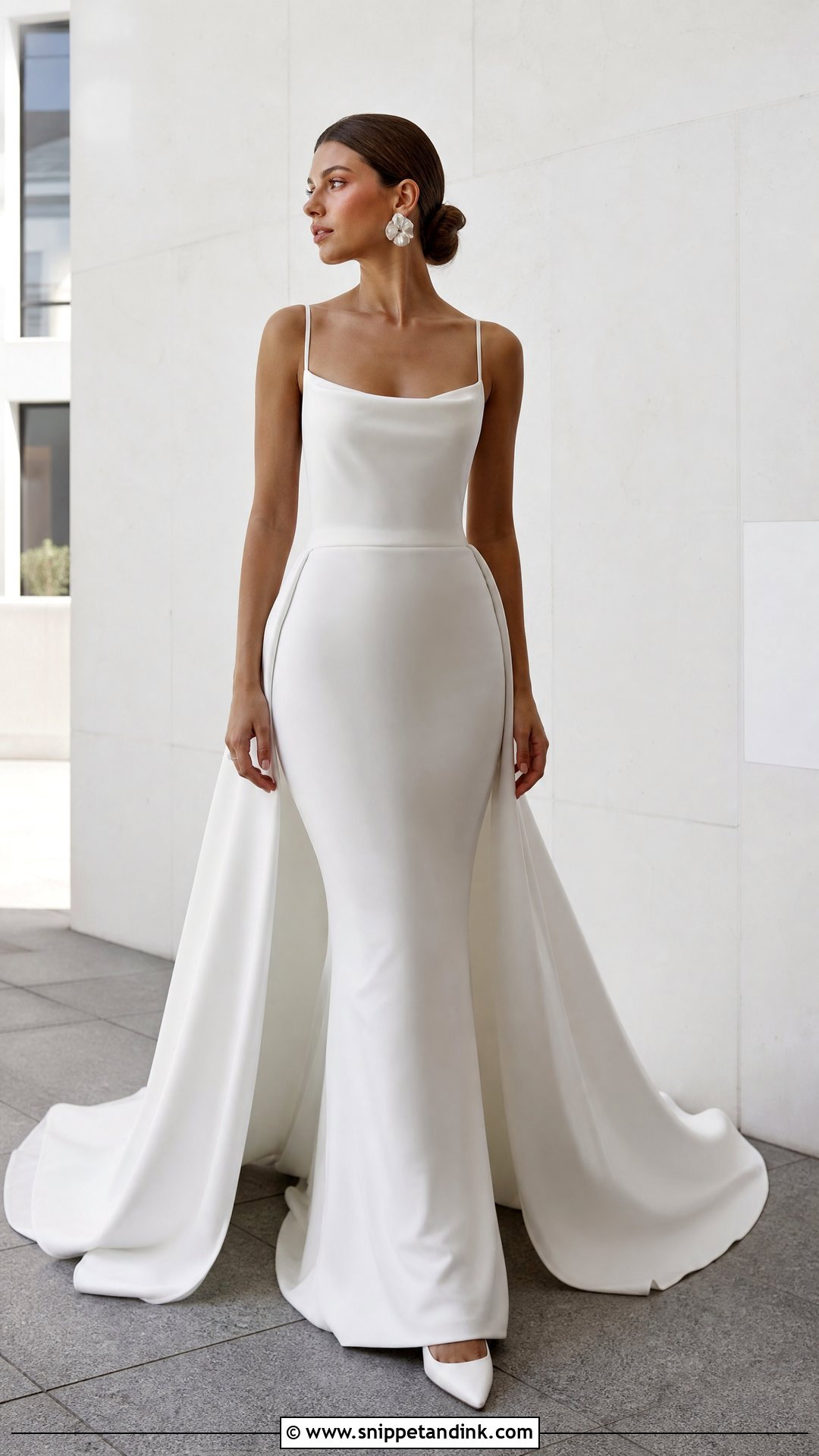
Crepe is my favorite fabric for minimal brides who still want impact. It’s matte, heavy and smooth, so it photographs crisply and follows the body, but that same weight shows every line underneath, which means smooth, no-line shapewear or built-in cups. A plain crepe train feels architectural; a lace-edged one softens it. The fit and flare shape keeps you moving freely once the train comes off. Sculptural earrings, a sleek bun and pointed heels suit city venues, galleries and rooftops.
6. Tulle Wedding Dress With Detachable Train
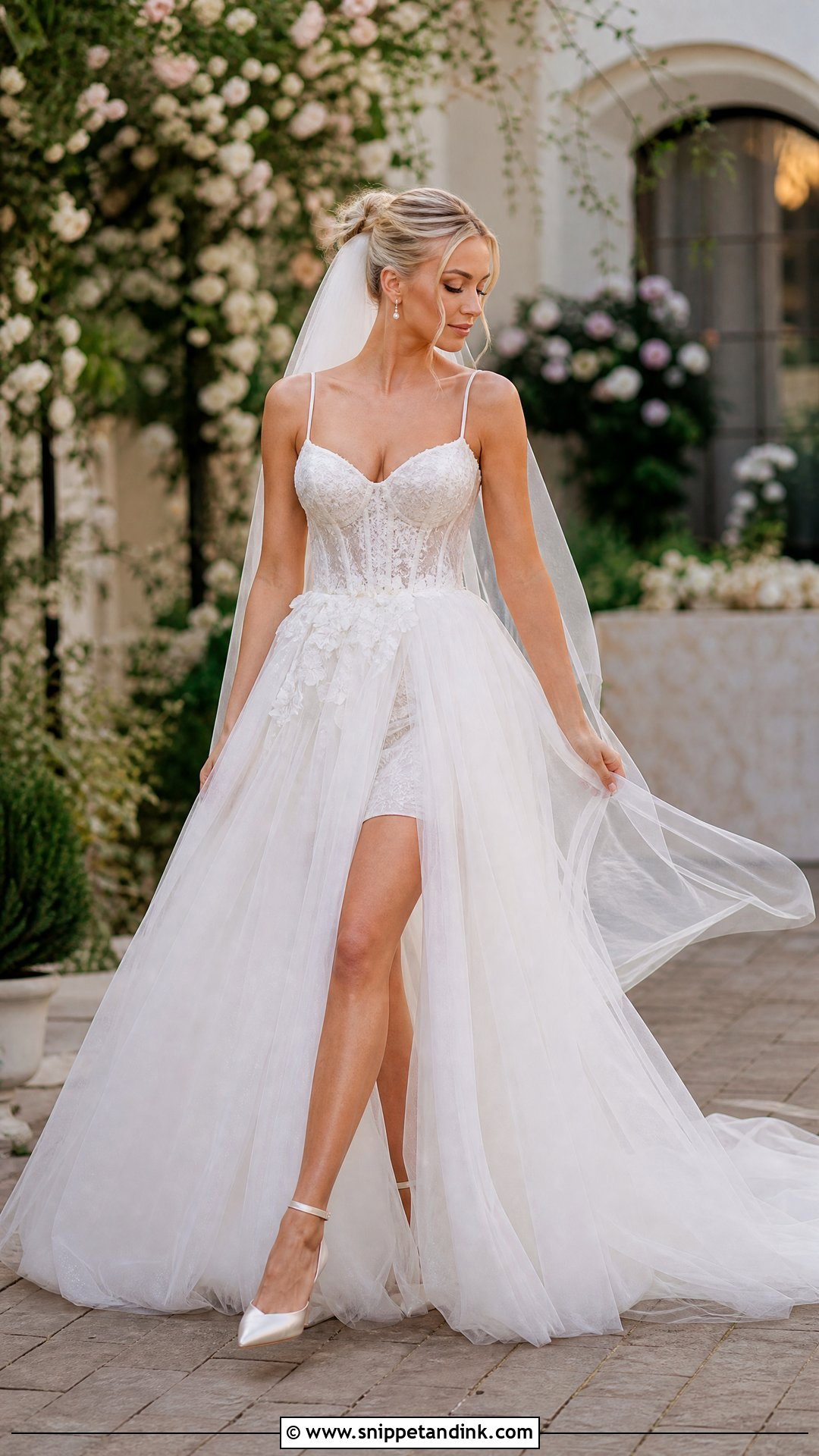
Tulle is light enough that a fitted bodice and full skirt never feel heavy, and a tulle train floats behind you rather than dragging. It does have one enemy: anything with a prong. Bracelets, ring settings and veil combs catch tulle and pull a run through it, so I keep jewelry smooth with this one. For the reception, the train comes off and the skirt keeps its soft volume. Garden weddings and spring or summer ceremonies suit it best.
7. Long Sleeve Wedding Dress With Detachable Train
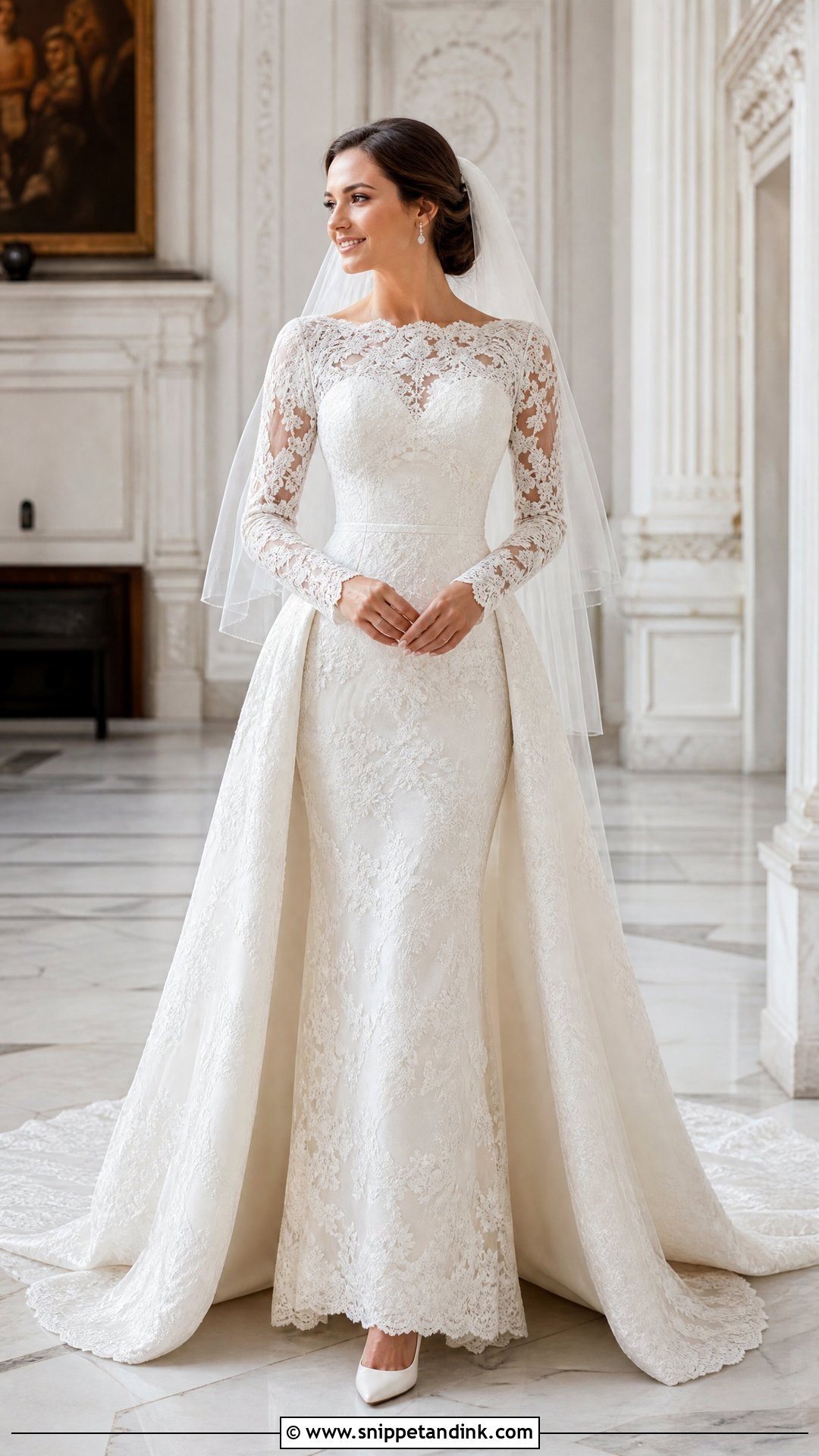
Sleeves change how a train should attach. With a long sleeve wedding dress, I like the train anchored at the waist or lower back so nothing competes with the detail on the arms. Lace sleeves read romantic, illusion sleeves delicate, and crepe sleeves modern. At the fitting, raise your arms as if hugging someone tall: if the bodice lifts, the armholes are cut too low and you’ll feel it all night. Keep accessories small, and the dress carries fall and winter weddings, historic venues and formal indoor ceremonies.
8. Off Shoulder Wedding Dress With Detachable Train
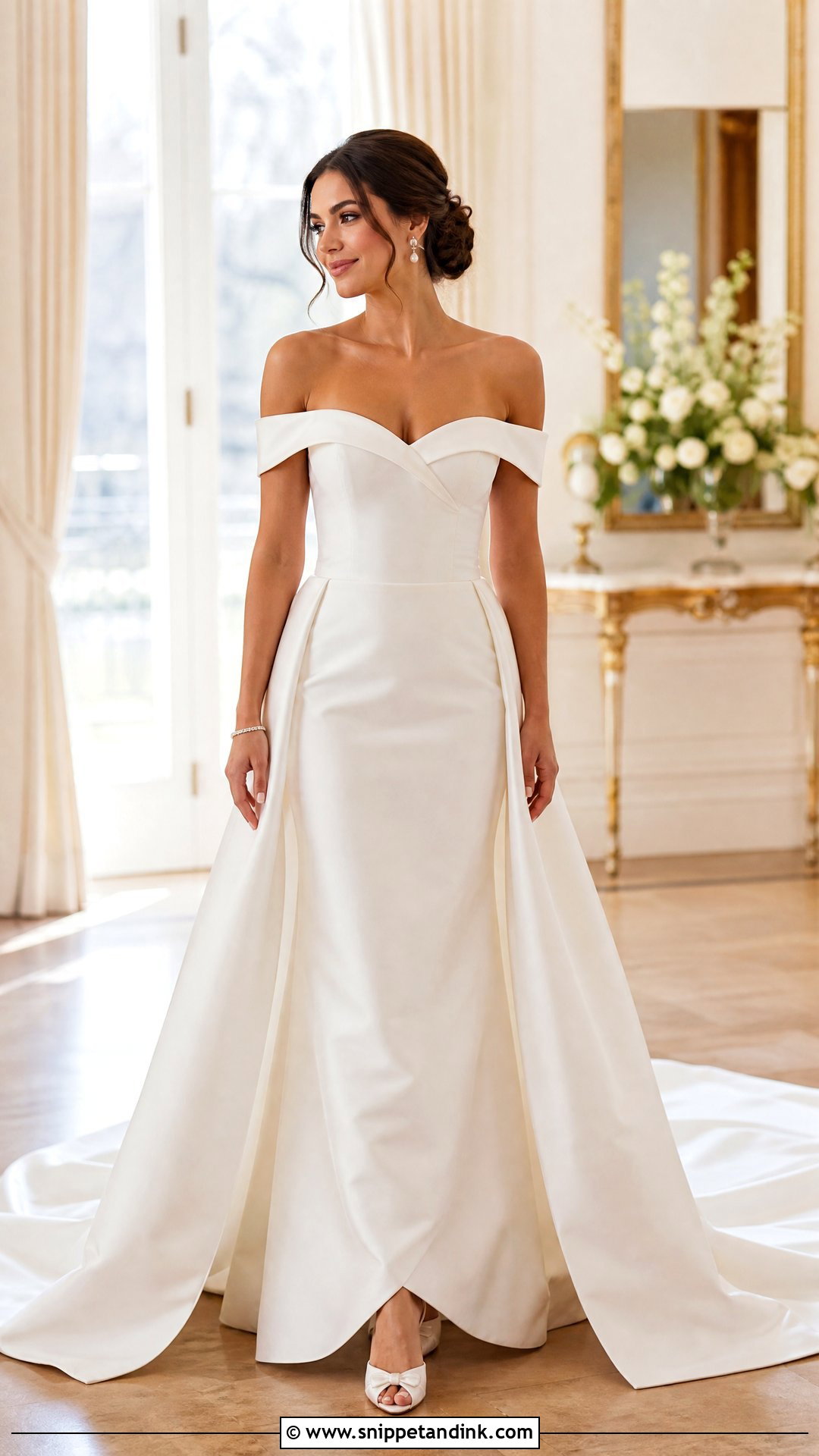
An off shoulder neckline frames the collarbone and shoulders, which is why it pairs so well with an updo or side-swept waves. The trade-off is arm movement: the band across your upper arms limits how high you can reach, and it can slip without a silicone grip strip sewn inside. A satin, lace or tulle train adds presence from the back and side for aisle photos. Pearl drops and a thin bracelet are enough. Once the train comes off, the neckline still does the work at the reception.
9. Square Neck Wedding Dress With Detachable Train
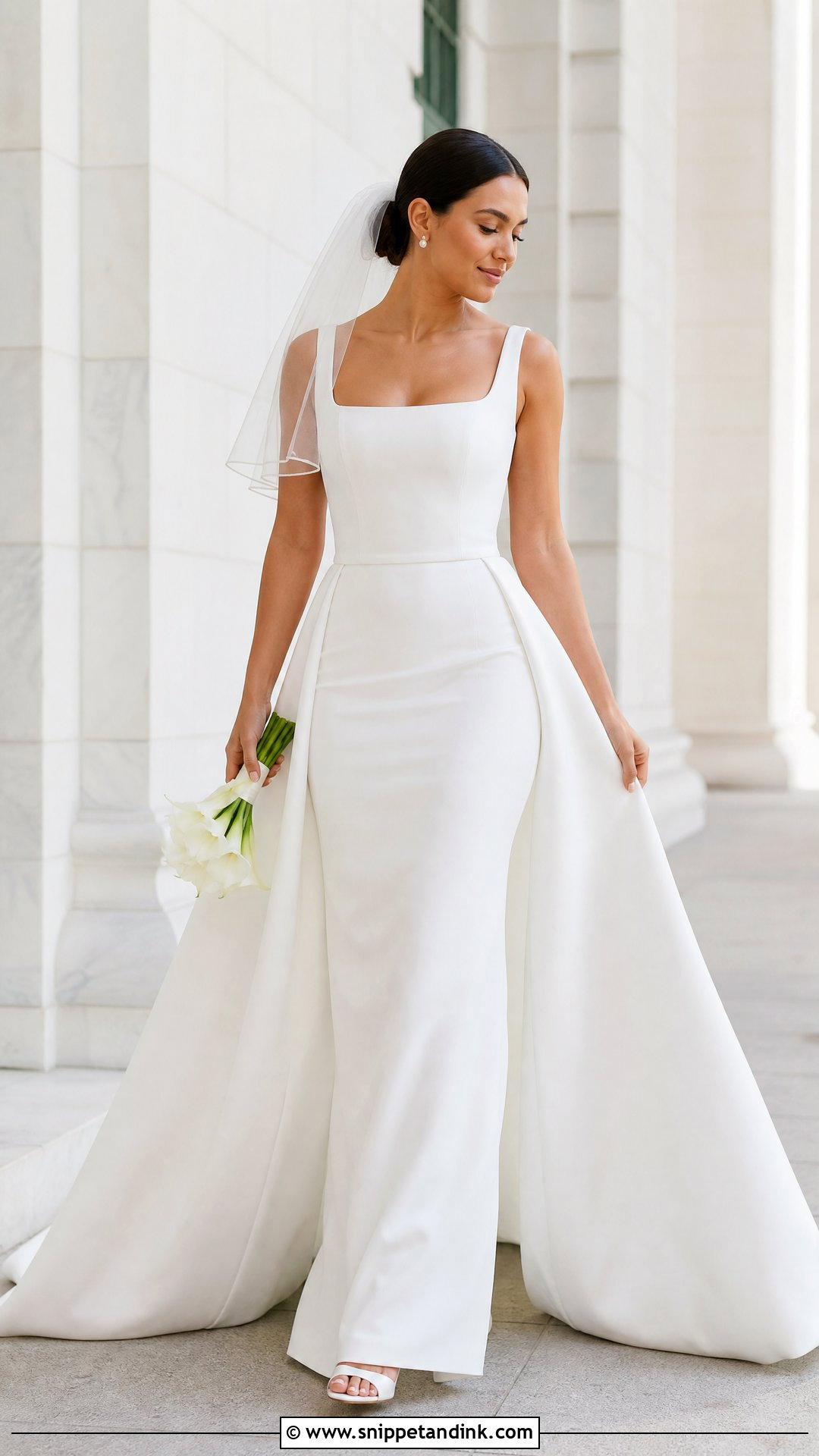
Square necks give structure to the chest and suit both fitted gowns and soft A-lines. Because the lines are so straight, any pull at the corners shows, so I check them with the bride seated as well as standing. A satin or crepe train keeps the look minimal, while a sheer lace train adds texture behind. A low bun, pearl studs, a short veil and slingback heels finish it. It sits naturally in modern venues, courthouse ceremonies and city weddings.
10. Corset Wedding Dress With Detachable Train
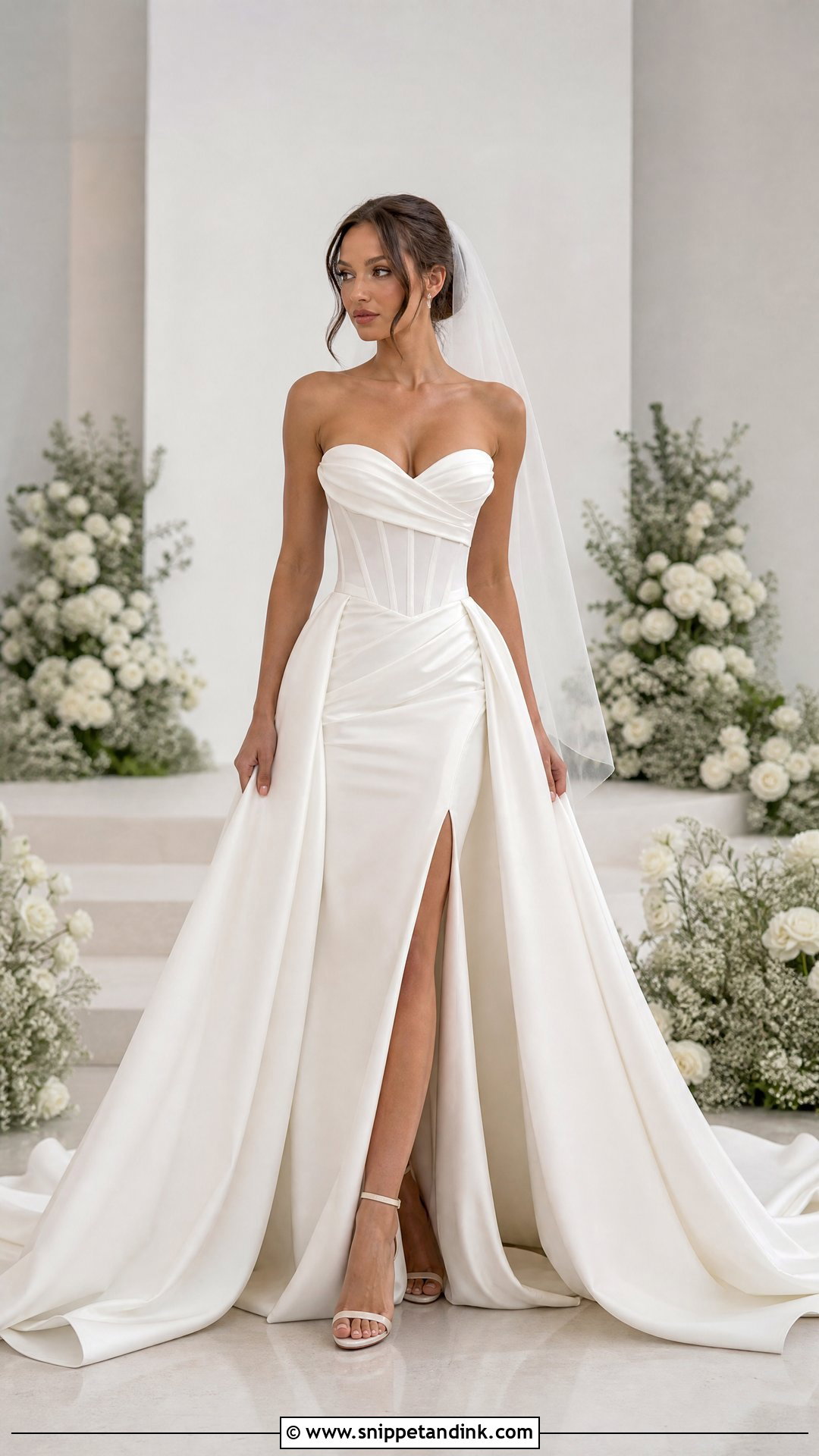
A corset bodice is doing real structural work: boning, lace panels or satin cups that shape the waist and hold the dress up. That makes it the best base for an overskirt train, since the waistline is strong enough to take the extra fabric. My one warning is sitting through dinner, because a tightly laced corset feels very different at hour six, so lace it for comfort at the final fitting, not for the tightest possible waist. Keep the accessories sleek so the corset stays the focus. Formal venues and editorial-style photos suit it.
11. Minimal Wedding Dress With Detachable Train
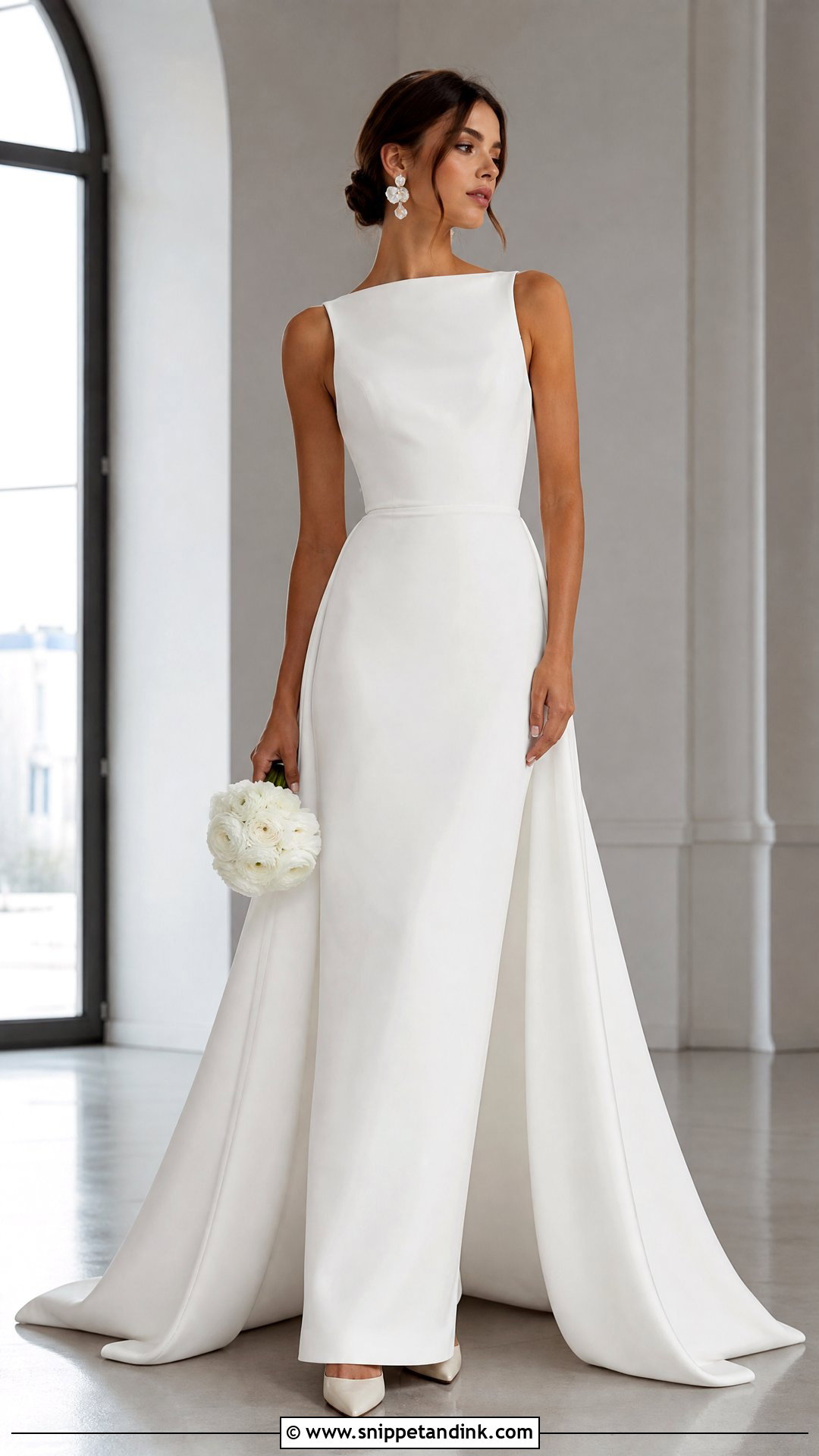
On a minimal dress, there’s nowhere for a clumsy attachment to hide. The base might be a column, a slip or a fitted crepe silhouette with almost no embellishment, so the train has to join with flat hooks or covered buttons that disappear once it’s removed. I check the empty attachment points after unhooking: thread loops or snaps shouldn’t show on the back of the dress. Precise tailoring and quality fabric matter more here than anywhere else. Sculptural earrings and a small structured bouquet keep it modern.
12. Beaded Wedding Dress With Detachable Train
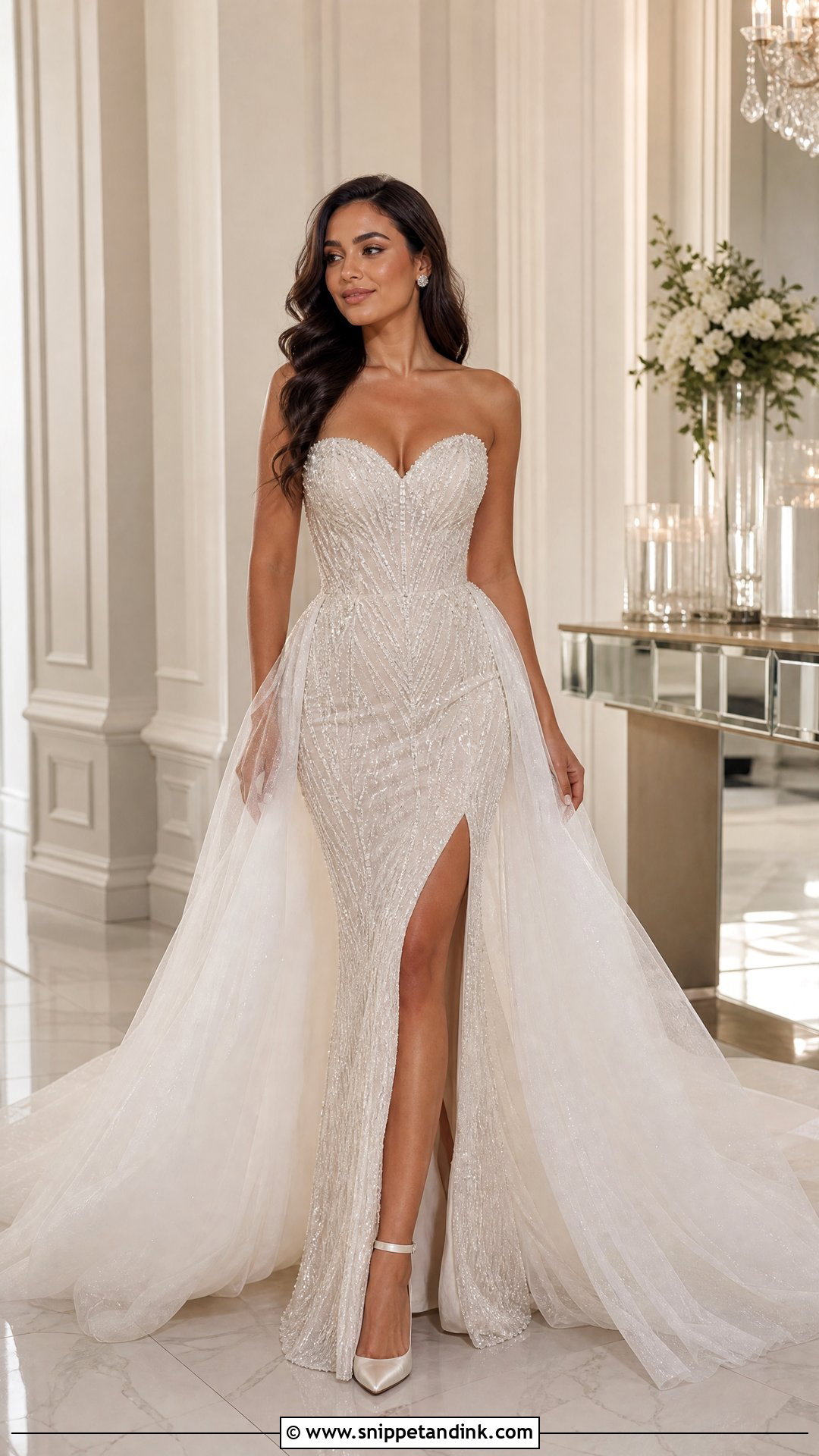
Beaded dresses bring sparkle and texture, whether the beading covers the bodice, trails down the skirt or sits as a scattered shimmer. The danger is a beaded train that’s too heavy: it drags on carpet, snags on grass and pulls the dress backward. Sheer tulle with light beading gives the glow without the weight. Keep jewelry to crystal studs if the dress already sparkles. Evening weddings and hotel ballrooms show it best under warm light.
13. Floral Applique Wedding Dress With Detachable Train
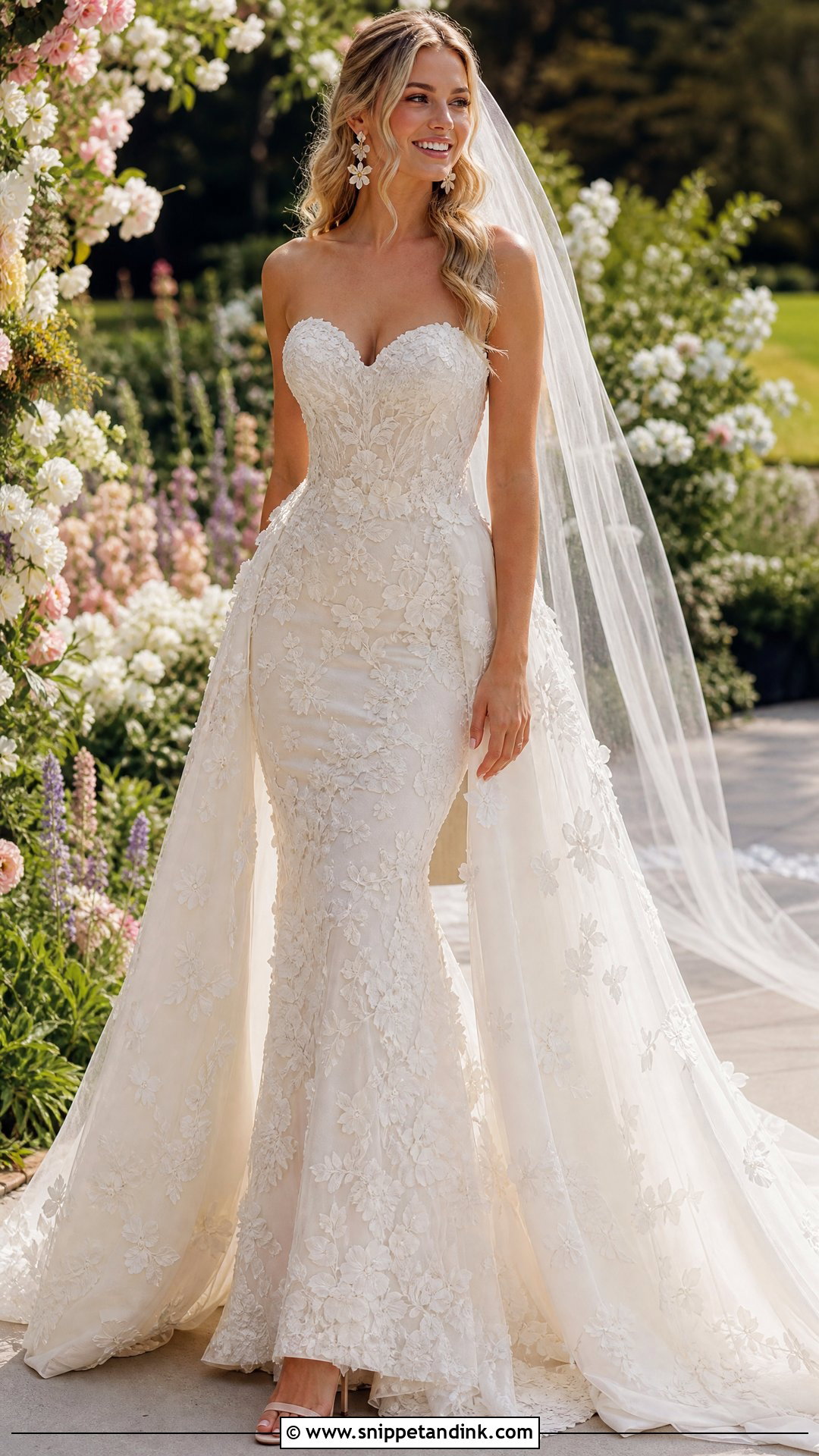
Appliques are hand-placed lace motifs, so a matching train is one of the few places where you can see real craftsmanship continue from the bodice to the floor. If the base dress is fitted, a fuller applique train adds softness; if the dress is already full, go lighter or the whole thing turns bulky. Raised appliques catch on veil edges, so I like a plain-edged veil over them. Floral-inspired earrings, soft curls and neutral heels suit garden and spring weddings.
14. High Neck Wedding Dress With Detachable Train
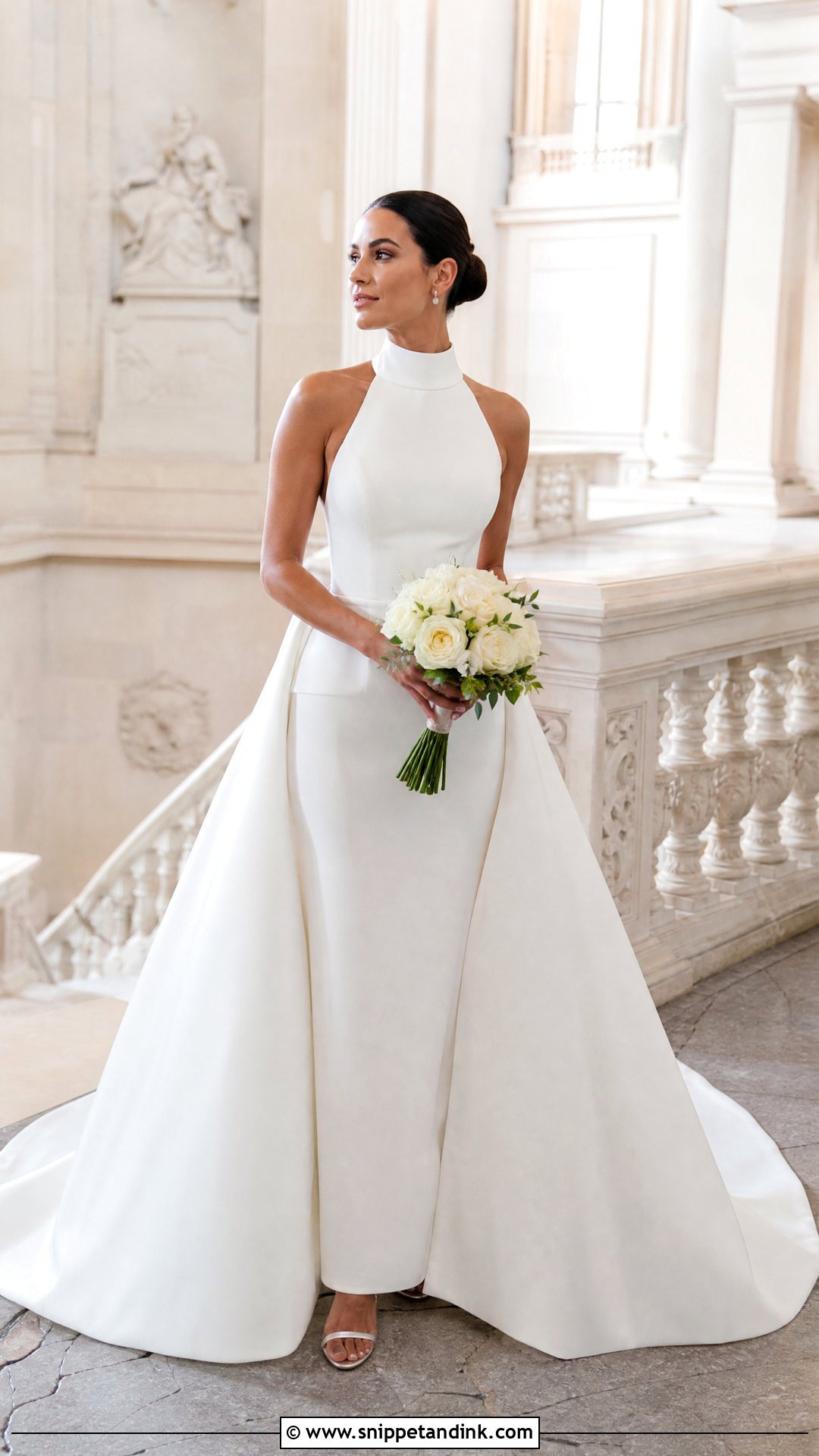
With the front covered to the neck, all the drama moves to the back, which is exactly where a detachable train lives. A sleek train keeps it modern; a lace train leans traditional. Hair should go up into a bun or smooth ponytail so the neckline stays visible, and I’d skip necklaces entirely. High necks can feel warm, so I steer summer brides toward lace or an illusion yoke rather than solid satin. Museum weddings, winter ceremonies and formal venues suit it.
15. Backless Wedding Dress With Detachable Train
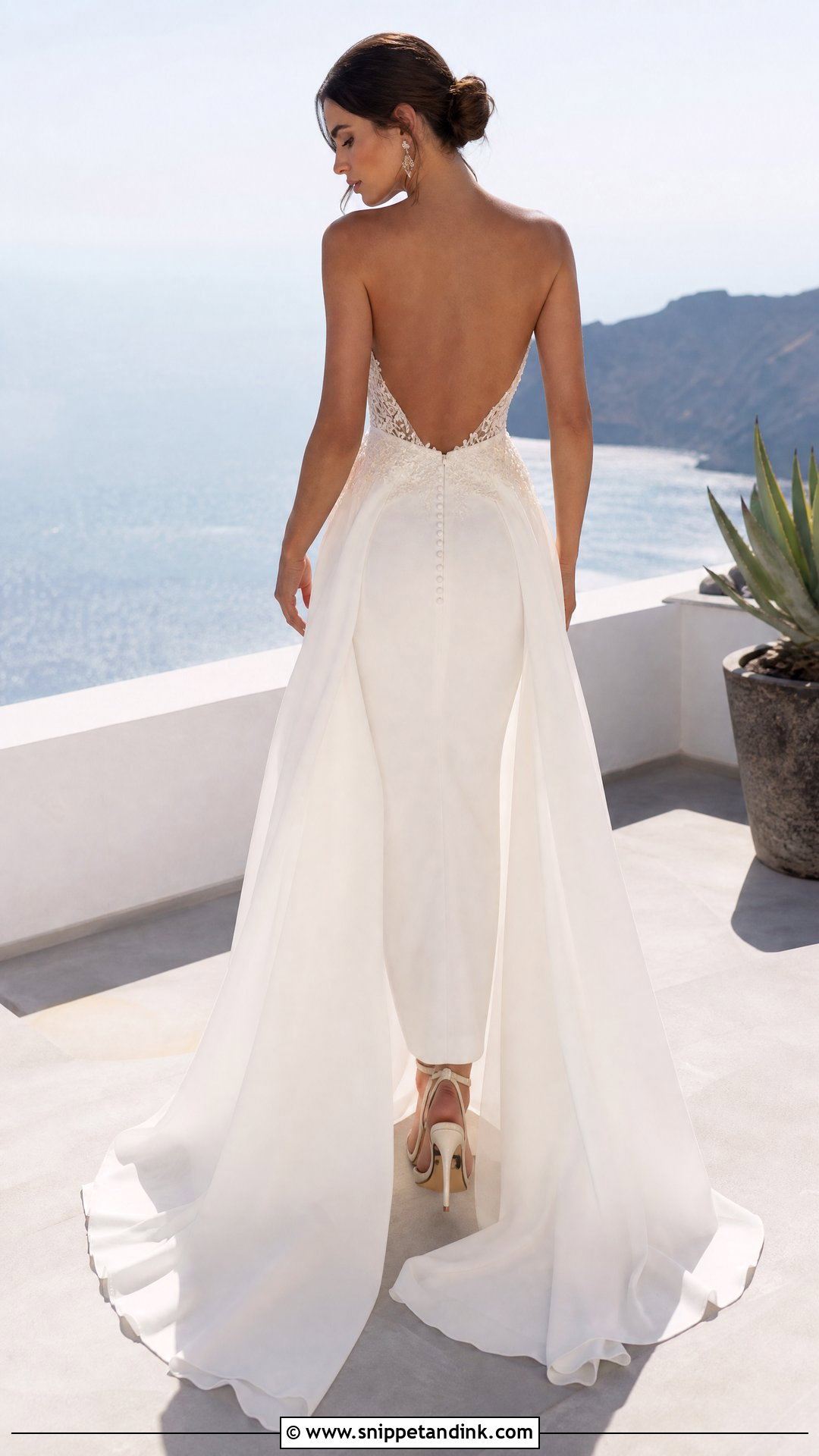
With an open back, the drama happens as you walk away from your guests. Plan the attachment carefully: a train hooked at the waist or hip frames the open back, while one fixed higher can cover it until the reveal after the ceremony. Support is the real question with this cut, so built-in cups or a low-back solution must be fitted with the dress, not added the morning of. A low updo and simple earrings let the back speak. Rooftops, destination weddings and beaches suit it.
16. Short Wedding Dress With Detachable Train
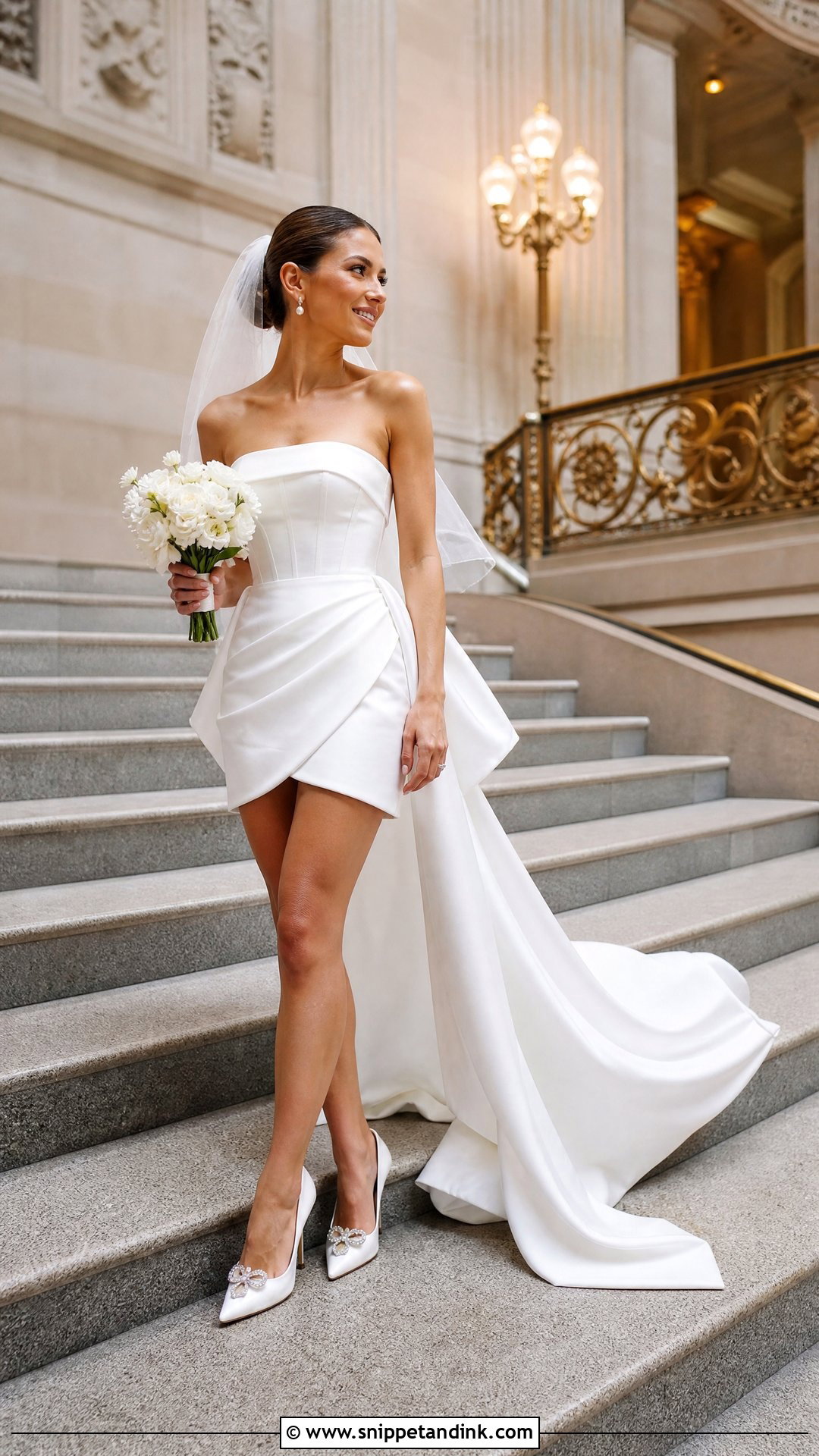
This one surprises people. A mini, knee-length or tea-length dress with a full detachable train looks properly bridal for the ceremony, then turns into a party dress in minutes. The train has to attach cleanly at the waist or back so the change reads as intentional rather than a missing piece. I’d invest in the shoes, because once the train is off they’re on show all night. Courthouse weddings, after-parties and small venues suit it well.
17. Tea Length Wedding Dress With Detachable Train
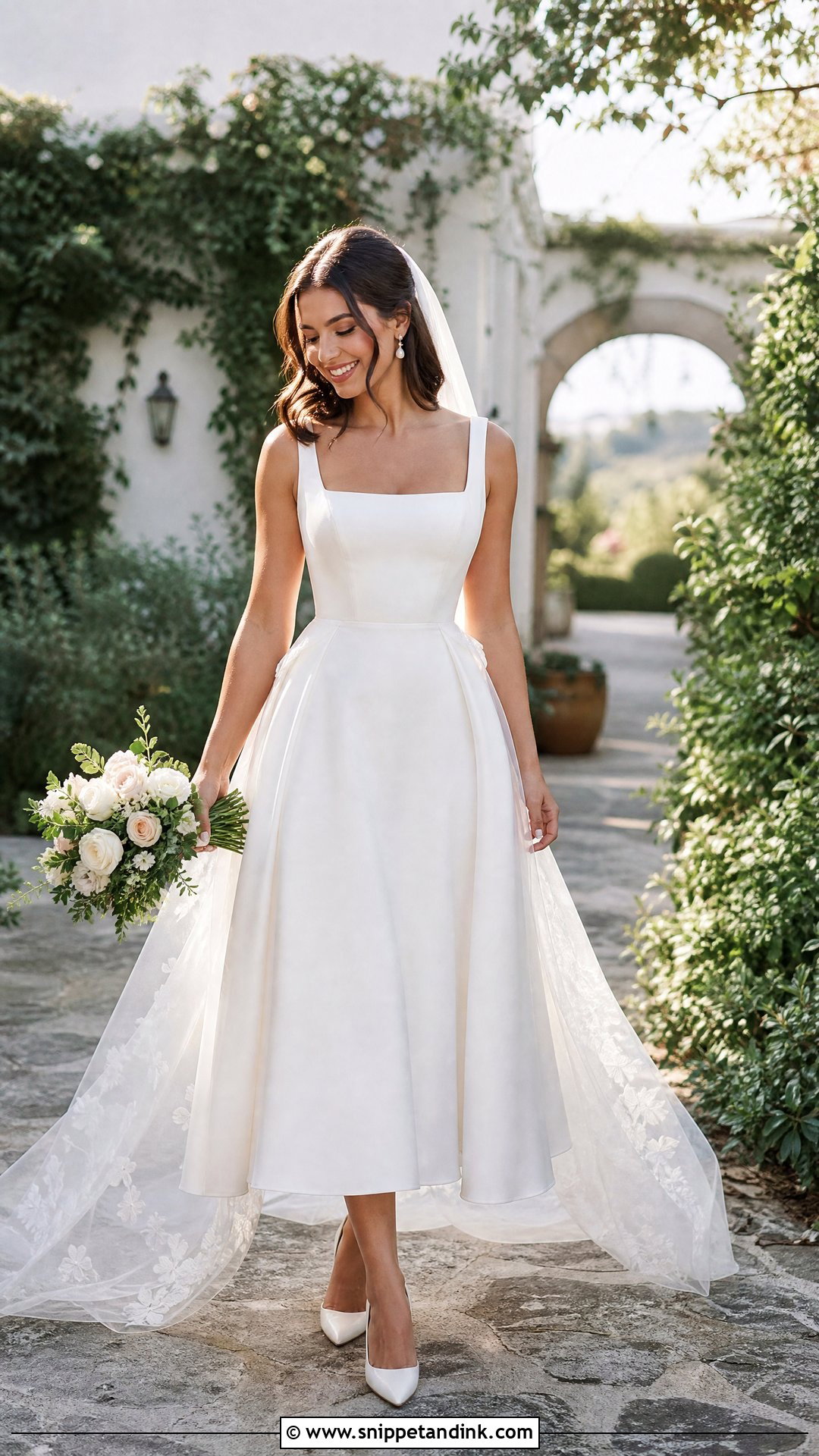
A tea length wedding dress ends mid-calf, which gives a vintage line and shows off your shoes, while the train adds length just for the ceremony. Tulle or organza keeps the train light enough not to overpower the shorter dress. Because the hem is so visible, I have brides wear their actual shoes to every fitting; pointed pumps, ankle straps or embellished flats all change where the hem should land. Pearl earrings, a birdcage veil and soft curls finish it for garden parties and intimate celebrations.
18. Boho Wedding Dress With Detachable Train
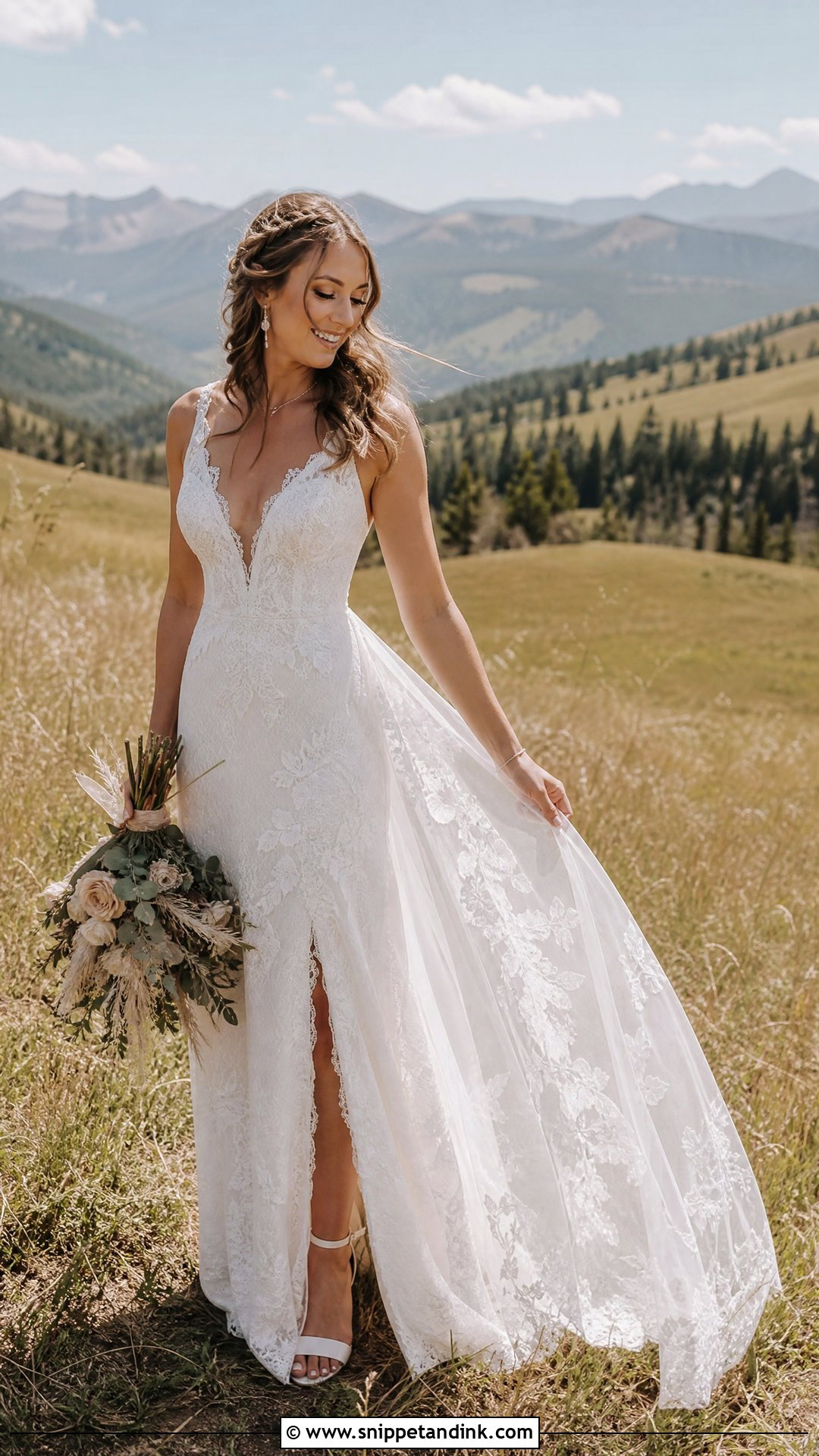
Boho dresses are built for outdoor ground, so the train needs to be too. Soft lace, flowing chiffon, light sleeves and a relaxed A-line define the shape, with a sheer, lace-trimmed or lightly embroidered train. Chiffon picks up burrs and snags on twigs, which is why I’d remove the train before any walk across a meadow for photos. Texture and movement matter more here than sparkle. Loose waves and block heels or bridal sandals suit beach, desert and rustic settings.
19. Beach Wedding Dress With Detachable Train
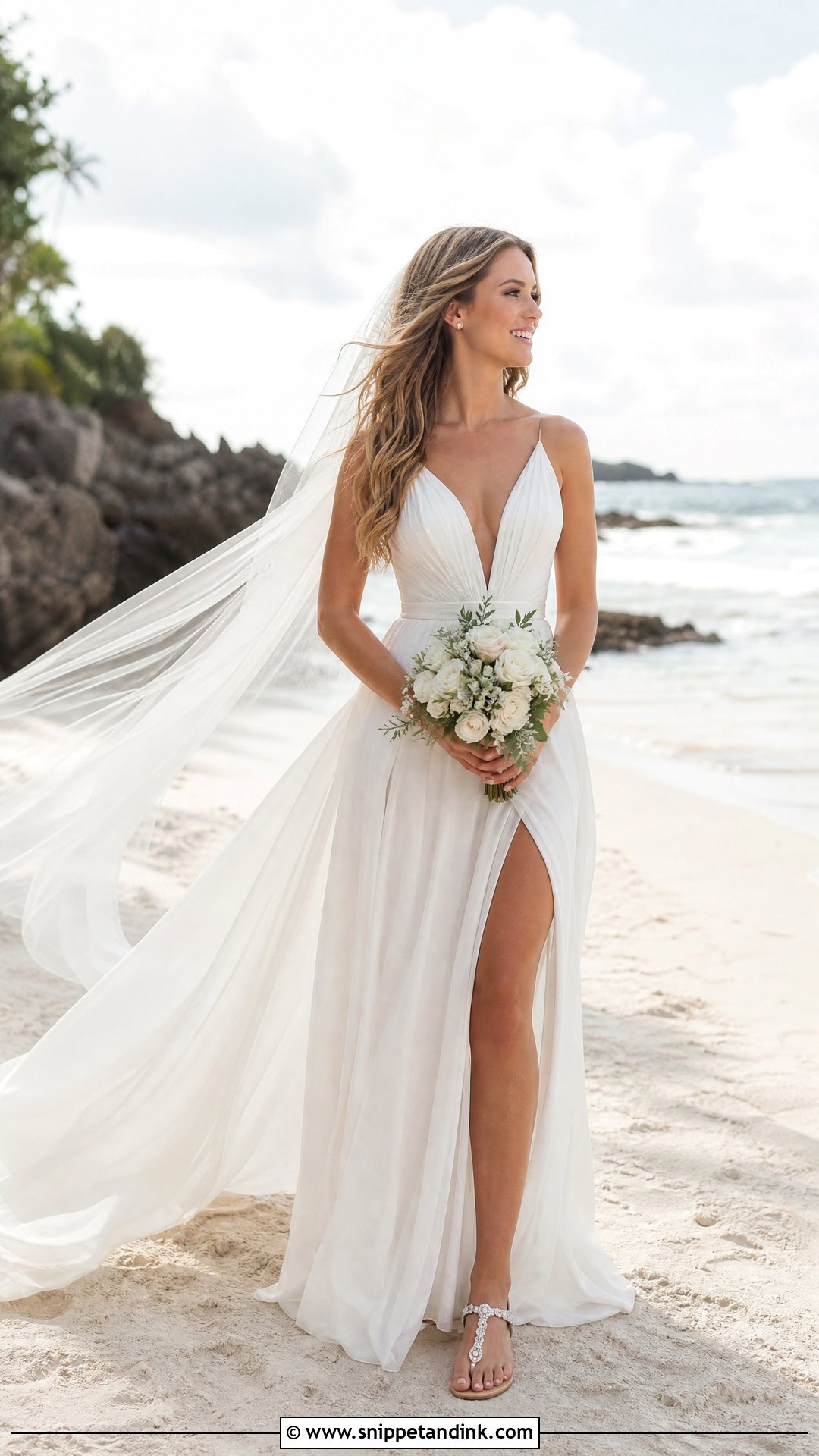
On a beach, the train is for the aisle and nothing else. Chiffon, soft tulle, light crepe or airy organza move in a breeze; heavy satin drags and comes back gritty with sand. I tell beach brides to have the train off before the receiving line, since wet sand at the hem stains and weighs it down. A sheer veil, loose waves and flat sandals suit the ground. Coastal and destination ceremonies are what this dress is made for.
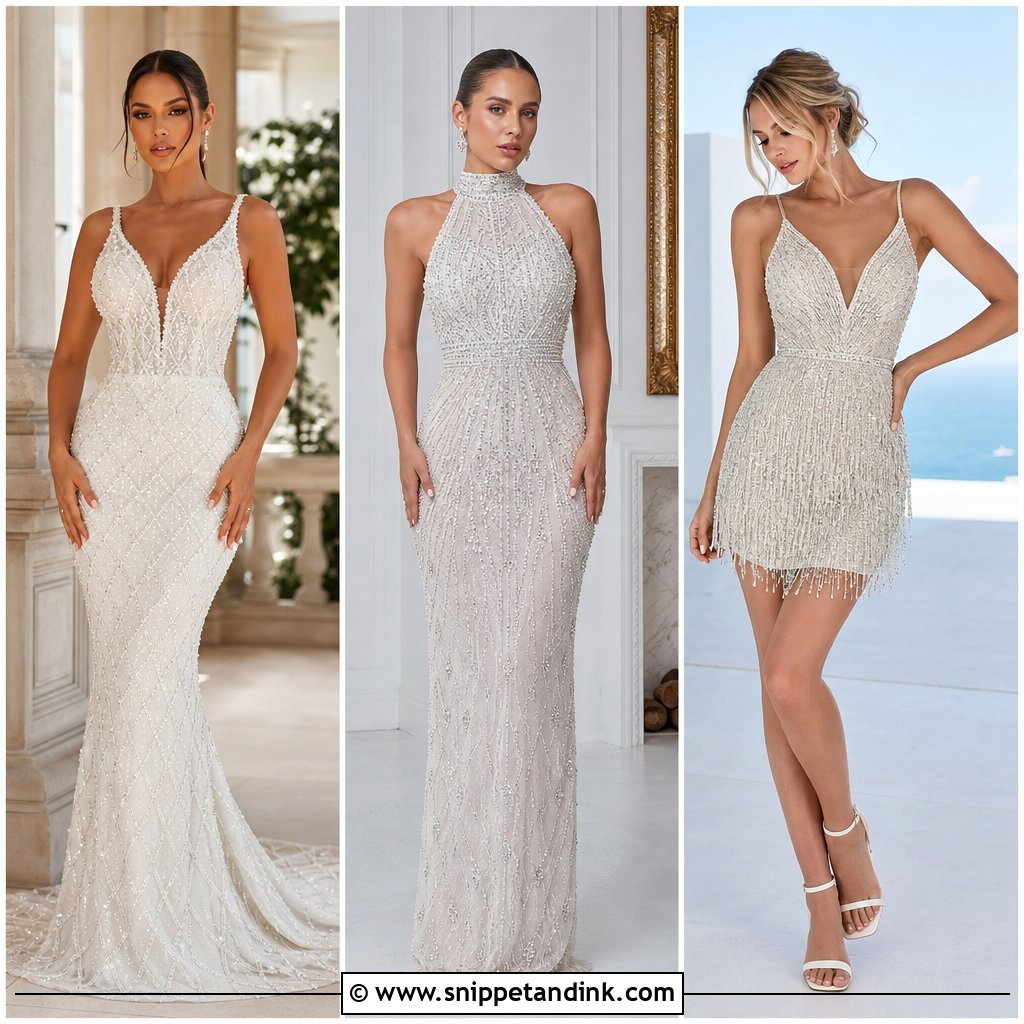
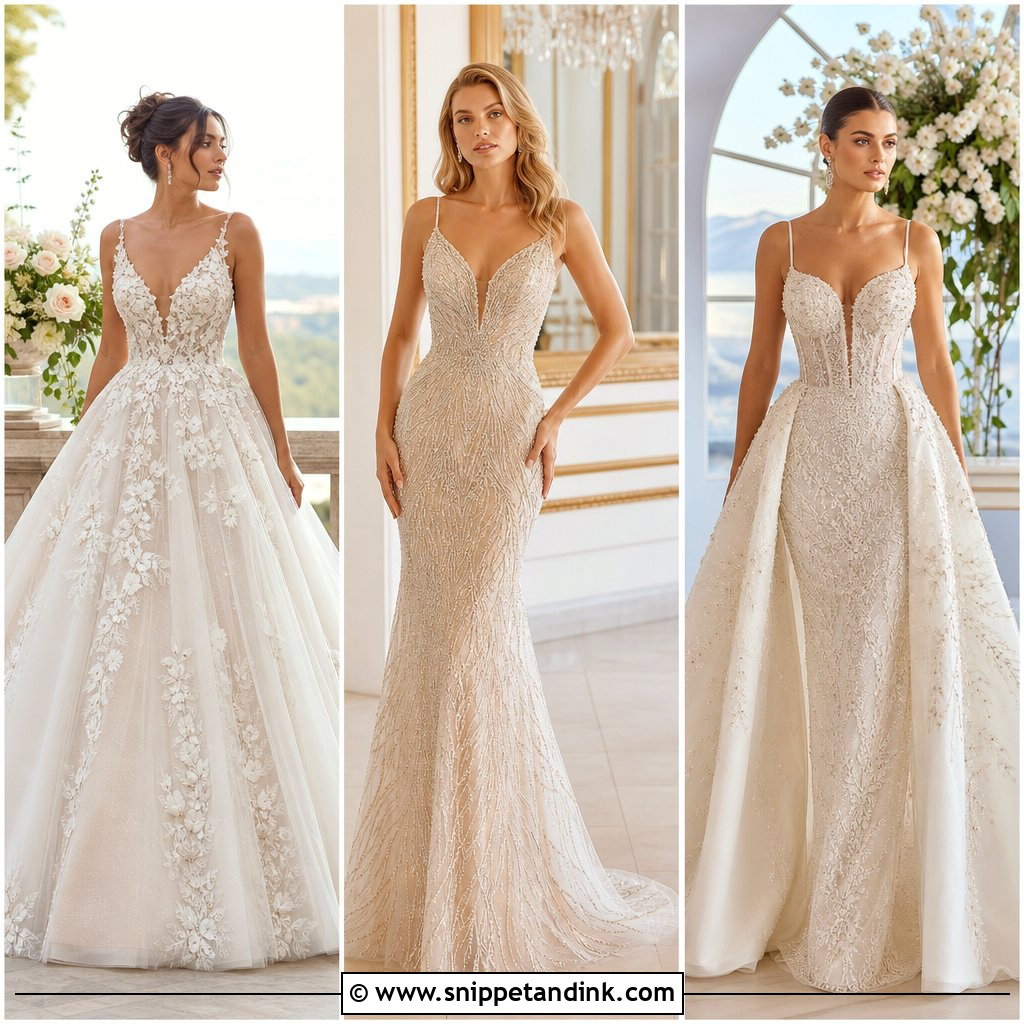
20. Plus Size Wedding Dress With Detachable Train
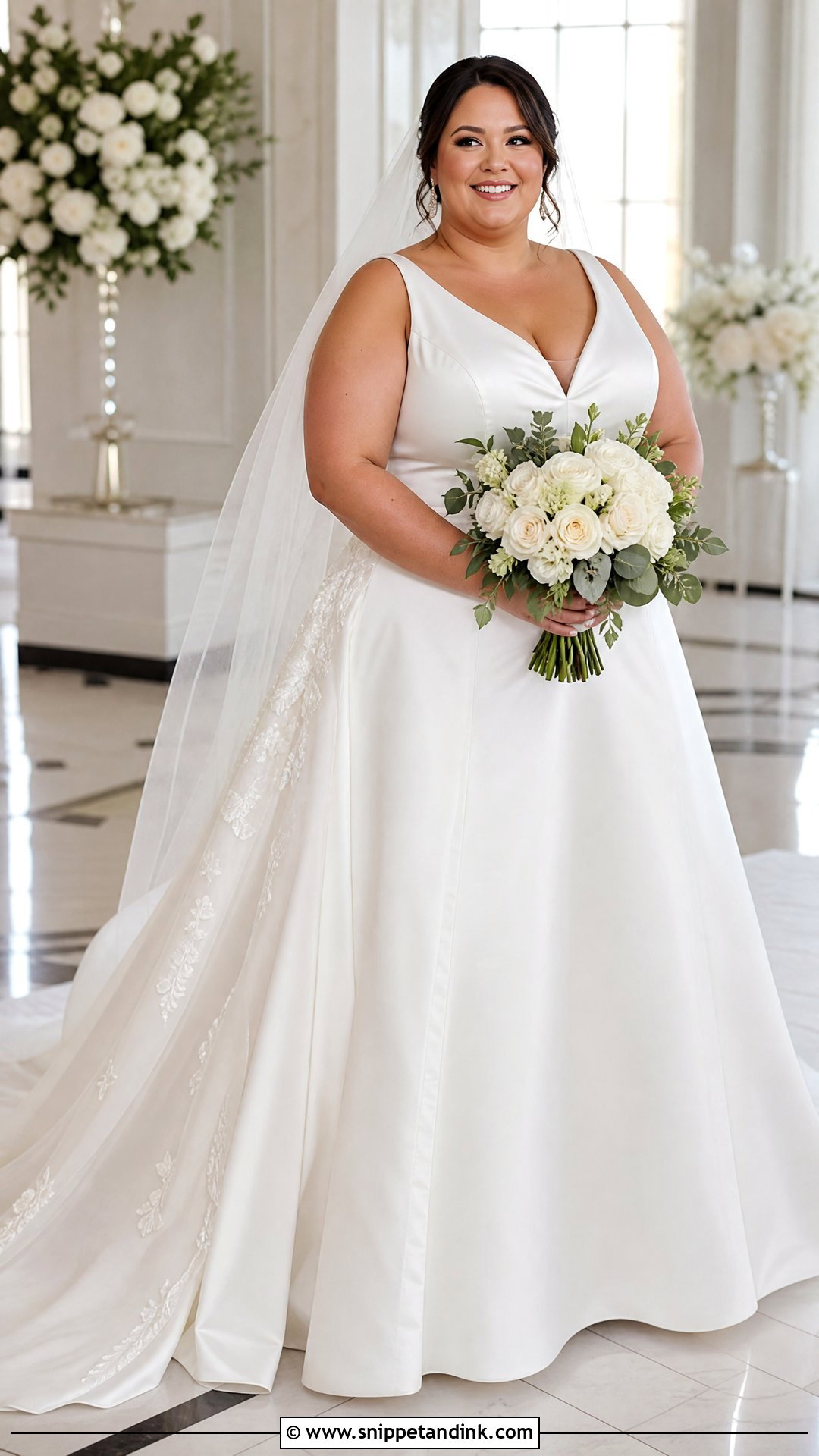
For a plus size wedding dress, the bodice construction matters more than the train. I look for real boning, a smooth lining and a waist seam that sits at your natural waist, because that seam will also carry the train. A-line, fit and flare and ball gown shapes all take a removable train well. Satin, crepe, lace and layered tulle glide rather than cling. Choose heels you can stand in for hours and a bouquet that matches the gown’s scale.
21. Petite Wedding Dress With Detachable Train
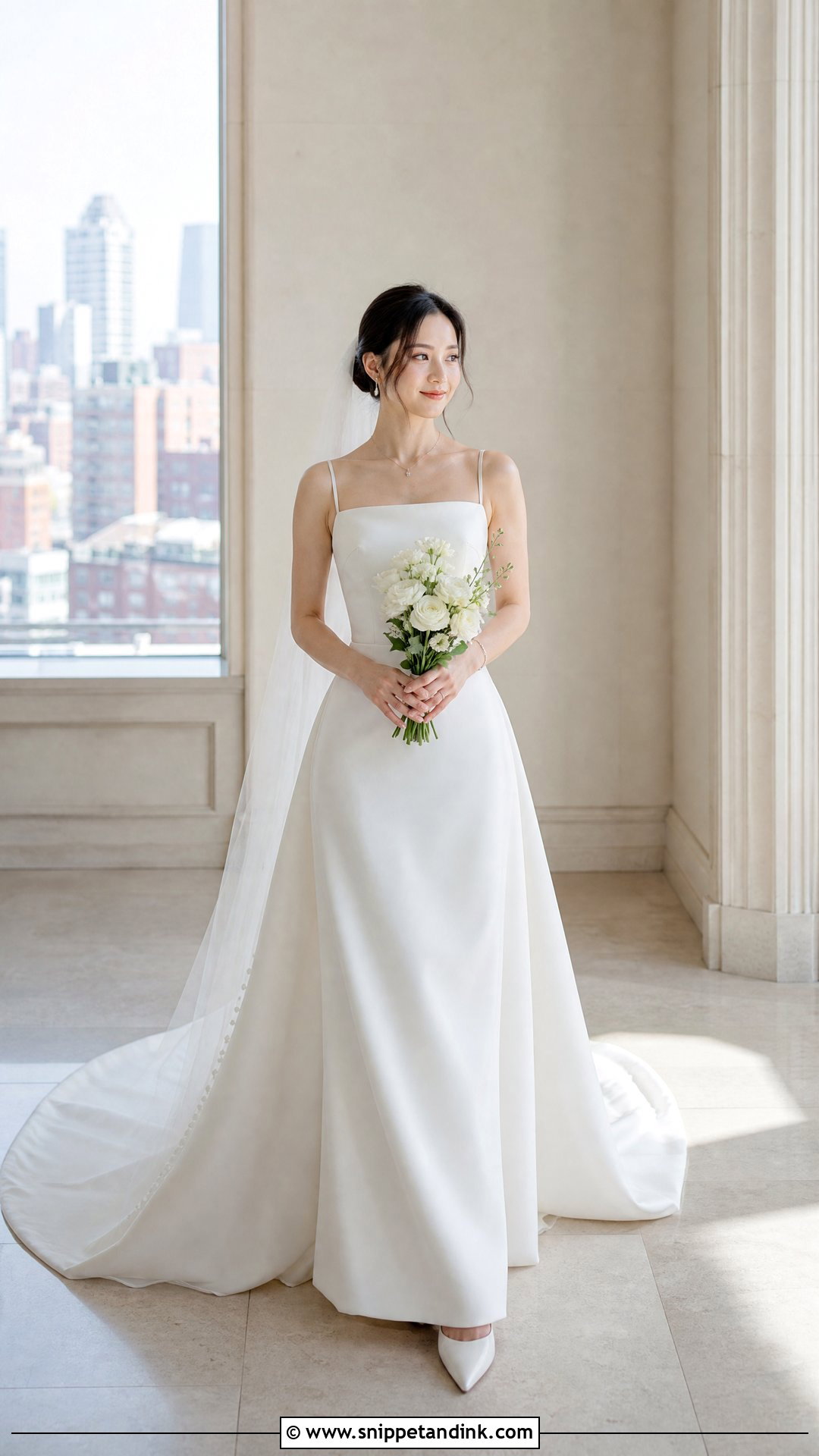
Proportion is the whole game for petite brides. A fitted bodice, higher waistline, vertical seams or a slim A-line lengthen the frame, and the train should be chapel length or a soft sweep rather than a royal one that swallows you. Width matters as much as length: a train wider than your shoulders looks like it’s wearing you. Pointed heels, a narrow veil and a bouquet held low enough to show the waist all add height. Once the train is off, the base dress should feel light.
22. Black And White Wedding Dress With Detachable Train
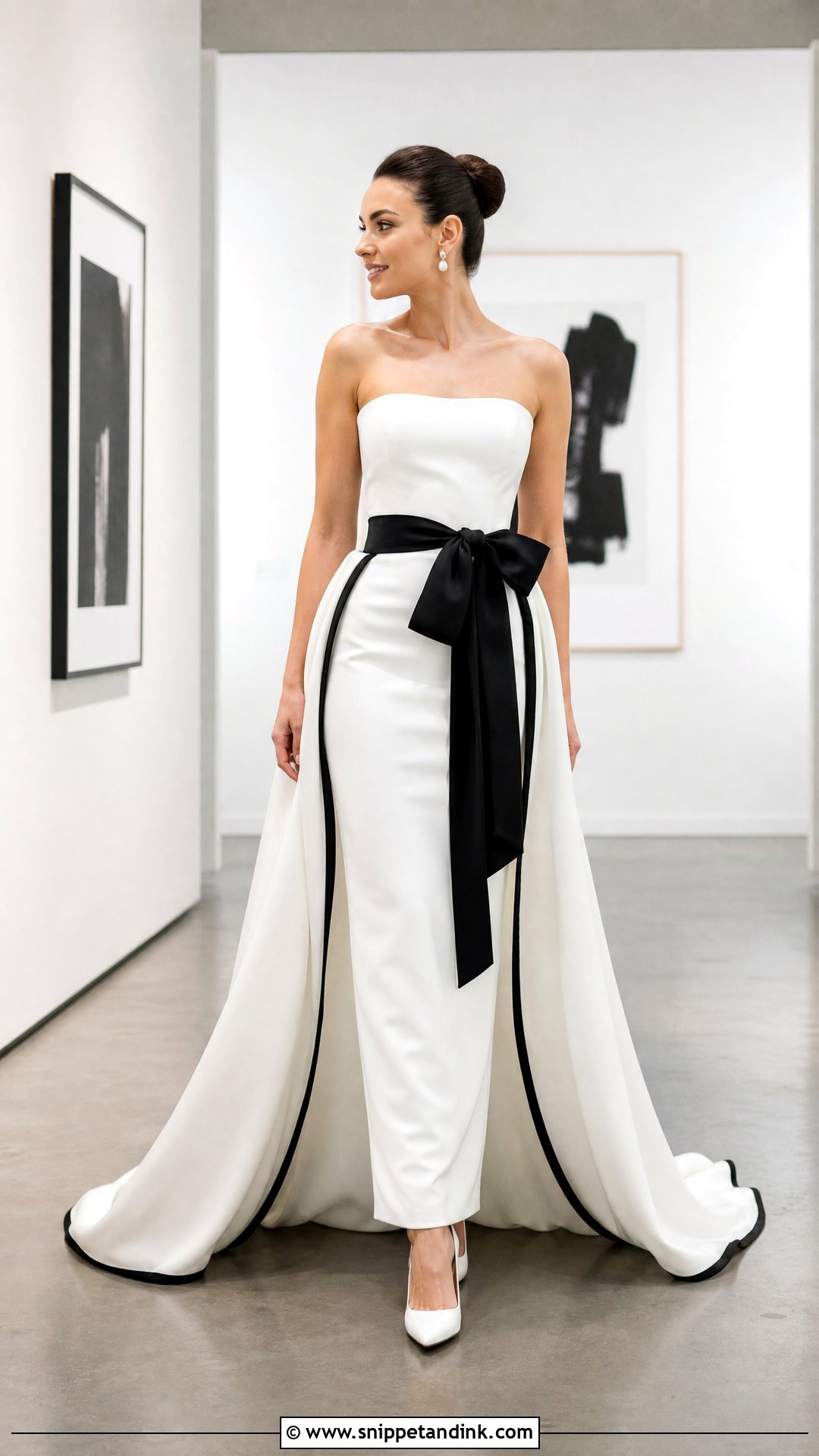
Black accents on a white gown give contrast with a fashion edge: bows, gloves, piping or a black waist detail. The white train keeps the ceremony look bridal, or it can carry black lace trim or a black bow at the attachment point. One practical check I always make: black trim can bleed onto white if it gets wet, so ask whether the dyes are colorfast before a rainy or beach date. Pearl or black earrings, sleek heels and a smooth updo finish it for city and black-tie weddings.
23. Blush Wedding Dress With Detachable Train
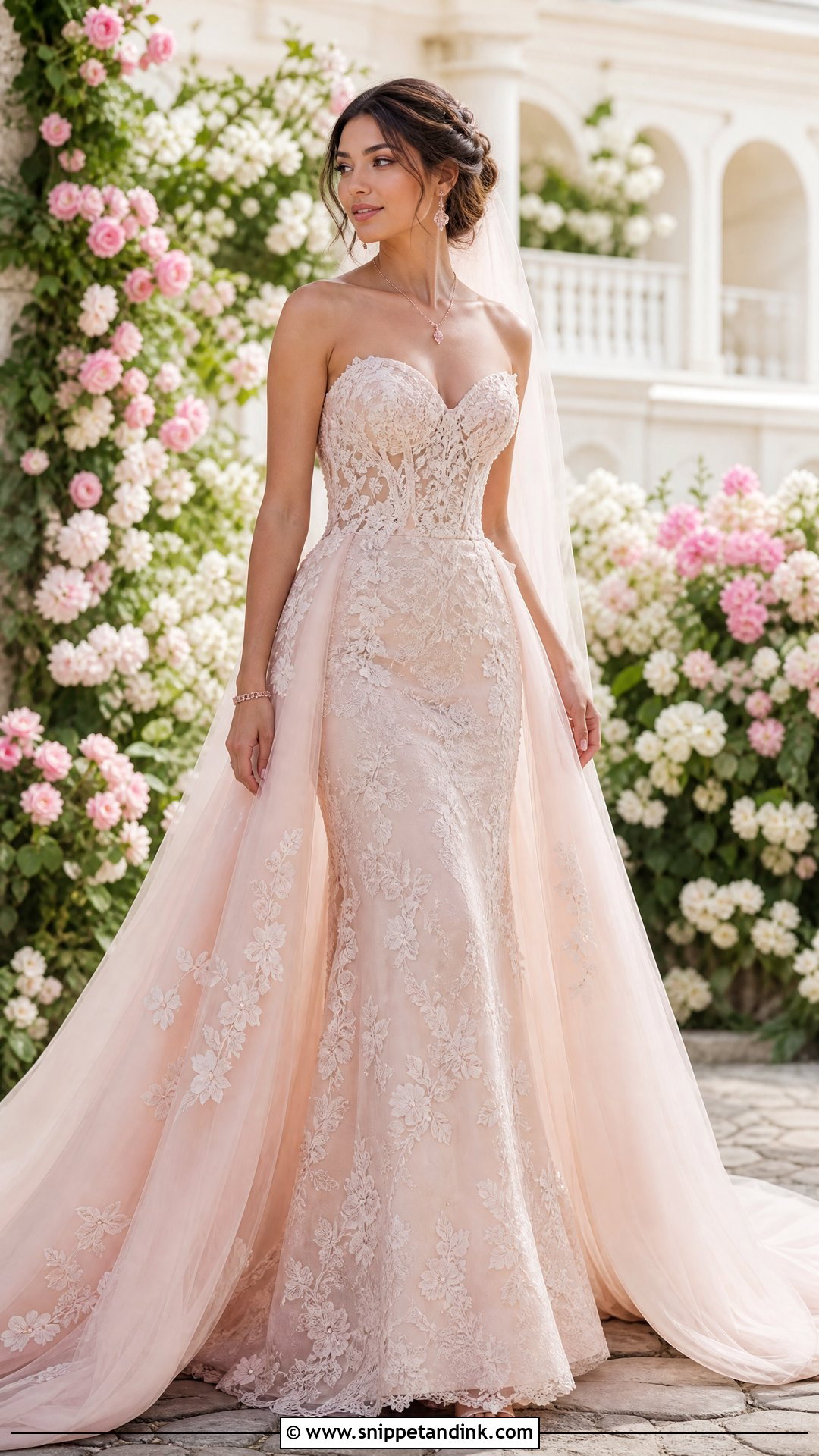
Blush ranges from barely-there rose to a warmer champagne pink, and it reads differently under each light. In bright sun the palest blush can look nearly white, while warm evening lighting brings the pink forward, so I always look at blush fabric in daylight and indoors before ordering. A matching blush tulle or lace train keeps it soft without feeling traditional. Rose-gold jewelry and neutral heels suit it. Garden weddings and spring ceremonies show the color best.
24. Cape Train Wedding Dress
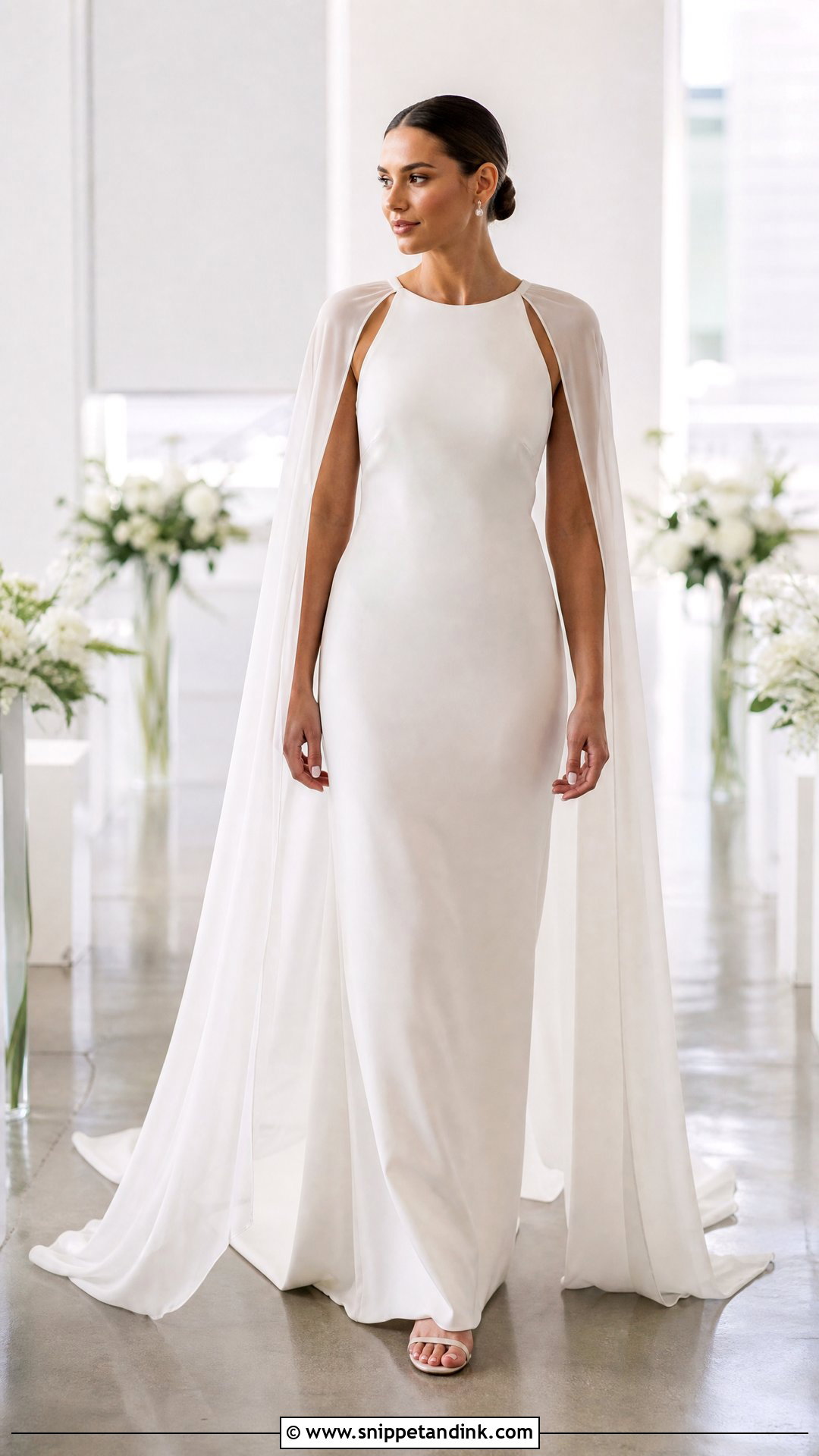
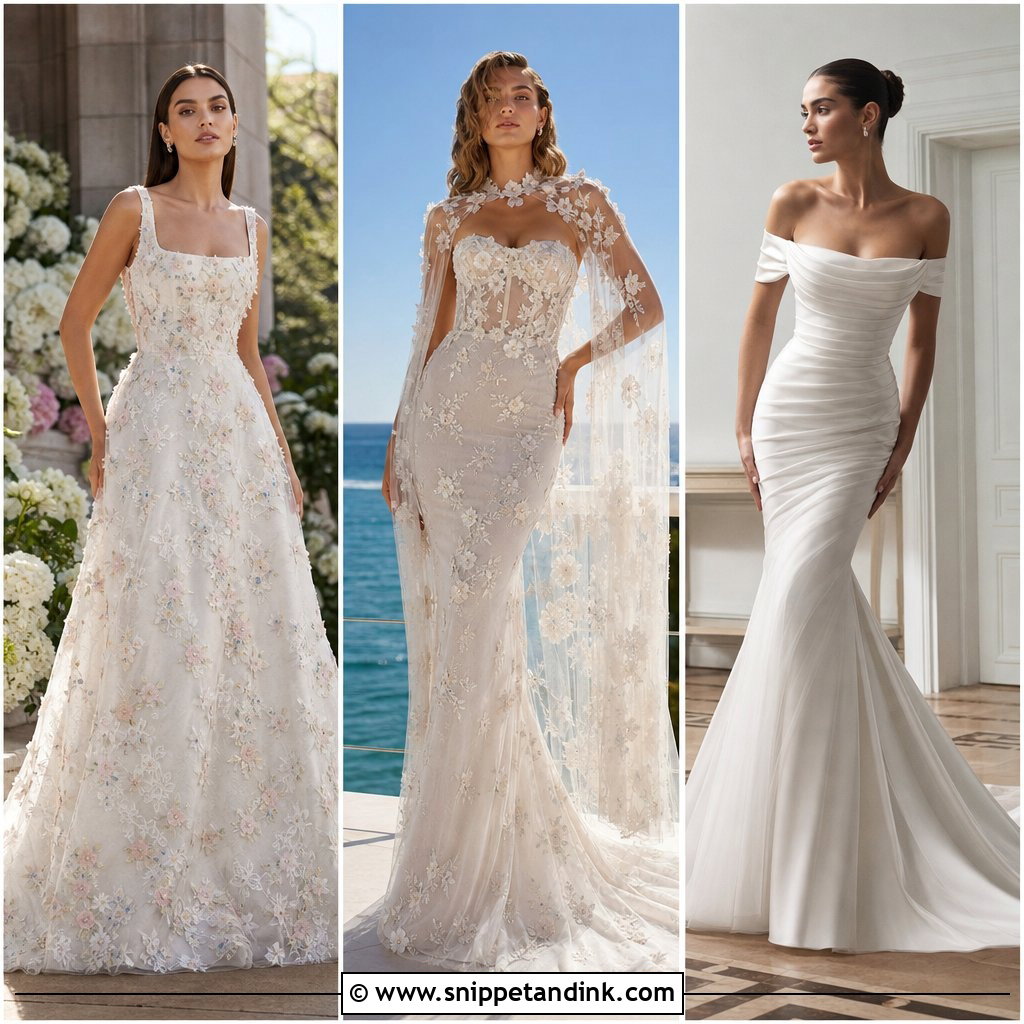
A cape train attaches at the shoulders, neckline or upper back instead of the waist, so it flows long without adding any bulk at the hips. That makes it the natural partner for columns, fitted crepe gowns, slips and simple strapless dresses. Because the weight hangs from your shoulders, a long or embellished cape will pull the neckline back, so the fastenings need to be strong and the cape fabric light: sheer tulle, lace or chiffon. Keep jewelry minimal and the hair sleek. Unbutton it and the base dress is ready for the reception.

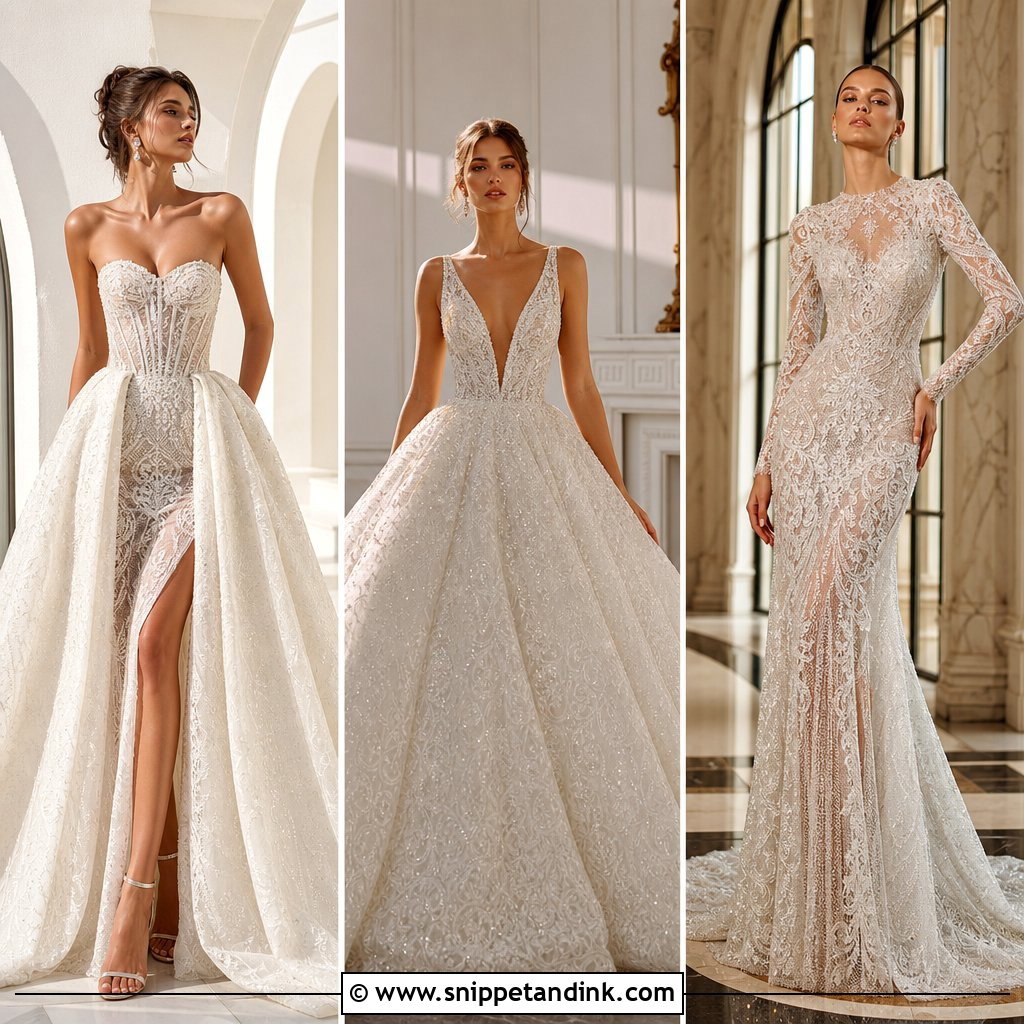


25. Bow Train Wedding Dress
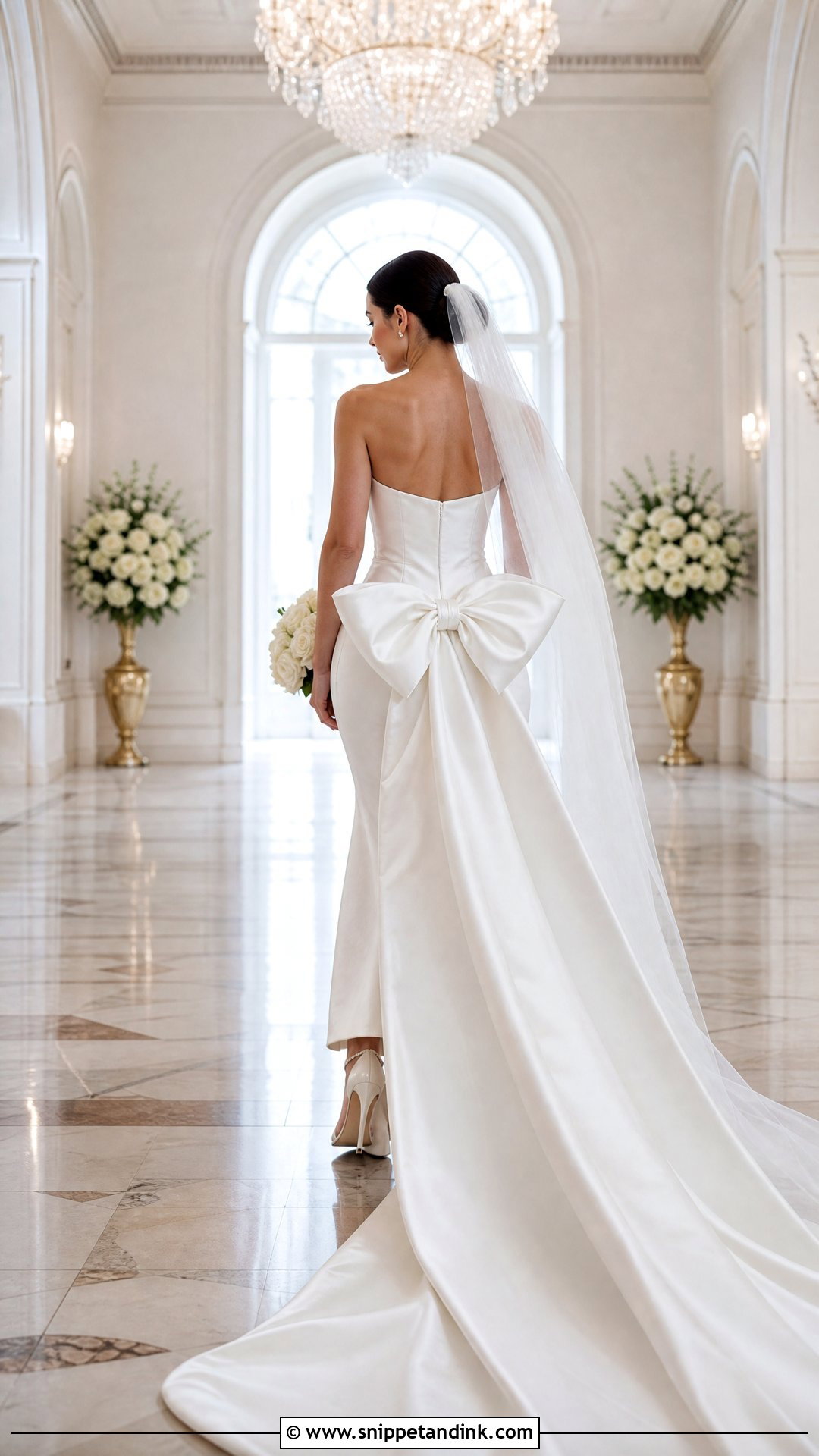
A bow at the lower back is a sweet detail, and it’s a clever way to hide where a detachable train fastens. Satin ball gowns, fitted crepe, minis and strapless dresses all take one. A structured bow looks modern and a soft one reads romantic. I check how the bow behaves when the bride sits, since a large bow at the base of the spine gets crushed against a chair back all dinner. Keep the front simple so the back has room. When the train comes off, the bow can stay.
Plan the Ten-Minute Change Before the Wedding
The train usually comes off between the ceremony and the reception, often after the formal portraits, and it goes wrong when nobody has practiced. At the final fitting, I have the bride’s helper remove and refasten the train while the seamstress watches. Choose that person now; a sister or maid of honor with steady hands is ideal.
Agree on a private spot near the reception room, and let your photographer know the timing so the last portraits happen while the train is still on. Have a garment bag ready for the train itself. Once it’s off, walk a few steps and check the hem length, because some base skirts sit slightly shorter without the train’s pull.
Cleaning Both Pieces Together
The train takes most of the dirt, from aisle runners, grass and sand. Send it to the cleaner with the dress rather than on its own, so both pieces are treated the same way and stay the same shade over the years. Store them flat in one acid-free box with tissue in the folds, and keep the train’s fastenings wrapped so metal hooks never rest against the fabric.
Does the Dress Still Work Without Its Train?
That’s the question I’d ask of every gown here. A removable train can turn a simple dress into a ceremony gown and then hand you back something light for the reception, from satin A-lines and lace mermaids to short dresses, cape trains and bow backs. Judge the fabric match, where it attaches, how you move in it, and how the dress looks once the train is gone. If the base dress feels right alone, the train is a bonus, and you’ll have the drama for the aisle without paying for it on the dance floor.
You'll Like These Ideas:









Leave a Reply