
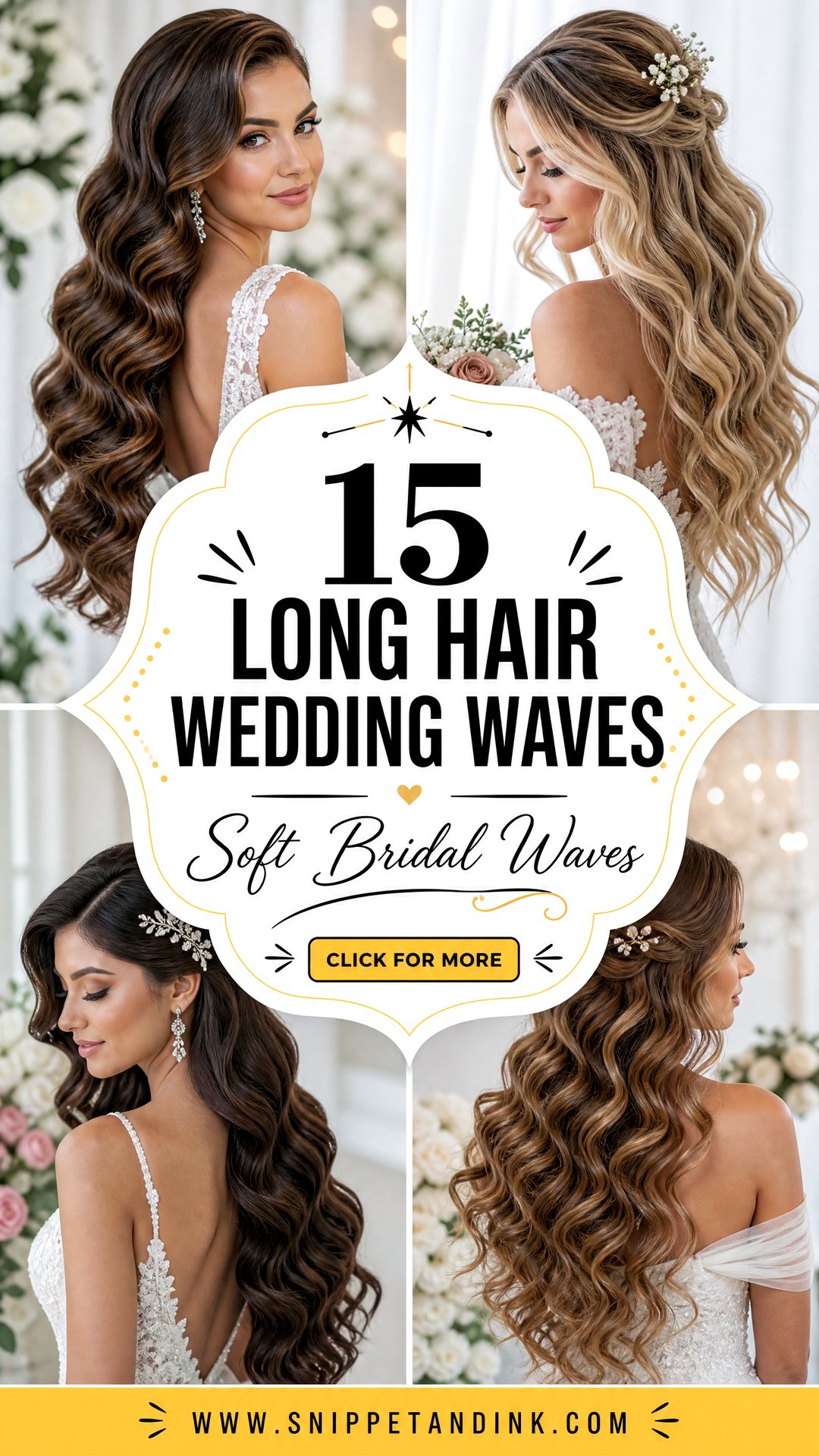
Waves are what most brides with long hair ask me for first, and with good reason. They work with veils, pearl pins, either part, half up details and nearly every neckline. What surprises people is how different one “wave” is from the next: a glossy Hollywood S and a loose beach bend use different tools, different products and hold for different lengths of time. Below are fifteen versions, with notes on how each is built and what decides whether it lasts from ceremony to reception: your dress, the venue, your texture and how much structure you want.
A One-Inch Iron and a Wand Make Different Waves
When a bride shows me a reference, the first thing I work out is which tool made it. The tool shapes the wave more than any product.
- Smaller barrels, around an inch: tighter curls that brush out into Hollywood and glam waves.
- Larger barrels: loose, wide waves with less spring.
- A tapered wand: curls that are tighter at the ends, which look more modern and less set.
- A flat iron twisted through the hair: flatter, S-shaped bends for beach and boho waves.
Long hair takes longer than most brides expect. Waist-length hair needs smaller sections and more passes, so plan a longer slot in the morning schedule than you’d need for shoulder length, and make sure the stylist knows your length when quoting time.
1. Long Hollywood Waves For Wedding
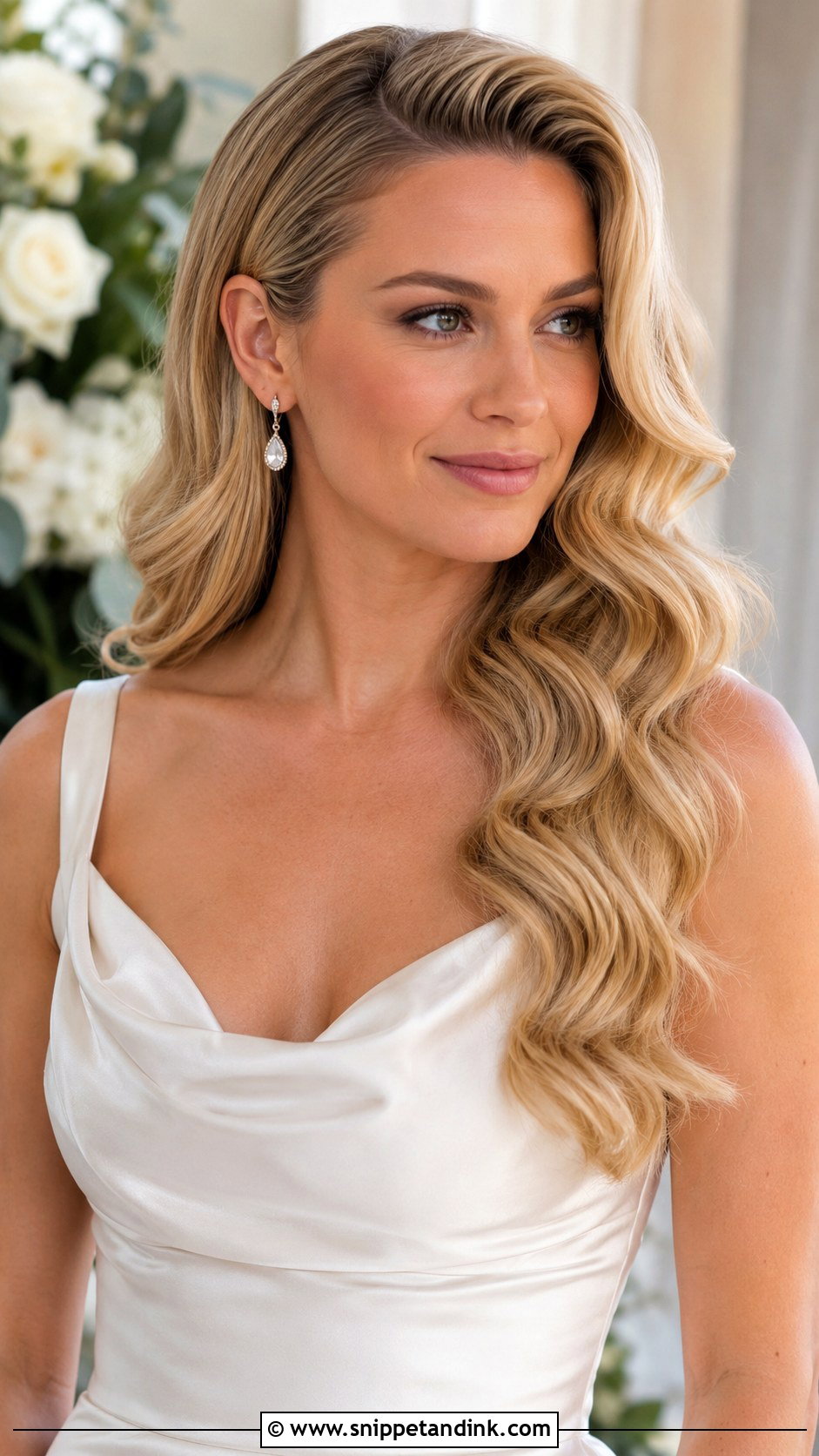
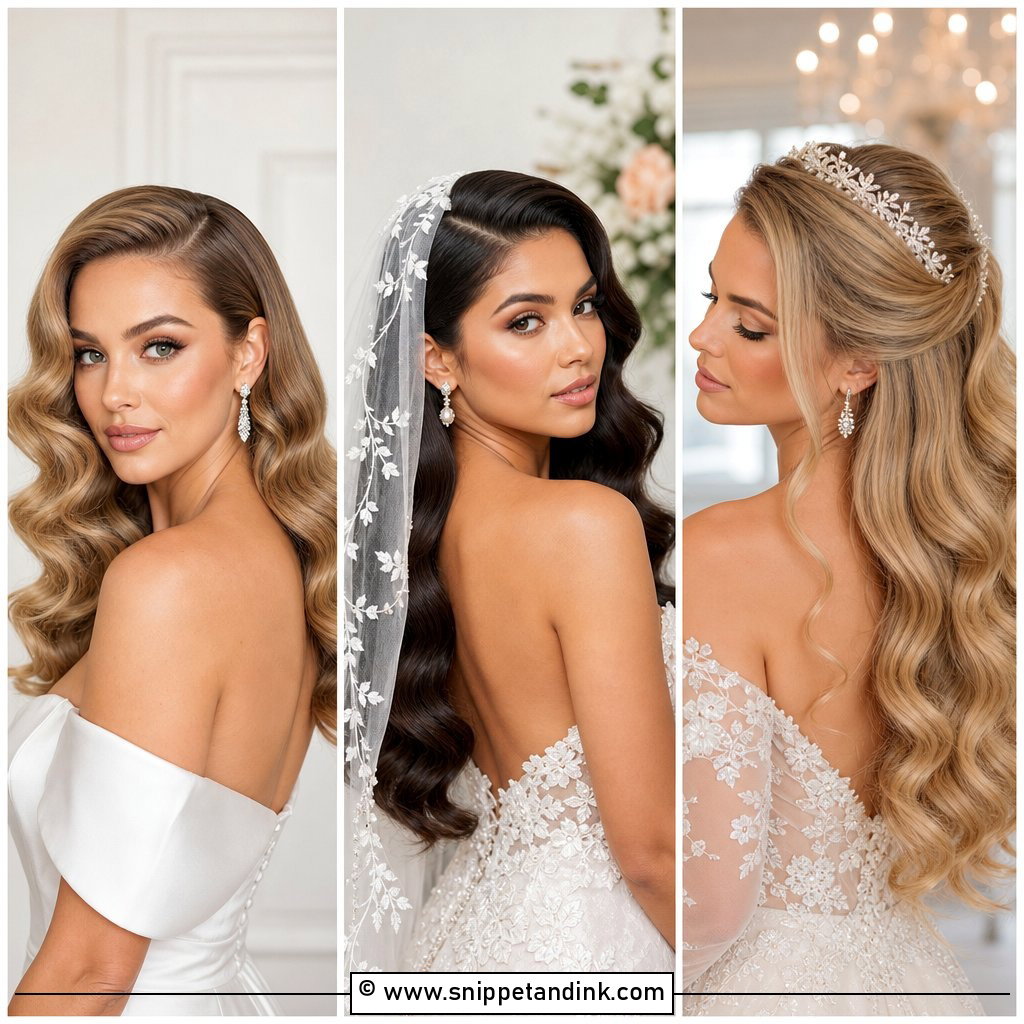
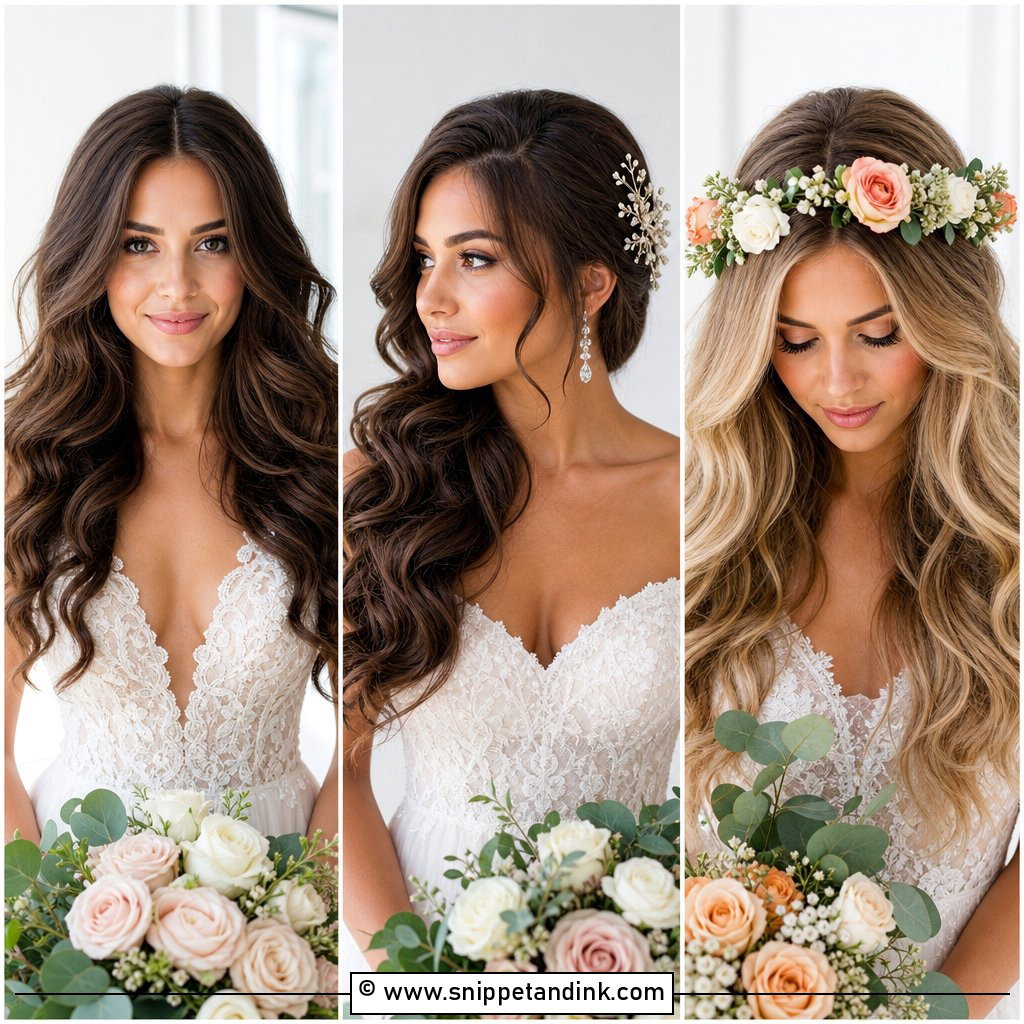
Hollywood waves are the most structured on this list. Deep side part, one direction of curl through the whole head, and soft volume at the crown. Each curl is pinned while it cools, then everything is brushed together into continuous ridges and pressed with clips for a few minutes so the ridges set. They suit strapless gowns, satin and formal indoor rooms. On long hair, the weight at the ends pulls the pattern looser through the day, so I set them a touch tighter than the final look. Pearl earrings or a clean veil placement are all they need.
2. Long Loose Waves For Wedding
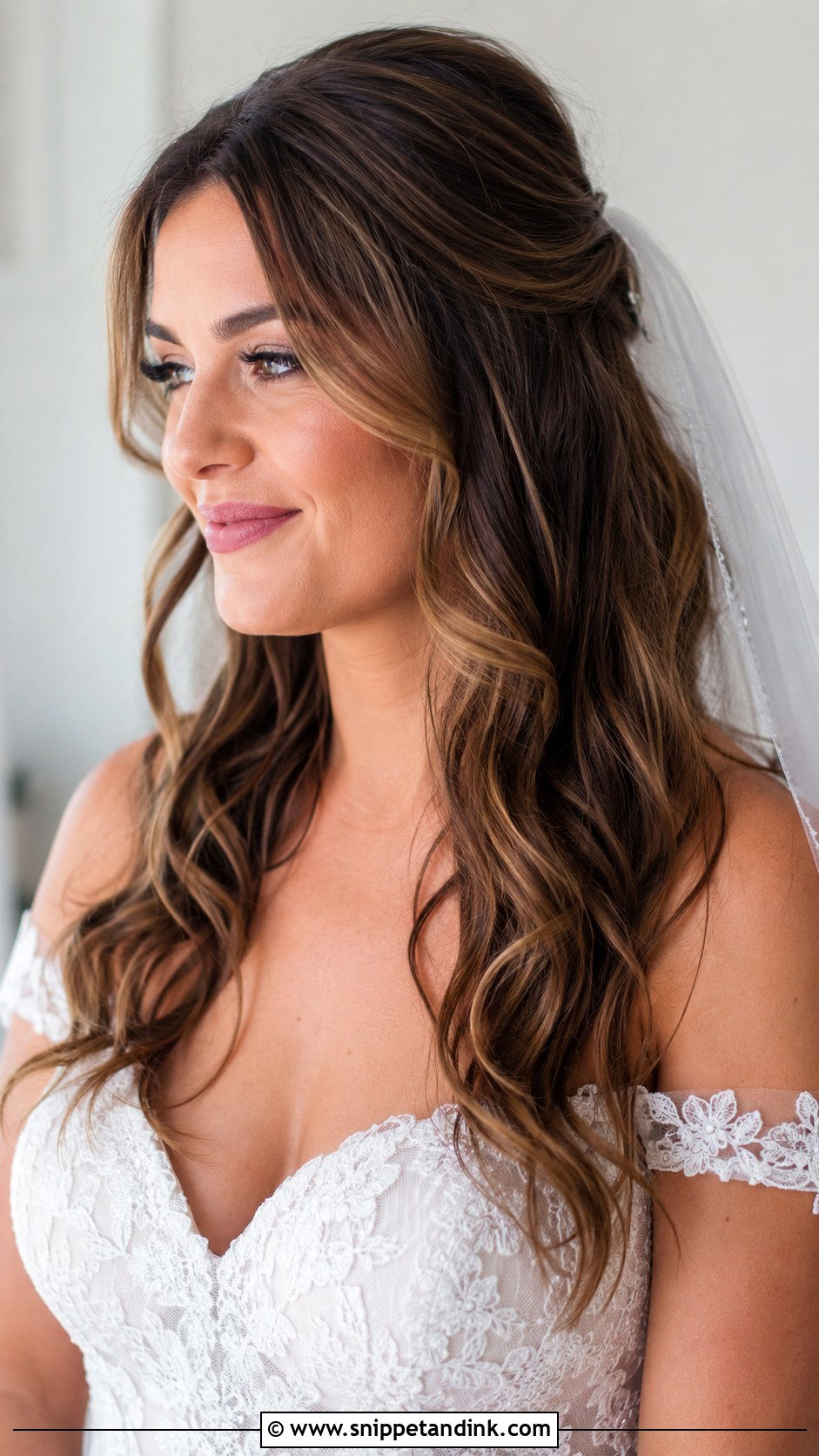
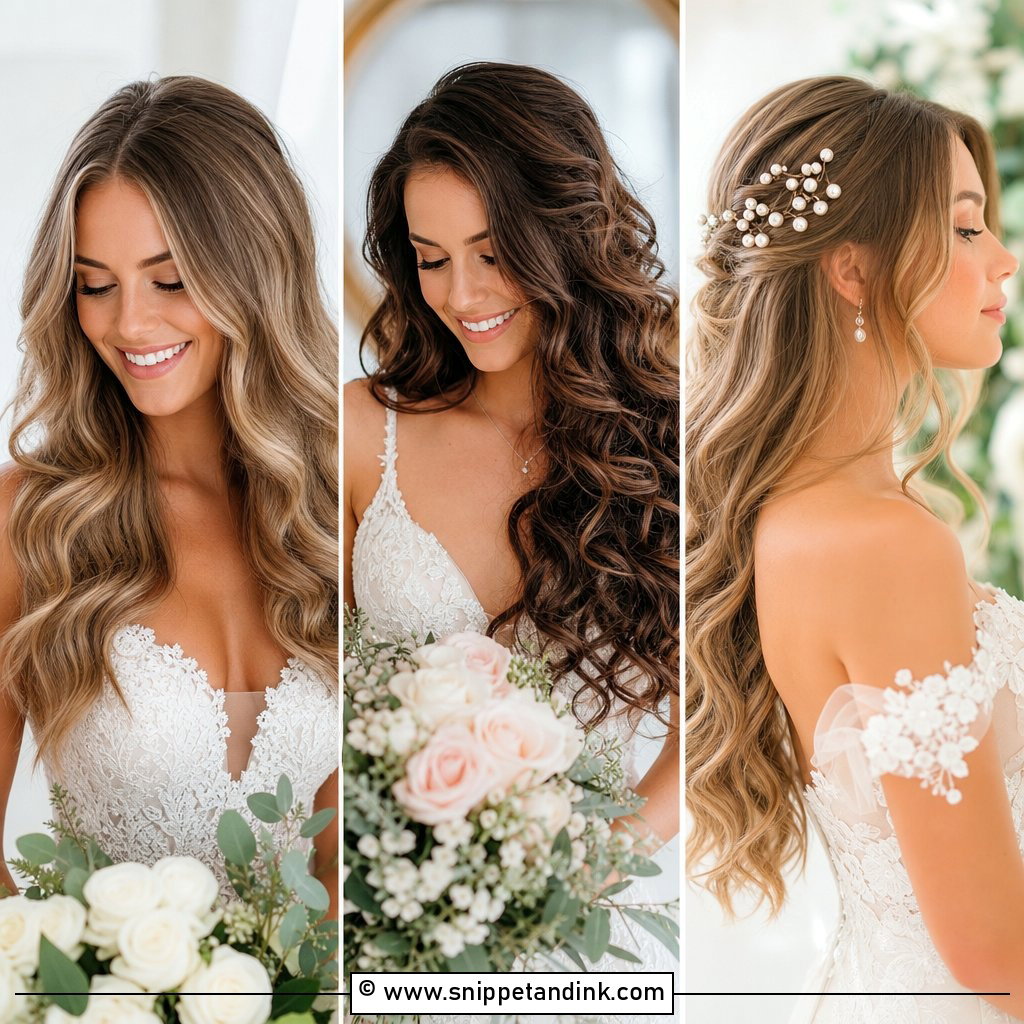
Loose waves sit lower and wider than curls, so long hair swings instead of bouncing. I use a larger barrel and leave the last couple of inches straight, which keeps it from looking like a set. They fit garden ceremonies, lace and airy fabrics, and brides who don’t want height at the crown. Face-framing pieces should bend away from the face. Crunchy spray ruins them; a flexible one keeps the swing.
3. Long Beach Waves For Wedding
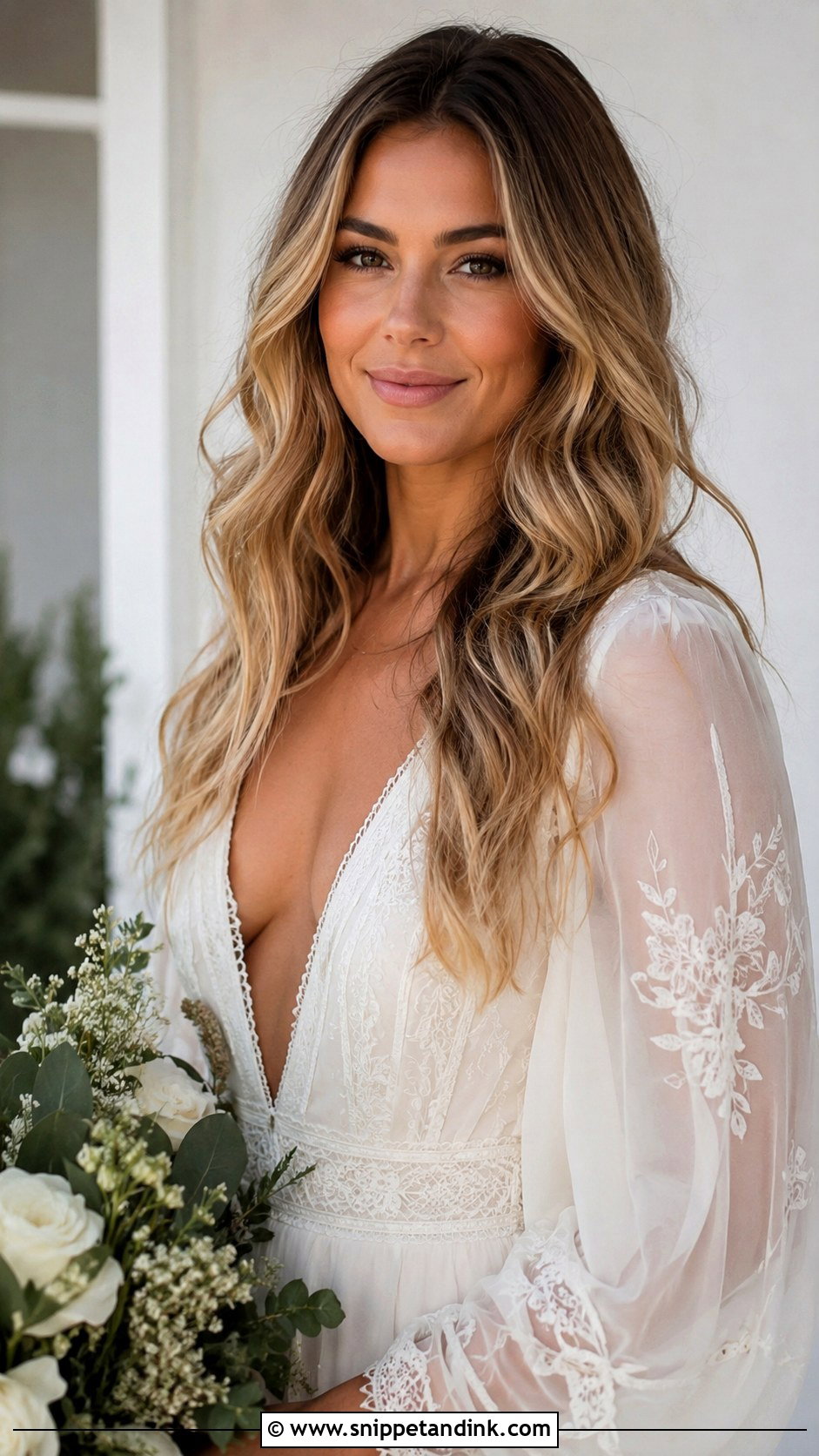
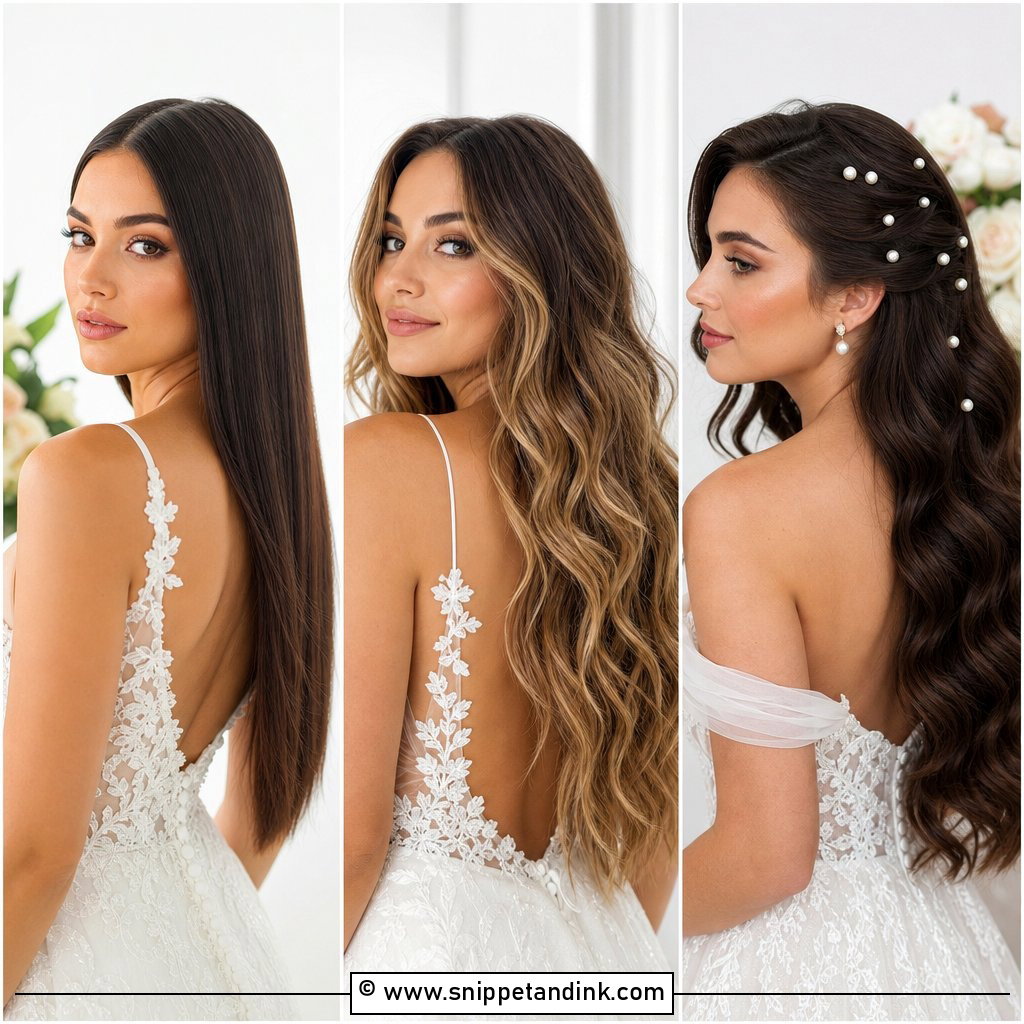
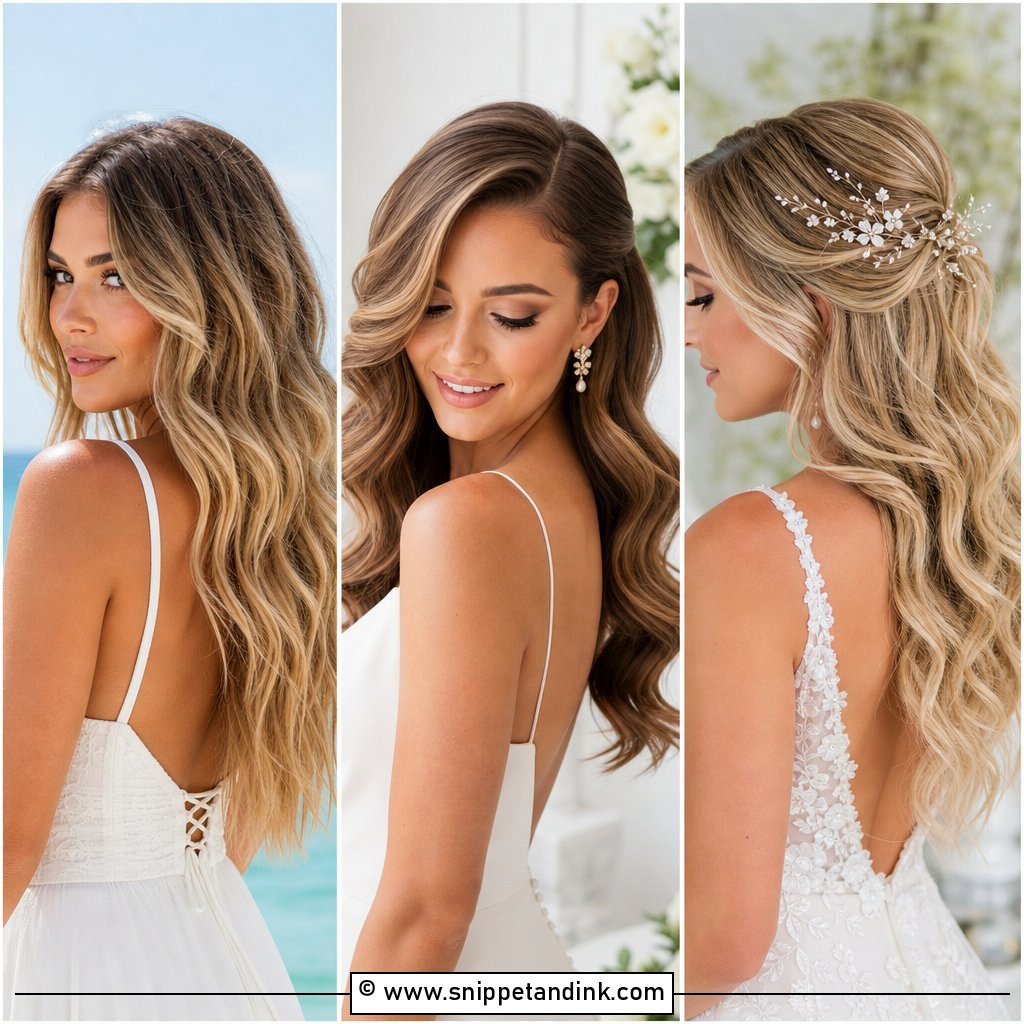
Yes, beach waves can be bridal, as long as they have shine and a clean shape. The texture comes from a flat iron twisted through each section or a braid set overnight, giving bends through the mid-lengths and ends rather than round curls. Salt sprays give grip but dry long hair out and dull the shine in photos, so I use a salt-free texture spray instead. A centre part looks modern, a side part more romantic. Coastal and destination weddings and boho dresses are their natural setting.
4. Long Half Up Wedding Waves
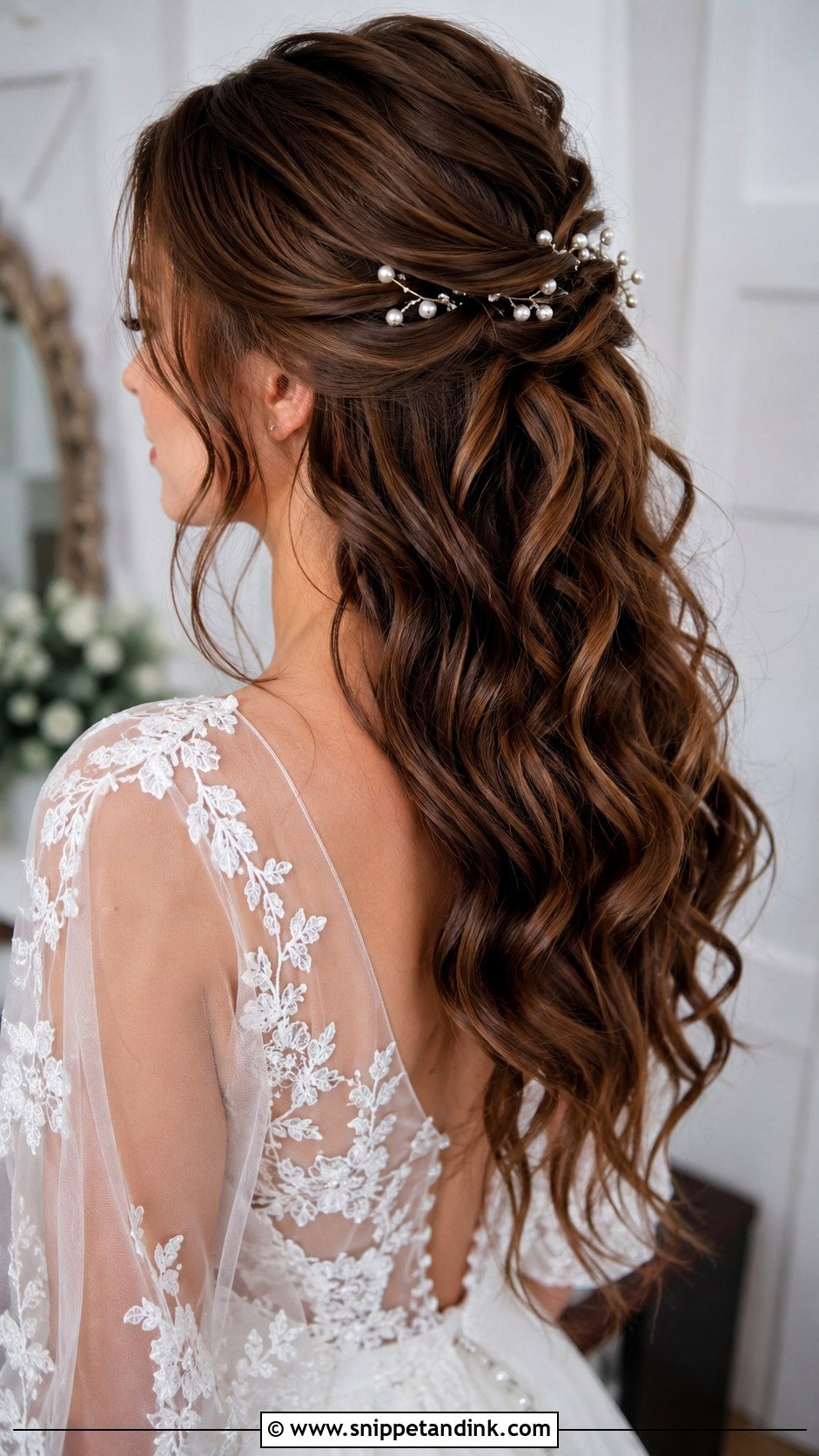
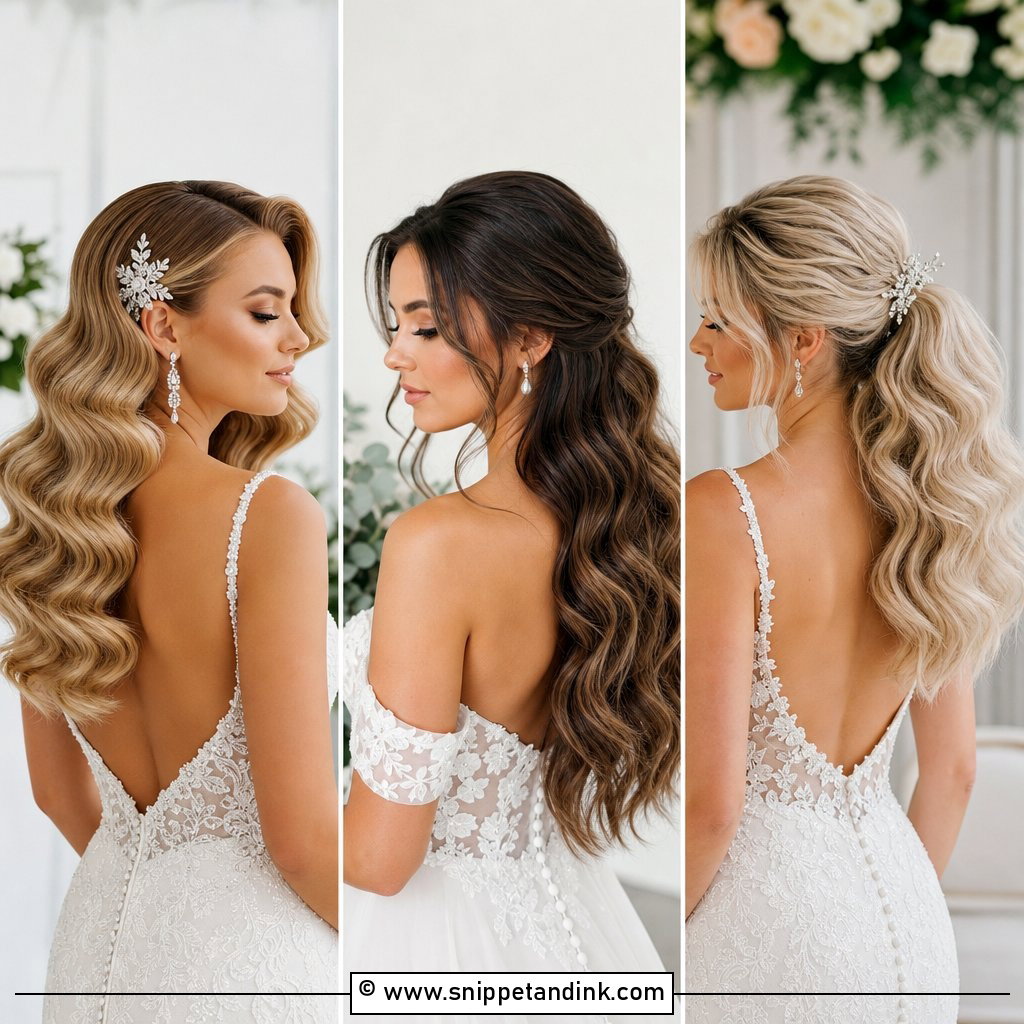
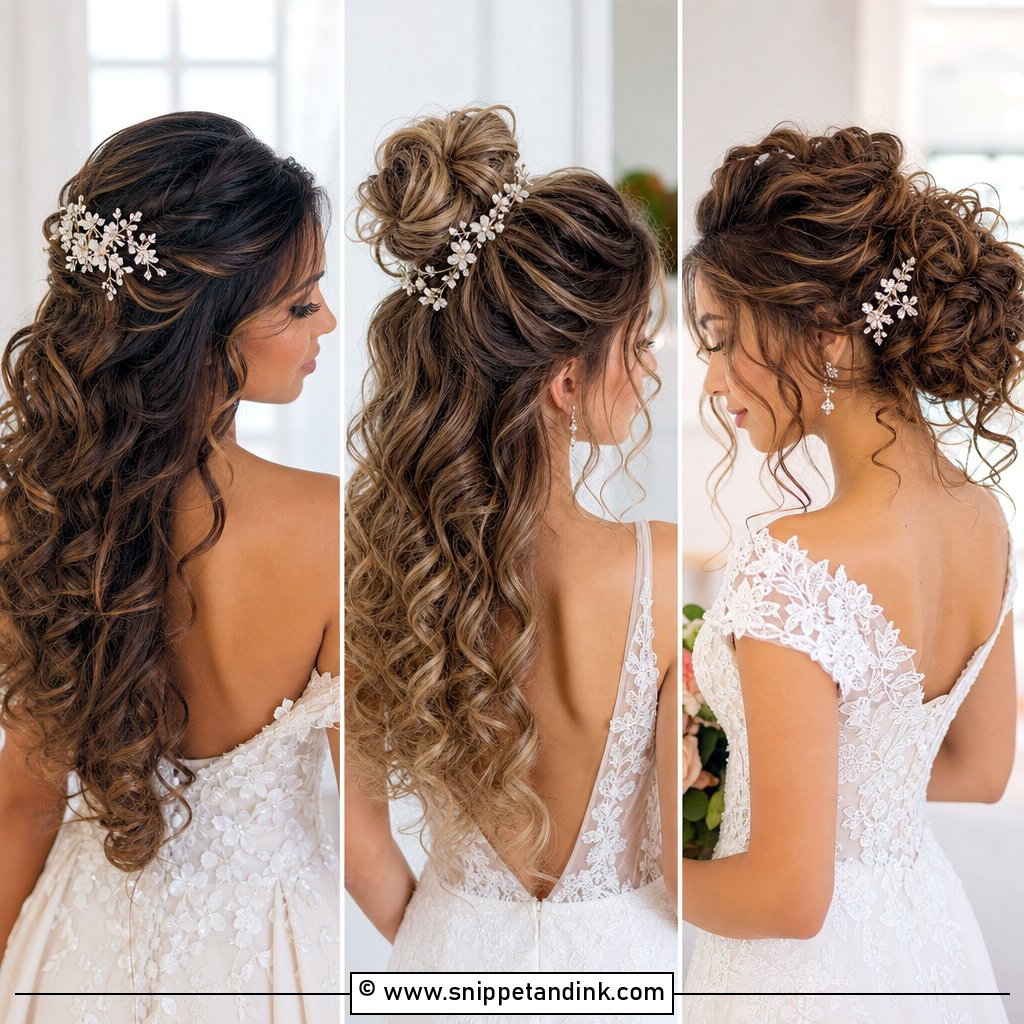
The top section is twisted, pinned, braided or lifted at the crown; the rest falls in long waves. That pinned section does real work: it keeps hair off the face during the vows and gives a veil comb something solid to grip. I’d suggest it to any bride who touches her face when nervous. It also translates well to bridesmaids and mothers of the bride if you want the party coordinated without matching exactly.
5. Long Side Swept Wedding Waves
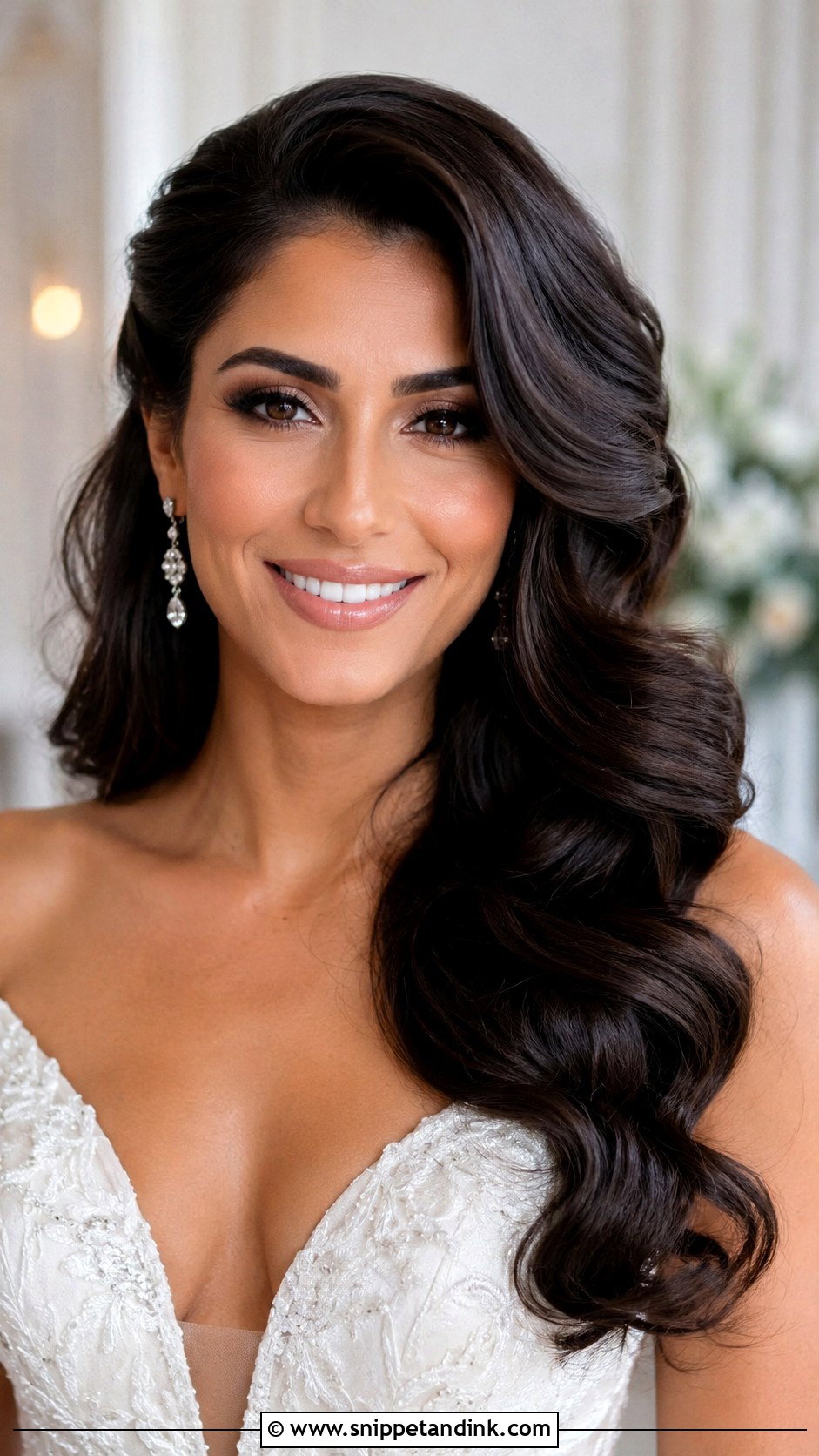
All the waves go over one shoulder, so the neckline and earrings on the other side are on show. It suits one-shoulder gowns, sweetheart necklines and fitted dresses. Part deeply, curl everything in one direction, then secure the hidden side with crossed bobby pins before brushing the top layer over them. That hidden side is the whole trick. Without it, the hair creeps back to the centre within an hour, and the shape in the photos is gone.
6. Long Waves With Veil For Wedding
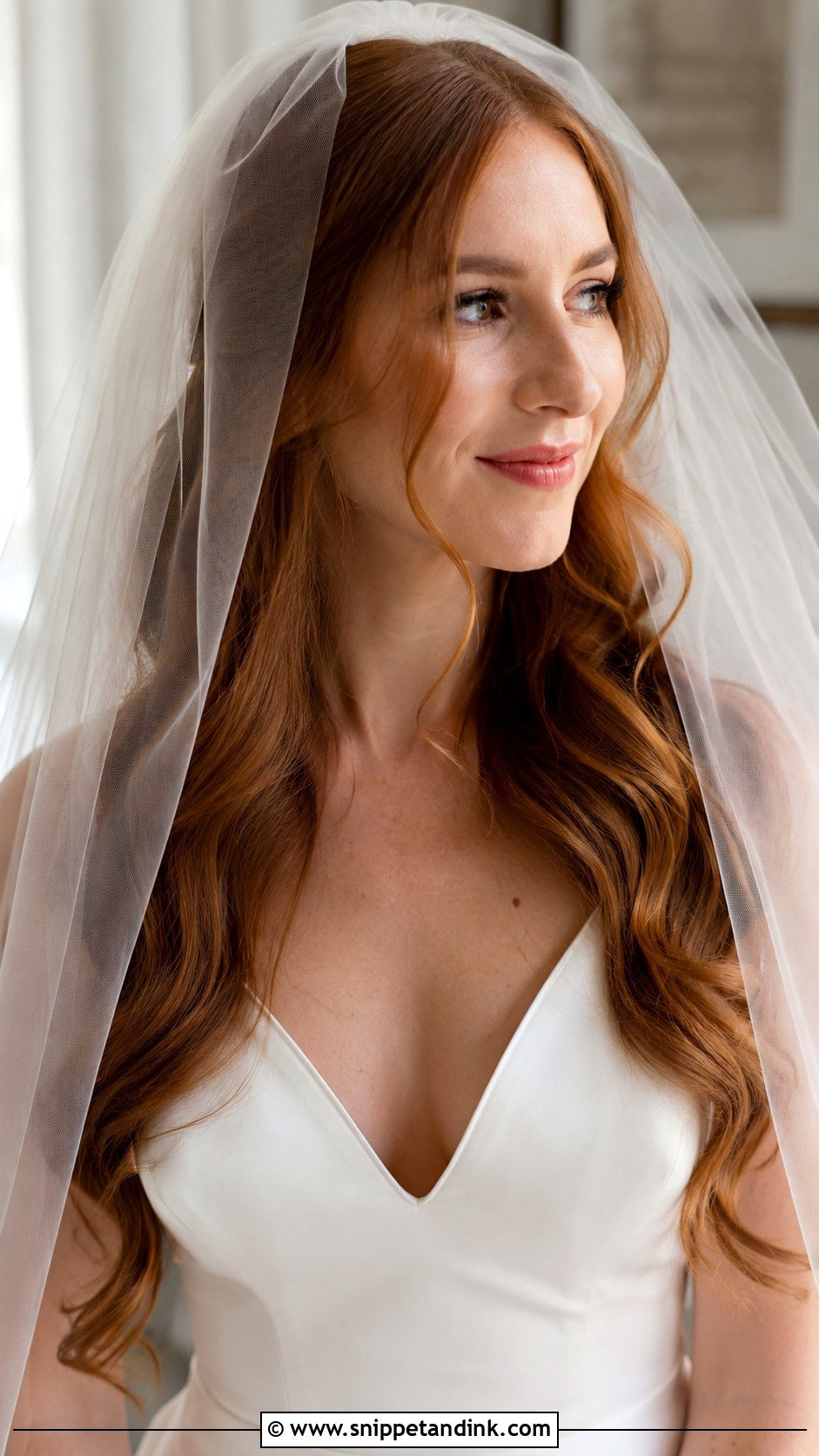
Here placement is everything. For volume at the crown, the veil sits just under a lifted section; for a softer line, it goes lower at the back of the head. Waves let the tulle fall naturally because the fabric drapes over the movement. Cathedral, fingertip and simple tulle veils all work. Keep the top smooth and the ends defined, and spray the curls before the veil goes in, not after, or the veil presses them flat before the ceremony even starts.
7. Long Waves With Pearl Pins For Wedding
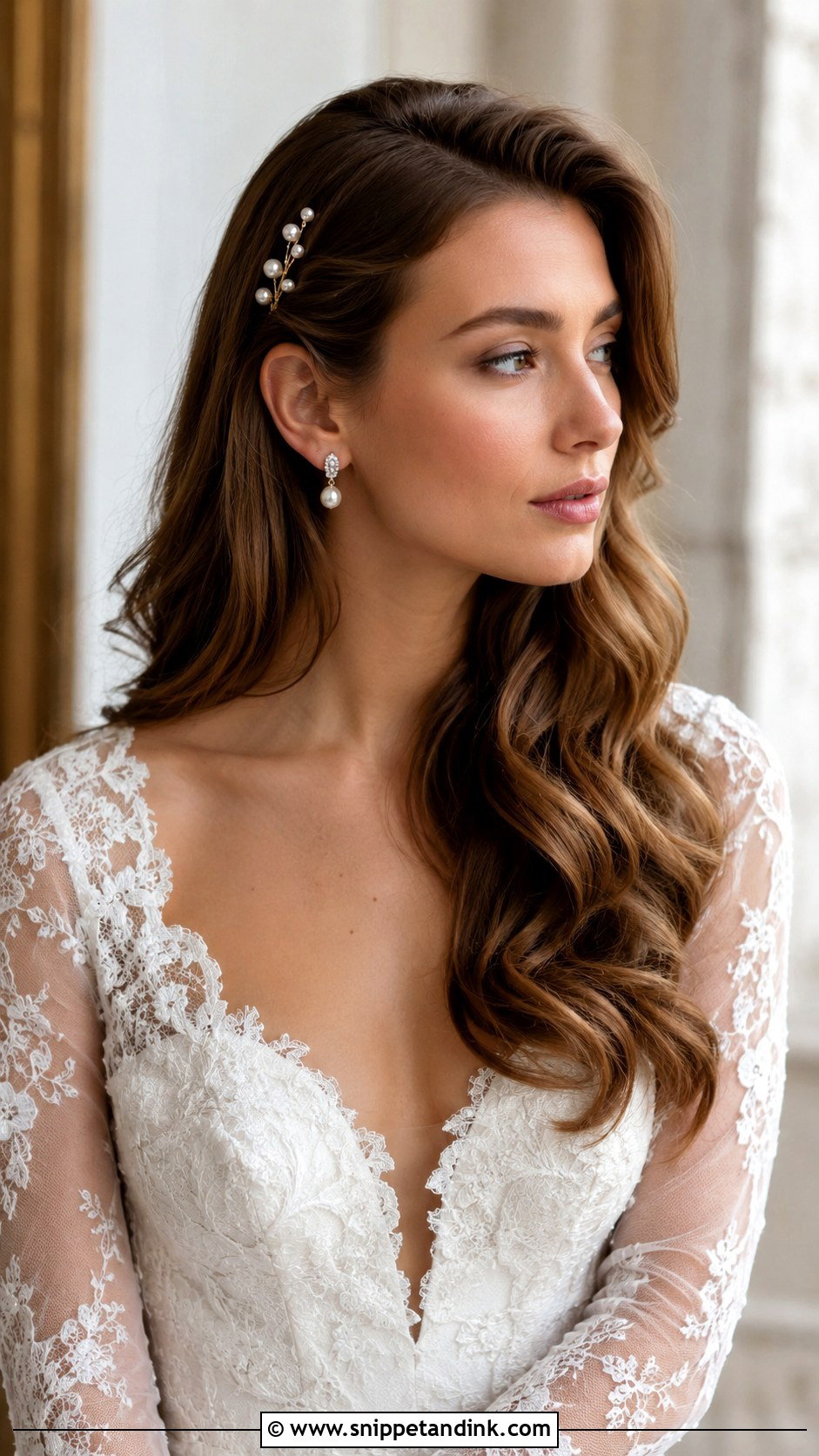
Pearls get lost in big, fluffy waves, so I keep the waves smoother when pins are going in. Tuck them along one side, scatter them through a half up section or place a cluster above the ear. Mixed sizes look more natural than a row of identical ones. Lace gowns and simple satin suit them. If your veil already has pearls or beading at the edge, cut the pins back to a few.
8. Long Waves With Braided Crown For Wedding
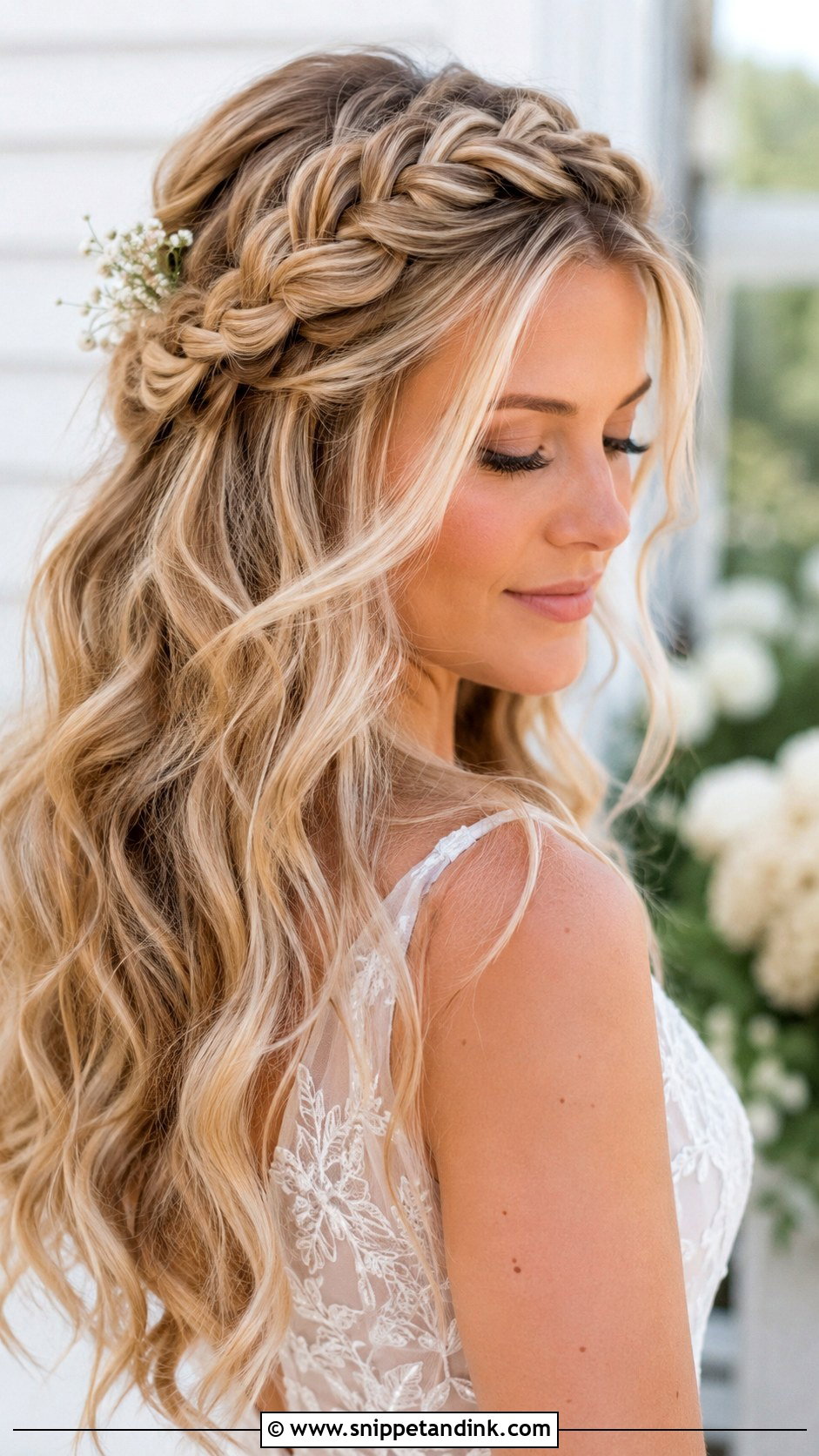
A braided crown keeps the front controlled while the length stays down, which helps outdoors when wind would otherwise whip waves across your face. Wrap it across the top like a headband, set it at the back as a loose crown or work it into a half up style. I braid the crown before curling the lengths, then loosen the braid once it’s pinned. Floral pins or a fine hair vine fit it. Keep the braid full, not flat.
9. Long Waves With Middle Part For Wedding
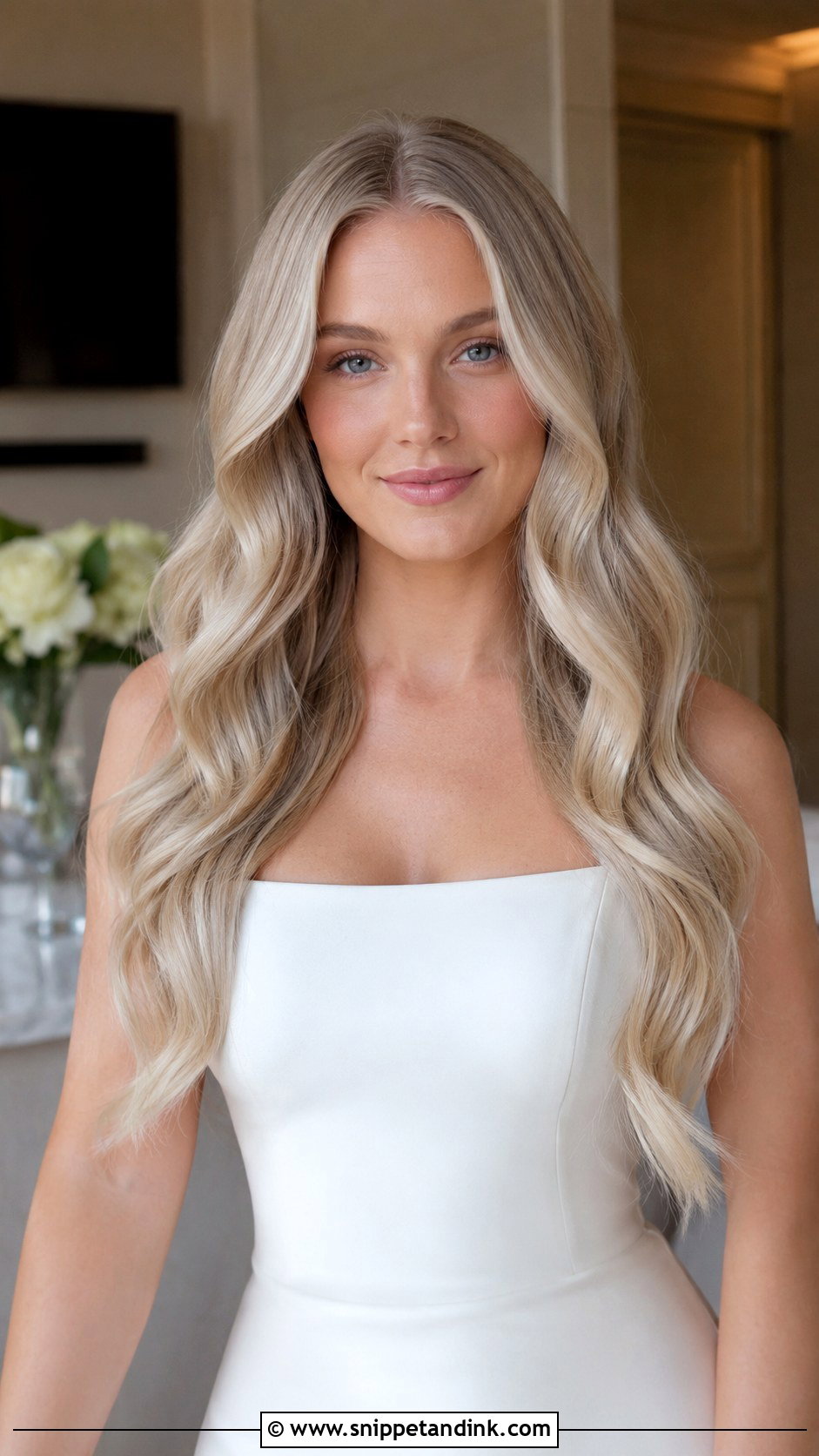
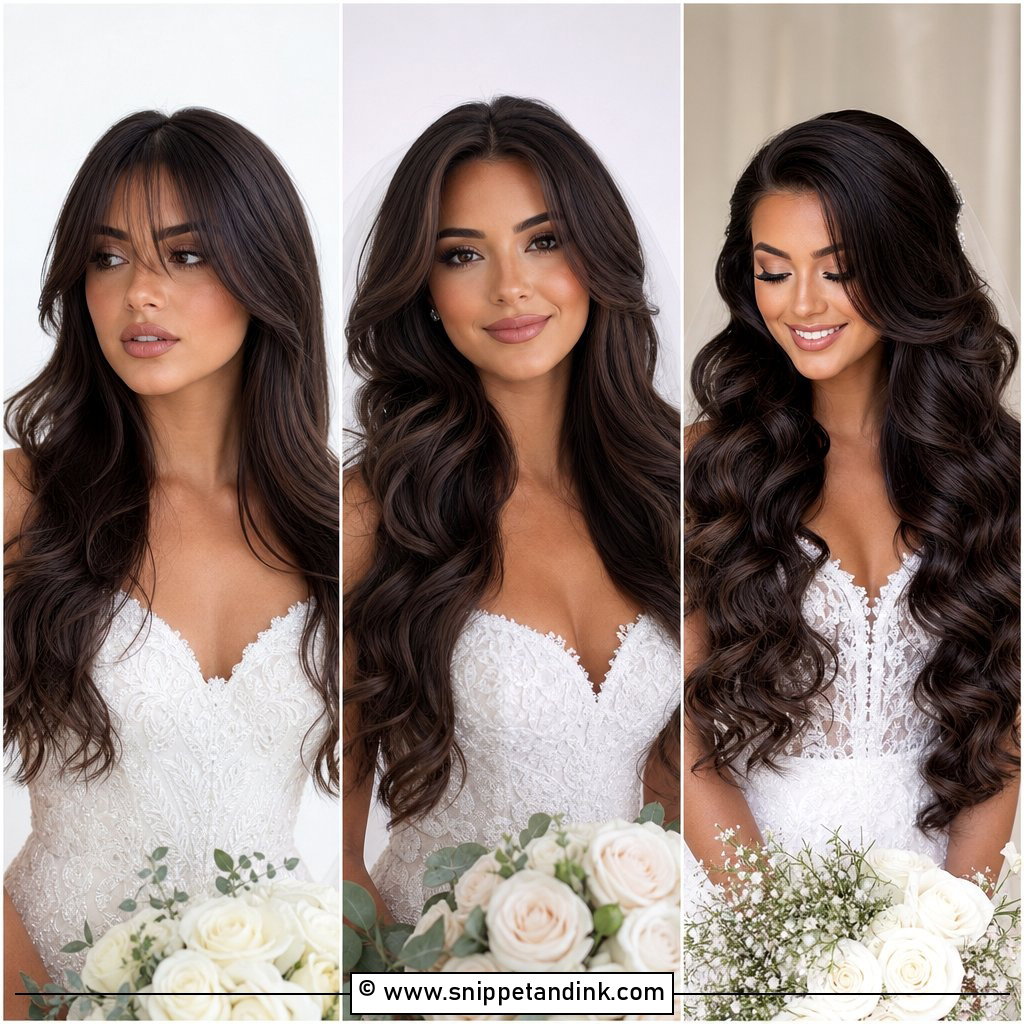
Symmetry makes a middle part look modern, and it also exposes everything. Uneven volume on one side shows straight away. I smooth the roots, curl both sides away from the face, and check in the mirror that the bends start at the same height on each side. Very long, heavy hair can look flat against the head with a centre part, so a few face-framing layers help. With a veil, secure it low at the back so the clean part stays visible.
10. Long Waves With Side Part For Wedding
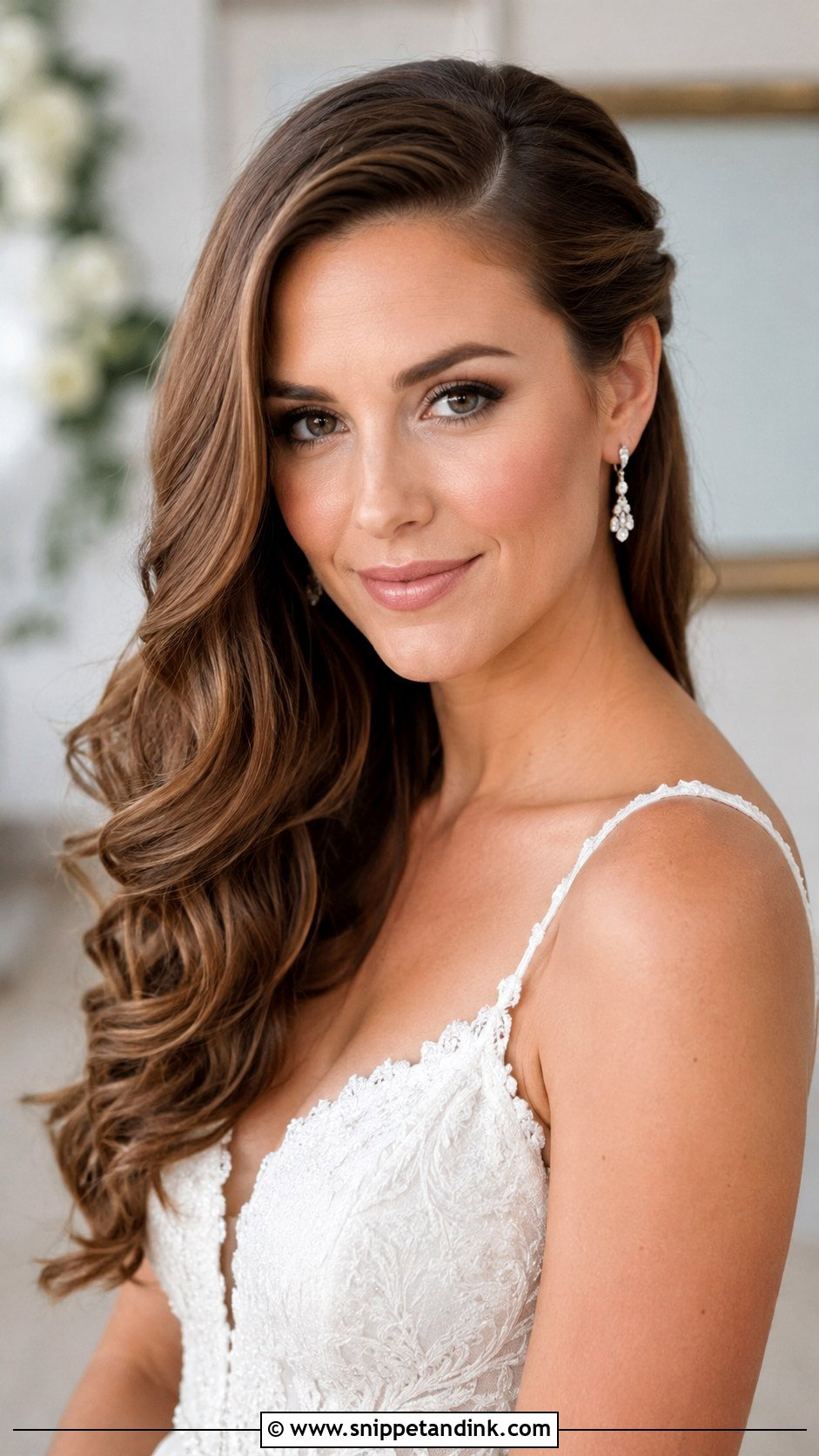
A side part lifts the front and frames the cheekbone on the heavier side. It works for long layered hair, thick hair, fine hair with extensions and naturally wavy textures. Set the part on damp hair with a blow-dryer; parts laid on dry hair slide back to their natural fall. One side tucked behind the ear with a pin or comb is an easy variation. Brush the waves together so they read as one shape rather than separate ringlets.
11. Long Glam Waves For Wedding
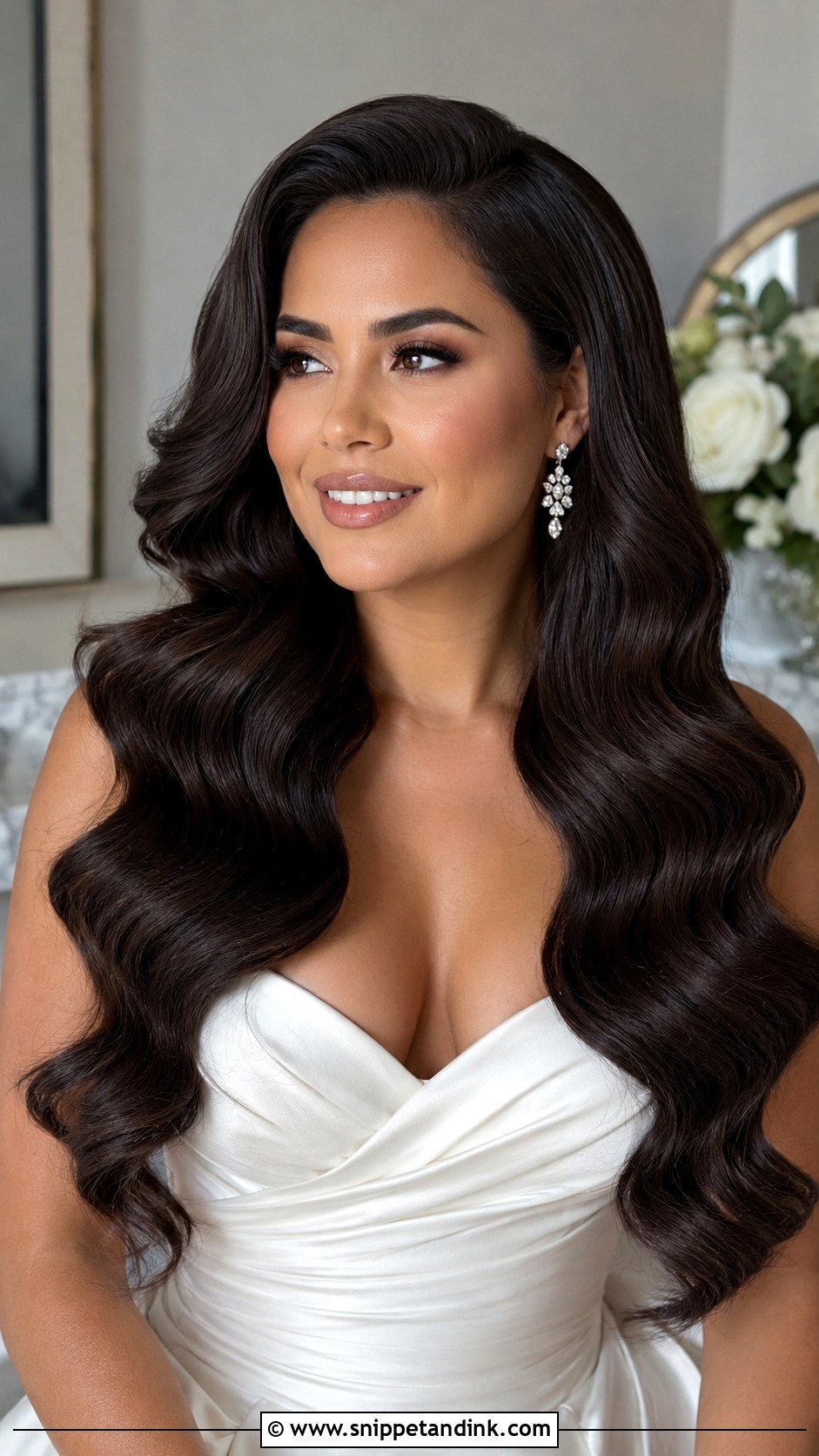
Glam waves are more sculpted than loose waves, with a defined pattern from roots to ends and a high gloss. They belong with fitted gowns, crystal accessories and evening receptions. A stylist will usually set each curl in a pin curl clip, let it go fully cold, then brush everything into one shape. That cooling step is what keeps them defined through dancing. If your ends are thin, a few extensions give the waves something to swing with; thin ends make a wave pattern look stringy in photos.
12. Long Soft Curls Wedding Waves
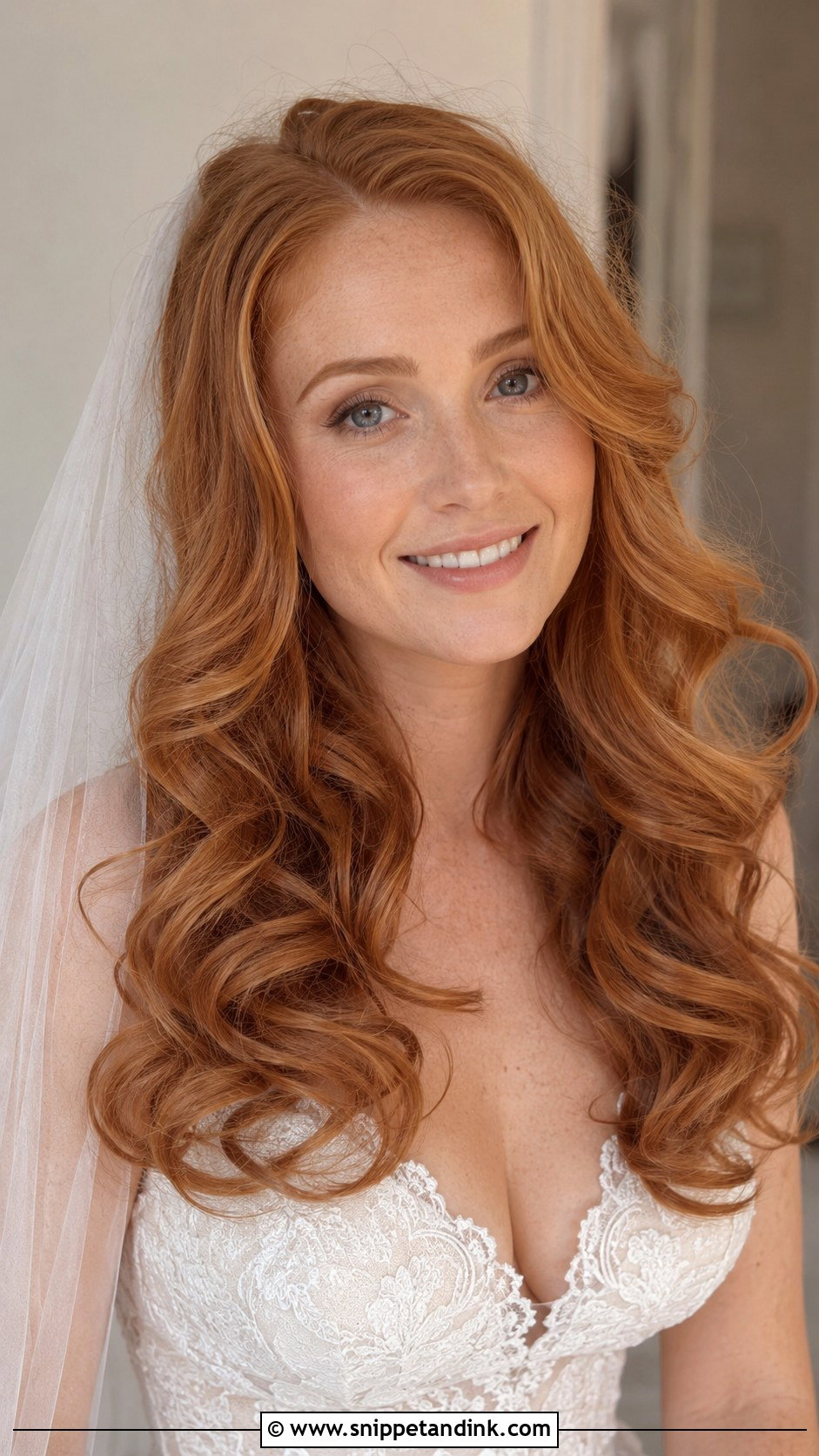
Soft curls sit between ringlets and relaxed waves: fuller than beach waves, softer than a tight curl. I start the curl at the cheekbone for a gentle frame, or higher for more body. Long layered hair suits it best because the layers stack the curls on top of each other. Brush them out just enough to keep them touchable. A couple of front pieces pinned back keeps it polished without turning it into an updo.
13. Long Boho Wedding Waves
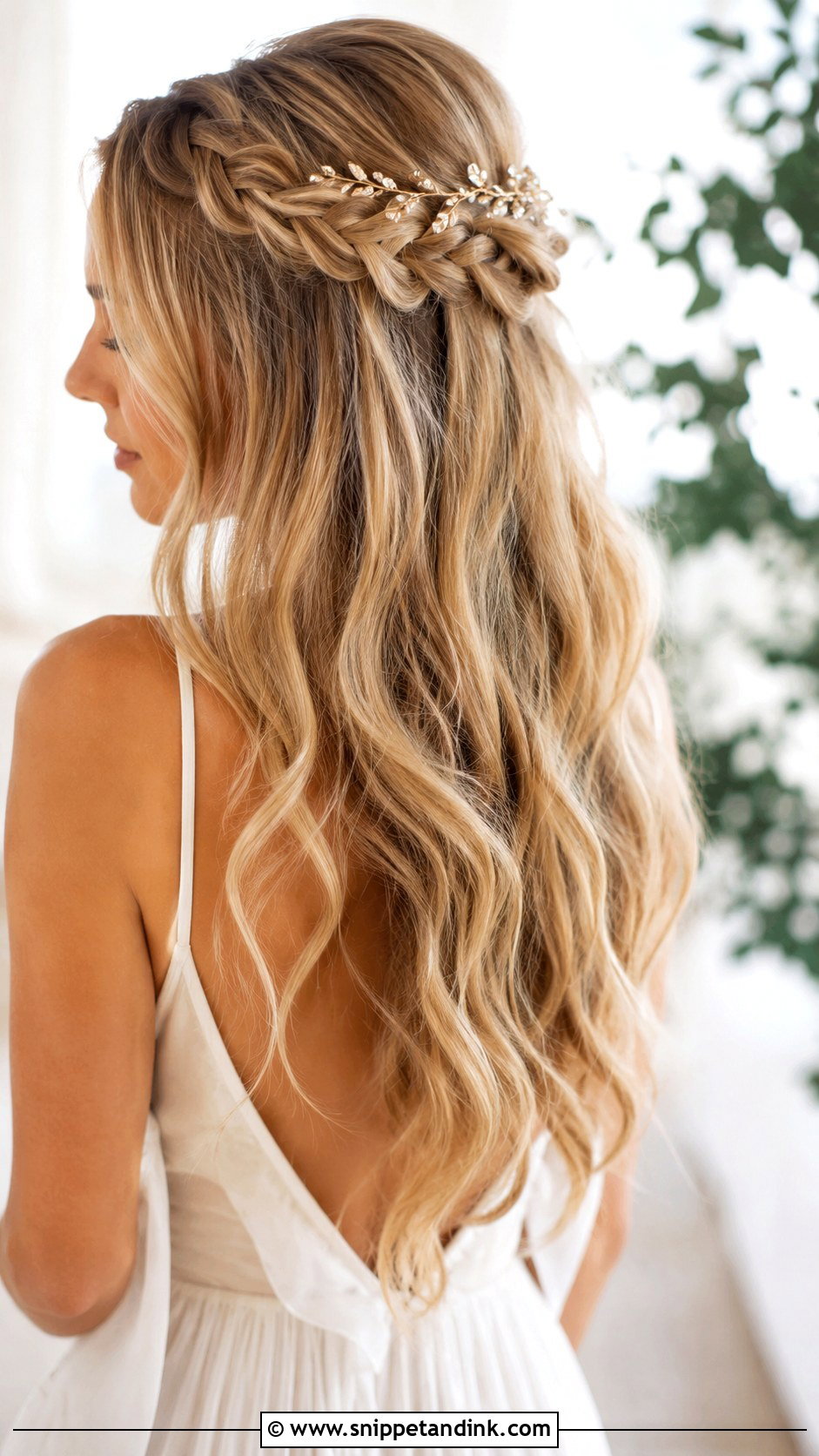
Boho waves are meant to look lived-in, but that doesn’t mean undone. Soft bends, airy volume and maybe one small braid, floral pin or vine. They suit outdoor venues, rustic barns, meadow ceremonies and flowing dresses. Long hair can take a lot of texture, but frayed or split ends look scruffy rather than relaxed, so a trim a few weeks before matters more here than anywhere. A little backcombing at the crown and a flexible hold keep the shape.
14. Long Vintage Waves For Wedding
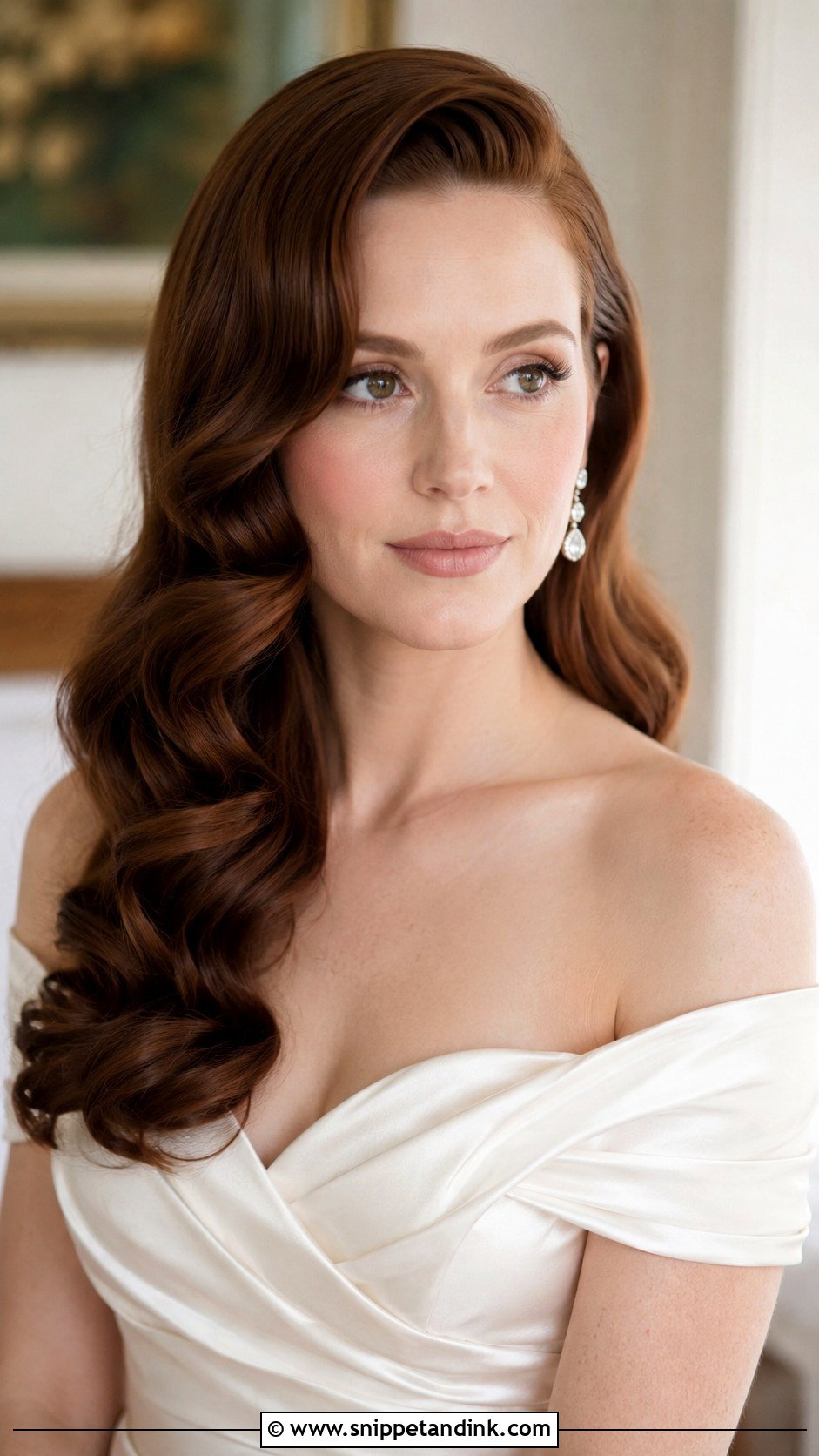
Long vintage waves are old Hollywood in spirit: deep side part, smooth roots, shaped waves curving around the face. Satin, beading, gloves and classic red lips go with them. On long hair, the pattern continues down the back or over one shoulder, which is dramatic. They need shine and control. I smooth flyaways with a toothbrush and a little gel, and brush the waves together so nothing looks piecey. A simple comb is enough.
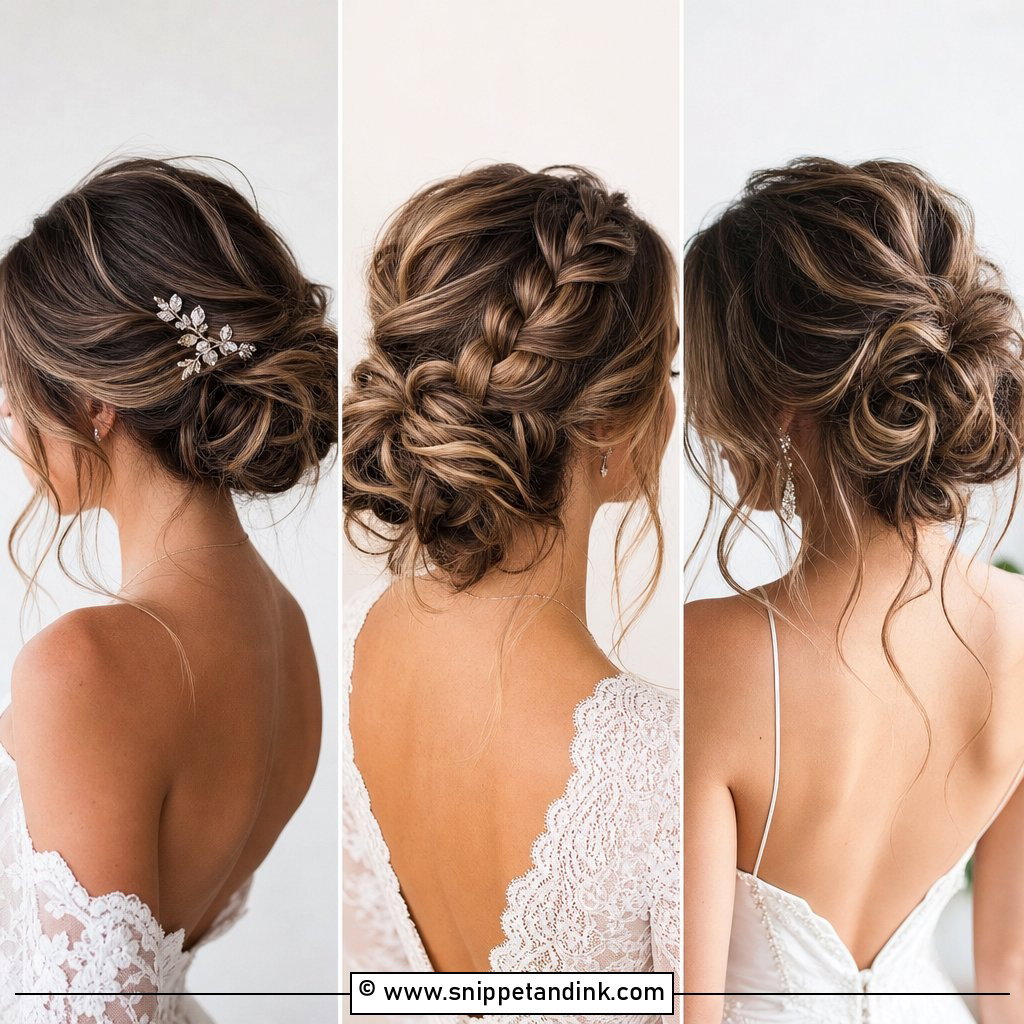
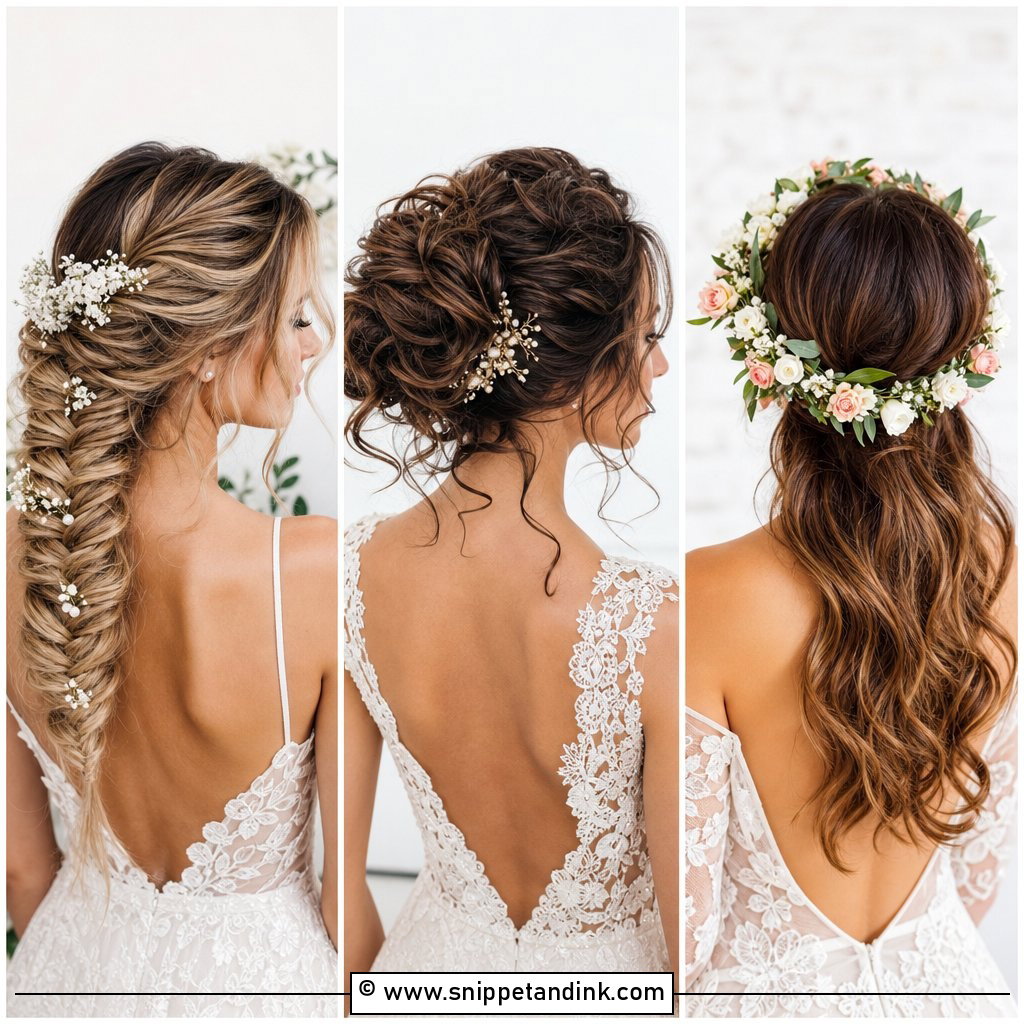
15. Long Natural Wedding Waves
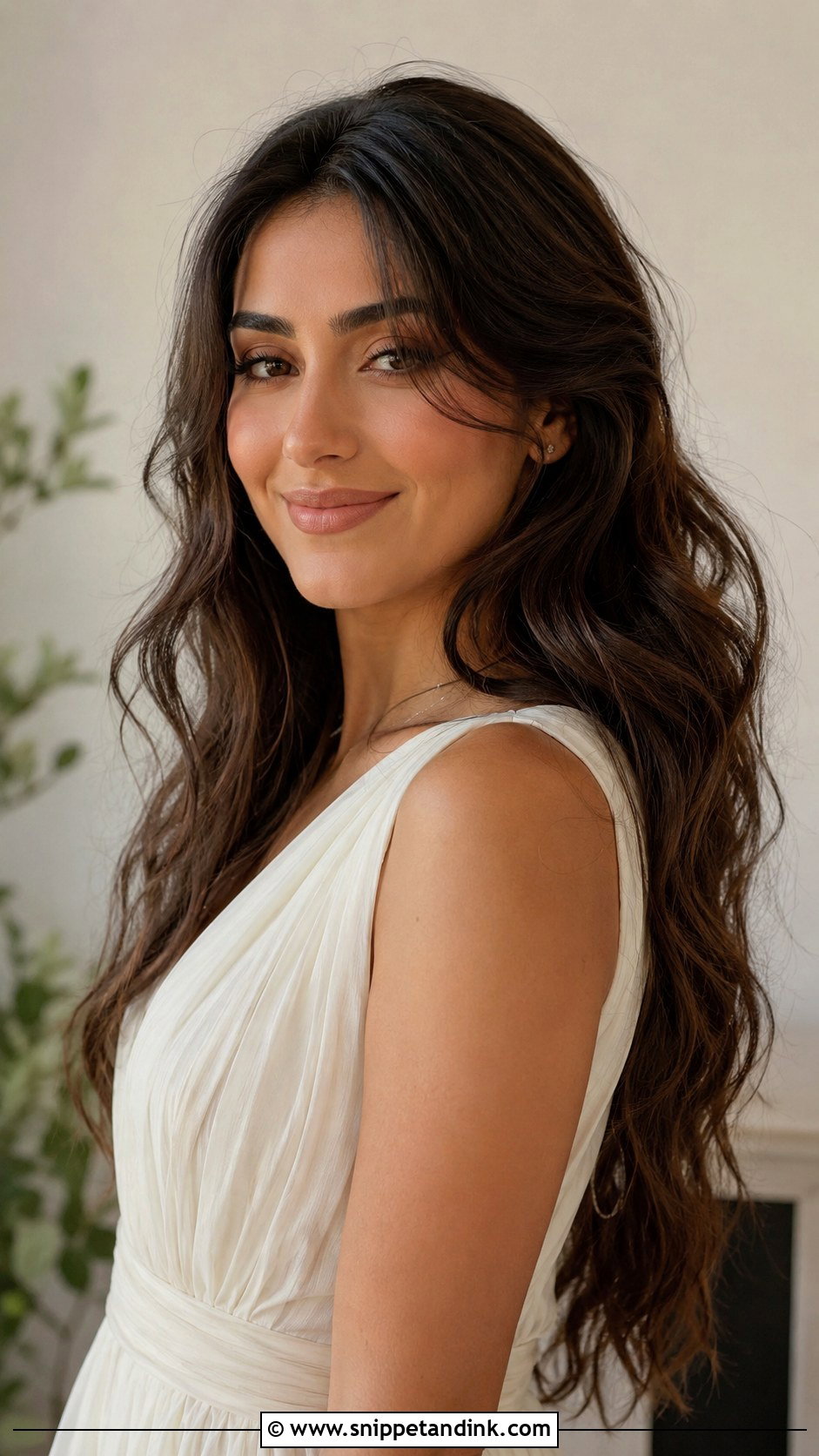
Long natural wedding waves enhance your real texture instead of replacing it. On naturally wavy or curly hair, I define the pattern with a cream and a diffuser and only touch up a few sections with a wand. On straighter hair, the wand does more of the work. It should look like you on your best hair day. Healthy ends and frizz control make the biggest difference, which is why a trim and a moisture mask a week or two out pay off.
Wefts Can Fix See-Through Ends
Long hair often thins toward the ends, and waves exaggerate it, because each bend separates the strands. In photos the bottom of the hair can look transparent against a white dress. A few clip-in wefts matched to your colour fill that out. They go in under the top layer, and get curled with the rest of the hair.
Buy them early, at least a month before, and bring them to the trial. Colour matching in shop lighting is unreliable, and a stylist may need to blend or tone them. Human hair wefts take heat the same way your hair does; synthetic ones can melt under a hot iron.
If the Forecast Says Humid
Damp air makes waves swell and drop, and fine hair loses the pattern fastest. In humidity I use an anti-humidity spray on dry hair before curling and a firmer finishing spray than usual. It’s also worth agreeing on a backup with your stylist: a half up version that can be pinned in minutes if the waves start falling apart after the ceremony.
Skip the heavy oils on the morning itself. They look glossy at first, but in damp air they weigh the bends down and the hair separates into strings by evening. A tiny amount on the ends only, after the final spray, gives the shine without the drag.
Outdoor ceremonies near water are the hardest case. If the photos are by a lake or the sea, I would schedule portraits before the ceremony while the waves are fresh, rather than late in the day after hours of damp air.
Waves Look Different on Every Head
There’s a wave for almost any bride: polished Hollywood, relaxed beach, side swept, or a sweet half up. The right one depends on your neckline, veil, venue, texture and how many hours it needs to last. Bring photos of waves on hair like yours, not just on a model with three packs of extensions, and ask at the trial how the style will hold in your weather. Wear the trial for the rest of the day afterward. That tells you more than any photo about how it’ll look at the last dance.
You'll Like These Ideas:




Leave a Reply