
Most brides I dress come in with a saved folder of gowns and leave having changed their mind about the neckline, the fabric or both. That’s normal. A gown looks one way on a hanger and another way once you sit, climb into a car and hug eighty people, so I judge every dress by how it moves and how it holds up across a long day. The ideas below run from lace and satin to capes, pearls, soft color and short reception looks, and for each one I’ve added what I actually watch for in the fitting room: where it tends to need alteration, who it suits, and what to keep simple around it.
Order Dates and Fitting Schedules Nobody Mentions at the Boutique
Made-to-order bridal gowns usually take somewhere between four and eight months to arrive from the moment you place the order, and some designers quote longer. That’s before any alterations. I advise brides to say yes to a dress roughly nine to twelve months out, which leaves a buffer if a delivery slips.
Alterations then run on their own clock. Most gowns need two or three fittings, starting about eight to twelve weeks before the wedding. Here’s the order I follow:
- First fitting: overall shape, bodice support, strap position and hem length, wearing your actual wedding shoes and underwear.
- Second fitting: refinements after the main changes, plus the bustle if the gown has a train.
- Final fitting, about two weeks out: a full check while you sit, walk and lift your arms, and a lesson for whoever will bustle you.
If your weight is likely to change, tell your seamstress at the first appointment. Taking a gown in is easy; letting it out depends on how much seam allowance the maker left, and some gowns have very little.
1. Lace Bride Dress
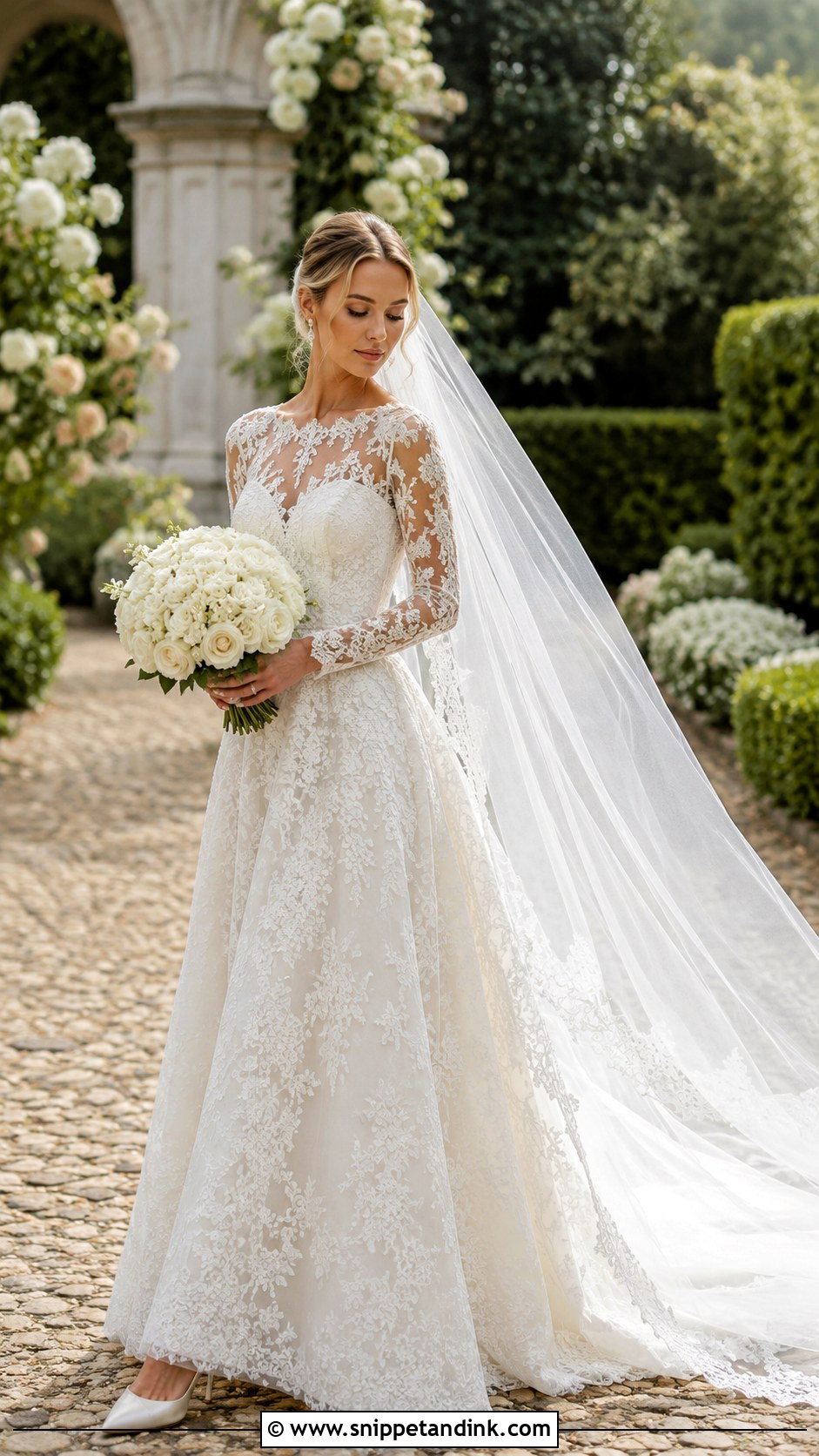
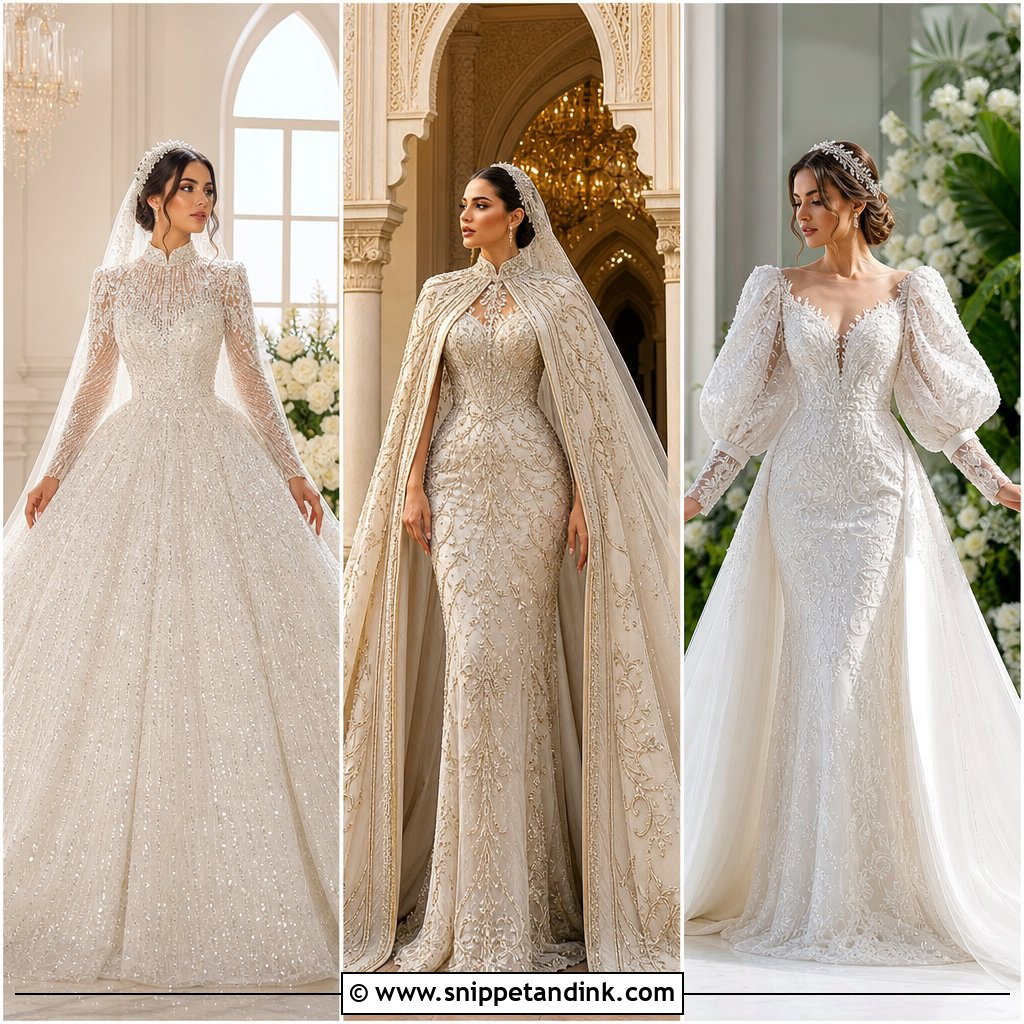
Lace is forgiving to fit because the pattern hides small seam adjustments, which is one reason I reach for it with brides who are between sizes. A fitted lace bodice over a soft A-line skirt gives shape without pinning you in. For a classic finish, ivory lace sits well with a cathedral veil, pearl drops and pointed satin heels. The one thing I check early: whether the veil’s edge snags on raised lace. Corded and beaded lace will catch tulle, so I’ll suggest a veil with a cut edge or a softer lace on the bodice. Long lace sleeves or an illusion neckline give coverage without adding weight.
2. Satin A Line Bride Dress
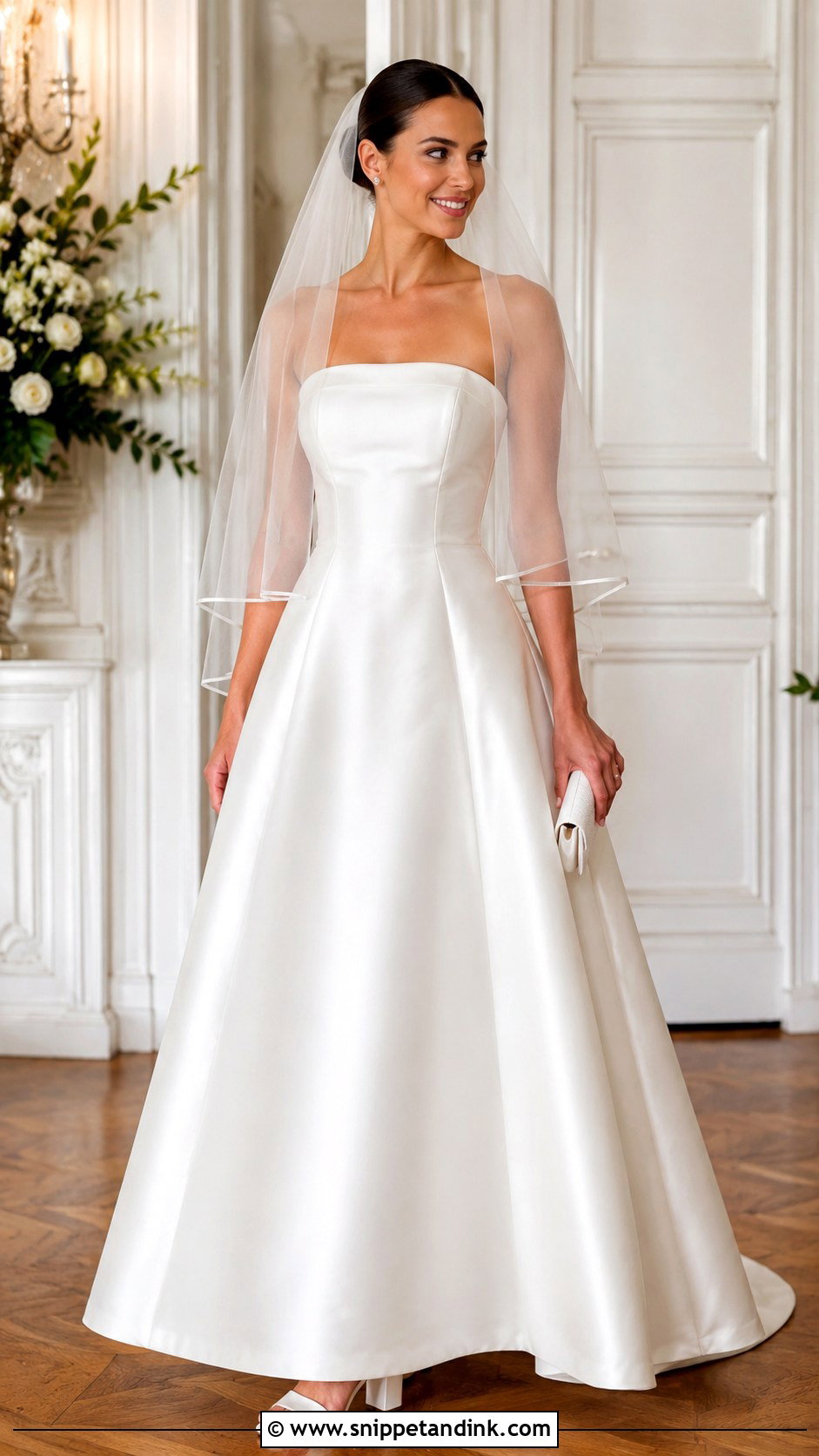
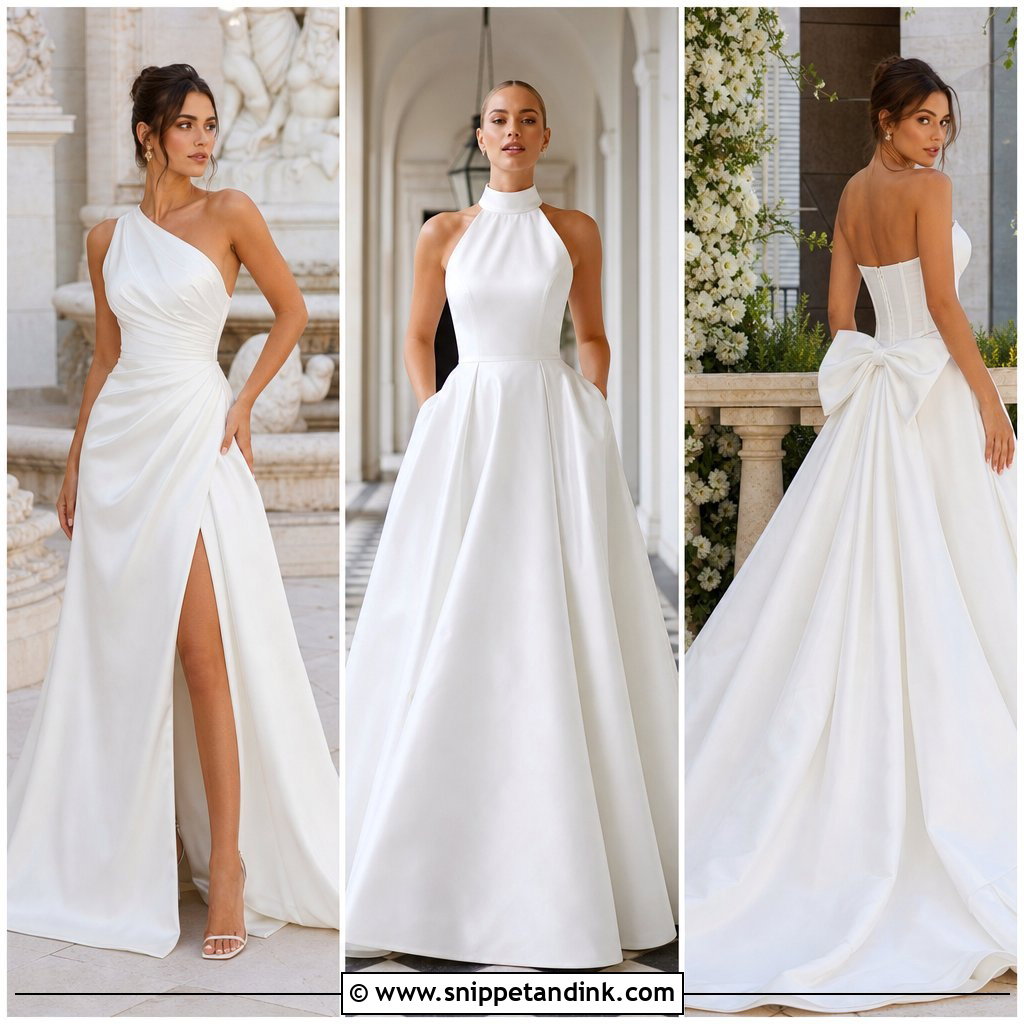
Satin shows everything, so the A-line is where your seamstress earns her fee. The bodice needs real structure underneath; otherwise the fabric ripples at the waist the moment you sit. Once it’s fitted, the skirt falls cleanly away from the hip and moves well for walking and dancing. I style it with crystal studs, a fingertip veil, ivory block heels and a low bun. Know that heavy satin creases where you sit, so I always tell brides to stand for ten minutes before the ceremony portraits, not straight out of the car.
3. Long Sleeve Bride Dress
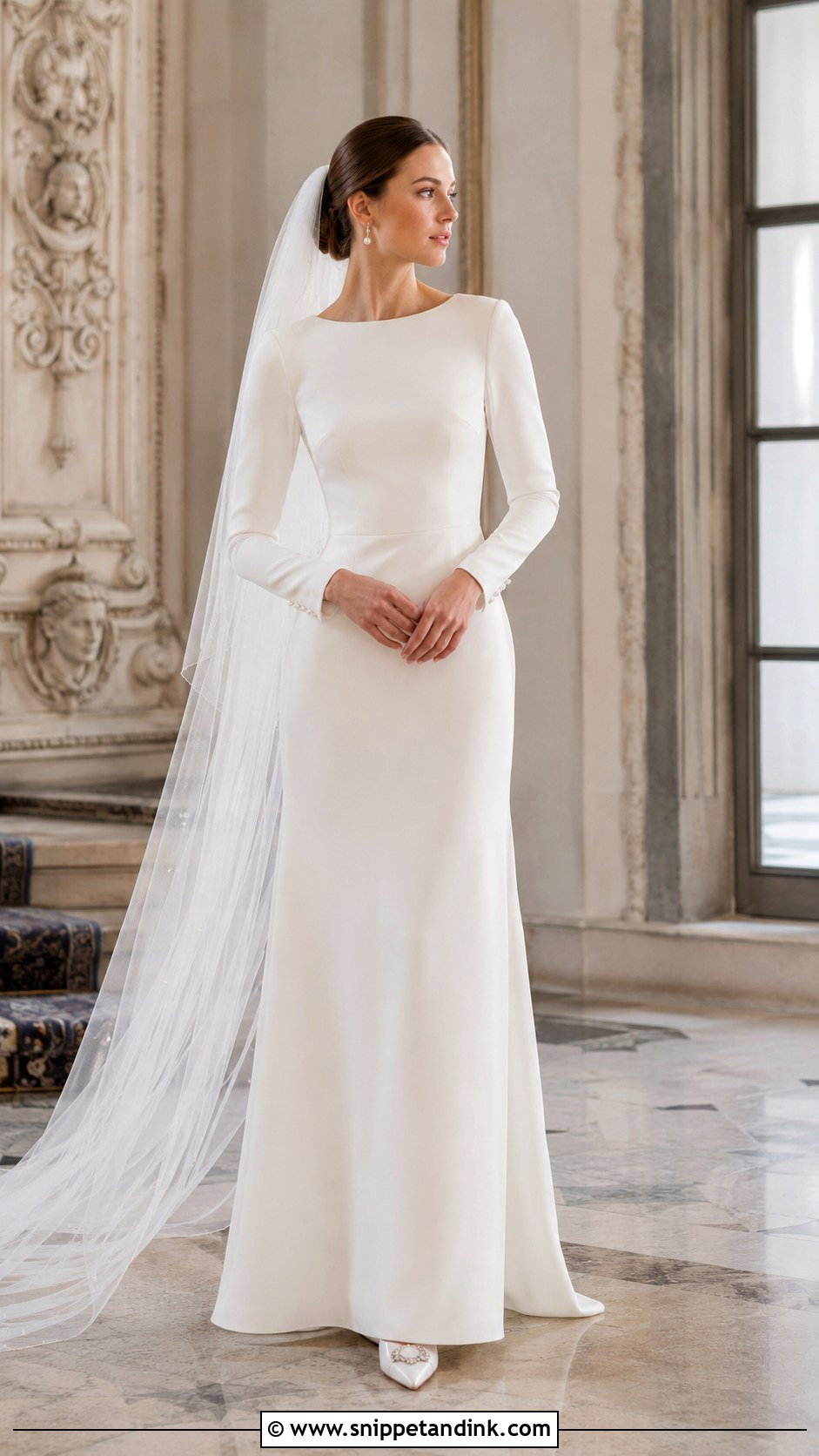
Sleeves change how you move. At fittings I have the bride raise both arms as if hugging someone taller, because a sleeve set too narrow at the armhole will pull the whole bodice up. Sheer lace sleeves read soft and romantic; satin or crepe sleeves look sharper and suit an autumn or winter ballroom. With that much coverage, I keep the neckline clean and the jewelry small. Pointed pumps and a long veil finish it, and a grand staircase or tall windows will show off the full-length line in pictures.
4. Off Shoulder Bride Dress
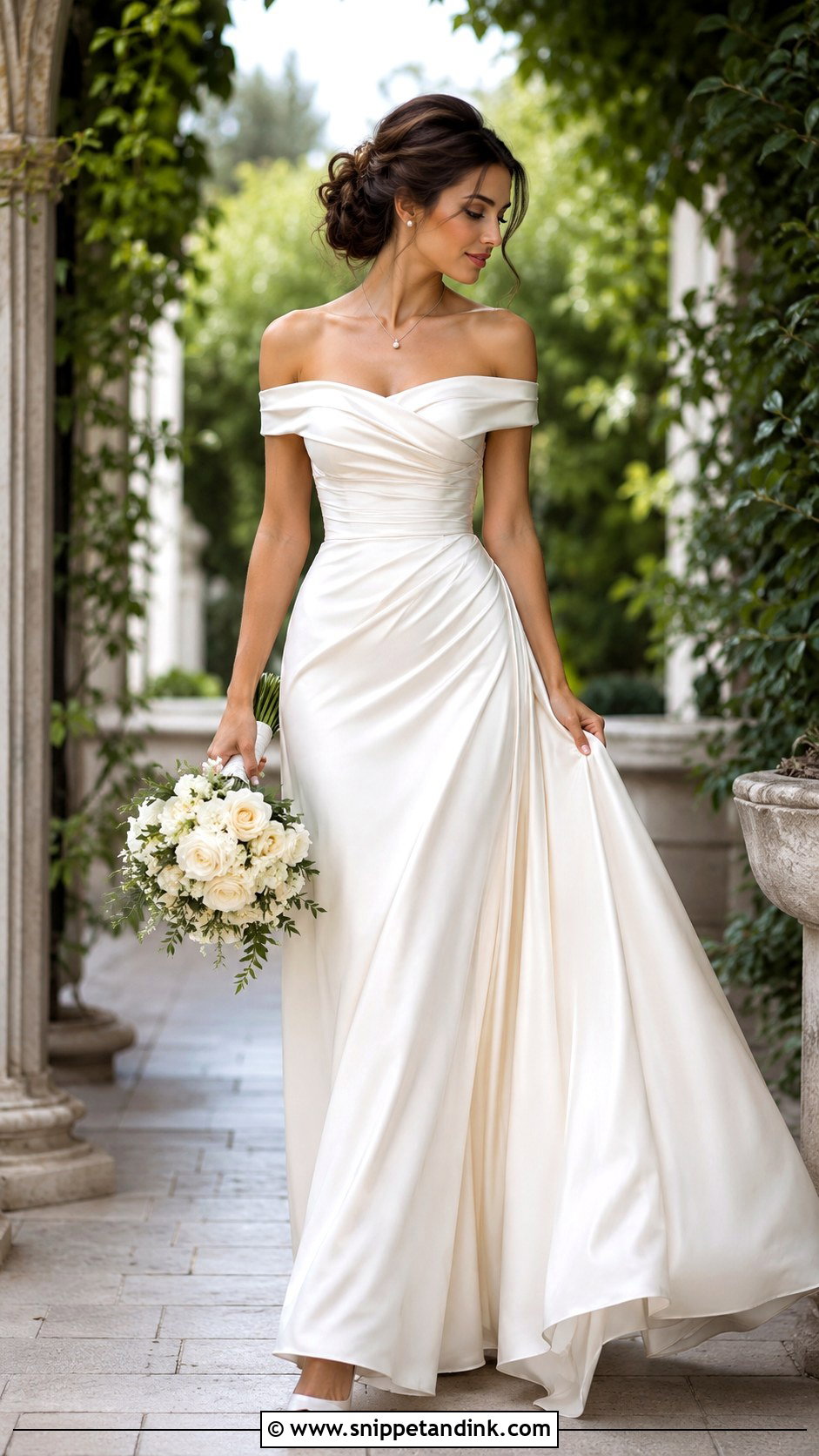
Off-shoulder necklines live or die by the elastic or boning that holds them in place. If the straps slide up when you lift your arms, the neckline is cut too loose and needs taking in across the back. I’d skip heavy necklaces here; the collarbone is the detail. Pearl studs, swept-back hair and satin heels let it breathe. A fitted bodice over a gentle A-line or mermaid skirt balances the wide shoulder line, and sheer gloves or a smooth veil add polish for an evening reception.
5. Strapless Bride Dress
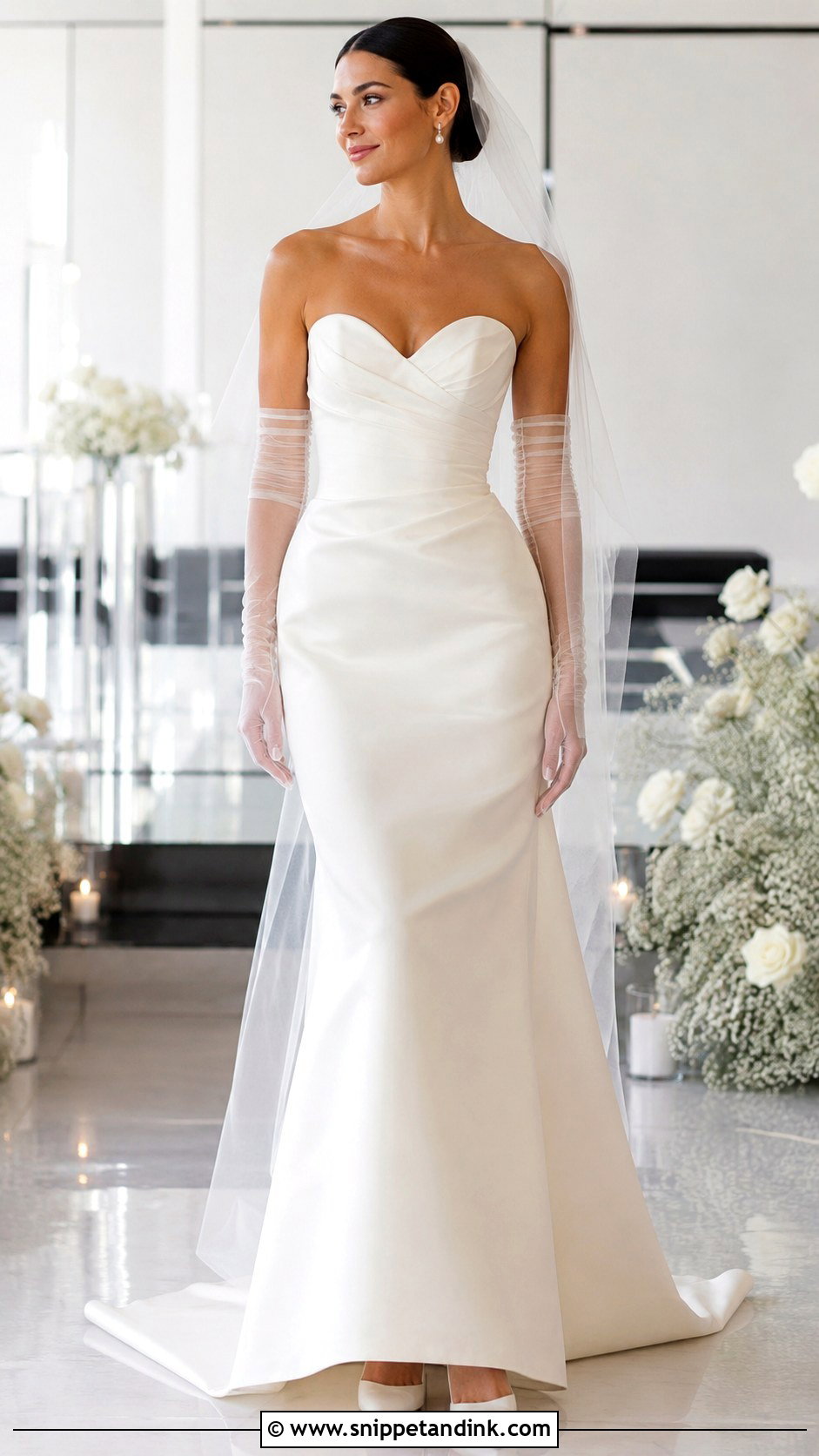
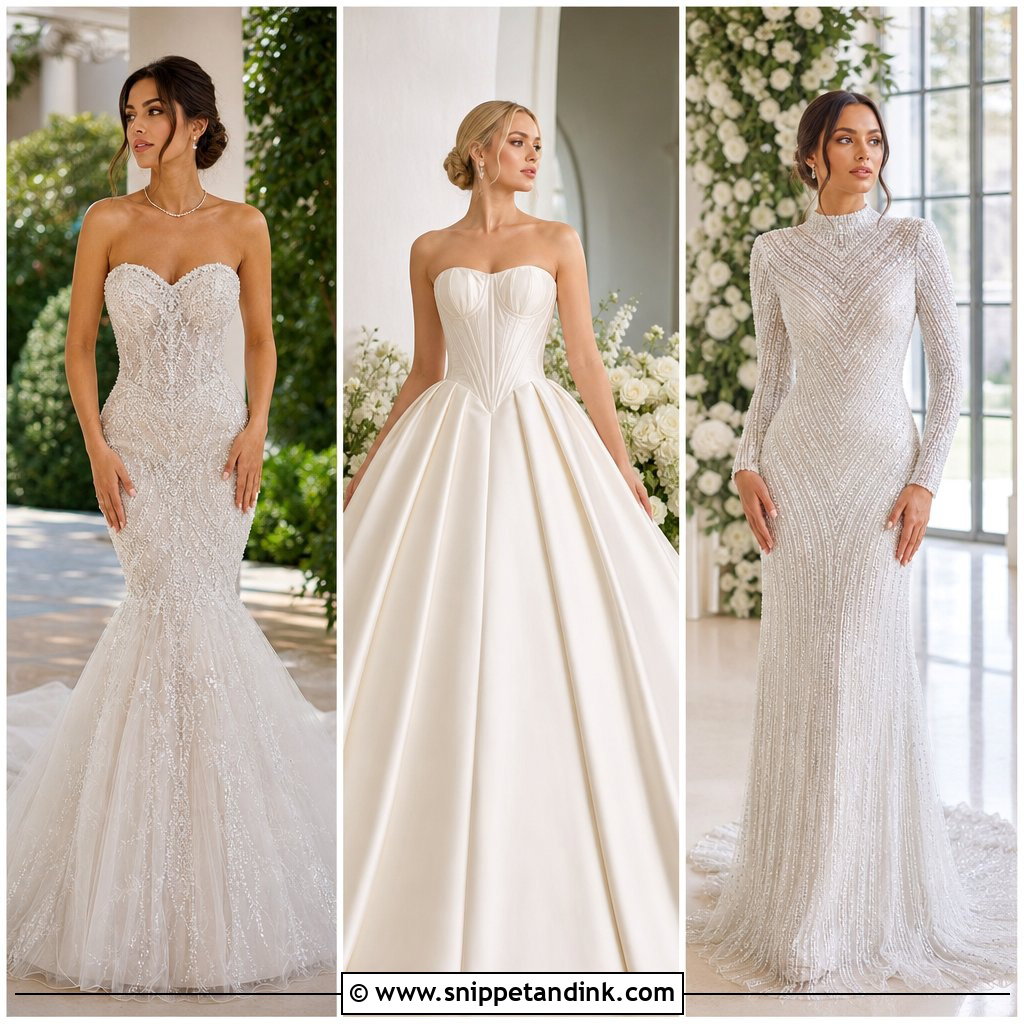
Strapless gowns should not need hitching up. If you catch yourself tugging at the bodice in the fitting room, that’s a sign it needs more internal support, usually a waist stay or added boning, not tape. A straight-across neckline looks modern; a sweetheart softens it. I pair it with a structured skirt, a pearl choker or simple studs, and a clean veil. For a cold ceremony, a removable bolero or long gloves cover the shoulders until the party. One styling note from experience: hold the bouquet low, at your hip bones, or it hides the bodice in every photo.
6. Square Neck Bride Dress
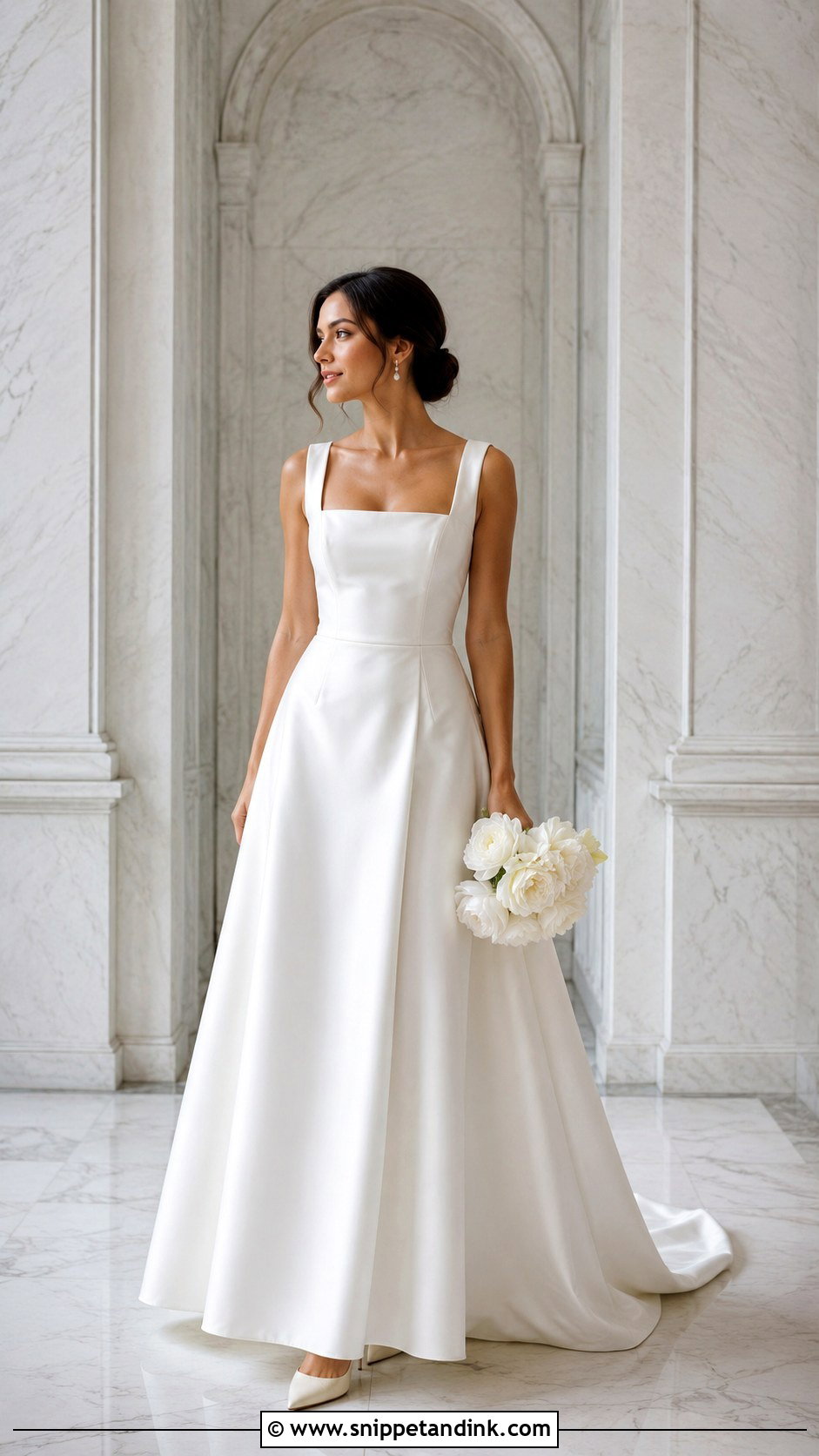
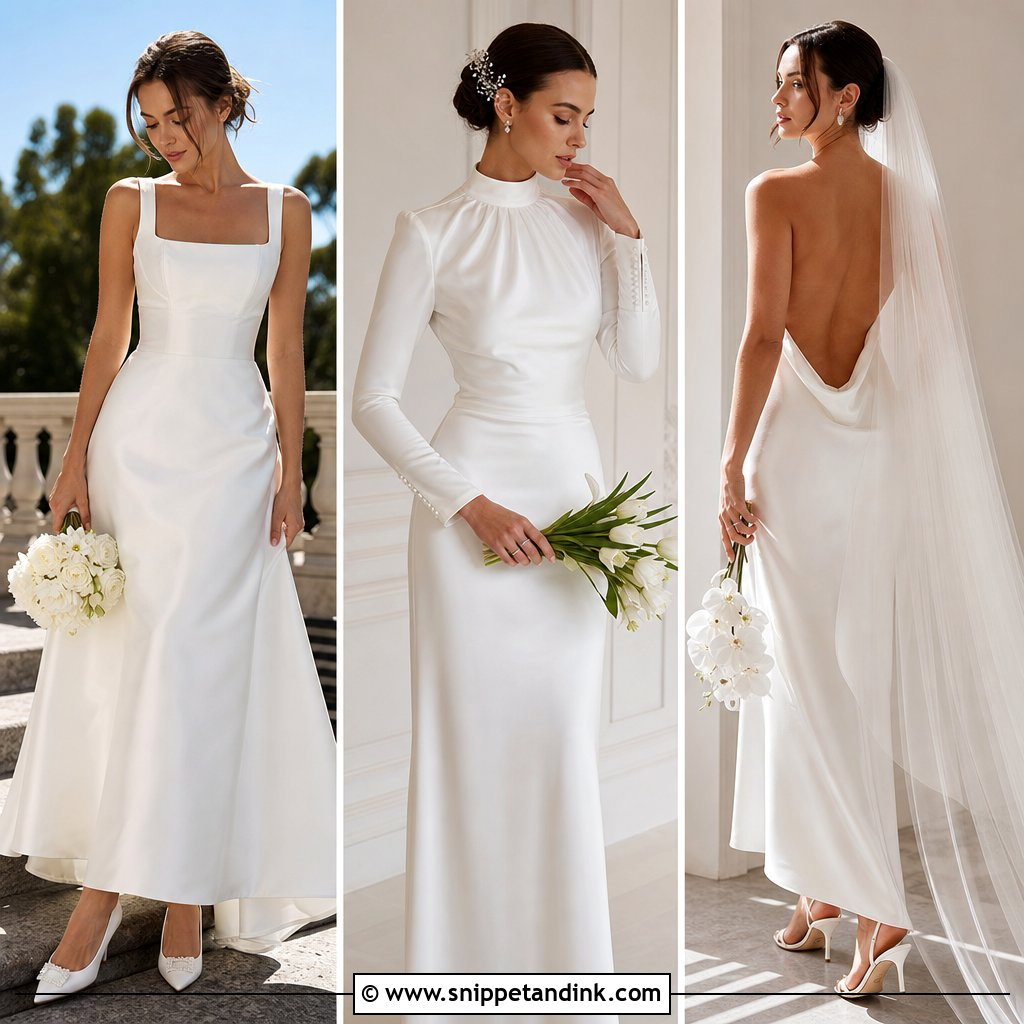
A square neck is one of the easiest lines to wear well. It frames the shoulders and suits crepe, satin and mikado, which hold the corners crisply. I look closely at the strap width: too thin and the square loses its shape, too wide and it starts to look like a day dress. A low chignon, pearl earrings, pointed heels and a medium-length veil are enough. A thin tennis necklace can sit inside the neckline, or go without and let the cut do the work.
7. High Neck Bride Dress
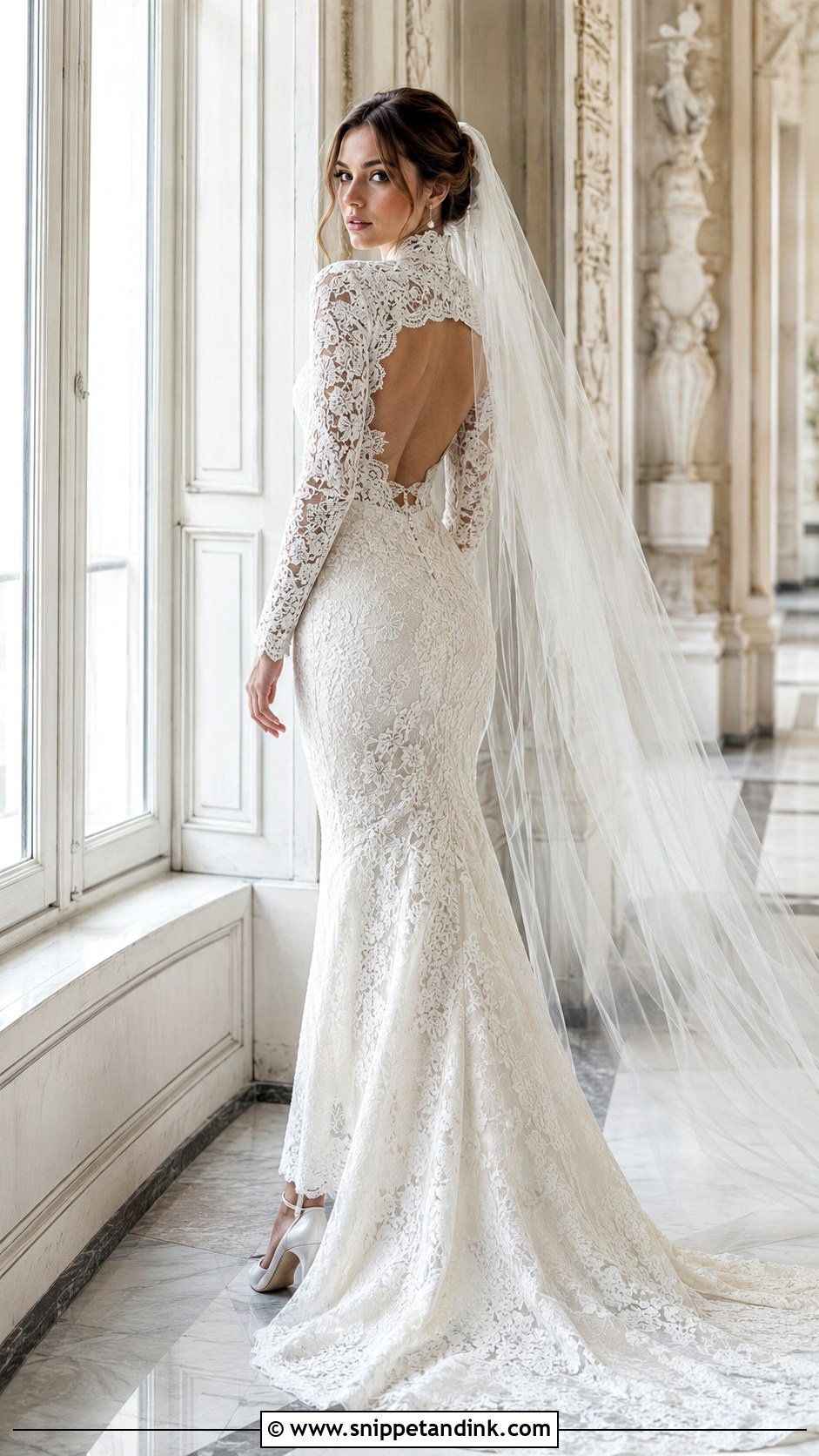
High necklines make your face the focal point, so the hair and earrings matter more than usual. Lace versions read vintage; crepe or satin versions look sleek and modern. I keep earrings small so they don’t fight the collar, and I’ll suggest a smooth updo rather than loose waves that tangle in the neckline. The drawback is heat: a high neck in summer outdoors can feel stifling, and I’d steer you away from it for a July garden ceremony. An open back or a column of buttons down the train gives the contrast a covered front needs.
8. Corset Bride Dress
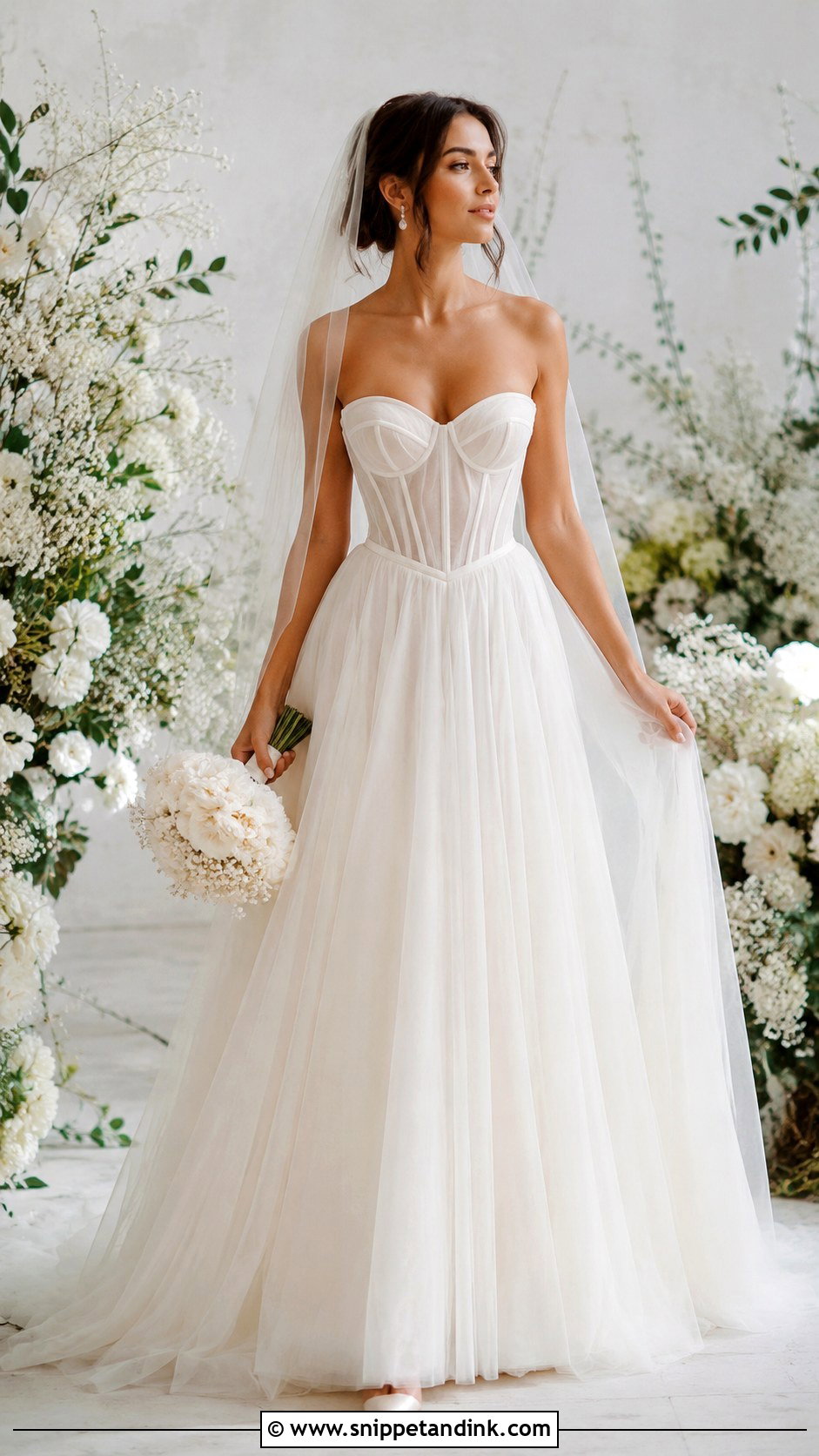
A corset bride dress is about the waist, and modern versions use lighter boning so the bodice shapes you without feeling rigid. I always ask the bride to sit and eat something at the final fitting, because a corset laced tight for the mirror is too tight for dinner. Over an A-line skirt it suits most figures; with a full ball gown or a lace mermaid it turns more dramatic. Drop earrings, a sheer veil and satin heels are plenty, since the bodice already carries the detail.
9. Drop Waist Bride Dress
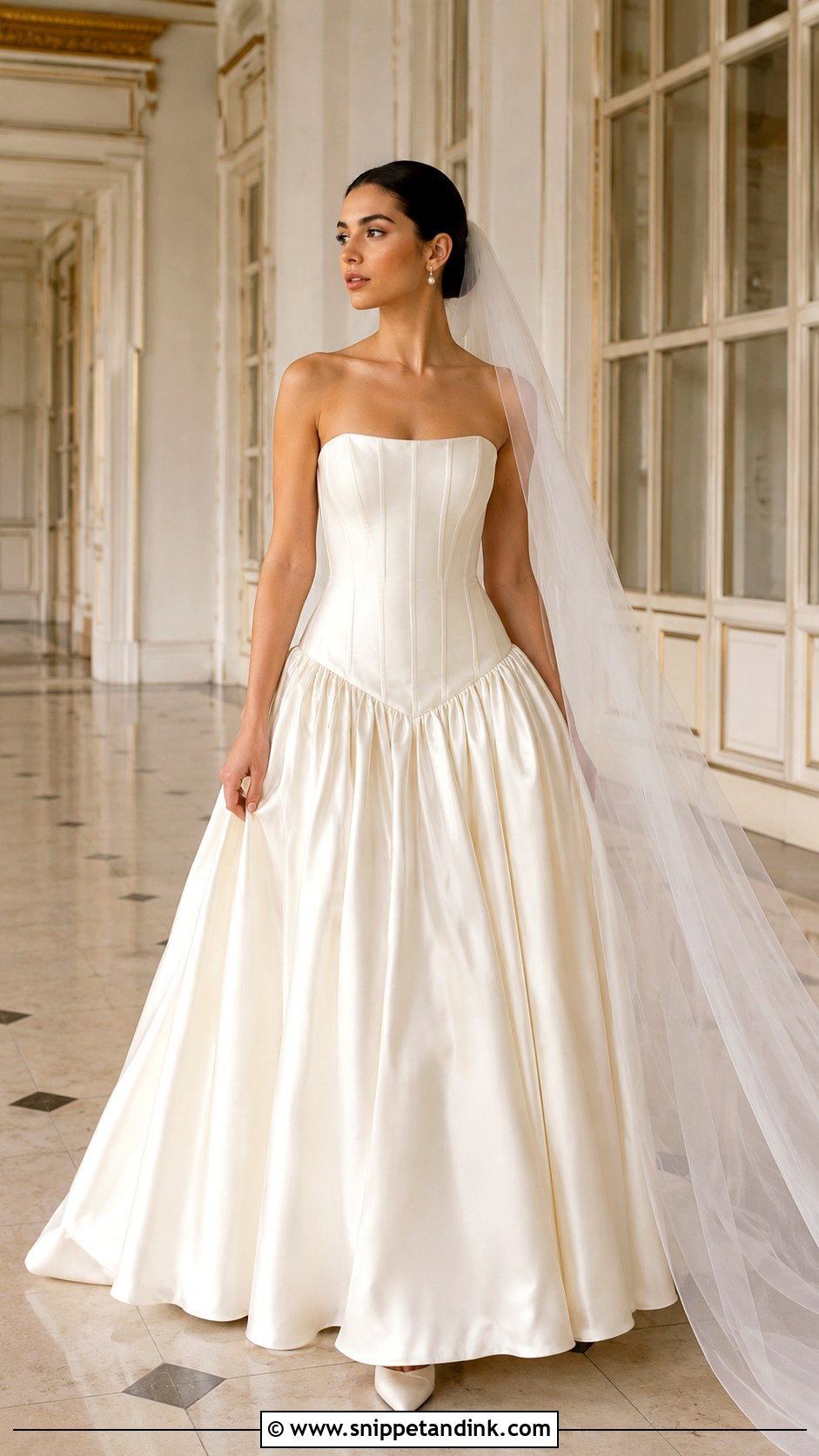
The drop waist bride dress moves the seam below the natural waist, often into a pointed basque, which lengthens the torso. It flatters longer bodies most. On a shorter torso I’ve seen it cut the legs off visually, so I pin the seam at two heights during the try-on before you decide. It works in satin, tulle and lace, and the shape is the statement, so keep the veil plain, the hair sleek and the earrings small. Side-on portraits show the line best.
10. Ball Gown Bride Dress
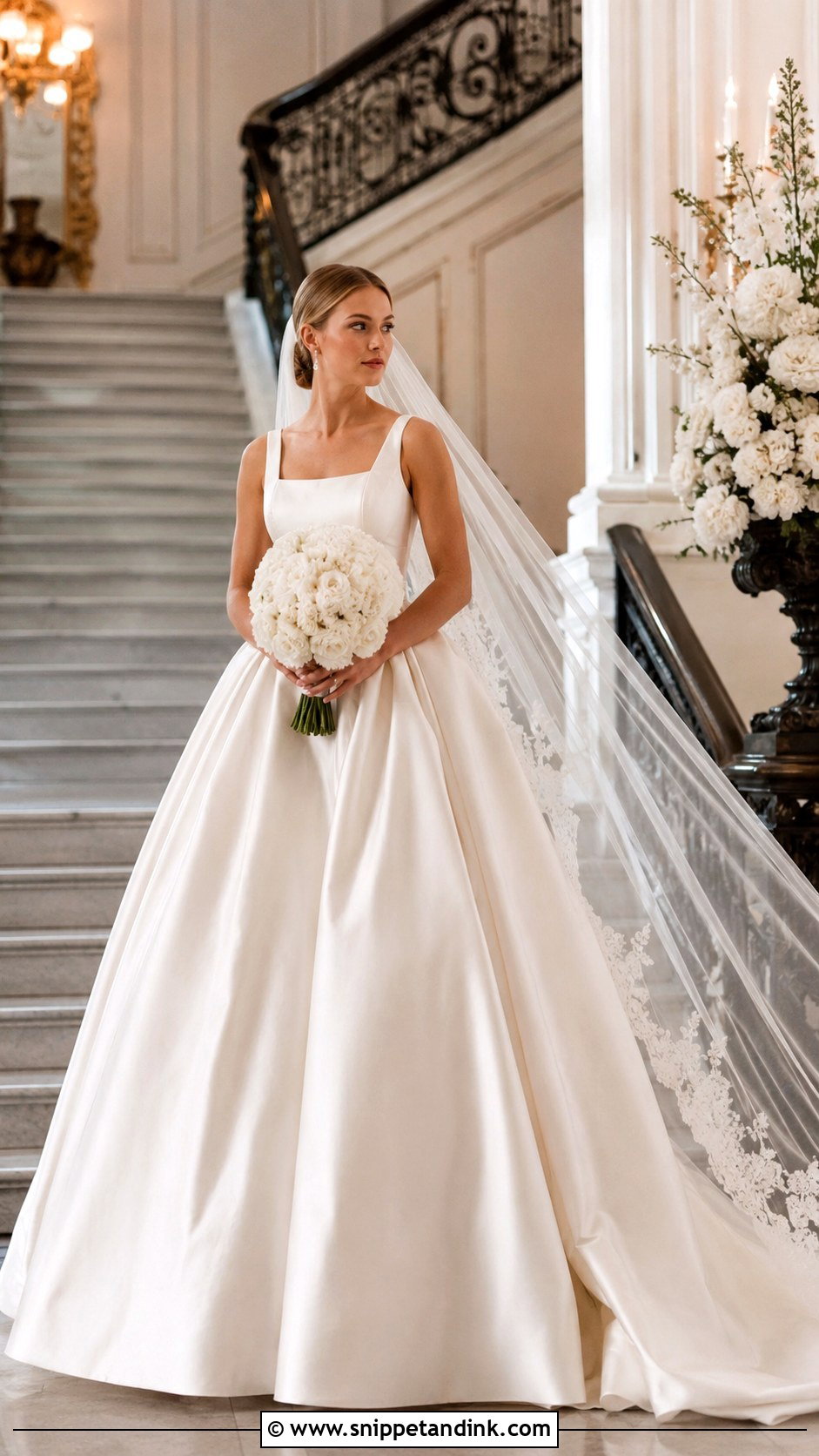
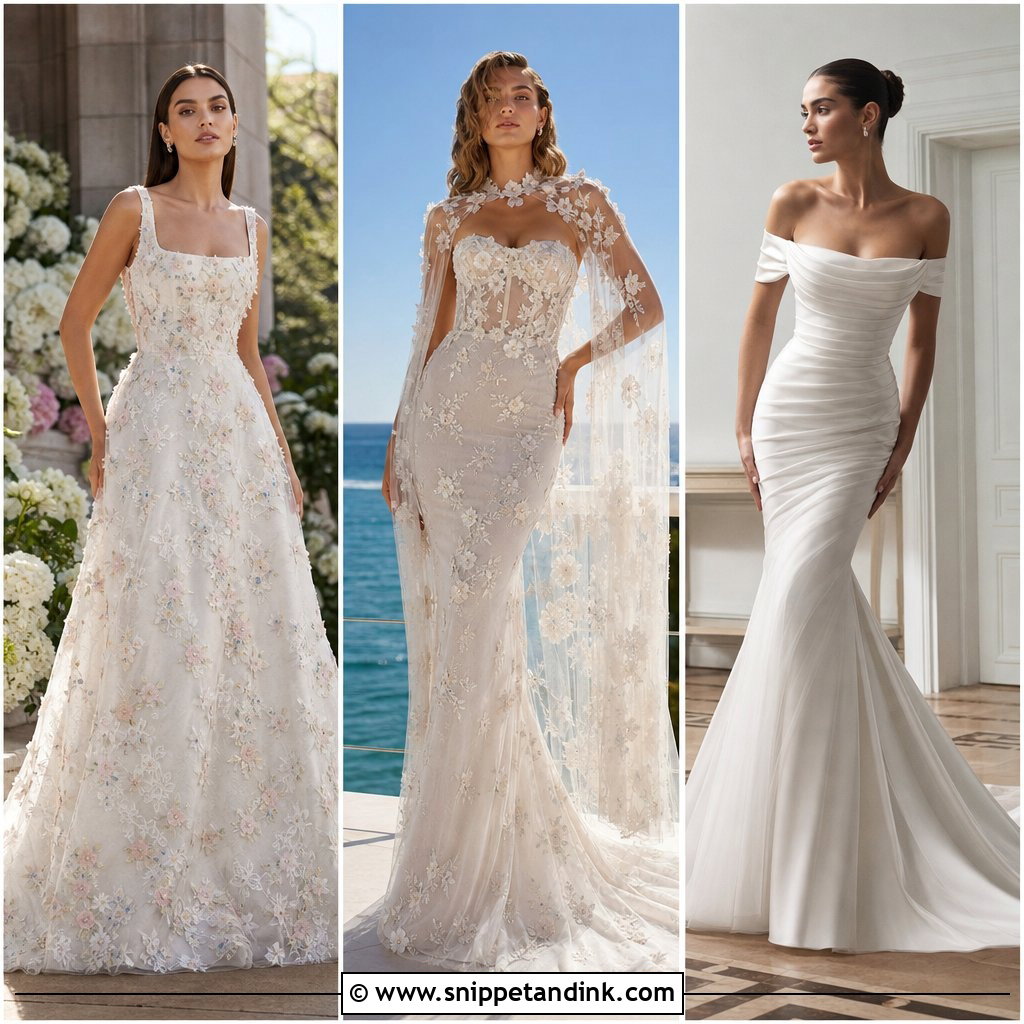
A ball gown asks for a large venue and a plan for the skirt. Clean satin looks regal, lace appliqué softer, layered tulle lightest. I tell brides to wear comfortable heels underneath, because nobody sees them and you’ll be standing a long time. The hem has to be taken up to just clear the floor in your actual shoes, or you’ll walk on the front all evening. A structured bouquet and a cathedral veil match the scale. Do check the car: a full skirt with a crinoline needs a wide back seat or a vehicle with real room.
11. Mermaid Bride Dress
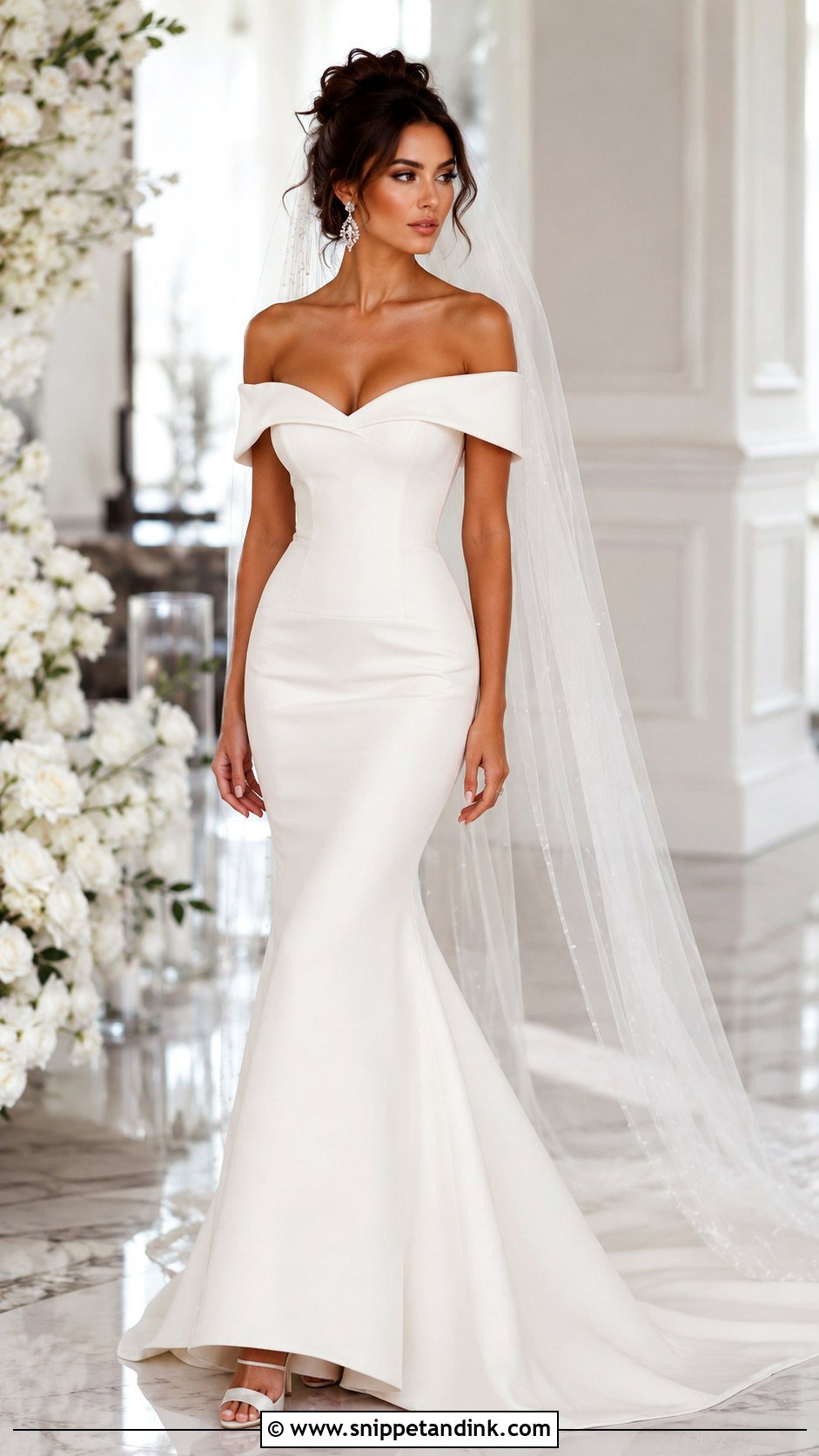
A mermaid bride dress is fitted through the hips and flares at or below the knee, and where that flare starts decides whether you can walk. I have brides take the stairs at the fitting; if you’re shuffling, the flare needs dropping or the skirt needs a little more ease at the thigh. Crepe, satin, lace and beaded fabrics all suit it. Balance the curve with an off-shoulder, sweetheart or square neckline, sleek heels, a long veil and earrings with some shine. A detachable overskirt gives ceremony drama and comes off for dancing. Tailoring matters more here than with any other shape.
12. Minimalist Bride Dress
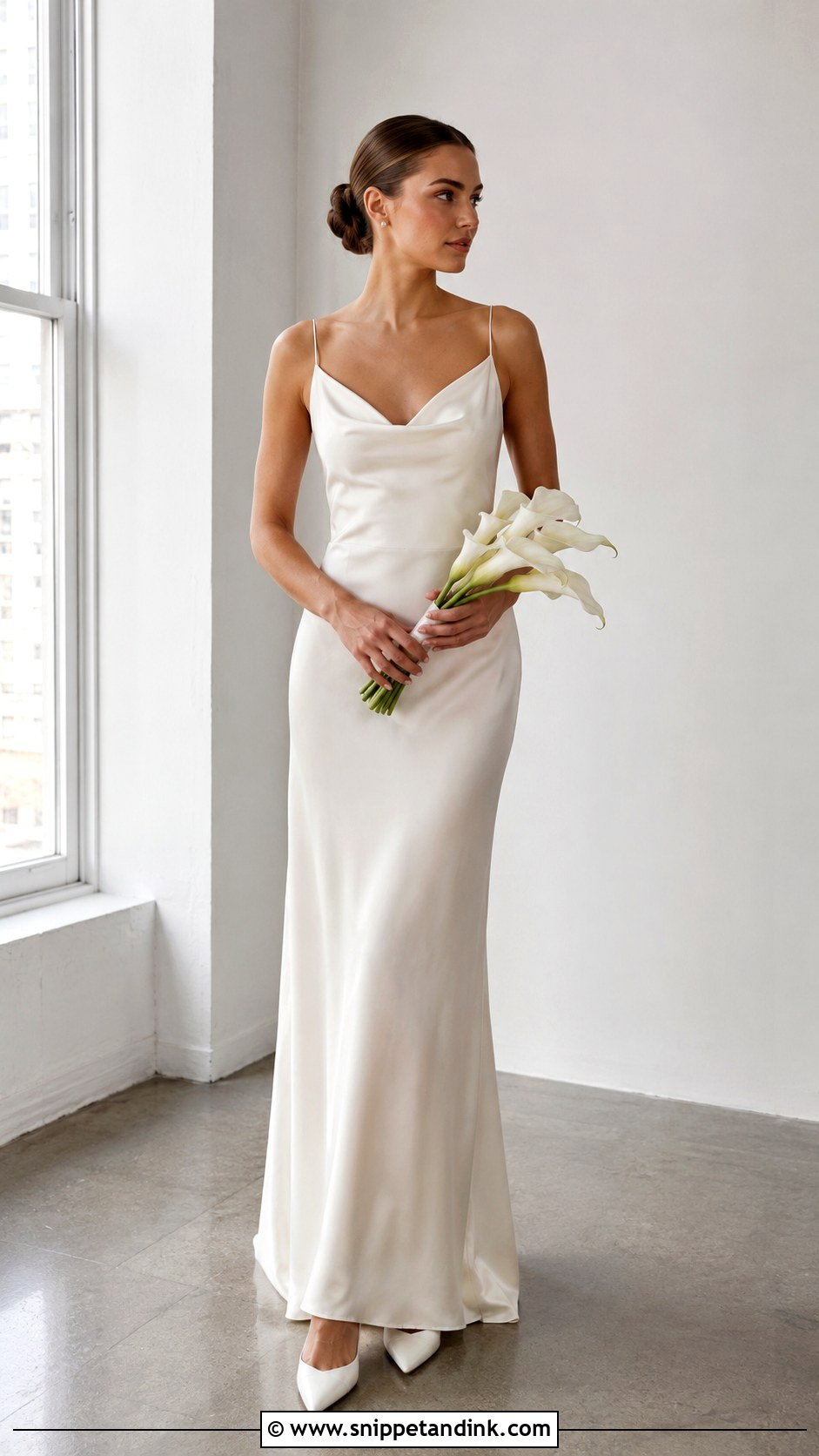
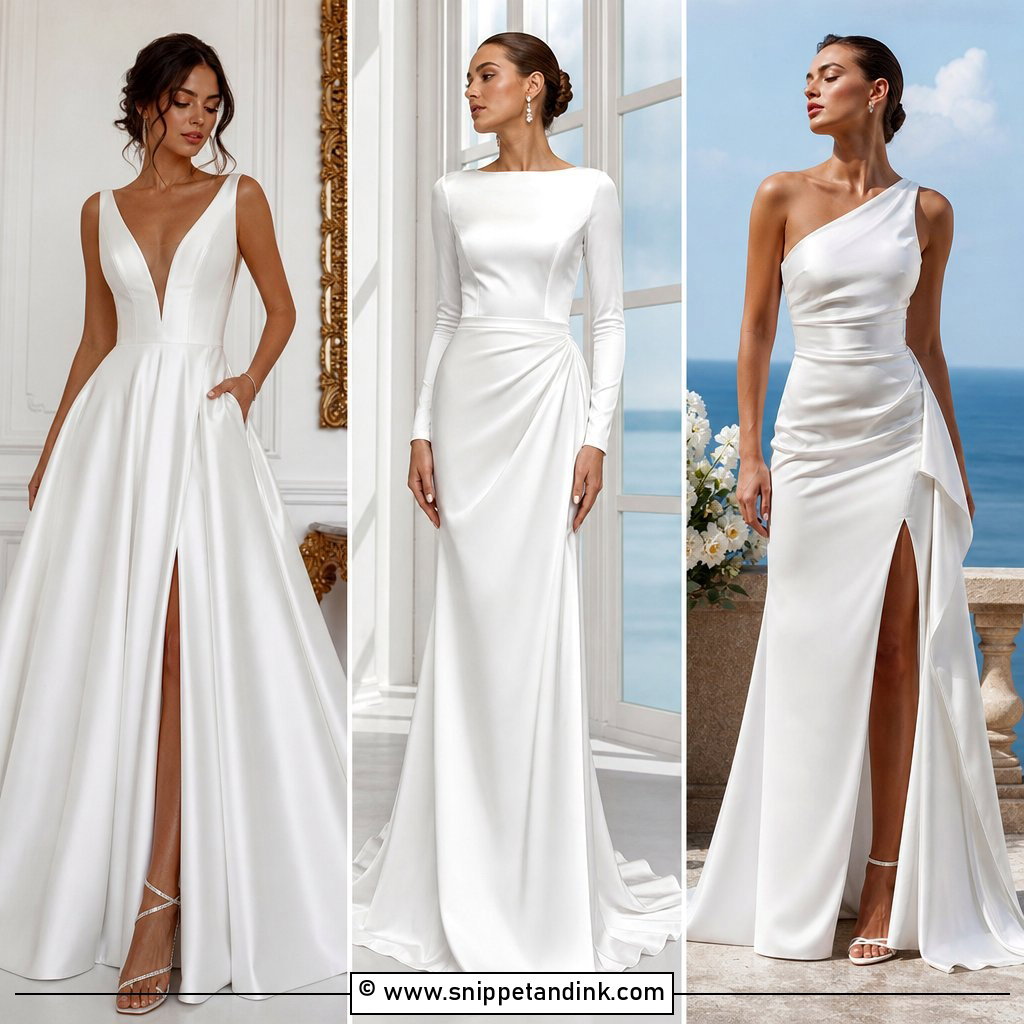
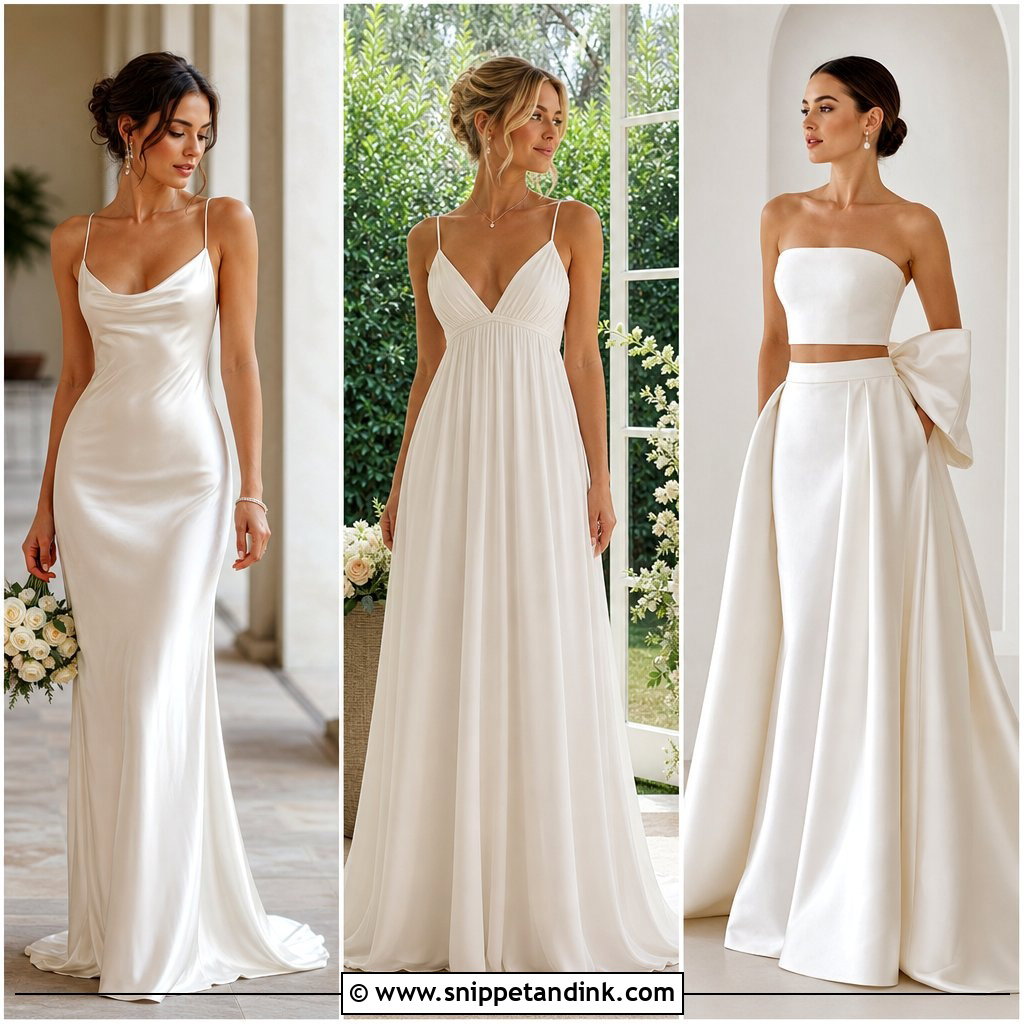
There’s nowhere to hide in a minimalist gown, so I spend fitting time on the seams and the hem rather than accessories. A silk slip shows every line underneath, which means smooth, no-line shapewear or none. Crepe columns and satin sheaths are more forgiving. I keep styling to pearl studs, white heels, a plain veil and a small bouquet. This is the gown I recommend for city halls, modern venues and small beach ceremonies, where a big skirt would feel out of place.
13. Pearl Bride Dress
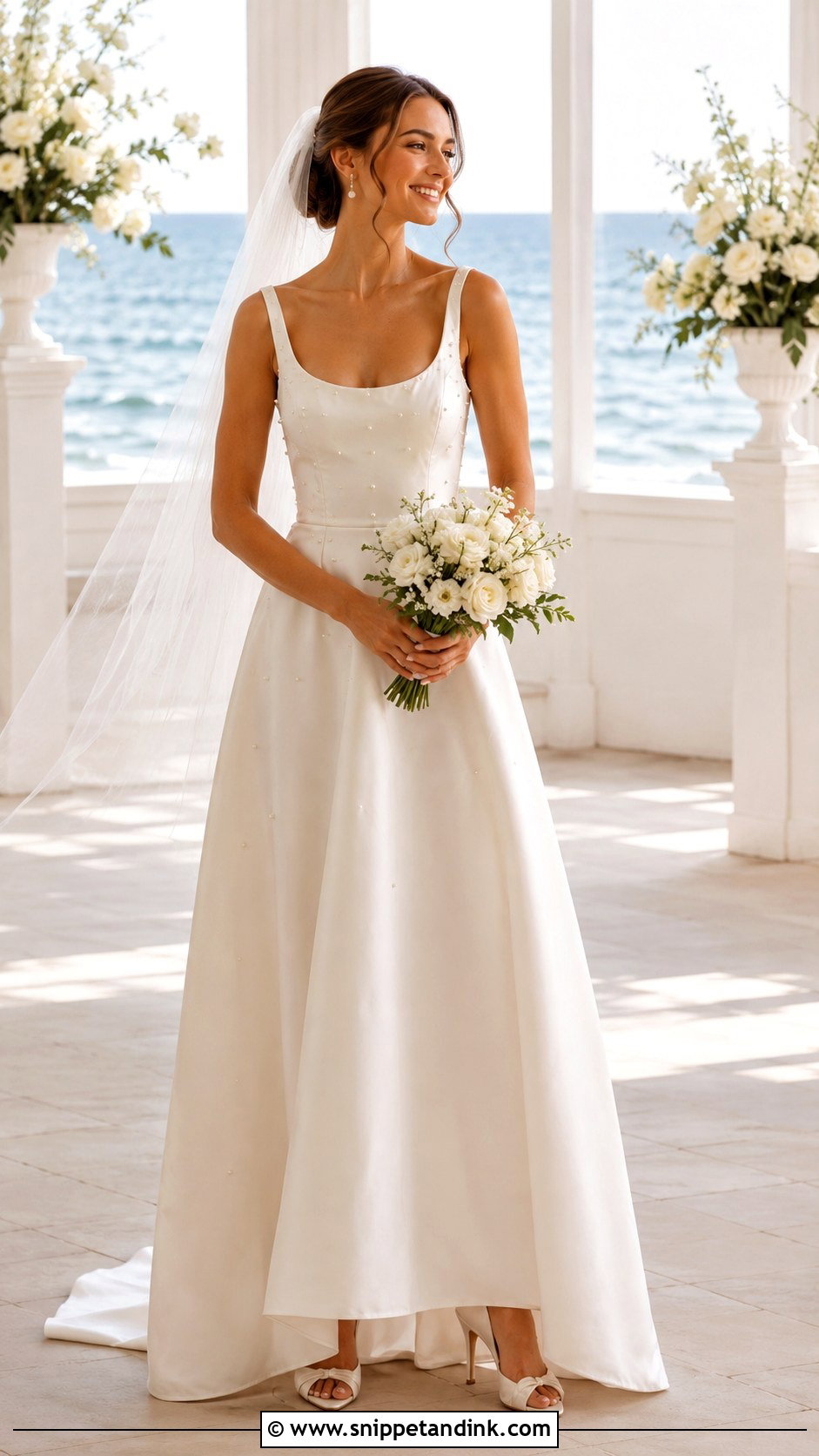
Pearls carry a soft glow that reads warmer than crystal in daylight. They can sit on the bodice, sleeves, veil, gloves or shoes, but I limit it to one main pearl feature; pearls in four places start to look like a costume. A pearl-scattered gown with satin heels and a plain veil is balanced. With a simple dress, pearl earrings or a pearl-edged veil are enough. One practical warning: sewn pearls can snag tulle overlays, so I check that they’re secured with a backing stitch, not just glued.
14. Floral Applique Bride Dress
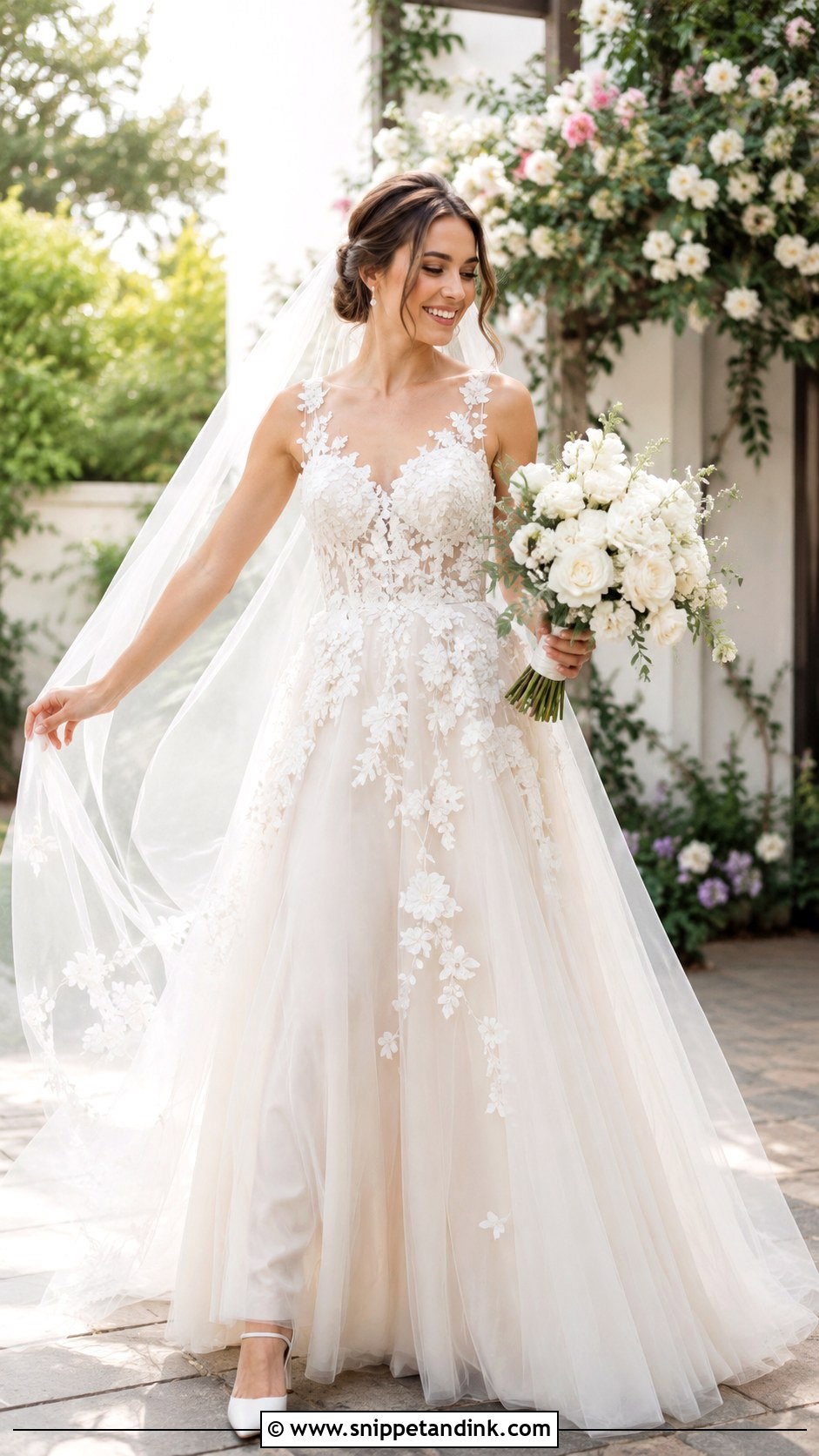
Floral appliqué adds texture you can feel, and dimensional 3D flowers can catch on a bouquet or a hug. I like appliqué placed where it frames the body, along the bodice edge or trailing down one side of the skirt, rather than spread evenly. Keep the veil plain so the two don’t compete, and stay with ivory, white or pale blush. For a spring garden wedding, I sometimes echo one bloom from the gown in the bouquet, which ties the look together without overdoing it.
15. Beaded Bride Dress
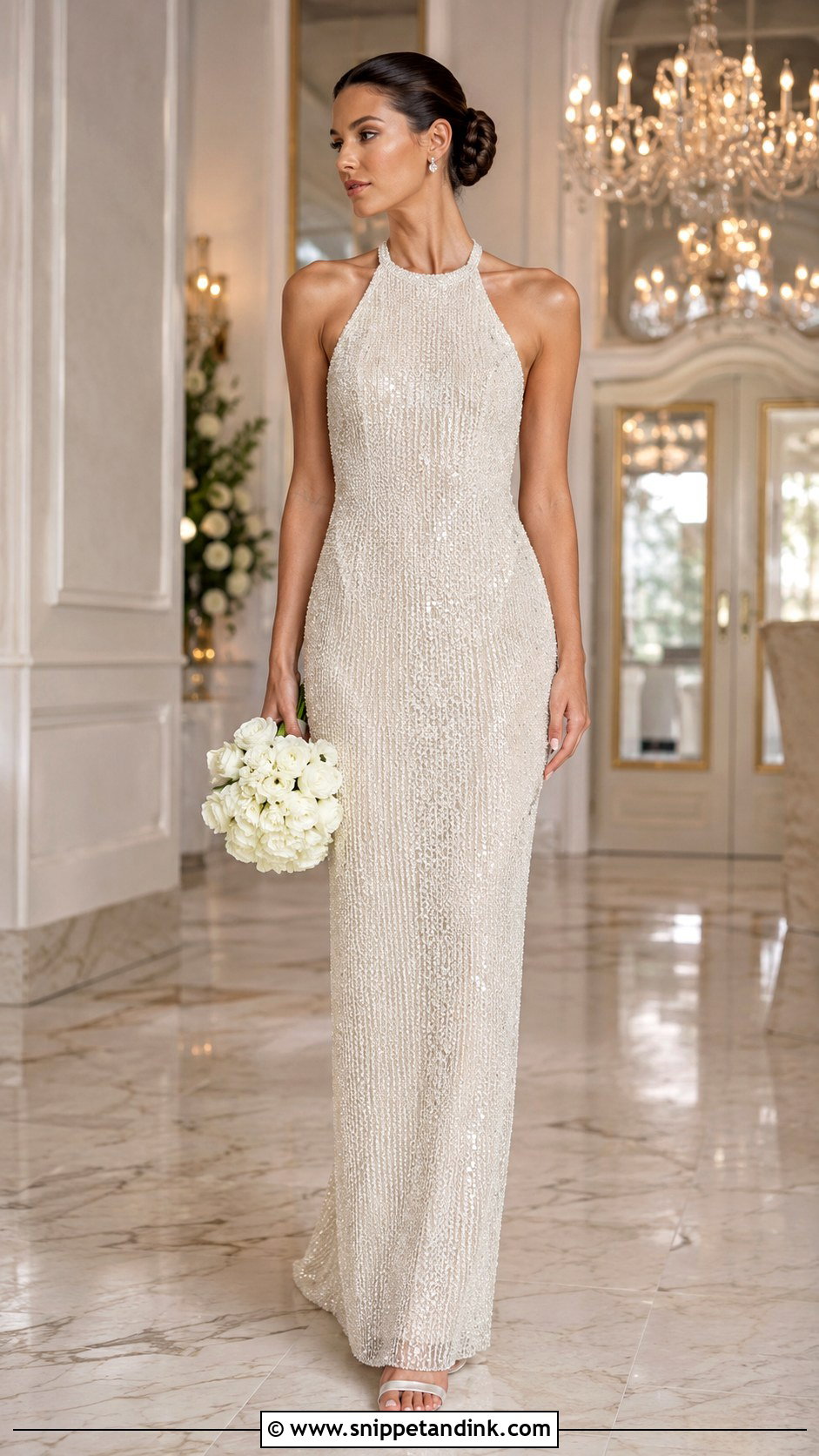
Beaded gowns are heavy, sometimes very heavy. At fittings I have the bride walk and sit for a few minutes, because weight drags on the shoulders and the hem by evening. Beading that follows the body, in vertical lines or along a floral pattern, flatters more than a uniform scatter. It suits black-tie and indoor venues where the light catches it. I keep jewelry minimal, the hair sleek, and often drop the veil for the reception so the back beading shows.
16. Tea Length Bride Dress
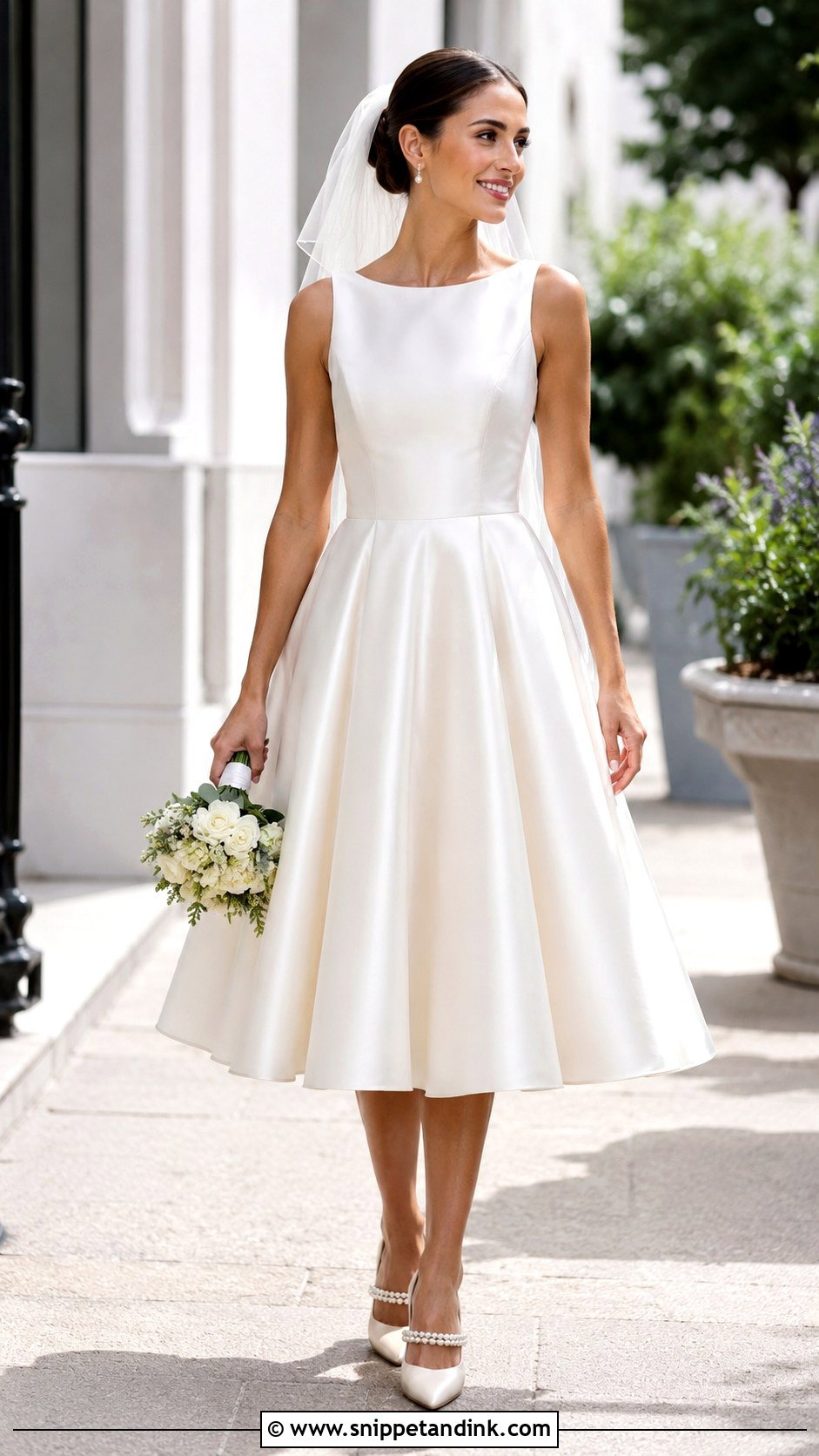
With a tea-length hem falling between knee and ankle, the shoes become part of the dress, so I choose them before the hem is finalized. Satin pumps, pearl heels and pointed slingbacks all work. A fitted bodice with a flared skirt reads classic; a straight cut is more modern. Add a short veil, pearl earrings and a small bouquet. I suggest it for courthouse weddings, garden ceremonies and rehearsal dinners, and to brides who want to move freely without bustling a train.
17. Mini Bride Dress
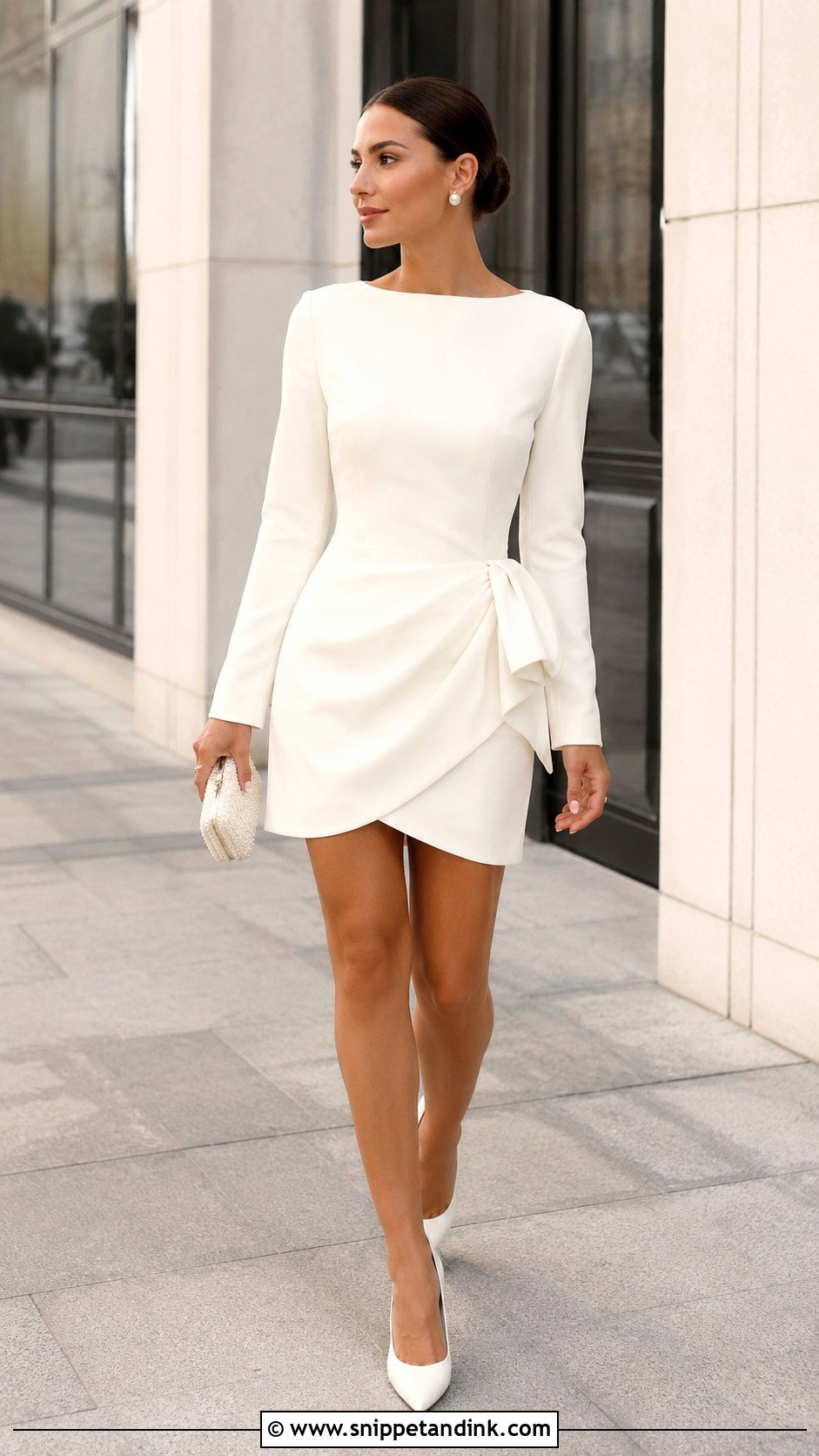
A mini bride dress works best as a second look, a courthouse dress or an after-party change. Structure keeps it bridal: a tailored mini with long sleeves, a bow, feathers, pearls or clean satin. I pick one standout feature and keep everything else quiet, because a short dress with a big bow, feathers and statement earrings looks busy fast. Pointed heels, sheer tights if the weather calls for them and a small clutch finish it. Check that you can dance and sit without adjusting the hem every few minutes.
18. Bride Dress With Cape
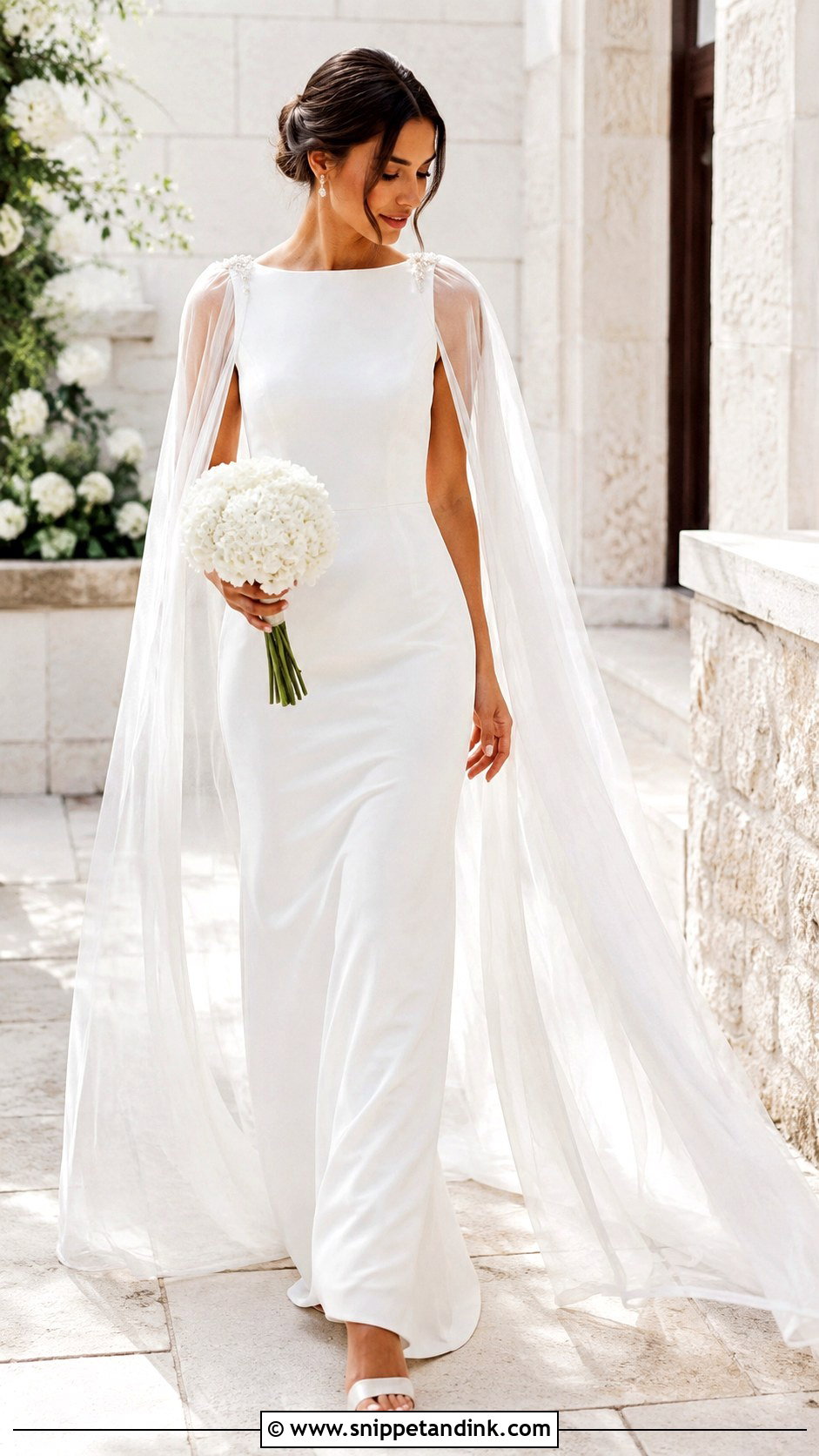
A cape replaces the veil and gives movement on the aisle. Sheer capes are soft; satin ones look regal. They attach at the shoulders, neckline or back, and I make sure the attachment is hidden hooks or snaps, not visible buttons, so it comes off cleanly for the reception. Under a cape, I want a clean dress so it has room. Wind is the practical issue outdoors: a long sheer cape will blow across your face, so I add small weights at the hem for open-air ceremonies.
19. Bride Dress With Bow
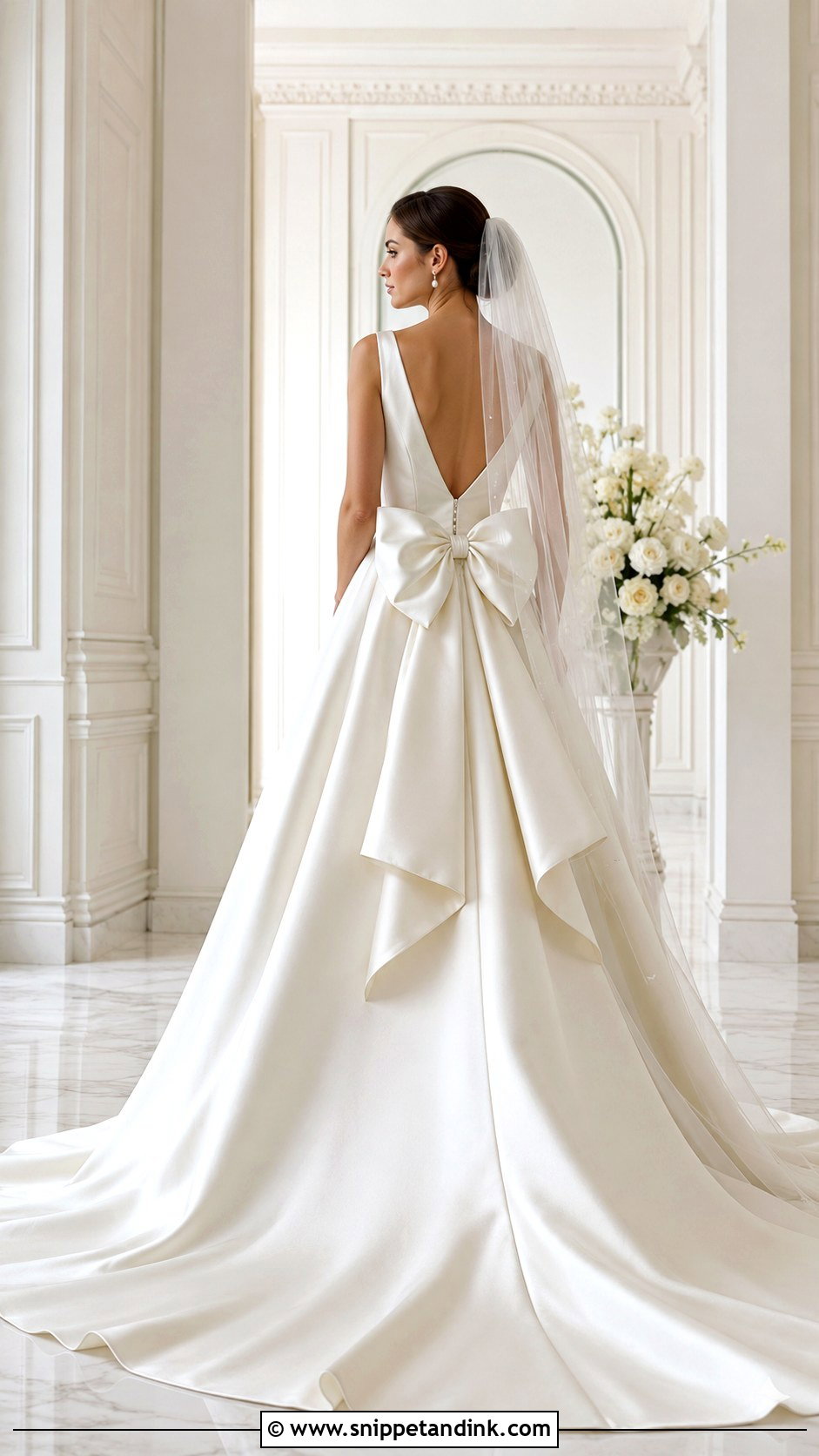
Bows look modern when there’s only one and it’s in proportion. A large back bow suits a simple gown; a small bow can sit at the shoulder of a more detailed dress. I check how a back bow behaves when you sit, because a stiff bow can crush against a chair back, and I may suggest it’s stitched with interfacing that springs back. Clean heels, pearl earrings and a simple veil keep the focus on it. Ask your photographer for full-length shots from behind.
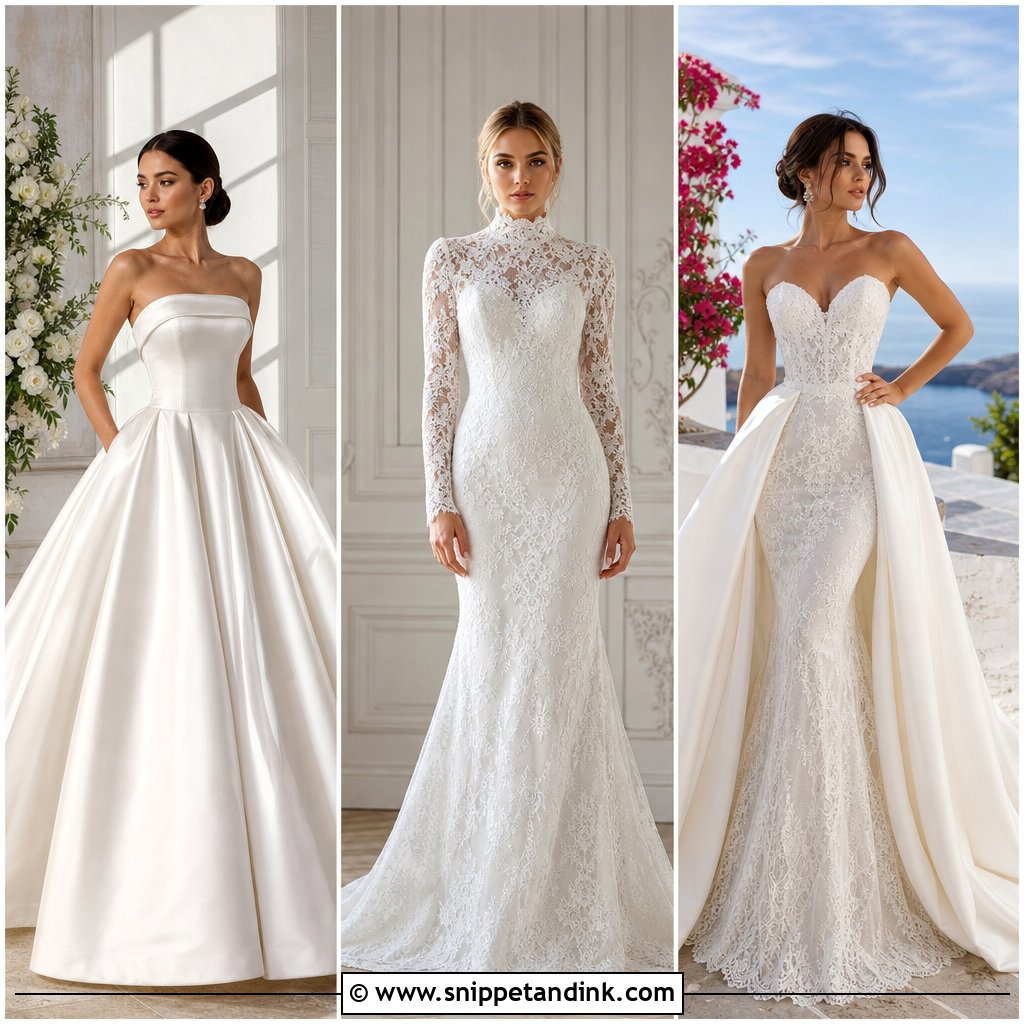

20. Bride Dress With Gloves
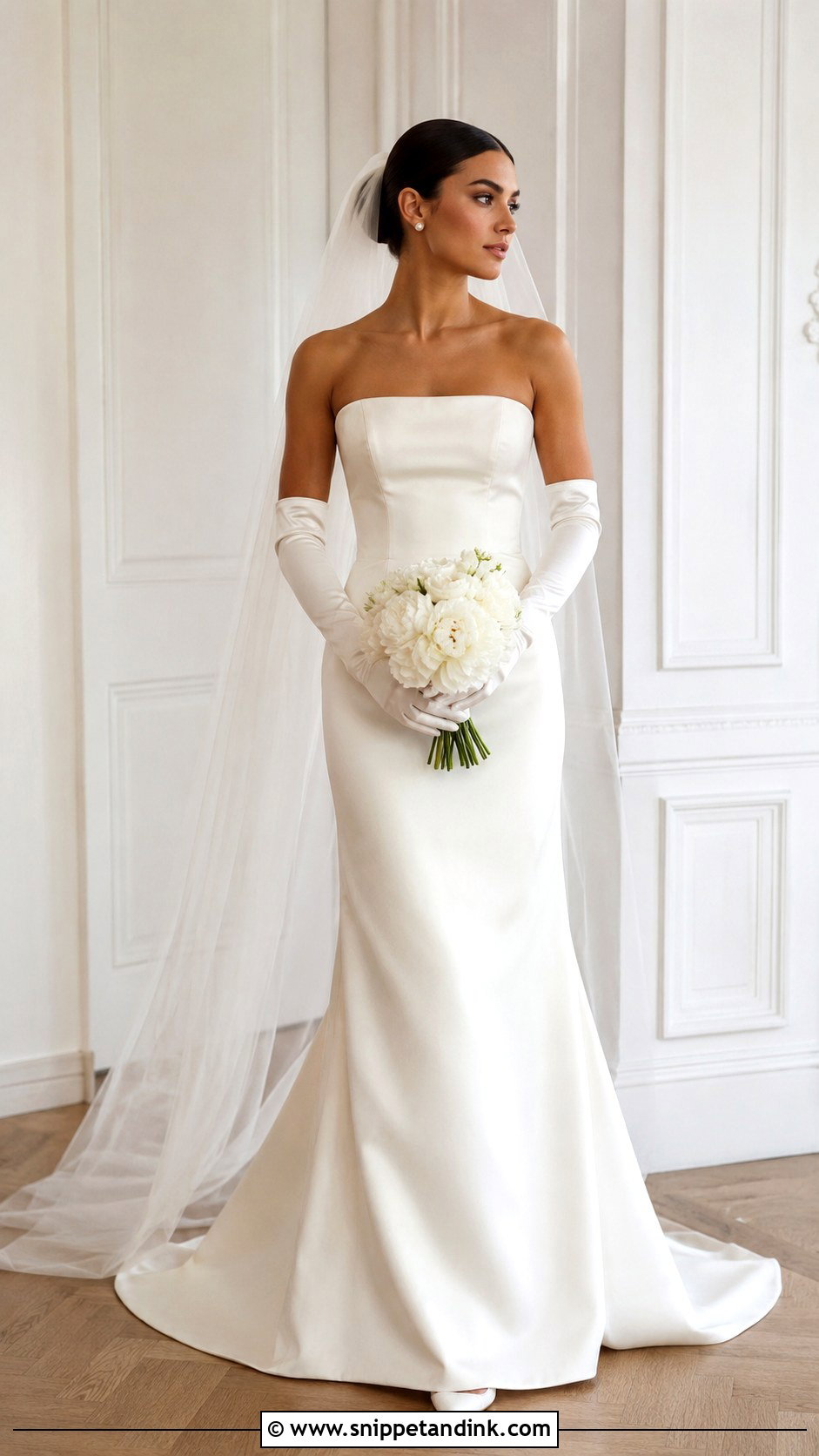
Glove length should match the neckline. Long satin opera gloves suit strapless or off-shoulder gowns; short sheer gloves go with tea-length or minimal dresses. I keep bracelets off completely when gloves are on. The detail brides forget is the ring exchange: long gloves either need a slit at the ring finger or have to come off, so decide before the ceremony. Choose a pair that fits smoothly so you can still hold flowers and sign the register.
21. Bride Dress With Veil
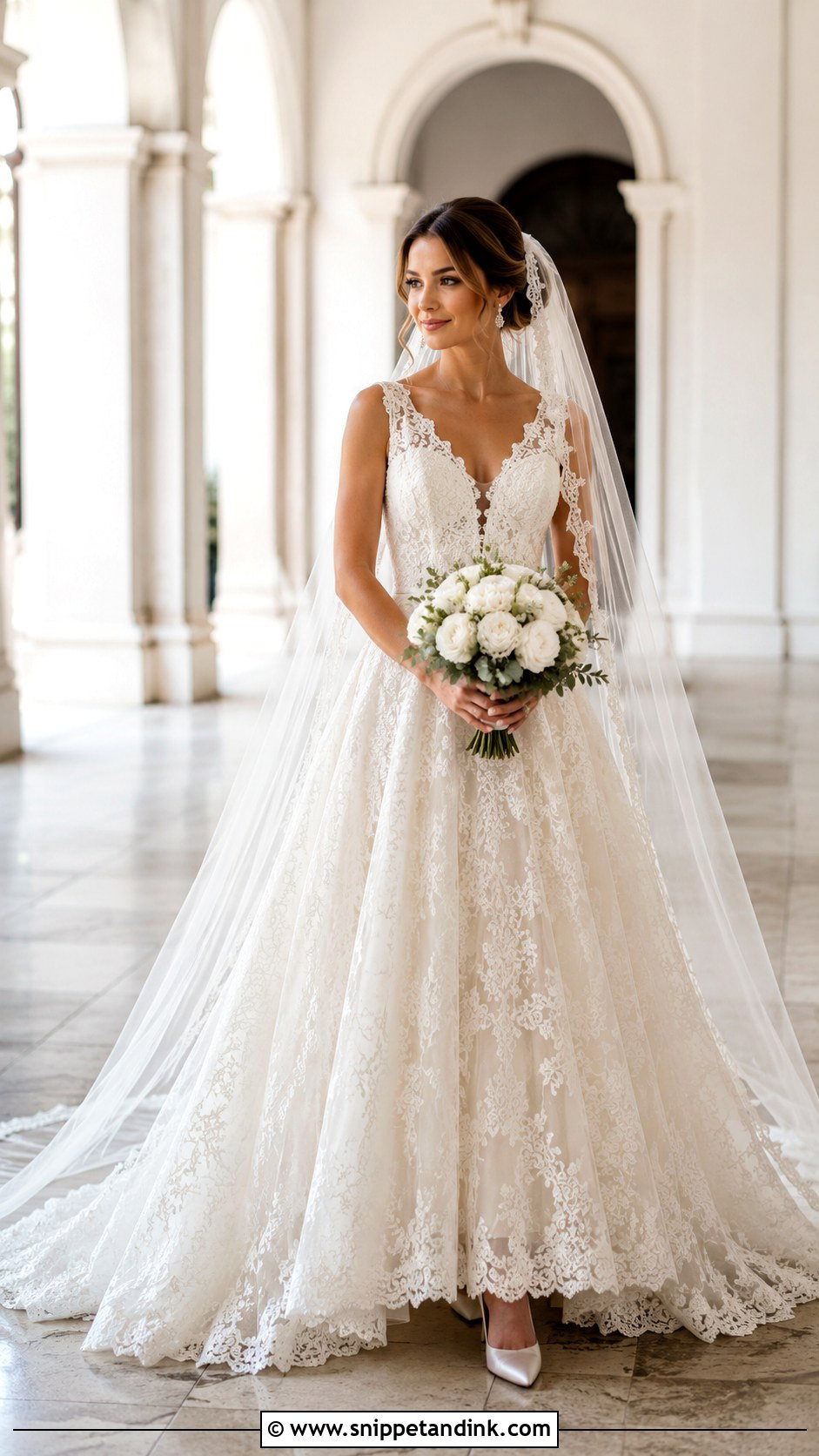
The veil is the oldest pairing, and length does the work. A cathedral veil adds drama to a plain gown; a fingertip veil balances an A-line, lace or mermaid; a birdcage suits tea-length and courthouse looks. Match the veil’s color to the dress in daylight, because ivory tulle against white silk shows as yellow in photos. If the gown has lace, use the same lace on the veil edge or a clean raw edge. I place the comb a little below the crown so the veil sits secure and frames your face in portraits.
22. Blush Bride Dress
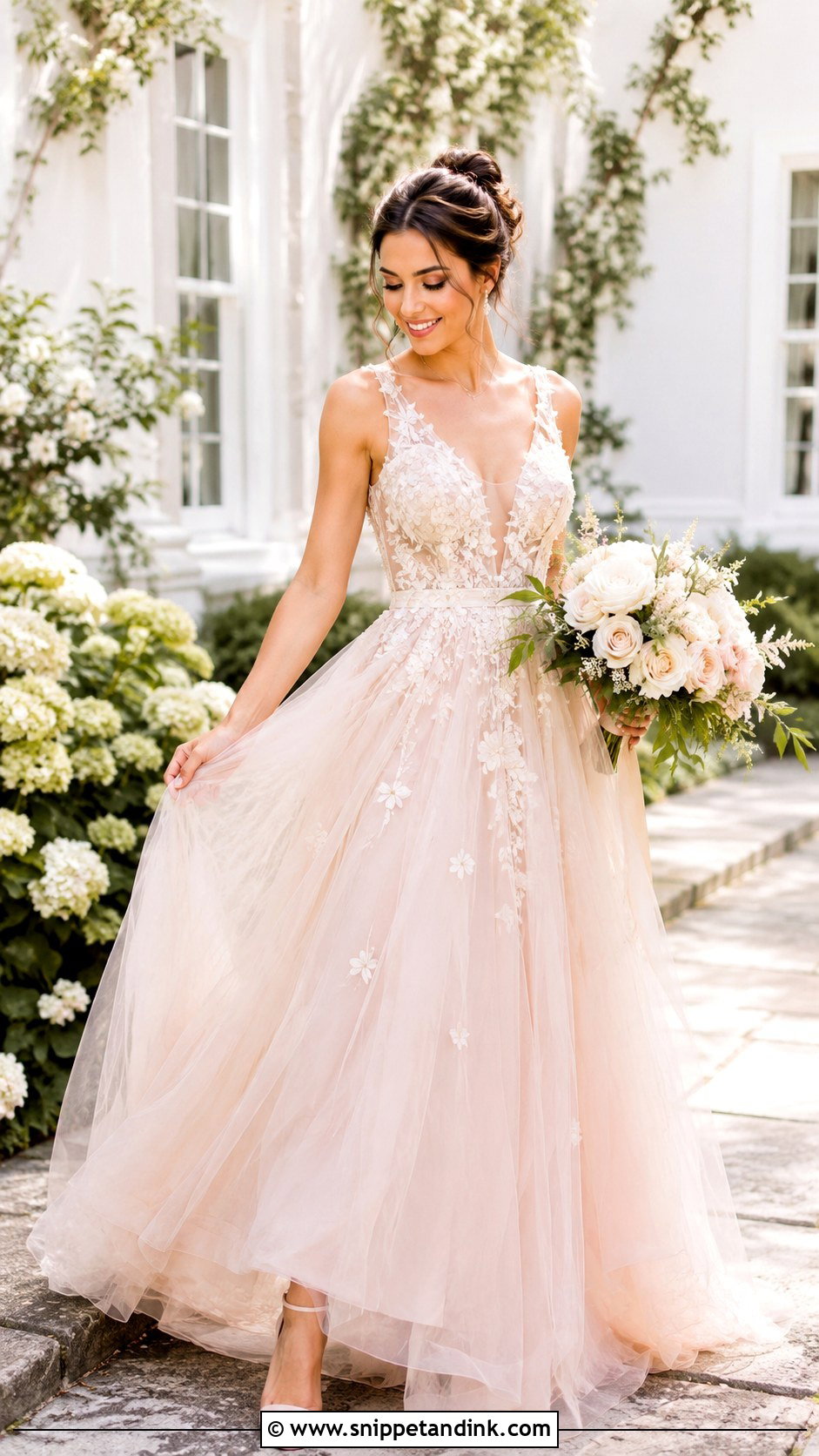
A blush gown softens the usual white and warms most skin tones. It works in tulle, lace, satin and floral appliqué. I’d advise against blush if your undertone is very pink, since the dress can merge with your skin in photos; a champagne base usually solves that. Nude or ivory heels, rose-toned makeup, delicate jewelry and a bouquet of cream and pale pink keep it gentle. A sheer, light veil lets the color show through.
23. Blue Bride Dress
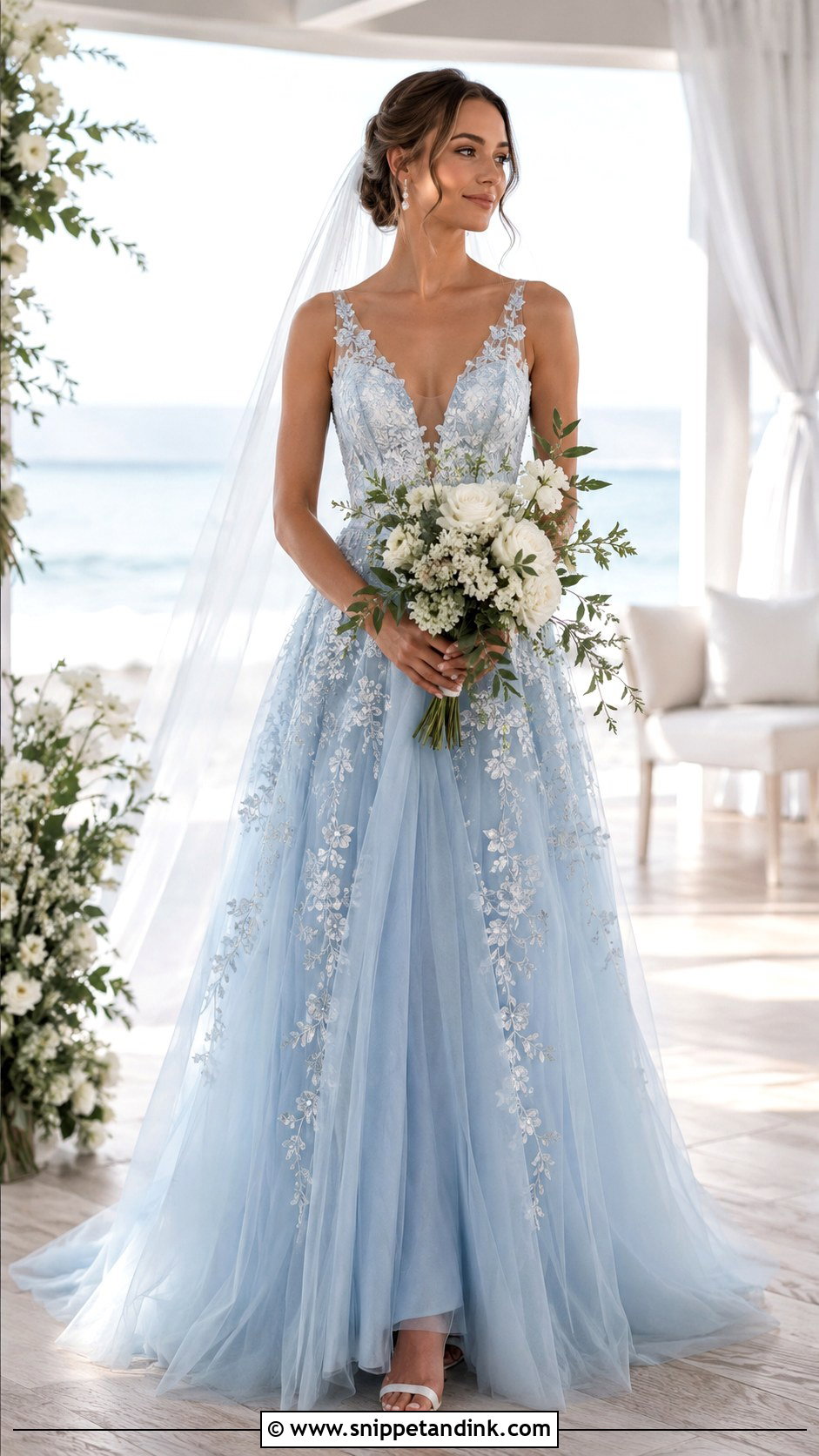
Pale blue reads calm and fresh, and it’s softer on camera than you might expect. Powder blue, mist blue and soft sky shades all work in tulle, satin or embroidered florals. I always view the fabric under both warm and cool light before ordering, because blue can drift grey under tungsten reception lighting. Silver or pearl jewelry, ivory heels and a white bouquet with greenery suit it. A coastal ceremony or a winter wedding is where I see blue work best.
24. Courthouse Bride Dress
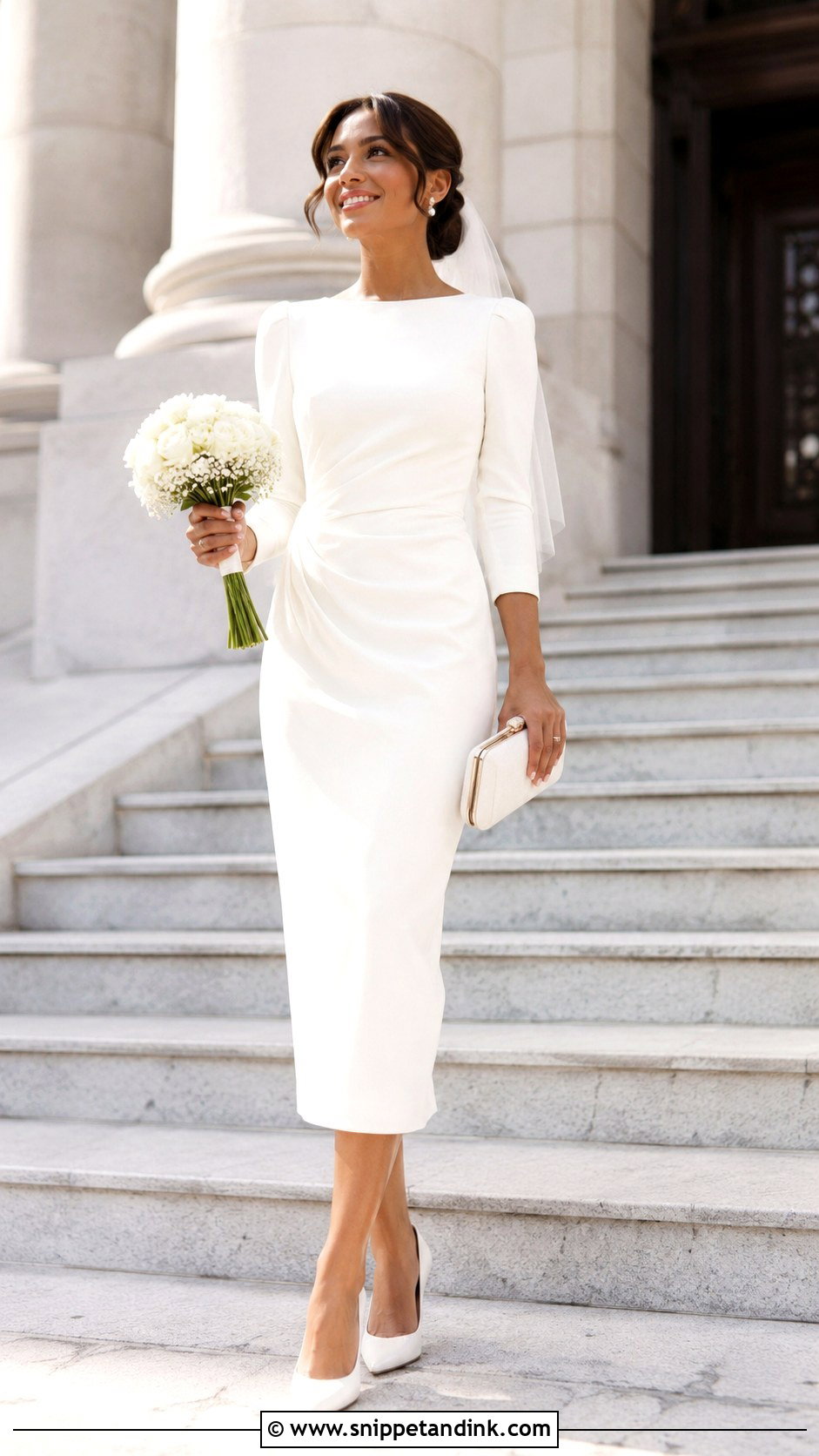
A courthouse dress has to handle stairs, waiting rooms and a walk to the street photos. I recommend a tailored midi, a satin mini, a structured blazer dress or a tea-length gown, all things you can sit in for an hour. Pointed heels you’ve already broken in, a small bouquet, pearl earrings and a clutch are enough. A short veil or hair bow marks it as bridal without looking overdressed for a registry office. Bring flat shoes in the clutch for the walk between locations.
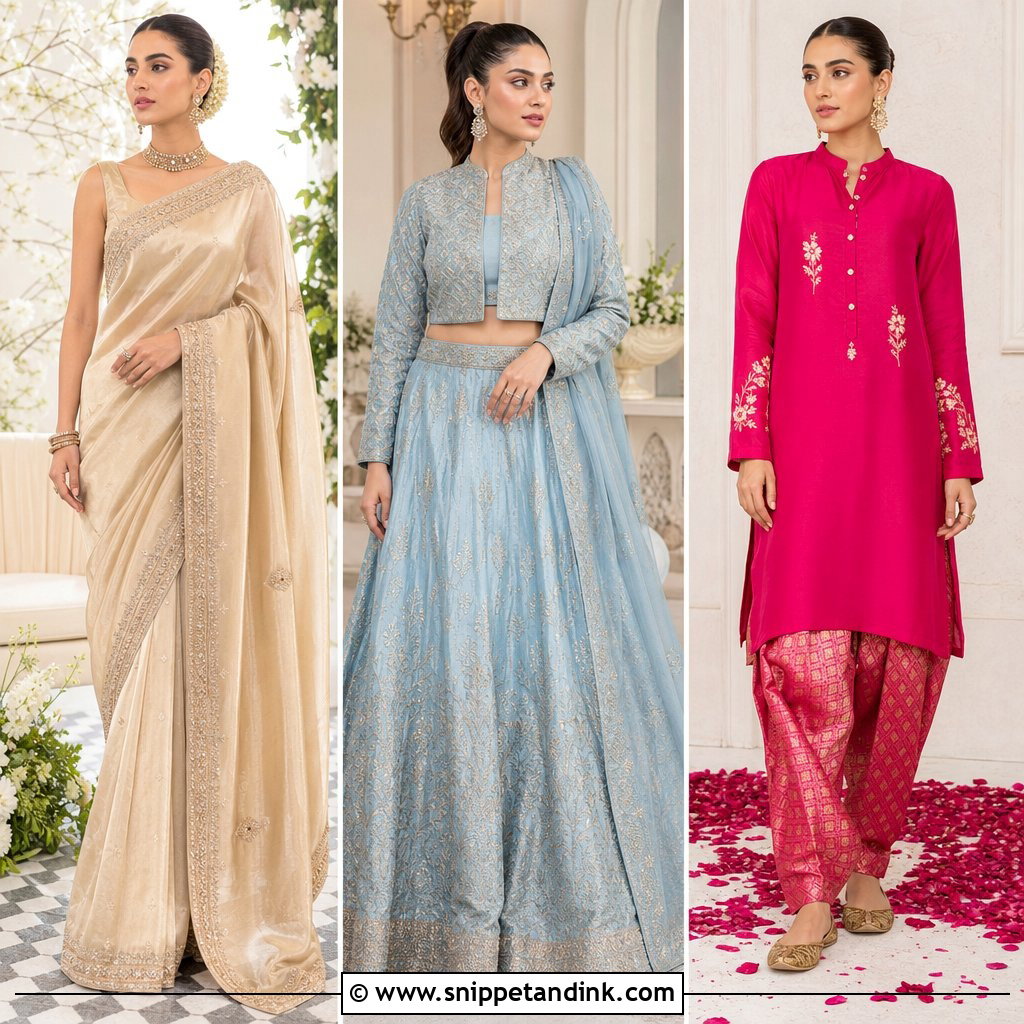
25. Reception Bride Dress
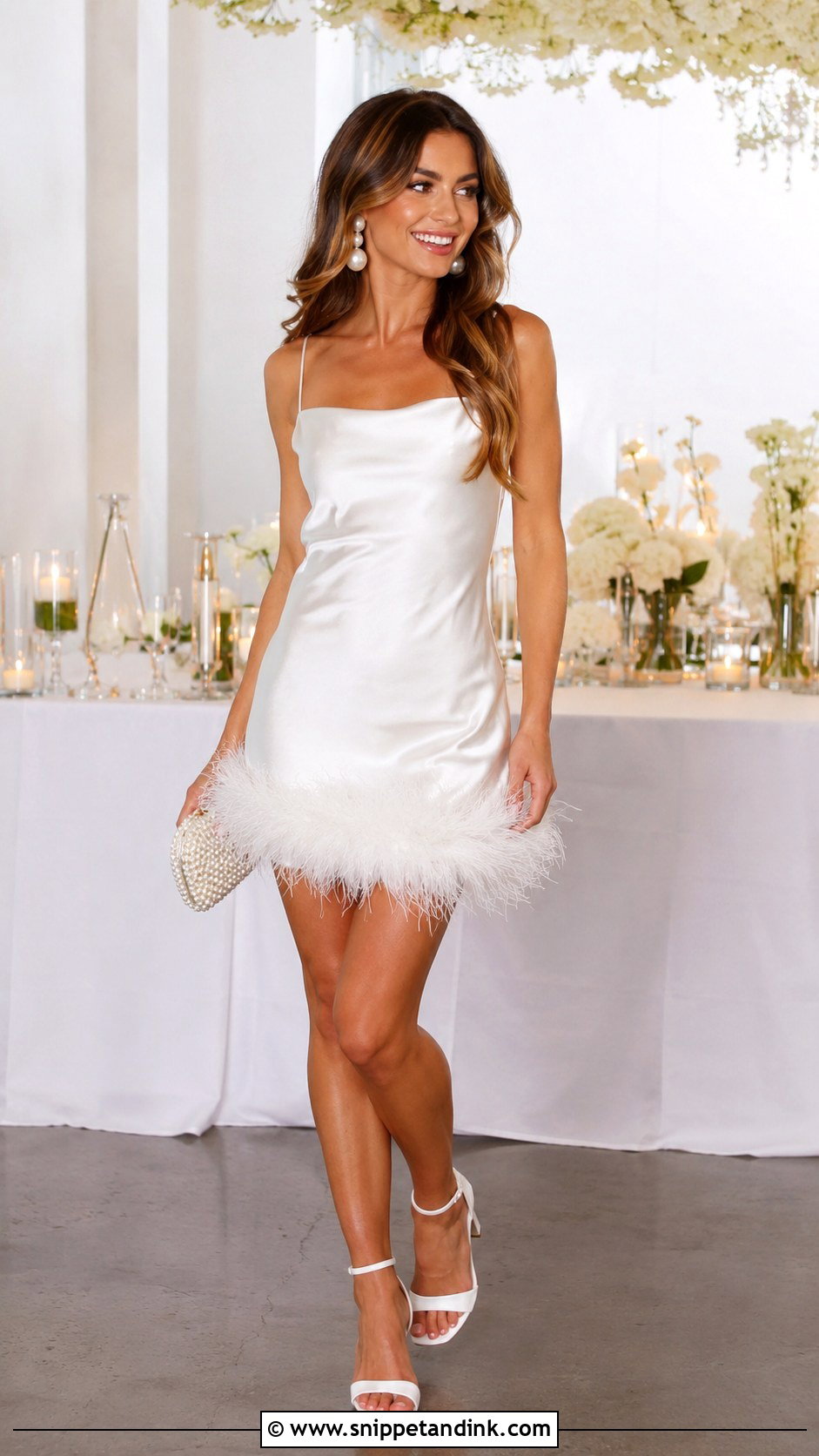
A reception change gives you freedom to dance. Many brides choose a lighter second look such as a satin slip, a beaded midi, a feather-trimmed mini or a column dress. I plan the change for after dinner, since it takes about fifteen to twenty minutes with someone helping with the closures. If your ceremony gown is traditional, this outfit can show more of your personality. Choose fabric that moves and won’t show sweat marks under the dance-floor lights; matte crepe is safer than thin silk.
Fitting Room Tests I Ask Every Bride to Do
Standing still in front of a three-way mirror tells you almost nothing about a wedding day. I ask brides to run through the day in miniature before they sign off on any alteration.
- Sit in a dining chair for five minutes. Note where the bodice digs in and where the fabric creases.
- Raise both arms as if hugging someone taller. If the bodice rides up, the armholes or straps need adjusting.
- Walk a few steps forward and back. Kicking the front hem means it’s still too long for your shoes.
- Turn quickly, then check the bustle. A bustle held by a single hook will pull loose on the dance floor.
After the Last Dance, Before the Gown Goes in a Box
Stains you can’t see now will show later. Sugar from champagne and cake dries clear on fabric and then turns yellow-brown months later, so I recommend a professional cleaner who specializes in bridal gowns within a few weeks of the wedding.
For storage, the gown should go in acid-free tissue and an acid-free box or a breathable cotton bag, never the plastic garment bag it came in, which traps moisture. Keep it somewhere dark, dry and at a steady temperature, so not an attic or basement. Hanging a heavy beaded gown for years stretches the shoulders; fold it with tissue padding at each crease instead, and refold it along different lines once a year if you can.
A Gown You Can Sit, Dance and Hug In
The gown that works is the one you forget you’re wearing by the second hour. Trends point you toward ideas, but fit, venue, season and how you move decide it. Lace, satin, corsets, capes, pearls, bows, soft color and short reception dresses can all look refined when the styling stays balanced. Plan the full outfit, from shoes and veil to jewelry, bouquet and hair, and test it the way you’ll live in it: sitting, walking, hugging and dancing. Take these looks into your appointments as a starting point, then trust what feels right in the mirror and in motion.
You'll Like These Ideas:






Leave a Reply