
A low ponytail is the most underrated wedding style I do. It shows off a neckline and earrings like an updo, it moves like hair worn down, and it’s far more comfortable than either by hour ten. It’s also less simple than it looks, because a ponytail shows exactly how thick your hair is and every bump at the crown. Here are 20 versions I build for brides, from glossy and minimal to braided, beaded and bow-trimmed variations, with what each one takes to hold up through a wedding.
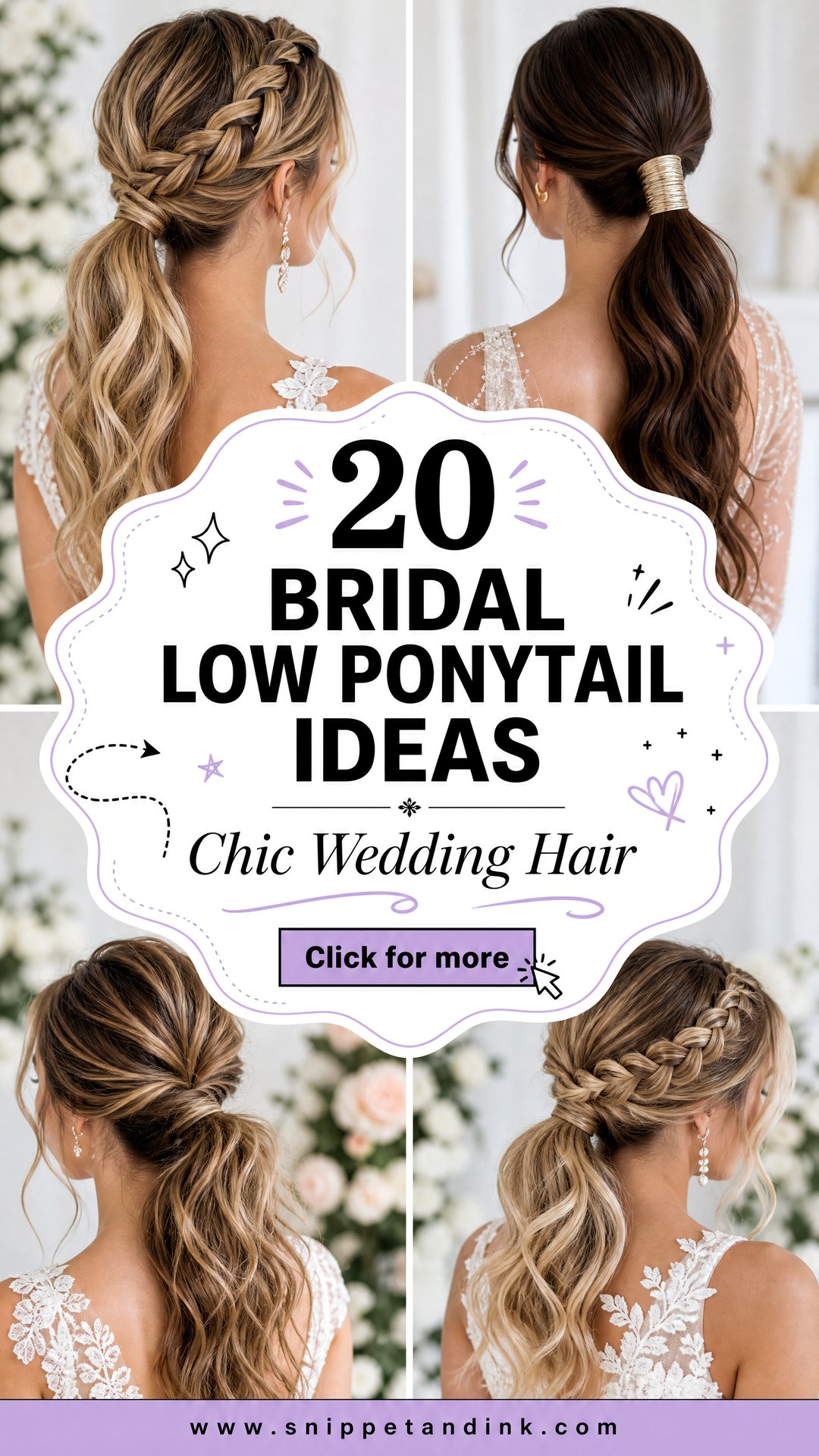
Does Your Ponytail Need Borrowed Hair?
A ponytail is the most honest style there is. All your hair ends up in one place, so if the tail is thin or short, everyone can see it. Before we plan a style, I gather your hair into a loose pony at the trial and look at it from behind and from the side.
If the tail looks thin, extensions fix it in one of two ways. A wrap-around ponytail piece clips in above your elastic and gives a full tail instantly; the wrap hides where it joins. Clip-in wefts are placed underneath your own hair before it’s gathered, which blends better with waves. Either way, the color has to match your ends, not your roots, since the tail is what everyone sees.
Layers are the other problem. Short layers escape a low ponytail, especially around the nape and ears. I curl and pin them into the tail, or add a small braid underneath to catch them. Very thick hair has the opposite issue: the base gets bulky, so I sometimes thin out the gathered section by braiding or twisting part of it under the top layer.
If you are growing your hair for the wedding, a ponytail is forgiving, but be realistic about length. Hair that reaches just past your shoulders will make a short tail unless we add some.
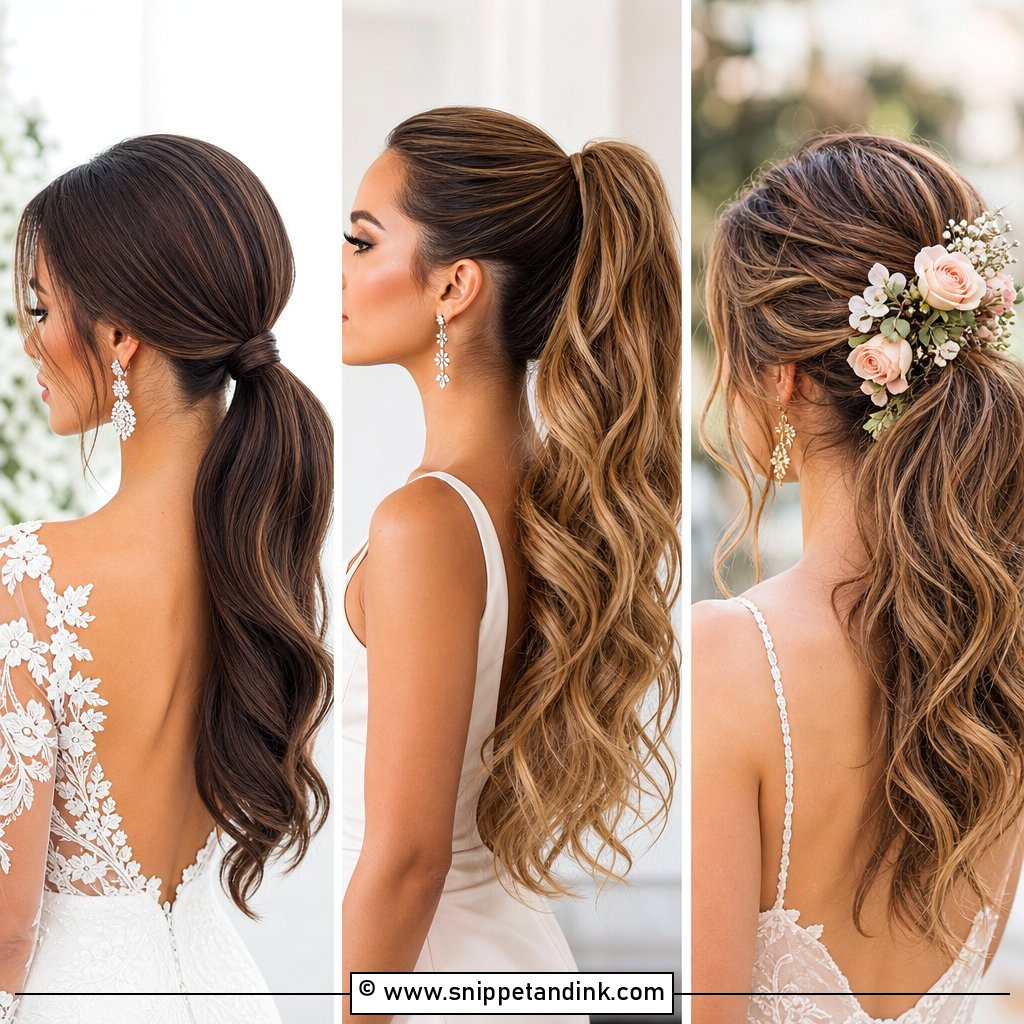
1. Sleek Low Bridal Ponytail
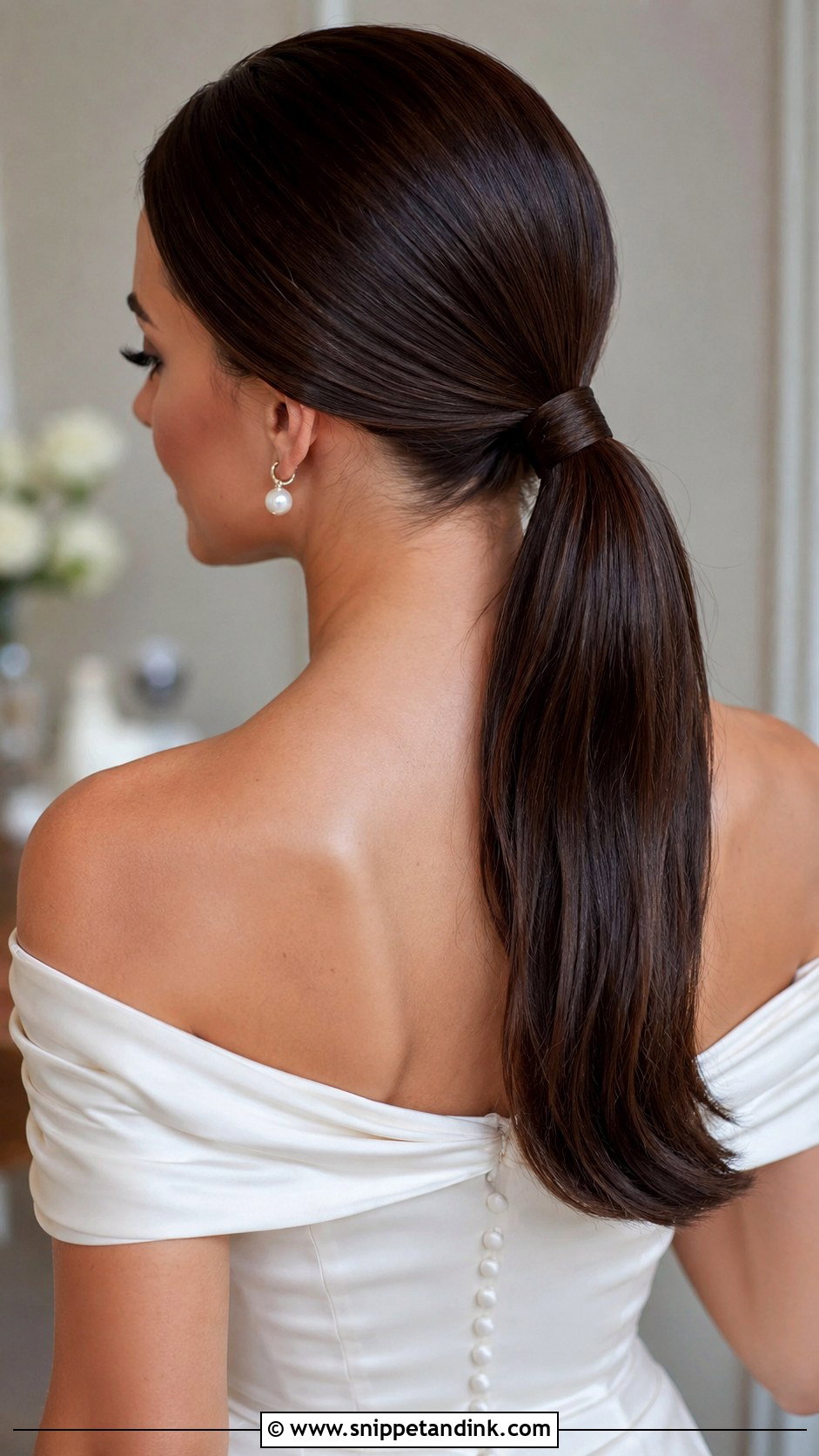
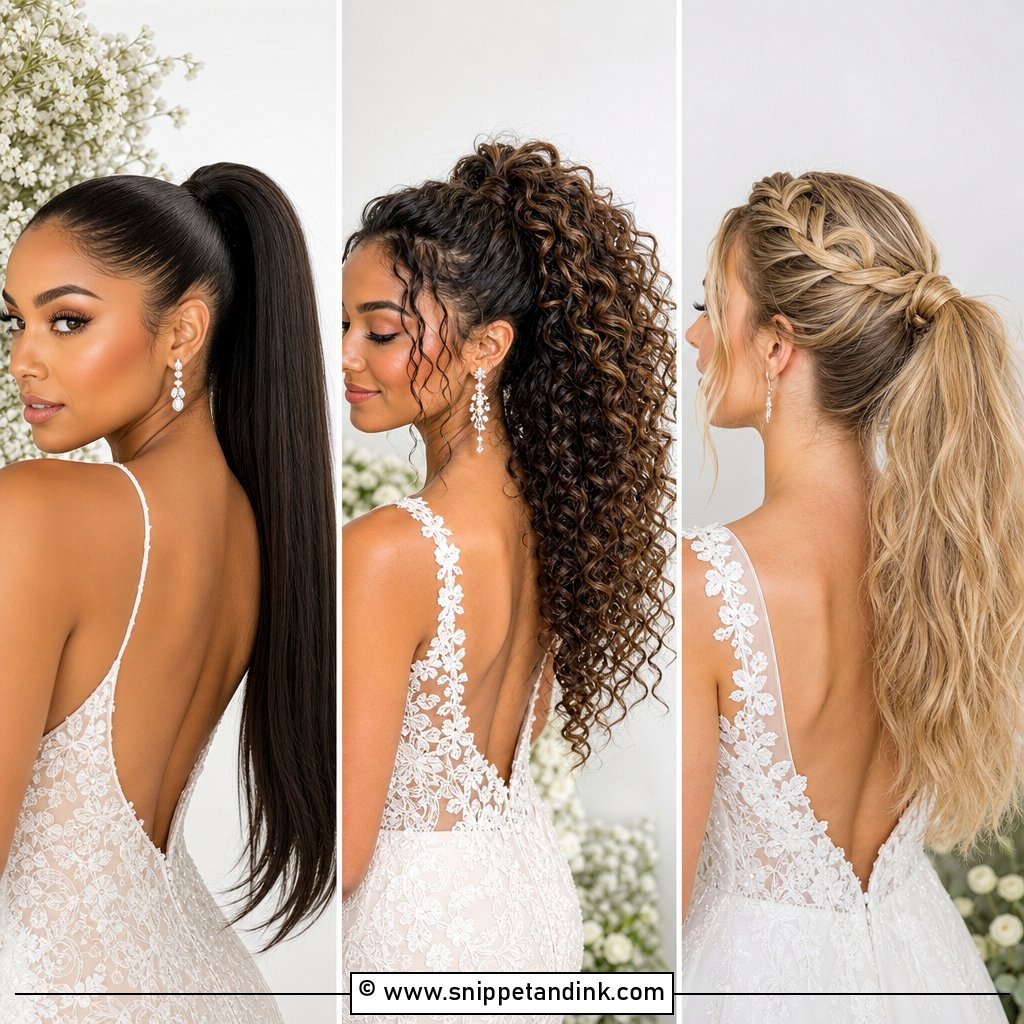
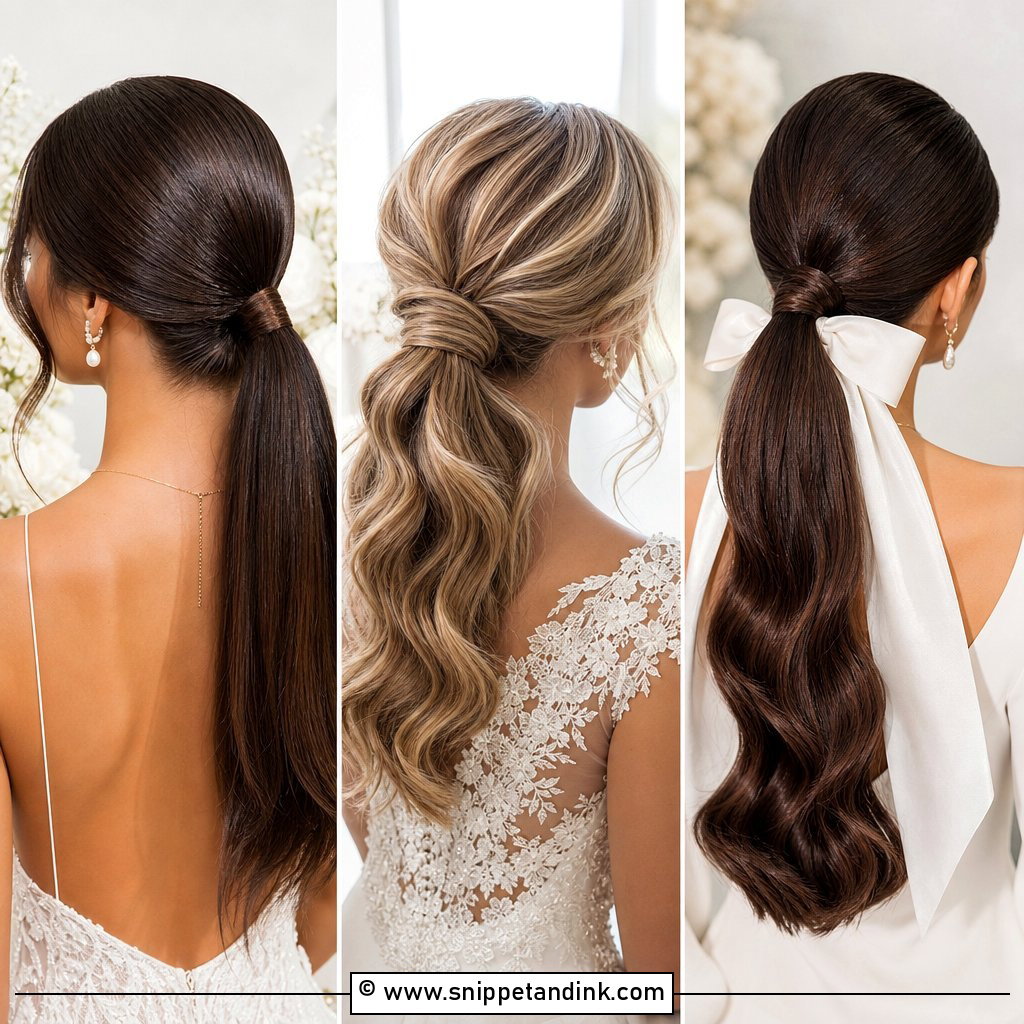
The sleek version is all surface. I smooth every section back with a boar-bristle brush and a little serum, run a strong gel only along the hairline, and set the elastic at the nape before wrapping a thin strand of your own hair round the base to hide it. Two elastics hold better than one; on heavy hair a single band slides down within a few hours. The finish is mirror-smooth, so it suits structured gowns and statement earrings. It’s honest about hairlines, though, so if yours has cowlicks we’ll test how they behave at the trial.
2. Low Ponytail With Soft Waves
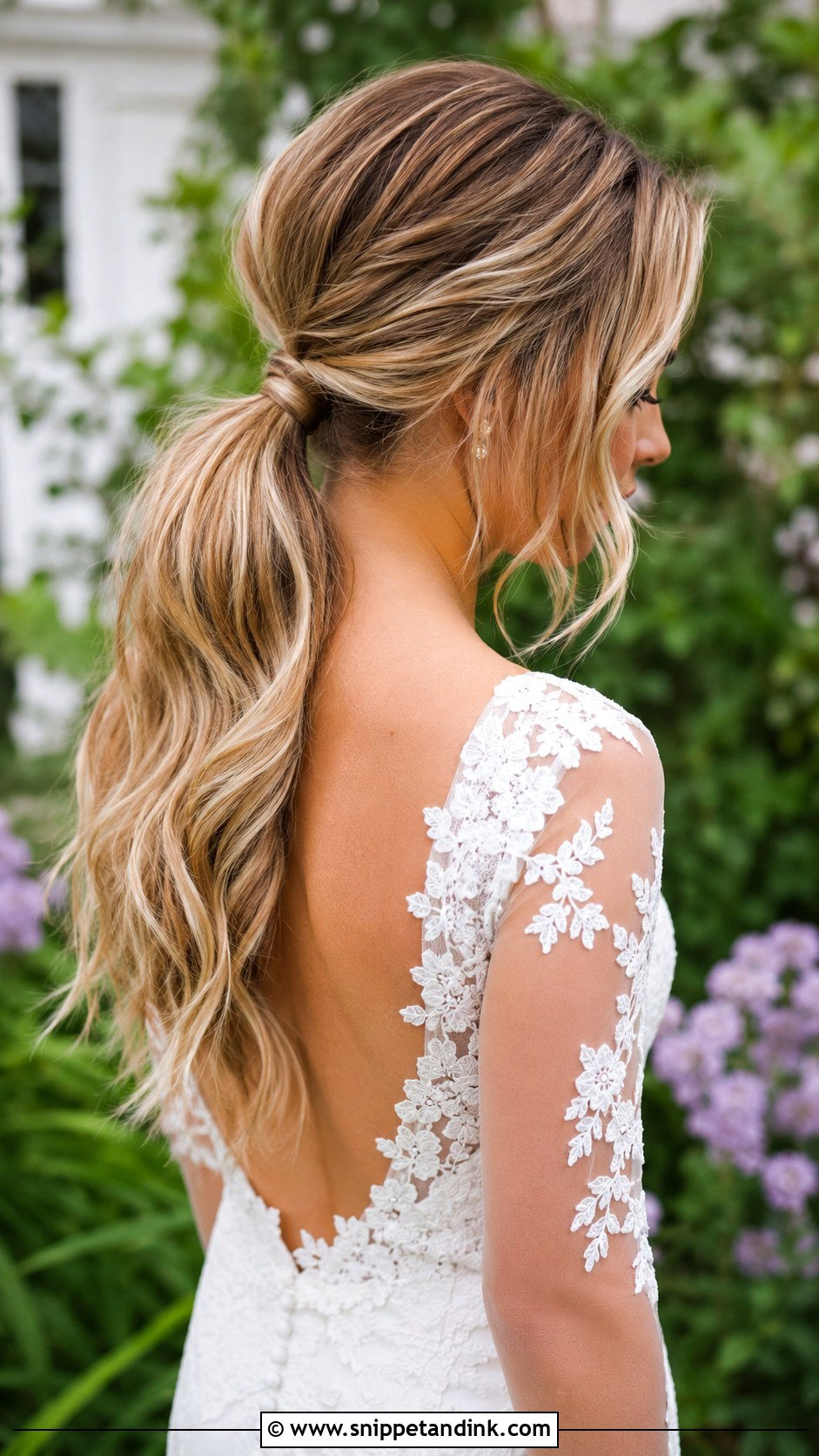
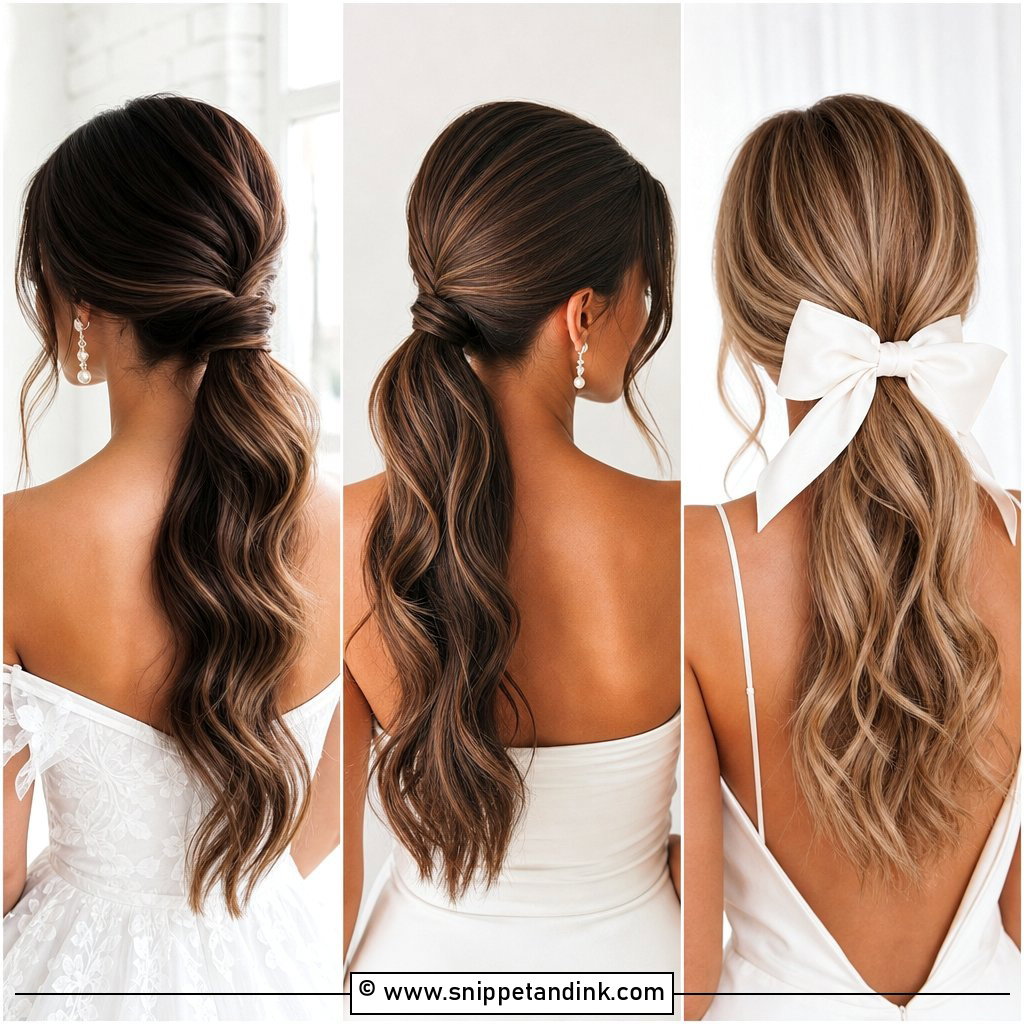
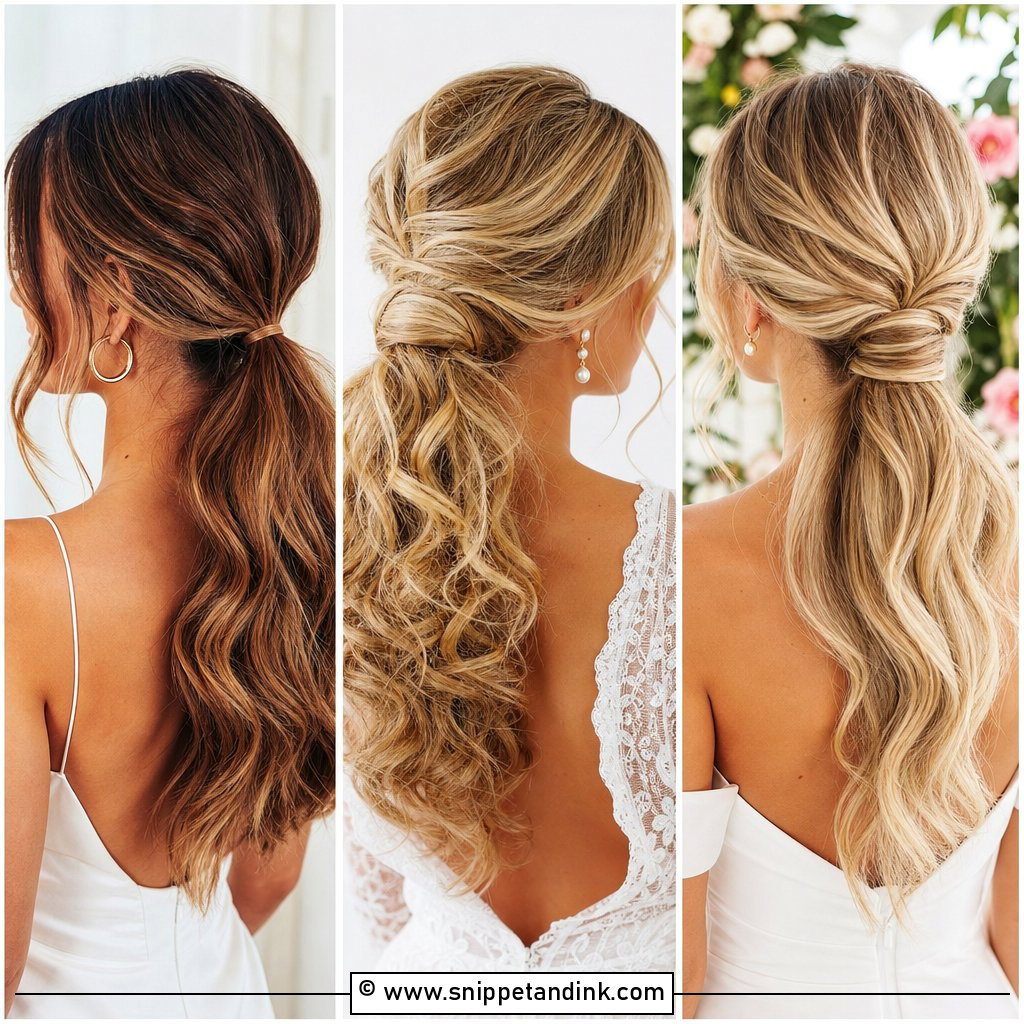
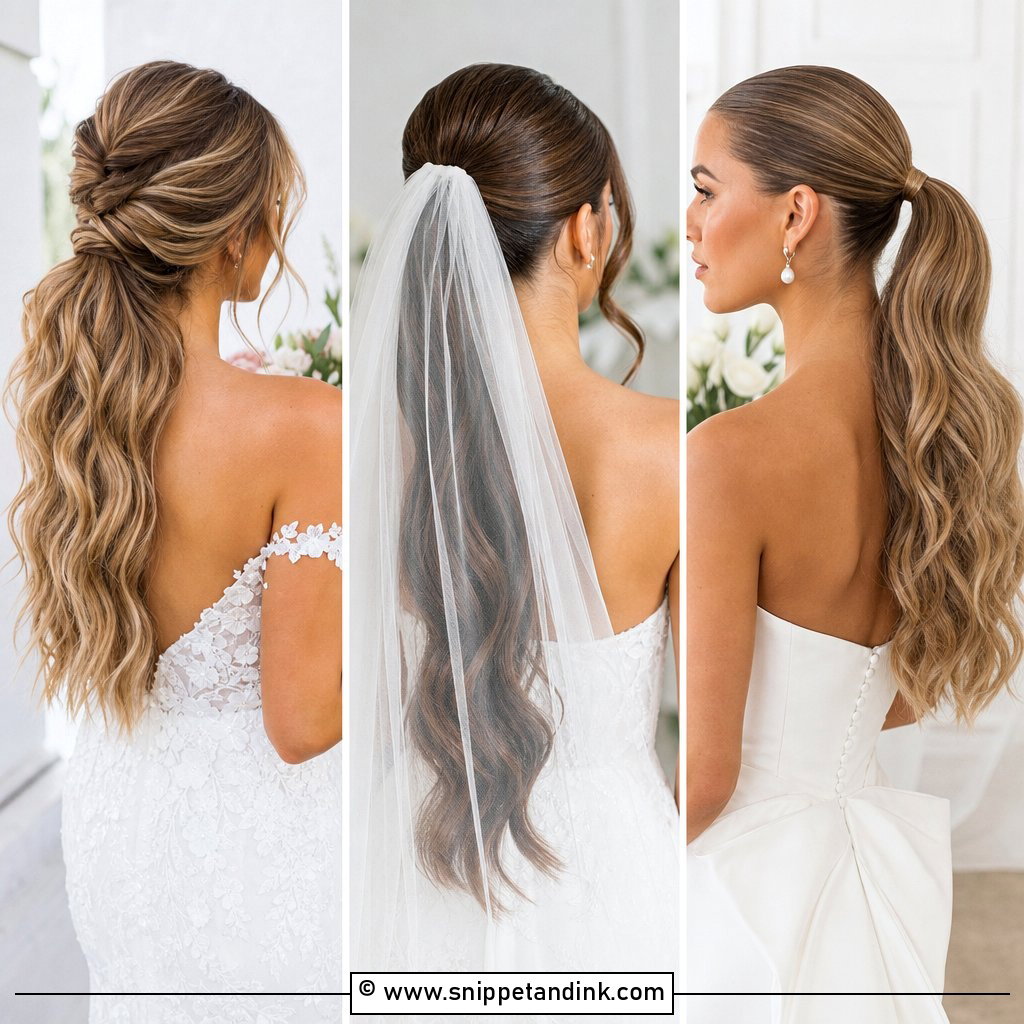
Here the crown stays smooth and the length is curled into brushed-out waves. It gives movement without losing the neat line at the top, which is why I suggest it for garden ceremonies and outdoor venues. I curl the tail before it goes into the elastic, pin each curl to cool, then brush out once everything is set, so the waves hold. A couple of face-framing pieces soften the cheekbones. Finish with a flexible spray, not a stiff one, so the tail still moves when you turn your head.
3. Bubble Low Ponytail for Brides
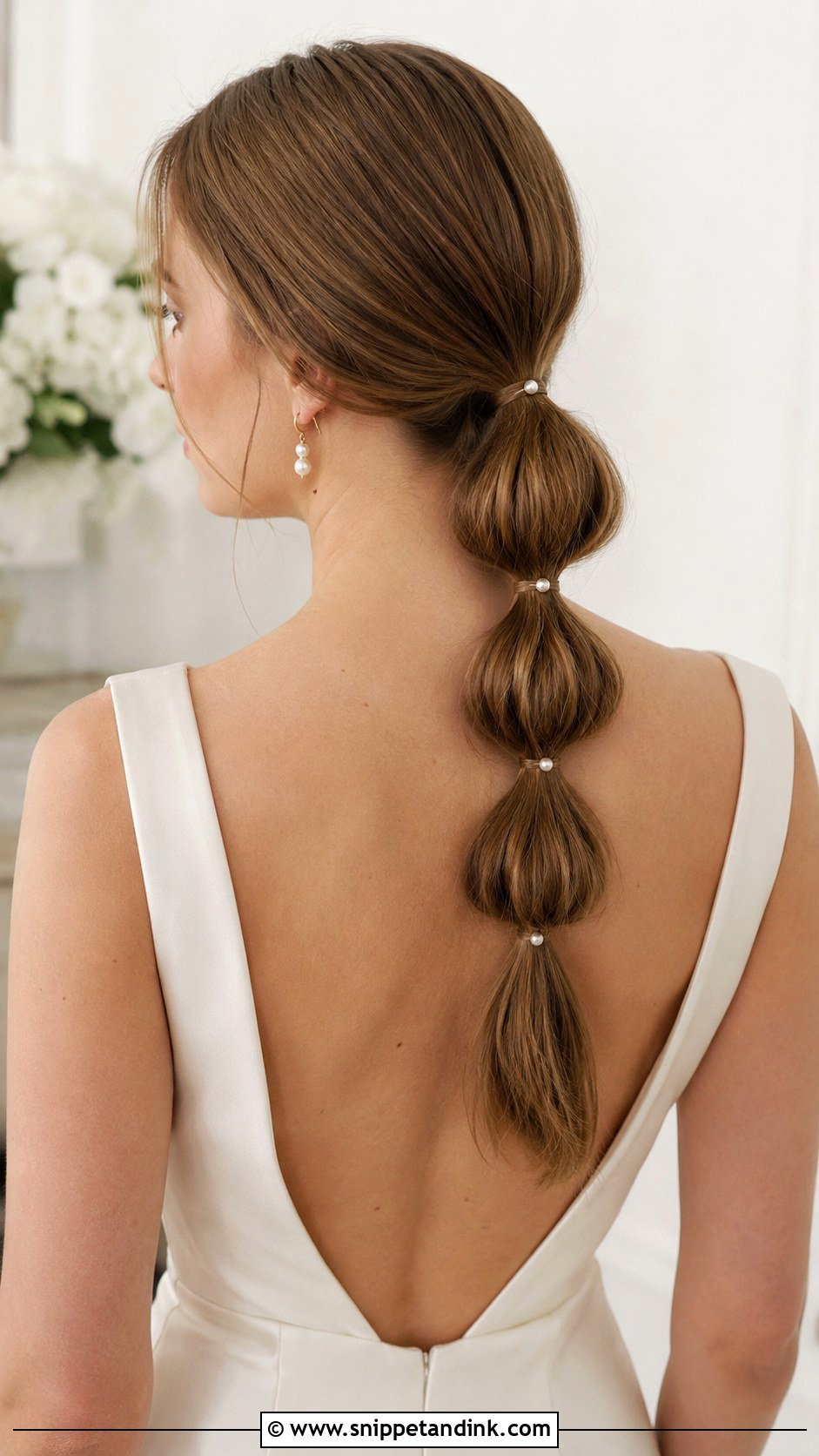
The bubble ponytail is made by tying the length off with small clear elastics every few inches, then gently pulling each section outward into a round shape. It looks modern and a little editorial. The pulling is where the skill is: tug unevenly and the bubbles go lopsided, so I work from the top down and check from behind. Tiny pearl pins can sit between bubbles. It holds very well through dancing because each section is tied. Fine hair makes small bubbles, so extensions help here.
4. Braided Low Bridal Ponytail
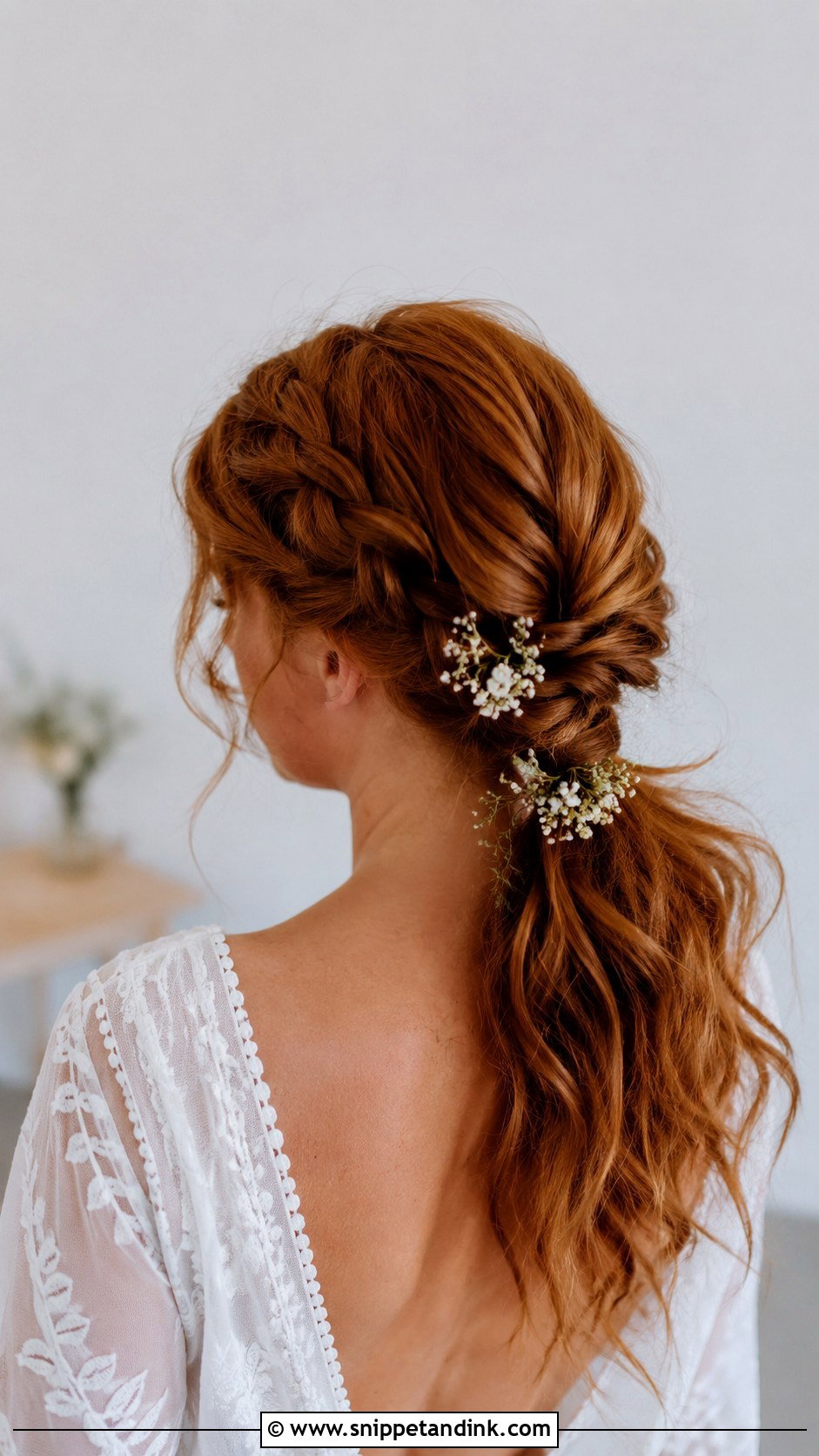
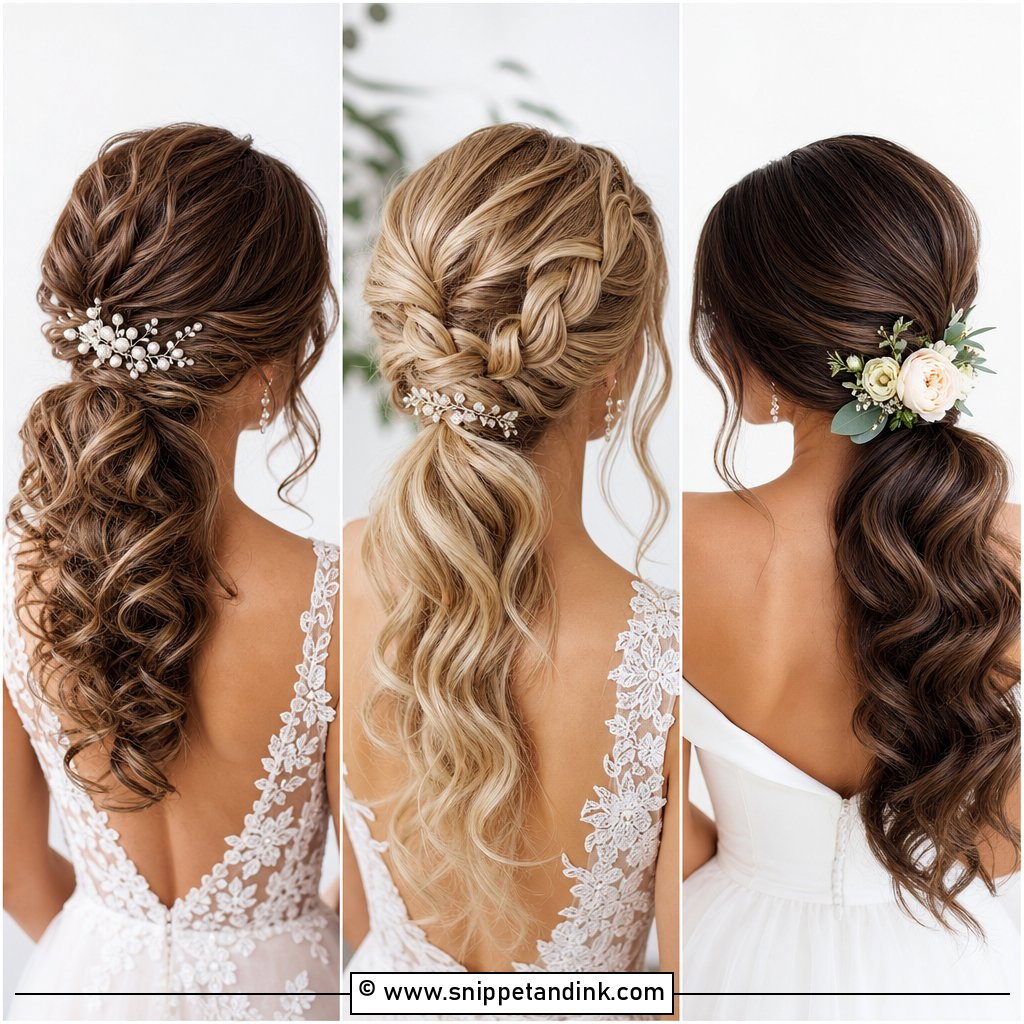
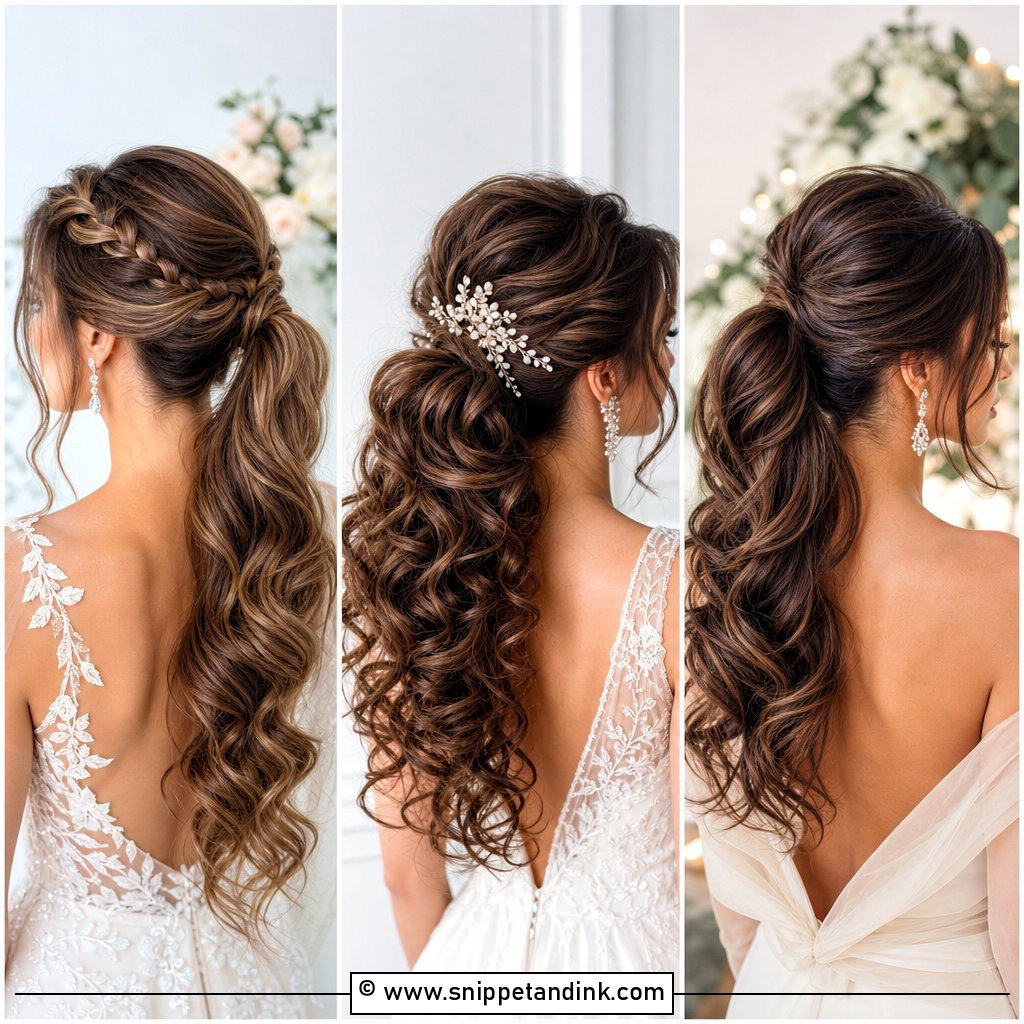
A braid can run along the crown, down one side or wrap around the base of the ponytail. Each placement looks different: a crown braid feels romantic, a side braid feels relaxed, and a wrapped base looks tidy. I braid fairly tight and loosen the edges once it’s secured, which gives texture without the braid falling apart later. Tendrils and a few small flowers suit boho and rustic weddings. The braid also locks the shorter layers in, which helps on hair that tends to escape.
5. Low Ponytail With a Bow
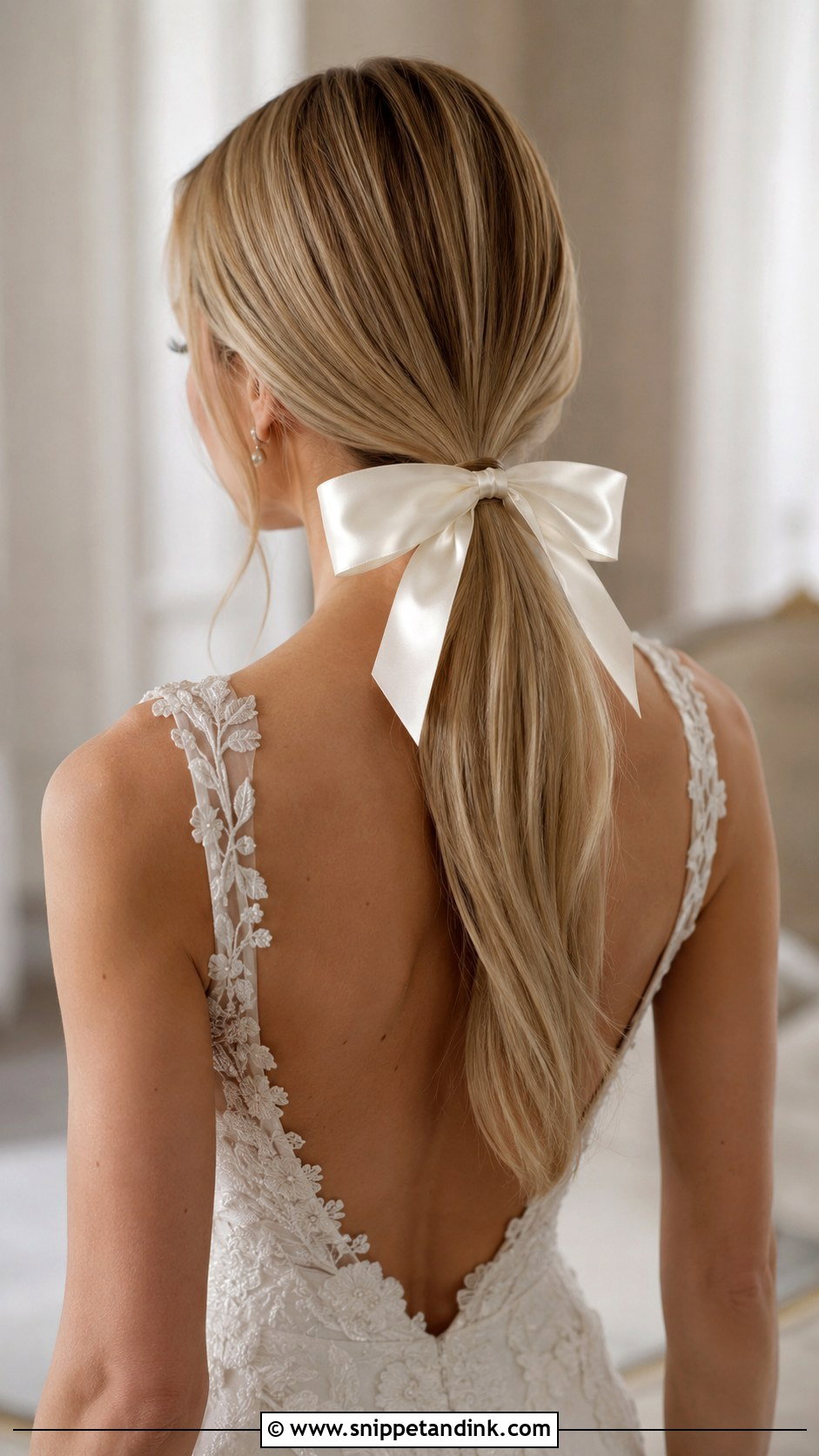
Bows have come back into bridal hair, and a low ponytail is the easiest place to wear one. A satin or organza bow at the base turns a plain pony into the focus of the back view. Ivory or white is classic, a pale pastel is more playful. Keep everything else simple: smooth crown, plain tail. Size matters more than color. A bow that’s too small disappears in ceremony photos taken from the back of the aisle, and one that’s too big can look like a gift tag, so we hold a couple of sizes up against your dress at the trial.
6. Pearl-Adorned Low Ponytail
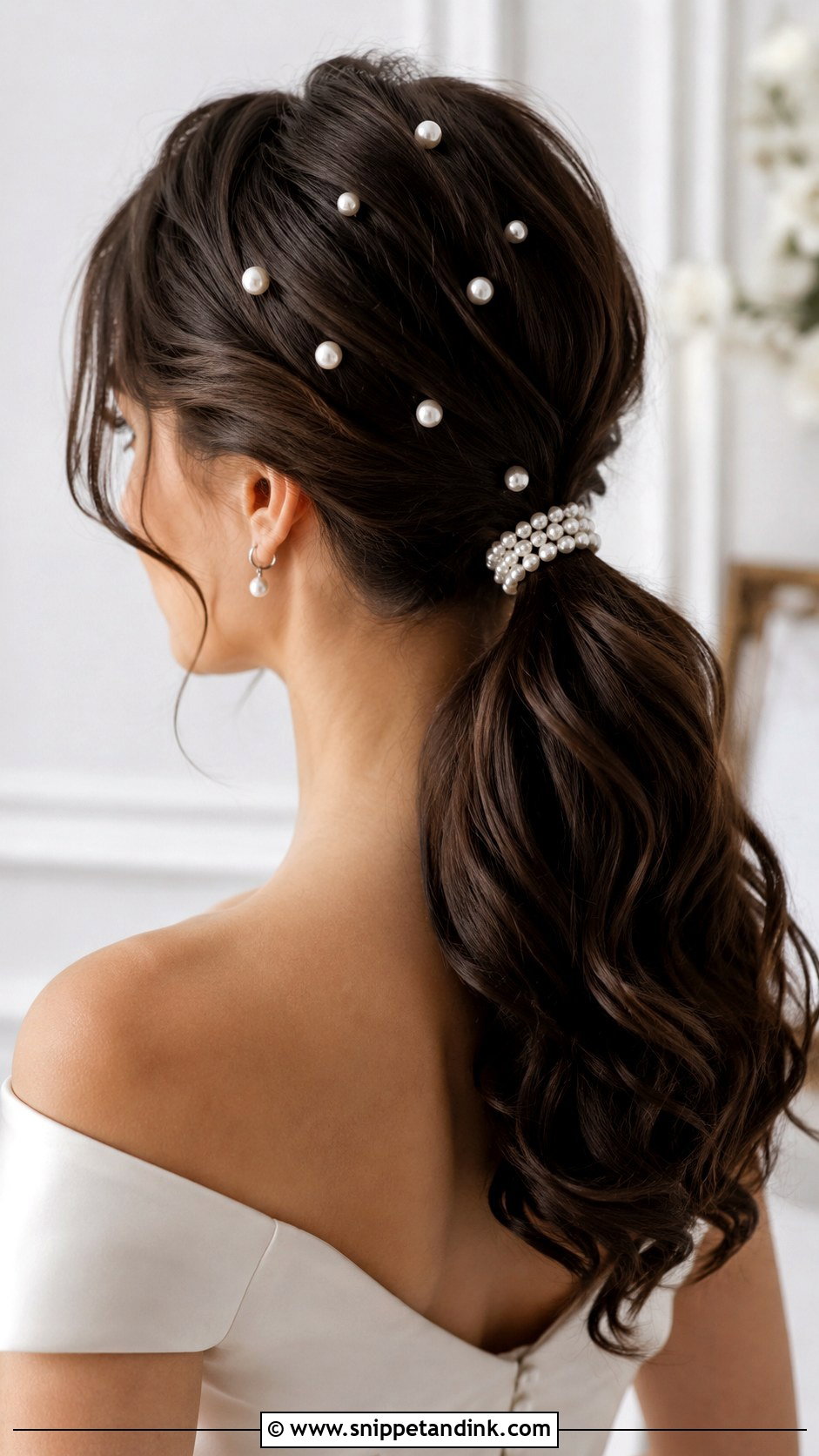
Pearls look right with a low ponytail because the ponytail gives them a clean background. I use small pearl pins or a pearl-strand tie. Cluster them near the base for an editorial look, or scatter them along the crown for something softer. On a sleek base they need to be pushed into the hair at an angle, or they slide out of smooth hair within an hour. They suit pearl earrings and delicate jewelry, and a few go a long way.
7. Low Ponytail With Curtain Bangs
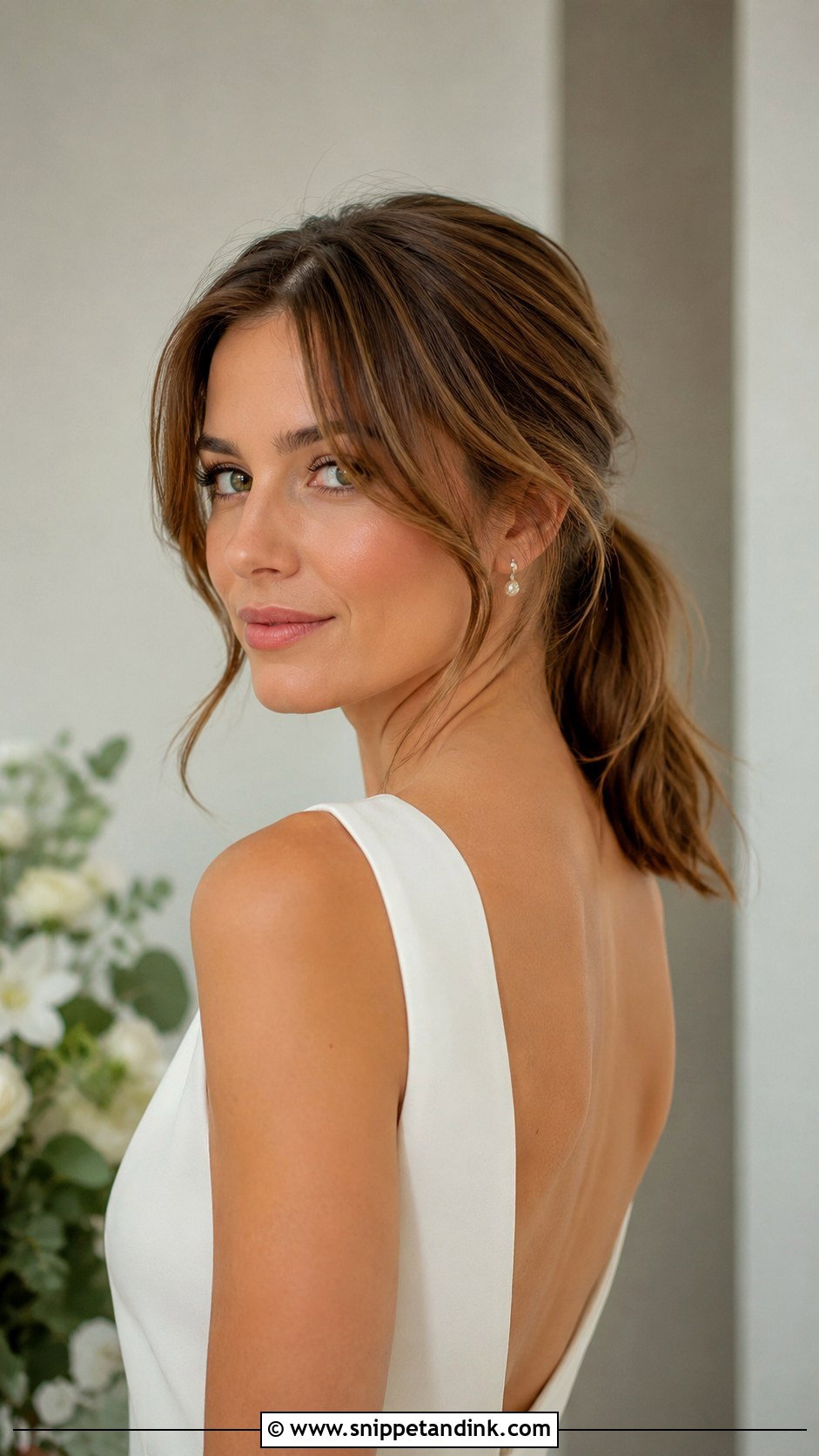
Curtain bangs soften the forehead and frame the eyes, while the rest of the hair goes back into a clean ponytail. The contrast works well, especially on brides who wear their bangs every day and would feel odd without them. I curl the fringe away from the face and set it, since bangs left straight fall into the eyes once the room warms up. It suits brides with shorter face-framing layers. If you’re cutting bangs for the wedding, do it weeks ahead so they’ve settled by the trial.
8. Twisted Low Bridal Ponytail
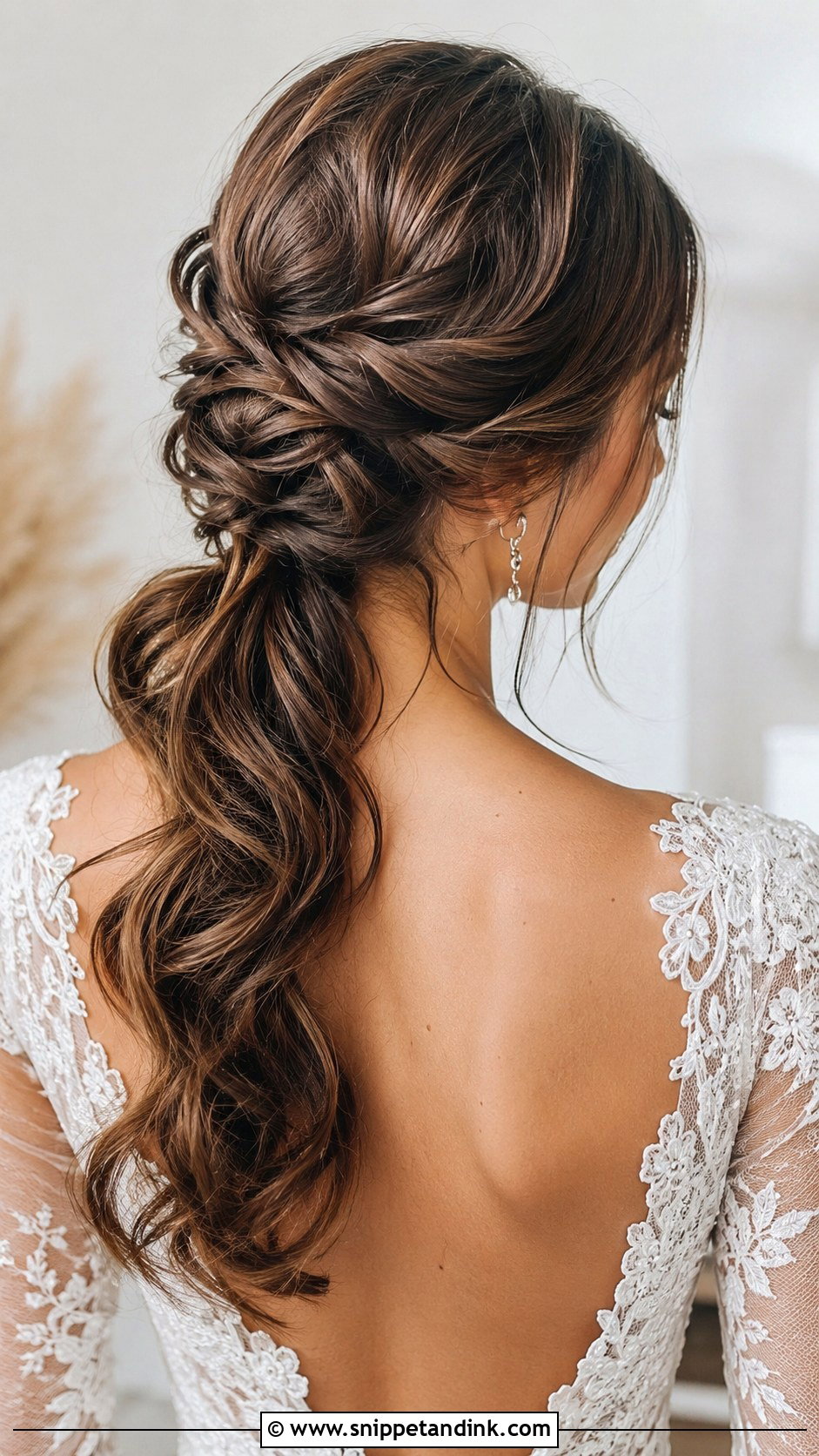
Small twisted sections are pinned back along the head and then gathered into the ponytail at the nape. They add a sculpted texture across the back and keep shorter pieces in place, which is useful on layered hair. Each twist gets pinned along its length rather than only at the end, so nothing unravels during the day. It suits formal and relaxed weddings, and a few loose waves in the tail soften it. A couple of twists near the hairline give the face a softer frame.
9. Low Side Ponytail for Weddings
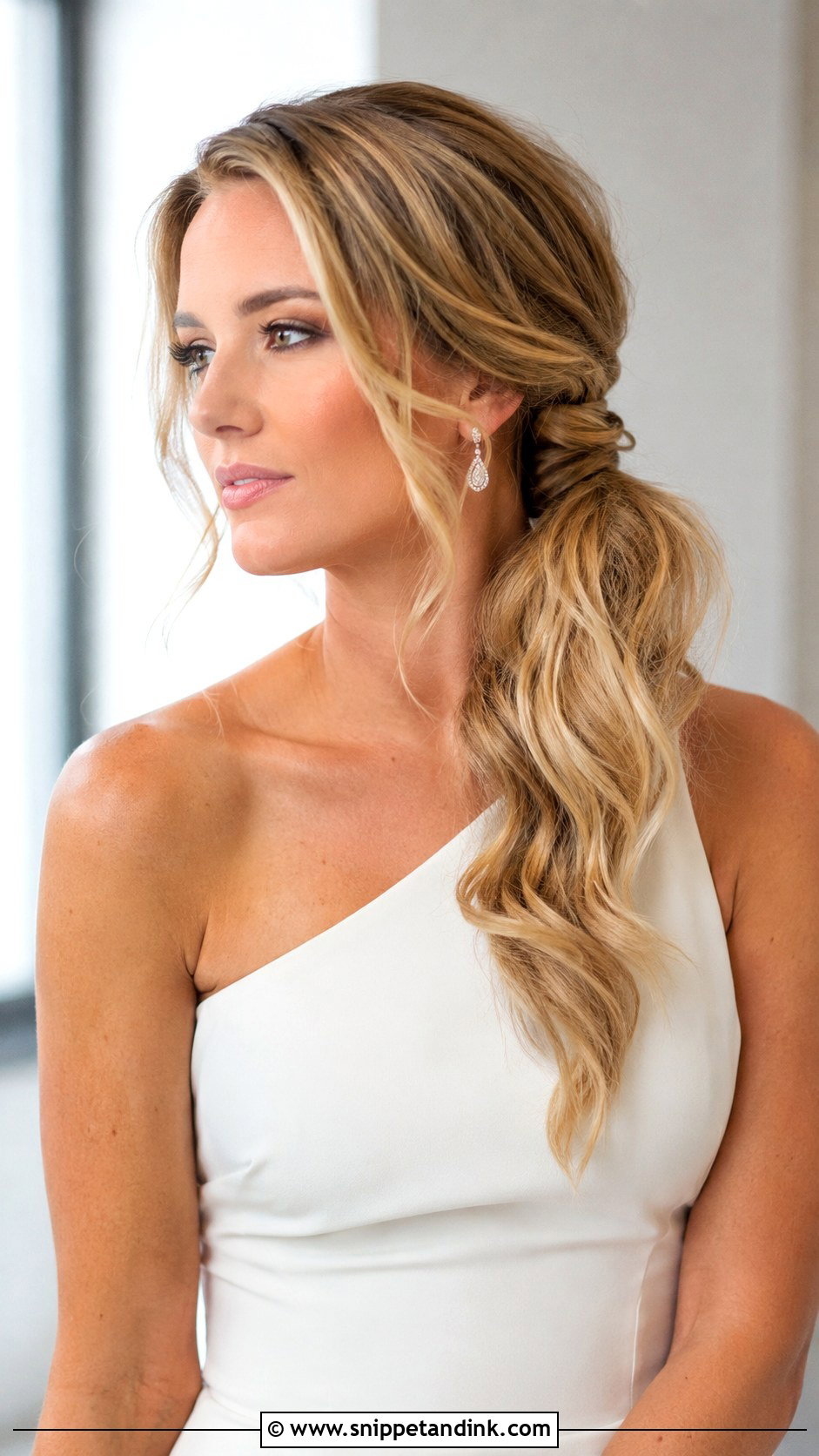
Taking the ponytail to one side and draping it over the shoulder gives an old-Hollywood shape and shows off the opposite earring and shoulder. It suits one-shoulder gowns especially; I usually drape it over the bare shoulder, so the hair and the strap balance each other. The elastic sits just behind and below the ear, and I anchor it with a couple of pins underneath, because a side pony left on its own gradually slides back to center. Soft waves feel vintage; a sleek tail feels sharper.
10. Low Ponytail With Face-Framing Tendrils
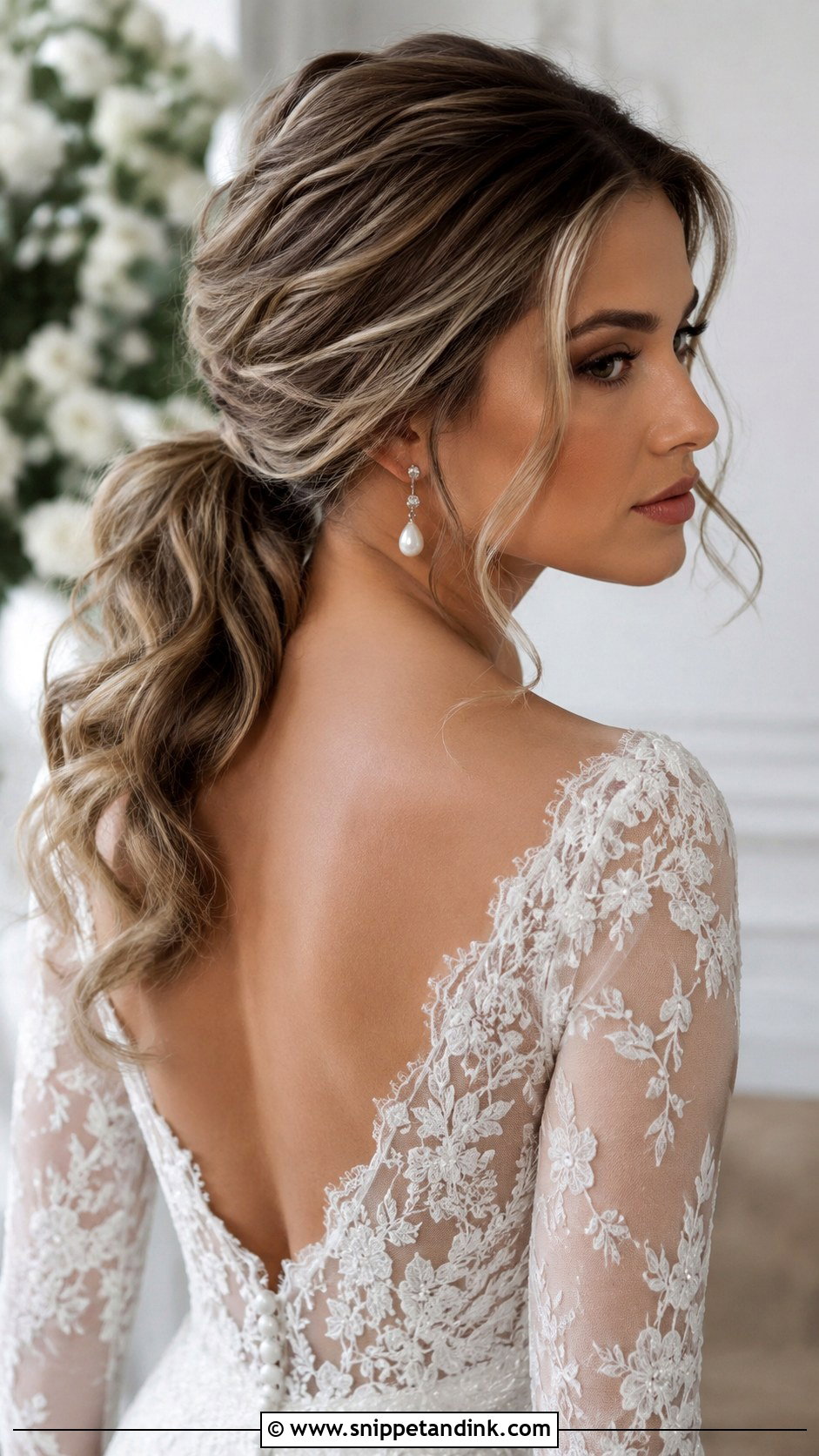
Loose pieces at the temples and ears soften a low ponytail more than anything else. I leave them out when I gather the hair, then curl them away from the face and set them. The common mistake is leaving too many or leaving them too thick, which looks like hair that escaped rather than strands left on purpose. Two or three thin pieces on each side are usually enough. This works on sleek and wavy tails, and it suits brides who find a fully pulled-back style too severe.
11. Slicked-Back Low Bridal Ponytail
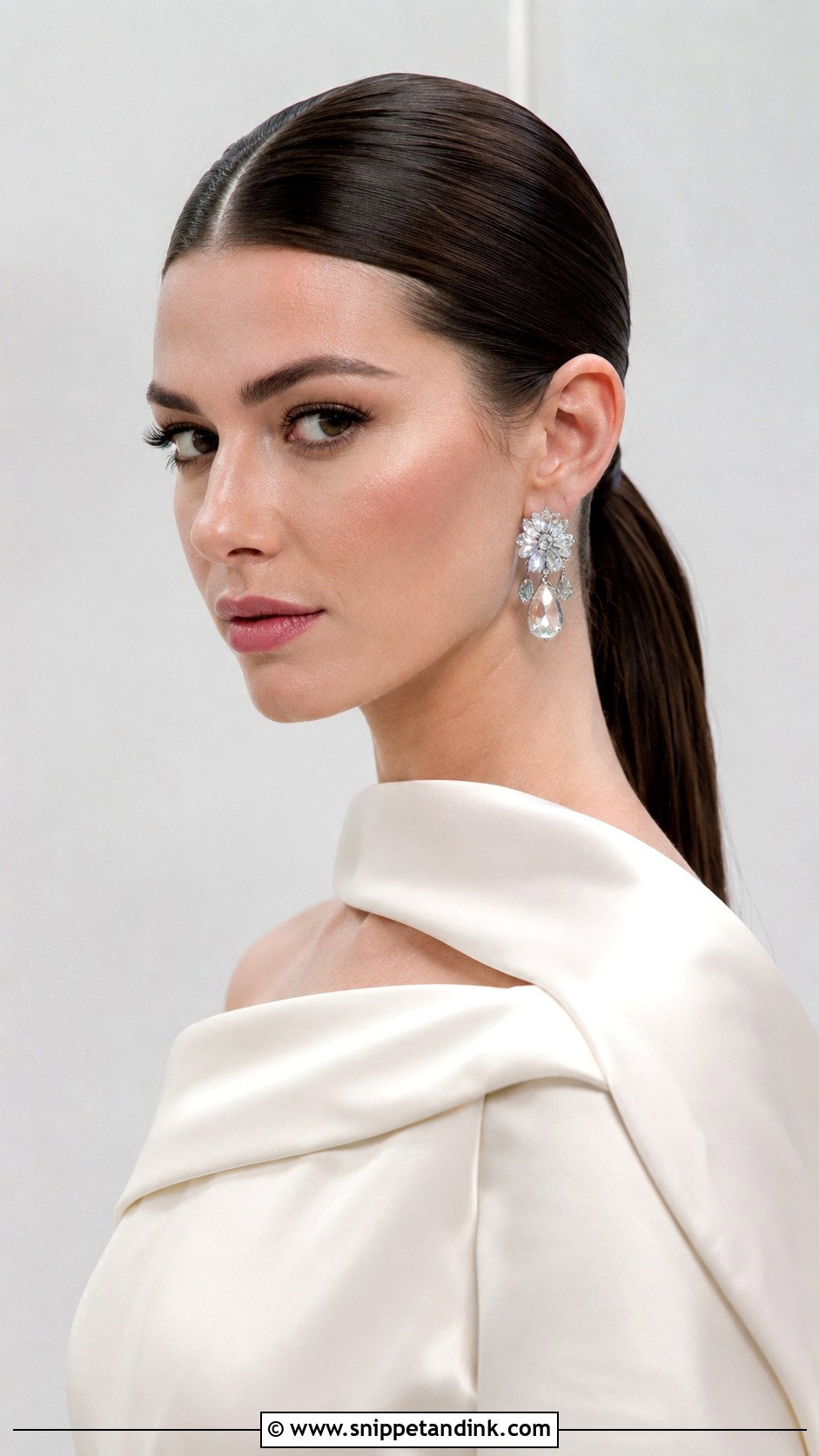
The slicked-back low ponytail has a high-shine, almost wet finish, with every strand pulled tightly back. It puts your face and your jewelry front and center. I use a strong gel on damp hair and comb it through in thin sections, then add shine spray at the end. It pairs with sculptural gowns and stronger makeup. It’s tight by design, so if you get tension headaches from pulled-back styles, tell me early; I can loosen the base slightly without losing the look.
12. Low Ponytail With Hair Wrap
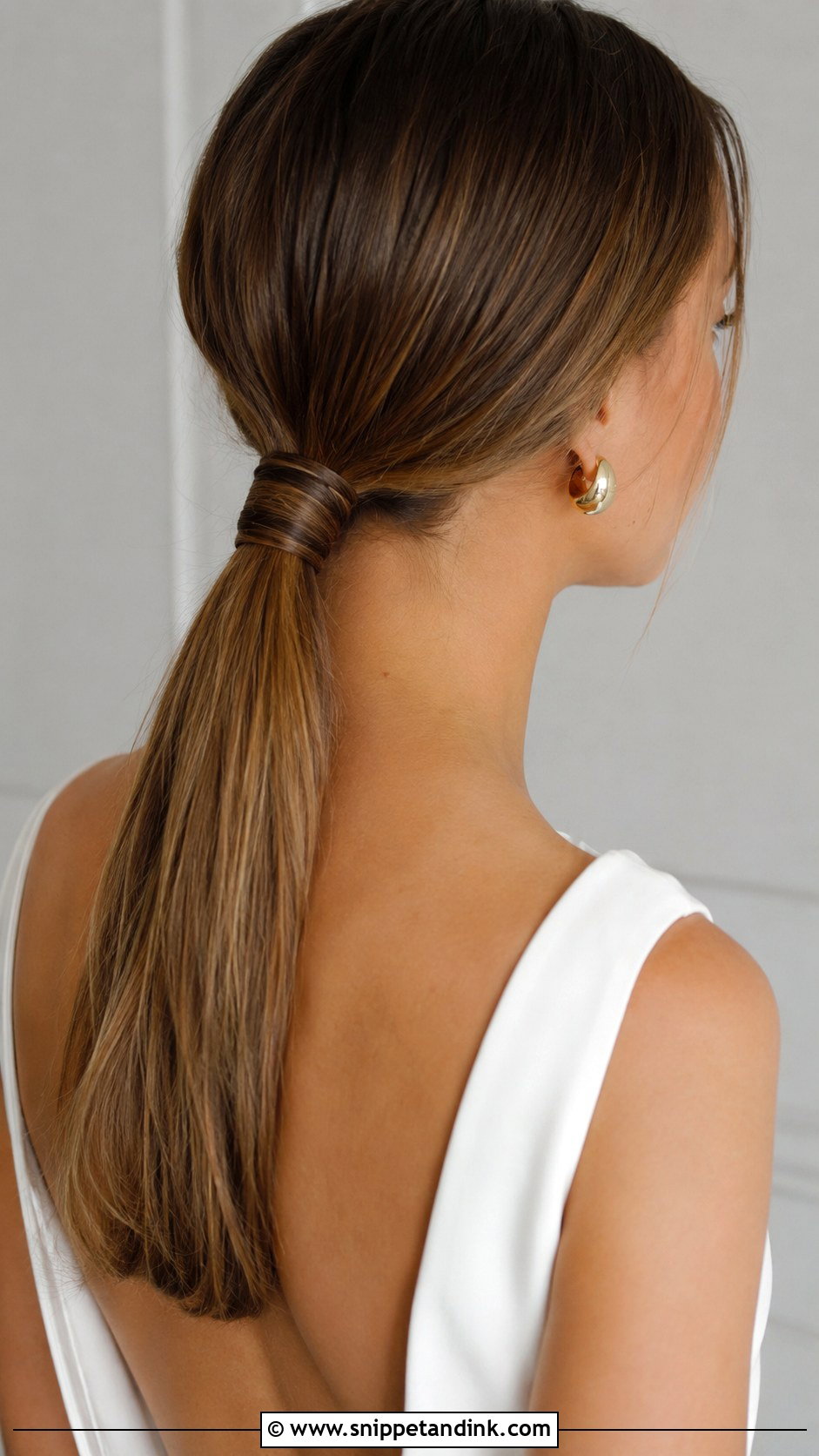
Wrapping a section of your own hair around the base hides the elastic and makes the ponytail look finished. It’s a small step that makes a big difference in photos taken from the side. I take the strand from underneath the tail so the gap doesn’t show, wrap it, and pin the end underneath with one bobby pin pushed upward into the elastic. A thin wrap is subtle; a thicker one acts almost like a cuff. It works on sleek and textured ponytails.
13. Boho Low Ponytail With Flowers
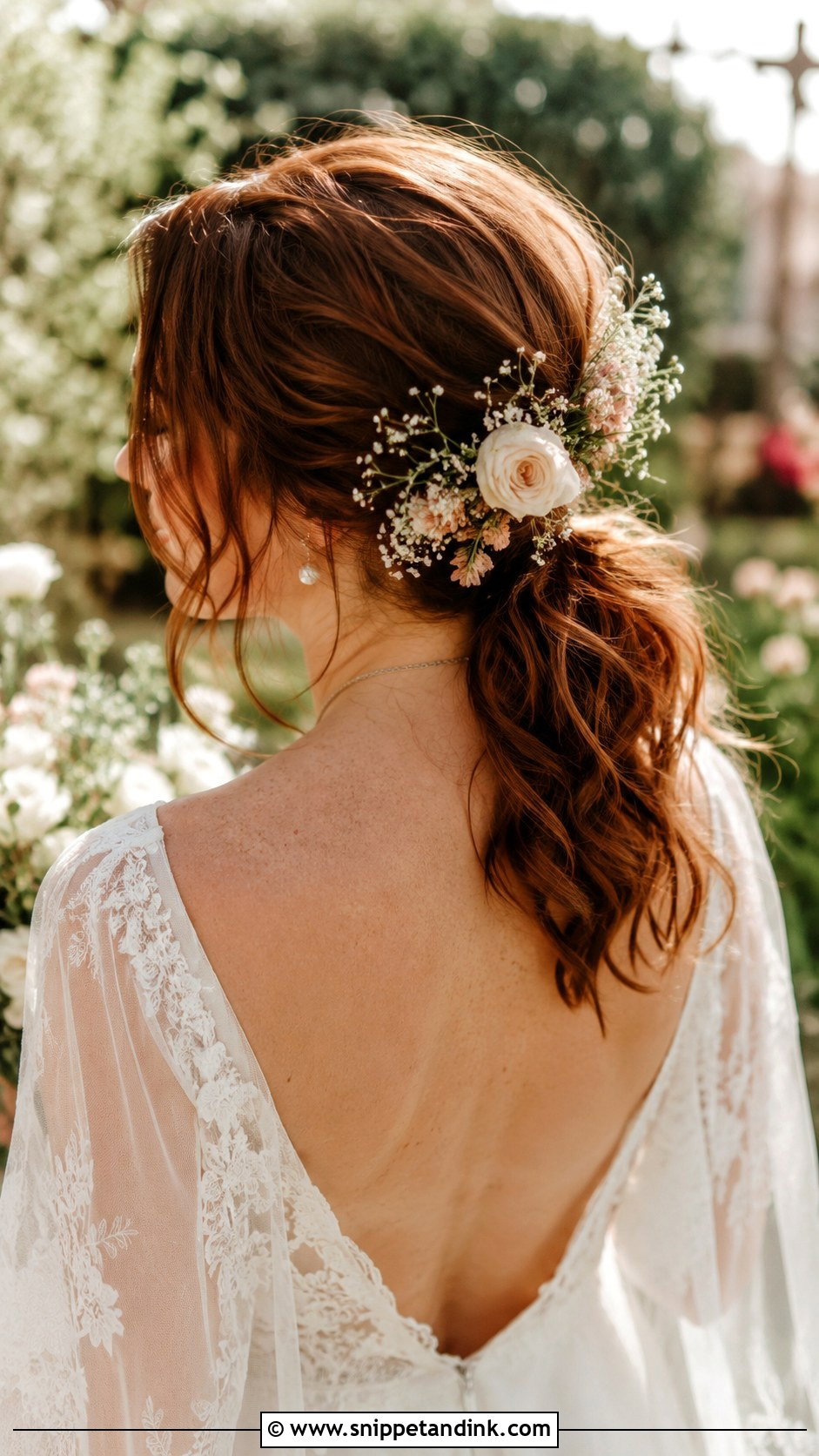
Flowers in a textured ponytail feel fresh and outdoorsy. I gather the hair loosely and tuck blooms along the base or the crown. Baby’s breath, small roses and sturdy wildflowers all work, and the hardier the flower, the better it lasts out of water against warm hair. Ask your florist for extra stems wired for hair, matched to your bouquet. Delicate blooms like sweet peas tend to wilt within a few hours, so I’d keep those for the bouquet.
14. Low Ponytail With Veil
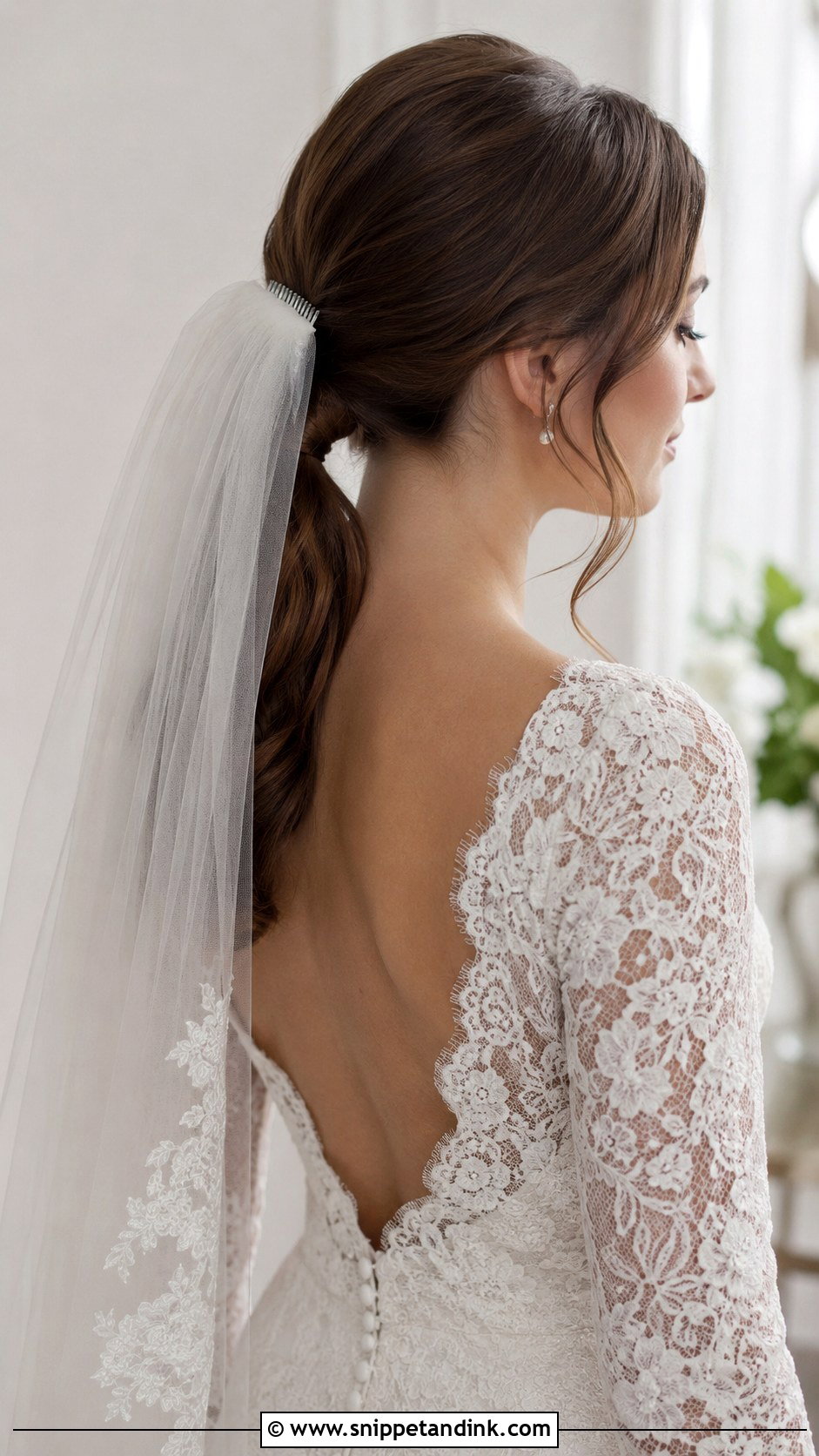
You can put the veil above the ponytail, at the crown, or below it, sliding the comb in just above the elastic. Above gives a more traditional shape; below lets the ponytail sit on top of the veil and stay visible. Either way, the veil comes out after the ceremony and you have a second look for the reception. I choose a comb-attached veil and build a small pinned section where the comb grips, so the fabric’s weight doesn’t drag the ponytail down. Remove it slowly so it doesn’t pull pins out.
15. Textured Low Ponytail for Brides
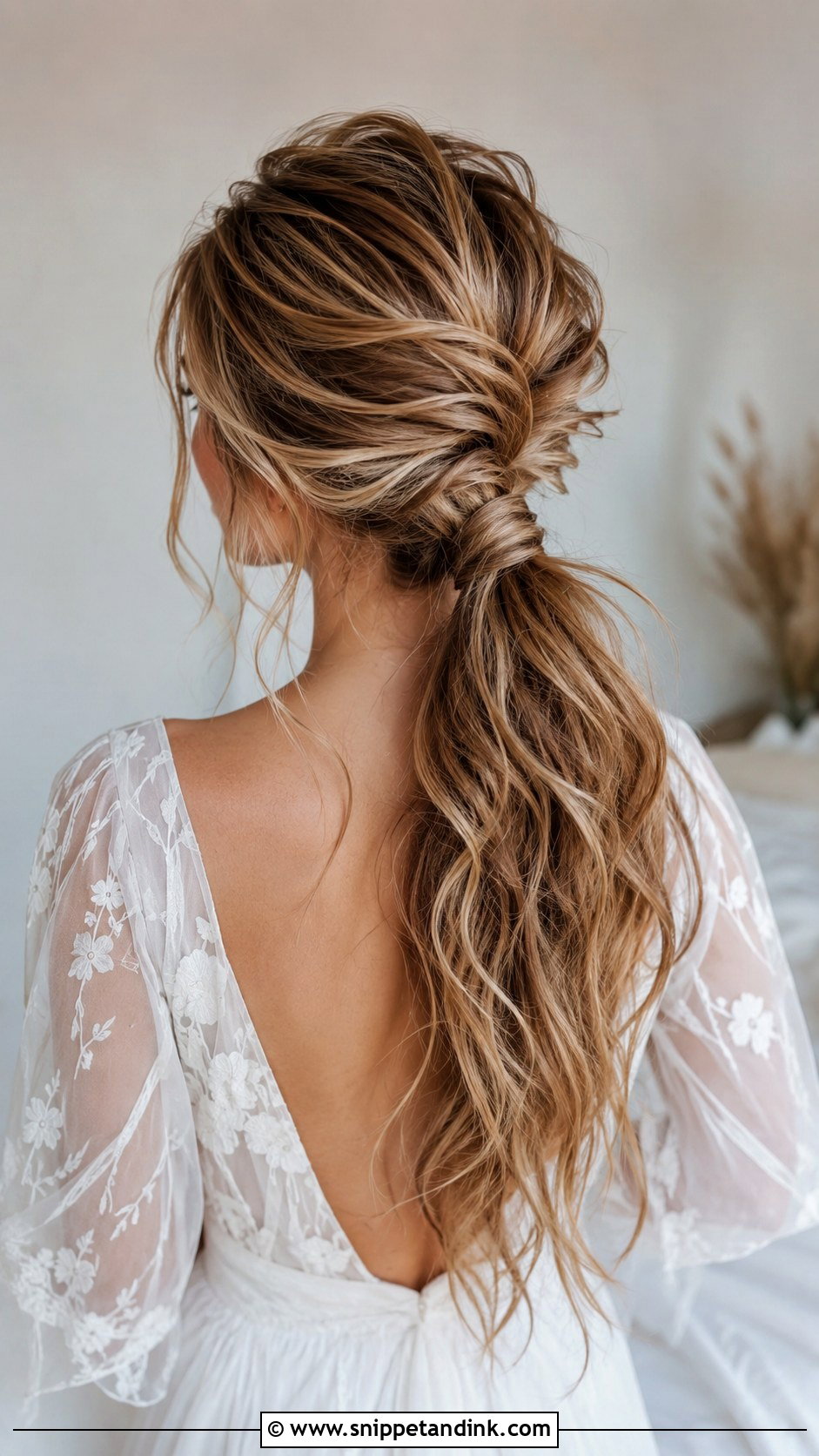
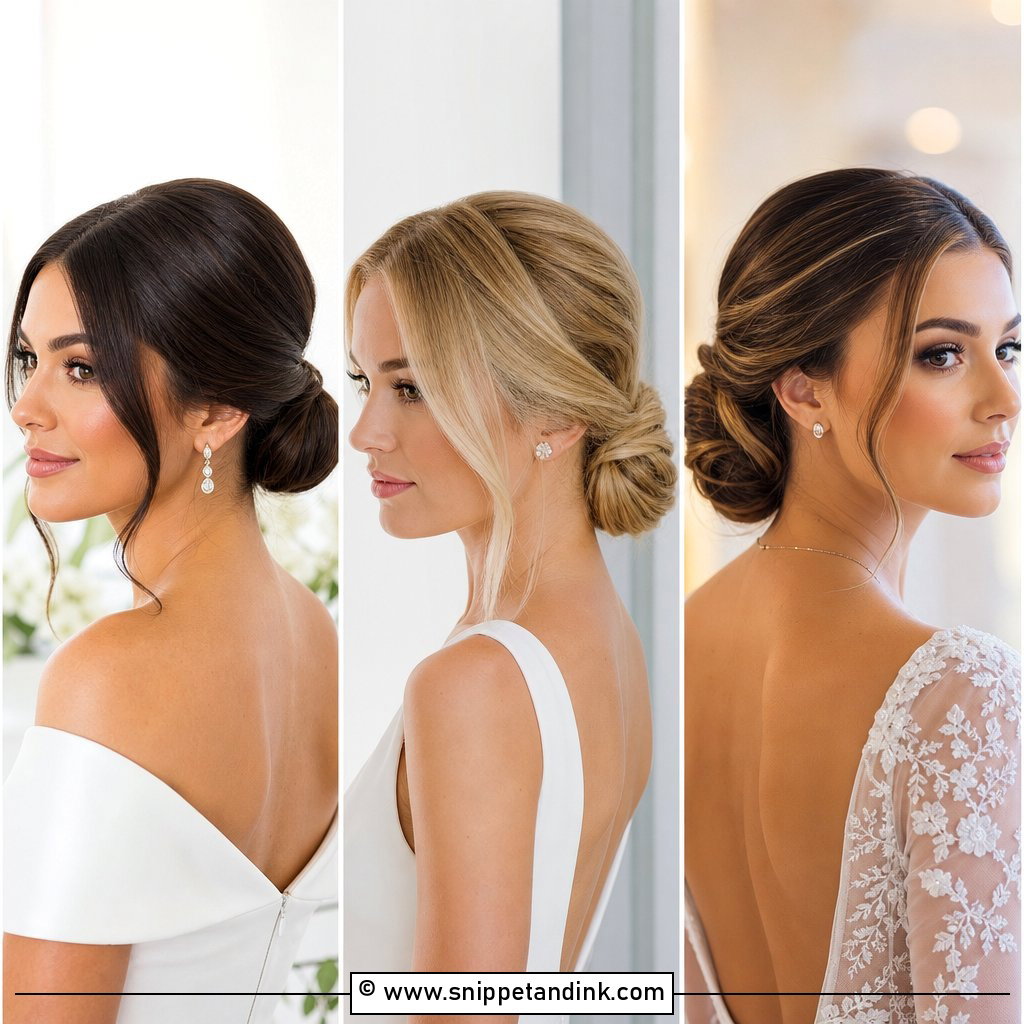
A textured ponytail trades shine for soft volume. I lightly backcomb the crown for height, then loosen the surface and the tail with my fingers. The tail can be braided, twisted or just tousled. Pull a few pieces loose at the face. It suits boho and casual weddings with flowy gowns. Texture makes this style forgiving: if a piece falls out at the reception, it looks like part of the design. Second-day hair often holds this one better than freshly washed hair.
16. Low Ponytail With Ribbon
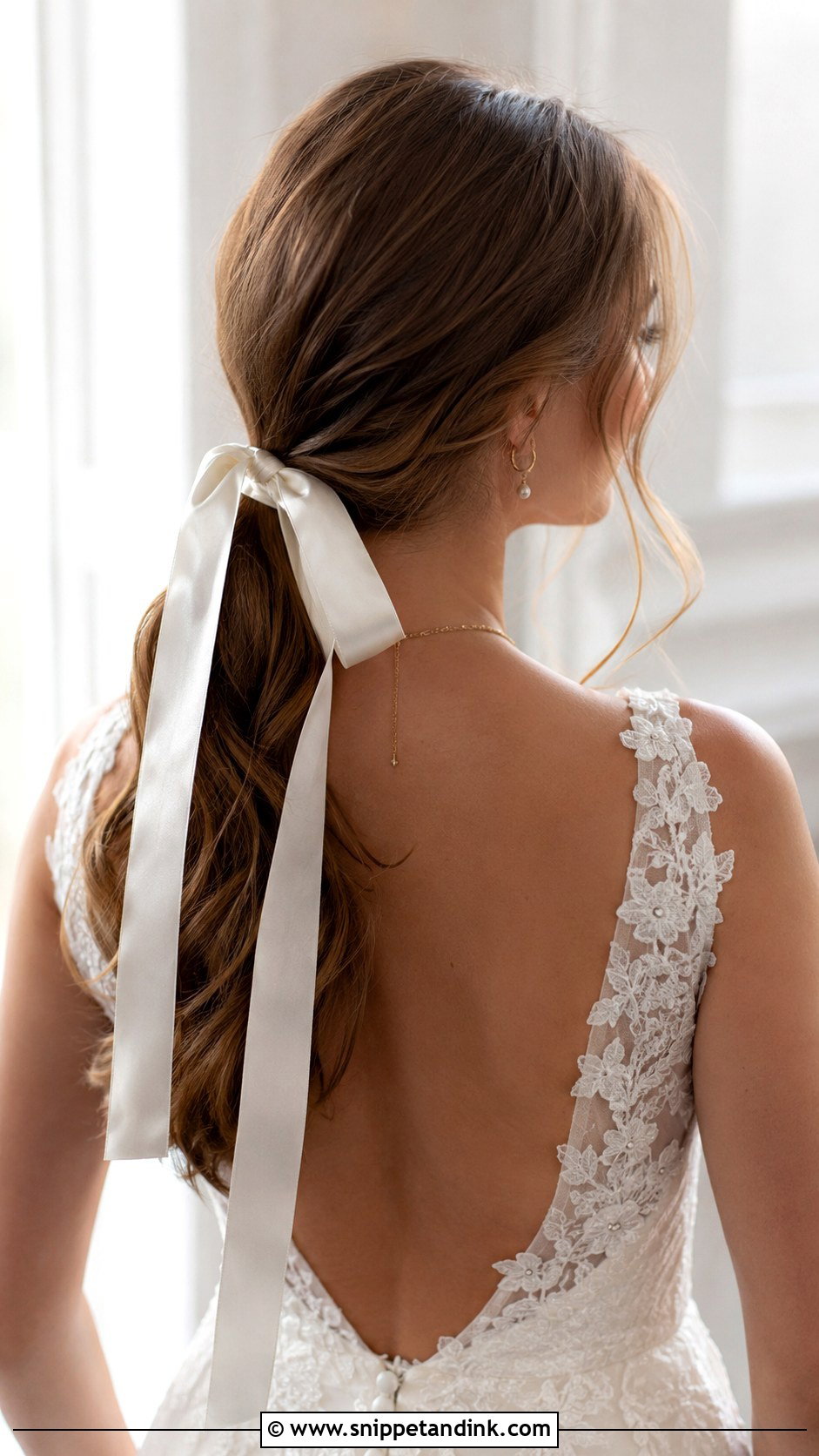
A length of satin or silk ribbon tied at the base and left to hang adds movement every time you turn. Ivory is classic; a pastel can match your colors. Tie it as a knot or a small bow, and it works with both sleek and wavy ponytails. Check that the ribbon ends are cut on an angle or sealed, as cut ribbon frays over a day. Keep the tails shorter than the hair, or they catch on everything when you sit.
17. Low Ponytail With Braided Crown
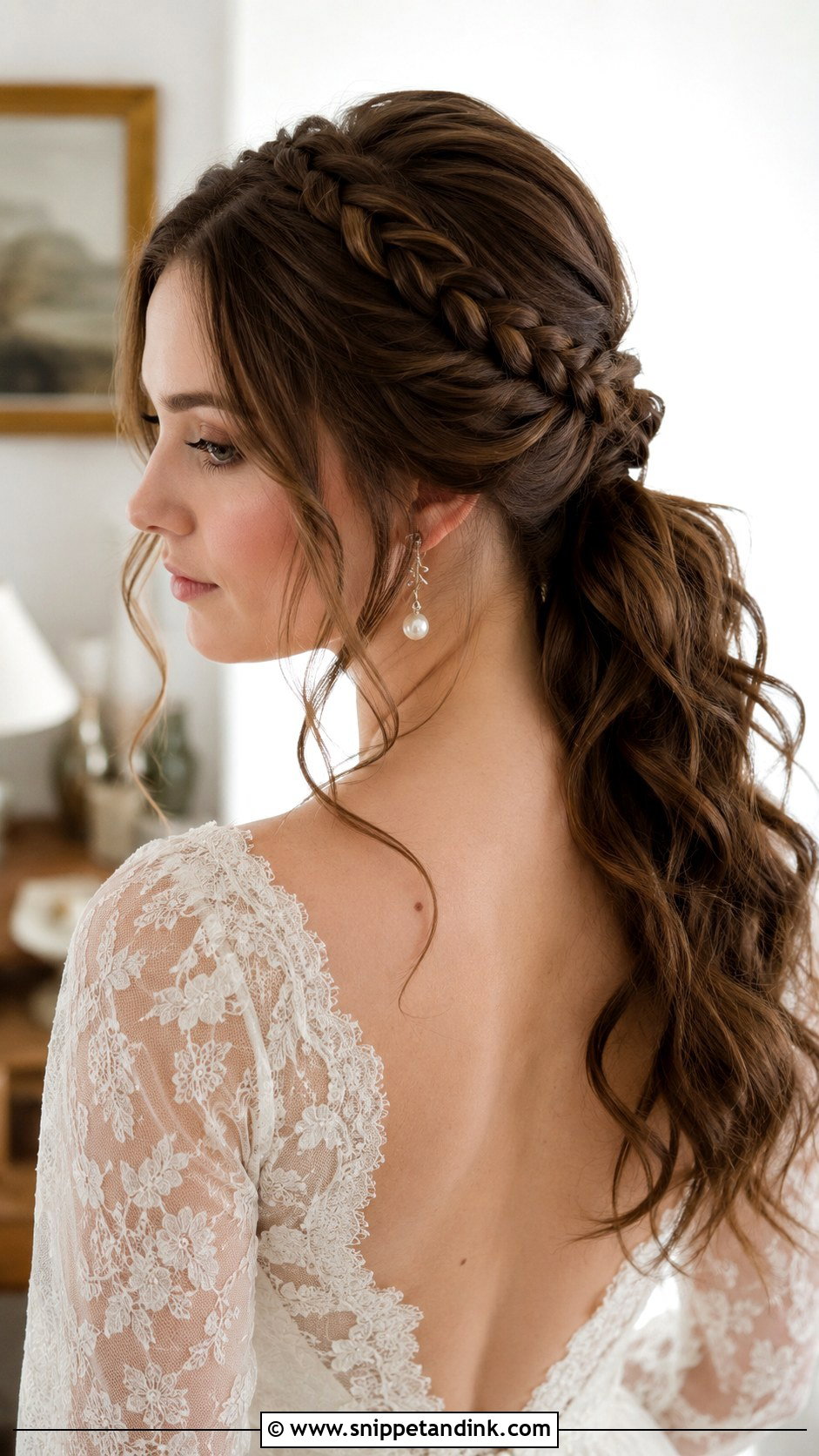
A braid wraps across the top of the head like a soft halo and then flows into the ponytail below. It’s one of the more detailed styles here, and it suits boho, vintage and whimsical themes. I braid fairly tight first and then loosen the edges. The braid keeps the top of the head secure, so it’s a good choice for windy outdoor venues. If your hair is fine, a braid that starts right at the hairline can show scalp, so I start it slightly back.
18. Voluminous Low Ponytail
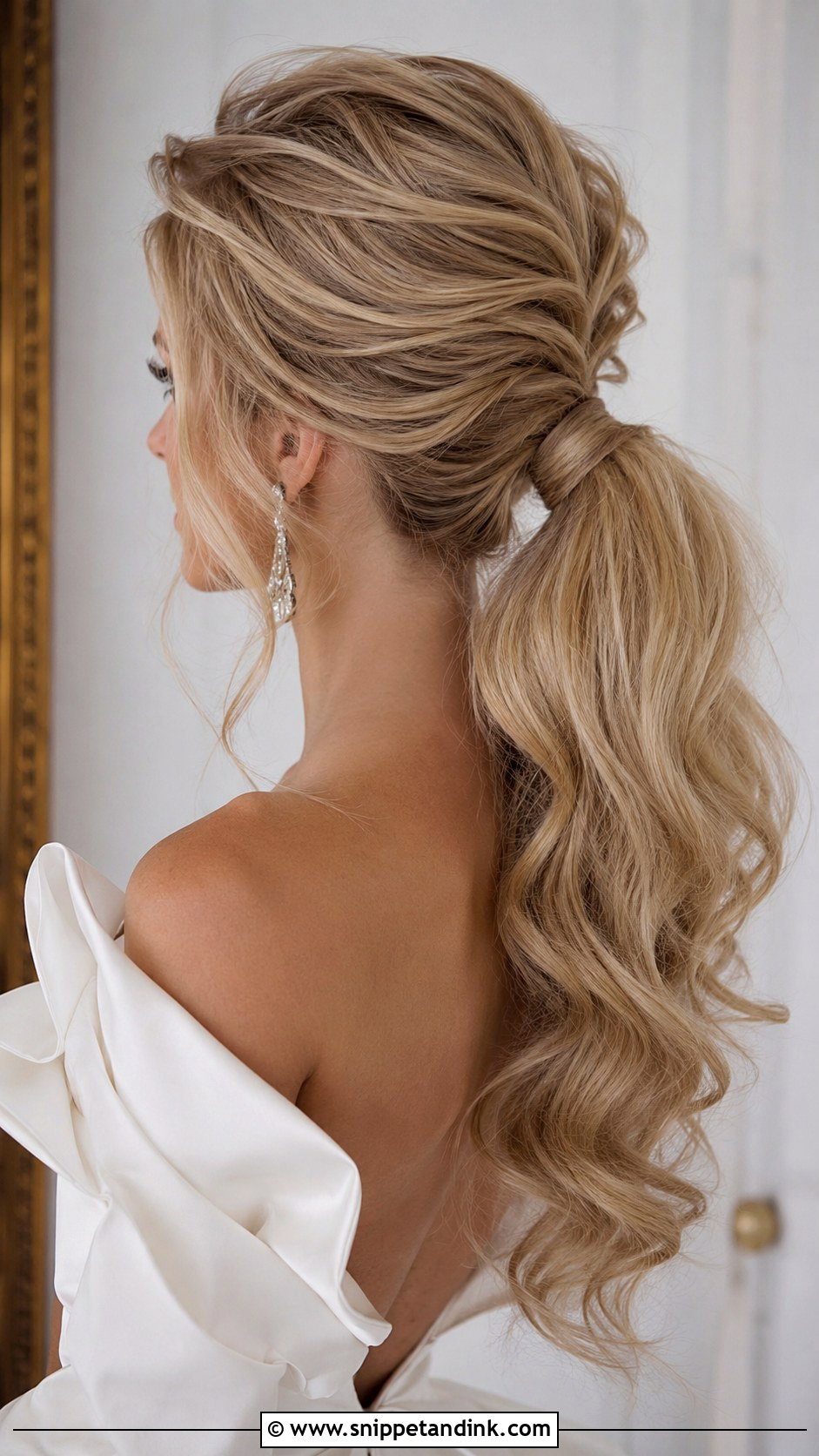
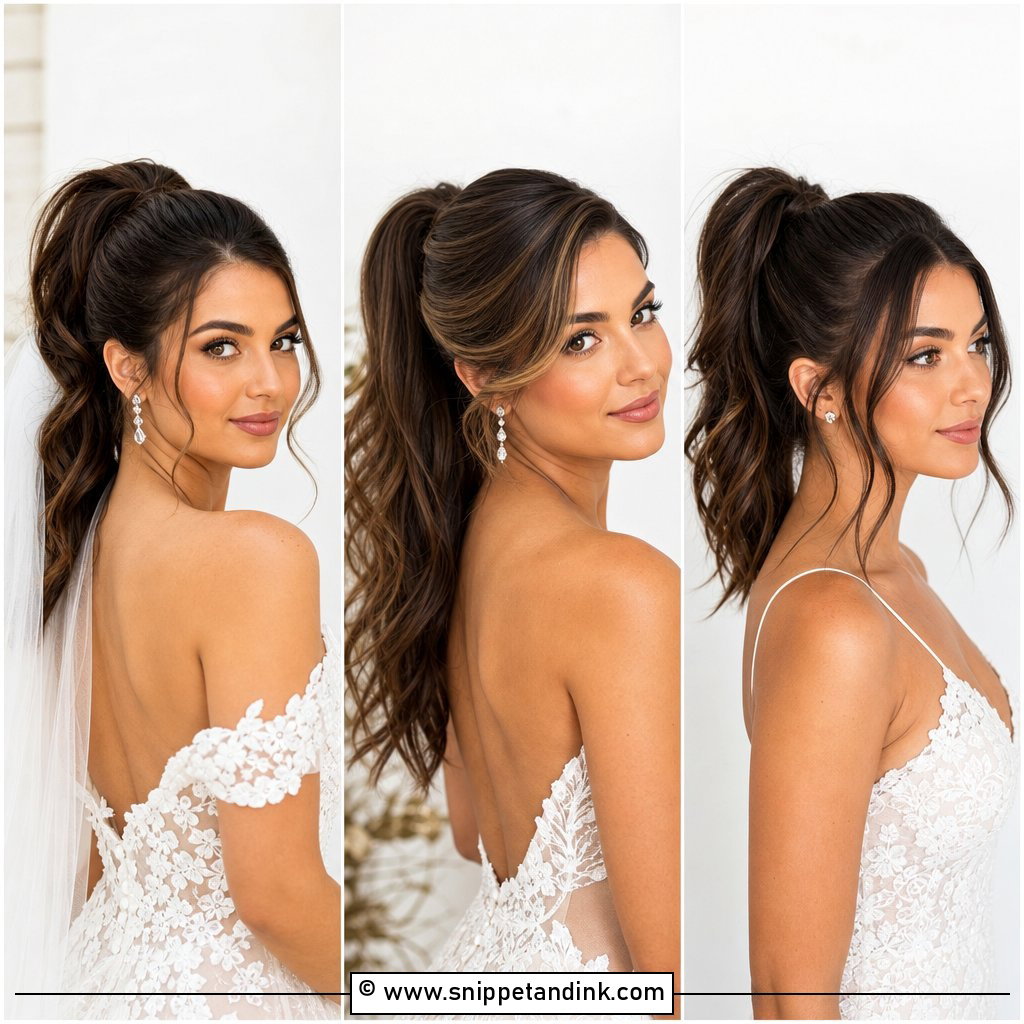
A full, bouncy ponytail needs both lift at the crown and real thickness in the tail. I tease the crown gently and smooth the surface over it so it stays polished. If your hair isn’t thick or long enough, a clip-in or wrap-around extension adds length and body. Curls through the tail add movement. It pairs well with structured gowns and bolder makeup. The risk is weight: a heavy tail pulls on the scalp, so I secure the base well and check comfort at the trial.
19. Low Ponytail With Gold Accessories
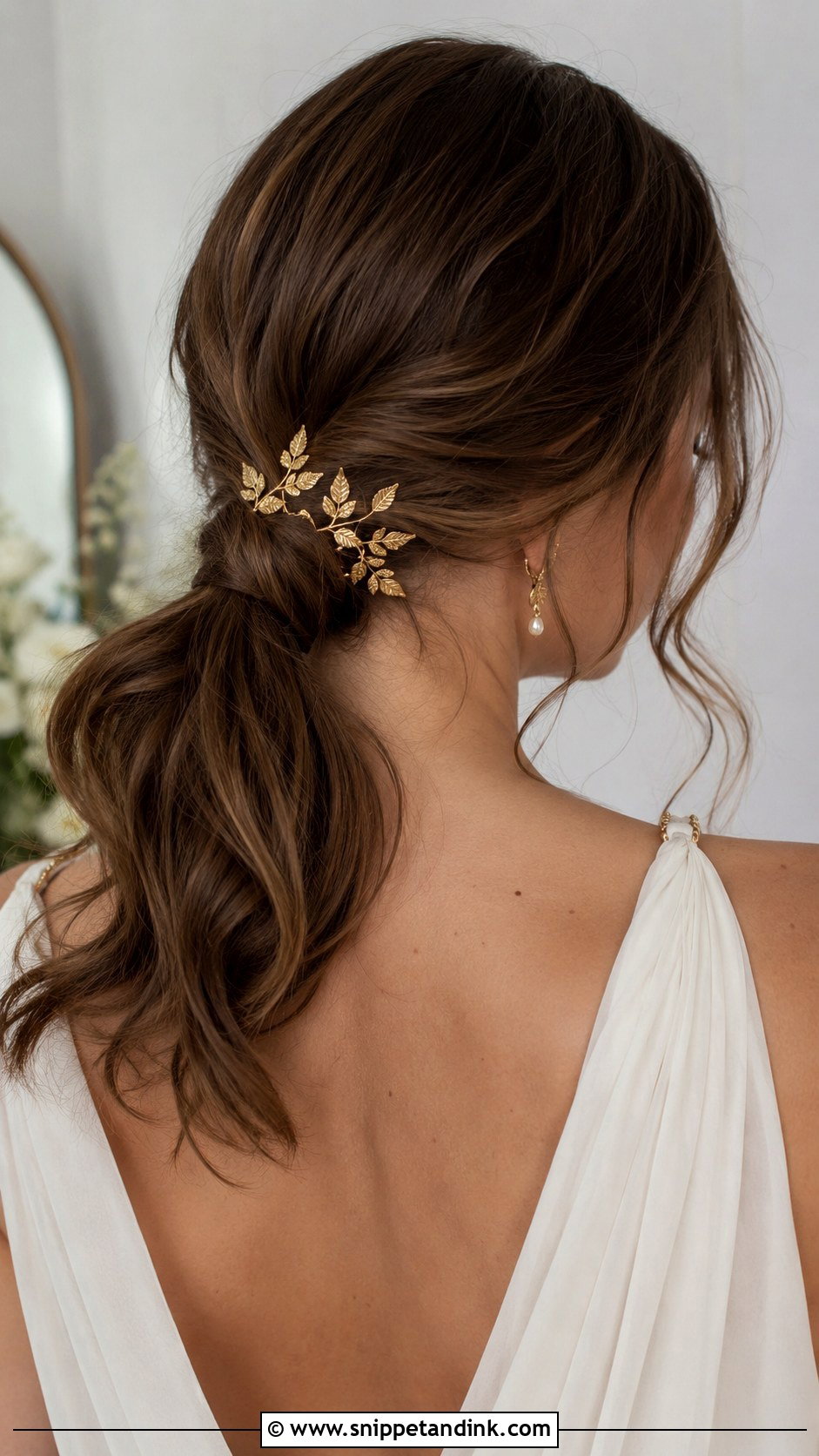
Gold accessories warm up a low ponytail: small gold pins, leaf clips or a thin cuff around the base. Gold suits warm skin tones and ivory gowns, and it works for boho and Grecian-style weddings. Cluster the pieces near the base, or scatter them along the crown for something lighter. Match the gold tone to your earrings and ring, because yellow and rose gold side by side look like a mismatch up close. A cuff must fit the thickness of your ponytail, so measure it at the trial.
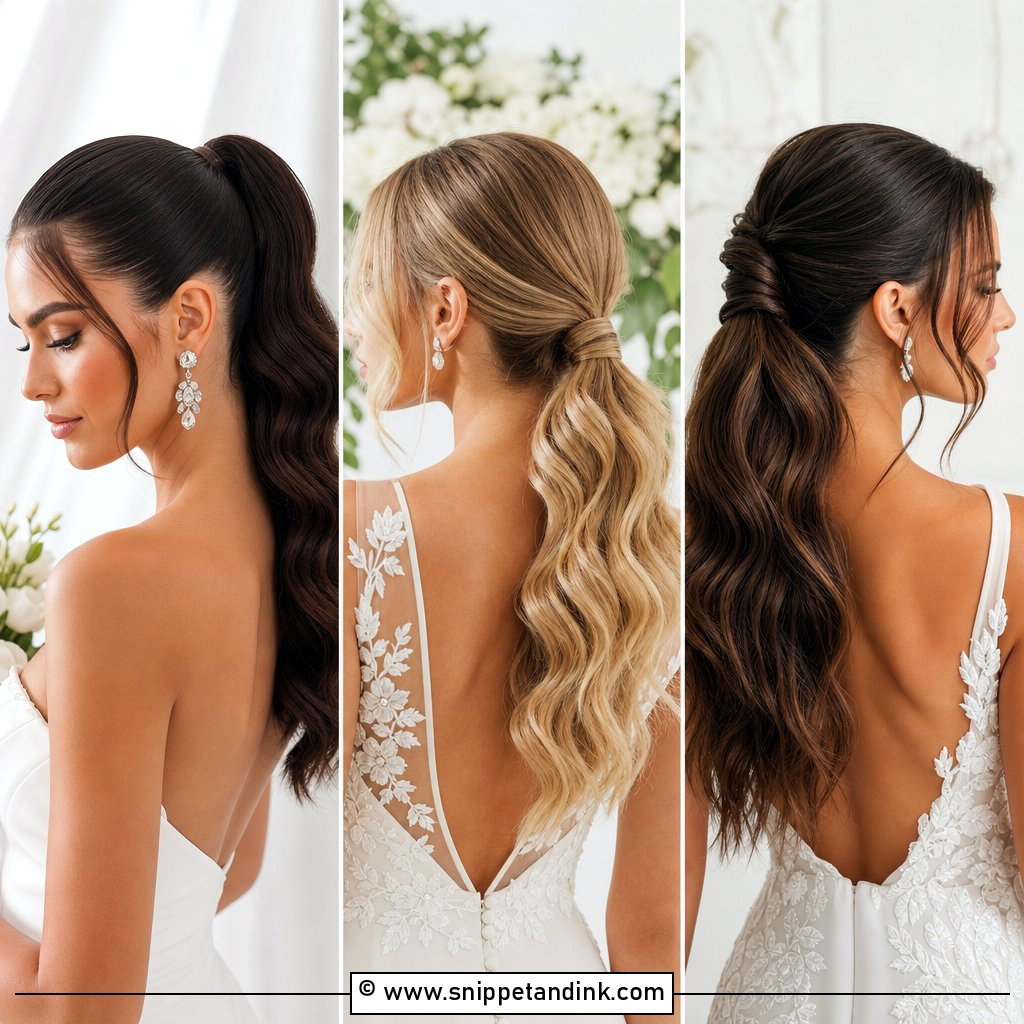
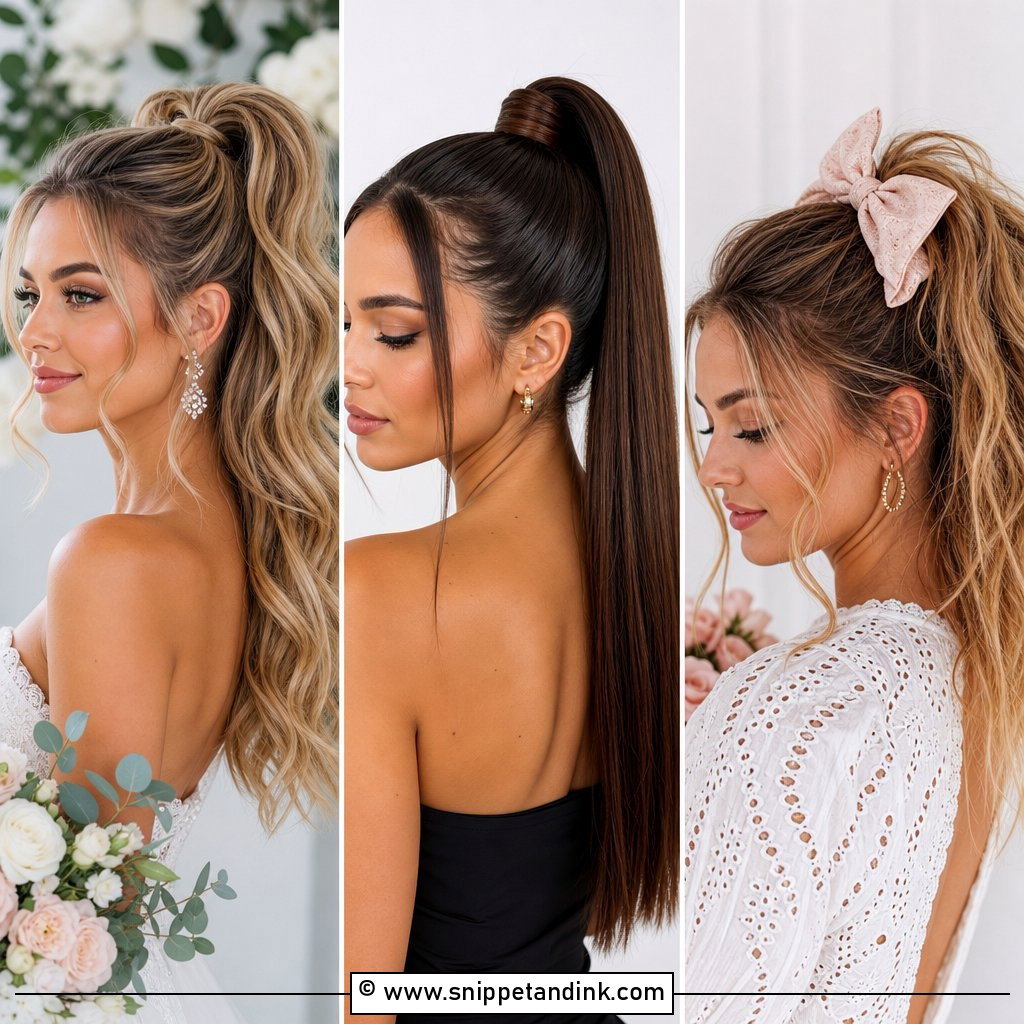
20. Low Ponytail With Deep Side Part
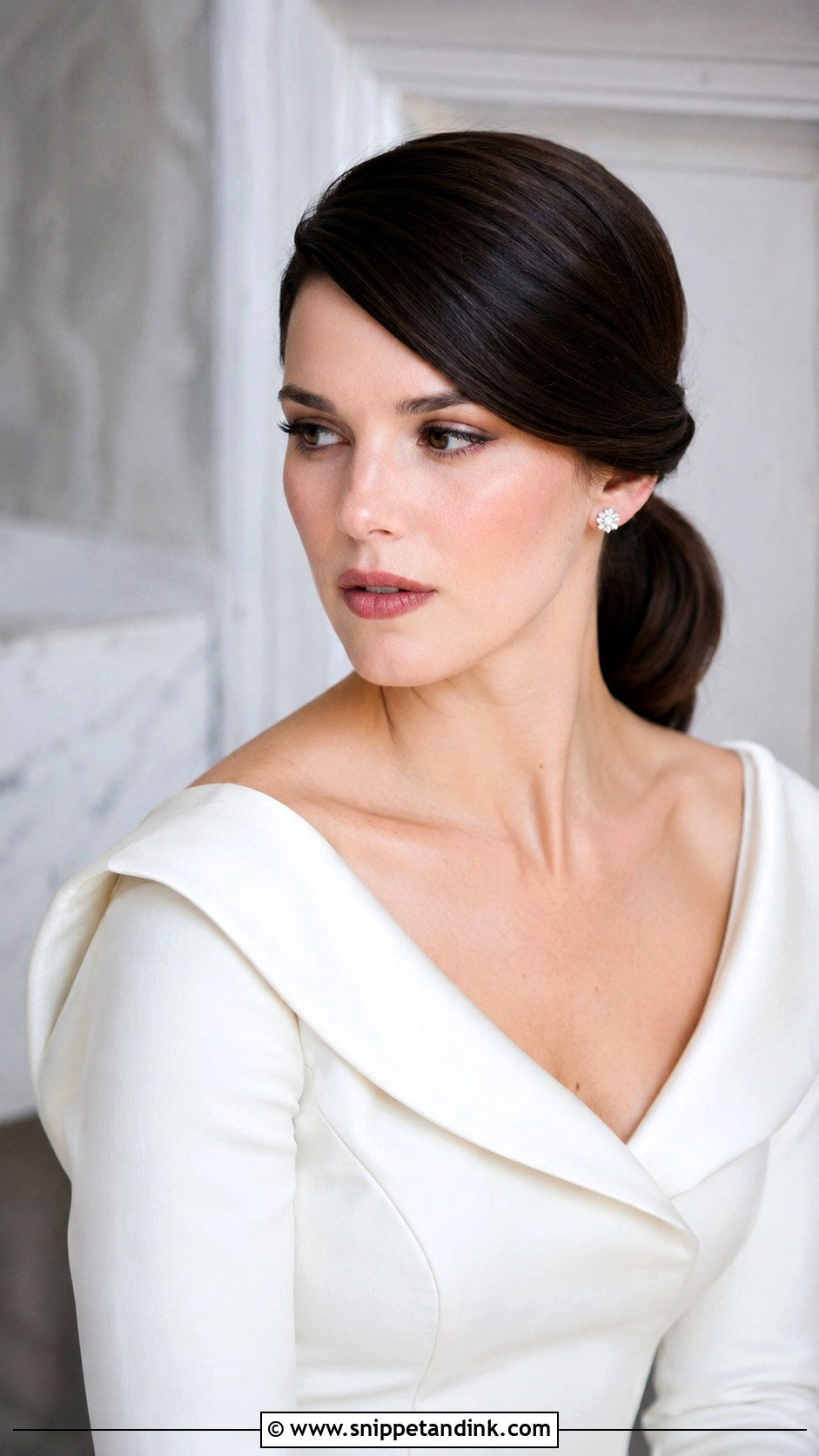
A deep side part sweeps the hair across the forehead before it’s gathered low. It’s an easy way to make a simple ponytail look more glamorous without adding anything. I set the part roughly above the arch of the eyebrow, which suits most faces. The swept side needs to be pinned firmly behind the ear, or it creeps forward over the day. Keep the tail sleek for drama, or wave it for a softer finish. Try it at your trial if you usually wear a center part, as it changes the face a lot.
Making a Bow, Ribbon or Cuff Stay Put on a Sleek Tail
Accessories on a ponytail sit right where hands, chair backs and hugs land. Most of the problems I fix on wedding days come from pieces that were placed but not secured.
- Bows: buy one mounted on a clip or a comb, or sew a small comb to the back. A bow tied directly around the elastic slides down a smooth tail.
- Ribbons: tie them over the wrapped strand, not under it, and add a bobby pin through the knot. Seal the cut ends so they don’t fray.
- Pearl pins: angle them in toward the elastic, crossing under the surface hair. Pins pushed straight in fall out of sleek hair.
- Cuffs: choose one that closes snugly around your ponytail’s thickness. A loose cuff slips down the tail with every step.
- Flowers: wire them, then pin the wire into the elastic. Loose stems tucked in will drop out.
Keep the weight low too. A heavy bow or a big floral piece pulls the elastic down over the day, and the ponytail starts to droop at the base. If you want a large piece, I add an extra elastic under the first, tighter, to carry it.
One Elastic, Many Weddings
A low ponytail gives you a neat neckline, movement and comfort in one style, which is why so many brides end up choosing it. You can keep it minimal or add a bow, pearls or flowers. Think about your gown’s neckline and back, your veil and your venue, then bring two or three favorites to your stylist. Wear the winner for a few hours after your trial to check it doesn’t pull or slip. Once it passes that test, you’ll stop thinking about your hair on the day.
You'll Like These Ideas:


Leave a Reply