
Most of what a Marathi bride wears sits on or near her head. A Paithani or Nauvari saree, a nath, the pearl mundavalya and a lot of gold all need the hair to stay put underneath them, and flowers add their own weight on top. Gajra, ambada pins, veni phool and roses each change how a style has to be built. Some brides want a neat traditional bun; others want a braid or something softer. I’ve gone through fifteen styles below and added what I look at when I’m deciding whether one will hold.
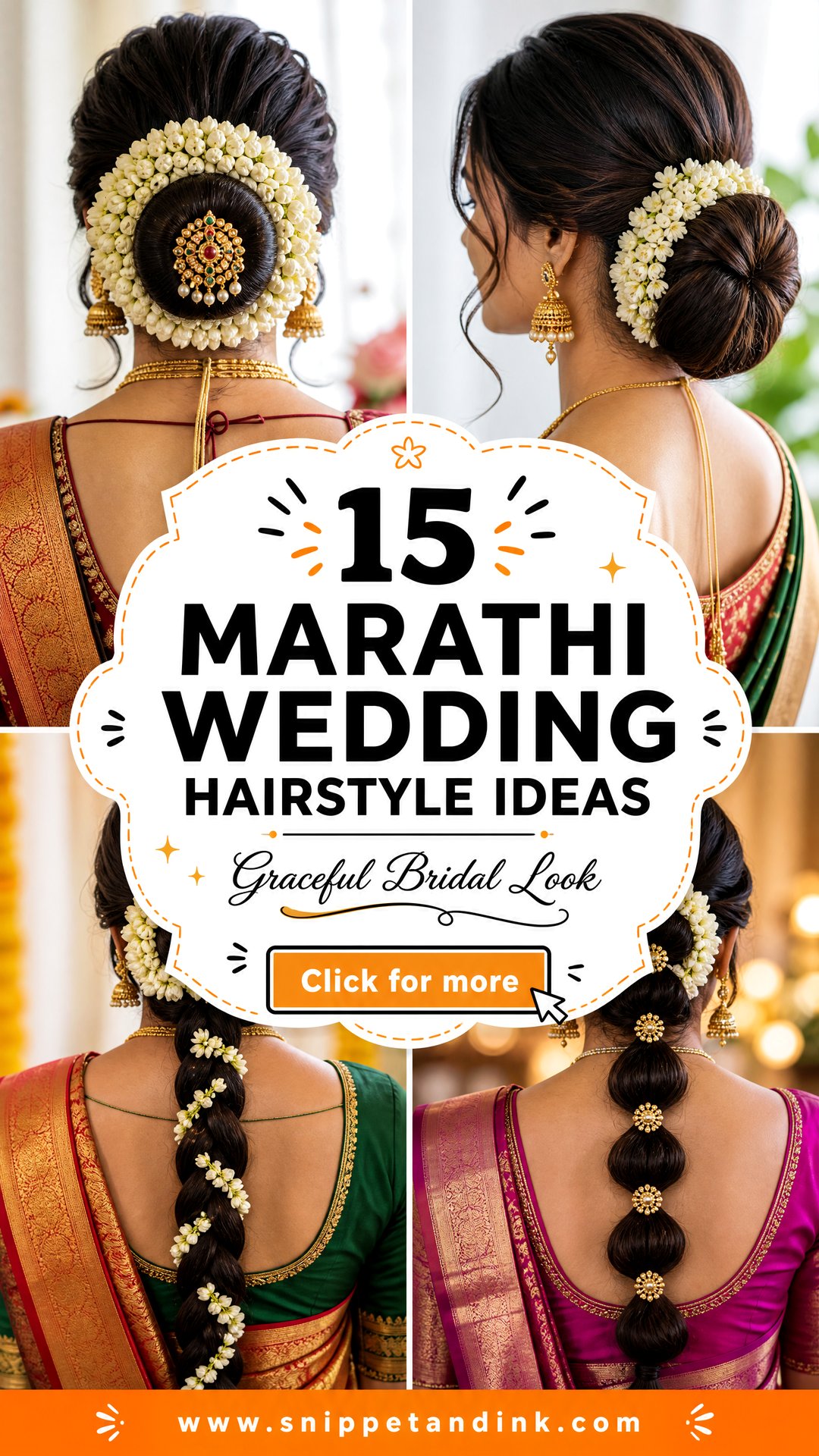
Mogra Buds Open Through the Day
Jasmine shows up in nearly every style below, so it’s worth knowing how it behaves before you order it. Gajra made from tight buds looks neat and pale green-white in the morning and opens slowly through the day, getting fuller and more fragrant. Flowers that are already fully open when they arrive look lush for the first photos, then brown at the edges by the evening. For a long ceremony I ask for mostly buds.
- Order from a local florist or flower seller and ask for it to arrive the morning of the wedding, not the night before.
- Until it goes in, keep it wrapped in a damp cotton cloth somewhere cool. A cool box works if the venue is far away.
- Pin it on last, after the hair is sprayed. Hairspray turns jasmine petals brown where it lands.
- Order a little extra. A spare string for the reception photos costs very little and saves a wilted back view.
One honest warning: the scent is strong, and in a closed hall after several hours some brides get a headache from it. If you’re sensitive, try a full gajra on for an hour at your trial before committing to three rows.
1. Marathi Wedding Gajra Bun
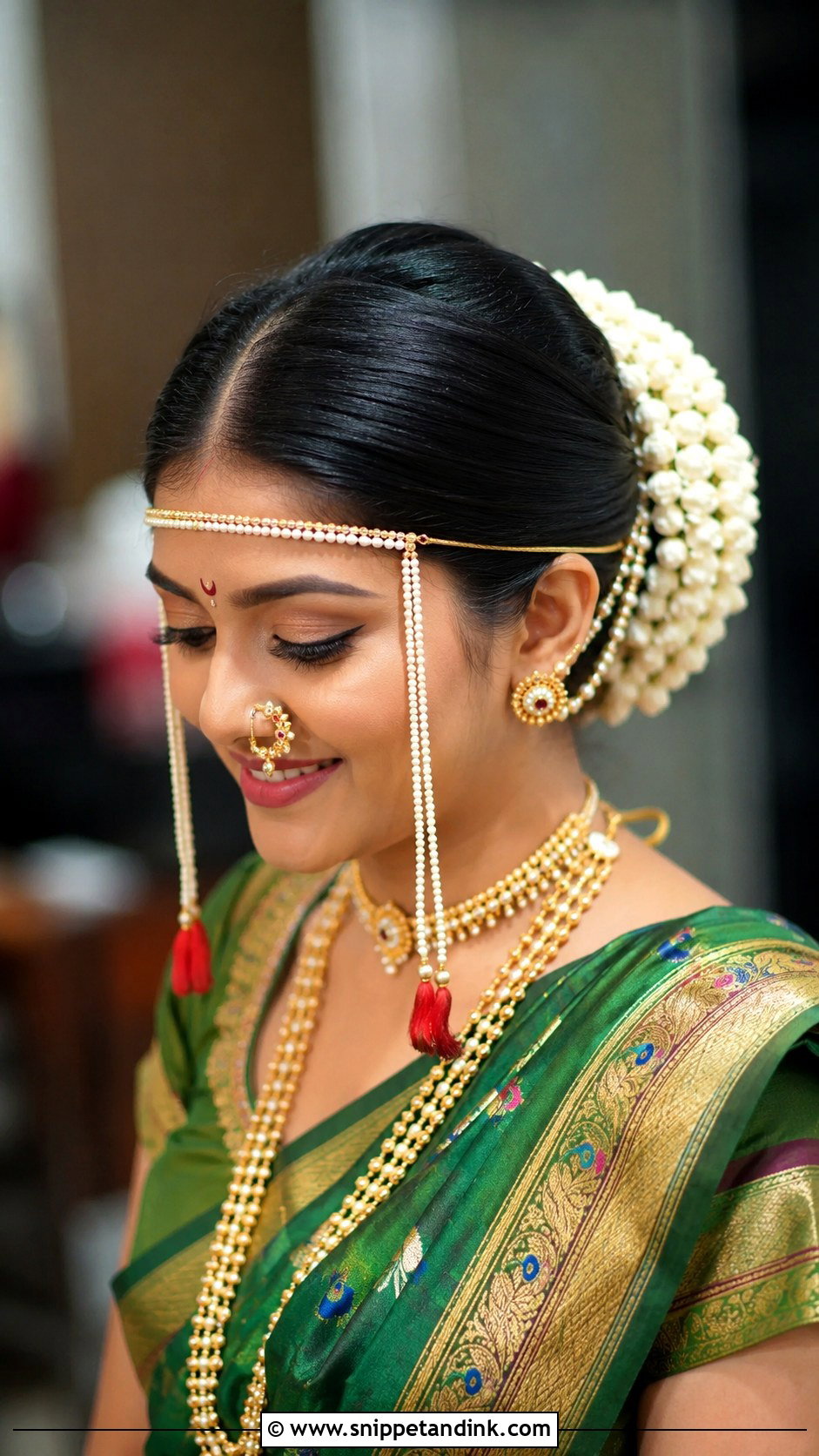
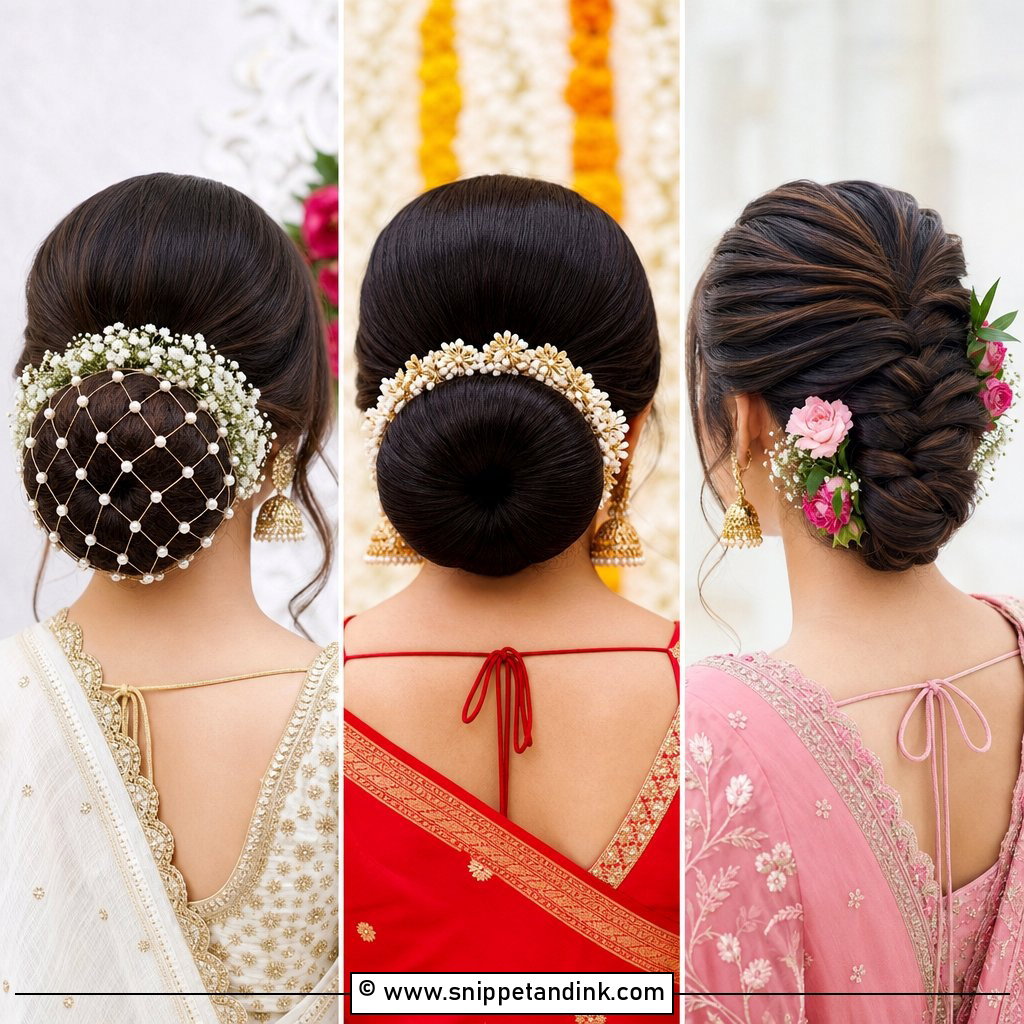
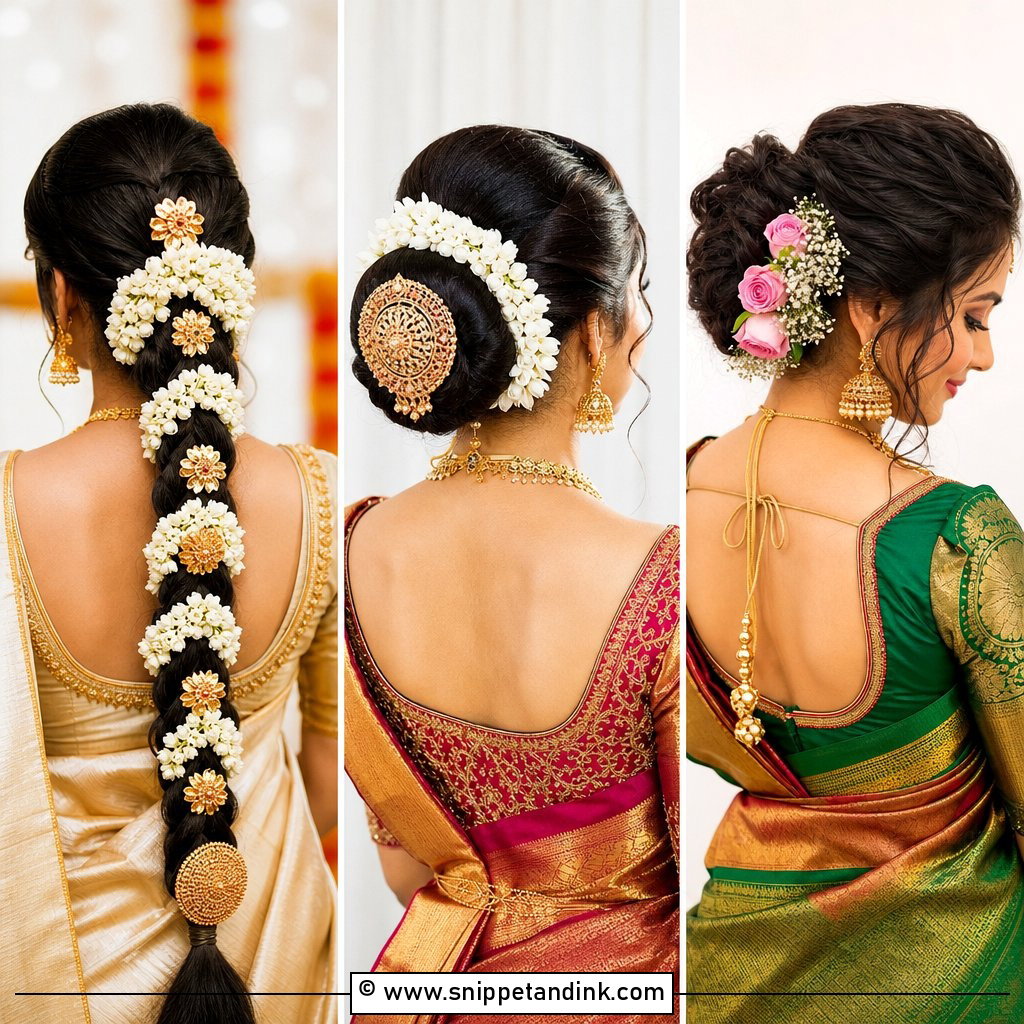
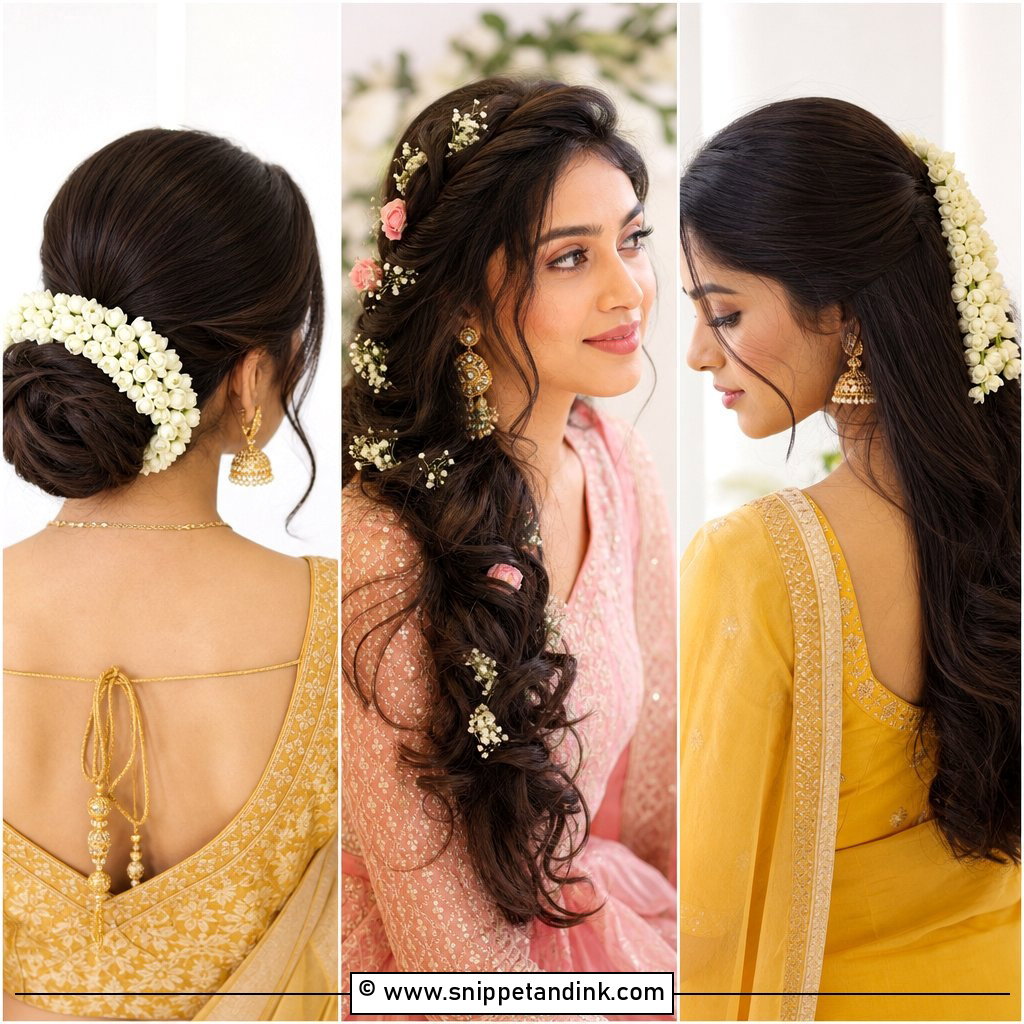
Fresh jasmine gajra wrapped around a center-parted, smoothed round bun is the look most families expect. The white ring of flowers stands out against a green, yellow, purple or red Paithani, and the smooth front leaves the forehead clear for the mundavalya. My one change on medium-length hair is a small padded doughnut inside the bun. Without it, the bun is too small to hold a full gajra and the flowers end up wrapped around the pins.
2. Marathi Wedding Ambada Bun
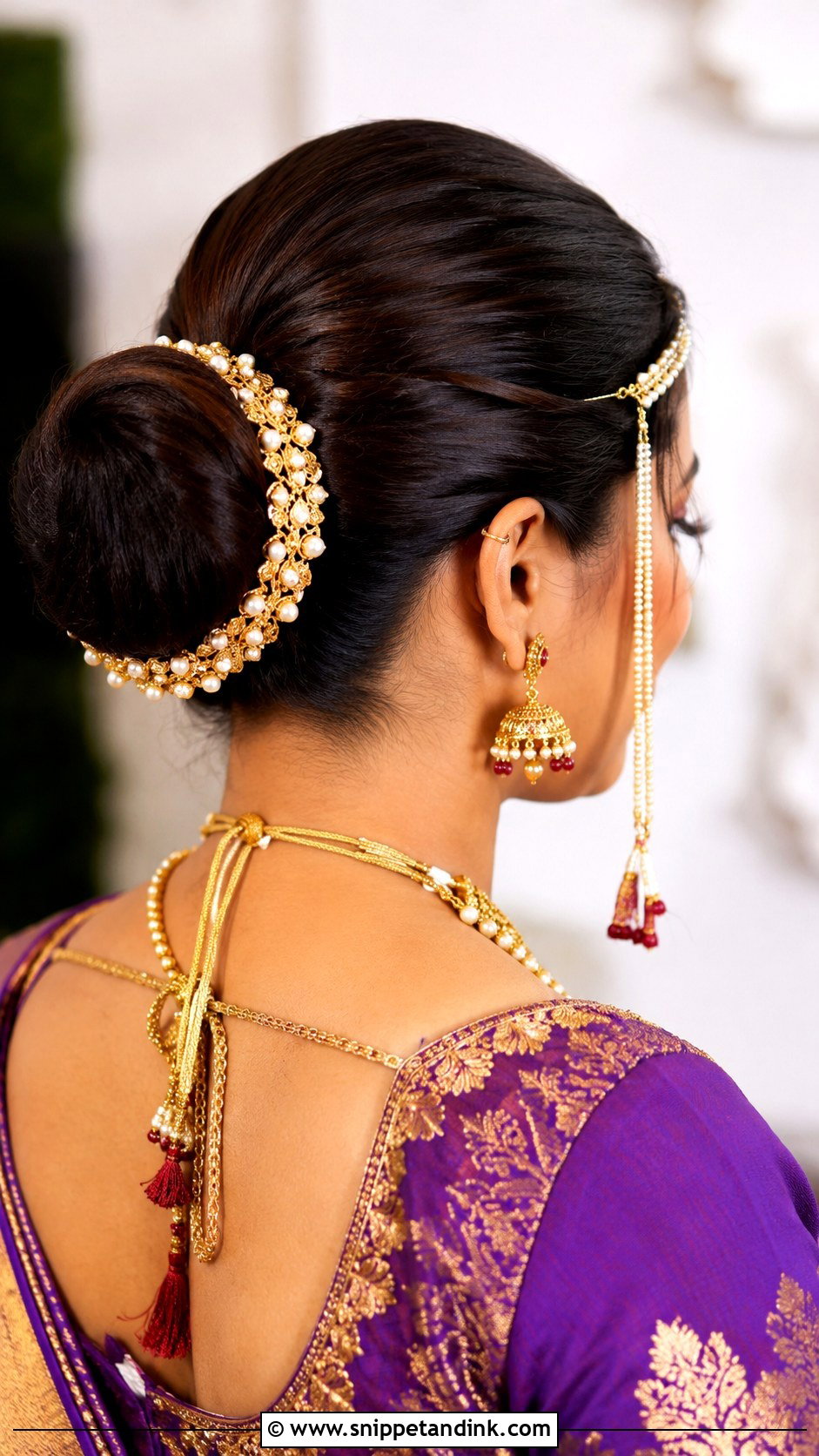
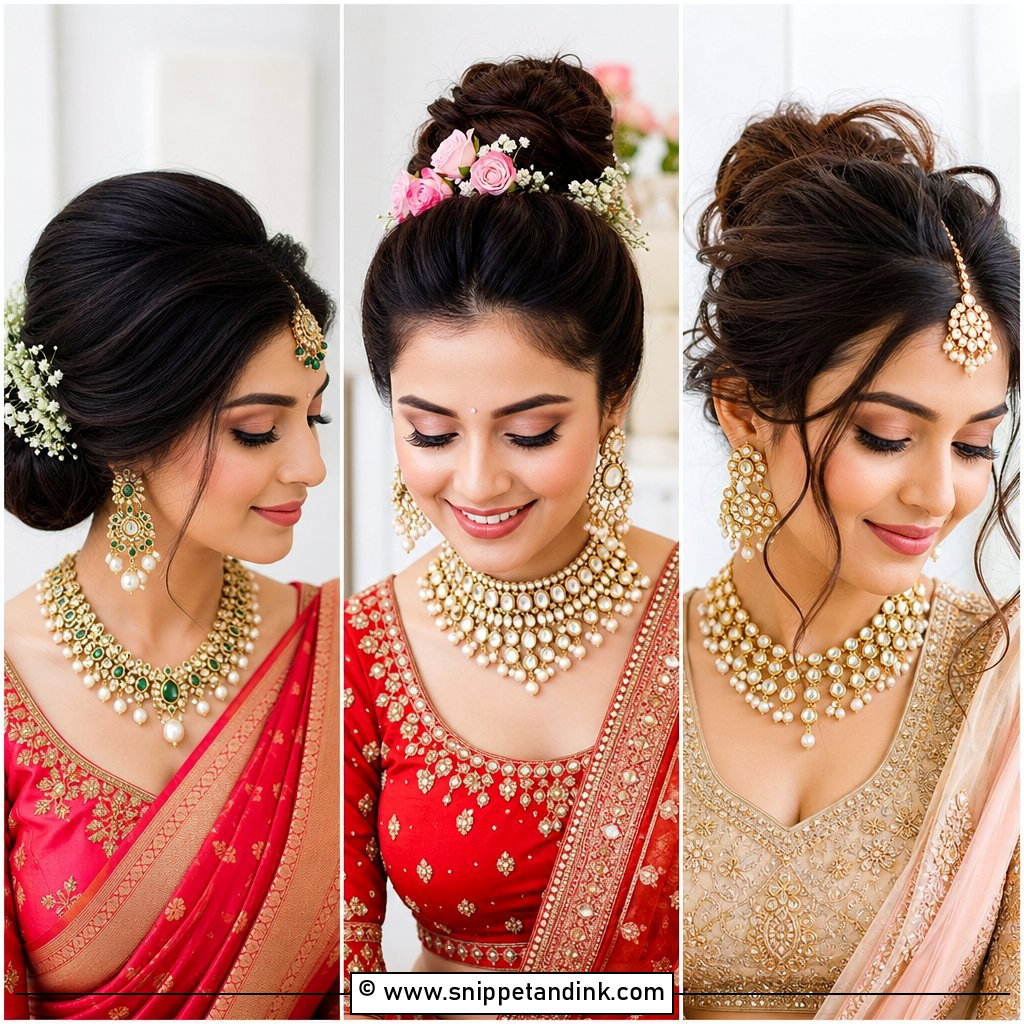
The Marathi wedding ambada bun is smooth, round and decorated with gold ornaments, pearl accents or a veni phool pin. Its shape suits a Nauvari, regal without being dramatic. With everything tucked away and pinned firmly, it’s the easiest style to sit through a long ceremony in. I’d decide on a sleek middle part or a small crown lift by looking at your face from the side: a flat crown can make a strong profile look severe, and a little height softens it.
3. Marathi Wedding Low Bun
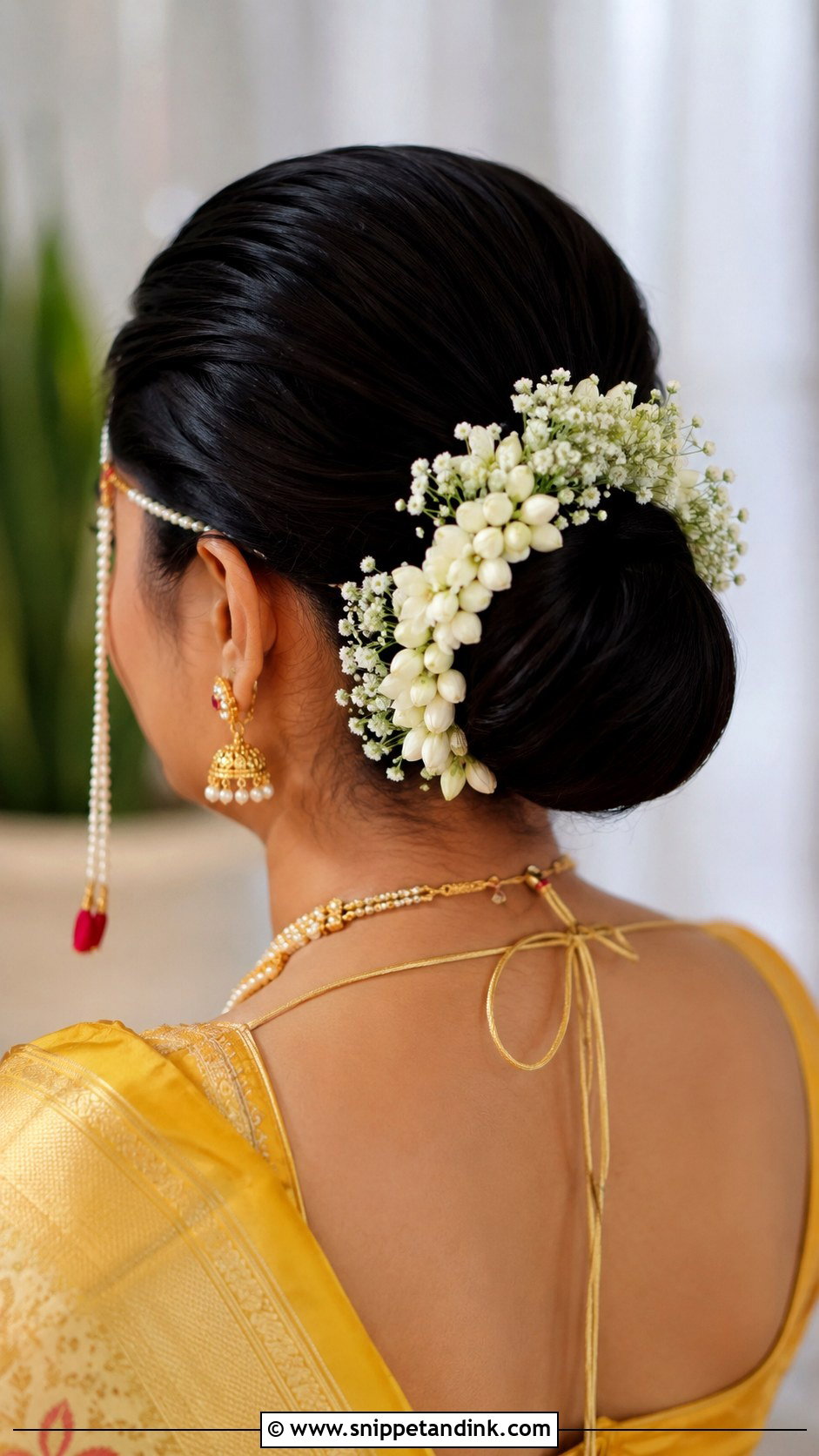
Sitting near the nape, a low bun gives a clean side profile and balances heavy jewelry rather than competing with it. It works with a Paithani, a pearl mundavalya, a thushi and a few flowers tucked to one side. Thick hair can make the bun full on its own. Finer hair needs padding, and I’d much rather use padding than tease the hair, because teased hair collapses by the afternoon. Under a pallu draped over the head, this is the style that sits most comfortably.
4. Marathi Wedding Braided Bun
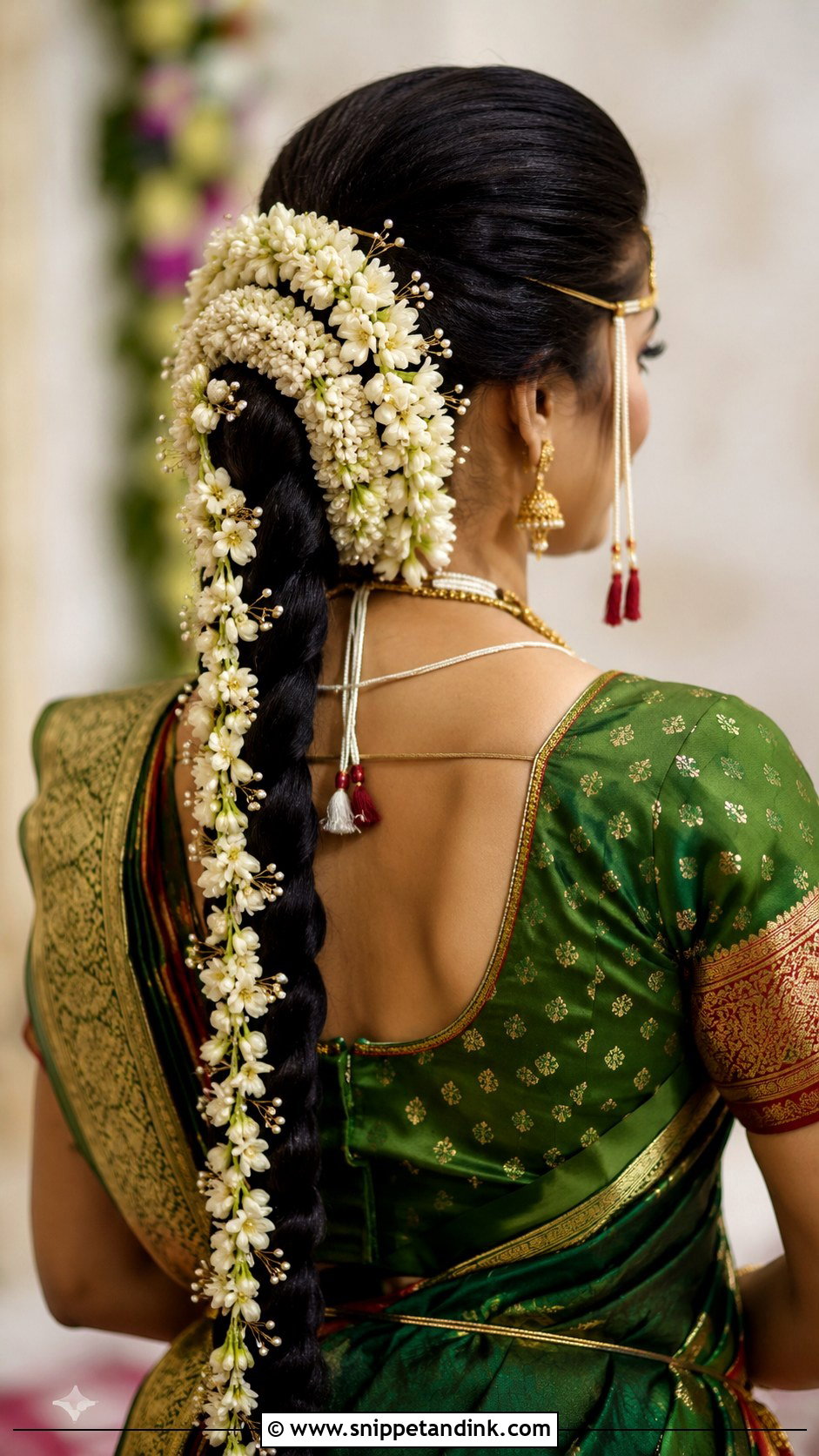
Here the front is styled with small side braids or a braided crown, which then join a full bun at the back. Flowers, pearls or gold pins can sit along the braids, where they show up clearly in close-ups. I suggest it to brides with layered hair or a lot of flyaways, since the braids catch shorter pieces that would spring out of a sleek style. Watch the braid size near the face, though. Thick braids right at the temples can push the mundavalya out of line.
5. Marathi Wedding Jasmine Braid
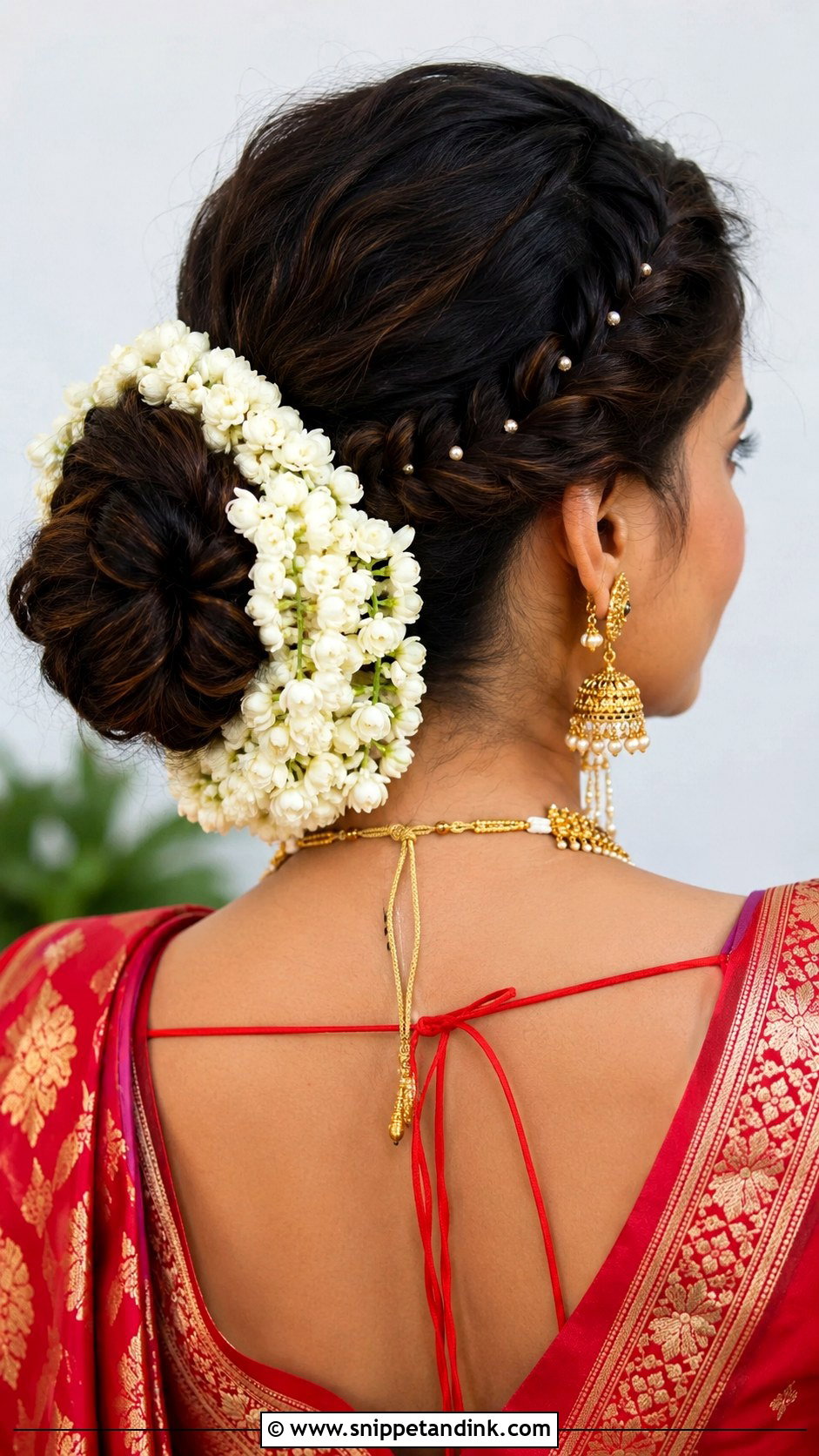
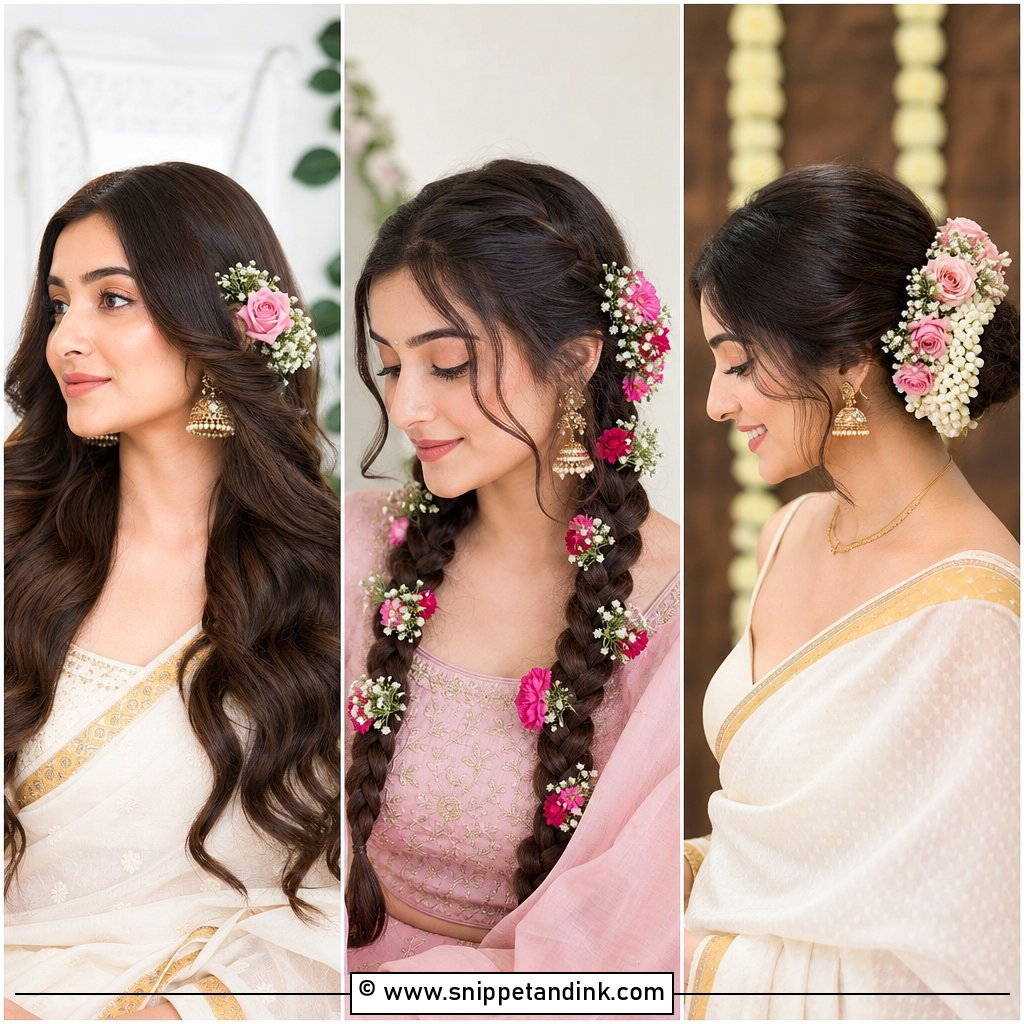
A long braid decorated with jasmine strands, pearl pins or small gold ornaments follows the line of a Nauvari drape, which is why it looks so natural with one. It’s traditional without needing a heavy bun. Sleek braids look clean and formal; fuller ones with extensions give more volume. Jasmine adds weight along the braid, and by evening the top can loosen, so I anchor the first section of the braid very tightly at the crown. A smooth center part keeps the mundavalya sitting straight.
6. Marathi Wedding Side Braid
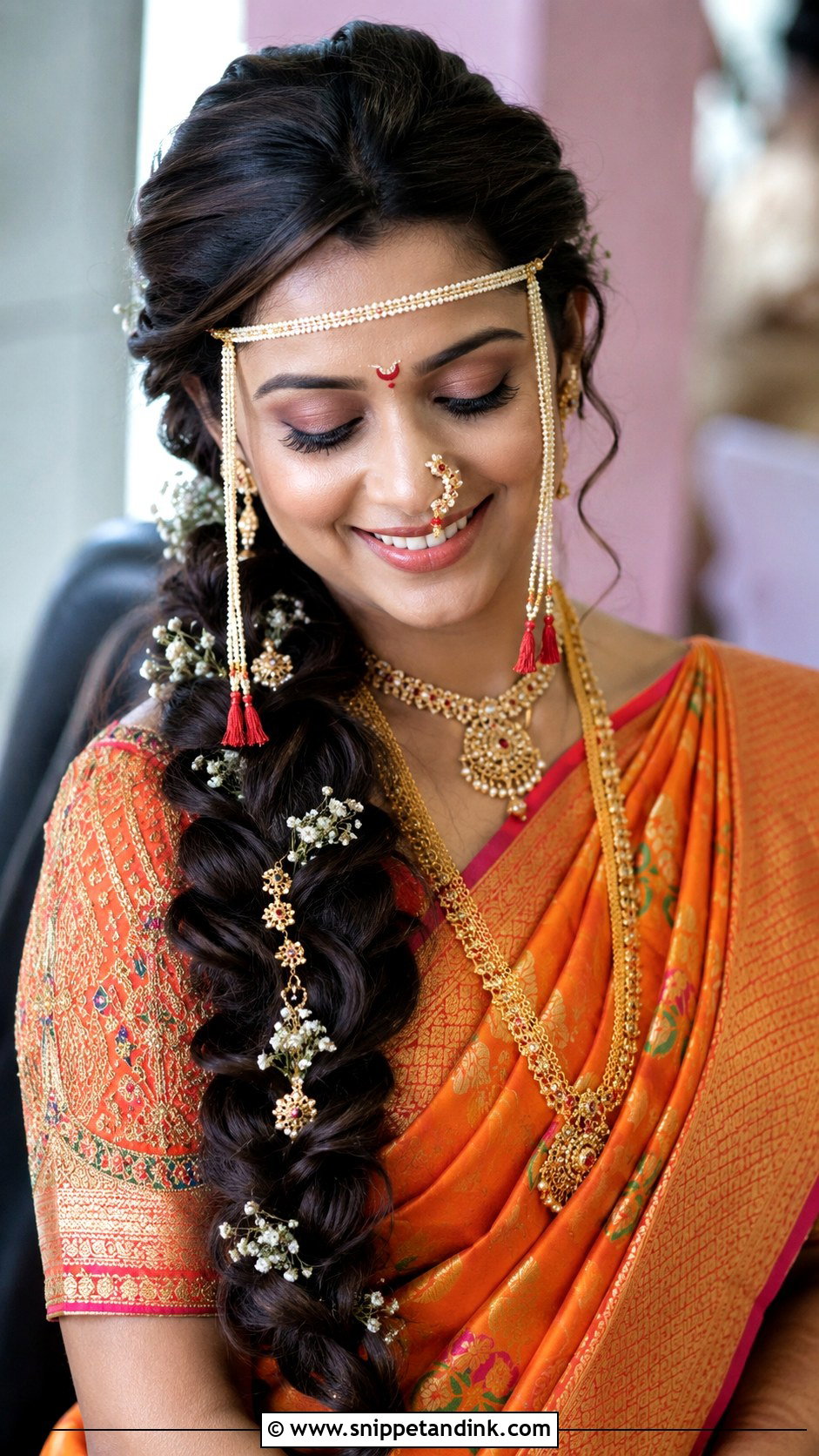
Over one shoulder, the braid becomes part of the front view, so flowers, pearl clips and gold accessories are on show in every photo. That makes it a good fit for pre-wedding events, a smaller ceremony or a more modern wedding look. I keep the crown smooth with a little lift at the roots. Before I place it, I check which shoulder the pallu crosses, because a braid on the same side gets flattened and the flowers crushed.
7. Marathi Wedding Bubble Braid
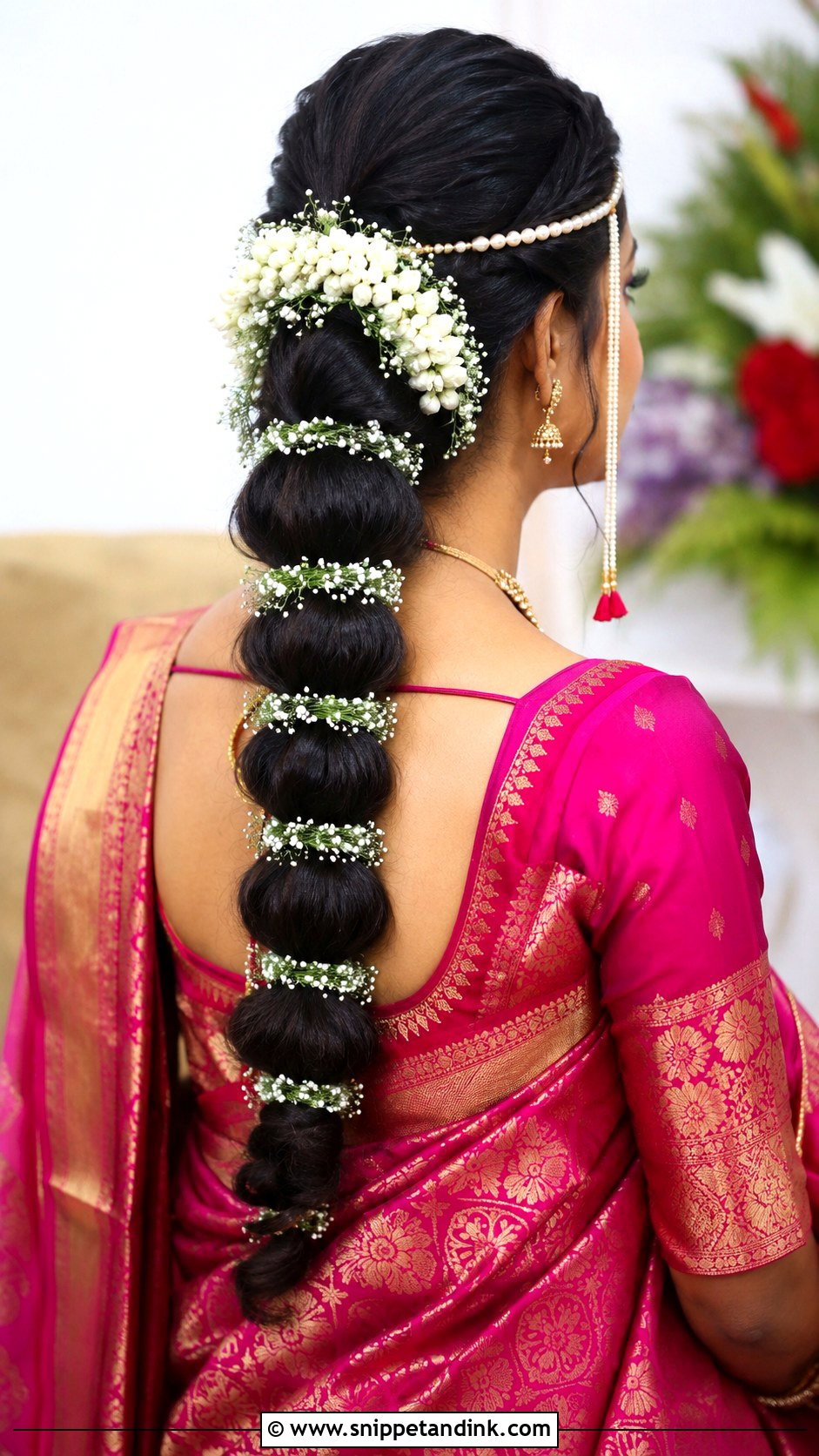
The Marathi wedding bubble braid is tied into sections down its length, each one pulled into a rounded bubble, with baby’s breath, jasmine, pearls or tiny roses between them. It looks fuller than a plain braid even on hair that isn’t thick, which is its real advantage. The floral accents can be chosen to pick up the saree border. Keep the front neat with a middle part or soft twists. I find it reads younger than a traditional braid, so it often suits a mehendi or sangeet better than the main ceremony.
8. Marathi Wedding Rose Bun
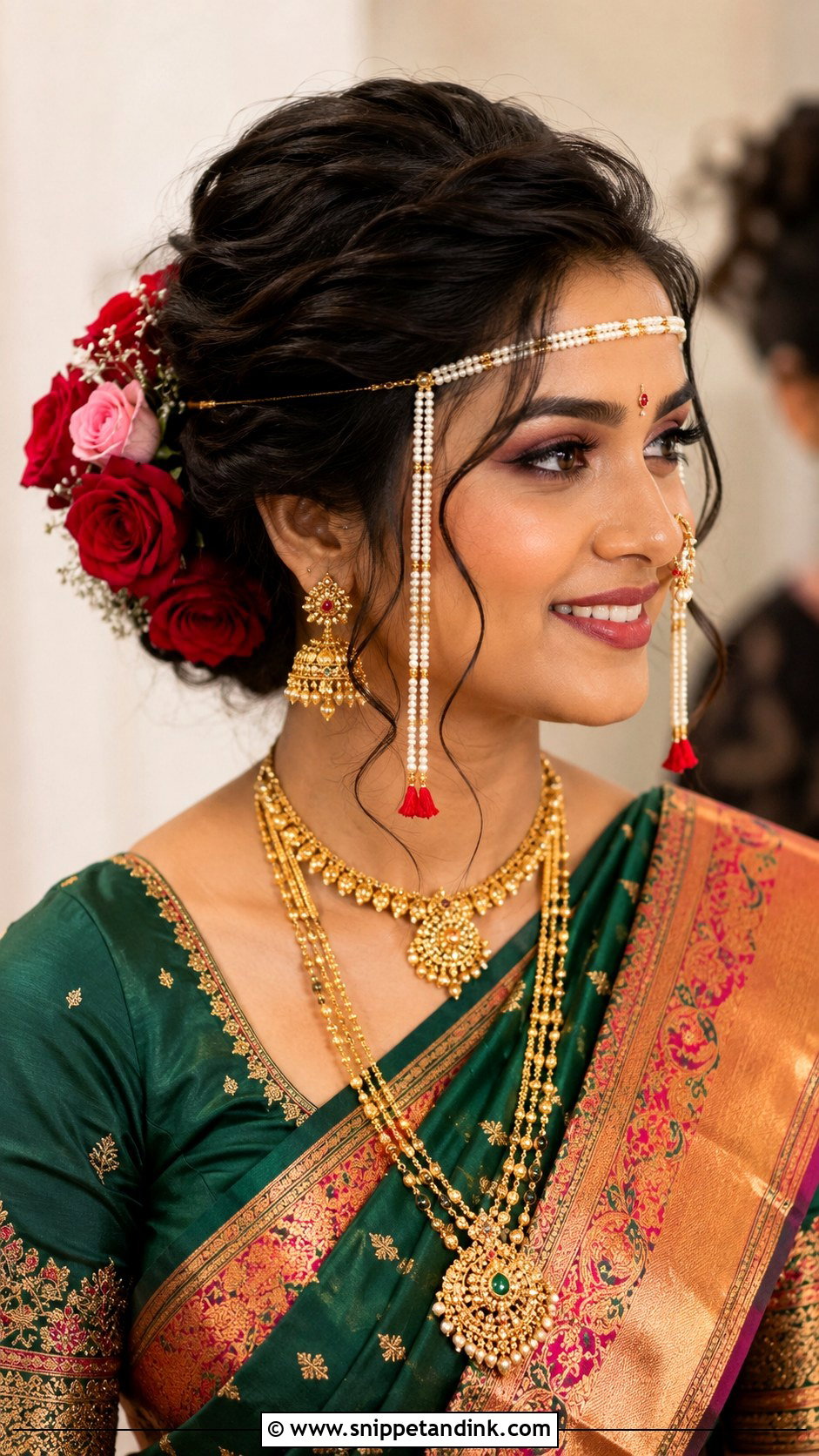
Red, pink or orange roses around a smooth or textured bun give a warm, festive look against gold jewelry and a bright Paithani. A full ring of roses is traditional; a cluster on one side looks more modern and asymmetrical. Roses are heavy compared with jasmine, so each stem gets its own pin pushed into the base of the bun, not just the surface. If you love bold colour in photos but want to keep the classic bun shape, this is the one.
9. Marathi Wedding Puff Bun
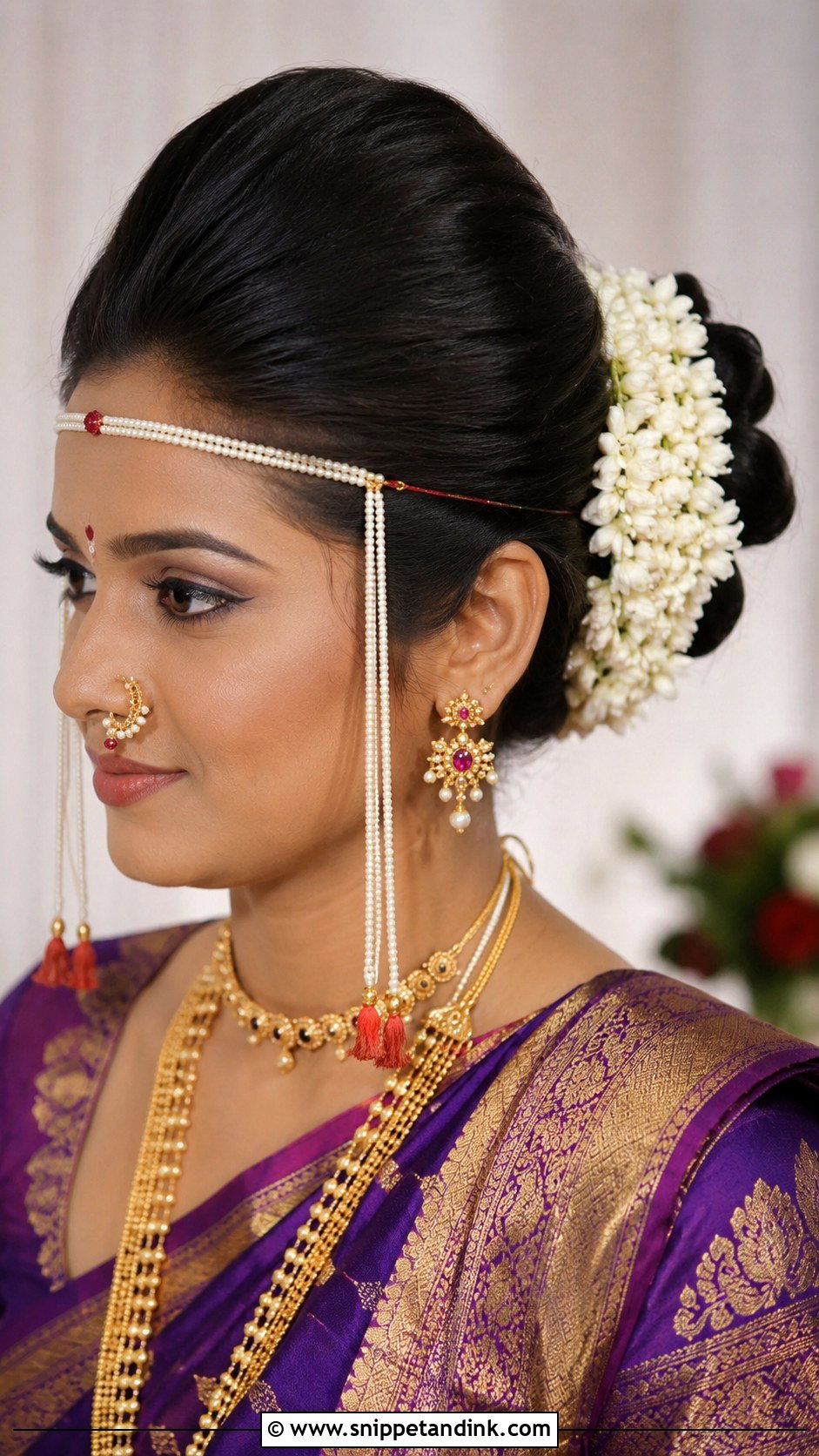
Lifting the front into a soft puff before shaping the bun gives height at the crown and a defined profile. With a round or oval face, that lift adds length and balance. It also works with a mundavalya, since the front stays structured and the band sits just below the puff. The bun can be wrapped with gajra, pearls or an ambada ornament. I keep the puff soft and backcomb only the underside; a stiff, high puff looks dated in photos and tends to crack under the weight of a pallu.
10. Marathi Wedding Twisted Bun
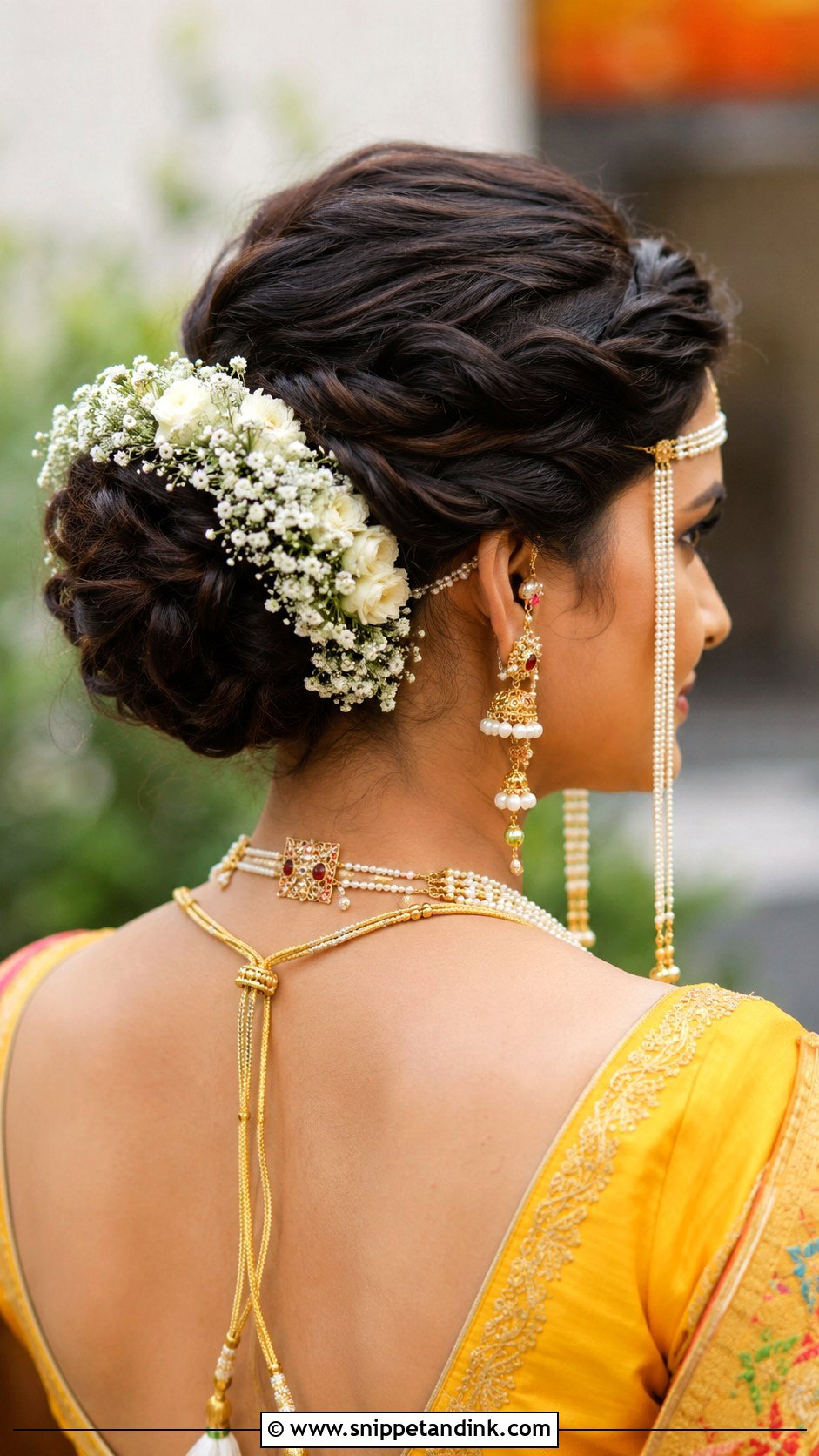
If you want texture without heavy braiding, twisting is quicker and gentler on the hair. Sections from the front and sides are twisted back and pinned into a full bun, which gives soft movement around the crown. Jasmine, roses, baby’s breath or gold pins can finish it. Medium to long hair suits it, in straight, wavy or lightly curled textures. Twists loosen a little faster than braids, so I spray each section as I go rather than all at the end.
11. Marathi Wedding Open Curls
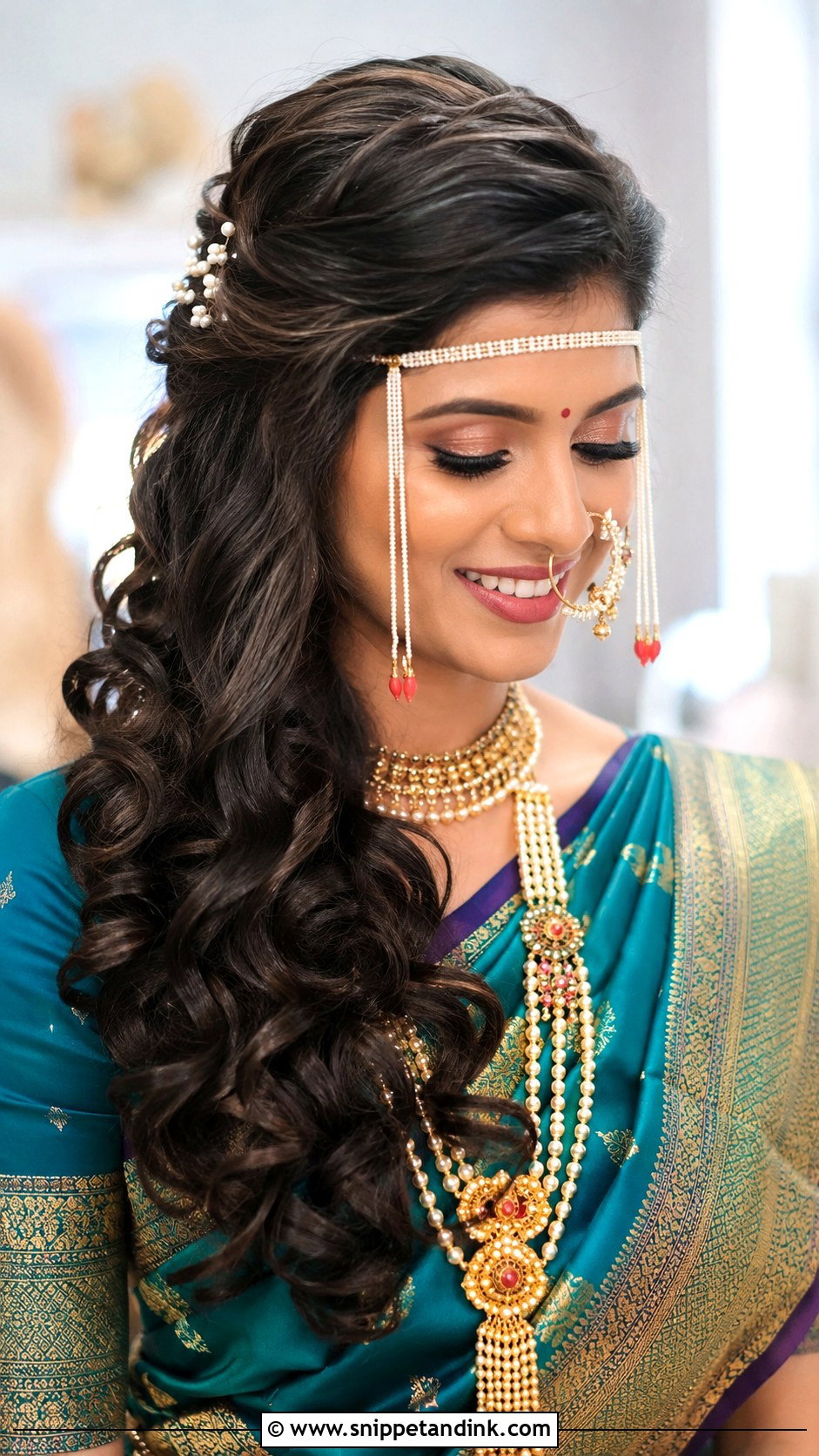
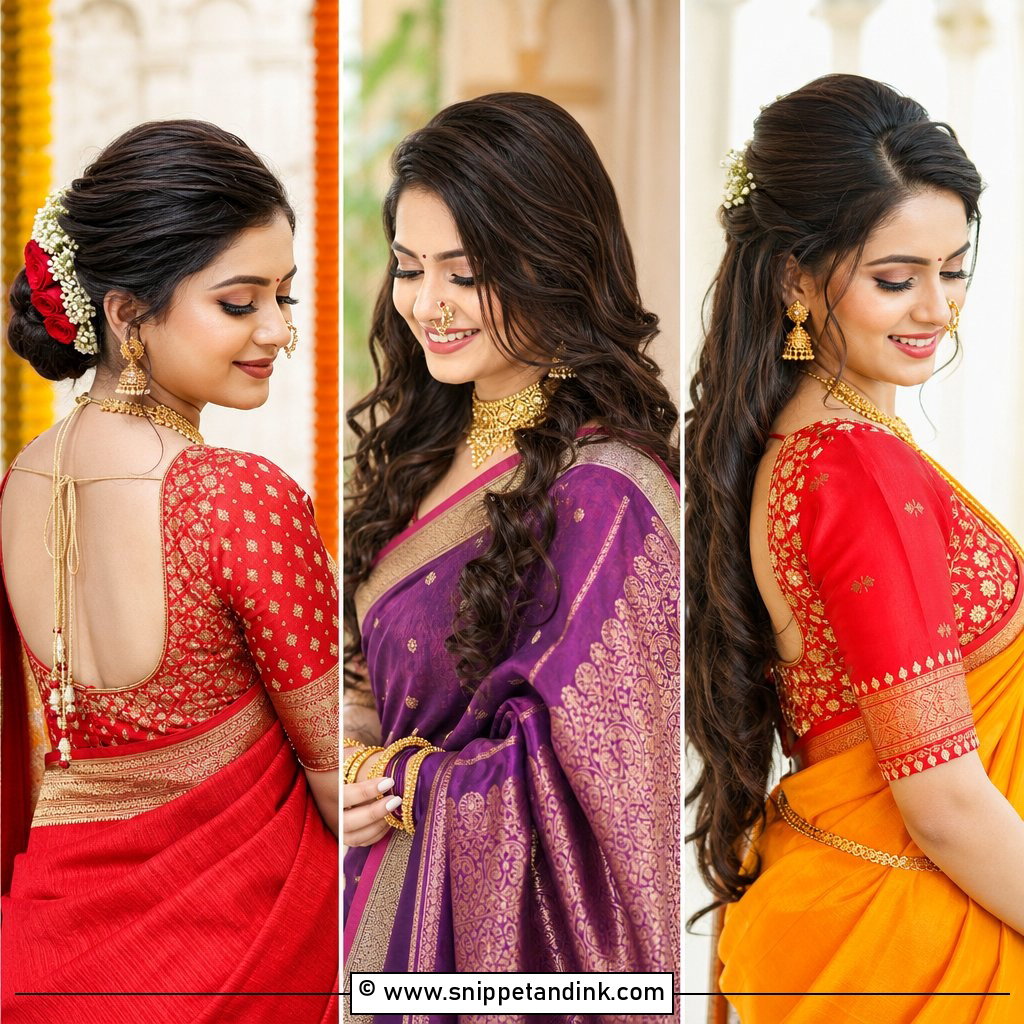
Open curls keep the look soft and modern while the traditional accessories stay in place. The front is pinned back neatly so the mundavalya and jewelry remain visible, and small flowers or pearl pins sit on one side. I use them mostly for receptions and engagement ceremonies, or for brides who simply don’t want a bun. They pair best with a Paithani draped in a lighter, more contemporary way. Set the curls with a strong product and let them cool before brushing, or they’ll drop long before the photos are finished.
12. Marathi Wedding Half Up Hairstyle
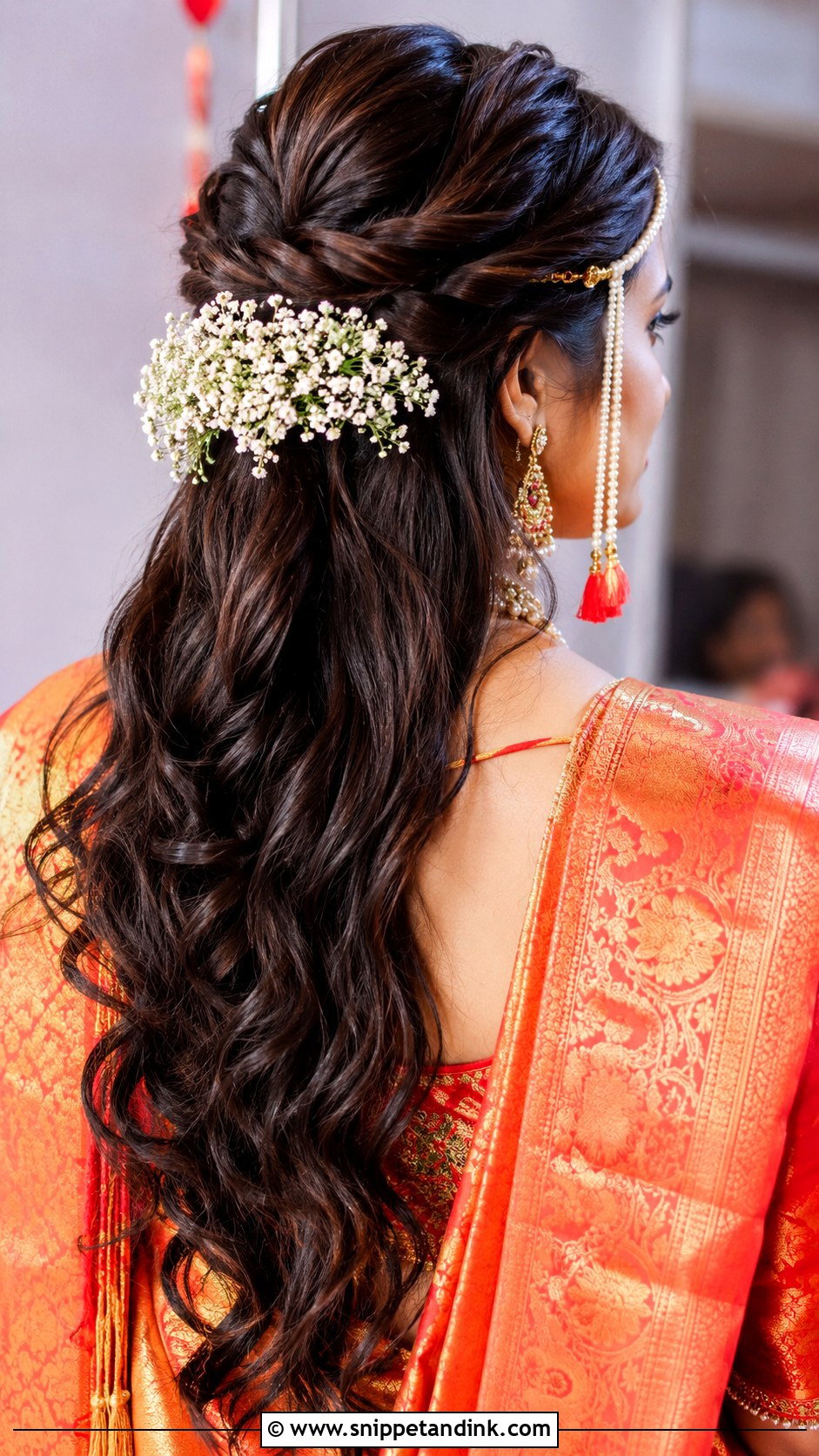
Half up gives you open hair with a structured crown. The top half is twisted, braided or puffed slightly, then secured at the back with flowers or pearl pins, while the rest falls in curls or waves. It’s a good way to show off length without leaving everything loose. It suits lighter jewelry, a delicate mundavalya and a bright saree. For a more traditional touch, run jasmine or baby’s breath along the pinned section where the hair joins.
13. Marathi Wedding French Braid Bun
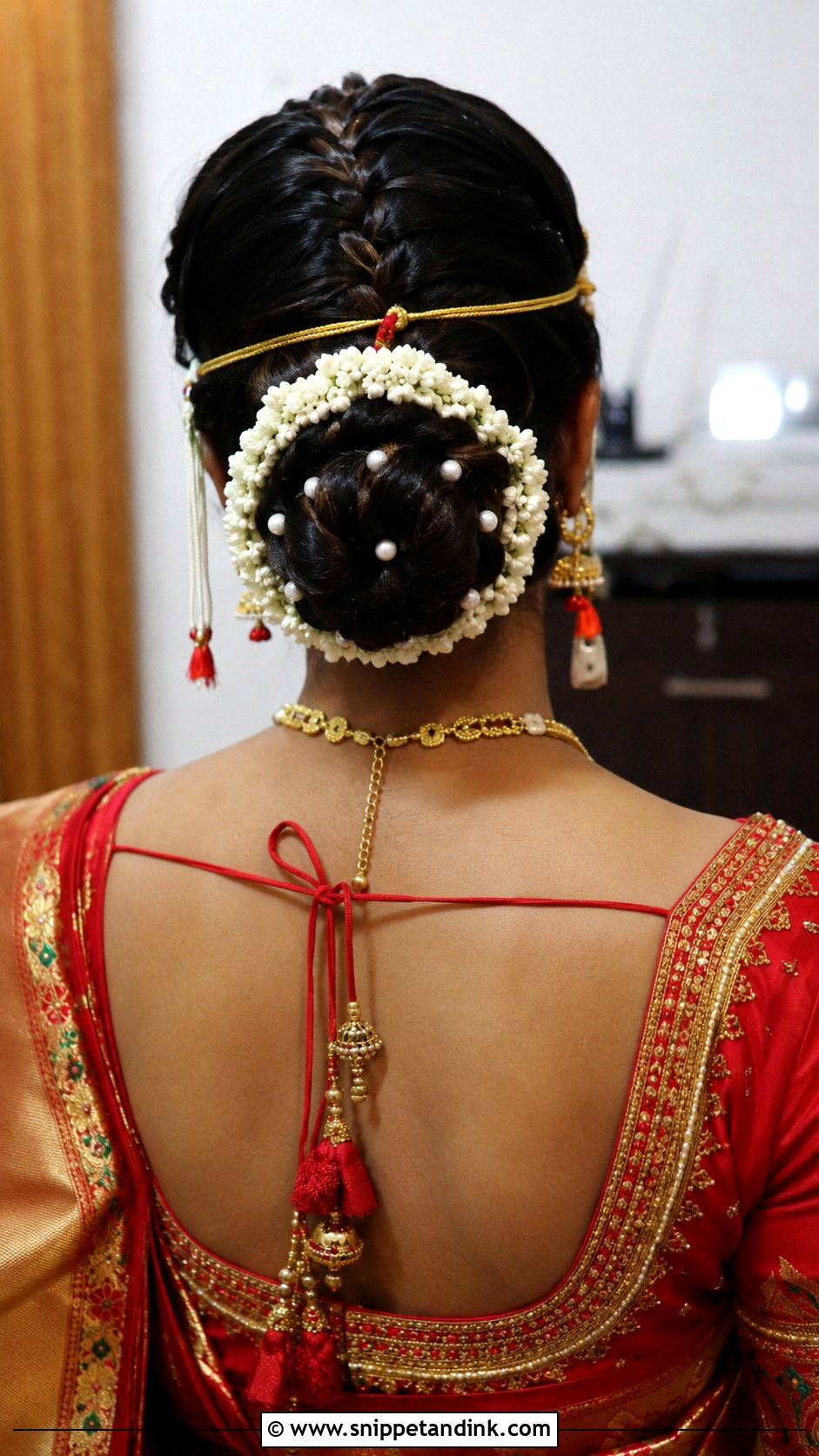
A French braid starting at the crown or along one side, then continuing into a round bun, gives visible texture from every angle. Flowers go around the bun and tiny pearl pins along the braid. For layered hair it’s a smart choice, because the braid picks up shorter pieces as it goes and holds them in. It does take longer to do than most buns, so allow for it in the morning schedule. The finished style feels secure and festive without being heavy.
14. Marathi Wedding Veni Phool Bun
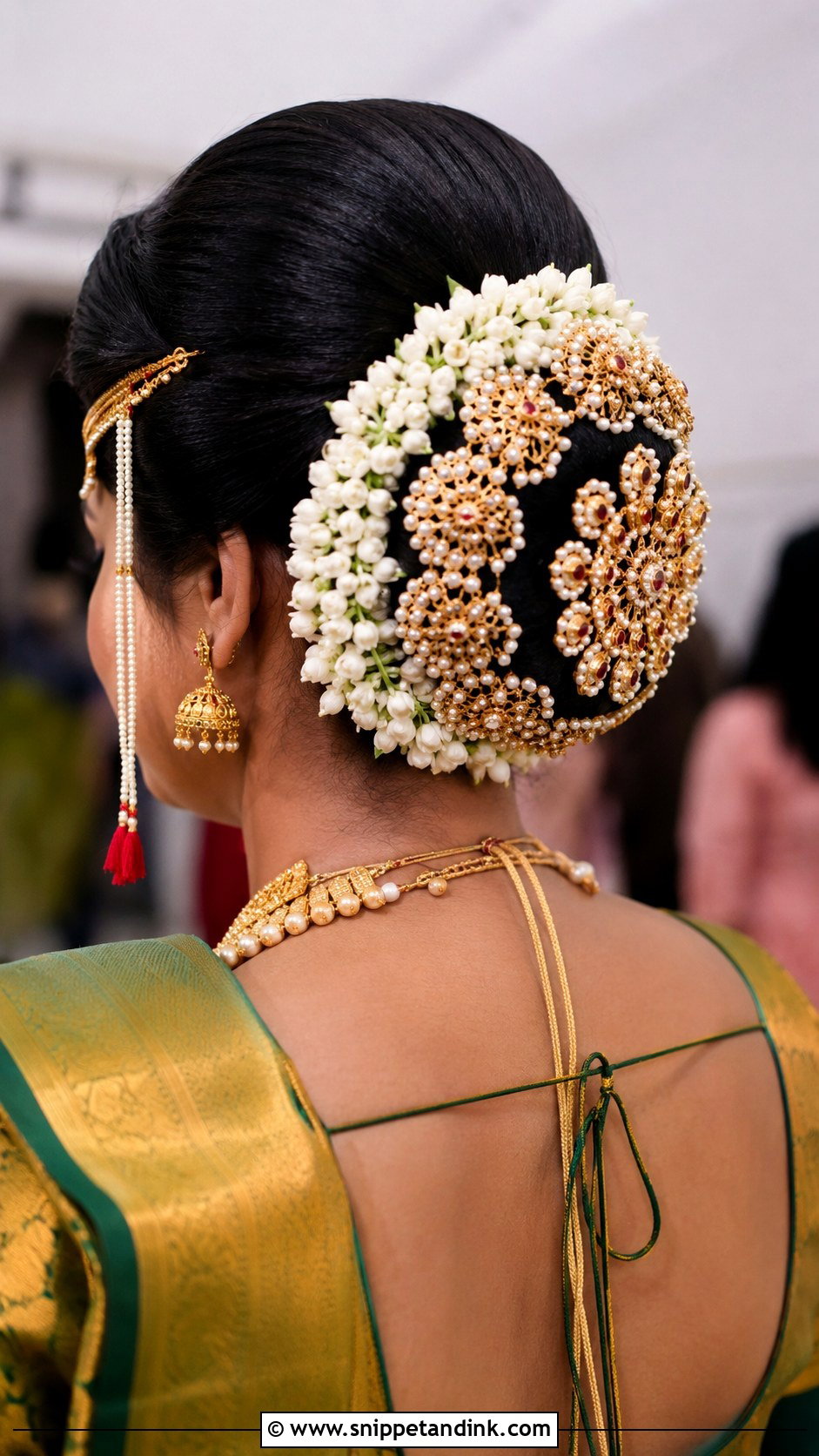
A Marathi wedding veni phool bun centres on the ornament: a gold or pearl veni phool set on a smooth, round bun, with fresh flowers around it for fullness. It ties the Paithani, nath, thushi and mundavalya together into one look. Gold ornaments are heavy, so I anchor them into the base of the bun rather than its outer layer, or they start to tilt by the end of the rituals. Its back view carries well through the ceremony and family portraits.
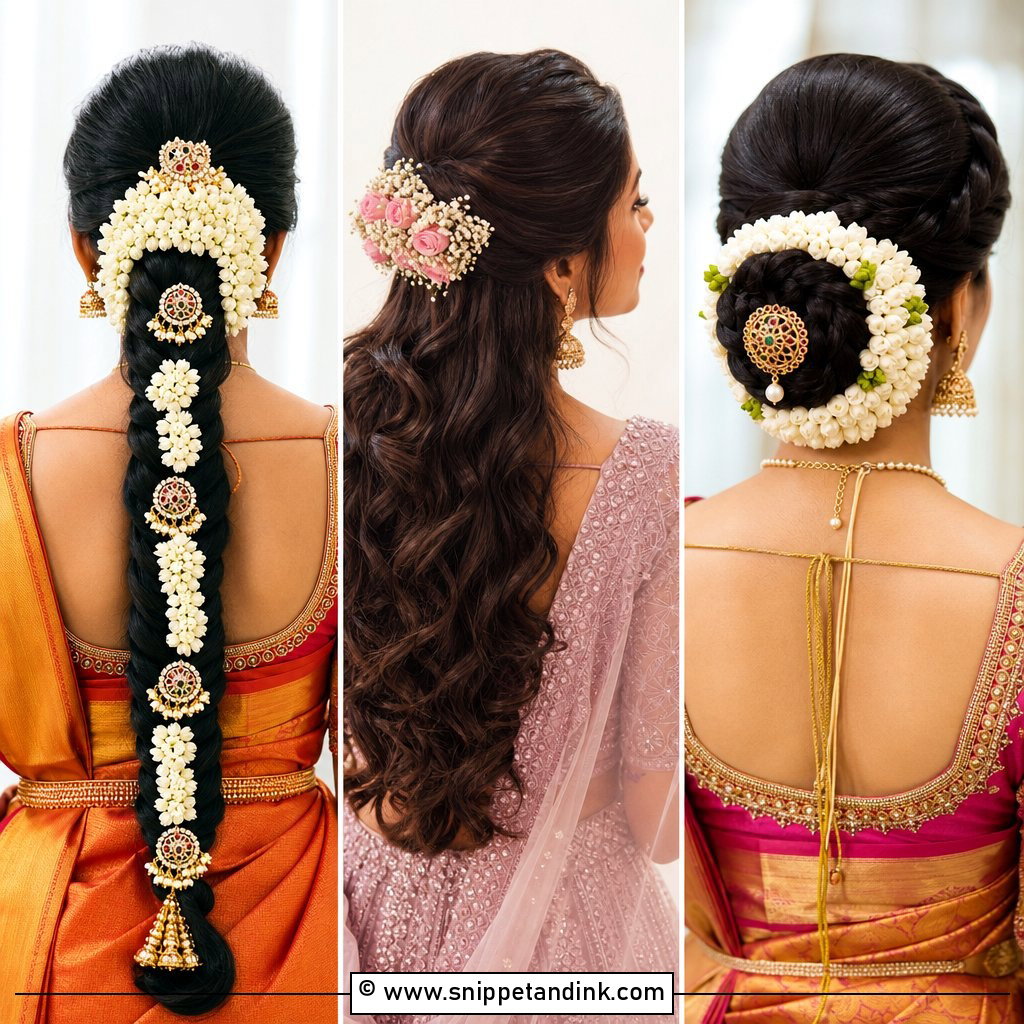
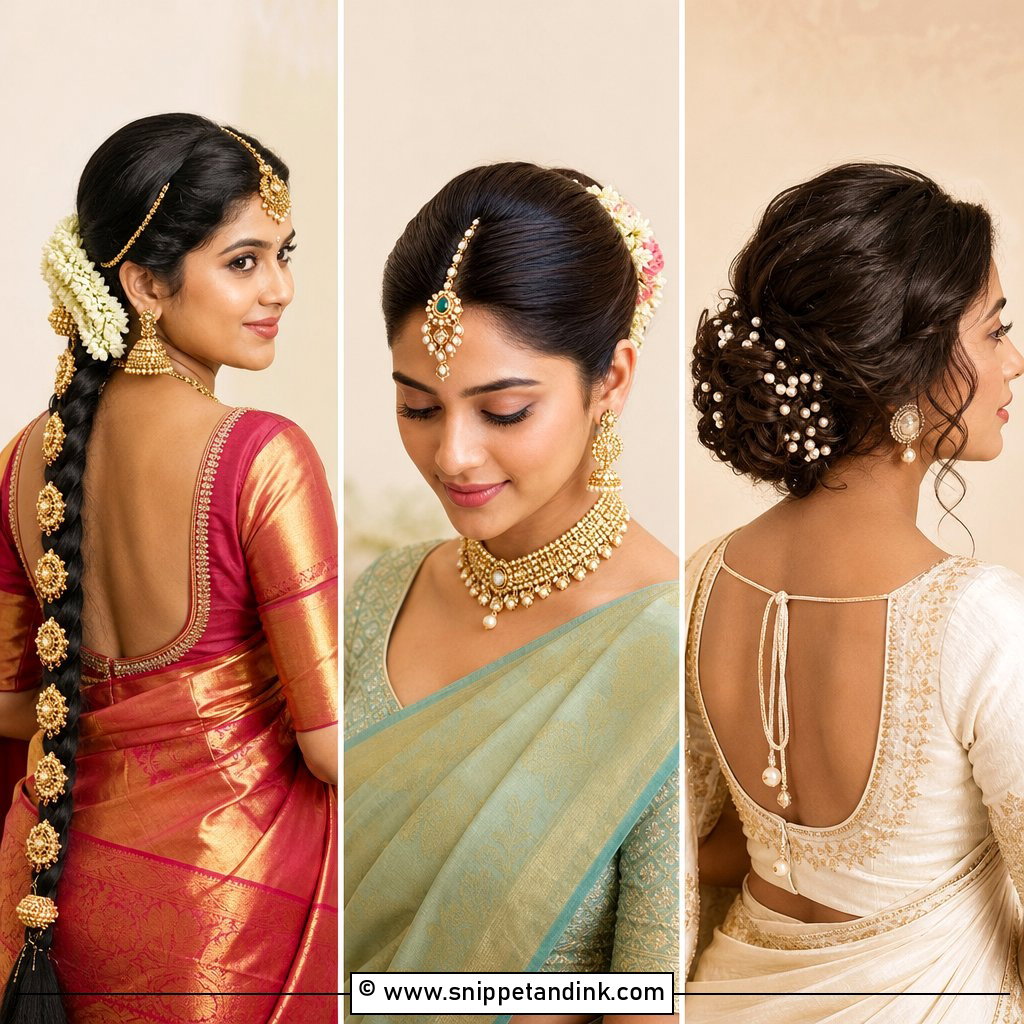
15. Marathi Wedding Floral Braid
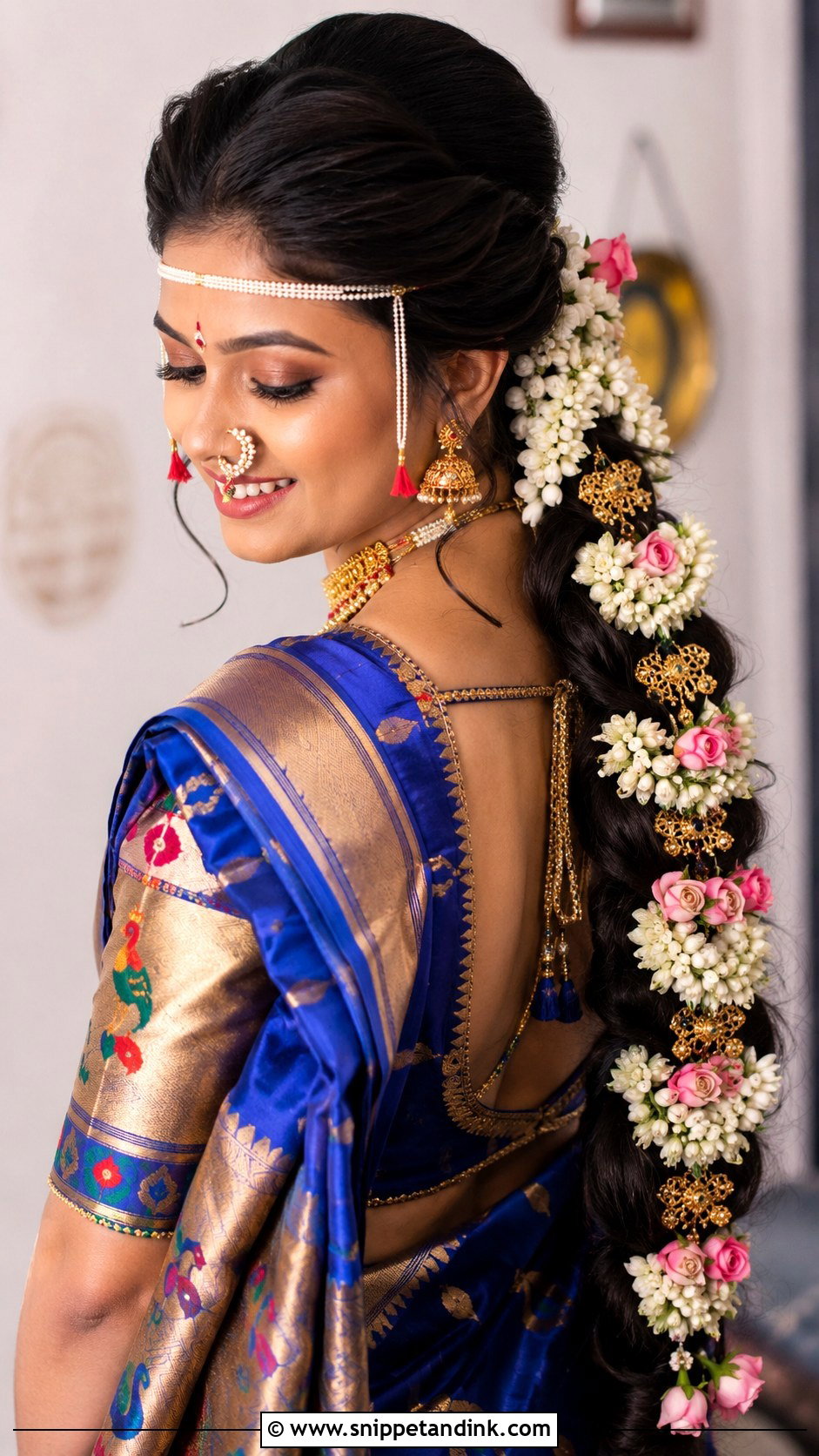
A floral braid can be simple, fishtail-inspired or softly pulled for volume, with fresh flowers placed along its length. Jasmine keeps it classic, while roses, marigold tones, or baby’s breath bring more colour. With a silk saree it adds movement down the back, and the hair stays controlled through the rituals. Gold accessories at the base of the braid make it read more Maharashtrian. If your hair is fine, ask for the flowers to be wired onto a thin cord that is then pinned along the braid, so the weight doesn’t loosen it.
Haldi Paste, Hair Oil and When to Wash
The days before a Marathi wedding are full of rituals that affect your hair, and a little planning saves your stylist a lot of trouble on the morning.
Oil earlier in the week, not the night before
A champi in the run-up to the wedding is a lovely tradition, and I’d never discourage it. But hair still carrying oil on the wedding morning is slippery, pins slide straight out, and buns lose their shape within hours. Have the oiling earlier in the week and wash thoroughly afterwards.
Cover your hair at the haldi
Turmeric paste stains. On dark hair it barely shows, but on lightened or highlighted hair it can leave a yellow tint that one wash doesn’t fully lift. Tie your hair up, wear an old scarf over it, and wash as soon as you can. If the haldi falls on the wedding morning itself, tell your stylist in advance so the hair time is scheduled after you’ve washed and dried.
Wash the day before for most buns
Freshly washed, silky hair is the hardest to pin. For buns and braids, hair washed the day before, without heavy conditioner on the roots, holds far better. Very oily scalps are the exception and may need washing on the morning itself; your stylist can then add texture spray to give it grip.
Ceremony Length Matters More Than Trends
A gajra bun, ambada, jasmine braid or veni phool bun will always look traditional. A bubble braid, twisted bun or half-up style feels more modern while staying close to Marathi styling. The deciding factors are practical: your saree drape, how heavy the jewelry is, your hair length, and how long the rituals run. For a long ceremony, firm buns and structured braids are the safest. If you want softer photos, curls and half-up looks can work for the later events. Whatever you pick, try it at the trial with every accessory on.
You'll Like These Ideas:


Leave a Reply