
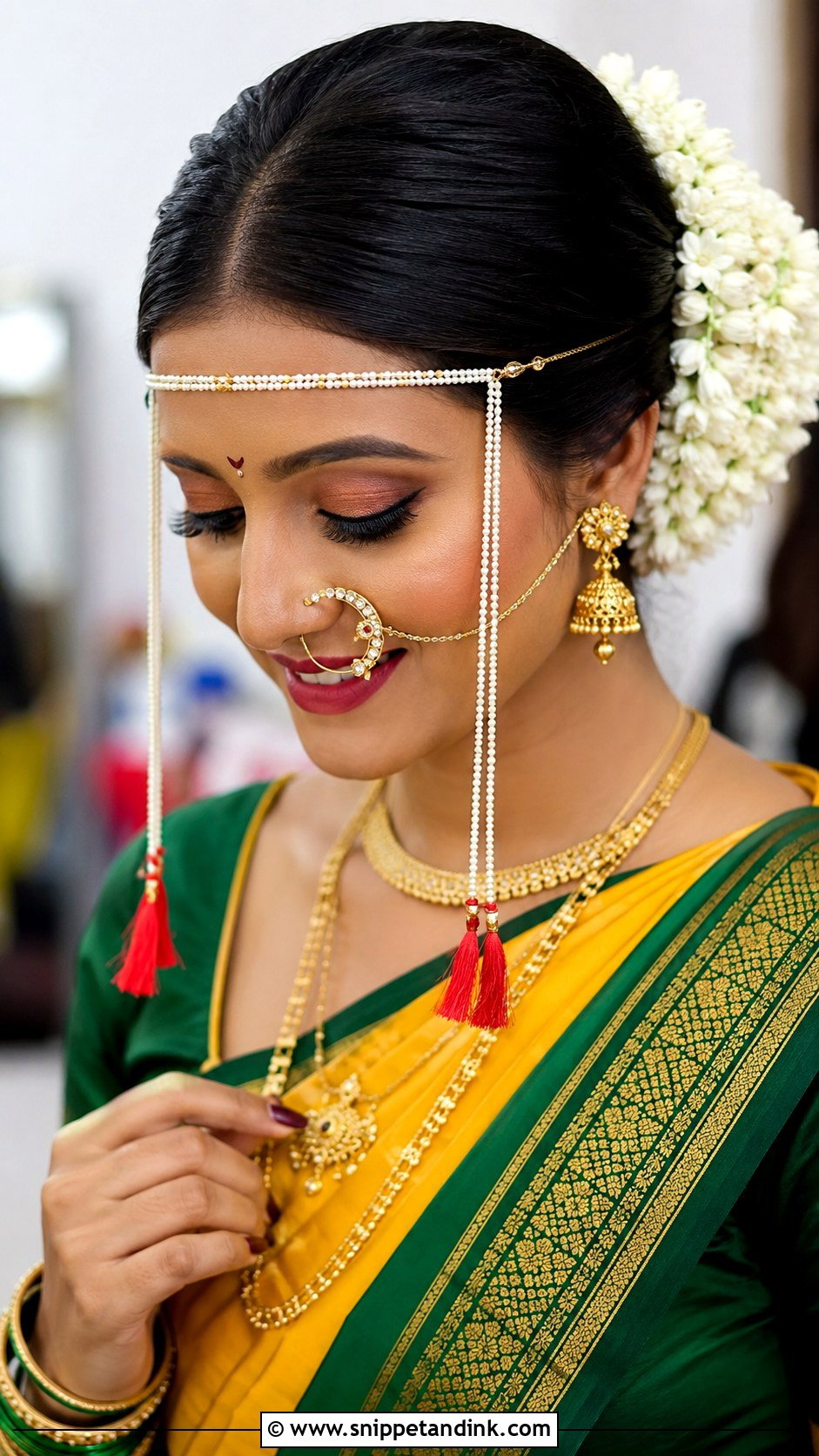
A Marathi bridal hairstyle has to do more work than most. It needs a clean center part, a bun or braid that will not budge, and room for gajra, roses, pearls, ambada pins and the mundavalya tied across the forehead. It also has to sit right with a nauvari saree, nath, chandrakor bindi and heavy gold, through rituals that keep you bending, sitting and standing for hours. When I style a Maharashtrian bride, I plan the hair around the jewelry first and the flowers second, because that order decides where every pin goes. These are twenty looks I’d recommend, with what each one asks of your hair.
Mundavalya First, Bun Second: How I Map a Marathi Bridal Style
The mundavalya is tied across the forehead and its strings meet at the back of the head, usually just above or around the bun. That one detail shapes almost every decision I make. If the bun is too high, the strings ride up and the strands tilt on the forehead. If the front has too much volume, the strands lift away from the skin and look loose in close-ups.
So at a trial I work in this order:
- Fit the mundavalya and decide exactly where its strings will tie.
- Set the bun or braid so its top edge sits just below that tie point.
- Plan the gajra, veni or ornaments around what is left visible.
- Pin the pallu last, checking it lies smoothly over the finished shape.
Bring the real mundavalya, nath and ambada pins to your trial, not similar pieces. Weight and string length differ a lot between sets, and a bun built for a light pearl mundavalya may not hold a heavier one.
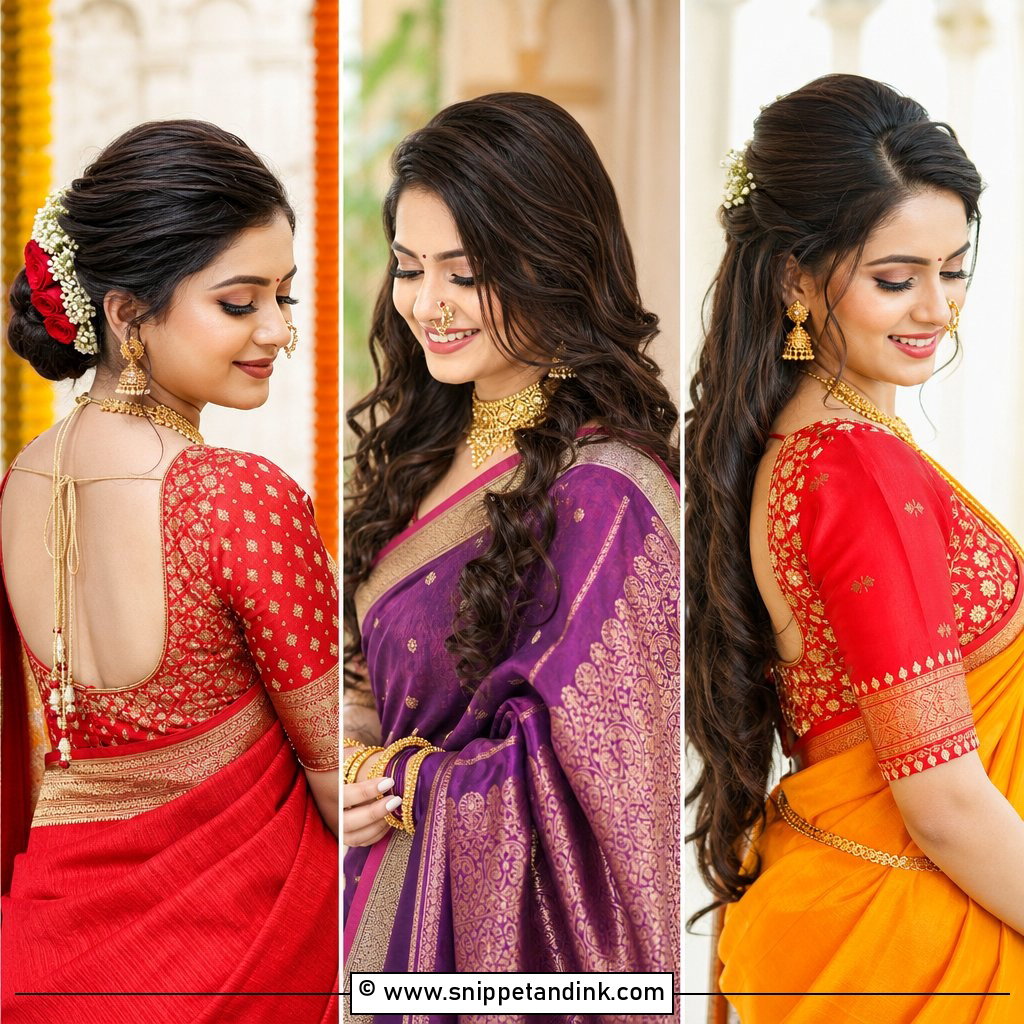
1. Marathi Bride Ambada Bun
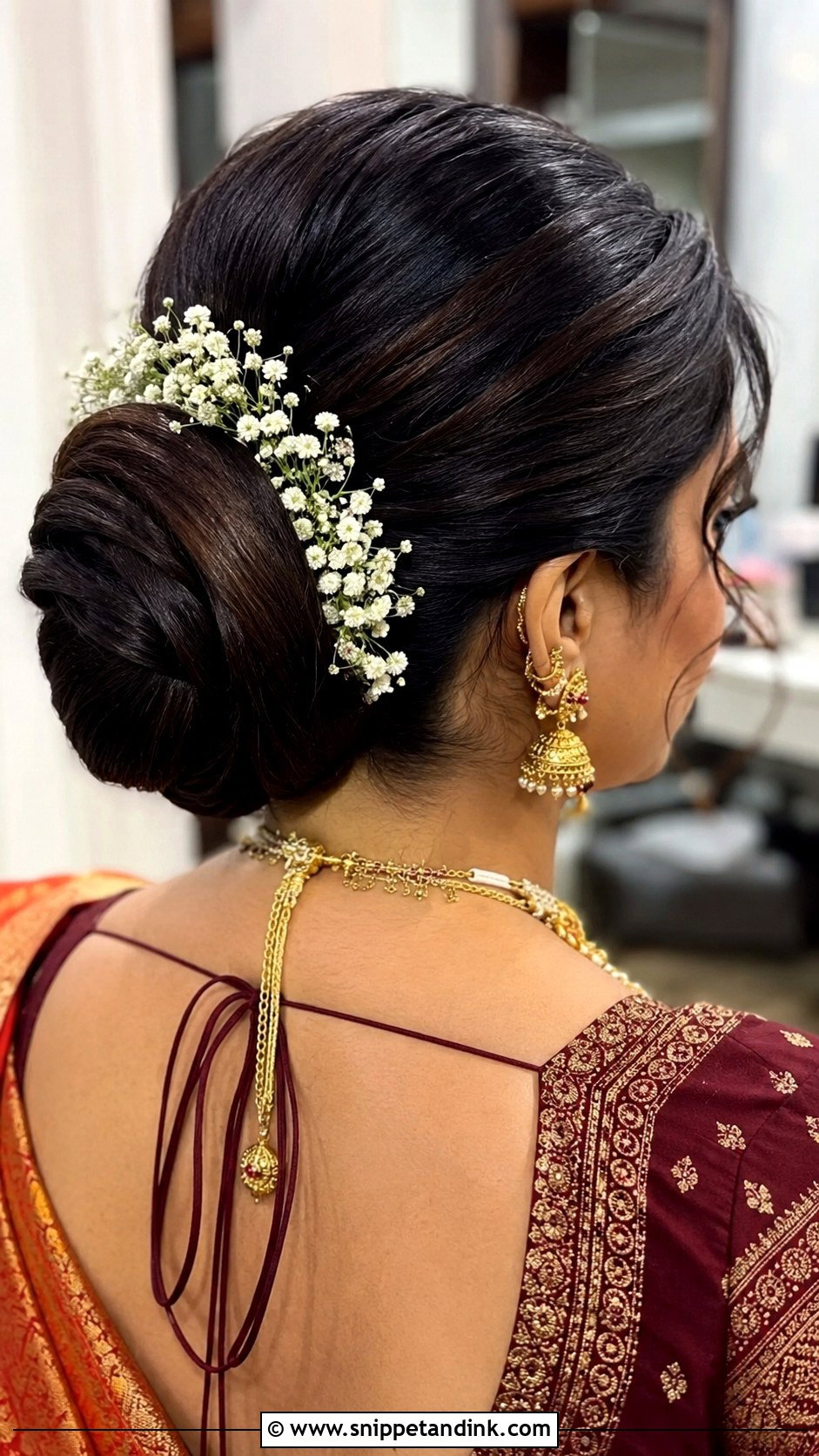
The ambada is the shape most Maharashtrian families picture, and for good reason: a round bun at the back of the head keeps the face completely open for the mundavalya, nath and layered necklaces. I part it dead center and smooth it with a little gel before twisting, because any bump near the parting shows under forehead jewelry. On fine or medium hair, a bun donut or a mesh padding gives the round shape without teasing the hair into a knot you’ll be untangling at midnight. Jasmine, gold ambada pins or a simple flower ring finish it.
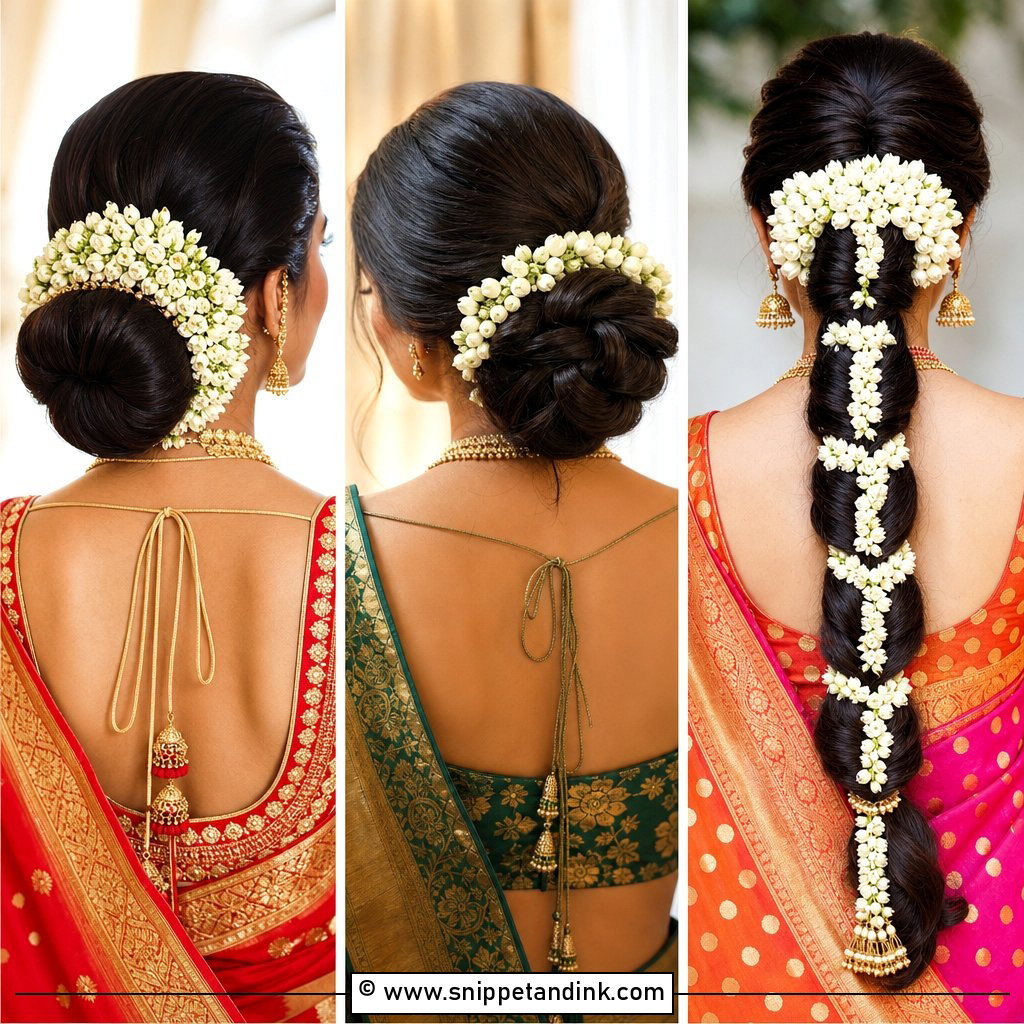
2. Marathi Bride Gajra Bun
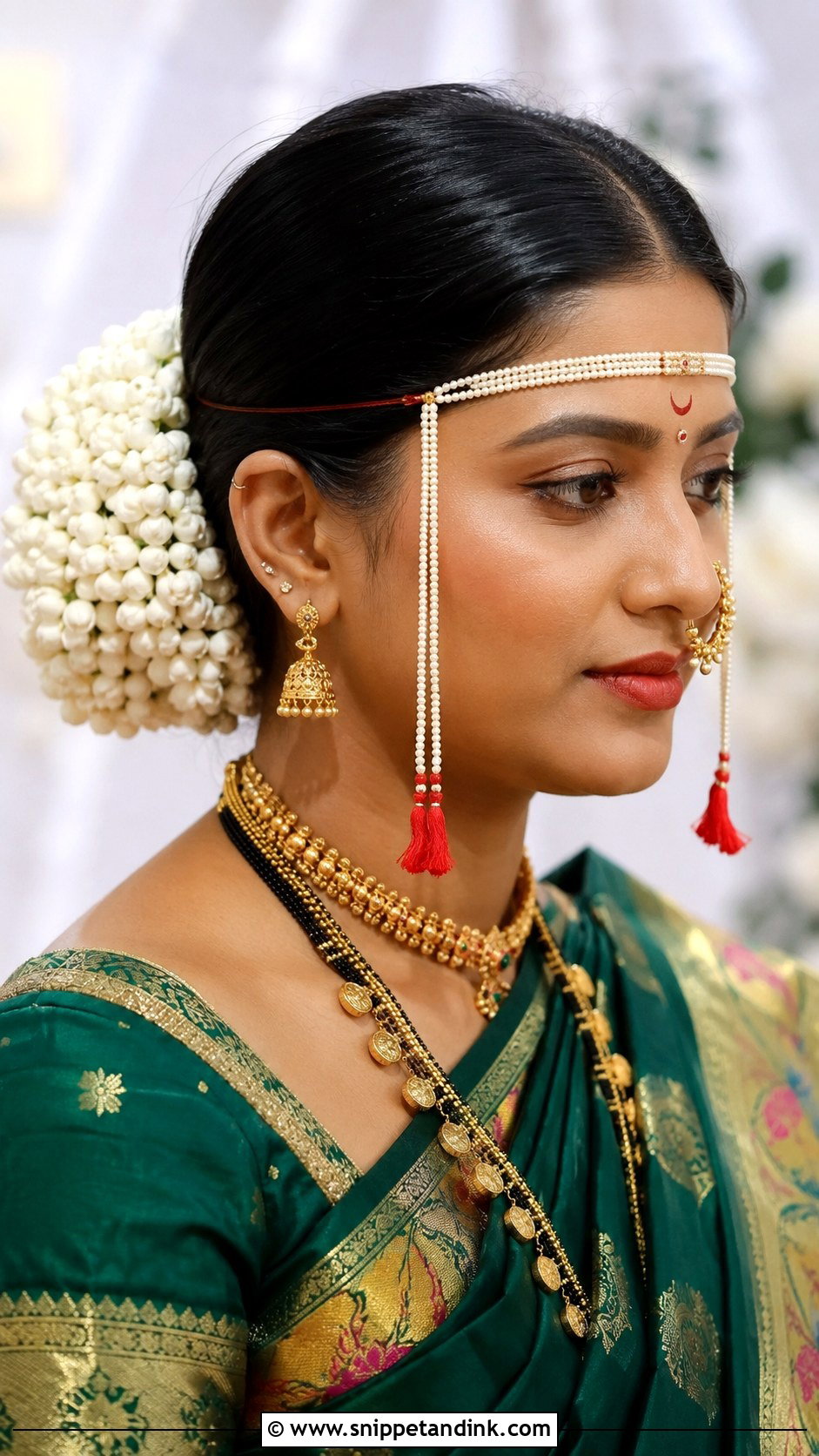
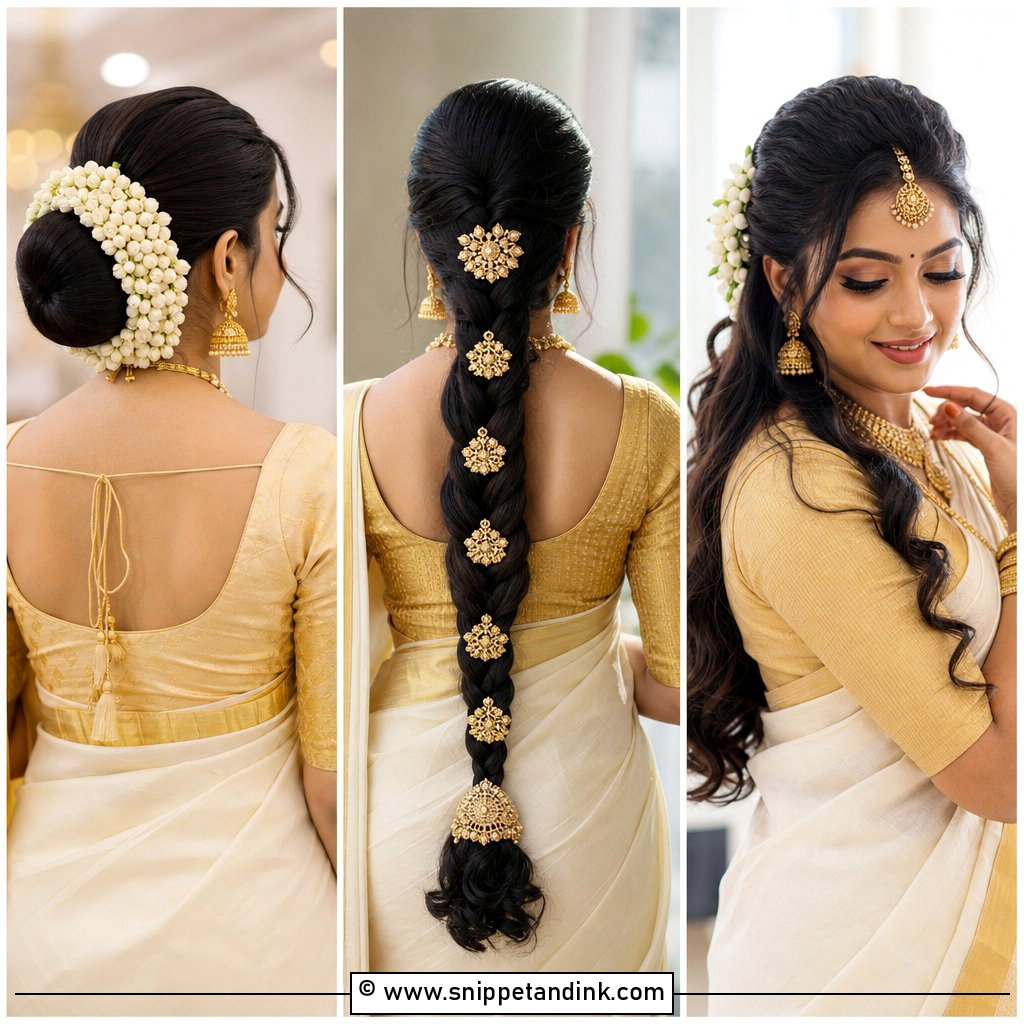
The scent of fresh jasmine is the reason this look smells like a wedding the moment you walk in. White flowers stand out sharply against a green, yellow, red or purple nauvari, which is why the gajra bun shows up in so many family albums. I set a low or mid bun first, then wind the gajra around it in one or two rounds and secure it with U-pins every few centimeters rather than a few large bobby pins. That spreads the weight. A little crown volume softens it; sleek hair keeps it sharp and traditional.
3. Marathi Bride Low Bun
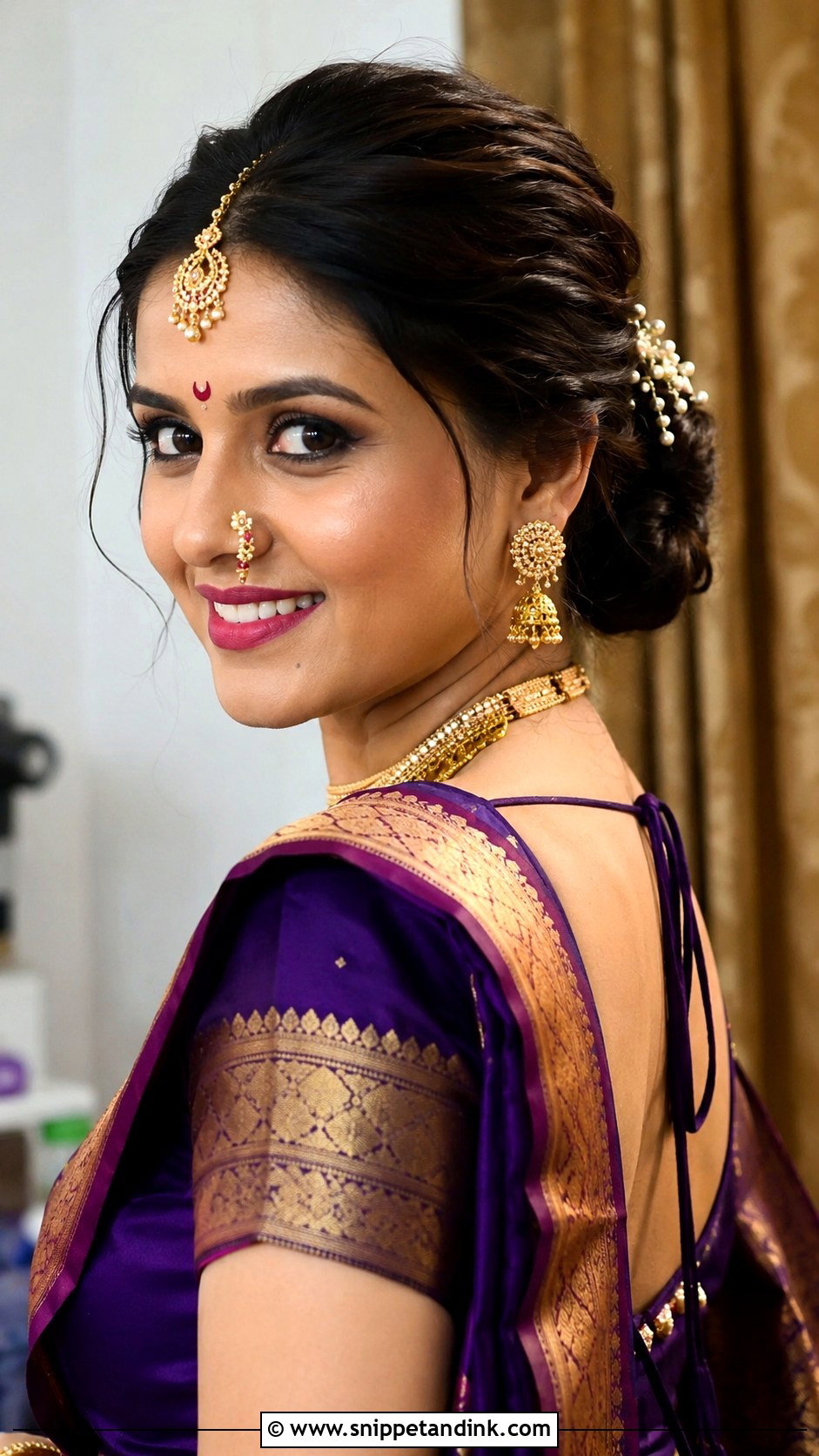
If you will wear the pallu over your head for part of the ceremony, the low bun is the one I reach for first. It sits at the nape, so the fabric drapes smoothly instead of tenting over a big shape. The front can stay flat and center parted or get a slight lift at the crown. Small roses, pearl pins or a half gajra around the base are enough decoration. Side profile photos with the nath and mundavalya are where this bun really shows its worth.
4. Marathi Bride Braided Bun
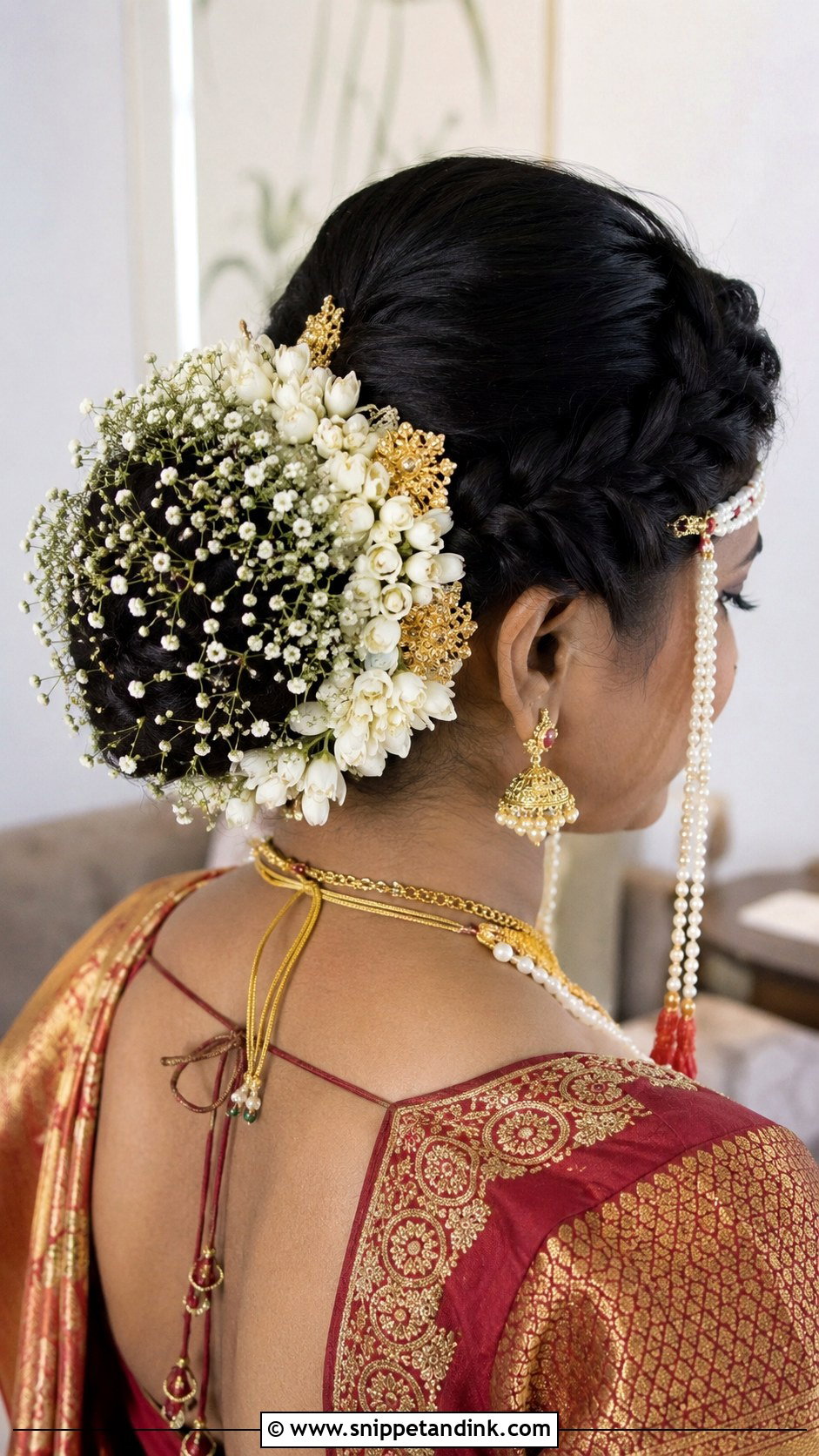
Thick hair can feel like it is fighting you in a plain ambada, and braiding is how I calm it down. Side braids or a crown braid go in first, then everything wraps into the round bun, which turns a Marathi bride braided bun into a tighter, lighter structure than a solid coil. On fine hair the same braids look thin, so I add clip-in extensions underneath to build a fuller base. Jasmine, baby’s breath, gold pins or a few rose petals tucked into the braid lines give it a rich, neat finish.
5. Marathi Bride Rose Bun
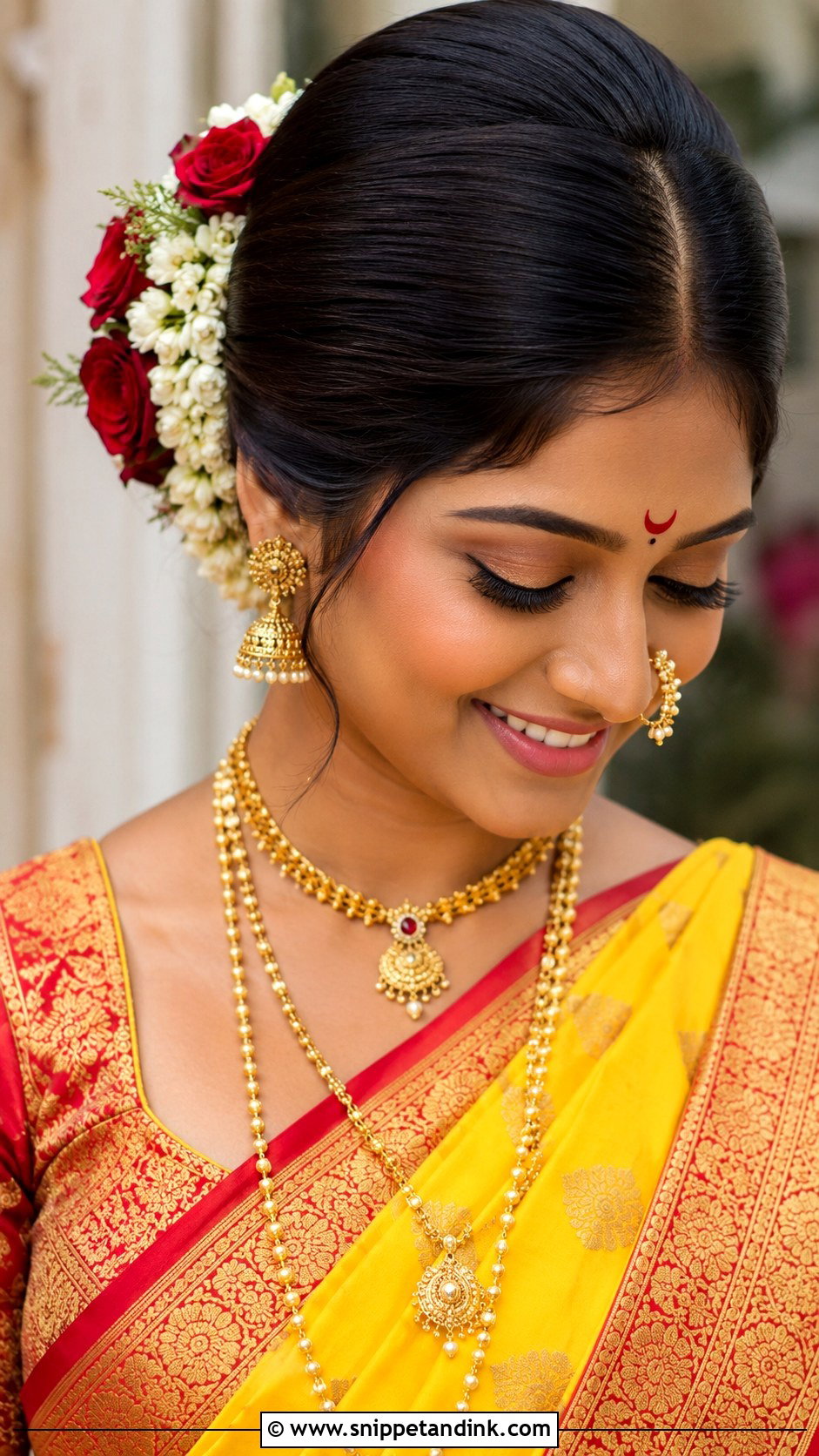
Roses add color and softness to a polished bun. I place them along one side, around the base or across the bun in a half-moon. Red is classic against gold; pink and peach suit a morning muhurat in daylight. Fresh roses are heavier than they look, so I wire or pin each stem into the bun’s structure, not just into the surface hair. Mix them with jasmine and the bun gains depth. With a Paithani and gold jewelry, the effect is rich without being fussy.
6. Marathi Bride Juda Bun
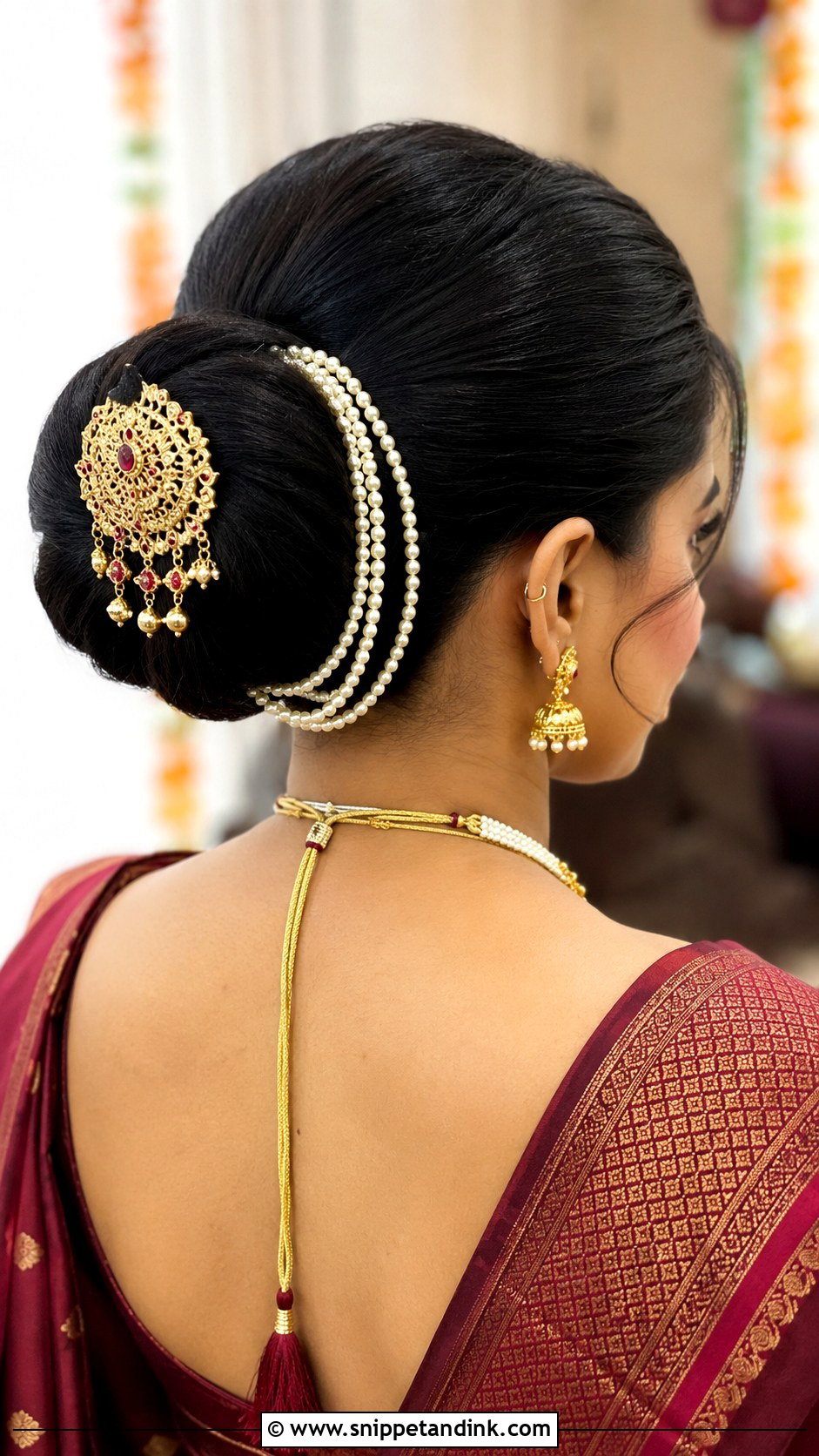
The juda is the bun I suggest when a bride wants one strong ornament instead of a crown of flowers. It needs a perfectly round, smooth base, which means I set the hair with a light gel and wrap it over padding. A juda pin, pearl chain, gold hair brooch or ambada ornament can sit at the center or slightly to one side. Because the hair stays so clean, heavy necklaces and a big nath never compete with it. Ask your stylist to cross-pin the base in an X pattern; it holds far better through bending and bowing.
7. Marathi Bride Khopa Hairstyle
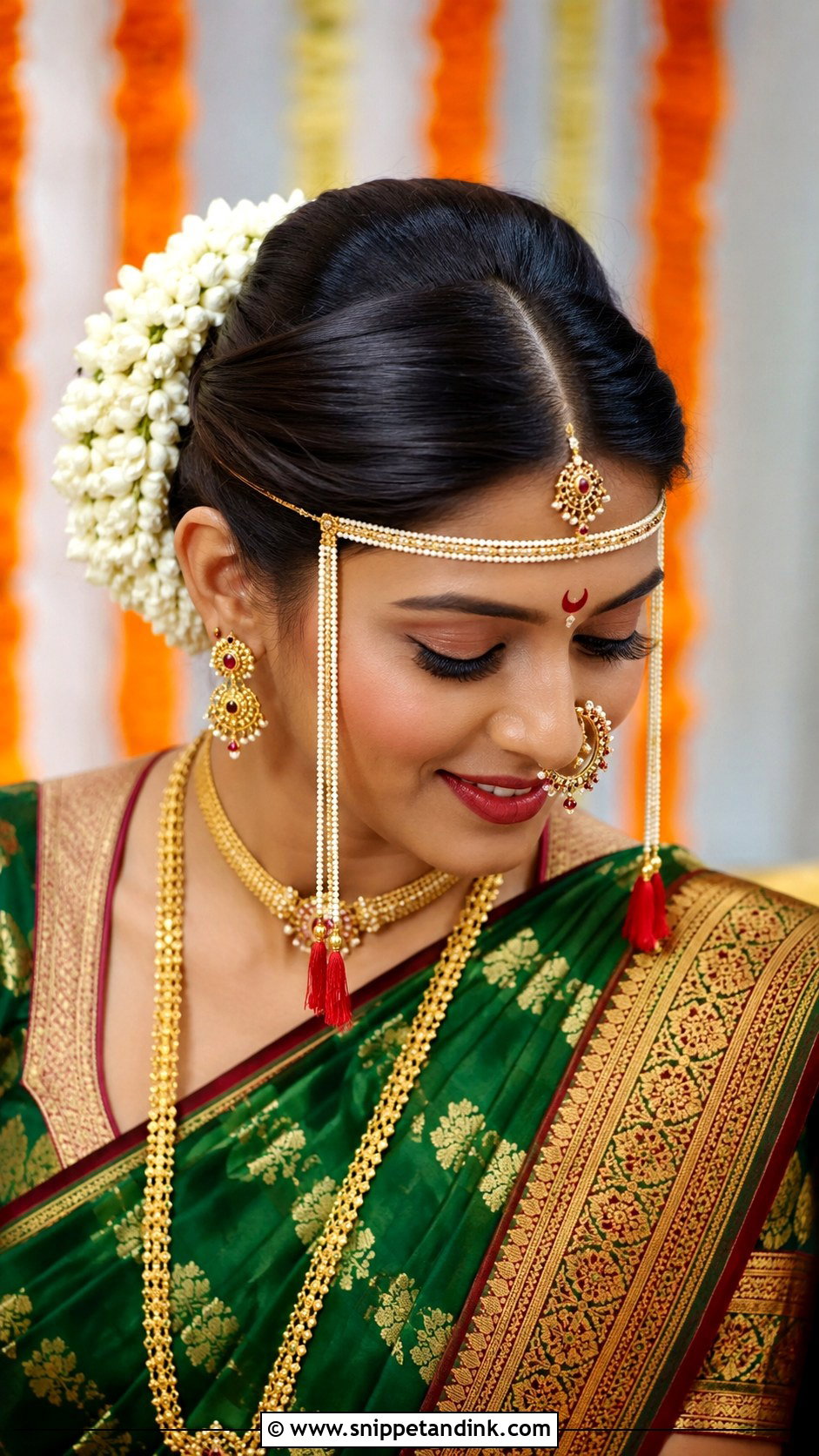
The Marathi bride khopa hairstyle is fuller and rounder than a regular bun, with an old-fashioned grace that suits a nauvari perfectly. The front stays sleek so the mundavalya lies flat across the forehead. I place it low for a gentler look or a little higher when the bride wants the shape seen from the front. Thick hair builds it naturally. Finer hair needs padding, and I’d rather use a lightweight mesh than a solid foam donut so the bun doesn’t feel like a weight pulling at the scalp all day.
8. Marathi Bride Sleek Bun
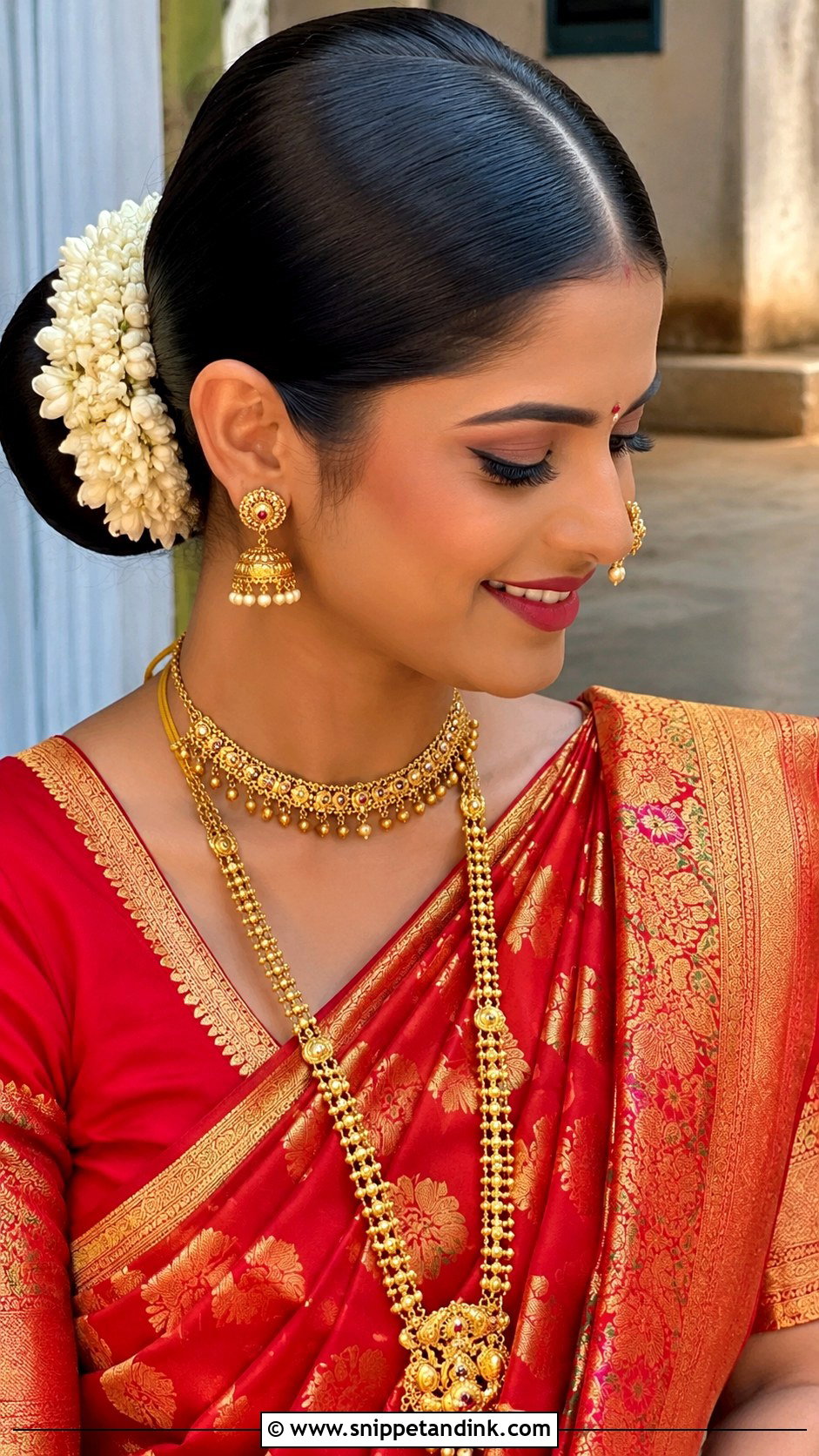
A sleek bun is the most practical choice for a bride with heavy jewelry and a busy day. Clean center part, flyaways smoothed down, everything gathered into a firm bun. I use a fine-tooth comb and a small amount of gel or wax stick at the hairline, then a light hold spray, since too much shine can look wet in flash photos. The front stays neat for the mundavalya or maang tikka. It can be left plain or ringed with one gajra. Brides who hate the feeling of loose pieces on their face usually love this.
9. Marathi Bride Messy Bun
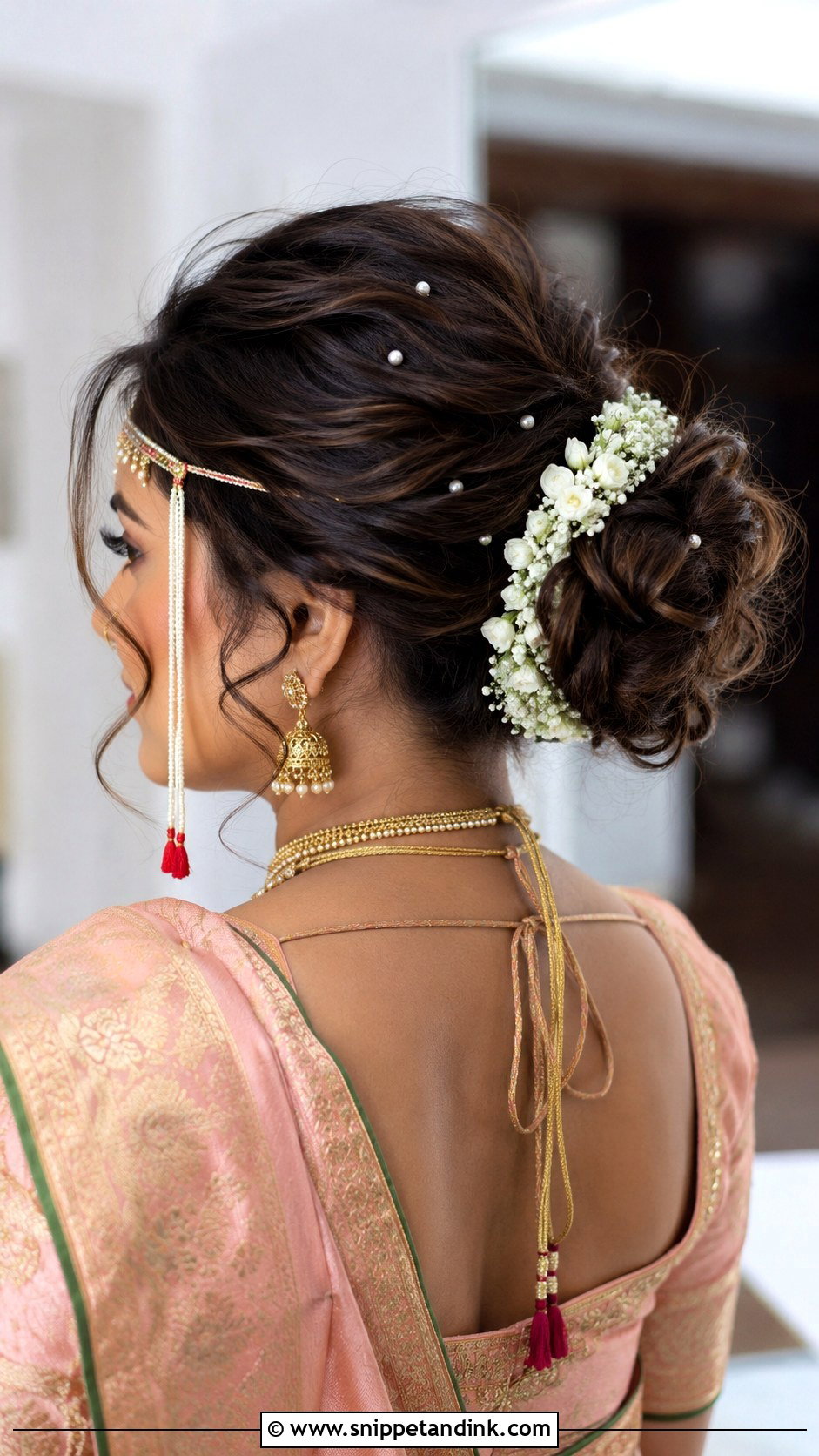
Messy, for a bride, has to mean controlled. I set the hair with curls first, then build the bun from loose twists and pinch out a little volume at the crown, pinning every piece so nothing actually moves. Face-framing strands should be curled away from the face and kept short enough that they do not catch on the mundavalya strings. With a nauvari and traditional jewelry, it gives a softer, more modern feel. Small flowers, pearl pins or a fine hair vine make it bridal rather than casual.
10. Marathi Bride French Braid Bun
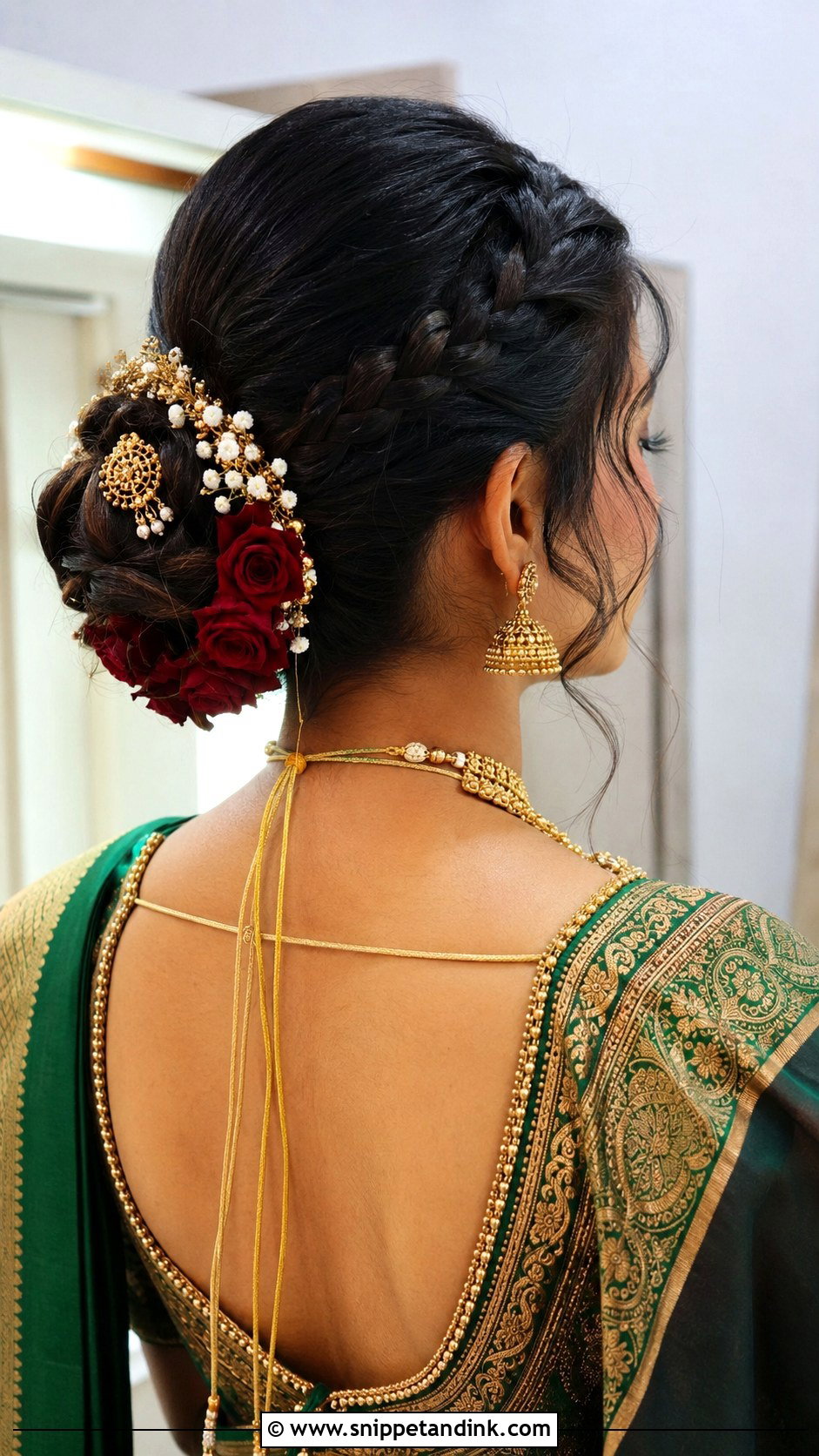
A French braid starting at the hairline gives detail at the front and sides, then blends into a bun at the back. I like it for brides who will move a lot during rituals, because the braided section grips the scalp and keeps the whole style anchored even when you bow or adjust the pallu. One honest caution: a braid that starts right at the front can sit under the mundavalya and push it up. If you’ll wear one, I begin the braid a little further back. Flowers around the bun and tiny gold pins along the braid finish it.
11. Marathi Bride Long Braid
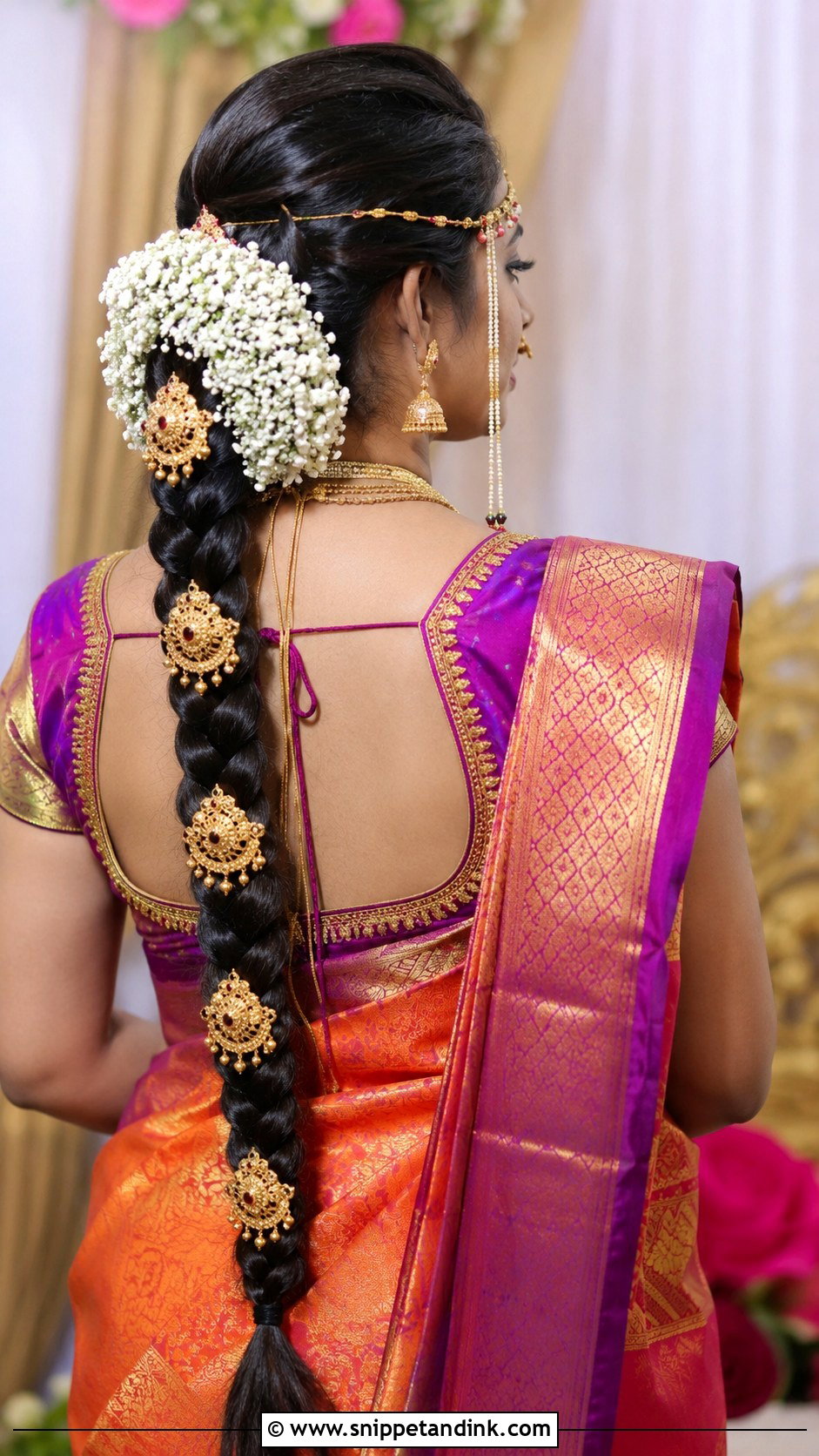
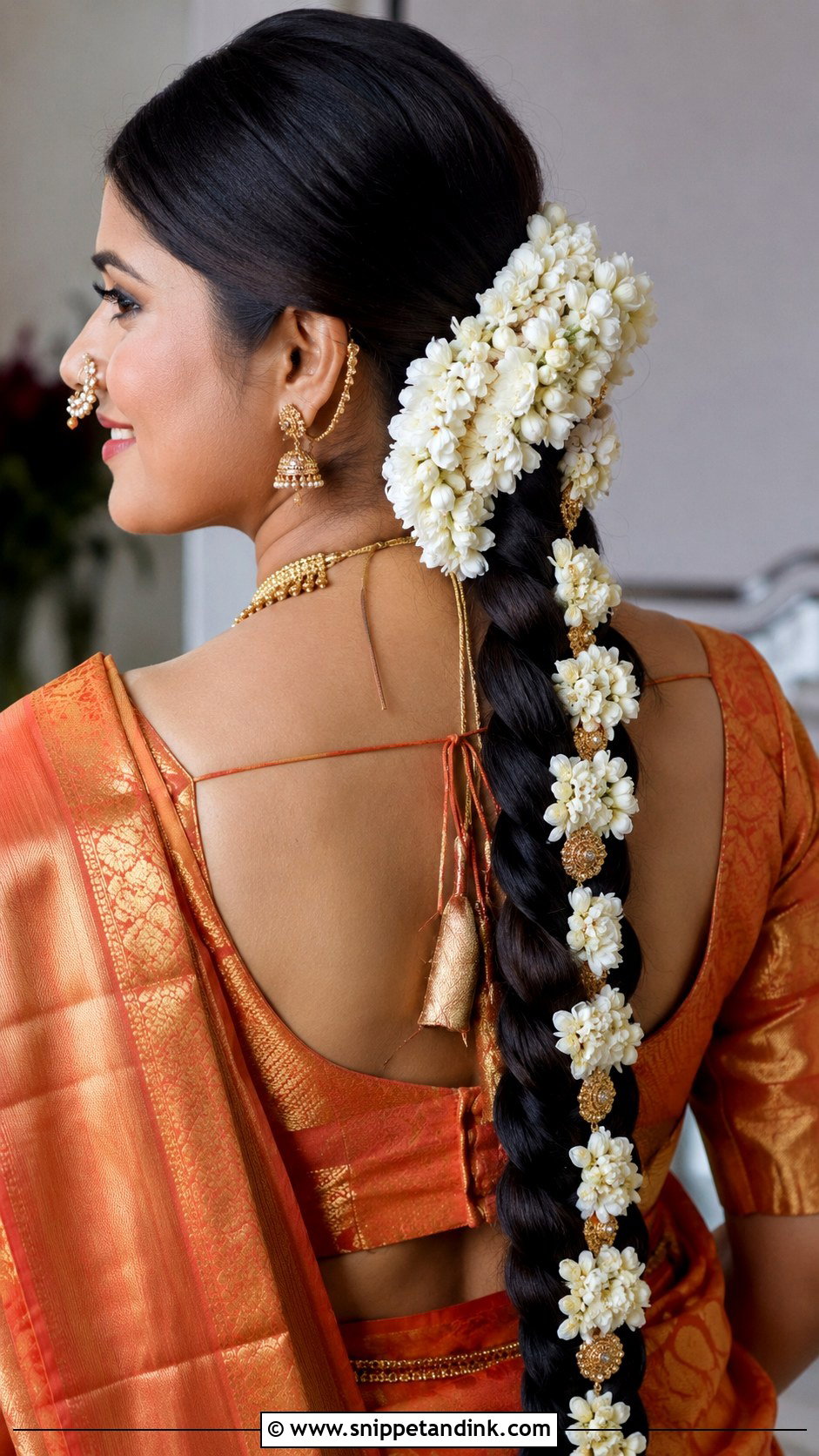
A long braid shows off length and has a cultural grace that a bun can’t copy. It can be smooth and thick, or dressed with flowers, pearls, gold accessories or a bridal braid chain. Against a nauvari it draws a clean line down the back. It’s also lighter on the scalp than a padded bun, which matters during a long day. If your hair stops above the waist, a matching clip-in extension adds length; I always match the extension to your hair after it has been oiled or styled, since color shifts.
12. Marathi Bride Gajra Braid
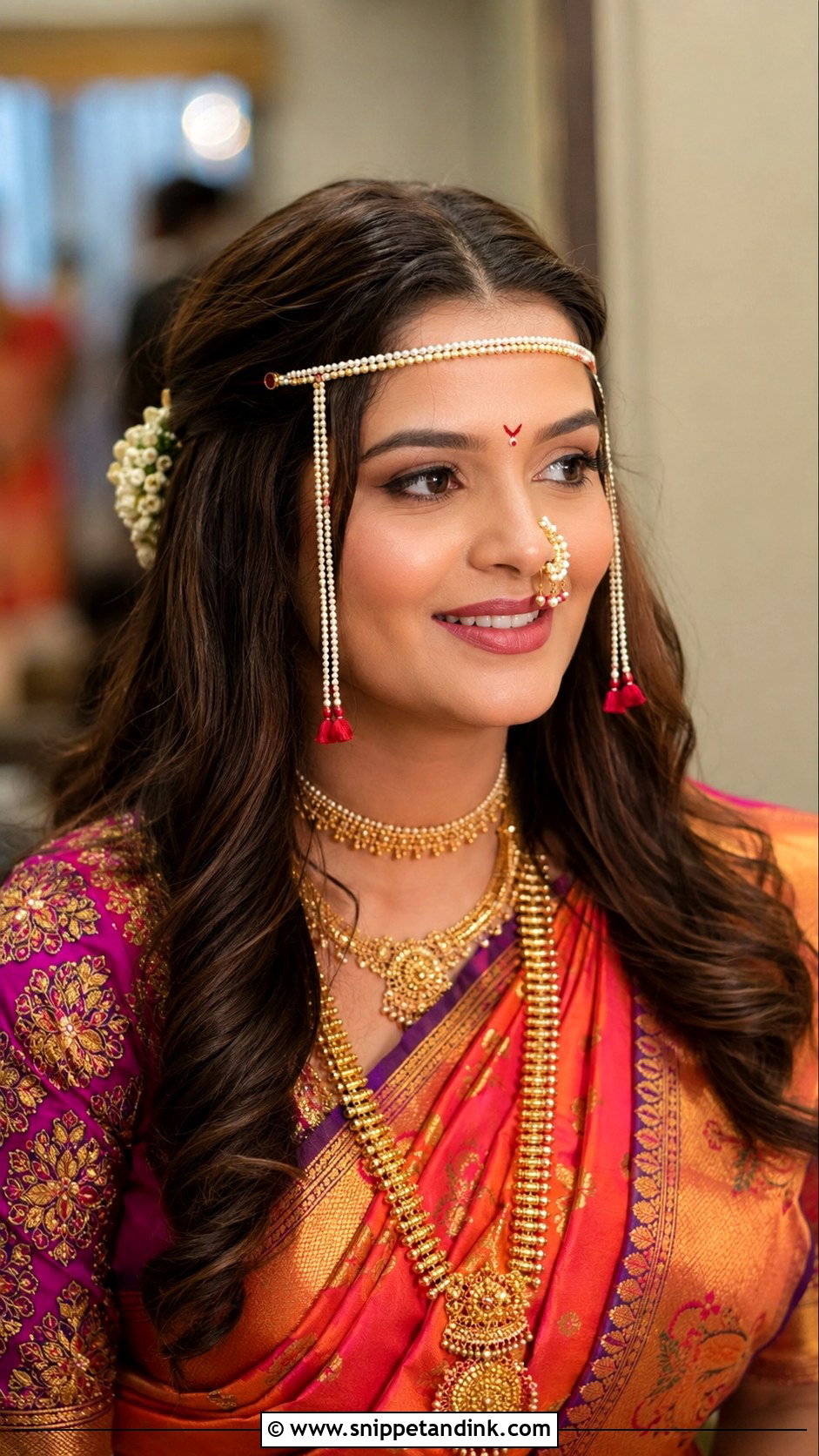
Here the jasmine runs the length of the braid, woven in or pinned in sections from top to bottom, so the back view becomes a long floral line. The braid must be thick enough to hold the flowers, otherwise the gajra sags and twists. Fine hair usually needs extensions for this. Keep the front center parted and neat for the jewelry. Brides who prefer flowers to metal ornaments, or who want a fresh look for a smaller ritual, tend to pick this.
13. Marathi Bride Bun With Mundavalya
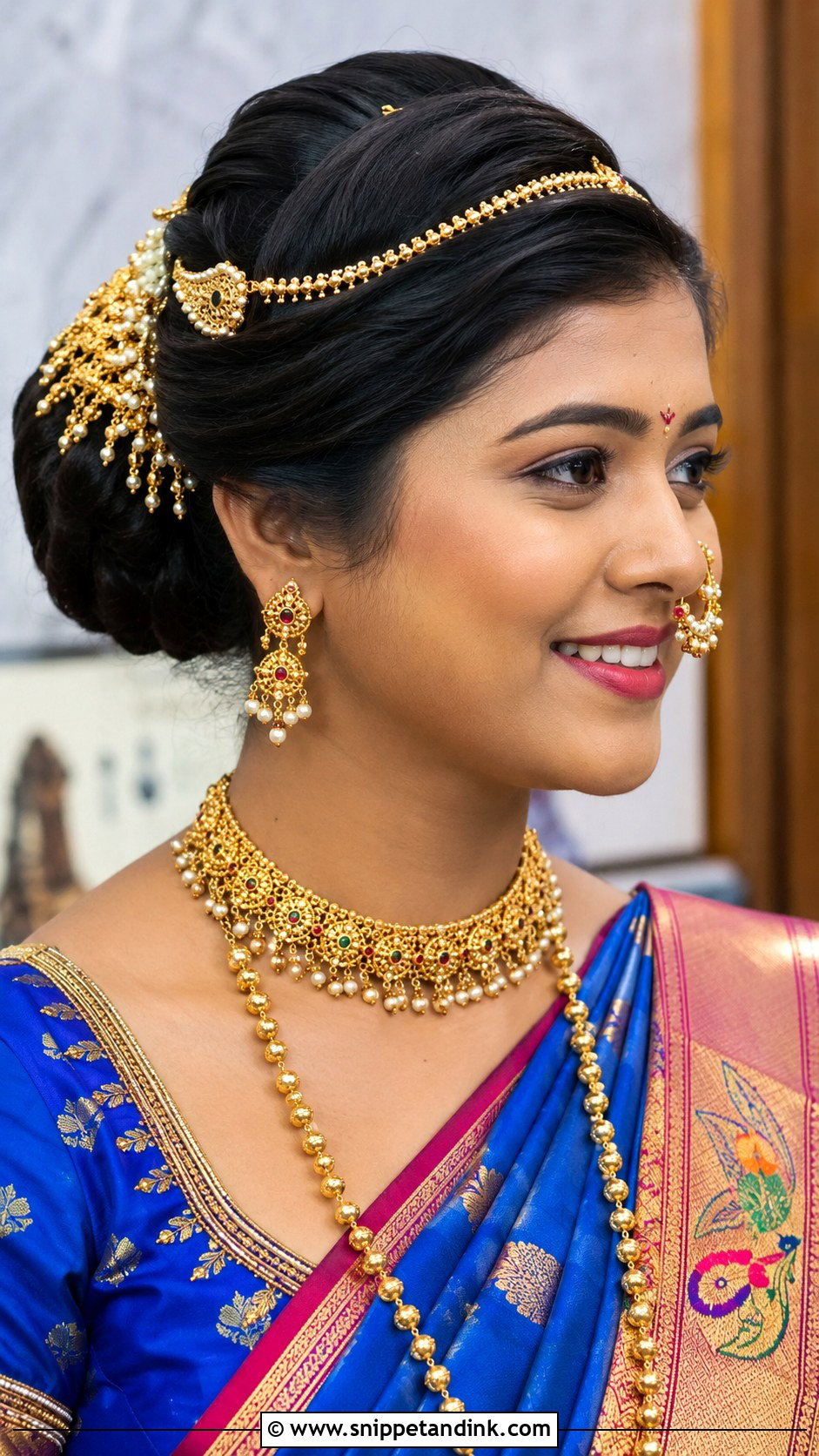
A Marathi bride bun with mundavalya lives or dies on the front section. The hair near the parting has to stay flat, because any lift at the crown pushes the strings of pearls or flowers away from the forehead. I tie the mundavalya after the hair is finished and pin its strings into the hair behind the ears so it never slides. A mid or low bun balances it best. Wrap the bun in gajra or keep it plain if the jewelry is heavy. For the most classic Maharashtrian bridal look, this is the one.
14. Marathi Bride Bun With Veni Phool
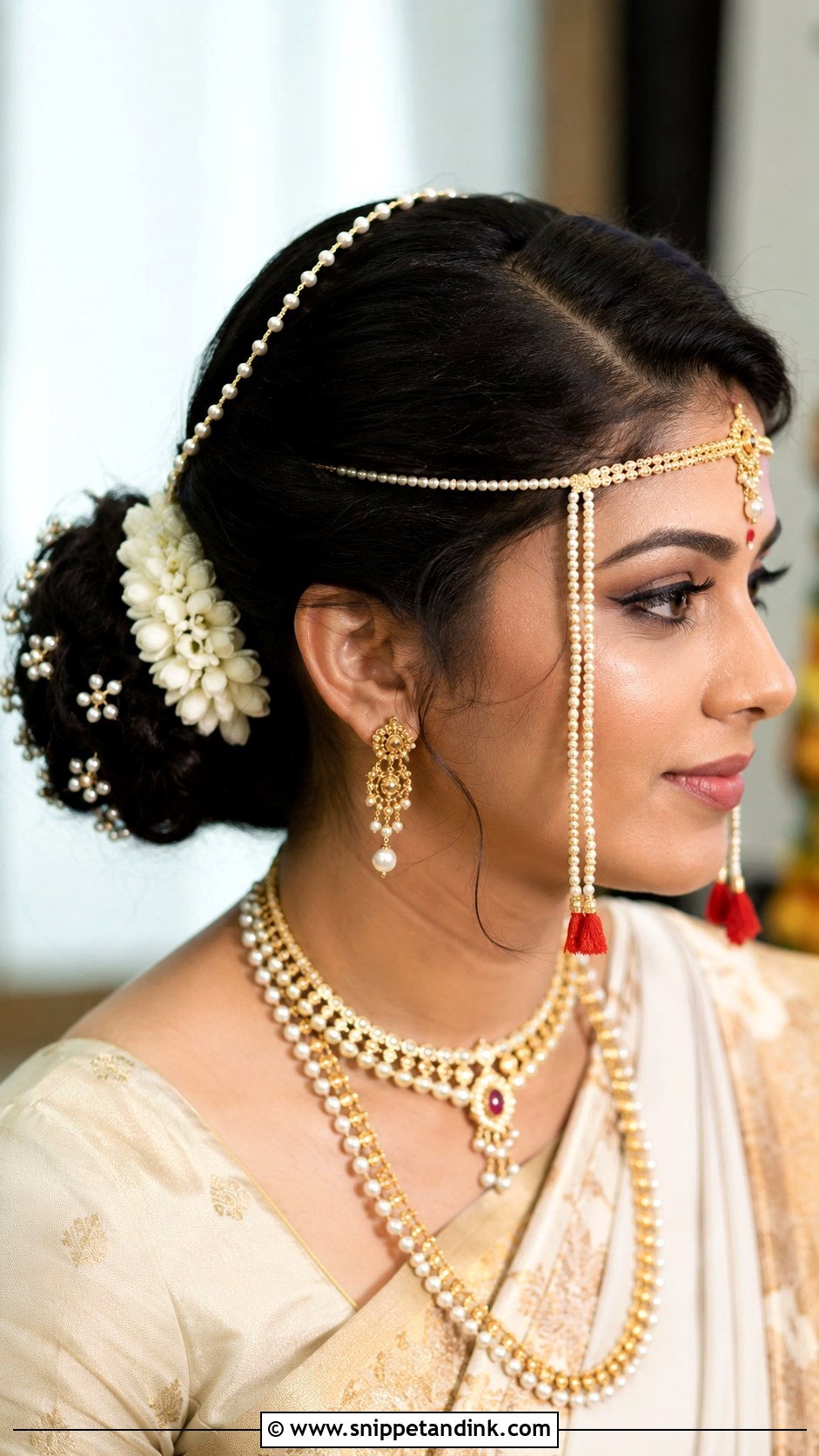
A Marathi bride bun with veni phool turns the back of the head into the main ornament. The veni phool sits around or over the bun, and it only stays put if the base is a firm ambada or khopa. I pin through the ornament’s loops into the bun itself, not just into the outer hair, so it does not shift during rituals. Jasmine or roses around the edge soften the metal. Keep the front sleek so all the attention goes to the back.

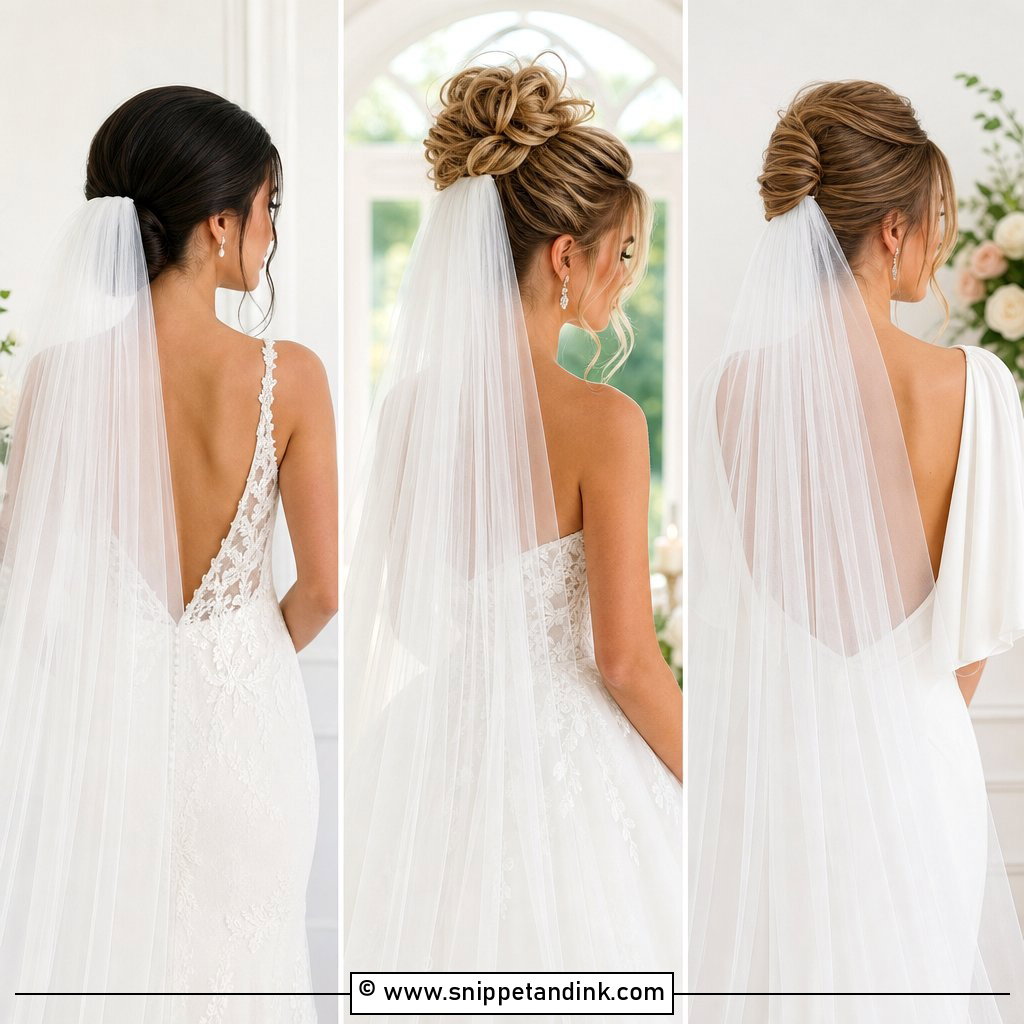

15. Marathi Bride Bun With Pearls
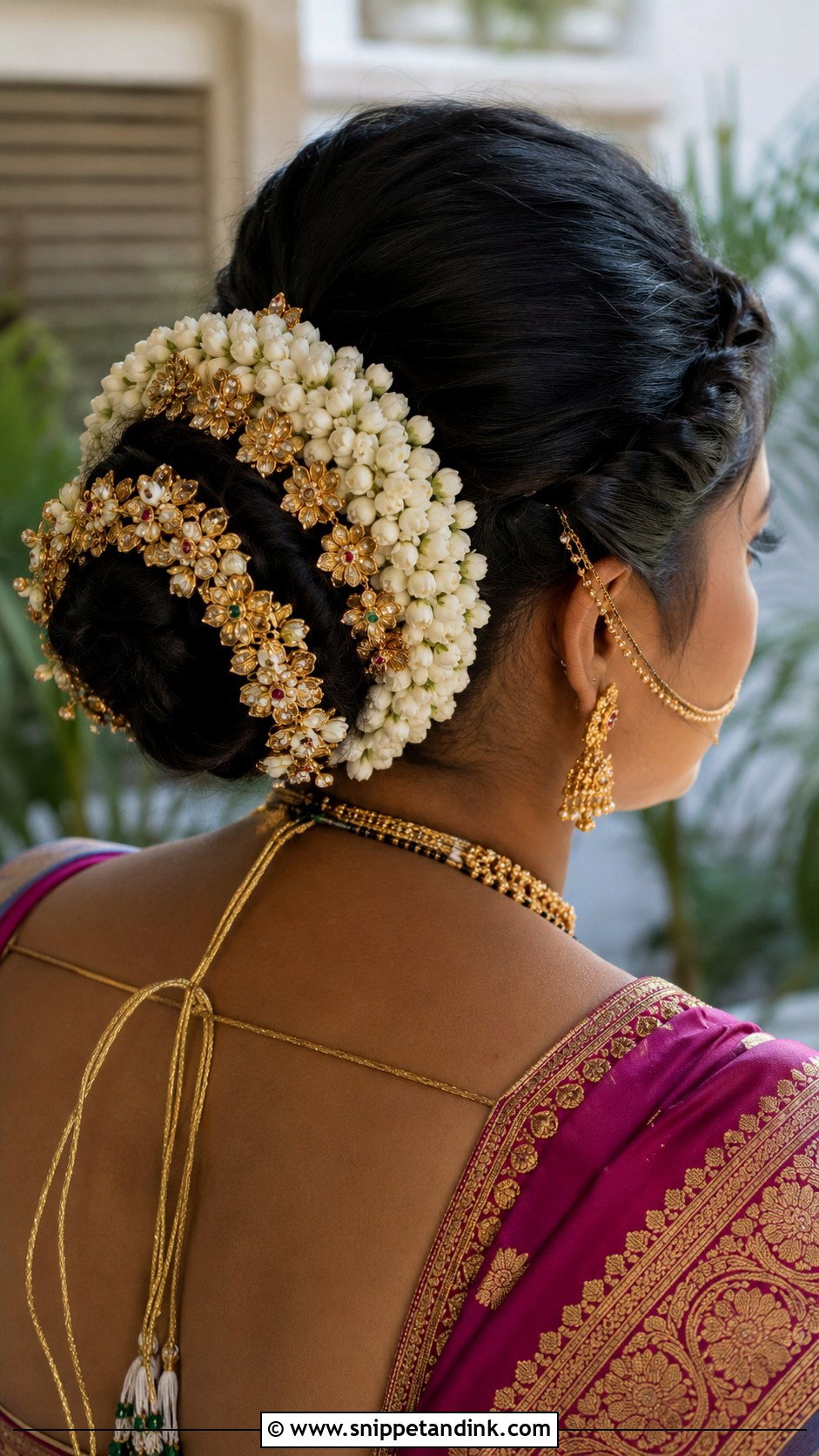
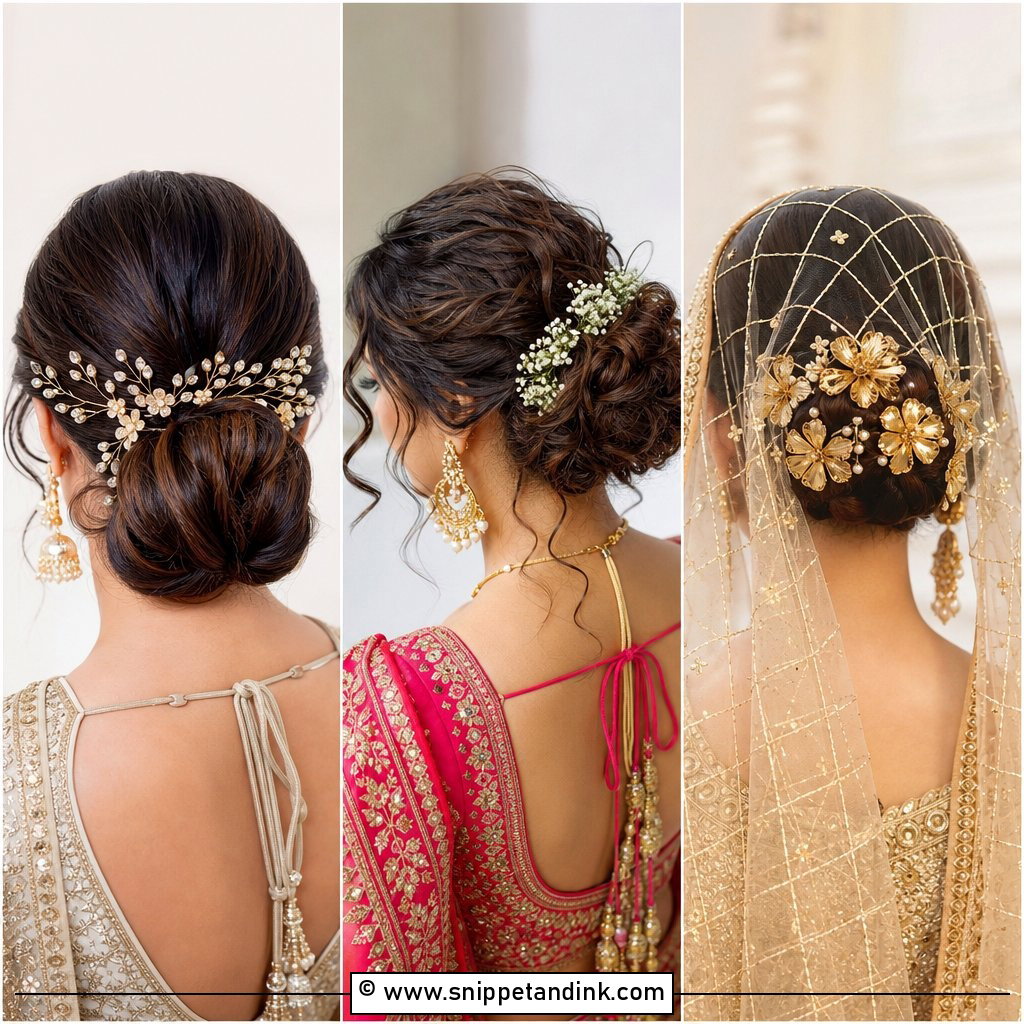
Pearls are softer than gold and suit brides who want a lighter finish. I scatter pearl pins across the bun, line them along a braid or loop a pearl chain around the base. They tie in nicely with a pearl mundavalya, so the forehead and the bun feel connected. Use pins with a slight grip, because smooth pearl pins slide out of silky, freshly washed hair. A few small white flowers add texture if the bun looks too plain.
16. Marathi Bride Bun With Gold Accessories
Gold accessories make the bun feel festive, but placement matters more than quantity. I use ambada pins, a brooch, small floral clips or a hair chain picked to echo the nath and thushi. If the saree border is heavy, one bold ornament beats ten small ones; a crowded bun looks cluttered in photos. Gold hair jewelry is often heavier than it seems, so I anchor each piece into the pinned structure of the bun. Done with restraint, the effect is regal.
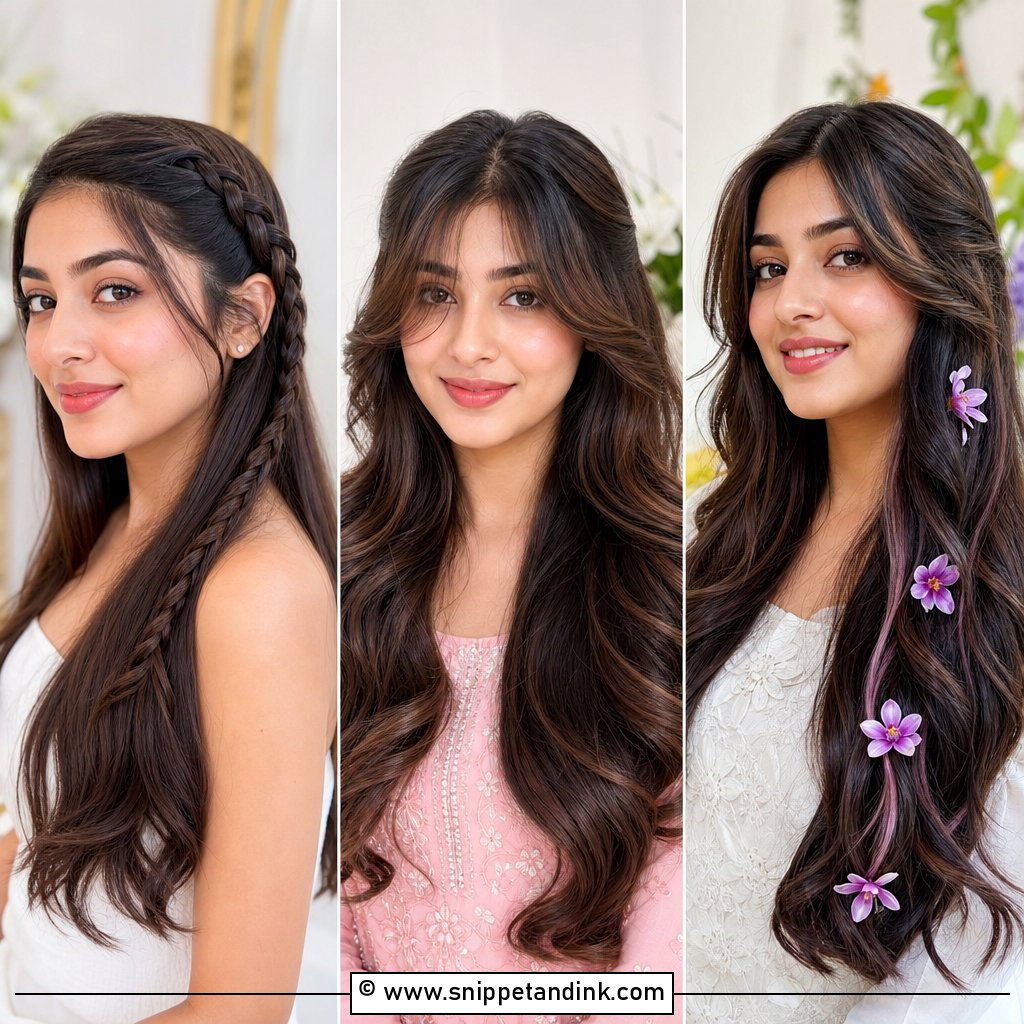
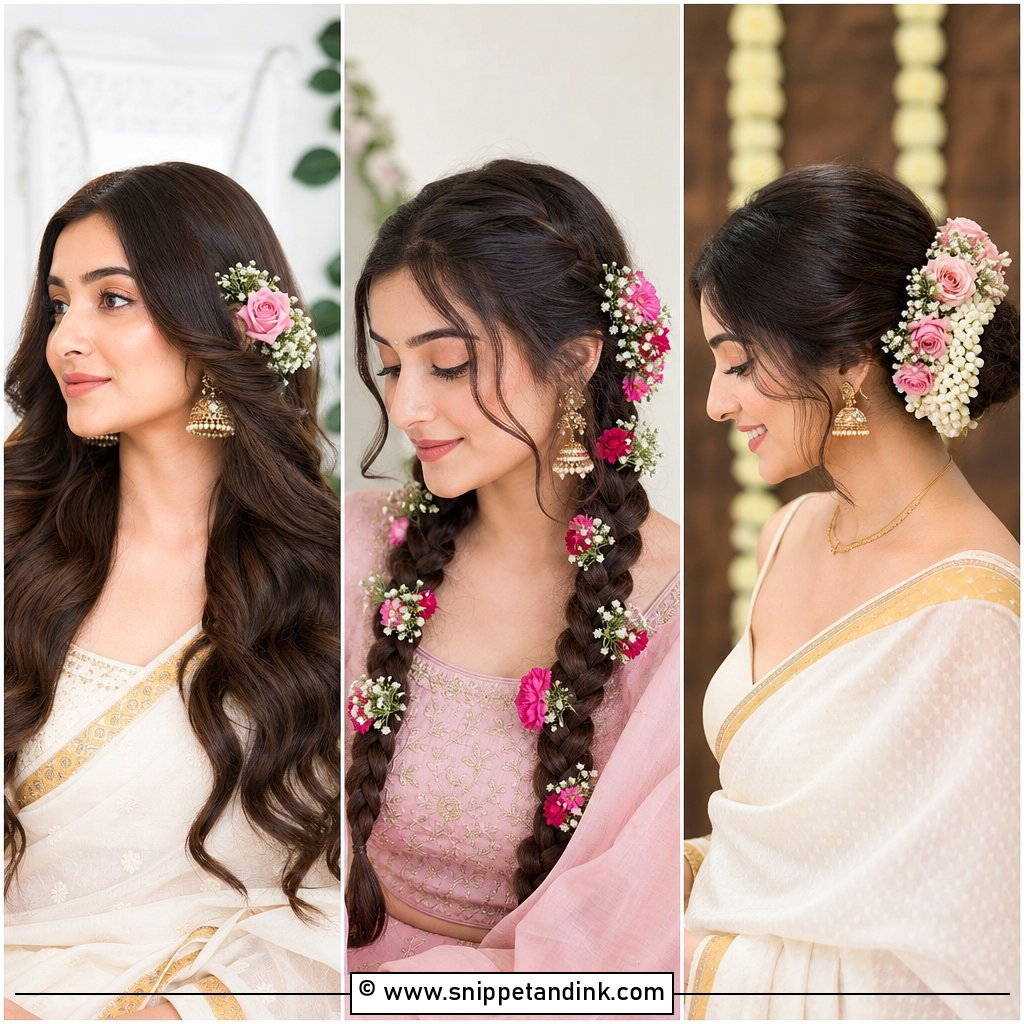
17. Marathi Bride Half Up Hairstyle
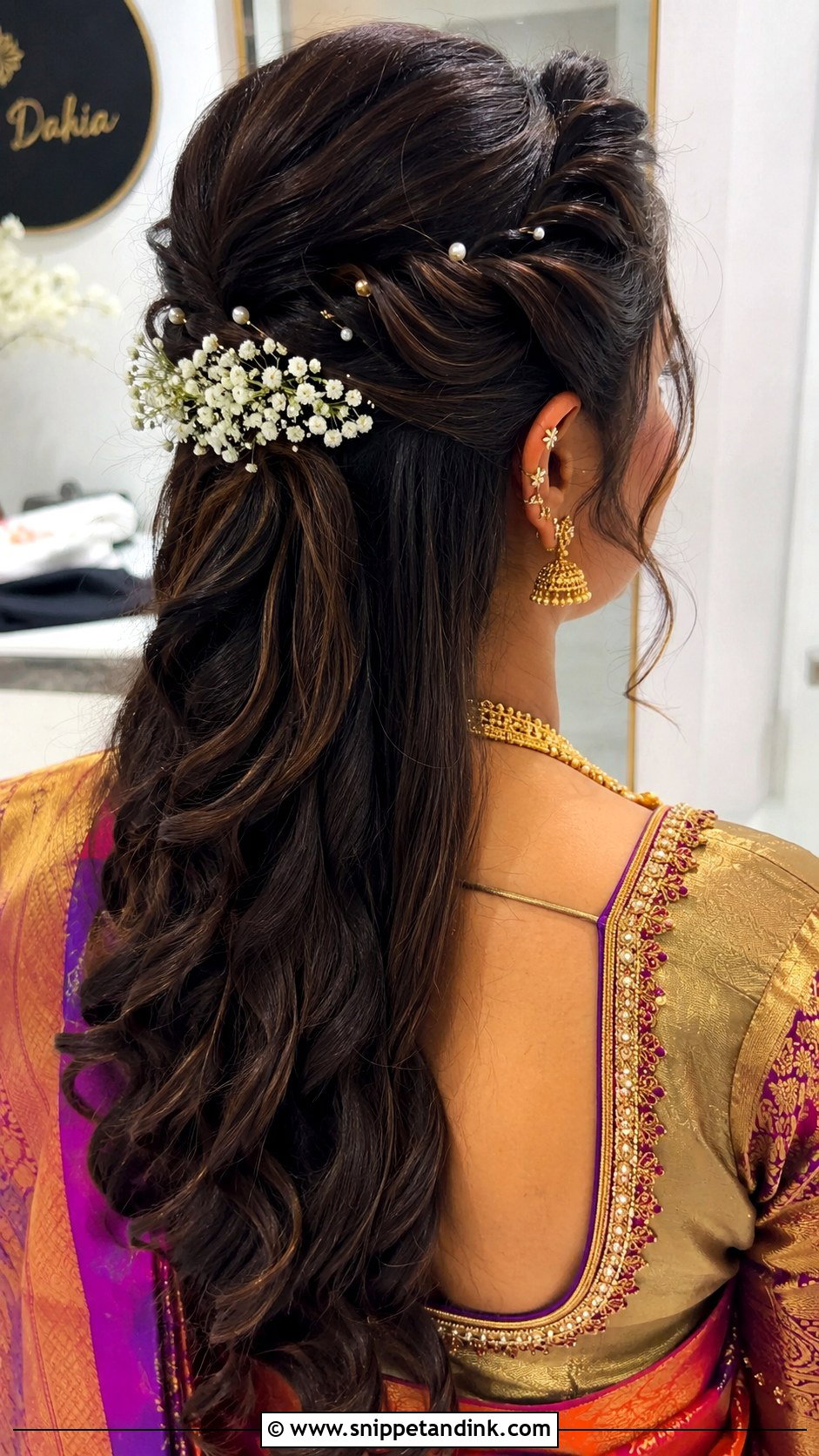
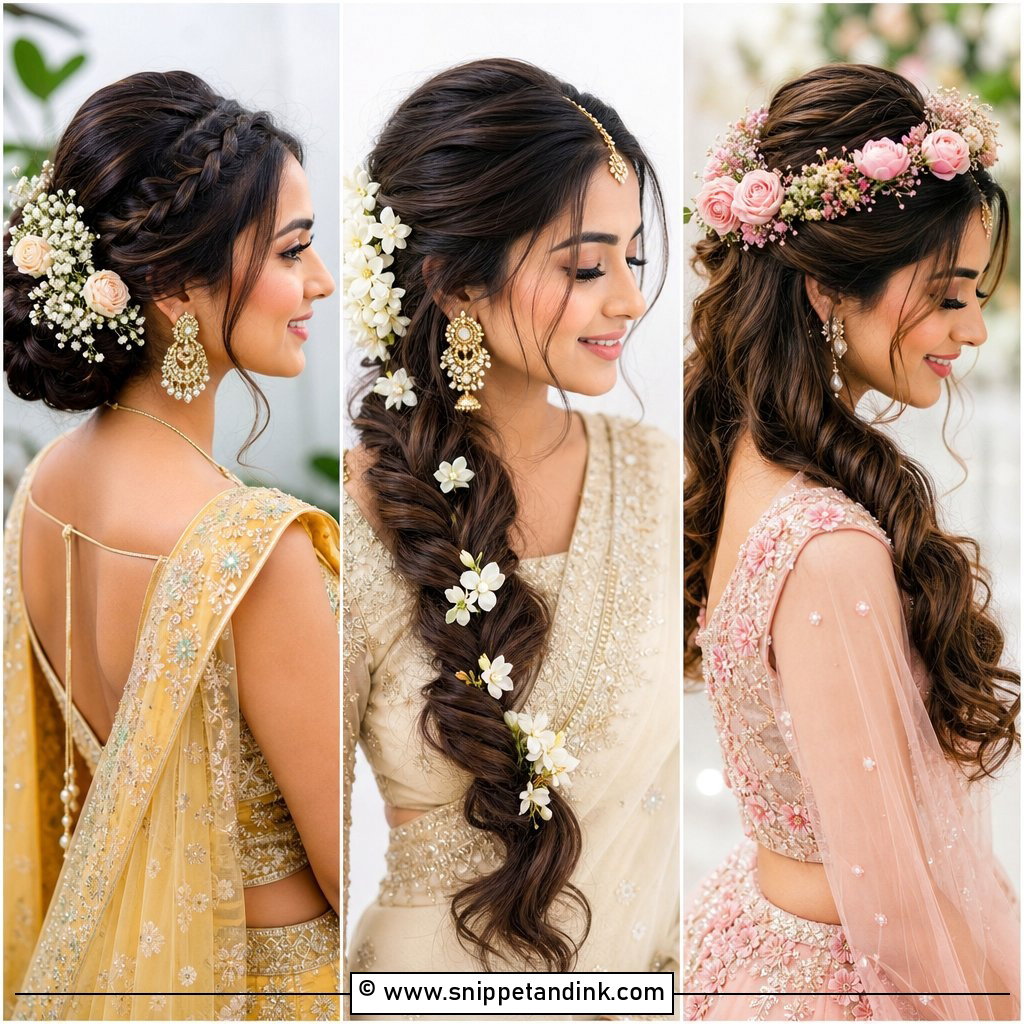
Half up hair suits pre-wedding events and receptions better than the main ceremony. The crown section is pinned back with twists or braids while the rest falls in waves. Small jasmine, pearls or a gold clip at the back keep it feeling Marathi. If a mundavalya is part of the look, I keep the front section firm and pinned so it has something to rest against. I’d steer brides with very fine hair or a humid venue away from it, because the open lengths drop and frizz fastest.
18. Marathi Bride Open Hair
Open hair needs more structure than it looks. I set soft waves with a medium barrel, pin the curls while they cool and brush them out late so they last. It’s better kept for a reception or engagement than the main ceremony, since open hair gets hot and tangled through long rituals. A small flower clip, pearl pins or a gold accessory behind one ear connects it to traditional clothing. If you wear a mundavalya, the front must be pinned back neatly so the strings have something to grip.
19. Marathi Bride Side Braid
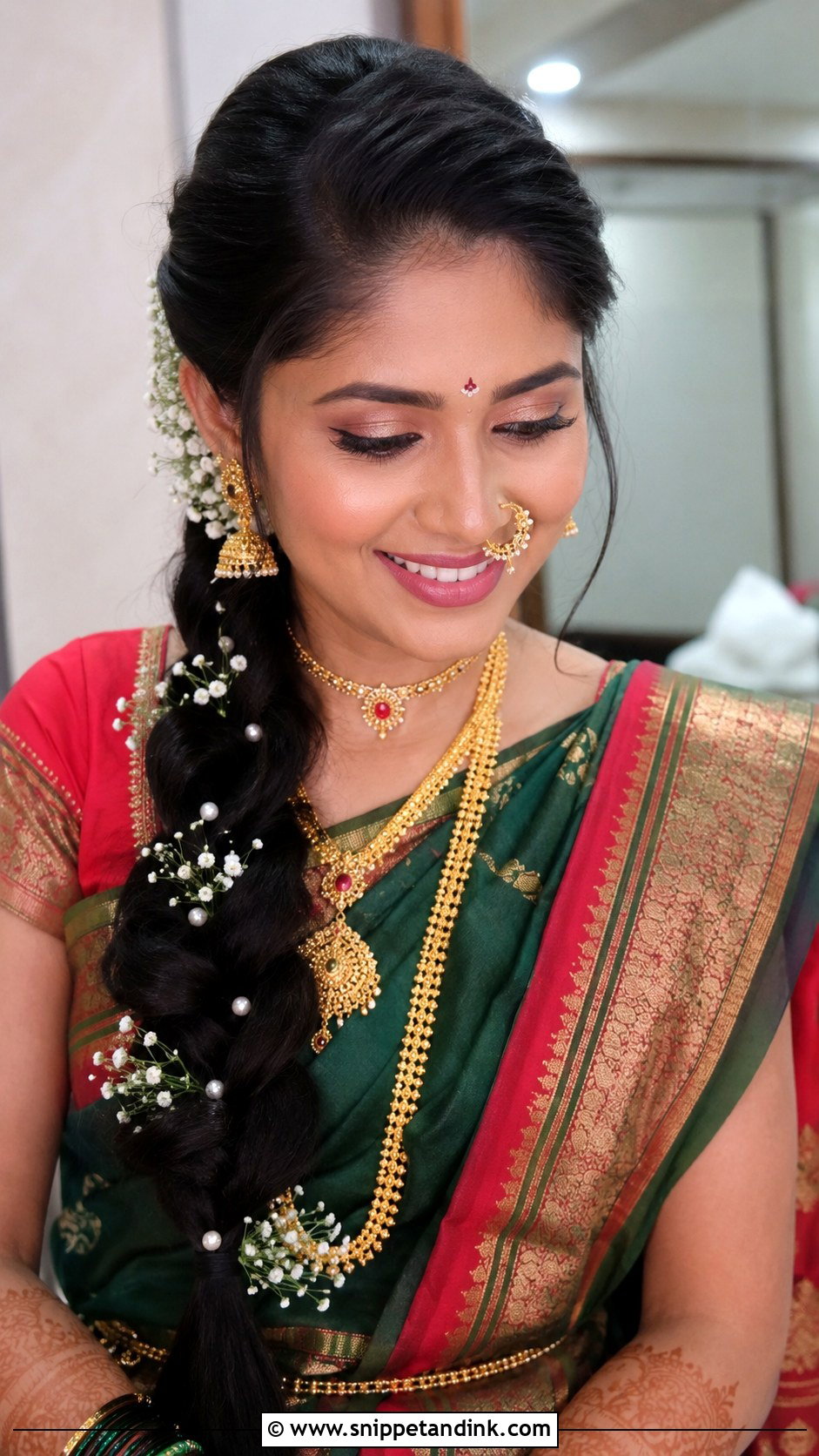
A side braid brings the braid into the front photos, sitting over one shoulder beside the saree and jewelry. It can be a thick three-strand braid, a fishtail or a softly pulled braid with flowers tucked through it. My one rule is to anchor it at the nape before it crosses to the side, otherwise the weight drags the whole braid backward by the end of the day. Keep the crown smooth, then add jasmine, pearls or gold accents along its length for a festive finish.
20. Marathi Bride Reception Bun
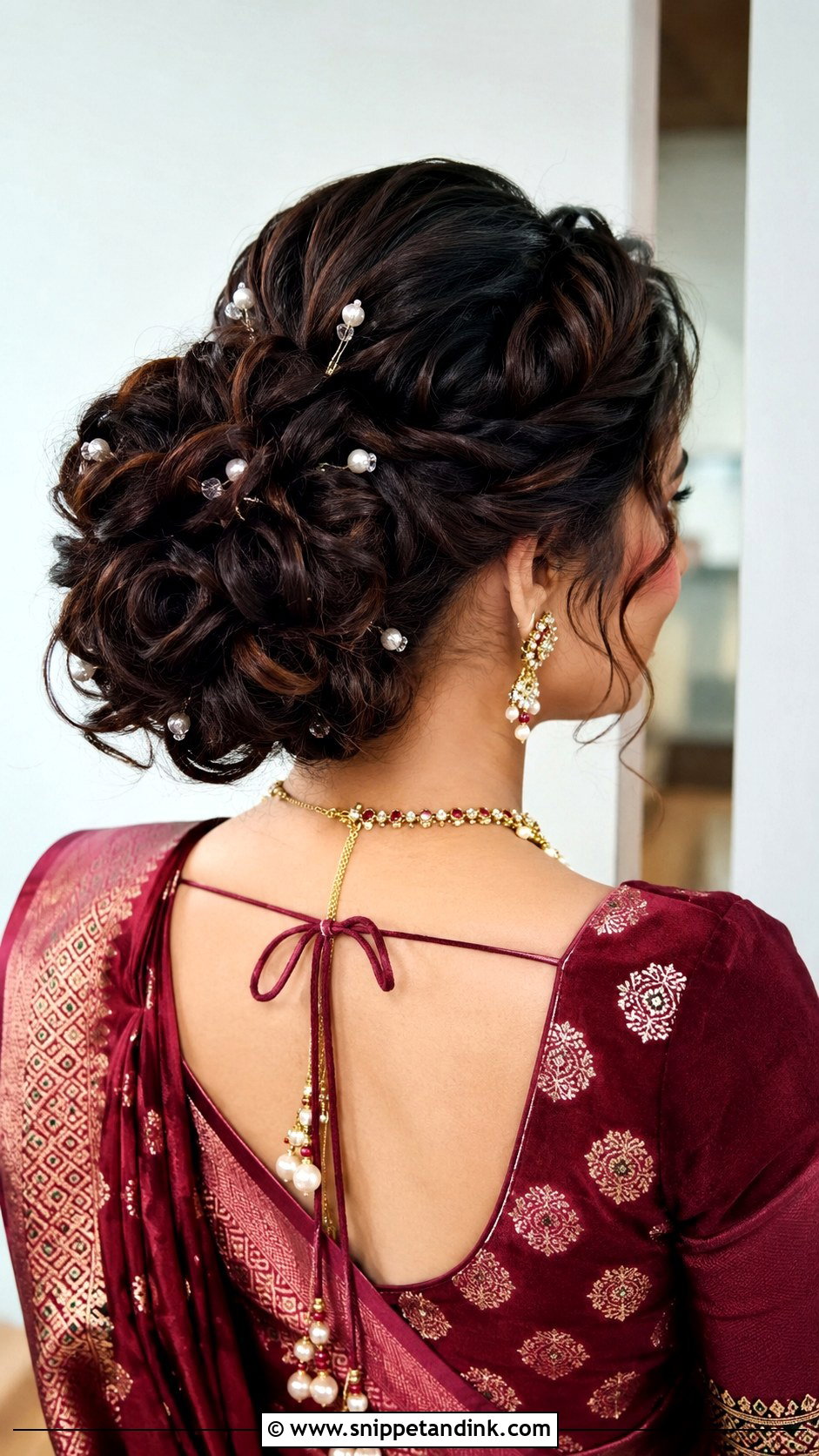
The reception is where a Marathi bride can change the mood. After a sleek ceremony ambada, a fuller bun with soft curls, twisted sections and pins that catch the light feels like a clear second look. It works with a silk saree, a designer saree or a lehenga. Pearls, crystals, roses or a hair vine suit the evening outfit. Plan the change carefully: undoing a heavily pinned ceremony bun takes time, so I set the reception curls before the ceremony style goes in, then just release and rebuild.
Halad, Oil and Jasmine: Hair Prep for a Maharashtrian Wedding
The wedding morning is only part of the story. What happens to your hair over the two days before it decides how well the pins hold.
After the Halad ceremony
Turmeric paste gets everywhere during Halad, including the hairline and lengths. It can leave a yellow tint on light or highlighted hair, and the oil in the paste makes hair slippery. I ask brides to wash thoroughly the same evening, with a clarifying shampoo if the paste reached the scalp, and to skip heavy conditioner on the roots.
Hold the oil until after the wedding
Many families oil a bride’s hair as part of the build-up, and it is good for the hair. It is bad for pinning. Oiled hair lets bobby pins slide and makes padding shift. If oiling matters to you, do it two or three days out and wash it out properly the day before.
Keeping gajra fresh until it goes in
- Buy jasmine with tight buds, not open flowers, so they open during the ceremony instead of wilting.
- Wrap it loosely in damp cotton cloth and keep it cool, away from fruit and direct air conditioning drafts.
- Pin it in as late as possible, and keep a spare string with your family in case one bruises.
- If you are sensitive to strong scents, ask for a lighter wrap or mix in a few roses.
Let the Mundavalya and the Saree Make the Final Call
A good Marathi bridal hairstyle supports everything else you are wearing. The sleek ambada, the gajra bun and the long decorated braid are classics because they hold jewelry well and survive a long ceremony. Braided, pearl and gold-accented buns add detail; a softer bun, half up style or reception curls feel more modern. Before you decide, think about how your saree is draped, how heavy your jewelry is, your hair length, the weather and how many hours the rituals will run. Bring all of that to your trial and the right look usually becomes obvious.
You'll Like These Ideas:




Leave a Reply