
The juda has survived every hair trend for a simple reason: it keeps hair off the neck through hours of heat and ritual, and it gives jewelry and flowers somewhere solid to sit. That practicality is what I think about first when a bride shows me a picture. Will it hold a gajra? Will it sit under a dupatta? Will it last from the morning pheras to the late dinner? The twenty buns below range from flower-heavy traditional styles to sleek modern knots, and most of them also work for guests, with a few adjustments I’ll point out along the way.
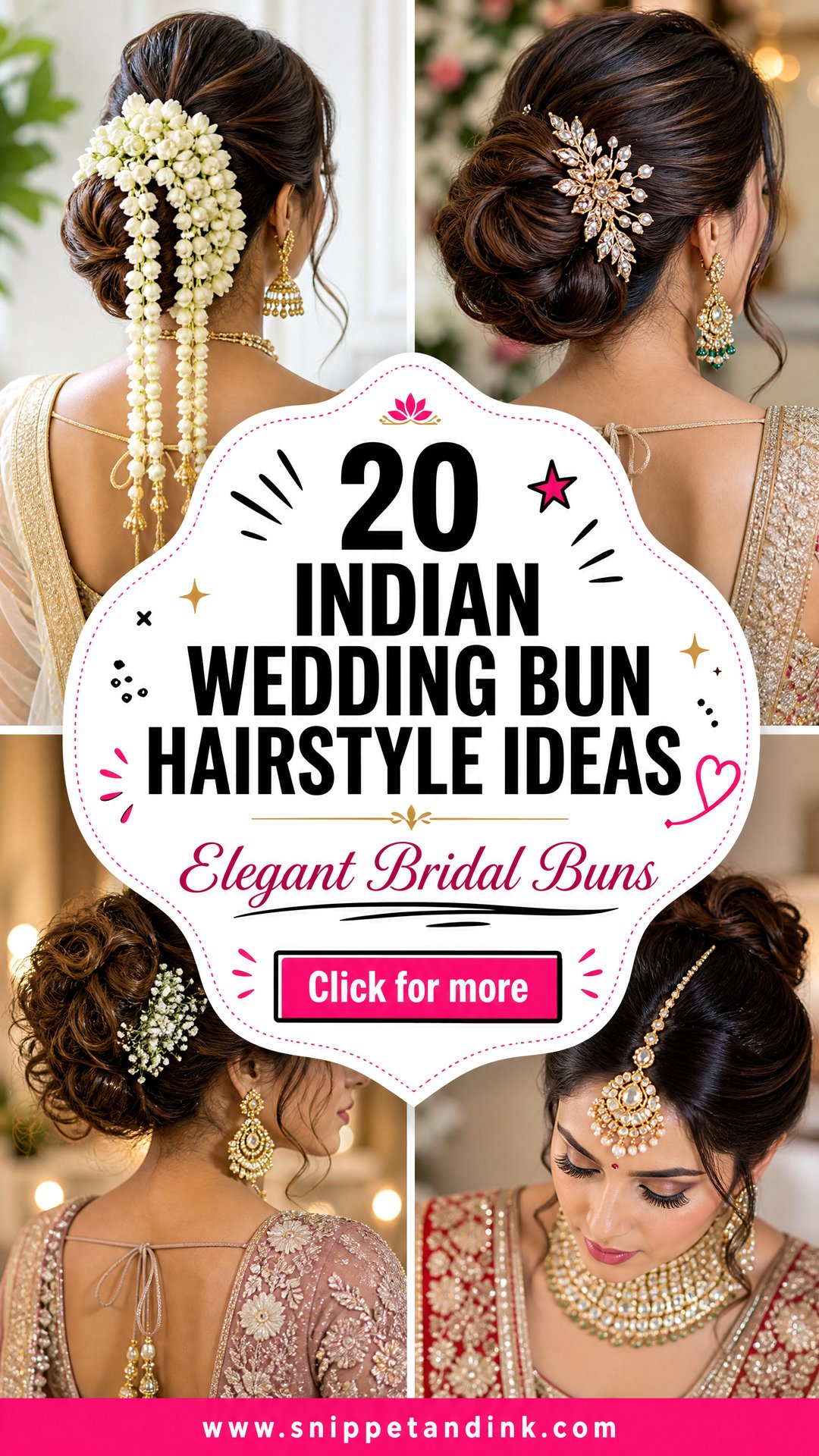
Haldi to Reception, Which Bun Suits Each Function
An Indian wedding is rarely one event, and a bun that suits the pheras is often wrong for the haldi. I plan the hair across the whole schedule with each bride, starting from what happens to her hands and head at each function.
- Haldi: turmeric paste will end up in your hair. A braided or twisted bun with marigolds is easy to wash out and doesn’t matter if it gets messy.
- Mehndi: your hands are out of action for hours, so the style has to need zero touch-ups. Braided and bubble buns are safest.
- Sangeet: you’ll dance. Side braids and curly buns cope with movement, as long as they’re pinned to a firm base.
- Wedding ceremony: a low, solid bun under the dupatta, with gajra or a matha patti if you’re wearing one.
- Reception: the place for height, sleek centre parts and statement clips, since the dupatta usually comes off.
Guests can follow the same logic, just lighter. A single clip or a small cluster of flowers on a low bun is plenty, and it leaves the heavier floral styles to the bride.
1. Low Messy Bun With Gajra
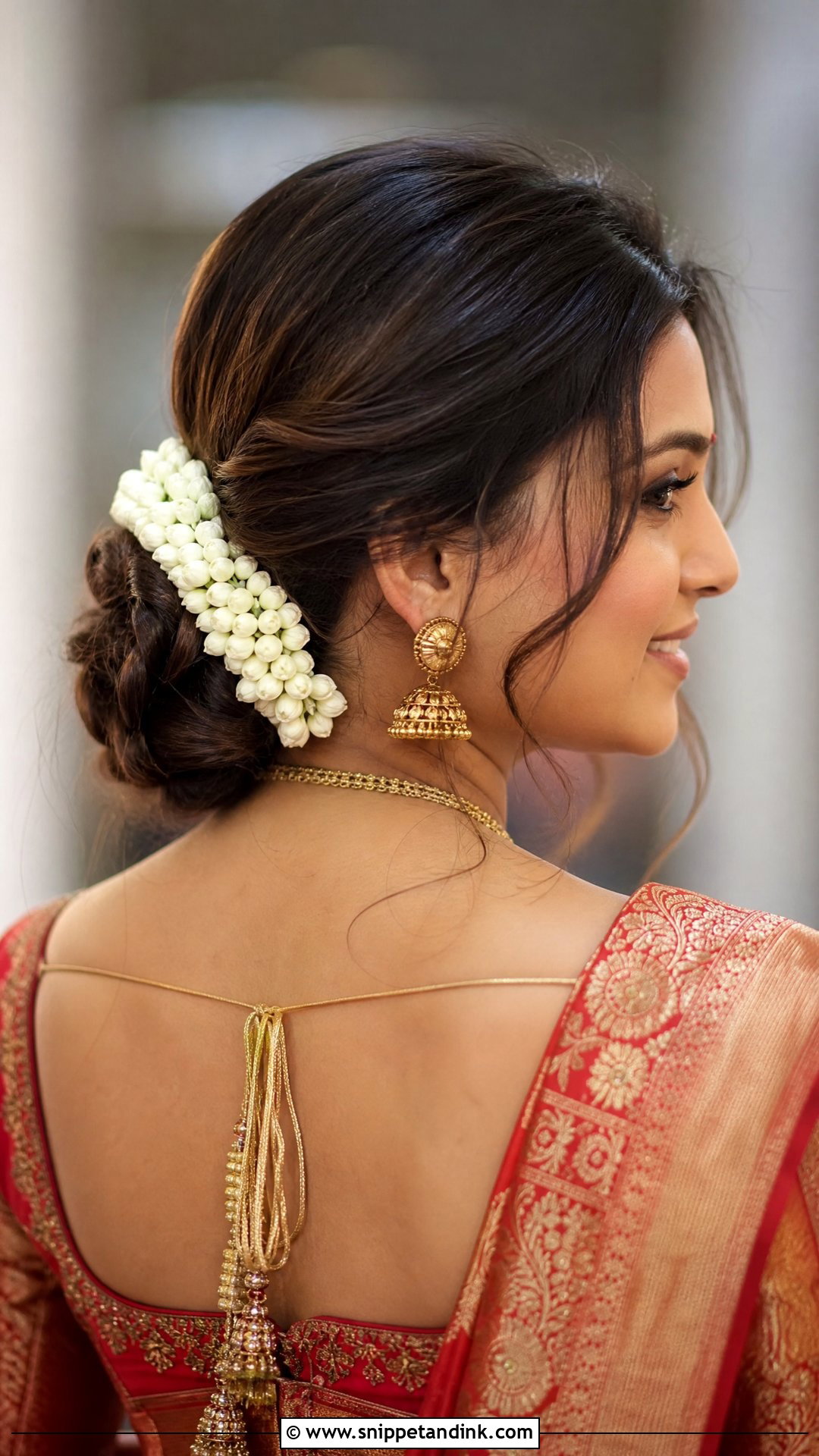
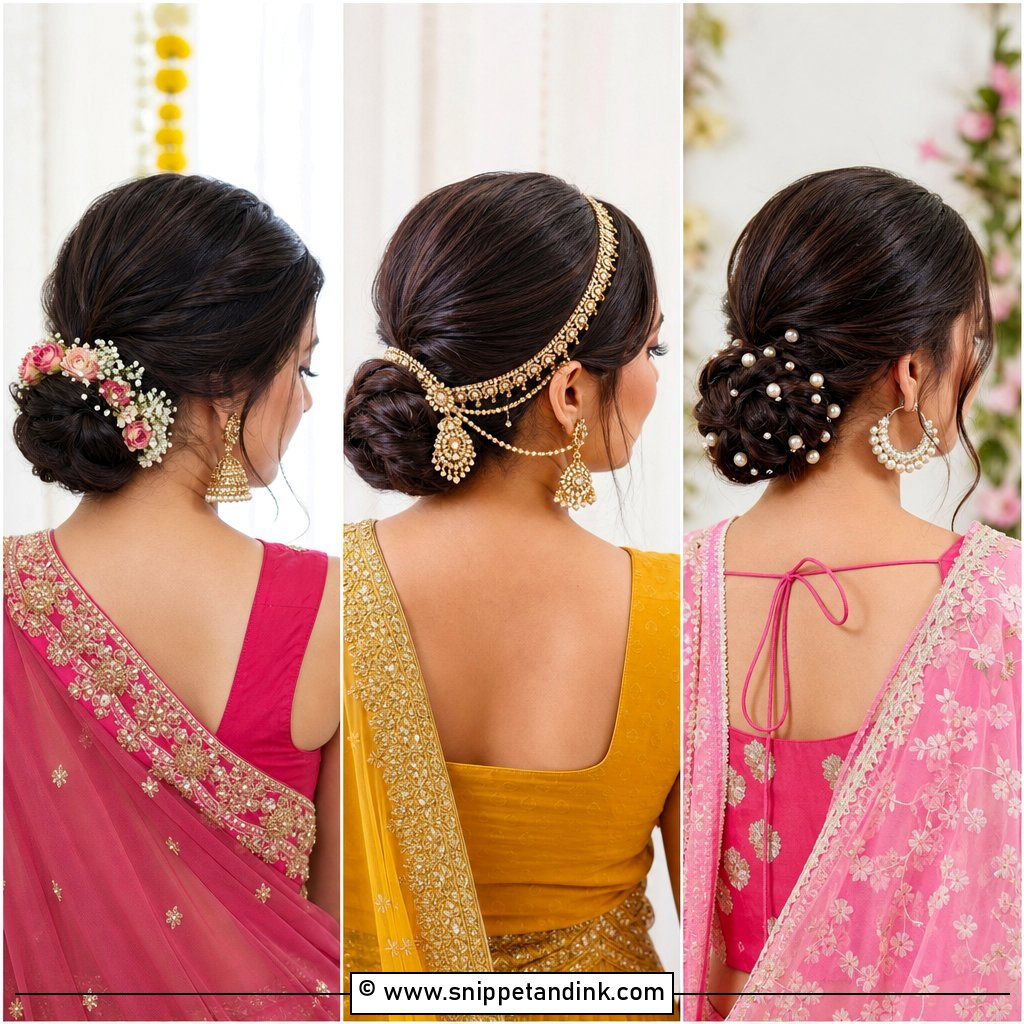
Soft and low, this is the bun most brides picture first, and for good reason. The low messy bun with gajra looks undone, but under the texture I pin a firm base so the mogra strings have somewhere to grip. I curl the hair before gathering it, which gives the loose pieces shape rather than frizz. It suits day weddings and smaller ceremonies, and it works with a saree or a lehenga. Keep the face-framing strands to two or three; more than that, and they end up stuck in lip colour by the second hour.
2. Braided Bun With Fresh Flowers
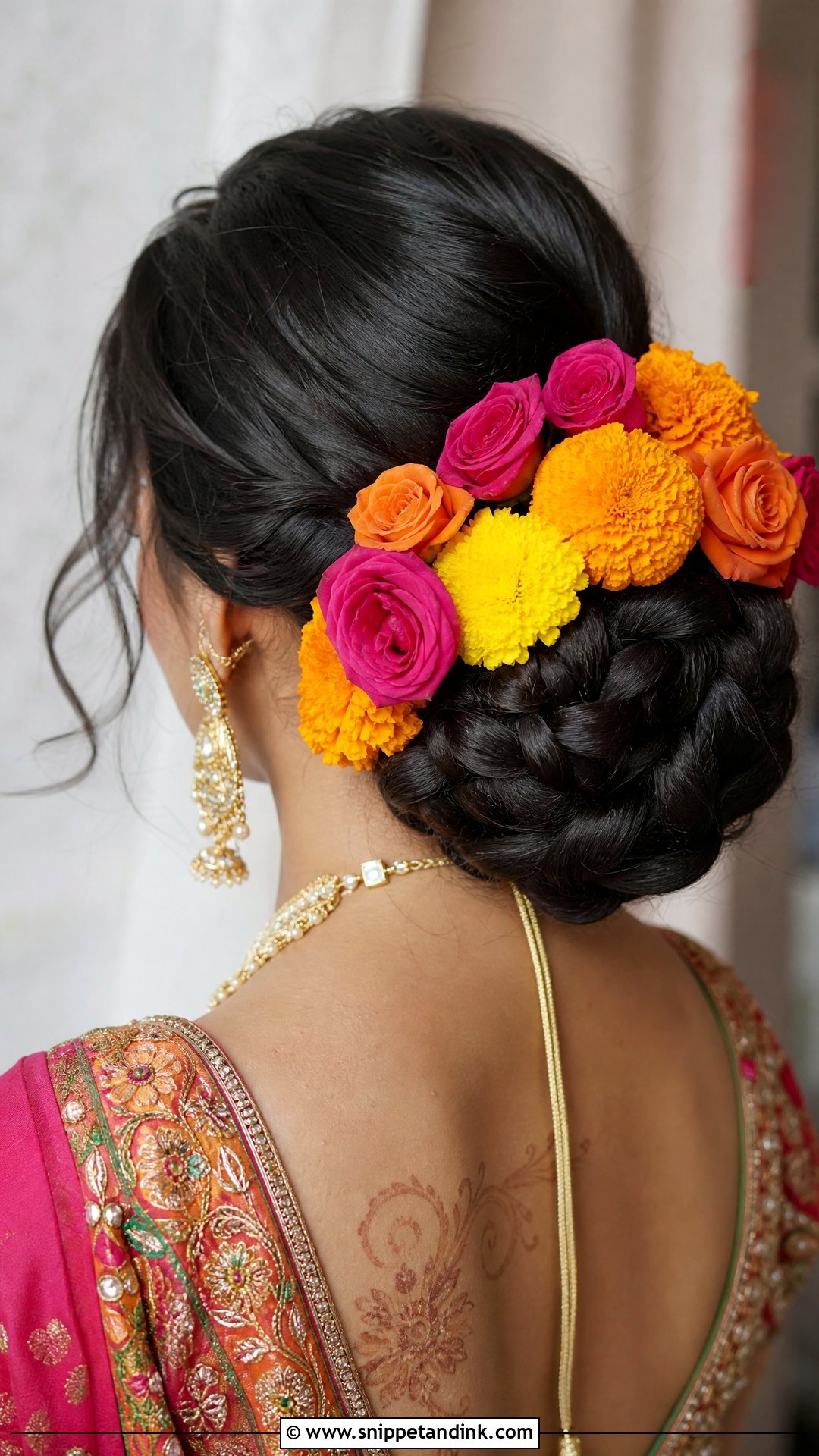
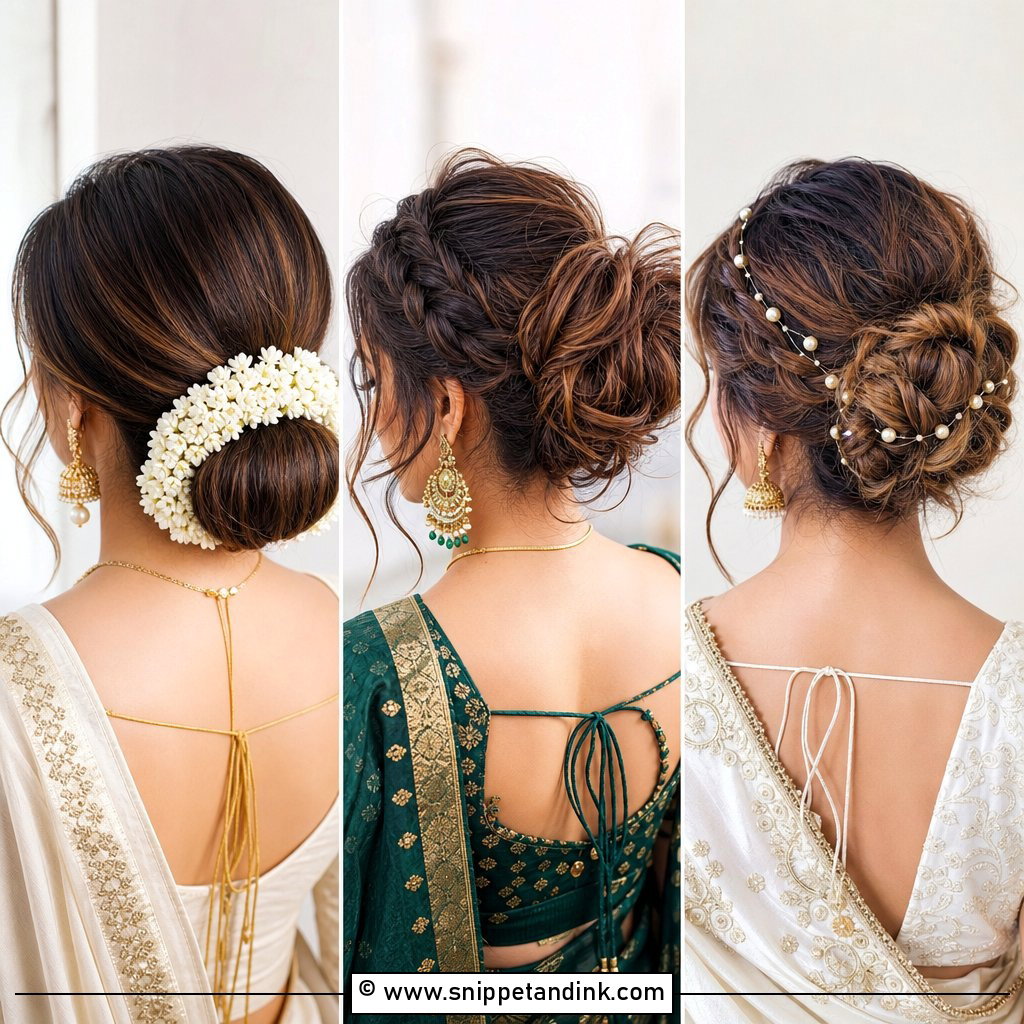
Braids give a bun its own scaffolding. I wind one thick braid around itself and pin it as I go, so every turn holds the next. That grip is exactly what you need for haldi or mehndi days, when you’ll be dancing and hugging and not checking a mirror. Roses or marigolds tuck straight into the braid gaps. One thing I’d flag: if your hair is fine, a single braid makes a small bun, so I either braid in a clip-in piece or split the hair into two braids and wrap one around the other.
3. Sleek Donut Bun With Juda Pin
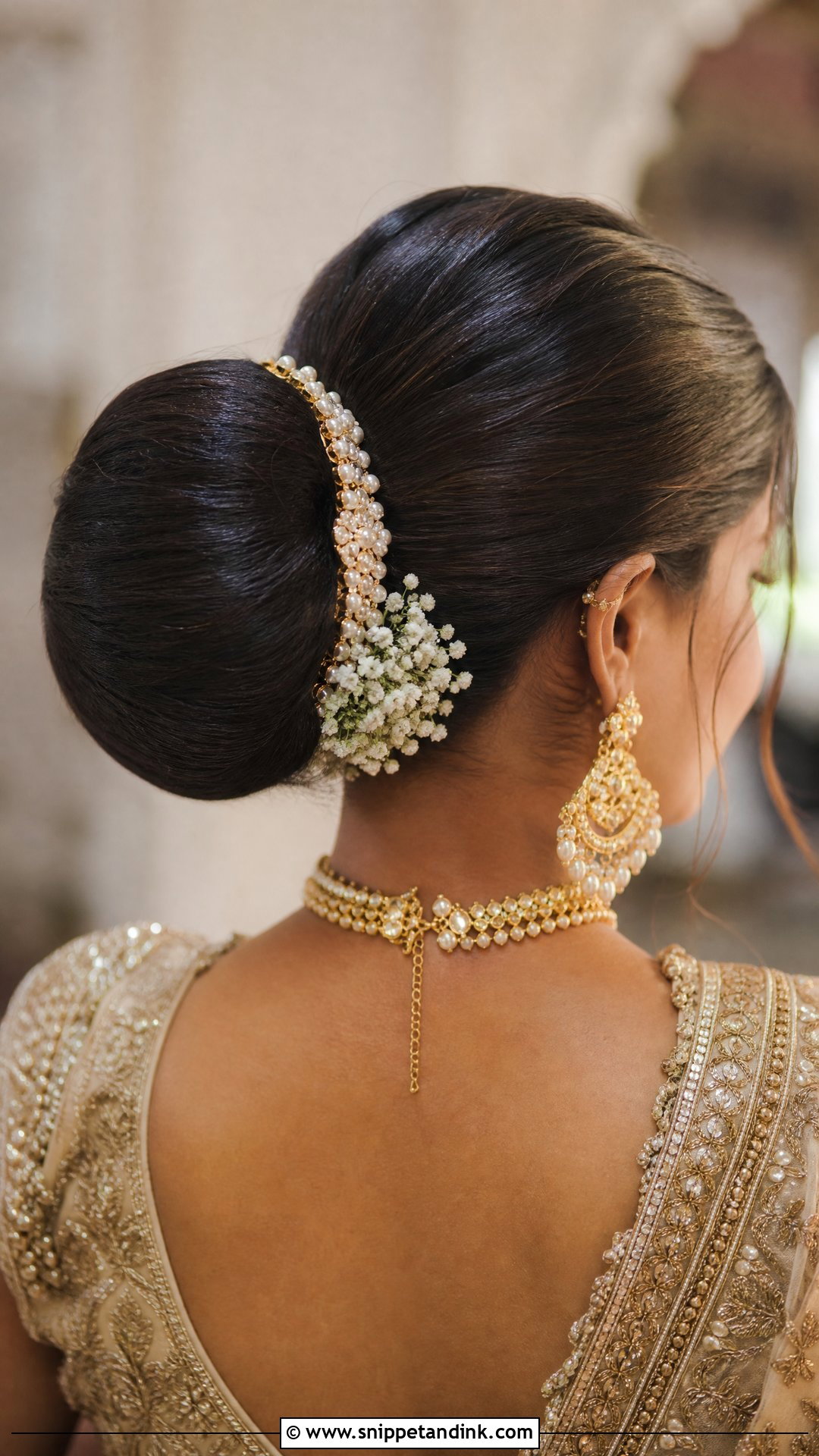
Here the donut does all the shaping. A foam ring under the hair gives a smooth, full circle that stays exactly the same from the first photo to the last. One juda pin set with pearls or stones becomes the focal point, and a ring of small flowers can soften it. It suits a heavy bridal lehenga because nothing about it moves or competes. My main check is coverage: the hair has to be long enough to wrap the ring without the foam showing, and the ring should be close to your hair colour in case a gap opens up.
4. Side Braided Messy Bun
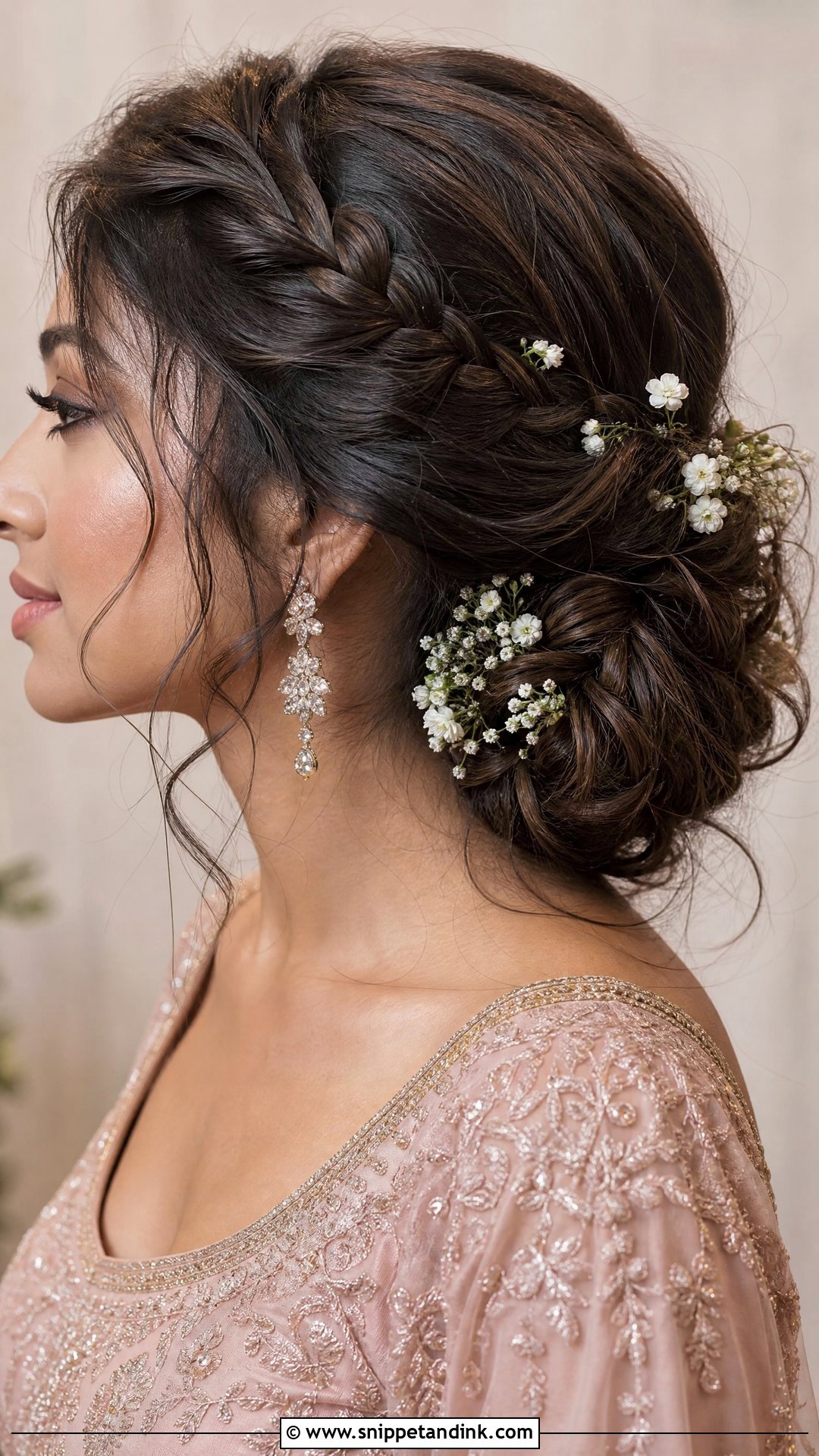
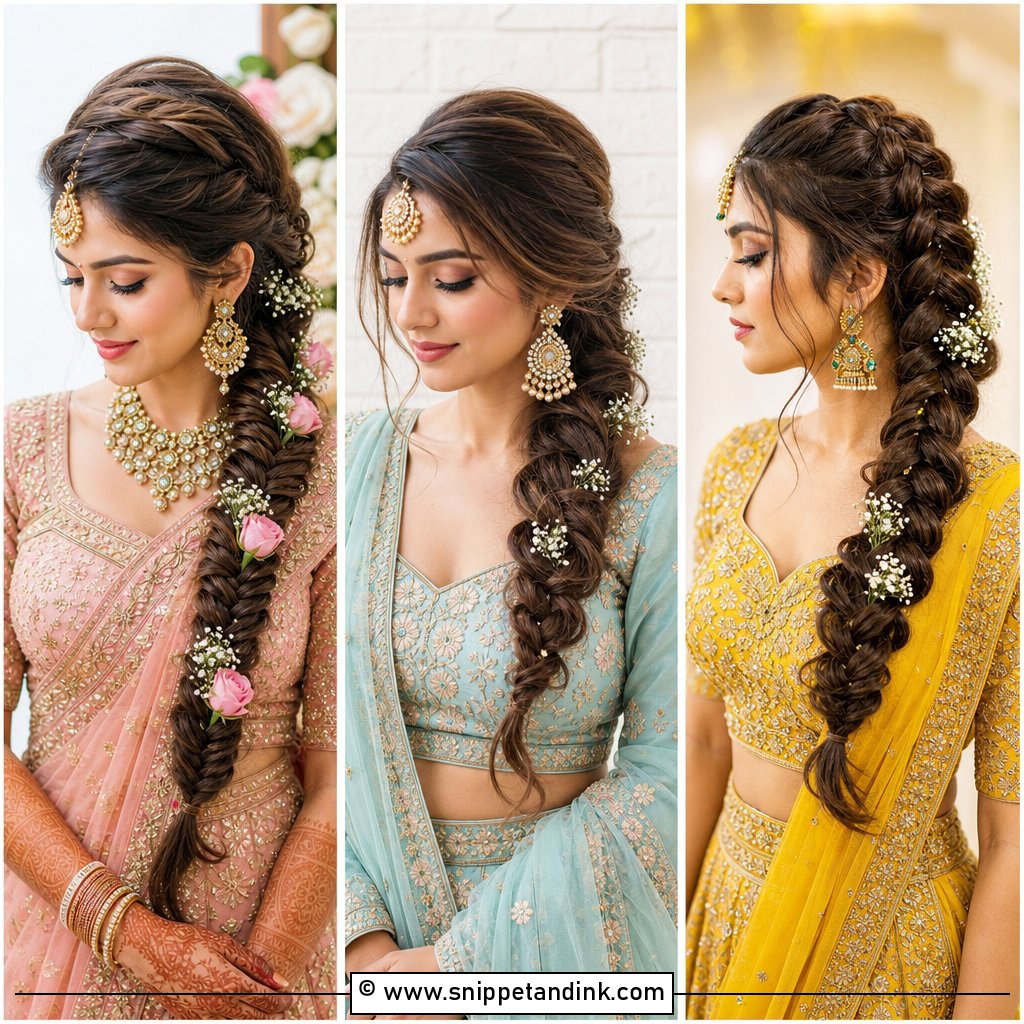
A braid running along one side into a loose bun is softer than most bridal updos, which is why I keep it for engagement parties and sangeet nights. The asymmetry is the point, so I start the braid from a deep side part rather than the centre. It’s comfortable and forgiving if some curls drop. What doesn’t suit it is a heavy maang tikka, since the side braid pulls the chain off-centre. A small hair pin or a few tiny flowers is all it needs.
5. Floral Bun With Mogra Strings
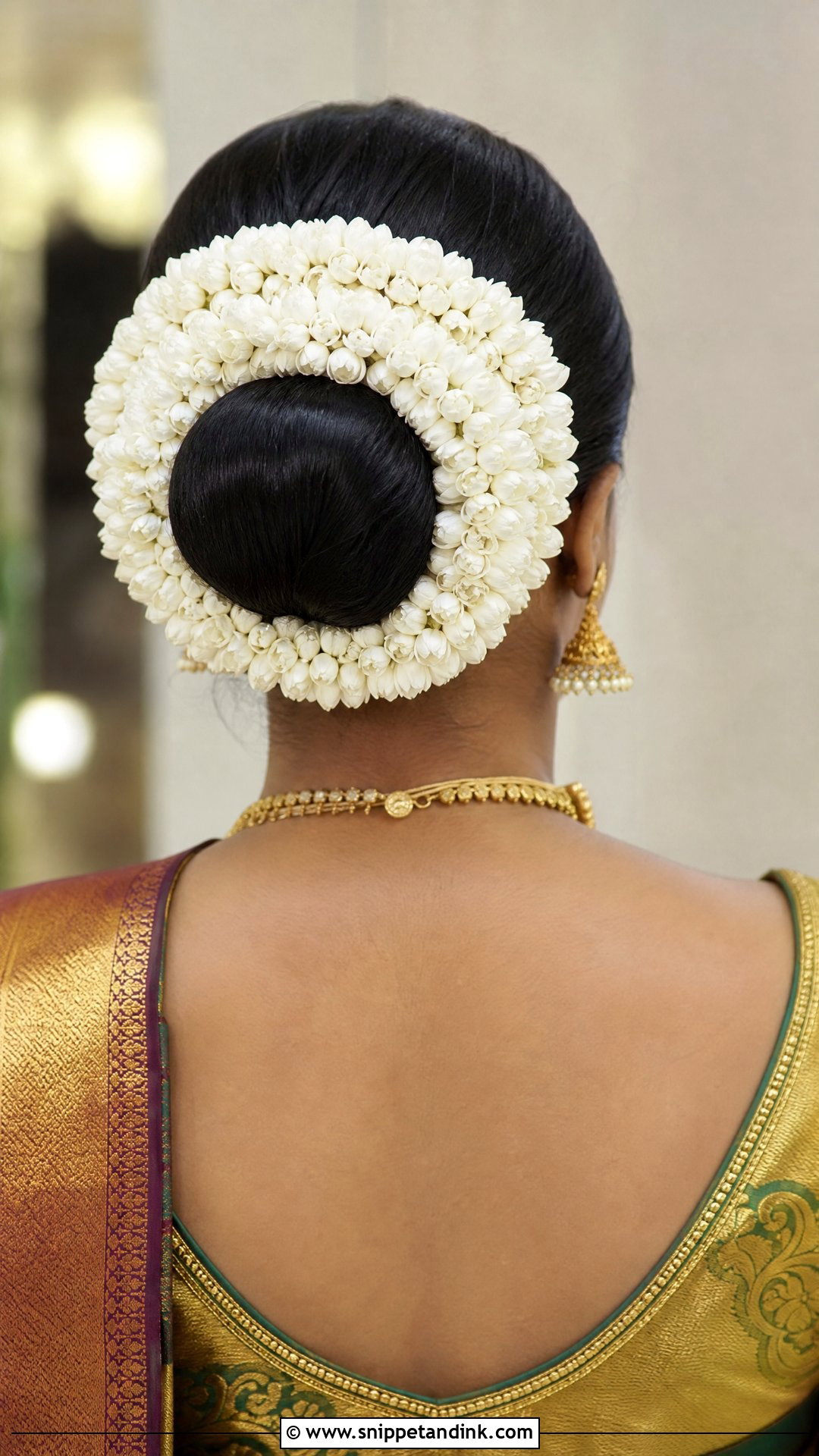
Mogra strings wrapped layer upon layer around a neat bun is one of the most traditional South Indian bridal looks, and the scent is half of why brides love it. White flowers against dark hair read clearly even from the back of a hall. I build the bun small and tight, because the flowers add a lot of bulk on top, and I start wrapping from the inside out. Morning ceremonies suit it best, when the jasmine is freshest. By late afternoon in heat, the outer buds start to brown, so a spare string for the evening is worth having.
6. Bun With Statement Hair Clip
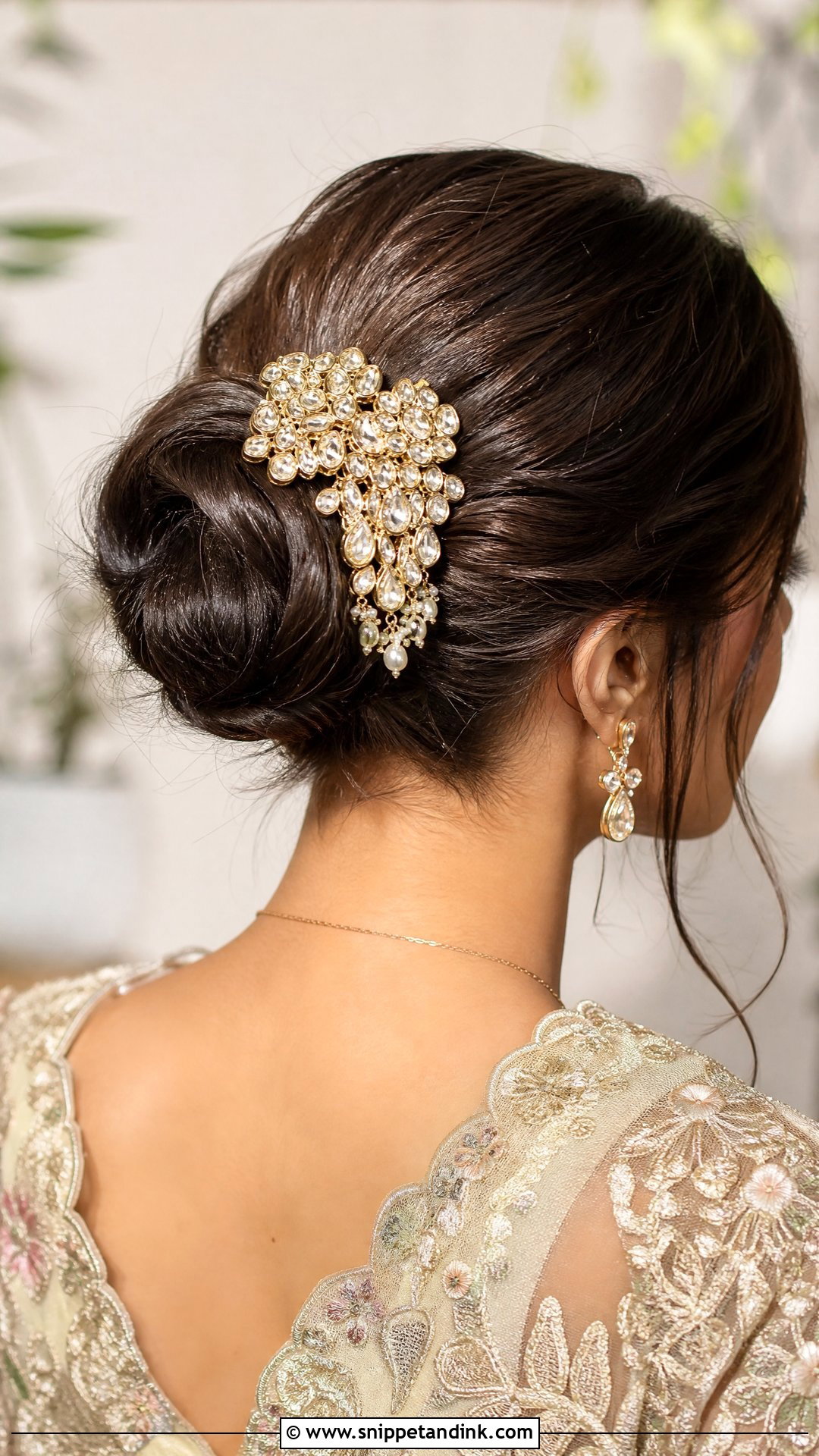
One oversized clip on a plain bun is a quick way to get drama with almost no hair work, and it’s the style I’d point most wedding guests to. The clip carries the look, so pick it first and build the bun to suit its size; a big ornate piece needs a bun wide enough to sit on. Kundan, pearl or carved metal all work, but heavy clips can slide on silky hair. I put a small hidden braid or a bit of texture spray where the clip will grip. Bridesmaids can wear matching clips without looking identical.
7. Curly Messy Bun For Reception
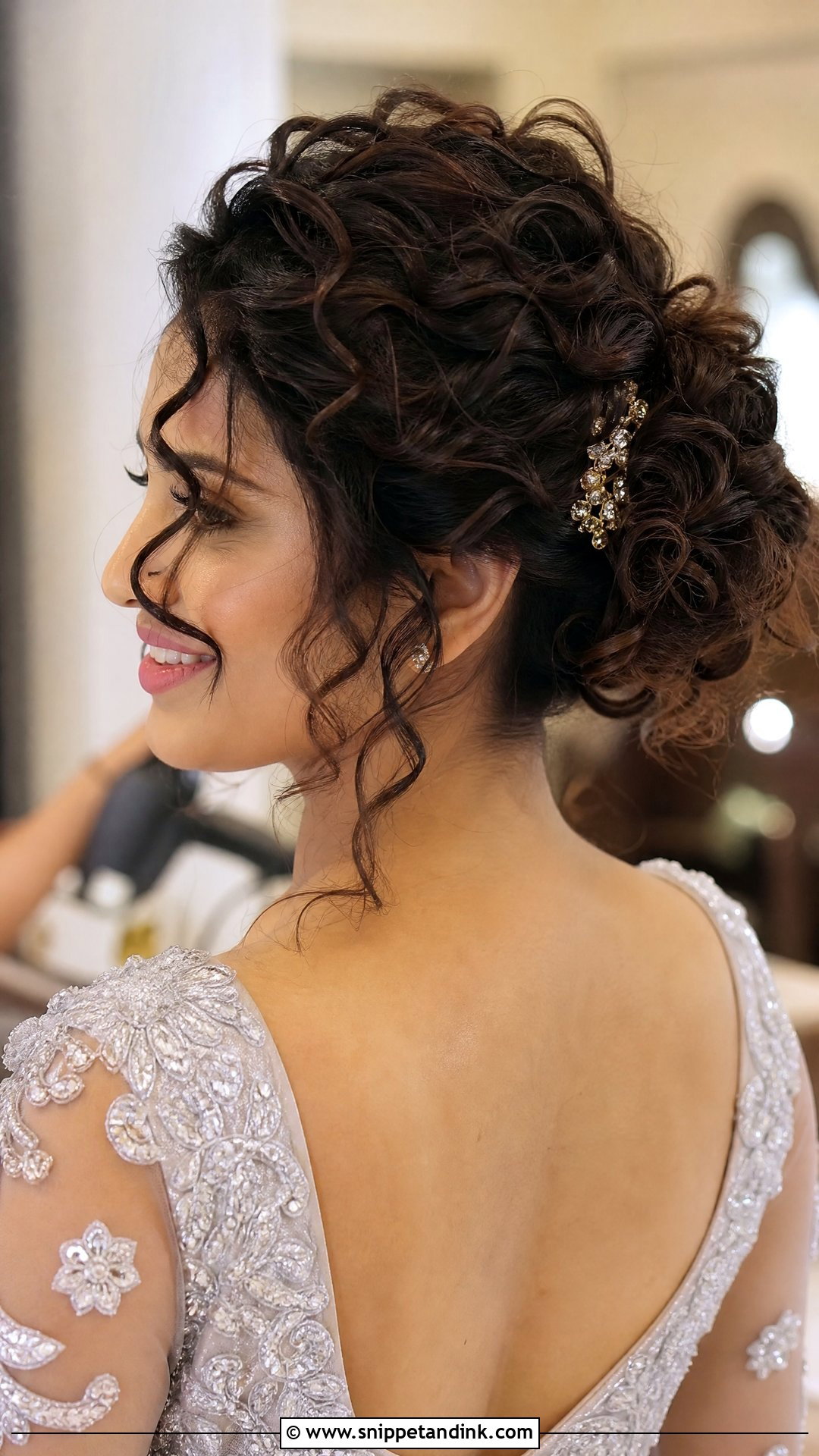
For the reception, I let the curls do the work. The whole head is curled with a medium iron, left to cool, then gathered loosely into a bun with a few coils left out near the face. The volume is lovely under evening lighting, and it pairs naturally with a gown or fusion outfit. Curls do relax over a long evening, especially in humid venues, so I pin curls in place while they cool and hold off on brushing them out until right before the bun goes up. A small jeweled pin is plenty here.
8. Bun With Maang Tikka Focus
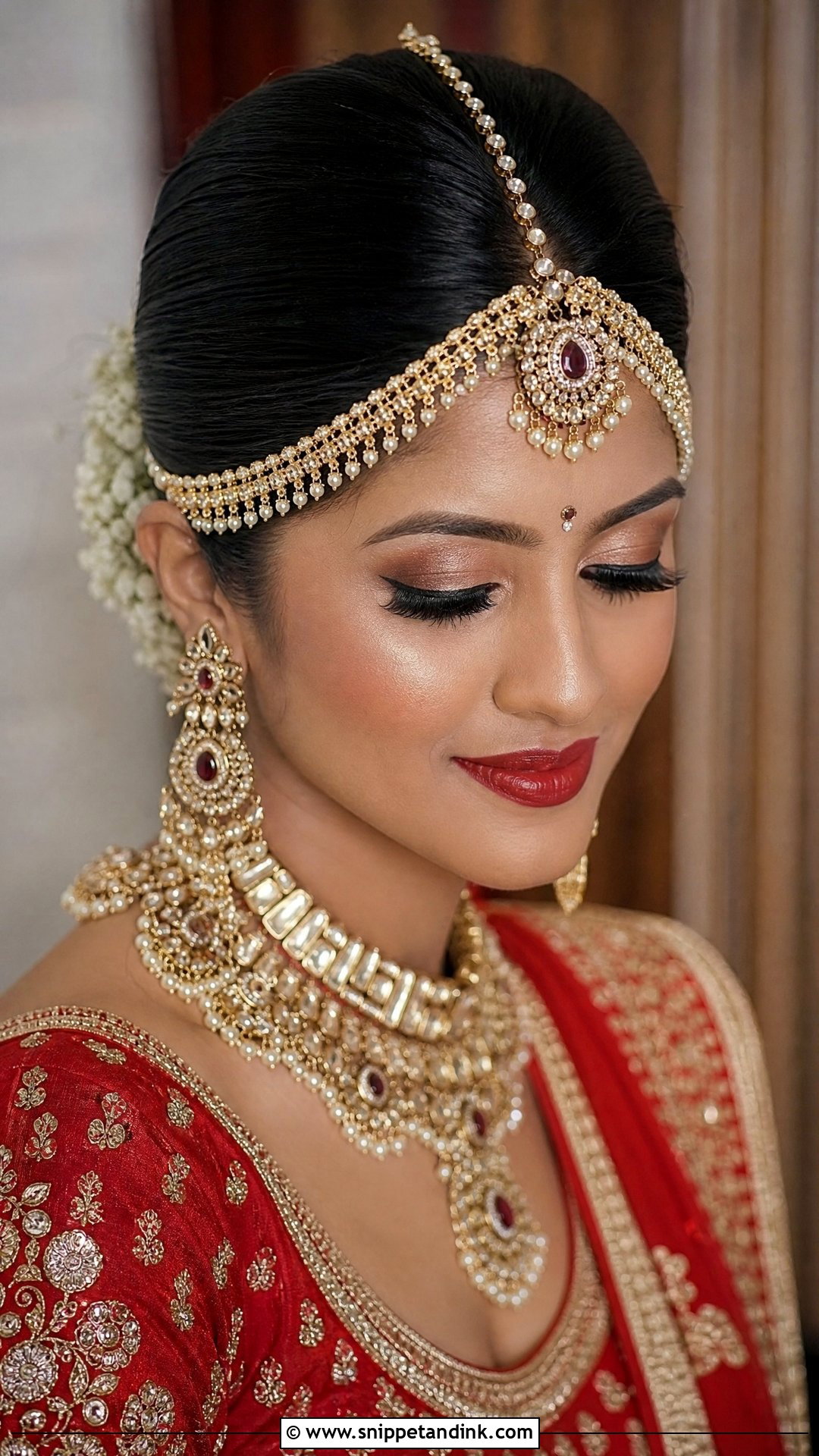
When the forehead jewelry is the main event, I keep the hair as flat and smooth as possible so the maang tikka and matha patti sit level. A raised crown or loose pieces at the hairline make heavy headpieces tilt. This bun stays low and neat with nothing around it to distract from the jewelry. It’s a classic match for a traditional lehenga and bold earrings. If your headpiece is very heavy, ask your stylist to anchor its side chains with pins behind the ears before the bun is finished.
9. Twisted Rope Bun
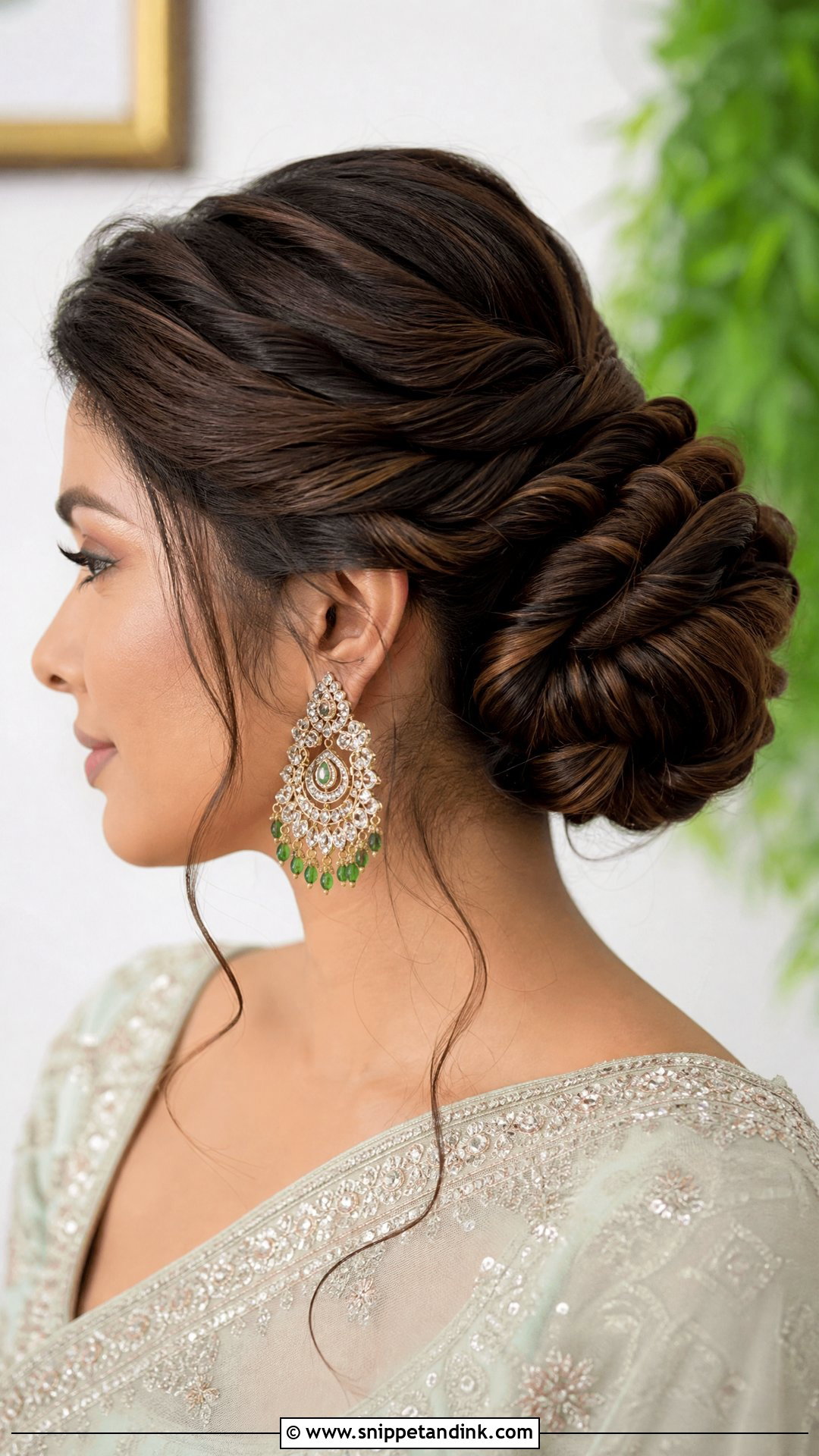
No flowers, all texture. Two strands twisted around each other create a rope that I then coil into a bun, pinning every few centimetres. The pattern holds its own detail, so it suits brides who’d rather not wear fresh blooms or who have allergies. Twists unravel more easily than braids, though, so I finish each rope with a tiny clear elastic before coiling. It looks sharp with statement earrings. For a softer version, I loosen a few twists after pinning.
10. Bun With Baby’s Breath
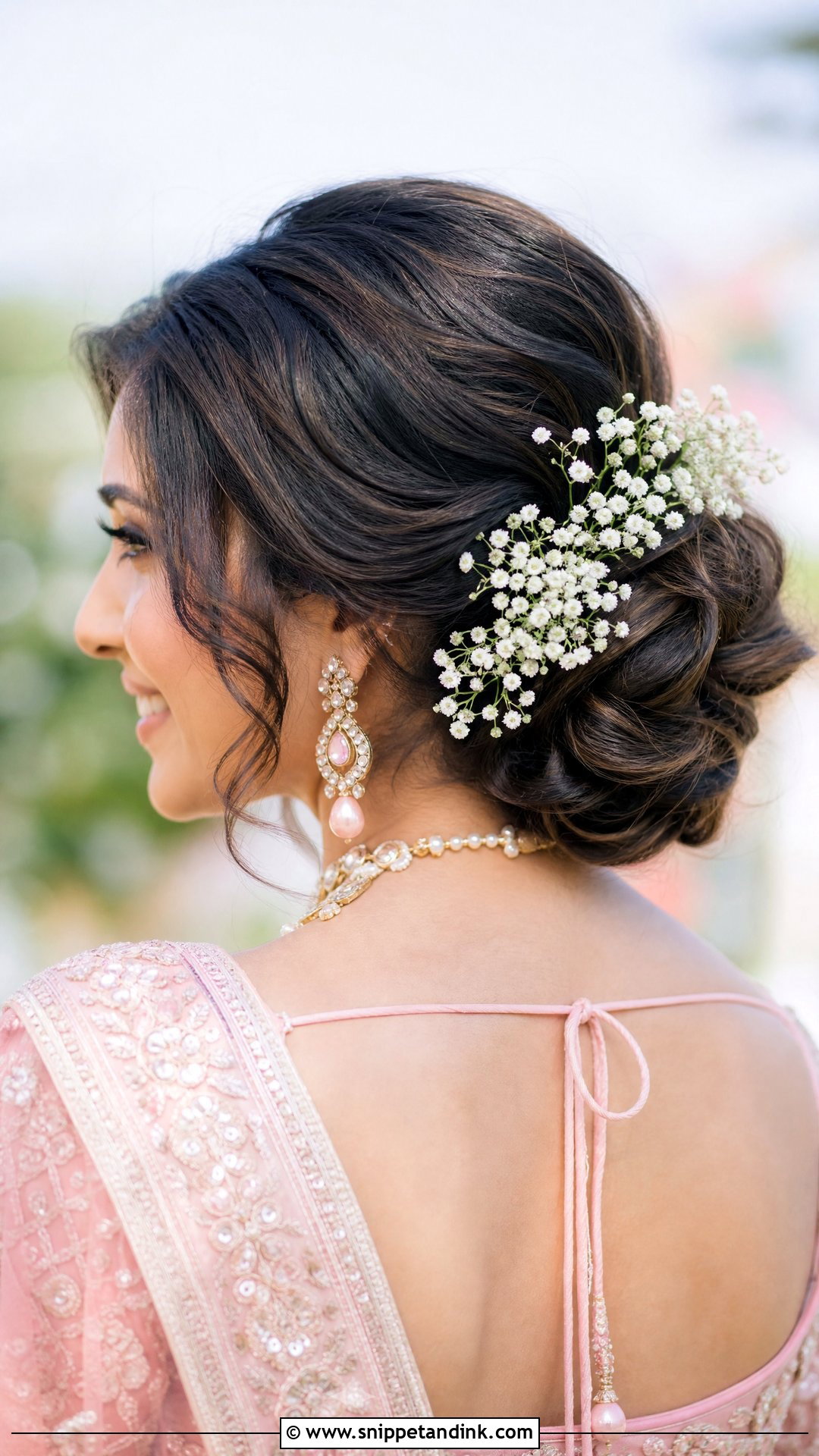
Baby’s breath is about as light as hair flowers get, so it won’t drag a bun down over a long day. I tuck it in small clusters throughout a low or messy bun; single sprigs vanish against dark hair. It suits pastel lehengas and outdoor daytime events. The flowers are tough and dry well, so the look holds up. Against a red and gold bridal outfit, though, the tiny white blooms can look too delicate, and I’d steer toward jasmine instead.
11. High Bun With Pearl Pins
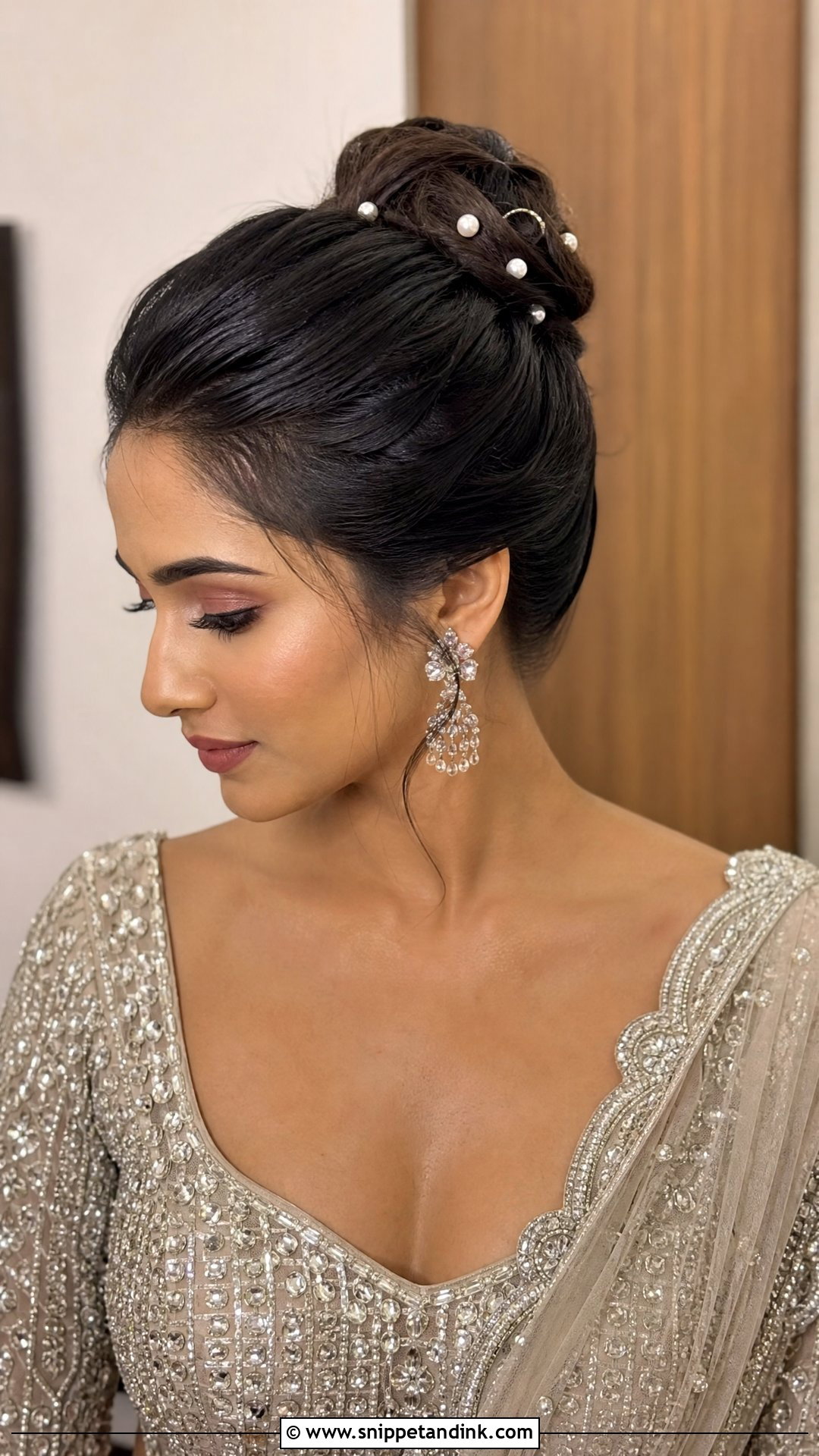
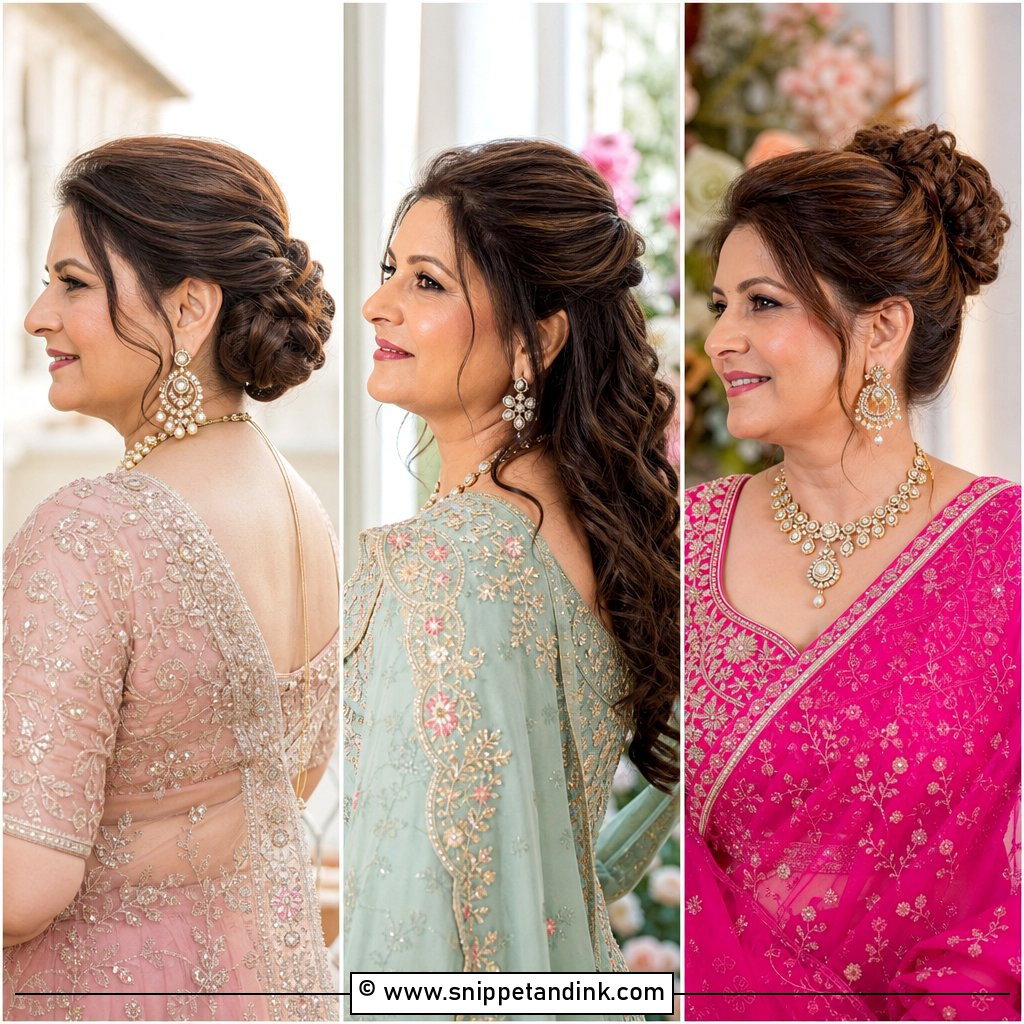
A crown-height bun shows off the neckline and the earrings in a way a low bun can’t, and it keeps the back of your neck cool through a long evening. I build it on a ponytail secured at the crown so it doesn’t sink, then scatter pearl pins around it in a loose ring. Pearls add soft light without competing with jewelry. It works well at receptions with a gown or a lehenga worn without a dupatta on the head. If a heavy dupatta is going over the hair, choose a lower bun.
12. Bun With Rose Accents
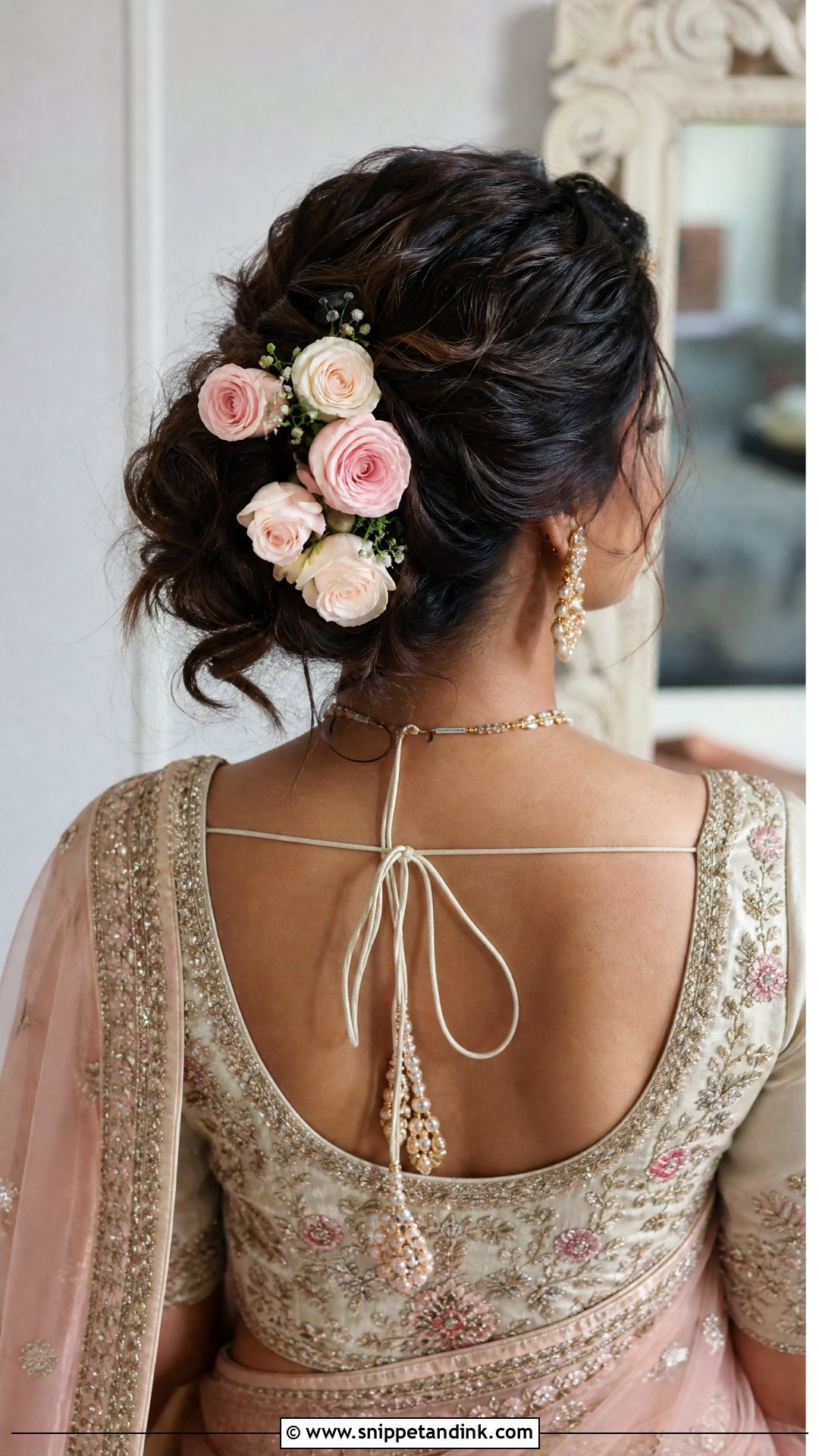
Fresh roses give a bun colour and weight, and they need a little more preparation than lighter flowers. I cut stems short and pin each rose into the bun’s solid centre, either clustered on one side or spaced around. Blush and ivory read softer; red is classic and suits a traditional outfit. Roses look full and rich in portraits, but the outer petals can bruise if the bride leans back against a chair. I’d keep a couple of spare blooms in the fridge for touch-ups between functions.
13. Bun With Backless Blouse Drape
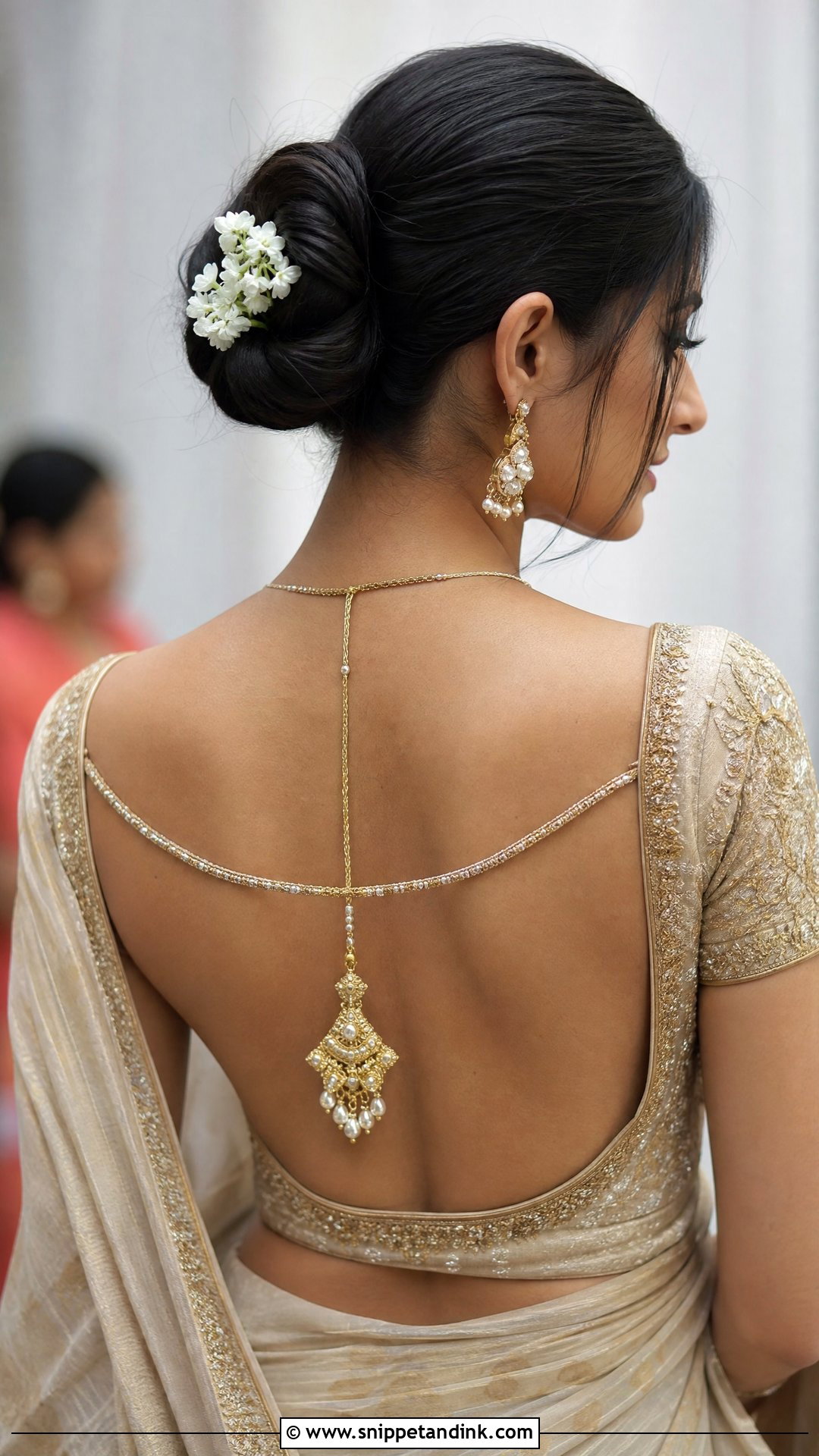
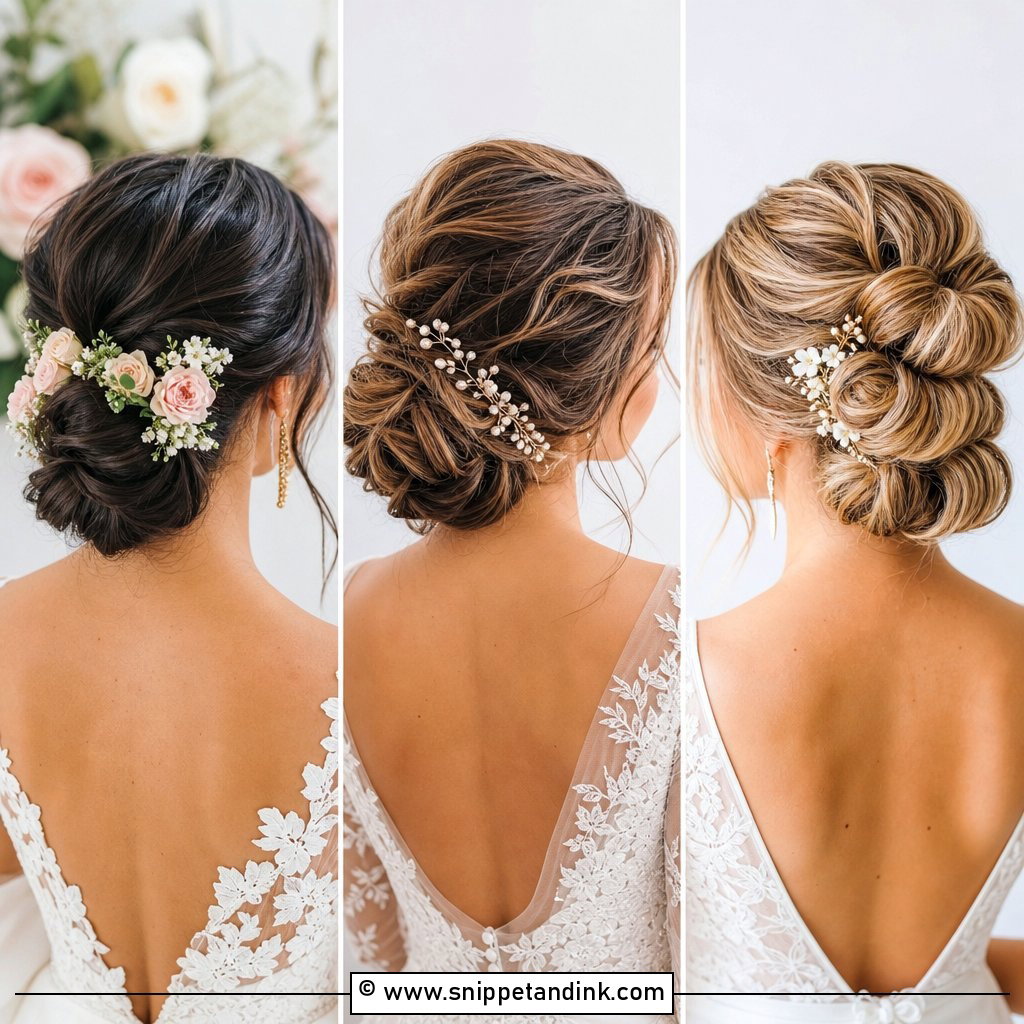
A backless or deep-back blouse changes the bun decision completely. A low bun covers the detail you paid for, so I lift it to mid or high and keep the nape clean. For brides who invested in a stunning blouse design, a sleek bun shows the most back; a softer bun adds romance but can drop lower as the day goes on. If you’re adding back jewelry or a latkan, keep the bun small so the eye travels down to it. Check the fit in a mirror with your back turned at the trial.
14. Vintage Voluminous Bun
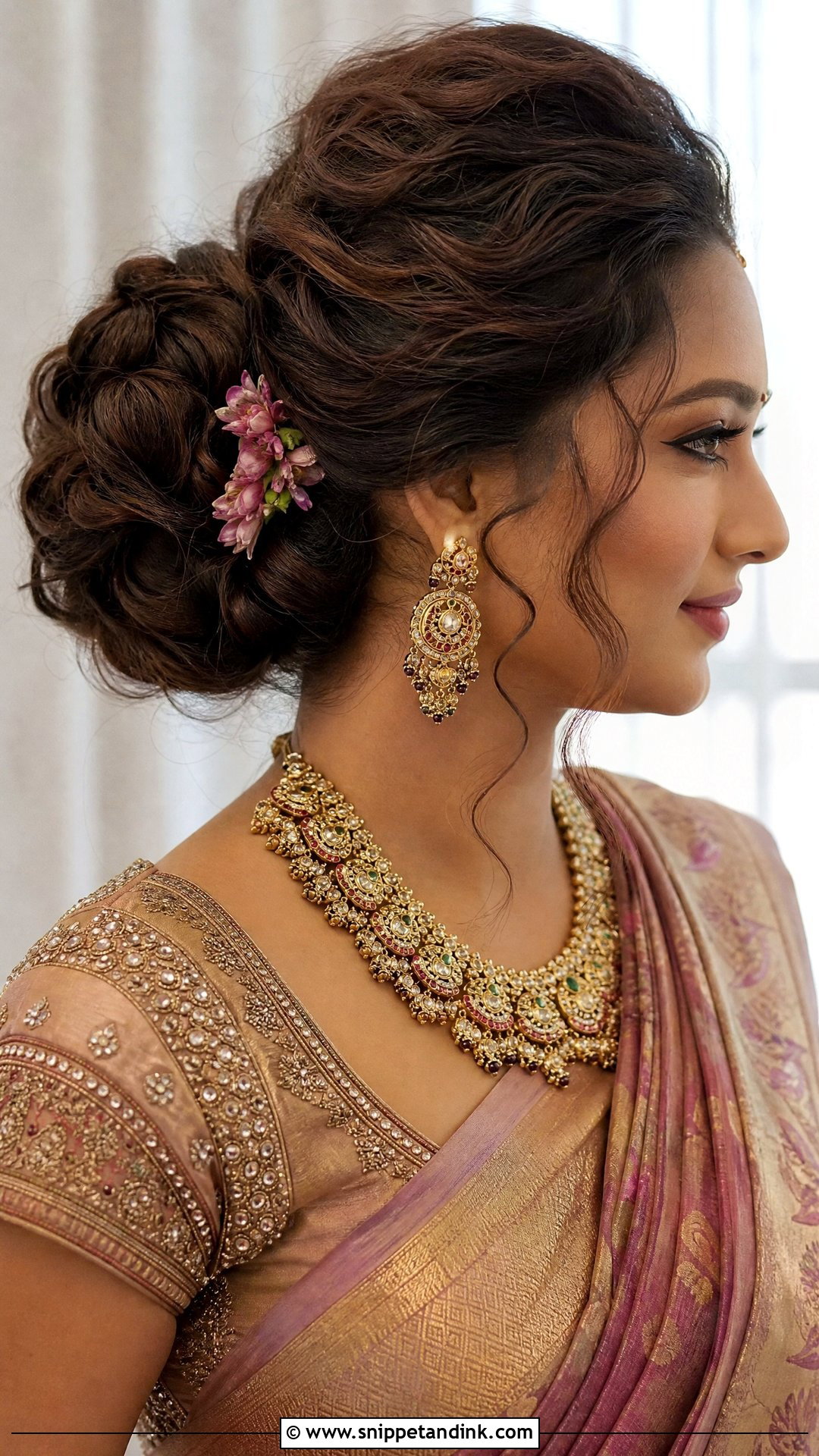
This one borrows from classic Bollywood bridal hair: teased crown height, a smooth top layer and a soft bun below. The backcombing is the foundation, done in thin sections at the roots and smoothed over with a soft brush. It looks regal with a traditional saree and heavy jewelry. Two cautions: very fine hair needs a small padding insert under the crown to hold the height, and a pinned dupatta will flatten all that volume. Keep it for functions without head covering, or plan the height lower.

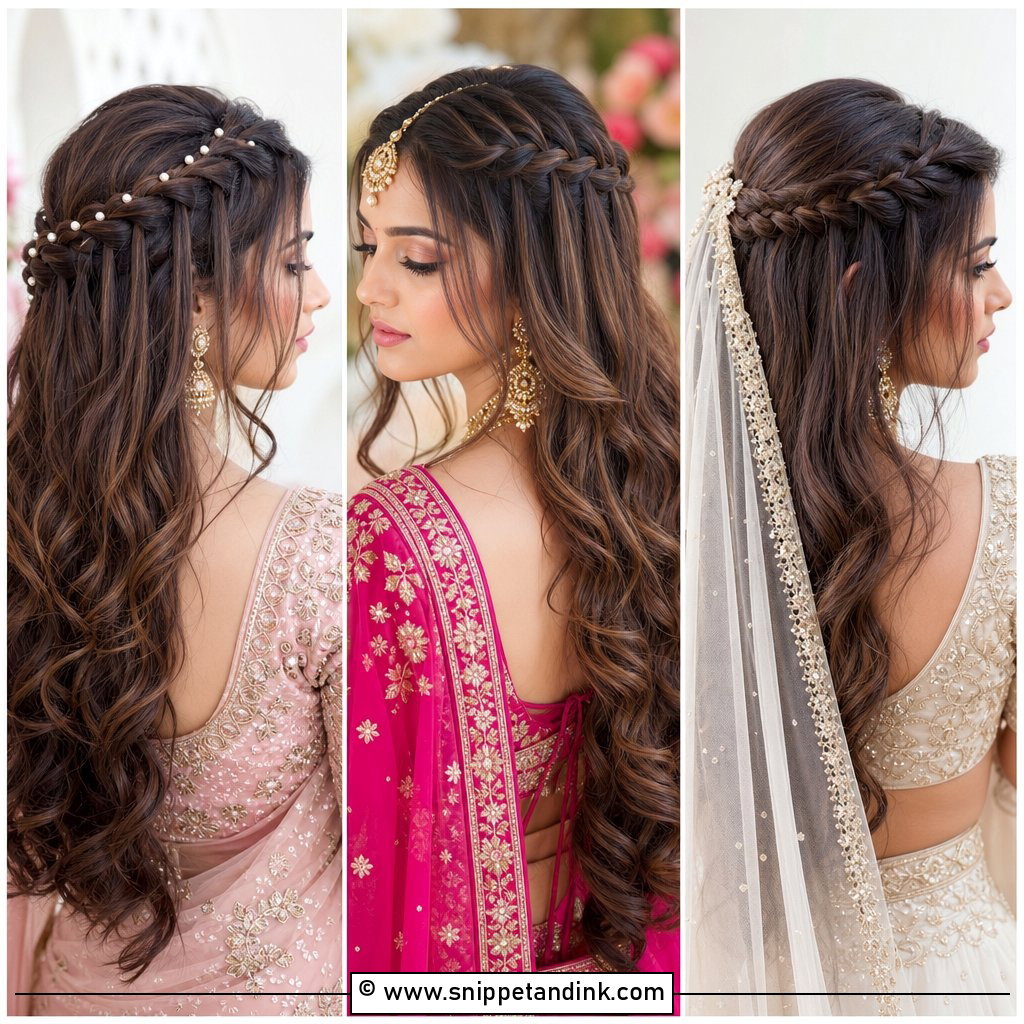
15. Bun With Bubble Braid
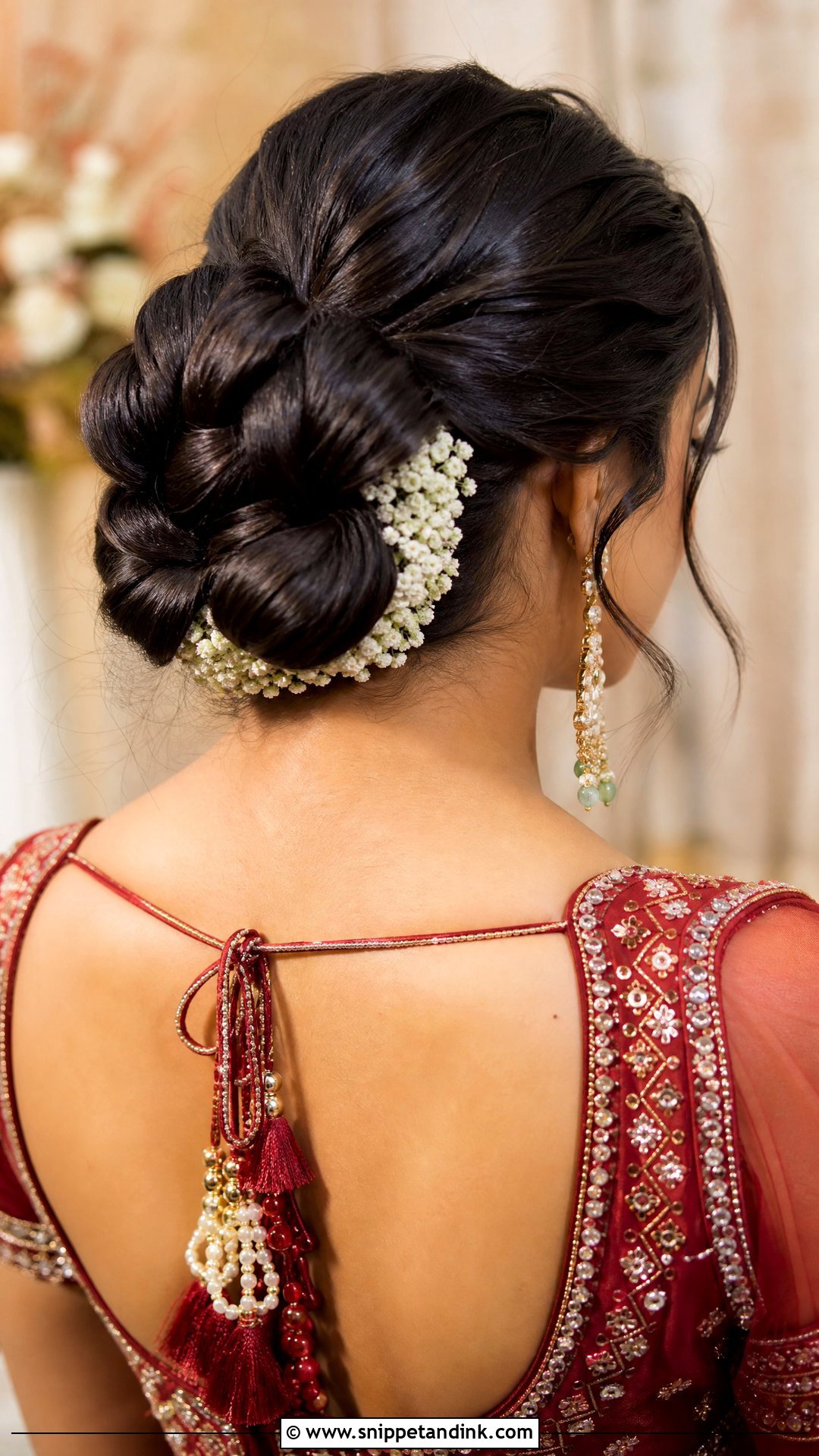
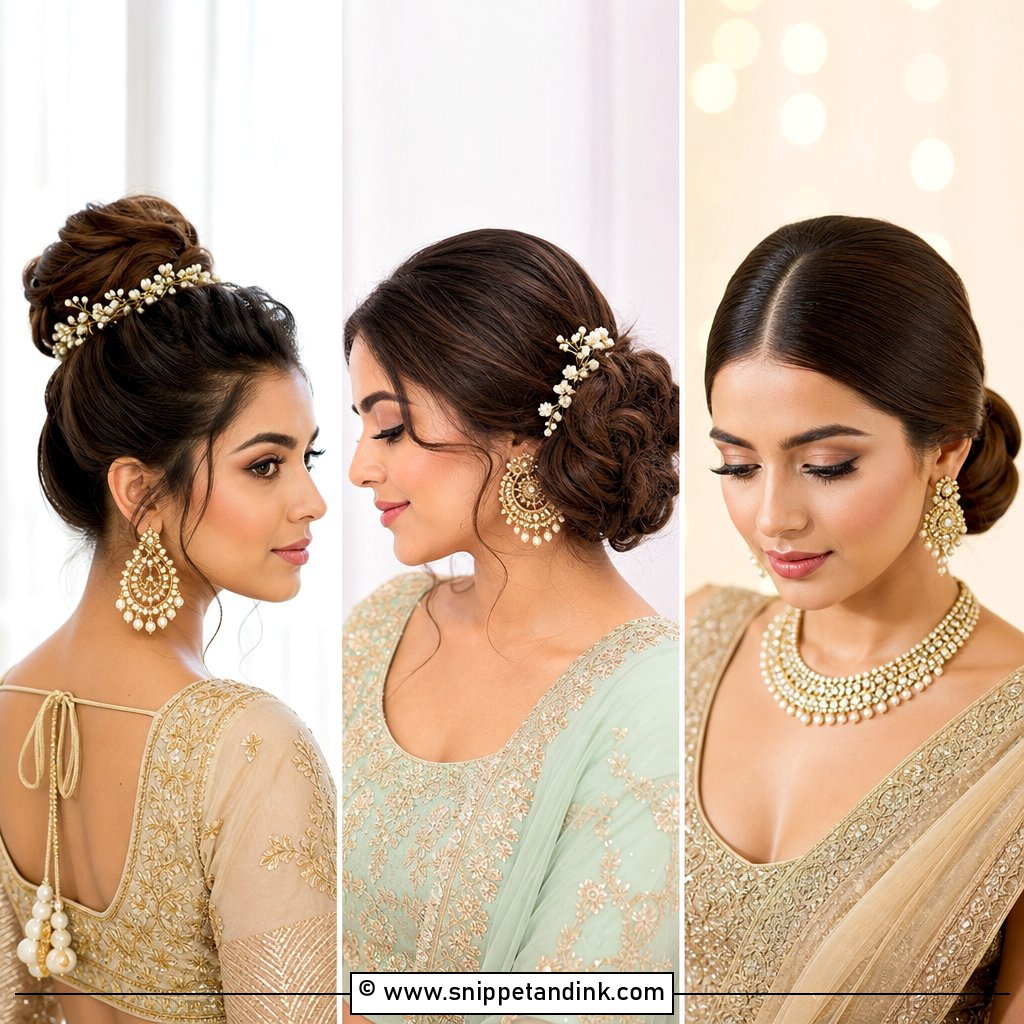
A bubble braid is a ponytail sectioned with small elastics, with each section pulled wider to form a rounded “bubble.” Coiled into a bun or leading into one, it looks playful but holds very firmly. I tuck small gajra pieces or flowers between the bubbles for a traditional touch. It suits mehndi and sangeet celebrations best. Use clear or hair-coloured elastics, as bright ones show in photos, and pull the bubbles gently so the elastics stay hidden.
16. Bun With Loose Front Curls
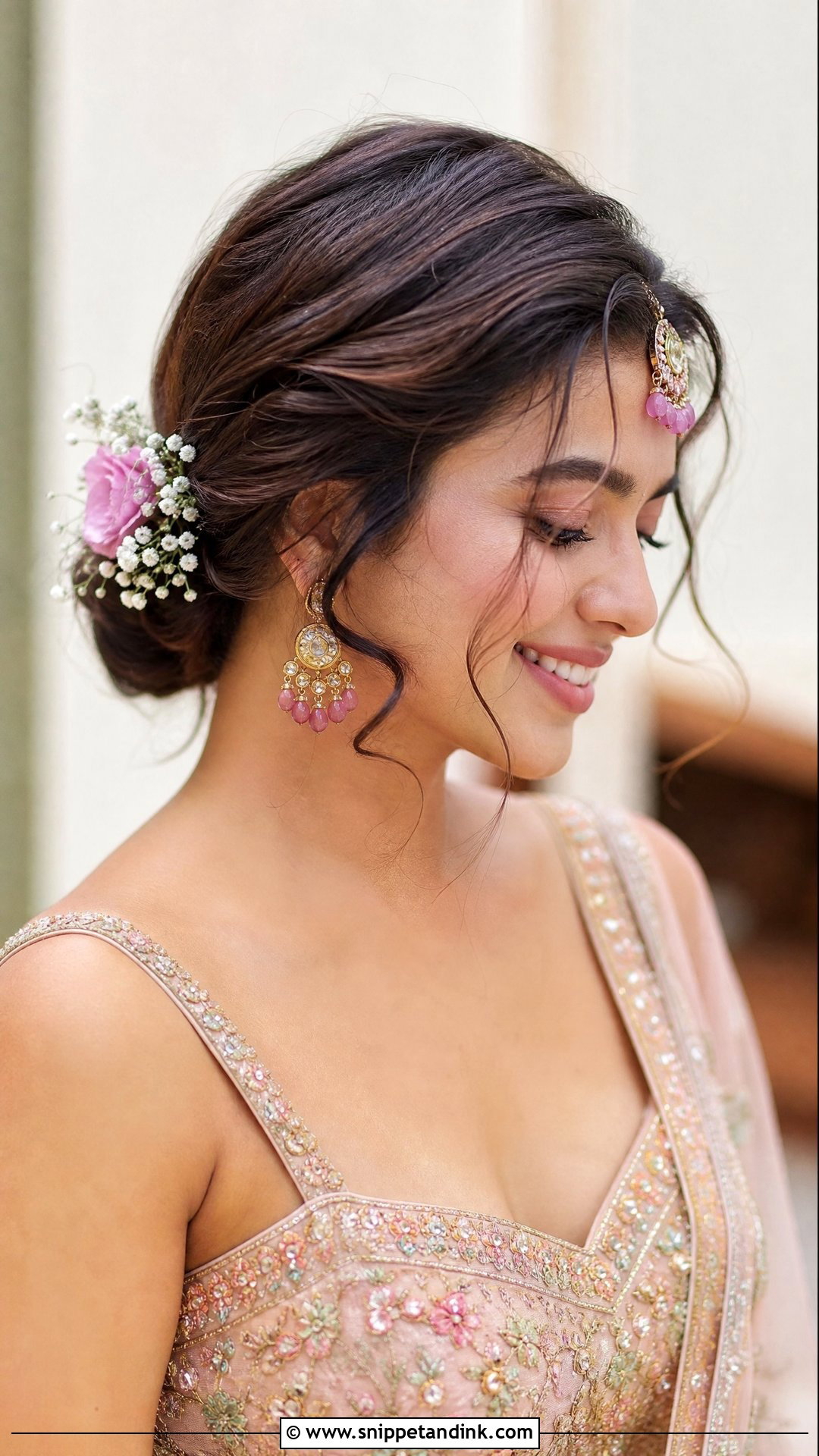
Loose curls at the front with the rest gathered back is the softest bun on this list. It flatters most faces because the curls break up the hairline. I curl the front pieces away from the face so they open out rather than falling forward into the eyes, and I set them with a light spray. It works for day or evening. The trade-off is maintenance: front curls are the first thing to droop in humidity, so have a small travel spray handy or ask your stylist for a quick touch-up before photos.
17. Sleek Bun With Center Part
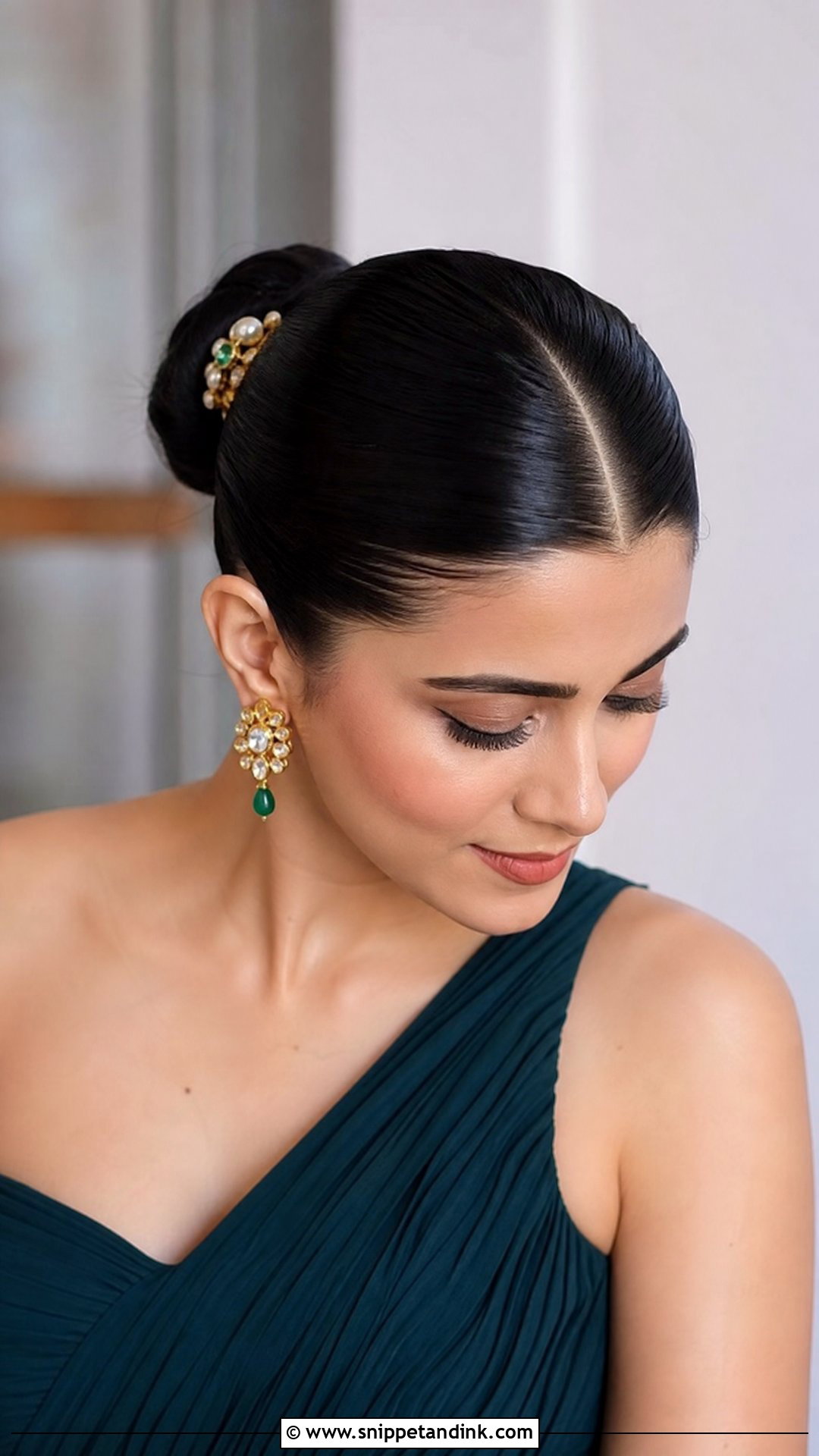
A sleek centre-part bun is one of the cleanest modern bridal looks, and it lives or dies on the part. I section it with a tail comb and check it from a distance in the mirror; even a slight tilt makes the face look uneven. A strong gel or wax stick smooths every strand, and frizzy hair needs a blow-dry first. It pairs well with bold jewelry at receptions and cocktail functions. For round faces or very high foreheads, a side part usually suits better. A single ornate pin adds just enough sparkle.
18. Bun With Marigold Decoration
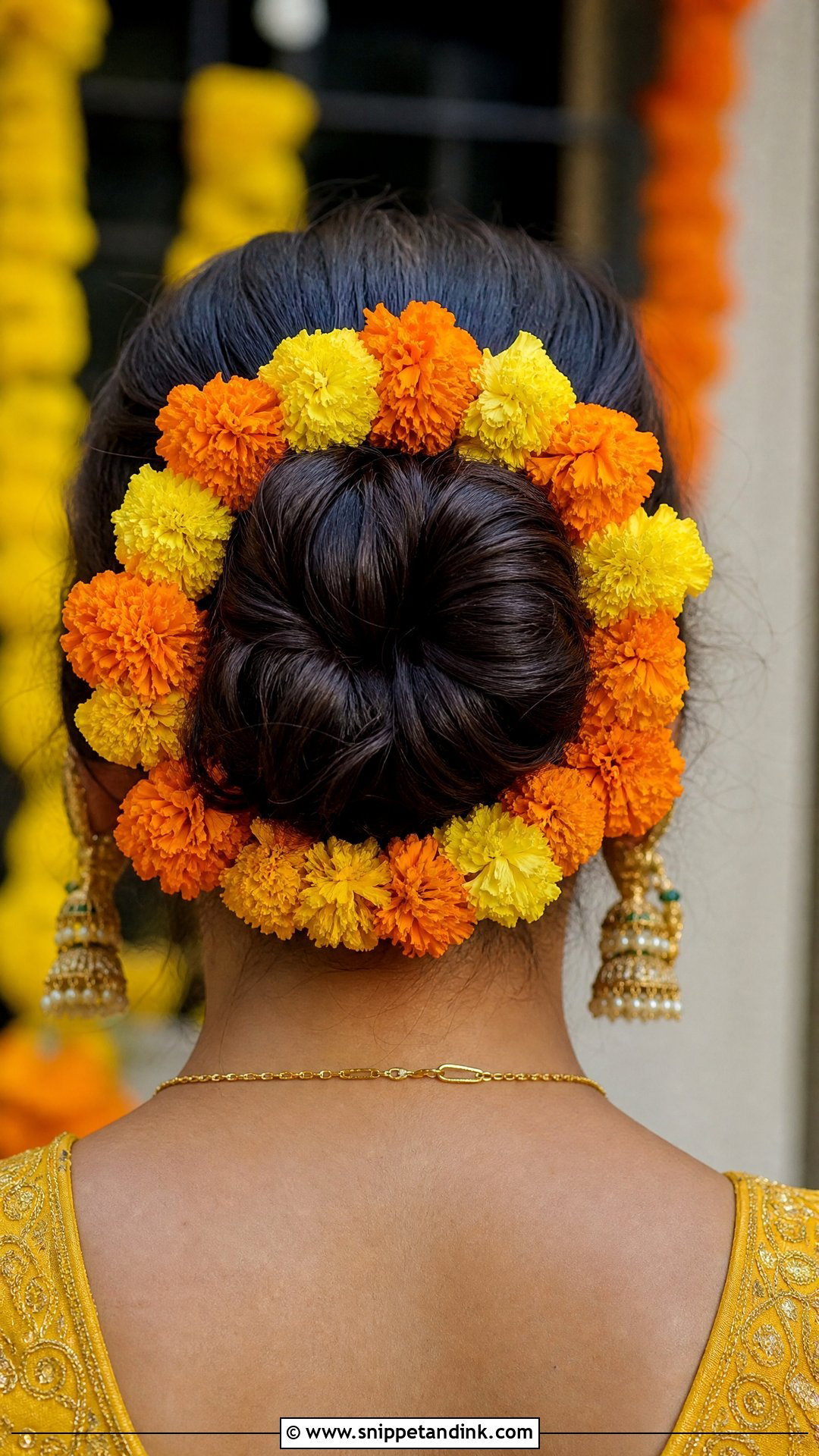
Marigolds belong at the haldi and mehndi. I wrap a thick garland of vibrant orange and yellow blooms around a neat or messy bun and pin it at several points so it doesn’t sag. They match yellow and orange outfits naturally and they’re easy to find and affordable. Marigolds are fairly heavy, so the bun needs to sit close to the head. Expect some petals to fall when you dance; that’s part of the charm.
19. Low Bun With Side Flowers
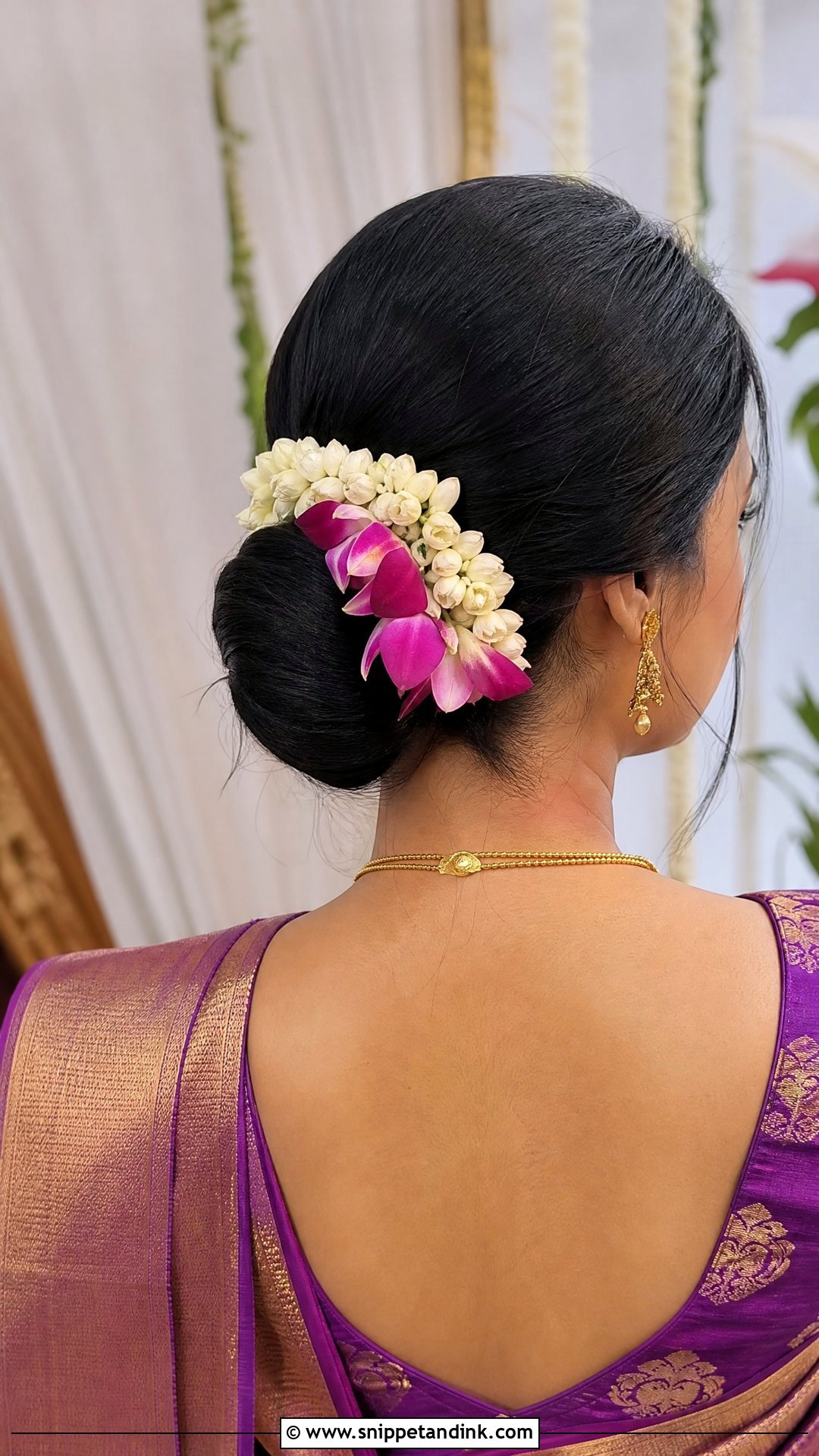
A low bun with a single flower cluster on one side is calmer than a full floral wrap and still reads as bridal. I build the bun at the nape, then pin the cluster on the side opposite your bigger earring, so they don’t compete. Roses, jasmine or orchids all work depending on the outfit. It suits long ceremonies because there’s less weight to carry. The cluster draws attention toward the face, which is useful if you’ve chosen statement earrings.


20. Bun With Orchid Garland
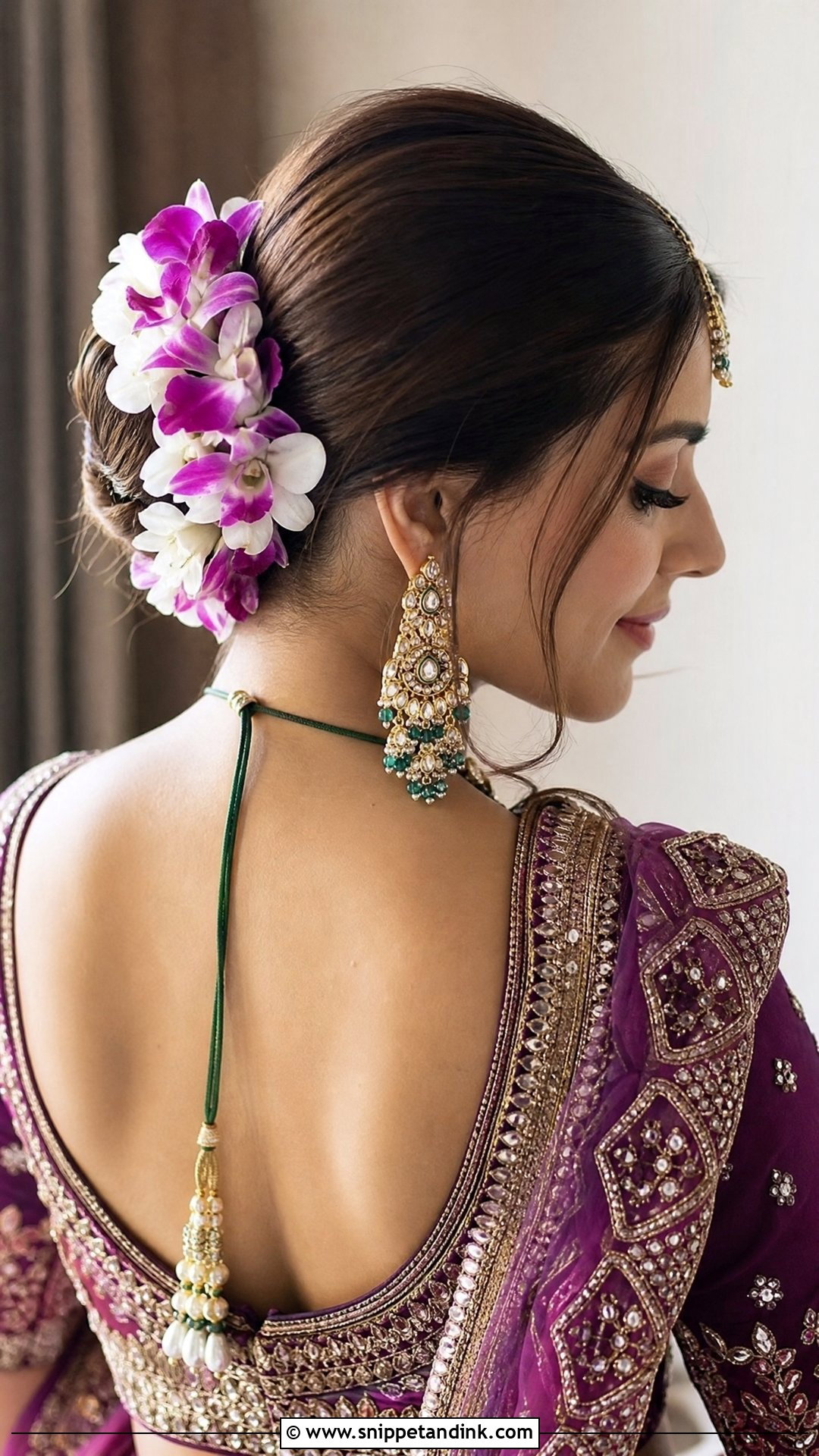
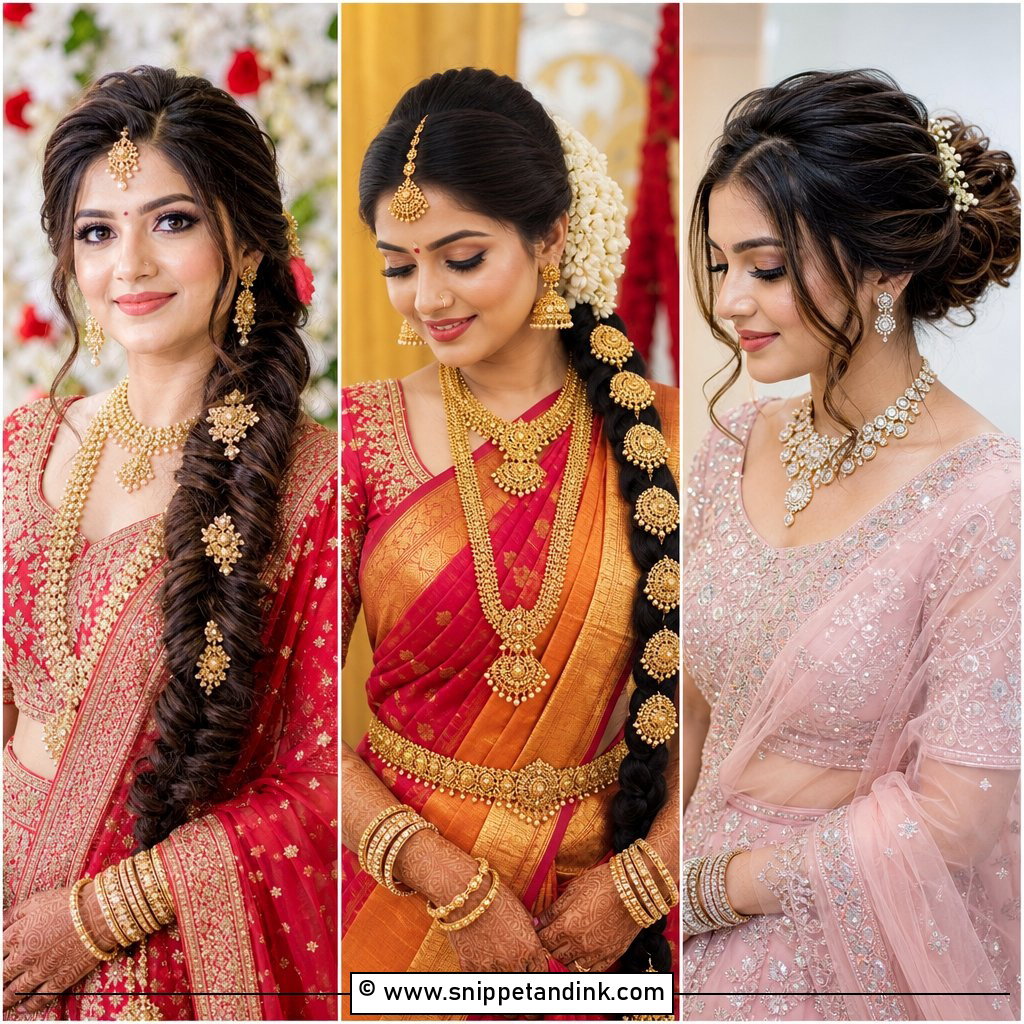
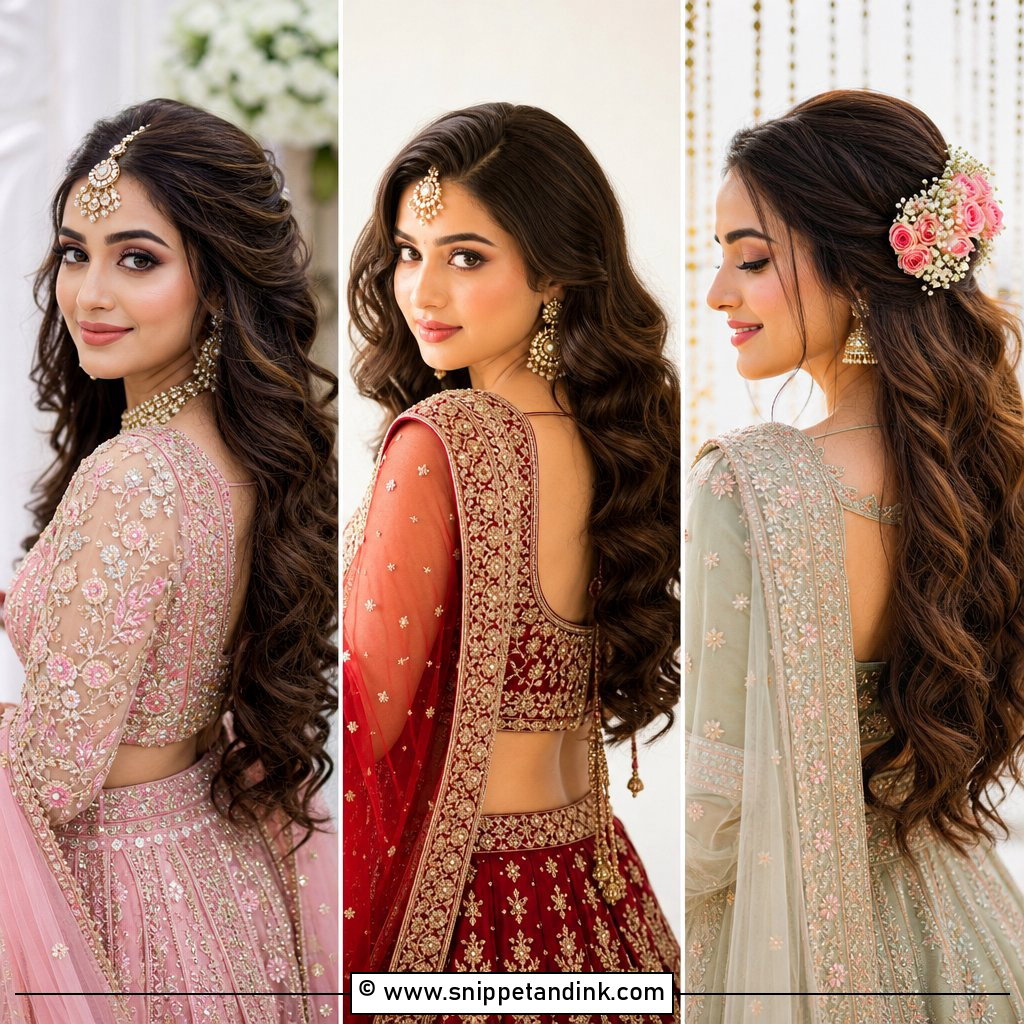
Orchids hold up better than many fresh flowers through a long day, which makes a garland of them practical as well as pretty. I wrap the garland around a sleek or messy bun and pin it at several points. Purple, white and pink orchids add colour that jasmine doesn’t. They pair well with both pastel and jewel-toned outfits. Orchids can be pricier and harder to source in some places, so confirm availability with your florist well ahead. Keep them cool until the bun is finished.
Changing Your Bun Between the Pheras and the Reception
A full redo is possible in the gap, but it needs planning. Hair that has been pinned, sprayed and covered with a dupatta for hours won’t behave like freshly washed hair. Here’s how I approach the change.
- Remove the dupatta pins and flowers first, then the bun pins, working from the outside in. Pulling them out in a hurry tangles hair badly.
- Brush out gently with a wide-tooth comb, then a boar-bristle brush to break up spray.
- Use dry shampoo at the roots to absorb oil and give grip for the second style.
- Reuse the existing bend from the first style instead of re-curling the whole head; it saves time and reduces heat damage.
- Allow at least 45 minutes for the change, more if the reception style involves teasing or a lot of curls.
If time is very short, I’d keep the ceremony bun and just change the accessories: remove the gajra, add a statement clip or pearl pins. The look shifts noticeably and you lose no time.
One Juda per Function Works Better Than One for All
The right bun depends on what you’re wearing, which function it’s for and how long it has to last. A gajra bun suits a saree ceremony; a sleek donut suits heavy jewelry; loose curls suit a relaxed evening. Mix flowers, pins and braids until the style feels like yours. From haldi mornings to receptions, plan one bun per function and test the most demanding one at your trial.
You'll Like These Ideas:




Leave a Reply