
A Maharashtrian bridal hairstyle carries more ceremony than almost any other I pin. The Ambada bun with mogra, braids worn with the nath and mundavalya, gold pins shaped like lotuses: each piece has a reason to be there, and the hair has to hold all of it for hours of rituals. I’ve gathered 25 Marathi bride hairstyle ideas here, from the strictly traditional to open waves for the reception, with notes on what each one asks of your hair length, your jewelry and your nauvari. Take the ones you like to your stylist and ask her how each would sit on your own hair.
Planning the Hair Around the Mundavalya, Nath and Nauvari
In a Maharashtrian wedding, the jewelry dictates the hair more than the other way round. I always ask to see the mundavalya, the nath and any hair ornaments before I decide on a bun, because each of them changes where the hair can sit.
- The mundavalya ties at the back of the head. A bun set too high gets pushed off center by the knot, so for the ceremony I keep the bun low at the nape.
- The nath doesn’t touch the hair, but its chain often clips into the hair near the ear. Leave a small section free there for the stylist to anchor it.
- A nauvari pallu tucked at the shoulder can brush against a low bun or a side braid. Wear the actual saree at your trial, not just a blouse.
- Heavy Ambada pins and gold jaalis add real weight. Tell your stylist which ones you’ll wear so she can build a firm enough base.
If your hair is short or fine
A traditional Ambada or Khopa needs more length than many brides have today, and that’s fine. A bun filler or a ready-made bun piece matched to your hair color gives the classic shape, and once mogra or a jaali goes on top, nobody can tell. The trial is when you find out whether the piece matches your shade and whether it stays put when you turn your head quickly. Plan for it there, not on the morning.
Many Marathi weddings also involve a quick change between the ceremony and reception. If you want a second hairstyle, choose a first one that can come down without hours of untangling. Braided styles release easily; heavily backcombed buns need time and a detangling spray.
1. Classic Ambada Bun With Mogra Flowers
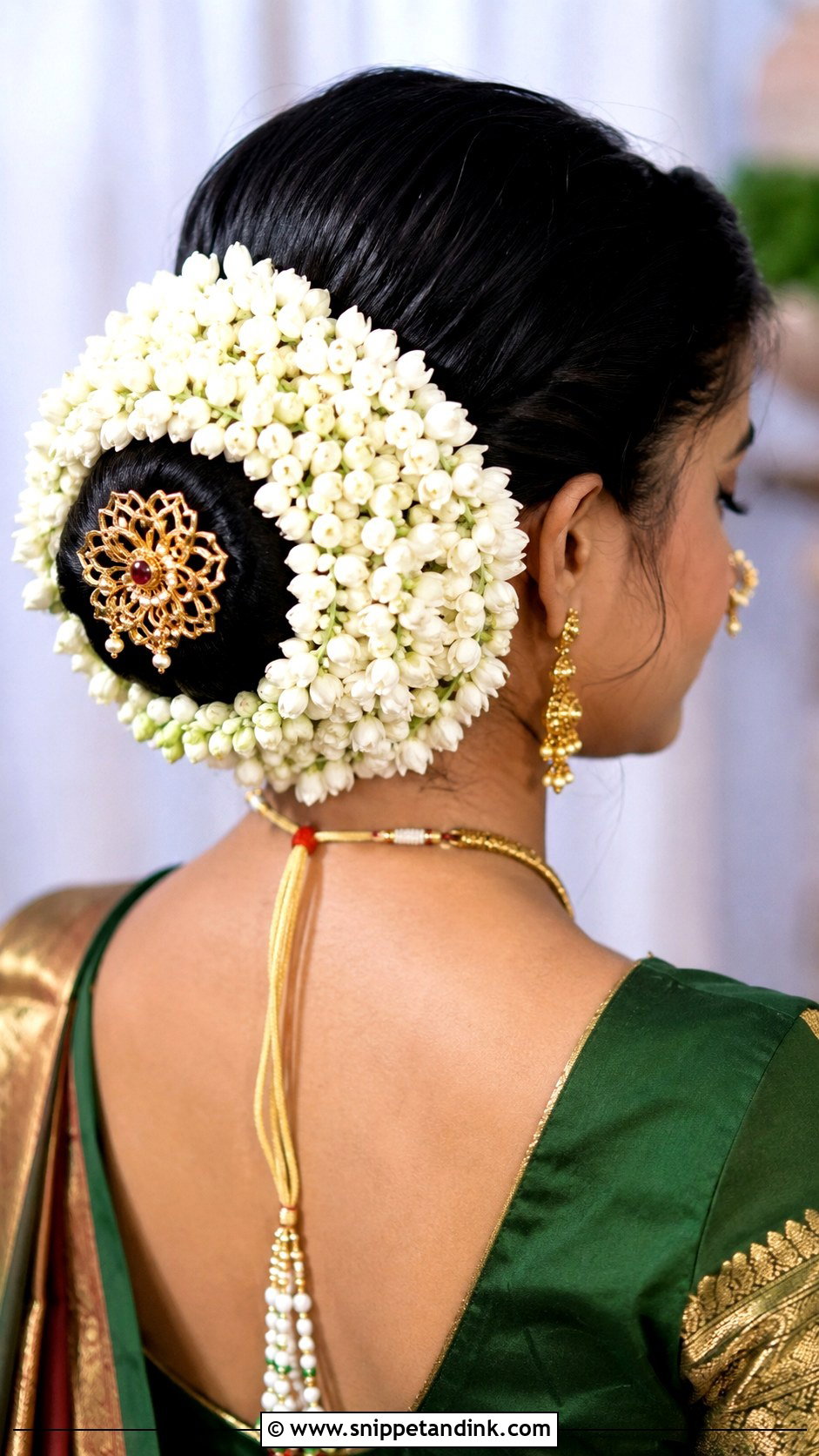
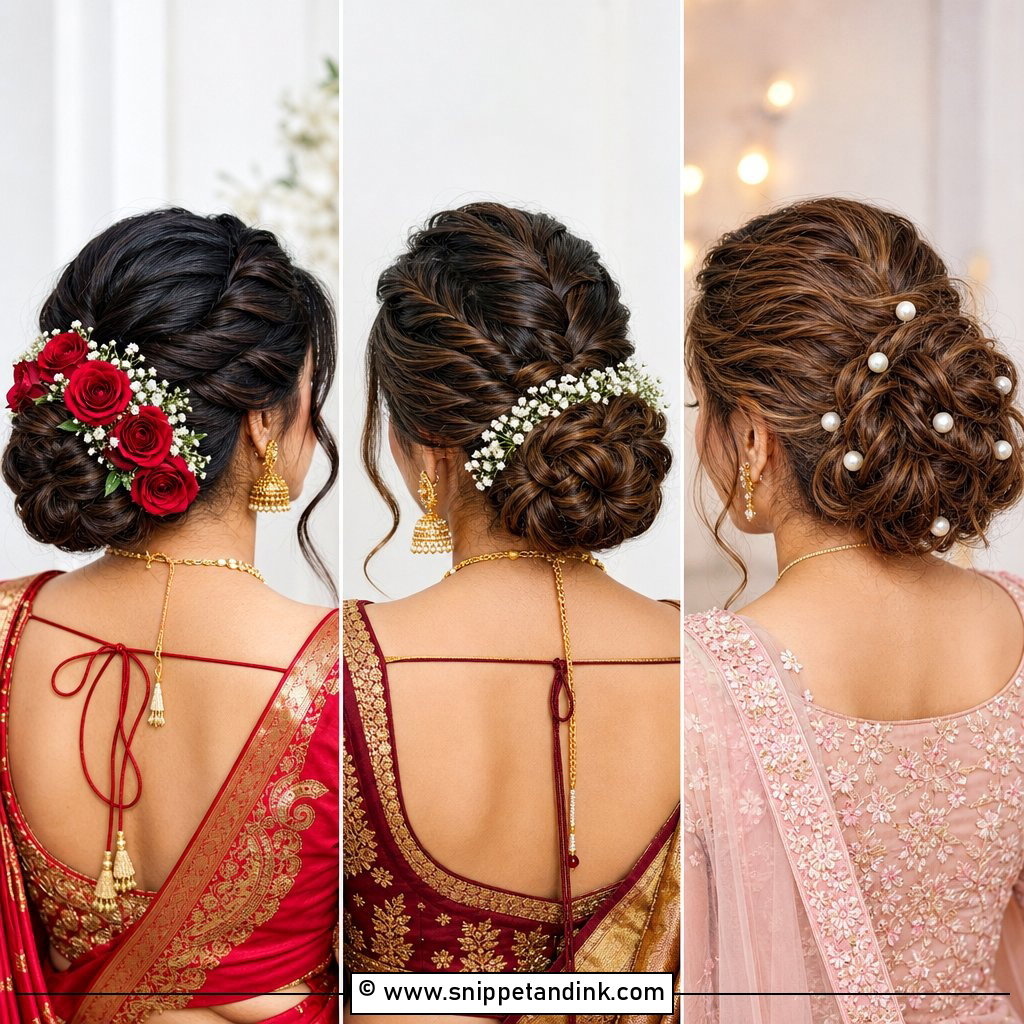
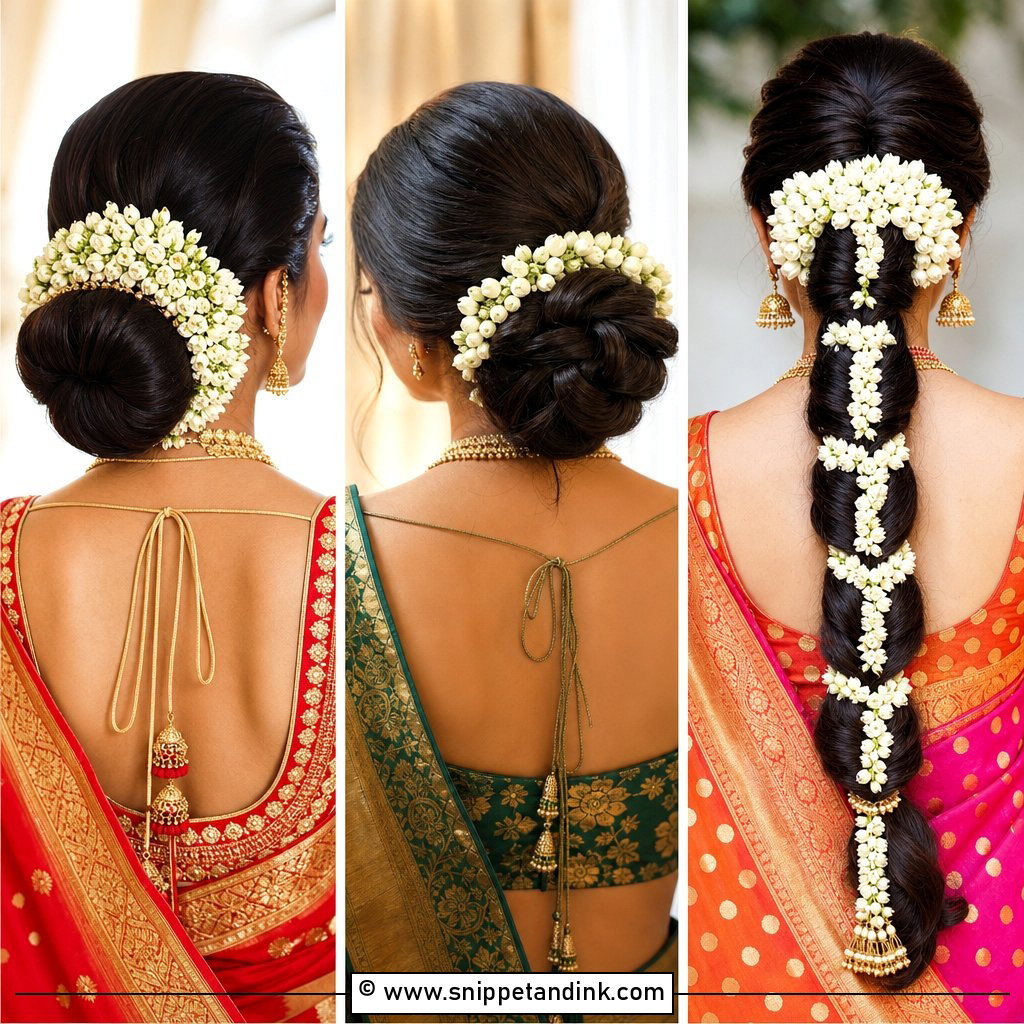
The Ambada is the heart of the traditional Marathi bridal look: a low, rounded bun at the nape, wrapped in a mogra gajra. It sits right with the nauvari saree and a heavy gold nath, and an Ambada pin shaped like a lotus or peacock finishes it. I build it over a light backcomb at the base so the pins have something to grip; a bun on completely smooth hair slides down within a couple of hours. It suits thick, long hair best. With shorter or finer hair I use a bun filler under the hair so the shape stays round without needing more length than you have.
2. Floral Bun With Gold Hair Pin
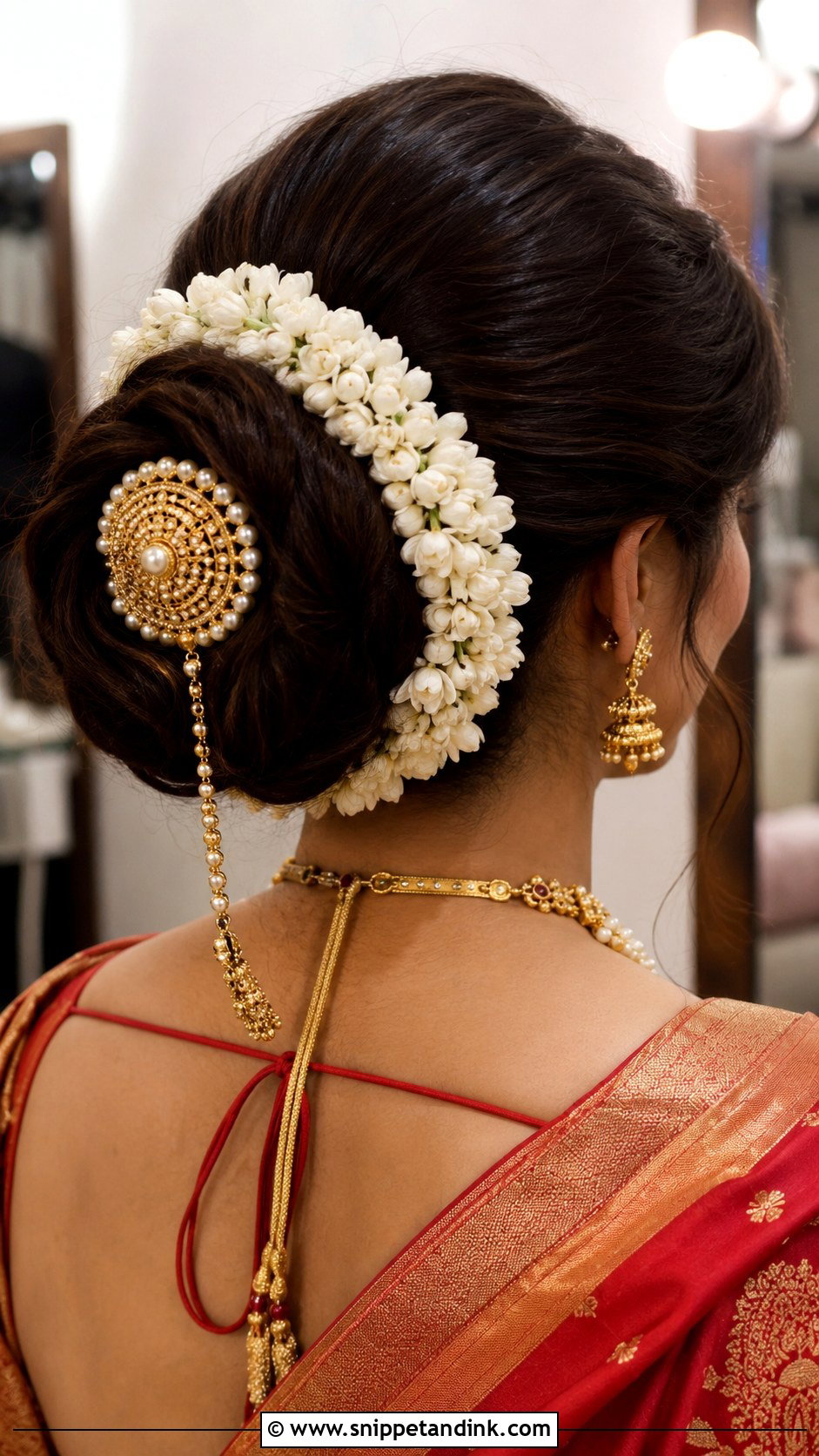
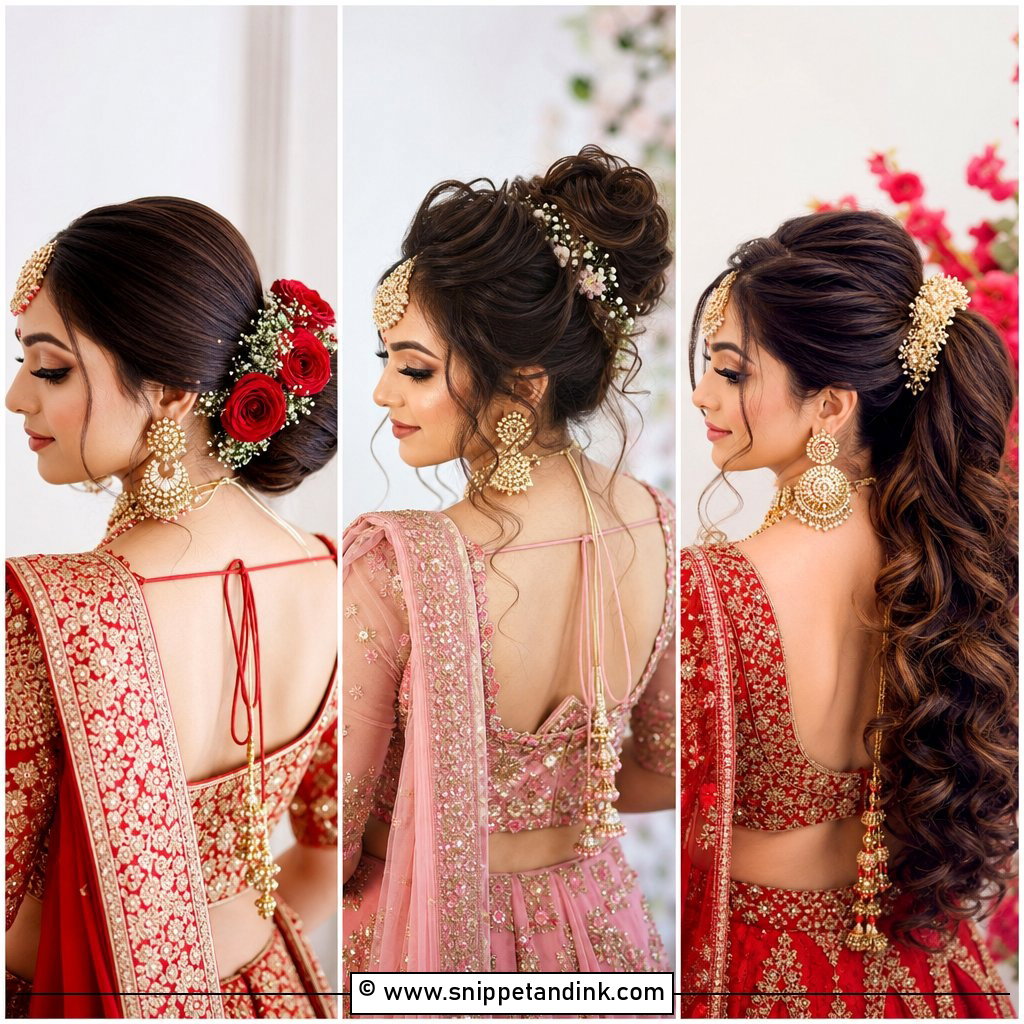
A statement gold Ambada pin studded with pearls and rubies works almost like a tiara for the back of the head, and that’s where photographers spend a lot of time during the pheras. Make the bun smooth and full, then wrap a thick band of white mogra around the base for contrast against dark hair. It pairs well with green or red kashta sarees and chunky temple jewelry. Heavy pins need anchoring: I push them in at an angle through the bun and into the backcomb underneath, then cross a hidden U-pin behind them, or they tilt forward by the reception. Keep baby hairs sleek with a little gel so the bun stays the focus.
3. Traditional Khopa Bun
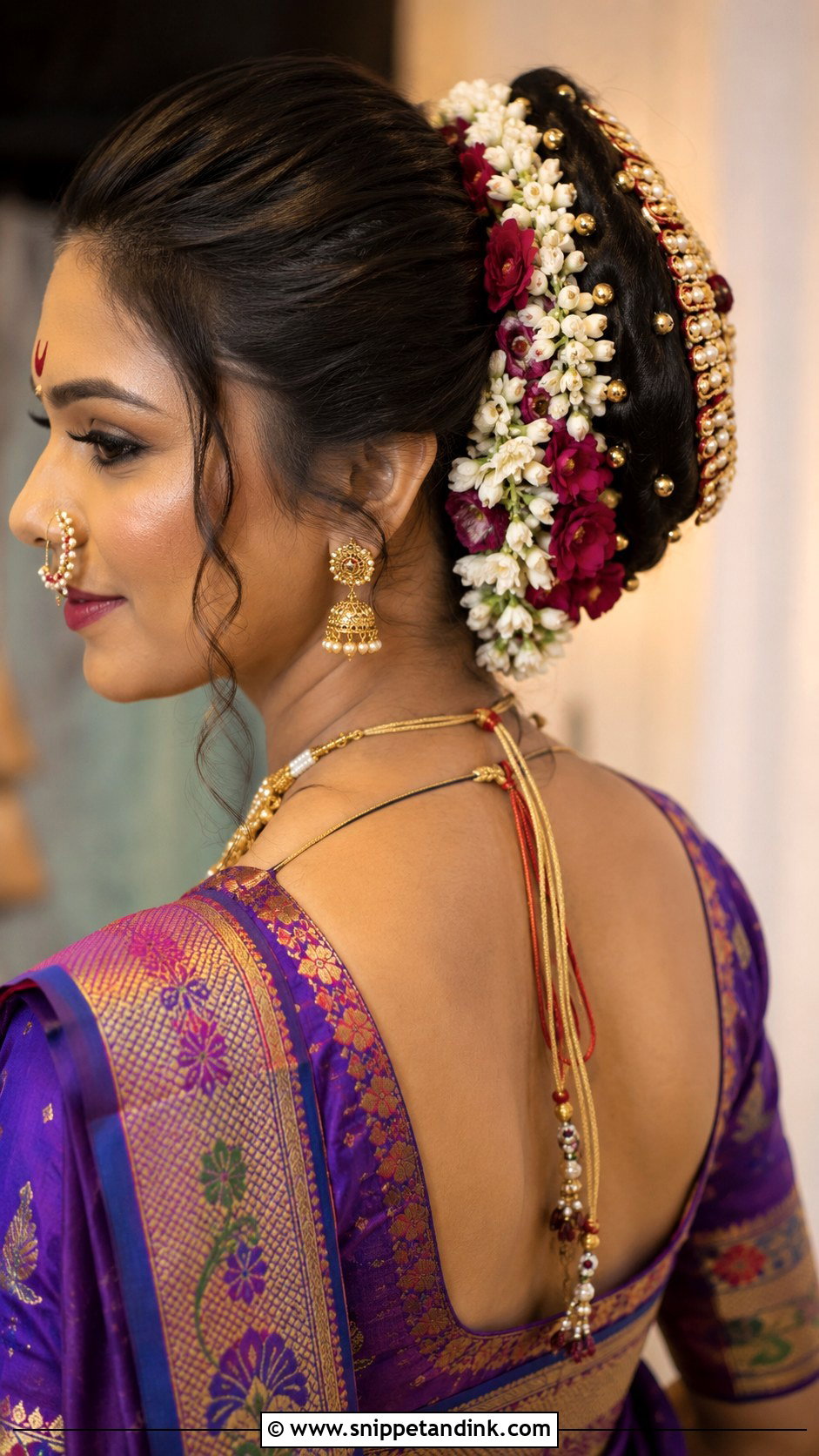
The Khopa is a slightly elongated, sculpted bun that Maharashtrian brides have worn for generations. Set low and shaped almost into an oval, it gives a regal silhouette from behind. Rows of pearls, gold beads and fresh flowers are layered along its curve, and it lets the nath and chandrakor bindi stand out at the front. Shaping a clean oval takes length, so I’d only promise this on long, thick hair; on shoulder-length hair a stylist will need a hair piece, and you should know that before the trial, not on the morning. A fine gold jaali over the bun adds old-world charm.
4. Side Braid With Fresh Flowers
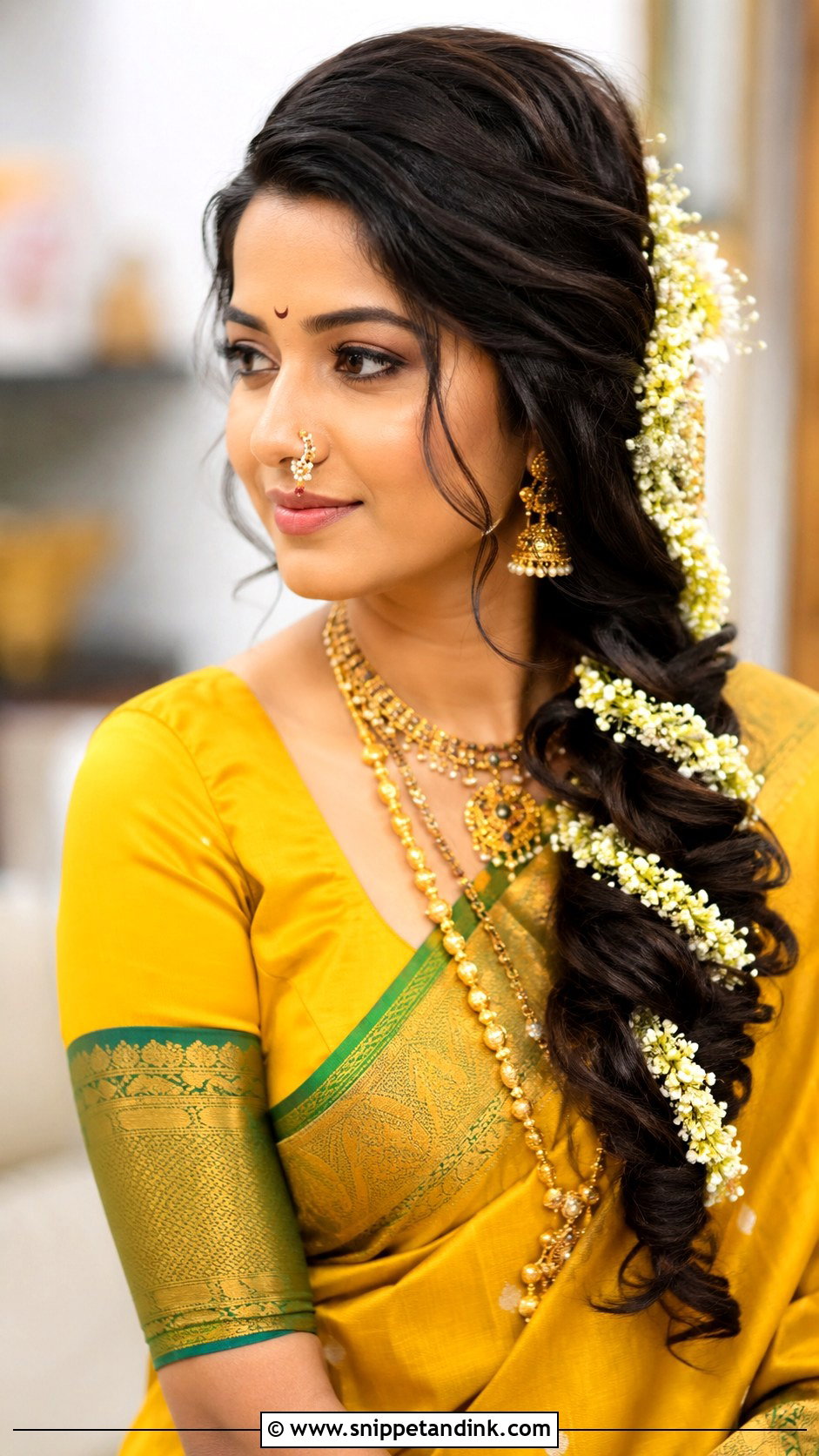
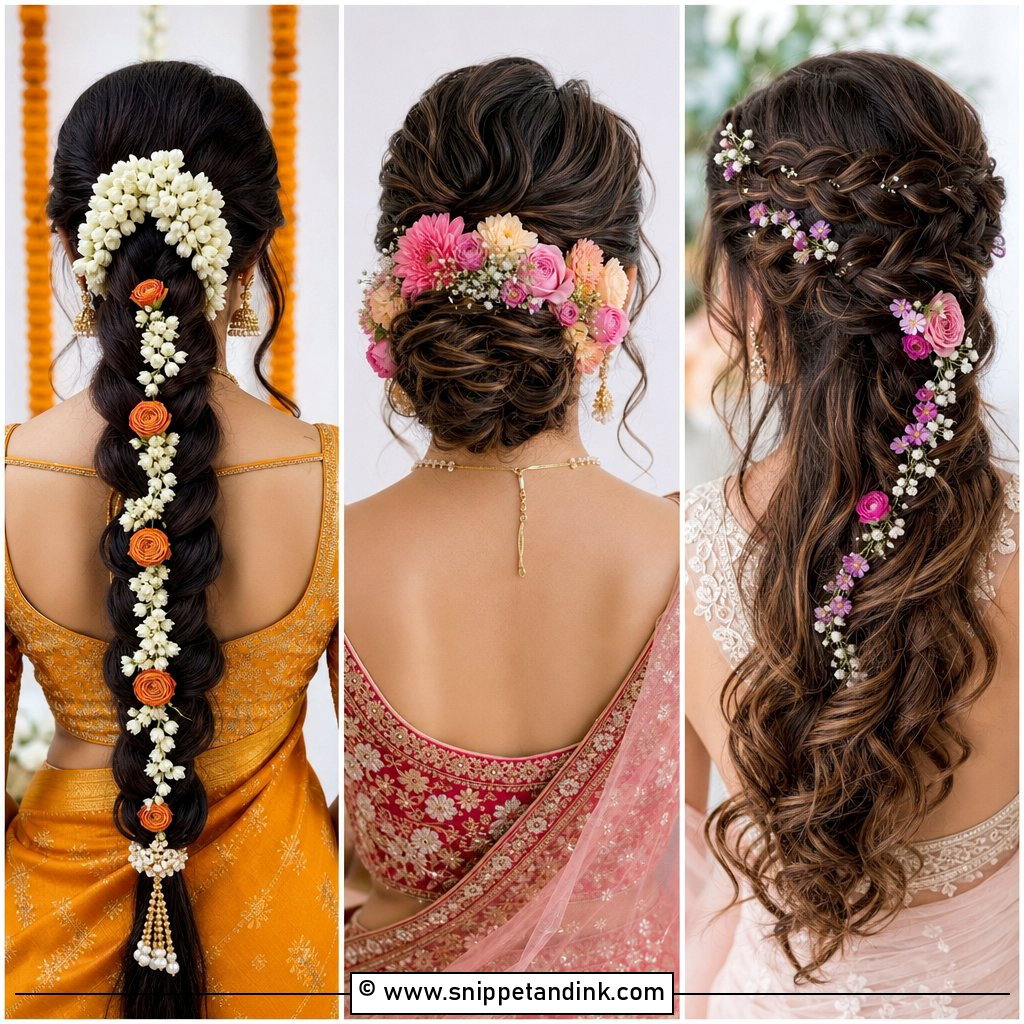
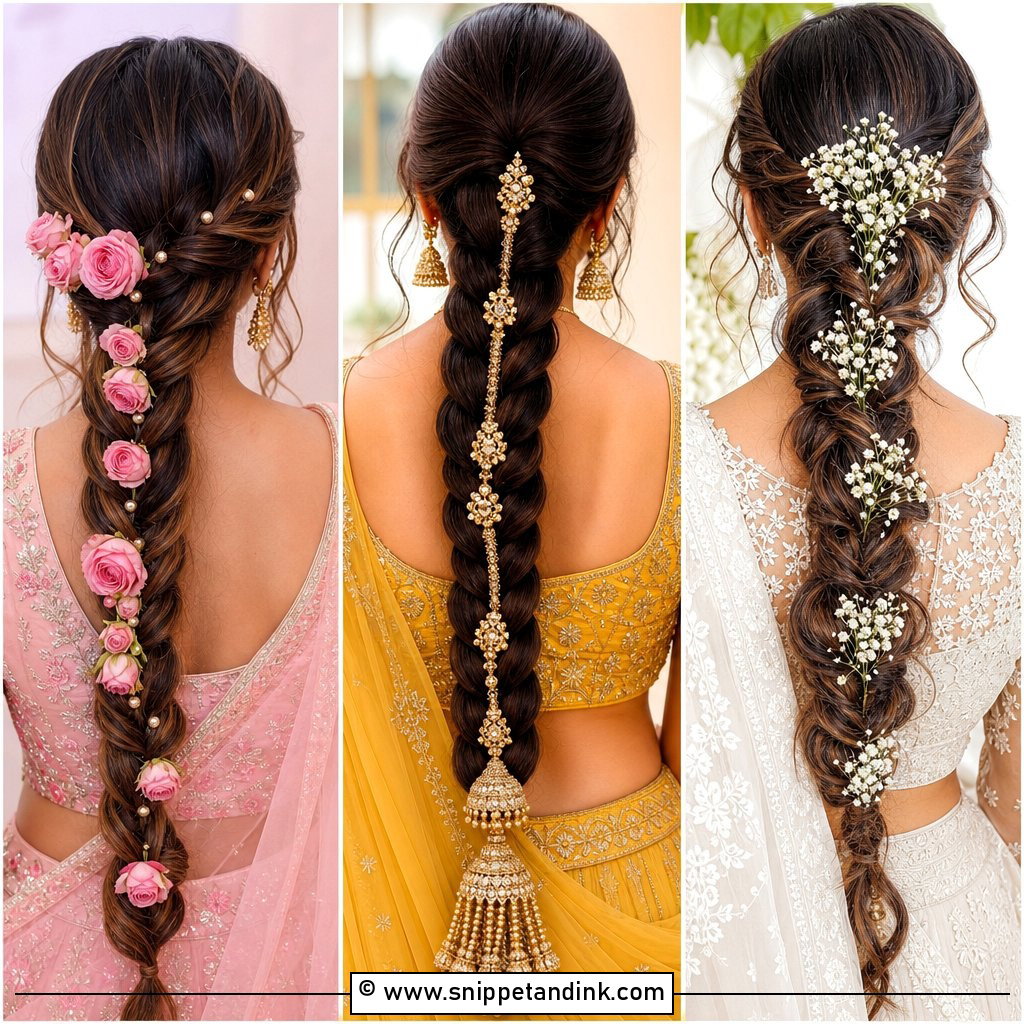
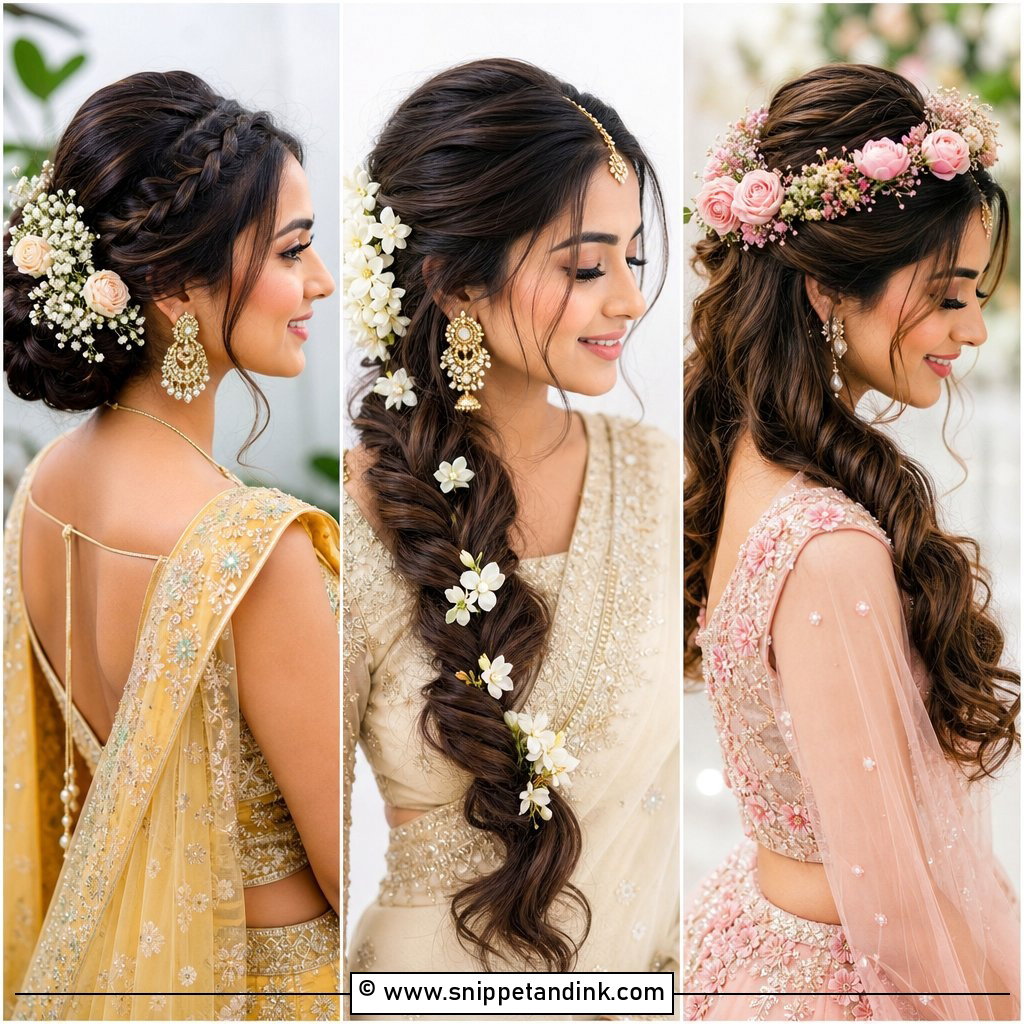
A loose side braid swept over one shoulder is softer than a bun and far easier to sit in for long rituals, because nothing presses into the back of your head when you lean against a chair. Weave it full and loose, then tuck small flowers or a mogra strand along its length. It adds length to round and heart-shaped faces. The catch is weight on one side: a heavy flower strand pulls the braid forward over the shoulder as you move, so I secure the base behind the ear with two crossed pins. Jhumkas and a delicate nath balance it well.
5. Open Hair With Soft Curls
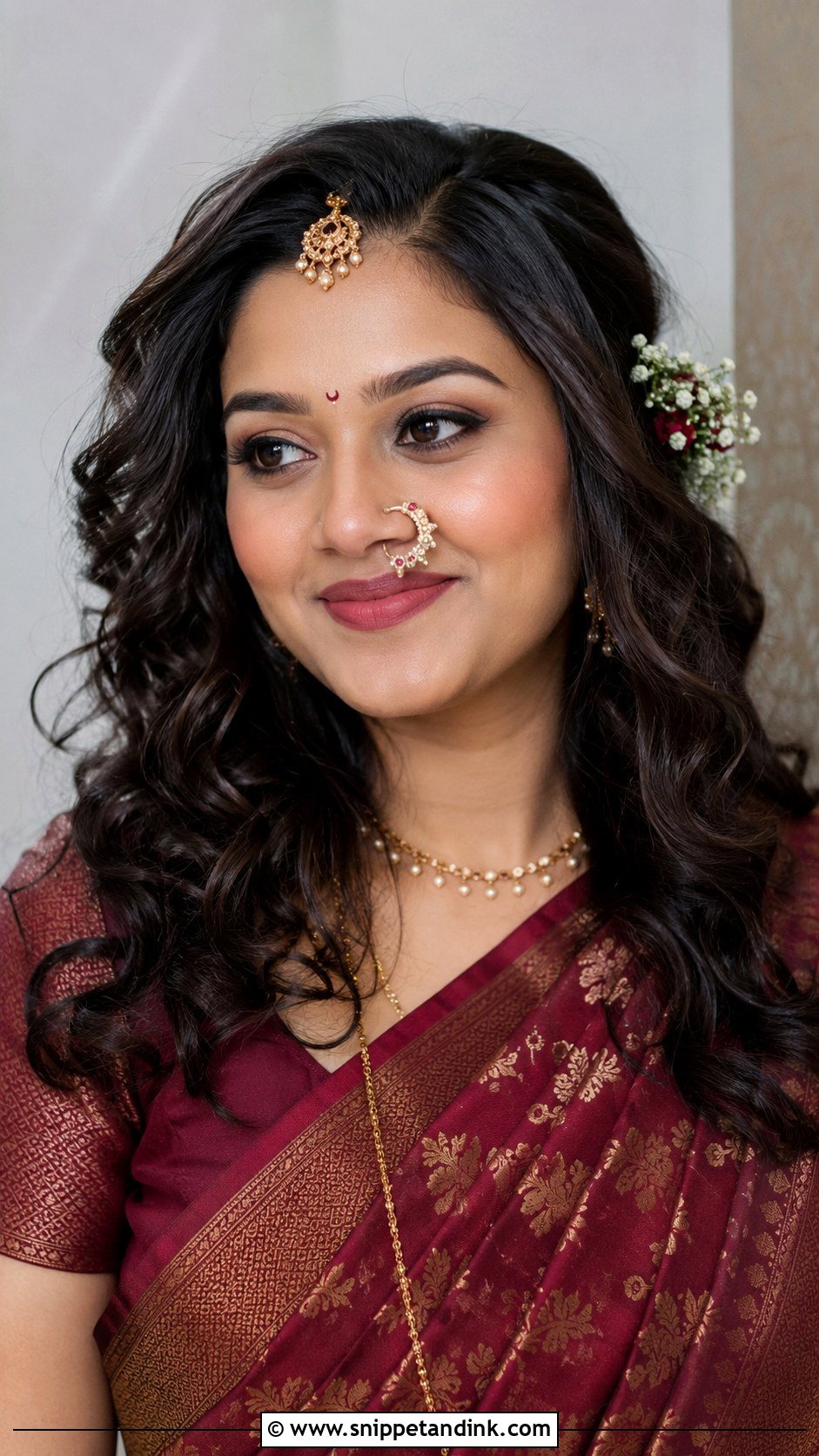
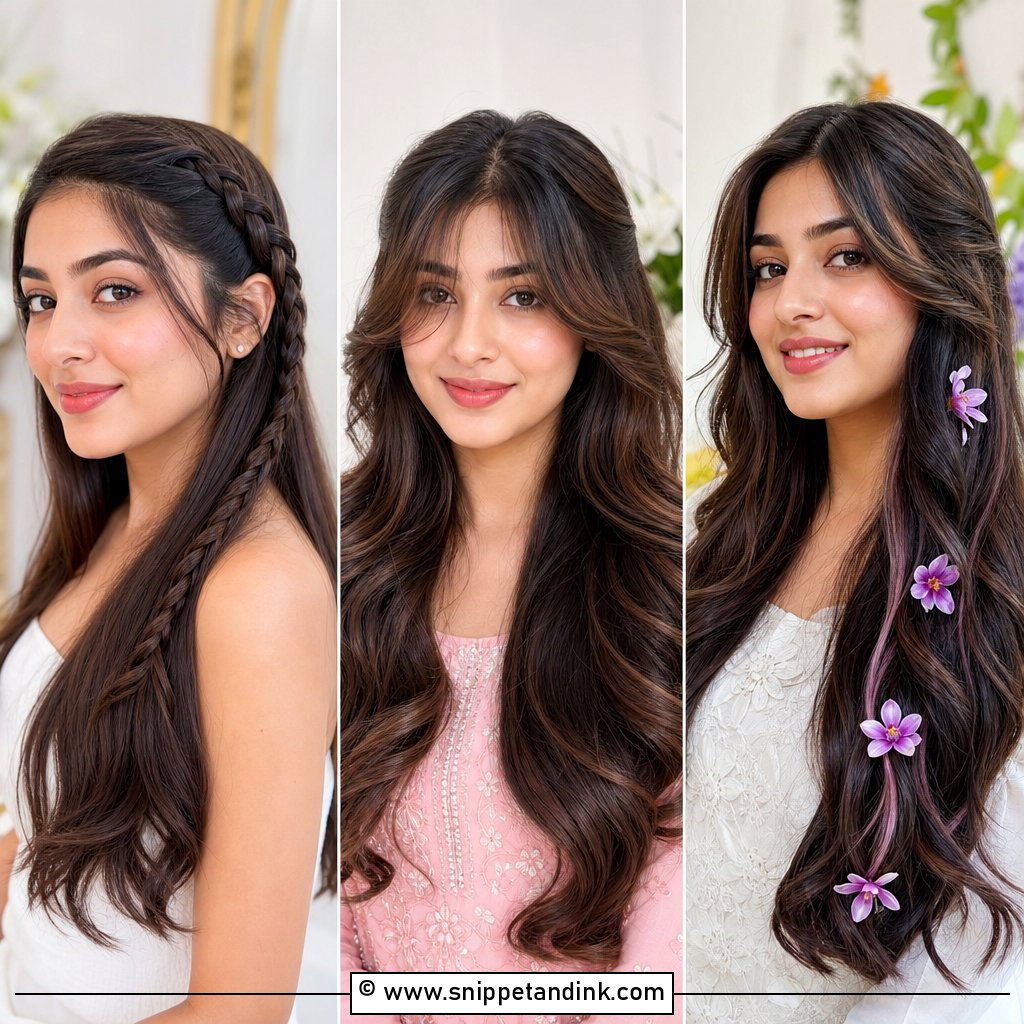
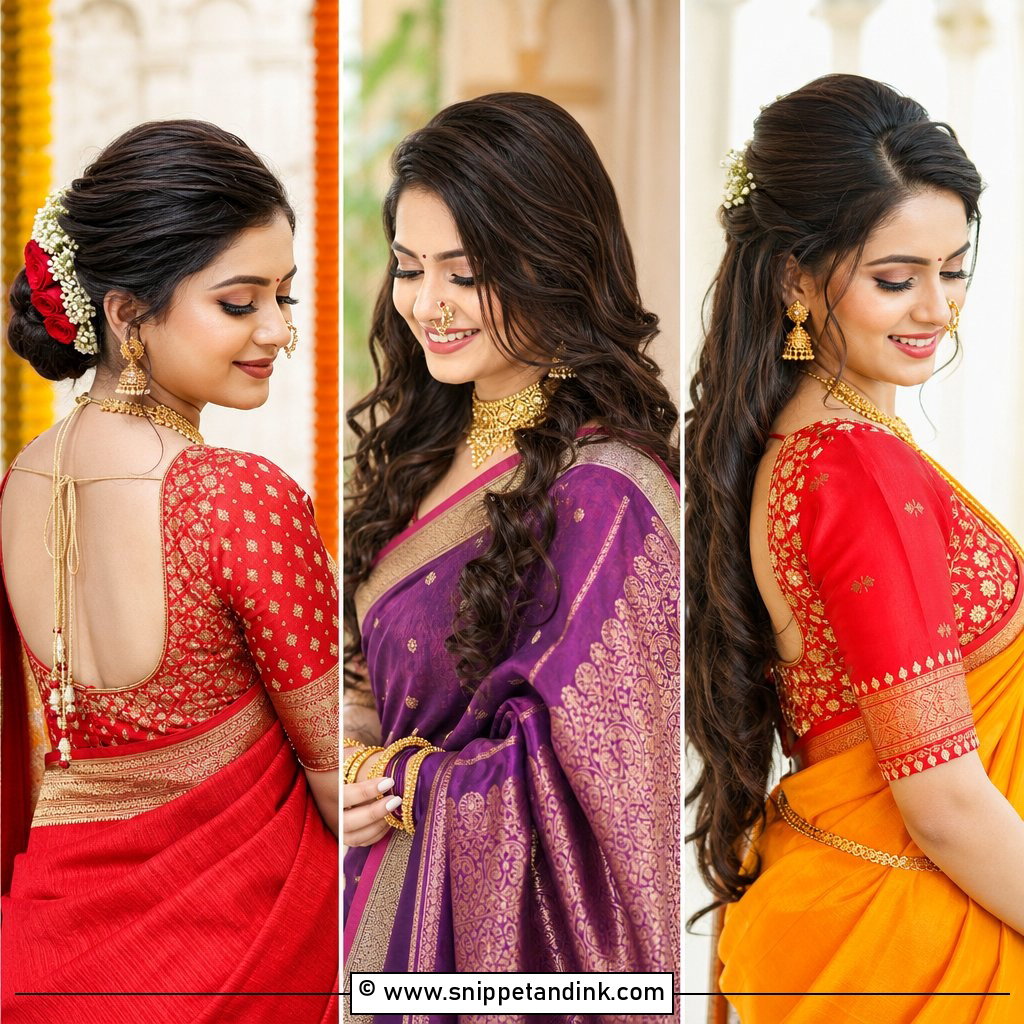
Not every Marathi bride wants an updo, and open curls suit a reception, pre-wedding shoots and smaller ceremonies. Let the waves fall over the shoulders and tuck a few flowers near one ear, with a lightweight nath and a small maang tikka. Open hair needs medium to long length and some natural volume. Here is the honest problem: Indian bridal jewelry snags in loose curls, especially the backs of heavy earrings, so I pin the hair near the ears slightly back. In humid weather, curls on straight hair can drop flat within hours, so set them with a heat-protective spray and let each curl cool completely before brushing it out.
6. Half Up Half Down Bridal Style
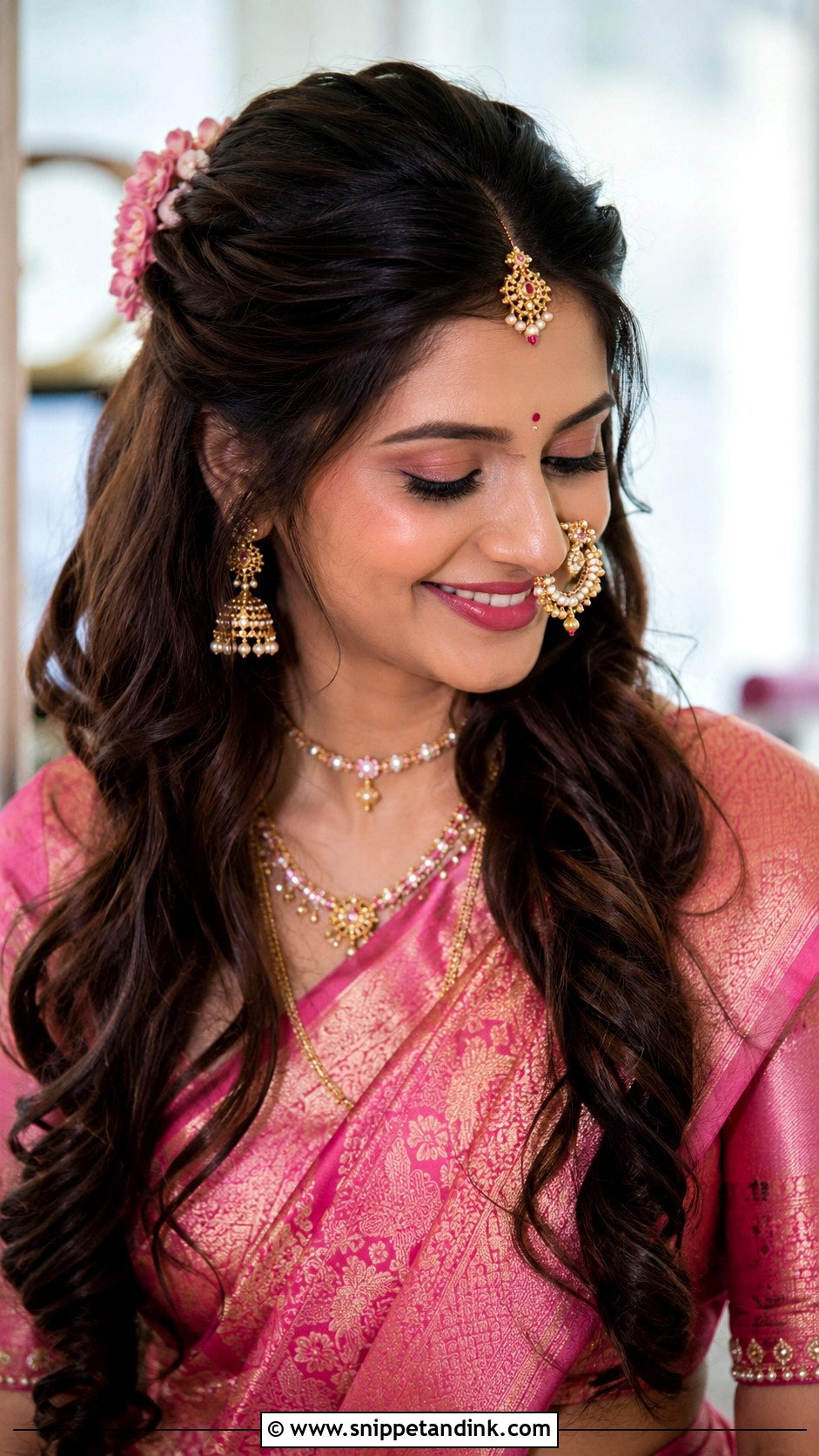
Half up, half down keeps your face framed while still showing off your length. Twist the front sections back and gather them into a small partial bun, leaving the rest in soft waves. A maang tikka and a statement nath sit easily with it, and a few flowers or a small gold pin at the twist make it bridal. It flatters most face shapes. If you’re torn between an updo and open hair, this is often the middle ground I suggest, though it doesn’t hold a heavy gajra; the partial bun is too small to carry the weight.
7. Maharashtrian Bun With Pearl Strings
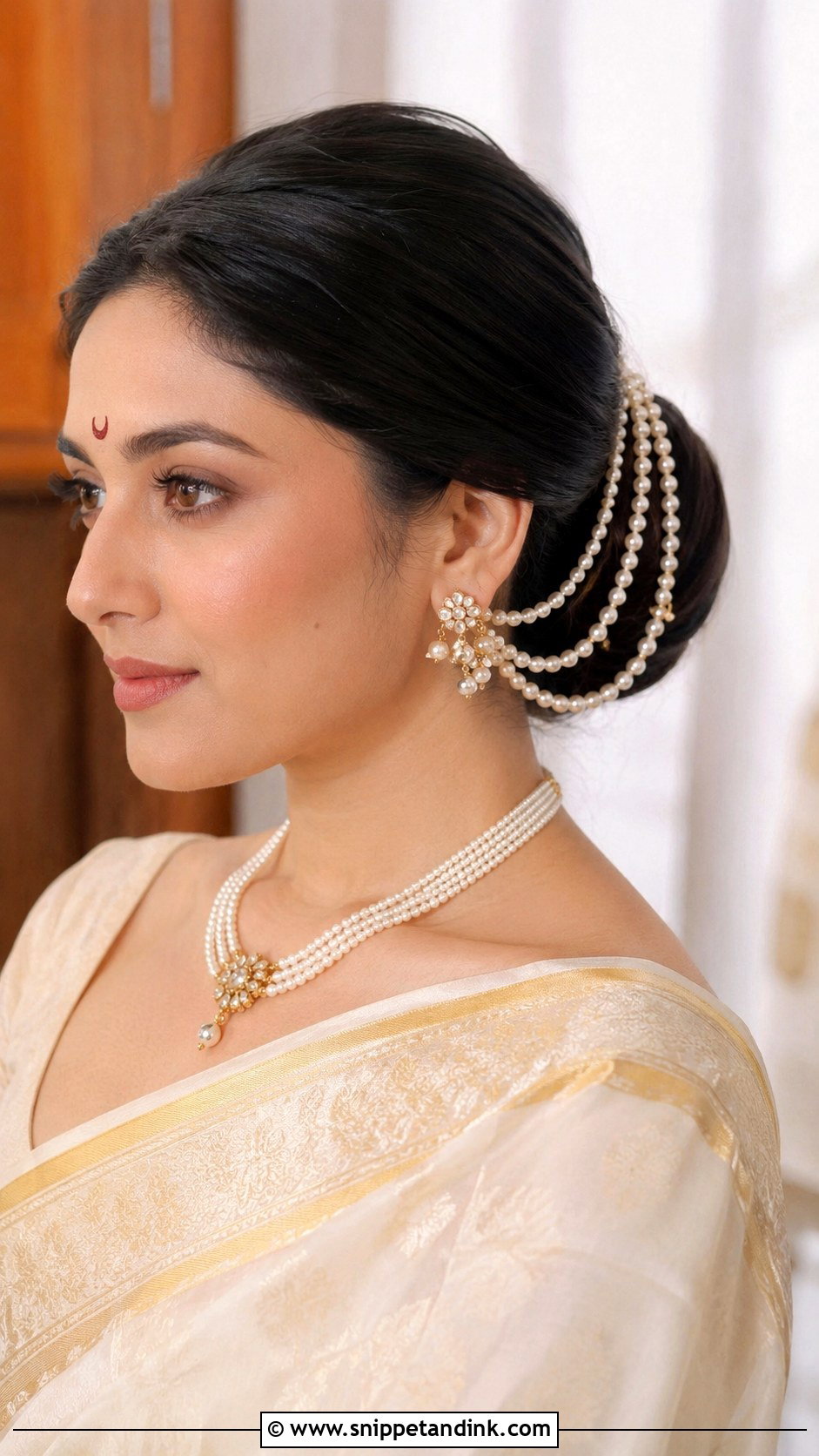
Pearl strings draped across a smooth low bun echo the basra pearls on a traditional nath, which is why they look so right together. The white glows against dark hair. Pair it with pearl-studded jewelry and a chandrakor bindi for a consistent theme. I prefer this for brides who find flower weight uncomfortable or get headaches from heavy gajras, since pearl strings weigh very little. Pin each strand at both ends and once in the middle, otherwise they shift every time you turn your head.
8. Braided Bun With Gajra
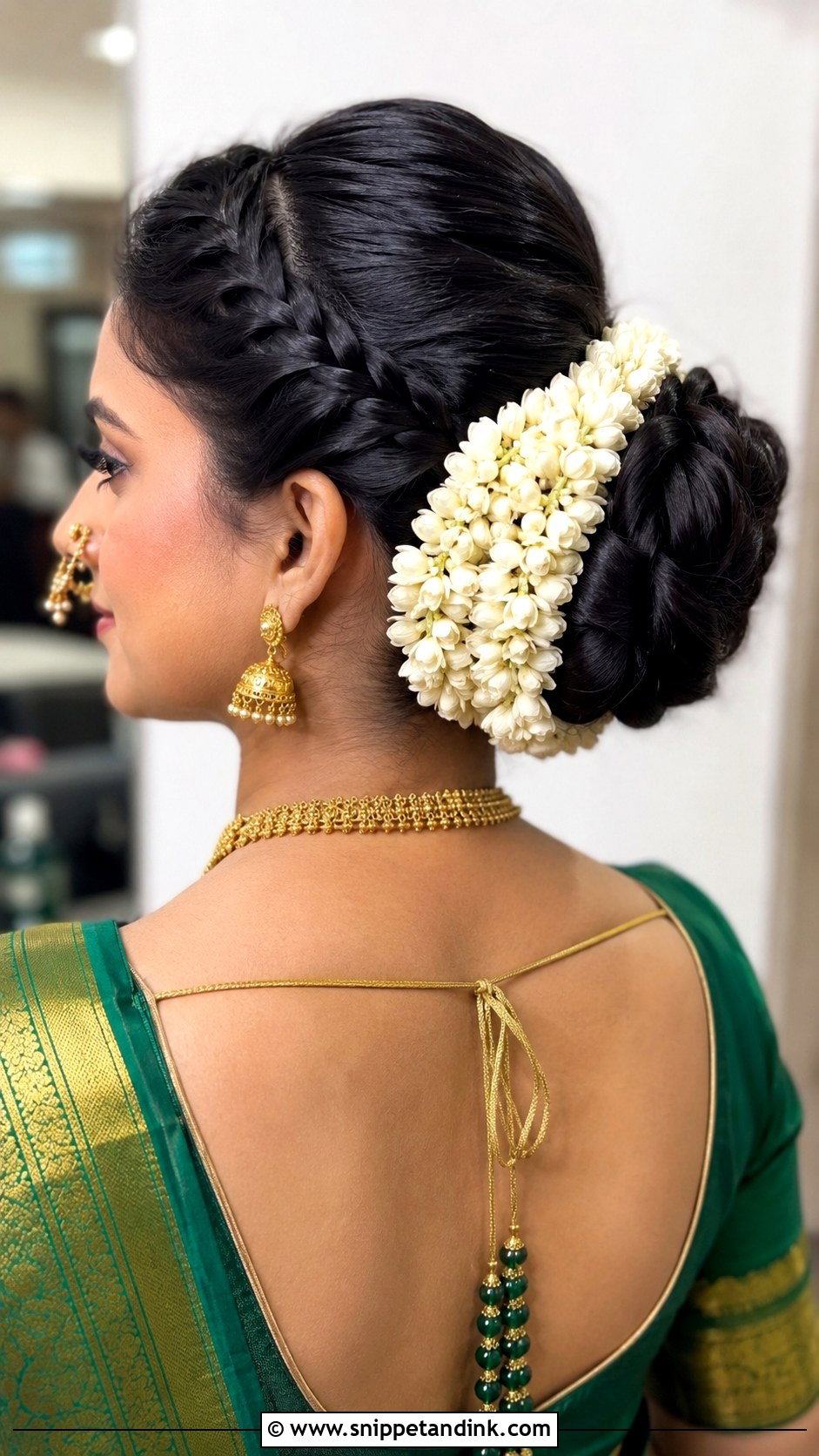
Braiding the hair before coiling it gives the bun texture and, more usefully, grip. Pins catch in a braid far better than in smooth hair, so this bun holds well through long ceremonies and dancing. Braid, coil into a round bun, pin it firmly, then wrap a generous mogra gajra around the base. It needs thick, long hair to coil into a decent size. It works with both nauvari and modern sarees, and the braided texture shows up in close-up photos where a plain bun doesn’t.
9. Low Bun With Veni Flowers
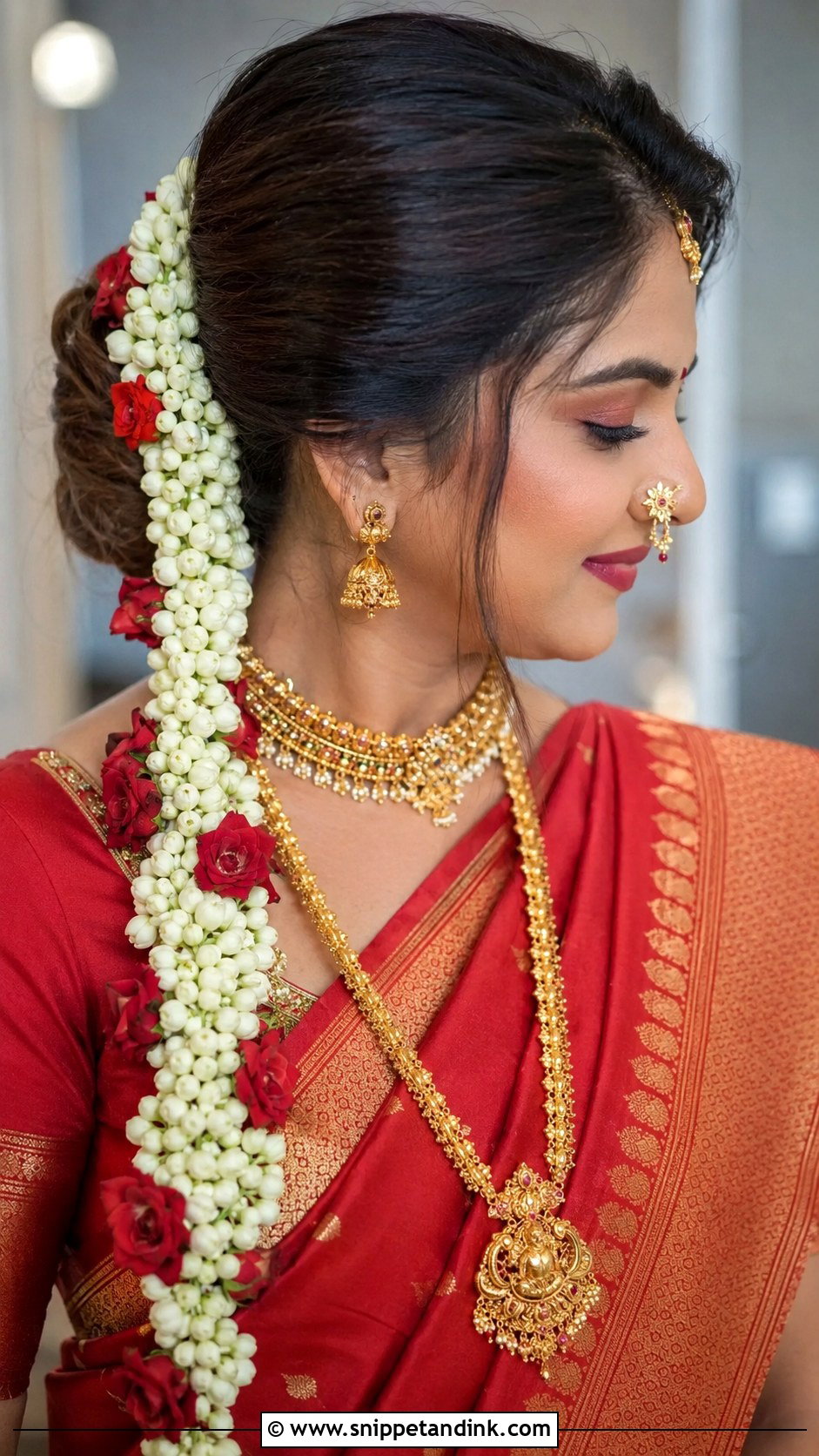
The veni, a long strand of stitched flowers, turns a plain low bun into something celebratory. Wrap it around the bun and let it trail down one side so the blossoms hang. Mogra, roses and orange marigolds all work, and many brides combine them. It sits best beside a heavy nath and gold Maharashtrian jewelry. A long veni is heavier than it looks once the flowers are stitched close, so I pin the start of it into the bun’s base, not to loose hair, and I’d warn you that a veni hanging down the back will press against your neck when you sit.
10. Bun With Mundavalya Across Forehead
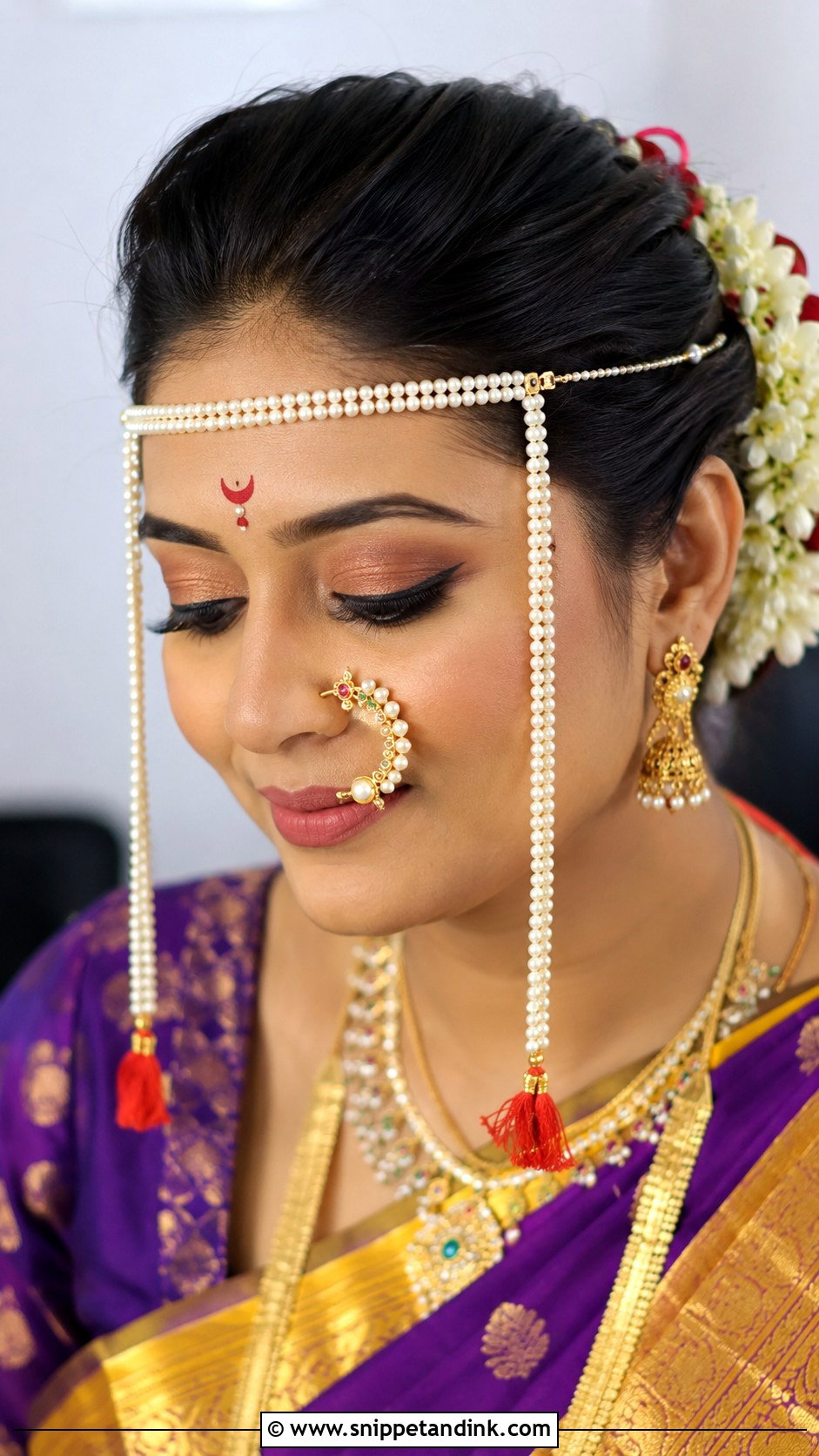
The mundavalya, the strings of pearls or flowers tied across the forehead, defines the Maharashtrian wedding ceremony. With it, I keep the bun neat and set low, because the mundavalya ties at the back of the head and needs room to sit above or around the bun without pushing it off center. Add mogra around the bun and a bold nath. The forehead strings frame the face and draw attention to the eyes, which is why it suits nearly every face shape. Fix the hairline before the mundavalya goes on; you won’t be able to touch it afterward.
11. Messy Bun For Reception
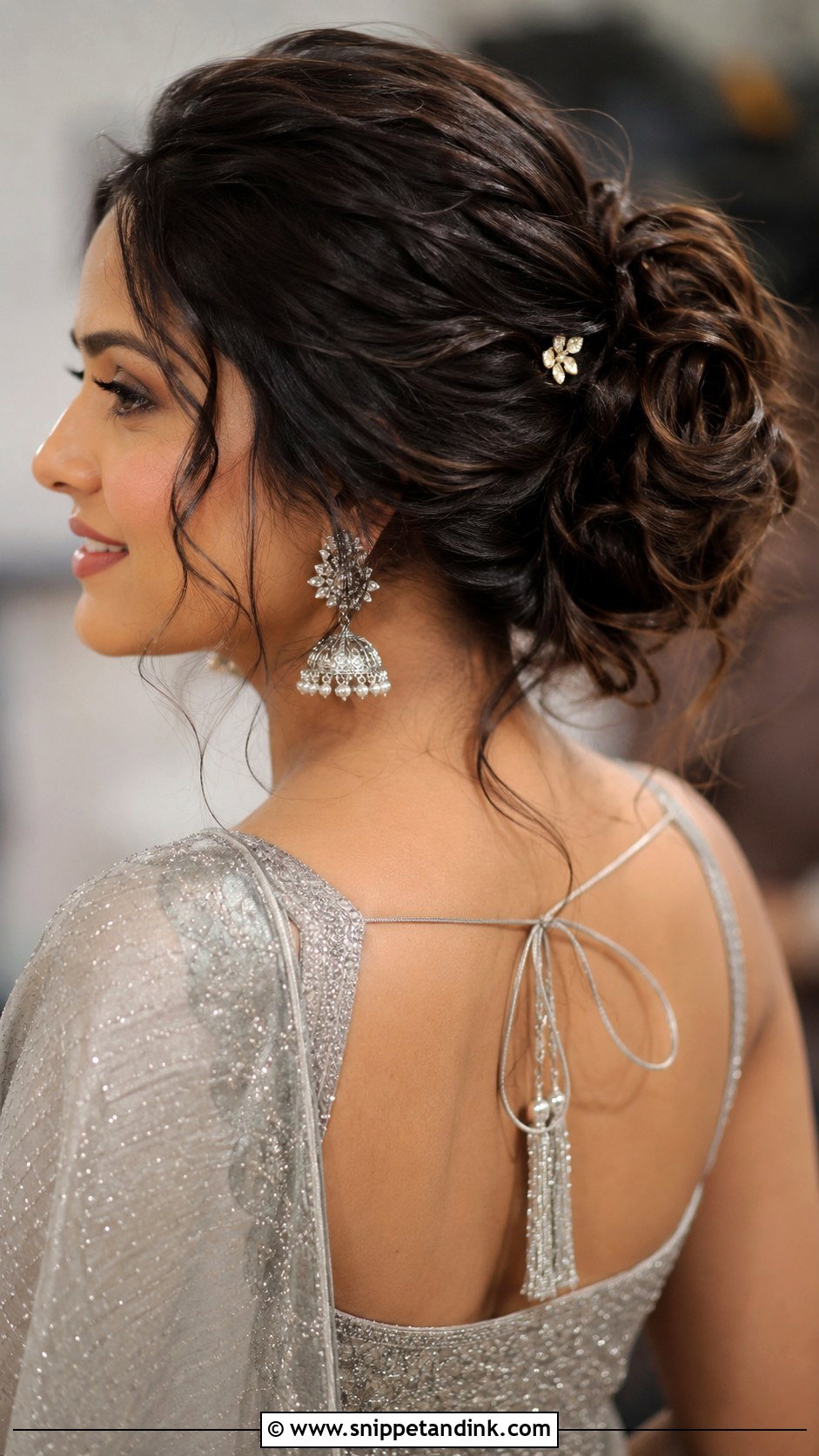
After hours of a structured ceremony bun, a textured messy bun for the reception feels like a relief. Add volume at the crown, leave a few face-framing strands loose, and swap the heavy gajra for one flower or a subtle gold pin. Shimmery sarees and statement earrings sit well with it. Messy still has to be pinned properly: I build the texture in, then lock it with pins at the base so it looks relaxed but won’t come apart during the dancing. It’s an easy second look to switch into.
12. Fishtail Braid Bridal Look
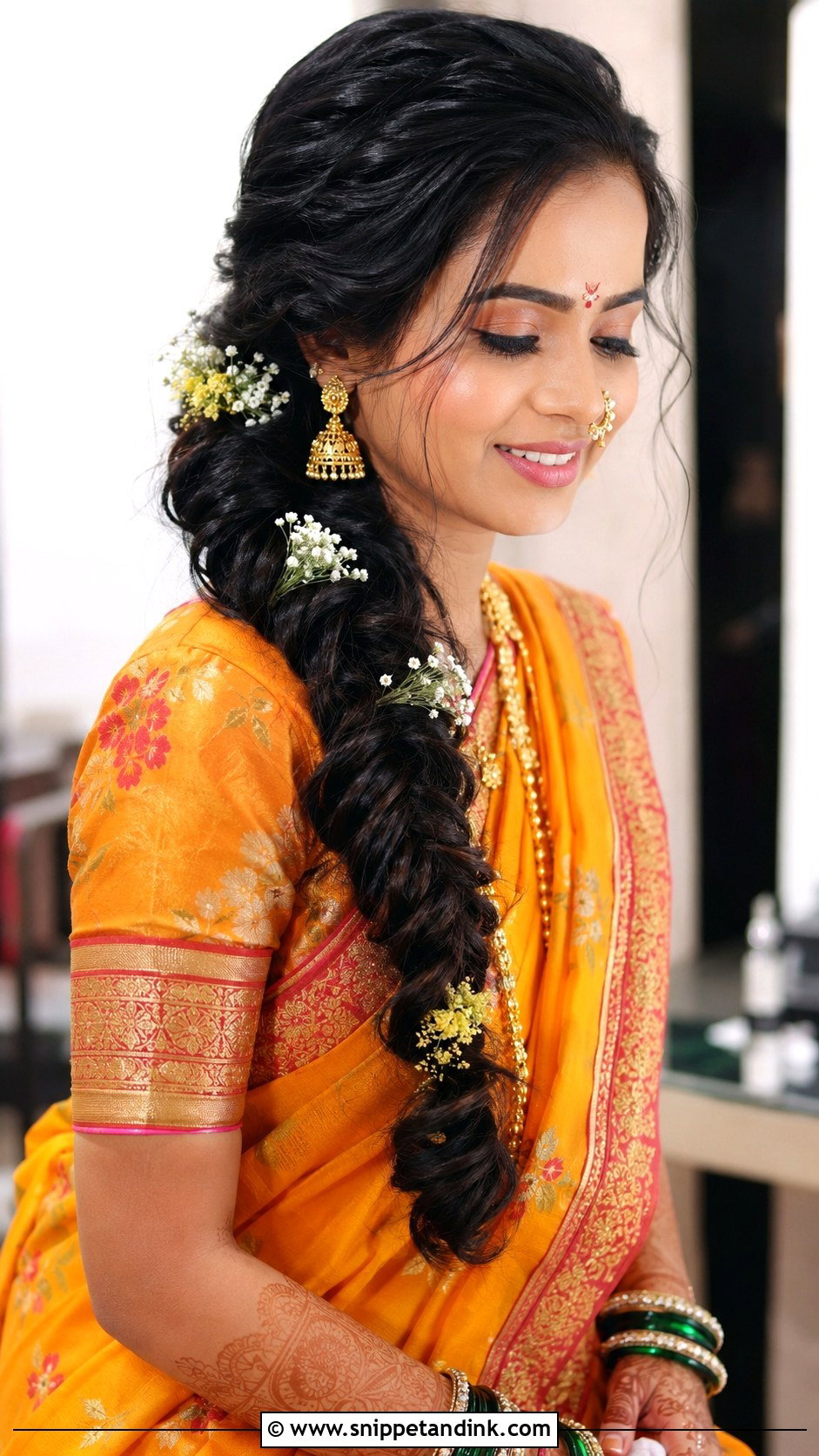
A fishtail looks intricate but sits light, since the weight is spread along the length rather than gathered into one bun. Sweep the hair to one side, plait a fine fishtail, then pull the edges gently for fullness. Small flowers tuck neatly into the gaps between sections. It needs long hair; layered cuts let short pieces poke out along the braid, and those need a smoothing balm. It suits elongated faces and sits with jhumkas and a delicate nath. Good for haldi or pre-wedding events, and with heavier flowers it can work for the main ceremony.
13. Bun With Maang Tikka And Nath
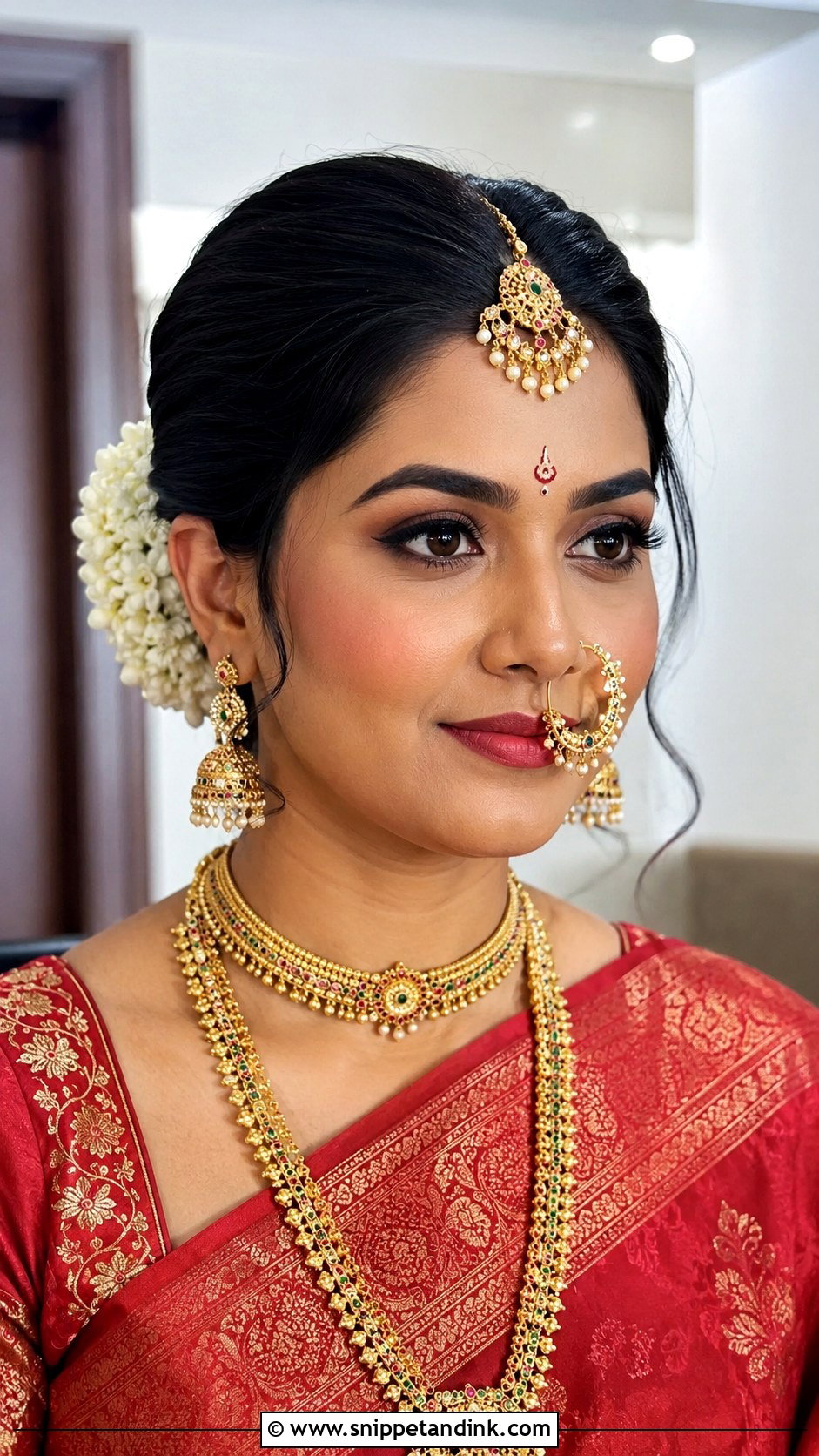
When the jewelry is the point, the hair should step back. A clean, simple bun lets a striking maang tikka and the Maharashtrian nath carry the look, with only a few mogra flowers for softness. A maang tikka needs a secure anchor at the parting: I clip its chain to a small hidden section of hair rather than relying on its hook, so it doesn’t slide sideways. Keep the hair sleek and the bun firm. This one suits most face shapes and works well for the wedding ceremony.
14. Twisted Bun With Roses
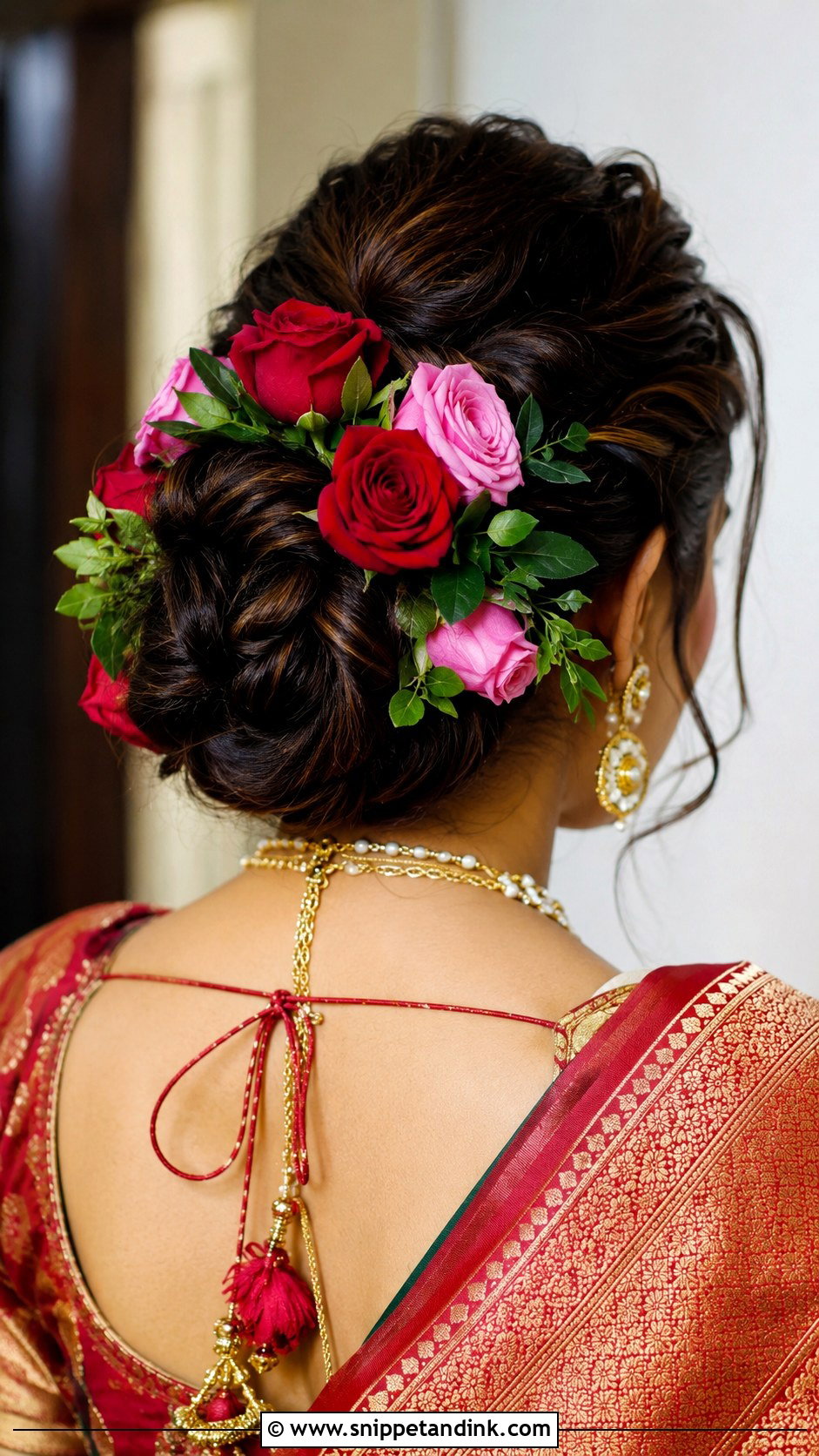
Roses bring color that mogra doesn’t. Roll sections of hair into twists and pin them into a bun, then decorate it with fresh red or pink roses, with a few green leaves tucked between them. The twisted texture gives more dimension than a flat bun. Roses suit red and gold sarees and floral jewelry. Choose small, tight buds rather than open blooms; open roses bruise and drop petals onto your blouse within a few hours, especially in heat.
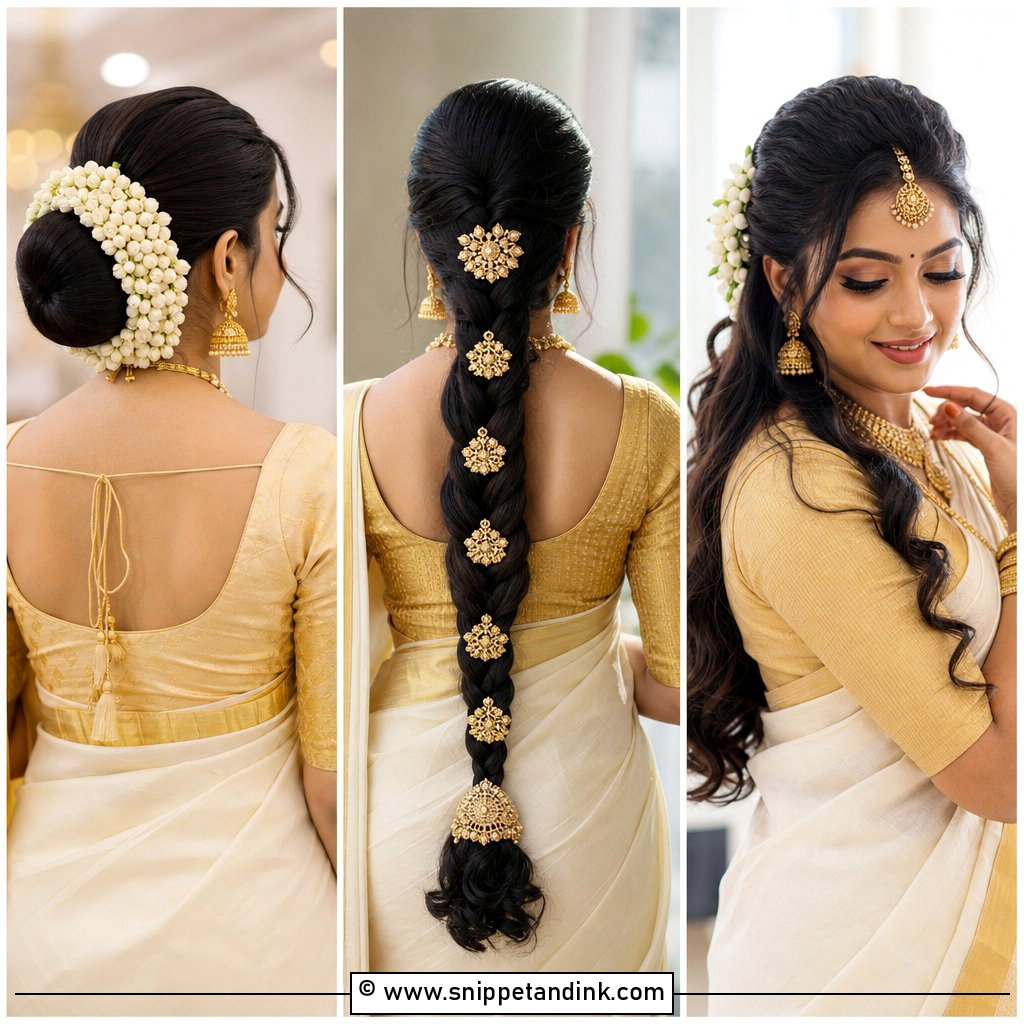
15. Sleek Bun With Net Jaali
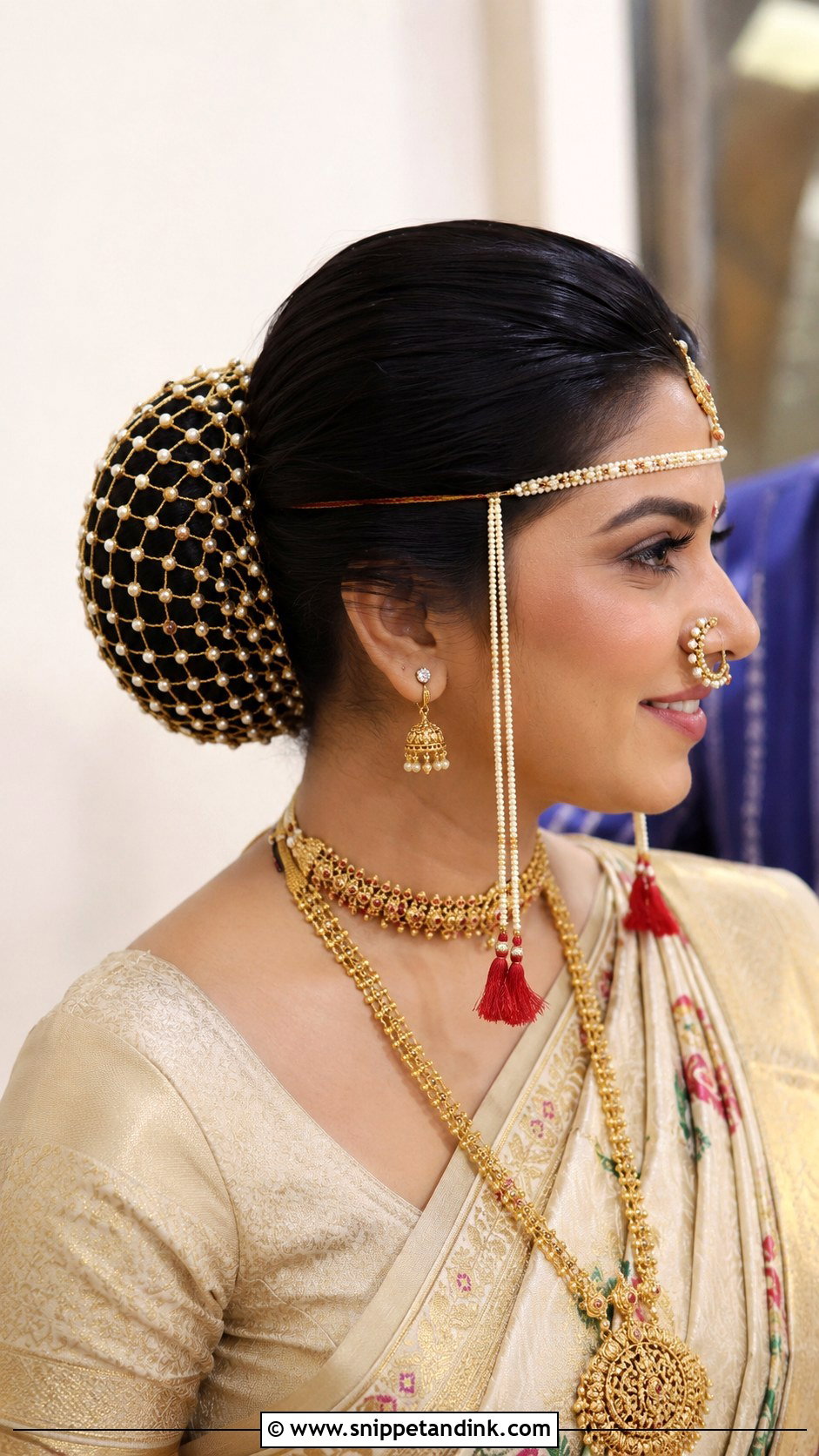
A golden net jaali stretched over a sleek low bun is one of the tidiest finishes I know. The mesh, with fine pearl or bead detailing, keeps every strand in place and gives the bun a polished surface. It balances the nath, mundavalya and temple jewelry without adding weight. It’s also my go-to for brides with finer hair, because the jaali adds visual fullness and hides a bun filler underneath. Pin it at four points around the edge so it doesn’t ride up.
16. Braid With Marigold Flowers
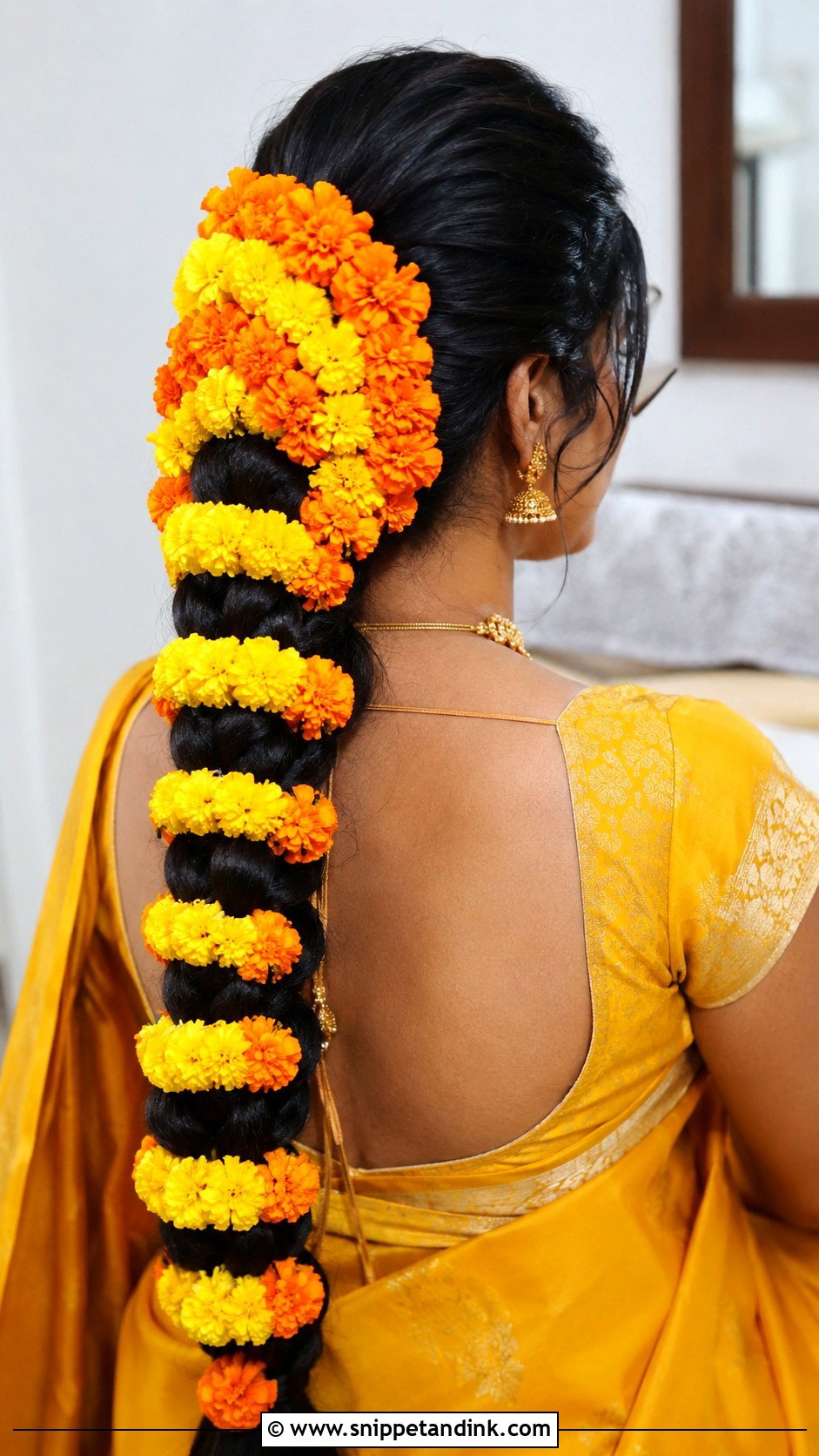
Marigolds are bright, cheerful and right for haldi and pre-wedding functions. Plait a thick, full braid and decorate it with rows of orange and yellow marigolds. It sits well with yellow, green or orange sarees, and the colors photograph vividly. Marigolds are associated with celebration and prosperity, which suits the occasion. Two practical things: marigolds are sturdier than mogra and last longer, but haldi paste stains, so if the braid is close to where turmeric will be applied, pin it up and away from the shoulders.
17. Curly Bun With Loose Strands
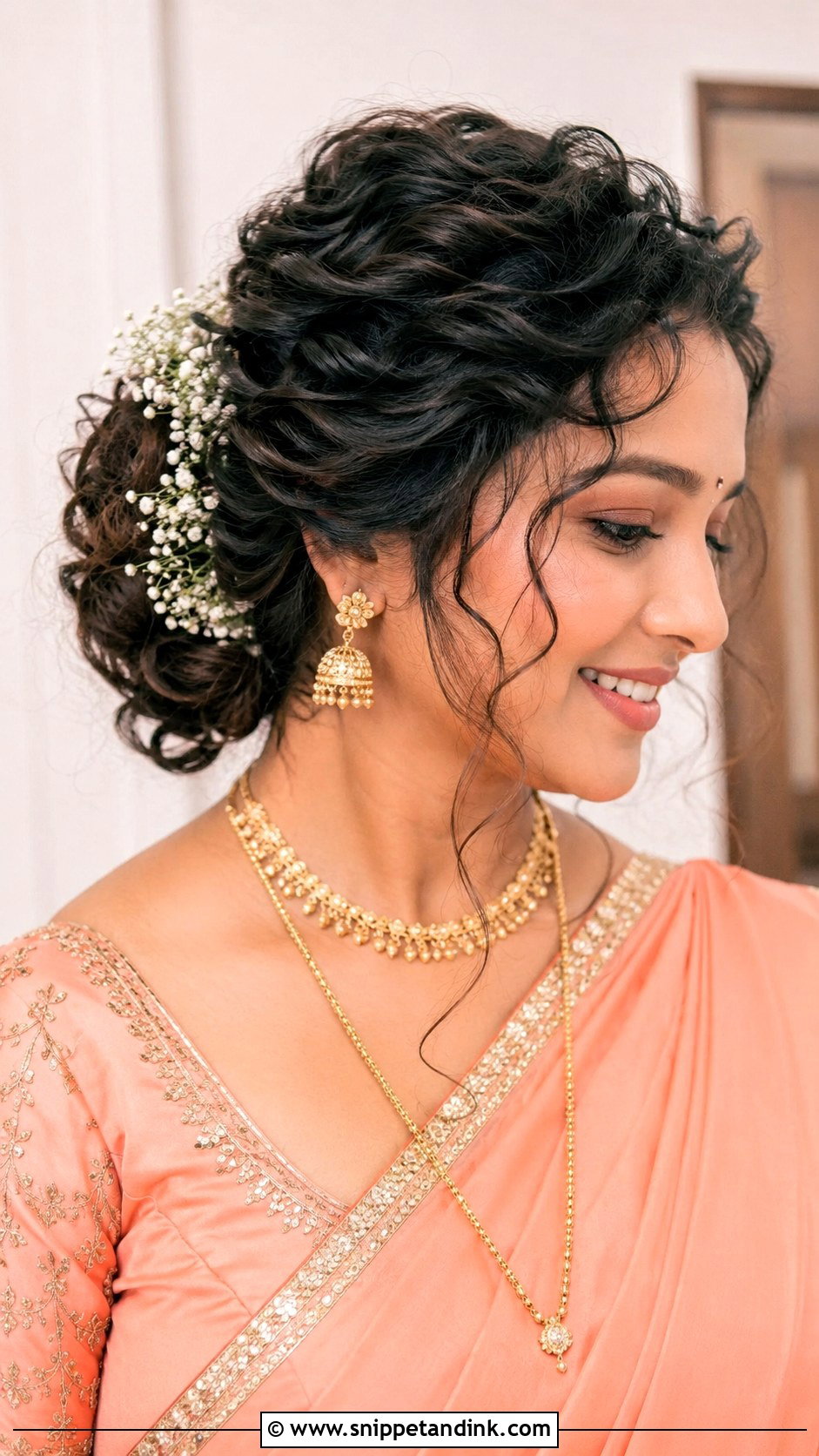
A curly bun works with naturally wavy or curly hair instead of fighting it. Gather the curls into a loose bun at the nape and let a few spirals fall around the face. Small flowers or a dainty gold pin is enough decoration, alongside lightweight sarees and delicate jewelry. It softens rounder faces. The mistake is brushing natural curls before pinning; it turns them into frizz. I shape them with fingers and a curl cream, then pin. It works well for an engagement or a reception.
18. Double Braid With Flowers
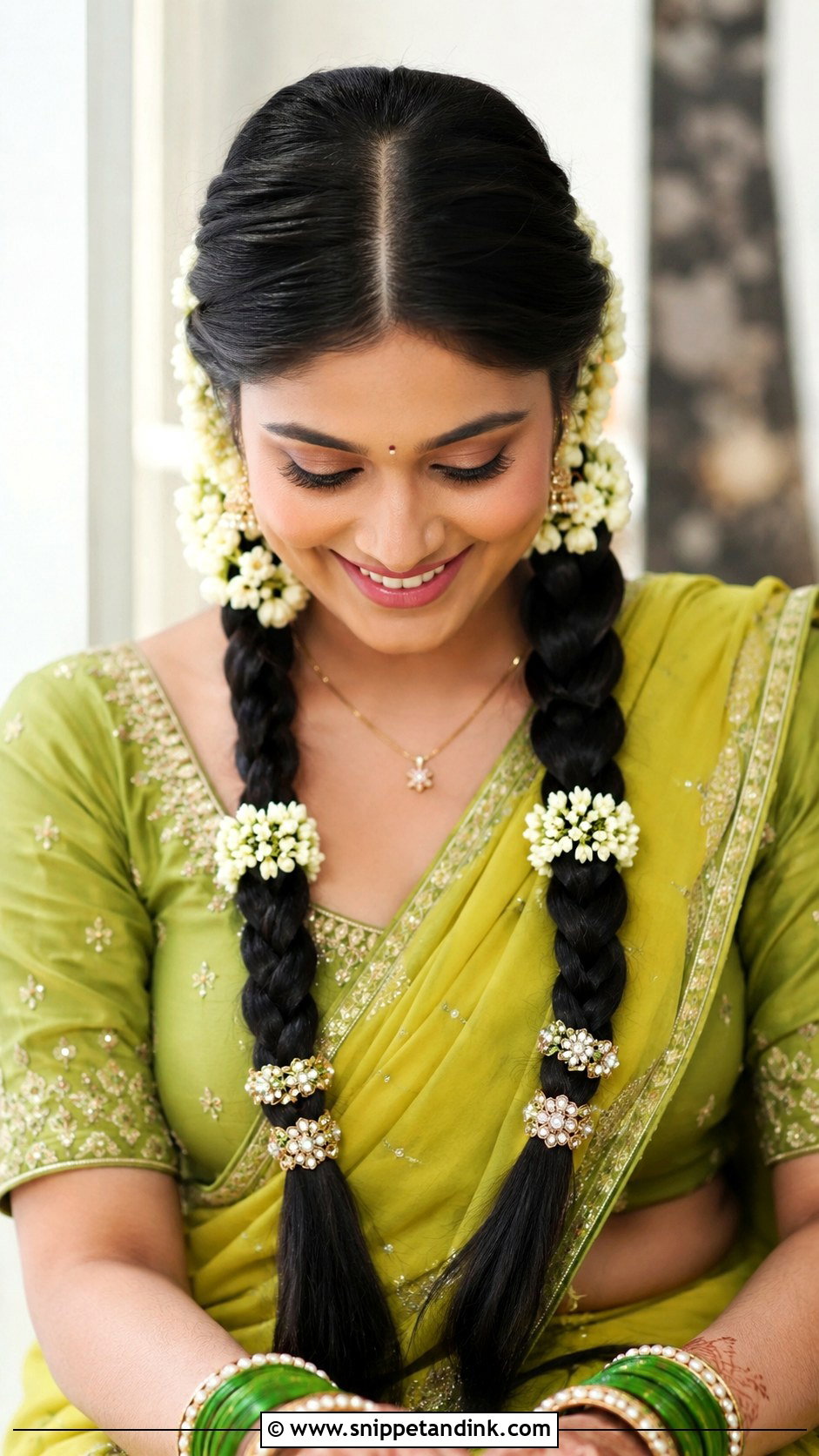
Two braids, parted down the center and decorated with small flowers, feel youthful and are very easy to carry through a long day. Symmetry is everything here, so the part has to be dead straight and both braids pulled to the same tension, or one ends up looking thinner in photos. Tiny mogra buds or colorful blooms finish them. They suit haldi outfits, pre-wedding shoots and brides who want something playful. I wouldn’t choose them for the main ceremony unless you really want a younger feel.
19. Bun With Pearl And Gold Maximalist Look
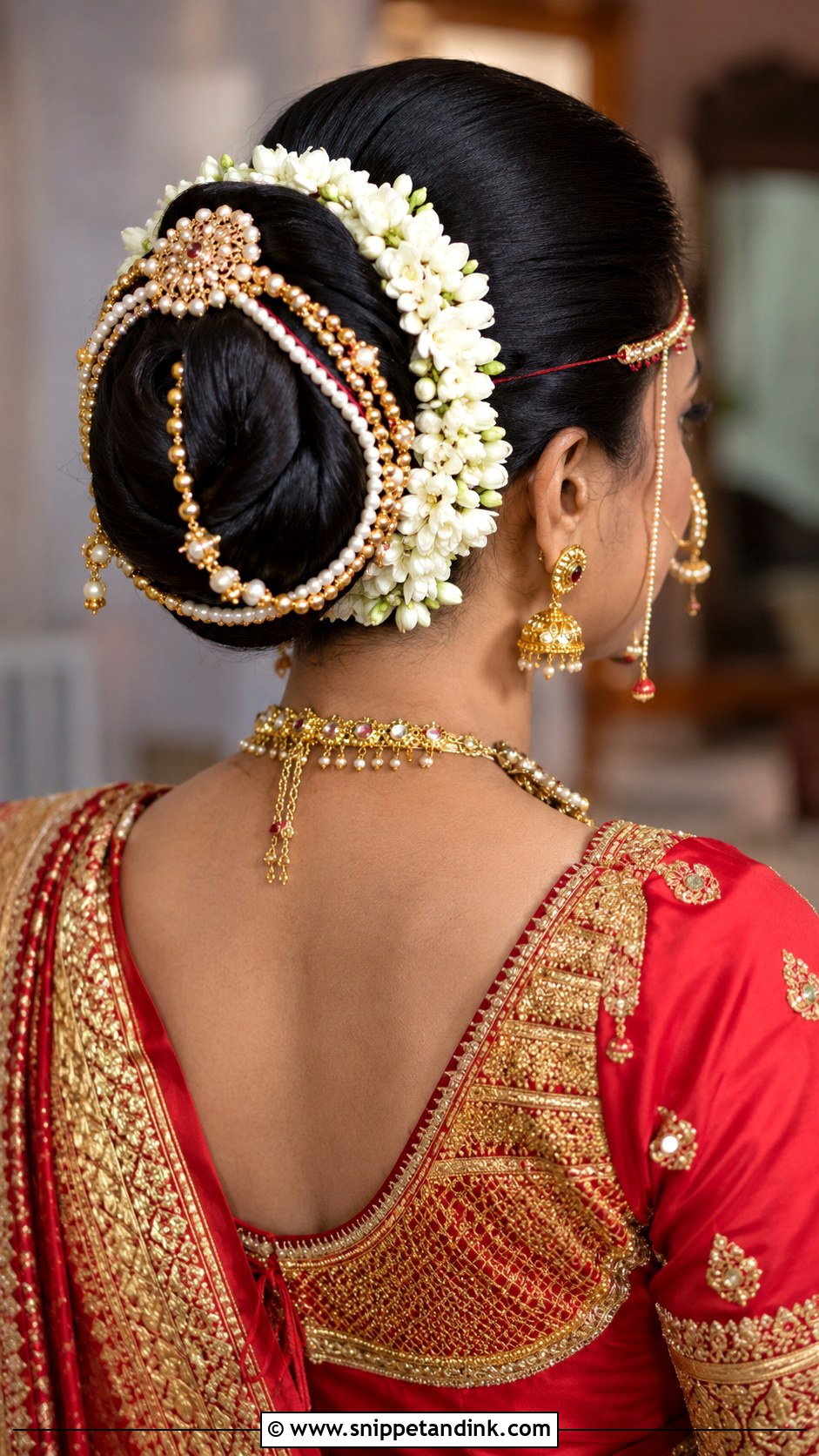
The maximalist bun layers pearls, gold chains, an Ambada pin and fresh flowers into a single crown. Build a large, sculpted bun first, usually over a filler, then add the pearl strings, gold beads, the pin and mogra. Wear it with heavy temple jewelry, the nath and mundavalya. It’s best kept for the main ceremony, where it shows the full splendor of Maharashtrian bridal tradition. Be warned: this can weigh enough to give you a headache by evening. I distribute the weight with extra pins at the top of the bun, and I’d plan a lighter look for the reception.

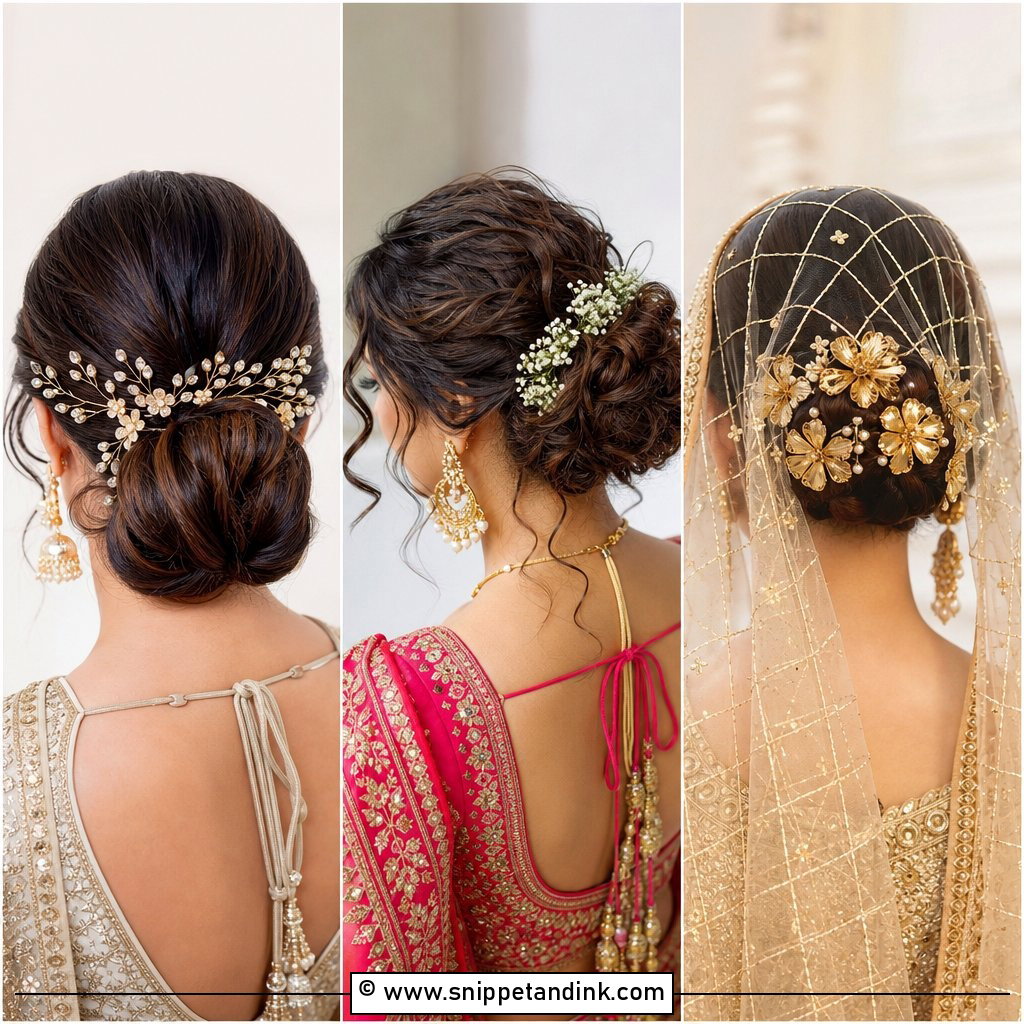

20. Soft Waves With Maang Tikka
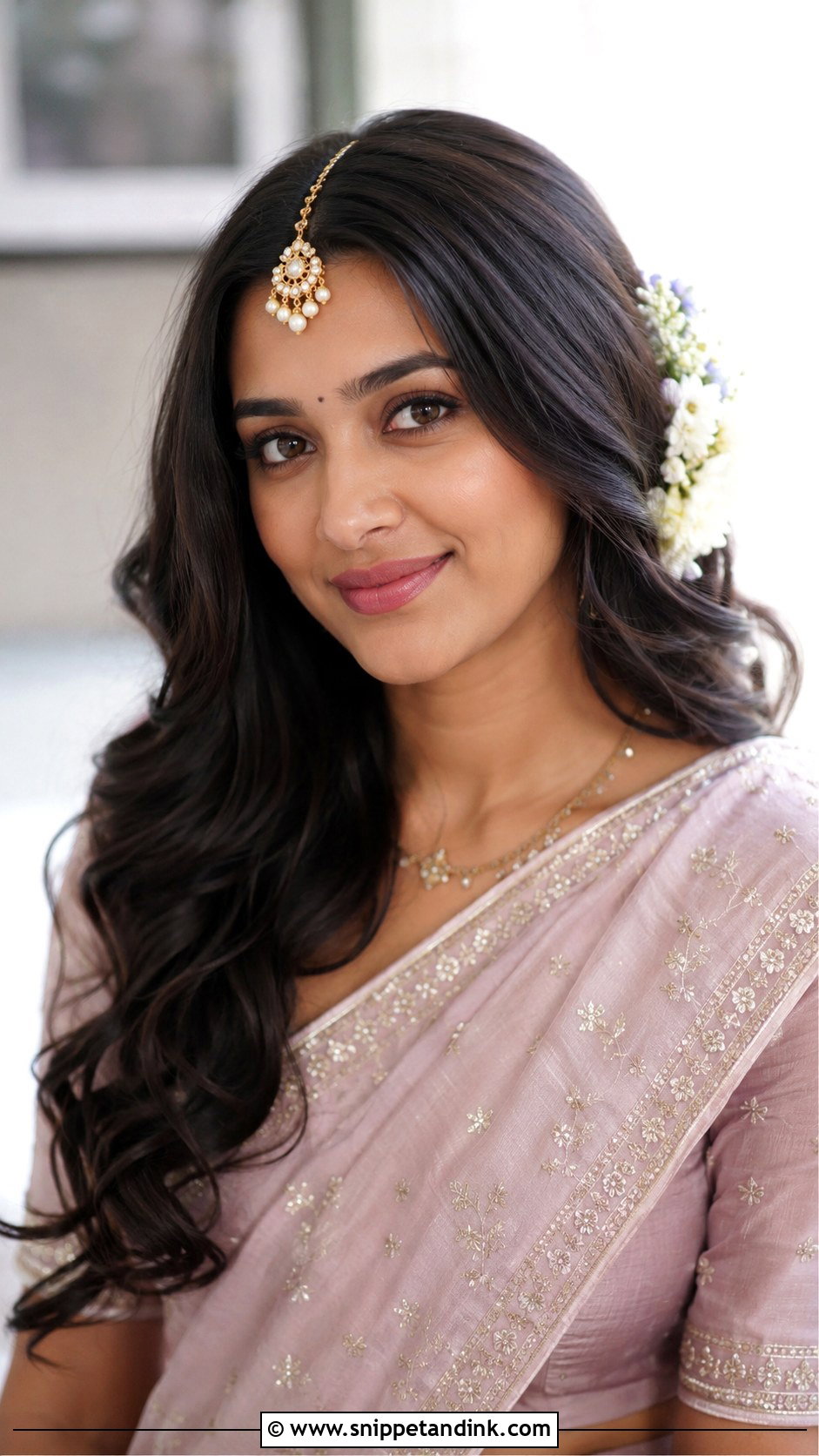
Open waves with a center-parted maang tikka make a soft, modern bridal look without a structured bun. Let the hair fall in loose waves and add a small flower behind one ear for a traditional touch. Lighter sarees and minimal jewelry suit it, and so do receptions and engagement parties. It works on medium to long hair. I’d hold off on this for the main ceremony if your jewelry is heavy or there’s a lot of sitting and leaning back, because waves flatten where they’re pressed.
21. Bun With Layered Flower Garland
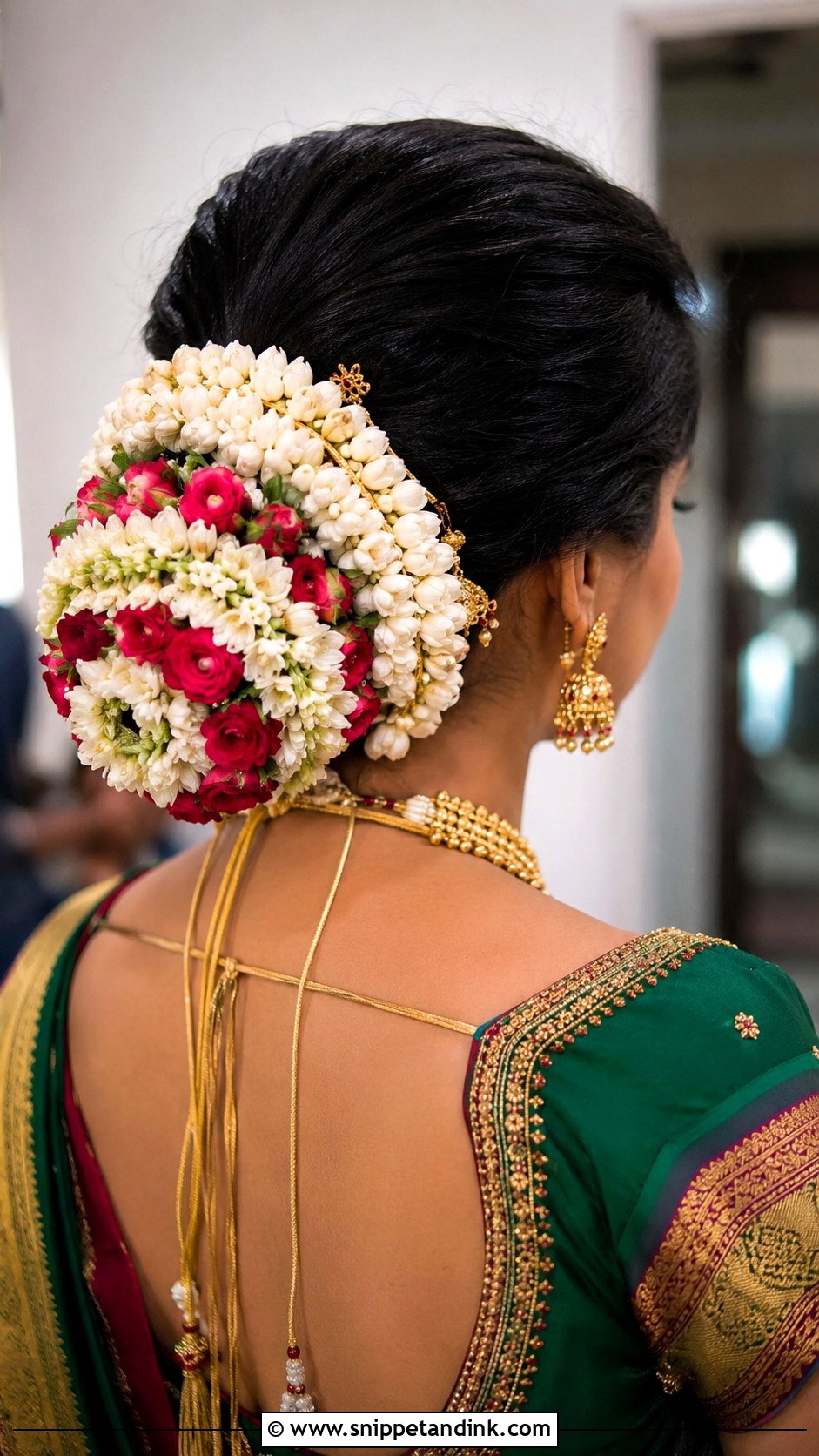
Stacking several rings of mogra and small roses around a bun gives full, fragrant volume. Build up the layers, wrapping each one slightly above the last. It suits traditional nauvari sarees and gold jewelry, and it’s a flower-lover’s look. Weight is the issue: several gajras add up quickly, so I use a firm base and more pins than you’d think, crossing them in X shapes through the bun. It feels festive and deeply traditional.
22. Vintage Roll Bun
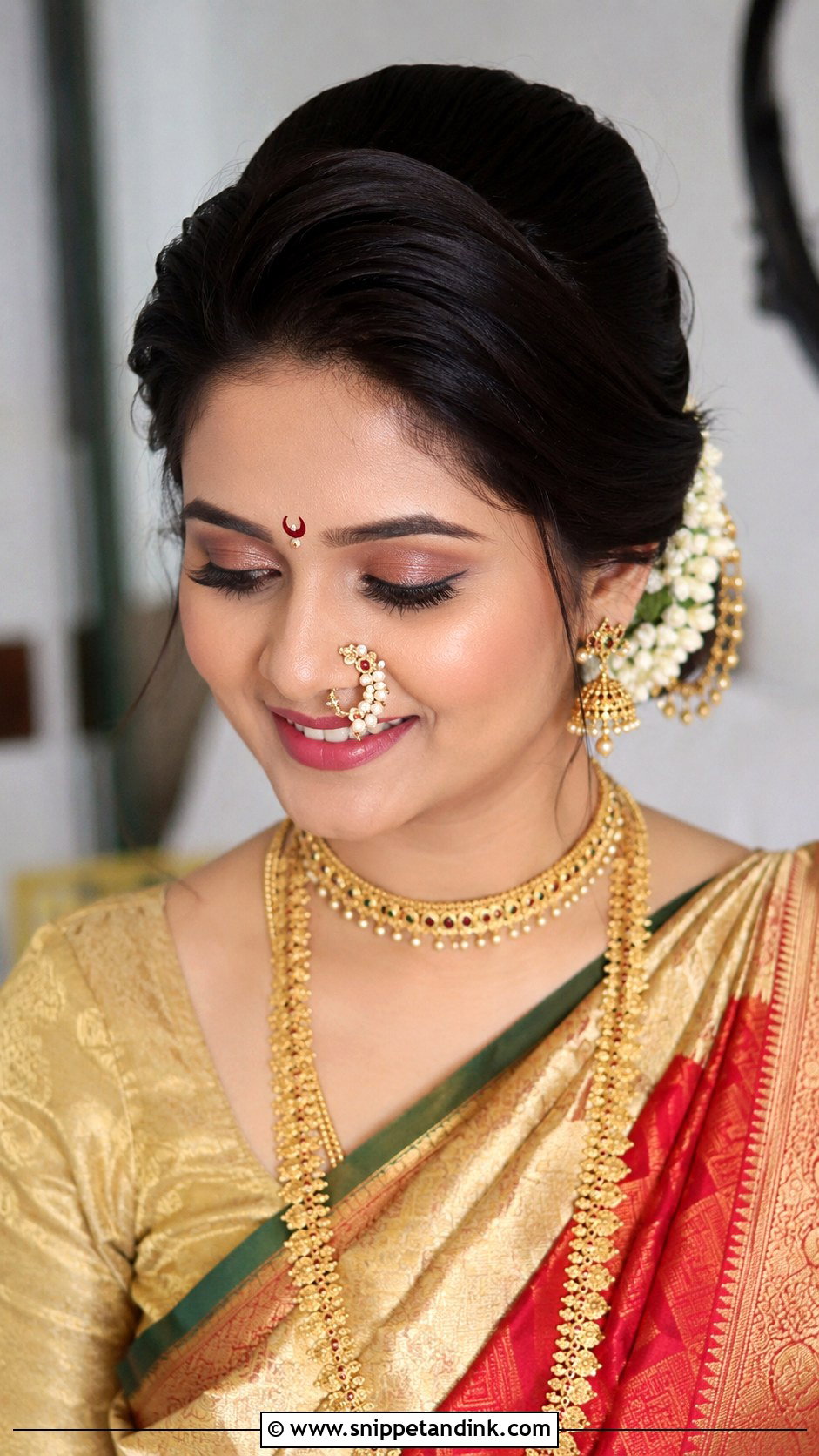
A vintage roll bun borrows from old Marathi cinema glamour. Roll the front sections back for gentle height, then gather everything into a structured low bun. Decorate with pearls or a classic gold pin and a touch of mogra, and wear it with silk sarees and traditional jewelry. The roll adds height, which lengthens rounder faces but can overpower a long face. I set the roll on a small padding so it keeps its shape all day. Finish with the nath and chandrakor bindi for the full vintage effect.
23. Braided Crown With Flowers
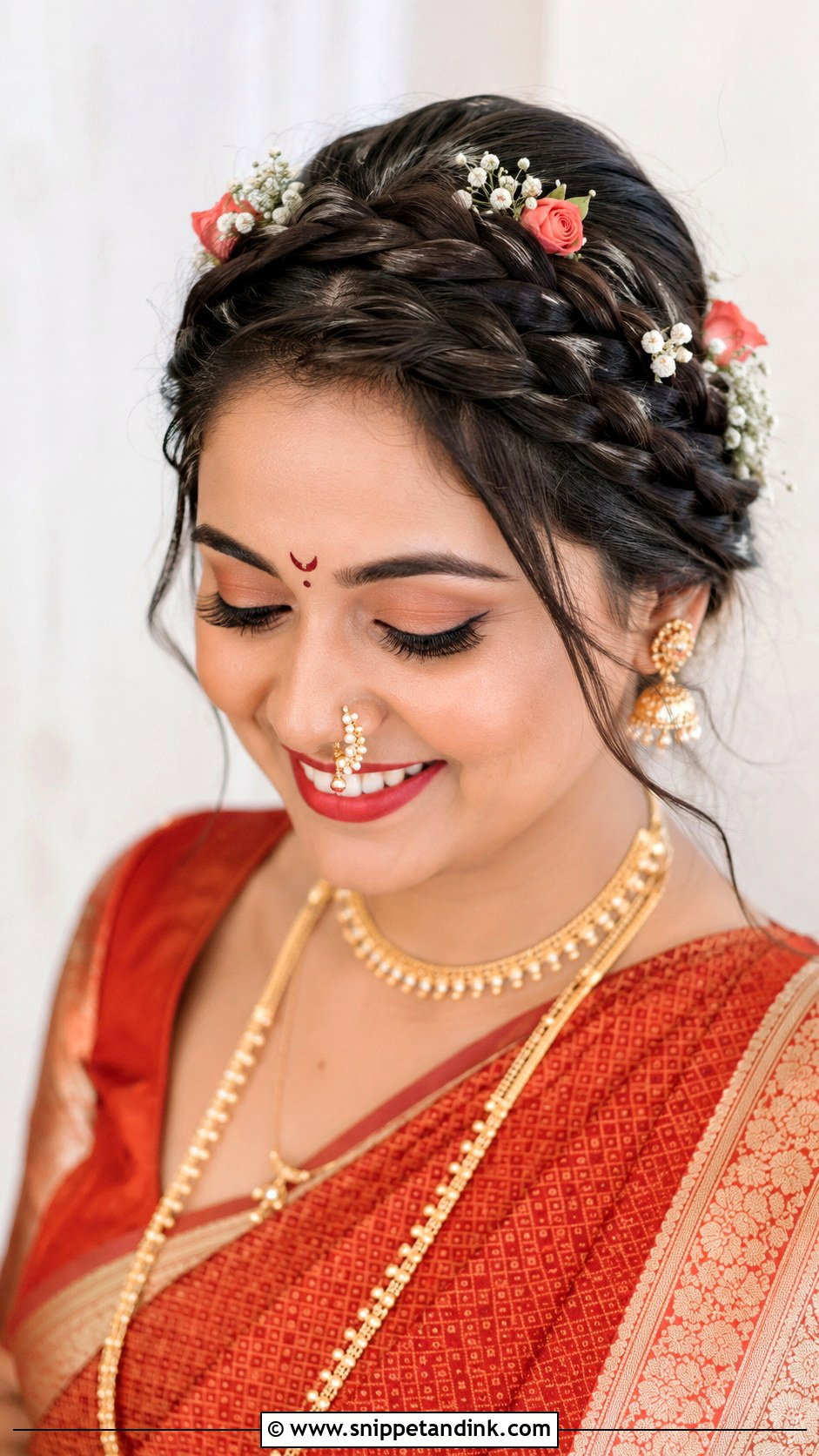
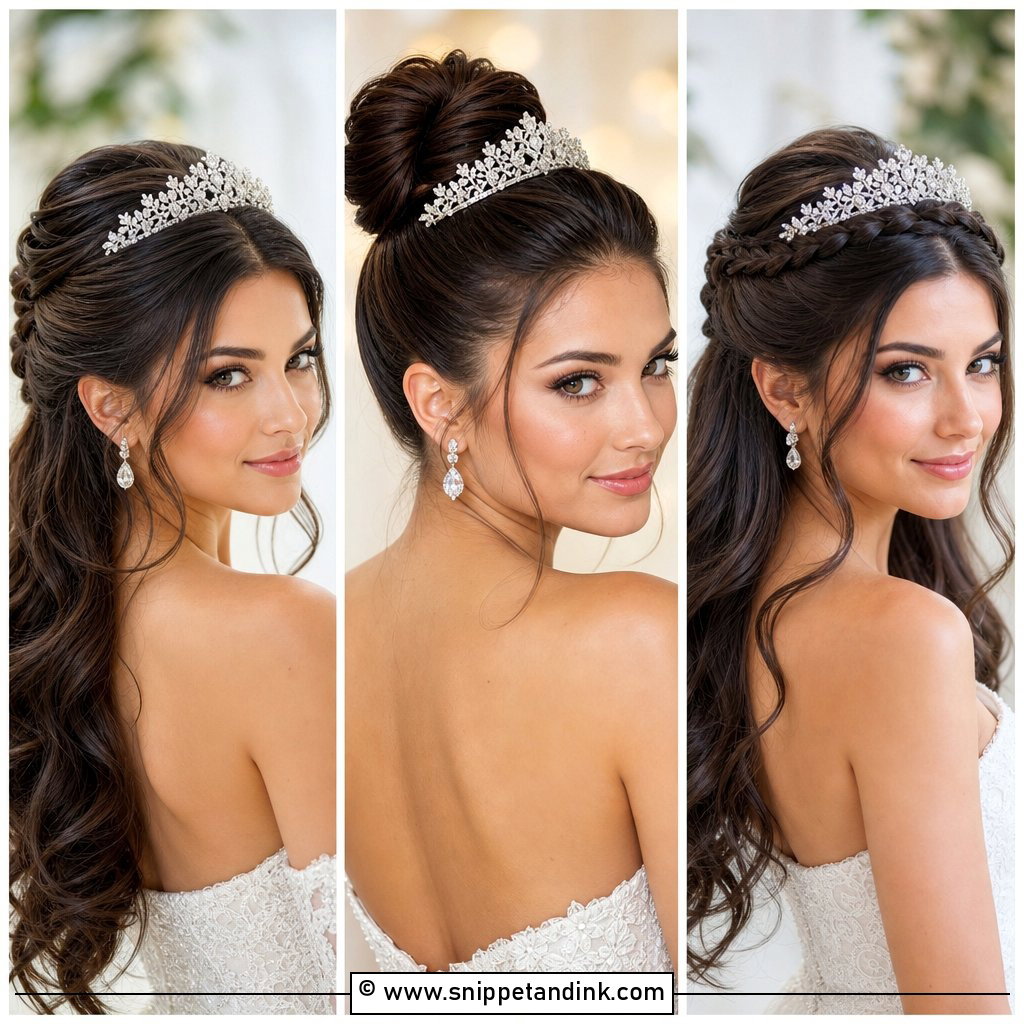
A braided crown keeps every strand off the neck, which matters in a hot wedding hall. Braid sections of hair and pin them across the crown like a halo, then tuck small flowers along the braid. It suits traditional and contemporary sarees. It looks like a natural floral tiara, but it clashes with the mundavalya, which also sits across the head, so I’d save it for events where you’re not wearing one. Mogra or tiny roses keep it soft.
24. Low Knotted Bun For Minimalist Bride
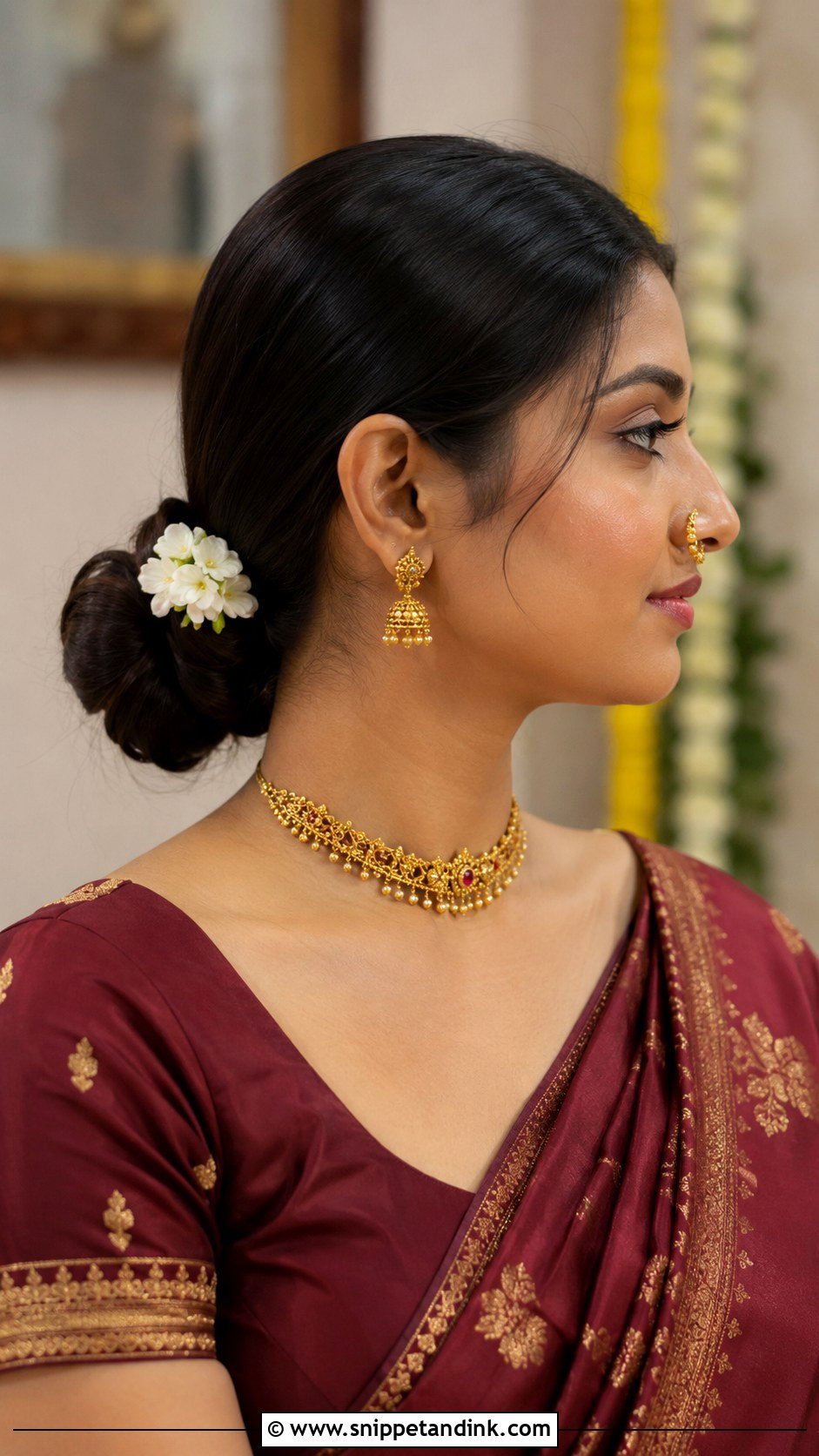
A low knotted bun is the minimalist’s choice: sleek, understated, and it gives the jewelry and saree the spotlight. Smooth the hair back and twist it into a clean knot at the nape, adding a single flower or a small gold pin. It sits well with a nath and delicate temple jewelry. A knot only looks clean if the hair is properly smoothed first, so I use a light serum and a fine-tooth comb before twisting. It stays put without much effort and flatters all face shapes. Proof that simple can work as well as ornate.
25. Bun With Jasmine And Bird Cage Veil
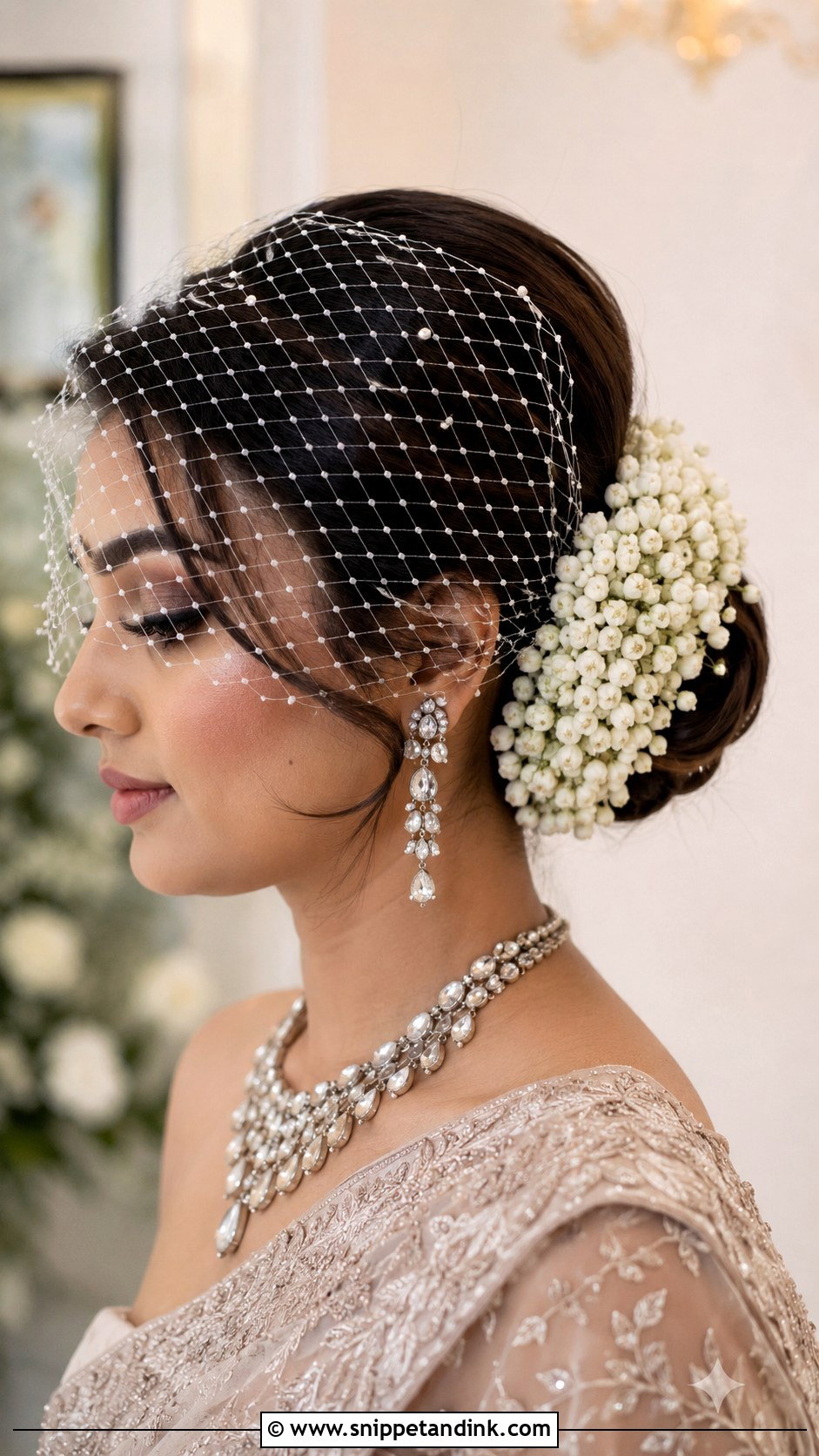
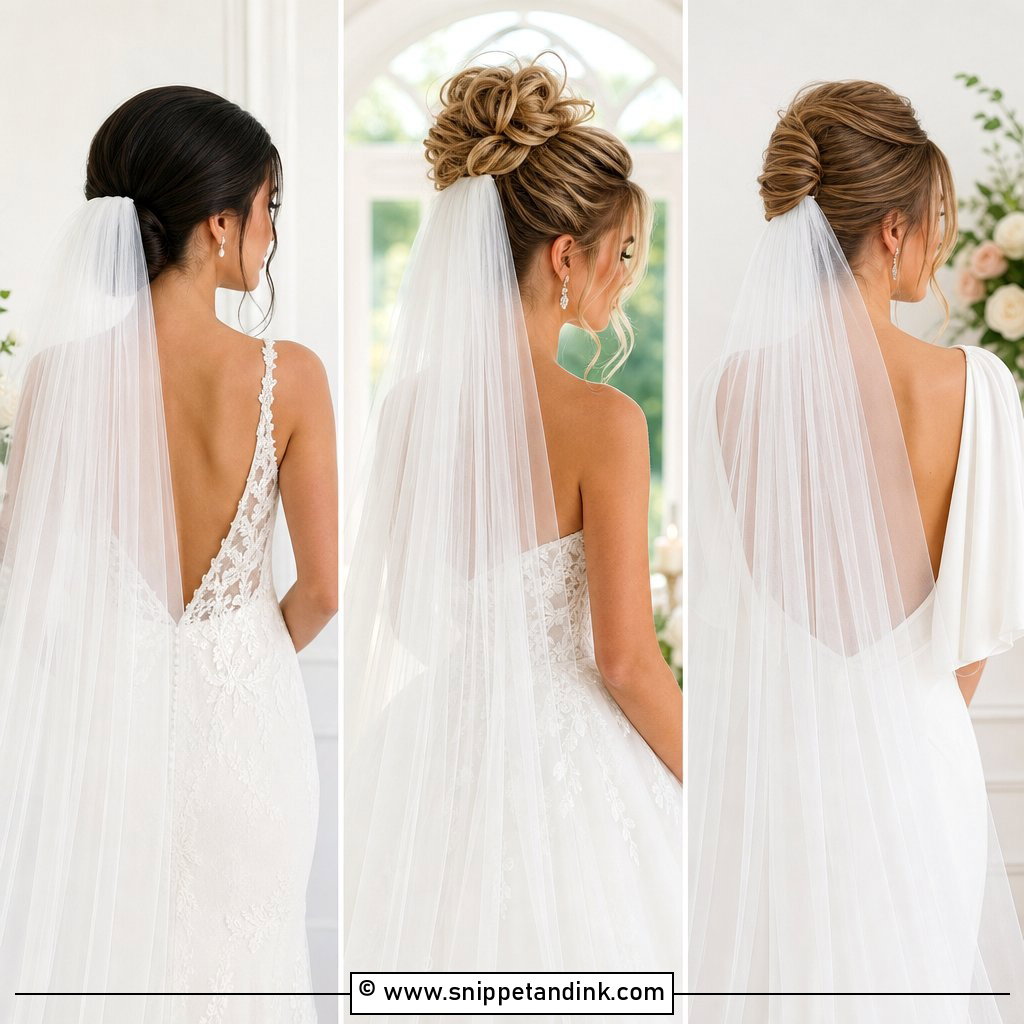
A jasmine-wrapped bun with a short birdcage veil is a fusion look that turns a reception editorial. Style a neat low bun wrapped in fresh jasmine and pin the netted veil at an angle just above it. The veil brings a fashion-forward touch while the jasmine keeps it rooted in heritage, and it suits reception sarees and statement jewelry. The veil comb needs to grip hair, not flowers, so I set its pins into the hair before the gajra goes on. Check how it sits with your earrings; a long veil edge can catch on jhumkas.
Real Mogra on a Wedding Morning, and How to Keep It Fresh
Fresh mogra is part of what makes these hairstyles Maharashtrian, but it’s also a living thing that starts wilting the moment it’s strung. A few habits make the difference between a gajra that still smells of jasmine at the pheras and one that’s brown at the edges by lunch.
- Order buds, not open flowers. Mogra opens through the day, so tight buds look fuller and fresher in the afternoon photos.
- Collect the gajra the evening before or early in the morning. Wrap it in a damp cotton cloth and keep it somewhere cool until it’s pinned.
- Pin the flowers last, after all spraying is done. Hairspray turns jasmine petals brown.
- Keep a spare gajra in a damp cloth for the reception or for any gaps that open up after hours of movement.
Mogra is a summer flower, and outside its season it’s harder to find and may be pricier and less full. If your wedding falls in the cooler months, ask your florist early, or consider a mix with other white blooms. Good artificial gajras exist too; they cost you the scent, but they don’t wilt.
One more thing to expect: during the mangalashtak, guests shower akshata, the colored rice, over the couple. It lands in the hair and in the gajra. Have someone shake it out gently before the photos, and don’t panic about grains in a tight bun; they come out with a wide comb that evening.
Which Bun Will Carry You From Mangalashtak to Reception?
Marathi tradition gives you so much to work with that the hardest part is deciding. A classic Ambada with mogra, a side braid, or open waves with a maang tikka can all be right; what matters is how long you’ll wear the look, how much weight you’re comfortable carrying, and what your hair length can honestly support. Mix tradition with your own taste, then pair the style with the nath and chandrakor bindi for the complete Maharashtrian look. Bring your top three to your trial, and let your stylist tell you which one your hair will hold.
You'll Like These Ideas:





Leave a Reply