
A Marathi bride is recognizable from across the hall: the nine-yard Nauvari, pearl mundavalya strings at the temples, the crescent bindi, green glass bangles and that large nath. Each piece carries meaning, and each one also changes how the next one has to be styled. When I put a Maharashtrian bridal look together, I work from the drape outward, because the saree decides the blouse, the blouse decides the necklaces, and the hair has to be built to hold the mundavalya. Plenty of brides now soften the look with pastel Paithanis, lighter sets and dewy skin for the reception, and that works as long as the head-to-toe balance holds. Below are thirty complete looks, from the full ceremony Nauvari to haldi and sangeet outfits, with notes on where each one tends to go wrong.

Nine Yards of Silk Need Their Own Fitting Plan
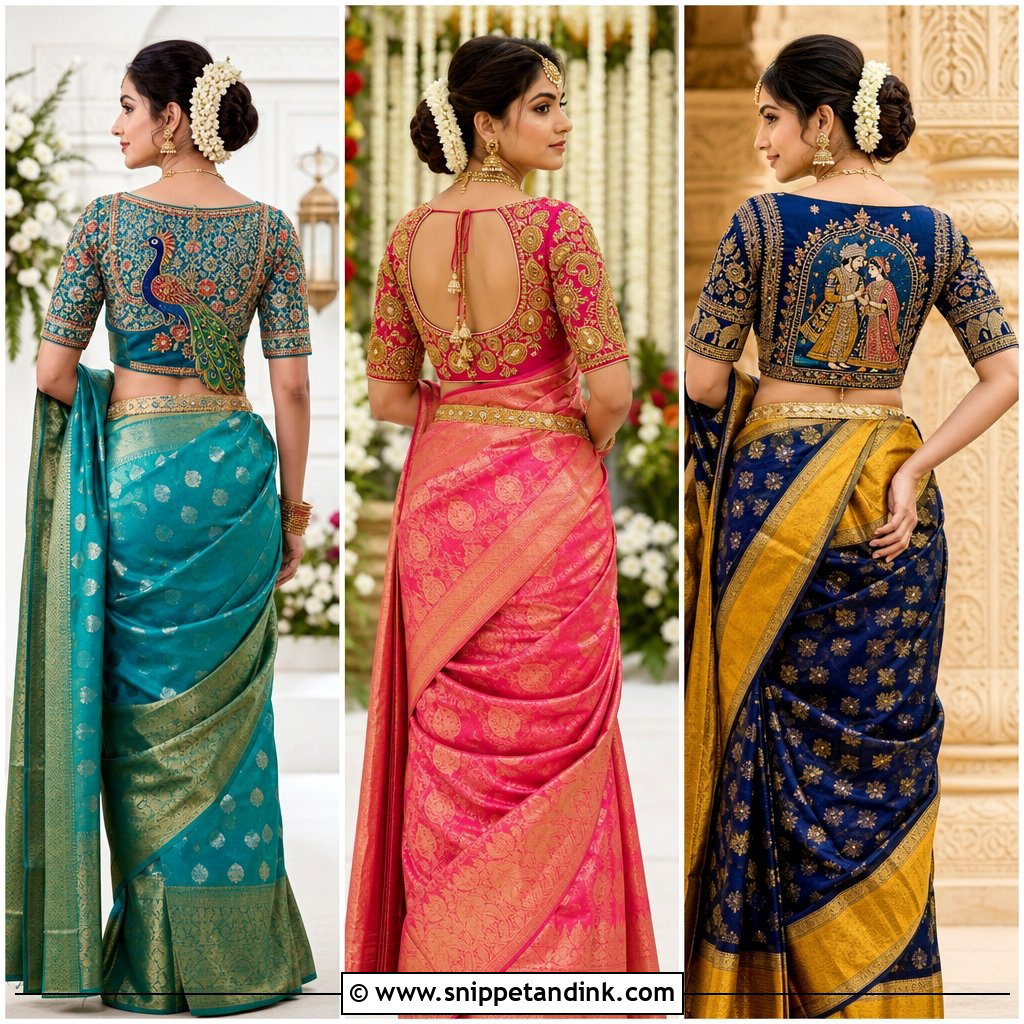
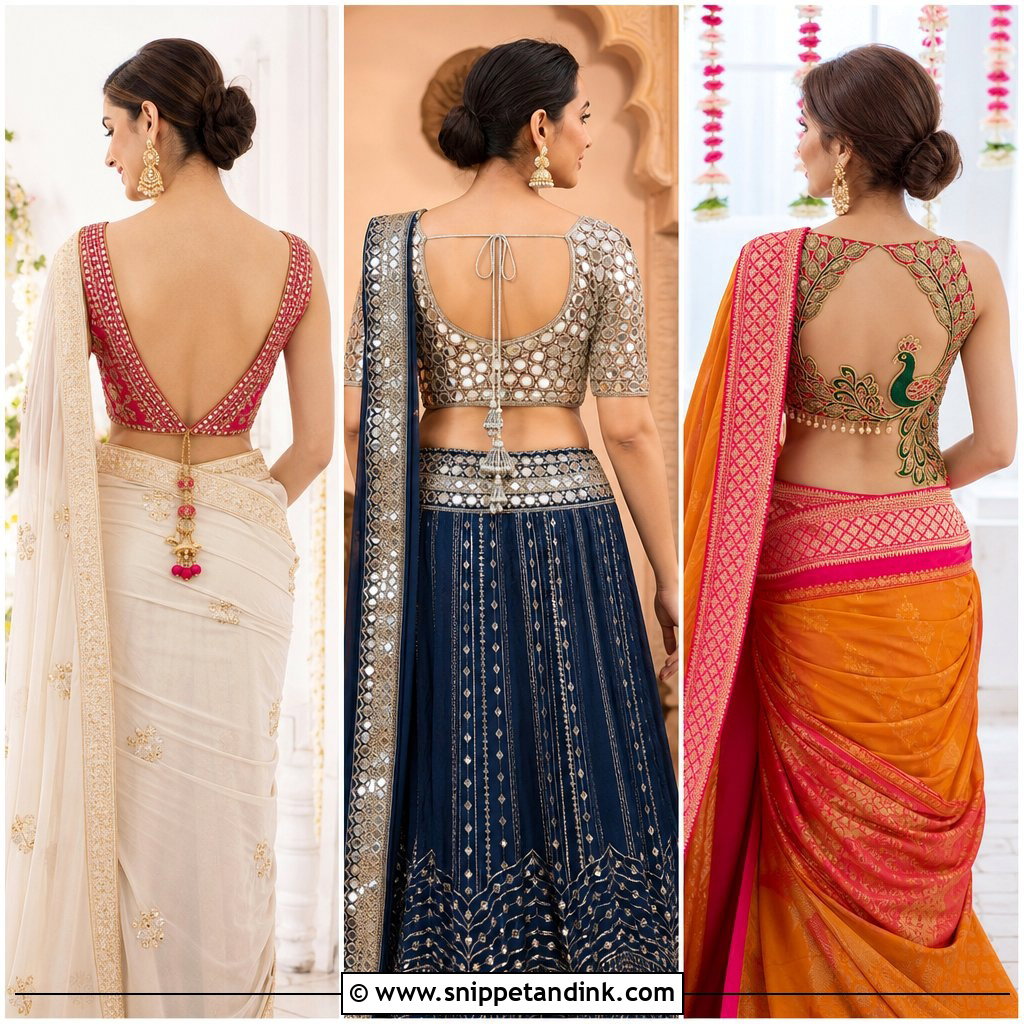
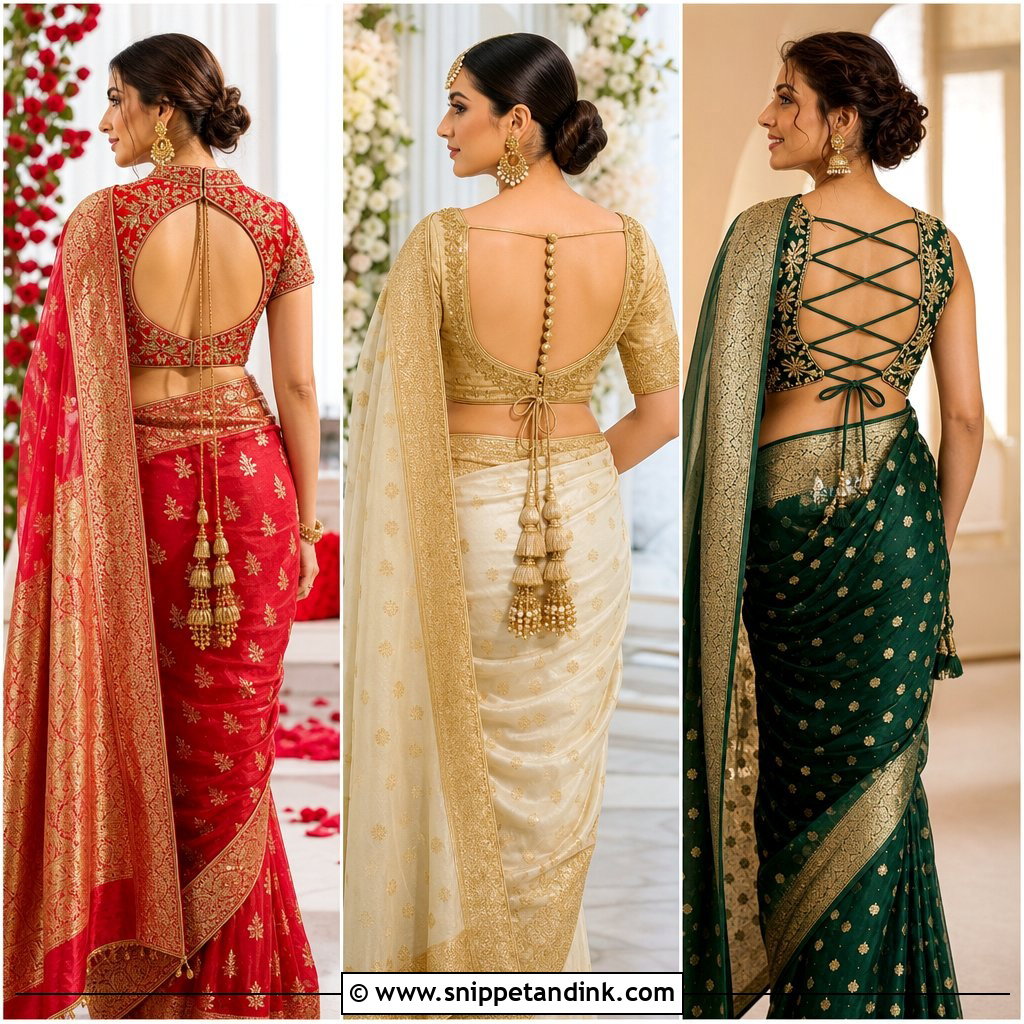
A Nauvari is nine yards of fabric draped kashta style, with the back tucked between the legs like a dhoti. That shape is why Marathi brides can sit on the floor, step over the threshold and walk the rounds without tripping, but it also means the blouse and the drape need to be planned together. I ask brides to bring the actual saree to the blouse fitting, because the border width decides how high the drape sits at the waist and how much of the blouse back shows.
Decide early between a traditional drape done on the day and a pre-stitched Nauvari. The traditional drape looks more natural and moves better, but it takes a skilled draper and a good half hour or more. A pre-stitched version goes on quickly and holds through a long day, which helps if you change outfits between ceremonies. Neither is wrong; it depends on your schedule and how many people need the dresser.
The order I dress a Marathi bride in
- Hair base and bun first, while the neck is still bare, so pins and gajra can be placed without snagging silk.
- Makeup next, with a clean scarf over the shoulders to protect the blouse.
- Blouse, then the drape, then the kamarbandh to lock the pleats.
- Necklaces from shortest to longest, then bangles, then the nath.
- The mundavalya and chandrakor bindi last, once everything else is settled, so the strings don’t tangle in necklaces.
Do one full sitting test at the final fitting: sit cross-legged for ten minutes, stand up without help, and lift your arms as you would for the garland. If the pleats shift or the blouse pulls, fix it then, not on the morning.
1. Traditional Marathi Bride Nauvari Saree
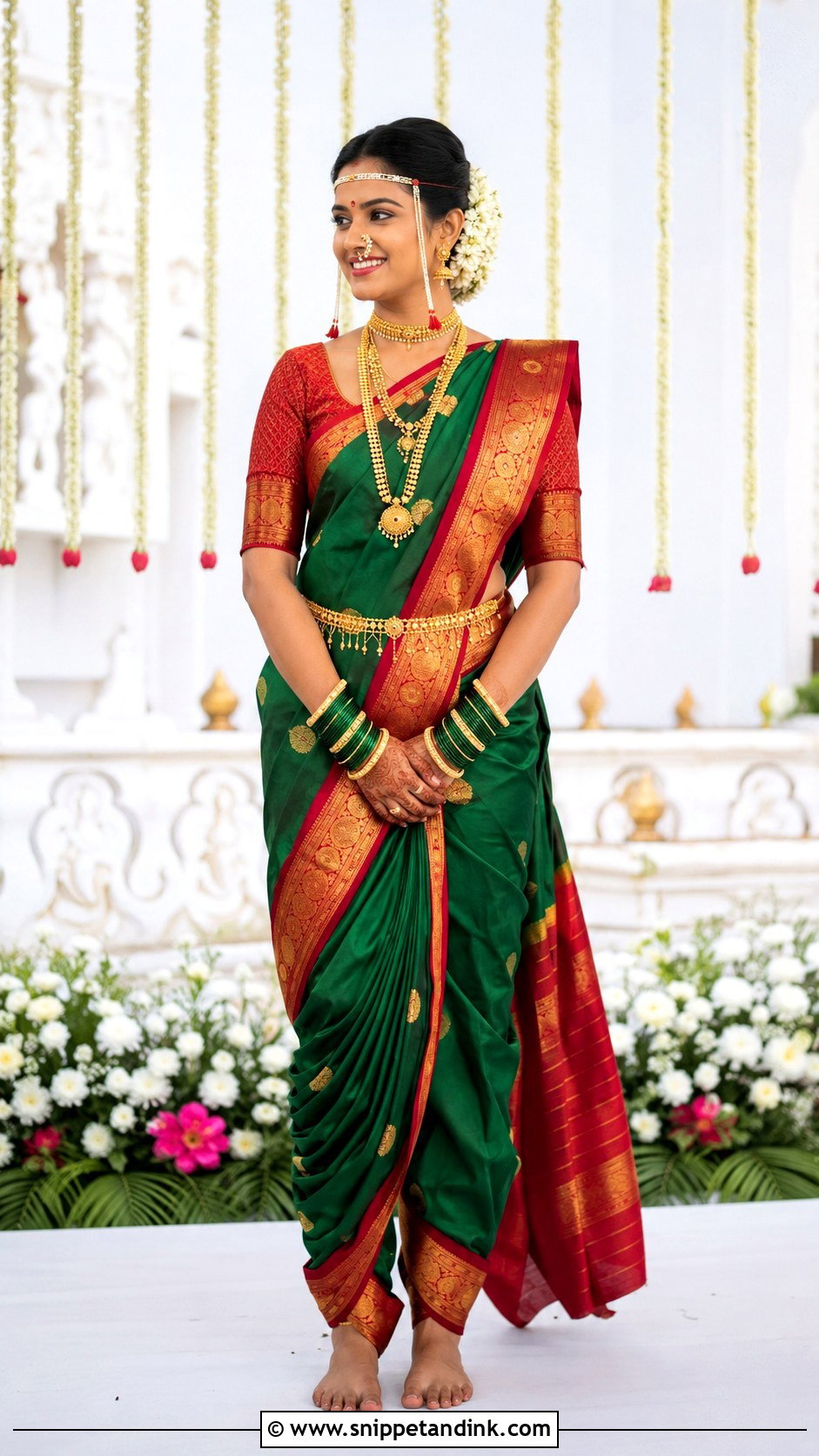
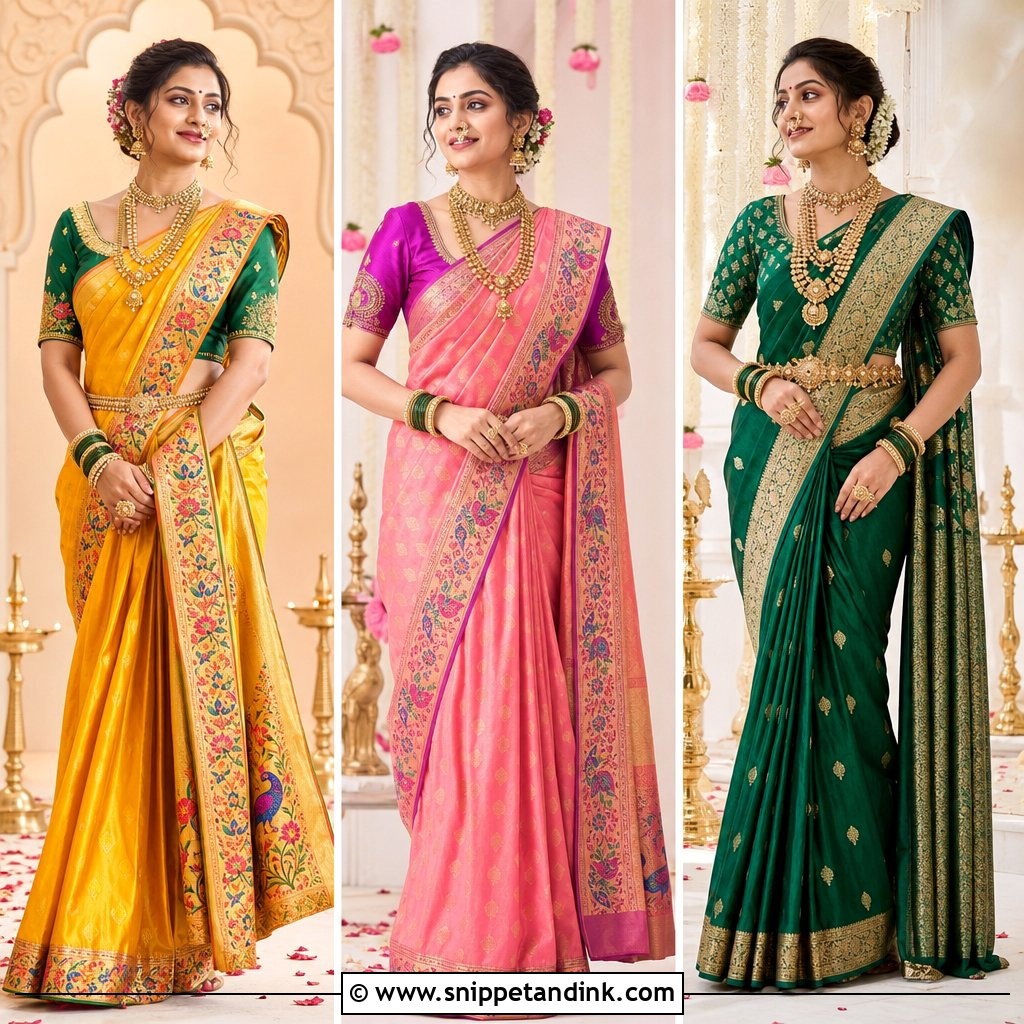
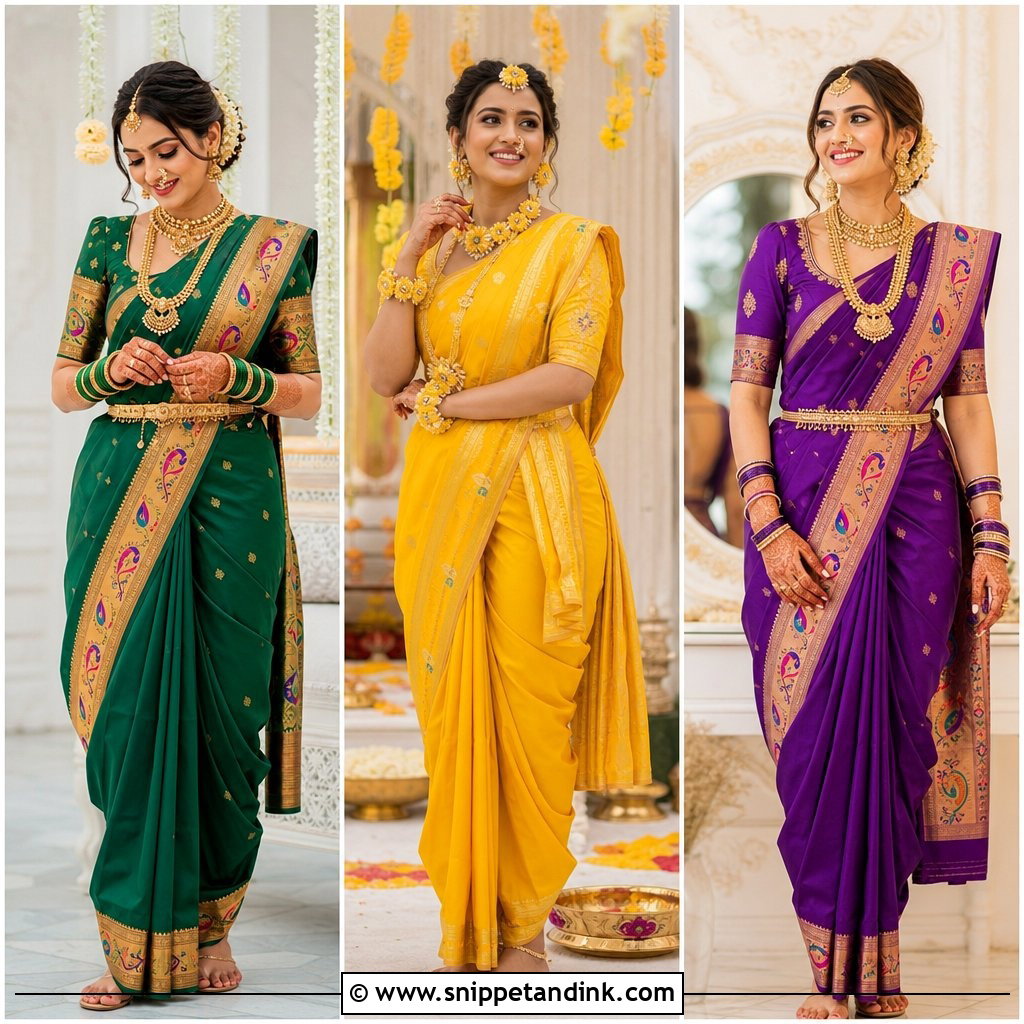
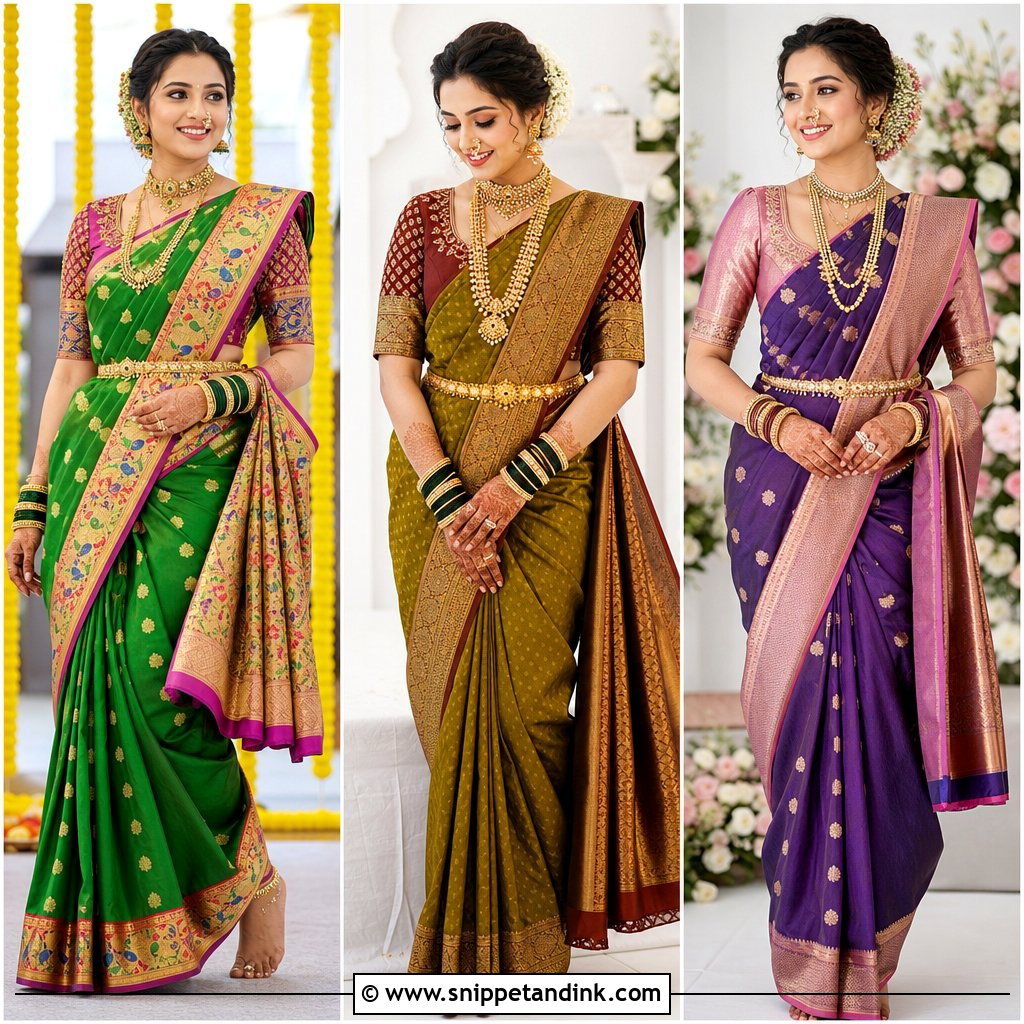
This is the look most families picture for the main ceremony. A silk Nauvari in yellow, green, red, purple or peacock blue with a zari border is draped kashta style, tucked at the back, which is exactly why it is so practical: you can sit on the floor through the rituals and walk the pheras without fighting the fabric. Pair it with a fitted blouse, pearl mundavalya, Maharashtrian nath, green and gold bangles and the chandrakor bindi. A low bun wrapped in fresh jasmine gajra keeps the back of the head finished for the long stretches when guests only see you from behind. I always ask the draper to put the kamarbandh on last, because it is what actually locks the pleats in place once the thushi, haar and Kolhapuri sandals are on.
2. Yellow Marathi Bride Paithani Saree
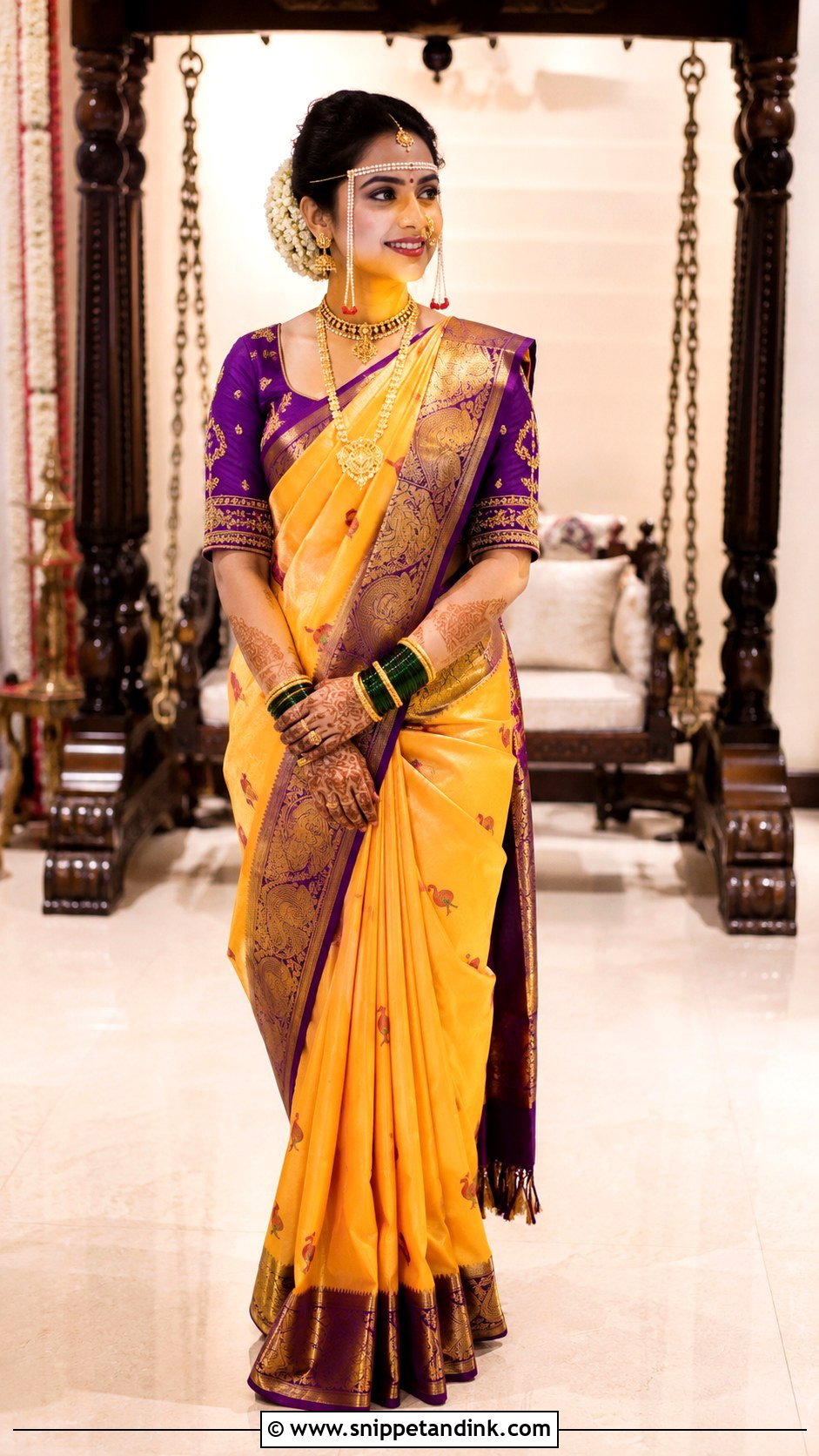
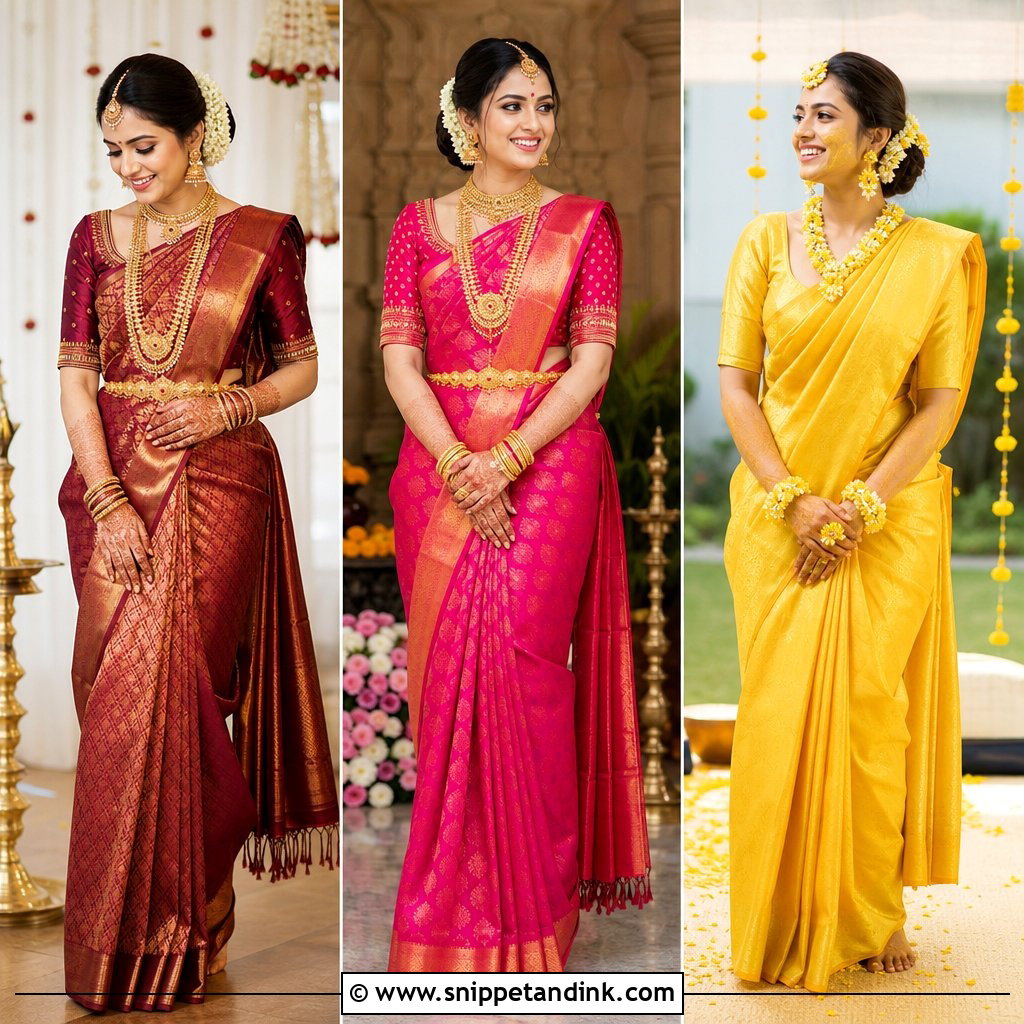
Yellow is the auspicious daytime choice, but it is also the colour I test most carefully against skin, because a pale lemon can make a warm complexion look tired. Turmeric and golden yellows hold up better, especially with a purple, green or red border pulling the eye away from the face. Dress it with a matching silk blouse, thushi, tanmani, putli haar and the pearl mundavalya, then a bold nath and green bangles. Soft gold eyes and a warm rose lip keep the face from competing with the saree. An ambada bun with jasmine and embroidered sandals finishes it for the ceremony.
3. Green Marathi Bride Nauvari Saree
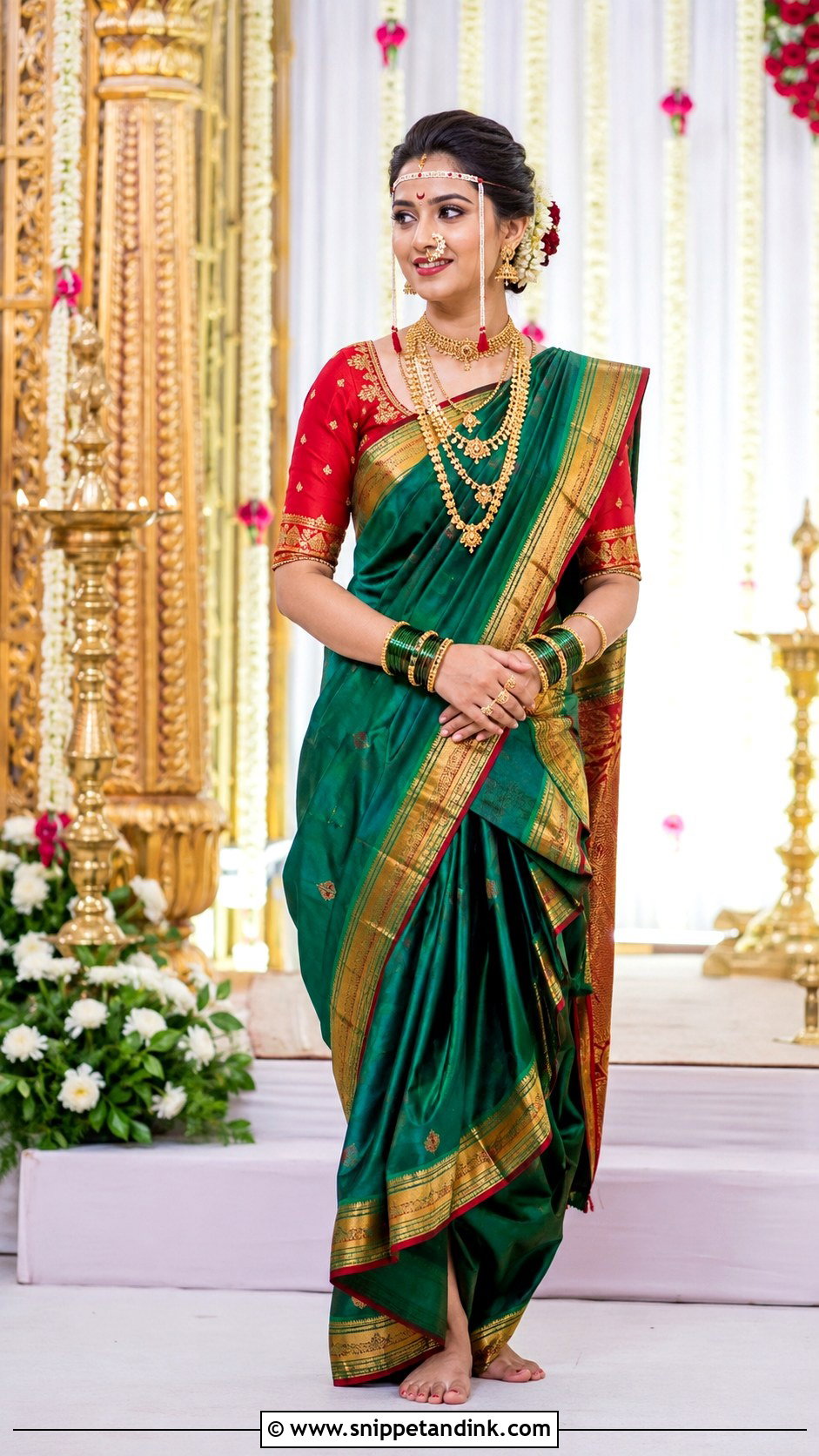
Green is tied to prosperity in Maharashtrian weddings, which is why so many brides end up in it. Deep emerald and bottle green absorb light, so the gold zari border does most of the work in photos; parrot green reflects much more and looks brighter in daylight than it does in the shop. A red or magenta blouse gives the classic contrast. One small detail I watch: green glass bangles look richer when they are a shade off the saree rather than an exact match. Finish with the mundavalya, gold nath, layered necklaces, a slim kamarbandh, a sleek gajra bun, kohl-lined eyes and a berry or red lip.
4. Red Marathi Bride Wedding Saree
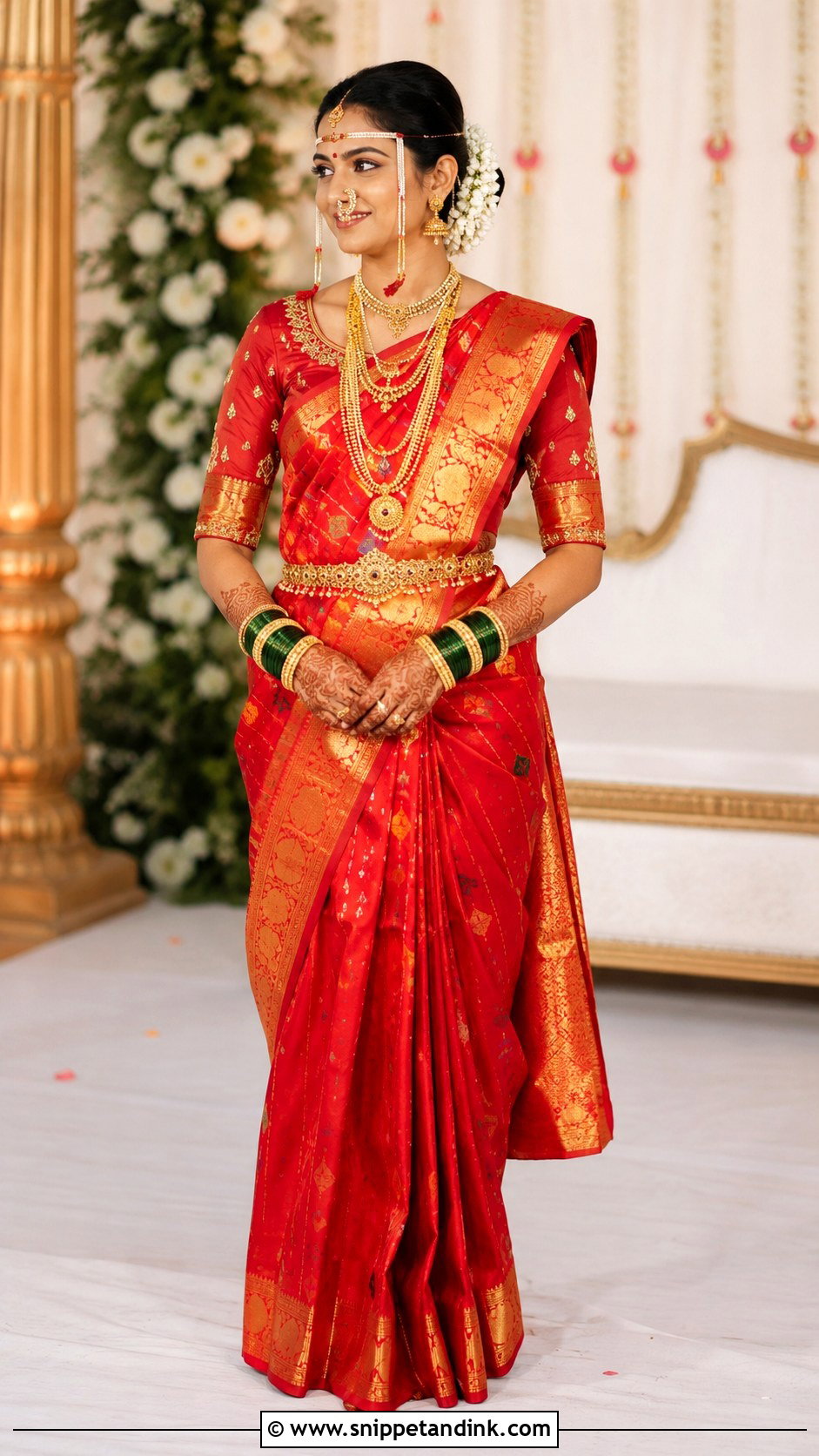
Red feels festive straight away, and a Paithani or silk Nauvari with a gold, orange or green border gives it depth so it doesn’t read as one flat block. A gold blouse keeps it rich; a red blouse makes it more coordinated but also heavier. The part brides underestimate is the lipstick. I match the lip undertone to the saree, a blue-based red with a crimson silk and a warmer brick red with an orange-leaning one, otherwise the mouth looks pasted on in close-ups. Add the pearl mundavalya, a large nath, chandrakor bindi, green bangles and heavy gold necklaces, with jasmine or roses wrapped around the bun.
5. Purple Marathi Bride Paithani Saree
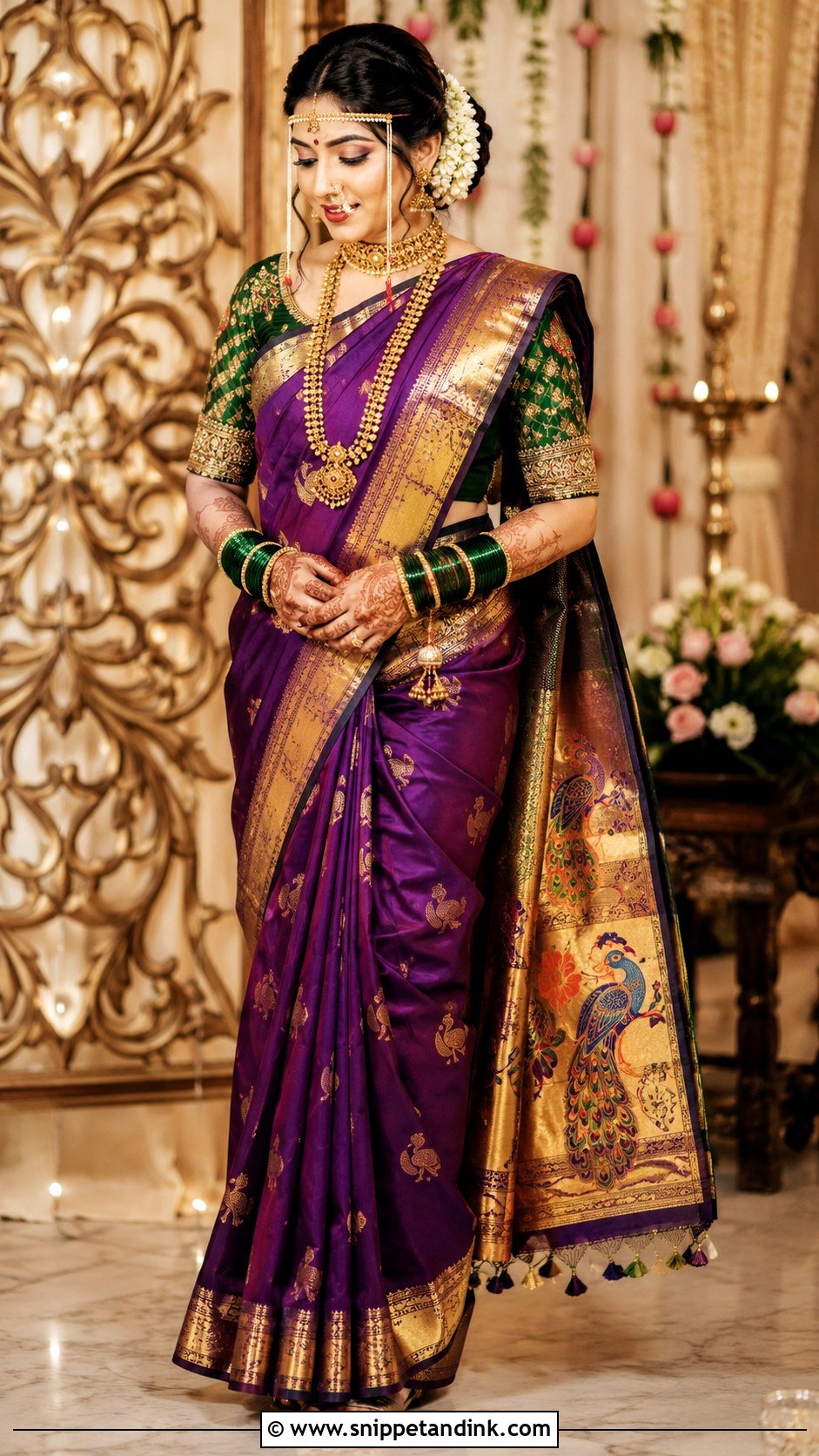
Purple looks royal without shouting, but it is the colour that shifts most under artificial light. A deep wine-purple can turn almost black in a dim evening hall, so if your ceremony runs after sunset, I’d hold the fabric under warm indoor light before you commit. Violet with gold peacock motifs and a contrast border survives that change better. A green or pink blouse adds contrast. Layer a thushi with a long gold haar, the mundavalya, nath, green bangles and a waist belt, then use gold hair accessories and flowers on the bun. Soft bronze eyes and a deep pink lip suit it.
6. Peacock Blue Marathi Bride Saree
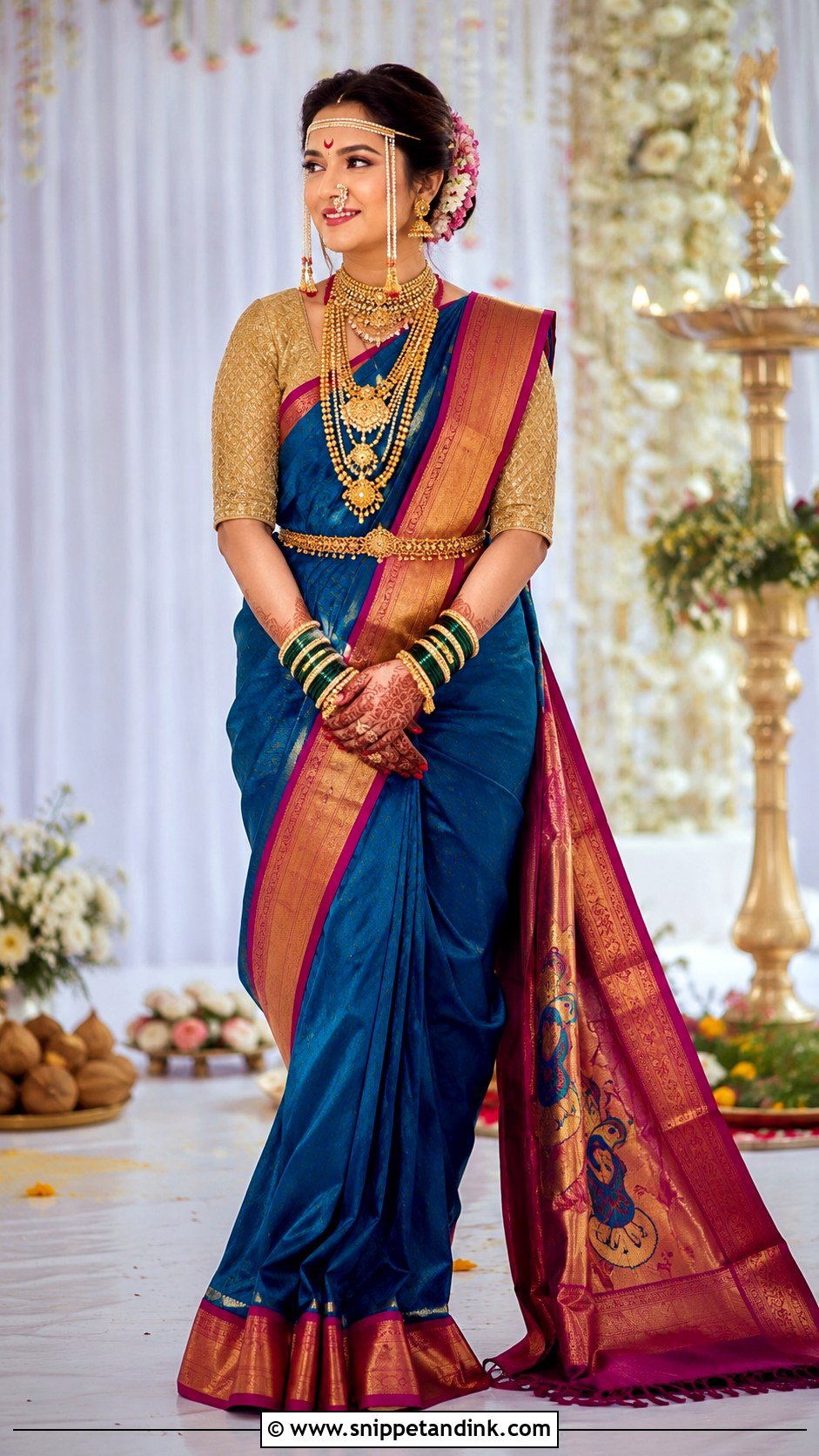
Peacock blue is usually woven with one colour in the warp and another in the weft, so the saree flickers between blue and green as you move. That shifting sheen is what makes it look alive on camera. A Paithani or Nauvari saree with gold zari and a magenta, purple or emerald border keeps the contrast strong. I’d pair it with a gold blouse rather than a blue one, because blue on blue flattens the shimmer. Add the pearl mundavalya, nath, chandrakor bindi and layered Maharashtrian jewelry, with green bangles mixed into gold, a sleek gajra bun and polished makeup.
7. Pink Marathi Bride Saree
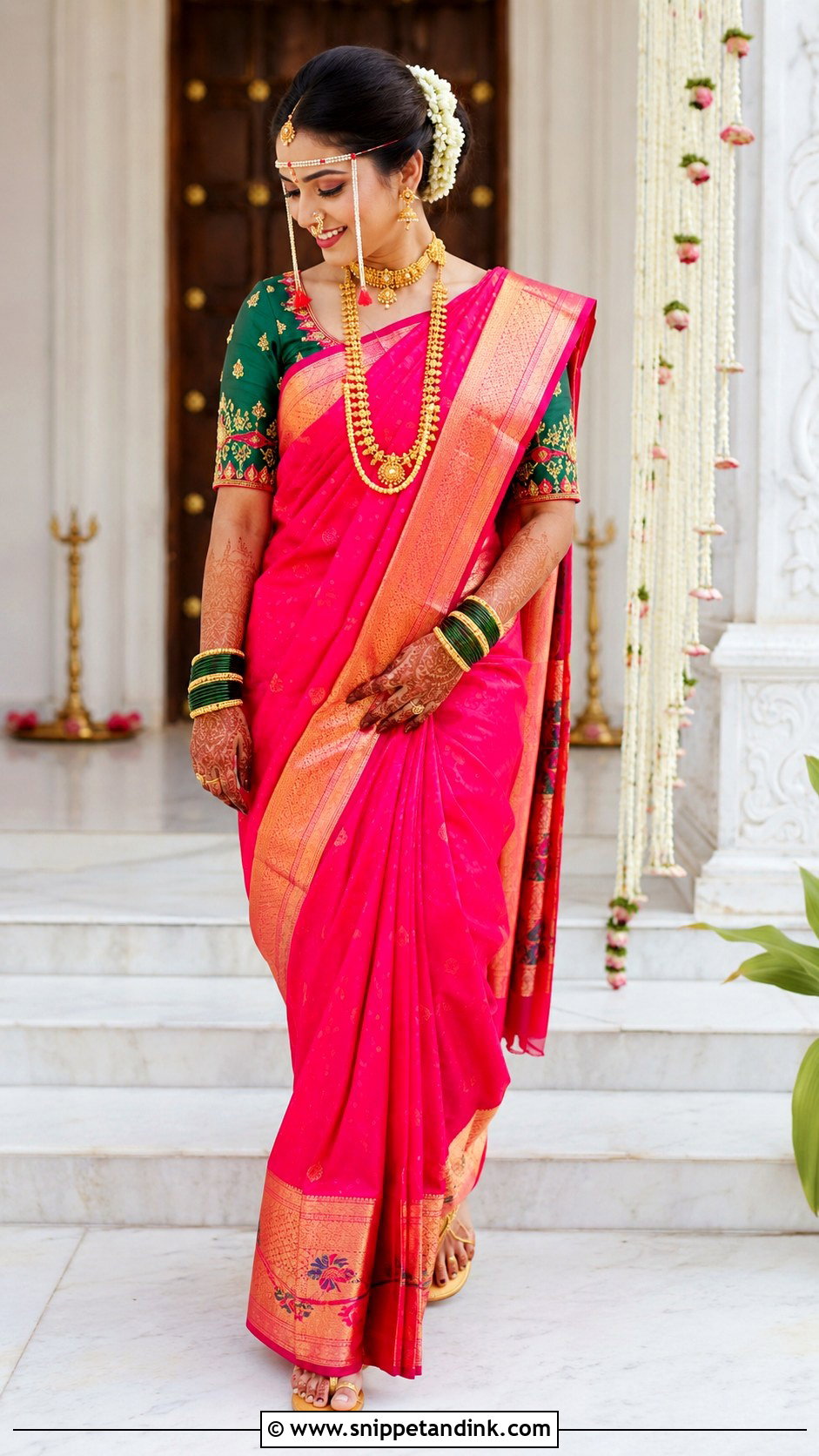
Pink splits into two very different brides. Hot pink is festive and handles heavy gold easily; pastel pink is gentler but can wash out to near white in harsh midday sun, so I like it best for morning or indoor ceremonies. A gold zari border keeps either version bridal, and a green or purple blouse brings back the traditional contrast. Pearl mundavalya, a Maharashtrian nath, thushi, long haar, green bangles and a floral bun complete it. Keep the makeup rosy with soft shimmer, and if you carry a potli, choose gold sandals and a bag in the same metal tone.
8. Orange Marathi Bride Nauvari Saree
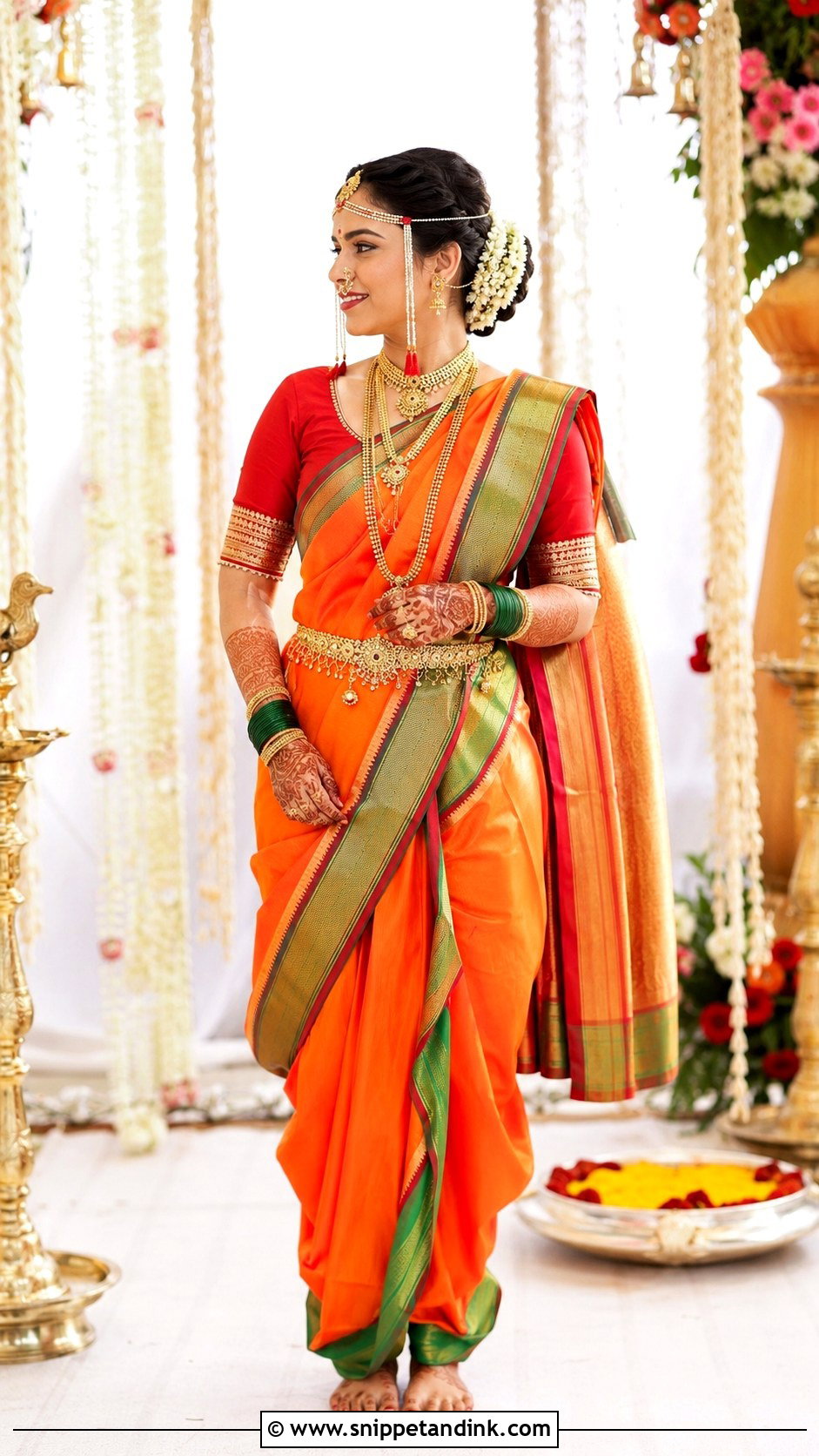
Saffron, burnt orange and mango silk all feel warm and sacred, with a gold or green border and a contrast blouse in red, green or gold. The thing I check first with orange is the cheeks. Next to a warm saree, a coral blush can make the whole face look flushed, so I keep blush closer to a soft brown-rose and let the saree carry the colour. Mundavalya, nath, chandrakor bindi, green bangles and temple-style gold suit it, and a kamarbandh gives the Nauvari drape its shape. In natural daylight, orange glows on camera with very little help.
9. White And Gold Marathi Bride Saree
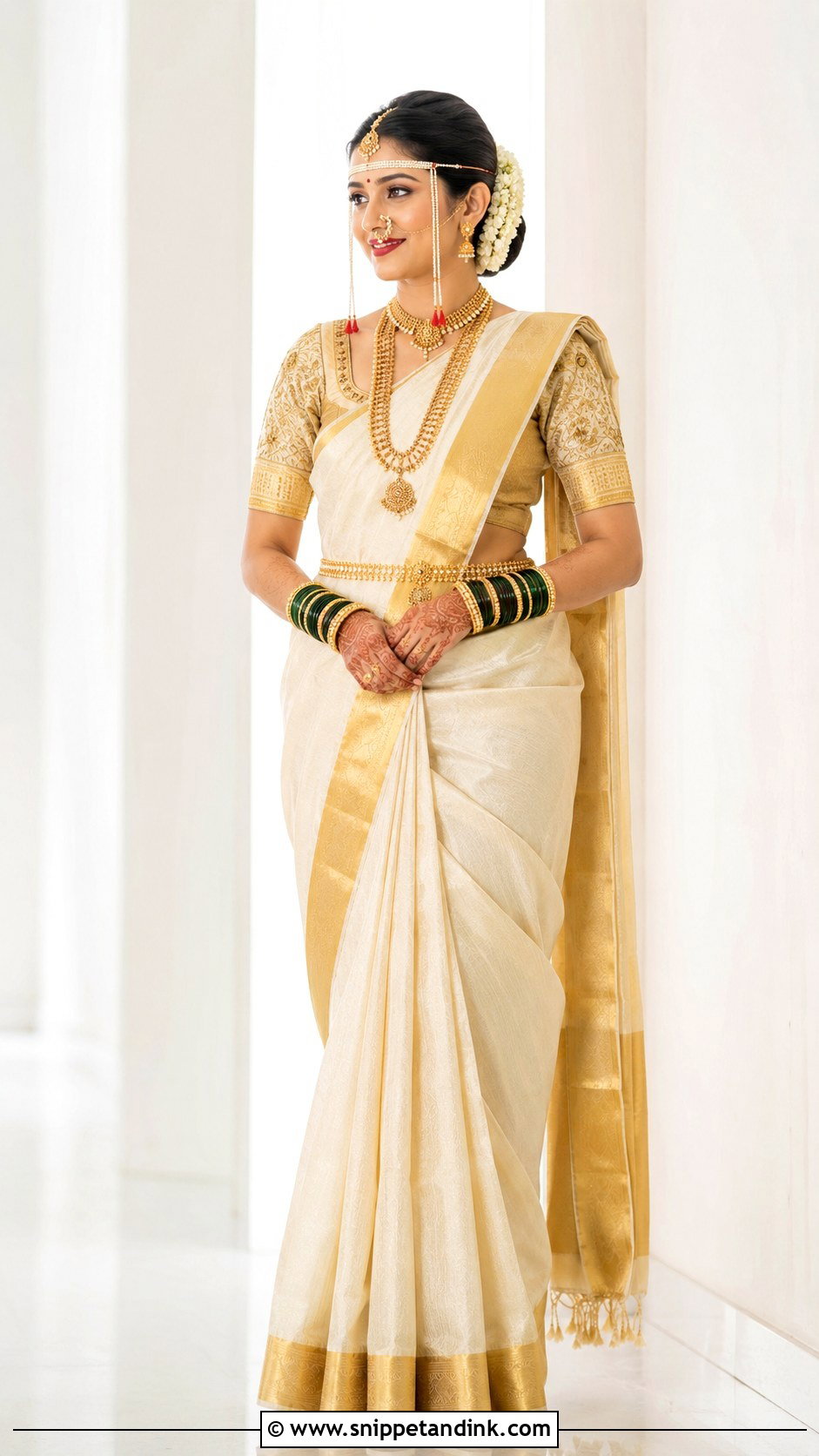
An ivory, cream or off-white silk with a heavy gold border gives a calm, graceful bride. Before you fall for it, talk to your elders, because some families prefer the bride not to wear plain white for the ceremony; a wide gold border usually settles that conversation. It can be draped as a Nauvari or a six-yard saree depending on the rituals. Add a gold blouse, pearl mundavalya, nath, layered necklaces and green bangles. A red or maroon lip gives the face the bridal weight that a pale saree lacks, and white flowers in the bun keep it clean.
10. Marathi Bride Lehenga Look
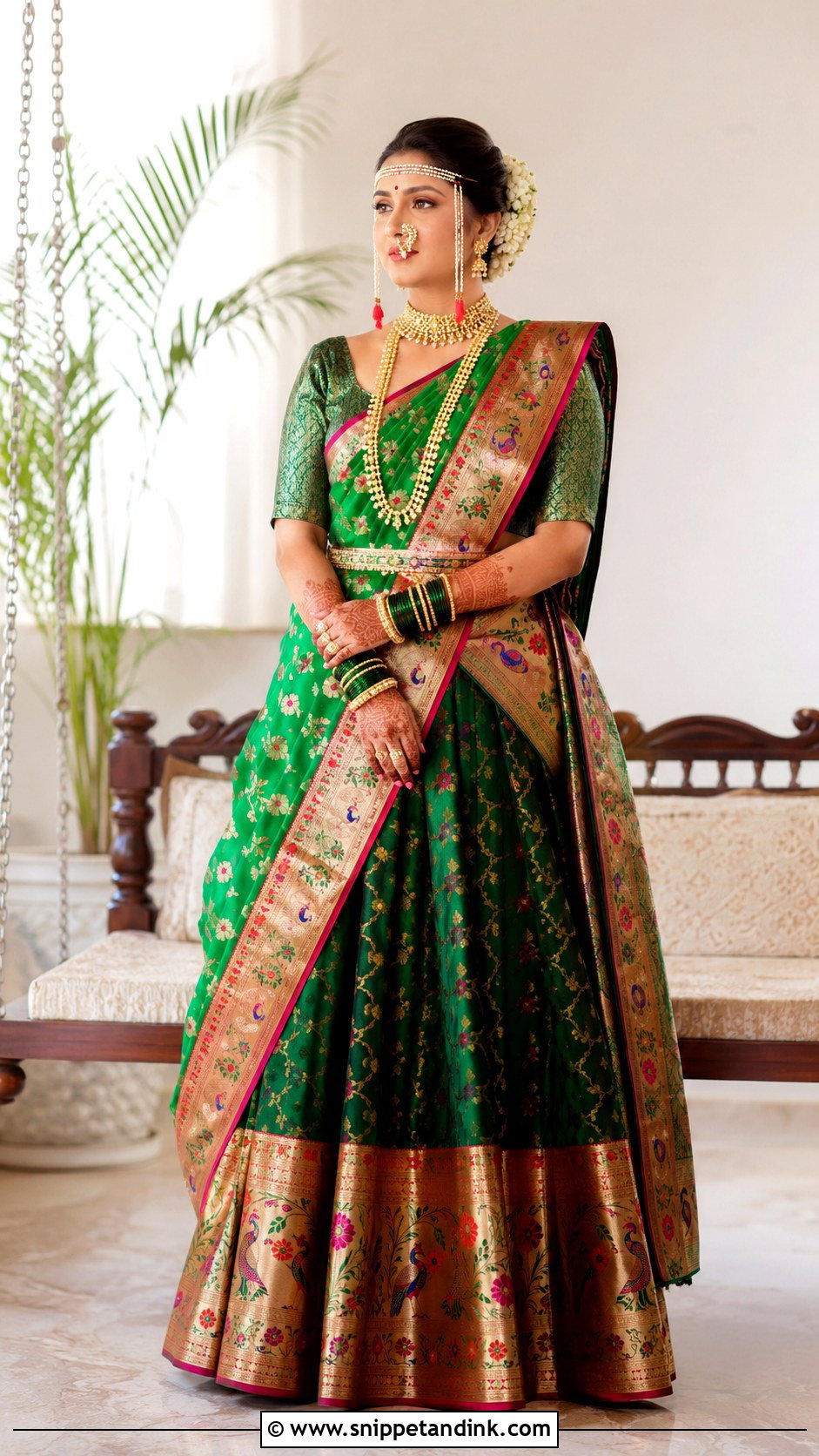
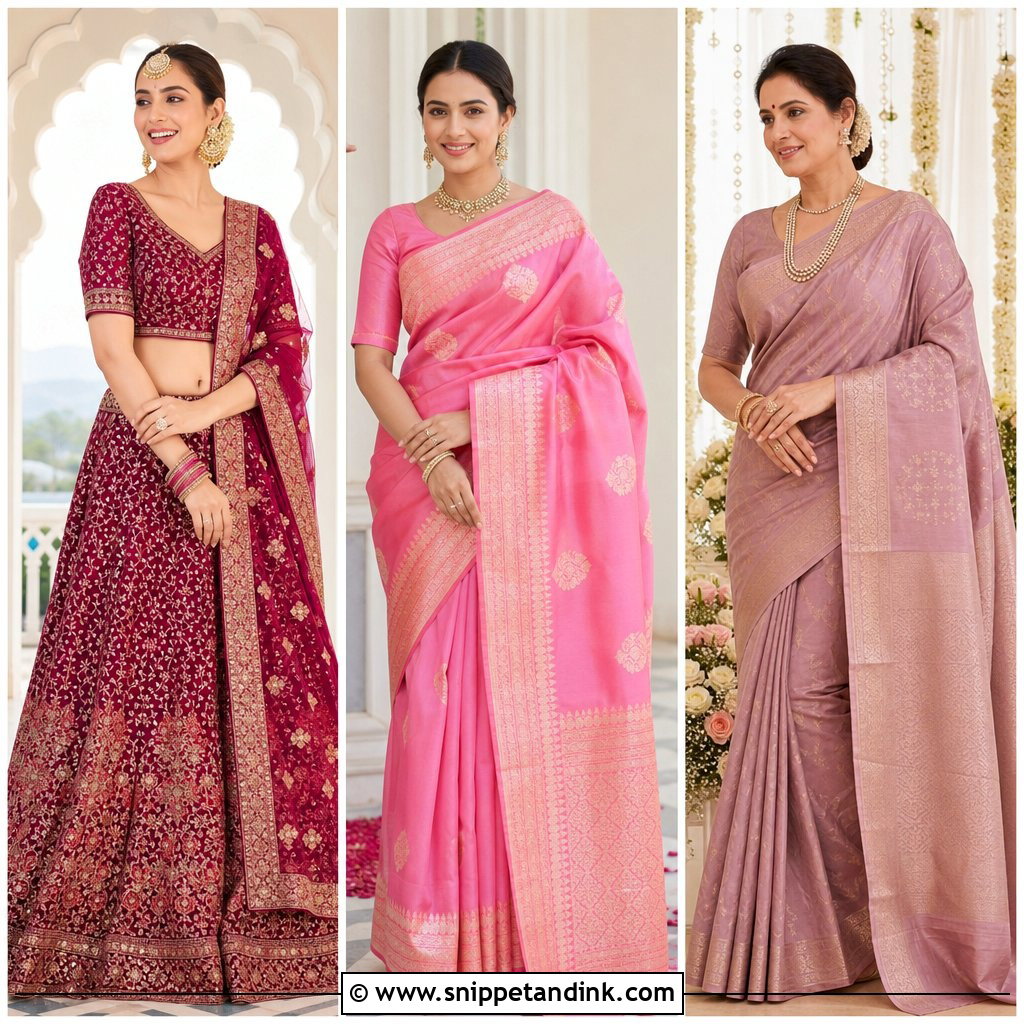
A lehenga gives you movement and a grand silhouette, but you lose the kashta tuck that makes the Nauvari so easy to sit in. If your rituals involve long stretches on the floor, practise sitting with the skirt fanned around you at the final fitting. Silk, brocade or Paithani-inspired fabric in green, red, yellow, purple or pink keeps the cultural link, especially with a dupatta draped like a pallu. Mundavalya, nath, chandrakor bindi, thushi, long haar, green bangles and a kamarbandh make it read as Marathi, and a gajra bun gives the proper finish for the engagement, reception or the wedding itself.
11. Marathi Bride Paithani Lehenga
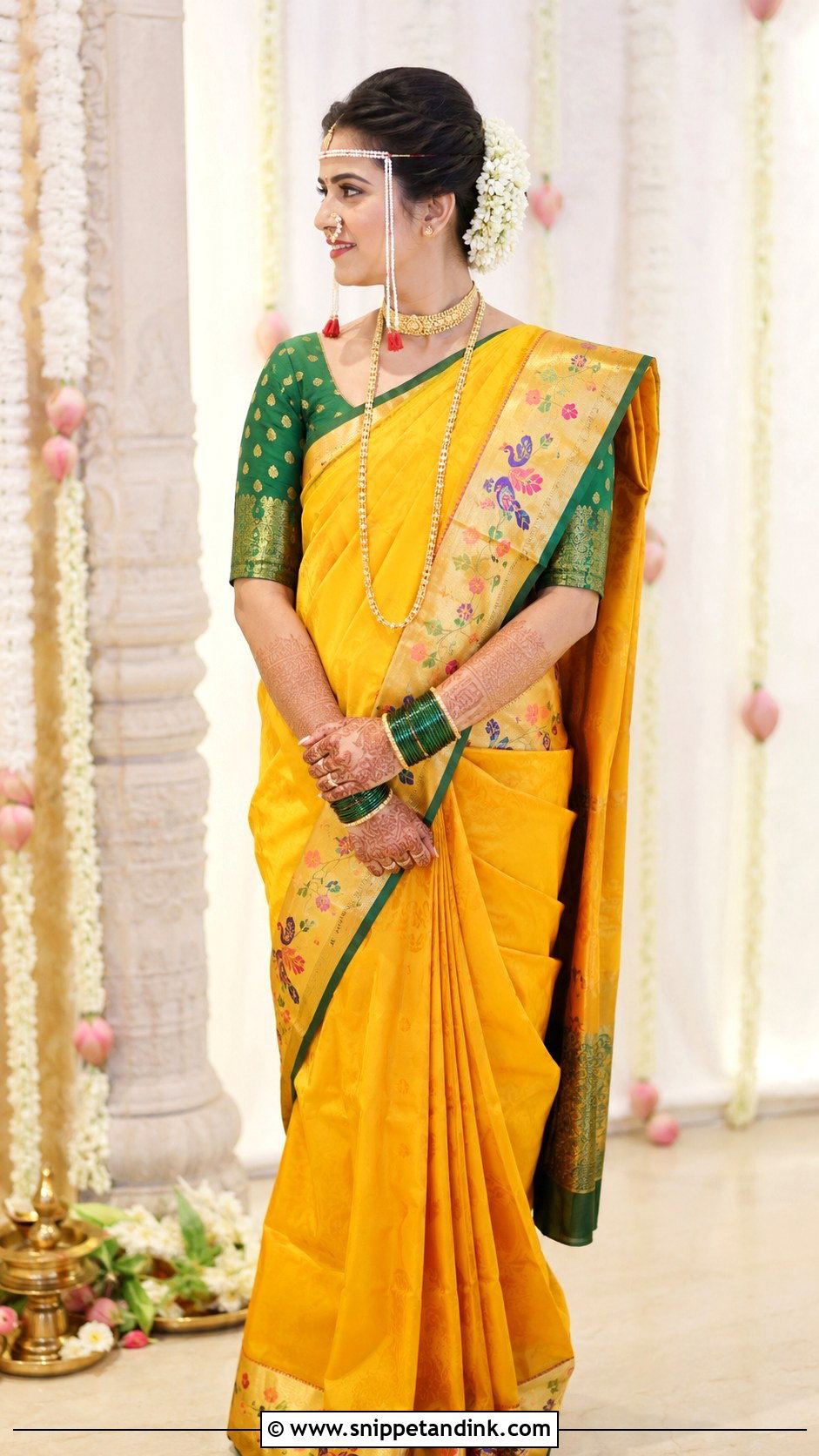
Many Paithani lehengas are cut from an actual saree, and that is where I slow things down. The pallu motifs are the most valuable part of the weave, so the tailor needs a plan for where the peacocks and lotus patterns will land before the first cut, ideally across the front panel and the dupatta. Purple, green, magenta and royal blue carry the zari best. Pair it with a silk blouse and a dupatta over one shoulder or pleated across the front, then add the nath, mundavalya, thushi, green bangles and chandrakor bindi. A soft flower bun or braided bun suits a reception entrance.
12. Marathi Bride Reception Saree
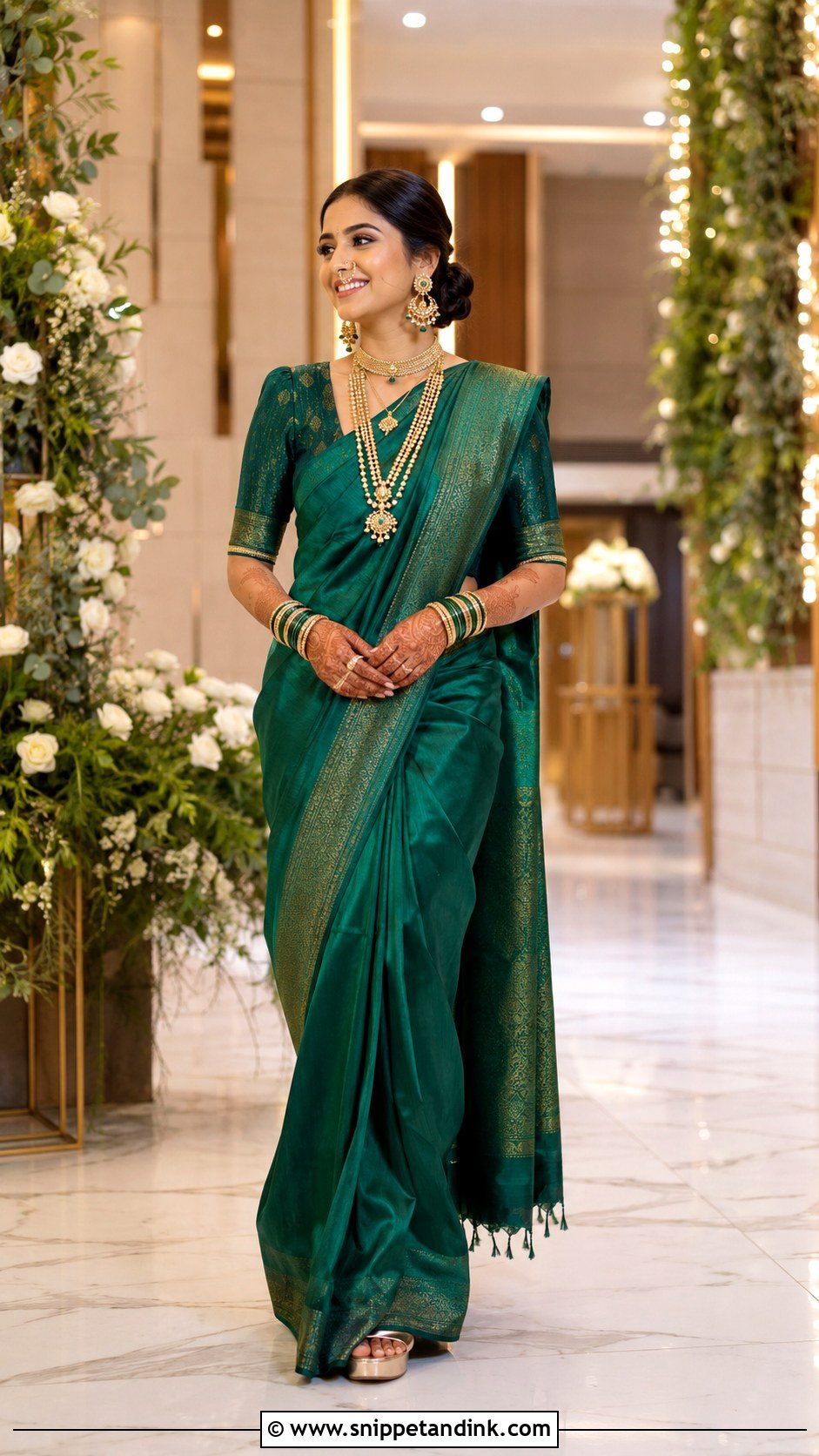
The reception is where a Marathi bride can turn up the glamour. Silk, tissue, organza or Paithani in emerald, ruby, champagne gold, navy or wine all hold up under evening lighting. Tissue does crinkle when you sit, so if the reception involves a long dinner, I’d lean toward silk or Paithani. Pair a structured blouse with statement earrings and layered necklaces. Dropping the mundavalya lightens the look, but I’d keep the nath or the chandrakor bindi so the outfit still reads Maharashtrian. Soft waves or a flower-trimmed low bun, metallic heels, a clutch and glowing makeup finish it.
13. Marathi Bride Engagement Saree
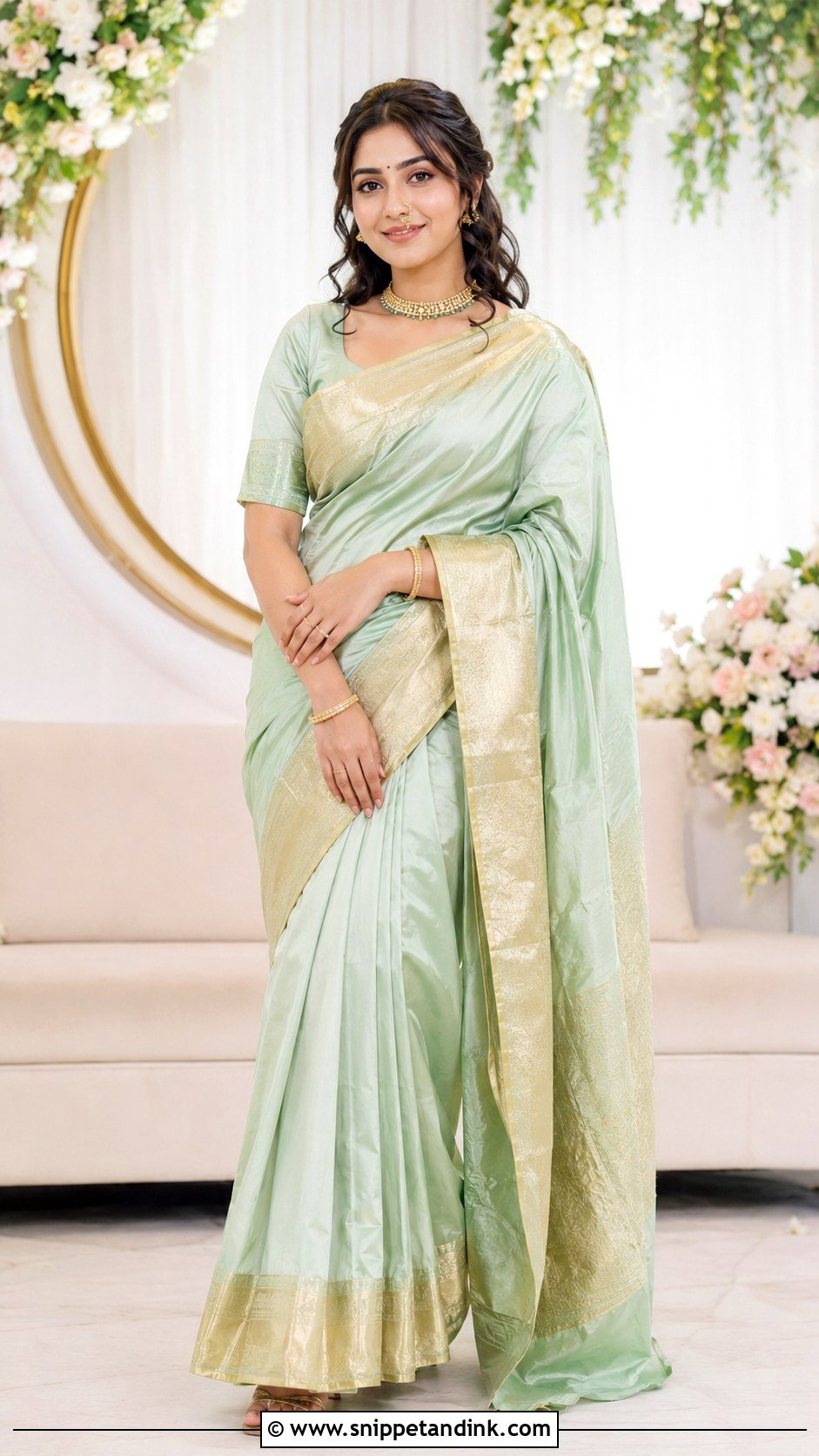
The engagement saree should feel special but a step lighter than the wedding outfit. Paithani, silk or embroidered sarees in soft pink, mint, lavender, peach or gold all suit it. Remember that this is the day your hands are photographed most, so I keep bangles fewer on the ring hand and make sure the blouse sleeve ends cleanly at the elbow or above it. A thushi, a delicate haar, a small nath and soft curls, a low bun or a half-up style with flowers give a graceful Marathi finish. Dewy makeup and a fresh lip keep it young for the family portraits.
14. Marathi Bride Haldi Look
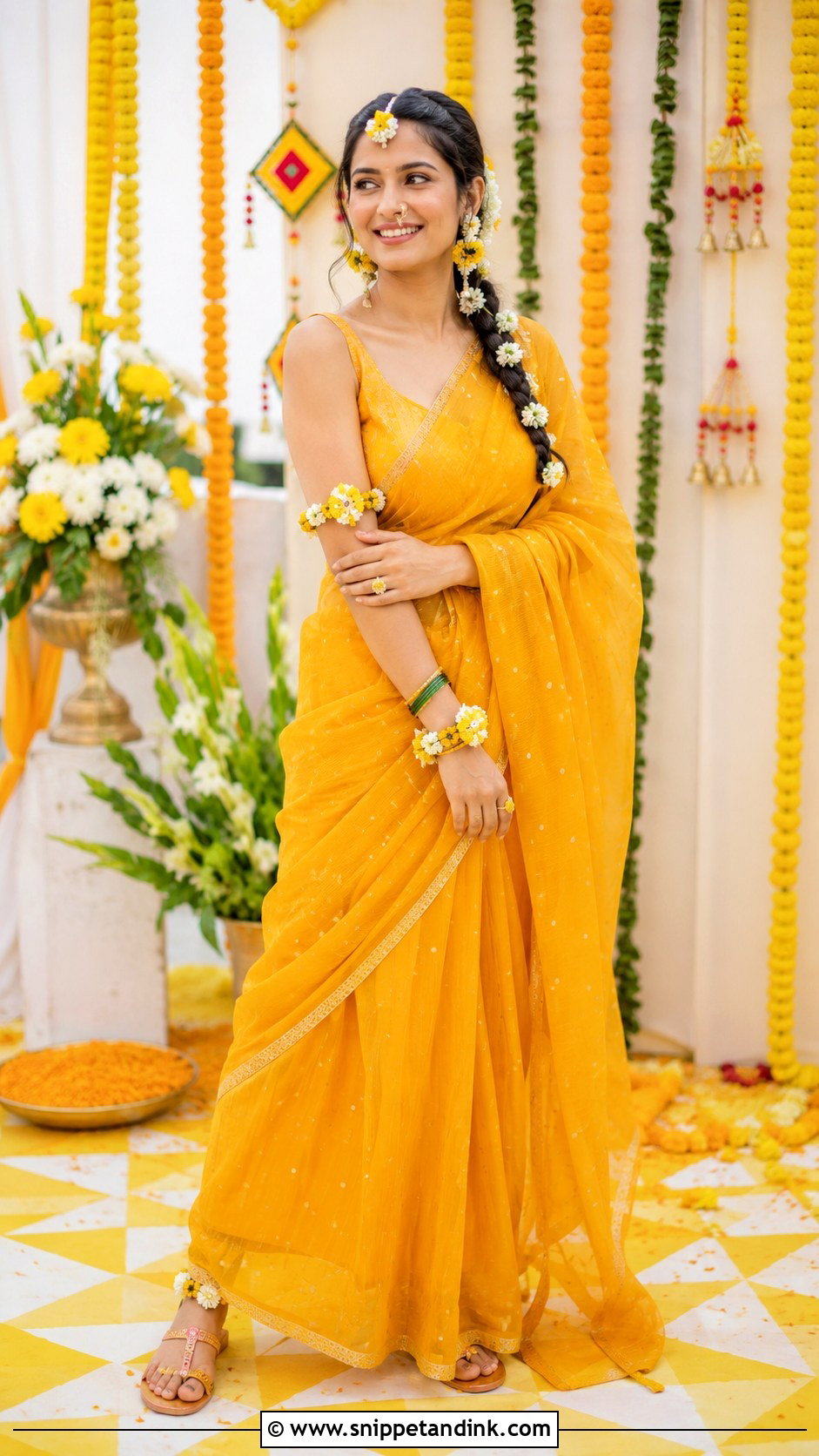
Turmeric stains light fabric for good, so the haldi outfit should be something you are happy to sacrifice. Yellow, mustard or marigold cotton silk or a light Paithani-inspired weave in a short or elbow-length blouse keeps you comfortable while relatives apply the paste. I skip real gold for this event and use floral jewelry, flower bangles, a small bindi and maybe a small nath with green bangles. A braid or bun keeps hair out of the paste, and waterproof base products stay put through the splashing.
15. Marathi Bride Mehendi Look
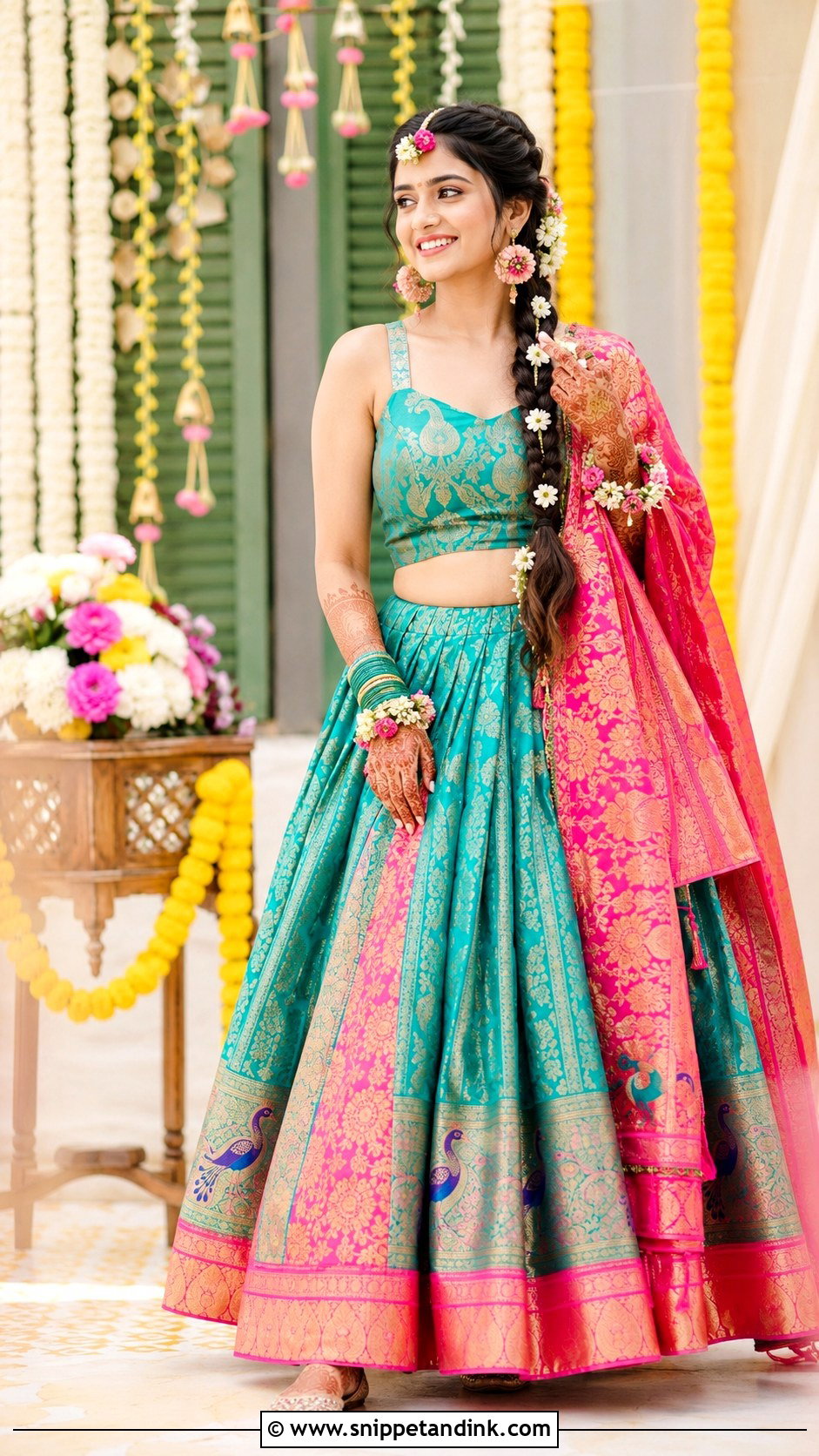
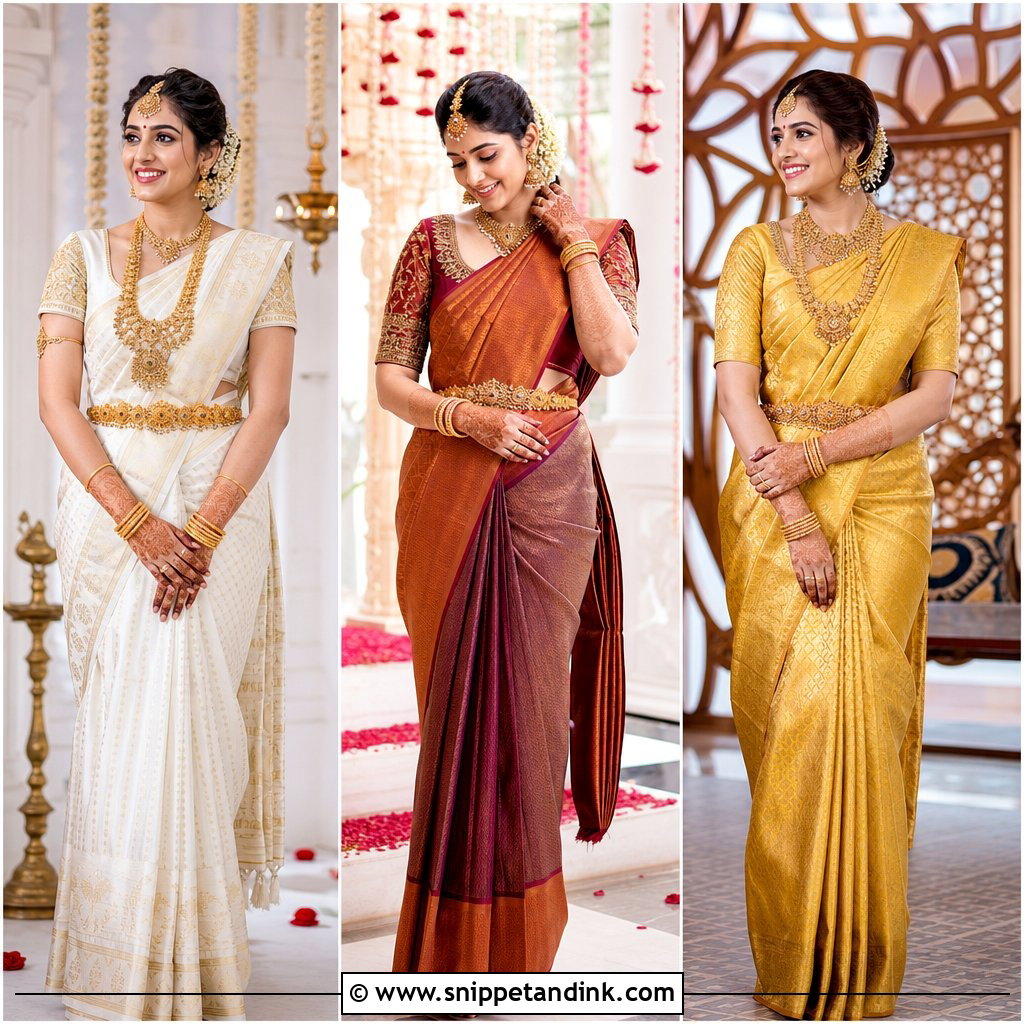
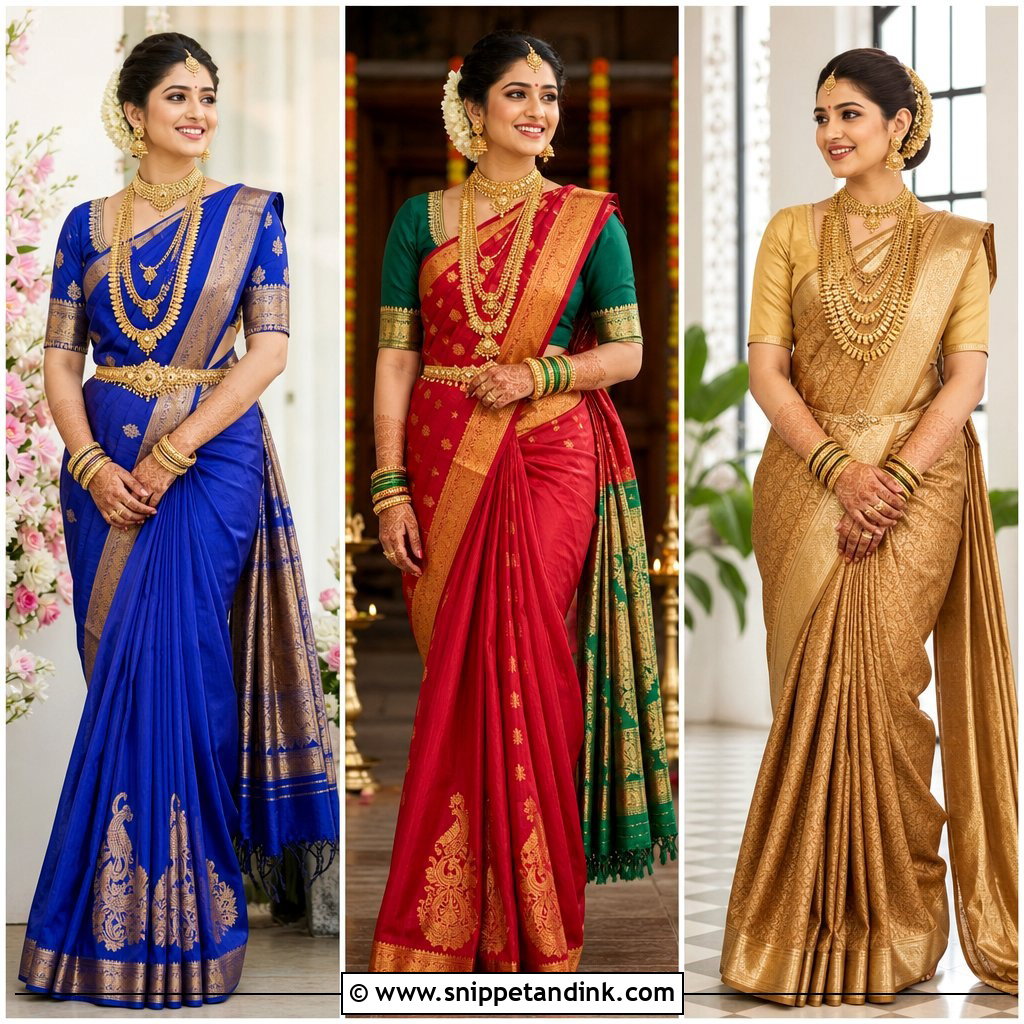
Wet mehndi paste smudges on everything it touches, so I design this outfit around your hands being out of action for hours. A green, teal, yellow or pink lehenga or skirt set with Paithani borders, paired with a sleeveless or short-sleeve blouse, keeps fabric away from the drying design. Floral jewelry, light earrings and glass bangles that someone else can slide on later are easier than heavy sets. A braid with flowers or a low ponytail keeps hair off your face when you can’t touch it, and a pop of lip colour does the rest.
16. Marathi Bride Sangeet Look
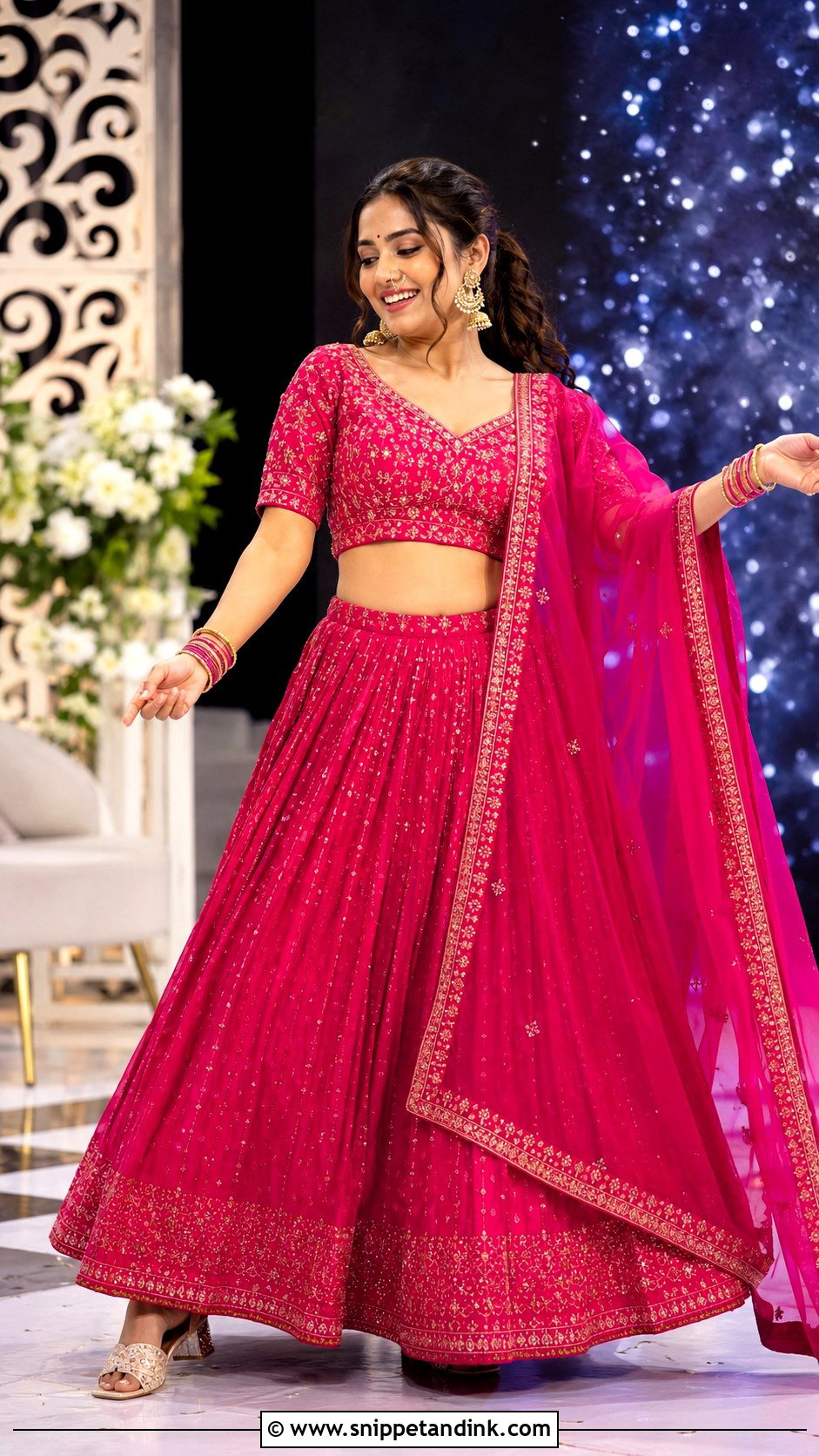
The Marathi bride Sangeet look has one real test: can you dance in it? A lightweight lehenga, a pre-draped saree or a Paithani-inspired skirt set in fuchsia, emerald, purple or royal blue moves well, but I make brides spin and lift their arms at the trial, because a dupatta that slips once will slip all night. Pin it at the shoulder and the back of the waist. Statement earrings, bangles and a smaller nath give a traditional accent without weight, and soft waves or a sleek ponytail survive movement better than a heavy bun. Embellished flats or block heels save your feet.
17. Marathi Bride Minimal Makeup Look
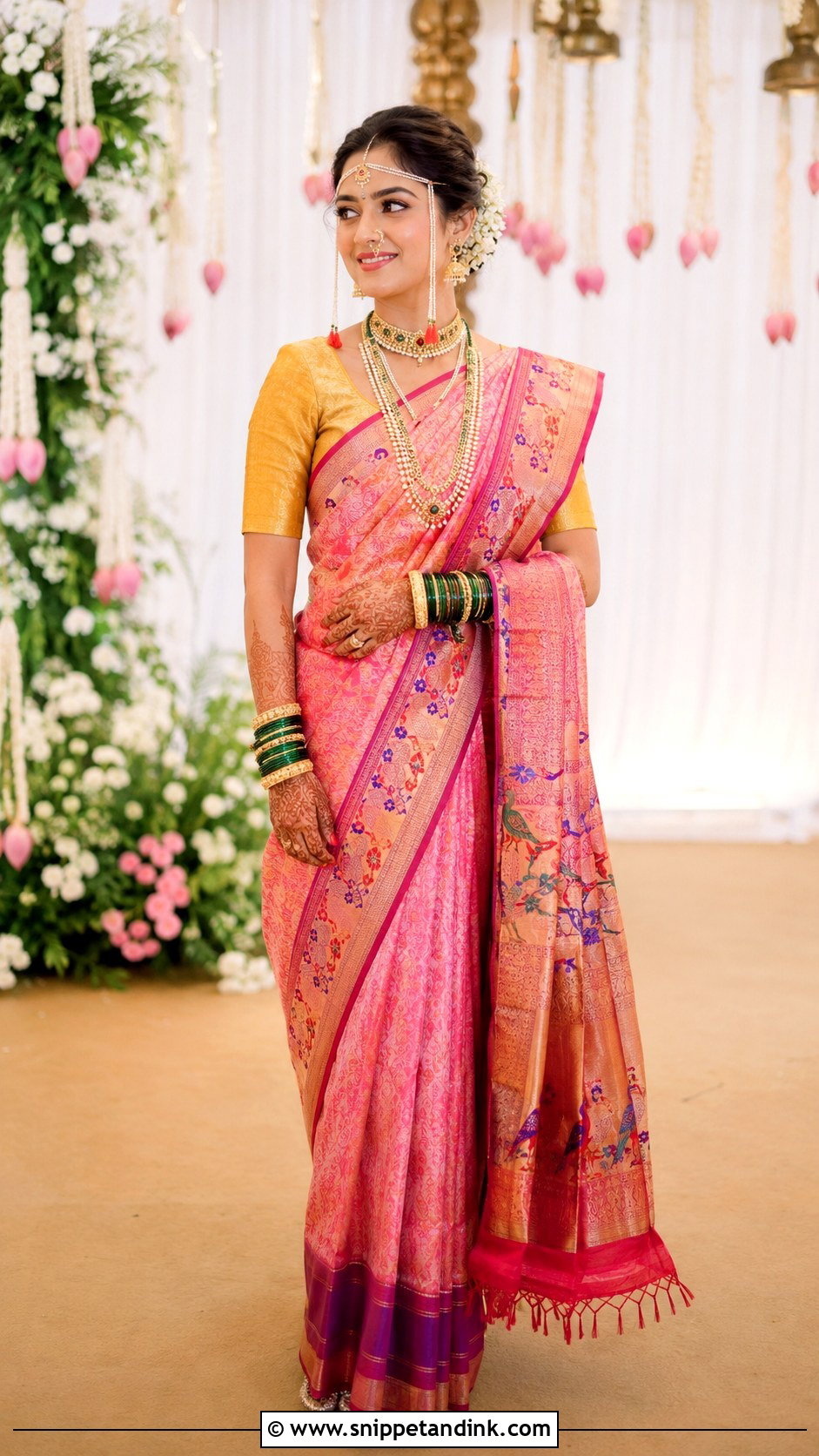
Minimal makeup on a Marathi bride is harder than it sounds, because the nath, mundavalya and gold all draw light, and a bare face can disappear behind them under flash. What looks natural in the mirror usually needs slightly stronger brows and liner to read in photos. Start with a flattering yellow, pink, green or ivory saree and balanced jewelry: a nath, thushi, mundavalya and a few layered pieces. Fresh skin, soft brown eyes and a rose or peach lip work well, with a small chandrakor bindi and a clean gajra bun to keep it ceremonial.
18. Marathi Bride Dewy Makeup Look
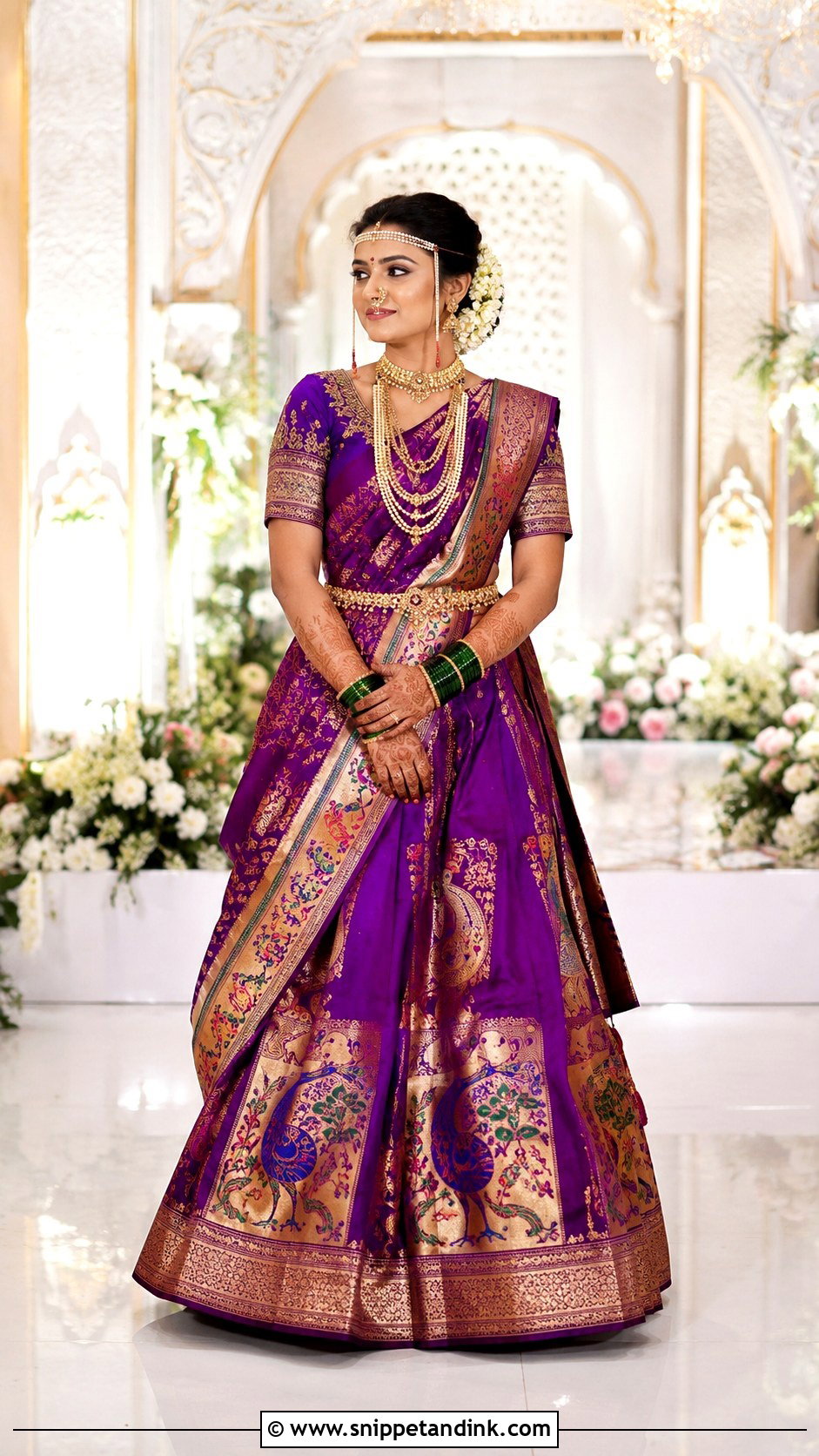
Dewy skin against rich silk and gold looks luminous, but on oily skin in a humid hall the glow turns to shine within a couple of hours. I keep the luminous finish on the cheekbones and set the T-zone firmly. A Paithani or Nauvari in green, pink, purple or peacock blue frames the glow well. Soft gold eyeshadow, kohl, curled lashes and a warm pink or berry lip give a romantic face, while the nath, mundavalya, chandrakor bindi, green bangles and a flower bun keep it rooted in tradition.
19. Marathi Bride Heavy Jewelry Look
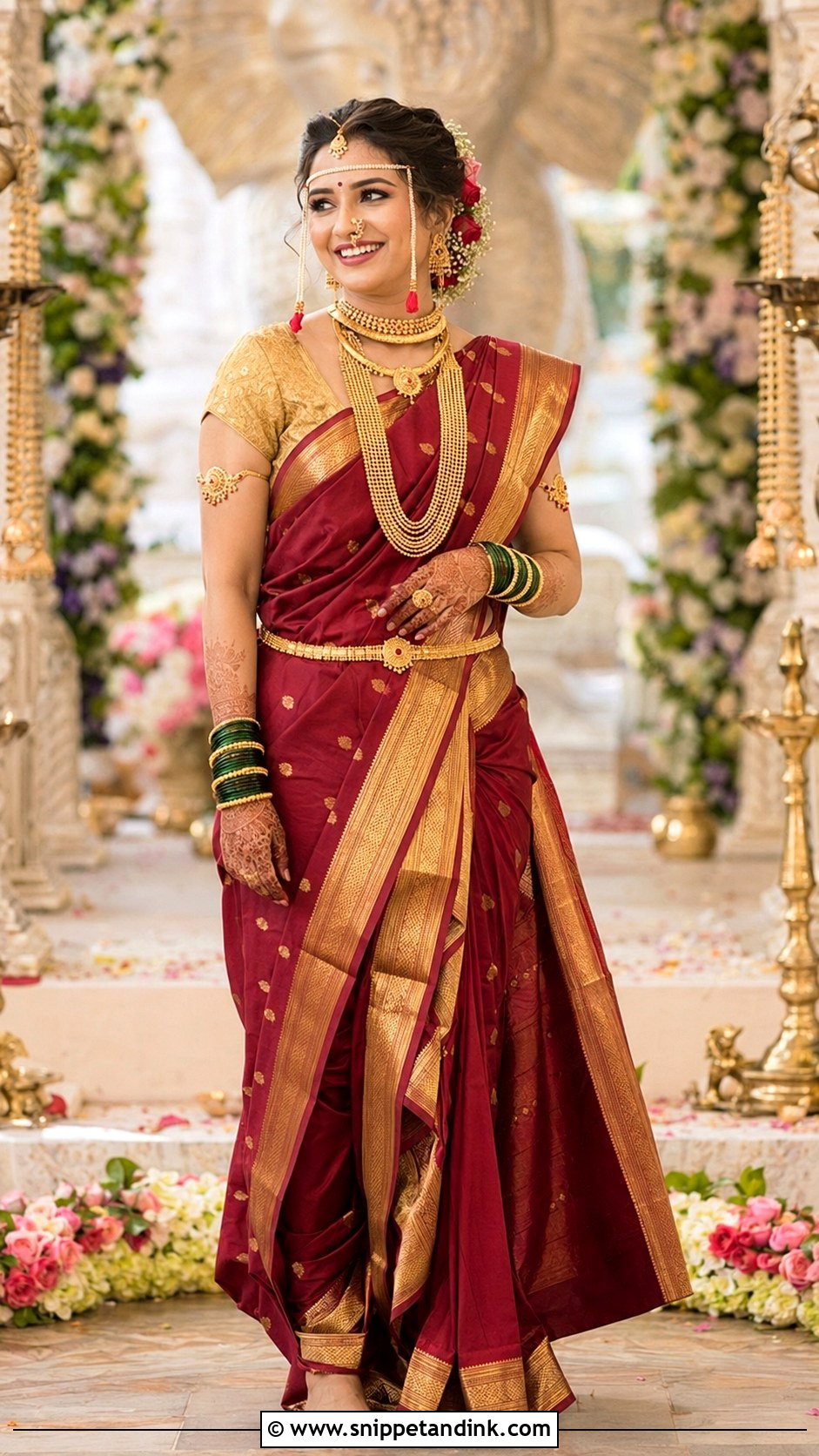
Grand weddings and royal themes call for full layering: a thushi choker, tanmani, putli haar, rani haar and Kolhapuri saaj-style pieces, plus a bold nath, pearl mundavalya, vaaki armlets, kamarbandh, green bangles and anklets. All of that is heavy, and the neck and ears tire well before the ceremony ends. I layer necklaces shortest to longest so each one sits on its own line, and I ask brides to wear the full set at home for an hour before the day. Keep the saree clean, the blouse sleeve fitted to sit just under the vaaki, a sleek gajra bun, strong eyes and a classic bridal lip.
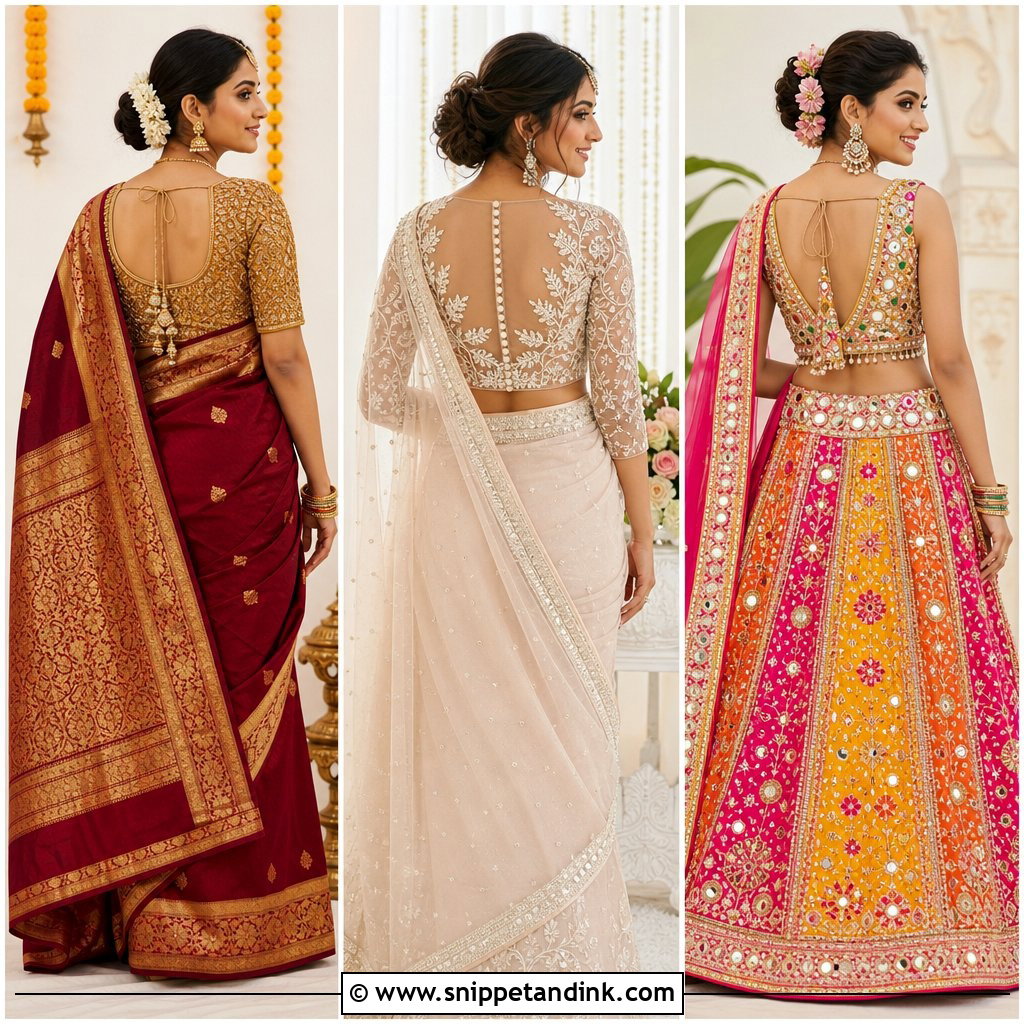

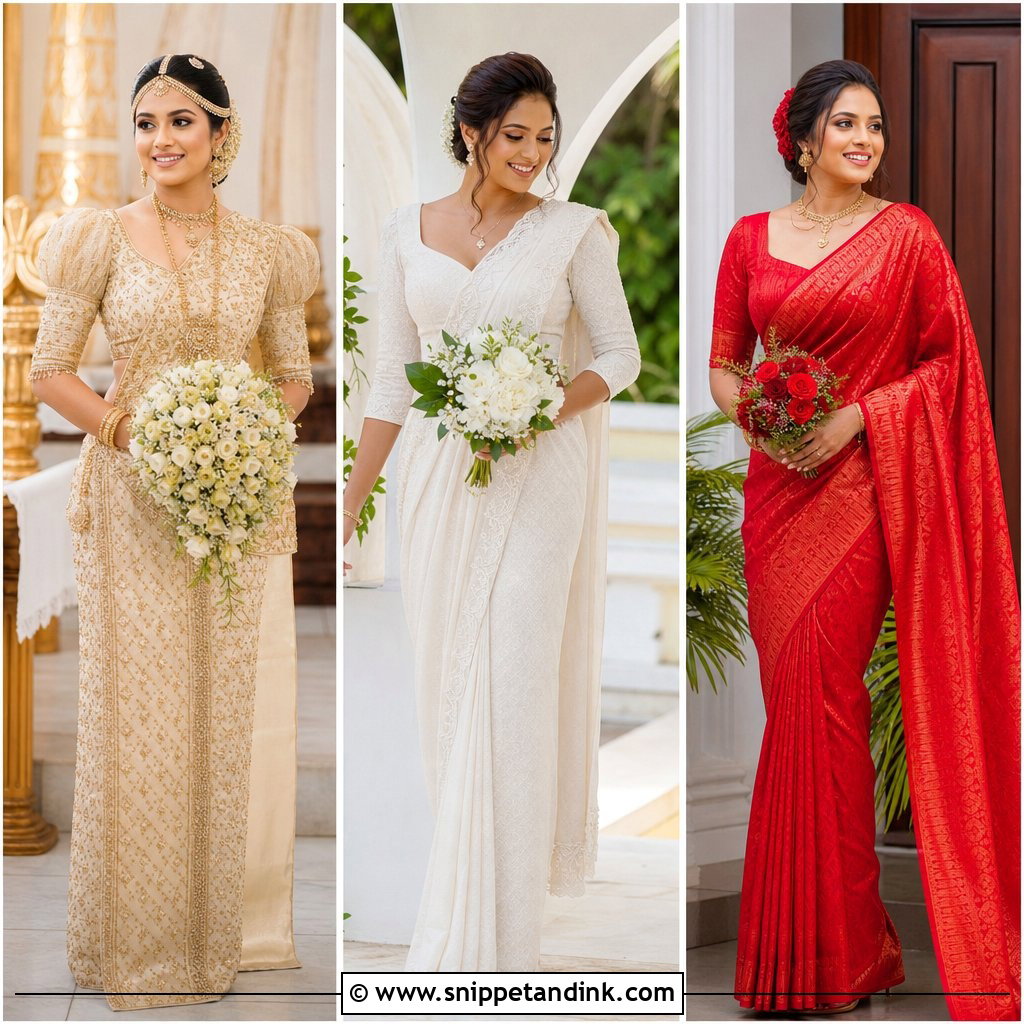
20. Marathi Bride Simple Jewelry Look
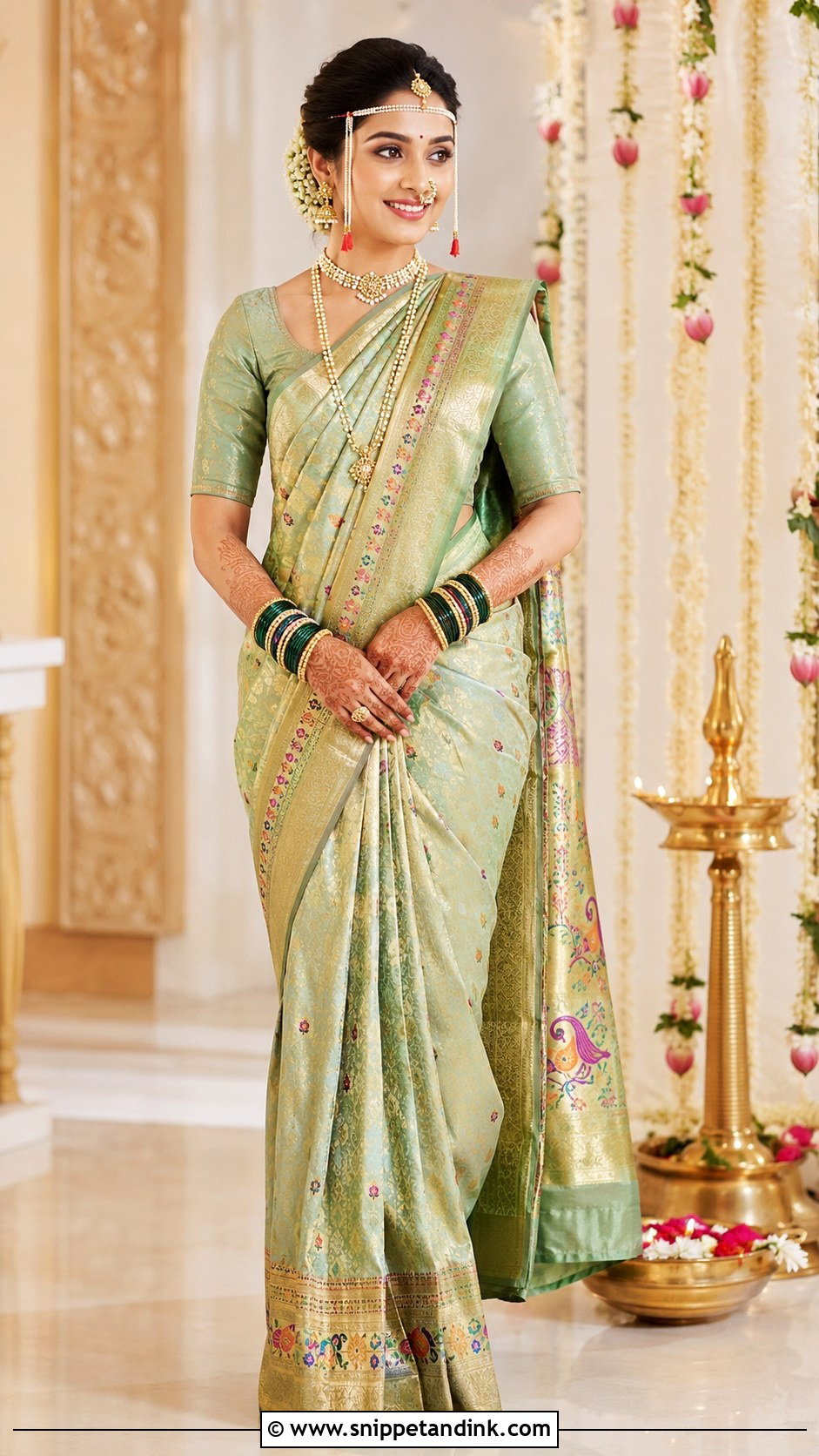
Less jewelry makes the drape and fabric matter more, so fitting is everything here. In a graceful Paithani or silk Nauvari in yellow, green, pink or ivory, wear a thushi, one long necklace, a delicate nath, pearl mundavalya and neat green bangles. With so little ornament, uneven pleats and a loose blouse show immediately, which is why I spend extra time on the drape for these brides. A bun with gajra or a soft flower braid, natural makeup with defined eyes and a soft lip suit an intimate ceremony.
21. Marathi Bride Mundavalya Look
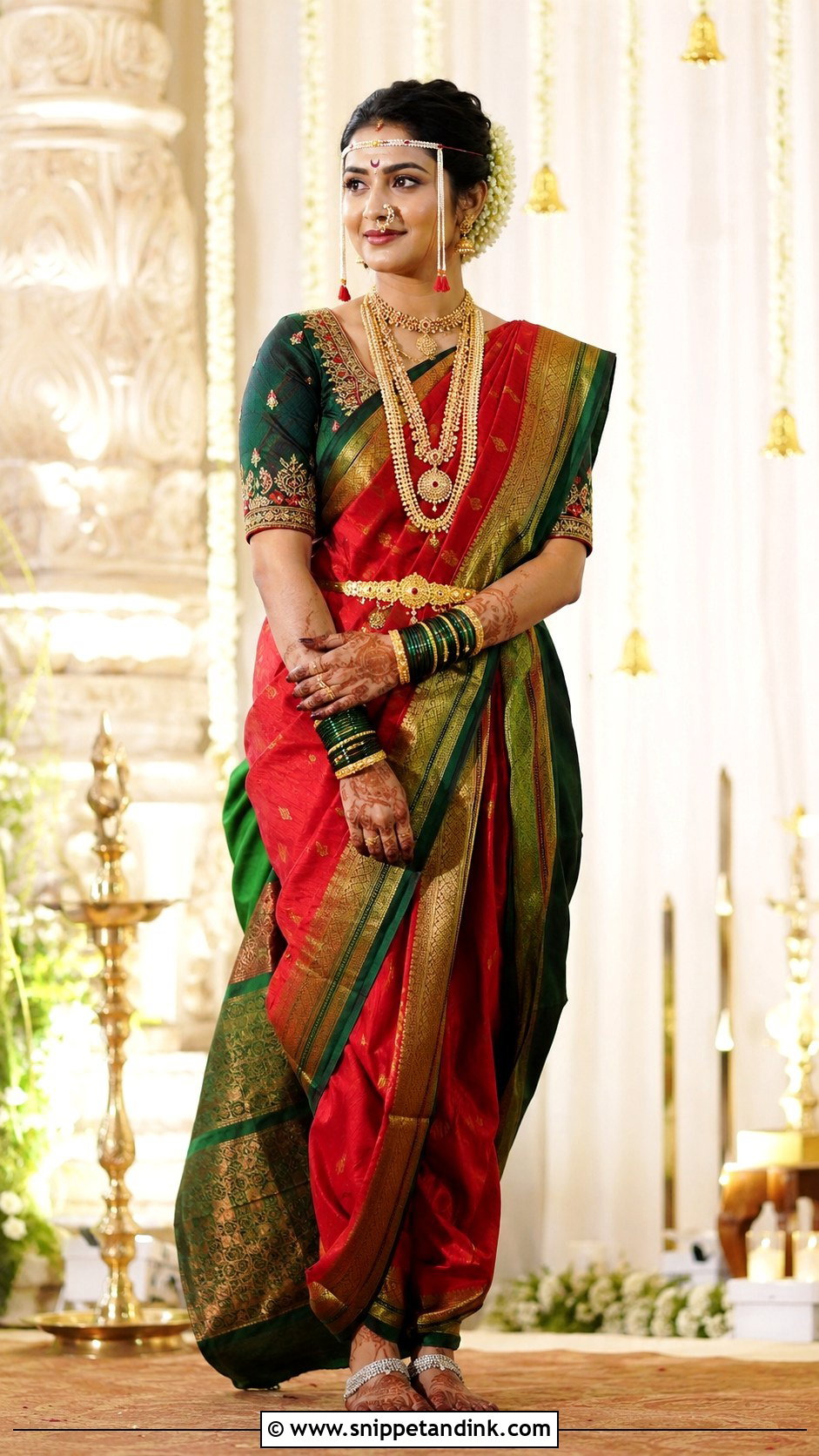
The mundavalya is tied across the forehead with its strings falling at each temple, so it depends entirely on the hair underneath. I brief the hairstylist to build a firm base at the hairline and a bun at the right height, because the ties need something to anchor to. Pearl strands are the classic choice; gold-bead or floral versions feel more personal. Watch the strings near heavy earrings, as they tangle, and a pin at each side keeps them hanging straight. Pair it with a Nauvari or Paithani in a colour that suits your skin, a nath, chandrakor bindi, thushi, long haar and green bangles.
22. Marathi Bride Nath Look
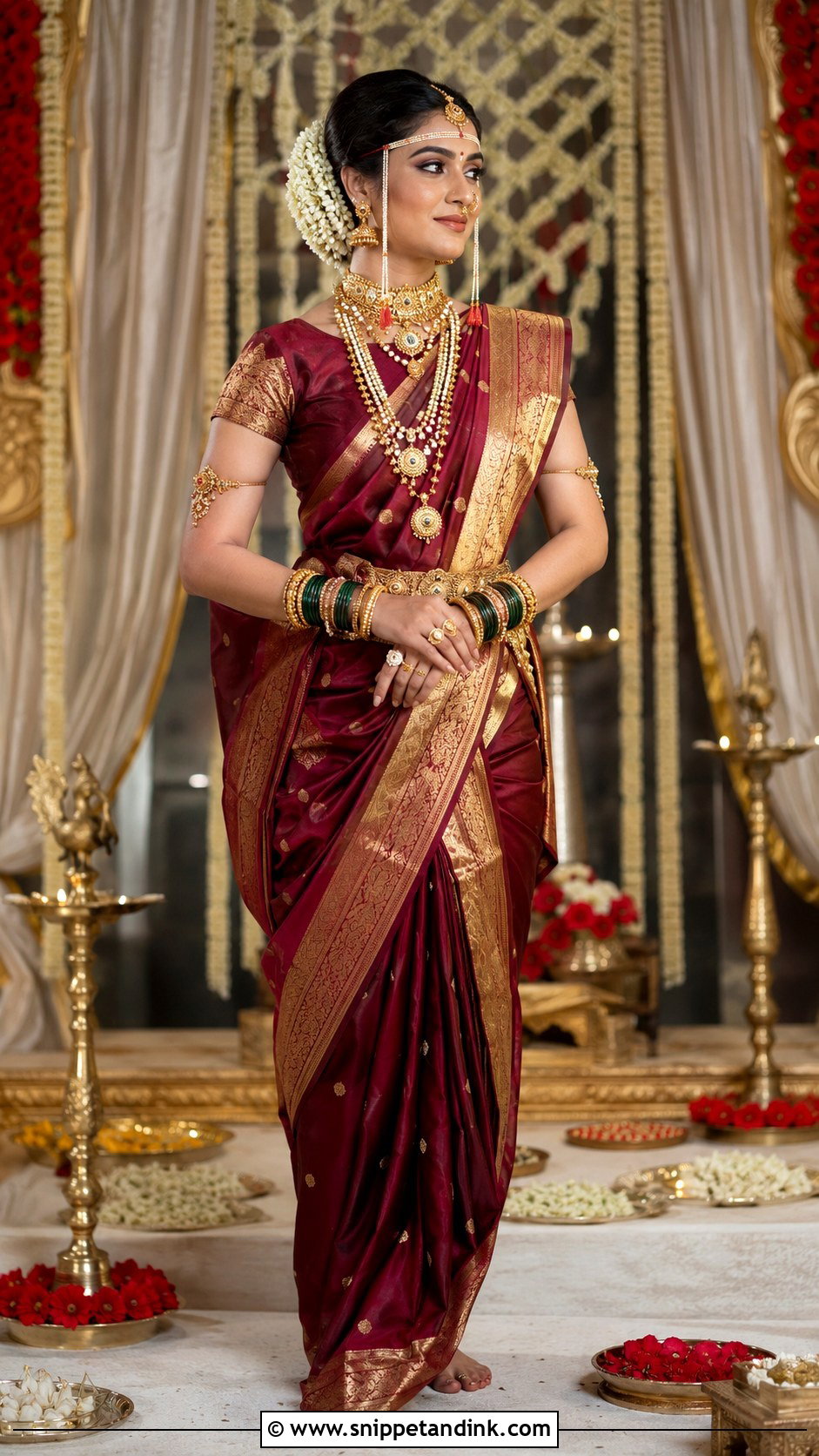
The Maharashtrian nath is large and curved, and a heavy one pulls at the nostril and can rest on the upper lip when you talk or eat. If your nose isn’t pierced, good clip-on and press versions exist, but I test them for an hour because they can pinch. Choose a saree that lets the face lead, such as a classic Paithani, green Nauvari or red silk. A pearl-and-gold nath sits well with a crescent bindi, kohl-lined eyes and soft makeup, balanced by a thushi, earrings, green bangles and mundavalya. Hair pulled back keeps the nath visible from every angle.
23. Marathi Bride Chandrakor Bindi Look
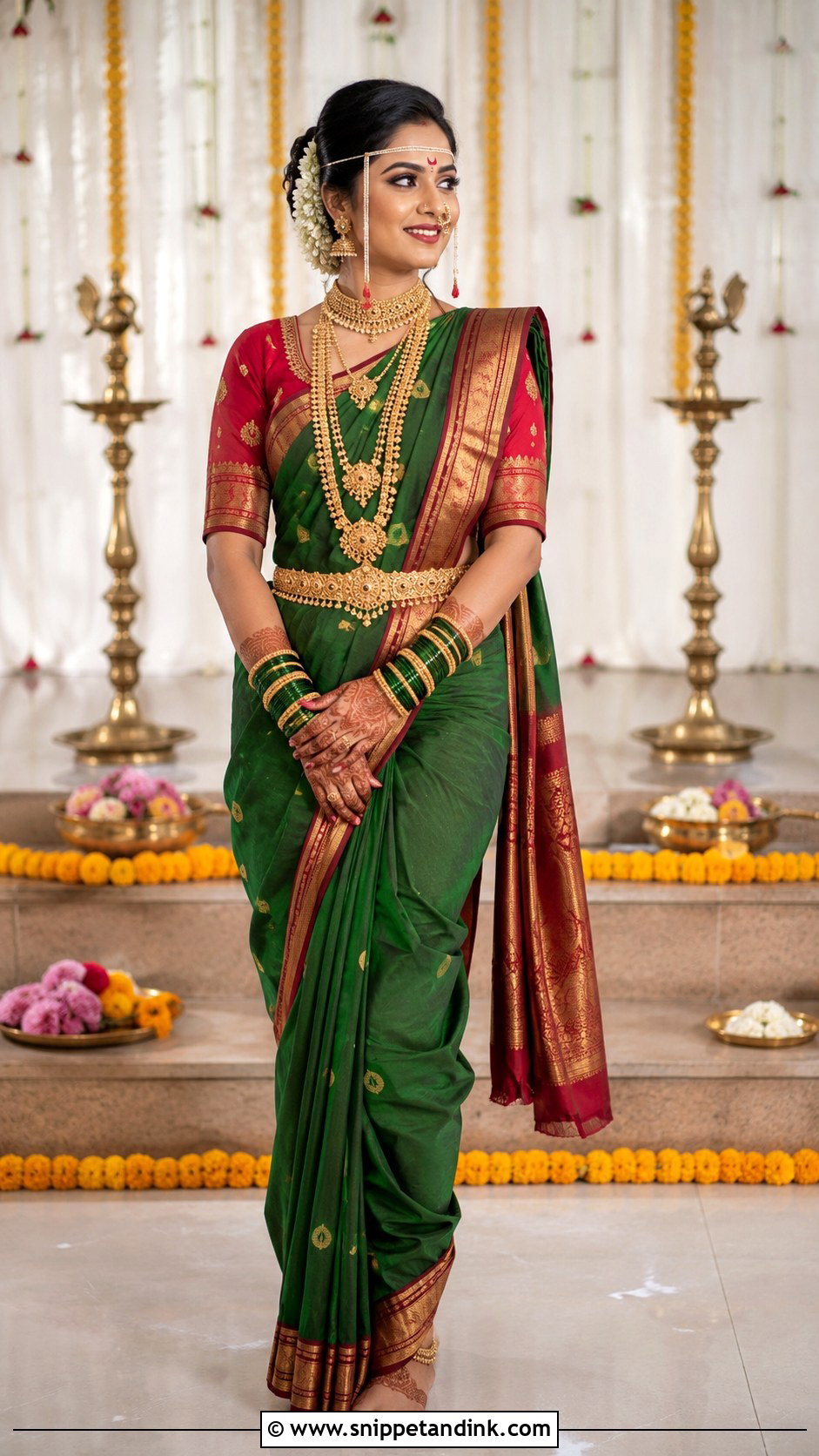
The crescent bindi completes the face more than any other single detail. It can be drawn or applied as a sticker, and stickers can lift with sweat during a long ceremony, so I prefer a drawn chandrakor in waterproof liner for the main rituals. With a silk Nauvari or Paithani saree in yellow, green, red, purple or peacock blue, add gold jewelry, green bangles and a clean gajra bun. Keep the contour soft so the bindi stays the focus, with defined eyes and a warm lip.
24. Marathi Bride Gajra Bun Look
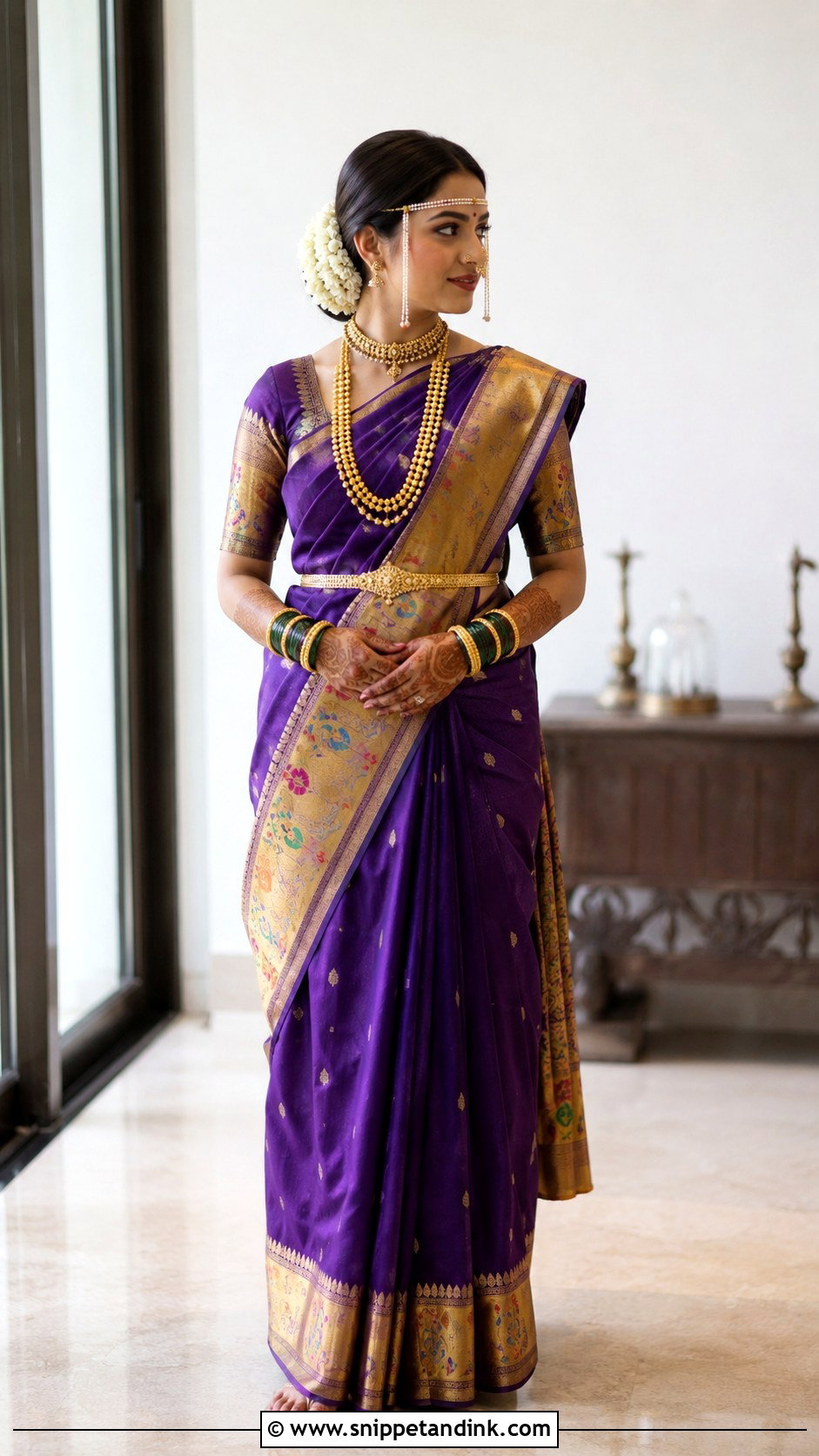
A gajra bun keeps the outfit neat for hours, but fresh jasmine starts browning in heat by mid-afternoon. I keep a spare strand in the fridge, mist it lightly, and pin through the gajra into the bun base rather than just wrapping it, because heavy flowers otherwise drag the bun downward. A low or mid bun on a Paithani or Nauvari with a rich border keeps the pallu and jewelry visible, and an ambada accessory or gold pins add finish. Pair with the mundavalya, nath, chandrakor bindi, layered necklaces, green bangles, a soft glow and defined eyes.

25. Marathi Bride Braid Look
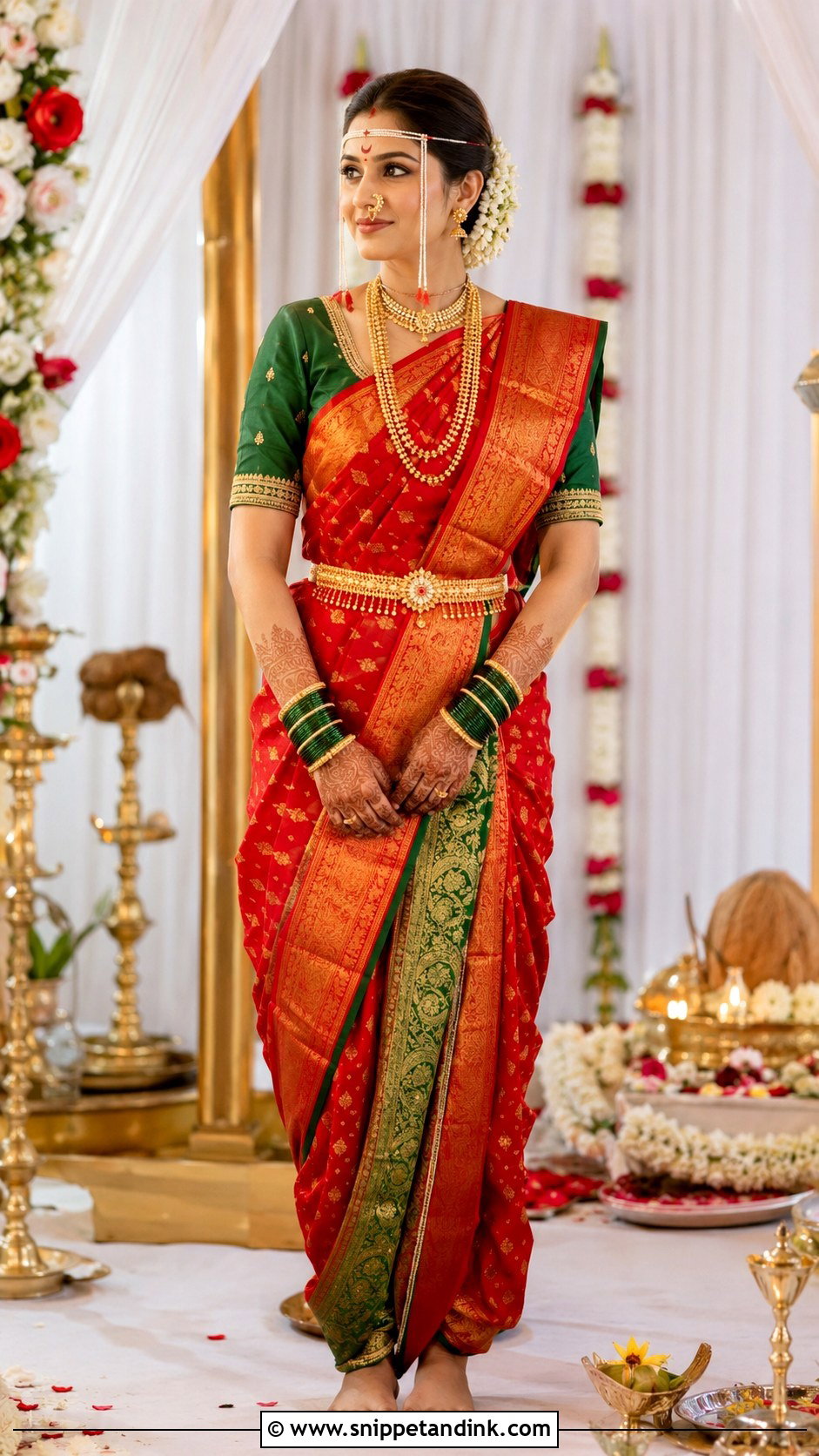
A braid is softer and younger than a bun, and it suits pre-wedding rituals especially well. Silk, Nauvari or Paithani-inspired outfits in yellow, pink, green or purple pair easily with a long braid trimmed with flowers, gold accessories or a veni ornament. If your hair is shoulder length, clip-in extensions braided in give the length the veni needs. Add a nath, thushi, long haar, green bangles and a small chandrakor bindi. I sew flowers into the braid at intervals so they don’t slide down, and keep the makeup fresh and warm with comfortable sandals and a small potli.
26. Marathi Bride Short Hair Look
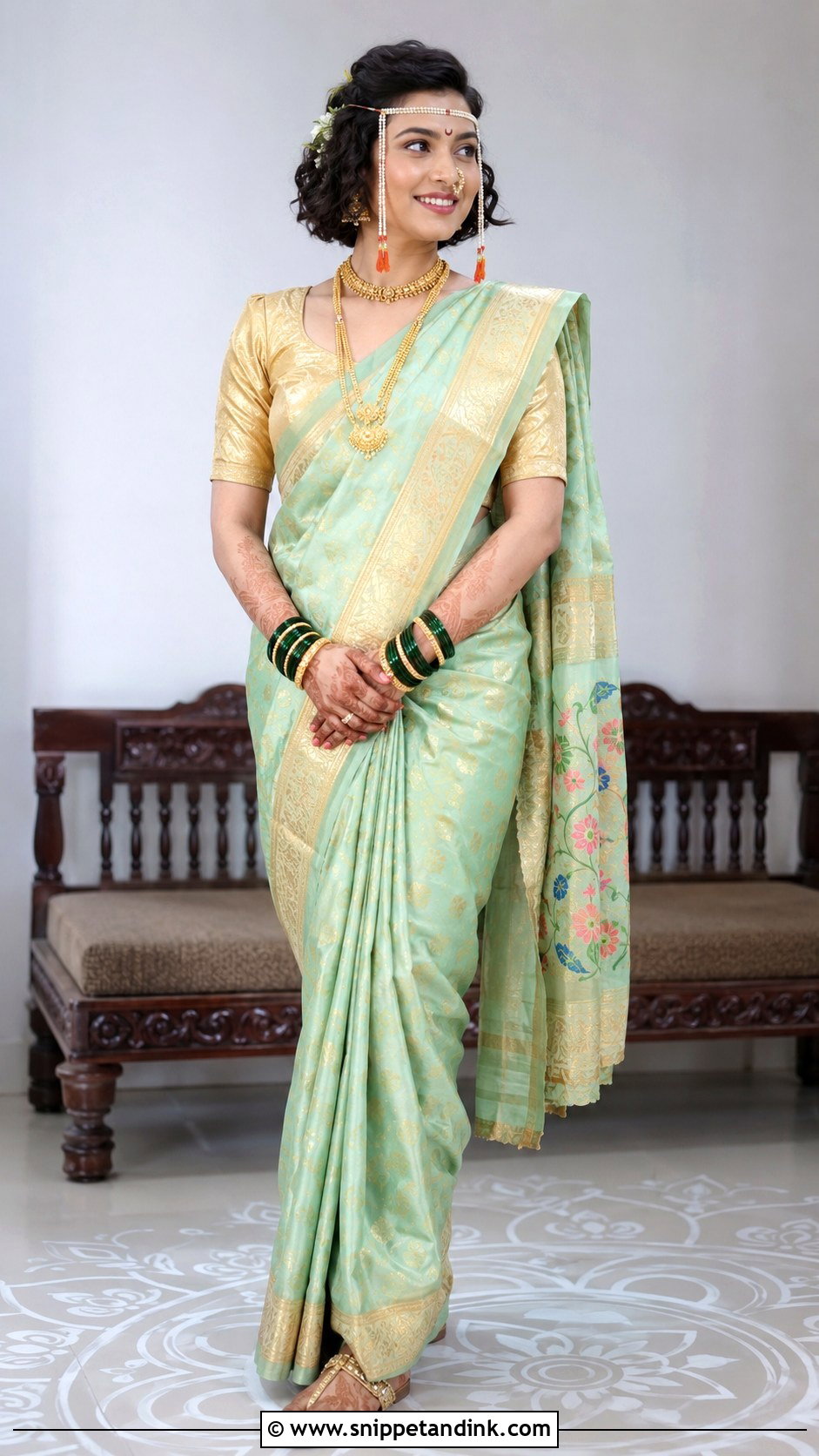
Short hair can carry a traditional look; it just needs a plan for the mundavalya, which has nothing to tie around without a bun. I either add a small clip-in bun at the back or anchor the mundavalya ties with crossed pins under a floral clip. Style the hair in soft waves, a sleek side part or pinned back with fresh flowers or gold pins, then add the nath, chandrakor bindi, green bangles and layered jewelry with a Paithani, Nauvari or silk saree in a strong colour. You keep your own hair and still look fully bridal.
27. Marathi Bride Plus Size Look
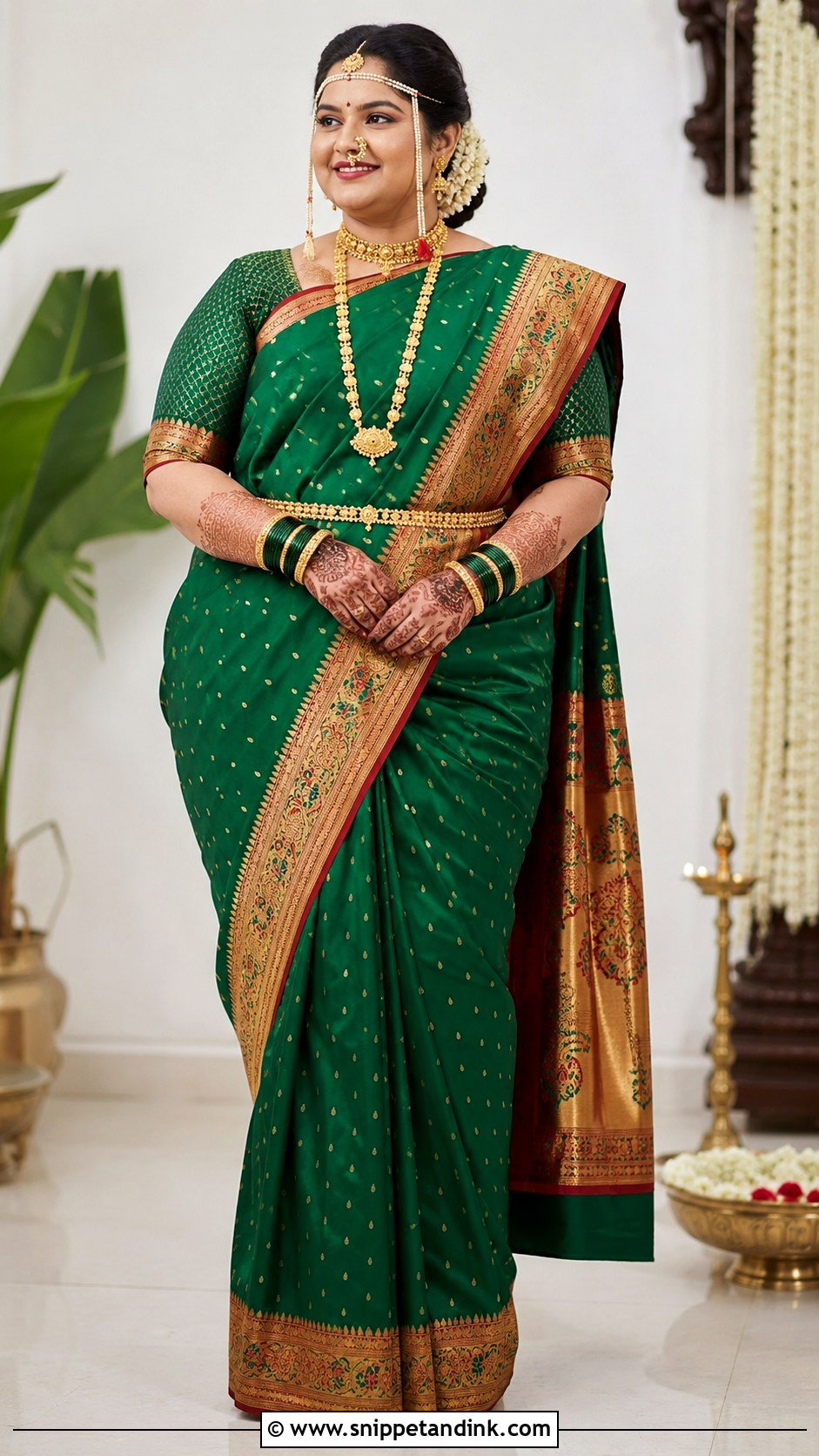
Comfort and structure come first. A silk Nauvari or Paithani with a balanced border and a blouse fitted at the shoulders, bust and upper arm makes the biggest difference, and I ask for a sleeve that ends where the arm is slimmest rather than one that cuts in. A Nauvari has bulk at the waist from the pleats, so I ask the draper to keep them flatter and fewer. Emerald, purple, maroon and peacock blue look rich; yellow and pink feel festive. Add a thushi, long haar, nath, mundavalya and green bangles, and wear the waist belt only if it sits flat.
28. Marathi Bride Modern Saree Look
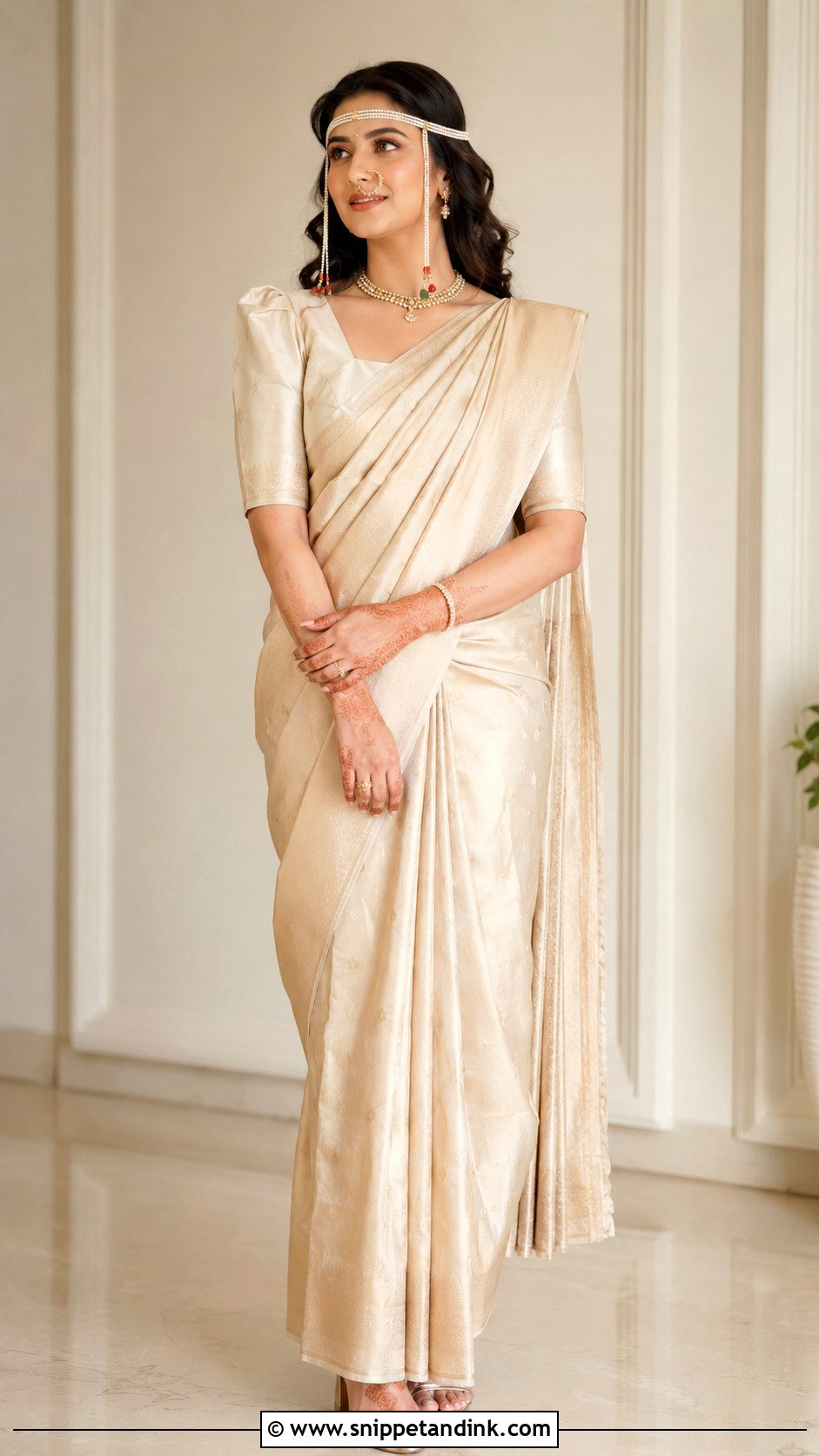
Modern brides who want a cleaner finish often go for Paithani, tissue silk, organza silk or a pre-draped saree in pastel pink, champagne, mint, lavender or ivory. Organza is crisp and holds pleats sharply, though it creases when crushed; a pre-draped saree saves time if your dresser is shared between several events. Pair it with a structured blouse, sleek jewelry and one or two traditional accents such as a nath or chandrakor bindi. A light mundavalya can come off after the ceremony for portraits. Soft waves or a low bun suit city weddings and intimate ceremonies.
29. Marathi Bride Royal Peshwai Look
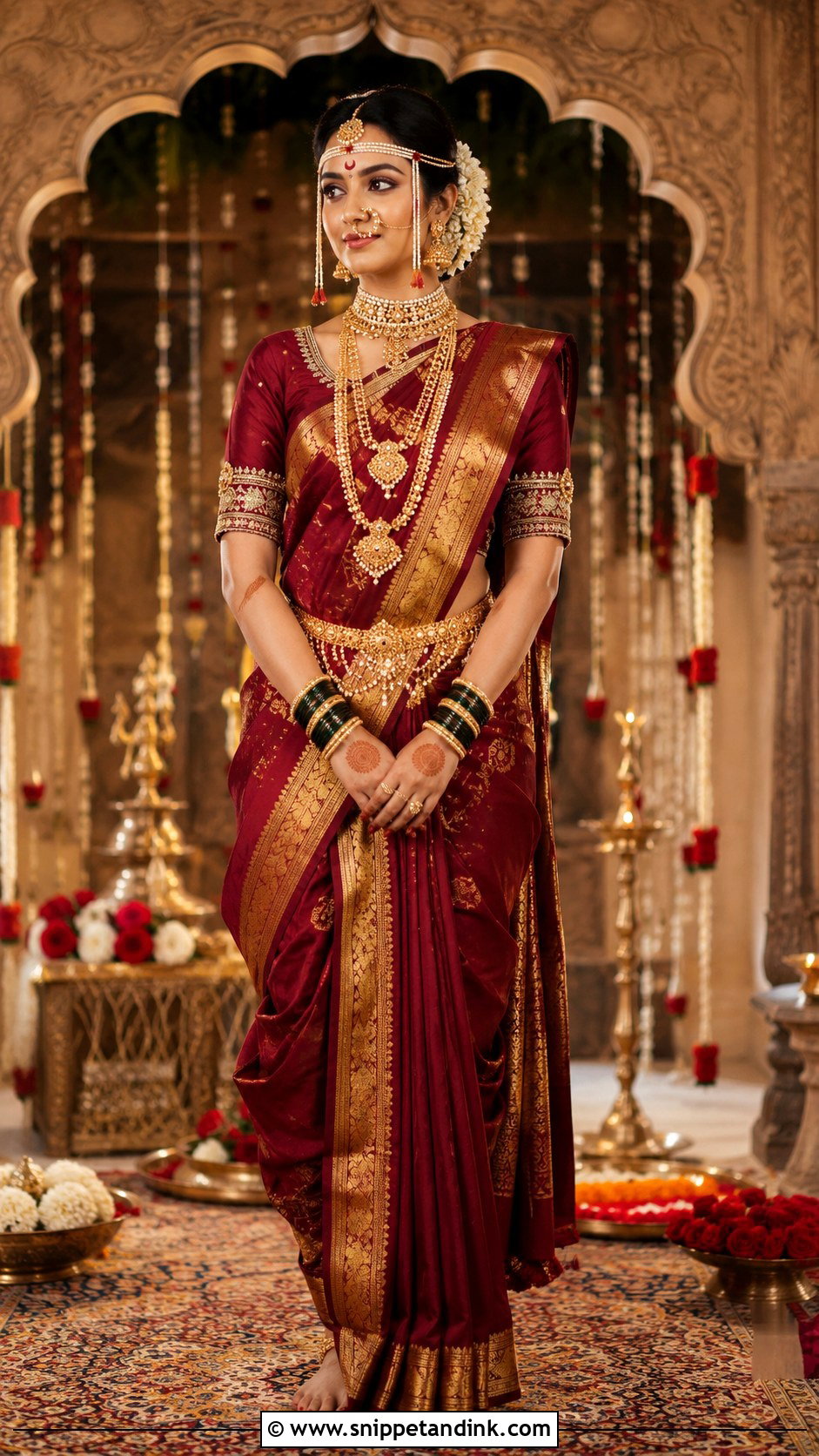
The royal Peshwai look is the most historic and the most demanding to dress. A rich Nauvari in maroon, green, purple or gold with heavy zari needs a structured drape and firm pleating, and I allow extra time in the schedule because it cannot be rushed. Layered gold necklaces, thushi, putli haar, vaaki armlets, kamarbandh, a bold nath, pearl mundavalya and chandrakor bindi build the regal effect. A full jasmine bun with gold ornaments, defined eyes, a matte base and a deep red or berry lip complete the presence.
30. Marathi Bride Pastel Saree Look
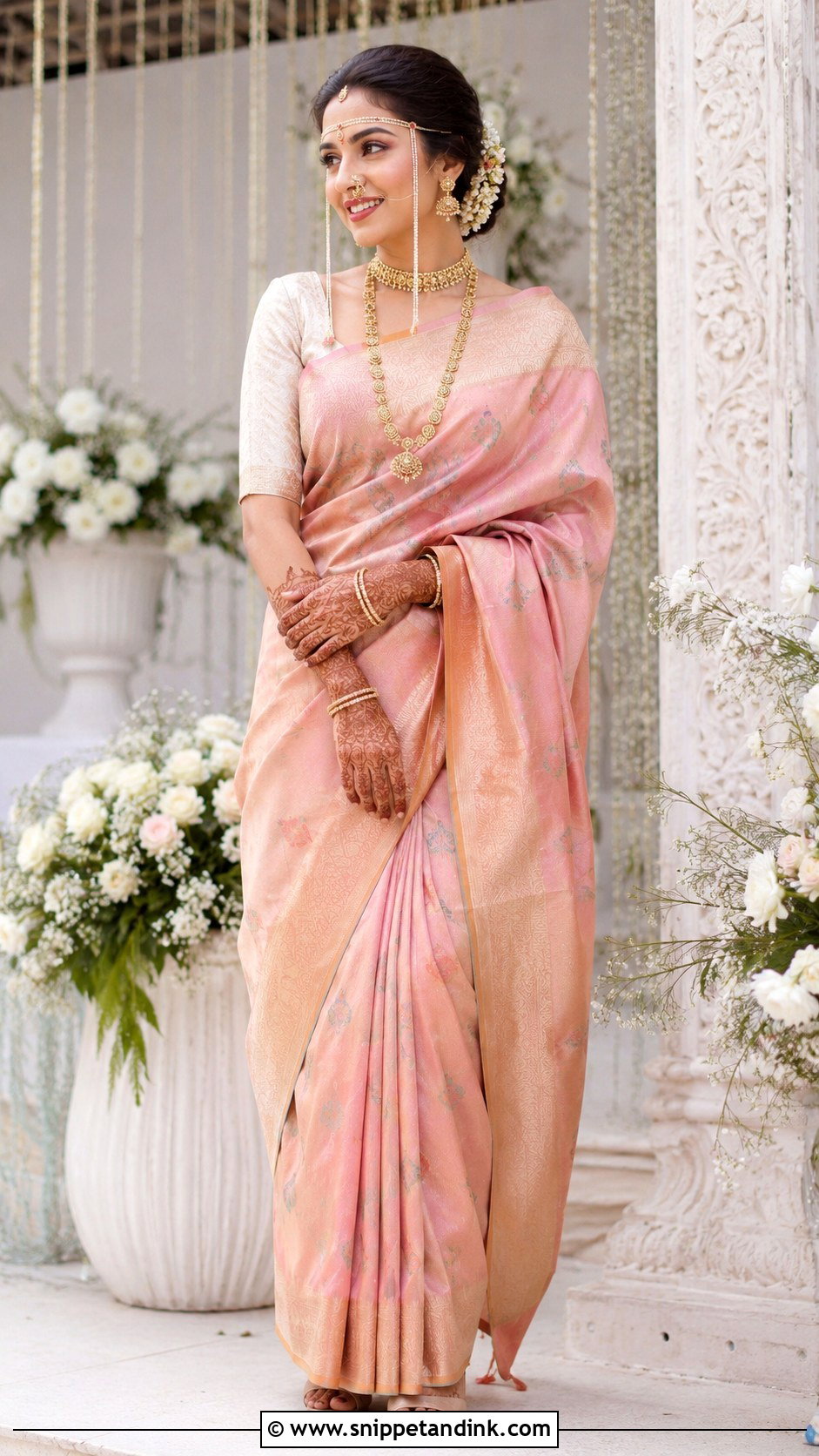
Pastel Paithanis in blush, mint, powder blue, peach or lavender with a gold border give a soft daytime bride. Pastel fabric shows foundation transfer and turmeric marks more than deep silk does, so I keep a clean scarf over the shoulders while makeup is finished. A matching or contrast blouse adds gentle dimension. Keep jewelry delicate: a slim nath, thushi, one long haar, light bangles and a pearl mundavalya. A fresh gajra bun or soft waves, dewy skin, rosy cheeks and a soft lip suit the palette.
Telling a Handwoven Paithani Apart and Storing It After the Wedding
Many brides inherit a Paithani or buy one meant to last a lifetime, so it is worth knowing what you are paying for. A handwoven Paithani shows the pallu motifs cleanly on the reverse side as well as the front, with no loose floats of thread hanging behind the design. Machine-made copies usually show a messy back with long threads where the pattern was carried across. Handwoven pieces take weeks to make, so if you are ordering one rather than buying from stock, start well ahead of your fittings.
After the wedding, how you store the saree decides whether your daughter can wear it later. Zari is metal-wrapped thread, and it cracks along fold lines that never change.
- Air it in shade for a few hours before putting it away, so trapped sweat doesn’t mark the silk.
- Have it professionally dry cleaned by someone used to silk and zari; never wash it at home.
- Wrap it in soft cotton or muslin rather than plastic, which traps moisture.
- Refold it along different lines every few months to protect the zari.
- Keep mothballs off the fabric; tuck a cotton pouch of neem leaves or cloves into the box instead.
The same care applies to the green glass bangles if you keep them. I wrap each set in tissue and store it flat, because chips appear where they knock against each other.
Let Your Family’s Rituals Settle the Last Details
A Marathi bridal look comes together when the drape, blouse fit, nath, mundavalya, bangles, hair and makeup all agree with each other. The traditional Nauvari will always have a place, but a Paithani lehenga, a pastel saree, a pared-back jewelry set or dewy skin can give you more room to be yourself. Take the looks above as starting points, then adjust them to your comfort, your family’s rituals and the order of your events. I’d always rather see a bride move easily through her ceremony than wear one more necklace than she can carry.
You'll Like These Ideas:



Leave a Reply