
A Kandyan bridal hairstyle is never designed on its own. The Kandyan bride often wears the Osariya with a Nalalpata across the forehead, side ornaments, layered necklaces and fresh flowers, and all of that has to sit level and stay put through the Poruwa ceremony. So when I plan Kandyan hair, I’m really planning a base for the jewelry. The looks below run from the traditional low bun to softer modern versions, and for each one I’ve noted how it handles the weight, the heat and the hours.
Setting Kandyan Jewelry Into the Hair, in Order
Most problems with Kandyan hair come from doing things in the wrong sequence. If the bun is finished and sprayed before anyone tries the Nalalpata on, the ornament ends up forced into place and the hair around it gets pulled out of shape. This is the order I work in.
- Set the part and smooth the front while the hair is slightly damp, so the line is clean.
- Tie a firm base at the nape and build the bun, with padding if you need fullness.
- Place the Nalalpata, center it on the forehead, and secure its side chains toward the bun.
- Add side ornaments and check both profiles in a mirror for level.
- Pin flowers last, into the bun itself, after the jewelry is locked.
Then the bride stands, turns her head both ways and looks down, the way she will at the Poruwa. If anything shifts, I fix it then rather than spray over it. Bring the actual jewelry to your trial, or at least the Nalalpata. Rented sets vary in weight, and the hair has to be built for the one you’ll wear.
1. Traditional Kandyan Bridal Bun
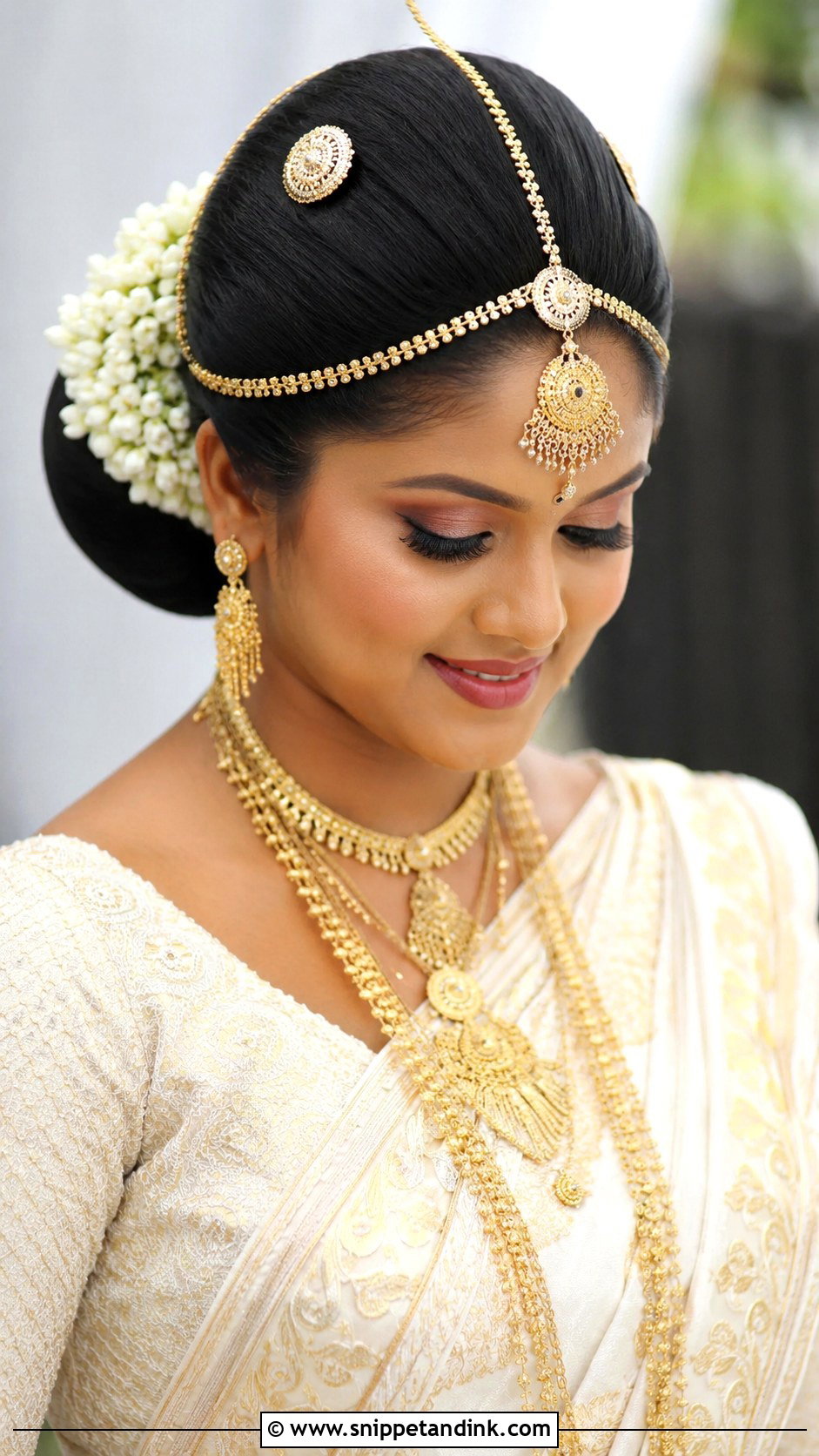
This is the shape the whole Kandyan look was built around: hair smoothed back neatly into a low, rounded bun at the nape. Keeping the bun low leaves the forehead, ears and neck clear for the Nalalpata, side ornaments, earrings and necklaces, so nothing fights for space. A Konda Maala, fresh white flowers or pearl pins go around it. The thing I check most is firmness. The jewelry is heavy, and a bun that feels fine at the mirror can start sagging after an hour of standing on the Poruwa. I build it on a tight base so it looks the same from the front, side and back at the end of the day.
2. Kandyan Bridal Low Bun With Flowers
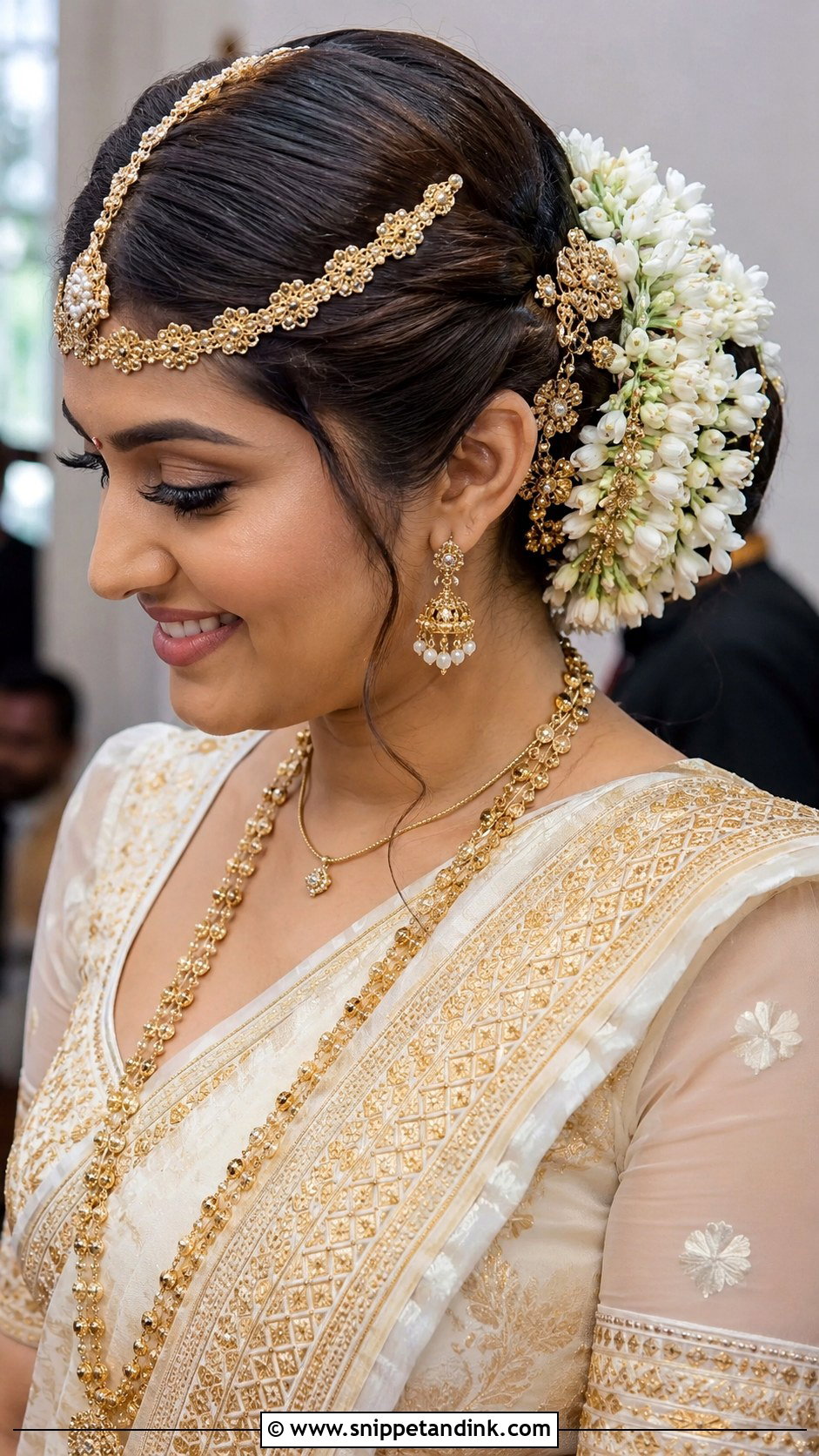
Flowers soften the jewelry. The crown stays smooth and the hair gathers into a full bun close to the neckline, with jasmine buds, orchids or small white blooms placed on one side or across the base. I pin every flower stem into the bun itself, never just into the outer layer of hair, because the outer layer moves every time you turn your head. White against dark hair also reads clearly in the back-view photos, which is often the view guests have during the ceremony.
3. Kandyan Bridal Bun With Nalalpata
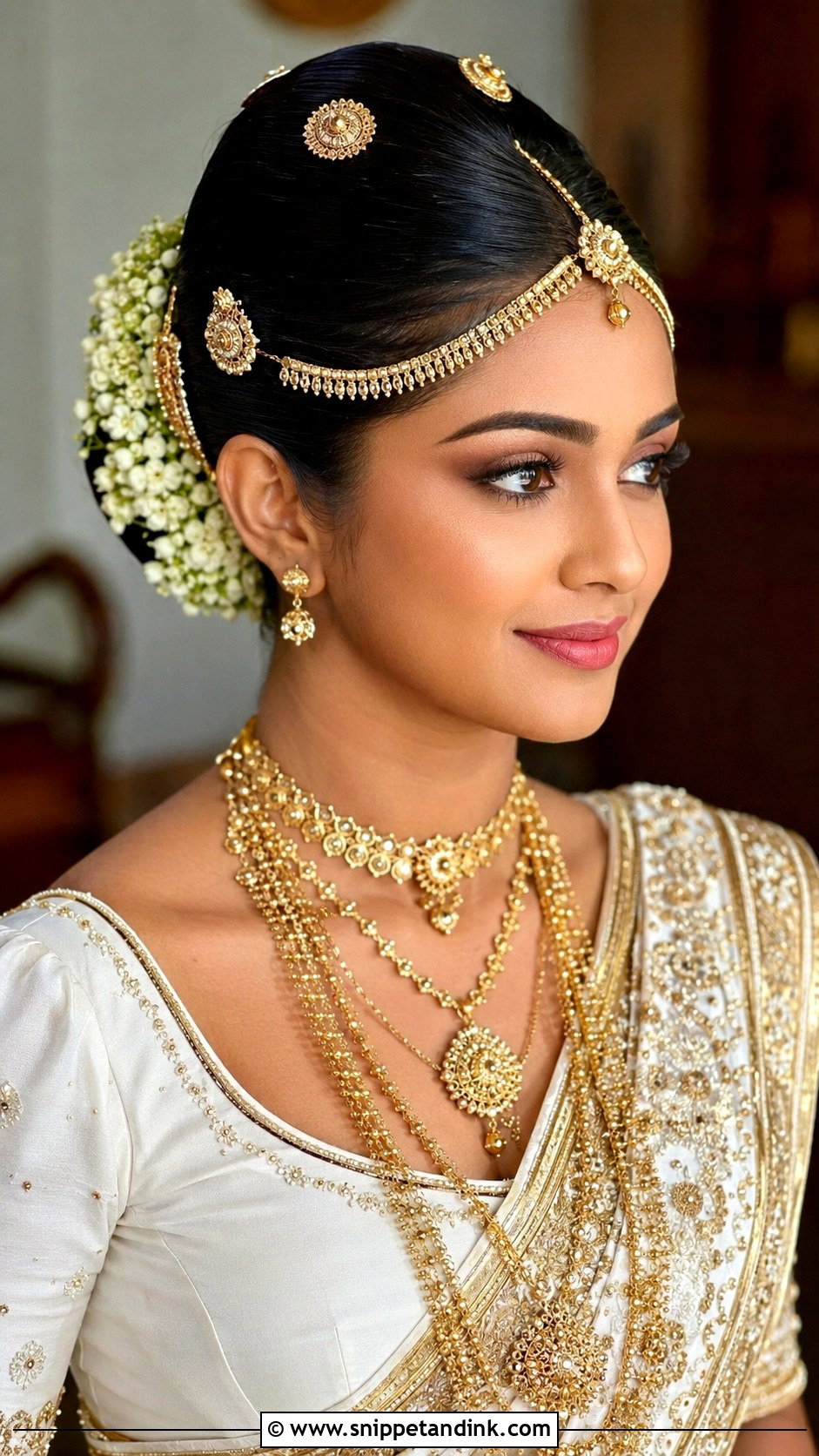
The Nalalpata decides the front of the hair, so I place it before finishing anything else. A Kandyan bridal bun with Nalalpata starts with sleek, controlled hair at the front and crown, and a low, firm bun that the side chains can be secured toward. If the front has too much volume, the ornament tilts forward; if it’s too flat and slippery, it slides. The bun size matters too. Full enough to balance the jewelry, small enough that it doesn’t compete with the headpiece in profile.
4. Modern Kandyan Bridal Bun
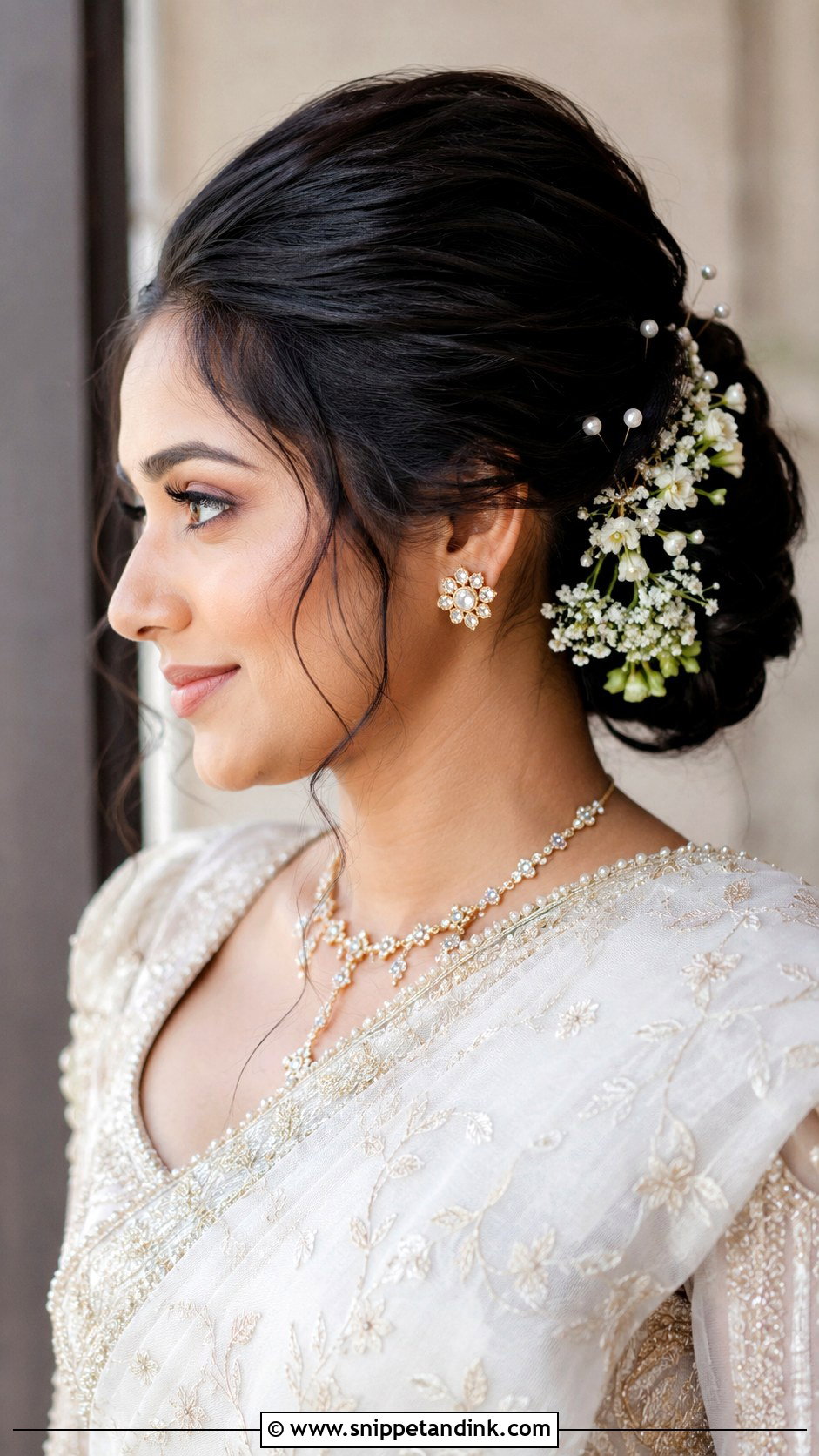
Here the crown gets gentle volume, a few light face-framing pieces or subtle twisted sections, while the bun still sits low with a slightly airy finish. It respects the tradition but feels current. My caution is with the face-framing pieces: the Nalalpata sits right where they fall, and loose strands get caught under the chain. I keep them below the ornament line, closer to the cheekbone. Pair it with fresh flowers, pearl pins or a lighter Nalalpata setting.
5. Kandyan Bridal Chignon
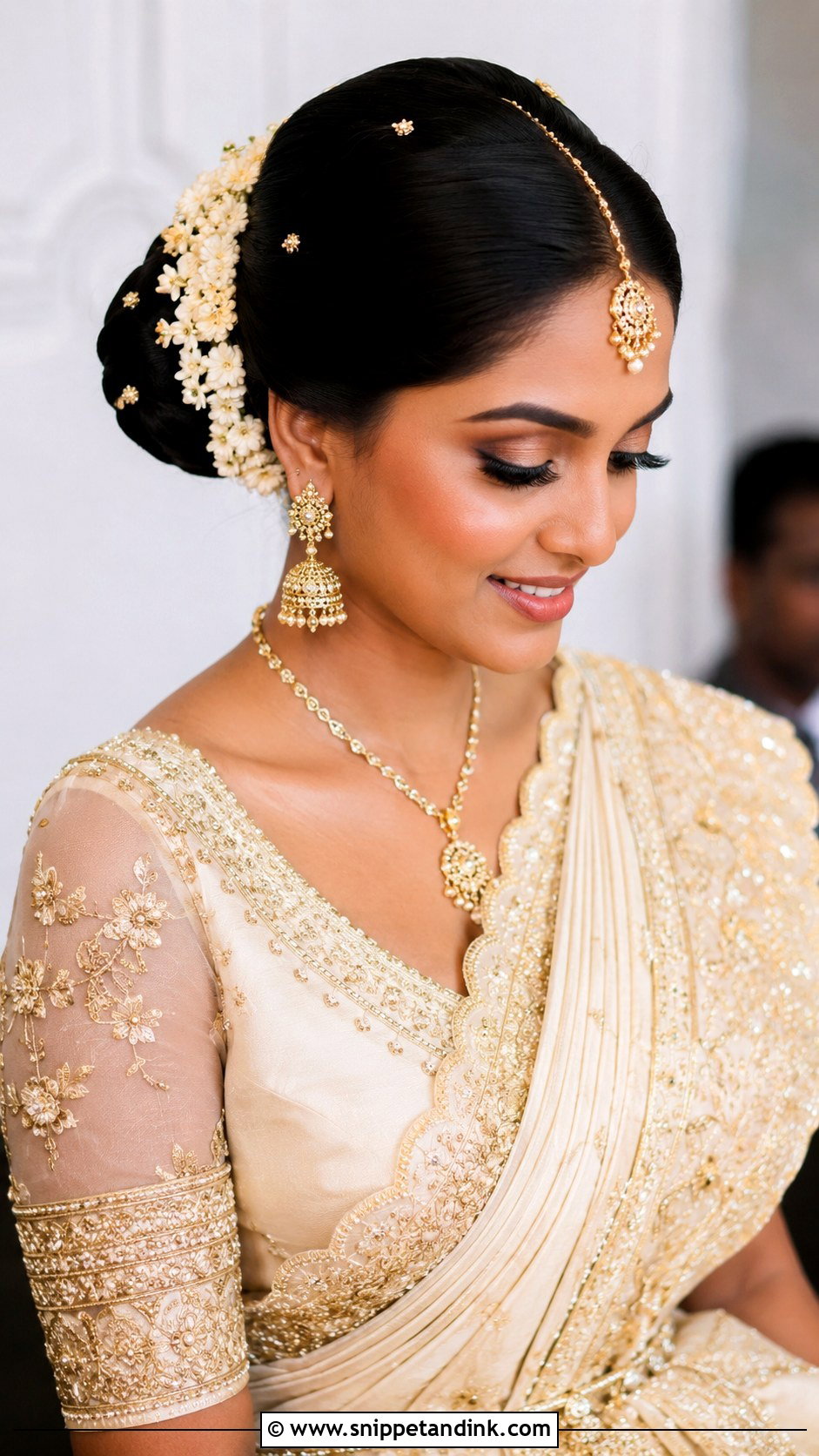
A chignon is flatter and more tucked than the classic round bun, sitting close to the neck. The hair is parted neatly, smoothed back and folded in. Because the sides stay tight, heavy earrings show clearly and don’t catch on loose hair, which matters with Kandyan jewelry. It can be decorated with small flowers, gold pins or a traditional hairpiece. I’d suggest it to a bride with a slim neck or a narrow face, where a big round bun can look oversized. It stays comfortable through the ceremony, photographs and the long line of greetings afterward.
6. Kandyan Bridal Bun With Side Part
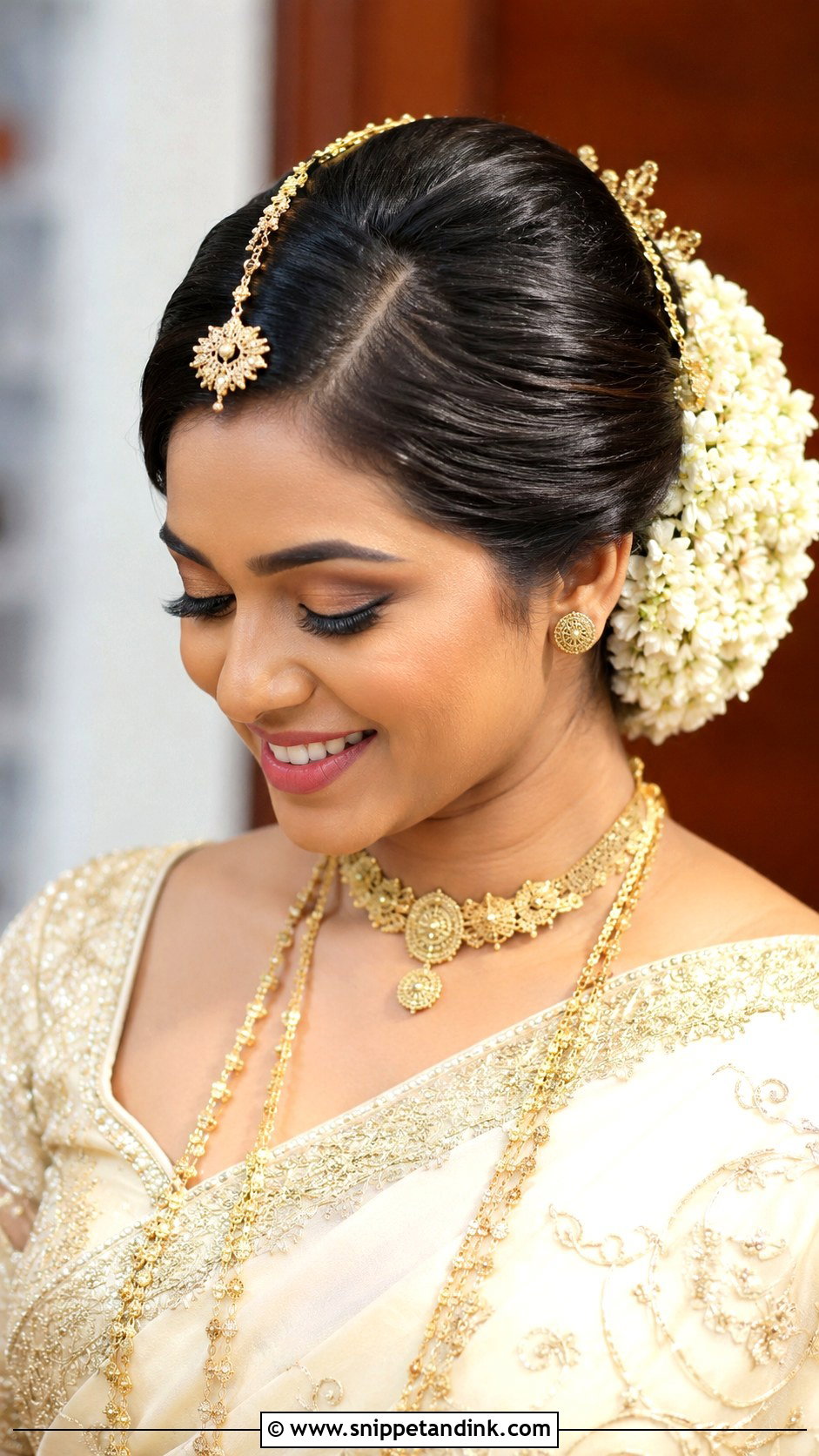
A side part changes the mood: the front softens into a diagonal sweep while the low bun stays traditional at the back. It suits round, oval and heart-shaped faces because the angle breaks up the symmetry a little. The front can be sleek or lightly waved. Here’s the catch with Kandyan jewelry. The Nalalpata must still sit centered on the forehead, even though the hair isn’t parted down the middle, so I pin the ornament’s center point independently and check it in the mirror straight on before anything is sprayed.
7. Kandyan Bridal Bun With Middle Part
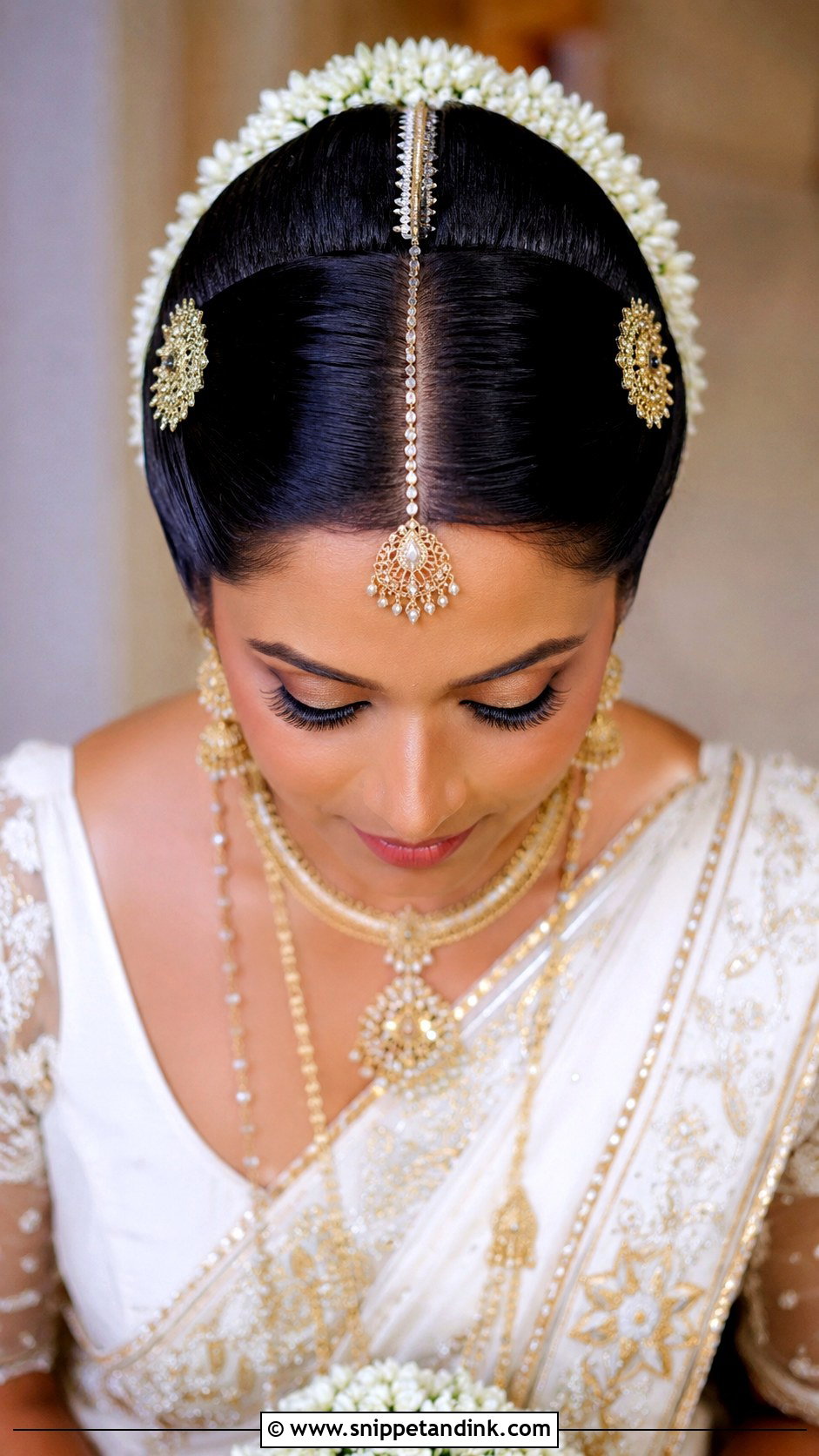
With a centered Nalalpata, a middle part is the most natural partner, because the part line leads the eye straight down to the ornament. The hair is smoothed down evenly on both sides and gathered into a low bun at the nape. Any wobble in the part shows immediately under that much symmetry, so I set the part on damp hair with a tail comb before smoothing. It can be very sleek or softened with a little crown volume. The calm frame suits a bride who wants the most classic version of the look.
8. Kandyan Bridal Braided Bun
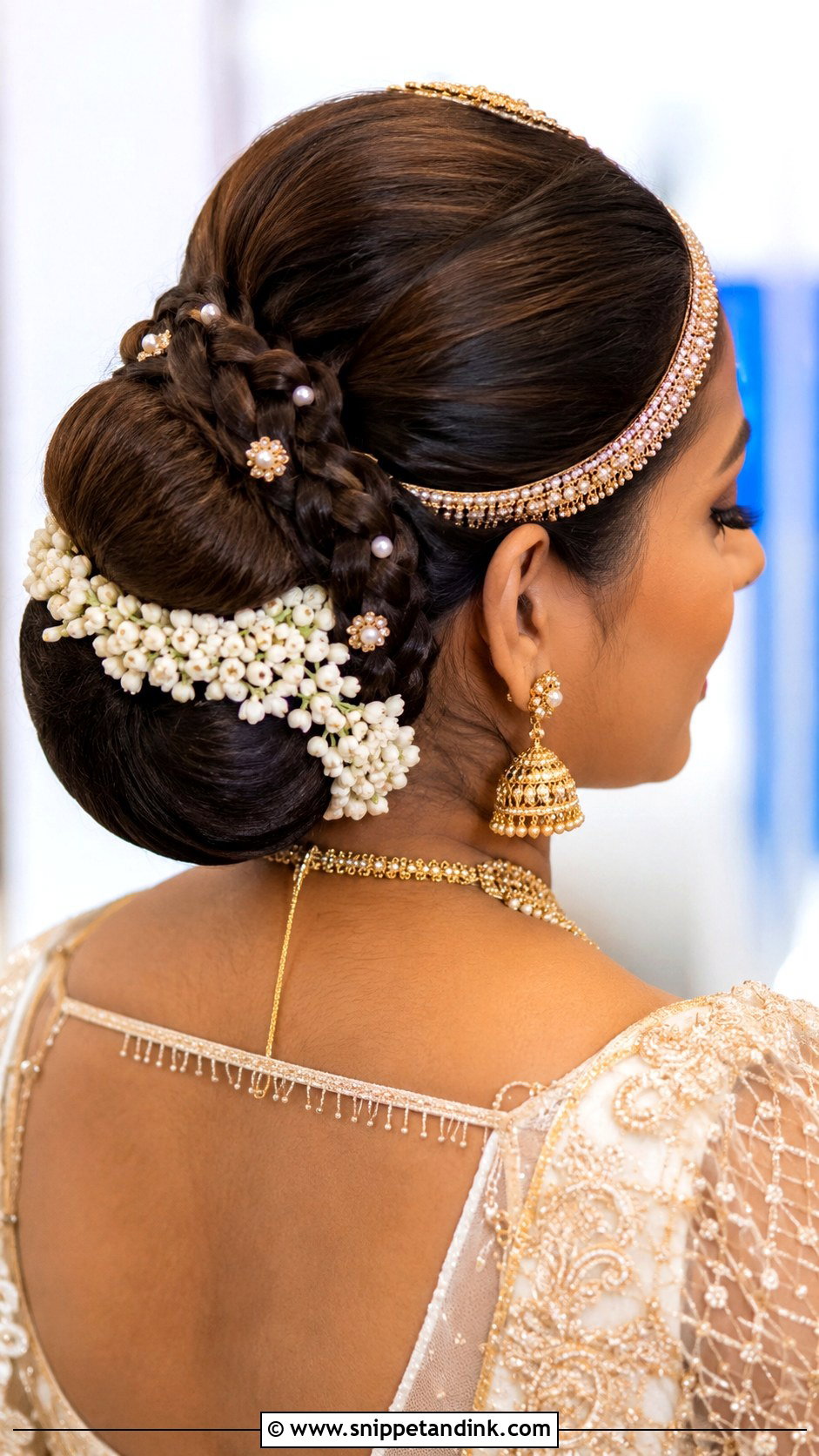
The braid can wrap around the bun, cross the crown or be woven into the low bun itself, which gives the back and side views more detail. For thick or long hair, braiding is also a control technique: it packs the volume down so the bun doesn’t end up enormous. Pins also hold better in braided sections, which helps with heavy ornaments. Fresh flowers or pearl pins tuck neatly into the gaps of the braid. It’s slightly more detailed than a smooth bun but just as secure.
9. Kandyan Bridal Twisted Bun
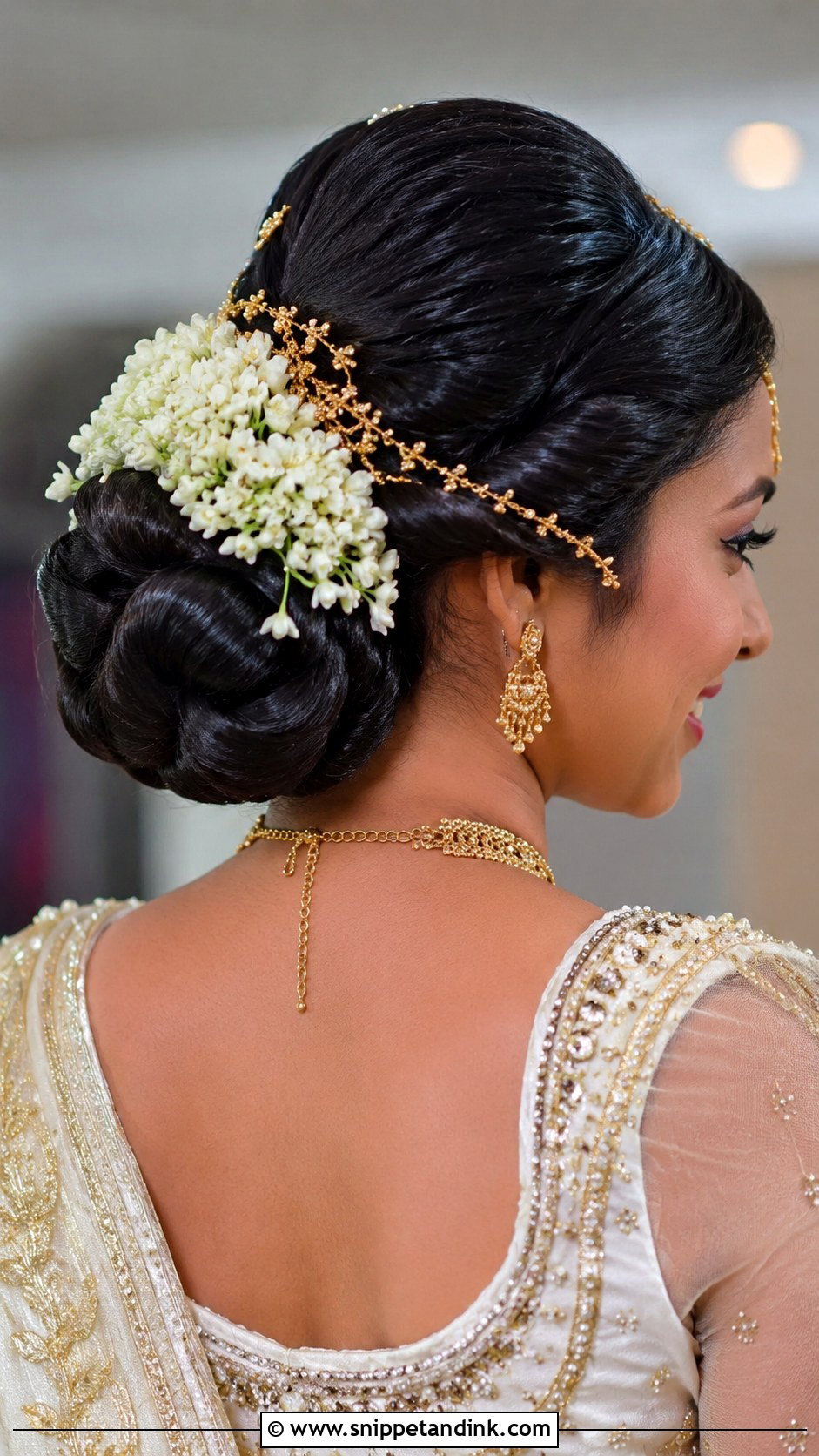
Twists give texture without the bulk of braids. The hair is divided into sections, twisted back and shaped into a low bun, which adds movement while staying neat enough for Kandyan jewelry. It softens the profile along the sides of the head. Twists do unwind if they’re set on freshly washed, silky hair, so I prep with a little texture spray and pin each twist as I go. Tiny flowers, gold pins or one simple ornament suit it, and it works for traditional and mixed wedding looks alike.
10. Kandyan Bridal Bun With Pearl Pins
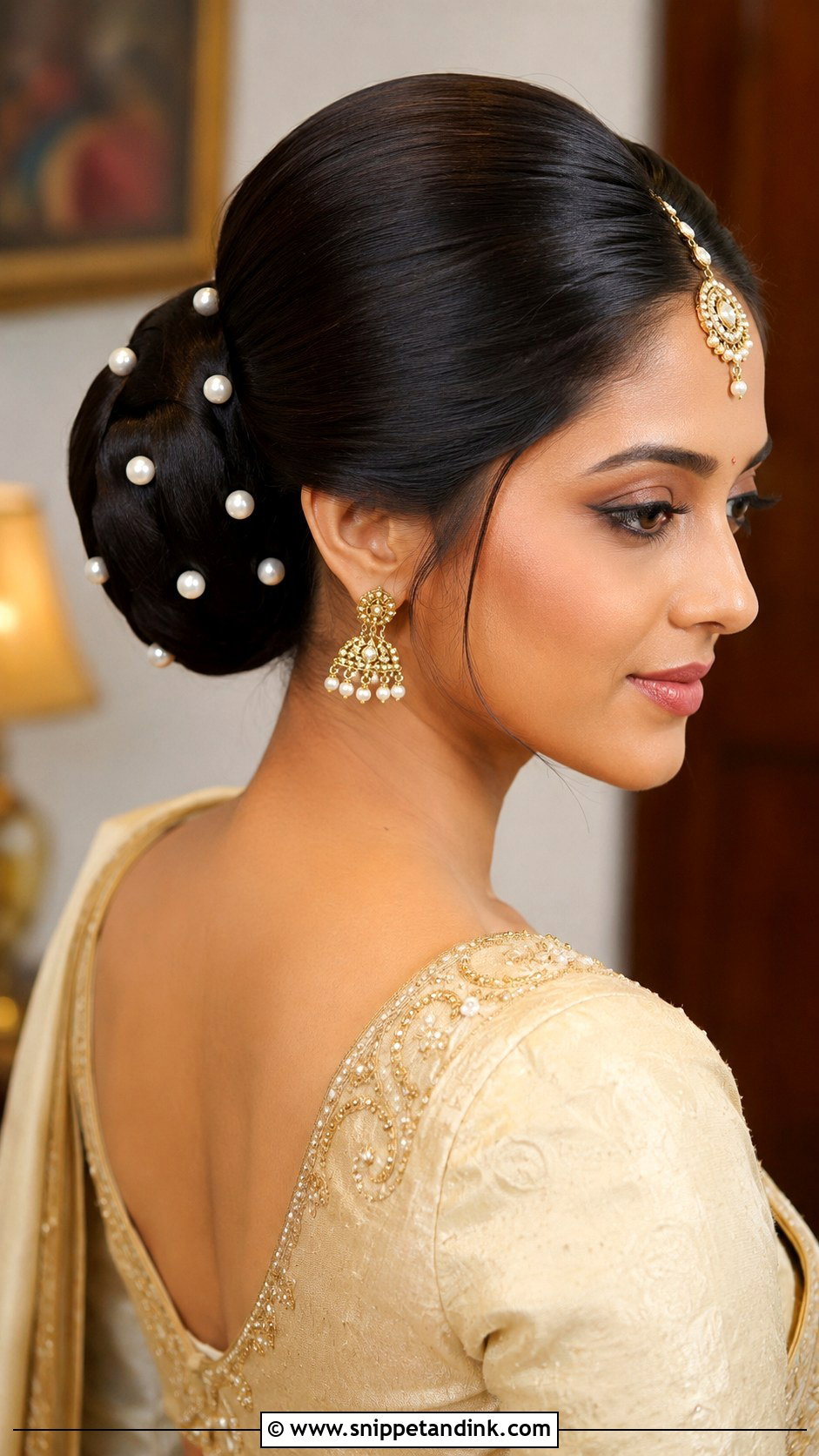
Pearls add light around the bun without pulling attention from the main jewelry. They can be scattered across a smooth low bun or placed in a neat curve along its edge. If you’d prefer something lighter than big floral clusters, this is it, and pearls suit ivory, white, gold and champagne outfits. I’d keep pearls to one area of the bun so they read as a design, not as decoration sprinkled everywhere. A few pins look minimal; a fuller curve looks richer.
11. Kandyan Bridal Bun With Jasmine Flowers
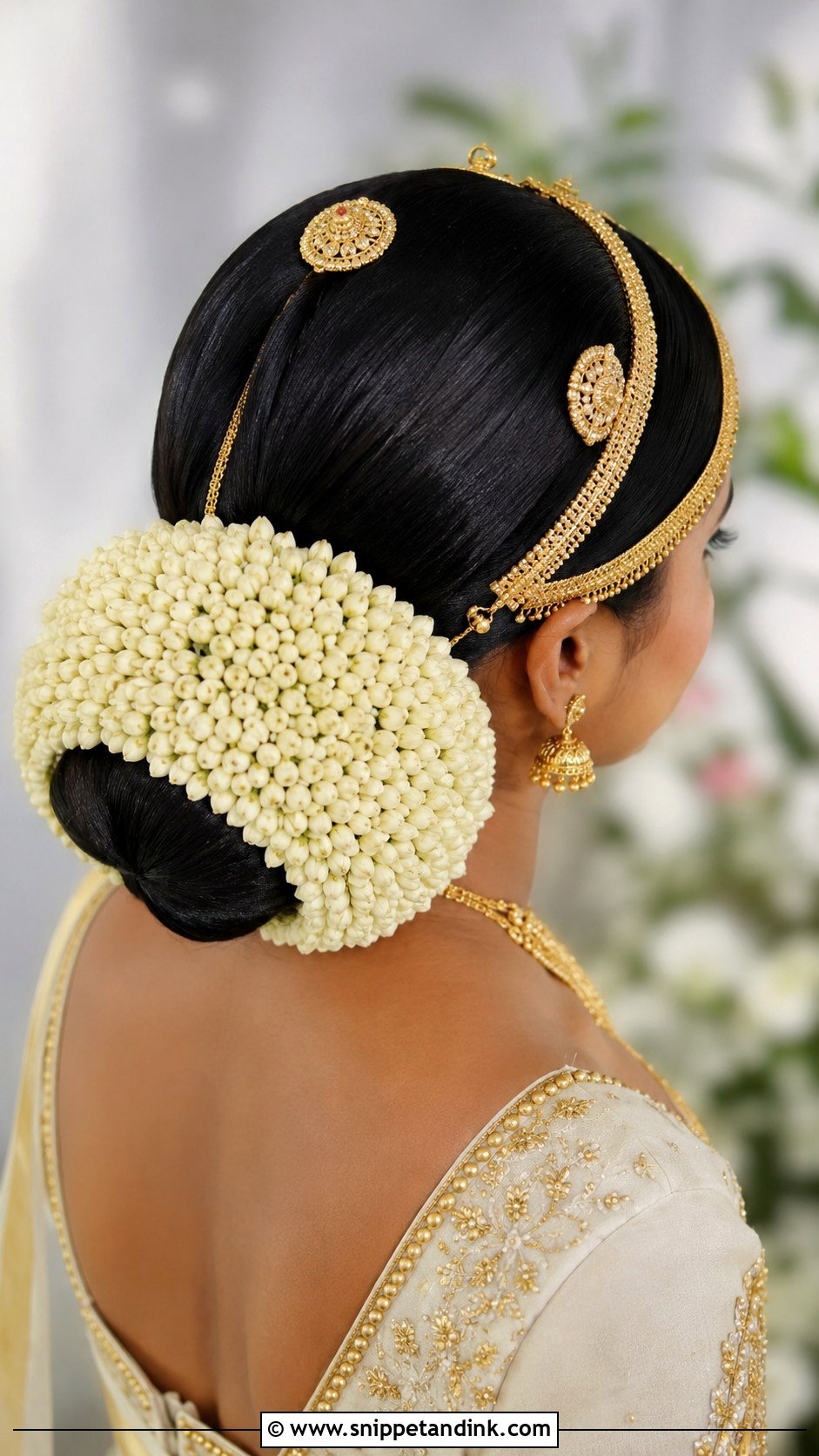
Jasmine flowers wrapped around a low bun bring fragrance and a soft white detail that sits well with the gold of Kandyan jewelry. The hair underneath can be sleek, twisted or slightly full at the crown. Arrange the jasmine in neat rows so the bun keeps a clean outline from every angle. Jasmine buds open and soften through the day, and in warm weather the outer flowers can brown by evening, so I ask brides to have them delivered as close to styling as possible and kept cool until then.
12. Kandyan Bridal Bun With Orchid Flowers
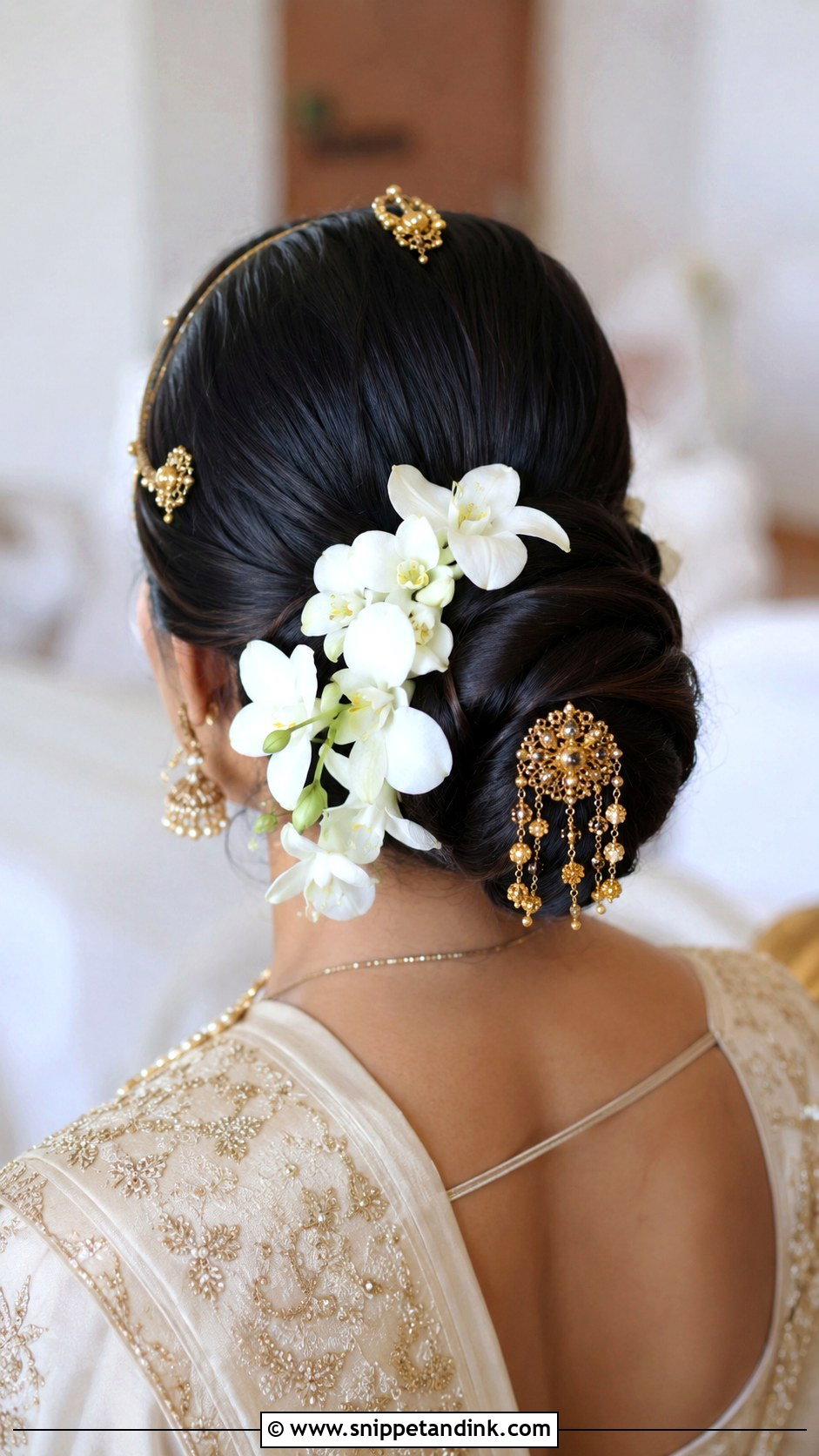
Orchids are larger and more sculptural, so one or two on the side or around the base can replace a whole cluster of small flowers. White, cream or pale blush orchids sit well with traditional Kandyan bridal outfits. Keep the bun smooth and structured underneath, otherwise the flowers look oversized. Orchids are also hardier than jasmine in heat, which is why I often suggest them for hotel and garden weddings, and for a bride who wants a slightly more modern Sri Lankan look.
13. Kandyan Bridal Half Up Hairstyle
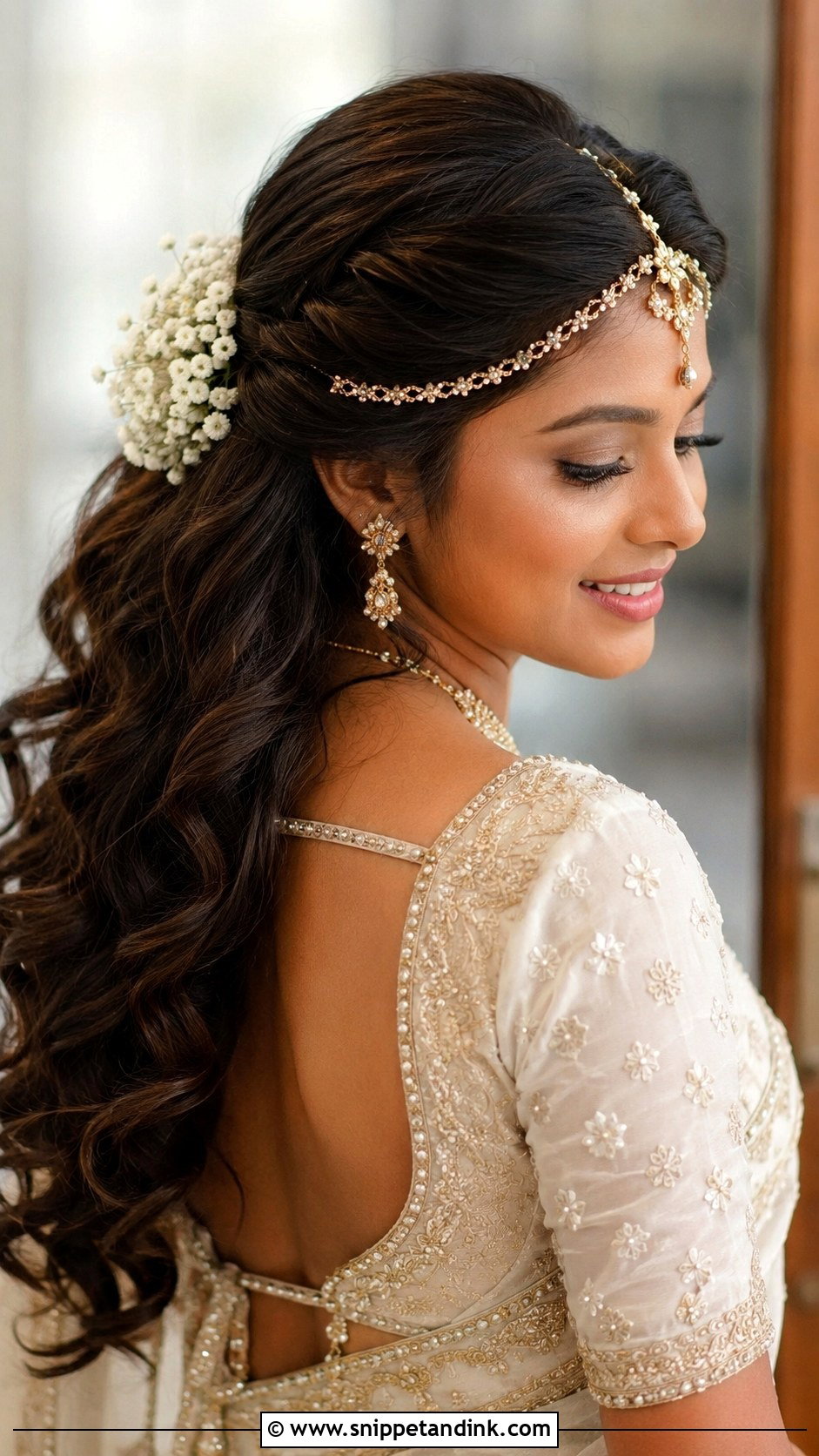
The top section is lifted and pinned neatly while the rest falls in smooth waves or soft curls. It’s less traditional than a low bun, and I’d usually save it for the engagement, the homecoming or a modern wedding look rather than the Poruwa itself. The front can still carry delicate jewelry or a lighter headpiece, though a full Nalalpata with heavy side chains needs a bun to anchor to. Flowers sit well where the pinned section meets the loose hair.
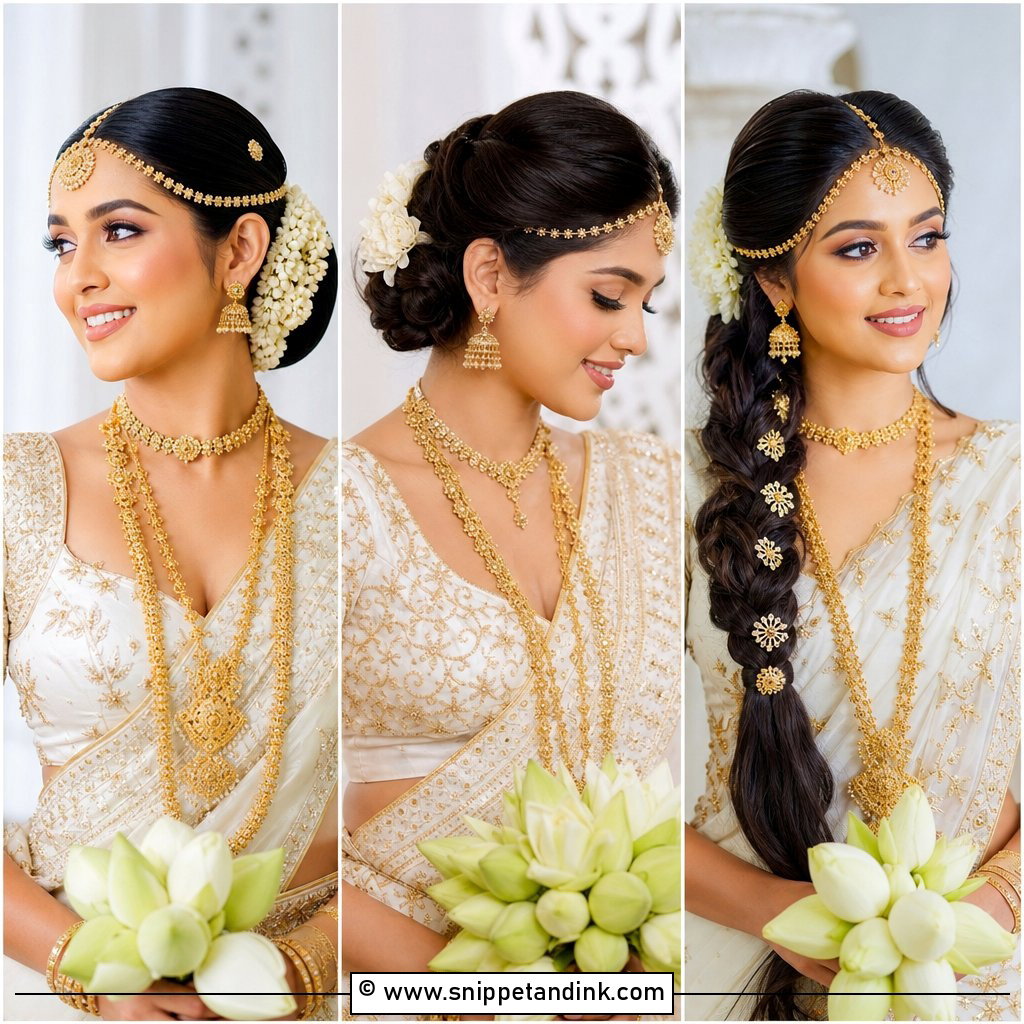
14. Kandyan Bridal Long Braid
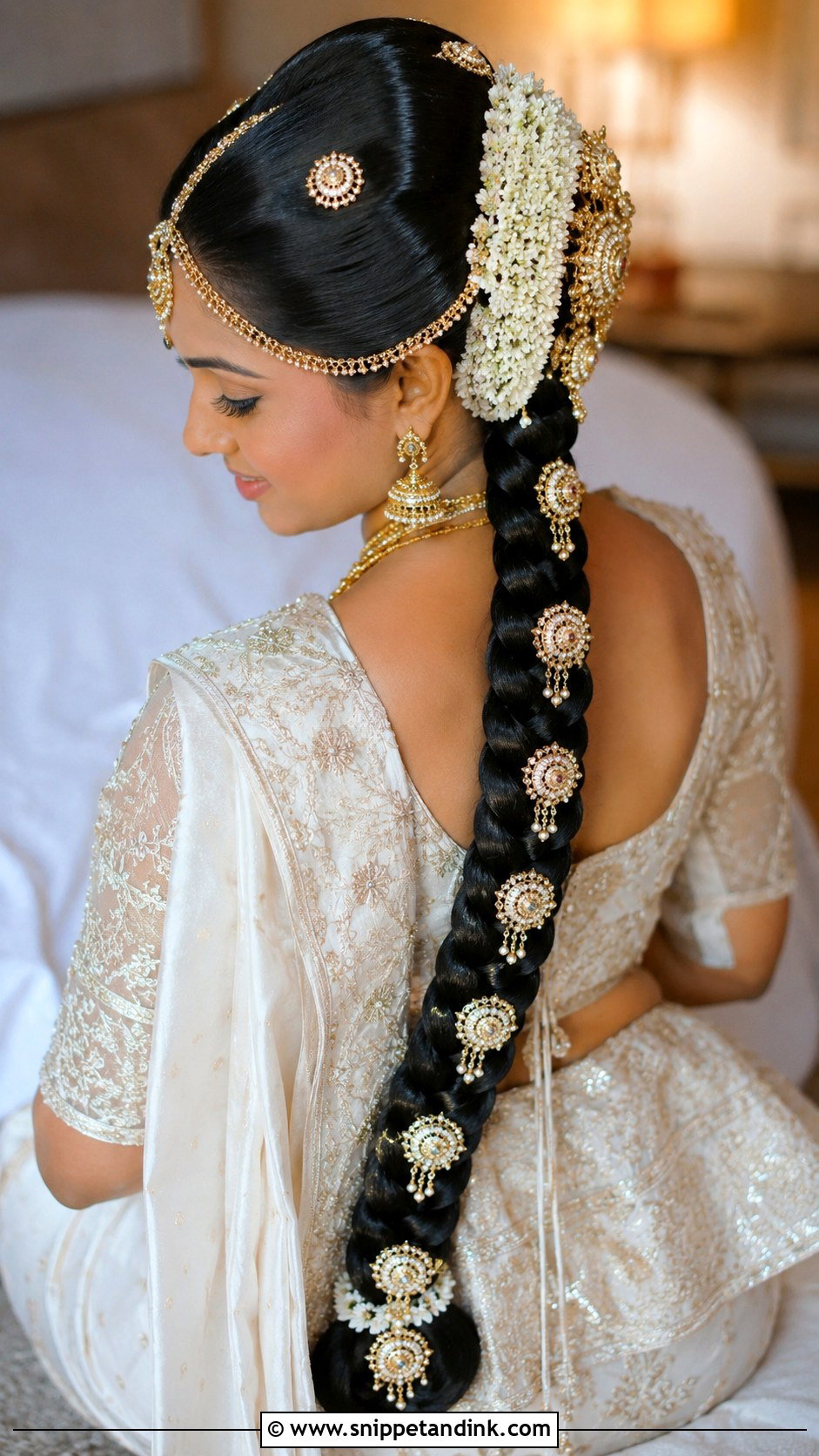
A long braid gives a dramatic back view and a traditional South Asian feel with a Sri Lankan finish. It can be sleek or thick, decorated with small flowers, pearls or gold hairpieces, and it suits long hair or extensions. The front should stay neat to balance the Nalalpata. Braids stay controlled through long ceremonies, but a heavily decorated one pulls on the scalp, so I spread the ornament weight down the length and secure the top section firmly. It suits a bride who loves showing her hair length.
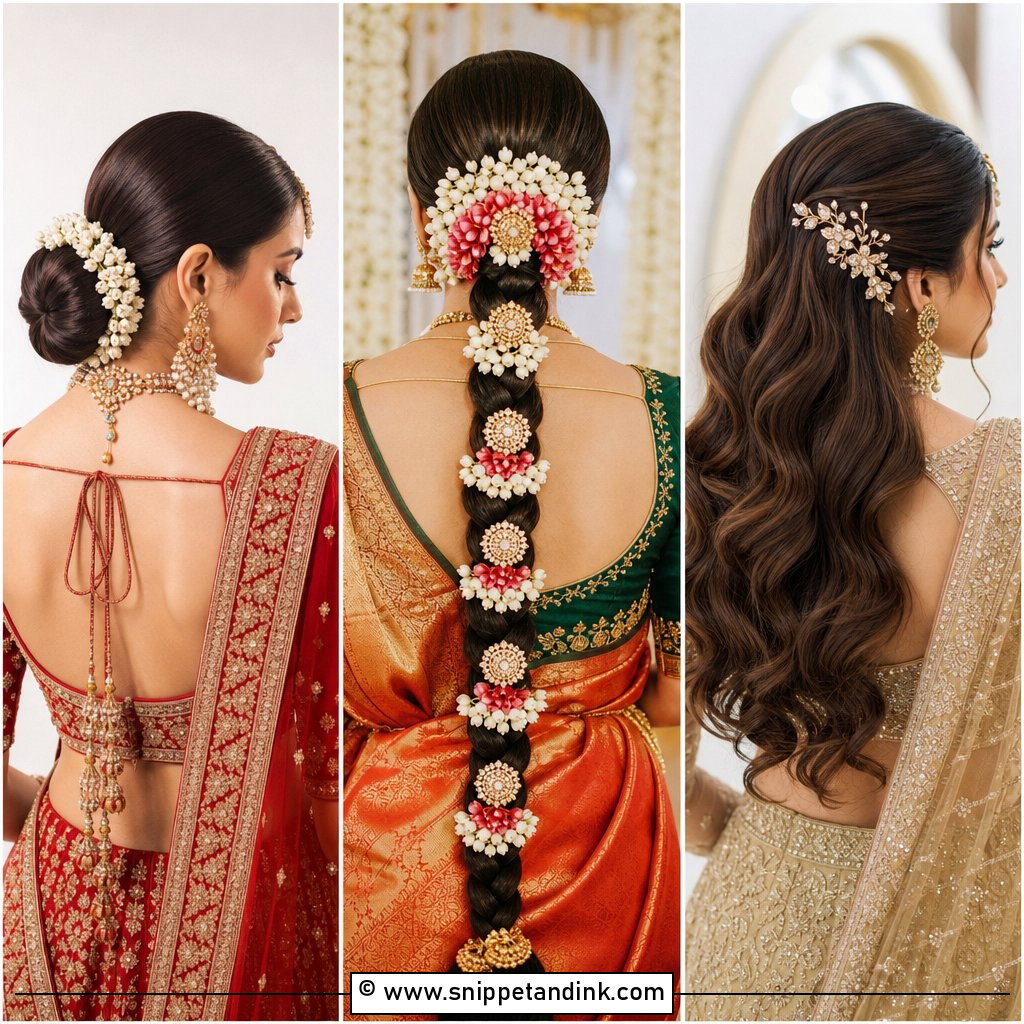
15. Kandyan Bridal Bun For Short Hair
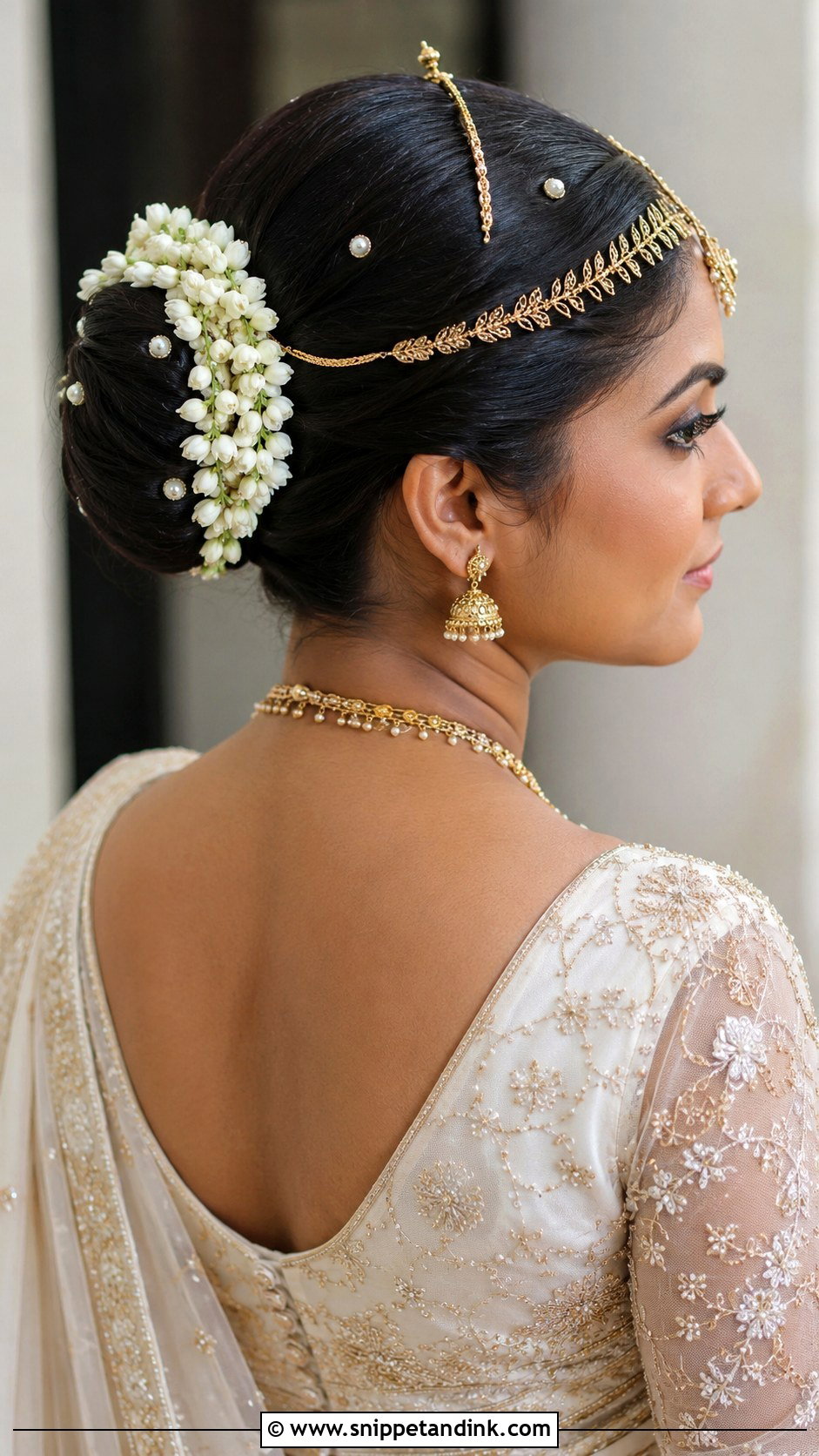
Short hair can absolutely carry a Kandyan bun with some help. The hair is smoothed back and pinned into a small low bun, then built out with padding, a clip-in piece or a floral arrangement for fullness. This works for bob-length and shoulder-length hair. The front needs to be secure enough for the Nalalpata and earrings, so I often add a hidden braid or a few crossed pins at the hairline as an anchor. Flowers or a compact hairpiece cover the joins, and from the front no one will know.
Sri Lankan Heat and a Bun That Holds to the Homecoming
Many Kandyan weddings take place in warm, humid weather, sometimes outdoors or in a hall full of guests. Heat works against hair in two ways. Sweat at the hairline loosens the front, and humidity swells any section that was blow-dried smooth. Since the Nalalpata sits right on that front edge, it’s the first place trouble shows.
I prep with a light hold product on the front sections, dry them completely, and avoid heavy serums near the hairline, since they turn greasy under heat. A small stash of matching bobby pins goes in the bride’s bag or with a bridesmaid.
Fresh flowers in the heat
Jasmine and other small white flowers are the most vulnerable. Keep them in a cool room or a box with a damp cloth until the moment they go in, and don’t mist them once they’re pinned, because water runs into the hair. If photographs run long in the afternoon, a few spare strands kept cool can replace any that brown.
For the homecoming, a different look is common. A smooth low bun converts easily into a half up or a softer chignon once the heavy jewelry comes off, so you don’t need to start from washed hair.
The Nalalpata Sets the Rules for Everything Else
Every Kandyan hairstyle has the same job: support the jewelry, flatter the face and stay secure through the Poruwa ceremony, the photographs and the celebration after. The low bun remains the most traditional route, and twists, braids, jasmine, orchids, pearl pins or a half up for the homecoming all build on it. Plan the hair at your trial with the real Nalalpata and as much of the jewelry as you can bring. Once that sits level and comfortable, the rest is a matter of taste.
You'll Like These Ideas:




Leave a Reply