
A bun is the style I trust most for a long wedding day. Once it’s pinned properly, it doesn’t care about hugs, wind, a veil being lifted or the first hour of dancing, which is more than I can say for loose curls. The twenty buns below run from glossy and minimal to soft and textured, and each one has a hair type it loves and one it fights. I’ll tell you which is which, so you can bring your stylist a realistic picture instead of a photo that was taken five minutes after styling.
Setting the Bun High, Mid or Low Around Your Dress and Veil
Before we talk about style, we decide height. The bun’s position changes how the whole silhouette reads, and it decides where a veil can go.
Low at the nape
Low buns suit open backs, plunging necklines and cathedral veils, because the veil can sit above the bun and fall cleanly over it. They also feel lightest on the scalp.
Mid crown
The most flexible height. It shows the neck in profile, works with most necklines, and lets a veil go either above or below.
High at the crown
High buns suit high necklines, halter dresses and taller brides who want drama. A veil has to sit underneath, which works best with shorter or lightweight tulle.
Look at the back of your dress too. Heavy beading or a sheer back looks best with a low bun that leaves it visible, while a plain back can carry more detail in the hair.
1. Sleek Low Bun
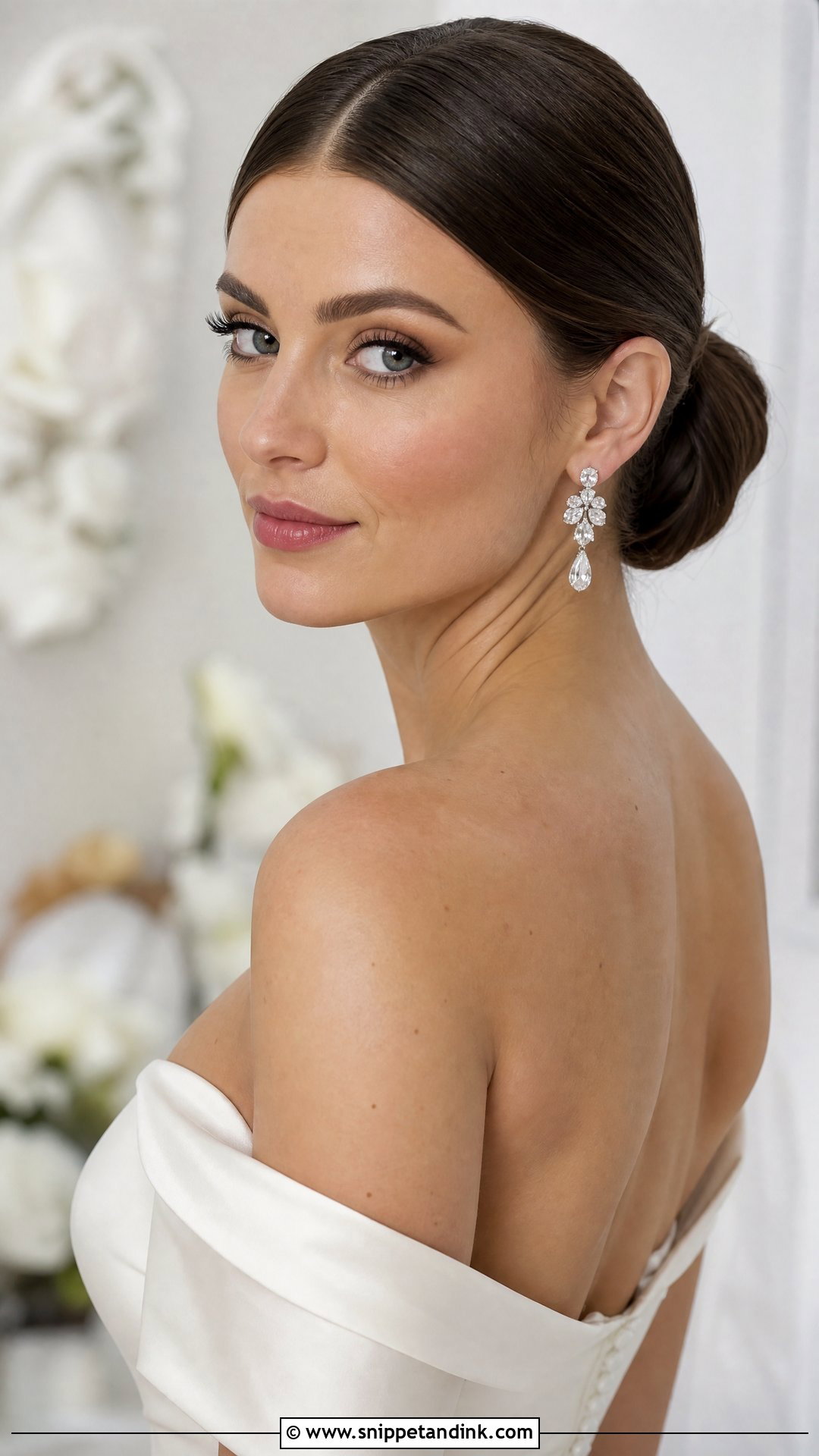
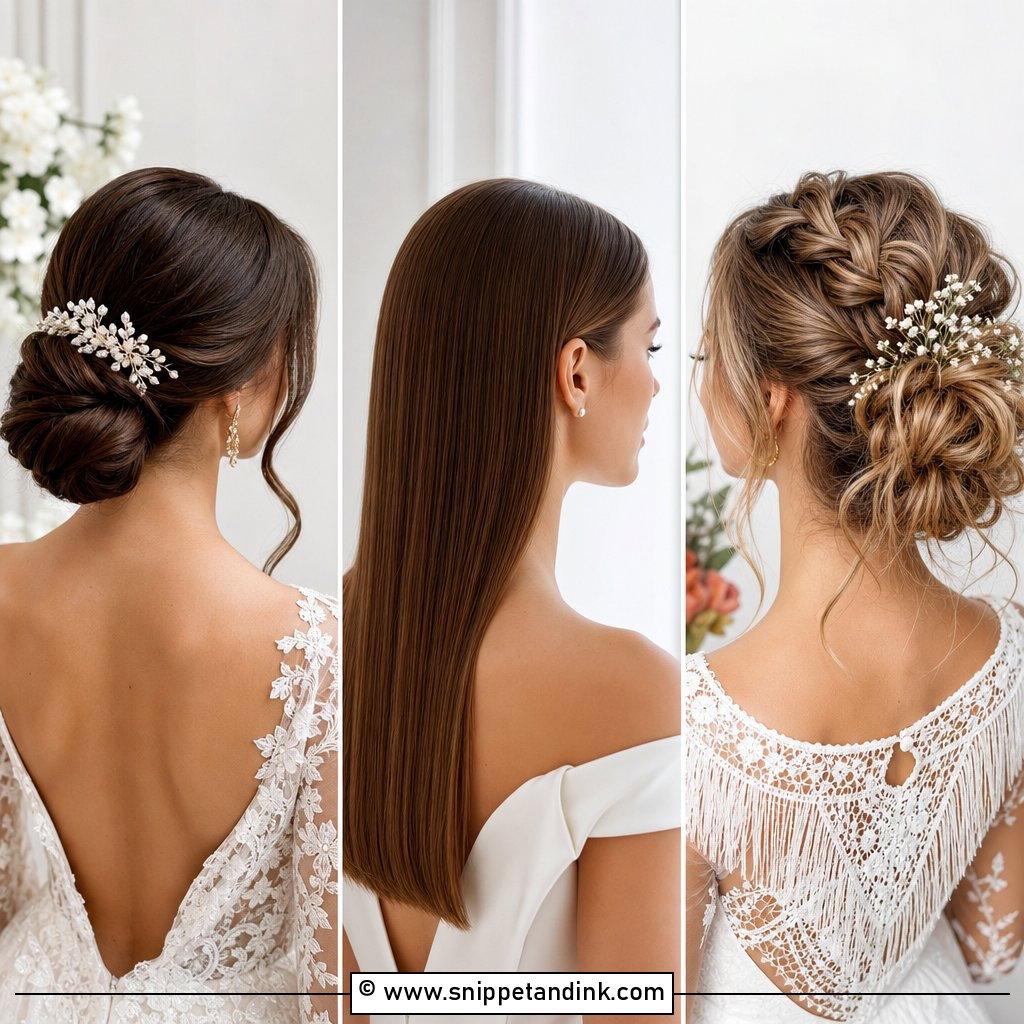
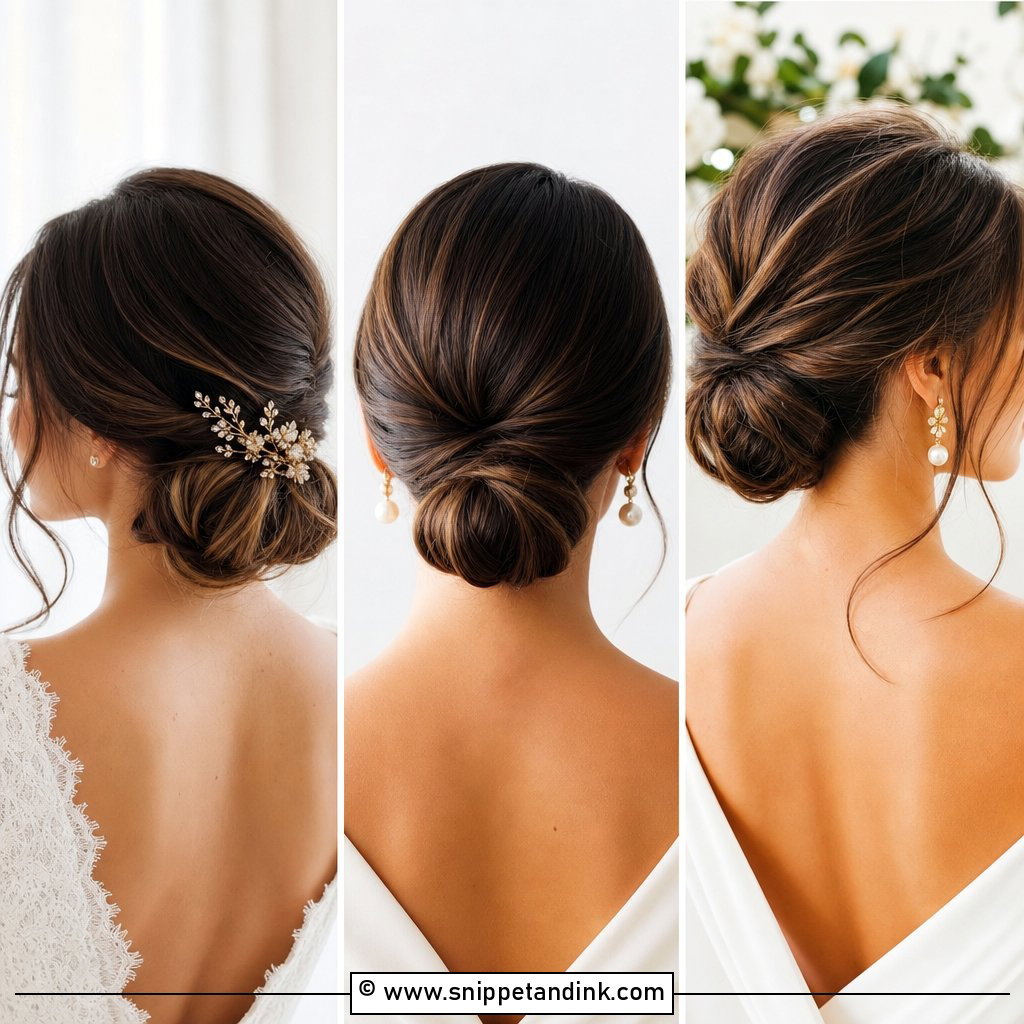
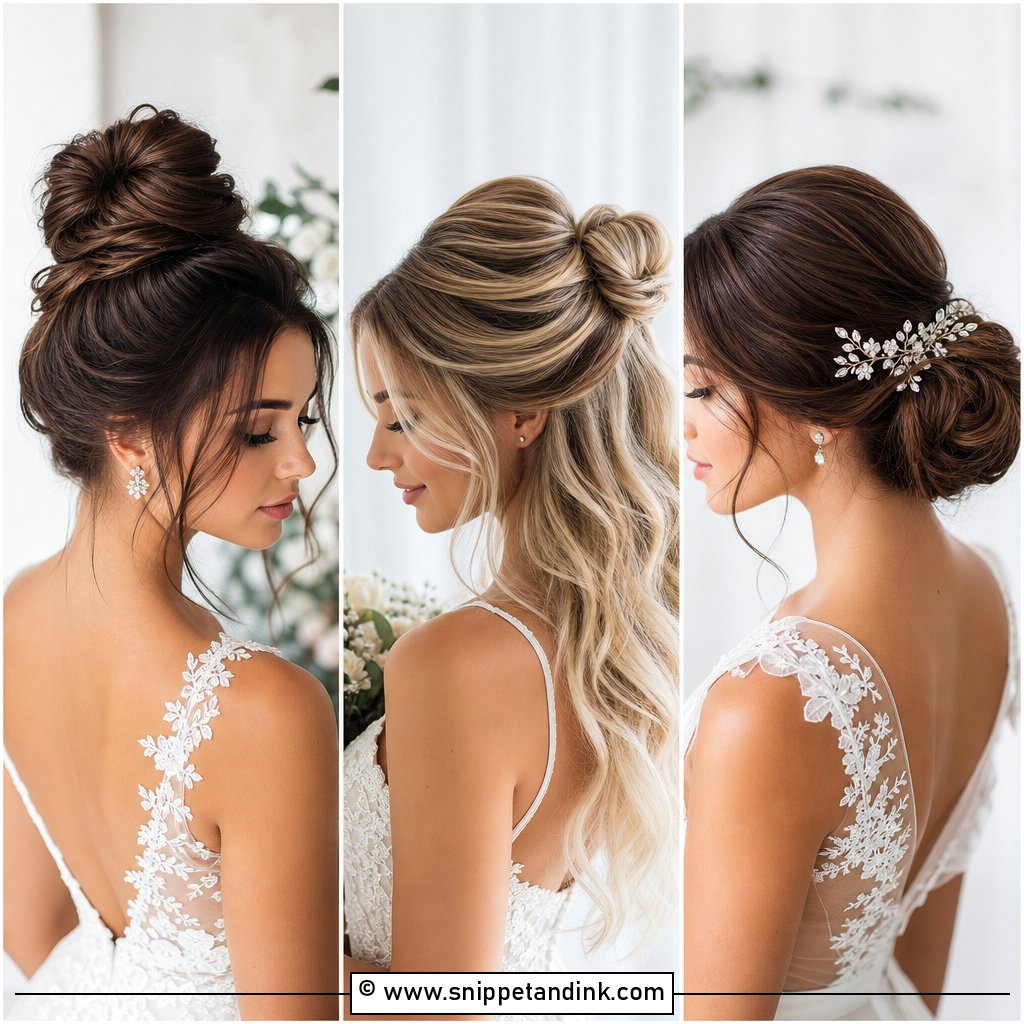
Smoothed back tight and knotted at the nape, the sleek low bun lets the gown and earrings do the talking. It looks simple, but there’s nowhere to hide flyaways, so I start on blow-dried, fully smooth hair and use a light serum and a fine-tooth comb, then a mist of hairspray on a toothbrush to press down the baby hairs. Ballroom and city weddings suit it. Very layered hair struggles here because short ends pop out of the knot; I’d suggest a slightly softer finish if your layers stop above the jaw.
2. Classic Ballerina Bun
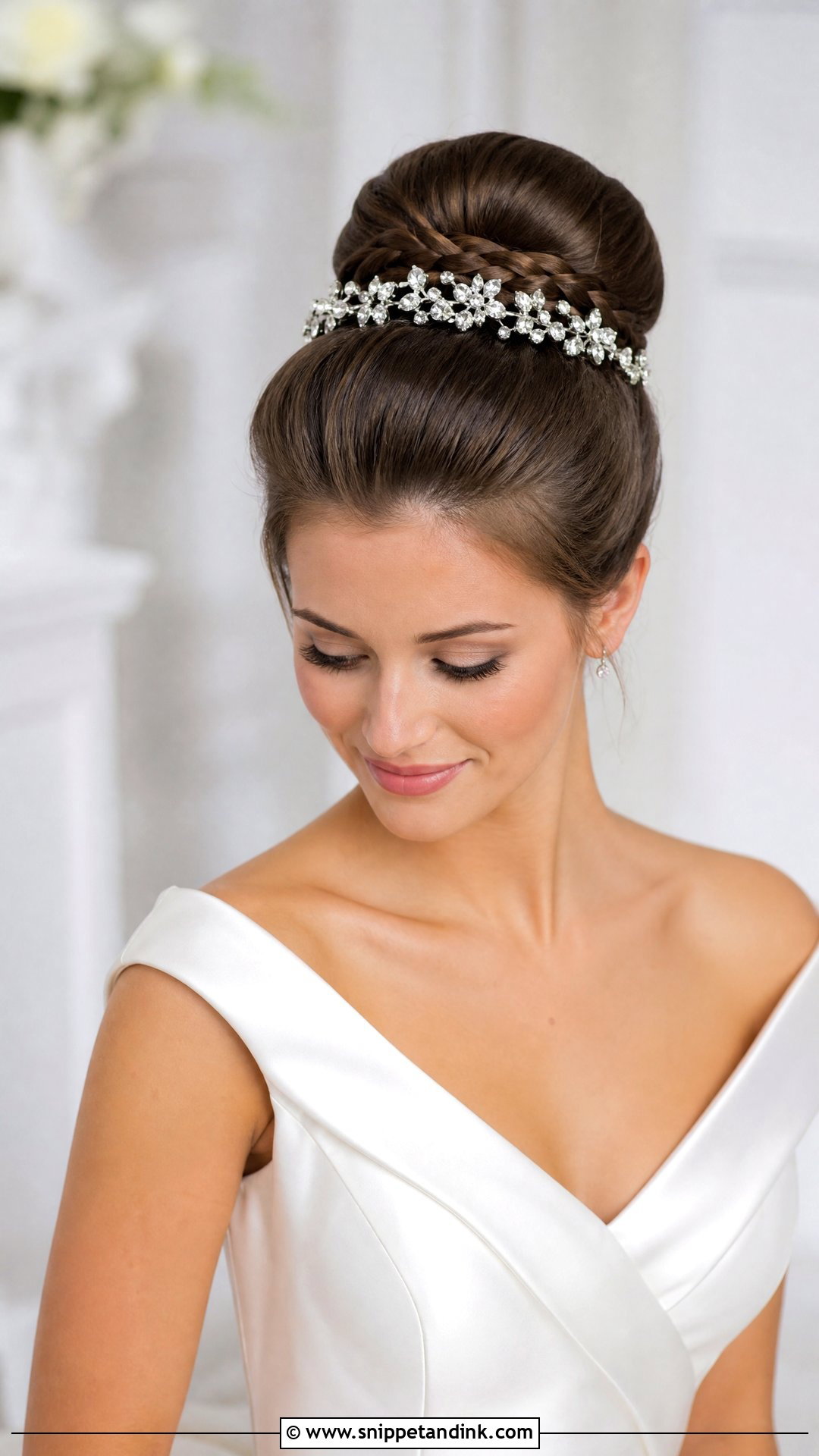
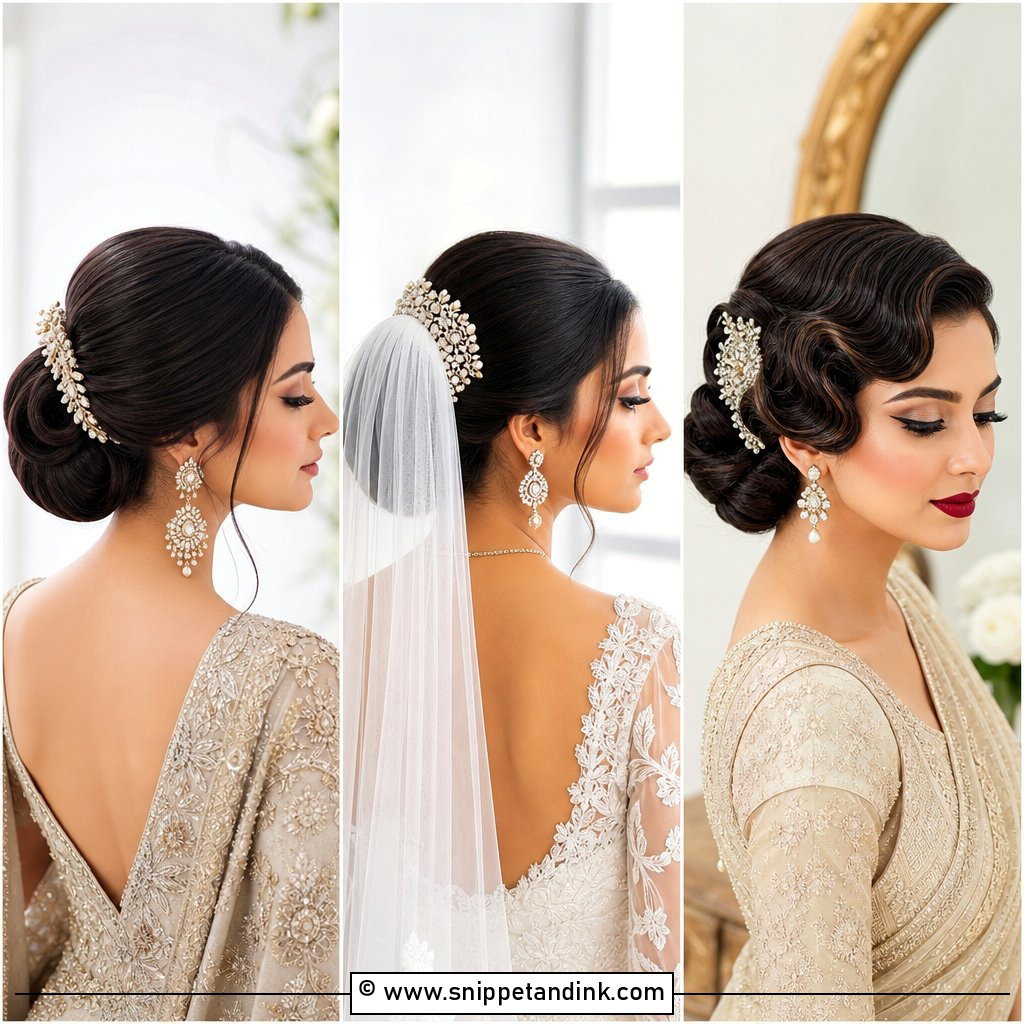
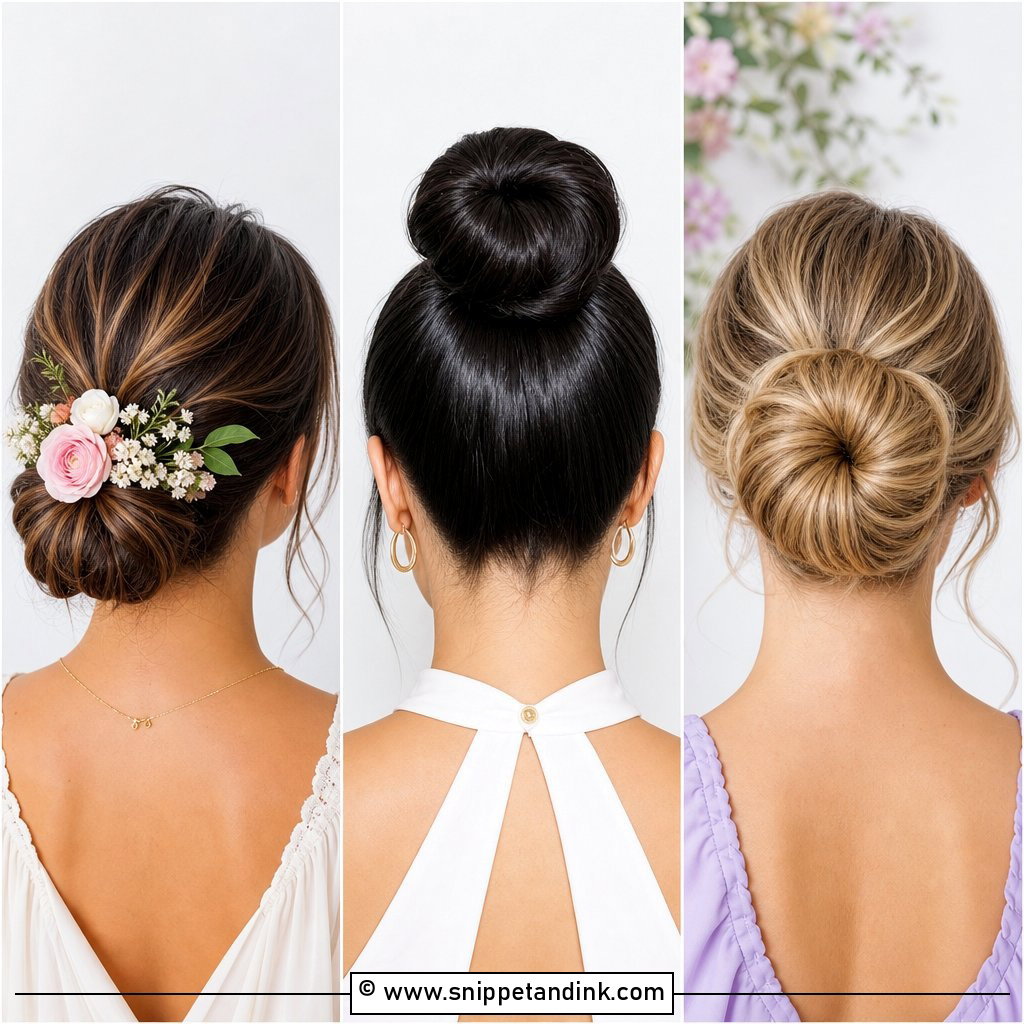
The ballerina bun brings graceful structure: a neat, round bun at mid or high crown that lengthens the neck and lifts the whole face. It’s cool in summer heat because nothing touches the neck. The secret to a perfectly round shape is a bun form or donut underneath, in your hair colour, with the hair spread evenly over it. A thin braid wrapped round the base hides the pins, and a delicate tiara or a single jewelled pin sits nicely in front of it.
3. Messy Low Bun
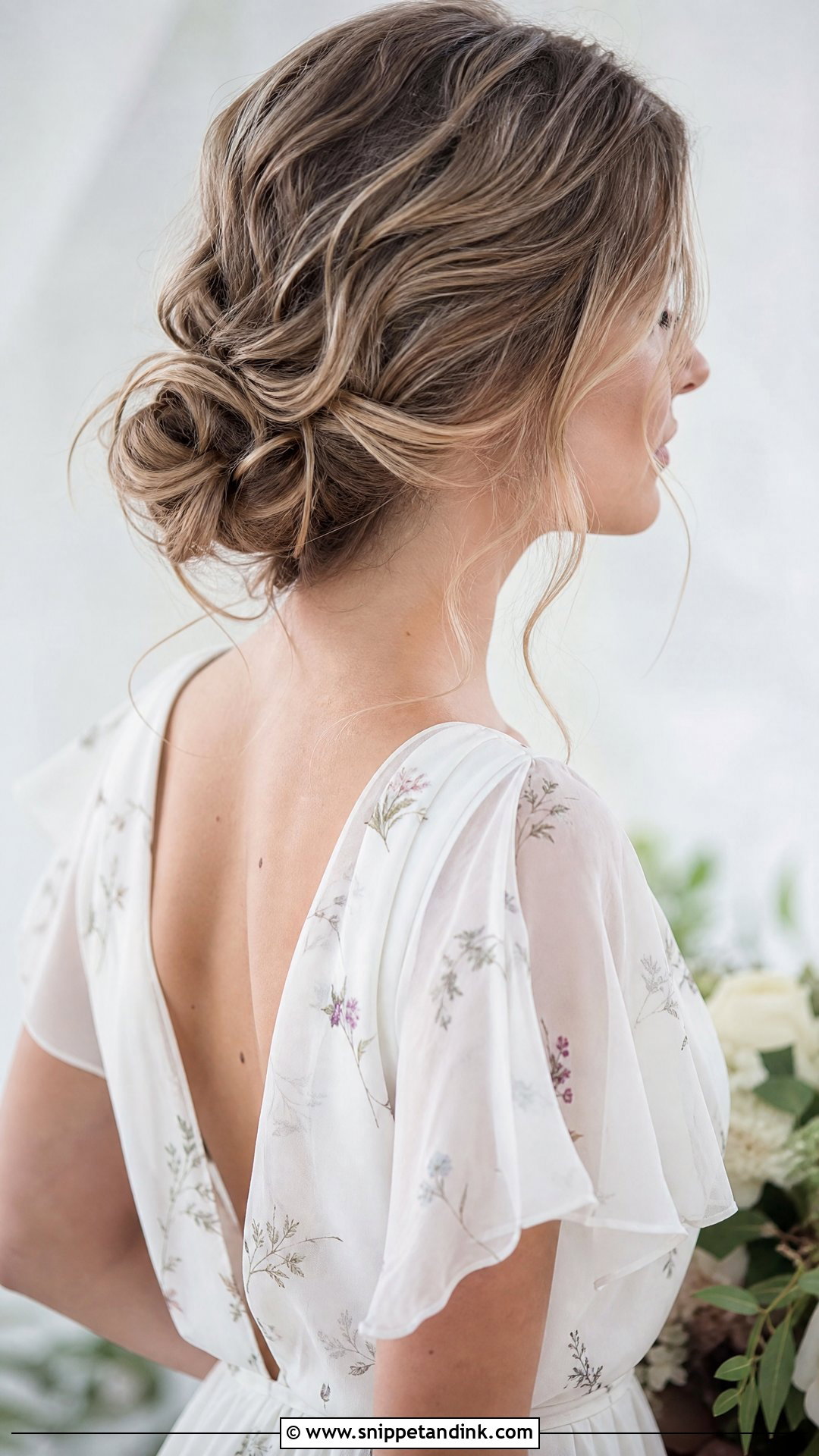
“Messy” is the most misunderstood word in my bookings. A good messy low bun is planned: I curl the hair first, pin the bun firmly at the nape, and only then pull out pieces and tendrils, so it looks loose but holds. Without that underlying structure it really does fall apart by the speeches. It suits outdoor and garden weddings, with a few small flowers or pearl pins tucked in. Very silky, straight hair needs texture spray first or the pulled-out pieces just slide back.
4. Braided Bun
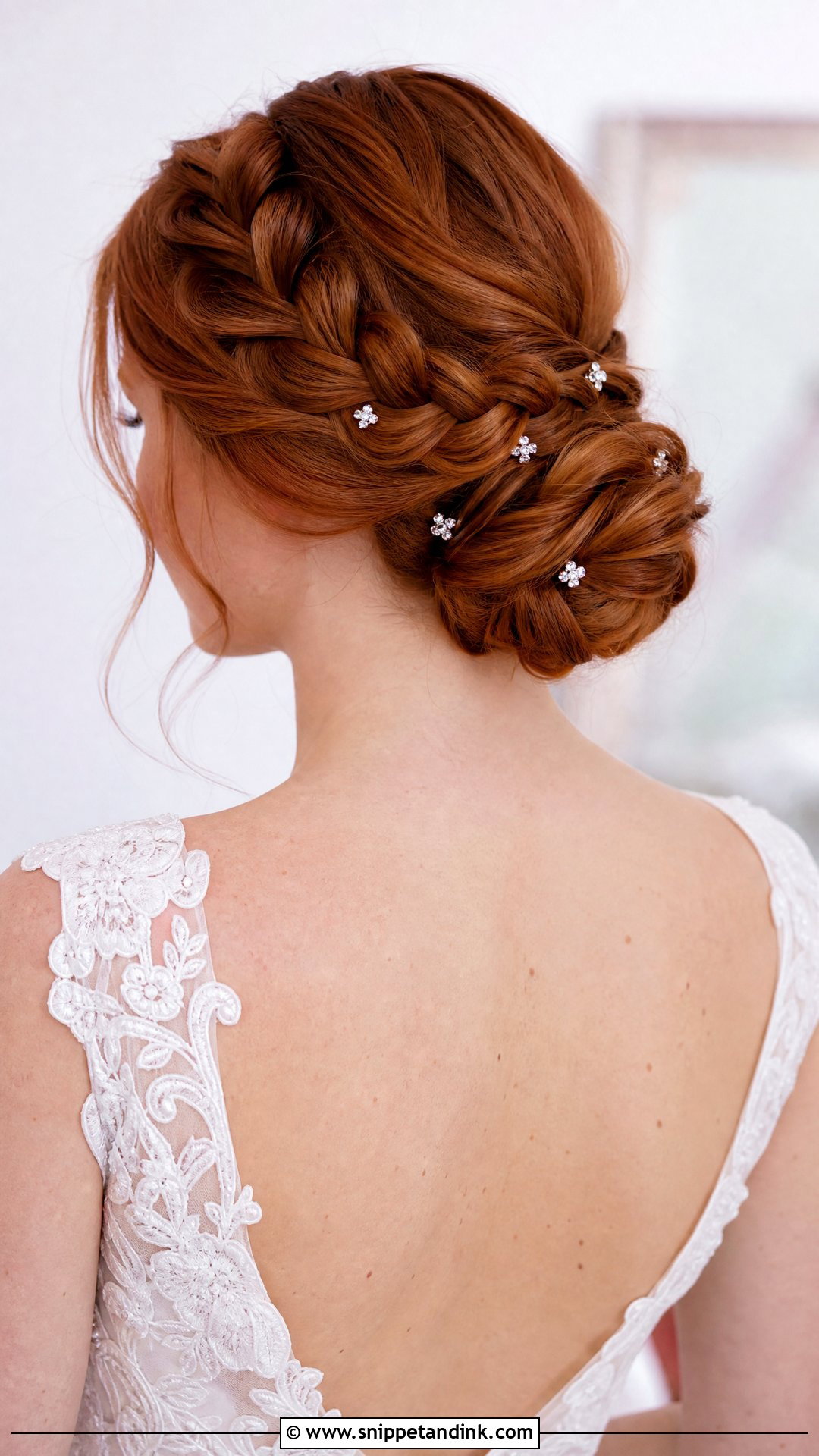
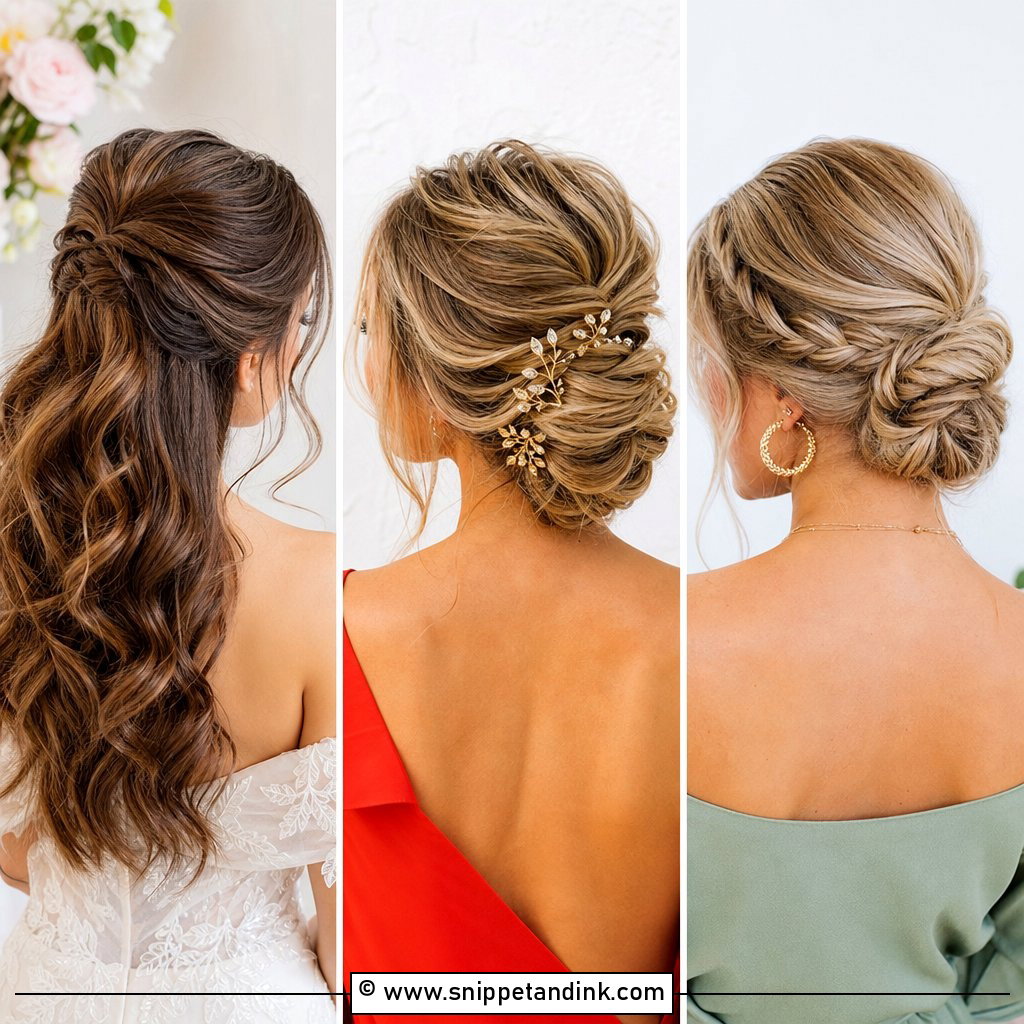
Braids give a low bun texture and a little more interest than a plain knot. I usually start with one French braid or a few loose ones and wind them into the bun, then gently pull the edges of the braid wider, which we call pancaking, so it reads in photos from the back of the room. It suits bohemian and classic weddings equally. If your hair is fine, braids are your friend: they make the bun look thicker than the hair really is.
5. French Twist Bun
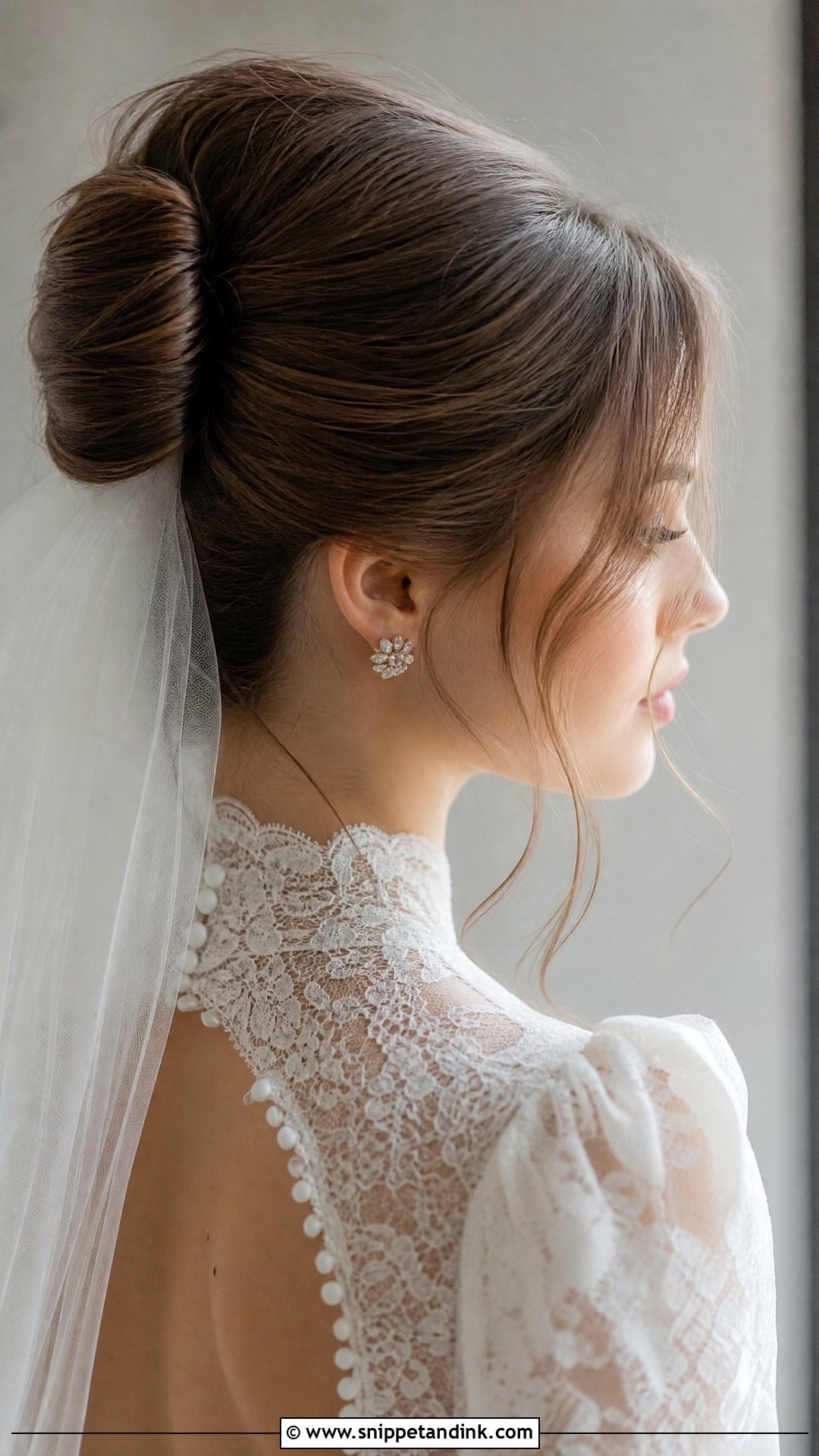
The French twist is swept to one side, rolled vertically and the ends tucked in, giving a smooth sculpted line down the back of the head. I’d steer you away from it if your hair is shorter than your shoulders or heavily layered, because the ends won’t stay tucked. For everyone else it’s a strong choice with a veil, since the comb sits neatly at the top of the roll. A few soft wisps at the face stop it looking severe. It’s ideal with vintage-inspired gowns.
6. Low Bun With Curls
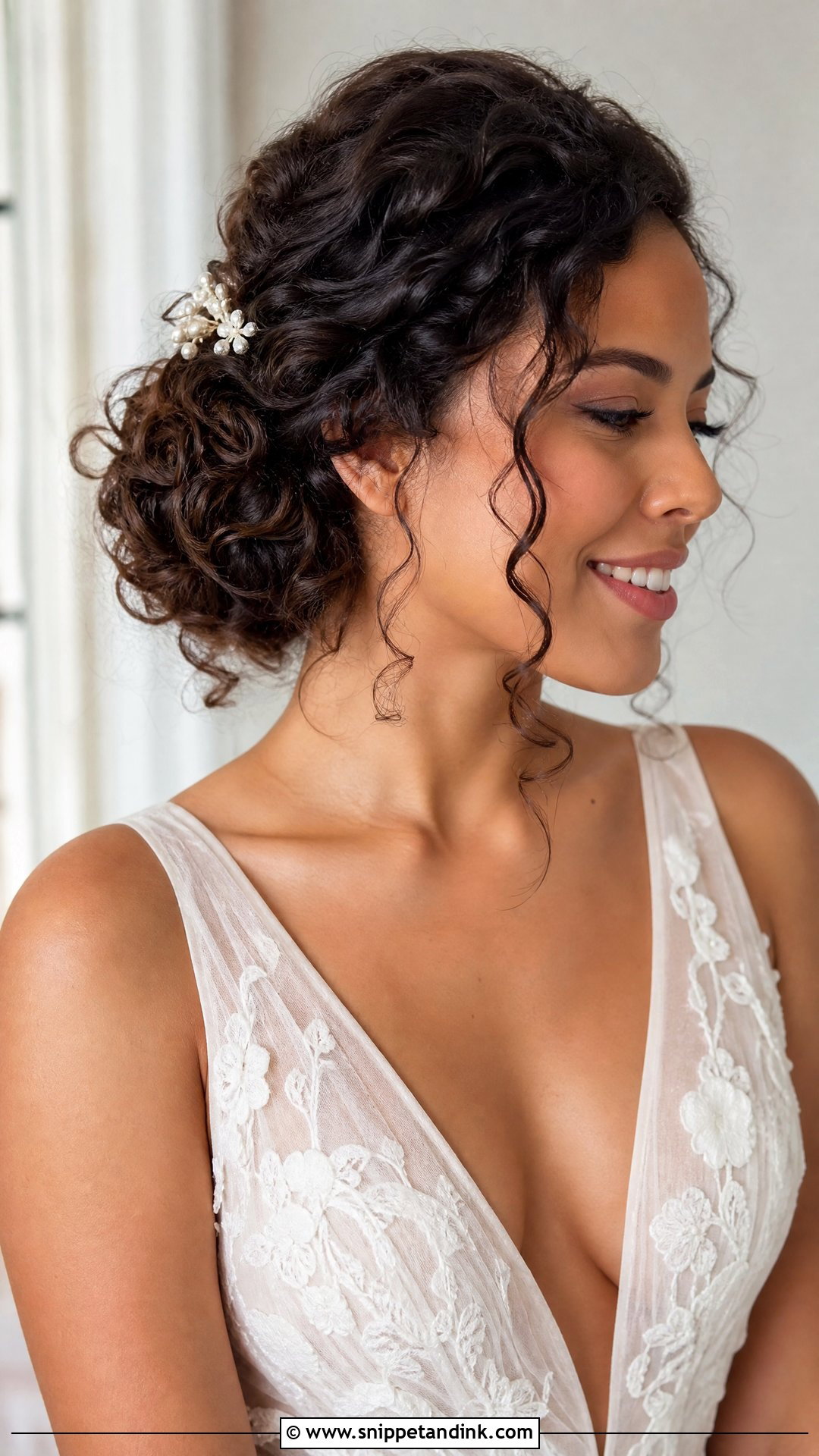
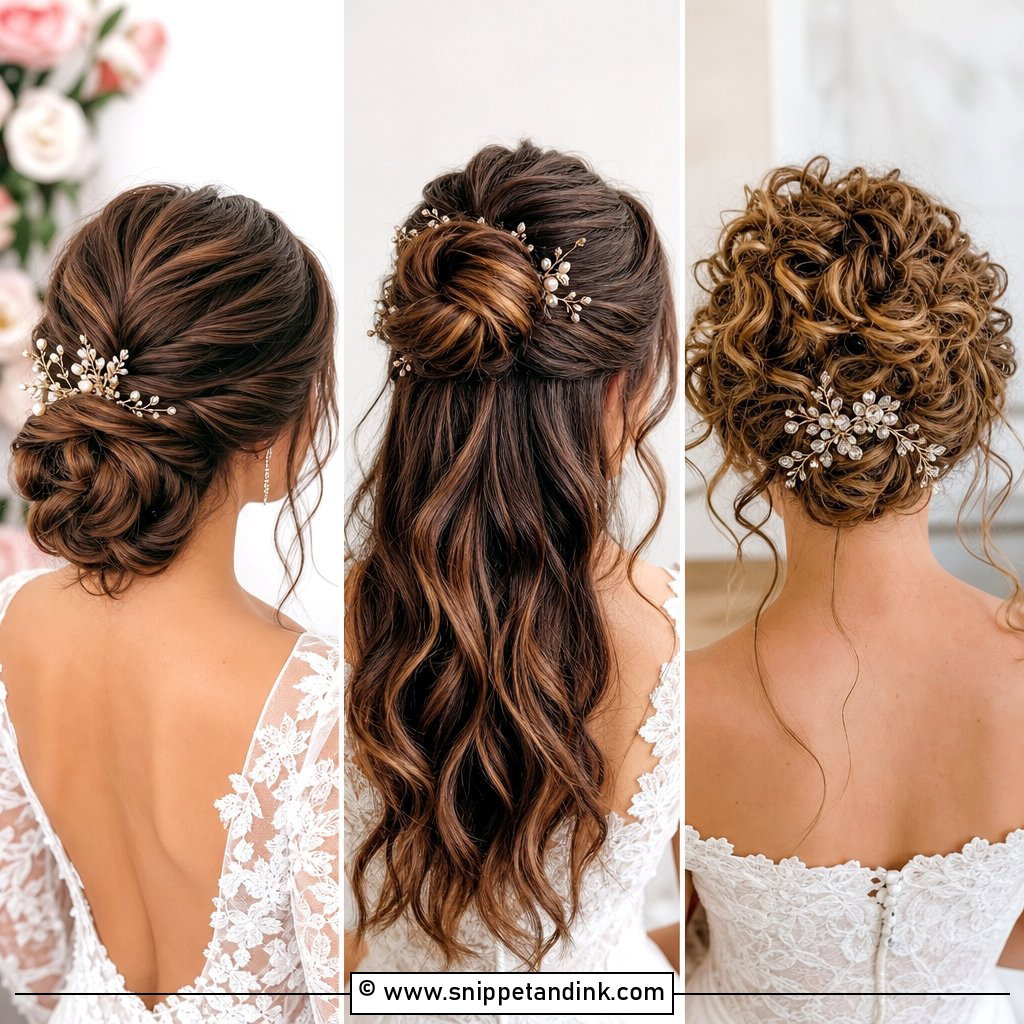
Curly hair holds a bun brilliantly, and I’d much rather work with the curl than straighten it out. Curls are gathered loosely at the nape and pinned in place, with a few left free around the face. I style curls when they’re freshly defined, usually a day after wash day, and use a curl cream rather than a crunchy gel so the bun doesn’t feel stiff. Pinning through curls needs U-pins rather than bobby pins, which can snag and create frizz. The finish is soft and very much yours.
7. Side Bun Chignon
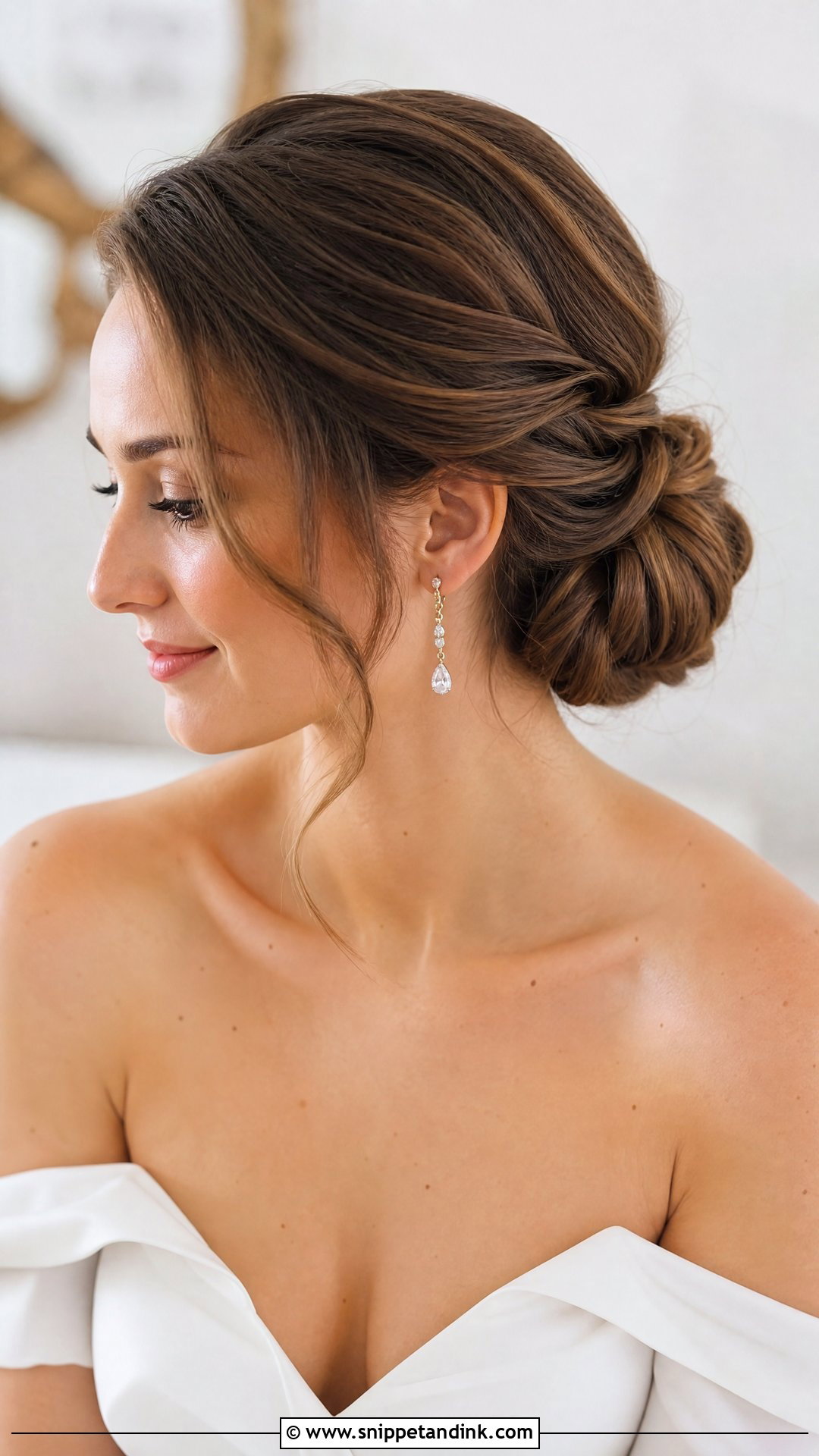
A side bun chignon sits low and off-centre, which shows off one shoulder and suits off-the-shoulder gowns. A side braid or twist leading into it adds detail. Before I decide which side, I ask where the bride will stand at the ceremony, because the bun should face the guests, not the officiant. Choose earrings for the exposed side with care, since that ear will be in almost every photo. It has a slightly vintage feel.
8. Pearl-Embellished Bun
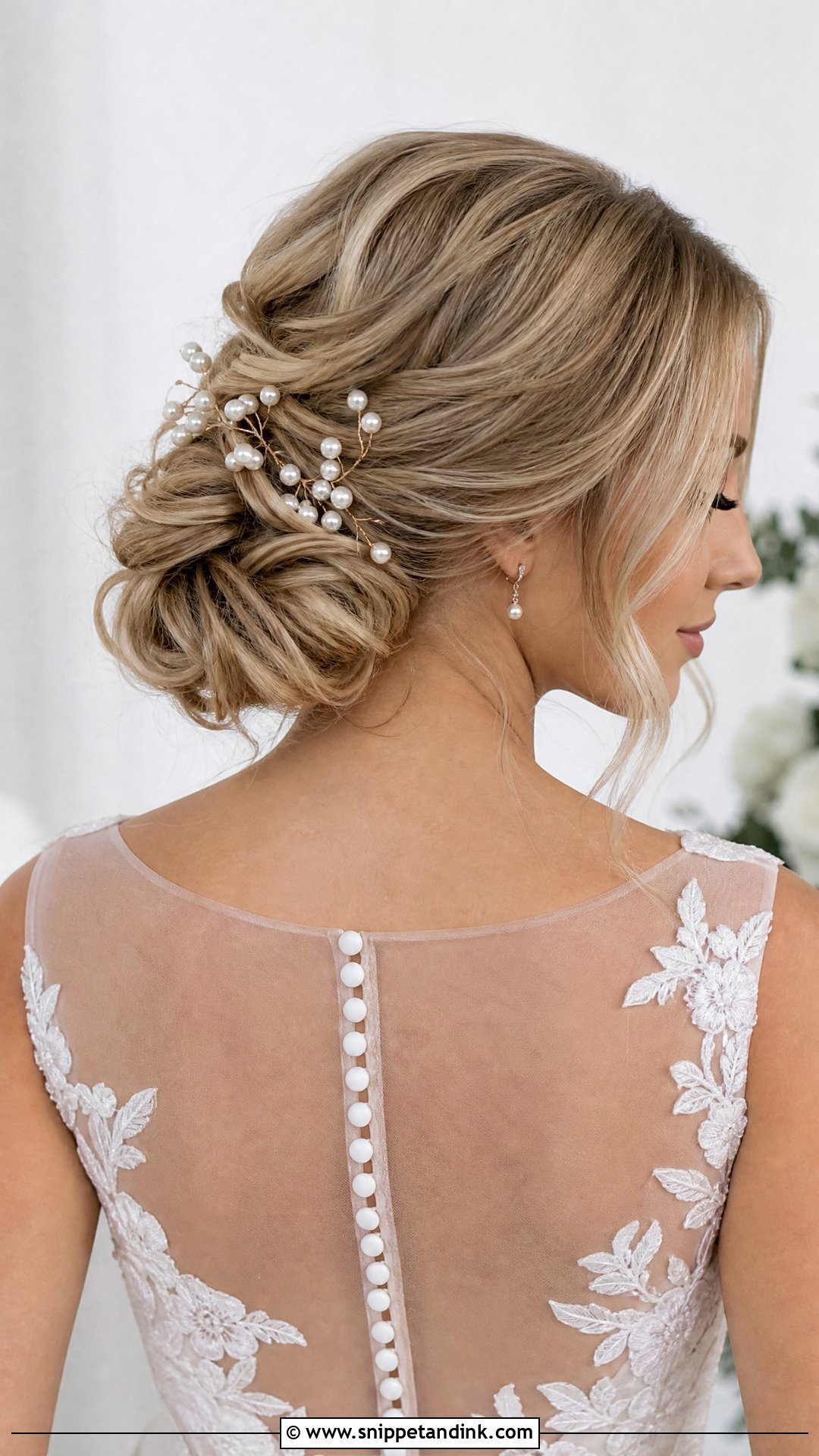
Pearl pins are one of the easiest ways to dress up a plain low or textured bun. Their soft sheen sits well with ivory gowns, and they’re especially lovely when the dress has a sheer back, because the eye travels from the beading to the hair. I place them after the hair is fully set, on a slight angle so the pin grips the bun’s base rather than just the surface. Scattered looks natural; a neat cluster looks more formal.
9. Twisted Updo Bun
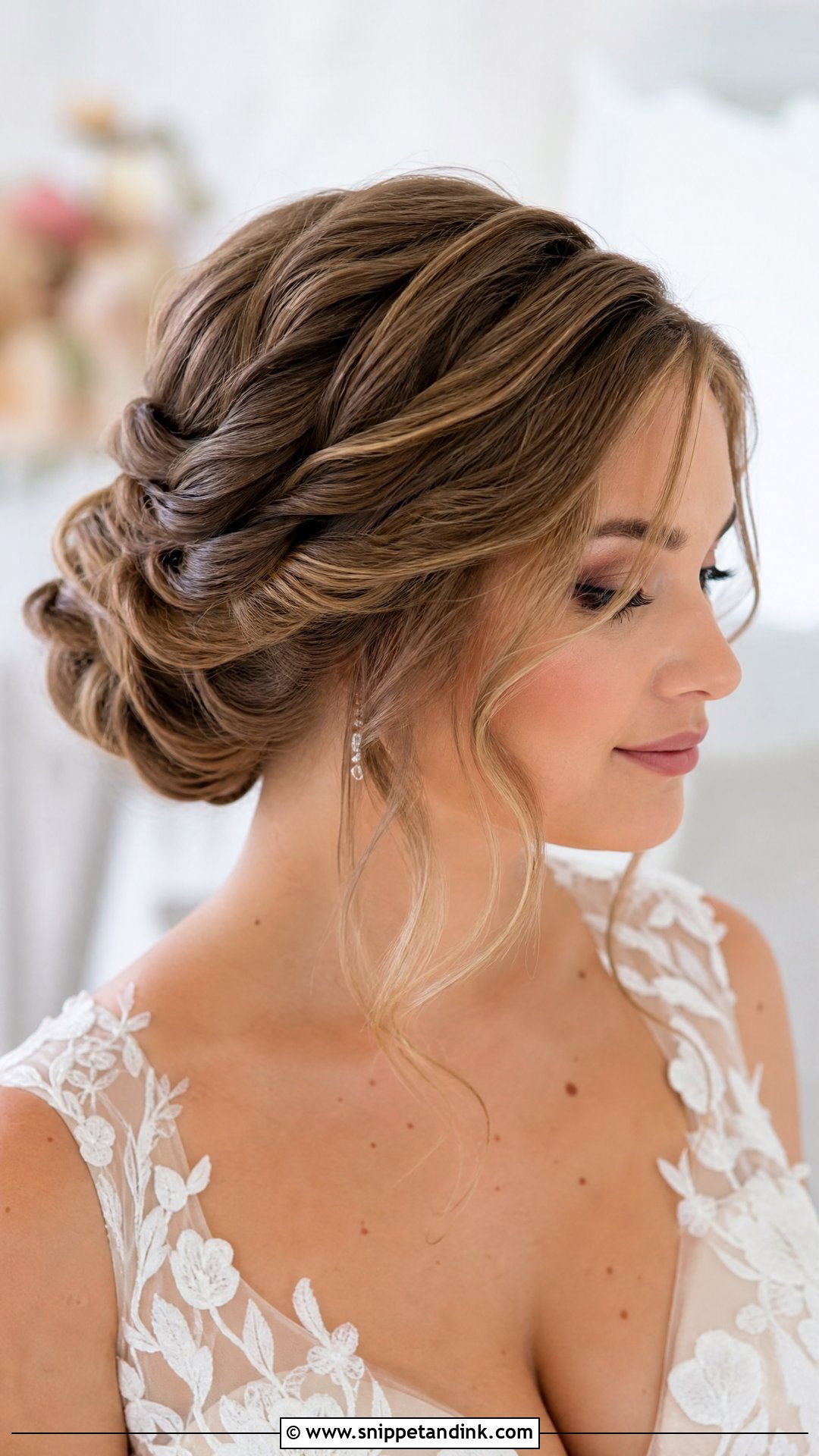
Twisting sections and pinning them into a bun creates a soft rope-like pattern with depth, without the time a braid takes. Twists unwind if they’re not secured, so I pin each one as I go and set it with a firm-hold spray. You can keep it loose for softness or tighter for structure. It flatters most hair lengths from shoulder length down, and a few face-framing pieces round it off.
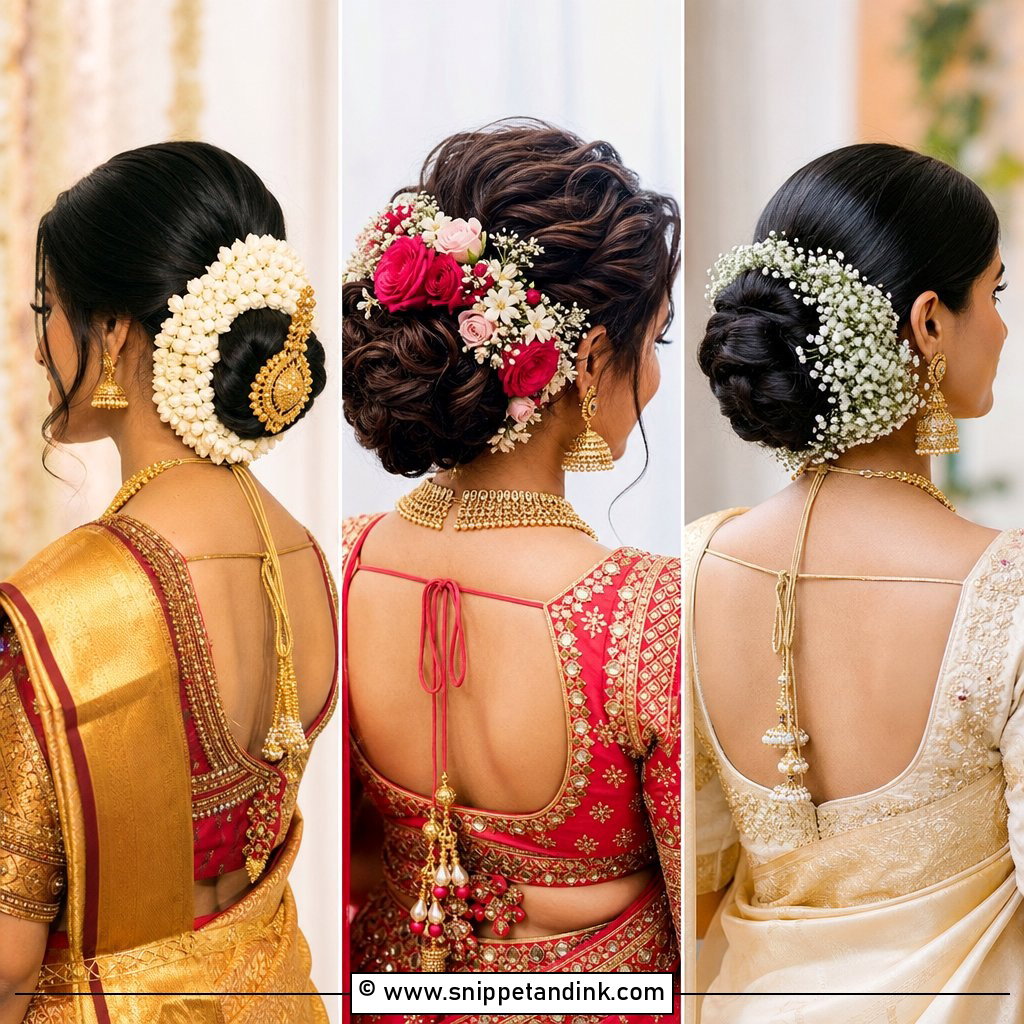
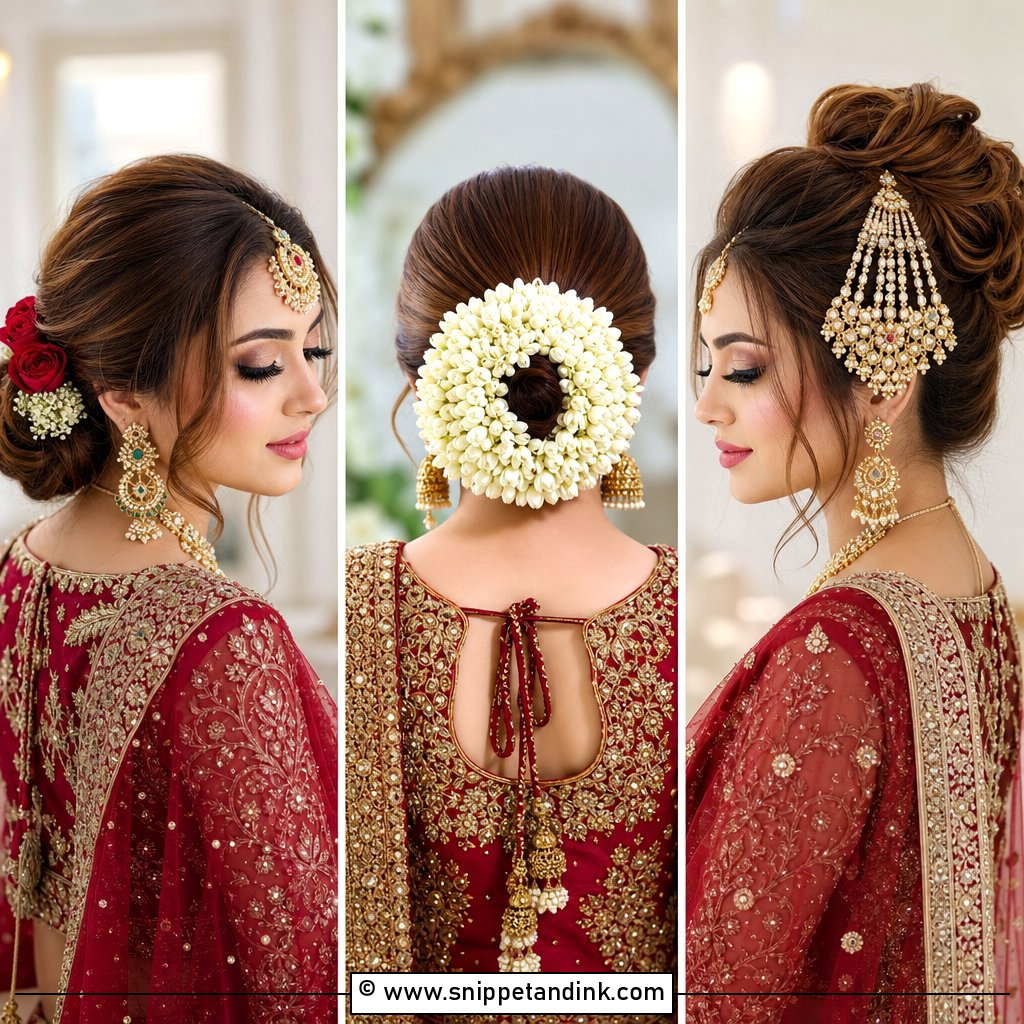
10. Flower-Adorned Bun
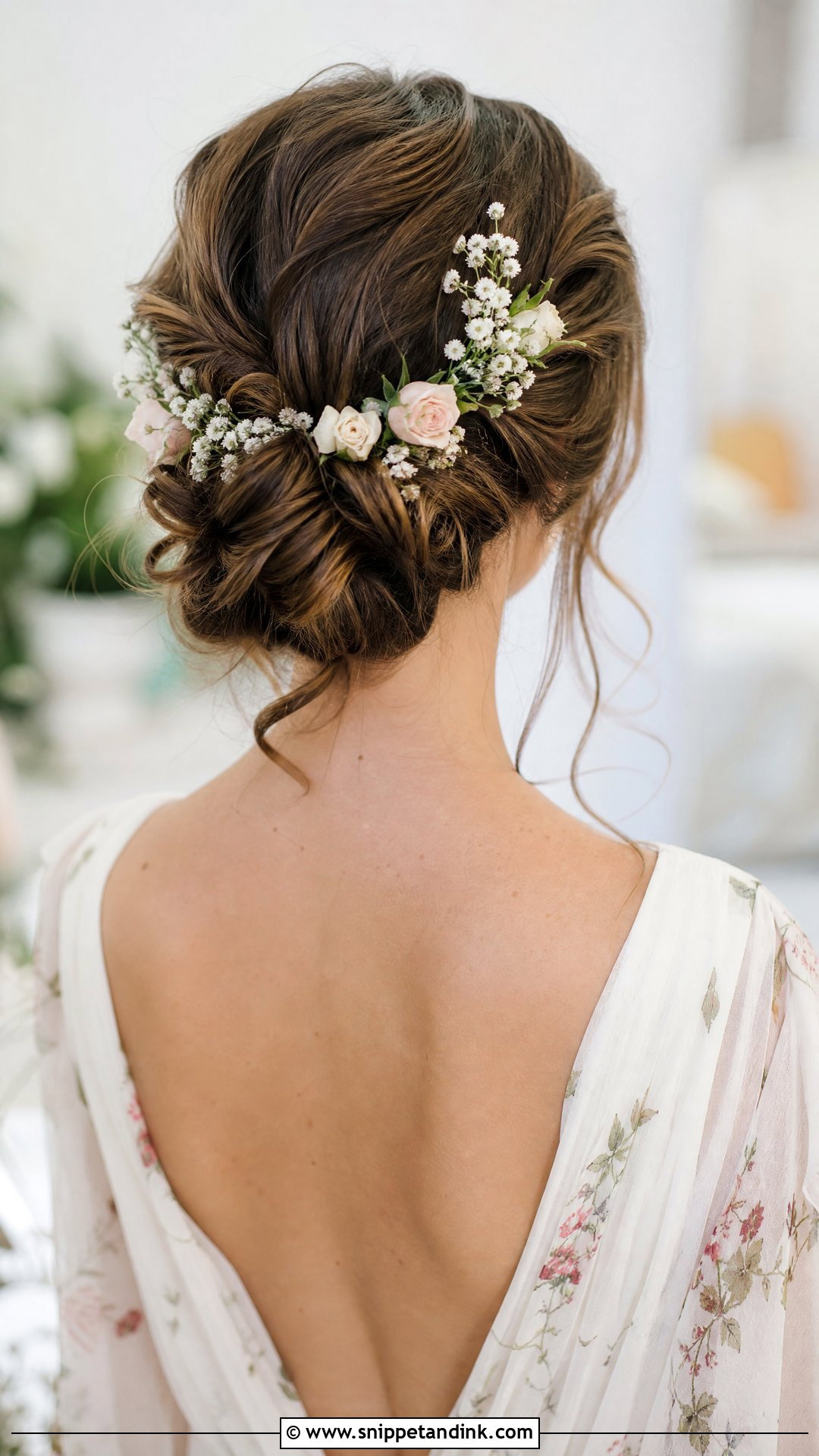
Tucking small blooms like baby’s breath or tiny roses into a soft chignon ties the hair to the bouquet. Ask your florist to wire and tape the flowers for hair, and choose sturdy blooms: baby’s breath and spray roses last well, while delicate petals like gardenias brown quickly against warm skin. I add them last, after hairspray, since spray can mark petals. A loose, textured bun suits flowers better than a sleek one.
11. High Bun With Volume
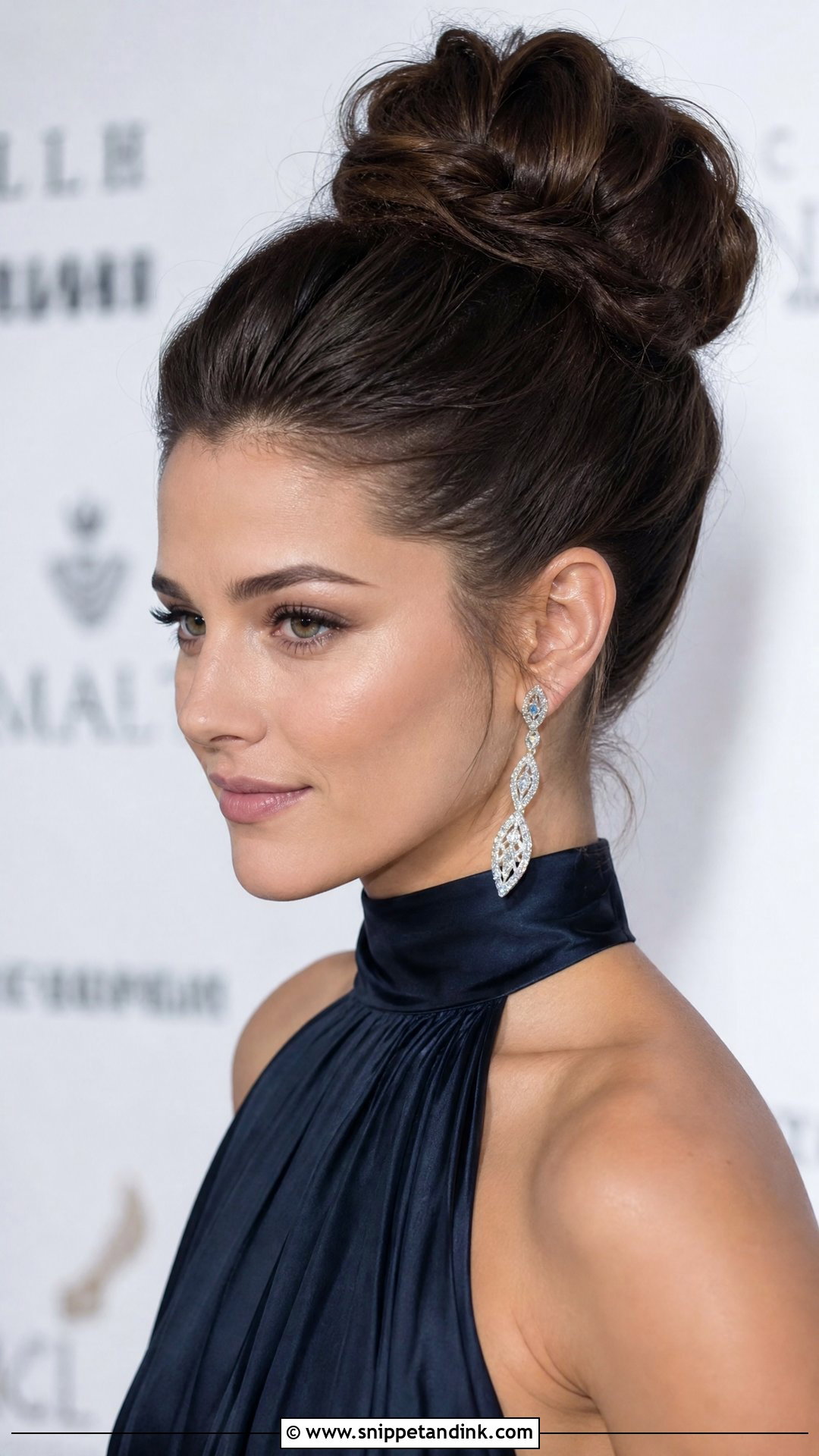
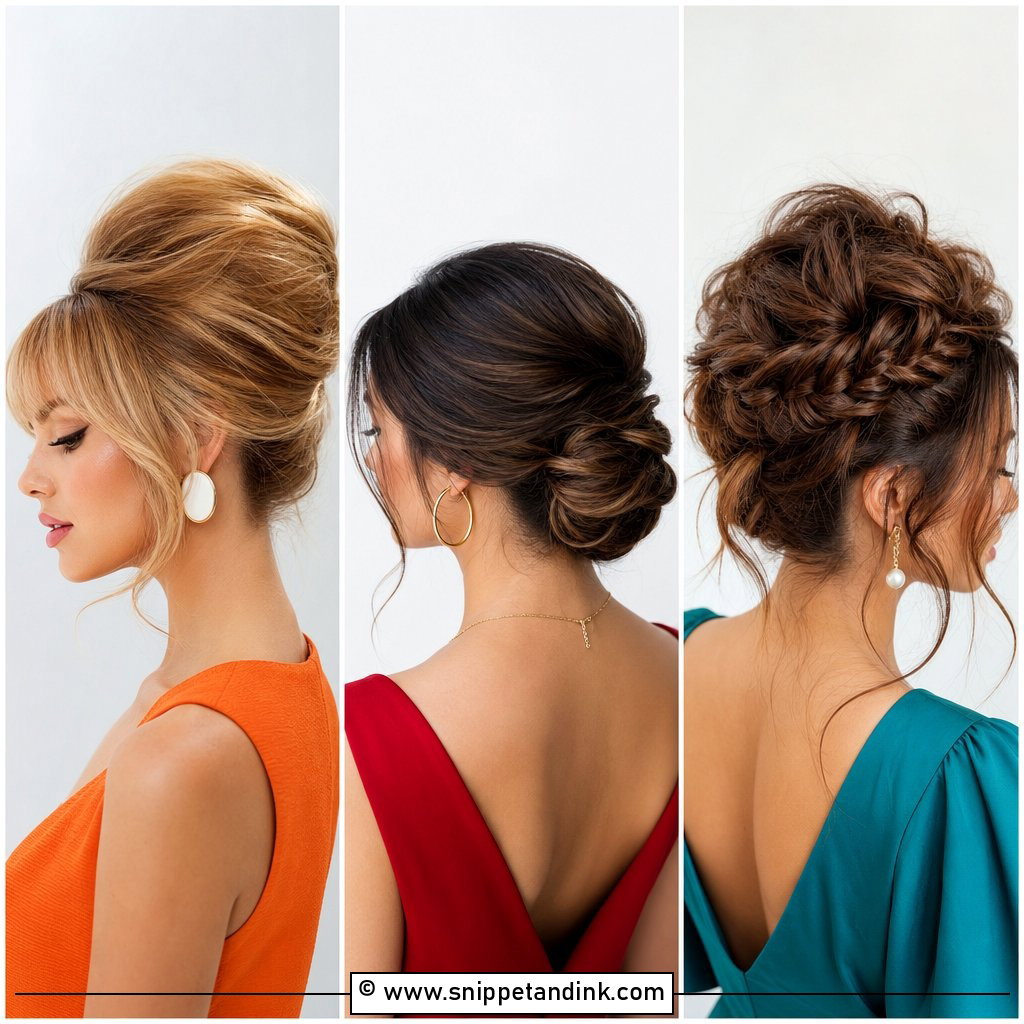
Lifted to the crown with fullness at the top, a high bun looks regal and shows off high necklines and dramatic earrings. The volume comes from gentle backcombing at the crown, smoothed over on the surface. High buns are heavier on the scalp than low ones, so I spread the weight across more pins and check that it doesn’t pull when the bride turns her head. If you’ll wear a long veil, plan its placement now, because it usually needs to go under the bun rather than on top.
12. Knotted Bun
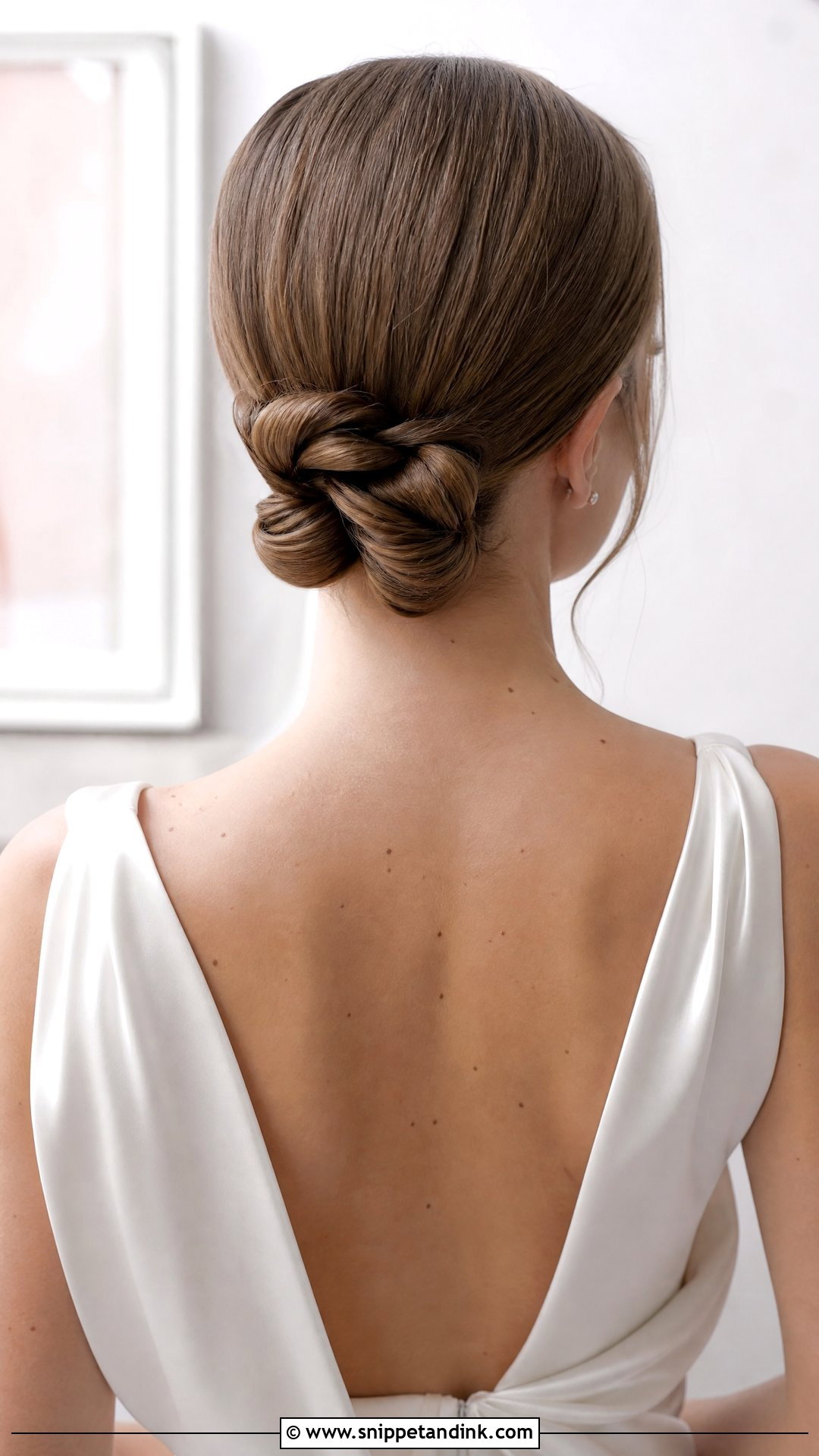
Two sections tied into knots and wrapped together give a sculptural, modern shape at the nape that avoids the usual round bun. The knotted detail shows best on smooth, single-colour hair; on highly highlighted hair the pattern can get lost. Keep it tight for polish or loosen it slightly for softness. It suits sleek, minimal gowns and stays neat through a long celebration.
13. Bun With Face-Framing Tendrils
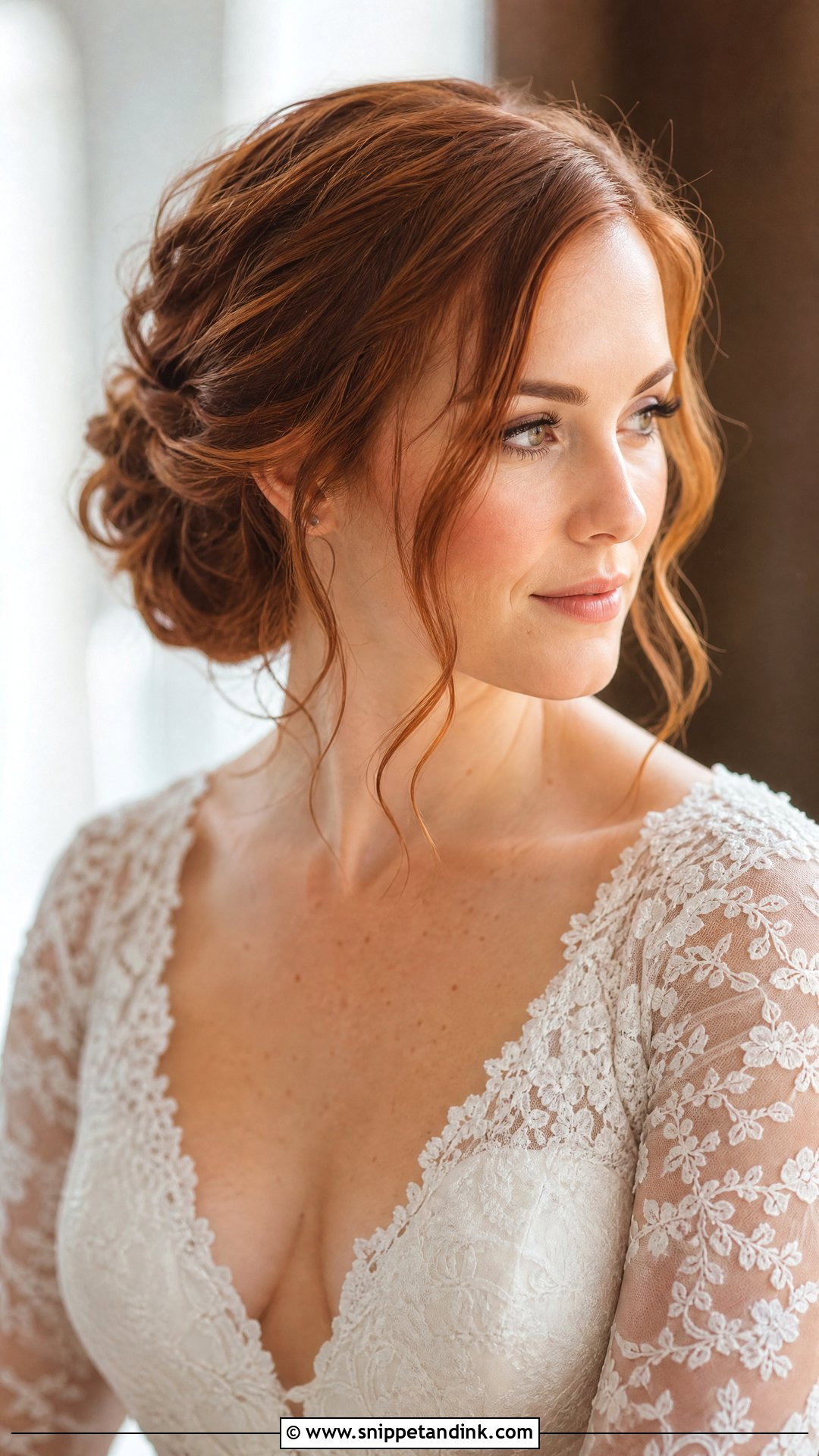
Tendrils soften any bun, but they’re the part most likely to go limp. I curl them with a small barrel and leave them pinned until just before the ceremony, so they keep their spring. Start with a simple low or mid bun and free only a few strands; too many and the face looks unfinished rather than framed. It flatters most face shapes and suits everything from boho to classic.
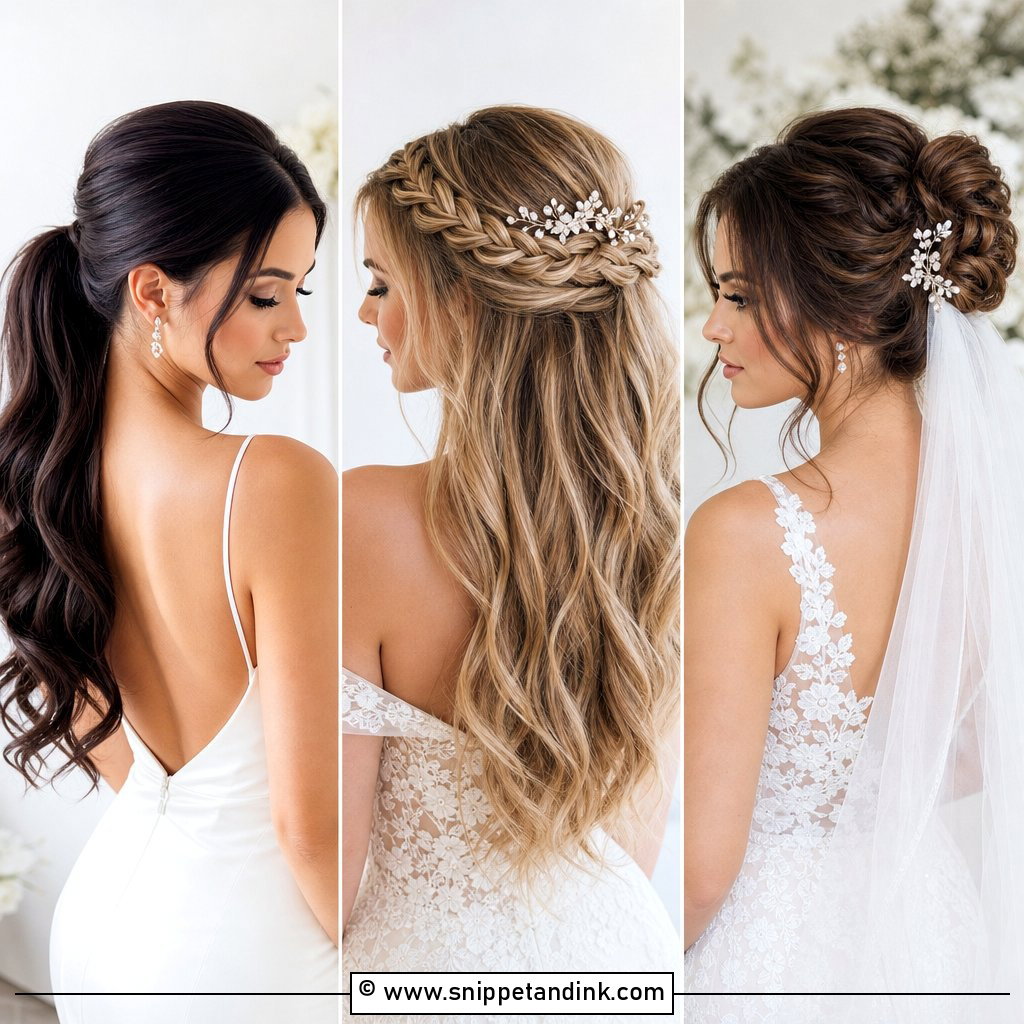
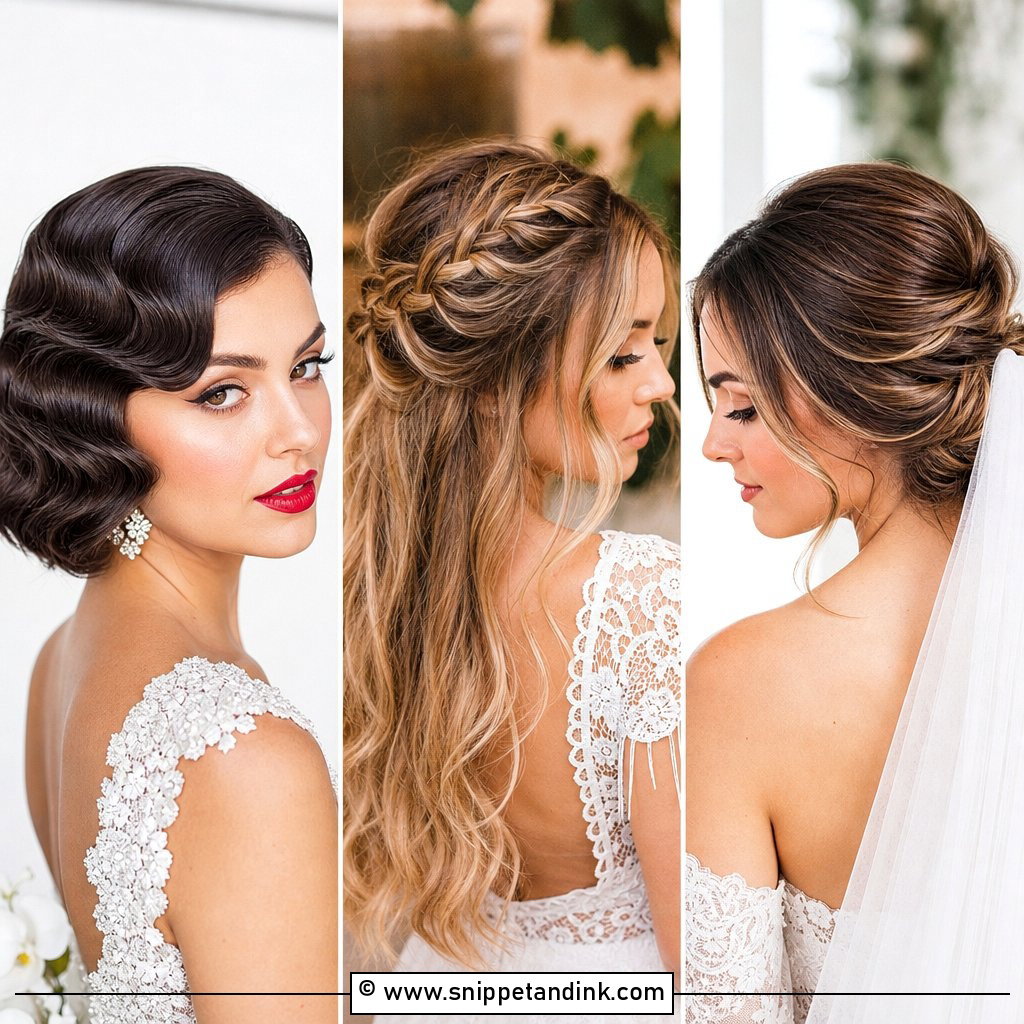
14. Vintage Rolled Bun
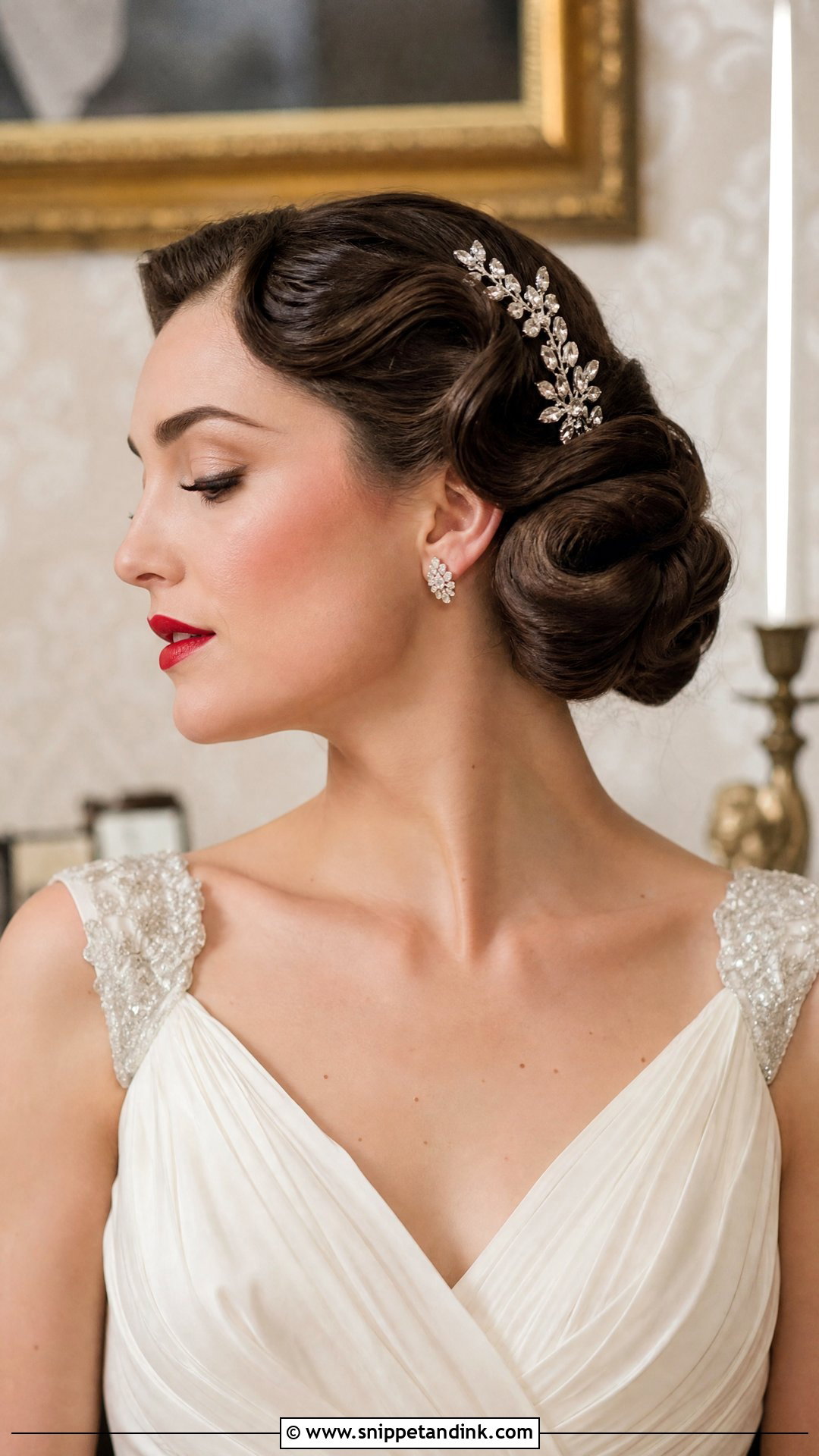
A vintage rolled bun uses smooth, sculpted rolls wrapped into a polished knot. It borrows from old Hollywood and suits retro-inspired gowns and a bold lip. Rolls need hair that has been set with hot rollers or a large barrel first and brushed out, otherwise they don’t hold their shape. A vintage comb or jewelled clip finishes it. It takes longer in the chair than most buns, so allow extra time.
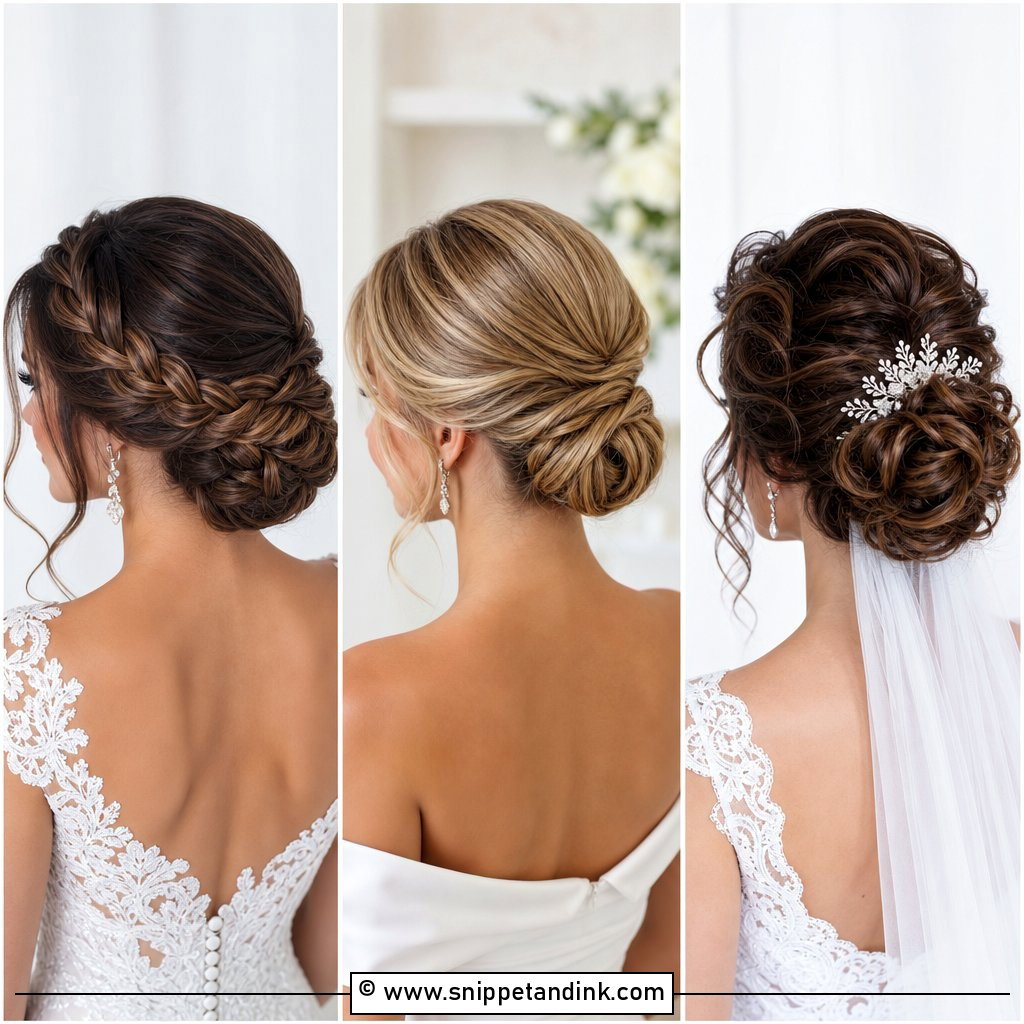
15. Boho Textured Bun
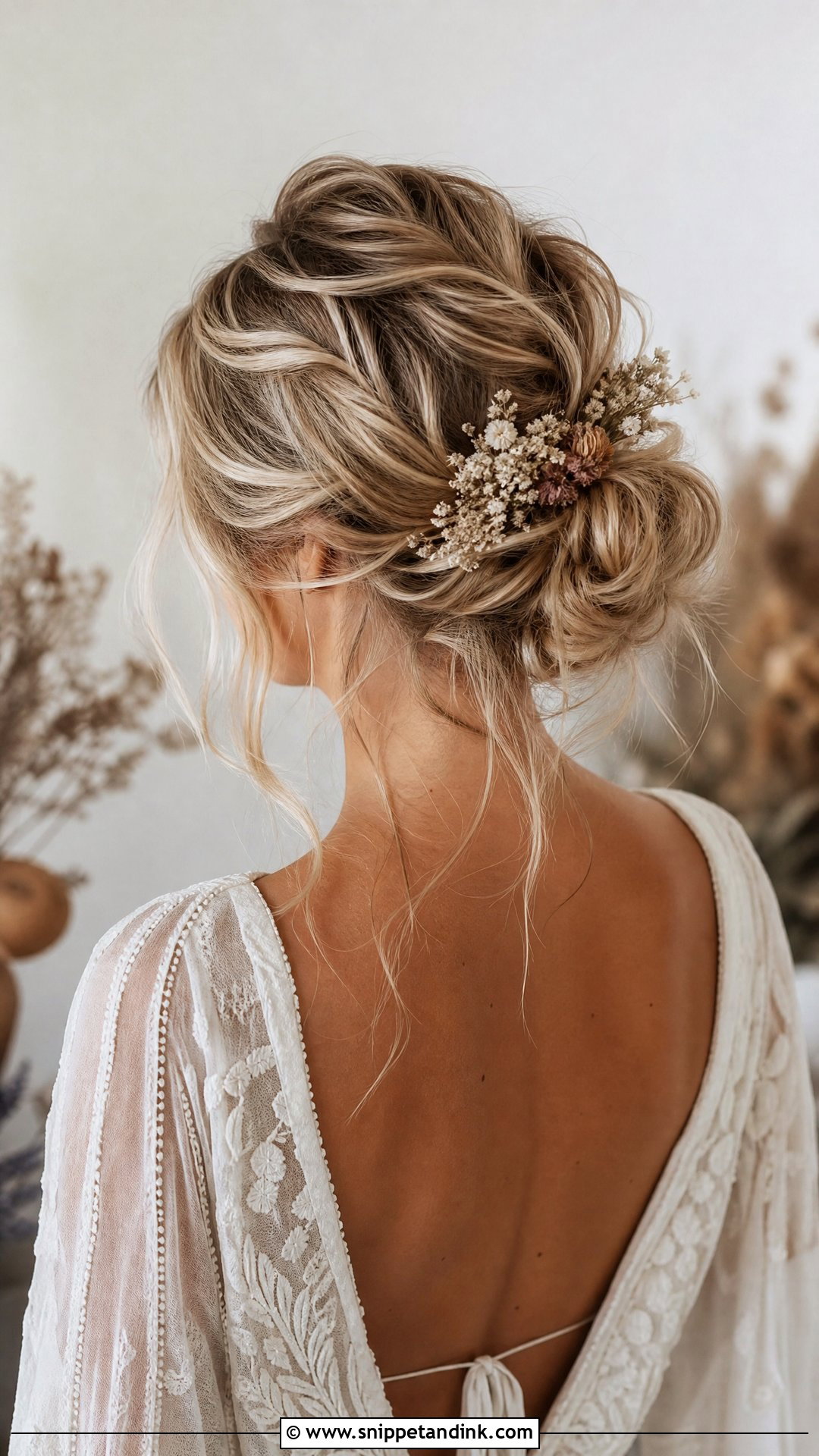
Loose waves gathered into an undone bun, with strands pulled out on purpose: this is the style for flowing gowns and outdoor settings. I’d add small braids or dried flowers for detail. On very fine hair, the pulled-out pieces can make the bun look thin, so I use a texture powder at the roots and pull out fewer pieces than you might expect. It’s comfortable to wear for hours, which brides tend to appreciate by evening.
16. Bun With Hair Vine
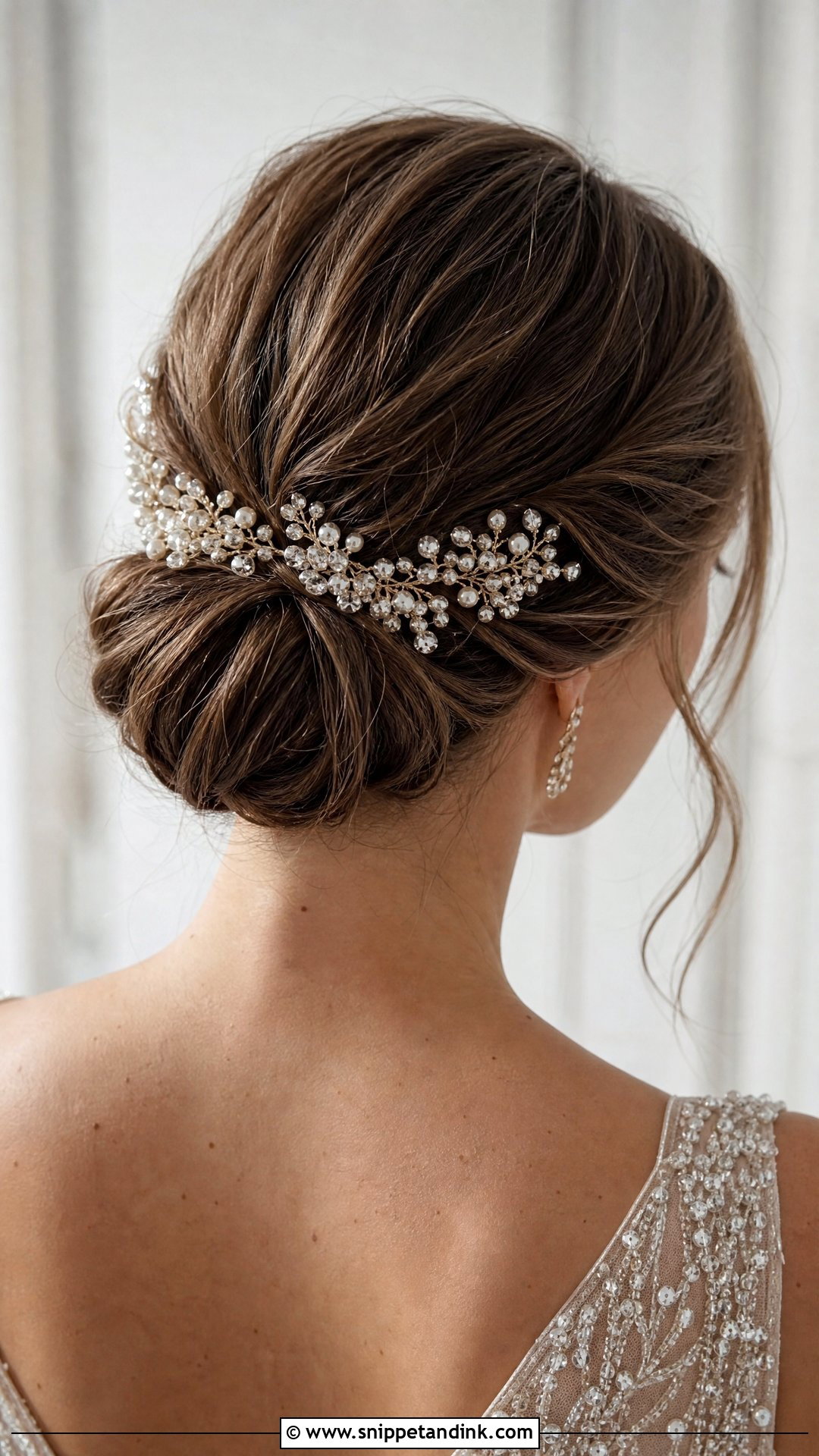
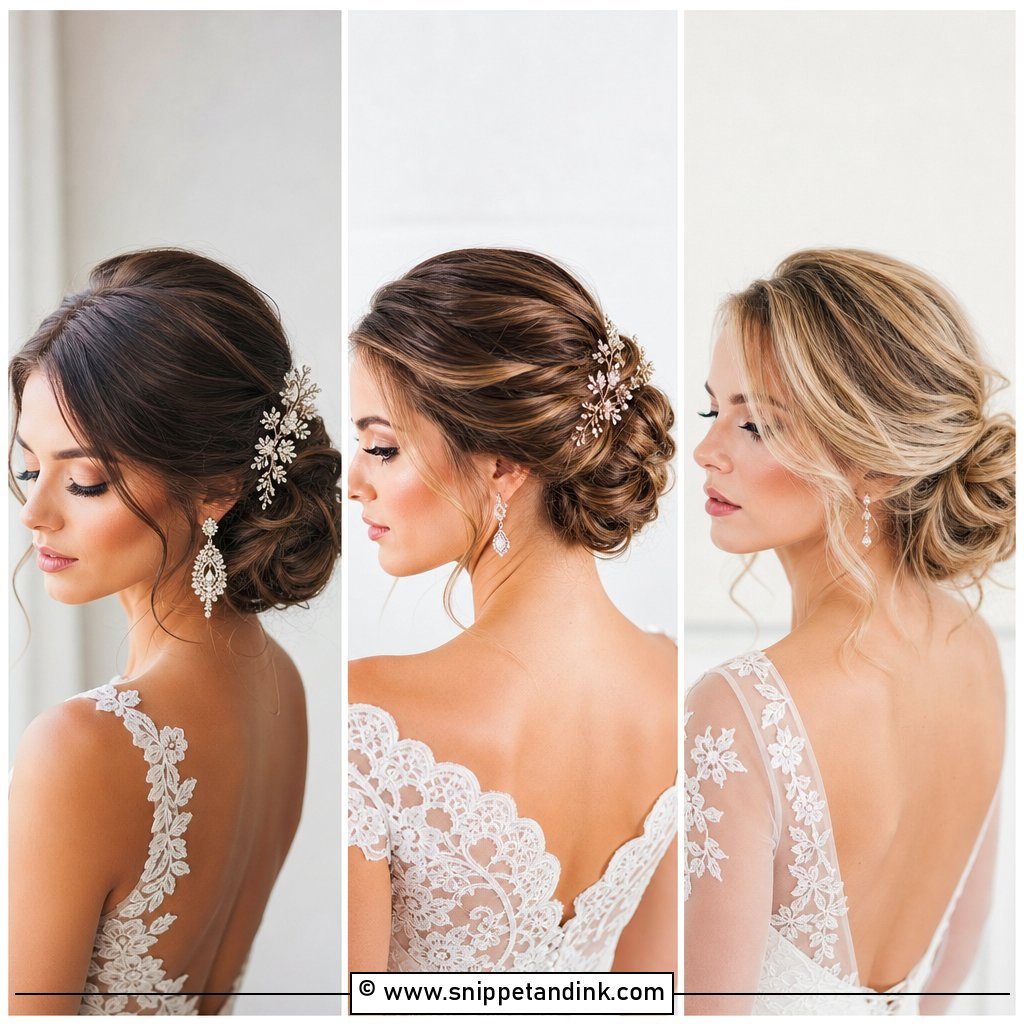
A hair vine weaves through or wraps around the bun with tiny crystals, pearls or leaves, adding shimmer that catches the light as you move. Match it to the gown’s beading or your jewellery. Vines have fine wire ends, so I secure them with small pins every few inches and turn the sharp ends inward so they don’t scratch the neck. It works with sleek and textured buns alike and stays light on the head.
17. Double Bun Twist
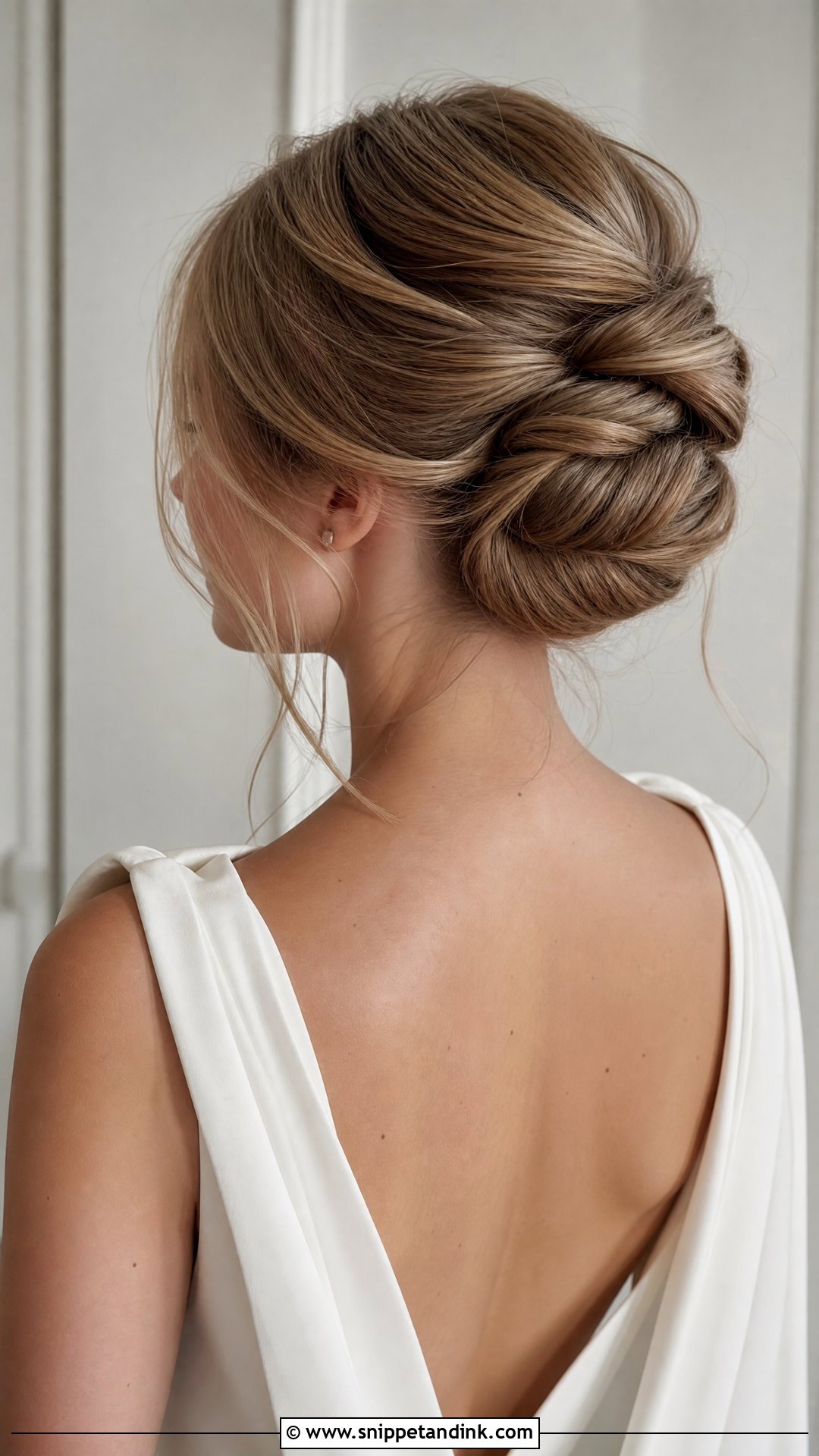
Two twisted sections wrapped and pinned into an interlocking shape give a layered bun with more depth than a single knot. It’s a style that shows from behind, so it suits a ceremony where guests mostly see your back. I build it with each section pinned separately, which makes it secure but also heavier, so it’s best on medium to thick hair. Loose tendrils soften it; a sleek finish keeps it modern.
18. Low Chignon With Center Part
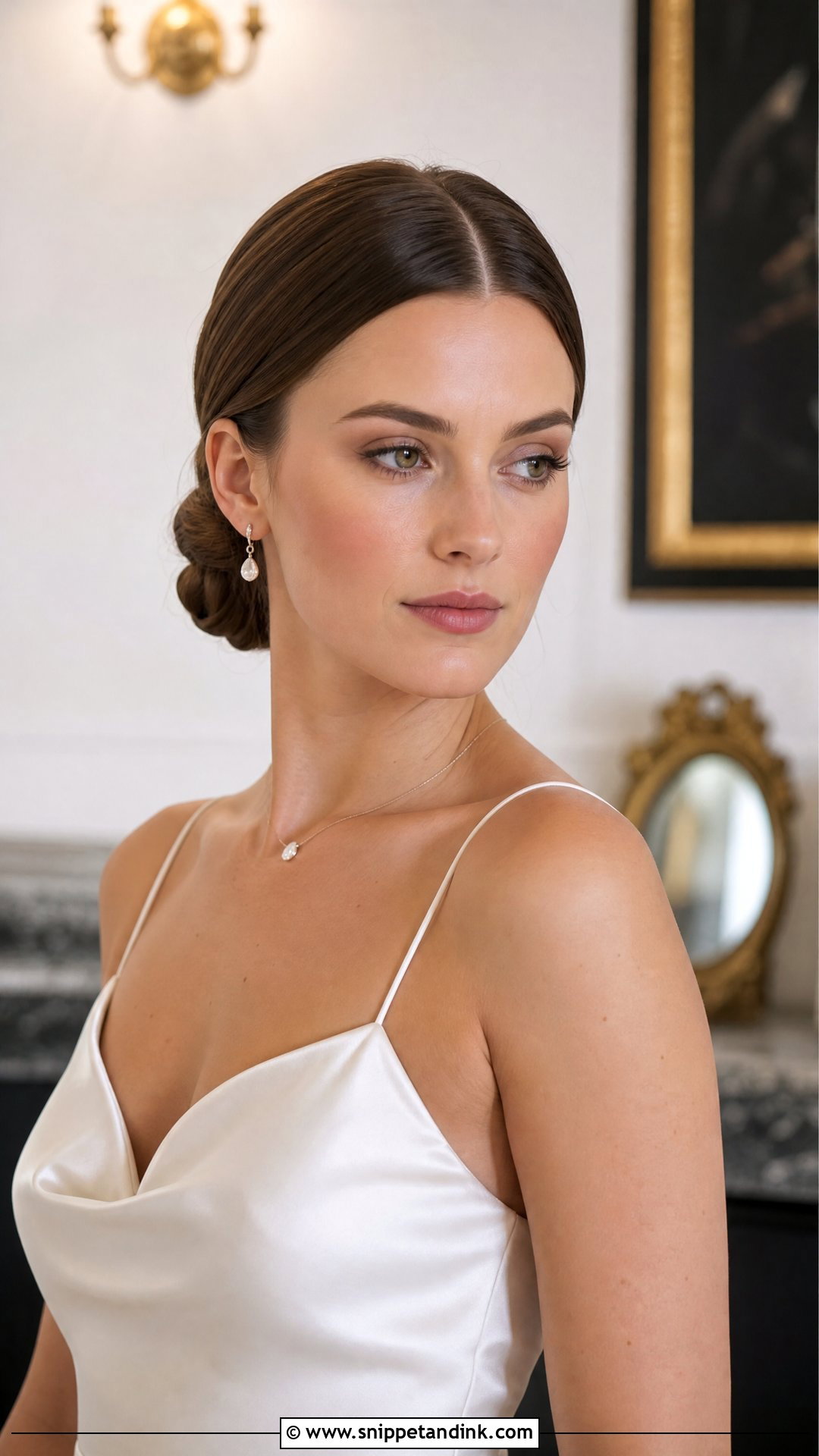
A clean centre part smoothed back into a soft bun at the nape is modern and minimal. It suits symmetrical features well, and it’s honest about them too: a centre part shows any asymmetry in the face, so if you always wear a side part, try this at your trial before committing. It pairs with satin gowns and simple jewellery. Glossy feels formal; a little texture softens it.
19. Bun With Soft Waves
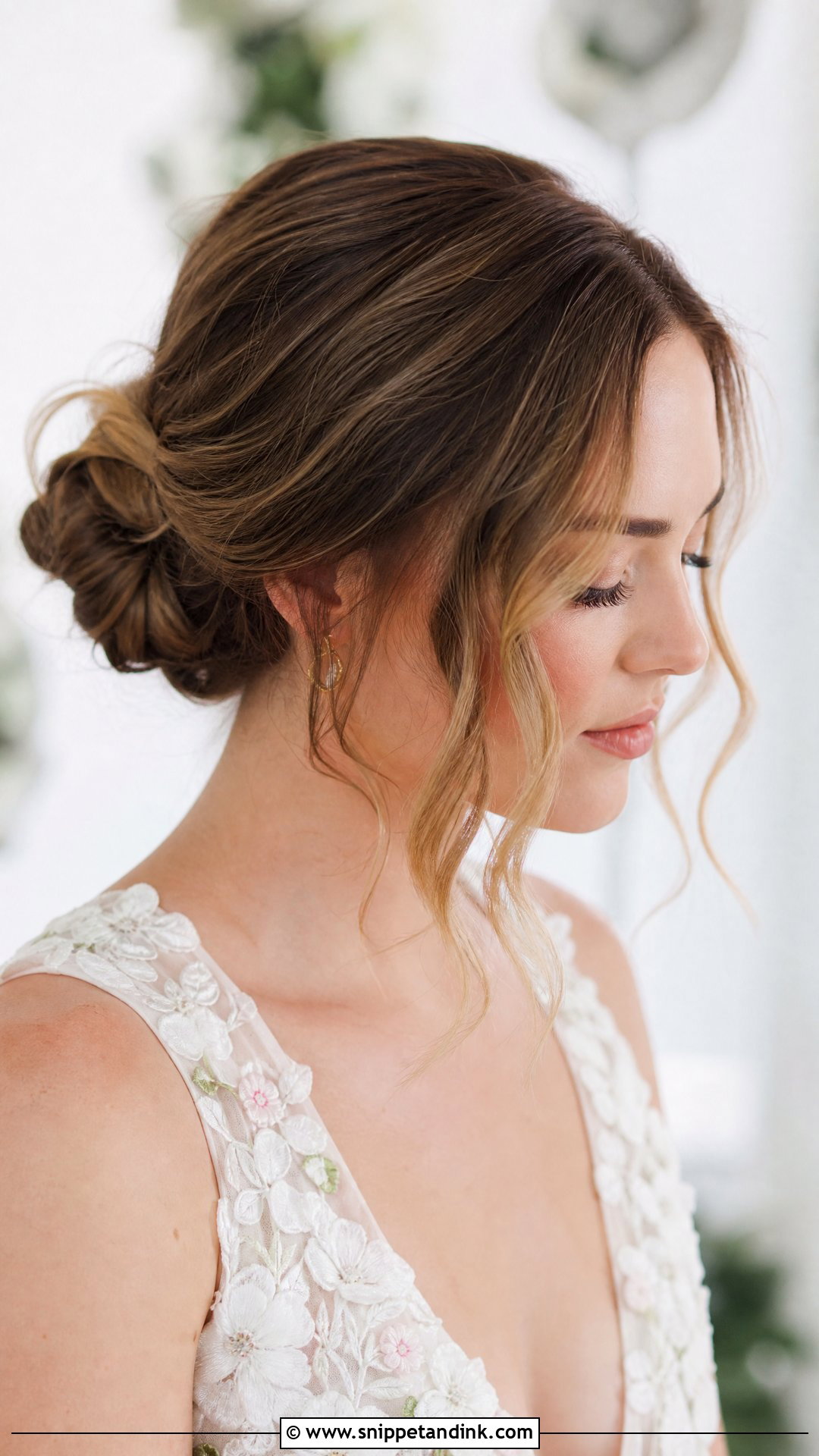
Here the bun sits low and soft waves frame the face and add texture at the crown. I curl the front sections and pin them to cool before brushing them out, which makes the waves last much longer. Humid weather is the risk, since waves loosen there faster than a bun does, so I’d go with a slightly tighter wave for an outdoor summer wedding. Garden and romantic celebrations suit it.
20. Crown Braid Bun
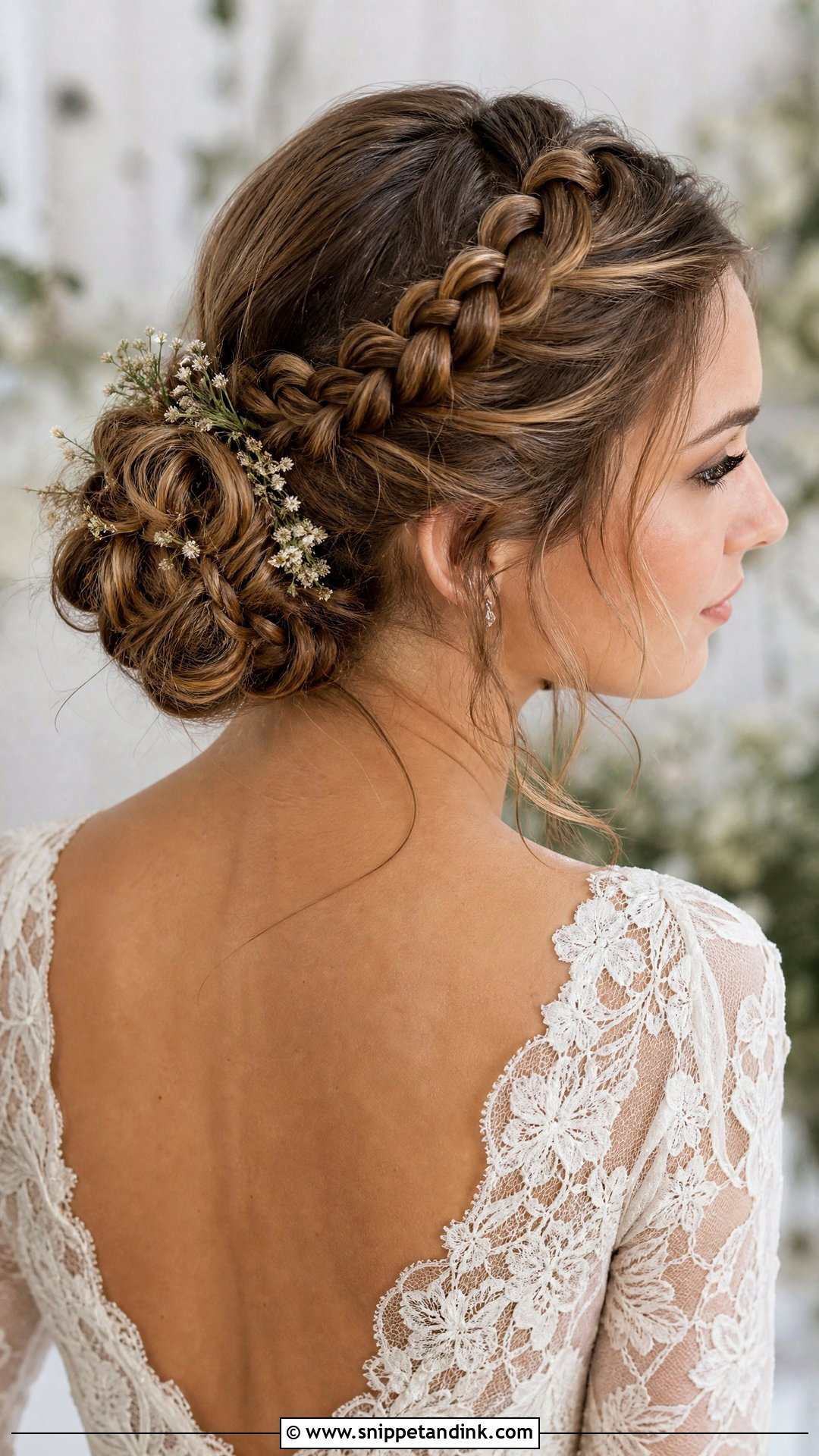
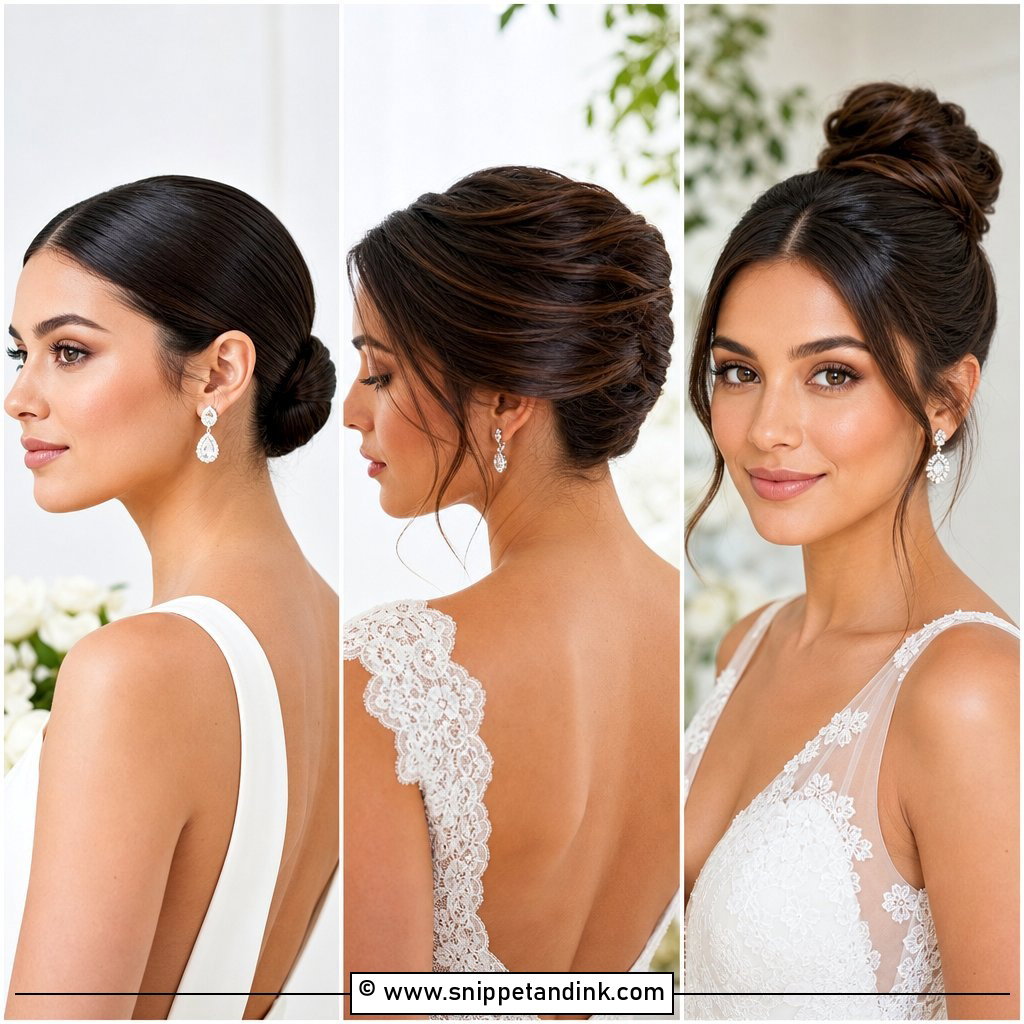
A braid wraps around the crown like a halo and leads into a soft bun at the back. The braided crown holds everything securely and frames the face like a natural headband, with small flowers tucked in if you like. You need enough length to reach around the head, roughly past the shoulders, or a clip-in braid to complete it. It suits bohemian and woodland-themed weddings.
Pins, Padding and the Weight Problem
Most buns that fall don’t fail because of the style. They fail because of how they were anchored. These are the habits I rely on.
- Day-old hair grips better than freshly washed hair. If you wash the morning of, ask for a texture spray before styling.
- Bobby pins go in with the wavy side down, and two pins crossed in an X hold far better than one alone.
- U-pins shape the bun; bobby pins anchor it. Using only bobby pins makes a bun feel tight and still slip.
- Fine or thin hair benefits from a padding form or a small clip-in piece in a matching colour, so the bun isn’t stretched thin.
- Very thick, heavy hair may be better split into two smaller buns stacked close together, which spreads the weight and stops a headache by the speeches.
A small kit for the evening
Give a bridesmaid a handful of pins in your hair colour, a travel hairspray and a small comb. If anything loosens, one pin pushed back through the base usually fixes it in seconds, and nobody at the reception will ever notice.
Which Bun Will Still Hold at the Last Dance?
Your gown, your hair type and the length of your day should choose the bun before the photos do. Sleek low knots, braided chignons and soft textured buns with flowers each suit different hair, and every one of them keeps your hair secure from the ceremony to the dance floor when it’s built properly. Personalise it with pearls, a vine or fresh blooms. Bring your shortlist to your trial, and wear it for a few hours afterwards so you know how it feels by evening.
You'll Like These Ideas:



Leave a Reply