
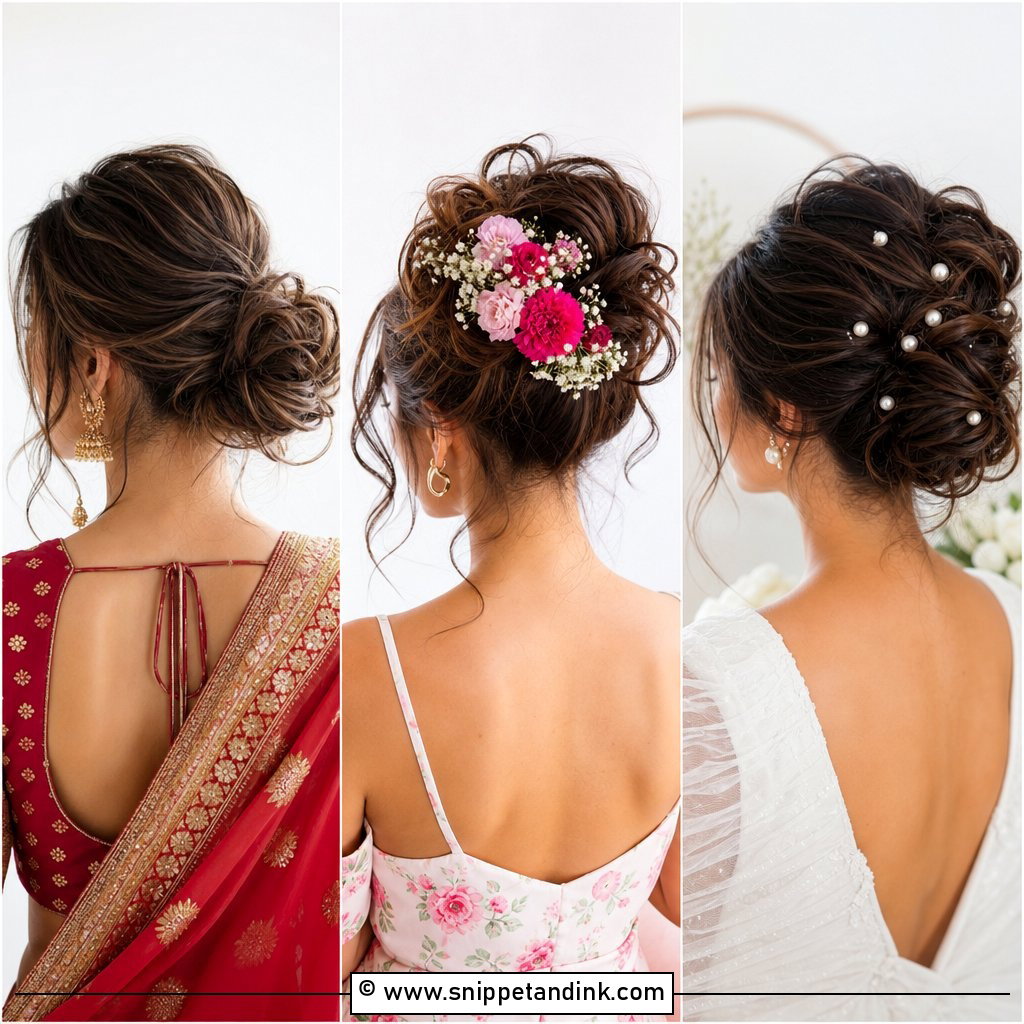
The juda has outlasted every trend I have worked through, mostly because it solves practical problems. A bun keeps hair off a heavily embroidered blouse, gives a dupatta something to pin into, and carries flowers or jewelry without pulling at the face. It sits as comfortably with a silk saree as with a lehenga or a gown. Below are twenty buns I put on brides, from a sleek South Indian gajra bun to braided and boho updos, with a note on what each needs underneath to hold for a full day.
Bun Height, Face Shape and Profile Photos
Most of the decisions in a bridal bun come down to where it sits. Moving it two inches up or down changes how your face, neck and dupatta look far more than the choice of flowers does.
- At the nape: the easiest under a head-draped dupatta and the most comfortable for sitting through rituals. It suits long necks and oval faces, and it is the placement most South Indian buns use.
- Mid-height: sits at the back of the head, level with the tops of the ears. This is the safest choice for a round face because it adds a little length without peaking, and dupatta pins still grip it well.
- At the crown: adds height and lengthens a short neck, but it changes how a dupatta drapes and it pulls more on the scalp over a long day.
During the pheras and many rituals you are photographed side-on far more than face-on, so I always check a bun in profile at the trial. A bun that looks neat from the front can look flat or lopsided from the side.
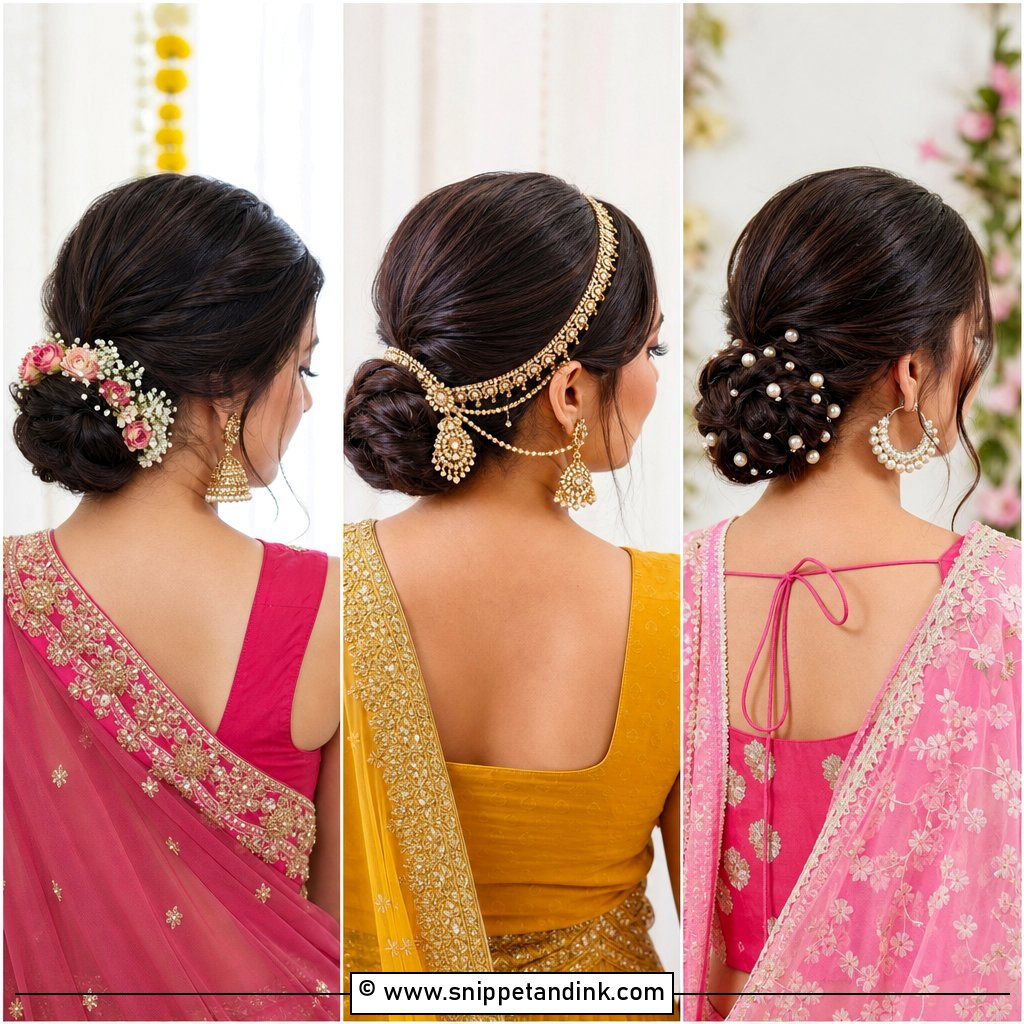
1. Low Bun With Gajra
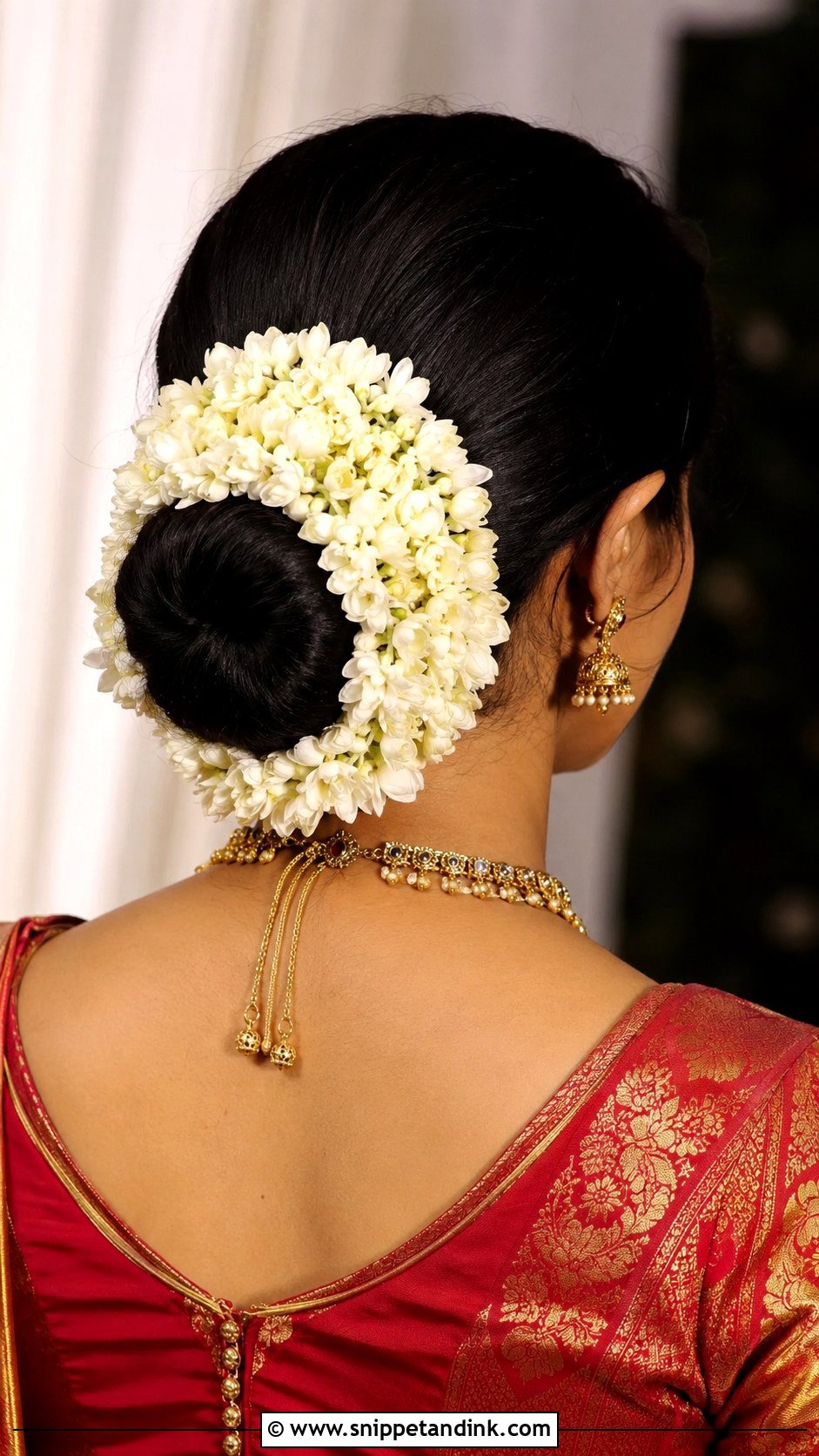
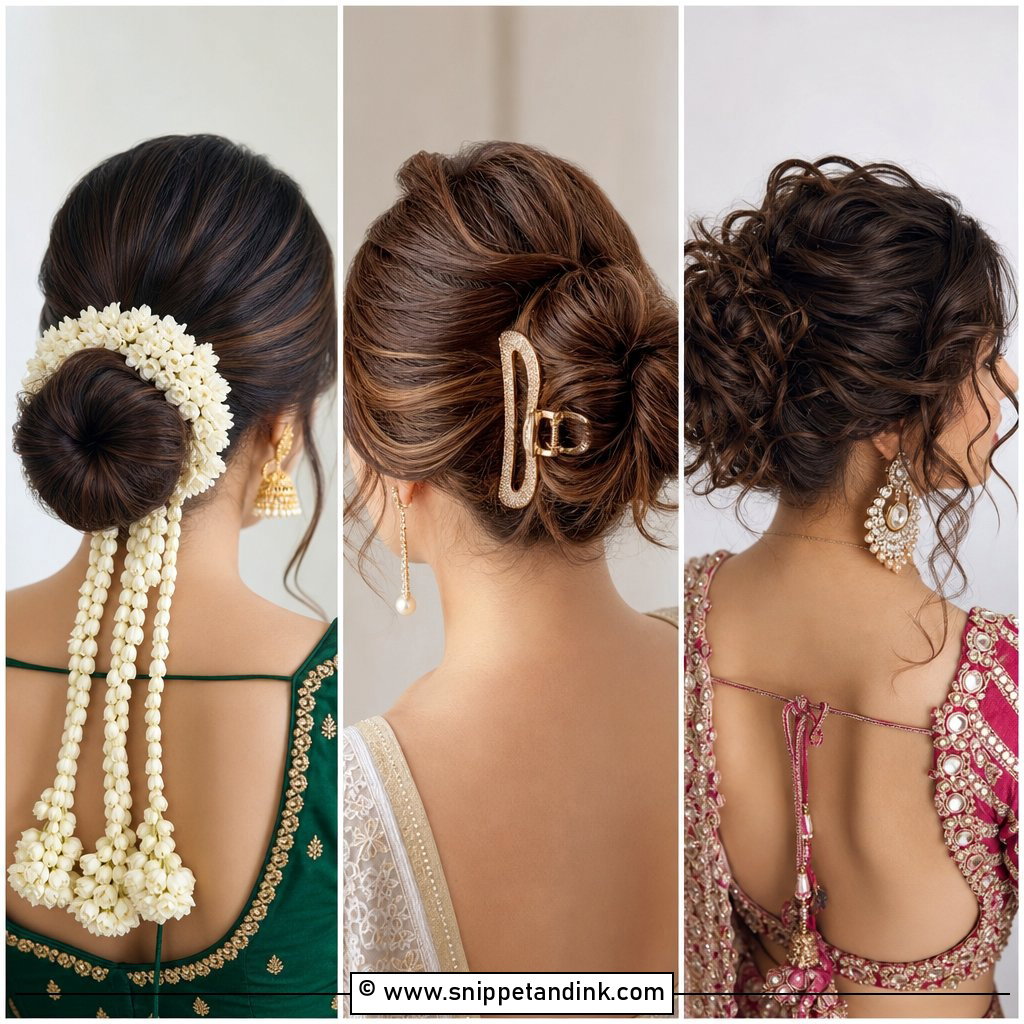
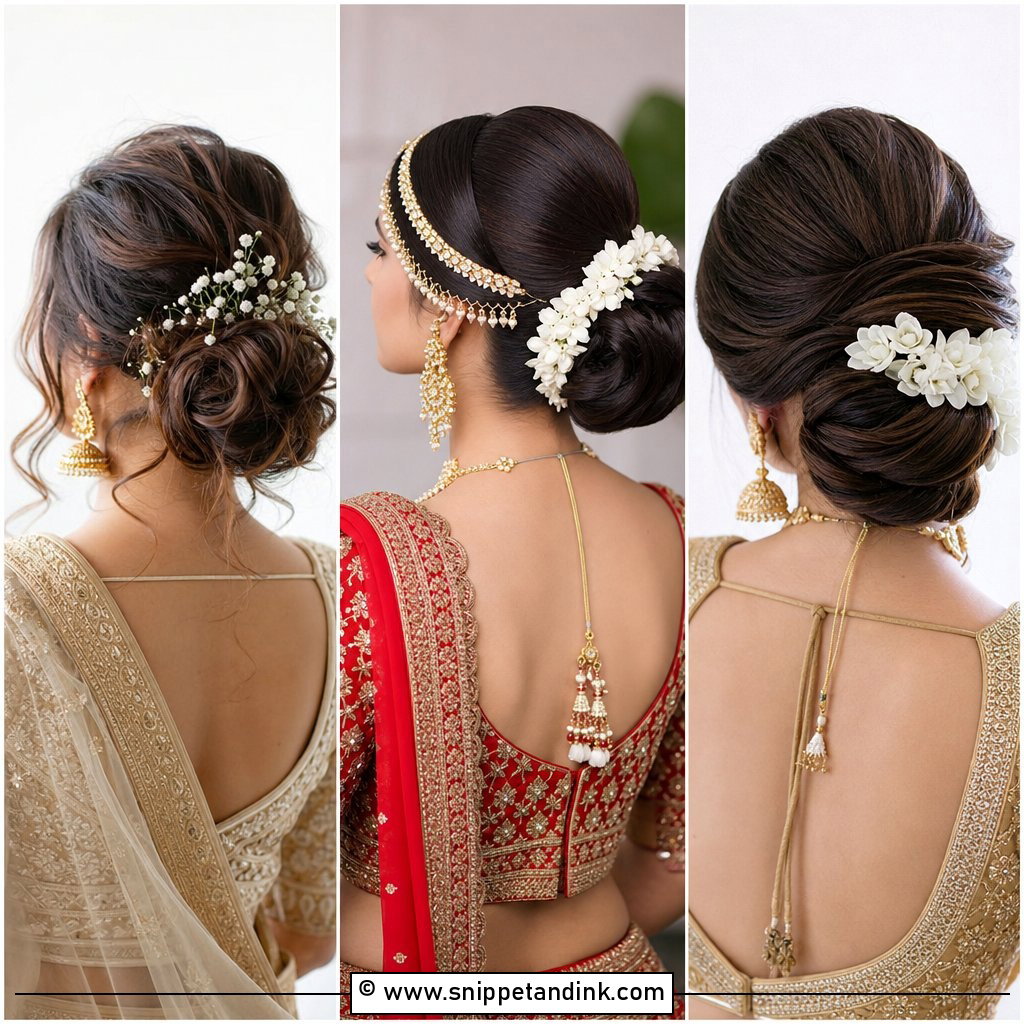
Jasmine wrapped around a low coil at the nape is the South Indian classic most families expect at the muhurtham. I build the bun on a firm, pinned base, then drape fresh mogra around it and tuck the strand ends inside so no thread shows. White flowers stand out against dark hair from across a hall, and Kanjeevaram silk with temple jewelry completes it. Its quiet advantage is comfort. A low bun leaves the back of the head flat, so you can lean back in a chair through a long ceremony.
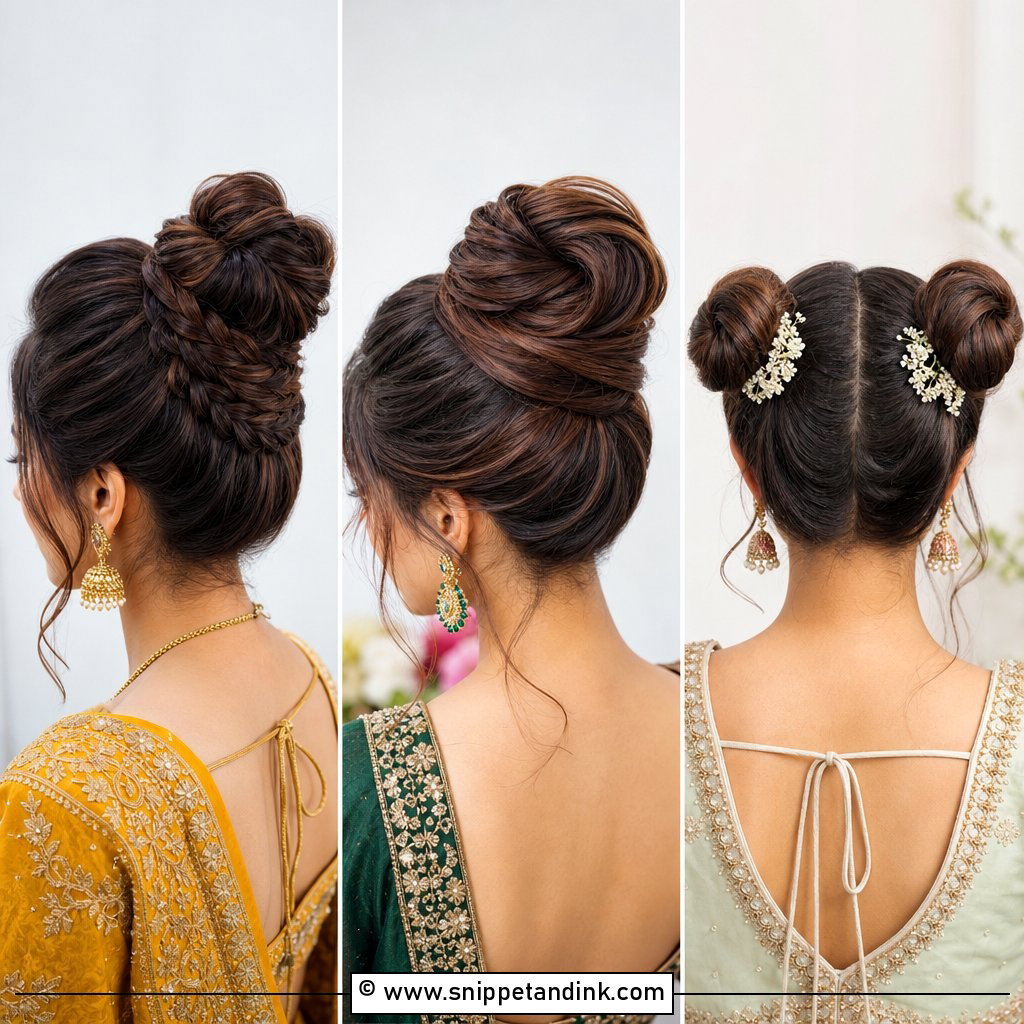
2. Messy Bun With Side Braid
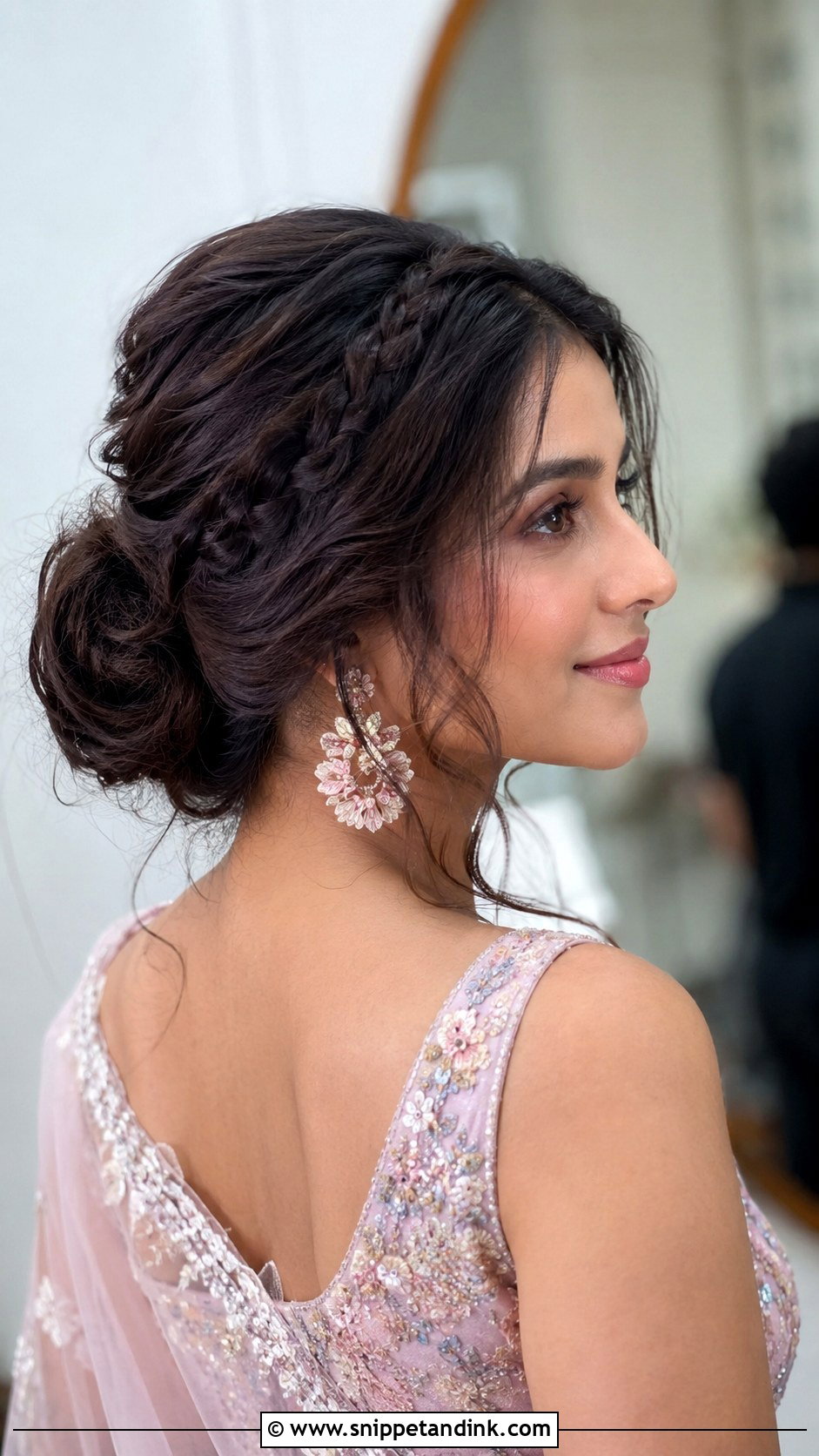
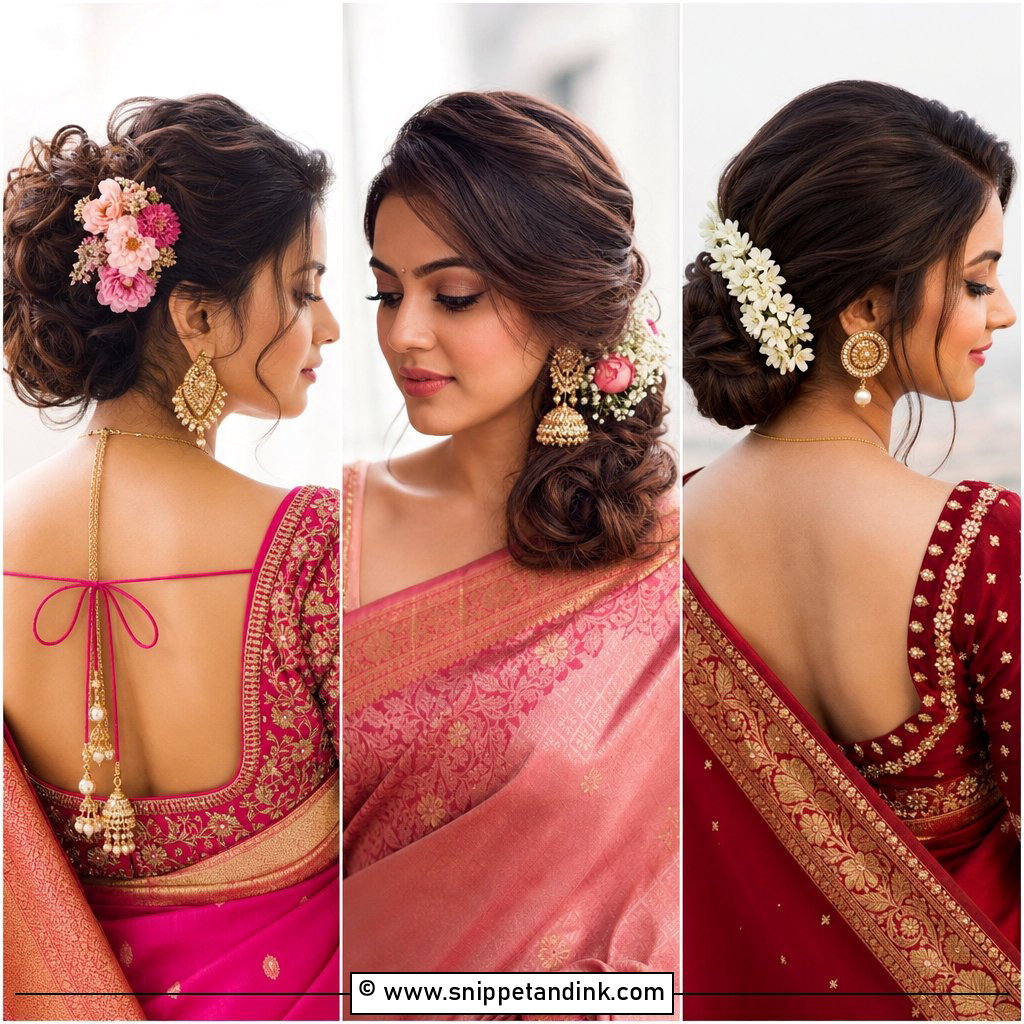
One side is braided softly along the head and the rest twisted into a loose, tousled bun, with a few strands left to frame the face. It is a relaxed look for sangeet nights or fusion weddings, and small flowers or pearl pins are enough decoration. Messy buns are harder to make last than neat ones. I curl and texturize the hair first so the mess is built in, then pin every loose loop where it sits; a genuinely loose bun simply falls.
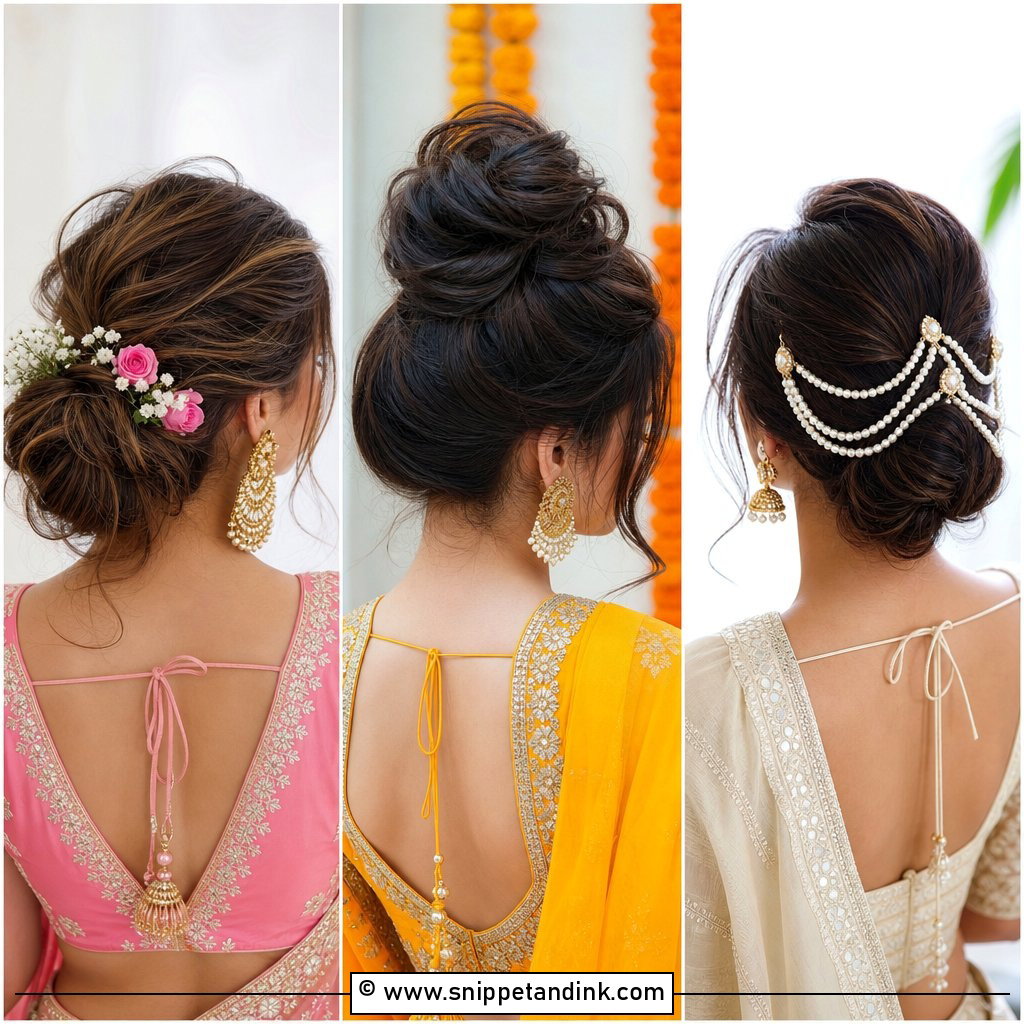
3. Floral Bun With Roses
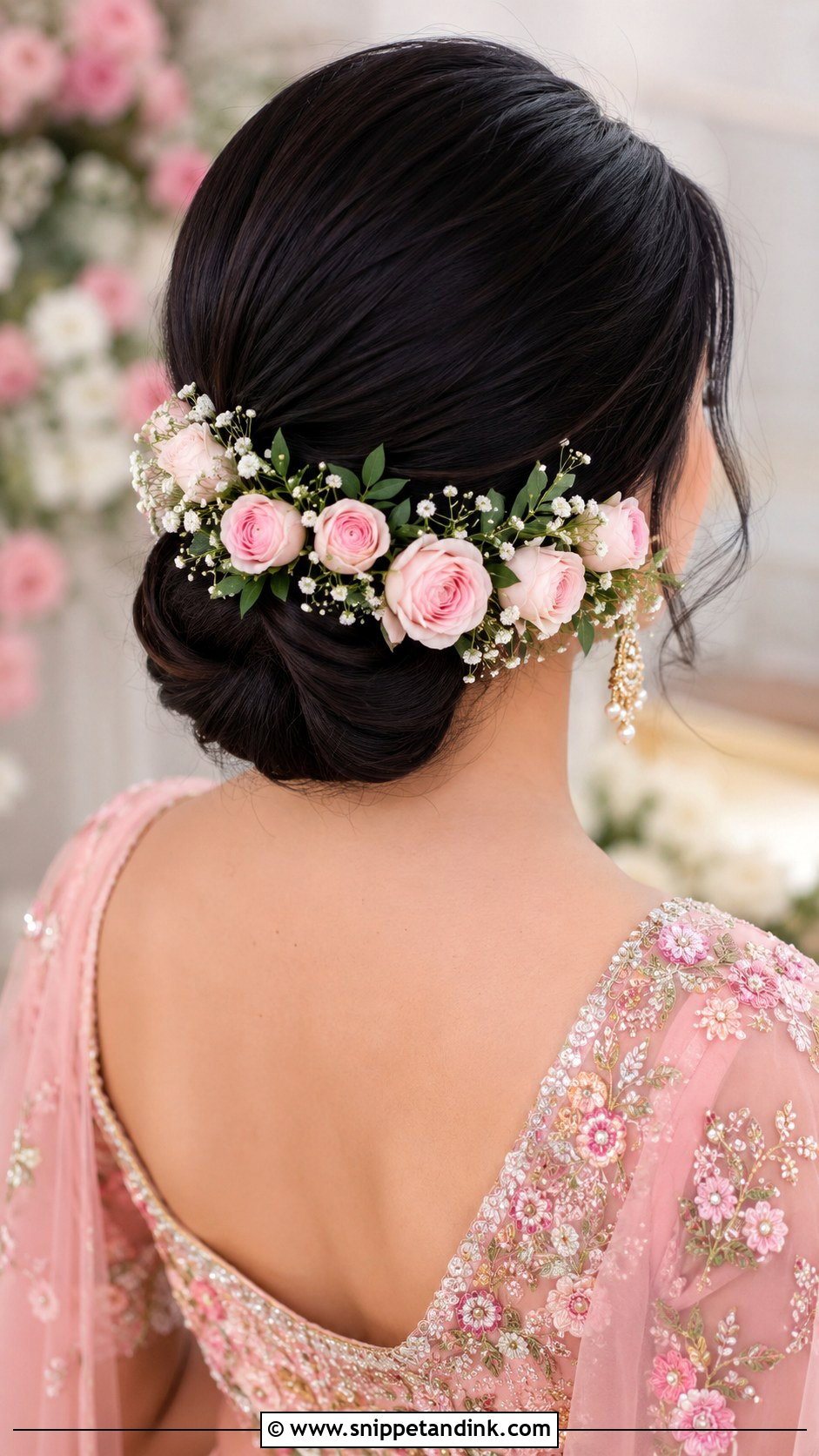
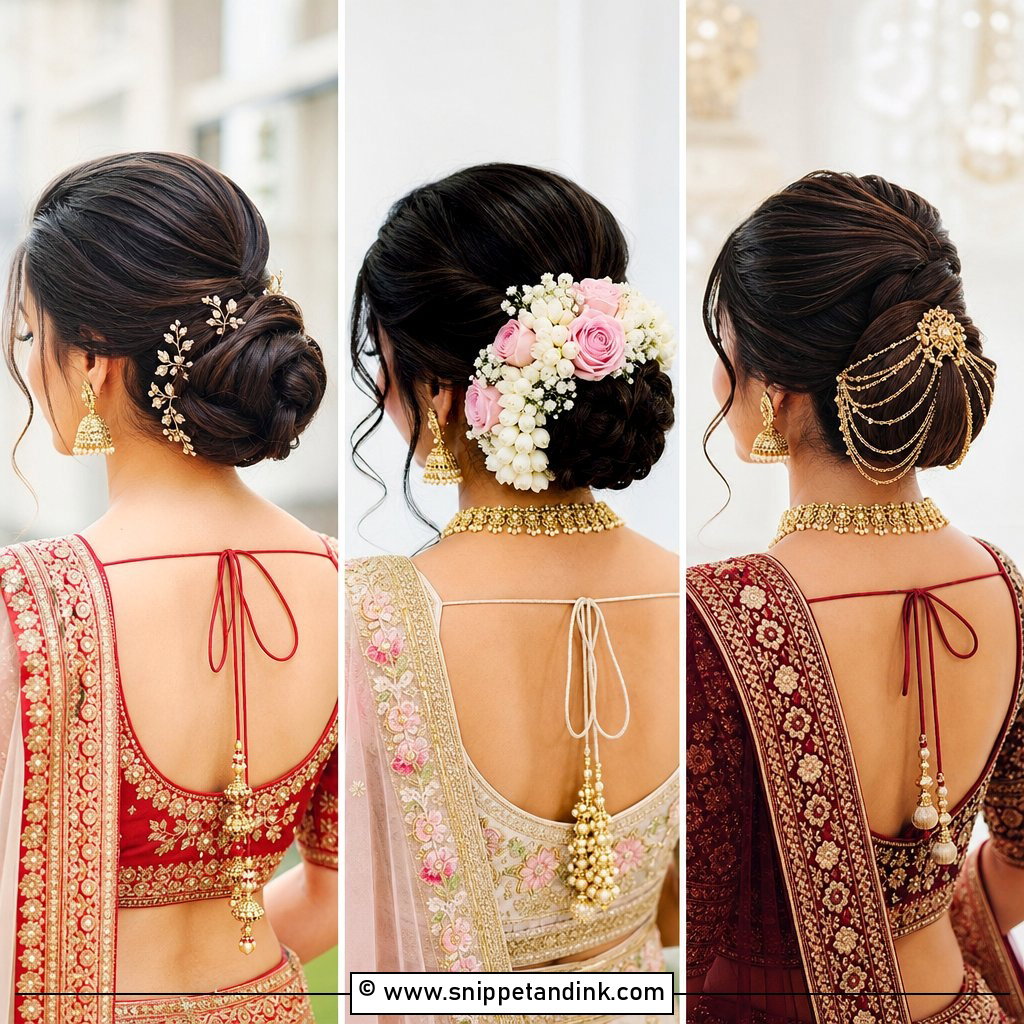
Pastel roses layered around a clean, coiled bun, with baby’s breath and a little green, give a garden look for day weddings, outdoor ceremonies and morning muhurthams. Pastel lehengas and lighter jewelry sit well with it. I keep the base bun small and smooth, because roses add a lot of volume and a big bun under big blooms looks top-heavy from the side. Spray roses work better than full-size heads. They are lighter and they do not flop.
4. Sleek Chignon Bun
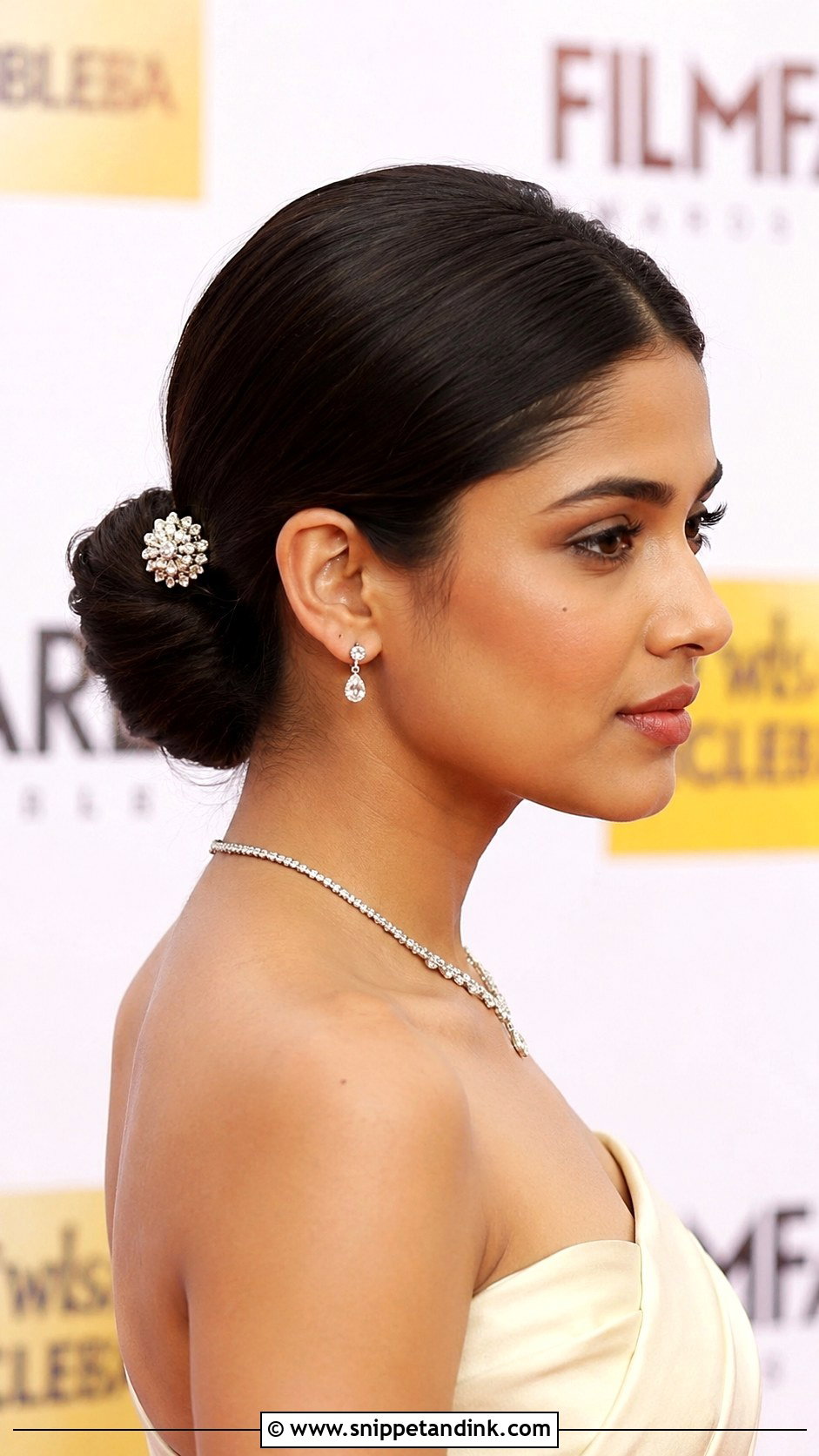
A low, polished knot with clean lines puts the attention on your jewelry, neckline and face. I smooth the hair back from a center or side part and twist it into a compact knot at the nape, and one statement pin or a thin gajra is all it needs. Structured gowns and silk sarees suit it. It is unforgiving on heavily layered hair, since short pieces escape the twist, so I prep with a smoothing cream and a light gel at the hairline.
5. Braided Bun With Pearls
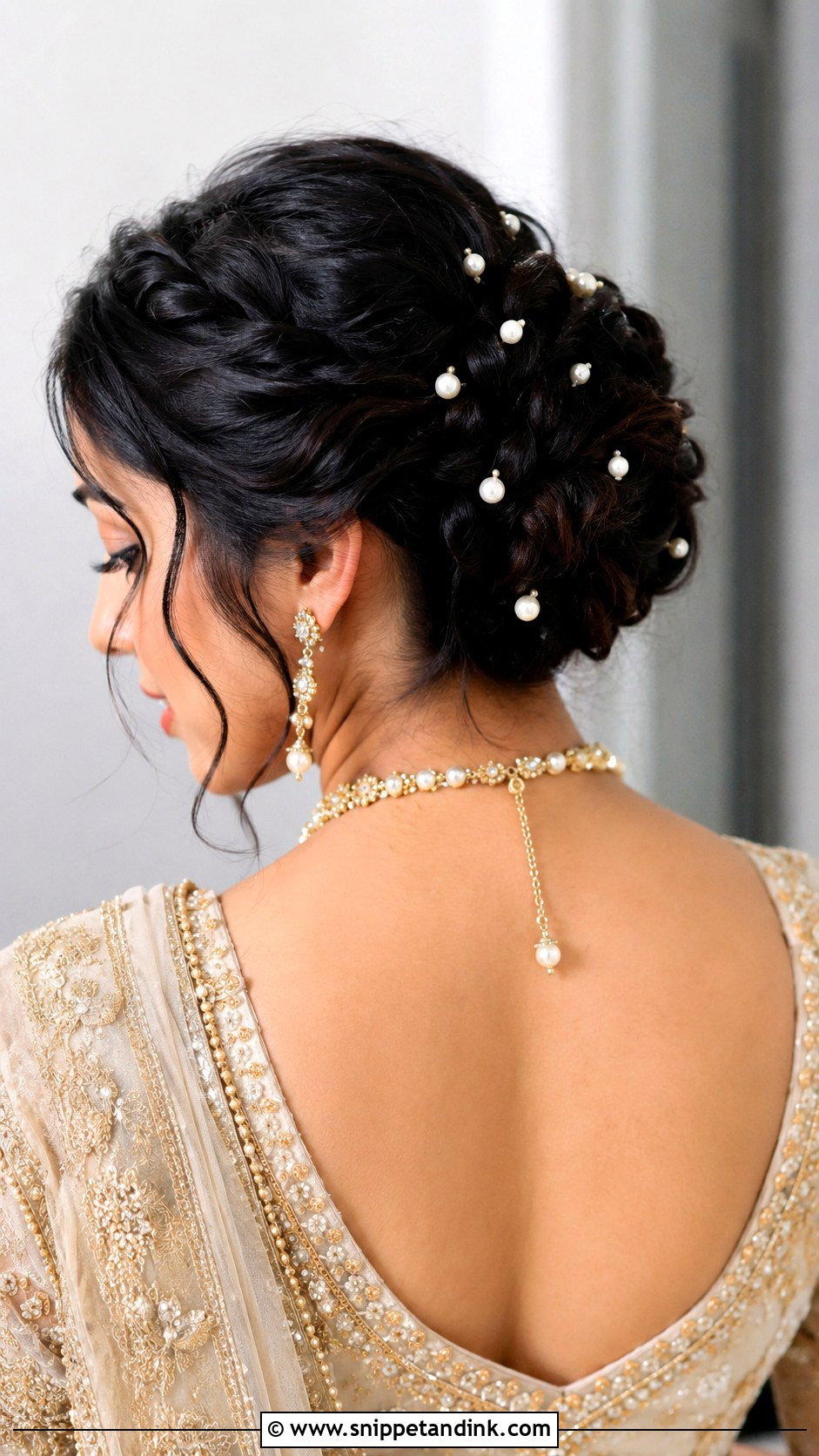
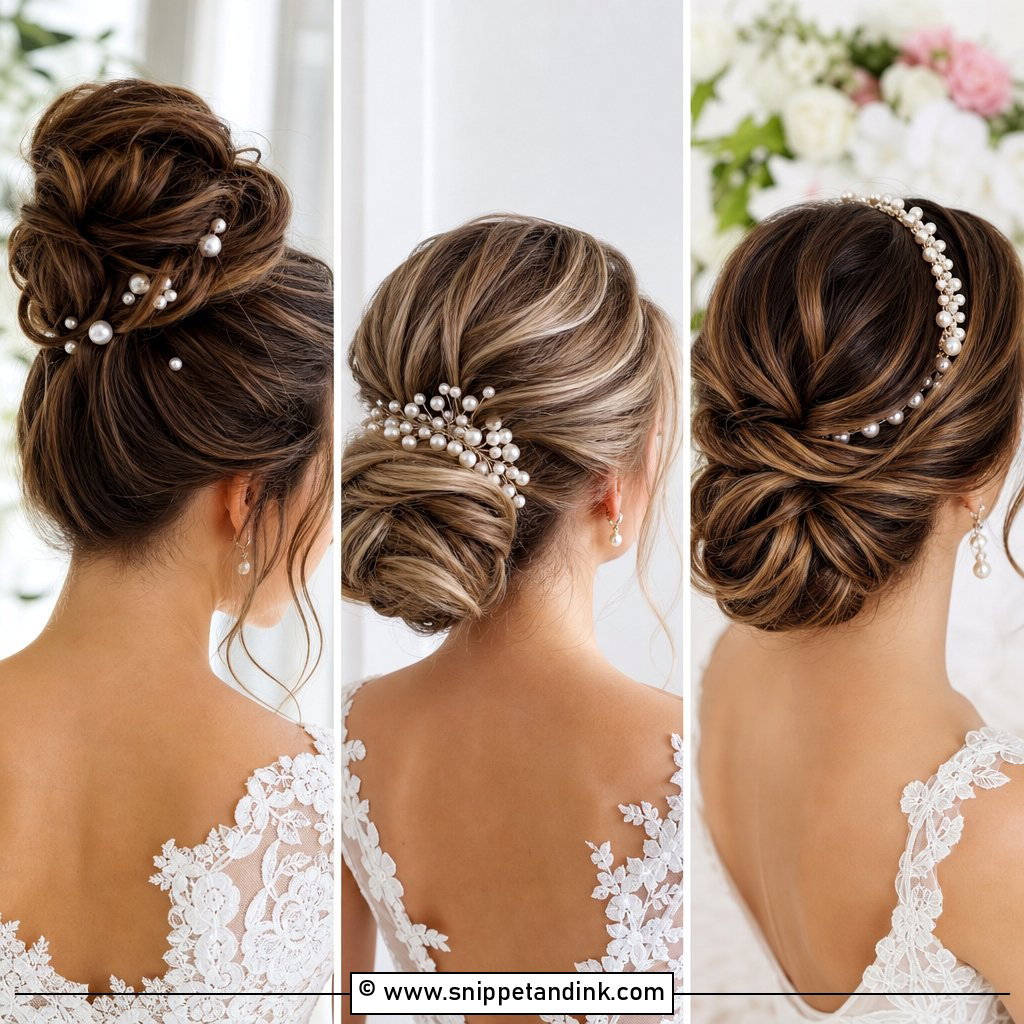
Several plaits coiled together make a bun with real texture, and tiny pearl pins tucked between the coils add a soft glow. It reads regal without fresh flowers, so it suits brides who would rather not worry about wilting. Ivory, gold or pastel outfits match it at receptions or the main ceremony. I place the pearl pins last, after the dupatta is on, so none of them end up hidden under fabric.
6. High Bun With Maang Tikka
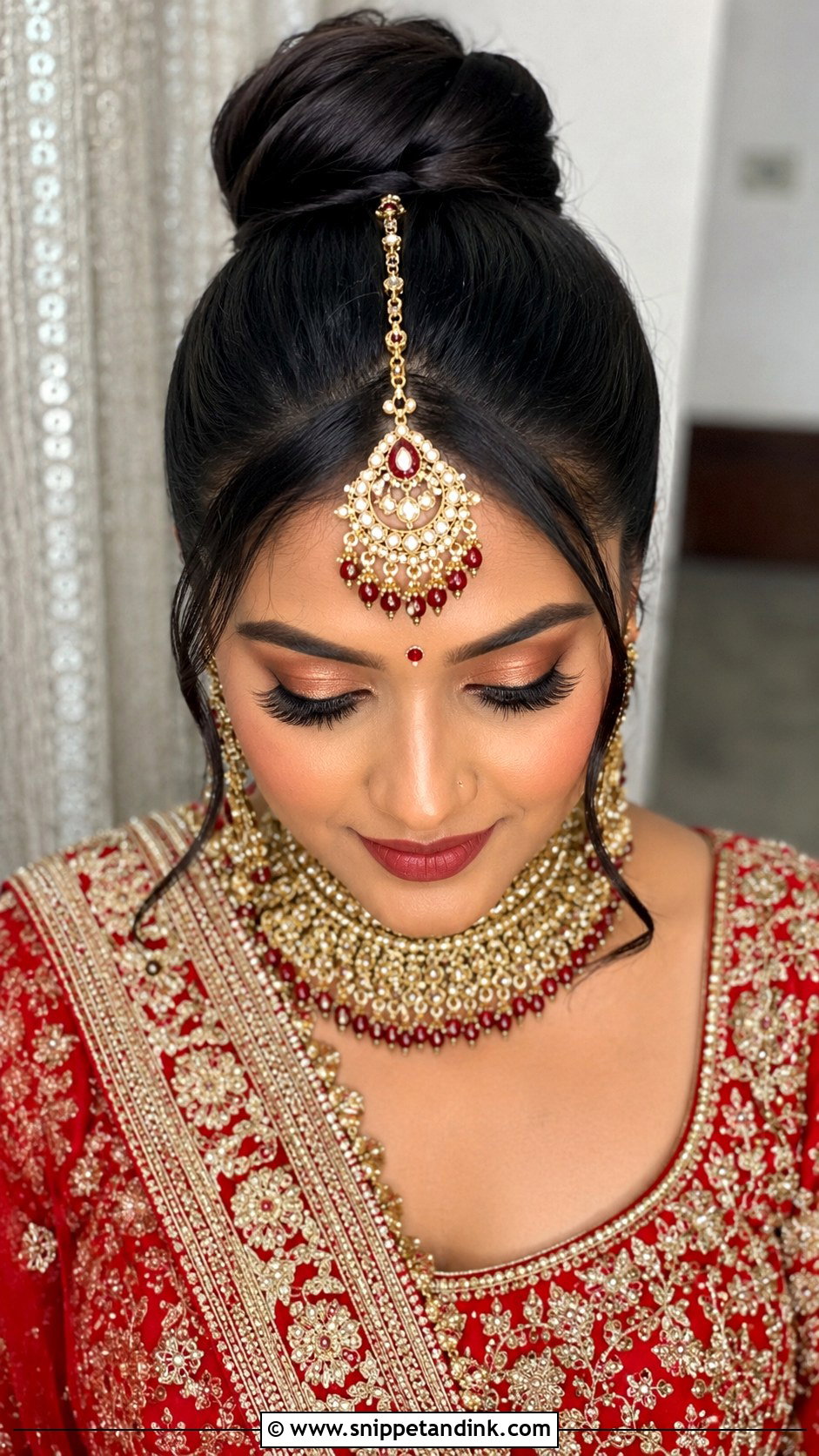
Sitting high at the crown, this bun adds height and puts a maang tikka or matha patti right on show. The hair is smoothed upward and coiled into a neat knot, which lengthens the neck and keeps hair off the shoulders all day. Heavy bridal lehengas and statement jewelry match its scale. My caution is the dupatta: a high bun pushes a head-draped dupatta up into a peak, so I save it for events where the dupatta is pinned at the shoulder.
7. Fishtail Braided Bun
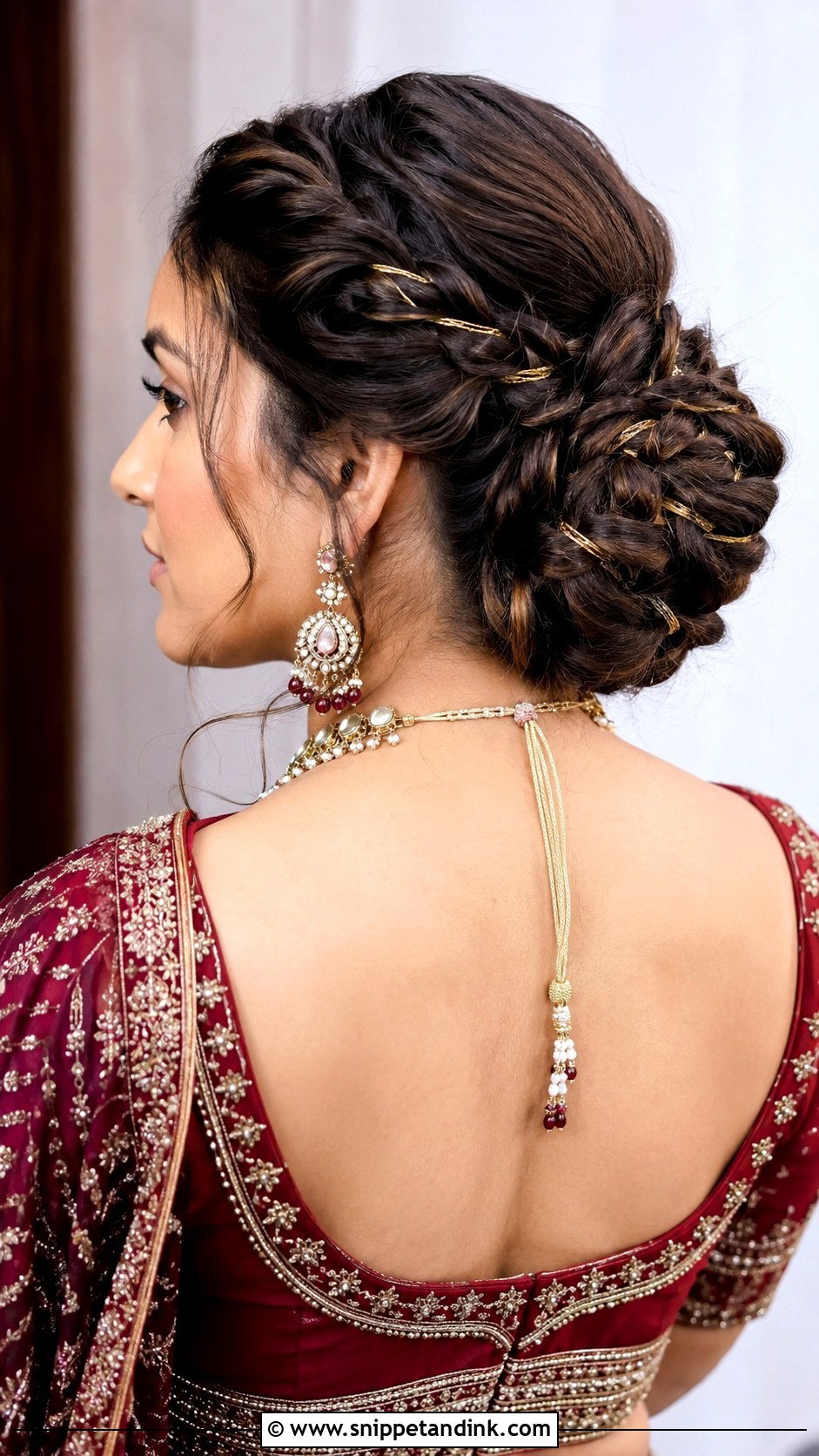
A fishtail braid wrapped and tucked into a full bun gives fine woven texture, and gold thread or tiny pearls threaded through add a little shine. It suits both sarees and lehengas. I braid the fishtail slightly loose and ease it wider before coiling, because a tight fishtail coils into a small, hard knob. It sits somewhere between boho and polished, which is why modern celebrations suit it.
8. Donut Bun With Flowers
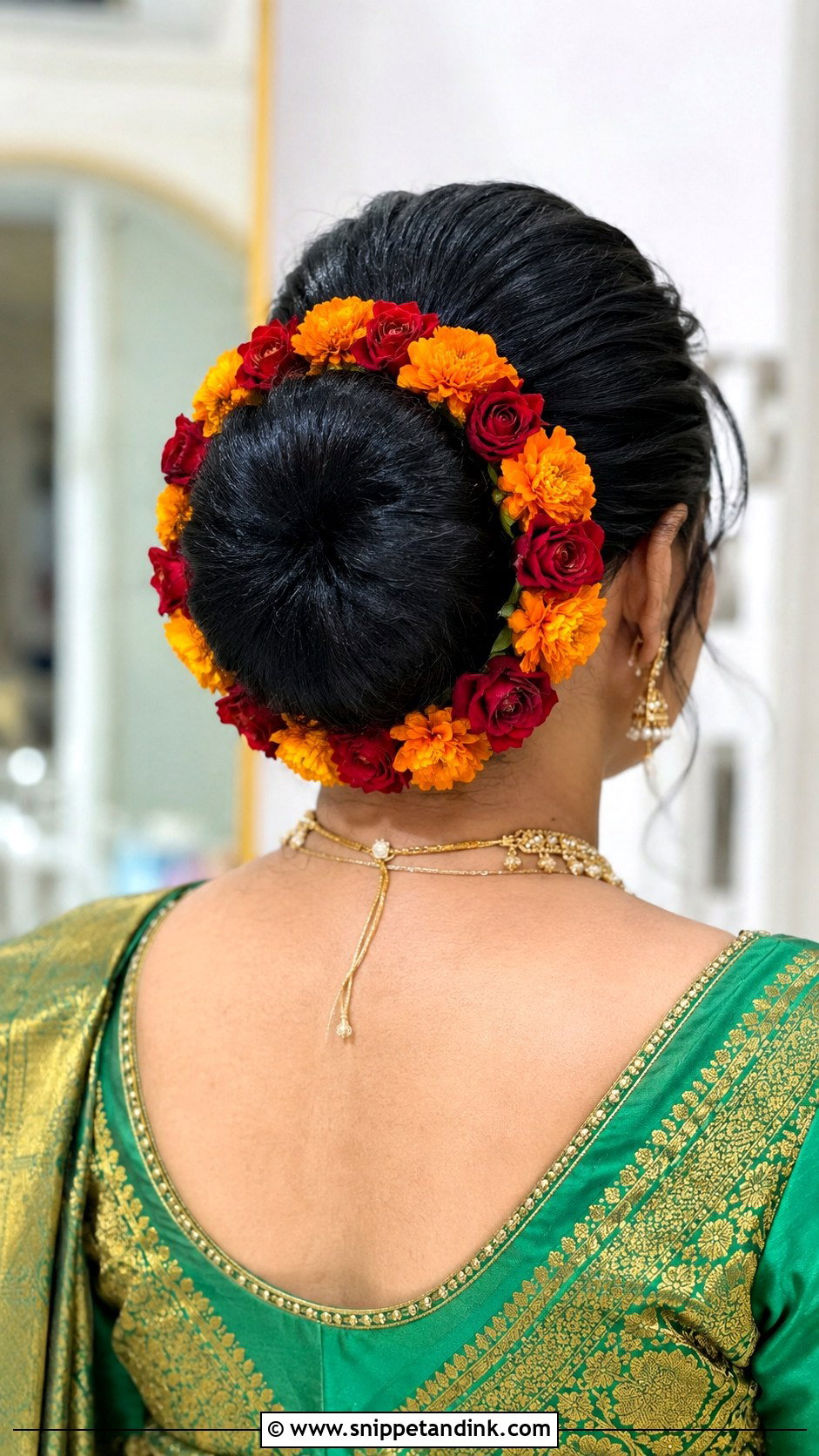
A foam or mesh ring under the hair gives a round, plump bun that holds its shape, even on thinner hair. I wrap the hair smoothly around the ring, then circle the edge with marigolds or roses, and silk sarees with gold jewelry match it. The ring must match your hair color as closely as possible; a light ring shows through any gap on dark hair, especially under flash. Of all the buns here, this is one of the most dependable through long ceremonies and dancing.
9. Side Bun With Hair Vine
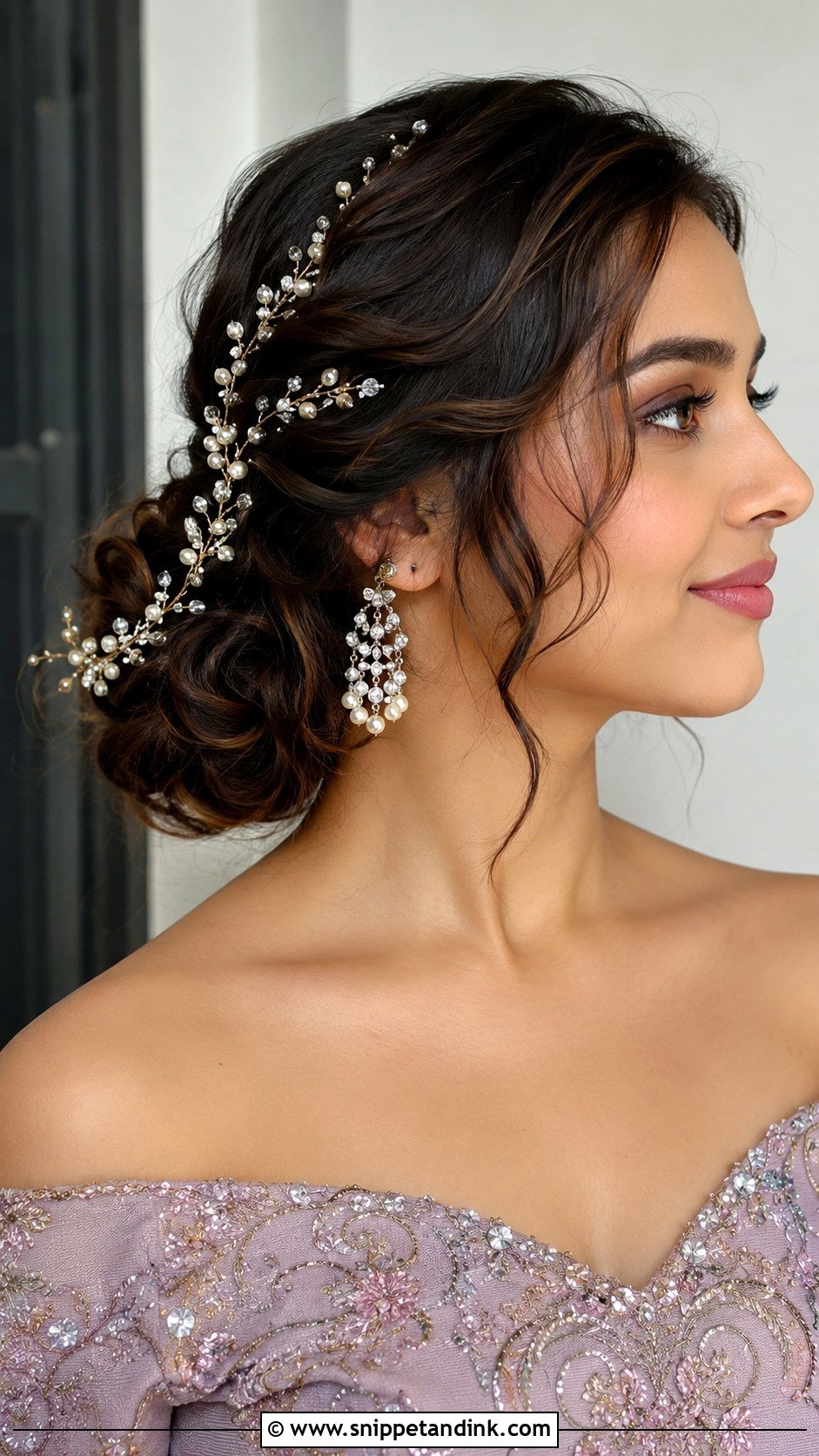
Gathered toward one shoulder and coiled low near the ear, this bun carries a hair vine of crystals or pearls draped across it. The asymmetry feels modern and shows off the jawline and neckline, especially with off-shoulder blouses and statement earrings, at receptions, cocktail events and fusion celebrations. An earring on the bun side can catch on the vine, so I keep that earring smaller or bend the vine away from the ear.
10. Braided Crown Bun
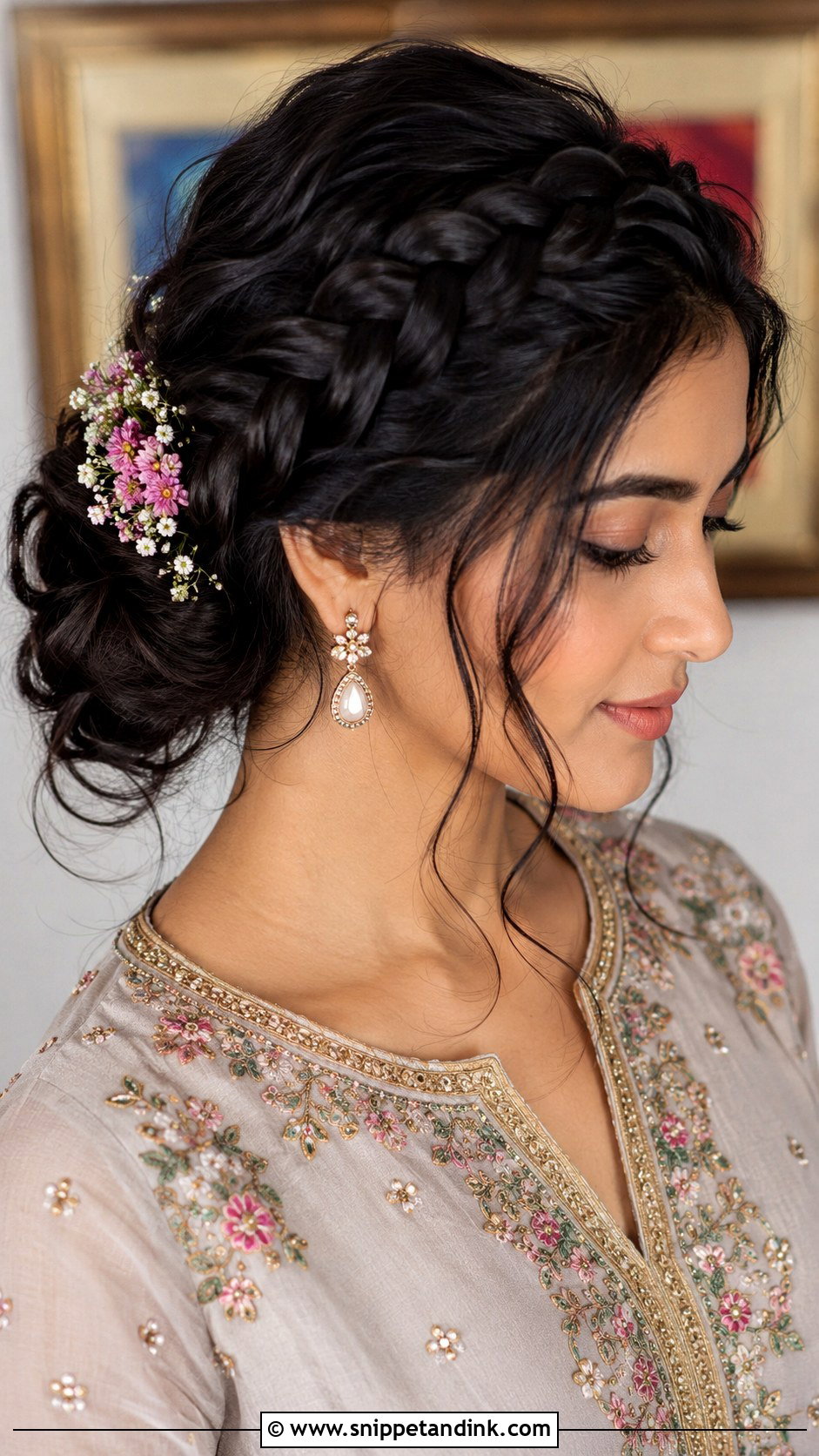
A braid circles the crown like a halo and finishes in a soft messy bun at the back, mixing structure with something looser. It works with both ethnic and indo-western outfits, which is why fusion brides tend to pick it. Small flowers or pins can follow the braid line. The join where the crown braid meets the bun is the tricky part. I hide it with a flower or tuck the braid end inside the bun so it does not stick out.
11. Twisted Rope Bun
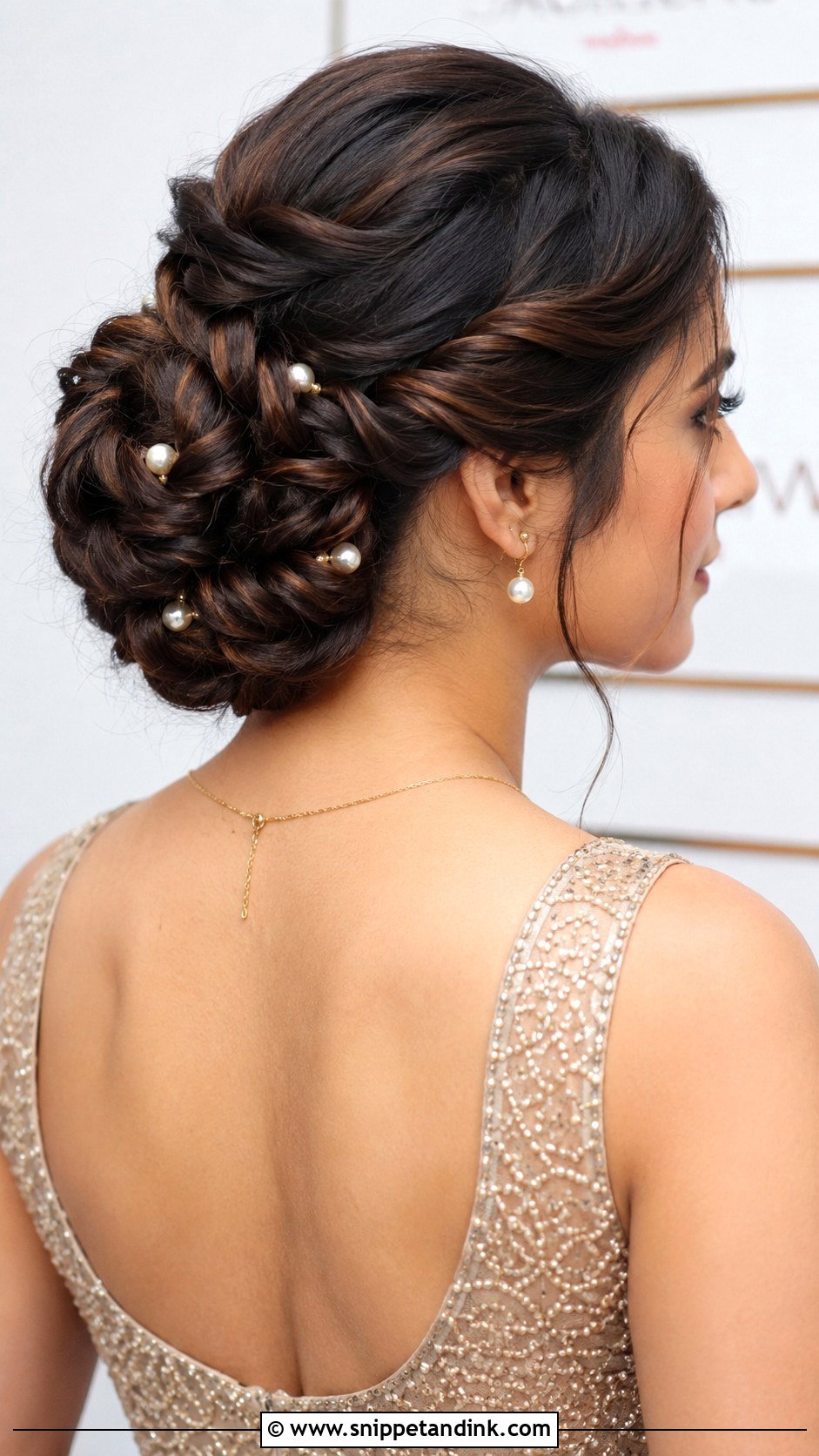
Sections twisted like rope and coiled together give a textured bun with very few accessories, just pearl pins or a thin gajra. It sits well with sleek gowns and silk sarees. Twist direction is everything here: each section twisted one way and wrapped the opposite way locks itself, while twists done the same way unwind the moment you move. A little texture spray first gives them grip.
12. Bun With Pearl Strings
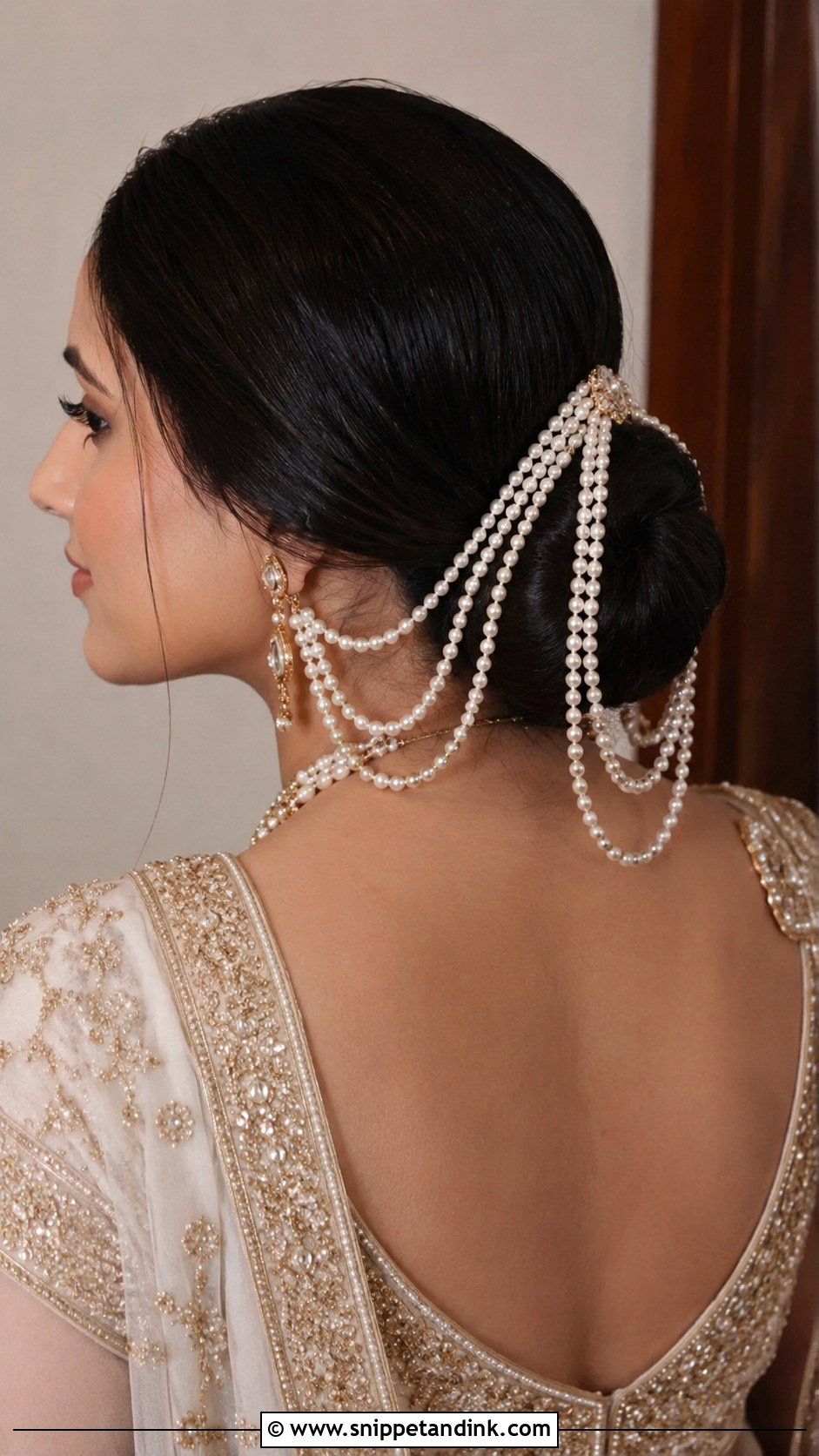
Strands of pearls draped across and around a neat low bun fall in soft loops. Pastel and ivory outfits suit it at receptions or the main ceremony. I pin each strand at both ends into the base of the bun, not just on top, so the loops cannot slip and hang crooked. For a bride who wants shine instead of flowers, it is the cleanest way to get it.
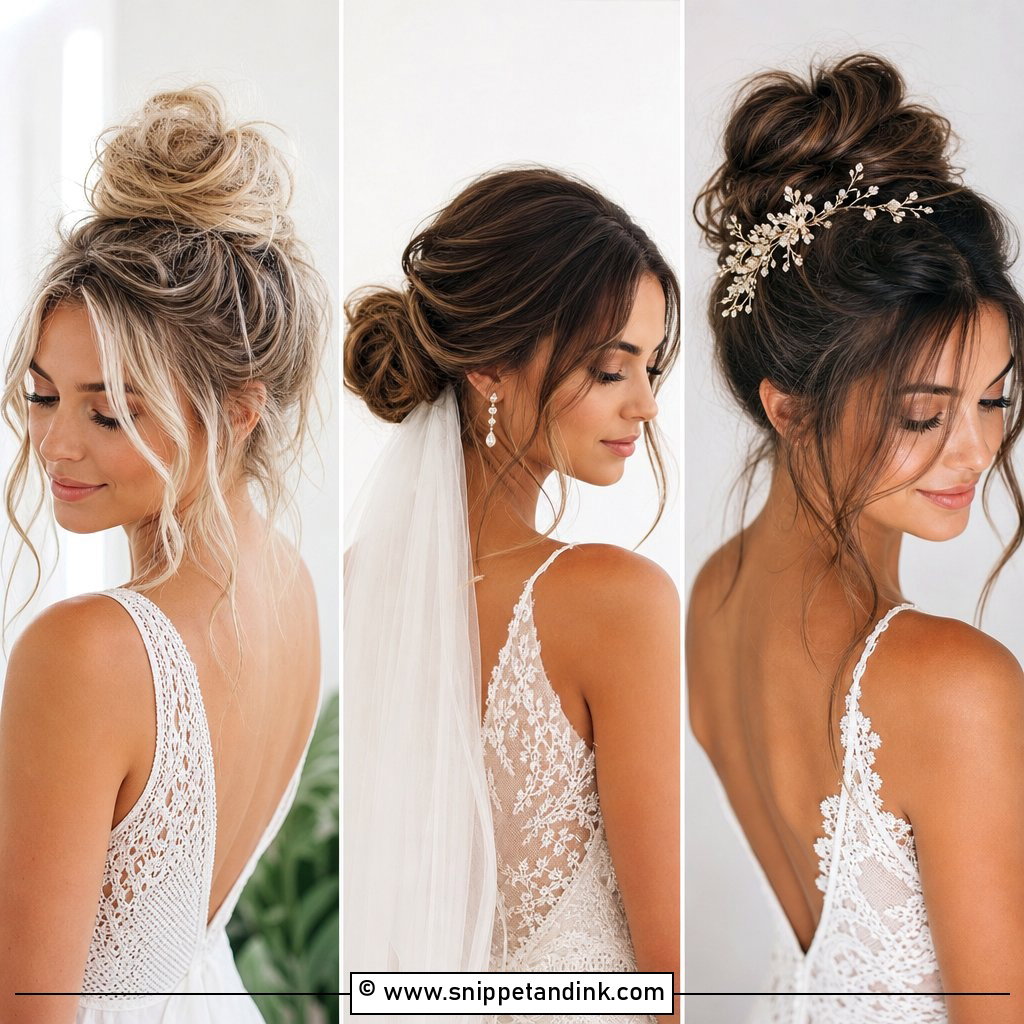
13. Messy Bun With Curls
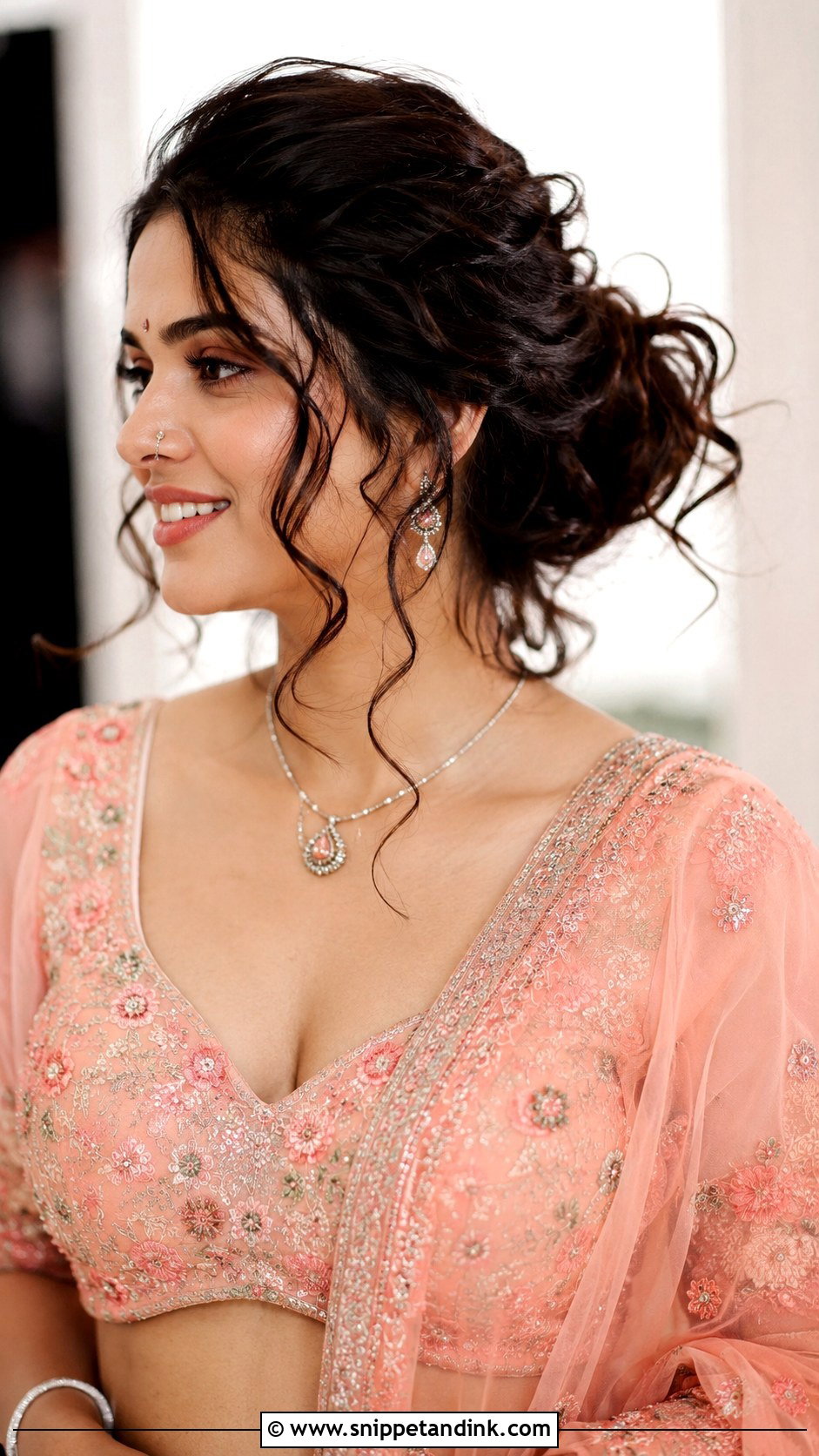
Loose curls around the face, the rest gathered into a soft, tousled bun, a few tendrils left out: relaxed but still finished. Flowy lehengas and light jewelry suit it. The tendrils are where it goes wrong. Curls on fine hair drop in a warm room, so I curl them with a small iron, let them cool pinned and keep them few. Small flowers or sparkly pins finish the bun.
14. Floral Juda With Mogra
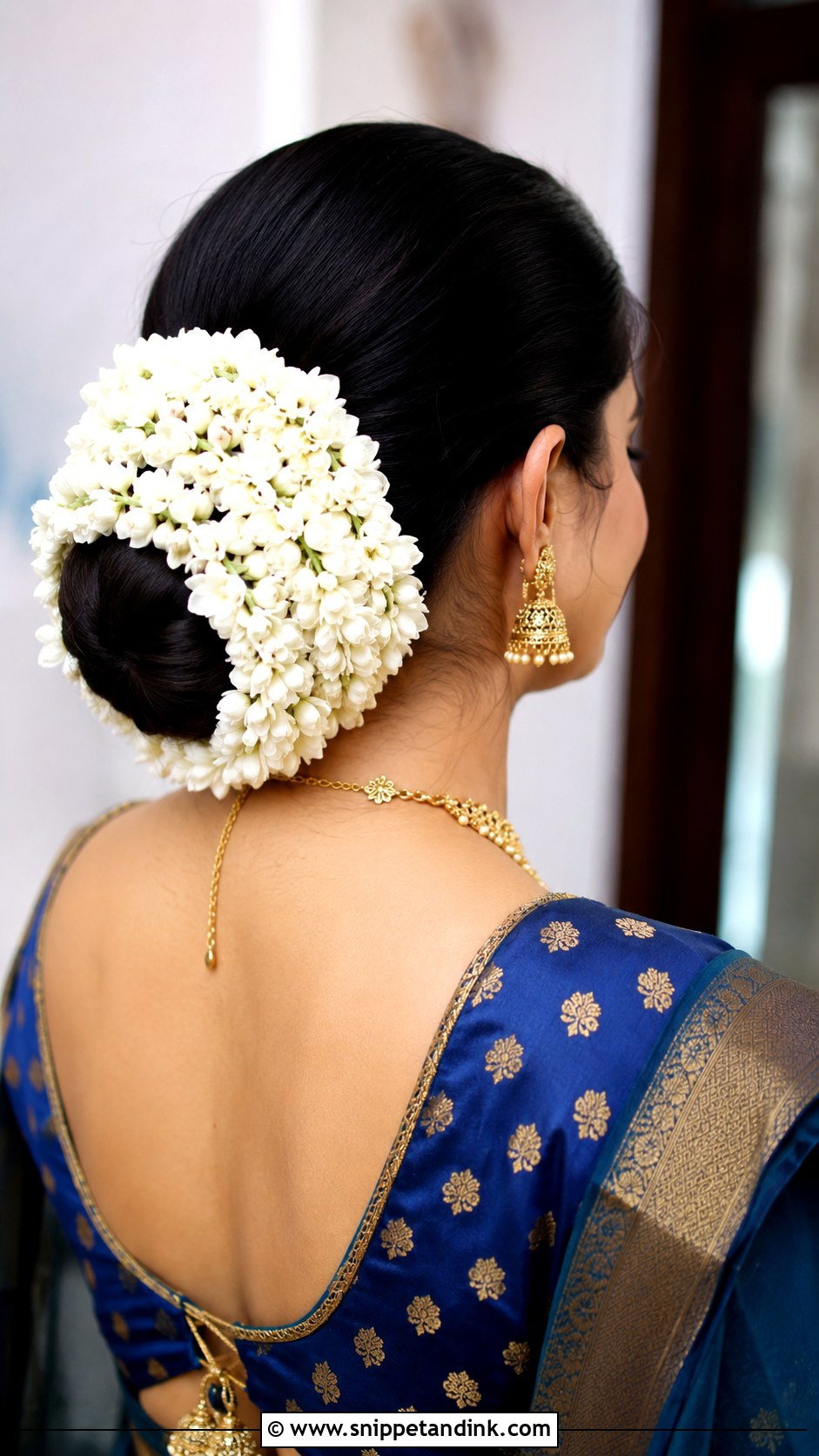
The mogra juda is a clean low bun wrapped generously in fresh jasmine, white against dark hair, with a scent that stays all day. Silk sarees and temple jewelry belong with it, and at a South Indian ceremony it carries real meaning. Mogra opens and browns over the hours, so I ask for tight buds delivered that morning and kept cool. If strong fragrance bothers you, hold a strand near your face at the trial.
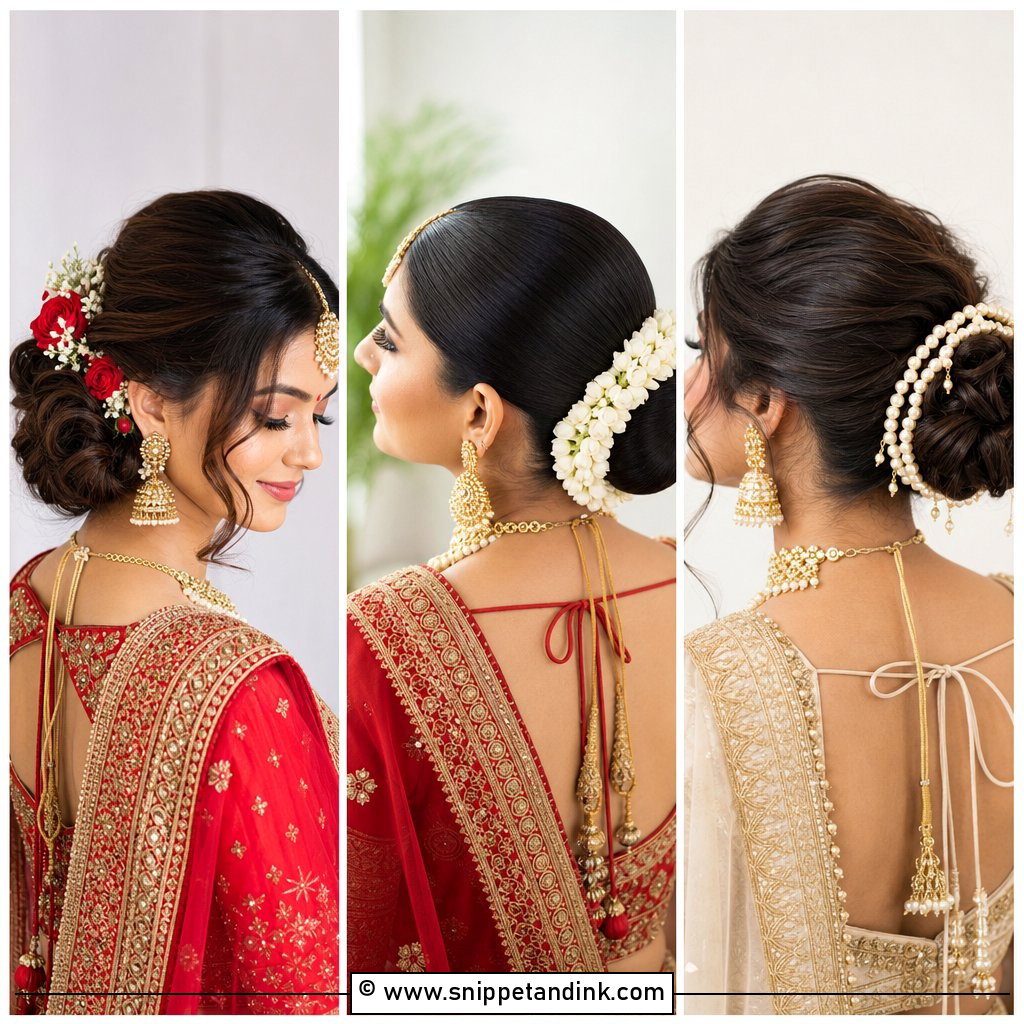

15. Low Bun With Middle Parting
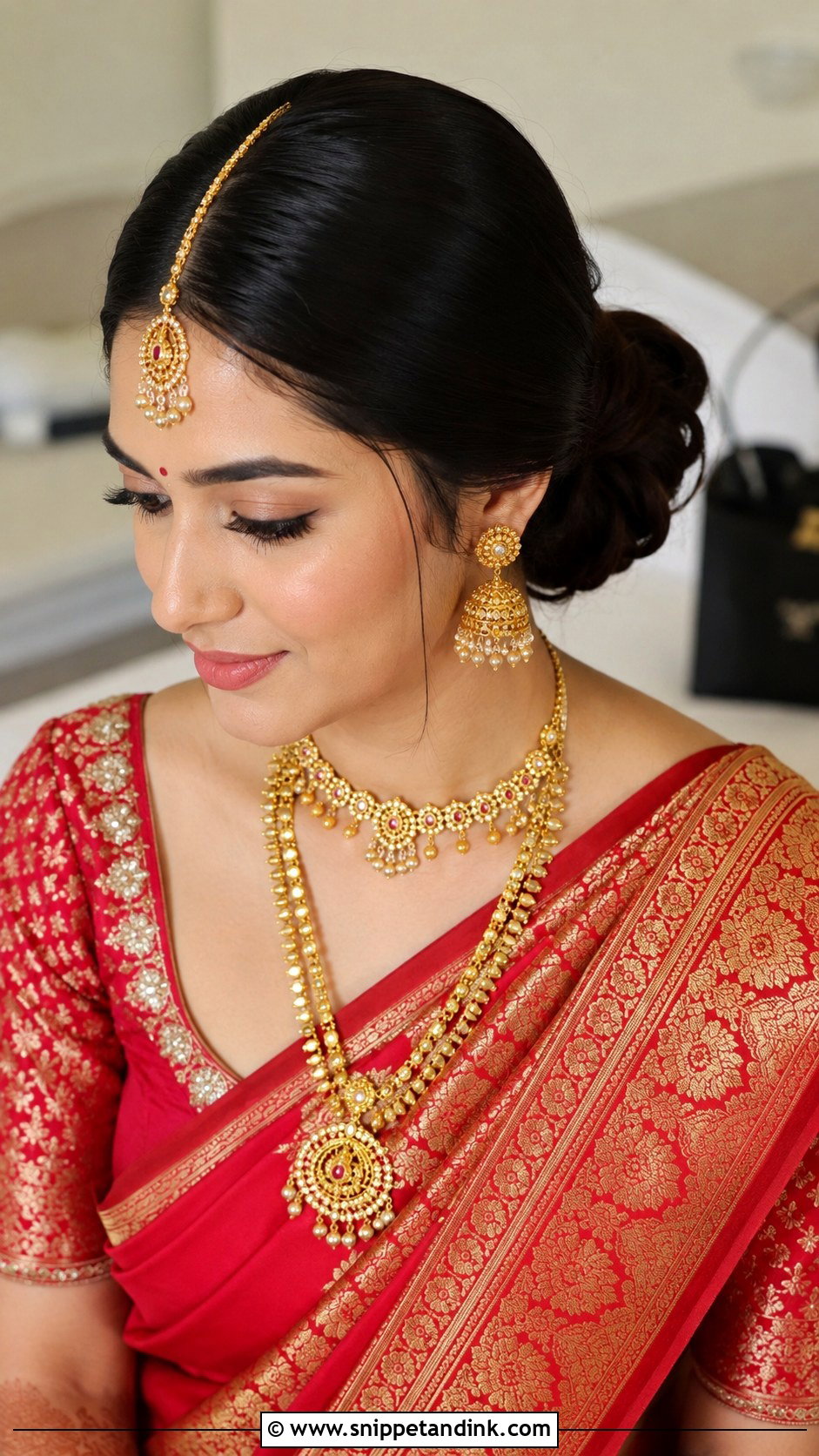
A neat center part and a sleek, low coiled bun give you symmetry, which is exactly what a maang tikka needs to sit dead center. Traditional sarees and heavy lehengas both work. A middle part shows every wobble, so I draw it with a tail comb on slightly damp hair and check it from the front in a mirror before I tie anything. Balanced, symmetrical features carry it best.
16. Voluminous Bouffant Bun
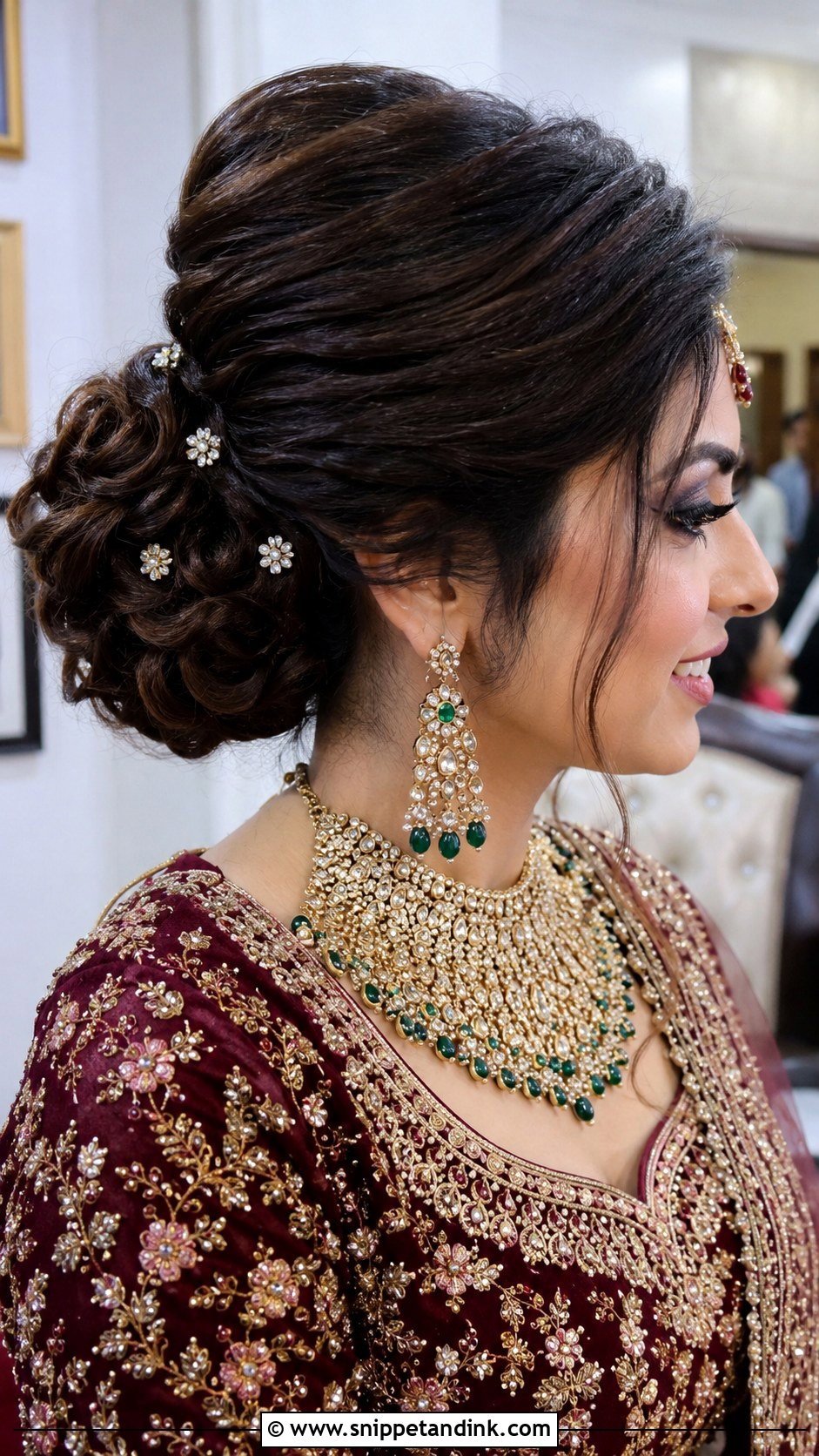
Teased height at the crown with the rest swept into a full bun gives the classic Bollywood bridal silhouette. Heavy jewelry and statement lehengas suit its scale, and flowers or sparkly pins can dress the bun. The extra height lengthens a round face. Teasing means backcombing at the root and then smoothing the top layer over it; skip the smoothing and the crown looks fuzzy in close-ups.
17. Bun With Maang Tikka And Flowers
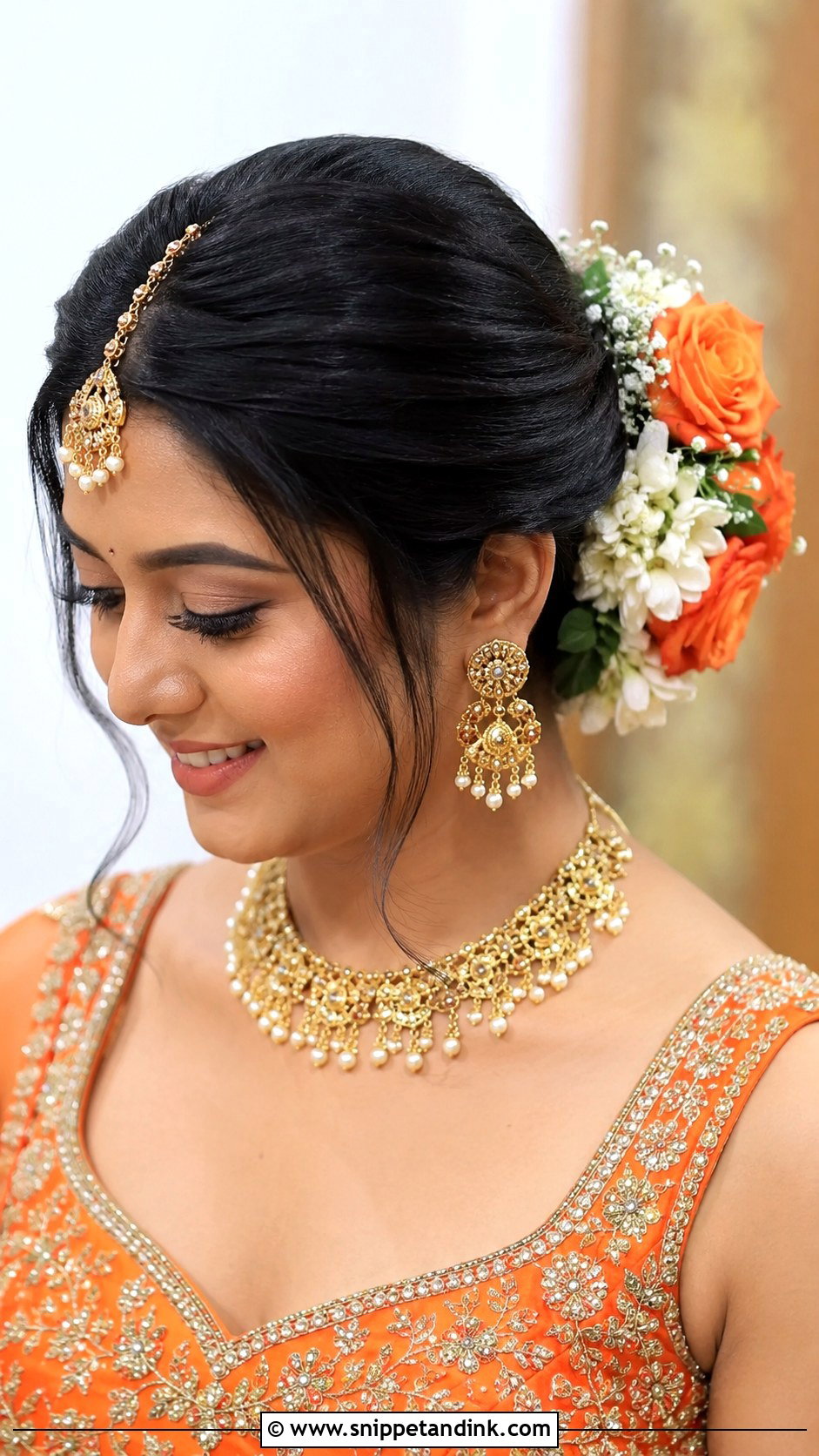
Roses or jasmine around a soft bun, with a maang tikka at the front, give you flowers and sparkle in one look. Vibrant lehengas and traditional gold jewelry suit it for the main ceremony and portraits. Balance is the whole job. With a heavy tikka I keep the flowers small, and with full flowers I choose a lighter tikka, so the front and back do not compete in photos.
18. Boho Braided Messy Bun
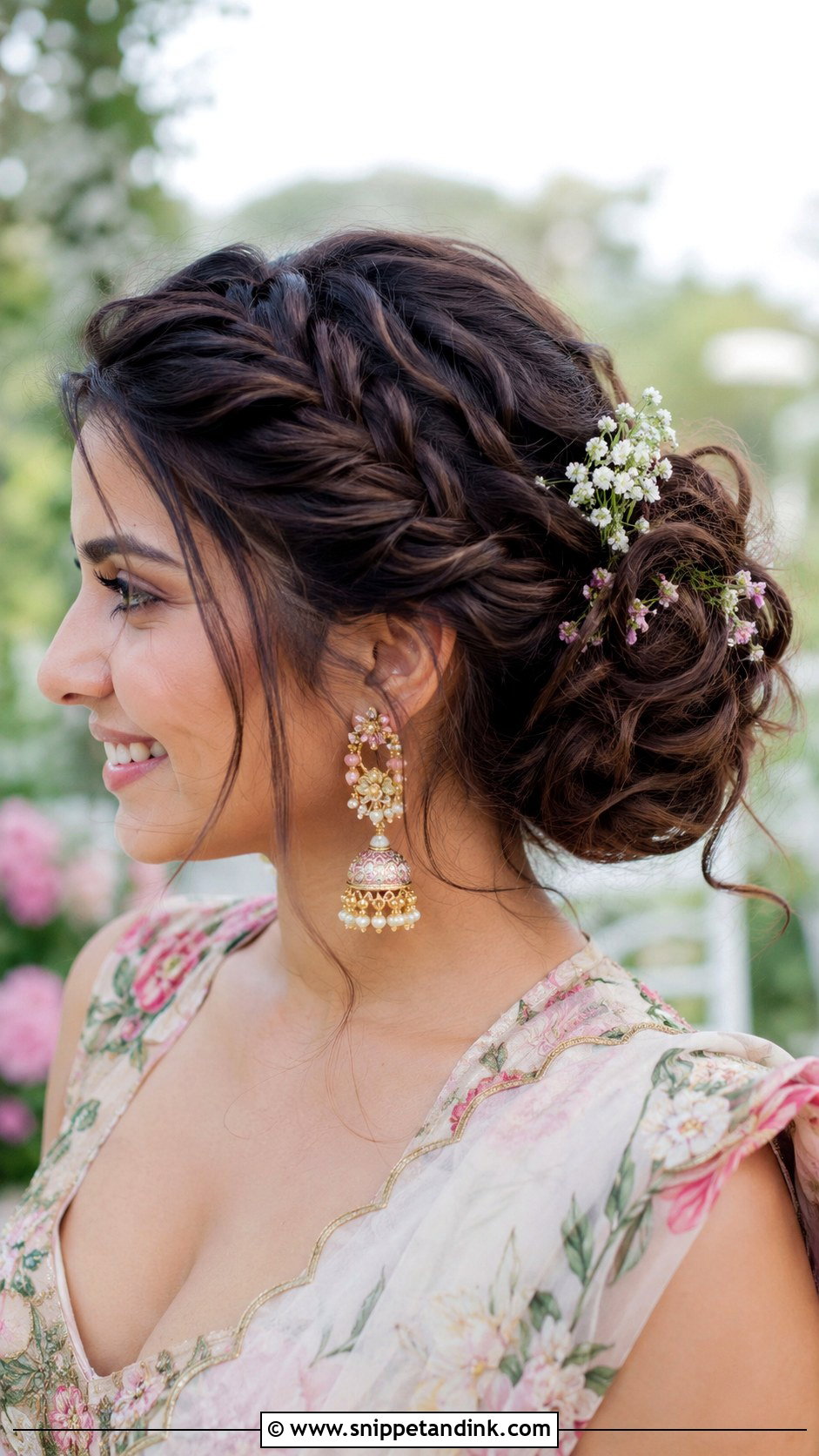
A few braids along the sides feed into a relaxed, tousled knot at the back, with loose strands around the face. Flowy outfits and floral jewelry go with it, and tiny flowers or leaves add an earthy note at outdoor weddings. Wind is the problem outdoors. I pin the loose strands close at the root so they move without blowing across your lipstick.
19. Sleek Top Knot Bun
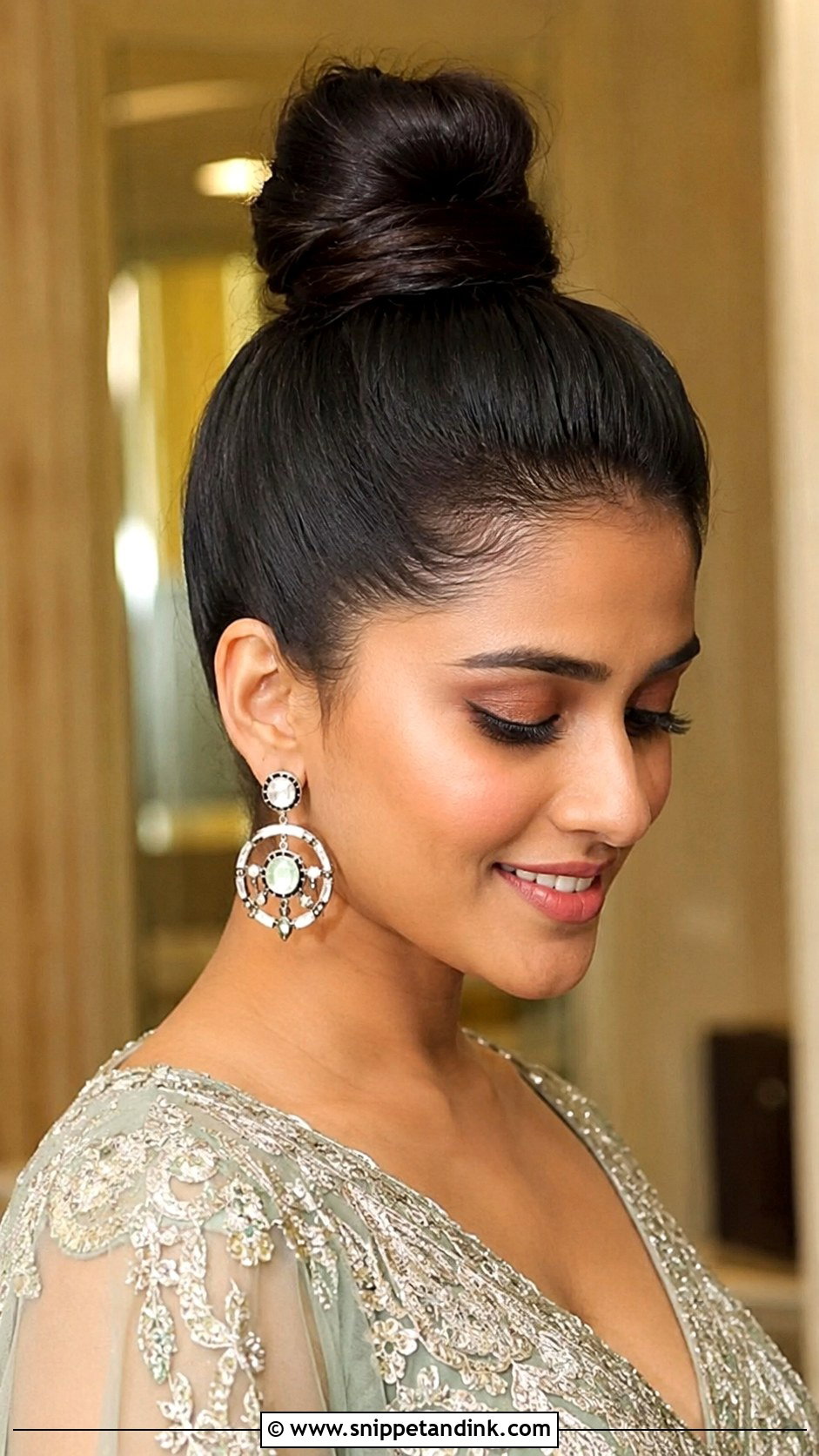
Every strand smoothed back into a high, tight knot makes this the most fashion-led bun here. Indo-western gowns and statement earrings suit it at receptions and cocktail parties. A top knot shows the hairline all the way round, so baby hairs and patchy edges show too; a little gel on a clean toothbrush handles that. I would not put it under a head-draped dupatta.


20. Rose And Gajra Combination Bun
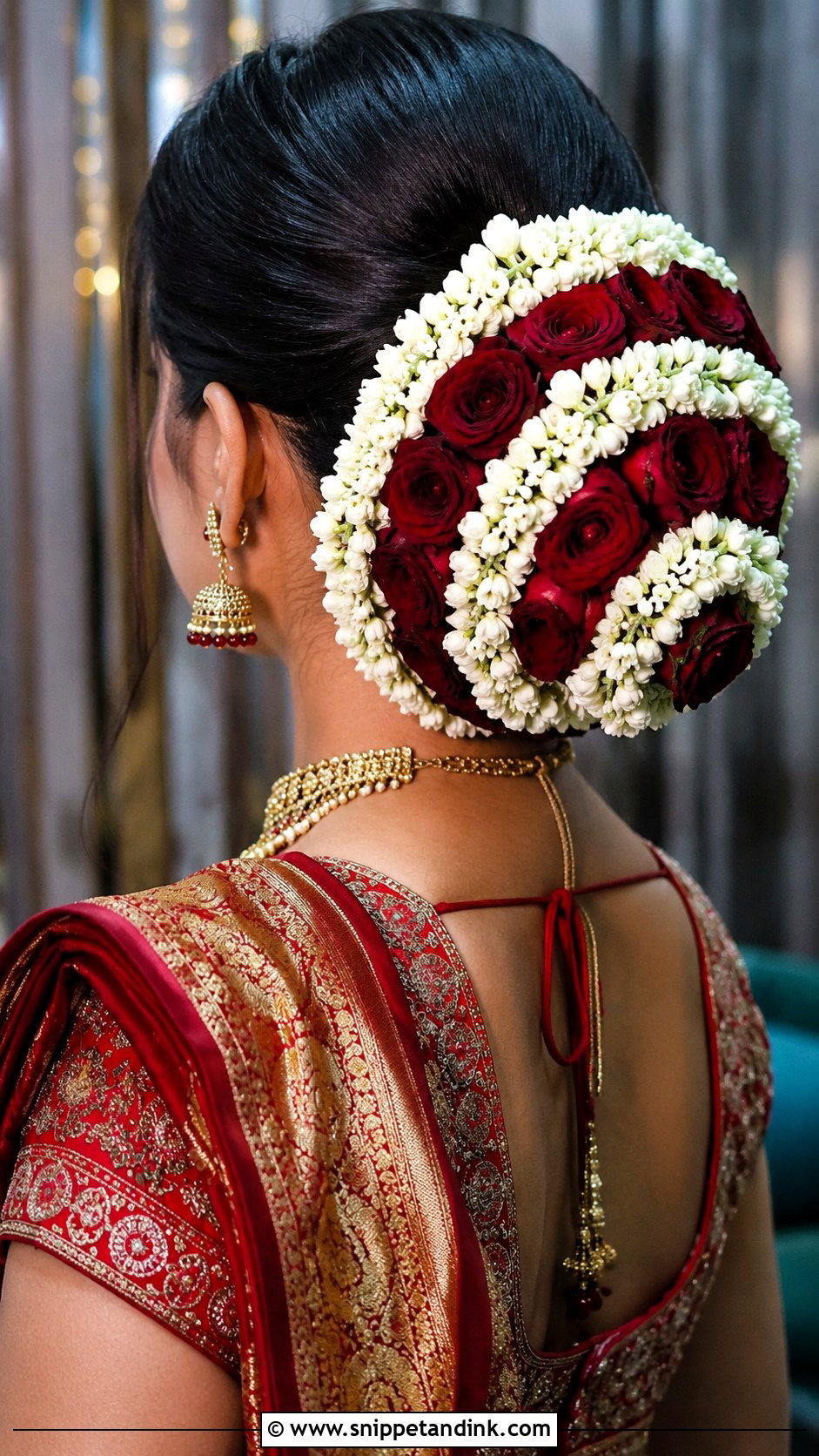
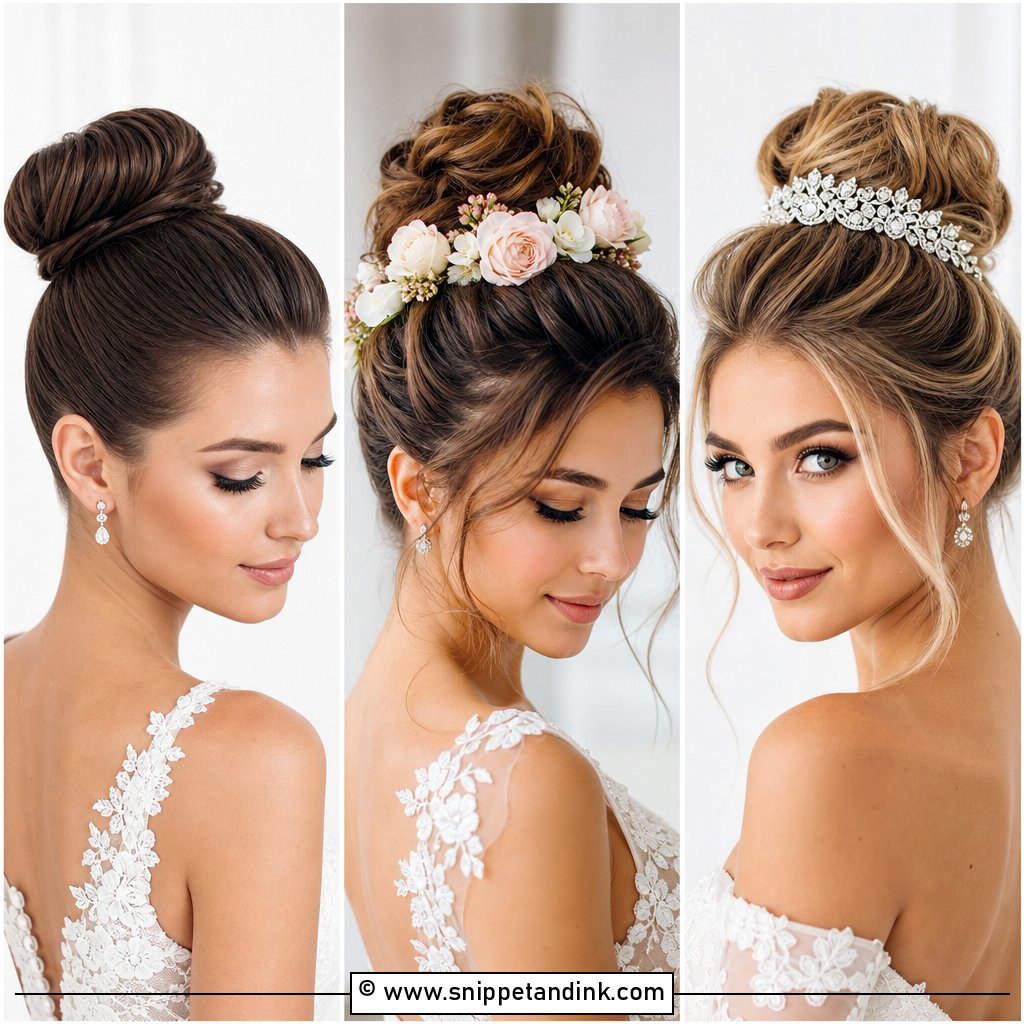
Roses for color and gajra jasmine strands for scent wrap a low bun completely in flowers. Silk sarees and heavy bridal jewelry suit it at the main ceremony. Two kinds of flower mean twice the weight, so I sew the gajra on first as a base and wire the roses into it instead of pinning each rose into the hair. Take the rose color from your saree border.
Fillers and Donuts for Thin or Shoulder-Length Hair
Many of the fuller buns above are built over padding, not just hair. A foam donut, a mesh roll or a small clip-in bun piece adds volume to thin hair, and shoulder-length hair can still make a respectable low bun if it is wrapped around a filler instead of coiled on its own. Match the filler to your hair color, and bring any added hair to the trial so it can be blended and pinned the same way it will be on the day.
U-Pins, Bobby Pins and the Shake Test
The two pins do different jobs. Bobby pins grip and hold sections flat; U-pins shape and anchor the bun itself without flattening it. A secure bun usually needs both, with bobby pins crossed in pairs at the base and U-pins pushed in toward the scalp around the coil.
Before a bride leaves my chair I run through a quick check:
- Shake your head gently from side to side. Nothing should move independently of your head.
- Turn fully to each side and look down, as you will during rituals.
- Sit down with the dupatta pinned and lean back against a chair.
- Press lightly around the bun with your fingers. Any pin you can feel digging in gets moved now, not after three hours.
A Bun Is Only as Good as Its Base
Gajra juda or pearl-laced updo, traditional or sleek, a bun is best chosen by what it has to carry. Look at your outfit, jewelry and dupatta, and be honest about how many hours you will wear it. Book a trial, keep the bun in afterward, and sit, stand and turn your head in it. If it still feels secure and comfortable by evening, you have found yours.
You'll Like These Ideas:



Leave a Reply