
An Indian wedding asks more of a hairstyle than almost any other kind of wedding. It has to carry real jewellery, sit under a dupatta, survive fire rituals and heat, and still look right in the farewell photos. I plan bridal hair around those demands first and the inspiration picture second. The styles here cover a temple ceremony, an intimate destination wedding and a glamorous reception: regal braids strung with pearls, soft waves for the haldi, structured buns, floral accents and jewelled pieces. With each one I’ve added what it needs from your hair and where it tends to struggle.
One Wedding, Five Functions, How Many Hairstyles?
Most Indian weddings run over several days, and each function asks something different of your hair. I map hairstyles to events before choosing any of them, because one style rarely suits them all.
- Haldi: something you don’t mind getting turmeric in. Loose braids or a simple bun, with a wash afterward.
- Mehendi: hair completely off the face and neck, since you’ll be sitting still for hours with wet henna and can’t touch anything.
- Sangeet: a style that moves, like curls or a half-up look, but secure enough to dance in.
- Main ceremony: the most secure style, built around the dupatta and the heaviest jewellery.
- Reception: the change of mood, often open hair or a sleek modern style with a new outfit.
If two functions are on the same day, I plan a style that can be adapted, for example a half-up look that turns into a bun with a few extra pins, rather than starting over from wet hair.
1. Classic Low Bun With Gajra
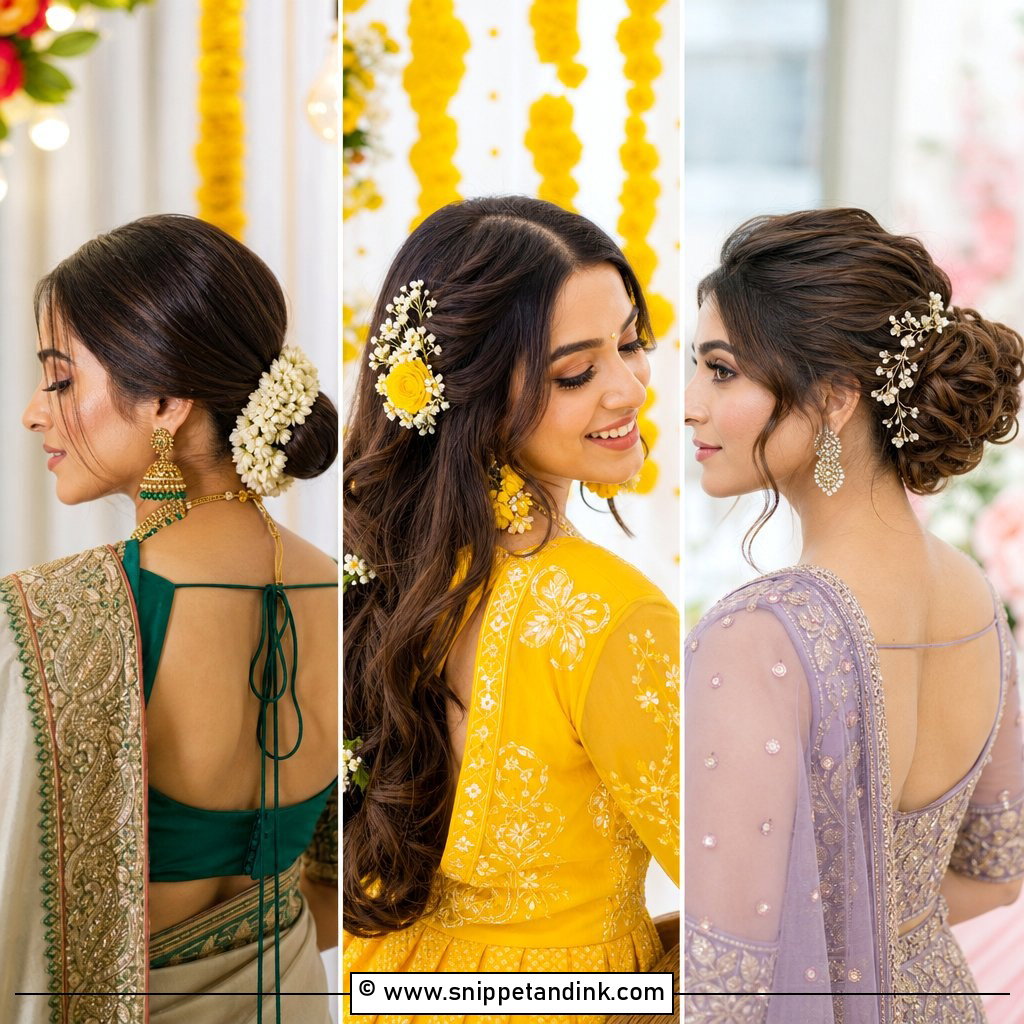
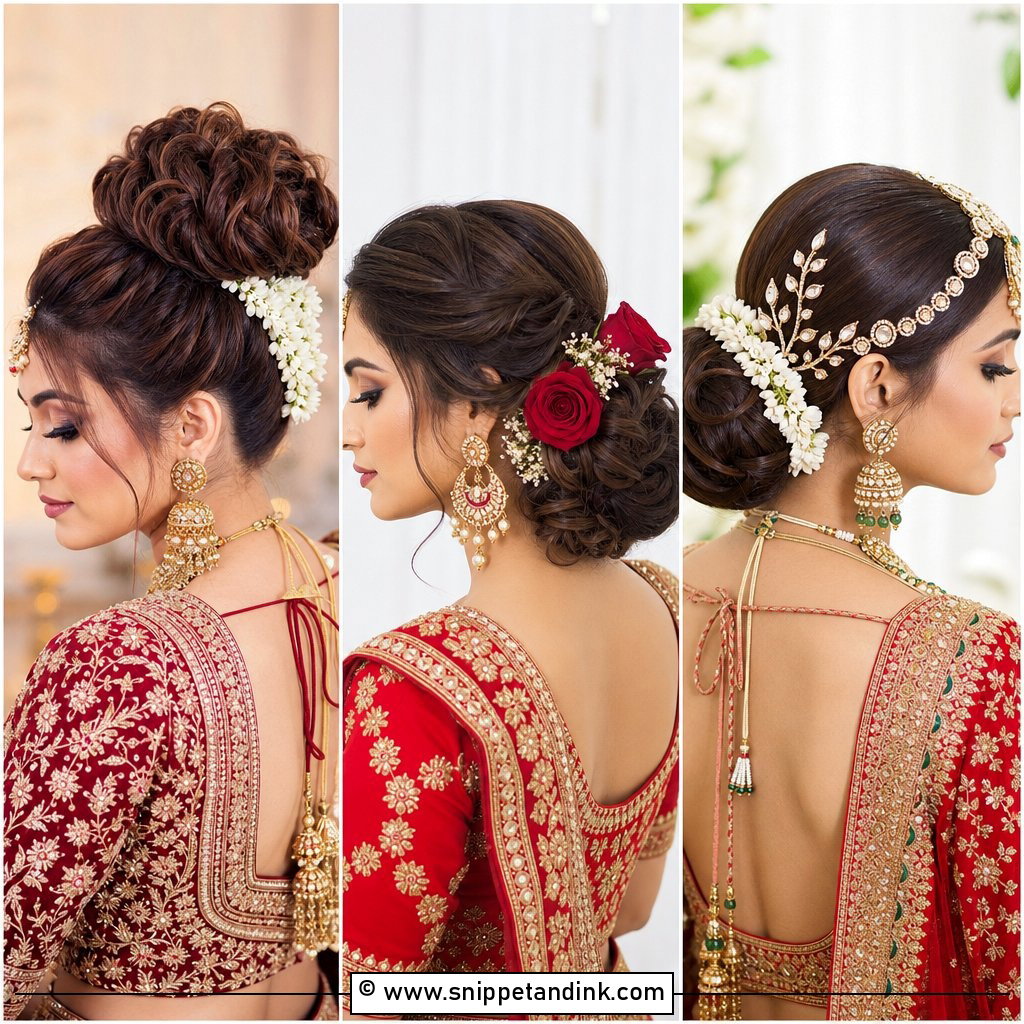
The low bun wrapped in jasmine gajra is the look I’m asked for most across every region. It sits at the nape, which is the most comfortable place to carry weight, and it gives a heavy silk saree or lehenga dupatta a firm base. I build it with a small padded bun inside if the hair is fine, then coil fresh mogra around it and pin the string every few centimetres. A slight lift at the crown adds height. It suits almost every face shape and holds through rituals that run for hours.
2. Rani Jhoomar Braid
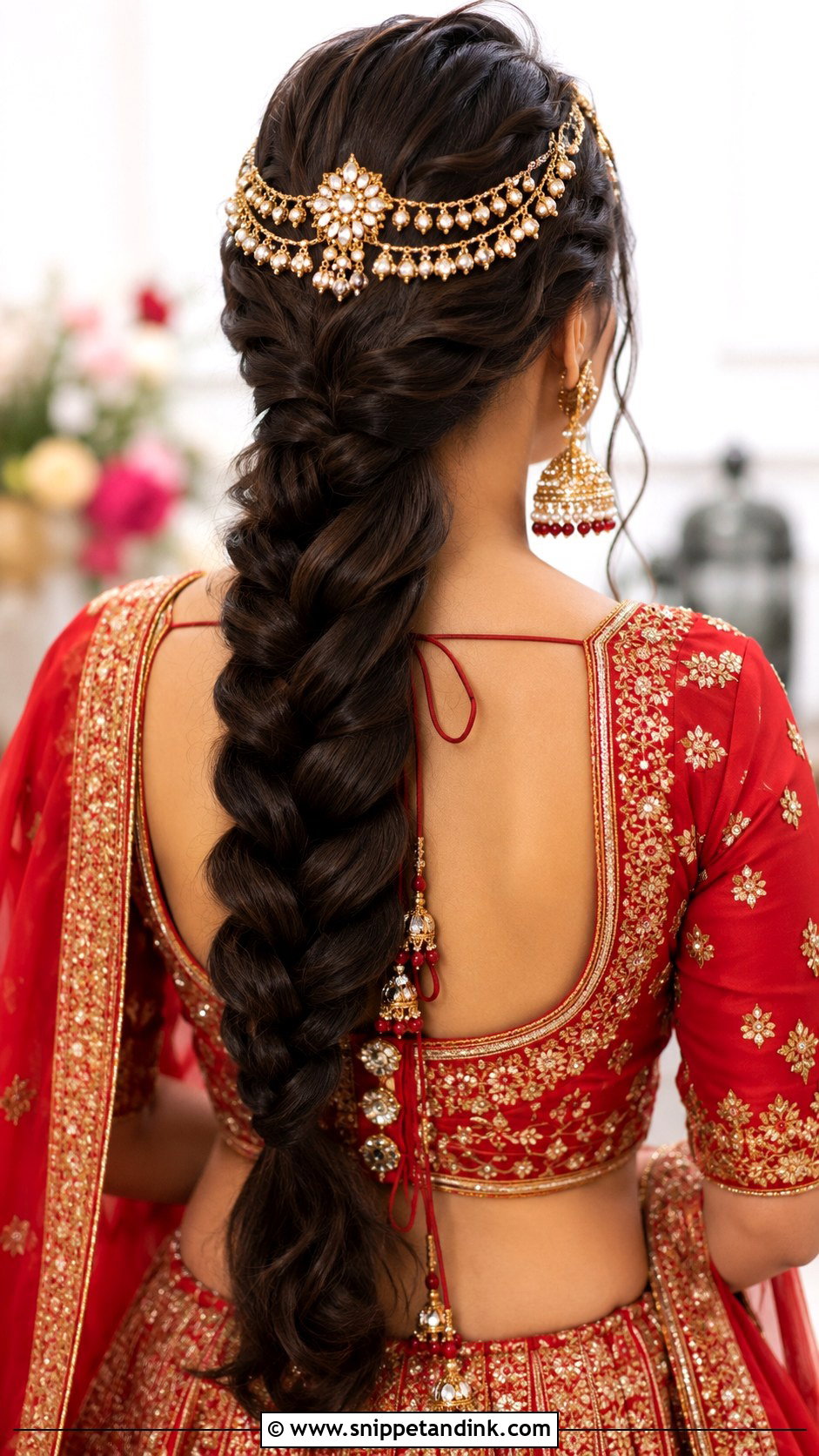
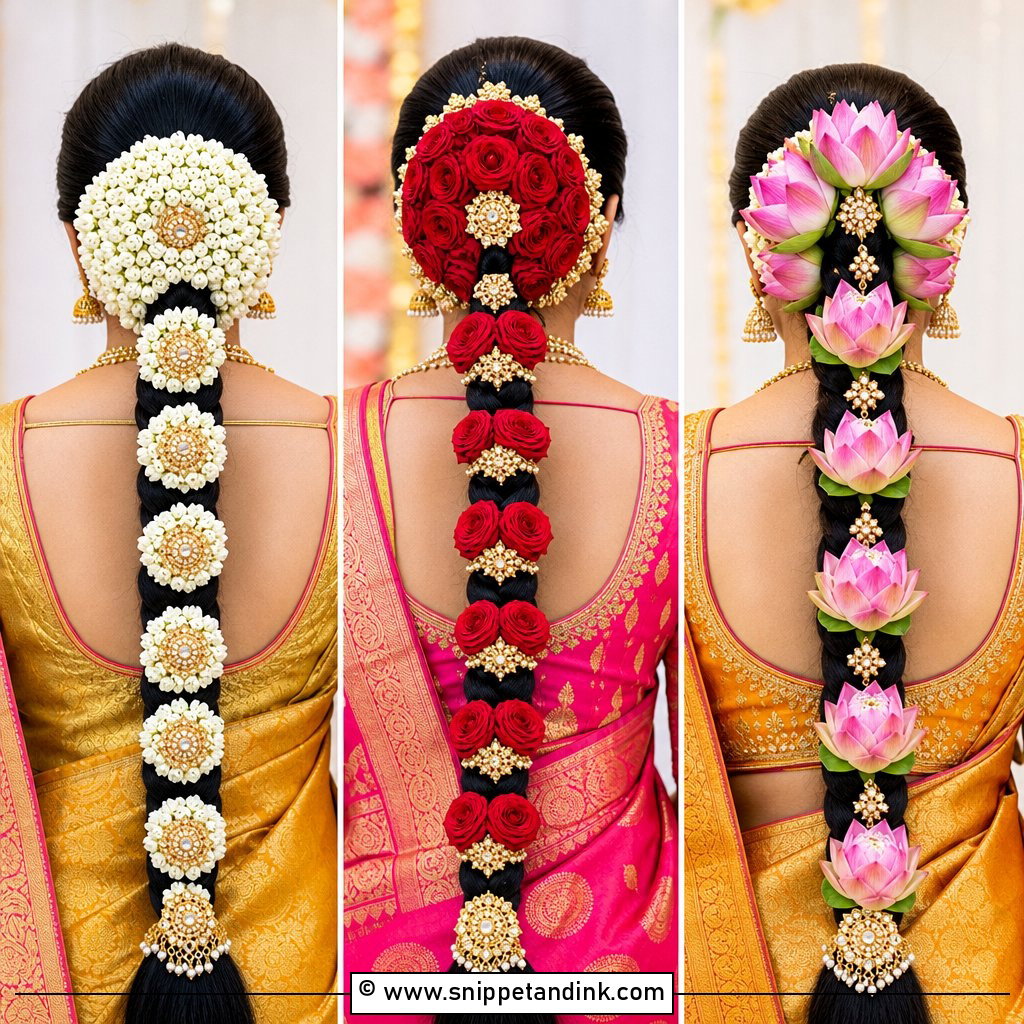
The Rani Jhoomar braid borrows from royal Rajasthani brides: a thick, full braid from the crown down the back, with a jhoomar or tikka at the top. Most brides need extensions to get the length and thickness in the photos, and I blend them into the braid from just below the crown. Gold threads, pearls or fresh flowers can be woven in. Because the braid hangs straight down the back, it shows off blouse work well. The weight of a long extension braid pulls on the scalp, so I’d keep it for a few hours, not a whole day.
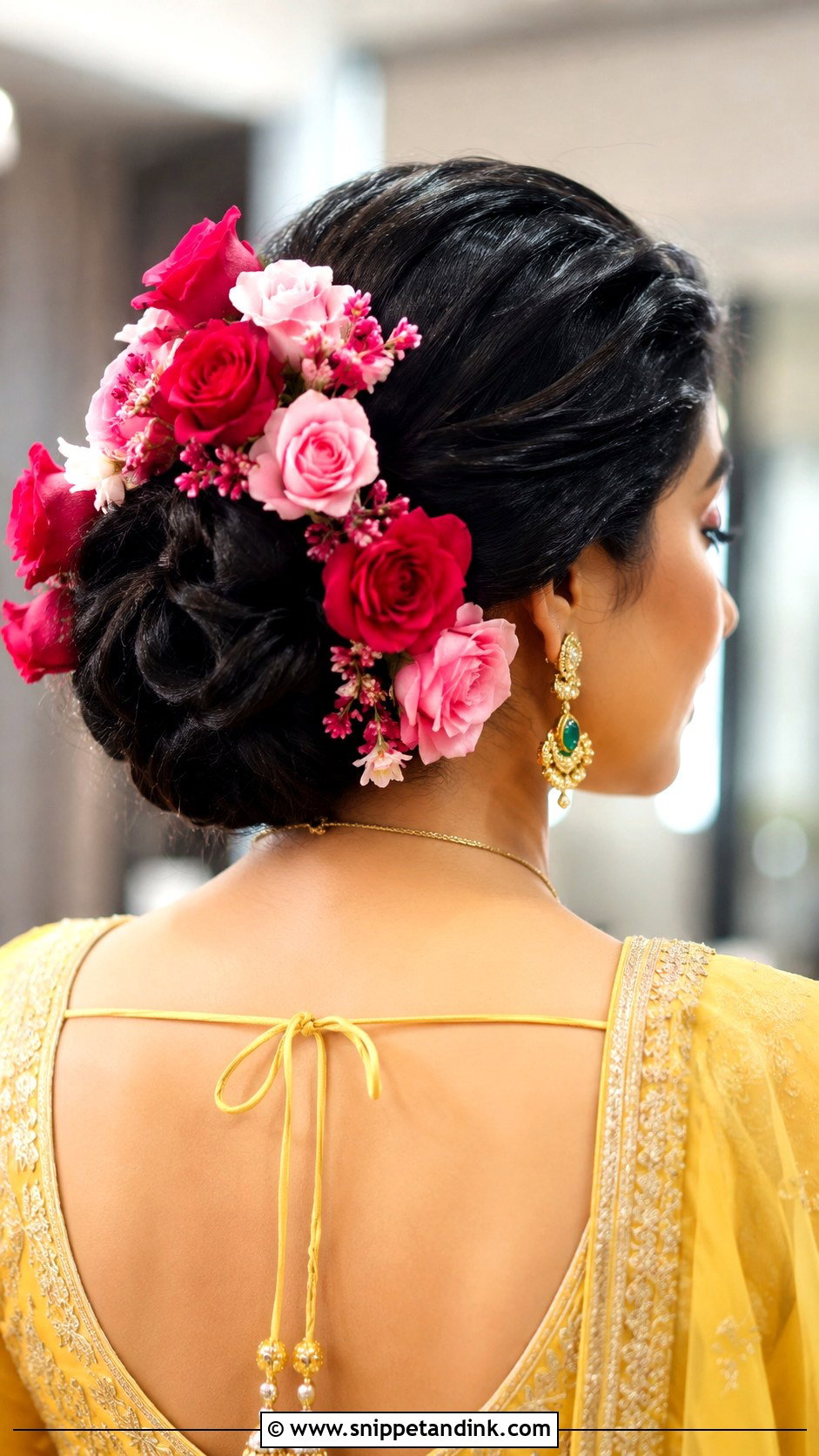
3. Floral Bun With Roses
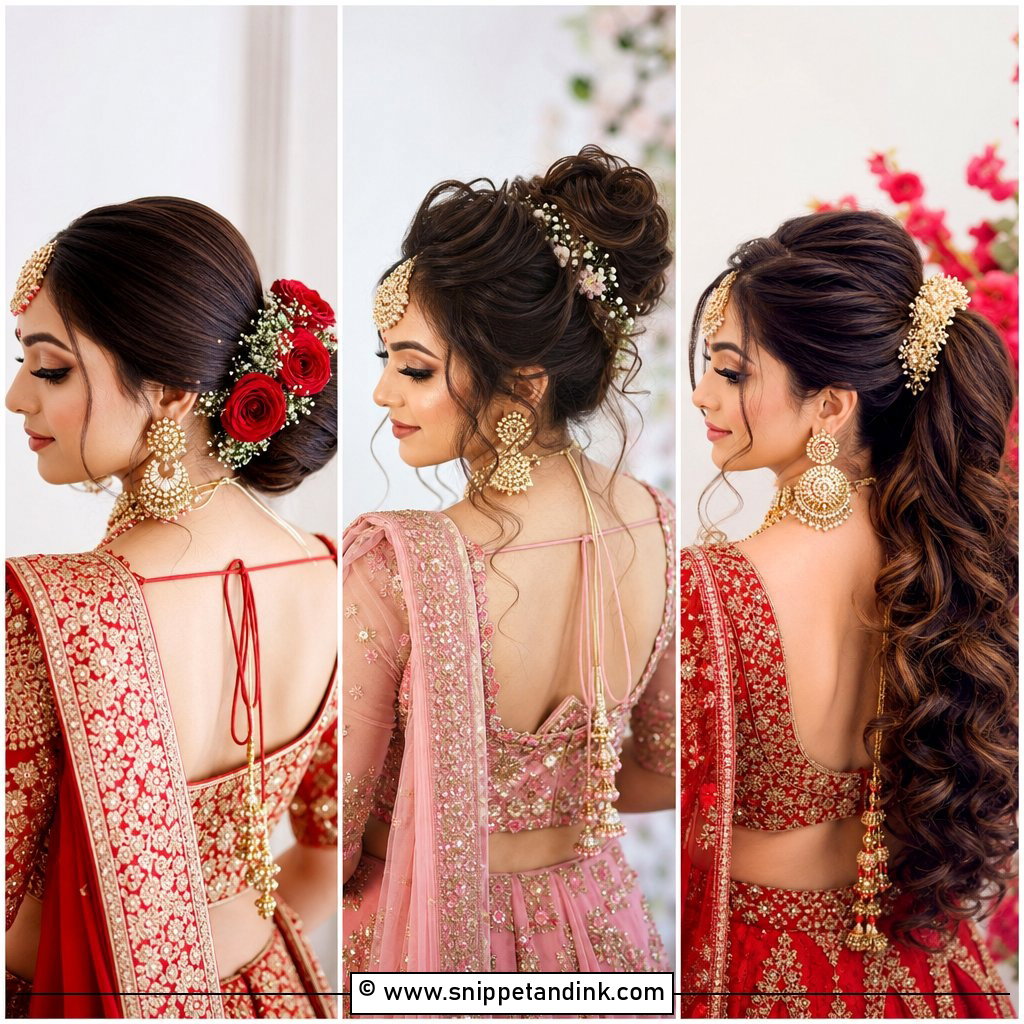
Fresh roses around a neat bun replace heavy jewellery with petals. Pink, red or white roses work, and baby’s breath or marigolds add contrast. I wire the stems short and place the biggest blooms at the base. Roses wilt fastest in direct sun, so for outdoor daytime functions like the haldi or mehendi I’d get them delivered as late as possible and kept cool. The shape flatters round and oval faces, and it looks bright against outdoor backdrops and colourful outfits.
4. Fishtail Braid With Pearls
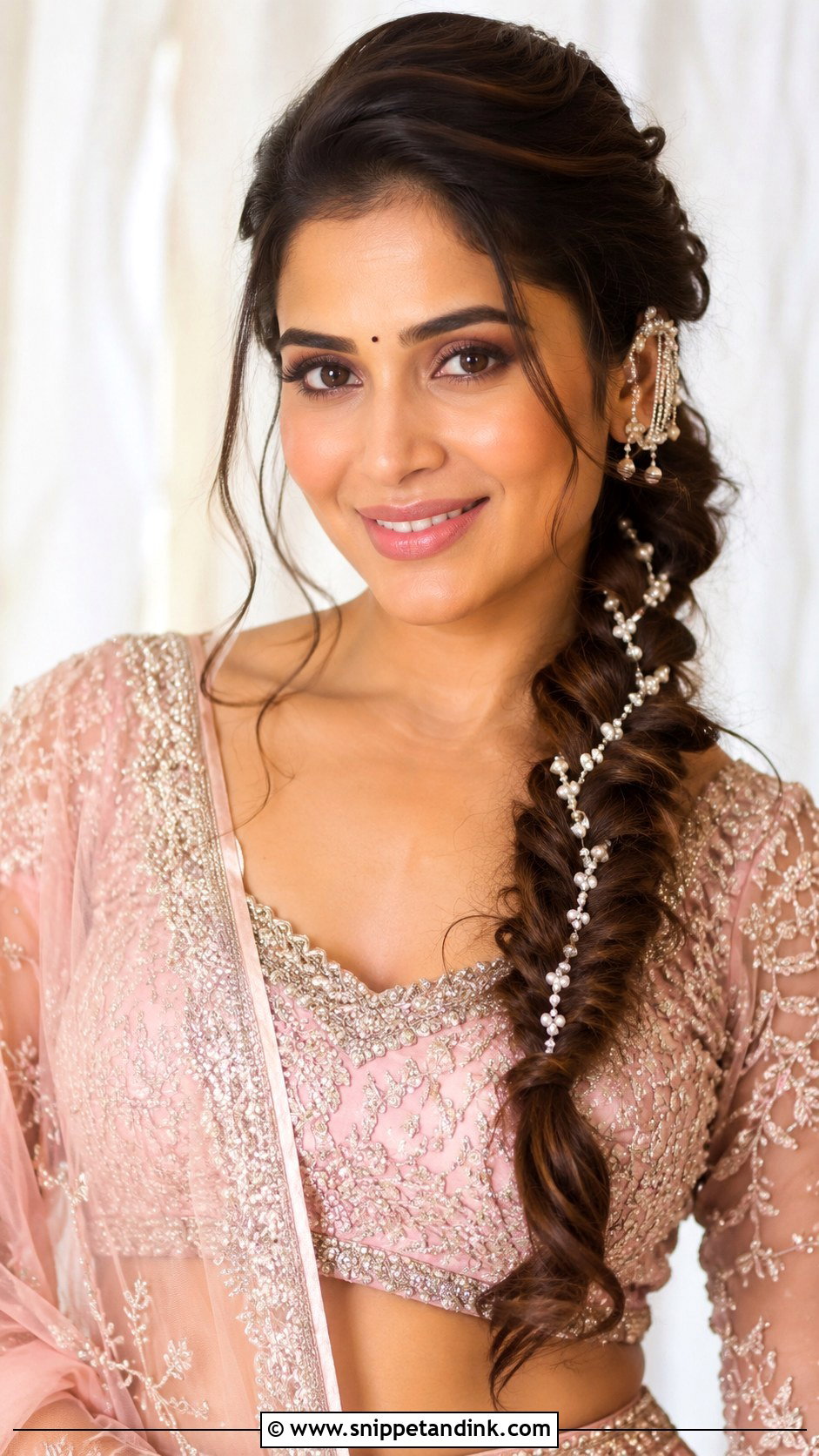
A fishtail braid woven with tiny pearls or gold beads is one of the more modern requests I get. Fishtails take two strands instead of three, which gives a finer, more detailed pattern. I usually rest it over one shoulder and thread the pearls on after braiding using a fine wire or pins. It suits the sangeet or reception, with a few loose strands around the face. On very short or layered hair, the ends poke out of a fishtail, so I’d add a clip-in to keep it smooth. Delicate ear cuffs and a light lehenga complete it.
5. Open Hollywood Waves
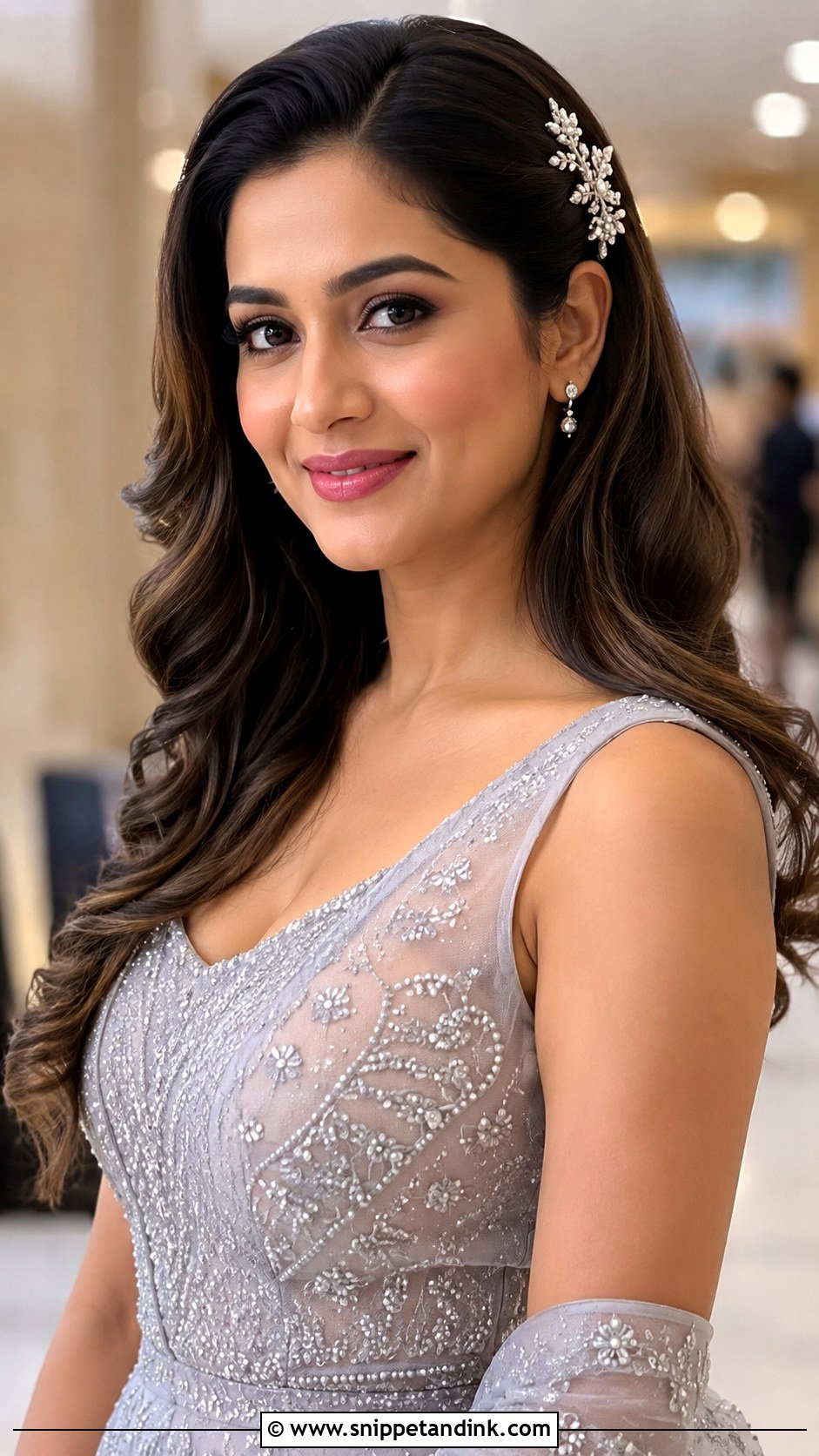
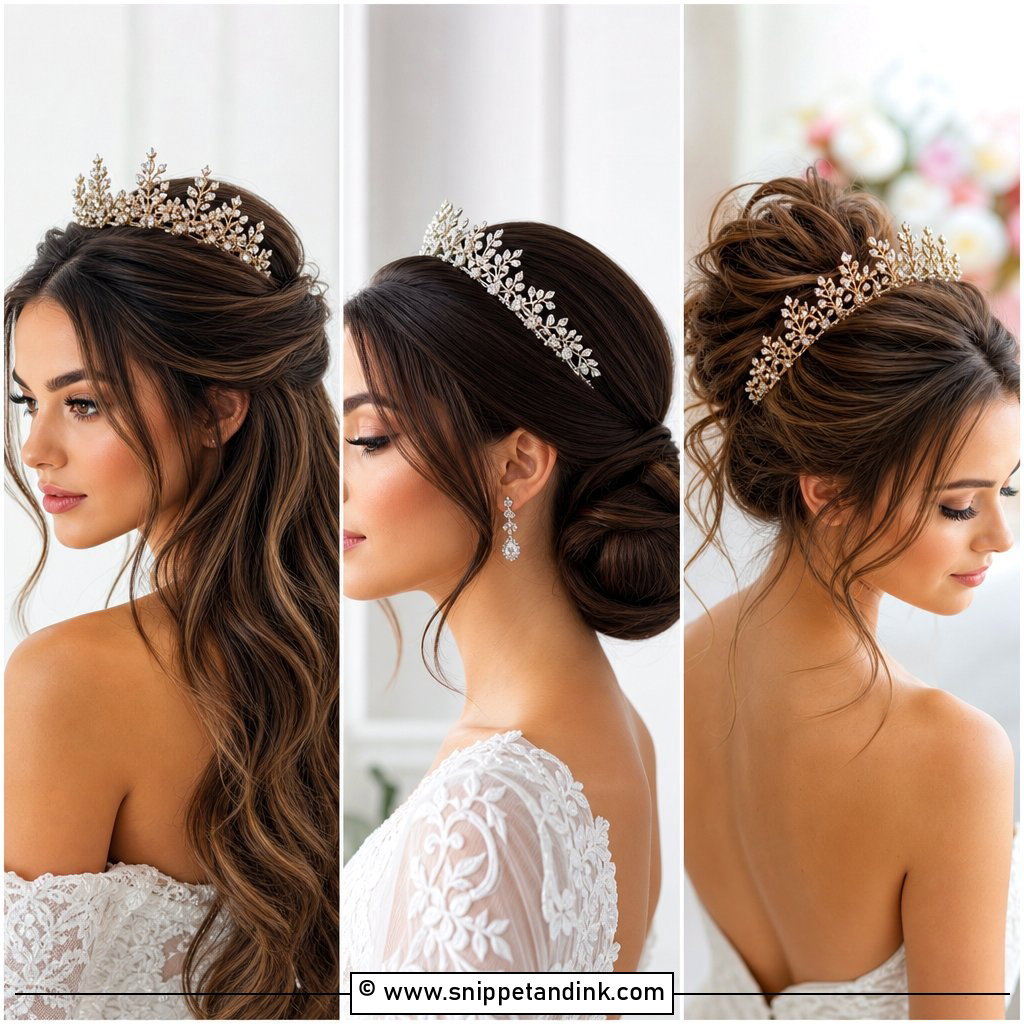
Glossy Hollywood waves falling over the shoulders are relaxed and glamorous, and they suit modern lehengas, Indo-Western gowns and reception outfits. I see this style most at destination and beach weddings, though sea air and humidity are hard on curls, so I set the waves well and use an anti-humidity finish. A jewelled pin or small maang tikka keeps it bridal. It works on most hair lengths from the shoulders down.
6. Maang Tikka Bun
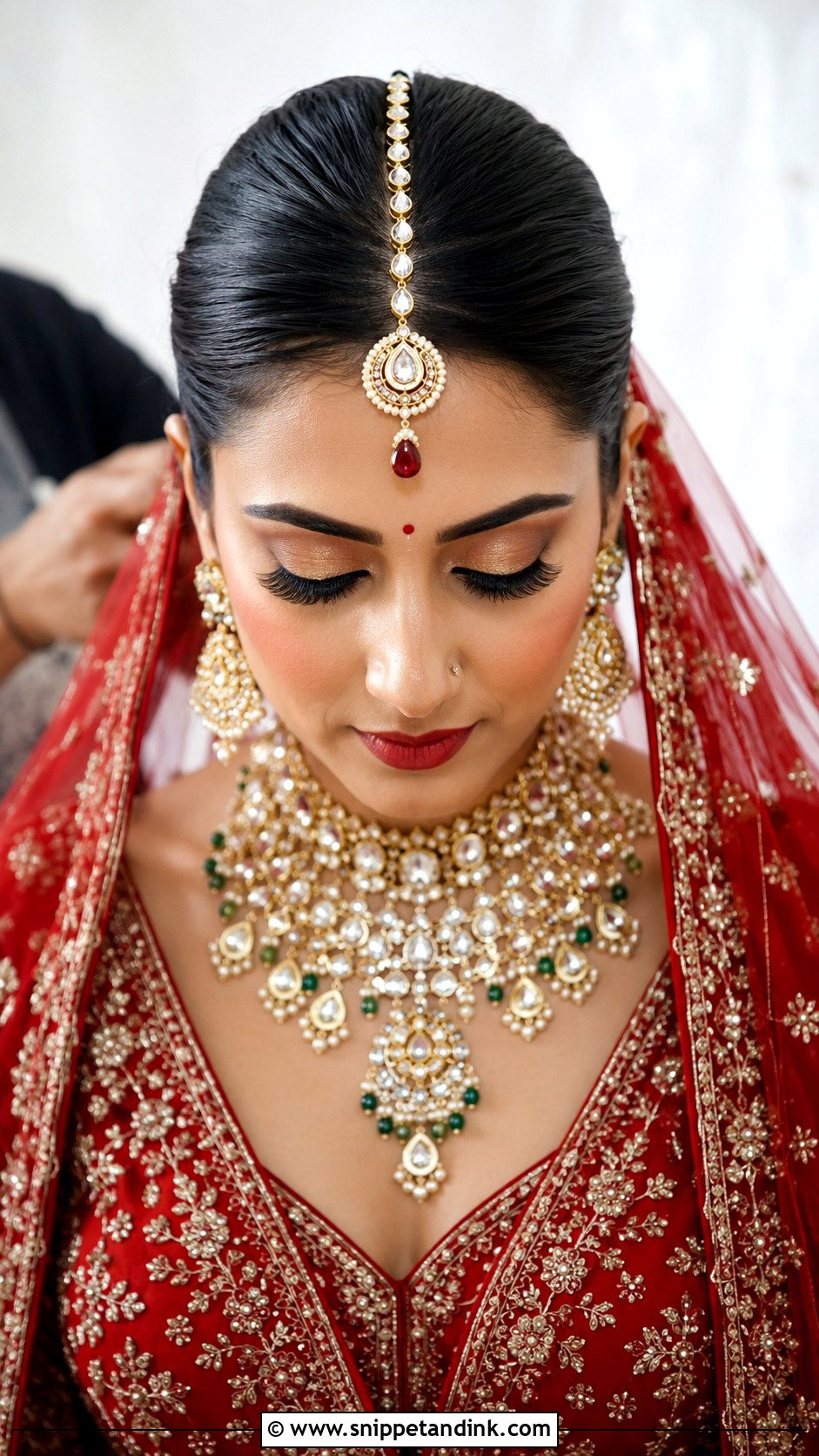
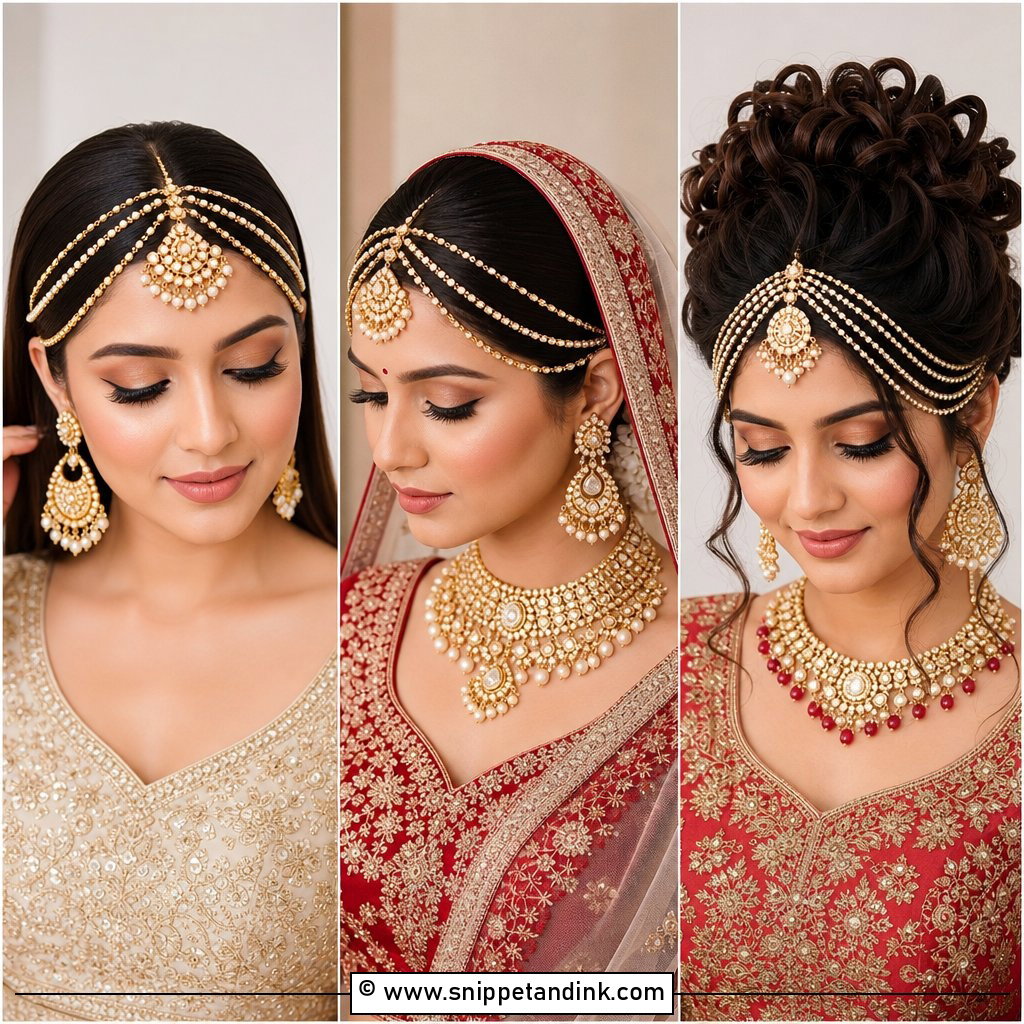
A sleek bun with a striking maang tikka keeps everything off the face so the jewellery and features take over. I pin a small anchor section at the centre parting first, then hook the tikka into it so it doesn’t drift sideways during the pheras. The bun can be low and structured or slightly higher. It suits heavy lehengas and statement necklaces, and it’s the style I’d choose for the main ceremony if you want minimal fuss. It barely moves for hours.
7. Side Swept Curls With Flowers
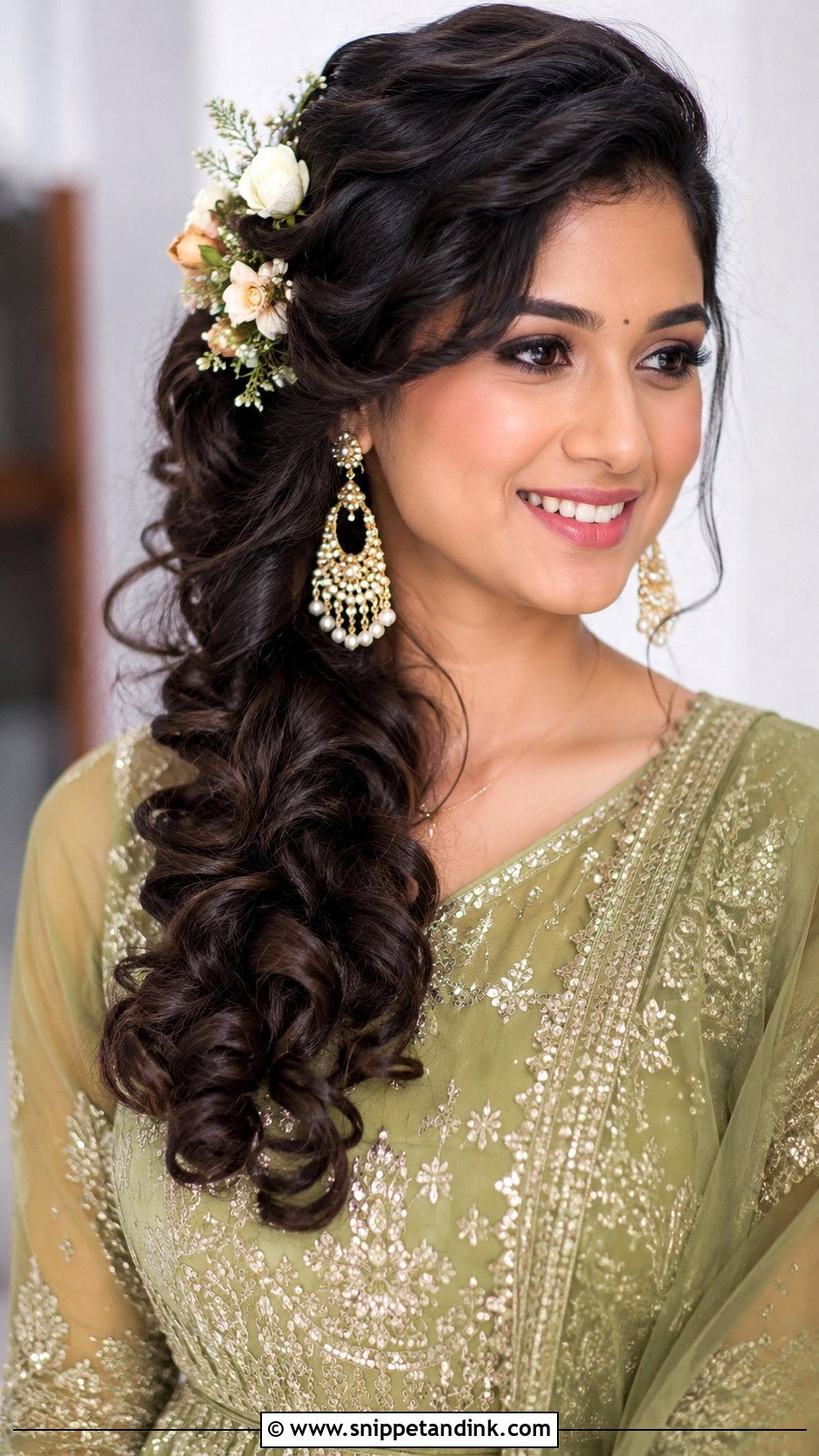
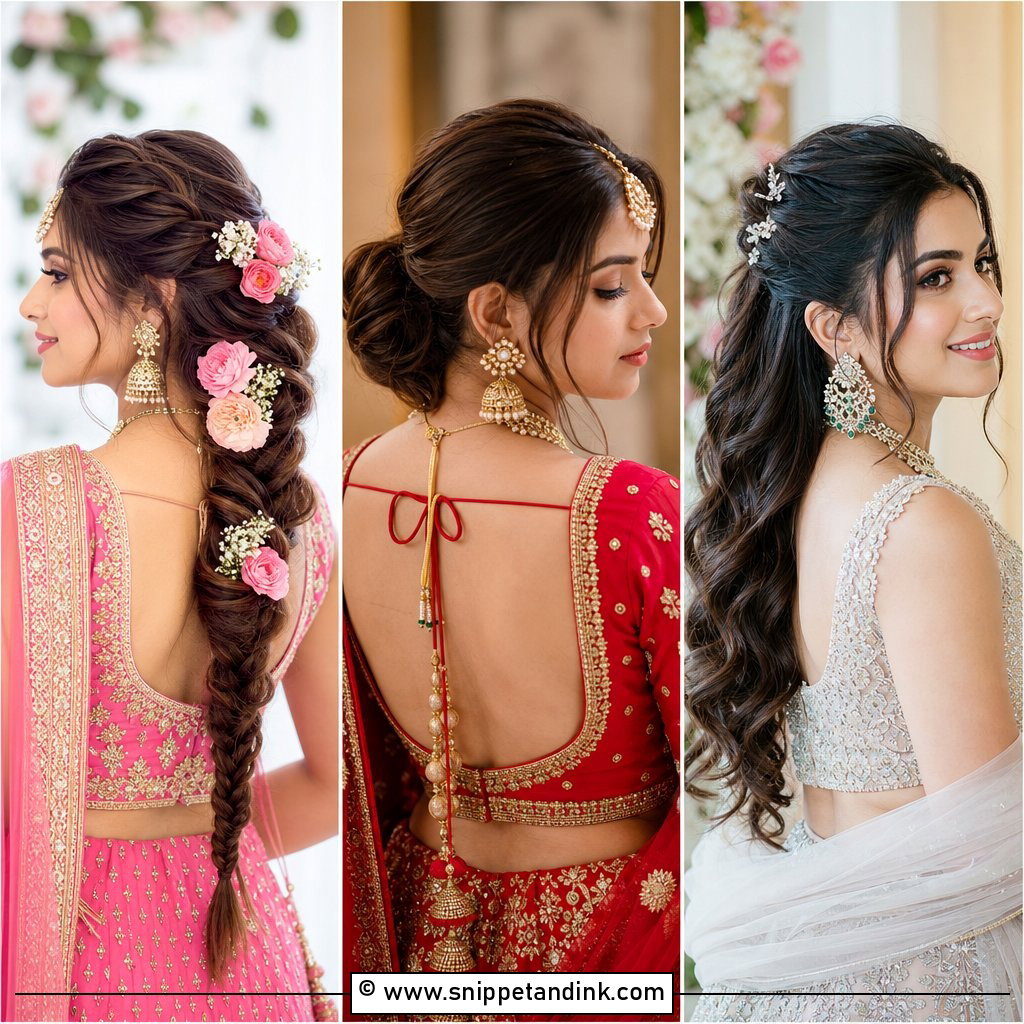
Gathering all the hair gently over one shoulder in loose, glossy curls gives a soft line and shows off chandelier earrings on the other side. Fresh flowers tucked near the part add a feminine touch. I pin the hair behind the ear with hidden crossed pins and a decorative clip, because side-swept hair slides back to the middle without an anchor. It suits sangeet, mehendi or a relaxed reception, and the asymmetry softens strong features.
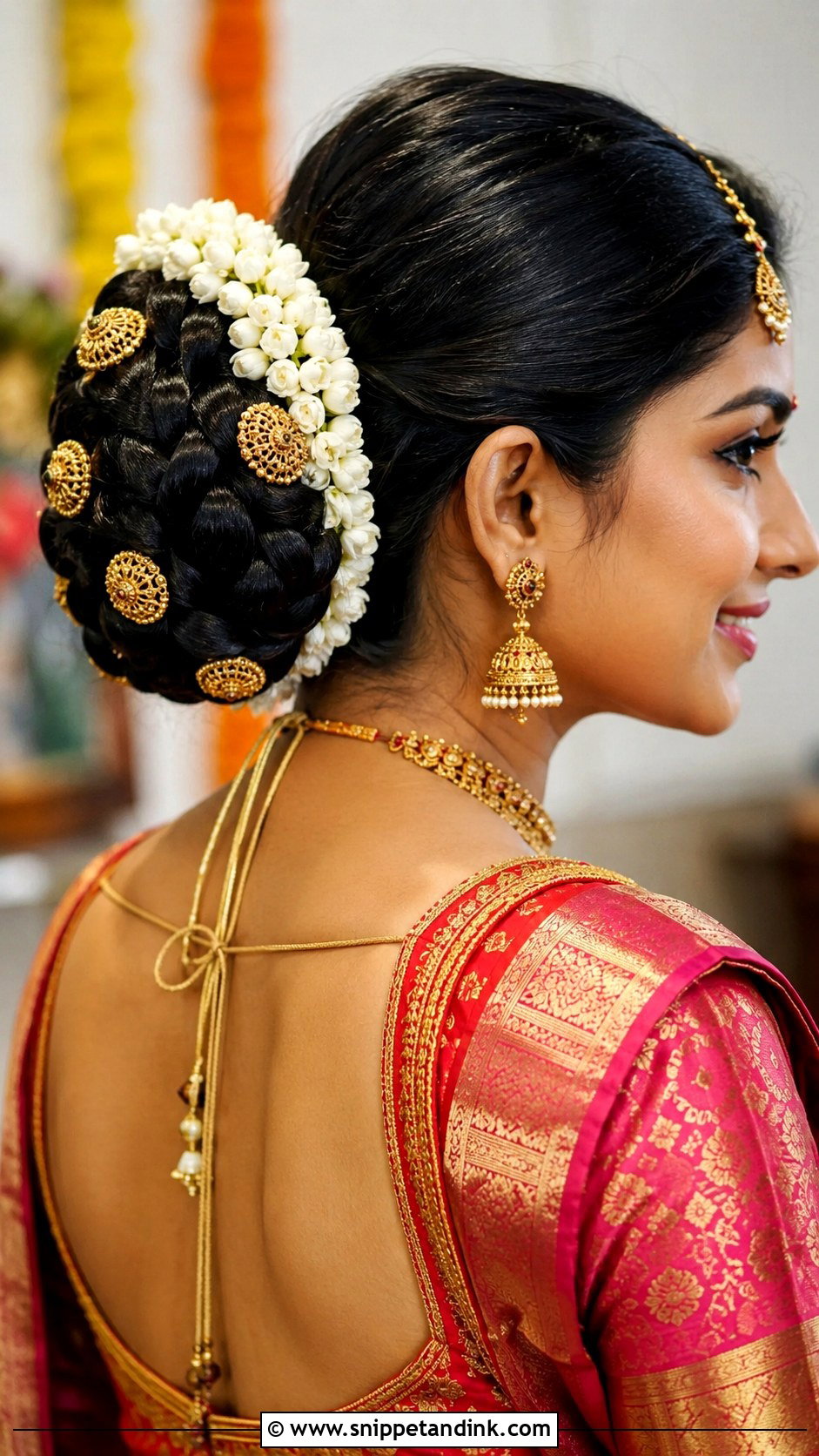
8. Braided Bun With Jada Billai
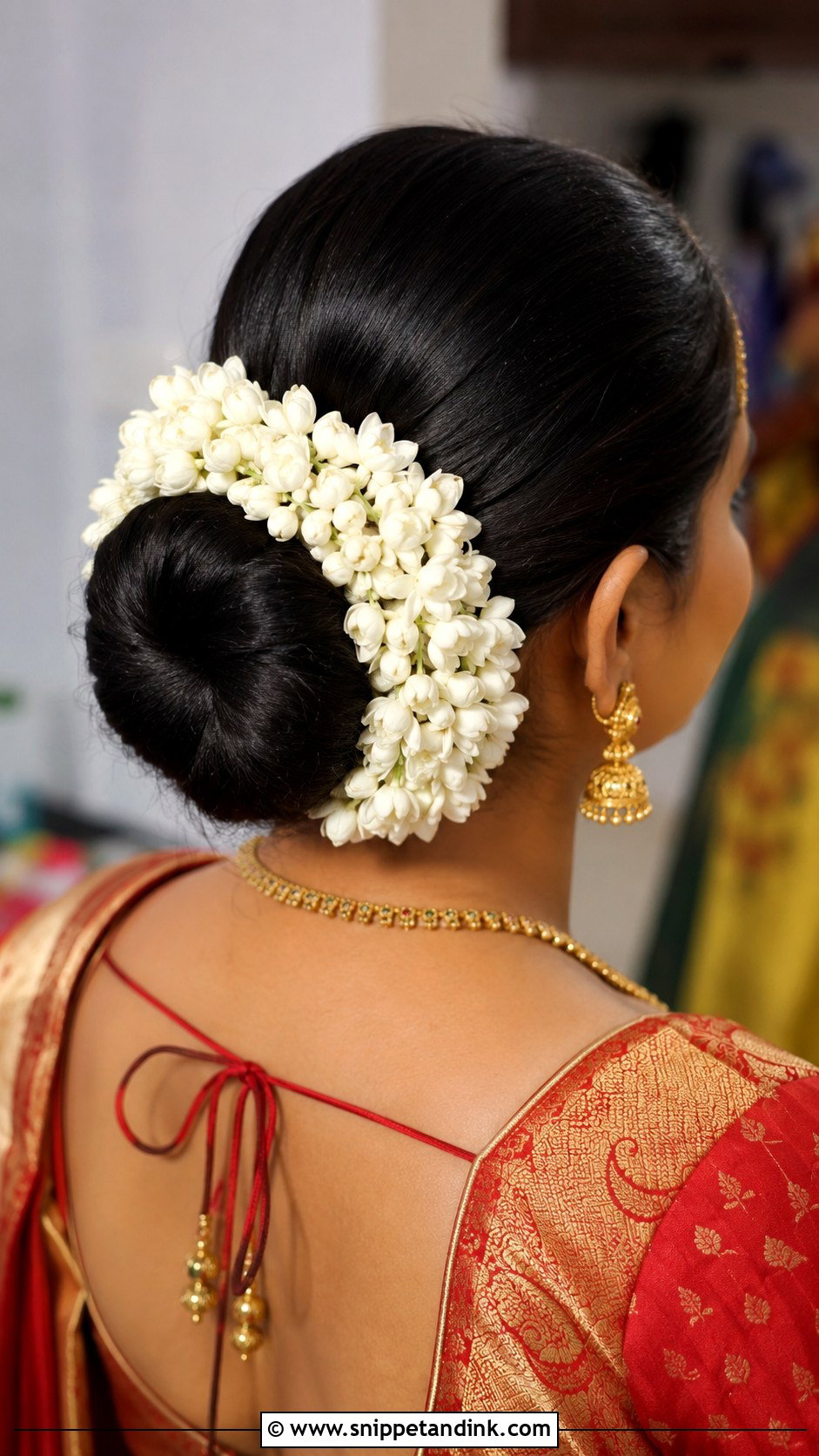
Ornamental discs and chains running down a braid, the jada billai is a South Indian bridal classic. Depending on family tradition, the braid is coiled into a low bun or left hanging. I’ve learned that the ornaments are heavy, so the braid underneath has to be tight and secured to the head at several points, or the jada pulls it loose. It’s made for Kanjeevaram silk and temple jewellery. Fresh jasmine softens the gold.
9. Half Up Half Down With Tikka
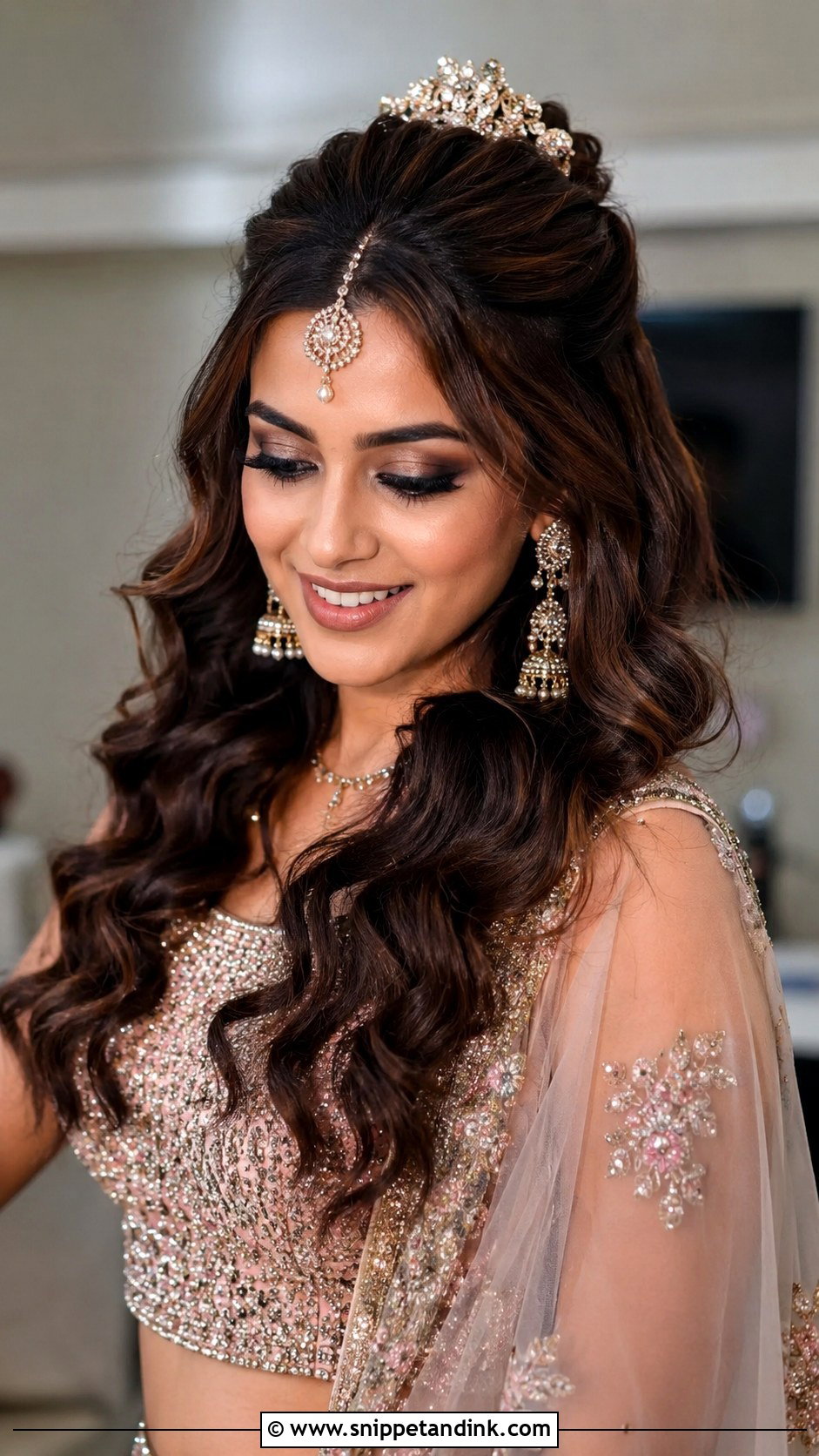
Half-up, half-down pulls back the top section and lets soft curls fall below. A maang tikka or jewelled pin at the crown finishes it. I like it when you want volume but don’t want hair tied up completely, and it suits both lehengas and gowns. My tip is to secure the top section with a small hidden braid instead of just a clip, so it holds when the dupatta is placed and lifted. The sangeet and reception are where I do it most.
10. Puffed Crown Bun
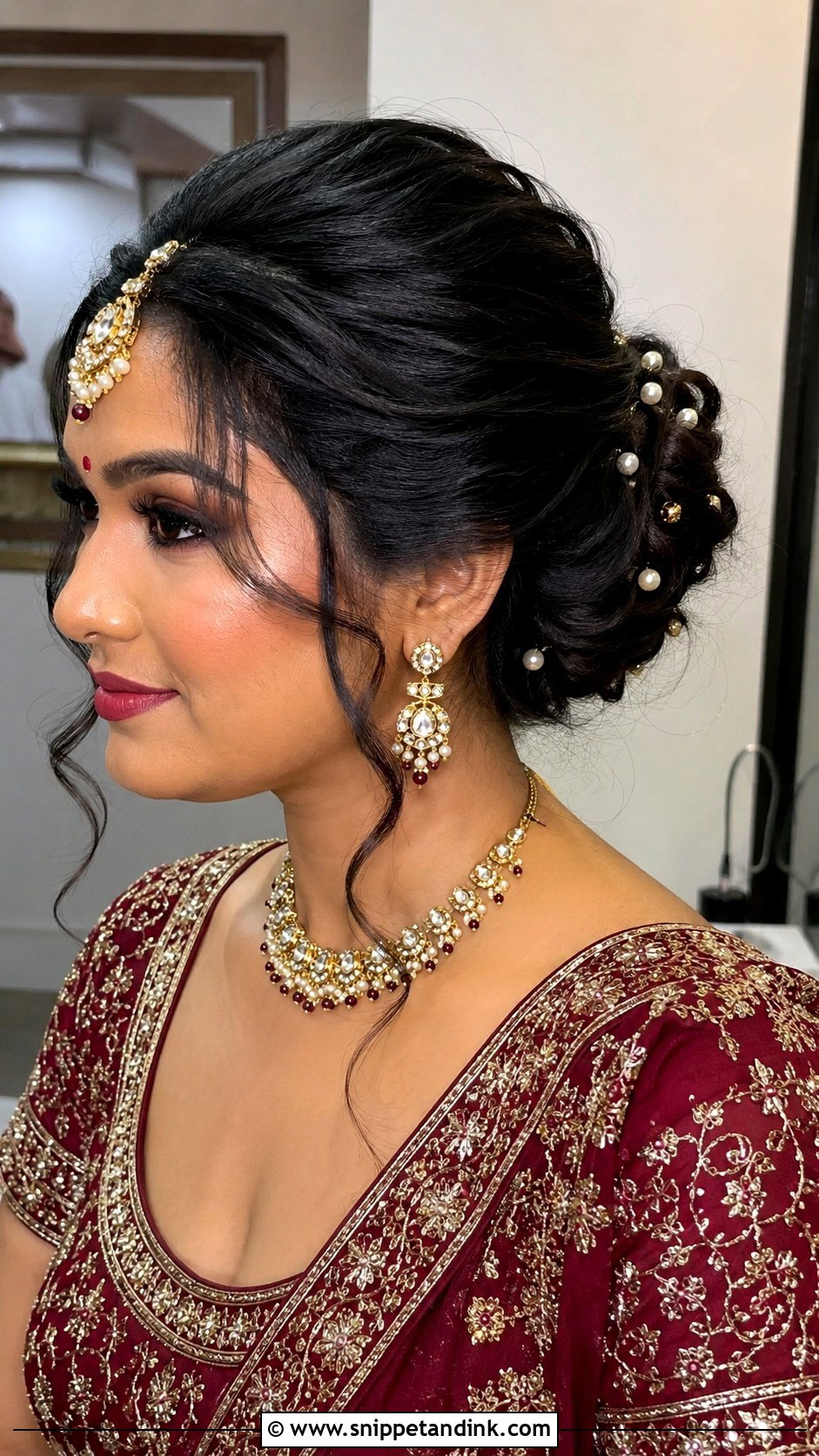
Teasing the crown before gathering the hair into a bun gives height and a strong outline. The lift balances heavy jewellery and lengthens a round face. I backcomb in small sections close to the root and smooth only the top layer over it, so the puff keeps its shape for hours. Pearls, flowers or jewelled pins finish the bun. If a heavy dupatta will be pinned on top, I keep the puff modest, since it’ll be pressed down anyway.
11. Loose Braid With Mogra
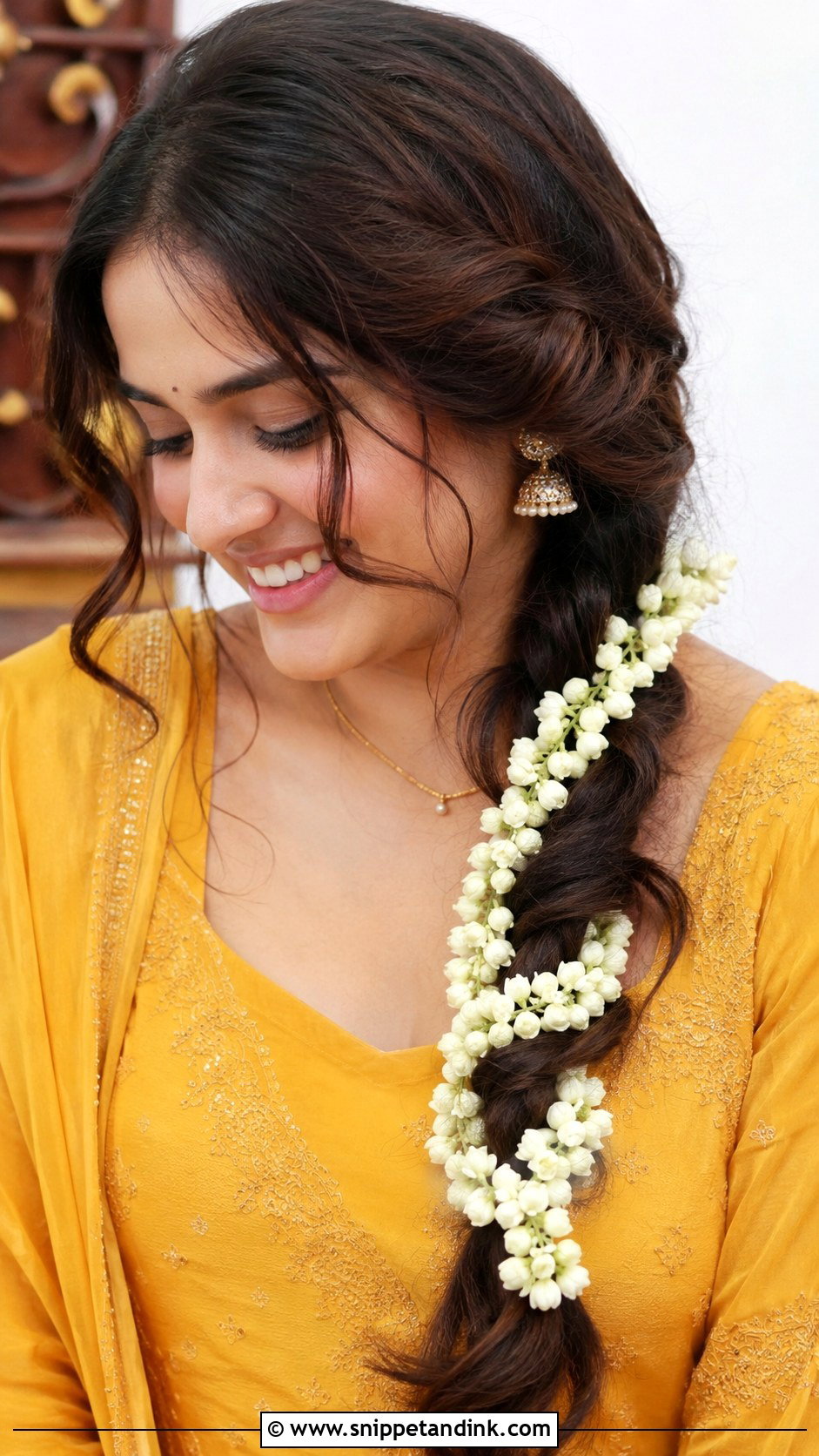
A loose braid wrapped in mogra feels traditional and gentle. I braid softly, drape it over one shoulder and wind jasmine strings through it, pinning them every few twists so they don’t slide. The white blossoms stand out against dark hair. It suits the haldi, mehendi and intimate daytime ceremonies, with a few wispy strands around the face. A loose braid has less grip than a tight one, so I use clear elastics at intervals inside the braid to keep it together.
12. Sleek Low Ponytail
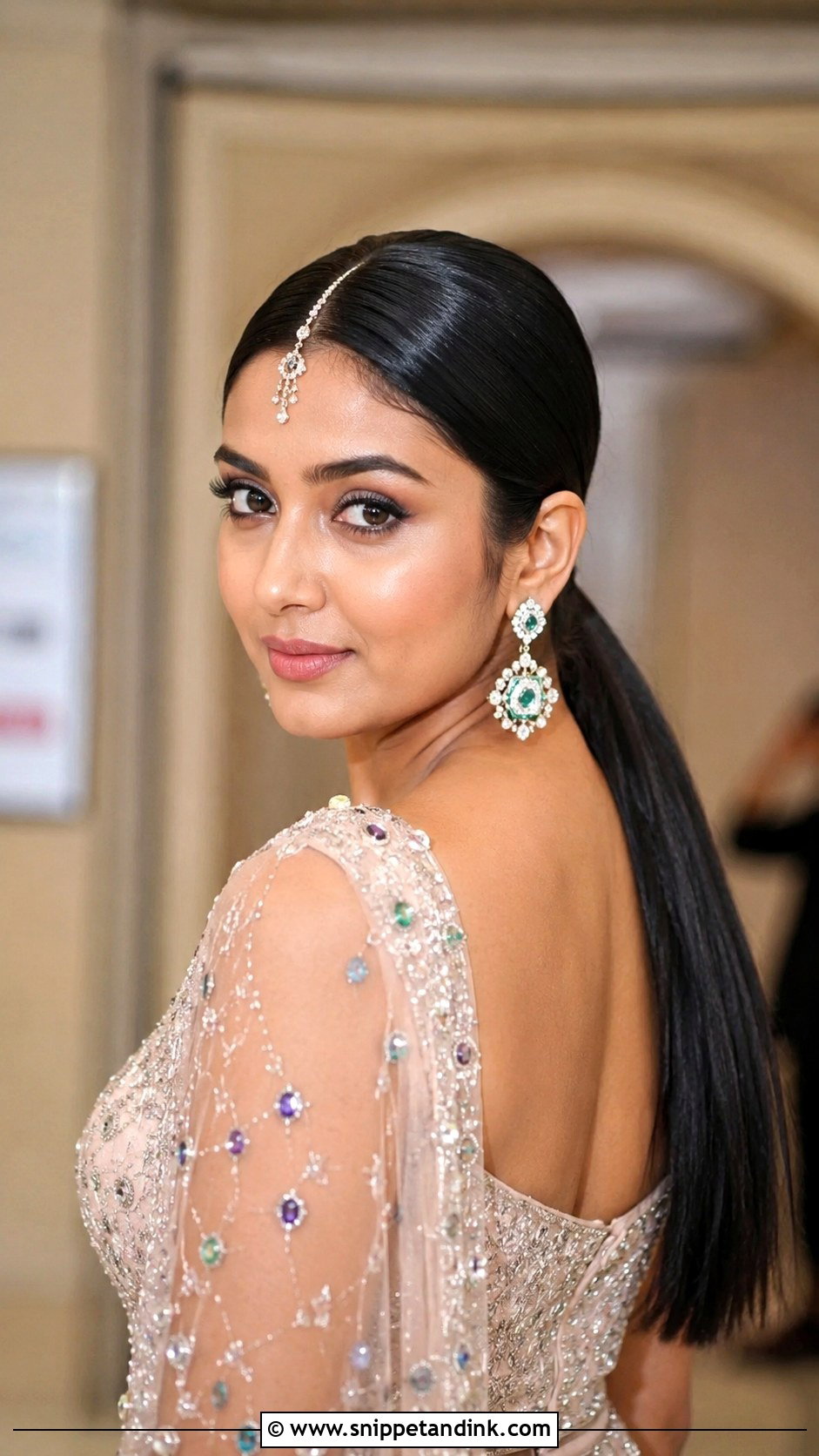
A low ponytail with glass-like smoothness and a sharp centre part is the most fashion-led style on this list. I smooth with a firm gel and a boar-bristle brush, tie it low and wrap a strand around the elastic to hide it. It suits Indo-Western outfits, structured gowns and reception looks, and keeps bold earrings and makeup in view. The honest catch: a slick ponytail shows every bump and flyaway, so it takes time to do well. A delicate tikka adds a bridal note.
13. Dutch Braid With Gold Threads
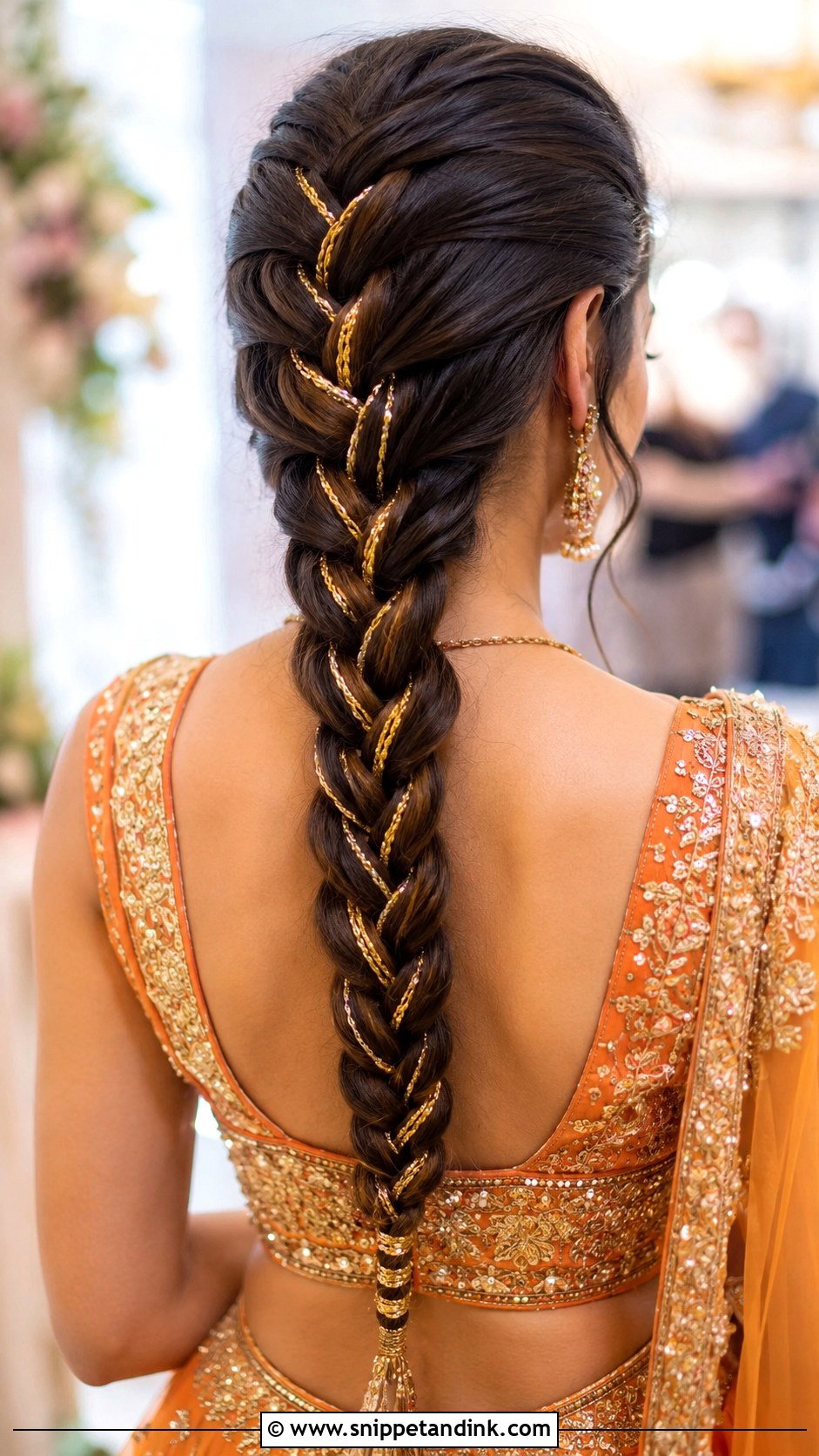
A Dutch braid is braided under rather than over, so it sits raised on top of the hair like a ridge. Threading gold strands through the weave makes it festive. I do it as a single braid down the back or as a crown braid. It suits the sangeet and mehendi, and the tight structure holds through dancing. I’d avoid it on very short layers, which stick out of the raised braid. Small flowers or pearls can be added.
14. Bun With Mathapatti
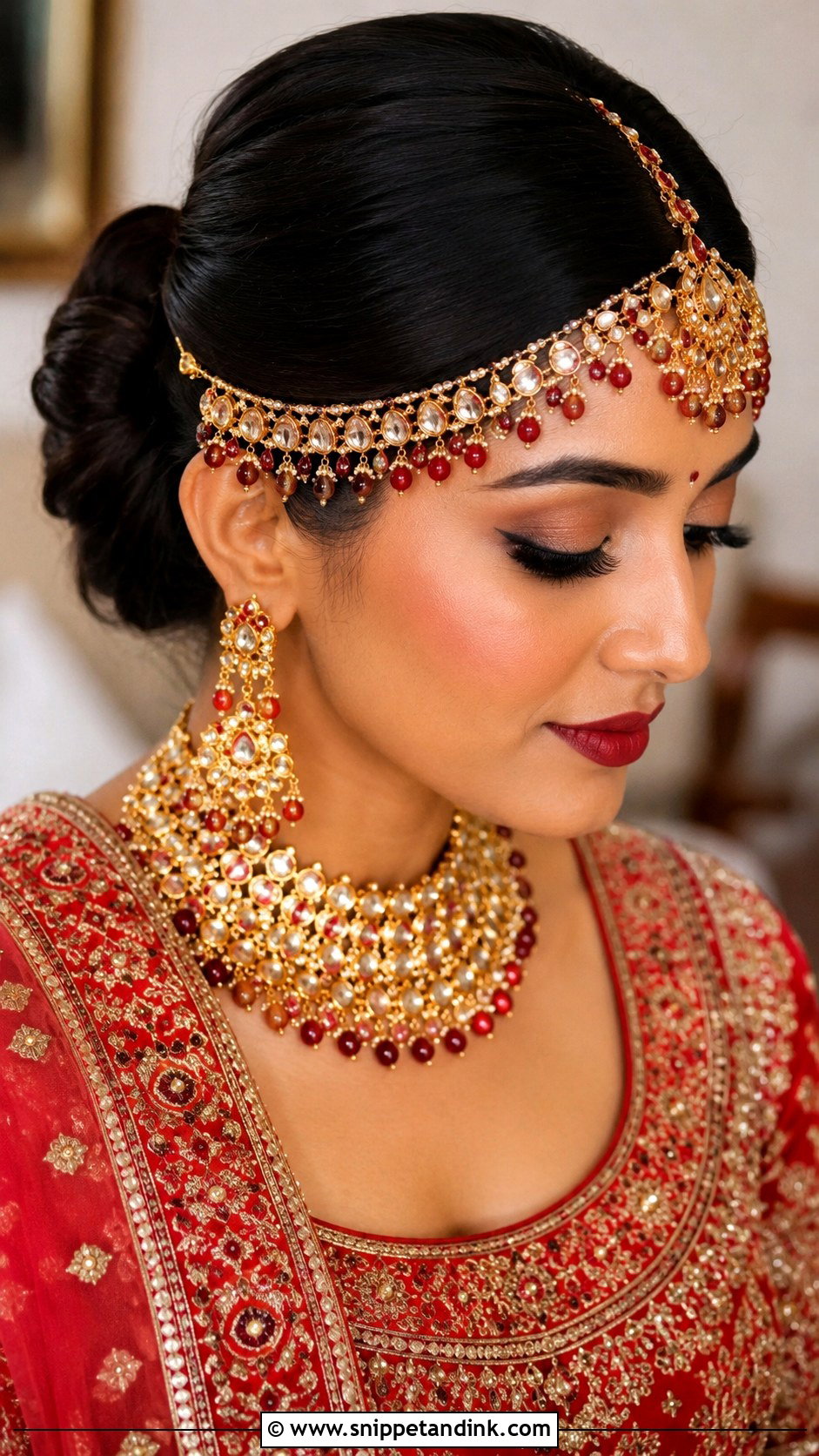
A smooth bun paired with a mathapatti headpiece frames the face across the forehead. The mathapatti’s side chains need anchor points above the ears, so I place small pinned sections there before smoothing the rest of the hair back. A clean bun keeps the ornament the focus. It’s suited to grand ceremonies with heavy lehengas and matching sets, and the structure lasts through long rituals.
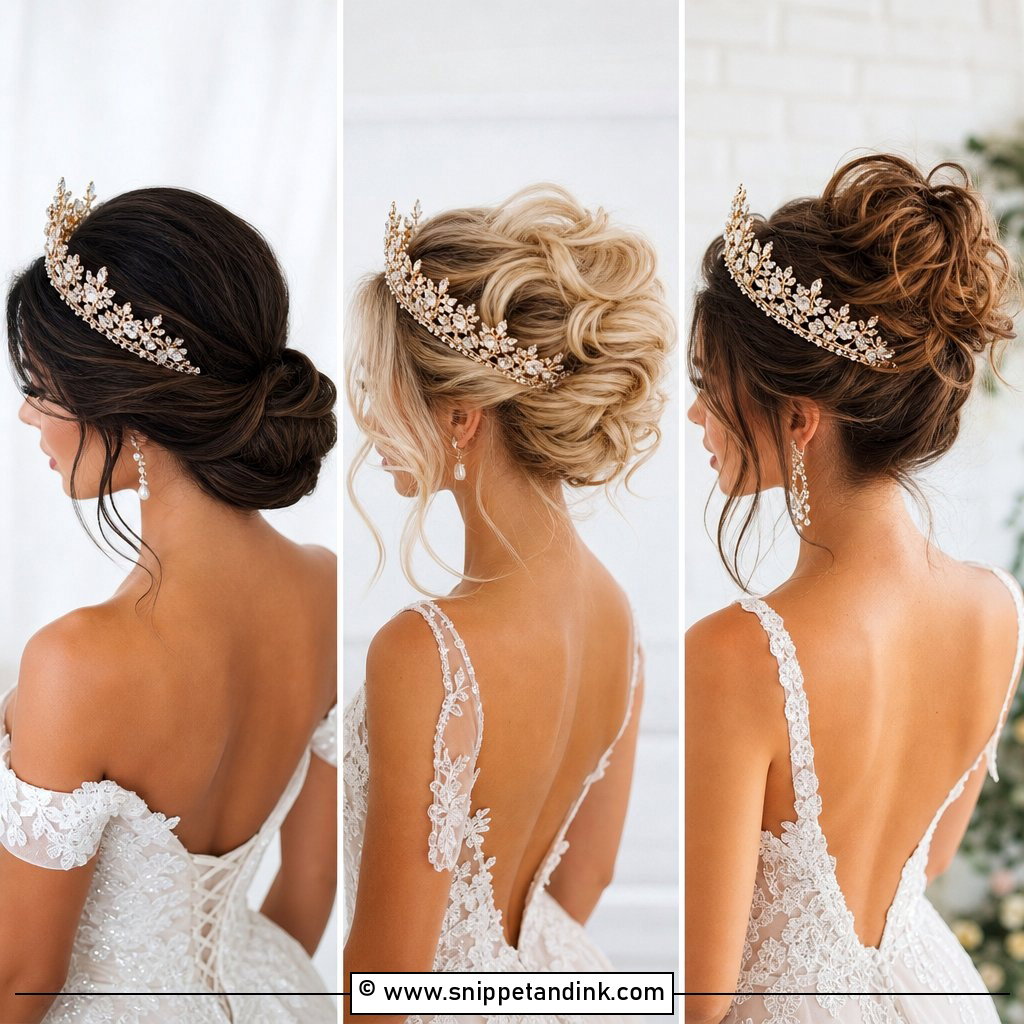
15. Messy Bun With Baby’s Breath
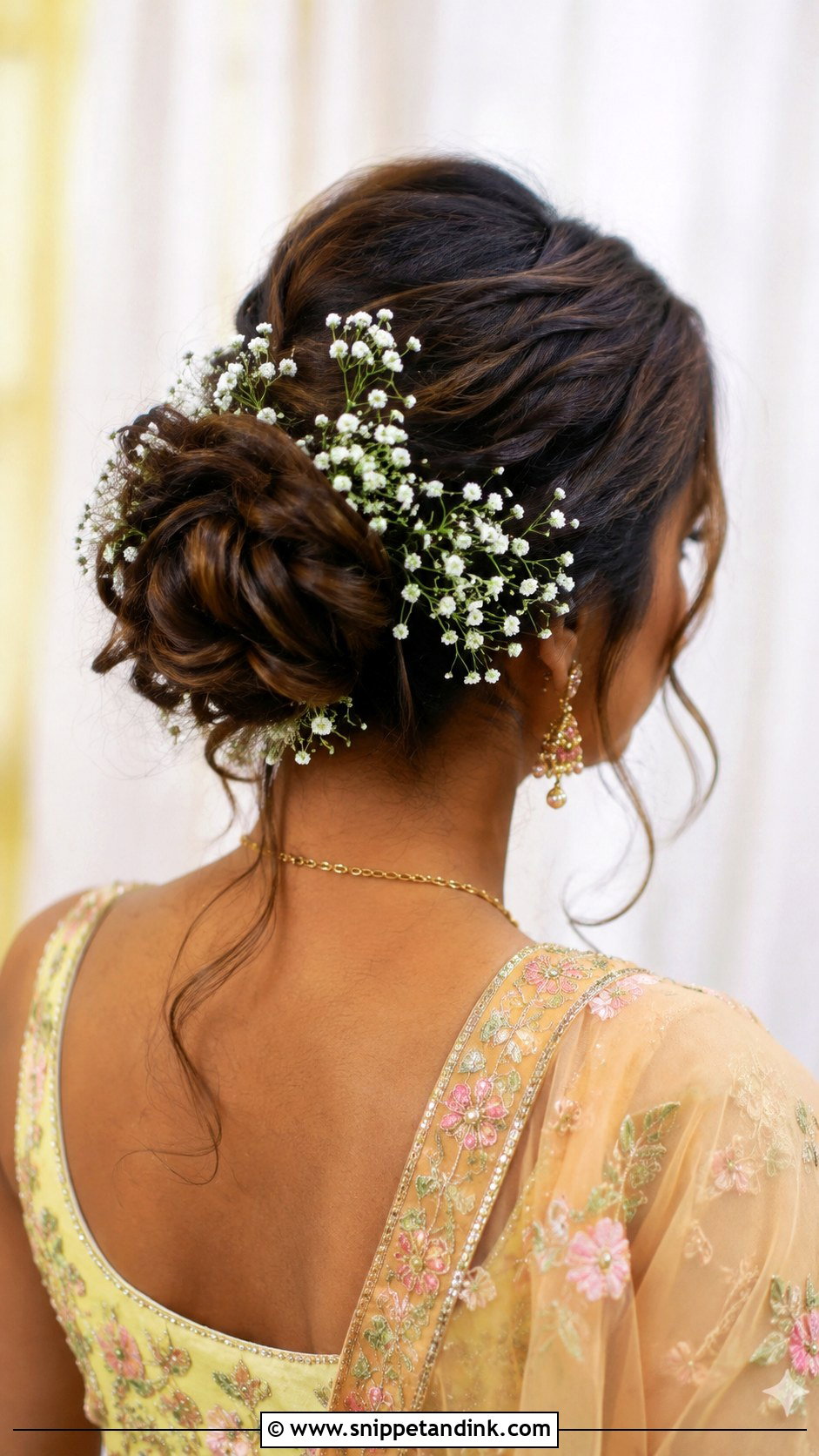
A loosely gathered, messy bun adorned with baby’s breath has an airy, modern feel. I add texture spray before gathering so the loose bun keeps its shape, then push tiny sprigs in with short pins. It suits the haldi, mehendi or a destination wedding, with pastel outfits and light jewellery. Loose pieces around the face keep it soft. It’s not the style I’d choose under a heavy dupatta, which will flatten it.
16. Crown Braid With Flowers
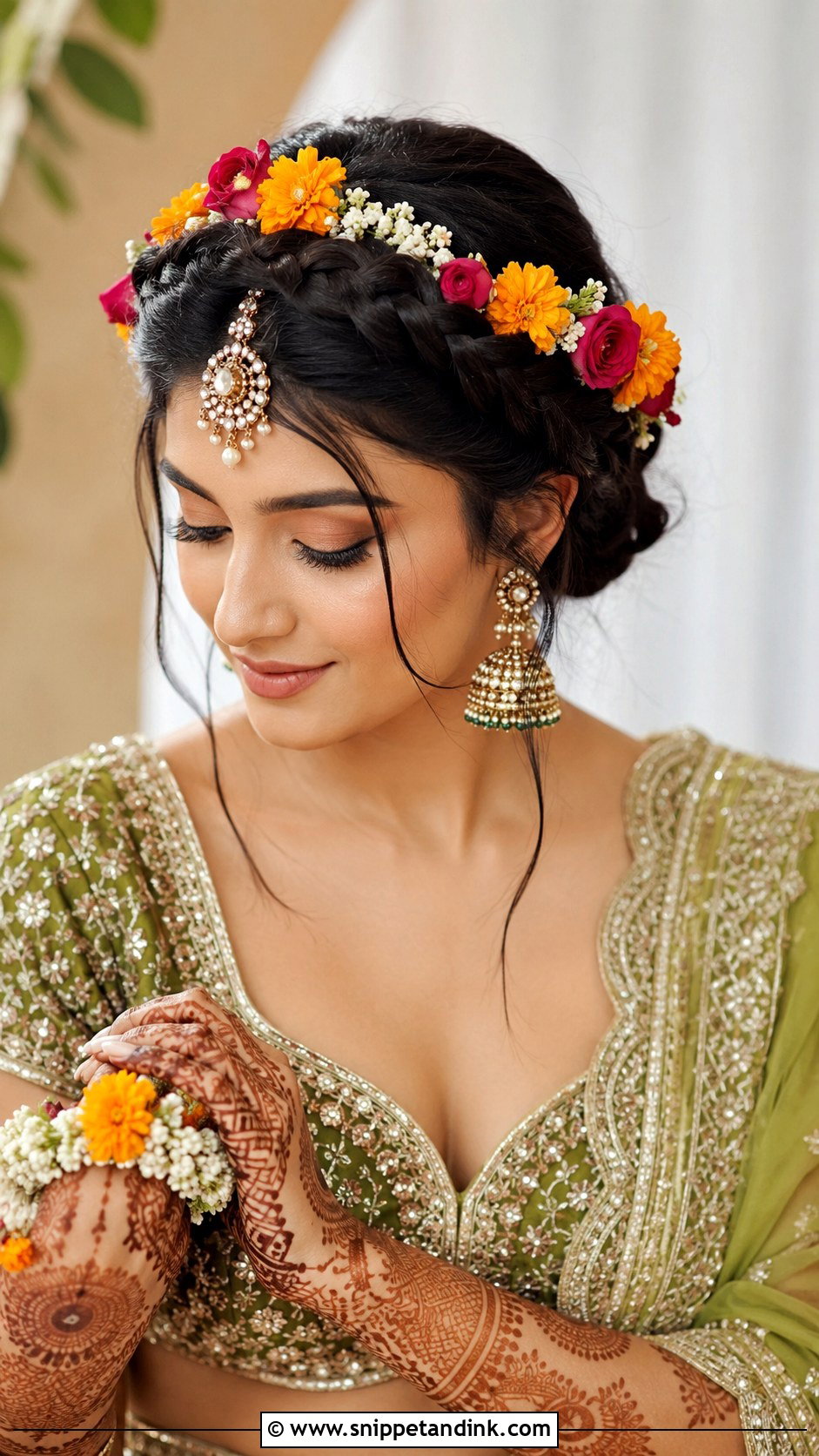
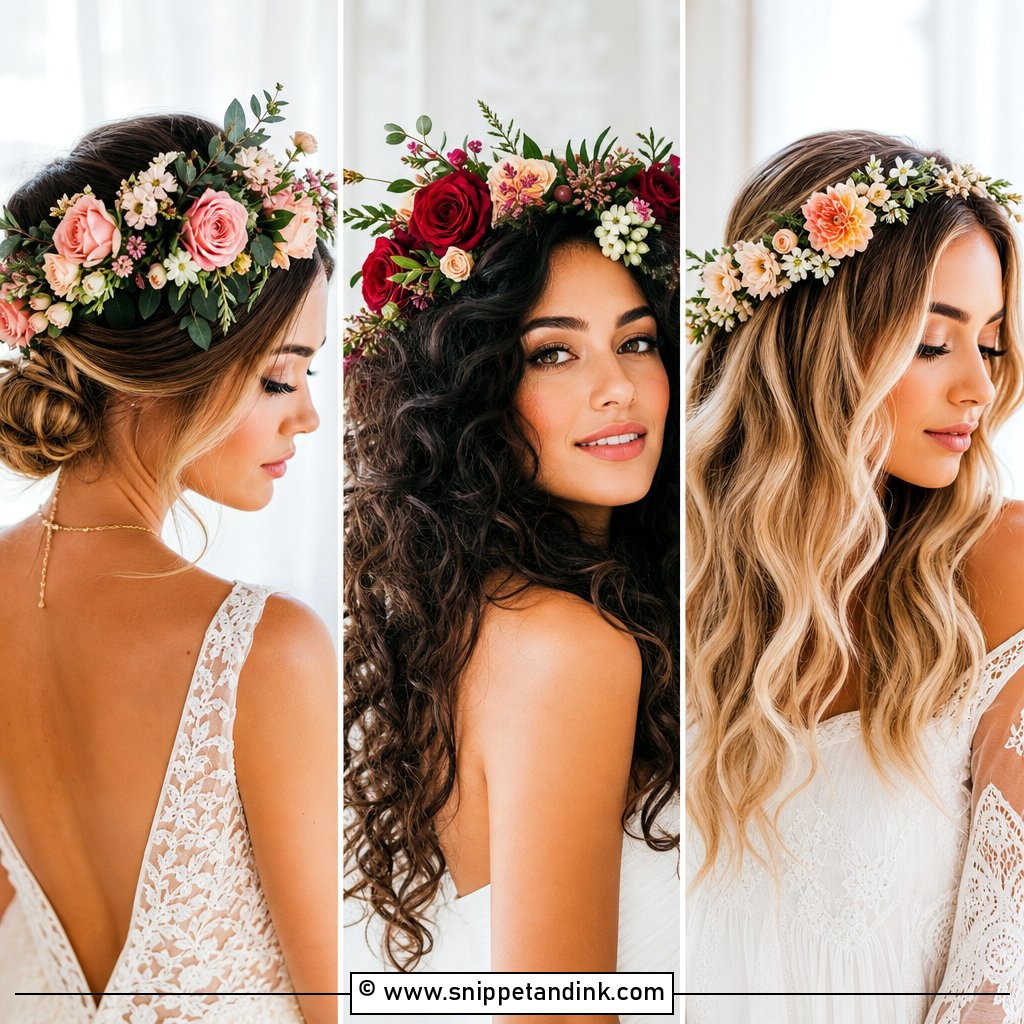
A braid wrapped around the head like a halo keeps all the hair off the face, which makes it practical and comfortable for daytime functions like the mehendi and haldi. I pin the braid along the hairline every few centimetres so it lies flat and doesn’t slip backward. Flowers woven in add colour. The halo flatters most face shapes, and jhumkas with a light lehenga suit it. It works well for a soft, outdoor look.
17. Voluminous Curls With Maang Tikka
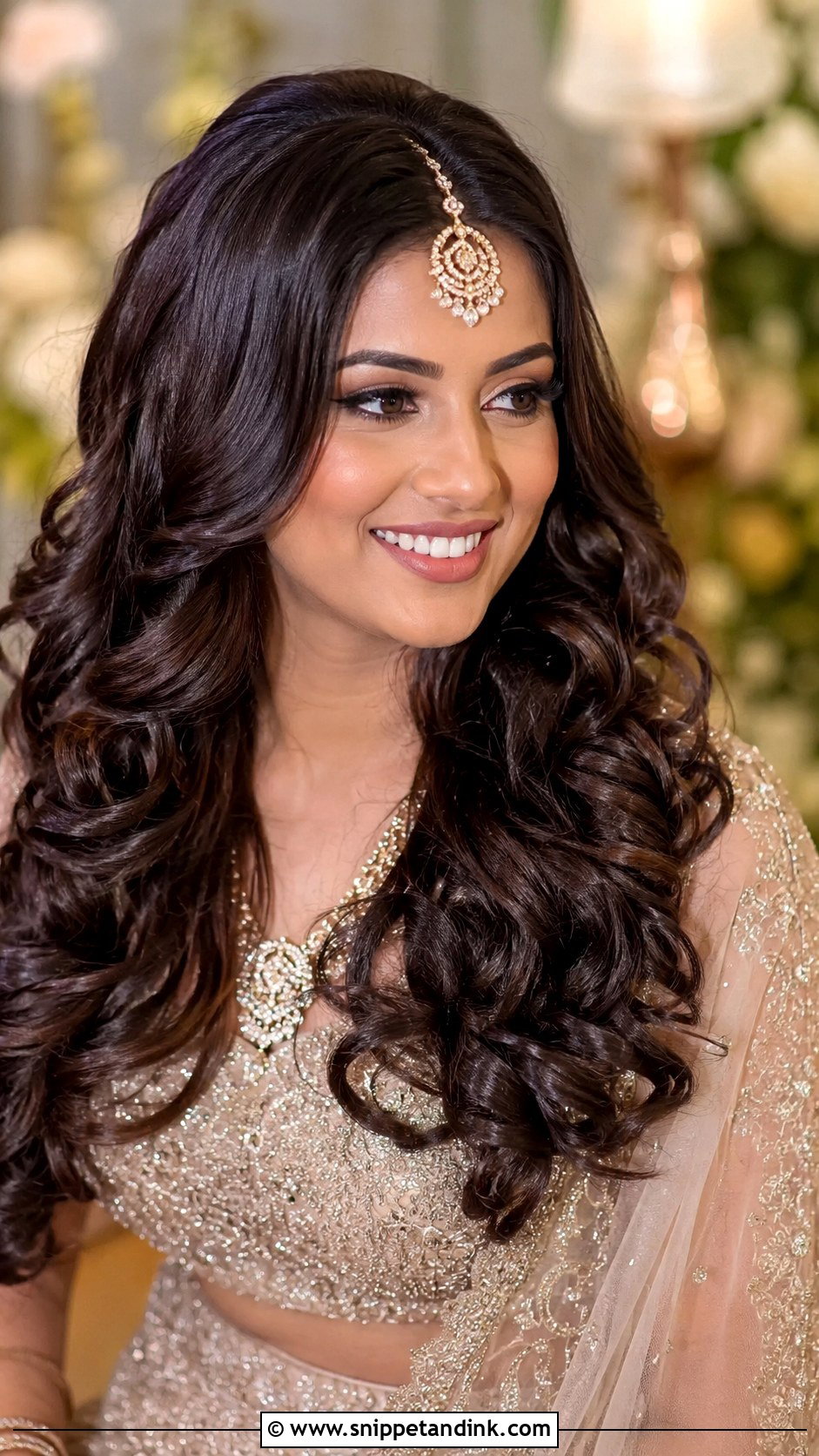
Big curls cascading down the back with a maang tikka at the centre part give a glamorous balance. The volume frames the face. It suits the reception and sangeet celebrations, with modern lehengas and gowns. You can leave the hair fully open or pin one side back. I set the curls with a medium barrel, let them cool pinned, then brush out lightly. Thin hair struggles to hold this volume, and clip-ins make a real difference.
18. Twisted Side Bun
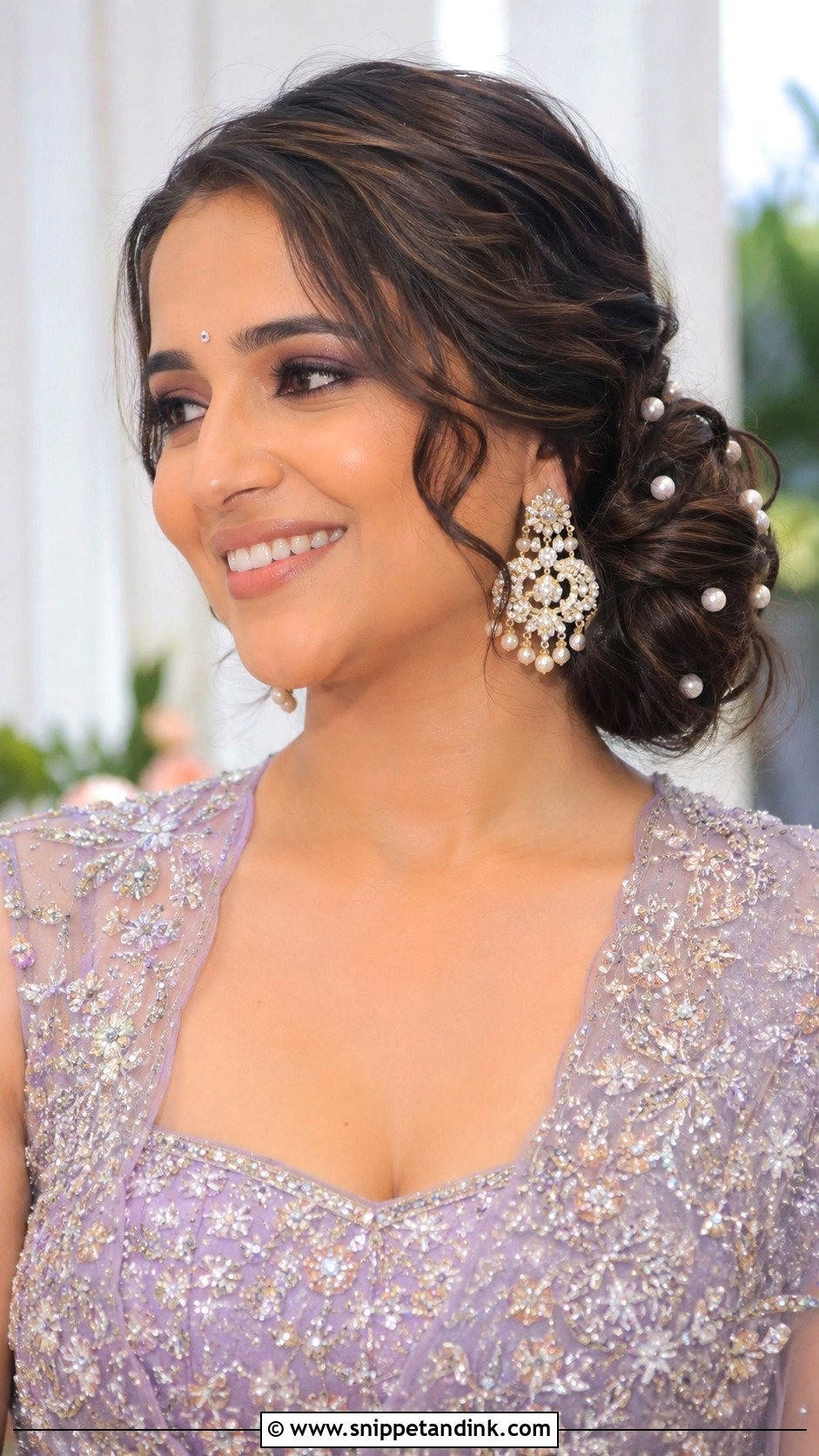
Twisting the hair into a bun low on one side of the neck is soft and slightly unexpected. Statement earrings on the opposite side balance it. It suits the reception and sangeet, and flatters long necks and oval faces. I pin the bun securely from underneath, because an off-centre bun gets knocked when you turn your head. Pearls, flowers or jewelled pins finish it, and a few loose strands keep it soft.
19. Bun With Passa And Jhoomar
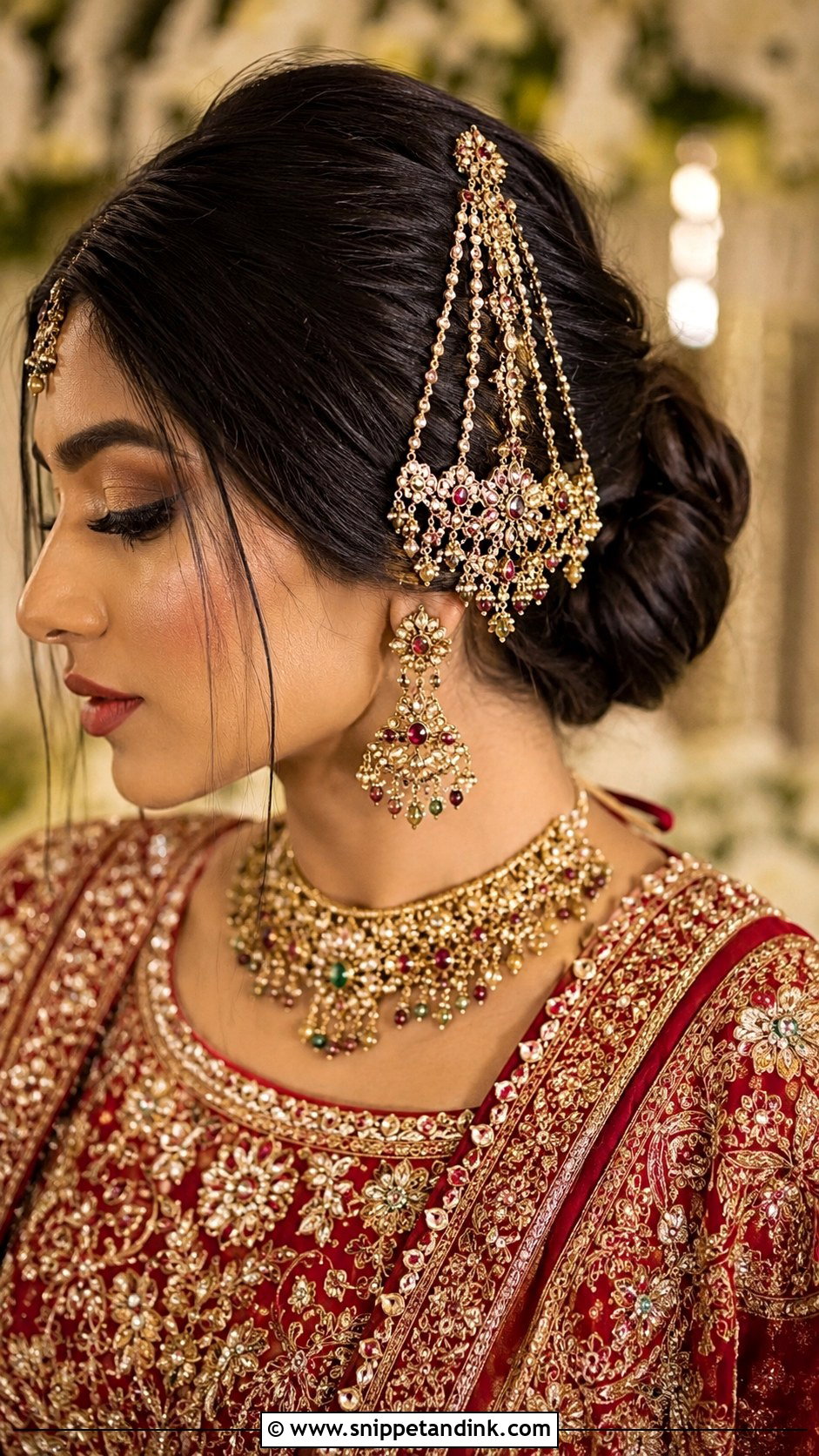
A smooth bun accented with a passa and jhoomar has Mughal-inspired grandeur, with the passa hanging near the temple. A passa is heavy on one side, so I anchor it to a small braid hidden under the front hair, then sweep the hair over to cover the hook. The clean bun keeps attention on the headpiece. It suits the main ceremony or a glamorous reception, and flowers or pearls can be added around the bun.

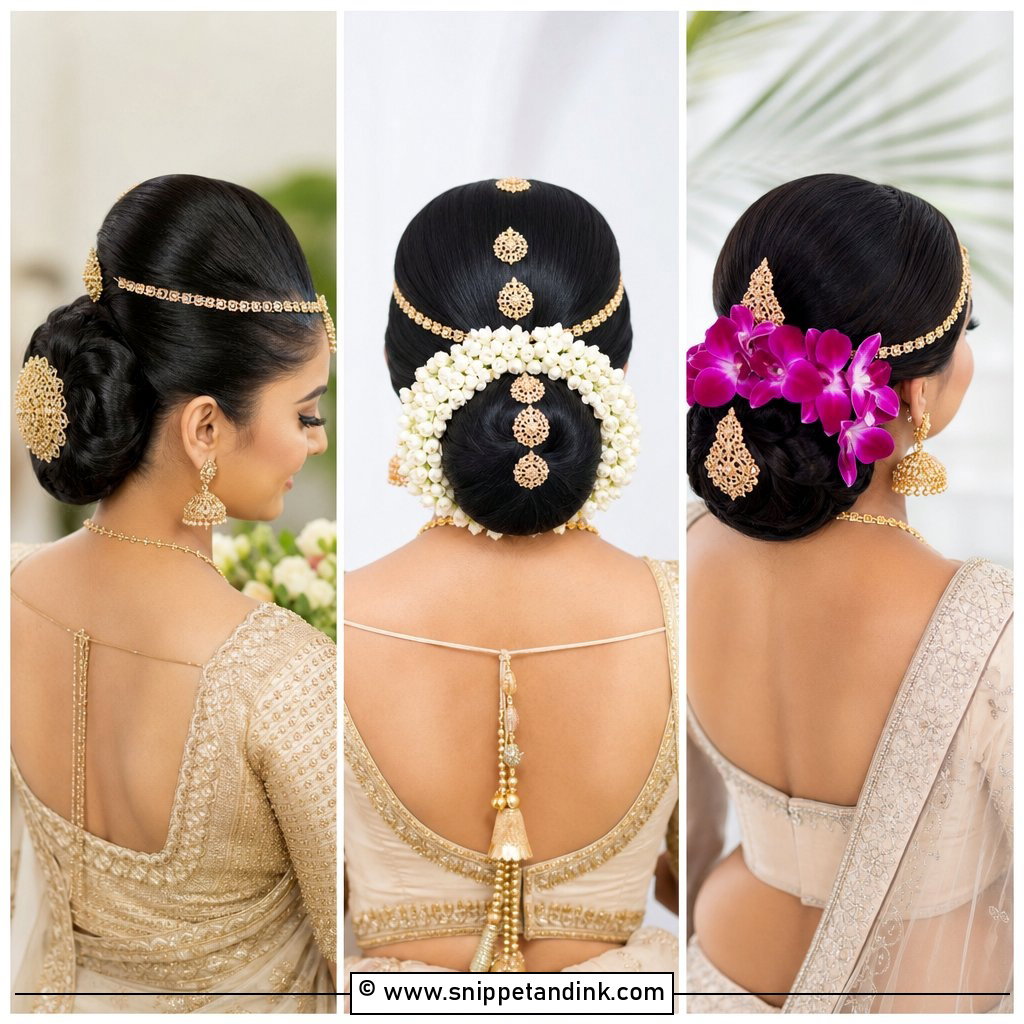

20. Long Layered Open Hair
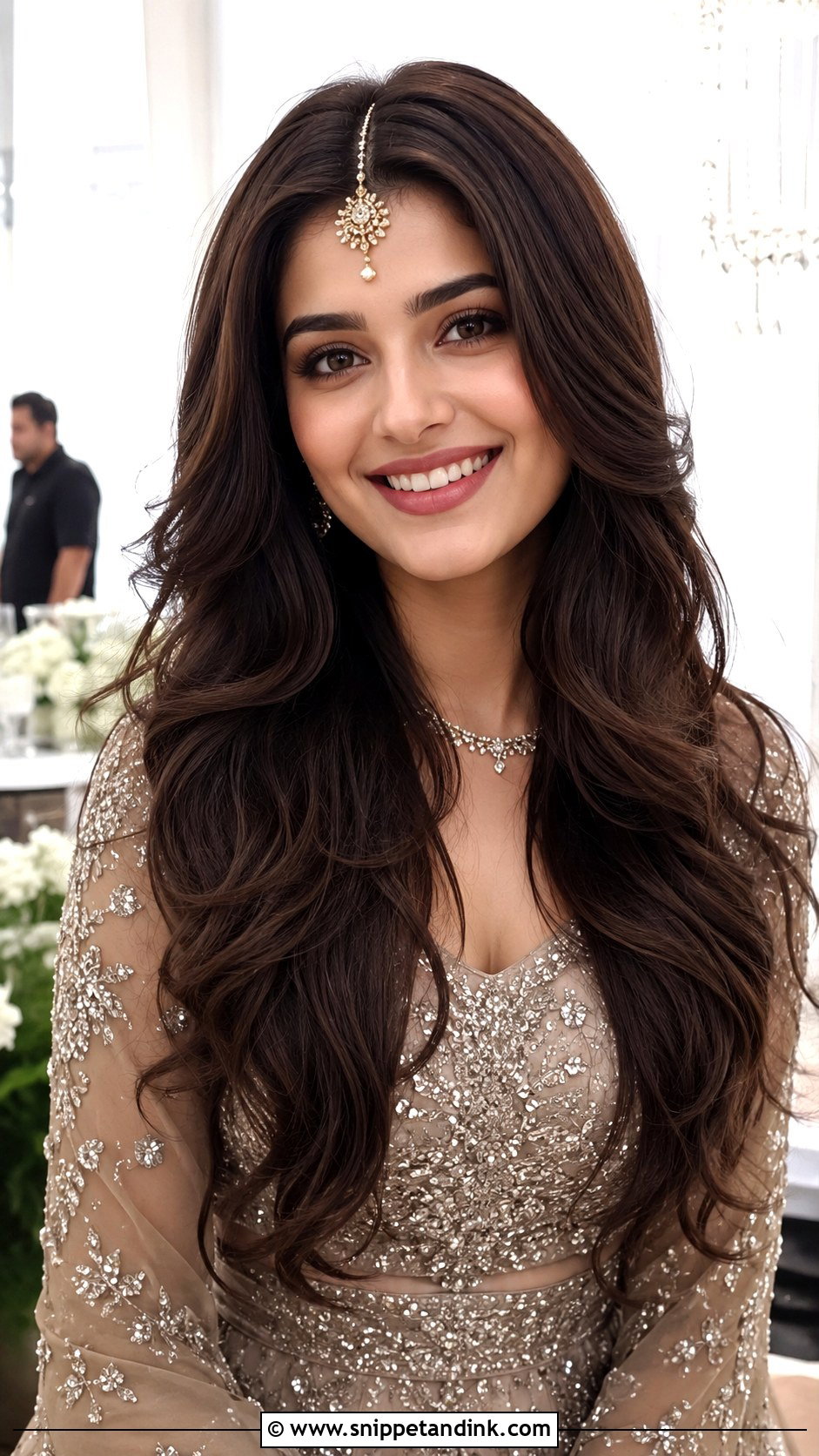
Open, flowing hair with soft layers feels glamorous and modern, and a light wave adds movement. It suits reception gowns and Indo-Western outfits. A delicate tikka or jewelled pin keeps it bridal. It needs long, healthy hair and a layered cut, which should be done several weeks before the wedding. I curl the layers in alternating directions so they don’t clump. It looks good indoors and out.
21. Braided Updo With Pearls
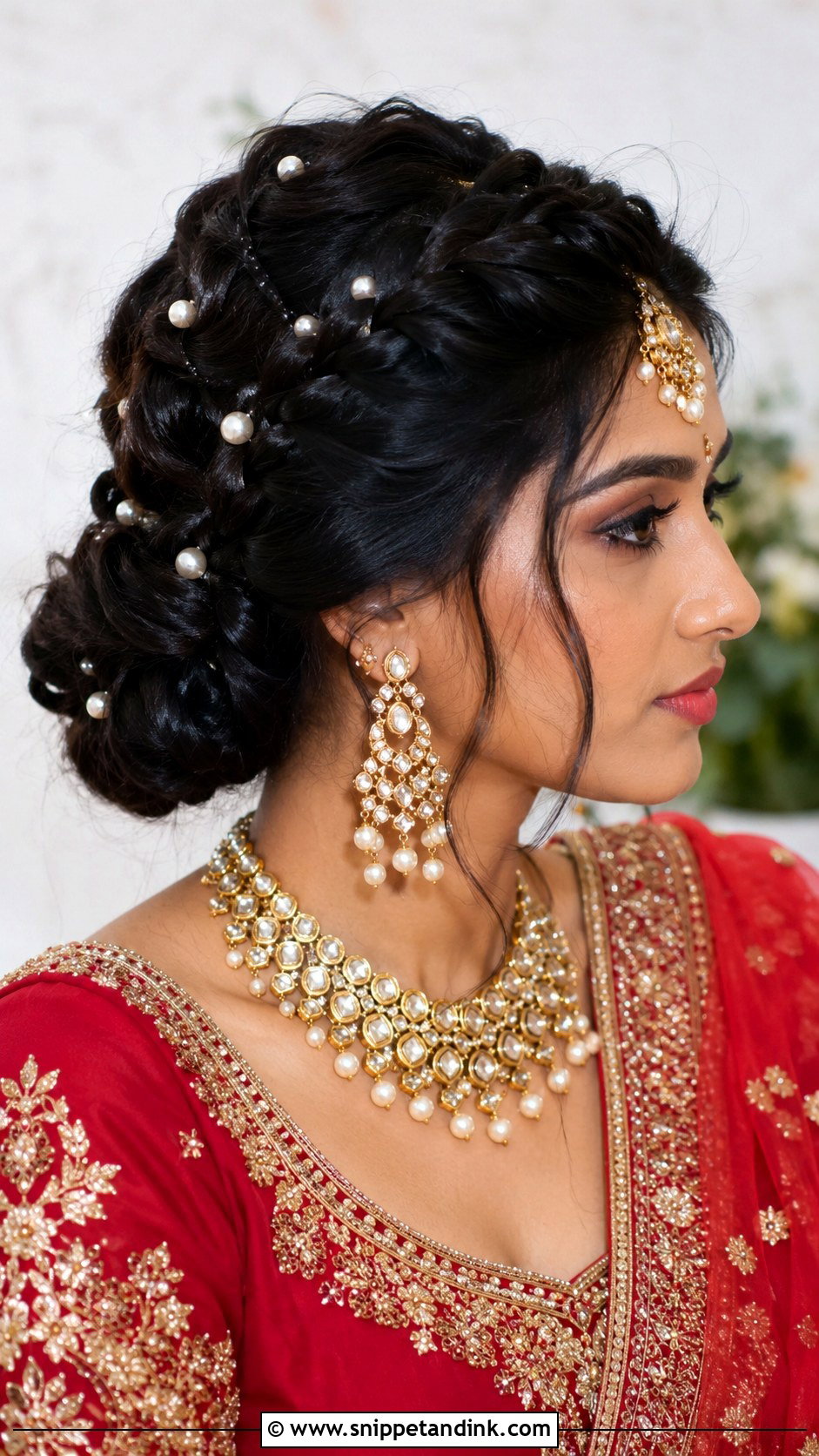
Several braids woven and pinned into one elaborate updo, with tiny pearls dotted through, give texture from every angle. It’s one of the most secure styles I do, because the braids lock every section of hair. That makes it good for long ceremonies and dancing. It suits traditional lehengas and statement jewellery. It takes time, often well over an hour, so build it into your morning schedule. A maang tikka or small flowers add charm.
22. Bun With Floral Crown
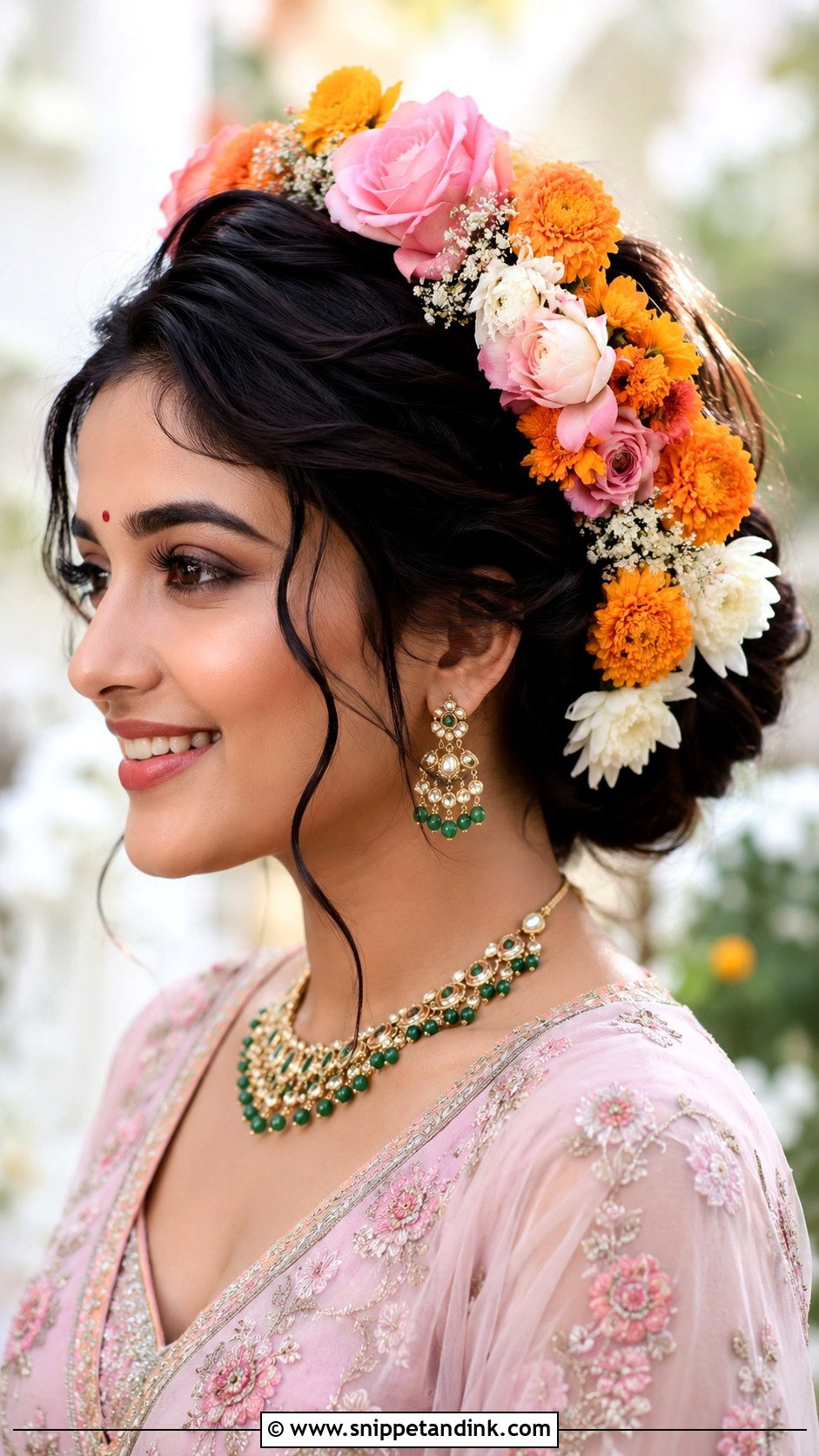
A ring of fresh flowers around the crown with a neat bun behind gives a garden feel. Marigolds, roses or orchids bring colour. I attach the crown with pins at the sides and back so it doesn’t slide forward. Flowers on top of the head are exposed to sun, so I’d use sturdier blooms like orchids for a long outdoor function. It suits the haldi, mehendi and outdoor celebrations with light jewellery and pastel outfits.
23. Sleek Center Part Bun
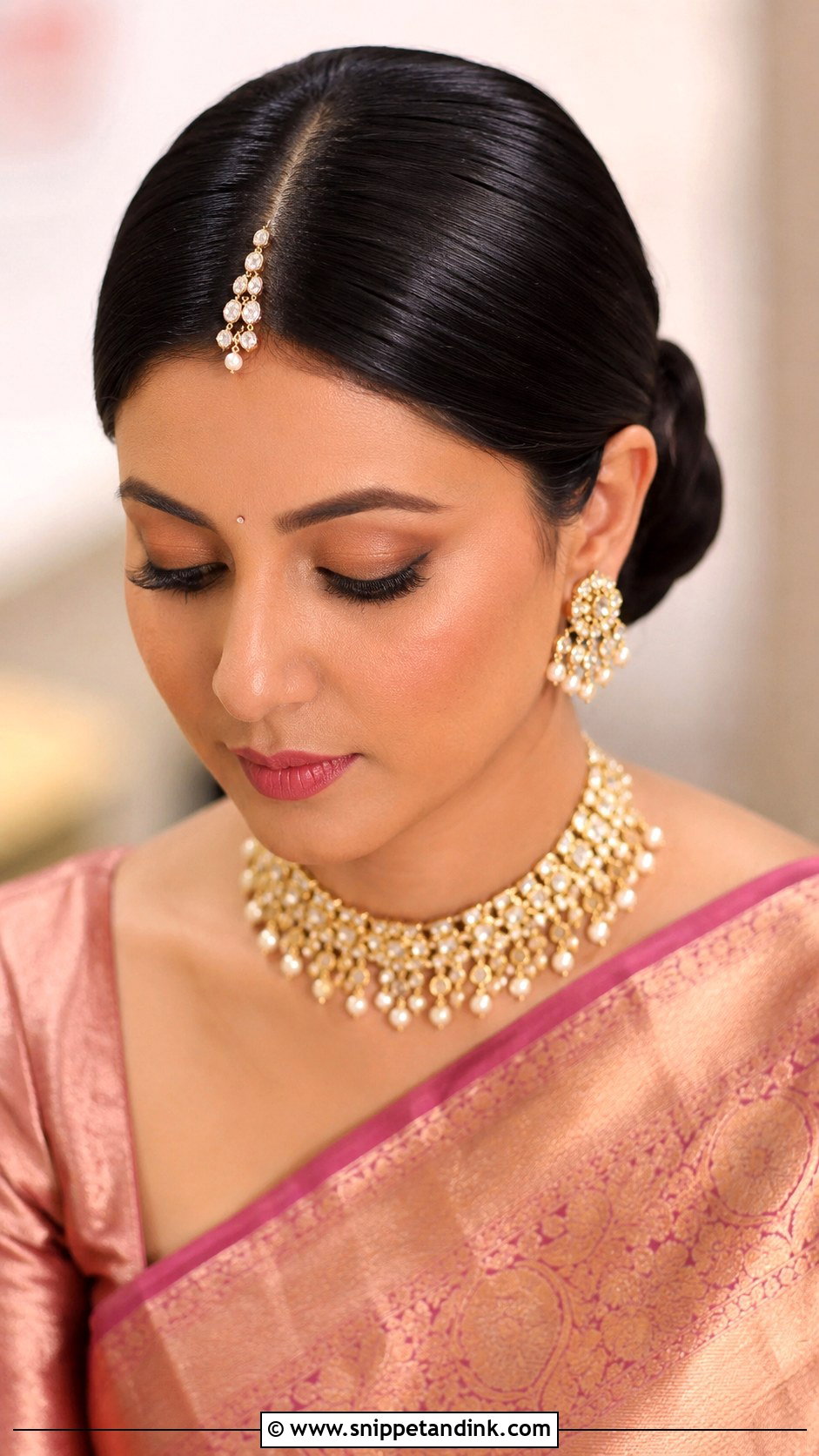
A sharp centre part and a smooth, glossy bun are minimal and modern, letting earrings and necklace shine. It suits structured lehengas, sarees and statement jewellery. A subtle maang tikka adds tradition. I use a strong-hold gel and a fine-tooth comb for the part, then a boar brush. It holds through long ceremonies with almost no touch-ups. If your hair has a strong cowlick at the front, a centre part will fight it, so check at the trial.
24. Curly Half Updo With Roses
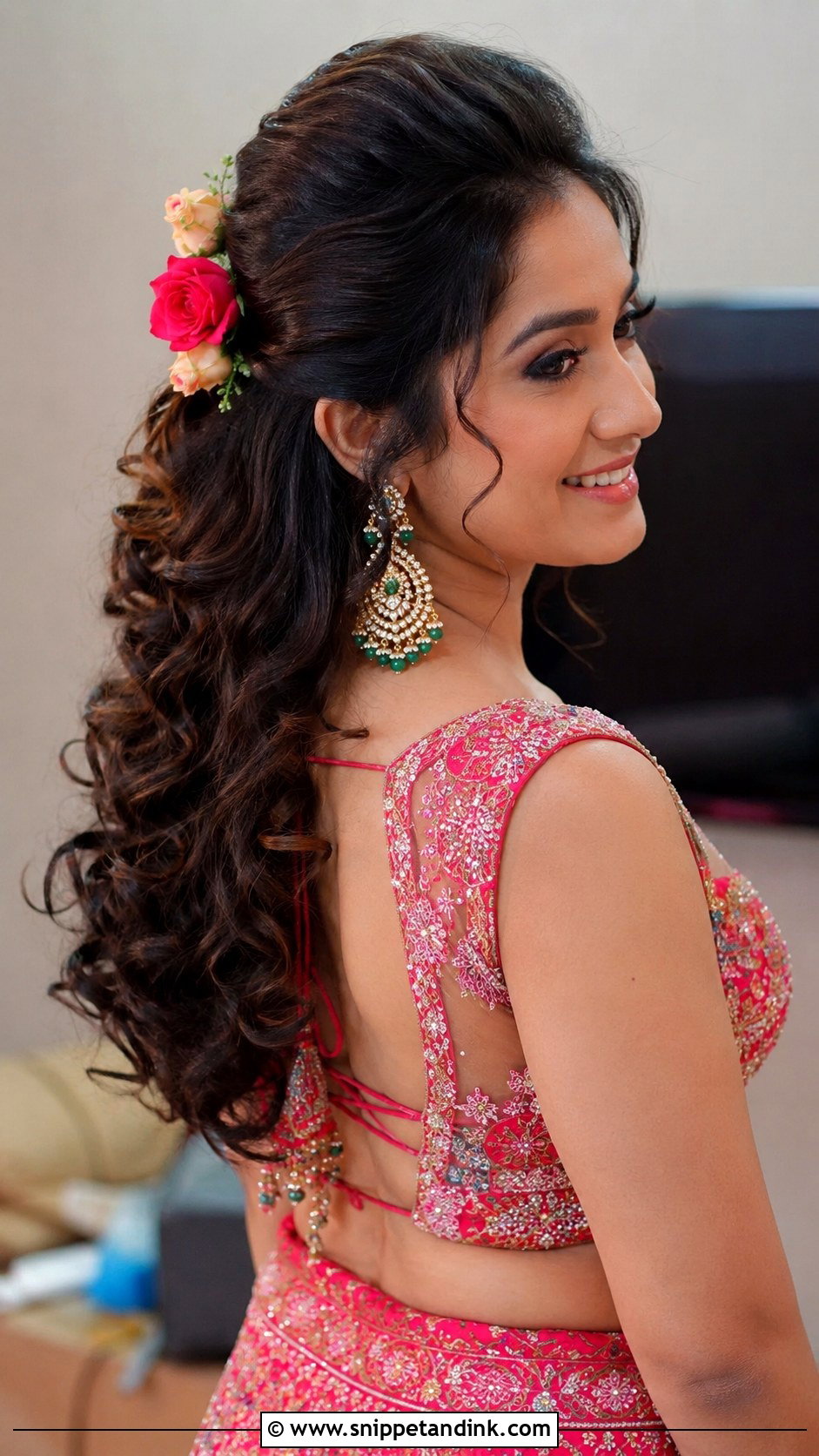
Pinning the top section back and letting curls flow below gives volume with structure, and roses tucked near the crown add colour. It suits the sangeet, mehendi and reception. I pin the roses into the half-up section, not the loose curls, so they stay put. The curls frame the face while the pinned top keeps hair tidy. Chandelier earrings and a vibrant lehenga complete it.
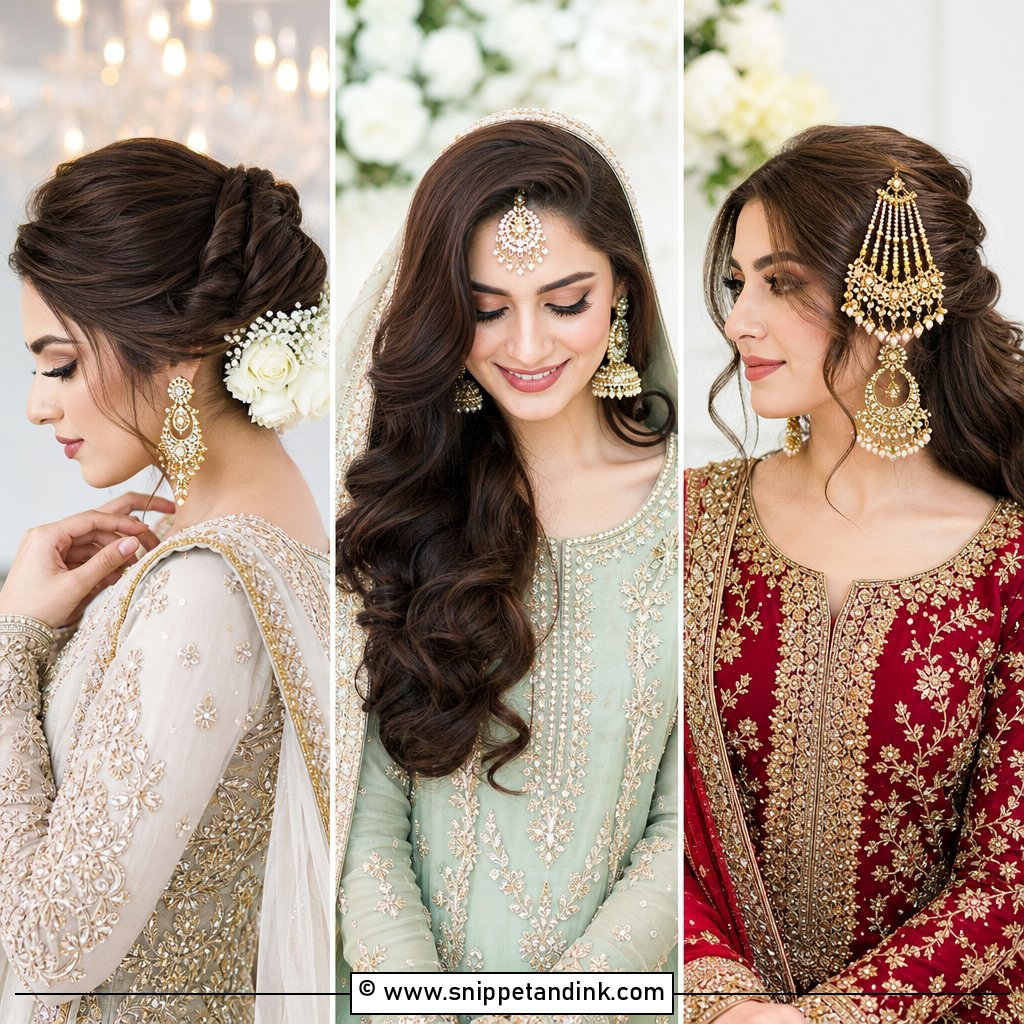
25. Fishtail Bun With Flowers
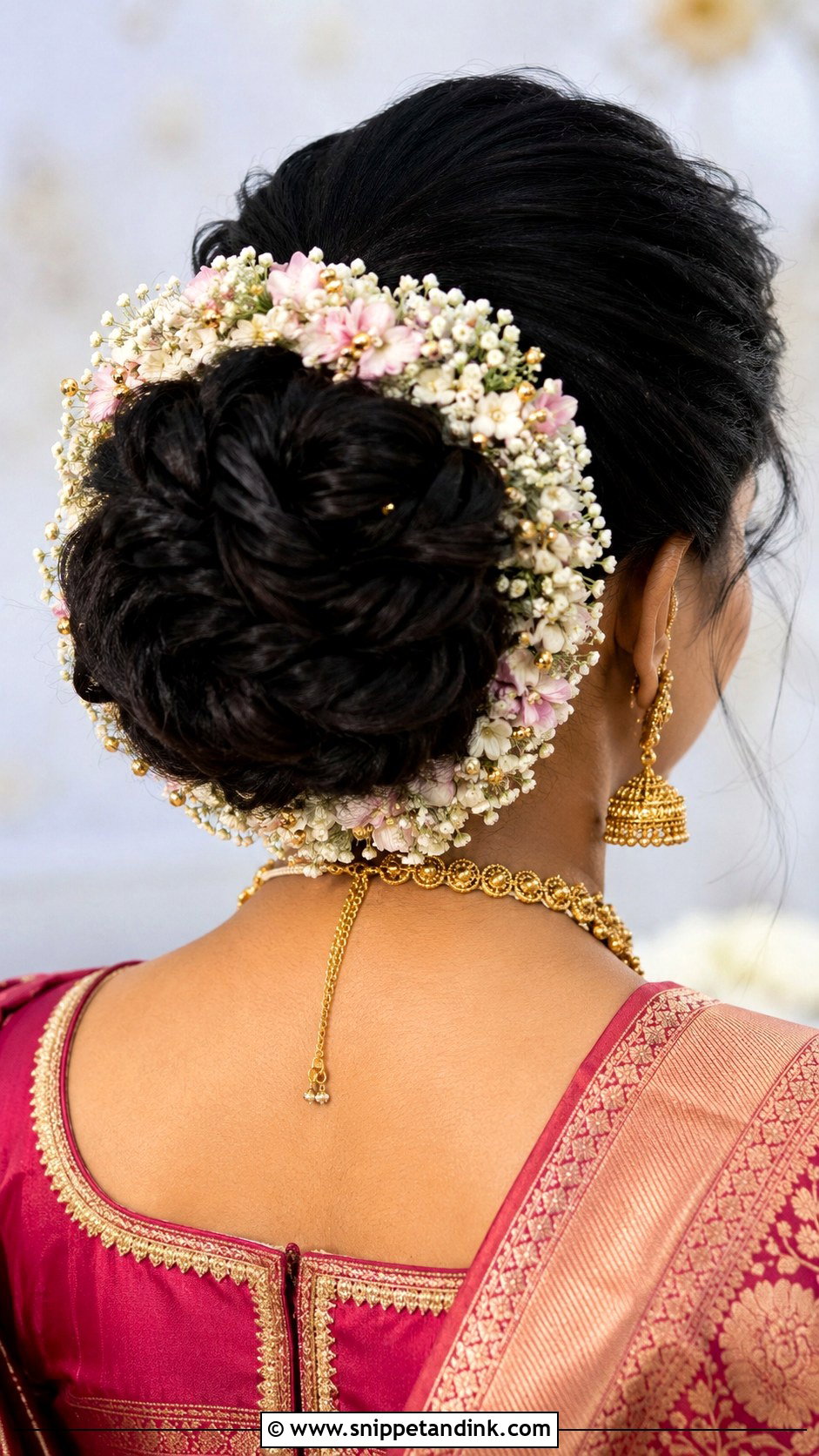
A fishtail braid coiled into a bun shows detailed weave work in an updo. Fresh flowers around it add softness, and pearls or gold beads add shimmer. It suits silk sarees and heavy lehengas, and it stays secure through long rituals. I braid the fishtail tight, pancake the edges slightly and coil it so the pattern faces outward. It needs fairly long hair to coil fully; shorter hair needs a clip-in. It’s a gorgeous blend of handwork and flowers.
Oiling the Night Before and Other Prep That Backfires
Hair oiling is a tradition I respect, but oil left in overnight before the wedding makes hair slippery, and pins and curls simply won’t hold. If you love oiling, do it a few days before and wash it out fully.
A few more things I see go wrong in the last week:
- A new colour or cut in the final days. Give it several weeks to settle so there are no surprises.
- Heavy conditioning masks the night before, which leaves hair too soft to hold structure.
- Washing on the wedding morning. Hair washed the day before holds pins and curls better.
- Not trying the jewellery at the trial. A passa, jhoomar or jada billai changes how the hair has to be built.
Extensions for Braids That Need Real Length
Many of the braided styles above, especially the Rani Jhoomar braid and long jada billai styles, are shown on waist-length hair. Most brides don’t have that, and there’s no shame in adding it. I match extensions to your hair colour in daylight and choose a texture close to yours, so the braid doesn’t change halfway down. A traditional paranda or a long synthetic braid can also be tied into your own hair. Wear the extensions at your trial, because the extra weight is noticeable after a few hours, and that is the moment to adjust it.
Hair That Still Looks Right at the Vidaai
Your wedding hairstyle reflects your personality, your heritage and the practical demands of your day. Rani Jhoomar braids, floral buns, sleek ponytails and soft waves all have a place, depending on the function and the outfit. Traditional choices like jada billai and mogra, or modern ones like glossy waves and minimalist buns, both work when they suit your hair. Pick the style that’s still comfortable at the end of the night, then personalise it with jewelled accents, flowers or pearls. Take your shortlist to a trial and wear it for a few hours before you decide.
You'll Like These Ideas:







Leave a Reply