
Indian wedding hair has to carry more than almost any other bridal style I work on: a heavy dupatta pinned at the crown, a maang tikka, sometimes a matha patti, strings of fresh jasmine, and often several functions in a row. Crimping has come back into these looks for a very practical reason. The ridged texture grips pins and ornaments, adds body to fine hair and gives thick hair a shape it will keep through rituals, dancing and photos. Brides, sisters and guests can all wear it, from a sleek bun at the haldi to open waves at the reception. These twenty styles show where crimping helps most, and a few places where I’d hold back.
Haldi to Reception: How Often Should Your Hair Be Crimped?
An Indian wedding often means three to five functions over a few days, and heat styling every one of them adds up. My advice is to crimp only for the events that need it and to protect the texture between them rather than starting again each morning.
- Haldi: skip crimping or keep it in a braid. Turmeric paste gets into loose hair, and you’ll wash your hair afterward anyway.
- Mehndi: a crimped braid or messy bun works well, since you’ll sit still for hours while the henna dries.
- Sangeet: the day for a ponytail or open waves that move when you dance.
- Wedding ceremony: full crimping under the bun or juda for maximum grip.
- Reception: if the ceremony crimps survived, I refresh only the top layer rather than re-crimping everything.
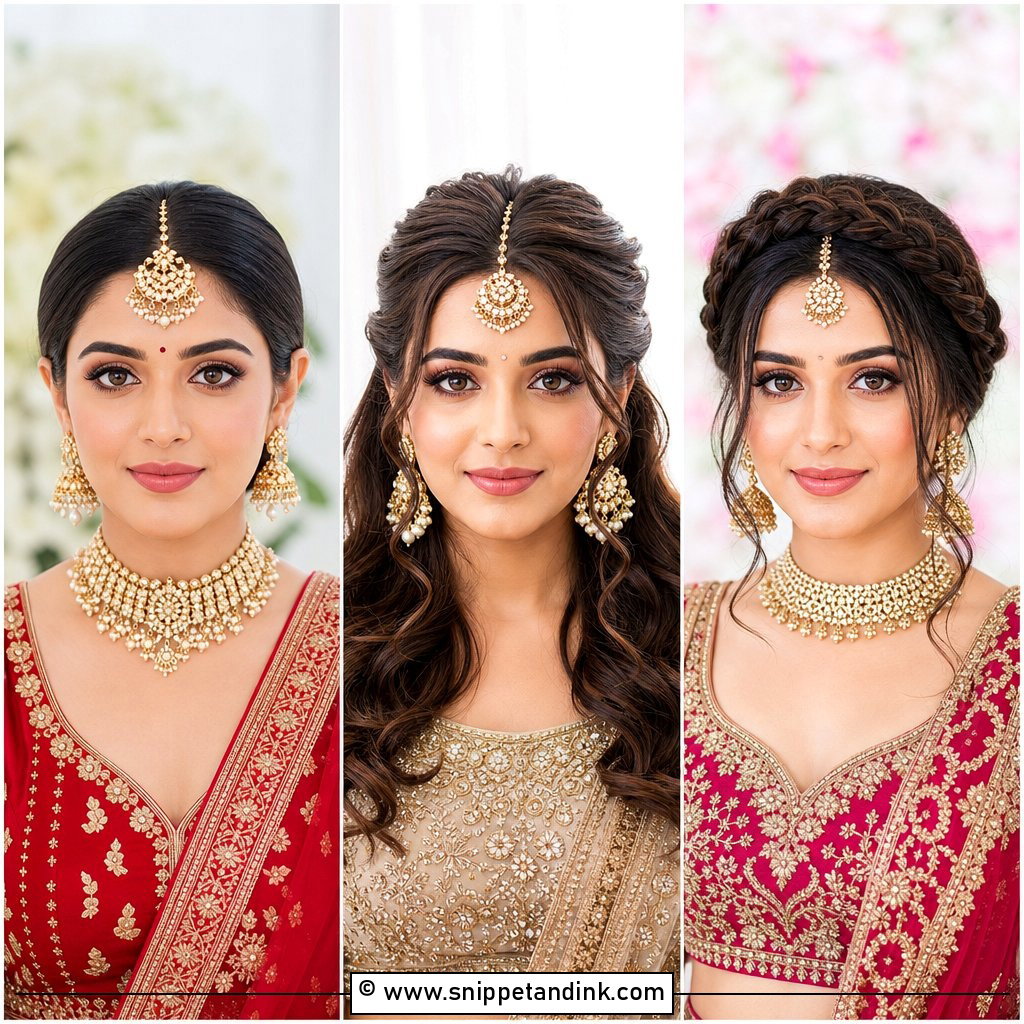
To make crimping last overnight, sleep with the hair in a loose braid on a silk pillowcase or under a silk scarf. A little dry shampoo at the roots the next morning gives the texture back its grip. And use a heat protectant every single time. Several days of heat in one week is hard on hair, especially if it’s color-treated.
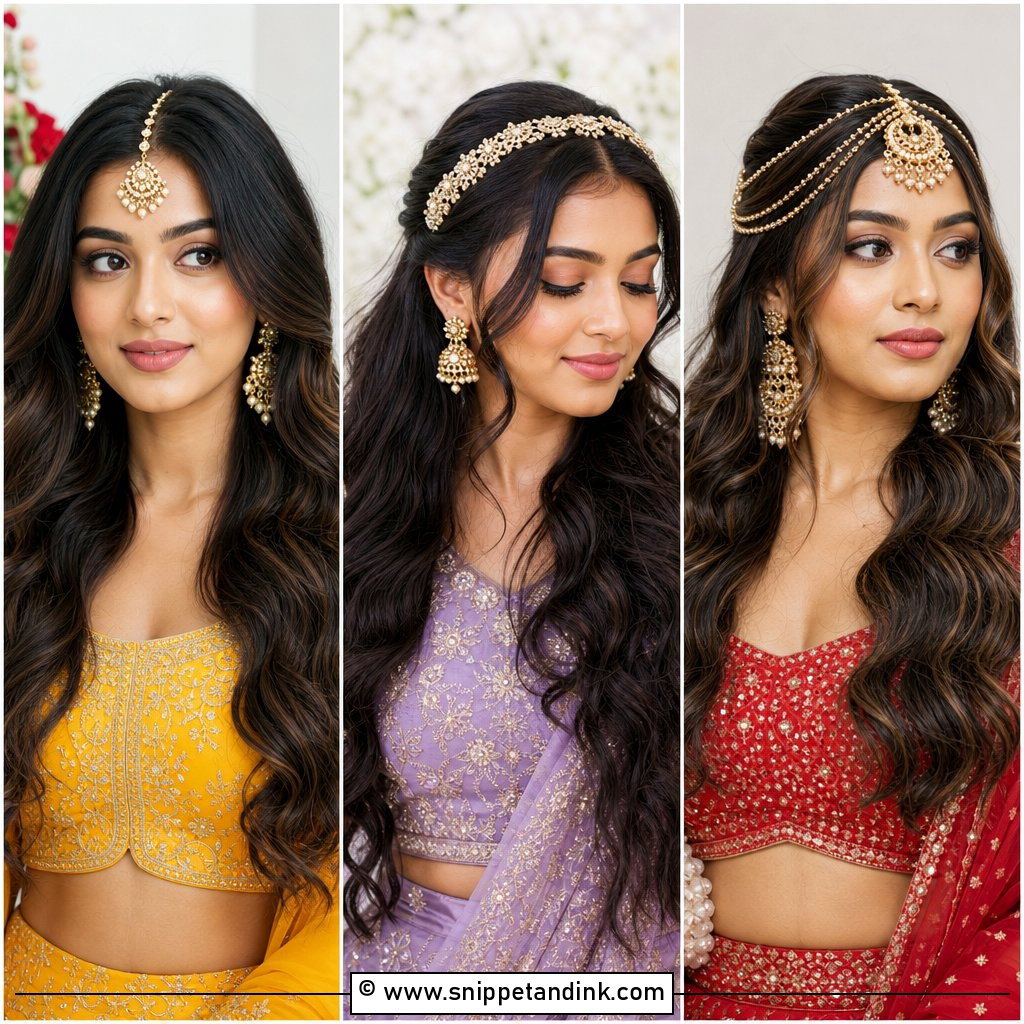
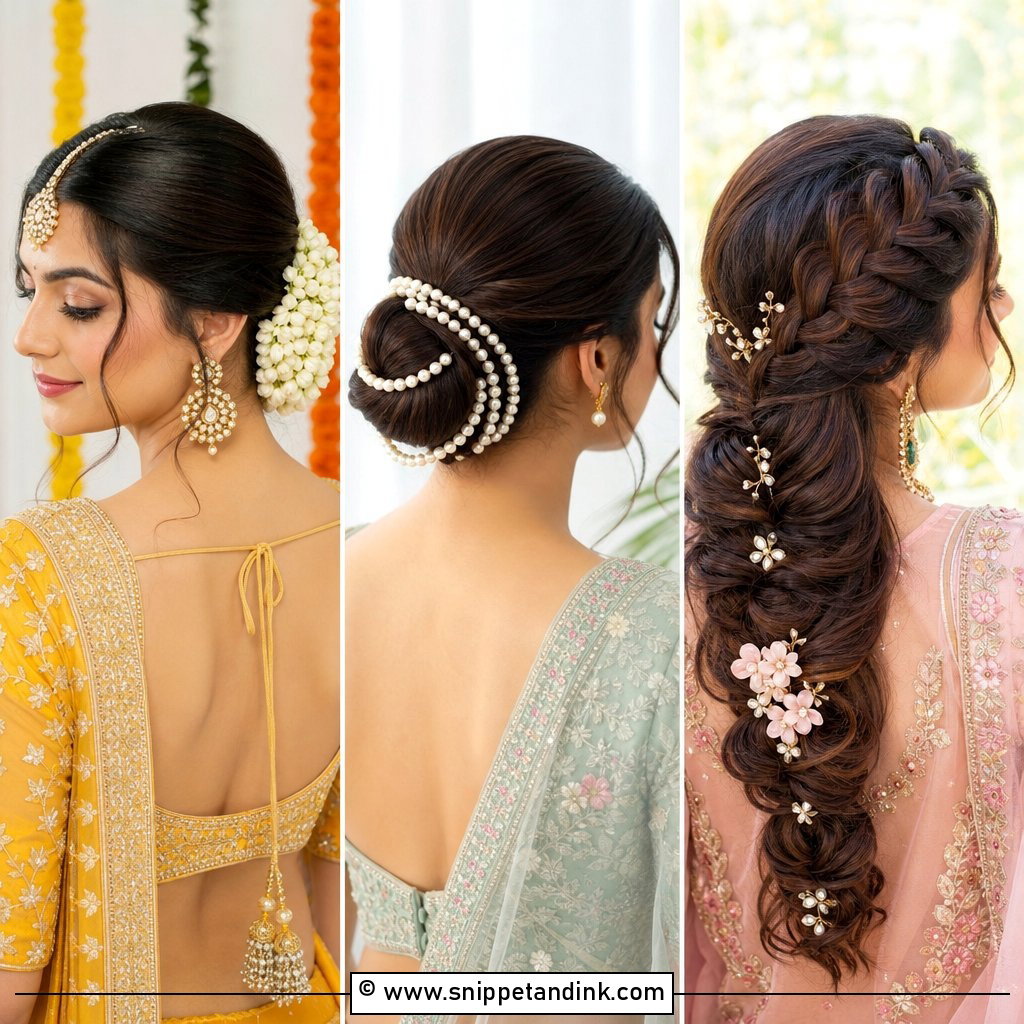
1. Crimped Bun for Indian Bride
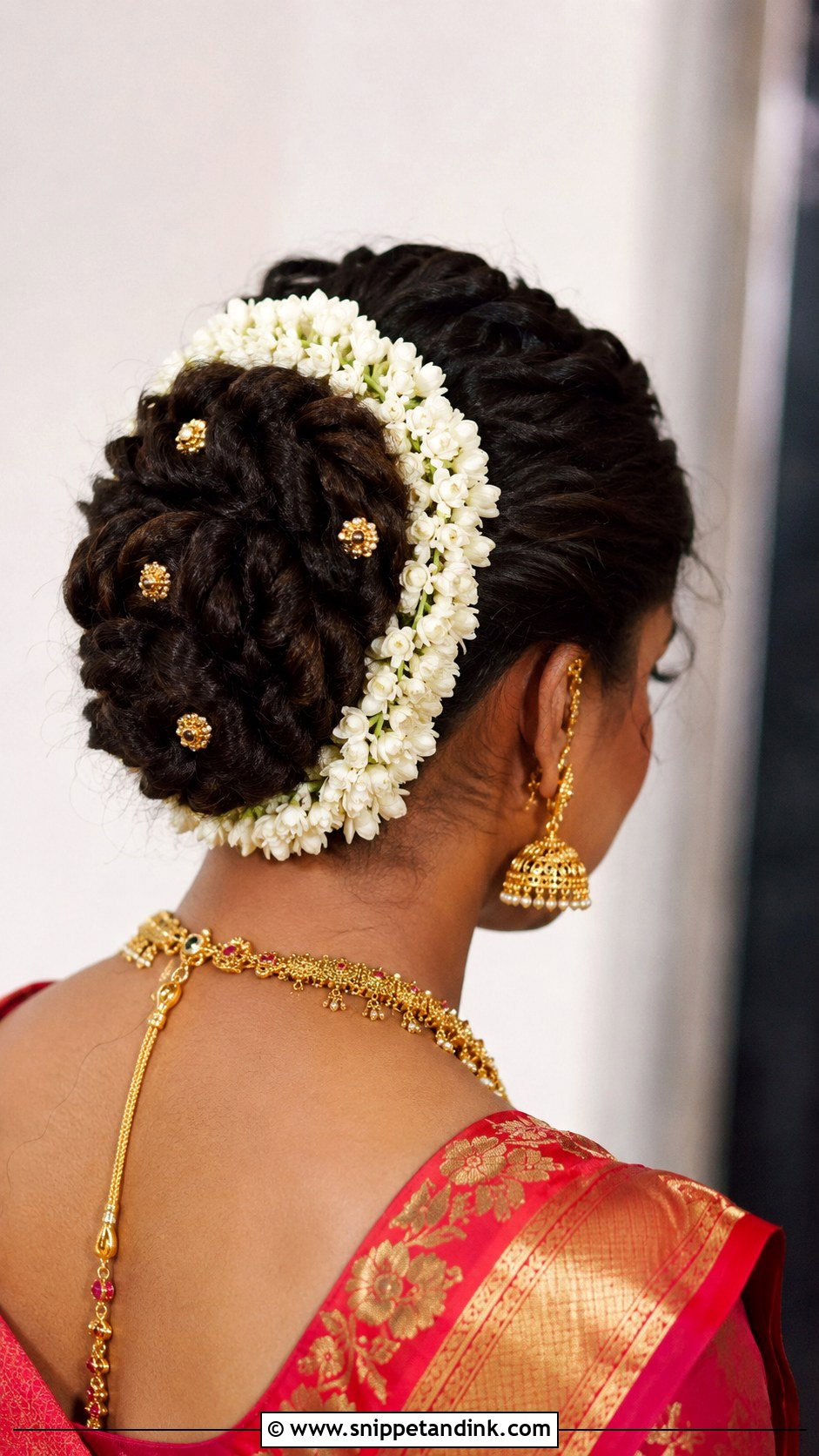
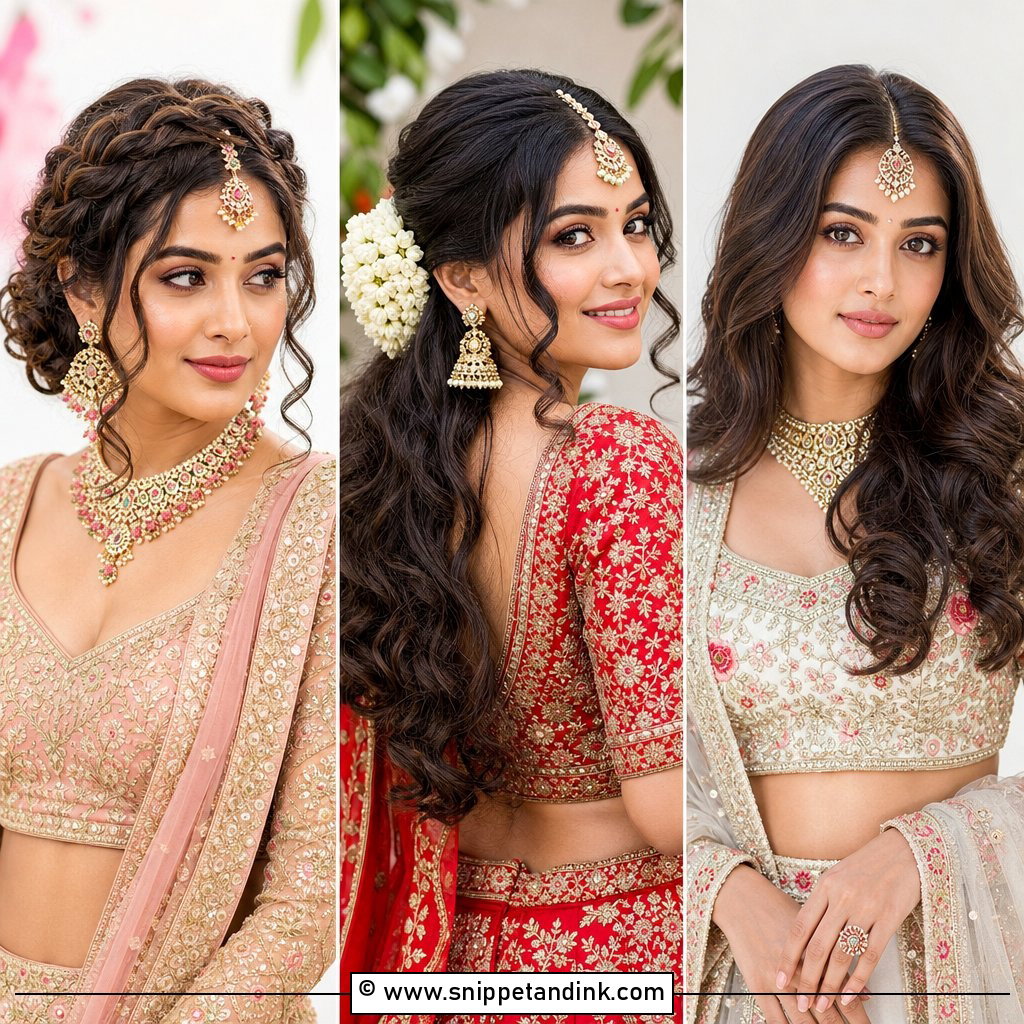
My most requested crimped style for brides wearing heavy garlands and ornaments is a bun. I crimp before twisting it up because the texture locks pins in, and a bun that has to hold a gajra and jeweled pins for six or seven hours needs that grip. The crimped base also bulks out the bun, so thin hair looks fuller without a large padding. It’s a natural fit for South Indian ceremonies, with a fragrant gajra wound around it. I pin the bun first, then the flowers, then the ornaments, each into its own anchor, so nothing pulls on anything else.
2. Crimped High Ponytail for Reception
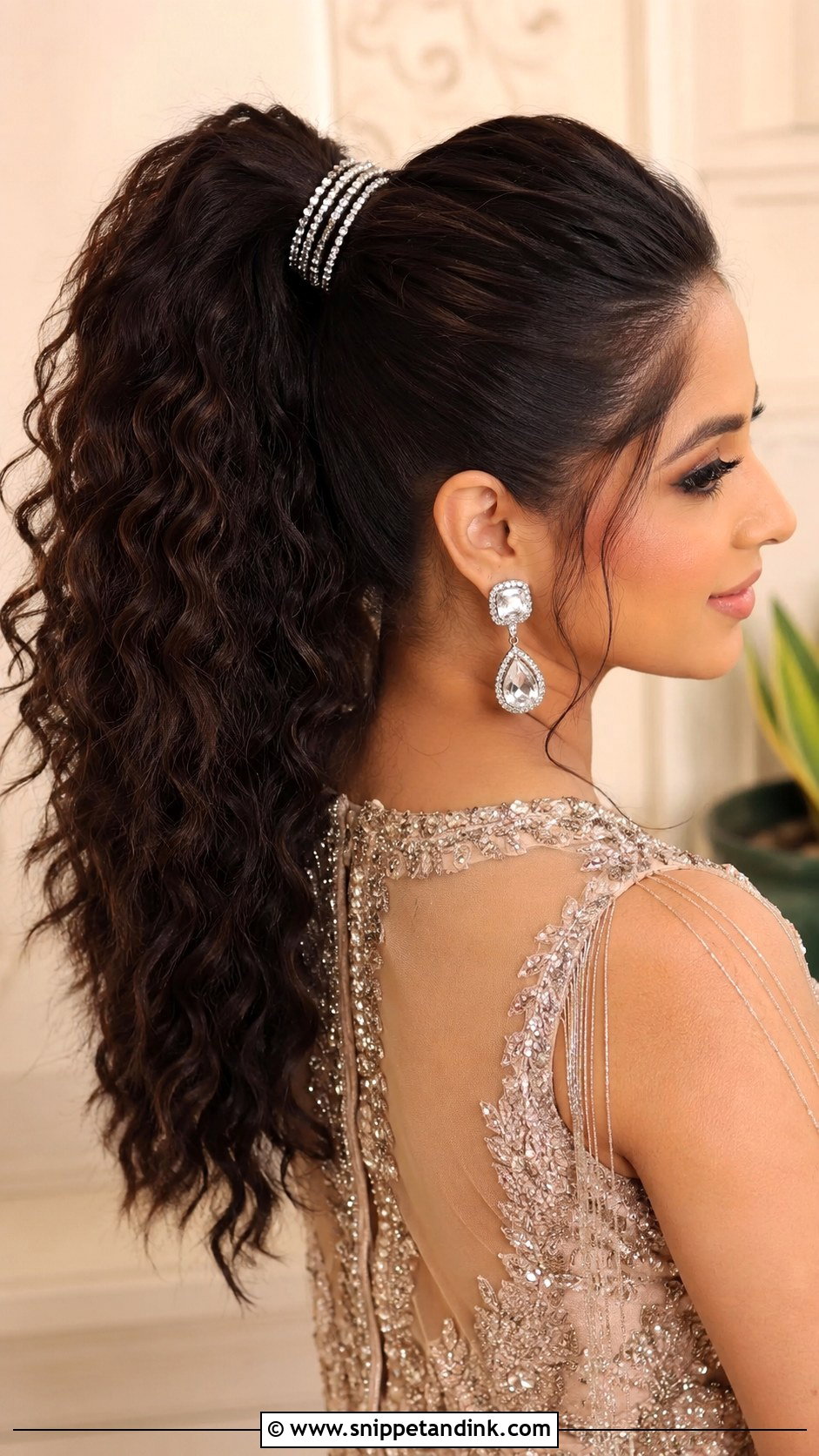
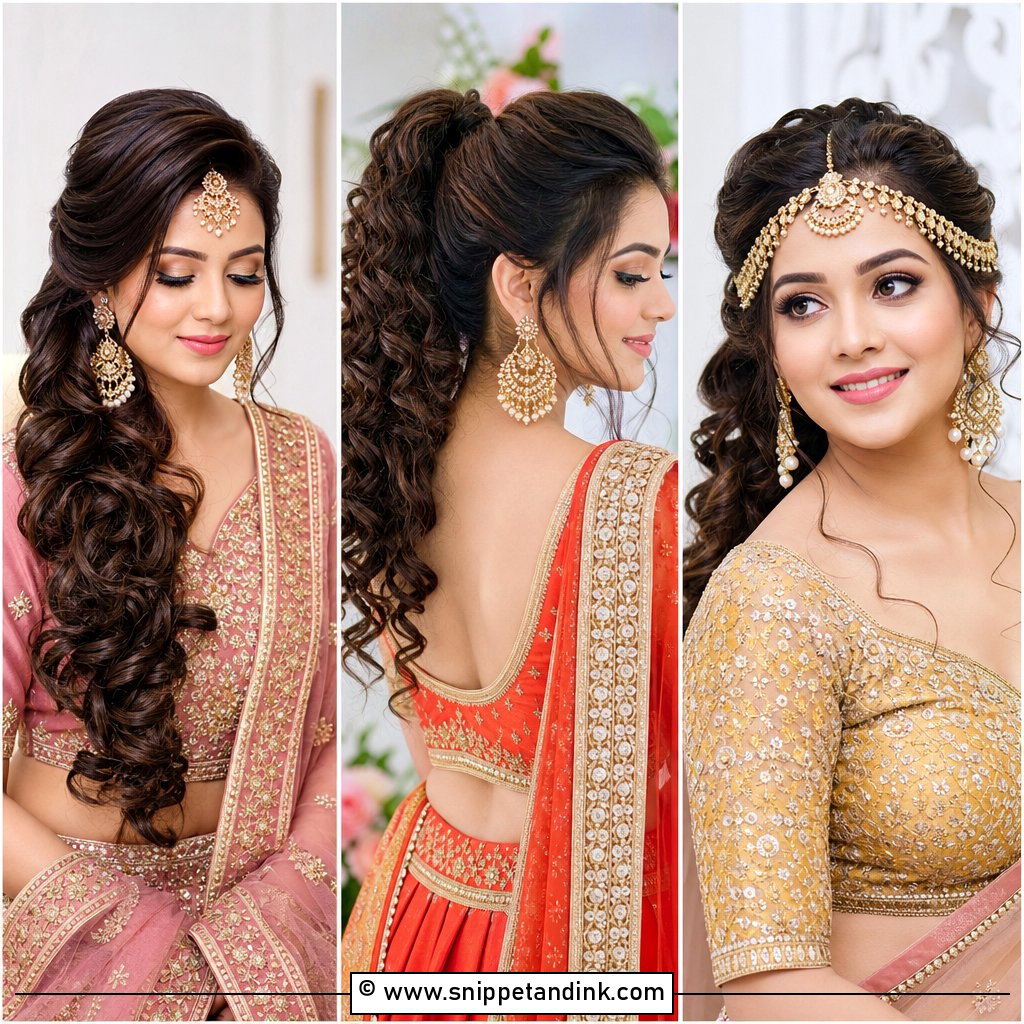
On the dance floor, a crimped high ponytail swings with every step. I crimp the lengths, gather them high and secure the base with two elastics and crossed pins, because a heavy tail slowly drops during hours of dancing. The texture keeps a sleek pony from looking flat or severe. Curl the ends a little for softness, or wrap a crystal string around the base. It goes with a lehenga or a reception gown. I’d skip it if you’re wearing heavy earrings and a dupatta at the same time, since the dupatta has nowhere to sit.
3. Crimped Open Hair With Dupatta
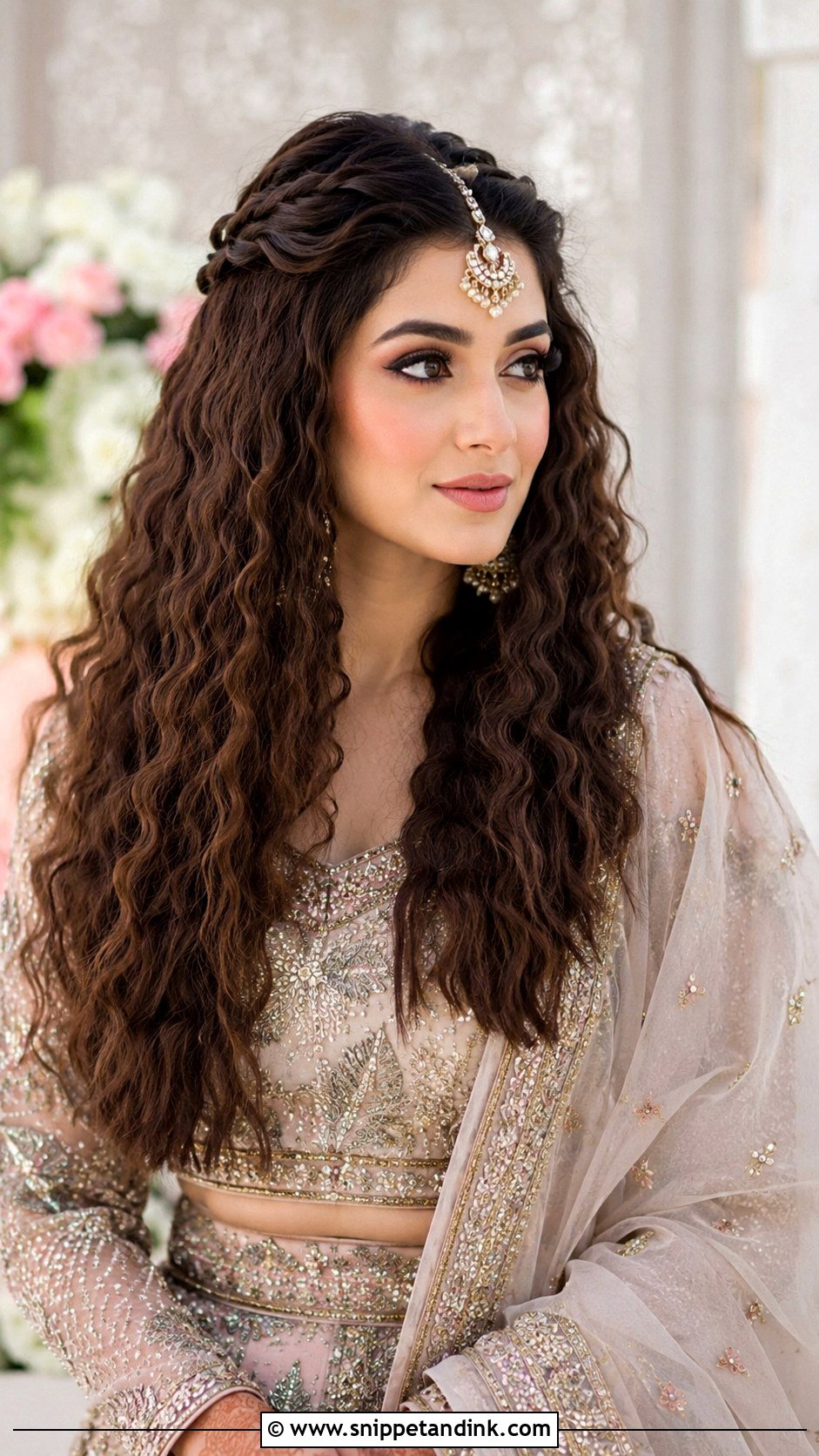
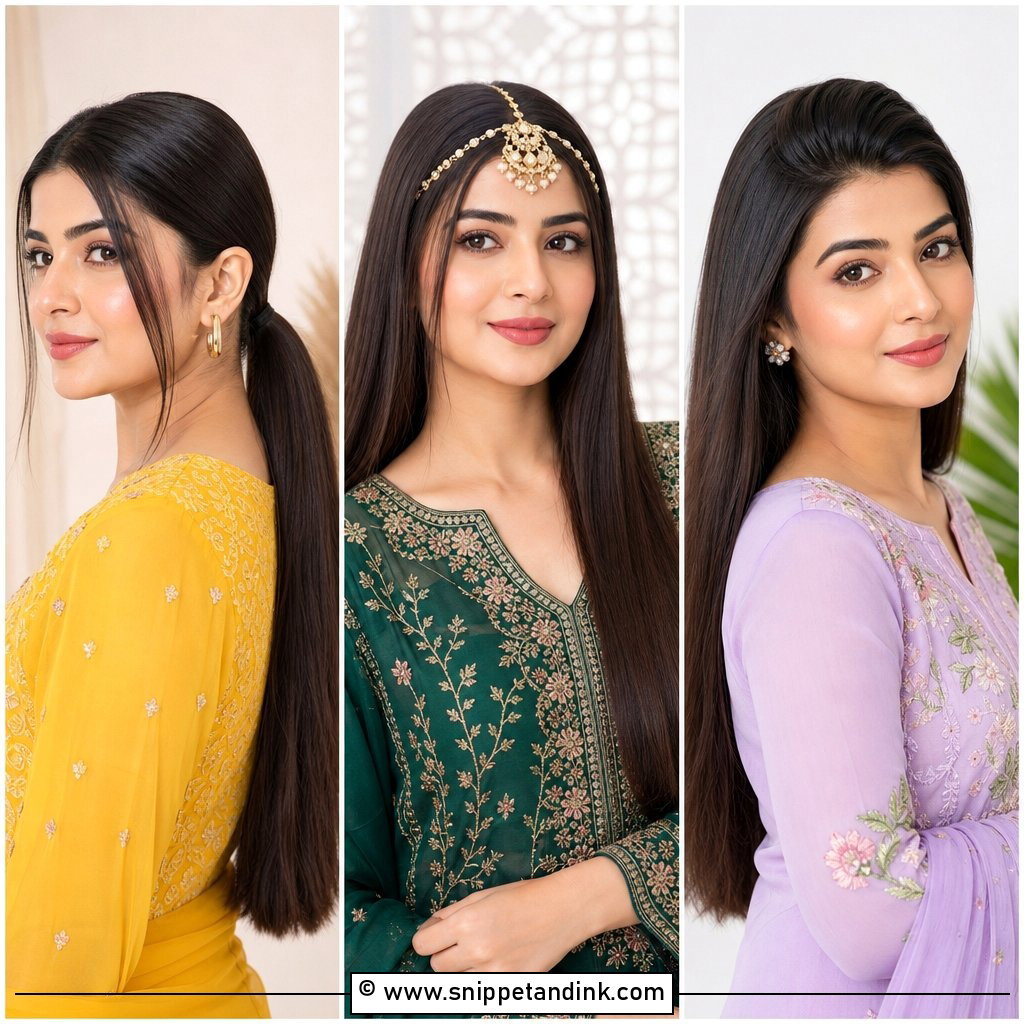
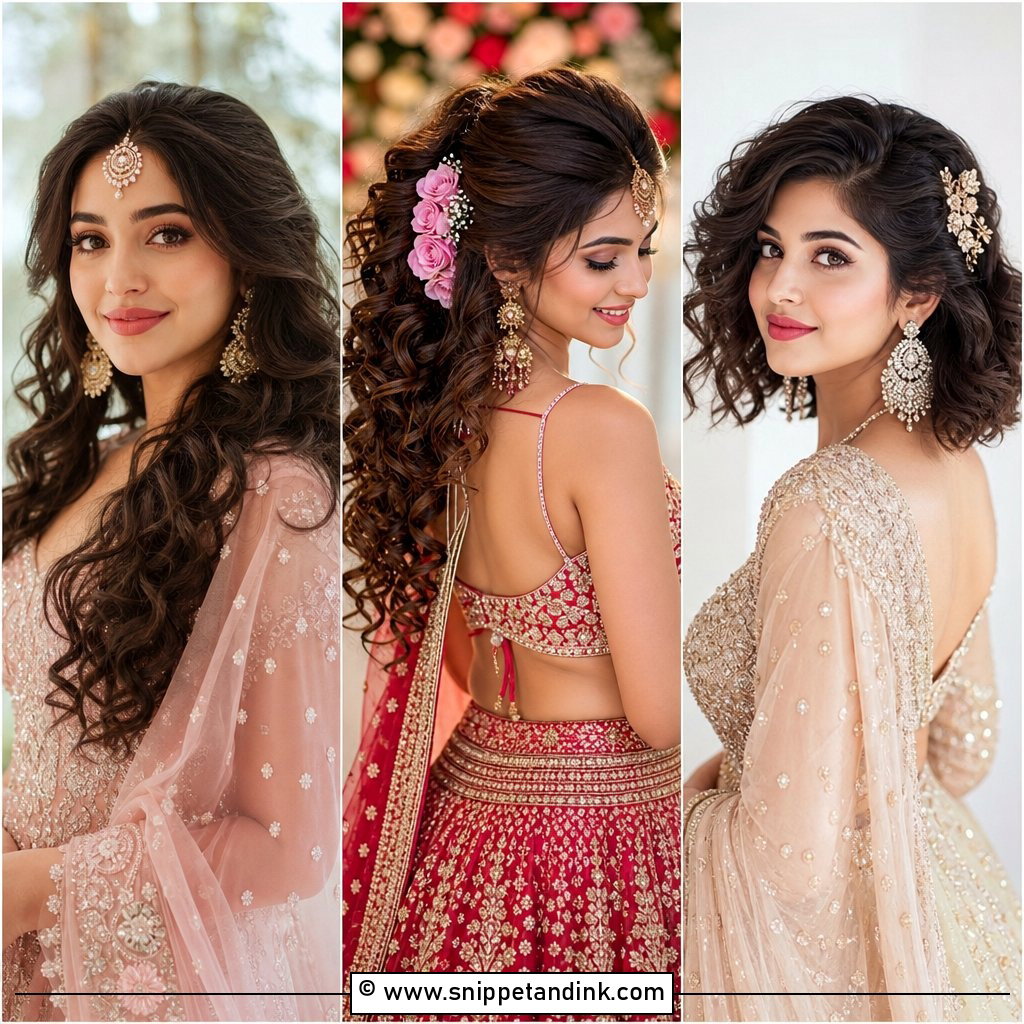
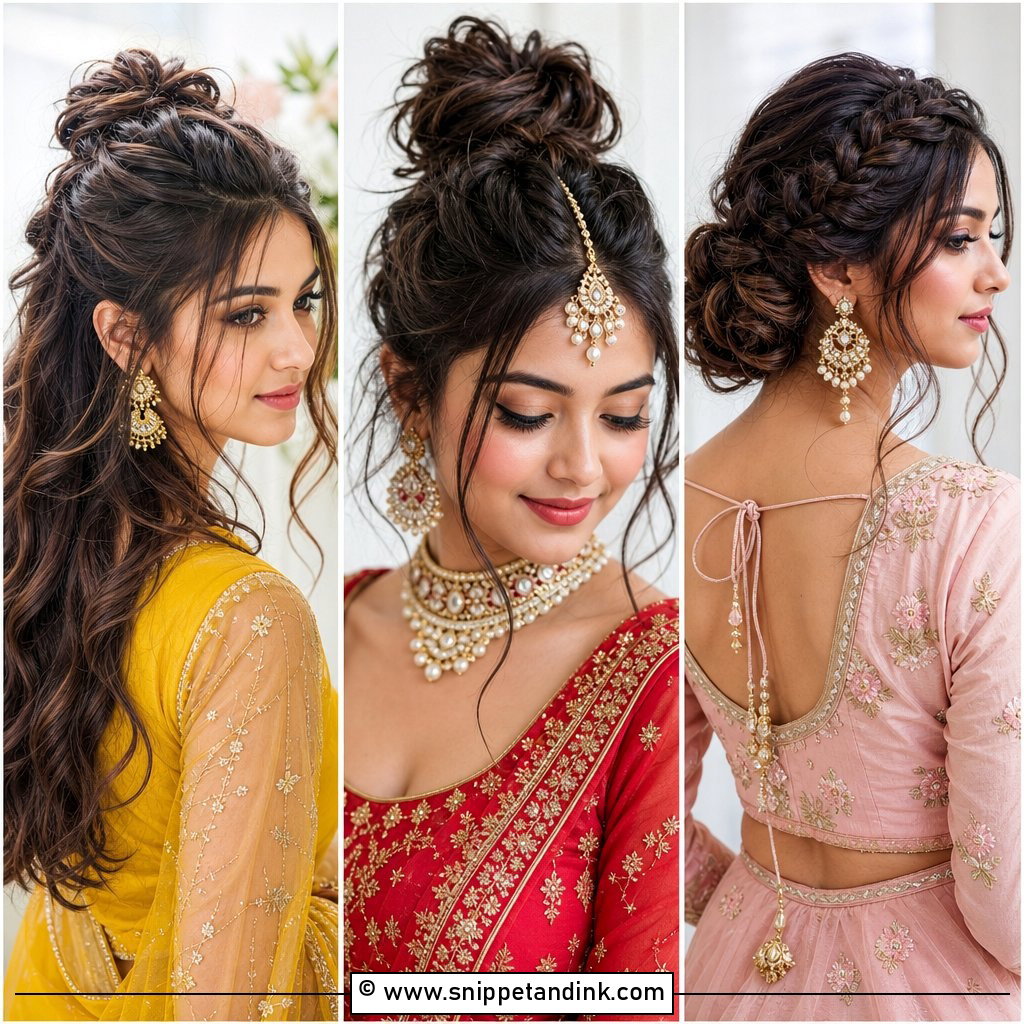
Open crimped hair under a dupatta is one of the softest looks on this list, for brides and guests alike. The texture stops the hair looking limp after hours under fabric, which is the usual problem with straight open hair. Part it in the center for a classic frame, or sweep it to one side. To stop the dupatta from sliding off the back, I make a small pinned section at the crown, hidden under the top layer, and anchor the dupatta into that. A maang tikka or a fine hair chain adds shine.
4. Crimped Side Braid With Flowers
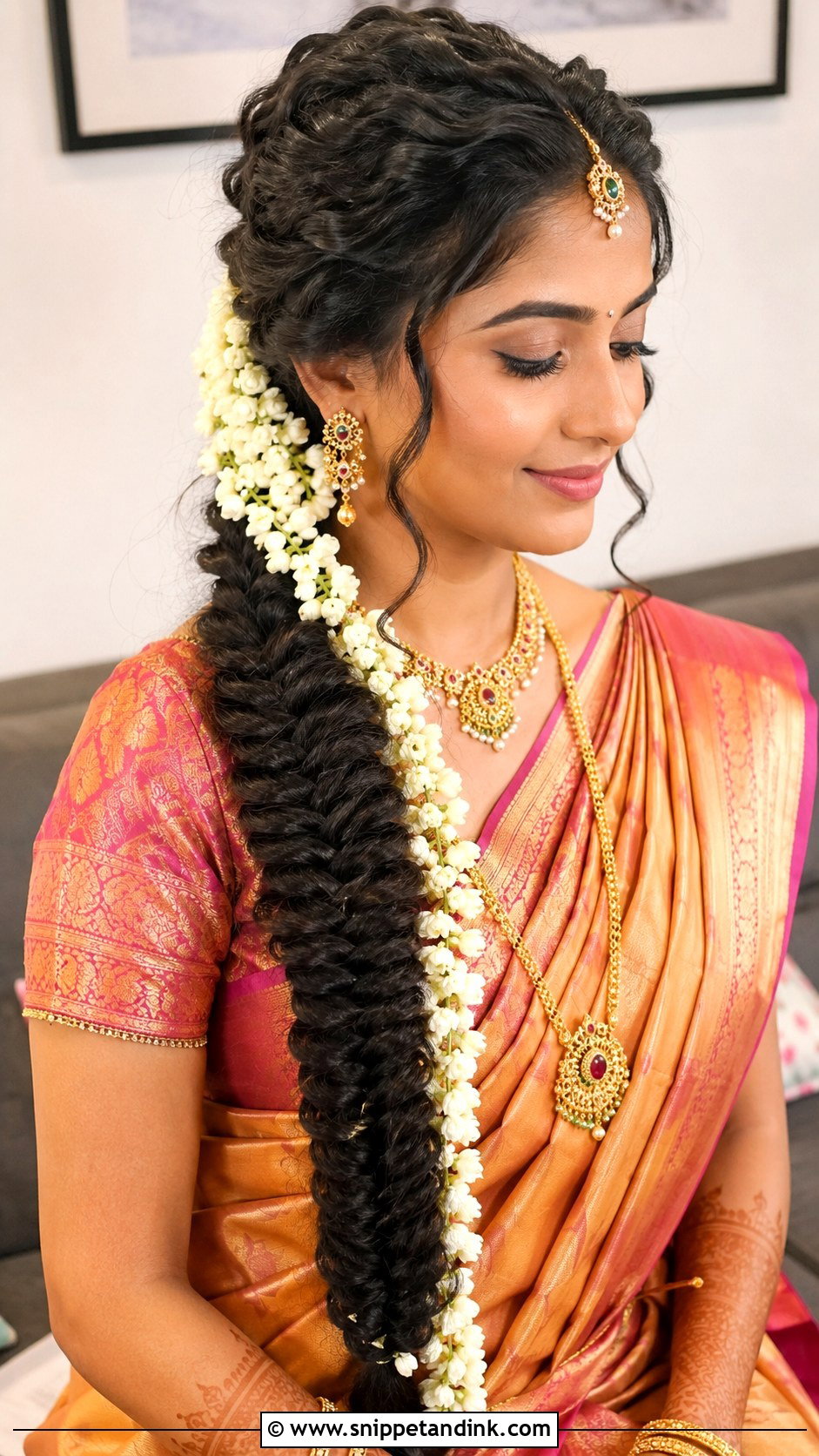
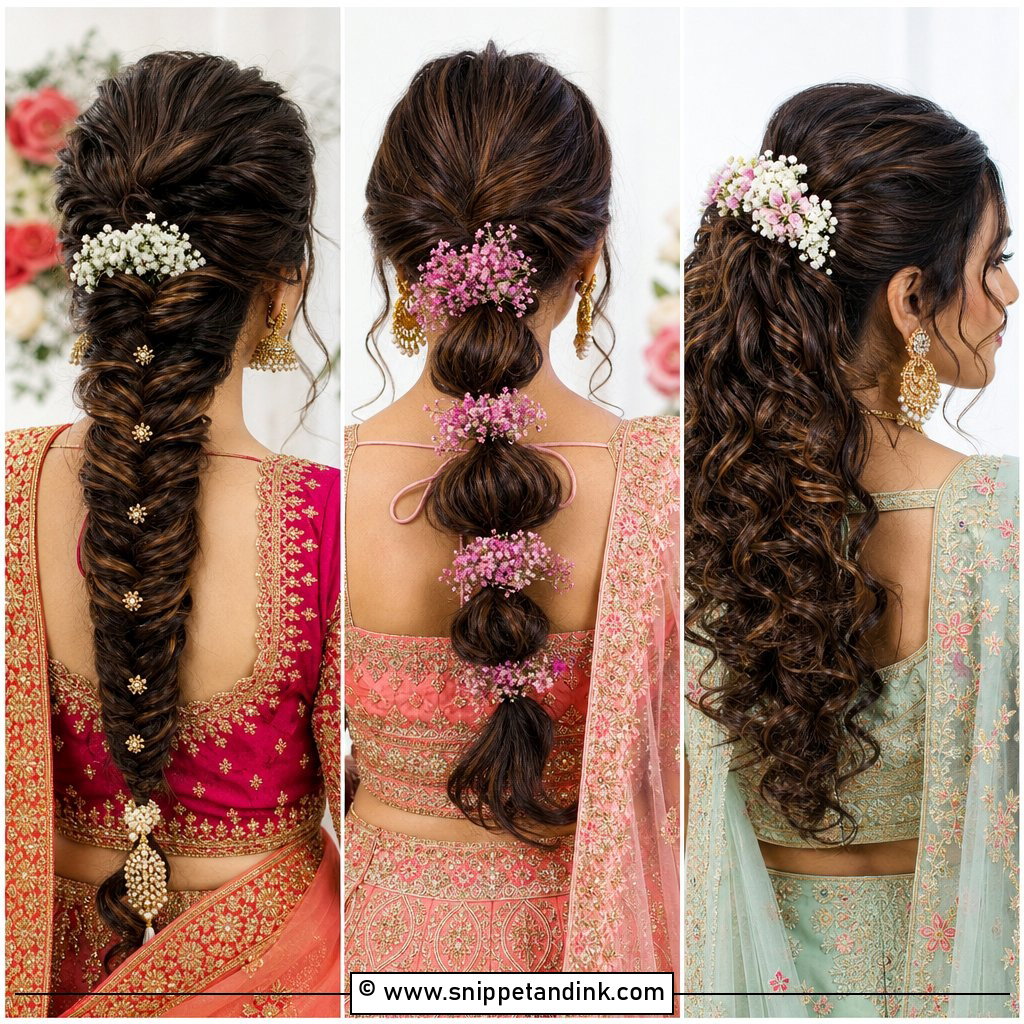
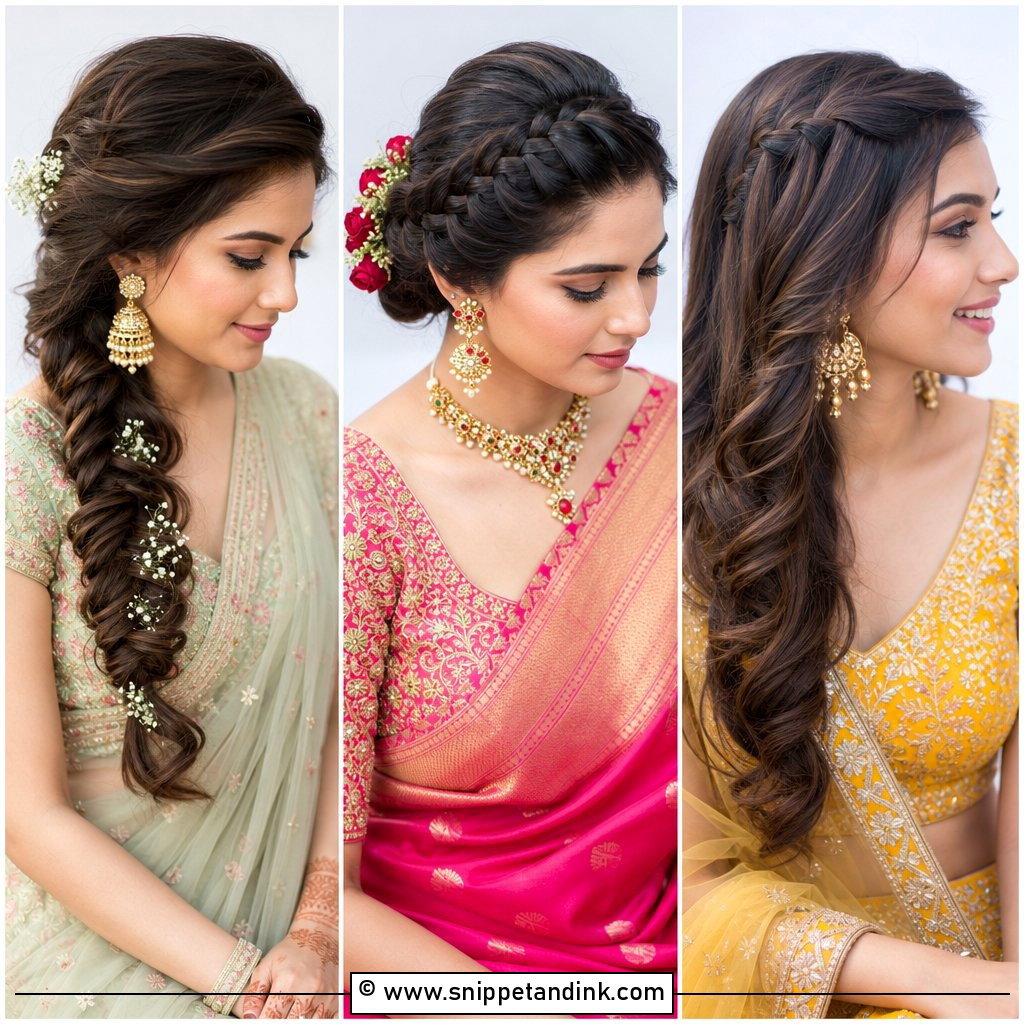
Braiding over crimped hair doubles the thickness of a plait and stops it slipping, so a side braid keeps its shape all day. It’s an ideal base for jasmine, gajras or ornaments tucked along the braid. Draped over one shoulder, it suits sarees and lehengas and works for brides, sisters and bridesmaids. One practical note: fresh flowers are heavier and wetter than they look, so I pin a gajra along the braid every few inches rather than tying it at the top. Daytime ceremonies and outdoor mandaps suit it best, where daylight shows off the ridges.
5. Crimped Half Up Half Down
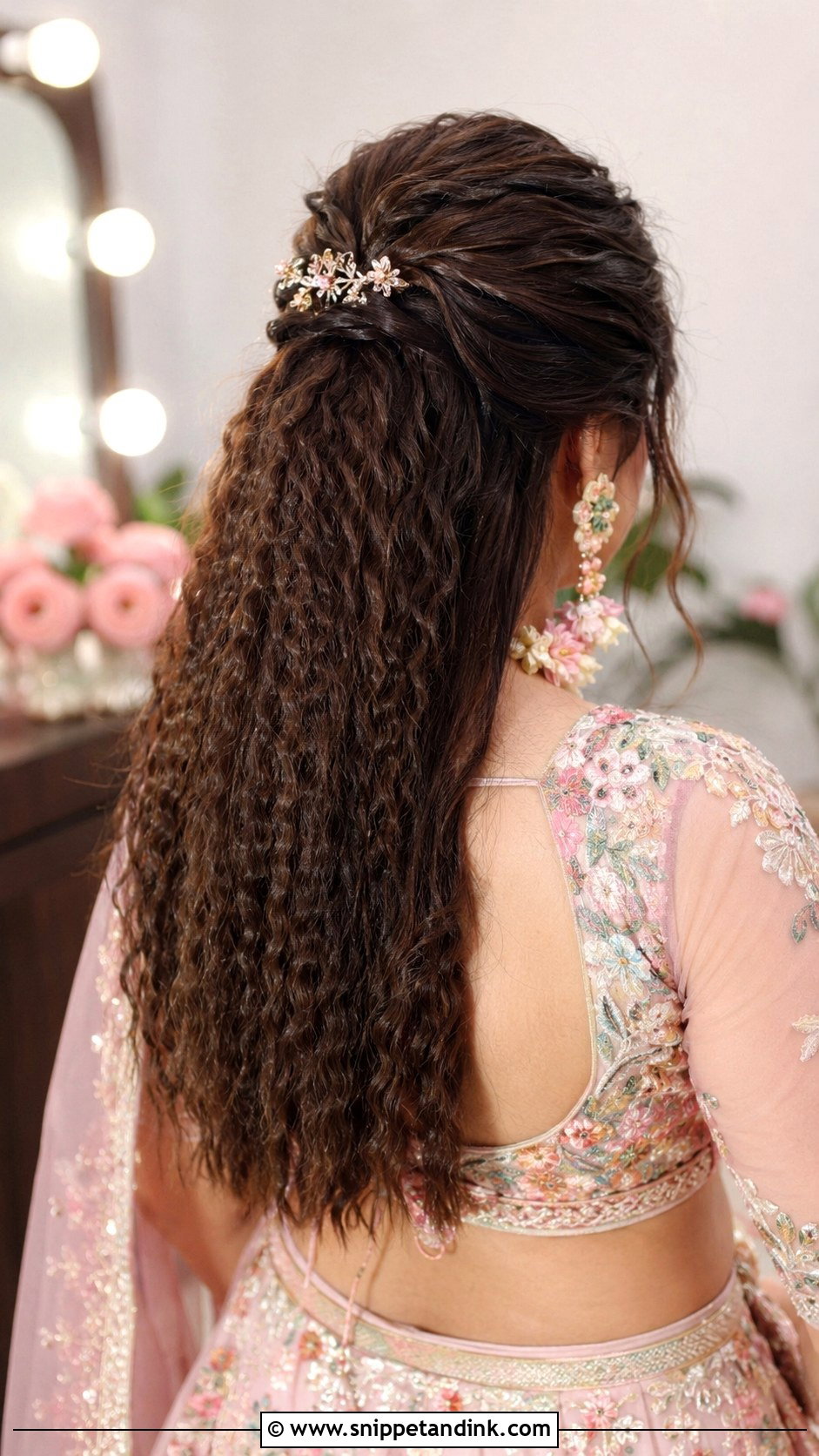
Half up, half down suits the bride who can’t choose. I crimp the whole length, pull the top section back into a clip or twist and leave the rest open. Your face stays clear, the lengths show off the texture and nothing pulls on the scalp, so it’s comfortable for a long evening. A jeweled clip or small flowers decorate the pinned part. It’s a good choice for sangeet nights or mehndi gatherings, when you’ll be sitting, dancing and hugging people for hours.
6. Crimped Fishtail Braid
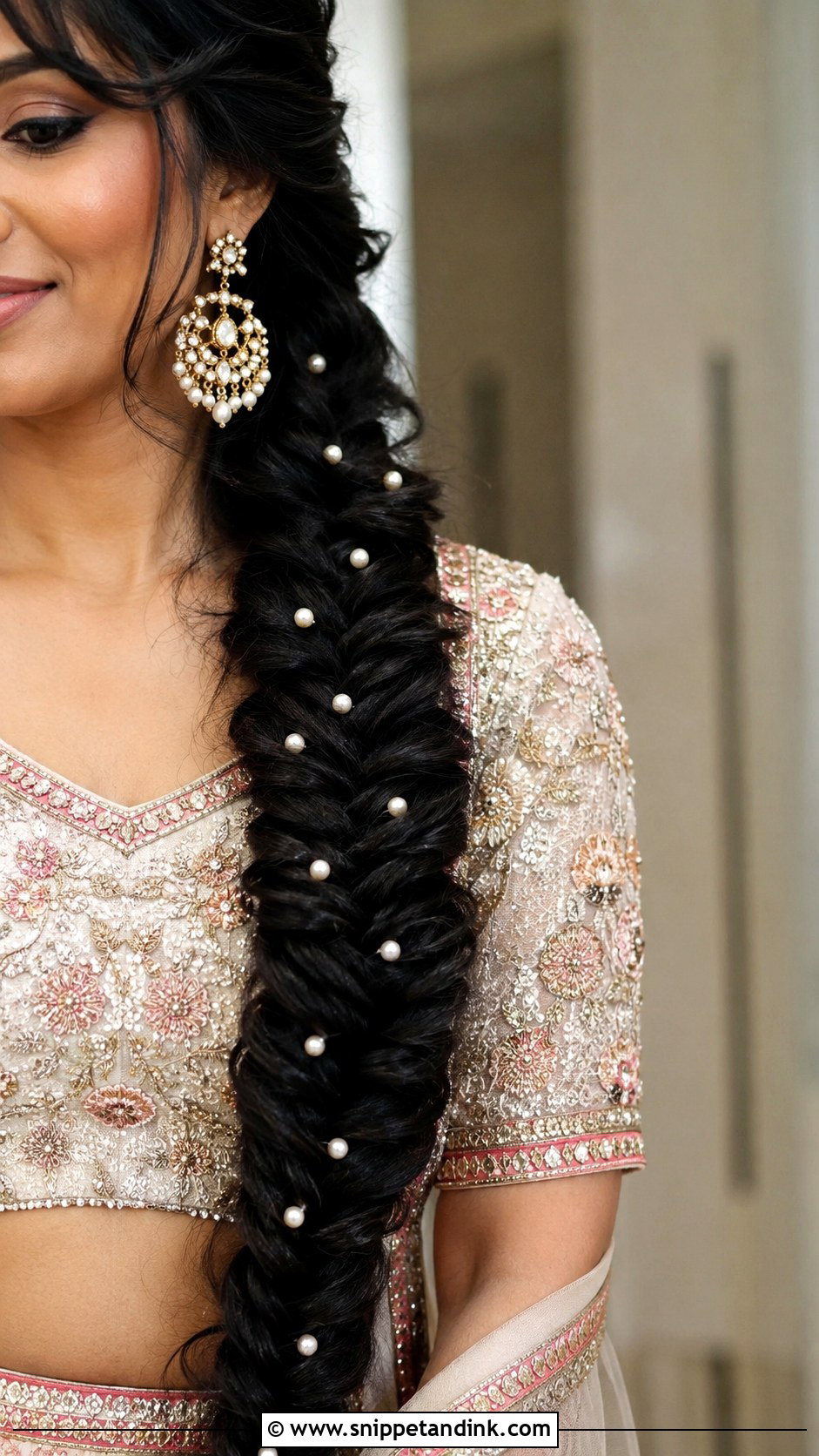
Fishtails look intricate on their own; over crimped hair they become a statement. Each woven strand looks fuller, and the crimps hold the weave so it doesn’t loosen during long events. I braid it slightly tighter than the final shape and then pull the edges out, so it widens without the strands sliding. Draped over a shoulder, it suits embroidered blouses and heavy earrings. A few crimped tendrils around the face soften it, and tiny flowers or pearls woven in add glamour.
7. Crimped Low Bun With Maang Tikka
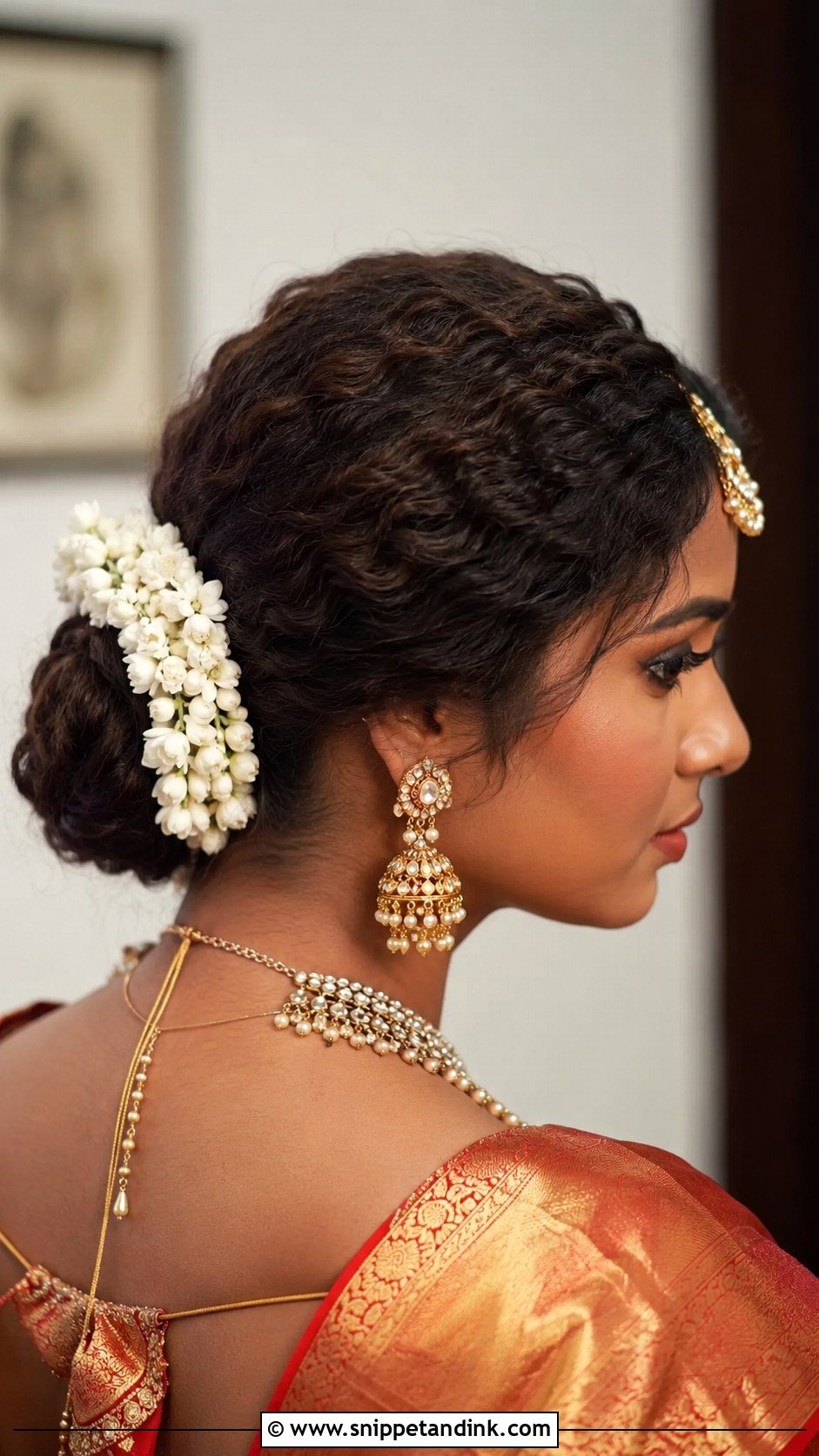
A low crimped bun at the nape is quiet and very secure. The crimping underneath gives it fullness without extra padding, and the low placement keeps the head clear for a maang tikka, which is the point of the style. It suits sarees and silk drapes and brides who prefer understated jewelry to heavy volume. Tuck a gajra around the bun or add a jeweled pin. Because it sits low, it also leaves room for the dupatta to rest above it rather than pressing on it.
8. Crimped Hair With Maang Tikka and Open Waves
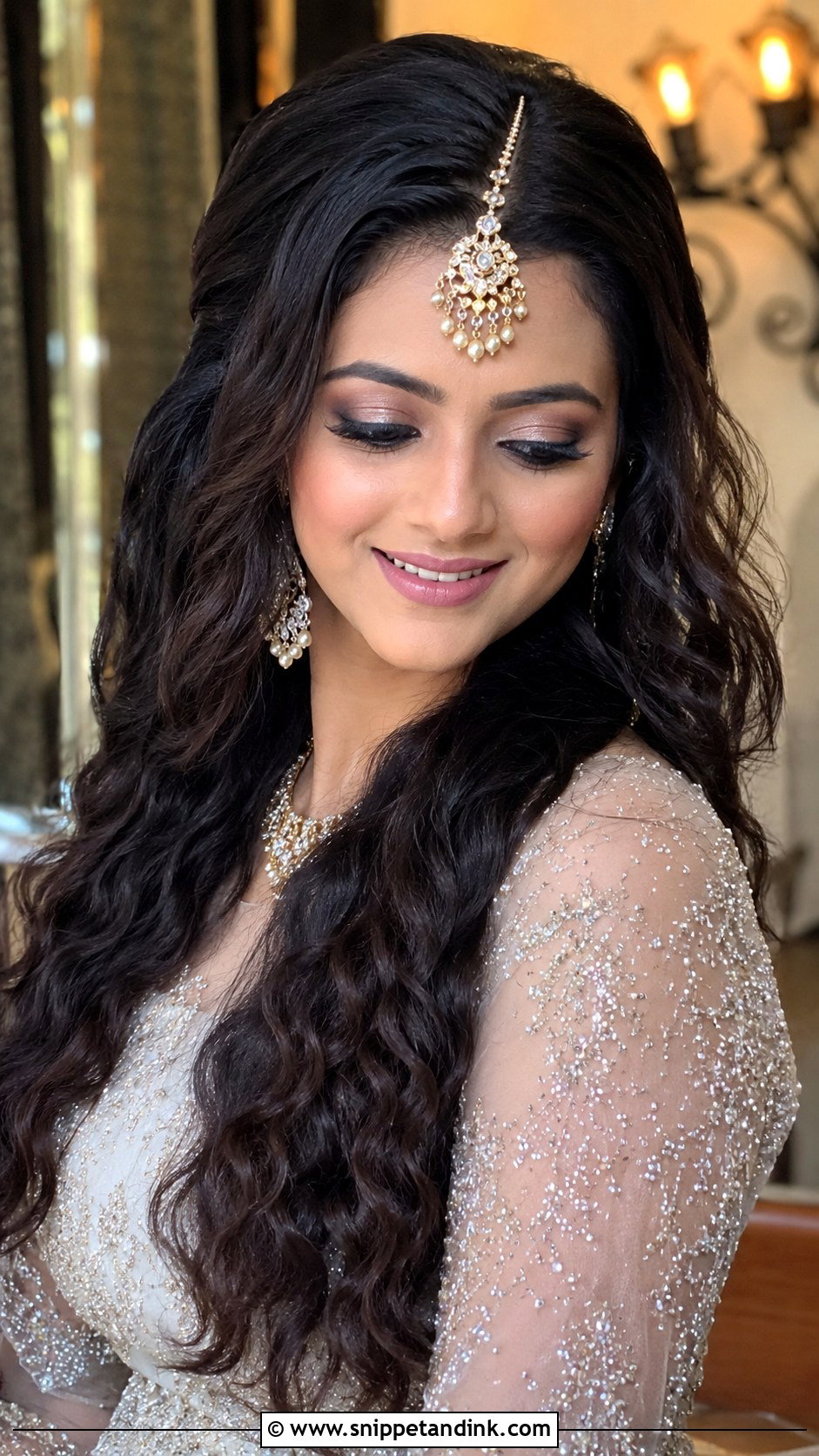
Open waves and a statement tikka make a young, modern bridal look. I leave the crimped hair open and loosely tousled, with the tikka on a clean center part. For the tikka itself, I pin its chain into a small hidden section at the crown and set the stone exactly on the parting, so it doesn’t slide sideways every time you turn your head. Engagements and receptions suit it, since there’s no heavy dupatta to manage. Sweep the waves to one side for more drama.
9. Crimped Ponytail With Crystals
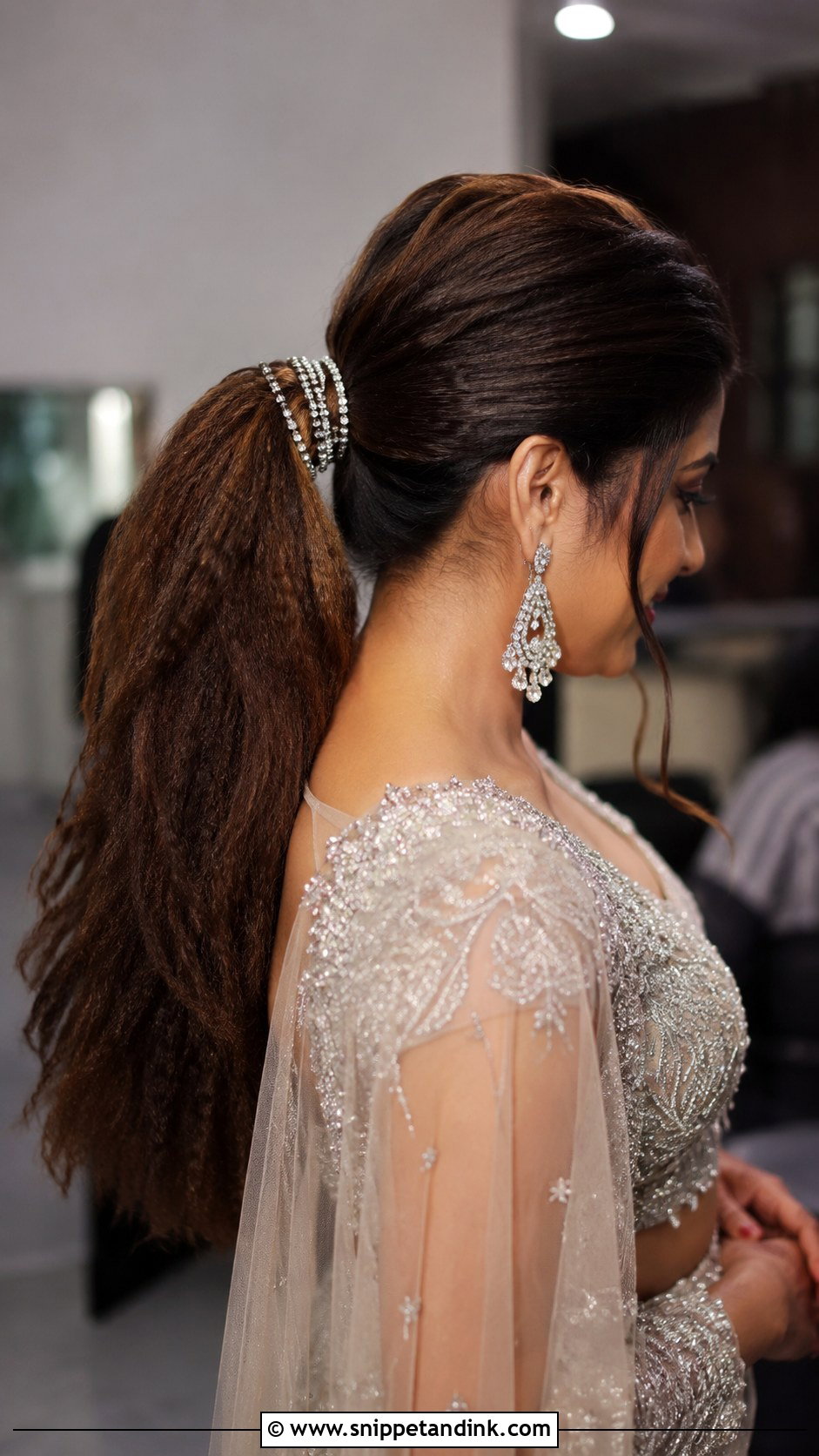
Crystals wrapped around a crimped ponytail catch light every time you move. I crimp the whole head, gather the ponytail, then wrap crystal strings or jeweled chains around the base. The crimps give the tail volume so it doesn’t hang flat under the weight of the decoration. Reception nights and sangeet performances suit it, with a gown or a lehenga. Crystal chains can snag on embroidered blouses, so I pin the ends inside the ponytail rather than leaving them loose.
10. Crimped Hair With Floral Bun
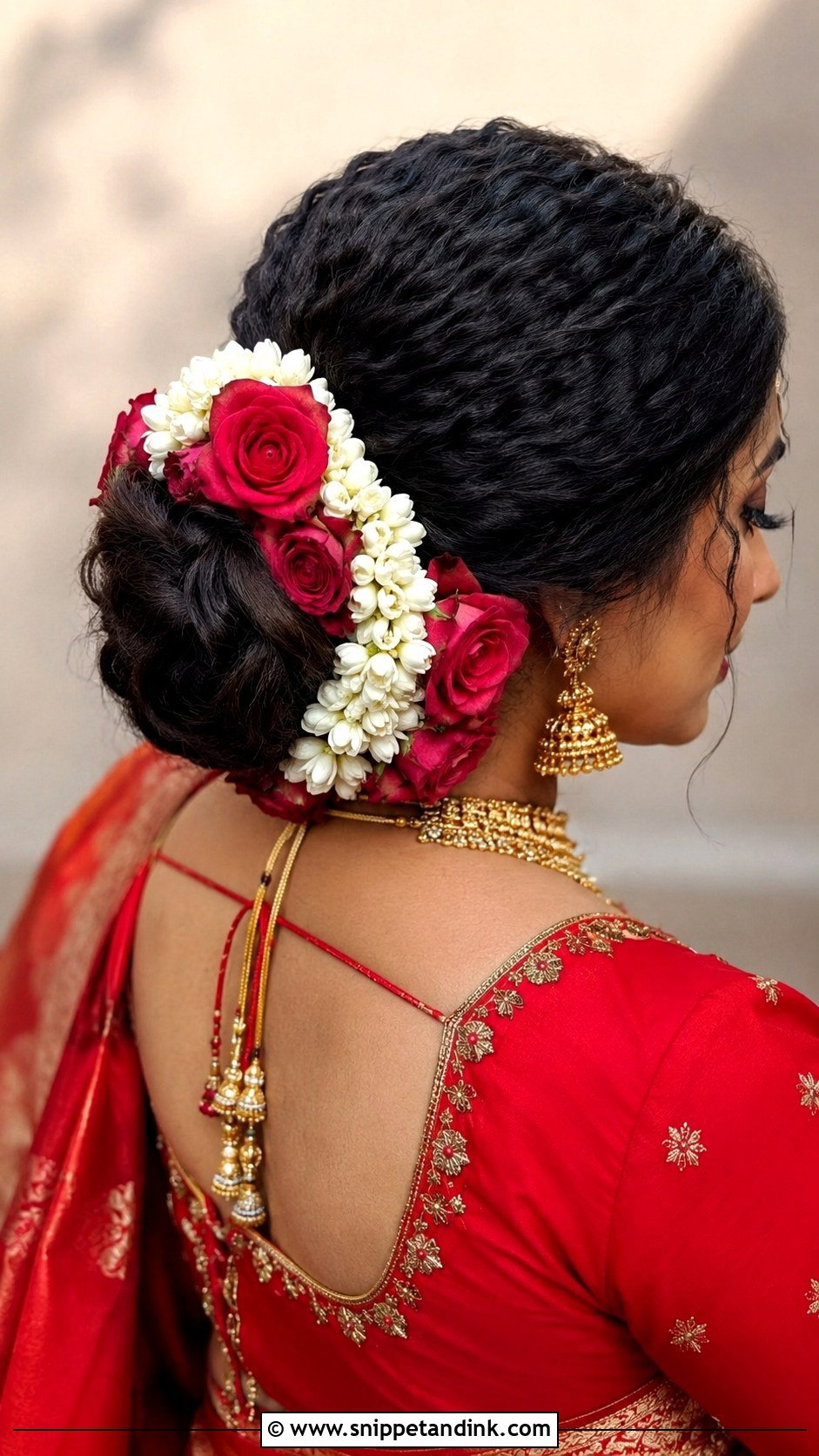
Flowers need something to hold onto, which is why I always crimp before building a floral bun. The texture grips stems and wires, so even roses or thick jasmine stay put. It’s the style many families expect for South Indian and traditional ceremonies, where fresh flowers are essential. Crimping keeps the bun looking full rather than tight. Match the flowers to the outfit, and ask the florist to deliver them chilled and as late as possible, since jasmine starts to brown after a few hours in warm air.
11. Crimped Hair With Center Part
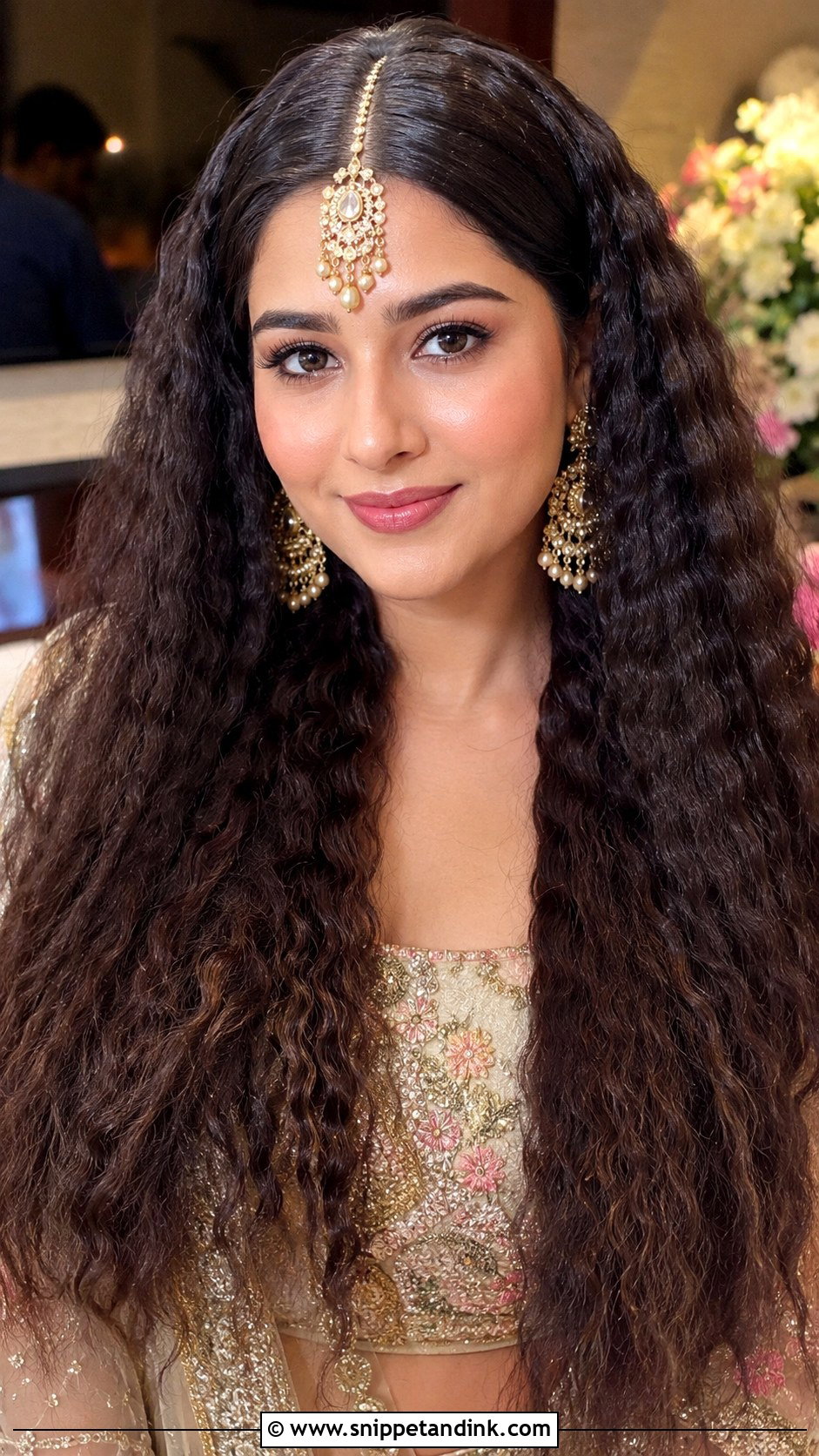
Simple open hair with a clean center part can look more striking than an elaborate updo. The part gives structure; the crimped lengths add fullness and movement. It suits brides and guests who like a modern, polished look, and it pairs well with statement earrings and a fine maang tikka. A center part makes the face look symmetrical, which shows clearly in front-on portraits. The catch is that a center part shows every flaw, so I set it with a tail comb and smooth the first inch with a little gel before crimping the rest. Daytime functions and small gatherings suit it.
12. Crimped Dutch Braid
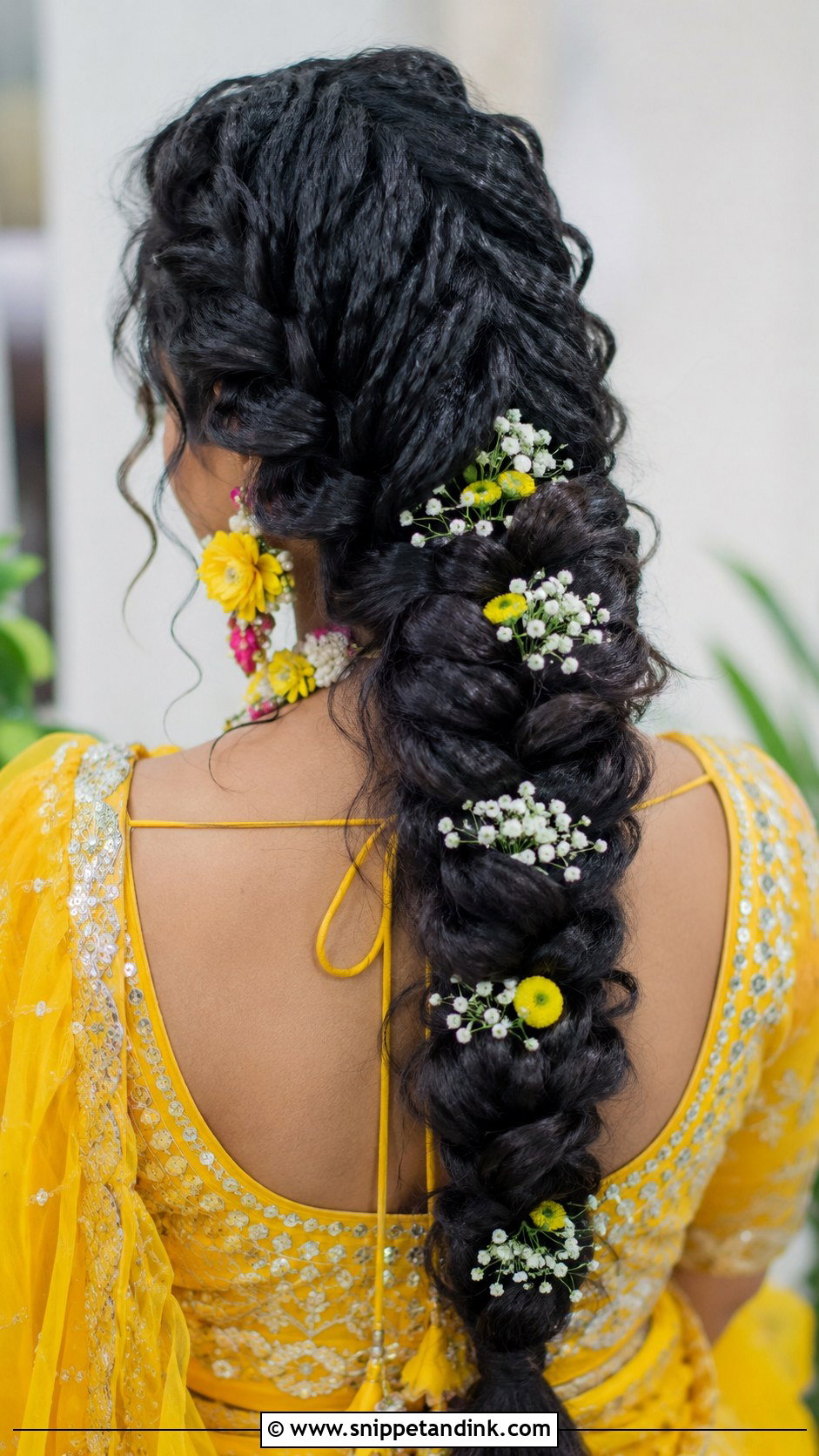
Dutch braids sit on top of the hair, so crimped texture makes every section stand out. It holds firmly, which makes it a good pick for active functions like the mehndi or haldi, when you’re moving around and sitting on the floor. One braid down the back or two framing the face both work. Small flowers or beads add a festive touch. For the haldi in particular, I’d keep the texture in a braid, since turmeric paste in loose open hair is a long job to wash out.
13. Crimped Hair With Juda and Gajra
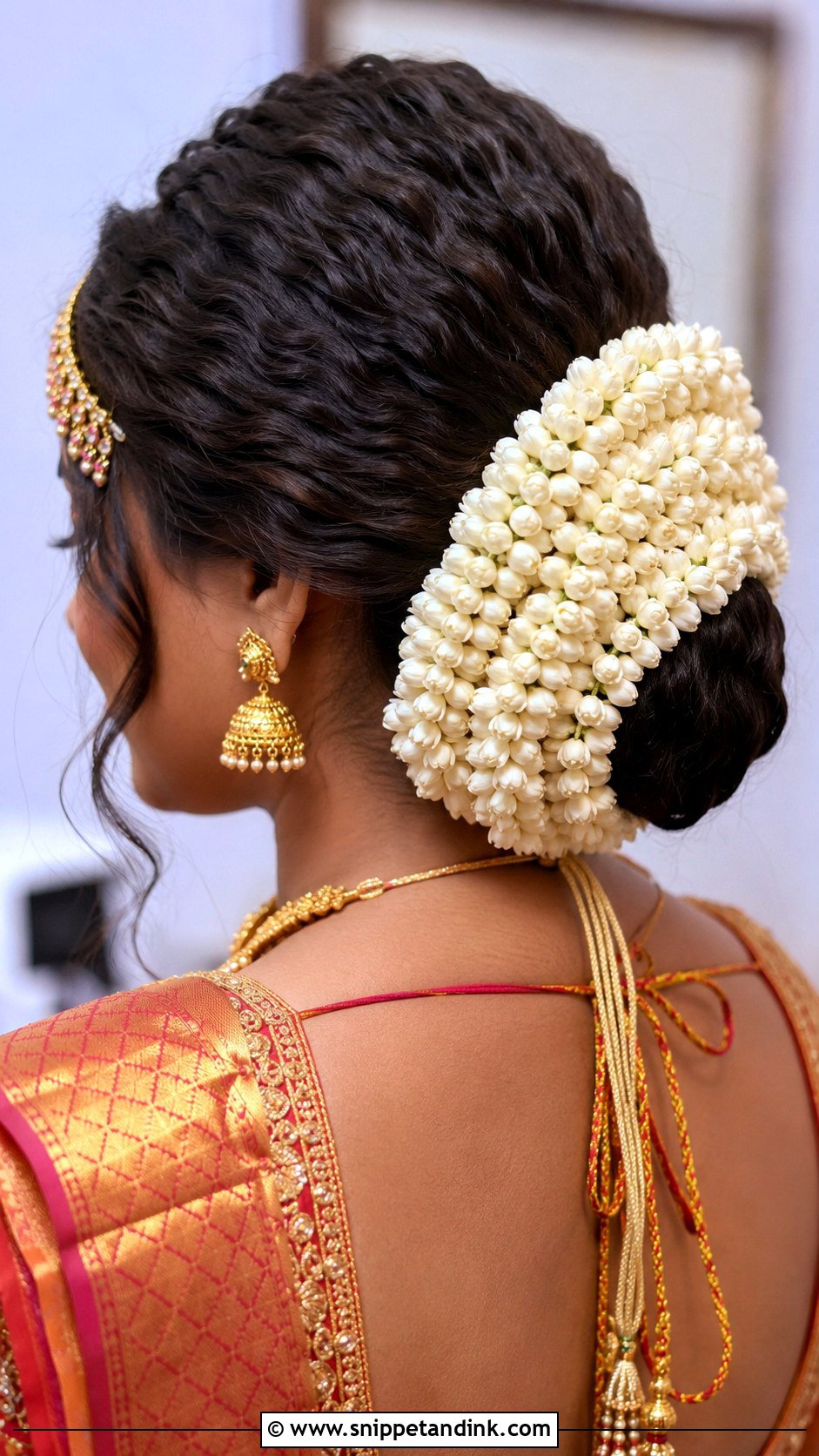
A crimped juda adorned with gajra is the traditional South Indian bridal look many families have in mind. Crimping gives the juda body and grip, so multiple rows of gajra stay in place without drooping through the ceremony. I wind the flowers in stages, pinning each row separately, because several rows of fresh jasmine add real weight to the back of the head. It suits silk sarees and temple jewelry. Under the tradition sits a modern trick, the crimped volume, that most guests won’t notice.
14. Crimped Messy Bun
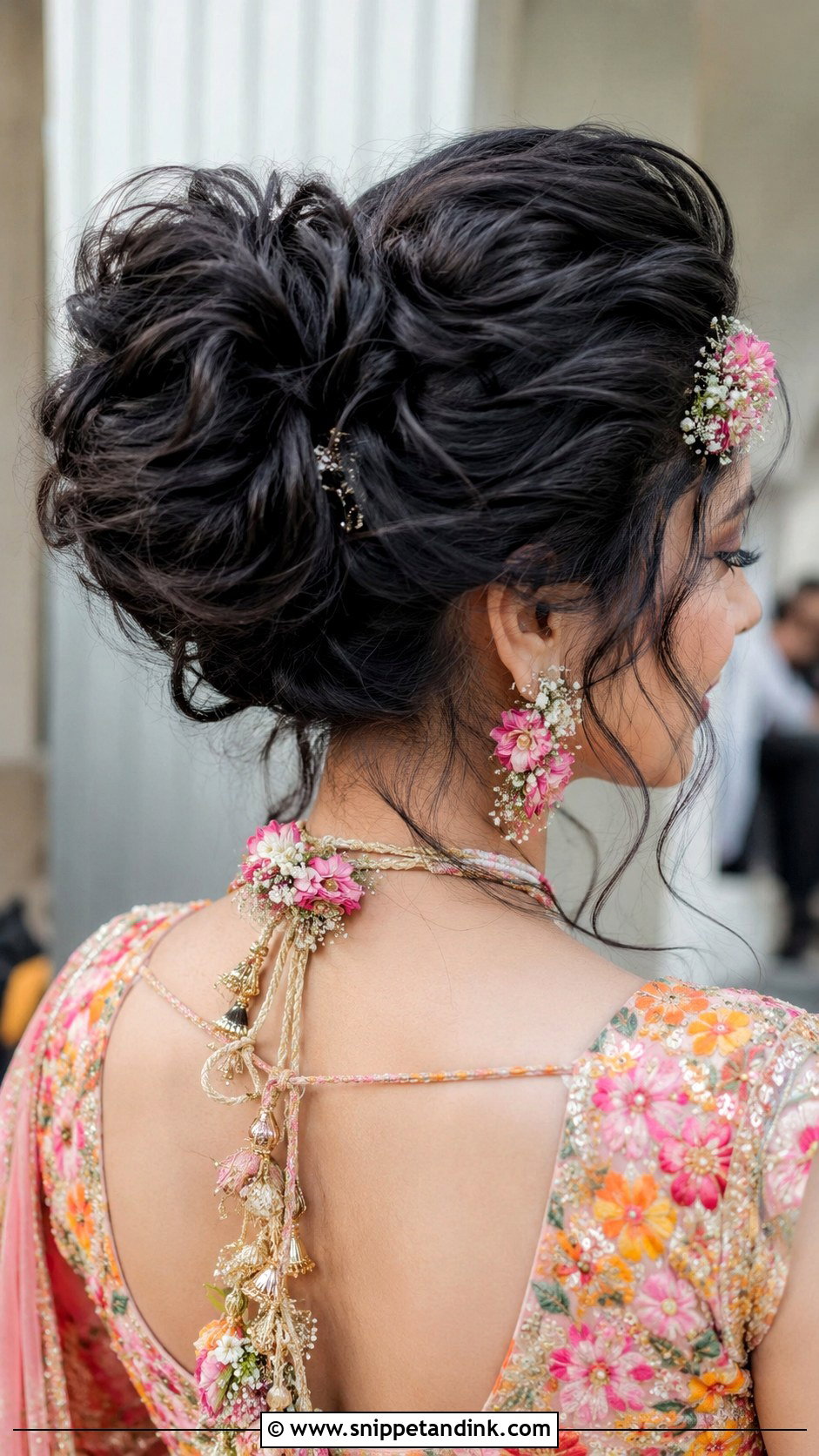
Messy buns at a mehndi or haldi are about comfort, and crimping makes them look intentional. I crimp, then gather the hair loosely into a bun with textured tendrils left around the face. Underneath, it’s firmly pinned, so it loosens attractively rather than collapsing. Floral jewelry and bright outfits suit it. As the evening goes on and the bun softens, the crimps keep it full rather than flat.
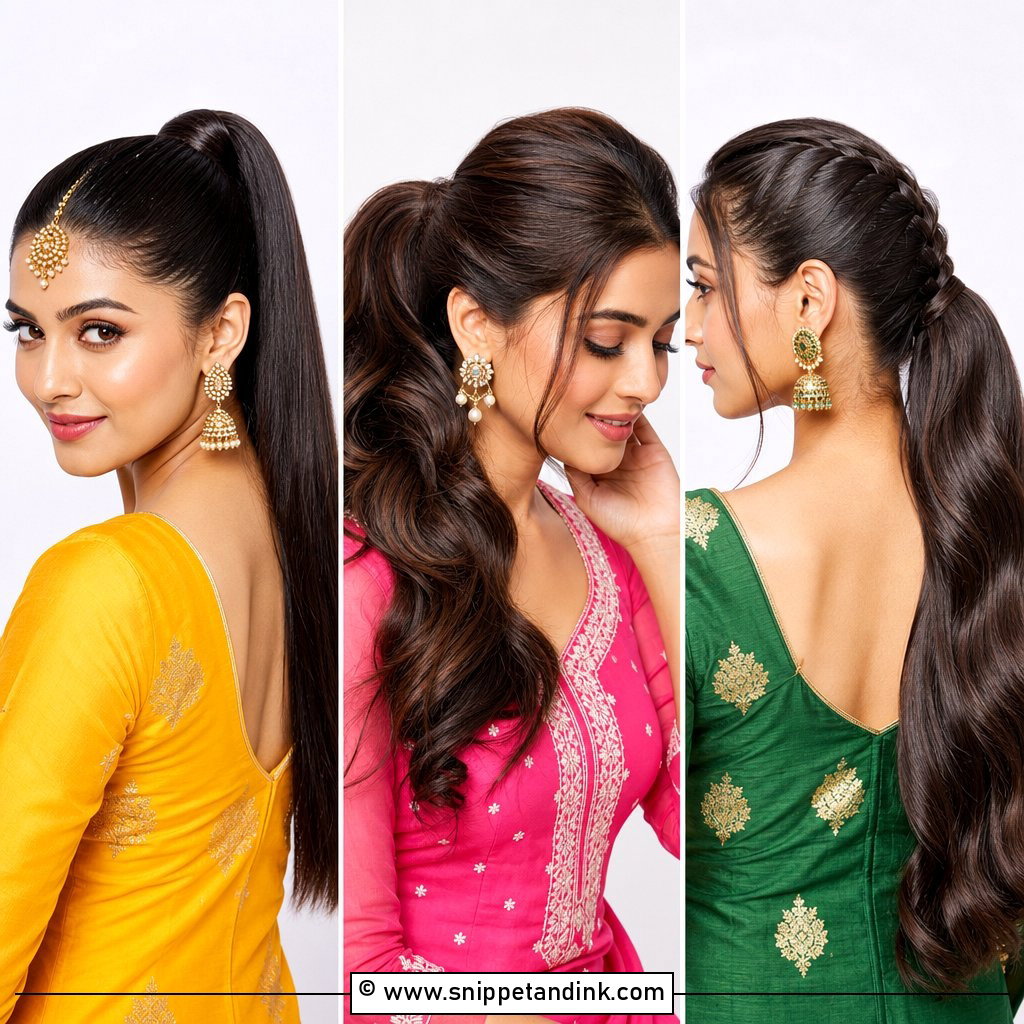
15. Crimped Hair With Side Swept Look
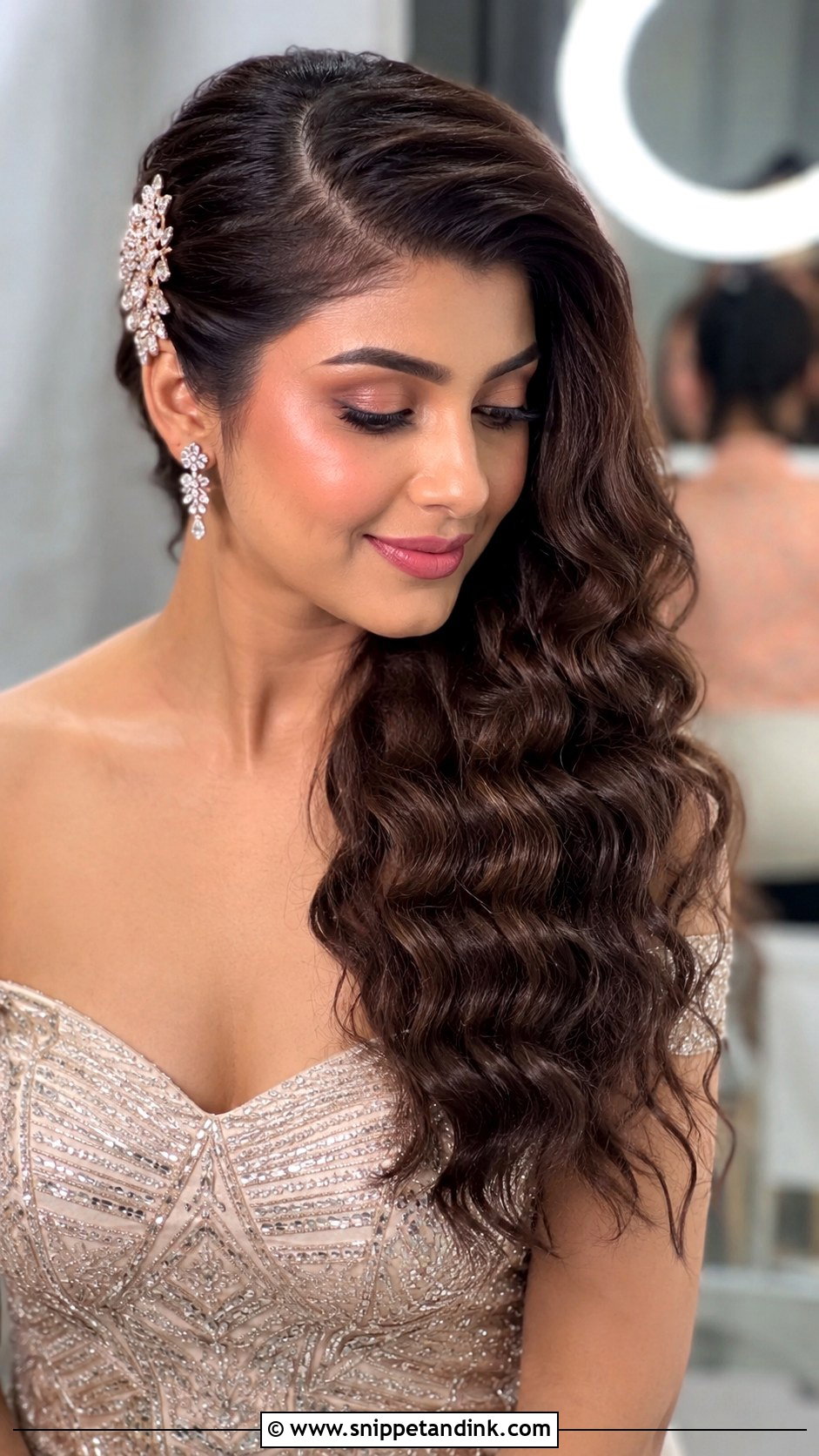
Sweeping everything to one side brings old-Hollywood glamour to an Indian outfit. I crimp the full length and drape it over one shoulder, then pin the opposite side behind the ear with a hidden braid and a jeweled clip, since the weight of all that hair on one side pulls the anchor loose otherwise. It shows off the neckline and statement earrings. Off-shoulder blouses and gowns suit it, at receptions and engagements.
16. Crimped Hair With Braided Crown
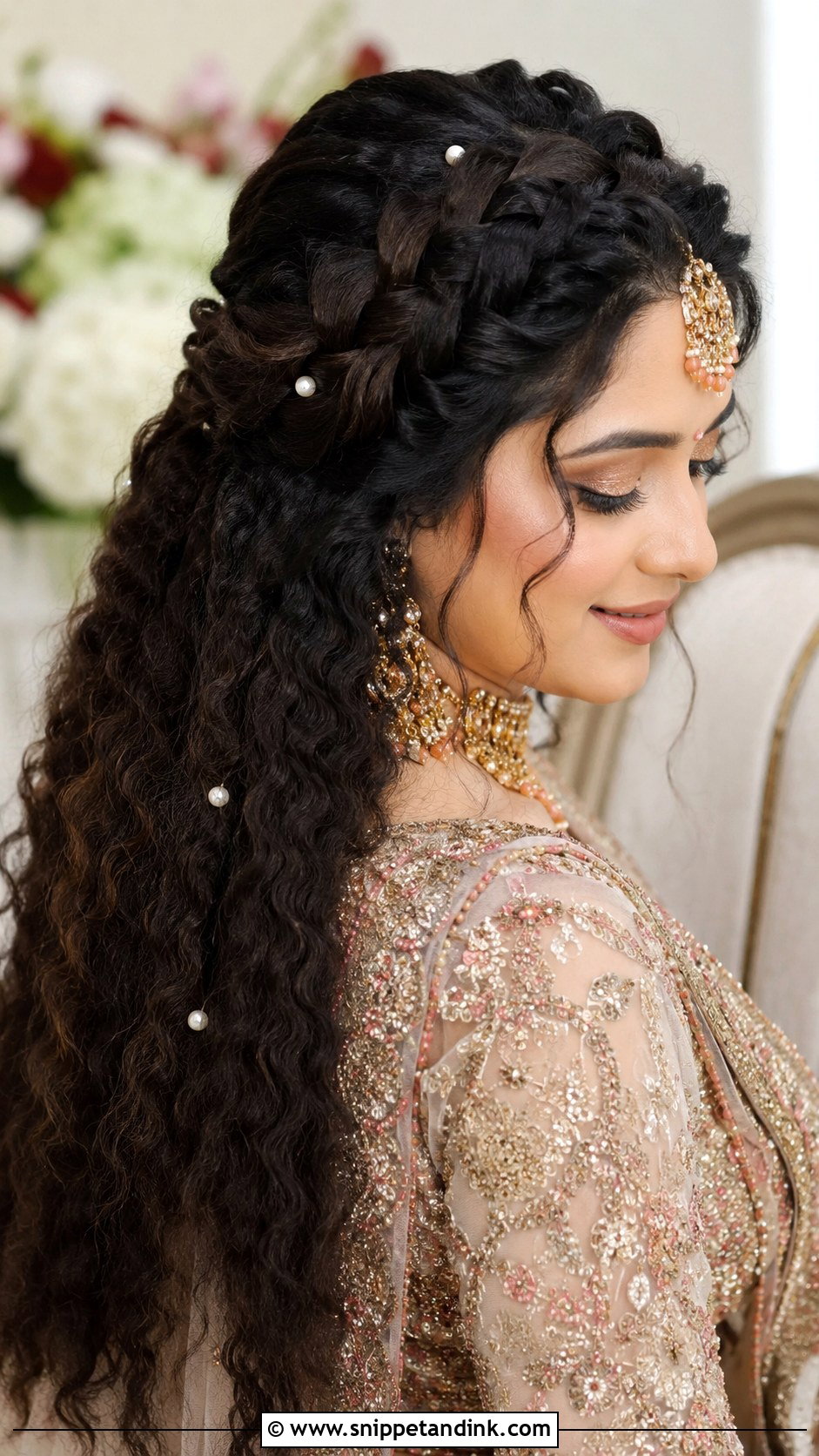
A braided crown over crimped hair looks regal. I crimp the lengths first, then braid across the crown and leave the rest open or pinned. The texture thickens the braid and gives it an intricate finish. Small flowers or pearls tucked into the braid add detail. Grand ceremonies and receptions suit it, but plan the dupatta placement before the braid: a heavy dupatta sitting on a crown braid flattens it, so I usually set the dupatta just behind it.
17. Crimped Hair With Puff and Open Waves
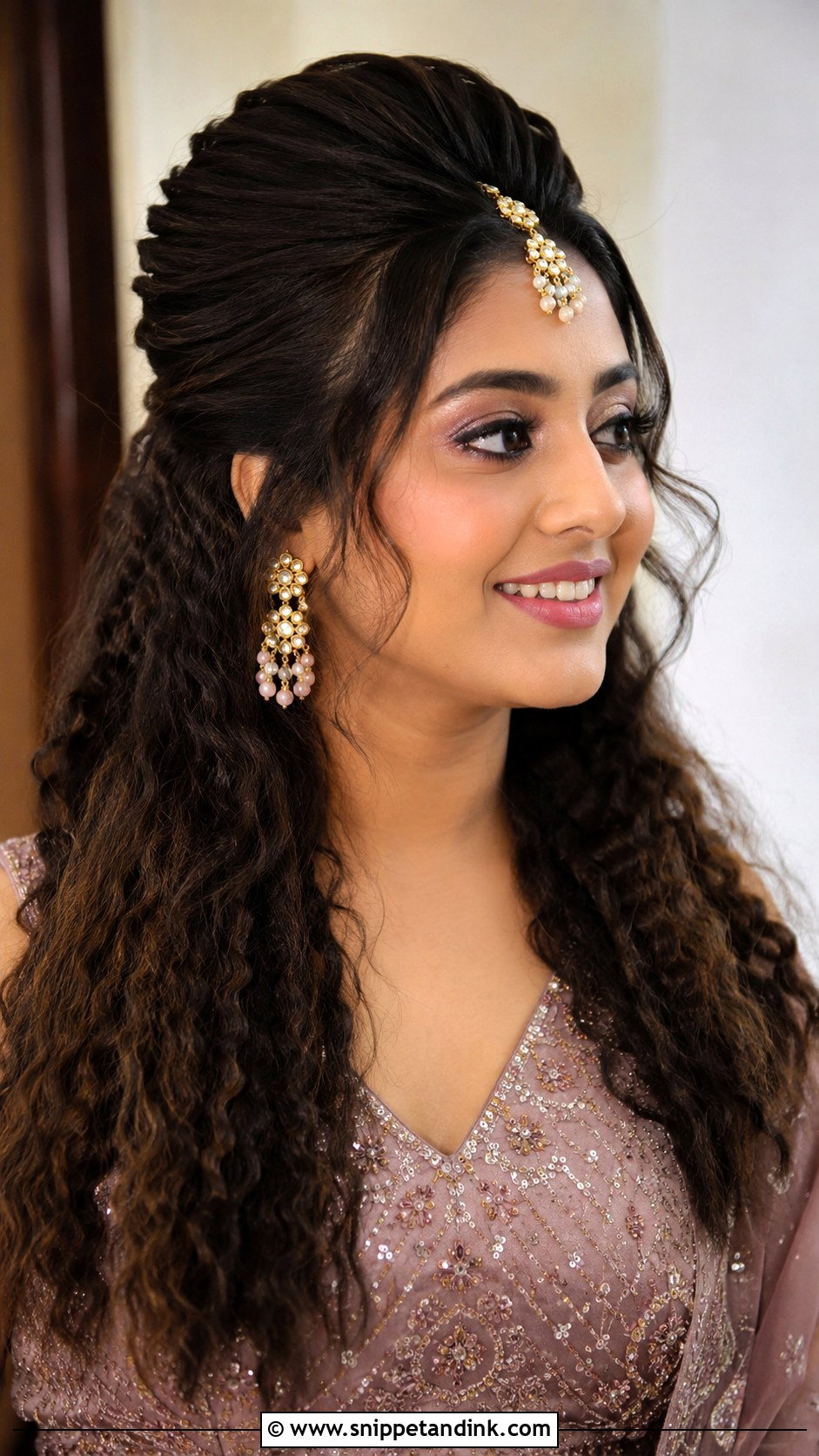
Height at the crown lengthens the face, and a crimped puff with open waves gives you that lift without backcombing. I crimp the root area with a small plate, shape the puff, then let the lengths fall. The crimping grips underneath, so the puff stays put through dancing. A maang tikka on the center part sits naturally in front of it. Sangeet nights and receptions suit it, when you want both polish and movement.
18. Crimped Hair With Pearl Accessories
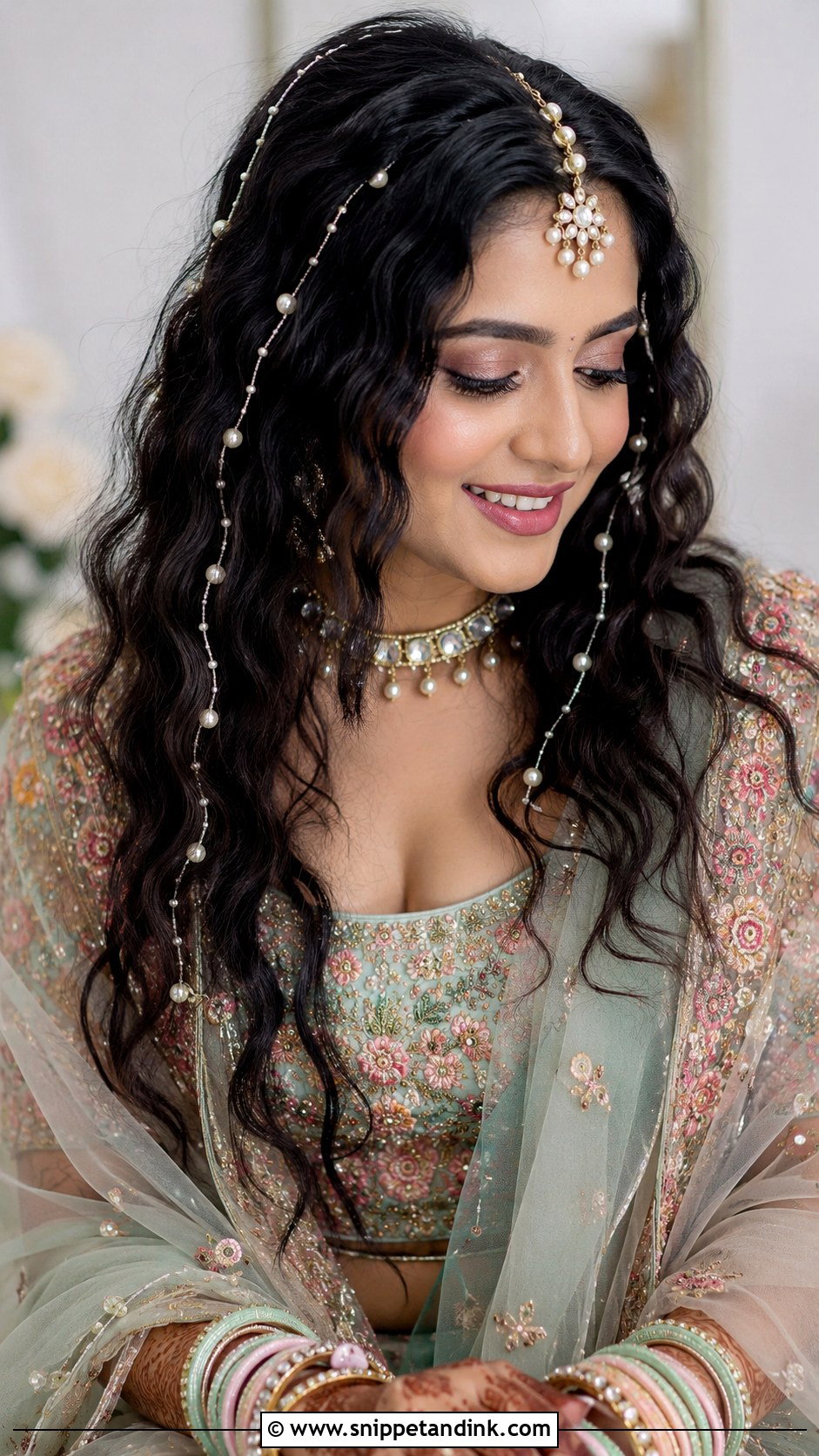
Pearls look softer than crystals against crimped hair, which suits pastel lehengas and delicate jewelry. I weave pearl strings or pins through the lengths or along a braid, either scattered across open hair or lined up on a plait for symmetry. The ridges hold the pins far better than smooth hair does. It’s a good choice for brides who like quiet glamour. Very heavy pearl strands can stretch a crimp flat over the day, so I keep the strings light on fine hair.
19. Crimped Hair With Front Twists
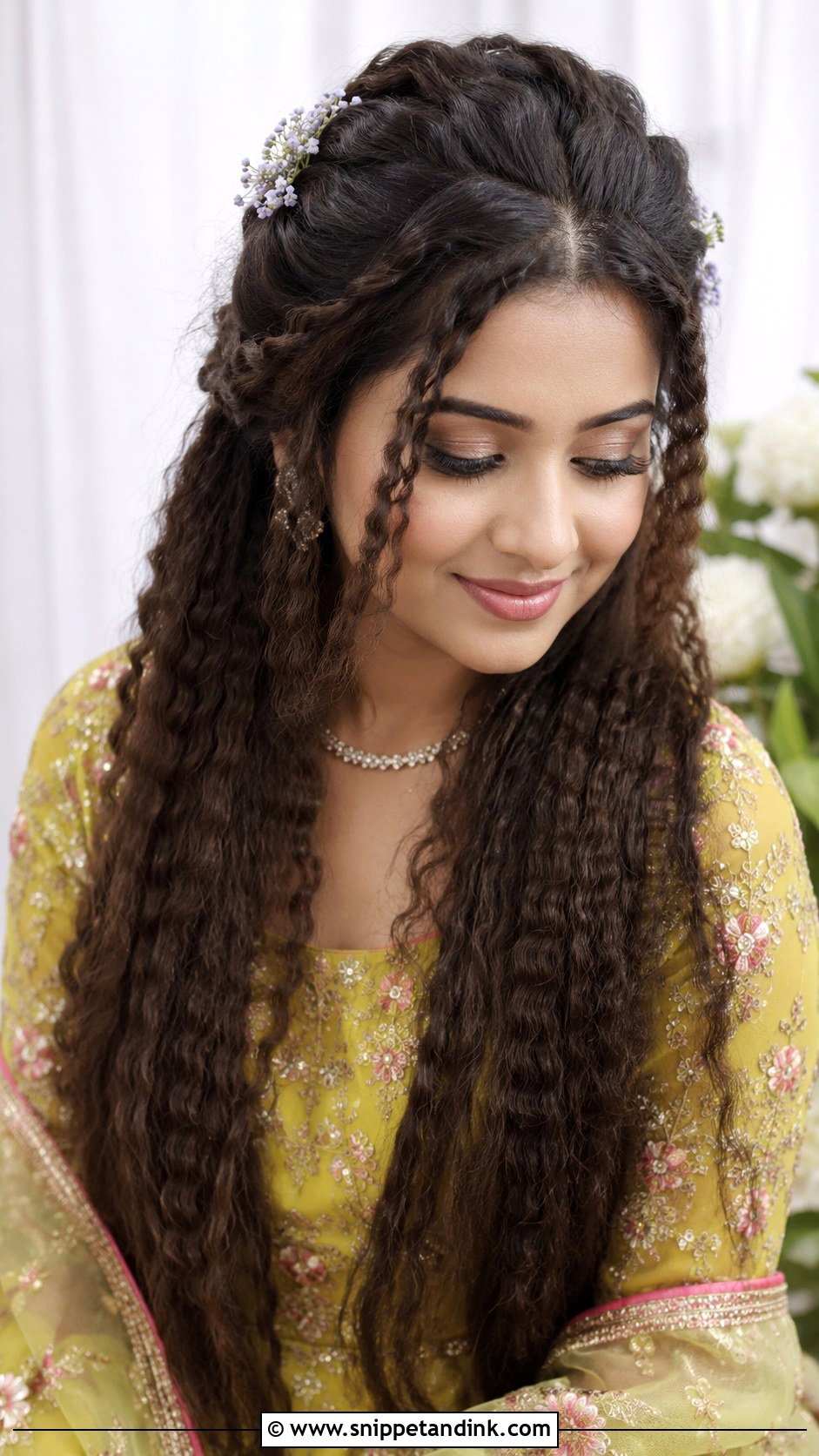
Front twists keep hair off the face without making a full updo. I crimp the length, twist back small sections from the front and pin them at the crown, so the rest falls open in waves. It’s subtle and comfortable for mehndi, haldi and daytime functions. Tiny flowers or jeweled pins decorate the twists. On fine hair, crimping the front sections before twisting is what stops the twists slipping out by lunchtime.

20. Crimped Hair With Maang Tikka and Low Ponytail
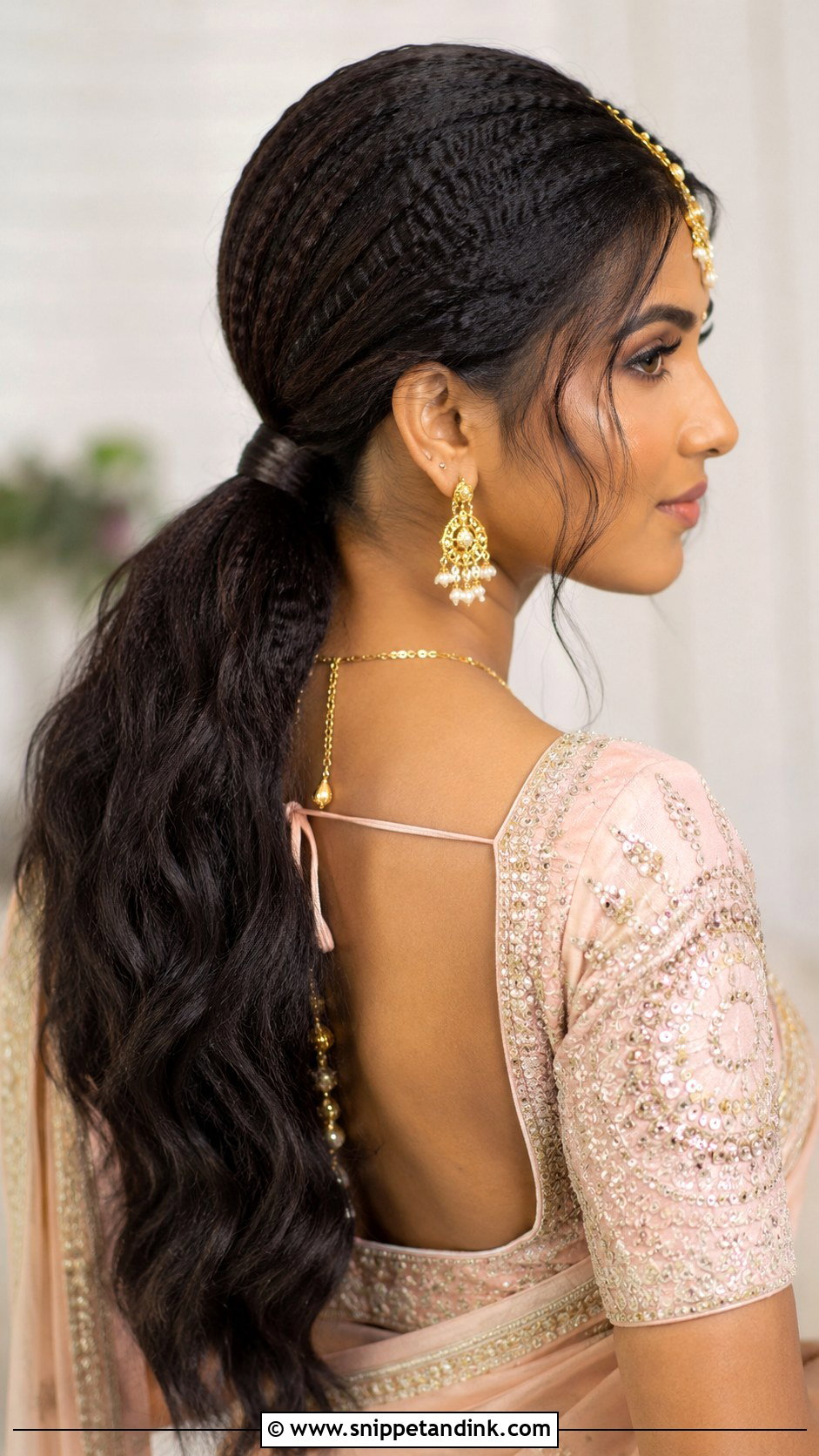
A low ponytail with a maang tikka is comfortable for long ceremonies and travel between functions. I crimp, then gather it into a smooth low ponytail at the nape and wrap a strand of hair or a jeweled chain around the base. The texture keeps the tail full. The tikka draws attention to the face, so the rest can stay simple. It works with sarees, suits and lehengas, and for a bride changing outfits several times a day, it’s the easiest style to reset in five minutes.
Pinning a Dupatta and Gajra Into Crimped Hair
Most of the weight on a bride’s head arrives after her hair is finished, so I plan the anchors before I crimp. A heavy embroidered dupatta, a gajra and a tikka each need their own secure point; if they share one, the strongest pull wins and everything slides.
My order of work
- Crimp, then build the bun, braid or base style.
- Make one or two small hidden braids or pin cushions where the dupatta and tikka will sit.
- Pin the tikka chain first, then the dupatta with U-pins crossed into the anchors.
- Add the gajra last, pinned every few inches, so it doesn’t drag the dupatta down.
If you’re adding clip-in extensions or a hair donut for a fuller juda, crimp the extensions as well. Crimped real hair beside smooth extensions shows clearly in close-ups, and matching the texture is what makes them blend. Ask your stylist to show you how to remove the dupatta and gajra at the end of the night, as pulling them out in a hurry tears through crimped hair.
Plan the Crimp Around Your Heaviest Ornaments
Crimping gives Indian wedding hair volume, texture and hold, from the first ritual to the last dance. Buns, open styles, braids and ponytails can all be built on it, and it supports heavy jewelry, gajras and dupattas better than smooth hair does. Brides, bridesmaids and guests can all find a version that suits their outfit. The way I’d decide is to start from the heaviest thing your hair has to carry on each day, then choose the style that anchors it best, and only then add flowers, pearls or crystals.
You'll Like These Ideas:





Leave a Reply